EP0874412B1 - Method of manufacturing positive active material for nonaqueous electrolyte secondary cells - Google Patents
Method of manufacturing positive active material for nonaqueous electrolyte secondary cells Download PDFInfo
- Publication number
- EP0874412B1 EP0874412B1 EP97911456A EP97911456A EP0874412B1 EP 0874412 B1 EP0874412 B1 EP 0874412B1 EP 97911456 A EP97911456 A EP 97911456A EP 97911456 A EP97911456 A EP 97911456A EP 0874412 B1 EP0874412 B1 EP 0874412B1
- Authority
- EP
- European Patent Office
- Prior art keywords
- active material
- positive active
- nickel
- lithium
- complex oxide
- Prior art date
- Legal status (The legal status is an assumption and is not a legal conclusion. Google has not performed a legal analysis and makes no representation as to the accuracy of the status listed.)
- Expired - Lifetime
Links
Images

Classifications
-
- H—ELECTRICITY
- H01—ELECTRIC ELEMENTS
- H01M—PROCESSES OR MEANS, e.g. BATTERIES, FOR THE DIRECT CONVERSION OF CHEMICAL ENERGY INTO ELECTRICAL ENERGY
- H01M4/00—Electrodes
- H01M4/02—Electrodes composed of, or comprising, active material
- H01M4/36—Selection of substances as active materials, active masses, active liquids
- H01M4/58—Selection of substances as active materials, active masses, active liquids of inorganic compounds other than oxides or hydroxides, e.g. sulfides, selenides, tellurides, halogenides or LiCoFy; of polyanionic structures, e.g. phosphates, silicates or borates
-
- H—ELECTRICITY
- H01—ELECTRIC ELEMENTS
- H01M—PROCESSES OR MEANS, e.g. BATTERIES, FOR THE DIRECT CONVERSION OF CHEMICAL ENERGY INTO ELECTRICAL ENERGY
- H01M4/00—Electrodes
- H01M4/02—Electrodes composed of, or comprising, active material
- H01M4/36—Selection of substances as active materials, active masses, active liquids
- H01M4/48—Selection of substances as active materials, active masses, active liquids of inorganic oxides or hydroxides
- H01M4/52—Selection of substances as active materials, active masses, active liquids of inorganic oxides or hydroxides of nickel, cobalt or iron
- H01M4/525—Selection of substances as active materials, active masses, active liquids of inorganic oxides or hydroxides of nickel, cobalt or iron of mixed oxides or hydroxides containing iron, cobalt or nickel for inserting or intercalating light metals, e.g. LiNiO2, LiCoO2 or LiCoOxFy
-
- C—CHEMISTRY; METALLURGY
- C01—INORGANIC CHEMISTRY
- C01G—COMPOUNDS CONTAINING METALS NOT COVERED BY SUBCLASSES C01D OR C01F
- C01G53/00—Compounds of nickel
- C01G53/40—Complex oxides containing nickel and at least one other metal element
- C01G53/42—Complex oxides containing nickel and at least one other metal element containing alkali metals, e.g. LiNiO2
- C01G53/44—Complex oxides containing nickel and at least one other metal element containing alkali metals, e.g. LiNiO2 containing manganese
-
- C—CHEMISTRY; METALLURGY
- C01—INORGANIC CHEMISTRY
- C01G—COMPOUNDS CONTAINING METALS NOT COVERED BY SUBCLASSES C01D OR C01F
- C01G53/00—Compounds of nickel
- C01G53/80—Compounds containing nickel, with or without oxygen or hydrogen, and containing one or more other elements
- C01G53/84—Hydroxides
-
- H—ELECTRICITY
- H01—ELECTRIC ELEMENTS
- H01M—PROCESSES OR MEANS, e.g. BATTERIES, FOR THE DIRECT CONVERSION OF CHEMICAL ENERGY INTO ELECTRICAL ENERGY
- H01M10/00—Secondary cells; Manufacture thereof
- H01M10/05—Accumulators with non-aqueous electrolyte
- H01M10/052—Li-accumulators
- H01M10/0525—Rocking-chair batteries, i.e. batteries with lithium insertion or intercalation in both electrodes; Lithium-ion batteries
-
- C—CHEMISTRY; METALLURGY
- C01—INORGANIC CHEMISTRY
- C01P—INDEXING SCHEME RELATING TO STRUCTURAL AND PHYSICAL ASPECTS OF SOLID INORGANIC COMPOUNDS
- C01P2002/00—Crystal-structural characteristics
- C01P2002/50—Solid solutions
- C01P2002/52—Solid solutions containing elements as dopants
- C01P2002/54—Solid solutions containing elements as dopants one element only
-
- C—CHEMISTRY; METALLURGY
- C01—INORGANIC CHEMISTRY
- C01P—INDEXING SCHEME RELATING TO STRUCTURAL AND PHYSICAL ASPECTS OF SOLID INORGANIC COMPOUNDS
- C01P2002/00—Crystal-structural characteristics
- C01P2002/70—Crystal-structural characteristics defined by measured X-ray, neutron or electron diffraction data
- C01P2002/72—Crystal-structural characteristics defined by measured X-ray, neutron or electron diffraction data by d-values or two theta-values, e.g. as X-ray diagram
-
- C—CHEMISTRY; METALLURGY
- C01—INORGANIC CHEMISTRY
- C01P—INDEXING SCHEME RELATING TO STRUCTURAL AND PHYSICAL ASPECTS OF SOLID INORGANIC COMPOUNDS
- C01P2006/00—Physical properties of inorganic compounds
- C01P2006/40—Electric properties
-
- H—ELECTRICITY
- H01—ELECTRIC ELEMENTS
- H01M—PROCESSES OR MEANS, e.g. BATTERIES, FOR THE DIRECT CONVERSION OF CHEMICAL ENERGY INTO ELECTRICAL ENERGY
- H01M4/00—Electrodes
- H01M4/02—Electrodes composed of, or comprising, active material
- H01M4/13—Electrodes for accumulators with non-aqueous electrolyte, e.g. for lithium-accumulators; Processes of manufacture thereof
- H01M4/131—Electrodes based on mixed oxides or hydroxides, or on mixtures of oxides or hydroxides, e.g. LiCoOx
-
- H—ELECTRICITY
- H01—ELECTRIC ELEMENTS
- H01M—PROCESSES OR MEANS, e.g. BATTERIES, FOR THE DIRECT CONVERSION OF CHEMICAL ENERGY INTO ELECTRICAL ENERGY
- H01M4/00—Electrodes
- H01M4/02—Electrodes composed of, or comprising, active material
- H01M4/13—Electrodes for accumulators with non-aqueous electrolyte, e.g. for lithium-accumulators; Processes of manufacture thereof
- H01M4/133—Electrodes based on carbonaceous material, e.g. graphite-intercalation compounds or CFx
-
- H—ELECTRICITY
- H01—ELECTRIC ELEMENTS
- H01M—PROCESSES OR MEANS, e.g. BATTERIES, FOR THE DIRECT CONVERSION OF CHEMICAL ENERGY INTO ELECTRICAL ENERGY
- H01M4/00—Electrodes
- H01M4/02—Electrodes composed of, or comprising, active material
- H01M4/36—Selection of substances as active materials, active masses, active liquids
- H01M4/48—Selection of substances as active materials, active masses, active liquids of inorganic oxides or hydroxides
- H01M4/485—Selection of substances as active materials, active masses, active liquids of inorganic oxides or hydroxides of mixed oxides or hydroxides for inserting or intercalating light metals, e.g. LiTi2O4 or LiTi2OxFy
-
- H—ELECTRICITY
- H01—ELECTRIC ELEMENTS
- H01M—PROCESSES OR MEANS, e.g. BATTERIES, FOR THE DIRECT CONVERSION OF CHEMICAL ENERGY INTO ELECTRICAL ENERGY
- H01M4/00—Electrodes
- H01M4/02—Electrodes composed of, or comprising, active material
- H01M4/36—Selection of substances as active materials, active masses, active liquids
- H01M4/48—Selection of substances as active materials, active masses, active liquids of inorganic oxides or hydroxides
- H01M4/50—Selection of substances as active materials, active masses, active liquids of inorganic oxides or hydroxides of manganese
- H01M4/505—Selection of substances as active materials, active masses, active liquids of inorganic oxides or hydroxides of manganese of mixed oxides or hydroxides containing manganese for inserting or intercalating light metals, e.g. LiMn2O4 or LiMn2OxFy
-
- Y—GENERAL TAGGING OF NEW TECHNOLOGICAL DEVELOPMENTS; GENERAL TAGGING OF CROSS-SECTIONAL TECHNOLOGIES SPANNING OVER SEVERAL SECTIONS OF THE IPC; TECHNICAL SUBJECTS COVERED BY FORMER USPC CROSS-REFERENCE ART COLLECTIONS [XRACs] AND DIGESTS
- Y02—TECHNOLOGIES OR APPLICATIONS FOR MITIGATION OR ADAPTATION AGAINST CLIMATE CHANGE
- Y02E—REDUCTION OF GREENHOUSE GAS [GHG] EMISSIONS, RELATED TO ENERGY GENERATION, TRANSMISSION OR DISTRIBUTION
- Y02E60/00—Enabling technologies; Technologies with a potential or indirect contribution to GHG emissions mitigation
- Y02E60/10—Energy storage using batteries
Definitions
- the present invention relates to a method of producing positive active materials for secondary batteries employing a non-aqueous electrolyte such as organic electrolyte or polymer solid electrolyte.
- the lithium-ion secondary battery which has a high energy density both per unit weight and per unit volume, is a battery system primarily using a complex oxide of lithium and a transition metal element as the positive electrode, a graphite-based carbon as the negative electrode, and a non-aqueous electrolyte such as organic electrolyte or polymer solid electrolyte as the electrolyte, and is recently enjoying a rapid growth in production.
- lithium-ion secondary battery is sometimes called a rocking-chair battery.
- a complex oxide of lithium which has a high electrode potential and a transition metal element is used as the positive electrode, for example, a complex oxide (LiCoO 2 of lithium and cobalt, a complex oxide (LiNiO 2 ) of lithium and nickel, and a complex oxide (LiMn 2 O 4 ) of lithium and manganese.
- These complex oxides are often called as lithium cobaltate, lithium nickelate, and lithium manganate.
- LiCoO 2 which has a high potential and a long cycle life is most generally used as the positive active material.
- a use of LiNiO 2 with which a higher capacity than that of LiCoO 2 is expected is now being actively studied.
- the reason for a higher capacity is because, as the electrode potential of LiNiO 2 is lower than that of LiCoO 2 , it becomes possible to cause more quantity of lithium to desorb during charge before decomposition voltage of an aqueous electrolyte such as organic electrolyte is reached. As a result, the quantity of charged electricity is expected to increase, and hence the discharge capacity is also expected to increase.
- LiNiO 2 suffers a problem of cycle deterioration by gradual decrease in the discharge capacity as charge and discharge are repeated.
- Li-containing complex oxides are disclosed in which lithium hydroxide (LiOH) is added to and mixed with a uniform mixture of oxides or hydroxides of Ni and oxides or hydroxides of Fe, Co, Cr, Ti, Mn, or V, followed by heat treatment at a temperature not lower than 600°C.
- LiOH lithium hydroxide
- EP0720247 discloses a method of forming a lithium cobalt nickel oxide for a non-aqueous secondary battery by 1. coprecipitation of nickel hydroxide and cobalt hydroxide; 2. firing the mixed hydroxide in an oxidizing atmosphere together with lithium oxide or hydroxide.
- US4980080 discloses a method of forming a lithium cobalt nickel oxidefor a non-aqueous secondary battery by firing a mixture of nickel oxide, cobalt oxide and lithium hydroxide.
- EP0468942 discloses a dry mixture of nickel hydroxide or nickel oxide and cobalt hydroxide or oxide, fired together with lithium hydroxide.
- Ni-containing oxide and a Co-containing oxide are mixed and fired after being further mixed with carbonates or oxides of Li
- a Li-containing complex oxide is synthesized by using oxides containing both Ni and Co such as NiCoO 2 .
- the present invention aims at addressing various problems encountered in using Li-containing complex oxides synthesized by the heretofore proposed or reported methods of production as positive active materials. That is, as a result of studying conventional methods of production in detail, the present invention provides a new method of production of positive active material for a high-reliability non-aqueous electrolyte secondary battery of which the discharge capacity is high and the decrease of the discharge capacity due to charge-discharge cycles is controlled by using in the positive electrode a Li-containing complex oxide obtained by using nickel oxides in which a specific element has been dissolved as a solid solution as a synthesizing material, and firing it using LiOH or a mixture of LiOH and its hydrates as the source of supply of Li.
- a Li-containing complex oxide as represented by a chemical formula Li x Ni y M z O 2 (M being at least an element selected from the group consisting of Co, Mn, Cr, Fe and Mg; 0.90 ⁇ x ⁇ 1.10, 0,7 ⁇ y ⁇ 0.95, y + z
- aqueous solutions of mixed sulfates were prepared with various atomic ratios of Ni and Co by using nickel sulfate (NiSO 4 ) and cobalt sulfate (CoSO 4 ).
- NiSO 4 nickel sulfate
- CoSO 4 cobalt sulfate
- the synthesized Li x Ni y Co z O 2 is a relatively fragile aggregate, which is easily pulverized in a mortar.
- a positive paste is then prepared by mixing 100 parts by weight of Li x Ni y Co z O 2 powder, 3 parts by weight of acetylene black, and 5 parts by weight of fluorocarbon resin binder, and adding to the mixture N-methylpyrolidinone and blending.
- the paste is then coated on both sides of an aluminum foil having a thickness of 0.02 mm and rolled so that a thickness of 0.13 mm can be obtained after drying. It is then cut to a width of 35 mm and length of 270 mm to obtain a positive electrode.
- an electrode group 4 is configured by spirally winding a positive electrode 5 and a negative electrode 6 with a separator 7 interposed, and is housed inside a cell case 1 made of stainless steel plate with insulating plates 8 and 9 provided on top and bottom surfaces of the electrode group 4.
- An aluminum lead ribbon 5a provided in advance on the positive electrode 5 is connected by welding to the bottom surface of a seal plate 2 which has a built-in explosion proof mechanism.
- a nickel lead ribbon 6a provided in advance on the negative electrode 6 is welded to the inner bottom surface of the cell case 1.
- the seal plate 2 After pouring and impregnating an organic electrolyte in the electrode group 4, the seal plate 2 which has been fit with a gasket 3 in advance is forced into the upper periphery of the cell case 1, after which the upper periphery of the cell case 1 is sealed by burring inward to obtain a completed cell.
- the negative electrode 6 is made by first preparing a paste by adding to a mixture of 100 parts by weight of graphite powder and 10 parts by weight of fluorocarbon resin binder an aqueous solution of carboxymethyl cellulose and blending. The paste is then coated on both sides of a copper foil having a thickness of 0.015 mm and rolled to an after-dry thickness of 0.2 mm, and cut to a width of 37 mm and a length of 280 mm.
- organic electrolyte a solution prepared by dissolving lithium hexafluorophosphate (LiPF 6 ) in an equal-volume mixed solvent of ethylene carbonate and diethyl carbonate to a concentration of 1 mol/l.
- a comparative test cell (P-1) based on a conventional method was also produced by using a positive active material based on a complex oxide of Li and Ni prepared by using nickel hydroxide, Ni(OH) 2 , no part of the Ni of which has been substituted with Co, as the starting material, with other conditions the same, and using the same materials and components as the above test cell with the exception of use of this material as the positive active material.
- the discharge capacity of the negative electrode of the test cell was made larger so that the discharge capacity of the test cell can be regulated by the discharge capacity of the positive electrode.
- Each of the above test cells was subjected to a charge-discharge test under the following conditions. After being charged at a constant current of 120 mA at 20°C to a voltage of 4.2 V, the cells were left for 1 hour, and then discharged at a constant current of 120 mA until an end voltage of 3.0 V was reached, and this process was repeated.
- the discharge capacity of the third cycle was defined as the initial capacity and the number of charge-discharge cycles until the discharge capacity decreased to 50% of the initial capacity was defined as the life. Also, specific capacity (mAh/g) of the positive active material was obtained by the loaded amount of Li-containing complex oxide used as the positive active material in each cell and the initial capacity. Table 1 summarizes the test results.
- both the specific capacity and life showed such a superior value as 170 mAh/g and 400 cycles, respectively. This is considered to be due to an effective control of change of the crystal phase due to charge-discharge cycles by the substitution of 5 to 30 atomic % of the Ni with Co.
- Ni v Co w O which is appropriate as a material for synthesizing a Li-containing complex oxide can be obtained by thermally decomposing at 700°C a hydroxide Ni v Co w (OH) 2 obtained by co-precipitation from an aqueous solution of mixed sulfates of Ni and Co and in which Ni and Co are uniformly dispersed at a predetermined ratio.
- the influence of the thermal decomposition temperature on Ni 0.8 Co 0.2 (OH) 2 was studied over a wide range of temperature points as 200, 250, 300, 500, 700, 900, 1000, and 1100°C with the quantity of Co substituting Ni fixed at 20 atomic %.
- Li-containing complex oxides were synthesized, and positive electrodes using them as the active material and test cells using these positive electrodes were produced. Further, these test cells were subjected to charge-discharge tests under the same conditions as in the first exemplary embodiment, and the results are shown in Table 2.
- Ni 0.8 Co 0.2 O has a characteristic of making a sudden crystal growth when the temperature exceeds 1000°C, and that the nickel-cobalt oxide which has been in a polycrystalline state until then turns to single crystals by crystal growth thus grain size becoming large. Therefore, it is further conceivable that, when synthesizing a Li-containing complex oxide from nickel-cobalt oxide as such, it is difficult for Li to be inserted into the center of a grain and the progress of synthesizing reaction is blocked.
- Li-containing complex oxide prepared by using Ni v Co w (OH) 2 as the starting material, Ni v Co w O obtained by thermally decomposing the starting material at 250° C-1000°C for 5 hours as the material for synthesis, and LiOH ⁇ H 2 O as the source of supply of Li, can exhibit a superior discharge capacity and cycle life characteristic as a positive active material for a non-aqueous electrolyte secondary battery.
- Ni v Co w (OH) 2 as the starting material
- Ni v Co w O obtained by thermally decomposing the starting material at 250° C-1000°C for 5 hours as the material for synthesis
- LiOH ⁇ H 2 O the source of supply of Li
- a Li-containing complex oxide was synthesized by using the starting material of the present invention as it is, namely, co-precipitated Ni 0.8 Co 0.2 (OH) 2 as the synthesizing material, and LiOH ⁇ H 2 O as the source of supply of Li.
- a Li-containing complex oxide was synthesized by using mixed powders of NiO and Co 3 O 4 at a ratio in mole of 8:2/3 as the synthesizing material and LiOH ⁇ H 2 O as the source of supply of Li.
- Ni 0.8 Co 0.2 CO 3 prepared in the fourth conventional example as the starting material and thermally decomposing it at 700°C for 5 hours, Ni 0.8 Co 0.2 O was obtained. Using it as the synthesizing material and LiOH ⁇ H 2 O as the source of supply of Li, a Li-containing complex oxide was synthesized.
- Positive electrodes that use Li-containing complex oxides synthesized by the second through seventh conventional examples were made, and test cells were produced by using these positive electrodes under the same conditions as the first exemplary embodiment. These test cells were subjected to a charge-discharge test under the same conditions as the first exemplary embodiment, and the results obtained are shown in Table 3.
- the cells No. P-2 and P-4 in accordance with the second and fourth conventional examples had a relatively long life exceeding 300 cycles, but the initial capacity was slightly lower than in exemplary embodiments of the present invention. This is considered to be due to the use of co-precipitated hydroxides and carbonates as they were as the synthesizing material, which has caused generation of a large volume of H 2 O or CO 2 during firing for synthesis. As a result, the partial pressure of O 2 of the firing atmosphere was lowered, thus failing in preparing a perfect complex oxide.
- the cell No. P-5 in accordance with the fifth conventional example is superior in both the initial capacity and the life characteristic.
- the explosion-proof mechanism of the seal plate started to operate, allowing a gas inside the cell to be released and the electrolyte to leak out.
- Ni 0.8 Co 0.2 CO 3 Ni 0.8 Co 0.2 O LiOH ⁇ H 2 O 770 171 402 P-6 Conv.
- Ni 0.8 Co 0.2 (OH) 2 Ni 0.8 Co 0.2 O Li 2 CO 3 765 17C 360 P-7 Conv.
- Ni 0.8 Co 0.2 (OH) 2 Ni 0.8 Co 0.2 O Li 2 O 743 165 365
- Ni 0.8 Co 0.2 O was used as the synthesizing material as in the exemplary embodiments of the present invention.
- Li 2 O was used as a source of supply of Li
- the life characteristics of the cell No. P-7 was superior but the initial capacity was not satisfactory. This may be attributed to too high a melting point exceeding 1700°C of Li 2 O used as the source of supply of Li that poor reactivity was caused leading to a failure in synthesizing a perfect Li-containing complex oxide.
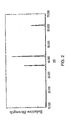
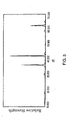
- Fig. 2 and Fig. 3 Shown in Fig. 2 and Fig. 3 are respective powder X-ray diffraction patterns of Ni 0.8 Co 0.2 O used in the present invention in which Ni and Co are considered to be in a state of a solid solution, and of a mixture of NiO and Co 3 O 4 of the third conventional example, both used in synthesizing the Li-containing complex oxides shown in Table 3.
- K ⁇ beam from a Cu target was employed as the source of beam for X-ray diffraction.
- Ni and Co When a nickel-cobalt oxide is prepared by thermally decomposing a co-precipitated Ni v Co w (OH) 2 , Ni and Co will not always make a uniform solid solution. When a material in which Ni oxides and Co oxides are non-uniformly mixed without making a complete solid solution is used as a synthesizing material, it is not possible to obtain a positive active material having a high discharge capacity and a superior life characteristic as described before.
- Co has been described in detail as an example of an element to substitute a part of Ni. It is to be noted that similar effect can be obtained by using at least one type of element selected from the group consisting of Mn, Cr, Fe, and Mg, in addition to Co.
- a nickel hydroxide represented by a molecular formula Ni a M b (OH) 2 in which an element M has been uniformly dispersed by co-precipitation or other method was thermally decomposed at 250° C-1000°C in the foregoing exemplary embodiments. It can also be obtained by mixing a monohydrate of lithium hydroxide to nickel hydroxide in which an element M has been uniformly dispersed by co-precipitation or other method, and then heating at temperatures not lower than 250°C and not higher than the melting point of lithium hydroxide, i.e., 445°C.
- the reason for heating the lithium hydroxide at a temperature not higher than the melting point of lithium hydroxide was to dehydrate nickel hydroxide containing an element M without allowing synthesizing reaction of the nickel hydroxide containing M and lithium hydroxide to start.
- an organic electrolyte was described as an example of a non-aqueous electrolyte of a test cell in the exemplary embodiments, a solid polymer electrolyte or a solid electrolyte comprising an inorganic salt of lithium such as lithium iodide (LiI) is also effective.
- LiI lithium iodide
- the present invention is not limited to the negative material, construction of the electrode group, the cell configuration, etc., which have been described in the exemplary embodiments.
- the present invention provides a method of producing positive active materials for non-aqueous electrolyte secondary battery through synthesis of a Li-containing complex oxide obtained by firing in an oxidizing atmosphere a mixture of nickel oxide in which an element M (M representing at least one element from the group consisting of Co, Mn, Cr, Fe and Mg) is dissolved as a solid solution and LiOH or its hydrates.
- a non-aqueous electrolyte secondary battery employing this Li-containing complex oxide as the positive active material not only has a large initial capacity and a long cycle life characteristic but also its reliability can be increased in that the internal cell pressure does not increase due to storage at a high temperature in a charged state.
Landscapes
- Chemical & Material Sciences (AREA)
- Organic Chemistry (AREA)
- Inorganic Chemistry (AREA)
- Chemical Kinetics & Catalysis (AREA)
- Electrochemistry (AREA)
- General Chemical & Material Sciences (AREA)
- Engineering & Computer Science (AREA)
- Materials Engineering (AREA)
- Manufacturing & Machinery (AREA)
- Battery Electrode And Active Subsutance (AREA)
- Secondary Cells (AREA)
Abstract
Description
- The present invention relates to a method of producing positive active materials for secondary batteries employing a non-aqueous electrolyte such as organic electrolyte or polymer solid electrolyte.
- With the progress of electronics technologies in recent years, miniaturization, lighter weight, and lower power dissipation of electronic equipment have become possible along with sophistication of functions. As a result, a variety of cordless or portable consumer electronics equipment has been developed and commercialized and the market size is rapidly expanding. Typical examples include camcorders, lap top computers, and portable telephones. Further miniaturization and increasingly lighter weight as well as longer operating time of these equipment are always demanded. In association with this trend, there is a strong demand for continuing improvement in energy density and cycle life of small rechargeable batteries to be used in these equipment as a built-in power source. As built-in batteries, starting with lead-acid type and nickel-cadmium type batteries which were initially developed and commercialized, nickel-hydrogen (nickel-metal hydride system) storage batteries and lithium-ion secondary batteries which have higher capacity and higher energy density than these battery systems have subsequently been developed and commercialized. Among them, the lithium-ion secondary battery, which has a high energy density both per unit weight and per unit volume, is a battery system primarily using a complex oxide of lithium and a transition metal element as the positive electrode, a graphite-based carbon as the negative electrode, and a non-aqueous electrolyte such as organic electrolyte or polymer solid electrolyte as the electrolyte, and is recently enjoying a rapid growth in production. In this battery, during charge, lithium ions will desorb from the lithium-containing complex oxide of the positive electrode and transfer into the electrolyte, and at the same time, lithium ions of equal electrochemical equivalent will be fed from the electrolyte into the carbon of the negative electrode. Conversely, during discharge, lithium ions are fed to the positive electrode desorbing from the negative electrode. As this cycle is repeated, lithium-ion secondary battery is sometimes called a rocking-chair battery.
- As the potential of the carbon negative electrode is close to the electrode potential of metallic lithium, a complex oxide of lithium which has a high electrode potential and a transition metal element is used as the positive electrode, for example, a complex oxide (LiCoO2 of lithium and cobalt, a complex oxide (LiNiO2) of lithium and nickel, and a complex oxide (LiMn2O4) of lithium and manganese. These complex oxides are often called as lithium cobaltate, lithium nickelate, and lithium manganate.
- In the currently commercialized batteries, LiCoO2 which has a high potential and a long cycle life is most generally used as the positive active material. Under this situation, a use of LiNiO2 with which a higher capacity than that of LiCoO2 is expected is now being actively studied. The reason for a higher capacity is because, as the electrode potential of LiNiO2 is lower than that of LiCoO2, it becomes possible to cause more quantity of lithium to desorb during charge before decomposition voltage of an aqueous electrolyte such as organic electrolyte is reached. As a result, the quantity of charged electricity is expected to increase, and hence the discharge capacity is also expected to increase.
- Conversely, despite its large initial discharge capacity, LiNiO2 suffers a problem of cycle deterioration by gradual decrease in the discharge capacity as charge and discharge are repeated.
- As a result of disassembling a battery cell of which the discharge capacity has decreased due to repeated charge-discharge cycles and X-ray diffraction analysis of the positive active material by the inventors of this invention, a change of crystal structure was observed after charge and discharge cycles, which was confirmed to be the cause fpr deterioration.
- Similar phenomenon has already been published by W. Li, J. N. Reimers and J. R. Dahn in Solid State Ionics, 67, 123 (1993). It is reported in this paper that, with the repetition of charge and discharge, lattice constant of LiNiO2 changes while itself changes from a hexagonal to a mono-clinic system crystal, and further from a second hexagonal to a third hexagonal system crystal as lithium is desorbed. This type of change in crystal phase lacks reversibility and as charge-discharge reactions are repeated, the sites where insertion and desorption of lithium are possible are gradually lost. This phenomenon is considered to be the cause of decrease in the discharge capacity.
- In contrast, with LiCoO2, such a change in the crystal phase as described above on LiNiO2 will not occur in the region of normal voltage (a voltage at which an organic electrolyte oxidizes and decomposes), suggesting that a decrease in the discharge capacity due to charge-discharge cycles is not likely to take place.
- For the purpose of addressing the problem of decrease in discharge capacity of LiNiO2 due to charge-discharge cycles, many proposals have heretofore been made to substitute a part of the element Ni with transition metal elements, primarily Co.
- As an example, in Japanese Laid-open Patent No. Sho 62-256,371, a method of synthesizing a Li-containing complex oxide of Co and Ni by firing at 900°C a mixture of lithium carbonate (LiCO3, cobalt carbonate (CoCO3), and nickel carbonate (NiCO3).
- Methods of synthesizing complex oxides are disclosed in Japanese Laid-open Patent No. Sho 62-299,056 in which a mixture of carbonates, hydroxides, and oxides of Li, Co, and Ni is used as the raw material, and in US Patent No. 4,980,080 in which a mixture of lithium hydroxide (LiOH), Ni oxides and Co oxides is used as the raw material, and both heated at 600° C to 800°C.
- In addition, in US Patent No. 5,264,201 and other patents, methods of synthesizing Li-containing complex oxides are disclosed in which lithium hydroxide (LiOH) is added to and mixed with a uniform mixture of oxides or hydroxides of Ni and oxides or hydroxides of Fe, Co, Cr, Ti, Mn, or V, followed by heat treatment at a temperature not lower than 600°C.
- Furthermore, in Japanese Laid-open Patent No. Hei 1-294,364 and other patents, methods of synthesizing Li-containing complex oxides are disclosed in which carbonates, more precisely basic carbonates, of Ni and Co are co-precipitated from an aqueous solution containing Ni ions and Co ions, and a mixture of the co-precipitated carbonates and Li2CO3 is fired.
- EP0720247 discloses a method of forming a lithium cobalt nickel oxide for a non-aqueous secondary battery by 1. coprecipitation of nickel hydroxide and cobalt hydroxide; 2. firing the mixed hydroxide in an oxidizing atmosphere together with lithium oxide or hydroxide.
- US4980080 discloses a method of forming a lithium cobalt nickel oxidefor a non-aqueous secondary battery by firing a mixture of nickel oxide, cobalt oxide and lithium hydroxide.
- EP0468942 discloses a dry mixture of nickel hydroxide or nickel oxide and cobalt hydroxide or oxide, fired together with lithium hydroxide.
- There have also been proposed a method in which a Ni-containing oxide and a Co-containing oxide are mixed and fired after being further mixed with carbonates or oxides of Li, and a method in which a Li-containing complex oxide is synthesized by using oxides containing both Ni and Co such as NiCoO2.
- These inventions represent efforts to relax a change in crystal phase by substituting a part of Ni with Co or other transition metal elements. The reason why there are many proposals to substitute part of Ni with Co from among different transition metals is because substitution is easy as the ion radius of Co is approximately equal to that of Ni and that the bond strength of Co with oxygen is stronger than that of Ni, which suggest that the crystal structure may become more stable and that the decrease in discharge capacity due to charge-discharge cycles may be improved.
- However, not all of the three battery characteristics, namely, discharge capacity, cycle life characteristic, and reliability as a battery, could be satisfied by the Li-containing complex oxides represented by a chemical formula LixNiyCozO2 (0.90 ≤ x ≤ 1.10, 0,7 ≤ y ≤ 0. 95, y + z = 1) as obtained by the methods of synthesis heretofore been disclosed or proposed. For example, even though a positive electrode produced by using a Li-containing complex oxide synthesized from a mixture of each respective carbonates, hydroxides, or oxides of Li, Co, and Ni did have a certain large initial discharge capacity, the discharge capacity decreased with charge-discharge cycles though not as markedly as with LiNiO2 of which no Ni had been substituted with Co and it was not satisfactory as a positive active material.
- A close study of the causes of such performance deterioration by the inventors of the present invention has revealed that, in the conventional methods of production, as the quantity (value of z) of Co substituting Ni increases (z ≥ 0.1), in reality, Ni and Co are not uniformly dispersed in the obtained complex oxide, partially leaving LiNiO2 and LiCoO2 as a mixture. It has been found that although a positive electrode made from these active materials shows a somewhat large discharge capacity, the part not properly substituted with Co had caused a change in the crystal phase with repeated charge and discharge, thus damaging the crystal structure and loosing reversibility, resulting in the decrease of discharge capacity.
- To address the non-uniform dispersion of Ni and Co in such active materials, a method of producing a positive active material using as the raw material carbonates co-precipitated from an aqueous solution of a mixture of Ni ions and Co ions is proposed in Japanese Laid-pen Patent No. Hei 1-294,364. With this method, it is true that a carbonate in which Ni and Co are uniformly dispersed can be obtained. However, when this co-precipitated carbonate is mixed with Li2CO3 and fired, the co-precipitated carbonate is first decomposed generating a large volume of carbon dioxide (CO2) causing an increase in the CO2 partial pressure of the firing atmosphere. It further causes a decrease in the partial pressure of oxygen (O2) which is necessary for producing a complex oxide, and blocks the progress of the synthesizing reaction. Consequently, unless some forcible means of increasing O2 partial pressure is adopted, it has been difficult to obtain a perfect complex oxide. As a result, when using a Li-containing complex oxide synthesized by conventional methods of production, although the deterioration of discharge capacity due to charge-discharge cycles may be low, the initial discharge capacity is not necessarily high and is considered to be insufficient. Furthermore, because of the presence of CO2 during synthesis, Li2CO3 remains mixed as an excess lithium salt after synthesis has been completed. When a cell which uses an active material containing this Li2CO3 is stored at a high temperature of 80°C in a charged state, Li2CO3 in the positive electrode decomposes and releases CO2, thus causing an increase in the internal cell pressure. Therefore, this production method has not been put into practice.
- In addition to these methods, there is a method to use NiCoO as a synthesizing material and lithium oxide (Li2O) as a source of supply of Li. However, as the melting point of Li2O is not lower than 1,700° C, the reactivity is low and a perfect Li-containing complex oxide could not be synthesized. Consequently, the initial discharge capacity of a cell using a positive electrode made of this complex oxide was not satisfactory.
- As a means for uniformly dispersing Ni and Co, apart from the use of co-precipitated carbonates of Ni and Co or NiCoO2, there exists a method of co-precipitating them as hydroxides, or a method of production by mixing a Ni hydroxide in which Co is dissolved as a solid solution and a lithium salt and then firing. In this production method, too, the hydroxide as the raw material decomposes first and a large volume of H2O is generated. Since the H2O partial pressure increases, it is difficult to maintain the O2 partial pressure of the firing atmosphere at a level appropriate to synthesize a perfect Li-containing complex oxide as in the case of use of a co-precipitated carbonate as the raw material, and hence the progress of synthesizing reaction is blocked.
- Consequently, a co-precipitated hydroxide of Ni and Co is first thermally decomposed at 190°C to 250°C to prepare (NiyCo1-y)3O4 or NiyCo1-yO. There is a published report of mixing LiOH to these oxides and firing at 450°C (Ref. J. Solid State Chemistry, 113, 182-192(1994)). In this method, presumably because the firing temperature during synthesis was relatively low, nonreacted lithium compounds (Li2CO3 and LiOH) were observed by X-ray diffraction analysis when the quantity of substitution of Ni with Co was not greater than 60 mol%. Consequently, it was not possible to synthesize a perfect Li-containing complex oxide even with this method.
- The present invention aims at addressing various problems encountered in using Li-containing complex oxides synthesized by the heretofore proposed or reported methods of production as positive active materials. That is, as a result of studying conventional methods of production in detail, the present invention provides a new method of production of positive active material for a high-reliability non-aqueous electrolyte secondary battery of which the discharge capacity is high and the decrease of the discharge capacity due to charge-discharge cycles is controlled by using in the positive electrode a Li-containing complex oxide obtained by using nickel oxides in which a specific element has been dissolved as a solid solution as a synthesizing material, and firing it using LiOH or a mixture of LiOH and its hydrates as the source of supply of Li.
- The present invention provides a method of production of a positive active material for a non-aqueous electrolyte secondary battery in which a Li-containing complex oxide as represented by a chemical formula LixNiyMzO2 (M being at least an element selected from the group consisting of Co, Mn, Cr, Fe and Mg; 0.90 ≤ x ≤ 1.10, 0,7 ≤ y ≤ 0.95, y + z = 1) is synthesized by firing a mixture of nickel oxide containing M dissolved as a solid solution as represented by a chemical formula NivMwO (0.7 ≤ v ≤ 0.95, v + w = 1) and LiOH or its hydrates. By employing this active material in the positive electrode of a non-aqueous electrolyte secondary battery, it has become possible to realize a high-reliability battery with which the discharge capacity during the initial cycles is large and the decrease of the discharge capacity due to charge-discharge cycles is lowered.
-
- Fig. 1 is a vertical cross-sectional view of a cylindrical test cell produced for comparison between exemplary embodiments of the present invention and a conventional example.
- Fig. 2 is a powder X-ray diffraction pattern of Ni0.8Co0.2O used for synthesizing a Li-containing complex oxide in the first exemplary embodiment of the present invention.
- Fig. 3 is a powder X-ray diffraction pattern of a mixture of NiO and Co3O4 in a third conventional example.
- Exemplary embodiments of the present invention will be described in the following referring to drawings and tables.
- To begin with, aqueous solutions of mixed sulfates were prepared with various atomic ratios of Ni and Co by using nickel sulfate (NiSO4) and cobalt sulfate (CoSO4). By pouring an aqueous solution of sodium hydroxide (NaOH) to this and stirring, a precipitate in which Ni hydroxide and Co hydroxide are uniformly dispersed is obtained by co-precipitation. After fully washing this precipitate with water, it was filtered and dried at 80°C to obtain NivCow(OH)2. By thermally decomposing this hydroxide at 700°C for 5 hours, an oxide, NivCowO, of Ni and Co was prepared.
- Next, by adding a monohydrate (LiOH·H2O) of lithium hydroxide to NivCowO of varying compositions at a ratio of 1.05 to 1 so that the constituent Li atom is slightly in excess of each pair of (Ni + Co) atoms of the latter in number and fully mixing, the mixture was heated at 700°C for 10 hours in an oxidizing atmosphere to obtain a Li-containing complex oxide (LixNiyCozO2) of Ni and Co.
- The synthesized LixNiyCozO2 is a relatively fragile aggregate, which is easily pulverized in a mortar.
- A positive paste is then prepared by mixing 100 parts by weight of LixNiyCozO2 powder, 3 parts by weight of acetylene black, and 5 parts by weight of fluorocarbon resin binder, and adding to the mixture N-methylpyrolidinone and blending. The paste is then coated on both sides of an aluminum foil having a thickness of 0.02 mm and rolled so that a thickness of 0.13 mm can be obtained after drying. It is then cut to a width of 35 mm and length of 270 mm to obtain a positive electrode.
- Using this positive electrode, a cylindrical test cell with a diameter of 13.8 mm and a total height of 50 mm was produced as illustrated by the vertical cross sectional view in Fig. 1. -
- In Fig. 1, an
electrode group 4 is configured by spirally winding apositive electrode 5 and anegative electrode 6 with a separator 7 interposed, and is housed inside a cell case 1 made of stainless steel plate with insulatingplates electrode group 4. Analuminum lead ribbon 5a provided in advance on thepositive electrode 5 is connected by welding to the bottom surface of aseal plate 2 which has a built-in explosion proof mechanism. Anickel lead ribbon 6a provided in advance on thenegative electrode 6 is welded to the inner bottom surface of the cell case 1. After pouring and impregnating an organic electrolyte in theelectrode group 4, theseal plate 2 which has been fit with a gasket 3 in advance is forced into the upper periphery of the cell case 1, after which the upper periphery of the cell case 1 is sealed by burring inward to obtain a completed cell. - The
negative electrode 6 is made by first preparing a paste by adding to a mixture of 100 parts by weight of graphite powder and 10 parts by weight of fluorocarbon resin binder an aqueous solution of carboxymethyl cellulose and blending. The paste is then coated on both sides of a copper foil having a thickness of 0.015 mm and rolled to an after-dry thickness of 0.2 mm, and cut to a width of 37 mm and a length of 280 mm. - As the organic electrolyte, a solution prepared by dissolving lithium hexafluorophosphate (LiPF6) in an equal-volume mixed solvent of ethylene carbonate and diethyl carbonate to a concentration of 1 mol/l.
- In addition to the above test cell, a comparative test cell (P-1) based on a conventional method was also produced by using a positive active material based on a complex oxide of Li and Ni prepared by using nickel hydroxide, Ni(OH)2, no part of the Ni of which has been substituted with Co, as the starting material, with other conditions the same, and using the same materials and components as the above test cell with the exception of use of this material as the positive active material. Here the discharge capacity of the negative electrode of the test cell was made larger so that the discharge capacity of the test cell can be regulated by the discharge capacity of the positive electrode.
- Each of the above test cells was subjected to a charge-discharge test under the following conditions. After being charged at a constant current of 120 mA at 20°C to a voltage of 4.2 V, the cells were left for 1 hour, and then discharged at a constant current of 120 mA until an end voltage of 3.0 V was reached, and this process was repeated.
- The discharge capacity of the third cycle was defined as the initial capacity and the number of charge-discharge cycles until the discharge capacity decreased to 50% of the initial capacity was defined as the life. Also, specific capacity (mAh/g) of the positive active material was obtained by the loaded amount of Li-containing complex oxide used as the positive active material in each cell and the initial capacity. Table 1 summarizes the test results.
- It can be seen from Table 1 that though the initial capacity of the comparative test cell No. P-1 in which no part of Ni has been substituted with Co is high, the life is extremely short. This is considered to be due to a poor reversibility of charge-discharge reaction causing a change of the crystal phase of the positive active material and to a gradual loss of the sites for insertion and desorption of Li as described earlier.
-
(a) Cell No.
(b) Ratio of Ni substituted with Co(atomic %)
(c) Composition of oxide materials for synthesis of Li-containing complex oxides
(d) Initial capacity (mAh)
(e) Specific capacity of active material (mAh/g)
(f) Life (cycles)(a) (b) (c) (d) (e) (f) P-1 0 Ni1.0Co0O 774 172 120 1-1 5 Ni0.95Co0.05O 788 175 400 1-2 10 Ni0.9Co0.1O 797 177 420 1-3 20 Ni0.8Co0.2O 792 176 456 1-4 30 Ni0.7Co0.3O 779 173 440 1-5 40 Ni0.6Co0.4O 743 165 210 - In contrast, with the exception of the cell No. 1-5, in cells the positive active material of which is based on a Li-containing complex oxide synthesized by using nickel-cobalt oxide with a part of the Ni substituted with Co, both the specific capacity and life showed such a superior value as 170 mAh/g and 400 cycles, respectively. This is considered to be due to an effective control of change of the crystal phase due to charge-discharge cycles by the substitution of 5 to 30 atomic % of the Ni with Co.
- However, when the ratio of Co substitution reaches 40 atomic % as in the cell No. 1-5, the specific capacity of the active material decreases and the life characteristic lowers. It is considered that when the percentage of Co substitution is increased like this, open circuit voltage of the cell increased and the quantity of charged electricity until charging to 4.2 V decreased, thus lowering the initial capacity and hence the specific capacity of the active material. It is also likely that, in the Li-containing complex oxide obtained, as the Ni and Co are not in a state of a uniform solid solution, a mixture of LiNiO2 and LiCoO2 is locally generated, and in the part where Ni is not fully substituted with Co, a change of crystal phase has occurred, thus damaging the crystal structure and lowering the cycle characteristic.
- On the cell Nos. 1-1, 1-2, 1-3, and 1-4 which showed a high initial capacity, a small decrease in discharge capacity due to charge-discharge cycles, and a long life, the products produced during the process of synthesis of the positive active material were identified by elementary analysis. The co-precipitated hydroxide used as the starting material is represented by a chemical formula NiαCoβ(OH)2 (0.7≤ a≤ 0 .95, a + b = 1). The nickel-cobalt oxide obtained by thermally decomposing the co-precipitated hydroxide is represented by a chemical formula NivCowO (0.7≤ v≤ 0.95, v + w = 1). By using the above nickel-cobalt oxide as the material for synthesis and LiOH·H2O as the source of supply of Li and firing at 700°C for 10 hours in an oxidizing atmosphere, the material produced was found to be represented by a chemical formula LixNiyCozO2 (0.90≤ x ≤ 1.10, 0.7≤ y≤ 0.95, y + z = 1).
- By using the Li-containing complex oxide thus prepared as the positive active material, a non-aqueous electrolyte secondary battery which is superior in discharge capacity and in life characteristic can be obtained.
- It was confirmed in the first exemplary embodiment that NivCowO which is appropriate as a material for synthesizing a Li-containing complex oxide can be obtained by thermally decomposing at 700°C a hydroxide NivCow(OH)2 obtained by co-precipitation from an aqueous solution of mixed sulfates of Ni and Co and in which Ni and Co are uniformly dispersed at a predetermined ratio.
- In this exemplary embodiment, the influence of the thermal decomposition temperature on Ni0.8Co0.2(OH)2 was studied over a wide range of temperature points as 200, 250, 300, 500, 700, 900, 1000, and 1100°C with the quantity of Co substituting Ni fixed at 20 atomic %.
- With other conditions kept exactly the same as in the first embodiment, Li-containing complex oxides were synthesized, and positive electrodes using them as the active material and test cells using these positive electrodes were produced. Further, these test cells were subjected to charge-discharge tests under the same conditions as in the first exemplary embodiment, and the results are shown in Table 2.
- As is clear from Table 2, the initial capacity of the cell No. 2-1 of which the thermal decomposition temperature of Ni0.8Co0.2(OH)2 was 200° C was slightly low and the life was also short.
Table 2 Cell No. Thermal Decomp. Temperature (°C) Initial Capacity (mAh) Specific Capacity of Active Material (mAh/g) Life (cycles) 2-1 200 752 167 370 2-2 250 783 174 435 2-3 300 792 176 448 2-4 500 797 177 452 1-3 700 792 176 456 2-5 900 788 175 439 2-6 1000 774 172 432 2-7 1100 723 161 360 - It is conceivable that, at a heating temperature of 200°C, a perfect Ni0.8Co0.2O was not produced with the raw material Ni0.8Co0.2(OH)2 locally remaining, and, as a result, when synthesized by firing after being added with LiOH·H2O, H2O is generated from the residual hydroxide thereby lowering the O2 partial pressure of the firing atmosphere and blocking synthesizing reaction. Also, with the cell No. 2-7 in which the thermal decomposition temperature was as high as 1100°C, the initial capacity, the specific capacity of the active material, and the life were all low. This may be attributed to the fact that a nickel-cobalt oxide such as Ni0.8Co0.2O has a characteristic of making a sudden crystal growth when the temperature exceeds 1000°C, and that the nickel-cobalt oxide which has been in a polycrystalline state until then turns to single crystals by crystal growth thus grain size becoming large. Therefore, it is further conceivable that, when synthesizing a Li-containing complex oxide from nickel-cobalt oxide as such, it is difficult for Li to be inserted into the center of a grain and the progress of synthesizing reaction is blocked.
- When the thermal decomposition temperature of Ni0.8Co0.2(OH)2 was in the range of 250°C-1000°C, both initial capacity and life were confirmed to show superior values.
- As has been described earlier, it became clear that a Li-containing complex oxide prepared by using NivCow(OH)2 as the starting material, NivCowO obtained by thermally decomposing the starting material at 250° C-1000°C for 5 hours as the material for synthesis, and LiOH · H2O as the source of supply of Li, can exhibit a superior discharge capacity and cycle life characteristic as a positive active material for a non-aqueous electrolyte secondary battery. Here, it is to be noted that, although generally available monohydrates of lithium hydroxide were used as the source of supply of Li when synthesizing Li-containing complex oxides in the first and second exemplary embodiments, an equal effect can be obtained by the use of anhydrous LiOH which has been dehydrated in advance.
- Next, with the quantity of Ni substituted with Co fixed at the same 20 atomic % as in Table 2, conventional examples of various positive active materials were produced and compared with the exemplary embodiments of the present invention by using co-precipitated Ni0.8Co0.2CO3 as the starting material in addition to Ni0.8Co0.2(OH)2, the same co-precipitated Ni0.8Co0.2(OH)2 as used as the starting material, a mixture of NiO and Co3O4 and co-precipitated Ni0.8Co0.2CO3 as the synthesizing materials in addition to Ni0.8Co0.2(OH)2, and Li2CO3 or lithium oxide (Li2O) as the source of supply of Li in addition to LiOH·H2O. Here, the atomic ratio (Ni + Co) : Li for synthesis of Li-containing complex oxide was chosen to be 1.0:1.05, and the firing condition of synthesis was fixed at 700°C for 10 hours in an oxidizing atmosphere.
- Methods of synthesis of each conventional example are as follows.
- A Li-containing complex oxide was synthesized by using the starting material of the present invention as it is, namely, co-precipitated Ni0.8Co0.2(OH)2 as the synthesizing material, and LiOH·H2O as the source of supply of Li.
- A Li-containing complex oxide was synthesized by using mixed powders of NiO and Co3O4 at a ratio in mole of 8:2/3 as the synthesizing material and LiOH·H2O as the source of supply of Li.
- An excess amount of an aqueous solution of sodium bicarbonate (NaHCO3) was added to an aqueous solution prepared by dissolving nickel chloride (NiCl2·6H2O) and cobalt chloride (CoCl2·6H2O) at a ratio in mole of 8:2 in water saturated with Co to obtain a co-precipitated Ni0.8Co0.2CO3. By using the co-precipitated carbonate as the synthesizing material after it was washed and dried and LiOH·H2O as the source of supply of Li, a Li-containing complex oxide was synthesized.
- Using the co-precipitated Ni0.8Co0.2CO3 prepared in the fourth conventional example as the starting material and thermally decomposing it at 700°C for 5 hours, Ni0.8Co0.2O was obtained. Using it as the synthesizing material and LiOH·H2O as the source of supply of Li, a Li-containing complex oxide was synthesized.
- Using the Ni0.8Co0.2O prepared in the first exemplary embodiment as the synthesizing material and Li2CO3 as the source of supply of Li, a Li-containing complex oxide was synthesized.
- Using the Ni0.8Co0.2O prepared in the first exemplary embodiment as the synthesizing material as in the sixth conventional example and Li2O as the source of supply of Li, a Li-containing complex oxide was synthesized.
- Positive electrodes that use Li-containing complex oxides synthesized by the second through seventh conventional examples were made, and test cells were produced by using these positive electrodes under the same conditions as the first exemplary embodiment. These test cells were subjected to a charge-discharge test under the same conditions as the first exemplary embodiment, and the results obtained are shown in Table 3.
- From Table 3, it can be seen that though the cell No. P-3 of the third conventional example had a relatively superior initial capacity of 170 mAh/g in terms of specific capacity of the active material, the life was extremely short when compared with the exemplary embodiments of the present invention. This may be attributed to the use of a mixture of NiO and Co3O4 as the synthesizing material, which might have caused synthesis of a Li-containing complex oxide in which LiNiO2 and LiCoO2 are locally mixed, a situation different from the case of use of Ni0.8Co0.2O in an exemplary embodiment of the present invention. Therefore, in the regions where Ni has not been fully substituted by Co, changes of the crystal phase might have occurred and the crystal structure might have been damaged, thus lowering the discharge capacity and shortening the life.
- The cells No. P-2 and P-4 in accordance with the second and fourth conventional examples had a relatively long life exceeding 300 cycles, but the initial capacity was slightly lower than in exemplary embodiments of the present invention. This is considered to be due to the use of co-precipitated hydroxides and carbonates as they were as the synthesizing material, which has caused generation of a large volume of H2O or CO2 during firing for synthesis. As a result, the partial pressure of O2 of the firing atmosphere was lowered, thus failing in preparing a perfect complex oxide.
- The cell No. P-5 in accordance with the fifth conventional example is superior in both the initial capacity and the life characteristic. However, when stored in a separate test at a high temperature of 80° C in a charged state, the explosion-proof mechanism of the seal plate started to operate, allowing a gas inside the cell to be released and the electrolyte to leak out.
-
(1) Cell No. (2) Positive Active Material (3) Type
(4) Starting Material (5) Synthesis (6) Material
(7) Source of Li (8) Initial Capacity (mAh)
(9) Specific Capacity of Active Material (mAh/g)
(10) Life (cycles)(1) (2) (8) (9) (10) (3) (4) (5) (6) (7) 1-3 Present Invention Ni0.8Co0.2(OH)2 Ni0.8Co0.2O LiOH·H2O 792 176 456 P-2 Conv. Ex. 2 ----- Ni0.8Co0.2(OH)2 LiOH·H2O 747 166 362 P-3 Conv. Ex. 3 ----- NiO+CO3O4 LiOH·H2O 765 170 153 P-4 Conv. Ex. 4 ----- Ni0.8Co0.2CO3 LiOH·H2O 711 158 310 P-5 Conv. Ex. 5 Ni0.8Co0.2CO3 Ni0.8Co0.2O LiOH·H2O 770 171 402 P-6 Conv. Ex. 6 Ni0.8Co0.2(OH)2 Ni0.8Co0.2O Li2CO3 765 17C 360 P-7 Conv. Ex. 7 Ni0.8Co0.2(OH)2 Ni0.8Co0.2O Li2O 743 165 365 - This is due to a small amount of residual carbonate caused when using a co-precipitated Ni0.8Co0.2CO3 as the starting material and from which Ni0.8Co0.2O was prepared by thermal decomposition. When synthesizing a Li-containing complex oxide, this residual carbonate and LiOH react with each other producing a small amount of LiCO3, which remains mixed in the complex oxide. It is conceivable that this Li2CO3 is eventually contained in the positive electrode, and when a cell is left at a high temperature in a charged state, Li2CO3 decomposes within the cell causing an increase in the internal cell pressure due to CO2 gas generated. Therefore, it is improper to use a co-precipitated carbonate as the starting material to prepare a Ni·Co oxide as a synthesizing material as in the fifth conventional example.
- With the cell No. P-6 in accordance with the sixth conventional example in which Li2CO3 was used as the source of supply of Li, it was superior in both the initial capacity and life characteristic as in No. P-5 in accordance with the fifth conventional example, but it suffered a problem of an increase in the internal cell pressure when stored at a high temperature in a charged state. The reason for this problem is also considered to be due to non-reacted excess of Li2CO3 used as the source of supply of Li remaining in the positive active material as in the case of the cell No. P-5. Consequently, it is improper to use Li2CO3 as a source of supply of Li.
- In the seventh conventional example, Ni0.8Co0.2O was used as the synthesizing material as in the exemplary embodiments of the present invention. Presumably because Li2O was used as a source of supply of Li, the life characteristics of the cell No. P-7 was superior but the initial capacity was not satisfactory. This may be attributed to too high a melting point exceeding 1700°C of Li2O used as the source of supply of Li that poor reactivity was caused leading to a failure in synthesizing a perfect Li-containing complex oxide.
- Shown in Fig. 2 and Fig. 3 are respective powder X-ray diffraction patterns of Ni0.8Co0.2O used in the present invention in which Ni and Co are considered to be in a state of a solid solution, and of a mixture of NiO and Co3O4 of the third conventional example, both used in synthesizing the Li-containing complex oxides shown in Table 3. As the source of beam for X-ray diffraction, Kα beam from a Cu target was employed.
- In Fig. 2, only 3 peaks are observed, namely, at 2q = 37.1° ± 1°, 43.1° ± 1°, and 62.6° ± 1°. This indicates that Ni and Co atoms are uniformly dispersed and are in a state of a solid solution.
- In contrast, the diffraction pattern in Fig. 3 shows many low peaks in addition to the 3 peaks. This suggests that the peaks of NiO and Co3O4 are mixing.
- When a nickel-cobalt oxide is prepared by thermally decomposing a co-precipitated NivCow(OH)2, Ni and Co will not always make a uniform solid solution. When a material in which Ni oxides and Co oxides are non-uniformly mixed without making a complete solid solution is used as a synthesizing material, it is not possible to obtain a positive active material having a high discharge capacity and a superior life characteristic as described before. It is therefore desirable to select as an adequate NivCowO material for synthesis the one in which Ni and Co are in a state of a solid solution at the atomic level and only 3 peaks are observed by powder X-ray diffraction analysis, i.e., at 2q = 37.1° ± 1°, 43.1° ± 1°, and 62.6° ± 1° .
- In the foregoing exemplary embodiments, Co has been described in detail as an example of an element to substitute a part of Ni. It is to be noted that similar effect can be obtained by using at least one type of element selected from the group consisting of Mn, Cr, Fe, and Mg, in addition to Co.
- Also, in the foregoing exemplary embodiments, although the firing temperature for synthesis of a Li-containing complex oxide was fixed at 700°C, in practice there was observed no particular problem when the temperature was within the range 700°C to 900°C.
- In obtaining a nickel oxide represented by a molecular formula NivCowO in which an element M is dissolved as a solid solution, a nickel hydroxide represented by a molecular formula NiaMb(OH)2 in which an element M has been uniformly dispersed by co-precipitation or other method was thermally decomposed at 250° C-1000°C in the foregoing exemplary embodiments. It can also be obtained by mixing a monohydrate of lithium hydroxide to nickel hydroxide in which an element M has been uniformly dispersed by co-precipitation or other method, and then heating at temperatures not lower than 250°C and not higher than the melting point of lithium hydroxide, i.e., 445°C. Here, the reason for heating the lithium hydroxide at a temperature not higher than the melting point of lithium hydroxide was to dehydrate nickel hydroxide containing an element M without allowing synthesizing reaction of the nickel hydroxide containing M and lithium hydroxide to start.
- Furthermore, although an organic electrolyte was described as an example of a non-aqueous electrolyte of a test cell in the exemplary embodiments, a solid polymer electrolyte or a solid electrolyte comprising an inorganic salt of lithium such as lithium iodide (LiI) is also effective.
- It goes without saying that the present invention is not limited to the negative material, construction of the electrode group, the cell configuration, etc., which have been described in the exemplary embodiments.
- The present invention provides a method of producing positive active materials for non-aqueous electrolyte secondary battery through synthesis of a Li-containing complex oxide obtained by firing in an oxidizing atmosphere a mixture of nickel oxide in which an element M (M representing at least one element from the group consisting of Co, Mn, Cr, Fe and Mg) is dissolved as a solid solution and LiOH or its hydrates. With this method of production, decrease of the O2 partial pressure in the firing atmosphere during synthesis and mixed presence of Li2CO3 can be controlled. As a result, a non-aqueous electrolyte secondary battery employing this Li-containing complex oxide as the positive active material not only has a large initial capacity and a long cycle life characteristic but also its reliability can be increased in that the internal cell pressure does not increase due to storage at a high temperature in a charged state.
-
- 1. Cell case
- 2. Seal plate
- 3. Gasket
- 4. Electrode group
- 5. Positive electrode
- 5a. Positive electrode lead ribbon
- 6. Negative electrode
- 7. Separator
- 8. Insulating plate
- 9. Insulating plate
Claims (4)
- A method of producing a positive active material for a non-aqueous electrolyte secondary battery through synthesis of a Li-containing complex oxide represented by a chemical formula LixNiyMzO2 (M being at least one element selected from the group consisting of Co, Mn, Cr, Fe, and Mg; 0.90≤ x ≤ 1.10, 0,7 ≤ y ≤ 0.95, y + z = 1) by firing in an oxidizing atmosphere a mixture of a nickel oxide dissolving as a solid solution an element M as represented by a chemical formula NivMwO (0.7 ≤ v ≤ 0.95, v + w = 1) and a lithium hydroxide or its hydrate prepared by thermally decomposing a hydroxide represented by the chemical formula NiaMb(OH)2 (0.7 ≤ a ≤ 0.95, a + b = 1) co-precipitated from a solution of mixed salts of nickel and an element M (M being at least one element selected from the group consisting of Co, Mn, Cr, Fe, and Mg).
- The method of producing a positive active material for a non-aqueous electrolyte secondary battery as recited in claim 1, wherein the firing temperature in said oxidizing atmosphere is in a range of 700°C to 900°C.
- The method of producing a positive active material for a non-aqueous electrolyte secondary battery as recited in claim 2, wherein the thermal decomposition of said hydroxide is performed in a temperature range of 250°C to 1000°C.
- The method of producing a positive active material for a non-aqueous electrolyte secondary battery as recited in claim 2 and claim 3, wherein those nickel oxides having peaks only at 3 angles, i.e., 2q = 37.1° ± 1°, 43.1° ± 1°, and 62.6° ± 1°, in powder X-ray diffraction analysis using Kα beam from a Cu target as the source of beam are selectively used as a nickel oxide in which said element M is dissolved as a solid solution.
Applications Claiming Priority (3)
| Application Number | Priority Date | Filing Date | Title |
|---|---|---|---|
| JP29527796 | 1996-11-07 | ||
| JP295277/96 | 1996-11-07 | ||
| PCT/JP1997/004029 WO1998020571A1 (en) | 1996-11-07 | 1997-11-05 | Method of manufacturing positive active material for nonaqueous electrolyte secondary cells |
Publications (3)
| Publication Number | Publication Date |
|---|---|
| EP0874412A1 EP0874412A1 (en) | 1998-10-28 |
| EP0874412A4 EP0874412A4 (en) | 2004-05-12 |
| EP0874412B1 true EP0874412B1 (en) | 2006-10-11 |
Family
ID=17818525
Family Applications (1)
| Application Number | Title | Priority Date | Filing Date |
|---|---|---|---|
| EP97911456A Expired - Lifetime EP0874412B1 (en) | 1996-11-07 | 1997-11-05 | Method of manufacturing positive active material for nonaqueous electrolyte secondary cells |
Country Status (7)
| Country | Link |
|---|---|
| US (1) | US6242134B1 (en) |
| EP (1) | EP0874412B1 (en) |
| KR (1) | KR100276053B1 (en) |
| CN (1) | CN1207208A (en) |
| DE (1) | DE69736803T2 (en) |
| ID (1) | ID21811A (en) |
| WO (1) | WO1998020571A1 (en) |
Families Citing this family (19)
| Publication number | Priority date | Publication date | Assignee | Title |
|---|---|---|---|---|
| DE69819395T2 (en) * | 1997-04-15 | 2004-09-09 | Sanyo Electric Co., Ltd., Moriguchi | Positive electrode material for use of the non-aqueous electrolyte-containing battery and method of manufacturing the same and the non-aqueous electrolyte-containing battery |
| US6428766B1 (en) * | 1998-10-27 | 2002-08-06 | Toda Kogyo Corporation | Manganese oxide, lithium manganese complex oxide and cobalt-coated lithium manganese complex oxide, and preparation processes thereof |
| JP3773694B2 (en) | 1999-04-07 | 2006-05-10 | 三洋電機株式会社 | Manufacturing method of nickel metal hydride storage battery |
| JP4524881B2 (en) * | 2000-08-14 | 2010-08-18 | ソニー株式会社 | Nonaqueous electrolyte secondary battery |
| US8658125B2 (en) * | 2001-10-25 | 2014-02-25 | Panasonic Corporation | Positive electrode active material and non-aqueous electrolyte secondary battery containing the same |
| JP4292761B2 (en) * | 2002-07-23 | 2009-07-08 | 日鉱金属株式会社 | Method for producing positive electrode material for lithium secondary battery |
| US20050069484A1 (en) * | 2003-09-30 | 2005-03-31 | Manev Vesselin G. | Method of preparation of positive electrode material |
| CN100426567C (en) * | 2003-10-23 | 2008-10-15 | 肇庆市风华锂电池有限公司 | Lithium ion cell positive pole material and producing method thereof |
| US7381496B2 (en) | 2004-05-21 | 2008-06-03 | Tiax Llc | Lithium metal oxide materials and methods of synthesis and use |
| KR100660759B1 (en) * | 2005-03-11 | 2006-12-22 | 제일모직주식회사 | Cathode active material for non-aqueous electrolyte lithium secondary battery, manufacturing method thereof and lithium secondary battery comprising same |
| CN100527480C (en) * | 2005-10-27 | 2009-08-12 | 比亚迪股份有限公司 | Preparation method of plus plate material Li-Ni-Mn-Co-O of lithium ion battery |
| KR101138086B1 (en) * | 2005-11-02 | 2012-04-24 | 재단법인 포항산업과학연구원 | The preparation method of electrode for electrochemical capacitor |
| JPWO2007083457A1 (en) | 2006-01-20 | 2009-06-11 | 日鉱金属株式会社 | Lithium nickel manganese cobalt composite oxide and lithium secondary battery |
| CA2801280C (en) * | 2010-06-02 | 2015-02-10 | Sharp Kabushiki Kaisha | Method for producing lithium-containing composite oxide |
| WO2012032709A1 (en) * | 2010-09-09 | 2012-03-15 | 株式会社豊田自動織機 | Method for producing complex oxide, cathode active material for secondary battery and secondary battery |
| EP2698351B1 (en) * | 2011-04-14 | 2017-12-27 | Toda Kogyo Corp. | Li-Ni COMPOSITE OXIDE PARTICLE POWDER AND PROCESS FOR PRODUCING SAME, AND NON-AQUEOUS ELECTROLYTE SECONDARY BATTERY |
| KR102510885B1 (en) | 2015-12-31 | 2023-03-16 | 삼성에스디아이 주식회사 | Composite cathode active material, cathode and lithium battery containing composite cathode active material and preparation method thereof |
| KR101768374B1 (en) * | 2016-04-29 | 2017-08-14 | 주식회사 엘지화학 | Composite transition metal oxide precursor and preparing method thereof, and cathode active material using the same |
| US11152609B2 (en) * | 2018-10-20 | 2021-10-19 | Panasonic Corporation | Method for synthesizing nickel-cobalt-aluminum electrodes |
Family Cites Families (9)
| Publication number | Priority date | Publication date | Assignee | Title |
|---|---|---|---|---|
| JPH0785413B2 (en) | 1986-04-30 | 1995-09-13 | ソニー株式会社 | Organic electrolyte primary battery |
| US4980080A (en) * | 1988-06-09 | 1990-12-25 | Societe Anonyme Dite: Saft | Process of making a cathode material for a secondary battery including a lithium anode and application of said material |
| US5264201A (en) | 1990-07-23 | 1993-11-23 | Her Majesty The Queen In Right Of The Province Of British Columbia | Lithiated nickel dioxide and secondary cells prepared therefrom |
| JPH05325969A (en) | 1992-05-25 | 1993-12-10 | Hitachi Maxell Ltd | Manufacture of lithium secondary battery |
| JP3232943B2 (en) * | 1994-12-16 | 2001-11-26 | 松下電器産業株式会社 | Manufacturing method of positive electrode active material for lithium secondary battery |
| JP3008793B2 (en) * | 1994-12-16 | 2000-02-14 | 松下電器産業株式会社 | Manufacturing method of positive electrode active material for lithium secondary battery |
| US5626635A (en) * | 1994-12-16 | 1997-05-06 | Matsushita Electric Industrial Co., Ltd. | Processes for making positive active material for lithium secondary batteries and secondary batteries therefor |
| US5955051A (en) * | 1996-08-02 | 1999-09-21 | Westaim Technologies Inc. | Synthesis of lithium nickel cobalt dioxide |
| EP0849817A3 (en) * | 1996-12-20 | 1999-03-24 | Japan Storage Battery Company Limited | Positive active material for lithium battery having the same, and method for producing the same |
-
1997
- 1997-11-05 WO PCT/JP1997/004029 patent/WO1998020571A1/en not_active Ceased
- 1997-11-05 CN CN97191595A patent/CN1207208A/en active Pending
- 1997-11-05 US US09/101,317 patent/US6242134B1/en not_active Expired - Lifetime
- 1997-11-05 DE DE69736803T patent/DE69736803T2/en not_active Expired - Lifetime
- 1997-11-05 KR KR1019980705205A patent/KR100276053B1/en not_active Expired - Fee Related
- 1997-11-05 ID IDW980030D patent/ID21811A/en unknown
- 1997-11-05 EP EP97911456A patent/EP0874412B1/en not_active Expired - Lifetime
Also Published As
| Publication number | Publication date |
|---|---|
| KR19990077071A (en) | 1999-10-25 |
| US6242134B1 (en) | 2001-06-05 |
| ID21811A (en) | 1999-07-29 |
| CN1207208A (en) | 1999-02-03 |
| WO1998020571A1 (en) | 1998-05-14 |
| KR100276053B1 (en) | 2001-02-01 |
| DE69736803D1 (en) | 2006-11-23 |
| EP0874412A1 (en) | 1998-10-28 |
| EP0874412A4 (en) | 2004-05-12 |
| DE69736803T2 (en) | 2007-08-09 |
Similar Documents
| Publication | Publication Date | Title |
|---|---|---|
| US6242134B1 (en) | Method of producing positive active material for non-aqueous electrolyte secondary batteries | |
| US6991752B2 (en) | Positive electrode active material for non-aqueous electrolyte secondary cell and cell using the same | |
| JP3045998B2 (en) | Interlayer compound and method for producing the same | |
| CN1604366B (en) | Non-aqueous electrolyte secondary battery and manufacturing method thereof | |
| JP4910243B2 (en) | Nonaqueous electrolyte secondary battery | |
| US12512456B2 (en) | Method of preparing positive electrode material for lithium secondary battery and positive electrode material for lithium secondary battery prepared thereby | |
| JP3008793B2 (en) | Manufacturing method of positive electrode active material for lithium secondary battery | |
| EP0874410B1 (en) | Non-aqueous electrolyte secondary batteries | |
| JP5052161B2 (en) | Nonaqueous electrolyte secondary battery | |
| TW200301022A (en) | Lithium ion secondary battery | |
| JP4055241B2 (en) | Nonaqueous electrolyte secondary battery | |
| JP2026500920A (en) | Method for producing a positive electrode active material precursor, positive electrode active material precursor, and method for producing a positive electrode active material using the positive electrode active material precursor | |
| JP3613869B2 (en) | Non-aqueous electrolyte battery | |
| US6686092B2 (en) | Nonaqueous electrolyte type secondary battery with a film casing | |
| JPH0845498A (en) | Non-aqueous electrolyte secondary battery | |
| JPH09270257A (en) | Non-aqueous electrolyte secondary battery | |
| JP3533893B2 (en) | Non-aqueous electrolyte secondary battery | |
| JPH1027609A (en) | Non-aqueous electrolyte secondary battery | |
| JPH1032005A5 (en) | ||
| JP4746846B2 (en) | Negative electrode active material for lithium ion battery, method for producing the same, and lithium ion battery | |
| JPH09265984A (en) | Non-aqueous electrolyte secondary battery | |
| EP4475220A1 (en) | Positive electrode composite material and preparation method therefor, positive electrode sheet, and battery | |
| JP3219352B2 (en) | Non-aqueous electrolyte secondary battery | |
| JP2979826B2 (en) | Method for producing positive electrode active material for non-aqueous electrolyte secondary battery | |
| JP3751133B2 (en) | Method for producing positive electrode active material for non-aqueous electrolyte secondary battery |
Legal Events
| Date | Code | Title | Description |
|---|---|---|---|
| PUAI | Public reference made under article 153(3) epc to a published international application that has entered the european phase |
Free format text: ORIGINAL CODE: 0009012 |
|
| 17P | Request for examination filed |
Effective date: 19980702 |
|
| AK | Designated contracting states |
Kind code of ref document: A1 Designated state(s): DE FR GB |
|
| A4 | Supplementary search report drawn up and despatched |
Effective date: 20040326 |
|
| RIC1 | Information provided on ipc code assigned before grant |
Ipc: 7H 01M 4/48 B Ipc: 7C 01G 53/00 A |
|
| GRAP | Despatch of communication of intention to grant a patent |
Free format text: ORIGINAL CODE: EPIDOSNIGR1 |
|
| GRAS | Grant fee paid |
Free format text: ORIGINAL CODE: EPIDOSNIGR3 |
|
| GRAA | (expected) grant |
Free format text: ORIGINAL CODE: 0009210 |
|
| AK | Designated contracting states |
Kind code of ref document: B1 Designated state(s): DE FR GB |
|
| REG | Reference to a national code |
Ref country code: GB Ref legal event code: FG4D |
|
| REF | Corresponds to: |
Ref document number: 69736803 Country of ref document: DE Date of ref document: 20061123 Kind code of ref document: P |
|
| ET | Fr: translation filed | ||
| PLBE | No opposition filed within time limit |
Free format text: ORIGINAL CODE: 0009261 |
|
| STAA | Information on the status of an ep patent application or granted ep patent |
Free format text: STATUS: NO OPPOSITION FILED WITHIN TIME LIMIT |
|
| 26N | No opposition filed |
Effective date: 20070712 |
|
| PGFP | Annual fee paid to national office [announced via postgrant information from national office to epo] |
Ref country code: GB Payment date: 20131030 Year of fee payment: 17 Ref country code: FR Payment date: 20131108 Year of fee payment: 17 Ref country code: DE Payment date: 20131030 Year of fee payment: 17 |
|
| REG | Reference to a national code |
Ref country code: FR Ref legal event code: TP Owner name: GODO KAISHA IP BRIDGE 1, JP Effective date: 20140618 Ref country code: FR Ref legal event code: CD Owner name: GODO KAISHA IP BRIDGE 1, JP Effective date: 20140618 |
|
| REG | Reference to a national code |
Ref country code: GB Ref legal event code: 732E Free format text: REGISTERED BETWEEN 20140717 AND 20140723 |
|
| REG | Reference to a national code |
Ref country code: DE Ref legal event code: R082 Ref document number: 69736803 Country of ref document: DE Representative=s name: HOFFMANN - EITLE PATENT- UND RECHTSANWAELTE PA, DE Effective date: 20140703 Ref country code: DE Ref legal event code: R082 Ref document number: 69736803 Country of ref document: DE Representative=s name: HOFFMANN - EITLE, DE Effective date: 20140703 Ref country code: DE Ref legal event code: R081 Ref document number: 69736803 Country of ref document: DE Owner name: GODO KAISHA IP BRIDGE 1, JP Free format text: FORMER OWNER: PANASONIC CORPORATION, KADOMA-SHI, OSAKA, JP Effective date: 20140703 |
|
| REG | Reference to a national code |
Ref country code: DE Ref legal event code: R119 Ref document number: 69736803 Country of ref document: DE |
|
| GBPC | Gb: european patent ceased through non-payment of renewal fee |
Effective date: 20141105 |
|
| REG | Reference to a national code |
Ref country code: FR Ref legal event code: ST Effective date: 20150731 |
|
| PG25 | Lapsed in a contracting state [announced via postgrant information from national office to epo] |
Ref country code: GB Free format text: LAPSE BECAUSE OF NON-PAYMENT OF DUE FEES Effective date: 20141105 Ref country code: DE Free format text: LAPSE BECAUSE OF NON-PAYMENT OF DUE FEES Effective date: 20150602 |
|
| PG25 | Lapsed in a contracting state [announced via postgrant information from national office to epo] |
Ref country code: FR Free format text: LAPSE BECAUSE OF NON-PAYMENT OF DUE FEES Effective date: 20141201 |