EP0836619B1 - Reinigung von dalbeheptide-antibiotika mittels isoelektrofokussierung - Google Patents
Reinigung von dalbeheptide-antibiotika mittels isoelektrofokussierung Download PDFInfo
- Publication number
- EP0836619B1 EP0836619B1 EP96923922A EP96923922A EP0836619B1 EP 0836619 B1 EP0836619 B1 EP 0836619B1 EP 96923922 A EP96923922 A EP 96923922A EP 96923922 A EP96923922 A EP 96923922A EP 0836619 B1 EP0836619 B1 EP 0836619B1
- Authority
- EP
- European Patent Office
- Prior art keywords
- antibiotic
- ref
- dalbaheptide
- process according
- chamber
- Prior art date
- Legal status (The legal status is an assumption and is not a legal conclusion. Google has not performed a legal analysis and makes no representation as to the accuracy of the status listed.)
- Expired - Lifetime
Links
Images


Classifications
-
- C—CHEMISTRY; METALLURGY
- C07—ORGANIC CHEMISTRY
- C07K—PEPTIDES
- C07K9/00—Peptides having up to 20 amino acids, containing saccharide radicals and having a fully defined sequence; Derivatives thereof
-
- C—CHEMISTRY; METALLURGY
- C07—ORGANIC CHEMISTRY
- C07K—PEPTIDES
- C07K9/00—Peptides having up to 20 amino acids, containing saccharide radicals and having a fully defined sequence; Derivatives thereof
- C07K9/006—Peptides having up to 20 amino acids, containing saccharide radicals and having a fully defined sequence; Derivatives thereof the peptide sequence being part of a ring structure
- C07K9/008—Peptides having up to 20 amino acids, containing saccharide radicals and having a fully defined sequence; Derivatives thereof the peptide sequence being part of a ring structure directly attached to a hetero atom of the saccharide radical, e.g. actaplanin, avoparcin, ristomycin, vancomycin
-
- A—HUMAN NECESSITIES
- A61—MEDICAL OR VETERINARY SCIENCE; HYGIENE
- A61K—PREPARATIONS FOR MEDICAL, DENTAL OR TOILETRY PURPOSES
- A61K38/00—Medicinal preparations containing peptides
- A61K38/04—Peptides having up to 20 amino acids in a fully defined sequence; Derivatives thereof
- A61K38/14—Peptides containing saccharide radicals; Derivatives thereof, e.g. bleomycin, phleomycin, muramylpeptides or vancomycin
-
- A—HUMAN NECESSITIES
- A61—MEDICAL OR VETERINARY SCIENCE; HYGIENE
- A61P—SPECIFIC THERAPEUTIC ACTIVITY OF CHEMICAL COMPOUNDS OR MEDICINAL PREPARATIONS
- A61P31/00—Antiinfectives, i.e. antibiotics, antiseptics, chemotherapeutics
- A61P31/04—Antibacterial agents
-
- A—HUMAN NECESSITIES
- A61—MEDICAL OR VETERINARY SCIENCE; HYGIENE
- A61K—PREPARATIONS FOR MEDICAL, DENTAL OR TOILETRY PURPOSES
- A61K38/00—Medicinal preparations containing peptides
Definitions
- the present invention refers to a method for purifying antibiotic compounds of the dalbaheptide family by means of an electrophoretic technique known as isoelectric focusing.
- the present purification method refers to isoelectric focusing (IEF) of dalbaheptide antibiotics in a multicompartment electrolyzer with immobiline® membranes, in particular zwitterionic membranes.
- IEF isoelectric focusing
- a further object of the invention are pure antibiotic compounds obtainable according to the present process, in particular the pure 6 B -decarboxy-6 B -(hydroxymethyl)-N 63 -3-(dimethylamino)propyl amide derivative of antibiotic A40926.
- the compound to be purified is an amphoteric substance characterized by having a determined isoelectric point (pI), and good buffering properties at the pI value (see ref. 102).
- the mixture to be purified is contained in a liquid vein and it is trapped into one of a set of chambers, said chamber being delimited by two immobiline membranes having isoelectric points encompassing the pI of the desired compound.
- This purification technique has been applied to a number of proteins such as eglin C (ref. 5), monoclonal antibodies against the gp-41 of the AIDS virus (ref. 103), recombinant human growth hormone (ref. 104), the epidermal growth factor receptor (refs. 105 and 106), recombinant superoxide dismutase (ref. 107), interleukin (ref. 108) and glucoamylase (ref. 109).
- proteins such as eglin C (ref. 5), monoclonal antibodies against the gp-41 of the AIDS virus (ref. 103), recombinant human growth hormone (ref. 104), the epidermal growth factor receptor (refs. 105 and 106), recombinant superoxide dismutase (ref. 107), interleukin (ref. 108) and glucoamylase (ref. 109).
- the present invention discloses for the first time a suitable methodology for applying such IEF purification technique to rather small molecules, with a molecular weight of about 1800 daltons, and specifically to the antibiotic compounds of the dalbaheptides family.
- dalbaheptides are usually defined all antibiotic substances having in common a highly modified linear heptapeptidic structure made up of seven amino acids, five of which are constantly aryl- and arylmethyl-amino acids, said structure being determinant of a common mechanism of action, i.e. the specific complexation with the D-alanyl-D-alanine terminus of one or more intermediates of the cell wall synthesis which leads to cell disruption.
- the term dalbaheptide thus derives from the wording D-al ⁇ anyl-D-alanine ⁇ b ⁇ inding ⁇ a ⁇ ntibiotics ⁇ ⁇ having ⁇ hept ⁇ apept ⁇ ide ⁇ structure ⁇ .
- the dalbaheptide antibiotics can conventionally be represented by the following general formula I wherein:
- the formula I includes the salts of dalbaheptide antibiotics with acids and bases as well as their inner salts.
- the above mentioned five fundamental aryl- and arylmethylaminoacids are those connected with the moieties Z and W.
- the five aryl- and arylmethyl aminoacids are substantially common to all members of the dalbaheptide antibiotics group, while the different type and structure of the two remaining aminoacid portions which bear the substituents X 1 and X 2 allow a further classification of the dalbaheptides so far known into four different sub-groups, each of which is referred, for practical reasons, to a well known antibiotic of the group that, in the previous scientific literature , has been generally identified as glycopeptide antibiotics.
- Said four sub-groups can be defined respectively as ristocetin-type, vancomycin-type, avoparcin-type and synmonicin-type antibiotics.
- the dalbaheptide antibiotics as well as the four sub-groups into which they are presently classified, include both products produced as metabolites of microbial strains, as well as semisynthetic derivatives thereof.
- the fermentation products generally bear sugar moieties conjugated with the hydroxy groups positioned on the aryl or arylmethyl portions of the five fundamental aminoacids, or on the X 1 and/or X 2 moieties when they contain hydroxylated aromatic ring moieties.
- one phenolic hydroxy function may be esterified with a sulfuric acid moiety.
- the function represented by the symbol Y generally is a carboxyacid or a lower alkyl carboxyester, while the symbol T, in general, represents an amino or a lower alkyl amino (e.g. methylamino) moiety.
- the semisynthetic derivatives described in the patents and scientific literature are, for instance, products deriving from complete or partial hydrolysis of the sugar portions, thus having free hydroxy groups on the aryl or the arylmethyl portions, products deriving from the elimination of the benzylic hydroxy group on the arylmethyl portions, products deriving from the introduction of specific sugar moieties or aliphatic or alicyclic moieties on a phenolic hydroxy function, products deriving from the modifications of the carboxylic moiety Y to form functional derivatives thereof, e.g. esters, amide or hydrazide derivatives or products deriving from the modification of the portion T yielding variously substituted amino groups (e.g.
- Said semisynthetic derivatives may contain more than one of the above mentioned modifications of the basic structure of the natural products.
- R 1 is hydrogen, a sugar moiety, an aliphatic or alicyclic hydrocarbon moiety.
- R 2 , R 3 and R 4 are each independently, hydrogen or halogen, preferably chloro or bromo, and are most preferably in the ortho position with respect to the ether bond.
- R 5 and R 6 are each independently hydrogen, or a group OR 7 wherein R 7 is hydrogen or a sugar moiety.
- the group W is simultaneously linked to the second, fourth and sixth aminoacid moiety (starting from the right) of the heptapeptidic chain of dalbaheptides; and the symbol Z represents the partial structure: wherein the groups OR 8 and OR 9 , preferably, are respectively in the para and ortho position with respect to the bond connecting the two phenyl rings and the radical R 8 and R 9 each independently represents hydrogen or a sugar moiety; most preferably R 8 is hydrogen.
- the group OR 10 is, preferably, in the position ortho with respect to the bond connecting the two phenyl rings and the radical R 10 represent hydrogen or a sugar moiety.
- the group R 11 is, preferably, in the position meta with respect to the bond connecting the two phenyl rings and represent hydrogen or halogen, most preferably, hydrogen or chloro.
- the group Z is linked to the fifth and seventh aminoacid moiety (starting from the right) of the heptapeptidic chain of dalbaheptides.
- the symbol T preferably identifies an aminic group wherein one or both hydrogen atoms may optionally be substituted by an alkyl radical of 1 to 12 carbon atoms which, in turn, can optionally bear one or more substituents, by a (C 4 -C 7 ) cycloalkyl, by an acyl radical or by a suitable protecting group of the aminic function or T may also represent a tri(lower alkyl)ammonio radical, the positive charge of which is neutralized by an anion deriving from either a strong acid or an internal acid function, e.g.
- T may also represent hydrogen (e.g. teicoplanin semisynthetic derivatives) or a hydroxy, oxo or oxymino moiety (e.g. ristocetin derivatives). Accordingly, when T is a divalent radical the dotted line in formula I represents an additional bond.
- Y represents a carboxy group, a functional derivative thereof such as a carboxyester, a carboxamide, a carbohydrazide group or a hydroxymethyl moiety.
- This definition includes the naturally occurring lower alkyl esters as well as the esters formed by reaction of the carboxylic function with alcohols, e.g. aliphatic alcohols bearing substituents in the aliphatic chain, and includes also a wide series of substituted amides which are formed by reaction of the carboxy group with aliphatic, cycloaliphatic and heterocyclic amines.
- aliphatic amine may contain substituents on the aliphatic chain such as amino, lower alkylamino, di-lower alkylamino, hydroxy, lower alkoxy, carboxy, carbamyl, substituted carbamyl and the like.
- the salts of the end compounds of formula I can be those deriving from the salification with an acid of the basic functions of the molecule, e.g. the aminic function identified by the symbol T, or an aminic function contained as substituent in the carboxyester, carboxamide or carbohydrazide moiety represented by the symbol Y or in a sugar moiety (e.g. vancomycin, avoparcin).
- the salts may be formed through salification of the carboxylic acid function represented by the symbol Y, or an acidic function contained as substituent in the carboxyester or carboxamide moiety or any acidic function which may be present in any other portion of the molecule, with an appropriate base.
- the inner salts are those formed through internal salification in the cases of simultaneous presence of basic (e.g. aminic) and acid (e.g. carboxylic) functions of sufficient strength in the dalbaheptide precursor and/or the pentapeptide end compounds.
- basic e.g. aminic
- acid e.g. carboxylic
- the sugar moieties which can be linked to the hydroxy groups are either mono-or polysaccharides which can be acetylated or methylated in one of the hydroxylic groups or deoxygenated in one or two positions and may bear carboxylic or aminic substituents which can be acylated, for instance, by aliphatic acid radicals.
- Specific sugar moieties can be introduced through chemical or microbiological reactions on dalbaheptide substrates having free hydroxy groups on the aromatic rings.
- Typical examples of unsubstituted monosaccharide moieties linked to the hydroxy groups of the basic dalbaheptide structure include both hexoses and pentoses such as, for instance: glucose (e.g. actaplanin B 2 ), galactose (e.g. antibiotic A 41030C), mannose (e.g. teicoplanin A 2 ), fucose (e.g. antibiotic A 35512 B), rhamnose (e.g. avoparcin) and acetyl mannose (e.g. parvodicin C 3 ).
- glucose e.g. actaplanin B 2
- galactose e.g. antibiotic A 41030C
- mannose e.g. teicoplanin A 2
- fucose e.g. antibiotic A 35512 B
- rhamnose e.g. avoparcin
- acetyl mannose e.g. parvodicin C 3
- Typical examples of carboxy or amino substituted monosaccharide moieties linked to the hydroxy groups include N-acetyl glucosamine (e.g. teicoplanin A 2 complex), N-(C 9 -C 12 ) aliphatic acyl glucosamine (e.g. teicoplanin A 2 complex), ristosamine (e.g. ristocetin A), actinosamine (e.g. actinoidin A), N-(C 9 -C 12 )aliphatic acyl-2-amino-2-deoxy-glucuronic acid (e.g. ardacins).
- N-acetyl glucosamine e.g. teicoplanin A 2 complex
- N-(C 9 -C 12 ) aliphatic acyl glucosamine e.g. teicoplanin A 2 complex
- ristosamine e.g. ristocetin A
- actinosamine e.g.
- polysaccharide moieties may contain both unsubstituted and carboxy or amino substituted sugars units such as glucose (e.g. actaplanin A), mannose (e.g. ristocetin A), rhamnose (e.g. ristocetin B), olivose (e.g. orienticin B), vancosamine (e.g. vancomycin) epivancosamine (e.g. orienticin A, C and D), acosamine, (e.g. actinoidin), and ristosamine (e.g. avoparcin), linked with at least another sugar unit.
- glucose e.g. actaplanin A
- mannose e.g. ristocetin A
- rhamnose e.g. ristocetin B
- olivose e.g. orienticin B
- vancosamine e.g. vancomycin
- epivancosamine e.g. orienticin A, C and D
- the sub-group identified as ristocetin-type dalbaheptides is characterized in that the symbols X 1 and X 2 taken together represent an oxybis(phenylene) moiety wherein one or both phenyl rings may optionally bear one or two substituent selected from halogen, preferably chloro, lower alkyl, preferably methyl, and hydroxy wherein the hydroxy group can be optionally conjugated with a sugar moiety through an acetalic bond or esterified with a sulfuric acid residue.
- Dalbaheptide antibiotics which can be assigned to this sub-group include the following: ristocetin (ref. 6), actaplanin (ref. 7, 8), teicoplanin (ref. 9, 10, 11), antibiotic A35512 (ref. 12, 13), antibiotic A41030 (ref. 14, 15), antibiotic A47934 (ref. 16, 17), ardacin A, B, C (ref. 18, 19, 20), antibiotic A40926 (ref. 21, 22, 23), kibdelin (ref. 24), parvodicin (ref. 25), and antibiotic UK 68597 (ref. 26).
- the semisynthetic derivatives of the above mentioned natural products are also included in this sub-group. See, for instance, the aglycone and pseudoaglycones of ardacins (ref. 27) and the derivatives thereof wherein Y is a carboxamide or a carbohydrazide moiety (ref. 28); the aglycone and pseudoaglycone of parvodicin (ref. 29); the hydrolysis products of actaplanins (ref. 30); the conversion products of the first aminoacid moiety of ristocetin A, antibiotic A 35512, A 41030 and A 47934 to the corresponding keto-analogs (ref.
- the dalbaheptide antibiotic sub-group identified as vancomycin-type dalbaheptides is characterized by the fact that in formula I the symbol X 1 represents a (C 1 -C 2 )aliphatic rest substituted with a carboxylic or carboxamide function and the symbol X 2 represents a (C 1 -C 4 )aliphatic rest.
- X 1 is a residue deriving from aspartic acid, asparagine or glutamine
- X 2 is a residue deriving from alanine or leucine.
- Some vancomycin-type dalbaheptides are further characterized by the fact that T represents a trimethylammonio group whose positive charge is neutralized by the carboxylate anion formed by the carboxylic group represented by the symbol Y.
- dalbaheptide antibiotics which can be assigned to this sub-group include the following: OA-7653 (ref. 51, 52), A 51568 A and B (ref. 53, 54), orienticins (ref. 56, 57), eremomycin (ref. 58, 59, 60, 61), A 42867 (ref. 50, 62), A 82846 (ref. 63, 64), chloroorienticins (ref. 65), MM 47761 and MM 49721 (ref. 94), decaplanin (ref. 95), MM 45289 and MM 47756 (ref. 96).
- the semisynthetic derivatives of the above mentioned natural products are included in this sub-group. See for instance: the variously glycosylated derivatives of the hydrolysis products of vancomycin, A 51568A and B and M 43D (ref. 66); the desvancosaminyl and des(vancosaminyl-O-glucosyl)-derivatives of vancomycin, A 51568A; A 51568B, M 43A and M 43B (ref. 67), the derivatives of A 82846 (ref. 93); the reaction products of the aminic rests of some vancomycin-type dalbaheptides with aldehydes and ketones and the corresponding hydrogenation products (ref. 68, 69), the N-acyl derivatives of vancomycin-type antibiotics (ref. 70, 71), mono- and didechlorovancomycin (ref. 72) and the hydrolysis products of eremomycin (ref. 60).
- the avoparcin-type dalbaheptide sub-group is characterized by the fact that the symbol X 1 in formula I represents a phenyl or benzyl group wherein the phenyl ring may optionally bear one or two substituents selected from hydroxy and halogen, preferably chloro, the symbol X 2 represents a phenyl group which may optionally bear one or two substituents selected from halogen, preferably chloro, and hydroxy which may optionally be conjugated with a sugar moiety (e.g. rhamnose).
- a sugar moiety e.g. rhamnose
- dalbaheptide antibiotics which can be assigned to this group include the following: actinoidin A, B (ref. 3, 75, 76), chloropolysporin A, B, C (ref. 77, 78, 79), actinoidin A 2 (ref. 80, 76) and helvecardin A, B (ref. 26), MM 47767, MM 55256 (ref. 92).
- Semisynthetic derivatives of avoparcin-type sub-group of dalbaheptide antibiotics are for instance the demannosyl chloropolysporin B derivatives, the chloropolysporin pseudoaglycone, the derhamnosyl alpha and beta avoparcin (ref. 81), the mannosyl aglycones of avoparcin (LL-AV290) and other derivatives wherein one or more sugar moieties are hydrolyzed (ref. 84).
- the dalbaheptide antibiotics sub-group identified as synmonicin-type antibiotics is characterized by the fact that in formula I the symbol X 1 represents a C 2 alkyl rest substituted on the terminal carbon with a thiomethyl or methylsulfinyl group, and the symbol X 2 represent a phenyl group bearing a hydroxy substituent which may be conjugated with a sugar moiety.
- Synmonicin (CWI-785) complex, its components and some of its hydrolysis products (ref. 86, 87, 88) seem to be, for the moment, the only members of this sub-group.
- a particular compound which can be assigned to the ristocetin-type dalbaheptides is the teicoplanin A 2 complex, of general formula wherein A, B and M represent the sugar moieties linked to the molecule core in the natural products.
- teicoplanin are comprised the single components of the fermentation complex (ref. 9) and related substances (ref. 36, 37) as well as the aglycone, pseudoaglycones (ref. 4, 38, 39, 40) and the semisynthetic derivatives thereof.
- the chemical structures of the semisynthetic derivatives of teicoplanin which are particularly interesting for their biological activity have the same basic structure of the teicoplanin main components, the related substances, aglycone and pseudoaglycone with the modifications of either/both the C 63 carboxy group or/and the aminic rest on the C 15 .
- the C 63 carboxy rest corresponding to the symbol Y in the formula I above has been modified to the corresponding esters according to ref. 41 and carboxamide group CONR 14 R 15 according to the meanings set forth respectively in ref. 73, 74, 82 and 83.
- the aminic rest on the C 15 identifies an aminic radical modified by reaction with protecting groups or by conversion into the corresponding alkylamino or dialkylamino group wherein the alkyl portion(s) can bear further substituents according to ref. 85, 89, 90 and 91.
- Teicoplanin derivatives presenting modifications in both C 63 carboxylic group and aminic rest on the C 15 and processes for their manufacture have been described in ref. 83 and 98.
- teicoplanin derivatives described in the prior art include the esters and hydrazides of the C 63 carboxy group (ref. 41 and 42), the de-acetylglucosaminyl-deoxyteicoplanins (ref. 43) and the corresponding C63 carboxyamides (ref. 44), the mono and di-dechloroderivatives of teicoplanin (ref. 45), the 056 alkyl and cycloalkyl derivatives of teicoplanin aglycone and pseudoaglycones (ref. 46 and 97) and the 38-decarboxy-38-hydroxymethyl derivatives (ref. 99).
- a further compound falling within the ristocetin-type dalbaheptides sub-group is antibiotic A 40926 complex and its main factors (refs. 21, 22, 23), defined by the following general formula wherein A and M represent the sugar moieties linked to the molecule core in the natural products.
- antibiotic A 40926 As well as for teicoplanin, a number of derivatives of antibiotic A 40926 have been disclosed; among those are the aglycon thereof (ref. 48), the mannosyl aglycon (ref. 47), the N-acylamino-deoxy-glucuronyl aglycones (ref. 48), the deacyl derivatives (ref. 49), the C 63 -ester derivatives (ref. 100) and the C 63 -amide derivatives (ref. 101).
- Ref. 101 discloses, among others, the preparation of the 6 B -decarboxy-6 B -(hydroxymethyl)-N 63 -3-(dimethylamino)propyl amide derivative of antibiotic A40926.
- This compound is prepared by reacting the 6 B -decarboxy-6 B -(hydroxymethyl) antibiotic A40926 with dimethylpropylamine in the presence of the condensing agent benzotriazolyloxy-tris-(pyrrolidino)phosphonium hexafluorophosphate (PyBOP).
- the so obtained product contains however some undesired impurities which can not be removed under conventional chromatographic procedures.
- one object of the present invention is to provide a purification method based on isoelectric focusing for purifying the above dalbaheptide antibiotics from undesired impurities.
- Said impurities to be separated may be either minor components of an antibiotic complex mixture obtained from a fermentation process or side-products of chemical reactions to which the antibiotic compound has been submitted for obtaining semisynthetic derivatives thereof.
- a dalbaheptide antibiotic complex may contain some impurities which elicit histamine release when administered to patients; depending on the specific dalbaheptide antibiotic, said histamine release may be more or less marked (see ref. 114).
- Such histamine release has also been observed, for instance, in the case of the 6 B -aecarboxy-6 B -(hydroxymethyl)-N 63 -3-(dimethylamino)propyl amide derivative of antibiotic A40926 complex.
- the present IEF purification is thus a powerful tool for eliminating impurities which could not be eliminated by an array of conventional chromatographic procedures, including RP-HPLC. It is furthermore a method which can be applied for the purification of the dalbaheptide antibiotics on industrial scale.
- the main obstacle in applying the IEF technique for the purification of dalbaheptide antibiotics, in common with all focusing methodologies, is that, at its pI value, the compound to be purified shows a very limited solubility.
- the preparation of a suitable supporting solution of the analyte at its pI value, able to maintain the solubility of the compound to be purified also at relatively high concentrations, is thus one of the main problems to solve; in fact, upon precipitation, also the impurities would co-precipitate with the main fraction.
- an aqueous solution of urea and a zwitterionic detergent is suitable for solubilizing the dalbaheptide antibiotic compounds; particularly suitable have been found mixtures of urea with detergents of the CHAPS family, i.e. the sulfobetaine zwitterionic derivatives of cholic acid, e.g.
- the urea/CHAPS ratio in the mixtures and the concentration thereof will depend on the specific dalbaheptide compound to purify. In general, it has been found that the concentration of urea in the solution can vary in the range from about 4M to 8M; for instance, when mixtures containing 63-amide derivatives of antibiotic A40926 are involved in the IEP purification of the invention, a preferred concentration of urea is about 8M.
- a suitable concentration of CHAPS detergents in the IEF supporting solution may be from about 1% to 5% (w/v); preferably, the concentration is from 2% to 4.5%. Particularly preferred for purifying mixtures obtained from amidation of antibiotic A40926 is a concentration of about 3.5%.
- the pI values of each dalbaheptide antibiotic substance may be easily determined according to common analytical procedures, such as by electrophoresis on analytical immobilized pH gradient gels (IPG gels).
- IPG gels analytical immobilized pH gradient gels
- a suitable methodology for the determination of the pI values using IPG gels is described in ref. 112.
- Theoretical calculation of the pI values, based on the pK values of the acid and/or basic groups of the antibiotic molecule, may lead to uncorrect results, because of possible interactions of the acid and basic moieties which can modify the effective pK values of the single moieties.
- the IEF purification may be accomplished according to methodologies similar to those known in the art.
- a set of chambers is prepared, which chambers are determined by a number of isoelectric membranes having increasing pI values.
- the range of the pI values of the membranes will be set according to the determined pI value of the compound to purify and the pI values of the impurities to separate. Depending on the specific dalbaheptide to purify, the pI value of the membranes can vary from about 3 to about 9. In general, the range of the pI values will be about ⁇ 2 the pI value of the compound to purify.
- a suitable method for preparing the membranes is disclosed in ref. 5 and 113.
- each chamber will contain the substance (impurity or main compound) having a pI value comprised between the pI values of the two isoelectric membranes delimiting the chamber.
- the pI value of the compound to be purified should, of course, differ at least to a minimal extent with the pI values of the impurities; however, the pI values delimiting a single chamber may be very close to each other, thus allowing very high levels of purification.
- the single antibiotic factors of a complex (or at least its main factors) have similar pI values, it is possible to collect all these factors in a single chamber, provided that the undesired impurities have pI values outside the pI range of the antibiotic factors; in this way, the active antibiotic compounds may be separated as a whole from the undesired impurities, without the need of separating each single factor.
- the wording "main component" refers to a single factor of an antibiotic complex as well as to a mixture of factors having similar pI values.
- the compound to be purified may continuously be loaded into the chamber where the main component is isoelectric; in this way, under the electrophoretic titration process conditions, the desired compound(s) remains trapped into that chamber, while impurities having different pI values or being non-isoelectric are forced to leave the chamber, towards the more anodic or cathodic chambers.
- each chamber may be connected with a liquid reservoir, in order to provide a suitable recycling of the chamber for avoiding undesired precipitation of the product.
- This option is particularly suitable when applied to the chamber of the main component; in fact, as the IEF process takes place, the concentration of the product into the chamber (which has a relatively small volume) may increase up to the precipitation value; as said above, this event should be strictly avoided, as with the main component also impurities would co-precipitate. On the other hand, a concentration of the impurities into the other chambers may be desired and thus the above recycling would not be necessary.
- the compound to be purified may be continuously loaded into a chamber where the main component is not isoelectric, so that it is forced to move towards its isoelectric chamber.
- This alternative process is particularly suitable for separating impurities having a pI very close to the one of the main component. It could in fact happen that, when the mixture to be purified is loaded into its isoelectric chamber, an impurity having a pI value close to the one(s) of the main component would remain into that chamber instead of moving towards the respective neighbouring anodic or cathodic chamber, where the impurity is isoelectric.
- the main component moves towards its isoelectric chamber, while the impurities having more anodic pI values are left in the initial chamber.
- a liquid reservoir may be connected with each chamber; of course, for avoiding precipitation of the main component, the liquid reservoir should be connected also in this case to the chamber where the main component is isoelectric.
- the applied voltage will depend upon a number of factors such as the type of the substance to be purified, the amount of impurities present, the amount of the substance loaded, the composition of the supporting solution as well as the composition of the anolyte and the catholyte, and the geometry of the IEF apparatus (e.g. dimension, number of isoelectric membranes, distance of the electrodes etc.); for instance, a low voltage is in general applied for eliminating excess salt in the sample, before beginning the purification process at a higher voltage; for instance, for a 12 cm distance of the electrodes, an initial voltage from 400V to 600V can be applied, and afterword the process is performed at a voltage of from 1000V to 5000V, preferably about 1500V.
- the heat which forms during the electrophoretic process may be dissipated according to known per se techniques; for reduced heating, dissipation in air at room temperature is sufficient, while for a more intehensive heating a circulating coolant, such as water, may be preferred.
- the process time will depend mainly on the amount of substance loaded and on the applied voltage.
- the desired compound is recovered from the supporting solution according to known per se techniques.
- the separation of the purified compound from the urea/CHAPS mixture may be carried out on a silanized silica gel column.
- amide derivative 6 B -decarboxy-6 B -(hydroxymethyl)-N 63 -3-(dimethylamino)propyl amide derivative (hereinafter "amide derivative") of antibiotic A40926, obtained according to the amidation process disclosed in ref. 101 by reacting the 6 B -decarboxy-6 B -(hydroxymethyl) antibiotic A40926 with dimethylpropylamine in the presence of the condensing agent PyBOP.
- amide derivative complex contains undesired impurities which may elicit an histamine release effect.
- antibiotic A40926 obtained from the fermentation process is a mixture of single related factors, wherein the main factors are factor B 0 and factor B 1 .
- the ratio of the single factors may be varied by modifying the fermentation conditions (see, e.g., ref 115).
- the single factors of A40926 may be first separated and then mixtures of the single factors in the desired ratio may be prepared.
- the relative amide derivatives of a A40926 complex will thus be a corresponding mixture of the amide derivatives of the single factors, depending on the composition of the specific antibiotic A40926 starting material.
- A40926 factor B 0 and factor B 1 may be represented by the following formula: wherein M represents a mannosyl moiety and R 1 represents a -CH(CH 3 ) 2 group for factor B 0 or a -(CH 2 ) 2 CH 3 group for factor B 1 .
- the above amide derivatives of A40926 may be obtained substantially free from undesired impurities, as a mixture of amides of factors B 0 and B 1 . It is intended that a substantially pure mixture of amides of factors B 0 and B 1 is a mixture of the said two compounds in any proportion, which mixture is free from undesired impurities having a pI value within the range from about 8.40 to about 8.65, determined in a solution of 8M urea and 3.5% (w/v) CHAPS.
- the two limiting membranes of the collecting chamber may be set at a pI value of 8.41 and 8.65, respectively, while loading the mixture to be purified in this electrolyzer chamber.
- the minor factor B 1 may be separated from the main factor B 0 , thus obtaining the substantially pure amide derivative of factor B 0 .
- a substantially pure amide derivative of factor B 0 is a compound which is free from undesired impurities having a pI value within the range from about 8.45 to about 8.65, determined in a solution of 8M urea and 3.5% (w/v) CHAPS.
- the two limiting membranes of the collecting chamber may be set at a pI value of 8.45 and 8.65, respectively; in this case, the mixture to be purified is preferably loaded in the nearest anodic chamber.
- IPG analytical immobilized pH gradient
- the IPG ranges are set in a 5%T, 4%C polyacrylamide matrix, according to the preparation recipe disclosed in Ref. 110.
- the gels are then equilibrated for 30 min in 2% glycerol solution, dried in air and reswollen in a mixture of 8M urea and 3.5% CHAPS, overnight.
- the sample is applied in surface wells at the anodic gel side in concentrations from 80 to 600 ⁇ g/track. After an initial 1 h period at 500 V, focusing is continued at 2500 V for 6 h at 20°C.
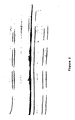
- Fig. 2 Shows the results of the analytical IPG.
- the above procedure is repeated under the same conditions, in the pH interval from 8.0 to 9.0 using a mixture of 8M urea and 1% CHAPS.
- the so determined pI value of the amide derivative of factor B 0 is 8.56, whilst the pI value of the amide derivative of factor B 1 is 8.40.
- the IEF purification is carried out with the Iso-PrIME apparatus (Hoefer Sci., San Francisco), consisting of a multichamber electrolyzer to be assembled with isoelectric, buffering membranes.
- Iso-PrIME apparatus Hoefer Sci., San Francisco
- isoelectric membranes After determining, in the above analytical gels, the precise pI values of the main fraction and of the impurities, six isoelectric membranes are prepared having the following pI values: 7.00, 8.31, 8.41, 8.46, 8.65 and 9.50. All membranes were cast as a 10%T, 4%C matrix in the form of disks of 4.7 cm diameter and a thickness of ca. 1 mm; the membranes are supported by glass fiber filters (see ref. 5 and 113 for a detailed description of their properties and preparation).
- a preparative run is carried out, by loading 500 mg of sample (dissolved in 100 ml of 8 M urea and 3.5% CHAPS) in chamber 3 of the multicompartment electrolyzer (in between the pI 8.41 and pI 8.65 membranes, where the main component would be trapped isoelectrically).
- the content of this chamber is recycled from a reservoir, whereas all neighboring chambers were not connected to any reservoir. Since the liquid content of each chamber of the electrolyzer is 5 ml, whereas in chamber 3 (chamber plus reservoir) it is 100 ml, this results in collection, in neighboring chambers, of 20-fold concentrated impurities.
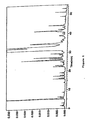
- Fig. 1 gives the total spectrum of components, as seen by under heavy overloading of the main components. While it is not possible to fully compare the elution order in RP-HPLC with the pI spectrum, component B 1 is clearly identifiable with the compound having the nearest anodic pI value with respect to component B 0 .
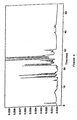
- Fig. 4 The spectrum of components collecting in chamber 1 of the electrolyzer (in between the pI 7.0 and pI 8.31 membranes) is shown in Fig. 4; those impurities concentrated in chamber 2 (pI 8.31 to pI 8.41 membranes) are shown in Fig. 5; those impurities concentrated in the last chamber (No. 4, in between the pI 8.65 and pI 9.5 membranes) are shown in Fig. 6.
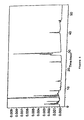
- the main component (collecting in chamber 3, in between the pI 8.41 and pI 8.65 membranes) is shown in Fig. 3; the smaller peak close to the main peak corresponds to the amide derivative of factor B 1 .
- Example 2 is repeated under the same experimental conditions, with the only difference that the pI range of chamber 3 is now 8.46+8.65 and that the sample (500 mg) is loaded into the nearest anodic chamber (chamber 2) instead of into chamber 3; the content of chamber 3 (where the main component is forced to move and is trapped isoelectrically) is recycled from a reservoir.
- Fig. 7 shows the results of this purification; the smaller peak close to the main peak of the amide derivative of A40926 factor B 0 is absent, thus indicating the absence of the B 1 amide derivatives of A40926.
- the final solution contained in chamber 3 (200 mg in 50 ml), obtained according to example 3, is diluted with 0.5M TRIS (450 ml, pH 9) and applied on the top of silanized silica gel column (16 x 250 mm), using a Miniplus 3 peristaltic pump (Gilson) at a flow rate of 4 ml/min; methanol is employed as the eluent.
- TRIS 450 ml, pH 9
- methanol is employed as the eluent.
- the column is first washed with TRIS buffer (0.5M, pH 9) down to the zero of optical density and then with distilled water for removing the salts.
- TRIS buffer 0.5M, pH 9
- the monitoring of the eluates solution is carried out with a UV detector mod. 2138 unicords (LKB, Uppsala. Sweden) at 280 nm.
- New glyco peptide antibiotics II. The isolation and structures of chloro orienticins. J Antibiot 1988; 41: 1506-1510 66 European Patent Appl. Publ. No. 273 727 (Claiming priority of US Pat. Appl. ser. No. 948175 filed on 12.30.86) 67 US Patent No. 4 552 701 68 European Patent Appl. Publ. No. 201 251 (claiming priority of US Pat. Appl. ser. No. 726731 filed on 4.25.85 and US Pat. Appl. ser. No. 853583 filed on 4.18.86) 69 US Patent No. 4 698 327 70 US Patent No. 4 639 433 71 US Patent No.
- J Antibiot 1987; 40: 917-923 78 Takatsu, T., Nakajima, M., Oyajima, S., Itoh, Y., Sakaida, Y., Takahashi, S. and Haneishi, T. Chloropolysporins A, B and C, novel glycopeptide antibiotics from Faenia interjecta sp. nov. II. Fermentation, isolation and physico-chemical characterization, J Antibiot 1987; 40: 924-932 79 Takatsu, T., Takahashi, S., Nakajima, M., Haneishi, T., Nakamura, T., Kuwano, H.
- Actinoidin A2 a novel glyco peptide: production, preparative HPLC separation and characterization.
- J Antibiot 1987; 40: 165-172 81 Japanese Pat. Appln. Publ. No. 63017897 (Farmdoc Abstract 88-061310) 82 Int. Pat. Appl. Publ. No. WO 90/11300 (design. US) 83 European Patent No. 370 283 84 McGahren, W.J., Leese, R.A., Barbatschi, F., Morton, G.O., Kuck, N.A. and Ellestad, G.A. Components and degradation compounds of the avoparcin complex. J Antibiot 1983; 36: 1671-1682 85 European Patent Appl. Publ. No.
Landscapes
- Chemical & Material Sciences (AREA)
- Health & Medical Sciences (AREA)
- Organic Chemistry (AREA)
- Life Sciences & Earth Sciences (AREA)
- Medicinal Chemistry (AREA)
- General Health & Medical Sciences (AREA)
- Proteomics, Peptides & Aminoacids (AREA)
- Biophysics (AREA)
- Biochemistry (AREA)
- Genetics & Genomics (AREA)
- Molecular Biology (AREA)
- Pharmacology & Pharmacy (AREA)
- Animal Behavior & Ethology (AREA)
- Public Health (AREA)
- Veterinary Medicine (AREA)
- Nuclear Medicine, Radiotherapy & Molecular Imaging (AREA)
- General Chemical & Material Sciences (AREA)
- Chemical Kinetics & Catalysis (AREA)
- Oncology (AREA)
- Communicable Diseases (AREA)
- Gastroenterology & Hepatology (AREA)
- Engineering & Computer Science (AREA)
- Bioinformatics & Cheminformatics (AREA)
- Immunology (AREA)
- Epidemiology (AREA)
- Medicines That Contain Protein Lipid Enzymes And Other Medicines (AREA)
- Peptides Or Proteins (AREA)
- Medicines Containing Material From Animals Or Micro-Organisms (AREA)
- Pharmaceuticals Containing Other Organic And Inorganic Compounds (AREA)
- Detergent Compositions (AREA)
Claims (13)
- Verfahren zur Reinigung einer antibiotischen Verbindung der Dalbaheptid-Familie mit Hilfe isoelektrischer Fokussierung in einem Mehrzellen-Elektrolysegerät mit Immobilin®zwitterionischen Membranen, dadurch gekennzeichnet, dass die Trägerlösung eine wässrige Mischung von Harnstoff und einem Detergens ist, welches ein Sulfobetainzwitterionisches Derivat der Cholsäure ist.
- Verfahren gemäß Anspruch 1, worin das Detergens {3-[3-(Cholamidopropyl)-dimethylammonio]}-1-propansulfonat ist.
- Verfahren gemäß Anspruch 1, worin die Harnstoffkonzentration von 4M bis 8M beträgt.
- Verfahren gemäß Anspruch 1, worin die Harnstoffkonzentration 8M beträgt.
- Verfahren gemäß Anspruch 1, worin die Detergenskonzentration von 1% bis 5% (Gew./Vol.) beträgt.
- Verfahren gemäß Anspruch 1, worin die Detergenskonzentration von 2% bis 4,5% (Gew./Vol.) beträgt.
- Verfahren gemäß Anspruch 1, worin die Detergenskonzentration 3,5 % (Gew./Vol.) beträgt.
- Verfahren gemäß Anspruch 1, worin das Dalbaheptid-Antibiotikum der Sub-Gruppe vom Ristocetin-Typ angehört.
- Verfahren gemäß Anspruch 1, worin das zu reinigende Dalbaheptid-Antibiotikum Ristocetin, Actaplanin, Teicoplanin, Antibiotikum A35512, Antibiotikum A41030, Antibiotikum A47934, Ardacin A, B, C, Antibiotikum A40926, Kibdelin, Parvodicin, Antibiotikum UK 68597 oder ein natürliches oder semisynthetisches Derivat dieser Antibiotika ist.
- Verfahren gemäß Anspruch 1, worin das zu reinigende Dalbaheptid-Antibiotikum Antibiotikum A40926-Komplex oder ein natürliches oder semisynthetisches Derivat hiervon ist.
- Verfahren gemäß Anspruch 1, worin das zu reinigende Dalbaheptid-Antibiotikum das 6B-Decarboxy-6B-(hydroxymethyl)-N63-3-(dimethylamino)-propylamid-Derivat des Antibiotikum A40926-Komplexes ist.
- Verfahren gemäß Anspruch 11, worin die zwei Ausschluß-Membranen der Kammer, worin das gereinigte Produkt gesammelt wird, auf einen pI-Wert von 8,41 bzw. 8,65 eingestellt sind.
- Verfahren gemäß Anspruch 11, worin die zwei Ausschluß-Membranen der Kammer, worin das gereinigte Produkt gesammelt wird, auf einen pI-Wert von 8,45 bzw. 8,65 eingestellt sind.
Priority Applications (2)
| Application Number | Priority Date | Filing Date | Title |
|---|---|---|---|
| DK96923922T DK0836619T3 (da) | 1995-07-05 | 1996-06-25 | Oprensning af dalbaheptid antibiotika ved hjælp af isoelektrisk fokusering |
| EP96923922A EP0836619B1 (de) | 1995-07-05 | 1996-06-25 | Reinigung von dalbeheptide-antibiotika mittels isoelektrofokussierung |
Applications Claiming Priority (6)
| Application Number | Priority Date | Filing Date | Title |
|---|---|---|---|
| EP95110467 | 1995-07-05 | ||
| EP95110467 | 1995-07-05 | ||
| EP95111583 | 1995-07-24 | ||
| EP95111583 | 1995-07-24 | ||
| EP96923922A EP0836619B1 (de) | 1995-07-05 | 1996-06-25 | Reinigung von dalbeheptide-antibiotika mittels isoelektrofokussierung |
| PCT/EP1996/002769 WO1997002288A1 (en) | 1995-07-05 | 1996-06-25 | Purification of dalbaheptide antibiotics by isoelectric focusing |
Publications (2)
| Publication Number | Publication Date |
|---|---|
| EP0836619A1 EP0836619A1 (de) | 1998-04-22 |
| EP0836619B1 true EP0836619B1 (de) | 2004-08-25 |
Family
ID=26138707
Family Applications (1)
| Application Number | Title | Priority Date | Filing Date |
|---|---|---|---|
| EP96923922A Expired - Lifetime EP0836619B1 (de) | 1995-07-05 | 1996-06-25 | Reinigung von dalbeheptide-antibiotika mittels isoelektrofokussierung |
Country Status (13)
| Country | Link |
|---|---|
| US (1) | US5939523A (de) |
| EP (1) | EP0836619B1 (de) |
| JP (1) | JP4051421B2 (de) |
| KR (1) | KR100430202B1 (de) |
| AT (1) | ATE274524T1 (de) |
| AU (1) | AU701463B2 (de) |
| CA (1) | CA2226142C (de) |
| DE (1) | DE69633234T2 (de) |
| DK (1) | DK0836619T3 (de) |
| ES (1) | ES2224173T3 (de) |
| IL (1) | IL122151A (de) |
| PT (1) | PT836619E (de) |
| WO (1) | WO1997002288A1 (de) |
Families Citing this family (9)
| Publication number | Priority date | Publication date | Assignee | Title |
|---|---|---|---|---|
| DK0912604T3 (da) * | 1996-04-23 | 2002-03-25 | Biosearch Italia Spa | Forbedret kemisk fremgangsmåde til fremstilling af amidderivater af A 40926 antibiotikum |
| US6699836B2 (en) | 1999-04-02 | 2004-03-02 | The Trustees Of Princeton University | Vancomycin analogs |
| US6518243B1 (en) | 1999-04-02 | 2003-02-11 | Trustees Of Princeton University | Desleucyl glycopeptide antibiotics and methods of making same |
| ATE489962T1 (de) * | 2001-04-25 | 2010-12-15 | Wyeth Corp | Im wesentlichen reine glycopeptid-antibiotika ac- 98-1; ac-98-2; ac-98-3; ac-98-4 und ac-98-5 |
| US6713448B2 (en) * | 2001-04-25 | 2004-03-30 | Wyeth Holdings Corporation | Substantially pure glycopeptide antibiotics AC-98-1; AC-98-2; AC-98-3; AC-98-4 and AC-98-5 |
| EP1565201B1 (de) * | 2002-11-18 | 2018-10-31 | Vicuron Pharmaceuticals, Inc. | Methoden zur verabreichung von dalbavancin zur behandung bakterieller infektionen |
| US20070105757A1 (en) * | 2005-10-31 | 2007-05-10 | May Thomas B | Vancomycin formulations having reduced amount of histamine |
| CN101851277B (zh) * | 2009-03-12 | 2012-10-03 | 成都雅途生物技术有限公司 | 一种道古霉素关键中间体a40926 bo组分的纯化制备方法 |
| CN105671110B (zh) * | 2015-05-05 | 2019-02-01 | 重庆乾泰生物医药有限公司 | 一种生产达巴万星前体a40926的方法 |
Family Cites Families (48)
| Publication number | Priority date | Publication date | Assignee | Title |
|---|---|---|---|---|
| US2951766A (en) * | 1957-07-15 | 1960-09-06 | Le Roy A White | Antiseptic plastic |
| US4322343A (en) * | 1980-12-18 | 1982-03-30 | Eli Lilly And Company | Pseudo-aglycone of actaplanin |
| US4521335A (en) * | 1983-07-13 | 1985-06-04 | Smithkline Beckman Corporation | Aglycone and pseudo-aglycones of the AAD 216 antibiotics |
| US4504467A (en) * | 1983-10-21 | 1985-03-12 | Eli Lilly And Company | Glycopeptide derivatives |
| US4563442A (en) * | 1983-10-21 | 1986-01-07 | Eli Lilly And Company | Glycopeptide bioconversion products |
| DE3572178D1 (en) * | 1984-04-16 | 1989-09-14 | Lilly Co Eli | Improvements in and relating to antibiotics m43a, m43b, m43c and m43d |
| US4552701A (en) * | 1984-04-16 | 1985-11-12 | Eli Lilly And Company | Glycopeptide antibiotics and process of preparation |
| GB8415092D0 (en) * | 1984-06-13 | 1984-07-18 | Lepetit Spa | Ester derivatives |
| GB8425685D0 (en) * | 1984-10-11 | 1984-11-14 | Lepetit Spa | Antibiotic a 40926 complex |
| IL78597A0 (en) * | 1985-04-25 | 1986-08-31 | Lilly Co Eli | Novel glycopeptide derivatives |
| US4698327A (en) * | 1985-04-25 | 1987-10-06 | Eli Lilly And Company | Novel glycopeptide derivatives |
| US4643987A (en) * | 1985-08-14 | 1987-02-17 | Eli Lilly And Company | Modified glycopeptides |
| US4639433A (en) * | 1985-08-14 | 1987-01-27 | Eli Lilly And Company | Glycopeptide derivatives |
| GB8522574D0 (en) * | 1985-09-12 | 1985-10-16 | Lepetit Spa | Amides of teicoplanin compounds |
| GB8531846D0 (en) * | 1985-12-30 | 1986-02-05 | Lepetit Spa | Antibiotic a 40926 mannosyl aglycon |
| US4946941A (en) * | 1986-01-24 | 1990-08-07 | Shionogi & Co., Ltd. | Novel glycopeptide antibiotics |
| GB8608809D0 (en) * | 1986-04-11 | 1986-05-14 | Lepetit Spa | Antibiotic |
| JP2516202B2 (ja) * | 1986-07-10 | 1996-07-24 | 三共株式会社 | グリコペプチド系抗生物質 |
| GB8618445D0 (en) * | 1986-07-29 | 1986-09-03 | Lepetit Spa | Antibiotic a 42867 |
| US4742045A (en) * | 1986-07-30 | 1988-05-03 | Smithkline Beckman Corporation | Glycopeptide antibiotics |
| DK363587A (da) * | 1986-07-30 | 1988-01-31 | Smithkline Beckman Corp | Antibiotika og fremstilling heraf under anvendelseaf actinomadura parvosata |
| GB8621912D0 (en) * | 1986-09-11 | 1986-10-15 | Lepetit Spa | Increasing ratio of components of anti-biotic complex |
| GR871488B (en) * | 1986-10-10 | 1987-11-12 | Lepetit Spa | New antibiotics |
| GB8624806D0 (en) * | 1986-10-16 | 1986-11-19 | Pfizer Ltd | Glycopeptide antibiotic |
| IE873523L (en) * | 1986-12-30 | 1988-06-30 | Memorex Corp | Glycosylated glycopeptides |
| GB8701872D0 (en) * | 1987-01-28 | 1987-03-04 | Lepetit Spa | N15-alkyl & n15,n15-dialkyl derivatives |
| ES2037273T3 (es) * | 1987-04-11 | 1993-06-16 | Ciba-Geigy Ag | Proceso de focalizacion isoelectrica y medios para llevar a cabo dicho proceso. |
| GB8711066D0 (en) * | 1987-05-11 | 1987-06-17 | Lepetit Spa | Teicoplanin derivatives |
| GB8715735D0 (en) * | 1987-07-03 | 1987-08-12 | Lepetit Spa | De-mannosyl teicoplanin derivatives |
| US4882313A (en) * | 1987-07-31 | 1989-11-21 | Smithkline Beckman Corporation | Carboxamide derivatives of glycopeptides |
| WO1989002441A1 (en) * | 1987-09-19 | 1989-03-23 | Beecham Group Plc | Antibiotic compounds |
| GB8802211D0 (en) * | 1988-02-02 | 1988-03-02 | Lepetit Spa | Teicoplanin hydrazides |
| EP0368949A1 (de) * | 1988-02-10 | 1990-05-23 | Beecham Group Plc | Antibiotika-verbindungen |
| EP0339982A1 (de) * | 1988-04-28 | 1989-11-02 | Beecham Group Plc | Antibiotika-Verbindungen |
| GB8817052D0 (en) * | 1988-07-18 | 1988-08-24 | Lepetit Spa | Process for preparing n15-alkyl derivatives of teicoplanin compounds |
| GB8817053D0 (en) * | 1988-07-18 | 1988-08-24 | Lepetit Spa | Process for preparing n15 n15-dialkyl derivatives of teicoplanin compounds |
| GB8817397D0 (en) * | 1988-07-21 | 1988-08-24 | Lepetit Spa | N15-alkyl & n15 n15-di-alkyl derivatives of teicoplanin antibiotics carrying functional groups on alkyl side chain |
| GB8817736D0 (en) * | 1988-07-26 | 1988-09-01 | Lepetit Spa | New teicoplanin antibiotics |
| IN167068B (de) * | 1988-08-27 | 1990-08-25 | Hoechst India | |
| CA1339808C (en) * | 1988-10-19 | 1998-04-07 | Manuel Debono | Glycopeptide antibiotics |
| GB8827202D0 (en) * | 1988-11-22 | 1988-12-29 | Lepetit Spa | Process for preparing 63-carboxyamides of teicoplanin antibiotics |
| US5194424A (en) * | 1988-12-27 | 1993-03-16 | Gruppo Lepetit Spa | C63 -amide derivatives of 34-de(acetylglucosaminyl)-34-deoxy-teicoplanin and their use as medicaments against bacteria resistant to glycopeptide antibiotics |
| IE64155B1 (en) * | 1989-03-29 | 1995-07-12 | Lepetit Spa | New substituted alkylamide derivatives of teicoplanin |
| US5185320A (en) * | 1989-04-03 | 1993-02-09 | Gruppo Lepetit S.P.A. | O56 -alkyl derivatives of aglycone and pseudo aglycones of teicoplanin |
| ATE158306T1 (de) * | 1990-03-28 | 1997-10-15 | Lepetit Spa | Verfahren zur herstellung von mannosylteicoplaninderivaten und mannosylteicoplaninaglykon |
| HUT63860A (en) * | 1990-12-05 | 1993-10-28 | Lepetit Spa | Process for producing 39-decarboxy-38-(hydroxymethyl) derivatives of teikoplanin antibiotics |
| KR100209971B1 (ko) * | 1991-03-27 | 1999-07-15 | 클라우디오 쿼르타 | 항생제 a 40926 에스테르 유도체 |
| PL171813B1 (pl) * | 1991-07-29 | 1997-06-30 | Lepetit Spa | Sposób wytwarzania nowych amidowych pochodnych antybiotyku A 40926 PL PL PL PL PL |
-
1996
- 1996-06-25 ES ES96923922T patent/ES2224173T3/es not_active Expired - Lifetime
- 1996-06-25 DE DE69633234T patent/DE69633234T2/de not_active Expired - Lifetime
- 1996-06-25 EP EP96923922A patent/EP0836619B1/de not_active Expired - Lifetime
- 1996-06-25 AT AT96923922T patent/ATE274524T1/de active
- 1996-06-25 WO PCT/EP1996/002769 patent/WO1997002288A1/en not_active Ceased
- 1996-06-25 US US08/981,368 patent/US5939523A/en not_active Expired - Lifetime
- 1996-06-25 PT PT96923922T patent/PT836619E/pt unknown
- 1996-06-25 IL IL12215196A patent/IL122151A/xx not_active IP Right Cessation
- 1996-06-25 DK DK96923922T patent/DK0836619T3/da active
- 1996-06-25 JP JP50477397A patent/JP4051421B2/ja not_active Expired - Lifetime
- 1996-06-25 KR KR10-1998-0700010A patent/KR100430202B1/ko not_active Expired - Lifetime
- 1996-06-25 CA CA002226142A patent/CA2226142C/en not_active Expired - Lifetime
- 1996-06-25 AU AU64161/96A patent/AU701463B2/en not_active Expired
Also Published As
| Publication number | Publication date |
|---|---|
| ES2224173T3 (es) | 2005-03-01 |
| KR19990028712A (ko) | 1999-04-15 |
| DK0836619T3 (da) | 2004-12-06 |
| AU701463B2 (en) | 1999-01-28 |
| DE69633234D1 (de) | 2004-09-30 |
| KR100430202B1 (ko) | 2004-09-18 |
| US5939523A (en) | 1999-08-17 |
| ATE274524T1 (de) | 2004-09-15 |
| AU6416196A (en) | 1997-02-05 |
| WO1997002288A1 (en) | 1997-01-23 |
| IL122151A0 (en) | 1998-04-05 |
| PT836619E (pt) | 2004-11-30 |
| EP0836619A1 (de) | 1998-04-22 |
| CA2226142C (en) | 2007-11-13 |
| IL122151A (en) | 2001-08-26 |
| JP4051421B2 (ja) | 2008-02-27 |
| DE69633234T2 (de) | 2005-09-15 |
| CA2226142A1 (en) | 1997-01-23 |
| JPH11508572A (ja) | 1999-07-27 |
Similar Documents
| Publication | Publication Date | Title |
|---|---|---|
| EP0409045B1 (de) | Aus Dalbaheptide hergestellte Pentapeptid-Antibiotika | |
| KR100665204B1 (ko) | 글리코펩티드 유도체 및 그를 포함하는 약학적 조성물 | |
| EP0836619B1 (de) | Reinigung von dalbeheptide-antibiotika mittels isoelektrofokussierung | |
| JP2659388B2 (ja) | 糖ペプチド回収方法 | |
| EP0465481B1 (de) | Substituierte alkylamidderivate von teicoplanin | |
| EP0306645B1 (de) | Teicoplaninähnliche Derivate | |
| EP1073447B1 (de) | N1 modifizierte glycopeptide | |
| HUNT et al. | A51568A: N-demethylvancomycin | |
| US5194424A (en) | C63 -amide derivatives of 34-de(acetylglucosaminyl)-34-deoxy-teicoplanin and their use as medicaments against bacteria resistant to glycopeptide antibiotics | |
| TAKATSU et al. | CHLOROPOLYSPORINS A, B AND C, NOVEL GLYCOPEPTIDE ANTIBIOTICS FROM FAENIA INTERJECT A SP. NOV. II. FERMENTATION, ISOLATION AND PHYSICO-CHEMICAL CHARACTERIZATION | |
| EP0561827B1 (de) | Aus dalbaheptide hergestellte tetrapeptidantibiotika | |
| Sitrin et al. | Separation methodology | |
| US5644025A (en) | Tetrapeptides deriving from dalbaheptide antibiotics | |
| EP0376042A1 (de) | Chemisches Verfahren zur Herstellung des Antibiotikums L 17392 (Deglukoteicoplanin) und dessen Salze | |
| EP0326873A2 (de) | Teicoplanin-Hydrazide | |
| EP0247074A1 (de) | De-(acetylglucosaminyl)-di(dehydro)-deoxyteicoplanin-derivate. | |
| SITRIN et al. | Smith Kline and French Laboratories, Philadelphia, PA, 19101 |
Legal Events
| Date | Code | Title | Description |
|---|---|---|---|
| PUAI | Public reference made under article 153(3) epc to a published international application that has entered the european phase |
Free format text: ORIGINAL CODE: 0009012 |
|
| 17P | Request for examination filed |
Effective date: 19971125 |
|
| AK | Designated contracting states |
Kind code of ref document: A1 Designated state(s): AT BE CH DE DK ES FI FR GB GR IE IT LI LU MC NL PT SE |
|
| AX | Request for extension of the european patent |
Free format text: SI PAYMENT 971125 |
|
| RAP1 | Party data changed (applicant data changed or rights of an application transferred) |
Owner name: AVENTIS BULK S.P.A. |
|
| 17Q | First examination report despatched |
Effective date: 20030528 |
|
| GRAP | Despatch of communication of intention to grant a patent |
Free format text: ORIGINAL CODE: EPIDOSNIGR1 |
|
| GRAS | Grant fee paid |
Free format text: ORIGINAL CODE: EPIDOSNIGR3 |
|
| GRAA | (expected) grant |
Free format text: ORIGINAL CODE: 0009210 |
|
| AK | Designated contracting states |
Kind code of ref document: B1 Designated state(s): AT BE CH DE DK ES FI FR GB GR IE IT LI LU MC NL PT SE |
|
| AX | Request for extension of the european patent |
Extension state: SI |
|
| REG | Reference to a national code |
Ref country code: GB Ref legal event code: FG4D |
|
| REG | Reference to a national code |
Ref country code: CH Ref legal event code: EP |
|
| REG | Reference to a national code |
Ref country code: IE Ref legal event code: FG4D |
|
| REF | Corresponds to: |
Ref document number: 69633234 Country of ref document: DE Date of ref document: 20040930 Kind code of ref document: P |
|
| REG | Reference to a national code |
Ref country code: SE Ref legal event code: TRGR |
|
| REG | Reference to a national code |
Ref country code: PT Ref legal event code: SC4A Free format text: AVAILABILITY OF NATIONAL TRANSLATION Effective date: 20040927 Ref country code: CH Ref legal event code: NV Representative=s name: PATENTANWAELTE SCHAAD, BALASS, MENZL & PARTNER AG |
|
| REG | Reference to a national code |
Ref country code: DK Ref legal event code: T3 |
|
| REG | Reference to a national code |
Ref country code: GR Ref legal event code: EP Ref document number: 20040403673 Country of ref document: GR |
|
| REG | Reference to a national code |
Ref country code: ES Ref legal event code: FG2A Ref document number: 2224173 Country of ref document: ES Kind code of ref document: T3 |
|
| PG25 | Lapsed in a contracting state [announced via postgrant information from national office to epo] |
Ref country code: LU Free format text: LAPSE BECAUSE OF NON-PAYMENT OF DUE FEES Effective date: 20050625 |
|
| PG25 | Lapsed in a contracting state [announced via postgrant information from national office to epo] |
Ref country code: MC Free format text: LAPSE BECAUSE OF NON-PAYMENT OF DUE FEES Effective date: 20050630 |
|
| PLBE | No opposition filed within time limit |
Free format text: ORIGINAL CODE: 0009261 |
|
| STAA | Information on the status of an ep patent application or granted ep patent |
Free format text: STATUS: NO OPPOSITION FILED WITHIN TIME LIMIT |
|
| ET | Fr: translation filed | ||
| 26N | No opposition filed |
Effective date: 20050526 |
|
| REG | Reference to a national code |
Ref country code: GB Ref legal event code: 732E |
|
| REG | Reference to a national code |
Ref country code: FR Ref legal event code: TP Ref country code: FR Ref legal event code: CD |
|
| REG | Reference to a national code |
Ref country code: CH Ref legal event code: PFA Owner name: SANOFI AVENTIS SPA Free format text: AVENTIS BULK S.P.A.#PIAZZALE STEFANO TUERR, 5#20149 MILANO (IT) -TRANSFER TO- SANOFI AVENTIS SPA#VIALE L. BODIO NO 37/B#MILANO 20158 (IT) Ref country code: PT Ref legal event code: PC4A Owner name: SANOFI - AVENTIS SPA, IT Effective date: 20070209 |
|
| NLS | Nl: assignments of ep-patents |
Owner name: AVENTIS PHARMA S.P.A. Effective date: 20080404 |
|
| NLT1 | Nl: modifications of names registered in virtue of documents presented to the patent office pursuant to art. 16 a, paragraph 1 |
Owner name: SANOFI-AVENTIS S.P.A. |
|
| REG | Reference to a national code |
Ref country code: FR Ref legal event code: PLFP Year of fee payment: 20 |
|
| PGFP | Annual fee paid to national office [announced via postgrant information from national office to epo] |
Ref country code: DK Payment date: 20150610 Year of fee payment: 20 Ref country code: CH Payment date: 20150612 Year of fee payment: 20 Ref country code: DE Payment date: 20150616 Year of fee payment: 20 Ref country code: ES Payment date: 20150512 Year of fee payment: 20 Ref country code: PT Payment date: 20150624 Year of fee payment: 20 Ref country code: FI Payment date: 20150609 Year of fee payment: 20 Ref country code: GB Payment date: 20150624 Year of fee payment: 20 Ref country code: SE Payment date: 20150611 Year of fee payment: 20 |
|
| PGFP | Annual fee paid to national office [announced via postgrant information from national office to epo] |
Ref country code: GR Payment date: 20150518 Year of fee payment: 20 Ref country code: FR Payment date: 20150608 Year of fee payment: 20 Ref country code: NL Payment date: 20150609 Year of fee payment: 20 Ref country code: BE Payment date: 20150612 Year of fee payment: 20 Ref country code: IE Payment date: 20150609 Year of fee payment: 20 Ref country code: AT Payment date: 20150527 Year of fee payment: 20 |
|
| PGFP | Annual fee paid to national office [announced via postgrant information from national office to epo] |
Ref country code: IT Payment date: 20150625 Year of fee payment: 20 |
|
| REG | Reference to a national code |
Ref country code: DE Ref legal event code: R071 Ref document number: 69633234 Country of ref document: DE |
|
| REG | Reference to a national code |
Ref country code: NL Ref legal event code: MK Effective date: 20160624 |
|
| REG | Reference to a national code |
Ref country code: CH Ref legal event code: PL |
|
| REG | Reference to a national code |
Ref country code: DK Ref legal event code: EUP Effective date: 20160625 |
|
| REG | Reference to a national code |
Ref country code: GB Ref legal event code: PE20 Expiry date: 20160624 |
|
| REG | Reference to a national code |
Ref country code: IE Ref legal event code: MK9A |
|
| PG25 | Lapsed in a contracting state [announced via postgrant information from national office to epo] |
Ref country code: GB Free format text: LAPSE BECAUSE OF EXPIRATION OF PROTECTION Effective date: 20160624 |
|
| REG | Reference to a national code |
Ref country code: SE Ref legal event code: EUG |
|
| REG | Reference to a national code |
Ref country code: AT Ref legal event code: MK07 Ref document number: 274524 Country of ref document: AT Kind code of ref document: T Effective date: 20160625 |
|
| REG | Reference to a national code |
Ref country code: ES Ref legal event code: FD2A Effective date: 20160930 |
|
| REG | Reference to a national code |
Ref country code: GR Ref legal event code: MA Ref document number: 20040403673 Country of ref document: GR Effective date: 20160626 |
|
| PG25 | Lapsed in a contracting state [announced via postgrant information from national office to epo] |
Ref country code: IE Free format text: LAPSE BECAUSE OF EXPIRATION OF PROTECTION Effective date: 20160625 |
|
| PG25 | Lapsed in a contracting state [announced via postgrant information from national office to epo] |
Ref country code: ES Free format text: LAPSE BECAUSE OF EXPIRATION OF PROTECTION Effective date: 20160626 Ref country code: PT Free format text: LAPSE BECAUSE OF EXPIRATION OF PROTECTION Effective date: 20160705 |