EP0833939B1 - Dämpfungsreagenzien und tests für enzym-vermittelte-lumineszenz - Google Patents
Dämpfungsreagenzien und tests für enzym-vermittelte-lumineszenz Download PDFInfo
- Publication number
- EP0833939B1 EP0833939B1 EP96918421A EP96918421A EP0833939B1 EP 0833939 B1 EP0833939 B1 EP 0833939B1 EP 96918421 A EP96918421 A EP 96918421A EP 96918421 A EP96918421 A EP 96918421A EP 0833939 B1 EP0833939 B1 EP 0833939B1
- Authority
- EP
- European Patent Office
- Prior art keywords
- mediated
- luciferase
- enzyme
- reaction
- quench
- Prior art date
- Legal status (The legal status is an assumption and is not a legal conclusion. Google has not performed a legal analysis and makes no representation as to the accuracy of the status listed.)
- Expired - Lifetime
Links
- 239000003153 chemical reaction reagent Substances 0.000 title claims abstract description 177
- 102000004190 Enzymes Human genes 0.000 title claims abstract description 146
- 108090000790 Enzymes Proteins 0.000 title claims abstract description 146
- 230000001404 mediated effect Effects 0.000 title claims abstract description 142
- 238000010791 quenching Methods 0.000 title claims abstract description 133
- 238000003556 assay Methods 0.000 title claims abstract description 31
- 238000004020 luminiscence type Methods 0.000 title claims description 187
- 230000000171 quenching effect Effects 0.000 title claims description 39
- 238000006243 chemical reaction Methods 0.000 claims abstract description 269
- 238000003149 assay kit Methods 0.000 claims abstract description 5
- 108060001084 Luciferase Proteins 0.000 claims description 149
- 239000005089 Luciferase Substances 0.000 claims description 105
- 239000000203 mixture Substances 0.000 claims description 62
- 239000011734 sodium Substances 0.000 claims description 60
- YHIPILPTUVMWQT-UHFFFAOYSA-N Oplophorus luciferin Chemical compound C1=CC(O)=CC=C1CC(C(N1C=C(N2)C=3C=CC(O)=CC=3)=O)=NC1=C2CC1=CC=CC=C1 YHIPILPTUVMWQT-UHFFFAOYSA-N 0.000 claims description 50
- 241000254173 Coleoptera Species 0.000 claims description 42
- 238000000034 method Methods 0.000 claims description 35
- 239000000758 substrate Substances 0.000 claims description 35
- FCKYPQBAHLOOJQ-UHFFFAOYSA-N Cyclohexane-1,2-diaminetetraacetic acid Chemical compound OC(=O)CN(CC(O)=O)C1CCCCC1N(CC(O)=O)CC(O)=O FCKYPQBAHLOOJQ-UHFFFAOYSA-N 0.000 claims description 31
- PMZURENOXWZQFD-UHFFFAOYSA-L Sodium Sulfate Chemical compound [Na+].[Na+].[O-]S([O-])(=O)=O PMZURENOXWZQFD-UHFFFAOYSA-L 0.000 claims description 21
- 229910052938 sodium sulfate Inorganic materials 0.000 claims description 21
- 241000059559 Agriotes sordidus Species 0.000 claims description 20
- KFZMGEQAYNKOFK-UHFFFAOYSA-N Isopropanol Chemical compound CC(C)O KFZMGEQAYNKOFK-UHFFFAOYSA-N 0.000 claims description 20
- 239000007832 Na2SO4 Substances 0.000 claims description 20
- 241000242743 Renilla reniformis Species 0.000 claims description 17
- DBMJMQXJHONAFJ-UHFFFAOYSA-M Sodium laurylsulphate Chemical compound [Na+].CCCCCCCCCCCCOS([O-])(=O)=O DBMJMQXJHONAFJ-UHFFFAOYSA-M 0.000 claims description 17
- -1 APMBT Chemical compound 0.000 claims description 16
- LRHPLDYGYMQRHN-UHFFFAOYSA-N N-Butanol Chemical compound CCCCO LRHPLDYGYMQRHN-UHFFFAOYSA-N 0.000 claims description 16
- 229920000136 polysorbate Polymers 0.000 claims description 14
- ZKHQWZAMYRWXGA-UHFFFAOYSA-N Adenosine triphosphate Natural products C1=NC=2C(N)=NC=NC=2N1C1OC(COP(O)(=O)OP(O)(=O)OP(O)(O)=O)C(O)C1O ZKHQWZAMYRWXGA-UHFFFAOYSA-N 0.000 claims description 13
- IOJUPLGTWVMSFF-UHFFFAOYSA-N benzothiazole Chemical compound C1=CC=C2SC=NC2=C1 IOJUPLGTWVMSFF-UHFFFAOYSA-N 0.000 claims description 12
- 230000000977 initiatory effect Effects 0.000 claims description 12
- ZKHQWZAMYRWXGA-KQYNXXCUSA-N Adenosine triphosphate Chemical compound C1=NC=2C(N)=NC=NC=2N1[C@@H]1O[C@H](COP(O)(=O)OP(O)(=O)OP(O)(O)=O)[C@@H](O)[C@H]1O ZKHQWZAMYRWXGA-KQYNXXCUSA-N 0.000 claims description 11
- 241000254064 Photinus pyralis Species 0.000 claims description 11
- 241001427618 Pyrophorus plagiophthalamus Species 0.000 claims description 11
- 229960004592 isopropanol Drugs 0.000 claims description 10
- 229920004890 Triton X-100 Polymers 0.000 claims description 9
- KRKNYBCHXYNGOX-UHFFFAOYSA-N citric acid Chemical compound OC(=O)CC(O)(C(O)=O)CC(O)=O KRKNYBCHXYNGOX-UHFFFAOYSA-N 0.000 claims description 9
- KCXVZYZYPLLWCC-UHFFFAOYSA-N EDTA Chemical compound OC(=O)CN(CC(O)=O)CCN(CC(O)=O)CC(O)=O KCXVZYZYPLLWCC-UHFFFAOYSA-N 0.000 claims description 8
- XBHOUXSGHYZCNH-UHFFFAOYSA-N 2-phenyl-1,3-benzothiazole Chemical compound C1=CC=CC=C1C1=NC2=CC=CC=C2S1 XBHOUXSGHYZCNH-UHFFFAOYSA-N 0.000 claims description 6
- XRTJYEIMLZALBD-UHFFFAOYSA-N 4-(6-methyl-1,3-benzothiazol-2-yl)aniline Chemical compound S1C2=CC(C)=CC=C2N=C1C1=CC=C(N)C=C1 XRTJYEIMLZALBD-UHFFFAOYSA-N 0.000 claims description 6
- 229960001456 adenosine triphosphate Drugs 0.000 claims description 6
- GSVLCKASFMVUSW-UHFFFAOYSA-N decyl(dimethyl)phosphine oxide Chemical compound CCCCCCCCCCP(C)(C)=O GSVLCKASFMVUSW-UHFFFAOYSA-N 0.000 claims description 6
- 230000002829 reductive effect Effects 0.000 claims description 6
- MVVGSPCXHRFDDR-UHFFFAOYSA-N 2-(1,3-benzothiazol-2-yl)phenol Chemical compound OC1=CC=CC=C1C1=NC2=CC=CC=C2S1 MVVGSPCXHRFDDR-UHFFFAOYSA-N 0.000 claims description 5
- 229910002651 NO3 Inorganic materials 0.000 claims description 5
- NHNBFGGVMKEFGY-UHFFFAOYSA-N Nitrate Chemical compound [O-][N+]([O-])=O NHNBFGGVMKEFGY-UHFFFAOYSA-N 0.000 claims description 5
- 101000622060 Photinus pyralis Luciferin 4-monooxygenase Proteins 0.000 claims description 5
- XPPKVPWEQAFLFU-UHFFFAOYSA-J diphosphate(4-) Chemical compound [O-]P([O-])(=O)OP([O-])([O-])=O XPPKVPWEQAFLFU-UHFFFAOYSA-J 0.000 claims description 5
- 235000011180 diphosphates Nutrition 0.000 claims description 5
- XMBWDFGMSWQBCA-UHFFFAOYSA-N hydrogen iodide Chemical compound I XMBWDFGMSWQBCA-UHFFFAOYSA-N 0.000 claims description 5
- KHIWWQKSHDUIBK-UHFFFAOYSA-N periodic acid Chemical compound OI(=O)(=O)=O KHIWWQKSHDUIBK-UHFFFAOYSA-N 0.000 claims description 5
- 241000242757 Anthozoa Species 0.000 claims description 4
- QAOWNCQODCNURD-UHFFFAOYSA-L Sulfate Chemical compound [O-]S([O-])(=O)=O QAOWNCQODCNURD-UHFFFAOYSA-L 0.000 claims description 4
- PNDPGZBMCMUPRI-UHFFFAOYSA-N iodine Chemical compound II PNDPGZBMCMUPRI-UHFFFAOYSA-N 0.000 claims description 4
- HBZBAMXERPYTFS-SECBINFHSA-N (4S)-2-(6,7-dihydro-5H-pyrrolo[3,2-f][1,3]benzothiazol-2-yl)-4,5-dihydro-1,3-thiazole-4-carboxylic acid Chemical compound OC(=O)[C@H]1CSC(=N1)c1nc2cc3CCNc3cc2s1 HBZBAMXERPYTFS-SECBINFHSA-N 0.000 claims description 2
- FCKYPQBAHLOOJQ-NXEZZACHSA-N 2-[[(1r,2r)-2-[bis(carboxymethyl)amino]cyclohexyl]-(carboxymethyl)amino]acetic acid Chemical compound OC(=O)CN(CC(O)=O)[C@@H]1CCCC[C@H]1N(CC(O)=O)CC(O)=O FCKYPQBAHLOOJQ-NXEZZACHSA-N 0.000 claims 1
- 241000700108 Ctenophora <comb jellyfish phylum> Species 0.000 claims 1
- 238000007422 luminescence assay Methods 0.000 abstract description 25
- 230000003213 activating effect Effects 0.000 abstract description 6
- FVAUCKIRQBBSSJ-UHFFFAOYSA-M sodium iodide Chemical compound [Na+].[I-] FVAUCKIRQBBSSJ-UHFFFAOYSA-M 0.000 description 54
- 108090000331 Firefly luciferases Proteins 0.000 description 50
- 108010052090 Renilla Luciferases Proteins 0.000 description 48
- 230000000694 effects Effects 0.000 description 48
- 239000004033 plastic Substances 0.000 description 30
- 229920003023 plastic Polymers 0.000 description 30
- 238000003670 luciferase enzyme activity assay Methods 0.000 description 23
- 210000004027 cell Anatomy 0.000 description 22
- 238000009472 formulation Methods 0.000 description 21
- 235000009518 sodium iodide Nutrition 0.000 description 18
- 239000000126 substance Substances 0.000 description 17
- 239000000284 extract Substances 0.000 description 15
- CYCGRDQQIOGCKX-UHFFFAOYSA-N Dehydro-luciferin Natural products OC(=O)C1=CSC(C=2SC3=CC(O)=CC=C3N=2)=N1 CYCGRDQQIOGCKX-UHFFFAOYSA-N 0.000 description 14
- 241000254158 Lampyridae Species 0.000 description 14
- 238000006911 enzymatic reaction Methods 0.000 description 14
- 238000005259 measurement Methods 0.000 description 13
- 230000001186 cumulative effect Effects 0.000 description 12
- 108090000623 proteins and genes Proteins 0.000 description 12
- JKMHFZQWWAIEOD-UHFFFAOYSA-N 2-[4-(2-hydroxyethyl)piperazin-1-yl]ethanesulfonic acid Chemical compound OCC[NH+]1CCN(CCS([O-])(=O)=O)CC1 JKMHFZQWWAIEOD-UHFFFAOYSA-N 0.000 description 11
- IGXWBGJHJZYPQS-SSDOTTSWSA-N D-Luciferin Chemical compound OC(=O)[C@H]1CSC(C=2SC3=CC=C(O)C=C3N=2)=N1 IGXWBGJHJZYPQS-SSDOTTSWSA-N 0.000 description 11
- 239000007995 HEPES buffer Substances 0.000 description 11
- 230000002068 genetic effect Effects 0.000 description 10
- QTBSBXVTEAMEQO-UHFFFAOYSA-N Acetic acid Chemical compound CC(O)=O QTBSBXVTEAMEQO-UHFFFAOYSA-N 0.000 description 9
- 150000001875 compounds Chemical class 0.000 description 9
- BJGNCJDXODQBOB-UHFFFAOYSA-N Fivefly Luciferin Natural products OC(=O)C1CSC(C=2SC3=CC(O)=CC=C3N=2)=N1 BJGNCJDXODQBOB-UHFFFAOYSA-N 0.000 description 8
- DDWFXDSYGUXRAY-UHFFFAOYSA-N Luciferin Natural products CCc1c(C)c(CC2NC(=O)C(=C2C=C)C)[nH]c1Cc3[nH]c4C(=C5/NC(CC(=O)O)C(C)C5CC(=O)O)CC(=O)c4c3C DDWFXDSYGUXRAY-UHFFFAOYSA-N 0.000 description 8
- 241000242739 Renilla Species 0.000 description 8
- 102000004169 proteins and genes Human genes 0.000 description 8
- 239000000243 solution Substances 0.000 description 8
- 239000004793 Polystyrene Substances 0.000 description 7
- 238000010864 dual luciferase reporter gene assay Methods 0.000 description 7
- 229920002223 polystyrene Polymers 0.000 description 7
- 230000004913 activation Effects 0.000 description 6
- 238000013461 design Methods 0.000 description 6
- 239000006166 lysate Substances 0.000 description 6
- 239000012139 lysis buffer Substances 0.000 description 6
- RGJOEKWQDUBAIZ-IBOSZNHHSA-N CoASH Chemical compound O[C@@H]1[C@H](OP(O)(O)=O)[C@@H](COP(O)(=O)OP(O)(=O)OCC(C)(C)[C@@H](O)C(=O)NCCC(=O)NCCS)O[C@H]1N1C2=NC=NC(N)=C2N=C1 RGJOEKWQDUBAIZ-IBOSZNHHSA-N 0.000 description 5
- 210000004978 chinese hamster ovary cell Anatomy 0.000 description 5
- RGJOEKWQDUBAIZ-UHFFFAOYSA-N coenzime A Natural products OC1C(OP(O)(O)=O)C(COP(O)(=O)OP(O)(=O)OCC(C)(C)C(O)C(=O)NCCC(=O)NCCS)OC1N1C2=NC=NC(N)=C2N=C1 RGJOEKWQDUBAIZ-UHFFFAOYSA-N 0.000 description 5
- 239000005516 coenzyme A Substances 0.000 description 5
- 229940093530 coenzyme a Drugs 0.000 description 5
- KDTSHFARGAKYJN-UHFFFAOYSA-N dephosphocoenzyme A Natural products OC1C(O)C(COP(O)(=O)OP(O)(=O)OCC(C)(C)C(O)C(=O)NCCC(=O)NCCS)OC1N1C2=NC=NC(N)=C2N=C1 KDTSHFARGAKYJN-UHFFFAOYSA-N 0.000 description 5
- 230000014509 gene expression Effects 0.000 description 5
- 230000002401 inhibitory effect Effects 0.000 description 5
- 230000005764 inhibitory process Effects 0.000 description 5
- 230000035945 sensitivity Effects 0.000 description 5
- FQENQNTWSFEDLI-UHFFFAOYSA-J sodium diphosphate Chemical compound [Na+].[Na+].[Na+].[Na+].[O-]P([O-])(=O)OP([O-])([O-])=O FQENQNTWSFEDLI-UHFFFAOYSA-J 0.000 description 5
- 235000019818 tetrasodium diphosphate Nutrition 0.000 description 5
- 102000002260 Alkaline Phosphatase Human genes 0.000 description 4
- 108020004774 Alkaline Phosphatase Proteins 0.000 description 4
- 108010035563 Chloramphenicol O-acetyltransferase Proteins 0.000 description 4
- CSNNHWWHGAXBCP-UHFFFAOYSA-L Magnesium sulfate Chemical compound [Mg+2].[O-][S+2]([O-])([O-])[O-] CSNNHWWHGAXBCP-UHFFFAOYSA-L 0.000 description 4
- 108700008625 Reporter Genes Proteins 0.000 description 4
- FAPWRFPIFSIZLT-UHFFFAOYSA-M Sodium chloride Chemical compound [Na+].[Cl-] FAPWRFPIFSIZLT-UHFFFAOYSA-M 0.000 description 4
- 230000008901 benefit Effects 0.000 description 4
- 239000000872 buffer Substances 0.000 description 4
- 238000004113 cell culture Methods 0.000 description 4
- 230000001413 cellular effect Effects 0.000 description 4
- 239000000306 component Substances 0.000 description 4
- 239000012091 fetal bovine serum Substances 0.000 description 4
- 239000003112 inhibitor Substances 0.000 description 4
- 230000003993 interaction Effects 0.000 description 4
- 230000007935 neutral effect Effects 0.000 description 4
- 238000007254 oxidation reaction Methods 0.000 description 4
- 230000003389 potentiating effect Effects 0.000 description 4
- 238000011002 quantification Methods 0.000 description 4
- 238000012883 sequential measurement Methods 0.000 description 4
- 238000012360 testing method Methods 0.000 description 4
- 230000007306 turnover Effects 0.000 description 4
- 239000002023 wood Substances 0.000 description 4
- 239000006144 Dulbecco’s modified Eagle's medium Substances 0.000 description 3
- OKKJLVBELUTLKV-UHFFFAOYSA-N Methanol Chemical compound OC OKKJLVBELUTLKV-UHFFFAOYSA-N 0.000 description 3
- 238000002820 assay format Methods 0.000 description 3
- 238000010790 dilution Methods 0.000 description 3
- 239000012895 dilution Substances 0.000 description 3
- 230000006870 function Effects 0.000 description 3
- 101150066555 lacZ gene Proteins 0.000 description 3
- 230000007246 mechanism Effects 0.000 description 3
- 239000002609 medium Substances 0.000 description 3
- 230000003647 oxidation Effects 0.000 description 3
- 238000002360 preparation method Methods 0.000 description 3
- 150000003839 salts Chemical class 0.000 description 3
- 229940048086 sodium pyrophosphate Drugs 0.000 description 3
- 241000894007 species Species 0.000 description 3
- 239000001577 tetrasodium phosphonato phosphate Substances 0.000 description 3
- 230000009466 transformation Effects 0.000 description 3
- 108091003079 Bovine Serum Albumin Proteins 0.000 description 2
- UXVMQQNJUSDDNG-UHFFFAOYSA-L Calcium chloride Chemical compound [Cl-].[Cl-].[Ca+2] UXVMQQNJUSDDNG-UHFFFAOYSA-L 0.000 description 2
- 241000699802 Cricetulus griseus Species 0.000 description 2
- 108010060309 Glucuronidase Proteins 0.000 description 2
- 102000053187 Glucuronidase Human genes 0.000 description 2
- 108010001336 Horseradish Peroxidase Proteins 0.000 description 2
- 241001465754 Metazoa Species 0.000 description 2
- SEQKRHFRPICQDD-UHFFFAOYSA-N N-tris(hydroxymethyl)methylglycine Chemical compound OCC(CO)(CO)[NH2+]CC([O-])=O SEQKRHFRPICQDD-UHFFFAOYSA-N 0.000 description 2
- 241001148064 Photorhabdus luminescens Species 0.000 description 2
- VMHLLURERBWHNL-UHFFFAOYSA-M Sodium acetate Chemical compound [Na+].CC([O-])=O VMHLLURERBWHNL-UHFFFAOYSA-M 0.000 description 2
- 241000607598 Vibrio Species 0.000 description 2
- 238000009825 accumulation Methods 0.000 description 2
- 238000004458 analytical method Methods 0.000 description 2
- 150000001450 anions Chemical class 0.000 description 2
- QVGXLLKOCUKJST-UHFFFAOYSA-N atomic oxygen Chemical compound [O] QVGXLLKOCUKJST-UHFFFAOYSA-N 0.000 description 2
- 108010005774 beta-Galactosidase Proteins 0.000 description 2
- 102000005936 beta-Galactosidase Human genes 0.000 description 2
- 239000001110 calcium chloride Substances 0.000 description 2
- 229910001628 calcium chloride Inorganic materials 0.000 description 2
- 239000006285 cell suspension Substances 0.000 description 2
- 150000005829 chemical entities Chemical class 0.000 description 2
- 230000002860 competitive effect Effects 0.000 description 2
- 239000000470 constituent Substances 0.000 description 2
- DDRJAANPRJIHGJ-UHFFFAOYSA-N creatinine Chemical compound CN1CC(=O)NC1=N DDRJAANPRJIHGJ-UHFFFAOYSA-N 0.000 description 2
- 238000001514 detection method Methods 0.000 description 2
- 230000003292 diminished effect Effects 0.000 description 2
- 230000008030 elimination Effects 0.000 description 2
- 238000003379 elimination reaction Methods 0.000 description 2
- 238000005516 engineering process Methods 0.000 description 2
- 239000013613 expression plasmid Substances 0.000 description 2
- 239000001963 growth medium Substances 0.000 description 2
- 238000012203 high throughput assay Methods 0.000 description 2
- 238000003018 immunoassay Methods 0.000 description 2
- 239000004615 ingredient Substances 0.000 description 2
- HWYHZTIRURJOHG-UHFFFAOYSA-N luminol Chemical compound O=C1NNC(=O)C2=C1C(N)=CC=C2 HWYHZTIRURJOHG-UHFFFAOYSA-N 0.000 description 2
- 229910052943 magnesium sulfate Inorganic materials 0.000 description 2
- 210000004962 mammalian cell Anatomy 0.000 description 2
- 238000004519 manufacturing process Methods 0.000 description 2
- 239000003550 marker Substances 0.000 description 2
- 239000013642 negative control Substances 0.000 description 2
- 210000001672 ovary Anatomy 0.000 description 2
- 229910052760 oxygen Inorganic materials 0.000 description 2
- 239000001301 oxygen Substances 0.000 description 2
- 238000003359 percent control normalization Methods 0.000 description 2
- 230000002085 persistent effect Effects 0.000 description 2
- 239000002953 phosphate buffered saline Substances 0.000 description 2
- 238000005375 photometry Methods 0.000 description 2
- 230000000135 prohibitive effect Effects 0.000 description 2
- 229940048084 pyrophosphate Drugs 0.000 description 2
- 230000009467 reduction Effects 0.000 description 2
- 238000002310 reflectometry Methods 0.000 description 2
- 238000011160 research Methods 0.000 description 2
- 239000001632 sodium acetate Substances 0.000 description 2
- 235000017281 sodium acetate Nutrition 0.000 description 2
- 239000011780 sodium chloride Substances 0.000 description 2
- 238000013519 translation Methods 0.000 description 2
- GZCWLCBFPRFLKL-UHFFFAOYSA-N 1-prop-2-ynoxypropan-2-ol Chemical compound CC(O)COCC#C GZCWLCBFPRFLKL-UHFFFAOYSA-N 0.000 description 1
- NZQLLBQLFWYNQV-WKUSAUFCSA-N 2-[2-[bis(carboxymethyl)amino]ethyl-(carboxymethyl)amino]acetic acid;(2s,3s)-1,4-bis(sulfanyl)butane-2,3-diol Chemical compound SC[C@@H](O)[C@H](O)CS.OC(=O)CN(CC(O)=O)CCN(CC(O)=O)CC(O)=O NZQLLBQLFWYNQV-WKUSAUFCSA-N 0.000 description 1
- JVYZLBBNUCRSNR-UHFFFAOYSA-N 2-phenyl-1,3-benzothiazol-4-ol Chemical compound N=1C=2C(O)=CC=CC=2SC=1C1=CC=CC=C1 JVYZLBBNUCRSNR-UHFFFAOYSA-N 0.000 description 1
- CDMKLKAZVMTVHX-UHFFFAOYSA-N 4,5-dihydro-1,3-thiazol-3-ium-4-carboxylate Chemical compound OC(=O)C1CSC=N1 CDMKLKAZVMTVHX-UHFFFAOYSA-N 0.000 description 1
- 102000013563 Acid Phosphatase Human genes 0.000 description 1
- 108010051457 Acid Phosphatase Proteins 0.000 description 1
- 108010000239 Aequorin Proteins 0.000 description 1
- 241000894006 Bacteria Species 0.000 description 1
- 108090000363 Bacterial Luciferases Proteins 0.000 description 1
- 239000002028 Biomass Substances 0.000 description 1
- CPELXLSAUQHCOX-UHFFFAOYSA-M Bromide Chemical compound [Br-] CPELXLSAUQHCOX-UHFFFAOYSA-M 0.000 description 1
- VEXZGXHMUGYJMC-UHFFFAOYSA-M Chloride anion Chemical compound [Cl-] VEXZGXHMUGYJMC-UHFFFAOYSA-M 0.000 description 1
- 102000004420 Creatine Kinase Human genes 0.000 description 1
- 108010042126 Creatine kinase Proteins 0.000 description 1
- ZGTMUACCHSMWAC-UHFFFAOYSA-L EDTA disodium salt (anhydrous) Chemical compound [Na+].[Na+].OC(=O)CN(CC([O-])=O)CCN(CC(O)=O)CC([O-])=O ZGTMUACCHSMWAC-UHFFFAOYSA-L 0.000 description 1
- 241001427543 Elateridae Species 0.000 description 1
- 241000196324 Embryophyta Species 0.000 description 1
- 239000007836 KH2PO4 Substances 0.000 description 1
- 241000079888 Latia neritoides Species 0.000 description 1
- JLVVSXFLKOJNIY-UHFFFAOYSA-N Magnesium ion Chemical compound [Mg+2] JLVVSXFLKOJNIY-UHFFFAOYSA-N 0.000 description 1
- 241000237988 Patellidae Species 0.000 description 1
- 241000360552 Phengodidae Species 0.000 description 1
- 102000004160 Phosphoric Monoester Hydrolases Human genes 0.000 description 1
- 108090000608 Phosphoric Monoester Hydrolases Proteins 0.000 description 1
- 108091000080 Phosphotransferase Proteins 0.000 description 1
- 239000004698 Polyethylene Substances 0.000 description 1
- UZMAPBJVXOGOFT-UHFFFAOYSA-N Syringetin Natural products COC1=C(O)C(OC)=CC(C2=C(C(=O)C3=C(O)C=C(O)C=C3O2)O)=C1 UZMAPBJVXOGOFT-UHFFFAOYSA-N 0.000 description 1
- 102000007591 Tartrate-Resistant Acid Phosphatase Human genes 0.000 description 1
- 108010032050 Tartrate-Resistant Acid Phosphatase Proteins 0.000 description 1
- ZMZDMBWJUHKJPS-UHFFFAOYSA-M Thiocyanate anion Chemical compound [S-]C#N ZMZDMBWJUHKJPS-UHFFFAOYSA-M 0.000 description 1
- 239000007997 Tricine buffer Substances 0.000 description 1
- 102000004142 Trypsin Human genes 0.000 description 1
- 108090000631 Trypsin Proteins 0.000 description 1
- 241000238583 Vargula hilgendorfii Species 0.000 description 1
- CTCBPRXHVPZNHB-VQFZJOCSSA-N [[(2r,3s,4r,5r)-5-(6-aminopurin-9-yl)-3,4-dihydroxyoxolan-2-yl]methoxy-hydroxyphosphoryl] phosphono hydrogen phosphate;(2r,3r,4s,5r)-2-(6-aminopurin-9-yl)-5-(hydroxymethyl)oxolane-3,4-diol Chemical compound C1=NC=2C(N)=NC=NC=2N1[C@@H]1O[C@H](CO)[C@@H](O)[C@H]1O.C1=NC=2C(N)=NC=NC=2N1[C@@H]1O[C@H](COP(O)(=O)OP(O)(=O)OP(O)(O)=O)[C@@H](O)[C@H]1O CTCBPRXHVPZNHB-VQFZJOCSSA-N 0.000 description 1
- 230000009471 action Effects 0.000 description 1
- 230000001464 adherent effect Effects 0.000 description 1
- 230000002411 adverse Effects 0.000 description 1
- 125000000129 anionic group Chemical group 0.000 description 1
- 230000001588 bifunctional effect Effects 0.000 description 1
- 238000005415 bioluminescence Methods 0.000 description 1
- 230000029918 bioluminescence Effects 0.000 description 1
- 229940098773 bovine serum albumin Drugs 0.000 description 1
- 239000001354 calcium citrate Substances 0.000 description 1
- 239000001506 calcium phosphate Substances 0.000 description 1
- 229910000389 calcium phosphate Inorganic materials 0.000 description 1
- 235000011010 calcium phosphates Nutrition 0.000 description 1
- 238000006555 catalytic reaction Methods 0.000 description 1
- 230000021164 cell adhesion Effects 0.000 description 1
- 230000010261 cell growth Effects 0.000 description 1
- 239000013592 cell lysate Substances 0.000 description 1
- 230000005465 channeling Effects 0.000 description 1
- 239000002738 chelating agent Substances 0.000 description 1
- 239000013043 chemical agent Substances 0.000 description 1
- 239000003795 chemical substances by application Substances 0.000 description 1
- 230000000295 complement effect Effects 0.000 description 1
- 239000002131 composite material Substances 0.000 description 1
- 238000011109 contamination Methods 0.000 description 1
- 229940109239 creatinine Drugs 0.000 description 1
- 210000004748 cultured cell Anatomy 0.000 description 1
- 238000012258 culturing Methods 0.000 description 1
- 238000004925 denaturation Methods 0.000 description 1
- 230000036425 denaturation Effects 0.000 description 1
- 230000001419 dependent effect Effects 0.000 description 1
- 238000009795 derivation Methods 0.000 description 1
- 239000003599 detergent Substances 0.000 description 1
- KCFYHBSOLOXZIF-UHFFFAOYSA-N dihydrochrysin Natural products COC1=C(O)C(OC)=CC(C2OC3=CC(O)=CC(O)=C3C(=O)C2)=C1 KCFYHBSOLOXZIF-UHFFFAOYSA-N 0.000 description 1
- 238000007865 diluting Methods 0.000 description 1
- ZPWVASYFFYYZEW-UHFFFAOYSA-L dipotassium hydrogen phosphate Chemical compound [K+].[K+].OP([O-])([O-])=O ZPWVASYFFYYZEW-UHFFFAOYSA-L 0.000 description 1
- 229910000396 dipotassium phosphate Inorganic materials 0.000 description 1
- LOKCTEFSRHRXRJ-UHFFFAOYSA-I dipotassium trisodium dihydrogen phosphate hydrogen phosphate dichloride Chemical compound P(=O)(O)(O)[O-].[K+].P(=O)(O)([O-])[O-].[Na+].[Na+].[Cl-].[K+].[Cl-].[Na+] LOKCTEFSRHRXRJ-UHFFFAOYSA-I 0.000 description 1
- BNIILDVGGAEEIG-UHFFFAOYSA-L disodium hydrogen phosphate Chemical compound [Na+].[Na+].OP([O-])([O-])=O BNIILDVGGAEEIG-UHFFFAOYSA-L 0.000 description 1
- 229910000397 disodium phosphate Inorganic materials 0.000 description 1
- 239000000975 dye Substances 0.000 description 1
- 230000002255 enzymatic effect Effects 0.000 description 1
- 238000001952 enzyme assay Methods 0.000 description 1
- 210000003527 eukaryotic cell Anatomy 0.000 description 1
- 238000002474 experimental method Methods 0.000 description 1
- 230000004907 flux Effects 0.000 description 1
- 230000004927 fusion Effects 0.000 description 1
- 230000001295 genetical effect Effects 0.000 description 1
- ZMZDMBWJUHKJPS-UHFFFAOYSA-N hydrogen thiocyanate Natural products SC#N ZMZDMBWJUHKJPS-UHFFFAOYSA-N 0.000 description 1
- 230000002209 hydrophobic effect Effects 0.000 description 1
- 238000000338 in vitro Methods 0.000 description 1
- 238000001727 in vivo Methods 0.000 description 1
- 238000011534 incubation Methods 0.000 description 1
- 238000002347 injection Methods 0.000 description 1
- 239000007924 injection Substances 0.000 description 1
- 230000002452 interceptive effect Effects 0.000 description 1
- 230000000670 limiting effect Effects 0.000 description 1
- 229910001425 magnesium ion Inorganic materials 0.000 description 1
- 239000000463 material Substances 0.000 description 1
- 239000012533 medium component Substances 0.000 description 1
- 229910052751 metal Inorganic materials 0.000 description 1
- 239000002184 metal Substances 0.000 description 1
- 229910000402 monopotassium phosphate Inorganic materials 0.000 description 1
- 102000020233 phosphotransferase Human genes 0.000 description 1
- 230000001766 physiological effect Effects 0.000 description 1
- 239000013612 plasmid Substances 0.000 description 1
- 229920000573 polyethylene Polymers 0.000 description 1
- GNSKLFRGEWLPPA-UHFFFAOYSA-M potassium dihydrogen phosphate Chemical compound [K+].OP(O)([O-])=O GNSKLFRGEWLPPA-UHFFFAOYSA-M 0.000 description 1
- 238000012545 processing Methods 0.000 description 1
- 210000001236 prokaryotic cell Anatomy 0.000 description 1
- 230000001737 promoting effect Effects 0.000 description 1
- 230000017854 proteolysis Effects 0.000 description 1
- 230000002285 radioactive effect Effects 0.000 description 1
- 238000003571 reporter gene assay Methods 0.000 description 1
- 238000012552 review Methods 0.000 description 1
- 239000012266 salt solution Substances 0.000 description 1
- 238000007790 scraping Methods 0.000 description 1
- 238000013207 serial dilution Methods 0.000 description 1
- 235000011152 sodium sulphate Nutrition 0.000 description 1
- 238000009987 spinning Methods 0.000 description 1
- 239000000725 suspension Substances 0.000 description 1
- 239000012085 test solution Substances 0.000 description 1
- 238000013518 transcription Methods 0.000 description 1
- 230000035897 transcription Effects 0.000 description 1
- 238000001890 transfection Methods 0.000 description 1
- 230000009261 transgenic effect Effects 0.000 description 1
- 230000001052 transient effect Effects 0.000 description 1
- QORWJWZARLRLPR-UHFFFAOYSA-H tricalcium bis(phosphate) Chemical compound [Ca+2].[Ca+2].[Ca+2].[O-]P([O-])([O-])=O.[O-]P([O-])([O-])=O QORWJWZARLRLPR-UHFFFAOYSA-H 0.000 description 1
- 239000012588 trypsin Substances 0.000 description 1
- 238000005406 washing Methods 0.000 description 1
Images

Classifications
-
- G—PHYSICS
- G01—MEASURING; TESTING
- G01N—INVESTIGATING OR ANALYSING MATERIALS BY DETERMINING THEIR CHEMICAL OR PHYSICAL PROPERTIES
- G01N33/00—Investigating or analysing materials by specific methods not covered by groups G01N1/00 - G01N31/00
- G01N33/48—Biological material, e.g. blood, urine; Haemocytometers
- G01N33/50—Chemical analysis of biological material, e.g. blood, urine; Testing involving biospecific ligand binding methods; Immunological testing
- G01N33/58—Chemical analysis of biological material, e.g. blood, urine; Testing involving biospecific ligand binding methods; Immunological testing involving labelled substances
- G01N33/581—Chemical analysis of biological material, e.g. blood, urine; Testing involving biospecific ligand binding methods; Immunological testing involving labelled substances with enzyme label (including co-enzymes, co-factors, enzyme inhibitors or substrates)
-
- C—CHEMISTRY; METALLURGY
- C12—BIOCHEMISTRY; BEER; SPIRITS; WINE; VINEGAR; MICROBIOLOGY; ENZYMOLOGY; MUTATION OR GENETIC ENGINEERING
- C12Q—MEASURING OR TESTING PROCESSES INVOLVING ENZYMES, NUCLEIC ACIDS OR MICROORGANISMS; COMPOSITIONS OR TEST PAPERS THEREFOR; PROCESSES OF PREPARING SUCH COMPOSITIONS; CONDITION-RESPONSIVE CONTROL IN MICROBIOLOGICAL OR ENZYMOLOGICAL PROCESSES
- C12Q1/00—Measuring or testing processes involving enzymes, nucleic acids or microorganisms; Compositions therefor; Processes of preparing such compositions
- C12Q1/66—Measuring or testing processes involving enzymes, nucleic acids or microorganisms; Compositions therefor; Processes of preparing such compositions involving luciferase
-
- Y—GENERAL TAGGING OF NEW TECHNOLOGICAL DEVELOPMENTS; GENERAL TAGGING OF CROSS-SECTIONAL TECHNOLOGIES SPANNING OVER SEVERAL SECTIONS OF THE IPC; TECHNICAL SUBJECTS COVERED BY FORMER USPC CROSS-REFERENCE ART COLLECTIONS [XRACs] AND DIGESTS
- Y10—TECHNICAL SUBJECTS COVERED BY FORMER USPC
- Y10S—TECHNICAL SUBJECTS COVERED BY FORMER USPC CROSS-REFERENCE ART COLLECTIONS [XRACs] AND DIGESTS
- Y10S435/00—Chemistry: molecular biology and microbiology
- Y10S435/963—Methods of stopping an enzyme reaction or stabilizing the test materials
-
- Y—GENERAL TAGGING OF NEW TECHNOLOGICAL DEVELOPMENTS; GENERAL TAGGING OF CROSS-SECTIONAL TECHNOLOGIES SPANNING OVER SEVERAL SECTIONS OF THE IPC; TECHNICAL SUBJECTS COVERED BY FORMER USPC CROSS-REFERENCE ART COLLECTIONS [XRACs] AND DIGESTS
- Y10—TECHNICAL SUBJECTS COVERED BY FORMER USPC
- Y10S—TECHNICAL SUBJECTS COVERED BY FORMER USPC CROSS-REFERENCE ART COLLECTIONS [XRACs] AND DIGESTS
- Y10S435/00—Chemistry: molecular biology and microbiology
- Y10S435/975—Kit
Definitions
- the present invention relates to enzyme-mediated single and dual-reporter luminescence assays, and reagents which quench the luminescence reactions. Specifically, the present invention is directed to luminescence assays utilizing at least one enzyme, and one or more luminescence quench reagents.
- Luminescence is produced in certain organisms as a result of luciferase-mediated oxidation reactions.
- luciferase genes from a wide variety of vastly different species, particularly the luciferase genes of Photinus pyralis (the common firefly of North America), Pyrophorus plagiophthalamus (the Jamaican click beetle), Renilla reniformis (the sea pansy), and several bacteria (e.g., Xenorhabdus luminescens and Vibrio spp), are extremely popular luminescence reporter genes.
- Photinus pyralis the common firefly of North America
- Pyrophorus plagiophthalamus the Jamaican click beetle
- Renilla reniformis the sea pansy
- several bacteria e.g., Xenorhabdus luminescens and Vibrio spp
- Firefly luciferase is also a popular reporter for ATP concentrations, and in that role is widely used to detect biomass.
- Various other reporter applications of luciferases have been described in the scientific literature.
- Luminescence may be produced by other enzymes when mixed with certain synthetic substrates; such as alkaline phosphatase mixed with adamantyl dioxetanes, or horseradish peroxidase mixed with luminol.
- Luciferase genes are widely used as genetic reporters due to the nonradioactive nature, sensitivity, and extreme linear range of luminescence assays. For instance, as few as 10 -20 moles of the firefly luciferase can be detected. Consequently, luciferase assays of gene activity are used in virtually every experimental biological system, including both prokaryotic and eukaryotic cell cultures, transgenic plants and animals, and cell-free expression systems. Similarly, luciferase assays of ATP are highly sensitive, enabling detection to below 10 -16 moles.
- Luciferases generate light via the oxidation of enzyme-specific substrates, called luciferins. For firefly luciferase and all other beetle luciferases, this is done in the presence of magnesium ions, oxygen, and ATP. For anthozoan luciferases, including Renilla luciferase, only oxygen is required along with the luciferin.
- reaction substrates and other luminescence-activating reagents are introduced into a biological system suspected of expressing a reporter enzyme. Resultant luminescence, if any, is then measured using a luminometer or any suitable radiant energy-measuring device. The assay is very rapid and sensitive, and provides gene expression data quickly and easily, without the need for radioactive reagents. Reporter assays other than for genetic activity are performed analogously.
- the conventional assay of genetic activity using firefly luciferase has been further improved by including coenzyme A (CoA) in the assay reagent to yield greater enzyme turnover and thus greater luminescence intensity.
- CoA coenzyme A
- luciferase Assay Reagent Cat. No. E1500, Promega Corporation, Madison, WI; see U.S. Patent No. 5,283,179, issued February 1, 1994.
- luciferase activity can be readily measured in luminometers or scintillation counters.
- the luciferase reaction modified by the addition of CoA to produce persistent light emission, provides an extremely sensitive and rapid assay for quantifying luciferase expression in genetically altered cells or tissues.
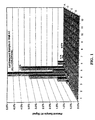
- FIG. 1 demonstrates that, when using conventional 96-well clear polystyrene microtiter plates, the luminescence signal generated in one well is refracted through the plastic over relatively long distances. Hence, the light refracted from one luminous sample can interfere with the subsequent measurement of signal from luminescent samples in successive wells.
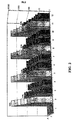
- Figure 2 shows the cumulative nature of refracted light emanating from multiple luminous samples within a single clear plastic plate.
- Multi-well plates made from opaque plastics such as white and black polyethylene are commercially available (e.g ., DynaTech Laboratories, Charitilly, VA; Labsystems, Helsinki, Finland; NUNC, Roskilde, Denmark), and are now being adopted to prevent refractive cross-talk between samples in applications involving high-throughput luminometric analysis (Blaise, C., et al ., 1994).
- white plastic e.g ., DynaTech Laboratories, Charitilly, VA; Labsystems, Helsinki, Finland; NUNC, Roskilde, Denmark
- the reflectivity of white plastic yields greater luminescence sensitivity than clear plates, photons are readily scattered from the walls of adjacent wells, again introducing cross-talk interference between wells.
- the cross-talk is referred to as "reflective cross-talk.”
- reflective cross-talk is particularly evident when assaying dim wells (such as negative controls not containing luciferase) that are adjacent to bright wells.
- Black 96-well plates, originally intended for fluorescent applications, are not ideal for luminescence applications because the sample signal is greatly diminished due to the non-reflective nature of the plastic.
- Opaque plates In addition to their cost, opaque plates impose technical limitations not associated with clear multi-well plates. For example, many researchers desire to expedite their assay operations and reduce the cost of materials by culturing cells directly in the wells of the microplate used to perform the final assay. Opaque plates are inferior for this purpose because:
- the present invention provides such luminescence assays.
- the invention relates to luminescence assays which include at least one reagent which rapidly quenches a given luminescence reaction, thereby allowing subsequent wells to be assayed without refractive or reflective cross-talk between wells.
- U.S. Patent No. 4,235,961 issued November 25, 1980, to A.T. Lundin, describes a method for the photometric determination of subunit B of creatinine kinase.
- the assay proceeds in the presence of the L-luciferin enantiomer of the natural beetle luciferase substrate (D-luciferin), which acts as a competitive inhibitor of the luciferase/D-luciferin reaction.
- D-luciferin L-luciferin enantiomer of the natural beetle luciferase substrate
- Inhibition of the photometric reaction provides a more continuous emission of light from the sample, thereby allowing the kinetics of creatine kinase reaction to be studied.
- the concept of a dual-enzyme reporter system relates to the simultaneous use, expression, and measurement of two individual reporter enzymes within a single system.
- examples that currently benefit from dual-reporter assays include individual cells or cell populations (such as cells dispersed in culture, segregated tissues, or whole animals) genetically manipulated to simultaneously express two different reporter genes.
- the activity of one gene reports the impact of the specific experimental conditions, while the activity of the second reporter gene provides an internal control by which all sets of experimental values can be normalized.
- Cell-free reconstituted systems that may benefit from dual-enzyme reporter technology are cellular lysates derived for the simultaneous translation, or coupled transcription and translation, of independent genetic materials encoding experimental and control reporter enzymes.
- Immuno-assays may, likewise, be designed for dual-reporting of both experimental and control values from within a single sample.
- genes encoding firefly luciferase ( luc ), chloramphenicol acetyl transferase (CAT), beta-galactosidase ( lac Z), beta-glucuronidase (GUS) and various phosphatases such as secreted alkaline phosphatase (SEAP) and uteroferrin (Uf; an acid phosphatase) have been combined and used as co-reporters of genetic activity.
- the following references provide representative examples of these various reporter genes used in combined form for the purpose of dual-reporting of genetic activity: luc and GUS: Leckie, F., et al ., 1994; luc and CAT, and luc and lac Z: Jain, V. K. and Magrath, I. T., 1992; CAT and lac Z: Flanagan, W. M. et al ., 1991; SEAP and Uf: Kondepudi, et al ., 1994.
- any dual-enzyme reporter assay is limited by the characteristics of the constituent enzyme chemistries, and the ability to correlate their respective resulting data sets. Quantifying the combined expression of any two of the above reporters from within a single cell lysate necessitates splitting the sample so that the activity of each reporter can be assayed independently. Hence, the disparate enzyme kinetics, assay chemistries and incubation requirements, of these various reporter enzymes makes it impossible to combine them into an integrated, single-tube, dual-reporter assay format.
- An ideal dual-reporter system would be comprised of two enzyme assays with compatible chemistries, and identical temperature and handling conditions, speed, sensitivity, and instrumentation required for detection.
- the present invention is drawn to single enzyme and integrated dual-enzyme luminescence assays which utilize one or more reagents to rapidly and efficiently quench enzyme-mediated luminescent reactions.
- An enzyme-mediated luminescence reaction is any chemical reaction which yields photons as a consequence of the reaction, and uses an enzyme to effectively enable the reaction.
- Examples are luciferases isolated from a variety of luminous organisms, such as the firefly luciferase of Photinus pyralis or the Renilla luciferase of Renilla reniformis. Luciferases are enzymes found in luminous organisms which catalyze luminescence reactions. They are organized into groups based on commonalties of their luminescence reactions. All luciferases within a group are derived from related luminous organisms, and all catalyze the same chemical reaction.
- Examples are beetle luciferases, which all catalyze ATP-mediated oxidation of the beetle luciferin; and anthozoan luciferases which all catalyze oxidation of coelenterazine ( Ward, 1985).
- a functional equivalent is an enzyme that maintains the ability to catalyze the same luminescence reaction, and thus it remains in the same group of enzymes.
- An example is a genetic fusion to another protein to yield a bifunctional hybrid protein ( Kobatake, et al ., 1993).
- enzymes that are not luciferases can mediate a luminescence reaction using synthetic substrates. Examples are horseradish peroxidase, which catalyzes a reaction involving luminol ( Thorp et al ., 1986); and alkaline phosphatase, which catalyzes a reaction with adamantyl 1,2-dioxetane phosphate ( Schaap et al ., 1989).
- a luminescence reporter is a molecule which mediates a luminescence reaction, and by doing so yields information about the state of a chemical or biochemical system. Examples are genetic reporters ( Wood, 1995), immunoassay reporters ( Bronstein et al ., 1991), and ATP reporters ( Schram, 1991).
- Enzymes are proteins which catalyze a chemical transformation, and thus are not changed by that transformation. Because the enzyme is regenerated at the conclusion of the transformation, it is available for additional cycles of transformation; enzymes thus have the capacity for substrate turnover. This property allows the capacity for continuous luminescence in enzyme-mediated luminescence reactions. Some proteins, such as aequorin ( Ward , 1985), do not allow substrate turnover, and this do not support continuous luminescence.
- the present invention relates to single-reporter luminescence assays using reagents which non-specifically extinguish luminescence enzymatic reactions.
- general enzymatic quenching an enzyme-mediated, luminescence reaction is first initiated by addition of the proper initiating reagent or reagents into the experimental system. The luminescence signal produced in the experimental system is then measured using a photomultiplier tube, or any other suitable means therefor. The enzymatic reaction is then quenched by the addition of a general quench reagent. The quench reagent should diminish the luminescence signal by 1,000-fold within a relatively short time interval after introduction of the quench reagent.
- the luminescence signal should preferably be quenched within 30 seconds, and more preferably still within about 10 seconds. This allows numerous samples to be assayed very quickly.
- the preferred formulation for a general quench reagent will diminish the luminescence signal of a given enzymatic reaction by 100,000-fold.
- addition of the general quench reagent prevents light from previously-activated samples from interfering with light measurements in subsequently-activated samples in a multisample assay format.
- Examples of types of general quench reagents include organic reagents (e.g ., isopropanol), detergents (e.g ., SDS), and structural intercalaters such as hydrophobic dyes.
- organic reagents e.g ., isopropanol
- detergents e.g ., SDS
- structural intercalaters such as hydrophobic dyes.
- Such general quench reagents are ideally suited for use with automatic injectors and in microtiter plates (both opaque and clear) such as conventional 96-well plates.
- the quench reagent effectively extinguishes the luminescence signal from within a sample, multiple luminescence assays can be performed within a clear multi-well plate without refractive cross-talk between samples.
- the present invention relates to dual-reporter luminescence assays utilizing reagents which selectively extinguish one luminescence reporter enzyme while simultaneously initiating another distinct enzyme-mediated luminescence reaction.
- the quench reagent is referred to as a specific quench reagent because the reagent quenches only a specifically selected enzyme-mediated luminescence reaction.
- the reagent is further formulated to allow simultaneous initiation of a second enzyme-mediated luminescence reaction, the reagent is referred to as a "quench-and-activate" reagent.
- This assay allows the sequential measurement of two separate and distinct luminescence reporters within one sample. As a result, one of the luminescence reporters can be used as an internal standard, while the other is used to reporter the impact of the experimental variables.
- two distinct enzyme reporters are used.
- the two enzymes respond differently to various reagents, thereby allowing either of the enzyme-mediated luminescence reactions to be selectively quenched.
- one of the two enzyme-mediated luminescence reactions is first initiated by addition of the proper initiating reagent or reagents into the experimental system.
- the luminescence signal produced by the first enzymatic reaction is then measured as described above.
- the first enzymatic reaction is then specifically and selectively quenched by adding a quench-and-activate reagent which simultaneously quenches the first enzymatic reaction and initiates the second enzymatic reaction.
- the luminescence signal produced by the second enzymatic reaction is then measured in the same fashion as the first reaction. In this manner, two luminescence reactions, mediated by two different enzymes, can be assayed sequentially in time, within the same reaction vessel.
- firefly luciferase will be selectively quenched using metal chelators, substrate analogs (e.g ., luciferin analogs such as dehydroluciferin), and pyrophosphate.
- substrate analogs e.g ., luciferin analogs such as dehydroluciferin
- pyrophosphate e.g., pyrophosphate.
- Absolute quenching of the luminescence reaction is not necessary so long as the relative inhibition is large, preferably 100,000-fold, and reproducible.
- These quench reagents are specific for firefly luciferase or other beetle luciferases, and will have no effect on luciferase reporters of other types present in the experimental system.
- the first luciferase reaction in this example a firefly luciferase-mediated reaction, can be selectively quenched, while allowing a second luciferase-mediated reaction, such as a Renilla luciferase-mediated reaction, to proceed without inhibition.
- a second luciferase-mediated reaction such as a Renilla luciferase-mediated reaction
- the luminescence chemistries of beta-galactosidase, beta-glucuronidase, alkaline phosphatase or other luciferases can be utilized in a dual-reporter luminescence assay with firefly luciferase.
- One of the two luminescent enzymes acts as an internal standard, while the other functions as an experimental marker for gene activity.
- the present invention describes general and specific reagents formulated to provide rapid, efficient, and reproducible quenching of luminescence reactions. This capability affords two distinct advantages over conventional luminescence assays:
- the present invention therefore provides the technology needed to implement high-throughput automated assays based on enzyme-mediated luminescence reporter systems, using conventional transparent or opaque multi-well plates.
- the invention also includes quench reagents and assay kits for analyzing samples using enzyme-mediated luminescence reactions.
- the present invention is ideally suited for luminescence reactions because the experimental entity being measured, photons, are transient in existence. Therefore, quenching the enzymatic reaction which causes the production of photons immediately diminishes the product photons present in the sample. In other words, once the luminescence measurement is taken, and the luciferase reaction is quenched, the fleeting nature of photons means there is no build-up of product photons in the sample. In essence, luminescence reactions can be "turned off” without leaving an accumulation of the experimental or control signal ( i . e ., photons) within the sample.
- Yet another object of the present invention is to provide a single-reporter, enzyme-mediated luminescence assay utilizing a reagent which non-specifically quenches enzyme-mediated luminescence reactions.
- Still another object of the invention is to provide a dual-reporter, enzyme-mediated luminescence assay utilizing a reagent which specifically quenches a first chosen enzyme-mediated luminescence reaction, while simultaneously initiating a second and distinct enzyme-mediated luminescence reaction.
- a still further object of the present invention is to provide a luminescence assay which can be performed in transparent or opaque multi-well plates without refractive or reflective cross-talk light contamination between wells.
- a still further object of the present invention is to provide single and dual-reporter luminescence assays which are automatable using conventional laboratory instrumentation and disposable plasticware.
- Figure 1 is a three-dimensional graph showing signal cross-talk radiating from a single luminescent sample within a clear plastic, 96-well microplate.
- Figure 2 is a three-dimensional graph showing the cumulative nature of signal cross-talk radiating from multiple luminescent samples within a clear plastic, 96-well microplate.
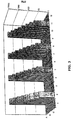
- Figure 3 is a composite of two three-dimensional graphs showing A) the phenomenon of signal interference between neighboring samples in a clear plastic multi-well plate, and B) the elimination of signal cross-talk by the use of the present invention.
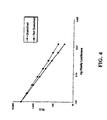
- Figure 4 is a graph showing general quenching of luminescence reactions catalyzed by luciferases from three distinct organisms using quench reagents according to the present invention.
- Figure 5 shows the results of a dual-luciferase reporter assay according to the present invention utilizing firefly luciferase as the first reporter, and Renilla (sea pansy) luciferase as the second reporter.
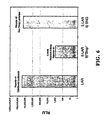
- Figure 6 shows the results of a dual-luciferase reporter assay according to the present invention utilizing click beetle luciferase as the first reporter, and Renilla luciferase as the second reporter.
- luciferase and "luciferin” as used herein shall mean any type of luciferase originating from any natural, synthetic, or genetically-altered source, including, but not limited to: luciferases isolated from the firefly Photinus pyralis or other beetle luciferases (such as luciferases obtained from click beetles ( e.g., Pyrophorus plagiophthalamus .) or glow worms ( Pheogodidae spp.)), the sea pansy Renilla reniformis , the ostracod Vargula hilgendorfii , the limpet Latia neritoides , and bacterial luciferases isolated from such organisms as Xenorhabdus luminescens , and Vibrio fisherii ; and their respective substrates and functional equivalents thereof.
- luciferases isolated from the firefly Photinus pyralis or other beet
- the present invention includes a method of assaying enzyme-mediated luminescence reactions which comprises the steps of initiating at least one enzyme-mediated luminescence reaction, quantifying luminescence energy produced by the luminescence reaction, and quenching photon emission from the enzyme-mediated luminescence reaction by introducing at least one quench reagent to the luminescence reaction.
- the enzyme-mediated luminescence reaction may be a luciferase-mediated reaction, and in that case, it is preferred that the reaction is quenched with a quench reagent capable of reducing photon emissions from the luciferase-mediated luminescence reaction by a factor of at least 1,000-fold.
- the luciferase-mediated reaction may be quenched with a number of different reagents, including one or more quench reagents selected from the following group of compounds: iodide, iodine, sulfate, nitrate, iso -propanol, 2-(4-aminophenyl)-6-methylbenzothiazole, dimethyldecylphosphine oxide, pyrophosphate, benzothiazole, 2-phenylbenzothiazole, n -butanol, trans -1,2,-diaminocyclohexane-N,N,N',N'-tetraacetic acid, 2-(6'-hydroxy-2'-benzothiazolyl)-thiazole-4-carboxylic acid, ethylenediaminetetraacetic acid, 2(o-hydroxyphenyl)benzothiazole, India fountain pen ink, adenosine 5'-triphosphate 2',3'-a
- quench reagents listed immediately above may be formulated into preferred quench reagent compositions including mixtures selected from the following group: SDS and NaI; I 2 and I; Na 4 PPi and NaI; Na 4 PPi, CDTA, and APMBT; Na 4 PPi, APMBT, and Na 2 SO 4 ; Na 4 PPi, CDTA, APMBT, and Na 2 SO 4 ; Na 4 PPi and APMBT; Na 4 PPi and iso -propanol; IFP Ink and APMBT; APMBT and CDTA; IFP Ink and CDTA; IFP Ink and Na 4 PPi; SDS and NaI; Tween® 20 and NaI; Tween® 20, NaI, and n -butanol; Triton® X-100 and NaI; and mixtures thereof.
- the preferred final assay concentrations of the compounds in the above mixtures are as follows: 0.33%(w/v) SDS and 170mM NaI; 1.3mM I 2 and 45.5mM NaI; 25mM Na 4 PPi and 100mM NaI; 7.5mM Na 4 PPi, 5.0mM CDTA and 12.5 ⁇ M APMBT; 7.5mM Na 4 PPi, 12.5 ⁇ M APMBT and 200mM Na 2 SO 4 ; 7.5mM Na 4 PPi, 5.0mM CDTA, 12.5 ⁇ M APMBT and 200mM Na 2 SO 4 ; 6.3mM Na 4 PPi and 3.1 ⁇ M APMBT; 6.3mM Na 4 PPi and 3.1%(v/v) iso -propanol; 1/3,000xIFP Ink and 3.1 ⁇ M APMBT; 3.1 ⁇ M APMBT and 7.9mM CDTA; 1/3,000xIFP Ink and 6.2mM CDTA; 1/3,000xIFP Ink and
- the method of the present invention may be used to assay luminescence reactions mediated by beetle luciferases, including Photinus pyralis luciferase, and Pyrophorus plagiophthalamus luciferase.
- beetle luciferases including Photinus pyralis luciferase, and Pyrophorus plagiophthalamus luciferase.
- Another luciferase which is widely used in the field of research, and which may be assayed using the present invention is the reaction catalyzed by Renilla reniformis luciferase.
- the present invention also includes a dual-reporter method for assaying enzyme-mediated luminescence reactions in which a first enzyme-mediated luminescent reaction mediated by a first enzyme is initiated, and the luminescent energy of the first reaction recorded. This is followed by introduction of a quench-and-activate composition capable of selectively quenching the first enzyme-mediated luminescence reaction and simultaneously initiating a second enzyme-mediated luminescence reaction which is distinct from the first enzyme-mediated luminescence reaction. The luminescent energy produced by the second enzyme-mediated luminescence reaction is then measured. In an optional step, the second enzyme-mediated luminescent reaction may then subsequently be quenched by the addition of a second quenching reagent.
- the invention also includes a single-reporter and a dual-reporter assay kits which contain reagents for performing the subject method.
- the single-reporter kit comprises at least one quench reagent composition capable of quenching photon emission from an enzyme-mediated luminescence reaction, preferably by a factor of at least 1,000-fold.
- the at least one quench reagent composition is disposed within a suitable first container.
- At least one functional enzyme substrate corresponding to the enzyme-mediated luminescence reaction being assayed is included in the kit, along with a suitable second container into which the at least one functional enzyme substrate is disposed.
- the kit also includes instructions on its use.
- Said at least one quench reagent composition is at least one mixture selected from the group consisting of Na 4 PPi and Nal; Na 4 PPi, CDTA and APMBT; Na 4 PPi, APMBT and Na 2 SO 4 ; Na 4 PPi, CDTA, APMBT and Na 2 SO 4 ; Na 4 PPi and APMBT; Na 4 PPi and iso-propanol; APMBT and CDTA; Nal and I 2 ; SDS and Nal; Tween®20 and Nal; Tween®20, Nal and n-butanol; Triton®X-100 and Nal; and mixtures thereof.
- the dual-reporter kit includes a first functional enzyme substrate corresponding to a first enzyme-mediated luminescence reaction being assayed contained within a suitable first container.
- a quench-and-activate composition comprising quench reagents capable of quenching photon emission from the first enzyme-mediated luminescence reaction by a factor of at least 1,000-fold, and a second and distinct functional enzyme substrate corresponding to a second and distinct enzyme-mediated luminescence reaction are contained within a suitable second container.
- the dual-reporter kit also includes instructions for its use.
- the dual-reporter kit may also contain a second quench reagent contained within a suitable third container, the second quench reagent capable of quenching the second and distinct enzyme-mediated luminescent reaction.
- the present invention also includes two enzyme-mediated luminescence reaction quench reagents which are capable of reducing photon emissions from enzyme-mediated luminescence reactions, nomely a combination of Na 4 PPi, APMBT, Na 2 SO 4 and coelenterazine and a combination of Na 4 PPi, CDTA, APMBT, Na 2 SO 4 and coelenterazine.
- luminescent enzyme reporter systems are more sensitive than the other, more traditional, enzyme reporter systems. Luciferase assays, in particular, are also much more rapid than those of other enzyme reporter systems. These features make luminescence-generating enzymes the preferred reporters of genetic and physiological activity.
- Figures 1 and 2 demonstrate that light refraction from relatively bright luminescent reactions contained in clear multi-well plates easily contributes greater than 0.1% signal interference to even distant sample wells. Indeed, background interference exceeds 6% in wells that are adjacent to single-sample reactions with high luminescent activity. Cumulative background interference due to light refraction from several luminescent samples is even much greater. Thus, despite their other technological and economic advantages, multi-well plates of clear plastic are currently unsuitable for high throughput assays using luminescent assays.
- Figure 1 graphically depicts the extreme refractive properties of clear polystyrene.
- a cell-free extract of firefly luciferase-expressing C hinese h amster o vary (CHO) cells was prepared, as described in full below, and used to demonstrate the general phenomenon of light channeling through a clear plastic multi-well plate to produce cross-talk light interference in neighboring sample wells. 20 ⁇ l of the extract was combined with 100 ⁇ l of Luciferase Assay Reagent (Promega Corp., Madison WI) in sample well 6D of a clear polystyrene 96-well plate.
- Luciferase Assay Reagent Promega Corp., Madison WI
- Luminescence from the single firefly luciferase reaction was then quantified in all 96 sample wells using a Luminoskan RT luminometer (Labsystems; Helsinki, Finland) programmed to integrate photon emission over a 4 second period. Although only well 6D contained an active luciferase reaction, significant signal (> 0.1%) was measured in empty sample wells extending five columns distant from the luminescent source.
- Cross-talk between multiple luminescent samples in distant wells of a clear plastic micro-well plate causes cumulative signal interference between sample wells, as is shown in Figure 2.
- a lysate of CHO cells transfected with pGL3-Control (a firefly luciferase expression plasmid available from Promega Corp, product #E1741) was prepared as eight consecutive 1:2 dilutions using Reporter Lysis Buffer (Promega Corp.) containing 1 mg BSA/ml. 20 ⁇ l of each luciferase dilution was dispensed into sample wells A-H of columns 2, 5, 8 and 11 of a Corning clear polystyrene 96-well plate.
- a Lab Systems Luminoskan RT luminometer was used to sequentially inject Promega Luciferase Assay Reagent and quantify light emission from each individual sample well, as described previously.
- Figure 2 is a plot of the Relative Light Units (RLU) measured for each well of the 96-well plate.
- RLU Relative Light Units
- a luminescence assay utilizing a general quench reagent is described.
- general quench reagent is meant a reagent which non-specifically quenches luminescence reactions, preferably luciferase-mediated luminescence reactions without regard to the source of the luciferase.
- the general quench reagent should provide a minimum 1,000-fold reduction in luminescent signal for each sample. Due to the cumulative nature of light cross-talk from many individual luminous reactions, it is preferred that the general quench reagent provide a 100,000-fold decrease in the light emissions from each luminescence reaction.
- quench reagents comprising a single chemical entity are shown in Table 1, superior results are obtained by using a quench reagent which includes a number of different chemical entities. Therefore, it is preferred that the quench reagent be a combination of ingredients so as to result in the most effective and expedient inhibition of luminescence reactions in general, and luciferase-mediated reactions in particular.
- the preferred general quench reagent is 50 mM tetra sodium pyrophosphate, 200 mM sodium iodide, and 10 mM HEPES, pH 6.5. This combination of ingredients rapidly and effectively quenches luminescent reactions from beetle luciferases. When specifically applied in a 1:1 volume ratio to firefly luciferase-mediated reactions, this combination leaves a residual luminescence signal which is only 0.000043% of the original signal.
- Figure 3-B shows the results of an experiment identical to that shown in Figure 2 with the exception that after each luminescence reading, an equivalent volume of a general quench reagent consisting of 50 mM Na 4 PPi, 200 mM NaI, and 10 mM HEPES (pH 6.5) was injected into each well prior to activating the luminous reactions contained in subsequent wells.
- a general quench reagent consisting of 50 mM Na 4 PPi, 200 mM NaI, and 10 mM HEPES (pH 6.5) was injected into each well prior to activating the luminous reactions contained in subsequent wells.
- Table 2 The impact of adding the general quench reagent on the accuracy of quantifying luminescence assays performed in clear plastic multi-well plates is illustrated in Table 2. These data were obtained by placing serial dilutions of luciferase solutions into standard clear polystyrene 96-well plates, and measuring light intensity in the manner described herein. Average luminescence values were determined for the four luminescent samples contained in each row of the multi-well plate of Figure 3-A, in which all luminescent reactions remained unquenched, and therefore continued to emit persistent luminescence. Average luminescence values were also determined for the four samples in the respective wells of the multi-well plate of Figure 3-B, in which all previous luminescent reactions were quenched.
- Reagent formulation for general quenching of luciferase-catalyzed luminescent reactions Reagent formulation for general quenching of luciferase-catalyzed luminescent reactions.
- Table 1 and Table 3 present the potency of quenching firefly and Renilla luciferases, respectively, for representative concentrations of the compounds tested. The percentage of residual luminescent signal measured after addition of the test compound is indicative of its quenching efficiency. Whether used individually or in combination at varying concentrations, useful quench formulations should be capable of reducing luminescence from the luciferase reactions by 1,000-fold, i.e ., to 0.1% of the starting luminescent emission.
- Firefly luciferase reactions were performed using the Luciferase Assay Reagent and protocol included in the Luciferase Assay System kit commercially available from Promega Corp. (Madison, WI; Kit #4030). Luminescence from both the control and quenched firefly luciferase reactions (Table 1) were performed using an extract of CHO cells expressing pGL3-Control, prepared as described below. Control reactions were conducted by dispensing 10-20 ⁇ l of extract into a luminometer tube containing 100 ⁇ l Promega Luciferase Assay Reagent and quantifying light emission.
- Renilla luciferase reactions were performed by adding 100 ⁇ l of purified Renilla luciferase (typically diluted to 0.3 ⁇ g per ml in 75 mM HEPES, 0.02% BSA; pH 8) to a luminometer tube containing an equal volume of Renilla substrate solution (7.5 mM sodium acetate, 10 mM CDTA, 400 mM sodium sulfate, 25 ⁇ M APMBT, 15 mM sodium pyrophosphate, 2 ⁇ M coelenterazine; pH 5.5). Photon emission was quantified as previously described. The individual and combined chemical formulations summarized in Table 3 were evaluated for their ability to quench Renilla luciferase luminescence by adding 100 ⁇ l of the test solution to the luminescent reaction, then quantifying residual light emission as before.
- beetle luciferases are of common evolutionary origin, displaying at least 45% protein sequence homology. It is therefore logical that substrate analogs of beetle luciferin, and other chemicals such as those demonstrated in Table 1 to quench one beetle luciferase, will be similarly potent in quenching the luminescent reaction of luciferases purified from any of the many species of luminous beetles. Therefore, general BLQ Reagent include the representative formulations presented in Table 1, as well as any combination of their constituent chemicals such as to affect at least a 1,000-fold diminution of luminescent intensity from beetle luciferase reactions.
- Figure 4 demonstrates that a reagent capable of quenching the luminescence from the reaction of one beetle luciferase (that of Photinus pyralis , the North American firefly) is similarly potent in quenching the luminescent reaction catalyzed by a luciferase of distinct beetle origin (that of P. plagiophthalamus , the Jamaican click beetle).
- P. plagiophthalamus is the most evolutionarily distant of the luminous beetles to P. pyralis , and thus the luciferases of these two beetles are representative of the full range of beetle luciferases.
- the Y-axis of Figure 4 is logarithmic.
- the unquenched firefly assay was performed by adding 20 ⁇ l of an extract of mammalian cells expressing firefly luciferase (prepared as described below) into a luminometer tube containing 100 ⁇ l Promega Luciferase Assay Reagent.
- the unquenched click beetle luciferase assay was performed in a similar fashion except the enzyme sample was gained by diluting purified click beetle luciferase to approximately 5 ⁇ g/ml in Promega Reporter Lysis Buffer containing 1 mg BSA/ml.
- Both beetle luciferase reactions were quenched by adding 100 ⁇ l BLQ Reagent into the luminometer tube immediately following the measurement of the uninhibited control reactions.
- BLQ Reagent is comprised of 10 mM HEPES, 50 mM Na 4 PPi, and 200 mM NaI; pH 6.5.
- Luminescence from both the control ( i.e ., 100% equivalent) and quenched beetle luciferase reactions were quantified by integrating light emission over a 10 second period in a Turner Designs luminometer fitted with a 410x neutral density filter.
- FIG. 4 also demonstrates that luciferase isolated from the sea pansy ( Renilla reniformis ) can be efficiently quenched by the addition of selected Renilla Luciferase Quench (RLQ) Reagent formulations, as summarized in Table 3.
- RLQ Renilla Luciferase Quench
- the control luminescent reaction (100% equivalent) was performed by adding 20 ⁇ l of purified Renilla luciferase, diluted to 0.3 ⁇ g/ml in Mathews' Buffer (0.5 M NaCl, 0.1 M K 2 HPO 4 , 1.0 mM Na 2 EDTA, 0.02% BSA, pH 7.6; from Mathews, et al ., 1977) into 100 ⁇ l Mathews' Buffer containing 1 ⁇ M benzyl coelenterazine.
- the Renilla luminescent reaction was subsequently quenched by adding into the luminometer tube 100 ⁇ l of RLQ Reagent which, in this example, was composed of 0.66% SDS. Luminescence from both control and quenched Renilla luciferase reactions was quantified using a luminometer, as described previously.
- Implicit to the concept of an integrated (i.e ., sequential-measurement) dual-enzyme reporter assay is the necessity to efficiently quench luminescence from the first reporter enzyme such that the activity of the second luminescent reporter is not inhibited. Therefore a quench reagent is required that is extremely potent in quenching luminescence from the firefly reaction but can exist as a passive component in the subsequent luminescent reaction catalyzed by Renilla luciferase.
- BLA Beetle Luciferase Activation
- BLQ Beetle Luciferase Quench
- a luminescence assay utilizing two or more distinct enzymes, and a quench reagent specific for only one of the enzymes is described.
- a quench reagent which specifically inhibits only one type of enzyme-mediated luminescence reaction is added to the sample cell.
- Such quench reagents will be referred to as specific quench reagents; and referred to as quench-and-activate reagents when additionally formulated to also simultaneously initiate a second enzyme-mediated luminescence reaction.
- a sample containing two distinct enzymes such as firefly luciferase and Renilla luciferase, or any combination of distinct enzymes, is assayed.
- an activating agent for one of the two enzymes is added into a sample well, and the resulting luminescence measured as described above.
- a specific quench-and-activate reagent is then added into the well.
- the reagent specifically quenches the first enzyme-mediated reaction, and simultaneously activates the second enzyme-mediated reaction.
- the specific quench reagent and a second light activating reagent specific for the second enzyme-mediated luminescence reaction can be added to the sample well simultaneously.
- the luminescence from the second reaction is then measured in the same manner as the first.
- luminescence from the sample may then be completely quenched by adding a general quench reagent to the sample.
- the present invention affords a multiplex luminescence assay capable of measuring two distinct parameters within a single sample.
- one of the enzyme-mediated reactions can act as an internal standard, while the other of the enzyme-mediated reactions functions as a genetic marker or other experimental variable.
- the traditional assay chemistries used to quantify the activity of beetle (Wood, 1991) and Renilla (Mathews, et al ., 1977) luciferases are incompatible.
- the present invention discloses innovative chemical formulations that meld the Renilla luciferase assay with that of the firefly or click beetle luciferase reaction, thus creating a novel dual-luciferase reporter assay.
- These formulations are here given the generic designations of Beetle Luciferase Activation (BLA) Reagent and Beetle Luciferase Quench & Renilla Luciferase Activation (BLQRLA) Reagent.
- BLA Reagent 75 mM HEPES, 4 mM MgSO 4 , 20 mM DTT, 100 ⁇ M EDTA, 530 ⁇ M ATP, 270 ⁇ M CoA, 470 ⁇ M beetle luciferin; pH 8.0
- BLA Reagent is formulated to sustain the luminescent reaction of firefly luciferase and to later complement BLQRLA Reagent in promoting maximal luminescent activity from the Renilla luciferase reaction.
- Table 5 presents representative formulations of the various BLQRLA Reagents tested, and summarizes their respective efficiencies in i) selectively quenching luminescence from the firefly luciferase reaction and ii) activating and sustaining maximal Renilla luciferase luminescence.
- Assays were performed using a cell extract prepared from CHO cells expressing firefly luciferase (described in detail below) and further supplemented with purified Renilla luciferase (approximately 0.3 ⁇ g/ml).
- the prepared extract simulates the experimental condition in which a single cell population is induced to simultaneously express two distinct luciferase reporter enzymes.
- Reactions to determine Renilla luciferase activity were conducted by first dispensing 10 ⁇ l of extract into a luminometer tube containing 100 ⁇ l BLA Reagent (75 mM HEPES, 4 mM MgSO 4 , 20 mM DTT, 100 ⁇ M EDTA, 530 ⁇ M ATP, 270 ⁇ M CoA, 470 ⁇ M beetle luciferin; pH 8.0), then adding 100 ⁇ l of one of the various BLQRLA test reagents.
- BLA Reagents are composed of 7.5 mM acetic acid (pH 5.0) in combination with one of the test mixtures presented in Table 5 .
- the 100% control value for Reporter #1 was determined by quantifying light emission from said reaction prior to addition of the designated BLQRLA Reagent.
- the 100% control value for Reporter #2 was determined using the dual-reporter assay format in which control BLQRLA Reagent (7.5 mM acetic acid, 15 mM Na 4 PPi, 400 mM Na 2 SO 4 , 2 ⁇ M coelenterazine; pH 5.0) was added to the firefly luciferase reaction in a 1:1 volume ratio.
- Figures 5 and 6 demonstrate the invention applied to the situation in which different beetle luciferase reactions (Reporter #1) are quantified then selectively quenched by the addition of a reagent that concomitantly activates and sustains the luminescent reaction of Renilla luciferase (Reporter #2). These examples convincingly demonstrate the unique, integrated nature of the dual-luciferase assay. The activity of both luminescent reporter enzymes are rapidly quantified from within the same sample, contained in a single tube, using the same instrument. Note, as in Figure 4, the Y-axis in Figures 5 and 6 is logarithmic.
- Figure 5 presents the measured activity (in terms of r elative l ight u nits; RLU) of firefly and Renilla luciferases using the dual-luciferase reporter format of the invention.
- the luminescent activities of the two mixed luciferases were measured sequentially from the same sample tube, using the same instrument.
- a cell-free extract expressing firefly luciferase was prepared, as described below, and further supplemented with purified Renilla at a concentration of approximately 0.3 ng/ml.
- the activity of Reporter #1, firefly luciferase was measured by adding 20 ⁇ l of the cellular extract to 100 ⁇ l of BLA Reagent.
- Firefly luminescence was quantified by integrating light emission over a 10 second period using a Turner Designs luminometer whose sample chamber was fitted with a 410x neutral density filter.
- the activity of Reporter #2, Renilla luciferase was determined from the same sample by injecting 100 ⁇ l of BLQRLA reagent into the same luminometer tube.
- BLQRLA reagent is comprised of 15 mM Na 4 PPi, 7.5 mM sodium acetate, 10 mM CDTA, 400 mM Na 2 SO 4 , 25 ⁇ M APMBT, 1% methanol, 2 ⁇ M benzyl-coelenterazine; pH 5.0.
- Luminescent intensity of the Renilla catalyzed reaction was quantified immediately after addition of BLQRLA Reagent, without the need for adjustments to the luminometer.
- Residual luminescence from the quenched firefly luciferase reaction was determined independently to assess the luminescent background its reaction contributed to the measured activity value of the Renilla luciferase reaction.
- a reagent was prepared that is similar in all respects to the formulation of BLQRLA Reagent except that it does not contain coelenterazine. As before, this formulation is designated "Beetle Luciferase Quench (BLQ) Reagent".
- the luminescent reaction catalyzed by firefly luciferase was activated, as before, by adding 20 ⁇ l of prepared lysate to 100 ⁇ l BLA Reagent.
- Figure 6 presents the measured activity (in terms of RLU) of Jamaican click beetle and Renilla luciferases using the dual-luciferase reporter format of the invention.
- the luminescent activities of the two mixed luciferases were measured sequentially from the same sample tube, using the same instrument.
- Purified click beetle and Renilla luciferases were diluted to approximately 5 ⁇ g/ml each in Promega's Reporter Lysis Buffer containing 0.5 mg BSA/ml.
- Residual luminescence from the quenched click beetle reaction was determined independently to assess the percentage of background signal its reaction contributed to the value measured for the Renilla luciferase reaction.
- the method of determination, and the formulation of BLQ Reagent, were the same as those described above for the firefly/ Renilla dual-luciferase reporter assay. In this example, less than 0.004% of the luminescence value determined for the Renilla luciferase reaction is contributed as signal interference from the preceding click beetle luciferase reaction.
- the integrated chemistry of the dual-luciferase assay provides the capability of discriminating the individual luminescent signals from the reaction of two dissimilar luciferase reporter enzymes expressed within a single sample.
- An illustrative outline of the dual-luciferase assay, which typically requires less than 35 seconds to complete, is as follows:
- C hinese h amster o vary (CHO) cells were cultured in 75 cm 2 polystyrene culture flasks containing 25 ml of DMEM+FBS medium (Dulbecco's Modified Eagles Medium supplemented with 10% f etal b ovine s erum). Culture flasks were incubated in a 37°C, 5% CO 2 environment until approximately 90% confluence was observed.
- DMEM+FBS medium Dulbecco's Modified Eagles Medium supplemented with 10% f etal b ovine s erum
- Extracts were prepared by aspirating the growth medium, washing adherent cells once with 10 ml p hosphate b uffered s aline (PBS; 137 mM NaCI, 2.68 mM KCl, 1.47mM KH 2 PO 4 , 8.1 mM Na 2 HPO 4 ;pH 7.4), adding 400 ⁇ l of Promega's Reporter Lysis Buffer and scraping vigorously with a plastic cell lifter. Crude lysates were transferred to 1.5 ml microfuge tubes and cleared of cellular debris by spinning at 14,000 rpm in a refrigerated microfuge.
- PBS p hosphate b uffered s aline
- Figure 3-A is a plot of the RLU values measured from each well of a 96-well clear plastic plate containing only 32 samples of varying luminescent intensity. It demonstrates the general phenomenon, and cumulative affect, of signal cross-talk between multiple luminescent samples in distant wells of a clear plastic micro-well plate.
- a prepared lysate of CHO cells transfected with pGL3-Control was dispensed into each of the eight wells of alternating sample columns of a clear 96-well plate, as described for Figure 2.
- the plate was loaded into a plate-reading luminometer programmed to sequentially inject Promega Luciferase Assay Reagent and measure luminescence from each of the 96-wells.
- An unacceptably high percentage of refracted and scattered light is measured as signal interference in the columns of empty wells (i.e ., columns 3, 4, 6, 7, 9, 10 and 12) that are adjacent to columns with actively luminescent reactions.
- there is no signal interference measured in the empty sample wells of column 1 because they are injected with Promega Luciferase Assay Reagent and measured for luminescent activity before the first luminescent reaction (well A2) is initiated.
- Figure 3-B is a plot of RLU values measured from each well of a 96-well clear plastic plate prepared and processed similar to that described in Figure 3-A, but the luminometer was programmed to further inject 100 ⁇ l of Beetle Luciferase Quench (BLQ) reagent immediately following sample measurement.
- BLQ reagent was derived from formulations presented in Table 1 and, in this example, consisted of 10 mM HEPES, 50 mM Na 4 PPi, 200 mM NaI; pH 6.5.
- Figure 3-B convincingly demonstrates that post-read quenching of luminescent reactions contained in clear multi-well plates effectively eliminates signal interference by suppressing light cross-talk from preceding samples.
- Table 2 shows the percent error determined for light signal measured from sets of luminescent samples contained in clear multi-well plates when a general quench reagent is not utilized to extinguish previous luminescent reactions. Average luminescent signal was determined for the four samples in each row of the unquenched multi-well plate presented in Figure 3-A , then compared to the values determined for the respective sample sets contained in the quenched multi-well plate of Figure 3-B. It is seen that signal interference from unquenched reactions contributes less than 2% to the total light signal measured from samples in row A (an average luminescent value of 4,000 RLU) but contributes greater than 100% to the average signal measured from samples in row H (average luminescent value of 100 RLU).
- Figure 4 presents the percent residual luminescent activity measured after the addition of selected quench reagents to the luminescent reactions catalyzed by three distinct luciferases.
- Formulations Beetle Luciferase Quench (BLQ) and Renilla Luciferase Quench (RLQ) Reagents derived from Tables 1 and 3 were used to quench the luminescent activity of luciferases purified from two terrestrial organisms, the North American firefly ( Photinus pyralis ) and Jamaican click beetle ( Pyrophorus plagiophthalamus ), and a marine organism, the sea pansy ( Renilla reniformis ).
- Integrated dual-luciferase reporter assay Sequential measurement of firefly luciferase and Renilla luciferase luminescent reactions
- Figure 5 presents the activity (RLU) of firefly and Renilla luciferases measured using the integrated dual-reporter format of the invention.
- the luminescent activities of the two mixed luciferases were measured sequentially from the same sample tube, using the same instrument.
- CHO cells transfected with pGL3-Control DNA, and therefore expressing firefly luciferase were prepared and further supplemented with purified Renilla luciferase, as described previously.
- the activity of Reporter #1, firefly luciferase was measured by adding 20 ⁇ l of the prepared extract to 100 ⁇ l Beetle Luciferase Activation (BLA) reagent.
- Luminescent intensity was quantified by integrating light emission over a 10 second period using a Turner Designs luminometer fitted with a 410x neutral density filter .
- Reporter #2 Renilla luciferase
- the activity of Reporter #2 was determined from the same sample by injecting 100 ⁇ l Beetle Luciferase Quench & Renilla Luciferase Activation (BLQRLA) Reagent into the same luminometer tube.
- Luminescent intensity of the Renilla luciferase reaction was quantified in the same way as that of the firefly reaction, without the need for adjustments to the luminometer.
- the format of the invention requires less than 35 seconds to measure the luminescent activity of both luciferase reporter enzymes.
- Residual luminescence from the quenched Reporter #1 reaction was measured to determine the extent of signal interference contributed to the activity value determined for Reporter #2.
- the luminescent reaction of firefly luciferase was activated, as before, then 100 ⁇ l of BLQ Reagent was immediately injected into the sample tube and residual firefly luciferase activity was measured. Less than 0.0004% residual luminescent activity was determined to persist following quenching of the firefly luciferase reaction.
- Integrated dual-luciferase reporter assay Sequential measurement of click beetle luciferase and Renilla luciferase luminescent reactions
- Figure 6 presents the activity (RLU) of click beetle and Renilla luciferases measured using the integrated dual-reporter format of the invention.
Landscapes
- Life Sciences & Earth Sciences (AREA)
- Chemical & Material Sciences (AREA)
- Health & Medical Sciences (AREA)
- Engineering & Computer Science (AREA)
- Organic Chemistry (AREA)
- Immunology (AREA)
- Molecular Biology (AREA)
- Proteomics, Peptides & Aminoacids (AREA)
- Wood Science & Technology (AREA)
- Zoology (AREA)
- General Health & Medical Sciences (AREA)
- Microbiology (AREA)
- Physics & Mathematics (AREA)
- Analytical Chemistry (AREA)
- Biochemistry (AREA)
- Biotechnology (AREA)
- Urology & Nephrology (AREA)
- Hematology (AREA)
- Biomedical Technology (AREA)
- Genetics & Genomics (AREA)
- General Engineering & Computer Science (AREA)
- Bioinformatics & Cheminformatics (AREA)
- Biophysics (AREA)
- Medicinal Chemistry (AREA)
- Pathology (AREA)
- General Physics & Mathematics (AREA)
- Food Science & Technology (AREA)
- Cell Biology (AREA)
- Measuring Or Testing Involving Enzymes Or Micro-Organisms (AREA)
- Investigating Or Analysing Materials By The Use Of Chemical Reactions (AREA)
- Peptides Or Proteins (AREA)
Claims (34)
- Verfahren zum Testen von enzymvermittelten Lumineszenzreaktionen umfassend:(a) Initiierung von wenigstens einer enzymvermittelten Lumineszenzreaktion; anschließend(b) Quantifizierung der Lumineszenzenergie, die durch die Lumineszenzreaktion erzeugt worden ist; und dann(c) Unterdrücken der Photonenemission aus der enzymvermittelten Lumineszenzreaktion durch Einführung von wenigstens einem Mittel zur Unterdrückung der Lumineszenzreaktion.
- Verfahren nach Anspruch 1,
dadurch gekennzeichnet, dass in Schritt (a) wenigstens eine Luciferase vermittelte Lumineszenzreaktion initiiert wird. - Verfahren nach Anspruch 1 oder 2,
dadurch gekennzeichnet, dass in Schritt (c) eine Luciferase vermittelte Reaktion durch Einführen einer Menge an einem Mittel zur Unterdrückung unterdrückt wird, die ausreicht, um die Photonenemission der Luciferase vermittelten Lumineszenzreaktion um einen Faktor von wenigstens dem Tausendfachen zu verringern. - Verfahren nach einem der Ansprüche 1 bis 3,
dadurch gekennzeichnet, dass in Schritt (c) eine Luciferase vermittelte Reaktion mit einem oder mehreren Mitteln zur Unterdrückung unterdrückt wird, das ausgewählt ist aus der Gruppe bestehend aus Jodid, Jod, Sulfat, Nitrat, iso-Propanol, 2-(4-Aminophenyl)-6-methylbenzothiazol, Dimethyldecylphosphinoxid, Pyrophosphat, Benzothiazol, 2-Phenylbenzothiazol, n-Butanol, trans-1, 2,-Diaminocyclohexan-N, N, N', N'-tetraessigsäure, 2-(6'-Hydroxy-2'-benzothiazolyl)-thiazol-4-carbonsäure, Ethylendiamintetraessigsäure, 2-(o-Hydroxyphenyl)benzothiazol, Adenosin-5'-triphospat-2', 3'-acyclischer-dialkohol, Perjodat oxidiert, Borhydrid reduziert, Natriumdodecylsulfat, Zitronensäure, Tween®20, Triton®X-100, und Mischungen davon. - Verfahren nach einem der vorhergehenden Ansprüche,
dadurch gekennzeichnet, dass in Schritt (c) eine Luciferase vermittelte Reaktion mit wenigstens einer Zusammensetzung unterdrückt wird, die Mittel zur Unterdrückung enthält, die ausgewählt sind aus der Gruppe bestehend aus SDS und NaJ; J2 und NaJ; Na4PPi und NaJ; Na4PPi, trans-1,2-Diaminocyclohexan-N, N, N', N'-tetraessigsäure (CDTA), und 2-(4-Aminophenyl)-6-methylbenzothiazol (APMBT); Na4PPi, APMBT, und Na2SO4; Na4PPi, CDTA, APMBT, und Na2SO4; Na4PPi und APMBT; Na4PPi und iso-Propanol; APMBT und CDTA; SDS und NaJ; Tween ®20 und NaJ; Tween ®20, NaJ, und n-Butanol; Triton ®X-100 und NaJ; sowie Mischungen davon. - Verfahren nach einem der vorhergehenden Ansprüche,
dadurch gekennzeichnet, dass in Schritt (c) die Photonenemission einer Luciferase vermittelten Reaktion um einen Faktor von wenigstens dem Tausendfachen innerhalb eines Zeitraumes von nicht mehr als zehn Sekunden verringert wird. - Verfahren nach einem der vorhergehenden Ansprüche,
dadurch gekennzeichnet, dass in Schritt (a) eine Luciferase vermittelte Lumineszenzreaktion initiiert wird, die vermittelt wird durch eine Luciferase ausgewählt aus der Gruppe bestehend aus Käferluciferasen und funktionellen Äquivalenten davon. - Verfahren nach einem der vorhergehenden Ansprüche,
dadurch gekennzeichnet, dass in Schritt (a) eine Luciferase vermittelte Lumineszenzreaktion initiiert wird, die durch Photinus pyralis (nordamerikanisches Glühwürmchen) Luciferase, Pyrophorus plagiophtalamus (jamaikanischer Leuchtkäfer) Luciferase oder einem funktionellen Äquivalent davon vermittelt wird. - Verfahren nach einem der Ansprüche 1 bis 6,
dadurch gekennzeichnet, dass in Schritt (a) eine Luciferase vermittelte Lumineszenzreaktion initiiert wird, die durch eine Luciferase ausgewählt aus der Gruppe bestehend aus Anthozoan-Luciferase und funktionellen Äquivalenten davon initiiert wird. - Verfahren nach Anspruch 9,
wobei in Schritt (a) eine Luciferase vermittelte Lumineszenzreaktion initiiert wird, die durch Renilla Reniformis Luciferase vermittelt wird. - Verfahren nach einem der vorhergehenden Ansprüche,
dadurch gekennzeichnet, dass in Schritt (a) eine erste enzymvermittelte Lumineszenzreaktion initiiert wird, die durch ein erstes Enzym vermittelt wird, und zudem umfassend:in Schritt (c) das Einführen einer Zusammensetzung zum Unterdrücken und Aktivieren, mit der Fähigkeit, die erste enzymvermittelte Lumineszenzreaktion selektiv zu unterdrücken und gleichzeitig eine zweite enzymvermittelte Lumineszenzreaktion zu initiieren, die von der ersten enzymvermittelten Lumineszenzreaktion verschieden ist, wobei die zweite enzymvermittelte Lumineszenzreaktion durch die Einführung der Zusammensetzung zur Unterdrückung und Aktivierung nicht unterdrückt wird; und dann(d) Quantifizierung der Lumineszenzenergie, die durch die zweite enzymvermittelte Lumineszenzreaktion erzeugt worden ist. - Verfahren nach Anspruch 11,
dadurch gekennzeichnet, dass in Schritt (a) eine erste Luciferase vermittelte Lumineszenzreaktion initiiert wird, die durch eine erste Luciferase vermittelt wird. - Verfahren nach Anspruch 11 oder Anspruch 12,
dadurch gekennzeichnet, dass in Schritt (a) eine erste Luciferase vermittelte Lumineszenzreaktion initiiert wird, die durch eine erste Luciferase vermittelt wird, und
in Schritt (c) eine zweite und unterschiedliche Luciferase vermittelte Lumineszenzreaktion initiiert wird, die durch eine zweite und unterschiedliche Luciferase vermittelt wird. - Verfahren nach einem der Ansprüche 11 bis 13,
dadurch gekennzeichnet, dass in Schritt (c) eine Zusammensetzung zur Unterdrückung und Aktivierung zugegeben wird, die die Fähigkeit hat, die Photonenemission der ersten Luciferase vermittelten Lumineszenzreaktion um einen Faktor von wenigstens dem Tausendfachen zu verringern. - Verfahren nach einem der Ansprüche 11 bis 14,
dadurch gekennzeichnet dass in Schritt (c) die erste Luciferase vermittelte Reaktion unterdrückt wird, und die zweite Luciferase vermittelte Reaktion initiiert wird mittels einer Zusammensetzung zur Unterdrückung und Aktivierung, die ein oder mehrere Mittel zur Unterdrückung enthält, die ausgewählt sind aus der Gruppe bestehend aus Jodid, Jod, Sulfat, Nitrat, iso-Propanol, 2-(4-Aminophenyl)-6-methylbenzothiazol, Dimethyldecylphosphinoxid, Pyrophospat, Benzothiazol, 2-Phenylbenzothiazol, trans-1,2,-Diaminocyclohexan-N, N, N', N'-tetraessigsäure, 2-(6'-Hydroxy-2'-benzothiazolyl)-thiazol-4-carbonsäure, Ethylendiamintetraessigsäure, 2-(o-Hydroxyphenyl)benzothiazol, Adenosin-5'-triphospat-2', 3'-acyclischer-dialkohol, Periodat oxidiert, Borhydrid reduziert, Natriumdodecylsulfat, Tween®20, Triton®X-100, und Mischungen davon und
ein oder mehrere Mittel zur Initiierung ausgewählt aus der Gruppe bestehend aus Luciferinen und funktionellen Äquivalenten davon, und Mischungen davon. - Verfahren nach einem der Ansprüche 11 bis 15,
dadurch gekennzeichnet, dass in Schritt (a) eine erste Luciferase vermittelte Lumineszenzreaktion initiiert wird, die durch eine Luciferase ausgewählt aus der Gruppe bestehend aus Käferluciferasen und funktionellen Äquivalenten davon vermittelt wird; und
in Schritt (c) eine zweite Luciferase vermittelte Lumineszenzreaktion initiiert wird, die durch eine Luciferase ausgewählt aus der Gruppe bestehend aus Anthozoan-Luciferasen und funktionellen Äquivalenten davon vermittelt wird. - Verfahren nach einem der Ansprüche 11 bis 16,
dadurch gekennzeichnet, dass in Schritt (c) die erste Luciferase vermittelte Reaktion mit einer Zusammensetzung zur Unterdrückung und Aktivierung unterdrückt wird, die die Fähigkeit hat, die Photonenemission der ersten Luciferase vermittelten Lumineszenzreaktion um einen Faktor von wenigstens dem Tausendfachen zu verringern. - Verfahren nach Anspruch 11 bis 17,
dadurch gekennzeichnet, dass in Schritt (a) eine erste enzymvermittelte Lumineszenzreaktion initiiert wird, die durch eine erste Photinus pyralis Luciferase oder Pyrophorus plagiophthalamus Luciferase vermittelt wird. - Verfahren nach Anspruch 11 bis 15,
dadurch gekennzeichnet, dass in Schritt (c) eine zweite enzymvermittelte Lumineszenzreaktion initiiert wird, die durch eine zweite Photinus pyralis Luciferase oder Pyrophorus plagiophthalamus Luciferase vermittelt wird. - Verfahren nach einem der Ansprüche 11 bis 15,
dadurch gekennzeichnet, dass in Schritt (a) eine erste enzymvermittelte Lumineszenzreaktion initiiert wird, die durch eine erste Renilla Reniformis Luciferase vermittelt wird. - Verfahren nach einem der Ansprüche 11 bis 15 und 20,
dadurch gekennzeichnet, dass in Schritt (c) eine zweite enzymvermittelte Lumineszenzreaktion initiiert wird, wie durch eine zweite Renilla Reniformis Luciferase vermittelt wird. - Verfahren nach einem der Ansprüche 11 bis 15,
dadurch gekennzeichnet, dass in Schritt (a) eine erste enzymvermittelte Lumineszenzreaktion initiiert wird, die durch eine erste Photinus pyralis Luciferase oder Pyrophorus plagiophthalamus Luciferase vermittelt wird, und
in Schritt (c) eine zweite enzymvermittelte Lumineszenzreaktion initiiert wird, die durch eine zweite Renilla Reniformis Luciferase vermittelt wird. - Verfahren nach Anspruch 22,
dadurch gekennzeichnet, dass in Schritt (c) die erste durch Photinus pyralis oder Pyrophorus plagiophthalamus Luciferase vermittelte luciferasevermittelte Reaktion unterdrückt wird und die zweite durch Renilla Reniformis Luciferase vermittelte Reaktion initiiert wird mit einer Zusammensetzung zur Unterdrückung und Aktivierung, die Mischungen enthält, die ausgewählt sind aus der Gruppe bestehend aus Na4PPi und Coelenterazin; Na4PPi, NaJ, und Coelenterazin; Na4PPi, CDTA, und Coelenterazin; Na4PPi, CDTA, APMBT, und Coelenterazin; Na4PPi, APMBT, Na2SO4, und Coelenterazin; Na4PPi, CDTA, APMBT, Na2SO4, und Coelenterazin; Na4PPi, APMBT, und Coelenterazin; APMBT, CDTA, und Coelenterazin; und Mischungen davon. - Verfahren nach einem der Ansprüche 11 bis 15,
dadurch gekennzeichnet, dass in Schritt (a) eine erste enzymvermittelte Lumineszenzreaktion initiiert wird, die durch eine erste Renilla Reniformis Luciferase vermittelt wird; und in Schritt (c) eine zweite enzymvermittelte Lumineszenzreaktion initiiert wird, die durch eine zweite Photinus pyralis Luciferase vermittelt wird. - Verfahren nach einem der Ansprüche 11 bis 24 weiter den folgenden Schritt enthaltend:(e) Unterdrücken der zweiten enzymvermittelten Lumineszenzreaktion im Anschluss an die Quantifizierung der Lumineszenzenergie, die durch die zweite enzymvermittelte Lumineszenzreaktion erzeugt worden ist, indem wenigstens ein zweites Mittel zur Unterdrückung zu der zweiten enzymvermittelten Lumineszenzreaktion zugesetzt wird, wobei das mindestens eine zweite Mittel zur Unterdrückung die Fähigkeit hat, die Photonenemission der zweiten enzymvermittelten Lumineszenzreaktion um einen Faktor von wenigstens dem Tausendfachen zu verringern.
- Verfahren zum Testen von enzymvermittelten Lumineszenzreaktionen auf Multiproben-Testplatten umfassend:wobei die refraktive Interferenz von Licht zwischen den Proben auf der Multiproben-Testplatte eliminieren wird.(a) Initiierung von wenigstens einer enzymvermittelten Lumineszenzreaktion; dann(b) Quantifizierung der Lumineszenzenergie, die durch die Lumineszenzreaktion erzeugt worden ist; und dann(c) Unterdrückung der enzymvermittelten Lumineszenzreaktion durch Zugabe von wenigstens einem Mittel zur Unterdrückung der Lumineszenzreaktion;
- Verfahren nach Anspruch 26,
dadurch gekennzeichnet, dass in Schritt (a) wenigstens eine Luciferase vermittelte Lumineszenzreaktion initiiert wird. - Testset für eine enzymvermittelte Lumineszenzreaktion für die Durchführung des Verfahrens nach einem der vorhergehenden Ansprüche umfassend:wenigstens eine Zusammensetzung mit Mitteln zur Unterdrückung mit der Fähigkeit, die Photonenemission einer enzymvermittelten Lumineszenzreaktion um einen Faktor von wenigstens dem Tausendfachen zu unterdrücken;einen geeigneten ersten Behälter, der die wenigstens eine Zusammensetzung mit Mitteln zur Unterdrückung enthält;wenigstens ein funktionelles Enzymsubstrat, das der enzymvermittelten Lumineszenzreaktion entspricht, die untersucht werden soll;einen geeigneten zweiten Behälter, der das wenigstens eine funktionelle Enzymsubstrat enthält; und Gebrauchsanweisungen; wobei die wenigstens eine Zusammensetzung mit Mitteln zur Unterdrückung wenigstens eine Mischung ist, die ausgewählt ist unter Na4PPi und NaJ; Na4PPi, CDTA, und APMBT; Na4PPi, APMBT, und Na2SO4; Na4PPi, CDTA, APMBT, und Na2SO4; Na4PPi und APMBT; Na4PPi und iso-Propanol; APMBT und CDTA; NaJ und J2; SDS und NaJ; Tween ®20 und NaJ; Tween ®20, NaJ, und n-Butanol; Triton ®X-100 und NaJ; sowie Mischungen davon.
- Doppelreporter-Testset für enzymvermittelte Lumineszenzreaktionen enthaltend:ein erstes funktionelles Enzymsubstrat, das einer ersten enzymvermittelten Lumineszenzreaktion entspricht, die untersucht werden soll;einen geeigneten ersten Behälter, der das erste funktionelle Enzymsubstrat enthält;eine Zusammensetzung zur Unterdrückung und Aktivierung enthaltend Unterdrückungsmittel mit der Fähigkeit, die Photonenemission der ersten enzymvermittelten Lumineszenzreaktion um einen Faktor von wenigstens dem Tausendfachen zu unterdrücken, und ein zweites und unterschiedliches funktionelles Enzymsubstrat, das einer zweiten und unterschiedlichen enzymvermittelten Lumineszenzreaktion entspricht, die nicht durch die Mittel zur Unterdrückung unterdrückt wird;einen geeigneten zweiten Behälter, der die Zusammensetzung zur Unterdrückung und Aktivierung enthält; undGebrauchsanweisungen.
- Set nach Anspruch 29,
dadurch gekennzeichnet, dass das erste funktionelle Enzymsubstrat und das zweite und unterschiedliche funktionelle Enzymsubstrat Luciferasesubstrate sind. - Set nach Anspruch 29 oder Anspruch 30,
dadurch gekennzeichnet, dass die Zusammensetzung zur Unterdrückung und Aktivierung ein oder mehrere Mittel zur Unterdrückung enthält, die ausgewählt sind aus der Gruppe unter Jodid, Jod, Sulfat, Nitrat, iso-Propanol, 2-(4-Aminophenyl)-6-methylbenzothiazol (APMBT), Dimethyldecylphosphinoxid, Pyrophospat, n-Butanol, Benzothiazol, 2-Phenylbenzothiazol, Trans-1,2,-Diaminocyclohexan-N, N, N', N'-tetraessigsäure (CDTA), 2-(6'-Hydroxy-2'-benzothiazolyl)-thiazol-4-carbonsäure, Ethylendiamintetraessigsäure, 2-(o-Hydroxyphenyl)benzothiazol, Adenosin-5'-triphospat-2', 3'-acyclischer-dialkohol, Periodat oxidiert, Borhydrid reduziert, Natriumdodecylsulfat, Zitronensäure, Tween®20, Triton®X-100, und Mischungen davon; und
ein zweites und unterschiedliches funktionelles Luciferasesubstrat, ausgewählt aus der Gruppe bestehend aus Coelenterat-Luciferinen und funktionellen Äquivalenten davon, Käferluciferinen und funktionellen Äquivalenten davon, und Mischungen davon. - Set nach einem der Ansprüche 29 bis 31,
dadurch gekennzeichnet, dass die Zusammensetzung zur Unterdrückung und Aktivierung eine Mischung enthält, die ausgewählt ist aus der Gruppe bestehend aus Na4PPi und Coelenterazin; Na4PPi, NaJ, und Coelenterazin; Na4PPi, CDTA, Coelenterazin, Na4PPi, CDTA, APMBT, und Coelenterazin; Na4PPi, APMBT, Na2SO4, und Coelenterazin; Na4PPi, CDTA, APMBT, Na2SO4, und Coelenterazin; Na4PPi, APMBT, und Coelenterazin; APMBT, CDTA, und Coelenterazin; und Mischungen davon. - Set nach einem der Ansprüche 29 bis 32,
zudem enthaltend:ein zweites Mittel zur Unterdrückung mit der Fähigkeit die Photonenemission der zweiten und unterschiedlichen enzymvermittelten Reaktion zu unterdrücken, undeinen geeigneten dritten Behälter, der das zweite Mittel zur Unterdrückung enthält. - Ein Mittel zur Unterdrückung und Aktivierung von enzymvermittelten Lumineszenzreaktionen,
dadurch gekennzeichnet, dass es eine Kombination aus Na4PPi, APMBT, Na2SO4 und Coelenterazin, oder eine Kombination aus Na4PPi, CDTA, APMBT, Na2SO4, und Coelenterazin ist.
Applications Claiming Priority (3)
| Application Number | Priority Date | Filing Date | Title |
|---|---|---|---|
| US08/472,546 US5744320A (en) | 1995-06-07 | 1995-06-07 | Quenching reagents and assays for enzyme-mediated luminescence |
| US472546 | 1995-06-07 | ||
| PCT/US1996/009833 WO1996040988A1 (en) | 1995-06-07 | 1996-06-06 | Quenching reagents and assays for enzyme-mediated luminescence |
Publications (2)
| Publication Number | Publication Date |
|---|---|
| EP0833939A1 EP0833939A1 (de) | 1998-04-08 |
| EP0833939B1 true EP0833939B1 (de) | 2002-04-03 |
Family
ID=23875968
Family Applications (1)
| Application Number | Title | Priority Date | Filing Date |
|---|---|---|---|
| EP96918421A Expired - Lifetime EP0833939B1 (de) | 1995-06-07 | 1996-06-06 | Dämpfungsreagenzien und tests für enzym-vermittelte-lumineszenz |
Country Status (12)
| Country | Link |
|---|---|
| US (1) | US5744320A (de) |
| EP (1) | EP0833939B1 (de) |
| JP (1) | JP3601606B2 (de) |
| KR (1) | KR100438880B1 (de) |
| AT (1) | ATE215609T1 (de) |
| AU (1) | AU721172B2 (de) |
| CA (1) | CA2221522C (de) |
| DE (1) | DE69620403T2 (de) |
| DK (1) | DK0833939T3 (de) |
| ES (1) | ES2173292T3 (de) |
| PT (1) | PT833939E (de) |
| WO (1) | WO1996040988A1 (de) |
Families Citing this family (72)
| Publication number | Priority date | Publication date | Assignee | Title |
|---|---|---|---|---|
| US7553614B2 (en) * | 1995-06-29 | 2009-06-30 | Brocia Robert W | High sensitivity fluorometric assays |
| US6602657B1 (en) * | 1995-12-28 | 2003-08-05 | Tropix, Inc. | Multiple reporter gene assay |
| US7070921B2 (en) | 2000-04-28 | 2006-07-04 | Molecular Devices Corporation | Molecular modification assays |
| US7745142B2 (en) * | 1997-09-15 | 2010-06-29 | Molecular Devices Corporation | Molecular modification assays |
| US20050227294A1 (en) * | 1997-09-15 | 2005-10-13 | Molecular Devices Corporation | Molecular modification assays involving lipids |
| US7632651B2 (en) * | 1997-09-15 | 2009-12-15 | Mds Analytical Technologies (Us) Inc. | Molecular modification assays |
| US6602677B1 (en) * | 1997-09-19 | 2003-08-05 | Promega Corporation | Thermostable luciferases and methods of production |
| US6982431B2 (en) | 1998-08-31 | 2006-01-03 | Molecular Devices Corporation | Sample analysis systems |
| US6297018B1 (en) | 1998-04-17 | 2001-10-02 | Ljl Biosystems, Inc. | Methods and apparatus for detecting nucleic acid polymorphisms |
| US6248542B1 (en) * | 1997-12-09 | 2001-06-19 | Massachusetts Institute Of Technology | Optoelectronic sensor |
| US6171809B1 (en) * | 1998-01-29 | 2001-01-09 | Packard Instrument Company | Method and compositions for detecting luciferase biological samples |
| US6068979A (en) * | 1998-04-22 | 2000-05-30 | Lumigen, Inc. | Simplified sequential chemiluminescent detection |
| DK1145002T4 (da) † | 1998-07-06 | 2009-03-16 | Perkinelmer Cellular Sciences | Bioluminescenstest for agonister eller antagonister til en calciumkoblet receptor |
| NL1010224C2 (nl) | 1998-09-30 | 2000-03-31 | Packard Biosciene B V | Werkwijze voor het detecteren van ATP. |
| AU781255B2 (en) * | 1998-12-15 | 2005-05-12 | Applied Biosystems, Llc | Multiple enzyme assays |
| US6143502A (en) * | 1999-03-31 | 2000-11-07 | University Of Utah Research Foundation | Dual-luciferase reporter system |
| JP3451035B2 (ja) * | 1999-07-27 | 2003-09-29 | 日立ソフトウエアエンジニアリング株式会社 | マイクロアレイ情報表示方法 |
| US6502774B1 (en) * | 2000-03-08 | 2003-01-07 | J + L Fiber Services, Inc. | Refiner disk sensor and sensor refiner disk |
| US7118878B1 (en) * | 2000-06-09 | 2006-10-10 | Promega Corporation | Method for increasing luminescence assay sensitivity |
| US6927037B2 (en) * | 2000-06-22 | 2005-08-09 | Pharmacia Corporation | Ion-exchange resin/enzyme activity assay |
| US7879540B1 (en) * | 2000-08-24 | 2011-02-01 | Promega Corporation | Synthetic nucleic acid molecule compositions and methods of preparation |
| US20030157643A1 (en) * | 2000-08-24 | 2003-08-21 | Almond Brian D | Synthetic nucleic acids from aquatic species |
| EP1193268A1 (de) * | 2000-09-27 | 2002-04-03 | Applied Research Systems ARS Holding N.V. | Pharmazeutisch aktive Sulfonamidderivate mit sowohl lipophilen als auch ionisierbaren Gruppen als Inhibitoren von Protein-JunKinasen |
| EP1193267A1 (de) * | 2000-09-27 | 2002-04-03 | Applied Research Systems ARS Holding N.V. | Pharmazeutisch wirksame hydrophile Sulfonamidderivate zur Verwendung als Proteinjunkinasehemmer |
| EP1193256A1 (de) * | 2000-09-27 | 2002-04-03 | Applied Research Systems ARS Holding N.V. | Pharmazeutisch aktive Benzolsulfonamidderivate als JNK-Proteininhibitoren |
| US20020073441A1 (en) | 2000-12-13 | 2002-06-13 | Ross Brian D. | Compositions and methods for detecting proteolytic activity |
| US7422860B2 (en) | 2001-02-07 | 2008-09-09 | Massachusetts Institute Of Technology | Optoelectronic detection system |
| US8216797B2 (en) * | 2001-02-07 | 2012-07-10 | Massachusetts Institute Of Technology | Pathogen detection biosensor |
| DE60216051T2 (de) * | 2001-02-07 | 2007-06-28 | Massachusetts Institute Of Technology, Cambridge | Optoelektronisches nachweissystem |
| WO2002077245A1 (en) * | 2001-03-22 | 2002-10-03 | University Of Utah Research Foundation | Assay for drug-induced recoding |
| GB0110476D0 (en) | 2001-04-30 | 2001-06-20 | Secr Defence | Reagent delivery system |
| CA2452259A1 (en) * | 2001-07-23 | 2003-02-06 | Applied Research Systems Ars Holding N.V. | Arylsulfonamide derivatives as c-jun-n-terminal kinases (jnk's) inhibitors |
| AU2002348287A1 (en) * | 2001-11-16 | 2003-06-10 | Pierce Biotechnology, Inc. | Phosphine-containing formulations for chemiluminescent luciferase assays |
| JP4451663B2 (ja) * | 2002-02-01 | 2010-04-14 | プロメガ コーポレイション | 生物発光プロテアーゼ分析方法 |
| US20040137454A1 (en) * | 2002-03-22 | 2004-07-15 | Howard Michael T | Assay for drug-induced recoding |
| EP1546162B1 (de) * | 2002-09-20 | 2011-06-22 | Promega Corporation | Auf lumineszenz basierende verfahren und sonden zur messung der cytochrom-p450-aktivität |
| US7413874B2 (en) * | 2002-12-09 | 2008-08-19 | University Of Miami | Nucleic acid encoding fluorescent proteins from aquatic species |
| EP2325328B1 (de) * | 2002-12-23 | 2014-02-12 | Promega Corporation | Verbesserte luciferase-assays |
| EP1592805A1 (de) * | 2003-02-12 | 2005-11-09 | Promega Corporation | Methoden und kits für duale enzymtests, wobei licht aus lumineszenten reaktionen gelöscht wird |
| US7807455B2 (en) | 2003-02-13 | 2010-10-05 | Merck Sharp & Dohme Corp. | Method to confer cell culture replication activity to different Hepatitis C virus isolates |
| US7494781B1 (en) | 2003-05-12 | 2009-02-24 | Charm Sciences, Inc. | Sensitive method for detecting low levels of ATP |
| US7416854B2 (en) | 2004-01-22 | 2008-08-26 | Promega Corporation | Luminogenic and nonluminogenic multiplex assay |
| US7553632B2 (en) | 2004-01-22 | 2009-06-30 | Promega Corporation | Luminogenic and nonluminogenic multiplex assay |
| US7728118B2 (en) * | 2004-09-17 | 2010-06-01 | Promega Corporation | Synthetic nucleic acid molecule compositions and methods of preparation |
| WO2006096735A2 (en) * | 2005-03-07 | 2006-09-14 | New England Biolabs Inc | Enhancing a luminescent signal |
| US20060223807A1 (en) | 2005-03-29 | 2006-10-05 | University Of Massachusetts Medical School, A Massachusetts Corporation | Therapeutic methods for type I diabetes |
| EP2277872B1 (de) * | 2005-05-31 | 2016-03-23 | Promega Corporation | Luminogene und Fluorogene Verbindungen uind Verfahren für den Nachweis von Molekülen oder Leiden |
| US8227572B2 (en) * | 2005-08-19 | 2012-07-24 | Commonwealth Scientific And Industrial Research Organisation | Arachnocampa luciferases |
| EP1929308A1 (de) * | 2005-09-01 | 2008-06-11 | Promega Corporation | Luminogene und nichtluminogene proteasomentests auf zellbasis |
| TWI305390B (en) * | 2005-09-07 | 2009-01-11 | Ind Tech Res Inst | Chip structure, chip package structure and manufacturing thereof |
| US20090227032A1 (en) * | 2005-12-13 | 2009-09-10 | Kyoto University | Nuclear reprogramming factor and induced pluripotent stem cells |
| US8129187B2 (en) * | 2005-12-13 | 2012-03-06 | Kyoto University | Somatic cell reprogramming by retroviral vectors encoding Oct3/4. Klf4, c-Myc and Sox2 |
| US8278104B2 (en) * | 2005-12-13 | 2012-10-02 | Kyoto University | Induced pluripotent stem cells produced with Oct3/4, Klf4 and Sox2 |
| ZA200804673B (en) * | 2005-12-13 | 2009-11-25 | Univ Kyoto | Nuclear reprogramming factor |
| US8008034B2 (en) * | 2006-10-13 | 2011-08-30 | Theranos, Inc. | Reducing optical interference in a fluidic device |
| US8012744B2 (en) | 2006-10-13 | 2011-09-06 | Theranos, Inc. | Reducing optical interference in a fluidic device |
| DE102006054562A1 (de) * | 2006-11-20 | 2008-05-21 | Bayer Healthcare Ag | Verfahren zum Nachweis von Pyrophosphat mit Biolumineszenz Detektion |
| EP2845909B1 (de) | 2006-12-21 | 2018-01-31 | Gene Stream Pty Ltd. | Biolumineszenz-Testverfahren mit Nutzung sezernierter Luciferasen |
| US20080248511A1 (en) * | 2007-03-26 | 2008-10-09 | Promega Corporation | Methods to quench light from optical reactions |
| US8227205B2 (en) | 2007-04-13 | 2012-07-24 | Promega Corporation | Luminescent live and dead cell assay |
| JP2008307007A (ja) * | 2007-06-15 | 2008-12-25 | Bayer Schering Pharma Ag | 出生後のヒト組織由来未分化幹細胞から誘導したヒト多能性幹細胞 |
| US9213999B2 (en) * | 2007-06-15 | 2015-12-15 | Kyoto University | Providing iPSCs to a customer |
| FR2920598B1 (fr) * | 2007-09-03 | 2010-08-27 | Eurocopter France | Liaison electrique d'une premiere et d'une deuxieme pieces metalliques isolees electriquement l'une par rapport a l'autre |
| US8512968B2 (en) | 2007-10-29 | 2013-08-20 | Perkinelmer Health Sciences B.V. | Methods, reagents and kits for luciferase assay |
| KR101661940B1 (ko) * | 2008-05-02 | 2016-10-04 | 고쿠리츠 다이가쿠 호진 교토 다이가쿠 | 핵 초기화 방법 |
| JP5597200B2 (ja) * | 2008-08-18 | 2014-10-01 | プロメガ コーポレイション | ルミネッセンスを生じる化合物およびチトクロムp4503a酵素を検出するための方法 |
| EP2401607B1 (de) | 2009-02-25 | 2015-11-25 | Illumina, Inc. | Trennung von pyrophosphatfreisetzung und pyrophosphaterkennung |
| US20110081298A1 (en) * | 2009-10-01 | 2011-04-07 | Andrew Tsourkas | Ratiometric bioluminescent sensor for imagining oxidative stress |
| EP2545041B1 (de) | 2010-03-11 | 2017-08-02 | Promega Corporation | Biolumineszenzassays mit cyanobenzothiazolverbindungen |
| AU2013296564C1 (en) | 2012-07-31 | 2019-01-17 | Agex Therapeutics, Inc. | HLA G-modified cells and methods |
| EP3099683B1 (de) | 2014-01-29 | 2020-08-05 | Promega Corporation | Chinonmaskierte sonden als markierungsreagenzien für zellaufnahmemessungen |
| US10093960B2 (en) * | 2015-07-24 | 2018-10-09 | Molecular Devices, Llc | Luminescence measurement of biological samples utilizing dual reagents |
Family Cites Families (8)
| Publication number | Priority date | Publication date | Assignee | Title |
|---|---|---|---|---|
| DE2828658C3 (de) * | 1978-06-29 | 1981-10-22 | Lkb-Produkter Ab, Stockholm | Verfahren zur photometrischen Bestimmung der Untereinheit B der Creatinkinase und Reagens hierfür |
| DE2901919C2 (de) * | 1979-01-18 | 1987-04-02 | Laboratorium Prof. Dr. Rudolf Berthold, 7547 Wildbad | Verfahren zur photometrischen Reihenmessung an Reaktionsvorgängen in flüssigen Proben und Vorrichtung zur Durchführung des Verfahrens |
| DE3047860A1 (de) * | 1980-12-18 | 1982-07-15 | Boehringer Mannheim Gmbh, 6800 Mannheim | Verfahren zur bestimmung von hla-antigenen |
| EP0247796A1 (de) * | 1986-05-22 | 1987-12-02 | Unilever Plc | Festphasen-Immuntestverfahren |
| GB8811294D0 (en) * | 1988-05-12 | 1988-06-15 | Kabivitrum Peptide Hormones Ab | Luminescent/luminometric assays |
| US5232830A (en) * | 1990-05-11 | 1993-08-03 | Microprobe Corporation | Intrinsic fluorescent quenching methods |
| US5283179A (en) * | 1990-09-10 | 1994-02-01 | Promega Corporation | Luciferase assay method |
| AT401526B (de) * | 1993-02-10 | 1996-09-25 | Scheirer Winfried | Reagenzlösung zur stabilisierung der lumineszenz bei der luciferasemessung |
-
1995
- 1995-06-07 US US08/472,546 patent/US5744320A/en not_active Expired - Lifetime
-
1996
- 1996-06-06 KR KR1019970709059A patent/KR100438880B1/ko not_active Expired - Fee Related
- 1996-06-06 EP EP96918421A patent/EP0833939B1/de not_active Expired - Lifetime
- 1996-06-06 AT AT96918421T patent/ATE215609T1/de not_active IP Right Cessation
- 1996-06-06 DE DE69620403T patent/DE69620403T2/de not_active Expired - Lifetime
- 1996-06-06 DK DK96918421T patent/DK0833939T3/da active
- 1996-06-06 JP JP50203797A patent/JP3601606B2/ja not_active Expired - Lifetime
- 1996-06-06 PT PT96918421T patent/PT833939E/pt unknown
- 1996-06-06 WO PCT/US1996/009833 patent/WO1996040988A1/en not_active Ceased
- 1996-06-06 ES ES96918421T patent/ES2173292T3/es not_active Expired - Lifetime
- 1996-06-06 AU AU61089/96A patent/AU721172B2/en not_active Ceased
- 1996-06-06 CA CA002221522A patent/CA2221522C/en not_active Expired - Fee Related
Non-Patent Citations (1)
| Title |
|---|
| Mc-Graw-Hill, Dictionary of Scientific and Technical Terms, 5th Edition * |
Also Published As
| Publication number | Publication date |
|---|---|
| ES2173292T3 (es) | 2002-10-16 |
| CA2221522A1 (en) | 1996-12-19 |
| US5744320A (en) | 1998-04-28 |
| JP3601606B2 (ja) | 2004-12-15 |
| CA2221522C (en) | 2003-10-07 |
| KR100438880B1 (ko) | 2004-11-16 |
| DK0833939T3 (da) | 2002-07-08 |
| KR19990022578A (ko) | 1999-03-25 |
| EP0833939A1 (de) | 1998-04-08 |
| PT833939E (pt) | 2002-09-30 |
| JPH11507534A (ja) | 1999-07-06 |
| ATE215609T1 (de) | 2002-04-15 |
| WO1996040988A1 (en) | 1996-12-19 |
| DE69620403D1 (de) | 2002-05-08 |
| DE69620403T2 (de) | 2002-11-28 |
| AU6108996A (en) | 1996-12-30 |
| AU721172B2 (en) | 2000-06-22 |
Similar Documents
| Publication | Publication Date | Title |
|---|---|---|
| EP0833939B1 (de) | Dämpfungsreagenzien und tests für enzym-vermittelte-lumineszenz | |
| US5798263A (en) | Apparatus for quantifying dual-luminescent reporter assays | |
| US6171809B1 (en) | Method and compositions for detecting luciferase biological samples | |
| Lundin | Use of firefly luciferase in ATP-related assays of biomass, enzymes, and metabolites | |
| US8715950B2 (en) | Kits for luminogenic and nonluminogenic multiplex assays | |
| Wood et al. | Introduction to beetle luciferases and their applications | |
| JP4274291B2 (ja) | マルチレポータ遺伝子検定 | |
| EP1151090B1 (de) | Multienzym-nachweisverfahren | |
| US20080248511A1 (en) | Methods to quench light from optical reactions | |
| US20050112601A1 (en) | Methods for cellular or microorganism capture and quantification using bioluminescence regenerative cycle (BRC) assays | |
| JPH09511581A (ja) | 化学アッセイ較正方法 | |
| AU2004210982B2 (en) | Methods and kits for dual enzymatic assays whereby light is quenched from luminescent reactions | |
| EP1228239A2 (de) | Test für mikroorganismen in zellkulturen | |
| Logar et al. | The applications of microbes in environmental monitoring | |
| Hannah et al. | Beta-Glo® assay system: a luminescent β-galactosidase assay for multiple cell types and media | |
| Girotti et al. | Applications of bioluminescence in analytical chemistry | |
| JP4478231B2 (ja) | 生物発光試薬の安定化方法 | |
| RIETHER et al. | Luminescent gene fusion biosensors to detect and characterise genetically-programmed responses to environmental pollutants | |
| von der Haar et al. | 8 Reporter Genes and Their Uses in Studying Yeast Gene Expression | |
| JP2008113619A (ja) | 発光持続性の高いルシフェラーゼを用いた破壊系細胞アッセイ法 | |
| Žager | Development of whole cell biosensor systems for detection of genetic damage | |
| Corey | Navigation Bar |
Legal Events
| Date | Code | Title | Description |
|---|---|---|---|
| PUAI | Public reference made under article 153(3) epc to a published international application that has entered the european phase |
Free format text: ORIGINAL CODE: 0009012 |
|
| 17P | Request for examination filed |
Effective date: 19980106 |
|
| AK | Designated contracting states |
Kind code of ref document: A1 Designated state(s): AT BE CH DE DK ES FI FR GB GR IE IT LI LU MC NL PT SE |
|
| RIN1 | Information on inventor provided before grant (corrected) |
Inventor name: SCHENBORN, ELAINE, T. Inventor name: WOOD, KEITH, V. Inventor name: SHERF, BRUCE, A. |
|
| 17Q | First examination report despatched |
Effective date: 20000307 |
|
| GRAG | Despatch of communication of intention to grant |
Free format text: ORIGINAL CODE: EPIDOS AGRA |
|
| GRAG | Despatch of communication of intention to grant |
Free format text: ORIGINAL CODE: EPIDOS AGRA |
|
| GRAH | Despatch of communication of intention to grant a patent |
Free format text: ORIGINAL CODE: EPIDOS IGRA |
|
| GRAH | Despatch of communication of intention to grant a patent |
Free format text: ORIGINAL CODE: EPIDOS IGRA |
|
| REG | Reference to a national code |
Ref country code: GB Ref legal event code: IF02 |
|
| GRAA | (expected) grant |
Free format text: ORIGINAL CODE: 0009210 |
|
| AK | Designated contracting states |
Kind code of ref document: B1 Designated state(s): AT BE CH DE DK ES FI FR GB GR IE IT LI LU MC NL PT SE |
|
| PG25 | Lapsed in a contracting state [announced via postgrant information from national office to epo] |
Ref country code: GR Free format text: LAPSE BECAUSE OF FAILURE TO SUBMIT A TRANSLATION OF THE DESCRIPTION OR TO PAY THE FEE WITHIN THE PRESCRIBED TIME-LIMIT Effective date: 20020403 |
|
| REF | Corresponds to: |
Ref document number: 215609 Country of ref document: AT Date of ref document: 20020415 Kind code of ref document: T |
|
| REG | Reference to a national code |
Ref country code: CH Ref legal event code: EP |
|
| REF | Corresponds to: |
Ref document number: 69620403 Country of ref document: DE Date of ref document: 20020508 |
|
| REG | Reference to a national code |
Ref country code: IE Ref legal event code: FG4D |
|
| PG25 | Lapsed in a contracting state [announced via postgrant information from national office to epo] |
Ref country code: MC Free format text: LAPSE BECAUSE OF NON-PAYMENT OF DUE FEES Effective date: 20020606 Ref country code: LU Free format text: LAPSE BECAUSE OF NON-PAYMENT OF DUE FEES Effective date: 20020606 |
|
| REG | Reference to a national code |
Ref country code: CH Ref legal event code: NV Representative=s name: ALTHOFF PATENTANWALTSBUERO |
|
| REG | Reference to a national code |
Ref country code: DK Ref legal event code: T3 |
|
| ET | Fr: translation filed | ||
| REG | Reference to a national code |
Ref country code: PT Ref legal event code: SC4A Free format text: AVAILABILITY OF NATIONAL TRANSLATION Effective date: 20020701 |
|
| REG | Reference to a national code |
Ref country code: ES Ref legal event code: FG2A Ref document number: 2173292 Country of ref document: ES Kind code of ref document: T3 |
|
| PLBE | No opposition filed within time limit |
Free format text: ORIGINAL CODE: 0009261 |
|
| STAA | Information on the status of an ep patent application or granted ep patent |
Free format text: STATUS: NO OPPOSITION FILED WITHIN TIME LIMIT |
|
| 26N | No opposition filed |
Effective date: 20030106 |
|
| PGFP | Annual fee paid to national office [announced via postgrant information from national office to epo] |
Ref country code: PT Payment date: 20100519 Year of fee payment: 15 Ref country code: IE Payment date: 20100625 Year of fee payment: 15 Ref country code: FI Payment date: 20100629 Year of fee payment: 15 Ref country code: ES Payment date: 20100628 Year of fee payment: 15 Ref country code: DK Payment date: 20100625 Year of fee payment: 15 |
|
| PGFP | Annual fee paid to national office [announced via postgrant information from national office to epo] |
Ref country code: AT Payment date: 20100519 Year of fee payment: 15 |
|
| PGFP | Annual fee paid to national office [announced via postgrant information from national office to epo] |
Ref country code: NL Payment date: 20100624 Year of fee payment: 15 Ref country code: CH Payment date: 20100625 Year of fee payment: 15 Ref country code: BE Payment date: 20100630 Year of fee payment: 15 |
|
| PGFP | Annual fee paid to national office [announced via postgrant information from national office to epo] |
Ref country code: SE Payment date: 20100629 Year of fee payment: 15 Ref country code: IT Payment date: 20100629 Year of fee payment: 15 |
|
| REG | Reference to a national code |
Ref country code: PT Ref legal event code: MM4A Free format text: LAPSE DUE TO NON-PAYMENT OF FEES Effective date: 20111206 |
|
| BERE | Be: lapsed |
Owner name: *PROMEGA CORP. Effective date: 20110630 |
|
| REG | Reference to a national code |
Ref country code: NL Ref legal event code: V1 Effective date: 20120101 |
|
| PG25 | Lapsed in a contracting state [announced via postgrant information from national office to epo] |
Ref country code: PT Free format text: LAPSE BECAUSE OF NON-PAYMENT OF DUE FEES Effective date: 20111206 Ref country code: FI Free format text: LAPSE BECAUSE OF NON-PAYMENT OF DUE FEES Effective date: 20110606 |
|
| REG | Reference to a national code |
Ref country code: CH Ref legal event code: PL |
|
| REG | Reference to a national code |
Ref country code: DK Ref legal event code: EBP |
|
| REG | Reference to a national code |
Ref country code: SE Ref legal event code: EUG |
|
| PG25 | Lapsed in a contracting state [announced via postgrant information from national office to epo] |
Ref country code: AT Free format text: LAPSE BECAUSE OF NON-PAYMENT OF DUE FEES Effective date: 20110606 Ref country code: IT Free format text: LAPSE BECAUSE OF NON-PAYMENT OF DUE FEES Effective date: 20110606 |
|
| REG | Reference to a national code |
Ref country code: AT Ref legal event code: MM01 Ref document number: 215609 Country of ref document: AT Kind code of ref document: T Effective date: 20110606 |
|
| REG | Reference to a national code |
Ref country code: IE Ref legal event code: MM4A |
|
| PG25 | Lapsed in a contracting state [announced via postgrant information from national office to epo] |
Ref country code: BE Free format text: LAPSE BECAUSE OF NON-PAYMENT OF DUE FEES Effective date: 20110630 |
|
| PG25 | Lapsed in a contracting state [announced via postgrant information from national office to epo] |
Ref country code: CH Free format text: LAPSE BECAUSE OF NON-PAYMENT OF DUE FEES Effective date: 20110630 Ref country code: LI Free format text: LAPSE BECAUSE OF NON-PAYMENT OF DUE FEES Effective date: 20110630 Ref country code: IE Free format text: LAPSE BECAUSE OF NON-PAYMENT OF DUE FEES Effective date: 20110606 |
|
| PG25 | Lapsed in a contracting state [announced via postgrant information from national office to epo] |
Ref country code: NL Free format text: LAPSE BECAUSE OF NON-PAYMENT OF DUE FEES Effective date: 20120101 |
|
| PG25 | Lapsed in a contracting state [announced via postgrant information from national office to epo] |
Ref country code: DK Free format text: LAPSE BECAUSE OF NON-PAYMENT OF DUE FEES Effective date: 20110630 |
|
| REG | Reference to a national code |
Ref country code: ES Ref legal event code: FD2A Effective date: 20130405 |
|
| PG25 | Lapsed in a contracting state [announced via postgrant information from national office to epo] |
Ref country code: SE Free format text: LAPSE BECAUSE OF NON-PAYMENT OF DUE FEES Effective date: 20110607 Ref country code: ES Free format text: LAPSE BECAUSE OF NON-PAYMENT OF DUE FEES Effective date: 20110607 |
|
| REG | Reference to a national code |
Ref country code: FR Ref legal event code: PLFP Year of fee payment: 20 |
|
| PGFP | Annual fee paid to national office [announced via postgrant information from national office to epo] |
Ref country code: GB Payment date: 20150629 Year of fee payment: 20 Ref country code: DE Payment date: 20150629 Year of fee payment: 20 |
|
| PGFP | Annual fee paid to national office [announced via postgrant information from national office to epo] |
Ref country code: FR Payment date: 20150617 Year of fee payment: 20 |
|
| REG | Reference to a national code |
Ref country code: DE Ref legal event code: R071 Ref document number: 69620403 Country of ref document: DE |
|
| REG | Reference to a national code |
Ref country code: GB Ref legal event code: PE20 Expiry date: 20160605 |
|
| PG25 | Lapsed in a contracting state [announced via postgrant information from national office to epo] |
Ref country code: GB Free format text: LAPSE BECAUSE OF EXPIRATION OF PROTECTION Effective date: 20160605 |