EP0833559B1 - Apparatus and method for storage and transportation of bioartificial organs - Google Patents
Apparatus and method for storage and transportation of bioartificial organs Download PDFInfo
- Publication number
- EP0833559B1 EP0833559B1 EP96917231A EP96917231A EP0833559B1 EP 0833559 B1 EP0833559 B1 EP 0833559B1 EP 96917231 A EP96917231 A EP 96917231A EP 96917231 A EP96917231 A EP 96917231A EP 0833559 B1 EP0833559 B1 EP 0833559B1
- Authority
- EP
- European Patent Office
- Prior art keywords
- media
- container
- storage container
- bao
- media storage
- Prior art date
- Legal status (The legal status is an assumption and is not a legal conclusion. Google has not performed a legal analysis and makes no representation as to the accuracy of the status listed.)
- Expired - Lifetime
Links
- 238000003860 storage Methods 0.000 title claims abstract description 146
- 210000000056 organ Anatomy 0.000 title claims abstract description 16
- 238000000034 method Methods 0.000 title claims description 30
- 239000007789 gas Substances 0.000 claims description 38
- 239000000463 material Substances 0.000 claims description 35
- 239000012530 fluid Substances 0.000 claims description 23
- 238000002513 implantation Methods 0.000 claims description 19
- 230000013011 mating Effects 0.000 claims description 17
- 230000007246 mechanism Effects 0.000 claims description 10
- 239000004417 polycarbonate Substances 0.000 claims description 9
- 229920000515 polycarbonate Polymers 0.000 claims description 9
- 229920000642 polymer Polymers 0.000 claims description 9
- 238000011068 loading method Methods 0.000 claims description 6
- QVGXLLKOCUKJST-UHFFFAOYSA-N atomic oxygen Chemical compound [O] QVGXLLKOCUKJST-UHFFFAOYSA-N 0.000 claims description 4
- 239000001301 oxygen Substances 0.000 claims description 4
- 229910052760 oxygen Inorganic materials 0.000 claims description 4
- 230000035899 viability Effects 0.000 abstract description 6
- 210000004027 cell Anatomy 0.000 description 42
- 239000012528 membrane Substances 0.000 description 40
- 238000007789 sealing Methods 0.000 description 20
- -1 polyvinylidienes Polymers 0.000 description 14
- 238000013461 design Methods 0.000 description 10
- 230000036512 infertility Effects 0.000 description 10
- 229920001296 polysiloxane Polymers 0.000 description 10
- 239000004743 Polypropylene Substances 0.000 description 8
- 238000009833 condensation Methods 0.000 description 8
- 230000005494 condensation Effects 0.000 description 8
- 229920001155 polypropylene Polymers 0.000 description 8
- 230000001954 sterilising effect Effects 0.000 description 8
- 238000004659 sterilization and disinfection Methods 0.000 description 8
- 238000001746 injection moulding Methods 0.000 description 7
- 238000003466 welding Methods 0.000 description 7
- 230000003833 cell viability Effects 0.000 description 6
- 238000010276 construction Methods 0.000 description 6
- 238000004519 manufacturing process Methods 0.000 description 6
- 239000002609 medium Substances 0.000 description 6
- 238000004806 packaging method and process Methods 0.000 description 6
- 238000012360 testing method Methods 0.000 description 6
- 230000015572 biosynthetic process Effects 0.000 description 5
- 238000011109 contamination Methods 0.000 description 5
- 239000012737 fresh medium Substances 0.000 description 5
- 239000000126 substance Substances 0.000 description 5
- 239000004677 Nylon Substances 0.000 description 4
- UIIMBOGNXHQVGW-UHFFFAOYSA-M Sodium bicarbonate Chemical compound [Na+].OC([O-])=O UIIMBOGNXHQVGW-UHFFFAOYSA-M 0.000 description 4
- 230000000202 analgesic effect Effects 0.000 description 4
- 239000012510 hollow fiber Substances 0.000 description 4
- 235000015097 nutrients Nutrition 0.000 description 4
- 229920001778 nylon Polymers 0.000 description 4
- 229920001343 polytetrafluoroethylene Polymers 0.000 description 4
- 239000004810 polytetrafluoroethylene Substances 0.000 description 4
- 210000003462 vein Anatomy 0.000 description 4
- 239000002699 waste material Substances 0.000 description 4
- 210000000988 bone and bone Anatomy 0.000 description 3
- 230000001413 cellular effect Effects 0.000 description 3
- 239000000356 contaminant Substances 0.000 description 3
- 210000004087 cornea Anatomy 0.000 description 3
- 238000003306 harvesting Methods 0.000 description 3
- 231100000252 nontoxic Toxicity 0.000 description 3
- 230000003000 nontoxic effect Effects 0.000 description 3
- 239000004033 plastic Substances 0.000 description 3
- 229920003023 plastic Polymers 0.000 description 3
- 230000008569 process Effects 0.000 description 3
- 230000035939 shock Effects 0.000 description 3
- 210000001519 tissue Anatomy 0.000 description 3
- IJGRMHOSHXDMSA-UHFFFAOYSA-N Atomic nitrogen Chemical compound N#N IJGRMHOSHXDMSA-UHFFFAOYSA-N 0.000 description 2
- 241000283690 Bos taurus Species 0.000 description 2
- 206010062016 Immunosuppression Diseases 0.000 description 2
- VYPSYNLAJGMNEJ-UHFFFAOYSA-N Silicium dioxide Chemical compound O=[Si]=O VYPSYNLAJGMNEJ-UHFFFAOYSA-N 0.000 description 2
- 230000001919 adrenal effect Effects 0.000 description 2
- 229910052782 aluminium Inorganic materials 0.000 description 2
- XAGFODPZIPBFFR-UHFFFAOYSA-N aluminium Chemical compound [Al] XAGFODPZIPBFFR-UHFFFAOYSA-N 0.000 description 2
- 238000000137 annealing Methods 0.000 description 2
- 238000013459 approach Methods 0.000 description 2
- 239000000919 ceramic Substances 0.000 description 2
- 210000003737 chromaffin cell Anatomy 0.000 description 2
- 230000001010 compromised effect Effects 0.000 description 2
- 230000001627 detrimental effect Effects 0.000 description 2
- 238000002845 discoloration Methods 0.000 description 2
- 230000000694 effects Effects 0.000 description 2
- 238000011156 evaluation Methods 0.000 description 2
- 238000011049 filling Methods 0.000 description 2
- 238000007667 floating Methods 0.000 description 2
- 230000006870 function Effects 0.000 description 2
- 230000001506 immunosuppresive effect Effects 0.000 description 2
- 239000007943 implant Substances 0.000 description 2
- 238000011065 in-situ storage Methods 0.000 description 2
- 238000003754 machining Methods 0.000 description 2
- 239000011159 matrix material Substances 0.000 description 2
- 230000005855 radiation Effects 0.000 description 2
- 239000011347 resin Substances 0.000 description 2
- 229920005989 resin Polymers 0.000 description 2
- 229920002379 silicone rubber Polymers 0.000 description 2
- 229910000030 sodium bicarbonate Inorganic materials 0.000 description 2
- 235000017557 sodium bicarbonate Nutrition 0.000 description 2
- 239000003381 stabilizer Substances 0.000 description 2
- 239000010935 stainless steel Substances 0.000 description 2
- 229910001220 stainless steel Inorganic materials 0.000 description 2
- BFKJFAAPBSQJPD-UHFFFAOYSA-N tetrafluoroethene Chemical group FC(F)=C(F)F BFKJFAAPBSQJPD-UHFFFAOYSA-N 0.000 description 2
- 238000003856 thermoforming Methods 0.000 description 2
- 238000002054 transplantation Methods 0.000 description 2
- 238000002604 ultrasonography Methods 0.000 description 2
- SFLSHLFXELFNJZ-QMMMGPOBSA-N (-)-norepinephrine Chemical compound NC[C@H](O)C1=CC=C(O)C(O)=C1 SFLSHLFXELFNJZ-QMMMGPOBSA-N 0.000 description 1
- UCTWMZQNUQWSLP-VIFPVBQESA-N (R)-adrenaline Chemical compound CNC[C@H](O)C1=CC=C(O)C(O)=C1 UCTWMZQNUQWSLP-VIFPVBQESA-N 0.000 description 1
- 229930182837 (R)-adrenaline Natural products 0.000 description 1
- 229910000838 Al alloy Inorganic materials 0.000 description 1
- 101100476210 Caenorhabditis elegans rnt-1 gene Proteins 0.000 description 1
- 208000000094 Chronic Pain Diseases 0.000 description 1
- IAYPIBMASNFSPL-UHFFFAOYSA-N Ethylene oxide Chemical compound C1CO1 IAYPIBMASNFSPL-UHFFFAOYSA-N 0.000 description 1
- 241001497337 Euscorpius gamma Species 0.000 description 1
- 208000002193 Pain Diseases 0.000 description 1
- 229920002614 Polyether block amide Polymers 0.000 description 1
- 239000004698 Polyethylene Substances 0.000 description 1
- 239000004721 Polyphenylene oxide Substances 0.000 description 1
- 239000004793 Polystyrene Substances 0.000 description 1
- 241000220010 Rhode Species 0.000 description 1
- 206010072170 Skin wound Diseases 0.000 description 1
- 239000004809 Teflon Substances 0.000 description 1
- 229920006362 Teflon® Polymers 0.000 description 1
- RTAQQCXQSZGOHL-UHFFFAOYSA-N Titanium Chemical compound [Ti] RTAQQCXQSZGOHL-UHFFFAOYSA-N 0.000 description 1
- 241000209140 Triticum Species 0.000 description 1
- 235000021307 Triticum Nutrition 0.000 description 1
- 208000027418 Wounds and injury Diseases 0.000 description 1
- 239000013543 active substance Substances 0.000 description 1
- 150000001336 alkenes Chemical class 0.000 description 1
- PNEYBMLMFCGWSK-UHFFFAOYSA-N aluminium oxide Inorganic materials [O-2].[O-2].[O-2].[Al+3].[Al+3] PNEYBMLMFCGWSK-UHFFFAOYSA-N 0.000 description 1
- 230000008827 biological function Effects 0.000 description 1
- 230000000903 blocking effect Effects 0.000 description 1
- 230000008859 change Effects 0.000 description 1
- 238000004891 communication Methods 0.000 description 1
- 150000001875 compounds Chemical class 0.000 description 1
- 238000001816 cooling Methods 0.000 description 1
- 229920001577 copolymer Polymers 0.000 description 1
- 230000002939 deleterious effect Effects 0.000 description 1
- 230000006866 deterioration Effects 0.000 description 1
- 238000009792 diffusion process Methods 0.000 description 1
- 238000009826 distribution Methods 0.000 description 1
- 238000001035 drying Methods 0.000 description 1
- 239000012636 effector Substances 0.000 description 1
- 230000002708 enhancing effect Effects 0.000 description 1
- 229960005139 epinephrine Drugs 0.000 description 1
- 238000001125 extrusion Methods 0.000 description 1
- 239000000835 fiber Substances 0.000 description 1
- 239000011888 foil Substances 0.000 description 1
- 239000000499 gel Substances 0.000 description 1
- 239000011521 glass Substances 0.000 description 1
- 239000003292 glue Substances 0.000 description 1
- HCDGVLDPFQMKDK-UHFFFAOYSA-N hexafluoropropylene Chemical group FC(F)=C(F)C(F)(F)F HCDGVLDPFQMKDK-UHFFFAOYSA-N 0.000 description 1
- 239000000017 hydrogel Substances 0.000 description 1
- 230000001900 immune effect Effects 0.000 description 1
- 238000000338 in vitro Methods 0.000 description 1
- 238000009413 insulation Methods 0.000 description 1
- 239000007788 liquid Substances 0.000 description 1
- 238000012423 maintenance Methods 0.000 description 1
- 230000002503 metabolic effect Effects 0.000 description 1
- 230000007102 metabolic function Effects 0.000 description 1
- 229910052751 metal Inorganic materials 0.000 description 1
- 239000002184 metal Substances 0.000 description 1
- 239000012569 microbial contaminant Substances 0.000 description 1
- 230000000813 microbial effect Effects 0.000 description 1
- 238000012806 monitoring device Methods 0.000 description 1
- 229910052757 nitrogen Inorganic materials 0.000 description 1
- 229960002748 norepinephrine Drugs 0.000 description 1
- SFLSHLFXELFNJZ-UHFFFAOYSA-N norepinephrine Natural products NCC(O)C1=CC=C(O)C(O)=C1 SFLSHLFXELFNJZ-UHFFFAOYSA-N 0.000 description 1
- JRZJOMJEPLMPRA-UHFFFAOYSA-N olefin Natural products CCCCCCCC=C JRZJOMJEPLMPRA-UHFFFAOYSA-N 0.000 description 1
- 230000000149 penetrating effect Effects 0.000 description 1
- 230000010412 perfusion Effects 0.000 description 1
- 229920002492 poly(sulfone) Polymers 0.000 description 1
- 229920000728 polyester Polymers 0.000 description 1
- 229920000573 polyethylene Polymers 0.000 description 1
- 229920000139 polyethylene terephthalate Polymers 0.000 description 1
- 239000005020 polyethylene terephthalate Substances 0.000 description 1
- 229920006380 polyphenylene oxide Polymers 0.000 description 1
- 229920002223 polystyrene Polymers 0.000 description 1
- 229920002635 polyurethane Polymers 0.000 description 1
- 239000004814 polyurethane Substances 0.000 description 1
- 229920000915 polyvinyl chloride Polymers 0.000 description 1
- 238000004321 preservation Methods 0.000 description 1
- 239000003761 preservation solution Substances 0.000 description 1
- 230000002035 prolonged effect Effects 0.000 description 1
- 239000000523 sample Substances 0.000 description 1
- 238000009738 saturating Methods 0.000 description 1
- 239000004017 serum-free culture medium Substances 0.000 description 1
- 239000000377 silicon dioxide Substances 0.000 description 1
- 239000000243 solution Substances 0.000 description 1
- 238000013190 sterility testing Methods 0.000 description 1
- 238000012414 sterilization procedure Methods 0.000 description 1
- KKEYFWRCBNTPAC-UHFFFAOYSA-L terephthalate(2-) Chemical compound [O-]C(=O)C1=CC=C(C([O-])=O)C=C1 KKEYFWRCBNTPAC-UHFFFAOYSA-L 0.000 description 1
- 238000009518 tertiary packaging Methods 0.000 description 1
- 238000012956 testing procedure Methods 0.000 description 1
- 229920001169 thermoplastic Polymers 0.000 description 1
- 230000001331 thermoregulatory effect Effects 0.000 description 1
- 239000004416 thermosoftening plastic Substances 0.000 description 1
- 239000010936 titanium Substances 0.000 description 1
- 229910052719 titanium Inorganic materials 0.000 description 1
- 231100000419 toxicity Toxicity 0.000 description 1
- 230000001988 toxicity Effects 0.000 description 1
- 231100000041 toxicology testing Toxicity 0.000 description 1
- 238000000108 ultra-filtration Methods 0.000 description 1
Images


Classifications
-
- A—HUMAN NECESSITIES
- A01—AGRICULTURE; FORESTRY; ANIMAL HUSBANDRY; HUNTING; TRAPPING; FISHING
- A01N—PRESERVATION OF BODIES OF HUMANS OR ANIMALS OR PLANTS OR PARTS THEREOF; BIOCIDES, e.g. AS DISINFECTANTS, AS PESTICIDES OR AS HERBICIDES; PEST REPELLANTS OR ATTRACTANTS; PLANT GROWTH REGULATORS
- A01N1/00—Preservation of bodies of humans or animals, or parts thereof
- A01N1/10—Preservation of living parts
-
- A—HUMAN NECESSITIES
- A01—AGRICULTURE; FORESTRY; ANIMAL HUSBANDRY; HUNTING; TRAPPING; FISHING
- A01N—PRESERVATION OF BODIES OF HUMANS OR ANIMALS OR PLANTS OR PARTS THEREOF; BIOCIDES, e.g. AS DISINFECTANTS, AS PESTICIDES OR AS HERBICIDES; PEST REPELLANTS OR ATTRACTANTS; PLANT GROWTH REGULATORS
- A01N1/00—Preservation of bodies of humans or animals, or parts thereof
- A01N1/10—Preservation of living parts
- A01N1/14—Mechanical aspects of preservation; Apparatus or containers therefor
- A01N1/146—Non-refrigerated containers specially adapted for transporting or storing living parts whilst preserving
Definitions
- the present invention relates to an apparatus and method for storing and transporting bioartificial organs ("BAOs").
- the apparatus of this invention is designed to contain the BAO so that the BAO is maintained under suitable culture conditions. This ensures the viability and sterility of the BAOs until implantation into the recipient. Further, the apparatus of this invention is designed to minimize damage to the BAO during transportation.
- BAOs are devices which may be designed for implantation in a recipient or which can be made to function extra-corporeally.
- BAOs contain living cells or tissue, which produce a biologically active molecule or provide a needed biological function to an individual.
- BAOs also contain a semipermeable membrane, which allows for the diffusion of nutrients to the cells and also allows the secreted cellular products and waste materials to diffuse away from the cells.
- the membrane may serve to also immunoisolate the cells by blocking the cellular and molecular effectors of immunological rejection.
- the use of immunoisolatory membranes allows for the implantation of allo and xenogeneic cells into an individual without the use of immunosuppression.
- biologically active molecules are released from the isolated cells, they pass through the surrounding semipermeable membrane into the recipient's body. If metabolic functions are provided by the isolated cells, the substances to be metabolized enter the BAO from the recipient's body through the membrane to be acted on by the cells.
- a variety of types of membranes have been used in the construction of BAOs.
- the membranes used in BAOs are either microporous or ultrafiltration grade membranes.
- a variety of membrane materials have been suggested for use in BAOs, including PAN/PVC, polyurethanes, polysulfones, polyvinylidienes, and polystyrenes.
- Typical membrane geometries include flat sheets, which may be fabricated into "sandwich" type constructions, having a layer of living cells positioned between two essentially planar membranes with seals formed around the perimeter of the device.
- hollow fiber devices may be used, where the living cells are located in the interior of a tubular membrane.
- Hollow fiber BAOs may be formed step-wise by loading living cells in the lumen of the hollow fiber and providing seals on the ends of the fiber. Hollow fiber BAOs may also be formed by a coextrusion process, where living cells are coextruded with a polymeric solution which forms a membrane around the cells.
- a common characteristic of the membranes useful in BAOs is that they are relatively thin walled and are porous in nature. These membranes tend to be fragile and can be damaged during fabrication and subsequent handling, transport and implantation of the BAO.
- BAOs may contain other components.
- PCT publication WO 92/19195 discloses implantable immunoisolatory biocompatible vehicles having a hydrogel matrix for enhancing cell viability and having a tether which aids in retrieval of the device.
- PCT publication WO 91/00119 discloses cell-containing membrane implants having external supports for connecting a plurality of cell-containing tubular membranes.
- PCT application WO 93/21902 teaches implantable devices having rigid or semi-rigid support structures.
- Implantable BAOs may be introduced into a recipient in one of two ways: (1) implantation of an empty BAO semipermeable membrane device followed by in situ addition of the living cells, or (2) implantation of pre-filled, cell-containing devices. In many instances, the latter approach is desirable, in part due to the fact that the potential implant site may not be readily accessible for in situ filling. Performance of pre-filled devices may also be more readily characterized in vitro. However, the storage and transport of pre-filled devices presents a number of problems.
- the BAO must be maintained under suitable culture conditions to ensure the viability of the cells and the sterility of the devices until the time the BAO is to be implanted.
- the devices are held and tested for a period of many days. Sufficient testing may require holding periods of approximately 17-24 days. However, holding periods longer than even a short period of time, such as about one week, require that the fluid media surrounding the BAO be replenished periodically to provide a fresh source of nutrients and to remove waste products from the encapsulated cells. Additionally, the fluid media will require sufficient dissolved gases, including oxygen, to maintain cell viability. It will be recognized that the nutrient and other requirements of the BAO will depend upon many factors, including the type of cells encapsulated, the metabolic activity of the cells, and the number and loading density of the cells.
- bovine adrenal chromaffin cells have been used in BAOs for implantation into human subjects for the treatment of chronic pain.
- Aebischer et al. "Transplantation in Humans of Encapsulated Xenogeneic Cells Without Immunosuppression,” Transplantation, vol.58, pp.1275-77 (1994).
- These BAOs have been shown to secrete several analgesic compounds, including norepinephrine, met-enkaphalon, octapeptide, and epinephrine.
- the BAOs are incubated in serum-free culture medium during the holding period. To maintain the release capability of analgesic substances, it is necessary to replenish the medium after about twelve days.
- a three day hold is performed to ensure that the BAOs remain sterile.
- the BAOs are cleared for shipping after day 15, and may be shipped up to day 20.
- the media must be replenished again, and a three day hold is again required to check for sterility. Consequently, any storage system for BAOs must allow for easy access to the storage media to feed the BAOs.
- BAOs pre-filled BAOs
- standard labware such as flasks or polypropylene screw cap tubes. Since the BAOs tend to be somewhat fragile, primarily due to the porous nature of the encapsulating membrane, occasional damage to the BAO has been observed during transit when shipped in standard labware.
- Tubo refers to a container for storage and distribution of cultured epithelial skin wound dressings.
- the container comprises a presterilized housing supporting the wound dressing in a sodium bicarbonate medium, and a cover having a gas-tight seal to the housing.
- the gas-tight seal is essential to the container since the sodium bicarbonate medium requires 10% CO 2 for maintenance of proper pH.
- Krasner refers to a container for the storage and transport of body organs such as severed limbs, or for the storage and preservation of bone graft material.
- body organs or bone graft material are dropped into a net or basket which is suspended in a reservoir of preservation solution.
- the body organs or bone graft material are not secured in the container so as to prevent undue contact with the container during transportation.
- the cell harvesting kit includes a packaging container having three internal trays to support the components needed for cell-harvesting as well as the excised vein.
- the kit is not designed to hold fluid media nor store the excised veins for anything other than a short period of time.
- the excised veins are not secured in the packaging container so as to prevent undue contact with the container during transportation.
- the BAO is totally immersed in fluid media while secured in the storage and transport apparatus, regardless of the orientation of the apparatus.
- US-A-4844242 describes a container for storing corneas, with a threaded lid and having means for securing the cornea within the container and designed also so that the cornea in storage is covered by storage medium.
- WO-A-85/02975 describes a storage container for organs, in which the organs can be secured and covered by storage medium. The container also includes means for gas/media exchange.
- US-A-44951482 describes an organ transport container having inner and outer containers, the outer container being for location of thermoregulatory fluid.
- the present invention provides an apparatus and method for the storage and transportation of BAOs that substantially preserves the BAO's integrity, sterility and cell viability.
- the apparatus comprises a media storage container which bathes one or more BAO in a suitable volume of media, a means for securing the BAOs within the media storage container, such that the BAOs remain immersed in liquid media regardless of the orientation of the BAO, and a means for sealing the media storage container designed to provide a substantially fluid-tight seal.
- the securing means is designed to prevent damage to the BAO resulting from undue turbulence or physical contact with other elements of the media storage container.
- the apparatus preferably has a media exchange means and a gas exchange means to maintain the viability of the cells in the BAO.
- the fluid exchange means allows for the provision of fresh media and removal of waste products, while the gas exchange means allows for the introduction of oxygen to the media to sustain the living cells in the BAO.
- the apparatus also comprises a secondary container which surrounds the media storage container.
- a secondary container minimizes handling of the media storage container, thus reducing the risk that sterility of the BAO may be compromised.
- the secondary container also facilitates the introduction of the bioartificial organ to a sterile field at the time of implantation.
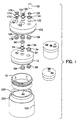
- Figure 1 shows a preferred BAO storage and transport apparatus.
- the apparatus comprises a media storage container 10 and cap 12. Also shown is secondary container 100 and secondary cap 102.
- Figure 2 shows a cross-sectional view of a BAO storage and transport apparatus comprising media storage container 10 and cap 12, contained within secondary container 100 and secondary cap 102.
- FIG. 3 shows a BAO storage and transport apparatus comprising media storage container 10 and an alternative embodiment of cap 12.
- Figure 4 shows a top view of media storage container 10 and securing means 20 holding a BAO.
- Figure 5 shows the effects of temperature and time on condensation within a BAO storage and transport apparatus during shipping.
- the present invention provides an apparatus and method for the storage and transportation of BAOs.
- the apparatus comprises a media storage container which holds a volume of fluid media, a means for securing the BAOs within the media storage container, and a means for sealing the media storage container designed to provide a substantially fluid-tight seal.
- Preferred embodiments further comprise a media exchange means and a gas exchange means to maintain the viability of the cells in the BAO.
- the apparatus also comprises a secondary container which surrounds the media storage container.
- the secondary container has means for accessing the exchange means of the inner container (the media storage container). Additionally, the secondary container may have means for exchanging moisture from the inside of the secondary container to the external atmosphere so as to prevent the excessive buildup of humidity inside the secondary container.
- the BAO storage and transport apparatus of this invention comprises a media storage container 10 and a cap 12.
- media storage container 10 has well 14 to facilitate media exchange.
- Well 14 may have any suitable design, including a gutter formed around the bottom of media storage container 10 and/or a low spot on the bottom. The presence of such a well or low spot provides a channel to direct air bubbles away from the BAO if media storage container 10 is inadvertently transported or stored in an upside down orientation.
- media collection well 14 should be located away from the fragile BAO semipermeable membrane to ensure that the BAO is not damaged during any media exchange procedures.
- media storage container 10 has a convex base 16.
- the circumference of base 16 forms well or gutter 14 around the bottom of media storage container 10.
- Securing means 20 for securing the BAO within media storage container 10 may be attached to the interior of media storage container 10 or the bottom of cap 12. Securing means may also comprise an insert which fits into media storage container 10. Preferably, securing means 20 are attached to base 16. Under normal operating conditions, securing means 20 keeps the BAO submerged in fluid media so that the BAO is not subject to undue contact with any system component other than the securing means.
- Any suitable securing means may be used to secure the BAO.
- the skilled artisan will appreciate that the exact design of securing means 20 will vary according to the design of the BAO.
- BAOs are devices which contain living cells or tissues encapsulated in a semipermeable membrane.
- the membrane may be sealed in a variety of ways, such as with caps, glue or heat sealing, to form either one cell compartment or multiple compartments.
- BAOs may also have means for retrieving the device after implantation, such as a tether attached to a sealed end.
- securing means 20 will not physically compress the semipermeable membrane portions of the BAO. It is contemplated that the securing means makes contact with the BAO at a non-membrane portion of the BAO, such as tethers, supports, seals, or connectors.
- Securing means 20 should provide for substantially unrestricted flow of fluid media over the BAO, which allows for the free exchange of nutrients and waste products.
- securing means 20 allows the BAO to be free-floating in the media.
- the securing means comprises prongs 20 and post 22. As shown, prongs 20 and post 22 are attached to base 16 of media storage container 10. It is contemplated that prongs 20 and post 22 may be positioned on base 16 to accommodate various sized BAOs.
- the prongs 20 and post 22 are designed to engage a BAO capped at one end with a hub-sealed fitting having a tether attached to the cap.
- Hub-sealed BAOs are taught in PCT/US 94/07015.
- the hub-sealed BAO is secured by positioning the tether in prong 20 such that the non-membrane portion of the BAO (e.g., hub-sealed cap) is flush with the external surface of prong 20, and then wrapping the tether around post 22.
- the BAO is thus secured at one end only, with the fragile semipermeable portion free-floating in the central portion of media storage container 10.
- the BAO may be further secured to holding prong 20 and/or post 22 by the use of appropriate clips or slots, or other suitable means.
- prongs 20 may engage and secure BAOs of other designs.
- BAOs which have external non-membrane features e.g., supports for connecting a plurality of cell-containing membranes
- BAOs which have external non-membrane features may be secured within the media by attaching prongs 20 around the non-membrane portion.
- the securing means may be designed to secure a BAO at more than one location. This may be accomplished by using any combination of prongs 20 and/or posts 22 so long as the integrity of the functional membrane portion of the BAO is not compromised.
- the prongs 20 may be aligned so that each non-membrane portion may be inserted through the slot of a different prong 20.
- Cap 12 provides a substantially fluid-tight seal when sealingly engaged with media storage container 10.
- media storage container 10 is invertible such that the BAO remains submerged in the media and does not come into contact with air bubbles which will tend to accumulate in the media collection well or low spot. This ensures that during transportation, if the container is inadvertently inverted, the BAO will not dry out.
- the cap has a liner (e.g., a compressible material such as silicone elastomer) which aids in the formation of a fluid-tight seal.
- the cap may be designed so that a portion of it extends into the media cavity thereby causing a volume of the media to expel from the container. This serves to minimize the formation of air pockets within the media-filled storage and transport apparatus when sealed. This ensures that the BAO is completely surrounded by fluid media during storage and transport.
- the liner may be formed by a layered construction approach in which a layer of silicone is placed between two layers of other suitable polymers (e.g., polypropylene or fluoroethylenepropylene).
- the liner may be fixed to the cap by any suitable means, such as ultrasound welding.
- the inner layer of the liner, that which makes contact with the cap will be made of the same material as the cap in order to facilitate ultrasound welding.
- the outer layer may be of any suitable material which will be low friction and sufficiently durable to form a fluid-tight seal.
- FEP fluorinated perfluoroethylene polypropylene
- PTFE polytetrafluoroethylene
- media storage container 10 has a sealing rim around its outer perimeter so that when cap 12 is engaged to the container, the sealing rim is embedded into the compressible liner to form the fluid-tight seal.
- cap 12 is a lid which is heat-sealed to the top of media storage container 10. Heat sealing equipment is well known. Where a liner is used, it may be comprised of spun-bonded olefin, paper, aluminum foil, or similar materials known in the art. In this embodiment, the liner contains a resin which binds the liner to container 10 when heat is applied.
- cap 12 is a threaded lid which engages mating threads on the top of media storage container 10.
- cap 12 is a threaded lid which has a recessed region which expels media from media storage container 10 as the cap engages the mating threads on the top of the container. This minimizes the formation of air pockets within the media container when sealed, and thus further ensures that the BAO is completely surrounded by fluid media during storage and transport.
- a preferred embodiment of the storage and transport apparatus further includes gas exchange means 50 and media exchange means 30.
- the ability to exchange gas to the media aids in maintaining the viability of the living cells within the BAO.
- sufficient oxygen may be introduced into the packaging system by saturating the media prior to engaging the sealing means, or by using a breathable liner.
- gas exchange means 50 is a resealable port which allows for gaseous communication between the outside of a sealed media storage container and its interior.
- the port may be resealed by any suitable method, such as a cap, plug, or preferably self-sealing septum 52.
- septa are well known in the art.
- a hollow needle or a suitable alternative is inserted through septum 52 into the media in media storage container 10.
- the needle preferably contains a microbial filter (e.g., 0.22 micron ( ⁇ m) PTFE filter in a polypropylene housing) to avoid contamination of media storage container 10, and thus the BAO, with contaminants in the introduced gas.
- gas exchange means 50 also includes a stop member which limits the extent to which a needle may be inserted into media storage container 10. The stop member prevents the needle from coming into contact with the BAO, and thus preventing accidental perforation of the BAO.
- Media exchange means 30 is similar in design to gas exchange means 50.
- media exchange means 30 may also comprise a resealable port for accessing media.
- media exchange means 30 accesses media collection well 14.
- Media may be removed from or introduced into media storage container 10 using a needle, tube, or other suitable methods.
- media exchange means 30 includes self-sealing septum 32, which is aligned directly over media collection well 14.
- a needle is inserted through septum 32 such that the needle opening is positioned in the well.
- the media in the well is then aspirated and removed from the system.
- Fresh media may be introduced in a similar fashion.
- the media passes through a suitable filter to prevent introduction of any contaminants to media storage container 10.
- the needle is removed and septum 32 self-seals to form a fluid-tight seal.
- gas exchange means 50 and media exchange means 30 use self-sealing septa
- a preferred embodiment uses snap fittings to house the septa.
- gas exchange snap fit base 58 and media exchange snap fit base 38 are inserted through the bottom of the appropriate ports in cap 12 such that a portion of snap fit bases 58 and 38 extend through the top of cap 12.
- Septa 52 and 32 are then inserted into snap fit bases 58 and 38.
- Containing rings 54 and 34 snugly fit around the portion of the snap fit bases 58 and 38 which extend through the top of cap 12.
- Snap fit inserts 56 and 36 then mate to the tops of snap fit bases 58 and 38, respectively.
- the snap fit bases and snap fit inserts are designed to pull toward each other when mated, thus ensuring a fluid-tight seal around septa 52 and 32 and the cap liner.
- the snap fit housings for either or both gas exchange means 50 or media exchange means 30, may also serve as a handle for media storage container 10.
- snap fit insert 56 functions as a handle.
- the components for these fittings can be fabricated by machining, injection molding, or other common techniques.
- inserts may be ultrasonically welded on to cap 12.
- media may be supplied by one or more additional containers integral to media storage container 10.
- spent media is drained from media storage container 10 via tubing that connects media storage container 10 to a spent media reservoir.
- Fresh media in introduced from a fresh medium reservoir in fluid connection with media storage container 10.
- the media exchange reservoirs can be disconnected from media storage container 10 without compromising the sterility of its contents. Once disconnected, the reservoirs may be drained or refilled, as appropriate, and then reconnected to media storage container 10 in a sterile fashion. Such procedures are known in the art.
- Figures 1 and 2 additionally show secondary container 100 and secondary cap 102, which enclose media storage container 10 and cap 12.
- Secondary cap 102 provides a substantially fluid-tight seal when sealingly engaged with secondary container 100.
- secondary cap 102 is a threaded lid which engages mating threads on the top of secondary container 100.
- secondary cap 102 has a liner, as described above for cap 12.
- secondary cap 102 has means for accessing gas exchange means 50 and media exchange means 30 as well as means for releasing humidity.
- These accessing means and humidity exchange means are similar in design to exchange means 50 and 30 on cap 12 of media storage container 10, but may have any other suitable design.
- FIG. 2 A preferred embodiment having gas accessing means 150 and media accessing means 130 is shown in Figure 2. As shown, accessing means 150 and 130 have self-sealing septa 152 and 132 in snap fit housings (i.e., bases 158 and 138, containing rings 154 and 134, top inserts 156 and 136).
- snap fit housings i.e., bases 158 and 138, containing rings 154 and 134, top inserts 156 and 136.
- Gas accessing means 150 is aligned with gas exchange means 50 and media accessing means 130 is aligned with media exchange means 30, such that a needle, or other suitable instrument, may be inserted from the external environment through septa of the secondary container and then through the septa of the media storage container thus penetrating the media storage environment so as to allow for gas and/or media exchange.
- the bottom of media storage container 10 has a key mechanism 60, which fits into a mating base 200. Key mechanism 60 ensures that the accessing means 150 and 130 of secondary cap 102 are aligned over the exchange means of cap 12.
- key mechanism 60 allows an operator to align media exchange means 30 of cap 12, with the media collection well 14 of the base of media storage container 10. This is accomplished by placing media storage container 10 on a base plate which is similar in design to mating base 200.
- key mechanism 60 also facilitates the attachment or detachment of cap 12 without extensive handling of media storage container 10.
- Key mechanism 60 allows an operator to secure or remove cap 12 simply by fitting media storage container 10 into a mating base similar to mating base 200 and applying a torque to cap 12. Reduced handling of media storage container 10 is desireable because of the reduced potential for contamination.
- the storage and transport apparatus further includes humidity exchange means 170 which is similar in design to gas exchange means 50.
- the humidity exchange means is positioned on secondary cap 102 and comprises septum 172 having a hole into which breathable liner 179 is positioned.
- Breathable liner 179 may be, for example, a nylon 0.22 micron ( ⁇ m) porosity membrane disk.
- a nylon membrane is preferred as it is capable of withstanding sterilization procedures, such as gamma irradiation.
- a 0.22 micron ( ⁇ m) porosity is preferred to prevent microbial contaminants from entering the inside of the secondary container.
- Humidity exchange means 170 allows for moisture release and pressure equalization during transport in order to prevent condensation from forming on the inside of the secondary container. Humidity exchange is desireable as the container may be stored in a humidified atmosphere incubator. Without humidity exchange means 170, humidity may condense and remain within the secondary container as the temperature drops from about 37°C in the incubator to room temperature during shipping.
- Run-1 represents "quick cool” conditions in which the temperature of the apparatus was dropped rapidly from about 37°C to about 25°C in one hour. Under such conditions condensation appeared, but over time the inside of the secondary container will dry out as the condensed moisture evaporates through the membrane disk.
- Run-2 represents "slow cool” conditions in which the temperature of the apparatus was controlled. Under these conditions, the membrane disk appears to have prevented condensation from forming within the secondary container during the test period.
- Run-3 represents simulated operating conditions (actual thermal and time conditions expected during a routine commercial shipment).
- the container was maintained at simulated shipping conditions for a period of about 8 hours after which time, the container was exposed to "fast cool” conditions. Condensation did not visibly appear during the simulated shipment period.
- the membrane disk appears to have prevented condensation from forming within the secondary container. Only after the apparatus was exposed to "fast cool” conditions, did condensation appear.
- the snap fit housings for gas accessing means 150, media accessing means 130 and humidity exchange means 170 may be constructed in a similar fashion as gas exchange means 50 and media exchange means 30.
- Snap fit bases 158, 138 and 178 are inserted through the bottom of appropriate ports in secondary cap 102. Septa 152, 132 and 172 are then inserted into snap fit bases 158, 138 and 178, respectively.
- septum 172 has a hole into which breathable liner 179 is inserted.
- Containing rings 154, 134 and 174 are fixed around snap fit bases 158, 138 and 178, respectively, to secure the snap fittings to secondary cap 102.
- snap fit inserts 156, 136 and 176 are mated to the top of the snap fit bases 158, 138 and 178, respectively. It is preferred that snap fit insert 156 include a needle holder arrangement while snap fit insert 136 provides for septa lid 139.
- the snap fittings used with accessing means 130 and 150 as well as humidity exchange means 170 may be replaced with inserts which are ultrasonically welded on to cap 102.
- Secondary container 100 minimizes the need to handle primary container 10 once the BAO and the media are initially loaded. Subsequent gas and media exchanges can be performed through both containers with minimal disturbance of the storage and transport apparatus, and with a substantially reduced risk of contamination of the BAO.
- secondary container 100 Upon delivery to the implantation destination, secondary container 100 can be opened outside the sterile field, and media storage container 10 can be delivered into the sterile field, thus reducing the potential for the introduction of unwanted biological contaminants into the sterile field.
- slotted mating base 200 may take the form of a disk attached inside the base of secondary container 100, for example, by ultrasonic welding. Slotted mating base 200 has several locking tabs 202 along its upper rim. These locking tabs 202 mate with key mechanism 60, which are shown in Figures 1 and 2 as a series of slots on the bottom of media storage container 10. When media storage container 10 is inserted in secondary container 100, the slots receive locking tabs 202.
- the secondary container and the slotted mating base may be manufactured as a single unit using, for example, injection molding.
- Media storage container 10 should fit snugly in secondary container 100 in order to prevent movement of the media storage container which could result in damage to the BAO. This snug fit may be readily achieved by suitable design of the height of the gas exchange means 50.
- Any suitable material may be used in the fabrication of the storage and transport apparatus, including metal, such as stainless steel, aluminum alloys, or titanium based materials, or ceramics, such as silica or alumina based ceramics, available from, e.g., Coors Company, Boulder, Colorado. Any material may be used that is capable of withstanding common methods of sterilization, such as irradiation (i.e. gamma irradiation), chemical methods (i.e. ethylene oxide sterilization), and autoclaving.
- irradiation i.e. gamma irradiation
- chemical methods i.e. ethylene oxide sterilization
- autoclaving any suitable material may be used in the fabrication of the storage and transport apparatus.
- the materials chosen should contain stabilizers to gamma radiation to prevent discoloration or deterioration.
- Commercially available polycarbonate polymers have such stabilizers. Such polymers are typically colored (e.g. tinted purple) prior to gamma sterilization. Upon exposure to gamma radiation, the polymers may turn yellowish in color; however, if properly gamma stabilized, these colored polycarbonate polymers will revert back to their natural tint after a short storage period.
- the materials should be sufficiently durable to withstand the rigors of shipping and handling. Further, the materials should be sufficiently non-toxic to living cells so as not to produce appreciable detrimental effects to the BAOs. Preferably, the materials should be USP Class 6 tested.
- the materials are disposable.
- At least some of the components of the storage and transport apparatus are optically clear. This will allow for easy discovery of visible contamination of the BAO. Examples of visible contamination include turbidity and discoloration of the fluid media.
- media storage container 10 and secondary container 100 are constructed of optically clear materials such as glass, or a suitable polymer.
- Useful polymers include any durable, non-fragile material such as polycarbonate, polyphenylene oxide, polyesters, polyetheramide, polyethylene terephthalate, polyethylene co-glycol terephthalate, and similar resins. More preferred are polycarbonate polymers since: (1) they are more durable than some other suitable materials, (2) are available in USP class 6 grades, and (3) are thermoformable.
- the containers and caps of this invention may be manufactured by any appropriate technique. For example, they may be constructed by injection molding or other thermoforming methods. Alternatively, they may be machined, or assembled using bonding techniques such as ultrasonic welding.
- the preferred method of manufacture is a thermoforming process such as injection molding, as this process readily accommodates the production of complex shapes.
- Containing rings which are produced from polycarbonate materials by machining or injection molding have stress lines which are amplified by exposure to gamma irradiation during sterilization. It is desireable to remove the stress lines in order to ensure the toughness of the plastic.
- Annealing may be performed to reduce the stress imbalance. Exposing the machine or molded rings to a temperature of about 250°C for approximately 10 minutes and then cooling slowly (over several hours) to prevent thermal shock, accelerates the stress relaxation process that occurs in all thermoplastics. By annealing, the internal stresses are reduced which improves the dimensional and performance stability of the parts.
- a tertiary container for shipping may be used to enclose the storage and transport apparatus.
- the tertiary shipping container may be packaged with thermal insulating gel packs or the like, such as are commercially available from Packaging Products, Inc. of New Bedford, MA.
- the shipping containers themselves may be insulated, and it may be desirable to include an inversion indicator or temperature recorders to ensure proper temperature handling of the BAO.
- Insulated containers with inversion indicators are commercially available (e.g., EnduroTherm insulated container, Source Packaging of New England, Warwick, RI). Any suitable temperature probe may be used (e.g., Data Trace, Mesa Laboratories, Inc., Wheat Ridge, CO).
- the shipping container must be durable and able to adsorb the shock of being dropped or other movement during shipping so as to protect the BAO from damage.
- Insulated shipping containers having thick layers of insulation are useful for adsorbing shock to the container during shipping.
- the apparatus for storage and transport of a BAO was assembled and comprised a media storage container holding approximately 80 ml of a suitable fluid media.
- the media storage container had a well, or low spot, positioned away from the center of the base of the media storage container.
- the media storage container was made from an optically clear polycarbonate material and formed by injection molding, using a mold machined from stainless steel or aluminum.
- the media storage container had an outer diameter of approximately 3.78 inches (9.60 cm) and a sealing rim of 0.1925 inches (0.489 cm) wide.
- the inner diameter of the media storage container was approximately 3.40 (8.64 cm) inches and could be filled with about 80-100 mls of the media to immerse the BAO.
- the thread of the storage container was an SP-400 finish as described by the Plastic Bottle Institute, Technical Committee, a division of the Society of Plastics Industry Incorporated. Furthermore, the thread finish identification was size 100 and preferably a modified buttress thread.
- the securing means was comprised of a number of posts and prongs placed perpendicular to the bottom surface of the media storage container.
- the height of the posts were such that the tops of the posts would extend up to the bottom of the sealing means. This further prevented the BAOs from undue movement within the storage container.
- the posts and prongs were an integral part of the base and were formed by injection molding.
- the prongs had a slotted, tapered section approximately 0.026 inches (0.066 cm) wide in order to pinch the BAO tether section which was 0.030 (0.076 cm) inches in diameter, as it was slid into place.
- the polycarbonate material from which the posts and prongs were made, allowed for the tether to be held firmly and was tough enough so as not to break under the load.
- the posts and prongs were positioned along the bottom of the container such that the media container could securely hold a 5 cm active length and/or a 7 cm active length BAD such that the cell-containing membrane portion of the BAO would be in the center of the media storage container.
- the BAOs used in this example had compressible hollow silicone tethers attached to one end of the BAO with an approximate outer diameter of 0.030 inches (0.076 cm).
- the sealing means used was in the form of a threaded lid which engaged mating threads on the bottom on top of the media storage container.
- the thread of the lid was a #100-400, 5TPI, modified buttress thread as described by the Closure Manufacturers Association specifications.
- the lid was lined with a compressible silicone elastomer material to aid in the formation of a fluid tight seal.
- This liner was made from a layered construction by cocurrent extrusion methods of silicone between a layer of a polypropylene film and a layer of FEP.
- the silicone was 0.040-0.100 inches (0.102-0.254 cm) thick and the films were 0.005-0.010 inches (0.013-0.025 cm) thick.
- the liner was fixed to the lid by ultrasonic welding.
- the inner layer of the liner was made from the same material as the lid, specifically polypropylene, to facilitate ultrasonic welding.
- the ultrasonic welding of the liner was achieved by direct bonding energy to the materials.
- the media storage container had a 90° knife edge approximately 0.010 inches (0.025 cm) high around the outer rim, which cut into the compressible FEP and silicone portions of the lid liner to aid in the formation of a fluid tight seal.
- the bottom of the media container had a key mechanism which fit into a mating base and/or a base plate.
- the key mechanism a 10° offset tab, allowed for alignment of the pierceable septum over the media well and also for alignment of the septa of the secondary container over the septa of the media storage container.
- the apparatus of this example contained both a media exchange means and a gas exchange means. These exchange means comprised self-sealing silicone septa.
- the media was exchanged by inserting a needle through a silicone septum approximately 0.125 inches (0.318 cm) thick and 0.550 inches (1.397 cm) in diameter, followed by aspiration and removal of the media. Fresh media was introduced with another needle through the same silicone septum. A cap fitting was used to cover the septa during storage.
- Gas exchange was performed by inserting a hollow needle through the second septum.
- the needle contained a 0.22 micron ( ⁇ m) Teflon filter in a polypropylene housing held onto the needle with a leur fitting.
- the gas exchange septum further comprised a stop member which limited the extent to which the needle could travel into the interior of the media storage container.
- the device is placed in storage incubators with the needle inserted through the septum. If the device is to be shipped, the needle was removed during the brief shipping period and the septum self-seals to provide a fluid-tight seal.
- the materials used for the fabrication of the apparatus were polycarbonate, polypropylene, and silicone, and are completely disposable, and were not reused. These materials were selected since they can withstand gamma irradiation sterilization methods, sufficiently durable to withstand the rigors of shipping and are sufficiently non-toxic to living cells as to not produce appreciable detrimental effects to the BAOs. The materials were all USP Class 6 tested.
- the apparatus further comprised a secondary container which surrounded the sealed media storage container.
- the secondary container had gas and media accessing means, both of which were self-sealing septa aligned over the self-sealing septa of the media storage container.
- the secondary container is similar to the media storage container, in that it had a similar lid construction, similar self-sealing septa for accessing the interior of the media storage container.
- the secondary container also had a humidity exchange means of 0.22 micron ( ⁇ m) nylon membrane having a diameter of 0.312 (0.792 cm) inches. Accessing the interior of the media storage container was accomplished by aligning the septa of the secondary container over the septa of the media storage container such that a needle may be inserted through the septum on the secondary container and through the septum on the primary container to provide media or gas exchange.
- the apparatus used in this example was assembled (threaded lids disengaged) including lid liners, septa, snap fittings, and secondary container base ring and placed in bags for sterilization by gamma irradiation. The sterile units were then place in a sterile hood where the BAOs were loaded.
- the loading of the BAO was performed according to the following procedures:
- the loaded, BAO-containing apparatus was then delivered to the implantation destination according to the following procedures:
- BAOs Prior to implantation into patients, BAOs generally should be shown to be functional and sterile This testing can require holding periods of approximately 17-24 days to complete. During this time period, it may be necessary to change the media to maintain cell viability. For example, as described above, where the BAOs contain bovine adrenal chromaffin cells, it is necessary to replenish the medium after about twelve days. After media exchange, a short three day hold is performed to ensure BAO sterility. The BAOs are then shipped after day 15, but up to day 20. At day 20, the cells must be fed again followed by another short three day hold.
- the BAOs were loaded and media exchanged as described above and the BAOs were stored in the apparatus for 29 days.
- the sterility was evaluated throughout using USP sterility evaluations, and the devices were found to remain sterile.
- the sealed media storage container and sealed secondary container were evaluated for air and fluid tight seals.
- the air-tight test was performed by the addition of 1-3 psi (6894-20684 N/m 2 ) of compressed nitrogen, and evaluated for maintained of the pressure over time.
- the devices were found to remain air-tight at 1-3 psi (6894-20684 N/m 2 ) of pressure for extended periods of time.
- the fluid-tight seal was assessed by adding media, inverting the containers, and swirling the media inside the containers for extended periods of time. The devices were found to remain liquid-tight.
- the devices were shipped unattended from Rhode Island by a common carrier to a site in Virginia. The devices were returned and there was no evidence of violation of the liquid-tight seal.
- the toxicity of the fabrication materials to was tested by evaluating the output of BAO for analgesic substances after being stored for 29 days, including media replacement at days 12 and 20 as described above.
- the cells used in BAO's were directly placed on the materials and similarly evaluated for the output of active substances and cellular morphology changes.
- the materials were found to be non-toxic to neither the cells nor the BAOS.
- the analgesic substances were unchanged by exposure to the materials.
Landscapes
- Life Sciences & Earth Sciences (AREA)
- Engineering & Computer Science (AREA)
- Dentistry (AREA)
- General Health & Medical Sciences (AREA)
- Wood Science & Technology (AREA)
- Zoology (AREA)
- Environmental Sciences (AREA)
- Health & Medical Sciences (AREA)
- Electrotherapy Devices (AREA)
- Medical Preparation Storing Or Oral Administration Devices (AREA)
- Ultra Sonic Daignosis Equipment (AREA)
- Prostheses (AREA)
- Agricultural Chemicals And Associated Chemicals (AREA)
- Packages (AREA)
- Packging For Living Organisms, Food Or Medicinal Products That Are Sensitive To Environmental Conditiond (AREA)
- Apparatus Associated With Microorganisms And Enzymes (AREA)
- Filling Or Discharging Of Gas Storage Vessels (AREA)
- External Artificial Organs (AREA)
Applications Claiming Priority (3)
| Application Number | Priority Date | Filing Date | Title |
|---|---|---|---|
| US08/463,658 US5681740A (en) | 1995-06-05 | 1995-06-05 | Apparatus and method for storage and transporation of bioartificial organs |
| US463658 | 1995-06-05 | ||
| PCT/US1996/009152 WO1996039027A1 (en) | 1995-06-05 | 1996-06-05 | Apparatus and method for storage and transportation of bioartificial organs |
Publications (2)
| Publication Number | Publication Date |
|---|---|
| EP0833559A1 EP0833559A1 (en) | 1998-04-08 |
| EP0833559B1 true EP0833559B1 (en) | 2001-10-04 |
Family
ID=23840883
Family Applications (1)
| Application Number | Title | Priority Date | Filing Date |
|---|---|---|---|
| EP96917231A Expired - Lifetime EP0833559B1 (en) | 1995-06-05 | 1996-06-05 | Apparatus and method for storage and transportation of bioartificial organs |
Country Status (10)
| Country | Link |
|---|---|
| US (1) | US5681740A (enExample) |
| EP (1) | EP0833559B1 (enExample) |
| JP (1) | JP3955094B2 (enExample) |
| AT (1) | ATE206278T1 (enExample) |
| AU (1) | AU715040B2 (enExample) |
| CA (1) | CA2222612A1 (enExample) |
| DE (1) | DE69615683T2 (enExample) |
| DK (1) | DK0833559T3 (enExample) |
| ES (1) | ES2164246T3 (enExample) |
| WO (1) | WO1996039027A1 (enExample) |
Cited By (1)
| Publication number | Priority date | Publication date | Assignee | Title |
|---|---|---|---|---|
| WO2023205814A1 (en) * | 2022-04-22 | 2023-10-26 | 3D Biolabs, Llc | Liquid-tight case for tissue device and system having same |
Families Citing this family (49)
| Publication number | Priority date | Publication date | Assignee | Title |
|---|---|---|---|---|
| FR2731156B1 (fr) * | 1995-03-01 | 1997-05-30 | Impact | Boitier protecteur de sterilisation et de conservation de matiere ou de materiel organique et ensemble en faisant application |
| US6321909B1 (en) * | 1997-02-13 | 2001-11-27 | Sky High, Llc | System for storing polyethylene glycol solutions |
| US5960956A (en) * | 1997-02-19 | 1999-10-05 | St. Jude Medical, Inc. | Storage container |
| ITPD980166A1 (it) * | 1998-07-02 | 2000-01-02 | Kaltek Srl | Contenitore di liquidi particolarmente per analisi di liquidi biologici. |
| US6977140B1 (en) | 1998-09-29 | 2005-12-20 | Organ Recovery Systems, Inc. | Method for maintaining and/or restoring viability of organs |
| US7749693B2 (en) * | 1998-09-29 | 2010-07-06 | Lifeline Scientific, Inc. | Method of determining that an organ is not suitable for transplantation and using it for testing substances |
| US6673594B1 (en) * | 1998-09-29 | 2004-01-06 | Organ Recovery Systems | Apparatus and method for maintaining and/or restoring viability of organs |
| US6126007A (en) * | 1998-12-30 | 2000-10-03 | St. Jude Medical, Inc. | Tissue valve holder |
| US6337052B1 (en) * | 1999-11-15 | 2002-01-08 | The Penn State Research Foundation | Insulated specimen container |
| US6095401A (en) * | 1999-12-21 | 2000-08-01 | Lexmark International, Inc. | System and method for supression of bubble generation during ultrasonic welding of a printer cartridge |
| USD468436S1 (en) | 2000-08-25 | 2003-01-07 | Organ Recovery Systems, Inc. | Organ cassette |
| WO2002045859A2 (en) * | 2000-12-08 | 2002-06-13 | Ardais Corporation | Container for cryopreserved material |
| US20040262318A1 (en) * | 2000-12-08 | 2004-12-30 | Ardais Corporation | Container, method and system for cryptopreserved material |
| EP1450951B1 (en) * | 2001-10-12 | 2017-05-10 | Becton, Dickinson and Company | Basket apparatus for transporting biological samples |
| US7147826B2 (en) * | 2001-10-12 | 2006-12-12 | Becton Dickinson And Company | Method and apparatus for transporting biological samples |
| US8361091B2 (en) * | 2002-08-23 | 2013-01-29 | Organ Recovery Systems, Inc. | Cannulas, cannula mount assemblies, and clamping methods using such cannulas and cannula mount assemblies |
| US20040170950A1 (en) * | 2002-09-12 | 2004-09-02 | Prien Samuel D. | Organ preservation apparatus and methods |
| USD531319S1 (en) | 2003-04-04 | 2006-10-31 | Organ Recovery Systems | Tube frame for organ transporter |
| EP1613152B1 (en) | 2003-04-04 | 2018-07-04 | Organ Recovery Systems, Inc. | Device for separating gas from a liquid path |
| USD531320S1 (en) | 2003-04-04 | 2006-10-31 | Organ Recovery Systems | Cassette for organ transporter |
| PL1613153T3 (pl) * | 2003-04-04 | 2021-11-29 | Organ Recovery Systems, Inc. | Sposoby i aparat do perfuzji, diagnostyki, przechowywania i/lub transportu narządu lub tkanek |
| US20040202993A1 (en) * | 2003-04-10 | 2004-10-14 | Poo Ramon E. | Apparatus and method for organ preservation and transportation |
| NL1024022C2 (nl) * | 2003-07-30 | 2005-02-01 | Technologiestichting Stw | Draagbare preservatie-inrichting voor een donororgaan. |
| US20050153271A1 (en) * | 2004-01-13 | 2005-07-14 | Wenrich Marshall S. | Organ preservation apparatus and methods |
| JP2008533995A (ja) * | 2005-04-01 | 2008-08-28 | エヌエスジーン・アクティーゼルスカブ | ヒト不死化神経前駆細胞系 |
| WO2006122549A2 (en) * | 2005-05-17 | 2006-11-23 | Nsgene A/S | An implantable therapy system comprising a gripping element |
| US20070074989A1 (en) * | 2005-09-30 | 2007-04-05 | Musculoskeletal Transplant Foundation | Container for lyophilization and storage of tissue |
| US20070170080A1 (en) * | 2006-01-26 | 2007-07-26 | Joshua Stopek | Medical device package |
| US9364215B2 (en) * | 2006-01-26 | 2016-06-14 | Covidien Lp | Medical device package |
| US20090209031A1 (en) * | 2006-01-26 | 2009-08-20 | Tyco Healthcare Group Lp | Medical device package |
| US20080171972A1 (en) * | 2006-10-06 | 2008-07-17 | Stopek Joshua B | Medical device package |
| CA2604433A1 (en) * | 2006-10-06 | 2008-04-06 | Tyco Healthcare Group Lp | Medical device package including self-puncturable port |
| US20080145919A1 (en) * | 2006-12-18 | 2008-06-19 | Franklin Thomas D | Portable organ and tissue preservation apparatus, kit and methods |
| WO2008108939A1 (en) * | 2007-03-05 | 2008-09-12 | Tyco Healthcare Group Lp | Medical device package |
| EP2215212B1 (en) * | 2007-11-14 | 2017-08-30 | Stratatech Corporation | Cold storage of organotypically cultured skin equivalents for clinical applications |
| US8030063B2 (en) * | 2008-06-18 | 2011-10-04 | The Cleveland Clinic Foundation | Systems and methods for vitrifying tissue |
| CA2750027C (en) | 2009-01-23 | 2020-11-10 | Nsgene A/S | Improved cell lines and their use in encapsulated cell biodelivery |
| EP2621403B1 (en) | 2010-09-27 | 2015-03-18 | NsGene A/S | Implantable cell device with supportive and radial diffusive scaffolding |
| US9642625B2 (en) | 2011-04-29 | 2017-05-09 | Lifeline Scientific, Inc. | Cannula for a donor organ with or without an aortic cuff or patch |
| US9022978B2 (en) | 2011-04-29 | 2015-05-05 | Lifeline Scientific, Inc. | Universal sealring cannula |
| US8828034B2 (en) | 2011-04-29 | 2014-09-09 | Lifeline Scientific, Inc. | Cannula |
| DE102015000314B8 (de) * | 2014-07-17 | 2015-12-17 | Sartorius Stedim Biotech Gmbh | Vorrichtung und Verfahren zur Durchführung eines Integritätstests |
| WO2017020795A1 (zh) * | 2015-07-31 | 2017-02-09 | 深圳艾尼尔角膜工程有限公司 | 一种角膜保存和复水装置 |
| WO2017099865A1 (en) | 2015-12-07 | 2017-06-15 | Coopersurgical, Inc. | Low temperature specimen carriers and related methods |
| US10729880B2 (en) * | 2017-02-01 | 2020-08-04 | Cook Medical Technologies Llc | Packaged intravascular medical device with variable viscosity intravenous liquid solution |
| DE112018007802A5 (de) * | 2018-07-05 | 2021-04-15 | Acto Service Gmbh | Behälter zur Aufnahme und Verfahren zum Lagern eines Korneapräparats |
| EP4051192B1 (en) * | 2019-11-01 | 2025-07-30 | Neurotech USA, Inc. | Analyte diffusive implantable device |
| DE102019135506A1 (de) * | 2019-12-20 | 2021-06-24 | Corlife Ohg | Behälter, Verschlussdeckel und Gefäß für Transplantationsobjekte sowie Verfahren und Systeme zur Bereitstellung von dreidimensionalen Strukturdaten und zur Sterilisation eines Transplantationsobjekts |
| US12486084B2 (en) * | 2023-08-02 | 2025-12-02 | Hangzhou Yici Chengpin Technology Co., Ltd. | Packaging cover and packaging container |
Family Cites Families (28)
| Publication number | Priority date | Publication date | Assignee | Title |
|---|---|---|---|---|
| US2051349A (en) * | 1935-05-10 | 1936-08-18 | Novocol Chemical Mfg Co Inc | Device for preserving local anesthetic solutions |
| US2880856A (en) * | 1957-04-08 | 1959-04-07 | Buffalo Eye Bank And Res Soc I | Eye carrier |
| US3950227A (en) * | 1970-12-21 | 1976-04-13 | St. John's University | Batch method of establishing and maintaining a controlled aerobic environment for a microbial culture |
| US4061134A (en) * | 1975-10-28 | 1977-12-06 | Samuels Peter B | Arterial graft device |
| US4211325A (en) * | 1979-06-07 | 1980-07-08 | Hancock Laboratories, Inc. | Heart valve holder |
| US4377077A (en) * | 1981-07-15 | 1983-03-22 | Biotech Research Laboratories, Inc. | Device and method for controlled freezing of cell cultures |
| SU1159534A1 (ru) * | 1982-08-04 | 1985-06-07 | Московский научно-исследовательский институт микрохирургии глаза | Устройство дл культивировани роговицы глаза |
| FR2545066B1 (fr) * | 1983-04-27 | 1986-01-24 | Levy Claude | Emballage, notamment pour le transport et l'expedition de produits, biologiques, par exemple |
| US4695536A (en) * | 1984-01-10 | 1987-09-22 | Lindstrom Richard L | Corneal storage system |
| US4736850A (en) * | 1986-10-17 | 1988-04-12 | W. L. Gore & Associates, Inc. | Endothelial cell harvesting kit |
| US4844242A (en) * | 1987-09-02 | 1989-07-04 | The Johns Hopkins University | Cornea retainer |
| US5156844A (en) * | 1987-11-17 | 1992-10-20 | Brown University Research Foundation | Neurological therapy system |
| US5182111A (en) * | 1987-11-17 | 1993-01-26 | Boston University Research Foundation | In vivo delivery of active factors by co-cultured cell implants |
| US4892538A (en) * | 1987-11-17 | 1990-01-09 | Brown University Research Foundation | In vivo delivery of neurotransmitters by implanted, encapsulated cells |
| US5158881A (en) * | 1987-11-17 | 1992-10-27 | Brown University Research Foundation | Method and system for encapsulating cells in a tubular extrudate in separate cell compartments |
| US5106627A (en) * | 1987-11-17 | 1992-04-21 | Brown University Research Foundation | Neurological therapy devices |
| SU1650694A1 (ru) * | 1988-07-26 | 1991-05-23 | Всесоюзный Научно-Исследовательский Институт Молекулярной Биологии | Устройство дл клонировани клеток животных |
| JPH0499701A (ja) * | 1988-10-26 | 1992-03-31 | Mckelvey Karen | 移植に使用するヒトの臓器の輸送用装置 |
| US4951482A (en) * | 1988-12-21 | 1990-08-28 | Gilbert Gary L | Hypothermic organ transport apparatus |
| WO1991000119A1 (en) * | 1989-06-30 | 1991-01-10 | Baxter International Inc. | Implantable device |
| US5002661A (en) * | 1989-08-25 | 1991-03-26 | W. R. Grace & Co.-Conn. | Artificial pancreatic perfusion device |
| AU6284490A (en) * | 1989-09-14 | 1991-04-18 | Paul R. Krasner | Apparatus and method for preserving and transporting body organs and tissues |
| US5040677A (en) * | 1990-06-04 | 1991-08-20 | Biosurface Technology, Inc. | Container for storage and distribution of a skin wound dressing |
| JP3508023B2 (ja) * | 1990-10-31 | 2004-03-22 | バクスター、インターナショナル、インコーポレイテッド | 密接血管化埋め込み材料 |
| DK0585368T3 (da) * | 1991-04-25 | 1998-03-16 | Univ Brown Res Found | Implanterbart biokompatibelt immunisolatorisk vehikel til afgivelse af udvalgte terapeutiske produkter |
| WO1993003901A1 (en) * | 1991-08-23 | 1993-03-04 | W.R. Grace & Co. - Conn. | Implantable immunoisolated therapeutic devices |
| WO1993021902A1 (en) * | 1992-04-24 | 1993-11-11 | Somatix Therapy Corporation | Biocompatible, therapeutic, implantable device |
| EP0708670A4 (en) * | 1993-06-23 | 1998-07-01 | Cytotherapeutics Inc | METHOD AND APPARATUS FOR HERMETICALLY CLOSING IMPLANTABLE MEMBRANE ENCAPSULATING DEVICES |
-
1995
- 1995-06-05 US US08/463,658 patent/US5681740A/en not_active Expired - Lifetime
-
1996
- 1996-06-05 EP EP96917231A patent/EP0833559B1/en not_active Expired - Lifetime
- 1996-06-05 WO PCT/US1996/009152 patent/WO1996039027A1/en not_active Ceased
- 1996-06-05 CA CA002222612A patent/CA2222612A1/en not_active Abandoned
- 1996-06-05 AU AU59882/96A patent/AU715040B2/en not_active Ceased
- 1996-06-05 DE DE69615683T patent/DE69615683T2/de not_active Expired - Lifetime
- 1996-06-05 JP JP50154197A patent/JP3955094B2/ja not_active Expired - Fee Related
- 1996-06-05 AT AT96917231T patent/ATE206278T1/de active
- 1996-06-05 ES ES96917231T patent/ES2164246T3/es not_active Expired - Lifetime
- 1996-06-05 DK DK96917231T patent/DK0833559T3/da active
Cited By (1)
| Publication number | Priority date | Publication date | Assignee | Title |
|---|---|---|---|---|
| WO2023205814A1 (en) * | 2022-04-22 | 2023-10-26 | 3D Biolabs, Llc | Liquid-tight case for tissue device and system having same |
Also Published As
| Publication number | Publication date |
|---|---|
| DE69615683D1 (de) | 2001-11-08 |
| AU5988296A (en) | 1996-12-24 |
| DE69615683T2 (de) | 2003-01-30 |
| US5681740A (en) | 1997-10-28 |
| ES2164246T3 (es) | 2002-02-16 |
| EP0833559A1 (en) | 1998-04-08 |
| JP3955094B2 (ja) | 2007-08-08 |
| DK0833559T3 (da) | 2002-01-28 |
| JPH11506786A (ja) | 1999-06-15 |
| ATE206278T1 (de) | 2001-10-15 |
| WO1996039027A1 (en) | 1996-12-12 |
| CA2222612A1 (en) | 1996-12-12 |
| AU715040B2 (en) | 2000-01-13 |
Similar Documents
| Publication | Publication Date | Title |
|---|---|---|
| EP0833559B1 (en) | Apparatus and method for storage and transportation of bioartificial organs | |
| US7229820B2 (en) | Apparatus and method for culturing and preserving tissue constructs | |
| EP2896685B1 (en) | Biological sample packaging container and biological sample conveyance method using same | |
| US4131200A (en) | Thermoplastic blood bag | |
| RU2426592C2 (ru) | Устройство для выращивания и транспортировки клеток | |
| US10271543B2 (en) | Systems and methods for cryopreservation of cells | |
| EP0393174B1 (en) | Cell culture media flexible container | |
| JP5662927B2 (ja) | 包装容器 | |
| EP0725134A2 (en) | Flexible bioreactor for therapeutic cells | |
| JP5610312B2 (ja) | 包装容器 | |
| US7727219B2 (en) | Sterile system and methods for collecting, transporting, storing and cyropreserving body fluids | |
| US20250024833A1 (en) | Devices, systems, and methods for packaging and transport of biological tissue | |
| JP6952973B2 (ja) | シート状生体組織の輸送用容器及びそれを用いた輸送方法 | |
| AU6614800A (en) | Sterile packaging of live material with improved storage characteristics | |
| JP2007302256A (ja) | 凍結保存バイアルの包装体、凍結保存用キット及び凍結保存方法 | |
| MXPA97009709A (en) | Apparatus and method for the storage and transportation of bioartifical organs | |
| US20240245050A1 (en) | Tissue container systems | |
| US20220287298A1 (en) | Tissue container systems | |
| JPH10262646A (ja) | 包装培地及び包装培地の製造方法 | |
| KR20220151598A (ko) | 피분석물 확산 이식 가능 디바이스를 패키징하기 위한 시스템, 장치, 디바이스 및 방법 | |
| JPH0437715B2 (enExample) | ||
| JPH05305137A (ja) | バッグ連結体 |
Legal Events
| Date | Code | Title | Description |
|---|---|---|---|
| PUAI | Public reference made under article 153(3) epc to a published international application that has entered the european phase |
Free format text: ORIGINAL CODE: 0009012 |
|
| 17P | Request for examination filed |
Effective date: 19971127 |
|
| AK | Designated contracting states |
Kind code of ref document: A1 Designated state(s): AT BE CH DE DK ES FI FR GB GR IE IT LI LU MC NL PT SE |
|
| RIN1 | Information on inventor provided before grant (corrected) |
Inventor name: WARNER, NICHOLAS, F. Inventor name: MESSIER, KENNETH, A. |
|
| 17Q | First examination report despatched |
Effective date: 19990507 |
|
| GRAG | Despatch of communication of intention to grant |
Free format text: ORIGINAL CODE: EPIDOS AGRA |
|
| GRAG | Despatch of communication of intention to grant |
Free format text: ORIGINAL CODE: EPIDOS AGRA |
|
| GRAH | Despatch of communication of intention to grant a patent |
Free format text: ORIGINAL CODE: EPIDOS IGRA |
|
| GRAH | Despatch of communication of intention to grant a patent |
Free format text: ORIGINAL CODE: EPIDOS IGRA |
|
| GRAA | (expected) grant |
Free format text: ORIGINAL CODE: 0009210 |
|
| AK | Designated contracting states |
Kind code of ref document: B1 Designated state(s): AT BE CH DE DK ES FI FR GB GR IE IT LI LU MC NL PT SE |
|
| PG25 | Lapsed in a contracting state [announced via postgrant information from national office to epo] |
Ref country code: FI Free format text: LAPSE BECAUSE OF FAILURE TO SUBMIT A TRANSLATION OF THE DESCRIPTION OR TO PAY THE FEE WITHIN THE PRESCRIBED TIME-LIMIT Effective date: 20011004 |
|
| REF | Corresponds to: |
Ref document number: 206278 Country of ref document: AT Date of ref document: 20011015 Kind code of ref document: T |
|
| REG | Reference to a national code |
Ref country code: CH Ref legal event code: EP |
|
| REF | Corresponds to: |
Ref document number: 69615683 Country of ref document: DE Date of ref document: 20011108 |
|
| REG | Reference to a national code |
Ref country code: IE Ref legal event code: FG4D |
|
| BECA | Be: change of holder's address |
Free format text: 20011004 S.A. *NEUROTECH:BATIMENT GENEPOLE-INDUSTRIES 4 RUE PIERRE FONTAINE, 91000 EVRY |
|
| BECH | Be: change of holder |
Free format text: 20011004 S.A. *NEUROTECH |
|
| REG | Reference to a national code |
Ref country code: GB Ref legal event code: IF02 |
|
| PG25 | Lapsed in a contracting state [announced via postgrant information from national office to epo] |
Ref country code: PT Free format text: LAPSE BECAUSE OF FAILURE TO SUBMIT A TRANSLATION OF THE DESCRIPTION OR TO PAY THE FEE WITHIN THE PRESCRIBED TIME-LIMIT Effective date: 20020104 |
|
| PG25 | Lapsed in a contracting state [announced via postgrant information from national office to epo] |
Ref country code: GR Free format text: LAPSE BECAUSE OF FAILURE TO SUBMIT A TRANSLATION OF THE DESCRIPTION OR TO PAY THE FEE WITHIN THE PRESCRIBED TIME-LIMIT Effective date: 20020105 |
|
| RAP2 | Party data changed (patent owner data changed or rights of a patent transferred) |
Owner name: NEUROTECH S.A. |
|
| REG | Reference to a national code |
Ref country code: CH Ref legal event code: NV Representative=s name: ISLER & PEDRAZZINI AG |
|
| REG | Reference to a national code |
Ref country code: DK Ref legal event code: T3 |
|
| REG | Reference to a national code |
Ref country code: ES Ref legal event code: FG2A Ref document number: 2164246 Country of ref document: ES Kind code of ref document: T3 |
|
| NLT2 | Nl: modifications (of names), taken from the european patent patent bulletin |
Owner name: NEUROTECH S.A. |
|
| ET | Fr: translation filed | ||
| NLS | Nl: assignments of ep-patents |
Owner name: NEUROTECH S.A. |
|
| PG25 | Lapsed in a contracting state [announced via postgrant information from national office to epo] |
Ref country code: MC Free format text: LAPSE BECAUSE OF NON-PAYMENT OF DUE FEES Effective date: 20020605 |
|
| PLBE | No opposition filed within time limit |
Free format text: ORIGINAL CODE: 0009261 |
|
| STAA | Information on the status of an ep patent application or granted ep patent |
Free format text: STATUS: NO OPPOSITION FILED WITHIN TIME LIMIT |
|
| 26N | No opposition filed | ||
| PGFP | Annual fee paid to national office [announced via postgrant information from national office to epo] |
Ref country code: LU Payment date: 20030703 Year of fee payment: 8 |
|
| PG25 | Lapsed in a contracting state [announced via postgrant information from national office to epo] |
Ref country code: FR Free format text: LAPSE BECAUSE OF NON-PAYMENT OF DUE FEES Effective date: 20040130 |
|
| REG | Reference to a national code |
Ref country code: FR Ref legal event code: ST |
|
| REG | Reference to a national code |
Ref country code: FR Ref legal event code: D3 |
|
| PG25 | Lapsed in a contracting state [announced via postgrant information from national office to epo] |
Ref country code: LU Free format text: LAPSE BECAUSE OF NON-PAYMENT OF DUE FEES Effective date: 20040605 |
|
| REG | Reference to a national code |
Ref country code: GB Ref legal event code: 732E |
|
| REG | Reference to a national code |
Ref country code: CH Ref legal event code: PCAR Free format text: ISLER & PEDRAZZINI AG;POSTFACH 1772;8027 ZUERICH (CH) |
|
| REG | Reference to a national code |
Ref country code: FR Ref legal event code: TP |
|
| REG | Reference to a national code |
Ref country code: GB Ref legal event code: 732E Free format text: REGISTERED BETWEEN 20090326 AND 20090401 |
|
| REG | Reference to a national code |
Ref country code: CH Ref legal event code: PUE Owner name: NEUROTECH USA, INC. Free format text: NEUROTECH S.A.#CHNO DES QUINZE-VINGTS RESIDENCE SAINT LOUIS 28, RUE DE CHARENTON#75571 PARIS CEDEX 12 (FR) -TRANSFER TO- NEUROTECH USA, INC.#6 BLACKSTONE VALLEY PLACE, SUITE 500#LINCOLN, RHODE ISLAND 02865 (US) Ref country code: CH Ref legal event code: PFA Owner name: NEUROTECH S.A. Free format text: NEUROTECH S.A.#BATIMENT GENOPOLE-INDUSTRIES, 4, RUE PIERRE FONTAINE#91000 EVRY (FR) -TRANSFER TO- NEUROTECH S.A.#CHNO DES QUINZE-VINGTS RESIDENCE SAINT LOUIS 28, RUE DE CHARENTON#75571 PARIS CEDEX 12 (FR) |
|
| BECA | Be: change of holder's address |
Owner name: NEUROTECH USA INC.6 BLACKSTONE, VALLEY PLACE, SUIT Effective date: 20090709 |
|
| NLS | Nl: assignments of ep-patents |
Owner name: NEUROTECH USA, INC. Effective date: 20090707 |
|
| PGFP | Annual fee paid to national office [announced via postgrant information from national office to epo] |
Ref country code: IE Payment date: 20100625 Year of fee payment: 15 Ref country code: ES Payment date: 20100628 Year of fee payment: 15 Ref country code: DK Payment date: 20100625 Year of fee payment: 15 |
|
| PGFP | Annual fee paid to national office [announced via postgrant information from national office to epo] |
Ref country code: NL Payment date: 20100624 Year of fee payment: 15 Ref country code: CH Payment date: 20100625 Year of fee payment: 15 Ref country code: BE Payment date: 20100630 Year of fee payment: 15 |
|
| PGFP | Annual fee paid to national office [announced via postgrant information from national office to epo] |
Ref country code: SE Payment date: 20100629 Year of fee payment: 15 Ref country code: IT Payment date: 20100629 Year of fee payment: 15 |
|
| PGFP | Annual fee paid to national office [announced via postgrant information from national office to epo] |
Ref country code: AT Payment date: 20110519 Year of fee payment: 16 |
|
| BERE | Be: lapsed |
Owner name: NEUROTECH USA INC. Effective date: 20110630 |
|
| REG | Reference to a national code |
Ref country code: NL Ref legal event code: V1 Effective date: 20120101 |
|
| REG | Reference to a national code |
Ref country code: CH Ref legal event code: PL |
|
| REG | Reference to a national code |
Ref country code: DK Ref legal event code: EBP |
|
| REG | Reference to a national code |
Ref country code: SE Ref legal event code: EUG |
|
| PG25 | Lapsed in a contracting state [announced via postgrant information from national office to epo] |
Ref country code: IT Free format text: LAPSE BECAUSE OF NON-PAYMENT OF DUE FEES Effective date: 20110605 |
|
| REG | Reference to a national code |
Ref country code: IE Ref legal event code: MM4A |
|
| PG25 | Lapsed in a contracting state [announced via postgrant information from national office to epo] |
Ref country code: BE Free format text: LAPSE BECAUSE OF NON-PAYMENT OF DUE FEES Effective date: 20110630 |
|
| PG25 | Lapsed in a contracting state [announced via postgrant information from national office to epo] |
Ref country code: LI Free format text: LAPSE BECAUSE OF NON-PAYMENT OF DUE FEES Effective date: 20110630 Ref country code: CH Free format text: LAPSE BECAUSE OF NON-PAYMENT OF DUE FEES Effective date: 20110630 Ref country code: IE Free format text: LAPSE BECAUSE OF NON-PAYMENT OF DUE FEES Effective date: 20110605 |
|
| PG25 | Lapsed in a contracting state [announced via postgrant information from national office to epo] |
Ref country code: NL Free format text: LAPSE BECAUSE OF NON-PAYMENT OF DUE FEES Effective date: 20120101 |
|
| PG25 | Lapsed in a contracting state [announced via postgrant information from national office to epo] |
Ref country code: DK Free format text: LAPSE BECAUSE OF NON-PAYMENT OF DUE FEES Effective date: 20110630 |
|
| PGFP | Annual fee paid to national office [announced via postgrant information from national office to epo] |
Ref country code: DE Payment date: 20120627 Year of fee payment: 17 |
|
| PGFP | Annual fee paid to national office [announced via postgrant information from national office to epo] |
Ref country code: GB Payment date: 20120625 Year of fee payment: 17 Ref country code: FR Payment date: 20120705 Year of fee payment: 17 |
|
| REG | Reference to a national code |
Ref country code: AT Ref legal event code: MM01 Ref document number: 206278 Country of ref document: AT Kind code of ref document: T Effective date: 20120605 |
|
| PG25 | Lapsed in a contracting state [announced via postgrant information from national office to epo] |
Ref country code: SE Free format text: LAPSE BECAUSE OF NON-PAYMENT OF DUE FEES Effective date: 20110606 |
|
| REG | Reference to a national code |
Ref country code: ES Ref legal event code: FD2A Effective date: 20130531 |
|
| PG25 | Lapsed in a contracting state [announced via postgrant information from national office to epo] |
Ref country code: AT Free format text: LAPSE BECAUSE OF NON-PAYMENT OF DUE FEES Effective date: 20120605 |
|
| PG25 | Lapsed in a contracting state [announced via postgrant information from national office to epo] |
Ref country code: ES Free format text: LAPSE BECAUSE OF NON-PAYMENT OF DUE FEES Effective date: 20110606 |
|
| GBPC | Gb: european patent ceased through non-payment of renewal fee |
Effective date: 20130605 |
|
| REG | Reference to a national code |
Ref country code: DE Ref legal event code: R119 Ref document number: 69615683 Country of ref document: DE Effective date: 20140101 |
|
| REG | Reference to a national code |
Ref country code: FR Ref legal event code: ST Effective date: 20140228 |
|
| PG25 | Lapsed in a contracting state [announced via postgrant information from national office to epo] |
Ref country code: GB Free format text: LAPSE BECAUSE OF NON-PAYMENT OF DUE FEES Effective date: 20130605 Ref country code: DE Free format text: LAPSE BECAUSE OF NON-PAYMENT OF DUE FEES Effective date: 20140101 |
|
| PG25 | Lapsed in a contracting state [announced via postgrant information from national office to epo] |
Ref country code: FR Free format text: LAPSE BECAUSE OF NON-PAYMENT OF DUE FEES Effective date: 20130701 |