EP0825863B1 - Method for reducing intraocular pressure in the mammalian eye by administration of potassium channel blockers - Google Patents
Method for reducing intraocular pressure in the mammalian eye by administration of potassium channel blockers Download PDFInfo
- Publication number
- EP0825863B1 EP0825863B1 EP96912798A EP96912798A EP0825863B1 EP 0825863 B1 EP0825863 B1 EP 0825863B1 EP 96912798 A EP96912798 A EP 96912798A EP 96912798 A EP96912798 A EP 96912798A EP 0825863 B1 EP0825863 B1 EP 0825863B1
- Authority
- EP
- European Patent Office
- Prior art keywords
- potassium channel
- eye
- intraocular pressure
- potassium
- mammalian eye
- Prior art date
- Legal status (The legal status is an assumption and is not a legal conclusion. Google has not performed a legal analysis and makes no representation as to the accuracy of the status listed.)
- Expired - Lifetime
Links
- 230000004410 intraocular pressure Effects 0.000 title claims description 30
- 239000003450 potassium channel blocker Substances 0.000 title abstract description 14
- 238000000034 method Methods 0.000 title abstract description 9
- 150000001875 compounds Chemical class 0.000 claims abstract description 32
- 108010023798 Charybdotoxin Proteins 0.000 claims abstract description 5
- HSFKQYJRJBEWKH-XTHGXZEWSA-N Paspalicine Chemical compound C1=CC=C2C(C[C@@H]3CC[C@@H]4[C@]([C@@]53C)(C)CC[C@]36OC([C@H](C(=O)C=C34)O6)(C)C)=C5NC2=C1 HSFKQYJRJBEWKH-XTHGXZEWSA-N 0.000 claims abstract description 5
- HSFKQYJRJBEWKH-UHFFFAOYSA-N Paspalicine Natural products C1=CC=C2C(CC3CCC4C(C53C)(C)CCC36OC(C(C(=O)C=C34)O6)(C)C)=C5NC2=C1 HSFKQYJRJBEWKH-UHFFFAOYSA-N 0.000 claims abstract description 5
- JDUWHZOLEDOQSR-JKPSMKLGSA-N Penitrem A Chemical compound O([C@H]1[C@H]2[C@@](C(N3)=C11)(C)[C@@]4(C)CC[C@@H]5O[C@@H]([C@@H]([C@H]6O[C@@]56[C@]4(O)CC2)O)C(=C)C)C(C)(C)[C@H]2C[C@H]4[C@]2(O)C2=C1C3=CC(Cl)=C2CC4=C JDUWHZOLEDOQSR-JKPSMKLGSA-N 0.000 claims abstract description 5
- CNVQLPPZGABUCM-LIGYZCPXSA-N ctx toxin Chemical compound C([C@@H](C(=O)N[C@H](C(=O)N[C@@H](CC(N)=O)C(=O)N[C@H](C(=O)N[C@@H](CO)C(=O)N[C@H]1CSSC[C@H]2C(=O)N[C@H](C(N[C@@H](CC(N)=O)C(=O)N[C@@H](CCCCN)C(=O)N[C@@H](CCCCN)C(=O)N[C@H]3CSSC[C@@H](C(N[C@@H](CC=4C5=CC=CC=C5NC=4)C(=O)N[C@@H](CO)C(=O)N[C@H](C(=O)N[C@@H](CSSC[C@H](NC(=O)[C@H](CCCNC(N)=N)NC3=O)C(=O)N[C@@H](CC=3C=CC(O)=CC=3)C(=O)N[C@@H](CO)C(O)=O)C(=O)N[C@@H](CCC(N)=O)C(=O)N[C@@H](CCCNC(N)=N)C(=O)N[C@@H](CC(C)C)C(=O)N[C@@H](CC=3NC=NC=3)C(=O)N[C@@H](CC(N)=O)C(=O)N[C@@H]([C@@H](C)O)C(=O)N[C@@H](CO)C(=O)N[C@@H](CCCNC(N)=N)C(=O)NCC(=O)N[C@@H](CCCCN)C(=O)N2)C(C)C)=O)NC(=O)[C@H](CCC(O)=O)NC(=O)[C@H](CCCCN)NC(=O)[C@H](CO)NC(=O)[C@H]([C@@H](C)O)NC(=O)[C@H]([C@@H](C)O)NC1=O)=O)CCSC)C(C)C)[C@@H](C)O)NC(=O)[C@H]1NC(=O)CC1)C1=CC=CC=C1 CNVQLPPZGABUCM-LIGYZCPXSA-N 0.000 claims abstract description 5
- JDUWHZOLEDOQSR-UHFFFAOYSA-N penitrem A Natural products C1CC2(O)C34OC4C(O)C(C(=C)C)OC3CCC2(C)C(C(N2)=C34)(C)C1C3OC(C)(C)C1CC3C1(O)C1=C4C2=CC(Cl)=C1CC3=C JDUWHZOLEDOQSR-UHFFFAOYSA-N 0.000 claims abstract description 5
- VDNVVLOBNHIMQA-UHFFFAOYSA-N iberiotoxin Chemical compound C1SSCC(C(=O)NC(CC=2C=CC(O)=CC=2)C(=O)NC(CCC(N)=O)C(O)=O)NC(=O)C(CCCNC(N)=N)NC(=O)C1NC(=O)C(CCCCN)NC(=O)C(CCCCN)NC(=O)CNC(=O)C(CCSC)NC(=O)C(NC(=O)C(CCCCN)NC(=O)CNC(=O)C(CCCNC(N)=N)NC(=O)C(CC(O)=O)NC(=O)C(C(C)C)NC(=O)CNC(=O)C(CC=1C=CC=CC=1)NC(=O)C(CC(C)C)NC(=O)C(CC(O)=O)NC(=O)C(CCCCN)NC1=O)CSSCC1NC(=O)C(C(C)C)NC(=O)C(CO)NC(=O)C(CC=1C2=CC=CC=C2NC=1)NC(=O)C(NC(=O)C(CCC(O)=O)NC(=O)C(CCCCN)NC(=O)C(CO)NC(=O)C(C(C)C)NC(=O)C(CO)NC1=O)CSSCC1NC(=O)C(CC(O)=O)NC(=O)C(C(C)C)NC(=O)C(CC(O)=O)NC(=O)C(C(C)O)NC(=O)C(NC(=O)C1NC(=O)CC1)CC1=CC=CC=C1 VDNVVLOBNHIMQA-UHFFFAOYSA-N 0.000 claims abstract description 3
- 108010068927 iberiotoxin Proteins 0.000 claims abstract description 3
- 239000003814 drug Substances 0.000 claims description 11
- 239000002997 ophthalmic solution Substances 0.000 claims description 6
- 241000124008 Mammalia Species 0.000 claims description 4
- 229940054534 ophthalmic solution Drugs 0.000 claims description 4
- 238000004519 manufacturing process Methods 0.000 claims description 3
- LOUPRKONTZGTKE-WZBLMQSHSA-N Quinine Chemical compound C([C@H]([C@H](C1)C=C)C2)C[N@@]1[C@@H]2[C@H](O)C1=CC=NC2=CC=C(OC)C=C21 LOUPRKONTZGTKE-WZBLMQSHSA-N 0.000 abstract description 24
- 102000004257 Potassium Channel Human genes 0.000 abstract description 13
- 108020001213 potassium channel Proteins 0.000 abstract description 13
- 235000001258 Cinchona calisaya Nutrition 0.000 abstract description 12
- LOUPRKONTZGTKE-UHFFFAOYSA-N cinchonine Natural products C1C(C(C2)C=C)CCN2C1C(O)C1=CC=NC2=CC=C(OC)C=C21 LOUPRKONTZGTKE-UHFFFAOYSA-N 0.000 abstract description 12
- 229960000948 quinine Drugs 0.000 abstract description 12
- 208000010412 Glaucoma Diseases 0.000 abstract description 10
- 230000000903 blocking effect Effects 0.000 abstract description 8
- 239000004480 active ingredient Substances 0.000 abstract description 7
- 239000008194 pharmaceutical composition Substances 0.000 abstract description 7
- 206010030043 Ocular hypertension Diseases 0.000 abstract description 3
- 229930005303 indole alkaloid Natural products 0.000 abstract description 3
- 150000002475 indoles Chemical class 0.000 abstract description 3
- 241000238631 Hexapoda Species 0.000 abstract description 2
- 239000003053 toxin Substances 0.000 abstract description 2
- 231100000765 toxin Toxicity 0.000 abstract description 2
- 108700012359 toxins Proteins 0.000 abstract description 2
- 239000000203 mixture Substances 0.000 description 19
- 210000004027 cell Anatomy 0.000 description 17
- 230000000694 effects Effects 0.000 description 13
- 150000003839 salts Chemical class 0.000 description 11
- 230000001886 ciliary effect Effects 0.000 description 9
- 230000028327 secretion Effects 0.000 description 9
- XLYOFNOQVPJJNP-UHFFFAOYSA-N water Chemical compound O XLYOFNOQVPJJNP-UHFFFAOYSA-N 0.000 description 8
- 210000001742 aqueous humor Anatomy 0.000 description 7
- 150000002500 ions Chemical class 0.000 description 7
- ZLMJMSJWJFRBEC-UHFFFAOYSA-N Potassium Chemical compound [K] ZLMJMSJWJFRBEC-UHFFFAOYSA-N 0.000 description 6
- 229940079593 drug Drugs 0.000 description 6
- 210000000981 epithelium Anatomy 0.000 description 6
- 238000009472 formulation Methods 0.000 description 6
- 229910052700 potassium Inorganic materials 0.000 description 6
- 239000011591 potassium Substances 0.000 description 6
- 239000012530 fluid Substances 0.000 description 5
- 229940125422 potassium channel blocker Drugs 0.000 description 5
- 239000000243 solution Substances 0.000 description 5
- 210000001585 trabecular meshwork Anatomy 0.000 description 5
- 229910001868 water Inorganic materials 0.000 description 5
- 230000001384 anti-glaucoma Effects 0.000 description 4
- 239000000872 buffer Substances 0.000 description 4
- 239000003795 chemical substances by application Substances 0.000 description 4
- 239000012636 effector Substances 0.000 description 4
- 238000001727 in vivo Methods 0.000 description 4
- 230000005764 inhibitory process Effects 0.000 description 4
- 239000003604 miotic agent Substances 0.000 description 4
- 238000002360 preparation method Methods 0.000 description 4
- 108091006146 Channels Proteins 0.000 description 3
- 206010030348 Open-Angle Glaucoma Diseases 0.000 description 3
- 229940006133 antiglaucoma drug and miotics carbonic anhydrase inhibitors Drugs 0.000 description 3
- 239000002876 beta blocker Substances 0.000 description 3
- 229940097320 beta blocking agent Drugs 0.000 description 3
- 230000015572 biosynthetic process Effects 0.000 description 3
- 239000003489 carbonate dehydratase inhibitor Substances 0.000 description 3
- 238000000338 in vitro Methods 0.000 description 3
- 230000002401 inhibitory effect Effects 0.000 description 3
- 230000037427 ion transport Effects 0.000 description 3
- 230000003547 miosis Effects 0.000 description 3
- 230000037361 pathway Effects 0.000 description 3
- 230000003389 potentiating effect Effects 0.000 description 3
- 239000003755 preservative agent Substances 0.000 description 3
- 201000006366 primary open angle glaucoma Diseases 0.000 description 3
- 230000008961 swelling Effects 0.000 description 3
- 230000000699 topical effect Effects 0.000 description 3
- 230000032258 transport Effects 0.000 description 3
- QCHFTSOMWOSFHM-WPRPVWTQSA-N (+)-Pilocarpine Chemical compound C1OC(=O)[C@@H](CC)[C@H]1CC1=CN=CN1C QCHFTSOMWOSFHM-WPRPVWTQSA-N 0.000 description 2
- TWBNMYSKRDRHAT-RCWTXCDDSA-N (S)-timolol hemihydrate Chemical compound O.CC(C)(C)NC[C@H](O)COC1=NSN=C1N1CCOCC1.CC(C)(C)NC[C@H](O)COC1=NSN=C1N1CCOCC1 TWBNMYSKRDRHAT-RCWTXCDDSA-N 0.000 description 2
- WBSMIPAMAXNXFS-UHFFFAOYSA-N 5-Nitro-2-(3-phenylpropylamino)benzoic acid Chemical compound OC(=O)C1=CC([N+]([O-])=O)=CC=C1NCCCC1=CC=CC=C1 WBSMIPAMAXNXFS-UHFFFAOYSA-N 0.000 description 2
- 241000283690 Bos taurus Species 0.000 description 2
- 108010062745 Chloride Channels Proteins 0.000 description 2
- 102000011045 Chloride Channels Human genes 0.000 description 2
- PEDCQBHIVMGVHV-UHFFFAOYSA-N Glycerine Chemical compound OCC(O)CO PEDCQBHIVMGVHV-UHFFFAOYSA-N 0.000 description 2
- 102000004310 Ion Channels Human genes 0.000 description 2
- 108090000862 Ion Channels Proteins 0.000 description 2
- 241001465754 Metazoa Species 0.000 description 2
- 241000283973 Oryctolagus cuniculus Species 0.000 description 2
- QCHFTSOMWOSFHM-UHFFFAOYSA-N SJ000285536 Natural products C1OC(=O)C(CC)C1CC1=CN=CN1C QCHFTSOMWOSFHM-UHFFFAOYSA-N 0.000 description 2
- 239000002253 acid Substances 0.000 description 2
- 239000000556 agonist Substances 0.000 description 2
- -1 amine salts Chemical class 0.000 description 2
- 239000003963 antioxidant agent Substances 0.000 description 2
- 239000002585 base Substances 0.000 description 2
- RYYVLZVUVIJVGH-UHFFFAOYSA-N caffeine Chemical compound CN1C(=O)N(C)C(=O)C2=C1N=CN2C RYYVLZVUVIJVGH-UHFFFAOYSA-N 0.000 description 2
- 239000000969 carrier Substances 0.000 description 2
- OSASVXMJTNOKOY-UHFFFAOYSA-N chlorobutanol Chemical compound CC(C)(O)C(Cl)(Cl)Cl OSASVXMJTNOKOY-UHFFFAOYSA-N 0.000 description 2
- 238000002651 drug therapy Methods 0.000 description 2
- 230000004406 elevated intraocular pressure Effects 0.000 description 2
- 230000004907 flux Effects 0.000 description 2
- 230000001077 hypotensive effect Effects 0.000 description 2
- 239000004615 ingredient Substances 0.000 description 2
- 230000002427 irreversible effect Effects 0.000 description 2
- 230000007246 mechanism Effects 0.000 description 2
- 239000012528 membrane Substances 0.000 description 2
- 230000003204 osmotic effect Effects 0.000 description 2
- 229960001416 pilocarpine Drugs 0.000 description 2
- 230000009467 reduction Effects 0.000 description 2
- 230000001105 regulatory effect Effects 0.000 description 2
- QZAYGJVTTNCVMB-UHFFFAOYSA-N serotonin Chemical compound C1=C(O)C=C2C(CCN)=CNC2=C1 QZAYGJVTTNCVMB-UHFFFAOYSA-N 0.000 description 2
- 241000894007 species Species 0.000 description 2
- 230000004936 stimulating effect Effects 0.000 description 2
- 239000000725 suspension Substances 0.000 description 2
- 230000009885 systemic effect Effects 0.000 description 2
- 229960004605 timolol Drugs 0.000 description 2
- UCTWMZQNUQWSLP-VIFPVBQESA-N (R)-adrenaline Chemical compound CNC[C@H](O)C1=CC=C(O)C(O)=C1 UCTWMZQNUQWSLP-VIFPVBQESA-N 0.000 description 1
- 229930182837 (R)-adrenaline Natural products 0.000 description 1
- JCIIKRHCWVHVFF-UHFFFAOYSA-N 1,2,4-thiadiazol-5-amine;hydrochloride Chemical compound Cl.NC1=NC=NS1 JCIIKRHCWVHVFF-UHFFFAOYSA-N 0.000 description 1
- 241000237967 Aplysia Species 0.000 description 1
- 201000004569 Blindness Diseases 0.000 description 1
- BTBUEUYNUDRHOZ-UHFFFAOYSA-N Borate Chemical compound [O-]B([O-])[O-] BTBUEUYNUDRHOZ-UHFFFAOYSA-N 0.000 description 1
- 239000004255 Butylated hydroxyanisole Substances 0.000 description 1
- 239000004322 Butylated hydroxytoluene Substances 0.000 description 1
- NLZUEZXRPGMBCV-UHFFFAOYSA-N Butylhydroxytoluene Chemical compound CC1=CC(C(C)(C)C)=C(O)C(C(C)(C)C)=C1 NLZUEZXRPGMBCV-UHFFFAOYSA-N 0.000 description 1
- 229920002134 Carboxymethyl cellulose Polymers 0.000 description 1
- IVOMOUWHDPKRLL-KQYNXXCUSA-N Cyclic adenosine monophosphate Chemical compound C([C@H]1O2)OP(O)(=O)O[C@H]1[C@@H](O)[C@@H]2N1C(N=CN=C2N)=C2N=C1 IVOMOUWHDPKRLL-KQYNXXCUSA-N 0.000 description 1
- FBPFZTCFMRRESA-KVTDHHQDSA-N D-Mannitol Chemical compound OC[C@@H](O)[C@@H](O)[C@H](O)[C@H](O)CO FBPFZTCFMRRESA-KVTDHHQDSA-N 0.000 description 1
- 206010018307 Glaucoma and ocular hypertension Diseases 0.000 description 1
- 239000004354 Hydroxyethyl cellulose Substances 0.000 description 1
- 208000001953 Hypotension Diseases 0.000 description 1
- DGAQECJNVWCQMB-PUAWFVPOSA-M Ilexoside XXIX Chemical compound C[C@@H]1CC[C@@]2(CC[C@@]3(C(=CC[C@H]4[C@]3(CC[C@@H]5[C@@]4(CC[C@@H](C5(C)C)OS(=O)(=O)[O-])C)C)[C@@H]2[C@]1(C)O)C)C(=O)O[C@H]6[C@@H]([C@H]([C@@H]([C@H](O6)CO)O)O)O.[Na+] DGAQECJNVWCQMB-PUAWFVPOSA-M 0.000 description 1
- LPHGQDQBBGAPDZ-UHFFFAOYSA-N Isocaffeine Natural products CN1C(=O)N(C)C(=O)C2=C1N(C)C=N2 LPHGQDQBBGAPDZ-UHFFFAOYSA-N 0.000 description 1
- PWKSKIMOESPYIA-BYPYZUCNSA-N L-N-acetyl-Cysteine Chemical compound CC(=O)N[C@@H](CS)C(O)=O PWKSKIMOESPYIA-BYPYZUCNSA-N 0.000 description 1
- 229930195725 Mannitol Natural products 0.000 description 1
- 102000018697 Membrane Proteins Human genes 0.000 description 1
- 108010052285 Membrane Proteins Proteins 0.000 description 1
- 229940121948 Muscarinic receptor antagonist Drugs 0.000 description 1
- WHNWPMSKXPGLAX-UHFFFAOYSA-N N-Vinyl-2-pyrrolidone Chemical compound C=CN1CCCC1=O WHNWPMSKXPGLAX-UHFFFAOYSA-N 0.000 description 1
- 239000004372 Polyvinyl alcohol Substances 0.000 description 1
- 229940127315 Potassium Channel Openers Drugs 0.000 description 1
- FAPWRFPIFSIZLT-UHFFFAOYSA-M Sodium chloride Chemical compound [Na+].[Cl-] FAPWRFPIFSIZLT-UHFFFAOYSA-M 0.000 description 1
- 239000000150 Sympathomimetic Substances 0.000 description 1
- IVOMOUWHDPKRLL-UHFFFAOYSA-N UNPD107823 Natural products O1C2COP(O)(=O)OC2C(O)C1N1C(N=CN=C2N)=C2N=C1 IVOMOUWHDPKRLL-UHFFFAOYSA-N 0.000 description 1
- 206010047513 Vision blurred Diseases 0.000 description 1
- 238000010521 absorption reaction Methods 0.000 description 1
- 239000008351 acetate buffer Substances 0.000 description 1
- 229960000571 acetazolamide Drugs 0.000 description 1
- BZKPWHYZMXOIDC-UHFFFAOYSA-N acetazolamide Chemical compound CC(=O)NC1=NN=C(S(N)(=O)=O)S1 BZKPWHYZMXOIDC-UHFFFAOYSA-N 0.000 description 1
- 229960004308 acetylcysteine Drugs 0.000 description 1
- 150000007513 acids Chemical class 0.000 description 1
- 239000003513 alkali Substances 0.000 description 1
- 150000003973 alkyl amines Chemical class 0.000 description 1
- 125000000217 alkyl group Chemical group 0.000 description 1
- 150000001412 amines Chemical class 0.000 description 1
- 150000003863 ammonium salts Chemical class 0.000 description 1
- 238000004458 analytical method Methods 0.000 description 1
- 239000000030 antiglaucoma agent Substances 0.000 description 1
- 239000002220 antihypertensive agent Substances 0.000 description 1
- 230000003078 antioxidant effect Effects 0.000 description 1
- 230000004509 aqueous humor production Effects 0.000 description 1
- 239000012736 aqueous medium Substances 0.000 description 1
- 230000009286 beneficial effect Effects 0.000 description 1
- 230000008901 benefit Effects 0.000 description 1
- 229960001716 benzalkonium Drugs 0.000 description 1
- CYDRXTMLKJDRQH-UHFFFAOYSA-N benzododecinium Chemical compound CCCCCCCCCCCC[N+](C)(C)CC1=CC=CC=C1 CYDRXTMLKJDRQH-UHFFFAOYSA-N 0.000 description 1
- 229960004324 betaxolol Drugs 0.000 description 1
- CHDPSNLJFOQTRK-UHFFFAOYSA-N betaxolol hydrochloride Chemical compound [Cl-].C1=CC(OCC(O)C[NH2+]C(C)C)=CC=C1CCOCC1CC1 CHDPSNLJFOQTRK-UHFFFAOYSA-N 0.000 description 1
- 210000004204 blood vessel Anatomy 0.000 description 1
- 235000019282 butylated hydroxyanisole Nutrition 0.000 description 1
- CZBZUDVBLSSABA-UHFFFAOYSA-N butylated hydroxyanisole Chemical compound COC1=CC=C(O)C(C(C)(C)C)=C1.COC1=CC=C(O)C=C1C(C)(C)C CZBZUDVBLSSABA-UHFFFAOYSA-N 0.000 description 1
- 229940043253 butylated hydroxyanisole Drugs 0.000 description 1
- 235000010354 butylated hydroxytoluene Nutrition 0.000 description 1
- 229940095259 butylated hydroxytoluene Drugs 0.000 description 1
- 229960001948 caffeine Drugs 0.000 description 1
- VJEONQKOZGKCAK-UHFFFAOYSA-N caffeine Natural products CN1C(=O)N(C)C(=O)C2=C1C=CN2C VJEONQKOZGKCAK-UHFFFAOYSA-N 0.000 description 1
- AIXAANGOTKPUOY-UHFFFAOYSA-N carbachol Chemical compound [Cl-].C[N+](C)(C)CCOC(N)=O AIXAANGOTKPUOY-UHFFFAOYSA-N 0.000 description 1
- 229960004484 carbachol Drugs 0.000 description 1
- 125000004432 carbon atom Chemical group C* 0.000 description 1
- 239000001768 carboxy methyl cellulose Substances 0.000 description 1
- 235000010948 carboxy methyl cellulose Nutrition 0.000 description 1
- 229920003090 carboxymethyl hydroxyethyl cellulose Polymers 0.000 description 1
- 239000008112 carboxymethyl-cellulose Substances 0.000 description 1
- 150000001768 cations Chemical class 0.000 description 1
- 230000001413 cellular effect Effects 0.000 description 1
- 229960004926 chlorobutanol Drugs 0.000 description 1
- 239000000544 cholinesterase inhibitor Substances 0.000 description 1
- 239000007979 citrate buffer Substances 0.000 description 1
- 239000006071 cream Substances 0.000 description 1
- 229940095074 cyclic amp Drugs 0.000 description 1
- 230000003247 decreasing effect Effects 0.000 description 1
- 239000008367 deionised water Substances 0.000 description 1
- 229910021641 deionized water Inorganic materials 0.000 description 1
- 230000002939 deleterious effect Effects 0.000 description 1
- 230000001419 dependent effect Effects 0.000 description 1
- 230000000994 depressogenic effect Effects 0.000 description 1
- 230000001627 detrimental effect Effects 0.000 description 1
- OCUJLLGVOUDECM-UHFFFAOYSA-N dipivefrin Chemical compound CNCC(O)C1=CC=C(OC(=O)C(C)(C)C)C(OC(=O)C(C)(C)C)=C1 OCUJLLGVOUDECM-UHFFFAOYSA-N 0.000 description 1
- 239000012153 distilled water Substances 0.000 description 1
- 239000006196 drop Substances 0.000 description 1
- 238000001647 drug administration Methods 0.000 description 1
- 230000002526 effect on cardiovascular system Effects 0.000 description 1
- 229960005139 epinephrine Drugs 0.000 description 1
- 210000002919 epithelial cell Anatomy 0.000 description 1
- 150000002169 ethanolamines Chemical class 0.000 description 1
- OUZWUKMCLIBBOG-UHFFFAOYSA-N ethoxzolamide Chemical compound CCOC1=CC=C2N=C(S(N)(=O)=O)SC2=C1 OUZWUKMCLIBBOG-UHFFFAOYSA-N 0.000 description 1
- 229950005098 ethoxzolamide Drugs 0.000 description 1
- 239000000499 gel Substances 0.000 description 1
- 235000011187 glycerol Nutrition 0.000 description 1
- 230000005802 health problem Effects 0.000 description 1
- 235000019447 hydroxyethyl cellulose Nutrition 0.000 description 1
- 239000001866 hydroxypropyl methyl cellulose Substances 0.000 description 1
- 229920003088 hydroxypropyl methyl cellulose Polymers 0.000 description 1
- 235000010979 hydroxypropyl methyl cellulose Nutrition 0.000 description 1
- UFVKGYZPFZQRLF-UHFFFAOYSA-N hydroxypropyl methyl cellulose Chemical compound OC1C(O)C(OC)OC(CO)C1OC1C(O)C(O)C(OC2C(C(O)C(OC3C(C(O)C(O)C(CO)O3)O)C(CO)O2)O)C(CO)O1 UFVKGYZPFZQRLF-UHFFFAOYSA-N 0.000 description 1
- 208000021822 hypotensive Diseases 0.000 description 1
- 239000003112 inhibitor Substances 0.000 description 1
- 238000002347 injection Methods 0.000 description 1
- 239000007924 injection Substances 0.000 description 1
- 229910001410 inorganic ion Inorganic materials 0.000 description 1
- 230000000968 intestinal effect Effects 0.000 description 1
- 210000000936 intestine Anatomy 0.000 description 1
- 230000003834 intracellular effect Effects 0.000 description 1
- 229960000831 levobunolol Drugs 0.000 description 1
- IXHBTMCLRNMKHZ-LBPRGKRZSA-N levobunolol Chemical compound O=C1CCCC2=C1C=CC=C2OC[C@@H](O)CNC(C)(C)C IXHBTMCLRNMKHZ-LBPRGKRZSA-N 0.000 description 1
- 230000007774 longterm Effects 0.000 description 1
- 238000007726 management method Methods 0.000 description 1
- 239000000594 mannitol Substances 0.000 description 1
- 235000010355 mannitol Nutrition 0.000 description 1
- 230000001404 mediated effect Effects 0.000 description 1
- 239000002609 medium Substances 0.000 description 1
- 229960004083 methazolamide Drugs 0.000 description 1
- FLOSMHQXBMRNHR-DAXSKMNVSA-N methazolamide Chemical compound CC(=O)\N=C1/SC(S(N)(=O)=O)=NN1C FLOSMHQXBMRNHR-DAXSKMNVSA-N 0.000 description 1
- 150000007522 mineralic acids Chemical class 0.000 description 1
- 239000003149 muscarinic antagonist Substances 0.000 description 1
- 210000002569 neuron Anatomy 0.000 description 1
- 201000001119 neuropathy Diseases 0.000 description 1
- 230000007823 neuropathy Effects 0.000 description 1
- 210000001328 optic nerve Anatomy 0.000 description 1
- 230000003287 optical effect Effects 0.000 description 1
- 150000007524 organic acids Chemical class 0.000 description 1
- 208000033808 peripheral neuropathy Diseases 0.000 description 1
- 239000000546 pharmaceutical excipient Substances 0.000 description 1
- 230000000144 pharmacologic effect Effects 0.000 description 1
- 229940096826 phenylmercuric acetate Drugs 0.000 description 1
- PDTFCHSETJBPTR-UHFFFAOYSA-N phenylmercuric nitrate Chemical compound [O-][N+](=O)O[Hg]C1=CC=CC=C1 PDTFCHSETJBPTR-UHFFFAOYSA-N 0.000 description 1
- 239000008363 phosphate buffer Substances 0.000 description 1
- 229920001983 poloxamer Polymers 0.000 description 1
- 229920002451 polyvinyl alcohol Polymers 0.000 description 1
- 235000019422 polyvinyl alcohol Nutrition 0.000 description 1
- 229920000036 polyvinylpyrrolidone Polymers 0.000 description 1
- 235000013855 polyvinylpyrrolidone Nutrition 0.000 description 1
- ZDHURYWHEBEGHO-UHFFFAOYSA-N potassiopotassium Chemical compound [K].[K] ZDHURYWHEBEGHO-UHFFFAOYSA-N 0.000 description 1
- BITYAPCSNKJESK-UHFFFAOYSA-N potassiosodium Chemical compound [Na].[K] BITYAPCSNKJESK-UHFFFAOYSA-N 0.000 description 1
- 229960003975 potassium Drugs 0.000 description 1
- 229910001414 potassium ion Inorganic materials 0.000 description 1
- 229940069328 povidone Drugs 0.000 description 1
- 230000002335 preservative effect Effects 0.000 description 1
- 230000009290 primary effect Effects 0.000 description 1
- 150000003180 prostaglandins Chemical class 0.000 description 1
- 230000002685 pulmonary effect Effects 0.000 description 1
- 210000004879 pulmonary tissue Anatomy 0.000 description 1
- 239000008213 purified water Substances 0.000 description 1
- 230000002829 reductive effect Effects 0.000 description 1
- 229940076279 serotonin Drugs 0.000 description 1
- 229910052708 sodium Inorganic materials 0.000 description 1
- 239000011734 sodium Substances 0.000 description 1
- 239000011780 sodium chloride Substances 0.000 description 1
- HRZFUMHJMZEROT-UHFFFAOYSA-L sodium disulfite Chemical compound [Na+].[Na+].[O-]S(=O)S([O-])(=O)=O HRZFUMHJMZEROT-UHFFFAOYSA-L 0.000 description 1
- 229940001584 sodium metabisulfite Drugs 0.000 description 1
- 235000010262 sodium metabisulphite Nutrition 0.000 description 1
- AKHNMLFCWUSKQB-UHFFFAOYSA-L sodium thiosulfate Chemical compound [Na+].[Na+].[O-]S([O-])(=O)=S AKHNMLFCWUSKQB-UHFFFAOYSA-L 0.000 description 1
- 229940001474 sodium thiosulfate Drugs 0.000 description 1
- 235000019345 sodium thiosulphate Nutrition 0.000 description 1
- 230000001975 sympathomimetic effect Effects 0.000 description 1
- 229940064707 sympathomimetics Drugs 0.000 description 1
- 230000008685 targeting Effects 0.000 description 1
- 229940124597 therapeutic agent Drugs 0.000 description 1
- 230000001225 therapeutic effect Effects 0.000 description 1
- 238000002560 therapeutic procedure Methods 0.000 description 1
- RTKIYNMVFMVABJ-UHFFFAOYSA-L thimerosal Chemical compound [Na+].CC[Hg]SC1=CC=CC=C1C([O-])=O RTKIYNMVFMVABJ-UHFFFAOYSA-L 0.000 description 1
- 229940033663 thimerosal Drugs 0.000 description 1
- 125000005270 trialkylamine group Chemical group 0.000 description 1
- LENZDBCJOHFCAS-UHFFFAOYSA-N tris Chemical compound OCC(N)(CO)CO LENZDBCJOHFCAS-UHFFFAOYSA-N 0.000 description 1
- 229960000281 trometamol Drugs 0.000 description 1
- 210000003462 vein Anatomy 0.000 description 1
- 230000000007 visual effect Effects 0.000 description 1
- 230000004382 visual function Effects 0.000 description 1
Images
Classifications
-
- A—HUMAN NECESSITIES
- A61—MEDICAL OR VETERINARY SCIENCE; HYGIENE
- A61K—PREPARATIONS FOR MEDICAL, DENTAL OR TOILETRY PURPOSES
- A61K9/00—Medicinal preparations characterised by special physical form
- A61K9/0012—Galenical forms characterised by the site of application
- A61K9/0048—Eye, e.g. artificial tears
-
- A—HUMAN NECESSITIES
- A61—MEDICAL OR VETERINARY SCIENCE; HYGIENE
- A61K—PREPARATIONS FOR MEDICAL, DENTAL OR TOILETRY PURPOSES
- A61K31/00—Medicinal preparations containing organic active ingredients
-
- A—HUMAN NECESSITIES
- A61—MEDICAL OR VETERINARY SCIENCE; HYGIENE
- A61K—PREPARATIONS FOR MEDICAL, DENTAL OR TOILETRY PURPOSES
- A61K31/00—Medicinal preparations containing organic active ingredients
- A61K31/33—Heterocyclic compounds
- A61K31/395—Heterocyclic compounds having nitrogen as a ring hetero atom, e.g. guanethidine or rifamycins
- A61K31/40—Heterocyclic compounds having nitrogen as a ring hetero atom, e.g. guanethidine or rifamycins having five-membered rings with one nitrogen as the only ring hetero atom, e.g. sulpiride, succinimide, tolmetin, buflomedil
- A61K31/407—Heterocyclic compounds having nitrogen as a ring hetero atom, e.g. guanethidine or rifamycins having five-membered rings with one nitrogen as the only ring hetero atom, e.g. sulpiride, succinimide, tolmetin, buflomedil condensed with other heterocyclic ring systems, e.g. ketorolac, physostigmine
-
- A—HUMAN NECESSITIES
- A61—MEDICAL OR VETERINARY SCIENCE; HYGIENE
- A61K—PREPARATIONS FOR MEDICAL, DENTAL OR TOILETRY PURPOSES
- A61K31/00—Medicinal preparations containing organic active ingredients
- A61K31/33—Heterocyclic compounds
- A61K31/395—Heterocyclic compounds having nitrogen as a ring hetero atom, e.g. guanethidine or rifamycins
- A61K31/435—Heterocyclic compounds having nitrogen as a ring hetero atom, e.g. guanethidine or rifamycins having six-membered rings with one nitrogen as the only ring hetero atom
- A61K31/47—Quinolines; Isoquinolines
- A61K31/49—Cinchonan derivatives, e.g. quinine
-
- A—HUMAN NECESSITIES
- A61—MEDICAL OR VETERINARY SCIENCE; HYGIENE
- A61K—PREPARATIONS FOR MEDICAL, DENTAL OR TOILETRY PURPOSES
- A61K38/00—Medicinal preparations containing peptides
- A61K38/16—Peptides having more than 20 amino acids; Gastrins; Somatostatins; Melanotropins; Derivatives thereof
- A61K38/17—Peptides having more than 20 amino acids; Gastrins; Somatostatins; Melanotropins; Derivatives thereof from animals; from humans
- A61K38/1767—Peptides having more than 20 amino acids; Gastrins; Somatostatins; Melanotropins; Derivatives thereof from animals; from humans from invertebrates
-
- A—HUMAN NECESSITIES
- A61—MEDICAL OR VETERINARY SCIENCE; HYGIENE
- A61P—SPECIFIC THERAPEUTIC ACTIVITY OF CHEMICAL COMPOUNDS OR MEDICINAL PREPARATIONS
- A61P27/00—Drugs for disorders of the senses
- A61P27/02—Ophthalmic agents
-
- A—HUMAN NECESSITIES
- A61—MEDICAL OR VETERINARY SCIENCE; HYGIENE
- A61P—SPECIFIC THERAPEUTIC ACTIVITY OF CHEMICAL COMPOUNDS OR MEDICINAL PREPARATIONS
- A61P27/00—Drugs for disorders of the senses
- A61P27/02—Ophthalmic agents
- A61P27/06—Antiglaucoma agents or miotics
-
- A—HUMAN NECESSITIES
- A61—MEDICAL OR VETERINARY SCIENCE; HYGIENE
- A61P—SPECIFIC THERAPEUTIC ACTIVITY OF CHEMICAL COMPOUNDS OR MEDICINAL PREPARATIONS
- A61P43/00—Drugs for specific purposes, not provided for in groups A61P1/00-A61P41/00
Definitions
- the present invention is directed to the manufacture of pharmaceutical compositions, and primarily to topically applied ophthalmic compositions comprising as the active ingredient one or more compounds having the ability to block potassium channels in the ciliary epithelium, e.g. to inhibit the transport of potassium ions and fluid secretion in epithelia.
- the pharmaceutical compositions are useful for reducing intraocular pressure in animals of the mammalian species.
- the present invention is directed to administering such formulations and compositions to animals of the mammalian species (including humans) for reducing intraocular pressure in the eye.
- Glaucoma is an optical neuropathy associated with elevated intraocular pressures which are too high for normal function of the eye, and results in irreversible loss of visual function. It is estimated in medical science that glaucoma afflicts approximately 2 per cent of the population over the age of forty years, and is therefore a serious health problem. Ocular hypertension, i.e. the condition of elevated intraocular pressure, which has not yet caused irreversible damage, is believed to represent the earliest phase of glaucoma. Many therapeutic agents have been devised and discovered in the prior art for the treatment or amelioration of glaucoma and of the condition of increased intraocular pressure which precedes glaucoma.
- POAG Primary open angle glaucoma
- IOP intraocular pressure
- IOP can be reduced by inhibiting aqueous humor inflow or conversely by stimulating aqueous outflow.
- Aqueous humor inflow is mediated by ion transport across the ciliary epithelium.
- the above secretion of aqueous humor produced by the ciliary epithelium is then drained from the eye (aqueous outflow) via the trabecular meshwork into Schlemm's canal.
- TM trabecular meshwork
- the drugs currently utilized in the treatment of glaucoma include miotics (e.g., pilocarpine, carbachol, and acetylcholinesterase inhibitors), sympathomimetrics (e.g., epinephrine and dipivalylepinephrine), beta-blockers (e.g., betaxolol, levobunolol and timolol), alpha-2 agonists (e.g., para-amino clonidine) and carbonic anhydrase inhibitors (e.g., acetazolamide, methazolamide and ethoxzolamide).
- miotics e.g., pilocarpine, carbachol, and acetylcholinesterase inhibitors
- sympathomimetrics e.g., epinephrine and dipivalylepinephrine
- beta-blockers e.g., betaxolol, levobuno
- Miotics and sympathomimetics are believed to lower intraocular pressure by increasing the outflow of aqueous humor, while beta-blockers, alpha-2 agonists and carbonic anhydrase inhibitors are believed to lower intraocular pressure by decreasing the formation of aqueous humor.
- All five types of drugs have potential side effects.
- Miotics such as pilocarpine, can cause blurring of vision and other visual side effects which may either decrease patient compliance or require termination of miotic drug therapy.
- Carbonic anhydrase inhibitors can also cause serious side effects which affect patient compliance and/or necessitate withdrawal of the drug therapy.
- At least one beta-blocker, timolol has increasingly become associated with serious pulmonary side effects attributable to its effect on beta-2 receptors in pulmonary tissue.
- antiglaucoma drugs e.g., prostaglandin derivatives, muscarinic antagonists, etc.
- Chloride channel blockers such as 5-nitro-2-(3-phenylpropylamino)-benzoate (NPPB) have been shown to inhibit Cl - transport and fluid secretion/absorption in rat intestine.
- NPPB 5-nitro-2-(3-phenylpropylamino)-benzoate
- chloride-channel blockers for reducing the intraocular pressure in the eye of a mammal is disclosed and claimed in U.S. Patent Application Serial No. 346,660, which was filed on November 30, 1994 in the names of Adorante et al, which is herein incorporated by reference in its entirety.
- PCT Patent WO 89/10757 discloses the use of potassium channel openers for treating glaucoma.
- potassium channel blockers are effective as anti-glaucoma agents and as agents for reducing intraocular pressure, when such agents are applied to the mammalian eye in a pharmaceutical composition, preferably in a topical ophthalmic composition.
- the present invention relates to the manufacture of a medicament for treating glaucoma, or ocular hypertension by topically administering to the mammalian eye an ophthalmic composition which contains an effective amount of a potassium channel blocker.
- the potassium channel that resides at the basolateral membrane of the nonpigmented ciliary epithelial cell (NPE) may be blocked.
- potassium channel blockers are tremogenic indole alkaloids such as Penitrem A and paspalicine, and insect toxins such as charybdotoxin and iberiotoxin.
- tremogenic indole alkaloids should be especially potent in blocking the potassium channels of NPE cells since these compounds are highly specific in blocking Ca 2+ -gated Maxi potassium channels: the potassium channel of the NPE cell appears to be a Ca 2+ -gated Maxi potassium channel.
- IOP intraocular pressure
- the compounds used in the invention are selected from the group of Penitrem A paspalicine, charybdotoxin and iberotoxin.
- the ophthalmic compositions of the invention contain the active ingredient in a concentration range of approximately 0.0001 to 0.1 per cent weight by volume.
- the composition itself includes, in addition to the active ingredient, such excipients which are per se well known in the art for preparing ophthalmic compositions, particularly ophthalmic solutions.
- the ophthalmic compositions preferably ophthalmic solutions are applied topically to the mammalian eye approximately 1 or 2 times daily.
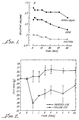
- Figure 1 is a graph showing the effect of the presence of the drug quinine on the regulatory volume decrease (RVD; a readout for net ion and H 2 O efflux), on bovine nonpigmented ciliary epithelial (NPE) cells. Inhibition of RVD by quinine is consistent with the notion that Ca 2+ -gated K channels are important in solute and water movement (secretion) in ciliary epithelium.
- RVD regulatory volume decrease
- NPE bovine nonpigmented ciliary epithelial
- Figure 2 is a graph'showing the effect of intracameral administration of the drug quinine on the intraocular pressure (IOP) in the rabbit eye.
- potassium channel blockers are potassium channel blockers.
- potassium channel blocker is defined as those compounds or agents which inhibit net potassium flux (current) through a potassium specific pathway (channel, integral membrane protein) within biological membranes. Specific and preferred examples of potassium channel blockers which are utilized in accordance with the present invention are provided.
- compositions of the potassium channel blockers can also be used in accordance with the present invention.
- a pharmaceutically acceptable salts may be any salt which retains the activity of the parent compound and does not impart any deleterious or untoward effect on the subject to which it is administered and in the context in which it is administered.
- Such a salt may be derived from any organic or inorganic acid or base.
- the salt may be a mono or polyvalent ion.
- the inorganic ions such as alkali ions, e.g. sodium, potassium, etc.
- Organic amine salts may be made with amines, particularly ammonium salts such as mono-, di- and trialkyl amines, e.g. alkyl amines wherein each alkyl group may comprise up to six carbon atoms, or ethanol amines. Salts may also be formed with caffeine, tromethamine and similar molecules. It is only important that the cation of any salt of a potassium channel blocker utilized in the compositions or methods of this invention be able to block potassium channels in the ciliary epithelium.
- the active compounds are administered in accordance with the present invention to the eye admixed with an ophthalmically acceptable carrier.
- an ophthalmically acceptable carrier Any suitable, e.g., conventional, ophthalmically acceptable carrier may be employed.
- a carrier is ophthalmically acceptable if it has substantially no long term or permanent detrimental effect on the eye to which it is administered. Examples of ophthalmically acceptable carriers include water (distilled or deionized water), saline and other aqueous media.
- the active compounds are preferably soluble in the carrier which is employed for their administration, so that the active compounds are administered to the eye in the form of a solution.
- a suspension of the active compound or compounds (or salts thereof) in a suitable carrier may also be employed.
- the active compounds are administered in an ophthalmically acceptable carrier in sufficient concentration so as to deliver an effective amount of the active compound or compounds to the eye.
- the ophthalmic, therapeutic solutions contain one or more of the active compounds in a concentration range of approximately 0.0001% to approximately 1% (weight by volume) and more preferably approximately 0.0005% to approximately 0.1% (weight by volume).
- any method of administering drugs directly to a mammalian eye may be employed to administer, in accordance with the present invention, the active compound or compounds to the eye to be treated.
- administering directly is meant to exclude those general systemic drug administration modes, e.g., injection directly into the patient's blood vessels, oral administration and the like, which result in the compound or compounds being systemically available.
- the primary effect on the mammal resulting from the direct administering of the active compound or compounds to the mammal's eye is preferably a reduction in intraocular pressure. More preferably, the active useful compound or compounds are applied topically to the eye or are injected directly into the eye. Particularly useful results are obtained when the compound or compounds are applied topically to the eye in an ophthalmic solution, i.e. as ocular drops.
- Topical ophthalmic preparations for example ocular drops, gels or creams, are preferred because of ease of application, ease of dose delivery and fewer systemic side effects, such as cardiovascular hypotention.
- An exemplary topical ophthalmic formulation is shown below in Table I.
- the abbreviation q.s. means a quantity sufficient to effect the result or to make volume.
- Ingredient Amount(% W/V) Active Compound in accordance with the invention about 0.0001 to about 1 Preservative 0-0.10 Vehicle 0-40 Tonicity Adjustor 1-10 Buffer 0.01-10 pH Adjustor q.s. pH 4.5-7.5 antioxidant as needed Purified Water as needed to make 100%
- preservatives may be used in the ophthalmic preparation described in Table I above.
- Preferred preservatives include, but are not limited to, benzalkonium potassium, chlorobutanol, thimerosal, phenylmercuric acetate, and phenylmercuric nitrate.
- various preferred vehicles may be used in such ophthalmic preparation. These vehicles include, but are not limited to, polyvinyl alcohol, povidone, hydroxypropyl methyl cellulose, poloxamers, carboxymethyl cellulose and hydroxyethyl cellulose.
- Tonicity adjustors may be added as needed or convenient. They include, but are not limited to, salts, particularly sodium potassium, potassium potassium etc., mannitol and glycerin, or any other suitable ophthalmically acceptable tonicity adjustor.
- buffers include but are not limited to, acetate buffers, citrate buffers, phosphate buffers, and borate buffers. Acids or bases may be used to adjust the pH of these formulations as needed.
- ophthalmically acceptable antioxidants include, but are not limited to, sodium metabisulfite, sodium thiosulfate, acetylcysteine, butylated hydroxyanisole, and butylated hydroxytoluene.
- the ophthalmic solution may be administered to the mammalian eye as often as necessary to maintain an acceptable level of intraocular pressure in the eye.
- the ophthalmic solution or other formulation which contains the potassium channel blocker as the active ingredient, is administered to the mammalian eye as often as necessary to maintain the beneficial hypotensive effect of the active ingredient in the eye.
- the frequency of administration depends on the precise nature of the active ingredient and its concentration in the ophthalmic formulation. Within these guidelines it is contemplated that the ophthalmic formulation of the present invention will be administered to the mammalian eye approximately once or twice daily.
- potassium channel blockers which are used as the active effective ingredients in the ophthalmic compositions of the present invention are described and cited above.
- a potassium channel blocker in accordance with the present invention, may be identified by the method disclosed in Single-Channel Recording, Sakmann et al, published by Plenum Press. (See Chapter 21, by Camardo et al entitled Single-Channel Analysis in Aplysia Neurons A Specific K + Channel Is Modulated by Serotonin and Cyclic AMP.)
- Potassium Channel blockers may also be identified in accordance with the method disclosed below in the Example.
- effector i.e. the ion channel or carrier
- effector blockage is direct, it should be the most potent and effective way of inhibiting aqueous secretion and hence lowering IOP.
- targeting a receptor to block an effector is indirect and relies on modulation of a series of cellular events (intracellular messengers/signals) prior to effector inhibition.
Landscapes
- Health & Medical Sciences (AREA)
- Life Sciences & Earth Sciences (AREA)
- General Health & Medical Sciences (AREA)
- Animal Behavior & Ethology (AREA)
- Veterinary Medicine (AREA)
- Medicinal Chemistry (AREA)
- Chemical & Material Sciences (AREA)
- Public Health (AREA)
- Pharmacology & Pharmacy (AREA)
- Epidemiology (AREA)
- Ophthalmology & Optometry (AREA)
- Bioinformatics & Cheminformatics (AREA)
- Engineering & Computer Science (AREA)
- Organic Chemistry (AREA)
- Nuclear Medicine, Radiotherapy & Molecular Imaging (AREA)
- General Chemical & Material Sciences (AREA)
- Chemical Kinetics & Catalysis (AREA)
- Zoology (AREA)
- Gastroenterology & Hepatology (AREA)
- Immunology (AREA)
- Proteomics, Peptides & Aminoacids (AREA)
- Medicines That Contain Protein Lipid Enzymes And Other Medicines (AREA)
- Pharmaceuticals Containing Other Organic And Inorganic Compounds (AREA)
- Acyclic And Carbocyclic Compounds In Medicinal Compositions (AREA)
- Eye Examination Apparatus (AREA)
- Medicines Containing Material From Animals Or Micro-Organisms (AREA)
- Medicinal Preparation (AREA)
Priority Applications (1)
| Application Number | Priority Date | Filing Date | Title |
|---|---|---|---|
| EP02009867A EP1243270B2 (en) | 1995-04-28 | 1996-04-16 | Neuroprotective for the mammalian eye by administration of potassium channel blockers |
Applications Claiming Priority (3)
| Application Number | Priority Date | Filing Date | Title |
|---|---|---|---|
| US08/431,170 US5573758A (en) | 1995-04-28 | 1995-04-28 | Method for reducing intraocular pressure in the mammalian eye by administration of potassium channel blockers |
| US431170 | 1995-04-28 | ||
| PCT/US1996/005241 WO1996033719A1 (en) | 1995-04-28 | 1996-04-16 | Method for reducing intraocular pressure in the mammalian eye by administration of potassium channel blockers |
Related Child Applications (1)
| Application Number | Title | Priority Date | Filing Date |
|---|---|---|---|
| EP02009867A Division EP1243270B2 (en) | 1995-04-28 | 1996-04-16 | Neuroprotective for the mammalian eye by administration of potassium channel blockers |
Publications (2)
| Publication Number | Publication Date |
|---|---|
| EP0825863A1 EP0825863A1 (en) | 1998-03-04 |
| EP0825863B1 true EP0825863B1 (en) | 2002-10-09 |
Family
ID=23710776
Family Applications (2)
| Application Number | Title | Priority Date | Filing Date |
|---|---|---|---|
| EP96912798A Expired - Lifetime EP0825863B1 (en) | 1995-04-28 | 1996-04-16 | Method for reducing intraocular pressure in the mammalian eye by administration of potassium channel blockers |
| EP02009867A Expired - Lifetime EP1243270B2 (en) | 1995-04-28 | 1996-04-16 | Neuroprotective for the mammalian eye by administration of potassium channel blockers |
Family Applications After (1)
| Application Number | Title | Priority Date | Filing Date |
|---|---|---|---|
| EP02009867A Expired - Lifetime EP1243270B2 (en) | 1995-04-28 | 1996-04-16 | Neuroprotective for the mammalian eye by administration of potassium channel blockers |
Country Status (8)
| Country | Link |
|---|---|
| US (1) | US5573758A (enExample) |
| EP (2) | EP0825863B1 (enExample) |
| JP (2) | JPH11504330A (enExample) |
| AT (2) | ATE225658T1 (enExample) |
| AU (1) | AU703241B2 (enExample) |
| DE (2) | DE69624234D1 (enExample) |
| ES (2) | ES2182973T3 (enExample) |
| WO (1) | WO1996033719A1 (enExample) |
Families Citing this family (33)
| Publication number | Priority date | Publication date | Assignee | Title |
|---|---|---|---|---|
| CN1155383C (zh) | 1995-12-21 | 2004-06-30 | 阿尔康实验室公司 | 某些异喹啉磺酰基化合物治疗青光眼及眼局部缺血的用途 |
| US5925342A (en) * | 1996-11-13 | 1999-07-20 | Allergan | Method for reducing intraocular pressure in the mammalian eye by administration of potassium channel blockers |
| US6548535B2 (en) | 2000-01-18 | 2003-04-15 | Merck & Co., Inc. | Method for treating ocular hypertension |
| US6545036B2 (en) * | 2000-01-18 | 2003-04-08 | Merck & Co., Inc. | Ophthalmic compositions for treating ocular hypertension |
| EP1357855A2 (en) * | 2001-01-30 | 2003-11-05 | Merck & Co., Inc. | Ophthalmic compositions for treating ocular hypertension |
| AU2002240051B2 (en) * | 2001-01-30 | 2006-06-01 | Merck & Co., Inc. | Method for identifying maxi-K channel blockers |
| US20040115739A1 (en) * | 2002-01-25 | 2004-06-17 | Garcia Maria L | Method for identifying maxi-k channel blockers for use in lowering elevated intraocular pressure using hek-293 cells |
| US20040029771A1 (en) * | 2002-02-28 | 2004-02-12 | Icagen, Inc. | Methods for treating diseases related to intraocular pressure |
| US7119112B2 (en) * | 2002-02-28 | 2006-10-10 | Icagen, Inc. | Sulfonamides as potassium channel blockers |
| AU2003216547A1 (en) * | 2002-03-15 | 2003-09-29 | Merck And Co., Inc. | Compositions and methods for treating glaucoma and ocular hypertension |
| EP1515721A4 (en) * | 2002-06-14 | 2006-07-26 | Merck & Co Inc | OPHTHALMIC COMPOSITIONS FOR THE TREATMENT OF OCCULAR HYPERTONIA |
| CA2488752A1 (en) * | 2002-06-17 | 2003-12-24 | Merck & Co., Inc. | Novel maxi-k channel blockers, methods of use and process for making the same |
| US20050239787A1 (en) * | 2002-06-17 | 2005-10-27 | Goetz Michael A | Novel maxi-k channel blockers, methods of use and process for making the same |
| US7528163B2 (en) * | 2002-11-08 | 2009-05-05 | Merck & Co. Inc. | Ophthalmic compositions for treating ocular hypertension |
| US7196082B2 (en) | 2002-11-08 | 2007-03-27 | Merck & Co. Inc. | Ophthalmic compositions for treating ocular hypertension |
| AU2004226479A1 (en) | 2003-03-27 | 2004-10-14 | Evotec Oai | Ophthalmic compositions for treating ocular hypertension |
| CN1816530A (zh) * | 2003-07-01 | 2006-08-09 | 麦克公司 | 用于治疗高眼压症的眼用组合物 |
| WO2005020917A2 (en) * | 2003-09-02 | 2005-03-10 | Merck & Co., Inc. | Ophthalmic compositions for treating ocular hypertension |
| EP1663221A4 (en) * | 2003-09-04 | 2009-04-22 | Merck & Co Inc | OPHTHALMIC COMPOSITIONS FOR THE TREATMENT OF OCCULAR HYPERTONIA |
| JP4546961B2 (ja) * | 2003-09-04 | 2010-09-22 | メルク・シャープ・エンド・ドーム・コーポレイション | 高眼圧の治療のための眼科用組成物 |
| US20050250779A1 (en) * | 2004-05-04 | 2005-11-10 | Song Zhu | Pteridinone derivatives for treating ocular hypertension |
| US7563816B2 (en) | 2004-07-20 | 2009-07-21 | Merck & Co. Inc. | Ophthalmic compositions for treating ocular hypertension |
| CN101035526A (zh) * | 2004-10-13 | 2007-09-12 | 默克公司 | 用于治疗高眼压的眼用组合物 |
| WO2006044232A1 (en) * | 2004-10-13 | 2006-04-27 | Merck & Co., Inc. | Ophthalmic compositions for treating ocular hypertension |
| AU2007227664A1 (en) * | 2006-03-13 | 2007-09-27 | Merck & Co., Inc. | Ophthalmic compositions for treating ocular hypertension |
| US20090281154A1 (en) * | 2006-06-12 | 2009-11-12 | Doherty James B | Ophthalmic Compositions for Treating Ocular Hypertension |
| EP1941876A1 (en) * | 2006-12-28 | 2008-07-09 | Lacer, S.A. | Isosorbide mononitrate derivatives for the treatment of Inflammation and ocular hypertension |
| WO2010137547A1 (ja) * | 2009-05-25 | 2010-12-02 | 国立大学法人東京工業大学 | 中枢神経細胞の増殖及び分化に係る中核因子を含む医薬組成物 |
| MX353482B (es) | 2011-04-29 | 2018-01-16 | Celgene Corp | Metodos para el tratamiento del cancer y enfermedades inflamatorias utilizando cereblon como predictor. |
| EP3904875B1 (en) | 2012-06-29 | 2024-11-20 | Celgene Corporation | Methods for determining drug efficacy using ikzf3 (aiolos) |
| US9587281B2 (en) | 2012-08-14 | 2017-03-07 | Celgene Corporation | Cereblon isoforms and their use as biomarkers for therapeutic treatment |
| JP6640126B2 (ja) | 2014-06-27 | 2020-02-05 | セルジーン コーポレイション | セレブロン及び他のe3ユビキチンリガーゼの立体構造の変化を誘導するための組成物及び方法 |
| US10830762B2 (en) | 2015-12-28 | 2020-11-10 | Celgene Corporation | Compositions and methods for inducing conformational changes in cereblon and other E3 ubiquitin ligases |
Family Cites Families (6)
| Publication number | Priority date | Publication date | Assignee | Title |
|---|---|---|---|---|
| WO1989010757A1 (en) * | 1988-05-10 | 1989-11-16 | Leo Pharmaceutical Products Ltd. A/S (Løvens Kemis | New ophthalmic preparation for treating glaucoma |
| EP0430621A3 (en) * | 1989-11-29 | 1992-03-04 | Beecham Group P.L.C. | Process for the preparation of chiral 3,4-epoxy benzopyrans |
| US5512591A (en) * | 1993-02-18 | 1996-04-30 | President And Fellows Of Harvard College | Treatments for diseases characterized by neovascularization |
| AU7099194A (en) * | 1993-06-08 | 1995-01-03 | Vide Pharmaceuticals | Methods and compositions for lowering intraocular pressure |
| US5494895A (en) * | 1993-07-22 | 1996-02-27 | Merck & Co., Inc. | Scorpion peptide margatoxin with immunosuppressant activity |
| GB9316111D0 (en) * | 1993-08-04 | 1993-09-22 | Pfizer Ltd | Benzopyrans |
-
1995
- 1995-04-28 US US08/431,170 patent/US5573758A/en not_active Expired - Lifetime
-
1996
- 1996-04-16 EP EP96912798A patent/EP0825863B1/en not_active Expired - Lifetime
- 1996-04-16 ES ES96912798T patent/ES2182973T3/es not_active Expired - Lifetime
- 1996-04-16 AU AU55488/96A patent/AU703241B2/en not_active Ceased
- 1996-04-16 DE DE69624234T patent/DE69624234D1/de not_active Expired - Lifetime
- 1996-04-16 ES ES02009867T patent/ES2204879T5/es not_active Expired - Lifetime
- 1996-04-16 EP EP02009867A patent/EP1243270B2/en not_active Expired - Lifetime
- 1996-04-16 AT AT96912798T patent/ATE225658T1/de not_active IP Right Cessation
- 1996-04-16 DE DE69630325T patent/DE69630325T3/de not_active Expired - Lifetime
- 1996-04-16 JP JP8532585A patent/JPH11504330A/ja not_active Withdrawn
- 1996-04-16 AT AT02009867T patent/ATE251458T1/de not_active IP Right Cessation
- 1996-04-16 WO PCT/US1996/005241 patent/WO1996033719A1/en not_active Ceased
-
2007
- 2007-06-06 JP JP2007150243A patent/JP2007217437A/ja active Pending
Also Published As
| Publication number | Publication date |
|---|---|
| AU5548896A (en) | 1996-11-18 |
| DE69630325T3 (de) | 2009-11-19 |
| ES2204879T3 (es) | 2004-05-01 |
| AU703241B2 (en) | 1999-03-25 |
| ES2182973T3 (es) | 2003-03-16 |
| DE69624234D1 (de) | 2002-11-14 |
| JPH11504330A (ja) | 1999-04-20 |
| ATE251458T1 (de) | 2003-10-15 |
| DE69630325T2 (de) | 2004-07-29 |
| EP1243270B1 (en) | 2003-10-08 |
| DE69630325D1 (de) | 2003-11-13 |
| WO1996033719A1 (en) | 1996-10-31 |
| ES2204879T5 (es) | 2009-06-19 |
| US5573758A (en) | 1996-11-12 |
| ATE225658T1 (de) | 2002-10-15 |
| EP0825863A1 (en) | 1998-03-04 |
| JP2007217437A (ja) | 2007-08-30 |
| EP1243270B2 (en) | 2009-03-25 |
| EP1243270A1 (en) | 2002-09-25 |
Similar Documents
| Publication | Publication Date | Title |
|---|---|---|
| US5925342A (en) | Method for reducing intraocular pressure in the mammalian eye by administration of potassium channel blockers | |
| US5573758A (en) | Method for reducing intraocular pressure in the mammalian eye by administration of potassium channel blockers | |
| US5866605A (en) | Method for providing a neuroprotective effect to the mammalian eye by administration of chloride channel blockers | |
| US5602143A (en) | Method for reducing intraocular pressure in the mammalian eye by administration of guanylate cyclase inhibitors | |
| CA2201134A1 (en) | Ophthalmic and aural compositions containing diclofenac potassium | |
| US6326389B1 (en) | Inhibition of noninactivating Na channels of mammalian optic nerve as a means of preventing optic nerve degeneration associated with glaucoma | |
| US5891911A (en) | Method for reducing intraocular pressure in the mammalian eye by administration of calcium chelators | |
| JPH08511024A (ja) | 眼内圧を低下させる方法および組成物 | |
| US6350780B1 (en) | Methods and compositions for drug delivery | |
| CA2219280C (en) | Method for reducing intraocular pressure in the mammalian eye by administration of potassium channel blockers | |
| US5677327A (en) | Method for identifying muscarinic agents lacking miotic side effects | |
| AU723823B2 (en) | Use of chloride channel blockers for providing a neuroprotective effect to the mammalian eye | |
| US4968718A (en) | Topically effective, nonsteroidal drug for use in external and internal eye inflammations |
Legal Events
| Date | Code | Title | Description |
|---|---|---|---|
| PUAI | Public reference made under article 153(3) epc to a published international application that has entered the european phase |
Free format text: ORIGINAL CODE: 0009012 |
|
| 17P | Request for examination filed |
Effective date: 19971118 |
|
| AK | Designated contracting states |
Kind code of ref document: A1 Designated state(s): AT BE CH DE DK ES FI FR GB GR IE IT LI LU MC NL PT SE |
|
| RAP1 | Party data changed (applicant data changed or rights of an application transferred) |
Owner name: ALLERGAN SALES, INC. |
|
| 17Q | First examination report despatched |
Effective date: 20011017 |
|
| GRAG | Despatch of communication of intention to grant |
Free format text: ORIGINAL CODE: EPIDOS AGRA |
|
| RIC1 | Information provided on ipc code assigned before grant |
Free format text: 7A 61K 31/49 A, 7A 61P 27/06 B |
|
| RIC1 | Information provided on ipc code assigned before grant |
Free format text: 7A 61K 31/49 A, 7A 61P 27/06 B |
|
| GRAG | Despatch of communication of intention to grant |
Free format text: ORIGINAL CODE: EPIDOS AGRA |
|
| GRAH | Despatch of communication of intention to grant a patent |
Free format text: ORIGINAL CODE: EPIDOS IGRA |
|
| GRAH | Despatch of communication of intention to grant a patent |
Free format text: ORIGINAL CODE: EPIDOS IGRA |
|
| GRAA | (expected) grant |
Free format text: ORIGINAL CODE: 0009210 |
|
| AK | Designated contracting states |
Kind code of ref document: B1 Designated state(s): AT BE CH DE DK ES FI FR GB GR IE IT LI LU MC NL PT SE |
|
| PG25 | Lapsed in a contracting state [announced via postgrant information from national office to epo] |
Ref country code: NL Free format text: LAPSE BECAUSE OF FAILURE TO SUBMIT A TRANSLATION OF THE DESCRIPTION OR TO PAY THE FEE WITHIN THE PRESCRIBED TIME-LIMIT Effective date: 20021009 Ref country code: LI Free format text: LAPSE BECAUSE OF FAILURE TO SUBMIT A TRANSLATION OF THE DESCRIPTION OR TO PAY THE FEE WITHIN THE PRESCRIBED TIME-LIMIT Effective date: 20021009 Ref country code: GR Free format text: LAPSE BECAUSE OF FAILURE TO SUBMIT A TRANSLATION OF THE DESCRIPTION OR TO PAY THE FEE WITHIN THE PRESCRIBED TIME-LIMIT Effective date: 20021009 Ref country code: FI Free format text: LAPSE BECAUSE OF FAILURE TO SUBMIT A TRANSLATION OF THE DESCRIPTION OR TO PAY THE FEE WITHIN THE PRESCRIBED TIME-LIMIT Effective date: 20021009 Ref country code: CH Free format text: LAPSE BECAUSE OF FAILURE TO SUBMIT A TRANSLATION OF THE DESCRIPTION OR TO PAY THE FEE WITHIN THE PRESCRIBED TIME-LIMIT Effective date: 20021009 Ref country code: BE Free format text: LAPSE BECAUSE OF FAILURE TO SUBMIT A TRANSLATION OF THE DESCRIPTION OR TO PAY THE FEE WITHIN THE PRESCRIBED TIME-LIMIT Effective date: 20021009 Ref country code: AT Free format text: LAPSE BECAUSE OF FAILURE TO SUBMIT A TRANSLATION OF THE DESCRIPTION OR TO PAY THE FEE WITHIN THE PRESCRIBED TIME-LIMIT Effective date: 20021009 |
|
| REF | Corresponds to: |
Ref document number: 225658 Country of ref document: AT Date of ref document: 20021015 Kind code of ref document: T |
|
| REG | Reference to a national code |
Ref country code: GB Ref legal event code: FG4D |
|
| REG | Reference to a national code |
Ref country code: CH Ref legal event code: EP |
|
| REG | Reference to a national code |
Ref country code: IE Ref legal event code: FG4D |
|
| REF | Corresponds to: |
Ref document number: 69624234 Country of ref document: DE Date of ref document: 20021114 |
|
| PG25 | Lapsed in a contracting state [announced via postgrant information from national office to epo] |
Ref country code: SE Free format text: LAPSE BECAUSE OF FAILURE TO SUBMIT A TRANSLATION OF THE DESCRIPTION OR TO PAY THE FEE WITHIN THE PRESCRIBED TIME-LIMIT Effective date: 20030109 Ref country code: PT Free format text: LAPSE BECAUSE OF FAILURE TO SUBMIT A TRANSLATION OF THE DESCRIPTION OR TO PAY THE FEE WITHIN THE PRESCRIBED TIME-LIMIT Effective date: 20030109 Ref country code: DK Free format text: LAPSE BECAUSE OF FAILURE TO SUBMIT A TRANSLATION OF THE DESCRIPTION OR TO PAY THE FEE WITHIN THE PRESCRIBED TIME-LIMIT Effective date: 20030109 |
|
| PG25 | Lapsed in a contracting state [announced via postgrant information from national office to epo] |
Ref country code: DE Free format text: LAPSE BECAUSE OF FAILURE TO SUBMIT A TRANSLATION OF THE DESCRIPTION OR TO PAY THE FEE WITHIN THE PRESCRIBED TIME-LIMIT Effective date: 20030110 |
|
| REG | Reference to a national code |
Ref country code: ES Ref legal event code: FG2A Ref document number: 2182973 Country of ref document: ES Kind code of ref document: T3 |
|
| NLV1 | Nl: lapsed or annulled due to failure to fulfill the requirements of art. 29p and 29m of the patents act | ||
| REG | Reference to a national code |
Ref country code: CH Ref legal event code: PL |
|
| PG25 | Lapsed in a contracting state [announced via postgrant information from national office to epo] |
Ref country code: LU Free format text: LAPSE BECAUSE OF NON-PAYMENT OF DUE FEES Effective date: 20030416 Ref country code: IE Free format text: LAPSE BECAUSE OF NON-PAYMENT OF DUE FEES Effective date: 20030416 |
|
| PG25 | Lapsed in a contracting state [announced via postgrant information from national office to epo] |
Ref country code: MC Free format text: LAPSE BECAUSE OF NON-PAYMENT OF DUE FEES Effective date: 20030430 |
|
| ET | Fr: translation filed | ||
| PLBE | No opposition filed within time limit |
Free format text: ORIGINAL CODE: 0009261 |
|
| STAA | Information on the status of an ep patent application or granted ep patent |
Free format text: STATUS: NO OPPOSITION FILED WITHIN TIME LIMIT |
|
| 26N | No opposition filed |
Effective date: 20030710 |
|
| REG | Reference to a national code |
Ref country code: IE Ref legal event code: MM4A |
|
| PGFP | Annual fee paid to national office [announced via postgrant information from national office to epo] |
Ref country code: GB Payment date: 20120425 Year of fee payment: 17 Ref country code: FR Payment date: 20120503 Year of fee payment: 17 |
|
| PGFP | Annual fee paid to national office [announced via postgrant information from national office to epo] |
Ref country code: IT Payment date: 20120424 Year of fee payment: 17 |
|
| PGFP | Annual fee paid to national office [announced via postgrant information from national office to epo] |
Ref country code: ES Payment date: 20120426 Year of fee payment: 17 |
|
| GBPC | Gb: european patent ceased through non-payment of renewal fee |
Effective date: 20130416 |
|
| PG25 | Lapsed in a contracting state [announced via postgrant information from national office to epo] |
Ref country code: GB Free format text: LAPSE BECAUSE OF NON-PAYMENT OF DUE FEES Effective date: 20130416 |
|
| REG | Reference to a national code |
Ref country code: FR Ref legal event code: ST Effective date: 20131231 |
|
| PG25 | Lapsed in a contracting state [announced via postgrant information from national office to epo] |
Ref country code: FR Free format text: LAPSE BECAUSE OF NON-PAYMENT OF DUE FEES Effective date: 20130430 Ref country code: IT Free format text: LAPSE BECAUSE OF NON-PAYMENT OF DUE FEES Effective date: 20130416 |
|
| REG | Reference to a national code |
Ref country code: ES Ref legal event code: FD2A Effective date: 20140609 |
|
| PG25 | Lapsed in a contracting state [announced via postgrant information from national office to epo] |
Ref country code: ES Free format text: LAPSE BECAUSE OF NON-PAYMENT OF DUE FEES Effective date: 20130417 |