EP0824552B1 - Procede de preparation de polymeres de monomeres de vinyle a repartition serree du poids moleculaire par polymerisation radicalaire regulee - Google Patents
Procede de preparation de polymeres de monomeres de vinyle a repartition serree du poids moleculaire par polymerisation radicalaire regulee Download PDFInfo
- Publication number
- EP0824552B1 EP0824552B1 EP96915028A EP96915028A EP0824552B1 EP 0824552 B1 EP0824552 B1 EP 0824552B1 EP 96915028 A EP96915028 A EP 96915028A EP 96915028 A EP96915028 A EP 96915028A EP 0824552 B1 EP0824552 B1 EP 0824552B1
- Authority
- EP
- European Patent Office
- Prior art keywords
- alkyl
- aryl
- hydrogen
- bis
- sulfur
- Prior art date
- Legal status (The legal status is an assumption and is not a legal conclusion. Google has not performed a legal analysis and makes no representation as to the accuracy of the status listed.)
- Expired - Lifetime
Links
- 239000000178 monomer Substances 0.000 title claims description 28
- 229920000642 polymer Polymers 0.000 title claims description 20
- 238000004519 manufacturing process Methods 0.000 title claims description 13
- 125000000391 vinyl group Chemical group [H]C([*])=C([H])[H] 0.000 title description 7
- 229920002554 vinyl polymer Polymers 0.000 title description 7
- 238000009826 distribution Methods 0.000 title description 5
- 238000000034 method Methods 0.000 claims description 26
- PPBRXRYQALVLMV-UHFFFAOYSA-N Styrene Chemical compound C=CC1=CC=CC=C1 PPBRXRYQALVLMV-UHFFFAOYSA-N 0.000 claims description 22
- NINIDFKCEFEMDL-UHFFFAOYSA-N Sulfur Chemical group [S] NINIDFKCEFEMDL-UHFFFAOYSA-N 0.000 claims description 20
- 229910052717 sulfur Inorganic materials 0.000 claims description 16
- 239000011593 sulfur Substances 0.000 claims description 16
- 150000001875 compounds Chemical class 0.000 claims description 15
- 239000001257 hydrogen Substances 0.000 claims description 14
- 229910052739 hydrogen Inorganic materials 0.000 claims description 14
- BUGBHKTXTAQXES-UHFFFAOYSA-N Selenium Chemical group [Se] BUGBHKTXTAQXES-UHFFFAOYSA-N 0.000 claims description 12
- 239000003999 initiator Substances 0.000 claims description 12
- 239000000203 mixture Substances 0.000 claims description 12
- 150000002431 hydrogen Chemical class 0.000 claims description 10
- 229910052760 oxygen Inorganic materials 0.000 claims description 9
- 239000001301 oxygen Substances 0.000 claims description 9
- 238000006116 polymerization reaction Methods 0.000 claims description 9
- UFHFLCQGNIYNRP-UHFFFAOYSA-N Hydrogen Chemical compound [H][H] UFHFLCQGNIYNRP-UHFFFAOYSA-N 0.000 claims description 8
- 229910052711 selenium Chemical group 0.000 claims description 8
- 239000011669 selenium Chemical group 0.000 claims description 8
- 125000000008 (C1-C10) alkyl group Chemical group 0.000 claims description 7
- QVGXLLKOCUKJST-UHFFFAOYSA-N atomic oxygen Chemical group [O] QVGXLLKOCUKJST-UHFFFAOYSA-N 0.000 claims description 6
- FHCPAXDKURNIOZ-UHFFFAOYSA-N tetrathiafulvalene Chemical compound S1C=CSC1=C1SC=CS1 FHCPAXDKURNIOZ-UHFFFAOYSA-N 0.000 claims description 6
- NLHHRLWOUZZQLW-UHFFFAOYSA-N Acrylonitrile Chemical compound C=CC#N NLHHRLWOUZZQLW-UHFFFAOYSA-N 0.000 claims description 5
- 125000002348 vinylic group Chemical group 0.000 claims description 4
- SMZOUWXMTYCWNB-UHFFFAOYSA-N 2-(2-methoxy-5-methylphenyl)ethanamine Chemical compound COC1=CC=C(C)C=C1CCN SMZOUWXMTYCWNB-UHFFFAOYSA-N 0.000 claims description 3
- CERQOIWHTDAKMF-UHFFFAOYSA-N Methacrylic acid Chemical compound CC(=C)C(O)=O CERQOIWHTDAKMF-UHFFFAOYSA-N 0.000 claims description 3
- 150000001991 dicarboxylic acids Chemical class 0.000 claims description 3
- 229910052736 halogen Inorganic materials 0.000 claims description 3
- 150000002367 halogens Chemical class 0.000 claims description 3
- 238000000465 moulding Methods 0.000 claims description 3
- 229910003827 NRaRb Inorganic materials 0.000 claims description 2
- 150000008360 acrylonitriles Chemical class 0.000 claims description 2
- 229910052799 carbon Inorganic materials 0.000 claims description 2
- 229910052757 nitrogen Inorganic materials 0.000 claims description 2
- 239000003960 organic solvent Substances 0.000 claims description 2
- 150000003440 styrenes Chemical class 0.000 claims description 2
- 229940066767 systemic antihistamines phenothiazine derivative Drugs 0.000 claims description 2
- 125000002023 trifluoromethyl group Chemical group FC(F)(F)* 0.000 claims description 2
- IJGRMHOSHXDMSA-UHFFFAOYSA-N Atomic nitrogen Chemical compound N#N IJGRMHOSHXDMSA-UHFFFAOYSA-N 0.000 claims 2
- OKTJSMMVPCPJKN-UHFFFAOYSA-N Carbon Chemical compound [C] OKTJSMMVPCPJKN-UHFFFAOYSA-N 0.000 claims 1
- 125000004093 cyano group Chemical group *C#N 0.000 claims 1
- 125000002347 octyl group Chemical group [H]C([*])([H])C([H])([H])C([H])([H])C([H])([H])C([H])([H])C([H])([H])C([H])([H])C([H])([H])[H] 0.000 claims 1
- 125000001484 phenothiazinyl group Chemical class C1(=CC=CC=2SC3=CC=CC=C3NC12)* 0.000 claims 1
- 125000001997 phenyl group Chemical group [H]C1=C([H])C([H])=C(*)C([H])=C1[H] 0.000 description 20
- 125000002496 methyl group Chemical group [H]C([H])([H])* 0.000 description 18
- 125000001495 ethyl group Chemical group [H]C([H])([H])C([H])([H])* 0.000 description 16
- 125000001449 isopropyl group Chemical group [H]C([H])([H])C([H])(*)C([H])([H])[H] 0.000 description 14
- 125000004123 n-propyl group Chemical group [H]C([H])([H])C([H])([H])C([H])([H])* 0.000 description 14
- OKKJLVBELUTLKV-UHFFFAOYSA-N Methanol Chemical compound OC OKKJLVBELUTLKV-UHFFFAOYSA-N 0.000 description 12
- 125000004108 n-butyl group Chemical group [H]C([H])([H])C([H])([H])C([H])([H])C([H])([H])* 0.000 description 12
- 125000000999 tert-butyl group Chemical group [H]C([H])([H])C(*)(C([H])([H])[H])C([H])([H])[H] 0.000 description 12
- 125000000217 alkyl group Chemical group 0.000 description 11
- 125000000959 isobutyl group Chemical group [H]C([H])([H])C([H])(C([H])([H])[H])C([H])([H])* 0.000 description 10
- 229920003229 poly(methyl methacrylate) Polymers 0.000 description 10
- YXFVVABEGXRONW-UHFFFAOYSA-N Toluene Chemical compound CC1=CC=CC=C1 YXFVVABEGXRONW-UHFFFAOYSA-N 0.000 description 9
- 239000004926 polymethyl methacrylate Substances 0.000 description 9
- WYURNTSHIVDZCO-UHFFFAOYSA-N Tetrahydrofuran Chemical compound C1CCOC1 WYURNTSHIVDZCO-UHFFFAOYSA-N 0.000 description 8
- -1 C 4 acrylates Chemical class 0.000 description 7
- 235000019400 benzoyl peroxide Nutrition 0.000 description 6
- 239000004342 Benzoyl peroxide Substances 0.000 description 5
- VVQNEPGJFQJSBK-UHFFFAOYSA-N Methyl methacrylate Chemical compound COC(=O)C(C)=C VVQNEPGJFQJSBK-UHFFFAOYSA-N 0.000 description 5
- 125000003118 aryl group Chemical group 0.000 description 5
- 238000006243 chemical reaction Methods 0.000 description 5
- 125000002704 decyl group Chemical group [H]C([H])([H])C([H])([H])C([H])([H])C([H])([H])C([H])([H])C([H])([H])C([H])([H])C([H])([H])C([H])([H])C([H])([H])* 0.000 description 5
- 125000004051 hexyl group Chemical group [H]C([H])([H])C([H])([H])C([H])([H])C([H])([H])C([H])([H])C([H])([H])* 0.000 description 5
- VLKZOEOYAKHREP-UHFFFAOYSA-N n-Hexane Chemical compound CCCCCC VLKZOEOYAKHREP-UHFFFAOYSA-N 0.000 description 5
- 239000002904 solvent Substances 0.000 description 5
- GBXQPDCOMJJCMJ-UHFFFAOYSA-M trimethyl-[6-(trimethylazaniumyl)hexyl]azanium;bromide Chemical compound [Br-].C[N+](C)(C)CCCCCC[N+](C)(C)C GBXQPDCOMJJCMJ-UHFFFAOYSA-M 0.000 description 5
- OMPJBNCRMGITSC-UHFFFAOYSA-N Benzoylperoxide Chemical compound C=1C=CC=CC=1C(=O)OOC(=O)C1=CC=CC=C1 OMPJBNCRMGITSC-UHFFFAOYSA-N 0.000 description 4
- 239000004793 Polystyrene Substances 0.000 description 4
- 230000000052 comparative effect Effects 0.000 description 4
- 125000004435 hydrogen atom Chemical group [H]* 0.000 description 4
- 229920002223 polystyrene Polymers 0.000 description 4
- YLQBMQCUIZJEEH-UHFFFAOYSA-N tetrahydrofuran Natural products C=1C=COC=1 YLQBMQCUIZJEEH-UHFFFAOYSA-N 0.000 description 4
- 0 *(C=C*1)C1=C1*C(c(cc2)ccc2C(*2)=C*C2=C2*C=C*2)=C*1 Chemical compound *(C=C*1)C1=C1*C(c(cc2)ccc2C(*2)=C*C2=C2*C=C*2)=C*1 0.000 description 3
- OZAIFHULBGXAKX-UHFFFAOYSA-N 2-(2-cyanopropan-2-yldiazenyl)-2-methylpropanenitrile Chemical compound N#CC(C)(C)N=NC(C)(C)C#N OZAIFHULBGXAKX-UHFFFAOYSA-N 0.000 description 3
- MYMOFIZGZYHOMD-UHFFFAOYSA-N Dioxygen Chemical compound O=O MYMOFIZGZYHOMD-UHFFFAOYSA-N 0.000 description 3
- 125000003545 alkoxy group Chemical group 0.000 description 3
- 238000010539 anionic addition polymerization reaction Methods 0.000 description 3
- 229920001577 copolymer Polymers 0.000 description 3
- 239000013033 iniferter Substances 0.000 description 3
- 150000002990 phenothiazines Chemical class 0.000 description 3
- 238000010526 radical polymerization reaction Methods 0.000 description 3
- KAKZBPTYRLMSJV-UHFFFAOYSA-N Butadiene Chemical compound C=CC=C KAKZBPTYRLMSJV-UHFFFAOYSA-N 0.000 description 2
- YNQLUTRBYVCPMQ-UHFFFAOYSA-N Ethylbenzene Chemical compound CCC1=CC=CC=C1 YNQLUTRBYVCPMQ-UHFFFAOYSA-N 0.000 description 2
- VZCYOOQTPOCHFL-OWOJBTEDSA-N Fumaric acid Chemical compound OC(=O)\C=C\C(O)=O VZCYOOQTPOCHFL-OWOJBTEDSA-N 0.000 description 2
- 125000002947 alkylene group Chemical group 0.000 description 2
- 150000008064 anhydrides Chemical class 0.000 description 2
- 125000000484 butyl group Chemical group [H]C([*])([H])C([H])([H])C([H])([H])C([H])([H])[H] 0.000 description 2
- PXBRQCKWGAHEHS-UHFFFAOYSA-N dichlorodifluoromethane Chemical compound FC(F)(Cl)Cl PXBRQCKWGAHEHS-UHFFFAOYSA-N 0.000 description 2
- 238000002360 preparation method Methods 0.000 description 2
- VZCYOOQTPOCHFL-UHFFFAOYSA-N trans-butenedioic acid Natural products OC(=O)C=CC(O)=O VZCYOOQTPOCHFL-UHFFFAOYSA-N 0.000 description 2
- 125000006832 (C1-C10) alkylene group Chemical group 0.000 description 1
- CXWGKAYMVASWDQ-UHFFFAOYSA-N 1,2-dithiane Chemical class C1CCSSC1 CXWGKAYMVASWDQ-UHFFFAOYSA-N 0.000 description 1
- VXNZUUAINFGPBY-UHFFFAOYSA-N 1-Butene Chemical group CCC=C VXNZUUAINFGPBY-UHFFFAOYSA-N 0.000 description 1
- KTZVZZJJVJQZHV-UHFFFAOYSA-N 1-chloro-4-ethenylbenzene Chemical compound ClC1=CC=C(C=C)C=C1 KTZVZZJJVJQZHV-UHFFFAOYSA-N 0.000 description 1
- OEVVKKAVYQFQNV-UHFFFAOYSA-N 1-ethenyl-2,4-dimethylbenzene Chemical compound CC1=CC=C(C=C)C(C)=C1 OEVVKKAVYQFQNV-UHFFFAOYSA-N 0.000 description 1
- WJFKNYWRSNBZNX-UHFFFAOYSA-N 10H-phenothiazine Chemical compound C1=CC=C2NC3=CC=CC=C3SC2=C1 WJFKNYWRSNBZNX-UHFFFAOYSA-N 0.000 description 1
- NIXOWILDQLNWCW-UHFFFAOYSA-N 2-Propenoic acid Natural products OC(=O)C=C NIXOWILDQLNWCW-UHFFFAOYSA-N 0.000 description 1
- KXYAVSFOJVUIHT-UHFFFAOYSA-N 2-vinylnaphthalene Chemical compound C1=CC=CC2=CC(C=C)=CC=C21 KXYAVSFOJVUIHT-UHFFFAOYSA-N 0.000 description 1
- FRIBMENBGGCKPD-UHFFFAOYSA-N 3-(2,3-dimethoxyphenyl)prop-2-enal Chemical compound COC1=CC=CC(C=CC=O)=C1OC FRIBMENBGGCKPD-UHFFFAOYSA-N 0.000 description 1
- CSDQQAQKBAQLLE-UHFFFAOYSA-N 4-(4-chlorophenyl)-4,5,6,7-tetrahydrothieno[3,2-c]pyridine Chemical compound C1=CC(Cl)=CC=C1C1C(C=CS2)=C2CCN1 CSDQQAQKBAQLLE-UHFFFAOYSA-N 0.000 description 1
- JLBJTVDPSNHSKJ-UHFFFAOYSA-N 4-Methylstyrene Chemical compound CC1=CC=C(C=C)C=C1 JLBJTVDPSNHSKJ-UHFFFAOYSA-N 0.000 description 1
- OGOYZCQQQFAGRI-UHFFFAOYSA-N 9-ethenylanthracene Chemical compound C1=CC=C2C(C=C)=C(C=CC=C3)C3=CC2=C1 OGOYZCQQQFAGRI-UHFFFAOYSA-N 0.000 description 1
- DGAQECJNVWCQMB-PUAWFVPOSA-M Ilexoside XXIX Chemical compound C[C@@H]1CC[C@@]2(CC[C@@]3(C(=CC[C@H]4[C@]3(CC[C@@H]5[C@@]4(CC[C@@H](C5(C)C)OS(=O)(=O)[O-])C)C)[C@@H]2[C@]1(C)O)C)C(=O)O[C@H]6[C@@H]([C@H]([C@@H]([C@H](O6)CO)O)O)O.[Na+] DGAQECJNVWCQMB-PUAWFVPOSA-M 0.000 description 1
- ZLMJMSJWJFRBEC-UHFFFAOYSA-N Potassium Chemical compound [K] ZLMJMSJWJFRBEC-UHFFFAOYSA-N 0.000 description 1
- OFOBLEOULBTSOW-UHFFFAOYSA-N Propanedioic acid Natural products OC(=O)CC(O)=O OFOBLEOULBTSOW-UHFFFAOYSA-N 0.000 description 1
- 238000006887 Ullmann reaction Methods 0.000 description 1
- 239000000654 additive Substances 0.000 description 1
- 125000001931 aliphatic group Chemical group 0.000 description 1
- 125000005250 alkyl acrylate group Chemical group 0.000 description 1
- 150000001351 alkyl iodides Chemical class 0.000 description 1
- XYLMUPLGERFSHI-UHFFFAOYSA-N alpha-Methylstyrene Chemical compound CC(=C)C1=CC=CC=C1 XYLMUPLGERFSHI-UHFFFAOYSA-N 0.000 description 1
- 150000001408 amides Chemical class 0.000 description 1
- 239000012300 argon atmosphere Substances 0.000 description 1
- 230000000903 blocking effect Effects 0.000 description 1
- 150000001721 carbon Chemical group 0.000 description 1
- 239000003054 catalyst Substances 0.000 description 1
- 238000004140 cleaning Methods 0.000 description 1
- 238000007334 copolymerization reaction Methods 0.000 description 1
- 125000004122 cyclic group Chemical group 0.000 description 1
- 125000000058 cyclopentadienyl group Chemical group C1(=CC=CC1)* 0.000 description 1
- 150000008049 diazo compounds Chemical class 0.000 description 1
- 238000007323 disproportionation reaction Methods 0.000 description 1
- 239000012990 dithiocarbamate Substances 0.000 description 1
- 150000004659 dithiocarbamates Chemical class 0.000 description 1
- 230000008030 elimination Effects 0.000 description 1
- 238000003379 elimination reaction Methods 0.000 description 1
- 229940082150 encore Drugs 0.000 description 1
- ZSWFCLXCOIISFI-UHFFFAOYSA-N endo-cyclopentadiene Natural products C1C=CC=C1 ZSWFCLXCOIISFI-UHFFFAOYSA-N 0.000 description 1
- 150000002148 esters Chemical class 0.000 description 1
- 230000007717 exclusion Effects 0.000 description 1
- 238000002474 experimental method Methods 0.000 description 1
- 239000001530 fumaric acid Substances 0.000 description 1
- 125000000524 functional group Chemical group 0.000 description 1
- 238000010438 heat treatment Methods 0.000 description 1
- 229920006158 high molecular weight polymer Polymers 0.000 description 1
- 230000001939 inductive effect Effects 0.000 description 1
- 239000003446 ligand Substances 0.000 description 1
- 229920002521 macromolecule Polymers 0.000 description 1
- VZCYOOQTPOCHFL-UPHRSURJSA-N maleic acid Chemical compound OC(=O)\C=C/C(O)=O VZCYOOQTPOCHFL-UPHRSURJSA-N 0.000 description 1
- 239000011976 maleic acid Substances 0.000 description 1
- FPYJFEHAWHCUMM-UHFFFAOYSA-N maleic anhydride Chemical compound O=C1OC(=O)C=C1 FPYJFEHAWHCUMM-UHFFFAOYSA-N 0.000 description 1
- 229910052751 metal Inorganic materials 0.000 description 1
- 239000002184 metal Substances 0.000 description 1
- WSTTXHSFUYKGKC-UHFFFAOYSA-N n,n-dimethyl-3-(10h-phenothiazin-1-yl)propan-1-amine Chemical compound S1C2=CC=CC=C2NC2=C1C=CC=C2CCCN(C)C WSTTXHSFUYKGKC-UHFFFAOYSA-N 0.000 description 1
- 239000012299 nitrogen atmosphere Substances 0.000 description 1
- 125000004433 nitrogen atom Chemical group N* 0.000 description 1
- HDBWAWNLGGMZRQ-UHFFFAOYSA-N p-Vinylbiphenyl Chemical group C1=CC(C=C)=CC=C1C1=CC=CC=C1 HDBWAWNLGGMZRQ-UHFFFAOYSA-N 0.000 description 1
- 150000002978 peroxides Chemical class 0.000 description 1
- 150000005036 phenoselenazines Chemical class 0.000 description 1
- 229950000688 phenothiazine Drugs 0.000 description 1
- 125000001644 phenoxazinyl group Chemical class C1(=CC=CC=2OC3=CC=CC=C3NC12)* 0.000 description 1
- 229920002285 poly(styrene-co-acrylonitrile) Polymers 0.000 description 1
- 239000011591 potassium Substances 0.000 description 1
- 229910052700 potassium Inorganic materials 0.000 description 1
- 230000001376 precipitating effect Effects 0.000 description 1
- 238000001556 precipitation Methods 0.000 description 1
- QQONPFPTGQHPMA-UHFFFAOYSA-N propylene Natural products CC=C QQONPFPTGQHPMA-UHFFFAOYSA-N 0.000 description 1
- 238000000746 purification Methods 0.000 description 1
- 238000005215 recombination Methods 0.000 description 1
- 230000006798 recombination Effects 0.000 description 1
- 150000003839 salts Chemical class 0.000 description 1
- 238000007086 side reaction Methods 0.000 description 1
- 239000011734 sodium Substances 0.000 description 1
- 229910052708 sodium Inorganic materials 0.000 description 1
- 230000000087 stabilizing effect Effects 0.000 description 1
- 229920006301 statistical copolymer Polymers 0.000 description 1
- 238000001757 thermogravimetry curve Methods 0.000 description 1
- 238000012546 transfer Methods 0.000 description 1
- 238000010626 work up procedure Methods 0.000 description 1
Images


Classifications
-
- C—CHEMISTRY; METALLURGY
- C08—ORGANIC MACROMOLECULAR COMPOUNDS; THEIR PREPARATION OR CHEMICAL WORKING-UP; COMPOSITIONS BASED THEREON
- C08F—MACROMOLECULAR COMPOUNDS OBTAINED BY REACTIONS ONLY INVOLVING CARBON-TO-CARBON UNSATURATED BONDS
- C08F20/00—Homopolymers and copolymers of compounds having one or more unsaturated aliphatic radicals, each having only one carbon-to-carbon double bond, and only one being terminated by only one carboxyl radical or a salt, anhydride, ester, amide, imide or nitrile thereof
- C08F20/02—Monocarboxylic acids having less than ten carbon atoms, Derivatives thereof
- C08F20/10—Esters
- C08F20/12—Esters of monohydric alcohols or phenols
- C08F20/14—Methyl esters, e.g. methyl (meth)acrylate
-
- C—CHEMISTRY; METALLURGY
- C08—ORGANIC MACROMOLECULAR COMPOUNDS; THEIR PREPARATION OR CHEMICAL WORKING-UP; COMPOSITIONS BASED THEREON
- C08F—MACROMOLECULAR COMPOUNDS OBTAINED BY REACTIONS ONLY INVOLVING CARBON-TO-CARBON UNSATURATED BONDS
- C08F4/00—Polymerisation catalysts
- C08F4/40—Redox systems
-
- C—CHEMISTRY; METALLURGY
- C08—ORGANIC MACROMOLECULAR COMPOUNDS; THEIR PREPARATION OR CHEMICAL WORKING-UP; COMPOSITIONS BASED THEREON
- C08F—MACROMOLECULAR COMPOUNDS OBTAINED BY REACTIONS ONLY INVOLVING CARBON-TO-CARBON UNSATURATED BONDS
- C08F12/00—Homopolymers and copolymers of compounds having one or more unsaturated aliphatic radicals, each having only one carbon-to-carbon double bond, and at least one being terminated by an aromatic carbocyclic ring
- C08F12/02—Monomers containing only one unsaturated aliphatic radical
- C08F12/04—Monomers containing only one unsaturated aliphatic radical containing one ring
- C08F12/06—Hydrocarbons
- C08F12/08—Styrene
-
- C—CHEMISTRY; METALLURGY
- C08—ORGANIC MACROMOLECULAR COMPOUNDS; THEIR PREPARATION OR CHEMICAL WORKING-UP; COMPOSITIONS BASED THEREON
- C08F—MACROMOLECULAR COMPOUNDS OBTAINED BY REACTIONS ONLY INVOLVING CARBON-TO-CARBON UNSATURATED BONDS
- C08F2/00—Processes of polymerisation
- C08F2/38—Polymerisation using regulators, e.g. chain terminating agents, e.g. telomerisation
-
- C—CHEMISTRY; METALLURGY
- C08—ORGANIC MACROMOLECULAR COMPOUNDS; THEIR PREPARATION OR CHEMICAL WORKING-UP; COMPOSITIONS BASED THEREON
- C08F—MACROMOLECULAR COMPOUNDS OBTAINED BY REACTIONS ONLY INVOLVING CARBON-TO-CARBON UNSATURATED BONDS
- C08F212/00—Copolymers of compounds having one or more unsaturated aliphatic radicals, each having only one carbon-to-carbon double bond, and at least one being terminated by an aromatic carbocyclic ring
- C08F212/02—Monomers containing only one unsaturated aliphatic radical
- C08F212/04—Monomers containing only one unsaturated aliphatic radical containing one ring
- C08F212/06—Hydrocarbons
- C08F212/08—Styrene
- C08F212/10—Styrene with nitriles
Definitions
- the present invention relates to processes for the production of Polymers of vinyl monomers.
- the present invention relates to the use of here available polymers for the production of moldings.
- a long-known process for the production of polymers anionic polymerization is narrow molecular weight distribution. However, it is limited to a limited number of monomers applicable. Non-polar monomers, such as styrene or butadiene, can be polymerized anionically. With polar monomers, such as e.g. n-alkyl acrylates, anionic polymerization is very difficult. In addition, anionic polymerization requires highly purified ones Monomers and solvents as well as complete exclusion of humidity.
- iniferters are radical formers, which are a polymerization both radical initiate as well as terminate the chain end by combination.
- photochemically activated inifers such as Dithiocarbamates
- iniferters are very expensive compounds and one is photochemical initiated polymerization is in industrial Practice very uneconomical.
- the polydispersity index sometimes very high.
- thermal ones Iniferters such as tetramethylene disulfides, which are described, for example, in K. Endo et al., Macromolecules, Vol. 25 (1992), pages 5554 to 5556 are described.
- the PDI is with values between 3 and 4 unsatisfactory high.
- EP-A 135 280 describes the use of stable N-oxyl radicals described that reversibly combine with the reactive chain ends. However, this procedure does not result in high molecular weight Polymers, but only oligomers obtained.
- EP-A 489 370 describes the radical-initiated polymerization described in the presence of alkyl iodides. Here too are however, the molecular weights are unsatisfactorily low.
- the present invention was therefore based on the object, new Process for the preparation of polymers of vinyl monomers to make available the disadvantages mentioned have applicable for polar and non-polar monomers, which is a control of the molecular weight and the molecular weight distribution allow and the insensitive to low Amounts of moisture are.
- vinyl monomers are vinyl aromatics such as styrene, 2-vinylnaphthalene and 9-vinylanthracene, substituted vinyl aromatics such as p-methylstyrene, ⁇ -methylstyrene, p-chlorostyrene, 2,4-dimethylstyrene and 4-vinylbiphenyl, C 1 - to C 8 - Alkyl esters of acrylic acid or methacrylic acid, especially C 1 to C 4 acrylates and C 1 to C 4 methacrylates, unsaturated dicarboxylic acids, for example aliphatic unsaturated dicarboxylic acids such as maleic and fumaric acid, or their derivatives such as anhydrides, esters and amides, in particular Anhydrides, such as maleic anhydride, or vinyl cyanides, especially acrylonitrile. Mixtures of different monomers can also be used.
- vinyl aromatics such as styrene, 2-vinylnaphthalene and 9
- Preferred monomers are styrene, substituted styrenes, C 1 to C 4 acrylates and C 1 to C 4 methacrylates, in particular methyl methacrylate, and acrylonitrile.
- radical initiators used in the method according to the invention are known per se and for example in Ullmanns Encyclopedia of Technical Chemistry, 4th Edition, Volume 15, Page 187.
- Peroxides such as are particularly suitable Dibenzoyl peroxide and cumene hydroperoxide and especially diazo compounds such as azodiisobutyronitrile (AIBN). It can too Mixtures of different radical initiators can be used.
- the molar amount of radical initiator can be 10 -6 to 1 mol / l, preferably 10 -4 to 10 -1 mol / l.
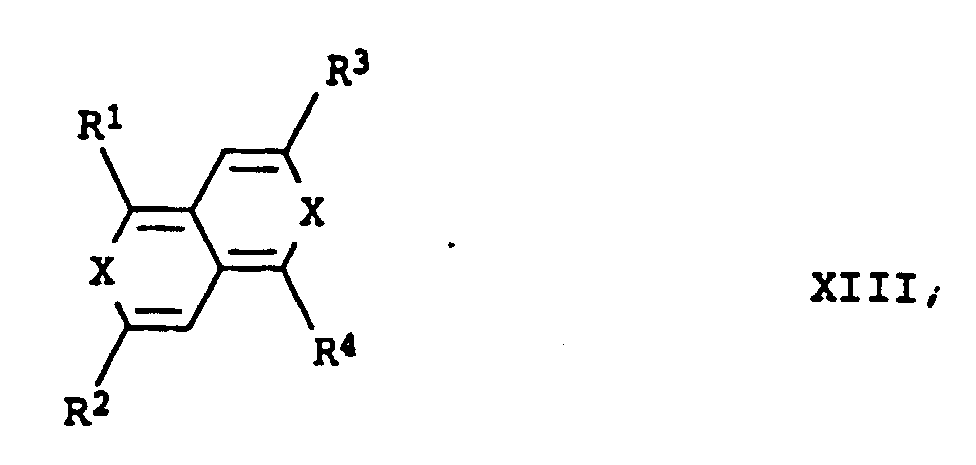
- R 1 and R 2 have the same meaning and also R 3 and R 4 or those in which R 1 and R 3 are the same and also R 2 and R 4 , that is to say symmetrical, are preferred Links.
- X is preferably sulfur and R 1 to R 4 are hydrogen or methyl.
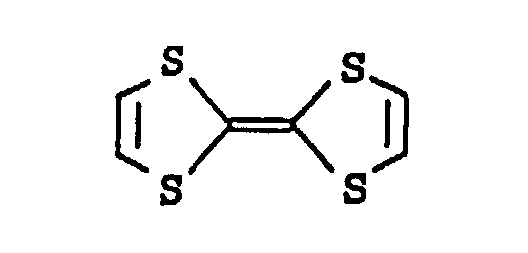
- a particularly preferred compound is tetrathiafulvalene (TTF)
- R 1 and R 2 and R 3 and R 4 are the same or R 1 and R 3 and R 2 and R 4 are also preferred here.
- X is preferably sulfur and R 1 to R 4 are hydrogen or methyl.
- Mixtures of the compounds mentioned can also be used as Electron donors are used. Mixtures also come of these electron donors with other compounds.
- the preferred phenothiazines include: where r is an integer from 2 to 11 and s is an integer from 1 to 4.
- the compounds used as electron donors are in themselves known or can be produced by methods known per se and for example in J.H. Perlstein, Angew. Chem. Int. Ed. Engl. 16 (1977), pages 519 to 534 and M.R. Bryce, Aldrichimica Acta, Vol. 18 (1985), pages 73 to 77.
- the molar ratio of electron donors to radical initiators can range from 1: 1 to 3: 1, preferably 1.6: 1 to 2.4: 1 lie.
- the reaction conditions are not critical, the temperatures can in the range of 0 to 220 ° C, preferably in the range of 20 to 150 ° C, usually you work at normal pressure, you can but also work at pressures up to 30 bar.
- the response times is preferably chosen so that one polymerizes until the desired Molecular weight is reached, for example 1 hour up to 6 days.
- the inventive method can also in the presence of an organic Solvent are carried out.
- a solvent are for example tetrahydrofuran (THF), toluene, ethylbenzene or mixtures thereof.
- the process according to the invention is preferably carried out as follows: that the radical initiator and the electron donor are presented and the monomer or monomers and optionally the solvent adds. However, a reverse order is also possible the expand.
- the polymers can be worked up by Precipitation, for example in methanol or hexane, take place.
- the molecular weights M n of the resulting polymers can vary within a wide range, for example from 5000 to 500,000.
- the method according to the invention is characterized in particular by Economic efficiency, it can polar and non-polar monomers be used, it is insensitive to small amounts of Moisture and it can also mix mixtures of monomers to statistical Copolymers are implemented.
- the resulting polymers have a PDI of less than 2, they can be one have high molecular weight and have a higher thermal stability on.
- Methyl methacrylate (MMA) was distilled over calcium hydride. THF and toluene were distilled over potassium and sodium, respectively. AIBN was recrystallized from methanol. Commercially available TTF was used without additional cleaning.
- the concentration of the monomers was 4.8 mol per liter of solvent.
- the radical initiator was used in an amount of 2.4 x 10 -2 mol / L and the electron donor in an amount of 4.8 x 10 -2 mol / L.
- the polymerization reactions were carried out in a 50 ml Schlenk tube under an argon atmosphere. The monomer and the solvent were injected through a septum into the quantity of radical initiator and electron donor in the argon-flushed Schlenk tube.
- the work-up was carried out by precipitating those diluted with THF Polymer solution in ten times the volume of methanol. Those made in toluene Polymers were precipitated in n-hexane.
- the molecular weights were determined by GPC (G el p ermeations hromatographie c), the calibration was carried out using PMMA standards.
- thermostability can be determined by a thermogravimetric Determine analysis (TGA). It was found that the temperature in the case of loss of mass, in which according to the invention Process manufactured PMMA, at significantly higher temperatures is moved.
- TGA thermogravimetric Determine analysis
- Fig. 1 shows the TGA curves of the PMMA from Example 2 and the PMMA from Comparative Example V2 and in Fig. 2 those of the PMMA from Example 5 and the PMMA from Comparative Example V4 (N 2 atmosphere, heating rate 10 K / min).
- Table 5 shows that the molecular weight increases with longer Response time increases.
Landscapes
- Chemical & Material Sciences (AREA)
- Health & Medical Sciences (AREA)
- Chemical Kinetics & Catalysis (AREA)
- Medicinal Chemistry (AREA)
- Polymers & Plastics (AREA)
- Organic Chemistry (AREA)
- Engineering & Computer Science (AREA)
- Materials Engineering (AREA)
- Addition Polymer Or Copolymer, Post-Treatments, Or Chemical Modifications (AREA)
- Polymerization Catalysts (AREA)
Claims (7)
- Procédé de préparation de polymères de monomères vinyliques, caractérisé en ce que la polymérisation est entreprise en présence d'initiateurs radicalaires et en présence de donneurs d'électrons de la formule générale I ou Il
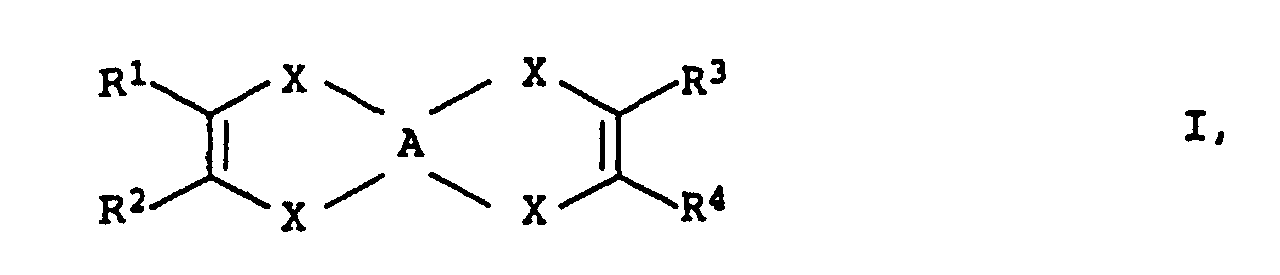 dans laquelle
- X
- représente le soufre ou le sélénium,
- R1 à R4
- représentent l'hydrogène, un radical alkyle en C1 à C20, alcoxy en C1 à C20 ou aryle en C6 à C18,
- A
- représente une double liaison,
ou
 ou des donneurs
d'électrons des formule générales III à VIII


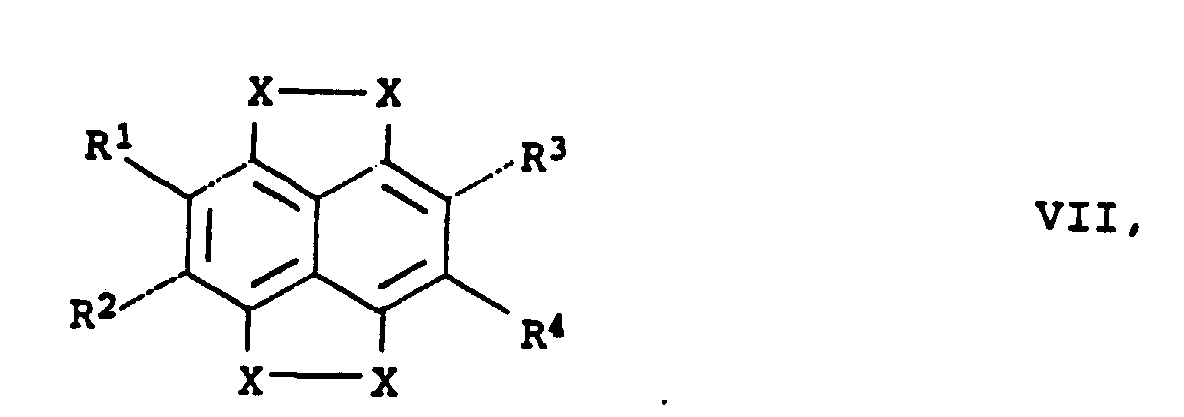

- X
- représente le soufre ou le sélénium,
- R1 à R4
- représentent l'hydrogène, un radical alkyle en C1 à C20, alcoxy en C1 à C20 ou aryle en C6 à C18,
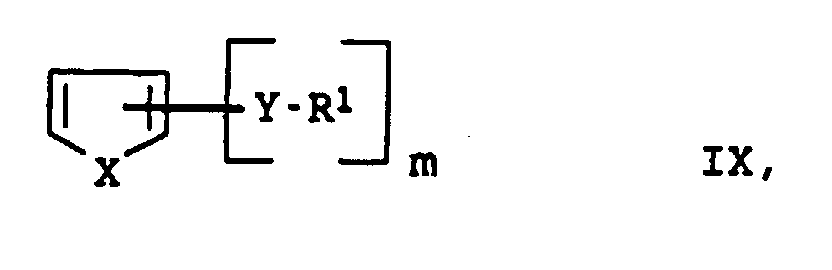
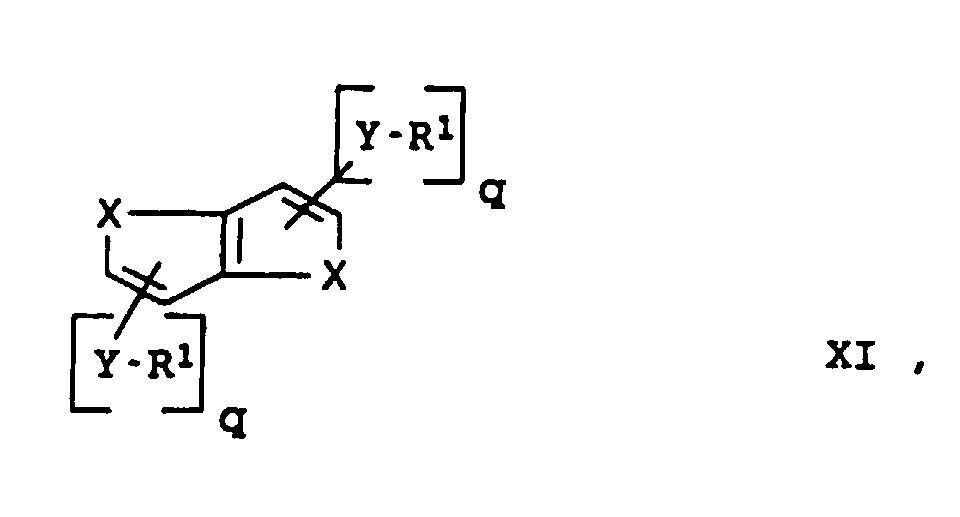
 où
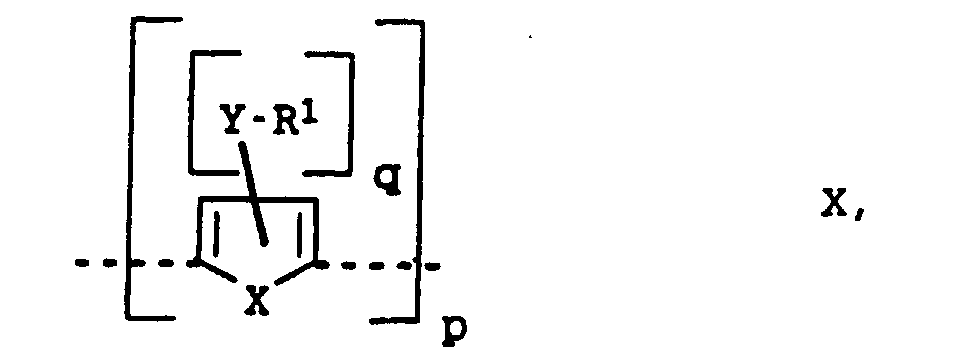
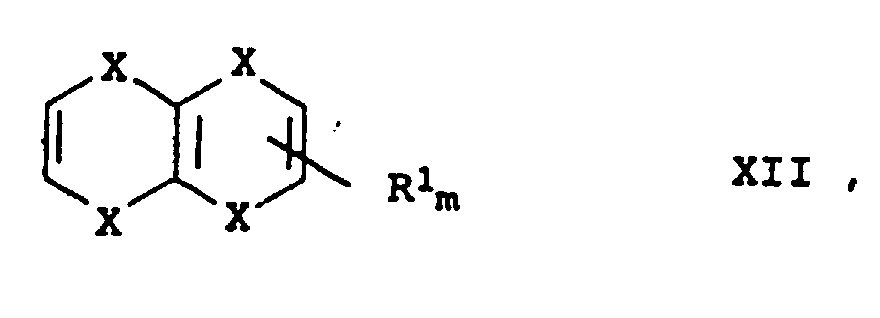
où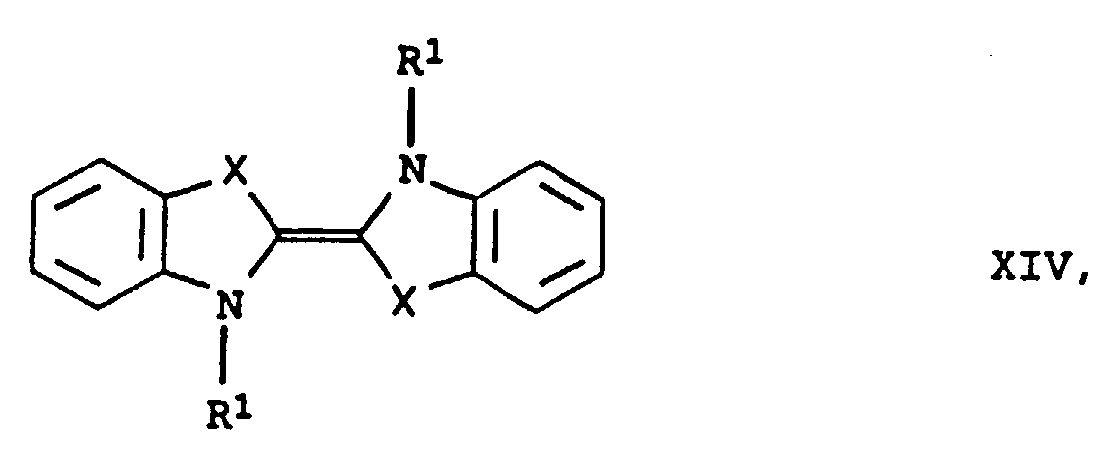
- X
- représente le soufre ou le sélénium,
- Y
- représente l'oxygène ou le soufre,
- R1 à R4
- représentent l'hydrogène, un radical alkyle en C1 à C20 ou aryle en C6 à C18,
- m
- est un nombre entier de 0 à 4
- q
- est un nombre entier de 0 à 2
- p
- est un nombre entier de 2 à 100
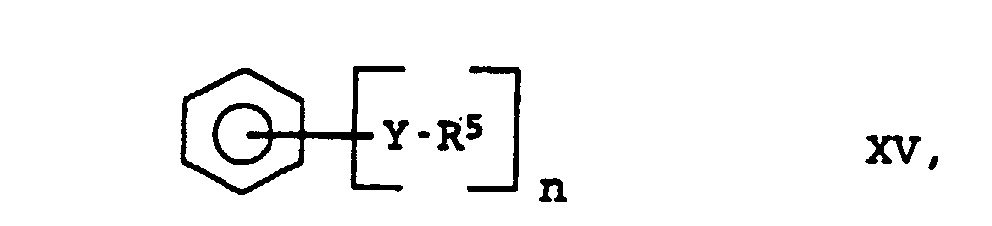 où
où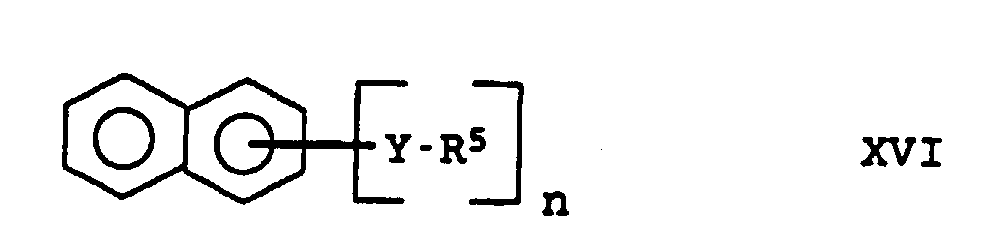
- Y
- représente l'oxygène ou le soufre,
- R5
- représente des radicaux alkyle en C1 à C20, alcoxy en C1 à C20 ou aryle en C6 à C18 et
- n
- est un nombre entier de 2 à 6,
 où
où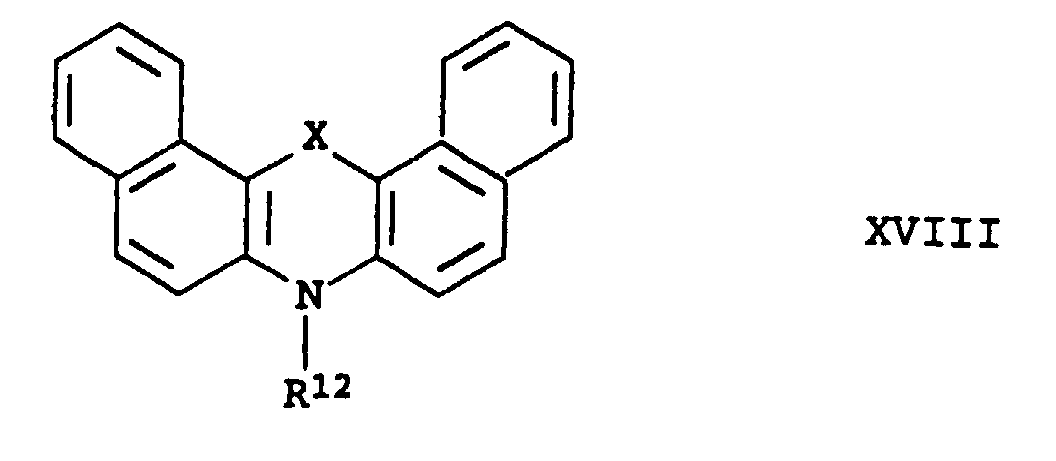
- X représente l'oxygène, le soufre ou le sélénium,
- R6
- représente un atome d'hydrogène, un radical alkyle en C1 à C5, -CF3, halogène, -CN, -SRa, -ORa ou -NRaRb,
- Ra
- représente un radical alkyle en C1 à C25 ou aryle en C6 à C18,
- Rb
- représente un atome d'hydrogène, un radical alkyle en C1 à C25 ou aryle en C6 à C18,
- R7
- représente un atome d'hydrogène ou (TZ),
- T
- représente un radical alkyle ramifié ou non ramifié en C1 à C25,
- Z
- représente -OH, -OR8, -SR8, -NR9R10 ou Q,
- R8
- représente un radical alkyle en C1 à C25 ou aryle en C6 à C18,
- R9
- représente un atome d'hydrogène ou un radical alkyle en C1 à C25 ou aryle en C6 à C18,
- R10
- représente un radical alkyle en C1 à C25 ou aryle en C6 à C18,
- R9 et R10
- pouvant également, ensemble et avec l'atome d'azote, former un noyau cyclo-N-aliphatique en C4 à C7, qui peut être non substitué ou substitué par un ou plusieurs radicaux alkyle en C1 à C5 et contenir un ou plusieurs -O-, -S- ou-N(R11), les groupes -O-, -S- et -N(R11) n'étant pas directement reliés entre eux,
- Q
- représente un reste cycloaliphatique en C4 à C7 qui peut contenir un ou plusieurs -O-, -S- ou -N(R11) et où Q peut à chaque fois être lié à T via un atome de carbone, les groupes -O-, -S- et -N(R11) n'étant pas directement reliés entre eux,
- R11
- représente un radical alkyle en C1 à C10,
- R12
- représente l'hydrogène, un radical alkyle en C1 à C20 ou aryle en C6 à C18.
- Procédé de préparation de polymères selon la revendication 1, caractérisé en ce que l'on met en oeuvre, en tant que monomères vinyliques, des vinylaromatiques, des vinylaromatiques substitués, des alkylesters en C1 à C8 de l'acide acrylique ou de l'acide méthacrylique, des acides dicarboxyliques insaturés ou leurs dérivés, des cyanures vinyliques ou leurs mélanges.
- Procédé de préparation de polymères selon les revendications 1 à 2, caractérisé en ce que l'on, met en oeuvre, en tant que monomères vinyliques, du styrène, des styrènes substitués, des alkylesters en C1 à C4 de l'acide acrylique ou de l'acide méthacrylique, de l'acrylonitrile ou leurs mélanges.
- Procédé de préparation de polymères selon les revendications 1 à 3, caractérisé en ce que l'on utilise comme donneurs d'électrons du tétrathiafulvalèneou les dérivés de phénothiazine des formules générales XI ou XII.
- Procédé de préparation de polymères selon les revendications 1 à 4, caractérisé en ce que l'on opère dans un solvant organique.
- Procédé de préparation de polymères selon les revendications 1 à 5, caractérisé en ce que le rapport molaire des donneurs d'électrons aux initiateurs radicalaires se situe dans la plage de 1:1 à 3:1.
- Utilisation des polymères préparés selon les revendications 1 à 6 pour la production d'articles moulés.
Applications Claiming Priority (3)
| Application Number | Priority Date | Filing Date | Title |
|---|---|---|---|
| DE19516967A DE19516967A1 (de) | 1995-05-12 | 1995-05-12 | Verfahren zur Herstellung von Polymerisaten von vinylischen Monomeren mit enger Molekulargewichtsverteilung durch kontrollierte radikalische Polymerisation |
| DE19516967 | 1995-05-12 | ||
| PCT/EP1996/001924 WO1996035727A1 (fr) | 1995-05-12 | 1996-05-08 | Procede de preparation de polymeres de monomeres de vinyle a repartition serree du poids moleculaire par polymerisation radicalaire regulee |
Publications (2)
| Publication Number | Publication Date |
|---|---|
| EP0824552A1 EP0824552A1 (fr) | 1998-02-25 |
| EP0824552B1 true EP0824552B1 (fr) | 1999-12-08 |
Family
ID=7761449
Family Applications (1)
| Application Number | Title | Priority Date | Filing Date |
|---|---|---|---|
| EP96915028A Expired - Lifetime EP0824552B1 (fr) | 1995-05-12 | 1996-05-08 | Procede de preparation de polymeres de monomeres de vinyle a repartition serree du poids moleculaire par polymerisation radicalaire regulee |
Country Status (8)
| Country | Link |
|---|---|
| US (1) | US6166155A (fr) |
| EP (1) | EP0824552B1 (fr) |
| JP (1) | JPH11504969A (fr) |
| KR (1) | KR19990014712A (fr) |
| CN (1) | CN1184490A (fr) |
| DE (2) | DE19516967A1 (fr) |
| ES (1) | ES2142062T3 (fr) |
| WO (1) | WO1996035727A1 (fr) |
Families Citing this family (2)
| Publication number | Priority date | Publication date | Assignee | Title |
|---|---|---|---|---|
| DE10149083A1 (de) | 2001-10-05 | 2003-04-17 | Tesa Ag | Acrylathaftklebemassen mit enger Molekulargewichtsverteilung |
| DE102009020077A1 (de) * | 2009-05-06 | 2010-11-11 | Dürr Systems GmbH | Beschichtungsmittelvorrichtung und Beschichtungsvorrichtung |
Family Cites Families (5)
| Publication number | Priority date | Publication date | Assignee | Title |
|---|---|---|---|---|
| US3207815A (en) * | 1962-07-13 | 1965-09-21 | Pure Oil Co | Free-radical polymerization process with bis(2-benzthiazole) accelerators |
| US4538252A (en) * | 1981-08-24 | 1985-08-27 | International Business Machines Corporation | Light induced capacitance changes in donor polymers (or small molecules) films and its use for information storage in video disks and the like |
| US5322912A (en) * | 1992-11-16 | 1994-06-21 | Xerox Corporation | Polymerization processes and toner compositions therefrom |
| US5285002A (en) * | 1993-03-23 | 1994-02-08 | Minnesota Mining And Manufacturing Company | Fluorine-containing polymers and preparation and use thereof |
| US5739229A (en) * | 1995-11-07 | 1998-04-14 | Xerox Corporation | Polymerization processes |
-
1995
- 1995-05-12 DE DE19516967A patent/DE19516967A1/de not_active Withdrawn
-
1996
- 1996-05-08 US US08/945,532 patent/US6166155A/en not_active Expired - Fee Related
- 1996-05-08 EP EP96915028A patent/EP0824552B1/fr not_active Expired - Lifetime
- 1996-05-08 ES ES96915028T patent/ES2142062T3/es not_active Expired - Lifetime
- 1996-05-08 KR KR1019970708054A patent/KR19990014712A/ko not_active Withdrawn
- 1996-05-08 WO PCT/EP1996/001924 patent/WO1996035727A1/fr not_active Ceased
- 1996-05-08 DE DE59603868T patent/DE59603868D1/de not_active Expired - Lifetime
- 1996-05-08 CN CN96193880A patent/CN1184490A/zh active Pending
- 1996-05-08 JP JP8533747A patent/JPH11504969A/ja active Pending
Also Published As
| Publication number | Publication date |
|---|---|
| ES2142062T3 (es) | 2000-04-01 |
| WO1996035727A1 (fr) | 1996-11-14 |
| DE19516967A1 (de) | 1996-11-14 |
| CN1184490A (zh) | 1998-06-10 |
| EP0824552A1 (fr) | 1998-02-25 |
| DE59603868D1 (de) | 2000-01-13 |
| JPH11504969A (ja) | 1999-05-11 |
| US6166155A (en) | 2000-12-26 |
| KR19990014712A (ko) | 1999-02-25 |
Similar Documents
| Publication | Publication Date | Title |
|---|---|---|
| DE3783158T2 (de) | Blockpfropfcopolymere und ihr herstellungsverfahren. | |
| EP0245647B2 (fr) | Masse de moulage de polyméthacrylate à haute résistance à la chaleur et haute stabilité thermique | |
| DE602004010092T2 (de) | Ringgeöffnete azlacton-kettenübertragungsmittel für die radikalpolymerisation | |
| DE1520119B2 (de) | Verfahren zur Herstellung einer stabilen Disperion eines Additionspolymeren in einer organischen Flüssigkeit | |
| EP0925311B1 (fr) | Procede de preparation de polymeres en presence de radicaux triazolyle | |
| DE2829807C2 (fr) | ||
| DE60306208T2 (de) | Azlacton-initiatoren für die nitroxidvermittelte radikalpolymerisation | |
| DE4440219A1 (de) | Verfahren zur Herstellung von Copolymerisaten aus Alkylmethacrylat, Vinylaromaten und Maleinsäureanhydrid | |
| DE69506280T2 (de) | Herstellung von polystyrol mit hohem molekulargewicht durch vinylsäurekatalysierte frei-radikalische polymerisation | |
| EP0259851B1 (fr) | Procédé de préparation de terpolymères | |
| DE3518617C2 (fr) | ||
| EP0824552A1 (fr) | Procede de preparation de polymeres de monomeres de vinyle a repartition serree du poids moleculaire par polymerisation radicalaire regulee | |
| DE19806853A1 (de) | Verfahren zur Herstellung von Polymeren aus N-Vinylverbindungen | |
| EP1252203B1 (fr) | Procede de preparation d'un produit de reaction polymere | |
| DE1136488B (de) | Verfahren zur Herstellung von Polymerisationsprodukten des Formaldehyds | |
| DE69512230T2 (de) | Verwendung von peroxysäure als kettenübertragungsmittel | |
| DE69713681T2 (de) | Polymerisation in Anwesenheit eines stabilen freien Radikals und eines freien radikalischen Initiators | |
| DE69609984T2 (de) | Verfahren zur herstellung einer verzweigtes polymer von ein vinylaromatisches monomer | |
| DE3321502C2 (de) | Polymere Ester der Acrylsäure und Methacrylsäure mit aromatischen Thioetheralkoholen und Verfahren zu ihrer Herstellung | |
| DE2164022C3 (de) | Verfahren zur Herstellung thermoplastischer Kunststoffe | |
| DE2033910A1 (de) | Verfahren zur Durchfuhrung radikalisch initiierter chemischer Reaktionen | |
| DE69826422T2 (de) | Verfahren zur Herstellung von Blockcopolymeren in Alkan/Cycloalkan Lösungsmittelmischungen | |
| DE829222C (de) | Verfahren zum Polymerisieren mono-olefinischer Verbindungen | |
| DE19939031A1 (de) | N-Oxyl-Radikale | |
| DE4117369A1 (de) | Polymere auf der basis von bicyclo (2.2.1 hept)-5-en-2,3-dicarbonsaeureanhydriden |
Legal Events
| Date | Code | Title | Description |
|---|---|---|---|
| PUAI | Public reference made under article 153(3) epc to a published international application that has entered the european phase |
Free format text: ORIGINAL CODE: 0009012 |
|
| 17P | Request for examination filed |
Effective date: 19971020 |
|
| AK | Designated contracting states |
Kind code of ref document: A1 Designated state(s): BE DE ES FR GB IT NL |
|
| 17Q | First examination report despatched |
Effective date: 19980622 |
|
| GRAG | Despatch of communication of intention to grant |
Free format text: ORIGINAL CODE: EPIDOS AGRA |
|
| GRAG | Despatch of communication of intention to grant |
Free format text: ORIGINAL CODE: EPIDOS AGRA |
|
| GRAG | Despatch of communication of intention to grant |
Free format text: ORIGINAL CODE: EPIDOS AGRA |
|
| GRAH | Despatch of communication of intention to grant a patent |
Free format text: ORIGINAL CODE: EPIDOS IGRA |
|
| GRAH | Despatch of communication of intention to grant a patent |
Free format text: ORIGINAL CODE: EPIDOS IGRA |
|
| GRAA | (expected) grant |
Free format text: ORIGINAL CODE: 0009210 |
|
| AK | Designated contracting states |
Kind code of ref document: B1 Designated state(s): BE DE ES FR GB IT NL |
|
| PGFP | Annual fee paid to national office [announced via postgrant information from national office to epo] |
Ref country code: DE Payment date: 19991223 Year of fee payment: 5 |
|
| REF | Corresponds to: |
Ref document number: 59603868 Country of ref document: DE Date of ref document: 20000113 |
|
| GBT | Gb: translation of ep patent filed (gb section 77(6)(a)/1977) |
Effective date: 20000110 |
|
| ITF | It: translation for a ep patent filed | ||
| REG | Reference to a national code |
Ref country code: ES Ref legal event code: FG2A Ref document number: 2142062 Country of ref document: ES Kind code of ref document: T3 |
|
| ET | Fr: translation filed | ||
| PGFP | Annual fee paid to national office [announced via postgrant information from national office to epo] |
Ref country code: FR Payment date: 20000413 Year of fee payment: 5 |
|
| PGFP | Annual fee paid to national office [announced via postgrant information from national office to epo] |
Ref country code: NL Payment date: 20000428 Year of fee payment: 5 |
|
| PGFP | Annual fee paid to national office [announced via postgrant information from national office to epo] |
Ref country code: GB Payment date: 20000505 Year of fee payment: 5 Ref country code: ES Payment date: 20000505 Year of fee payment: 5 |
|
| PGFP | Annual fee paid to national office [announced via postgrant information from national office to epo] |
Ref country code: BE Payment date: 20000620 Year of fee payment: 5 |
|
| PLBE | No opposition filed within time limit |
Free format text: ORIGINAL CODE: 0009261 |
|
| STAA | Information on the status of an ep patent application or granted ep patent |
Free format text: STATUS: NO OPPOSITION FILED WITHIN TIME LIMIT |
|
| 26N | No opposition filed | ||
| PG25 | Lapsed in a contracting state [announced via postgrant information from national office to epo] |
Ref country code: GB Free format text: LAPSE BECAUSE OF NON-PAYMENT OF DUE FEES Effective date: 20010508 |
|
| PG25 | Lapsed in a contracting state [announced via postgrant information from national office to epo] |
Ref country code: ES Free format text: LAPSE BECAUSE OF NON-PAYMENT OF DUE FEES Effective date: 20010509 |
|
| PG25 | Lapsed in a contracting state [announced via postgrant information from national office to epo] |
Ref country code: DE Free format text: LAPSE BECAUSE OF THE APPLICANT RENOUNCES Effective date: 20010517 |
|
| PG25 | Lapsed in a contracting state [announced via postgrant information from national office to epo] |
Ref country code: BE Free format text: LAPSE BECAUSE OF NON-PAYMENT OF DUE FEES Effective date: 20010531 |
|
| BERE | Be: lapsed |
Owner name: BASF A.G. Effective date: 20010531 |
|
| PG25 | Lapsed in a contracting state [announced via postgrant information from national office to epo] |
Ref country code: NL Free format text: LAPSE BECAUSE OF NON-PAYMENT OF DUE FEES Effective date: 20011201 |
|
| GBPC | Gb: european patent ceased through non-payment of renewal fee |
Effective date: 20010508 |
|
| PG25 | Lapsed in a contracting state [announced via postgrant information from national office to epo] |
Ref country code: FR Free format text: LAPSE BECAUSE OF NON-PAYMENT OF DUE FEES Effective date: 20020131 |
|
| NLV4 | Nl: lapsed or anulled due to non-payment of the annual fee |
Effective date: 20011201 |
|
| REG | Reference to a national code |
Ref country code: ES Ref legal event code: FD2A Effective date: 20030303 |
|
| PG25 | Lapsed in a contracting state [announced via postgrant information from national office to epo] |
Ref country code: IT Free format text: LAPSE BECAUSE OF NON-PAYMENT OF DUE FEES;WARNING: LAPSES OF ITALIAN PATENTS WITH EFFECTIVE DATE BEFORE 2007 MAY HAVE OCCURRED AT ANY TIME BEFORE 2007. THE CORRECT EFFECTIVE DATE MAY BE DIFFERENT FROM THE ONE RECORDED. Effective date: 20050508 |