EP0812356B1 - Prostate-specific membrane antigen and uses thereof - Google Patents
Prostate-specific membrane antigen and uses thereof Download PDFInfo
- Publication number
- EP0812356B1 EP0812356B1 EP96908504A EP96908504A EP0812356B1 EP 0812356 B1 EP0812356 B1 EP 0812356B1 EP 96908504 A EP96908504 A EP 96908504A EP 96908504 A EP96908504 A EP 96908504A EP 0812356 B1 EP0812356 B1 EP 0812356B1
- Authority
- EP
- European Patent Office
- Prior art keywords
- psm
- antigen
- prostate
- specific membrane
- nucleic acid
- Prior art date
- Legal status (The legal status is an assumption and is not a legal conclusion. Google has not performed a legal analysis and makes no representation as to the accuracy of the status listed.)
- Expired - Lifetime
Links
- 101000892862 Homo sapiens Glutamate carboxypeptidase 2 Proteins 0.000 title claims abstract description 167
- 102100041003 Glutamate carboxypeptidase 2 Human genes 0.000 title abstract description 149
- 150000007523 nucleic acids Chemical class 0.000 claims abstract description 69
- 108020004707 nucleic acids Proteins 0.000 claims abstract description 68
- 102000039446 nucleic acids Human genes 0.000 claims abstract description 68
- 239000000427 antigen Substances 0.000 claims abstract description 33
- 102000036639 antigens Human genes 0.000 claims abstract description 33
- 108091007433 antigens Proteins 0.000 claims abstract description 33
- 238000000034 method Methods 0.000 claims abstract description 31
- 210000002307 prostate Anatomy 0.000 claims abstract description 30
- 206010060862 Prostate cancer Diseases 0.000 claims abstract description 25
- 239000012528 membrane Substances 0.000 claims abstract description 25
- 208000000236 Prostatic Neoplasms Diseases 0.000 claims abstract description 23
- 210000004881 tumor cell Anatomy 0.000 claims abstract description 7
- 208000013210 hematogenous Diseases 0.000 claims abstract description 5
- 210000001519 tissue Anatomy 0.000 claims description 51
- 210000004027 cell Anatomy 0.000 claims description 47
- 239000002299 complementary DNA Substances 0.000 claims description 42
- 108090000765 processed proteins & peptides Proteins 0.000 claims description 40
- 206010028980 Neoplasm Diseases 0.000 claims description 23
- 239000002773 nucleotide Substances 0.000 claims description 22
- 125000003729 nucleotide group Chemical group 0.000 claims description 22
- 239000013598 vector Substances 0.000 claims description 21
- 108020004999 messenger RNA Proteins 0.000 claims description 19
- 102000046689 human FOLH1 Human genes 0.000 claims description 18
- 108091032973 (ribonucleotides)n+m Proteins 0.000 claims description 17
- 108020004414 DNA Proteins 0.000 claims description 14
- 229920001184 polypeptide Polymers 0.000 claims description 12
- 102000004196 processed proteins & peptides Human genes 0.000 claims description 12
- 239000003102 growth factor Substances 0.000 claims description 7
- 238000003556 assay Methods 0.000 claims description 6
- 239000005556 hormone Substances 0.000 claims description 6
- 229940088597 hormone Drugs 0.000 claims description 6
- 238000004519 manufacturing process Methods 0.000 claims description 6
- 230000001580 bacterial effect Effects 0.000 claims description 5
- 210000004962 mammalian cell Anatomy 0.000 claims description 5
- 102000053602 DNA Human genes 0.000 claims description 4
- 108060008682 Tumor Necrosis Factor Proteins 0.000 claims description 4
- 238000004458 analytical method Methods 0.000 claims description 4
- 101800003838 Epidermal growth factor Proteins 0.000 claims description 2
- 241000238631 Hexapoda Species 0.000 claims description 2
- 229940116977 epidermal growth factor Drugs 0.000 claims description 2
- 238000007901 in situ hybridization Methods 0.000 claims description 2
- 210000001165 lymph node Anatomy 0.000 claims description 2
- 238000013518 transcription Methods 0.000 claims description 2
- 230000035897 transcription Effects 0.000 claims description 2
- 102000003390 tumor necrosis factor Human genes 0.000 claims description 2
- VBEQCZHXXJYVRD-GACYYNSASA-N uroanthelone Chemical compound C([C@@H](C(=O)N[C@H](C(=O)N[C@@H](CS)C(=O)N[C@@H](CC(N)=O)C(=O)N[C@@H](CS)C(=O)N[C@H](C(=O)N[C@@H]([C@@H](C)CC)C(=O)NCC(=O)N[C@@H](CC=1C=CC(O)=CC=1)C(=O)N[C@@H](CO)C(=O)NCC(=O)N[C@@H](CC(O)=O)C(=O)N[C@@H](CCCNC(N)=N)C(=O)N[C@@H](CS)C(=O)N[C@@H](CCC(N)=O)C(=O)N[C@@H]([C@@H](C)O)C(=O)N[C@@H](CCCNC(N)=N)C(=O)N[C@@H](CC(O)=O)C(=O)N[C@@H](CC(C)C)C(=O)N[C@@H](CCCNC(N)=N)C(=O)N[C@@H](CC=1C2=CC=CC=C2NC=1)C(=O)N[C@@H](CC=1C2=CC=CC=C2NC=1)C(=O)N[C@@H](CCC(O)=O)C(=O)N[C@@H](CC(C)C)C(=O)N[C@@H](CCCNC(N)=N)C(O)=O)C(C)C)[C@@H](C)O)NC(=O)[C@H](CO)NC(=O)[C@H](CC(O)=O)NC(=O)[C@H](CC(C)C)NC(=O)[C@H](CO)NC(=O)[C@H](CCC(O)=O)NC(=O)[C@@H](NC(=O)[C@H](CC=1NC=NC=1)NC(=O)[C@H](CCSC)NC(=O)[C@H](CS)NC(=O)[C@@H](NC(=O)CNC(=O)CNC(=O)[C@H](CC(N)=O)NC(=O)[C@H](CC(C)C)NC(=O)[C@H](CS)NC(=O)[C@H](CC=1C=CC(O)=CC=1)NC(=O)CNC(=O)[C@H](CC(O)=O)NC(=O)[C@H](CC=1C=CC(O)=CC=1)NC(=O)[C@H](CO)NC(=O)[C@H](CO)NC(=O)[C@H]1N(CCC1)C(=O)[C@H](CS)NC(=O)CNC(=O)[C@H]1N(CCC1)C(=O)[C@H](CC=1C=CC(O)=CC=1)NC(=O)[C@H](CO)NC(=O)[C@@H](N)CC(N)=O)C(C)C)[C@@H](C)CC)C1=CC=C(O)C=C1 VBEQCZHXXJYVRD-GACYYNSASA-N 0.000 claims description 2
- 125000003275 alpha amino acid group Chemical group 0.000 claims 10
- 229930182817 methionine Natural products 0.000 claims 6
- 125000001360 methionine group Chemical group N[C@@H](CCSC)C(=O)* 0.000 claims 6
- 235000004279 alanine Nutrition 0.000 claims 4
- 125000003295 alanine group Chemical group N[C@@H](C)C(=O)* 0.000 claims 4
- DCXYFEDJOCDNAF-UHFFFAOYSA-N Asparagine Natural products OC(=O)C(N)CC(N)=O DCXYFEDJOCDNAF-UHFFFAOYSA-N 0.000 claims 2
- 229960001230 asparagine Drugs 0.000 claims 2
- 235000009582 asparagine Nutrition 0.000 claims 2
- 125000000613 asparagine group Chemical group N[C@@H](CC(N)=O)C(=O)* 0.000 claims 2
- 238000003752 polymerase chain reaction Methods 0.000 claims 2
- 238000001712 DNA sequencing Methods 0.000 claims 1
- 102400001368 Epidermal growth factor Human genes 0.000 claims 1
- 208000003788 Neoplasm Micrometastasis Diseases 0.000 claims 1
- 210000004369 blood Anatomy 0.000 claims 1
- 239000008280 blood Substances 0.000 claims 1
- 210000001185 bone marrow Anatomy 0.000 claims 1
- 241000282414 Homo sapiens Species 0.000 description 55
- 230000000692 anti-sense effect Effects 0.000 description 50
- 201000009030 Carcinoma Diseases 0.000 description 44
- 150000001413 amino acids Chemical group 0.000 description 37
- 239000000523 sample Substances 0.000 description 17
- 102000007066 Prostate-Specific Antigen Human genes 0.000 description 14
- 108010072866 Prostate-Specific Antigen Proteins 0.000 description 14
- 201000010099 disease Diseases 0.000 description 11
- 208000037265 diseases, disorders, signs and symptoms Diseases 0.000 description 11
- 206010004446 Benign prostatic hyperplasia Diseases 0.000 description 10
- 208000004403 Prostatic Hyperplasia Diseases 0.000 description 10
- 108090000623 proteins and genes Proteins 0.000 description 10
- 102100035703 Prostatic acid phosphatase Human genes 0.000 description 9
- 108010043671 prostatic acid phosphatase Proteins 0.000 description 9
- 102000004169 proteins and genes Human genes 0.000 description 9
- 238000009167 androgen deprivation therapy Methods 0.000 description 8
- 238000009396 hybridization Methods 0.000 description 8
- 230000000295 complement effect Effects 0.000 description 7
- 201000011510 cancer Diseases 0.000 description 6
- 230000000694 effects Effects 0.000 description 6
- 239000000243 solution Substances 0.000 description 6
- 238000006243 chemical reaction Methods 0.000 description 5
- 238000001514 detection method Methods 0.000 description 5
- 210000002919 epithelial cell Anatomy 0.000 description 5
- 238000012163 sequencing technique Methods 0.000 description 5
- 210000002966 serum Anatomy 0.000 description 5
- ZHNUHDYFZUAESO-UHFFFAOYSA-N Formamide Chemical compound NC=O ZHNUHDYFZUAESO-UHFFFAOYSA-N 0.000 description 4
- 108020004518 RNA Probes Proteins 0.000 description 4
- 239000003391 RNA probe Substances 0.000 description 4
- 102000006382 Ribonucleases Human genes 0.000 description 4
- 108010083644 Ribonucleases Proteins 0.000 description 4
- 102000006747 Transforming Growth Factor alpha Human genes 0.000 description 4
- 101800004564 Transforming growth factor alpha Proteins 0.000 description 4
- 239000003098 androgen Substances 0.000 description 4
- 238000010367 cloning Methods 0.000 description 4
- 238000011161 development Methods 0.000 description 4
- 239000013604 expression vector Substances 0.000 description 4
- 230000012010 growth Effects 0.000 description 4
- 230000026731 phosphorylation Effects 0.000 description 4
- 238000006366 phosphorylation reaction Methods 0.000 description 4
- 238000003757 reverse transcription PCR Methods 0.000 description 4
- 210000002027 skeletal muscle Anatomy 0.000 description 4
- 241001515965 unidentified phage Species 0.000 description 4
- 239000003155 DNA primer Substances 0.000 description 3
- 102000009024 Epidermal Growth Factor Human genes 0.000 description 3
- 108010052285 Membrane Proteins Proteins 0.000 description 3
- 102000018697 Membrane Proteins Human genes 0.000 description 3
- 206010027476 Metastases Diseases 0.000 description 3
- 241000699666 Mus <mouse, genus> Species 0.000 description 3
- 102000035195 Peptidases Human genes 0.000 description 3
- 108091005804 Peptidases Proteins 0.000 description 3
- 108090000608 Phosphoric Monoester Hydrolases Proteins 0.000 description 3
- 102000004160 Phosphoric Monoester Hydrolases Human genes 0.000 description 3
- 239000004365 Protease Substances 0.000 description 3
- 241000700605 Viruses Species 0.000 description 3
- HCHKCACWOHOZIP-UHFFFAOYSA-N Zinc Chemical compound [Zn] HCHKCACWOHOZIP-UHFFFAOYSA-N 0.000 description 3
- 230000001086 cytosolic effect Effects 0.000 description 3
- 230000034994 death Effects 0.000 description 3
- 231100000517 death Toxicity 0.000 description 3
- 238000000326 densiometry Methods 0.000 description 3
- 238000003384 imaging method Methods 0.000 description 3
- 238000000338 in vitro Methods 0.000 description 3
- 206010061289 metastatic neoplasm Diseases 0.000 description 3
- 239000013612 plasmid Substances 0.000 description 3
- 238000011472 radical prostatectomy Methods 0.000 description 3
- 230000009257 reactivity Effects 0.000 description 3
- 230000028327 secretion Effects 0.000 description 3
- 229910052725 zinc Inorganic materials 0.000 description 3
- 239000011701 zinc Substances 0.000 description 3
- HEDRZPFGACZZDS-UHFFFAOYSA-N Chloroform Chemical compound ClC(Cl)Cl HEDRZPFGACZZDS-UHFFFAOYSA-N 0.000 description 2
- 108091026890 Coding region Proteins 0.000 description 2
- 102000004127 Cytokines Human genes 0.000 description 2
- 108090000695 Cytokines Proteins 0.000 description 2
- 241000701022 Cytomegalovirus Species 0.000 description 2
- 239000003298 DNA probe Substances 0.000 description 2
- 108090000626 DNA-directed RNA polymerases Proteins 0.000 description 2
- 102000004163 DNA-directed RNA polymerases Human genes 0.000 description 2
- 241000588724 Escherichia coli Species 0.000 description 2
- OUYCCCASQSFEME-QMMMGPOBSA-N L-tyrosine Chemical compound OC(=O)[C@@H](N)CC1=CC=C(O)C=C1 OUYCCCASQSFEME-QMMMGPOBSA-N 0.000 description 2
- 241000829100 Macaca mulatta polyomavirus 1 Species 0.000 description 2
- TWRXJAOTZQYOKJ-UHFFFAOYSA-L Magnesium chloride Chemical compound [Mg+2].[Cl-].[Cl-] TWRXJAOTZQYOKJ-UHFFFAOYSA-L 0.000 description 2
- 206010061309 Neoplasm progression Diseases 0.000 description 2
- 238000000636 Northern blotting Methods 0.000 description 2
- FAPWRFPIFSIZLT-UHFFFAOYSA-M Sodium chloride Chemical compound [Na+].[Cl-] FAPWRFPIFSIZLT-UHFFFAOYSA-M 0.000 description 2
- 108091081024 Start codon Proteins 0.000 description 2
- 108010033576 Transferrin Receptors Proteins 0.000 description 2
- 102100026144 Transferrin receptor protein 1 Human genes 0.000 description 2
- 102000000852 Tumor Necrosis Factor-alpha Human genes 0.000 description 2
- 231100000504 carcinogenesis Toxicity 0.000 description 2
- 230000001413 cellular effect Effects 0.000 description 2
- 230000008859 change Effects 0.000 description 2
- 238000012512 characterization method Methods 0.000 description 2
- 239000003795 chemical substances by application Substances 0.000 description 2
- 230000003247 decreasing effect Effects 0.000 description 2
- 230000004069 differentiation Effects 0.000 description 2
- 239000012634 fragment Substances 0.000 description 2
- 230000002538 fungal effect Effects 0.000 description 2
- 238000011532 immunohistochemical staining Methods 0.000 description 2
- 238000001727 in vivo Methods 0.000 description 2
- 238000003780 insertion Methods 0.000 description 2
- 230000037431 insertion Effects 0.000 description 2
- 239000003446 ligand Substances 0.000 description 2
- 239000003550 marker Substances 0.000 description 2
- 239000000463 material Substances 0.000 description 2
- 238000005259 measurement Methods 0.000 description 2
- 230000001394 metastastic effect Effects 0.000 description 2
- 239000000203 mixture Substances 0.000 description 2
- 230000007170 pathology Effects 0.000 description 2
- 238000001556 precipitation Methods 0.000 description 2
- 230000002797 proteolythic effect Effects 0.000 description 2
- 230000002285 radioactive effect Effects 0.000 description 2
- 230000001105 regulatory effect Effects 0.000 description 2
- 238000011160 research Methods 0.000 description 2
- 108091008146 restriction endonucleases Proteins 0.000 description 2
- 150000003839 salts Chemical class 0.000 description 2
- 238000010186 staining Methods 0.000 description 2
- 238000001356 surgical procedure Methods 0.000 description 2
- 230000005026 transcription initiation Effects 0.000 description 2
- 230000005751 tumor progression Effects 0.000 description 2
- OUYCCCASQSFEME-UHFFFAOYSA-N tyrosine Natural products OC(=O)C(N)CC1=CC=C(O)C=C1 OUYCCCASQSFEME-UHFFFAOYSA-N 0.000 description 2
- 230000003827 upregulation Effects 0.000 description 2
- 238000011144 upstream manufacturing Methods 0.000 description 2
- 230000003612 virological effect Effects 0.000 description 2
- 238000005406 washing Methods 0.000 description 2
- DIGQNXIGRZPYDK-WKSCXVIASA-N (2R)-6-amino-2-[[2-[[(2S)-2-[[2-[[(2R)-2-[[(2S)-2-[[(2R,3S)-2-[[2-[[(2S)-2-[[2-[[(2S)-2-[[(2S)-2-[[(2R)-2-[[(2S,3S)-2-[[(2R)-2-[[(2S)-2-[[(2S)-2-[[(2S)-2-[[2-[[(2S)-2-[[(2R)-2-[[2-[[2-[[2-[(2-amino-1-hydroxyethylidene)amino]-3-carboxy-1-hydroxypropylidene]amino]-1-hydroxy-3-sulfanylpropylidene]amino]-1-hydroxyethylidene]amino]-1-hydroxy-3-sulfanylpropylidene]amino]-1,3-dihydroxypropylidene]amino]-1-hydroxyethylidene]amino]-1-hydroxypropylidene]amino]-1,3-dihydroxypropylidene]amino]-1,3-dihydroxypropylidene]amino]-1-hydroxy-3-sulfanylpropylidene]amino]-1,3-dihydroxybutylidene]amino]-1-hydroxy-3-sulfanylpropylidene]amino]-1-hydroxypropylidene]amino]-1,3-dihydroxypropylidene]amino]-1-hydroxyethylidene]amino]-1,5-dihydroxy-5-iminopentylidene]amino]-1-hydroxy-3-sulfanylpropylidene]amino]-1,3-dihydroxybutylidene]amino]-1-hydroxy-3-sulfanylpropylidene]amino]-1,3-dihydroxypropylidene]amino]-1-hydroxyethylidene]amino]-1-hydroxy-3-sulfanylpropylidene]amino]-1-hydroxyethylidene]amino]hexanoic acid Chemical compound C[C@@H]([C@@H](C(=N[C@@H](CS)C(=N[C@@H](C)C(=N[C@@H](CO)C(=NCC(=N[C@@H](CCC(=N)O)C(=NC(CS)C(=N[C@H]([C@H](C)O)C(=N[C@H](CS)C(=N[C@H](CO)C(=NCC(=N[C@H](CS)C(=NCC(=N[C@H](CCCCN)C(=O)O)O)O)O)O)O)O)O)O)O)O)O)O)O)N=C([C@H](CS)N=C([C@H](CO)N=C([C@H](CO)N=C([C@H](C)N=C(CN=C([C@H](CO)N=C([C@H](CS)N=C(CN=C(C(CS)N=C(C(CC(=O)O)N=C(CN)O)O)O)O)O)O)O)O)O)O)O)O DIGQNXIGRZPYDK-WKSCXVIASA-N 0.000 description 1
- 102000040650 (ribonucleotides)n+m Human genes 0.000 description 1
- QKNYBSVHEMOAJP-UHFFFAOYSA-N 2-amino-2-(hydroxymethyl)propane-1,3-diol;hydron;chloride Chemical compound Cl.OCC(N)(CO)CO QKNYBSVHEMOAJP-UHFFFAOYSA-N 0.000 description 1
- 102100038910 Alpha-enolase Human genes 0.000 description 1
- 102100032187 Androgen receptor Human genes 0.000 description 1
- 108020005544 Antisense RNA Proteins 0.000 description 1
- 108091003079 Bovine Serum Albumin Proteins 0.000 description 1
- 239000002126 C01EB10 - Adenosine Substances 0.000 description 1
- 208000005623 Carcinogenesis Diseases 0.000 description 1
- 108091033380 Coding strand Proteins 0.000 description 1
- 108020004635 Complementary DNA Proteins 0.000 description 1
- 102000012410 DNA Ligases Human genes 0.000 description 1
- 108010061982 DNA Ligases Proteins 0.000 description 1
- 108020001019 DNA Primers Proteins 0.000 description 1
- 108020003215 DNA Probes Proteins 0.000 description 1
- 102000001301 EGF receptor Human genes 0.000 description 1
- 108060006698 EGF receptor Proteins 0.000 description 1
- 238000002965 ELISA Methods 0.000 description 1
- 102100031181 Glyceraldehyde-3-phosphate dehydrogenase Human genes 0.000 description 1
- ZRALSGWEFCBTJO-UHFFFAOYSA-N Guanidine Chemical class NC(N)=N ZRALSGWEFCBTJO-UHFFFAOYSA-N 0.000 description 1
- 101000882335 Homo sapiens Alpha-enolase Proteins 0.000 description 1
- UFHFLCQGNIYNRP-UHFFFAOYSA-N Hydrogen Chemical compound [H][H] UFHFLCQGNIYNRP-UHFFFAOYSA-N 0.000 description 1
- 108060003951 Immunoglobulin Proteins 0.000 description 1
- 102100034343 Integrase Human genes 0.000 description 1
- 102000014150 Interferons Human genes 0.000 description 1
- 108010050904 Interferons Proteins 0.000 description 1
- 239000004472 Lysine Substances 0.000 description 1
- 102000003792 Metallothionein Human genes 0.000 description 1
- 108090000157 Metallothionein Proteins 0.000 description 1
- 241001465754 Metazoa Species 0.000 description 1
- 241000713333 Mouse mammary tumor virus Species 0.000 description 1
- 241000714177 Murine leukemia virus Species 0.000 description 1
- 241000699660 Mus musculus Species 0.000 description 1
- 241000699670 Mus sp. Species 0.000 description 1
- 230000004988 N-glycosylation Effects 0.000 description 1
- 239000000020 Nitrocellulose Substances 0.000 description 1
- 108020004711 Nucleic Acid Probes Proteins 0.000 description 1
- 108091028043 Nucleic acid sequence Proteins 0.000 description 1
- ISWSIDIOOBJBQZ-UHFFFAOYSA-N Phenol Chemical compound OC1=CC=CC=C1 ISWSIDIOOBJBQZ-UHFFFAOYSA-N 0.000 description 1
- 208000025844 Prostatic disease Diseases 0.000 description 1
- 108010009460 RNA Polymerase II Proteins 0.000 description 1
- 102000009572 RNA Polymerase II Human genes 0.000 description 1
- 238000002123 RNA extraction Methods 0.000 description 1
- 108010065868 RNA polymerase SP6 Proteins 0.000 description 1
- 108010092799 RNA-directed DNA polymerase Proteins 0.000 description 1
- 208000014633 Retinitis punctata albescens Diseases 0.000 description 1
- 239000006146 Roswell Park Memorial Institute medium Substances 0.000 description 1
- 241000714474 Rous sarcoma virus Species 0.000 description 1
- 206010039491 Sarcoma Diseases 0.000 description 1
- 238000012300 Sequence Analysis Methods 0.000 description 1
- 108020005038 Terminator Codon Proteins 0.000 description 1
- 238000012338 Therapeutic targeting Methods 0.000 description 1
- 108700009124 Transcription Initiation Site Proteins 0.000 description 1
- 239000007983 Tris buffer Substances 0.000 description 1
- XSQUKJJJFZCRTK-UHFFFAOYSA-N Urea Chemical compound NC(N)=O XSQUKJJJFZCRTK-UHFFFAOYSA-N 0.000 description 1
- 238000010521 absorption reaction Methods 0.000 description 1
- 229960005305 adenosine Drugs 0.000 description 1
- 239000011543 agarose gel Substances 0.000 description 1
- 125000003172 aldehyde group Chemical group 0.000 description 1
- 108010080146 androgen receptors Proteins 0.000 description 1
- 229940030486 androgens Drugs 0.000 description 1
- 230000003322 aneuploid effect Effects 0.000 description 1
- 208000036878 aneuploidy Diseases 0.000 description 1
- 210000004102 animal cell Anatomy 0.000 description 1
- 230000003305 autocrine Effects 0.000 description 1
- 238000000376 autoradiography Methods 0.000 description 1
- 108010058966 bacteriophage T7 induced DNA polymerase Proteins 0.000 description 1
- 239000013602 bacteriophage vector Substances 0.000 description 1
- 230000004071 biological effect Effects 0.000 description 1
- 230000015572 biosynthetic process Effects 0.000 description 1
- 239000000872 buffer Substances 0.000 description 1
- 238000010804 cDNA synthesis Methods 0.000 description 1
- 239000001506 calcium phosphate Substances 0.000 description 1
- 229910000389 calcium phosphate Inorganic materials 0.000 description 1
- 235000011010 calcium phosphates Nutrition 0.000 description 1
- 230000036952 cancer formation Effects 0.000 description 1
- 239000004202 carbamide Substances 0.000 description 1
- 210000000170 cell membrane Anatomy 0.000 description 1
- 108091092328 cellular RNA Proteins 0.000 description 1
- 239000002738 chelating agent Substances 0.000 description 1
- 239000003153 chemical reaction reagent Substances 0.000 description 1
- 210000004978 chinese hamster ovary cell Anatomy 0.000 description 1
- 239000003184 complementary RNA Substances 0.000 description 1
- 239000013601 cosmid vector Substances 0.000 description 1
- 210000000172 cytosol Anatomy 0.000 description 1
- 231100000433 cytotoxic Toxicity 0.000 description 1
- 230000001472 cytotoxic effect Effects 0.000 description 1
- 230000001419 dependent effect Effects 0.000 description 1
- 125000004177 diethyl group Chemical group [H]C([H])([H])C([H])([H])* 0.000 description 1
- 230000029087 digestion Effects 0.000 description 1
- 231100000673 dose–response relationship Toxicity 0.000 description 1
- 230000003828 downregulation Effects 0.000 description 1
- 238000005516 engineering process Methods 0.000 description 1
- 239000003623 enhancer Substances 0.000 description 1
- 239000013613 expression plasmid Substances 0.000 description 1
- VLMZMRDOMOGGFA-WDBKCZKBSA-N festuclavine Chemical compound C1=CC([C@H]2C[C@H](CN(C)[C@@H]2C2)C)=C3C2=CNC3=C1 VLMZMRDOMOGGFA-WDBKCZKBSA-N 0.000 description 1
- 239000012894 fetal calf serum Substances 0.000 description 1
- 210000002950 fibroblast Anatomy 0.000 description 1
- 239000007850 fluorescent dye Substances 0.000 description 1
- 125000002485 formyl group Chemical class [H]C(*)=O 0.000 description 1
- 239000000499 gel Substances 0.000 description 1
- 238000001502 gel electrophoresis Methods 0.000 description 1
- 210000004907 gland Anatomy 0.000 description 1
- 108020004445 glyceraldehyde-3-phosphate dehydrogenase Proteins 0.000 description 1
- 229940029575 guanosine Drugs 0.000 description 1
- 238000003306 harvesting Methods 0.000 description 1
- 230000036541 health Effects 0.000 description 1
- 230000002962 histologic effect Effects 0.000 description 1
- 210000004408 hybridoma Anatomy 0.000 description 1
- 239000001257 hydrogen Substances 0.000 description 1
- 229910052739 hydrogen Inorganic materials 0.000 description 1
- 238000003119 immunoblot Methods 0.000 description 1
- 102000018358 immunoglobulin Human genes 0.000 description 1
- 238000003364 immunohistochemistry Methods 0.000 description 1
- 230000006872 improvement Effects 0.000 description 1
- 238000010874 in vitro model Methods 0.000 description 1
- 238000011065 in-situ storage Methods 0.000 description 1
- 238000011534 incubation Methods 0.000 description 1
- APFVFJFRJDLVQX-AHCXROLUSA-N indium-111 Chemical compound [111In] APFVFJFRJDLVQX-AHCXROLUSA-N 0.000 description 1
- 208000015181 infectious disease Diseases 0.000 description 1
- 208000014674 injury Diseases 0.000 description 1
- 229940079322 interferon Drugs 0.000 description 1
- 230000003834 intracellular effect Effects 0.000 description 1
- 238000002372 labelling Methods 0.000 description 1
- 230000003902 lesion Effects 0.000 description 1
- 238000004020 luminiscence type Methods 0.000 description 1
- 229910001629 magnesium chloride Inorganic materials 0.000 description 1
- 230000014759 maintenance of location Effects 0.000 description 1
- 230000036210 malignancy Effects 0.000 description 1
- 230000003211 malignant effect Effects 0.000 description 1
- 230000013011 mating Effects 0.000 description 1
- 239000002609 medium Substances 0.000 description 1
- 238000002844 melting Methods 0.000 description 1
- 230000008018 melting Effects 0.000 description 1
- 230000009401 metastasis Effects 0.000 description 1
- 238000000520 microinjection Methods 0.000 description 1
- 230000002297 mitogenic effect Effects 0.000 description 1
- 230000000394 mitotic effect Effects 0.000 description 1
- 230000004048 modification Effects 0.000 description 1
- 238000012986 modification Methods 0.000 description 1
- 239000013642 negative control Substances 0.000 description 1
- 238000011448 neoadjuvant androgen deprivation therapy Methods 0.000 description 1
- 230000009826 neoplastic cell growth Effects 0.000 description 1
- 230000010309 neoplastic transformation Effects 0.000 description 1
- 229920001220 nitrocellulos Polymers 0.000 description 1
- 239000002853 nucleic acid probe Substances 0.000 description 1
- 238000011580 nude mouse model Methods 0.000 description 1
- 230000006548 oncogenic transformation Effects 0.000 description 1
- 239000003960 organic solvent Substances 0.000 description 1
- 230000008520 organization Effects 0.000 description 1
- 230000001575 pathological effect Effects 0.000 description 1
- DCWXELXMIBXGTH-QMMMGPOBSA-N phosphonotyrosine Chemical compound OC(=O)[C@@H](N)CC1=CC=C(OP(O)(O)=O)C=C1 DCWXELXMIBXGTH-QMMMGPOBSA-N 0.000 description 1
- 239000013600 plasmid vector Substances 0.000 description 1
- 229920002401 polyacrylamide Polymers 0.000 description 1
- 230000008488 polyadenylation Effects 0.000 description 1
- 239000013615 primer Substances 0.000 description 1
- 201000001514 prostate carcinoma Diseases 0.000 description 1
- 208000023958 prostate neoplasm Diseases 0.000 description 1
- 238000011471 prostatectomy Methods 0.000 description 1
- 201000007094 prostatitis Diseases 0.000 description 1
- 238000000746 purification Methods 0.000 description 1
- 238000011002 quantification Methods 0.000 description 1
- 102000005962 receptors Human genes 0.000 description 1
- 108020003175 receptors Proteins 0.000 description 1
- 238000010188 recombinant method Methods 0.000 description 1
- 208000037922 refractory disease Diseases 0.000 description 1
- 230000010076 replication Effects 0.000 description 1
- 230000004044 response Effects 0.000 description 1
- 238000003345 scintillation counting Methods 0.000 description 1
- 238000012216 screening Methods 0.000 description 1
- 230000035939 shock Effects 0.000 description 1
- 239000011780 sodium chloride Substances 0.000 description 1
- 239000001509 sodium citrate Substances 0.000 description 1
- NLJMYIDDQXHKNR-UHFFFAOYSA-K sodium citrate Chemical compound O.O.[Na+].[Na+].[Na+].[O-]C(=O)CC(O)(CC([O-])=O)C([O-])=O NLJMYIDDQXHKNR-UHFFFAOYSA-K 0.000 description 1
- 238000001228 spectrum Methods 0.000 description 1
- 150000003431 steroids Chemical class 0.000 description 1
- 239000000758 substrate Substances 0.000 description 1
- 230000004083 survival effect Effects 0.000 description 1
- 238000003786 synthesis reaction Methods 0.000 description 1
- 238000012360 testing method Methods 0.000 description 1
- 238000002560 therapeutic procedure Methods 0.000 description 1
- 229940104230 thymidine Drugs 0.000 description 1
- 238000001890 transfection Methods 0.000 description 1
- 230000001131 transforming effect Effects 0.000 description 1
- 230000014621 translational initiation Effects 0.000 description 1
- QORWJWZARLRLPR-UHFFFAOYSA-H tricalcium bis(phosphate) Chemical compound [Ca+2].[Ca+2].[Ca+2].[O-]P([O-])([O-])=O.[O-]P([O-])([O-])=O QORWJWZARLRLPR-UHFFFAOYSA-H 0.000 description 1
- LENZDBCJOHFCAS-UHFFFAOYSA-N tris Chemical compound OCC(N)(CO)CO LENZDBCJOHFCAS-UHFFFAOYSA-N 0.000 description 1
- 210000003854 type 2 muscle cell Anatomy 0.000 description 1
- 125000001493 tyrosinyl group Chemical group [H]OC1=C([H])C([H])=C(C([H])=C1[H])C([H])([H])C([H])(N([H])[H])C(*)=O 0.000 description 1
- 241000701161 unidentified adenovirus Species 0.000 description 1
- 241000701447 unidentified baculovirus Species 0.000 description 1
- XLYOFNOQVPJJNP-UHFFFAOYSA-N water Substances O XLYOFNOQVPJJNP-UHFFFAOYSA-N 0.000 description 1
- 238000001262 western blot Methods 0.000 description 1
Images



Classifications
-
- C—CHEMISTRY; METALLURGY
- C07—ORGANIC CHEMISTRY
- C07K—PEPTIDES
- C07K14/00—Peptides having more than 20 amino acids; Gastrins; Somatostatins; Melanotropins; Derivatives thereof
- C07K14/435—Peptides having more than 20 amino acids; Gastrins; Somatostatins; Melanotropins; Derivatives thereof from animals; from humans
- C07K14/705—Receptors; Cell surface antigens; Cell surface determinants
-
- A—HUMAN NECESSITIES
- A61—MEDICAL OR VETERINARY SCIENCE; HYGIENE
- A61P—SPECIFIC THERAPEUTIC ACTIVITY OF CHEMICAL COMPOUNDS OR MEDICINAL PREPARATIONS
- A61P35/00—Antineoplastic agents
-
- A—HUMAN NECESSITIES
- A61—MEDICAL OR VETERINARY SCIENCE; HYGIENE
- A61P—SPECIFIC THERAPEUTIC ACTIVITY OF CHEMICAL COMPOUNDS OR MEDICINAL PREPARATIONS
- A61P43/00—Drugs for specific purposes, not provided for in groups A61P1/00-A61P41/00
-
- C—CHEMISTRY; METALLURGY
- C12—BIOCHEMISTRY; BEER; SPIRITS; WINE; VINEGAR; MICROBIOLOGY; ENZYMOLOGY; MUTATION OR GENETIC ENGINEERING
- C12Q—MEASURING OR TESTING PROCESSES INVOLVING ENZYMES, NUCLEIC ACIDS OR MICROORGANISMS; COMPOSITIONS OR TEST PAPERS THEREFOR; PROCESSES OF PREPARING SUCH COMPOSITIONS; CONDITION-RESPONSIVE CONTROL IN MICROBIOLOGICAL OR ENZYMOLOGICAL PROCESSES
- C12Q1/00—Measuring or testing processes involving enzymes, nucleic acids or microorganisms; Compositions therefor; Processes of preparing such compositions
- C12Q1/68—Measuring or testing processes involving enzymes, nucleic acids or microorganisms; Compositions therefor; Processes of preparing such compositions involving nucleic acids
- C12Q1/6876—Nucleic acid products used in the analysis of nucleic acids, e.g. primers or probes
- C12Q1/6883—Nucleic acid products used in the analysis of nucleic acids, e.g. primers or probes for diseases caused by alterations of genetic material
- C12Q1/6886—Nucleic acid products used in the analysis of nucleic acids, e.g. primers or probes for diseases caused by alterations of genetic material for cancer
-
- C—CHEMISTRY; METALLURGY
- C12—BIOCHEMISTRY; BEER; SPIRITS; WINE; VINEGAR; MICROBIOLOGY; ENZYMOLOGY; MUTATION OR GENETIC ENGINEERING
- C12Q—MEASURING OR TESTING PROCESSES INVOLVING ENZYMES, NUCLEIC ACIDS OR MICROORGANISMS; COMPOSITIONS OR TEST PAPERS THEREFOR; PROCESSES OF PREPARING SUCH COMPOSITIONS; CONDITION-RESPONSIVE CONTROL IN MICROBIOLOGICAL OR ENZYMOLOGICAL PROCESSES
- C12Q2600/00—Oligonucleotides characterized by their use
- C12Q2600/112—Disease subtyping, staging or classification
Definitions
- Prostate cancer is among the most significant medical problems in the United States, as the disease is now the most common malignancy diagnosed in American males. In 1992 there were over 132,000 new cases of prostate cancer detected with over 36,000 deaths attributable to the disease, representing a 17.3% increase over 4 years (2). Five year survival rates for patients with prostate cancer range from 88% for those with localized disease to 29% for those with metastatic disease. The rapid increase in the number of cases appears to result in part from an increase in disease awareness as well as the widespread use of clinical markers such as the secreted proteins prostate-specific antigen (PSA) and prostatic acid phosphatase (PAP) (37).
- PSA prostate-specific antigen
- PAP prostatic acid phosphatase
- Prostate cancer represents the second leading cause of death from cancer in man (1).
- prostatic cancer is the leading site for cancer development in men.
- the difference between these two facts relates to prostatic cancer occurring with increasing frequency as men age, especially in the ages beyond 60 at a time when death from other factors often intervenes.
- the spectrum of biologic aggressiveness of prostatic cancer is great, so that in some men following detection the tumor remains a latent histologic tumor and does not become clinically significant, whereas in other it progresses rapidly, metastasizes and kills the man in a relatively short 2-5 year period (1, 3).
- prostatic acid phosphatase PAP
- prostate specific antigen PSA
- PAP was one of the earliest serum markers for detecting metastatic spread (4). PAP hydrolyses tyrosine phosphate and has a broad substrate specificity. Tyrosine phosphorylation is often increased with oncogenic transformation. It has been hypothesized that during neoplastic transformation there is less phosphatase activity available to inactivate proteins that are activated by phosphorylation on tyrosine residues. In some instances, insertion of phosphatases that have tyrosine phosphatase activity has reversed the malignant phenotype.
- PSA is a protease and it is not readily appreciated how loss of its activity correlates with cancer development (5, 6).
- the proteolytic activity of PSA is inhibited by zinc. zinc concentrations are high in the normal prostate and reduced in prostatic cancer. Possibly the loss of zinc allows for increased proteolytic activity by PSA- As proteases are involved in metastasis and some proteases stimulate mitotic activity, the potentially increased activity of PSA could be hypothesized to play a role in the tumors metastases and spread (7).
- PSA and PAP are found in prostatic secretions. Both appear to be dependent on the presence of androgens for their production and are substantially reduced following androgen deprivation.
- Prostate-specific membrane antigen which appears to be localized to the prostatic membrane has been identified. This antigen was identified as the result of generating monoclonal antibodies to a prostatic cancer cell, LNCaP (B).
- Dr. Horoszewicz established a cell line designated LNCaP from the lymph node of a hormone refractory, heavily pretreated patient (9). This line was found to have an aneuploid human male karyotype. It maintained prostatic differentiation functionality in that it produced both PSA and PAP. It possessed an androgen receptor of high affinity and specificity. Mice were immunized with LNCaP cells and hybridomas were derived from sensitized animals. A monoclonal antibody was derived and was designated 7E11-C5 (8). The antibody staining was consistent with a membrane location and isolated fractions of LNCaP cell membranes exhibited a strongly positive reaction with immunoblotting and ELISA techniques.
- This antibody did not inhibit or enhance the growth of LNCaP cells in vitro or in vivo.
- the antibody to this antigen was remarkably specific co prostatic epithelial cells, as no reactivity was observed in any other component- Immunohistochemical staining of cancerous epithelial cells was more intense than that of normal or benign epithelial cells.
- Dr. Horoszewicz also reported detection of immunoreactive material using 7E11-C5 in serum of prostatic cancer patients (8).
- the immunoreactivity was detectable in nearly 60% of patients with stage D-2 disease and in a slightly lower percentage of patients with earlier stage disease, but the numbers of patients in the latter group are small.
- Patients with benign prostatic hyperplasia (BPH) were negative.
- Patients with no apparent disease were negative, but 50-60% of patients in remission yet with active stable disease or with progression demonstrated positive serum reactivity.
- Patients with non prostatic tumors did not show immunoreactivity with 7E11-C5.
- the 7E11-C5 monoclonal antibody is currently in clinical trials.
- the aldehyde groups of the antibody were oxidized and the linker-chelator glycol-tyrosyl(n, ⁇ -diethylenetriamine-pentacetic acid)-lysine (GYK-DTPA) was coupled to the reactive aldehydes of the heavy chain (10).
- GYK-DTPA linker-chelator glycol-tyrosyl(n, ⁇ -diethylenetriamine-pentacetic acid)-lysine
- the resulting antibody was designated CYT-356. Immunohistochemical staining patterns were similar except that the CYT-356 modified antibody stained skeletal muscle.
- the comparison of CYT-356 with 7E11-C5 monoclonal antibody suggested both had binding to type 2 muscle fibers.
- This invention provides an isolated mammalian nucleic acid molecule encoding an alternatively spliced prostate-specific membrane (PSM') antigen.
- PSM' prostate-specific membrane
- This invention provides a method of detecting hematogenous micrometastic tumor cells of a subject, and determining prostate cancer progression in a subject.
- references to specific nucleotides are to nucleotides present on the coding strand of the nucleic acid.
- the following standard abbreviations are used throughout the specification to indicate specific nucleotides: C-cystosine A-adenosine T-thymidine G-guanosine
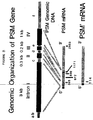
- a “gene” means a nucleic acid molecule, the sequence of which includes all the information required for the normal regulated production of a particular protein, including the structural coding sequence, promoters and enhancers.
- This invention provides an isolated mammalian nucleic acid encoding an alternatively spliced prostate-specific membrane (PSM') antigen.
- PSM' prostate-specific membrane
- the present invention provides an isolated nucleic acid molecule as claimed in Claim 1.
- the isolated nucleic acid molecule may be a DNA molecule, alternatively it may be an RNA or a cDNA molecule.
- the isolated nucleic sequence is cDNA from human as shown in Figures 7A- 7D).
- This human sequence was submitted to GenBank (Los Alamos National Laboratory, Los Alamos, New Mexico) with Accession Number, M99487 and the description as PSM, Homo sapiens, 2653 base-pairs.
- High stringent hybridization conditions are selected at about 5° C lower than the thermal melting point (Tm) for the specific sequence at a defined ionic strength and pH.
- Tm is the temperature (under defined ionic strength and pH) at which 50% of the target sequence hybridizes to a perfectly matched probe.
- stringent conditions will be those in which the salt concentration is at least about 0.02 molar at pH 7 and the temperature is at least about 60°C.
- the combination of parameters is more important than the absolute measure of any one.
- Example high stringency may be attained for example by overnight hybridization at about 68°C in a 6x SSC solution, washing at room temperature with 6x SSC solution, followed by washing at about 68°C in a 6x SSC in a 0.6x SSX solution.
- Hybridization with moderate stringency may be attained for example by: 1) filter pre-hybridizing and hybridizing with a solution of 3x sodium chloride, sodium citrate (BSC), 50% formamide, 0.1M Tris buffer at Ph 7.5, 5x Denhardt's solution; 2.) pre-hybridization at 37°C for 4 hours; 3) hybridization at 37°C with amount of labelled probe equal to 3,000,000 cpm total for 16 hours; 4) wash in 2x SSC and 0.1% SDS. solution; 5) wash 4x for 1 minute each at room temperature at 4x at 60°C for 30 minutes each; and 6) dry and expose to film.
- BSC sodium citrate
- the DNA molecules described and claimed herein are useful for the information which they provide concerning the amino acid sequence of the polypeptide and as products for the large scale synthesis of the polypeptide by a variety of recombinant techniques.
- the molecule is useful for generating new cloning and expression vectors, transformed and transfected prokaryotic and eukaryotic host cells, and new and useful methods for cultured growth of such host cells capable of expression of the polypeptide and related products.
- the isolated mammalian nucleic acid molecules encoding a mammalian prostate-specific membrane antigen and the alternatively spliced PSM' are useful for the development of probes to study the tumorigenesis of prostate cancer.
- This invention also provides an isolated nucleic acid molecule of at least 15 nucleotides capable of specifically hybridizing with a sequence of a nucleic acid molecule as defined in Claim 5.
- This nucleic acid molecule produced can either be DNA or RNA.
- the phrase "specifically hybridizing” means the ability of a nucleic acid molecule to recognise a nucleic acid sequence complementary to its own and to form double-helical segments through hydrogen banding between complementary base pairs.
- This nucleic acid molecule of at least 15 nucleotides capable of specifically hybridizing with a sequence of a nucleic acid molecule encoding the prostate-specific membrane antigen can be used as a probe.
- Nucleic acid probe technology is well known to those skilled in the art who will readily appreciate that such probes may vary greatly in length and may be labeled with a detectable label, such as a radioisotope or fluorescent dye, to facilitate detection of the probe.
- DNA probe molecules may be produced by insertion of a DNA molecule which encodes PSM antigen into suitable vectors, such as plasmids or bacteriophages, followed by transforming into suitable bacterial host cells, replication in the transformed bacterial host cells and harvesting of the DNA probes, using methods well known in the art. Alternatively, probes may be generated chemically from DNA synthesizers.
- RNA probes may be generated by inserting the PSM antigen molecule downstream of a bacteriophage promoter such as T3, T7 or SP6. Large amounts of RNA probe may be produced by incubating the labeled nucleotides with the linearized PSM antigen fragment where it contains an upstream promoter in the presence of the appropriate RNA polymerase.
- the current invention further provides a method of detecting the expression of PSM' as claimed in Claim 8,
- Total mRNA from the cell may be isolated by many procedures well known to a person of ordinary skill in the art.
- the hybridizing conditions of the labelled nucleic acid molecules may be determined by routine experimentation well known in the art.
- the presence of mRNA hybridized to the probe may be determined by gel electrophoresis or other methods known in the art.
- the labeling may be radioactive.
- one or more radioactive nucleotides can be incorporated in the nucleic acid when it is made.
- nucleic acids are extracted by precipitation from lysed cells and the mRNA is isolated from the extract using an oligo-dT column which binds the poly-A tails of the mRNA molecules (13).
- the mRNA is then exposed to radioactively labelled probe on a nitrocellulose membrane, and the probe hybridizes to and thereby labels complementary mRNA sequences. Binding may be detected by luminescence autoradiography or scintillation counting.
- other methods for performing these steps are well known to those skilled in the art, and the discussion above is merely an example.
- tissue sections are incubated with the labelled nucleic acid molecule to allow the hybridization to occur.
- the molecule will carry a marker for the detection because it is "labelled”, the amount of the hybrid will be determined based on the detection of the amount of the marker and so will the expression of PSM antigen.
- This invention further provides an isolated nucleic acid molecule of Claim 2 operatively linked, to a promoter of RNA transcription as claimed in Claim 9.
- the invention further provides a vector comprising an isolated nucleic acid molecule as claimed in Claim 10.
- This invention further provides a vector which comprises the isolated nucleic acid molecule encoding, for the PSM or PSM' antigen.
- insert and vector DNA can both be exposed to a restriction enzyme to create complementary ends on both molecules which base pair with each other and are then ligated together with DNA ligase.
- linkers can be lighted to the insert DNA which correspond to a restriction site in the vector DNA, which is then digested with the restriction enzyme which cuts at that site.
- Other means are also available and known to an ordinary skilled practitioner.
- This invention further provides a host vector system for the production of a polypeptide as claimed in Claim 11.
- vectors may be transformed into a suitable host cell to form a host cell vector system for the production of a polypeptide having the biological activity of the PSM' antigen.
- a bacterial expression vector includes a promoter such as the lac promoter and for transcription initiation the Shine-Dalgarna sequence and the start codon AUG (14).
- a sukaryotic expression vector includes a heterologous or homologous promoter for RNA polymerase II, a downstream polyadenylation signal, the start codon AUG, and a termination codon for detachment of the ribosome.
- Such vectors may be obtained commercially or assembled from the sequences described by methods well known in the art, for example the methods described above for constructing vectors in general. Expression vectors are useful to produce cells that express the PSM antigen.
- This invention further provides an isolated DNA or cDNA molecule described hereinabove wherein the host cell is selected from the group consisting of bacterial cells (such as E. coli ) and mammalian cells.
- This invention further provides a method of producing a polypeptide as claimed in Claim 13.
- mammalian cells may be used as hosts, including, but not limited to, the mouse fibroblast cell NIR3T3, CHO cells, Hels cells, Ltk- cells, -Cos cells, etc.
- Expression plasmids such as that described supra may be used to transfect mammalian cell, by methods well known in the art such as calcium phosphate precipitation, electraparaticm or DNA encoding the mammalian PSM antigen may be otherwise introduced into mammalian calls, e.g., by microinjection, to obtain mammalian cells which comprise DNA, e.g., cDNA or a plasmid, encoding a mammalian PSM antigen.
- the present invention provides a method of determining prostate cancer progression in a subject as claimed in claim 17.
- the method further comprises performing in - situ hybridisation.
- Suitable promoters include a viral promoter.
- Viral promoters include: adenovirus promoter, an simian virus 40 (SV40) promoter, a cytomegalovirus (CMV) promoter, a mouse mammary cumor virus (MMTV) promoter, a Malony murine leukemia virus promoter, a murins sarcoma virus promoter, and a Rous sarcoma virus promoter.
- a suitable promoter is a heat shock promoter.
- a suitable promoter is a bacteriophage promoter. Examples of suitable bacteriophage promoters include but not limited to, a T7 promoter, a T3 promoter, an SP6 promoter, a lambda promoter, a baculovirus promoter.
- a promoter is an animal cell promoter such as an interferon promoter, a metallothionein promoter, an immunoglobulin promoter.
- a fungal promoter is also a suitable promoter. Examples of fungal promoters include but are not limited to, an ADCl promoter, an ARG promoter, an ADH promoter, a CYC1 promoter, a CUP promoter, an ENO1 promoter, a GAL promoter, a PHO promoter, a PGK promoter, a GAPDH promoter, a mating type factor promoter. Further, plant cell promoters and insect cell promoters are also suitable for the methods described herein.
- the invention further provides an isolated alternatively spliced prostate specific membrane antigen (PSM') as claimed in Claim 14.
- PSM' prostate specific membrane antigen
- the invention further provides a method of detecting hematogenous micrometastatic tumour cells as claimed in Claim 15.
- the samples are from a subject that had been administered hormones, epidermal growth factor, b-fibroblast growth factors or tumor necrosis factor.
- the micrometastatic tumor cell may be a prostatic cancer and the DNA primers may be derived from prostate specific antigen.
- LNCaP and PC-3 prostatic carcinoma cell lines were cultured in RPMI and MEM respectively, supplemented with 5% fetal calf serum at 37°C and 5% CO 2 .
- Primary tissues Primary prostatic tissues were obtained from MSKCC's in-house tumor procurement service. Gross specimen were pathologically staged by MSKCC's pathology service.
- RNA Isolation Total RNA was isolated by a modified guanidinium thiocynate/phenol/chloroform method using a RNAzol B kit (Tel-Test, Friendswood, TX). RNA was stored in diethyl pyrocarbonate-created water at -80°C. RNA was quantified using spectrophomatric absorption at 260nm.
- Oligonucleotide primers (5'-CTCAAAAGGGGCCGGATTTCC-3' and 5'-AGGCTACTTCACTCAAAG-3'), specific for the 5' and 3' ends of PSM cDNA were designed to span the cDNA sequence.
- the reaction was performed in a 50 ⁇ l volume with a final concentration of the following reagents: 16.6 mM NH 4 SO 4 , 67 mM Tris-HCl pH 8.9, acetylated BSA 0.2 mg/ml, 2mM MgCl 2 , 250 ⁇ M dNTPs, 10 mM ⁇ -marcaptoethanol, and 1 U of rtth polymerase (Perkin Elmer, Norwalk, CT) .
- a total of 25 cycles were completed with the following profile: cycle 1, 94°C 4 min.; cycle 2 through 25, 94°C 1 min, 60°C 1 min, 72°C 1 min.
- the final reaction was extended for 10 min at 72 °C. Aliquots of the reaction were electrophoresed on 1 % agarose gels in 1X Tris-acetate-EDTA buffer.
- PCR products were cloned by the TA cloning method into pCRII vector using a kit from Invitrogen (San Diego, CA). Ligation mixture were transformed into competent Escherichia coli Inv5 ⁇ .
- Sequencing was done by the dideoxy method using a sequenase kit from US Biochemical (Cleveland, OH). Sequencing products were electrophoresed on a 5% polyacrylamide/7M urea gel at 52°C.
- RT-PCR of mRNA from normal prostatic tissue Two independent RT-PCR of mRNA from normal prostates were performed as described in Materials and Methods . Subsequent cloning and sequencing of the PCR products revealed the presence of an alternatively spliced variant, PSM'.
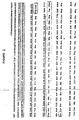
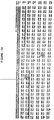
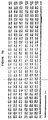
- PSM' has a shorter cDNA (2387 nucleotides) than PSM (2653 nucleotides). The results of the sequence analysis are shown in Figure 2.
- the cDNAs are identical except for a 266 nucleotide region near the 5' end of PSM cDNA (nucleotide 114 to 380) that is absent in PSM' cDNA. Two independent repetitions of RT-PCR of different mRNA samples yielded identical results.
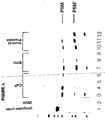
- RNA probe complementary to PSM RNA and spanning the 3' splice junction of PSM' RNA was used to measure relative expression of PSM and PSM' mRNAs (Figure 3). With this probe, both PSM and PSM' RNAs in LNCaP cells was detected and the predominant form was PSM. Neither PSM nor PSM' RNA was detected in PC-3 cells, in agreement with previous Northern and western blot data (5,6).
- Figure 4 showed the presence of both splice variants in human primary prostatic tissues. In primary prostatic tumor, PSM is the dominant form. In contrast, normal prostate expressed more PSM' than PSM. BPH samples showed about equal expression of both variants.
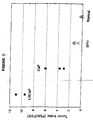
- LNCaP has an index ranging from 9-11; CaP from 3-6; BPH from 0.75 to 1.6; normal prostate has values from 0.075 to 0.45.
- PSM is a 750 a.a. protein with a calculated molecular weight of 84,330.
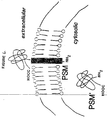
- PSM was hypothesized to be a type II integral membrane protein (5).
- a classic type II membrane protein is the transferrin receptor and indeed PSM has a region that has modest homology with the transferrin receptor (5).
- PSM' antigen is a 693 a.a. protein as deduced from its mRNA sequence with a molecular weight of 78,000. PSM' antigen lacks the first 57 amino acids present in PSM antigen ( Figure 2). It is likely that PSM' antigen is cytosolic.
- PSM antigen has 3 potential phosphorylation sites on its cytosolic domain. These sites are absent in PSM' antigen.
- PSM' antigen has 25 potential phosphorylation sites, 10 N-myristoylation sites and 9 N-glycosylation sites. For PSM antigen, all of these potential sites would be on the extracellular surface. The modifications of these sites for these homologous proteins would be different depending on their cellular locations. Consequently, the function(s) of each form would depend on how they are modified.
- CYT-356 imaging is enhanced by manipulating expression of PSM.
- PSM mRNA expression is downregulated by steroids. This is consistent with the clinical observations that PSM is strongly expressed in both anaplastic and hormone refractory lesions. In contrast, PSA expression is decreased following hormone withdrawal. In hormone refractory disease, it is believed that tumor cells may produce both growth factors and receptors, thus establishing an autocrine loop chat permits the cells to overcome normal growth constraints. Many prostate tumor epithelial cells express both TGF ⁇ and its receptor, epidermal growth factor receptor. Results indicate that the effects of TGF ⁇ and other selected growth factors and cytokines on the expression of PSM in-vitro, in the human prostatic carcinoma cell line LNCaP.
- LNCaP cells growing in androgen-depleted media were treated for 24 to 72 hours with EGF, TGF ⁇ , TNF ⁇ or TNF ⁇ in concentrations ranging from 0.1 ng/ml to 100 ng/ml.
- Total RNA was extracted from the cells and PSM mRNA expression was quantitated by Northern blot analysis and laser densitometry.
- Both b-FGF and TGF ⁇ yielded a dose-dependent 10-fold upregulation of PSM expression, and EGF a 5-fold upregulation, compared to untreated LNCaP.
- other groups have shown a marked downregulation in PSA expression induced by these growth factors in this same in-vitro model.
- TNF ⁇ which is cytotoxic to LNCaP cells
- TNF ⁇ downregulated PSM expression 8-fold in androgen depleted LNCaP cells.
- TGP ⁇ is mitogenic for aggressive prostate cancer cells. There are multiple forms of PSM and only the membrane form is found in association with tumor progression. The ability to manipulate PSM expression by treatment with cytokines and growth factors may enhance the efficacy of Cytogen 356 imaging, and therapeutic targeting of prostatic metastases.
- NEOADJUVANT ANDROGEN-DEPRIVATION THERAPY PRIOR TO RADICAL PROSTATECTOMY RESULTS IN A SIGNIFICANTLY DECREASED INCIDENCE OF RESUDUAL MICROMETASTATIC DISEASE AS DETECTED BY NESTED RT-PCT WITH PRIMES.
- Nested RT-PCR was performed with PSM primers on 12 patients from the ADT group and on 10 patients from the control group. Micromatastatic cells were detected in 9/10 patients (90%) in the control group, as compared to only 2/12 (16.7%) in the ADT group. In the ADT group, 1 of 7 patients with organ-confined disease tested positively, as compared to 3 of 3 patients in the control group. In patients with extra-prostatic disease. 1 of 5 were positive in the ADT group, as compared to 6 of 7 in the control group. These results indicate that a significantly higher number of patients may be rendered tumor-free, and potentially "cured" by the use of neoadjuvant ADT.
Landscapes
- Health & Medical Sciences (AREA)
- Chemical & Material Sciences (AREA)
- Life Sciences & Earth Sciences (AREA)
- Organic Chemistry (AREA)
- Proteomics, Peptides & Aminoacids (AREA)
- Zoology (AREA)
- Genetics & Genomics (AREA)
- Immunology (AREA)
- General Health & Medical Sciences (AREA)
- Engineering & Computer Science (AREA)
- Analytical Chemistry (AREA)
- Pathology (AREA)
- Biochemistry (AREA)
- Wood Science & Technology (AREA)
- Molecular Biology (AREA)
- Biophysics (AREA)
- Medicinal Chemistry (AREA)
- Bioinformatics & Cheminformatics (AREA)
- Microbiology (AREA)
- Pharmacology & Pharmacy (AREA)
- General Chemical & Material Sciences (AREA)
- Chemical Kinetics & Catalysis (AREA)
- Physics & Mathematics (AREA)
- Nuclear Medicine, Radiotherapy & Molecular Imaging (AREA)
- Biotechnology (AREA)
- Animal Behavior & Ethology (AREA)
- Hospice & Palliative Care (AREA)
- Veterinary Medicine (AREA)
- Public Health (AREA)
- Oncology (AREA)
- General Engineering & Computer Science (AREA)
- Cell Biology (AREA)
- Toxicology (AREA)
- Gastroenterology & Hepatology (AREA)
- Measuring Or Testing Involving Enzymes Or Micro-Organisms (AREA)
- Peptides Or Proteins (AREA)
- Medicines Containing Antibodies Or Antigens For Use As Internal Diagnostic Agents (AREA)
- Medicines Containing Material From Animals Or Micro-Organisms (AREA)
- Medicines That Contain Protein Lipid Enzymes And Other Medicines (AREA)
- Micro-Organisms Or Cultivation Processes Thereof (AREA)
Priority Applications (1)
| Application Number | Priority Date | Filing Date | Title |
|---|---|---|---|
| EP06002339A EP1754788A3 (en) | 1995-02-24 | 1996-02-23 | Prostate-specific membrane antigen and uses thereof |
Applications Claiming Priority (7)
| Application Number | Priority Date | Filing Date | Title |
|---|---|---|---|
| US08/394,152 US5935818A (en) | 1995-02-24 | 1995-02-24 | Isolated nucleic acid molecule encoding alternatively spliced prostate-specific membrane antigen and uses thereof |
| US394152 | 1995-02-24 | ||
| US466381 | 1995-06-06 | ||
| US08/466,381 US6953668B1 (en) | 1992-11-05 | 1995-06-06 | Prostate-specific membrane antigen |
| US08/470,735 US7105159B1 (en) | 1992-11-05 | 1995-06-06 | Antibodies to prostate-specific membrane antigen |
| PCT/US1996/002424 WO1996026272A1 (en) | 1995-02-24 | 1996-02-23 | Prostate-specific membrane antigen and uses thereof |
| US470735 | 1999-12-23 |
Related Child Applications (1)
| Application Number | Title | Priority Date | Filing Date |
|---|---|---|---|
| EP06002339A Division EP1754788A3 (en) | 1995-02-24 | 1996-02-23 | Prostate-specific membrane antigen and uses thereof |
Publications (3)
| Publication Number | Publication Date |
|---|---|
| EP0812356A1 EP0812356A1 (en) | 1997-12-17 |
| EP0812356A4 EP0812356A4 (en) | 2002-04-03 |
| EP0812356B1 true EP0812356B1 (en) | 2006-02-08 |
Family
ID=27410106
Family Applications (2)
| Application Number | Title | Priority Date | Filing Date |
|---|---|---|---|
| EP96908504A Expired - Lifetime EP0812356B1 (en) | 1995-02-24 | 1996-02-23 | Prostate-specific membrane antigen and uses thereof |
| EP06002339A Withdrawn EP1754788A3 (en) | 1995-02-24 | 1996-02-23 | Prostate-specific membrane antigen and uses thereof |
Family Applications After (1)
| Application Number | Title | Priority Date | Filing Date |
|---|---|---|---|
| EP06002339A Withdrawn EP1754788A3 (en) | 1995-02-24 | 1996-02-23 | Prostate-specific membrane antigen and uses thereof |
Country Status (9)
| Country | Link |
|---|---|
| US (1) | US7037647B1 (enExample) |
| EP (2) | EP0812356B1 (enExample) |
| JP (4) | JP2001526522A (enExample) |
| AT (1) | ATE317435T1 (enExample) |
| AU (1) | AU717937B2 (enExample) |
| CA (1) | CA2212846A1 (enExample) |
| DE (1) | DE69635801T2 (enExample) |
| MX (1) | MX9706311A (enExample) |
| WO (1) | WO1996026272A1 (enExample) |
Families Citing this family (72)
| Publication number | Priority date | Publication date | Assignee | Title |
|---|---|---|---|---|
| US6953668B1 (en) | 1992-11-05 | 2005-10-11 | Sloan-Kettering Institute For Cancer Research | Prostate-specific membrane antigen |
| US7070782B1 (en) | 1992-11-05 | 2006-07-04 | Sloan-Kettering Institute For Cancer Research | Prostate-specific membrane antigen |
| US7105159B1 (en) * | 1992-11-05 | 2006-09-12 | Sloan-Kettering Institute For Cancer Research | Antibodies to prostate-specific membrane antigen |
| US6103237A (en) * | 1993-07-22 | 2000-08-15 | Hybritech Incorporated | Stable variant hK2 polypeptide |
| US6569432B1 (en) | 1995-02-24 | 2003-05-27 | Sloan-Kettering Institute For Cancer Research | Prostate-specific membrane antigen and uses thereof |
| EP0804593A1 (en) * | 1994-05-10 | 1997-11-05 | Mayo Foundation For Medical Education And Research | Recombinant hk2 polypeptide |
| US20040253246A1 (en) * | 1996-02-23 | 2004-12-16 | Israeli Ron S. | Prostate-specific membrane antigen and uses thereof |
| US6881571B1 (en) | 1998-03-11 | 2005-04-19 | Exonhit Therapeutics S.A. | Qualitative differential screening |
| FR2775984B1 (fr) | 1998-03-11 | 2006-09-15 | Bioscreen Therapeutics Sa | Criblage differentiel qualitatif |
| US6962981B1 (en) | 1996-03-25 | 2005-11-08 | Medarex, Inc. | Monoclonal antibodies specific for the extracellular domain of prostate-specific membrane antigen |
| US7381407B1 (en) | 1996-03-25 | 2008-06-03 | Medarex, Inc. | Monoclonal antibodies specific for the extracellular domain of prostate-specific membrane antigen |
| AU725583B2 (en) * | 1996-03-25 | 2000-10-12 | E. R. Squibb & Sons, L.L.C. | Monoclonal antibodies specific for the extracellular domain of prostate specific membrane antigen |
| US6107090A (en) | 1996-05-06 | 2000-08-22 | Cornell Research Foundation, Inc. | Treatment and diagnosis of prostate cancer with antibodies to extracellur PSMA domains |
| US6136311A (en) | 1996-05-06 | 2000-10-24 | Cornell Research Foundation, Inc. | Treatment and diagnosis of cancer |
| US5795877A (en) * | 1996-12-31 | 1998-08-18 | Guilford Pharmaceuticals Inc. | Inhibitors of NAALADase enzyme activity |
| US5804602A (en) * | 1996-06-17 | 1998-09-08 | Guilford Pharmaceuticals Inc. | Methods of cancer treatment using naaladase inhibitors |
| US6046180A (en) * | 1996-06-17 | 2000-04-04 | Guilford Pharmaceuticals Inc. | NAALADase inhibitors |
| US5863536A (en) * | 1996-12-31 | 1999-01-26 | Guilford Pharmaceuticals Inc. | Phosphoramidate derivatives |
| US6384022B1 (en) | 1996-06-17 | 2002-05-07 | Guilford Pharmaceuticals Inc. | Prodrugs of NAALAdase inhibitors |
| US6025344A (en) * | 1996-06-17 | 2000-02-15 | Guilford Pharmaceuticals Inc. | Certain dioic acid derivatives useful as NAALADase inhibitors |
| US6071965A (en) * | 1996-06-17 | 2000-06-06 | Guilford Pharmaceuticals Inc. | Phosphinic alkanoic acid derivatives |
| US6054444A (en) | 1997-04-24 | 2000-04-25 | Guilford Pharmaceuticals Inc. | Phosphonic acid derivatives |
| US5672592A (en) * | 1996-06-17 | 1997-09-30 | Guilford Pharmaceuticals Inc. | Certain phosphonomethyl-pentanedioic acid derivatives thereof |
| US5902817A (en) * | 1997-04-09 | 1999-05-11 | Guilford Pharmaceuticals Inc. | Certain sulfoxide and sulfone derivatives |
| US5962521A (en) | 1997-04-04 | 1999-10-05 | Guilford Pharmaceuticals Inc. | Hydroxamic acid derivatives |
| WO1998021365A2 (en) * | 1996-11-14 | 1998-05-22 | Mayo Foundation For Medical Education And Research | Method for detection of metastatic prostate cancer |
| US6479263B1 (en) | 1996-11-14 | 2002-11-12 | Baylor College Of Medicine | Method for detection of micrometastatic prostate cancer |
| US6235486B1 (en) | 1997-06-20 | 2001-05-22 | Mayo Foundation For Medical Education & Research | Method for detection of breast cancer |
| US6028216A (en) * | 1997-12-31 | 2000-02-22 | Guilford Pharmaceuticals Inc. | Asymmetric syntheses and intermediates for preparing enantiomer-enriched hydroxyphosphinyl derivatives |
| WO1999043710A1 (en) * | 1998-02-26 | 1999-09-02 | Beckman Coulter, Inc. | Prostate-specific membrane antigens and methods of making and using |
| US6395718B1 (en) | 1998-07-06 | 2002-05-28 | Guilford Pharmaceuticals Inc. | Pharmaceutical compositions and methods of inhibiting angiogenesis using naaladase inhibitors |
| US6265609B1 (en) | 1998-07-06 | 2001-07-24 | Guilford Pharmaceuticals Inc. | Thio-substituted pentanedioic acid derivatives |
| CN1314882A (zh) | 1998-07-06 | 2001-09-26 | 吉尔福德药物有限公司 | 用作药物化合物的naalad酶抑制剂和组合物 |
| AU5815699A (en) * | 1998-09-08 | 2000-03-27 | Urocor, Inc. | Prostate specific promoter and regulation of gene expression |
| US6444657B1 (en) | 1998-12-31 | 2002-09-03 | Guilford Pharmaceuticals Inc. | Methods for treating certain diseases using naaladase inhibitors |
| CA2360073C (en) * | 1999-01-28 | 2011-01-18 | Gen-Probe Incorporated | Probes and primers for detecting prostate specific antigen (psa) in a biological sample |
| WO2000050457A1 (en) * | 1999-02-22 | 2000-08-31 | Beckman Coulter, Inc. | Prostate-specific membrane antigens and methods of making and using |
| WO2000052156A1 (en) * | 1999-03-01 | 2000-09-08 | Commonwealth Scientific And Industrial Research Organisation | Regulatory constructs comprising intron 3 of prostate specific membrane antigen gene |
| WO2000061605A1 (en) * | 1999-04-09 | 2000-10-19 | Sloan-Kettering Institute For Cancer Research | Dna encoding the prostate-specific membrane antigen-like gene and uses thereof |
| US6313159B1 (en) | 1999-08-20 | 2001-11-06 | Guilford Pharmaceuticals Inc. | Metabotropic glutamate receptor ligand derivatives as naaladase inhibitors |
| WO2002098897A2 (en) | 2001-06-01 | 2002-12-12 | Cornell Research Foundation, Inc. | Modified antibodies to prostate-specific membrane antigen and uses thereof |
| US7514078B2 (en) | 2001-06-01 | 2009-04-07 | Cornell Research Foundation, Inc. | Methods of treating prostate cancer with anti-prostate specific membrane antigen antibodies |
| AU2002305767B2 (en) | 2001-09-20 | 2008-04-10 | Cornell Research Foundation, Inc. | Methods and compositions for treating and preventing skin disorders using binding agents specific for PSMA |
| EP2360169B1 (en) * | 2001-10-23 | 2015-10-14 | Psma Development Company, L.L.C. | PSMA antibodies |
| US20050215472A1 (en) | 2001-10-23 | 2005-09-29 | Psma Development Company, Llc | PSMA formulations and uses thereof |
| GR20020100189A (el) * | 2002-04-17 | 2003-12-22 | Zeincro Ελλας Ανωνυμη Εταιρεια Συμβουλων Φαρμακευτικων Επιχειρησεων | Προφαρμακα αντιγονων ειδικων της προστατικης μεμβρανης |
| AU2003293556A1 (en) | 2003-01-10 | 2004-08-10 | Millennium Pharmaceuticals, Inc. | Methods of diagnosing and treating cancer |
| CA2598454C (en) | 2005-02-18 | 2013-04-09 | Medarex, Inc. | Monoclonal antibodies against prostate specific membrane antigen (psma) lacking in fucosyl residues |
| US8921102B2 (en) | 2005-07-29 | 2014-12-30 | Gpb Scientific, Llc | Devices and methods for enrichment and alteration of circulating tumor cells and other particles |
| JP2009531324A (ja) | 2006-03-20 | 2009-09-03 | ザ リージェンツ オブ ザ ユニバーシティ オブ カリフォルニア | 癌標的化のための操作された抗前立腺幹細胞抗原(psca)抗体 |
| US20080050739A1 (en) | 2006-06-14 | 2008-02-28 | Roland Stoughton | Diagnosis of fetal abnormalities using polymorphisms including short tandem repeats |
| EP2589668A1 (en) | 2006-06-14 | 2013-05-08 | Verinata Health, Inc | Rare cell analysis using sample splitting and DNA tags |
| US8137912B2 (en) | 2006-06-14 | 2012-03-20 | The General Hospital Corporation | Methods for the diagnosis of fetal abnormalities |
| US20080070792A1 (en) | 2006-06-14 | 2008-03-20 | Roland Stoughton | Use of highly parallel snp genotyping for fetal diagnosis |
| EP2197491A4 (en) | 2007-09-04 | 2011-01-12 | Univ California | HIGHAFFINE ANTI-PROSTATE STEM CELL ANTIGEN (PSCA) ANTIBODIES TO CANCER AND TO THE DETECTION OF CANCER |
| KR101345288B1 (ko) * | 2007-09-21 | 2013-12-27 | 삼성전자주식회사 | 2축 구동 전자기 스캐너 |
| JP2010540534A (ja) | 2007-09-28 | 2010-12-24 | イントレキソン コーポレーション | 生体治療分子の発現のための治療遺伝子スイッチ構築物およびバイオリアクター、ならびにその使用 |
| CA2700410C (en) * | 2007-10-03 | 2020-10-06 | Cornell University | Treatment of proliferative disorders using antibodies to psma |
| PL2326350T3 (pl) | 2008-09-08 | 2014-03-31 | Psma Dev Company L L C | Związki do zabijania eksprymujących PSMA, opornych na taksan komórek rakowych |
| PL2562268T3 (pl) | 2008-09-20 | 2017-06-30 | The Board Of Trustees Of The Leland Stanford Junior University | Nieinwazyjna diagnostyka aneuploidii płodu za pomocą sekwencjonowania |
| ES2712732T3 (es) | 2009-02-17 | 2019-05-14 | Cornell Res Foundation Inc | Métodos y kits para el diagnóstico de cáncer y la predicción de valor terapéutico |
| US8772459B2 (en) | 2009-12-02 | 2014-07-08 | Imaginab, Inc. | J591 minibodies and Cys-diabodies for targeting human prostate specific membrane antigen (PSMA) and methods for their use |
| ES2949648T3 (es) | 2012-12-20 | 2023-10-02 | Purdue Research Foundation | Células T que expresan un receptor antigénico quimérico como terapia contra el cáncer |
| CA2994951A1 (en) | 2015-08-07 | 2017-02-16 | Imaginab, Inc. | Antigen binding constructs to target molecules |
| WO2017177149A2 (en) | 2016-04-08 | 2017-10-12 | Purdue Research Foundation | Methods and compositions for car t cell therapy |
| CA3315062A1 (en) | 2017-02-07 | 2026-08-05 | Seattle Children's Hospital (dba Seattle Children's Research Institute) | Phospholipid ether (ple) car t cell tumor targeting (ctct) agents |
| WO2018147960A1 (en) | 2017-02-08 | 2018-08-16 | Imaginab, Inc. | Extension sequences for diabodies |
| WO2018160622A1 (en) | 2017-02-28 | 2018-09-07 | Endocyte, Inc. | Compositions and methods for car t cell therapy |
| EP3740217A4 (en) | 2018-01-22 | 2021-11-10 | Endocyte, Inc. | METHOD OF USE FOR CAR-T CELLS |
| CA3090089A1 (en) | 2018-02-06 | 2019-08-15 | Seattle Children's Hospital (dba Seattle Children's Research Institute) | Fluorescein-specific cars exhibiting optimal t cell function against fl-ple labelled tumors |
| CA3091674A1 (en) | 2018-02-23 | 2019-08-29 | Endocyte, Inc. | Sequencing method for car t cell therapy |
| CN115210252A (zh) | 2020-02-04 | 2022-10-18 | 西雅图儿童医院(Dba西雅图儿童研究所) | 抗二硝基苯酚的嵌合抗原受体 |
Family Cites Families (39)
| Publication number | Priority date | Publication date | Assignee | Title |
|---|---|---|---|---|
| US4554101A (en) | 1981-01-09 | 1985-11-19 | New York Blood Center, Inc. | Identification and preparation of epitopes on antigens and allergens on the basis of hydrophilicity |
| DE3432714A1 (de) | 1984-09-06 | 1986-04-24 | Behringwerke Ag, 3550 Marburg | Tumortherapeutikum und verfahren zu seiner herstellung |
| US5162504A (en) | 1988-06-03 | 1992-11-10 | Cytogen Corporation | Monoclonal antibodies to a new antigenic marker in epithelial prostatic cells and serum of prostatic cancer patients |
| US5674682A (en) | 1992-10-29 | 1997-10-07 | Thomas Jefferson University | Nucleic acid primers for detecting micrometastasis of prostate cancer |
| JP4204642B2 (ja) * | 1992-11-05 | 2009-01-07 | スローン − ケタリング・インスティテュート・フォー・キャンサー・リサーチ | 前立腺に特異的な膜抗原 |
| US5935818A (en) | 1995-02-24 | 1999-08-10 | Sloan-Kettering Institute For Cancer Research | Isolated nucleic acid molecule encoding alternatively spliced prostate-specific membrane antigen and uses thereof |
| US6569432B1 (en) | 1995-02-24 | 2003-05-27 | Sloan-Kettering Institute For Cancer Research | Prostate-specific membrane antigen and uses thereof |
| US5773292A (en) | 1995-06-05 | 1998-06-30 | Cornell University | Antibodies binding portions, and probes recognizing an antigen of prostate epithelial cells but not antigens circulating in the blood |
| AU725583B2 (en) | 1996-03-25 | 2000-10-12 | E. R. Squibb & Sons, L.L.C. | Monoclonal antibodies specific for the extracellular domain of prostate specific membrane antigen |
| US6962981B1 (en) | 1996-03-25 | 2005-11-08 | Medarex, Inc. | Monoclonal antibodies specific for the extracellular domain of prostate-specific membrane antigen |
| US6150508A (en) | 1996-03-25 | 2000-11-21 | Northwest Biotherapeutics, Inc. | Monoclonal antibodies specific for the extracellular domain of prostate-specific membrane antigen |
| US6107090A (en) | 1996-05-06 | 2000-08-22 | Cornell Research Foundation, Inc. | Treatment and diagnosis of prostate cancer with antibodies to extracellur PSMA domains |
| US6136311A (en) | 1996-05-06 | 2000-10-24 | Cornell Research Foundation, Inc. | Treatment and diagnosis of cancer |
| US5795877A (en) | 1996-12-31 | 1998-08-18 | Guilford Pharmaceuticals Inc. | Inhibitors of NAALADase enzyme activity |
| US5804602A (en) | 1996-06-17 | 1998-09-08 | Guilford Pharmaceuticals Inc. | Methods of cancer treatment using naaladase inhibitors |
| US5672592A (en) | 1996-06-17 | 1997-09-30 | Guilford Pharmaceuticals Inc. | Certain phosphonomethyl-pentanedioic acid derivatives thereof |
| US6054444A (en) | 1997-04-24 | 2000-04-25 | Guilford Pharmaceuticals Inc. | Phosphonic acid derivatives |
| US6025344A (en) | 1996-06-17 | 2000-02-15 | Guilford Pharmaceuticals Inc. | Certain dioic acid derivatives useful as NAALADase inhibitors |
| US6046180A (en) | 1996-06-17 | 2000-04-04 | Guilford Pharmaceuticals Inc. | NAALADase inhibitors |
| US6017903A (en) | 1996-09-27 | 2000-01-25 | Guilford Pharmaceuticals Inc. | Pharmaceutical compositions and methods of treating a glutamate abnormality and effecting a neuronal activity in an animal using NAALADase inhibitors |
| US6384022B1 (en) | 1996-06-17 | 2002-05-07 | Guilford Pharmaceuticals Inc. | Prodrugs of NAALAdase inhibitors |
| US5863536A (en) | 1996-12-31 | 1999-01-26 | Guilford Pharmaceuticals Inc. | Phosphoramidate derivatives |
| AU725455B2 (en) | 1996-06-17 | 2000-10-12 | Guilford Pharmaceuticals Inc. | Methods of cancer treatment using NAALADase inhibitors |
| US5902817A (en) | 1997-04-09 | 1999-05-11 | Guilford Pharmaceuticals Inc. | Certain sulfoxide and sulfone derivatives |
| US6025345A (en) | 1996-06-17 | 2000-02-15 | Guilford Pharmaceuticals Inc. | Inhibitors of NAALADase enzyme activity |
| US6011021A (en) | 1996-06-17 | 2000-01-04 | Guilford Pharmaceuticals Inc. | Methods of cancer treatment using naaladase inhibitors |
| US5962521A (en) | 1997-04-04 | 1999-10-05 | Guilford Pharmaceuticals Inc. | Hydroxamic acid derivatives |
| CN1230889A (zh) | 1996-09-27 | 1999-10-06 | 吉尔福特药业有限公司 | NAALADase组合物和治疗谷氨酸异常及在动物中产生神经元活性的方法 |
| US5981209A (en) | 1997-12-04 | 1999-11-09 | Guilford Pharmaceuticals Inc. | Use of NAALADase activity to identify prostate cancer and benign prostatic hyperplasia |
| US6121252A (en) | 1998-03-30 | 2000-09-19 | Guilford Pharmaceuticals Inc. | Phosphinic acid derivatives |
| US6395718B1 (en) | 1998-07-06 | 2002-05-28 | Guilford Pharmaceuticals Inc. | Pharmaceutical compositions and methods of inhibiting angiogenesis using naaladase inhibitors |
| CN1314882A (zh) | 1998-07-06 | 2001-09-26 | 吉尔福德药物有限公司 | 用作药物化合物的naalad酶抑制剂和组合物 |
| US6444657B1 (en) | 1998-12-31 | 2002-09-03 | Guilford Pharmaceuticals Inc. | Methods for treating certain diseases using naaladase inhibitors |
| US6348464B1 (en) | 1999-11-12 | 2002-02-19 | Guilford Pharmaceuticals, Inc. | Pyrrolecarbonylimino derivatives as naaladase inhibitors |
| AU2001265111A1 (en) | 2000-05-30 | 2001-12-11 | Guilford Pharmaceuticals Inc. | Benzenedicarboxylic acid derivatives |
| AU2001265119A1 (en) | 2000-05-30 | 2001-12-11 | Guilford Pharmaceuticals Inc. | Naaladase inhibitors for treating amyotrophic lateral sclerosis |
| EP1202440B1 (en) | 2000-10-17 | 2006-12-20 | Omron Corporation | Snubber circuit and power converter using the same |
| MXPA03006467A (es) | 2001-01-17 | 2004-01-29 | Guilford Pharm Inc | Inibidores de naaladasa a base de tiol. |
| WO2002096460A1 (en) | 2001-05-30 | 2002-12-05 | Cornell Research Foundation, Inc. | Endopeptidase/anti-psma antibody fusion proteins for treatment of cancer |
-
1996
- 1996-02-23 AT AT96908504T patent/ATE317435T1/de not_active IP Right Cessation
- 1996-02-23 AU AU51725/96A patent/AU717937B2/en not_active Ceased
- 1996-02-23 EP EP96908504A patent/EP0812356B1/en not_active Expired - Lifetime
- 1996-02-23 CA CA002212846A patent/CA2212846A1/en not_active Abandoned
- 1996-02-23 DE DE69635801T patent/DE69635801T2/de not_active Expired - Lifetime
- 1996-02-23 JP JP52582196A patent/JP2001526522A/ja not_active Withdrawn
- 1996-02-23 US US08/894,583 patent/US7037647B1/en not_active Expired - Fee Related
- 1996-02-23 WO PCT/US1996/002424 patent/WO1996026272A1/en not_active Ceased
- 1996-02-23 EP EP06002339A patent/EP1754788A3/en not_active Withdrawn
-
1997
- 1997-08-19 MX MX9706311A patent/MX9706311A/es not_active IP Right Cessation
-
2004
- 2004-09-02 JP JP2004256273A patent/JP2005052145A/ja not_active Withdrawn
- 2004-09-02 JP JP2004256270A patent/JP2005036008A/ja not_active Withdrawn
- 2004-09-02 JP JP2004256265A patent/JP2005185276A/ja not_active Withdrawn
Also Published As
| Publication number | Publication date |
|---|---|
| ATE317435T1 (de) | 2006-02-15 |
| JP2005052145A (ja) | 2005-03-03 |
| AU717937B2 (en) | 2000-04-06 |
| US7037647B1 (en) | 2006-05-02 |
| JP2005036008A (ja) | 2005-02-10 |
| EP0812356A1 (en) | 1997-12-17 |
| AU5172596A (en) | 1996-09-11 |
| EP0812356A4 (en) | 2002-04-03 |
| WO1996026272A1 (en) | 1996-08-29 |
| MX9706311A (es) | 1998-06-30 |
| DE69635801D1 (de) | 2006-04-20 |
| EP1754788A2 (en) | 2007-02-21 |
| EP1754788A3 (en) | 2007-04-25 |
| DE69635801T2 (de) | 2006-11-02 |
| JP2001526522A (ja) | 2001-12-18 |
| JP2005185276A (ja) | 2005-07-14 |
| CA2212846A1 (en) | 1996-08-29 |
Similar Documents
| Publication | Publication Date | Title |
|---|---|---|
| US5935818A (en) | Isolated nucleic acid molecule encoding alternatively spliced prostate-specific membrane antigen and uses thereof | |
| CA2147499C (en) | Prostate-specific membrane antigen | |
| USRE43586E1 (en) | Antibodies to prostate-specific membrane antigen | |
| DE69635801T2 (de) | Prostataspezifisches membranes antigen und seine anwendungen | |
| US6953668B1 (en) | Prostate-specific membrane antigen | |
| AU700915B2 (en) | Lung cancer marker | |
| US7807373B2 (en) | Prostate specific gene, PCGEM1, and methods of using PCEGM1 to detect, treat, and prevent prostate cancer | |
| US7399461B2 (en) | Prostate-specific membrane antigen and uses thereof | |
| US7223542B2 (en) | 36P6D5: secreted tumor antigen | |
| US7070782B1 (en) | Prostate-specific membrane antigen | |
| JP2004521602A (ja) | 前立腺特異的または精巣特異的な新規の核酸分子、ポリペプチド、ならびに診断法および治療法 | |
| AU2001249411A1 (en) | Novel prostate-specific or testis-specific nucleic acid molecules, polypeptides,and diagnostic and therapeutic methods | |
| US20100303715A1 (en) | Prostate-specific membrane antigen and uses thereof | |
| JP2009165492A (ja) | ガンについてのマーカーである、ラビリンチンをコードする遺伝子 | |
| AU3919600A (en) | Prostate-specific gene, pcgem1, and methods of using pcgem1 to detect, treat, and prevent prostate cancer | |
| Berquin et al. | Exon 2 of human cathepsin B derives from an Alu element | |
| WO1999058665A2 (en) | Isolation and use of fetal urogenital sinus expressed sequences | |
| WO2002076467A1 (en) | Compositions and methods to regulate bone and mineral metabolism | |
| US7189565B2 (en) | Prostate-specific or testis-specific nucleic acid molecules, polypeptides, and diagnostic and therapeutic methods | |
| WO2001073062A1 (fr) | Nouveau polypeptide, antigene prostatique specifique membranaire 18, et polynucleotide codant pour ce polypeptide | |
| WO1999058560A2 (en) | Prostapin gene and protein and uses thereof |
Legal Events
| Date | Code | Title | Description |
|---|---|---|---|
| PUAI | Public reference made under article 153(3) epc to a published international application that has entered the european phase |
Free format text: ORIGINAL CODE: 0009012 |
|
| 17P | Request for examination filed |
Effective date: 19970911 |
|
| AK | Designated contracting states |
Kind code of ref document: A1 Designated state(s): AT BE CH DE DK ES FR GB GR IE IT LI LU MC NL PT SE |
|
| A4 | Supplementary search report drawn up and despatched |
Effective date: 20020218 |
|
| AK | Designated contracting states |
Kind code of ref document: A4 Designated state(s): AT BE CH DE DK ES FR GB GR IE IT LI LU MC NL PT SE |
|
| 17Q | First examination report despatched |
Effective date: 20020806 |
|
| GRAP | Despatch of communication of intention to grant a patent |
Free format text: ORIGINAL CODE: EPIDOSNIGR1 |
|
| GRAS | Grant fee paid |
Free format text: ORIGINAL CODE: EPIDOSNIGR3 |
|
| GRAA | (expected) grant |
Free format text: ORIGINAL CODE: 0009210 |
|
| AK | Designated contracting states |
Kind code of ref document: B1 Designated state(s): AT BE CH DE DK ES FR GB GR IE IT LI LU MC NL PT SE |
|
| PG25 | Lapsed in a contracting state [announced via postgrant information from national office to epo] |
Ref country code: NL Free format text: LAPSE BECAUSE OF FAILURE TO SUBMIT A TRANSLATION OF THE DESCRIPTION OR TO PAY THE FEE WITHIN THE PRESCRIBED TIME-LIMIT Effective date: 20060208 Ref country code: LI Free format text: LAPSE BECAUSE OF FAILURE TO SUBMIT A TRANSLATION OF THE DESCRIPTION OR TO PAY THE FEE WITHIN THE PRESCRIBED TIME-LIMIT Effective date: 20060208 Ref country code: AT Free format text: LAPSE BECAUSE OF FAILURE TO SUBMIT A TRANSLATION OF THE DESCRIPTION OR TO PAY THE FEE WITHIN THE PRESCRIBED TIME-LIMIT Effective date: 20060208 Ref country code: IT Free format text: LAPSE BECAUSE OF FAILURE TO SUBMIT A TRANSLATION OF THE DESCRIPTION OR TO PAY THE FEE WITHIN THE PRESCRIBED TIME-LIMIT;WARNING: LAPSES OF ITALIAN PATENTS WITH EFFECTIVE DATE BEFORE 2007 MAY HAVE OCCURRED AT ANY TIME BEFORE 2007. THE CORRECT EFFECTIVE DATE MAY BE DIFFERENT FROM THE ONE RECORDED. Effective date: 20060208 Ref country code: CH Free format text: LAPSE BECAUSE OF FAILURE TO SUBMIT A TRANSLATION OF THE DESCRIPTION OR TO PAY THE FEE WITHIN THE PRESCRIBED TIME-LIMIT Effective date: 20060208 Ref country code: BE Free format text: LAPSE BECAUSE OF FAILURE TO SUBMIT A TRANSLATION OF THE DESCRIPTION OR TO PAY THE FEE WITHIN THE PRESCRIBED TIME-LIMIT Effective date: 20060208 |
|
| REG | Reference to a national code |
Ref country code: GB Ref legal event code: FG4D |
|
| REG | Reference to a national code |
Ref country code: CH Ref legal event code: EP |
|
| PG25 | Lapsed in a contracting state [announced via postgrant information from national office to epo] |
Ref country code: IE Free format text: LAPSE BECAUSE OF NON-PAYMENT OF DUE FEES Effective date: 20060223 |
|
| PG25 | Lapsed in a contracting state [announced via postgrant information from national office to epo] |
Ref country code: MC Free format text: LAPSE BECAUSE OF NON-PAYMENT OF DUE FEES Effective date: 20060228 |
|
| REG | Reference to a national code |
Ref country code: IE Ref legal event code: FG4D |
|
| REF | Corresponds to: |
Ref document number: 69635801 Country of ref document: DE Date of ref document: 20060420 Kind code of ref document: P |
|
| PG25 | Lapsed in a contracting state [announced via postgrant information from national office to epo] |
Ref country code: SE Free format text: LAPSE BECAUSE OF FAILURE TO SUBMIT A TRANSLATION OF THE DESCRIPTION OR TO PAY THE FEE WITHIN THE PRESCRIBED TIME-LIMIT Effective date: 20060508 Ref country code: DK Free format text: LAPSE BECAUSE OF FAILURE TO SUBMIT A TRANSLATION OF THE DESCRIPTION OR TO PAY THE FEE WITHIN THE PRESCRIBED TIME-LIMIT Effective date: 20060508 |
|
| PG25 | Lapsed in a contracting state [announced via postgrant information from national office to epo] |
Ref country code: ES Free format text: LAPSE BECAUSE OF FAILURE TO SUBMIT A TRANSLATION OF THE DESCRIPTION OR TO PAY THE FEE WITHIN THE PRESCRIBED TIME-LIMIT Effective date: 20060519 |
|
| NLV1 | Nl: lapsed or annulled due to failure to fulfill the requirements of art. 29p and 29m of the patents act | ||
| PG25 | Lapsed in a contracting state [announced via postgrant information from national office to epo] |
Ref country code: PT Free format text: LAPSE BECAUSE OF FAILURE TO SUBMIT A TRANSLATION OF THE DESCRIPTION OR TO PAY THE FEE WITHIN THE PRESCRIBED TIME-LIMIT Effective date: 20060710 |
|
| REG | Reference to a national code |
Ref country code: CH Ref legal event code: PL |
|
| ET | Fr: translation filed | ||
| PLBE | No opposition filed within time limit |
Free format text: ORIGINAL CODE: 0009261 |
|
| STAA | Information on the status of an ep patent application or granted ep patent |
Free format text: STATUS: NO OPPOSITION FILED WITHIN TIME LIMIT |
|
| 26N | No opposition filed |
Effective date: 20061109 |
|
| PG25 | Lapsed in a contracting state [announced via postgrant information from national office to epo] |
Ref country code: GR Free format text: LAPSE BECAUSE OF FAILURE TO SUBMIT A TRANSLATION OF THE DESCRIPTION OR TO PAY THE FEE WITHIN THE PRESCRIBED TIME-LIMIT Effective date: 20060509 |
|
| PG25 | Lapsed in a contracting state [announced via postgrant information from national office to epo] |
Ref country code: LU Free format text: LAPSE BECAUSE OF NON-PAYMENT OF DUE FEES Effective date: 20060223 |
|
| PGFP | Annual fee paid to national office [announced via postgrant information from national office to epo] |
Ref country code: DE Payment date: 20110311 Year of fee payment: 16 Ref country code: FR Payment date: 20110302 Year of fee payment: 16 |
|
| PGFP | Annual fee paid to national office [announced via postgrant information from national office to epo] |
Ref country code: GB Payment date: 20110225 Year of fee payment: 16 |
|
| GBPC | Gb: european patent ceased through non-payment of renewal fee |
Effective date: 20120223 |
|
| REG | Reference to a national code |
Ref country code: FR Ref legal event code: ST Effective date: 20121031 |
|
| REG | Reference to a national code |
Ref country code: DE Ref legal event code: R119 Ref document number: 69635801 Country of ref document: DE Effective date: 20120901 |
|
| PG25 | Lapsed in a contracting state [announced via postgrant information from national office to epo] |
Ref country code: FR Free format text: LAPSE BECAUSE OF NON-PAYMENT OF DUE FEES Effective date: 20120229 Ref country code: GB Free format text: LAPSE BECAUSE OF NON-PAYMENT OF DUE FEES Effective date: 20120223 |
|
| PG25 | Lapsed in a contracting state [announced via postgrant information from national office to epo] |
Ref country code: DE Free format text: LAPSE BECAUSE OF NON-PAYMENT OF DUE FEES Effective date: 20120901 |