EP0808075B1 - Système de reproduction audio - Google Patents
Système de reproduction audio Download PDFInfo
- Publication number
- EP0808075B1 EP0808075B1 EP97302136.3A EP97302136A EP0808075B1 EP 0808075 B1 EP0808075 B1 EP 0808075B1 EP 97302136 A EP97302136 A EP 97302136A EP 0808075 B1 EP0808075 B1 EP 0808075B1
- Authority
- EP
- European Patent Office
- Prior art keywords
- loudspeaker
- headphone
- switch
- binaural signals
- sound
- Prior art date
- Legal status (The legal status is an assumption and is not a legal conclusion. Google has not performed a legal analysis and makes no representation as to the accuracy of the status listed.)
- Expired - Lifetime
Links
Images


Classifications
-
- H—ELECTRICITY
- H04—ELECTRIC COMMUNICATION TECHNIQUE
- H04S—STEREOPHONIC SYSTEMS
- H04S1/00—Two-channel systems
- H04S1/002—Non-adaptive circuits, e.g. manually adjustable or static, for enhancing the sound image or the spatial distribution
-
- H—ELECTRICITY
- H04—ELECTRIC COMMUNICATION TECHNIQUE
- H04R—LOUDSPEAKERS, MICROPHONES, GRAMOPHONE PICK-UPS OR LIKE ACOUSTIC ELECTROMECHANICAL TRANSDUCERS; ELECTRIC HEARING AIDS; PUBLIC ADDRESS SYSTEMS
- H04R2420/00—Details of connection covered by H04R, not provided for in its groups
- H04R2420/05—Detection of connection of loudspeakers or headphones to amplifiers
-
- H—ELECTRICITY
- H04—ELECTRIC COMMUNICATION TECHNIQUE
- H04S—STEREOPHONIC SYSTEMS
- H04S1/00—Two-channel systems
- H04S1/002—Non-adaptive circuits, e.g. manually adjustable or static, for enhancing the sound image or the spatial distribution
- H04S1/005—For headphones
-
- H—ELECTRICITY
- H04—ELECTRIC COMMUNICATION TECHNIQUE
- H04S—STEREOPHONIC SYSTEMS
- H04S2420/00—Techniques used stereophonic systems covered by H04S but not provided for in its groups
- H04S2420/01—Enhancing the perception of the sound image or of the spatial distribution using head related transfer functions [HRTF's] or equivalents thereof, e.g. interaural time difference [ITD] or interaural level difference [ILD]
Definitions
- This invention relates to audio reproduction systems, and more particularly to stereophonic systems employing binaural sound processing.
- Binaural technology is based on recordings made using a so-called "artificial head” microphone system, and the recordings are subsequently processed digitally.
- the use of the artificial head ensures that the natural three-dimensional sound cues - which the brain uses to determine the position of sound sources in three-dimensional space - are incorporated into the stereo recording.
- Subsequent signal-processing of the binaural signals anticipates the transaural crosstalk which occurs when listening to the recordings via loudspeakers, and ensures that this transaural crosstalk is cancelled.
- Crosstalk occurs when an audio signal intended for one ear of a listener is also received by the other ear, and its cancellation ensures that the three-dimensional cues are effective on playback of the material, such that the brain can interpret the cues correctly. Without such processing, the recordings sound tonally incorrect and do not reproduce their three-dimensional attributes through loudspeaker auditioning.
- binaural signals is intended to mean two-channel or stereophonic signals which include one or more components representing audio diffraction effects created by an artificial head means positioned
- the artificial head means may be, as is common, a precise model of a human head and torso, with microphones in the ear structures; alternatively it may be something far less precise, for example a block or sheet of wood positioned between a pair of spaced microphones, which nevertheless creates diffraction signals from the source of sound signals; it might even be an electrical synthesis circuit or system which creates and applies such a signal component to stereophonic signals.
- the binaural signals may be transmitted directly from an artificial head means; alternatively they may be reproduced from a recording. As stated above, it is necessary when such signals are reproduced through loudspeakers that the signals have undergone processing for crosstalk cancellation.
- Headphones may be used for example with an electronic musical instrument when it is desired to practice without creating a noise disturbance, or for monitoring a recording in a noisy environment. This clearly creates a problem in circumstances where users might wish to listen via either loudspeakers or headphones; it is an object of the present invention to overcome this problem.
- Compensation for the "twice through the ears” effect uses audio filters to shape, or equalise, the spectral response of the sound recorded via the artificial head.
- the transfer function used for this shaping can be calculated in different ways. For listening through headphones, headphone-to-ear transfer functions are calculated, and these functions differ from one headphone type to another. For listening to loudspeakers some practitioners use loudspeaker-to-ear transfer functions, and these functions are dependent both upon the angle of incidence of the sound from the loudspeaker to the ear and the distance from the loudspeaker to the ear.
- a further object of the present invention is to provide a means whereby, if desired, in addition to cancelling interaural crosstalk when listening to sound from a loudspeaker, it is possible to alter the equalisation applied so that different transfer functions are used when listening to sound from loudspeakers compared to those used to listen to sound from headphones.
- a stereophonic sound reproduction apparatus as specified in claim 1.
- socket means for receiving a jack plug of said headphone means, said socket means including detection means operable to detect insertion of the jack plug in said socket means and in response thereto to switch the switch means to said second position.
- the socket means may be incorporated in a signal distribution means which is operable to provide output binaural signals to said loudspeaker means.
- a signal processing means which includes binaural placement filter means for generating left and right binaural signals, the input means is operable to produce a monophonic output audio signal, and the signal processing means is operable to receive said output signal and send said left and right binaural signals either through said cross-talk cancellation means to a respective left and right loudspeaker of said loudspeaker means when the switch means is in said first position or to a respective left and right headphone of said headphone means when said switch means is in said second position.
- the signal processing means further includes equalization filter means, said equalization filter means being selectively switchable by said switch means to a first state when the switch means is in said first position, where the transfer function of the equalisation filter means corresponds to that for a listener listening to sound from said loudspeaker means, to a second state where the transfer function of the equalisation filter means corresponds to that for the listener listening to sound from said headphone means.
- the equalisation filter means has a transfer function "normalised” using a transfer function which corresponds for a listener listening to sound reproduced by the loudspeaker means and a correction means is provided which is operable when the switch means is in said second position to receive binaural signals supplied to the loudspeaker means and apply thereto a correction signal so as to alter the binaural signals and supply corrected binaural signals to said headphone means.
- the preferred embodiment of the present invention provides a means for providing both headphone- and loudspeaker-formatted signals from a 3D-sound reproduction system of the type described in our International Patent Application WO94/22278 .
- the system comprises a detection means, suitable for detecting the coupling of headphones into the system, and a controller means for modifying the digital signal-processing algorithms such that appropriate headphone-compatible signals are produced at the system output.
- the controller configures the digital filters which are carrying out the signal-processing algorithms to omit the crosstalk-cancellation stage of processing
- the crosstalk-cancellation algorithm is invoked once more (the default situation is for loudspeaker auditioning).
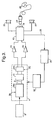
- an input device 2 such as for example a sound synthesizer chip on a PC sound-card, provides an electrical monophonic audio signal which is supplied to a digital sound processor 4, (indicated schematically within the dashed outline) containing binaural placement filters 6 for generating left and right dual channel binaural signals on lines 8 to crosstalk cancellation filters 10.
- the dual-channel output from the processor 4 feeds an output signal to a distribution component 12, via respective amplifiers 14 and 16.
- the component 12 incorporates a headphone socket 18.
- Component 12 normally distributes output binaural signals to a pair of loudspeaker enclosures 20, 22.
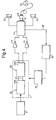
- a headphone plug 24 ( Figure 2 ) is inserted into socket 18, the output signals are instead provided to headphones 26.
- a control signal is provided to a control path 28 including a detector device 30 which provides a detect signal to a micro controller 32, in turn providing control signals to processor 4.
- control path may be rendered inactive, or it may merely provide an advisory signal to the processor 4 indicating that crosstalk cancellation may be employed. This arrangement is shown in Figure 1 .
- the detection of headphone coupling via socket 18 may be achieved in a number of ways, as follows:
- the present invention may also be used in a binaural sound processing system of the type which employs spectral equalisation filters to compensate for the "twice through the ears” effect as well as filters to synthesise the effects of three-dimensional placement of sound sources.
- spectral equalisation filters to compensate for the "twice through the ears” effect as well as filters to synthesise the effects of three-dimensional placement of sound sources.
- an input source 2 such as for example a sound synthesizer chip on a PC sound-card, provides a monophonic audio signal to a digital sound processor 4 containing head response transfer function (HRTF) filter pair 34a, for generating left and right channel binaural signals on lines 8 and a crosstalk cancellation filter 10.
- the processor 4 includes a pair of equalisation filters 34b for tonal correction.
- the dual channel output from the processor 4 feeds an output signal to a distribution component 12, via respective amplifiers 14 and 16.
- the filter pair 34a may be a pair selected from a library of predefined HRTF filters and a separate pair of equalisation filters 34b may be used to apply the tonal correction. However, it is preferred that the equalisation filters 34b are incorporated into the HRTF filter pair 34a, thus saving the extra processing required for the equalisation.
- the HRTF filter set 34 (comprising the pairs of filters 34a and 34b) is ""normalised” using a transfer function which corresponds to that associated with a listener listening to a pair of loudspeakers arranged in front of the listener to subtend an angle of ⁇ 30° azimuth in front of the listener.
- the preferred solution is to use the one set of HRTF filters 34 normalised for listening to loudspeakers set at ⁇ 30° azimuth, (default setting) and then using a correction means apply an equalisation correction signal to the binaurally placed signals to equalise the signals for +90° and -90° positions of the headphones (when headphones are being used).
- a correction signal in principle, would be a factor equal to the ⁇ 30° transfer function divided by the ⁇ 90° function.
Landscapes
- Physics & Mathematics (AREA)
- Engineering & Computer Science (AREA)
- Acoustics & Sound (AREA)
- Signal Processing (AREA)
- Stereophonic System (AREA)
- Stereo-Broadcasting Methods (AREA)
Claims (6)
- Appareil de reproduction audio stéréophonique, comprenant :un moyen d'entrée pour produire des signaux binauraux ;des moyens d'annulation de la diaphonie ;des moyens de haut-parleur ;des moyens de casque d' écoute ; etun moyen de commutateur, accouplant dans une première position les signaux binauraux du moyen d'entrée aux moyens de haut-parleur à travers les moyens d'annulation de la diaphonie, et rendant dans une deuxième position les moyens d'annulation de la diaphonie inopérables et accouplant les signaux binauraux du moyen d'entrée aux casques d'écoute.
- Appareil selon la revendication 1, comportant un moyen de douille pour recevoir une fiche jack desdits moyens de casque d'écoute, ledit moyen de douille englobant des moyens de détection servant à détecter l'insertion d'une fiche jack dans ledit moyen de douille et à commuter, en réponse à cette insertion, le moyen de commutateur vers la deuxième position.
- Appareil selon la revendication 2, dans lequel le moyen de douille est incorporé dans un moyen de distribution de signaux, servant à transmettre des signaux de sortie binauraux aux dits moyens de haut-parleur.
- Appareil selon l'une quelconque des revendications 1 à 3, comportant un moyen de traitement de signaux, englobant un moyen de filtre de placement binaural pour produire des signaux binauraux de gauche et de droite, le moyen d'entrée servant à produire un signal audio de sortie monophonique, et le moyen de traitement de signaux servant à recevoir ledit signal de sortie et à transmettre lesdits signaux binauraux de gauche et de droite vers un haut-parleur respectif de gauche et de droite desdits moyens de haut-parleur lorsque le moyen de commutateur se trouve dans ladite première position ou vers un haut-parleur respectif de gauche et de droite desdits moyens de haut-parleur lorsque ledit moyen de commutateur se trouve dans ladite deuxième position.
- Appareil selon la revendication 4, dans lequel le moyen de traitement des signaux englobe en outre un moyen de filtre d'égalisation, ledit moyen de filtre d'égalisation pouvant être commuté sélectivement par ledit moyen de commutateur vers un premier état lorsque le moyen de commutateur se trouve dans ladite première position, dans laquelle la fonction de transfert du moyen de filtre d'égalisation correspond à celle appropriée pour un auditeur écoutant le son transmis par desdits moyens de haut-parleur, vers un deuxième état, dans lequel la fonction de transfert du moyen de filtre d'égalisation correspond à celle appropriée pour un auditeur écoutant le son transmis par lesdits moyens de haut-parleur.
- Appareil selon la revendication 5, dans lequel le moyen de filtre d'égalisation présente une fonction de transfert « normalisée », utilisant une fonction de transfert correspondant à celle appropriée pour un auditeur écoutant le son transmis par les moyens de haut-parleur, et comportant un moyen de correction servant à recevoir, lorsque le moyen de commutateur se trouve dans ladite deuxième position, des signaux binauraux transmis aux moyens de haut-parleur et à y appliquer un signal de correction, de sorte à changer les signaux binauraux et à transmettre des signaux binauraux corrigés vers lesdits moyens de haut-parleur.
Applications Claiming Priority (2)
| Application Number | Priority Date | Filing Date | Title |
|---|---|---|---|
| GB9610394 | 1996-05-17 | ||
| GBGB9610394.0A GB9610394D0 (en) | 1996-05-17 | 1996-05-17 | Audio reproduction systems |
Publications (3)
| Publication Number | Publication Date |
|---|---|
| EP0808075A2 EP0808075A2 (fr) | 1997-11-19 |
| EP0808075A3 EP0808075A3 (fr) | 2005-08-10 |
| EP0808075B1 true EP0808075B1 (fr) | 2013-07-17 |
Family
ID=10793906
Family Applications (1)
| Application Number | Title | Priority Date | Filing Date |
|---|---|---|---|
| EP97302136.3A Expired - Lifetime EP0808075B1 (fr) | 1996-05-17 | 1997-03-27 | Système de reproduction audio |
Country Status (4)
| Country | Link |
|---|---|
| US (1) | US5917916A (fr) |
| EP (1) | EP0808075B1 (fr) |
| JP (1) | JP3920404B2 (fr) |
| GB (1) | GB9610394D0 (fr) |
Families Citing this family (27)
| Publication number | Priority date | Publication date | Assignee | Title |
|---|---|---|---|---|
| US6104819A (en) * | 1997-06-02 | 2000-08-15 | Gateway 2000, Inc. | Combination speaker and earphone apparatus |
| JPH11134168A (ja) * | 1997-10-30 | 1999-05-21 | Toshiba Corp | コンピュータシステムおよびオーディオ信号出力制御方法 |
| GB2342830B (en) * | 1998-10-15 | 2002-10-30 | Central Research Lab Ltd | A method of synthesising a three dimensional sound-field |
| US6442277B1 (en) * | 1998-12-22 | 2002-08-27 | Texas Instruments Incorporated | Method and apparatus for loudspeaker presentation for positional 3D sound |
| JP2000358294A (ja) | 1999-06-15 | 2000-12-26 | Yamaha Corp | オーディオ音響装置 |
| KR20010016598A (ko) * | 2000-12-26 | 2001-03-05 | 이원돈 | 입체음향 재생 장치 및 그 방법 |
| US6928168B2 (en) | 2001-01-19 | 2005-08-09 | Nokia Corporation | Transparent stereo widening algorithm for loudspeakers |
| KR20040050613A (ko) * | 2002-12-10 | 2004-06-16 | 엘지전자 주식회사 | 2.1채널 오디오신호 스위칭회로 |
| US20050273324A1 (en) * | 2004-06-08 | 2005-12-08 | Expamedia, Inc. | System for providing audio data and providing method thereof |
| KR100611106B1 (ko) | 2004-07-06 | 2006-08-10 | 한국전자통신연구원 | 3차원 오디오 재생 휴대용 단말기 |
| EP1814359B1 (fr) * | 2004-11-19 | 2012-01-25 | Victor Company Of Japan, Limited | Appareil et méthode d'enregistrement vidéo/audio et appareil et méthode de reproduction vidéo/audio |
| US20060165244A1 (en) * | 2004-12-14 | 2006-07-27 | Chao-Hung Wu | Computer system for switching audio outputs and method thereof |
| KR100619082B1 (ko) | 2005-07-20 | 2006-09-05 | 삼성전자주식회사 | 와이드 모노 사운드 재생 방법 및 시스템 |
| KR100609878B1 (ko) * | 2005-07-25 | 2006-08-08 | 삼성전자주식회사 | 오디오 출력장치 및 그 제어방법 |
| US7925030B2 (en) * | 2006-07-08 | 2011-04-12 | Telefonaktiebolaget Lm Ericsson (Publ) | Crosstalk cancellation using load impedence measurements |
| US9031253B2 (en) * | 2011-12-16 | 2015-05-12 | Qualcomm Incorporated | Plug insertion detection |
| US9622011B2 (en) | 2012-08-31 | 2017-04-11 | Dolby Laboratories Licensing Corporation | Virtual rendering of object-based audio |
| US9681241B2 (en) * | 2013-02-26 | 2017-06-13 | Blackberry Limited | Apparatus, systems and methods for detecting insertion or removal of an audio accessory from an electronic device |
| EP2946573B1 (fr) * | 2013-04-30 | 2019-10-02 | Huawei Technologies Co., Ltd. | Appareil de traitement de signal audio |
| CA3016999C (fr) * | 2013-08-30 | 2019-09-17 | Gleim Conferencing, Llc | Systeme et procede d'apprentissage virtuel multidimensionnel |
| US9264811B1 (en) | 2014-04-16 | 2016-02-16 | Audyssey Laboratories | EQ correction for source device impedance and output device impedance interactions |
| TW201543351A (zh) * | 2014-04-24 | 2015-11-16 | Hon Hai Prec Ind Co Ltd | 音效處理系統 |
| EP3473022B1 (fr) | 2016-06-21 | 2021-03-17 | Dolby Laboratories Licensing Corporation | Suivi de tête pour système audio binaural pré-rendu |
| EP3503558B1 (fr) * | 2017-12-19 | 2021-06-02 | Spotify AB | Sélection de format de contenu audio |
| GB2573362B (en) | 2018-02-08 | 2021-12-01 | Dolby Laboratories Licensing Corp | Combined near-field and far-field audio rendering and playback |
| EP4035418A2 (fr) | 2019-09-23 | 2022-08-03 | Dolby Laboratories Licensing Corporation | Virtualisation hybride de haut-parleurs en champ proche/lointain |
| US11856378B2 (en) * | 2021-11-26 | 2023-12-26 | Htc Corporation | System with sound adjustment capability, method of adjusting sound and non-transitory computer readable storage medium |
Citations (1)
| Publication number | Priority date | Publication date | Assignee | Title |
|---|---|---|---|---|
| GB2003706A (en) * | 1977-08-29 | 1979-03-14 | Victor Company Of Japan | Audio signal translation for loudspeaker and headphone sound reproduction |
Family Cites Families (9)
| Publication number | Priority date | Publication date | Assignee | Title |
|---|---|---|---|---|
| JPS5931279B2 (ja) * | 1979-06-19 | 1984-08-01 | 日本ビクター株式会社 | 信号変換回路 |
| US5056148A (en) * | 1990-11-21 | 1991-10-08 | Kabushiki Kaisha Kawai Gakki Seisakusho | Output circuit of audio device |
| US5161198A (en) * | 1991-05-15 | 1992-11-03 | Allied-Signal Inc. | Mobile radio audio system |
| JPH06113390A (ja) * | 1992-09-30 | 1994-04-22 | Matsushita Electric Ind Co Ltd | 音響再生装置 |
| US5666425A (en) * | 1993-03-18 | 1997-09-09 | Central Research Laboratories Limited | Plural-channel sound processing |
| US5448646A (en) * | 1993-11-01 | 1995-09-05 | Unex Corporation | Headset interface assembly |
| GB9324240D0 (en) * | 1993-11-25 | 1994-01-12 | Central Research Lab Ltd | Method and apparatus for processing a bonaural pair of signals |
| JPH07334980A (ja) * | 1994-04-15 | 1995-12-22 | Sony Corp | タイマ付き電子機器 |
| US5581626A (en) * | 1995-07-31 | 1996-12-03 | Harman International Industries, Inc. | Automatically switched equalization circuit |
-
1996
- 1996-05-17 GB GBGB9610394.0A patent/GB9610394D0/en active Pending
-
1997
- 1997-03-27 EP EP97302136.3A patent/EP0808075B1/fr not_active Expired - Lifetime
- 1997-05-05 US US08/851,721 patent/US5917916A/en not_active Expired - Lifetime
- 1997-05-16 JP JP12731397A patent/JP3920404B2/ja not_active Expired - Lifetime
Patent Citations (1)
| Publication number | Priority date | Publication date | Assignee | Title |
|---|---|---|---|---|
| GB2003706A (en) * | 1977-08-29 | 1979-03-14 | Victor Company Of Japan | Audio signal translation for loudspeaker and headphone sound reproduction |
Also Published As
| Publication number | Publication date |
|---|---|
| EP0808075A2 (fr) | 1997-11-19 |
| EP0808075A3 (fr) | 2005-08-10 |
| US5917916A (en) | 1999-06-29 |
| JPH1070789A (ja) | 1998-03-10 |
| JP3920404B2 (ja) | 2007-05-30 |
| GB9610394D0 (en) | 1996-07-24 |
Similar Documents
| Publication | Publication Date | Title |
|---|---|---|
| US5917916A (en) | Audio reproduction systems | |
| EP0698334B1 (fr) | Procede et appareil de reproduction stereophonique | |
| JP4743790B2 (ja) | 前方配置ラウドスピーカからのマルチチャネルオーディオサラウンドサウンドシステム | |
| AU2001239516B2 (en) | System and method for optimization of three-dimensional audio | |
| US4245136A (en) | Monitor ampliphones | |
| CN1658709B (zh) | 声音再现设备和声音再现方法 | |
| KR20110069112A (ko) | 보청기 시스템에서 바이노럴 스테레오를 렌더링하는 방법 및 보청기 시스템 | |
| JP2000050400A (ja) | 左,右両耳用のオーディオ信号を音像定位させるための処理方法 | |
| JP2002209300A (ja) | 音像定位装置、並びに音像定位装置を用いた会議装置、携帯電話機、音声再生装置、音声記録装置、情報端末装置、ゲーム機、通信および放送システム | |
| KR20010020513A (ko) | 인공사운드환경 조성 시스템 | |
| JP2003111200A (ja) | 音響処理装置 | |
| JPH09505702A (ja) | バイノーラル信号処理装置 | |
| JP5281695B2 (ja) | 音響変換装置 | |
| US6990210B2 (en) | System for headphone-like rear channel speaker and the method of the same | |
| KR20030003744A (ko) | 헤드-관련 전달 함수를 유도하는 방법 | |
| JP2004056418A (ja) | 音響再生装置 | |
| US7050596B2 (en) | System and headphone-like rear channel speaker and the method of the same | |
| US5175768A (en) | Method and apparatus for enhancing the stereo effect in headsets having cross coupling voice coils | |
| US6983054B2 (en) | Means for compensating rear sound effect | |
| JP2002291100A (ja) | オーディオ信号再生方法、及びパッケージメディア | |
| JPS61245698A (ja) | 音響特性測定装置 | |
| CA1132460A (fr) | Casque d'ecoute de controle avec amplification | |
| JP2003199200A (ja) | ヘッドホーンに類似するリアチャンネルスピーカーシステム及びその方法 | |
| JPH11127500A (ja) | バイノーラル再生装置、バイノーラル再生用ヘッドホンおよび音源評価方法 | |
| EP0323830B1 (fr) | Système sonore à effet spatial |
Legal Events
| Date | Code | Title | Description |
|---|---|---|---|
| PUAI | Public reference made under article 153(3) epc to a published international application that has entered the european phase |
Free format text: ORIGINAL CODE: 0009012 |
|
| AK | Designated contracting states |
Kind code of ref document: A2 Designated state(s): DE FR GB |
|
| RAP1 | Party data changed (applicant data changed or rights of an application transferred) |
Owner name: CREATIVE TECHNOLOGY LTD. |
|
| PUAL | Search report despatched |
Free format text: ORIGINAL CODE: 0009013 |
|
| AK | Designated contracting states |
Kind code of ref document: A3 Designated state(s): DE FR GB |
|
| 17P | Request for examination filed |
Effective date: 20060207 |
|
| 17Q | First examination report despatched |
Effective date: 20070529 |
|
| GRAP | Despatch of communication of intention to grant a patent |
Free format text: ORIGINAL CODE: EPIDOSNIGR1 |
|
| GRAS | Grant fee paid |
Free format text: ORIGINAL CODE: EPIDOSNIGR3 |
|
| GRAA | (expected) grant |
Free format text: ORIGINAL CODE: 0009210 |
|
| AK | Designated contracting states |
Kind code of ref document: B1 Designated state(s): DE FR GB |
|
| REG | Reference to a national code |
Ref country code: GB Ref legal event code: FG4D |
|
| REG | Reference to a national code |
Ref country code: DE Ref legal event code: R096 Ref document number: 69740624 Country of ref document: DE Effective date: 20130912 |
|
| PLBE | No opposition filed within time limit |
Free format text: ORIGINAL CODE: 0009261 |
|
| STAA | Information on the status of an ep patent application or granted ep patent |
Free format text: STATUS: NO OPPOSITION FILED WITHIN TIME LIMIT |
|
| 26N | No opposition filed |
Effective date: 20140422 |
|
| REG | Reference to a national code |
Ref country code: DE Ref legal event code: R097 Ref document number: 69740624 Country of ref document: DE Effective date: 20140422 |
|
| REG | Reference to a national code |
Ref country code: FR Ref legal event code: PLFP Year of fee payment: 20 |
|
| PGFP | Annual fee paid to national office [announced via postgrant information from national office to epo] |
Ref country code: FR Payment date: 20160328 Year of fee payment: 20 Ref country code: GB Payment date: 20160329 Year of fee payment: 20 |
|
| PGFP | Annual fee paid to national office [announced via postgrant information from national office to epo] |
Ref country code: DE Payment date: 20160331 Year of fee payment: 20 |
|
| REG | Reference to a national code |
Ref country code: DE Ref legal event code: R071 Ref document number: 69740624 Country of ref document: DE |
|
| REG | Reference to a national code |
Ref country code: GB Ref legal event code: PE20 Expiry date: 20170326 |
|
| PG25 | Lapsed in a contracting state [announced via postgrant information from national office to epo] |
Ref country code: GB Free format text: LAPSE BECAUSE OF EXPIRATION OF PROTECTION Effective date: 20170326 |