EP0807892B1 - Datenqualitätsverwaltungssystem - Google Patents
Datenqualitätsverwaltungssystem Download PDFInfo
- Publication number
- EP0807892B1 EP0807892B1 EP97303076A EP97303076A EP0807892B1 EP 0807892 B1 EP0807892 B1 EP 0807892B1 EP 97303076 A EP97303076 A EP 97303076A EP 97303076 A EP97303076 A EP 97303076A EP 0807892 B1 EP0807892 B1 EP 0807892B1
- Authority
- EP
- European Patent Office
- Prior art keywords
- data
- bases
- requested
- idm
- stored
- Prior art date
- Legal status (The legal status is an assumption and is not a legal conclusion. Google has not performed a legal analysis and makes no representation as to the accuracy of the status listed.)
- Expired - Lifetime
Links
Images


Classifications
-
- G—PHYSICS
- G06—COMPUTING OR CALCULATING; COUNTING
- G06F—ELECTRIC DIGITAL DATA PROCESSING
- G06F16/00—Information retrieval; Database structures therefor; File system structures therefor
- G06F16/20—Information retrieval; Database structures therefor; File system structures therefor of structured data, e.g. relational data
- G06F16/27—Replication, distribution or synchronisation of data between databases or within a distributed database system; Distributed database system architectures therefor
- G06F16/273—Asynchronous replication or reconciliation
-
- Y—GENERAL TAGGING OF NEW TECHNOLOGICAL DEVELOPMENTS; GENERAL TAGGING OF CROSS-SECTIONAL TECHNOLOGIES SPANNING OVER SEVERAL SECTIONS OF THE IPC; TECHNICAL SUBJECTS COVERED BY FORMER USPC CROSS-REFERENCE ART COLLECTIONS [XRACs] AND DIGESTS
- Y10—TECHNICAL SUBJECTS COVERED BY FORMER USPC
- Y10S—TECHNICAL SUBJECTS COVERED BY FORMER USPC CROSS-REFERENCE ART COLLECTIONS [XRACs] AND DIGESTS
- Y10S707/00—Data processing: database and file management or data structures
- Y10S707/99941—Database schema or data structure
- Y10S707/99942—Manipulating data structure, e.g. compression, compaction, compilation
-
- Y—GENERAL TAGGING OF NEW TECHNOLOGICAL DEVELOPMENTS; GENERAL TAGGING OF CROSS-SECTIONAL TECHNOLOGIES SPANNING OVER SEVERAL SECTIONS OF THE IPC; TECHNICAL SUBJECTS COVERED BY FORMER USPC CROSS-REFERENCE ART COLLECTIONS [XRACs] AND DIGESTS
- Y10—TECHNICAL SUBJECTS COVERED BY FORMER USPC
- Y10S—TECHNICAL SUBJECTS COVERED BY FORMER USPC CROSS-REFERENCE ART COLLECTIONS [XRACs] AND DIGESTS
- Y10S707/00—Data processing: database and file management or data structures
- Y10S707/99951—File or database maintenance
- Y10S707/99952—Coherency, e.g. same view to multiple users
Definitions
- the invention relates to managing related data respectively stored in a plurality of data bases.
- related data may be stored in different data bases.
- a bank may store related data such as account information, credit history, customer data, etc. in different data bases.
- related data associated with a particular account i.e. a customer
- the end result may be incorrect because the selected data is not consistent with its associated data stored in the other data bases.
- different data that is related in some way e.g. facility, provisioning, and maintenance data, may be stored in different data bases.
- the facilities to implement the subscription are selected from a provisioning data base.
- the selected facilities may not actually be available.
- the reason for this may be, for example, that the facilities were marked unavailable due to maintenance activity and shown as such in the maintenance data base, but were inadvertently left marked as available in the provisioning data base.
- a craftsperson would be unsuccessful implementing the requested service as a result of trying to use facilities that were not available. It can be appreciated that the problem of inconsistent data across multiple data bases may be both difficult and costly to correct.
- I deal with the foregoing problem using what I call an Intelligent Data Module (IDM) as an interface between an application and its associated data base, in which, in accord with an aspect of the invention, the Intelligent Data Modules communicate with one another to determine if data requested by an associated application is consistent with related data stored in the other data bases before the application is allowed access to the data. If the data is found to be inconsistent with its related data, then the Intelligent Data Module, in accord with another aspect of the invention, may invoke either a local or a remote data reconciliation function to process the related data to make it consistent.
- IDM Intelligent Data Module
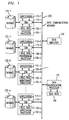
- data bases 125-1 through 125-N shown in Figure 1 are respectively associated with processors 100-1 through 100-N.
- Processors 100-1 through 100-N respectively include Intelligent Data Modules (IDMs) 115-1 through 115-N, each of which supports a respective application.
- IDMs 115-1 through 115-3 respectively support operations applications 110-1 through 110-3, identified in FIG. 1 as Facilities, Provisioning, and Maintenance applications, respectively.
- the other IDMs 115-4 through 115-N support other operations applications not identified herein.
- IDMs 115-1 through 115-N are driven by respective rule bases 120-1 through 120-N, in which a rule base is a set of logically-structured rules which directs its associated IDM what actions to take in a given situation, based upon the consistency of a set of related data elements whose values were retrieved from respective ones of the data bases 125-1 through 125-N.
- a telephone company operations application 110-2 may initiate a transaction to request data that is needed to perform a particular operational task, such as the provisioning of new telephone service.
- the application directs the request to its associated IDM, e.g. IDM 115-2.
- IDM 115-2 retrieves the data requested by the received transaction, and all of the data logically related to the data requested by the received transaction. Some or all of this logically-related data will most likely have to be retrieved from data bases other than data base 125-2.
- IDM 115-2 upon receipt of the retrieved data, processes the data in accord with particular rules stored in its associated rule base 120-2 to determine if the retrieved data is logically consistent.
- IDM 115-2 supplies the requested data to its associated operations application 110-2 to complete the desired operational task. Otherwise, IDM 115-2 proceeds in accord with one of a number of different options specified by its associated rule base 120-2, including the option to suspend the request for the data until the data is reconciled, as will be discussed in detail below.
- an IDM 115i e.g. IDM 115-1
- IDM 115-1 is disposed between its associated operations application 110-i and the data base 125-i, e.g. data base 125-1, that supports the operations application 110-i.
- IDM 115i to control the flow of data going to and from its associated application, so that synchronization of data elements distributed across the data bases in the system may be made a condition of proceeding with the use of data in completing any operational task of the application.
- IDM 115-1 through 115-N maintain data synchronization by processing each data transaction in accordance with rules encoded in their respective associated rule bases 120-i.
- IDM 115i For an IDM 115i to perform its intended function, certain attributes and relationships among data elements in the system needs to be defined and recorded.
- One such attribute is what I call "ownership", which indicates for each data element whether single or multiple copies of the data element exist throughout the data bases in the system, and, if multiple copies exist, then which copy is considered to be the "primary" copy, i.e., the copy that is believed to be more reliably accurate than that of any other copy.
- the data base containing the primary copy of a particular data element therefore, is considered to be the "owner" of that data element.
- a second aspect is what I call a "data object", that is defined herein to be the set of all the data elements logically related to the data element(s) required by an operations application to complete a desired operational task, including the data element(s) originally requested, as will be described in detail below.
- Each data element that is stored in a data base 125-i is associated with an attribute that defines the ownership characteristics of that particular copy of the data element.
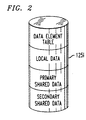
- a data element may be defined as being (a) "local data” if it is not stored in any other data base, (b) "primary shared data” if it is stored in multiple data bases, but the copy stored in data base 125i is the primary copy, or (c) "secondary shared data” if it is stored in multiple data bases, but the primary copy is stored in a data base other than data base 125-i.
- Such illustrative identification of all of the data elements in a data base 125-i as either local, primary shared, or secondary shared is illustrated in Figure 2.
- FIG. 2 illustrates one way in which such information may be stored in a data base, and that any other similar storage arrangement may be used as long as the stored information may be accessed and used in accord with the principles of the invention.
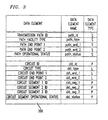
- FIG. 3 An illustrative example of a data element table is shown in FIG. 3, which is described in detail below.
- IDM 115i retrieves the ownership attributes associated with all requested data elements from the data element table 300 stored in its associated data base 125-i. If all the requested data elements are local data, then it is unlikely that the data elements will be inconsistent with data elements in other data bases.
- IDM 115i may be instructed by its associated rule base 120-i to retrieve the data elements themselves from data base 125-i, and pass them directly to application 110-i without further checking the data elements for consistency.
- the rule base may include a number of rules designed to check for logical consistency between data elements, even though the set of local data elements were retrieved from the same data base 125-i. In this event, the processing of these local data elements would be similar to that for data elements retrieved from multiple data bases, as discussed below. However, in most instances there exists in other data bases a number of data elements which either are copies of, or are logically related to, the data elements stored in data base 125-i. The respective IDM 115i, therefore, needs to identify the related data elements, retrieve them, and process them in accord with the rules stored in its associated rule base 120-i to determine if the data elements are consistent with one another.
- an application 110-i has to modify a particular shared data element, then "ownership" is used to ensure that all copies of that data element are also modified. If an IDM 115i receives such a request from its associated application, then the IDM 115i first identifies the number and location of all such copies of that data element. Since the data element table that is in a particular data base identifies the ownership attributes only for the data elements stored in its "own" data base, then the IDM 115i must use another mechanism to be able to locate conveniently the other copies of the data element. One such mechanism may be realized by storing centrally the information in all of the data element tables 300 in the system as well as providing a cross-reference identifying logically-related shared data elements. This is done using what I call a "master data element table" that is stored in data directory 150 (FIG. 1).
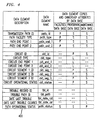
- the master data element table 400 shown in FIG. 4, more particularly, provides a comprehensive cross-reference for all data elements stored in all of the system data bases 125i. For a shared data element, master data element table 400 identifies the number, locations, and ownership attributes of all copies of the shared data element across all data bases 125i in the system. The Master data element table thus allows an IDM 115i to retrieve in one transaction with the Data directory all the data element information needed to complete the modification of a shared data element. An example of the information contained in the Master data element table is shown in Figure 4.
- IDM 115i whenever an IDM 115i needs to modify a particular shared data element, IDM 115i must first determine from the data element table 300 stored in its associated data base 125i if the data element to be updated is a shared data element. If so, then IDM 115i must form and send a message to the Data directory 150 requesting the names and locations of all copies of the shared data element resident in other data bases and identified in the master data element table 400 stored in directory 150. Data directory 150, in turn, accesses the requested information and returns it to IDM 115i.
- IDM 115i in accord with rules specified in its associated rule base 120i may update immediately that copy of the shared element. IDM 115i then sends a copy of the updated data element to the other IDMs 115 to update the secondary shared data element copies stored in their respective data bases 125. If, however, the shared data element that is stored in data base 125i is a secondary shared copy, then IDM 115i, in accord with the rule specified in its associated rule base 120i, must obtain permission to update the data element from the IDM 115 having ownership of the primary shared copy. Such permission may be granted immediately upon request, or may trigger another series of actions by the latter IDM 115 before permission is either granted or rejected.
- tables 300 and 400 are not to be construed as a limitation since there may be a number of architectural alternatives which could be used to implement either data table. For example, in some applications, it may be more convenient to provide only master data element table 400 and not data element tables 300. In this instance, an IDM 115i would have to query master data element table 400 each time it needs to identify a data element. Alternatively, a copy of a master data element table 400 may be stored in each of the data bases 125 or IDMs 115.)
- a data object is central to the preservation of data synchronization across all data bases in the system.
- a data object for a particular operational task is the complete set of data elements within which data consistency needs to be validated to ensure data quality is being preserved while the operational task is being completed. Data consistency within a data object is validated through application of the rules designed for this purpose.
- a data object needs to be defined for each operational task which either uses or affects critical data elements. While data objects will be different for different operational tasks, the definition of a data object for a task needs to be standardized. For this reason, the definitions of data object for respective system operational tasks may be stored in data directory 150, as will be discussed below.
- Storing the definition of a data object in data directory 150 provides a means for an IDM 115i to identify and locate a desired data element which is a part of the data object defined for a particular operational task.
- An IDM 115i may do this in the following manner.
- the unique identification associated with all data elements forming a data object are stored as a record in data directory 150.
- the data object definition might also include for each data element its ownership characteristics (e.g. local vs. primary shared vs. secondary shared)).
- a referenced data element may be described by, for example, the identity (e.g. the conventional addressable name) of the data base storing the data element, and the identity (e.g. the conventional addressable name) of the data element in that data base.
- FIG. 5 A logical illustration of such a data record stored in data directory 150 is shown in FIG. 5.
- Record 500 is used to define a data object for a task entitled Circuit Provisioning.
- FIG. 6 A flowchart of an illustrative software program which implements the principles of the invention in an IDM 115i, e.g., 115-1, is shown in FIG. 6. Specifically, responsive to receipt of a request for particular operational data from its associated application 110-1, the program is entered at block 600 and proceeds to 601 to receive the data request. The program (block 602) then consults its associated data element table 300 (stored in its associated data base 125i as mentioned above) to determine if the requested data elements are local data or shared data (either primary or secondary). If the program (block 603) determines that the requested data elements are all local, then program (block 615) retrieves the requested data elements from its associated data base 125i, and supplies (block 614) the retrieved result in a conventional manner to the requesting application.
- its associated data element table 300 stored in its associated data base 125i as mentioned above
- the program (block 604) forms a message requesting the data record defining the data object for the operational task identified by the application and sends the message to data directory 150.
- data directory 150 Upon receipt of the message, data directory 150, using an identifier that is contained in the message and that identifies the operational task that will use the data, translates the identifier into a memory location. Data directory 150 then accesses that memory location in associated memory to retrieve a copy of the data record defining the data object needed to verify the consistency of the data that will be processed by the specified task. Data directory 150 then sends the copy of the data record to the IDM 115-1 which originated the request.
- the program Upon receipt of the record from data directory 150, the program (block 605) assembles the required data object by collecting all of the data elements identified in the record received from data directory 150. In doing so, the program forms and sends a message requesting data to each of the other IDMs 115i, e.g. IDM 115-2 and 115-3, whose associated data base 125i contains data elements identified in the received record. Responsive to receipt of such a message, a receiving IDM 115i, e.g. IDM 115-2, retrieves in a conventional manner a copy of the requested data from its associated application data base, e.g. 125-2, and returns the copy to the IDM 115i program that requested the data. The IDM 115i program, responsive to receipt of the requested data elements from its own data base and from other IDMs 115i, assembles the received data into the desired data object and stores the data object in associated memory.
- IDM 115i Responsive to receipt of such a message, retrieves in a
- the program (block 606) then processes the contents of the data object in accord with the rules stored in its associated rule base 120i to determine if the data elements forming such contents are logically consistent with each other.
- processing typically involves invoking a series of steps that compare multiple data elements in the data object with (a) each other, and (b) reference values encoded in the rules, to determine if the data elements satisfy the conditions specified in the rules. If the program finds that the data elements satisfy the conditions specified in a particular rule, then the program concludes that the data elements "pass", i.e., are consistent with respect to that rule. Otherwise, the program concludes that the data elements "fail” that rule, i.e., are inconsistent with respect to that rule.
- the program (block 606) processes the data object for each rule in rule base 120-1 defined for that data object. If the program (block 607) determines that the data object passes each such rule, then the program (block 614) supplies the requested data to the application. If, on the other hand, the program (607) determines that the data object failed one or more rules, then the program (block 608) may apply so-called correction rules stored in rule base 120-1 as a way of attempting to reconcile the inconsistency using other data elements in the data object (and possibly by using other data elements outside the data object retrieved for just this purpose).
- the program (block 609) finds that such correction rules are successful -- meaning that one or more elements of the data object were changed to get the data object to pass all of the previously failed rules -- then the program (block 616) sends the changes (update) to all of the IDMs whose associated data bases contain the data elements to be corrected. Such sending directs those IDMs to make the same data element corrections as were made in the data object. Where such correction rules exist and can be successfully applied, the result will be that the data object will be ultimately found to be consistent. Following the sending of the updates to the affected IDM's, the program (block 614) supplies the requested data to the application.
- the program (block 610) sends a request to data reconciliation process (DRP) 175 to reconcile the data forming the data object and then the program (block 611) evaluates the result to see if the data object is consistent. If so, the program (614) supplies the requested data to its associated application 110-1 to complete the desired operational task. If not, and the program concludes that the inconsistency can not be corrected by the application of respective correction rules, then the program consults its rule base to determine what action to take to deal with the inconsistent data.
- DRP data reconciliation process
- the rule base may instruct the program to (a) instruct the requesting application to suspend the operational task if it is in progress, and wait until the data inconsistency has been reconciled by the Data Reconciliation Processor (DRP) 175 (FIG. 1), (b) supply the requested but inconsistent data to the application together with a warning noting the inconsistency, or (c) refer the inconsistent data object to DRP 175 with a request to initiate a search for alternative data, as is illustrated in FIG. 6 (block 612).
- DRP Data Reconciliation Processor
- DRP 175 processes the data object in accord with a set of correction rules contained in its associated rule base 180. Using such correction rules, DRP 175 attempts to reconcile inconsistent data elements using information already in the data object, and possibly also other data elements outside the data object (called reference data elements) that may be retrieved from other data bases 125i. Such other data may serve to substantiate or invalidate the value of a particular data element in the data object.
- the rules that DRP 175 uses are based upon knowledge obtained from by experts having particular experience with respect to evaluating and resolving inconsistency in data elements.
- a cable pair status from the provisioning portion of the data object may be "available", meaning that the cable pair is serviceable and available for assignment, i.e. not currently in use.
- the cable pair status in the maintenance portion of the data object obtained from maintenance data base 125-3, FIG. 1 is "unavailable", and this inconsistency can not be resolved by the IDM 115i rule base, then the inconsistency may be referred by that IDM to DRP 175 for reconciliation.
- rule base 180 may direct DRP 175 to make that determination by checking the most recent date that a trouble was reported on the cable pair. DRP 175 would then access the maintenance data base 125-3 via its associated IDM 115 to obtain the data element recording that date. If the date is within a specified period of time, for example, in the last seven days before the current date, then rule base 180 might direct DRP 175 to (a) declare that the cable pair is indeed out of service, (b) correct to "unavailable” the value of the cable pair status in the provisioning portion of the data object, and (c) send to IDM 115-2 a request to update to "unavailable" the cable pair status in the provisioning data base 125-2. DRP 175 then continues in a similar manner to reconcile any other inconsistent data in the data object.
- rule base 180 may, for example, direct DRP 175 to declare that the correct cable pair status is "available”, and update to "available” the cable pair status in the maintenance portion of the data object, as well as in the maintenance data base 125-3.
- DRP 175 completes the reconciliation function in this manner, all logically-related data elements in the data object, and in the respective data bases from which the data object's data elements are drawn, will be consistent according to the rules in rule base 180.
- rule base 180 may direct DRP 175 to produce a message or report requesting a manual data base check, and/or a field verification of the cable pairs involved. At this point, DRP 175 may send a message to IDM 115i indicating it was not able to reconcile the inconsistency, whereupon IDM 115i, in accordance with operational rules in its associated data base 120-i, may discard the data object and initiate a search for alternative data.
- IDM 115i in accord with its own operational rules stored in its associated rule base 120i, may (a) then revalidate the data object to confirm the consistency in accord with the validation rules stored in that rule base, (b) go on to another interim task, or (c) immediately supply the requested data to the requesting application.
- the three applications have as part of their associated data bases data elements which describe particular transmission paths available in the telecommunications system, namely, path id, facility type, end points, and current operational status.
- the data elements also describe (a) the circuits already in use in the network (circuit id, circuit type, component path segments, circuit end points, and current operational status), and (b) maintenance troubles recently incurred (trouble record id, affected path id, date last trouble reported, and date last trouble cleared).
- circuit id circuit type
- component path segments circuit end points
- maintenance troubles recently incurred trouble record id, affected path id, date last trouble reported, and date last trouble cleared.
- Master data element table 400 contains all of the data element table information and cross-references needed to identify shared data elements stored in different data bases.
- the data object defined for circuit provisioning, with all its constituent data elements, is stored in data directory 150, as shown in Figure 5.
- provisioning application 110-2 communicates in a conventional manner with application 110-2 via provisioning processor 100-2 to ascertain the optimum routing for the requested circuit.
- the provisioning application in a conventional manner determines such optimum routing, and outputs (e.g., displays on a computer screen) information describing the requested routing.
- Such routing may comprise three segments, namely, segment A from Denver to Kansas City, segment B from Kansas City to St. Louis, and segment C from St. Louis to Chicago.
- the provisioning application may also output other aspects associated with the routing, e.g., service features, pricing, etc. If the output is acceptable to the customer, then the agent executes the order via the provisioning application, and waits for confirmation therefrom that appropriate facilities and segments are available and have been reserved for this customer order.
- the provisioning application 110-2 automatically initiates the process of finding specific path segments available to form the optimum route. To do this, application 110-2 supplies to its associated IDM 115-2 information describing the characteristics of the desired circuit and the need for optimum routing. It also requests from IDM 115-2 the circuit_id and path_id identifying each circuit segment that will form the route, and a confirmation of operational status (ckt_status) of each such circuit.
- IDM 115-2 searches for three path segments that may be used to form the optimum route and have a path_status of "OK" -- meaning that the path is both serviceable and available for assignment. Using the information provided by provisioning application 110-2 and the data elements stored in provisioning data base 125-2, IDM 115-2 first identifies the path_id's of those paths which qualify as good candidates for segments because they satisfy the specified circuit requirements and have a path_status of "OK". IDM 115-2 may also be directed to identify other suitable candidates with path status "NOK" (not serviceable) for evaluation, as discussed below.
- IDM 115-2 then ensures that the data elements describing each identified path candidate are consistent with any logically-related data elements in both the facilities and maintenance data bases 125-1 and 125-3, respectively. IDM 115-2 does this by (a) determining the identity and location of such related data elements, (b) retrieving those data elements, and (c) assembling them into the data object previously defined for the circuit provisioning task. IDM 115-2 then examines the data object according to the rules in rule base 120-2 to ensure that the data object conforms with (i.e., passes) all of the relevant rules stored therein, or can be corrected to pass all such rules.
- IDM 115-2 more particularly, first consults data element table 300 stored in its associated data base 125-2 to determine which of the required data elements are identified as local and which are identified as shared. If some of the required data is found to be shared data, and therefore logically-related data elements are stored in other data bases, then IDM 115-2 sends a message to data directory 150 requesting a copy of the data record for the circuit provisioning data object, as discussed above.
- Data directory 150 in tum, returns the requested data record, in which the data record identifies (a) all of the data elements defined to be a part of the circuit provisioning data object, and (b) the data base respectively containing each such data element.
- the logical structure of the information contained in data directory 150 for the requested circuit provisioning data object is shown in FIG. 5.
- IDM 115-2 then assembles and validates in sequence the respective data objects for the path candidates that could form the desired circuit segment.
- IDM 115-2 first collects all relevant data for path segment A from Denver to Kansas City. In doing so, IDM 115-2 obtains from its associated data base 125-2 all of the provisioning data elements identified in the data object.
- IDM 115-2 also obtains from IDM 115-1 and IDM 115-3 the related data elements that are respectively stored in facilities and maintenance data bases 125-1 and 125-3. IDM 115-2 assembles the latter data elements as they are received from those data bases into a circuit provisioning data object.
- IDM 115-2 then temporarily stores the assembled data object in internal memory so that the elements forming the stored data object may be analyzed for consistency in accord with the logical rules stored in rule base 120-2.
- An illustrative example of such logical rules is shown in FIG. 7. Accordingly, when IDM 115-2 has completed assembling the data object it then applies the logical rules to the data forming the object to determine if path A satisfies the specification set forth in the agent's order for the first segment of the desired circuit.
- the rules shown in FIG. 7 specify different actions that may be taken based on the value of the three path_status data elements obtained from the facilities, provisioning, and maintenance data bases, respectively.
- the values for a path_status could be (a) "OK”, which means that the path is serviceable and available for use in a circuit, (b) "NOK”, which means that the path is unavailable due to a current trouble condition, or (c) "ON”, which means that the path is working and has been assigned to another circuit.
- all of the paths having a status of "ON” were "screened out” in an earlier candidate selection process, such that they need not be considered in the following discussion.
- path_status received for Path A from each of the data bases 125-1 through 125-3 is "OK" -- meaning that Path A meets technical requirements specified for the desired segment, is serviceable and available for assignment, and that all data elements defining Path A are consistent across data bases 125-1 through 125-3.
- IDM 115-2 again in accord with those rules reserves Path A as the first segment of the desired circuit. IDM 115-2 does this by creating a record for circuit segment 1 with the value of the path_id for Path A, and by updating the path_status for Path A in data bases 125-1 through 125-3 from "OK" to "ON", since it is being assigned to this circuit.
- IDM 115-2 may then begin the process of determining if path B is a good candidate for the second segment of the desired circuit. Assume, then, that the path_status received from data bases 125-1 through 125-3 for path B are "OK”, “NOK”, and "OK", respectively. For this case, then, the rules (as shown in FIG. 7) instruct IDM 115-2 to check the value of the tbl_date_clr data element from data base 125-3. Assume that the tbl_date_clr element indicates that the last trouble on path B had been cleared three days prior to the date of current service request.
- IDM 115-2 processes the data for path C to determine if it is acceptable for use. Assume at this point that the path_status received from (a) provisioning data base 125-2 is "NOK”, (b) facilities data base 125-1 is “OK”, and (c) maintenance data base 125-3 is "OK”. Also assume that the tbl_date_clr element received from maintenance data base 125-3 indicates that the last recorded trouble was cleared more than seven days ago. Based on this information for this particular path_status, a skilled artisan would conclude that further investigation must be done to determine the cause of the inconsistency. The rules shown in FIG. 7, therefore, direct IDM 115-2 to reject Path C and to then locate an alternate path that may be used as the last segment in the circuit path C.
- Such rules also direct that the inconsistency in the path C data should be referred to DRP 175 for detailed processing. Accordingly, assume at this point that a further search indicates that alternate path C1 is available between St. Louis and Chicago, and that path C1 satisfies the rules stored in rule base 120-2 such that IDM 115-2 would be directed to reserve path C1 as the last segment in the desired circuit.
- IDM 115-2 (a) associates the circuit with a unique circuit_id for this circuit; (b) records the path_id for the three selected segments as ckt_seg_1, ckt_seg_2, and ckt_seg_3, respectively; (c) records that the ckt_status is "OK", and (d) returns information to this effect to the provisioning application.
- the provisioning application displays the information on the display of a computer operated by the aforementioned agent. The agent may then inform the customer that the desired circuit from Denver to Chicago has been confirmed.
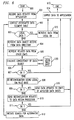
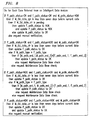
- FIG. 8 illustrates one example of logical rules that DRP 175 could employ to reconcile the aforementioned data for path C.
- data bases 125-2, 125-1 and 125-3 indicated a path_status of "NOK”, "OK”, and “OK”, respectively, with a tbl_date_clr of older than seven days.
- the DRP 175 rules specify checking the consistency of the path_type between the maintenance and facilities data bases as the next processing step. This is done since it is possible that a trouble report may have been recorded in the maintenance data base against the wrong path_id, and the most reliable source of path_type is contained in the facilities data base, where the primary shared copy for the path is stored.
- the DRP 175 rules specify that the data be checked manually, which might result in a field verification. If, on the other hand, DRP 175 finds that the data for the path_type and end points match, then the DRP 175 rules specify that the path_status recorded in the provisioning data base is incorrect, and direct an update of the path_status data element in that data base. At this point, then, since path C is no longer needed for the illustrative circuit, it is made available for use in another circuit.
Landscapes
- Engineering & Computer Science (AREA)
- Databases & Information Systems (AREA)
- Theoretical Computer Science (AREA)
- Computing Systems (AREA)
- Data Mining & Analysis (AREA)
- Physics & Mathematics (AREA)
- General Engineering & Computer Science (AREA)
- General Physics & Mathematics (AREA)
- Information Retrieval, Db Structures And Fs Structures Therefor (AREA)
- Computer And Data Communications (AREA)
Claims (10)
- Vorrichtung, umfassend
eine Mehrzahl von Datenbanken zum Speichern von Daten, die mit entsprechenden Anwendungen verbunden sind,
eine Mehrzahl von Datenmodulen zur Bildung einer Schnittstelle zwischen entsprechenden der Anwendungen und ihren verbundenen Datenbanken, und
Mittel, die in jedem der Datenmodule enthalten sind und auf Empfang einer Anforderung von einer verbundenen der Anwendungen ansprechen, bestimmte Daten, die in der einen verbundenen der Datenbanken gespeichert sind, anzufordern, zum Wiederaufrufen der angeforderten Daten aus der einen verbundenen der Datenbanken und zum Kommunizieren mit anderen einzelnen der Datenmodule, um zu bestimmen, ob die angeforderten Daten mit verwandten Daten konsistent sind, die in ihren verbundenen der Datenbanken gespeichert sind. - Vorrichtung nach Anspruch 1, wobei die Mittel zum Kommunizieren Mittel umfassen, die in dem Fall funktionieren, dass bestimmt wurde, dass die angeforderten Daten mit den verwandten Daten konsistent sind, die in den verbundenen der Datenbanken gespeichert sind, zum Bereitstellen der angeforderten Daten zu der einen verbundenen der Anwendungen.
- Vorrichtung nach Anspruch 1, wobei die Mittel zum Kommunizieren Mittel umfassen, die in dem Fall funktionieren, dass bestimmt wurde, dass die angeforderten Daten mit den verwandten, gespeicherten Daten inkonsistent sind, zum Abgleichen der Inkonsistenz zwischen den angeforderten Daten und den verwandten Daten.
- Vorrichtung nach Anspruch 1, wobei jedes der Datenmodule mit entsprechenden Regelbasen verbunden ist, wobei jede der Regelbasen eine Mehrzahl von Spezifikationen umfasst, die spezifizieren, wie das verbundene Modul verwandte Daten, die mit angeforderten Daten inkonsistent sind, verarbeiten soll, und wobei die Mittel zum Kommunizieren Mittel umfassen, die in dem Fall funktionieren, dass bestimmt wurde, dass die angeforderten Daten mit den verwandten Daten inkonsistent sind, zum Verarbeiten der angeforderten Daten und der verwandten Daten entsprechend der Spezifikationen, die in der einen verbundenen der Regelbasen gespeichert sind.
- Vorrichtung, aufgezeigt in Anspruch 1, weiterhin umfassend,
Mittel zum Bestimmen, welche der verbundenen der Datenbanken die verwandten Daten enthalten, sofern vorhanden, und zum Senden einer Mitteilung zum Anfordern der verwandten Daten an jede der verbundenen der Datenbanken, die die verwandten Daten enthalten. - Vorrichtung, umfassend
eine Mehrzahl von Datenbanken, wobei einige der Datenbanken mit entsprechenden Anwendungen verbunden sind, wobei die Datenbanken Daten enthalten, die mit den Anwendungen verbunden sind,
eine Mehrzahl von Datenmodulen, die mit einigen entsprechenden der Datenbanken verbunden sind,
Mittel, die in mindestens einem der Datenmodule enthalten sind und auf Empfang einer Anforderung von einer der Anwendungen ansprechen, bestimmte Daten, die in der einen der Datenbanken enthalten sind, die mit mindestens einem der Datenmodule verbunden ist, anzufordern, zum Wiederaufrufen der angeforderten Daten aus der einen der Datenbanken,
Mittel, die in mindestens einem der Datenmodule enthalten sind, zum Identifizieren, welche anderen der Datenbanken Daten enthalten, die mit den angeforderten Daten verwandt sind, und zum Senden einer Anforderung einer Kopie der verwandten Daten zu jeder der anderen der Datenbanken mittels eines ihrer verbundenen der Datenmodule, und
Mittel, die in mindestens einem der Datenmodule enthalten sind und auf Empfang der verwandten Daten ansprechen, zum Bereitstellen der angeforderten Daten und der verwandten Daten zu der einen der Anwendungen, wenn die angeforderten Daten und die verwandten Daten miteinander konsistent sind. - Vorrichtung nach Anspruch 6, wobei die Mittel zum Bereitstellen Mittel umfassen, die in dem Fall funktionieren, dass bestimmt wurde, dass die angeforderten Daten mit den verwandten, gespeicherten Daten inkonsistent sind, zum Abgleichen der Inkonsistenz zwischen den angeforderten Daten und den verwandten Daten.
- Vorrichtung nach Anspruch 6, wobei die Datenmodule mit entsprechenden Regelbasen verbunden sind, die jede eine Mehrzahl von Spezifikationen umfassen, die spezifizieren, wie das verbundene Modul verwandte Daten die mit angeforderten Daten inkonsistent sind, verarbeiten soll, und wobei die Mittel zum Bereitstellen Mittel umfassen, die in dem Fall funktionieren, dass bestimmt wurde, dass die angeforderten Daten mit den verwandten Daten inkonsistent sind, zum Verarbeiten der angeforderten Daten und der verwandten Daten entsprechend der Spezifikationen, die in der einen verbundenen der Regelbasen gespeichert sind.
- Vorrichtung nach Anspruch 4 oder 8, wobei die Spezifikationen eine Spezifikation umfassen, um das Bereitstellen der angeforderten Daten zu der einen verbundenen der Anwendungen solange zu verschieben, bis die Inkonsistenz zwischen den angeforderten Daten und den verwandten Daten abgeglichen ist.
- Vorrichtung, aufgezeigt in Anspruch 5 oder 6, weiterhin umfassend ein Datenverzeichnis zum Speichern einer Mehrzahl von Datensätzen, von denen jeder identifiziert, welche der Datenbanken Daten enthalten, die mit angeforderten Daten verwandt sind, und identifizieren, welche Datenelemente in den Datenbanken mit den angeforderten Daten verwandt sind.
Applications Claiming Priority (2)
| Application Number | Priority Date | Filing Date | Title |
|---|---|---|---|
| US648647 | 1996-05-16 | ||
| US08/648,647 US5933836A (en) | 1996-05-16 | 1996-05-16 | Database quality management system |
Publications (3)
| Publication Number | Publication Date |
|---|---|
| EP0807892A2 EP0807892A2 (de) | 1997-11-19 |
| EP0807892A3 EP0807892A3 (de) | 1999-08-25 |
| EP0807892B1 true EP0807892B1 (de) | 2003-07-16 |
Family
ID=24601629
Family Applications (1)
| Application Number | Title | Priority Date | Filing Date |
|---|---|---|---|
| EP97303076A Expired - Lifetime EP0807892B1 (de) | 1996-05-16 | 1997-05-06 | Datenqualitätsverwaltungssystem |
Country Status (4)
| Country | Link |
|---|---|
| US (1) | US5933836A (de) |
| EP (1) | EP0807892B1 (de) |
| JP (1) | JPH10124370A (de) |
| DE (1) | DE69723500T2 (de) |
Families Citing this family (17)
| Publication number | Priority date | Publication date | Assignee | Title |
|---|---|---|---|---|
| GB9603582D0 (en) | 1996-02-20 | 1996-04-17 | Hewlett Packard Co | Method of accessing service resource items that are for use in a telecommunications system |
| US6282672B1 (en) * | 1998-01-30 | 2001-08-28 | Hitachi, Ltd. | System for simultaneously executing any one of plurality of applications that must be executed using static data not modified by another computer program |
| GB2351165B (en) * | 1999-06-18 | 2003-11-05 | Univ London | Method and apparatus for monitoring and maintaining the consistency of distributed documents |
| US6631365B1 (en) | 2000-03-14 | 2003-10-07 | Requisite Technology, Inc. | Method and apparatus for analyzing the quality of the content of a database |
| WO2001080054A1 (en) * | 2000-04-13 | 2001-10-25 | N-Tier Financial Services, Llc | Business objects process development framework for data reconciliation |
| US6910045B2 (en) | 2000-11-01 | 2005-06-21 | Collegenet, Inc. | Automatic data transmission in response to content of electronic forms satisfying criteria |
| US20030018486A1 (en) * | 2001-06-25 | 2003-01-23 | Jacob Feldman | Consistency validation for complex classification rules |
| US7240068B2 (en) * | 2002-09-06 | 2007-07-03 | Truetel Communications, Inc. | Service logic execution environment (SLEE) that is running on a device, supporting a plurality of services and that is compliant with a telecommunications computing standard for SLEES |
| US20050182739A1 (en) * | 2004-02-18 | 2005-08-18 | Tamraparni Dasu | Implementing data quality using rule based and knowledge engineering |
| GB2419974A (en) * | 2004-11-09 | 2006-05-10 | Finsoft Ltd | Calculating the quality of a data record |
| US8078588B2 (en) * | 2005-10-10 | 2011-12-13 | Oracle International Corporation | Recoverable execution |
| US7542973B2 (en) * | 2006-05-01 | 2009-06-02 | Sap, Aktiengesellschaft | System and method for performing configurable matching of similar data in a data repository |
| US20080222611A1 (en) * | 2007-03-09 | 2008-09-11 | Microsoft Corporation | Generic validation layer for object properties |
| JP5217776B2 (ja) * | 2008-08-25 | 2013-06-19 | 日本電気株式会社 | クライアントサーバシステム、クライアントコンピュータ、ファイル管理方法及びそのプログラム |
| US8238538B2 (en) | 2009-05-28 | 2012-08-07 | Comcast Cable Communications, Llc | Stateful home phone service |
| WO2016121869A1 (ja) * | 2015-01-29 | 2016-08-04 | 日本電気株式会社 | 仮想化管理・オーケストレーション装置、仮想化管理・オーケストレーション方法、および、プログラム |
| JP6261824B2 (ja) * | 2015-06-16 | 2018-01-17 | 株式会社日立製作所 | データ補正システムおよびデータ補正方法 |
Family Cites Families (7)
| Publication number | Priority date | Publication date | Assignee | Title |
|---|---|---|---|---|
| US4714995A (en) * | 1985-09-13 | 1987-12-22 | Trw Inc. | Computer integration system |
| US5247651A (en) * | 1990-04-17 | 1993-09-21 | At&T Bell Laboratories | Interactive computer program specification and simulation system |
| US5307484A (en) * | 1991-03-06 | 1994-04-26 | Chrysler Corporation | Relational data base repository system for managing functional and physical data structures of nodes and links of multiple computer networks |
| US5412756A (en) * | 1992-12-22 | 1995-05-02 | Mitsubishi Denki Kabushiki Kaisha | Artificial intelligence software shell for plant operation simulation |
| US5537590A (en) * | 1993-08-05 | 1996-07-16 | Amado; Armando | Apparatus for applying analysis rules to data sets in a relational database to generate a database of diagnostic records linked to the data sets |
| US5461559A (en) * | 1993-10-04 | 1995-10-24 | The United States Of America As Represented By The Secretary Of The Air Force | Hierarchical control system for molecular beam epitaxy |
| US5555244A (en) * | 1994-05-19 | 1996-09-10 | Integrated Network Corporation | Scalable multimedia network |
-
1996
- 1996-05-16 US US08/648,647 patent/US5933836A/en not_active Expired - Fee Related
-
1997
- 1997-05-06 EP EP97303076A patent/EP0807892B1/de not_active Expired - Lifetime
- 1997-05-06 JP JP9115535A patent/JPH10124370A/ja not_active Abandoned
- 1997-05-06 DE DE69723500T patent/DE69723500T2/de not_active Expired - Fee Related
Also Published As
| Publication number | Publication date |
|---|---|
| EP0807892A3 (de) | 1999-08-25 |
| US5933836A (en) | 1999-08-03 |
| JPH10124370A (ja) | 1998-05-15 |
| EP0807892A2 (de) | 1997-11-19 |
| DE69723500D1 (de) | 2003-08-21 |
| DE69723500T2 (de) | 2004-06-09 |
Similar Documents
| Publication | Publication Date | Title |
|---|---|---|
| EP0807892B1 (de) | Datenqualitätsverwaltungssystem | |
| US5940829A (en) | Work flow management system | |
| US6298352B1 (en) | Apparatus and method for managing number sources | |
| US5247664A (en) | Fault-tolerant distributed database system and method for the management of correctable subtransaction faults by the global transaction source node | |
| CA2232704C (en) | Apparatus and method for maintaining integrated data consistency across multiple databases | |
| US7925764B2 (en) | Method, apparatus and computer program product for integrating heterogeneous systems | |
| US5634048A (en) | Distributed database system having a center system with a link file and a method for retrieving data from same | |
| JPH09288690A (ja) | 協調設計支援システム | |
| JP5054065B2 (ja) | データベース装置、データベース整合システム、及び、データベース整合方法 | |
| JPH07311744A (ja) | 資源所在位置検出方式 | |
| CN110852571B (zh) | 加盟商的房源管理方法、计算机可读存储介质及服务器 | |
| JPH07319820A (ja) | 情報処理システム | |
| JPH11249943A (ja) | 分散型データベースの同期管理システムおよび同期管理方法 | |
| JPH0981409A (ja) | 相互ホットスタンバイシステム待機系選択方式 | |
| US6807270B2 (en) | Apparatus for providing data to switching elements in a communications system | |
| US20020072949A1 (en) | Item allocation method, system and program for workflow system | |
| US6226633B1 (en) | Method of forming a user interface for a telecommunications exchange | |
| US11556515B2 (en) | Artificially-intelligent, continuously-updating, centralized-database-identifier repository system | |
| US7035859B2 (en) | Method and system for intra-table referential integrity for relational database systems | |
| JPH06290098A (ja) | 分散データベース処理方法 | |
| US6801617B1 (en) | Method and apparatus for providing data to switching elements in a communications system | |
| JPH11331157A (ja) | 競合制御方法及び競合制御システム | |
| GB2310566A (en) | Telephone call handling system | |
| RU2004102896A (ru) | Способ и система для регистрации и поиска информации о местонахождении пользователей | |
| JPH0659964A (ja) | ディクショナリ分散運用管理方式 |
Legal Events
| Date | Code | Title | Description |
|---|---|---|---|
| PUAI | Public reference made under article 153(3) epc to a published international application that has entered the european phase |
Free format text: ORIGINAL CODE: 0009012 |
|
| AK | Designated contracting states |
Kind code of ref document: A2 Designated state(s): BE CH DE ES FR GB IT LI NL SE |
|
| PUAL | Search report despatched |
Free format text: ORIGINAL CODE: 0009013 |
|
| AK | Designated contracting states |
Kind code of ref document: A3 Designated state(s): BE CH DE ES FR GB IT LI NL SE |
|
| 17P | Request for examination filed |
Effective date: 20000211 |
|
| GRAH | Despatch of communication of intention to grant a patent |
Free format text: ORIGINAL CODE: EPIDOS IGRA |
|
| GRAH | Despatch of communication of intention to grant a patent |
Free format text: ORIGINAL CODE: EPIDOS IGRA |
|
| GRAA | (expected) grant |
Free format text: ORIGINAL CODE: 0009210 |
|
| AK | Designated contracting states |
Designated state(s): BE CH DE ES FR GB IT LI NL SE |
|
| PG25 | Lapsed in a contracting state [announced via postgrant information from national office to epo] |
Ref country code: NL Free format text: LAPSE BECAUSE OF FAILURE TO SUBMIT A TRANSLATION OF THE DESCRIPTION OR TO PAY THE FEE WITHIN THE PRESCRIBED TIME-LIMIT Effective date: 20030716 Ref country code: LI Free format text: LAPSE BECAUSE OF FAILURE TO SUBMIT A TRANSLATION OF THE DESCRIPTION OR TO PAY THE FEE WITHIN THE PRESCRIBED TIME-LIMIT Effective date: 20030716 Ref country code: IT Free format text: LAPSE BECAUSE OF FAILURE TO SUBMIT A TRANSLATION OF THE DESCRIPTION OR TO PAY THE FEE WITHIN THE PRE;WARNING: LAPSES OF ITALIAN PATENTS WITH EFFECTIVE DATE BEFORE 2007 MAY HAVE OCCURRED AT ANY TIME BEFORE 2007. THE CORRECT EFFECTIVE DATE MAY BE DIFFERENT FROM THE ONE RECORDED.SCRIBED TIME-LIMIT Effective date: 20030716 Ref country code: CH Free format text: LAPSE BECAUSE OF FAILURE TO SUBMIT A TRANSLATION OF THE DESCRIPTION OR TO PAY THE FEE WITHIN THE PRESCRIBED TIME-LIMIT Effective date: 20030716 Ref country code: BE Free format text: LAPSE BECAUSE OF FAILURE TO SUBMIT A TRANSLATION OF THE DESCRIPTION OR TO PAY THE FEE WITHIN THE PRESCRIBED TIME-LIMIT Effective date: 20030716 |
|
| REG | Reference to a national code |
Ref country code: GB Ref legal event code: FG4D |
|
| REG | Reference to a national code |
Ref country code: CH Ref legal event code: EP |
|
| REF | Corresponds to: |
Ref document number: 69723500 Country of ref document: DE Date of ref document: 20030821 Kind code of ref document: P |
|
| PG25 | Lapsed in a contracting state [announced via postgrant information from national office to epo] |
Ref country code: SE Free format text: LAPSE BECAUSE OF FAILURE TO SUBMIT A TRANSLATION OF THE DESCRIPTION OR TO PAY THE FEE WITHIN THE PRESCRIBED TIME-LIMIT Effective date: 20031016 |
|
| PG25 | Lapsed in a contracting state [announced via postgrant information from national office to epo] |
Ref country code: ES Free format text: LAPSE BECAUSE OF FAILURE TO SUBMIT A TRANSLATION OF THE DESCRIPTION OR TO PAY THE FEE WITHIN THE PRESCRIBED TIME-LIMIT Effective date: 20031027 |
|
| NLV1 | Nl: lapsed or annulled due to failure to fulfill the requirements of art. 29p and 29m of the patents act | ||
| REG | Reference to a national code |
Ref country code: CH Ref legal event code: PL |
|
| ET | Fr: translation filed | ||
| PLBE | No opposition filed within time limit |
Free format text: ORIGINAL CODE: 0009261 |
|
| STAA | Information on the status of an ep patent application or granted ep patent |
Free format text: STATUS: NO OPPOSITION FILED WITHIN TIME LIMIT |
|
| 26N | No opposition filed |
Effective date: 20040419 |
|
| PGFP | Annual fee paid to national office [announced via postgrant information from national office to epo] |
Ref country code: DE Payment date: 20070522 Year of fee payment: 11 |
|
| PGFP | Annual fee paid to national office [announced via postgrant information from national office to epo] |
Ref country code: GB Payment date: 20070522 Year of fee payment: 11 |
|
| PGFP | Annual fee paid to national office [announced via postgrant information from national office to epo] |
Ref country code: FR Payment date: 20070516 Year of fee payment: 11 |
|
| GBPC | Gb: european patent ceased through non-payment of renewal fee |
Effective date: 20080506 |
|
| REG | Reference to a national code |
Ref country code: FR Ref legal event code: ST Effective date: 20090119 |
|
| PG25 | Lapsed in a contracting state [announced via postgrant information from national office to epo] |
Ref country code: FR Free format text: LAPSE BECAUSE OF NON-PAYMENT OF DUE FEES Effective date: 20080602 Ref country code: DE Free format text: LAPSE BECAUSE OF NON-PAYMENT OF DUE FEES Effective date: 20081202 |
|
| PG25 | Lapsed in a contracting state [announced via postgrant information from national office to epo] |
Ref country code: GB Free format text: LAPSE BECAUSE OF NON-PAYMENT OF DUE FEES Effective date: 20080506 |