EP0804883A2 - Futtermittel - Google Patents
Futtermittel Download PDFInfo
- Publication number
- EP0804883A2 EP0804883A2 EP97303014A EP97303014A EP0804883A2 EP 0804883 A2 EP0804883 A2 EP 0804883A2 EP 97303014 A EP97303014 A EP 97303014A EP 97303014 A EP97303014 A EP 97303014A EP 0804883 A2 EP0804883 A2 EP 0804883A2
- Authority
- EP
- European Patent Office
- Prior art keywords
- feed
- silage
- corn
- animal
- days
- Prior art date
- Legal status (The legal status is an assumption and is not a legal conclusion. Google has not performed a legal analysis and makes no representation as to the accuracy of the status listed.)
- Withdrawn
Links
Images
Classifications
-
- A—HUMAN NECESSITIES
- A61—MEDICAL OR VETERINARY SCIENCE; HYGIENE
- A61K—PREPARATIONS FOR MEDICAL, DENTAL OR TOILETRY PURPOSES
- A61K38/00—Medicinal preparations containing peptides
- A61K38/16—Peptides having more than 20 amino acids; Gastrins; Somatostatins; Melanotropins; Derivatives thereof
- A61K38/17—Peptides having more than 20 amino acids; Gastrins; Somatostatins; Melanotropins; Derivatives thereof from animals; from humans
- A61K38/22—Hormones
- A61K38/27—Growth hormone [GH], i.e. somatotropin
-
- A—HUMAN NECESSITIES
- A01—AGRICULTURE; FORESTRY; ANIMAL HUSBANDRY; HUNTING; TRAPPING; FISHING
- A01H—NEW PLANTS OR NON-TRANSGENIC PROCESSES FOR OBTAINING THEM; PLANT REPRODUCTION BY TISSUE CULTURE TECHNIQUES
- A01H5/00—Angiosperms, i.e. flowering plants, characterised by their plant parts; Angiosperms characterised otherwise than by their botanic taxonomy
- A01H5/10—Seeds
-
- A—HUMAN NECESSITIES
- A01—AGRICULTURE; FORESTRY; ANIMAL HUSBANDRY; HUNTING; TRAPPING; FISHING
- A01H—NEW PLANTS OR NON-TRANSGENIC PROCESSES FOR OBTAINING THEM; PLANT REPRODUCTION BY TISSUE CULTURE TECHNIQUES
- A01H6/00—Angiosperms, i.e. flowering plants, characterised by their botanic taxonomy
- A01H6/46—Gramineae or Poaceae, e.g. ryegrass, rice, wheat or maize
- A01H6/4684—Zea mays [maize]
-
- A—HUMAN NECESSITIES
- A23—FOODS OR FOODSTUFFS; TREATMENT THEREOF, NOT COVERED BY OTHER CLASSES
- A23K—FODDER
- A23K30/00—Processes specially adapted for preservation of materials in order to produce animal feeding-stuffs
- A23K30/10—Processes specially adapted for preservation of materials in order to produce animal feeding-stuffs of green fodder
-
- A—HUMAN NECESSITIES
- A23—FOODS OR FOODSTUFFS; TREATMENT THEREOF, NOT COVERED BY OTHER CLASSES
- A23K—FODDER
- A23K50/00—Feeding-stuffs specially adapted for particular animals
- A23K50/10—Feeding-stuffs specially adapted for particular animals for ruminants
Definitions
- This invention relates to increasing milk production in ruminant animals such as dairy cows. More particularly the invention relates to increasing milk production in animals such as dairy cows by feeding a ration comprising silage from corn plants exhibiting a brown midrib phenotype.
- Corn plants (Zea mays L.) are bred by both self-pollination and cross-pollination techniques. Corn is a monoecious plant, i.e., each plant has separate male and female flowers on the same plant, located on the tassel and ear, respectively. Natural pollination occurs in corn when pollen is shed from tassels and contacts silks of the same plant or a different plant that protrude from tops of the developing ears. Methods and techniques for the development of inbred corn lines and hybrid corn varieties are known in the art. Hallauer, A., Maize, in Principles of Cultivar Development, Vol. 2, Fehr. W. ed. pp. 249-294, Macmillan, New York, (1987).
- hybrid corn varieties are produced by crossing two inbred lines to product F 1 hybrid progeny.
- the F 1 plants exhibit heterosis, or hybrid vigor, resulting in plants having high yield and superior agronomic performance in the hybrid combination.
- the production and development of inbred corn lines and hybrid corn varieties are discussed in, for example, U.S. Patent Nos. 5,367,109 and 5,495,067, which are incorporated herein by reference.
- ingested feed first passes into the reticulorumen, where it is subject to anaerobic microbial fermentation. Microbial fermentation begins the digestive process and gives a ruminant the ability to utilize fibrous feeds, in contrast to monogastric animals. Ruminants meet their nutrient needs by utilizing the by-products of microbial fermentation, along with any undigested feed residues and the resultant microbial mass that passes from the rumen.
- Anaerobic microbial fermentation is an advantage to ruminants because it allows them to benefit from feeds which cannot be utilized by non-ruminants.
- microbial activity limits the ability to provide supplemental nutrients to a ruminant animal, because many desirable nutrients, such as proteins, amino acids and digestible fiber, will be metabolized by microbes before the nutrients reach a site where they can be absorbed and utilized by the ruminant.
- rations containing silage derived from corn plants carrying a brown midrib (bm) mutation have been fed to cattle. Stallings, C. et al., J. Dairy Sci., 65:1945-1949 (1982); Block, E. et al., J. Dairy Sci. 64:1813-1825 (1981); Keith, E. et al., J. Dairy Sci. 62:788 (1979).
- the bm gene decreases and alters the lignin content in the vegetative parts of such corn plants; silage made from such plants has increased fiber digestibility compared to silage from corn plants not exhibiting the brown midrib phenotype.
- silage from bm corn may be used to increase the milk production of ruminant animals when combined to make an animal feed with defined constituents.
- the present invention provides a ruminant animal feed comprising a combination of:
- the ration can have a crude protein content of from about 17% to about 21% on a dry matter basis. About 30% to about 50% of the crude protein is soluble protein.
- the neutral detergent fiber digestibility can be from about 6% to about 20% greater than the neutral detergent fiber digestibility of corn silage produced from corresponding isogenic normal corn plants.
- the silage can have a whole plant in vitro digestibility from about 65% to about 85%.
- the corn plants can comprise F 1 hybrid plants.
- the brown midrib phenotype can be the result of homozygosity at the bm3 gene locus.
- the invention provides a method of enhancing milk production in a ruminant animal, such as cattle, sheep or goats, preferably in a dairy cow, comprising the step of feeding said animal an animal feed as defined hereinbefore.
- a ruminant animal such as cattle, sheep or goats
- the present invention provides an animal feed as described herein for enhancing milk production in a ruminant animal.
- the use of a forage component or a feed composition component as described herein for the preparation of an animal feed as described herein for enhancing milk production in a ruminant animal is also provided.
- the method can further comprise the step of administering a biologically active somatotropin to the animal, e.g. a cow under conditions delivering an effective amount of the somatotropin to the animal during a selected period.
- the somatotropin can be administered as a prolonged release dose, for example, a dose that is effective for at least 7 days.
- the conditions can comprise delivering the somatotropin to the circulatory system of the animal.
- the forage component comprises from about 40% to about 60% of the ration, and the bm corn silage comprises from about 40% to about 80% of the forage component. In some embodiments, the forage component comprises from about 45% to about 55% of the ration and the bm corn silage comprises from about 50% to about 80% of the forage component.
- the present invention further extends to a method of producing a total ruminant animal feed as defined herein comprising the steps of a) obtaining a corn silage produced from corn plants exhibiting a bm phenotype; and b) formulating a total ruminant animal feed comprising a combination of a forage component and a feed composition component as defined herein.
- said corn plants are grown from a substantially homogenous assemblage of corn seeds which are homozygous for at least one bm allele.
- a pack for a ruminant animal feed comprising a forage component and separately a feed composition component as defined herein as a combined preparation for simultaneous, separate or sequential use to enhance milk production in said animal.
- a pack may additionally comprise a biologically active somatotropin.
- Novel plants and seeds described herein also form aspects of the invention.
- the seeds of the invention may be viable or alternatively non-viable, such as crushed, milled or pressed seeds.
- Silage produced from the novel seeds and plants of the invention form yet further aspects of the invention.
- An article of manufacture comprising packaging material, a substantially homogenous assemblage of F 1 hybrid corn seeds within the packaging material and a package label accompanying the packaging material.
- the seeds can be homozygous for bm3.
- the package label indicates that the seeds are effective for producing silage that increases milk production when fed to lactating dairy cattle.
- the package label can indicate that the seeds are effective for producing silage having an in vitro neutral detergent fiber digestibility of from about 44% to about 70% and a whole plant in vitro digestibility of about 65% to about 85% determined after ensiling the plants.
- the package label can also indicate that the seeds are effective for producing silage that increases milk production when fed to lactating dairy cows in a ration having a fiber content of about 20% to about 40%.
- a ration comprises about 20% to about 60% of a forage component, with the remainder being a feed composition.
- the forage component comprises from about 20% to about 100% corn silage produced from corn plants homozygous for bm3 .
- the package label can also indicate that the ration has a crude protein content of from about 17% to about 21% on a dry matter basis and about 35% to about 50% of the crude protein is soluble protein.
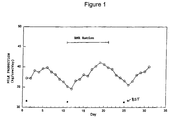
- Figure 1 shows herd milk production on a daily basis in a switchback trial in which normal or BMR silage was fed in conjunction with bovine somatotropin administration.
- a feed ration has been discovered that comprises a corn silage produced from corn plants exhibiting a brown midrib phenotype. Feeding of such silage to dairy cattle results in unexpected improvements in milk production.
- a silage component of the feed ration is produced from corn plants displaying a brown midrib (bm) phenotype.
- the bm phenotype is exhibited by plants homozygous for a mutant allele at the bm1, bm2, bm3 or bm4 loci.
- such plants may display the brown midrib phenotype due to homozygosity at more than one of the bm loci.
- Mutant bm alleles are known to reduce and alter the lignin content in plants homozygous for such alleles. The lignin content may be reduced 20%, 30%, or up to about 45% compared to corn of the same genetic background but having a wild-type Bm gene.
- Corn inbreds and hybrids carrying bm alleles and displaying the bm phenotype can be produced by corn breeding methods such as conversion programs or recurrent selection.
- a corn inbred line is converted to the bm phenotype in a breeding program initiated from the F 1 progeny of a cross between a plant of a first inbred (wild-type for the bm phenotype) and plants of a second line carrying the desired bm allele.
- F 1 plants are backcrossed to the first inbred line until an inbred line is obtained that has substantially the same genotype as the original inbred line except for the replacement of the wild-type Bm gene by the mutant bm gene.
- Conversion programs, recurrent selection programs, pedigree breeding programs, breeding programs using synthetics and other breeding methods are described in, e.g., Hallauer, et al. in Corn and Corn Improvement, Sprague et al., eds. pp. 463-564 (1988).
- the underside of leaves may be examined at 10-14 days before tassel emergence (4-6 leaf stage, 0.6-1 meter height) for the appearance of a golden-brown or reddish-brown color on the midrib.
- Plants may also be examined at maturity by removing a leaf sheath and examining the stalk. The stalk has a golden-brown or reddish-brown color if the brown midrib phenotype is expressed. Brown pigment is also present in the cob and in the roots.
- marker-assisted breeding techniques may be used, e.g., restriction fragment length polymorphisms (RFLP), simple sequence repeats (SSR), microsatellite markers or PCR markers. Marker-assisted breeding techniques are useful, in that plants heterozygous for the bm allele can be identified without the necessity for evaluating phenotypic ratios in selfed progeny.
- each inbred is evaluated for the development of appropriate hybrid combinations by test crosses or top crosses to another inbred displaying the bm phenotype.
- Suitable hybrids are selected to have certain desirable agronomic characteristics. Such characteristics include, for example, satisfactory disease resistance or tolerance, satisfactory insect resistance or tolerance and satisfactory seedling vigor. Such general characteristics are desired in all types of corn hybrids regardless of the intended use of the hybrid; the best available performance with respect to these characteristics will be incorporated into a bm hybrid. Methods and tests for identifying inbreds having the desired general agronomic performance characteristics in hybrid combination are known in the art.
- hybrids are developed that are adapted for use in short, medium or long growing seasons according to a relative maturity rating system such as the Minnesota Maturity Rating (MMR). See, e.g., U.S. Patent 5,495,067, incorporated herein by reference.
- MMR Minnesota Maturity Rating
- the forage yield of a suitable bm hybrid is from about 20 to about 28 Tons per acre (adjusted to 70% moisture), preferably from about 22 Tons per acre to about 28 Tons per acre, more preferably from about 24 Tons per acre to about 28 Tons per acre.
- the forage yield can be from about 25 Tons/acre to about 32 Tons/acre in newer hybrids that are converted to express the bm phenotype.
- a bm hybrid typically has a decrease in forage yield compared to the forage yield of its isogenic counterpart lacking the bm phenotype.
- preferred hybrids have a forage yield decrease of less than 15% compared to their isogenic counterparts, preferably a decrease of about 10% or less.
- In vitro digestibility is the in vitro digestibility of corn silage made from a bm hybrid as determined after about 30 days of fermentation.
- In vitro true digestibility can be measured by determining neutral detergent fiber (NDF) digestibility.
- NDF neutral detergent fiber
- IVCWD in vitro cell wall digestibility
- Neutral detergent fiber is a measure of the cellulose, hemicellulose and lignin fractions of silage and constitutes from about 35 percent to about 55 percent of the silage dry matter, generally from about 40 percent to about 50 percent.
- Preferred bm hybrids have an in vitro NDF digestibility of from about 44 percent to about 70 percent, e.g., from about 44 percent to about 60 percent, or from about 47 percent to about 55 percent. In some embodiments, the in vitro NDF digestibility is from about 44% to about 50%.
- the NDF digestibility of bm hybrids preferably is about 6 to about 20 percentage units greater than the corresponding isogenic normal hybrid (which is homozygous for Bm3), e.g., about 6 to about 15 percentage units greater.
- In vitro digestibility can also be measured on the whole plant after about 30 days of fermentation.
- Whole plant in vitro digestibility is also referred to herein as IVTD and is based on the Tilley and Terry fermentation method. Tilley, J. and Terry, R. J. Brit. Grassland Soc. 18:104-111 (1963).
- Suitable hybrids have an IVTD value of from about 65% to about 85%, e.g., from about 70% to about 85%, or from about 74% to about 85%.
- the IVTD value of bm hybrids is from about 74 percent to about 80 percent.
- the IVTD value of a bm hybrid is about 2 to about 7 percentage units greater than the IVTD value of the corresponding isogenic normal hybrid.
- In vitro NDF digestibility and IVTD can be measured, for example, by collecting fresh-cut plant material and ensiling it in mini-silo fermentation canisters. The material may be reshred prior to ensiling to provide more uniform fermentation. After about 30 days, the pH of the fermented material is stable and in vitro NDF Digestibility and IVTD are determined as described in Goering, H. and Van Soest, P., supra, except that a 30 hour in vitro fermentation is performed rather than a 48 hour in vitro fermentation.
- the forage yields, IVCWD values and IVTD values of the novel bm hybrids disclosed herein are useful in determining the suitability of such hybrids for inclusion in a dairy cattle feed ration.
- each inbred is evaluated for the development of appropriate hybrid combinations by test crosses or top crosses to another inbred displaying the bm phenotype.
- corn inbreds suitable for producing bm corn hybrids include, without limitation, inbreds AR5252bm3, 7675bm3, 7677bm3, AR5251bm3 and AR5651bm3.
- inbreds AR5252bm3, AR5251bm3, AR5651bm3, AR5551bm3, AR5153bm3, AR5253bm3 and AR5654bm3 are available from the applicant on request. This however in no way provides a licence of any sort to perform the invention as claimed.
- the invention may readily be performed using materials available and known in the art.
- other corn seeds possessing mutant bm alleles are available from various universities and seed stock centers such as Maize Genetics Cooperation - Stock Center, University of Illinois, Department of Crop Science, Urbana, Illinois, USA. These seeds can also be used to initiate a bm breeding program.
- the invention may alternatively be performed by transfection of appropriate plants to produce antisense molecules to the Bm gene whose sequence is known.
- An inbred line according to the invention preferably is homozygous for a bm3 allele.
- Certain bm3 alleles have been sequenced, e.g., the bm3-1 and bm3-2 alleles. Vignols et al. Plant Cell 7:407-416 (1995). Alleles that have a deletion, e.g., a deletion similar to that in bm3-2, are preferred because such alleles are less likely to revert to wild-type.
- F 1 hybrid bm seed is undertaken.
- a substantially uniform assemblage of F 1 bm hybrid corn seeds is conditioned and bagged in packaging material by means known in the art to form an article of manufacture.
- Such a novel bag of seed has a package label accompanying the bag, e.g., a tag or label secured to the packaging material, a label printed on the packaging material or a label inserted within the bag.
- the package label indicates that the seeds therein are effective for producing silage that can be fed to dairy cattle.
- the package label indicates that the resulting silage is to be combined with a feed composition component as disclosed herein.
- the package label may indicate that silage resulting from seeds contained therein is effective for increasing milk production when fed to lactating cows as disclosed herein.
- the novel corn seed is planted and cultivated according to standard agronomic practices in the geographic area to which the hybrid is adapted. Growers typically take into account soil fertility, crop rotation practices and other factors specific to the locale in which the hybrid corn is being grown.
- Corn plants can be grown to maturity and the seeds produced thereon harvested for use as grain.
- above-ground parts of corn plants disclosed herein preferably are harvested after grain fill, but before drydown.
- plants are harvested using a mechanical forage harvester which chops the above-ground portion of the plant into small pieces.
- Harvesting typically is based on the stage of seed maturity and occurs about the stage at which the color line is halfway down the kernel. The precise harvest time will depend, of course, upon geographical location and seasonal factors such as the weather.
- the chopped material is then ensiled by techniques known in the art, e.g., in trenches or in cdncrete stave silos. Microbial inoculants and/or preservatives may be added to promote silage formation, if desired.
- Corn silage from bm plants is fed to ruminant animals, such as dairy cattle as a total animal feed ration, such as a total dairy cattle feed ration (also referred to herein as a total mixed ration or total ration) comprising bm silage and a feed composition.
- ruminant animals such as dairy cattle as a total animal feed ration, such as a total dairy cattle feed ration (also referred to herein as a total mixed ration or total ration) comprising bm silage and a feed composition.
- the nutrient composition of the silage can be determined, e.g. percent by dry matter, percent NDF, percent CP, in vitro NDF, digestibility and IVTD. Based on this information, a total animal (e.g. dairy cattle) feed ration is formulated.
- a feed composition component of the invention may be a complete feed form, a concentrate form, blender form or base mix form.
- complete feed form it is meant that the feed represents the cow's entire grain ration.
- concentrate form it is meant that the feed will be used as the primary supplemental protein source and would normally be fed with grain to meet an animal's protein needs.
- blender form it is meant that the feed will be mixed with approximately a 50:50 ratio with grain to form the complete grain ration.
- the base mix form is similar to the concentrate form, but is typically higher in protein content and is used at lower inclusion rates.
- the base mix form will be a primary, but often not the sole source of supplemental protein.
- a complete feed form composition may contain wheat middlings, corn, meat and bone meal, soybean meal, salt, macro-minerals, trace minerals and vitamins.
- Alternative or optional ingredients commonly include, but are not restricted to, fat, sunflower meal, feather meal, malt sprouts, distillers' grains, canola meal and soybean hulls.
- Other alternative or optional protein sources include, for example, blood meal, corn gluten meal, peanut meal, cottonseed meal, soybeans (extruded or roasted), wheat bran and high fat rice bran.
- a concentrate form composition, a blender form composition or a base mix form composition can be prepared by those of skill in the art, based upon the complete feed composition discussed above.
- Grains fed with the blender, concentrate and base mix forms of the composition can include, but are not limited to, corn, barley, oats, millet, rice, sorghum and wheat. Intake of the total grain ration will typically range from 2.7 to about 17 kilograms (kg) per day.
- the nutrient composition of total dairy cattle feed ration comprising bm silage contains crude protein (CP) at a relatively high level in order to increase milk production.
- CP crude protein
- CP is about 17% or greater, preferably from about 18% to about 21%. If there are reproductive difficulties, the amount of CP may be reduced.
- About 30% to about 50% of the CP is soluble protein (also referred to as SP, degradable intake protein, or DIP), preferably about 35% to about 50%, more preferably about 40% to about 45%.
- SP degradable intake protein
- a total ration having a CP level at the lower end of the range of values results in greater weight gain and smaller increases in milk production.
- a ration with a CP level at the upper end of the range of values results in smaller weight gains and greater increases in milk production.
- About 20% to about 40% of the CP in the total ration is rumen undegraded protein (RUP, undegradable intake protein, or UIP), preferably from about 25% to about 40%, more preferably from about 25% to about 35%.
- ROP rumen undegraded protein
- UIP undegradable intake protein
- the ADF content of a total ration preferably is about 18% or greater, e.g., about 18% to about 24%, or about 19% to about 22%.
- the fat content of a total ration typically is from about 4% to about 8%, e.g., about 4% to about 6%.
- the non-fiber carbohydrate (NFC) content of a total ration is typically from about 36% to 46% on a dry matter basis, e.g., about 39% to about 43%.
- the forage component in the total ration typically constitutes about 20% to about 60% of the ration on a dry matter basis and is added to achieve a fiber content of about 20% to about 40%, preferably from about 25% to about 35%. These values are appropriate for cows in early lactation; mid-lactation cows may have a higher forage/concentrate ratio resulting in, for example, about 30% to about 40% fiber content.
- the bm silage comprises from about 20% to about 100% of the forage on a dry matter basis, e.g., from about 25% to about 90%, or from about 40% to about 90%, or from about 70% to about 90%.
- bm silage may comprise 100% of the forage component in a ration
- higher amounts of a protein source such as soybean meal will need to be included; doing so increases the overall cost of the diet. Therefore, it can be more cost-effective to include bm silage at less than 100% of the forage component.
- Sources that may be used to complete the forage component of the ration include, but are not limited to, corn silage from non- bm corn plants, alfalfa haylage, grass silages (e.g., sudangrass, orchardgrass or sorghum-based silage), grass hays (e.g., sudangrass or orchardgrass) and alfalfa or clover hay.
- grass silages e.g., sudangrass, orchardgrass or sorghum-based silage
- grass hays e.g., sudangrass or orchardgrass
- alfalfa or clover hay alfalfa or clover hay.
- the silage component and the feed composition component are combined and fed to ruminant animals, e.g. dairy cattle, under generally accepted management conditions.
- dairy cow management conditions include known measures for animal care, shelter and veterinary treatment, under lactation and gestation cycles used by dairy farmers.
- a total ration comprising bm silage and having a nutrient composition disclosed herein provides a significant increase in milk yield on a raw basis or fat-corrected basis, without adversely affecting general animal health, particularly live weight.
- a total ration includes components such as fat, vitamins and minerals in proportions and within ranges that are known in the art.
- Maximum fiber digestibility occurs in a rumen environment suitable for growth of fiber-digesting organisms.
- the levels of other components are considered when formulating a total animal feed ration.
- high levels of unsaturated fatty acids may depress NDF digestibility.
- the level of non-structural carbohydrate is adjusted to provide sufficient energy from starch fermentation without decreasing rumen pH to such an extent that the growth of fiber-digesting microbes is inhibited.
- the higher digestibility of bm corn silage may require that the ration be adjusted to achieve higher levels of non-protein nitrogen (NPN) in the rumen compared to rations using non- bm corn silage, because fiber-digesting microbes generally are more active when NPN is increased.
- NPN non-protein nitrogen
- Sufficient NPN can be provided by increasing the level and sources of SP in the ration, in combination with an increased forage/concentrate ratio.
- Particle size of corn silage affects the rate and the efficiency of silage digestion in the rumen.
- a theoretical length of cut of about 0.95 cm to 1.27 cm is often used when chopping corn for silage. Because of the higher digestibility of bm corn silage, such silage may pass through the rumen more rapidly than desirable for efficient digestion and mat formation.
- a larger theoretical length of cut preferably is used when chopping bm corn, e.g., about 1.27 cm to about 2.54 cm, or about 1.91 cm to about 2.54 cm.
- Increased length of cut for bm corn silage contributes to increased scratch factor which stimulates cud-chewing and improves rumen buffering due to saliva formation.
- the relative amounts of different components of the feed may be adjusted appropriately to allow maximum milk production.
- the level of CP should be increased to the upper level of the range given above
- the feed should be formulated to maintain rumen pH around 6.2, such as in the range 5.5 to 7.0 for ruminants, particularly 5.5 to 6.5 for dairy cattle, for example by adjustment of the level of non-structural carbohydrate and factors which affect fiber digestibility should be adjusted appropriately, e.g. the levels of unsaturated fatty acids. Modification of each or all of the different components mentioned may be performed to enhance milk production. Alternatively, or additionally, the particle size of corn silage may be adjusted as mentioned above.
- a method according to the invention comprises administration of a biologically active somatotropin to a ruminant animal such as a dairy cow while feeding a ration comprising bm corn silage to the animal.
- Somatotropin refers to a peptide that has biological activity and chemical structure similar to those of somatotropin produced in the pituitary gland of an animal.
- Such somatotropin include, without limitation, natural somatotropins produced by pituitary somatotropic cells and somatotropins expressed by genetically transformed microorganisms such as E. coli or yeasts.
- Biologically active somatotropins may have an amino acid sequence identical to natural somatotropins or may be analogs having one or more alterations in amino acid sequence that provide enhanced biological activity or some other advantage.
- suitable somatotropins are described in, e.g., US Patents 4,693,973, 5,411,951, 5,037,806 and 5,086,041, all of which are incorporated herein by reference.
- a preferred somatotropin is bovine somatotropin for use with dairy cows.
- somatotropin is administered parenterally, e.g., by intramuscular or subcutaneous injection, which delivers the peptide to the circulatory system.
- Suitable formulations for administering a somatotropin are known in the art.
- somatotropin can be injected in a physiologically acceptable vehicle such as a wax and an oil. See, e.g., U.S. Patents 4,977,140, 5,474,980, 5,156,851 and 5,013,713, all of which are incorporated herein by reference.
- a prolonged release formulation is used, such that a dose of somatotropin effective for enhancing milk production over a period of several days is released into the circulatory system with a single administration, e.g., at least 7 days, at least 14 days or at least 21 days.
- a biologically active somatotropin is administered under conditions that provide an amount of peptide effective for enhancing milk production to a ruminant animal.
- Techniques and means are known in the art for determining appropriate doses to be supplied or provided to an individual animal. For example typically, amounts of somatotropin between about 5 and about 75 mg/cow/day are suitable for use in the invention.
- parenteral administration of a single dose of about 300 mg of zinc-associated somatotropin can be sufficient to provide an increased amount of bovine somatotropin for a period of about 15 days.
- a feed ration comprising bm corn silage is fed during a selected period to at least one lactating ruminant animal, e.g. dairy cow.
- Somatotropin is administered so that the production-enhancing effect of the peptide coincides with the feeding of the bm silage-containing ration.
- a prolonged release formulation of somatotropin can be administered to a cow every 14 days over a 180 period.
- a bm silage ration described above is fed daily to the cow over the same 180 day period.
- somatotropin can be administered daily and a bm silage ration can be fed daily.
- the somatotropin can be administered, e.g., by injection, either before or during the period in which the ration is being fed, provided that an effective amount of the peptide is delivered during the same period that the ration is being fed.
- the feeding period can be short, e.g., 4 days, or preferably longer, e.g., 10 days, 30 days or more.
- a biologically active somatotropin may be administered to both primiparous and multiparous cows, either in early, mid or late lactation, e.g., about 63 to about 360 days postpartum. Somatotropin is particularly useful for increasing milk production during mid and late lactation; i.e., about 100 to about 360 days postpartum.
- Feeding a dairy cattle feed ration comprising bm corn silage or bm corn silage results in surprising increases in milk production.
- An increase in milk production of at least about 1.8 kg/cow/day is often observed.
- a method of feeding a bm silage feed ration as disclosed herein provides significant utility to the producer because of such increases in milk production.
- protein, lactose and solids-not-fat (SNF) components of milk are not altered significantly after feeding a bm silage total ration as disclosed herein.
- Feeding a dairy cattle feed ration comprising bm corn silage and coextensively supplying an effective amount of a biologically active somatotropin also results in significant increases in milk production compared to the increase observed with somatotropin alone. For example, an increase in milk production of about 3 kg/cow/day can be observed over a 4 day period.
- Inbred lines AR5152 bm3 and AR5751 bm3 are crossed (AR5152 bm3 X AR5751 bm 3) to make F 1 hybrid seed carrying the brown midrib genotype.
- Control hybrid seed is prepared by crossing the unconverted parental lines.
- the control and bm hybrid seed is planted at a density of 24,900 kernels per acre and cultivated using a standard fertilization program.
- the corn is harvested 4 months after planting, using a forage harvester having a 0.95 cm theoretical length of cut (TLC) and a screen.
- the harvested material is placed in polyethylene bags (Ag Bags). If desired, the harvested material is treated with inoculant and/or preservative.
- the forage yield for bm corn silage is about 1 wet ton per acre less than the control hybrid corn.
- Samples are collected from the polyethylene bags after 30 days of fermentation/storage and assayed for nutrient concentrations. Typical results are shown in Table 2.
- the control corn silage and the bm corn silage are similar in nutrient composition, except for fiber digestibility and NE L concentration. The greater NE L concentration is likely related to the in vitro digestibility of NDF, ADF, and hemicellulose.
- TMR total mixed ration
- the following assumptions are used in ration formulation: the early lactation experimental dairy cow is estimated to weigh 636 kg and to produce 50 kg of milk per day with 3.30% fat, 3.10% milk protein and no body weight change. Dry matter intake (DMI) is predicted to be slightly less than 4.0% of body weight.
- the TMR is formulated to contain on a dry matter basis: 50% complete feed mix, 33% corn silage and 17% alfalfa haylage.
- the ingredient composition of the complete feed is given in Table 3 and the nutrient composition of the complete feed mix is given in Table 4.
- Table 3 Ingredient Composition of Complete Feed 1 INGREDIENT Composition (% by weight) Corn, coarse ground 38.7 Wheat Middlings 20.0 Meat & Bone Meal (50% protein) 1.5 Hi Pro Soybean Meal (49% crude protein) 1.9 Feather Meal 3.5 Canola Meal 20.0 Animal fat 2.3 Minerals and Vitamins 4.7 Distillers grains 7.4 Total 100.0 1 As fed basis.
- Brown midrib (BMR) or control corn silage (Example 2) are combined with complete feed mix and alfalfa haylage to form the rations, using each silage in an equal amount on a dry matter basis.
- Rations contain approximately 18.5% crude protein, 32% soluble protein and 40% rumen undegraded protein. Both rations are adjusted to a calculated pH of about 6.2 Both rations are balanced to meet or exceed mineral, vitamin and total bypass protein requirements.
- lactating dairy cows are utilized in a randomized complete block design experiment, consisting of 5 primiparous cows and 5 multiparous cows fed control silage and 5 primiparous cows and 5 multiparous cows fed BMR silage. Cows are randomly assigned after calving. During the fifth week postpartum, the cows are abruptly switched to the appropriate feeding ration and continued on that ration from week 5 to week 17 postpartum. Primiparous cows are producing more than 25 kg/day of milk during the 4th week postpartum. Multiparous cows are producing greater than 29.5 kg/day of milk during the 4th week postpartum. All cows are disease free and otherwise healthy.
- Cows are fed ad libitum for the duration of the experiment, twice daily at 12 hour intervals, if possible. Cows are fed to allow for 5 to 10% feed refusal.
- the dietary ration and percentages of complete feed mix (Example 2), corn silage (Example 1) and alfalfa haylage on a dry matter basis are given in Table 5.
- Milk production is measured at each milking and reported daily. Two samples of milk are taken weekly from each cow for composition analysis, including fat, protein, lactose, solids-not-fat and somatic cell counts. Body weights are recorded weekly after calving. Body condition scores are recorded at approximately weeks 4, 8, 12 and 16 postpartum. The same employee records condition scores at each measurement time. Body conditions scores are recorded according to the definitions indicated in Table 6.
- cows fed BMR silage have a statistically significant increase in milk production when comparing unadjusted means or when comparing covariate adjusted means.
- the increase is from about 1.8 kg milk/cow/day to about 5.0 kg milk/cow/day.
- milkfat percentage in milk from cows fed the ration containing BMR silage there is a statistically significant decrease in milkfat percentage in milk from cows fed the ration containing BMR silage.
- Table 6 Instructions for Body Condition Scoring Score Definition 1 Loin area has limited flesh covering, is prominent and the ends of spinous processes are sharp to touch. Definite overhanging shelf effect is visible. Individual vertebrae of the hind quarters are prominent and distinct. Hooks and pin bones are notable.
- Hooks and pin bones are rounded and smooth.
- the area between the pin bones and around the tail-head appear smooth without sign of fat deposition.
- 4 Individual spinous processes can be distinguished only by firm palpitation. Processes appear flat or rounded with no overhanging shelf effect. The ridge formed by the vertebrae of the hindquarters is rounded and smooth, flattening out as you move forward. Hooks are rounded, and the span between hooks is flat. The area around the tail- head and pin bones is rounded with evidence of fat deposition. 5 Bone structure of the vertebral column, spinous processes, hooks and pin bone regions is not visually apparent. Evidence of fat deposition is prominent. The tail head appears to be buried in fatty tissue.
- Line MED947 is a corn inbred that has the characteristics shown in Table 7.
- Line MED947 was crossed to B73 bm3 (stock no. 980392, obtained from the Department of Agronomy, Purdue University, West Lafayette, Indiana). After completing a conversion program, an inbred line designated as AR5252 bm3 was obtained. The backcrossing program is shown in Table 8.
- Line MED154 is a corn inbred that has the characteristics shown in Table 9.
- Line MED154 was backcrossed to AR5151 bm3 as indicated in Table 10 to obtain line AR5251 bm3 .
- the bm3 allele in AR5151 bm3 was obtained from A632 bm3 (Purdue University).
- Line MED058 is a corn inbred that has the characteristics shown in Table 11.
- Line MED058 was backcrossed with line AR5654 bm3 .
- the bm3 allele in AR5654 bm3 was derived from Mo17 bm 3 (Purdue University).
- Line 7675 was crossed to Oh545 bm3 (stock no. 980390, Department of Agronomy, Purdue University) in a conversion program as shown in Table 8, resulting in an inbred line designated 7675 bm3 .
- Line 7677 was crossed to Mo17 bm3 (stock no. 980394, Department of Agronomy, Purdue University) in a conversion program as shown in Table 8, resulting in an inbred line designated as 7677 bm3 .
- Line AR5252 bm3 was crossed as a female to 7675 bm3 and to 7677 bm3 to form F 1 hybrids 330666 and 330671, respectively. Characteristics of 330666 are shown in Table 14. Characteristics of 330671 are shown in Table 15.
- Hybrid checks were prepared from crosses of AR5252 X 7675 and AR5252 X 7677. These F 1 hybrids do not exhibit the brown midrib phenotype.
- Lines AR5751 bm3 , AR5654 bm3 , AR5253 bm3 , AR5153 bm3 and AR5551 bm3 were developed by backcrossing programs similar to those described above. Each of these lines exhibits the brown midrib phenotype. Characteristics of these lines are shown in Tables 18-23.
- Hybrids are listed in Table 24 according to their maturity rating. For example, hybrid number 330659 is a short season (95 day MMR) type, whereas 330670, 330671 and 330672 are long season (115 day MMR) types.
- F 1 bm hybrids can be developed whose silage has an NDF digestibility of 47% or greater.
- the results also show that bm hybrids can be developed and adapted that have an IVTD of 75% or greater and a forage yield that is only 3-15% less than the yield of the isogenic normal hybrid.
- hybrid 330662 has a 105 day maturity rating and an average NDF dig. of 51.78%, yet has a forage yield of 25.59 tons/acre.
- Hybrid 330671 has a 115 day maturity rating and an average NDF dig. of 47.88%, yet has a forage yield of 27.00 tons/acre.
- these results indicate that bm hybrids derived from different heterotic groups and adapted to different maturities can be developed. Silage from such bm hybrids is suitable for feeding to cattle as disclosed herein.
- Control and bm F 1 hybrid seed of Example 1 was planted and cultivated in the Midwest United States using a standard agronomic practices.
- the corn was harvested approximately 5 months after planting, using standard corn silage harvesting methods.
- the harvested material was ensiled in 150T capacity concrete bunker silos.
- the harvested material was not treated with inoculant or preservative.
- each load was ensiled in a 10.16 centimeter (cm) diameter X 40.64 cm length PVC experimental silo fermentation canister made of polyvinyl chloride.
- Each silo contained a 0.64 cm X 2.54 cm piece of copper tubing inserted into the sidewall. The tubing was covered with a rubber policeman having a slit that allowed fermentation gases to escape while preventing entry of ambient air.
- Each fresh-cut silage sample was packed tightly into a silo and allowed to ferment for 30 days at ambient temperatures (above freezing) before opening and assaying for nutrient concentrations.
- the two TMRs were formulated to contain 56% forage on a dry matter basis.
- the forage consisted of 4 parts corn silage (either normal or BMR) to 1 part alfalfa haylage on a dry matter basis.
- the TMR also contained soybean meal (SBM, 44% crude protein), high moisture corn, finely ground dry corn, whole linted cottonseeds, mineral and vitamins.
- SBM soybean meal
- the two diets were balanced to be isonitrogenous and varied only in the proportions of SBM and high moisture corn.
- Rations contained approximately 18.0% crude protein, 44% of which was soluble protein and 31% of which was rumen undegraded protein (rumen bypass protein). Both rations were balanced to meet or exceed mineral and vitamin requirements.
- the ingredient composition of the two rations is given in Table 26.
- the nutrient composition of the two rations is given in Table 27.
- Table 26 Ingredient Composition of Total Mixed Ration 1 INGREDIENT Normal Silage (% by weight) BMR Silage (% by weight) Corn silage 44.6 44.6 Alfalfa silage 11.2 11.2 Soybean Meal (44% protein) 19.2 18.8 Corn, high moisture 8.8 9.2 Corn, dry ground 5.6 5.6 Cottonseeds, whole linted 5.6 5.6 Minerals and Vitamins 5.0 5.0 Total 100.0 100.0 1 Dry matter basis.
- the experiment was a crossover design with 28 day periods. The first 21 days of the period were used for diet adjustment and the last 7 days were used for data collection. Cows ranged from approximately 22 to 141 days in milk, averaging 90 days in milk at the beginning of the experiment.
- Cows were milked 3 times daily. Milk production was measured at each milking and reported daily. Nine samples of milk were taken on 3 different days from each cow for composition analysis in each collection period. Composition analysis included fat, protein, lactose, and somatic cell counts. Composition analysis was carried out using Near Infrared Spectroscopy at the Michigan Dairy Herd Improvement Association, East Lansing, MI. Body weights were recorded on 2 consecutive days before the experiment started and on the last 2 days of each data collection period. Body condition scores were recorded on the day before the experiment started and on the last day of each data collection period. Scores were recorded according to the definitions indicated in Table 6. Three individuals recorded condition scores at each measurement time.
- cows were abruptly switched from one ration to the other ration (from ration containing BMR silage to ration containing control silage and vice versa). Cows were fed and milked in the same manner as prior to the switch in ration. Milk was weighed and analyzed in the same manner as prior to the switch in ration. The experiment was terminated after 56 days. Data were analyzed using the fit model procedure in the JMP computer statistics program (SAS Institute, North Carolina).
- the milk production results are shown in Table 28.
- the results indicate that cows fed BMR silage have a statistically significant increase in milk production when comparing treatment means.
- the increase was more than 2.7 kg of milk/cow/day on an uncorrected basis and about 2.6 kg milk/cow/day on a solids-corrected basis (Table 28, lines 2 and 5).
- milk from BMR silage-fed cows has a composition similar to that of milk from control silage-fed cows, milk from BMR-fed cows can be pooled with milk from other sources and processed by standard techniques. Moreover, milk from BMR silage-fed cows typically will not be subject to a price penalty due to non-standard component concentrations.
- Cows were fed in a switchback trial, consisting of feeding a control ration for the first phase, feeding a BMR ration for the second phase, followed by a return to a control ration.
- BMR corn hybrid 330666 (Table 24), produced from a cross of inbreds AR5252 bm3 X 7675 bm3 , was grown and harvested for silage at the half milk line stage, using typical commercial farm practices. The material was ensiled for about 75 days in an outdoor environment before feeding. The nutrient composition of the silage was similar to that shown in Table 24. Control silage from a locally adapted normal hybrid was grown and harvested in the same manner.
- mice were developed to be fed as a total mixed ration (TMR), assuming a dairy cow 100 days in milk, weighing 613.6 kg and producing 45.45 kg of milk per day with 3.9% fat, 3.30% milk protein. No increase in body weight was predicted. Dry matter intake (DMI) was predicted to be slightly greater than 4.0% of body weight.
- TMR total mixed ration
- the TMRs were formulated to contain about 46-47% forage on a dry matter basis.
- the forage consisted of approximately equal parts corn silage (normal or BMR) and alfalfa haylage on a dry matter basis.
- the TMRs also contained heated soybean flakes, high moisture corn, whole linted cottonseeds, and Gro-Mark(tm) Pro-Barley Mix, a proprietary mixture believed to comprise grain, minerals and vitamins.
- the TMRs were balanced to be isonitrogenous and to meet or exceed mineral and vitamin requirements. Rations contained slightly more than 18% crude protein, about 31-32% of which was soluble protein.
- the ingredient composition and the nutrient composition of the total mixed rations is given in Tables 30-31.
- BST Bosilac(tm), Monsanto, St. Louis, MO
- BST was administered according to the manufacturer's instructions, using dosages recommended by the manufacturer.
- Table 30 Ingredient Composition of Total Mixed Ration 1 INGREDIENT TMR 2 Days 1-10 (Control Silage) Days 11-21 (BMR Silage) Days 22-31 (Control Silage) Corn silage 22.57 21.52 22.16 Alfalfa silage 24.90 25.79 23.76 Soybean Flakes, heated 2.60 3.00 3.94 Corn, high moisture 25.05 24.92 25.36 Cottonseeds, whole linted 4.60 4.59 4.66 Gro-Mark(tm) ProBarley Mix 20.28 20.18 20.13 Total 100.0 100.0 100.0 1 Dry matter basis. 2 % by weight.
- Cows ranged from approximately 7 to 489 days in milk, averaging about 211 days in milk at the beginning of the experiment. Cows were milked twice daily. Milk production for the herd was measured at each milking. Cows were fed and milked in the same manner throughout the experiment.
- On day 1 of the trial selected cows were treated with BST and the herd was placed on control ration (containing control silage). The herd was abruptly switched from control ration to BMR ration (containing BMR silage) on day 11.
- BMR ration containing BMR silage
- Herd milk production results are shown in Table 32 and presented graphically in Figure 1.
- average daily milk production of the herd began to increase following treatment of selected cows with BST.
- Daily milk production peaked about 5-6 days at about 39 kg/cow/day and then declined to about 36 kg/cow/day.
- a peak in milk production between injections is typical of prolonged release BST administration.
- the sustained increase in milk production during the BMR ration phase is also shown by comparing the average daily milk production for the last four days of each phase.
- Average milk production for the last 4 days of the first phase was 37.50 kg of milk/cow/day on an uncorrected basis.
- Average milk production for the last 4 days of the second phase was 40.45 kg of milk/cow/day on an uncorrected basis.
Landscapes
- Life Sciences & Earth Sciences (AREA)
- Health & Medical Sciences (AREA)
- Chemical & Material Sciences (AREA)
- Polymers & Plastics (AREA)
- Zoology (AREA)
- Engineering & Computer Science (AREA)
- Food Science & Technology (AREA)
- Animal Husbandry (AREA)
- Endocrinology (AREA)
- Environmental Sciences (AREA)
- Developmental Biology & Embryology (AREA)
- Botany (AREA)
- Physiology (AREA)
- Proteomics, Peptides & Aminoacids (AREA)
- Birds (AREA)
- Epidemiology (AREA)
- Animal Behavior & Ethology (AREA)
- General Health & Medical Sciences (AREA)
- Public Health (AREA)
- Veterinary Medicine (AREA)
- Pharmacology & Pharmacy (AREA)
- Natural Medicines & Medicinal Plants (AREA)
- Medicinal Chemistry (AREA)
- Immunology (AREA)
- Bioinformatics & Cheminformatics (AREA)
- Gastroenterology & Hepatology (AREA)
- Feed For Specific Animals (AREA)
- Fodder In General (AREA)
Applications Claiming Priority (6)
| Application Number | Priority Date | Filing Date | Title |
|---|---|---|---|
| US795549 | 1985-11-01 | ||
| US641486 | 1996-05-01 | ||
| US08/641,486 US5859353A (en) | 1996-05-01 | 1996-05-01 | Corn Inbred lines for dairy cattle feed |
| US69956096A | 1996-08-19 | 1996-08-19 | |
| US699560 | 1996-08-19 | ||
| US08/795,549 US5767080A (en) | 1996-05-01 | 1997-02-06 | Enhanced milk production in dairy cattle |
Publications (2)
| Publication Number | Publication Date |
|---|---|
| EP0804883A2 true EP0804883A2 (de) | 1997-11-05 |
| EP0804883A3 EP0804883A3 (de) | 1999-05-19 |
Family
ID=27417675
Family Applications (1)
| Application Number | Title | Priority Date | Filing Date |
|---|---|---|---|
| EP97303014A Withdrawn EP0804883A3 (de) | 1996-05-01 | 1997-05-01 | Futtermittel |
Country Status (3)
| Country | Link |
|---|---|
| US (1) | US5767080A (de) |
| EP (1) | EP0804883A3 (de) |
| AR (1) | AR006930A1 (de) |
Cited By (9)
| Publication number | Priority date | Publication date | Assignee | Title |
|---|---|---|---|---|
| WO2000008947A1 (en) * | 1998-08-10 | 2000-02-24 | Cargill, Incorporated | Dairy cattle feed |
| WO2000013525A1 (en) * | 1998-09-09 | 2000-03-16 | Allan Michael Bell | Packaged fermented livestock feed |
| WO2001055395A1 (fr) * | 2000-01-28 | 2001-08-02 | Biogemma | Identification de genes associes a un locus qtl de digestibilite du maïs |
| WO2003005834A3 (en) * | 2001-07-09 | 2003-04-24 | Grain Processing Corp | Animal feed, method for preparing animal feed, and method for feeding an animal |
| WO2009144692A1 (en) * | 2008-05-27 | 2009-12-03 | Salford Engineering Limited | A prepared feed for a ruminant and a method for preparing the feed and a digestion enhancing forage material |
| WO2011143157A3 (en) * | 2010-05-13 | 2012-03-01 | Agrigenetics, Inc. | Use of brown midrib corn silage in beef to replace corn |
| US8603551B1 (en) | 2009-07-02 | 2013-12-10 | Forage Genetics International, Llc | Selective feeding of starch to increase meat, egg production or feed conversion in poultry |
| CN105639112A (zh) * | 2011-04-20 | 2016-06-08 | 福雷吉遗传国际有限公司 | 调节动物饲料中瘤胃可消化淀粉和纤维的方法和系统 |
| IT202200012275A1 (it) * | 2022-06-09 | 2023-12-09 | Faresin Ind S P A | Procedimento di taglio di un foraggio per l’alimentazione animale |
Families Citing this family (20)
| Publication number | Priority date | Publication date | Assignee | Title |
|---|---|---|---|---|
| US5996529A (en) * | 1998-01-13 | 1999-12-07 | Dairy Creations, Inc. | Milk metering and cow ID system |
| KR19990071255A (ko) * | 1998-02-28 | 1999-09-15 | 성재갑 | 소마토트로핀과 비타민의 합제 조성물 |
| US6440447B1 (en) | 1999-06-22 | 2002-08-27 | Land O'lakes, Inc. | Method and composition for enhancing milk production |
| WO2002007758A2 (en) | 2000-07-21 | 2002-01-31 | Monsanto Technology Llc | Method for induced lactation |
| CA2531197A1 (en) * | 2003-05-30 | 2005-01-06 | The Board Of Trustees Of The University Of Illinois | Gene expression profiles that identify genetically elite ungulate mammals |
| US8110214B2 (en) | 2003-12-23 | 2012-02-07 | Land O'lakes Purina Feed Llc | Method and composition for enhancing milk production and milk component concentrations |
| US8396670B2 (en) * | 2004-08-16 | 2013-03-12 | Venture Milling, Inc. | Process, system and method for improving the determination of digestive effects upon an ingestable substance |
| CA2605643C (en) * | 2005-05-02 | 2012-07-24 | Purdue Research Foundation | Methods for increasing the yield of fermentable sugars from plant stover |
| US20090092715A1 (en) * | 2006-07-27 | 2009-04-09 | Beck James F | System for real-time characterization of ruminant feed rations |
| US20080145476A1 (en) * | 2006-07-27 | 2008-06-19 | Beck James F | Method and feed for enhancing ruminant animal nutrition |
| US20080026129A1 (en) * | 2006-07-27 | 2008-01-31 | Beck James F | System for real-time characterization of ruminant feed components |
| JP2009544319A (ja) * | 2006-07-27 | 2009-12-17 | ニュートリ−イノベーションズ エルエルシー | 反すう動物の栄養強化のための方法および飼料 |
| US20080215167A1 (en) * | 2006-07-27 | 2008-09-04 | Beck James F | Feed delivery system for enhancing ruminant animal nutrition |
| US20110200705A1 (en) | 2010-02-15 | 2011-08-18 | Alltech, Inc. | Ruminant dietary supplement compositions and methods of manufacturing and using the same |
| ES2668230T3 (es) * | 2010-04-29 | 2018-05-17 | The Agricultural Research Organization | Pienso novedoso para rumiantes |
| UY33856A (es) | 2011-01-03 | 2012-08-31 | Agrigenetics Inc | ?gen y variaciones asociadas con el fenotipo bm1, marcadores moleculares y su uso?. |
| US8658199B2 (en) | 2012-02-01 | 2014-02-25 | Purina Animal Nutrition Llc | Systems and methods for feeding sugar alcohol to ruminants during periods of heat stress |
| CA2968850A1 (en) * | 2014-12-30 | 2016-07-07 | Dow Agrosciences Llc | Enhanced milk production efficiency in dairy cows |
| BR112019011296B1 (pt) | 2016-12-02 | 2023-02-23 | Agrigenetics, Inc | Método para aumentar a quantidade de carne de um animal alimentado com silagem |
| AU2020251966B2 (en) * | 2019-03-29 | 2026-04-09 | Uri Kushnir | Cultivated legume species ononis alopecuroides as a novel food source for livestock animals |
Family Cites Families (10)
| Publication number | Priority date | Publication date | Assignee | Title |
|---|---|---|---|---|
| EP0103395A3 (de) * | 1982-08-17 | 1985-05-22 | Biogen N.V. | DNS-Sequenzen, rekombinante DNS-Moleküle und Verfahren zur Herstellung von rinderwachstumshormonähnlichen Polypeptiden, mit grosser Ausbeute |
| US5411951A (en) * | 1984-10-04 | 1995-05-02 | Monsanto Company | Prolonged release of biologically active somatotropin |
| US5474980A (en) * | 1984-10-04 | 1995-12-12 | Monsanto Company | Prolonged release of biologically active somatotropins |
| US5086041A (en) * | 1984-10-04 | 1992-02-04 | Monsanto Company | Methods of using prolonged release somatotropin compositions |
| KR890002631B1 (ko) * | 1984-10-04 | 1989-07-21 | 몬산토 캄파니 | 생물학적으로 활성인 소마토트로핀을 지속적으로 유리하는 조성물 |
| US5037806A (en) * | 1985-02-22 | 1991-08-06 | Monsanto Company | Biologically active method using somatotropins |
| US4977140A (en) * | 1985-08-23 | 1990-12-11 | Eli Lilly And Company | Injectable sustained release formulation |
| US5156851A (en) * | 1990-06-20 | 1992-10-20 | Monsanto Company | Coated veterinary implants |
| US5145695A (en) * | 1990-08-24 | 1992-09-08 | Cargill, Incorporated | Composition and method thereof for increasing milk production in dairy cattle |
| US5219596A (en) * | 1990-08-24 | 1993-06-15 | Cargill, Incorporated | Composition and method thereof for increasing milk production in dairy cattle |
-
1997
- 1997-02-06 US US08/795,549 patent/US5767080A/en not_active Expired - Lifetime
- 1997-04-30 AR ARP970101804A patent/AR006930A1/es not_active Application Discontinuation
- 1997-05-01 EP EP97303014A patent/EP0804883A3/de not_active Withdrawn
Cited By (19)
| Publication number | Priority date | Publication date | Assignee | Title |
|---|---|---|---|---|
| WO2000008947A1 (en) * | 1998-08-10 | 2000-02-24 | Cargill, Incorporated | Dairy cattle feed |
| WO2000013525A1 (en) * | 1998-09-09 | 2000-03-16 | Allan Michael Bell | Packaged fermented livestock feed |
| WO2001055395A1 (fr) * | 2000-01-28 | 2001-08-02 | Biogemma | Identification de genes associes a un locus qtl de digestibilite du maïs |
| FR2804970A1 (fr) * | 2000-01-28 | 2001-08-17 | Biogemma Fr | Identification de genes associes a un locus qtl de digestibilite du mais |
| US6746698B2 (en) | 2000-07-06 | 2004-06-08 | Grain Processing Corporation | Animal feed, method for preparing animal feed, and method for feeding an animal |
| WO2003005834A3 (en) * | 2001-07-09 | 2003-04-24 | Grain Processing Corp | Animal feed, method for preparing animal feed, and method for feeding an animal |
| US7223436B2 (en) | 2001-07-09 | 2007-05-29 | Grain Processing Corporation | Animal feed, method for preparing animal feed, and method for feeding an animal |
| RU2505071C2 (ru) * | 2008-05-27 | 2014-01-27 | Сэлфорд Инджиниринг Лимитед | Приготовленный корм для жвачного, способ получения корма и улучшающий переваривание кормовой материал |
| CN102046023B (zh) * | 2008-05-27 | 2013-07-17 | 索尔福德工程有限公司 | 用于反刍动物的经制备饲料和制备所述饲料和消化增进性饲用草料的方法 |
| WO2009144692A1 (en) * | 2008-05-27 | 2009-12-03 | Salford Engineering Limited | A prepared feed for a ruminant and a method for preparing the feed and a digestion enhancing forage material |
| AU2009252782B2 (en) * | 2008-05-27 | 2015-03-12 | Alltech Farming Solutions Limited | A prepared feed for a ruminant and a method for preparing the feed and a digestion enhancing forage material |
| US8603551B1 (en) | 2009-07-02 | 2013-12-10 | Forage Genetics International, Llc | Selective feeding of starch to increase meat, egg production or feed conversion in poultry |
| WO2011143157A3 (en) * | 2010-05-13 | 2012-03-01 | Agrigenetics, Inc. | Use of brown midrib corn silage in beef to replace corn |
| CN102892302A (zh) * | 2010-05-13 | 2013-01-23 | 农业基因遗传学有限公司 | 褐色中脉玉米青贮饲料在肉牛中替换玉米的用途 |
| AU2011253171B2 (en) * | 2010-05-13 | 2015-02-19 | Agrigenetics, Inc. | Use of brown midrib corn silage in beef to replace corn |
| CN105639112A (zh) * | 2011-04-20 | 2016-06-08 | 福雷吉遗传国际有限公司 | 调节动物饲料中瘤胃可消化淀粉和纤维的方法和系统 |
| CN105639112B (zh) * | 2011-04-20 | 2020-03-10 | 福雷吉遗传国际有限公司 | 调节动物饲料中瘤胃可消化淀粉和纤维的方法和系统 |
| IT202200012275A1 (it) * | 2022-06-09 | 2023-12-09 | Faresin Ind S P A | Procedimento di taglio di un foraggio per l’alimentazione animale |
| EP4289283A1 (de) * | 2022-06-09 | 2023-12-13 | Faresin Industries S.p.A. | Verfahren zum schneiden von futter für tierfutter |
Also Published As
| Publication number | Publication date |
|---|---|
| AR006930A1 (es) | 1999-09-29 |
| EP0804883A3 (de) | 1999-05-19 |
| US5767080A (en) | 1998-06-16 |
Similar Documents
| Publication | Publication Date | Title |
|---|---|---|
| US5767080A (en) | Enhanced milk production in dairy cattle | |
| Ballard et al. | Effect of corn silage hybrid on dry matter yield, nutrient composition, in vitro digestion, intake by dairy heifers, and milk production by dairy cows | |
| Folmer et al. | Utilization of Bt corn residues by grazing beef steers and Bt corn silage and grain by growing beef cattle and lactating dairy cows | |
| Barrière et al. | Feeding value of corn silage estimated with sheep and dairy cows is not altered by genetic incorporation of Bt176 resistance to Ostrinia nubilalis | |
| Joanning et al. | Nutrient digestibility depressions in corn silage-corn grain mixutres fed to steers | |
| Bal et al. | Corn silage hybrid effects on intake, digestion, and milk production by dairy cows | |
| US5969222A (en) | Corn inbred lines for dairy cattle feed | |
| Grant et al. | Influence of glyphosate-tolerant (event nk603) and corn rootworm protected (event MON863) corn silage and grain on feed consumption and milk production in Holstein cattle | |
| Dawson | The effect of inclusion of lupins/triticale whole crop silage in the diet of winter finishing beef cattle on their performance and meat quality at two levels of concentrates | |
| AU2015374105B2 (en) | Enhanced milk production efficiency in dairy cows | |
| WO2000008947A1 (en) | Dairy cattle feed | |
| US20160022694A1 (en) | A Method of Improving the Efficiency of Beef Production from Bovine Animals | |
| Loosli et al. | The comparative value of ladino clover, birdsfoot trefoil, timothy and alfalfa hays for yield and quality of milk | |
| Satter et al. | Milk production under confinement conditions | |
| Marković et al. | Nutritive value of field pea-oat and common vetch-oat bicrops | |
| Yahaya et al. | The evaluation of nutritive value of three tropical browse species for sheep using in vitro and in vivo digestibility | |
| Karamaev et al. | Milk productivity of cows when haylage with biological preservatives is included in the diet | |
| Borowiec et al. | Nutritive value of silage made of whole barley crop harvested at various stages of maturity | |
| Sliwinski et al. | Effect of silage from maize and strip-cropped sorghum and maize on dairy cow's yield and milk composition | |
| Moran et al. | The role of maize silage in milk and meat production from grazing cattle in Australia | |
| Gouri | Effect of drying Versus Ensiling of maize stover on chemical composition and feeding value to lactating crossbred cows | |
| Husein et al. | Complete animal feed production and method of feed conservation | |
| Pintér et al. | Comparison of Normal and Opaque‐2 Maize Genotypes Used for Corn Cob Mix in Pig Feeding | |
| Hamma | Effects of hybrid and harvest stage on the yield, composition, and feeding value of forage sorghum silages | |
| CN107372090A (zh) | 一种高蛋白青贮玉米品系的选育方法 |
Legal Events
| Date | Code | Title | Description |
|---|---|---|---|
| PUAI | Public reference made under article 153(3) epc to a published international application that has entered the european phase |
Free format text: ORIGINAL CODE: 0009012 |
|
| AK | Designated contracting states |
Kind code of ref document: A2 Designated state(s): AT BE CH DE DK ES FI FR GB GR IE IT LI LU MC NL PT SE |
|
| AX | Request for extension of the european patent |
Free format text: AL PAYMENT 970522;LT PAYMENT 970522;LV PAYMENT 970522;RO PAYMENT 970522;SI PAYMENT 970522 |
|
| PUAL | Search report despatched |
Free format text: ORIGINAL CODE: 0009013 |
|
| AK | Designated contracting states |
Kind code of ref document: A3 Designated state(s): AT BE CH DE DK ES FI FR GB GR IE IT LI LU MC NL PT SE |
|
| AX | Request for extension of the european patent |
Free format text: AL PAYMENT 19970522;LT PAYMENT 19970522;LV PAYMENT 19970522;RO PAYMENT 19970522;SI PAYMENT 19970522 |
|
| 17P | Request for examination filed |
Effective date: 19991021 |
|
| STAA | Information on the status of an ep patent application or granted ep patent |
Free format text: STATUS: THE APPLICATION IS DEEMED TO BE WITHDRAWN |
|
| 18D | Application deemed to be withdrawn |
Effective date: 20011201 |