EP0804153B1 - Zusammensetzung enthaltend einen gewebeklebstoff und ein immobilisiertes therapeutisches wirkstoffteilchen - Google Patents
Zusammensetzung enthaltend einen gewebeklebstoff und ein immobilisiertes therapeutisches wirkstoffteilchen Download PDFInfo
- Publication number
- EP0804153B1 EP0804153B1 EP95921073A EP95921073A EP0804153B1 EP 0804153 B1 EP0804153 B1 EP 0804153B1 EP 95921073 A EP95921073 A EP 95921073A EP 95921073 A EP95921073 A EP 95921073A EP 0804153 B1 EP0804153 B1 EP 0804153B1
- Authority
- EP
- European Patent Office
- Prior art keywords
- particle
- glue
- tissue
- composition according
- tissue glue
- Prior art date
- Legal status (The legal status is an assumption and is not a legal conclusion. Google has not performed a legal analysis and makes no representation as to the accuracy of the status listed.)
- Expired - Lifetime
Links
Images
Classifications
-
- A—HUMAN NECESSITIES
- A61—MEDICAL OR VETERINARY SCIENCE; HYGIENE
- A61K—PREPARATIONS FOR MEDICAL, DENTAL OR TOILETRY PURPOSES
- A61K9/00—Medicinal preparations characterised by special physical form
- A61K9/0012—Galenical forms characterised by the site of application
- A61K9/0019—Injectable compositions; Intramuscular, intravenous, arterial, subcutaneous administration; Compositions to be administered through the skin in an invasive manner
- A61K9/0024—Solid, semi-solid or solidifying implants, which are implanted or injected in body tissue
-
- A—HUMAN NECESSITIES
- A61—MEDICAL OR VETERINARY SCIENCE; HYGIENE
- A61K—PREPARATIONS FOR MEDICAL, DENTAL OR TOILETRY PURPOSES
- A61K47/00—Medicinal preparations characterised by the non-active ingredients used, e.g. carriers or inert additives; Targeting or modifying agents chemically bound to the active ingredient
- A61K47/30—Macromolecular organic or inorganic compounds, e.g. inorganic polyphosphates
- A61K47/42—Proteins; Polypeptides; Degradation products thereof; Derivatives thereof, e.g. albumin, gelatin or zein
-
- A—HUMAN NECESSITIES
- A61—MEDICAL OR VETERINARY SCIENCE; HYGIENE
- A61K—PREPARATIONS FOR MEDICAL, DENTAL OR TOILETRY PURPOSES
- A61K51/00—Preparations containing radioactive substances for use in therapy or testing in vivo
- A61K51/12—Preparations containing radioactive substances for use in therapy or testing in vivo characterised by a special physical form, e.g. emulsion, microcapsules, liposomes, characterized by a special physical form, e.g. emulsions, dispersions, microcapsules
- A61K51/1213—Semi-solid forms, gels, hydrogels, ointments, fats and waxes that are solid at room temperature
-
- A—HUMAN NECESSITIES
- A61—MEDICAL OR VETERINARY SCIENCE; HYGIENE
- A61K—PREPARATIONS FOR MEDICAL, DENTAL OR TOILETRY PURPOSES
- A61K9/00—Medicinal preparations characterised by special physical form
- A61K9/0012—Galenical forms characterised by the site of application
- A61K9/0019—Injectable compositions; Intramuscular, intravenous, arterial, subcutaneous administration; Compositions to be administered through the skin in an invasive manner
-
- A—HUMAN NECESSITIES
- A61—MEDICAL OR VETERINARY SCIENCE; HYGIENE
- A61L—METHODS OR APPARATUS FOR STERILISING MATERIALS OR OBJECTS IN GENERAL; DISINFECTION, STERILISATION OR DEODORISATION OF AIR; CHEMICAL ASPECTS OF BANDAGES, DRESSINGS, ABSORBENT PADS OR SURGICAL ARTICLES; MATERIALS FOR BANDAGES, DRESSINGS, ABSORBENT PADS OR SURGICAL ARTICLES
- A61L24/00—Surgical adhesives or cements; Adhesives for colostomy devices
- A61L24/001—Use of materials characterised by their function or physical properties
- A61L24/0015—Medicaments; Biocides
-
- A—HUMAN NECESSITIES
- A61—MEDICAL OR VETERINARY SCIENCE; HYGIENE
- A61K—PREPARATIONS FOR MEDICAL, DENTAL OR TOILETRY PURPOSES
- A61K2121/00—Preparations for use in therapy
-
- A—HUMAN NECESSITIES
- A61—MEDICAL OR VETERINARY SCIENCE; HYGIENE
- A61L—METHODS OR APPARATUS FOR STERILISING MATERIALS OR OBJECTS IN GENERAL; DISINFECTION, STERILISATION OR DEODORISATION OF AIR; CHEMICAL ASPECTS OF BANDAGES, DRESSINGS, ABSORBENT PADS OR SURGICAL ARTICLES; MATERIALS FOR BANDAGES, DRESSINGS, ABSORBENT PADS OR SURGICAL ARTICLES
- A61L2300/00—Biologically active materials used in bandages, wound dressings, absorbent pads or medical devices
- A61L2300/10—Biologically active materials used in bandages, wound dressings, absorbent pads or medical devices containing or releasing inorganic materials
- A61L2300/102—Metals or metal compounds, e.g. salts such as bicarbonates, carbonates, oxides, zeolites, silicates
-
- A—HUMAN NECESSITIES
- A61—MEDICAL OR VETERINARY SCIENCE; HYGIENE
- A61L—METHODS OR APPARATUS FOR STERILISING MATERIALS OR OBJECTS IN GENERAL; DISINFECTION, STERILISATION OR DEODORISATION OF AIR; CHEMICAL ASPECTS OF BANDAGES, DRESSINGS, ABSORBENT PADS OR SURGICAL ARTICLES; MATERIALS FOR BANDAGES, DRESSINGS, ABSORBENT PADS OR SURGICAL ARTICLES
- A61L2300/00—Biologically active materials used in bandages, wound dressings, absorbent pads or medical devices
- A61L2300/40—Biologically active materials used in bandages, wound dressings, absorbent pads or medical devices characterised by a specific therapeutic activity or mode of action
- A61L2300/412—Tissue-regenerating or healing or proliferative agents
- A61L2300/414—Growth factors
-
- A—HUMAN NECESSITIES
- A61—MEDICAL OR VETERINARY SCIENCE; HYGIENE
- A61L—METHODS OR APPARATUS FOR STERILISING MATERIALS OR OBJECTS IN GENERAL; DISINFECTION, STERILISATION OR DEODORISATION OF AIR; CHEMICAL ASPECTS OF BANDAGES, DRESSINGS, ABSORBENT PADS OR SURGICAL ARTICLES; MATERIALS FOR BANDAGES, DRESSINGS, ABSORBENT PADS OR SURGICAL ARTICLES
- A61L2300/00—Biologically active materials used in bandages, wound dressings, absorbent pads or medical devices
- A61L2300/40—Biologically active materials used in bandages, wound dressings, absorbent pads or medical devices characterised by a specific therapeutic activity or mode of action
- A61L2300/44—Radioisotopes, radionuclides
Definitions
- This invention is in the field of medical therapeutics and concerns novel means of delivering therapeutic agents.
- this concerns percutaneous or surgical application of therapeutic agents which are intended to remain at or near the location at which they are placed by the treating physician or surgeon.
- tumour cells infiltrate into the otherwise normal brain surrounding a gross tumour.
- the gross bulk of tumour is removed surgically by craniotomy, however the margins of apparently normal brain always contain sufficient numbers of tumour cells as to make local recurrence of the tumour a virtual certainty.
- tumours do not metastasise, so local recurrence is generally the only type of recurrence to be expected.
- brachytherapy One significant recent advance comes from improved methods of applying 'brachytherapy'.
- multiple hollow latex catheters with radioactive material in their tips are inserted into the brain, generally with computer and image-guided stereotactic methodology or by use of any one of a number of computer and image-guided spatial position wands. These catheters cause a risk of infection spreading along the catheter and do not provide a uniform field of radiation and are not well suited for treating the surface of the tumour resection bed in the brain.
- the radioactive material commonly an isotope of iodine
- small stainless steel or titanium 'seeds' which are 0.8 mm x 4.5 mm in size.
- the surgeon uses a tissue adhesive such as a cyanoacrylate-based glue to attach the seeds to the brain surface along the plane of tumour resection.
- a tumour which was 4 cm in diameter has a surface area of e.g. 30-40 cm 2 of resection bed and may require some eighty or ninety individual seeds to be glued in place, one by one, in a grid pattern with as regular a spacing as possible.
- Each seed has a radioactive source which treats a surrounding sphere with low level, low penetration energy for use over a long period of time until the radiation decays away over, e.g. 3-4 months. The seeds are left in place.
- a 'tissue glue' An alternative type of glue for surgical use is termed a 'tissue glue'.
- This is a natural biological material that takes advantage of natural components of the human clotting system.
- the clotting proteins and cofactors are either extracted from donor blood, or extracted from the patient's own blood prior to surgery, or, in many cases now, extracted from the patient's own blood during the surgery itself.
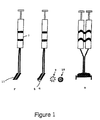
- the glue is maintained in two components, one with fibrin protein solution and the other with e.g. the calcium solution which helps activate the clotting cascade. The two components are loaded into two separate syringes and the needle tips from the two syringes are bent to run parallel to each other so that the two tips are closely apposed.
- the surgeon uses a double syringe apparatus to apply the two fluids to the surface of interest simultaneously. As the two fluids emerge from the needle tips onto the tissue surface they mix and congeal. This material is used for plugging leaks in the dura membranes around the brain in order to prevent leakage of spinal fluid as well as for a wide variety of other surgical applications including the assistance of wound closure and haemostasis. Tissue glues have also been proposed as means of achieving slow controlled release of various growth factors and antibiotics.
- tissue glue it is not possible to suspend the seeds in either a liquid cyanoacrylate glue or in either component of a. tissue glue as described above, because they would sink out of solution. It would be possible to include a variety of radioactive metal cations in chelate molecules and then dissolve these molecules in a tissue glue component; however, even for very large proteins, the tissue glue allows migration of the molecules through its interstices. Thus from the point of view of most molecules, the glue is not a glue at all, but only a matrix through which they can diffuse along with the tissue water in which they are dissolved.
- WO92/22312 describes tissue treatment compositions comprising (i) fibrin or fibrinogen and (ii) a biodegradable and biocompatible polymer capable of forming a viscous aqueous solution: These compositions are proposed for slow-release of drugs incorporated into them or for anti-adherence purposes.
- WO93/05067 describes compositions which, upon reacting with thrombin, function as fibrin sealants and are devoid of infectious agents.
- tissue sealants such as fibrin glue which may be supplemented with growth factors and/or drugs.
- tissue sealants are proposed for use in the promotion of wound healing.
- JP-A-5000970 describes a therapeutic agent for the treatment of osteomyelitis which allows sustained release of an antibiotic agent.
- the therapeutic agent contains an antibiotic agent, fibrin/fibrinogen paste and calcined hydroxyapatite particles.
- the present invention provides a composition comprising a tissue glue and a particle wherein said particle comprises a cation capable of an anti-bacterial effect and/or a radioactive isotope, and wherein said particle is capable of mediating localised therapeutic activity when immobilised in the tissue glue. Also provided is the use of a tissue glue and a particle comprising a cation capable of an antibacterial effect and/or a radiotherapeutic isotope for the manufacture of a medicament for treatment of a tumour or for an antibacterial treatment wherein said treatment comprises the immobilisation of said particle in the tissue glue and said particle has a therapeutic effect while immobilised in the tissue glue.
- a ferrite or other radiotherapeutic agent in particulate form, is suspended in a tissue glue, suitably in the pre-mix.
- a colloidal solution of, say, ⁇ -emitting ferrite is prepared in a tissue glue, this can be applied after surgical resection of a tumour, particularly near an eloquent area of the brain, where a thin shell of tumour may remain, minimising exposure to the surgeon and operating staff.
- the particles are biodegradable; and so will be resorbed over weeks.
- a cell adhesion moiety-coupled radionuclide may be used, if the agent is not physically held in the matrix.
- the radiotherapeutic agent may be any of a variety of nuclides, depending on the energy, penetration or half-life that is desired. Appropriate choice of such criteria is within the skill of those knowledgeable in the art. It is preferably a ferrite, e.g. a ⁇ -emitting ferrite, and preferably comprises a chelate.
- tissue glues are also known. This component may be, for example, based on a clottable protein such as fibrinogen.
- a glue such as Tisseel (available from Immuno Danmark A/S of Copenhagen) may be used. Tissue glues, including fibrin and cyanoacrylates, are also described by, for example, Kottai et al , Ann. Otol. Rhinol. Laryngol.
- tissue glue is used herein in its broad sense, i.e. as any tissue-compatible matrix within which the active component is retained, suitable for topical or other application to the locus of treatment. It may therefore be a gel-like substance comprising pores within which the agent is held. It will often be proteinaceous, and usually it will be biodegradable.
- larger particles can readily be immobilised in a variety of gels such as the tissue glue. Further, these particles are made in such a way that they can be fully and stably dissolved in water or in e.g. the calcium fluid component of the tissue glue, yet these particles are small enough to be sterilised by filtration methods along with the solution in which they are dissolved.
- the particles can be manufactured in such a way as to incorporate a wide variety of different metal cations, including their radioactive isotopes (to include emitters of ⁇ -particles, ⁇ -particles, ⁇ -rays, or X-rays from K-capture decay) in the ferrite crystal matrix at their core.
- the nuclides are very stably incorporated into the ceramic type core of 10-200 nanometers in diameter and the core is coated in any one of a variety of macromolecules such as dextran.
- Radioactive particles can be made radioactive in several different ways. It is only necessary to dissolve radioactive isotopes of certain metals as soluble metal chlorides in the initial metal chloride solution prior to the ferrite precipitation step disclosed in WO-A-9305815 and US-A-6 153 598.
- the X-rays produced by its electron capture decay have low energy (half-value thickness in water of 1.6 centimetres) and hence it is possible to have exceedingly precise control over the area treated, as for example in the post-excision area where invisibly small amounts of tumour may have invaded surrounding normal tissue to a depth of a few millimetres. It is also the case, as is disclosed in WO-A-9211846 and US Application Serial No. 08/087,781, filed July 7, 1993 that palladium is very readily incorporated into spinel ferrites in stable fashion.
- the second method for production of 103 Pd is to use a high energy cyclotron capable of causing reactions with protons (conventional cyclotrons use deuterons and alpha particles which have greater mass/charge).
- a high energy cyclotron capable of causing reactions with protons
- Conventional cyclotrons use deuterons and alpha particles which have greater mass/charge.
- Such an instrument can be used to irradiate rhodium which occurs naturally as only a single isotope, 103 Rh, so that all conversions are to 103 Pd which is then separated chemically from the rhodium in carrier free form.
- the provision of 90 Y in an appropriate liquid carrier has been a problem for many years since, for intra-articular use, small molecule carriers and colloids tend to leak out of the joint, while large particles do not distribute properly because they do not remain in solution.
- the prototype mineral spinel (MgAl 2 O 4 ) is based on a close-packed, face-centred, cubic crystal of oxygen atoms with metal ions placed at interstitial spaces in the crystal. There are A spaces which accommodate ions of 0.3 to 0.6 angstroms (8 sites/subunit) and B spaces which accommodate ions of 0.6 to 1.0 angstroms (16 sites/subunit). In natural spinel, the divalent magnesium ions are in the A spaces and the trivalent aluminum ions are in the B spaces.
- Magnetite is an 'inverse spinel' because the crystal subunit of 32 O 2- anions has trivalent Fe 3+ in the 8 A-sites, with 8 B-sites occupied by divalent Fe 2+ and 8 B-sites occupied by trivalent Fe 3+ .
- An alternative manoeuvre is to use Li 1+ cations to balance the stoichiometry when replacing Fe 2+ cations with Y 3+ cations.
- the Li and Y are added in equal amounts as the Fe 2+ is reduced.
- the Fe 3+ /Y 3+ :Fe 2+ /Zn 2+ system produces a stable yttrium-carrying ferrite with medically useful qualities.
- the incorporation of the radioactive yttrium into ferrites makes possible several methods of limiting the leakage and subsequent spread of radioactivity.
- the knee can be wrapped in a magnetic coil which will prevent any leaked radioactive ferrites from spreading out of the area.
- tissue glues can be used to help seal the joint capsule. Because the radioactivity is incorporated in a substance which does not diffuse through tissue glue, the application of tissue glue to the injection site will prevent leakage. The half-life of the 90 Y is sufficiently short that most of the radioactivity will have decayed before the tissue glue will have broken down.
- the invention provides a system which inhibits unwanted spread of synovectomy agent.
- the 90 Y-ferrites may be fully incorporated into the tissue glue at the time of injection into the joint via a double-barrelled, double-needle syringe.
- fibrin glue is allowed to set within the involved joint, but its injection is accompanied by agents which help promote fibrinolysis, such as tissue plasminogen activator, or it is applied in a specially modified tissue glue preparation which is compounded to hold a lower concentration of fibrinogen then is usually used. In this fashion it can be assured that the ferrite-containing gel will dissolve over 2-4 days during which time much of the activity of the 90 Y will be retained.
- macrophages are known to be actively attracted into the matrix and will ingest radioactive particles as well. This will thus serve as a means of both reducing leakage from the joint and effectively loading macrophages with radioactive ferrites so that when they subsequently distribute to the synovium they will be highly active.
- the technique will involve a three-stage injection into the knee from a four-barrelled syringe.
- One barrel contains low fibrinogen glue component mixed with radioactive ferrites
- another barrel contains the calcium solution
- a third barrel contains ferrite-free fibrinogen solution
- a fourth contains radioactive ferrites in a suitable buffered aqueous medium with an X-ray contrast agent such as iohexal.
- the injection is commenced with radioactive ferrites in aqueous medium.
- the needle is partly withdrawn (under fluoroscopic guidance) to near the exit from the joint capsule, and here an injection is done to mix radioactive low fibrin glue component with the calcium solution.
- the needle is withdrawn to just outside the joint and non-radioactive tissue glue is then administered to fully seal the joint capsule.
- One such alternative method is to include in the crystal matrix an element or isotope which is the 'parent' of the desired isotope.
- the entire formed particle, in aqueous solution, is then bombarded with neutrons in a reactor or with protons, deuterons, or alpha particles from a cyclotron beam or nucleons from a linear accelerator in order to render the parent nuclide into the desired daughter isotope.
- This method has the disadvantage of causing some of the carrier iron atoms and the carbon, hydrogen, and oxygen atoms in a dextran coat to be converted to possibly undesirable isotopes as well.
- the dextran atoms are present in far lower concentration than the atoms in the particle, so the situation of the ferrite alone can reasonably considered as the greatly predominating source of post-irradiation nuclides.
- Naturally-occurring stable iron is 92% 56 Fe, 6% 54 Fe, 2% 57 Fe and 0.3% 58 Fe.
- 56 Fe the majority of atoms
- 57 Fe the 54 Fe becomes 55 Fe with 2.7 yr half-life and EC capture decay
- the small amount of natural 58 Fe becomes 59 Fe with 45 day half-life and ⁇ and gamma decay.
- the oxygen in the crystal as well as the carbon and oxygen in the dextran are converted substantially to stable isotopes by this reaction (n, ⁇ ). If such particles are held in storage for e.g. 10 half-lives of the 59 Fe, the very small starting amount will be reduced to a negligible contribution, and the resulting particles will remain as a long half-life EC capture emitter.
- Such a material could be useful in the fabrication of temporary implants for brachytherapy where the implant is cast in the form of seeds, catheters, or reusable, pumpable liquid for catheter-based, temporary brachytherapy.
- layer of ferrite-free tissue glue would provide nearly complete shielding of the beta emissions.
- the natural palladium ferrite could still be used as a permanent implant emitting effectively only the desirable X-rays from electron capture decay of 103 Pd.
- the 109 Pd (13h, ⁇ -,1 MeV) produced from natural 108 Pd would still make it necessary to hold the particles for at least ten of these half-lives (130 hours) to reduce this beta output if it was desired to use only EC X-rays.
- inclusion of a 1 MeV beta particle would be useful along with the EC X-rays.
- the bombardment of 56 Fe-enriched dextran-coated ferrites with alpha particles would produce 58 Ni ( ⁇ ,2n) which is stable but would have the advantageous effect of converting oxygen atoms in the ferrite crystal as well as in the dextran into the short half-life (110 min) positron-emitter 18 F ( ⁇ .pn) which has a wide variety of medical uses; however, the side-reaction of ( ⁇ ,pn) production of 58 Co (70d, ⁇ +) limits the value of this production method.
- Treatment of dissolved dextran by alpha bombardment prior to the precipitation reaction would cause the inclusion of 18 F in both the dextran coat and in the interior of the crystal.
- a completely different way of adding radioactivity after manufacture of the ferrites or of any other useful particle of the desired size range is to conjugate chelating groups such as EDTA, NTA or DTPA to the dextran coat of the ferrite or surface group of any other particle. In this fashion, all preparation steps are done with non-radioactive materials. Finally, when the material is to be shipped for use, or even at the site of use, the chelate-conjugated particles are exposed to dissolved radioactive metals or other chelatable elements. The elements need only have higher binding affinity to the chelate than e.g. sodium used to fill the chelate prior to radioactive uptake.
- Choice of the coating type and e.g. the size of dextran molecule to be used controls the final diameter of the particle.
- a 5,000 MW dextran coating will yield a particle more likely to migrate in a loose gel which would be preferable for drug delivery, while a 100,000 MW dextran coat would tend to produce a particle which resides very stably in the matrix for e.g. radiotherapeutic applications.
- Final particles can be converted to larger conglomerates by use of various conjugation reactions to create linkages between dextran molecules of multiple particles.
- WO-A-9305815 and US-A-6 153 589 disclose that the particle preparation can be cleansed of any unincorporated or easily soluble cations through treatment with a chelation buffer.
- the buffer may comprise EDTA (ethylenediaminetetraacetic acid), DTPA (diethylenetriaminepentaacetic acid), NTA (nitrilotriacetic acid) or various other metal cation chelating agent either with or without e.g. meglumine as a counter-ion.
- chelation buffers act at least in part to dissolve metal hydroxide polymers without dissolving the magnetite or other mixed metal crystal.
- the dissolved, chelated ions which were not properly incorporated in the particles at the time of the initial precipitation reaction are then easily separated from the particles. Originally, it had been appreciated that this manoeuvre greatly improved the simplicity of manufacture of such ferrites.
- this innovation has uses not limited to tissue glues but also provides a convenient means for incorporating radionuclides into a wide variety of carriers of various types and useful for various purposes. These uses all have in common the need to hold a nuclide in place so that it is not allowed to move or diffuse or dissolve freely through the medium or carrier into which it has been introduced.
- Any particle can contain a range of nuclide concentrations ranging from one atom per crystal, up to e.g. 100,000 or more atoms per crystal. This choice allows both for storage of the particles over the long term and for a wider choice of possible isotopes to be used depending upon the therapeutic task to hand. Groups of particles can also be conjugated together with periodation reactions or glutaraldehyde reactions in order to make them larger in the aggregate so that they achieve greater stability in looser gel matrices.
- tissue glue alone, but also applies to various other collagen matrices or other matrix or gel-forming substances tolerable for biological use or foams or gelfoam substances as well as with a wide variety of other adhesive materials which can be used to hold particles and keep them at a chosen proximity to a particular target.
- fibrin-based tissue glue When fibrin-based tissue glue is used as the matrix for immobilizing the particles of whatever type, the function of the invention will be greatly affected by the stability or rate of breakdown of the tissue glue matrix.
- Fibrin tissue glue is subject to breakdown from the action of natural fibrinolytic proteins. The amounts and concentrations of these fibrinolytic proteins vary from tissue to tissue within the body. On average, a tissue glue layer in the human body would be expected to lose the greater part of its physical integrity within a period of about 10 days from application. In many cases this is desirable, however in other cases it may be desirable to either extend or shorten the period of stability of such a gel.
- fibrin glues there is a variety of proteins and other agents well known to affect the natural metabolism of fibrin clots. These agents have been used for a variety of purposes but have not been considered as a means of manipulating the drug delivery properties of gels or as a means of controlling radiotherapy or gene therapy.
- amicar ⁇ -aminocaproic acid
- a typical use is to slow the breakdown of clots which form on ruptured cerebral aneurisms and so to inhibit their risk of repeat haemorrhage.
- amicar or similarly acting agents such as aproteinin or various proteinase inhibitors are incorporated in the gel matrix, either simply by mixing them into the initial solution or by adhering or conjugating them to particulates intended to be included in the matrix, then these will slow the breakdown of the gel.
- agents such as tissue plasminogen activator or streptokinase will speed the breakdown of the gel.
- a locally active protein which would benefit from slow release such as bone matrix protein
- a particulate such as the dextran-coated ferrite.
- Many such proteins will retain their physiologic activity even though they are conjugated to a particle.
- the clinical problem is to provide slow release of the protein from the gel. By immobilizing the protein/particle conjugate in the gel, the physiologic activity is delayed until the matrix is physically degraded. Here the particle acts as an anchor and the breakdown of the gel releases the anchor.
- tissue glue is used to hold a 103 Pd ferrite for brachytherapy
- the half-life of the nuclide requires a relatively long period of stability of the gel in order to minimize spread from the site of application prior to the passage of three to five half-lives.
- tissues such as prostate with high concentrations of fibrinolytic proteins this a particular concern.
- fibrin tissue glue a variety of longer-lasting synthetic and semi-synthetic gels can be used, the addition of an anti-fibrinolytic allows the use of fibrin tissue glue.
- tissue glue may be injected with radioactive ferrites ( 103 Pd or 90 Y). This would allow for simultaneous embolization and radiation sclerosis of the AVM vascular walls. Prolonging the life of the tissue glue would help assure focal delivery as well as prolonging the life of the embolic vessel blockage.
- fibrinolytics could be applied to rapidly dissolve the gel and allow the radiation to diffuse through the body where it would be present in extremely low concentration because of the large volume of distribution relative to the amount of radioactive agent involved.
- the ferrites could also be collected from the blood stream by a magnetic filter.
- tissue glue In order to localise therapeutic agents, various means involve tissue glue.
- One is based on physically conjugating a variety of carrier proteins directly onto the fibrin in the tissue glue.
- the conjugation can be carried out through antibodies to the fibrin or through the use of periodate conjugation.
- the carrier proteins and dextran molecules incorporate chelate molecules in a variety of arrangements all well known to those expert in the art of therapeutic metal ion delivery. Additionally, this includes non-metal therapeutic radionuclides attached in other ways.
- the radioactive iodine may be conjugated directly to the fibrin by standard iodination reactions. In this fashion, the radioactive iodine or other radioactive element can be rapidly attached to the patient's own proteins for use in autologous tissue glue.
- these particles can also be used as a means of delivering cation therapy, as disclosed in WO-A-9211846 and US Application Serial No. 08/087,781 (see also above).
- various non-physiological cations are incorporated into the crystal matrix of the ferrite core.
- the particles are then delivered in a tissue glue. Subsequently, as the glue breaks down or as the particles slowly leach out and are ingested by various cells, the cations are released through intracellular metabolism of the iron oxide core. Delivery of cations can be used for the treatment of viral illness and also for cancer chemotherapy.
- This antibiotic effect may also be exploited in a variety of hard coatings into which these particles may be incorporated. Where various cations offer anti-bacterial effects, these may used in coatings on e.g. various implants.
- the radiotherapeutic tissue glue can be augmented by the inclusion of synergistically acting diffusible drugs, either loosely incorporated in the gel for free diffusion or introduced in semi-soluble or insoluble form in order to achieve slow release, or weakly adhered to the dextran or other polymer coating of particles. Such particles serve to temporarily immobilize and control the distribution of such drugs.
- Radiotherapy can interfere with wound healing in some situations. It will therefore often be advantageous to counter the anti-wound healing effects of radiation by the inclusion of various growth factors in the gel as disclosed in WO-A-9420133 and WO-A-9209301. Further, it may be possible to assist the anti-cancer effect of the radiation by inclusion of a variety of chemotherapeutic radio-sensitizer drugs or actual chemotherapeutic agents in the gel along with the radioactive source.
- radiotherapeutic particles particularly the EDTA-insoluble particles
- aqueous-based plastic polymers which can then be caused to polymerize in the same fashion as described above for the tissue glues.
- the additional feature of a plastic is that it would allow for casting of a sealable shaped radiation carrier prior to surgery or during surgery.
- a solution of the particles may be aerosolized for spray application to a surface in the body in a system in which the spray forms part of a tissue glue which sets upon contact.
- the tissue glue may be applied by spray-on application.
- An antibiotic fluid may be incorporated in the vehicle against any airborne contamination.
- the fluid vehicle will either be so prepared as to polymerize in air, or two separate sprays may be used, first a carrier for the fibrin portion followed by the calcium and particle component.
- the applicator may be provided with paired wheels.
- the wheels may either have latex rims or small feet so they do not produce furrows in the layer of the glue.
- the applicator may also be automated or semi-automated so that as the surgeon rolls the applicator along the surface the device measures the rate of progression from the wheel turning and then automatically drives the two syringes to apply the layer of glue.
- the advance of the plunger may mechanically cause the wheels to turn so that the device advances over the tissue surface at the appropriate rate.
- this therapeutic tissue glue In addition to painting a layer of this therapeutic tissue glue onto the brain surface or onto the surface of any body tissue possibly invaded by cancer cells, it is also possible to inject a column or deposit of the glue in a fashion similar to the catheter arrays used for brachytherapy, but in which a column of tissue glue incorporating radioactive nuclides in particles is incorporated.
- Such administration can be monitored by concurrent imaging techniques which take advantage of the inherent imagability of the these particles (due to the density and magnetism of the iron core) by ultrasound, magnetic resonance imaging, or X-ray based techniques, or the gel can be supplemented by an additive contrast agent.
- injection techniques can be used to inject settable, ferrite or other particle-containing gel into the centre of the tumour mass for purposes of brachytherapy, either with or without the inclusion of chemical or biological agents capable of causing either increased radiation sensitivity or capable of acting as chemotherapeutic agents in their own right, to achieve a multi-modal attack on the cancer cells.
- Administration in this manner can also be achieved by injecting the glue with radioopaque material but without the ferrite/particle solution, using two barrels/needles from a three-part syringe system. Then, once the position, shape, and setting of the glue are confirmed, the third barrel/needle can be used to inject the particle solution into the centre of the matrix/glue material which will hold the material within its interstices. The needle is then very slowly withdrawn along with the injection of additional glue, to seal the needle tract.
- any such one, two, or three-barrel system for administration of glue-based radiotherapy products may be equipped with a release mechanism for detaching a plastic or silastic inside layer at the tip of the needle. This is provided in case the column of glue becomes adherent to the tip of the needle and allows the operator to choose to leave the plastic behind in the needle tract to avoid pulling out the column of glue as the needle is withdrawn. Alternatively, this problem can be avoided with a more standard glue application system as long as a 'chaser' of cold glue is use to follow the injection of radioactive glue.
- radiotherapeutic glue in an array which distributes the therapeutic material through the mass at a variety of locations.
- An example of this occurs when a stereotactic system is used to allow a neurosurgeon to place a needle or catheter into the middle of a brain tumour by passing through a burr hole in the skull. Because of the need to traverse brain tissue, it is undesirable to make numerous needle passes in order to reach multiple sites in the tumor. It has now been appreciated that a novel type of administration device would solve this problem as well as similar problems arising in other body regions where bulk tumor is to be treated.
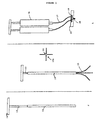
- the system involves an outer sheath of a hard material such as steel, titanium or plastics which carries a plurality of internal flexible needle pairs which are prestressed to spread outwards from the tip of the sheath.
- the needle pairs are withdrawn within the sheath while the tip of the sheath is advanced into the tumor.
- the internal set of needle pairs is then advanced, upon which their tips emerge from the sheath and spread in various directions and so puncture the tumor from inside towards the outside in various directions.
- injection is commenced as the needles are withdrawn back into the sheath.
- the internal apparatus can then be rotated, e.g. 45° and then advanced a second time. After being withdrawn into the sheath again, the sheath may then be advanced further into the tumor upon which the internal needle are again advanced.
- Example gives the steps to be taken in an illustrative synthetic method for particles to be included in a matrix.
- Other macromolecules such as proteins, fibrin, collagen, starch, polylysine, or derivatized dextrans may also be used for the coating.
- a trivalent lanthanide or Group IIIB chloride may be substituted for 10-50% of the FeCl 3 .
- a variety of unstable isotopes of various transition, lanthanide and actinide elements can be introduced at this step as metal chlorides dissolved in water or in an acidic solution of e.g. 0.1M HCl. The amount of trivalent iron may be reduced where trivalent cations are added.
- FeCl 2 .4H 2 O Dissolve 100 mg FeCl 2 .4H 2 O in the Fe 3 /dextran solution then place the mixture in a 60°C water bath for two minutes. Some divalent cations may be added in place of Fe at this step. Some metal chlorides such as, e.g. palladium chloride will require an extended period of time up to e.g. one to two days in concentrated HCl in order to become fully dissolved prior to mixing with the other constituents.
- metal chlorides such as, e.g. palladium chloride will require an extended period of time up to e.g. one to two days in concentrated HCl in order to become fully dissolved prior to mixing with the other constituents.
- the crystal structure may be modified by the use of copper or magnesium as the divalent cation instead of the FeCl 2 , or other stable combination of cations such as FeCl 2 with ZnCl 2 may be used to help accommodate Group IIIb elements such as the yttrium 90 isotope.
- the reaction mixture may be allowed to stand at room temperature or be cooled as low as 0-4°C prior to proceeding depending upon the desired size distribution of the resultant particles where cooler reaction temperatures tend to produce smaller particles.
- NH 3 solution Gradually add 6 ml of hot 7.5% NH 3 solution (60°C).
- the NH 3 solution may also be added at lower temperatures, e.g. 0-4°C or room temperature. Equivalence of temperature and mixing to assure uniform concentration as well as more gradual and dispersive addition of the NH 3 solution will help reduce the range of particle sizes.
- the product is left to stand in the 60°C water bath for fifteen minutes for Fe/Fe particles, but the incubation may be extended up to four hours when lanthanides or Group IIIB elements in substantial amount are used in place of FeCl 3 .
- the reaction product (dextran-coated ferrites) is spun at 1,000 g for 10 minutes and any precipitate is discarded. This process is repeated to complete three spins and the supernatant then applied to PD-10 columns equilibrated with 0.1M Na Acetate buffer pH 6.8 with 5mM EDTA.
- the black eluted fraction is diluted 1:3 with EDTA/Acetate buffer then concentrated to 1/10 of the initial volume with Amicon Centriprep-100 ultrafilters.
- the retentate is then diluted 1:10 with EDTA/Acetate buffer then concentrated to a volume of 1.5 ml with the C-100 ultrafilters.
- the preparation may be stored or further concentrated. If it is to be used with a tissue glue, it can be mixed with one component of the fibrinogen, fibrin, collagen, acrylic, gelatin, resorcinol or other type of tissue glue, matrix, or polymer precursor prior to application and mixing of the glue to set on the tissue surface.
- reaction is terminated by applying the reaction mixture to the PD-10 columns equilibrated with 20mM borate buffer (pH 8.5).
- An active site blocking solution is prepared using 100 mM MnCl 2 /CaCl 2 for WGA binding reactions and appropriate blocking agent for any other targeting protein to be conjugated to the particle.
- Dissolve 10 mg of the protein e.g. cell targeting protein or antibody
- the protein solution can be diluted to 12 ml with borate buffer, then concentrated with centriprep-10 concentrators to remove DTT, glycerol, NaN 3 and other undesirable storage additives.
- An affinity purification step is optional and detail is given for use with a WGA(lectin) targeting protein by example.
- the desalted output is then diluted to a volume of 24 ml with HEPES buffer and concentrated with Centriprep-100 concentrators.
- the final retentate form is sterilized by spinning at 500 g for one hour in 0.22 ⁇ m centrifugal microfilters.
Landscapes
- Health & Medical Sciences (AREA)
- Chemical & Material Sciences (AREA)
- Life Sciences & Earth Sciences (AREA)
- General Health & Medical Sciences (AREA)
- Veterinary Medicine (AREA)
- Public Health (AREA)
- Epidemiology (AREA)
- Animal Behavior & Ethology (AREA)
- Medicinal Chemistry (AREA)
- Pharmacology & Pharmacy (AREA)
- Engineering & Computer Science (AREA)
- Dermatology (AREA)
- Optics & Photonics (AREA)
- Physics & Mathematics (AREA)
- Proteomics, Peptides & Aminoacids (AREA)
- Inorganic Chemistry (AREA)
- Dispersion Chemistry (AREA)
- Biomedical Technology (AREA)
- Neurosurgery (AREA)
- Materials Engineering (AREA)
- Surgery (AREA)
- Medicines That Contain Protein Lipid Enzymes And Other Medicines (AREA)
- Medicines Containing Antibodies Or Antigens For Use As Internal Diagnostic Agents (AREA)
Claims (13)
- Zusammensetzung umfassend einen Gewebeklebstoff und ein Teilchen, worin das Teilchen umfasst ein Kation, das in der Lage ist, eine antibakterielle Wirkung zu haben, und/oder ein radioaktives lsotop und worin das Teilchen in der Lage ist, eine lokalisierte therapeutische Wirksamkeit zu vermitteln, wenn es im Gewebeklebstoff immobilisiert ist.
- Zusammensetzung nach Anspruch 1, welche zusätzlich ein Material umfasst, das den Abbau des Klebstoffs hemmt.
- Zusammensetzung nach Anspruch 1 oder 2, worin das Teilchen radiotherapeutisch ist oder in ein Radiotherapeutikum überführbar ist.
- Zusammensetzung nach Anspruch 3, worin das Teilchen in Form eines Chelats vorliegt, das ein radioaktives Atom hält.
- Zusammensetzung nach Anspruch 3 oder 4, welche zusätzlich einen Strahlungssensibilisator umfasst, der in der Lage ist, ausgelaugt zu werden und die lokale radiotherapeutische Wirkung zu erhöhen.
- Zusammensetzung nach irgendeinem der Ansprüche 3 bis 5, welche zusätzlich einen Wachstumsfaktor oder eine andere Substanz umfasst, welche die wundheilungshemmende Wirkung von Strahlung lindert.
- Zusammensetzung nach irgendeinem der Ansprüche 3 bis 7, worin das Teilchen ein Zink-substituiertes Yttriumferrit oder ein 56Feangereichertes Ferrit umfasst.
- Zusammensetzung nach irgendeinem der Ansprüche 3 bis 7, worin das Teilchen 103Pd oder 90Y umfasst.
- Zusammensetzung nach irgendeinem der vorhergehenden Ansprüche, worin das Teilchen ein Ferrit ist.
- Zusammensetzung nach irgendeinem der vorhergehenden Ansprüche, worin das Teilchen angepasst ist, um durch Astrozyten aufgenommen zu werden.
- Verwendung einer Zusammensetzung nach irgendeinem vorhergehenden Anspruch für die Herstellung eines Arzneimittels zur Verwendung in der Behandlung eines Tumors oder eines anderen Zustands, für den die therapeutische Wirkung zweckmäßig ist.
- Verwendung eines Gewebeklebstoffs und eines Teilchens umfassend ein Kation, das in der Lage ist, eine antibakterielle Wirkung zu haben, und/oder ein radiotherapeutisches lsotop für die Herstellung eines Arzneimittels zur Behandlung eines Tumors oder für' eine antibakterielle Behandlung, worin die Behandlung die Immobilisierung des Teilchens in dem Gewebeklebstoff umfasst und das Teilchen eine therapeutische Wirkung aufweist, während es im Gewebeklebstoff immobilisiert ist.
- Zusammensetzung umfassend einen Gewebeklebstoff und immobilisiert in dem Klebstoff ein teilchenförmiges Radiotherapeutikum wie in irgendeinem der Ansprüche 3 bis 10 definiert oder eine Vorstufe davon.
Applications Claiming Priority (9)
| Application Number | Priority Date | Filing Date | Title |
|---|---|---|---|
| GB9414684A GB9414684D0 (en) | 1994-07-21 | 1994-07-21 | Therapeutic adhesives |
| GB9414684 | 1994-07-21 | ||
| GB9415405A GB9415405D0 (en) | 1994-07-25 | 1994-07-25 | Adherent therapeutic agents |
| GB9415405 | 1994-07-25 | ||
| GB9502246 | 1995-02-06 | ||
| GBGB9502246.3A GB9502246D0 (en) | 1995-02-06 | 1995-02-06 | Adherent therapeutic agents & administration devices |
| GB9503357 | 1995-02-21 | ||
| GBGB9503357.7A GB9503357D0 (en) | 1995-02-21 | 1995-02-21 | Adherent therapeutic agents & administration devices |
| PCT/GB1995/001330 WO1996003112A1 (en) | 1993-05-04 | 1995-06-07 | Compositions comprising a tissue glue and therapeutic agents |
Publications (2)
| Publication Number | Publication Date |
|---|---|
| EP0804153A1 EP0804153A1 (de) | 1997-11-05 |
| EP0804153B1 true EP0804153B1 (de) | 2003-10-01 |
Family
ID=27451188
Family Applications (1)
| Application Number | Title | Priority Date | Filing Date |
|---|---|---|---|
| EP95921073A Expired - Lifetime EP0804153B1 (de) | 1994-07-21 | 1995-06-07 | Zusammensetzung enthaltend einen gewebeklebstoff und ein immobilisiertes therapeutisches wirkstoffteilchen |
Country Status (3)
| Country | Link |
|---|---|
| EP (1) | EP0804153B1 (de) |
| DE (1) | DE69531869T2 (de) |
| WO (1) | WO1996003112A1 (de) |
Families Citing this family (11)
| Publication number | Priority date | Publication date | Assignee | Title |
|---|---|---|---|---|
| EP0902687A1 (de) | 1996-03-11 | 1999-03-24 | Focal, Inc. | Verabreichung von radionukliden und radiopfarmazeutika in einem polymer |
| EP0986402A2 (de) | 1997-06-06 | 2000-03-22 | Battelle Memorial Institute | Reversibles gelbindendes copolymer und verfahren |
| US7087244B2 (en) | 2000-09-28 | 2006-08-08 | Battelle Memorial Institute | Thermogelling oligopeptide polymers |
| US6841617B2 (en) | 2000-09-28 | 2005-01-11 | Battelle Memorial Institute | Thermogelling biodegradable aqueous polymer solution |
| US6296831B1 (en) | 1998-04-10 | 2001-10-02 | Battelle Memorial Institute | Stimulus sensitive gel with radioisotope and methods of making |
| US6660247B1 (en) | 2000-06-23 | 2003-12-09 | Battelle Memorial Institute | Multiple stimulus reversible hydrogels |
| AU2002324193A1 (en) * | 2001-09-13 | 2003-03-24 | Scientific Generics Limited | Therapeutic insert and therapeutic method |
| EP2335650B1 (de) | 2003-12-11 | 2012-10-03 | Isto Technologies Inc. | Teilchenförmiges Knorpelsystem |
| EP2134297B1 (de) | 2007-04-12 | 2017-03-08 | Zimmer, Inc. | Vorrichtung zur gewebereparatur |
| US20140178343A1 (en) | 2012-12-21 | 2014-06-26 | Jian Q. Yao | Supports and methods for promoting integration of cartilage tissue explants |
| DE102018107425B4 (de) | 2018-03-28 | 2022-12-01 | Fraunhofer-Gesellschaft zur Förderung der angewandten Forschung e.V. | Verfahren zum Stimulieren einer Gewebestruktur mittels einer elektrischen Feldstärke, System zum Stimulieren einer Gewebestruktur und Magnetstruktur zum Implantieren an eine Gewebestruktur |
Family Cites Families (5)
| Publication number | Priority date | Publication date | Assignee | Title |
|---|---|---|---|---|
| SE9101853D0 (sv) * | 1991-06-17 | 1991-06-17 | Jonas Wadstroem | Improved tissue ashesive |
| JPH05970A (ja) * | 1991-06-25 | 1993-01-08 | Sumitomo Cement Co Ltd | 骨ずい炎治療剤 |
| EP0602173B1 (de) * | 1991-09-05 | 1999-05-26 | Baxter International Inc. | Topischer fibrinogenkomplex |
| EP0534178B1 (de) * | 1991-09-27 | 2001-04-18 | Omrix Biopharmaceuticals S.A. | Verbesserter Gewebekleber, zubereitet aus Kryopräzipitat |
| DE69433920T2 (de) * | 1993-03-12 | 2005-06-02 | American National Red Cross | Supplementierte verdichtungsmittel für gewebe, methoden für ihre herstellung und ihre verwendung |
-
1995
- 1995-06-07 EP EP95921073A patent/EP0804153B1/de not_active Expired - Lifetime
- 1995-06-07 DE DE69531869T patent/DE69531869T2/de not_active Expired - Fee Related
- 1995-06-07 WO PCT/GB1995/001330 patent/WO1996003112A1/en not_active Ceased
Also Published As
| Publication number | Publication date |
|---|---|
| DE69531869T2 (de) | 2004-07-22 |
| EP0804153A1 (de) | 1997-11-05 |
| WO1996003112A1 (en) | 1996-02-08 |
| DE69531869D1 (de) | 2003-11-06 |
Similar Documents
| Publication | Publication Date | Title |
|---|---|---|
| US6919067B2 (en) | Compositions comprising a tissue glue and therapeutic agents | |
| US11097021B2 (en) | Polymer based radionuclide containing particulate material | |
| AU712953B2 (en) | Polymeric delivery of radionuclides and radiopharmaceuticals | |
| EP0979656B1 (de) | Zusammensetzung enthaltend auf festen Teilchen immobilisierte Radioisotopen, sowie deren Verwendung in der Brachytherapie | |
| CN1946432B (zh) | 用于放射治疗的颗粒材料和组合物 | |
| CN112843260B (zh) | 一种医用放射性二氧化硅微球及其制备方法与应用 | |
| JP2008514597A (ja) | 放射性同位体を結合し得、任意選択的に金属微粒子を含むミクロスフェア、およびそれらの使用方法 | |
| WO1996003112A1 (en) | Compositions comprising a tissue glue and therapeutic agents | |
| AU2022415340B2 (en) | Radioactive shear thinning biomaterial composition and methods for use | |
| US11865196B2 (en) | Engineered radioactive polymeric microsphere, and preparation and application thereof | |
| Häfeli et al. | Fibrin glue system for adjuvant brachytherapy of brain tumors with 188Re and 186Re-labeled microspheres | |
| TW201726179A (zh) | 純化方法 | |
| AU2020201295A1 (en) | Polymer Based Radionuclide Containing Particulate Material | |
| AU2012246068A1 (en) | Radioactive solutions for treating cancer | |
| EP3031472A1 (de) | Radionuklid auf polymerbasis mit teilchenförmigem material | |
| AU2010201992A1 (en) | Polymer Based Radionuclide Containing Particulate Material | |
| CN117695431A (zh) | 负载放疗核素的栓塞微球及其制备方法 | |
| KR20250133321A (ko) | 알파 방출 방사성 핵종이 탑재된 겔 | |
| JP2025504823A (ja) | 放射線治療用ゲルおよびその調製方法 | |
| CN118647414A (zh) | 放疗凝胶及其制备方法 | |
| HK40129234A (zh) | 装载α发射体放射性核素的凝胶 | |
| CN119562833A (zh) | 用于治疗肿瘤细胞的放射性栓塞珠和方法 | |
| AU2013202610A1 (en) | Polymer Based Radionuclide Containing Particulate Material |
Legal Events
| Date | Code | Title | Description |
|---|---|---|---|
| PUAI | Public reference made under article 153(3) epc to a published international application that has entered the european phase |
Free format text: ORIGINAL CODE: 0009012 |
|
| 17P | Request for examination filed |
Effective date: 19970214 |
|
| AK | Designated contracting states |
Kind code of ref document: A1 Designated state(s): DE FR GB |
|
| 17Q | First examination report despatched |
Effective date: 20000126 |
|
| GRAH | Despatch of communication of intention to grant a patent |
Free format text: ORIGINAL CODE: EPIDOS IGRA |
|
| RTI1 | Title (correction) |
Free format text: COMPOSITION COMPRISING A TISSUE GLUE AND AN IMMOBILISED THERAPEUTIC PARTICLE |
|
| RAP1 | Party data changed (applicant data changed or rights of an application transferred) |
Owner name: SIRUS PHARMACEUTICALS LTD. |
|
| GRAS | Grant fee paid |
Free format text: ORIGINAL CODE: EPIDOSNIGR3 |
|
| GRAA | (expected) grant |
Free format text: ORIGINAL CODE: 0009210 |
|
| AK | Designated contracting states |
Kind code of ref document: B1 Designated state(s): DE FR GB |
|
| REG | Reference to a national code |
Ref country code: GB Ref legal event code: FG4D |
|
| REF | Corresponds to: |
Ref document number: 69531869 Country of ref document: DE Date of ref document: 20031106 Kind code of ref document: P |
|
| ET | Fr: translation filed | ||
| PLBE | No opposition filed within time limit |
Free format text: ORIGINAL CODE: 0009261 |
|
| STAA | Information on the status of an ep patent application or granted ep patent |
Free format text: STATUS: NO OPPOSITION FILED WITHIN TIME LIMIT |
|
| 26N | No opposition filed |
Effective date: 20040702 |
|
| GBPC | Gb: european patent ceased through non-payment of renewal fee |
Effective date: 20040607 |
|
| PGFP | Annual fee paid to national office [announced via postgrant information from national office to epo] |
Ref country code: FR Payment date: 20051227 Year of fee payment: 11 |
|
| PGFP | Annual fee paid to national office [announced via postgrant information from national office to epo] |
Ref country code: DE Payment date: 20051229 Year of fee payment: 11 |
|
| REG | Reference to a national code |
Ref country code: GB Ref legal event code: 728V |
|
| REG | Reference to a national code |
Ref country code: GB Ref legal event code: 732E |
|
| PGFP | Annual fee paid to national office [announced via postgrant information from national office to epo] |
Ref country code: GB Payment date: 20061003 Year of fee payment: 12 |
|
| REG | Reference to a national code |
Ref country code: GB Ref legal event code: 728Y |
|
| PG25 | Lapsed in a contracting state [announced via postgrant information from national office to epo] |
Ref country code: DE Free format text: LAPSE BECAUSE OF NON-PAYMENT OF DUE FEES Effective date: 20070103 |
|
| REG | Reference to a national code |
Ref country code: FR Ref legal event code: ST Effective date: 20070228 |
|
| GBPC | Gb: european patent ceased through non-payment of renewal fee |
Effective date: 20070607 |
|
| PG25 | Lapsed in a contracting state [announced via postgrant information from national office to epo] |
Ref country code: FR Free format text: LAPSE BECAUSE OF NON-PAYMENT OF DUE FEES Effective date: 20060630 |
|
| PG25 | Lapsed in a contracting state [announced via postgrant information from national office to epo] |
Ref country code: GB Free format text: LAPSE BECAUSE OF NON-PAYMENT OF DUE FEES Effective date: 20070607 |