EP0796223B1 - Production simultanee de sulfate de potassium, sulfate de sodium et de chlorure de sodium - Google Patents
Production simultanee de sulfate de potassium, sulfate de sodium et de chlorure de sodium Download PDFInfo
- Publication number
- EP0796223B1 EP0796223B1 EP95943581A EP95943581A EP0796223B1 EP 0796223 B1 EP0796223 B1 EP 0796223B1 EP 95943581 A EP95943581 A EP 95943581A EP 95943581 A EP95943581 A EP 95943581A EP 0796223 B1 EP0796223 B1 EP 0796223B1
- Authority
- EP
- European Patent Office
- Prior art keywords
- sodium sulfate
- sulfate
- mother liquor
- process according
- salt
- Prior art date
- Legal status (The legal status is an assumption and is not a legal conclusion. Google has not performed a legal analysis and makes no representation as to the accuracy of the status listed.)
- Expired - Lifetime
Links
- PMZURENOXWZQFD-UHFFFAOYSA-L Sodium Sulfate Chemical compound [Na+].[Na+].[O-]S([O-])(=O)=O PMZURENOXWZQFD-UHFFFAOYSA-L 0.000 title claims description 77
- 229910052938 sodium sulfate Inorganic materials 0.000 title claims description 56
- 235000011152 sodium sulphate Nutrition 0.000 title claims description 54
- FAPWRFPIFSIZLT-UHFFFAOYSA-M Sodium chloride Chemical compound [Na+].[Cl-] FAPWRFPIFSIZLT-UHFFFAOYSA-M 0.000 title claims description 46
- OTYBMLCTZGSZBG-UHFFFAOYSA-L potassium sulfate Chemical compound [K+].[K+].[O-]S([O-])(=O)=O OTYBMLCTZGSZBG-UHFFFAOYSA-L 0.000 title claims description 31
- 229910052939 potassium sulfate Inorganic materials 0.000 title claims description 31
- 235000011151 potassium sulphates Nutrition 0.000 title claims description 28
- 239000011780 sodium chloride Substances 0.000 title claims description 23
- 235000002639 sodium chloride Nutrition 0.000 title claims description 23
- 238000004519 manufacturing process Methods 0.000 title description 13
- 238000000034 method Methods 0.000 claims description 48
- 239000010446 mirabilite Substances 0.000 claims description 31
- RSIJVJUOQBWMIM-UHFFFAOYSA-L sodium sulfate decahydrate Chemical compound O.O.O.O.O.O.O.O.O.O.[Na+].[Na+].[O-]S([O-])(=O)=O RSIJVJUOQBWMIM-UHFFFAOYSA-L 0.000 claims description 30
- XLYOFNOQVPJJNP-UHFFFAOYSA-N water Substances O XLYOFNOQVPJJNP-UHFFFAOYSA-N 0.000 claims description 23
- KWYUFKZDYYNOTN-UHFFFAOYSA-M Potassium hydroxide Chemical compound [OH-].[K+] KWYUFKZDYYNOTN-UHFFFAOYSA-M 0.000 claims description 22
- 239000012452 mother liquor Substances 0.000 claims description 22
- 229940072033 potash Drugs 0.000 claims description 22
- BWHMMNNQKKPAPP-UHFFFAOYSA-L potassium carbonate Substances [K+].[K+].[O-]C([O-])=O BWHMMNNQKKPAPP-UHFFFAOYSA-L 0.000 claims description 22
- 235000015320 potassium carbonate Nutrition 0.000 claims description 22
- 239000000047 product Substances 0.000 claims description 15
- 238000002425 crystallisation Methods 0.000 claims description 13
- 230000008025 crystallization Effects 0.000 claims description 12
- 238000006243 chemical reaction Methods 0.000 claims description 11
- 239000003085 diluting agent Substances 0.000 claims description 9
- 239000002002 slurry Substances 0.000 claims description 8
- 239000007787 solid Substances 0.000 claims description 6
- 238000002844 melting Methods 0.000 claims description 5
- 230000008018 melting Effects 0.000 claims description 5
- 239000002244 precipitate Substances 0.000 claims description 4
- 239000012141 concentrate Substances 0.000 claims description 3
- 239000012736 aqueous medium Substances 0.000 claims description 2
- 159000000001 potassium salts Chemical class 0.000 claims description 2
- 239000002994 raw material Substances 0.000 claims description 2
- 238000010309 melting process Methods 0.000 claims 1
- WCUXLLCKKVVCTQ-UHFFFAOYSA-M Potassium chloride Chemical compound [Cl-].[K+] WCUXLLCKKVVCTQ-UHFFFAOYSA-M 0.000 description 12
- 238000001704 evaporation Methods 0.000 description 10
- 230000008020 evaporation Effects 0.000 description 10
- 239000000243 solution Substances 0.000 description 9
- ZLMJMSJWJFRBEC-UHFFFAOYSA-N Potassium Chemical compound [K] ZLMJMSJWJFRBEC-UHFFFAOYSA-N 0.000 description 7
- 239000000203 mixture Substances 0.000 description 7
- 229910052700 potassium Inorganic materials 0.000 description 7
- 239000011591 potassium Substances 0.000 description 7
- 239000012267 brine Substances 0.000 description 6
- 238000001816 cooling Methods 0.000 description 6
- 239000001103 potassium chloride Substances 0.000 description 6
- 235000011164 potassium chloride Nutrition 0.000 description 6
- HPALAKNZSZLMCH-UHFFFAOYSA-M sodium;chloride;hydrate Chemical compound O.[Na+].[Cl-] HPALAKNZSZLMCH-UHFFFAOYSA-M 0.000 description 6
- QAOWNCQODCNURD-UHFFFAOYSA-L Sulfate Chemical compound [O-]S([O-])(=O)=O QAOWNCQODCNURD-UHFFFAOYSA-L 0.000 description 4
- 230000008901 benefit Effects 0.000 description 4
- 238000000354 decomposition reaction Methods 0.000 description 4
- 238000011084 recovery Methods 0.000 description 4
- 239000002699 waste material Substances 0.000 description 4
- 125000004122 cyclic group Chemical group 0.000 description 3
- 238000001914 filtration Methods 0.000 description 3
- 239000000463 material Substances 0.000 description 3
- 230000001376 precipitating effect Effects 0.000 description 3
- 238000000926 separation method Methods 0.000 description 3
- 238000010977 unit operation Methods 0.000 description 3
- 239000007832 Na2SO4 Substances 0.000 description 2
- 238000013459 approach Methods 0.000 description 2
- 230000006399 behavior Effects 0.000 description 2
- 239000006227 byproduct Substances 0.000 description 2
- 239000000498 cooling water Substances 0.000 description 2
- 238000010586 diagram Methods 0.000 description 2
- 239000012535 impurity Substances 0.000 description 2
- 238000011065 in-situ storage Methods 0.000 description 2
- 238000010926 purge Methods 0.000 description 2
- 229920006395 saturated elastomer Polymers 0.000 description 2
- VEXZGXHMUGYJMC-UHFFFAOYSA-M Chloride anion Chemical compound [Cl-] VEXZGXHMUGYJMC-UHFFFAOYSA-M 0.000 description 1
- 229910000792 Monel Inorganic materials 0.000 description 1
- RTAQQCXQSZGOHL-UHFFFAOYSA-N Titanium Chemical compound [Ti] RTAQQCXQSZGOHL-UHFFFAOYSA-N 0.000 description 1
- 239000008346 aqueous phase Substances 0.000 description 1
- 238000000975 co-precipitation Methods 0.000 description 1
- 239000004035 construction material Substances 0.000 description 1
- 239000002826 coolant Substances 0.000 description 1
- 230000007423 decrease Effects 0.000 description 1
- 230000018044 dehydration Effects 0.000 description 1
- 238000006297 dehydration reaction Methods 0.000 description 1
- 238000004090 dissolution Methods 0.000 description 1
- 238000009826 distribution Methods 0.000 description 1
- 238000001035 drying Methods 0.000 description 1
- 230000005611 electricity Effects 0.000 description 1
- 238000005265 energy consumption Methods 0.000 description 1
- 238000005516 engineering process Methods 0.000 description 1
- 238000010438 heat treatment Methods 0.000 description 1
- 239000007788 liquid Substances 0.000 description 1
- 238000005065 mining Methods 0.000 description 1
- 230000004048 modification Effects 0.000 description 1
- 238000012986 modification Methods 0.000 description 1
- 238000005457 optimization Methods 0.000 description 1
- 238000010587 phase diagram Methods 0.000 description 1
- 229910001414 potassium ion Inorganic materials 0.000 description 1
- 238000004886 process control Methods 0.000 description 1
- 238000005185 salting out Methods 0.000 description 1
- 239000011734 sodium Substances 0.000 description 1
- 238000003860 storage Methods 0.000 description 1
- 239000000725 suspension Substances 0.000 description 1
- 229910052719 titanium Inorganic materials 0.000 description 1
- 239000010936 titanium Substances 0.000 description 1
Images
Classifications
-
- C—CHEMISTRY; METALLURGY
- C01—INORGANIC CHEMISTRY
- C01D—COMPOUNDS OF ALKALI METALS, i.e. LITHIUM, SODIUM, POTASSIUM, RUBIDIUM, CAESIUM, OR FRANCIUM
- C01D3/00—Halides of sodium, potassium or alkali metals in general
- C01D3/04—Chlorides
-
- C—CHEMISTRY; METALLURGY
- C01—INORGANIC CHEMISTRY
- C01D—COMPOUNDS OF ALKALI METALS, i.e. LITHIUM, SODIUM, POTASSIUM, RUBIDIUM, CAESIUM, OR FRANCIUM
- C01D5/00—Sulfates or sulfites of sodium, potassium or alkali metals in general
-
- C—CHEMISTRY; METALLURGY
- C01—INORGANIC CHEMISTRY
- C01D—COMPOUNDS OF ALKALI METALS, i.e. LITHIUM, SODIUM, POTASSIUM, RUBIDIUM, CAESIUM, OR FRANCIUM
- C01D5/00—Sulfates or sulfites of sodium, potassium or alkali metals in general
- C01D5/06—Preparation of sulfates by double decomposition
Definitions
- the present invention relates to processes for producing potassium sulfate, and more particularly, to processes for producing potassium sulfate, sodium sulfate and sodium chloride from potash and a source of sodium sulfate.
- Glauber's salt Na 2 SO 4 *10H 2 O
- Glauber's salt is obtained from natural deposits ("mirabilite") existing in various cold climates.
- Glauber's salt is also produced by cooling a natural brine, a solution obtained by solution-mining, or a process stream. The cooling is effected in ponds or in crystallizers (surface-cooled or vacuum-cooled).
- Anhydrous sodium sulfate is typically produced from Glauber's salt by evaporative crystallization in a multiple-effect or mechanical vapor recompression (MVR) evaporator, by dehydration in a rotary dryer, or by melting followed either by evaporation or by salting out with sodium chloride.
- MVR mechanical vapor recompression
- the melting of Glauber's salt to precipitate anhydrous sodium sulfate generally produces an unacceptably fine product material.
- Glauber's salt often contains insoluble matter which is unacceptable in high grade anhydrous sodium sulfate. Hence, dissolution, filtration (and auxiliary separation methods such as desliming), and evaporative crystallization operations are necessary to obtain material of the proper quality.
- the Glauber's salt can be melted to produce low-quality "salt-cake” grade sodium sulfate. The saturated mother liquor is then filtered and evaporated to produce high-grade sodium sulfate.
- the mother liquor produced in Stage 1 contains substantial quantities of dissolved potassium and sulfate, which generally warrants a recovery operation.
- the currently-known processes differ primarily in the scheme used to retrieve these potassium and sulfate values.
- Type I processes take advantage of the different solubility behaviors of potassium chloride, sodium chloride, and sodium sulfate/Glauber's salt at high and low temperatures.
- the potassium values are concentrated in the aqueous phase.
- the solution is evaporated at high temperature, yielding sodium chloride and further concentrating the potassium ions in solution.
- the sodium chloride is removed as the process by-product, and the hot liquor is cooled, precipitating potassium as KCl and/or glaserite, which is subsequently returned to the reaction stages.
- the hot brine is reacted with Glauber's salt recovered from the cooling crystallization stage to produce a glaserite suspension, which is returned to Stage 1.
- Type II processes take advantage of the different solubility behaviors of potassium chloride and sodium chloride at high temperatures.
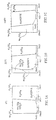
- the quantity of water added to the reaction stages is set such that glaserite and solution 'b' (at 25°C) are produced ( Figure lb).
- the glaserite is then reacted with potash and water to produce the potassium sulfate product and a liquor of composition 'c' (at 25°C).
- the liquor is returned to Stage 1.
- the effluent liquor from Stage 1 is evaporated at high temperatures (75-110°C), producing pure NaCl, and the end liquor is returned to Stage 1.
- the Type I processes are particularly complex, requiring a large number of unit operations. These include 4 to 6 filtration steps, not including filtration of the washed potassium sulfate product. Moreover, cooling crystallization is used to bring the temperature of the Stage 1 effluent to 0°C. The heat of crystallization of Glauber's salt, which is substantial (18.4 kcal/m), must also be removed at low temperatures. The cooling and heating costs associated with this stage, coupled with expensive equipment (such as crystallizers, heat exchangers, coolant system, and the like) are a serious disadvantage.
- the Type II processes have no cooling stage below ambient conditions. However, the recycle stream is much larger ( 10 tons per ton K 2 SO 4 produced), which increases energy consumption.
- the low ratio of water evaporated to throughput in the evaporative crystallization stage drastically reduces the natural slurry density, requiring larger crystallizers and/or more sophisticated crystallization technology.
- Glauber's salt is a relatively inexpensive source of sodium sulfate
- the additional water from the Glauber's salt decreases the conversion in the reaction stages and increases the sulfate composition of the Stage 1 effluent.
- Some cyclic processes cannot be operated using Glauber's salt while others require additional unit operations (for example, evaporation).
- a process for producing potassium sulfate, sodium sulfate, and sodium chloride from potash and a sodium sulfate/water source comprising the steps of: (a) treating the sodium sulfate/water source to produce a slurry containing anhydrous sodium sulfate; (b) concentrating the slurry to form a concentrate and a diluent; (c) treating the diluent to precipitate out anhydrous sodium sulfate; (d) subjecting the anhydrous sodium sulfate from steps (b) and/or (c) and/or from a different source to conversion with potash in an aqueous medium to yield glaserite and a first mother liquor, with any excess anhydrous sodium sulfate being taken as co-product; (e) converting the glaserite with potash and water to produce a precipitate of potassium sulfate and a second mother liquor; (f) returning the second mother liquor to
- the aqueous sodium sulfate solution is treated by evaporative crystallization or by outsalting with sodium chloride.
- the present invention successfully addresses the shortcomings of the presently known configurations by providing a process for the integrated production of potassium sulfate and sodium chloride with sodium sulfate, from potash and Glauber's salt, which is an inexpensive and available source of sodium sulfate.
- the use of Glauber's salt along with the coproduction of high-grade sodium sulfate reduces raw material costs and boosts total product value, such that the value-added is very nearly doubled.
- the present invention makes use of salt-cake grade sodium sulfate, which can be produced in-situ, to obtain the potassium sulfate product.
- the integrated process allows for a more efficient utilization of energy resources, including waste vapors.
- the purging of sodium sulfate mother liquor is eliminated or substantially reduced.
- the present invention is of a process for the integrated production of potassium sulfate and sodium chloride with sodium sulfate, from potash and a sodium sulfate/water source, where the sodium sulfate/water source may be a low quality water containing sodium sulfate, such as Glauber's salt or semi-anhydrous sodium sulfate, i.e., a mixture of sodium sulfate and Glauber's salt or partially hydrated sodium sulfate.
- sodium sulfate/water source may be a low quality water containing sodium sulfate, such as Glauber's salt or semi-anhydrous sodium sulfate, i.e., a mixture of sodium sulfate and Glauber's salt or partially hydrated sodium sulfate.
- Glauber's salt as the sole source of sodium sulfate in the production of potassium sulfate is problematic in currently known processes. Some cyclic processes cannot be operated using Glauber's salt, or require additional unit operations (for example, evaporation). In other processes, the use of Glauber's salt greatly increases the volume of internal streams and the amount of Glauber's salt that must be recovered by expensive cooling-crystallization.
- the evaporation load is ⁇ 2.3 tons per ton of anhydrous sodium sulfate produced.
- the combined evaporation load is ⁇ 5.5 tons per ton of each product produced in separate processes.
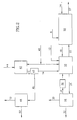
- a block diagram of the proposed process is provided, by way of example, in Figure 2.
- the anhydrous sodium sulfate produced in the melter is of sufficient quality for producing agricultural grade potassium sulfate, such that the evaporation load for the integrated process is only 4.6-4.8 tons per ton of each of potassium sulfate and sodium sulfate.
- the evaporative crystallization stages can be linked, with waste vapor from one stage being fed to the other, which reduces the total amount of waste vapor in the system.
- the heat requirement nearly doubles relative to each individual process.
- the capital cost of services such as steam, hot water, cooling water
- process control are reduced because a single system is needed rather than two.
- the drying, storage, and transport of sodium sulfate produced in the melter are eliminated. No purging of the sodium sulfate solutions is needed since impurities generally precipitate out with the sodium sulfate produced in the melter.
- the sodium sulfate yield increases.
- a process according to the present invention is as follows: The conversion of potash and sodium sulfate is carried out in two stages. In the first stage 10, the reaction is effected at from about 15 to about 60°C, with the preferred temperature range being from about 20 to about 40°C. Potash 12, sodium sulfate 14, slurry 34 from the recovery stage, and brine 18 from the glaserite decomposition stage 20 are introduced.
- the sodium sulfate source is primarily or exclusively anhydrous sodium sulfate, but some Glauber's salt and/or aqueous sodium sulfate is added.
- sodium sulfate/water source Each of the above-referenced, alone or in combination, is referred to hereinafter singly or collectively as "sodium sulfate/water source".
- the term 'potash' is meant to indicate any potassium chloride containing material including, for example, sylvinite.
- the sodium sulfate and potash dissolve, generating a supersaturation with respect to glaserite, such that glaserite is precipitated.
- the system can also be supersaturated with respect to sodium chloride, such that some sodium chloride is co-precipitated.
- the slurry is concentrated and delivered 22 to the glaserite decomposition stage 20.
- the mother liquor 26 is saturated with respect to glaserite and should approach saturation with sodium chloride and/or potassium chloride under ideal conditions.
- a typical mother-liquor composition has the following composition: potassium-6 wt%; sodium- 8 wt%; chloride- 17wt%; sulfate- 1.5wt%; water- the balance.
- the substantial quantities of potassium and sulfate in the mother liquor are returned to the process in the recovery stage.
- the glaserite decomposition stage 20 is performed at from about 15 to about 60°C, with the preferred temperature range being from about 20 to about 35°C.
- Water 24 is introduced along with the solids 22 obtained from the first stage 10. Potash is introduced directly 8 and/or via stream 22 by introducing excess potash into stage 10. The potash and glaserite solids dissolve, generating a supersaturation solely with respect to potassium sulfate, such that potassium sulfate is selectively precipitated. The maximum conversion is obtained when the mother liquor composition approaches the KCl/K 2 SO 4 /glaserite/H 2 O invariant point. The potassium sulfate solids are separated, washed and dried to give a potassium sulfate product 27.
- the mother liquor 18 removed from the reactor is returned to the glaserite production stage 10.
- the spent washwater is used in the decomposition of glaserite.
- Some or all of portions of stages 10 and 20 may be effected in a single countercurrent differential contactor.
- the brine 26 produced in the production of glaserite 10 is evaporated in an evaporative crystallizer 28, at about 70 to about 130°C, with the preferred range being about 95 to about 110°C. If necessary, the brine 26 can be filtered prior to evaporation to remove any insoluble matter. The removal of water 30 produces a supersaturation of sodium chloride, which precipitates out of solution. Care must be taken not to overevaporate, which can result in the undesirable co-precipitation of glaserite.
- the wet sodium chloride product 32 is removed from the system.
- the potassium-enriched brine 34 is cooled 36 and returned to vessel 10.
- the sodium sulfate introduced to vessel 10 is produced in-situ in a melter 42 by melting the Glauber's salt feed 40. Water 44 is added as needed.
- the product slurry 41 can be concentrated in vessel 43.
- the concentrate 14 is fed to vessel 10 and the diluent 45 is returned to evaporator 48.
- the diluent can be filtered before being evaporated to remove the water 50.
- the solids 52 are dried to produce anhydrous sodium sulfate product.
Landscapes
- Chemical & Material Sciences (AREA)
- Organic Chemistry (AREA)
- Engineering & Computer Science (AREA)
- Materials Engineering (AREA)
- Inorganic Chemistry (AREA)
- Preparation Of Compounds By Using Micro-Organisms (AREA)
- Enzymes And Modification Thereof (AREA)
Claims (9)
- Procédé de production de sulfate de potassium, de sulfate de sodium, et de chlorure de sodium à partir de potasse et d'une source d'eau/sulfate de sodium, consistant en les étapes de :(a) traiter la source d'eau/sulfate de sodium pour obtenir une suspension contenant du sulfate de sodium anhydre ;(b) concentrer ladite suspension pour former un concentrat et un diluant ;(c) traiter ledit diluant pour précipiter le sulfate de sodium anhydre ;(d) soumettre ledit sulfate de sodium anhydre des étapes (b) et/ou (c) et/ou d'une source différente de transformation avec de la potasse dans un milieu aqueux pour donner de la glasérite et des premiers jus-mères, tout excès de sulfate de sodium anhydre étant considéré comme sous-produit ;(e) transformer ladite glasérite avec de la potasse et de l'eau pour donner un précipité de sulfate de potassium et des seconds jus-mères ;(f) renvoyer lesdits seconds jus-mères à l'étape (d);(g) soumettre lesdits premiers jus-mères à une cristallisation par évaporation de telle sorte que du chlorure de sodium sensiblement pur précipite dans des troisièmes jus-mères ; et(h) renvoyer lesdits troisièmes jus-mères pour transformation en sels de potassium.
- Procédé selon la revendication 1, caractérisé en ce que ledit diluant est traité par cristallisation par évaporation.
- Procédé selon la revendication 1, caractérisé en ce que ledit diluant est traité par déplacement avec du chlorure de sodium.
- Procédé selon la revendication 1, caractérisé en ce que le sulfate de sodium obtenu à partir dudit diluant est utilisé comme matière première dans l'étape (d), tout excès solide de sulfate de sodium obtenu dans le procédé de fusion étant retiré comme sous-produit.
- Procédé selon la revendication 1, caractérisé en ce que du sel de Glauber est ajouté auxdits troisièmes jus-mères pendant, ou avant l'étape (d).
- Procédé selon la revendication 1, caractérisé en ce que ledit sulfate de sodium utilisé dans l'étape (d) est un tourteau de sel de qualité médiocre, de telle sorte que tout le sulfate de sodium de grande qualité obtenu dans les étapes (a) et (c) est retiré comme sous-produit.
- Procédé selon la revendication 1, caractérisé en ce que la source d'eau/sulfate de sodium est du sel de Glauber.
- Procédé selon la revendication 7, caractérisé en ce que ledit traitement comprend une fusion.
- Procédé selon la revendication 1, caractérisé en ce que la source d'eau/sulfate de sodium est du sulfate de sodium semi-anhydre.
Applications Claiming Priority (3)
| Application Number | Priority Date | Filing Date | Title |
|---|---|---|---|
| US08/348,118 US5552126A (en) | 1994-11-28 | 1994-11-28 | Co-production of potassium sulfate, sodium sulfate and sodium chloride |
| US348118 | 1994-11-28 | ||
| PCT/US1995/014961 WO1996016900A1 (fr) | 1994-11-28 | 1995-11-13 | Production simultanee de sulfate de potassium, sulfate de sodium et de chlorure de sodium |
Publications (3)
| Publication Number | Publication Date |
|---|---|
| EP0796223A1 EP0796223A1 (fr) | 1997-09-24 |
| EP0796223A4 EP0796223A4 (fr) | 1997-09-24 |
| EP0796223B1 true EP0796223B1 (fr) | 2001-02-21 |
Family
ID=23366720
Family Applications (1)
| Application Number | Title | Priority Date | Filing Date |
|---|---|---|---|
| EP95943581A Expired - Lifetime EP0796223B1 (fr) | 1994-11-28 | 1995-11-13 | Production simultanee de sulfate de potassium, sulfate de sodium et de chlorure de sodium |
Country Status (6)
| Country | Link |
|---|---|
| US (1) | US5552126A (fr) |
| EP (1) | EP0796223B1 (fr) |
| DE (1) | DE69520155T2 (fr) |
| MX (1) | MX9702648A (fr) |
| RU (1) | RU2157791C2 (fr) |
| WO (1) | WO1996016900A1 (fr) |
Families Citing this family (20)
| Publication number | Priority date | Publication date | Assignee | Title |
|---|---|---|---|---|
| US6299663B1 (en) | 1996-04-19 | 2001-10-09 | Airborne Industrial Minerals Inc. | Granulation method and apparatus therefor |
| US6132484A (en) * | 1998-04-17 | 2000-10-17 | Airborne Industrial Minerals Inc. | Wet granulation method for generating fertilizer granules |
| US6454979B1 (en) | 1998-04-17 | 2002-09-24 | Airborne Industrial Minerals Inc. | Wet granulation method for generating granules |
| US6293985B1 (en) | 1998-04-17 | 2001-09-25 | Airborne Industrial Minerals | Fertilizer granulation method |
| US6331193B1 (en) | 1998-04-17 | 2001-12-18 | Airborne Industrial Minerals Inc. | Wet granulation method generating sulfur granules |
| US6315976B1 (en) | 1998-06-16 | 2001-11-13 | Aristos Capital Corporation | Method of producing potassium sulfate |
| US6143271A (en) * | 1998-09-14 | 2000-11-07 | Dead Sea Works | Process for producing potassium sulfate from potash and sodium sulfate |
| US6106796A (en) * | 1998-10-13 | 2000-08-22 | Airborne Technologies Inc. | Method of ammonium sulfate purification |
| US6692716B1 (en) | 1998-10-13 | 2004-02-17 | Airborne Industrial Minerals, Inc. | Method of formulating alkali earth salts |
| NZ515927A (en) | 1999-05-05 | 2004-05-28 | Agronomic Growth Ind Ltd | Method for granulating compost powder in an absence of a nucleating material, seeding material or other initiator |
| US6334990B1 (en) | 1999-10-21 | 2002-01-01 | Airborne Industrial Minerals Inc. | Formulation of potassium sulfate, sodium carbonate and sodium bicarbonate from potash brine |
| US6375824B1 (en) | 2001-01-16 | 2002-04-23 | Airborne Industrial Minerals Inc. | Process for producing potassium hydroxide and potassium sulfate from sodium sulfate |
| CA2414894C (fr) * | 2001-12-19 | 2005-08-23 | Dirdal Rand Technologies | Methode de production de sulfate de potassium |
| FR2951383B1 (fr) | 2009-10-20 | 2012-09-21 | Solvay | Procede pour la valorisation conjointe de sels solubles contenus dans un residu d'un procede industriel |
| RU2502671C1 (ru) * | 2012-07-13 | 2013-12-27 | Федеральное государственное бюджетное образовательное учреждение высшего профессионального образования "Башкирский государственный университет" | Способ получения сульфата натрия |
| CN104628016B (zh) * | 2015-01-29 | 2016-08-17 | 中盐金坛盐化有限责任公司 | 一种高硝母液硝盐联产设备及工艺 |
| CN104925835B (zh) * | 2015-07-01 | 2016-08-24 | 化工部长沙设计研究院 | 一种芒硝法制取硫酸钾的工艺 |
| KR102378526B1 (ko) * | 2017-06-13 | 2022-03-23 | 재단법인 포항산업과학연구원 | 황산 칼륨의 제조 방법 |
| CN113896209B (zh) * | 2021-12-09 | 2022-03-04 | 中国科学院过程工程研究所 | 一种废盐制备碳酸钠副产硫酸钾、硫酸铵和氯化铵的方法 |
| US11827599B1 (en) | 2022-11-09 | 2023-11-28 | Tetra Technologies, Inc. | Method of preparing ionic fluids |
Family Cites Families (17)
| Publication number | Priority date | Publication date | Assignee | Title |
|---|---|---|---|---|
| GB287511A (en) * | 1927-03-23 | 1928-05-10 | Goodyear Tire & Rubber | Improvements in or relating to twin detachable rim devices for vehicle wheels |
| US1936070A (en) * | 1931-03-11 | 1933-11-21 | American Potash & Chem Corp | Process for the manufacture of potassium sulphate |
| US1990896A (en) * | 1932-07-30 | 1935-02-12 | Pacific Coast Borax Co | Method of making potassium sulphate |
| GB410830A (en) * | 1932-11-25 | 1934-05-25 | John Arthur Lanyon | Improvements in or relating to the production of potassium sulphate |
| GB439287A (en) * | 1934-05-24 | 1935-11-25 | Ivor Laurance Clifford | Improvements in or relating to the production of potassium sulphate |
| GB460281A (en) * | 1935-07-25 | 1937-01-25 | Ivor Laurance Clifford | Improvements in or relating to the production of potassium sulphate |
| GB464040A (en) * | 1935-10-10 | 1937-04-12 | Ivor Laurance Clifford | Improvements in or relating to the manufacture of potassium sulphate |
| DE1467244B2 (de) * | 1963-10-31 | 1970-02-05 | Standard-Messo Duisburg, Gesellschaft f. Chemietechnik mbH & Co, 4100 Duisburg | Verfahren und Vorrichtung zum Entwässern von Glaubersalz |
| SU710945A1 (ru) * | 1974-07-02 | 1980-01-25 | Всесоюзный Научно-Исследовательский И Проектный Институт Галургии (Внииг) | Способ получени сульфата кали |
| DE2820445C3 (de) * | 1978-05-10 | 1982-05-19 | Vsesojuznyj naučno-issledovatel'skij i proektnyj institut galurgii, Leningrad | Verfahren zur Herstellung von Kaliumsulfat |
| US4215100A (en) * | 1978-05-18 | 1980-07-29 | Antonova Nina V | Method of producing potassium sulfate |
| DE2904345A1 (de) * | 1979-02-06 | 1980-08-14 | Metallgesellschaft Ag | Verfahren zur herstellung von wasserfreiem natriumsulfat aus glaubersalz |
| SU806606A1 (ru) * | 1979-03-28 | 1981-02-23 | Всесоюзный Научно-Исследовательскийи Проектный Институт Галургии | Способ получени сульфата кали |
| DD244540A1 (de) * | 1985-12-20 | 1987-04-08 | Kali Veb K | Verfahren zur verarbeitung von glaubersalz zu alkalisulfaten |
| SU1557102A1 (ru) * | 1988-05-25 | 1990-04-15 | Всесоюзный научно-исследовательский и проектный институт галургии | Способ получени сульфата кали |
| DE4340105C1 (de) * | 1993-11-22 | 1995-01-26 | Mannesmann Ag | Verfahren zur kontinuierlichen Herstellung von Kaliumsulfat aus Natriumsulfat |
| DE4340806C1 (de) * | 1993-11-24 | 1994-11-17 | Mannesmann Ag | Verfahren zur Herstellung von Kaliumsulfat |
-
1994
- 1994-11-28 US US08/348,118 patent/US5552126A/en not_active Expired - Lifetime
-
1995
- 1995-11-13 EP EP95943581A patent/EP0796223B1/fr not_active Expired - Lifetime
- 1995-11-13 DE DE69520155T patent/DE69520155T2/de not_active Expired - Lifetime
- 1995-11-13 WO PCT/US1995/014961 patent/WO1996016900A1/fr not_active Ceased
- 1995-11-13 RU RU97112480/12A patent/RU2157791C2/ru active
- 1995-11-13 MX MX9702648A patent/MX9702648A/es unknown
Also Published As
| Publication number | Publication date |
|---|---|
| US5552126A (en) | 1996-09-03 |
| RU2157791C2 (ru) | 2000-10-20 |
| MX9702648A (es) | 1998-02-28 |
| DE69520155D1 (de) | 2001-03-29 |
| DE69520155T2 (de) | 2001-06-07 |
| EP0796223A1 (fr) | 1997-09-24 |
| WO1996016900A1 (fr) | 1996-06-06 |
| EP0796223A4 (fr) | 1997-09-24 |
Similar Documents
| Publication | Publication Date | Title |
|---|---|---|
| EP0796223B1 (fr) | Production simultanee de sulfate de potassium, sulfate de sodium et de chlorure de sodium | |
| EP0796222B1 (fr) | Production simultanee de sulfate de potassium et de sulfate de sodium | |
| US4180547A (en) | Process for recovery of chemicals from saline water | |
| MXPA97002648A (es) | Produccion conjunta de sulfato de potasio, sulfato de sodio y cloruro de sodio | |
| US4869882A (en) | Recovery of sodium carbonate values from contaminated dilute soda ash streams | |
| US5830422A (en) | Method for production of sodium bicarbonate, sodium carbonate and ammonium sulfate from sodium sulfate | |
| MXPA97002649A (en) | Joint production of potassium sulphate and so sulphate | |
| US5618504A (en) | Method for recovery of alkali values from trona using sequential crystallization | |
| US4039617A (en) | Recovery of soda values and heat from sodium carbonate crystallizer purge liquors | |
| US3998935A (en) | Manufacture of potassium sulfate | |
| US5624647A (en) | Method for recovery of alkali values from trona using two-stage leaching | |
| US6143271A (en) | Process for producing potassium sulfate from potash and sodium sulfate | |
| US6547836B1 (en) | Process for obtaining monohydrated lithium sulfate from natural brines | |
| US6106796A (en) | Method of ammonium sulfate purification | |
| US4885148A (en) | Production of monobasic potassium phosphate with low chloride content from potassium chloride and phosphoric acid produced from the commercial wet process | |
| US2764472A (en) | Brine purification | |
| US4519806A (en) | Enhanced recovery of soda ash from aqueous sodium carbonate solutions containing Na2 SO4 - and NaCl | |
| US4306880A (en) | Recovering by-products from sea water brines and the like | |
| US4224036A (en) | Method of concentrating salt solutions | |
| KR20010088870A (ko) | 알칼리 금속염들의 제조방법 | |
| US4334885A (en) | Production of potassium chloride from langbeinite | |
| CN1075041C (zh) | 同时生产硫酸钾和硫酸钠的方法 | |
| RU2105717C1 (ru) | Способ получения сульфата калия | |
| CN1169954A (zh) | 同时生产硫酸钾,硫酸钠和氯化钠的方法 | |
| US4231840A (en) | Method of concentrating an aqueous solution by multiple effect evaporating |
Legal Events
| Date | Code | Title | Description |
|---|---|---|---|
| PUAI | Public reference made under article 153(3) epc to a published international application that has entered the european phase |
Free format text: ORIGINAL CODE: 0009012 |
|
| 17P | Request for examination filed |
Effective date: 19970520 |
|
| A4 | Supplementary search report drawn up and despatched |
Effective date: 19970716 |
|
| AK | Designated contracting states |
Kind code of ref document: A4 Designated state(s): BE DE ES Kind code of ref document: A1 Designated state(s): BE DE ES |
|
| GRAG | Despatch of communication of intention to grant |
Free format text: ORIGINAL CODE: EPIDOS AGRA |
|
| 17Q | First examination report despatched |
Effective date: 20000329 |
|
| GRAG | Despatch of communication of intention to grant |
Free format text: ORIGINAL CODE: EPIDOS AGRA |
|
| GRAH | Despatch of communication of intention to grant a patent |
Free format text: ORIGINAL CODE: EPIDOS IGRA |
|
| GRAH | Despatch of communication of intention to grant a patent |
Free format text: ORIGINAL CODE: EPIDOS IGRA |
|
| GRAA | (expected) grant |
Free format text: ORIGINAL CODE: 0009210 |
|
| AK | Designated contracting states |
Kind code of ref document: B1 Designated state(s): BE DE ES |
|
| PG25 | Lapsed in a contracting state [announced via postgrant information from national office to epo] |
Ref country code: ES Free format text: THE PATENT HAS BEEN ANNULLED BY A DECISION OF A NATIONAL AUTHORITY Effective date: 20010221 |
|
| REF | Corresponds to: |
Ref document number: 69520155 Country of ref document: DE Date of ref document: 20010329 |
|
| EN | Fr: translation not filed | ||
| PLBQ | Unpublished change to opponent data |
Free format text: ORIGINAL CODE: EPIDOS OPPO |
|
| PLBI | Opposition filed |
Free format text: ORIGINAL CODE: 0009260 |
|
| PLBF | Reply of patent proprietor to notice(s) of opposition |
Free format text: ORIGINAL CODE: EPIDOS OBSO |
|
| 26 | Opposition filed |
Opponent name: K+S AKTIENGESELLSCHAFT Effective date: 20011120 |
|
| PLBF | Reply of patent proprietor to notice(s) of opposition |
Free format text: ORIGINAL CODE: EPIDOS OBSO |
|
| PLBO | Opposition rejected |
Free format text: ORIGINAL CODE: EPIDOS REJO |
|
| PLBN | Opposition rejected |
Free format text: ORIGINAL CODE: 0009273 |
|
| STAA | Information on the status of an ep patent application or granted ep patent |
Free format text: STATUS: OPPOSITION REJECTED |
|
| 27O | Opposition rejected |
Effective date: 20021028 |
|
| PGFP | Annual fee paid to national office [announced via postgrant information from national office to epo] |
Ref country code: DE Payment date: 20141119 Year of fee payment: 20 |
|
| REG | Reference to a national code |
Ref country code: DE Ref legal event code: R082 Ref document number: 69520155 Country of ref document: DE Representative=s name: HASELTINE LAKE LLP, DE |
|
| PGFP | Annual fee paid to national office [announced via postgrant information from national office to epo] |
Ref country code: BE Payment date: 20141118 Year of fee payment: 20 |
|
| REG | Reference to a national code |
Ref country code: DE Ref legal event code: R071 Ref document number: 69520155 Country of ref document: DE |