EP0793733B1 - Method of manufacturing a cylinder member and nickel-based facing alloys - Google Patents
Method of manufacturing a cylinder member and nickel-based facing alloys Download PDFInfo
- Publication number
- EP0793733B1 EP0793733B1 EP95940978A EP95940978A EP0793733B1 EP 0793733 B1 EP0793733 B1 EP 0793733B1 EP 95940978 A EP95940978 A EP 95940978A EP 95940978 A EP95940978 A EP 95940978A EP 0793733 B1 EP0793733 B1 EP 0793733B1
- Authority
- EP
- European Patent Office
- Prior art keywords
- alloy
- maximum
- facing
- temperature
- precipitation hardening
- Prior art date
- Legal status (The legal status is an assumption and is not a legal conclusion. Google has not performed a legal analysis and makes no representation as to the accuracy of the status listed.)
- Expired - Lifetime
Links
- 229910045601 alloy Inorganic materials 0.000 title claims abstract description 162
- 239000000956 alloy Substances 0.000 title claims abstract description 162
- PXHVJJICTQNCMI-UHFFFAOYSA-N Nickel Chemical compound [Ni] PXHVJJICTQNCMI-UHFFFAOYSA-N 0.000 title claims description 44
- 229910052759 nickel Inorganic materials 0.000 title claims description 15
- 238000004519 manufacturing process Methods 0.000 title claims description 7
- 238000003466 welding Methods 0.000 claims abstract description 42
- 230000007246 mechanism Effects 0.000 claims abstract description 23
- 238000004881 precipitation hardening Methods 0.000 claims abstract description 19
- 230000004913 activation Effects 0.000 claims abstract description 17
- 238000010438 heat treatment Methods 0.000 claims abstract description 16
- 230000007797 corrosion Effects 0.000 claims abstract description 14
- 238000005260 corrosion Methods 0.000 claims abstract description 14
- 238000002485 combustion reaction Methods 0.000 claims abstract description 12
- 230000009466 transformation Effects 0.000 claims abstract description 10
- 230000001965 increasing effect Effects 0.000 claims abstract description 5
- 229910052804 chromium Inorganic materials 0.000 claims description 33
- 229910052796 boron Inorganic materials 0.000 claims description 27
- 229910052710 silicon Inorganic materials 0.000 claims description 12
- 229910052748 manganese Inorganic materials 0.000 claims description 10
- 238000000034 method Methods 0.000 claims description 10
- 229910052758 niobium Inorganic materials 0.000 claims description 10
- 229910052742 iron Inorganic materials 0.000 claims description 9
- 229910052719 titanium Inorganic materials 0.000 claims description 9
- 229910052782 aluminium Inorganic materials 0.000 claims description 8
- 229910052750 molybdenum Inorganic materials 0.000 claims description 8
- 239000012535 impurity Substances 0.000 claims description 7
- 229910052726 zirconium Inorganic materials 0.000 claims description 7
- 239000007787 solid Substances 0.000 abstract 1
- 239000011651 chromium Substances 0.000 description 42
- 239000012071 phase Substances 0.000 description 33
- 238000005336 cracking Methods 0.000 description 19
- 239000000463 material Substances 0.000 description 12
- 238000001556 precipitation Methods 0.000 description 12
- 238000007711 solidification Methods 0.000 description 10
- 230000008023 solidification Effects 0.000 description 10
- VYZAMTAEIAYCRO-UHFFFAOYSA-N Chromium Chemical compound [Cr] VYZAMTAEIAYCRO-UHFFFAOYSA-N 0.000 description 9
- 230000000875 corresponding effect Effects 0.000 description 8
- 230000035882 stress Effects 0.000 description 8
- ZOXJGFHDIHLPTG-UHFFFAOYSA-N Boron Chemical compound [B] ZOXJGFHDIHLPTG-UHFFFAOYSA-N 0.000 description 6
- 230000015572 biosynthetic process Effects 0.000 description 6
- 238000005755 formation reaction Methods 0.000 description 6
- 229910000990 Ni alloy Inorganic materials 0.000 description 5
- 230000000694 effects Effects 0.000 description 5
- 238000003754 machining Methods 0.000 description 5
- 238000010587 phase diagram Methods 0.000 description 5
- 238000001816 cooling Methods 0.000 description 4
- 239000013078 crystal Substances 0.000 description 4
- 230000005496 eutectics Effects 0.000 description 4
- 238000005552 hardfacing Methods 0.000 description 4
- 238000002844 melting Methods 0.000 description 4
- 229910001005 Ni3Al Inorganic materials 0.000 description 3
- 239000011159 matrix material Substances 0.000 description 3
- 230000008018 melting Effects 0.000 description 3
- 239000002244 precipitate Substances 0.000 description 3
- 239000000243 solution Substances 0.000 description 3
- 229910000531 Co alloy Inorganic materials 0.000 description 2
- 230000008859 change Effects 0.000 description 2
- 239000010763 heavy fuel oil Substances 0.000 description 2
- 229910001026 inconel Inorganic materials 0.000 description 2
- 229910001119 inconels 625 Inorganic materials 0.000 description 2
- 150000001247 metal acetylides Chemical class 0.000 description 2
- 239000000203 mixture Substances 0.000 description 2
- 239000007800 oxidant agent Substances 0.000 description 2
- 230000008569 process Effects 0.000 description 2
- 230000001681 protective effect Effects 0.000 description 2
- 239000007790 solid phase Substances 0.000 description 2
- 229910052721 tungsten Inorganic materials 0.000 description 2
- 229910000859 α-Fe Inorganic materials 0.000 description 2
- 229910018487 Ni—Cr Inorganic materials 0.000 description 1
- 229910000831 Steel Inorganic materials 0.000 description 1
- 229910001347 Stellite Inorganic materials 0.000 description 1
- NINIDFKCEFEMDL-UHFFFAOYSA-N Sulfur Chemical compound [S] NINIDFKCEFEMDL-UHFFFAOYSA-N 0.000 description 1
- 239000005864 Sulphur Substances 0.000 description 1
- 238000005299 abrasion Methods 0.000 description 1
- 230000003213 activating effect Effects 0.000 description 1
- 230000032683 aging Effects 0.000 description 1
- 239000012080 ambient air Substances 0.000 description 1
- 239000011324 bead Substances 0.000 description 1
- 230000008901 benefit Effects 0.000 description 1
- 238000005266 casting Methods 0.000 description 1
- 230000001413 cellular effect Effects 0.000 description 1
- AHICWQREWHDHHF-UHFFFAOYSA-N chromium;cobalt;iron;manganese;methane;molybdenum;nickel;silicon;tungsten Chemical compound C.[Si].[Cr].[Mn].[Fe].[Co].[Ni].[Mo].[W] AHICWQREWHDHHF-UHFFFAOYSA-N 0.000 description 1
- 238000004040 coloring Methods 0.000 description 1
- 229910052802 copper Inorganic materials 0.000 description 1
- 230000007547 defect Effects 0.000 description 1
- 210000001787 dendrite Anatomy 0.000 description 1
- 230000001066 destructive effect Effects 0.000 description 1
- 238000009792 diffusion process Methods 0.000 description 1
- 238000007865 diluting Methods 0.000 description 1
- 238000010790 dilution Methods 0.000 description 1
- 239000012895 dilution Substances 0.000 description 1
- 230000002708 enhancing effect Effects 0.000 description 1
- 239000000945 filler Substances 0.000 description 1
- 239000000446 fuel Substances 0.000 description 1
- 230000001939 inductive effect Effects 0.000 description 1
- 229910000765 intermetallic Inorganic materials 0.000 description 1
- 229910001068 laves phase Inorganic materials 0.000 description 1
- 239000007788 liquid Substances 0.000 description 1
- 230000014759 maintenance of location Effects 0.000 description 1
- 239000000155 melt Substances 0.000 description 1
- 229910052751 metal Inorganic materials 0.000 description 1
- 239000002184 metal Substances 0.000 description 1
- 229910001235 nimonic Inorganic materials 0.000 description 1
- 239000000047 product Substances 0.000 description 1
- 238000007712 rapid solidification Methods 0.000 description 1
- 230000008439 repair process Effects 0.000 description 1
- 238000004904 shortening Methods 0.000 description 1
- 239000010703 silicon Substances 0.000 description 1
- 239000010959 steel Substances 0.000 description 1
- 229910052715 tantalum Inorganic materials 0.000 description 1
- 238000000844 transformation Methods 0.000 description 1
- 229910052720 vanadium Inorganic materials 0.000 description 1
- GPPXJZIENCGNKB-UHFFFAOYSA-N vanadium Chemical compound [V]#[V] GPPXJZIENCGNKB-UHFFFAOYSA-N 0.000 description 1
- 230000000007 visual effect Effects 0.000 description 1
Images


Classifications
-
- C—CHEMISTRY; METALLURGY
- C21—METALLURGY OF IRON
- C21D—MODIFYING THE PHYSICAL STRUCTURE OF FERROUS METALS; GENERAL DEVICES FOR HEAT TREATMENT OF FERROUS OR NON-FERROUS METALS OR ALLOYS; MAKING METAL MALLEABLE, e.g. BY DECARBURISATION OR TEMPERING
- C21D6/00—Heat treatment of ferrous alloys
- C21D6/02—Hardening by precipitation
-
- B—PERFORMING OPERATIONS; TRANSPORTING
- B23—MACHINE TOOLS; METAL-WORKING NOT OTHERWISE PROVIDED FOR
- B23K—SOLDERING OR UNSOLDERING; WELDING; CLADDING OR PLATING BY SOLDERING OR WELDING; CUTTING BY APPLYING HEAT LOCALLY, e.g. FLAME CUTTING; WORKING BY LASER BEAM
- B23K35/00—Rods, electrodes, materials, or media, for use in soldering, welding, or cutting
- B23K35/22—Rods, electrodes, materials, or media, for use in soldering, welding, or cutting characterised by the composition or nature of the material
- B23K35/24—Selection of soldering or welding materials proper
- B23K35/30—Selection of soldering or welding materials proper with the principal constituent melting at less than 1550 degrees C
- B23K35/3033—Ni as the principal constituent
- B23K35/304—Ni as the principal constituent with Cr as the next major constituent
-
- C—CHEMISTRY; METALLURGY
- C21—METALLURGY OF IRON
- C21D—MODIFYING THE PHYSICAL STRUCTURE OF FERROUS METALS; GENERAL DEVICES FOR HEAT TREATMENT OF FERROUS OR NON-FERROUS METALS OR ALLOYS; MAKING METAL MALLEABLE, e.g. BY DECARBURISATION OR TEMPERING
- C21D2251/00—Treating composite or clad material
- C21D2251/04—Welded or brazed overlays
-
- F—MECHANICAL ENGINEERING; LIGHTING; HEATING; WEAPONS; BLASTING
- F05—INDEXING SCHEMES RELATING TO ENGINES OR PUMPS IN VARIOUS SUBCLASSES OF CLASSES F01-F04
- F05C—INDEXING SCHEME RELATING TO MATERIALS, MATERIAL PROPERTIES OR MATERIAL CHARACTERISTICS FOR MACHINES, ENGINES OR PUMPS OTHER THAN NON-POSITIVE-DISPLACEMENT MACHINES OR ENGINES
- F05C2201/00—Metals
- F05C2201/02—Light metals
- F05C2201/021—Aluminium
Definitions
- the invention relates to a method of manufacturing a cylinder member, such as a valve, a seat portion, a piston or a cylinder liner, in an internal combustion engine, particularly a large two-stroke crosshead engine, which member is provided with a welded high-temperature corrosion-resistant facing alloy, the hardness of said facing alloy being increased by means of a precipitation hardening mechanism, and relates to a nickel-based facing alloy which may, for example, be welded on to such a cylinder member.
- a cylinder member such as a valve, a seat portion, a piston or a cylinder liner
- WO92/13179 describes, for example, the use of the nickel-based alloy, Alloy 50, the cobalt-based alloy, Stellite 6, and a nickel-based alloy, the most important alloy components of which are 20-24% Cr, 0.2-0.55% C and 4-7% Al.
- EP-A-0 521 821 describes a valve made of Nimonic provided with a welded layer of Inconel 625, or provided in a manner not further explained with a layer of Inconel 671 which, apart from unavoidable impurities, consists of 0.04-0.05% C, 47-49% Cr, 0.3-0.40% Ti and the balance Ni. It is mentioned that the alloy Inconel 671 does not provide a corrosion resistance as good as that of Inconel 625, which contains among other things 20-22% Cr, 8.0-9.5% Mo, 3.15-4.15% Nb+Ta and the balance Ni.
- DT-OS 24 46 517 describes a facing alloy for nuclear reactors, attempting to avoid intercrystalline corrosion by means of a welding alloy consisting of maximum 0.05% C, 1.0-5.0% Si, maximum 1.0% Mn, 20-50% Cr, 0.5-3.0% B, maximum 3.0% Cu, maximum 5.0% Fe and the balance Ni, where % Cr ⁇ 10 x % B + 13. Concrete examples mention alloys with a B content ranging from 1.13 to 2.86%.
- DE-A-2705344 describes a method of making a cylinder member in which a facing alloy is welded onto the member and then treated at a temperature higher than the operating temperature of the alloy.
- SE-B-422 338 describes a valve for an internal combustion engine having a basic body of a chromium-containing nickel alloy which is coated with a chromium-containing cobalt alloy at a temperature exceeding 3000°C, whereupon the member is subjected to mechanical machining and ageing at a temperature higher than the working temperature, the aim of which is to stabilize the structure and dimensions of the alloy and counteract intercrystalline corrosion.
- DK-B-165125 describes an exhaust valve for an internal combustion engine with a high-temperature corrosion-resistant facing alloy comprising 13-17% Cr, 2-6% Al, 0.1-8% Mo, 1.5-3.5% B, 0.5-3% Ti, 4-7% Co and the balance Ni.
- the purpose of the known facings on valves is, among other things, to provide a surface on the member with excellent high-temperature corrosion resistance so that the material is not corroded by the highly corroding environment in a heavy fuel oil diesel engine, and in case of seat areas, a surface of high hardness so that the formation of dent marks is counteracted, and at the same time the material deposited should have a high ductility counteracting the formation of cold cracks in the material.
- the hardness of the facing has mainly been provided by precipitation of carbide networks, borides and/or intermetals, such as Ni 3 Al ( ⁇ '), ⁇ -phase, ⁇ -phase or Laves-phase in the basic matrix of the alloy, and by solution hardening.
- the known welded facing alloys are very exposed to cold cracking in the welding material at the cooling of the member following welding, viz. cracks present immediately following the conclusion of welding.
- the cold cracks require either rejection or repair of the members with the welded facing.
- the problem of cold cracking is particularly pronounced in the known boron-containing facing alloys, because these known alloys have very low ductility.
- B is here used for precipitation of borides to increase the hardness and abrasion resistance of the alloy.
- the alloy comprises a nickel-rich ⁇ -phase and a chromium-rich ⁇ -phase where both phases, depending on the precise analysis of the alloy, may constitute the primary dendrite structure.
- EP-A-0529208 describes a chromium-based hardfacing alloy for welding in the valve seat area on the valves in a car engine.
- the alloy contains 30-48% Ni, 1.5-15% W and/or 1.0-6.5% Mo, and the balance is of at least 40% Cr.
- the welding is performed by means of laser welding, and at the cooling of the solidified chromium-containing ⁇ -phase, a nickel-containing phase is precipitated.
- W and Mo have a solution enhancing effect on the alloy and contribute vitally to its strength.
- C can be added in amounts of 0.3-2.0% to increase the hardness by formation of carbides, and B can be added in amounts of 0.1-1.5% to increase the hardness by formation of chromium borides.
- Nb can be added in amounts of 1.0-4.0% to form hardness-increasing intermetallic compounds as well as carbides and borides.
- the hardness of the alloy is thus created immediately upon welding by precipitation of carbide networks, borides and/or intermetals in the chromium-containing basic matrix of the alloy and by solution hardening like in the above alloys. Consequently, great care and special welding methods must be applied, such as laser welding, to avoid cracking in immediate connection with the welding process.
- the object of the invention is to provide a method of manufacturing a cylinder member and a facing alloy which have a high resistance to hot corrosion in the environment existing in the working chamber of an internal combustion engine, while at the same time the risk of cracking in connection with welding is substantially lower than in the known alloys so that welding methods with a suitably high melting rate can be used to weld the alloy on to large members on a commercial basis.
- the method of manufacturing cylinder member according to the invention is defined in claim 1 and the facing alloy is defined in claim 5.
- the precipitation hardening mechanism in the welded facing alloy is based on a solid-state phase transformation, that the temperature of activating the precipitation hardening mechanism is above the operating temperature of the alloy, and the precipitation hardening mechanism acts so slowly that the alloy substantially does not harden at welding on the cylinder member, but hardens during a subsequent heat treatment at a temperature higher than the activation temperature for the precipitation hardening mechanism.
- the desired hardness has been achieved with a substantially smaller precipitation of eutectics and hard phases during solidification than in the known alloys. This strengthens the mutual bonds between the primary dendritic precipitates, which counteracts hot cracking.
- the slow-acting hardening mechanism only increases the hardness of the alloy at the subsequent heat treatment after the alloy has been stress-relieved, as will be explained in detail below.
- the welded facing alloy retains a high ductility of, for example, 25%, which prevents the residual stresses after welding corresponding to the yield stress of the alloy from generating cracks.
- the yield stress of facing alloys of the type mentioned here increases with the increasing hardness of the alloy, just as the temperature for achieving stress relieving also increases.
- the welded, still very ductile alloy becomes exposed to a temperature level which releases the residual stresses by means of stress relieving.
- the low hardness of the alloy before hardening causes the stresses to be relieved quickly and at a low temperature.
- the composition of the alloy must be chosen so that in the area around the chosen analysis, the main elements of the alloy depicted in a phase diagram exhibit an oblique dividing line for the state of equilibrium between two different phase areas, where, for example, one phase area may contain the crystal lattice form, BCC (Body Centered Cubic), and the other a mixture of BCC and the so-called FFC form (Face Centred Cubic).
- BCC Crystal lattice form
- FFC form Feace Centred Cubic
- the alloy does not have time to adjust itself to the state of equilibrium, i.e., judged in relation to the state of equilibrium the alloy will have too large a proportion of one phase.
- the underrepresented phase will be point) precipitated in the overrepresented phase, which generates internal stresses with crystal distortions preventing dislocations from travelling through the crystal grains, whereby the alloy achieves high hardness.
- the transformation from one to the other phase takes place through diffusion of the alloy components, and extremely small point precipitates occur which are so finely distributed that the resulting alloy has a very uniform microhardness.
- Such solid-state phase transformations are in themselves known from other alloys, but the feature of importance to the invention is that for the chosen analysis of the facing alloy, the transformation takes so long that it does not become active in the period passing until the just welded material has cooled below the hardening temperature. As the welded material retains high ductility until hardening, the cylinder member may without problems be exposed to mechanical machining to the finished geometry, whereupon hardening is performed.
- the cylinder member is preferably provided with a facing alloy which solidifies on welding primarily in an austenitic phase, part of which becomes transformed into a ferritic phase at temperatures above the activation temperature for the precipitation hardening mechanism.
- This precipitation of the ferritic BCC form in the austenitic FCC form is advantageous for achieving high hardness and is extremely suitable in connection with facing alloys which normally contain nickel and chromium, as the binary Cr-Ni phase diagram has a characteristic, slightly S-shaped dividing line between the austenitic nickel-rich phase and the more chromium-rich phase area.
- the activation temperature for precipitation hardening of the alloy may suitably be in the interval from 550 to 1100°C, preferably from 700 to 850°C, and at the same time activation of the precipitation hardening mechanism requires said activation temperature to be exceeded for more than 40 s, suitably for more than 20 min.
- the facing alloy of the cylinder member is especially adapted to the welding methods which have a melting rate advantageously high for the manufacture of the members, and to the operating temperatures occurring in cylinder members in a large two-stroke crosshead engine. If the cylinder members are to be used in smaller engines, other temperature levels may be chosen.
- the facing alloy of claim 5 comprises from 40 to 51% Cr, from 0 to 0.1% C, less than 1.0% Si, from 0 to 5.0% Mn, less than 1.0% Mo, from 0.05 to less than 0.5% B, from 0 to 1.0% Al, from 0 to 1.5% Ti, from 0 to 0.2% Zr, from 0.5 to 3.0% Nb, an aggregate content of Co and Fe of maximum 5.0%, maximum 0.2% O, maximum 0.3% N and the balance Ni.
- the large content of Cr promotes the corrosion properties of the nickel alloy in the relevant operating environment.
- the welded alloy has better corrosion properties and higher hardness at the operating temperatures from 500 to 700°C than the known hardfacings on cylinder members, and better mechanical properties than the above cast nickel alloys.
- the solid phase transformation cannot be achieved in a suitable manner, as the activation temperature becomes too low when the lower Cr interval limit is not reached, and if the upper Cr interval limit is exceeded, the solidification interval of the alloy is increased, and primarily ferrite may be precipitated in a hard and brittle phase resulting in an undesired fall in ductility.
- the amounts of the other alloy components determine the precise positioning of the dividing line in the phase diagram between the two relevant phases, which means that the optimum content of Cr can be adjusted finely by tests to achieve the desired activation temperature for the hardening when the other alloy components are known.
- the content of B has surprisingly turned out to be decisive for the weldability of the nickel alloy with the high Cr content.
- B causes the solidification of the melt to change from cellular solidification into dendritic solidification, where the dendritic branches interlock and produce a geometrical locking of the structural components so as to avoid more extended and plane film layers in the 5 melt which is the last to solidify.
- the content of B contributes substantially to the high resistance of the alloy to hot cracking at welding.
- B is largely insoluble in the ⁇ and ⁇ -phases, and it is presumed that the solidification involves a eutectic with a number of borides.
- Nb influences the solid phase transformation to provide globular precipitation rather than lamellar precipitation, which increases the ductility of the alloy remaining after heat treatment. This is of importance particularly to cylinder members which are exposed to mechanical influences during operation. A corresponding effect can be achieved with Ta, Ti and Zr, but Ta is very expensive, and more than 1.5% Ti may cause intermetallic precipitation making the alloy harden partially and embrittle at the welding, and a content of Zr exceeding 0.2% may cause hot cracking at welding.
- a content of Mo of less than 1.0% may contribute to strengthen the austenitic phase through a solutionenhancing effect which gives the alloy greater tensile strength.
- Si, Mn and Al have a de-oxidizing effect at welding and are therefore, to avoid welding defects, desirable as components in the filler material used at welding. Although some of the de-oxidising agent is burned away at welding, part of it will remain in the finished alloy. It is desired to limit Si to less than 1%, as Si reduces the desired effect of B and necessitates a larger addition thereof. Mn is not quite such an efficient de-oxidizing agent, and it is desired to limit the amount to maximum 5% so as not to dilute the active components in the finished alloy. An Al content of more than 1% may cause undesired precipitation of the intermetallic phase Ni 3 Al, which increases the hardness of the nickel matrix already during the welding process.
- C is a common impurity in commercial alloys, and it is expensive to remove C completely.
- the C content should be limited to maximum 0.1% to avoid or reduce carbide formations.
- O and N will normally be deposited in the alloy from the ambient air, but they do not contribute to the desired properties.
- Co and Fe are also impurities which it is desired to limit to an aggregate content of maximum 5%.
- the invention also relates to a nickel-based facing alloy which is characterized according to the invention in that expressed in percentage by weight and apart from commonly occurring impurities, it comprises from 40 to 51% Cr, from 0 to 0.1% C, less than 1.0% Si, from 0 to 5.0% Mn, less than 1.0% Mo, from 0.05 to less than 0.5% B, from 0 to 1.0% Al, from 0 to 1.5% Ti, from 0 to 0.2% Zr, from 0.5 to 3.0% Nb, an aggregate content of Co and Fe of maximum 5.0%, maximum 0.2% O, maximum 0.3% N and the balance Ni.
- this alloy is distinguished by very good high-temperature corrosion resistance and by being weldable largely without any risk of cracking and by being heat-treatable to high hardness at temperatures of, for example, 650-800°C with retention of a ductility which permits the use of the alloy on mechanically loaded members as a protective facing and/or a hard facing.
- the influence of the individual components on the properties of the alloy are mentioned above.
- the content of Al is maximum 0.1%
- the content of Ti is preferably maximum 0.1%.
- Such low contents of Al and Ti suppress precipitation during welding of the hardness-increasing and thus ductility-lowering intermetallic phase Ni 3 Al(Ti).
- the Cr content of the alloy may suitably be in the interval from 45 to 50%.
- a Cr content of minimum 45% provides the advantage that the precipitation hardening mechanism takes place in a more controlled manner and at a higher activation temperature, which means partly that the alloy at welding is cooled quickly below the activation temperature, partly that the subsequent machining of the member to the final geometry can take place largely without taking into consideration the heating of the member by the machining.
- the upper limit of 50% provides suitable certainty against formation of the hard and brittle primary ferrite phase.
- the alloy contains from 0.15 to 0.40% B, preferably maximum 0.25% B.
- the upper limit of 0.4% B provides suitable certainty that hardness-increasing borides are not precipitated in too large amounts when the alloy solidifies, and the lower limit of 0.15% ensures that at the dilution of the welding metal with the basic material of the member, the boron content does not in local areas become so low that hot cracks can easily arise.
- the ability of boron to produce the desired dendritic structure in the alloy is reduced at a falling Cr content in the alloy. At a Cr content of less than 45%, the content of B is therefore preferably from 0.20 to 0.30%.
- the preferred upper limit of 0.25% is suitable in alloys with at least 45% Cr.
- the content of Si in the welded alloy is preferably maximum 0.03%, and because, as mentioned, the content of Mn has a diluting effect, the Mn content may suitably be restricted to maximum 0.5%. For the same reason a content of Mo of maximum 0.5% is preferred, and/or an aggregate content of Co and Fe of maximum 1.0% and maximum 0.02% O and maximum 0.02% N.
- the advantageous change in the hardening mechanism to take place with globular precipitation is strengthened if the content of Nb is at minimum 1.0%, and for economic reasons the content of the relatively costly Nb may suitably be limited to 2.0%, as a higher content of Nb usually does not substantially improve the properties of the alloy.
- the risk of hot cracks at welding may suitably be limited by incorporating maximum 0.02% Zr in the alloy.
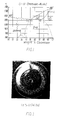
- the binary phase diagram shown in Fig. 1 shows the slightly S-shaped dividing line between the equilibrium phases ⁇ and ⁇ - ⁇ .
- the dividing line starts at a temperature of about 1345°C from a point at about 47% Cr and extends obliquely downwards to a point at about 38% Cr at a temperature of 500°C.
- Ni-Cr alloy in the above area is welded, the solidification of the weld pool and the subsequent cooling will take place so rapidly that mainly austenitic nickel phase ⁇ is formed.
- the ferritic ⁇ -phase will be precipitated in the nickel phase as very finely distributed globular precipitates.
- the exact position of the dividing line depends on the type and amount of all alloy components.
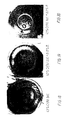
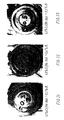
- Nickel alloys with a high content of Cr have so far been considered very difficult to weld owing to the high risk of hot cracking, which was confirmed at the two reference tests.
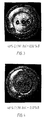
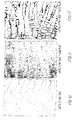
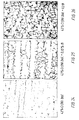
- Figs. 2 and 11 the well-known strong cracking due to hot cracking is seen.
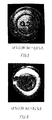
- Figs. 10 and 24 show that solidification has taken place cellularly with the dark extended plane film layers between the crystal grains.
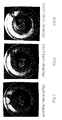
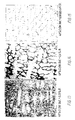
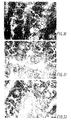
- Figs. 7-9 and 15-17 show alloys with an addition of Si in amounts of 0.09%, 0.17%,and 0.33%, respectively, and with an associated content of B of 0.06%, 0.11% and 0.21%, respectively. It can be seen that Si reduces the ability of B to produce a dendritic solidification structure.
- An alloy according to the invention was prepared, having the following analysis: 48.6% Cr, 1.5% Nb, 0.67% Mn, 0.39% Si, 0.1% B, 0.012% C and the balance Ni.
- the alloy was welded on to a member in the same manner as mentioned above, only two weld beads were applied on top of each other. No cracking could be observed after the welding. After welding, the hardness of the alloy at 20°C was measured to 200 HV20. The member was then heat-treated for 72 hours at a temperature of 700°C. After the heat treatment no cracking could be observed either.
- the hardness of the alloy was measured to 511 HV20 and 460 HBW at 20°C and 415 HBW at 500°C, which shows that the alloy retains an extremely advantageous, high hardness at a high temperature.
- the sample was cut, ground and polished in the usual manner.
- Fig. 30 shows a photo of the alloy, and it can be seen immediately that the structure of the hardened alloy is so fine that the individual structural components can hardly be distinguished despite the powerful magnification.
- the alloy can be welded on as a corrosion protective facing on the surfaces that come into contact with the environment in the internal combustion chamber of an engine. Furthermore, the high-temperature hardness is so high that the alloys according to the invention are very suitable as welded hardfacing alloys for valve seat areas.
Landscapes
- Chemical & Material Sciences (AREA)
- Engineering & Computer Science (AREA)
- Mechanical Engineering (AREA)
- Materials Engineering (AREA)
- Thermal Sciences (AREA)
- Crystallography & Structural Chemistry (AREA)
- Metallurgy (AREA)
- Organic Chemistry (AREA)
- Physics & Mathematics (AREA)
- Chemically Coating (AREA)
- Pens And Brushes (AREA)
- Materials For Medical Uses (AREA)
- Heat Treatment Of Articles (AREA)
- Laminated Bodies (AREA)
- Cylinder Crankcases Of Internal Combustion Engines (AREA)
- Diaphragms For Electromechanical Transducers (AREA)
- Forging (AREA)
- Arc Welding In General (AREA)
- Pistons, Piston Rings, And Cylinders (AREA)
- Laser Beam Processing (AREA)
- Coating By Spraying Or Casting (AREA)
Applications Claiming Priority (4)
| Application Number | Priority Date | Filing Date | Title |
|---|---|---|---|
| DK1428/94 | 1994-12-13 | ||
| DK199401428A DK172987B1 (da) | 1994-12-13 | 1994-12-13 | Cylinderelement, nikkelbaseret pålægningslegering og anvendelse af legeringen |
| DK142894 | 1994-12-13 | ||
| PCT/DK1995/000503 WO1996018747A1 (en) | 1994-12-13 | 1995-12-12 | A cylinder member and nickel-based facing alloys |
Publications (2)
| Publication Number | Publication Date |
|---|---|
| EP0793733A1 EP0793733A1 (en) | 1997-09-10 |
| EP0793733B1 true EP0793733B1 (en) | 1999-08-25 |
Family
ID=8104733
Family Applications (1)
| Application Number | Title | Priority Date | Filing Date |
|---|---|---|---|
| EP95940978A Expired - Lifetime EP0793733B1 (en) | 1994-12-13 | 1995-12-12 | Method of manufacturing a cylinder member and nickel-based facing alloys |
Country Status (14)
| Country | Link |
|---|---|
| US (1) | US5958332A (OSRAM) |
| EP (1) | EP0793733B1 (OSRAM) |
| JP (1) | JP3370338B2 (OSRAM) |
| KR (1) | KR100353193B1 (OSRAM) |
| AT (1) | ATE183780T1 (OSRAM) |
| AU (1) | AU4253896A (OSRAM) |
| DE (1) | DE69511717T2 (OSRAM) |
| DK (1) | DK172987B1 (OSRAM) |
| ES (1) | ES2136893T3 (OSRAM) |
| HR (1) | HRP950590B1 (OSRAM) |
| NO (1) | NO314667B1 (OSRAM) |
| PL (1) | PL179454B1 (OSRAM) |
| TW (1) | TW305011B (OSRAM) |
| WO (1) | WO1996018747A1 (OSRAM) |
Families Citing this family (24)
| Publication number | Priority date | Publication date | Assignee | Title |
|---|---|---|---|---|
| DK173136B1 (da) | 1996-05-15 | 2000-02-07 | Man B & W Diesel As | Bevægeligt vægelement i form af en udstødsventilspindel eller et stempel i en forbrændingsmotor. |
| US6017591A (en) * | 1996-11-14 | 2000-01-25 | Ford Global Technologies, Inc. | Method of making adherently sprayed valve seats |
| DE19826138B4 (de) * | 1998-04-17 | 2007-06-28 | NU TECH Gesellschaft für Lasertechnik Materialprüfung und Meßtechnik mbH | Verfahren zur Herstellung eines Werkstücks mit einer verschleißbeständigen Oberfläche |
| DE19959292A1 (de) * | 1999-12-09 | 2001-06-13 | Rolls Royce Deutschland | Verfahren zum Herstellen einer Brennkammer eines Gasturbinen-Triebwerks |
| US6475647B1 (en) | 2000-10-18 | 2002-11-05 | Surface Engineered Products Corporation | Protective coating system for high temperature stainless steel |
| CA2348145C (en) | 2001-05-22 | 2005-04-12 | Surface Engineered Products Corporation | Protective system for high temperature metal alloys |
| US6655369B2 (en) * | 2001-08-01 | 2003-12-02 | Diesel Engine Transformations Llc | Catalytic combustion surfaces and method for creating catalytic combustion surfaces |
| US6508240B1 (en) | 2001-09-18 | 2003-01-21 | Federal-Mogul World Wide, Inc. | Cylinder liner having EGR coating |
| CN100338247C (zh) * | 2002-01-08 | 2007-09-19 | 三菱麻铁里亚尔株式会社 | 对含无机酸超临界水环境的耐腐蚀性优异的Ni基合金 |
| US6749894B2 (en) * | 2002-06-28 | 2004-06-15 | Surface Engineered Products Corporation | Corrosion-resistant coatings for steel tubes |
| US7458358B2 (en) * | 2006-05-10 | 2008-12-02 | Federal Mogul World Wide, Inc. | Thermal oxidation protective surface for steel pistons |
| US8613886B2 (en) * | 2006-06-29 | 2013-12-24 | L. E. Jones Company | Nickel-rich wear resistant alloy and method of making and use thereof |
| US8568901B2 (en) * | 2006-11-21 | 2013-10-29 | Huntington Alloys Corporation | Filler metal composition and method for overlaying low NOx power boiler tubes |
| US7754143B2 (en) * | 2008-04-15 | 2010-07-13 | L. E. Jones Company | Cobalt-rich wear resistant alloy and method of making and use thereof |
| US20100119872A1 (en) * | 2008-11-13 | 2010-05-13 | Lundeen Calvin D | Iron-based hard facing alloys with rare earth additions |
| JP5500078B2 (ja) * | 2008-12-16 | 2014-05-21 | 旭硝子株式会社 | フロートガラス製造設備用皮膜付き金属部材およびフロートガラス製造方法 |
| CN101970811B (zh) * | 2009-01-23 | 2013-06-12 | 曼柴油机涡轮机欧洲股份公司曼柴油机涡轮机德国分公司 | 用于内燃机的排气门杆或活塞形式的可运动的壁构件及制造这种构件的方法 |
| RU2434146C2 (ru) * | 2009-01-23 | 2011-11-20 | Ман Диесель, Филиаль Аф Ман Диесель Се, Тюскланд | Подвижный элемент стенки в форме стержня выпускного клапана или поршня для двигателя внутреннего сгорания и способ изготовления такого элемента |
| DK177071B1 (en) * | 2009-10-30 | 2011-05-30 | Man Diesel & Turbo Deutschland | Exhaust valve spindle for an internal combustion engine and a method of manufacture thereof |
| JP6324902B2 (ja) * | 2011-12-08 | 2018-05-16 | フェデラル−モーグル・リミテッド・ライアビリティ・カンパニーFederal−Mogul Llc | 向上した燃焼ボウル縁部領域を有する一体型ピストンおよび製造方法 |
| DK177487B1 (en) | 2012-07-06 | 2013-07-15 | Man Diesel & Turbo Deutschland | An exhaust valve spindle for an exhaust valve in an internal combustion engine |
| JP6156316B2 (ja) * | 2014-10-09 | 2017-07-05 | トヨタ自動車株式会社 | 肉盛用合金粉末、これを用いた肉盛合金部材、およびエンジン用バルブ |
| ITUA20161551A1 (it) | 2016-03-10 | 2017-09-10 | Nuovo Pignone Tecnologie Srl | Lega avente elevata resistenza all’ossidazione ed applicazioni di turbine a gas che la impiegano |
| DE102016115026B4 (de) | 2016-08-12 | 2018-03-08 | Vdm Metals International Gmbh | Verfahren zur Herstellung von walzplattierten Blechen sowie walzplattierte Bleche |
Family Cites Families (19)
| Publication number | Priority date | Publication date | Assignee | Title |
|---|---|---|---|---|
| DE2446517C3 (de) * | 1974-09-28 | 1979-08-30 | Vereinigte Edelstahlwerke Ag (Vew), Wien Niederlassung Vereinigte Edelstahlwerke Ag (Vew) Verkaufsniederlassung Buederich, 4005 Meerbusch | Karbidfreier Schweißzusatzwerkstoff für das Auftragschweißen |
| FR2341039A1 (fr) * | 1976-02-11 | 1977-09-09 | Dervaux Ets | Procede de fabrication d'organes mecaniques tels que des soupapes pour moteurs thermiques |
| GB2036078B (en) * | 1978-03-16 | 1982-11-03 | Fukuda Metal Foil Powder | Padding alloys based on nickel |
| DE3018007A1 (de) * | 1980-05-10 | 1981-11-12 | Metallgesellschaft Ag, 6000 Frankfurt | Pulverfoermiger zusatzverbundwerkstoff |
| KR890003345B1 (ko) * | 1984-11-26 | 1989-09-18 | 삼성전자 주식회사 | 전기 저항용 비정질 닉켈 합금 |
| DK165125C (da) * | 1985-01-31 | 1993-02-22 | Hitachi Shipbuilding Eng Co | Varmeresistent legering med hoej haardhed |
| US5556594A (en) * | 1986-05-30 | 1996-09-17 | Crs Holdings, Inc. | Corrosion resistant age hardenable nickel-base alloy |
| US4810467A (en) * | 1987-08-06 | 1989-03-07 | General Electric Company | Nickel-base alloy |
| JPS6452050A (en) * | 1987-08-19 | 1989-02-28 | Kobe Steel Ltd | Alloy powder for thermal spraying |
| US4844864A (en) * | 1988-04-27 | 1989-07-04 | Carpenter Technology Corporation | Precipitation hardenable, nickel-base alloy |
| JP2778705B2 (ja) * | 1988-09-30 | 1998-07-23 | 日立金属株式会社 | Ni基超耐熱合金およびその製造方法 |
| DE3907564A1 (de) * | 1989-03-09 | 1990-09-13 | Vdm Nickel Tech | Nickel-chrom-eisen-legierung |
| JPH03287736A (ja) * | 1990-04-04 | 1991-12-18 | Okano Valve Seizo Kk | 耐熱耐食性Cr―Ni基合金 |
| DK166219C (da) * | 1991-01-23 | 1993-08-16 | Man B & W Diesel Gmbh | Ventil med haardpaalaegning |
| DE59206839D1 (de) * | 1991-07-04 | 1996-09-05 | New Sulzer Diesel Ag | Auslassventil einer Diesel-Brennkraftmaschine und Verfahren zum Herstellen des Ventils |
| JP3148340B2 (ja) * | 1991-08-27 | 2001-03-19 | 福田金属箔粉工業株式会社 | ハードフェーシング用高靱性クロム基合金、その粉末、および該合金を肉盛した自動車用エンジンバルブ |
| US5495837A (en) * | 1993-06-11 | 1996-03-05 | Mitsubishi Materials Corporation | Engine valve having improved high-temperature wear resistance |
| US5753177A (en) * | 1994-03-10 | 1998-05-19 | Doryokuro Kakunenryo Kaihatsu Jigyodan | High-Ni austenitic stainless steel having excellent high-temperature strength |
| KR100194731B1 (ko) * | 1996-04-04 | 1999-06-15 | 류정열 | 자동차용 티타늄 배기 밸브 제조 방법 |
-
1994
- 1994-12-13 DK DK199401428A patent/DK172987B1/da not_active IP Right Cessation
-
1995
- 1995-11-23 TW TW084112476A patent/TW305011B/zh not_active IP Right Cessation
- 1995-12-11 HR HR1428/94A patent/HRP950590B1/xx not_active IP Right Cessation
- 1995-12-12 EP EP95940978A patent/EP0793733B1/en not_active Expired - Lifetime
- 1995-12-12 DE DE69511717T patent/DE69511717T2/de not_active Expired - Fee Related
- 1995-12-12 PL PL95320673A patent/PL179454B1/pl not_active IP Right Cessation
- 1995-12-12 WO PCT/DK1995/000503 patent/WO1996018747A1/en not_active Ceased
- 1995-12-12 AT AT95940978T patent/ATE183780T1/de not_active IP Right Cessation
- 1995-12-12 JP JP51808996A patent/JP3370338B2/ja not_active Expired - Fee Related
- 1995-12-12 AU AU42538/96A patent/AU4253896A/en not_active Abandoned
- 1995-12-12 ES ES95940978T patent/ES2136893T3/es not_active Expired - Lifetime
- 1995-12-12 KR KR1019970703944A patent/KR100353193B1/ko not_active Expired - Fee Related
-
1997
- 1997-06-11 NO NO19972689A patent/NO314667B1/no not_active IP Right Cessation
- 1997-06-11 US US08/873,246 patent/US5958332A/en not_active Expired - Fee Related
Also Published As
| Publication number | Publication date |
|---|---|
| NO972689L (no) | 1997-06-11 |
| US5958332A (en) | 1999-09-28 |
| ATE183780T1 (de) | 1999-09-15 |
| PL320673A1 (en) | 1997-10-27 |
| NO972689D0 (no) | 1997-06-11 |
| PL179454B1 (en) | 2000-09-29 |
| EP0793733A1 (en) | 1997-09-10 |
| KR100353193B1 (ko) | 2002-12-28 |
| HRP950590B1 (en) | 2000-02-29 |
| NO314667B1 (no) | 2003-04-28 |
| JPH10510323A (ja) | 1998-10-06 |
| TW305011B (OSRAM) | 1997-05-11 |
| ES2136893T3 (es) | 1999-12-01 |
| DE69511717T2 (de) | 2000-02-17 |
| DK172987B1 (da) | 1999-11-01 |
| WO1996018747A1 (en) | 1996-06-20 |
| AU4253896A (en) | 1996-07-03 |
| HRP950590A2 (en) | 1997-08-31 |
| DK142894A (da) | 1996-06-14 |
| DE69511717D1 (de) | 1999-09-30 |
| JP3370338B2 (ja) | 2003-01-27 |
Similar Documents
| Publication | Publication Date | Title |
|---|---|---|
| EP0793733B1 (en) | Method of manufacturing a cylinder member and nickel-based facing alloys | |
| US4219592A (en) | Two-way surfacing process by fusion welding | |
| US4787736A (en) | Laser clad valve for internal combustion engine | |
| CA1295096C (en) | Hardsurfaced power-generating turbine components and method of hardsurfacing metal substrates using a buttering layer | |
| Wagner et al. | Physical metallurgy of alloy 718 | |
| RU2175722C2 (ru) | Подвижный перегородочный элемент в виде выпускного клапана или поршня в двигателе внутреннего сгорания | |
| US11732331B2 (en) | Ni-based alloy, and Ni-based alloy product and methods for producing the same | |
| EP1338663A1 (en) | Ni-base heat-resistant alloy and weld joint using the same | |
| US4213026A (en) | Age hardenable nickel superalloy welding wires containing manganese | |
| US5495837A (en) | Engine valve having improved high-temperature wear resistance | |
| CA2491754C (en) | Wear-resistant, corrosion-resistant cobalt-based alloys | |
| JPS63174798A (ja) | 肉盛溶接用耐食合金 | |
| CN1080769C (zh) | 缸体构件及镍基表面加硬用硬合金 | |
| US5192625A (en) | Cobalt-base wrought alloy compositions and articles | |
| EP0568598B1 (en) | Valve with hard-facing | |
| Klarstrom et al. | A new gas turbine combustor alloy | |
| JP3332771B2 (ja) | ごみ焼却装置用耐食耐熱Ni基鋳造合金 | |
| Williams et al. | Literature survey on weld-metal cracking | |
| KR100254939B1 (ko) | 내연기관용 엔진밸브 | |
| JPH06277876A (ja) | ディーゼル機関用弁棒とその製造方法 | |
| Kiser | Special metallurgical welding considerations for nickel and cobalt alloys and superalloys | |
| Witter et al. | Cast iron-base alloy for cylinder/regenerator housing | |
| JPH0558835B2 (OSRAM) | ||
| Foster et al. | Dealuminization of Cast Aluminum Bronzes | |
| JPS59100248A (ja) | 内燃機関のバルブおよびバルブシ−ト用Ni基合金 |
Legal Events
| Date | Code | Title | Description |
|---|---|---|---|
| PUAI | Public reference made under article 153(3) epc to a published international application that has entered the european phase |
Free format text: ORIGINAL CODE: 0009012 |
|
| 17P | Request for examination filed |
Effective date: 19970609 |
|
| AK | Designated contracting states |
Kind code of ref document: A1 Designated state(s): AT DE ES GB NL SE |
|
| 17Q | First examination report despatched |
Effective date: 19980306 |
|
| GRAG | Despatch of communication of intention to grant |
Free format text: ORIGINAL CODE: EPIDOS AGRA |
|
| GRAG | Despatch of communication of intention to grant |
Free format text: ORIGINAL CODE: EPIDOS AGRA |
|
| GRAG | Despatch of communication of intention to grant |
Free format text: ORIGINAL CODE: EPIDOS AGRA |
|
| GRAH | Despatch of communication of intention to grant a patent |
Free format text: ORIGINAL CODE: EPIDOS IGRA |
|
| GRAH | Despatch of communication of intention to grant a patent |
Free format text: ORIGINAL CODE: EPIDOS IGRA |
|
| GRAA | (expected) grant |
Free format text: ORIGINAL CODE: 0009210 |
|
| AK | Designated contracting states |
Kind code of ref document: B1 Designated state(s): AT DE ES GB NL SE |
|
| REF | Corresponds to: |
Ref document number: 183780 Country of ref document: AT Date of ref document: 19990915 Kind code of ref document: T |
|
| REF | Corresponds to: |
Ref document number: 69511717 Country of ref document: DE Date of ref document: 19990930 |
|
| REG | Reference to a national code |
Ref country code: ES Ref legal event code: FG2A Ref document number: 2136893 Country of ref document: ES Kind code of ref document: T3 |
|
| PLBE | No opposition filed within time limit |
Free format text: ORIGINAL CODE: 0009261 |
|
| STAA | Information on the status of an ep patent application or granted ep patent |
Free format text: STATUS: NO OPPOSITION FILED WITHIN TIME LIMIT |
|
| 26N | No opposition filed | ||
| REG | Reference to a national code |
Ref country code: GB Ref legal event code: IF02 |
|
| PGFP | Annual fee paid to national office [announced via postgrant information from national office to epo] |
Ref country code: NL Payment date: 20081216 Year of fee payment: 14 |
|
| PGFP | Annual fee paid to national office [announced via postgrant information from national office to epo] |
Ref country code: ES Payment date: 20081217 Year of fee payment: 14 Ref country code: AT Payment date: 20081215 Year of fee payment: 14 |
|
| PGFP | Annual fee paid to national office [announced via postgrant information from national office to epo] |
Ref country code: SE Payment date: 20081212 Year of fee payment: 14 |
|
| PGFP | Annual fee paid to national office [announced via postgrant information from national office to epo] |
Ref country code: DE Payment date: 20081219 Year of fee payment: 14 |
|
| PGFP | Annual fee paid to national office [announced via postgrant information from national office to epo] |
Ref country code: GB Payment date: 20081216 Year of fee payment: 14 |
|
| REG | Reference to a national code |
Ref country code: NL Ref legal event code: V1 Effective date: 20100701 |
|
| EUG | Se: european patent has lapsed | ||
| GBPC | Gb: european patent ceased through non-payment of renewal fee |
Effective date: 20091212 |
|
| PG25 | Lapsed in a contracting state [announced via postgrant information from national office to epo] |
Ref country code: AT Free format text: LAPSE BECAUSE OF NON-PAYMENT OF DUE FEES Effective date: 20091212 |
|
| PG25 | Lapsed in a contracting state [announced via postgrant information from national office to epo] |
Ref country code: NL Free format text: LAPSE BECAUSE OF NON-PAYMENT OF DUE FEES Effective date: 20100701 |
|
| PG25 | Lapsed in a contracting state [announced via postgrant information from national office to epo] |
Ref country code: DE Free format text: LAPSE BECAUSE OF NON-PAYMENT OF DUE FEES Effective date: 20100701 |
|
| PG25 | Lapsed in a contracting state [announced via postgrant information from national office to epo] |
Ref country code: GB Free format text: LAPSE BECAUSE OF NON-PAYMENT OF DUE FEES Effective date: 20091212 |
|
| REG | Reference to a national code |
Ref country code: ES Ref legal event code: FD2A Effective date: 20110301 |
|
| PG25 | Lapsed in a contracting state [announced via postgrant information from national office to epo] |
Ref country code: SE Free format text: LAPSE BECAUSE OF NON-PAYMENT OF DUE FEES Effective date: 20091213 |
|
| PG25 | Lapsed in a contracting state [announced via postgrant information from national office to epo] |
Ref country code: ES Free format text: LAPSE BECAUSE OF NON-PAYMENT OF DUE FEES Effective date: 20110228 |
|
| PG25 | Lapsed in a contracting state [announced via postgrant information from national office to epo] |
Ref country code: ES Free format text: LAPSE BECAUSE OF NON-PAYMENT OF DUE FEES Effective date: 20091213 |