EP0775889B1 - Verfahren und Vorrichtung zum Vergleichen von Geschosshülsen - Google Patents
Verfahren und Vorrichtung zum Vergleichen von Geschosshülsen Download PDFInfo
- Publication number
- EP0775889B1 EP0775889B1 EP97400029A EP97400029A EP0775889B1 EP 0775889 B1 EP0775889 B1 EP 0775889B1 EP 97400029 A EP97400029 A EP 97400029A EP 97400029 A EP97400029 A EP 97400029A EP 0775889 B1 EP0775889 B1 EP 0775889B1
- Authority
- EP
- European Patent Office
- Prior art keywords
- comparison
- projectile
- criteria
- imprint
- data
- Prior art date
- Legal status (The legal status is an assumption and is not a legal conclusion. Google has not performed a legal analysis and makes no representation as to the accuracy of the status listed.)
- Expired - Lifetime
Links
- 238000000034 method Methods 0.000 title claims description 59
- 238000012545 processing Methods 0.000 claims description 16
- 238000004458 analytical method Methods 0.000 claims description 12
- 238000000605 extraction Methods 0.000 claims description 9
- 230000002452 interceptive effect Effects 0.000 claims description 7
- 238000009527 percussion Methods 0.000 claims description 4
- 239000004429 Calibre Substances 0.000 claims description 3
- 238000006243 chemical reaction Methods 0.000 claims description 3
- 238000001914 filtration Methods 0.000 claims 1
- 238000010304 firing Methods 0.000 claims 1
- 230000037452 priming Effects 0.000 claims 1
- 230000000875 corresponding effect Effects 0.000 description 28
- 230000008569 process Effects 0.000 description 16
- 238000012360 testing method Methods 0.000 description 7
- 238000001514 detection method Methods 0.000 description 6
- 238000004364 calculation method Methods 0.000 description 5
- 238000011160 research Methods 0.000 description 5
- 238000009825 accumulation Methods 0.000 description 4
- 230000003287 optical effect Effects 0.000 description 4
- 239000013598 vector Substances 0.000 description 4
- 238000012800 visualization Methods 0.000 description 3
- 230000002596 correlated effect Effects 0.000 description 2
- 230000007547 defect Effects 0.000 description 2
- 230000010339 dilation Effects 0.000 description 2
- 230000006870 function Effects 0.000 description 2
- 238000009304 pastoral farming Methods 0.000 description 2
- RYGMFSIKBFXOCR-UHFFFAOYSA-N Copper Chemical compound [Cu] RYGMFSIKBFXOCR-UHFFFAOYSA-N 0.000 description 1
- 229910052802 copper Inorganic materials 0.000 description 1
- 239000010949 copper Substances 0.000 description 1
- 238000010586 diagram Methods 0.000 description 1
- 230000008030 elimination Effects 0.000 description 1
- 238000003379 elimination reaction Methods 0.000 description 1
- 238000005286 illumination Methods 0.000 description 1
- 238000009434 installation Methods 0.000 description 1
- 230000003993 interaction Effects 0.000 description 1
- 238000011835 investigation Methods 0.000 description 1
- 230000004807 localization Effects 0.000 description 1
- 239000000463 material Substances 0.000 description 1
- 230000004044 response Effects 0.000 description 1
- 238000005070 sampling Methods 0.000 description 1
- 238000012546 transfer Methods 0.000 description 1
- 238000010200 validation analysis Methods 0.000 description 1
Images



Classifications
-
- F—MECHANICAL ENGINEERING; LIGHTING; HEATING; WEAPONS; BLASTING
- F42—AMMUNITION; BLASTING
- F42B—EXPLOSIVE CHARGES, e.g. FOR BLASTING, FIREWORKS, AMMUNITION
- F42B35/00—Testing or checking of ammunition
-
- Y—GENERAL TAGGING OF NEW TECHNOLOGICAL DEVELOPMENTS; GENERAL TAGGING OF CROSS-SECTIONAL TECHNOLOGIES SPANNING OVER SEVERAL SECTIONS OF THE IPC; TECHNICAL SUBJECTS COVERED BY FORMER USPC CROSS-REFERENCE ART COLLECTIONS [XRACs] AND DIGESTS
- Y10—TECHNICAL SUBJECTS COVERED BY FORMER USPC
- Y10S—TECHNICAL SUBJECTS COVERED BY FORMER USPC CROSS-REFERENCE ART COLLECTIONS [XRACs] AND DIGESTS
- Y10S707/00—Data processing: database and file management or data structures
- Y10S707/99941—Database schema or data structure
- Y10S707/99944—Object-oriented database structure
- Y10S707/99945—Object-oriented database structure processing
-
- Y—GENERAL TAGGING OF NEW TECHNOLOGICAL DEVELOPMENTS; GENERAL TAGGING OF CROSS-SECTIONAL TECHNOLOGIES SPANNING OVER SEVERAL SECTIONS OF THE IPC; TECHNICAL SUBJECTS COVERED BY FORMER USPC CROSS-REFERENCE ART COLLECTIONS [XRACs] AND DIGESTS
- Y10—TECHNICAL SUBJECTS COVERED BY FORMER USPC
- Y10S—TECHNICAL SUBJECTS COVERED BY FORMER USPC CROSS-REFERENCE ART COLLECTIONS [XRACs] AND DIGESTS
- Y10S707/00—Data processing: database and file management or data structures
- Y10S707/99941—Database schema or data structure
- Y10S707/99948—Application of database or data structure, e.g. distributed, multimedia, or image
Definitions
- the present invention relates to a method of comparison of projectile casings and the device.
- This process requires to record the images of the projectile sections then to attach these images of the different sectors of projectiles to fully reconstruct the projectile. For this it is necessary in a first step of detecting in the image of each sector the portions of sectors overlapping with the image previous so as to eliminate these parts.
- this device subsequently requires means for modifying the position of projectiles to be able to bring them to a position where the images of each projectile are comparable between them.
- This process and device does not does not apply to projectile cases. Even if she was transferable to projectile casings, this search method is limited to a single criterion comparison concerning scratches and does not allow the taking into account other criteria.
- the first object of the invention is to propose a socket comparison method for taking account for different criteria and requiring less than storage means for a higher number of criteria.
- the technique extraction and processing varies depending on the nature of the footprint and associated criteria.
- the system calculates the center and the shape of the area then calculates an index which is the ratio of the selected area to the area of the imprint.
- the user has means for determining the criteria taken into account counts for comparison, said means consisting of a list of criteria that can be displayed on means of visualization and by actions such as clicks user selectable and validated using mouse input means.
- the process performs a comparison according to the criterion of the socket size of projectile.
- the process performs a comparison on the criteria data corresponding to the imprint of the retainer.
- the process performs a comparison of the criteria data corresponding to the primer fault imprint.
- the process performs a comparison on the criteria data corresponding to the footprint of the ejector.
- the process performs a comparison on the criteria data corresponding to the extractor footprint.
- the process performs a comparison on the criteria data corresponding to the imprint of the loading.
- the process performs a comparison on the criteria data corresponding to the food brand imprint.
- the process performs a comparison on the criteria data corresponding to the extractor passage footprint.
- the process performs a comparison on the criteria data corresponding to the ejector passage fingerprint.
- the process performs a comparison on the criteria data corresponding to the percussion imprint.
- the process performs a comparison on the criteria data corresponding to the imprint of the primer streaks and plateau left by the breech when fired.
- the comparison of data incriminated with the reference data according to the striations criterion is carried out by counting the number of incriminated projectile scratches located at same location as the stripes of the reference projectile then by applying a filter coefficient to result if the ratio between the number of scratches of the reference file having been the subject of an account and the total number of scratches in the reference folder is greater than 0.6.
- Another object of the invention is to propose a system for building a database of reference.
- the means interactive software applications display on a monitor a window with a plurality of text boxes each corresponding to a criteria and intended to receive and accept only digital information with for each text area the designation, next to the text box, of the criterion concerned.
- Another object of the invention is to propose a use of the device.
- This goal is achieved by the fact that the device is used to extract information about a projectile implicated and exploit this information on a computer system with application software allowing to select in the database the criteria of the incriminated case and in the database of the computer system the same criteria for reference files then to be carried out on each criterion counting identical information so that determine a likelihood index.
- the database of reference and the numerical values of the criteria of the incriminated file are memorized on a physical support transportable.
- Figure 1 shows a schematic view of system for setting up the database.
- FIG. 2 represents a schematic view of the computer operating system.
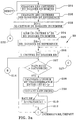
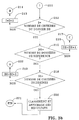
- FIGS. 3A and 3B the flow diagram of operating system.
- Figure 4 shows the mathematical principle of image processing.
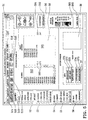
- Figure 5 shows the general window of the application software.
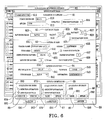
- Figure 6 shows the display window of selection criteria for research.
- Figure 7 shows the image of the socket on the installation screen and the selection means of an area.
- Figure 8 shows the principle of the algorithm of comparison according to the correlation criterion.
- the device of Figure 1 represents a tray support (1) on which the projectile sleeve (2) is arranged to be illuminated by a light beam from a light source (3).
- the beam light from this source (3) is grazing so as to illuminate the upper edge of the socket surface (2) in a direction perpendicular to the y axis of the projectile and perpendicular to the plane formed by the y axis of the projectile and to the z axis of the optical means of observation.
- the optical observation means are constituted by a binocular (4) or a microscope by example of the type marketed by the firm “LEITZ” under the reference M420 coupled with an electronic camera (5), digital high definition and wide field for example marketed by the company "VIDEK” under the name “Megaplus 1.4".
- This set delivers a digital signal processed by a computer system (6) to then send the result of the treatment to a storage means (7).
- This means of storage (7) providing a transportable or transferable support (8) on which a database constituting the set of reference records is saved.
- This support (8) can be floppy, CD-ROM, magnetic cassette digital.
- the device also then serves to provide the data corresponding to an offending object for the transfer of this data to an operating system for comparison with information from the database.
- Figure 2 shows the operating system consisting of a computer system (6) comprising a monitor (10) a central unit (11) provided with a optical disc or CD-ROM drive or any other means of mass storage likely to receive the transportable support (8) containing the data from the database.
- This system includes means (13) for entering commands allowing interaction with the application software (20) for analysis and look for evidence of likelihood between information corresponding to an incriminated projectile and those of a reference database.
- the base of data is built around an array comprising for each projectile shell reference a plurality classification criteria made up of values alphanumeric stored in this database and organized according to the following criteria represented according to the table attached.
- the form criterion we will calculate its score on contour extraction followed by criteria analysis geometric and leading to recognition.
- the score of each criterion of position is calculated based on spatial distance fingerprints of the offending file compared to that from the reference file.
- the sound texture criterion score is expressed using the co-occurrence criteria and fractal dimension taken from the analysis of textures.
- the striation criterion its score is based on the analysis of the distribution of the characteristic streaks between them, this streak analysis based on the search for corresponding lines and coordinates defining these lines in case these streaks are linear and in the case where the streaks are concentric on the value of the radius expressing the concentricity of streaks.
- the user installed in front of his operating station digitized information obtained from the image of the camera will display on the screen (16) its monitor the view to see the desired footprint and by interactive means such as the mouse (13) associated with an interface software interpreting the movements of the mouse and the cursor on the screen, it may, by selection in a menu, trigger the display of a window (17) of variable size materialized by a dotted square which he will make vary the dimension to frame the area of the image corresponding to the nature of the imprint which it wishes computer processing.
- a window (17) of variable size materialized by a dotted square which he will make vary the dimension to frame the area of the image corresponding to the nature of the imprint which it wishes computer processing.
- the digital video image acquisition system provides very high resolution images (1280/1024 pixels) with a sufficient number of gray levels for example (16, 32, 64).
- the recording of the image is materialized in memory by three pieces of information, a pair of coordinates in x and in y for each pixel, and a gray level associated with each pixel.
- the method consists in extracting the characteristic streaks and coding them so that they can be compared with the streaks of other ball images. With low-angle lighting, streaks appear either light (high gray level) or dark (low gray level).
- the projectiles having been positioned so that the ridges are practically parallel to the y axis of FIG. 1, the angle ⁇ of the different ridges will vary between - 20 and + 20 °, as shown in FIG. 4.
- the search program will therefore perform for each pixel xi, yi a calculation of a plurality of pairs ⁇ ij , ⁇ j with ⁇ j between -20 and +20 ° and varying in increments of 2 ° for example.
- the system associates with each pair xi, yi a plurality of three values ⁇ kj , ⁇ j ng (gray level) then makes the sum for identical ⁇ kj , ⁇ j gray levels and thus we determine a set of accumulation vectors which is actually a three-dimensional array where the x-axis corresponds to the parameters ⁇ , the y-axis to the parameters ⁇ , the z-axis to the sum of the gray levels of points of the sinusoids which go through the couple ⁇ , ⁇ given.
- the program detects the local extremes of gray levels which, for the detection of white lines will consist in determining the local maxima, and, for the detection of dark lines, in searching for local minima.
- Each maximum or minimum therefore corresponds to a line identified by the value ⁇ , ⁇ associated with this maximum.
- Each point ⁇ , ⁇ of the sinusoidal equation corresponds to the parametric equation of a straight line.
- the stripes appear on the camera image in a contrasting way compared on the surface of the projectile.
- the operator then completes manually the information of the database in entering other information such as caliber, weapon family, type of weapon, etc.
- This method of extracting information digital from the images taken on the one hand greatly reduce the storage space required and on the other hand to get a database on an object portable such as magnetic or electronic media and easily transportable for use anywhere place where the necessity is essential.
- the operation of the base data is carried out thanks to a computer system and application software loaded on the system IT intended to exploit on the one hand the information from the database, on the other hand those provided by analyzing and extracting criteria from a file concerning the offending projectile.
- the software first shows the user a window (201) for selecting from a menu the criteria of the incriminated case on which he wants work and then load these criteria from the floppy, CD-ROM, optical disc media.
- a second window (202) allows the user, by a menu or by buttons validated by the actions of the mouse, select the criteria for the reference on which the research will be carried out, these criteria should normally be the same as those of the incriminated file.
- the system positions a folder criteria counter (DI) incriminated at 1 then performs in step (204) the reading of the criterion of incriminated file having the number (DI).
- the system sets a file folder counter (DR) reference to 1 then step (206) positions a counter (I) criteria for the reference file having the number (DR).
- the software examines whether the nature of the criterion in the file complained of is identical to the nature of the benchmark criterion.
- step (208) the system proceeds to the next step (208) of calculation of indices. If not, the system makes a jump to step (211) which makes it possible to pass to the criterion of following reference file.
- the index calculation of likelihood will be performed in step (208) by a comparison of the numerical values for each criterion. So for the scratch criterion we will examine for each scratch of the offending projectile if the position of these stripes corresponds to the position of the stripes of the reference file.
- step (209) it is examined in step (209) whether to apply a filter by determining in step (209) the nature of the criteria and if they are scratch criteria or interayures.
- the system applies a filter in case the ratio of the number of scratches in the reference file identical to the stripes of the offending record on the number of scratches total of the reference file is greater than 0.6.
- we apply to the analysis result likelihood which corresponds to 90 or 100% for example a reducing coefficient to reduce it to a higher value close to reality, given the fact that we are looking equality between the incriminated file and the file of reference and not between the reference file and the incriminated file.
- step (212) the program continues with a test (212) to determine whether the criteria counter (I) of the reference file is equal to the total number of criteria of the reference files, in case this test is negative, in step (213) this counter (I) is incremented and the program reconnects to level (214) before the test between the nature of the criterion of the file of reference and the nature of the criterion of the file complained of.
- step (215) the program proceeds to the next step (215) which consists of a test to determine if the counter (DR) the number of reference files is equal to total number of reference files.
- step (215) If in step (215) the answer is no, the file counter (DR) of reference is incremented in step (216) and the program reconnects between the steps (205) of initialization of the reference folder counter, and step (206) for initializing the criteria counter for reference files.
- step (218) constituted by a test on the number (DI) of criteria incriminated to examine if this number is equal to the number total criteria. If not, the program increments the counter (DI) by the number of criteria incriminated (219) and reconnects between step (203) for initializing the folder criteria counter incriminated and, the step (204) of reading the criterion of the incriminated file.
- step (220) the program continues in step (220) with the classification and display of the results obtained.
- This classification makes it possible to determine in the database a number of projectiles whose characteristics come closest to the criteria used.
- This software therefore allows the user to act on the criteria of comparison and, depending on the records, select more judiciously the criteria which will allow arriving to a conclusion.
- Such software therefore allows a investigator from three portable items one containing the application software, the other the basis of given and, the third the data from the file of the incriminated projectile to progress in an investigation.
- Application software has a program interface to display the windows of figures 5 and 6 and manage events keyboard or mouse depending on the mouse button or the keyboard key pressed and cursor position shown on the screen to trigger operations corresponding to the buttons or functions displayed.
- the general window (50) has a menu bar (51) in which the operator can select the file menu (511), the display menu (512), the menu acquisition (513), the processing menu (514), the menu graph (515), the archive menu (516), and the menu weapon type (517).
- Each of these menus is associated with a under window allowing to select the operations or the functions to be performed.
- the window (50) has also a first group or button box (52) with bullet button, caliber socket button 12, 16, a socket button, any button, a weapon type button.
- buttons (54, 55) the search mode by a selection between a global search and a selective research and, in this type of research select the search methods, for example on basic criteria, on all criteria or some criteria only.
- buttons (56) allows to choose the mode of expression of score by a image, by a file or by an arrangement.
- a window (59) displays in a drop-down list (592) references of available files and to order the progress of this list by the advance buttons (593) from the list so as to bring the highlighting to the desired folder.
- a second drop-down list (591) displays the images associated with a folder highlighted, and in these associated images, of select the desired image (s) by choosing, for example the stripe (3) and the interayure (1).
- Of arrows (594) for commanding the progress of the list of menu (591) are used to bring the highlighting to a associated image that we want to select.
- the main window (50) also has a incriminated file a menu (57) allowing to choose the of the following: (571) initialization, (572) addition of images, (573) elimination images, (574) folder backup, (575) search folder and next to this menu (57) is a window (58) in which you can display an image stored in memory.
- This main window (50) also has a button (502) information and a graphic window (501) allowing to display according to a color code the calculated probability index corresponding to the comparison between an incriminated file and a file selected. Finally a button (503) provides access to a camera control menu.
- a first zone (61) corresponds to the case references and has a button (611) for indicating whether it is a weapon found and to document in a alphanumeric text area (612), the file number, in another area (613), the name of the case and in an area (614) the type of offense.
- a second area (62) concerns the nature of the image and allows by a button (621) to select the nature of the image from different natures: scratches, defects, etc., a text zone allows to indicate the number of the ball and, increase and decrease buttons (623) (624) to increase or decrease the ball number.
- a area (626) with the same increase buttons (627) and decrease (628) indicates the number of stripes and, a button (625) allows to indicate if the order of scratches is known.
- a third zone corresponds to basic criteria and allows you to select from a list drop down (631) the weapon family among families previously mentioned, a drop-down list (632) allows you to select the weapon type from a saved list, a drop-down list (633) allows you to select the orientation of the stripes on the right or on the left, a list (635) allows you to select the size, a button (634) allows you to choose the width of the stripes, a button (636) allows to determine if there is presence of socket, a button (637) allows to indicate the number of stripes and a button (638) to register the step orientation in millimeters.
- a fourth zone (64) allows to choose descriptive criteria in four drop-down lists, a first (641) describing the state of the ball (for example intact), a second (642) describing the type of bullet (e.g. armored), a third (643) describing the lining (for example copper), a fourth (645) describing the deformation (indefinite).
- a fifth zone allows you to select the geometric criteria by three sub-areas (66, 67, 68), a first sub-area for determining the localization of the edges allows by a button (663) to trigger automatic detection or by button (664) to switch to manual detection, these two buttons operating on the principle of a rocker, a third button (661) to determine if it is the edge upper and a fourth button to determine if it this is the bottom edge.
- the second sub-area (67) allows you to choose the location criteria for the streaks by a button (673) in automatic detection and by a button (674) in manual detection. This area has also an input button (671) and a button (672) of erasure.
- the third sub-area (68) allows the fault location and has a button (681) entry, an erase button (682).
- the last area (69) of the window has three buttons (691) validation, (692) comment, (693) cancellation allowing either to validate or to register to cancel the selection made by the operator on the ball information criteria.
- This correlation coefficient r is used to compare either two images of sockets with each other, or shapes extracted from images.
- the statistical variable X corresponds to the pixel of image No. 1 and the statistical variable Y corresponds to the pixel of image No. 2.
- the variable X corresponds to the contour points of the form N ° 1 extracted from an image and the variable Y to the contour points of the form N ° 2 extracted from the second image.
- the comparison algorithm using the correlation criterion is based on the principle that image No. 1 is certainly different in size from image No. 2 as shown in FIG. 8. In the case represented by the reference (81) we are going to compare the part of image N ° 2 with the part of image N ° 1 which is superimposed with image N ° 2.
- the correlation criterion r between the pixels x i of the part of image No. 1 superimposed on No. 2 and the criteria y i of image No. 2 is calculated. Then we make a horizontal shift of one pixel in the selection of the pixels of image No. 1 which are correlated to the pixels of image No. 2 and the program calculates the new correlation criterion. Then the program continues the horizontal shifts until the pixels of image No. 1 correlated to image No. 2 are superimposed as in the example referenced (82) with image No. 2 in the figure 8 and the program calculates the correlation criterion at each shift.
- the algorithm then continues by applying a vertical offset of one pixel and starting from the position where the image area N ° 1 selected is located on the left as represented by the reference (81) with a vertical offset of a pixel.
- the program will process by a succession of horizontal and vertical offsets the sets of pixels of the image areas No. 1 corresponding to the areas of image No. 2 and calculate the correlation coefficients between the different possible arrangements. After a certain number of vertical shifts we find our in the situation represented by the reference (83). Then a further succession of horizontal shifts is carried out in order to find themselves in the situation represented by the reference (84). For each situation resulting from an offset, the system also calculates the correlation coefficient. Then the program compares the series of correlation coefficient obtained following the different successive shifts to determine the maximum correlation coefficient which corresponds to the best score between the two images.
Landscapes
- Engineering & Computer Science (AREA)
- General Engineering & Computer Science (AREA)
- Processing Or Creating Images (AREA)
- Image Analysis (AREA)
Claims (21)
- Verfahren zum Vergleichen von Projektilhülsen, dadurch gekennzeichnet, daß das Verfahren umfaßt:einen Schritt des Bildens und Speicherns einer Datenbank für verschiedene vorhandene Projektile in einem Speicher, wobei die Datenbank für jedes Projektil (2), auf das Bezug genommen wird, mehrere digitale Informationen enthält, die jeweils einem anderem Kriterium entsprechen, das einer Vertiefung in der Hülse oder im Projektil zugeordnet ist;einen Schritt des Aufnehmens einer bestimmten Anzahl von Bildern einer Hülse oder eines inkriminierten Projektils und der Verarbeitung dieser Bilder durch ein Datenverarbeitungssystem (6), um die digitalen Informationen zu extrahieren, die jeweils einem der Kriterien der Datenbank entsprechen,einen Schritt des Verarbeitens und des Extrahierens der digitalen Informationen, der einen Schritt umfaßt, in dem auf einem Anzeigemittel durch interaktive Mittel eine auf diesen Anzeigemitteln (10) angezeigte Bildzone, die die einem Kriterium entsprechende Vertiefung enthält, ausgewählt wird, die ausgewählte Zone des Bildes in eine digitalisierte Darstellung des Bildes umgesetzt wird und dann die digitalisierte Darstellung verarbeitet wird, um die einem gegebenen Kriterium entsprechenden Parameter zu extrahieren,einen Schritt des Vergleichens aller Daten einer Hülse oder eines inkriminierten Projektils mit den Daten aller Referenzprojektile für dieselben Kriterien.
- Verfahren zum Vergleichen von Projektilhülsen nach Anspruch 1, dadurch gekennzeichnet, daß die Extraktions- und Verarbeitungstechnik in Abhängigkeit von der Art der Vertiefung und dem zugeordneten Kriterium unterschiedlich ist.
- Verfahren zum Vergleichen von Projektilhülsen nach Anspruch 1, dadurch gekennzeichnet, daß jede Vertiefungsart eine definierte Anzahl von Kriterien, die aus den Kriterien der Form, der Position, der Textur und der Riefenbildung ausgewählt sind, besitzt.
- Verfahren zum Vergleichen von Projektilhülsen nach Anspruch 3, dadurch gekennzeichnet, daß das System dann, wenn die Art der Vertiefung die Perkussionszone ist, das Zentrum und die Form der Zone berechnet und dann einen Index berechnet, der das Verhältnis der ausgewählten Zone zur Oberfläche der Vertiefung ist.
- Verfahren zum Vergleichen von Projektilhülsen nach einem der Ansprüche 1 bis 4, dadurch gekennzeichnet, daß der Anwender Mittel (60) vorsieht, die die Bestimmung der für den Vergleich berücksichtigten Kriterien ermöglicht, wobei die Mittel aus einer Liste von Kriterien bestehen, die auf den Anzeigemitteln durch Aktionen wie etwa durch Anklicken anzeigbar sind und vom Anwender durch Eingabemittel des Maustyps auswählbar und bestätigbar sind.
- Verfahren zum Vergleichen von Projektilhülsen nach Anspruch 5, dadurch gekennzeichnet, daß das Verfahren einen Vergleich entsprechend dem Kriterium des Kalibers der Projektilhülse ausführt.
- Verfahren zum Vergleichen von Projektilhülsen nach Anspruch 5, dadurch gekennzeichnet, daß das Verfahren einen Vergleich der Daten von Kriterien ausführt, die der Vertiefung des Verschlusses entsprechen.
- Verfahren zum Vergleichen von Projektilhülsen nach Anspruch 5, dadurch gekennzeichnet, daß das Verfahren einen Vergleich der Daten von Kriterien ausführt, die der Vertiefung von Zündkapselfehlern entsprechen.
- Verfahren zum Vergleichen von Projektilhülsen nach Anspruch 5, dadurch gekennzeichnet, daß das Verfahren einen Vergleich der Daten von Kriterien ausführt, die der Vertiefung der Auswurfeinrichtung entsprechen.
- Verfahren zum Vergleichen von Projektilhülsen nach Anspruch 5, dadurch gekennzeichnet, daß das Verfahren einen Vergleich der Daten von Kriterien ausführt, die der Vertiefung des Extraktors entsprechen.
- Verfahren zum Vergleichen von Projektilhülsen nach Anspruch 5, dadurch gekennzeichnet, daß das Verfahren einen Vergleich der Daten von Kriterien ausführt, die der Vertiefung der Ladeanzeige entsprechen.
- Verfahren zum Vergleichen von Projektilhülsen nach Anspruch 5, dadurch gekennzeichnet, daß das Verfahren einen Vergleich der Daten von Kriterien ausführt die der Vertiefung der Versorgungsmarke entsprechen.
- Verfahren zum Vergleichen von Projektilhülsen nach Anspruch 5, dadurch gekennzeichnet, daß das Verfahren einen Vergleich der Daten von Kriterien ausführt, die der Vertiefung des Durchgangs des Extraktors entsprechen.
- Verfahren zum Vergleichen von Projektilhülsen nach Anspruch 5, dadurch gekennzeichnet, daß das Verfahren einen Vergleich der Daten von Kriterien ausführt, die der Vertiefung des Durchgangs der Auswurfeinrichtung entsprechen.
- Verfahren zum Vergleichen von Projektilhülsen nach Anspruch 5, dadurch gekennzeichnet, daß das Verfahren einen Vergleich der Daten von Kriterien ausführt, die der Vertiefung der Perkussion entsprechen
- Verfahren zum Vergleichen von Projektilhülsen nach Anspruch 5, dadurch gekennzeichnet, daß das Verfahren einen Vergleich der Daten von Kriterien ausführt, die der Vertiefung der Zündkapselriefen und der Plattenriefen, die vom Verschluß beim Schuß zurückgelassen werden, entsprechen.
- Verfahren zum Vergleichen von Projektilhülsen nach Anspruch 16, dadurch gekennzeichnet, daß der Vergleich der inkriminierten Daten mit den Referenzdaten ausgeführt wird anhand des Kriteriums der Riefenbildung unter Berücksichtigung der Anzahl der Riefen des inkriminierten Projektils, die sich am selben Ort wie die Riefen des Referenzprojektils befinden, und dann durch Anwenden eines Filterungskoeffizienten auf das Ergebnis, wenn das Verhältnis zwischen der Anzahl von Riefen der Referenzunterlagen, die den Gegenstand einer Zählung gebildet hat, und der Gesamtanzahl von Riefen der Referenzunterlagen größer als 0,6 ist.
- Vorrichtung, gekennzeichnet durch eine Tabelle (1) für die Darstellung von Abtastwerten (2) des Projektils unter streifendem Lichteinfall (3) parallel zum Träger (1) des Projektils, wobei ein Träger eine Kamera (5) des digitalen Typs mit großem Gesichtsfeld in einer Richtung senkrecht zur Ebene des Kameraträgers (5) und mit einer Auflösung von 1280 × 1024 Pixel hält;eine Vorrichtung (6) zur Analyse von digitalen Informationen, die das aufgenommene Bild repräsentieren und für einen gegebenen Abtastwert (2) die Extraktion des digitalen Wertes ermöglichen, der jedes Kriterium repräsentiert, das einer unterschiedlichen Vertiefungsart einer Riefe zugeordnet ist,interaktive Mittel (10, 12, 13), die dem Anwender ermöglichen, die anderen Kriterien, die die Daten der Datenbank bilden, etwa die Informationen bezüglich des Kalibers und der Defekte, zu vervollständigen;Mittel (7) zum Speichern dieser Informationen auf einem tragbaren oder übertragbaren physikalischen Träger (8).
- Vorrichtung nach Anspruch 18, dadurch gekennzeichnet, daß die interaktiven Mittel eine Anwendungssoftware umfassen, die ermöglicht, auf einem Monitor (10) ein Fenster (60) anzuzeigen, das mehrere Textzonen enthält, die jeweils einem Kriterium entsprechen und dazu bestimmt sind, digitale Informationen zu empfangen und nur jene digitalen Informationen anzunehmen, die für jede Textzone neben der Textzone die Bezeichnung des betreffenden Kriteriums besitzen.
- Vorrichtung nach Anspruch 18, dadurch gekennzeichnet, daß sie dazu verwendet wird, die Informationen bezüglich einer Hülse eines inkriminierten Projektils zu extrahieren und diese Informationen in einem Datenverarbeitungssystem (6) auszuwerten, das mit einer Anwendungssoftware versehen ist, die ermöglicht, in der Datenbank die Kriterien der inkriminierten Unterlagen auszuwählen und in der Datenbank des Datenverarbeitungssystems dieselben Kriterien für die Referenzunterlagen auszuwählen und dann für jedes Kriterium eine Zählung der übereinstimmenden Informationen vorzunehmen, um einen Wahrscheinlichkeitsindex zu bestimmen.
- Vorrichtung nach Anspruch 20, dadurch gekennzeichnet, daß die Referenzdatenbank und die digitalen Werte der Kriterien der inkriminierten Unterlagen auf einem tragbaren physikalischen Speicher (8) gespeichert sind.
Applications Claiming Priority (2)
| Application Number | Priority Date | Filing Date | Title |
|---|---|---|---|
| FR9600173 | 1996-01-09 | ||
| FR9600173A FR2743416B1 (fr) | 1996-01-09 | 1996-01-09 | Procede de comparaison de douilles projectiles et dispositif |
Publications (2)
| Publication Number | Publication Date |
|---|---|
| EP0775889A1 EP0775889A1 (de) | 1997-05-28 |
| EP0775889B1 true EP0775889B1 (de) | 2001-11-21 |
Family
ID=9487979
Family Applications (1)
| Application Number | Title | Priority Date | Filing Date |
|---|---|---|---|
| EP97400029A Expired - Lifetime EP0775889B1 (de) | 1996-01-09 | 1997-01-08 | Verfahren und Vorrichtung zum Vergleichen von Geschosshülsen |
Country Status (4)
| Country | Link |
|---|---|
| US (1) | US5857202A (de) |
| EP (1) | EP0775889B1 (de) |
| DE (1) | DE69708341T2 (de) |
| FR (1) | FR2743416B1 (de) |
Families Citing this family (11)
| Publication number | Priority date | Publication date | Assignee | Title |
|---|---|---|---|---|
| US6327032B1 (en) | 1997-09-16 | 2001-12-04 | Forensic Technology (Wai) Inc. | Method and apparatus for imaging a cartridge case ejector markings |
| EP1015841B1 (de) * | 1997-09-16 | 2003-04-09 | Forensic Technology Wai Inc. | Verfahren und vorrichtung zur abbildung von auswerferabdrücken auf patronenhülsen |
| US6018394A (en) * | 1998-04-17 | 2000-01-25 | Forensic Technologies Wai Inc. | Apparatus and method for imaging fired ammunition |
| US7068808B1 (en) * | 1998-06-10 | 2006-06-27 | Prokoski Francine J | Method and apparatus for alignment, comparison and identification of characteristic tool marks, including ballistic signatures |
| US6785634B2 (en) * | 2000-01-18 | 2004-08-31 | Intelligent Automation, Inc. | Computerized system and methods of ballistic analysis for gun identifiability and bullet-to-gun classifications |
| ATE384241T1 (de) * | 2000-09-29 | 2008-02-15 | Forensic Technology Wai Inc | Verfahren und vorrichtung zur identifikation einer feuerwaffe |
| US20030082502A1 (en) * | 2001-10-29 | 2003-05-01 | Stender H. Robert | Digital target spotting system |
| CA2577969A1 (en) * | 2004-08-31 | 2006-03-09 | Intelligent Automation, Inc. | Automated system and method for tool mark analysis |
| US7822263B1 (en) * | 2005-12-28 | 2010-10-26 | Prokoski Francine J | Method and apparatus for alignment, comparison and identification of characteristic tool marks, including ballistic signatures |
| DE102010016963A1 (de) | 2010-05-17 | 2011-11-17 | Krauss-Maffei Wegmann Gmbh & Co. Kg | Waffensystem, Verfahren zum Verschießen und Erkennen von Munitionskörpern |
| CN107339945A (zh) * | 2016-12-24 | 2017-11-10 | 重庆都英科技有限公司 | 一种弹头检测装置 |
Family Cites Families (8)
| Publication number | Priority date | Publication date | Assignee | Title |
|---|---|---|---|---|
| US3680966A (en) * | 1971-03-12 | 1972-08-01 | Iris Corp | Apparatus and method for shell inspection |
| EP0149457B1 (de) * | 1984-01-13 | 1993-03-31 | Kabushiki Kaisha Komatsu Seisakusho | Identifizierungsverfahren von Konturlinien |
| US4596037A (en) * | 1984-03-09 | 1986-06-17 | International Business Machines Corporation | Video measuring system for defining location orthogonally |
| US5179642A (en) * | 1987-12-14 | 1993-01-12 | Hitachi, Ltd. | Image synthesizing apparatus for superposing a second image on a first image |
| US5134661A (en) * | 1991-03-04 | 1992-07-28 | Reinsch Roger A | Method of capture and analysis of digitized image data |
| US5390108A (en) * | 1991-05-24 | 1995-02-14 | Forensic Technology Wai Inc. | Computer automated bullet analysis apparatus |
| US5379106A (en) | 1992-04-24 | 1995-01-03 | Forensic Technology Wai, Inc. | Method and apparatus for monitoring and adjusting the position of an article under optical observation |
| JP3327948B2 (ja) * | 1992-06-09 | 2002-09-24 | オリンパス光学工業株式会社 | 光学像再構成装置 |
-
1996
- 1996-01-09 FR FR9600173A patent/FR2743416B1/fr not_active Expired - Fee Related
-
1997
- 1997-01-08 DE DE69708341T patent/DE69708341T2/de not_active Expired - Lifetime
- 1997-01-08 EP EP97400029A patent/EP0775889B1/de not_active Expired - Lifetime
- 1997-01-09 US US08/781,147 patent/US5857202A/en not_active Expired - Lifetime
Also Published As
| Publication number | Publication date |
|---|---|
| DE69708341D1 (de) | 2002-01-03 |
| US5857202A (en) | 1999-01-05 |
| DE69708341T2 (de) | 2002-10-24 |
| EP0775889A1 (de) | 1997-05-28 |
| FR2743416A1 (fr) | 1997-07-11 |
| FR2743416B1 (fr) | 1998-02-13 |
Similar Documents
| Publication | Publication Date | Title |
|---|---|---|
| Nandhini et al. | Deep Neural Network-based Crime Scene Detection with Frames | |
| US11004129B2 (en) | Image processing | |
| US10510152B2 (en) | Systems, methods, and devices for image matching and object recognition in images using textures | |
| Pisantanaroj et al. | Automated firearm classification from bullet markings using deep learning | |
| Ren et al. | Best frame selection in a short video | |
| US20160055179A1 (en) | System and method for using an image to provide search results | |
| WO2011048302A1 (fr) | Procede, programme d'ordinateur et dispositif de suivi hybride de representations d'objets, en temps reel, dans une sequence d'images | |
| FR2955681A1 (fr) | Systeme pour navigation et exploration d'images de creation | |
| EP0775889A1 (de) | Verfahren und Vorrichtung zum Vergleichen von Geschosshülsen | |
| Li | Ballistics projectile image analysis for firearm identification | |
| US20240355088A1 (en) | Method for matching a candidate image with a reference image | |
| Smith | Fireball: a forensic ballistics imaging system | |
| US20260080650A1 (en) | Bullet casing image alignment and forensic analysis system using the same | |
| TW202227894A (zh) | 彈殼照明模組及使用其之鑑識分析系統 | |
| Kara | Investigation of ballistic evidence through an automatic image analysis and identification system | |
| FR2743415A1 (fr) | Procede de comparaison de projectiles et dispositif | |
| Geradts et al. | Pattern recognition in a database of cartridge cases | |
| CN113657378B (zh) | 车辆跟踪方法、车辆跟踪系统和计算设备 | |
| Taspinar et al. | Fast camera fingerprint matching in very large databases | |
| Li | Ballistics image processing and analysis for firearm identification | |
| Bigdeli et al. | A multimodal fusion approach for bullet identification systems | |
| Geradts | Use of Correlation algorithms in a database of spent cartridge cases of firearms | |
| FR3109457A1 (fr) | Procédé de détection d’attaque par présentation pour des empreintes digitales | |
| Wang | Photo-based Vendor Re-identification on Darknet Marketplaces using Deep Neural Networks | |
| Caggiano et al. | Mosaic: Multi-object segmentation for assisted image reconstruction |
Legal Events
| Date | Code | Title | Description |
|---|---|---|---|
| PUAI | Public reference made under article 153(3) epc to a published international application that has entered the european phase |
Free format text: ORIGINAL CODE: 0009012 |
|
| AK | Designated contracting states |
Kind code of ref document: A1 Designated state(s): BE DE FR GB NL |
|
| 17P | Request for examination filed |
Effective date: 19980121 |
|
| 17Q | First examination report despatched |
Effective date: 19991014 |
|
| GRAG | Despatch of communication of intention to grant |
Free format text: ORIGINAL CODE: EPIDOS AGRA |
|
| GRAG | Despatch of communication of intention to grant |
Free format text: ORIGINAL CODE: EPIDOS AGRA |
|
| GRAH | Despatch of communication of intention to grant a patent |
Free format text: ORIGINAL CODE: EPIDOS IGRA |
|
| GRAH | Despatch of communication of intention to grant a patent |
Free format text: ORIGINAL CODE: EPIDOS IGRA |
|
| GRAA | (expected) grant |
Free format text: ORIGINAL CODE: 0009210 |
|
| AK | Designated contracting states |
Kind code of ref document: B1 Designated state(s): BE DE FR GB NL |
|
| REG | Reference to a national code |
Ref country code: GB Ref legal event code: IF02 |
|
| REF | Corresponds to: |
Ref document number: 69708341 Country of ref document: DE Date of ref document: 20020103 |
|
| GBT | Gb: translation of ep patent filed (gb section 77(6)(a)/1977) |
Effective date: 20020206 |
|
| PLBE | No opposition filed within time limit |
Free format text: ORIGINAL CODE: 0009261 |
|
| STAA | Information on the status of an ep patent application or granted ep patent |
Free format text: STATUS: NO OPPOSITION FILED WITHIN TIME LIMIT |
|
| 26N | No opposition filed | ||
| REG | Reference to a national code |
Ref country code: FR Ref legal event code: PLFP Year of fee payment: 19 |
|
| PGFP | Annual fee paid to national office [announced via postgrant information from national office to epo] |
Ref country code: NL Payment date: 20150123 Year of fee payment: 19 |
|
| PGFP | Annual fee paid to national office [announced via postgrant information from national office to epo] |
Ref country code: DE Payment date: 20150123 Year of fee payment: 19 |
|
| PGFP | Annual fee paid to national office [announced via postgrant information from national office to epo] |
Ref country code: GB Payment date: 20150116 Year of fee payment: 19 Ref country code: FR Payment date: 20150129 Year of fee payment: 19 |
|
| PG25 | Lapsed in a contracting state [announced via postgrant information from national office to epo] |
Ref country code: BE Free format text: LAPSE BECAUSE OF NON-PAYMENT OF DUE FEES Effective date: 20150131 |
|
| PGFP | Annual fee paid to national office [announced via postgrant information from national office to epo] |
Ref country code: BE Payment date: 20150129 Year of fee payment: 19 |
|
| PGRI | Patent reinstated in contracting state [announced from national office to epo] |
Ref country code: BE Effective date: 20150507 |
|
| PG25 | Lapsed in a contracting state [announced via postgrant information from national office to epo] |
Ref country code: BE Free format text: LAPSE BECAUSE OF NON-PAYMENT OF DUE FEES Effective date: 20160131 |
|
| REG | Reference to a national code |
Ref country code: DE Ref legal event code: R119 Ref document number: 69708341 Country of ref document: DE |
|
| GBPC | Gb: european patent ceased through non-payment of renewal fee |
Effective date: 20160108 |
|
| REG | Reference to a national code |
Ref country code: NL Ref legal event code: MM Effective date: 20160201 |
|
| REG | Reference to a national code |
Ref country code: FR Ref legal event code: ST Effective date: 20160930 |
|
| PG25 | Lapsed in a contracting state [announced via postgrant information from national office to epo] |
Ref country code: GB Free format text: LAPSE BECAUSE OF NON-PAYMENT OF DUE FEES Effective date: 20160108 Ref country code: DE Free format text: LAPSE BECAUSE OF FAILURE TO SUBMIT A TRANSLATION OF THE DESCRIPTION OR TO PAY THE FEE WITHIN THE PRESCRIBED TIME-LIMIT Effective date: 20160802 |
|
| PG25 | Lapsed in a contracting state [announced via postgrant information from national office to epo] |
Ref country code: NL Free format text: LAPSE BECAUSE OF NON-PAYMENT OF DUE FEES Effective date: 20160201 Ref country code: FR Free format text: LAPSE BECAUSE OF NON-PAYMENT OF DUE FEES Effective date: 20160201 |