EP0755447B1 - Proteines recombinantes de l'hemagglutinine filamenteuse de bordetella, notamment bordetella pertussis, procede pour leur production et leurs applications a la production de proteines etrangeres ou de principes actifs vaccinants - Google Patents
Proteines recombinantes de l'hemagglutinine filamenteuse de bordetella, notamment bordetella pertussis, procede pour leur production et leurs applications a la production de proteines etrangeres ou de principes actifs vaccinants Download PDFInfo
- Publication number
- EP0755447B1 EP0755447B1 EP95918030A EP95918030A EP0755447B1 EP 0755447 B1 EP0755447 B1 EP 0755447B1 EP 95918030 A EP95918030 A EP 95918030A EP 95918030 A EP95918030 A EP 95918030A EP 0755447 B1 EP0755447 B1 EP 0755447B1
- Authority
- EP
- European Patent Office
- Prior art keywords
- fha
- sequence
- pertussis
- recombinant dna
- protein
- Prior art date
- Legal status (The legal status is an assumption and is not a legal conclusion. Google has not performed a legal analysis and makes no representation as to the accuracy of the status listed.)
- Expired - Lifetime
Links
- 108090000623 proteins and genes Proteins 0.000 title claims abstract description 110
- 241000588832 Bordetella pertussis Species 0.000 title claims abstract description 105
- 102000004169 proteins and genes Human genes 0.000 title claims abstract description 75
- 241000588807 Bordetella Species 0.000 title claims abstract description 24
- 102000007056 Recombinant Fusion Proteins Human genes 0.000 title claims description 18
- 108010008281 Recombinant Fusion Proteins Proteins 0.000 title claims description 18
- 229960005486 vaccine Drugs 0.000 title claims description 8
- 238000004519 manufacturing process Methods 0.000 title description 21
- 210000004027 cell Anatomy 0.000 claims abstract description 42
- 108090000765 processed proteins & peptides Proteins 0.000 claims abstract description 40
- 108020004511 Recombinant DNA Proteins 0.000 claims abstract description 37
- 102000004196 processed proteins & peptides Human genes 0.000 claims abstract description 24
- 229920001184 polypeptide Polymers 0.000 claims abstract description 18
- 210000004897 n-terminal region Anatomy 0.000 claims abstract description 17
- HTTJABKRGRZYRN-UHFFFAOYSA-N Heparin Chemical compound OC1C(NC(=O)C)C(O)OC(COS(O)(=O)=O)C1OC1C(OS(O)(=O)=O)C(O)C(OC2C(C(OS(O)(=O)=O)C(OC3C(C(O)C(O)C(O3)C(O)=O)OS(O)(=O)=O)C(CO)O2)NS(O)(=O)=O)C(C(O)=O)O1 HTTJABKRGRZYRN-UHFFFAOYSA-N 0.000 claims abstract description 13
- 229960002897 heparin Drugs 0.000 claims abstract description 13
- 229920000669 heparin Polymers 0.000 claims abstract description 13
- 238000004113 cell culture Methods 0.000 claims abstract description 11
- 239000002243 precursor Substances 0.000 claims abstract description 11
- 230000003993 interaction Effects 0.000 claims abstract description 9
- 238000011144 upstream manufacturing Methods 0.000 claims abstract description 3
- 241000894006 Bacteria Species 0.000 claims description 30
- 241000588724 Escherichia coli Species 0.000 claims description 23
- 239000002609 medium Substances 0.000 claims description 14
- 239000000427 antigen Substances 0.000 claims description 13
- 108091007433 antigens Proteins 0.000 claims description 13
- 102000036639 antigens Human genes 0.000 claims description 13
- 210000004899 c-terminal region Anatomy 0.000 claims description 13
- 239000002773 nucleotide Substances 0.000 claims description 10
- 125000003729 nucleotide group Chemical group 0.000 claims description 10
- 210000001236 prokaryotic cell Anatomy 0.000 claims description 10
- 230000029142 excretion Effects 0.000 claims description 9
- 239000001963 growth medium Substances 0.000 claims description 9
- 238000000034 method Methods 0.000 claims description 9
- 238000013519 translation Methods 0.000 claims description 9
- 108020004414 DNA Proteins 0.000 claims description 8
- 101100446527 Bordetella pertussis (strain Tohama I / ATCC BAA-589 / NCTC 13251) fhaC gene Proteins 0.000 claims description 7
- 101150058406 fhaC gene Proteins 0.000 claims description 7
- 210000002540 macrophage Anatomy 0.000 claims description 7
- 210000002919 epithelial cell Anatomy 0.000 claims description 6
- 230000001717 pathogenic effect Effects 0.000 claims description 6
- 238000000746 purification Methods 0.000 claims description 6
- 230000002238 attenuated effect Effects 0.000 claims description 5
- 239000003795 chemical substances by application Substances 0.000 claims description 5
- 239000000203 mixture Substances 0.000 claims description 5
- 230000008569 process Effects 0.000 claims description 5
- 108010076504 Protein Sorting Signals Proteins 0.000 claims description 4
- 210000003527 eukaryotic cell Anatomy 0.000 claims description 4
- 241000588770 Proteus mirabilis Species 0.000 claims description 3
- 241000607715 Serratia marcescens Species 0.000 claims description 3
- 230000001413 cellular effect Effects 0.000 claims description 3
- 230000002163 immunogen Effects 0.000 claims description 3
- 238000011084 recovery Methods 0.000 claims description 3
- 241000894007 species Species 0.000 claims description 3
- 230000009466 transformation Effects 0.000 claims description 3
- 108091081024 Start codon Proteins 0.000 claims description 2
- 238000010494 dissociation reaction Methods 0.000 claims description 2
- 230000005593 dissociations Effects 0.000 claims description 2
- 230000005847 immunogenicity Effects 0.000 claims description 2
- 210000004877 mucosa Anatomy 0.000 claims 4
- 230000001580 bacterial effect Effects 0.000 claims 1
- 238000012258 culturing Methods 0.000 claims 1
- 229930014626 natural product Natural products 0.000 claims 1
- 230000000153 supplemental effect Effects 0.000 claims 1
- 230000001131 transforming effect Effects 0.000 claims 1
- 230000028327 secretion Effects 0.000 abstract description 36
- 101710089384 Extracellular protease Proteins 0.000 abstract description 4
- 239000006143 cell culture medium Substances 0.000 abstract 1
- 235000018102 proteins Nutrition 0.000 description 59
- 239000012634 fragment Substances 0.000 description 53
- 239000013612 plasmid Substances 0.000 description 53
- 101000906004 Schistosoma mansoni Glutathione S-transferase class-mu 28 kDa isozyme Proteins 0.000 description 42
- 239000012228 culture supernatant Substances 0.000 description 32
- 101150116936 fhaB gene Proteins 0.000 description 32
- 241000699670 Mus sp. Species 0.000 description 29
- 239000000047 product Substances 0.000 description 21
- 238000001262 western blot Methods 0.000 description 20
- 201000005702 Pertussis Diseases 0.000 description 18
- 229920002684 Sepharose Polymers 0.000 description 18
- 238000010276 construction Methods 0.000 description 18
- 230000004927 fusion Effects 0.000 description 16
- 102000037865 fusion proteins Human genes 0.000 description 16
- 108020001507 fusion proteins Proteins 0.000 description 16
- 238000004458 analytical method Methods 0.000 description 15
- 101150026046 iga gene Proteins 0.000 description 15
- 239000002953 phosphate buffered saline Substances 0.000 description 15
- 108010054576 Deoxyribonuclease EcoRI Proteins 0.000 description 14
- 241000831652 Salinivibrio sharmensis Species 0.000 description 13
- 208000015181 infectious disease Diseases 0.000 description 12
- UCSJYZPVAKXKNQ-HZYVHMACSA-N streptomycin Chemical compound CN[C@H]1[C@H](O)[C@@H](O)[C@H](CO)O[C@H]1O[C@@H]1[C@](C=O)(O)[C@H](C)O[C@H]1O[C@@H]1[C@@H](NC(N)=N)[C@H](O)[C@@H](NC(N)=N)[C@H](O)[C@H]1O UCSJYZPVAKXKNQ-HZYVHMACSA-N 0.000 description 12
- 238000011795 OF1 mouse Methods 0.000 description 11
- 239000007787 solid Substances 0.000 description 11
- FAPWRFPIFSIZLT-UHFFFAOYSA-M Sodium chloride Chemical compound [Na+].[Cl-] FAPWRFPIFSIZLT-UHFFFAOYSA-M 0.000 description 10
- 238000003780 insertion Methods 0.000 description 10
- 230000037431 insertion Effects 0.000 description 10
- 239000012528 membrane Substances 0.000 description 10
- 238000002415 sodium dodecyl sulfate polyacrylamide gel electrophoresis Methods 0.000 description 10
- 241000700159 Rattus Species 0.000 description 9
- 230000008436 biogenesis Effects 0.000 description 9
- 239000007465 bordet-gengou-medium Substances 0.000 description 9
- 238000001962 electrophoresis Methods 0.000 description 9
- 238000002347 injection Methods 0.000 description 9
- 239000007924 injection Substances 0.000 description 9
- 229930027917 kanamycin Natural products 0.000 description 9
- 229960000318 kanamycin Drugs 0.000 description 9
- SBUJHOSQTJFQJX-NOAMYHISSA-N kanamycin Chemical compound O[C@@H]1[C@@H](O)[C@H](O)[C@@H](CN)O[C@@H]1O[C@H]1[C@H](O)[C@@H](O[C@@H]2[C@@H]([C@@H](N)[C@H](O)[C@@H](CO)O2)O)[C@H](N)C[C@@H]1N SBUJHOSQTJFQJX-NOAMYHISSA-N 0.000 description 9
- 229930182823 kanamycin A Natural products 0.000 description 9
- 210000004379 membrane Anatomy 0.000 description 9
- 230000000717 retained effect Effects 0.000 description 9
- QFVHZQCOUORWEI-UHFFFAOYSA-N 4-[(4-anilino-5-sulfonaphthalen-1-yl)diazenyl]-5-hydroxynaphthalene-2,7-disulfonic acid Chemical compound C=12C(O)=CC(S(O)(=O)=O)=CC2=CC(S(O)(=O)=O)=CC=1N=NC(C1=CC=CC(=C11)S(O)(=O)=O)=CC=C1NC1=CC=CC=C1 QFVHZQCOUORWEI-UHFFFAOYSA-N 0.000 description 8
- 108010006464 Hemolysin Proteins Proteins 0.000 description 8
- 108091034117 Oligonucleotide Proteins 0.000 description 8
- 239000003228 hemolysin Substances 0.000 description 8
- 230000028993 immune response Effects 0.000 description 8
- 210000004072 lung Anatomy 0.000 description 8
- 244000005700 microbiome Species 0.000 description 8
- 230000029087 digestion Effects 0.000 description 7
- 239000000499 gel Substances 0.000 description 7
- 238000002255 vaccination Methods 0.000 description 7
- 241000588780 Bordetella parapertussis Species 0.000 description 6
- 241000242680 Schistosoma mansoni Species 0.000 description 6
- 102100040247 Tumor necrosis factor Human genes 0.000 description 6
- 230000027455 binding Effects 0.000 description 6
- 230000002759 chromosomal effect Effects 0.000 description 6
- 238000012217 deletion Methods 0.000 description 6
- 230000037430 deletion Effects 0.000 description 6
- 210000004400 mucous membrane Anatomy 0.000 description 6
- WEXRUCMBJFQVBZ-UHFFFAOYSA-N pentobarbital Chemical compound CCCC(C)C1(CC)C(=O)NC(=O)NC1=O WEXRUCMBJFQVBZ-UHFFFAOYSA-N 0.000 description 6
- 238000003752 polymerase chain reaction Methods 0.000 description 6
- 230000004044 response Effects 0.000 description 6
- 230000003248 secreting effect Effects 0.000 description 6
- 238000010186 staining Methods 0.000 description 6
- 229960005322 streptomycin Drugs 0.000 description 6
- 239000006228 supernatant Substances 0.000 description 6
- 108020004705 Codon Proteins 0.000 description 5
- 102000004127 Cytokines Human genes 0.000 description 5
- 108090000695 Cytokines Proteins 0.000 description 5
- 108091005804 Peptidases Proteins 0.000 description 5
- JLCPHMBAVCMARE-UHFFFAOYSA-N [3-[[3-[[3-[[3-[[3-[[3-[[3-[[3-[[3-[[3-[[3-[[5-(2-amino-6-oxo-1H-purin-9-yl)-3-[[3-[[3-[[3-[[3-[[3-[[5-(2-amino-6-oxo-1H-purin-9-yl)-3-[[5-(2-amino-6-oxo-1H-purin-9-yl)-3-hydroxyoxolan-2-yl]methoxy-hydroxyphosphoryl]oxyoxolan-2-yl]methoxy-hydroxyphosphoryl]oxy-5-(5-methyl-2,4-dioxopyrimidin-1-yl)oxolan-2-yl]methoxy-hydroxyphosphoryl]oxy-5-(6-aminopurin-9-yl)oxolan-2-yl]methoxy-hydroxyphosphoryl]oxy-5-(6-aminopurin-9-yl)oxolan-2-yl]methoxy-hydroxyphosphoryl]oxy-5-(6-aminopurin-9-yl)oxolan-2-yl]methoxy-hydroxyphosphoryl]oxy-5-(6-aminopurin-9-yl)oxolan-2-yl]methoxy-hydroxyphosphoryl]oxyoxolan-2-yl]methoxy-hydroxyphosphoryl]oxy-5-(5-methyl-2,4-dioxopyrimidin-1-yl)oxolan-2-yl]methoxy-hydroxyphosphoryl]oxy-5-(4-amino-2-oxopyrimidin-1-yl)oxolan-2-yl]methoxy-hydroxyphosphoryl]oxy-5-(5-methyl-2,4-dioxopyrimidin-1-yl)oxolan-2-yl]methoxy-hydroxyphosphoryl]oxy-5-(5-methyl-2,4-dioxopyrimidin-1-yl)oxolan-2-yl]methoxy-hydroxyphosphoryl]oxy-5-(6-aminopurin-9-yl)oxolan-2-yl]methoxy-hydroxyphosphoryl]oxy-5-(6-aminopurin-9-yl)oxolan-2-yl]methoxy-hydroxyphosphoryl]oxy-5-(4-amino-2-oxopyrimidin-1-yl)oxolan-2-yl]methoxy-hydroxyphosphoryl]oxy-5-(4-amino-2-oxopyrimidin-1-yl)oxolan-2-yl]methoxy-hydroxyphosphoryl]oxy-5-(4-amino-2-oxopyrimidin-1-yl)oxolan-2-yl]methoxy-hydroxyphosphoryl]oxy-5-(6-aminopurin-9-yl)oxolan-2-yl]methoxy-hydroxyphosphoryl]oxy-5-(4-amino-2-oxopyrimidin-1-yl)oxolan-2-yl]methyl [5-(6-aminopurin-9-yl)-2-(hydroxymethyl)oxolan-3-yl] hydrogen phosphate Polymers Cc1cn(C2CC(OP(O)(=O)OCC3OC(CC3OP(O)(=O)OCC3OC(CC3O)n3cnc4c3nc(N)[nH]c4=O)n3cnc4c3nc(N)[nH]c4=O)C(COP(O)(=O)OC3CC(OC3COP(O)(=O)OC3CC(OC3COP(O)(=O)OC3CC(OC3COP(O)(=O)OC3CC(OC3COP(O)(=O)OC3CC(OC3COP(O)(=O)OC3CC(OC3COP(O)(=O)OC3CC(OC3COP(O)(=O)OC3CC(OC3COP(O)(=O)OC3CC(OC3COP(O)(=O)OC3CC(OC3COP(O)(=O)OC3CC(OC3COP(O)(=O)OC3CC(OC3COP(O)(=O)OC3CC(OC3COP(O)(=O)OC3CC(OC3COP(O)(=O)OC3CC(OC3COP(O)(=O)OC3CC(OC3COP(O)(=O)OC3CC(OC3CO)n3cnc4c(N)ncnc34)n3ccc(N)nc3=O)n3cnc4c(N)ncnc34)n3ccc(N)nc3=O)n3ccc(N)nc3=O)n3ccc(N)nc3=O)n3cnc4c(N)ncnc34)n3cnc4c(N)ncnc34)n3cc(C)c(=O)[nH]c3=O)n3cc(C)c(=O)[nH]c3=O)n3ccc(N)nc3=O)n3cc(C)c(=O)[nH]c3=O)n3cnc4c3nc(N)[nH]c4=O)n3cnc4c(N)ncnc34)n3cnc4c(N)ncnc34)n3cnc4c(N)ncnc34)n3cnc4c(N)ncnc34)O2)c(=O)[nH]c1=O JLCPHMBAVCMARE-UHFFFAOYSA-N 0.000 description 5
- 230000003053 immunization Effects 0.000 description 5
- 238000002649 immunization Methods 0.000 description 5
- BPHPUYQFMNQIOC-NXRLNHOXSA-N isopropyl beta-D-thiogalactopyranoside Chemical compound CC(C)S[C@@H]1O[C@H](CO)[C@H](O)[C@H](O)[C@H]1O BPHPUYQFMNQIOC-NXRLNHOXSA-N 0.000 description 5
- 229960000210 nalidixic acid Drugs 0.000 description 5
- MHWLWQUZZRMNGJ-UHFFFAOYSA-N nalidixic acid Chemical compound C1=C(C)N=C2N(CC)C=C(C(O)=O)C(=O)C2=C1 MHWLWQUZZRMNGJ-UHFFFAOYSA-N 0.000 description 5
- 230000006798 recombination Effects 0.000 description 5
- 238000005215 recombination Methods 0.000 description 5
- 210000002966 serum Anatomy 0.000 description 5
- 239000011780 sodium chloride Substances 0.000 description 5
- 238000012360 testing method Methods 0.000 description 5
- 229930182566 Gentamicin Natural products 0.000 description 4
- CEAZRRDELHUEMR-URQXQFDESA-N Gentamicin Chemical compound O1[C@H](C(C)NC)CC[C@@H](N)[C@H]1O[C@H]1[C@H](O)[C@@H](O[C@@H]2[C@@H]([C@@H](NC)[C@@](C)(O)CO2)O)[C@H](N)C[C@@H]1N CEAZRRDELHUEMR-URQXQFDESA-N 0.000 description 4
- 239000004365 Protease Substances 0.000 description 4
- 150000001413 amino acids Chemical group 0.000 description 4
- 210000000349 chromosome Anatomy 0.000 description 4
- 239000002299 complementary DNA Substances 0.000 description 4
- 238000010790 dilution Methods 0.000 description 4
- 239000012895 dilution Substances 0.000 description 4
- 230000000694 effects Effects 0.000 description 4
- 238000002474 experimental method Methods 0.000 description 4
- 238000003119 immunoblot Methods 0.000 description 4
- 238000009630 liquid culture Methods 0.000 description 4
- 210000002345 respiratory system Anatomy 0.000 description 4
- 239000006152 selective media Substances 0.000 description 4
- 210000000130 stem cell Anatomy 0.000 description 4
- 206010002091 Anaesthesia Diseases 0.000 description 3
- 241000588779 Bordetella bronchiseptica Species 0.000 description 3
- 238000011537 Coomassie blue staining Methods 0.000 description 3
- 230000005526 G1 to G0 transition Effects 0.000 description 3
- 102000004889 Interleukin-6 Human genes 0.000 description 3
- 108090001005 Interleukin-6 Proteins 0.000 description 3
- 102000035195 Peptidases Human genes 0.000 description 3
- 241000607142 Salmonella Species 0.000 description 3
- 238000002105 Southern blotting Methods 0.000 description 3
- 230000037005 anaesthesia Effects 0.000 description 3
- 210000004369 blood Anatomy 0.000 description 3
- 239000008280 blood Substances 0.000 description 3
- 230000000295 complement effect Effects 0.000 description 3
- 230000021615 conjugation Effects 0.000 description 3
- 235000018417 cysteine Nutrition 0.000 description 3
- XUJNEKJLAYXESH-UHFFFAOYSA-N cysteine Natural products SCC(N)C(O)=O XUJNEKJLAYXESH-UHFFFAOYSA-N 0.000 description 3
- 230000003247 decreasing effect Effects 0.000 description 3
- 235000013601 eggs Nutrition 0.000 description 3
- 238000004520 electroporation Methods 0.000 description 3
- DIRFUJHNVNOBMY-UHFFFAOYSA-N fenobucarb Chemical compound CCC(C)C1=CC=CC=C1OC(=O)NC DIRFUJHNVNOBMY-UHFFFAOYSA-N 0.000 description 3
- 230000012010 growth Effects 0.000 description 3
- 108010037896 heparin-binding hemagglutinin Proteins 0.000 description 3
- 238000002744 homologous recombination Methods 0.000 description 3
- 230000006801 homologous recombination Effects 0.000 description 3
- 230000002458 infectious effect Effects 0.000 description 3
- 239000006166 lysate Substances 0.000 description 3
- 230000007246 mechanism Effects 0.000 description 3
- 230000003071 parasitic effect Effects 0.000 description 3
- 229960001412 pentobarbital Drugs 0.000 description 3
- OWEGMIWEEQEYGQ-UHFFFAOYSA-N 100676-05-9 Natural products OC1C(O)C(O)C(CO)OC1OCC1C(O)C(O)C(O)C(OC2C(OC(O)C(O)C2O)CO)O1 OWEGMIWEEQEYGQ-UHFFFAOYSA-N 0.000 description 2
- 229920000856 Amylose Polymers 0.000 description 2
- 206010061217 Infestation Diseases 0.000 description 2
- 206010061218 Inflammation Diseases 0.000 description 2
- GUBGYTABKSRVRQ-PICCSMPSSA-N Maltose Natural products O[C@@H]1[C@@H](O)[C@H](O)[C@@H](CO)O[C@@H]1O[C@@H]1[C@@H](CO)OC(O)[C@H](O)[C@H]1O GUBGYTABKSRVRQ-PICCSMPSSA-N 0.000 description 2
- 241000699666 Mus <mouse, genus> Species 0.000 description 2
- 238000012408 PCR amplification Methods 0.000 description 2
- 102100037486 Reverse transcriptase/ribonuclease H Human genes 0.000 description 2
- 241000607598 Vibrio Species 0.000 description 2
- 238000002835 absorbance Methods 0.000 description 2
- 235000001014 amino acid Nutrition 0.000 description 2
- 230000003321 amplification Effects 0.000 description 2
- 230000005875 antibody response Effects 0.000 description 2
- 230000000890 antigenic effect Effects 0.000 description 2
- 230000008901 benefit Effects 0.000 description 2
- 210000000170 cell membrane Anatomy 0.000 description 2
- 229960005091 chloramphenicol Drugs 0.000 description 2
- WIIZWVCIJKGZOK-RKDXNWHRSA-N chloramphenicol Chemical compound ClC(Cl)C(=O)N[C@H](CO)[C@H](O)C1=CC=C([N+]([O-])=O)C=C1 WIIZWVCIJKGZOK-RKDXNWHRSA-N 0.000 description 2
- 238000004587 chromatography analysis Methods 0.000 description 2
- 239000013611 chromosomal DNA Substances 0.000 description 2
- 230000008030 elimination Effects 0.000 description 2
- 238000003379 elimination reaction Methods 0.000 description 2
- 238000005516 engineering process Methods 0.000 description 2
- 101150093898 fimD gene Proteins 0.000 description 2
- 239000012530 fluid Substances 0.000 description 2
- 230000002068 genetic effect Effects 0.000 description 2
- 238000010353 genetic engineering Methods 0.000 description 2
- 230000002949 hemolytic effect Effects 0.000 description 2
- 238000000338 in vitro Methods 0.000 description 2
- 238000001727 in vivo Methods 0.000 description 2
- 238000011534 incubation Methods 0.000 description 2
- 230000001939 inductive effect Effects 0.000 description 2
- 230000002757 inflammatory effect Effects 0.000 description 2
- 230000004054 inflammatory process Effects 0.000 description 2
- 102000006495 integrins Human genes 0.000 description 2
- 108010044426 integrins Proteins 0.000 description 2
- 230000000670 limiting effect Effects 0.000 description 2
- 150000002632 lipids Chemical class 0.000 description 2
- 210000004185 liver Anatomy 0.000 description 2
- 230000005923 long-lasting effect Effects 0.000 description 2
- 239000011159 matrix material Substances 0.000 description 2
- 230000035800 maturation Effects 0.000 description 2
- 238000003199 nucleic acid amplification method Methods 0.000 description 2
- 244000045947 parasite Species 0.000 description 2
- 229920002401 polyacrylamide Polymers 0.000 description 2
- 238000002264 polyacrylamide gel electrophoresis Methods 0.000 description 2
- 238000011160 research Methods 0.000 description 2
- 239000000523 sample Substances 0.000 description 2
- 238000000527 sonication Methods 0.000 description 2
- 210000001519 tissue Anatomy 0.000 description 2
- 238000005199 ultracentrifugation Methods 0.000 description 2
- 108020005065 3' Flanking Region Proteins 0.000 description 1
- 108020005029 5' Flanking Region Proteins 0.000 description 1
- 101100446530 Bordetella pertussis (strain Tohama I / ATCC BAA-589 / NCTC 13251) fhaE gene Proteins 0.000 description 1
- 241000282472 Canis lupus familiaris Species 0.000 description 1
- 206010061764 Chromosomal deletion Diseases 0.000 description 1
- 206010061765 Chromosomal mutation Diseases 0.000 description 1
- 208000035473 Communicable disease Diseases 0.000 description 1
- 208000006558 Dental Calculus Diseases 0.000 description 1
- 238000002965 ELISA Methods 0.000 description 1
- 102000004190 Enzymes Human genes 0.000 description 1
- 108090000790 Enzymes Proteins 0.000 description 1
- 241000701959 Escherichia virus Lambda Species 0.000 description 1
- 101710154643 Filamentous hemagglutinin Proteins 0.000 description 1
- 241000192125 Firmicutes Species 0.000 description 1
- 102000005720 Glutathione transferase Human genes 0.000 description 1
- 108010070675 Glutathione transferase Proteins 0.000 description 1
- 208000005176 Hepatitis C Diseases 0.000 description 1
- 101001046686 Homo sapiens Integrin alpha-M Proteins 0.000 description 1
- 101000935040 Homo sapiens Integrin beta-2 Proteins 0.000 description 1
- 101150101999 IL6 gene Proteins 0.000 description 1
- 108060003951 Immunoglobulin Proteins 0.000 description 1
- 102100022338 Integrin alpha-M Human genes 0.000 description 1
- 102100025390 Integrin beta-2 Human genes 0.000 description 1
- 108091029795 Intergenic region Proteins 0.000 description 1
- 101710175625 Maltose/maltodextrin-binding periplasmic protein Proteins 0.000 description 1
- 241001465754 Metazoa Species 0.000 description 1
- 101100243377 Mus musculus Pepd gene Proteins 0.000 description 1
- 241000588653 Neisseria Species 0.000 description 1
- 239000000020 Nitrocellulose Substances 0.000 description 1
- 241000283973 Oryctolagus cuniculus Species 0.000 description 1
- 101150029183 PEP4 gene Proteins 0.000 description 1
- 241001494479 Pecora Species 0.000 description 1
- 108010081690 Pertussis Toxin Proteins 0.000 description 1
- 241000224016 Plasmodium Species 0.000 description 1
- 101000702488 Rattus norvegicus High affinity cationic amino acid transporter 1 Proteins 0.000 description 1
- 108700005075 Regulator Genes Proteins 0.000 description 1
- MTCFGRXMJLQNBG-UHFFFAOYSA-N Serine Natural products OCC(N)C(O)=O MTCFGRXMJLQNBG-UHFFFAOYSA-N 0.000 description 1
- 241000607768 Shigella Species 0.000 description 1
- VYPSYNLAJGMNEJ-UHFFFAOYSA-N Silicium dioxide Chemical compound O=[Si]=O VYPSYNLAJGMNEJ-UHFFFAOYSA-N 0.000 description 1
- 241000282887 Suidae Species 0.000 description 1
- 206010043376 Tetanus Diseases 0.000 description 1
- 241000223996 Toxoplasma Species 0.000 description 1
- 108060008682 Tumor Necrosis Factor Proteins 0.000 description 1
- 210000001015 abdomen Anatomy 0.000 description 1
- 230000002378 acidificating effect Effects 0.000 description 1
- 230000006978 adaptation Effects 0.000 description 1
- 239000000443 aerosol Substances 0.000 description 1
- 238000001042 affinity chromatography Methods 0.000 description 1
- 239000003242 anti bacterial agent Substances 0.000 description 1
- 230000002788 anti-peptide Effects 0.000 description 1
- 229940088710 antibiotic agent Drugs 0.000 description 1
- 238000003556 assay Methods 0.000 description 1
- 230000033228 biological regulation Effects 0.000 description 1
- 230000000740 bleeding effect Effects 0.000 description 1
- 150000001720 carbohydrates Chemical class 0.000 description 1
- 230000015556 catabolic process Effects 0.000 description 1
- 238000003776 cleavage reaction Methods 0.000 description 1
- 238000010367 cloning Methods 0.000 description 1
- 230000001332 colony forming effect Effects 0.000 description 1
- 230000006378 damage Effects 0.000 description 1
- 230000007423 decrease Effects 0.000 description 1
- 230000002950 deficient Effects 0.000 description 1
- 239000007857 degradation product Substances 0.000 description 1
- 238000006731 degradation reaction Methods 0.000 description 1
- 230000001419 dependent effect Effects 0.000 description 1
- 206010013023 diphtheria Diseases 0.000 description 1
- LOKCTEFSRHRXRJ-UHFFFAOYSA-I dipotassium trisodium dihydrogen phosphate hydrogen phosphate dichloride Chemical compound P(=O)(O)(O)[O-].[K+].P(=O)(O)([O-])[O-].[Na+].[Na+].[Cl-].[K+].[Cl-].[Na+] LOKCTEFSRHRXRJ-UHFFFAOYSA-I 0.000 description 1
- 238000010828 elution Methods 0.000 description 1
- 229940088598 enzyme Drugs 0.000 description 1
- 238000011156 evaluation Methods 0.000 description 1
- 239000000284 extract Substances 0.000 description 1
- 238000000605 extraction Methods 0.000 description 1
- 239000012467 final product Substances 0.000 description 1
- 238000009472 formulation Methods 0.000 description 1
- 238000005194 fractionation Methods 0.000 description 1
- 238000001502 gel electrophoresis Methods 0.000 description 1
- 239000000185 hemagglutinin Substances 0.000 description 1
- 230000002440 hepatic effect Effects 0.000 description 1
- 208000002672 hepatitis B Diseases 0.000 description 1
- 101150049738 hpmB gene Proteins 0.000 description 1
- 238000009396 hybridization Methods 0.000 description 1
- 230000036039 immunity Effects 0.000 description 1
- 102000018358 immunoglobulin Human genes 0.000 description 1
- 229940072221 immunoglobulins Drugs 0.000 description 1
- 230000001976 improved effect Effects 0.000 description 1
- 230000002779 inactivation Effects 0.000 description 1
- 238000010348 incorporation Methods 0.000 description 1
- 230000006698 induction Effects 0.000 description 1
- 230000000977 initiatory effect Effects 0.000 description 1
- 208000014674 injury Diseases 0.000 description 1
- 229940100601 interleukin-6 Drugs 0.000 description 1
- 230000017306 interleukin-6 production Effects 0.000 description 1
- 230000000968 intestinal effect Effects 0.000 description 1
- 210000000936 intestine Anatomy 0.000 description 1
- 238000011835 investigation Methods 0.000 description 1
- 239000007788 liquid Substances 0.000 description 1
- 239000000463 material Substances 0.000 description 1
- 238000005259 measurement Methods 0.000 description 1
- 230000037353 metabolic pathway Effects 0.000 description 1
- MYWUZJCMWCOHBA-VIFPVBQESA-N methamphetamine Chemical compound CN[C@@H](C)CC1=CC=CC=C1 MYWUZJCMWCOHBA-VIFPVBQESA-N 0.000 description 1
- 239000011859 microparticle Substances 0.000 description 1
- 230000001483 mobilizing effect Effects 0.000 description 1
- 230000009456 molecular mechanism Effects 0.000 description 1
- 230000016379 mucosal immune response Effects 0.000 description 1
- 238000002703 mutagenesis Methods 0.000 description 1
- 231100000350 mutagenesis Toxicity 0.000 description 1
- 230000035772 mutation Effects 0.000 description 1
- 210000002850 nasal mucosa Anatomy 0.000 description 1
- 239000007922 nasal spray Substances 0.000 description 1
- 229940097496 nasal spray Drugs 0.000 description 1
- 229920001220 nitrocellulos Polymers 0.000 description 1
- 108020004707 nucleic acids Proteins 0.000 description 1
- 102000039446 nucleic acids Human genes 0.000 description 1
- 150000007523 nucleic acids Chemical class 0.000 description 1
- 229940126578 oral vaccine Drugs 0.000 description 1
- 230000002688 persistence Effects 0.000 description 1
- 229920002704 polyhistidine Polymers 0.000 description 1
- 230000002265 prevention Effects 0.000 description 1
- 230000000750 progressive effect Effects 0.000 description 1
- 230000001681 protective effect Effects 0.000 description 1
- 229940024999 proteolytic enzymes for treatment of wounds and ulcers Drugs 0.000 description 1
- 230000002685 pulmonary effect Effects 0.000 description 1
- 230000009257 reactivity Effects 0.000 description 1
- 230000009467 reduction Effects 0.000 description 1
- 230000002829 reductive effect Effects 0.000 description 1
- 230000010076 replication Effects 0.000 description 1
- 239000011347 resin Substances 0.000 description 1
- 229920005989 resin Polymers 0.000 description 1
- 210000001533 respiratory mucosa Anatomy 0.000 description 1
- 208000023504 respiratory system disease Diseases 0.000 description 1
- 238000012552 review Methods 0.000 description 1
- 229940016590 sarkosyl Drugs 0.000 description 1
- 108700004121 sarkosyl Proteins 0.000 description 1
- 229920006395 saturated elastomer Polymers 0.000 description 1
- 230000007017 scission Effects 0.000 description 1
- 230000035945 sensitivity Effects 0.000 description 1
- 238000000926 separation method Methods 0.000 description 1
- 238000012163 sequencing technique Methods 0.000 description 1
- KSAVQLQVUXSOCR-UHFFFAOYSA-M sodium lauroyl sarcosinate Chemical compound [Na+].CCCCCCCCCCCC(=O)N(C)CC([O-])=O KSAVQLQVUXSOCR-UHFFFAOYSA-M 0.000 description 1
- 230000007480 spreading Effects 0.000 description 1
- 238000010561 standard procedure Methods 0.000 description 1
- 230000004936 stimulating effect Effects 0.000 description 1
- 230000000638 stimulation Effects 0.000 description 1
- 210000002784 stomach Anatomy 0.000 description 1
- 239000003053 toxin Substances 0.000 description 1
- 231100000765 toxin Toxicity 0.000 description 1
- 108700012359 toxins Proteins 0.000 description 1
- 238000013518 transcription Methods 0.000 description 1
- 230000035897 transcription Effects 0.000 description 1
- 238000012546 transfer Methods 0.000 description 1
- 230000001052 transient effect Effects 0.000 description 1
- 230000014621 translational initiation Effects 0.000 description 1
- 230000008733 trauma Effects 0.000 description 1
- 102000003390 tumor necrosis factor Human genes 0.000 description 1
- 230000006433 tumor necrosis factor production Effects 0.000 description 1
- 230000035899 viability Effects 0.000 description 1
- 230000003612 virological effect Effects 0.000 description 1
Images





Classifications
-
- C—CHEMISTRY; METALLURGY
- C07—ORGANIC CHEMISTRY
- C07K—PEPTIDES
- C07K14/00—Peptides having more than 20 amino acids; Gastrins; Somatostatins; Melanotropins; Derivatives thereof
- C07K14/195—Peptides having more than 20 amino acids; Gastrins; Somatostatins; Melanotropins; Derivatives thereof from bacteria
- C07K14/235—Peptides having more than 20 amino acids; Gastrins; Somatostatins; Melanotropins; Derivatives thereof from bacteria from Bordetella (G)
-
- C—CHEMISTRY; METALLURGY
- C07—ORGANIC CHEMISTRY
- C07K—PEPTIDES
- C07K2319/00—Fusion polypeptide
Definitions
- Protein secretion is easier in gram bacteria positive because they only have one membrane lipid.
- these microorganisms produce generally also extracellular proteases, harmful to recombinant proteins.
- the construction of gram positive bacteria protease deficient has therefore been an important area investigation. However, this task proved difficult, because these microorganisms often secrete multiple proteases, and the deletion of genes encoding these proteases decreases the viability of the strains and, by Therefore, their usefulness for the expression of heterologous genes. Ideally, therefore, gram-negative bacteria should not be used. producing little or no extracellular proteases and having a very efficient secretion mechanism.
- the invention makes double use of the capacities of Bordetella , and more particularly of B. pertussis which does not seem to produce the production of extracellular proteases and of the ease with which the filamentous hemagglutinins can be isolated from those of Bordetella which synthesize them for , among other things, to remedy the above-mentioned difficulties.
- Bordetella pertussis the etiological agent of pertussis, is a gram-negative bacterium that produces and secretes several large proteins, including pertussis toxin (around 107 kDa) and filamentous hemagglutinin (Fha; around 220 kDa). Fha is the major secretion product, it is easily detectable by staining with Coomassie blue after electrophoresis of the culture supernatant.
- Fha is a 220 kDa protein produced and secreted by B. pertussis . It is the major adhesin and the major secretion product of this organism (for a review see Locht, C. Bertin, P., Menozzi, FD, and Renauld, G. (1993) Mol. Microbiol. 9 , 653-660) .
- the structural gene for Fha, called fhaB has been cloned in several laboratories (Brown, DR, and Parker, CD (1987) Infect. Immun., 55 , 154-161; Relman, DA, Domenighini, M., Tuomanen , E., Rappuoli, R., and Falkowo, S. (1989) Proc.
- Downstream of the fhaB gene is a polycistronic operon responsible for both the biogenesis of Fha and fimbriae, also called agglutinogens (Locht, C. Geoffroy, MC, and Renauld, G. (1992) EMBO J. 11 , 3175 -3183).
- This operon contains four cistrons, the products of the first three of which are homologous to accessory proteins and pili adhesin from several gram-negative bacteria (Locht et al., 1992) and involved in the biogenesis of B.
- pertussis fimbriae and of which the product of the latter is homologous to Sh1B and HpmB and is involved in the biogenesis of Fha (Willems, RJL, Geuijen, C., van der Heide, JGH, Renauld, G., Bertin, P. van den Akker, WMR, Locht, C., & Mooi, FR (1994) Mol. Microbiol. 11 , 337-347).
- the N-terminal region of Fha is homologous to the N-terminal regions of the hemolysins ShIA and HpmA of Serratia marcescens and Proteus mirabilis , respectively (Delisse-Gathoye et al., 1990).
- These hemolysins are secreted in these two microorganisms and the secretion involves the interaction of the shIB or hpmB gene product with the N-terminal region of ShlA and HpmA, respectively (Braun, V. ondraczed, R., and Hobbie, S. ( 1993) Zbl. Bakt. 278 , 306-315).
- Fha is a major adhesin of B. pertussis and expresses at least three types of binding activity (see Locht et al., 1993).
- Relman et al. (Relman, D., Tuomanen, E., Falkow, S., Golenbock, D., Saukkonen, K., and Wright, S. (1990) Cell 61 , 1375-1382) have shown that an RGD sequence in the Fha mature is responsible for the interaction of this molecule with the integrin CR3 ( ⁇ M ß 2 , CD11b / CD18) of macrophages. This interaction induces the internalization of B. pertussis in the macrophages where these organisms can survive.
- Fha can also interact with glycoconjugates and the carbohydrate recognition domain has been identified by Prasad et al. (Prasad, SM, Yin, Y., Rodzinski, E., Tuomanen, EI, and Masure, R. (1993) Infect. Immun. 61 , 2780-2785) in region 1141 to 1279 of the Fha, somewhat in downstream of the RGD site. Menozzi et al. (Menozzi, FD, Gantiez, C., and Locht, C. (1991) FEMS Microbiol. Lett.
- Fha is a good immunogen for the induction of IgAs in the respiratory tract in patients infected with B. pertussis (Zackrisson, G., Lagergard, T., Trollfors, B., and Krants, I. (1990) J Clin Microbiol. 28 , 1502-1505) and the presence of IgAs is detectable for a long time after infection (Zackrisson, G., Arminjon, F., Krantz, I., Lagergard, T., NASAs, N. , Taranger, J. and Trollfors, B. (1988) Eur. J. Clin. Microbiol. Infect. Dis. 7 , 764-770).
- a long-lasting immune response against Fha can also be observed in mice experimentally infected with B. pertussis by the nasal route (Amsbaugh, DF, Li, Z.-M., and Shahin, RD (1993) Infect. Immun. 61 , 1447-1452).
- a good immune response (both IgAs and IgG) against Fha can also be obtained in the respiratory tract of mice after intra-nasal vaccination with purified Fha (Shahin, RD, Amsbaugh, DF, and Leef, MF (1992 ) Infect. Immun. 60 , 1482-1488; Cahill, ES, O'Hagan, DT, Illum, L., & Redhead, K. (1993) FEMS Microbiol. Lett. 107 , 211-216). It is possible that one or more of the binding activities expressed by the Fha is responsible for the mucosal immunogenicity of this molecule.
- the invention takes advantage of the molecular secretion mechanism of Bordetella Fha , in particular of B. pertussis, for the production of heterologous recombinant proteins or peptides of these organisms.
- the invention allows, in particular under the conditions which will be described later, the secretion of these heterologous recombinant peptides in the heterologous medium of culture and, where appropriate, the recovery of the heterologous part of this recombinant peptide, when this constitutes the final product research.
- another variant of the invention aims to expose of the recombinant peptide on the surface of prokaryotic cells, in particular in vaccination purposes.
- heterologous proteins or peptides with Fha can, indeed have a particularly interesting application in the vaccination field. Indeed, the Fha is capable of stimulating a significant and long-lasting mucosal immune response after natural infection in humans or intranasal immunization. This ownership is likely due to the specific attachment activities of the mucous membrane Fha.
- a translational fusion of Fha with a antigen could therefore facilitate the presentation of this antigen at the level nasal mucosa for the production of immunoglobulins secretory (IgAs).
- Such a strategy is particularly interesting for vaccination against certain respiratory diseases and, when the mucosal respiratory system communicates with that of other mucous membranes or more generally of other cells: epithelial cells, macrophages, etc., this principle can be extended to many other infectious diseases against which it is important develop mucosal immunity.
- Such an inexpensive type of vaccine could easily be administered by nasal spray. This way of vaccination would therefore eliminate the trauma caused by injection as well as the risk of destruction of oral vaccines in the acidic environment of the stomach.
- the invention relates firstly to the recombinant DNA containing a sequence (1) coding for a heterologous potypeptide with respect to a Fha of B. pertussis fused in the same reading frame to a sequence (2) placed upstream of the first, this sequence (2) coding at least for the N-terminal region of the mature protein of Fha which, when the latter is itself placed under the control of a promoter recognized by the cellular polymerases of B.pertussis and introduced into a culture of B.pertussis , is expressed in this culture under the control of this promoter and excreted in the culture medium.
- the sequence (2) of the above-mentioned recombinant DNA codes for the entire precursor of Fha, for example that of B.pertussis (sometimes designated by the abbreviation FhaB).
- FhaB B.pertussis
- the incorporation of this recombinant DNA in particular in the form of a plasmid and under the control of the appropriate promoter in a B. pertussis cell then leads to the expression of the corresponding recombinant protein, part of which is completely excreted in the culture medium, the other also crossing the membrane of B. pertussis , but remaining attached to it.
- the recombinant protein including the amino acid sequence corresponding to the heterologous polypeptides, is exposed on the surface of these cells.
- the protein excreted in the culture medium may be more purified, in particular by a process consisting in bringing the medium into contact of culture with heparin immobilized on an insoluble support to form a heparin-Fha complex, the recombinant protein then being able to be recovered by dissociation of the complex.
- the translation initiation ATG is located downstream of site E a (one of the three ATGs at positions 253, 298, 427 respectively), the corresponding promoter being inserted between site E a and the initiation ATG relevant.
- the precursor extends beyond the position of site E b (position 11025).
- sequences (2) entering the recombinant DNAs according to the invention must, in any event, include signals for the excretion of the sequence coding for Fha and the N-terminal region homologous to the N-terminal regions hemolysins Sh1A and HpmA from Serratia marcescens and Proteus mirabilis .
- a preferred recombinant DNA is characterized in that the sequence (2) extends between the corresponding ATG at the initiation codon of Fha translation to a C-terminal nucleotide beyond nucleotide 907 in the direction of translation and preferably not beyond position 6292.
- DNA preferred recombinant will be one that is characterized by the fact that it does not react more than weakly with anti-Fha antibodies more particularly raised against epitopes of the C-terminal part of mature Fha, located beyond nucleotide site 2841 in the translation direction.
- sequence (1) encoding for the heterologous peptide will be framed by short regions encoding pre-defined peptides forming cleavage sites specific proteolytic enzymes which are themselves specific, thanks to which the heterologous part of the recombinant polypeptide can easily be separate from it.
- the peptide recombinant is likely to be used as a vaccinating principle, the heterologous peptide sequence having the properties immunogens chosen beforehand and, preferably, the part derived from the mature Fha protein comprising at least one of the specific sites attachment of the Fha to mucous membranes or more generally to other eukaryotic cells, especially epithelial cells or macrophages.
- the invention therefore relates to all cell cultures in which Fha can be expressed.
- the invention therefore relates more particularly to cultures of cells belonging to a Bordetella species , in particular B. pertussis , since these cells also carry the fhaC gene expressible in these cells.
- the invention also relates to the transformed cell cultures belonging to species other than Bordetella , since they also contain a sequence coding for at least the part of FhaC necessary for the expression of the sequence (2) in a form also expressible within the cells of this culture.
- the invention is not limited to recombinant DNAs containing a sequence coding for the Fha of B. pertussis .
- This can be replaced by any corresponding sequence which can be isolated from other Bordetella , whether it is infectious Bordetella for humans, in particular B. parapertussis or B.bronchiseptica , or even for infectious Bordetella for animals , in particular Bordetella bronchiseptica infectious for dogs or pigs.
- the invention is in no way limited to recombinant DNAs whose sequences (2) are restricted to truncated sequences of DNA coding for a Bordetella Fha.
- the invention also relates to the recombinant DNAs containing longer sequences (2), whenever, on the contrary, the production of prokaryotic cells, in particular bacteria carrying, exposed on their surface, is sought. expression of the above-defined recombinant DNA.
- the heterologous sequence (1) can either be incorporated within the same sequence coding for Fha, or even even FhaB, or be fused to mature Fha or the precursor with conservation of the corresponding reading code.
- the host cell if any, after attenuation or inactivation, can be used as a vaccine carrier
- the invention provides new vaccine varieties comprising prokaryotic cells of this type carrying exposed on their surface the product expression of recombinant DNA.
- prokaryotic cells of this type carrying exposed on their surface the product expression of recombinant DNA.
- sequence (1) can code for any desired antigenic sequences, whether they are antigens of Bordetella , Shigella , Neisseria , Borrellia , etc. of toxins or toxoids diphtheria, tetanus or angry, viral antigens, in particular hepatitis B, hepatitis C, polyovirus or HIV, parasitic antigens such as plasmodium, Shistozoma, toxoplasmas, etc. there obviously examples which have no limiting character.
- the cellular hosts can be constituted by any attenuated or inactivated bacteria, such as attenuated shigelles, attenuated E.coli or attenuated salmonella.
- any fha of Bordetella can be implemented. Starting from a sequence coding for one of them, it is known that it is possible to detect corresponding sequences contained in the chromosomal DNA of other Bordetella , for example using appropriate probes.
- the invention is of particular interest for the constitution of immunogenic and vaccinating compositions, intended for administration by bringing mucous membranes into contact, in particular for administration by routes nasal.
- the invention is therefore of particular interest for prevention respiratory tract or tissue infection through these channels.
- the compositions of the genre in question can be present in the form of an aerosol, which can be administered in particular by nasal.
- the invention relates to vaccination, both human and veterinary.
- strain B. pertussis BPGR4 (Locht et al ., 1992), a strain derived from the wild strain B. pertussis Tohama I in which the 10 kb Eco RI fragment containing most of the reading phase of the fhaB gene and its promoter has been deleted from the chromosome by two successive events of homologous recombination. This strain does not produce FHA. On the other hand.
- This plasmid is a derivative of pBBR1 isolated from Bordetella bronchiseptica and described by Antoine and Locht (Antoine, R., and Locht, C. (1992) Mol. Microbiol . 6, 1785-1799). It contains a 1364 bp Hha I fragment originating from pBR328 (Soberon, X., Covarrubias, L., and Bolivar, F.
- B. pertussis BPGR41 This new strain of B. pertussis is called B. pertussis BPGR41.
- pertussis BPGR41 by SDS-polyacrylamide electrophoresis (SDS -PAGE) and staining with Coomassie blue (Fig. 1) as well as by Western blot using FHA-specific polyoclonal rat antibodies show that pBG1 can effectively complement the fhaB mutation of B. pertussis BPGR4.
- FhaB The primary product of the fhaB gene, i. e . the precursor of FHA, is called FhaB. Since the N-terminal region homologous to the hemolysins ShlA and HpmA is important for the biogenesis of FHA (Willems et al ., 1994), it was important to investigate the role of the C-terminal region of FhaB in the biogenesis of FHA.
- pBG13 is the result of the exchange of the 2.5 kb Sph I / Bam HI fragment of pBG4 with the 6 kb Sph I / Bgl II fragment of pRIT13202 (Delisse-Galhoye and al ., 1990);
- pBG8 is the result of the insertion of the Bam HI fragment of 4.7 kb into pBG4 digested with Bam HI;
- pBG4 is the result of the digestion of pBG1 with Bam HI and its religation, this plasmid therefore lost the two Bam HI fragments of 4.7 kb and 2.37 kb;
- pBG12 is the result of the exchange of the fragment Sph I / Bam HI 2.5 kb fragment PBG4 onboard by the Sph I / Bam HI 1.27 kb pUC18-3, pUC18-3 was generated by exchanging the fragment Sph I / Sal I of 15
- the plasmids pBG13, pBG8, pBG4, pBG12 and pBG15 were introduced into B. pertussis BPGR4 by electroporation which generated the B. pertussis BPGR413, BPGR48, BPGR44, BPGR412 and BPGR415 strains, respectively.
- the culture supernatants of these different strains were analyzed by SDS-PAGE and staining with Coomassie blue as well as by Western blot using polyclonal rat anti-FHA antibodies.
- the results are shown in Figure 2 and indicate that compared to the B. pertussis BPSM strain and the B. pertussis BPGR41 strain, the strains BPGR413 and BPGR48 produce much less FHA in the culture supernatant. In contrast, the strain BPGR44 produces more truncated and secreted FHA than the strain BPSM or the strain BPGR41.
- B. pertussis BPGR44 secretes truncated FHA very efficiently, it was important to know whether this secretion was still dependent on the product of the fhaC gene .
- pBG4 was therefore introduced into the B. pertussis BPMC strain (Locht et al., 1992). This strain is characterized by a chromosomal deletion of the total fhaB gene and the intergenic region between fhaB and the downstream helper genes, including fhaC . It therefore does not express fhaB , fhaC , or the fimBCD genes (also called fhaDAE ). SDS-PAGE / Coomassie blue staining analyzes of culture supernatants of the B.
- pertussis BPMC strain (pBG4), called BPMC4, show that this strain does not produce truncated extracellular FHA.
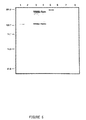
- Fig. 3 therefore show that the expression of the fhaC gene is necessary for the extracellular production of the N-terminal region of FHA.
- This plasmid is the result of the exchange of the fragment Sph I / Bam HI 2.5 kb fragment PBG4 onboard by the Sph I / Bam HI pUC18-5, which is itself the result of the insertion of the Sal I fragment / Bam HI of about 1.27 kb from pRIT13120 (Delisse-Gathoye et al., 1990) in pUC18-4 digested with Sal I and Bam HI.
- the plasmid pUC18-4 is the result of digestion of pUC18-3 with Pst I and of the religation on itself.
- pBG4 was introduced into Bordetella parapertussis PEP (Nordmann, P., Institut, B., Menozzi, FD, Commare, MC, and Barois , A. (1992) Ped. Infect. Dis. J. 11, 248).
- the culture supernatant of the transformed strain was analyzed by SDS-PAGE and the result (Fig. 3) indicates that B. parapertussis can also secrete the N-terminal region of the FHA of B. pertussis , which suggests that B. parapertussis also expresses an auxiliary gene which corresponds to fhaC.
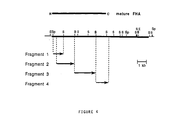
- B. pertussis FHA can interact with heparin and be purified on heparin-sepharose (Menozzi et al ., 1991). In order to find out whether this interaction involves a site different from that responsible for the binding of FHA to the CR3 integrins (Relman et al., 1990) or from that responsible for the binding of FHA to other glycoconjugates (Prasad and al ., 1993), different DNA fragments covering the entire region of fhaB which codes for mature FHA were expressed in fusion with MalE (a "maltose-binding protein" using the expression system marketed. by New England Biolabs (Beverly, MA, USA).
- the recombinant proteins purified on amylose as well as MalE and the purified FHA were chromatographed on 3 ml of heparin-sepharose balanced with 100 ml PBS ("Phosphate Buffered Saline"). 40 ml of the different samples were previously adjusted to a concentration of 5 ⁇ g / ml in PBS + 5 mM maltose, deposited on the heparin sepharose column and washed with PBS + 5 mM maltose. The fixed proteins were then eluted with PBS + 0.5 M NaCl.
- the truncated FHA produced and secreted by the strain B. pertussis BPGR44 contains the entire region encoded by fragment 2 (FIG. 4) and should therefore bind to heparin.
- the culture supernatant of this strain was therefore chromatographed on heparin-sepharose and eluted with PBS + 0.5 M NaCl.
- Analysis by SDS-PAGE and Coomassie blue staining of the various protein fractions shows that all of the truncated FHA produced and secreted by the strain BPGR44 is retained on heparin and can be purified on heparin-sepharose by a procedure identical to that used for the purification of natural FHA (Menozzi et al ., 1991).
- the efficient FHA secretion system in B. pertussis was then used to secrete heterologous peptides in this organism.
- the model peptide used in this example is that which corresponds to the region 190-211 of the glutathione-S-transferase of 28 kDa (Sm28GST) of Schisiosoma mansoni (Xu, BC, Verwaerde, C., Gras-Masse , H., Fontaine, J., Bossus, M., Trottein, F., Wolowczuk, I., Tartar. A., and Capron, A. (1993) J. Immun. 150, 940-949).
- Two synthetic oligonucleotides with the following sequence: 5 'TA GGATCC GGGCCGGGGCCCGAAAATCTGTTAGCC 3', and 5 'TA AGATCT CCCGGGCCCCGGGAAGGGAGTTGCAGG 3' were phosphorylated by standard methods (Sambrook, J., Fritsch, EF, and Maniatisular, 1989). Cloning: A laboratory Manual, 2nd edition, Cold Spring Harbor Laboratories, Cold Spring Harbor, NY), and used to amplify by region the region coding for the peptide 190-211. After amplification, the fragment was digested with Bam HI and Bgl II and inserted into the Bam HI site of pBG4.
- the recombinant plasmids were analyzed by restriction in order to know the orientation of the oligonucleotide insert.
- a plasmid containing the oligonucleotide insert in the direction of expression of the FHA, called pNJ1 was then purified and was introduced into B. pertussis BPGR4 by electroporation.
- This recombinant strain is called BPNJ1 and its culture supernatant was analyzed by SDS-PAGE / staining with Coomassie blue and Western blot using polyclonal antibodies directed against peptide 190/211 of Sm28GST.
- the results shown in FIG. 5 indicate that the strain BPNJ1 efficiently secretes the peptide 190/211 of Sm28GST in fusion with the truncated FHA and that this peptide retains its antigenicity.
- the culture supernatant of the strain BPNJ1 was then chromatographed on heparin-sepharose in the presence of PBS. Elution was carried out in PBS + 0.5 M NaCl. Analysis by SDS-PAGE and staining with Coomassie blue shows that the all of the fusion protein is retained on the column and can be eluted in PBS + 0.5 M NaCl.
- the plasmid content of 6 resistant colonies was analyzed by a rapid analysis method (Baulard, A., Bertin, P., Dartois, V., and Locht, C. (1994) Meth. Mol. Cell. Biol . 4, in press) and the result shows that all the 6 colonies contained the plasmid pNJ1.
- mice Five OF1 mice were then infected nasally with B. pertussis BPNJ1. About 10 6 cfu ("colony forming units") per mouse were instilled nasally. After 7 days, the lungs of these mice were removed and the B. pertussis contained in the lungs were spread on solid medium with or without kanamycin. After 4 days of culture at 37 ° C., the number of hemolytic bacteria resistant to kanamycin was compared to the number of hemolytic bacteria not resistant to kanamycin. The result shows that about 95% of the bacteria had lost resistance to kanamycin.
- pUC8-A The recombinant plasmid is called pUC8-A.
- the 10.68 kb fragment is inserted into the Eco RI site of the mobilizable plasmid pGR5, a derivative of the plasmid pSS1129 carrying the 5 'and 3' flanking regions of the fhaB gene (Locht et al ., 1992).
- pGR53 The resulting plasmid (called pGR53) is transferred into the mobilizing strain E. coli S17-1 for conjugation with B. pertussis (Simon, R., Priefer, U., and Puhler, A. (1983) Bio / Technology 1, 784-791).
- the E. coli S17-1 strain (pGR53) is crossed with B. pertussis BPGR4. As this strain lacks the majority of the fhaB structural gene , the events of homologous double recombination are forced at the flanking regions of this gene. After conjugation, the two recombination events are selected successively on selective media as described above (Antoine, R., and Locht, C. (1990) Infect. Immun. 58, 1518-1526).
- E. coli S17-1 (pGR53) (Sm S , Gen R , Nal S ) is crossed on a solid Bordet-Gengou medium (BG) with B. pertussis BPGR4 (Sm R , Gen S , NaI R ). After 6 hours of conjugation, the transconjugants are selected on a selective medium (BG + Gentamycin + Nalidixic Acid). Resistance to gentamycin is brought by the plasmid pGR53 and that to nalidixic acid is carried by the chromosome of the strain B. pertussis BPGR4. About 50 isolated colonies are then purified on BG medium + Gentamycin + Nalidixic Acid.
- the transconjugants are deposited in replica on the selective medium BG + Streptomycin, then BG + Gentamycin + Nalidixic Acid.
- the colonies which have integrated the plasmid pGR53 are sensitive to streptomycin (the characteristic of sensitivity to streptomycin being dominant over that of resistance).
- the Gen R Sm S transconjugants are then spread on the selective medium BG + Streptomycin to select the second recombination event corresponding to the excision of the integrated plasmid. If this "crossing-over" is carried out in the same place as the first time, we find the initial construction corresponding to the BPGR4 strain.
- the construction is integrated into the genome of B. pertussis .
- the excision of the plasmid which provided the construction is controlled by the appearance of the Sm R Gen S phenotype.
- the candidate clones resistant to streptomycin and carrying the desired allelic exchange are identified by hybridization on colonies with a probe corresponding to the Bgl II fragment of 0.68 kb described above.
- the chromosomal integrity at the junction of the flanking regions is confirmed after analysis of the genomic DNA by Southern blot.
- the antigenicity of the heterologous fusion protein was demonstrated by Western blot analysis after separation by SDS-PAGE using a 10% gel.
- the protein fraction from the culture supernatant and that associated with the cells, after growth of the recombinant bacteria in liquid culture in Stainer-Scholtes medium were analyzed.
- the fusion protein is identified in protein fractions with polyclonal antibodies directed against FHA, monoclonal antibodies directed against FHA (Delisse-Gathoye et al ., 1990), polyclonal rat antibodies directed against truncated FHA, antibodies polyclonal rabbits against Sm28GST and polyclonal rat antibodies directed against peptide 190-211 of Sm28GST.
- the anti-FHA antibodies were exhausted before against a total lysate of the strain B. pertussis BPGR4 while the anti-Sm28GST antibodies were exhausted against a total lysate of the strain B. pertussis BPSM.
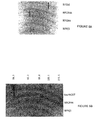
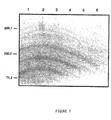
- the fusion protein is highlighted in the protein fraction associated with BPGR5 strain cells where a slightly doubled protein band (doublet) higher than FHA reacts with both anti-FHA antibodies (Fig. 6) and antibodies anti-Sm28GST (fig. 7). Genetic fusion is therefore well expressed in this new heterologous expression system. Degradation products (characteristics of the FHA) are also observed in the protein fraction associated with cells. However, no polypeptide is immunodetected in the crude culture supernatant, indicating that the fusion protein is not efficiently produced in a form secreted.
- the 0.5 kb fragment was then inserted into the plasmid pRIT13202 (Delisse-Gathoye et al ., 1990) digested with Bgl II and Bcl I thereby eliminating 0.1 kb from the fhaB reading frame .
- the plasmid thus obtained is called pUC8-F.
- the 10.4 kb Eco RI fragment was then isolated from pUC8-F, inserted into pGR5 (Locht et al ., 1992) previously digested with Eco RI.
- the resulting plasmid pGR54 is then introduced into the E. coli S17-1 strain.
- the E. coli S17-1 strain (pGR54) is then crossed with B. pertussis BPGR4 in order to integrate the construction into the fhaB chromosomal locus as described in Example VII.
- B. pertussis BPGR6 is retained. This strain is therefore a derivative of B. pertussis BPSM with a deletion of 0.1 kb in the fhaB gene and chromosomal insertion at this location of the gene coding for the truncated Sm28GST.
- the fusion protein is highlighted in the protein fraction associated with BPGR6 strain cells where a protein band slightly larger than FHA reacts with both anti-FHA antibodies (fig. 6) and anti-Sm28GST antibodies (fig. 7) but less compared to the BPGR5 strain.
- a secretion product reacts with both anti-FHA and anti-Sm28GST antibodies (figs. 7 and 8), thus demonstrating that the protein of fusion is secreted from BPGR6 and / or presented on the outside of the bacteria.
- the secretion of the complete fusion protein remains ineffective since the secreted product is mostly cleaved, as already observed for the BPGR5 strain.
- Sm28GST contains a cysteine possibly capable of forming a disulfide bridge.
- disulfide bridges can be a limiting factor in the efficient export of proteins into the culture supernatant of gram-negative bacteria (Klauser, T., Pohlner, J., and Meyer, TF (1990) EMBO J. 9 , 1991-1999; Klauser, T., Pohlner, J., and Meyer, TF (1992) EMBO J. 11 , 2327-2335).
- the Bgl II- Sal I fragment of the gene coding for the Sm28GST modified at the level of the cysteine codon was amplified by PCR ("polymerase chain reaction"), using specific primers complementary to these two regions of the gene.
- the sequences of the oligonucleotides used as amplification primers are presented below: are 5 'oligo: 5' TAA GGATCC CCATGGCTGGCGAGCATATCAAG 3 'and 3' oligo: 5 'CCT GTCGAC CCTTTCAGAGATTC GCT GATCATATTGAG 3'.
- the 0.44 kb PCR product was digested with Pst I and Sal I and the 0.28 kb fragment was cloned into the plasmid pUC7-28 previously digested with Pst I- Sal I, which generates pUC7- 28 *.
- the plasmid pUC7-28 is a derivative of pUC7 digested in Bam HI (elimination of internal Pst I and Sal I sites in pUC7) and ligated with the Bam HI fragment of 0.64 kb originating from the PCR amplification of the cDNA integer coding for Sm28GST.
- This PCR amplification was carried out with the following oligonucleotides: 5 'oligo: 5' TAA GGATCC CCATGGCTGGCGAGCATATCAAG 3 '; oligo3 ': 5' TAA GGATCC CGAAGGGAGTTGCAGGCCTGTT 3 '.
- the Bam HI linker sequences were chosen in such a way that these restriction sites are compatible on each side with the reading phase starting at the Bgl II site of the fhaB gene.
- the Bam HI fragment of the plasmid pUC7-28 * is therefore isolated and cloned at the Bgl II site of the plasmid pRIT13202, which generates the plasmid pUC8-928 *.
- This plasmid is then digested with Eco RI and the Eco RI fragment is introduced into the plasmid pGR5 previously digested with Eco RI.
- the resulting plasmid pGR540 is then introduced into the strain of E. coli S17-1.
- the E. coli S17-1 strain (pGR540) is then crossed with B. pertussis BPGR4 in order to integrate the construction into the fhaB chromosomal locus as described in Example VII.
- B. pertussis BPGR60 is retained. This strain is therefore a derivative of B. pertussis BPSM containing at the Bgl II site of the fhaB gene the chromosomal insertion of the gene coding for the modified Sm28GST.
- the fusion protein is well visualized in the protein fraction associated with cells, where a protein band reacts with both anti-FHA antibodies (fig. 9) and anti-Sm28GST antibodies (fig. . 10).
- a protein band reacts with both anti-FHA antibodies (fig. 9) and anti-Sm28GST antibodies (fig. . 10).
- polypeptides reacting only with anti-FHA antibodies are observed (Fig. 9).
- a secretion product revealed with both the anti-FHA and anti-Sm28GST antibodies is highlighted. This recognition is very similar to that of the BPGR6 strain.
- the fusion protein is therefore secreted and / or presented on the outside of the bacteria. However, the secretion of the complete fusion protein remains ineffective and here again, the secreted product is mainly cleaved.
- the lungs were then homogenized in 5 ml of PBS, then the bacteria counted after spreading of the ground material on solid BG medium containing 100 ⁇ g / ml streptomycin and 25 ⁇ g / ml nalidixic acid (BGS 100 N 25 ).
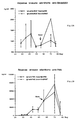
- mice have previously received the strain BPGR60 and receive then the virulent BPSM strain, the wild strain no longer exhibits growth, and its elimination is then accelerated (solid triangles).
- mice having was previously infected with the wild strain Tohama I received a dose of BPGR60, and the number of bacteria in their lungs was assessed. In this case, no phase of growth of BPGR60 strain is not observed within 7 days administration ( Figure 11B, solid triangles). However, the fall in the number of bacteria over time was faster than that observed 7 days after administration of BPGR60 in naive mice.
- TNF alpha tumor necrosis factor
- Il-6 interleukin-6
- TNF production appeared to be immediate since, after three hours after injection, maximum secretion rate was reached Stable for at least 6 hours after injection, the amount of TNF alpha was practically zero 24 hours later and remained negligible until the 7th day.
- IL-6 production very low the first three days, greatly increased the 3rd day, then returned to a normal rate on the seventh day.
- BPGR60 BPGR60 induces an inflammatory reaction localized, which is evidenced by the increase in TNF and IL-6. This increased secretion of inflammatory cytokines was transient since, 7 days after instillation, normal levels of these cytokines in the lungs were found.
- the booster with the free protein Sm28GST by nasal route causes after 8 days a strong production of IgG2a and IgG2b. A fortnight after this recall a strong anti-Sm28GST serum antibody response showing the Following isotypes, IgG1, IgG2a, IgG2b and IgA, is obtained.
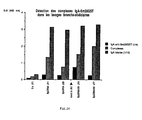
- the booster with the BPGR60 strain or the recombinant protein Sm28GST did not cause significant quantity changes anti-Fha secretory IgA, 7 days after the second administration despite a slight increase. At day 77 (14 days after the reminder) the rate of anti-Fha decreased in both groups.
- the nasal administration of the BPGR60 strain expressing the Sm28GST is therefore capable of inducing a secretory immune response towards of this antigen.
- This antibody response can be amplified by the recall either with the recombinant strain, or with Sm28GST alone.
- This vaccination mode could probably be improved by delaying the time between immunization and booster (example: 90 days instead of 56).
- the amounts of bacteria and the dose of protein can be considered optimal.
- OF1 female mice Prior to infection, OF1 female mice were immunized according to the protocol shown in the previous example and were boosted by the free protein (J63). Fifteen days after reminder, these mice were infested with 80 cercariae (transcutaneous route, abdomen). The parasite load was then evaluated 42 days after infestation, by the verminous load and by the load in hepatic eggs and intestinal. The results obtained are compared with those obtained in the same experience in mice not treated or having received only one Sm28GST injection at the time of the recall.
- the genes encoding the accessory protein FhaC and the protein FHA44 were placed under the control of the tac promoter in order to take advantage of a regulatable expression and to get rid of the FHA expression regulation system in B. pertussis .
- This plasmid is called pFJD6.
- a liquid culture of E. coli XL1 blue transformed with this plasmid is treated with 1 mM IPTG for two hours after reaching an absorbance of 0.8 at 600 nm.
- the cells are then collected, lysed by sonication and the cell membranes are obtained by ultracentrifugation (15 ° C., 60 min 100,000 xg) of the clarified sonicate.
- a sarkosyl extraction (1%) selectively solubilizes the cytoplasmic membrane and a second ultracentrifugation (15 ° C, 60 min 100,000 xg) allows to obtain a protein-enriched fraction of the outer membrane.
- Their analysis by polyacrylamide gel electrophoresis in the presence of SDS and immunoblotting with a polyclonal serum directed against FhaC shows that a protein of the same size as FhaC from B. pertussis is present in these extracts, while the untransformed strain does not not have.
- the EcoR 1- Bam H1 fragment encoding the truncated FHA (called FHA44) of pBG4 was cloned into the same sites of the vector pMMB91 (PJ Beauste, W; Pansegrau, R. Frank, H. Blöcker, P. Scholz, M. Bagdasarian and E. Lanka, Gene 48, 119-131, 1986) under the control of the tac promoter.
- the resulting plasmid, pFJD9 was introduced by transformation into strains of E. coli XL1 blue and UT5600 (the latter does not produce the OmpT envelope protease), alone or in trans with pFJD6.
- the two plasmids have compatible origins of replication and different resistance markers.
- the extreme aminoterminal region of FHA hardly possesses the characteristics of a conventional signal peptide and could hinder the efficient secretion of FHA in E. coli .
- Various constructions have been made in order to add the presequence encoding the signal peptide of the preprotein preOmpA from E. coli . This presequence was grafted at three different locations in the 5 'region of the truncated fha gene.
- the 5 ′ region of the gene was amplified by PCR from the plasmid pRIT13130 (Delisse-Gathoye et al., 1990) using the oligonucleotide (5′-3 ′) TTTAACCGAT GCGGCCGC CGTTG which contains a Not 1 site (underlined) and each of the three oligonucleotides (5'-3 ') TAT AAGCTT CGAACCTGTACAGGCTGGTC, TCA AAGCTT CGCGTGGTCAAGCG CGAAG, and ATT AAGCTT CCCAGGGCTTGGTTCCTCAG, containing Hind3 sites (underlined).
- the three PCR products of 615 bp, 520 bp and 410 bp were then purified and digested with Not 1 and Hind3 and each of them was used in a three-partner ligation with pEC1 restricted by Hind3 and Bam H1 and the fragment Not 1- Bam H1 of 2 kb of pRIT13197 encoding the 5 'region of FHA44 (Delisse-Gathoye et al., 1990).
- the three resulting plamides, PEC11, pEC12 and pEC13 were digested with Xba 1, the site was filled in with Klenow and the plasmids were redigested with Bam H1.
- the DNA fragments containing the preOmpA-fha44 chimeric genes were cloned into the Eco R1 (filled with Klenow) and Bam H1 sites of pMMB91.
- the resulting plasmids, pFJD11, pFJD12 and pFJD13, encode chimeric genes whose products are respectively fusion proteins in which the first 2, 33 or 71 amino acids of FHA44 are replaced by the 18 amino acids of the signal peptide of preOmpA.
- the plasmids were introduced into the strain UT5600 alone or in trans with pFJD6 and the expression of fhaC and chimeric genes was induced by the addition of IPTG to liquid cultures having reached an absorbance of 1 to 600 nm.
- FHA44 is detected by immunobloting after polyacrylamide gel electrophoresis in the presence of SDS in culture supernatants from strains expressing FhaC.
- the production of FHA44 is fairly low in the strains UT5600 (pFJD6, pFJD11) and UT5600 (pFJD13, pFJD6) but clearly higher in the strain UT5600 (pFJD12, PFJD6), which contains the chimeric gene of intermediate length.
- the production of FHA44 in the supernatant of this strain is estimated by ELISA and immunoblotting at approximately 20% of the production of truncated FHA in B.
- FHA44 secreted by E. coli is the same size as that of B. pertussis and it can be purified under the same conditions by affinity chromatography on heparin-sepharose. The aminoterminal sequencing of the two proteins shows that they undergo the same aminoterminal maturation.
Landscapes
- Chemical & Material Sciences (AREA)
- Organic Chemistry (AREA)
- Health & Medical Sciences (AREA)
- Medicinal Chemistry (AREA)
- Biochemistry (AREA)
- Biophysics (AREA)
- General Health & Medical Sciences (AREA)
- Genetics & Genomics (AREA)
- Life Sciences & Earth Sciences (AREA)
- Molecular Biology (AREA)
- Proteomics, Peptides & Aminoacids (AREA)
- Gastroenterology & Hepatology (AREA)
- Medicines Containing Antibodies Or Antigens For Use As Internal Diagnostic Agents (AREA)
- Micro-Organisms Or Cultivation Processes Thereof (AREA)
- Preparation Of Compounds By Using Micro-Organisms (AREA)
- Enzymes And Modification Thereof (AREA)
Description
Claims (29)
- ADN recombinant contenant une séquence (1) codant pour un polypeptide hétérologue vis-à-vis d'une hémagglutinine filamenteuse de Bordetella (Fha) fusionnée dans le même cadre de lecture à une séquence (2) placée en amont de la première, cette séquence (2) codant pour une partie au moins du précurseur de la Fha, cette partie comportant au moins la région N-terminale d'une protéine mature tronquée de Fha qui contient le site d'interaction de la Fha avec l'héparine, d'une part, et qui, lorsque celle-ci est elle-même placée, seule, sous le contrôle d'un promoteur reconnu par les polymérases cellulaires de B.pertussis et introduite dans une culture de cellules de B.pertussis, est exprimée dans cette culture sous le contrôle de ce promoteur et excrétée dans le milieu de culture de ces cellules, d'autre part.
- ADN recombinant selon la revendication 1, caractérisé en ce que la Fha est une Fha de B.pertussis.
- ADN recombinant selon la revendication 1 ou 2, caractérisé en ce que la séquence (2) code pour la protéine mature de Fha.
- ADN recombinant selon la revendication 1 ou 2, caractérisé en que la séquence (2) résulte d'une troncature de la séquence codant pour la protéine mature Fha du côté de son extrémité C-terminale.
- ADN recombinant selon l'une quelconque des revendications 1 à 4, caractérisé en ce qu'il comporte en outre une séquence (3) en aval de la séquence (1), cette séquence (3) correspondant pour l'essentiel à la partie tronquée de la protéine mature, de préférence complétée par la séquence signal du précurseur.
- ADN recombinant selon l'une quelconque des revendications 1 à 4, caractérisé en ce que la séquence (2) comporte les signaux d'excrétion de la séquence codant pour la Fha et la région N-terminale homologue aux régions N-terminales des hémolysines ShIA et HpmA de Serratia marcescens et Proteus mirabilis.
- ADN recombinant selon la revendication 4 ou 6, caractérisé en ce que l'extension de la séquence (2) du côté de son extrémité C-terminale ne va pas au-delà de la longueur qui ferait que la transformation de B.pertussis avec cet ADN recombinant alors placé sous le contrôle d'un promoteur susceptible d'être reconnu par B.pertussis ne permette plus l'excrétion directe de la protéine recombinante alors formée dans le milieu de culture de ce B.pertussis.
- ADN recombinant selon la revendication 6 ou 7, caractérisé en ce que la séquence (2) s'étend entre l'ATG correspondant au codon d'initiation de la traduction de la Fha à un nucléotide C-terminal au delà du nucléotide 907 dans la direction de la traduction et de préférence non au delà de la position 6922.
- ADN recombinant selon la revendication 8, caractérisé en ce qu'il ne réagit plus avec des anticorps anti-Fha plus particulièrement dirigés contre les épitopes de la partie C-terminale de la Fha mature, situés au delà du site nucléotidique 2841 dans le sens de la traduction.
- ADN recombinant selon l'une quelconque des revendications 1 à 8, caractérisé en ce que le polypeptide codé par la séquence (2) contient au moins un site spécifique d'attachement de la Fha aux muqueuses.
- ADN recombinant selon l'une quelconque des revendications 1 à 10, caractérisé en ce que la séquence (1) code pour un polypeptide ayant des propriétés vaccinantes vis-à-vis d'un agent pathogène donné.
- ADN recombinant selon l'une quelconque des revendications 1 à 11, caractérisé en ce qu'il contient également un promoteur reconnu par les polymérases d'une cellule transformable avec un vecteur contenant l'ADN recombinant en question et autorisant l'expression des séquences (1) et (2), dès lors que se trouve également exprimé dans cette cellule un gène auxiliaire du type fhaC.
- ADN recombinant selon la revendication 12, caractérisé en ce que le promoteur est un promoteur reconnu par les polymérases d'une bactérie de l'espèce Bordetella, notamment de B.pertussis qui dans le produit naturel régule l'expression de la protéine Fha.
- Culture de cellules procaryotes, notamment bactéries, transformées avec un ADN recombinant selon la revendication 11 ou 12, caractérisée en ce que le promoteur de l'ADN recombinant est reconnu par les polymérases de ladite cellule procaryote.
- Culture selon la revendication 14, caractérisée en ce que les cellules appartiennent à une espèce Bordetella, notamment B.pertussis, et qu'elles sont également porteuses d'un gène fhaC exprimable dans ces cellules.
- Culture selon la revendication 14, caractérisée en ce que les cellules appartiennent à une espèce bactérienne autre que Bordetella et qu'elles contiennent également une séquence codant pour au moins la partie de FhaC nécessaire à l'expression de la séquence (2), sous une forme également exprimable au sein des cellules de cette culture.
- Culture cellulaire selon la revendication 16, caractérisée en ce que ses cellules appartiennent à l'espèce E.coli.
- Culture cellulaire selon l'une quelconque des revendications 14 à 17, caractérisée en ce que l'ADN recombinant est incorporé à l'ADN chromosomique desdites cellules.
- Culture de cellules selon l'une quelconque des revendications 14 à 18, caractérisée par l'exposition du produit d'expression de la séquence (1) à leur surface.
- Culture selon l'une quelconque des revendications 14 à 19,
caractérisée en ce que la séquence (2) contient au moins un site d'adhésion de la Fha aux muqueuses ou à des cellules eucaryotes, notamment macrophages ou cellules épithéliales. - Culture cellulaire selon la revendication 20, caractérisée en ce qu'elle est détoxifiée ou atténuée.
- Composition immunogène orientée contre un agent pathogène déterminé et caractérisée en ce qu'il contient à titre de principe actif, des cellules de la culture selon l'une quelconque des revendications 18 à 21 dans lesquelles la séquence (1) code pour un antigène caractéristique de cet agent pathogène.
- Protéine recombinante constituée par le produit d'expression de l'ADN recombinant selon l'une quelconque des revendications 1 à 13.
- Protéine recombinante selon la revendication 23, caractérisée par le fait qu'elle comporte l'un au moins des sites d'adhésion de la protéine Fha aux muqueuses.
- Protéine recombinante selon la revendication 24, caractérisée en ce que le produit d'expression de la séquence (1) code pour un polypeptide ayant des propriétés vaccinantes vis-à-vis d'un agent pathogène donné et en ce que le produit d'expression de la séquence (2) contient un site d'adhésion de la Fha aux muqueuses ou à des cellules eucaryotes, notamment macrophages ou cellules épithéliales.
- Composition vaccinante contenant la culture cellulaire de la revendication 22 ou la protéine recombinante de la revendication 25, caractérisée en ce qu'elle présente l'immunogénicité mucosale de la Fha, notamment pour l'administration par voie nasale.
- Procédé pour la production d'une protéine hétérologue recombinante contenant une séquence polypeptidique déterminée caractérisée par la transformation d'une culture de cellules procaryotes avec un vecteur contenant un ADN recombinant conforme à l'une quelconque des revendications 1 et 6 à 13, lesdites cellules procaryotes contenant également une séquence nucléotidique codant pour FhaC sous une forme susceptible d'y être exprimée ou ayant également été transformées à cette fin, puis la culture de ces cellules et la récupération du produit excrété par les cellules de cette culture dans leur milieu.
- Procédé selon la revendication 27, caractérisé en ce que lesdites cellules procaryotes sont des Bordetella, notamment du type B.pertussis.
- Procédé selon la revendication 27 ou 28, caractérisé par la purification supplémentaire du produit d'excrétion par mise en contact du milieu de culture avec de l'héparine immobilisée sur un support insoluble et par récupération de la protéine recombinante purifiée par dissociation du complexe qu'il formait avec l'héparine.
Applications Claiming Priority (3)
| Application Number | Priority Date | Filing Date | Title |
|---|---|---|---|
| FR9404661 | 1994-04-19 | ||
| FR9404661A FR2718750B1 (fr) | 1994-04-19 | 1994-04-19 | Protéines recombinantes de l'hémagglutinine filamenteuse de Bordetella, notamment, B. Pertussis, production et application à la production de protéines étrangères ou de principes actifs vaccinants. |
| PCT/FR1995/000512 WO1995028486A2 (fr) | 1994-04-19 | 1995-04-19 | Proteines recombinantes de l'hemagglutinine filamenteuse de bordetella, notamment bordetella pertussis, procede pour leur production et leurs applications a la production de proteines etrangeres ou de principes actifs vaccinants |
Publications (2)
| Publication Number | Publication Date |
|---|---|
| EP0755447A1 EP0755447A1 (fr) | 1997-01-29 |
| EP0755447B1 true EP0755447B1 (fr) | 2003-07-02 |
Family
ID=9462257
Family Applications (1)
| Application Number | Title | Priority Date | Filing Date |
|---|---|---|---|
| EP95918030A Expired - Lifetime EP0755447B1 (fr) | 1994-04-19 | 1995-04-19 | Proteines recombinantes de l'hemagglutinine filamenteuse de bordetella, notamment bordetella pertussis, procede pour leur production et leurs applications a la production de proteines etrangeres ou de principes actifs vaccinants |
Country Status (11)
| Country | Link |
|---|---|
| US (1) | US6841358B1 (fr) |
| EP (1) | EP0755447B1 (fr) |
| AT (1) | ATE244307T1 (fr) |
| AU (1) | AU2412195A (fr) |
| CA (1) | CA2202639C (fr) |
| DE (1) | DE69531200T2 (fr) |
| DK (1) | DK0755447T3 (fr) |
| ES (1) | ES2202363T3 (fr) |
| FR (1) | FR2718750B1 (fr) |
| PT (1) | PT755447E (fr) |
| WO (1) | WO1995028486A2 (fr) |
Families Citing this family (26)
| Publication number | Priority date | Publication date | Assignee | Title |
|---|---|---|---|---|
| US5932714A (en) * | 1995-02-23 | 1999-08-03 | Connaught Laboratories Limited | Expression of gene products from genetically manipulated strains of Bordetella |
| FR2754543B1 (fr) * | 1996-10-11 | 1998-12-31 | Pasteur Institut | Souche de bordetella deficiente dans la production de toxine et exprimant une proteine hydride, liposomes comprenant de la fha et leurs utilisations comme vaccins, et utilisation de la fha pour stimuler les reponses immunitaires |
| US7087236B1 (en) * | 1998-09-01 | 2006-08-08 | Merrion Research I Limited | Method for inducing a cell-mediated immune response and improved parenteral vaccine formulations thereof |
| FR2793492A1 (fr) * | 1999-05-11 | 2000-11-17 | Pasteur Institut | Nouveau procede de purification par affinite |
| CA2645190C (fr) | 2006-03-10 | 2019-01-15 | Institut Pasteur De Lille | Souches vivantes attenuees de bordetella sous forme de vaccin unidose contre la coqueluche |
| EP2442826B1 (fr) | 2009-06-15 | 2015-07-08 | National University of Singapore | Vaccin contre l'influenza, composition, et procedes d'utilisation |
| EP2773371B1 (fr) | 2011-11-02 | 2020-01-01 | National University of Singapore | Effet d'une souche atténuée de bordetella sur une maladie allergique |
| EP2722338A1 (fr) | 2012-10-17 | 2014-04-23 | INSERM (Institut National de la Santé et de la Recherche Médicale) | Nouvelles souches de bordetella de recombinaison |
| WO2014071182A1 (fr) | 2012-11-01 | 2014-05-08 | Massachusetts Institute Of Technology | Évolution dirigée d'une batterie de gènes synthétiques |
| US9655959B2 (en) | 2014-10-01 | 2017-05-23 | National University Of Singapore | Adenylate cyclase deficient bordetella strains |
| KR102197507B1 (ko) | 2015-07-13 | 2020-12-31 | 피벗 바이오, 인크. | 식물 형질 개선을 위한 방법 및 조성물 |
| WO2017062412A1 (fr) | 2015-10-05 | 2017-04-13 | Massachusetts Institute Of Technology | Fixation d'azote à l'aide d'agrégats nif remodelés |
| FI3436034T3 (fi) | 2016-03-29 | 2025-05-08 | Pasteur Institut | Mutantteja bordetella-kantoja ja käyttömenetelmiä |
| UA129256C2 (uk) | 2017-01-12 | 2025-03-05 | Півот Байо, Інк. | Спосіб ідентифікації штаму мікроорганізму, який продукує азот, небобова рослина, колонізована таким штамом, спосіб збільшення фіксації азоту у небобових рослин та композиція для збільшення фіксації азоту у небобових рослин |
| CN111542507A (zh) * | 2017-08-09 | 2020-08-14 | 皮沃特生物股份有限公司 | 用于改善工程改造的微生物的方法和组合物 |
| CA3077428A1 (fr) | 2017-10-18 | 2019-04-25 | Institut Pasteur De Lille | Souches de bordetella exprimant des fimbriae de serotype 3 |
| JP7420712B2 (ja) | 2017-10-25 | 2024-01-23 | ピボット バイオ, インコーポレイテッド | 窒素を固定する操作された微生物を改良するための方法および組成物 |
| US12151988B2 (en) | 2017-10-25 | 2024-11-26 | Pivot Bio, Inc. | Gene targets for nitrogen fixation targeting for improving plant traits |
| EP3813511A4 (fr) | 2018-06-27 | 2022-08-03 | Pivot Bio, Inc. | Remodelage microbien guidé, plate-forme pour l'amélioration rationnelle d'espèces microbiennes pour l'agriculture |
| EP3814302A4 (fr) | 2018-06-27 | 2022-06-29 | Pivot Bio, Inc. | Compositions agricoles comprenant des microbes de fixation d'azote remodelés |
| US12391624B2 (en) | 2018-07-11 | 2025-08-19 | Pivot Bio, Inc. | Temporally and spatially targeted dynamic nitrogen delivery by remodeled microbes |
| US12421519B2 (en) | 2019-01-07 | 2025-09-23 | Pivot Bio, Inc. | Plant colonization assays using natural microbial barcodes |
| WO2020190363A1 (fr) | 2019-03-19 | 2020-09-24 | Massachusetts Institute Of Technology | Contrôle de la fixation de l'azote dans les bactéries rhizobium s'associant à des céréales |
| CN114008221A (zh) | 2019-04-25 | 2022-02-01 | 皮沃特生物股份有限公司 | 用于分离和表征由化学诱变产生的泌铵突变体库的高通量方法 |
| AU2020445067A1 (en) | 2020-05-01 | 2022-12-01 | Pivot Bio, Inc. | Measurement of nitrogen fixation and incorporation |
| WO2021222643A1 (fr) | 2020-05-01 | 2021-11-04 | Pivot Bio, Inc. | Formulations liquides stables pour micro-organismes fixant l'azote |
Family Cites Families (4)
| Publication number | Priority date | Publication date | Assignee | Title |
|---|---|---|---|---|
| US6036960A (en) * | 1988-10-27 | 2000-03-14 | Relman; David A. | Filamentous hemagglutinin of B. pertussis |
| CA1341123C (fr) * | 1988-10-27 | 2000-10-17 | David A. Relman | Hemagglutinine filamenteuse de b. pertussis |
| GB9008746D0 (en) * | 1990-04-18 | 1990-06-13 | Connaught Lab | The use of autologous promoters to express gene products in bordetella |
| DE4111531A1 (de) * | 1991-04-09 | 1992-10-29 | Biotechnolog Forschung Gmbh | Plasmide zur fha-expression und wirte |
-
1994
- 1994-04-19 FR FR9404661A patent/FR2718750B1/fr not_active Expired - Fee Related
-
1995
- 1995-04-19 CA CA002202639A patent/CA2202639C/fr not_active Expired - Fee Related
- 1995-04-19 ES ES95918030T patent/ES2202363T3/es not_active Expired - Lifetime
- 1995-04-19 DK DK95918030T patent/DK0755447T3/da active
- 1995-04-19 WO PCT/FR1995/000512 patent/WO1995028486A2/fr not_active Ceased
- 1995-04-19 DE DE69531200T patent/DE69531200T2/de not_active Expired - Lifetime
- 1995-04-19 US US08/765,287 patent/US6841358B1/en not_active Expired - Fee Related
- 1995-04-19 PT PT95918030T patent/PT755447E/pt unknown
- 1995-04-19 AU AU24121/95A patent/AU2412195A/en not_active Abandoned
- 1995-04-19 EP EP95918030A patent/EP0755447B1/fr not_active Expired - Lifetime
- 1995-04-19 AT AT95918030T patent/ATE244307T1/de active
Also Published As
| Publication number | Publication date |
|---|---|
| PT755447E (pt) | 2003-12-31 |
| WO1995028486A3 (fr) | 1996-01-11 |
| US6841358B1 (en) | 2005-01-11 |
| DE69531200T2 (de) | 2004-04-15 |
| CA2202639A1 (fr) | 1995-10-26 |
| AU2412195A (en) | 1995-11-10 |
| DK0755447T3 (da) | 2003-10-27 |
| DE69531200D1 (de) | 2003-08-07 |
| FR2718750B1 (fr) | 1996-06-14 |
| WO1995028486A2 (fr) | 1995-10-26 |
| ES2202363T3 (es) | 2004-04-01 |
| CA2202639C (fr) | 2004-08-10 |
| FR2718750A1 (fr) | 1995-10-20 |
| EP0755447A1 (fr) | 1997-01-29 |
| ATE244307T1 (de) | 2003-07-15 |
Similar Documents
| Publication | Publication Date | Title |
|---|---|---|
| CA2202639C (fr) | Proteines recombinantes de l'hemagglutinine filamenteuse de bordetella, notamment bordetella pertussis, procede pour leur production et leurs applications a la production de proteines etrangeres ou de principes actifs vaccinants | |
| EP0652962B1 (fr) | Expression de proteines recombinantes fusionnees dans des bacteries attenuees | |
| Locht et al. | The filamentous haemagglutinin, a multifaceted adhesin produced by virulent Bordetella spp. | |
| AU2007201553B8 (en) | Expression system | |
| EP0712442B1 (fr) | Compositions vaccinales | |
| Renauld-Mongenie et al. | Induction of mucosal immune responses against a heterologous antigen fused to filamentous hemagglutinin after intranasal immunization with recombinant Bordetella pertussis. | |
| Arêas et al. | Expression and characterization of cholera toxin B—pneumococcal surface adhesin A fusion protein in Escherichia coli: ability of CTB-PsaA to induce humoral immune response in mice | |
| EP0807178A1 (fr) | Proteines de mycobacteries, microorganismes les produisant et leurs utilisations vaccinales et pour la detection de la tuberculose | |
| KR100338894B1 (ko) | 백신조성물 | |
| US5288617A (en) | Method of producing an antigenic preparation | |
| WO1991007979A1 (fr) | Proteines chimeriques | |
| US6287566B1 (en) | Protective peptides neurotoxin of C. botulinum | |
| AU725137B2 (en) | Bordetella strain expressing the hybrid FHA, liposomes and vaccines | |
| WO2010007246A1 (fr) | Vecteur auto replicatif depourvu de gene de resistance a un antibiotique | |
| EP0787796B1 (fr) | Epitopes protecteurs de l'adényl cyclase-hémolysine (AC-Hly). leur application au traitement ou à la prévention des infections par Bordetella | |
| WO2003102170A1 (fr) | Souches de bordetella rendues deficientes par attenuation genetique | |
| AU590230B2 (en) | Improved antigenic preparation | |
| US20030185850A1 (en) | Protective peptides neurotoxin of C. botulinum | |
| Loosmore et al. | Hybrid genes over-express pertactin from Bordetella pertussis | |
| DE69325294T2 (de) | Keuchhusten-Impfstoff | |
| KR100392916B1 (ko) | htrA-프로모터를 사용하여 약독된 박테리아 내에서 이종단백질을 발현시키는 방법 | |
| JP3693900B2 (ja) | 1a5b構造を有する蛋白質の製造法 | |
| EP0887403A2 (fr) | Souches atténuées de Vibrio cholerae | |
| Cho et al. | Active Immunity and Passive Protective Antibody against Pseudomonas Exotoxin A Intoxication |
Legal Events
| Date | Code | Title | Description |
|---|---|---|---|
| PUAI | Public reference made under article 153(3) epc to a published international application that has entered the european phase |
Free format text: ORIGINAL CODE: 0009012 |
|
| 17P | Request for examination filed |
Effective date: 19961118 |
|
| AK | Designated contracting states |
Kind code of ref document: A1 Designated state(s): AT BE CH DE DK ES FR GB GR IE IT LI LU MC NL PT SE |
|
| 17Q | First examination report despatched |
Effective date: 19990621 |
|
| GRAH | Despatch of communication of intention to grant a patent |
Free format text: ORIGINAL CODE: EPIDOS IGRA |
|
| RTI1 | Title (correction) |
Free format text: RECOMBINANT PROTEINS OF FILAMENTOUS HAEMAGGLUTININ OF BORDETELLA, PARTICULARLY BORDETELLA PERTUSSIS, METHOD FOR PRODUCING SAME, AND USES THEREOF FOR PRODUCING FOREIGN PROTEINS OR VACCINATING ACTIVE PRINCIPLES |
|
| RTI1 | Title (correction) |
Free format text: RECOMBINANT PROTEINS OF FILAMENTOUS HAEMAGGLUTININ OF BORDETELLA, PARTICULARLY BORDETELLA PERTUSSIS, METHOD FOR PRODUCING SAME, AND USES THEREOF FOR PRODUCING FOREIGN PROTEINS OR VACCINES |
|
| GRAH | Despatch of communication of intention to grant a patent |
Free format text: ORIGINAL CODE: EPIDOS IGRA |
|
| RAP1 | Party data changed (applicant data changed or rights of an application transferred) |
Owner name: INSTITUT NATIONAL DE LA SANTE ETDE LA RECHERCHE ME Owner name: INSTITUT PASTEUR DE LILLE |
|
| GRAA | (expected) grant |
Free format text: ORIGINAL CODE: 0009210 |
|
| AK | Designated contracting states |
Designated state(s): AT BE CH DE DK ES FR GB GR IE IT LI LU MC NL PT SE |
|
| REG | Reference to a national code |
Ref country code: GB Ref legal event code: FG4D Free format text: NOT ENGLISH |
|
| REG | Reference to a national code |
Ref country code: CH Ref legal event code: EP |
|
| REG | Reference to a national code |
Ref country code: IE Ref legal event code: FG4D Free format text: FRENCH |
|
| REF | Corresponds to: |
Ref document number: 69531200 Country of ref document: DE Date of ref document: 20030807 Kind code of ref document: P |
|
| REG | Reference to a national code |
Ref country code: SE Ref legal event code: TRGR |
|
| REG | Reference to a national code |
Ref country code: CH Ref legal event code: NV Representative=s name: PATENTANWAELTE BREITER + WIEDMER AG |
|
| REG | Reference to a national code |
Ref country code: GR Ref legal event code: EP Ref document number: 20030403971 Country of ref document: GR |
|
| GBT | Gb: translation of ep patent filed (gb section 77(6)(a)/1977) |
Effective date: 20031112 |
|
| REG | Reference to a national code |
Ref country code: ES Ref legal event code: FG2A Ref document number: 2202363 Country of ref document: ES Kind code of ref document: T3 |
|
| PLBE | No opposition filed within time limit |
Free format text: ORIGINAL CODE: 0009261 |
|
| STAA | Information on the status of an ep patent application or granted ep patent |
Free format text: STATUS: NO OPPOSITION FILED WITHIN TIME LIMIT |
|
| 26N | No opposition filed |
Effective date: 20040405 |
|
| REG | Reference to a national code |
Ref country code: CH Ref legal event code: PFA Owner name: INSTITUT NATIONAL DE LA SANTE ET DE LA RECHERCHE Free format text: INSTITUT NATIONAL DE LA SANTE ET DE LA RECHERCHE MEDICALE (INSERM)#101, RUE DE TOLBIAC#75654 PARIS CEDEX 13 (FR) $ INSTITUT PASTEUR DE LILLE#RUE DU PROFESSEUR A. CALMETTE BP 245#59019 LILLE CEDEX (FR) -TRANSFER TO- INSTITUT NATIONAL DE LA SANTE ET DE LA RECHERCHE MEDICALE (INSERM)#101, RUE DE TOLBIAC#75654 PARIS CEDEX 13 (FR) $ INSTITUT PASTEUR DE LILLE#RUE DU PROFESSEUR A. CALMETTE BP 245#59019 LILLE CEDEX (FR) |
|
| PGFP | Annual fee paid to national office [announced via postgrant information from national office to epo] |
Ref country code: IE Payment date: 20120323 Year of fee payment: 18 Ref country code: LU Payment date: 20120326 Year of fee payment: 18 Ref country code: MC Payment date: 20120319 Year of fee payment: 18 |
|
| PGFP | Annual fee paid to national office [announced via postgrant information from national office to epo] |
Ref country code: PT Payment date: 20120319 Year of fee payment: 18 |
|
| PGFP | Annual fee paid to national office [announced via postgrant information from national office to epo] |
Ref country code: GR Payment date: 20120327 Year of fee payment: 18 Ref country code: DK Payment date: 20120323 Year of fee payment: 18 |
|
| PGFP | Annual fee paid to national office [announced via postgrant information from national office to epo] |
Ref country code: NL Payment date: 20120326 Year of fee payment: 18 Ref country code: DE Payment date: 20120416 Year of fee payment: 18 Ref country code: BE Payment date: 20120430 Year of fee payment: 18 Ref country code: CH Payment date: 20120419 Year of fee payment: 18 |
|
| PGFP | Annual fee paid to national office [announced via postgrant information from national office to epo] |
Ref country code: SE Payment date: 20120423 Year of fee payment: 18 Ref country code: FR Payment date: 20120511 Year of fee payment: 18 Ref country code: GB Payment date: 20120423 Year of fee payment: 18 |
|
| PGFP | Annual fee paid to national office [announced via postgrant information from national office to epo] |
Ref country code: IT Payment date: 20120423 Year of fee payment: 18 |
|
| PGFP | Annual fee paid to national office [announced via postgrant information from national office to epo] |
Ref country code: ES Payment date: 20120425 Year of fee payment: 18 |
|
| PGFP | Annual fee paid to national office [announced via postgrant information from national office to epo] |
Ref country code: AT Payment date: 20120322 Year of fee payment: 18 |
|
| REG | Reference to a national code |
Ref country code: PT Ref legal event code: MM4A Free format text: LAPSE DUE TO NON-PAYMENT OF FEES Effective date: 20131021 |
|
| BERE | Be: lapsed |
Owner name: INSTITUT PASTEUR DE *LILLE Effective date: 20130430 Owner name: INSTITUT NATIONAL DE LA SANTE ET DE LA RECHERCHE M Effective date: 20130430 |
|
| REG | Reference to a national code |
Ref country code: NL Ref legal event code: V1 Effective date: 20131101 |
|
| PG25 | Lapsed in a contracting state [announced via postgrant information from national office to epo] |
Ref country code: MC Free format text: LAPSE BECAUSE OF NON-PAYMENT OF DUE FEES Effective date: 20130430 |
|
| REG | Reference to a national code |
Ref country code: CH Ref legal event code: PL |
|
| REG | Reference to a national code |
Ref country code: SE Ref legal event code: EUG |
|
| REG | Reference to a national code |
Ref country code: DK Ref legal event code: EBP Effective date: 20130430 |
|
| REG | Reference to a national code |
Ref country code: AT Ref legal event code: MM01 Ref document number: 244307 Country of ref document: AT Kind code of ref document: T Effective date: 20130430 |
|
| GBPC | Gb: european patent ceased through non-payment of renewal fee |
Effective date: 20130419 |
|
| REG | Reference to a national code |
Ref country code: GR Ref legal event code: ML Ref document number: 20030403971 Country of ref document: GR Effective date: 20131104 |
|
| REG | Reference to a national code |
Ref country code: IE Ref legal event code: MM4A |
|
| PG25 | Lapsed in a contracting state [announced via postgrant information from national office to epo] |
Ref country code: DE Free format text: LAPSE BECAUSE OF NON-PAYMENT OF DUE FEES Effective date: 20131101 Ref country code: CH Free format text: LAPSE BECAUSE OF NON-PAYMENT OF DUE FEES Effective date: 20130430 Ref country code: SE Free format text: LAPSE BECAUSE OF NON-PAYMENT OF DUE FEES Effective date: 20130420 Ref country code: GB Free format text: LAPSE BECAUSE OF NON-PAYMENT OF DUE FEES Effective date: 20130419 Ref country code: LI Free format text: LAPSE BECAUSE OF NON-PAYMENT OF DUE FEES Effective date: 20130430 Ref country code: AT Free format text: LAPSE BECAUSE OF NON-PAYMENT OF DUE FEES Effective date: 20130430 Ref country code: PT Free format text: LAPSE BECAUSE OF NON-PAYMENT OF DUE FEES Effective date: 20131021 Ref country code: BE Free format text: LAPSE BECAUSE OF NON-PAYMENT OF DUE FEES Effective date: 20130430 |
|
| REG | Reference to a national code |
Ref country code: FR Ref legal event code: ST Effective date: 20131231 |
|
| REG | Reference to a national code |
Ref country code: DE Ref legal event code: R119 Ref document number: 69531200 Country of ref document: DE Effective date: 20131101 |
|
| PG25 | Lapsed in a contracting state [announced via postgrant information from national office to epo] |
Ref country code: GR Free format text: LAPSE BECAUSE OF NON-PAYMENT OF DUE FEES Effective date: 20131104 Ref country code: FR Free format text: LAPSE BECAUSE OF NON-PAYMENT OF DUE FEES Effective date: 20130430 Ref country code: IT Free format text: LAPSE BECAUSE OF NON-PAYMENT OF DUE FEES Effective date: 20130419 Ref country code: NL Free format text: LAPSE BECAUSE OF NON-PAYMENT OF DUE FEES Effective date: 20131101 |
|
| PG25 | Lapsed in a contracting state [announced via postgrant information from national office to epo] |
Ref country code: DK Free format text: LAPSE BECAUSE OF NON-PAYMENT OF DUE FEES Effective date: 20130430 Ref country code: IE Free format text: LAPSE BECAUSE OF NON-PAYMENT OF DUE FEES Effective date: 20130419 |
|
| REG | Reference to a national code |
Ref country code: ES Ref legal event code: FD2A Effective date: 20140606 |
|
| PG25 | Lapsed in a contracting state [announced via postgrant information from national office to epo] |
Ref country code: ES Free format text: LAPSE BECAUSE OF NON-PAYMENT OF DUE FEES Effective date: 20130420 |
|
| PG25 | Lapsed in a contracting state [announced via postgrant information from national office to epo] |
Ref country code: LU Free format text: LAPSE BECAUSE OF NON-PAYMENT OF DUE FEES Effective date: 20130419 |