EP0742838B1 - Methode zur eliminierung von sequenzierartefakten - Google Patents
Methode zur eliminierung von sequenzierartefakten Download PDFInfo
- Publication number
- EP0742838B1 EP0742838B1 EP95909385A EP95909385A EP0742838B1 EP 0742838 B1 EP0742838 B1 EP 0742838B1 EP 95909385 A EP95909385 A EP 95909385A EP 95909385 A EP95909385 A EP 95909385A EP 0742838 B1 EP0742838 B1 EP 0742838B1
- Authority
- EP
- European Patent Office
- Prior art keywords
- dna
- methyl
- hydrogen
- sequencing
- pyrrolidine ring
- Prior art date
- Legal status (The legal status is an assumption and is not a legal conclusion. Google has not performed a legal analysis and makes no representation as to the accuracy of the status listed.)
- Expired - Lifetime
Links
- 238000000034 method Methods 0.000 title claims abstract description 158
- 238000001712 DNA sequencing Methods 0.000 title claims abstract description 97
- 230000008030 elimination Effects 0.000 title abstract description 8
- 238000003379 elimination reaction Methods 0.000 title abstract description 8
- 108010014303 DNA-directed DNA polymerase Proteins 0.000 claims abstract description 89
- 102000016928 DNA-directed DNA polymerase Human genes 0.000 claims abstract description 89
- 150000001875 compounds Chemical class 0.000 claims abstract description 57
- 108020004414 DNA Proteins 0.000 claims description 143
- 102000053602 DNA Human genes 0.000 claims description 58
- 229910052739 hydrogen Inorganic materials 0.000 claims description 34
- 238000012163 sequencing technique Methods 0.000 claims description 34
- 125000002496 methyl group Chemical group [H]C([H])([H])* 0.000 claims description 33
- 150000007523 nucleic acids Chemical class 0.000 claims description 33
- 239000001257 hydrogen Substances 0.000 claims description 32
- 239000011541 reaction mixture Substances 0.000 claims description 30
- 230000000295 complement effect Effects 0.000 claims description 24
- RWRDLPDLKQPQOW-UHFFFAOYSA-N Pyrrolidine Chemical group C1CCNC1 RWRDLPDLKQPQOW-UHFFFAOYSA-N 0.000 claims description 22
- 102000039446 nucleic acids Human genes 0.000 claims description 21
- 108020004707 nucleic acids Proteins 0.000 claims description 21
- UFHFLCQGNIYNRP-UHFFFAOYSA-N Hydrogen Chemical compound [H][H] UFHFLCQGNIYNRP-UHFFFAOYSA-N 0.000 claims description 20
- 239000000203 mixture Substances 0.000 claims description 18
- 239000003112 inhibitor Substances 0.000 claims description 17
- 125000003178 carboxy group Chemical group [H]OC(*)=O 0.000 claims description 12
- 125000001495 ethyl group Chemical group [H]C([H])([H])C([H])([H])* 0.000 claims description 12
- 235000011178 triphosphate Nutrition 0.000 claims description 12
- 239000001226 triphosphate Substances 0.000 claims description 12
- 125000002264 triphosphate group Chemical class [H]OP(=O)(O[H])OP(=O)(O[H])OP(=O)(O[H])O* 0.000 claims description 12
- 229910006069 SO3H Inorganic materials 0.000 claims description 9
- 239000005549 deoxyribonucleoside Substances 0.000 claims description 9
- 125000001436 propyl group Chemical group [H]C([*])([H])C([H])([H])C([H])([H])[H] 0.000 claims description 8
- 230000007423 decrease Effects 0.000 claims description 7
- 150000002431 hydrogen Chemical class 0.000 claims description 7
- 239000013592 cell lysate Substances 0.000 claims description 6
- 230000003247 decreasing effect Effects 0.000 claims description 5
- 125000004435 hydrogen atom Chemical group [H]* 0.000 claims description 5
- 239000007864 aqueous solution Substances 0.000 claims description 2
- KWIUHFFTVRNATP-UHFFFAOYSA-N glycine betaine Chemical compound C[N+](C)(C)CC([O-])=O KWIUHFFTVRNATP-UHFFFAOYSA-N 0.000 abstract description 99
- 229960003237 betaine Drugs 0.000 abstract description 49
- 238000003752 polymerase chain reaction Methods 0.000 abstract description 28
- UYPYRKYUKCHHIB-UHFFFAOYSA-N trimethylamine N-oxide Chemical compound C[N+](C)(C)[O-] UYPYRKYUKCHHIB-UHFFFAOYSA-N 0.000 abstract description 11
- FFDGPVCHZBVARC-UHFFFAOYSA-N N,N-dimethylglycine Chemical compound CN(C)CC(O)=O FFDGPVCHZBVARC-UHFFFAOYSA-N 0.000 abstract description 9
- 108700003601 dimethylglycine Proteins 0.000 abstract description 9
- 230000006872 improvement Effects 0.000 abstract description 7
- -1 nitrogen-containing organic compounds Chemical class 0.000 abstract description 4
- 239000013615 primer Substances 0.000 description 49
- 239000012634 fragment Substances 0.000 description 21
- 239000000499 gel Substances 0.000 description 20
- 108091028043 Nucleic acid sequence Proteins 0.000 description 17
- FSYKKLYZXJSNPZ-UHFFFAOYSA-N sarcosine Chemical compound C[NH2+]CC([O-])=O FSYKKLYZXJSNPZ-UHFFFAOYSA-N 0.000 description 16
- 125000003729 nucleotide group Chemical group 0.000 description 12
- 238000002360 preparation method Methods 0.000 description 12
- 239000002773 nucleotide Substances 0.000 description 10
- 239000013598 vector Substances 0.000 description 10
- LFQSCWFLJHTTHZ-UHFFFAOYSA-N Ethanol Chemical compound CCO LFQSCWFLJHTTHZ-UHFFFAOYSA-N 0.000 description 9
- 238000006243 chemical reaction Methods 0.000 description 9
- 238000011534 incubation Methods 0.000 description 9
- 102000004190 Enzymes Human genes 0.000 description 8
- 108090000790 Enzymes Proteins 0.000 description 8
- 239000003446 ligand Substances 0.000 description 8
- 108010077895 Sarcosine Proteins 0.000 description 7
- 108020004682 Single-Stranded DNA Proteins 0.000 description 7
- 229940043230 sarcosine Drugs 0.000 description 7
- YBJHBAHKTGYVGT-ZKWXMUAHSA-N (+)-Biotin Chemical compound N1C(=O)N[C@@H]2[C@H](CCCCC(=O)O)SC[C@@H]21 YBJHBAHKTGYVGT-ZKWXMUAHSA-N 0.000 description 6
- 108091032973 (ribonucleotides)n+m Proteins 0.000 description 6
- TWRXJAOTZQYOKJ-UHFFFAOYSA-L Magnesium chloride Chemical compound [Mg+2].[Cl-].[Cl-] TWRXJAOTZQYOKJ-UHFFFAOYSA-L 0.000 description 6
- OKKJLVBELUTLKV-UHFFFAOYSA-N Methanol Chemical compound OC OKKJLVBELUTLKV-UHFFFAOYSA-N 0.000 description 6
- HEMHJVSKTPXQMS-UHFFFAOYSA-M Sodium hydroxide Chemical compound [OH-].[Na+] HEMHJVSKTPXQMS-UHFFFAOYSA-M 0.000 description 6
- XSQUKJJJFZCRTK-UHFFFAOYSA-N Urea Chemical compound NC(N)=O XSQUKJJJFZCRTK-UHFFFAOYSA-N 0.000 description 6
- 230000001413 cellular effect Effects 0.000 description 6
- 230000000694 effects Effects 0.000 description 6
- 239000000463 material Substances 0.000 description 6
- 239000013612 plasmid Substances 0.000 description 6
- 108010006785 Taq Polymerase Proteins 0.000 description 5
- 239000005546 dideoxynucleotide Substances 0.000 description 5
- 238000012986 modification Methods 0.000 description 5
- 230000004048 modification Effects 0.000 description 5
- 108090000623 proteins and genes Proteins 0.000 description 5
- 239000000126 substance Substances 0.000 description 5
- XLYOFNOQVPJJNP-UHFFFAOYSA-N water Substances O XLYOFNOQVPJJNP-UHFFFAOYSA-N 0.000 description 5
- 102000004163 DNA-directed RNA polymerases Human genes 0.000 description 4
- 108090000626 DNA-directed RNA polymerases Proteins 0.000 description 4
- ZHNUHDYFZUAESO-UHFFFAOYSA-N Formamide Chemical compound NC=O ZHNUHDYFZUAESO-UHFFFAOYSA-N 0.000 description 4
- NYHBQMYGNKIUIF-UUOKFMHZSA-N Guanosine Chemical compound C1=NC=2C(=O)NC(N)=NC=2N1[C@@H]1O[C@H](CO)[C@@H](O)[C@H]1O NYHBQMYGNKIUIF-UUOKFMHZSA-N 0.000 description 4
- FAPWRFPIFSIZLT-UHFFFAOYSA-M Sodium chloride Chemical compound [Na+].[Cl-] FAPWRFPIFSIZLT-UHFFFAOYSA-M 0.000 description 4
- OIRDTQYFTABQOQ-KQYNXXCUSA-N adenosine Chemical compound C1=NC=2C(N)=NC=NC=2N1[C@@H]1O[C@H](CO)[C@@H](O)[C@H]1O OIRDTQYFTABQOQ-KQYNXXCUSA-N 0.000 description 4
- 238000001502 gel electrophoresis Methods 0.000 description 4
- 238000000746 purification Methods 0.000 description 4
- 150000003512 tertiary amines Chemical class 0.000 description 4
- YMBCJWGVCUEGHA-UHFFFAOYSA-M tetraethylammonium chloride Chemical compound [Cl-].CC[N+](CC)(CC)CC YMBCJWGVCUEGHA-UHFFFAOYSA-M 0.000 description 4
- QTBSBXVTEAMEQO-UHFFFAOYSA-N Acetic acid Chemical compound CC(O)=O QTBSBXVTEAMEQO-UHFFFAOYSA-N 0.000 description 3
- WEVYAHXRMPXWCK-UHFFFAOYSA-N Acetonitrile Chemical compound CC#N WEVYAHXRMPXWCK-UHFFFAOYSA-N 0.000 description 3
- 108010017826 DNA Polymerase I Proteins 0.000 description 3
- 102000004594 DNA Polymerase I Human genes 0.000 description 3
- 239000003155 DNA primer Substances 0.000 description 3
- IQFYYKKMVGJFEH-XLPZGREQSA-N Thymidine Chemical compound O=C1NC(=O)C(C)=CN1[C@@H]1O[C@H](CO)[C@@H](O)C1 IQFYYKKMVGJFEH-XLPZGREQSA-N 0.000 description 3
- 108010058966 bacteriophage T7 induced DNA polymerase Proteins 0.000 description 3
- 229960002685 biotin Drugs 0.000 description 3
- 235000020958 biotin Nutrition 0.000 description 3
- 239000011616 biotin Substances 0.000 description 3
- 239000004202 carbamide Substances 0.000 description 3
- 238000001514 detection method Methods 0.000 description 3
- 238000007429 general method Methods 0.000 description 3
- 238000000338 in vitro Methods 0.000 description 3
- 229910001629 magnesium chloride Inorganic materials 0.000 description 3
- 239000002207 metabolite Substances 0.000 description 3
- 229920002401 polyacrylamide Polymers 0.000 description 3
- 102000004169 proteins and genes Human genes 0.000 description 3
- 230000002285 radioactive effect Effects 0.000 description 3
- 239000000243 solution Substances 0.000 description 3
- 239000012089 stop solution Substances 0.000 description 3
- GTCDARUMAMVCRO-UHFFFAOYSA-M tetraethylazanium;acetate Chemical compound CC([O-])=O.CC[N+](CC)(CC)CC GTCDARUMAMVCRO-UHFFFAOYSA-M 0.000 description 3
- PSBDWGZCVUAZQS-UHFFFAOYSA-N (dimethylsulfonio)acetate Chemical compound C[S+](C)CC([O-])=O PSBDWGZCVUAZQS-UHFFFAOYSA-N 0.000 description 2
- 239000002126 C01EB10 - Adenosine Substances 0.000 description 2
- MIKUYHXYGGJMLM-GIMIYPNGSA-N Crotonoside Natural products C1=NC2=C(N)NC(=O)N=C2N1[C@H]1O[C@@H](CO)[C@H](O)[C@@H]1O MIKUYHXYGGJMLM-GIMIYPNGSA-N 0.000 description 2
- NYHBQMYGNKIUIF-UHFFFAOYSA-N D-guanosine Natural products C1=2NC(N)=NC(=O)C=2N=CN1C1OC(CO)C(O)C1O NYHBQMYGNKIUIF-UHFFFAOYSA-N 0.000 description 2
- MHAJPDPJQMAIIY-UHFFFAOYSA-N Hydrogen peroxide Chemical compound OO MHAJPDPJQMAIIY-UHFFFAOYSA-N 0.000 description 2
- CMUNUTVVOOHQPW-LURJTMIESA-N L-proline betaine Chemical compound C[N+]1(C)CCC[C@H]1C([O-])=O CMUNUTVVOOHQPW-LURJTMIESA-N 0.000 description 2
- 238000012408 PCR amplification Methods 0.000 description 2
- QAOWNCQODCNURD-UHFFFAOYSA-N Sulfuric acid Chemical compound OS(O)(=O)=O QAOWNCQODCNURD-UHFFFAOYSA-N 0.000 description 2
- 239000007983 Tris buffer Substances 0.000 description 2
- 229960005305 adenosine Drugs 0.000 description 2
- 230000003321 amplification Effects 0.000 description 2
- 238000000376 autoradiography Methods 0.000 description 2
- UDSAIICHUKSCKT-UHFFFAOYSA-N bromophenol blue Chemical compound C1=C(Br)C(O)=C(Br)C=C1C1(C=2C=C(Br)C(O)=C(Br)C=2)C2=CC=CC=C2S(=O)(=O)O1 UDSAIICHUKSCKT-UHFFFAOYSA-N 0.000 description 2
- 239000003153 chemical reaction reagent Substances 0.000 description 2
- 239000013611 chromosomal DNA Substances 0.000 description 2
- 238000011109 contamination Methods 0.000 description 2
- 230000001351 cycling effect Effects 0.000 description 2
- OPTASPLRGRRNAP-UHFFFAOYSA-N cytosine Chemical compound NC=1C=CNC(=O)N=1 OPTASPLRGRRNAP-UHFFFAOYSA-N 0.000 description 2
- RGWHQCVHVJXOKC-SHYZEUOFSA-J dCTP(4-) Chemical compound O=C1N=C(N)C=CN1[C@@H]1O[C@H](COP([O-])(=O)OP([O-])(=O)OP([O-])([O-])=O)[C@@H](O)C1 RGWHQCVHVJXOKC-SHYZEUOFSA-J 0.000 description 2
- HAAZLUGHYHWQIW-KVQBGUIXSA-N dGTP Chemical compound C1=NC=2C(=O)NC(N)=NC=2N1[C@H]1C[C@H](O)[C@@H](COP(O)(=O)OP(O)(=O)OP(O)(O)=O)O1 HAAZLUGHYHWQIW-KVQBGUIXSA-N 0.000 description 2
- NHVNXKFIZYSCEB-XLPZGREQSA-N dTTP Chemical compound O=C1NC(=O)C(C)=CN1[C@@H]1O[C@H](COP(O)(=O)OP(O)(=O)OP(O)(O)=O)[C@@H](O)C1 NHVNXKFIZYSCEB-XLPZGREQSA-N 0.000 description 2
- 230000029087 digestion Effects 0.000 description 2
- 238000005516 engineering process Methods 0.000 description 2
- 238000001704 evaporation Methods 0.000 description 2
- 230000008020 evaporation Effects 0.000 description 2
- 229940029575 guanosine Drugs 0.000 description 2
- JYGXADMDTFJGBT-VWUMJDOOSA-N hydrocortisone Chemical compound O=C1CC[C@]2(C)[C@H]3[C@@H](O)C[C@](C)([C@@](CC4)(O)C(=O)CO)[C@@H]4[C@@H]3CCC2=C1 JYGXADMDTFJGBT-VWUMJDOOSA-N 0.000 description 2
- 238000011005 laboratory method Methods 0.000 description 2
- KWGKDLIKAYFUFQ-UHFFFAOYSA-M lithium chloride Chemical compound [Li+].[Cl-] KWGKDLIKAYFUFQ-UHFFFAOYSA-M 0.000 description 2
- 150000004702 methyl esters Chemical class 0.000 description 2
- 238000010369 molecular cloning Methods 0.000 description 2
- 238000002703 mutagenesis Methods 0.000 description 2
- 231100000350 mutagenesis Toxicity 0.000 description 2
- QJGQUHMNIGDVPM-UHFFFAOYSA-N nitrogen group Chemical group [N] QJGQUHMNIGDVPM-UHFFFAOYSA-N 0.000 description 2
- 238000003199 nucleic acid amplification method Methods 0.000 description 2
- 230000003647 oxidation Effects 0.000 description 2
- 238000007254 oxidation reaction Methods 0.000 description 2
- 229920000642 polymer Polymers 0.000 description 2
- 230000008569 process Effects 0.000 description 2
- 238000010992 reflux Methods 0.000 description 2
- 238000010839 reverse transcription Methods 0.000 description 2
- 238000000926 separation method Methods 0.000 description 2
- 239000011780 sodium chloride Substances 0.000 description 2
- 230000000087 stabilizing effect Effects 0.000 description 2
- CMUNUTVVOOHQPW-ZCFIWIBFSA-N stachydrine Natural products C[N+]1(C)CCC[C@@H]1C([O-])=O CMUNUTVVOOHQPW-ZCFIWIBFSA-N 0.000 description 2
- 229940117986 sulfobetaine Drugs 0.000 description 2
- 238000012360 testing method Methods 0.000 description 2
- 229940104230 thymidine Drugs 0.000 description 2
- 238000013519 translation Methods 0.000 description 2
- LENZDBCJOHFCAS-UHFFFAOYSA-N tris Chemical compound OCC(N)(CO)CO LENZDBCJOHFCAS-UHFFFAOYSA-N 0.000 description 2
- 238000011144 upstream manufacturing Methods 0.000 description 2
- NLIVDORGVGAOOJ-MAHBNPEESA-M xylene cyanol Chemical compound [Na+].C1=C(C)C(NCC)=CC=C1C(\C=1C(=CC(OS([O-])=O)=CC=1)OS([O-])=O)=C\1C=C(C)\C(=[NH+]/CC)\C=C/1 NLIVDORGVGAOOJ-MAHBNPEESA-M 0.000 description 2
- UHDGCWIWMRVCDJ-UHFFFAOYSA-N 1-beta-D-Xylofuranosyl-NH-Cytosine Natural products O=C1N=C(N)C=CN1C1C(O)C(O)C(CO)O1 UHDGCWIWMRVCDJ-UHFFFAOYSA-N 0.000 description 1
- OAKPWEUQDVLTCN-NKWVEPMBSA-N 2',3'-Dideoxyadenosine-5-triphosphate Chemical compound C1=NC=2C(N)=NC=NC=2N1[C@H]1CC[C@@H](CO[P@@](O)(=O)O[P@](O)(=O)OP(O)(O)=O)O1 OAKPWEUQDVLTCN-NKWVEPMBSA-N 0.000 description 1
- LZSXWKWXFSGUEC-UHFFFAOYSA-N 2-amino-3,7-dihydropurin-6-one;6-amino-1h-pyrimidin-2-one;pyrimidine Chemical compound C1=CN=CN=C1.NC=1C=CNC(=O)N=1.O=C1NC(N)=NC2=C1NC=N2 LZSXWKWXFSGUEC-UHFFFAOYSA-N 0.000 description 1
- RWBNMHKFKUFMLK-FBGCOTALSA-N 2-amino-9-[(2r,3r,4s,5r)-3,4-dihydroxy-5-(hydroxymethyl)oxolan-2-yl]-3h-purin-6-one;4-amino-1-[(2r,3r,4s,5r)-3,4-dihydroxy-5-(hydroxymethyl)oxolan-2-yl]pyrimidin-2-one Chemical compound O=C1N=C(N)C=CN1[C@H]1[C@H](O)[C@H](O)[C@@H](CO)O1.C1=NC=2C(=O)NC(N)=NC=2N1[C@@H]1O[C@H](CO)[C@@H](O)[C@H]1O RWBNMHKFKUFMLK-FBGCOTALSA-N 0.000 description 1
- GRHQDJDRGZFIPO-UHFFFAOYSA-N 4-bromobutanoic acid Chemical compound OC(=O)CCCBr GRHQDJDRGZFIPO-UHFFFAOYSA-N 0.000 description 1
- HRSYWPMGIIAQIW-UHFFFAOYSA-N 5-bromo-2,3-dihydro-1,4-benzodioxine-7-carbaldehyde Chemical compound O1CCOC2=C1C=C(C=O)C=C2Br HRSYWPMGIIAQIW-UHFFFAOYSA-N 0.000 description 1
- HRPVXLWXLXDGHG-UHFFFAOYSA-N Acrylamide Chemical compound NC(=O)C=C HRPVXLWXLXDGHG-UHFFFAOYSA-N 0.000 description 1
- 208000002109 Argyria Diseases 0.000 description 1
- 108020000946 Bacterial DNA Proteins 0.000 description 1
- DWRXFEITVBNRMK-UHFFFAOYSA-N Beta-D-1-Arabinofuranosylthymine Natural products O=C1NC(=O)C(C)=CN1C1C(O)C(O)C(CO)O1 DWRXFEITVBNRMK-UHFFFAOYSA-N 0.000 description 1
- 108020004635 Complementary DNA Proteins 0.000 description 1
- UHDGCWIWMRVCDJ-PSQAKQOGSA-N Cytidine Natural products O=C1N=C(N)C=CN1[C@@H]1[C@@H](O)[C@@H](O)[C@H](CO)O1 UHDGCWIWMRVCDJ-PSQAKQOGSA-N 0.000 description 1
- XUIIKFGFIJCVMT-GFCCVEGCSA-N D-thyroxine Chemical compound IC1=CC(C[C@@H](N)C(O)=O)=CC(I)=C1OC1=CC(I)=C(O)C(I)=C1 XUIIKFGFIJCVMT-GFCCVEGCSA-N 0.000 description 1
- 108020001019 DNA Primers Proteins 0.000 description 1
- 108010008286 DNA nucleotidylexotransferase Proteins 0.000 description 1
- 102100033215 DNA nucleotidylexotransferase Human genes 0.000 description 1
- 230000006820 DNA synthesis Effects 0.000 description 1
- KCXVZYZYPLLWCC-UHFFFAOYSA-N EDTA Chemical compound OC(=O)CN(CC(O)=O)CCN(CC(O)=O)CC(O)=O KCXVZYZYPLLWCC-UHFFFAOYSA-N 0.000 description 1
- 241000701867 Enterobacteria phage T7 Species 0.000 description 1
- 241000588724 Escherichia coli Species 0.000 description 1
- QTANTQQOYSUMLC-UHFFFAOYSA-O Ethidium cation Chemical compound C12=CC(N)=CC=C2C2=CC=C(N)C=C2[N+](CC)=C1C1=CC=CC=C1 QTANTQQOYSUMLC-UHFFFAOYSA-O 0.000 description 1
- 108060002716 Exonuclease Proteins 0.000 description 1
- 108010010803 Gelatin Proteins 0.000 description 1
- 102100034343 Integrase Human genes 0.000 description 1
- 239000002202 Polyethylene glycol Substances 0.000 description 1
- ONIBWKKTOPOVIA-UHFFFAOYSA-N Proline Natural products OC(=O)C1CCCN1 ONIBWKKTOPOVIA-UHFFFAOYSA-N 0.000 description 1
- 108010092799 RNA-directed DNA polymerase Proteins 0.000 description 1
- 108091028664 Ribonucleotide Proteins 0.000 description 1
- 108010090804 Streptavidin Proteins 0.000 description 1
- 108020005202 Viral DNA Proteins 0.000 description 1
- 230000009471 action Effects 0.000 description 1
- 239000011543 agarose gel Substances 0.000 description 1
- 230000001476 alcoholic effect Effects 0.000 description 1
- 238000004458 analytical method Methods 0.000 description 1
- 230000000890 antigenic effect Effects 0.000 description 1
- 239000002215 arabinonucleoside Substances 0.000 description 1
- 230000001580 bacterial effect Effects 0.000 description 1
- IQFYYKKMVGJFEH-UHFFFAOYSA-N beta-L-thymidine Natural products O=C1NC(=O)C(C)=CN1C1OC(CO)C(O)C1 IQFYYKKMVGJFEH-UHFFFAOYSA-N 0.000 description 1
- 125000003180 beta-lactone group Chemical group 0.000 description 1
- 239000000872 buffer Substances 0.000 description 1
- 238000010804 cDNA synthesis Methods 0.000 description 1
- 238000005251 capillar electrophoresis Methods 0.000 description 1
- 230000003197 catalytic effect Effects 0.000 description 1
- 230000006037 cell lysis Effects 0.000 description 1
- 150000001793 charged compounds Chemical class 0.000 description 1
- 239000005081 chemiluminescent agent Substances 0.000 description 1
- 238000003776 cleavage reaction Methods 0.000 description 1
- 239000002299 complementary DNA Substances 0.000 description 1
- 239000000356 contaminant Substances 0.000 description 1
- UHDGCWIWMRVCDJ-ZAKLUEHWSA-N cytidine Chemical compound O=C1N=C(N)C=CN1[C@H]1[C@H](O)[C@@H](O)[C@H](CO)O1 UHDGCWIWMRVCDJ-ZAKLUEHWSA-N 0.000 description 1
- 230000009089 cytolysis Effects 0.000 description 1
- 229940104302 cytosine Drugs 0.000 description 1
- SUYVUBYJARFZHO-RRKCRQDMSA-N dATP Chemical compound C1=NC=2C(N)=NC=NC=2N1[C@H]1C[C@H](O)[C@@H](COP(O)(=O)OP(O)(=O)OP(O)(O)=O)O1 SUYVUBYJARFZHO-RRKCRQDMSA-N 0.000 description 1
- SUYVUBYJARFZHO-UHFFFAOYSA-N dATP Natural products C1=NC=2C(N)=NC=NC=2N1C1CC(O)C(COP(O)(=O)OP(O)(=O)OP(O)(O)=O)O1 SUYVUBYJARFZHO-UHFFFAOYSA-N 0.000 description 1
- 239000005547 deoxyribonucleotide Substances 0.000 description 1
- 125000002637 deoxyribonucleotide group Chemical group 0.000 description 1
- 230000001419 dependent effect Effects 0.000 description 1
- 238000011161 development Methods 0.000 description 1
- 238000012869 ethanol precipitation Methods 0.000 description 1
- VEUUMBGHMNQHGO-UHFFFAOYSA-N ethyl chloroacetate Chemical compound CCOC(=O)CCl VEUUMBGHMNQHGO-UHFFFAOYSA-N 0.000 description 1
- 102000013165 exonuclease Human genes 0.000 description 1
- 238000002474 experimental method Methods 0.000 description 1
- 238000000605 extraction Methods 0.000 description 1
- 239000007850 fluorescent dye Substances 0.000 description 1
- 230000004927 fusion Effects 0.000 description 1
- 239000008273 gelatin Substances 0.000 description 1
- 229920000159 gelatin Polymers 0.000 description 1
- 235000019322 gelatine Nutrition 0.000 description 1
- 235000011852 gelatine desserts Nutrition 0.000 description 1
- 238000012252 genetic analysis Methods 0.000 description 1
- 229960000890 hydrocortisone Drugs 0.000 description 1
- 238000010348 incorporation Methods 0.000 description 1
- 208000015181 infectious disease Diseases 0.000 description 1
- 230000002458 infectious effect Effects 0.000 description 1
- 238000002372 labelling Methods 0.000 description 1
- 238000001307 laser spectroscopy Methods 0.000 description 1
- 239000006166 lysate Substances 0.000 description 1
- 229920002521 macromolecule Polymers 0.000 description 1
- 238000004949 mass spectrometry Methods 0.000 description 1
- 230000007246 mechanism Effects 0.000 description 1
- 230000001404 mediated effect Effects 0.000 description 1
- 230000011987 methylation Effects 0.000 description 1
- 238000007069 methylation reaction Methods 0.000 description 1
- 239000002480 mineral oil Substances 0.000 description 1
- 235000010446 mineral oil Nutrition 0.000 description 1
- 238000002156 mixing Methods 0.000 description 1
- ZIUHHBKFKCYYJD-UHFFFAOYSA-N n,n'-methylenebisacrylamide Chemical compound C=CC(=O)NCNC(=O)C=C ZIUHHBKFKCYYJD-UHFFFAOYSA-N 0.000 description 1
- 239000002777 nucleoside Substances 0.000 description 1
- 150000003833 nucleoside derivatives Chemical class 0.000 description 1
- 238000005457 optimization Methods 0.000 description 1
- 239000002245 particle Substances 0.000 description 1
- 150000004965 peroxy acids Chemical class 0.000 description 1
- OTYNBGDFCPCPOU-UHFFFAOYSA-N phosphane sulfane Chemical compound S.P[H] OTYNBGDFCPCPOU-UHFFFAOYSA-N 0.000 description 1
- 150000004713 phosphodiesters Chemical group 0.000 description 1
- 238000002264 polyacrylamide gel electrophoresis Methods 0.000 description 1
- 229920001223 polyethylene glycol Polymers 0.000 description 1
- 102000040430 polynucleotide Human genes 0.000 description 1
- 108091033319 polynucleotide Proteins 0.000 description 1
- 239000002157 polynucleotide Substances 0.000 description 1
- 238000001556 precipitation Methods 0.000 description 1
- 238000010791 quenching Methods 0.000 description 1
- 230000009467 reduction Effects 0.000 description 1
- 230000003362 replicative effect Effects 0.000 description 1
- 238000011160 research Methods 0.000 description 1
- 239000002336 ribonucleotide Substances 0.000 description 1
- 125000002652 ribonucleotide group Chemical group 0.000 description 1
- 150000003839 salts Chemical class 0.000 description 1
- 230000007017 scission Effects 0.000 description 1
- 239000002904 solvent Substances 0.000 description 1
- 238000010186 staining Methods 0.000 description 1
- 239000011550 stock solution Substances 0.000 description 1
- 239000000758 substrate Substances 0.000 description 1
- LMBFAGIMSUYTBN-MPZNNTNKSA-N teixobactin Chemical compound C([C@H](C(=O)N[C@@H]([C@@H](C)CC)C(=O)N[C@@H](CO)C(=O)N[C@H](CCC(N)=O)C(=O)N[C@H]([C@@H](C)CC)C(=O)N[C@@H]([C@@H](C)CC)C(=O)N[C@@H](CO)C(=O)N[C@H]1C(N[C@@H](C)C(=O)N[C@@H](C[C@@H]2NC(=N)NC2)C(=O)N[C@H](C(=O)O[C@H]1C)[C@@H](C)CC)=O)NC)C1=CC=CC=C1 LMBFAGIMSUYTBN-MPZNNTNKSA-N 0.000 description 1
- 229940034208 thyroxine Drugs 0.000 description 1
- XUIIKFGFIJCVMT-UHFFFAOYSA-N thyroxine-binding globulin Natural products IC1=CC(CC([NH3+])C([O-])=O)=CC(I)=C1OC1=CC(I)=C(O)C(I)=C1 XUIIKFGFIJCVMT-UHFFFAOYSA-N 0.000 description 1
- 238000000870 ultraviolet spectroscopy Methods 0.000 description 1
- 230000003612 virological effect Effects 0.000 description 1
- 230000004304 visual acuity Effects 0.000 description 1
Images
Classifications
-
- C—CHEMISTRY; METALLURGY
- C12—BIOCHEMISTRY; BEER; SPIRITS; WINE; VINEGAR; MICROBIOLOGY; ENZYMOLOGY; MUTATION OR GENETIC ENGINEERING
- C12Q—MEASURING OR TESTING PROCESSES INVOLVING ENZYMES, NUCLEIC ACIDS OR MICROORGANISMS; COMPOSITIONS OR TEST PAPERS THEREFOR; PROCESSES OF PREPARING SUCH COMPOSITIONS; CONDITION-RESPONSIVE CONTROL IN MICROBIOLOGICAL OR ENZYMOLOGICAL PROCESSES
- C12Q1/00—Measuring or testing processes involving enzymes, nucleic acids or microorganisms; Compositions therefor; Processes of preparing such compositions
- C12Q1/68—Measuring or testing processes involving enzymes, nucleic acids or microorganisms; Compositions therefor; Processes of preparing such compositions involving nucleic acids
- C12Q1/6869—Methods for sequencing
Definitions
- the present invention relates primarily to improvements in methods of DNA sequencing.
- the invention relates primarily to the elimination of stops or pauses in chain termination methods of DNA sequencing by the addition of nitrogen-containing organic compounds such as betaine, trimethylamine N-oxide and dimethylglycine.
- the invention also provides for DNA sequencing kits containing these compounds.
- the invention also provides for improvements in other laboratory procedures using DNA polymerases, such as polymerase chain reaction (PCR).
- PCR polymerase chain reaction
- the Sanger (dideoxy) sequencing technique has problems and limitations.
- One of the major problems with this method is the incidence of DNA polymerase stops or pauses which interfere with the determination of the DNA sequence. Stops are predominantly problematic in regions of the DNA that are GC-rich or in regions that are especially far from the primer. In addition, stops occur more frequently in impure DNA preparations. Because of this, DNA purification is generally required before DNA can be sequenced by the dideoxy method.
- This invention provides for methods of decreasing the incidence of DNA polymerase stops that occur in a reaction mixture containing a DNA polymerase.
- the incidence of DNA polymerase stops is decreased by the addition of nitrogen-containing organic molecules, which are described herein, to the reaction mixture.
- These compositions of the invention are added to the reaction mixture in an amount that is effective to decrease the incidence of DNA polymerase stops.
- the reaction mixture can be used in a chain termination method of DNA sequencing.
- the chain termination method of DNA sequencing is a dideoxynucleotide DNA sequencing method.
- the reaction mixture can also be a PCR reaction mixture.
- the DNA which is sequenced or amplified can be purified or unpurified. Unpurified DNA can be present, for example, as a crude cell lysate.
- the method of decreasing the incidence of DNA polymerase stops can be combining, in an aqueous solution, a DNA molecule, a DNA polymerase or DNA polymerases, a mixture of deoxyribonucleoside triphosphates, a chain elongation inhibitor, and one or more of the compositions of the invention to form a reaction mixture.
- the DNA polymerase is capable of producing a nucleic acid complementary to a portion of the DNA molecule by using the DNA molecule as a template.
- the reaction mixture is incubated to allow the DNA polymerase to form nucleic acid fragments of varying length by using the DNA molecule as a template.
- the nucleic acid fragments that are formed are complementary to the DNA molecule that is being sequenced.
- a nucleic acid primer is also added to the reaction mixture.
- This primer is complementary to a second portion of one strand of the DNA molecule that is located downstream from the first portion of that strand.
- the DNA polymerase that is used is capable of extending the 3' end of the primer to produce a nucleic acid that is complementary to the first portion of the DNA molecule.
- the invention provides improved methods for sequencing a DNA molecule by the chain termination method, wherein the DNA molecule is combined with a DNA polymerase capable of producing a nucleic acid complementary to a portion of the DNA molecule by using the DNA molecule as a template; with a mixture of deoxyribonucleoside triphosphates; and with chain elongation inhibitor, to form a reaction mixture.
- This reaction mixture is incubated to permit the DNA polymerase to form nucleic acid fragments of varying length by using the DNA molecule as a template, wherein the nucleic acid fragments are complementary to the DNA molecule.
- the improved part of this method is the addition to the reaction mixture of an amount of one or more of the nitrogen-containing organic compounds described herein.
- kits for DNA sequencing by the chain termination method have instructional material, a container which contains one or more deoxyribonucleoside triphosphates, a container which contains a chain elongation inhibitor, and an amount of the compositions of the invention.
- the kits may also contain other components.
- the kits are for DNA sequencing by the dideoxy DNA sequencing method.
- nucleic acids refers to either DNA or RNA. It includes plasmids, infectious polymers of DNA and/or RNA, nonfunctional DNA or RNA, chromosomal DNA or RNA and DNA or RNA synthesized in vitro (such as by the polymerase chain reaction).
- Nucleic acid sequence or “polynucleotide sequence” refers to a single- or double-stranded polymer of deoxyribonucleotide or ribonucleotide bases read from the 5' to the 3' end.
- DNA molecule refers to DNA molecules in any form, including naturally occurring, recombinant, or synthetic DNA molecules.
- the term includes plasmids, bacterial and viral DNA as well as chromosomal DNA.
- the term encompasses DNA fragments produced by cell lysis or subsequent manipulation of DNA molecules. Unless specified otherwise, the left hand end of single-stranded DNA sequences is the 5' end.
- upstream when used in respect to a single stranded DNA molecule, refers to those DNA sequences located 5' to a reference region of the DNA molecule. For example, those sequences located upstream from a defined portion of a DNA molecule are those located 5' to the defined portion.
- downstream when used with respect to single stranded DNA molecule, refers to those DNA sequences located 3' to a reference region of the DNA molecule.
- complementary refers to a relationship between two nucleic acid sequences.
- One nucleic acid sequence is complementary to a second nucleic acid sequence if it is capable of forming a duplex with the second nucleic acid, wherein each residue of the duplex forms a guanosine-cytidine (G-C) or adenosine-thymidine (A-T) basepair or an equivalent basepair.
- G-C guanosine-cytidine
- A-T adenosine-thymidine
- Equivalent basepairs can include nucleoside or nucleotide analogues other than guanosine, cytidine, adenosine, or thymidine, which are capable of being incorporated into a nucleic acid by a DNA or RNA polymerase on a DNA template.
- a complementary DNA sequence can be predicted from a known sequence by the normal basepairing rules of the DNA double helix (see Watson J.D., et al . (1987) Molecular Biology of the Gene , Fourth Edition, Benjamin Cummings Publishing Company, Menlo Park, California, pp. 65-93).
- Complementary nucleic acids may be of different sizes. For example, a smaller nucleic acid may be complementary to a portion of a larger nucleic acid.
- DNA template refers to a DNA molecule or portion of a DNA molecule that is used by a DNA or RNA polymerase to determine the sequence of a newly synthesized nucleic acid. (See Watson, J.D., et al., supra for a detailed description of the action of DNA and RNA polymerases on template DNA molecules).
- replicating refers to the process of using a DNA molecule as a template to produce a nucleic acid complementary to a portion of the DNA molecule.
- purified DNA refers to DNA that is not contaminated by other biological macromolecules, such as RNA or proteins, or by cellular metabolites. Purified DNA contains less than 5% contamination (by weight) from protein, other cellular nucleic acids and cellular metabolites.
- unpurified DNA or “unpurified DNA molecules” refer to preparations of DNA that have greater than 5% contamination from other cellular nucleic acids, cellular proteins and cellular metabolites. Unpurified DNA may be obtained by using a single purification step, such as precipitation with ethanol combined with either LiCl or polyethylene glycol.
- the term “crude cell lysate preparation” or “crude cell lysate” or “crude lysate” refers to an unpurified DNA preparation where cells or viral particles have been lysed but where there has been no further purification of the DNA.
- Some compounds of the invention may be present with a positive or negative charge or with both a positive and negative charges, depending on the pH of the solution. It is understood that these various forms of these compounds are included in the present invention.
- betaine refers to N,N,N-trimethylglycine.
- the sequence of the DNA molecule can be determined at the corresponding position.
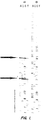
- the top of the sequence noted in Figure 1A contains three consecutive G nucleotides, since bands are present at that position in only the G lane.
- DNA polymerase stops occur for several reasons. Stops are observed more frequently as the enzyme extends farther from the 3' end of the primer. This phenomenon limits the length of DNA fragment that can sequenced at one time. Reducing the incidence of stops allows longer pieces of DNA to be sequenced and therefore makes DNA sequencing more efficient.
- DNA polymerase stops also occur more frequently when contaminants are present in the DNA preparation. Because of this phenomenon, DNA preparations must be purified prior to sequencing.
- the improved DNA sequencing method of the invention decreases the incidence of stops and therefore allows less pure preparations of DNA to be reliably sequenced. This, in turn, increases the efficiency and reduces the cost of DNA sequencing.
- the reduced incidence of DNA polymerase stops caused by the compounds of the invention also has utility in procedures other than DNA sequencing.
- Numerous common laboratory techniques, such as PCR (polymerase chain reaction), in vitro mutagenesis, nick translation, reverse transcription and blunt ending utilize DNA polymerases.
- PCR polymerase chain reaction
- in vitro mutagenesis nick translation
- reverse transcription reverse transcription
- blunt ending utilize DNA polymerases.
- concentrations of the compounds of the invention can potentially increase the efficiency or speed of these procedures.
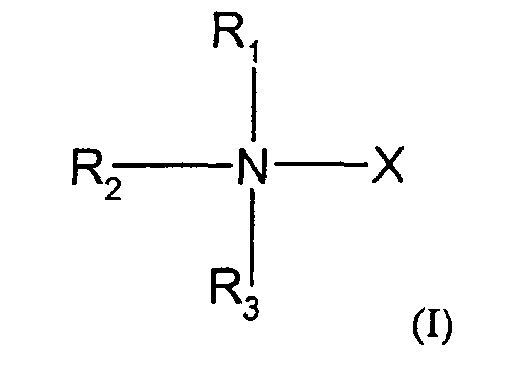
- the compounds used in the present invention are nitrogen-containing organic molecules that are capable of eliminating or reducing the incidence of stops occurring in chain-termination methods of DNA sequencing and in other laboratory procedures using DNA polymerases, such as PCR. These compounds are represented by the formula: wherein:
- the methods and kits of this invention use compounds of formula I wherein R 1 , R 2 and R 3 are the same or different and selected from the group consisting of methyl, ethyl and hydrogen with the proviso that no more than two of R 1 , R 2 and R 3 are hydrogen and, when R 1 and R 4 form a pyrrolidine ring, no more than one of R 2 and R 3 are hydrogen.
- the methods and kits of this invention use a compound of formula I wherein X is -CH 2 CO 2 H.
- Further preferred embodiments within this group use compounds where R 1 , R 2 and R 3 are methyl; where R 1 , R 2 are methyl and R 3 is hydrogen; or where R 1 is methyl and R 2 and R 3 are hydrogen.
- the methods and kits of this invention use a compound of formula I wherein R 1 and R 4 form a pyrrolidine ring, R 2 and R 3 are methyl, n is 0, and R 5 is -CO 2 H (stachydrine, formula III).
- the methods and kits of this invention use compounds wherein R 1 , R 2 , and R 3 are methyl and X is -CH 2 -SO 3 H (sulfobetaine).
- betaine, dimethylglycine, sarcosine, and trimethylamine N-oxide can all be obtained from Sigma Chemical Company (St. Louis, Missouri, USA).
- Sulfobetaine can be synthesized according to the procedure of King, J.F., et al. (1985) J. Phosphorus Sulfur 25: 11-20.
- Other compounds of formula I wherein R 5 is -SO 3 H can also be synthesized by modifications of this procedure and by other methods known to those of skill in the art.
- the present invention encompasses an improvement in DNA sequencing by the chain termination method.
- chain termination method of DNA sequencing refers to a DNA sequencing method that uses a DNA polymerase to produce nucleic acid fragments complementary to a portion of the DNA molecule to be sequenced.
- a primer is used that is complementary to a portion of the DNA molecule.
- the primer is extended along the DNA molecule template by the DNA polymerase.
- the principle of the method is that low amounts of specific chain elongation inhibitors are included in the reaction mixture so that the DNA polymerase will only occasionally incorporate an inhibitor and terminate.
- reaction mixtures are set up, each with a different chain elongation inhibitor, capable of specifically terminating at a guanosine, cytosine, adenosine or thymidine residue.
- the DNA fragments generated by incubation with the DNA polymerase can be separated and analyzed to determine the sequence of the DNA molecule.
- the fragments are separated by gel electrophoresis and detected by autoradiography, although other separation or detection methods may also be used.
- chain elongation inhibitors or “chain-terminating inhibitors”, as used herein, refer to compounds that terminate nucleic acid chain elongation by a DNA polymerase enzyme. As described above, these compounds may be useful in chain termination methods of DNA sequencing.
- pause refers to a phenomenon wherein the DNA polymerase stops or does not function at a particular nucleotide when the DNA polymerase is incubated with DNA in a chain terminating DNA sequencing method. This is a phenomenon in which DNA polymerase molecules fail to continue elongation despite the presence of the next nucleotide to be incorporated and the absence of any manifest reason why elongation should cease (such as the incorporation of a dideoxynucleotide).
- chain termination methods for sequencing DNA.
- the most commonly used method is the dideoxynucleotide DNA sequencing method.
- chain elongation inhibitors may also be used. For example, arabinonucleoside derivatives or 3' O-methyl deoxyribonucleotide derivatives may be used in chain termination methods. (See Sanger, et al., supra and Axelrod, V.O., et al . (1978) N.A.R. 5:3549-3563.)
- DNA polymerase A variety of different enzymes can be used to produce DNA fragments complementary to the DNA molecule to be sequenced.
- T7 DNA polymerase, Taq polymerase, and the Klenow fragment of DNA polymerase I are all used in DNA sequencing.
- RNA polymerase and reverse transcriptase have also been used.
- DNA polymerases may be genetically or physically altered to optimize the enzyme for use in DNA sequencing.
- the DNA polymerases require a primer sequence.
- the primer sequences may be generated by digestion of the DNA molecule or may be added exogenously as a primer molecule.
- primer molecule refers to a single-stranded nucleic acid molecule which is complementary to a portion of the DNA molecule to be sequenced.
- Primers are allowed to anneal to a DNA molecule, so that subsequent elongation of the 3' end of the primer by a DNA polymerase produces a nucleic acid sequence complementary to a portion of the DNA molecule to be sequenced.
- Primers are commonly used in chain termination methods of DNA sequencing. However, in certain modifications of DNA sequencing by the chain termination method, primer sequences may be generated by digestion with appropriate enzymes (see below).
- DNA sequencing vectors may be used to facilitate DNA sequencing by chain termination methods.
- a variety of such vectors may be used, including M13, Bluescript vectors such as pBS-KS + and pBS-KS - (Stratagene, San Diego, California, U.S.A.), pUC vectors such as pUC18 and pUC19 and pBR322 vectors.
- the DNA molecule to be sequenced is inserted into the sequencing vector.
- Primers can be constructed that are complementary to a region of the DNA in the sequencing vector, so that elongation from the 3' end of the primer will produce DNA fragments complementary to portions of the DNA molecule to be sequenced.
- the DNA molecule to be sequenced can be present as an insert in the vector.
- Primers that are complementary to a region of the DNA sequencing vector can be used, so that chain elongation occurs from the 3' end of the primer into the region of the DNA insert, thereby allowing determination of the DNA sequence of the insert.
- the DNA preparation for sequencing may be either purified or unpurified.
- Unpurified DNA may be a crude cell lysate.
- the compounds of the invention that eliminate or reduce the incidence of DNA polymerase stops allow for the use in DNA sequencing of unpurified DNA preparations, including crude cell lysates.
- the DNA preparation may be present in single-stranded or double-stranded form.
- linear double-stranded DNA may be generated by PCR.
- the incidence of DNA polymerase stops is reduced or eliminated.
- the mixture of DNA fragments generated in chain termination methods of DNA sequencing is most commonly separated and analyzed by gel electrophoresis. See figure 1A and 1B herein for an example of a DNA sequencing gel. Other separation methods useful for separating DNA fragments may also be used (see Sambrook, et al ., supra). For instance, mass spectrometry can be used to analyze mixtures of DNA fragments (see Jacobson, et al. (1991) J. Genetic Analysis, Techniques and Applications 8:223-229.
- the DNA fragments may be labeled or unlabeled.
- unlabeled DNA fragments may be detected by ultraviolet spectroscopy in an automated technique or by silver staining after gel electrophoresis.
- radiolabeled DNA fragments may be produced. They may be produced, for example, by use of a radioactive primer. Alternatively, radioactive nucleotides may be incorporated during the incubation with a DNA polymerase. When radiolabeled DNA fragments are produced, they may be separated by gel electrophoresis and visualized by autoradiography (see figures 1A and 1B, herein).
- non-radioactive labels may also be used including fluorophores, chemiluminescent agents and small detectable molecules, such as biotin.
- fluorescent or colorimetric labels can be detected by laser spectroscopy using capillary tubes or sequencing gels.
- Non-radioactive labels may be attached by indirect means.
- a ligand molecule e.g. , biotin
- the ligand then binds to an anti-ligand (e.g. , streptavidin) molecule which is either inherently detectable or covalently bound to a signal system, such as a detectable enzyme, a fluorescent compound, or a chemiluminescent compound.
- an anti-ligand e.g. , streptavidin
- a number of ligands and anti-ligands can be used.
- a ligand has a natural anti-ligand, for example, biotin, thyroxine, and cortisol, it can be used in conjunction with the labelled, naturally occurring anti-ligands.
- any haptenic or antigenic compound can be used in combination with an antibody.
- DNA sequencing may be performed manually, by semi-automated procedures or by the use of an automated DNA sequencing instrument.
- chain termination DNA sequencing technology may be combined with other techniques.
- exometh a DNA molecule is treated with exonuclease to generate a series of DNA molecules with single-stranded 5' extensions of varying length. These DNA molecules can then be sequenced directly by a chain termination method of DNA sequencing without the addition of an exogenous primer.
- the compounds of the invention may be added to the reaction mixture before or during the incubation of the DNA with the DNA polymerase to eliminate or reduce the incidence of stops.
- the order of addition of the DNA molecule, the DNA polymerase, the chain elongation inhibitors, the deoxyribonucleoside triphosphates, the primer, and the compounds of the invention may also be varied. As demonstrated in Example 4, the compounds that reduce or eliminate the incidence of stops may even be added after the normal incubation time for the DNA polymerase, and the incubation may be extended to remove DNA polymerase stops.
- the present invention also encompasses an improvement in nucleic acid amplification procedures, such as PCR, which involve chain elongation by a DNA polymerase.
- PCR techniques which utilize DNA polymerase enzymes, such as Taq polymerase. See PCR Protocols: A Guide to Methods and Applications. (Innis, M, Gelfand, D., Sninsky, J. and White, T., eds.), Academic Press, San Diego (1990) for detailed description of PCR methodology.
- a target nucleic acid two oligonucleotide primers (one of which anneals to each strand), nucleotides, polymerase and appropriate salts are mixed and the temperature is cycled to allow the primers to anneal to the template, the polymerase to elongate the primer, and the template strand to separate from the newly synthesized strand.
- the primers can anneal to both the original template and the newly synthesized nucleic acid, as long as the polymerase is able to extend at least as far as the position to which the other primer anneals. For this reason, the ability of PCR to amplify a product is primarily limited by the ability of the polymerase to extend the annealed primer. The ability of the polymerase to extend the annealed primer is dependent on the distance between the primers and the nucleotide composition of the sequence between them. The addition of an appropriate amount of one or more of the compounds described herein facilitates this elongation.
- the compounds of the invention also have utility in reducing DNA polymerase stops in laboratory procedures other than DNA sequencing and polymerase chain reactions. Numerous common laboratory techniques, such as in vitro mutagenesis, nick translation, reverse transcription and blunt ending utilize DNA polymerases. See Sambrook, et al. (1989) Molecular Cloning: A Laboratory Manual , second edition, Vol. 1-3, Cold Spring Harbor Press, Cold Spring Harbor, N.Y. (1989) for a description of these methods. Thus, the compounds of the invention are useful in a variety of procedures involving chain elongation by a DNA polymerase.
- kits for DNA sequencing by the chain termination method which comprise an amount of one or more of the compounds described herein that eliminate or reduce the incidence of DNA polymerase stops.
- the kits may further comprise instructional material, a container which contains one or more deoxyribonucleoside triphosphates, a container which contains a DNA polymerase, and a container that contains a chain elongation inhibitor.
- the containers in the kit may be combined in various ways. For example, a chain elongation inhibitor may be combined in the same container with the mixture of deoxyribonucleoside triphosphates.
- kits for DNA polymerase chain reaction which comprise an amount of one or more of the compounds described herein that eliminate or reduce the incidence of DNA polymerase stops.
- the kits may further comprise instructional material, a container which contains a DNA polymerase, and a container that contains deoxyribonucleoside triphosphates.
- Betaine eliminates stops that are routinely observed in a standard dideoxy sequencing procedure.
- Betaine monohydrate was obtained from Sigma and stored as a 5.5M stock solution at -20°C.
- Modified T7 polymerase (Sequenase 2.0 (Amersham, Arlington Heights, Illinois, U.S.A.)) and nucleotide mixes were purchased from USB.
- 35 S-dATP was purchased from Amersham.
- the tube was incubated for ten minutes at 68°C, then it was moved to room temperature and 4 ⁇ l of TDMN (200 mM NaCl, 50 mM DTT, 120 mM HCl, 80 mM MgCl 2 , 280 mM TES) were added. After a further ten minute incubation at room temperature, 2 ⁇ l of GTP labeling mix (7.5 ⁇ M dCTP, 7.5 ⁇ M dGTP, 7.5 ⁇ M dTTP) and 5 ⁇ Ci of 35 5-dATP were added, followed by 2 ⁇ l of Sequenase (diluted 1:8 in cold 10 mM Tris.Cl pH 8.0, 1 mM EDTA).
- TDMN 200 mM NaCl, 50 mM DTT, 120 mM HCl, 80 mM MgCl 2 , 280 mM TES
- DNA sequencing was performed in the presence and absence of 2M betaine as described in example 1.
- the resulting sequencing reactions were run on a DNA sequencing gel as described in example 1, except that the gel was run for 12 hours to examine longer DNA fragments. These longer DNA fragments clearly showed the sequence of DNA regions farther from the primer than those routinely obtained in dideoxy DNA sequencing procedures. Little useful sequence information could be determined from these gels in the absence of betaine. However, in the presence of betaine, DNA sequence could be read up to at least 520 nucleotides from the 3' end of the primer, with sequences beyond that becoming less readable because of the resolving power of the gel.
- DNA was prepared generally following a standard alkaline lysis technique (See Silhavy et al . (1984) Experiments With Gene Fusions, Cold Spring Harbor Laboratory, Cold Spring Harbor, New York 147-148), followed by an ethanol precipitation. No organic extraction, RNAse treatment or other further purification technique was used. XL1-blue cells (Stratagene, San Diego, California) containing the pDSM3 plasmid were used as a source of the DNA. The DNA was then sequenced as described for example 1. As expected, there were a large number of stops in the absence of betaine. However, the stops present while sequencing this DNA disappeared when betaine was added to the termination reaction.
- Betaine is capable of eliminating stops when added after the normal termination reaction.
- DNA sequencing was carried out as described in example 1, except that no betaine was added with the termination mixture. After the 5 minute incubation at 37°C, either 3.5 ⁇ l of 5.5 betaine solution or 3.5 ⁇ l of water was added. The incubation was then continued for an additional 5 minutes and was stopped with stop solution as in example 1. Addition of betaine at this point greatly reduced the stops observed in the absence of betaine. Thus, the bands representing stops on the sequencing gels appear to represent halted DNA polymerase complexes. Betaine, added after the normal incubation with the termination mixes, is capable of allowing the halted DNA polymerase complexes to resume elongation. This demonstrates that betaine is not simply acting by stabilizing the DNA polymerase, since its addition at this point would have no effect if that were the case.
- Single stranded DNA was prepared from strain XL1-blue containing plasmid pDSM6, according to routine procedures. When single stranded DNA was sequenced by the procedure described in example 1, fewer stops were observed in the absence of betaine than in double-stranded specimens. However, these stops were also eliminated by betaine.
- DNA sequencing was carried out essentially by the procedure described in example 1, except that the Klenow fragment of E. coli DNA polymerase was used. 7.5 units of the Klenow enzyme was used and the extension mix was modified to include 20 ⁇ Ci of 35 S-dATP and 0.1 ⁇ l of DTT in addition to the GTP extension mix. Stops were observed in different places with the use of the Klenow enzyme but were generally eliminated by betaine, just as described above for the procedure using Sequenase.
- DNA sequencing was carried out according to the Promega "fmolTM DNA Sequencing System” protocol (Promega Corporation, Madison, Wisconsin, USA). The protocol is described below.
- the concentration ranges of TMANO, sarcosine, dimethylglycine and betaine were determined according to the procedure described in Example 1.
- Betaine was shown to extend the maximum distance between primers for chain elongation in PCR.
- PCR was performed on T7 DNA as described in B. Krummel, Ph.D. Thesis, University of California, Berkeley, 1990. Approximately 50 pmole of each primer were combined with 2.5 Units of AmpliTaq Polymerase (Perkin-Elmer, Norwalk, Connecticut, USA) and 0.5 ⁇ g of phage T7 DNA in a 200 ⁇ l reaction containing final concentrations of 200 ⁇ M dNTP, 50 mM KCl, 10 mM Tris-Cl pH8.3, 2.5 mM MgCl 2 and 0.01% gelatin.
- betaine at a concentration of 2M allowed two primers which were separated by approximately 4000 base pairs to amplify the intervening DNA region. This DNA region was not appreciably amplified in the absence of betaine.
- Betaine was shown to allow PCR chain elongation through GC-rich DNA regions which have impeded chain elongation in the absence of betaine.
- PCR was performed on a plasmid containing multiple repeats of the sequence TGC, which we have shown to impede the progress of DNA polymerases (see Example 1, herein). Although the primers were only 500 base pairs apart, a distance which can normally be easily amplified by PCR, the standard reaction conditions failed to produce any amplified product. When betaine was added to a concentration of 2M, the intervening region was amplified.
Landscapes
- Life Sciences & Earth Sciences (AREA)
- Chemical & Material Sciences (AREA)
- Proteomics, Peptides & Aminoacids (AREA)
- Organic Chemistry (AREA)
- Zoology (AREA)
- Wood Science & Technology (AREA)
- Health & Medical Sciences (AREA)
- Engineering & Computer Science (AREA)
- Microbiology (AREA)
- Biochemistry (AREA)
- Biotechnology (AREA)
- Molecular Biology (AREA)
- Biophysics (AREA)
- Analytical Chemistry (AREA)
- Physics & Mathematics (AREA)
- Immunology (AREA)
- Bioinformatics & Cheminformatics (AREA)
- General Engineering & Computer Science (AREA)
- General Health & Medical Sciences (AREA)
- Genetics & Genomics (AREA)
- Measuring Or Testing Involving Enzymes Or Micro-Organisms (AREA)
- Control Of Stepping Motors (AREA)
- Communication Control (AREA)
Claims (34)
- Verfahren, um das Auftreten von DNA-Polymerase-Stopps, die in einem Reaktionsgemisch, das eine DNA-Polymerase enthält, auftreten, zu reduzieren, wobei das Verfahren den Schritt umfasst, dem Reaktionsgemisch eine Verbindung der Formel:zuzusetzen, wobei:
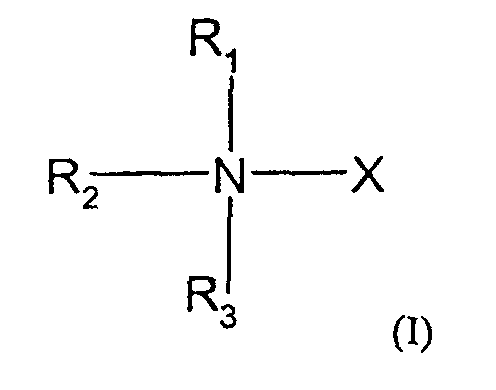 unter der Voraussetzung, dass, wenn R1 und R4 einen Pyrrolidin-Ring bilden, höchstens eines von R2 und R3 Wasserstoff ist,R1, R2, R3 gleich oder verschieden sein können und unabhängig voneinander ausgewählt sind aus Wasserstoff, Methyl, Ethyl und Propyl, unter der Voraussetzung, dass (i) nicht mehr als zwei von R1, R2 und R3 Wasserstoff sind und (ii) R1 Ethyl oder Propyl ist, wenn es mit R4 einen Pyrrolidin-Ring bildet; und X entweder(a) =O oder(b)ist, wobei
 R4 ausgewählt ist aus Methyl und Wasserstoff und, wenn es in Kombination mit R1 ist, einen Pyrrolidin-Ring bildet;R5 ausgewählt ist aus -CO2H und -SO3H; undn eine ganze Zahl von 0 bis 2 ist;
und wobei die Verbindung in einer Menge zugesetzt wird, die wirksam ist, um das Auftreten von DNA-Polymerase-Stopps zu minimieren. - Das Verfahren nach Anspruch 1, wobei R1, R2 und R3 gleich oder verschieden sind und ausgewählt sind aus Methyl, Ethyl und Wasserstoff, unter der Voraussetzung, dass nicht mehr als zwei von R1, R2 und R3 Wasserstoff sind und dass, wenn R1 und R4 einen Pyrrolidin-Ring bilden, nicht mehr als eins von R2 und R3 Wasserstoff ist.
- Das Verfahren nach Anspruch 2, wobei X -CH2CO2H ist.
- Das Verfahren nach Anspruch 3, wobei R1, R2 und R3 Methyl sind.
- Das Verfahren nach Anspruch 3, wobei R1 und R2 Methyl sind und R3 Wasserstoff ist.
- Das Verfahren nach Anspruch 3, wobei R1 Methyl ist und R2 und R3 Wasserstoff sind.
- Das Verfahren nach Anspruch 2, wobei X =O ist.
- Das Verfahren nach Anspruch 7, wobei R1, R2 und R3 Methyl sind.
- Das Verfahren nach Anspruch 2, wobei R1 und R4 einen Pyrrolidin-Ring bilden, R2 und R3 Methyl sind, n 0 und R5 -CO2H sind.
- Das Verfahren nach Anspruch 2, wobei R1, R2 und R3 Methyl sind und X -CH2SO3H ist.
- Das Verfahren nach Anspruch 1, wobei das Reaktionsgemisch ein Reaktionsgemisch für ein Kettenabbruchverfahren der DNA-Sequenzierung ist.
- Das Verfahren nach Anspruch 11, wobei das Kettenabbruchverfahren der DNA-Sequenzierung ein Didesoxy-DNA-Sequenzierungsverfahren ist.
- Das Verfahren nach Anspruch 1, wobei das Reaktionsgemisch ein PCR-Reaktionsgemisch ist.
- Das Verfahren nach Anspruch 1, wobei das Reaktionsgemisch ungereinigte DNA enthält.
- Das Verfahren nach Anspruch 14, wobei die ungereinigte DNA rohes Zell-Lysat ist.
- Verfahren, um das Auftreten von DNA-Polymerase-Stopps, die in einem Kettenabbruch-DNA-Sequenzierungsverfahren auftreten, zu reduzieren, wobei das Verfahren die Schritte umfasst,(a) ein DNA-Molekül, eine DNA-Polymerase, die unter Verwendung des DNA-Moleküls als Matrize zur Erzeugung einer Nukleinsäure, komplementär zu einem Teil des DNA-Moleküls, befähigt ist, ein Gemisch aus Desoxyribonukleosid-Triphosphaten, einen Kettenverlängerungsinhibitor und eine Verbindung der Formel:in einer wässrigen Lösung zusammenzugeben, wobei R1, R2, R3 gleich oder verschieden sein können und unabhängig voneinander ausgewählt sind aus Wasserstoff, Methyl, Ethyl und Propyl, unter der Voraussetzung, dass (i) nicht mehr als zwei von R1, R2 und R3 Wasserstoff sind und (ii) R1 Ethyl oder Propyl ist, wenn es mit R4 einen Pyrrolidin-Ring bildet; und X entweder
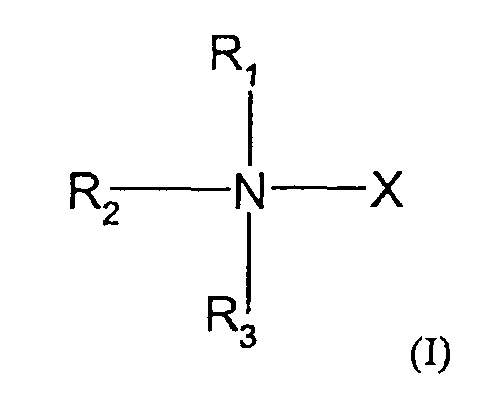 (a) =O oder(b)ist, wobei
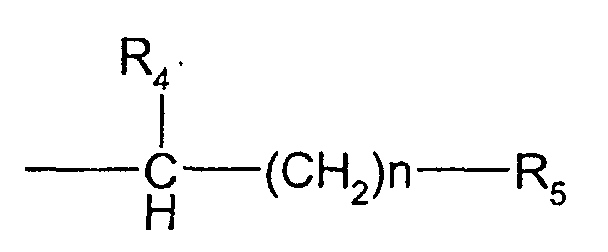 und wobei die Verbindung in einer Menge zugesetzt wird, die wirksam ist, um das Auftreten von DNA-Polymerase-Stopps zu minimieren; undR4 ausgewählt ist aus Methyl und Wasserstoff und, wenn es in Kombination mit R1 ist, einen Pyrrolidin-Ring bildet;R5 ausgewählt ist aus -CO2H und -SO3H; undn eine ganze Zahl von 0 bis 2 ist; unter der Voraussetzung, dass, wenn R1 und R4 einen Pyrrolidin-Ring bilden, höchstens eines von R2 und R3 Wasserstoff ist,(b) das Reaktionsgemisch zu inkubieren, um der DNA-Polymerase die Bildung von Nukleinsäurefragmenten verschiedener Länge unter Verwendung des DNA-Moleküls als Matrize zu erlauben, wobei die Nukleinsäurefragmente mit dem DNA-Molekül komplementär sind.
 - Das Verfahren nach Anspruch 16, wobei die Kettenverlängerungsinhibitoren 2',3'-Didesoxyribonukleosid-Triphosphate sind.
- Das Verfahren nach Anspruch 16, wobei R1, R2 und R3 gleich oder verschieden sind und ausgewählt sind aus Methyl, Ethyl und Wasserstoff, unter der Voraussetzung, dass nicht mehr als zwei von R1, R2 und R3 Wasserstoff sind und, wenn R1 und R4 einen Pyrrolidin-Ring bilden, nicht mehr als eins von R2 und R3 Wasserstoff ist.
- Das Verfahren nach Anspruch 18, wobei X -CH2CO2H ist.
- Das Verfahren nach Anspruch 19, wobei R1, R2 und R3 Methyl sind.
- Das Verfahren nach Anspruch 18, wobei X =O ist.
- Das Verfahren nach Anspruch 21, wobei R1, R2 und R3 Methyl sind.
- Das Verfahren nach Anspruch 18, wobei R1 und R4 einen Pyrrolidin-Ring bilden, R2 und R3 Methyl sind, n 0 und R5 -CO2H sind.
- Das Verfahren nach Anspruch 18, wobei R1, R2 und R3 Methyl sind und X -CH2SO3H ist.
- Das Verfahren nach Anspruch 16, wobei das DNA-Molekül ungereinigte DNA ist.
- Das Verfahren nach Anspruch 16, wobei Schritt (a) zusätzlich die Zufügung eines Primers komplementär zu einem zweiten Teil des DNA-Moleküls umfasst, wobei der zweite Teil des DNA-Moleküls stromabwärts des ersten Teils des DNA-Moleküls gelegen ist, wobei die DNA-Polymerase fähig ist, das 3'-Ende des Primers unter Herstellung einer Nukleinsäure komplementär dem ersten Teil der DNA auszudehnen.
- Kit zur Sequenzierung von DNA mittels Kettenabbruchverfahren, umfassend einen Behälter, der mindestens ein Desoxyribonukleosid-Triphosphat enthält, einen Container, der einen Kettenverlängerungsinhibitor enthält und eine Verbindung der Formelwobei R1, R2, R3 gleich oder verschieden sein können und unabhängig voneinander ausgewählt sind aus Wasserstoff, Methyl, Ethyl und Propyl, unter der Voraussetzung, dass (i) nicht mehr als zwei von R1, R2 und R3 Wasserstoff sind und (ii) R1 Ethyl oder Propyl ist, wenn es mit R4 einen Pyrrolidin-Ring bildet; und X entweder
 unter der Voraussetzung, dass, wenn R1 und R4 einen Pyrrolidin-Ring bilden, höchstens eines von R2 und R3 Wasserstoff ist.(a) =O oder(b)ist, wobei
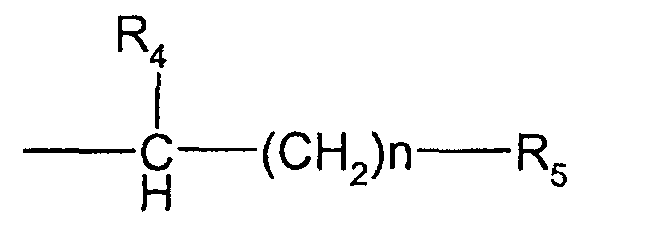 R4 ausgewählt ist aus Methyl und Wasserstoff und, wenn es in Kombination mit R1 ist, einen Pyrrolidin-Ring bildet;R5 ausgewählt ist aus -CO2H und -SO3H; undn eine ganze Zahl von 0 bis 2 ist;
 - Das Kit nach Anspruch 27, wobei R1, R2 und R3 gleich oder verschieden sind und ausgewählt sind aus Methyl, Ethyl und Wasserstoff, unter der Voraussetzung, dass nicht mehr als zwei von R1, R2 und R3 Wasserstoff sind und dass, wenn R1 und R4 einen Pyrrolidin-Ring bilden, nicht mehr als eins von R2 und R3 Wasserstoff ist.
- Das Kit nach Anspruch 28, wobei X -CH2CO2H ist.
- Das Kit nach Anspruch 29, wobei R1, R2 und R3 Methyl sind.
- Das Kit nach Anspruch 28, wobei X =O ist.
- Das Kit nach Anspruch 31, wobei R1, R2 und R3 Methyl sind.
- Das Kit nach Anspruch 28, wobei R1 und R4 einen Pyrrolidin-Ring bilden, R2 und R3 Methyl sind, n 0 und R5 -CO2H sind.
- Das Kit nach Anspruch 28, wobei R1, R2 und R3 Methyl sind und X -CH2SO3H ist.
Applications Claiming Priority (3)
| Application Number | Priority Date | Filing Date | Title |
|---|---|---|---|
| US18924094A | 1994-01-31 | 1994-01-31 | |
| PCT/US1995/001200 WO1995020682A1 (en) | 1994-01-31 | 1995-01-30 | Methods for the elimination of dna sequencing artifacts |
| US189240 | 1998-11-10 |
Publications (3)
| Publication Number | Publication Date |
|---|---|
| EP0742838A1 EP0742838A1 (de) | 1996-11-20 |
| EP0742838A4 EP0742838A4 (de) | 2000-01-05 |
| EP0742838B1 true EP0742838B1 (de) | 2003-08-13 |
Family
ID=22696533
Family Applications (1)
| Application Number | Title | Priority Date | Filing Date |
|---|---|---|---|
| EP95909385A Expired - Lifetime EP0742838B1 (de) | 1994-01-31 | 1995-01-30 | Methode zur eliminierung von sequenzierartefakten |
Country Status (6)
| Country | Link |
|---|---|
| EP (1) | EP0742838B1 (de) |
| JP (1) | JP3616394B2 (de) |
| AT (1) | ATE247175T1 (de) |
| AU (1) | AU694479B2 (de) |
| DE (1) | DE69531487T2 (de) |
| WO (1) | WO1995020682A1 (de) |
Families Citing this family (17)
| Publication number | Priority date | Publication date | Assignee | Title |
|---|---|---|---|---|
| US5545539A (en) * | 1994-10-18 | 1996-08-13 | Genzyme Corporation | Method for nucleotide sequence amplification |
| FR2733515B1 (fr) * | 1995-04-27 | 1997-09-05 | Cis Bio Int | Tampon, procede et methode d'evaluation des conditions optimales, d'amplification de sequences cibles d'acide nucleique, et leurs applications |
| DE69610410T2 (de) * | 1996-05-23 | 2001-05-10 | Qiagen Gmbh | Verwendung eines Osmolyten zur Verringerung oder Aufhebung von nichtkovalenten Bindungen biologischer Moleküle an inerten Oberflächen |
| US6150094A (en) * | 1996-05-23 | 2000-11-21 | Qiagen Gmbh | Use of an osmolyte for reducing or abolishing no-covalent interactions of biological molecules to inert surfaces |
| US6013488A (en) | 1996-07-25 | 2000-01-11 | The Institute Of Physical And Chemical Research | Method for reverse transcription |
| US6291164B1 (en) | 1996-11-22 | 2001-09-18 | Invitrogen Corporation | Methods for preventing inhibition of nucleic acid synthesis by pyrophosphate |
| AU8162598A (en) | 1997-06-25 | 1999-01-04 | Life Technologies, Inc. | Improved method for isolating and recovering target dna or rna molecules having a desired nucleotide sequence |
| IL123256A0 (en) | 1998-02-10 | 1998-09-24 | Yeda Res & Dev | Methods for dna amplification and sequencing |
| US6787305B1 (en) * | 1998-03-13 | 2004-09-07 | Invitrogen Corporation | Compositions and methods for enhanced synthesis of nucleic acid molecules |
| US6183998B1 (en) * | 1998-05-29 | 2001-02-06 | Qiagen Gmbh Max-Volmer-Strasse 4 | Method for reversible modification of thermostable enzymes |
| EP1829856A3 (de) | 1998-11-12 | 2009-02-25 | Invitrogen Corporation | Transfektionsreagenzien |
| US6780588B2 (en) * | 2001-05-07 | 2004-08-24 | Applera Corporation | Methods for the reduction of stutter in microsatellite amplification |
| DE60231901D1 (de) | 2001-11-14 | 2009-05-20 | Toyo Boseki | Dna-synthesepromotoren, mit dna-polymerase assoziierte faktoren und nutzung davon |
| GB2420560A (en) * | 2004-11-30 | 2006-05-31 | Bioline Ltd | A method for increasing the specificity of enzymatic DNA synthesis |
| JP4761265B2 (ja) * | 2007-10-17 | 2011-08-31 | 学校法人甲南学園 | 核酸合成を促進する化合物を含む組成物およびその利用、並びに当該化合物の製造方法 |
| EP2382321A4 (de) * | 2009-01-08 | 2012-12-19 | Bio Rad Laboratories | Verfahren und zusammensetzungen zur verbesserung der wirksamkeit bei einer nukleinsäureverstärkungsreaktionen |
| WO2016011203A1 (en) | 2014-07-15 | 2016-01-21 | Life Technologies Corporation | Compositions with lipid aggregates and methods for efficient delivery of molecules to cells |
Family Cites Families (2)
| Publication number | Priority date | Publication date | Assignee | Title |
|---|---|---|---|---|
| DE4411588C1 (de) * | 1994-03-30 | 1995-09-28 | Deutsches Rheuma Forschungszen | Puffer für DNA- und RNA-Polymerase-Reaktionen |
| US5545539A (en) * | 1994-10-18 | 1996-08-13 | Genzyme Corporation | Method for nucleotide sequence amplification |
-
1995
- 1995-01-30 AT AT95909385T patent/ATE247175T1/de active
- 1995-01-30 EP EP95909385A patent/EP0742838B1/de not_active Expired - Lifetime
- 1995-01-30 WO PCT/US1995/001200 patent/WO1995020682A1/en not_active Ceased
- 1995-01-30 AU AU17365/95A patent/AU694479B2/en not_active Expired
- 1995-01-30 DE DE69531487T patent/DE69531487T2/de not_active Expired - Lifetime
- 1995-01-30 JP JP52022495A patent/JP3616394B2/ja not_active Expired - Lifetime
Also Published As
| Publication number | Publication date |
|---|---|
| JP3616394B2 (ja) | 2005-02-02 |
| AU1736595A (en) | 1995-08-15 |
| EP0742838A4 (de) | 2000-01-05 |
| WO1995020682A1 (en) | 1995-08-03 |
| ATE247175T1 (de) | 2003-08-15 |
| DE69531487T2 (de) | 2004-06-17 |
| EP0742838A1 (de) | 1996-11-20 |
| AU694479B2 (en) | 1998-07-23 |
| JPH09511133A (ja) | 1997-11-11 |
| DE69531487D1 (de) | 2003-09-18 |
Similar Documents
| Publication | Publication Date | Title |
|---|---|---|
| AU694479B2 (en) | Methods for the elimination of DNA sequencing artifacts | |
| US6270962B1 (en) | Methods for the elimination of DNA sequencing artifacts | |
| ES2434220T3 (es) | Reacción de amplificación de extensión y mellado para la amplificación exponencial de los ácidos nucleicos | |
| CN104726549B (zh) | 一种基于切刻酶的双链核酸等温扩增检测新方法 | |
| US20100120034A1 (en) | Methylation analysis of mate pairs | |
| EP1705253A2 (de) | Verfahren und Produkte zur reversen Transkription gekoppelt mit Polymerasekettenreaktion (RT-PCR) | |
| US8338094B2 (en) | Reduced inhibition of one-step RT-PCR | |
| JP2006500028A (ja) | 核酸のヘリカーゼ依存性増幅 | |
| Hanna et al. | Synthesis and characterization of a new photocrosslinking CTP analog and its use in photoaffinity labeling E. coli and T7 RNA polymerases | |
| US11180787B2 (en) | Strand-invasion based DNA amplification method | |
| EP0610615B1 (de) | Nichtradioaktive DNS-Sequenzierung | |
| EP3250715B1 (de) | Substrat für eine nicking- und extensionsreaktion mit einem nukleinsäureduplex | |
| US6030814A (en) | Reverse transcription method | |
| Huibregtse et al. | [49] Direct sequence and footprint analysis of yeast DNA by primer extension | |
| CA2181266C (en) | Methods for the elimination of dna sequencing artifacts | |
| Guo et al. | RT-based Sanger sequencing of RNAs containing complex RNA repetitive elements | |
| Sarfallah et al. | In vitro reconstitution of human mitochondrial transcription | |
| US20150329900A1 (en) | Nucleic Acid Amplification Method | |
| CN113862333B (zh) | 一种组合物及其氧化5-甲基胞嘧啶的方法 | |
| WO2005073409A2 (en) | Methods, compositions, and kits for amplifying and sequencing polynucleotides | |
| Carman et al. | Detection of enzymatically amplified human immunodeficiency virus DNA by oligonucleotide solution hybridization and by incorporation of radiolabeled deoxynucleotides | |
| EP4296372A1 (de) | Verfahren zum nachweis und zur unterscheidung von cytosinmodifikationen | |
| CN117512075A (zh) | 一种基于切刻酶扩增与CRISPR/Cas12b结合的一体化核酸检测方法 | |
| Pappas et al. | The bisulfite genomic sequencing protocol | |
| CN120966964A (zh) | 用于毛细管电泳分析的引物/探针组合物、检测方法及应用 |
Legal Events
| Date | Code | Title | Description |
|---|---|---|---|
| PUAI | Public reference made under article 153(3) epc to a published international application that has entered the european phase |
Free format text: ORIGINAL CODE: 0009012 |
|
| 17P | Request for examination filed |
Effective date: 19960802 |
|
| AK | Designated contracting states |
Kind code of ref document: A1 Designated state(s): AT BE CH DE DK ES FR GB GR IE IT LI LU MC NL PT SE |
|
| A4 | Supplementary search report drawn up and despatched |
Effective date: 19991124 |
|
| AK | Designated contracting states |
Kind code of ref document: A4 Designated state(s): AT BE CH DE DK ES FR GB GR IE IT LI LU MC NL PT SE |
|
| 17Q | First examination report despatched |
Effective date: 20001106 |
|
| GRAH | Despatch of communication of intention to grant a patent |
Free format text: ORIGINAL CODE: EPIDOS IGRA |
|
| GRAH | Despatch of communication of intention to grant a patent |
Free format text: ORIGINAL CODE: EPIDOS IGRA |
|
| GRAH | Despatch of communication of intention to grant a patent |
Free format text: ORIGINAL CODE: EPIDOS IGRA |
|
| GRAA | (expected) grant |
Free format text: ORIGINAL CODE: 0009210 |
|
| AK | Designated contracting states |
Designated state(s): AT BE CH DE DK ES FR GB GR IE IT LI LU MC NL PT SE |
|
| PG25 | Lapsed in a contracting state [announced via postgrant information from national office to epo] |
Ref country code: IT Free format text: LAPSE BECAUSE OF FAILURE TO SUBMIT A TRANSLATION OF THE DESCRIPTION OR TO PAY THE FEE WITHIN THE PRE;WARNING: LAPSES OF ITALIAN PATENTS WITH EFFECTIVE DATE BEFORE 2007 MAY HAVE OCCURRED AT ANY TIME BEFORE 2007. THE CORRECT EFFECTIVE DATE MAY BE DIFFERENT FROM THE ONE RECORDED.SCRIBED TIME-LIMIT Effective date: 20030813 |
|
| REG | Reference to a national code |
Ref country code: GB Ref legal event code: FG4D |
|
| REG | Reference to a national code |
Ref country code: CH Ref legal event code: EP |
|
| REG | Reference to a national code |
Ref country code: CH Ref legal event code: NV Representative=s name: OK PAT AG PATENTE MARKEN LIZENZEN |
|
| REG | Reference to a national code |
Ref country code: IE Ref legal event code: FG4D |
|
| REF | Corresponds to: |
Ref document number: 69531487 Country of ref document: DE Date of ref document: 20030918 Kind code of ref document: P |
|
| REG | Reference to a national code |
Ref country code: SE Ref legal event code: TRGR |
|
| PG25 | Lapsed in a contracting state [announced via postgrant information from national office to epo] |
Ref country code: GR Free format text: LAPSE BECAUSE OF FAILURE TO SUBMIT A TRANSLATION OF THE DESCRIPTION OR TO PAY THE FEE WITHIN THE PRESCRIBED TIME-LIMIT Effective date: 20031113 Ref country code: DK Free format text: LAPSE BECAUSE OF FAILURE TO SUBMIT A TRANSLATION OF THE DESCRIPTION OR TO PAY THE FEE WITHIN THE PRESCRIBED TIME-LIMIT Effective date: 20031113 |
|
| PG25 | Lapsed in a contracting state [announced via postgrant information from national office to epo] |
Ref country code: ES Free format text: LAPSE BECAUSE OF FAILURE TO SUBMIT A TRANSLATION OF THE DESCRIPTION OR TO PAY THE FEE WITHIN THE PRESCRIBED TIME-LIMIT Effective date: 20031124 |
|
| PG25 | Lapsed in a contracting state [announced via postgrant information from national office to epo] |
Ref country code: PT Free format text: LAPSE BECAUSE OF FAILURE TO SUBMIT A TRANSLATION OF THE DESCRIPTION OR TO PAY THE FEE WITHIN THE PRESCRIBED TIME-LIMIT Effective date: 20040113 |
|
| ET | Fr: translation filed | ||
| PLBE | No opposition filed within time limit |
Free format text: ORIGINAL CODE: 0009261 |
|
| STAA | Information on the status of an ep patent application or granted ep patent |
Free format text: STATUS: NO OPPOSITION FILED WITHIN TIME LIMIT |
|
| 26N | No opposition filed |
Effective date: 20040514 |
|
| REG | Reference to a national code |
Ref country code: CH Ref legal event code: PCAR Free format text: ALDO ROEMPLER PATENTANWALT;BRENDENWEG 11 POSTFACH 154;9424 RHEINECK (CH) |
|
| PGFP | Annual fee paid to national office [announced via postgrant information from national office to epo] |
Ref country code: LU Payment date: 20140203 Year of fee payment: 20 |
|
| PGFP | Annual fee paid to national office [announced via postgrant information from national office to epo] |
Ref country code: NL Payment date: 20140126 Year of fee payment: 20 Ref country code: BE Payment date: 20140127 Year of fee payment: 20 Ref country code: MC Payment date: 20140102 Year of fee payment: 20 Ref country code: IE Payment date: 20140127 Year of fee payment: 20 Ref country code: DE Payment date: 20140129 Year of fee payment: 20 Ref country code: SE Payment date: 20140129 Year of fee payment: 20 Ref country code: CH Payment date: 20140129 Year of fee payment: 20 |
|
| PGFP | Annual fee paid to national office [announced via postgrant information from national office to epo] |
Ref country code: AT Payment date: 20140102 Year of fee payment: 20 Ref country code: FR Payment date: 20140117 Year of fee payment: 20 |
|
| PGFP | Annual fee paid to national office [announced via postgrant information from national office to epo] |
Ref country code: GB Payment date: 20140127 Year of fee payment: 20 |
|
| REG | Reference to a national code |
Ref country code: DE Ref legal event code: R071 Ref document number: 69531487 Country of ref document: DE |
|
| REG | Reference to a national code |
Ref country code: NL Ref legal event code: V4 Effective date: 20150130 |
|
| REG | Reference to a national code |
Ref country code: CH Ref legal event code: PL |
|
| REG | Reference to a national code |
Ref country code: GB Ref legal event code: PE20 Expiry date: 20150129 |
|
| REG | Reference to a national code |
Ref country code: IE Ref legal event code: MK9A |
|
| REG | Reference to a national code |
Ref country code: SE Ref legal event code: EUG |
|
| REG | Reference to a national code |
Ref country code: AT Ref legal event code: MK07 Ref document number: 247175 Country of ref document: AT Kind code of ref document: T Effective date: 20150130 |
|
| PG25 | Lapsed in a contracting state [announced via postgrant information from national office to epo] |
Ref country code: IE Free format text: LAPSE BECAUSE OF EXPIRATION OF PROTECTION Effective date: 20150130 |
|
| PG25 | Lapsed in a contracting state [announced via postgrant information from national office to epo] |
Ref country code: GB Free format text: LAPSE BECAUSE OF EXPIRATION OF PROTECTION Effective date: 20150129 |