EP0738332B1 - Indicator cell line and method for detecting rna viruses - Google Patents
Indicator cell line and method for detecting rna viruses Download PDFInfo
- Publication number
- EP0738332B1 EP0738332B1 EP95905369A EP95905369A EP0738332B1 EP 0738332 B1 EP0738332 B1 EP 0738332B1 EP 95905369 A EP95905369 A EP 95905369A EP 95905369 A EP95905369 A EP 95905369A EP 0738332 B1 EP0738332 B1 EP 0738332B1
- Authority
- EP
- European Patent Office
- Prior art keywords
- rna
- reporter gene
- virus
- cdna
- promoter
- Prior art date
- Legal status (The legal status is an assumption and is not a legal conclusion. Google has not performed a legal analysis and makes no representation as to the accuracy of the status listed.)
- Expired - Lifetime
Links
Images


Classifications
-
- C—CHEMISTRY; METALLURGY
- C07—ORGANIC CHEMISTRY
- C07K—PEPTIDES
- C07K14/00—Peptides having more than 20 amino acids; Gastrins; Somatostatins; Melanotropins; Derivatives thereof
- C07K14/005—Peptides having more than 20 amino acids; Gastrins; Somatostatins; Melanotropins; Derivatives thereof from viruses
-
- C—CHEMISTRY; METALLURGY
- C12—BIOCHEMISTRY; BEER; SPIRITS; WINE; VINEGAR; MICROBIOLOGY; ENZYMOLOGY; MUTATION OR GENETIC ENGINEERING
- C12Q—MEASURING OR TESTING PROCESSES INVOLVING ENZYMES, NUCLEIC ACIDS OR MICROORGANISMS; COMPOSITIONS OR TEST PAPERS THEREFOR; PROCESSES OF PREPARING SUCH COMPOSITIONS; CONDITION-RESPONSIVE CONTROL IN MICROBIOLOGICAL OR ENZYMOLOGICAL PROCESSES
- C12Q1/00—Measuring or testing processes involving enzymes, nucleic acids or microorganisms; Compositions therefor; Processes of preparing such compositions
- C12Q1/68—Measuring or testing processes involving enzymes, nucleic acids or microorganisms; Compositions therefor; Processes of preparing such compositions involving nucleic acids
- C12Q1/6897—Measuring or testing processes involving enzymes, nucleic acids or microorganisms; Compositions therefor; Processes of preparing such compositions involving nucleic acids involving reporter genes operably linked to promoters
-
- G—PHYSICS
- G01—MEASURING; TESTING
- G01N—INVESTIGATING OR ANALYSING MATERIALS BY DETERMINING THEIR CHEMICAL OR PHYSICAL PROPERTIES
- G01N33/00—Investigating or analysing materials by specific methods not covered by groups G01N1/00 - G01N31/00
- G01N33/48—Biological material, e.g. blood, urine; Haemocytometers
- G01N33/50—Chemical analysis of biological material, e.g. blood, urine; Testing involving biospecific ligand binding methods; Immunological testing
- G01N33/53—Immunoassay; Biospecific binding assay; Materials therefor
- G01N33/569—Immunoassay; Biospecific binding assay; Materials therefor for microorganisms, e.g. protozoa, bacteria, viruses
- G01N33/56983—Viruses
-
- C—CHEMISTRY; METALLURGY
- C12—BIOCHEMISTRY; BEER; SPIRITS; WINE; VINEGAR; MICROBIOLOGY; ENZYMOLOGY; MUTATION OR GENETIC ENGINEERING
- C12N—MICROORGANISMS OR ENZYMES; COMPOSITIONS THEREOF; PROPAGATING, PRESERVING, OR MAINTAINING MICROORGANISMS; MUTATION OR GENETIC ENGINEERING; CULTURE MEDIA
- C12N2760/00—MICROORGANISMS OR ENZYMES; COMPOSITIONS THEREOF; PROPAGATING, PRESERVING, OR MAINTAINING MICROORGANISMS; MUTATION OR GENETIC ENGINEERING; CULTURE MEDIA ssRNA viruses negative-sense
- C12N2760/00011—Details
- C12N2760/18011—Paramyxoviridae
- C12N2760/18811—Sendai virus
- C12N2760/18822—New viral proteins or individual genes, new structural or functional aspects of known viral proteins or genes
-
- G—PHYSICS
- G01—MEASURING; TESTING
- G01N—INVESTIGATING OR ANALYSING MATERIALS BY DETERMINING THEIR CHEMICAL OR PHYSICAL PROPERTIES
- G01N2333/00—Assays involving biological materials from specific organisms or of a specific nature
- G01N2333/005—Assays involving biological materials from specific organisms or of a specific nature from viruses
- G01N2333/08—RNA viruses
- G01N2333/085—Picornaviridae, e.g. coxsackie virus, echovirus, enterovirus
-
- G—PHYSICS
- G01—MEASURING; TESTING
- G01N—INVESTIGATING OR ANALYSING MATERIALS BY DETERMINING THEIR CHEMICAL OR PHYSICAL PROPERTIES
- G01N2333/00—Assays involving biological materials from specific organisms or of a specific nature
- G01N2333/005—Assays involving biological materials from specific organisms or of a specific nature from viruses
- G01N2333/08—RNA viruses
- G01N2333/18—Togaviridae; Flaviviridae
-
- Y—GENERAL TAGGING OF NEW TECHNOLOGICAL DEVELOPMENTS; GENERAL TAGGING OF CROSS-SECTIONAL TECHNOLOGIES SPANNING OVER SEVERAL SECTIONS OF THE IPC; TECHNICAL SUBJECTS COVERED BY FORMER USPC CROSS-REFERENCE ART COLLECTIONS [XRACs] AND DIGESTS
- Y10—TECHNICAL SUBJECTS COVERED BY FORMER USPC
- Y10S—TECHNICAL SUBJECTS COVERED BY FORMER USPC CROSS-REFERENCE ART COLLECTIONS [XRACs] AND DIGESTS
- Y10S435/00—Chemistry: molecular biology and microbiology
- Y10S435/975—Kit
Definitions
- This invention generally relates to virology, and more particularly to the provision of a mammalian cell line that has been genetically engineered to permit the detection and quantitation of the presence of an RNA virus in a biological specimen and a method for detecting RNA viruses using these cells.
- the methods by which biologically active or infectious viruses are detected at the clinical level have changed little over recent decades.
- the standard diagnostic assay for viral infections involves inoculation of specimens onto tissue culture cells followed by detection of infectious virus by microscopic observation of a characteristic cytopathic effect.
- This method has been supplemented by automated methods that detect viral antigen or viral nucleic acid, but an automated method for the detection of infectious virus is not presently available.
- the automated assays that detect viral antigen often provide the advantages of rapidity and specificity, but they also often lack the requisite sensitivity necessary for a clinically reliable assay.
- Automated assays that detect the presence of viral nucleic acid have also recently been developed, but such assays detect viral nucleic acid and not infectious virus.
- the detection of infectious virus is often preferred because it definitively indicates the existence of an ongoing viral infection with active viral replication.
- assays detecting only viral nucleic acid may only be indicative of the presence of a remnant of a past infection or the presence of a latent infection and the treatment necessary for an ongoing infection may be different than that for a latent or past infection.
- the provision of a rapid, specific, sensitive and cost-efficient assay for the detection of infectious virus would be a valuable addition to a clinical diagnostic laboratory and to research laboratories needing a rapid and sensitive assay to determine the presence or absence of an RNA virus in a fluid.
- RNA viruses are pathogenic to humans and their diagnosis is important clinically and for various research purposes.
- the Togavirus family of RNA viruses includes the genus Alphavirus which includes many important viral species such as Sindbis virus, Semliki Forest virus, and pathogenic members such as the Venezuelan, Eastern and Western equine encephalitis virus.
- Another pathogenic Togavirus is the rubella virus, a virus closely related to the alphaviruses and the causative agent for German measles.
- Coronaviruses one of the major causative agents for common colds
- astroviruses associated with pediatric diarrhea
- All of these viruses are characterized by a life cycle that include the synthesis of subgenomic RNAs.
- the Sindbis virus genome consists of a sin-. gle molecule of single stranded RNA.
- the genomic RNA is infectious and serves as mRNA and is, by convention, of plus (+) polarity.
- the 5' two-thirds of the genomic RNA is translated to produce a polyprotein that is processed by co-translational and post-translational cleavage into four nonstructural proteins presumably required for RNA replication.
- a full-length minus (-) strand complementary to the genomic RNA is then synthesized. This minus strand serves as a template for the synthesis of a new genomic RNA plus (+) strand molecule and as a template for transcription of a subgenomic mRNA molecule.
- Transcription from the minus (-) strand begins at an internal site to produce the subgenomic mRNA.
- This internal site is referred to as the junction region or subgenomic RNA promoter region.
- This region of the Sindbis virus is described in U.S. Patent No. 5,217,879 issued on June 8, 1993 and is commonly assigned to the assignee of this application.
- Translation of the subgenomic mRNA molecule produces the structural proteins necessary for capsid and envelope formation.
- RNA viruses which have a plus (+) strand genomic RNA such as the flaviviruses and picornaviruses, do not synthesize subgenomic RNAs during their life cycle. Rather, these RNA viruses contain a single open reading frame for translation and the viral proteins are produced by co- and post-translational cleavage of a polyprotein.
- Flaviviruses are a genus of the Togaviridae family of viruses and include such pathogenic species as St. Louis encephalitis, Japanese B encephalitis, Murray Valley encephalitis, West Nile, Dengue, and Yellow Fever.
- the Picornaviruses include the Poliovirus, Coxsackievirus, Echovirus, Enterovirus and Rhinovirus. The clinical detection of each of these viruses is also important for the diagnosis of disease and for research purposes.
- RNA viruses in a specimen has not included the use of indicator cell lines capable of detecting RNA viruses that replicate through an RNA intermediate and only more costly and laborious techniques have been utilized. It would be desirable, therefore, to provide a means for detecting the presence of an RNA virus in a specimen that utilizes a genetically engineered cell line so as to provide a rapid, sensitive and quantifiable in vitro assay for RNA viruses.
- the invention encompasses novel compositions and methods which permit the detection of an RNA virus in a specimen.
- the invention provides a method for the detection of an RNA virus in a specimen, the method comprising:
- the invention provides a mammalian cell line stably transformed with a DNA molecule which permits the detection of the presence of an RNA virus in a specimen, wherein said cells comprise: a cDNA of a structurally defective RNA virus genome which retains the cis-acting sequences essential for replication and transcription, wherein the RNA virus genome is operably coupled to a promoter capable of causing transcription of said cDNA into an RNA molecule in a mammalian cell wherein said CDNA contains a structural coding sequence encoding a selected reporter gene product such that the transcribed RNA molecule containing the reporter gene is replicated and the reporter gene is translated at a detectable level only in the presence of an active virus that replicates through an RNA intermediate.
- the cell line is stably transformed with a DNA molecule which permits its use in detecting RNA viruses.
- the DNA molecule transfected into the cell contains, in a cDNA form, the cis-acting sequences of the RNA virus genome that renders it capable of replication and transcription if the trans-acting enzymes frocm an active virus are present, and the structural coding sequence of a reporter gene product which will permit the detection of the presence of an RNA virus when the reporter gene is properly translated.
- the reporter gene coding sequence is placed immediately downstream of the viral subgenomic RNA promoter region which is present in the RNA virus genome and included in the cDNA region.
- the cDNA also includes a promoter that is recognized by the DNA dependent RNA polymerase of a mammalian cell directly upstream of the 5' cis-acting sequences of the defective viral cDNA. Cells stably transformed with this DNA molecule will transcribe an RNA molecule of (+) polarity, but little or no reporter gene product will be translated in the absence of active virus.
- the trans-acting elements (enzymes) synthesized by the virus will cause the replication of the (+) RNA strand into a (-) RNA strand which is then transcribed into a (+) strand subgenomic RNA molecule which serves as mRNA for the reporter gene and thus the reporter gene mRNA is translated into the reporter gene product.
- the presence and level of this reporter gene product thus indicates that the cell has been infected with an RNA virus.
- a mammalian cell line is stably transformed with a DNA molecule which contains a promoter that is recognized by the DNA dependent RNA polymerase of a mammalian cell and that causes low levels of expression of a (+) polarity RNA molecule which contains the 5' cis-acting sequences derived from a defective RNA virus genome and the open reading frame of a reporter gene. Translation of this RNA will yield low levels of a polyprotein which will include the amino acid sequences of the reporter gene product, but which will be enzymatically inactive.
- a cell line is prepared that contains a stably transformed DNA molecule that contains a promoter that causes low levels of expression of downstream sequences in a mammalian cell and a region of cDNA derived from a structurally defective RNA viral genome that does not include a subgenomic RNA promoter region and a reporter gene placed within the structurally defective RNA viral genome.
- Cells stably transformed with this DNA molecule will transcribe an RNA molecule of (+) polarity but at such low levels that little or no reporter gene product will be expressed in the cell.
- the trans-acting enzymes When the cell is infected with a related virus that synthesizes the trans-acting enzymes that recognize the cis-acting sequences in the defective (+) RNA viral genome, the trans-acting enzymes will cause significant replication of the (+) RNA strand through a (-) RNA intermediate such that translation of the reporter gene product will be at a high enough level to be detected in the cell. Only one molecule of the defective viral RNA need be present in the cytoplasm of the cell for it to be recognized and amplified by the trans-acting viral enzymes. The RNA can then be translated at levels which permit detection of the reporter gene.
- the invention provides a kit for conducting assays for the presence of a RNA virus in a specimen, said kit comprising:
- RNA antiviral agents capable of detecting the presence of an infectious RNA virus in a specimen that does not rely upon the detection of viral antigens or viral nucleic acid; the provision of such an assay that utilizes stably transformed mammalian cells that only express a reporter gene product at levels high enough to be detected when the cells are infected with an RNA virus; the provision of such a method that is applicable to a variety of RNA viruses including those that synthesize subgenomic RNAs and those that contain a single open reading frame for translation; the provision of such a method that is adaptable for automated assays; and the provision of a cell line that could also be used to screen RNA antiviral agents.
- RNA viruses in a specimen and a stably transformed cell line for use in such method are provided.
- the following terms shall be defined as follows unless otherwise indicated:
- RNA molecule constitutively transcribed in the cell as the substrate for replication and transcription from an incoming virus to permit the translation of a reporter gene product to detect the presence of the virus.
- the reporter gene is expressed only when the non-structural proteins of the RNA virus, the trans-acting enzymes, are synthesized in the cells by an exogenously introduced, appropriately related RNA virus that expresses the trans-acting enzymes necessary to transcribe a translatable RNA from an RNA template in the cell. Because the cDNA copy of the structurally defective RNA viral genome does not synthesize functionally active mRNA at high enough levels to detect the translated protein product, the reporter gene product will only be detected if active virus is present in the specimen being analyzed.
- RNA virus genomes have been engineered in a variety of ways to obtain structurally defective RNA genomes. Deletions and/or modifications of the viral RNA genome can be obtained once cDNAs have been made and then using standard molecular biological nucleic acid mutation techniques, mutant or variant viruses may be obtained. The effect of any mutation (deletion, inversion, modification, or the like) is tested by transfecting the modified RNA into cultured cells and determining if the "defective" RNA is capable of replication or transcription.
- RNA virus If the mutation introduced into the virus renders the virus still capable of replication and transcription, it is not considered “structurally defective.” Only those mutations that are incapable of replication and transcription of the viral genome are kept. Next, those defective RNAs that are replication and transcription defective are again transfected into cultured cells which are infected with active RNA virus to provide the non-structural proteins for replication and transcription in the cell. If the cis-acting sequences necessary for replication and transcription remain on the "defective" RNA viral genome, then these viruses will be replicated and transcribed in the presence of active virus and can be used in connection with the present invention. By following this procedure, a structurally defective RNA viral genome from any RNA virus that exists as a positive (+) strand genomic RNA can be obtained. A procedure by which the necessary cis-acting sequences of a virus can be determined is described in Levis, R. et al., (1986) Cell, Vol. 44, 137-145.
- RNA viral genome from a selected RNA virus is obtained, a cDNA copy of the structurally defective RNA sequence is placed downstream of a promoter that is recognized by a DNA dependent RNA polymerase of a mammalian cell and capable of causing the transcription of the cDNA into RNA.
- a promoter that is recognized by a DNA dependent RNA polymerase of a mammalian cell and capable of causing the transcription of the cDNA into RNA.
- linker DNA sequences are added to facilitate the ligation of the promoter to the cDNA.
- the promoter must be placed upstream from the viral cDNA sequence so that transcription is initiated correctly at the start of the 5' terminus of the RNA.
- the promoter is chosen from any promoter that is capable of causing transcription in a eukaryotic system.
- promoters include the Rous sarcoma virus promoter, the SV40 viral promoter, other retroviral LTR promoters, and other suitable eukaryotic promoters known to those skilled in the art. It is preferred that the promoter be capable of transcribing only low levels of mRNA in the cell.
- a heterologous structural coding sequence functioning as a reporter gene is also introduced into the cDNA copy of the structurally defective RNA viral genome.
- the reporter gene is inserted in place of one or more of the viral structural proteins, but the reporter gene can be introduced as an addition to the cDNA.
- the reporter gene is introduced downstream of and under the regulatory control of the subgenomic RNA promoter or junction region so that the reporter gene is translated only in the presence of a related virus that supplies the necessary trans-acting elements to cause transcription of the subgenomic RNA containing the reporter gene.
- RNA viruses that consist of a single (+) strand of virion RNA and do not synthesize subgenomic RNAs
- the reporter gene is inserted into the virion RNA such that it does not affect the transcription of the RNA.
- a single polyprotein is translated from the (+) RNA strand and subsequently cleaved to produce the viral proteins.
- the cDNA of a structurally defective RNA viral genome of such an RNA virus will contain the cis-acting sequences necessary for replication and the reporter gene within the structurally defective genome.
- a suitable reporter gene is one that codes for an enzyme which serves as the means for detecting the presence of the RNA virus in a specimen.
- the enzyme is preferably one that can easily be assayed for or detected in a cell.
- Enzymes which are considered equally useful as the reporter gene in the cell lines of this invention generally include hydrolases or oxidoreductases and, in particular, such enzymes as ⁇ -galactosidase, ⁇ -glucosidase, ⁇ -glucuronidase, ⁇ -hexosaminidase, luciferase, phospholipase, and phosphatase.
- ⁇ -galactosidase or luciferase are particularly preferred reporter genes for use in this invention because of the numerous methods known to detect their expression and the relative sensitivity of such methods. Among these methods include histochemical assays involving a chromogenic or fluorogenic substrate which permits detection of ⁇ -galactosidase activity by a change in the color of the cell. The change in color can be detected macroscopically or microscopically.
- a chromogenic substrate such as 5-bromo-4-chloro indolyl- ⁇ -D-galactopyranoside, which turns the cells blue in the presence of ⁇ -galactosidase
- a fluorogenic substrate such as fluorescein di- ⁇ -D-galactopyranoside (FDG), 3-carboxyumbelliferyl- ⁇ -D-galactopyranoside or 5-dodecanoylaminofluorescein di- ⁇ -D-galactopyranoside (C 12 FDG) which stains the cells intensely green, to detect ⁇ -galactosidase activity.
- FDG fluorescein di- ⁇ -D-galactopyranoside
- C 12 FDG 5-dodecanoylaminofluorescein di- ⁇ -D-galactopyranoside
- Automated colorimetric assays are also available for detection of ⁇ -galactosidase activity.
- One such assay uses ONPG as the substrate for ⁇ -galactosidase activity in a cell lysate and the enzyme activity is detected by spectrophotometry.
- An automated fluorescence assay is also known.
- a bacterial ⁇ -galactosidase is used, and most preferably the ⁇ -galactosidase from E. coli that is encoded by the LacZ gene.
- luciferase may be detected by known luminometric methods using luciferin as the enzyme substrate.
- luciferase as the reporter gene provides an enzymatic assay that is more sensitive than the colorimetric or fluorometric ⁇ -galactosidase assay and is also more amenable to the development of an automated assay which can detect a single infectious virus.
- the cDNA of a structurally defective RNA viral genome containing a reporter gene therein and located downstream of a subgenomic RNA promoter if present has been prepared, it is transformed into a desired cell line.
- the DNA molecule will be prepared on a plasmid and the plasmid will be transfected into the cell line.
- the cell line chosen is one that is susceptible to infection by the RNA virus being assayed for and is transformed in a manner that stably introduces the DNA molecule into the nucleus of or a chromosome of the cell.
- suitable susceptible cell lines for RNA viruses include baby hamster kidney cells, African green monkey cells, 3T3 mouse cells, and the like.
- a preferred cell line for use in preparing cell lines in accordance with the present invention are baby hamster kidney cells.
- a cell line When a cell line is prepared in accordance with this invention, it will contain a cDNA copy of a structurally defective RNA viral genome under the control of a suitable eukaryotic promoter.
- the structurally defective cDNA copy of the RNA viral genome will contain the necessary cis-acting sequences, both 5' sequences and 3' sequences, essential for replication and transcription of the RNA.
- the cell line will also contain the promoter for the subgenomic RNA with a reporter gene downstream of the subgenomic RNA promoter.
- RNA dependent RNA polymerase This structurally defective cDNA copy of an RNA viral genome will be transcribed by the cell's DNA dependent RNA polymerase as a plus (+) strand mRNA, but no subgenomic RNA will be produced because the cell does not contain the necessary trans-acting elements (enzymes) for RNA dependent RNA replication and transcription.
- the subgenomic RNA requires a minus (-) strand as the template for transcription.
- the reporter gene located downstream of the subgenomic RNA promoter will not be translated effectively because the initiating codon will be at the 5' end of the molecule which is too far upstream of the reporter gene translational start signal.
- trans-acting proteins RNA dependent RNA polymerases
- these proteins will cause the replication of the structurally defective (+) RNA strand into the minus (-) strand and using the (-) strand as template, transcribe the subgenomic mRNA which is translated into the reporter gene product.
- the (-) strand also serves as a template for the (+) strand genomic RNA and the presence of the viral trans-acting enzymes will cause more (+) strand RNA and more (-) strand RNA transcripts to be synthesized.
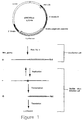
- FIG. 1 A schematic representation of a plasmid prepared in accordance with this embodiment of the invention is illustrated in Figure 1.
- This exemplary plasmid configuration can be transformed into an appropriate mammalian cell line and stable transformants obtained for use as an indicator cell line to detect the RNA virus of interest.
- Figure 1 also outlines the proposed mechanism by which this indicator cell line operates to detect the presence of an RNA virus in a specimen or sample. This embodiment is particularly useful for the detection of alphavirus, rubella virus, coronaviruses and astroviruses.
- the RNA virus desired to be assayed does not have a subgenomic RNA phase in its life cycle.
- the cell line is engineered to contain the cDNA of a structurally defective viral RNA genome as previously described except that the reporter gene is not adjacent to or operably coupled with a subgenomic promoter region.
- the eukaryotic promoter such as the RSV LTR, the SV40 early promoter or like promoter, is selected to provide a very low level of transcription, as low as a single molecule of RNA, so that the level of expression of the RNA is undetectable in uninfected cells and consequently the reporter gene product is low.
- RNA virus may provide the trans-acting enzymes for amplification of the defective RNA and/or enzymes required for proteolytic cleavage of the translation product which is required for detection of the reporter gene product activity.
- Figure 4 A schematic representation of a plasmid capable of being used in accordance with this embodiment is presented in Figure 4. An outline of the proposed mechanism by which one would determine the presence of a flavivirus in a specimen or sample is also outlined in Figure 4. This embodiment has particular application to flaviviruses and picornaviruses.
- RNA virus in a specimen in accordance with the method of this invention, cells prepared in accordance with the description above are incubated with a specimen in standard culture vessels.
- the specimen may be any material which can be placed into a fluid or fluid environment and includes biological fluids such as blood, semen, nasopharyngeal swabs, cerebrospinal fluids and the like.
- the cells and the specimen are cultured for a sufficient period of time for the RNA virus infectious cycle to proceed. If the target virus is in the specimen, it will produce the non-structural proteins necessary to cause the expression of the reporter gene which can then be measured in the cells, in the culture medium, or in cell extracts.
- a kit for detecting RNA viruses in a specimen containing a supply of stably transformed mammalian cells for the detection of a selected RNA virus and the reagents necessary for the detection of the reporter gene product is prepared by placing a sufficient supply of the cells and reagents in separate containers to conduct an assay or a plurality of assays.
- the method and cells of this invention are useful for the detection of RNA viruses of the Family Togaviridae including alphavirus, and rubella virus, as well as members of the flavivirus family, the coronavirus family, the astrovirus family, the picornavirus family, the calicivirus family, and viruses such as the hepatitis C virus and the hepatitis E virus.
- the present invention is useful in the detection of RNA viruses that synthesize a subgenomic RNA in their life cycle from a minus (-) strand of RNA as template.
- This example illustrates the preparation of a mammalian cell line engineered in accordance with the teachings of this invention for the detection of the alphavirus Sindbis virus.
- Baby hamster kidney cells were obtained from C. Rice (Washington University, St. Louis MO) and used as the mammalian cell line for preparing an exemplary cell line in accordance with this invention. These cells were transfected with a plasmid containing a Sindbis virus structurally defective cDNA that was placed under the control of a promoter that is capable of being recognized by the DNA dependent RNA polymerase of the mammalian cell.
- the Sindbis virus cDNA contained a structural gene encoding luciferase in place of the genes encoding the structural proteins of the Sindbis virus.
- plasmid identified as KDI25 the elements of which are described in Levis, R. et al. (1986) Cell 44, 137-145 was obtained.
- the plasmid KDI25 contained the entire sequence of the cDNA of a Defective-Interfering (DI) genome of Sindbis virus and bacterial sequences containing the origin of replication, the ampicillinase gene, and the promoter region for the SP6 polymerase.
- a Defective-Interfering genome of a virus contains sequence information essential for their replication and packaging, but need not contain any coding information.
- Plasmid KDI25 was engineered using standard molecular biological techniques to contain a XhoI site at the 5' end of the DI25 sequences to obtain pDI25.3.
- the Rous sarcoma virus (RSV) promoter was selected as the promoter to cause the transcription of the structurally defective cDNA and was inserted between the BamHI and ClaI sites of the polylinker in the Bluescript vector and a SalI site was engineered at the 3' end of the RSV promoter.
- RSV Rous sarcoma virus
- the Bluescript vector was cut with SalI and pDI25.3 was cut with XhoI to obtain the cDNA sequences of the structurally defective RNA of the Sindbis virus (the sequence being identified as DI25) and the XhoI-XhoI fragment of pDI25.3 was ligated to the Sail cut Bluescript vector to form plasmid p9-DI25.3.
- this plasmid has the correct sequence between the RSV promoter and the 5' terminus of the Sindbis DI25 cDNA such that the 5' terminus of the Sindbis structurally defective RNA was the start site for DNA dependent RNA transcription.
- This plasmid was cut with ApaI, filled in, and MluI linkers inserted.
- Plasmid p87A contained the Sindbis 5' DI25 sequences from base pair 297 to 539 followed by DNA sequences from base pair 6267 to the end of the Sindbis Toto genome as described in Rice, C. et al. (1987) J. Virol. 61:3809-3819.
- Plasmid p87A also contains an SV40 polyA addition site after the polyA stretch followed by a MluI site.
- the resulting plasmid is identified as p987AG.
- This DNA has an XbaI site 14 nucleotides down-stream of the start of the subgenomic RNA and an NsiI site upstream from sequences at the 3' terminus of the viral RNA.
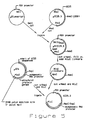
- the construction of p987AG is outlined in Figure 5.
- the structural genes between the XbaI and NsiI sites of p987AG were replaced with a structural coding sequence encoding the enzyme luciferase to function as a reporter gene in the DNA.
- the luciferase gene was inserted behind the Sindbis virus subgenomic promoter DNA in p987AG and was constructed in the following manner. Plasmid pT3/T7Luc (Clontech, Palo Alto CA) which contains the structural coding sequence for firefly luciferase was digested with SalI, blunt ended with Klenow fragment and four dNTP's and ligated to an NheI linker.
- pT3/T7Luc was then digested with NheI and SmaI and the resulting fragment contained the 1.9kb luciferase gene. This gene was then cloned into the XbaI and NsiI sites of p987AG in place of the structural genes to form plasmid p987AGLuc, a schematic representation of which is shown in Figure 1.
- the BHK cells were transfected with p987AGLuc in 35mm dishes with approximately 10 6 cells per dish.
- Five ⁇ g of linearized p987AGLuc plasmid in 50 ml of distilled water was mixed with 50 ⁇ g of lipofection mixture (Gibco, Grand Island N.Y.) and 0.5 ⁇ g of pMamNeo (Clontech, Palo Alto, CA) in a polystyrene tube for 15 minutes at room temperature.
- the cells were washed with serum free medium and the DNA/lipofection mixture was added to the cells in 4 ml serum-free medium.
- the cells were incubated at 37°C for four to six hours and the medium aspirated and replaced with medium containing 10% fetal calf serum. The cells were incubated for an additional twenty-four hours and then placed in a medium containing 1mg/ml G418 (geneticin, Gibco). The medium was changed daily for four days, at which time the vast majority of the cells were killed. The surviving cells were trypsinized and plated onto twelve 35mm wells such that individual cells were well separated. After seven to fourteen days, colonies were picked with a trypsin/EDTA soaked sterile cotton swab and plated onto 35mm dishes and grown to confluence in medium containing 400 ⁇ g/ml G418.
- This example illustrates the ability of a cell constructed in accordance with this invention to detect infectious Sindbis virus in a specimen.
- BHKSINLuc2 cells at a concentration of 7 x 10 4 were plated onto 24 well tissue culture plates. The next morning the cell monolayers were either mock-infected or infected with 2 x 10 3 or 6 x 10 5 PFU of Sindbis virus. Cells were lysed in 0.2ml of a Triton X-100 lysis buffer (50mM Tris, pH 7.8, 1mm DTT, 1% Triton X-100). Luciferase was assayed in luciferase reaction buffer containing 50 mM Tris-MES, pH 7.8, 10mM magnesium acetate, 2mM ATP, 0.3 mM luciferin (final concentrations).
- Triton X-100 lysis buffer 50mM Tris, pH 7.8, 1mm DTT, 1% Triton X-100. Luciferase was assayed in luciferase reaction buffer containing 50 mM Tris-MES, pH 7.8, 10mM magnesium acetate, 2m
- the assay was performed by the addition of 0.05 ml of cell lysate to 0.15 ml of two-fold concentrated reaction buffer in a 12 X 75 mm borosilicate test tube. This was placed into the reaction chamber of a luminometer. Immediately after closing the chamber, 0.1 ml of a luciferin solution (1mM in water) was added and the amount of light production recorded over 13 seconds. Raw data expressed as relative light units (RLU) were recorded. Lysis buffer and BHK cell lysates routinely gave a background level of 170-200 RLU. Luciferase activity was measured at the times indicated in Figure 2. RLU values shown in Figure 2 are the average of three samples.
- Luciferase activity could be detected at approximately 4 hours after infection and at the lower level of virus, luciferase activity was measurable at approximately 8-9 hours after infection. Luciferase activity at 6-8 hours post-infection was proportional to the PFU added, in the range of 10 4 to 10 5 .
- This example illustrates the ability of the method of this invention to quantify the amount of RNA virus in a specimen.
- Sindbis virus replicon expressing ⁇ -galactosidase was also assayed.
- a titer for this replicon (Sinrep/Lacz) had previously been determined based on indirect immunofluorescence and by its ability to produce cytopathic effects. Dilutions were made so that the concentrations of Sindbis virus and Sinrep/LacZ added to the BHKSINLuc2 cells were equivalent.
- the infection procedure and luciferase assay were as described in Example 2 except that cells were plated in 12 well tissue culture dishes. Cell extracts were prepared 6 hours post-infection.
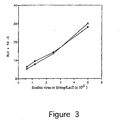
- the concentration of Sindbis virus is given in PFU and that of Sinrep/LacZ in infectious units.
- This example illustrates the sensitivity and specificity of the method of the present invention and the cells produced in accordance therewith.
- the sensitivity of the luciferase assay was compared to an assay based on the cytopathic effects (CPE) caused by infection with the Sindbis virus.
- CPE cytopathic effects
- BHK and BHKSINLuc2 cells were seeded, separately, into 24 well dishes at a concentration of 10 4 cells per well. Twenty hours later, each well was inoculated with Sindbis virus at a concentration predetermined to cause CPE in about one-half of the wells.
- the BHKSINLuc2 cells were also assayed for luciferase activity at both 26 and 44 hours. The results are shown in Table 1.
- the BHKSINLuc2 cells were also infected with several other viruses to determine the specificity of the luciferase induction. Unrelated viruses such as influenza virus, vesicular stomatitis virus, ECHO virus, adenovirus and human cytomegalovirus did not increase the basal level of luciferase activity. In contrast, a second alphavirus, Semliki Forest virus, induced luciferase activity, but at 10-fold less than those induced by the Sindbis virus. This result was expected because structurally defective RNAs of one alphavirus will be replicated in cells infected by a related alphavirus and because the subgenomic RNA promoter of one alphavirus is recognized by other alphaviruses.
- Unrelated viruses such as influenza virus, vesicular stomatitis virus, ECHO virus, adenovirus and human cytomegalovirus did not increase the basal level of luciferase activity.
- HSV herpes simplex virus
Landscapes
- Health & Medical Sciences (AREA)
- Life Sciences & Earth Sciences (AREA)
- Chemical & Material Sciences (AREA)
- Engineering & Computer Science (AREA)
- Organic Chemistry (AREA)
- Molecular Biology (AREA)
- Immunology (AREA)
- Biochemistry (AREA)
- Proteomics, Peptides & Aminoacids (AREA)
- Virology (AREA)
- General Health & Medical Sciences (AREA)
- Genetics & Genomics (AREA)
- Wood Science & Technology (AREA)
- Physics & Mathematics (AREA)
- Analytical Chemistry (AREA)
- Zoology (AREA)
- Microbiology (AREA)
- Medicinal Chemistry (AREA)
- Urology & Nephrology (AREA)
- Biophysics (AREA)
- Biotechnology (AREA)
- Hematology (AREA)
- Biomedical Technology (AREA)
- Cell Biology (AREA)
- Tropical Medicine & Parasitology (AREA)
- General Engineering & Computer Science (AREA)
- Food Science & Technology (AREA)
- Bioinformatics & Cheminformatics (AREA)
- General Physics & Mathematics (AREA)
- Pathology (AREA)
- Gastroenterology & Hepatology (AREA)
- Measuring Or Testing Involving Enzymes Or Micro-Organisms (AREA)
- Micro-Organisms Or Cultivation Processes Thereof (AREA)
Applications Claiming Priority (3)
| Application Number | Priority Date | Filing Date | Title |
|---|---|---|---|
| US171214 | 1993-12-21 | ||
| US08/171,214 US5591579A (en) | 1993-12-21 | 1993-12-21 | Indicator cell line for detecting RNA viruses and method therefor |
| PCT/US1994/014332 WO1995017525A1 (en) | 1993-12-21 | 1994-12-20 | Indicator cell line for detecting rna viruses and method therefor |
Publications (2)
| Publication Number | Publication Date |
|---|---|
| EP0738332A1 EP0738332A1 (en) | 1996-10-23 |
| EP0738332B1 true EP0738332B1 (en) | 2001-10-24 |
Family
ID=22622949
Family Applications (1)
| Application Number | Title | Priority Date | Filing Date |
|---|---|---|---|
| EP95905369A Expired - Lifetime EP0738332B1 (en) | 1993-12-21 | 1994-12-20 | Indicator cell line and method for detecting rna viruses |
Country Status (9)
| Country | Link |
|---|---|
| US (2) | US5591579A (enExample) |
| EP (1) | EP0738332B1 (enExample) |
| JP (1) | JPH09506776A (enExample) |
| AT (1) | ATE207545T1 (enExample) |
| AU (1) | AU691551B2 (enExample) |
| CA (1) | CA2178004C (enExample) |
| DE (1) | DE69428806T2 (enExample) |
| ES (1) | ES2166394T3 (enExample) |
| WO (1) | WO1995017525A1 (enExample) |
Families Citing this family (23)
| Publication number | Priority date | Publication date | Assignee | Title |
|---|---|---|---|---|
| US6015686A (en) * | 1993-09-15 | 2000-01-18 | Chiron Viagene, Inc. | Eukaryotic layered vector initiation systems |
| US5952172A (en) | 1993-12-10 | 1999-09-14 | California Institute Of Technology | Nucleic acid mediated electron transfer |
| US5824473A (en) | 1993-12-10 | 1998-10-20 | California Institute Of Technology | Nucleic acid mediated electron transfer |
| TR199801443T2 (xx) | 1996-01-26 | 1998-10-21 | Virco N.V. | �nsana ait HIV gerilmelerinin fenotipik ila� duyarl�l��� temel al�narak HIV-pozitif olan hastalar�n kemoterapisini idare metodu. |
| US6465634B1 (en) | 1996-04-05 | 2002-10-15 | Chiron Corporation | Recombinant alphavirus-based vectors with reduced inhibition of cellular macromolecular synthesis |
| US6451592B1 (en) | 1996-04-05 | 2002-09-17 | Chiron Corporation | Recombinant alphavirus-based vectors with reduced inhibition of cellular macromolecular synthesis |
| US5945276A (en) * | 1996-04-10 | 1999-08-31 | Signal Pharmaceuticals, Inc. | Reporter cell line system for detecting cytomegalovirus and identifying modulators of viral gene expression |
| US5910411A (en) * | 1996-09-30 | 1999-06-08 | Signal Pharmaceuticals, Inc. | Method for identifying agents that modulate transcription of human cytomegalovirus polymerase |
| US5994136A (en) * | 1997-12-12 | 1999-11-30 | Cell Genesys, Inc. | Method and means for producing high titer, safe, recombinant lentivirus vectors |
| US20030074677A1 (en) * | 1998-05-22 | 2003-04-17 | Lada Rasochova | Improved materials and methods for transformation |
| US6270958B1 (en) | 1998-10-29 | 2001-08-07 | Washington University | Detection of negative-strand RNA viruses |
| AU1905200A (en) * | 1998-11-13 | 2000-06-05 | Cell Genesys, Inc. | A sensitive screening system for envelope-defective recombinant virus |
| US6136538A (en) * | 1999-01-08 | 2000-10-24 | Washington University | Silent inducible virus replicons and uses thereof |
| US6326480B1 (en) | 1999-01-19 | 2001-12-04 | Signal Pharmaceuticals, Inc. | Antisense reporter system for assaying RNA virus replication |
| US8647864B2 (en) * | 1999-04-14 | 2014-02-11 | Novartis Ag | Compositions and methods for generating an immune response utilizing alphavirus-based vector systems |
| DE60044125D1 (de) * | 1999-04-14 | 2010-05-20 | Novartis Vaccines & Diagnostic | Zusammensetzungen und verfahren zur auslösung einer immunantwort auf basis alphavirus-vektoren-systeme |
| ATE528406T1 (de) | 1999-04-29 | 2011-10-15 | Gbp Ip Llc | Verfahren und mittel zur herstellung von sicheren,rekombinanten lentivirusvektoren mit hohem titer |
| EP1105526A1 (en) * | 1999-06-03 | 2001-06-13 | Thomas Jefferson University | Hepg2 cells stably transfected with hcv |
| ES2312447T3 (es) * | 2000-05-31 | 2009-03-01 | Novartis Vaccines And Diagnostics, Inc. | Procedimiento para la purificacion de particulas de replicon alfavirus. |
| US7279275B2 (en) * | 2003-11-03 | 2007-10-09 | Washington University | Methods and compositions for detection of segmented negative strand RNA viruses |
| DE602004029940D1 (de) * | 2003-12-08 | 2010-12-16 | Univ Loma Linda | Verfahren zum Nachweis von Pockenviren |
| WO2017205668A1 (en) * | 2016-05-25 | 2017-11-30 | Arizona Board Of Regents On Behalf Of Arizona State University | Portable, low-cost pathogen detection and strain identification platform |
| GB2589171A (en) * | 2020-07-22 | 2021-05-26 | Secr Defence | RNA Virus detection method |
Family Cites Families (9)
| Publication number | Priority date | Publication date | Assignee | Title |
|---|---|---|---|---|
| US4719177A (en) * | 1981-04-20 | 1988-01-12 | Massachusetts Institute Of Technology | Production of complementary DNA representing RNA viral sequences by recombinant DNA methods and uses therefor |
| GB8324800D0 (en) * | 1983-09-15 | 1983-10-19 | Pasteur Institut | Antigens |
| CA1340378C (en) * | 1988-02-26 | 1999-02-02 | Laurence K. Grill | Non-nuclear chromosomal transformation |
| US5070012A (en) * | 1988-03-30 | 1991-12-03 | The Board Of Trustees Of The Leland Stanford Junior University | Monitoring of cells and trans-activating transcription elements |
| US5217879A (en) * | 1989-01-12 | 1993-06-08 | Washington University | Infectious Sindbis virus vectors |
| AU6075190A (en) * | 1989-06-30 | 1991-01-17 | Regents Of The University Of California, The | Retrovirus detection |
| FR2651005B1 (fr) * | 1989-08-17 | 1992-01-03 | Pasteur Institut | Lignees de cellules infectables par un retrovirus et contenant un marqueur activable a l'occasion de l'infection |
| AU648523B2 (en) * | 1989-10-25 | 1994-04-28 | Salk Institute For Biological Studies, The | Receptor infection assay |
| CA2044679A1 (en) * | 1990-06-22 | 1991-12-23 | Alexander Honigman | Detection of hiv infection by bioluminescence |
-
1993
- 1993-12-21 US US08/171,214 patent/US5591579A/en not_active Expired - Lifetime
-
1994
- 1994-12-20 WO PCT/US1994/014332 patent/WO1995017525A1/en not_active Ceased
- 1994-12-20 CA CA002178004A patent/CA2178004C/en not_active Expired - Lifetime
- 1994-12-20 EP EP95905369A patent/EP0738332B1/en not_active Expired - Lifetime
- 1994-12-20 AU AU14010/95A patent/AU691551B2/en not_active Expired
- 1994-12-20 DE DE69428806T patent/DE69428806T2/de not_active Expired - Lifetime
- 1994-12-20 AT AT95905369T patent/ATE207545T1/de not_active IP Right Cessation
- 1994-12-20 ES ES95905369T patent/ES2166394T3/es not_active Expired - Lifetime
- 1994-12-20 JP JP7517488A patent/JPH09506776A/ja active Pending
-
1996
- 1996-12-31 US US08/774,406 patent/US5851757A/en not_active Expired - Lifetime
Also Published As
| Publication number | Publication date |
|---|---|
| AU691551B2 (en) | 1998-05-21 |
| JPH09506776A (ja) | 1997-07-08 |
| EP0738332A1 (en) | 1996-10-23 |
| CA2178004A1 (en) | 1995-06-29 |
| DE69428806D1 (de) | 2001-11-29 |
| CA2178004C (en) | 2001-11-27 |
| ATE207545T1 (de) | 2001-11-15 |
| WO1995017525A1 (en) | 1995-06-29 |
| US5851757A (en) | 1998-12-22 |
| DE69428806T2 (de) | 2002-09-12 |
| AU1401095A (en) | 1995-07-10 |
| US5591579A (en) | 1997-01-07 |
| ES2166394T3 (es) | 2002-04-16 |
Similar Documents
| Publication | Publication Date | Title |
|---|---|---|
| US5851757A (en) | Indicator cell line for detecting RNA viruses and method therefor | |
| JP4094679B2 (ja) | C型肝炎ウイルス(hcv)用の機能性dnaクローン及びその使用 | |
| Wang et al. | Diagnosis of bovine viral diarrhea virus: an overview of currently available methods | |
| Fernandes-Monteiro et al. | New approaches for the standardization and validation of a real-time qPCR assay using TaqMan probes for quantification of yellow fever virus on clinical samples with high quality parameters | |
| RU2301263C2 (ru) | Способ выявления парвовируса b19 человека в биологическом образце (варианты) и набор для его осуществления | |
| WO2000026417A9 (en) | Detection of negative-strand rna viruses | |
| EA005426B1 (ru) | Векторы для определения чувствительности вируса к противовирусному лекарственному соединению и способы их применения | |
| JP4782927B2 (ja) | 代理細胞ベースシステム及びc型肝炎ウイルスns3プロテアーゼの活性を評価する方法 | |
| CN110195093B (zh) | 一种基于表达绿色荧光蛋白的重组寨卡病毒的药物筛选系统及其应用 | |
| Olivo et al. | A cell line that expresses a reporter gene in response to infection by Sindbis virus: a prototype for detection of positive strand RNA viruses | |
| KR20010099610A (ko) | 씨형 간염 바이러스 프로테아제 억제제의 세포기반 평가를위한 리포터 유전자 시스템 | |
| US20160032251A1 (en) | Chimeric pestivirus with insertion in 3' nontranslated region (3' ntr) with stable replication and rnase resistance | |
| US6136538A (en) | Silent inducible virus replicons and uses thereof | |
| KR20010022420A (ko) | 항 바이러스성 약품의 민감성과 내성의 결정 및 항바이러스성 약품의 스크리닝을 위한 조성물 및 방법 | |
| Campos-Gomez et al. | A novel cell-based assay to measure activity of Venezuelan equine encephalitis virus nsP2 protease | |
| JPH05506999A (ja) | ウイルスプロティナーゼの活性をモニターするためのテスト系 | |
| JP4573776B2 (ja) | 新規hcv株由来の核酸、遺伝子、及び該遺伝子を利用したレプリコン複製細胞 | |
| Yun et al. | Engineering the Japanese encephalitis virus RNA genome for the expression of foreign genes of various sizes: implications for packaging capacity and RNA replication efficiency | |
| US20040039187A1 (en) | Chimeric GB virus B (GBV-B) | |
| Cao et al. | Construction of genomic and sub-genomic dengue infectious replicons | |
| KR100471946B1 (ko) | C형 간염바이러스(hcv)의 리플리콘, 이를 포함하는세포주, 및 상기 세포주를 이용한 hcv 탐지방법 | |
| CA2412217A1 (en) | Hiv-1 reporter viruses and their use in assaying anti-viral compounds | |
| US20050277114A1 (en) | System and method for detecting West Nile Virus | |
| GB2589171A (en) | RNA Virus detection method |
Legal Events
| Date | Code | Title | Description |
|---|---|---|---|
| PUAI | Public reference made under article 153(3) epc to a published international application that has entered the european phase |
Free format text: ORIGINAL CODE: 0009012 |
|
| 17P | Request for examination filed |
Effective date: 19960619 |
|
| AK | Designated contracting states |
Kind code of ref document: A1 Designated state(s): AT BE CH DE DK ES FR GB GR IE IT LI LU MC NL PT SE |
|
| AX | Request for extension of the european patent |
Free format text: LT PAYMENT 960619;SI PAYMENT 960619 |
|
| RAX | Requested extension states of the european patent have changed |
Free format text: LT PAYMENT 960619;SI PAYMENT 960619 |
|
| 17Q | First examination report despatched |
Effective date: 19990503 |
|
| RTI1 | Title (correction) |
Free format text: INDICATOR CELL LINE AND METHOD FOR DETECTING RNA VIRUSES |
|
| GRAG | Despatch of communication of intention to grant |
Free format text: ORIGINAL CODE: EPIDOS AGRA |
|
| RTI1 | Title (correction) |
Free format text: INDICATOR CELL LINE AND METHOD FOR DETECTING RNA VIRUSES |
|
| GRAG | Despatch of communication of intention to grant |
Free format text: ORIGINAL CODE: EPIDOS AGRA |
|
| GRAH | Despatch of communication of intention to grant a patent |
Free format text: ORIGINAL CODE: EPIDOS IGRA |
|
| GRAH | Despatch of communication of intention to grant a patent |
Free format text: ORIGINAL CODE: EPIDOS IGRA |
|
| GRAA | (expected) grant |
Free format text: ORIGINAL CODE: 0009210 |
|
| AK | Designated contracting states |
Kind code of ref document: B1 Designated state(s): AT BE CH DE DK ES FR GB GR IE IT LI LU MC NL PT SE |
|
| AX | Request for extension of the european patent |
Free format text: LT PAYMENT 19960619;SI PAYMENT 19960619 |
|
| LTIE | Lt: invalidation of european patent or patent extension | ||
| PG25 | Lapsed in a contracting state [announced via postgrant information from national office to epo] |
Ref country code: NL Free format text: LAPSE BECAUSE OF FAILURE TO SUBMIT A TRANSLATION OF THE DESCRIPTION OR TO PAY THE FEE WITHIN THE PRESCRIBED TIME-LIMIT Effective date: 20011024 Ref country code: LI Free format text: LAPSE BECAUSE OF FAILURE TO SUBMIT A TRANSLATION OF THE DESCRIPTION OR TO PAY THE FEE WITHIN THE PRESCRIBED TIME-LIMIT Effective date: 20011024 Ref country code: GR Free format text: LAPSE BECAUSE OF NON-PAYMENT OF DUE FEES Effective date: 20011024 Ref country code: CH Free format text: LAPSE BECAUSE OF FAILURE TO SUBMIT A TRANSLATION OF THE DESCRIPTION OR TO PAY THE FEE WITHIN THE PRESCRIBED TIME-LIMIT Effective date: 20011024 Ref country code: AT Free format text: LAPSE BECAUSE OF FAILURE TO SUBMIT A TRANSLATION OF THE DESCRIPTION OR TO PAY THE FEE WITHIN THE PRESCRIBED TIME-LIMIT Effective date: 20011024 |
|
| REF | Corresponds to: |
Ref document number: 207545 Country of ref document: AT Date of ref document: 20011115 Kind code of ref document: T |
|
| REG | Reference to a national code |
Ref country code: CH Ref legal event code: EP |
|
| REG | Reference to a national code |
Ref country code: IE Ref legal event code: FG4D |
|
| REF | Corresponds to: |
Ref document number: 69428806 Country of ref document: DE Date of ref document: 20011129 |
|
| PG25 | Lapsed in a contracting state [announced via postgrant information from national office to epo] |
Ref country code: MC Free format text: LAPSE BECAUSE OF NON-PAYMENT OF DUE FEES Effective date: 20011220 Ref country code: LU Free format text: LAPSE BECAUSE OF NON-PAYMENT OF DUE FEES Effective date: 20011220 Ref country code: IE Free format text: LAPSE BECAUSE OF FAILURE TO SUBMIT A TRANSLATION OF THE DESCRIPTION OR TO PAY THE FEE WITHIN THE PRESCRIBED TIME-LIMIT Effective date: 20011220 |
|
| REG | Reference to a national code |
Ref country code: GB Ref legal event code: IF02 |
|
| PG25 | Lapsed in a contracting state [announced via postgrant information from national office to epo] |
Ref country code: SE Free format text: LAPSE BECAUSE OF FAILURE TO SUBMIT A TRANSLATION OF THE DESCRIPTION OR TO PAY THE FEE WITHIN THE PRESCRIBED TIME-LIMIT Effective date: 20020124 Ref country code: PT Free format text: LAPSE BECAUSE OF FAILURE TO SUBMIT A TRANSLATION OF THE DESCRIPTION OR TO PAY THE FEE WITHIN THE PRESCRIBED TIME-LIMIT Effective date: 20020124 Ref country code: DK Free format text: LAPSE BECAUSE OF FAILURE TO SUBMIT A TRANSLATION OF THE DESCRIPTION OR TO PAY THE FEE WITHIN THE PRESCRIBED TIME-LIMIT Effective date: 20020124 |
|
| NLV1 | Nl: lapsed or annulled due to failure to fulfill the requirements of art. 29p and 29m of the patents act | ||
| ET | Fr: translation filed | ||
| REG | Reference to a national code |
Ref country code: ES Ref legal event code: FG2A Ref document number: 2166394 Country of ref document: ES Kind code of ref document: T3 |
|
| REG | Reference to a national code |
Ref country code: CH Ref legal event code: PL |
|
| PLBE | No opposition filed within time limit |
Free format text: ORIGINAL CODE: 0009261 |
|
| STAA | Information on the status of an ep patent application or granted ep patent |
Free format text: STATUS: NO OPPOSITION FILED WITHIN TIME LIMIT |
|
| REG | Reference to a national code |
Ref country code: IE Ref legal event code: MM4A |
|
| 26N | No opposition filed | ||
| PGFP | Annual fee paid to national office [announced via postgrant information from national office to epo] |
Ref country code: GB Payment date: 20131218 Year of fee payment: 20 Ref country code: DE Payment date: 20131218 Year of fee payment: 20 |
|
| PGFP | Annual fee paid to national office [announced via postgrant information from national office to epo] |
Ref country code: ES Payment date: 20131112 Year of fee payment: 20 Ref country code: IT Payment date: 20131211 Year of fee payment: 20 Ref country code: FR Payment date: 20131209 Year of fee payment: 20 |
|
| PGFP | Annual fee paid to national office [announced via postgrant information from national office to epo] |
Ref country code: BE Payment date: 20131217 Year of fee payment: 20 |
|
| REG | Reference to a national code |
Ref country code: DE Ref legal event code: R071 Ref document number: 69428806 Country of ref document: DE |
|
| REG | Reference to a national code |
Ref country code: DE Ref legal event code: R071 Ref document number: 69428806 Country of ref document: DE |
|
| REG | Reference to a national code |
Ref country code: GB Ref legal event code: PE20 Expiry date: 20141219 |
|
| PG25 | Lapsed in a contracting state [announced via postgrant information from national office to epo] |
Ref country code: GB Free format text: LAPSE BECAUSE OF EXPIRATION OF PROTECTION Effective date: 20141219 |
|
| REG | Reference to a national code |
Ref country code: ES Ref legal event code: FD2A Effective date: 20150826 |
|
| PG25 | Lapsed in a contracting state [announced via postgrant information from national office to epo] |
Ref country code: ES Free format text: LAPSE BECAUSE OF EXPIRATION OF PROTECTION Effective date: 20141221 |