EP0717364A2 - Méthode pour anticiper des informations de correction dans un système de traitement de langage naturel - Google Patents
Méthode pour anticiper des informations de correction dans un système de traitement de langage naturel Download PDFInfo
- Publication number
- EP0717364A2 EP0717364A2 EP95309041A EP95309041A EP0717364A2 EP 0717364 A2 EP0717364 A2 EP 0717364A2 EP 95309041 A EP95309041 A EP 95309041A EP 95309041 A EP95309041 A EP 95309041A EP 0717364 A2 EP0717364 A2 EP 0717364A2
- Authority
- EP
- European Patent Office
- Prior art keywords
- natural language
- information
- recognition
- knowledge
- language processing
- Prior art date
- Legal status (The legal status is an assumption and is not a legal conclusion. Google has not performed a legal analysis and makes no representation as to the accuracy of the status listed.)
- Ceased
Links
Images





Classifications
-
- G—PHYSICS
- G06—COMPUTING OR CALCULATING; COUNTING
- G06F—ELECTRIC DIGITAL DATA PROCESSING
- G06F40/00—Handling natural language data
- G06F40/20—Natural language analysis
- G06F40/232—Orthographic correction, e.g. spell checking or vowelisation
-
- G—PHYSICS
- G06—COMPUTING OR CALCULATING; COUNTING
- G06F—ELECTRIC DIGITAL DATA PROCESSING
- G06F40/00—Handling natural language data
- G06F40/20—Natural language analysis
- G06F40/279—Recognition of textual entities
-
- G—PHYSICS
- G06—COMPUTING OR CALCULATING; COUNTING
- G06V—IMAGE OR VIDEO RECOGNITION OR UNDERSTANDING
- G06V30/00—Character recognition; Recognising digital ink; Document-oriented image-based pattern recognition
- G06V30/10—Character recognition
- G06V30/26—Techniques for post-processing, e.g. correcting the recognition result
- G06V30/262—Techniques for post-processing, e.g. correcting the recognition result using context analysis, e.g. lexical, syntactic or semantic context
- G06V30/274—Syntactic or semantic context, e.g. balancing
-
- G—PHYSICS
- G06—COMPUTING OR CALCULATING; COUNTING
- G06V—IMAGE OR VIDEO RECOGNITION OR UNDERSTANDING
- G06V30/00—Character recognition; Recognising digital ink; Document-oriented image-based pattern recognition
- G06V30/10—Character recognition
Definitions
- the present invention relates to a natural language processing system, as well as to a natural language processing method, for processing entered natural language information and, more particularly, to a natural language processing system and method for recognizing or correcting natural language information.
- Natural language recognizing systems have been known such as an optical character reader (OCR), a voice recognition machine, or an on-line or off-line hand-written character recognition machine.
- OCR optical character reader
- voice recognition machine or an on-line or off-line hand-written character recognition machine.
- OCR optical character reader
- Such known natural language recognition system employs a pattern matching technique in which a character is identified as a candidate character which is selected from a group of candidate characters and which exhibit's the best pattern matching with the character to be recognized.
- execution of processing for expecting correct information as the input to the processing system based on knowledge of a specific domain or context, contributes to correction of entered natural language information, even when the entry is made through means other than a recognition system, e.g., a keyboard.
- a recognition system e.g., a keyboard
- any typographical error incurred during entry can be corrected without difficulty by using a simple interface which is designed to restrict the scope or type of the information to be entered.
- an object of the present invention is to provide a natural language processing method, as well as a natural language processing system, which, when processing a series of natural language information having a regular construction, expects the natural language information to be processed and executes required processing based on the expected information.
- Another object of the present invention is to provide a natural language processing method, as well as a natural language processing system, which, when recognizing natural language information, expects the information to be processed and restricts the candidate information based on the result of the expectation.
- Still another object of the present invention is to provide a natural language processing method, as well as a natural language processing system, which, when recognizing natural language information, expects the information to be processed and performs correction of the recognition based on the result of the expectation.
- a further object of the present invention is to provide a natural language processing method, as well as a natural language processing system, which, when processing natural language information, expects the information to be input and performs correction of the input information based on the result of the expectation.
- the present invention which achieves these objectives relates to a natural language processing apparatus comprising: recognition means for recognizing natural language information; knowledge base means for storing knowledge concerning the types of said natural language information and knowledge concerning restriction in regard to the sequence of units of a series of natural language information groups of a plurality of types; and expectation means which, when said recognition means progressively and sequentially recognizes said series of natural language information groups of a plurality of types, makes reference to the knowledge stored in said knowledge base means so as to expect the subsequent object of recognition.
- the present invention which achieves these objectives relates to a natural language processing apparatus comprising: input means for inputting natural language information; knowledge base means for storing knowledge concerning the types of said natural language information and knowledge concerning restriction in regard to the sequence of statement of a series of natural language information groups of a plurality of types; and expectation means which expects information regarding a part of the series of natural language information groups of a plurality of types to be inputted through said input means, by making reference to the knowledge stored in said knowledge base means.
- the present invention which achieves these objectives relates to a natural language processing method comprising: recognizing step in which natural language information is recognized; and expecting step in which, when a series of natural language information groups of a plurality of types is progressively and sequentially recognized in said recognizing step, the subsequent object to be recognized is expected, with a reference to a knowledge base which contains knowledge concerning the types of said natural language information and knowledge concerning restriction in regard to the sequence of units of said series of natural language information groups of a plurality of types.
- the present invention which achieves these objectives relates to a natural language processing method comprising: inputting step in which natural language information is inputted; and expecting step in which information regarding part of said series of natural language information groups inputted in said inputting step is expected, with reference to knowledge stored in a knowledge base which stores knowledge concerning the types of said natural language information and knowledge concerning restriction in regard to the sequence of statement of said series of natural language information groups of a plurality of types.
- Fig. 1 is a block diagram showing the hardware structure of a natural language processing system as an embodiment of the present invention.
- the hardware comprises an input unit 1, a CPU 2, an output unit 3, a program memory 4, a data memory 5 and a BUS 6.
- the input unit 1 serves as means through which information is entered or inputted in the form of a natural language.
- the input information is referred to as a "text”. It is to be understood, however, that the present, invention can be applied to processing of natural language information of various kinds, even when the information is not a sentence which is grammatically complete, provided that the information has a structure which follows a certain rule.
- the input unit 1 may comprise, for example, a voice recognition apparatus which recognizes vocal input information, a keyboard having keys for entering characters, a character recognition machine for optically reading and recognizing characters from a document, an on-line/off-line hand-written character recognition device, or a receiver which receives information from another system, e.g., a receiver which receives results of recognition performed by a character recognition system.
- the arrangement may be such that information generated through a different processing performed in the same system is used as the input information. It is also possible to arrange such that two or more types of input unit 1 mentioned above are prepared for selective use.
- the CPU 2 performs computation and logical judgment necessary for various kinds of processing, and controls the system components which are connected to the BUS 6.
- the output unit 3 serves as means for outputting data obtained through an analytical unit.
- the output unit 3 may comprise, for example, a voice synthesizer which synthesizes voice information from character information and outputs the synthetic voice information, a display device such as a CRT or a liquid crystal display device, a printer for printing and outputting characters on a document, or a transmission device which transmits the information to another device or system such as a data base.
- the arrangement may be such that information output from the output unit 3 is used as information to be input to another processing unit in the same system.
- the arrangement also may be such that two or more types of the output units mentioned above are prepared and used selectively.
- the program memory 4 serves to store programs which are used for various controls performed by the CPU 2 including processings which will be described later with reference to flow charts.
- the program memory 4 may comprise a ROM or a RAM which is adapted to be externally loaded with programs.
- the data memory 5 stores data generated through various processings, as well as various kinds of knowledge of a later-mentioned knowledge base.
- the data memory 5 may be a RAM.
- the knowledge of the knowledge base may be loaded from an external non-volatile storage medium prior to the processing to be executed, or referred to each time such knowledge is required.
- the BUS 6 provides paths for transmitting various signals such as address signals for appointing the components to be controlled by the CPU 2, control signals for controlling various components, data signals exchanged between different components of the system, and so forth.
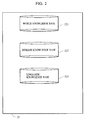
- Fig. 2 shows the detail of the construction of a knowledge base 22 provided in the data memory 5.
- the knowledge base 22 includes a world knowledge base 221 which contains general knowledge such as knowledge of action, a domain knowledge base 222 which possesses knowledge peculiar to the domain of the information to be processes, and a linguistic knowledge base 223 which contains linguistic information such as parts of speech, grammar and so forth.
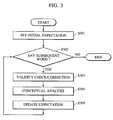
- Fig. 3 is a flow chart illustrative of a processing which is executed after the completion of a recognition process for the purpose of correcting the recognition result based on expectation information. Although not exclusive, the processing in this case is executed in word-by-word fashion.
- Step S301 initial expectation is set to expect a subsequent word.
- Step S302 determines whether or not any subsequent word exists. The process terminates when there is no subsequent word. When any subsequent word exists, the process advances to Step S303 which checks validity of the word based on the expectation information. Correction is performed when the word is determined as being invalid. Step S304 conducts later-mentioned conceptual analysis on the basis of practical cases. In Step S305, the expectation is updated to expect the next word. The process then returns to Step S302.
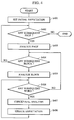
- Fig. 4 is a flow chart showing a process for incorporating the expectation information in recognition processing. It is assumed here that the object of the processing is sentences which extend over a plurality of pages each containing one or more blocks, and that the processing proceeds from the first block of the first page and advances to the next page after completion of processing of the last block of the first page.
- Step S402 whether or not any subsequent page exists is determined. The process terminates when there is no subsequent page. If a subsequent page exists, the process proceeds to Step S403 which conducts page analysis. In Step S404, determination is made as to whether any subsequent block exists. If no subsequent block exists, the processing on the instant page is finished and the process returns to Step S402. However, if a subsequent block exists, the process advances to Step S405 which conducts block analysis.
- Step S406 executes determination as to whether any subsequent word exists. If no subsequent word exists, the process returns to Step S402 after finishing the processing of the block. However, if a subsequent word exists, the process advances to Step S407 which performs conceptual analysis and then advances to Step S408 which updates the expectation. The process then returns to Step S406.
- Japanese census family register information is not written in the form of complete sentences, but is expressed in the form of consecutive words which describe predetermined items such as birth, marriage and so forth of each individual in a predetermined sequence or order.
- Fig. 5 shows an example of such a Japanese census family register form.
- an assumption is made that information such as that shown in Fig. 5 is read by an OCR and then processed.
- Fig. 6 is a chart showing the knowledge structure concerning ⁇ ACTION ⁇ .
- S1 indicates agent of the action
- S2 indicates a direct object of the action
- S3 indicates an indirect object of the action
- S4 indicates an action which is the reason for the indirect object
- S6 indicates an action serving as an instrument
- S7 indicates a place serving as a support
- S8 indicates time.
- Fig. 7 shows hierarchy of information concerning addresses used in Japan.
- Fig. 8 shows the contents of an ordinary dictionary. Concepts of information shown in the left-hand-side column is shown in the right-hand column.
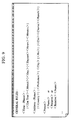
- Fig. 9 shows general rule of description of natural language information, the rule being stored in the aforesaid world knowledge base.
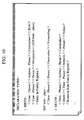
- Fig. 10 shows general rule of description of natural language information pertaining to a specific domain, the rule being stored in the aforesaid domain knowledge base.
- the ⁇ Time-Phrase ⁇ of EVENT 1 is set as expectation information, with the owner of the block being determined as the agent of the EVENT.
- the above-described input information is progressively and successively processed. Since the expectation is for the Time-Phrase, the sub-expectation is for ⁇ ERA ⁇ , from the general rules shown in Fig. 9. Namely, (Heisei), (Showa), (Meiji) and so forth are listed as candidate era. This expectation information is given to the recognition section to be used during recognition process. Thus, only few kanji characters are selected and presented for the recognition from among more than several thousands of kanji characters.
- expectation information is given to the recognition section on word-by-word basis.
- the expectation information given on word-by-word basis is useful and further enhances the accuracy of the recognition, particularly when the character recognition in a character row is conducted in parallel fashion on a plurality of characters.
- the expectation information given on word-by-word basis when used together with parallel processing of a plurality of characters, offers the following advantage.
- the first character of the word representing an era (Showa) and the first character of the word representing another era (Meiji) are similar in form to each other. Therefore, when one of these two characters is recognized as a correct character, there is a large possibility that the other character also is listed as a candidate, if the recognition is performed on character basis.
- the recognition may be conducted sequentially on consecutive characters.
- the process may proceed while leaving a plurality of candidate characters undecided for the first character and one of such candidate characters is determined as the correct character in accordance with the result of recognition of the next character.
- erroneous combination of characters can be excluded by effective use of plural candidate characters.
- the next expectation is for the ⁇ year ⁇ which is expressed in terms of a ⁇ Number ⁇ .
- the scope of the number is restricted, in accordance with the above-mentioned concept of ⁇ ERA ⁇ . Namely, the number is limited to range from 1 to 64 when the recognized ⁇ ERA ⁇ is (Showa), and to range from 1 to indefinite when the recognized ⁇ ERA ⁇ is (Heisei), as can be seen from Fig. 8.
- the knowledge shown in Fig. 8 also contains the fact that (first year) is represented as Characters such as (second) and so forth are therefore expected as the number which represents the year.
- a word (Yokohama) is then processed.
- This word is a ⁇ City Name ⁇ , so that inference is made based on the rule shown in Fig. 10 to determine that an Address-Phrase has been started.
- the expectation information is therefore changed to ADDRESS.
- the name (Yokohama) is stored in the slot S4 of ADDRESS 2.
- the next character is neglected as being a ⁇ City Mark ⁇ .
- This word is a casemarker as shown in Fig. 8, an inference is made in accordance with the rule shown in Fig. 10 to determine that the processing of the Address-Phrase is over.
- the kind of expectation information is therefore changed to BIRTH which is a type of declarations.
- BIRTH as the concept of ⁇ BIRTH ⁇ is obtained, and inference is made in accordance with the rule shown in Fig. 10 so as to determine that the type of the Event 1 as the object of the MTRANS is BIRTH.
- the kind of expectation information is then changed to Time-Phrase.
- the next word is a ⁇ PRONOUN 1 ⁇ and is regarded as information pertaining to the slot S2 (Month) of TIME 1 from the fact that the next to next word is (Month Mark), the contents of slot 12 is copied to slot S2 of time 1.
- the content of the slot S1 of TIME 1 (Era, Year), which shows the preceding time information, is copied to form the information to be stored in the slot S1 of TIME 2.
- the word (month) is neglected as being a ⁇ Month Mark ⁇ , and the word (twenty nine), is stored in the slot S3 of TIME 1.
- the subsequent single-character word (day) is neglected as being a ⁇ Day Mark ⁇ .
- the next single-character word (father) is determined to be to ⁇ Person 1 ⁇ so that an inference is made to determine that the Time-Phrase is over and ⁇ Person ⁇ has started.
- the person identified by the word can be identified from the block information.
- the next word belongs to the concept of MTRANS, so that an inference is made in accordance with the rule shown in Fig. 10 to determine that the MTRANS 1 has been done by the ⁇ Person 1 ⁇ .
- the ⁇ person 1 ⁇ is therefore stored in the slot S1 of MTRANS 1, and the kind of expectation information is changed to the Time-phrase which is at the beginning of the ⁇ Diff birthplace ⁇ , in accordance with the rule shown in Fig. 10.
- the next word belongs to the concept of ⁇ Entry in Family Register ⁇ . Since no Time-Phrase could be found, the rule of Diff birth-place does not apply in accordance with the rule shown in Fig. 10. Thus, an inference is made to conclude that the statement in question has been successfully analyzed. It is therefore inferred that the content of the ⁇ Address 1 ⁇ of the MTRANS 1 is identical to the permanent domicile recorded in the family register holder, and the domicile information is copied to fill the ⁇ Address 1 ⁇ . Consequently, is filled in ⁇ Address 1 ⁇ .
- Fig. 12 shows the construction of the family register information produced from the input information through the processings described above.
- the types of expectation information employed in the processings described above are fixed terms such as (year) and (month) or variable words such as numerals, e.g., dates, city names and so forth which can be determined by trailing words.
- the ⁇ Time-Phrase ⁇ of EVENT 1 is set as expectation information, with the owner of the block being determined as the agent of the EVENT.
- the next expectation is for the ⁇ year ⁇ which is expressed in terms of a ⁇ Number ⁇ .
- the scope of the number is restricted in accordance with the above-mentioned concept of ⁇ ERA ⁇ . Namely, the number is limited to range from 1 to 64 when the recognized ⁇ ERA ⁇ is (Showa), and to range from 1 to indefinite when the recognized ⁇ ERA ⁇ is (Heisei), as will be seen from Fig. 8.
- the knowledge shown in Fig. 8 also contains the fact that (first year) is represented as Characters such as (second) and so forth are therefore expected as the number which represents the year.
- a number indicative of a date is expected for the next word It is therefore determined by inference that has been wrongly recognized for i.e., that should be corrected to Thus, (twenty seven) is stored in the slot S3 of TIME 2, and (day) is neglected as being ⁇ Day Mark ⁇ .
- the word (Yokohama) is then processed. This word is a ⁇ City Name ⁇ , so that inference is made based on the rule shown in Fig. 10 to determine that an Address-Phrase has been started. The expectation information is therefore changed to ADDRESS.
- the name (Yokohama) is stored in the slot S3 of ADDRESS 2. The next character is neglected as being a ⁇ City Mark ⁇ .
- This word is a casemarker as shown in Fig. 8, an inference is made in accordance with the rule shown in Fig. 10 to determine that the processing of the Address-Phrase is over.
- the kind of expectation information is therefore changed to BIRTH which is a type of declarations.
- BIRTH as the concept of ⁇ BIRTH ⁇ is obtained, and inference is made in accordance with the rule shown in Fig. 10 so as to determine that the type of the Event 1 as the object of the MTRANS is BIRTH.
- the kind of expectation information is then changed to Time-Phrase.
- the next word is a ⁇ PRONOUN 1 ⁇ and is regarded as information pertaining to the slot S2 (Month) of TIME 1 and stored in the same slot of TIME 2.
- the content of the slot S1 of TIME 1 (Era, Year), which shows the preceding time information, is copied to form the information to be stored in the slot S1 of TIME 2.
- the word (month) is neglected as being a ⁇ Month Mark ⁇ . Since a ⁇ Day Mark ⁇ as a delimiter is expected subsequently, an inference is made that is wrong and should be corrected to Due to the presence of the delimiter, the subsequent word (twenty nine) is cut out and stored in the slot S3 of TIME 1. The subsequent single-character word (day) is neglected as being a ⁇ Day Mark ⁇ .
- the next single-character word (father) is determined to be ⁇ Person 1 ⁇ so that an inference is made to determine that the Time-Phrase is over and ⁇ Person ⁇ has started.
- the person identified by the word can be identified from the block information.
- the next word belongs to the concept of MTRANS, so that an inference is made in accordance with the rule shown in Fig. 10 to determine that the MTRANS 1 has been done by the ⁇ Person 1 ⁇ .
- the ⁇ person 1 ⁇ is therefore stored in the slot S1 of MTRANS 1, and the kind of expectation information is changed to the Time-phrase which is at the beginning of the (Diff birthplace) in accordance with the rule shown in Fig. 10.
- Step S1301 conducts setting of blocks for a new page and determines the sequence of processing.
- Step S1302 gives expectation for a new block.
- Step S1303 determines whether expectation has been made for a new line.
- the term "line” is used here to mean a small unit which provides a meaning.
- Step S1304 in which types of candidate lines are selected.
- Step S1305 character recognition is executed on the selected types of line. The process then returns to Step S1303 which determines whether expectation has been made for the line type which has been found as a result of the character recognition.
- Step S1303 determines whether the expectation has safely been done. If the determination in Step S1303 has proved that the expectation has safely been done, the process proceeds to Step S1306 which selects a list of candidate characters and the character rule which determines the break between successive words, for each of the words in the next line.
- Step S1307 character recognition processings are executed on expected candidate characters.
- Step S1308 meaning processing is executed to determine the meaning of the word.
- Step S1309 meaning processing is executed for the sentence down to the instant ward.
- Step S1310 executes determination as to whether or not the processing has been finished for the line. The process returns to Step S1306 if the processing has not been finished. If the processing has been completed for the line, the process proceeds to Step S1311 which executes meaning analysis of the line and determines whether the processing has been finished for the block. If the processing for the block has been finished, the process advances to Step S1312 which executes meaning processing on the block, followed by determination as to whether or not the processing is finished for the page. If the process has been finished for the page, the process proceeds to Step S1313 which determined whether or not the processing has been completed for the census family register. If the process has not been completed, the process returns to Step S1301, otherwise the results are entered in a data base.
- Each census family register form contains a plurality of pages, each including one or more blocks.
- Fixed positional or layout information indicative of the relationship between each page and blocks contained therein has been stored in a knowledge base of a specific domain, in order to enable extraction of all the necessary information.
- the layout information is effectively used by the system when the system performs various processings such as setting of expectation information, checking of validity of information and identification of person indicated by a common noun such as (father).
- the content of data is determined based on the block position and header, so as to facilitate the setting of the candidate context.
- the block headed by (permanent domicile) contains the actual address (Address-Phase) as data indicating a registered place. Setting of the expectation to ⁇ Address-Phrase ⁇ therefore helps the system in recognizing the data shown in this block.
- the block headed by (name) contains information concerning the register holder, written in a format which is family name-space-given name. In contrast, in the block relating to BIRTH declaration, the name is written without giving a space between the family name and the given name. This information contained in the block headed by (name) can therefore be used effectively to assist analysis of the statement of a person's name in the block pertaining to birth declaration.
- the next line contain information as to when the census family register in question was formed. Usually, a new family register is formed at the time of marriage. The marriage date is therefore set as being default.
- Each page is divided into blocks allocated for individuals, so that each block contains BIRTH information and declaration of events concerning the individual person.
- the name (family name and given name) of the individual, name of father, name of mother, date of birth, sex, and other information such as the order of the individual among brothers and sisters, e.g., (eldest daughter) are written in lower part of the blank.
- each block is headed by a header which indicates the content of information contained in the block.
- the header (father) naturally leads to an expectation that the content of the data in the block is the father's name.
- Information or data mentioned above can effectively be used when the system confirms data written in declarations. For instance, data concerning the date of birth, which is clearly written in the BIRTH declaration can be checked up with the data concerning the date of birth appearing in a lower block. Similarly, persons indicated by common nouns such as (father) and (mother) can be correctly correlated to their names.
- Declarations of event relating to a plurality of persons has a block for each of such persons, and the matter or the fact of declaration of event is written in each of the blocks. For instance, the fact of marriage is written both in the block for the husband and the block for the wife. Such knowledge assists the system in making confirmation and expectation. a description will now be given of another example of recognition processing which relies upon layout information.
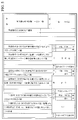
- Fig. 14 shows an out-door duty form which is an object of recognition by the recognition system in accordance with one embodiment of the present invention.
- the system performs recognition and analysis of input information by using knowledge of area concerning the layout of this form. For instance, the heading reading "Employee code" leads to an expectation that a number follows this heading. Once the number is recognized, the system can make access to the data base in order to expect and set the name and the division of the employee. Any ambiguity which may exists in the result of recognition of the number can be removed when reference is made to the employee's name and the division. Some of the blanks have only limited candidates to fill such blanks. For instance, the line headed by "Mode of Transport" can be filled only by one of train, bus, taxi and personal car, or a combination thereof.
- Fig. 15 is an illustration of a common knowledge used in the above-mentioned example of processing
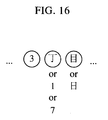
- Fig. 16 is a diagrammatic illustration of the recognition result to be processed in accordance with the method of one embodiment of the present invention.
- Encircled characters are the first candidates, and characters show below circles are other candidates. It is assumed that the user has changed into The system then reviews the recognition result which already has been acquired. The system recognizes that the word does not make any sense and considers alternative words such as and The system then refers to the knowledge base as shown in Fig. 15 to reach a conclusion that the word is inappropriate as a word which expresses a date. The system therefore selects as the most appropriate candidate and changes into numeral 1.
- the present invention can be carried out in various forms, provided that they can perform the function of the invention.
- the method of the, invention may be realized in the form of a single unit apparatus, a system composed of a plurality of apparatuses or a program which may be loaded on an apparatus or a system.
- the present invention makes it possible to produce correct analysis result, even when any error is contained in the inputted information.
- the present invention as described may be applied to a system which is composed of a plurality of computers or only to a selected computer of a system having a plurality of computers.
- the invention also can be applied when the computer is achieved by executing a program.
- Such a program may be supplied from an external memory medium, and such external storage medium also falls within the scope of the present invention.
- the natural language which has been recognised by the natural language processing apparatus can form a command for carrying out the predetermined operation such as storage or display of the recognised natural language, or translation of the natural language into another natural language or another form of language e.g. instructions for a machine.
Landscapes
- Engineering & Computer Science (AREA)
- Theoretical Computer Science (AREA)
- Computational Linguistics (AREA)
- Physics & Mathematics (AREA)
- General Physics & Mathematics (AREA)
- Audiology, Speech & Language Pathology (AREA)
- General Health & Medical Sciences (AREA)
- Health & Medical Sciences (AREA)
- General Engineering & Computer Science (AREA)
- Artificial Intelligence (AREA)
- Computer Vision & Pattern Recognition (AREA)
- Multimedia (AREA)
- Character Discrimination (AREA)
- Machine Translation (AREA)
Applications Claiming Priority (2)
| Application Number | Priority Date | Filing Date | Title |
|---|---|---|---|
| JP308896/94 | 1994-12-13 | ||
| JP6308896A JPH08167006A (ja) | 1994-12-13 | 1994-12-13 | 自然言語処理装置及びその方法 |
Publications (2)
| Publication Number | Publication Date |
|---|---|
| EP0717364A2 true EP0717364A2 (fr) | 1996-06-19 |
| EP0717364A3 EP0717364A3 (fr) | 1997-07-09 |
Family
ID=17986576
Family Applications (1)
| Application Number | Title | Priority Date | Filing Date |
|---|---|---|---|
| EP95309041A Ceased EP0717364A3 (fr) | 1994-12-13 | 1995-12-12 | Méthode pour anticiper des informations de correction dans un système de traitement de langage naturel |
Country Status (3)
| Country | Link |
|---|---|
| US (1) | US6029123A (fr) |
| EP (1) | EP0717364A3 (fr) |
| JP (1) | JPH08167006A (fr) |
Cited By (1)
| Publication number | Priority date | Publication date | Assignee | Title |
|---|---|---|---|---|
| CN103262105A (zh) * | 2010-12-10 | 2013-08-21 | 皇家飞利浦电子股份有限公司 | 临床文档调试决策支持 |
Families Citing this family (15)
| Publication number | Priority date | Publication date | Assignee | Title |
|---|---|---|---|---|
| US6311329B1 (en) | 1996-10-14 | 2001-10-30 | Sony Corporation | Information providing apparatus and method, display controlling apparatus and method, information providing system, as well as transmission medium |
| EP0962873A1 (fr) * | 1998-06-02 | 1999-12-08 | International Business Machines Corporation | Traitement des informations textuels et comprehension automatisée d'information |
| JP4438028B2 (ja) * | 1998-07-27 | 2010-03-24 | キヤノン株式会社 | 情報処理装置及びその方法、及びそのプログラムを記憶した記憶媒体 |
| US6556970B1 (en) * | 1999-01-28 | 2003-04-29 | Denso Corporation | Apparatus for determining appropriate series of words carrying information to be recognized |
| JP2001137788A (ja) * | 1999-11-12 | 2001-05-22 | Hitachi Ltd | 地名表記辞書作成方法および地名表記辞書作成装置 |
| US7085708B2 (en) * | 2000-09-23 | 2006-08-01 | Ravenflow, Inc. | Computer system with natural language to machine language translator |
| EP1490790A2 (fr) * | 2001-03-13 | 2004-12-29 | Intelligate Ltd. | Comprehension dynamique du langage naturel |
| US7664628B2 (en) * | 2002-12-27 | 2010-02-16 | Casio Computer Co., Ltd. | Electronic dictionary with illustrative sentences |
| JP4311365B2 (ja) * | 2005-03-25 | 2009-08-12 | 富士ゼロックス株式会社 | 文書処理装置およびプログラム |
| US20070035780A1 (en) * | 2005-08-02 | 2007-02-15 | Kabushiki Kaisha Toshiba | System and method for defining characteristic data of a scanned document |
| CN101512518B (zh) * | 2006-09-07 | 2015-06-24 | 日本电气株式会社 | 自然语言处理系统和词典登录系统 |
| US20110035210A1 (en) * | 2009-08-10 | 2011-02-10 | Benjamin Rosenfeld | Conditional random fields (crf)-based relation extraction system |
| CN103870489B (zh) * | 2012-12-13 | 2016-12-21 | 北京信息科技大学 | 基于搜索日志的中文人名自扩展识别方法 |
| CN107577706B (zh) * | 2017-07-28 | 2019-09-20 | 平安科技(深圳)有限公司 | 用户行为数据处理方法、装置及计算机可读存储介质 |
| TWI719699B (zh) * | 2019-11-04 | 2021-02-21 | 建國科技大學 | 人工智慧輔助說好話的方法 |
Citations (1)
| Publication number | Priority date | Publication date | Assignee | Title |
|---|---|---|---|---|
| US5060155A (en) * | 1989-02-01 | 1991-10-22 | Bso/Buro Voor Systeemontwikkeling B.V. | Method and system for the representation of multiple analyses in dependency grammar and parser for generating such representation |
Family Cites Families (8)
| Publication number | Priority date | Publication date | Assignee | Title |
|---|---|---|---|---|
| US5404506A (en) * | 1985-03-27 | 1995-04-04 | Hitachi, Ltd. | Knowledge based information retrieval system |
| US5050218A (en) * | 1986-08-26 | 1991-09-17 | Nec Corporation | Apparatus for recognizing address appearing on mail article |
| EP0280866A3 (fr) * | 1987-03-03 | 1992-07-08 | International Business Machines Corporation | Méthode informatique d'extraction automatique d'informations spécifiées communément dans une correspondance commerciale |
| US5159667A (en) * | 1989-05-31 | 1992-10-27 | Borrey Roland G | Document identification by characteristics matching |
| JPH03129469A (ja) * | 1989-10-14 | 1991-06-03 | Canon Inc | 自然言語処理装置 |
| US5377281A (en) * | 1992-03-18 | 1994-12-27 | At&T Corp. | Knowledge-based character recognition |
| JPH05324713A (ja) * | 1992-05-20 | 1993-12-07 | Hitachi Ltd | 自然語処理方法および自然語処理システム |
| US5659668A (en) * | 1993-09-30 | 1997-08-19 | Sanyo Electric Co., Ltd. | Knowledge base constructing system |
-
1994
- 1994-12-13 JP JP6308896A patent/JPH08167006A/ja active Pending
-
1995
- 1995-12-12 US US08/571,195 patent/US6029123A/en not_active Expired - Lifetime
- 1995-12-12 EP EP95309041A patent/EP0717364A3/fr not_active Ceased
Patent Citations (1)
| Publication number | Priority date | Publication date | Assignee | Title |
|---|---|---|---|---|
| US5060155A (en) * | 1989-02-01 | 1991-10-22 | Bso/Buro Voor Systeemontwikkeling B.V. | Method and system for the representation of multiple analyses in dependency grammar and parser for generating such representation |
Non-Patent Citations (1)
| Title |
|---|
| STERLING L ET AL.: "The Art of Prolog, Chapter 16, pages 256-265", 1986, MIT PRESS, 6 * |
Cited By (2)
| Publication number | Priority date | Publication date | Assignee | Title |
|---|---|---|---|---|
| CN103262105A (zh) * | 2010-12-10 | 2013-08-21 | 皇家飞利浦电子股份有限公司 | 临床文档调试决策支持 |
| CN103262105B (zh) * | 2010-12-10 | 2016-11-09 | 皇家飞利浦电子股份有限公司 | 临床文档调试决策支持 |
Also Published As
| Publication number | Publication date |
|---|---|
| US6029123A (en) | 2000-02-22 |
| JPH08167006A (ja) | 1996-06-25 |
| EP0717364A3 (fr) | 1997-07-09 |
Similar Documents
| Publication | Publication Date | Title |
|---|---|---|
| US6029123A (en) | Natural language processing system and method for expecting natural language information to be processed and for executing the processing based on the expected information | |
| US5587902A (en) | Translating system for processing text with markup signs | |
| US5678051A (en) | Translating apparatus with special display mode for supplemented words | |
| EP0285449B1 (fr) | Système de traitement de document | |
| JP2002163250A (ja) | 文書処理装置 | |
| JP5231698B2 (ja) | 日本語の表意文字の読み方を予測する方法 | |
| EP0239061B1 (fr) | Dispositif et méthode de reconnaissance optique de caractères | |
| CN100562869C (zh) | 翻译处理方法和文档处理装置 | |
| JP2611904B2 (ja) | 文字認識装置 | |
| JPH10177623A (ja) | 文書認識装置および言語処理装置 | |
| JPH10269210A (ja) | 文字入力装置 | |
| Krause et al. | Lemmatizing German newspaper texts with the aid of an algorithm | |
| JPH08241314A (ja) | 文書ファイリングシステム | |
| JPH08305698A (ja) | 自然語解析方法及び装置 | |
| JP2002297585A (ja) | 英文名詞句の区分方法,英文構文情報生成方法および装置 | |
| JP2829264B2 (ja) | 文書レイアウト方法 | |
| JPH087046A (ja) | 文書認識装置 | |
| JP3826071B2 (ja) | 文章作成支援装置及び方法並びにプログラム | |
| JP3061855B2 (ja) | かな漢字変換装置及びかな漢字変換方法 | |
| JPH0421169A (ja) | 翻訳装置 | |
| JPH09146937A (ja) | 文字列変換装置および文字列変換方法 | |
| JPH07141382A (ja) | 外国語文書作成支援装置 | |
| JPH05108703A (ja) | 機械翻訳機 | |
| JP2003248794A (ja) | 帳票情報処理装置、帳票情報処理システムおよびプログラム | |
| JPH0546612A (ja) | 文章誤り検出装置 |
Legal Events
| Date | Code | Title | Description |
|---|---|---|---|
| PUAI | Public reference made under article 153(3) epc to a published international application that has entered the european phase |
Free format text: ORIGINAL CODE: 0009012 |
|
| AK | Designated contracting states |
Kind code of ref document: A2 Designated state(s): DE FR GB IT NL |
|
| PUAL | Search report despatched |
Free format text: ORIGINAL CODE: 0009013 |
|
| AK | Designated contracting states |
Kind code of ref document: A3 Designated state(s): DE FR GB IT NL |
|
| 17P | Request for examination filed |
Effective date: 19971119 |
|
| 17Q | First examination report despatched |
Effective date: 19991118 |
|
| STAA | Information on the status of an ep patent application or granted ep patent |
Free format text: STATUS: THE APPLICATION HAS BEEN REFUSED |
|
| 18R | Application refused |
Effective date: 20030815 |