EP0707641B1 - An enzyme with protease activity - Google Patents
An enzyme with protease activity Download PDFInfo
- Publication number
- EP0707641B1 EP0707641B1 EP94919575A EP94919575A EP0707641B1 EP 0707641 B1 EP0707641 B1 EP 0707641B1 EP 94919575 A EP94919575 A EP 94919575A EP 94919575 A EP94919575 A EP 94919575A EP 0707641 B1 EP0707641 B1 EP 0707641B1
- Authority
- EP
- European Patent Office
- Prior art keywords
- enzyme
- protease
- aspergillus
- dna
- dna sequence
- Prior art date
- Legal status (The legal status is an assumption and is not a legal conclusion. Google has not performed a legal analysis and makes no representation as to the accuracy of the status listed.)
- Expired - Lifetime
Links
Images


Classifications
-
- C—CHEMISTRY; METALLURGY
- C12—BIOCHEMISTRY; BEER; SPIRITS; WINE; VINEGAR; MICROBIOLOGY; ENZYMOLOGY; MUTATION OR GENETIC ENGINEERING
- C12N—MICROORGANISMS OR ENZYMES; COMPOSITIONS THEREOF; PROPAGATING, PRESERVING, OR MAINTAINING MICROORGANISMS; MUTATION OR GENETIC ENGINEERING; CULTURE MEDIA
- C12N15/00—Mutation or genetic engineering; DNA or RNA concerning genetic engineering, vectors, e.g. plasmids, or their isolation, preparation or purification; Use of hosts therefor
- C12N15/09—Recombinant DNA-technology
- C12N15/11—DNA or RNA fragments; Modified forms thereof; Non-coding nucleic acids having a biological activity
- C12N15/52—Genes encoding for enzymes or proenzymes
-
- C—CHEMISTRY; METALLURGY
- C11—ANIMAL OR VEGETABLE OILS, FATS, FATTY SUBSTANCES OR WAXES; FATTY ACIDS THEREFROM; DETERGENTS; CANDLES
- C11D—DETERGENT COMPOSITIONS; USE OF SINGLE SUBSTANCES AS DETERGENTS; SOAP OR SOAP-MAKING; RESIN SOAPS; RECOVERY OF GLYCEROL
- C11D3/00—Other compounding ingredients of detergent compositions covered in group C11D1/00
- C11D3/39—Organic or inorganic per-compounds
- C11D3/3947—Liquid compositions
-
- A—HUMAN NECESSITIES
- A21—BAKING; EDIBLE DOUGHS
- A21D—TREATMENT OF FLOUR OR DOUGH FOR BAKING, e.g. BY ADDITION OF MATERIALS; BAKING; BAKERY PRODUCTS
- A21D8/00—Methods for preparing or baking dough
- A21D8/02—Methods for preparing dough; Treating dough prior to baking
- A21D8/04—Methods for preparing dough; Treating dough prior to baking treating dough with microorganisms or enzymes
- A21D8/042—Methods for preparing dough; Treating dough prior to baking treating dough with microorganisms or enzymes with enzymes
-
- A—HUMAN NECESSITIES
- A23—FOODS OR FOODSTUFFS; TREATMENT THEREOF, NOT COVERED BY OTHER CLASSES
- A23K—FODDER
- A23K20/00—Accessory food factors for animal feeding-stuffs
- A23K20/10—Organic substances
- A23K20/189—Enzymes
-
- C—CHEMISTRY; METALLURGY
- C11—ANIMAL OR VEGETABLE OILS, FATS, FATTY SUBSTANCES OR WAXES; FATTY ACIDS THEREFROM; DETERGENTS; CANDLES
- C11D—DETERGENT COMPOSITIONS; USE OF SINGLE SUBSTANCES AS DETERGENTS; SOAP OR SOAP-MAKING; RESIN SOAPS; RECOVERY OF GLYCEROL
- C11D3/00—Other compounding ingredients of detergent compositions covered in group C11D1/00
- C11D3/0005—Other compounding ingredients characterised by their effect
- C11D3/0078—Compositions for cleaning contact lenses, spectacles or lenses
-
- C—CHEMISTRY; METALLURGY
- C11—ANIMAL OR VEGETABLE OILS, FATS, FATTY SUBSTANCES OR WAXES; FATTY ACIDS THEREFROM; DETERGENTS; CANDLES
- C11D—DETERGENT COMPOSITIONS; USE OF SINGLE SUBSTANCES AS DETERGENTS; SOAP OR SOAP-MAKING; RESIN SOAPS; RECOVERY OF GLYCEROL
- C11D3/00—Other compounding ingredients of detergent compositions covered in group C11D1/00
- C11D3/16—Organic compounds
- C11D3/38—Products with no well-defined composition, e.g. natural products
- C11D3/386—Preparations containing enzymes, e.g. protease or amylase
-
- C—CHEMISTRY; METALLURGY
- C11—ANIMAL OR VEGETABLE OILS, FATS, FATTY SUBSTANCES OR WAXES; FATTY ACIDS THEREFROM; DETERGENTS; CANDLES
- C11D—DETERGENT COMPOSITIONS; USE OF SINGLE SUBSTANCES AS DETERGENTS; SOAP OR SOAP-MAKING; RESIN SOAPS; RECOVERY OF GLYCEROL
- C11D3/00—Other compounding ingredients of detergent compositions covered in group C11D1/00
- C11D3/16—Organic compounds
- C11D3/38—Products with no well-defined composition, e.g. natural products
- C11D3/386—Preparations containing enzymes, e.g. protease or amylase
- C11D3/38618—Protease or amylase in liquid compositions only
-
- C—CHEMISTRY; METALLURGY
- C11—ANIMAL OR VEGETABLE OILS, FATS, FATTY SUBSTANCES OR WAXES; FATTY ACIDS THEREFROM; DETERGENTS; CANDLES
- C11D—DETERGENT COMPOSITIONS; USE OF SINGLE SUBSTANCES AS DETERGENTS; SOAP OR SOAP-MAKING; RESIN SOAPS; RECOVERY OF GLYCEROL
- C11D3/00—Other compounding ingredients of detergent compositions covered in group C11D1/00
- C11D3/16—Organic compounds
- C11D3/38—Products with no well-defined composition, e.g. natural products
- C11D3/386—Preparations containing enzymes, e.g. protease or amylase
- C11D3/38636—Preparations containing enzymes, e.g. protease or amylase containing enzymes other than protease, amylase, lipase, cellulase, oxidase or reductase
-
- C—CHEMISTRY; METALLURGY
- C12—BIOCHEMISTRY; BEER; SPIRITS; WINE; VINEGAR; MICROBIOLOGY; ENZYMOLOGY; MUTATION OR GENETIC ENGINEERING
- C12N—MICROORGANISMS OR ENZYMES; COMPOSITIONS THEREOF; PROPAGATING, PRESERVING, OR MAINTAINING MICROORGANISMS; MUTATION OR GENETIC ENGINEERING; CULTURE MEDIA
- C12N9/00—Enzymes; Proenzymes; Compositions thereof; Processes for preparing, activating, inhibiting, separating or purifying enzymes
- C12N9/14—Hydrolases (3)
- C12N9/48—Hydrolases (3) acting on peptide bonds (3.4)
- C12N9/50—Proteinases, e.g. Endopeptidases (3.4.21-3.4.25)
- C12N9/58—Proteinases, e.g. Endopeptidases (3.4.21-3.4.25) derived from fungi
- C12N9/62—Proteinases, e.g. Endopeptidases (3.4.21-3.4.25) derived from fungi from Aspergillus
-
- C—CHEMISTRY; METALLURGY
- C12—BIOCHEMISTRY; BEER; SPIRITS; WINE; VINEGAR; MICROBIOLOGY; ENZYMOLOGY; MUTATION OR GENETIC ENGINEERING
- C12N—MICROORGANISMS OR ENZYMES; COMPOSITIONS THEREOF; PROPAGATING, PRESERVING, OR MAINTAINING MICROORGANISMS; MUTATION OR GENETIC ENGINEERING; CULTURE MEDIA
- C12N9/00—Enzymes; Proenzymes; Compositions thereof; Processes for preparing, activating, inhibiting, separating or purifying enzymes
- C12N9/14—Hydrolases (3)
- C12N9/78—Hydrolases (3) acting on carbon to nitrogen bonds other than peptide bonds (3.5)
- C12N9/80—Hydrolases (3) acting on carbon to nitrogen bonds other than peptide bonds (3.5) acting on amide bonds in linear amides (3.5.1)
- C12N9/82—Asparaginase (3.5.1.1)
Definitions
- the present invention relates to a DNA construct encoding an enzyme with protease activity, a method of producing the enzyme, an enzyme with protease activity, and an enzyme preparation containing the enzyme.
- Proteases are enzymes capable of cleaving peptide bonds.
- Acid proteases i.e. proteases having an acidic pH optimum
- microbial acid proteases have been found to be produced by bacterial strains such as strains of Bacillus sp. (JP 01240184), fungal strains, e.g. of Rhizopus sp. (EP 72978), Schytalidium sp. (JP 48091273), Sulpholobus sp. and Thermoplasma sp. (WO/90 10072) and Aspergillus sp. (JP 50121486, EP 82 395).
- JP 3058794 discloses the cloning of a gene encoding an acid protease from R. niveus and the recombinant expression thereof.
- the cloning and expression of a gene from Cryphonectira parasitica encoding an aspartic protease is described by Choi et al. (1993).
- JP 407 5586 discloses the cloning of a gene from Aspergillus niger encoding an acid proteinase (Protease A).
- Berka et al. (1990) disclose a gene encoding the aspartic proteinase aspergillopepsin A from Aspergillus awamori .
- the cloning of a gene encoding the aspartic proteinase aspergillopepsin O from Aspergillus oryzae is described by Berka et al. (1993).
- the cloning of a gene encoding the acid protease (PEPA) from Aspergillus oryzae is disclosed by Gomi et al. (1993).
- Acid proteases are widely used industrially, e.g. in the preparation of food and feed, in the leather industry (e.g. to dehair hides), in the production of protein hydrolysates and in the wine making and brewing industry.
- the invention relates to a DNA construct comprising a DNA sequence encoding an enzyme exhibiting protease activity, which DNA sequence comprises the DNA sequence shown in SEQ ID No. 1 or an analogous sequence thereof being at least 80% homologous to the DNA sequence shown in SEQ ID No. 1.
- the DNA sequence shown in SEQ ID No. 1 encodes an enzyme which in the following disclosure is referred to as Protease I.
- the invention relates to an expression vector harbouring a DNA construct of the invention, a cell comprising the DNA construct or expression vector and a method of producing an enzyme exhibiting protease activity which method comprises culturing said cell under conditions permitting the production of the enzyme, and recovering the enzyme from the culture.
- the invention relates to an enzyme exhibiting protease activity, which enzyme is encoded by a DNA construct of the invention as defined above or produced by the method of the invention.
- the invention relates to an enzyme with protease activity, which is active at a pH below 7.0 and in the presence of up to 3% hydrogen peroxide.
- the term "is active" as used about the enzyme is intended to indicate that the enzyme is capable of hydrolysing a substrate under the above-mentioned conditions, e.g. as described in example 5 herein.
- This enzyme of the invention which is active at a pH below 7.0 and in the presence of up to 3% hydrogen peroxidase and which removes more than 80% of the lysozyme from the lenses under the conditions specified in example 5 is termed the "H 2 O 2 -stable protease" in the following disclosure. This enzyme is believed to be generally novel.
- the present invention provides an enzyme with protease activity, which enzyme is active at a pH below 7.0 and which is specific towards Phe-Val or Lys-Tyr linkages.
- the term "specific” is intended to indicate that the enzyme, when the substrate is bovine glucagon, primarily cleaves these linkages.
- Protease I described herein is a preferred example of an enzyme of the invention.
- the enzyme has been found to be an acid protease, i.e. protease which has an acid pH optimum.
- the protease in a highly purified form, i.e. greater than 75% pure, and more preferably greater than 90% pure as determined by SDS gel electrophoresis as described in the Materials and Methods section herein.
- the invention relates to an enzyme preparation comprising an enzyme of the invention and the use of the enzyme or enzyme preparation for various purposes in which modification or degradation of protein-containing substances is desirable.
- analogue used to define the DNA construct of the invention is understood to include any DNA sequence which encodes an enzyme with protease activity and which is at least 80% homologous to the DNA sequence shown in SEQ ID No. 1.
- the analogous DNA sequence may be a DNA sequence which hybridizes to the same probe as the DNA coding for the protease enzyme under the following conditions: presoaking in 5xSSC and prehybridizing for 1 h at ⁇ 55°C in a solution of 5xSSC, 5xDenhardt's solution, 50 mM sodium phosphate, pH 6.8, and 50 ⁇ g of denatured sonicated calf thymus DNA, followed by hybridization in the same solution supplemented with 50 ⁇ Ci 32-P-dCTP labelled probe for 18 h at ⁇ 55°C followed by washing three times in 2xSSC, 0.2% SDS at 55°C for 30 minutes.
- the analogous DNA sequence is preferably at least 90% homologous to the sequence shown in SEQ ID No.
- the analogous DNA sequence may, e.g., be isolated from another organism or may be one prepared on the basis of the DNA sequence shown in SEQ ID No. 1, such as by introduction of nucleotide substitutions which do not give rise to another amino acid sequence of the protease but which correspond to the codon usage of the host organism into which the DNA construct is introduced or nucleotide substitutions which do give rise to a different amino acid sequence and therefore, possibly, a different protein structure which might give rise to a protease mutant with different properties than the native enzyme.
- Other examples of possible modifications are insertion of one or more nucleotides into the sequence, addition of one or more nucleotides at either end of the sequence, or deletion of one or more nucleotides at either end or within the sequence.
- the nucleotide probe with which the analogue of the DNA sequence shown in SEQ ID No. 1 can hybridize may, e.g. be prepared on the basis of any of the following DNA sequences or any combination thereof:
- sequences constitute partial sequences of the DNA sequence shown in SEQ ID No. 1 or analogues of such sequences.
- a DNA sequence of the invention may be isolated by a general method involving
- Example 1 A more detailed description of this screening method is given in Example 1 below and in WO 93/11249, the contents of which is hereby incorporated by reference.
- the DNA sequence coding for the enzyme may for instance be isolated by screening a cDNA library of Aspergillus aculeatus, e.g strain CBS 101.43, publicly available from the Centraalbureau voor Schimmelcultures, Delft, NL, and selecting for clones expressing the appropriate enzyme activity (i.e. protease activity as defined by the ability of the enzyme to hydrolyse peptide bonds in proteins and peptides). The appropriate DNA sequence may then be isolated from the clone by standard procedures, e.g. as described in Example 1.
- a DNA sequence coding for a homologous enzyme may be derived by similarly screening a cDNA library of another microorganism, in particular a fungus, such as a strain of another Aspergillus sp., in particular a strain of A. aculeatus or A. niger, a strain of a Trichoderma sp., in particular a strain of T . harzianum, or T. reesie , a strain of a Fusarium sp., in particular a strain of F . oxysporum, a strain of Rhizopus sp., e.g. R. niveus, a strain of Schytalidium sp., or a strain of a Humicola sp.
- a cDNA library of another microorganism in particular a fungus, such as a strain of another Aspergillus sp., in particular a strain of A. aculeatus or A. niger,
- the DNA sequence of the invention may, in accordance with well-known procedures, conveniently be isolated from DNA from an appropriate organism by use of synthetic oligonucleotide probes prepared on the basis of a DNA sequence disclosed herein.
- a suitable oligonucleotide probe may be prepared on the basis of any of the partial nucleotide sequences shown above.
- the DNA sequence may subsequently be inserted into a recombinant expression vector.
- This may be any vector which may conveniently be subjected to recombinant DNA procedures, and the choice of vector will often depend on the host cell into which it is to be introduced.
- the vector may be an autonomously replicating vector, i.e. a vector which exists as an extrachromosomal entity, the replication of which is independent of chromosomal replication, e.g. a plasmid.
- the vector may be one which, when introduced into a host cell, is integrated into the host cell genome and replicated together with the chromosome(s) into which it has been integrated.
- the DNA sequence encoding the protease should be operably connected to a suitable promoter and terminator sequence.
- the promoter may be any DNA sequence which shows transcriptional activity in the host cell of choice and may be derived from genes encoding proteins either homologous or heterologous to the host cell.
- the procedures used to ligate the DNA sequences coding for the protease, the promoter and the terminator, respectively, and to insert them into suitable vectors are well known to persons skilled in the art (cf., for instance, Sambrook et al., Molecular Cloning. A Laboratory Manual , Cold Spring Harbor, NY, 1989).
- the host cell which is transformed with the DNA sequence encoding the enzyme of the invention is preferably a eukaryotic cell, in particular a fungal cell such as a yeast or filamentous fungal cell.
- the cell may belong to a species of Aspergillus , most preferably Aspergillus oryzae or Aspergillus niger .
- Fungal cells may be transformed by a process involving protoplast formation and transformation of the protoplasts followed by regeneration of the cell wall in a manner known per se .
- Aspergillus oryzae as a host microorganism is described in EP 238 023 (of Novo Noridisk A/S).
- the host cell may also be a yeast cell, e.g.
- Saccharomyces in particular Saccharomyces cerevisiae , Saccharomyces kluyveri or Saccharomyces uvarum
- a strain of Schizosaccaromyces sp. such as Schizosaccharomyces pombe
- Hansenula sp. Pichia sp., Yarrowia sp. such as Yarrowia lipolytica
- Kluyveromyces sp. such as Kluyveromyces lactis .
- the present invention relates to a method of producing an enzyme with protease activity, wherein a suitable host cell transformed with a DNA construct of the invention encoding the enzyme is cultured under conditions permitting the production of the enzyme, and the resulting enzyme is recovered from the culture.
- the medium used to culture the transformed host cells may be any conventional medium suitable for growing the host cells in question.
- the expressed protease may conveniently be secreted into the culture medium and may be recovered therefrom by well-known procedures including separating the cells from the medium by centrifugation or filtration, precipitating proteinaceous components of the medium by means of a salt such as ammonium sulphate, followed by chromatographic procedures such as ion exchange chromatography, affinity chromatography, or the like.
- the protease of the invention e.g. the H 2 O 2 -stable or the Lys-Tyr or Phe-Val specific protease
- the protease of the invention is active at a pH in the range of 2-7, such as at a pH below 6.0, e.g. in the range of 2-6, and most preferably in the pH range of 4-6.
- both acidic proteases are active in the presence of 0.01-5% hydrogen peroxide, such as 0.1-5%, 0.5-4%, 1-4% or 2-3% hydrogen peroxide and are applicable to contact lens cleaning.
- H 2 O 2 -stable protease of the invention is the enzyme encoded by the DNA sequence shown in SEQ ID No. 1 or an analogue thereof as defined above, which is at least 80% homologous to said DNA sequence.
- the term "derived from” is intended not only to indicate a protease produced by strain CBS 101.43, but also a protease encoded by a DNA sequence isolated from strain CBS 101.43 and produced in a host organism transformed with said DNA sequence.
- H 2 O 2 -stable protease and the Lys-Tyr or Phe-Val specific protease of the invention both were obtained from a strain of the fungal species Aspergillus aculeatus, it is contemplated that such enzymes are obtainable from other organisms as well, in particularly microorganisms.
- the enzyme of the invention is preferably obtainable from a bacterium or a fungus such as a strain of Aspergillus, Rhizopus, Trichoderma ,, e.g. T. reesei or T. harzianum, Penicillium, Fusarium, Schytalidium or Humicola, e.g. H. insolens or H. lanuginosa, or a strain of Bacillus.
- a bacterium or a fungus such as a strain of Aspergillus, Rhizopus, Trichoderma ,, e.g. T. reesei or T. harzianum, Penicillium, Fusarium, Schytalidium or Humicola, e.g. H. insolens or H. lanuginosa, or a strain of Bacillus.
- Aspergillus sp. examples include A. niger, A. oryzae or A. aculeatus , such as A. aculeatus CBS 101.43.
- the present invention relates to an enzyme preparation useful for the degradation or modification of protease containing materials, said preparation being enriched in an enzyme exhibiting protease activity as described above.
- the enzyme preparation having been enriched with an enzyme of the invention may e.g. be an enzyme preparation comprising multiple enzymatic activities, in particular an enzyme preparation comprising multiple plant cell wall degrading enzymes such as Pectinex®, Pectinex Ultra SP®, Gamanase, Celluclast or Celluzyme or protease and/or exopeptidase-containing enzyme preparations such as Neutrase®, Alcalase® or Flavourzyme® (all available from Novozymes A/S).
- the term "enriched" is intended to indicate that the protease activity of the enzyme preparation has been increased, e.g. with an enrichment factor of at least 1.1, conveniently due to addition of an enzyme of the invention prepared by the method described above.
- the enzyme preparation enriched in an enzyme exhibiting protease activity may be one which comprises an enzyme of the invention as the major enzymatic component, e.g. a mono-component enzyme preparation.
- the enzyme preparation may be prepared in accordance with methods known in the art and may be in the form of a liquid or a dry preparation.
- the enzyme preparation may be in the form of a granulate or a microgranulate.
- the enzyme to be included in the preparation may be stabilized in accordance with methods known in the art.
- the enzyme preparation according to the invention may be used as an agent for degradation or modification of plant cell walls.
- Some proteins, like extensins, are components of plant cell walls. Proteases will therefore facilitate the degradation or modification of plant cell walls.
- Such a protease containing plant cell wall degrading enzyme preparation can be used for many different applications like extraction of oil from plant sources like olives and rape or for production of juice from different fruits like apples, pears and citrus.
- the enzyme preparation may additionally contain one or more other plant cell wall degrading enzymes such as a pectin lyase, pectate lyase, endoglucanase, arabinanase, xylanase, glucanase, galactanase, mannanase, ⁇ -galactosidase, rhamnogalacturonase, pectin acetylesterase, polygalacturonase, protease, exopeptidase or pectin methylesterase.
- the preparation may further contain one or more enzymes exhibiting exo-activity on the same substrates as the above-mentioned endo-enzymes.
- the proteases according to the invention work at the same pH and temperature conditions as many other cell wall degrading enzymes, and are thereby particular well suited for such applications.
- the additional enzyme(s) may be producible by means of a microorganism belonging to the genus Aspergillus, preferably Aspergillus niger, Aspergillus aculeatus, Aspergillus awamori or Aspergillus oryzae, or Trichoderma.
- the protease enzyme preparation according to the invention may also be used in the wine industry, to prevent haze or to dissolve haze, as proteins often take part in the undesirable haze formation.
- the proteases according to the invention are active under the conditions present under fermentation and maturation of wine, and they are therefore particular useful for this application.
- the enzyme or enzyme preparation of the invention may be used in baking, e.g. in order to weaken the gluten components of flour so as to obtain a softening of so-called hard flour.
- the use of weak flour is important for the preparation of dough which must be very extensible and not elastic, e.g. in the preparation of extruded baked products, biscuits and other products which must keep their original shape during transport and baking.
- the proteases of the invention constitute a desirable alternative to conventionally used agents for weakening of flour, such as sodium metabisulphite (SMS).
- SMS sodium metabisulphite
- the protease preparation may also be used in the food and feed industry to improve the digestibility of proteins.
- the enzyme or enzyme preparation may be added to animal feed or may be used to process animal feed, in particular feed for piglets or poultry. Thereby, the digestibility of components of the feed may be increased resulting in an improved growth rate and efficiency of feed utilisation of the animals, cf. Brenes et al. (1993).
- the enzyme or enzyme preparation of the invention may be useful to make protein hydrolysates from, e.g., vegetable proteins like soy, pea, lupin or rape seed protein, milk like casein, meat proteins, or fish proteins.
- the protease may be used for protein hydrolysates to improve the solubility, consistency, taste, or fermentability, to reduce antigenicity or for other purposes to make food, feed or dedical products.
- the protease may be used alone or together with other proteases or together with other enzymes like exopeptidases.
- the use of the protease of the invention together with exopeptidase rich enzyme preparations will improve the taste of the protein hydrolysates.
- the protease preparation may also be used to modify proteins, like reducing viscosity caused or partially caused by proteins.
- proteins like reducing viscosity caused or partially caused by proteins.
- Such viscosity problems are known in the processing of different protein containing plant materials like soya and peas.
- the enzyme or enzyme preparation may be used in the processing of fish or meat, e.g. to change texture and/or viscosity.
- the protease preparation may also be used to facilitate fermentative processes, like yeast fermentation of barley, malt and other raw materials for the production of e.g. beer.
- the enzyme or enzyme preparation of the invention may be useful in the leather industry e.g. to remove hairs from hides.
- the low pH optimum of the protease is an advantage as the subsequent tanning of the hides is carried under acid conditions.
- the protease preparation is useful for production of peptides from proteins, where it is advantages to use a cloned enzyme essentially free from other proteolytic activities.
- protease preparation can be used to degrade protein in order to facilitate purification of or to upgrade different products, like in purification or upgrading of gums, like guar gum, xanthan gum, degumming of silk, or improvement of the quality of wool.
- proteases of the invention are of particular use for cleaning of contact lenses and other applications involving the use of hydrogen peroxide, in which protein-containing material is to be removed.
- the dosage of the enzyme preparation of the invention and other conditions under which the preparation is used may be determined on the basis of methods known in the art.
- Donor organism mRNA was isolated from Aspergillus aculeatus, CBS 101.43, grown in a soy-containing fermentation medium with agitation to ensure sufficient aeration. Mycelia were harvested after 3-5 days' growth, immediately frozen in liquid nitrogen and stored at -80°C.
- Yeast strains The Saccharomyces cerevisiae strain used was yNG231 (MAT alpha, leu2, ura3-52, his4-539, pep4-delta 1, cir+) or JG169 (MAT ⁇ ; ura 3-52; leu 2-3, 112; his 3-D200; pep 4-113; prc1::HIS3; prb1:: LEU2; cir+).
- Plasmids The expression plasmid pYHD17 containing the yeast TPI promoter was prepared from the commercially available plasmid pYES II (Invitrogen). The plasmid and the construction thereof is further described in WO 93/11249, the contents of which is hereby incorporated by reference.
- the Aspergillus expression vector pHD414 is a derivative of the plasmid p775 (described in EP 238 023). The construction of pHD414 is further described in WO 93/11249. pHD414 contains the A. niger glucoamylase terminator and the A. oryzae TAKA amylase promoter.
- RNA was prepared by extraction with guanidinium thiocyanate followed by ultracentrifugation through a 5.7 M CsCl cushion essentially as described by Chirgwin et al ., 1979 and in WO 93/11249.
- poly(A) + RNAs were isolated by oligo(dT)-cellulose affinity chromatography (Aviv & Leder, 1972). Typically, 0.2 g of oligo(dT) cellulose (Boehringer Mannheim) was preswollen in 10 ml of 1 x column loading buffer (20 mM Tris-Cl, pH 7.6, 0.5 M NaCl, 1 mM EDTA, 0.1 % SDS), loaded onto a DEPC-treated, plugged plastic column (Poly Prep Chromatography Column, Bio Rad), and equilibrated with 20 ml 1 x loading buffer.
- 1 x column loading buffer (20 mM Tris-Cl, pH 7.6, 0.5 M NaCl, 1 mM EDTA, 0.1 % SDS
- RNA sample was heated at 65°C for 8 min., quenched on ice for 5 min, and after addition of 1 vol 2 x column loading buffer to the RNA sample loaded onto the column.
- the eluate was collected and reloaded 2-3 times by heating the sample as above and quenching on ice prior to each loading.
- the oligo(dT) column was washed with 10 vols of 1 x loading buffer, then with 3 vols of medium salt buffer (20 mM Tris-Cl, pH 7.6, 0.1 M NaCl, 1 mM EDTA, 0.1 % SDS), followed by elution of the poly(A) + RNA with 3 vols of elution buffer (10 mM Tris-Cl, pH 7.6, 1 mM EDTA, 0.05 % SDS) preheated to + 65 °C, by collecting 500 ⁇ l fractions. The OD 260 was read for each collected fraction, and the mRNA containing fractions were pooled and ethanol precipitated at - 20 °C for 12 h.
- the poly(A) + RNA was collected by centrifugation, resuspended in DEPC-DIW and stored in 5-10 ⁇ g aliquots at - 80 °C.
- Double-stranded cDNA was synthesized from 5 ⁇ g of A. aculeatus poly(A) + RNA by the RNase H method (Gubler & Hoffman 1983, Sambrook et al., 1989) using the hair-pin modification.
- the poly(A) + RNA (5 ⁇ g in 5 ⁇ l of DEPC-treated water) was heated at 70 °C for 8 min., quenched on ice, and combined in a final volume of 50 ⁇ l with reverse transcriptase buffer (50 mM Tris-Cl, pH 8.3, 75 mM KCl, 3 mM MgCl2, 10 mM DTT, Bethesda Research Laboratories) containing 1 mM each dNTP (Pharmacia), 40 units of human placental ribonuclease inhibitor (RNasin, Promega), 10 ⁇ g of oligo(dT) 12-18 primer (Pharmacia) and 1000 units of Superscript II RNase H- reverse transcriptase (Bethesda Research Laboratories). First-strand cDNA was synthesized by incubating the reaction mixture at 45 °C for 1 h.
- reverse transcriptase buffer 50 mM Tris-Cl, pH 8.3, 75 mM
- Second strand synthesis After synthesis 30 ⁇ l of 10 mM Tris-Cl, pH 7.5, 1 mM EDTA was added, and the mRNA:cDNA hybrids were ethanol precipitated for 12 h at - 20 °C by addition of 40 ⁇ g glycogen carrier (Boehringer Mannheim) 0.2 vols 10 M NH 4 Ac and 2.5 vols 96 % EtOH.
- 40 ⁇ g glycogen carrier Boehringer Mannheim
- Second strand cDNA synthesis was performed by incubating the reaction tube at 16 °C for 3 h, and the reaction was stopped by addition of EDTA to 20 mM final concentration followed by phenol extraction.
- Mung bean nuclease treatment The double-stranded (ds) cDNA was ethanol precipitated at - 20 °C for 12 h by addition of 2 vols of 96 % EtOH, 0.1 vol 3 M NaAc, pH 5.2, recovered by centrifugation, washed in 70 % EtOH, dried (SpeedVac), and resuspended in 30 ⁇ l of Mung bean nuclease buffer (30 mM NaAc, pH 4.6, 300 mM NaCl, 1 mM ZnSO4, 0.35 mM DTT, 2 % glycerol) containing 36 units of Mung bean nuclease (Bethesda Research Laboratories).
- the single-stranded hair-pin DNA was clipped by incubating the reaction at 30 °C for 30 min, followed by addition of 70 ⁇ l 10 mM Tris-Cl, pH 7.5, 1 mM EDTA, phenol extraction, and ethanol precipitation with 2 vols of 96 % EtOH and 0.1 vol 3M NaAc, pH 5.2 at - 20 °C for 12 h.
- T4 DNA polymerase buffer (20 mM Tris-acetate, pH 7.9, 10 mM MgAc, 50 mM KAc, 1 mM DTT) containing 0.5 mM each dNTP and 7.5 units of T4 DNA polymerase (Invitrogen) by incubating the reaction mixture at + 37 °C for 15 min. The reaction was stopped by addition of EDTA to 20 mM final concentration, followed by phenol extraction and ethanol precipitation.
- Adaptor ligation and size selection After the fill-in reaction the cDNA was ligated to non-palindromic BstX I adaptors (1 ⁇ g/ ⁇ l, Invitrogen) in 30 ⁇ l of ligation buffer (50 mM Tris-Cl, pH 7.8, 10 mM MgCl2, 10 mM DTT, 1 mM ATP, 25 ⁇ g/ml bovine serum albumin) containing 600 pmol BstX I adaptors and 5 units of T4 ligase (Invitrogen) by incubating the reaction mix at + 16 °C for 12 h.
- ligation buffer 50 mM Tris-Cl, pH 7.8, 10 mM MgCl2, 10 mM DTT, 1 mM ATP, 25 ⁇ g/ml bovine serum albumin
- the reaction was stopped by heating at + 70 °C for 5 min, and the adapted cDNA was size-fractionated by agarose gel electrophoresis (0.8 % HSB-agarose, FMC) to separate unligated adaptors and small cDNAs.
- the cDNA was size-selected with a cut-off at 0.7 kb, and the cDNA was electroeluted from the agarose gel in 10 mM Tris-Cl, pH 7.5, 1 mM EDTA for 1 h at 100 volts, phenol extracted and ethanol precipitated at - 20 °C for 12 h as above.
- the cells were grown at + 37 °C for 1 h , 50 ⁇ l plated on LB + ampicillin plates (100 ⁇ g/ml) and grown at + 37 °C for 12h.
- a large-scale ligation was set up in 40 ⁇ l of ligation buffer containing 9 units of T4 ligase, and the reaction was incubated at + 16 °C for 12 h.
- the ligation reaction was stopped by heating at 70 °C for 5 min, ethanol precipitated at - 20 °C for 12 h, recovered by centrifugation and resuspended in 10 ⁇ l DIW.
- One ⁇ l aliquots were transformed into electrocompetent E. coli 1061 cells using the same electroporation conditions as above, and the transformed cells were titered and the library plated on LB + ampicillin plates with 5000-7000 c.f.u./plate. To each plate was added 3 ml of medium.
- the bacteria were scraped off, 1 ml glycerol was added and stored at -80°C as pools. The remaining 2 ml were used for DNA isolation. If the amount of DNA was insufficient to give the required number of yeast transformants, large scale DNA was prepared from 500 ml medium (TB) inoculated with 50 ⁇ l of -80°C bacterial stock propagated overnight.
- TB medium
- yeast transformants To ensure that all the bacterial clones were tested in yeast, a number of yeast transformants 5 times larger than the number of bacterial clones in the original pools was set as the limit.
- protease-producing colonies were inoculated into 20 ml YNB-1 broth in a 50 ml glass test tube. The tube was shaken for 2 days at 30°C. The cells were harvested by centrifugation for 10 min. at 3000 rpm.
- the cells were resuspended in 1 ml 0.9 M sorbitol, 0.1 M EDTA, pH 7.5. The pellet was transferred to an Eppendorf tube, and spun for 30 seconds at full speed. The cells were resuspended in 0.4 ml 0.9 M sorbitol, 0.1 M EDTA, 14 mM ⁇ -mercaptoethanol. 100 ⁇ l 2 mg/ml Zymolase was added, and the suspension was incubated at 37°C for 30 minutes and spun for 30 seconds. The pellet (spheroplasts) was resuspended in 0.4 ml TE.
- YPD Yeast et al., Methods in Yeast Genetics, Cold Spring Harbor Laboratory, 1981
- the mycelium is harvested by filtration through miracloth and washed with 200 ml of 0.6 M MgSO 4 .
- the suspension is cooled on ice and 1 ml of buffer containing 120 mg of Novozym® 234, batch 1687 is added.
- Protoplasts are spread on the appropriate plates.
- the medium used for fed-batch fermentation of protease I or II by A. oryzae comprised maltodextrin as a carbon source, urea as a nitrogen source and yeast extract.
- the fed batch fermentation was performed by innoculating a shake flask culture of the A. oryzae host cells in question into a medium comprising 3.5% of the carbon source and 0.5% of the nitrogen source. After 24 hours of cultivation at pH 5.0 and 34°C the continuous supply of additional carbon and nitrogen sources were initiated. The carbon source was kept as the limiting factor and it was secured that oxygen was present in excess. The fed batch cultivation was continued for 4 days, after which the enzymes could be recovered.
- hemoglobin protease unit is defined as the amount of enzyme liberating 1 millimole of primary amino groups (determined by comparison with a serine standard) per minute under standard conditions as described below:
- a 2% (w/v) solution of hemoglobin (bovine, supplied by Sigma) is prepared with the Universal Buffer described by Britton and Robinson, J. Chem. Soc. , 1931, p. 1451), adjusted to a pH of 5.5. 2 ml of the substrate solution are pre-incubated in a water bath for 10 min. at 25°C. 1 ml of an enzyme solution containing b g/ml of the enzyme preparation, corresponding to about 0.2-0.3 hpu/ml of the Universal Buffer (pH 5.5) is added. After 30 min.
- reaction is terminated by the addition of a quenching agent (5 ml of a solution containing 17.9 g of trichloroacetic acid, 29.9 g of sodium acetate and 19.8 g of acetic acid made up to 500 ml with deionized water).
- a quenching agent 5 ml of a solution containing 17.9 g of trichloroacetic acid, 29.9 g of sodium acetate and 19.8 g of acetic acid made up to 500 ml with deionized water.
- a blank is prepared in the same way as the test solution with the exception that the quenching agent is added prior to the enzyme solution.
- the reaction mixtures are kept for 20 min. in a water bath after which they are filtered through Whatman 42 paper filters.
- OPA o-phthaldialdehyde
- the OPA test is also performed with a serine standard containing 10 mg of serine in 100 ml of Universal Buffer (pH 5.5). The buffer alone is used as a blank.
- Q is the dilution factor for the enzyme solution (in this case 8) and t i is the incubation time in minutes (in
- Residual activity was determined as HPU/l at pH 5.5.
- pH activity profiles were determined as HPU/l at different pH values (4-8).
- pH-stability was determined by letting an enzyme solution (0.3 HPU/l) stand for 30, 60 and 120 minutes, respectively, at 50°C and different pH-values (4-5-6-7-8) and measure proteolytic activity before and after standing.
- Temperature activity profiles were determined as HPU/l at different temperatures (15-70°C).
- Temperature stability was determined by letting an enzyme solution (0.3 HPU/l) stand for 30, 60 and 120 minutes at pH 5 and at different temperatures (25-40-50-60°C), and measure proteolytic activity before and after standing.
- proteases of the invention The specificity of proteases of the invention is determined as follows: 0.5 ml of 1 mg/ml human insulin or bovine glucagon in Universal Buffer, pH 5.5 ( vide supra ), and 75 ⁇ l of protease I and II, respectively, (0.6 hpu/l) in the same buffer were incubated for 120 min. at 37°C. The reaction was terminated by adding 50 ⁇ l 1N hydrochloric acid.
- the insulin or glucagon molecule was cleaved into a number of peptide fragments. These were separated and isolated by reverse phase HPLC using a suitable C-18 column (Hibar LiChrosorb RP-18, 5 ⁇ m particles provided by Merck AG, Darmstadt, FRG). The fragments were eluted with the following solvents:
- DNA was isolated from 20 individual clones from the library and subjected to analysis for cDNA insertion.
- the insertion frequency was found to be >90 % and the average insert size was approximately 1400bp.
- DNA from some of the pools was transformed into yeast, and 50-100 plates containing 200-500 yeast colonies were obtained from each pool. After 3-5 days of growth, the agar plates were replica plated onto several sets of agar plates. One set of plates was then incubated for 2-4 days at 30°C and overlayered with a casein overlayer gel for detection of protease activity. After incubation overnight at 30°C, protease-positive colonies were identified as colonies surrounded by a white halo.
- the positive clones were obtained as single colonies, the cDNA inserts were amplified directly from the yeast colony using biotinylated polylinker primers, purified by magnetic beads (Dynabead M-280, Dynal) system and characterized individually by sequencing the 5'-end of each cDNA clone using the chain-termination method (Sanger et al., 1977) and the Sequenase system (United States Biochemical).
- the DNA sequences of two enzyme genes are shown in SEQ ID Nos. 1 and 2, respectively.
- the cDNA encoding the protease was isolated for expression in Aspergillus as described above and transformed into E.coli using standard procedures. Two E. coli colonies were isolated from each of the transformations and analysed with the restriction enzymes HindIII and XbaI which excised the DNA insert. DNA from one of these clones was retransformed into yeast strain JG169.
- the DNA sequences of several of the positive clones were determined. Two DNA sequences encoding a protease are shown in SEQ ID Nos. 1 and 2, respectively.
- cDNA is isolated from one or more representatives of each family using the above described procedure by digestion with HindIII/XbaI or other appropriate restriction enzymes, size fractionation on a gel and purification and subsequently ligated to pHD414, resulting in the plasmids pA1P1 and pA1P2. After amplification in E. coli , the plasmids are transformed into A. oryzae or A. niger according to the general procedure described above.
- Each of the transformants was inoculated in the center of a Petri dish with FG-4 agar. After 5 days of incubation at 30°C 4 mm diameter plugs were removed from the center of the colonies by means of a corkscrew. The plugs were embedded in a casein overlayer gel, containing 0.5% casein and 1% agarose in a buffer with a pH of 5.5, and incubated overnight at 40°C. The protease activity was identified as described above. Some of the transformants had halos which were significantly larger than the Aspergillus oryzae background. This demonstrates efficient expression of protease in Aspergillus oryzae . The 8 transformants with the highest protease activity were selected and inoculated and maintained on YPG-agar.
- Each of the 8 selected transformants were inoculated from YPG-agar slants on 500 ml shake flask with FG-4 and MDU-2 media. After 3-5 days of fermentation with sufficient agitation to ensure good aeration, the culture broths were centrifuged for 10 minutes at 2000 g and the supernatants were analyzed.
- a volume of 15 ⁇ l of each supernatant was applied to 4 mm diameter holes punched out in a casein overlayer gel (25 ml in a 13 cm diameter Petri dish).
- the protease activity was identified by the formation of a white halo on incubation.
- protease I and II were produced by fed batch fermentation of A. oryzae expressing the enzyme using the procedure described above.
- Protease II by Pepstatin shows that it is an aspartic protease of the Pepsin type.
- Protease I is not inhibited by Pepstatin and is therefore not positively identified as an aspartic protease.
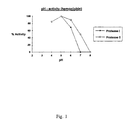
- pH activity profiles are shown in Fig. 1. It is seen that both enzymes have optimum activity at pH 5, and that Protease I is active in a more narrow range than Protease II. Thus, protease I exhibits more than 60% activity in the range of pH 4-6, whereas Protease II exhibits more than 60% activity in the range of pH 4-7.
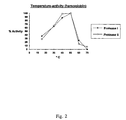
- Fig.2 shows the temperature-activity profiles. They are rather similar for the two enzymes, but with slightly different optimum temperatures, 50°C for Protease I and 45°C for Protease II.
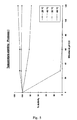
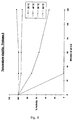
- Fig. 3 and 4 show the pH-stability. For each pH, the zero-time activities have been set to 100%, and the absolute values obtained are therefore different. Both proteases are stable at pH 4 and 5. At pH 6, Protease I is unstable, while Protease II has a certain stability (40% residual activity after 30 min). Both enzymes are unstable at pH 7.
- Fig.5 and 6 show the temperature-stability. For each temperature, the zero-time activities have been set to 100%, and the absolute values obtained are different. Both proteases are stable up to 50 °C, but unstable at 60 °C.
- Protease II does not react with insulin, whereas both proteases hydrolyse glucagon. It can be concluded, that Protease I is a rather unspecific protease, while Protease II is more specific. It was found that protease II is capable of cleaving the Lys-Tyr and the Phe-Val bonds found in bovine glucagon (the sequence of which is shown in Bromer, Sinn, and Behrens, J. Amer. Chem. Soc., Vol. 79, p. 2807, 1958).
- Soy flour prepared from defatted and peeled soy beans
- Soy flour was pelletized at 95°C and grinded afterwards.
- the soy flour is suspended in deionized water to 15% dry substance.
- the slurry was incubated at 40°C and pH 5-6.
- the viscosity in the slurry was measured after 1, 2 and 24 hours of incubation on a Brookfield LV DV III viscometer using a small sample adaptor with spindle #31 at 250 rpm.
- the residual viscosities were as follows: Prot. I Prot. II 1 hour 73% 47% 2 hours 59% 38%
- Porcine pepsin is superior to the presently used serin protease (Subtilisin carlsberg) but is troublesome because of the viruses often associated with mammal products.
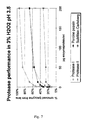
- Protease I and II, respectively, of the invention have been tested with respect to the ability to remove denatured protein from a contact lens. They have been compared to the presently used serin protease and also to porcine pepsin, although the latter is interesting from a technical perspective rather than a commercial perspective.
- the experimental protocol was as follows:
- Hen lysozyme from Sigma was labelled with 14 C through reductive methylation and purified.
- a solution was made containing 0.05 M Na 2 HPO 4 , 0.9% NaCl and 0.2 mg/ml lysozyme pH 7.5. An amount of 14 C-labelled lysozyme was added so the CPM (Counts Per Minute) is approximately 200.000. 1.0 ml of the solution was transferred to a scintillation glass. The contact lens was added and the glass placed in a water-bath at 85°C for 30 minutes.
- the contact lens was then rinsed in 3x3 ml reagent buffer. It was quartered with a scalpel. Each quarter was transferred to a new scintillation glass containing 3 ml of the reagent buffer.
- protease to be tested Different amounts of the protease to be tested were added so the final concentrations were 0.1, 0.5, 2.5, 5, 12.5, 50 and 200 ⁇ g enzyme protein/ml reagent buffer.
- Fig. 7 gives a graphic presentation of the performance of the different proteases.
- proteases are highly suitable for contact lens cleaning purposes.
- Protease I was found to be very superior to the other proteases.
- Protease II is very close to porcine pepsin in performance whereas the presently used serin protease shows poor performance.
- a further advantage of the acidic proteases of the invention is the low activity at the neutral pH found in tear fluid. This lowers the risk of irritation if the lenses are not rinsed properly after disinfection/cleaning.
- the gluten lump is then rolled by hand untill homogeneity and is pressed into the shape of a cylinder which is about 0.5 cm high and 2.5 cm in diameter and has a hole in the center.
- the gluten lump is pressed into shape for 30 min at 25°C.
- the gluten cylinder is hung on a hook and a 2 g weight is placed in the hole. Everything is placed under water at 25°C.
- the stretching of the gluten cylinder is thereafter measured every 15 min untill it breaks.
- Enzymes are dosed on an Anson Unit basis (AU), initially trying with 7.5 mAU/kg flour, which is the optimal dose for Neutrase®.
- AU Anson Unit basis
- denatured hemoglobin is digested at a temperature of 25°C, pH 7.5 and a rection time of 10 min.
- the undigested hemoglobin is precipitated with trichloroacetic acid (TCA) and the amount of TCA soluble product is determined with phenol reagent, which gives a blue colour with tyrosine and tryptophan.
- TCA trichloroacetic acid
- 1 AU is the amount of enzyme which digests hemoglobin at an initial rate such that there is liberated per minute an amount of TCA soluble product which gives the same colour with phenol reagent as one milliequivalent of tyrosine).
- Fig. 8 shows the stretching curves of gluten without enzyme and with Neutrase®, Protease I and Protease II.
- the curves are means of 6-7 determinations with the same dose of enzyme. As can be seen, the addition of all 3 proteases led to a faster stretching of the gluten.
- Protease I in a dose of 7.5 mAU/kg flour does not weaken the gluten as much as the same dose of Neutrase®.
- the gluten cylinder gets longer before it breaks, and the rate of elongation is lower.
- proteases of the invention constitutes a desirable alternative to chemicals conventionally used for gluten weakening, a widely used example of which is SMS (sodium metabisulphite).
- Ground defatted feed quality soy was mixed with deionised water under the conditions described below.
- the hydrolysis was carried out in two steps in order to simulate the pH conditions in the stomach and the small intestine.
- the performance of Protease II of the invention was compared with that of Bio-Feed Pro, which by Brenes et al ., 1993, has been demonstrated to result in improved weight gain and feed efficiency when used in broiler diets.
- Bio-Feed Pro® is available from Novo Nordisk A/S. Protease II was obtained as described above.
- ⁇ is the increase in osmolality mOSM
- S% protein concentration
- ⁇ is the calibration factor for the osmometer
- h tot is the total number of peptide bonds in the protein substrate (meqv/g protein)
- ⁇ osm is the factor for converting % to g/kg H 2 O.
- the sample is diluted, filtrated and injected into a liquid chromatographic system, operating in the Gel Permeation Chromatography (GPC) mode.
- GPC Gel Permeation Chromatography
- This separation technique utilizes a liquid flow through a column filled with porous particles having pores with a well-defined pore diameter.
- the small peptides will be able to flow into the pores while the larger peptides will be excluded from the pores.
- the peptides in a solution will be separated according to molecular size (and weight) as the large peptides will be eluted faster from the column than the small peptides.
- a detector at the column outlet continuously measures the effluent.
- the chromatographic system is calibrated with peptides with known molecular weight.
- M w ⁇ i (A i * M w,i ) ⁇ i A i , M n ⁇ ⁇ i A i ⁇ i (A i /M w,i ) , where
- Step I step II 90 min 0 min 15 min 180 min Pepsin 960 1070 680 520 Bio-Feed Pro 880 1020 690 510 Protease II 650 630 530 480
- the apparent Molecular Weight is increased when pH is adjusted to 6.5 as undigested soy protein is more soluble at pH 6.5 than at pH 4.0.
- protease II releases more protein and peptides and degrade the proteins more than Bio-Feed Pro, it therefore concluded that protease II is superior to Bio-Feed Pro.
- protease II of the invention has optimum activity in acid pH range, this enzyme will therefore perform already in the stomach of the animal, thus an overall improvement on feed efficiency should be achieved compared to Bio-Feed Pro when applied in feed for young animals. The above results supports this conclusion.
- pepA Acid Protease-encoding Gene
Landscapes
- Chemical & Material Sciences (AREA)
- Life Sciences & Earth Sciences (AREA)
- Engineering & Computer Science (AREA)
- Wood Science & Technology (AREA)
- Organic Chemistry (AREA)
- Health & Medical Sciences (AREA)
- Genetics & Genomics (AREA)
- Zoology (AREA)
- Chemical Kinetics & Catalysis (AREA)
- Oil, Petroleum & Natural Gas (AREA)
- Bioinformatics & Cheminformatics (AREA)
- Biomedical Technology (AREA)
- Microbiology (AREA)
- Molecular Biology (AREA)
- Biotechnology (AREA)
- General Engineering & Computer Science (AREA)
- General Health & Medical Sciences (AREA)
- Biochemistry (AREA)
- Medicinal Chemistry (AREA)
- Food Science & Technology (AREA)
- Polymers & Plastics (AREA)
- Animal Husbandry (AREA)
- Mycology (AREA)
- Inorganic Chemistry (AREA)
- Physics & Mathematics (AREA)
- Plant Pathology (AREA)
- Biophysics (AREA)
- Enzymes And Modification Thereof (AREA)
- Micro-Organisms Or Cultivation Processes Thereof (AREA)
- Detergent Compositions (AREA)
- Preparation Of Compounds By Using Micro-Organisms (AREA)
- Feed For Specific Animals (AREA)
- Fodder In General (AREA)
- Bakery Products And Manufacturing Methods Therefor (AREA)
Applications Claiming Priority (4)
| Application Number | Priority Date | Filing Date | Title |
|---|---|---|---|
| DK811/93 | 1993-07-06 | ||
| DK93811A DK81193D0 (da) | 1993-07-06 | 1993-07-06 | Enzym |
| DK81193 | 1993-07-06 | ||
| PCT/DK1994/000274 WO1995002044A1 (en) | 1993-07-06 | 1994-07-05 | An enzyme with protease activity |
Publications (2)
| Publication Number | Publication Date |
|---|---|
| EP0707641A1 EP0707641A1 (en) | 1996-04-24 |
| EP0707641B1 true EP0707641B1 (en) | 2003-06-11 |
Family
ID=8097846
Family Applications (1)
| Application Number | Title | Priority Date | Filing Date |
|---|---|---|---|
| EP94919575A Expired - Lifetime EP0707641B1 (en) | 1993-07-06 | 1994-07-05 | An enzyme with protease activity |
Country Status (15)
| Country | Link |
|---|---|
| US (3) | US5854050A (da) |
| EP (1) | EP0707641B1 (da) |
| JP (2) | JP3868995B2 (da) |
| KR (2) | KR100327865B1 (da) |
| CN (2) | CN1105184C (da) |
| AT (1) | ATE242803T1 (da) |
| AU (1) | AU682047B2 (da) |
| BR (1) | BR9406998A (da) |
| CA (1) | CA2166685C (da) |
| DE (1) | DE69432818D1 (da) |
| DK (1) | DK81193D0 (da) |
| ES (1) | ES2202325T3 (da) |
| FI (1) | FI119435B (da) |
| NZ (1) | NZ267985A (da) |
| WO (1) | WO1995002044A1 (da) |
Families Citing this family (80)
| Publication number | Priority date | Publication date | Assignee | Title |
|---|---|---|---|---|
| US6376449B2 (en) | 1993-03-27 | 2002-04-23 | Novozymes A/S | Acidic cleaning composition comprising an acidic protease I |
| IL109705A (en) * | 1993-06-17 | 1998-07-15 | Allergan Inc | Enzyme compositions and methods for contact lens cleaning |
| GB2287713A (en) * | 1994-03-19 | 1995-09-27 | Procter & Gamble | Detergent composition containing pectic enzyme |
| EP0817606A1 (en) * | 1995-03-28 | 1998-01-14 | Novo Nordisk A/S | Oral care compositions |
| DE19535082A1 (de) | 1995-09-21 | 1997-03-27 | Henkel Ecolab Gmbh & Co Ohg | Pastenförmiges Wasch- und Reinigungsmittel |
| US5919698A (en) * | 1995-09-25 | 1999-07-06 | Novo Nordisk A/S | Disinfection and cleaner of contact lenses |
| US5718895A (en) * | 1995-11-16 | 1998-02-17 | Alcon Laboratories, Inc. | Enzymes with low isoelectric points for use in contact lens cleaning |
| CZ43099A3 (cs) * | 1996-08-09 | 1999-08-11 | The Proster & Gamble Company | Detergenty s pektolytickými enzymy aktivními v zásaditém prostředí |
| CA2262790A1 (en) * | 1996-08-09 | 1998-02-19 | Procter & Gamble European Technical Center | Detergent compositions comprising alkaline polygalacturonase |
| CZ43199A3 (cs) * | 1996-08-09 | 1999-07-14 | The Procter & Gamble Company | Čistící prostředek s obsahem enzymu pektinesterázy, detergentní příměs a jeho použití |
| IL128419A0 (en) * | 1996-08-09 | 2000-01-31 | Procter & Gamble | Detergent compositions comprising pectin lyase |
| AU6896596A (en) * | 1996-08-09 | 1998-03-06 | Procter & Gamble Company, The | Detergent compositions comprising pectolyase |
| DE19636035A1 (de) | 1996-09-05 | 1998-03-12 | Henkel Ecolab Gmbh & Co Ohg | Pastenförmiges Wasch- und Reinigungsmittel |
| DE19703364A1 (de) | 1997-01-30 | 1998-08-06 | Henkel Ecolab Gmbh & Co Ohg | Pastenförmiges Wasch- und Reinigungsmittel |
| JP2002509981A (ja) * | 1998-03-27 | 2002-04-02 | ノボザイムス アクティーゼルスカブ | 酸性プロテアーゼを含有する酸性洗浄剤 |
| DE19857687A1 (de) | 1998-12-15 | 2000-06-21 | Henkel Ecolab Gmbh & Co Ohg | Pastenförmiges Waschmittel |
| US6960462B2 (en) | 2000-02-08 | 2005-11-01 | Dsm Ip Assets B.V | Use of acid-stable subtilisin proteases in animal feed |
| US6855548B2 (en) | 2000-02-08 | 2005-02-15 | F. Hoffman-La Roche Ag | Use of acid-stable proteases in animal feed |
| KR100386329B1 (ko) * | 2000-05-02 | 2003-06-02 | 씨제이 주식회사 | 폴리갈락튜로네이즈 및 구아검 처리에 의한 식물체단세포화 반응의 수율 증진 방법 |
| AU2001265829A1 (en) * | 2000-06-28 | 2002-01-08 | Novozymes A/S | An improved process for providing a starch product, treating milled or grinded crop kernels with an aqueous solution with an acidiic protease activity |
| EP1299422A1 (en) * | 2000-06-30 | 2003-04-09 | Novozymes A/S | A process for washing a starch slurry, using an aqueous solution with an acidic protease activity |
| US7112424B2 (en) * | 2001-03-19 | 2006-09-26 | Council Of Scientific And Industrial Research | Process for the preparation of protein hydrolysate from legumes |
| WO2002082922A1 (en) * | 2001-04-10 | 2002-10-24 | Cp Kelco Aps | Modified pectic substance |
| CN1236692C (zh) * | 2001-04-10 | 2006-01-18 | 巴斯福健康与营养学有限公司 | 微胶囊 |
| US20040063184A1 (en) | 2002-09-26 | 2004-04-01 | Novozymes North America, Inc. | Fermentation processes and compositions |
| US7588926B2 (en) | 2003-02-07 | 2009-09-15 | Novozymes A/S | Proteases |
| CN100506997C (zh) | 2003-05-30 | 2009-07-01 | 诺维信公司 | 酒精产品生产方法 |
| US20040253696A1 (en) | 2003-06-10 | 2004-12-16 | Novozymes North America, Inc. | Fermentation processes and compositions |
| ES2358092T3 (es) | 2003-10-10 | 2011-05-05 | Novozymes A/S | Variantes de proteasa. |
| DE10360841A1 (de) * | 2003-12-20 | 2005-07-14 | Henkel Kgaa | Helle, stabile, staub- und geruchsarme Enzymgranulate |
| EP1709163B1 (en) | 2004-01-16 | 2010-11-24 | Novozymes, Inc. | Methods for degrading lignocellulosic materials |
| US7361495B2 (en) | 2004-01-30 | 2008-04-22 | Novozymes, Inc. | Polypeptide from a cellulolytic fungus having cellulolytic enhancing activity |
| CA2838451C (en) | 2004-03-25 | 2017-10-24 | Novozymes, Inc. | Methods for degrading or converting plant cell wall polysaccharides |
| ES2380105T3 (es) | 2004-06-21 | 2012-05-08 | Novozymes A/S | Proteasas de Nocardiopsis |
| US7494963B2 (en) | 2004-08-11 | 2009-02-24 | Delaval Holding Ab | Non-chlorinated concentrated all-in-one acid detergent and method for using the same |
| WO2007001920A2 (en) * | 2005-06-21 | 2007-01-04 | State Of Oregon Acting By And Through The State Board Of Higher Education On Behalf Of Oregon State University | Enhancing the effective concentration of lysozyme in wine |
| EP1941049A4 (en) | 2005-09-20 | 2011-12-21 | Novozymes North America Inc | PROCESS FOR PRODUCING A FERMENTATION PRODUCT |
| NZ589570A (en) | 2005-09-30 | 2012-06-29 | Novozymes Inc | Methods for enhancing the degradation or conversion of cellulosic material |
| WO2007076388A2 (en) | 2005-12-22 | 2007-07-05 | Novozymes North America, Inc. | Processes for producing a fermentation product |
| KR20100014954A (ko) | 2007-03-09 | 2010-02-11 | 다니스코 유에스 인크. | 호알칼리성 바실러스 종 α-아밀라아제 변이체, α-아밀라아제 변이체를 함유하는 조성물 및 사용 방법 |
| US8815315B2 (en) * | 2007-04-10 | 2014-08-26 | Kemin Industries, Inc. | Use of a multi-protease system to improve the protein digestibility of animal feeds containing vegetable meals |
| EP2468876A1 (en) | 2007-04-24 | 2012-06-27 | Novozymes North America, Inc. | Detoxifying pre-treated lignocellulose-containing materials |
| EP2191061B1 (en) | 2007-09-03 | 2013-05-22 | Novozymes A/S | Detoxifying and recycling of washing solution used in pretreatment of lignocellulose-containing materials |
| DK2245130T3 (da) | 2008-02-04 | 2021-01-18 | Danisco Us Inc | Ts23 -alpha-amylasevarianter med ændrede egenskaber |
| DK2344650T3 (da) | 2008-09-30 | 2014-07-14 | Novozymes North America Inc | Forbedring af enzymatisk hydrolyse af forbehandlet lignocelluloseholdigt materiale med distillers dried grain med solubles (ddg/s) |
| US20120028299A1 (en) | 2008-12-30 | 2012-02-02 | Novozymes North America, Inc. | Enzymatic Hydrolysis Of Pretreated Lignocellulose-Containing Material With Dissolved Air Flotation Sludge |
| WO2010078392A2 (en) | 2008-12-31 | 2010-07-08 | Novozymes North America, Inc. | Processes of producing fermentation products |
| CN102378813B (zh) | 2009-04-01 | 2014-05-14 | 丹尼斯科美国公司 | 包含具有改变的性质的α-淀粉酶变体的组合物和方法 |
| MX2012000322A (es) | 2009-07-17 | 2012-02-08 | Novozymes As | Metodo de analisis del decaimiento de la celulosa en la hidrolisis del material celulosico. |
| US20120276585A1 (en) | 2009-12-21 | 2012-11-01 | Cofco Corporation | Method for producing fermentation products from lignocellulose-containing material |
| CN102791854A (zh) | 2009-12-22 | 2012-11-21 | 诺维信公司 | 普鲁兰酶变体及其用途 |
| US9096846B2 (en) * | 2009-12-22 | 2015-08-04 | Empire Technology Development Llc | Separation of cultured cells |
| WO2011126897A2 (en) | 2010-03-30 | 2011-10-13 | Novozymes A/S | Methods for enhancing by-products from fermentation processes |
| ES2565060T3 (es) | 2010-04-14 | 2016-03-31 | Novozymes A/S | Polipéptidos que tienen actividad de glucoamilasa y polinucleótidos que codifican los mismos |
| ES2499590T5 (es) | 2010-07-07 | 2023-01-18 | Novozymes North America Inc | Proceso de fermentación con polipéptidos GH61 |
| US20130157307A1 (en) | 2010-08-02 | 2013-06-20 | Novozymes North America, Inc. | Process of Producing A Fermentation Product |
| CN103797125B (zh) | 2010-11-19 | 2016-12-07 | 诺维信北美公司 | 用于在氨基酸氧化酶、精氨酸酶和/或天冬酰胺酶的存在下产生发酵产物的方法 |
| WO2012109119A2 (en) | 2011-02-07 | 2012-08-16 | Novozymes North America, Inc. | Process of producing a fermentation product |
| EP2734633B1 (en) | 2011-07-22 | 2019-05-01 | Novozymes North America, Inc. | Processes for pretreating cellulosic material and improving hydrolysis thereof |
| CN113930458A (zh) | 2011-10-11 | 2022-01-14 | 诺维信北美公司 | 用于产生发酵产物的方法 |
| CN104114034A (zh) | 2011-11-17 | 2014-10-22 | 帝斯曼知识产权资产管理有限公司 | 酸稳定的蛋白酶在动物饲料中的用途,优选地是增加球虫疫苗接种的肉鸡的生产性能 |
| EP4209595A1 (en) | 2012-03-30 | 2023-07-12 | Novozymes North America, Inc. | A method of dewatering whole stillage |
| BR112015003257A2 (pt) | 2012-08-17 | 2017-11-14 | Novozymes As | variante de asparaginase, métodos para produção de um produto alimentar a partir de um material alimentar, para produção de uma variante de asparaginase e para obtenção de uma variante de asparaginase, polinucleotídeo isolado, constructo de ácido nucleico, vetor de expressão, e, célula hospedeira |
| US9005610B2 (en) | 2012-11-21 | 2015-04-14 | Nepetx, Llc | Treatment of gluten intolerance and related conditions |
| EP2925877A4 (en) | 2012-11-27 | 2016-06-08 | Novozymes As | milling |
| DK2925790T3 (da) | 2012-11-27 | 2021-10-11 | Novozymes As | Formalingsproces |
| WO2014164687A1 (en) * | 2013-03-11 | 2014-10-09 | Bioresource International, Inc | Methods, compositions, and kits for detecting protease activity in complex samples |
| EP3022300B1 (en) | 2013-07-17 | 2018-07-11 | Novozymes A/S | Pullulanase chimeras and polynucleotides encoding same |
| EP2883458A1 (en) * | 2013-12-11 | 2015-06-17 | DSM IP Assets B.V. | Medicament and method for treating innate immune response diseases |
| US11072786B2 (en) | 2014-04-10 | 2021-07-27 | Novozymes A/S | Alpha-amylase variants and polynucleotides encoding same |
| EP3220946B1 (en) | 2014-06-16 | 2021-06-09 | Codexis, Inc. | Compositions and methods for attenuating and preventing intestinal inflammation due to the presence of peptidic food antigens in an intestine |
| EP3209788B1 (en) | 2014-10-23 | 2019-06-05 | Novozymes A/S | Glucoamylase variants and polynucleotides encoding same |
| DE102015201702A1 (de) * | 2015-01-30 | 2016-08-04 | Henkel Ag & Co. Kgaa | Saures Flüssigkompaktwaschmittel enthaltend Hydroxycarbonsäure, Niotensid und Enzym |
| EP3256006A1 (en) | 2015-02-10 | 2017-12-20 | DSM IP Assets B.V. | A method for improving feed digestibility and growth performance |
| CN105039386A (zh) * | 2015-08-27 | 2015-11-11 | 泸州老窖集团有限责任公司 | 一种高产酸性蛋白酶的红曲霉菌株的构建方法 |
| WO2017106798A2 (en) | 2015-12-16 | 2017-06-22 | Nepetx, Llc | Compositions and methods for treating gluten intolerance and disorders arising therefrom |
| WO2017177153A1 (en) | 2016-04-07 | 2017-10-12 | Novozymes A/S | Methods for selecting enzymes having protease activity |
| WO2023110639A1 (en) | 2021-12-16 | 2023-06-22 | Novozymes A/S | Protease animal feed formulation |
| KR20240124373A (ko) | 2021-12-23 | 2024-08-16 | 노보자임스 에이/에스 | 동물의 암모니아 배출을 감소시키는 방법 |
| WO2025176789A1 (en) | 2024-02-23 | 2025-08-28 | Dsm Ip Assets B.V. | A method for reducing ammonia emission of aquatic animals |
Family Cites Families (3)
| Publication number | Priority date | Publication date | Assignee | Title |
|---|---|---|---|---|
| US3492204A (en) * | 1965-03-31 | 1970-01-27 | Meiji Seika Co | Process for the production of acid protease by cultivation of microorganisms |
| SE328534B (da) * | 1965-08-27 | 1970-09-21 | Astra Ab | |
| JPH0568570A (ja) * | 1991-09-12 | 1993-03-23 | Meiji Seika Kaisha Ltd | プロクターゼb遺伝子 |
-
1993
- 1993-07-06 DK DK93811A patent/DK81193D0/da not_active Application Discontinuation
-
1994
- 1994-07-05 DE DE69432818T patent/DE69432818D1/de not_active Expired - Lifetime
- 1994-07-05 WO PCT/DK1994/000274 patent/WO1995002044A1/en not_active Ceased
- 1994-07-05 AU AU70689/94A patent/AU682047B2/en not_active Expired
- 1994-07-05 AT AT94919575T patent/ATE242803T1/de not_active IP Right Cessation
- 1994-07-05 US US08/578,551 patent/US5854050A/en not_active Expired - Lifetime
- 1994-07-05 KR KR1020017002501A patent/KR100327865B1/ko not_active Expired - Lifetime
- 1994-07-05 JP JP50376395A patent/JP3868995B2/ja not_active Expired - Lifetime
- 1994-07-05 CN CN94192698A patent/CN1105184C/zh not_active Expired - Lifetime
- 1994-07-05 KR KR1019960700040A patent/KR100327882B1/ko not_active Expired - Lifetime
- 1994-07-05 NZ NZ267985A patent/NZ267985A/en not_active IP Right Cessation
- 1994-07-05 ES ES94919575T patent/ES2202325T3/es not_active Expired - Lifetime
- 1994-07-05 EP EP94919575A patent/EP0707641B1/en not_active Expired - Lifetime
- 1994-07-05 BR BR9406998A patent/BR9406998A/pt not_active IP Right Cessation
- 1994-07-05 CA CA002166685A patent/CA2166685C/en not_active Expired - Lifetime
-
1996
- 1996-01-05 FI FI960059A patent/FI119435B/fi not_active IP Right Cessation
-
1998
- 1998-11-12 US US09/190,982 patent/US5998190A/en not_active Expired - Lifetime
-
1999
- 1999-09-29 US US09/408,257 patent/US6190905B1/en not_active Expired - Lifetime
-
2002
- 2002-06-04 CN CN021220816A patent/CN1412310B/zh not_active Expired - Lifetime
-
2004
- 2004-02-26 JP JP2004052397A patent/JP4149941B2/ja not_active Expired - Lifetime
Also Published As
| Publication number | Publication date |
|---|---|
| US6190905B1 (en) | 2001-02-20 |
| NZ267985A (en) | 1997-01-29 |
| CA2166685C (en) | 2007-07-03 |
| WO1995002044A1 (en) | 1995-01-19 |
| DK81193D0 (da) | 1993-07-06 |
| JP4149941B2 (ja) | 2008-09-17 |
| CN1412310A (zh) | 2003-04-23 |
| FI960059A0 (fi) | 1996-01-05 |
| ES2202325T3 (es) | 2004-04-01 |
| EP0707641A1 (en) | 1996-04-24 |
| CN1412310B (zh) | 2010-11-24 |
| CN1127013A (zh) | 1996-07-17 |
| DE69432818D1 (de) | 2003-07-17 |
| BR9406998A (pt) | 1996-09-10 |
| CA2166685A1 (en) | 1995-01-19 |
| AU682047B2 (en) | 1997-09-18 |
| JP2004236663A (ja) | 2004-08-26 |
| US5998190A (en) | 1999-12-07 |
| KR100327865B1 (ko) | 2002-03-09 |
| ATE242803T1 (de) | 2003-06-15 |
| FI119435B (fi) | 2008-11-14 |
| US5854050A (en) | 1998-12-29 |
| JP3868995B2 (ja) | 2007-01-17 |
| AU7068994A (en) | 1995-02-06 |
| JPH08512201A (ja) | 1996-12-24 |
| KR100327882B1 (ko) | 2002-07-02 |
| CN1105184C (zh) | 2003-04-09 |
| FI960059L (fi) | 1996-03-05 |
Similar Documents
| Publication | Publication Date | Title |
|---|---|---|
| EP0707641B1 (en) | An enzyme with protease activity | |
| EP0710282B1 (en) | DNA ENCODING AN ENZYME WITH ENDOGLUCANASE ACTIVITY FROM $i(TRICHODERMA HARZIANUM) | |
| EP0815210B1 (en) | An enzyme with aminopeptidase activity | |
| DE69813212T2 (de) | Verfahren zur erzeugung von proteinhydrolysaten | |
| EP0675951B1 (en) | An enzyme with endoglucanase activity | |
| DE69629719T2 (de) | Transglutaminasen aus oomyzeten | |
| JP2001517094A (ja) | アスペルギルスオリザからのプロリル−ジペプチジル−ペプチダーゼのクローニング | |
| AU679746B2 (en) | An enzyme exhibiting pectin methylesterase activity | |
| AU727785C (en) | An enzyme with galactanase activity | |
| AU677296B2 (en) | An enzyme with pectin lyase activity | |
| AU695995C (en) | Transglutaminases from oomycetes | |
| WO1994020611A1 (en) | An enzyme with arabinanase activity |
Legal Events
| Date | Code | Title | Description |
|---|---|---|---|
| PUAI | Public reference made under article 153(3) epc to a published international application that has entered the european phase |
Free format text: ORIGINAL CODE: 0009012 |
|
| 17P | Request for examination filed |
Effective date: 19960206 |
|
| AK | Designated contracting states |
Kind code of ref document: A1 Designated state(s): AT BE CH DE DK ES FR GB GR IE IT LI LU NL PT SE |
|
| 17Q | First examination report despatched |
Effective date: 20000309 |
|
| RAP1 | Party data changed (applicant data changed or rights of an application transferred) |
Owner name: NOVOZYMES A/S |
|
| GRAG | Despatch of communication of intention to grant |
Free format text: ORIGINAL CODE: EPIDOS AGRA |
|
| GRAG | Despatch of communication of intention to grant |
Free format text: ORIGINAL CODE: EPIDOS AGRA |
|
| GRAH | Despatch of communication of intention to grant a patent |
Free format text: ORIGINAL CODE: EPIDOS IGRA |
|
| GRAH | Despatch of communication of intention to grant a patent |
Free format text: ORIGINAL CODE: EPIDOS IGRA |
|
| GRAA | (expected) grant |
Free format text: ORIGINAL CODE: 0009210 |
|
| AK | Designated contracting states |
Designated state(s): AT BE CH DE DK ES FR GB GR IE IT LI LU NL PT SE |
|
| PG25 | Lapsed in a contracting state [announced via postgrant information from national office to epo] |
Ref country code: NL Free format text: LAPSE BECAUSE OF FAILURE TO SUBMIT A TRANSLATION OF THE DESCRIPTION OR TO PAY THE FEE WITHIN THE PRESCRIBED TIME-LIMIT Effective date: 20030611 Ref country code: LI Free format text: LAPSE BECAUSE OF FAILURE TO SUBMIT A TRANSLATION OF THE DESCRIPTION OR TO PAY THE FEE WITHIN THE PRESCRIBED TIME-LIMIT Effective date: 20030611 Ref country code: IT Free format text: LAPSE BECAUSE OF FAILURE TO SUBMIT A TRANSLATION OF THE DESCRIPTION OR TO PAY THE FEE WITHIN THE PRE;WARNING: LAPSES OF ITALIAN PATENTS WITH EFFECTIVE DATE BEFORE 2007 MAY HAVE OCCURRED AT ANY TIME BEFORE 2007. THE CORRECT EFFECTIVE DATE MAY BE DIFFERENT FROM THE ONE RECORDED.SCRIBED TIME-LIMIT Effective date: 20030611 Ref country code: CH Free format text: LAPSE BECAUSE OF FAILURE TO SUBMIT A TRANSLATION OF THE DESCRIPTION OR TO PAY THE FEE WITHIN THE PRESCRIBED TIME-LIMIT Effective date: 20030611 Ref country code: BE Free format text: LAPSE BECAUSE OF FAILURE TO SUBMIT A TRANSLATION OF THE DESCRIPTION OR TO PAY THE FEE WITHIN THE PRESCRIBED TIME-LIMIT Effective date: 20030611 Ref country code: AT Free format text: LAPSE BECAUSE OF FAILURE TO SUBMIT A TRANSLATION OF THE DESCRIPTION OR TO PAY THE FEE WITHIN THE PRESCRIBED TIME-LIMIT Effective date: 20030611 |
|
| REG | Reference to a national code |
Ref country code: GB Ref legal event code: FG4D |
|
| REG | Reference to a national code |
Ref country code: CH Ref legal event code: EP |
|
| PG25 | Lapsed in a contracting state [announced via postgrant information from national office to epo] |
Ref country code: LU Free format text: LAPSE BECAUSE OF NON-PAYMENT OF DUE FEES Effective date: 20030705 |
|
| PG25 | Lapsed in a contracting state [announced via postgrant information from national office to epo] |
Ref country code: IE Free format text: LAPSE BECAUSE OF NON-PAYMENT OF DUE FEES Effective date: 20030707 |
|
| REG | Reference to a national code |
Ref country code: IE Ref legal event code: FG4D |
|
| REF | Corresponds to: |
Ref document number: 69432818 Country of ref document: DE Date of ref document: 20030717 Kind code of ref document: P |
|
| PG25 | Lapsed in a contracting state [announced via postgrant information from national office to epo] |
Ref country code: SE Free format text: LAPSE BECAUSE OF FAILURE TO SUBMIT A TRANSLATION OF THE DESCRIPTION OR TO PAY THE FEE WITHIN THE PRESCRIBED TIME-LIMIT Effective date: 20030911 Ref country code: PT Free format text: LAPSE BECAUSE OF FAILURE TO SUBMIT A TRANSLATION OF THE DESCRIPTION OR TO PAY THE FEE WITHIN THE PRESCRIBED TIME-LIMIT Effective date: 20030911 Ref country code: GR Free format text: LAPSE BECAUSE OF FAILURE TO SUBMIT A TRANSLATION OF THE DESCRIPTION OR TO PAY THE FEE WITHIN THE PRESCRIBED TIME-LIMIT Effective date: 20030911 Ref country code: DK Free format text: LAPSE BECAUSE OF FAILURE TO SUBMIT A TRANSLATION OF THE DESCRIPTION OR TO PAY THE FEE WITHIN THE PRESCRIBED TIME-LIMIT Effective date: 20030911 |
|
| PG25 | Lapsed in a contracting state [announced via postgrant information from national office to epo] |
Ref country code: DE Free format text: LAPSE BECAUSE OF FAILURE TO SUBMIT A TRANSLATION OF THE DESCRIPTION OR TO PAY THE FEE WITHIN THE PRESCRIBED TIME-LIMIT Effective date: 20030912 |
|
| NLV1 | Nl: lapsed or annulled due to failure to fulfill the requirements of art. 29p and 29m of the patents act | ||
| REG | Reference to a national code |
Ref country code: CH Ref legal event code: PL |
|
| REG | Reference to a national code |
Ref country code: ES Ref legal event code: FG2A Ref document number: 2202325 Country of ref document: ES Kind code of ref document: T3 |
|
| ET | Fr: translation filed | ||
| PLBE | No opposition filed within time limit |
Free format text: ORIGINAL CODE: 0009261 |
|
| STAA | Information on the status of an ep patent application or granted ep patent |
Free format text: STATUS: NO OPPOSITION FILED WITHIN TIME LIMIT |
|
| REG | Reference to a national code |
Ref country code: IE Ref legal event code: MM4A |
|
| 26N | No opposition filed |
Effective date: 20040312 |
|
| PGFP | Annual fee paid to national office [announced via postgrant information from national office to epo] |
Ref country code: ES Payment date: 20130628 Year of fee payment: 20 |
|
| PGFP | Annual fee paid to national office [announced via postgrant information from national office to epo] |
Ref country code: GB Payment date: 20130703 Year of fee payment: 20 Ref country code: FR Payment date: 20130724 Year of fee payment: 20 |
|
| REG | Reference to a national code |
Ref country code: GB Ref legal event code: PE20 Expiry date: 20140704 |
|
| REG | Reference to a national code |
Ref country code: ES Ref legal event code: FD2A Effective date: 20141120 |
|
| PG25 | Lapsed in a contracting state [announced via postgrant information from national office to epo] |
Ref country code: GB Free format text: LAPSE BECAUSE OF EXPIRATION OF PROTECTION Effective date: 20140704 |
|
| PG25 | Lapsed in a contracting state [announced via postgrant information from national office to epo] |
Ref country code: ES Free format text: LAPSE BECAUSE OF EXPIRATION OF PROTECTION Effective date: 20140706 |