EP0698787B1 - Elektrochemischer Sensor - Google Patents
Elektrochemischer Sensor Download PDFInfo
- Publication number
- EP0698787B1 EP0698787B1 EP95113326A EP95113326A EP0698787B1 EP 0698787 B1 EP0698787 B1 EP 0698787B1 EP 95113326 A EP95113326 A EP 95113326A EP 95113326 A EP95113326 A EP 95113326A EP 0698787 B1 EP0698787 B1 EP 0698787B1
- Authority
- EP
- European Patent Office
- Prior art keywords
- sensor
- active protein
- enzymatically active
- group
- binding
- Prior art date
- Legal status (The legal status is an assumption and is not a legal conclusion. Google has not performed a legal analysis and makes no representation as to the accuracy of the status listed.)
- Expired - Lifetime
Links
- 0 O=C(CCCCC1SCC(*2)C1NC2=O)NCCCCCC(NCCOCCOCCNC(CS)=O)=O Chemical compound O=C(CCCCC1SCC(*2)C1NC2=O)NCCCCCC(NCCOCCOCCNC(CS)=O)=O 0.000 description 1
- RMGYSQHQVAZNHV-UHFFFAOYSA-N OCCOCCNC(CCSSCCC(NCCOCCO)=O)=O Chemical compound OCCOCCNC(CCSSCCC(NCCOCCO)=O)=O RMGYSQHQVAZNHV-UHFFFAOYSA-N 0.000 description 1
Images





Classifications
-
- C—CHEMISTRY; METALLURGY
- C07—ORGANIC CHEMISTRY
- C07D—HETEROCYCLIC COMPOUNDS
- C07D207/00—Heterocyclic compounds containing five-membered rings not condensed with other rings, with one nitrogen atom as the only ring hetero atom
- C07D207/02—Heterocyclic compounds containing five-membered rings not condensed with other rings, with one nitrogen atom as the only ring hetero atom with only hydrogen or carbon atoms directly attached to the ring nitrogen atom
- C07D207/44—Heterocyclic compounds containing five-membered rings not condensed with other rings, with one nitrogen atom as the only ring hetero atom with only hydrogen or carbon atoms directly attached to the ring nitrogen atom having three double bonds between ring members or between ring members and non-ring members
- C07D207/444—Heterocyclic compounds containing five-membered rings not condensed with other rings, with one nitrogen atom as the only ring hetero atom with only hydrogen or carbon atoms directly attached to the ring nitrogen atom having three double bonds between ring members or between ring members and non-ring members having two doubly-bound oxygen atoms directly attached in positions 2 and 5
- C07D207/448—Heterocyclic compounds containing five-membered rings not condensed with other rings, with one nitrogen atom as the only ring hetero atom with only hydrogen or carbon atoms directly attached to the ring nitrogen atom having three double bonds between ring members or between ring members and non-ring members having two doubly-bound oxygen atoms directly attached in positions 2 and 5 with only hydrogen atoms or radicals containing only hydrogen and carbon atoms directly attached to other ring carbon atoms, e.g. maleimide
- C07D207/452—Heterocyclic compounds containing five-membered rings not condensed with other rings, with one nitrogen atom as the only ring hetero atom with only hydrogen or carbon atoms directly attached to the ring nitrogen atom having three double bonds between ring members or between ring members and non-ring members having two doubly-bound oxygen atoms directly attached in positions 2 and 5 with only hydrogen atoms or radicals containing only hydrogen and carbon atoms directly attached to other ring carbon atoms, e.g. maleimide with hydrocarbon radicals, substituted by hetero atoms, directly attached to the ring nitrogen atom
-
- B—PERFORMING OPERATIONS; TRANSPORTING
- B82—NANOTECHNOLOGY
- B82Y—SPECIFIC USES OR APPLICATIONS OF NANOSTRUCTURES; MEASUREMENT OR ANALYSIS OF NANOSTRUCTURES; MANUFACTURE OR TREATMENT OF NANOSTRUCTURES
- B82Y15/00—Nanotechnology for interacting, sensing or actuating, e.g. quantum dots as markers in protein assays or molecular motors
-
- B—PERFORMING OPERATIONS; TRANSPORTING
- B82—NANOTECHNOLOGY
- B82Y—SPECIFIC USES OR APPLICATIONS OF NANOSTRUCTURES; MEASUREMENT OR ANALYSIS OF NANOSTRUCTURES; MANUFACTURE OR TREATMENT OF NANOSTRUCTURES
- B82Y30/00—Nanotechnology for materials or surface science, e.g. nanocomposites
-
- C—CHEMISTRY; METALLURGY
- C07—ORGANIC CHEMISTRY
- C07C—ACYCLIC OR CARBOCYCLIC COMPOUNDS
- C07C323/00—Thiols, sulfides, hydropolysulfides or polysulfides substituted by halogen, oxygen or nitrogen atoms, or by sulfur atoms not being part of thio groups
- C07C323/50—Thiols, sulfides, hydropolysulfides or polysulfides substituted by halogen, oxygen or nitrogen atoms, or by sulfur atoms not being part of thio groups containing thio groups and carboxyl groups bound to the same carbon skeleton
- C07C323/51—Thiols, sulfides, hydropolysulfides or polysulfides substituted by halogen, oxygen or nitrogen atoms, or by sulfur atoms not being part of thio groups containing thio groups and carboxyl groups bound to the same carbon skeleton having the sulfur atoms of the thio groups bound to acyclic carbon atoms of the carbon skeleton
- C07C323/57—Thiols, sulfides, hydropolysulfides or polysulfides substituted by halogen, oxygen or nitrogen atoms, or by sulfur atoms not being part of thio groups containing thio groups and carboxyl groups bound to the same carbon skeleton having the sulfur atoms of the thio groups bound to acyclic carbon atoms of the carbon skeleton the carbon skeleton being further substituted by nitrogen atoms, not being part of nitro or nitroso groups
- C07C323/58—Thiols, sulfides, hydropolysulfides or polysulfides substituted by halogen, oxygen or nitrogen atoms, or by sulfur atoms not being part of thio groups containing thio groups and carboxyl groups bound to the same carbon skeleton having the sulfur atoms of the thio groups bound to acyclic carbon atoms of the carbon skeleton the carbon skeleton being further substituted by nitrogen atoms, not being part of nitro or nitroso groups with amino groups bound to the carbon skeleton
-
- C—CHEMISTRY; METALLURGY
- C12—BIOCHEMISTRY; BEER; SPIRITS; WINE; VINEGAR; MICROBIOLOGY; ENZYMOLOGY; MUTATION OR GENETIC ENGINEERING
- C12Q—MEASURING OR TESTING PROCESSES INVOLVING ENZYMES, NUCLEIC ACIDS OR MICROORGANISMS; COMPOSITIONS OR TEST PAPERS THEREFOR; PROCESSES OF PREPARING SUCH COMPOSITIONS; CONDITION-RESPONSIVE CONTROL IN MICROBIOLOGICAL OR ENZYMOLOGICAL PROCESSES
- C12Q1/00—Measuring or testing processes involving enzymes, nucleic acids or microorganisms; Compositions therefor; Processes of preparing such compositions
- C12Q1/001—Enzyme electrodes
- C12Q1/002—Electrode membranes
- C12Q1/003—Functionalisation
-
- G—PHYSICS
- G01—MEASURING; TESTING
- G01N—INVESTIGATING OR ANALYSING MATERIALS BY DETERMINING THEIR CHEMICAL OR PHYSICAL PROPERTIES
- G01N33/00—Investigating or analysing materials by specific methods not covered by groups G01N1/00 - G01N31/00
- G01N33/48—Biological material, e.g. blood, urine; Haemocytometers
- G01N33/50—Chemical analysis of biological material, e.g. blood, urine; Testing involving biospecific ligand binding methods; Immunological testing
- G01N33/53—Immunoassay; Biospecific binding assay; Materials therefor
- G01N33/543—Immunoassay; Biospecific binding assay; Materials therefor with an insoluble carrier for immobilising immunochemicals
- G01N33/54353—Immunoassay; Biospecific binding assay; Materials therefor with an insoluble carrier for immobilising immunochemicals with ligand attached to the carrier via a chemical coupling agent
-
- Y—GENERAL TAGGING OF NEW TECHNOLOGICAL DEVELOPMENTS; GENERAL TAGGING OF CROSS-SECTIONAL TECHNOLOGIES SPANNING OVER SEVERAL SECTIONS OF THE IPC; TECHNICAL SUBJECTS COVERED BY FORMER USPC CROSS-REFERENCE ART COLLECTIONS [XRACs] AND DIGESTS
- Y10—TECHNICAL SUBJECTS COVERED BY FORMER USPC
- Y10S—TECHNICAL SUBJECTS COVERED BY FORMER USPC CROSS-REFERENCE ART COLLECTIONS [XRACs] AND DIGESTS
- Y10S435/00—Chemistry: molecular biology and microbiology
- Y10S435/817—Enzyme or microbe electrode
Definitions
- the invention relates to an electrochemical sensor containing a carrier material that has a noble metal surface, and one that is adsorptively bound to the noble metal surface enzymatically active protein.
- Enzymes were immobilized on the sensor surface hitherto generally by inclusion behind and in Membranes, binding to polymers and cross-linking with bifunctional Reagents. These methods have the disadvantage that the enzyme molecules are statistically distributed in a thick Layer are on the solid phase. This is the diffusion of the Analytes to the reactive center of the enzyme as well as diffusion of the product inhibited to the electrode, the response time of the Sensor is long and sensitivity is low. Another The disadvantage of this type of immobilization is that it is often covalently bind the enzyme to the sensor surface Loss of activity due to changes in active Center is coming. The above methods of binding the Enzymes on the solid phase are, for example, by A.
- SAM self-assembling monolayer
- Bain and Whitesides Ang. Chem. 101 (1988), 522-528.
- SAM self-assembling monolayer
- Such self-assembling Monolayers are created, for example, by adsorption long chain thiol on gold surfaces.
- Sawaguchi et al. Bioelectrochemistry and Bioenergetics 29 (1992), 127-133) and Willner et al. (J. Am. Chem. Soc. 114 (1992), 10965-10966) the immobilization of diaphorase and glutation reductase described a metal surface over thiols.
- a binding matrix is known from WO 92/10757, comprising a carrier material and a solid-phase reactant adsorbed thereon via anchor groups and capable of binding with at least one free reaction partner, characterized in that the solid-phase reactant forms a dilute and essentially laterally homogeneous binding layer on the surface of the carrier material ,
- the solid phase reactants described in WO 92/10757 are, for example, biotin or haptens. No examples are described in which enzymes are used as solid phase reactants.
- EP-A-0 584 794 describes an electrochemical sensor in which a redox enzyme is immobilized on a noble metal surface via a binding molecule.
- the problem underlying the present invention was to provide an electrochemical sensor in which the disadvantages of the prior art are at least largely eliminated. In particular, the sensor should provide a high occupancy density of the enzyme combined with high conductivity and sensitivity.
- an electrochemical Sensor containing a carrier material, the one Has noble metal surface, an adsorptive to the carrier material bound and essentially laterally homogeneous monolayer on the surface of the precious metal, the Monolayer comprises binding molecules that are attached to the Precious metal are bound, the binding molecules via a ionic bond, a covalent bond or a metal chelate bond are linked to an enzymatically active protein and wherein the degree of occupancy of the binding molecules on the carrier material is less than the maximum occupancy rate and where that enzymatically active protein lies in a tightly packed layer.
- the degree of occupancy of the binding molecules is less than the maximum Degree of occupancy, i.e. there is one regarding the binding molecules diluted monolayer.
- Binding molecules can cover the solid phase with the enzymatic active protein can be optimized.
- the optimum is one tightly packed enzyme layer realized.
- the occupancy rate of the Monolayers with the binding molecules is less than 100% and favorably 1-99%, preferably 2-98% and particularly preferred 5-95%.
- the electrochemical sensor according to the invention contains of the thinned layer adsorbed on the carrier material Binding molecules preferably a monomolecular layer uniformly aligned enzymatically active proteins or Enzymes with maximum occupancy on the solid phase, whereby the response time of the sensor is reduced and the signal yield per area is increased.
- Binding molecules preferably a monomolecular layer uniformly aligned enzymatically active proteins or Enzymes with maximum occupancy on the solid phase, whereby the response time of the sensor is reduced and the signal yield per area is increased.
- Another advantage of Sensor is that the monolayer through a simple Dip process can be applied. It is also suitable the sensor according to the invention due to the covalent bond of the Enzymes also very good for multiple and continuous measurement.
- suitable noble metals are Au, Pt, Pd, etc.
- the carrier material particularly preferably has a gold or palladium surface.
- a carrier material with a precious metal surface happens for example by vapor deposition of glass Chromium as an adhesion promoter, with a thickness of approx. 0.1 - 10 nm Layer arises.
- This chrome layer is then with the Precious metal, e.g. Gold, vaporized, creating a layer, which represents the surface of the carrier material.
- This Precious metal layer preferably has a thickness between 10-200 nm.
- a carrier material made of plastic e.g. polycarbonate
- anchor groups The adsorption of the molecules on the surface of the carrier material is mediated by anchor groups.
- the type of anchor groups depends on the respective surface of the carrier material.
- thiol, disulfide, and / or are the anchor groups Suitable phosphine groups.
- thiol or / and disulfide groups for example as anchor groups for a gold surface and Phosphine groups as anchor groups for a palladium surface particularly suitable.
- the monolayer consists of a single type of molecule, the surface not being completely covered with anchor groups.
- Such a layer can be produced, for example, by immersing the surface in a solution which contains a very low concentration (for example ⁇ 1 ⁇ 10 -5 mol / l) of binding molecules. In this way a thin film of binding molecules is obtained on the surface, on which the enzyme can subsequently be immobilized.
- the Monolayer in addition to the binding molecules still dilution molecules, which is adsorptive to the precious metal via anchor groups bound and not with an enzymatically active protein are linked.
- the production of a monomolecular layer binding and dilution molecules are made by immersion the surface in a solution, the binding and diluting molecules contains in desired molar proportions. Coated on this Surface can then be immobilized of the enzyme.
- the molar is preferred in the manufacture of the sensor Ratio of binding molecules to diluting molecules in the range from 1: 100 to 100: 1, particularly preferably from 1:50 to 50: 1 and most preferably from 1:20 to 20: 1.
- the molar ratio of binding molecules to diluting molecules greater than 1: 1 and in particular 5: 1 to 20: 1 is.
- dilution molecules does not make just one Optimization of the enzyme assignment achieved, but also the conductivity the layer surprisingly becomes essential increases, which is an essential criterion for electrical applications is. Furthermore, the dilution molecules lead to one decreased non-specific binding of components from a sample solution in contact with the sensor.
- the enzymatically active protein which is linked to the binding molecule via an ionic bond, a covalent bond or a metal chelate bond, is preferably selected from the group of enzymes which catalyze a reaction in which compounds are formed and / or are consumed which are electrochemically detectable are. Such a reaction can be monitored electrochemically, for example potentiometrically or amperometrically. These are preferably enzymes which catalyze reactions in which ions are formed and / or consumed, in which H 2 O 2 is formed and / or in which electrochemical mediators are reacted. Examples of such enzymes are oxidoreductases, ie enzymes which can oxidize and / or reduce a substrate molecule. However, hydrolases and such enzymes are also suitable, during the reaction of which a pH change occurs.
- a preferred example of a suitable enzyme is one Glucose oxidase (EC 1.1.3.4).
- Glucose oxidase from the microorganism For example, Aspergillus niger is commercially available from from Boehringer Mannheim GmbH, Mannheim, Germany.
- the enzymatically active protein can also be a recombinant Be an enzyme, i.e. an enzyme that comes from a heterologous Host cell is obtained.
- the advantage of such recombinant Enzymes is modified by genetic manipulation Shape can be used, creating a better Immobilization on the sensor surface becomes possible. Examples suitable modifications are N- and / or C-terminals Additions of one or more amino acid residues selected from basic amino acids such as arginine or lysine Amino acids such as aspartate or glutamate, chelating Amino acids such as histidine or cysteine.
- the enzyme can be covalent, ionic or via a metal chelate bond be linked to the binding molecule.
- An ionic Binding of the enzyme can be based on the chemistry of anion or cation exchangers based.
- the binding molecules via an ionic bond with the enzymatically active protein linked the bond between a charged end group of the binding molecule and one oppositely charged area of the enzymatically active Protein occurs.
- the charged end group of the binding molecule for example include at least one amino function and the oppositely charged area of the enzymatically active Protein at least one acidic amino acid residue, preferably a series of e.g. 2 to 8 aspartate or glutamate residues include.
- the charged end group of the binding molecule at least one carboxylate or / and preferably sulfonate function include and the oppositely charged area of the enzyme can contain at least one basic amino acid residue, preferably a series of e.g. 2 to 8 arginine or / and Include lysine residues.
- the enzyme be covalently linked to the binding molecule, the binding between a reactive end group of the binding molecule and one reactive group of the enzymatically active protein takes place.
- a reactive end group of the binding molecule is a maleimide group with a cysteine residue of Enzyme can react.
- Another example of a covalent Binding is the binding of phenol residues of the enzyme to one Diazonium group in the binding molecule. The coupling of oxidized Sugar residues of the enzyme on amino end groups of the binding molecules is possible.
- Binding via metal chelates is also used to immobilize Enzymes possible, the bond between a chelating End group of the binding molecule, a metal ion and one chelating region of the enzymatically active protein takes place.
- the chelating end group of the binding molecule can, for example comprise a di or tricarboxylate group and the chelating group
- the area of the enzymatically active protein can be one Include series of adjacent histidine residues.
- suitable chelating metal ions are e.g. Nickel, iron, Cobalt, copper and zinc ions. Even when binding over Metal chelate is a directed binding of enzymes to the Fixed phase possible.
- the binding molecule contains a spacer between the anchor group and the end group capable of binding to the enzymatically active protein group.
- the length of the spacer between the anchor group and the binding site to the enzyme can have a considerable influence on the function of the sensor. Varying the length can influence the conductivity and the accessibility of the binding sites for the enzyme.
- the spacer is preferably an alkylene chain with a length of 4-30 atoms, optionally containing heteroatoms, for example S, N or / and 0 atoms.
- the spacer particularly preferably contains 1-4 C 2 -C 4 alkylene oxide units, preferably 1-4 ethylene oxide units.
- the dilution molecules contain an anchor group suitable for adsorption on the solid phase, ie a thiol, disulfide or / and phosphine group.
- the other end group of the diluent molecules is preferably a hydrophilic function, for example a hydroxyl, a C 1 -C 4 alkoxy, an amino, a carboxyl, a carboxylic acid ester or a carboxamide function.
- a spacer as defined above is preferably also located between the end group and the anchor group of the dilution molecules.
- the spacer for the dilution molecules particularly preferably contains up to 15 atoms and at least one ethylene oxide unit.
- the present invention relates to methods for Determination of an analyte in a sample solution, whereby the Sample solution incubated with a sensor according to the invention, under Conditions that lead to an electrochemically detectable reaction of the analyte and carry out the reaction of the analyte an electrochemical measurement, e.g. through a potentiometric or amperometric measurement.
- glucose where in this case a sensor with an immobilized glucose oxidase is used for determination.
- Yet another object of the present invention is a compound of the general formula A- (Sp-X) n in which A denotes an HS or H 2 P group and n 1 or A denotes an - SS group and n 2, Sp is a spacer with a chain length of 4-30 atoms and X is a maleimide group or a group of formula (II) is.
- Such compounds are preferably used for the production of electrochemical sensors used.
- the expression plasmid YEpL / AD-GOD is derived from the plasmid YEpL / GOD (production and description, see DE-A-43 01 904, Example 1.1-1.5).
- the plasmid YEpL / GOD contains the GOD gene from Aspergillus niger and is suitable for recombinant expression and secretion of GOD in Saccharomyces cerivisiae.
- the plasmid YEpL / GOD was digested with the restriction endonucleases BamHl and Mlul, the approx. 10.2 kBp long BamHl / Mlul-YEpL / GOD vector fragment was isolated and ligated with the following DNA linker, which was produced by hybridization from 2 oligonucleotides.
- the desired plasmid YEpL / AD-GOD was determined by restriction mapping identified and further analyzed.
- the expression plasmid YEpL / GOD- (His) 4 contains a GOD gene with 4 additional C-terminal His residues.
- the isolation and enzymatic characterization of GOD- (His) 4 are described in DE-A-43 01 904 (Examples 4, 7 and 8).
- the plasmid contains a modified GOD gene which is necessary for a GOD Enzyme variant coded, the C-terminal additionally 4 histidine residues and has a cysteine residue.
- the plasmid YEpL / GOD- (His) 4 Cys was prepared in the same way as the plasmid GOD- (His) 4 by means of 2 complementary oligonucleotides from the plasmid YEpL / AD-GOD.
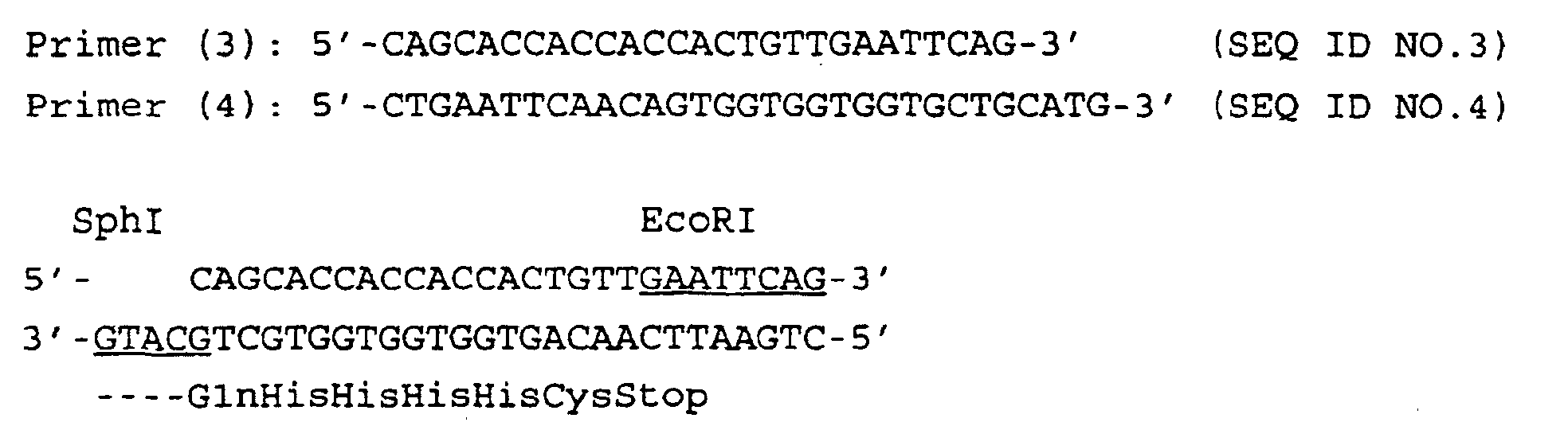
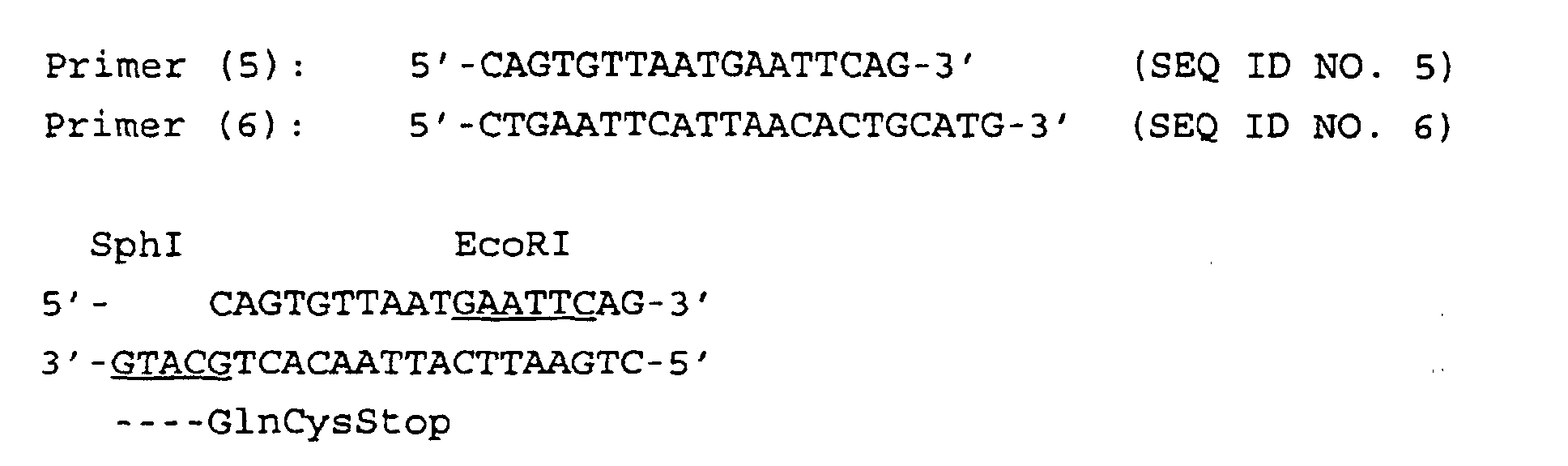
- the plasmid YEpL / AD-GOD was cleaved with SphI and PvuII, the approx. 10.2 kbp long SphI / PvuII-YEpL / GOD vector fragment was isolated and ligated with the following DNA linker, which was produced by hybridization from 2 oligonucleotides.
- the desired plasmid YEpL / GOD- (His) 4 Cys was identified by restriction mapping (new EcoRI site) and further analyzed by partial sequencing (C-terminal region of the GOD structural gene).
- the plasmid contains a modified GOD gene which is necessary for a GOD Enzyme variant encodes, the C-terminal additionally a cysteine residue has.
- the plasmid YEpL / GOD-Cys was produced in the same way as the plasmid GOD- (His) 4 Cys using 2 complementary oligonucleotides from the plasmid YEpL / AD-GOD.
- the plasmid YEpL / AD-GOD was cleaved with SphI and PvuII, the approx. 10.2 kBp long SphI / PvuII fragment was isolated and ligated with the following DNA linker, which was produced by hybridization from 2 oligonucleotides.
- the desired plasmid YEpL / GOD-Cys was determined by restriction mapping identified (new EcoRI interface) and by partial sequencing (C-terminal region of the GOD structural gene) further analyzed.
- the C-terminal GOD fusion proteins GOD- (His) 4 , GOD- (His) 4 -Cys and GOD-Cys behave in yeast (in wild-type and glycosylation-defective yeast strains) with regard to secretion, glycosylation, carbohydrate content, specific activity, thermal and pH stability like the unmodified GOD enzyme.
- the analyte in this case glucose (10 mmol / l), was determined amperometrically.
- Mediator for example N-nitrosoaniline in a concentration of 1 ⁇ 10 -3 mol / l, was added to the sample solution and after an incubation time of 2 min. the current is measured at a potential applied in accordance with the mediator, here 240 mV.
- the gold supports corresponded to those from Example 5.
- the supports were incubated in 2 ⁇ 10 -3 mol / l of a mixture of compound C (mercaptonitrilotriacetic acid) and compound A in methanol for 1 hour. After thorough, successive washing in pure methanol and water, 10 min. incubated in a 0.2% solution of NiCl 2 in water, washed several times in water and dried in a stream of argon.
- the layer was characterized using cyclic voltammetry (cf. Example 5). While the conversion of redox-active substances such as K 4 [(Fe (CN) 6 ] was very difficult when applying pure compound C, the additional binding of compound A on the gold surface led to a good reaction of the mediator to the electrode (Fig. 3 ).
- the gold carriers corresponded to those from Example 1. They were 1 hour in a solution of compound D ("maleimide linker") and compound A in a molar ratio of 10: 1 (best results) and in a total concentration of 1 ⁇ 10 -3 mol / l incubated in methanol. After thorough washing in methanol and water, drying was carried out in a stream of argon.
- the carrier was then incubated for one hour in a solution of SH-modified glucose oxidase GOD-Cys (1st mg / ml) in 0.1 mol / l potassium phosphate buffer pH 7.0. It was the enzyme covalently through the thiol groups to the maleimide end group of the linker.
- the determination of the analyte was as described in Example 5.
- Fig. 8 shows the Current increases with the analyte concentration.
Landscapes
- Chemical & Material Sciences (AREA)
- Engineering & Computer Science (AREA)
- Organic Chemistry (AREA)
- Health & Medical Sciences (AREA)
- Life Sciences & Earth Sciences (AREA)
- Immunology (AREA)
- Molecular Biology (AREA)
- Nanotechnology (AREA)
- General Health & Medical Sciences (AREA)
- Physics & Mathematics (AREA)
- Hematology (AREA)
- Zoology (AREA)
- Urology & Nephrology (AREA)
- Microbiology (AREA)
- Wood Science & Technology (AREA)
- Proteomics, Peptides & Aminoacids (AREA)
- Analytical Chemistry (AREA)
- Biochemistry (AREA)
- Biotechnology (AREA)
- General Physics & Mathematics (AREA)
- Biomedical Technology (AREA)
- Crystallography & Structural Chemistry (AREA)
- Bioinformatics & Cheminformatics (AREA)
- General Engineering & Computer Science (AREA)
- Composite Materials (AREA)
- Pathology (AREA)
- Biophysics (AREA)
- Cell Biology (AREA)
- Materials Engineering (AREA)
- Medicinal Chemistry (AREA)
- Condensed Matter Physics & Semiconductors (AREA)
- Food Science & Technology (AREA)
- Genetics & Genomics (AREA)
- Measuring Or Testing Involving Enzymes Or Micro-Organisms (AREA)
- Plural Heterocyclic Compounds (AREA)
- Pyrrole Compounds (AREA)
- Heterocyclic Carbon Compounds Containing A Hetero Ring Having Oxygen Or Sulfur (AREA)
- Organic Low-Molecular-Weight Compounds And Preparation Thereof (AREA)
Description
In EP-A-0 584 794 wird ein elektrochemischer Sensor beschrieben, bei dem ein Redoxenzym über ein Bindemolekül auf einer Edelmetalloberfläche immobilisiert ist.
Das der vorliegenden Erfindung zugrundeliegende Problem bestand darin, einen elektrochemischen Sensor bereitzustellen, bei dem die Nachteile des Standes der Technik zumindest weitgehend beseitigt sind. Insbesondere sollte der Sensor eine hohe Belegungsdichte des Enzyms verbunden mit einer hohen Leitfähigkeit und Sensitivität liefern.
Sp einen Spacer mit einer Kettenlänge von 4-30 Atomen bedeutet und X eine Maleimidgruppe oder
eine Gruppe der Formel (II)

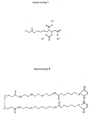
- Abb. 1:
-
- a) ein Verdünnermolekül (Verbindung A)
- b) ein Bindemolekül mit Biotingruppe (Verbindung B)
- c) ein Bindemolekül mit einer chelatbildenden Endgruppe (Verbindung C)
- d) ein Bindemolekül mit einer reaktiven Maleimid-Endgruppe (Verbindung D),
- Abb. 2:
- ein Cyclovoltammogramm der Sensoren
- a) beschichtet mit reiner Verbindung B
- b) beschichtet mit einem Gemisch aus den Verbindungen A und B (10:1),
- Abb. 3:
- ein Cyclovoltammogramm der Sensoren
- a) beschichtet mit reiner Verbindung C
- b) beschichtet mit einem Gemisch aus den Verbindungen A und C (1:10),
- Abb. 4:
- die Ergebnisse einer amperometrischen Bestimmung bei Bindung von Glucose-Oxidase-His4 an unbeschichtete Goldoberflächen, an mit Verdünnungsmolekülen (Verbindung A) beschichtetes Gold und an mit einem chelatbildenden Bindemolekül (Verbindung C) beschichtetes Gold,
- Abb. 5:
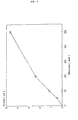
- die Abhängigkeit des Stromsignals von der Glucosekonzentration bei einem Sensor gemäß Beispiel 6,
- Abb. 6:
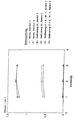
- die Reproduzierbarkeit aufeinanderfolgender Messungen bei einem Sensor gemäß Beispiel 6,
- Abb. 7:
- ein Cyclovoltammogramm der Sensoren
- a) beschichtet mit reiner Verbindung D
- b) beschichtet mit einem Gemisch aus den Verbindungen A und D (1:10),
- Abb. 8:
- die Abhängigkeit des Stromsignals von der Glucosekonzentration bei einem Sensor gemäß Beispiel 7.
- SEQ ID NO. 1:
- Den zur Konstruktion des Plasmids YEpl/AD-GOD verwendeten Primer (1) (Beispiel 1.1)
- SEQ ID NO. 2:
- Den zur Konstruktion des Plasmids YEpl/AD-GOD verwendeten Primer (2) (Beispiel 1.1)
- SEQ ID NO. 3:
- Den zur Konstruktion des Plasmids YEpl/GOD-(His)4Cys verwendeten Primer (3) (Beispiel 1.3)
- SEQ ID NO. 4:
- Den zur Konstruktion des Plasmids YEpl/GOD-(His)4Cys verwendeten Primer (4) (Beispiel 1.3)
- SEQ ID NO. 5:
- Den zur Konstruktion des Plasmids YEpl/GOD-Cys verwendeten Primer (5) (Beispiel 1.4)
- SEQ ID NO. 6:
- Den zur Konstruktion des Plasmids YEpl/GOD-Cys verwendeten Primer (6) (Beispiel 1.4)

Ausbeute 2,7 g
DC: Kieselgel 60
Eluens: Ethylacetat/Methanol = 7:3 + 1% Essigsäure
RF = 0,67
MS (Pos FAB) : MH+ = 236
Ausbeute: 0,86 g (farbloses Öl)
DC: Kieselgel 60,
Eluens: Dichlormethan/Methanol = 9/1
RF = 0,45
MS (pos . FAB) : MH+ = 194
- ART DER SEQUENZ:
- Nukleinsäure
- SEQUENZLÄNGE:
- 18 Nukleotide

- ART DER SEQUENZ:
- Nukleinsäure
- SEQUENZLÄNGE:
- 18 Nukleotide

- ART DER SEQUENZ:
- Nukleinsäure
- SEQUENZLÄNGE:
- 27 Nukleotide

- ART DER SEQUENZ:
- Nukleinsäure
- SEQUENZLÄNGE:
- 31 Nukleotide

- ART DER SEQUENZ:
- Nukleinsäure
- SEQUENZLÄNGE:
- 18 Nukleotide

- ART DER SEQUENZ:
- Nukleinsäure
- SEQUENZLÄNGE:
- 22 Nukleotide

- (1) ALLGEMEINE ANGABEN:
- (i) ANMELDER:
- (A) NAME: Boehringer Mannheim GmbH
- (B) STRASSE: Sandhofer Strasse
- (C) ORT: Mannheim
- (E) LAND: DE
- (F) POSTLEITZAHL: 68298
- (G) TELEFON: 0621-7590





Claims (26)
- Elektrochemischer Sensor, enthaltend
ein Trägermaterial, das eine Edelmetalloberfläche aufweist,
eine adsorptiv an das Edelmetall gebundene und im wesentlichen lateral homogene Monoschicht auf der Oberfläche des Edelmetalls, wobei die Monoschicht Bindemoleküle umfaßt, die über Ankergruppen an das Edelmetall gebunden sind, wobei die Bindemoleküle über eine ionische Bindung, eine kovalente Bindung oder eine Metallchelatbindung mit einem enzymatisch aktiven Protein verknüpft sind, wobei der Belegungsgrad der Bindemoleküle auf dem Edelmetall geringer als der maximale Belegungsgrad ist und wobei das enzymatisch aktive Protein in einer dichtgepackten Schicht mit maximaler Belegungsdichte vorliegt. - Sensor nach Anspruch 1,
dadurch gekennzeichnet, daß das Trägermaterial eine Gold- oder Palladiumoberfläche aufweist. - Sensor nach Anspruch 1 oder 2,
dadurch gekennzeichnet, daß die Ankergruppen Thiol-, Disulfid-, oder/und Phosphingruppen sind. - Sensor nach einem der Ansprüche 1-3,
dadurch gekennzeichnet, daß die Monoschicht weiterhin Verdünnungsmoleküle umfaßt, die über Ankergruppen adsorptiv an das Edelmetall gebunden und nicht mit einem enzymatisch aktiven Protein verknüpft sind. - Sensor nach Anspruch 4,
dadurch gekennzeichnet, daß das molare Verhältnis von Bindemolekülen zu Verdünnungsmolekülen im Bereich von 1:100 bis 100:1 ist. - Sensor nach Anspruch 5,
dadurch gekennzeichnet, daß das molare Verhältnis von Bindemolekülen zu Verdünnungsmolekülen im Bereich von 1:50 bis 50:1 ist. - Sensor nach Anspruch 5,
dadurch gekennzeichnet, daß das molare Verhältnis von Bindemolekülen zu Verdünnungsmolekülen im Bereich von 1:20 bis 20:1 ist. - Sensor nach einem der vorherigen Ansprüche,
dadurch gekennzeichnet, daß das enzymatisch aktive Protein aus der Gruppe der Enzyme ausgewählt ist, die eine Reaktion katalysieren, bei der Verbindungen entstehen oder/und verbraucht werden, die elektrochemisch detektierbar sind. - Sensor nach Anspruch 8,
dadurch gekennzeichnet, daß das enzymatisch aktive Protein eine Oxidoreductase oder Hydrolase ist. - Sensor nach Anspruch 9,
dadurch gekennzeichnet, daß das enzymatisch aktive Protein eine Glucose-Oxidase (E.C.1.1.3.4) ist. - Sensor nach einem der vorherigen Ansprüche,
dadurch gekennzeichnet, daß das enzymatisch aktive Protein ein rekombinantes Enzym ist. - Sensor nach Anspruch 11,
dadurch gekennzeichnet, daß das enzymatisch aktive Protein durch N- oder/und C-terminale Anfügung von einem oder mehreren Aminosäureresten, ausgewählt aus basischen Aminosäuren, sauren Aminosäuren, chelatbildenden Aminosäuren oder Cysteinresten modifiziert ist. - Sensor nach einem der vorherigen Ansprüche,
dadurch gekennzeichnet, daß die Bindemoleküle über eine ionische Bindung mit dem enzymatisch aktiven Protein verknüpft sind, wobei die Bindung zwischen einer geladenen Endgruppe des Bindemoleküls und einem entgegengesetzt geladenen Bereich des enzymatisch aktiven Proteins erfolgt. - Sensor nach Anspruch 13,
dadurch gekennzeichnet, daß die geladene Endgruppe des Bindemoleküls mindestens eine Aminofunktion umfaßt und der entgegengesetzt geladene Bereich des enzymatisch aktiven Proteins mindestens einen Aspartat- oder/und Glutamatrest umfaßt. - Sensor nach Anspruch 13,
dadurch gekennzeichnet, daß die geladene Endgruppe des Bindemoleküls mindestens eine Carboxylat- oder/und Sulfonatfunktion umfaßt und der entgegengesetzt geladene Bereich des enzymatisch aktiven Proteins mindestens einen Arginin- oder/und Lysinrest umfaßt. - Sensor nach einem der Ansprüche 1-12,
dadurch gekennzeichnet, daß die Bindemoleküle über eine kovalente Bindung mit dem enzymatisch aktiven Protein verknüpft sind, wobei die Bindung zwischen einer reaktiven Endgruppe des Bindemoleküls und einer reaktiven Gruppe des enzymatisch aktiven Proteins erfolgt. - Sensor nach Anspruch 16,
dadurch gekennzeichnet, daß die reaktive Endgruppe des Bindemoleküls eine Maleimidgruppe umfaßt und die reaktive Gruppe des enzymatisch aktiven Proteins einen Cysteinrest umfaßt. - Sensor nach einem der Ansprüche 1-12,
dadurch gekennzeichnet, daß die Bindemoleküle über eine Metallchelatbindung mit dem enzymatisch aktiven Protein verknüpft sind, wobei die Bindung zwischen einer chelatbildenden Endgruppe des Bindemoleküls, einem Metallion und einem chelatbildenden Bereich des enzymatisch aktiven Proteins erfolgt. - Sensor nach Anspruch 18,
dadurch gekennzeichnet, daß die chelatbildende Endgruppe des Bindemoleküls eine Di- oder Tricarboxylatgruppe umfaßt und der chelatbildende Bereich des enzymatisch aktiven Proteins mindestens einen Histidinrest umfaßt. - Sensor nach Anspruch 18 oder 19,
dadurch gekennzeichnet, daß das Metallion ein Nickel-, Eisen-, Kobalt-, Kupfer- oder Zinkion ist. - Sensor nach einem der vorhergehenden Ansprüche,
dadurch gekennzeichnet, daß das Bindemolekül zwischen der Ankergruppe und der zur Bindung mit dem enzymatisch aktiven Protein fähigen Endgruppe einen Spacer enthält. - Sensor nach Anspruch 21,
dadurch gekennzeichnet, daß der Spacer eine gegebenenfalls Heteroatome enthaltende Alkylenkette mit einer Länge von 4-30 Atomen ist. - Verfahren zur Bestimmung eines Analyten in einer Probelösung,
dadurch gekennzeichnet, daß man die Probelösung mit einem Sensor nach einem der Ansprüche 1-22 unter Bedingungen, die zu einer elektrochemisch nachweisbaren Reaktion des Analyten führen, kontaktiert und die Reaktion des Analyten durch eine elektrochemische Messung bestimmt. - Verfahren nach Anspruch 23,
dadurch gekennzeichnet, daß man Glucose als Analyten bestimmt. - Verbindung der allgemeinen Formel
Sp einen Spacer mit einer Kettenlänge von 4-30 Atomen bedeutet und X eine Maleimidgruppe oder eine Gruppe der Formel (II)ist.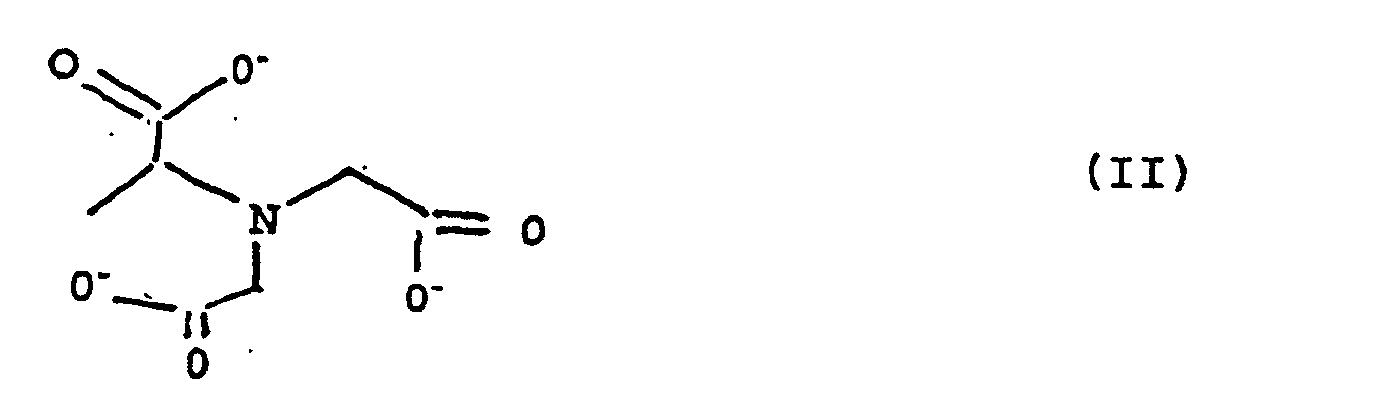
- Verwendung einer Verbindung nach Anspruch 25 zur Herstellung eines elektrochemischen Sensors.
Applications Claiming Priority (2)
| Application Number | Priority Date | Filing Date | Title |
|---|---|---|---|
| DE4430023A DE4430023A1 (de) | 1994-08-24 | 1994-08-24 | Elektrochemischer Sensor |
| DE4430023 | 1994-08-24 |
Publications (2)
| Publication Number | Publication Date |
|---|---|
| EP0698787A1 EP0698787A1 (de) | 1996-02-28 |
| EP0698787B1 true EP0698787B1 (de) | 2004-01-14 |
Family
ID=6526449
Family Applications (1)
| Application Number | Title | Priority Date | Filing Date |
|---|---|---|---|
| EP95113326A Expired - Lifetime EP0698787B1 (de) | 1994-08-24 | 1995-08-24 | Elektrochemischer Sensor |
Country Status (5)
| Country | Link |
|---|---|
| US (1) | US5834224A (de) |
| EP (1) | EP0698787B1 (de) |
| JP (1) | JP2735817B2 (de) |
| DE (2) | DE4430023A1 (de) |
| ES (1) | ES2214488T3 (de) |
Families Citing this family (96)
| Publication number | Priority date | Publication date | Assignee | Title |
|---|---|---|---|---|
| US6472148B1 (en) | 1994-09-26 | 2002-10-29 | President And Fellows Of Harvard College | Molecular recognition at surfaces derivatized with self-assembled monolayers |
| US5620850A (en) | 1994-09-26 | 1997-04-15 | President And Fellows Of Harvard College | Molecular recognition at surfaces derivatized with self-assembled monolayers |
| US6130037A (en) * | 1996-04-25 | 2000-10-10 | Pence And Mcgill University | Biosensor device and method |
| US6165335A (en) | 1996-04-25 | 2000-12-26 | Pence And Mcgill University | Biosensor device and method |
| AUPN980796A0 (en) * | 1996-05-13 | 1996-06-06 | Australian Membrane And Biotechnology Research Institute | Improved reservoir components |
| AU6157898A (en) | 1997-02-06 | 1998-08-26 | E. Heller & Company | Small volume (in vitro) analyte sensor |
| CA2294080A1 (en) * | 1997-06-04 | 1998-12-10 | Australian Membrane And Biotechnology Research Institute | Improved biosensor involving the use of optically sensitive moieties |
| US6558956B1 (en) | 1997-06-24 | 2003-05-06 | The University Of Wyoming | Method and apparatus for detection of a controlled substance |
| US6309526B1 (en) * | 1997-07-10 | 2001-10-30 | Matsushita Electric Industrial Co., Ltd. | Biosensor |
| SE9703314D0 (sv) * | 1997-09-15 | 1997-09-15 | Sangtec Medical Ab | Capacity affinity sensor |
| US6652734B1 (en) | 1999-03-16 | 2003-11-25 | Lifescan, Inc. | Sensor with improved shelf life |
| US9066695B2 (en) | 1998-04-30 | 2015-06-30 | Abbott Diabetes Care Inc. | Analyte monitoring device and methods of use |
| US8974386B2 (en) | 1998-04-30 | 2015-03-10 | Abbott Diabetes Care Inc. | Analyte monitoring device and methods of use |
| US6175752B1 (en) | 1998-04-30 | 2001-01-16 | Therasense, Inc. | Analyte monitoring device and methods of use |
| US8346337B2 (en) | 1998-04-30 | 2013-01-01 | Abbott Diabetes Care Inc. | Analyte monitoring device and methods of use |
| US6949816B2 (en) | 2003-04-21 | 2005-09-27 | Motorola, Inc. | Semiconductor component having first surface area for electrically coupling to a semiconductor chip and second surface area for electrically coupling to a substrate, and method of manufacturing same |
| US8688188B2 (en) | 1998-04-30 | 2014-04-01 | Abbott Diabetes Care Inc. | Analyte monitoring device and methods of use |
| US8480580B2 (en) | 1998-04-30 | 2013-07-09 | Abbott Diabetes Care Inc. | Analyte monitoring device and methods of use |
| US8465425B2 (en) | 1998-04-30 | 2013-06-18 | Abbott Diabetes Care Inc. | Analyte monitoring device and methods of use |
| US7087148B1 (en) | 1998-06-23 | 2006-08-08 | Clinical Micro Sensors, Inc. | Binding acceleration techniques for the detection of analytes |
| US6251260B1 (en) | 1998-08-24 | 2001-06-26 | Therasense, Inc. | Potentiometric sensors for analytic determination |
| US6338790B1 (en) | 1998-10-08 | 2002-01-15 | Therasense, Inc. | Small volume in vitro analyte sensor with diffusible or non-leachable redox mediator |
| US6591125B1 (en) | 2000-06-27 | 2003-07-08 | Therasense, Inc. | Small volume in vitro analyte sensor with diffusible or non-leachable redox mediator |
| AU3347900A (en) * | 1999-01-23 | 2000-08-07 | Minerva Biotechnologies Corporation | Interaction of colloid-immobilized species with species on non-colloidal structures |
| CA2361013A1 (en) * | 1999-01-25 | 2000-07-27 | Minerva Biotechnologies Corporation | Rapid and sensitive detection of aberrant protein aggregation in neurodegenerative diseases |
| AUPP856399A0 (en) * | 1999-02-08 | 1999-03-04 | Australian Membrane And Biotechnology Research Institute | Improved compounds for protein binding |
| AU2898500A (en) | 1999-03-02 | 2000-09-21 | Helix Biopharma Corporation | Biosensor device and method |
| US6770488B1 (en) | 1999-03-19 | 2004-08-03 | The University Of Wyoming | Practical method and apparatus for analyte detection with colloidal particles |
| US6654625B1 (en) | 1999-06-18 | 2003-11-25 | Therasense, Inc. | Mass transport limited in vivo analyte sensor |
| US6616819B1 (en) | 1999-11-04 | 2003-09-09 | Therasense, Inc. | Small volume in vitro analyte sensor and methods |
| US6716577B1 (en) * | 2000-02-02 | 2004-04-06 | Lifescan, Inc. | Electrochemical test strip for use in analyte determination |
| US6541071B1 (en) | 2000-03-23 | 2003-04-01 | Corning Incorporated | Method for fabricating supported bilayer-lipid membranes |
| US6623655B1 (en) | 2000-04-24 | 2003-09-23 | Sigma-Aldrich Co. | Metal chelating compositions |
| US6753143B2 (en) | 2000-05-01 | 2004-06-22 | Clinical Micro Sensors, Inc. | Target analyte detection using asymmetrical self-assembled monolayers |
| EP1278821A4 (de) | 2000-05-03 | 2005-11-09 | Jen Gau Jr | Biologisches identifikationssystem mit integriertem sensorchip |
| DE10027397A1 (de) * | 2000-06-02 | 2001-12-13 | Graffinity Pharm Design Gmbh | Oberfläche zur Immobilisierung von Liganden |
| US6560471B1 (en) | 2001-01-02 | 2003-05-06 | Therasense, Inc. | Analyte monitoring device and methods of use |
| AU2002309528A1 (en) | 2001-04-02 | 2002-10-15 | Therasense, Inc. | Blood glucose tracking apparatus and methods |
| US6855243B2 (en) * | 2001-04-27 | 2005-02-15 | Lifescan, Inc. | Electrochemical test strip having a plurality of reaction chambers and methods for using the same |
| JP3672099B2 (ja) * | 2001-06-14 | 2005-07-13 | 松下電器産業株式会社 | バイオセンサ |
| US20030036202A1 (en) | 2001-08-01 | 2003-02-20 | Maria Teodorcyzk | Methods and devices for use in analyte concentration determination assays |
| US20030077702A1 (en) * | 2001-10-23 | 2003-04-24 | Rajiv Shah | Method for formulating a glucose oxidase enzyme with a desired property or properties and a glucose oxidase enzyme with the desired property |
| US7343188B2 (en) * | 2002-05-09 | 2008-03-11 | Lifescan, Inc. | Devices and methods for accessing and analyzing physiological fluid |
| US7291256B2 (en) * | 2002-09-12 | 2007-11-06 | Lifescan, Inc. | Mediator stabilized reagent compositions and methods for their use in electrochemical analyte detection assays |
| US8771183B2 (en) | 2004-02-17 | 2014-07-08 | Abbott Diabetes Care Inc. | Method and system for providing data communication in continuous glucose monitoring and management system |
| AU2003303597A1 (en) | 2002-12-31 | 2004-07-29 | Therasense, Inc. | Continuous glucose monitoring system and methods of use |
| WO2005016115A2 (en) * | 2003-01-23 | 2005-02-24 | Montana State University | Biosensors utilizing dendrimer-immobilized ligands and their use thereof |
| KR100580621B1 (ko) * | 2003-03-07 | 2006-05-16 | 삼성전자주식회사 | 전도성 화합물, 이를 포함하는 전극 및 센서, 상기 센서를이용한 표적 물질 검출방법 |
| US7587287B2 (en) | 2003-04-04 | 2009-09-08 | Abbott Diabetes Care Inc. | Method and system for transferring analyte test data |
| KR100953612B1 (ko) * | 2003-06-02 | 2010-04-20 | 삼성에스디아이 주식회사 | 생체물질 고정용 기판 및 이의 제조방법 |
| US8066639B2 (en) | 2003-06-10 | 2011-11-29 | Abbott Diabetes Care Inc. | Glucose measuring device for use in personal area network |
| AU2003903504A0 (en) * | 2003-07-08 | 2003-07-24 | Johnson, Daniel | Improvements in sensor chips |
| US7220034B2 (en) * | 2003-07-11 | 2007-05-22 | Rudolph Technologies, Inc. | Fiber optic darkfield ring light |
| GB0328784D0 (en) * | 2003-12-11 | 2004-01-14 | Univ Wales Bangor | Improvements in & relating to biosensors |
| US20050244977A1 (en) * | 2004-03-24 | 2005-11-03 | Drachev Vladimir P | Adaptive metal films for detection of biomolecules |
| US8343074B2 (en) | 2004-06-30 | 2013-01-01 | Lifescan Scotland Limited | Fluid handling devices |
| WO2006063437A1 (en) * | 2004-12-15 | 2006-06-22 | University Of Guelph | Prion sensors for diagnosis of transmissible spongiform encephalopathy or for detection of prions, and use thereof |
| US20060141596A1 (en) * | 2004-12-28 | 2006-06-29 | Sumant Phadtare | Process for the immobilization of enzymes |
| US8112240B2 (en) | 2005-04-29 | 2012-02-07 | Abbott Diabetes Care Inc. | Method and apparatus for providing leak detection in data monitoring and management systems |
| US7766829B2 (en) | 2005-11-04 | 2010-08-03 | Abbott Diabetes Care Inc. | Method and system for providing basal profile modification in analyte monitoring and management systems |
| WO2007061981A2 (en) | 2005-11-21 | 2007-05-31 | Lumera Corporation | Surface plasmon resonance spectrometer with an actuator-driven angle scanning mechanism |
| US7463358B2 (en) | 2005-12-06 | 2008-12-09 | Lumera Corporation | Highly stable surface plasmon resonance plates, microarrays, and methods |
| US7885698B2 (en) | 2006-02-28 | 2011-02-08 | Abbott Diabetes Care Inc. | Method and system for providing continuous calibration of implantable analyte sensors |
| US7620438B2 (en) | 2006-03-31 | 2009-11-17 | Abbott Diabetes Care Inc. | Method and system for powering an electronic device |
| US8226891B2 (en) | 2006-03-31 | 2012-07-24 | Abbott Diabetes Care Inc. | Analyte monitoring devices and methods therefor |
| US20080071158A1 (en) | 2006-06-07 | 2008-03-20 | Abbott Diabetes Care, Inc. | Analyte monitoring system and method |
| US8732188B2 (en) | 2007-02-18 | 2014-05-20 | Abbott Diabetes Care Inc. | Method and system for providing contextual based medication dosage determination |
| US8930203B2 (en) | 2007-02-18 | 2015-01-06 | Abbott Diabetes Care Inc. | Multi-function analyte test device and methods therefor |
| US8123686B2 (en) | 2007-03-01 | 2012-02-28 | Abbott Diabetes Care Inc. | Method and apparatus for providing rolling data in communication systems |
| US8456301B2 (en) | 2007-05-08 | 2013-06-04 | Abbott Diabetes Care Inc. | Analyte monitoring system and methods |
| US8665091B2 (en) | 2007-05-08 | 2014-03-04 | Abbott Diabetes Care Inc. | Method and device for determining elapsed sensor life |
| US7928850B2 (en) | 2007-05-08 | 2011-04-19 | Abbott Diabetes Care Inc. | Analyte monitoring system and methods |
| US8461985B2 (en) | 2007-05-08 | 2013-06-11 | Abbott Diabetes Care Inc. | Analyte monitoring system and methods |
| US8951400B2 (en) | 2007-10-17 | 2015-02-10 | Ohmx Corporation | Chemistry used in biosensors |
| AU2008312352A1 (en) * | 2007-10-17 | 2009-04-23 | Ohmx Corporation | Electrochemical assay for the detection of enzymes |
| US8004669B1 (en) | 2007-12-18 | 2011-08-23 | Plexera Llc | SPR apparatus with a high performance fluid delivery system |
| US8103456B2 (en) | 2009-01-29 | 2012-01-24 | Abbott Diabetes Care Inc. | Method and device for early signal attenuation detection using blood glucose measurements |
| US20100213057A1 (en) | 2009-02-26 | 2010-08-26 | Benjamin Feldman | Self-Powered Analyte Sensor |
| US9226701B2 (en) | 2009-04-28 | 2016-01-05 | Abbott Diabetes Care Inc. | Error detection in critical repeating data in a wireless sensor system |
| WO2010138856A1 (en) | 2009-05-29 | 2010-12-02 | Abbott Diabetes Care Inc. | Medical device antenna systems having external antenna configurations |
| JP5352742B2 (ja) * | 2009-08-07 | 2013-11-27 | オームクス コーポレーション | 酵素による酸化還元変化化学的脱離(e−trace)免疫学的検定法 |
| EP2287610A1 (de) * | 2009-08-20 | 2011-02-23 | Corning Incorporated | Thiolmodifizierte Oberflächenimmobilisierungsartikel und -verfahren |
| EP2473099A4 (de) | 2009-08-31 | 2015-01-14 | Abbott Diabetes Care Inc | Analytüberwachungssystem und -verfahren zur leistungs- und rauschverwaltung |
| WO2011026147A1 (en) | 2009-08-31 | 2011-03-03 | Abbott Diabetes Care Inc. | Analyte signal processing device and methods |
| EP2482720A4 (de) | 2009-09-29 | 2014-04-23 | Abbott Diabetes Care Inc | Verfahren und vorrichtung zur bereitstellung einer benachrichtigungsfunktion in analytüberwachungssystemen |
| US20110114511A1 (en) * | 2009-11-17 | 2011-05-19 | Sjong Angele | Apparatus for detecting volatile organic compounds and related methods |
| WO2012100078A1 (en) | 2011-01-19 | 2012-07-26 | Ohmx Corporation | Enzyme triggered redox altering chemical elimination (e-trace) immmunoassay |
| JP6203183B2 (ja) | 2011-10-17 | 2017-09-27 | オームクス コーポレイション | 酵素誘発レドックス変化化学的脱離(e−trace)イムノアッセイを使用する、ヘモグロビンa1cのパーセンテージの単回直接検出 |
| WO2013067349A1 (en) | 2011-11-04 | 2013-05-10 | Ohmx Corporation | Novel chemistry used in biosensors |
| EP2775918B1 (de) | 2011-11-07 | 2020-02-12 | Abbott Diabetes Care Inc. | Analytüberwachungsvorrichtung und -verfahren |
| EP2802669A1 (de) | 2012-01-09 | 2014-11-19 | Ohmx Corporation | Enzymkaskadenverfahren für eine e-trace-assay-signalverstärkung |
| EP2877592B1 (de) | 2012-07-27 | 2016-09-21 | Ohmx Corporation | Elektronische messungen von monoschichten nach homogenen reaktionen ihrer bestandteile |
| WO2014018899A1 (en) | 2012-07-27 | 2014-01-30 | Ohmx Corporation | Electric measurement of monolayers following pro-cleave detection of presence and activity of enzymes and other target analytes |
| US9968306B2 (en) | 2012-09-17 | 2018-05-15 | Abbott Diabetes Care Inc. | Methods and apparatuses for providing adverse condition notification with enhanced wireless communication range in analyte monitoring systems |
| EP2972333B1 (de) | 2013-03-11 | 2018-09-19 | The University of Toledo | Biosensorvorrichtung zur abzielung auf analyten in situ, in vivo, und/oder in echtzeit und verfahren zur herstellung und verwendung davon |
| CN112229887B (zh) * | 2020-09-02 | 2022-07-22 | 中国科学院深圳先进技术研究院 | 一种可精准编辑酶/电极界面及其制备方法 |
Citations (1)
| Publication number | Priority date | Publication date | Assignee | Title |
|---|---|---|---|---|
| US4053651A (en) * | 1976-05-10 | 1977-10-11 | E. R. Squibb & Sons, Inc. | Compounds and method for alleviating angiotensin related hypertension |
Family Cites Families (7)
| Publication number | Priority date | Publication date | Assignee | Title |
|---|---|---|---|---|
| ATE120454T1 (de) * | 1988-06-14 | 1995-04-15 | Cetus Oncology Corp | Kupplungsmittel und sterisch gehinderte, mit disulfid gebundene konjugate daraus. |
| WO1992008788A1 (en) * | 1990-11-19 | 1992-05-29 | The Board Of Trustees Of The University Of Illinois | Mutant orientable proteins and coated substrates |
| DE4039677A1 (de) * | 1990-12-12 | 1992-06-17 | Boehringer Mannheim Gmbh | Universalbindefilm |
| CA2070961C (en) * | 1991-06-14 | 2004-12-07 | Michael Chorev | Thiol-reactive maleimido-based radiolabeling reagents |
| EP0583894A3 (en) * | 1992-07-29 | 1995-09-06 | Hybritech Inc | Method of immobilizing and orienting molecules by use of metal chelating moieties to facilitate atomic force microscopy of proteins and molecular scale manipulation |
| IL102930A (en) * | 1992-08-25 | 1997-03-18 | Yissum Res Dev Co | Electrobiochemical analytical method and electrodes |
| US5494562A (en) * | 1994-06-27 | 1996-02-27 | Ciba Corning Diagnostics Corp. | Electrochemical sensors |
-
1994
- 1994-08-24 DE DE4430023A patent/DE4430023A1/de not_active Ceased
-
1995
- 1995-08-23 US US08/519,300 patent/US5834224A/en not_active Expired - Lifetime
- 1995-08-24 ES ES95113326T patent/ES2214488T3/es not_active Expired - Lifetime
- 1995-08-24 DE DE59510852T patent/DE59510852D1/de not_active Expired - Lifetime
- 1995-08-24 JP JP7216409A patent/JP2735817B2/ja not_active Expired - Fee Related
- 1995-08-24 EP EP95113326A patent/EP0698787B1/de not_active Expired - Lifetime
Patent Citations (1)
| Publication number | Priority date | Publication date | Assignee | Title |
|---|---|---|---|---|
| US4053651A (en) * | 1976-05-10 | 1977-10-11 | E. R. Squibb & Sons, Inc. | Compounds and method for alleviating angiotensin related hypertension |
Also Published As
| Publication number | Publication date |
|---|---|
| DE4430023A1 (de) | 1996-02-29 |
| ES2214488T3 (es) | 2004-09-16 |
| JPH08233773A (ja) | 1996-09-13 |
| EP0698787A1 (de) | 1996-02-28 |
| DE59510852D1 (de) | 2004-02-19 |
| US5834224A (en) | 1998-11-10 |
| JP2735817B2 (ja) | 1998-04-02 |
Similar Documents
| Publication | Publication Date | Title |
|---|---|---|
| EP0698787A1 (de) | Elektrochemischer Sensor | |
| DE69719817T2 (de) | Biosensor-vorrichtung und verfahren | |
| CA1220818A (en) | Assay techniques utilising specific binding agents | |
| Luo et al. | Application of nanoparticles in electrochemical sensors and biosensors | |
| Chen et al. | Successively amplified electrochemical immunoassay based on biocatalytic deposition of silver nanoparticles and silver enhancement | |
| DE69605120T2 (de) | Elektrochemische biosensoren und verfahren zu ihrer herstellung | |
| DE69331257T2 (de) | Elektrobiochemisches Nachweisverfahren und Elektroden dafür | |
| Long et al. | A comparison of electron-transfer rates of ferrocenoyl-linked DNA | |
| Mobed et al. | Immobilization of ssDNA on the surface of silver nanoparticles-graphene quantum dots modified by gold nanoparticles towards biosensing of microorganism | |
| JP2002542794A (ja) | 標識担持標的を検出するための単層および電極ならびにその使用方法 | |
| US20150247843A1 (en) | Method of detecting target substance | |
| EP0757246A2 (de) | Leitungspaste, diese Paste enthaltende Elektroden, Sensoren und elektrochemische Reaktoren, und Verfahren zu ihrer Herstellung | |
| EP1376128A1 (de) | Methode und Vorrichtung zum impedimetrischen Nachweis eines oder meherer Analyten in einer Probe | |
| US5955379A (en) | Biosensor device and method | |
| US6130037A (en) | Biosensor device and method | |
| DE602004011028T2 (de) | Verfahren und vorrichtung zum nachweis von biomolekülen | |
| Padeste et al. | Amperometric immunosensing using microperoxidase MP-11 antibody conjugates | |
| US20030198979A1 (en) | Method for detecting hybridized nucleic acid with improved sensitivity | |
| EP1554396B1 (de) | Verdrängungsassay zur detektion von nukleinsäureoligomer-hybridisierungsereignissen | |
| EP1055004A2 (de) | Vorrichtung zur detektion von oligo- und/oder polynukleotid-hybridisierungen | |
| AT397512B (de) | Biosensor sowie verfahren zu seiner herstellung | |
| DE102010000906B4 (de) | Konjugate für den Nachweis doppelsträngiger Nukleinsäuren | |
| DE10221091B4 (de) | SECM zur Detektion von Nukleinsäure-Oligomer-Hybridisierungsereignissen | |
| US20040096859A1 (en) | Method for detecting and/or quantifying an analyte | |
| CN121805362A (zh) | 一种基于微电极阵列的电化学适配体传感器及其制备方法与应用 |
Legal Events
| Date | Code | Title | Description |
|---|---|---|---|
| PUAI | Public reference made under article 153(3) epc to a published international application that has entered the european phase |
Free format text: ORIGINAL CODE: 0009012 |
|
| 17P | Request for examination filed |
Effective date: 19950824 |
|
| AK | Designated contracting states |
Kind code of ref document: A1 Designated state(s): CH DE ES FR IT LI |
|
| RAP3 | Party data changed (applicant data changed or rights of an application transferred) |
Owner name: ROCHE DIAGNOSTICS GMBH |
|
| 17Q | First examination report despatched |
Effective date: 19990407 |
|
| GRAP | Despatch of communication of intention to grant a patent |
Free format text: ORIGINAL CODE: EPIDOSNIGR1 |
|
| GRAS | Grant fee paid |
Free format text: ORIGINAL CODE: EPIDOSNIGR3 |
|
| GRAA | (expected) grant |
Free format text: ORIGINAL CODE: 0009210 |
|
| AK | Designated contracting states |
Kind code of ref document: B1 Designated state(s): CH DE ES FR IT LI |
|
| REG | Reference to a national code |
Ref country code: CH Ref legal event code: EP |
|
| REF | Corresponds to: |
Ref document number: 59510852 Country of ref document: DE Date of ref document: 20040219 Kind code of ref document: P |
|
| PG25 | Lapsed in a contracting state [announced via postgrant information from national office to epo] |
Ref country code: LI Free format text: LAPSE BECAUSE OF NON-PAYMENT OF DUE FEES Effective date: 20040831 Ref country code: CH Free format text: LAPSE BECAUSE OF NON-PAYMENT OF DUE FEES Effective date: 20040831 |
|
| REG | Reference to a national code |
Ref country code: ES Ref legal event code: FG2A Ref document number: 2214488 Country of ref document: ES Kind code of ref document: T3 |
|
| ET | Fr: translation filed | ||
| PLBE | No opposition filed within time limit |
Free format text: ORIGINAL CODE: 0009261 |
|
| STAA | Information on the status of an ep patent application or granted ep patent |
Free format text: STATUS: NO OPPOSITION FILED WITHIN TIME LIMIT |
|
| 26N | No opposition filed |
Effective date: 20041015 |
|
| REG | Reference to a national code |
Ref country code: CH Ref legal event code: PL |
|
| PGFP | Annual fee paid to national office [announced via postgrant information from national office to epo] |
Ref country code: ES Payment date: 20100805 Year of fee payment: 16 |
|
| PGFP | Annual fee paid to national office [announced via postgrant information from national office to epo] |
Ref country code: IT Payment date: 20100818 Year of fee payment: 16 Ref country code: FR Payment date: 20100819 Year of fee payment: 16 Ref country code: DE Payment date: 20100831 Year of fee payment: 16 |
|
| REG | Reference to a national code |
Ref country code: FR Ref legal event code: ST Effective date: 20120430 |
|
| PG25 | Lapsed in a contracting state [announced via postgrant information from national office to epo] |
Ref country code: IT Free format text: LAPSE BECAUSE OF NON-PAYMENT OF DUE FEES Effective date: 20110824 |
|
| REG | Reference to a national code |
Ref country code: DE Ref legal event code: R119 Ref document number: 59510852 Country of ref document: DE Effective date: 20120301 |
|
| PG25 | Lapsed in a contracting state [announced via postgrant information from national office to epo] |
Ref country code: FR Free format text: LAPSE BECAUSE OF NON-PAYMENT OF DUE FEES Effective date: 20110831 |
|
| REG | Reference to a national code |
Ref country code: ES Ref legal event code: FD2A Effective date: 20121207 |
|
| PG25 | Lapsed in a contracting state [announced via postgrant information from national office to epo] |
Ref country code: ES Free format text: LAPSE BECAUSE OF NON-PAYMENT OF DUE FEES Effective date: 20110825 |
|
| PG25 | Lapsed in a contracting state [announced via postgrant information from national office to epo] |
Ref country code: DE Free format text: LAPSE BECAUSE OF NON-PAYMENT OF DUE FEES Effective date: 20120301 |