EP0691084A1 - Smoking article - Google Patents
Smoking article Download PDFInfo
- Publication number
- EP0691084A1 EP0691084A1 EP95906523A EP95906523A EP0691084A1 EP 0691084 A1 EP0691084 A1 EP 0691084A1 EP 95906523 A EP95906523 A EP 95906523A EP 95906523 A EP95906523 A EP 95906523A EP 0691084 A1 EP0691084 A1 EP 0691084A1
- Authority
- EP
- European Patent Office
- Prior art keywords
- flavor
- glucan
- smoking article
- smoking
- flavoring component
- Prior art date
- Legal status (The legal status is an assumption and is not a legal conclusion. Google has not performed a legal analysis and makes no representation as to the accuracy of the status listed.)
- Granted
Links
- 230000000391 smoking effect Effects 0.000 title claims abstract description 53
- 239000000463 material Substances 0.000 claims abstract description 87
- 229920001503 Glucan Polymers 0.000 claims abstract description 58
- 239000000203 mixture Substances 0.000 claims abstract description 17
- WQZGKKKJIJFFOK-VFUOTHLCSA-N beta-D-glucose Chemical compound OC[C@H]1O[C@@H](O)[C@H](O)[C@@H](O)[C@@H]1O WQZGKKKJIJFFOK-VFUOTHLCSA-N 0.000 claims description 44
- 229920002558 Curdlan Polymers 0.000 claims description 41
- 239000001879 Curdlan Substances 0.000 claims description 41
- 229940078035 curdlan Drugs 0.000 claims description 41
- 235000019316 curdlan Nutrition 0.000 claims description 41
- 235000002637 Nicotiana tabacum Nutrition 0.000 claims description 29
- 241000208125 Nicotiana Species 0.000 claims description 28
- 239000002904 solvent Substances 0.000 claims description 12
- 238000001879 gelation Methods 0.000 claims description 10
- 230000002209 hydrophobic effect Effects 0.000 claims description 10
- 239000003995 emulsifying agent Substances 0.000 claims description 9
- 229920002498 Beta-glucan Polymers 0.000 claims description 6
- 150000001720 carbohydrates Chemical class 0.000 claims description 6
- 230000001112 coagulating effect Effects 0.000 claims description 6
- 150000005846 sugar alcohols Polymers 0.000 claims description 4
- UFTFJSFQGQCHQW-UHFFFAOYSA-N triformin Chemical compound O=COCC(OC=O)COC=O UFTFJSFQGQCHQW-UHFFFAOYSA-N 0.000 claims description 4
- 150000004671 saturated fatty acids Chemical class 0.000 claims description 3
- 239000004902 Softening Agent Substances 0.000 claims description 2
- 239000003349 gelling agent Substances 0.000 claims description 2
- 239000000796 flavoring agent Substances 0.000 abstract description 36
- 235000019634 flavors Nutrition 0.000 abstract description 36
- 230000000717 retained effect Effects 0.000 abstract description 6
- 238000010438 heat treatment Methods 0.000 abstract description 4
- 239000002994 raw material Substances 0.000 abstract description 2
- 238000002485 combustion reaction Methods 0.000 abstract 1
- 239000006185 dispersion Substances 0.000 description 25
- PEDCQBHIVMGVHV-UHFFFAOYSA-N Glycerol Natural products OCC(O)CO PEDCQBHIVMGVHV-UHFFFAOYSA-N 0.000 description 24
- XLYOFNOQVPJJNP-UHFFFAOYSA-N water Substances O XLYOFNOQVPJJNP-UHFFFAOYSA-N 0.000 description 19
- 239000002002 slurry Substances 0.000 description 17
- 239000000843 powder Substances 0.000 description 16
- 239000000126 substance Substances 0.000 description 16
- 230000001007 puffing effect Effects 0.000 description 15
- 239000001683 mentha spicata herb oil Substances 0.000 description 14
- 235000019721 spearmint oil Nutrition 0.000 description 14
- 235000019504 cigarettes Nutrition 0.000 description 12
- 235000011187 glycerol Nutrition 0.000 description 12
- 239000011259 mixed solution Substances 0.000 description 11
- 238000003756 stirring Methods 0.000 description 10
- 238000003860 storage Methods 0.000 description 10
- FBPFZTCFMRRESA-FSIIMWSLSA-N D-Glucitol Natural products OC[C@H](O)[C@H](O)[C@@H](O)[C@H](O)CO FBPFZTCFMRRESA-FSIIMWSLSA-N 0.000 description 9
- 238000011156 evaluation Methods 0.000 description 9
- 239000000600 sorbitol Substances 0.000 description 9
- NOOLISFMXDJSKH-UTLUCORTSA-N (+)-Neomenthol Chemical compound CC(C)[C@@H]1CC[C@@H](C)C[C@@H]1O NOOLISFMXDJSKH-UTLUCORTSA-N 0.000 description 8
- NOOLISFMXDJSKH-UHFFFAOYSA-N DL-menthol Natural products CC(C)C1CCC(C)CC1O NOOLISFMXDJSKH-UHFFFAOYSA-N 0.000 description 8
- 244000024873 Mentha crispa Species 0.000 description 8
- 235000014749 Mentha crispa Nutrition 0.000 description 8
- 229940041616 menthol Drugs 0.000 description 8
- 229940069445 licorice extract Drugs 0.000 description 7
- 230000004936 stimulating effect Effects 0.000 description 7
- 244000299461 Theobroma cacao Species 0.000 description 6
- 235000009470 Theobroma cacao Nutrition 0.000 description 6
- 239000000284 extract Substances 0.000 description 6
- -1 for example Polymers 0.000 description 5
- DNIAPMSPPWPWGF-UHFFFAOYSA-N monopropylene glycol Natural products CC(O)CO DNIAPMSPPWPWGF-UHFFFAOYSA-N 0.000 description 5
- 241000282414 Homo sapiens Species 0.000 description 4
- 235000014113 dietary fatty acids Nutrition 0.000 description 4
- 229930195729 fatty acid Natural products 0.000 description 4
- 239000000194 fatty acid Substances 0.000 description 4
- 230000001339 gustatory effect Effects 0.000 description 4
- 210000000056 organ Anatomy 0.000 description 4
- 239000011369 resultant mixture Substances 0.000 description 4
- IIZPXYDJLKNOIY-JXPKJXOSSA-N 1-palmitoyl-2-arachidonoyl-sn-glycero-3-phosphocholine Chemical compound CCCCCCCCCCCCCCCC(=O)OC[C@H](COP([O-])(=O)OCC[N+](C)(C)C)OC(=O)CCC\C=C/C\C=C/C\C=C/C\C=C/CCCCC IIZPXYDJLKNOIY-JXPKJXOSSA-N 0.000 description 3
- WQZGKKKJIJFFOK-GASJEMHNSA-N Glucose Natural products OC[C@H]1OC(O)[C@H](O)[C@@H](O)[C@@H]1O WQZGKKKJIJFFOK-GASJEMHNSA-N 0.000 description 3
- 239000002253 acid Substances 0.000 description 3
- 238000005266 casting Methods 0.000 description 3
- KRKNYBCHXYNGOX-UHFFFAOYSA-N citric acid Chemical compound OC(=O)CC(O)(C(O)=O)CC(O)=O KRKNYBCHXYNGOX-UHFFFAOYSA-N 0.000 description 3
- 239000000787 lecithin Substances 0.000 description 3
- 235000010445 lecithin Nutrition 0.000 description 3
- 229940067606 lecithin Drugs 0.000 description 3
- 238000004519 manufacturing process Methods 0.000 description 3
- 229910001220 stainless steel Inorganic materials 0.000 description 3
- 239000010935 stainless steel Substances 0.000 description 3
- 239000000341 volatile oil Substances 0.000 description 3
- 229920002134 Carboxymethyl cellulose Polymers 0.000 description 2
- 229930091371 Fructose Natural products 0.000 description 2
- 239000005715 Fructose Substances 0.000 description 2
- RFSUNEUAIZKAJO-ARQDHWQXSA-N Fructose Chemical compound OC[C@H]1O[C@](O)(CO)[C@@H](O)[C@@H]1O RFSUNEUAIZKAJO-ARQDHWQXSA-N 0.000 description 2
- 241000202807 Glycyrrhiza Species 0.000 description 2
- 235000001453 Glycyrrhiza echinata Nutrition 0.000 description 2
- 235000006200 Glycyrrhiza glabra Nutrition 0.000 description 2
- 235000017382 Glycyrrhiza lepidota Nutrition 0.000 description 2
- FHLGUOHLUFIAAA-UHFFFAOYSA-N Linalyl butyrate Chemical compound CCCC(=O)OC(C)(C=C)CCC=C(C)C FHLGUOHLUFIAAA-UHFFFAOYSA-N 0.000 description 2
- 229930006000 Sucrose Natural products 0.000 description 2
- 230000002411 adverse Effects 0.000 description 2
- 239000011230 binding agent Substances 0.000 description 2
- 239000001768 carboxy methyl cellulose Substances 0.000 description 2
- 235000010948 carboxy methyl cellulose Nutrition 0.000 description 2
- 239000008112 carboxymethyl-cellulose Substances 0.000 description 2
- 239000001913 cellulose Substances 0.000 description 2
- 229920002678 cellulose Polymers 0.000 description 2
- 238000004090 dissolution Methods 0.000 description 2
- 238000001035 drying Methods 0.000 description 2
- 239000000839 emulsion Substances 0.000 description 2
- RRAFCDWBNXTKKO-UHFFFAOYSA-N eugenol Chemical compound COC1=CC(CC=C)=CC=C1O RRAFCDWBNXTKKO-UHFFFAOYSA-N 0.000 description 2
- 239000008103 glucose Substances 0.000 description 2
- LEQAOMBKQFMDFZ-UHFFFAOYSA-N glyoxal Chemical compound O=CC=O LEQAOMBKQFMDFZ-UHFFFAOYSA-N 0.000 description 2
- 238000009775 high-speed stirring Methods 0.000 description 2
- 239000003906 humectant Substances 0.000 description 2
- MLFHJEHSLIIPHL-UHFFFAOYSA-N isoamyl acetate Chemical compound CC(C)CCOC(C)=O MLFHJEHSLIIPHL-UHFFFAOYSA-N 0.000 description 2
- XAOGXQMKWQFZEM-UHFFFAOYSA-N isoamyl propanoate Chemical compound CCC(=O)OCCC(C)C XAOGXQMKWQFZEM-UHFFFAOYSA-N 0.000 description 2
- 229940010454 licorice Drugs 0.000 description 2
- XMGQYMWWDOXHJM-UHFFFAOYSA-N limonene Chemical compound CC(=C)C1CCC(C)=CC1 XMGQYMWWDOXHJM-UHFFFAOYSA-N 0.000 description 2
- UWKAYLJWKGQEPM-LBPRGKRZSA-N linalyl acetate Chemical compound CC(C)=CCC[C@](C)(C=C)OC(C)=O UWKAYLJWKGQEPM-LBPRGKRZSA-N 0.000 description 2
- 230000014759 maintenance of location Effects 0.000 description 2
- 238000000465 moulding Methods 0.000 description 2
- 239000003960 organic solvent Substances 0.000 description 2
- 230000003647 oxidation Effects 0.000 description 2
- 238000007254 oxidation reaction Methods 0.000 description 2
- 238000002360 preparation method Methods 0.000 description 2
- 239000012779 reinforcing material Substances 0.000 description 2
- 229960004793 sucrose Drugs 0.000 description 2
- 239000010409 thin film Substances 0.000 description 2
- RUVINXPYWBROJD-ONEGZZNKSA-N trans-anethole Chemical compound COC1=CC=C(\C=C\C)C=C1 RUVINXPYWBROJD-ONEGZZNKSA-N 0.000 description 2
- SNICXCGAKADSCV-JTQLQIEISA-N (-)-Nicotine Chemical class CN1CCC[C@H]1C1=CC=CN=C1 SNICXCGAKADSCV-JTQLQIEISA-N 0.000 description 1
- BJEPYKJPYRNKOW-REOHCLBHSA-N (S)-malic acid Chemical compound OC(=O)[C@@H](O)CC(O)=O BJEPYKJPYRNKOW-REOHCLBHSA-N 0.000 description 1
- OWEGMIWEEQEYGQ-UHFFFAOYSA-N 100676-05-9 Natural products OC1C(O)C(O)C(CO)OC1OCC1C(O)C(O)C(O)C(OC2C(OC(O)C(O)C2O)CO)O1 OWEGMIWEEQEYGQ-UHFFFAOYSA-N 0.000 description 1
- SDVKWBNZJFWIMO-UHFFFAOYSA-N 2-hydroxypropane-1,2,3-tricarboxylic acid;3-(1-methylpyrrolidin-2-yl)pyridine Chemical compound CN1CCCC1C1=CC=CN=C1.OC(=O)CC(O)(C(O)=O)CC(O)=O SDVKWBNZJFWIMO-UHFFFAOYSA-N 0.000 description 1
- GUBGYTABKSRVRQ-XLOQQCSPSA-N Alpha-Lactose Chemical compound O[C@@H]1[C@@H](O)[C@@H](O)[C@@H](CO)O[C@H]1O[C@@H]1[C@@H](CO)O[C@H](O)[C@H](O)[C@H]1O GUBGYTABKSRVRQ-XLOQQCSPSA-N 0.000 description 1
- 244000144730 Amygdalus persica Species 0.000 description 1
- 241001090476 Castoreum Species 0.000 description 1
- NPBVQXIMTZKSBA-UHFFFAOYSA-N Chavibetol Natural products COC1=CC=C(CC=C)C=C1O NPBVQXIMTZKSBA-UHFFFAOYSA-N 0.000 description 1
- 244000037364 Cinnamomum aromaticum Species 0.000 description 1
- 235000014489 Cinnamomum aromaticum Nutrition 0.000 description 1
- FEWJPZIEWOKRBE-JCYAYHJZSA-N Dextrotartaric acid Chemical compound OC(=O)[C@H](O)[C@@H](O)C(O)=O FEWJPZIEWOKRBE-JCYAYHJZSA-N 0.000 description 1
- 241000196324 Embryophyta Species 0.000 description 1
- 241000402754 Erythranthe moschata Species 0.000 description 1
- 239000005770 Eugenol Substances 0.000 description 1
- 241000282375 Herpestidae Species 0.000 description 1
- 235000010254 Jasminum officinale Nutrition 0.000 description 1
- 240000005385 Jasminum sambac Species 0.000 description 1
- GUBGYTABKSRVRQ-QKKXKWKRSA-N Lactose Natural products OC[C@H]1O[C@@H](O[C@H]2[C@H](O)[C@@H](O)C(O)O[C@@H]2CO)[C@H](O)[C@@H](O)[C@H]1O GUBGYTABKSRVRQ-QKKXKWKRSA-N 0.000 description 1
- GUBGYTABKSRVRQ-PICCSMPSSA-N Maltose Natural products O[C@@H]1[C@@H](O)[C@H](O)[C@@H](CO)O[C@@H]1O[C@@H]1[C@@H](CO)OC(O)[C@H](O)[C@H]1O GUBGYTABKSRVRQ-PICCSMPSSA-N 0.000 description 1
- 244000246386 Mentha pulegium Species 0.000 description 1
- 235000016257 Mentha pulegium Nutrition 0.000 description 1
- 235000004357 Mentha x piperita Nutrition 0.000 description 1
- 241001465754 Metazoa Species 0.000 description 1
- 244000061176 Nicotiana tabacum Species 0.000 description 1
- 235000006040 Prunus persica var persica Nutrition 0.000 description 1
- UVMRYBDEERADNV-UHFFFAOYSA-N Pseudoeugenol Natural products COC1=CC(C(C)=C)=CC=C1O UVMRYBDEERADNV-UHFFFAOYSA-N 0.000 description 1
- 229920002472 Starch Polymers 0.000 description 1
- CZMRCDWAGMRECN-UGDNZRGBSA-N Sucrose Chemical compound O[C@H]1[C@H](O)[C@@H](CO)O[C@@]1(CO)O[C@@H]1[C@H](O)[C@@H](O)[C@H](O)[C@@H](CO)O1 CZMRCDWAGMRECN-UGDNZRGBSA-N 0.000 description 1
- FEWJPZIEWOKRBE-UHFFFAOYSA-N Tartaric acid Natural products [H+].[H+].[O-]C(=O)C(O)C(O)C([O-])=O FEWJPZIEWOKRBE-UHFFFAOYSA-N 0.000 description 1
- 244000290333 Vanilla fragrans Species 0.000 description 1
- 235000009499 Vanilla fragrans Nutrition 0.000 description 1
- 235000012036 Vanilla tahitensis Nutrition 0.000 description 1
- 240000008042 Zea mays Species 0.000 description 1
- 235000005824 Zea mays ssp. parviglumis Nutrition 0.000 description 1
- 235000002017 Zea mays subsp mays Nutrition 0.000 description 1
- 150000007513 acids Chemical class 0.000 description 1
- 239000012670 alkaline solution Substances 0.000 description 1
- BJEPYKJPYRNKOW-UHFFFAOYSA-N alpha-hydroxysuccinic acid Natural products OC(=O)C(O)CC(O)=O BJEPYKJPYRNKOW-UHFFFAOYSA-N 0.000 description 1
- 229940011037 anethole Drugs 0.000 description 1
- GUBGYTABKSRVRQ-QUYVBRFLSA-N beta-maltose Chemical compound OC[C@H]1O[C@H](O[C@H]2[C@H](O)[C@@H](O)[C@H](O)O[C@@H]2CO)[C@H](O)[C@@H](O)[C@@H]1O GUBGYTABKSRVRQ-QUYVBRFLSA-N 0.000 description 1
- 230000015572 biosynthetic process Effects 0.000 description 1
- 235000008429 bread Nutrition 0.000 description 1
- 235000015165 citric acid Nutrition 0.000 description 1
- 230000001143 conditioned effect Effects 0.000 description 1
- 230000003750 conditioning effect Effects 0.000 description 1
- 235000005822 corn Nutrition 0.000 description 1
- 230000003247 decreasing effect Effects 0.000 description 1
- 235000013681 dietary sucrose Nutrition 0.000 description 1
- 150000002016 disaccharides Chemical class 0.000 description 1
- 239000010459 dolomite Substances 0.000 description 1
- 229910000514 dolomite Inorganic materials 0.000 description 1
- 150000002148 esters Chemical class 0.000 description 1
- 229960002217 eugenol Drugs 0.000 description 1
- 239000000835 fiber Substances 0.000 description 1
- 239000002657 fibrous material Substances 0.000 description 1
- 239000010408 film Substances 0.000 description 1
- 235000013373 food additive Nutrition 0.000 description 1
- 239000002778 food additive Substances 0.000 description 1
- 238000004817 gas chromatography Methods 0.000 description 1
- 150000004676 glycans Chemical class 0.000 description 1
- 229940015043 glyoxal Drugs 0.000 description 1
- 235000001050 hortel pimenta Nutrition 0.000 description 1
- 229940117955 isoamyl acetate Drugs 0.000 description 1
- 239000008101 lactose Substances 0.000 description 1
- 229940087305 limonene Drugs 0.000 description 1
- 235000001510 limonene Nutrition 0.000 description 1
- CDOSHBSSFJOMGT-UHFFFAOYSA-N linalool Chemical compound CC(C)=CCCC(C)(O)C=C CDOSHBSSFJOMGT-UHFFFAOYSA-N 0.000 description 1
- UWKAYLJWKGQEPM-UHFFFAOYSA-N linalool acetate Natural products CC(C)=CCCC(C)(C=C)OC(C)=O UWKAYLJWKGQEPM-UHFFFAOYSA-N 0.000 description 1
- 239000007788 liquid Substances 0.000 description 1
- 239000001630 malic acid Substances 0.000 description 1
- 235000011090 malic acid Nutrition 0.000 description 1
- 238000005259 measurement Methods 0.000 description 1
- 238000000034 method Methods 0.000 description 1
- 238000002156 mixing Methods 0.000 description 1
- 150000002772 monosaccharides Chemical class 0.000 description 1
- 239000003921 oil Substances 0.000 description 1
- RUVINXPYWBROJD-UHFFFAOYSA-N para-methoxyphenyl Natural products COC1=CC=C(C=CC)C=C1 RUVINXPYWBROJD-UHFFFAOYSA-N 0.000 description 1
- 239000000419 plant extract Substances 0.000 description 1
- 229920001451 polypropylene glycol Polymers 0.000 description 1
- 229920001282 polysaccharide Polymers 0.000 description 1
- 239000005017 polysaccharide Substances 0.000 description 1
- 239000011148 porous material Substances 0.000 description 1
- 239000007787 solid Substances 0.000 description 1
- 239000008107 starch Substances 0.000 description 1
- 235000019698 starch Nutrition 0.000 description 1
- 239000005720 sucrose Substances 0.000 description 1
- 235000000346 sugar Nutrition 0.000 description 1
- 239000006188 syrup Substances 0.000 description 1
- 235000020357 syrup Nutrition 0.000 description 1
- 239000011975 tartaric acid Substances 0.000 description 1
- 235000002906 tartaric acid Nutrition 0.000 description 1
- 150000004670 unsaturated fatty acids Chemical class 0.000 description 1
- 235000021122 unsaturated fatty acids Nutrition 0.000 description 1
- 238000009834 vaporization Methods 0.000 description 1
- 230000008016 vaporization Effects 0.000 description 1
- 235000015112 vegetable and seed oil Nutrition 0.000 description 1
- 235000019871 vegetable fat Nutrition 0.000 description 1
- 239000002699 waste material Substances 0.000 description 1
- 239000013053 water resistant agent Substances 0.000 description 1
Images
Classifications
-
- A—HUMAN NECESSITIES
- A24—TOBACCO; CIGARS; CIGARETTES; SIMULATED SMOKING DEVICES; SMOKERS' REQUISITES
- A24B—MANUFACTURE OR PREPARATION OF TOBACCO FOR SMOKING OR CHEWING; TOBACCO; SNUFF
- A24B15/00—Chemical features or treatment of tobacco; Tobacco substitutes, e.g. in liquid form
- A24B15/10—Chemical features of tobacco products or tobacco substitutes
-
- A—HUMAN NECESSITIES
- A24—TOBACCO; CIGARS; CIGARETTES; SIMULATED SMOKING DEVICES; SMOKERS' REQUISITES
- A24B—MANUFACTURE OR PREPARATION OF TOBACCO FOR SMOKING OR CHEWING; TOBACCO; SNUFF
- A24B15/00—Chemical features or treatment of tobacco; Tobacco substitutes, e.g. in liquid form
- A24B15/10—Chemical features of tobacco products or tobacco substitutes
- A24B15/16—Chemical features of tobacco products or tobacco substitutes of tobacco substitutes
-
- A—HUMAN NECESSITIES
- A24—TOBACCO; CIGARS; CIGARETTES; SIMULATED SMOKING DEVICES; SMOKERS' REQUISITES
- A24B—MANUFACTURE OR PREPARATION OF TOBACCO FOR SMOKING OR CHEWING; TOBACCO; SNUFF
- A24B15/00—Chemical features or treatment of tobacco; Tobacco substitutes, e.g. in liquid form
- A24B15/10—Chemical features of tobacco products or tobacco substitutes
- A24B15/16—Chemical features of tobacco products or tobacco substitutes of tobacco substitutes
- A24B15/165—Chemical features of tobacco products or tobacco substitutes of tobacco substitutes comprising as heat source a carbon fuel or an oxidized or thermally degraded carbonaceous fuel, e.g. carbohydrates, cellulosic material
Definitions
- the present invention relates to a smoking article, and more particularly to a smoking article containing a flavor-generating material which is capable of stably retaining the flavoring components, and at the same time capable of readily releasing the flavoring components when it is burned, without generating any obnoxious taste and smell.
- Tobacco article is a representative smoking article, which includes dried leaf tobacco as a main smoking material and in which the flavor is generated by burning the material and is tasted through gustatory or olfactory organs of human.
- a flavor-generating material containing flavoring components has been conventionally employed for the purpose of improving the taste of tobacco.
- the conventional flavor-generating materials are poor in stably retaining the flavoring components. Therefore, the smoking articles containing the conventional flavor-generating material have a tendency that its flavoring components escape through vaporization when the articles are stored for a long period of time, and the flavors can not be tasted stably during smoking. Meanwhile, it is required that the flavor-generating material do not generate obnoxious taste and smell upon burning.
- an object of the present invention is to provide a smoking article containing a flavor-generating material which is capable of stably retaining the flavoring components, and at the same time capable of readily releasing the flavoring components when it is burned, without generating any obnoxious taste and smell.
- a heat-irreversibly coagulating glucan which has been heat-irreversibly gelled is used in the present invention as a holding material for holding a flavoring component or components, in a flavor-generating material.
- Flavoring components are added beforehand to an ungelled glucan (usually in the form of a dispersion in water), and the mixture is then subjected to gelation of the glucan by heating.
- the flavoring components are incorporated or entrapped within the three-dimensional network of the glucan molecules and strongly fixed therein.
- the flavor-generating material containing this heat-irreversible gel of the glucan as a holding material for the flavoring components is capable of firmly fixing and retaining the flavoring components under the ordinary storage conditions, and of readily releasing a sufficient amount of the flavoring components when it is burned (i.e. it releases a sufficient amount of flavoring component is released only if burned: the generation of flavor).
- the flavor-generating material does not generate any obnoxious taste or smell upon burning.
- the smoking article of the present invention has a burnable smoking element which comprises this flavor-generating material and optionally cut tobacco and/or cut tobacco substitute.
- the present inventors have conducted extensive studies in an attempt to develop a non-tobacco flavor-generating material which is excellent in retention stability of flavoring components under the ordinary storage conditions and capable of readily releasing a sufficient amount of flavoring components when it is burned, without accompanying the generation of obnoxious taste and smell.
- a heat-irreversible gel of a heat-irreversibly coagulating glucan such as ⁇ -1,3-glucan, for example, curdlan
- the glucan used in the present invention is known per se in the art.
- curdlan which is most preferably used in the present invention, is a straight-chain ⁇ -1,3-glucan wherein about 400 to 500 D-glucose molecules are linked together through a ⁇ -glucosidic linkage at 1-3 position, and is insoluble in water and in most of organic solvents.
- the glucan is safe to human beings (for example, Unexamined Japanese Patent Application Publication 1-289457 discloses preparing an edible film by mixing a ⁇ -1,3-glucan such as curdlan with a water-soluble high molecular material).
- Glucan is commercially available, usually in the form of powder.
- ⁇ -1,3-glucan in the form of a dispersion in water, is heated above the critical gelation temperature thereof (in the case of curdlan, 80°C or more), it is gelled. The resultant gel will never be melted again even if it is heated (heat-irreversible gel).
- a heat-irreversible gel of a heat-irreversibly coagulating glucan such as a ⁇ -1,3-glucan
- a heat-irreversible coagulating glucan such as a ⁇ -1,3-glucan
- the flavoring component used in the flavor-generating material of the invention is preferably liquid or solid (i.e., not gaseous) at a temperature at which the aqueous dispersion of a heat-irreversibly coagulating glucan is prepared, which will be described later.
- a temperature at which the aqueous dispersion of a heat-irreversibly coagulating glucan is prepared which will be described later.
- Any hydrophilic or hydrophobic flavoring components may be used.
- hydrophilic flavoring component examples include leaf tobacco extract, natural plant extract (for example, licorice extract, Saint-john's bread extract, plum extract, peach extract and the like), acids (for example, malic acid, tartaric acid, citric acid and the like), saccharides (for example, glucose, fructose, isomerized sugar and the like), and nicotine salts (for example, nicotine citrate and the like).
- hydrophobic flavoring component examples include tobacco powder, menthol, cocoas (powder, extract and the like), esters (for example, iso-amyl acetate, linalyl acetate, iso-amyl propionate, linalyl butyrate and the like), natural essential oils (plant essential oils such as vanilla extract, spearmint, peppermint, cassia, jasmine; and animal essential oils such as musk, amber, civet, castoreum and the like), and single incense (for example, anethole, limonene, linalol, eugenol and the like). These flavoring components may be employed singly or in combination of two or more of these.
- the flavoring components may be used at any concentration in the flavor-generating material of the invention sufficient to satisfy the taste of human through its gustatory or olfactory organs as the flavor-generating material is burned, and the concentration can be arbitrarily adjusted. More specifically, the flavoring component is present in an amount from a trace amount to 20% by weight, and preferably from 5 to 10% by weight in the final flavor-generating material.
- a glucan usually in the form of powder, is first stirred in water at a high speed to obtain a dispersion (glucan slurry).
- the preparation of this dispersion is preferably performed by stirring the glucan with a mixer at a temperature of 20 to 30°C.
- a stable aqueous dispersion of glucan can be obtained in this manner.
- the content of glucan such as curdlan is large, a slurry of high viscosity will result, thus making it more difficult to obtain a slurry which is easy to handle.
- the content of glucan, in particular curdlan, in an aqueous dispersion should preferably be 1 to 20% by weight, more preferably be 3 to 5% by weight.
- a desired flavoring component is then added at a desired ratio to the thus prepared aqueous dispersion of glucan, and mixed therein.
- the hydrophobic component should preferably be preliminarily dissolved in an oily solvent (for example, vegetable fats and oils, or saturated fatty acid triglyceride), preferably together with an emulsifying agent which is known as a food additive (for example, glycerol fatty acid ester, sucrose fatty acid ester, sorbitan fatty acid ester, propylene glycol fatty acid ester and lecithin), to prepare a dissolution material, which is then mixed with the aqueous dispersion of glucan.
- an oily solvent for example, vegetable fats and oils, or saturated fatty acid triglyceride
- an emulsifying agent which is known as a food additive
- the resultant mixture is then dispersed and emulsified through a high speed stirring as mentioned above.
- a middle chain saturated fatty acid triglyceride MCT
- MCT middle chain saturated fatty acid triglyceride
- emulsifying agent is effective in forming a satisfactory emulsion wherein the flavoring component is uniformly dispersed and retained therein.
- a hydrophilic flavoring component may also be added thereto.
- the hydrophobic flavoring component is dissolved in the oily solvent, and stabilized as a minute emulsion by means of a high speed stirring.
- the hydrophilic flavoring component is uniformly dispersed and stabilized in the aqueous dispersion of glucan of high-viscosity.
- a softening agent comprising a polyhydric alcohol (for example, glycerin, propylene glycol) and/or a saccharide (for example, monosaccharides such as glucose and fructose; disaccharides such as maltose, saccharose and lactose; and polysaccharides such as cellulose and starch; and oxidation derivatives thereof such as aldonic acid and uronic acid) to the aqueous dispersion of glucan containing the flavoring component.
- a polyhydric alcohol for example, glycerin, propylene glycol
- a saccharide for example, monosaccharides such as glucose and fructose; disaccharides such as maltose, saccharose and lactose; and polysaccharides such as cellulose and starch; and oxidation derivatives thereof such as aldonic acid and uronic acid
- aqueous dispersion of glucan containing the flavoring component and other components is then cast over a suitable casting support (such as a stainless steel belt) as a thin sheet after being subjected, if required, to a defoaming treatment under a reduced pressure.
- This thin sheet is then heat-dried at a temperature which enables the glucan to be heat-irreversibly gelled (for example, 80°C to 140°C in the case of curdlan).
- the water content of the thin sheet is reduced down to, for example, 10%, and at the same time the glucan is transformed into a heat-irreversible gel firmly fixing and keeping therein the flavoring component, thus obtaining a flavor-generating material of the present invention.
- the above-mentioned gelation is achieved only through heating, without using any gelling agent at all.
- glucan is subjected according to the present invention to heat-gelation in the form of an aqueous dispersion.
- glucan When glucan is subjected to heat-gelation as the aqueous dispersion, the flavor of the flavoring component is not adversely affected, in contrast to the case where glucan is subjected to heat-gelation in the form of an aqueous alkaline solution.
- the flavor-generating material of the invention which comprises a glucan gel holding the flavoring component therein, thus obtained, can be easily peeled off from the casting support. If required, this glucan gel may be humidified and conditioned when it is peeled from the support.
- the flavor-generating material of the present invention hardly releases the flavoring component contained therein under the ordinary storage conditions (for example, at a temperature of 22°C and under a relative humidity of 60%), but, if burned, readily releases the flavoring component, without generating any obnoxious taste or smell. Further, the flavor-generating material of the present invention is insoluble in water as well as in most of organic solvents, and unharmful.
- the content of each component in the final flavor-generating material is preferably as follows:
- the content of the glucan in particular curdlan, ranges from 2 to 70% by weight, more preferably from 10 to 40% by weight. If the content of the glucan exceeds 70% by weight, the pliability of the resultant gel will tend to be lowered. On the other hand, if the content of the glucan is less than 2% by weight, an incomplete formation of gel will tend to be resulted.
- the content of the oily solvent is 30% by weight or less, preferably 5 to 15% by weight. If the content of the oily solvent exceeds 30% by weight, it becomes impossible for the glucan gel to keep all of the oily solvent therein, so that some of the oily solvent will leak out of the glucan gel.
- the content of the emulsifying agent is 30% by weight or less, preferably 5 to 15% by weight. If the content of the emulsifying agent exceeds 30% by weight, it becomes impossible for the glucan gel to keep all of the emulsifying agent therein, so that some of the emulsifying agent will leak out of the glucan gel as in the case of the oily solvent. Accordingly, it is preferable that the total of the oily solvent and emulsifying agent do not exceed 30% by weight.
- the optimum ratio between the oily solvent and emulsifying agent is 2 : 1.
- the total amount of the polyhydric alcohol and saccharide is 50% by weight or less, more preferably 10 to 30% by weight (a saccharide serving also as a flavoring component can be used within this range).
- the flavor-generating material of the present invention may be cut into fine pieces or pulverized into powder, and formed into a burnable smoking element optionally blended with cut tobacco and/or cut tobacco substitute, from which a burnable smoking article or cigarette can be prepared.
- the cut or pulverized flavor-generating material of the invention is kneaded in an ordinary sheet tobacco raw material and formed into a sheet, which is then cut into fine pieces, or pulverized with a hammer mill.
- the resultant material may be used singly or in combination with the other flavoring component (such as cut tobacco) to prepare a flavor-generating medium.
- a typical composition of the rolled sheet tobacco material containing the flavor-generating material of the invention comprises 100 parts by weight of tobacco powder (or cellulose or dolomite), 5 to 20 parts by weight of a reinforcing material (for example, tobacco fibers or pulp), 1 to 15 parts by weight of a binder (for example, carboxymethyl cellulose), 1 to 40 parts by weight, preferably 5 to 20 parts by weight of a flavor-generating material of the invention, and any required amount of water.
- This composition may optionally contain a suitable amount of a humectant (for example, glycerin) or a water-resistant agent (for example, glyoxal).
- the flavor-generating material of the invention may be kneaded into the other kinds of sheet tobacco such as a slurry sheet tobacco.
- the smoking article of the present invention may be provided with a filter.
- the content of flavor-generating material of the invention in the burnable smoking element may be such that the flavor released from the flavor-generating material of the invention may predominate, or such that the released flavor may be sufficient to mask any obnoxious taste or smell generating from the other substances.
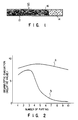
- FIG. 1 illustrates one embodiment of a smoking article of the present invention, having an ordinary cigarette shape.
- the cigarette 10 shown comprises a column portion 12 formed of the burnable smoking element described above, and a filter portion 14 formed of fibrous material and attached to one end of the column portion 12.
- the article is entirely wrapped with a wrapping paper 16.
- the distal end of the column portion 12 is lit to burn the burnable smoking element, and puffing is effected at the filter portion 14, thus allowing the flavor from the smoking element to be tasted.
- the cigarette of the invention permits ready release of the flavoring component when burned, due to the above-noted properties of the flavor-generating material of the invention, thus allowing the flavor to be tasted immediately.
- a curdlan slurry To this emulsified dispersion, 8g of cocoa, 6g of sorbitol (15% by weight based on the whole composition) and 6g of glycerin (15% by weight based on the whole composition) were added, and stirred under the same conditions as above to prepare a curdlan slurry.
- the curdlan slurry was cast over a stainless steel belt as a sheet to a thickness of 0.5 mm to 1.0 mm and dried at 110°C. By this drying, the curdlan was heat-irreversibly gelled, holding and fixing the menthol therein. Then, the dried curdlan sheet was peeled off from the stainless steel belt, giving a flavor-generating material sheet of the present invention. The thickness of the sheet was 0.1 mm to 0.2 mm.
- the flavor-generating material sheet prepared above was stored for 20 days under the conditions of 22°C in temperature and 60% in relative humidity, and then subjected to the measurement of menthol concentration and an organoleptic test.
- the menthol concentration was measured by means of a gas chromatography. As a result, it was found that 95% or more of the menthol remained in the sheet even after 20 days of storage.
- the results of organoleptic evaluation of the sheet were almost the same as those evaluated before storage.
- the flavor-generating material sheet was cut into pieces like cut tobacco, blended with puffed cut tobacco in the weight ratio of 7:3, and the blend was wrapped with a wrapping paper, in the form of a rod, thus preparing a cigarette, which was then smoked.
- the flavors of flavoring components including the menthol were generated immediately after the puffing, and a stable generation of the flavors was substantially maintained during 10 times of puffing.
- any substances which may interfere with the flavors of the flavoring components including the menthol such as obnoxious stimulating, pungent or fibrous smelling substances, were not generated from the sheet material formed mainly of the curdlan, during the burning of the sheet material.
- curdlan powder 12g was dispersed into 288g of water under the same temperature and stirring conditions as those of Example 1, and then 0.5g of licorice extract, a hydrophilic flavoring component, was added and dispersed therein.
- licorice extract a hydrophilic flavoring component
- 8g of cocoa, 6g of sorbitol and 6g of glycerin were added and stirred under the same conditions to obtain a curdlan slurry.
- the curdlan slurry was treated in the same manner as in Example 1 to prepare a flavor-generating material sheet of the invention having licorice extract retained and fixed therein.
- Example 1 a portion of the flavor-generating material sheet was stored for 20 days, and another portion was wrapped with a wrapping paper into a cigarette, which was smoked or puffed, for organoleptic evaluations.
- spearmint oil 0.1g of spearmint oil, a hydrophobic flavoring component, and 2g of lecithin were dissolved into 4g of MCT to prepare a spearmint oil-mixed solution.
- 12g of curdlan powder was dispersed into 288g of water under the same temperature and stirring conditions as those in Example 1.
- the spearmint oil-mixed solution was added, and stirred for 5 minutes to emulsify it.
- 8g of cocoa, 6g of sorbitol and 6g of glycerin were added and stirred under the same conditions to prepare a curdlan slurry.
- the curdlan slurry was treated in the same manner as in Example 1 to prepare a flavor-generating material sheet of the invention having spearmint oil retained and fixed therein.
- a spearmint oil-mixed solution was prepared in the same manner as in Example 3. Meanwhile, 12g of curdlan powder was dispersed into 288g of water under the same temperature and stirring conditions as those in Example 1. To the dispersion, the spearmint oil-mixed solution was added and stirred for 5 minutes, and emulsified to prepare a curdlan slurry. The curdlan slurry was gradually heated, while stirring, to remove the water therefrom, and gelled by raising the temperature up to 110°C. The curdlan was heat-irreversibly gelled, holding and fixing the spearmint oil therein. The curdlan gel thus obtained was vacuum-dried and then pulverized with a hammer mill to prepare a powdery flavor-generating material of the invention.
- a spearmint oil-mixed solution was prepared in the same manner as in Example 3. Meanwhile, 12g of curdlan powder was dispersed into 288g of water under the same temperature and stirring conditions as those in Example 1. To the resultant dispersion, the spearmint oil-mixed solution and 0.5g of licorice extract were added and stirred for 5 minutes to emulsify them. To the emulsified dispersion obtained, 8g of cocoa, 6g of sorbitol and 6g of glycerin were added, and stirred under the same conditions to prepare a curdlan slurry. The curdlan slurry was treated in the same manner as in Example 1 to prepare a flavor-generating material sheet of the present invention having spearmint oil and licorice extract retained and fixed therein.
- Example 1 a portion of the flavor-generating material sheet was stored for 20 days, and another portion was wrapped with a wrapping paper into a cigarette, which was smoked or puffed for organoleptic evaluations.
- a menthol-mixed solution was prepared in the same manner as in Example 1. Meanwhile, 12g of curdlan powder was dispersed into 288g of water under the same temperature and stirring conditions as those in Example 1. To the resultant dispersion, the menthol-mixed solution was added and stirred for 5 minutes to emulsify them. To the emulsified dispersion obtained, 4g of sorbitol (10% by weight based on the whole composition), 8g of glycerin (20% by weight based on the whole composition) and then 8g of cocoa powder were added, and the resultant mixture was stirred under the same conditions to prepare a curdlan slurry. The curdlan slurry was treated in the same manner as in Example 1 to prepare a flavor-generating material sheet of the present invention.
- Another flavor-generating material sheet of the present invention was prepared in the same manner as mentioned above except that the amount of sorbitol was changed to 8g (20% by weight based on the whole composition), and the amount of glycerin was changed to 4g (10% by weight based on the whole composition).
- the flavor-generating material sheet obtained in Example 3 was cut into fine pieces.
- the mass was passed through a pair of molding rollers, the interior of each being circulated with a hot water heated to 80°C, thereby molding a thin film.
- the thin film thus molded was successively peeled from the roller with a doctor knife, and transferred by means of wire mesh conveyer running below the rollers to a drying chamber and a conditioning chamber. Thus, a sheet tobacco material containing 15% of water was obtained.
- Example 2 As in Example 1, a portion of the sheet tobacco material was stored for 20 days, and another portion was wrapped with a wrapping paper into a cigarette, which was smoked or puffed for organoleptic evaluations.
- a smoking article containing a flavor-generating material which is excellent in storage stability of a flavoring component contained therein and capable of readily releasing the flavoring component when it is burned, without giving off any obnoxious taste and smell. Further, it is possible to easily manufacture the flavor-generating material by a simple process. Furthermore, a smoking article or cigarette containing a flavor-generating material of the invention readily release the flavoring component in the flavor-generating material when it is burned so as to satisfy the taste of a smoker through his gustatory or olfactory organs.
Landscapes
- Chemical & Material Sciences (AREA)
- Chemical Kinetics & Catalysis (AREA)
- General Chemical & Material Sciences (AREA)
- Health & Medical Sciences (AREA)
- Life Sciences & Earth Sciences (AREA)
- General Health & Medical Sciences (AREA)
- Molecular Biology (AREA)
- Manufacture Of Tobacco Products (AREA)
- Fats And Perfumes (AREA)
- Seasonings (AREA)
- Cigarettes, Filters, And Manufacturing Of Filters (AREA)
- Jellies, Jams, And Syrups (AREA)
- Agricultural Chemicals And Associated Chemicals (AREA)
- Confectionery (AREA)
- Polyesters Or Polycarbonates (AREA)
- Electrical Discharge Machining, Electrochemical Machining, And Combined Machining (AREA)
- Transition And Organic Metals Composition Catalysts For Addition Polymerization (AREA)
Abstract
Description
- The present invention relates to a smoking article, and more particularly to a smoking article containing a flavor-generating material which is capable of stably retaining the flavoring components, and at the same time capable of readily releasing the flavoring components when it is burned, without generating any obnoxious taste and smell.
- Tobacco article is a representative smoking article, which includes dried leaf tobacco as a main smoking material and in which the flavor is generated by burning the material and is tasted through gustatory or olfactory organs of human. In tobacco articles, a flavor-generating material containing flavoring components has been conventionally employed for the purpose of improving the taste of tobacco.
- However, the conventional flavor-generating materials are poor in stably retaining the flavoring components. Therefore, the smoking articles containing the conventional flavor-generating material have a tendency that its flavoring components escape through vaporization when the articles are stored for a long period of time, and the flavors can not be tasted stably during smoking. Meanwhile, it is required that the flavor-generating material do not generate obnoxious taste and smell upon burning.
- Accordingly, an object of the present invention is to provide a smoking article containing a flavor-generating material which is capable of stably retaining the flavoring components, and at the same time capable of readily releasing the flavoring components when it is burned, without generating any obnoxious taste and smell.
- To achieve the above object, a heat-irreversibly coagulating glucan which has been heat-irreversibly gelled is used in the present invention as a holding material for holding a flavoring component or components, in a flavor-generating material. Flavoring components are added beforehand to an ungelled glucan (usually in the form of a dispersion in water), and the mixture is then subjected to gelation of the glucan by heating. Thus, the flavoring components are incorporated or entrapped within the three-dimensional network of the glucan molecules and strongly fixed therein. The flavor-generating material containing this heat-irreversible gel of the glucan as a holding material for the flavoring components is capable of firmly fixing and retaining the flavoring components under the ordinary storage conditions, and of readily releasing a sufficient amount of the flavoring components when it is burned (i.e. it releases a sufficient amount of flavoring component is released only if burned: the generation of flavor). In addition, the flavor-generating material does not generate any obnoxious taste or smell upon burning. The smoking article of the present invention has a burnable smoking element which comprises this flavor-generating material and optionally cut tobacco and/or cut tobacco substitute.
-
- FIG. 1 is a sectional view schematically showing one embodiment of a smoking article according to the present invention; and
- FIG. 2 is a graph showing the result of organoleptic evaluation of a smoking article of the present invention in comparison with that of a control.
- The present inventors have conducted extensive studies in an attempt to develop a non-tobacco flavor-generating material which is excellent in retention stability of flavoring components under the ordinary storage conditions and capable of readily releasing a sufficient amount of flavoring components when it is burned, without accompanying the generation of obnoxious taste and smell. As a result, it has been found that the above object can be achieved by the use of a heat-irreversible gel of a heat-irreversibly coagulating glucan such as β-1,3-glucan, for example, curdlan, as a holding material for the flavoring components. Further studies have revealed that the retention of the flavoring components as well as the durability of release of the flavoring components during burning can be greatly improved, if a flavoring component or components are added to the glucan prior to the gelation of the glucan rather than adding the flavoring components to the glucan after the glucan is thermally gelled. Namely, if the flavoring components are added to the glucan prior to the gelation of the glucan and then the gelation of the glucan is performed, the flavoring components can be incorporated or entrapped within the three-dimensional network of the glucan molecules so as to be firmly fixed and held therein. On the other hand, if flavoring components are added to glucan after the glucan is gelled, the flavoring components are merely physically adhered onto the fine pores of the glucan gel so that the release durability of the flavoring components during burning is lowered.
- The glucan used in the present invention is known per se in the art. For example, curdlan, which is most preferably used in the present invention, is a straight-chain β-1,3-glucan wherein about 400 to 500 D-glucose molecules are linked together through a β-glucosidic linkage at 1-3 position, and is insoluble in water and in most of organic solvents. Moreover, the glucan is safe to human beings (for example, Unexamined Japanese Patent Application Publication 1-289457 discloses preparing an edible film by mixing a β-1,3-glucan such as curdlan with a water-soluble high molecular material). Glucan is commercially available, usually in the form of powder.
- When β-1,3-glucan, in the form of a dispersion in water, is heated above the critical gelation temperature thereof (in the case of curdlan, 80°C or more), it is gelled. The resultant gel will never be melted again even if it is heated (heat-irreversible gel).
- The present inventors have found out that such a heat-irreversible gel of a heat-irreversibly coagulating glucan, such as a β-1,3-glucan, is capable of firmly holding and retaining flavoring components therein, but capable of readily releasing the flavoring components as it is burned, without generating substances during burning, which adversely affect the released flavor, such as obnoxious stimulating, pungent or fibrous smelling substances.
- The flavoring component used in the flavor-generating material of the invention is preferably liquid or solid (i.e., not gaseous) at a temperature at which the aqueous dispersion of a heat-irreversibly coagulating glucan is prepared, which will be described later. There is particularly no restriction as to the kind of flavoring component used, as far as its flavor can satisfy the taste of human through its gustatory or olfactory organs. Any hydrophilic or hydrophobic flavoring components may be used. Examples of hydrophilic flavoring component are leaf tobacco extract, natural plant extract (for example, licorice extract, Saint-john's bread extract, plum extract, peach extract and the like), acids (for example, malic acid, tartaric acid, citric acid and the like), saccharides (for example, glucose, fructose, isomerized sugar and the like), and nicotine salts (for example, nicotine citrate and the like). Examples of hydrophobic flavoring component are tobacco powder, menthol, cocoas (powder, extract and the like), esters (for example, iso-amyl acetate, linalyl acetate, iso-amyl propionate, linalyl butyrate and the like), natural essential oils (plant essential oils such as vanilla extract, spearmint, peppermint, cassia, jasmine; and animal essential oils such as musk, amber, civet, castoreum and the like), and single incense (for example, anethole, limonene, linalol, eugenol and the like). These flavoring components may be employed singly or in combination of two or more of these.
- The flavoring components may be used at any concentration in the flavor-generating material of the invention sufficient to satisfy the taste of human through its gustatory or olfactory organs as the flavor-generating material is burned, and the concentration can be arbitrarily adjusted. More specifically, the flavoring component is present in an amount from a trace amount to 20% by weight, and preferably from 5 to 10% by weight in the final flavor-generating material.
- To prepare a flavor-generating material of the invention, a glucan, usually in the form of powder, is first stirred in water at a high speed to obtain a dispersion (glucan slurry). The preparation of this dispersion is preferably performed by stirring the glucan with a mixer at a temperature of 20 to 30°C. A stable aqueous dispersion of glucan can be obtained in this manner. When the content of glucan such as curdlan is large, a slurry of high viscosity will result, thus making it more difficult to obtain a slurry which is easy to handle. In particular, when the flavor-generating material is to be prepared in the form of sheet, the content of glucan, in particular curdlan, in an aqueous dispersion, should preferably be 1 to 20% by weight, more preferably be 3 to 5% by weight.
- A desired flavoring component is then added at a desired ratio to the thus prepared aqueous dispersion of glucan, and mixed therein. In this case, if the flavoring component employed is hydrophobic, the hydrophobic component should preferably be preliminarily dissolved in an oily solvent (for example, vegetable fats and oils, or saturated fatty acid triglyceride), preferably together with an emulsifying agent which is known as a food additive (for example, glycerol fatty acid ester, sucrose fatty acid ester, sorbitan fatty acid ester, propylene glycol fatty acid ester and lecithin), to prepare a dissolution material, which is then mixed with the aqueous dispersion of glucan. The resultant mixture is then dispersed and emulsified through a high speed stirring as mentioned above. Among the above-mentioned oily solvents for hydrophobic flavoring components, a middle chain saturated fatty acid triglyceride (MCT) is particularly suited for use, since this substance is capable of readily dissolving most of hydrophobic flavoring components, excellent in oxidation stability as it does not contain unsaturated fatty acid components, and easy to handle owing to its low viscosity. Further, the use of emulsifying agent is effective in forming a satisfactory emulsion wherein the flavoring component is uniformly dispersed and retained therein.
- In preparation of the above-mentioned dissolution material, a hydrophilic flavoring component may also be added thereto. In such a case, the hydrophobic flavoring component is dissolved in the oily solvent, and stabilized as a minute emulsion by means of a high speed stirring. On the other hand, the hydrophilic flavoring component is uniformly dispersed and stabilized in the aqueous dispersion of glucan of high-viscosity.
- In order to impart a pliability to a resulting sheet, thereby facilitating peeling of the sheet from a casting support, it is preferable to add a softening agent comprising a polyhydric alcohol (for example, glycerin, propylene glycol) and/or a saccharide (for example, monosaccharides such as glucose and fructose; disaccharides such as maltose, saccharose and lactose; and polysaccharides such as cellulose and starch; and oxidation derivatives thereof such as aldonic acid and uronic acid) to the aqueous dispersion of glucan containing the flavoring component. By adjusting the ratio between the contents of polyhydric alcohols and saccharides, the softness of the resultant sheet can be adjusted.
- The aqueous dispersion of glucan containing the flavoring component and other components, thus obtained, is then cast over a suitable casting support (such as a stainless steel belt) as a thin sheet after being subjected, if required, to a defoaming treatment under a reduced pressure. This thin sheet is then heat-dried at a temperature which enables the glucan to be heat-irreversibly gelled (for example, 80°C to 140°C in the case of curdlan). With this heating treatment, the water content of the thin sheet is reduced down to, for example, 10%, and at the same time the glucan is transformed into a heat-irreversible gel firmly fixing and keeping therein the flavoring component, thus obtaining a flavor-generating material of the present invention. The above-mentioned gelation is achieved only through heating, without using any gelling agent at all. As mentioned above, glucan is subjected according to the present invention to heat-gelation in the form of an aqueous dispersion. When glucan is subjected to heat-gelation as the aqueous dispersion, the flavor of the flavoring component is not adversely affected, in contrast to the case where glucan is subjected to heat-gelation in the form of an aqueous alkaline solution.
- The flavor-generating material of the invention which comprises a glucan gel holding the flavoring component therein, thus obtained, can be easily peeled off from the casting support. If required, this glucan gel may be humidified and conditioned when it is peeled from the support.
- The flavor-generating material of the present invention hardly releases the flavoring component contained therein under the ordinary storage conditions (for example, at a temperature of 22°C and under a relative humidity of 60%), but, if burned, readily releases the flavoring component, without generating any obnoxious taste or smell. Further, the flavor-generating material of the present invention is insoluble in water as well as in most of organic solvents, and unharmful.
- The content of each component in the final flavor-generating material is preferably as follows:
- The content of the glucan, in particular curdlan, ranges from 2 to 70% by weight, more preferably from 10 to 40% by weight. If the content of the glucan exceeds 70% by weight, the pliability of the resultant gel will tend to be lowered. On the other hand, if the content of the glucan is less than 2% by weight, an incomplete formation of gel will tend to be resulted.
- The content of the oily solvent is 30% by weight or less, preferably 5 to 15% by weight. If the content of the oily solvent exceeds 30% by weight, it becomes impossible for the glucan gel to keep all of the oily solvent therein, so that some of the oily solvent will leak out of the glucan gel.
- The content of the emulsifying agent is 30% by weight or less, preferably 5 to 15% by weight. If the content of the emulsifying agent exceeds 30% by weight, it becomes impossible for the glucan gel to keep all of the emulsifying agent therein, so that some of the emulsifying agent will leak out of the glucan gel as in the case of the oily solvent. Accordingly, it is preferable that the total of the oily solvent and emulsifying agent do not exceed 30% by weight. The optimum ratio between the oily solvent and emulsifying agent is 2 : 1.
- The total amount of the polyhydric alcohol and saccharide is 50% by weight or less, more preferably 10 to 30% by weight (a saccharide serving also as a flavoring component can be used within this range).
- The flavor-generating material of the present invention may be cut into fine pieces or pulverized into powder, and formed into a burnable smoking element optionally blended with cut tobacco and/or cut tobacco substitute, from which a burnable smoking article or cigarette can be prepared.
- Alternatively and preferably, the cut or pulverized flavor-generating material of the invention is kneaded in an ordinary sheet tobacco raw material and formed into a sheet, which is then cut into fine pieces, or pulverized with a hammer mill. The resultant material may be used singly or in combination with the other flavoring component (such as cut tobacco) to prepare a flavor-generating medium. A typical composition of the rolled sheet tobacco material containing the flavor-generating material of the invention comprises 100 parts by weight of tobacco powder (or cellulose or dolomite), 5 to 20 parts by weight of a reinforcing material (for example, tobacco fibers or pulp), 1 to 15 parts by weight of a binder (for example, carboxymethyl cellulose), 1 to 40 parts by weight, preferably 5 to 20 parts by weight of a flavor-generating material of the invention, and any required amount of water. This composition may optionally contain a suitable amount of a humectant (for example, glycerin) or a water-resistant agent (for example, glyoxal). The flavor-generating material of the invention may be kneaded into the other kinds of sheet tobacco such as a slurry sheet tobacco.
- The smoking article of the present invention may be provided with a filter.
- The content of flavor-generating material of the invention in the burnable smoking element may be such that the flavor released from the flavor-generating material of the invention may predominate, or such that the released flavor may be sufficient to mask any obnoxious taste or smell generating from the other substances.
- FIG. 1 illustrates one embodiment of a smoking article of the present invention, having an ordinary cigarette shape. The
cigarette 10 shown comprises a column portion 12 formed of the burnable smoking element described above, and afilter portion 14 formed of fibrous material and attached to one end of the column portion 12. The article is entirely wrapped with a wrapping paper 16. The distal end of the column portion 12 is lit to burn the burnable smoking element, and puffing is effected at thefilter portion 14, thus allowing the flavor from the smoking element to be tasted. - The cigarette of the invention permits ready release of the flavoring component when burned, due to the above-noted properties of the flavor-generating material of the invention, thus allowing the flavor to be tasted immediately.
- 2g of menthol and 2g of lecithin were dissolved into 4g of MCT to prepare a menthol-mixed solution. Meanwhile, 12g of curdlan powder was dispersed in 288g of water under the conditions of a stirring rotational speed of 3,000 rpm and a temperature of 25°C. To the resultant dispersion, the menthol-mixed solution was added, and the mixture was stirred for 5 minutes to prepare an emulsified dispersion. To this emulsified dispersion, 8g of cocoa, 6g of sorbitol (15% by weight based on the whole composition) and 6g of glycerin (15% by weight based on the whole composition) were added, and stirred under the same conditions as above to prepare a curdlan slurry. The curdlan slurry was cast over a stainless steel belt as a sheet to a thickness of 0.5 mm to 1.0 mm and dried at 110°C. By this drying, the curdlan was heat-irreversibly gelled, holding and fixing the menthol therein. Then, the dried curdlan sheet was peeled off from the stainless steel belt, giving a flavor-generating material sheet of the present invention. The thickness of the sheet was 0.1 mm to 0.2 mm.
- The flavor-generating material sheet prepared above was stored for 20 days under the conditions of 22°C in temperature and 60% in relative humidity, and then subjected to the measurement of menthol concentration and an organoleptic test. The menthol concentration was measured by means of a gas chromatography. As a result, it was found that 95% or more of the menthol remained in the sheet even after 20 days of storage. The results of organoleptic evaluation of the sheet were almost the same as those evaluated before storage.
- The flavor-generating material sheet was cut into pieces like cut tobacco, blended with puffed cut tobacco in the weight ratio of 7:3, and the blend was wrapped with a wrapping paper, in the form of a rod, thus preparing a cigarette, which was then smoked. As a result, it was found that the flavors of flavoring components including the menthol were generated immediately after the puffing, and a stable generation of the flavors was substantially maintained during 10 times of puffing. Further, any substances which may interfere with the flavors of the flavoring components including the menthol, such as obnoxious stimulating, pungent or fibrous smelling substances, were not generated from the sheet material formed mainly of the curdlan, during the burning of the sheet material.
- 12g of curdlan powder was dispersed into 288g of water under the same temperature and stirring conditions as those of Example 1, and then 0.5g of licorice extract, a hydrophilic flavoring component, was added and dispersed therein. To the dispersion, 8g of cocoa, 6g of sorbitol and 6g of glycerin were added and stirred under the same conditions to obtain a curdlan slurry. The curdlan slurry was treated in the same manner as in Example 1 to prepare a flavor-generating material sheet of the invention having licorice extract retained and fixed therein.
- As in Example 1, a portion of the flavor-generating material sheet was stored for 20 days, and another portion was wrapped with a wrapping paper into a cigarette, which was smoked or puffed, for organoleptic evaluations.
- The results of organoleptic evaluation of the sheet were almost the same as those evaluated before storage. Further, it was found that the flavors of the flavoring components including the licorice were generated immediately after the puffing, and a stable generation of the flavors was substantially maintained during 10 times of puffing. Further, any substances which may interfere with the flavors of the flavoring components including the licorice, such as obnoxious stimulating, pungent or fibrous smelling substances, were not generated from the sheet material formed mainly of the curdlan, during the burning of the sheet material.
- 0.1g of spearmint oil, a hydrophobic flavoring component, and 2g of lecithin were dissolved into 4g of MCT to prepare a spearmint oil-mixed solution. Meanwhile, 12g of curdlan powder was dispersed into 288g of water under the same temperature and stirring conditions as those in Example 1. To the dispersion, the spearmint oil-mixed solution was added, and stirred for 5 minutes to emulsify it. To the emulsified dispersion obtained, 8g of cocoa, 6g of sorbitol and 6g of glycerin were added and stirred under the same conditions to prepare a curdlan slurry. The curdlan slurry was treated in the same manner as in Example 1 to prepare a flavor-generating material sheet of the invention having spearmint oil retained and fixed therein.
- The results of organoleptic evaluation of the sheet were almost the same as those evaluated before storage. Further, it was found that the flavors of flavoring components including the spearmint oil were generated immediately after the puffing, and a stable generation of the flavors was substantially maintained during 10 times of puffing. Further, any substances which may interfere with the flavors of the flavoring components including the spearmint oil, such as obnoxious stimulating, pungent or fibrous smelling substances, were not generated from the sheet material formed mainly of the curdlan, during the burning of the sheet material.
- A spearmint oil-mixed solution was prepared in the same manner as in Example 3. Meanwhile, 12g of curdlan powder was dispersed into 288g of water under the same temperature and stirring conditions as those in Example 1. To the dispersion, the spearmint oil-mixed solution was added and stirred for 5 minutes, and emulsified to prepare a curdlan slurry. The curdlan slurry was gradually heated, while stirring, to remove the water therefrom, and gelled by raising the temperature up to 110°C. The curdlan was heat-irreversibly gelled, holding and fixing the spearmint oil therein. The curdlan gel thus obtained was vacuum-dried and then pulverized with a hammer mill to prepare a powdery flavor-generating material of the invention.
- As a control, 12g of curdlan powder was dispersed into 288g of water under the same temperature and stirring conditions as those in Example 1. Subsequently, this curdlan slurry was gradually heated under stirring to remove the water therefrom, and then was gelled by raising the temperature up to 110°C to gel the curdlan. Then, a spearmint oil-mixed solution prepared in the same manner as in Example 1 was added to the curdlan gel thus obtained, then vacuum-dried and pulverized with a hammer mill to prepare a powdery flavor-generating material.
- Samples of cigarette were prepared in the same manner as in Example 1, using these powdery flavor-generating materials, and smoked. As a result, the cigarette prepared from the flavor-generating material of the present invention generated the flavor of spearmint oil immediately after the puffing, and a stable generation of the flavor was substantially maintained during 10 times of puffing (FIG. 2, curve a). Further, the generation of any substances which may interfere with the flavor of the spearmint oil, such as obnoxious stimulating, pungent or fibrous smelling substances were not generated from the flavor-generating sheet material mainly formed of the curdlan, during smoking. In the case of the cigarette prepared using the flavor-generating material of the control, however, the flavor of spearmint oil was suddenly reduced from the fourth puffing, and the flavor of spearmint oil could not be tasted after the fifth puffing (FIG. 2, curve b).
- A spearmint oil-mixed solution was prepared in the same manner as in Example 3. Meanwhile, 12g of curdlan powder was dispersed into 288g of water under the same temperature and stirring conditions as those in Example 1. To the resultant dispersion, the spearmint oil-mixed solution and 0.5g of licorice extract were added and stirred for 5 minutes to emulsify them. To the emulsified dispersion obtained, 8g of cocoa, 6g of sorbitol and 6g of glycerin were added, and stirred under the same conditions to prepare a curdlan slurry. The curdlan slurry was treated in the same manner as in Example 1 to prepare a flavor-generating material sheet of the present invention having spearmint oil and licorice extract retained and fixed therein.
- As in Example 1, a portion of the flavor-generating material sheet was stored for 20 days, and another portion was wrapped with a wrapping paper into a cigarette, which was smoked or puffed for organoleptic evaluations.
- The results of organoleptic evaluation of the sheet were almost the same as those evaluated before storage. Further, it was found that the flavors of flavoring components including the spearmint oil and licorice extract were generated immediately after the puffing, and a stable generation of the flavors was substantially maintained during 10 times of puffing. Further, any substances which may interfere with the flavors of the flavoring components including the spearmint oil and licorice extract, such as obnoxious stimulating, pungent or fibrous smelling substances, were not generated from the sheet material mainly formed of the curdlan, during the burning of the sheet material.
- A menthol-mixed solution was prepared in the same manner as in Example 1. Meanwhile, 12g of curdlan powder was dispersed into 288g of water under the same temperature and stirring conditions as those in Example 1. To the resultant dispersion, the menthol-mixed solution was added and stirred for 5 minutes to emulsify them. To the emulsified dispersion obtained, 4g of sorbitol (10% by weight based on the whole composition), 8g of glycerin (20% by weight based on the whole composition) and then 8g of cocoa powder were added, and the resultant mixture was stirred under the same conditions to prepare a curdlan slurry. The curdlan slurry was treated in the same manner as in Example 1 to prepare a flavor-generating material sheet of the present invention.
- Additionally, another flavor-generating material sheet of the present invention was prepared in the same manner as mentioned above except that the amount of sorbitol was changed to 8g (20% by weight based on the whole composition), and the amount of glycerin was changed to 4g (10% by weight based on the whole composition).
- These sheets and the sheet prepared in Example 1 were compared with respect to the pliability thereof. As a result, it was found that when the weight ratio of sorbitol/glycerin was 10/20, the pliability of the sheet was increased so that a soft sheet excellent in elasticity could be obtained, and that when the weight ratio of sorbitol/glycerin was 20/10, the pliability of the sheet was decreased so that a sheet obtained was hard. Further, as a result of examination of these sheets, it was found that when the weight ratio of sorbitol/glycerin was 15/15, a sheet excellent in releasability and optimum in pliability could be obtained.
- The flavor-generating material sheet obtained in Example 3 was cut into fine pieces.
- On the other hand, 8.5 kg of a mixture of fine power generated during the manufacture of tobacco in a tobacco manufacturing factory and waste material from a winnower was pulverized into powder through a mill. To this powder, 1.5 kg of pulp as a reinforcing material and 1 kg of carboxymethyl cellulose as a binder were added, and the resultant mixture was thoroughly mixed to obtain a powdery mixture. To the powdery mixture, 1.5 kg of the fine pieces of flavor-generating material sheet mentioned above, 1 kg of a mixture of polypropylene glycol and corn syrup as a humectant and 3 kg of water were added, and the resultant mixture was thoroughly mixed to prepare a uniform wet mass. The mass was passed through a pair of molding rollers, the interior of each being circulated with a hot water heated to 80°C, thereby molding a thin film. The thin film thus molded was successively peeled from the roller with a doctor knife, and transferred by means of wire mesh conveyer running below the rollers to a drying chamber and a conditioning chamber. Thus, a sheet tobacco material containing 15% of water was obtained.
- As in Example 1, a portion of the sheet tobacco material was stored for 20 days, and another portion was wrapped with a wrapping paper into a cigarette, which was smoked or puffed for organoleptic evaluations.
- The results of organoleptic evaluation of the sheet were almost the same as those evaluated before storage. Further, it was found that the flavors of flavoring components including the spearmint oil were generated immediately after the puffing, and a stable generation of the flavors was substantially maintained during 10 times of puffing. Further, any substances which may interfere with the flavors of the flavoring components including the spearmint oil, such as obnoxious stimulating, pungent or fibrous smelling substances, were not generated from the sheet material mainly formed of the curdlan, during the burning of the sheet material.
- As has been described above, it is possible according to the present invention to provide a smoking article containing a flavor-generating material which is excellent in storage stability of a flavoring component contained therein and capable of readily releasing the flavoring component when it is burned, without giving off any obnoxious taste and smell. Further, it is possible to easily manufacture the flavor-generating material by a simple process. Furthermore, a smoking article or cigarette containing a flavor-generating material of the invention readily release the flavoring component in the flavor-generating material when it is burned so as to satisfy the taste of a smoker through his gustatory or olfactory organs.
Claims (17)
- A smoking article having a burnable smoking element, said smoking element comprising a flavor-generating material including a flavoring component-holding material formed of a heat-irreversibly coagulating glucan which has been heat-irreversibly gelled and a flavoring component held in said holding material, said smoking element having been obtained by thermally gelling a mixture of a ungelled heat-irreversibly coagulating glucan and the flavoring component added thereto, and being capable of releasing a sufficient amount of the flavoring component only through burning.
- The smoking article according to claim 1, wherein the glucan is β-1,3-glucan.
- The smoking article according to claim 1, wherein the glucan is curdlan.
- The smoking article according to claim 1, wherein said smoking element further comprises cut tobacco and/or cut tobacco substitute.
- The smoking article according to claim 1, wherein the flavoring component is a hydrophilic flavoring component.
- The smoking article according to claim 1, wherein the flavoring component contains a hydrophobic flavoring component, and the flavor-generating material comprises an oily solvent for the hydrophobic flavoring component.
- The smoking article according to claim 6, wherein the oily solvent is a middle chain saturated fatty acid triglyceride.
- The smoking article according to claim 6, wherein the flavor-generating material further contains an emulsifying agent.
- The smoking article according to claim 6, wherein the flavoring component further contains a hydrophilic flavoring component.
- The smoking article according to claim 1, wherein the flavor-generating material contains a softening agent including a polyhydric alcohol or a saccharide.
- The smoking article according to claim 1, wherein the gelation is carried out in absence of a gelling agent.
- A smoking article having a burnable smoking element comprising a flavor-generation material which includes a flavoring component-holding material formed of a glucan heat-irreversibly gelled to have a three-dimensional network structure, and a flavoring component fixed and held in the three-dimensional structure of the gelled glucan.
- The smoking article according to claim 12, wherein said smoking element is in the form of a rod.
- The smoking article according to claim 12, wherein said smoking element further contains cut tobacco.
- A smoking article having a burnable smoking element, said smoking element comprising a flavor-generating material incorporated in a sheet tobacco material, said flavor-generating material including flavoring component-holding material formed of a glucan heat-irreversibly gelled to have a three-dimensional net-work structure, and a flavoring component fixed and held in the three-dimensional network structure of the gelled glucan.
- The smoking article according to claim 15, wherein said smoking element is in the form of a rod.
- The smoking article according to claim 16, wherein said smoking element further contains cut tobacco.
Applications Claiming Priority (4)
| Application Number | Priority Date | Filing Date | Title |
|---|---|---|---|
| JP706694 | 1994-01-26 | ||
| JP7066/94 | 1994-01-26 | ||
| JP706694 | 1994-01-26 | ||
| PCT/JP1995/000091 WO1995020330A1 (en) | 1994-01-26 | 1995-01-26 | Smoking article |
Publications (3)
| Publication Number | Publication Date |
|---|---|
| EP0691084A1 true EP0691084A1 (en) | 1996-01-10 |
| EP0691084A4 EP0691084A4 (en) | 1996-12-27 |
| EP0691084B1 EP0691084B1 (en) | 2001-04-18 |
Family
ID=11655705
Family Applications (2)
| Application Number | Title | Priority Date | Filing Date |
|---|---|---|---|
| EP95906523A Expired - Lifetime EP0691084B1 (en) | 1994-01-26 | 1995-01-26 | Smoking article |
| EP95906522A Expired - Lifetime EP0691083B1 (en) | 1994-01-26 | 1995-01-26 | Flavor generating article |
Family Applications After (1)
| Application Number | Title | Priority Date | Filing Date |
|---|---|---|---|
| EP95906522A Expired - Lifetime EP0691083B1 (en) | 1994-01-26 | 1995-01-26 | Flavor generating article |
Country Status (20)
| Country | Link |
|---|---|
| US (1) | US5778899A (en) |
| EP (2) | EP0691084B1 (en) |
| JP (2) | JP3118463B2 (en) |
| KR (2) | KR0174591B1 (en) |
| CN (2) | CN1044436C (en) |
| AT (2) | ATE174478T1 (en) |
| AU (2) | AU682921B2 (en) |
| BG (2) | BG62428B1 (en) |
| BR (2) | BR9505832A (en) |
| CA (2) | CA2159118C (en) |
| CZ (2) | CZ291608B6 (en) |
| DE (2) | DE69506628T2 (en) |
| FI (2) | FI104459B (en) |
| GR (1) | GR3036163T3 (en) |
| MX (2) | MX9504084A (en) |
| NO (2) | NO303612B1 (en) |
| RU (2) | RU2085092C1 (en) |
| SG (2) | SG44831A1 (en) |
| SK (2) | SK282539B6 (en) |
| WO (2) | WO1995020330A1 (en) |
Cited By (5)
| Publication number | Priority date | Publication date | Assignee | Title |
|---|---|---|---|---|
| EP0908108A3 (en) * | 1997-10-08 | 1999-12-01 | Japan Tobacco Inc. | Method for producting a heat-irreversibly coagulated glucan sheet containing a leaf tobacco extract and method for producing a tobacco flavor-generating medium using a heat-irreversibly coagulated glucan sheet |
| EP0908109A3 (en) * | 1997-10-09 | 1999-12-15 | Japan Tobacco Inc. | Method for producing a tobacco flavor-tasting article |
| DE10031980A1 (en) * | 2000-06-30 | 2002-01-17 | H Vollmer | Radiant element for radiating heat and / or cold |
| RU2380991C1 (en) * | 2008-08-29 | 2010-02-10 | Тагир Эюб Оглы Агаев | Smoking composition |
| RU2403832C1 (en) * | 2009-08-10 | 2010-11-20 | Общество с ограниченной ответственностью Торгово-Промышленное Предприятие "Столичное" | Method for production of smoking composition for calean |
Families Citing this family (130)
| Publication number | Priority date | Publication date | Assignee | Title |
|---|---|---|---|---|
| WO1997020670A1 (en) * | 1995-12-05 | 1997-06-12 | Toter, Inc. | Rotationally molded container rim |
| KR20020019756A (en) * | 2000-09-07 | 2002-03-13 | 김용주 | tobacco for detoxifying nicotine using peach ingredient |
| WO2002083827A1 (en) * | 2001-04-13 | 2002-10-24 | Japan Tobacco Inc. | Process for producing glucan capsules having flavor component enclosed therein |
| PT1535524E (en) * | 2002-09-04 | 2013-01-04 | Japan Tobacco Inc | Filter for smoking |
| RU2250737C2 (en) * | 2003-05-19 | 2005-04-27 | Квасенков Олег Иванович | Method of producing non-smoking article from tobacco |
| RU2251376C2 (en) * | 2003-05-19 | 2005-05-10 | Квасенков Олег Иванович | Method for manufacturing of non-smoking article from tobacco |
| RU2250729C2 (en) * | 2003-05-19 | 2005-04-27 | Квасенков Олег Иванович | Method of producing non-smoking article from tobacco |
| RU2250727C2 (en) * | 2003-05-19 | 2005-04-27 | Квасенков Олег Иванович | Method of producing non-smoking article from tobacco |
| RU2250061C2 (en) * | 2003-05-19 | 2005-04-20 | Квасенков Олег Иванович | Method for production of non-smoking product from shag |
| RU2250728C2 (en) * | 2003-05-19 | 2005-04-27 | Квасенков Олег Иванович | Method of producing non-smoking article from tobacco |
| RU2251374C2 (en) * | 2003-05-19 | 2005-05-10 | Квасенков Олег Иванович | Method for manufacturing of non-smoking article from tobacco |
| RU2250723C2 (en) * | 2003-05-19 | 2005-04-27 | Квасенков Олег Иванович | Method of producing non-smoking article from tobacco |
| RU2251380C2 (en) * | 2003-05-19 | 2005-05-10 | Квасенков Олег Иванович | Method for manufacturing of non-smoking article from tobacco |
| RU2250060C2 (en) * | 2003-05-19 | 2005-04-20 | Квасенков Олег Иванович | Method for production of non-smoking product from shag |
| RU2251372C2 (en) * | 2003-05-19 | 2005-05-10 | Квасенков Олег Иванович | Method for manufacturing of non-smoking article from tobacco |
| RU2250062C2 (en) * | 2003-05-19 | 2005-04-20 | Квасенков Олег Иванович | Method for production of non-smoking product from shag |
| RU2250742C2 (en) * | 2003-05-19 | 2005-04-27 | Квасенков Олег Иванович | Method of producing non-smoking article from tobacco |
| RU2250743C2 (en) * | 2003-05-19 | 2005-04-27 | Квасенков Олег Иванович | Method of producing non-smoking article from tobacco |
| RU2250726C2 (en) * | 2003-05-19 | 2005-04-27 | Квасенков Олег Иванович | Method of producing non-smoking article from tobacco |
| RU2250731C2 (en) * | 2003-05-19 | 2005-04-27 | Квасенков Олег Иванович | Method of producing non-smoking article from tobacco |
| RU2250063C2 (en) * | 2003-05-19 | 2005-04-20 | Квасенков Олег Иванович | Method for production of non-smoking product from shag |
| RU2251371C2 (en) * | 2003-05-19 | 2005-05-10 | Квасенков Олег Иванович | Method for manufacturing of non-smoking article from tobacco |
| RU2251375C2 (en) * | 2003-05-19 | 2005-05-10 | Квасенков Олег Иванович | Method for manufacturing of non-smoking article from tobacco |
| RU2250732C2 (en) * | 2003-05-19 | 2005-04-27 | Квасенков Олег Иванович | Method of producing non-smoking article from tobacco |
| RU2250738C2 (en) * | 2003-05-19 | 2005-04-27 | Квасенков Олег Иванович | Method of producing non-smoking article from tobacco |
| RU2250740C2 (en) * | 2003-05-19 | 2005-04-27 | Квасенков Олег Иванович | Method of producing non-smoking article from tobacco |
| RU2251377C2 (en) * | 2003-05-19 | 2005-05-10 | Квасенков Олег Иванович | Method for manufacturing of non-smoking article from tobacco |
| RU2251378C2 (en) * | 2003-05-19 | 2005-05-10 | Квасенков Олег Иванович | Method for manufacturing of non-smoking article from tobacco |
| RU2250741C2 (en) * | 2003-05-19 | 2005-04-27 | Квасенков Олег Иванович | Method of producing non-smoking article from tobacco |
| RU2251373C2 (en) * | 2003-05-19 | 2005-05-10 | Квасенков Олег Иванович | Method for manufacturing of non-smoking article from tobacco |
| RU2250733C2 (en) * | 2003-05-19 | 2005-04-27 | Квасенков Олег Иванович | Method of producing non-smoking article from tobacco |
| RU2251379C2 (en) * | 2003-05-19 | 2005-05-10 | Квасенков Олег Иванович | Method for manufacturing of non-smoking article from tobacco |
| RU2250735C2 (en) * | 2003-05-19 | 2005-04-27 | Квасенков Олег Иванович | Method of producing non-smoking article from tobacco |
| RU2250730C2 (en) * | 2003-05-19 | 2005-04-27 | Квасенков Олег Иванович | Method of producing non-smoking article from tobacco |
| RU2250736C2 (en) * | 2003-05-19 | 2005-04-27 | Квасенков Олег Иванович | Method of producing non-smoking article from tobacco |
| RU2250725C2 (en) * | 2003-05-19 | 2005-04-27 | Квасенков Олег Иванович | Method of producing non-smoking article from tobacco |
| US20040231684A1 (en) * | 2003-05-20 | 2004-11-25 | Zawadzki Michael A. | Smoking article and smoking article filter |
| RU2248164C2 (en) * | 2003-05-20 | 2005-03-20 | Научно-исследовательский институт пищеконцентратной промышленности и специальной пищевой технологии (Государственное научное учреждение) | Method for manufacturing non-smoking product out of rustic tobacco |
| US20050066986A1 (en) * | 2003-09-30 | 2005-03-31 | Nestor Timothy Brian | Smokable rod for a cigarette |
| US7503330B2 (en) * | 2003-09-30 | 2009-03-17 | R.J. Reynolds Tobacco Company | Smokable rod for a cigarette |
| JP4592326B2 (en) * | 2004-04-28 | 2010-12-01 | 久光製薬株式会社 | Patch |
| EP1825766A1 (en) * | 2004-10-27 | 2007-08-29 | Japan Tobacco, Inc. | Tobacco material having its stimulation/hot flavor at smoking reduced, smoking flavor imparting agent, regenerated tobacco material, process for producing tobacco material, and process for producing smoking flavor imparting agent |
| US10188140B2 (en) | 2005-08-01 | 2019-01-29 | R.J. Reynolds Tobacco Company | Smoking article |
| US20070215167A1 (en) | 2006-03-16 | 2007-09-20 | Evon Llewellyn Crooks | Smoking article |
| RU2306799C1 (en) * | 2006-03-13 | 2007-09-27 | Олег Иванович Квасенков | Method for producing of aromatized expanded tobacco vein |
| RU2304911C1 (en) * | 2006-03-15 | 2007-08-27 | Олег Иванович Квасенков | Method for production of flavored puffed tobacco leaf vein |
| US9220301B2 (en) | 2006-03-16 | 2015-12-29 | R.J. Reynolds Tobacco Company | Smoking article |
| US7946296B2 (en) * | 2006-05-26 | 2011-05-24 | Philip Morris Usa Inc. | Dissolvable tobacco film strips and method of making the same |
| US7726320B2 (en) | 2006-10-18 | 2010-06-01 | R. J. Reynolds Tobacco Company | Tobacco-containing smoking article |
| RU2328182C1 (en) * | 2006-12-11 | 2008-07-10 | Олег Иванович Квасенков | Method for production of lightened kreteks |
| RU2405810C1 (en) * | 2006-12-13 | 2010-12-10 | Джапан Тобакко Инк. | Flavouring particle and cigarette filter |
| MY147733A (en) * | 2007-02-02 | 2013-01-15 | Japan Tobacco Inc | Smoking appliance |
| JPWO2008146543A1 (en) * | 2007-05-28 | 2010-08-19 | 日本たばこ産業株式会社 | Menthol cigarette with charcoal filter |
| US20090038629A1 (en) * | 2007-08-07 | 2009-02-12 | Ergle J Dennis | Flavor sheet for smoking article |
| EP2100525A1 (en) | 2008-03-14 | 2009-09-16 | Philip Morris Products S.A. | Electrically heated aerosol generating system and method |
| KR101330438B1 (en) * | 2008-05-19 | 2013-11-15 | 니뽄 다바코 산교 가부시키가이샤 | Material containing flavoring agent for cigarette, method for production thereof, and cigarette |
| RU2357601C1 (en) * | 2008-05-29 | 2009-06-10 | Олег Иванович Квасенков | Reconstituted tobacco production method |
| MY151367A (en) | 2008-06-25 | 2014-05-15 | Japan Tobacco Inc | Smoking article |
| EP3300961A1 (en) | 2008-09-30 | 2018-04-04 | TRW Airbag Systems GmbH | Gas generator, method for the production thereof and module having a gas generator |
| GB2469838A (en) * | 2009-04-29 | 2010-11-03 | British American Tobacco Co | Treated tobacco |
| GB2469832A (en) * | 2009-04-29 | 2010-11-03 | British American Tobacco Co | Aerosol generating material for a smoking article |
| JP5372151B2 (en) | 2009-06-18 | 2013-12-18 | 日本たばこ産業株式会社 | Non-combustible smoking article with carbonaceous heat source |
| US8757147B2 (en) | 2010-05-15 | 2014-06-24 | Minusa Holdings Llc | Personal vaporizing inhaler with internal light source |
| US11344683B2 (en) | 2010-05-15 | 2022-05-31 | Rai Strategic Holdings, Inc. | Vaporizer related systems, methods, and apparatus |
| GB201012090D0 (en) | 2010-07-19 | 2010-09-01 | British American Tobacco Co | Cellulosic material |
| RU2441518C1 (en) * | 2010-10-08 | 2012-02-10 | Олег Иванович Квасенков | Means to extract non-smoking product from shag tobacco |
| RU2440782C1 (en) * | 2010-10-11 | 2012-01-27 | Олег Иванович Квасенков | Method for production of non-smoking products of rustic tobacco |
| RU2441524C1 (en) * | 2010-10-11 | 2012-02-10 | Олег Иванович Квасенков | Means to extract non-smoking material from shag tobacco |
| RU2441521C1 (en) * | 2010-10-11 | 2012-02-10 | Олег Иванович Квасенков | Means to extract non-smoking product from shag tobacco |
| RU2443262C1 (en) * | 2010-10-20 | 2012-02-27 | Олег Иванович Квасенков | Method for production of non-smoking products of rustic tobacco |
| RU2432860C1 (en) * | 2010-12-10 | 2011-11-10 | Олег Иванович Квасенков | Method for production of non-smoking products of rustic tobacco |
| RU2432859C1 (en) * | 2010-12-10 | 2011-11-10 | Олег Иванович Квасенков | Method for production of non-smoking products of rustic tobacco |
| RU2432858C1 (en) * | 2010-12-10 | 2011-11-10 | Олег Иванович Квасенков | Method for production of non-smoking products of rustic tobacco |
| JP5489190B2 (en) * | 2011-03-29 | 2014-05-14 | 日本たばこ産業株式会社 | Non-combustion suction tobacco products |
| CN102415611B (en) * | 2011-07-24 | 2013-04-03 | 红云红河烟草(集团)有限责任公司 | Tobacco charging method for improving using effect of tobacco flavor |
| US9078473B2 (en) | 2011-08-09 | 2015-07-14 | R.J. Reynolds Tobacco Company | Smoking articles and use thereof for yielding inhalation materials |
| CA2839099C (en) | 2011-09-06 | 2016-06-28 | British American Tobacco (Investments) Limited | Heating smokeable material |
| SG2014011621A (en) * | 2011-09-09 | 2014-06-27 | Philip Morris Products Sa | Smoking article comprising a flavour delivery material |
| RU2489948C2 (en) * | 2011-11-17 | 2013-08-20 | Общество с ограниченной ответственностью "Научно-производственное объединение ЗДОРОВЬЕ" ("НПО ЗДОРОВЬЕ") | Smoke-generating composition for electronic devices imitating tobacco smoking, such composition production and application method |
| CN102488323A (en) * | 2011-12-13 | 2012-06-13 | 云南瑞升烟草技术(集团)有限公司 | Tobacco absolute emulsification preparation and application thereof to tobacco leaves |
| WO2013091252A1 (en) * | 2011-12-23 | 2013-06-27 | Liu Qiuming | Electronic cigarette suction nozzle |
| WO2013146927A1 (en) * | 2012-03-28 | 2013-10-03 | 日本たばこ産業株式会社 | Fragment of fragrance-containing sheet for smoking goods |
| GB201217067D0 (en) | 2012-09-25 | 2012-11-07 | British American Tobacco Co | Heating smokable material |
| GB201311620D0 (en) | 2013-06-28 | 2013-08-14 | British American Tobacco Co | Devices Comprising a Heat Source Material and Activation Chambers for the Same |
| CN105744848B (en) * | 2013-11-22 | 2018-11-16 | 菲利普莫里斯生产公司 | Smoking combination object comprising fragrance precursor |
| LT3076813T (en) * | 2013-12-05 | 2019-07-25 | Philip Morris Products S.A. | A BABY PRODUCT CONTAINING NICOTINE |
| US9839238B2 (en) | 2014-02-28 | 2017-12-12 | Rai Strategic Holdings, Inc. | Control body for an electronic smoking article |
| EP3160275B1 (en) * | 2014-06-27 | 2018-08-15 | Philip Morris Products S.a.s. | Smoking article comprising a combustible heat source and holder and method of manufacture thereof |
| GB201500582D0 (en) | 2015-01-14 | 2015-02-25 | British American Tobacco Co | Apparatus for heating or cooling a material contained therein |
| WO2016088204A1 (en) * | 2014-12-02 | 2016-06-09 | 日本たばこ産業株式会社 | Cigarette wrapping paper, and a paper-wrapped cigarette using said cigarette wrapping paper |
| US20170055584A1 (en) | 2015-08-31 | 2017-03-02 | British American Tobacco (Investments) Limited | Article for use with apparatus for heating smokable material |
| US11924930B2 (en) | 2015-08-31 | 2024-03-05 | Nicoventures Trading Limited | Article for use with apparatus for heating smokable material |
| US20170055575A1 (en) | 2015-08-31 | 2017-03-02 | British American Tobacco (Investments) Limited | Material for use with apparatus for heating smokable material |
| US10034494B2 (en) | 2015-09-15 | 2018-07-31 | Rai Strategic Holdings, Inc. | Reservoir for aerosol delivery devices |
| US20170119047A1 (en) | 2015-10-30 | 2017-05-04 | British American Tobacco (Investments) Limited | Article for Use with Apparatus for Heating Smokable Material |
| US20170119046A1 (en) | 2015-10-30 | 2017-05-04 | British American Tobacco (Investments) Limited | Apparatus for Heating Smokable Material |
| US11744296B2 (en) | 2015-12-10 | 2023-09-05 | R. J. Reynolds Tobacco Company | Smoking article |
| US10314334B2 (en) | 2015-12-10 | 2019-06-11 | R.J. Reynolds Tobacco Company | Smoking article |
| CN105601983B (en) * | 2016-03-10 | 2020-09-15 | 云南中烟工业有限责任公司 | A kind of natural polysaccharide aerogel, its preparation method and application in cigarette |
| RU2730708C2 (en) * | 2016-05-31 | 2020-08-25 | Филип Моррис Продактс С.А. | Aerosol-generating article with insulated heat source |
| CN106387995A (en) * | 2016-08-31 | 2017-02-15 | 刘迎春 | Controlled-release filter tip containing aroma-increasing and moisture-retaining sheets |
| ES2999299T3 (en) * | 2016-12-30 | 2025-02-25 | Philip Morris Products Sa | Method of making a nicotine containing sheet |
| CN110035669B (en) * | 2016-12-30 | 2022-02-18 | 菲利普莫里斯生产公司 | Sheet material containing nicotine and cellulose |
| PL3562328T3 (en) | 2016-12-30 | 2025-04-28 | Philip Morris Products S.A. | Nicotine and binder containing sheet |
| EP3562327B1 (en) * | 2016-12-30 | 2020-10-21 | Philip Morris Products S.a.s. | Nicotine containing sheet |
| GB201705152D0 (en) | 2017-03-30 | 2017-05-17 | British American Tobacco Investments Ltd | An article for use with an apparatus for heating an aerosol generating agent |
| EP3664638B1 (en) * | 2017-08-09 | 2024-04-10 | Philip Morris Products S.A. | Rod for use as aerosol-generating substrate in an aerosol-generating article, comprising multiple longitudinal elongate elements of non-tobacco material, and method of making the rod |
| GB201718033D0 (en) * | 2017-11-01 | 2017-12-13 | Nicoventures Holdings Ltd | Flavoured vaporisable formulation |
| KR102705128B1 (en) * | 2017-12-20 | 2024-09-11 | 필립모리스 프로덕츠 에스.에이. | Aerosol generating substrate containing oil additives |
| GB201805192D0 (en) | 2018-03-29 | 2018-05-16 | Nicoventures Trading Ltd | Vapour provision system with aerosolisable substrate material carrying portion detection |
| GB201805169D0 (en) | 2018-03-29 | 2018-05-16 | Nicoventures Holdings Ltd | A control device for an electronic aerosol provision system |
| GB201805168D0 (en) | 2018-03-29 | 2018-05-16 | Nicoventures Holdings Ltd | A control device for an electronic aerosol provision system |
| GB201805170D0 (en) * | 2018-03-29 | 2018-05-16 | Nicoventures Holdings Ltd | Electronic aerosol provision system |
| CN108618198B (en) * | 2018-04-04 | 2020-08-07 | 华南农业大学 | A kind of controlled-release tobacco flavor film and its preparation method and application |
| GB201808526D0 (en) * | 2018-05-24 | 2018-07-11 | Nicoventures Trading Ltd | Aerosol Generation |
| IL278838B2 (en) | 2018-07-10 | 2025-09-01 | Philip Morris Products Sa | Shisha cartridge with gel |
| GB201811926D0 (en) | 2018-07-20 | 2018-09-05 | Nicoventures Trading Ltd | Aerosolisable formulation |
| GB201812508D0 (en) | 2018-07-31 | 2018-09-12 | Nicoventures Holdings Ltd | Aerosol generation |
| CN109007971A (en) * | 2018-09-26 | 2018-12-18 | 云南中烟新材料科技有限公司 | A kind of slow-release fragrance gel combination and preparation method thereof |
| GB201817861D0 (en) * | 2018-11-01 | 2018-12-19 | Nicoventures Trading Ltd | Gel and crystalline powder |
| JP2022514738A (en) | 2018-12-17 | 2022-02-15 | フィリップ・モーリス・プロダクツ・ソシエテ・アノニム | Tubular element for use with aerosol-generating articles |
| CN109588787A (en) * | 2019-01-22 | 2019-04-09 | 云南中烟工业有限责任公司 | A kind of ramuscule electronic cigarette and preparation method thereof |
| US12053013B2 (en) * | 2019-04-08 | 2024-08-06 | Philip Morris Products S.A. | Method of manufacturing an aerosol-generating film |
| WO2021127101A1 (en) | 2019-12-19 | 2021-06-24 | Juul Labs, Inc. | Metal oxide-based gel nicotine compositions |
| CN115135175A (en) | 2019-12-19 | 2022-09-30 | 尤尔实验室有限公司 | Organic-based nicotine gel compositions |
| CN111000288A (en) * | 2019-12-30 | 2020-04-14 | 福建中烟工业有限责任公司 | Gel for cigarettes and tobacco products |
| CN113367384A (en) * | 2021-06-30 | 2021-09-10 | 云南南中科技有限公司 | Preparation method of degradable gel film filter stick for heating non-burning type cigarette |
| CN113679097A (en) * | 2021-08-31 | 2021-11-23 | 安徽中烟工业有限责任公司 | A kind of granular carbon heating cigarette and preparation method thereof |
| CN116600664A (en) * | 2021-11-18 | 2023-08-15 | 韩国烟草人参公社 | Smoking articles including novel flavorants |
| CN221690089U (en) | 2023-07-20 | 2024-09-13 | 努迈尔·法奇尔 | Sprayer device |
Family Cites Families (20)
| Publication number | Priority date | Publication date | Assignee | Title |
|---|---|---|---|---|
| JPS51128500A (en) * | 1975-04-30 | 1976-11-09 | Japan Tobacco Inc | Process for preparing tobacco substitute |
| US4109663A (en) * | 1974-10-17 | 1978-08-29 | Takeda Chemical Industries, Ltd. | Tobacco product containing a thermo-gelable β-1,3-glucan-type polysaccharide |
| JPS5941397B2 (en) * | 1977-02-18 | 1984-10-06 | 日本たばこ産業株式会社 | Beaded gel containing flavoring and tobacco products containing the same |
| JPS5932108B2 (en) * | 1977-04-20 | 1984-08-06 | 日本たばこ産業株式会社 | Microcapsules with flavoring as the core material and tobacco products containing them |
| US4256126A (en) * | 1978-08-02 | 1981-03-17 | Philip Morris Incorporated | Smokable material and its method of preparation |
| US4518581A (en) * | 1981-11-02 | 1985-05-21 | Kabushiki Kaisha Hayashibara Seibutsu Kagaku Kenkyujo | Imparting low- or anti-cariogenic property to orally-usable products |
| GB2124666B (en) * | 1982-06-09 | 1986-01-15 | Procter & Gamble Ltd | Laundry additive products |
| JPS5932108A (en) * | 1982-08-17 | 1984-02-21 | Kishihiro Yamaoka | Manufacture of electromagnetic iron core |
| JPS5941397A (en) * | 1982-09-01 | 1984-03-07 | 株式会社資生堂 | Detergent |
| JPS6014761A (en) * | 1983-07-04 | 1985-01-25 | Matsushita Electric Ind Co Ltd | silver oxide battery |
| JP2846637B2 (en) * | 1988-01-26 | 1999-01-13 | 日本たばこ産業株式会社 | Aroma inhalation article |
| JPH01289457A (en) * | 1988-02-04 | 1989-11-21 | Takeda Chem Ind Ltd | Edible film |
| CN1036967A (en) * | 1988-02-04 | 1989-11-08 | 武田药品工业株式会社 | Edible film |
| US5159940A (en) * | 1988-07-22 | 1992-11-03 | Philip Morris Incorporated | Smoking article |
| US4955399A (en) * | 1988-11-30 | 1990-09-11 | R. J. Reynolds Tobacco Company | Smoking article |
| JP3325591B2 (en) * | 1990-08-24 | 2002-09-17 | フィリップ・モーリス・プロダクツ・インコーポレイテッド | Smoking articles |
| ATE121909T1 (en) * | 1991-03-11 | 1995-05-15 | Philip Morris Prod | FLAVOR PRODUCING ITEMS. |
| US5240016A (en) * | 1991-04-19 | 1993-08-31 | Philip Morris Incorporated | Thermally releasable gel-based flavor source for smoking articles |
| JPH104742A (en) * | 1996-06-25 | 1998-01-13 | Iseki & Co Ltd | Tractor moor balance weight |
| US20110175782A1 (en) | 2008-09-22 | 2011-07-21 | Kmw Inc. | Dual-band dual-polarized antenna of base station for mobile communication |
-
1995
- 1995-01-26 AU AU14668/95A patent/AU682921B2/en not_active Ceased
- 1995-01-26 US US08/530,105 patent/US5778899A/en not_active Expired - Fee Related
- 1995-01-26 CN CN95190051A patent/CN1044436C/en not_active Expired - Fee Related
- 1995-01-26 CA CA002159118A patent/CA2159118C/en not_active Expired - Fee Related
- 1995-01-26 JP JP07519976A patent/JP3118463B2/en not_active Expired - Fee Related
- 1995-01-26 EP EP95906523A patent/EP0691084B1/en not_active Expired - Lifetime
- 1995-01-26 SG SG1996008370A patent/SG44831A1/en unknown
- 1995-01-26 KR KR1019950704150A patent/KR0174591B1/en not_active Expired - Fee Related
- 1995-01-26 AU AU14667/95A patent/AU669831B2/en not_active Ceased
- 1995-01-26 RU RU9595122785A patent/RU2085092C1/en not_active IP Right Cessation
- 1995-01-26 CZ CZ19952790A patent/CZ291608B6/en not_active IP Right Cessation
- 1995-01-26 SK SK1334-95A patent/SK282539B6/en unknown
- 1995-01-26 BR BR9505832A patent/BR9505832A/en not_active IP Right Cessation
- 1995-01-26 AT AT95906522T patent/ATE174478T1/en not_active IP Right Cessation
- 1995-01-26 SG SG1996003427A patent/SG43868A1/en unknown
- 1995-01-26 WO PCT/JP1995/000091 patent/WO1995020330A1/en not_active Ceased
- 1995-01-26 BR BR9505831A patent/BR9505831A/en not_active IP Right Cessation
- 1995-01-26 SK SK1333-95A patent/SK282015B6/en unknown
- 1995-01-26 AT AT95906523T patent/ATE200611T1/en not_active IP Right Cessation
- 1995-01-26 RU RU9595122713A patent/RU2085091C1/en not_active IP Right Cessation
- 1995-01-26 CA CA002159119A patent/CA2159119C/en not_active Expired - Fee Related
- 1995-01-26 CZ CZ19952789A patent/CZ291505B6/en not_active IP Right Cessation
- 1995-01-26 JP JP07519975A patent/JP3118462B2/en not_active Expired - Fee Related
- 1995-01-26 WO PCT/JP1995/000090 patent/WO1995020329A1/en not_active Ceased
- 1995-01-26 KR KR1019950704151A patent/KR100209561B1/en not_active Expired - Fee Related
- 1995-01-26 DE DE69506628T patent/DE69506628T2/en not_active Expired - Fee Related
- 1995-01-26 EP EP95906522A patent/EP0691083B1/en not_active Expired - Lifetime
- 1995-01-26 DE DE69520708T patent/DE69520708T2/en not_active Expired - Fee Related
- 1995-01-26 MX MX9504084A patent/MX9504084A/en unknown
- 1995-01-26 CN CN95190053A patent/CN1044437C/en not_active Expired - Fee Related
- 1995-01-26 MX MX9504085A patent/MX9504085A/en not_active IP Right Cessation
- 1995-09-25 NO NO953782A patent/NO303612B1/en not_active IP Right Cessation
- 1995-09-25 NO NO953783A patent/NO304175B1/en not_active IP Right Cessation
- 1995-09-25 FI FI954540A patent/FI104459B/en not_active IP Right Cessation
- 1995-09-25 FI FI954539A patent/FI104038B/en not_active IP Right Cessation
- 1995-10-25 BG BG100091A patent/BG62428B1/en unknown
- 1995-10-25 BG BG100090A patent/BG62427B1/en unknown
-
2001
- 2001-07-02 GR GR20010401014T patent/GR3036163T3/en not_active IP Right Cessation
Non-Patent Citations (2)
| Title |
|---|
| DATABASE WPI Derwent Publications Ltd., London, GB; AN 79-01094b XP002016168 & JP-A-53 133 697 (JAPAN TOBACCO & SALT LTD.) , 21 November 1978 * |
| See also references of WO9520330A1 * |
Cited By (8)
| Publication number | Priority date | Publication date | Assignee | Title |
|---|---|---|---|---|
| EP0908108A3 (en) * | 1997-10-08 | 1999-12-01 | Japan Tobacco Inc. | Method for producting a heat-irreversibly coagulated glucan sheet containing a leaf tobacco extract and method for producing a tobacco flavor-generating medium using a heat-irreversibly coagulated glucan sheet |
| US6499490B1 (en) | 1997-10-08 | 2002-12-31 | Japan Tobacco Inc. | Method for producing a heat-irreversibly coagulated glucan sheet containing a leaf tobacco extract and method for producing a tobacco flavor-generating medium using a heat-irreversibly coagulated glucan sheet |
| CN1100506C (en) * | 1997-10-08 | 2003-02-05 | 日本烟草产业株式会社 | Method for producing heat-irreversibly coagulated glucan sheet containing leaf tobacco extract,and method for producing tobacco flavor-generating medium using heat-irreversibly coagulated glucan sheet |
| EP0908109A3 (en) * | 1997-10-09 | 1999-12-15 | Japan Tobacco Inc. | Method for producing a tobacco flavor-tasting article |
| US6109272A (en) * | 1997-10-09 | 2000-08-29 | Japan Tobacco Inc. | Method for producing a tobacco flavor-tasting article |
| DE10031980A1 (en) * | 2000-06-30 | 2002-01-17 | H Vollmer | Radiant element for radiating heat and / or cold |
| RU2380991C1 (en) * | 2008-08-29 | 2010-02-10 | Тагир Эюб Оглы Агаев | Smoking composition |
| RU2403832C1 (en) * | 2009-08-10 | 2010-11-20 | Общество с ограниченной ответственностью Торгово-Промышленное Предприятие "Столичное" | Method for production of smoking composition for calean |
Also Published As
Similar Documents
| Publication | Publication Date | Title |
|---|---|---|
| EP0691084B1 (en) | Smoking article | |
| US5845649A (en) | Flavor-tasting article | |
| JPWO1995020330A1 (en) | smoking articles | |
| JP3212271B2 (en) | Manufacturing method of tobacco flavored articles | |
| US5046514A (en) | Smoking material and process for making same | |
| JPWO1995020329A1 (en) | Scented and flavored items | |
| JPH0928366A (en) | Cigarette | |
| HK1012530B (en) | Smoking article | |
| HK1012529B (en) | Flavor generating article |
Legal Events
| Date | Code | Title | Description |
|---|---|---|---|
| PUAI | Public reference made under article 153(3) epc to a published international application that has entered the european phase |
Free format text: ORIGINAL CODE: 0009012 |
|
| 17P | Request for examination filed |
Effective date: 19951005 |
|
| AK | Designated contracting states |
Kind code of ref document: A1 Designated state(s): AT BE CH DE FR GB GR IT LI LU NL SE |
|
| A4 | Supplementary search report drawn up and despatched | ||
| AK | Designated contracting states |
Kind code of ref document: A4 Designated state(s): AT BE CH DE FR GB GR IT LI LU NL SE |
|
| 17Q | First examination report despatched |
Effective date: 19990820 |
|
| GRAG | Despatch of communication of intention to grant |
Free format text: ORIGINAL CODE: EPIDOS AGRA |
|
| GRAG | Despatch of communication of intention to grant |
Free format text: ORIGINAL CODE: EPIDOS AGRA |
|
| GRAH | Despatch of communication of intention to grant a patent |
Free format text: ORIGINAL CODE: EPIDOS IGRA |
|
| GRAH | Despatch of communication of intention to grant a patent |
Free format text: ORIGINAL CODE: EPIDOS IGRA |
|
| GRAA | (expected) grant |
Free format text: ORIGINAL CODE: 0009210 |
|
| AK | Designated contracting states |
Kind code of ref document: B1 Designated state(s): AT BE CH DE FR GB GR IT LI LU NL SE |
|
| REF | Corresponds to: |
Ref document number: 200611 Country of ref document: AT Date of ref document: 20010515 Kind code of ref document: T |
|
| ITF | It: translation for a ep patent filed | ||
| REG | Reference to a national code |
Ref country code: CH Ref legal event code: EP |
|
| REF | Corresponds to: |
Ref document number: 69520708 Country of ref document: DE Date of ref document: 20010523 |
|
| REG | Reference to a national code |
Ref country code: CH Ref legal event code: NV Representative=s name: NOVAPAT INTERNATIONAL S.A. |
|
| ET | Fr: translation filed | ||
| REG | Reference to a national code |
Ref country code: GB Ref legal event code: IF02 |
|
| PLBE | No opposition filed within time limit |
Free format text: ORIGINAL CODE: 0009261 |
|
| STAA | Information on the status of an ep patent application or granted ep patent |
Free format text: STATUS: NO OPPOSITION FILED WITHIN TIME LIMIT |
|
| 26N | No opposition filed | ||
| PGFP | Annual fee paid to national office [announced via postgrant information from national office to epo] |
Ref country code: FR Payment date: 20031209 Year of fee payment: 10 |
|
| PGFP | Annual fee paid to national office [announced via postgrant information from national office to epo] |
Ref country code: AT Payment date: 20031211 Year of fee payment: 10 |
|
| PGFP | Annual fee paid to national office [announced via postgrant information from national office to epo] |
Ref country code: GR Payment date: 20031212 Year of fee payment: 10 Ref country code: CH Payment date: 20031212 Year of fee payment: 10 |
|
| PGFP | Annual fee paid to national office [announced via postgrant information from national office to epo] |
Ref country code: BE Payment date: 20031218 Year of fee payment: 10 |
|
| PGFP | Annual fee paid to national office [announced via postgrant information from national office to epo] |
Ref country code: NL Payment date: 20031231 Year of fee payment: 10 |
|
| PGFP | Annual fee paid to national office [announced via postgrant information from national office to epo] |
Ref country code: LU Payment date: 20040106 Year of fee payment: 10 |
|
| PGFP | Annual fee paid to national office [announced via postgrant information from national office to epo] |
Ref country code: SE Payment date: 20040119 Year of fee payment: 10 |
|
| PGFP | Annual fee paid to national office [announced via postgrant information from national office to epo] |
Ref country code: GB Payment date: 20040121 Year of fee payment: 10 |
|
| PGFP | Annual fee paid to national office [announced via postgrant information from national office to epo] |
Ref country code: DE Payment date: 20040130 Year of fee payment: 10 |
|
| PG25 | Lapsed in a contracting state [announced via postgrant information from national office to epo] |
Ref country code: IT Free format text: LAPSE BECAUSE OF NON-PAYMENT OF DUE FEES Effective date: 20050126 Ref country code: GB Free format text: LAPSE BECAUSE OF NON-PAYMENT OF DUE FEES Effective date: 20050126 Ref country code: AT Free format text: LAPSE BECAUSE OF NON-PAYMENT OF DUE FEES Effective date: 20050126 |
|
| PG25 | Lapsed in a contracting state [announced via postgrant information from national office to epo] |
Ref country code: SE Free format text: LAPSE BECAUSE OF NON-PAYMENT OF DUE FEES Effective date: 20050127 |
|
| PG25 | Lapsed in a contracting state [announced via postgrant information from national office to epo] |
Ref country code: LI Free format text: LAPSE BECAUSE OF NON-PAYMENT OF DUE FEES Effective date: 20050131 Ref country code: CH Free format text: LAPSE BECAUSE OF NON-PAYMENT OF DUE FEES Effective date: 20050131 Ref country code: BE Free format text: LAPSE BECAUSE OF NON-PAYMENT OF DUE FEES Effective date: 20050131 |
|
| BERE | Be: lapsed |
Owner name: JAPAN *TOBACCO INC. Effective date: 20050131 |
|
| PG25 | Lapsed in a contracting state [announced via postgrant information from national office to epo] |
Ref country code: NL Free format text: LAPSE BECAUSE OF NON-PAYMENT OF DUE FEES Effective date: 20050801 |
|
| PG25 | Lapsed in a contracting state [announced via postgrant information from national office to epo] |
Ref country code: GR Free format text: LAPSE BECAUSE OF NON-PAYMENT OF DUE FEES Effective date: 20050802 Ref country code: DE Free format text: LAPSE BECAUSE OF NON-PAYMENT OF DUE FEES Effective date: 20050802 |
|
| EUG | Se: european patent has lapsed | ||
| GBPC | Gb: european patent ceased through non-payment of renewal fee |
Effective date: 20050126 |
|
| REG | Reference to a national code |
Ref country code: CH Ref legal event code: PL |
|
| PG25 | Lapsed in a contracting state [announced via postgrant information from national office to epo] |
Ref country code: FR Free format text: LAPSE BECAUSE OF NON-PAYMENT OF DUE FEES Effective date: 20050930 |
|
| NLV4 | Nl: lapsed or anulled due to non-payment of the annual fee |
Effective date: 20050801 |
|
| REG | Reference to a national code |
Ref country code: FR Ref legal event code: ST |
|
| BERE | Be: lapsed |
Owner name: JAPAN *TOBACCO INC. Effective date: 20050131 |