EP0682514B1 - Use of topical anesthetics for the manufacture of a medicament for the treatment of bronchial asthma - Google Patents
Use of topical anesthetics for the manufacture of a medicament for the treatment of bronchial asthma Download PDFInfo
- Publication number
- EP0682514B1 EP0682514B1 EP94907887A EP94907887A EP0682514B1 EP 0682514 B1 EP0682514 B1 EP 0682514B1 EP 94907887 A EP94907887 A EP 94907887A EP 94907887 A EP94907887 A EP 94907887A EP 0682514 B1 EP0682514 B1 EP 0682514B1
- Authority
- EP
- European Patent Office
- Prior art keywords
- pharmaceutically acceptable
- topical
- medicament
- acceptable salt
- eosinophil
- Prior art date
- Legal status (The legal status is an assumption and is not a legal conclusion. Google has not performed a legal analysis and makes no representation as to the accuracy of the status listed.)
- Expired - Lifetime
Links
Images

Classifications
-
- A—HUMAN NECESSITIES
- A61—MEDICAL OR VETERINARY SCIENCE; HYGIENE
- A61K—PREPARATIONS FOR MEDICAL, DENTAL OR TOILETRY PURPOSES
- A61K31/00—Medicinal preparations containing organic active ingredients
- A61K31/33—Heterocyclic compounds
- A61K31/395—Heterocyclic compounds having nitrogen as a ring hetero atom, e.g. guanethidine or rifamycins
- A61K31/435—Heterocyclic compounds having nitrogen as a ring hetero atom, e.g. guanethidine or rifamycins having six-membered rings with one nitrogen as the only ring hetero atom
- A61K31/44—Non condensed pyridines; Hydrogenated derivatives thereof
-
- A—HUMAN NECESSITIES
- A61—MEDICAL OR VETERINARY SCIENCE; HYGIENE
- A61K—PREPARATIONS FOR MEDICAL, DENTAL OR TOILETRY PURPOSES
- A61K31/00—Medicinal preparations containing organic active ingredients
- A61K31/16—Amides, e.g. hydroxamic acids
- A61K31/165—Amides, e.g. hydroxamic acids having aromatic rings, e.g. colchicine, atenolol, progabide
- A61K31/167—Amides, e.g. hydroxamic acids having aromatic rings, e.g. colchicine, atenolol, progabide having the nitrogen of a carboxamide group directly attached to the aromatic ring, e.g. lidocaine, paracetamol
-
- A—HUMAN NECESSITIES
- A61—MEDICAL OR VETERINARY SCIENCE; HYGIENE
- A61K—PREPARATIONS FOR MEDICAL, DENTAL OR TOILETRY PURPOSES
- A61K31/00—Medicinal preparations containing organic active ingredients
- A61K31/21—Esters, e.g. nitroglycerine, selenocyanates
- A61K31/215—Esters, e.g. nitroglycerine, selenocyanates of carboxylic acids
- A61K31/235—Esters, e.g. nitroglycerine, selenocyanates of carboxylic acids having an aromatic ring attached to a carboxyl group
- A61K31/24—Esters, e.g. nitroglycerine, selenocyanates of carboxylic acids having an aromatic ring attached to a carboxyl group having an amino or nitro group
- A61K31/245—Amino benzoic acid types, e.g. procaine, novocaine
-
- A—HUMAN NECESSITIES
- A61—MEDICAL OR VETERINARY SCIENCE; HYGIENE
- A61K—PREPARATIONS FOR MEDICAL, DENTAL OR TOILETRY PURPOSES
- A61K31/00—Medicinal preparations containing organic active ingredients
- A61K31/33—Heterocyclic compounds
- A61K31/395—Heterocyclic compounds having nitrogen as a ring hetero atom, e.g. guanethidine or rifamycins
- A61K31/435—Heterocyclic compounds having nitrogen as a ring hetero atom, e.g. guanethidine or rifamycins having six-membered rings with one nitrogen as the only ring hetero atom
- A61K31/44—Non condensed pyridines; Hydrogenated derivatives thereof
- A61K31/445—Non condensed piperidines, e.g. piperocaine
-
- A—HUMAN NECESSITIES
- A61—MEDICAL OR VETERINARY SCIENCE; HYGIENE
- A61P—SPECIFIC THERAPEUTIC ACTIVITY OF CHEMICAL COMPOUNDS OR MEDICINAL PREPARATIONS
- A61P11/00—Drugs for disorders of the respiratory system
-
- A—HUMAN NECESSITIES
- A61—MEDICAL OR VETERINARY SCIENCE; HYGIENE
- A61P—SPECIFIC THERAPEUTIC ACTIVITY OF CHEMICAL COMPOUNDS OR MEDICINAL PREPARATIONS
- A61P11/00—Drugs for disorders of the respiratory system
- A61P11/02—Nasal agents, e.g. decongestants
-
- A—HUMAN NECESSITIES
- A61—MEDICAL OR VETERINARY SCIENCE; HYGIENE
- A61P—SPECIFIC THERAPEUTIC ACTIVITY OF CHEMICAL COMPOUNDS OR MEDICINAL PREPARATIONS
- A61P11/00—Drugs for disorders of the respiratory system
- A61P11/06—Antiasthmatics
-
- A—HUMAN NECESSITIES
- A61—MEDICAL OR VETERINARY SCIENCE; HYGIENE
- A61P—SPECIFIC THERAPEUTIC ACTIVITY OF CHEMICAL COMPOUNDS OR MEDICINAL PREPARATIONS
- A61P17/00—Drugs for dermatological disorders
-
- A—HUMAN NECESSITIES
- A61—MEDICAL OR VETERINARY SCIENCE; HYGIENE
- A61P—SPECIFIC THERAPEUTIC ACTIVITY OF CHEMICAL COMPOUNDS OR MEDICINAL PREPARATIONS
- A61P25/00—Drugs for disorders of the nervous system
- A61P25/02—Drugs for disorders of the nervous system for peripheral neuropathies
-
- A—HUMAN NECESSITIES
- A61—MEDICAL OR VETERINARY SCIENCE; HYGIENE
- A61P—SPECIFIC THERAPEUTIC ACTIVITY OF CHEMICAL COMPOUNDS OR MEDICINAL PREPARATIONS
- A61P25/00—Drugs for disorders of the nervous system
- A61P25/30—Drugs for disorders of the nervous system for treating abuse or dependence
-
- A—HUMAN NECESSITIES
- A61—MEDICAL OR VETERINARY SCIENCE; HYGIENE
- A61P—SPECIFIC THERAPEUTIC ACTIVITY OF CHEMICAL COMPOUNDS OR MEDICINAL PREPARATIONS
- A61P27/00—Drugs for disorders of the senses
- A61P27/02—Ophthalmic agents
-
- A—HUMAN NECESSITIES
- A61—MEDICAL OR VETERINARY SCIENCE; HYGIENE
- A61P—SPECIFIC THERAPEUTIC ACTIVITY OF CHEMICAL COMPOUNDS OR MEDICINAL PREPARATIONS
- A61P27/00—Drugs for disorders of the senses
- A61P27/02—Ophthalmic agents
- A61P27/14—Decongestants or antiallergics
-
- A—HUMAN NECESSITIES
- A61—MEDICAL OR VETERINARY SCIENCE; HYGIENE
- A61P—SPECIFIC THERAPEUTIC ACTIVITY OF CHEMICAL COMPOUNDS OR MEDICINAL PREPARATIONS
- A61P43/00—Drugs for specific purposes, not provided for in groups A61P1/00-A61P41/00
Definitions
- bronchial asthma was regarded as an abnormality of respiratory smooth muscle in which afflicted individuals experience the onset of bronchospasm as a consequence of overreactivity of the bronchial smooth muscle.
- the bronchial mast cell was thought to play a critical role in the stimulation of bronchial smooth muscle by producing leukotriene C4 (the slow-reacting substance of anaphylaxis) and histamine, which cause contraction.
- leukotriene C4 the slow-reacting substance of anaphylaxis
- histamine which cause contraction.
- Eosinophils are a type of leukocyte containing cytoplasmic granules that stain strongly with acidic dyes. Eosinophils have been associated with bronchial asthma since the early part of this century and they are characteristically found in large numbers in the lung tissue of patients dying of asthma (A.G. Ellis et al., J. Med. Sci. , 136 , 407 (1908)). In the mid 1970s, it was demonstrated that the severity of bronchial asthma can be related to the number of eosinophils in the peripheral blood of the patients (B.R. Hom et al., N. Engl. J. Med. , 292 , 1152 (1975)).
- MBP basic (cationic) granule proteins
- MBP is toxic to worms (helminths) and mammalian cells, and causes damage to bronchial respiratory epithelium (G.J. Gleich et al., Adv. Immunol. , 39 , 177 (1986)).
- direct application of MBP to respiratory epithelium in concentrations as low as 10 ⁇ g/ml (7.1x10 -7 M) causes ciliostasis and epithelial damage. This damage consists of desquamation of epithelial cells into the lumen of the respiratory tract, as well as frank disruption of epithelial cells.
- the effects of MBP are dose-related and higher doses cause damage more quickly and to a greater extent than lower doses (E. Frigas et al., Lab.
- MBP MBP in sputum samples from 206 patients with various respiratory diseases were measured by radioimmunoassay. In 165 of these patients, MBP was not measurable or the concentrations of MBP were less than 0.1 ⁇ g/ml. In these 165 patient, only one patient carried the diagnosis of asthma. Among 41 patients with sputum concentrations of MBP greater than 0.1 ⁇ g/ml, 28 were diagnosed as having asthma and in the remaining 13 patients, six had obstructive lung disease which is often confused with asthma.
- sputum MBP levels ranged from 0.5 (0.04x10 -6 M) to 93 ⁇ g/ml (6.6x10 -6 M) (geometric mean 7.1 ⁇ g/ml, 0.51x10 -6 M). Further, the levels of sputum MBP in these 15 patients declined during therapy with glucocorticoids (E. Frigas et al., Mayo Clinic. Proc. , 56 , 345 (1981)). These results indicated that MBP levels in the toxic range were present in the sputum of patients with asthma, that levels of sputum MBP were highest in acutely ill patients, and that sputum MBP levels decline after steroid therapy.
- Bronchial hyperreactivity is manifested in patients as a marked irritability of the respiratory tract to nonspecific stimuli including cold air, dust, and, in the laboratory, to inhaled methacholine. Indeed, this hyperreactivity is a diagnostic criterion for asthma (N.J. Gross et al., in Allergy. Principles and Practice , Vol. I., E. Middleton, Jr. et al., eds. (1988) at page 790).
- eosinaphil proliferation and differentiation are regulated by various cytokines, such as IL-3, IL-5 and GM-CSF.
- cytokines such as IL-3, IL-5 and GM-CSF.
- IL-5 primes eosinophils for enhanced locomotor responses to chemotactic agents, such as platelet-activating-factor, leukotriene B4, and IL-8 (R. Sehrni et al., Blood , 79 , 2952 (1992)). Also, recent information indicates that IL-5 is present in the lung following allergen-induced pulmonary late allergic reactions (J.B. Sedgwick et al., Am. Rev. Respir.
- Glucocorticoids are the most useful class of drugs for treating many eosinophil-related disorders, including bronchial asthma (R.P. Schleimer et al., Am. Rev. Respir. Dis. , 141 , 559 (1990)). They produce eosinopenia in normal persons, decrease circulating eosinophils in patients with eosinophilia, and reduce eosinophil influx at inflammatory sites (J.H. Butterfield et al., in Antiinflammatory Steroid Action: Basic and Clinical Aspects , R.P. Schleimer et al., eds., Academic Press, Inc. (1989) at p. 151. The mechanism of these effects is still uncertain.
- the relative eosinophil viability inhibitory potencies of the glucocorticoids tested correlated with previously described antiinflammatory potencies and with the affinities for the glucocorticoid receptor: dexamethasone > methylprednisolone > hydrocortisone.
- glucocorticoids are the principal therapy and these patients may require glucocorticoid therapy for long periods of time, e.g., months to years.
- the disease can be characterized as one of chronic glucocorticoid toxicity, in that the toxicity of these steroids can cause severe morbidity and even mortality in the patients.
- cessation of glucocorticoid therapy leads to withdrawal symptoms, such as malaise and muscle pain.
- glucocorticoids are the only effective therapy for severe asthma, and are prescribed long-term despite their toxicity.
- MBP is deposited on respiratory epithelium of the upper airway in association with damage to the epithelium. Therefore, toxic eosinophil granule proteins may cause disease of the upper airway in the same manner as they likely do in the lower airway in the case of bronchial asthma.
- the present invention provides the use of a topical anesthetic according to the present claims.
- the topical anesthetics useful in the present invention are believed to act directly or indirectly so as to prevent eosinophil accumulation and activation. It is believed that the topical anesthetic or salt thereof acts by counteracting the effects of eosinophil-active cytokines, such as IL-5, on eosinophils resident in the lungs of the human.
- a preferred embodiment is directed to a therapy for bronchial asthma, eosinophil-associated intranasal inflammation, including nasal polyps, inflammation of the paranasal sinuses and allergic rhinitis, and eosinophil-associated inflammation of the eye, such as vemal and allergic conjunctivitis.
- the present use involves counteracting or preventing the symptomologies caused by eosinophils at the site of inflammation by the local administration of effective amounts of one or more topical anesthetics to the afflicted or susceptible human.
- the present invention provides a therapy for bronchial asthma and the other hypersensitivity diseases of the respiratory tract, by administration by inhalation or insufflation of a topical anesthetic, such as lidocaine, bupiracaine, etidocaine, tetracaine and the like.
- a topical anesthetic such as lidocaine, bupiracaine, etidocaine, tetracaine and the like.
- the topical anesthetic in turn is able to inhibit the activity of eosinophil-active cytokines, such as IL-5, and thus to limit the negative effects of eosinophils on respiratory epithelium or other tissue.
- Topical administration of a topical anesthetic can relieve the symptoms of conditions due to eosinophil-associated inflammation of the nasal passages or of the eye, such as allergic rhinitis or allergic conjunctivitis.
- the present invention also provides a kit comprising packaging material and a plurality of unit dosage forms of a topical anesthetic contained within said packaging material, as within an inhalor, nebulizer or metered dose inhaler, or dissolved in a liquid vehicle and contained in a bottle, said bottle optionally equipped with a cap comprising a dropper means or a spray means.
- Said packaging material also comprises instruction means, therein or attached thereto, instructing that one or more, e.g., about 1-4, of said unit dosage forms be administered to a human patient in order to treat bronchial asthma or one or more of the other hypersensitivity conditions discussed above.
- Said instruction means can be a printed label or package insert, a cassette tape, a video tape or a magnetic disk.
- the present invention is based upon our finding that bronchoalveolar lavage (BAL) fluid samples obtained from a number of patients with symptomatic asthma were able to decrease eosinophil viability, below the levels found for a control fluid. This was surprising in view of the expectation that these fluid samples would contain high levels of eosinophil-associated cytokines, such as IL-5.
- the inhibitory factor was identified as lidocaine, which is widely employed as a topical anesthetic in BAL fluids. As discussed below, lidocaine per se was able to inhibit eosinophil-active cytokines at concentrations equivalent to those present in the BAL fluids.
- lidocaine can function as a glucocortico-mimetic agent in this context.
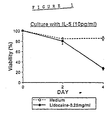
- Figure 1 is a graphical depiction of the time course of eosinophil viability inhibition effect by lidocaine.
- Culture medium was supplemented with recombinant human interleukin 5 (rhIL-5), 10 pg/ml, and the effects on eosinophil viability of lidocaine (0.25 mg/ml)( ⁇ ), or medium control (Hybri-Care® (American Type Culture Collection, Rockville, MD) containing gentamicin, 50 ⁇ g/ml and 10% defined calf serum (Hyclone Laboratories, Logan, UT)) (o) were tested by comparing viabilities at two and four days.
- rhIL-5 human interleukin 5
- rhIL-5 human interleukin 5
- 10 pg/ml 10 pg/ml
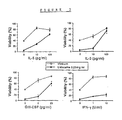
- Figure 2 is a graphical depiction of the effect of lidocaine on cytokine-mediated eosinophil survival.
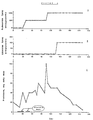
- Figure 3 is a graphical depiction of the drug regimen of Patient A with respect to triamcinolone (Panel A), lidocaine (Panel B) and prednisone (Panel C).
- Figure 4 is a graphical depiction of the drug regimen of Patient B with respect to budesonide (Panel A), lidocaine (Panel B) and prednisone (Panel C).
- Topical anesthetics are an art-recognized class of drugs which temporarily interrupt mammalian nerve transmissions. They can generally be grouped into two chemical classifications structurally; the N-arylamides or carboxamides, such as lidocaine; and the aminoalkylbenzoates, such as procaine, benoxinate and proparacaine.
- Preferred N-aryl amides comprise the N-(C 7 -C 22 )arylamides of amino-substituted (C 1 -C 5 )carboxylic acids, e.g., N-[(mono- or di-(C 1 -C 4 )alkyl)phenyl]amides of aliphatic (C 1 -C 5 )carboxylic acids, which acids are preferably substituted with the moiety (R)(R 1 )N- wherein R and R 1 are each (C 1 -C 5 )alkyl.
- a preferred carboxylic acid can have the general formula (R)(R 1 )N(X)CO 2 H wherein R and R 1 are as defined above and X is a branched- or straight-chain (C 1 -C 5 )alkylene group such as 1,1-ethylene, 1,2-ethylene, methylene, 2,2-propylene, 1,3-propylene, and the like.
- N-arylamides are the N-[(mono- or di-(C 1 -C 4 )alkyl)phenyl]amides of 5- or 6-membered-heterocycloaliphatic carboxylic acids, which acids comprise one or two [(C 1 -C 4 )alkyl-substituted]N atoms, i.e., N-butylpiperidine-2-carboxylic acid
- the aminoalkylbenzoates include esters between benzoic acids and alcohols of the general formula (R 4 )(R 5 )N(X)OH, wherein X is as defined above, R 4 is H or (C 1 -C 4 )alkyl, R 5 is (C 1 -C 4 )alkyl or R 4 and R 5 taken together are a 5- or 6-membered heterocycloaliphatic ring, optionally substituted by (C 1 -C 3 )alkyl or comprising an additional ring O- or N-atom.
- the benzoic acid moiety can be the moiety (R 2 )(R 3 )ArCO 2 H wherein Ar is an aromatic -C 6 H 3 - radical or "phenylene” and (phenylene) and each R 2 and R 3 is H, halo, preferably Cl, (R 5 )(H)N-, H 2 N- or (C 1 -C 5 )alkoxy.
- Useful topical anesthetics include lidocaine ((2-diethylamino)-N-(2,6-dimethylphenyl)acetamide) (see Lofgren et al. (U.S. Patent No. 2,441,498), May & Baker (British Patent No. 706409) and J.F. Macfarlane & Co. (British Patent No. 758,224)); bupivacaine (1-butyl-N-(2,6-dimethylphenyl)-2-piperidinecarboxyamide) (see Thuresson et al., (U.S. Patent No. 2,955,111) and Sterling Drug (British Patent Nos.
- mepivacaine (2-piperidinecarboxyamide, N-(2,6-dimethylphenyl)-1-methyl), chloroprocaine (4-amino-2-chlorobenzoic acid 2-(diethylamino)ethyl ester); procaine (4-aminobenzoic acid 2-(diethylamino)ethyl ester); etidocaine (N-(2,6-dimethylphenyl)-2-(ethylpropylamino)butanamide; see, Astra (German Patent No.
- tetracaine (4-(butylamino)benzoic acid 2-(dimethylaminoethyl est, see Shupe (U.S. Patent No. 3,272,700)); benoxinate (4-amino-3-butoxybenzoic acid 2-(diethylamino)ethyl ester (U.K. Patent No. 654,484)); proparacaine (3-amino-4-propoxybenzoic acid 2-(diethylamino)ethyl ester); dibucaine (3-butoxy-N-[2-(diethylamino)ethyl]-4-quinolinecarboxyamide; Miescher (U.S. Patent No.
- salts include the amine addition salts of inorganic and organic acids, e.g., the hydrochloride, hydrobromide, sulfate, oxalate, fumarate, citrate, malate, propionate and phosphate salts.
- the hydrochloride and sulfate salts are preferred for use in the present invention.
- topical anesthetics or their salts may be administered as the pure dry chemicals, as by inhalation of a fine powder via an insufflator
- the active ingredient it is preferable to present the active ingredient as a pharmaceutical formulation comprising one or more topical anesthetics, or pharmaceutically acceptable salts thereof, together with one or more pharmaceutically acceptable carriers therefor and, optionally, other therapeutic and/or prophylactic ingredients.
- the carrier(s) must be 'acceptable' in the sense of being compatible with the other ingredients of the formulation and not deleterious to the recipient thereof.
- compositions include those suitable for administration by inhalation or insufflation or for nasal, intraocular or other topical (including buccal and sub-lingual) administration.
- the formulations may, where appropriate, be conveniently presented in discrete dosage units and may be prepared by any of the methods well known in the art of pharmacy. All methods include the step of bringing into association the active compound with liquid carriers or finely divided solid carriers or both.
- the compounds according to the invention are conveniently delivered from an insufflator, nebulizer or a pressurized pack or other convenient means of delivering an aerosol spray.
- Pressurized packs may comprise a suitable propellant such as dichlorodifluoromethane, trichlorofluoromethane, dichlorotetrafluoroethane, carbon dioxide or other suitable gas.
- the dosage unit may be determined by providing a valve to deliver a metered amount.
- the compounds according to the invention may take the form of a dry powder composition, for example, a powder mix of the compound and a suitable powder base such as lactose or starch.
- the powder composition may be presented in unit dosage form in, for example, capsules or cartridges or, e.g., gelatin or blister packs from which the powder may be administered with the aid of an inhalator, insufflator or a metered-dose inhaler.
- the compounds of the invention may be administered via nose drops, a liquid spray, such as via a plastic bottle atomizer or metered-dose inhaler.
- a liquid spray such as via a plastic bottle atomizer or metered-dose inhaler.
- atomizers are the Mistometer (Wintrop) and the Medihaler (Riker).
- Drops such as eye drops or nose drops, may be formulated with an aqueous or non-aqueous base also comprising one or more dispersing agents, solubilizing agents or suspending agents.
- Liquid sprays are conveniently delivered from pressurized packs. Drops can be delivered via a simple eye dropper-capped bottle, or via a plastic bottle adapted to deliver liquid contents dropwise, via a specially shaped closure.
- the compounds according to the invention may be formulated as ointments, creams or lotions, or as a transdermal patch or intraocular insert.
- Ointments and creams may, for example, be formulated with an aqueous or oily base with the addition of suitable thickening and/or gelling agents.
- Lotions may be formulated with an aqueous or oily base and will in general also contain one or more emulsifying agents, stabilizing agents, dispersing agents, suspending agents, thickening agents, or coloring agents.
- Formulations suitable for topical administration in the mouth or throat include lozenges comprising active ingredient in a flavored base, usually sucrose and acacia or tragacanth; pastilles comprising the active ingredient in an inert base such as gelatin and glycerin or sucrose and acacia; and mouthwashes comprising the active ingredient in a suitable liquid carrier.
- formulations adapted to give sustained release of the active ingredient may be employed, e.g., by combination with certain hydrophilic polymer matrices.
- compositions also contain other active ingredients such as antimicrobial agents, or preservatives.
- the compounds of the invention may also be used in combination with other therapeutic agents, for example, bronchodilators or anti-inflammatory agents.
- a suitable unit dose for counteracting respiratory tract symptomology will deliver from about 0.05 to about 10-15 mg/kg, e.g., from about 0.10 to about 5.0 mg/kg of body weight per day.
- the desired dose may conveniently be presented in a single dose or as divided doses administered at appropriate intervals, for example, as two, three, four or more sub-doses per day.
- the sub-dose itself may be further divided, e.g. into a number of discrete loosely spaced administrations; such as multiple inhalations from an insufflator or by application of a plurality of drops into the eye or nose.
- Eosinophils were purified from human peripheral blood, as previously described by T. Fujisawa et al., J. Immunol. , 144 , 642 (1990). Briefly, heparinized (10 U/ml) venous blood was obtained from normal volunteers or patients with mild asthma or hay fever and sedimented with 6% dextran in 0.9% NaCI (Gentran 70) (Travenol Laboratories, Deerfield, IL) at 5:1 (v/v) ratio for 45 minutes at 37°C.
- Gentran 70 Travenol Laboratories, Deerfield, IL
- the buffer coat was collected and washed twice in Pipes buffer (25 mM piperazine-N,N'-bis[2-ethanesulfonic acid]), 110 mM NaCl, 5 mM KCl, 25 mM NaOH, 5.4 mM glucose, pH 7.4) with 50 U/ml DNase (Sigma Chemical Co., St. Louis, MO).
- the cells were suspended in 2.4 ml of Percoll (Sigma), density 1.070 g/ml, with 5% heat-inactivated defined calf serum (DCS) (Hyclone Laboratories, Logan, UT) and overlayered on a discontinuous Percoll gradient consisting of the following densities (g/ml): 1.080, 1.085, 1.090, 1.100, and 1.120.
- the osmolarity of Percoll ranged from 290 to 315 mOsm/kg and the pH was 7.4.
- Cells were centrifugated through the gradient at 1,500 g in a JA-20 fixed angle rotor on a Beckman J2-21 centrifuge at 4°C for 45 minutes.
- Eosinophils were cultured at 37°C and 5% CO 2 in 200 ⁇ l Hydri-Care medium containing gentamicin and 10% DCS in 90-well, flat-bottom tissue culture plates at a cell concentration of 2.5 x 10 5 /ml or 1.25 x 10 5 cells/ml. No difference in viability was observed at these two cell concentrations. Viability was determined at day 4 for all experiments unless otherwise specified.
- a Neubauer hemacytometer (C.A. Hausser & Son; Philadelphia, PA) and fluorescence microscopy were used to count live cells, stained green with fluorescein diacetate (B.
- Anesthetics were dissolved in 0.15 M NaCl, stored at -20°C, and diluted in medium just before use; thus, 0.15 M NaCl was used as a control for each experiment.
- IC 50 is the concentration of anesthetic that produces 50% inhibition of viability.
- medium was supplemented with rII-5, 220 fM, or 890 fM, and the effects of anesthetic 1000 nM, 100 nM, or control were tested by comparing viability at 1, 2, and 4 days in the presence or absence of anesthetic.
- Example 1(c) To determine whether or not other topical anesthetics, particularly those of the carboxamide (lidocaine) class or benzoate class, also can inhibit eosinophil viability in vitro , the assay of Example 1(c) was carried out. Eosinophils were cultured in the presence of 100 pg/ml IL-5 and 1 mM/ml, 0.1 mM/ml and 0.01 mM/ml of lidocaine and nine other topical anesthetics, and viability in the presence of the anesthetic was compared to viability in medium with and without IL-5. The results of this study are summarized on Table 1, below.
- IL-5 Local Anesthetic, 1mM/ml Viable Eosinophils on Day 4 100 pg/ml Lidocaine 10 ⁇ 2 100 pg/ml Bupivacaine 0 ⁇ 0 100 pg/ml Chloropiocaine 54 ⁇ 13 100 pg/ml Etidocaine 0 ⁇ 0 100 pg/ml Procaine 59 ⁇ 22 100 pg/ml Tetracaine 0 ⁇ 0 100 pg/ml Benoxinate 0 ⁇ 0 100 pg/ml Proparacaine 27 ⁇ 8 100 pg/ml Dibucaine 0 ⁇ 0 100 pg/ml Dyclonine 0 ⁇ 0 100 pg/ml None 78 ⁇ 8 10 pg/ml None 69 ⁇ 7 None None 22 ⁇ 11
- eosinophils are cultured in the absence and the presence of a survival stimulating factor, such as interleukin (IL)-5.
- IL interleukin
- Table 1 eosinophil viability was enhanced over culture medium by addition of 10 or 100 pg/ml of IL-5.
- the survival of eosinophils in the absence of any survival-enhancing factor was 22% (78% of the eosinophils were dead) at four days.
- the survival of eosinophils was increased to 78% by 100 pg/ml of IL-5.
- lidocaine In the presence of 100 pg/ml of IL-5, 1 mM of lidocaine inhibited eosinophil survival, such that only 10% of the cells were viable at day 4. Similarly, bupivacaine, etidocaine, tetracaine, benoxinate, dibucaine and dyclonine strikingly inhibited eosinophil survival, suggesting that they were as potent, if not more potent, than lidocaine. In addition, proparacaine also showed weak IL-5 inhibitory activity reducing eosinophil survival from an expected 78% (in the presence of IL-5, 100 pg/ml) to 27%. These data indicate that numerous topical anesthetics have potent effects on eosinophil survival and appear to exhibit a bioactivity which is comparable to that exhibited by lidocaine.
- Glucocorticoids are believed to be effective to manage bronchial asthma due to their ability to interfere with the cytokine-indicated accumulation and activation of inflammatory cells, including eosinophils.
- Examples 1-2 indicate that lidocaine and other topical anesthetics are able to mimic the bioactivity of glucocorticoids. Therefore, lidocaine was evaluated for its ability to replace glucocorticoids in the therapy of bronchial asthma.
- Patient A is a woman (age 43) presenting with chronic, severe, glucocorticoid-dependent bronchial asthma. This patient was begun on lidocaine inhalation (2% aqueous lidocaine, 2 ml per nebulization, four times a day) delivered via a deVilbiss nebulizer (Model #5610D). Nebulization of this concentration of lidocaine has not caused side effects other than transient numbness of the oral cavity and of the upper regions of the pharynx and larynx, and this was well tolerated.
- Patient A was begun on lidocaine inhalation in early September 1992, at a time when she was receiving 40 mg of prednisone orally a day, as well as 20 puffs of asthmacort (triamcinolone). Over the preceding four months, the patient had received virtually continuous prednisone therapy. The lowest dose administered was 5 mg daily for a period of a few days in the middle of June 1992. After that reduction in therapy, the patient required a prompt increase in the quantity of glucocorticoids to 40 mg daily and then a taper was done such that she received 40 mg on one day and decrease in prednisone on the alternate day.
- the patient eventually reached a dose of 20 mg prednisone on one day and no prednisone on the following day, but this regimen was followed by a severe flare of asthma, such that for a period of time in July, she required therapy with 80 mg of prednisone a day.
- lidocaine therapy in late September was associated with a reduction in the patient's nocturnal cough and with relief of the patient's breathlessness.
- the prior prednisone therapy while keeping the asthma under control, did not completely relieve the symptoms, whereas lidocaine therapy was associated with a feeling of well being and virtually complete relief of symptoms.
- the patient's prednisone was reduced gradually, such that by December 1992, the patient was receiving 5 mg every other day, a dose which she had not been able to achieve other than briefly in June 1992.
- an exacerbation of asthma occurred following a respiratory tract infection, which was treated by addition to the patient's therapy of one administration of 80 mg of prednisone.
- Patient B is a woman (age 34), who was begun on lidocaine therapy around the middle of September 1992, as described in section A, above. As shown by Figure 4, she has been able to reduce prednisone therapy from an average of 50 mg daily to a dose of 5 mg daily in early December 1992. This reduction has not been associated with any untoward effects other than those which one anticipates from reduction of glucocorticoids in any patient who has been receiving glucocorticoids for long periods of time. (Glucocorticoid withdrawal causes a characteristic syndrome associate with malaise and muscle aching; both patients A and B have experienced these symptoms).
Landscapes
- Health & Medical Sciences (AREA)
- Life Sciences & Earth Sciences (AREA)
- Veterinary Medicine (AREA)
- Chemical & Material Sciences (AREA)
- Public Health (AREA)
- Medicinal Chemistry (AREA)
- General Health & Medical Sciences (AREA)
- Animal Behavior & Ethology (AREA)
- Pharmacology & Pharmacy (AREA)
- Epidemiology (AREA)
- General Chemical & Material Sciences (AREA)
- Organic Chemistry (AREA)
- Nuclear Medicine, Radiotherapy & Molecular Imaging (AREA)
- Chemical Kinetics & Catalysis (AREA)
- Bioinformatics & Cheminformatics (AREA)
- Engineering & Computer Science (AREA)
- Pulmonology (AREA)
- Emergency Medicine (AREA)
- Biomedical Technology (AREA)
- Neurology (AREA)
- Neurosurgery (AREA)
- Ophthalmology & Optometry (AREA)
- Pain & Pain Management (AREA)
- Psychiatry (AREA)
- Dermatology (AREA)
- Otolaryngology (AREA)
- Addiction (AREA)
- Acyclic And Carbocyclic Compounds In Medicinal Compositions (AREA)
- Pharmaceuticals Containing Other Organic And Inorganic Compounds (AREA)
- Medicinal Preparation (AREA)
- Medicines That Contain Protein Lipid Enzymes And Other Medicines (AREA)
- Steroid Compounds (AREA)
- Hydrogenated Pyridines (AREA)
Applications Claiming Priority (3)
| Application Number | Priority Date | Filing Date | Title |
|---|---|---|---|
| US08/012,343 US5510339A (en) | 1993-02-02 | 1993-02-02 | Method for the treatment of bronchial asthma by administration of topical anesthetics |
| PCT/US1994/000901 WO1994017790A1 (en) | 1993-02-02 | 1994-01-25 | Use of topical anesthetics for the manufacture of a medicament for the treatment of bronchial asthma |
| US12343 | 1998-01-23 |
Publications (2)
| Publication Number | Publication Date |
|---|---|
| EP0682514A1 EP0682514A1 (en) | 1995-11-22 |
| EP0682514B1 true EP0682514B1 (en) | 2001-09-12 |
Family
ID=21754520
Family Applications (1)
| Application Number | Title | Priority Date | Filing Date |
|---|---|---|---|
| EP94907887A Expired - Lifetime EP0682514B1 (en) | 1993-02-02 | 1994-01-25 | Use of topical anesthetics for the manufacture of a medicament for the treatment of bronchial asthma |
Country Status (12)
| Country | Link |
|---|---|
| US (2) | US5510339A (enExample) |
| EP (1) | EP0682514B1 (enExample) |
| JP (2) | JPH08505157A (enExample) |
| AT (1) | ATE205389T1 (enExample) |
| AU (1) | AU685777B2 (enExample) |
| CA (1) | CA2155200C (enExample) |
| DE (1) | DE69428268T2 (enExample) |
| DK (1) | DK0682514T3 (enExample) |
| ES (1) | ES2164097T3 (enExample) |
| NZ (1) | NZ261990A (enExample) |
| PT (1) | PT682514E (enExample) |
| WO (1) | WO1994017790A1 (enExample) |
Families Citing this family (52)
| Publication number | Priority date | Publication date | Assignee | Title |
|---|---|---|---|---|
| US5589156A (en) * | 1994-05-02 | 1996-12-31 | Henry; Richard A. | Prilocaine and hydrofluourocarbon aerosol preparations |
| US5660835A (en) * | 1995-02-24 | 1997-08-26 | East Carolina University | Method of treating adenosine depletion |
| US20020032160A1 (en) * | 1995-02-24 | 2002-03-14 | Nyce Jonathan W. | Compositions & formulations with an epiandrosterone or a ubiquinone & kits & their use for treatment of asthma symptoms & for reducing adenosine/adenosine receptor levels |
| US5928883A (en) * | 1996-11-13 | 1999-07-27 | Mayo Foundation For Medical Education | Eosinophil granole proteins as indicators of inflammatory bowel disorders |
| US6071910A (en) * | 1996-12-05 | 2000-06-06 | Mayo Foundation For Medical Education And Research | Use of agents to treat eosinophil-associated pathologies |
| US5837713A (en) * | 1997-02-26 | 1998-11-17 | Mayo Foundation For Medical Education And Research | Treatment of eosinophil-associated pathologies by administration of topical anesthetics and glucocorticoids |
| US5881720A (en) * | 1997-04-29 | 1999-03-16 | The Procter & Gamble Company | Method of delivering halotherapy |
| JP2001513574A (ja) * | 1997-08-27 | 2001-09-04 | プレジデント アンド フェローズ オブ ハーヴァード カレッジ | 創傷治癒を強化する方法および組成物 |
| US6598603B1 (en) * | 1997-12-31 | 2003-07-29 | Astra Aktiebolag | Method for treating respiratory diseases |
| WO1999049865A1 (en) * | 1998-03-31 | 1999-10-07 | Mayo Foundation For Medical Education And Research | Use of platelet activating factor (paf) inhibitors to inhibit il-5 induced eosinophil activation or degranulation |
| US6172053B1 (en) | 1999-02-24 | 2001-01-09 | Ruben G. Fabunan | Injection viral treatment |
| US6576224B1 (en) | 1999-07-06 | 2003-06-10 | Sinuspharma, Inc. | Aerosolized anti-infectives, anti-inflammatories, and decongestants for the treatment of sinusitis |
| CA2387786A1 (en) * | 1999-10-15 | 2001-04-26 | Regents Of The University Of Minnesota | Treatment of eosinophil associated pathologies by modulating pkc-.delta. activity |
| WO2001028550A1 (en) * | 1999-10-15 | 2001-04-26 | Mayo Foundation For Medical Education And Research | Topical anesthetics useful for treating cancer, autoimmune diseases and ischemia |
| CA2292902C (en) * | 1999-12-24 | 2012-12-18 | Alain Cadieux | Use of calcitonin gene-related peptide in the prevention and alleviation of asthma and related bronchospastic pulmonary diseases |
| US20020046357A1 (en) * | 1999-12-28 | 2002-04-18 | Jiandong Huang | Software-based fault tolerant networking using a single LAN |
| US6846486B1 (en) * | 2000-02-24 | 2005-01-25 | Advanced Biotherapy Concepts, Inc. | Method of treating allergy by administering an anti-histamine antibody |
| AU2001271386B2 (en) * | 2000-06-23 | 2005-04-07 | Mayo Foundation For Medical Education And Research | Methods of treating neutrophil-related diseases with topical anesthetics |
| USRE44145E1 (en) | 2000-07-07 | 2013-04-09 | A.V. Topchiev Institute Of Petrochemical Synthesis | Preparation of hydrophilic pressure sensitive adhesives having optimized adhesive properties |
| DE60239528D1 (de) * | 2001-05-01 | 2011-05-05 | Corium International Redwood City | Zweiphasige, wasserabsorbierende bioadhäsive zusammenstezung |
| US8541021B2 (en) | 2001-05-01 | 2013-09-24 | A.V. Topchiev Institute Of Petrochemical Synthesis | Hydrogel compositions demonstrating phase separation on contact with aqueous media |
| US8206738B2 (en) | 2001-05-01 | 2012-06-26 | Corium International, Inc. | Hydrogel compositions with an erodible backing member |
| US20050215727A1 (en) * | 2001-05-01 | 2005-09-29 | Corium | Water-absorbent adhesive compositions and associated methods of manufacture and use |
| US8840918B2 (en) | 2001-05-01 | 2014-09-23 | A. V. Topchiev Institute of Petrochemical Synthesis, Russian Academy of Sciences | Hydrogel compositions for tooth whitening |
| AU2002308612B2 (en) | 2001-05-01 | 2008-04-10 | A.V. Topchiev Institute Of Petrochemical Synthesis | Hydrogel compositions |
| US20050113510A1 (en) | 2001-05-01 | 2005-05-26 | Feldstein Mikhail M. | Method of preparing polymeric adhesive compositions utilizing the mechanism of interaction between the polymer components |
| WO2002089849A1 (en) * | 2001-05-07 | 2002-11-14 | Corium International | Compositions and delivery systems for administration of a local anesthetic agent |
| US20040076671A1 (en) * | 2002-10-21 | 2004-04-22 | Aletha Tippett | Methods and compositions for topical wound treatment |
| CA2507115C (en) * | 2002-11-21 | 2014-08-05 | Ira Sanders | Treatment of mammalian reaction to ige interactions |
| US20050119340A1 (en) * | 2003-06-13 | 2005-06-02 | David Anderson | Treatment methods with low-dose, longer-acting formulations of local anesthetics and other agents |
| US20070020298A1 (en) * | 2003-12-31 | 2007-01-25 | Pipkin James D | Inhalant formulation containing sulfoalkyl ether gamma-cyclodextrin and corticosteroid |
| EP1732512B1 (en) | 2003-12-31 | 2017-03-22 | CyDex Pharmaceuticals, Inc. | Inhalant formulation containing sulfoalkyl ether cyclodextrin and corticosteroid |
| US20070020299A1 (en) | 2003-12-31 | 2007-01-25 | Pipkin James D | Inhalant formulation containing sulfoalkyl ether cyclodextrin and corticosteroid |
| CN102764247B (zh) | 2004-01-30 | 2016-04-20 | 考里安国际公司 | 递送活性剂的快速溶解膜 |
| WO2005088655A1 (en) * | 2004-03-12 | 2005-09-22 | The Provost Fellows And Scholars Of The College Of The Holy And Undivided Trinity Of Queen Elizabeth Near Dublin | A magnetoresistive medium |
| EP1757285A4 (en) * | 2004-04-21 | 2007-11-07 | Kyowa Hakko Kogyo Kk | MEANS FOR THE PREVENTION AND / OR TREATMENT OF CHRONIC SINUSITIS |
| AU2005271259B2 (en) * | 2004-08-05 | 2012-01-19 | A.V. Topchiev Institute Of Petrochemical Synthesis | Adhesive composition |
| JP2008514648A (ja) * | 2004-12-16 | 2008-05-08 | アドバンスト インハレーション リサーチ,インコーポレイテッド | 肺疾患のための組成物および方法 |
| US20070160542A1 (en) * | 2005-12-20 | 2007-07-12 | Verus Pharmaceuticals, Inc. | Methods and systems for the delivery of corticosteroids having an enhanced pharmacokinetic profile |
| US20070185066A1 (en) * | 2005-12-20 | 2007-08-09 | Verus Pharmaceuticals, Inc. | Systems and methods for the delivery of corticosteroids |
| US20070197486A1 (en) * | 2005-12-20 | 2007-08-23 | Verus Pharmaceuticals, Inc. | Methods and systems for the delivery of corticosteroids |
| US20070249572A1 (en) * | 2005-12-20 | 2007-10-25 | Verus Pharmaceuticals, Inc. | Systems and methods for the delivery of corticosteroids |
| US20070178049A1 (en) * | 2005-12-20 | 2007-08-02 | Verus Pharmaceuticals, Inc. | Systems and methods for the delivery of corticosteroids having an enhanced pharmacokinetic profile |
| WO2007095341A2 (en) * | 2006-02-15 | 2007-08-23 | Tika Läkemedel Ab | Sterilization of corticosteroids with reduced mass loss |
| WO2007136707A2 (en) * | 2006-05-17 | 2007-11-29 | University Of Utah Research Foundation | Methods and compositions related to eosinophil regulation |
| US12370352B2 (en) | 2007-06-28 | 2025-07-29 | Cydex Pharmaceuticals, Inc. | Nasal and ophthalmic delivery of aqueous corticosteroid solutions |
| US20100260744A1 (en) * | 2007-07-11 | 2010-10-14 | Medvet Science Pty Ltd. | Regulating il-4 and il-13 levels by blocking high affinity binding by il-3, il-5 and gm-csf to their common receptor |
| US8784879B2 (en) | 2009-01-14 | 2014-07-22 | Corium International, Inc. | Transdermal administration of tamsulosin |
| RU2446839C1 (ru) * | 2010-08-13 | 2012-04-10 | Государственное учреждение Московский областной научно-исследовательский клинический институт им. М.Ф. Владимирского (ГУ МОНИКИ им. М.Ф. Владимирского) | Способ комплексного лечения больных с воспалительными заболеваниями придаточных пазух носа |
| US9636425B2 (en) * | 2012-09-18 | 2017-05-02 | Focal Point Technologies, Llc | Method of dry dye delivery for staining the eye |
| US9867834B2 (en) * | 2015-06-15 | 2018-01-16 | Banner Life Sciences Llc | Non-systemic topical compositions comprising corticosteroids |
| WO2016205172A1 (en) | 2015-06-15 | 2016-12-22 | Banner Life Sciences Llc | Soft lozenges comprising corticosteroids |
Family Cites Families (5)
| Publication number | Priority date | Publication date | Assignee | Title |
|---|---|---|---|---|
| FR3385M (fr) * | 1963-12-02 | 1965-06-21 | Sobio Lab | Compositions thérapeutiques a base d'ascorbate de procaine. |
| US4626530A (en) * | 1981-06-23 | 1986-12-02 | Schulte Thomas L | Treatment of eye inflammation with biphenamine |
| US4466973A (en) * | 1983-02-01 | 1984-08-21 | Thomas Rennie | Method of treating nasal and sinus congestion |
| US4748022A (en) * | 1985-03-25 | 1988-05-31 | Busciglio John A | Topical composition |
| US5134166A (en) * | 1988-12-02 | 1992-07-28 | Genderm Corporation | Method for treating nasal disorders and headaches |
-
1993
- 1993-02-02 US US08/012,343 patent/US5510339A/en not_active Expired - Lifetime
-
1994
- 1994-01-25 DE DE69428268T patent/DE69428268T2/de not_active Expired - Lifetime
- 1994-01-25 JP JP6518086A patent/JPH08505157A/ja active Pending
- 1994-01-25 ES ES94907887T patent/ES2164097T3/es not_active Expired - Lifetime
- 1994-01-25 AT AT94907887T patent/ATE205389T1/de not_active IP Right Cessation
- 1994-01-25 PT PT94907887T patent/PT682514E/pt unknown
- 1994-01-25 WO PCT/US1994/000901 patent/WO1994017790A1/en not_active Ceased
- 1994-01-25 DK DK94907887T patent/DK0682514T3/da active
- 1994-01-25 CA CA002155200A patent/CA2155200C/en not_active Expired - Fee Related
- 1994-01-25 EP EP94907887A patent/EP0682514B1/en not_active Expired - Lifetime
- 1994-01-25 NZ NZ261990A patent/NZ261990A/xx unknown
- 1994-01-25 AU AU61282/94A patent/AU685777B2/en not_active Ceased
-
1996
- 1996-03-20 US US08/618,860 patent/US5631267A/en not_active Expired - Lifetime
-
2001
- 2001-01-25 JP JP2001017379A patent/JP2001192334A/ja active Pending
Also Published As
| Publication number | Publication date |
|---|---|
| NZ261990A (en) | 1997-08-22 |
| CA2155200C (en) | 2006-12-19 |
| AU685777B2 (en) | 1998-01-29 |
| PT682514E (pt) | 2002-03-28 |
| DE69428268T2 (de) | 2002-06-27 |
| DK0682514T3 (da) | 2002-01-14 |
| JPH08505157A (ja) | 1996-06-04 |
| AU6128294A (en) | 1994-08-29 |
| ES2164097T3 (es) | 2002-02-16 |
| EP0682514A1 (en) | 1995-11-22 |
| WO1994017790A1 (en) | 1994-08-18 |
| DE69428268D1 (de) | 2001-10-18 |
| US5631267A (en) | 1997-05-20 |
| CA2155200A1 (en) | 1994-08-18 |
| ATE205389T1 (de) | 2001-09-15 |
| US5510339A (en) | 1996-04-23 |
| JP2001192334A (ja) | 2001-07-17 |
Similar Documents
| Publication | Publication Date | Title |
|---|---|---|
| US5631267A (en) | Method for the treatment of eosinophil-associated diseases by administration of topical anesthetics | |
| US5837713A (en) | Treatment of eosinophil-associated pathologies by administration of topical anesthetics and glucocorticoids | |
| WO1994017790A9 (en) | Use of topical anesthetics for the manufacture of a medicament for the treatment of bronchial asthma | |
| AU2002363443B2 (en) | New uses for anti-malarial therapeutic agents | |
| JP3480736B2 (ja) | 気道流路および肺疾患の処置のためのモメタゾンフロエートの使用 | |
| US6861449B2 (en) | Method of treating neutrophil-related diseases with topical anesthetics | |
| AU781177B2 (en) | Novel combination of non-sedative anti-histamines containing substances which influence the action of leukotriene, for treating rhinitis/conjunctivitis | |
| RU2327450C2 (ru) | Фармацевтические продукты и композиции, содержащие специфические антихолинергические средства, агонисты бета-2 и кортикостероиды | |
| US5883084A (en) | Treatment of respiratory diseases utilizing α-tocopheryl-phosphocholine | |
| AU2001271386A1 (en) | Methods of treating neutrophil-related diseases with topical anesthetics | |
| CA2372443C (en) | Local administration of anti-malarial agents for the treatment of inflammatory diseases | |
| JP2003534298A (ja) | 咳の新規治療法 | |
| JP2004505036A (ja) | 肺気腫の治療のための13−cis−レチノイン酸の使用 | |
| US4885305A (en) | Nasal compositions | |
| AU4584702A (en) | Treatment of eosinophil-associated pathologies such as bronchial asthma with synergistic combinations of glucocorticoids and a local anesthetics | |
| US20070134165A1 (en) | Use of Ciclesonide for the Treatment of Respiratory Disease in a Smoking Patient | |
| JPH05938A (ja) | 肺炎予防または治療剤 | |
| MXPA01000561A (en) | Therapeutic agents for allergic diseases |
Legal Events
| Date | Code | Title | Description |
|---|---|---|---|
| PUAI | Public reference made under article 153(3) epc to a published international application that has entered the european phase |
Free format text: ORIGINAL CODE: 0009012 |
|
| 17P | Request for examination filed |
Effective date: 19950901 |
|
| AK | Designated contracting states |
Kind code of ref document: A1 Designated state(s): AT BE CH DE DK ES FR GB GR IE IT LI LU MC NL PT SE |
|
| 17Q | First examination report despatched |
Effective date: 19990212 |
|
| GRAG | Despatch of communication of intention to grant |
Free format text: ORIGINAL CODE: EPIDOS AGRA |
|
| GRAG | Despatch of communication of intention to grant |
Free format text: ORIGINAL CODE: EPIDOS AGRA |
|
| GRAH | Despatch of communication of intention to grant a patent |
Free format text: ORIGINAL CODE: EPIDOS IGRA |
|
| GRAH | Despatch of communication of intention to grant a patent |
Free format text: ORIGINAL CODE: EPIDOS IGRA |
|
| GRAA | (expected) grant |
Free format text: ORIGINAL CODE: 0009210 |
|
| AK | Designated contracting states |
Kind code of ref document: B1 Designated state(s): AT BE CH DE DK ES FR GB GR IE IT LI LU MC NL PT SE |
|
| REF | Corresponds to: |
Ref document number: 205389 Country of ref document: AT Date of ref document: 20010915 Kind code of ref document: T |
|
| REG | Reference to a national code |
Ref country code: CH Ref legal event code: EP |
|
| REG | Reference to a national code |
Ref country code: IE Ref legal event code: FG4D |
|
| REF | Corresponds to: |
Ref document number: 69428268 Country of ref document: DE Date of ref document: 20011018 |
|
| REG | Reference to a national code |
Ref country code: GB Ref legal event code: IF02 |
|
| REG | Reference to a national code |
Ref country code: DK Ref legal event code: T3 |
|
| REG | Reference to a national code |
Ref country code: CH Ref legal event code: NV Representative=s name: A. BRAUN, BRAUN, HERITIER, ESCHMANN AG PATENTANWAE |
|
| REG | Reference to a national code |
Ref country code: ES Ref legal event code: FG2A Ref document number: 2164097 Country of ref document: ES Kind code of ref document: T3 |
|
| ET | Fr: translation filed | ||
| REG | Reference to a national code |
Ref country code: PT Ref legal event code: SC4A Free format text: AVAILABILITY OF NATIONAL TRANSLATION Effective date: 20011211 |
|
| REG | Reference to a national code |
Ref country code: GR Ref legal event code: EP Ref document number: 20010402463 Country of ref document: GR |
|
| PLBE | No opposition filed within time limit |
Free format text: ORIGINAL CODE: 0009261 |
|
| STAA | Information on the status of an ep patent application or granted ep patent |
Free format text: STATUS: NO OPPOSITION FILED WITHIN TIME LIMIT |
|
| 26N | No opposition filed | ||
| PGFP | Annual fee paid to national office [announced via postgrant information from national office to epo] |
Ref country code: NL Payment date: 20041229 Year of fee payment: 12 |
|
| PGFP | Annual fee paid to national office [announced via postgrant information from national office to epo] |
Ref country code: MC Payment date: 20050103 Year of fee payment: 12 Ref country code: AT Payment date: 20050103 Year of fee payment: 12 |
|
| PGFP | Annual fee paid to national office [announced via postgrant information from national office to epo] |
Ref country code: PT Payment date: 20050105 Year of fee payment: 12 |
|
| PGFP | Annual fee paid to national office [announced via postgrant information from national office to epo] |
Ref country code: SE Payment date: 20050120 Year of fee payment: 12 |
|
| PGFP | Annual fee paid to national office [announced via postgrant information from national office to epo] |
Ref country code: DK Payment date: 20050124 Year of fee payment: 12 Ref country code: CH Payment date: 20050124 Year of fee payment: 12 |
|
| PGFP | Annual fee paid to national office [announced via postgrant information from national office to epo] |
Ref country code: GR Payment date: 20050126 Year of fee payment: 12 |
|
| PGFP | Annual fee paid to national office [announced via postgrant information from national office to epo] |
Ref country code: IE Payment date: 20050128 Year of fee payment: 12 |
|
| PGFP | Annual fee paid to national office [announced via postgrant information from national office to epo] |
Ref country code: LU Payment date: 20050204 Year of fee payment: 12 |
|
| PGFP | Annual fee paid to national office [announced via postgrant information from national office to epo] |
Ref country code: BE Payment date: 20050303 Year of fee payment: 12 |
|
| PG25 | Lapsed in a contracting state [announced via postgrant information from national office to epo] |
Ref country code: IE Free format text: LAPSE BECAUSE OF NON-PAYMENT OF DUE FEES Effective date: 20060125 Ref country code: AT Free format text: LAPSE BECAUSE OF NON-PAYMENT OF DUE FEES Effective date: 20060125 |
|
| PG25 | Lapsed in a contracting state [announced via postgrant information from national office to epo] |
Ref country code: SE Free format text: LAPSE BECAUSE OF NON-PAYMENT OF DUE FEES Effective date: 20060126 |
|
| PG25 | Lapsed in a contracting state [announced via postgrant information from national office to epo] |
Ref country code: MC Free format text: LAPSE BECAUSE OF NON-PAYMENT OF DUE FEES Effective date: 20060131 Ref country code: LU Free format text: LAPSE BECAUSE OF NON-PAYMENT OF DUE FEES Effective date: 20060131 Ref country code: LI Free format text: LAPSE BECAUSE OF NON-PAYMENT OF DUE FEES Effective date: 20060131 Ref country code: DK Free format text: LAPSE BECAUSE OF NON-PAYMENT OF DUE FEES Effective date: 20060131 Ref country code: CH Free format text: LAPSE BECAUSE OF NON-PAYMENT OF DUE FEES Effective date: 20060131 Ref country code: BE Free format text: LAPSE BECAUSE OF NON-PAYMENT OF DUE FEES Effective date: 20060131 |
|
| PG25 | Lapsed in a contracting state [announced via postgrant information from national office to epo] |
Ref country code: PT Free format text: LAPSE BECAUSE OF NON-PAYMENT OF DUE FEES Effective date: 20060725 |
|
| PG25 | Lapsed in a contracting state [announced via postgrant information from national office to epo] |
Ref country code: NL Free format text: LAPSE BECAUSE OF NON-PAYMENT OF DUE FEES Effective date: 20060801 |
|
| REG | Reference to a national code |
Ref country code: DK Ref legal event code: EBP |
|
| REG | Reference to a national code |
Ref country code: CH Ref legal event code: PL |
|
| EUG | Se: european patent has lapsed | ||
| REG | Reference to a national code |
Ref country code: PT Ref legal event code: MM4A Effective date: 20060725 |
|
| NLV4 | Nl: lapsed or anulled due to non-payment of the annual fee |
Effective date: 20060801 |
|
| REG | Reference to a national code |
Ref country code: IE Ref legal event code: MM4A |
|
| BERE | Be: lapsed |
Owner name: *MAYO FOUNDATION FOR MEDICAL EDUCATION AND RESEARC Effective date: 20060131 |
|
| PG25 | Lapsed in a contracting state [announced via postgrant information from national office to epo] |
Ref country code: GR Free format text: LAPSE BECAUSE OF NON-PAYMENT OF DUE FEES Effective date: 20060802 |
|
| PGFP | Annual fee paid to national office [announced via postgrant information from national office to epo] |
Ref country code: IT Payment date: 20110126 Year of fee payment: 18 Ref country code: FR Payment date: 20110301 Year of fee payment: 18 Ref country code: DE Payment date: 20110127 Year of fee payment: 18 |
|
| PGFP | Annual fee paid to national office [announced via postgrant information from national office to epo] |
Ref country code: ES Payment date: 20110126 Year of fee payment: 18 Ref country code: GB Payment date: 20110125 Year of fee payment: 18 |
|
| GBPC | Gb: european patent ceased through non-payment of renewal fee |
Effective date: 20120125 |
|
| REG | Reference to a national code |
Ref country code: FR Ref legal event code: ST Effective date: 20120928 |
|
| PG25 | Lapsed in a contracting state [announced via postgrant information from national office to epo] |
Ref country code: GB Free format text: LAPSE BECAUSE OF NON-PAYMENT OF DUE FEES Effective date: 20120125 Ref country code: DE Free format text: LAPSE BECAUSE OF NON-PAYMENT OF DUE FEES Effective date: 20120801 |
|
| REG | Reference to a national code |
Ref country code: DE Ref legal event code: R119 Ref document number: 69428268 Country of ref document: DE Effective date: 20120801 |
|
| PG25 | Lapsed in a contracting state [announced via postgrant information from national office to epo] |
Ref country code: IT Free format text: LAPSE BECAUSE OF NON-PAYMENT OF DUE FEES Effective date: 20120125 |
|
| PG25 | Lapsed in a contracting state [announced via postgrant information from national office to epo] |
Ref country code: FR Free format text: LAPSE BECAUSE OF NON-PAYMENT OF DUE FEES Effective date: 20120131 |
|
| REG | Reference to a national code |
Ref country code: ES Ref legal event code: FD2A Effective date: 20130708 |
|
| PG25 | Lapsed in a contracting state [announced via postgrant information from national office to epo] |
Ref country code: ES Free format text: LAPSE BECAUSE OF NON-PAYMENT OF DUE FEES Effective date: 20120126 |