EP0656946B2 - Immunoglobulins devoid of light chains - Google Patents
Immunoglobulins devoid of light chains Download PDFInfo
- Publication number
- EP0656946B2 EP0656946B2 EP93919098A EP93919098A EP0656946B2 EP 0656946 B2 EP0656946 B2 EP 0656946B2 EP 93919098 A EP93919098 A EP 93919098A EP 93919098 A EP93919098 A EP 93919098A EP 0656946 B2 EP0656946 B2 EP 0656946B2
- Authority
- EP
- European Patent Office
- Prior art keywords
- immunoglobulin
- immunoglobulins
- cells
- domain
- heavy
- Prior art date
- Legal status (The legal status is an assumption and is not a legal conclusion. Google has not performed a legal analysis and makes no representation as to the accuracy of the status listed.)
- Expired - Lifetime
Links
Images






Classifications
-
- C—CHEMISTRY; METALLURGY
- C07—ORGANIC CHEMISTRY
- C07K—PEPTIDES
- C07K16/00—Immunoglobulins [IG], e.g. monoclonal or polyclonal antibodies
-
- A—HUMAN NECESSITIES
- A61—MEDICAL OR VETERINARY SCIENCE; HYGIENE
- A61P—SPECIFIC THERAPEUTIC ACTIVITY OF CHEMICAL COMPOUNDS OR MEDICINAL PREPARATIONS
- A61P31/00—Antiinfectives, i.e. antibiotics, antiseptics, chemotherapeutics
-
- A—HUMAN NECESSITIES
- A61—MEDICAL OR VETERINARY SCIENCE; HYGIENE
- A61P—SPECIFIC THERAPEUTIC ACTIVITY OF CHEMICAL COMPOUNDS OR MEDICINAL PREPARATIONS
- A61P35/00—Antineoplastic agents
-
- A—HUMAN NECESSITIES
- A61—MEDICAL OR VETERINARY SCIENCE; HYGIENE
- A61P—SPECIFIC THERAPEUTIC ACTIVITY OF CHEMICAL COMPOUNDS OR MEDICINAL PREPARATIONS
- A61P37/00—Drugs for immunological or allergic disorders
- A61P37/02—Immunomodulators
-
- A—HUMAN NECESSITIES
- A61—MEDICAL OR VETERINARY SCIENCE; HYGIENE
- A61P—SPECIFIC THERAPEUTIC ACTIVITY OF CHEMICAL COMPOUNDS OR MEDICINAL PREPARATIONS
- A61P43/00—Drugs for specific purposes, not provided for in groups A61P1/00-A61P41/00
-
- C—CHEMISTRY; METALLURGY
- C07—ORGANIC CHEMISTRY
- C07K—PEPTIDES
- C07K16/00—Immunoglobulins [IG], e.g. monoclonal or polyclonal antibodies
- C07K16/18—Immunoglobulins [IG], e.g. monoclonal or polyclonal antibodies against material from animals or humans
- C07K16/20—Immunoglobulins [IG], e.g. monoclonal or polyclonal antibodies against material from animals or humans from protozoa
-
- A—HUMAN NECESSITIES
- A61—MEDICAL OR VETERINARY SCIENCE; HYGIENE
- A61K—PREPARATIONS FOR MEDICAL, DENTAL OR TOILETRY PURPOSES
- A61K39/00—Medicinal preparations containing antigens or antibodies
- A61K2039/505—Medicinal preparations containing antigens or antibodies comprising antibodies
-
- C—CHEMISTRY; METALLURGY
- C07—ORGANIC CHEMISTRY
- C07K—PEPTIDES
- C07K2317/00—Immunoglobulins specific features
- C07K2317/20—Immunoglobulins specific features characterized by taxonomic origin
- C07K2317/22—Immunoglobulins specific features characterized by taxonomic origin from camelids, e.g. camel, llama or dromedary
-
- C—CHEMISTRY; METALLURGY
- C07—ORGANIC CHEMISTRY
- C07K—PEPTIDES
- C07K2317/00—Immunoglobulins specific features
- C07K2317/50—Immunoglobulins specific features characterized by immunoglobulin fragments
-
- C—CHEMISTRY; METALLURGY
- C07—ORGANIC CHEMISTRY
- C07K—PEPTIDES
- C07K2317/00—Immunoglobulins specific features
- C07K2317/50—Immunoglobulins specific features characterized by immunoglobulin fragments
- C07K2317/56—Immunoglobulins specific features characterized by immunoglobulin fragments variable (Fv) region, i.e. VH and/or VL
- C07K2317/565—Complementarity determining region [CDR]
-
- C—CHEMISTRY; METALLURGY
- C07—ORGANIC CHEMISTRY
- C07K—PEPTIDES
- C07K2317/00—Immunoglobulins specific features
- C07K2317/50—Immunoglobulins specific features characterized by immunoglobulin fragments
- C07K2317/56—Immunoglobulins specific features characterized by immunoglobulin fragments variable (Fv) region, i.e. VH and/or VL
- C07K2317/567—Framework region [FR]
-
- C—CHEMISTRY; METALLURGY
- C07—ORGANIC CHEMISTRY
- C07K—PEPTIDES
- C07K2317/00—Immunoglobulins specific features
- C07K2317/60—Immunoglobulins specific features characterized by non-natural combinations of immunoglobulin fragments
- C07K2317/64—Immunoglobulins specific features characterized by non-natural combinations of immunoglobulin fragments comprising a combination of variable region and constant region components
-
- C—CHEMISTRY; METALLURGY
- C07—ORGANIC CHEMISTRY
- C07K—PEPTIDES
- C07K2319/00—Fusion polypeptide
- C07K2319/30—Non-immunoglobulin-derived peptide or protein having an immunoglobulin constant or Fc region, or a fragment thereof, attached thereto
-
- Y—GENERAL TAGGING OF NEW TECHNOLOGICAL DEVELOPMENTS; GENERAL TAGGING OF CROSS-SECTIONAL TECHNOLOGIES SPANNING OVER SEVERAL SECTIONS OF THE IPC; TECHNICAL SUBJECTS COVERED BY FORMER USPC CROSS-REFERENCE ART COLLECTIONS [XRACs] AND DIGESTS
- Y10—TECHNICAL SUBJECTS COVERED BY FORMER USPC
- Y10S—TECHNICAL SUBJECTS COVERED BY FORMER USPC CROSS-REFERENCE ART COLLECTIONS [XRACs] AND DIGESTS
- Y10S530/00—Chemistry: natural resins or derivatives; peptides or proteins; lignins or reaction products thereof
- Y10S530/866—Chemistry: natural resins or derivatives; peptides or proteins; lignins or reaction products thereof involving immunoglobulin or antibody fragment, e.g. fab', fab, fv, fc, heavy chain or light chain
Definitions
- the invention relates to new isolated immunoglobulins which are devoid of light polypeptide chains. These immunoglobulins do not consist in the degradation products of immunoglobulins composed of both heavy polypeptide and light polypeptide chains but to the contrary, the invention defines a new member of the family of the immunoglobulins, especially a new type of molecules capable of being involved in the immune recognition. Such immunoglobulins can be used for several purposes, especially for diagnosis or therapeutical purposes including protection against pathological agents or regulation of the expression or activity of proteins.
- immunoglobulins consists of a four-chain model referring to the presence of two identical light polypeptide chains (light chains) and two identical heavy polypeptide chains (heavy chains) linked together by disulfide bonds to form a y- or T-shaped macromolecules. These chains are composed of a constant region and a variable region, the constant region being subdivided in several domains.
- the two heavy polypeptide chains are usually linked by disulphide bounds in a so-called "hinge region" situated between the first and second domains of the constant region.
- proteins forming the class of the immunoglobulins most of them are antibodies and accordingly present an antigen binding site or several antigen binding sites.
- the antigen binding site of an antibody is located in the variable domains of each of the heavy and light chains, and requires the association of the heavy and the light chains variable domains.
- the inventors have surprisingly established that different molecules can be isolated from animals which naturally produce them, which molecules have functional properties of immunoglobulins these functions being in some cases related to structural elements which are distinct from those involved in the function of four-chain immunoglobulins due for instance to the absence of light chains.
- variable domains of heavy polypeptide chains V H
- V K /F V variable domains of heavy polypeptide chains
- V H domains are relatively sticky, presumably due to the exposed hydrophobic surface normally capped by the V K or V ⁇ domains. They consequently envisage that it should be possible to design V H domains having improved properties and further that V H domains with binding activities could serve as the building blocks for making variable fragments (Fv fragments) or complete antibodies.
- the invention does not start from the idea that the different fragments (light and heavy chains) and the different domains of these fragments of four-chain model immunoglobulin can be modified to define new or improved antigen binding sites or a four-chain model immunoglobulin.
- immunoglobulins can have a different structure than the known four-chain model and that such different immunoglobulins offer new means for the preparation of diagnosis reagents, therapeutical agents or any other reagent for use in research or industrial purposes.
- the invention provides new immunoglobulins which are capable of showing functional properties of four-chain model immunoglobulins although their structure appears to be more appropriate in many circumstances for their use, their preparation and in some cases for their modification. Moreover these molecules can be considered as lead structures for the modification of other immunoglobulins.
- the advantages which are provided by these immunoglobulins comprise the possibility to prepare them with an increased facility.
- the invention relates to an immunoglobulin characterized in that it is obtainable from Camelids and in that it comprises two heavy polypeptide chains sufficient for the formation of a complete antigen binding site, or several antigen binding sites wherein the heavy polypeptide chains are devoid of a so-called first domain in their constant region (CH1), this immunoglobulin being devoid of light polypeptide chains.
- an immunoglobulin characterized in that it is obtainable from Camelids and in that it comprises two heavy polypeptide chains sufficient for the formation of a complete antigen binding site, or several antigen binding sites wherein the heavy polypeptide chains are devoid of a so-called first domain in their constant region (CH1), this immunoglobulin being devoid of light polypeptide chains.
- these immunoglobulins are further characterized by the fact that they are the product of the expression in a prokaryotic or in a eukaryotic host cell, of a DNA or of a cDNA having the sequence of an immunoglobulin devoid of light chains as obtainable from lymphocytes or other cells of Camelids.
- the immunoglobulins of the invention which are devoid of light chains are such that the variable domains of their heavy chains have properties differing from those of the four-chain immunoglobulin V H .
- the variable domain of a heavy-chain immunoglobulin of the invention has no normal interaction sites with the V L or with the C H l domain which do not exist in the heavy chain immunoglobulins. it is hence a novel fragment in many of its properties such as solubility and position of the binding site. For clarity reasons we will call it V HH in this text to distinguish it from the classical V H of four-chain immunoglobulins.
- a complete antigen binding site it is meant according to the invention, a site which will alone allow the recognition and complete binding of an antigen. This could be verified by any known method regarding the testing of the binding affinity.
- immunoglobulins which can be prepared by the technique of recombinant DNA, or isolated from animals, will be sometimes called "heavy-chain immunoglobulins" in the following pages. In a preferred embodiment of the invention, these immunoglobulins are in a pure form.
- the immunoglobulins of the invention are obtainable in prokaryotic cells, especially in E.coli cells by a process comprising the steps of :
- the immunoglobulins are obtainable by a process comprising the steps of:
- Successful expression can be verified with antibodies directed against a region of a V HH domain, especially by an ELISA assay.
- the immunoglobulins are cloned in a parvovirus.
- these immunoglobulins are obtainable by a process comprising the further cloning of a second DNA or cDNA sequence having another determined antigen binding site, in the pMM984 plasmid.
- Such an Immunoglobulin can be further characterized in that it is obtainable by a process wherein the vector is Yep 52 and the transformed recombinant cell is a yeast especially S.cerevisiae .
- a particular Immunoglobulin is characterized in that it has a catalytic activity, especially in that it is directed against an antigen mimicking an activiated state of a given substrate.
- These catalytic antibodies can be modified at the level of their biding site, by random or directed mutagenesis in order to increase oe modify their catalytic function.
- the immunoglobulins of the invention are characterized in that their variable regions contain in position 45, an amino-acid which is different from leucine, proline or glutamine residue.
- the heavy-chain immunoglobulins are not products characteristic of lymphocytes of animals nor from lymphocytes of a human patient suffering from lymphopathies.
- Such immunoglobulins produced in lymphopathies are monoclonal in origin and result from pathogenic mutations at the genomic level. They have apparently no antigen binding site.
- the two heavy polypeptide chains of these immunoglobulins can be linked by a hinge region according to the definition of Roitt et al.
- immunoglobulins corresponding to the above-defined molecules are capable of acting as antibodies.
- the antigen binding site(s) of the immunoglobulins of the invention are located in the variable region of the heavy chain.
- each heavy polypeptide chain contains one antigen binding site on its variable region, and these sites correspond to the same amino-acid sequence.
- the immunoglobulins are characterized in that their heavy polypeptide chains contain a variable region (V HH ) and a constant region (C H ) according to the definition of Roitt et al, but are devoid of the first domain of their constant region. This first domain of the constant region is called C H 1.
- immunoglobulins having no C H 1 domain are such that the variable region of their chains is directly linked to the hinge region at the C-terminal part of the variable region.
- the immunoglobulins of the type described hereabove can comprise type G immunoglobulins and especially immunoglobulins which are defined as immunoglobulins of class 2 (IgG2) or immunoglobulins of class 3 (IgG3).
- Fab F(ab) 2 F(ab') 2 Fabc, Fd and Fv are no longer applicable in their original sense as these fragments have either a light chain, the variable part of the light chain or the C H 1 domain.
- the fragments obtained by papain digestion and composed of the V HH domain and the hinge region will be called FV HH h or F(V HH h) 2 depending upon whether or not they remain linked by the disulphide bonds.
- immunoglobulins replying to the hereabove given definitions can be originating from animals especially from animals of the camelid family.
- the inventors have found out that the heavy-chain immunoglobulins which are present in camelids are not associated with a pathological situation which would induce the production of abnormal antibodies with respect to the four-chain immunoglobulins.
- camelids for example Lama Paccos, Lama Glama, and Lama Vicugna
- Lama Paccos, Lama Glama, and Lama Vicugna the inventors have shown that the immunoglobulins of the invention, which are devoid of light polypeptide chains are found in all species.
- the heavy-chain immunoglobulins of the invention are secreted in blood of camelids.
- immunoglobulin IgG2 as obtainable by purification from the serum of camelids can be characterized in that :
- another group of immunoglobulins corresponding to IgG3, as obtainable by purification from the serum of Camelids is characterized in that the immunoglobulin :
- the immunoglobulins of the invention which are devoid of light chains, nevertheless comprise on their heavy chains a constant region and a variable region.
- the constant region comprises different domains.
- variable region of immunoglobulins of the invention comprises frameworks (FW) and complementarity determining regions (CDR), especially 4 frameworks and 3 complementarity regions. It is distinguished from the four-chain immunoglobulins especially by the fact that this variable region can itself contain an antigen binding site or several, without contribution of the variable region of a light chain which is absent.
- the amino-acid sequences of frameworks 1 and 4 comprise among others respectively amino-acid sequences which can be selected from the following : for the framework 1 domain G G S V Q T G G S L R L S C E I S G L T F D G G S V Q T G G S L R L S C A V S G F S F S G G S E Q G G G S L R L S C A I S G Y T Y G G G S V Q P G G S L T L S C T V S G A T Y S G G S V Q A G G S L R L S C T G S G F P Y S G G S V Q A G G S L R L S C V A G F G T S G G S V Q A G G S L R L S C V S P S S S for the framework 4 domain W G Q G T Q V T V S S W G Q G T L V T V S S W G Q G A Q V T V S S W G Q G T Q V T A S S R G Q G T Q V T V T V S L
- the immunoglobulins of the invention are preferably devoid of the totality of their C H 1 domain.
- Such immunoglobulins comprise C H 2 and C H 3 domains in the C-terminal region with respect to the hinge region.
- the constant region of the immunoglobulins comprises C H 2 and C H 3 domains comprising an amino-acid sequence selected from the following :
- the hinge region of the immunoglobulins of the invention can present variable lengths.
- these immunoglobulins act as antibodies, the length of the hinge region will participate to the determination of the distance separating the antigen binding sites.
- an immunoglobulin according to the invention is characterized in that its hinge region comprises from 0 to 50 amino-acids.
- hinge region of the immunoglobulins of the invention are the following.
- the short hinge region corresponds to an IgG3 molecule and the long hinge sequence corresponds to an IgG2 molecule.
- V HH derived from heavy chain immunoglobulins or V HH libraries corresponding to the heavy chain immunoglobulins can be distinguished from V HH cloning of four-chain model immunoglobulins on the basis of sequence features characterizing heavy chain immunoglobulins.
- the camel heavy - chain immunoglobulin V HH region shows a number of differences with the V HH regions derived from 4-chain immunoglobulins from all species examined. At the levels of the residues involved in the V HH /V L interactions, an important difference is noted at the level of position 45 (FW) which is practically always leucine in the 4-chain immunoglobulins (98%), the other amino acids at this position being proline (1%) or glutamine (1%).
- leucine at position 45 is only found once. It could originate from a four-chain immunoglobulin. In the other cases, it is replaced by arginine, cysteine or glutamic acid residue. The presence of charged amino acids at this position should contribute to making the V HH more soluble.
- a second feature specific of the camelid V HH domain is the frequent presence of a cysteine in the CDR 3 region associated with a cysteine in the CDR 1 position 31 or 33 or FW 2 region at position 45.
- the possibility of establishing a disulphide bond between the CDR 3 region and the rest of the variable domain would contribute to the stability and positioning of the binding site.
- DAW single pathogenic myeloma protein
- the heavy-chain immunoglobulins of the invention have further the particular advantage of being not sticky. Accordingly these immunoglobulins being present in the serum, aggregate much less than isolated heavy chains of a four-chain immunoglobulins.
- the immunoglobulins of the invention are soluble to a concentration above 0.5 mg/ml, preferably above 1 mg/ml and more advantageously above 2 mg/ml.
- immunoglobulins further bear an extensive antigen binding repertoire and undergo affinity and specificity maturation in vivo . Accordingly they allow the isolation and the preparation of antibodies having defined specificity, regarding determined antigens.
- immunoglobulins of the invention can be modified and especially humanized. Especially it is possible to replace all or part of the constant region of these immunoglobulins by all or part of a constant region of a human antibody.
- the C H 2 and/or C H 3 domains of the immunoglobulin could be replaced by the C H 2 and/or C H 3 domains of the IgG ⁇ 3 human immunoglobulin.
- variable sequence namely one or more of the framework residues which do not intervene in the binding site by human framework residues, or by a part of a human antibody.
- V HH regions could be introduced into the V H or V L regions derived from four-chain immunoglobulins with for instance the aim of achieving greater solubility of the immunoglobulins.
- the invention further relates to a fragment of an immunoglobulin which has been described hereabove and especially to a fragment selected from the following group :
- the fragments can be obtained by enzymatic degradation of the immunoglobulins. They can also be obtained by expression in cells or organisms, of nucleotide sequence coding for the immunoglobulins, or they can be chemically synthesized.
- the invention also relates to anti-idiotypes antibodies belonging to the heavy chain immunoglobulin classes.
- anti-idiotypes can be produced against human or animal idiotypes.
- a property of these anti-idiotypes is that they can be used as idiotypic vaccines, in particular for vaccination against glycoproteins or glycolipids and where the carbohydrate determines the epitope.
- the invention also relates to anti-idiotypes capable of recognizing idiotypes of heavy-chain immunoglobulins.
- anti-idiotype antibodies can be either syngeneic antibodies or allogenic or xenogeneic antibodies.
- the invention also concerns nucleotide sequences coding for all or part of a protein which amino-acid sequence comprises a peptide sequence selected from the following : G G S V Q T G G S L R L S C E I S G L T F D G G S V Q T G G S L R L S C A V S G F S F S G G S E Q G G G S L R L S C A I S G Y T Y G G G S V Q P G G S L T L S C T V S G A T Y S G G S V Q A G G S L R L S C T G S G F P Y S G G S V Q A G G S L R L S C V A G F G T S G G S V Q A G G S L R L S C V A G F G T S G S V Q A G G S L R L S C V S F S P S S W G Q G T Q V T V S S W G Q G T L V T V S S W G Q G A Q V T V S S W G Q G T
- nucleotide sequences can be deduced from the amino-acid sequences taking into account the deneneracy of the genetic code. They can be synthesized or isolated from cells producing immunoglobulins of the invention.
- RNA especially mRNA sequences corresponding to these DNA sequences, and also corresponding cDNA sequences.
- nucleotide sequences of the invention can further be used for the preparation of primers appropriate for the detection in cells or screening of DNA or cDNA libraries to isolate nucleotide sequences coding for immunoglobulins of the invention.
- nucleotide sequences can be used for the preparation of recombinant vectors and the expression of these sequences contained in the vectors by host cells especially prokaryotic cells like bacteria or also eukaryotic cells and for example CHO cells, insect cells, simian cells like Vero cells, or any other mammalian cells.
- host cells especially prokaryotic cells like bacteria or also eukaryotic cells and for example CHO cells, insect cells, simian cells like Vero cells, or any other mammalian cells.
- the immunoglobulins of the invention are devoid of light chains permits to secrete them in eukaryotic cells since there is no need to have recourse to the step consisting in the formation of the BIP protein which is required in the four-chain immunoglobulins.
- the inadequacies of the known methods for producing monoclonal antibodies or immunoglobulins by recombinant DNA technology comes from the necessity in the vast majority of cases to clone simultaneously the V H and V L domains corresponding to the specific binding site of 4 chain immunoglobulins.
- the animals and especially camelids which produce heavy-chain immunoglobulins according to the invention, and possibly other vertebrate species are capable of producing heavy-chain immunoglobulins of which the binding site is located exclusively in the V HH domain.
- the camelid heavy-chain immunoglobulins have undergone extensive maturation in vivo.
- V region has naturally evolved to function in absence of the V L . They are therefore ideal for producing monoclonal antibodies by recombinant DNA technology. As the obtention of specific antigen binding clones does not depend on a stochastic process necessitating a very large number of recombinant cells, this allows also a much more extensive examination of the repertoire.
- the invention thus provides libraries which can be generated in a way which includes part of the hinge sequence, the identification is simple as the hinge is directly attached to the V HH domain.
- PCR primers are located in the promoter, leader or framework sequences of the V HH for the 5' primer and in the hinge, CH 2 , CH 3 , 3' untranslated region or polyA tail for the 3' primer.
- a size selection of amplified material allows the construction of a library limited to heavy chain immunoglobulins.
- the following 3' primer in which a Kpn I site has been constructed and which corresponds to amino-acids 313 to 319 is used in conjunction with mouse V HH primers described by Sestry et al and containing a Xho site
- These primers yield a library of camelid heavy chain immunoglobulins comprising the V HH region (related to mouse or human subgroup III), the hinge and a section of CH 2 .
- the cDNA is polyadenylated at its 5' end and the mouse specific V HH primers are replaced by a poly T primer with an inbuilt Xho I site, at the level of nucleotide 12.
- This method generates a library containing all subgroups of immunoglobulins.
- a Sac site is present immediately after the hinge. This site allows the grafting of the sequence coding for the V HH and the hinge onto the Fc region of other immunoglobulins, in particular the human IgG 1 and IgG 3 which have the same amino acid sequence at this site (Glu 246 Leu 247 ).
- the invention contemplates a cDNA library composed of nucleotide sequences coding for a heavy-chain immunoglobulin , such as obtained by performing the following steps:
- This cloning gives rise to clones containing DNA sequences including the sequence coding for the hinge. It thus permits the characterization of the subclass of the immunoglobulin and the Sac I site useful for grafting the FV HH h to the Fc region.
- the recovery of the sequences coding for the heavy-chain immunoglobulins can also be achieved by the selection of clones containing DNA sequences having a size compatible with the lack of the C H 1 domain.
- the clones can be expressed in several types of expression vectors.
- clones produced in Bluescript ® according to the above described procedure, are recovered by PCR using the same Xho I containing 5' primer and a new 3' primer, corresponding to residues 113-103 in the framework of the immunoglobulins, in which an Spe site has been constructed : TC TTA ACT AGT GAG GAG ACG GTG ACC TG. This procedure allows the cloning of the V HH in the Xho / Spe site of the Immuno PBS vector.
- the 3' end of the gene is not in phase with the identification "tag” and the stop codon of the vector.
- the construct is cut with Spe and the 4 base overhangs are filled in, using the Klenow fragment after which the vector is religated.
- a further refinement consists in replacing the marker ("tag") with a poly histidine so that metal purification of the cloned V HH can be performed.
- a Spe / Eco RI double stranded oligonucleotide coding for 6 histidines and a termination codon is first constructed by synthesis of both strands followed by heating and annealing :
- V HH can equally be detected by using antibodies raised against the dromedary V HH regions. Under laboratory conditions, V HH regions are produced in the Immuno PBS vector in mg amounts per liter.
- the invention also relates to a DNA library composed of nucleotide sequences coding for a heavy-chain immunoglobulin, such as obtained from cells with rearranged immunoglobulin genes.
- the library is prepared from cells from an animal previously immunized against a determined antigen. This allows the selection of antibodies having a preselected specificity for the antigen used for immunization.
- the amplification of the cDNA is not performed prior to the cloning of the cDNA.
- the heavy-chain of the four-chain immunoglobulins remains sequestered in the cell by a chaperon protein (BIP) until it has combined with a light chain.
- BIP chaperon protein
- the binding site for the chaperon protein is the C H 1 domain. As this domain is absent from the heavy chain immunoglobulins, their secretion is independent of the presence of the BIP protein or of the light chain. Moreover the inventors have shown that the obtained immunoglobulins are not sticky and accordingly will not abnormally aggregate.
- the invention also relates to a process for the preparation of a monoclonal antibody directed against a determined antigen, the antigen binding site of the antibody consisting of heavy polypeptide chains and which antibody is further devoid of light polypeptide chains, which process comprises :
- the preparation of antibodies can also be performed without a previous immunization of Camelids.
- antibodies are prepared in vitro and they can be obtained by a process comprising the steps of :
- the cloning is performed in vectors, especially into plasmids coding for bacterial membrane proteins.
- Procaryotic cells are then transformed with the above vectors in conditions allowing the expression of antibodies in their membrane.
- the positive cells are further selected by antigen affinity selection.
- the heavy chain antibodies which do not contain the C H 1 domain present a distinct advantage in this respect.
- the C H 1 domain binds to BIP type chaperone proteins present within eukaryotic vectors and the heavy chains are not transported out of the endocytoplasmic reticulum unless light chains are present.
- efficient cloning of 4-chain immunoglobulins in non mammalian cells such as yeast cells can depend on the properties of the resident BIP type chaperone and can hence be very difficult to achieve.
- the heavy chain antibodies of the invention which lack the CH 1 domain present a distinctive advantage.
- the cloning can be performed in yeast either for the production of antibodies or for the modification of the metabolism of the yeast.
- Yep 52 vector can be used. This vector has the origin of replication (ORI) 2 ⁇ of the yeast together with a selection marker Leu 2.
- the cloned gene is under the control of gall promoter and accordingly is inducible by galactose. Moreover, the expression can be repressed by glucose which allows the obtention of very high concentration of cells before the induction.
- metabolic modulation which can be obtained by antibodies and proposed for the yeast, one can site the cloning of antibodies directed against cyclins, that is proteins involved in the regulation of the cellular cycle of the yeast (TIBS 16 430 J.D. Mc Kinney, N. Heintz 1991).
- Another example is the introduction by genetic engineering of an antibody directed against CD 28 , which antibody would be inducible (for instance by gall), within the genome of the yeast.
- the CD 28 is involved at the level of the initiation of cell division, and therefore the expression of antibodies against this molecule would allow an efficient control of multiplication of the cells and the optimization of methods for the production in bioreactors or by means of immobilized cells.
- the cloning vector is a plasmid or a eukaryotic virus vector and the cells to be transformed are eukaryotic cells, especially yeast cells, mammalian cells for example CHO cells or simian cells such as Vero cells, insect cells, plant cells, or protozoan cells.
- new immunoglobulins or derivatives can be prepared.
- immunoglobulins replying to the above given definitions can be prepared against determined antigens.
- the invention provides monoclonal or polyclonal antibodies devoid of light polypeptide chains or antisera containing such antibodies and directed against determined antigens and for example against antigens of pathological agents such as bacteria, viruses or parasites.
- antigens or antigenic determinants against which antibodies could be prepared one can cite the envelope glycoproteins of viruses or peptides thereof, such as the external envelope glycoprotein of a HIV virus, the surface antigen of the hepatitis B virus.
- Immunoglobulins of the invention can also be directed against a protein, hapten, carbohydrate or nucleic acid.
- Particular antibodies according to the invention are directed against the galactosyl ⁇ -1-3-galactose epitope.
- the immunoglobulins of the invention allow further the preparation of combined products such as the combination of the heavy-chain immunoglobulin or a fragment thereof with a toxin, an enzyme, a drug, a hormone.
- Another advantageous combination is that one can prepare between a heavy-chain immunoglobulins recognizing an insect gut antigen with a toxin specific for insects such as the toxins of the different serotypes of Bacillus thuringiensis or Bacillus sphaericus. Such a construct cloned into plants can be used to increase the specificity or the host range of existing bacterial toxins.
- the invention also proposes antibodies having different specificities on each heavy polypeptide chains. These multifunctional, especially bifunctional antibodies could be prepared by combining two heavy chains of immunoglobulins of the invention or one heavy chain of an immunoglobulin of the invention with a fragment of a four-chain model immunoglobulin.
- the invention also provides hetero-specific antibodies which can be used for the targetting of drugs or any biological substance like hormones.
- they can be used to selectively target hormones or cytokines to a limited category of cells.
- examples are a combination of a murine or human antibody raised against interleukin 2 (IL 2 ) and a heavy-chain antibody raised against CD 4 cells. This could be used to reactivate CD 4 cells which have lost their IL 2 receptor.
- a first gene corresponding to the V HH domain comprised between Xho site and a Spe site is prepared as described above.
- a second gene is then prepared through an analogous way by using as 5' extremity a primer containing a Spe site, and as 3' extremity a primer containing a termination codon and an Eco RI site.
- the vector is then digested with Eco RI and Xho I and further both V HH genes are digested respectively by Xho / Spe and by Spe / Eco RI.
- both immunoglobulin genes are serially cloned.
- the spacing between both genes can be increased by the introduction of addition codons within the 5' SpeI primer.
- the hinge region of IgG2 immunoglobulins according to the invention is semi-rigid and is thus appropriate for coupling proteins.
- proteins or peptides can be linked to various substances, especially to ligands through the hinge region used as spacer.
- the fragment comprises at least 6 amino acids.
- a sequence comprising a repeated sequence Pro-X, X being any amino-acid and preferably Gln, Lys or Glu, especially a fragment composed of at least a 3-fold repeat and preferably of a 12-fold repeat, for coupling proteins to ligand, or for assembling different protein domains.
- the hinge region or a fragment thereof can also be used for coupling proteins to ligands or for assembling different protein domains.
- the antibodies according to this invention could be used as reagents for the diagnosis in vitro or by imaging techniques.
- the immunoglobulins of the invention could be labelled with radio-isotopes, chemical or enzymatic markers or chemiluminescent markers.
- a label like technetium, especially technitium 99 is advantageous.
- This label can be used for direct labelling by a coupling procedure with the immunoglobulins or fragments thereof or for indirect labelling after a step of preparation of a complex with the technitium.
- radioactive labels are for instance indium and especially indium 111, or iodine, especially I 131 , I 125 and I 123 .
- V HH fragment is a definitive advantage for penetration into tissue.
- the invention also concerns monoclonal antibodies reacting with anti-idiotypes of the above-described antibodies.
- the non human invention also concerns cells or non human organisms in which heavy-chain immunoglobulins have been cloned.
- Such cells or non human organisms can be used for the purpose of producing heavy-chain immunoglobulins having a desired preselected specificity, or corresponding to a particular repertoire. They can also be produced for the purpose of modifying the metabolism of the cell which expresses them.
- these produced heavy-chain immunoglobulins are used like antisense DNA.
- Antisense DNA is usually involved in blocking the expression of certain genes such as for instance the variable surface antigen of trypanosomes or other pathogens. Likewise, the production or the activity of certain proteins or enzymes could be inhibited by expressing antibodies against this protein or enzyme within the same cell.
- the invention also relates to a modified 4-chain immunoglobulin or fragments thereof, the V H regions of which has been partialy replaced by specific sequences or amino acids of heavy chain immunoglobulins, especially by sequences of the V HH domain.
- a particular modified V H domain of a four-chain immunoglobulin is characterized in that the leucine, proline or glutamine in position 45 of the V H regions has been replaced by other amino acids and preferably by arginine, glutamic acid or cysteine.
- a further modified V H or V L domain of a four-chain immunoglobulin is characterized by linking of CDR loops together or to FW regions by the introduction of paired cysteines, the CDR region being selected between the CDR 1 and the CDR 3 , the FW region being the FW 2 region, and especially in which one of the cysteines introduced is in position 31, 33 of FR 2 or 45 of CDR 2 and the other in CDR 3 .
- paired cysteines is such that the CDR 3 loop is linked to the FW2 or CDR1 domain and more especially the cysteine of the CDR3 of the V H is linked to a cysteine in position 31 or 33 of FW2 or in position 45 of CDR2.
- plant cells can be modified by the heavy-chain immunoglobulins according to the invention, in order that they acquire new properties or increased properties.
- the heavy-chain immunoglobulins of the invention can be used for gene therapy of cancer for instance by using antibodies directed against proteins present on the tumor cells.
- the expression of one or two V HH genes can be obtained by using vectors derived from parvo or adeno viruses.
- the parvo viruses are characterized by the fact that they are devoid of pathogenicity or almost not pathogenic for normal human cells and by the fact that they are capable of easily multiplying in cancer cells (Russel S.J. 1990, Immunol. Today II. 196-200).
- the gene of the V HH domain is amplified by PCR by using a 5' primer containing an initiation codon and a Hind III site, the 3' primer containing a termination codon and a Xba I site.
- This construct is then inserted between positions 2650 ( Hind III) and 4067 ( Xba I) within the plasmid.
- the efficiency of the cloning can be checked by transfection.
- the vector containing the antibody is then introduced in permissive cells (NB-E) by transfection.
- the cells are recovered after two days and the presence of V HH regions is determined with an ELISA assay by using rabbit antiserum reacting with the V HH part.
- the invention further allows the preparation of catalytic antibodies through different ways.
- the production of antibodies directed against components mimicking activated states of substrates (as example vanadate as component mimicking the activated state of phosphate in order to produce their phosphcesterase activities, phosphonate as compound mimicking the peptidic binding in order to produce proteases) permits to obtain antibodies having a catalytic function.
- Another way to obtain such antibodies consists in performing a random mutagenesis in clones of antibodies for example by PCR, in introducing abnormal bases during the amplification of clones. These amplified fragments obtained by PCR are then introduced within an appropriate vector for cloning. Their expression at the surface of the bacteria permits the detection by the substrate of clones having the enzymatic activity.
- V HH of the heavy chain immunoglobulins of the invention is the fact that they are sufficiently soluble.
- the heavy chain immunoglobulins of the invention can further be produced in plant cells, especially in transgenics plants.
- the heavy chain immunoglobulins can be produced in plants using the pMon530 plasmid ( Roger et al. Meth Enzym 153 1566 1987 ) constitutive plant expression vector as has been described for classical four chain antibodies ( Hiat et al. Nature 342 76-78, 1989 ) once again using the appropriate PCR primers as described above, to generate a DNA fragment in the right phase.
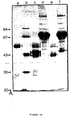
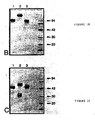
- the 100 Kd fraction is totally devoid of light chains and appears to be solely composed of heavy chains which after reduction have on apparent MW of 43 Kd ( Fig. 1C ).
- the fraction which does not bind to Protein G can be affinity purified and eluted from a Protein A column as a second 100 Kd component which after reduction appears to be composed solely of 46 Kd heavy chains.
- the heavy chain immoglobulins devoid of light chains total up to 75% of the molecules binding to Protein A.
- IgG immunoglobulins bind to Protein A we refer to them as IgG : namely IgG 1 (light chain and heavy chain ⁇ 1 (50 Kd) binding to Protein G, IgG 2 (heavy chain ⁇ 2 (46 Kd) non binding to Protein G and IgG 3 (heavy chain ⁇ 3 (43 Kd) binding to Protein G. There is a possibility that these three sub(classes) can be further subdivided.
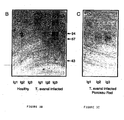
- the corresponding fractions of IgG 1 , IgG 2 , IgG 3 were prepared from the serum of a healthy camel and from the serum of camels with a high antitrypanosome titer, measured by the Card Agglutination Test (3).
- IgG 1 , IgG 2 and IgG 3 derived from infected camel indicating extensive repertoire heterogeneity and complexity ( Fig. 3A ) were shown to bind a large number of antigens present in a 35 S methionine labelled trypanosome lysate.
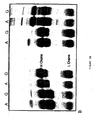
- Immunoglobulins are characterized by a complex I.E.F. (isoelectric focussing) pattern reflecting their extreme heterogeneity. To determine whether the two heavy chains constituting the IgG 2 and IgG 3 are identical or not, the isoelectric focussing (I.E.F.) pattern were observed before and after chain separation by reduction and alkylation using iodoacetamide as alkylating agent.
- I.E.F. isoelectric focussing
- the monomers resulting from the reduction and alkylation of a heavy chain homodimer will have practically the same isolectric point as the dimer, whereas if they are derived from a heavy chain heterodimer, the monomers will in most cases differ sufficiently in isoelectric point to generate a different pattern in I.E.F.
- I.E.F. pattern of IgG 1 is completely modified after reduction as the isoelectric point of each molecule is determined by the combination of the isoelectric points of the light and heavy chains which after separation will each migrate to a different position.
- isolated heavy chain from mammalian immunoglobulins tend to aggregate considerably but are only solubilized by light chains (8, 9) which bind to the C H 1 domain of the heavy chain.
- the strategy followed for investigating the heavy chain immunoglobulin primary structure is a combination of protein and cDNA sequencing ; the protein sequencing is necessary to identify sequence streches characteristic of each immunoglobulin.
- the N-terminal of the immunoglobulin being derived from the heavy chain variable region repertoire only yields information on the V HH subgroups (variable region of the heavy chain) and cannot be used for class or subclass identification. This means that sequence data had to be obtained from internal enzymatic or chemical cleavage sites.
- the IgG3 of the camel ( Camelus dromedarius) purified by affinity chromatography on Protein A Sepharose were partially digested with papain and the digest was separated on Protein A Sepharose into binding and non binding fractions. These fractions were analysed by SDS PAGE under reducing and non reducing conditions ( fig 4 ).
- the bound fraction contained two components, one of 28 Kd and one of 14.4 Kd, in addition to uncleaved or partially cleaved material. They were well separated by gel electrophoresis ( from preparative 19% SDS-PAGE gels ) under non reducing conditions and were further purified by electroelution( in 50nM amonium bicarbonate, 0.1% (w/v) SDS using a BioRad electro-eluter). After lyophilization of these electroeluted fractions, the remaining SDS was eliminated by precipitating the protein by the addition of 90% ethanol, mixing and incubating the mixture overnight at -20°C (14). The precipitated protein was collected in a pellet by centrifuging (15000 rpm, 5min) and was used for protein sequencing.
- N-terminal sequencing was performed using the automated Edman chemistry of an Applied Biosystem 477A pulsed liquid protein sequencer.
- Amino acids were identified as their phenylthiohydantoin (PTH) derivatives using an Applied Biosystem 120 PTH analyser. All chemical and reagents were purchased from Applied Biosystems. Analysis of the chromatographic data was performed using Applied Biosystems software version 1.61. In every case the computer aided sequence analysis was cofirmed by direct inspection of the chromatograms from the PTH analyser.
- Samples for protein sequencing were dissolved in either 50% (v/v) trifluoroacetic acid(TFA) (28Kd fragment) or 100% TFA (14Kd fragment).
- Samples of dissolved protein equivalent to 2000 pmol (28Kd fragment) or 500 pmol (14Kd fragment) were applied to TFA-treated glass fibre discs.
- the glass fibre discs were coated with BioBrene (3mg) and precycled once before use.
- N-terminal sequencing of the 28 Kd fragment yields a sequence homologous to the N-terminal part of ⁇ C H 2 domain and hence to the N-terminal end of the Fc fragment.
- the N-terminal sequence of the 14.4 Kd fragment corresponds to the last lysine of a ⁇ C H 2 and the N-terminal end of a ⁇ C H 3 domain (Table 1).
- the molecular weight (MW) of the papa ⁇ n fragments and the identification of their N-terminal sequences led us to conclude that the C H 2 and C H 3 domains of the ⁇ 3 heavy chains are normal in size and that the deletion must occur either in the C H 1 or in the V HH domain to generate the shorted ⁇ 3 chain.
- the fractions which do not bind to Protein A Sepharose contain two bands of 34 and 17 Kd which are more diffuse is SDS PAGE indicating that they originate from the variable N-terminal part of the molecule ( fig 4 ).
- cDNA was therefore synthetised from camel spleen mRNA.
- the conditions for the isolation of RNA were the following: total RNA was isolated from the dromedary spleen by the guanidium isothiocyanate method (15). mRNA was purified with oligo T-paramagnetic beads. cDNA synthesis is obtained using 1 ⁇ g mRNA template, an oligodT primer and reverse transcriptase (BOERHINGER MAN).
- Second strand cDNA is obtained using RNAse H and E coli DNA polymerase I according to the condition given by the supplier. Relevant sequences were amplified by PCR: 5ng of cDNA was amplified by PCR in a 100 ⁇ l reaction mixture ( 10mM Tris-HCl pH 8.3, 50mM KCl, 15mM MgCl 2 , 0.01% (w/v) gelatine, 200 ⁇ M of each dNTP and 25 pmoles of each primer) overlaid with mineral oil (Sigma). Degenerate primers containing Eco RI and Kpn I sites and further cloned into pUC 18.
- PCR products were checked on a 1.2% (w/v) agarose gel. Cleaning up of the PCR products included a phenol-chloroform extractio followed by further purification by HPLC ( GEN-PAC FAX column, Waters) and finally by using the MERMAID or GENECLEAN II kit, BIO 101, Inc) as appropriate. After these purification steps, the amplified cDNA was then digested with EcoRI and KpnI for series #56 clones and with XhoI and KpnI for series #72 clones. A final phenol-chloroform extraction preceded the ligation into pUC 18( series #56 clones) or into pBluescript R (series #72 clones).
- Clones corresponding to two different sets of C H 2 protein sequences were obtained.
- a first set of sequences (#72/41) had a N-terminal C H 2 region identical to the one obtained by protein sequencing of the 28 Kd papain fragments of the ⁇ 3 heavy chain, a short hinge region containing 3 cysteines and a variable region corresponding to the framework (FR4) residues encoded by the J minigenes adjoining the hinge.
- the C H 1 domain is entirely lacking.
- This cDNA corresponds to the ⁇ 3 chain (Table 4).
- the sequence corresponding to the C H 3 and the remaining part of the C H 2 was obtained by PCR of the cDNA using as Kpn I primer a poly T in which a Kpn I restriction site had been inserted at the 5' end.
- the total sequence of the ⁇ 3 chain corresponds to a molecular weight (MW) which is in good agreement with the data obtained from SDS PAGE electrophoresis.
- This ⁇ 3 chain presents similarities with other ⁇ chains except that it lacks the C H 1 domain, the V HH domain being adjacent to the hinge.
- cysteines could be probably responsible for holding the two ⁇ 3 chains together.
- Papain can cleave the molecule on each side of the hinge disulfides and also between C H 2 and C H 3. Under non reducing conditions the V HH domains of IgG3 can be isolated as disulfide linked dimer or as monomer depending on the site of papain cleavage.
- a second set of clones #72/29 had a slightly different sequence for the C H 2 and was characterized by a very long hinge immediately preceded by the variable domain. This hinge region has 3 cysteines at its C-terminal end in a sequence homologeous to the ⁇ 3 hinge.
- Such second set of clones could represent the IgG2 subclass.
- a few clones such as #72/1 however show minor differences. For instance in the case of clones #72/1 two nucleotide differences are detected.
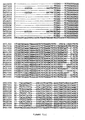
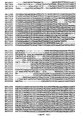
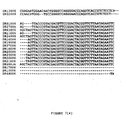
- V HH regions cDNA's have now been totally or partially sequenced with the exception of a short stretch at the N-terminal end which is primer derived.
- the heavy chain dimer found in the serum of human or mice with the so-called "heavy chain disease” lack the C H 1 domains thought to harbour the BIP site (14).In the absence of thi domain the BIP protein can no longer bind and prevent the transport of the heavy chains.
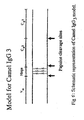
- the largest dimension of an isolated domain is 40 ⁇ and the maximum attainable span between binding sites of a conventional IgG with C H 1 and V HH will be of the order of 160 ⁇ (2V HH + 2C H 1) (19).
- the deletion of C H 1 domain in the two types of heavy chain antibodies devoid of light chains, already sequenced has, as a result, a modification of this maximum span ( fig. 6 ).
- the extreme distance between the extremities of the V HH regions will be of the order of 80 ⁇ (2V HH ). This could be a severe limitation for agglutinating or cross linking.
- the single V HH domain could also probably allow considerably rotational freedom of the binding site versus the Fc domain.
- the clones can be expressed in several types of expression vectors.
- clones produced in Bluescript® according to the above described procedure, have been recovered by PCR using the same Xho I containing 5' primer and a new 3' primer, corresponding to residues 113-103 in the framework of the immunoglobulins, in which an Spe site has been constructed : TC TTA ACT AGT GAG GAG ACG GTG ACC TG. This procedure allowed the cloning of the V HH in the Xho/Spe site of the Immuno PBS vector.
- the 3' end of the gene was not in phase with the identification "tag” and the stop codon of the vector.
- the construct was cut with Spe and the 4 base overhangs were filled in, using the Klenow fragment after which the vector was religated.
- FIG. 8 shows: C,D:fractions from fast S Sepharose column chromatography (C:Eluted at 650 mM NaCl D:Eluted at 700 mM NaCl) E,F:fractions from Superdex 75 column chromatography.
Landscapes
- Health & Medical Sciences (AREA)
- Chemical & Material Sciences (AREA)
- Organic Chemistry (AREA)
- Life Sciences & Earth Sciences (AREA)
- Medicinal Chemistry (AREA)
- General Health & Medical Sciences (AREA)
- Immunology (AREA)
- Molecular Biology (AREA)
- Biophysics (AREA)
- Animal Behavior & Ethology (AREA)
- Nuclear Medicine, Radiotherapy & Molecular Imaging (AREA)
- Public Health (AREA)
- Veterinary Medicine (AREA)
- Pharmacology & Pharmacy (AREA)
- Proteomics, Peptides & Aminoacids (AREA)
- General Chemical & Material Sciences (AREA)
- Chemical Kinetics & Catalysis (AREA)
- Genetics & Genomics (AREA)
- Biochemistry (AREA)
- Engineering & Computer Science (AREA)
- Bioinformatics & Cheminformatics (AREA)
- Oncology (AREA)
- Communicable Diseases (AREA)
- Peptides Or Proteins (AREA)
- Preparation Of Compounds By Using Micro-Organisms (AREA)
- Medicines Containing Antibodies Or Antigens For Use As Internal Diagnostic Agents (AREA)
- Micro-Organisms Or Cultivation Processes Thereof (AREA)
- Medicines Containing Material From Animals Or Micro-Organisms (AREA)
Abstract
Description
- The invention relates to new isolated immunoglobulins which are devoid of light polypeptide chains. These immunoglobulins do not consist in the degradation products of immunoglobulins composed of both heavy polypeptide and light polypeptide chains but to the contrary, the invention defines a new member of the family of the immunoglobulins, especially a new type of molecules capable of being involved in the immune recognition. Such immunoglobulins can be used for several purposes, especially for diagnosis or therapeutical purposes including protection against pathological agents or regulation of the expression or activity of proteins.
- Up to now the structure proposed for immunoglobulins consists of a four-chain model referring to the presence of two identical light polypeptide chains (light chains) and two identical heavy polypeptide chains (heavy chains) linked together by disulfide bonds to form a y- or T-shaped macromolecules. These chains are composed of a constant region and a variable region, the constant region being subdivided in several domains. The two heavy polypeptide chains are usually linked by disulphide bounds in a so-called "hinge region" situated between the first and second domains of the constant region.
- Among the proteins forming the class of the immunoglobulins, most of them are antibodies and accordingly present an antigen binding site or several antigen binding sites.
- According to the four-chain model, the antigen binding site of an antibody is located in the variable domains of each of the heavy and light chains, and requires the association of the heavy and the light chains variable domains.
- For the definition of these four-chain model immunoglobulins, reference is made to Roitt. I et al (Immunology-second-Edition Gower Medical Publishing USA, 1989). Reference is especially made to the part concerning the definition of the four-chain immunoglobulins, their polypeptidic and genetic structures, the definition of their variable and constant regions and the obtention of the fragments produced by enzymatic degradation according to well known techniques.
- The inventors have surprisingly established that different molecules can be isolated from animals which naturally produce them, which molecules have functional properties of immunoglobulins these functions being in some cases related to structural elements which are distinct from those involved in the function of four-chain immunoglobulins due for instance to the absence of light chains.
- The invention relates to two-chain model immunoglobulins which neither correspond to fragments obtained for instance by the degradation in particular the enzymatic degradation of a natural four-chain model immunoglobulin, nor correspond to the expression in host cells, of DNA coding for the constant or the variable region of a natural four-chain model immunoglobulin or a part of these regions, nor correspond to antibodies produced in lymphopaties for example in mice, rats or human.
- E.S. Ward et al (1) have described some experiments performed on variable domains of heavy polypeptide chains (VH) or/and light polypeptide chains (VK/FV) to test the ability of these variable domains, to bind specific antigens. For this purpose, a library of VH genes was prepared from the spleen genomic DNA of mice previously immunized with these specific antigens.
- Ward et al have described in their publication that VH domains are relatively sticky, presumably due to the exposed hydrophobic surface normally capped by the VK or Vλ domains. They consequently envisage that it should be possible to design VH domains having improved properties and further that VH domains with binding activities could serve as the building blocks for making variable fragments (Fv fragments) or complete antibodies.
- The publication of Blier P.R. et al (The Journal of Immunology, vol. 139, 3996-4006, n° 12, December 15, 1987) discloses the incomplete nucleotide sequences obtained from hybridoma.
- The invention does not start from the idea that the different fragments (light and heavy chains) and the different domains of these fragments of four-chain model immunoglobulin can be modified to define new or improved antigen binding sites or a four-chain model immunoglobulin.
- The inventors have determined that immunoglobulins can have a different structure than the known four-chain model and that such different immunoglobulins offer new means for the preparation of diagnosis reagents, therapeutical agents or any other reagent for use in research or industrial purposes.
- Thus the invention provides new immunoglobulins which are capable of showing functional properties of four-chain model immunoglobulins although their structure appears to be more appropriate in many circumstances for their use, their preparation and in some cases for their modification. Moreover these molecules can be considered as lead structures for the modification of other immunoglobulins. The advantages which are provided by these immunoglobulins comprise the possibility to prepare them with an increased facility.
- The invention relates to an immunoglobulin characterized in that it is obtainable from Camelids and in that it comprises two heavy polypeptide chains sufficient for the formation of a complete antigen binding site, or several antigen binding sites wherein the heavy polypeptide chains are devoid of a so-called first domain in their constant region (CH1), this immunoglobulin being devoid of light polypeptide chains.
- In a particular embodiment of the invention, these immunoglobulins are further characterized by the fact that they are the product of the expression in a prokaryotic or in a eukaryotic host cell, of a DNA or of a cDNA having the sequence of an immunoglobulin devoid of light chains as obtainable from lymphocytes or other cells of Camelids.
- The immunoglobulins of the invention can be obtained for example from the sequences which are described in
figure 7 . - The immunoglobulins of the invention, which are devoid of light chains are such that the variable domains of their heavy chains have properties differing from those of the four-chain immunoglobulin VH. The variable domain of a heavy-chain immunoglobulin of the invention has no normal interaction sites with the VL or with the CHl domain which do not exist in the heavy chain immunoglobulins. it is hence a novel fragment in many of its properties such as solubility and position of the binding site. For clarity reasons we will call it VHH in this text to distinguish it from the classical VH of four-chain immunoglobulins.
- By "a complete antigen binding site" it is meant according to the invention, a site which will alone allow the recognition and complete binding of an antigen. This could be verified by any known method regarding the testing of the binding affinity.
- These immunoglobulins which can be prepared by the technique of recombinant DNA, or isolated from animals, will be sometimes called "heavy-chain immunoglobulins" in the following pages. In a preferred embodiment of the invention, these immunoglobulins are in a pure form.
- In a first embodiment, the immunoglobulins of the invention are obtainable in prokaryotic cells, especially in E.coli cells by a process comprising the steps of :
- a) cloning in a Bluecript vector of a DNA or cDNA sequence coding for the VHH domain of an immunoglobulin devoid of light chain obtainable for instance from lymphocytes of Camelids,
- b) recovering the cloned fragment after amplification using a 5' primer containing an Xho site and a 3' primer containing the Spe site having the following sequence
- TC TTA ACT AGT GAG GAG ACG GTG ACC TG,
- c) cloning the recovered fragment in phase in the immuno PBS vector after digestion of the vector with Xho and Spe restriction enzymes,
- d) transforming host cells, especially E.coli by transfection with the recombinant immuno PBS vector of step c,
- e) recovering the expression product of the VHH coding sequence, for instance by using antibodies raised against the dromadary VHH domain.
- In another embodiment the immunoglobulins are hetero-specific immunoglobulins obtainable by a process comprising the steps of:
- obtaining a first DNA or cDNA sequence coding for a VHH domain or part thereof having a determined specificity against a given antigen and comprised between Xho and Spe sites,
- obtaining a second DNA or cDNA sequence coding for a VHH domain or part thereof, having a determined specificity different from the specificity of the first DNA or cDNA sequence and comprised between the Spe and EcoRI sites,
- digesting an immuno PBS vector with EcoRI and XhoI restriction enzymes,
- ligating the obtained DNA or cDNA sequences coding for VHH domains, so that the DNA or cDNA sequences are serially cloned in the vector,
- transforming a host cell, especially E.coli cell by transfection, and recovering the obtained immunoglobulins.
- In another embodiment, the immunoglobulins are obtainable by a process comprising the steps of:
- obtaining a DNA or cDNA sequence coding for a VHH domain or part thereof, having a determined specific antigen binding site,
- amplifying the obtained DNA or cDNA, using a 5' primer containing an initiation codon and a HindIII site, and a 3' primer containing a termination codon having a XhoI site,
- recombining the amplified DNA or cDNA into the HindIII (position 2650) and XhoI (position 4067) sites of a plasmid pMM984,
- transfecting permissive cells especially NB-E cells with the recombinant plasmid,
- recovering the obtained products.
- Successful expression can be verified with antibodies directed against a region of a VHH domain, especially by an ELISA assay.
- According to another particular embodiment of this process, the immunoglobulins are cloned in a parvovirus.
- In another example these immunoglobulins are obtainable by a process comprising the further cloning of a second DNA or cDNA sequence having another determined antigen binding site, in the pMM984 plasmid.
- Such an Immunoglobulin can be further characterized in that it is obtainable by a process wherein the vector is Yep 52 and the transformed recombinant cell is a yeast especially S.cerevisiae.
- A particular Immunoglobulin is characterized in that it has a catalytic activity, especially in that it is directed against an antigen mimicking an activiated state of a given substrate. These catalytic antibodies can be modified at the level of their biding site, by random or directed mutagenesis in order to increase oe modify their catalytic function. Reference may be made to the publication of Lerner et al (TIBS November 1987. 427-430) for the general technique for the preparation of such catalytic immunoglobulins.
- According to a preferred embodiment, the immunoglobulins of the invention are characterized in that their variable regions contain in
position 45, an amino-acid which is different from leucine, proline or glutamine residue. - Moreover the heavy-chain immunoglobulins are not products characteristic of lymphocytes of animals nor from lymphocytes of a human patient suffering from lymphopathies. Such immunoglobulins produced in lymphopathies are monoclonal in origin and result from pathogenic mutations at the genomic level. They have apparently no antigen binding site.
- The two heavy polypeptide chains of these immunoglobulins can be linked by a hinge region according to the definition of Roitt et al.
- In a particular embodiment of the invention, immunoglobulins corresponding to the above-defined molecules are capable of acting as antibodies.
- The antigen binding site(s) of the immunoglobulins of the invention are located in the variable region of the heavy chain.
- In a particular group of these immunoglobulins each heavy polypeptide chain contains one antigen binding site on its variable region, and these sites correspond to the same amino-acid sequence.
- In a further embodiment of the invention the immunoglobulins are characterized in that their heavy polypeptide chains contain a variable region (VHH) and a constant region (CH) according to the definition of Roitt et al, but are devoid of the first domain of their constant region. This first domain of the constant region is called
C H1. - These immunoglobulins having no
C H1 domain are such that the variable region of their chains is directly linked to the hinge region at the C-terminal part of the variable region. - The immunoglobulins of the type described hereabove can comprise type G immunoglobulins and especially immunoglobulins which are defined as immunoglobulins of class 2 (IgG2) or immunoglobulins of class 3 (IgG3).
- The absence of the light chain and of the first constant domain lead to a modification of the nomenclature of the immunoglobulin fragments obtained by enzymatic digestion, according to Roitt et al.
- The terms Fc and pFc on the one hand, Fc' and pFc' on the other hand corresponding respectively to the papain and pepsin digestion fragments are maintained.
- The terms Fab F(ab)2 F(ab')2 Fabc, Fd and Fv are no longer applicable in their original sense as these fragments have either a light chain, the variable part of the light chain or the
C H1 domain. - The fragments obtained by papain digestion and composed of the VHH domain and the hinge region will be called FVHHh or F(VHHh)2 depending upon whether or not they remain linked by the disulphide bonds.
- In another embodiment of the invention, immunoglobulins replying to the hereabove given definitions can be originating from animals especially from animals of the camelid family. The inventors have found out that the heavy-chain immunoglobulins which are present in camelids are not associated with a pathological situation which would induce the production of abnormal antibodies with respect to the four-chain immunoglobulins. On the basis of a comparative study of old world camelids (Camelus bactrianus and Camelus dromaderius) and new world camelids (for example Lama Paccos, Lama Glama, and Lama Vicugna) the inventors have shown that the immunoglobulins of the invention, which are devoid of light polypeptide chains are found in all species. Nevertheless differences may be apparent in molecular weight of these immunoglobulins depending on the animals. Especially the molecular weight of a heavy chain contained in these immunoglobulins can be from approximately 43 kd to approximately 47 kd, in particular 45 kd.
- Advantageously the heavy-chain immunoglobulins of the invention are secreted in blood of camelids.
- Immunoglobulins according to this particular embodiment of the invention are obtainable by purification from serum of camelids and a process for the purification is described in details in the examples. In the case where the immunoglobulins are obtained from Camelids, the invention relates to immunoglobulins which are not in their natural biological environment.
- According to the invention immunoglobulin IgG2 as obtainable by purification from the serum of camelids can be characterized in that :
- it is not adsorbed by chromatography on Protein G Sepharose column,
- it is adsorbed by chromatography on Protein A Sepharose column,
- it has a molecular weight of around 100 kd after elution with a pH 4.5 buffer (0.15 M NaCl, 0.58% acetic acid adjusted to pH 4.5 by NaOH),
- it consists of heavy γ2 polypeptide chains of a molecular weight of around 46 kd preferably 45 after reduction.
- According to a further embodiment of the invention another group of immunoglobulins corresponding to IgG3, as obtainable by purification from the serum of Camelids is characterized in that the immunoglobulin :
- is adsorbed by chromatography on a Protein A Sepharose column,
- has a molecular weight of around 100 kd after elution with a pH 3.5 buffer (0.15 M NaCl, 0.58% acetic acid),
- is adsorbed by chromatography on a Protein G Sepharose column and eluted with pH 3.5 buffer (0.15 M NaCl, 0.58% acetic acid).
- consists of heavy γ3 polypeptide chains of a molecular weight of around 45 Kd in particular between 43 and 47 kd after reduction.
- The immunoglobulins of the invention which are devoid of light chains, nevertheless comprise on their heavy chains a constant region and a variable region. The constant region comprises different domains.
- The variable region of immunoglobulins of the invention comprises frameworks (FW) and complementarity determining regions (CDR), especially 4 frameworks and 3 complementarity regions. It is distinguished from the four-chain immunoglobulins especially by the fact that this variable region can itself contain an antigen binding site or several, without contribution of the variable region of a light chain which is absent.
- The amino-acid sequences of
frameworks
for theframework 1 domainG G S V Q T G G S L R L S C E I S G L T F D G G S V Q T G G S L R L S C A V S G F S F S G G S E Q G G G S L R L S C A I S G Y T Y G G G S V Q P G G S L T L S C T V S G A T Y S G G S V Q A G G S L R L S C T G S G F P Y S G G S V Q A G G S L R L S C V A G F G T S G G S V Q A G G S L R L S C V S F S P S S
for theframework 4 domainW G Q G T Q V T V S S W G Q G T L V T V S S W G Q G A Q V T V S S W G Q G T Q V T A S S R G Q G T Q V T V S L
for the CDR3 domain
- As stated above, the immunoglobulins of the invention are preferably devoid of the totality of their
C H1 domain. - Such immunoglobulins comprise
C H2 andC H3 domains in the C-terminal region with respect to the hinge region. - According to a particular embodiment of the invention the constant region of the immunoglobulins comprises
C H2 andC H3 domains comprising an amino-acid sequence selected from the following : - for the
C H2 domain:- APELLGGPTVFIFPPKPKDVLSITLTP
- APELPGGPSVFVFPTKPKDVLSISGRP
- APELPGGPSVFVFPPKPKDVLSISGRP
- APELLGGPSVFIFPPKPKDVLSISGRP
- for the
C H3 domain:- GQTREPQVYTLA
- GQTREPOVYTLAPXRLEL
- GOPREPQVYTLPPSRDEL
- GQPREPQVYTLPPSREEM
- GQPREPQVYTLPPSQEEM
- Interestingly the inventors have shown that the hinge region of the immunoglobulins of the invention can present variable lengths. When these immunoglobulins act as antibodies, the length of the hinge region will participate to the determination of the distance separating the antigen binding sites.
- Preferably an immunoglobulin according to the invention is characterized in that its hinge region comprises from 0 to 50 amino-acids.
- Particular sequences of hinge region of the immunoglobulins of the invention are the following.
- GTNEVCKCPKCP
- EPKIPQPQPKPQPQPQPQPKPQPKPEPECTCPKCP
- The short hinge region corresponds to an IgG3 molecule and the long hinge sequence corresponds to an IgG2 molecule.
- Isolated VHH derived from heavy chain immunoglobulins or VHH libraries corresponding to the heavy chain immunoglobulins can be distinguished from VHH cloning of four-chain model immunoglobulins on the basis of sequence features characterizing heavy chain immunoglobulins.
- The camel heavy - chain immunoglobulin VHH region shows a number of differences with the VHH regions derived from 4-chain immunoglobulins from all species examined. At the levels of the residues involved in the VHH/VL interactions, an important difference is noted at the level of position 45 (FW) which is practically always leucine in the 4-chain immunoglobulins (98%), the other amino acids at this position being proline (1%) or glutamine (1%).
- In the camel heavy-chain immunoglobulin, in the sequences examined at present, leucine at
position 45 is only found once. It could originate from a four-chain immunoglobulin. In the other cases, it is replaced by arginine, cysteine or glutamic acid residue. The presence of charged amino acids at this position should contribute to making the VHH more soluble. - The replacement by camelid specific residues such as those of
position 45 appears to be interesting for the construction of engineered VHH regions derived from the VHH repertoire of 4-chain immunoglobulins. - A second feature specific of the camelid VHH domain is the frequent presence of a cysteine in the CDR3 region associated with a cysteine in the CDR1 position 31 or 33 or FW2 region at
position 45. The possibility of establishing a disulphide bond between the CDR3 region and the rest of the variable domain would contribute to the stability and positioning of the binding site. - With the exception of a single pathogenic myeloma protein (DAW) such a disulphide bond has never been encountered in immunoglobulin V regions derived from 4 chain immunoglobulins.
- The heavy-chain immunoglobulins of the invention have further the particular advantage of being not sticky. Accordingly these immunoglobulins being present in the serum, aggregate much less than isolated heavy chains of a four-chain immunoglobulins. The immunoglobulins of the invention are soluble to a concentration above 0.5 mg/ml, preferably above 1 mg/ml and more advantageously above 2 mg/ml.
- These immunoglobulins further bear an extensive antigen binding repertoire and undergo affinity and specificity maturation in vivo. Accordingly they allow the isolation and the preparation of antibodies having defined specificity, regarding determined antigens.
- Another interesting property of the immunoglobulins of the invention is that they can be modified and especially humanized. Especially it is possible to replace all or part of the constant region of these immunoglobulins by all or part of a constant region of a human antibody. For example the
C H2 and/orC H3 domains of the immunoglobulin could be replaced by theC H2 and/orC H3 domains of the IgG γ3 human immunoglobulin. - In such humanized antibodies it is also possible to replace a part of the variable sequence, namely one or more of the framework residues which do not intervene in the binding site by human framework residues, or by a part of a human antibody.
- Conversely features (especially peptide fragments) of heavy-chain immunoglobulin VHH regions, could be introduced into the VH or VL regions derived from four-chain immunoglobulins with for instance the aim of achieving greater solubility of the immunoglobulins.
- The invention further relates to a fragment of an immunoglobulin which has been described hereabove and especially to a fragment selected from the following group :
- a fragment which is a heavy polypeptide chain of an immunoglobulin according to the invention or a fragment which is the variable region of a heavy chain of an immunoglobulin according to the invention, both of which fragments contain an amino acid residue at
position 45 of said heavy chain which is a charged amino acid or a cysteine residue, said fragment forming a determined antigen binding site. - fragments obtained by enzymatic digestion of the immunoglobulins of the invention, leading to FVHHh fragment (containing the antigen binding sites of the heavy chains) or its dimer F(VHHh)2,
- homologous fragments obtained with other proteolytic enzymes,
- The fragments can be obtained by enzymatic degradation of the immunoglobulins. They can also be obtained by expression in cells or organisms, of nucleotide sequence coding for the immunoglobulins, or they can be chemically synthesized.
- The invention also relates to anti-idiotypes antibodies belonging to the heavy chain immunoglobulin classes. Such anti-idiotypes can be produced against human or animal idiotypes. A property of these anti-idiotypes is that they can be used as idiotypic vaccines, in particular for vaccination against glycoproteins or glycolipids and where the carbohydrate determines the epitope.
- The invention also relates to anti-idiotypes capable of recognizing idiotypes of heavy-chain immunoglobulins.
- Such anti-idiotype antibodies can be either syngeneic antibodies or allogenic or xenogeneic antibodies.
- The invention also concerns nucleotide sequences coding for all or part of a protein which amino-acid sequence comprises a peptide sequence selected from the following :
G G S V Q T G G S L R L S C E I S G L T F D G G S V Q T G G S L R L S C A V S G F S F S G G S E Q G G G S L R L S C A I S G Y T Y G G G S V Q P G G S L T L S C T V S G A T Y S G G S V Q A G G S L R L S C T G S G F P Y S G G S V Q A G G S L R L S C V A G F G T S G G S V Q A G G S L R L S C V S F S P S S W G Q G T Q V T V S S W G Q G T L V T V S S W G Q G A Q V T V S S W G Q G T Q V T A S S R G Q G T Q V T V S L 
 or,
or,

- Such nucleotide sequences can be deduced from the amino-acid sequences taking into account the deneneracy of the genetic code. They can be synthesized or isolated from cells producing immunoglobulins of the invention.
- A procedure for the obtention of such DNA sequences is described in the examples.
- The invention also contemplates RNA, especially mRNA sequences corresponding to these DNA sequences, and also corresponding cDNA sequences.
- The nucleotide sequences of the invention can further be used for the preparation of primers appropriate for the detection in cells or screening of DNA or cDNA libraries to isolate nucleotide sequences coding for immunoglobulins of the invention.
- Such nucleotide sequences can be used for the preparation of recombinant vectors and the expression of these sequences contained in the vectors by host cells especially prokaryotic cells like bacteria or also eukaryotic cells and for example CHO cells, insect cells, simian cells like Vero cells, or any other mammalian cells. Especially the fact that the immunoglobulins of the invention are devoid of light chains permits to secrete them in eukaryotic cells since there is no need to have recourse to the step consisting in the formation of the BIP protein which is required in the four-chain immunoglobulins.
- The inadequacies of the known methods for producing monoclonal antibodies or immunoglobulins by recombinant DNA technology comes from the necessity in the vast majority of cases to clone simultaneously the VH and VL domains corresponding to the specific binding site of 4 chain immunoglobulins. The animals and especially camelids which produce heavy-chain immunoglobulins according to the invention, and possibly other vertebrate species are capable of producing heavy-chain immunoglobulins of which the binding site is located exclusively in the VHH domain. Unlike the few heavy-chain immunoglobulins produced in other species by chain separation or by direct cloning, the camelid heavy-chain immunoglobulins have undergone extensive maturation in vivo. Moreover their V region has naturally evolved to function in absence of the VL. They are therefore ideal for producing monoclonal antibodies by recombinant DNA technology. As the obtention of specific antigen binding clones does not depend on a stochastic process necessitating a very large number of recombinant cells, this allows also a much more extensive examination of the repertoire.
- This can be done at the level of the non rearranged VHH repertoire using DNA derived from an arbitrarily chosen tissue or cell type or at the level of the rearranged VHH repertoire, using DNA obtained from B lymphocytes. More interesting however is to transcribe the mRNA from antibody producing cells and to clone the cDNA with or without prior amplification into an adequate vector. This will result in the obtention of antibodies which have already undergone affinity maturation.
- The examination of a large repertoire should prove to be particularly useful in the search for antibodies with catalytic activities.
- The invention thus provides libraries which can be generated in a way which includes part of the hinge sequence, the identification is simple as the hinge is directly attached to the VHH domain.
- These libraries can be obtained by cloning cDNA from lymphoid cells with or without prior PCR amplification. The PCR primers are located in the promoter, leader or framework sequences of the VHH for the 5' primer and in the hinge, CH2, CH3, 3' untranslated region or polyA tail for the 3' primer. A size selection of amplified material allows the construction of a library limited to heavy chain immunoglobulins.
- In a particular example, the following 3' primer in which a KpnI site has been constructed and which corresponds to amino-acids 313 to 319 (CGC CAT CAA GGT AAC AGT TGA) is used in conjunction with mouse VHH primers described by Sestry et al and containing a Xho site

- These primers yield a library of camelid heavy chain immunoglobulins comprising the VHH region (related to mouse or human subgroup III), the hinge and a section of CH2.
- In another example, the cDNA is polyadenylated at its 5' end and the mouse specific VHH primers are replaced by a poly T primer with an inbuilt XhoI site, at the level of nucleotide 12.
- CTCGAGT12.
- This method generates a library containing all subgroups of immunoglobulins.
- Part of the interest in cloning a region encompassing the hinge-CH2 link is that in both γ2 and γ3, a Sac site is present immediately after the hinge. This site allows the grafting of the sequence coding for the VHH and the hinge onto the Fc region of other immunoglobulins, in particular the human IgG1 and IgG3 which have the same amino acid sequence at this site (Glu246 Leu247).
- As an example, the invention contemplates a cDNA library composed of nucleotide sequences coding for a heavy-chain immunoglobulin , such as obtained by performing the following steps:
- a) treating a sample containing lymphoid cells, especially periferal, lymphocytes, spleen cells, lymph nodes or another lyphoid tissue from a healthy animal, especially selected among the Camelids, in order to separate the lymphoid cells,
- b) separating polyadenylated RNA from the other nucleic acids and components of the cells,
- c) reacting the obtained RNA with a reverse transcriptase in order to obtain the corresponding cDNA,
- d) contacting the cDNA of step c) with 5' primers corresponding to mouse VH domain of four-chain immunoglobulins, which primer contains a determined restriction site, for example an XhoI site and with 3' primers corresponding to the N-terminal part of a
C H2 domain containing a KpnI site, - e) amplifying the DNA,
- f) cloning the amplified sequence in a vector, especially in a bluescript vector,
- g) recovering the clones hybridizing with a probe corresponding to the sequence coding for a constant domain from an isolated heavy-chain immunoglobulin.
- This cloning gives rise to clones containing DNA sequences including the sequence coding for the hinge. It thus permits the characterization of the subclass of the immunoglobulin and the SacI site useful for grafting the FVHHh to the Fc region.
- The recovery of the sequences coding for the heavy-chain immunoglobulins can also be achieved by the selection of clones containing DNA sequences having a size compatible with the lack of the
C H1 domain. - It is possible according to another embodiment of the invention, to add the following steps between steps c) and d) of the above process:
- in the presence of a DNA polymerase and of deoxyribonucleotide triphosphates, contacting said cDNA with oligonucleotide degenerated primers, which sequences are capable of coding for the hinge region and N-terminal VHH domain of an immunoglobulin, the primers being capable of hybridizing with the cDNA and capable of initiating the extension of a DNA sequence complementary to the cDNA used as template,
- recovering the amplified DNA.
- The clones can be expressed in several types of expression vectors. As an example using a commercially available vector Immuno PBS (Huse et al : Science (1989) 246, 1275), clones produced in Bluescript ® according to the above described procedure, are recovered by PCR using the same XhoI containing 5' primer and a new 3' primer, corresponding to residues 113-103 in the framework of the immunoglobulins, in which an Spe site has been constructed : TC TTA ACT AGT GAG GAG ACG GTG ACC TG. This procedure allows the cloning of the VHH in the Xho/Spe site of the Immuno PBS vector. However, the 3' end of the gene is not in phase with the identification "tag" and the stop codon of the vector. To achieve this, the construct is cut with Spe and the 4 base overhangs are filled in, using the Klenow fragment after which the vector is religated. A further refinement consists in replacing the marker ("tag") with a poly histidine so that metal purification of the cloned VHH can be performed. To achieve this a Spe/EcoRI double stranded oligonucleotide coding for 6 histidines and a termination codon is first constructed by synthesis of both strands followed by heating and annealing :

- The vector containing the insert is then digested with SpeI and EcoRI to remove the resident "tag" sequence which can be replaced by the poly-His/termination sequence. The produced VHH can equally be detected by using antibodies raised against the dromedary VHH regions. Under laboratory conditions, VHH regions are produced in the Immuno PBS vector in mg amounts per liter.
- The invention also relates to a DNA library composed of nucleotide sequences coding for a heavy-chain immunoglobulin, such as obtained from cells with rearranged immunoglobulin genes.
- In a preferred embodiment of the invention, the library is prepared from cells from an animal previously immunized against a determined antigen. This allows the selection of antibodies having a preselected specificity for the antigen used for immunization.
- In another embodiment of the invention, the amplification of the cDNA is not performed prior to the cloning of the cDNA.
- The heavy-chain of the four-chain immunoglobulins remains sequestered in the cell by a chaperon protein (BIP) until it has combined with a light chain. The binding site for the chaperon protein is the
C H1 domain. As this domain is absent from the heavy chain immunoglobulins, their secretion is independent of the presence of the BIP protein or of the light chain. Moreover the inventors have shown that the obtained immunoglobulins are not sticky and accordingly will not abnormally aggregate. - The invention also relates to a process for the preparation of a monoclonal antibody directed against a determined antigen, the antigen binding site of the antibody consisting of heavy polypeptide chains and which antibody is further devoid of light polypeptide chains, which process comprises :
- immortalizing lymphocytes, obtained for example from the peripheral blood of Camelids previously immunized with a determined antigen, with an immortal cell and preferably with myeloma cells, in order to form a hybridoma,
- culturing the immortalized cells (hybridoma) formed and recovering the cells producing the antibodies having the desired specificity.
- The preparation of antibodies can also be performed without a previous immunization of Camelids.
- According to another process for the preparation of antibodies, the recourse to the technique of the hybridoma cell is not required.
- According to such process, antibodies are prepared in vitro and they can be obtained by a process comprising the steps of :
- cloning into vectors, especially into phages and more particularly filamentous bacteriophages, DNA or cDNA sequences obtained from lymphocytes especially PBLs of Camelids previously immunized with determined antigens,
- transforming prokaryotic cells with the above vectors in conditions allowing the production of the antibodies,
- selecting the antibodies for their heavy-chain structure and further by subjecting them to antigen-affinity selection,
- recovering the antibodies having the desired specificity,
- In another embodiment of the invention the cloning is performed in vectors, especially into plasmids coding for bacterial membrane proteins. Procaryotic cells are then transformed with the above vectors in conditions allowing the expression of antibodies in their membrane.
- The positive cells are further selected by antigen affinity selection.
- The heavy chain antibodies which do not contain the
C H1 domain present a distinct advantage in this respect. Indeed, theC H1 domain binds to BIP type chaperone proteins present within eukaryotic vectors and the heavy chains are not transported out of the endocytoplasmic reticulum unless light chains are present. This means that in eukaryotic cells, efficient cloning of 4-chain immunoglobulins in non mammalian cells such as yeast cells can depend on the properties of the resident BIP type chaperone and can hence be very difficult to achieve. In this respect the heavy chain antibodies of the invention which lack the CH1 domain present a distinctive advantage. - In a preferred embodiment of the invention the cloning can be performed in yeast either for the production of antibodies or for the modification of the metabolism of the yeast. As example, Yep 52 vector can be used. This vector has the origin of replication (ORI) 2µ of the yeast together with a
selection marker Leu 2. - The cloned gene is under the control of gall promoter and accordingly is inducible by galactose. Moreover, the expression can be repressed by glucose which allows the obtention of very high concentration of cells before the induction.
- The cloning between BamHI and SalI sites using the same strategy of production of genes by PCR as the one described above, allows the cloning of camelid immunoglobulin genes in E. coli. As example of metabolic modulation which can be obtained by antibodies and proposed for the yeast, one can site the cloning of antibodies directed against cyclins, that is proteins involved in the regulation of the cellular cycle of the yeast (TIBS 16 430 J.D. Mc Kinney, N. Heintz 1991). Another example is the introduction by genetic engineering of an antibody directed against CD28, which antibody would be inducible (for instance by gall), within the genome of the yeast. The CD28 is involved at the level of the initiation of cell division, and therefore the expression of antibodies against this molecule would allow an efficient control of multiplication of the cells and the optimization of methods for the production in bioreactors or by means of immobilized cells.
- In yet another embodiment of the invention, the cloning vector is a plasmid or a eukaryotic virus vector and the cells to be transformed are eukaryotic cells, especially yeast cells, mammalian cells for example CHO cells or simian cells such as Vero cells, insect cells, plant cells, or protozoan cells.
- For more details concerning the procedure to be applied in such a case, reference is made to the publication of Marks et al, J. Mol. Biol. 1991, 222:581-597.
- Furthermore, starting from the immunoglobulins of the invention, or from fragments thereof, new immunoglobulins or derivatives can be prepared.
- Accordingly immunoglobulins replying to the above given definitions can be prepared against determined antigens. Especially the invention provides monoclonal or polyclonal antibodies devoid of light polypeptide chains or antisera containing such antibodies and directed against determined antigens and for example against antigens of pathological agents such as bacteria, viruses or parasites. As example of antigens or antigenic determinants against which antibodies could be prepared, one can cite the envelope glycoproteins of viruses or peptides thereof, such as the external envelope glycoprotein of a HIV virus, the surface antigen of the hepatitis B virus.
- Immunoglobulins of the invention can also be directed against a protein, hapten, carbohydrate or nucleic acid.
- Particular antibodies according to the invention are directed against the galactosylα-1-3-galactose epitope.
- The immunoglobulins of the invention allow further the preparation of combined products such as the combination of the heavy-chain immunoglobulin or a fragment thereof with a toxin, an enzyme, a drug, a hormone.
- As example one can prepare the combination of a heavy-chain immunoglobulin bearing an antigen binding site recognizing a myeloma immunoglobulin epitope with the abrin or mistletoe lectin toxin. Such a construct would have its uses in patient specific therapy.
- Another advantageous combination is that one can prepare between a heavy-chain immunoglobulins recognizing an insect gut antigen with a toxin specific for insects such as the toxins of the different serotypes of Bacillus thuringiensis or Bacillus sphaericus. Such a construct cloned into plants can be used to increase the specificity or the host range of existing bacterial toxins.
- The invention also proposes antibodies having different specificities on each heavy polypeptide chains. These multifunctional, especially bifunctional antibodies could be prepared by combining two heavy chains of immunoglobulins of the invention or one heavy chain of an immunoglobulin of the invention with a fragment of a four-chain model immunoglobulin.
- The invention also provides hetero-specific antibodies which can be used for the targetting of drugs or any biological substance like hormones. In particular they can be used to selectively target hormones or cytokines to a limited category of cells. Examples are a combination of a murine or human antibody raised against interleukin 2 (IL2) and a heavy-chain antibody raised against CD4 cells. This could be used to reactivate CD4 cells which have lost their IL2 receptor.
- The heavy-chain immunoglobulins of the invention can also be used for the preparation of hetero-specific antibodies. These can be achieved either according to the above described method by reduction of the bridges between the different chains and reoxydation, according to the usual techniques, of two antibodies having different specificities, but it can also be achieved by serial cloning of two antibodies for instance in the Immuno pBS vector.
- In such a case, a first gene corresponding to the VHH domain comprised between Xho site and a Spe site is prepared as described above. A second gene is then prepared through an analogous way by using as 5' extremity a primer containing a Spe site, and as 3' extremity a primer containing a termination codon and an EcoRI site. The vector is then digested with EcoRI and XhoI and further both VHH genes are digested respectively by Xho/Spe and by Spe/EcoRI.
- After ligation, both immunoglobulin genes are serially cloned. The spacing between both genes can be increased by the introduction of addition codons within the 5' SpeI primer.
- In a particular embodiment of the invention, the hinge region of IgG2 immunoglobulins according to the invention is semi-rigid and is thus appropriate for coupling proteins. In such an application proteins or peptides can be linked to various substances, especially to ligands through the hinge region used as spacer. Advantageously the fragment comprises at least 6 amino acids.
- According to the invention it is interesting to use a sequence comprising a repeated sequence Pro-X, X being any amino-acid and preferably Gln, Lys or Glu, especially a fragment composed of at least a 3-fold repeat and preferably of a 12-fold repeat, for coupling proteins to ligand, or for assembling different protein domains.
- The hinge region or a fragment thereof can also be used for coupling proteins to ligands or for assembling different protein domains.
- Usual techniques for the coupling are appropriate and especially reference may be made to the technique of protein engineering by assembling cloned sequences.
- The antibodies according to this invention could be used as reagents for the diagnosis in vitro or by imaging techniques. The immunoglobulins of the invention could be labelled with radio-isotopes, chemical or enzymatic markers or chemiluminescent markers.
- As example and especially in the case of detection or observation with the immunoglobulins by imaging techniques, a label like technetium, especially technitium 99 is advantageous. This label can be used for direct labelling by a coupling procedure with the immunoglobulins or fragments thereof or for indirect labelling after a step of preparation of a complex with the technitium.
- Other interesting radioactive labels are for instance indium and especially
indium 111, or iodine, especially I131, I125 and I123. - For the description of these techniques reference is made to the FR patent application published under number
2649488 - In these applications the small size of the VHH fragment is a definitive advantage for penetration into tissue.
- The invention also concerns monoclonal antibodies reacting with anti-idiotypes of the above-described antibodies.
- The non human invention also concerns cells or non human organisms in which heavy-chain immunoglobulins have been cloned. Such cells or non human organisms can be used for the purpose of producing heavy-chain immunoglobulins having a desired preselected specificity, or corresponding to a particular repertoire. They can also be produced for the purpose of modifying the metabolism of the cell which expresses them. In the case of modification of the metabolism of cells transformed with the sequences coding for heavy-chain immunoglobulins, these produced heavy-chain immunoglobulins are used like antisense DNA. Antisense DNA is usually involved in blocking the expression of certain genes such as for instance the variable surface antigen of trypanosomes or other pathogens. Likewise, the production or the activity of certain proteins or enzymes could be inhibited by expressing antibodies against this protein or enzyme within the same cell.
- The invention also relates to a modified 4-chain immunoglobulin or fragments thereof, the VH regions of which has been partialy replaced by specific sequences or amino acids of heavy chain immunoglobulins, especially by sequences of the VHH domain. A particular modified VH domain of a four-chain immunoglobulin, is characterized in that the leucine, proline or glutamine in
position 45 of the VH regions has been replaced by other amino acids and preferably by arginine, glutamic acid or cysteine. - A further modified VH or VL domain of a four-chain immunoglobulin, is characterized by linking of CDR loops together or to FW regions by the introduction of paired cysteines, the CDR region being selected between the CDR1 and the CDR3, the FW region being the FW2 region, and especially in which one of the cysteines introduced is in position 31, 33 of FR2 or 45 of CDR2 and the other in CDR3.
- Especially the introduction of paired cysteines is such that the CDR3 loop is linked to the FW2 or CDR1 domain and more especially the cysteine of the CDR3 of the VH is linked to a cysteine in position 31 or 33 of FW2 or in
position 45 of CDR2. - In another embodiment of the invention, plant cells can be modified by the heavy-chain immunoglobulins according to the invention, in order that they acquire new properties or increased properties.
- The heavy-chain immunoglobulins of the invention can be used for gene therapy of cancer for instance by using antibodies directed against proteins present on the tumor cells.
- In such a case, the expression of one or two VHH genes can be obtained by using vectors derived from parvo or adeno viruses. The parvo viruses are characterized by the fact that they are devoid of pathogenicity or almost not pathogenic for normal human cells and by the fact that they are capable of easily multiplying in cancer cells (Russel S.J. 1990, Immunol. Today II. 196-200).
- The heavy-chain immunoglobulins are for instance cloned within HindIII/XbaI sites of the infectious plasmid of the murine MVM virus (pMM984). (Merchlinsky et al, 1983, J. Virol. 47, 227-232) and then placed under the control of the MVM38 promoter.
- The gene of the VHH domain is amplified by PCR by using a 5' primer containing an initiation codon and a HindIII site, the 3' primer containing a termination codon and a XbaI site.
- This construct is then inserted between positions 2650 (HindIII) and 4067 (XbaI) within the plasmid.
- The efficiency of the cloning can be checked by transfection. The vector containing the antibody is then introduced in permissive cells (NB-E) by transfection.
- The cells are recovered after two days and the presence of VHH regions is determined with an ELISA assay by using rabbit antiserum reacting with the VHH part.
- The invention further allows the preparation of catalytic antibodies through different ways. The production of antibodies directed against components mimicking activated states of substrates (as example vanadate as component mimicking the activated state of phosphate in order to produce their phosphcesterase activities, phosphonate as compound mimicking the peptidic binding in order to produce proteases) permits to obtain antibodies having a catalytic function. Another way to obtain such antibodies consists in performing a random mutagenesis in clones of antibodies for example by PCR, in introducing abnormal bases during the amplification of clones. These amplified fragments obtained by PCR are then introduced within an appropriate vector for cloning. Their expression at the surface of the bacteria permits the detection by the substrate of clones having the enzymatic activity. These two approaches can of course be combined. Finally, on the basis of the data available on the structure, for example the data obtained by XRay crystallography or NMR, the modifications can be directed. These modifications can be performed by usual techniques of genetic engineering or by complete synthesis. One advantage of the VHH of the heavy chain immunoglobulins of the invention is the fact that they are sufficiently soluble.
- The heavy chain immunoglobulins of the invention can further be produced in plant cells, especially in transgenics plants. As example the heavy chain immunoglobulins can be produced in plants using the pMon530 plasmid (Roger et al. Meth Enzym 153 1566 1987) constitutive plant expression vector as has been described for classical four chain antibodies (Hiat et al. Nature 342 76-78, 1989) once again using the appropriate PCR primers as described above, to generate a DNA fragment in the right phase.
- Other advantages and characteristics of the invention will become apparent in the examples and figures which follow.
-
- Figure 1 :
-
Characterisation and purification of camel IgG by affinity chromatography on Protein A and Protein G sepharose (Pharmacia)
- (A) shows, after reduction, the SDS-PAGE protein profile of the adsorbed and non adsorbed fractions of Camelus dromedarius serum. The fraction adsorbed on Protein A and eluted with NaCl 0.15 M acetic acid 0.58% show upon reduction (lane c) three heavy chain components of respectively 50, 46 and 43 Kd and light chain (rabbit IgG in lane a). The fractions adsorbed on a Protein G Sepharose (Pharmacia) derivative which has been engineered to delete the albumin binding region (lane e) and eluted with 0.1 M gly HCl pH 2.7 lacks the 46 Kd heavy chain which is recovered in the non adsorbed fraction (lane f). None of these components are present in the fraction non adsorbed on Protein A (lane d), lane b contains the molecular weight markers.
- (B) and (C) By differential elution, immunoglobulin fractions containing the 50 and 43 Kd heavy chain can be separated. 5 ml of C. dromadarius serum is adsorbed onto a 5 ml Protein G sepharose column and the column is extensively washed with 20mM phosphate buffer, pH 7.0. Upon elution with pH 3.5 buffer (0.15 M NaCl, 0.58% acetic acid) a 100 Kd component is eluted which upon reduction yields a 43 Kd heavy chain, (lane 1). After column eluant absorbance has fallen to background level a second immunoglobulin component of 170 Kd can be eluted with pH 2.7 buffer (0.1 M glycine HC). This fraction upon reduction yields a 50 Kd heavy chain and a board light chain band (lane 2).
The fraction non adsorbed on Protein G is then brought on a 5 ml Protein A Sepharose column. After washing and elution with pH 3.5 buffer (0.15 M NaCl, 0.58% acetic acid) a third immunoglobulin of 100 Kd is obtained which consists solely of 46 Kd heavy chains (lane 3).
- Figure 2 :
- Immunoglobulins of Camelus bactrianus, Lama vicugna, Lama glama and Lama pacos to Protein A (A lanes) and to Protein G (G lanes) analyzed on SDS-PAGE before (A) and after reduction (B)
10 µl of serum obtained from the different species were added to EppendorfR tubes containing 10 mg of Protein A or Protein G sepharose suspended in 400 µl of pH 8.3 immunoprecipitation buffer (NaCl 0.2. M, Tris 0.01 M; EDTA 0.01 M,Triton X100 1%, ovalbumin 0.1%). The tubes were slowly rotated for 2 hours at 4°C. After centrifugation the pellets were washed 3 times in buffer and once in buffer in which the Triton and ovalbumin had been ommitted. The pellets were then resuspended in the SDS-PAGE sample solution 70 µl per pellet with or without dithiotreitol as reductant. After boiling for 3 min at 100°C, the tubes were centrifuged and the supernatants analysed.
In all species examined the unreduced fractions (A) contain in addition to molecules of approximately 170 Kd also smaller major components of approximately 100 Kd. In the reduced sample (B) the constituant heavy and light chains are detected. In all species a heavy chain component (marked by an asterisk *) is present in the material eluted from the Protein A but absent in the material eluted from the Protein G. - Figure 3 :
-
IgG1, IgG2 and IgG3 were prepared from serum obtained from healthy or Trypanosama evansi infected Camelus dromedarius (
CATT titer 1/160 (3) and analysed by radioimmunopreci- pitation or Western Blotting for anti trypanosome activity- (A) 35S methionine labelled Trypanosome evansi antigens lysate (500.000 counts) was added to Eppendorf tubes containing 10 µl of serum or, 20 µg of IgG1, IgG2 or IgG3 in 200 µl of pH 8.3 immunoprecipitation buffer containing 0.1 M TLCK as proteinase inhibitor and slowly rotated at 4°C during one hour. The tubes were then supplemented with 10 mg of Protein A Sepharose suspended in 200 µl of the same pH 8.3 buffer and incubated at 4°C for an additional hour.
After washing and centrifugation at 15000 rpm for 12 s, each pellet was resuspended in 75 µl SDS-PAGE sample solution containing DTT and heated for 3 min. at 100°C. After centrifugation in an Eppendorf minifuge at 15000 rpm for 30 s, 5 µl of the supernatant was saved for radioactivity determination and the reminder analysed by SDS-PAGE and fluorography. The counts/5 µl sample are inscribed on for each line. - (B) 20 µg of IgG1, IgG2 and IgG3 from healthy and trypanosome infected animals were separated by SDS-PAGE without prior reduction or heating. The separated samples were then electro transferred to a nitrocellulose membrane, one part of the membrane was stained with Ponceau Red to localise the protein material and the reminder incubated with 1% ovalbumin in TST buffer (Tris 10 mM, NaCl 150 mM, Tween 0.05%) to block protein binding sites.
After blocking, the membrane was extensively washed with TST buffer and incubated for 2 hours with 35S-labelled trypanosome antigen. After extensive washing, the membrane was dried and analysed by autoradiography. To avoid background and unspecific binding, the labelled trypanosome lysate was filtered through a 45 µ millipore filter and incubated with healthy camel immunoglobulin and ovalbumin adsorbed on a nitrocellulose membrane.
- (A) 35S methionine labelled Trypanosome evansi antigens lysate (500.000 counts) was added to Eppendorf tubes containing 10 µl of serum or, 20 µg of IgG1, IgG2 or IgG3 in 200 µl of pH 8.3 immunoprecipitation buffer containing 0.1 M TLCK as proteinase inhibitor and slowly rotated at 4°C during one hour. The tubes were then supplemented with 10 mg of Protein A Sepharose suspended in 200 µl of the same pH 8.3 buffer and incubated at 4°C for an additional hour.
- figure 4 :
- Purified IgG3 of the camel, by affinity chromatography on Protein A Sepharose are partially digested with papain and separated on Protein A sepharose.
14mg of purified IgG3 were dissolved in 0.1M phosphate buffer pH 7.0 containing 2mM EDTA. Yhey were digested by 1 hour incubation at 37°C with mercurypapain (1% enzyme to protein ratio) activated by 5.104 M cysteine. The digestion was blocked by the addition ofexcess iodoacetamide (4.102)(13). After centrifugation of the digest in an ependorf centrifuge for 5min at 15000 rpm, the papain fragments were separated on a protein A Sepharose column into binding (B) and non binding (NB) fractions. The binding fraction was eluted from the column with 0.1M glycine HCl buffer pH 1.7. - Figure 5 :
- Schematic presentation of a model for IgG3 molecules devoid of light chains.
- Figure 6 :
-
- . Schematic representation of immunoglobulins having heavy polypeptide chains and devoid of light chains, regarding conventional four-chain model immunoglobulin
- . Representation of a hinge region.
- Figure 7:
- Alignement of 17 VHH DNA sequences of Camel heavy chain immunoglobulins
- Figure 8:
- Expression and purification of the camel VHH21 protein from E.coli
- When Camelus dromedarius serum is adsorbed on Protein G sepharose, an appreciable amount (25-35%) of immunoglobulins (Ig) remains in solution which can then be recovered by affinity chromatography on Protein A sepharose (
fig. 1A ). The fraction adsorbed on Protein G can be differentially eluted into a tightly bound fraction (25%) consisting of molecules of an unreduced apparent molecular weight (MW) of 170 Kd and a more weakly bound fraction (30-45%) having an apparent molecular weight of 100 Kd (fig. 1B ). The 170 Kd component when reduced yields 50 Kd heavy chains and large 30 Kd light chains. The 100 Kd fraction is totally devoid of light chains and appears to be solely composed of heavy chains which after reduction have on apparent MW of 43 Kd (Fig. 1C ). The fraction which does not bind to Protein G can be affinity purified and eluted from a Protein A column as a second 100 Kd component which after reduction appears to be composed solely of 46 Kd heavy chains. - The heavy chain immoglobulins devoid of light chains total up to 75% of the molecules binding to Protein A.
- As all three immunoglobulins bind to Protein A we refer to them as IgG : namely IgG1 (light chain and heavy chain γ1 (50 Kd) binding to Protein G, IgG2 (heavy chain γ2 (46 Kd) non binding to Protein G and IgG3 (heavy chain γ3 (43 Kd) binding to Protein G. There is a possibility that these three sub(classes) can be further subdivided.
- A comparative study of old world camelids (Camelus bactrianus and Camelus dromedarius) and new world camelids (lama pacos, lama glama, lama vicugna) showed that heavy chain immunoglobulins are found in all species examined, albeit with minor differences in apparent molecular weight and proportion. The new world camelids differs from the old world camelids in having a larger IgG3 molecule (heavy chain immunoglobulin binding to Protein G) in which the constituant heavy chains have an apparent molecular weight of 47 Kd (
fig. 2 ). - The abundance of the heavy chain immunoglobulins in the serum of camelids raises the question of what their role is in the immune response and in particular whether they bear antigen binding specificity and if so how extensive is the repertoire. This question could be answered by examining the immunoglobulins from Trypanosoma evansi infected camels (Camelus dromedarius).
- For this purpose, the corresponding fractions of IgG1, IgG2, IgG3 were prepared from the serum of a healthy camel and from the serum of camels with a high antitrypanosome titer, measured by the Card Agglutination Test (3). In radio-immunoprecipitation, IgG1, IgG2 and IgG3 derived from infected camel indicating extensive repertoire heterogeneity and complexity (
Fig. 3A ) were shown to bind a large number of antigens present in a 35S methionine labelled trypanosome lysate. - In blotting experiments 35S methionine labelled trypanosome lysate binds to SDS PAGE separated IgG1, IgG2 and IgG3 obtained from infected animals (
Fig. 3B ). - This leads us to conclude that the camelid heavy chain IgG2 and IgG3 are bona fide antigen binding antibodies.
- An immunological paradigm states that an extensive antibody repertoire is generated by the combination of the light and heavy chain variable V region repertoires (6). The heavy chain immunoglobulins of the camel seem to contradict this paradigm.
- Immunoglobulins are characterized by a complex I.E.F. (isoelectric focussing) pattern reflecting their extreme heterogeneity. To determine whether the two heavy chains constituting the IgG2 and IgG3 are identical or not, the isoelectric focussing (I.E.F.) pattern were observed before and after chain separation by reduction and alkylation using iodoacetamide as alkylating agent.
- As this alkylating agent does not introduce additional charges in the molecule, the monomers resulting from the reduction and alkylation of a heavy chain homodimer will have practically the same isolectric point as the dimer, whereas if they are derived from a heavy chain heterodimer, the monomers will in most cases differ sufficiently in isoelectric point to generate a different pattern in I.E.F.
- Upon reduction, and alkylation by iodoacetamide the observed pattern is not modified for the Camelus dromedarius IgG2 and IgG3 indicating that these molecules are each composed of two identical heavy chains which migrate to the same position as the unreduced molecule they originated from.
- In contrast, the I.E.F. pattern of IgG1 is completely modified after reduction as the isoelectric point of each molecule is determined by the combination of the isoelectric points of the light and heavy chains which after separation will each migrate to a different position.
- These findings indicate that the heavy chains alone can generate an extensive repertoire and question the contribution of the light chain to the useful antibody repertoire. If this necessity be negated, what other role does the light chain play.
- Normally, isolated heavy chain from mammalian immunoglobulins tend to aggregate considerably but are only solubilized by light chains (8, 9) which bind to the
C H1 domain of the heavy chain. - In humans and in mice a number of spontaneous or induced myelomas produce a pathological immunoglobulin solely composed of heavy chains (heavy chain disease). These myeloma protein heavy chains carry deletions in the
C H1 and VHH domains (10). The reason why full lenght heavy chains do not give rise to secreted heavy chain in such pathological immunoglobulins seems to stem from the fact that the synthesis of Ig involves a chaperoning protein, the immunoglobulin heavy chain binding protein or BIP (11), which normally is replaced by the light chain (12). It is possible that the primordial role of the light chain in the four-chain model immunoglobulins is that of a committed heavy chain chaperon and that the emergence of light chain repertoires has just been an evolutionary bonus. - The camelid γ2 and γ3 chains are considerably shorter than the normal mammalian γ chain. This would suggest that deletions have occurred in the
C H1 domain. Differences in sizes of the γ2 and γ3 immunoglobulins of old and new world camelids suggests that deletions occurred in several evolutionary steps especially in theC H1 domain. - The strategy followed for investigating the heavy chain immunoglobulin primary structure is a combination of protein and cDNA sequencing ; the protein sequencing is necessary to identify sequence streches characteristic of each immunoglobulin. The N-terminal of the immunoglobulin being derived from the heavy chain variable region repertoire only yields information on the VHH subgroups (variable region of the heavy chain) and cannot be used for class or subclass identification. This means that sequence data had to be obtained from internal enzymatic or chemical cleavage sites.
- A combination of papain digestion and Protein A affinity chromatography allowed the separation of various fragments yielding information on the general structure of IgG3.
- The IgG3 of the camel (Camelus dromedarius) purified by affinity chromatography on Protein A Sepharose were partially digested with papain and the digest was separated on Protein A Sepharose into binding and non binding fractions. These fractions were analysed by SDS PAGE under reducing and non reducing conditions (
fig 4 ). - The bound fraction contained two components, one of 28 Kd and one of 14.4 Kd, in addition to uncleaved or partially cleaved material. They were well separated by gel electrophoresis ( from preparative 19% SDS-PAGE gels ) under non reducing conditions and were further purified by electroelution( in 50nM amonium bicarbonate, 0.1% (w/v) SDS using a BioRad electro-eluter). After lyophilization of these electroeluted fractions, the remaining SDS was eliminated by precipitating the protein by the addition of 90% ethanol, mixing and incubating the mixture overnight at -20°C (14). The precipitated protein was collected in a pellet by centrifuging (15000 rpm, 5min) and was used for protein sequencing. N-terminal sequencing was performed using the automated Edman chemistry of an Applied Biosystem 477A pulsed liquid protein sequencer. Amino acids were identified as their phenylthiohydantoin (PTH) derivatives using an Applied Biosystem 120 PTH analyser. All chemical and reagents were purchased from Applied Biosystems. Analysis of the chromatographic data was performed using Applied Biosystems software version 1.61. In every case the computer aided sequence analysis was cofirmed by direct inspection of the chromatograms from the PTH analyser. Samples for protein sequencing were dissolved in either 50% (v/v) trifluoroacetic acid(TFA) (28Kd fragment) or 100% TFA (14Kd fragment). Samples of dissolved protein equivalent to 2000 pmol (28Kd fragment) or 500 pmol (14Kd fragment) were applied to TFA-treated glass fibre discs. The glass fibre discs were coated with BioBrene (3mg) and precycled once before use.
- N-terminal sequencing of the 28 Kd fragment yields a sequence homologous to the N-terminal part of
γ C H2 domain and hence to the N-terminal end of the Fc fragment. The N-terminal sequence of the 14.4 Kd fragment corresponds to the last lysine of aγ C H2 and the N-terminal end of aγ C H3 domain (Table 1). The molecular weight (MW) of the papaïn fragments and the identification of their N-terminal sequences led us to conclude that theC H2 andC H3 domains of the γ3 heavy chains are normal in size and that the deletion must occur either in theC H1 or in the VHH domain to generate the shorted γ3 chain. The fractions which do not bind to Protein A Sepharose contain two bands of 34 and 17 Kd which are more diffuse is SDS PAGE indicating that they originate from the variable N-terminal part of the molecule (fig 4 ). - Upon reduction, a single diffuse band of 17 Kd is found indicating that the 34 Kd is a disulfide bonded dimer of the 17 Kd component. The 34 Kd fragment apparently contains the hinge and the N-terminal domain VHH.
- The protein sequence data can be used to construct degenerate oligonucleotide primers allowing PCR amplification of cDNA or genomic DNA.
- It has been shown that the cells from camel spleen imprint cells reacted with rabbit and anti camel immunoglobulin sera and that the spleen was hence a site of synthesis of at least one immunoglobulin class. cDNA was therefore synthetised from camel spleen mRNA. The conditions for the isolation of RNA were the following: total RNA was isolated from the dromedary spleen by the guanidium isothiocyanate method (15). mRNA was purified with oligo T-paramagnetic beads.
cDNA synthesis is obtained using 1µg mRNA template, an oligodT primer and reverse transcriptase (BOERHINGER MAN). Second strand cDNA is obtained using RNAse H and E coli DNA polymerase I according to the condition given by the supplier.
Relevant sequences were amplified by PCR: 5ng of cDNA was amplified by PCR in a 100µl reaction mixture ( 10mM Tris-HCl pH 8.3, 50mM KCl, 15mM MgCl2, 0.01% (w/v) gelatine, 200µM of each dNTP and 25 pmoles of each primer) overlaid with mineral oil (Sigma).
Degenerate primers containing EcoRI and KpnI sites and further cloned into pUC 18. After a round of denaturing and annealing (94°C for 5 min and 54°C for 5 min),2 units of Taq DNA polymerase were added to the reaction mixture before subjecting it to 35 cycles of amplification:1 min at 94°C (denature) 1min at 54°C (anneal) , 2 min at 72°C (elongate). To amplify DNA sequences between VHH andC H2 domains , (# 72 clones), the PCR was performed in the same conditions with the exception that the annealing temperature was increased to 60°C.
One clone examined (#56/36) had a sequence corresponding to the N-terminal part of aC H2 domain identical to the sequence of the 28 Kd fragment. The availability of this sequence data allowed the construction of an exact 3' primer and the cloning of the region between the N-terminal end of the VHH and theC H2 domain. - 5' primers corresponding to the mouse VHH (16) and containing a XhoI restriction site were used in conjunction with the 3' primer in which a KpnI site had been inserted and the amplified sequences were cloned into pBluescriptR. Clone #56/36 which displayed two internal HaeIII sites was digested with this enzyme to produce a probe to identify PCR positive clones.
- After amplification the PCR products were checked on a 1.2% (w/v) agarose gel. Cleaning up of the PCR products included a phenol-chloroform extractio followed by further purification by HPLC ( GEN-PAC FAX column, Waters) and finally by using the MERMAID or GENECLEAN II kit, BIO 101, Inc) as appropriate. After these purification steps, the amplified cDNA was then digested with EcoRI and KpnI for series #56 clones and with XhoI and KpnI for series #72 clones. A final phenol-chloroform extraction preceded the ligation into pUC 18( series #56 clones) or into pBluescriptR (series #72 clones).
- All the clones obtained were smaller that the 860 base pairs to be expected if they possessed a complet VHH and
C H1 region. Partial sequence data corresponding to the N-terminal of the VHH region reveals that out of 20 clones, 3 were identical and possibly not independent. The sequences obtained ressemble the human subgroup III and the murine subgroups IIIa and IIIb (Table 2). - Clones corresponding to two different sets of
C H2 protein sequences were obtained. A first set of sequences (#72/41) had a N-terminal C H2 region identical to the one obtained by protein sequencing of the 28 Kd papain fragments of the γ3 heavy chain, a short hinge region containing 3 cysteines and a variable region corresponding to the framework (FR4) residues encoded by the J minigenes adjoining the hinge. TheC H1 domain is entirely lacking. This cDNA corresponds to the γ3 chain (Table 4). - In one closely related sequence (#72/1) the proline in position 259 is replaced by threonine.
- The sequence corresponding to the
C H3 and the remaining part of theC H2 was obtained by PCR of the cDNA using as KpnI primer a poly T in which a KpnI restriction site had been inserted at the 5' end. The total sequence of the γ3 chain corresponds to a molecular weight (MW) which is in good agreement with the data obtained from SDS PAGE electrophoresis. - The sequence of this γ3 chain presents similarities with other γ chains except that it lacks the
C H1 domain, the VHH domain being adjacent to the hinge. - One or all three of the cysteines could be probably responsible for holding the two γ3 chains together.
- These results have allowed us to define a model for the IgG3 molecule based on sequence and papain cleavage (
fig. 5 ). - Papain can cleave the molecule on each side of the hinge disulfides and also between
C H2 andC H3. Under non reducing conditions the VHH domains of IgG3 can be isolated as disulfide linked dimer or as monomer depending on the site of papain cleavage. - A second set of clones #72/29 had a slightly different sequence for the
C H2 and was characterized by a very long hinge immediately preceded by the variable domain. This hinge region has 3 cysteines at its C-terminal end in a sequence homologeous to the γ3 hinge. Such second set of clones could represent the IgG2 subclass. For the constant part of the γ3 and also for the putative γ2, most clones are identical showing the γ2 or γ3 specific sequences. A few clones such as #72/1 however show minor differences. For instance in the case of clones #72/1 two nucleotide differences are detected. - Several VHH regions cDNA's have now been totally or partially sequenced with the exception of a short stretch at the N-terminal end which is primer derived.
- Upon translation the majority shows the characteristic heavy chain Ser21 Cys22 and Tyr90 Tyr91 Cys92 sequences, of the intra VHH region disulfide bridge linking residues 22 and 92. All these clones have a sequence corresponding to the framework 4 (FR4) residues of the variable region immediately preceding the postulated hinge sequence (Table 3). This sequence is generated by the J minigenes and is in the majority of cases similar to the sequence encoded by the human and murine J minigenes. The sequence length between region Cys92 and the C-terminal end of the VHH regions is variable and, in the sequences determined, range from 25 to 37 amino-acids as one might expect from the rearrangements of J and D minigenes varying in length.
- Several important questions are raised by the sole existence of these heavy chain immunoglobulins in a non pathological situation. First of all, are they bonafide antibodies ? The heavy chain immunoglobulins obtained from trypanosome infected camels react with a large number of parasite antigens as shown in part I of these examples. This implies that the camelid immune system generates an extensive number of binding sites composed of single VHH domains. This is confirmed by the diversity of the VHH regions of the heavy chain immunogobulins obtained by PCR.
- The second question is "how are they secreted ?". The secretion of immunoglobulin heavy chains composing four-chain model immunoglobulins does not occur under normal conditions. A chaperoning protein, the heavy chain binding protein, or BIP protein, prevents heavy chains from being secreted. It is only when the light chain dispplaces the BIP protein in the endoplasmatic reticulum that secretion can occur( 13).
- The heavy chain dimer found in the serum of human or mice with the so-called "heavy chain disease" lack the
C H1 domains thought to harbour the BIP site (14).In the absence of thi domain the BIP protein can no longer bind and prevent the transport of the heavy chains. - The presence in camels of a IgG1 class composed of heavy and light chains making up between 25% and 50% of the total IgG molecules also raises the problem as to how maturation and class switching occurs and what the role of the light chain is. The camelid light chain appears unusually large and heterogeneous when examined in SDS PAGE.
- The largest dimension of an isolated domain is 40 Å and the maximum attainable span between binding sites of a conventional IgG with
C H1 and VHH will be of the order of 160 Å (2VHH + 2CH1) (19). The deletion ofC H1 domain in the two types of heavy chain antibodies devoid of light chains, already sequenced has, as a result, a modification of this maximum span (fig. 6 ). In the IgG3 the extreme distance between the extremities of the VHH regions will be of the order of 80 Å (2VHH). This could be a severe limitation for agglutinating or cross linking. In the IgG2 this is compensated by the extremely long stretch of hinge, composed of a 12-fold repeat of the sequence Pro-X (where X is Gln, Lys or Glu) and located N-terminal to the hinge disulfide bridges. In contrast, in the human IgG3, the very long hinge which also apparently arose as the result of sequence duplication does not contribute to increase the distance spanning the two binding sites as this hinge is inter-spersed with disulfide bridges. - The single VHH domain could also probably allow considerably rotational freedom of the binding site versus the Fc domain.
- Unlike myeloma heavy chains which result probably from
C H1 deletion in a single antibody producing cell, or heavy chain antibodies produced by expression cloning(15); the camelid heavy chain antibodies (devoid of light chains) have emerged in a normal immunological environment and it is expected that they will have undergone the selective refinement in specificity and affinity accompanying B cell maturation. - The clones can be expressed in several types of expression vectors. As an example using a commercially available vector Immuno PBS (Huse et al : Science (1989) 246, 1275), clones produced in Bluescript® according to the above described procedure, have been recovered by PCR using the same XhoI containing 5' primer and a new 3' primer, corresponding to residues 113-103 in the framework of the immunoglobulins, in which an Spe site has been constructed : TC TTA ACT AGT GAG GAG ACG GTG ACC TG. This procedure allowed the cloning of the VHH in the Xho/Spe site of the Immuno PBS vector. However, the 3' end of the gene was not in phase with the identification "tag" and the stop codon of the vector. To achieve this, the construct was cut with Spe and the 4 base overhangs were filled in, using the Klenow fragment after which the vector was religated.
- The expression vector plasmid ipBS (immunopBS) (Stratacyte) contains a pel B leader sequence which is used for immunoglobulin chain expression in E.coli under the promotor pLAC control, a ribosome binding site, and stop codons. In addition, it contains a sequence for a c-terminal decapeptide tag.
- E.coli JM101 harboring the ipBS-VHH21 plasmid was grown in 1 1 of TB medium with 100 µg/ml ampicillin and 0.1 % glucose at 32°C. Expression was induced by the addition of 1 mM IPTG (final concentration) at an OD550 of 1.0. After overnight induction at 28°C, the cells were harvested by centrifugation at 4.000 g for 10 min (4°C) and resuspended in 10 ml TES buffer (0.2 M Tris-HCL pH 8.0, 0.5 mM EDTA, 0.5 M sucrose). The suspension was kept on ice for 2 hours. Periplasmic proteins were removed by osmotic shock by addition of 20 ml TES buffer diluted 1:4 v/v with water, kept on ice for one hour and subsequently centrifugated at 12.000 g for 30 min. at 4°C. The supernatant periplasmic fraction was dialysed against Tris-HCl pH 8.8, NaCl 50mM, applied on a fast Q Sepharose flow (Pharmacia) column, washed with the above buffer prior and eluted with a linear gradient of 50 mM to 1 M NaCl in buffer.
Fractions containing the VHH protein were further purified on a Superdex 75 column (Pharmacia) equilibrated with PBS buffer (0.01 M phosphate pH 7.2, 0.15 M NaCl). The yield of purified VHH protein varies from 2 to 5 mg/l cell culture. - Fractions were analyzed by SDS-PAGE(I). Positive identification of the camel VHH antibody fragment was done by Western Blot analysis using antibody raised in rabbits against purified camel IgGH3 and an anti-rabbit IgG-alkaline phosphatase conjugate (II).
- As protein standards (Pharmacia) periplasmic proteins prepared from 1 ml of IPTG-induced JM101/ipBS VHH21 were used.
Figure 8 shows: C,D:fractions from fast S Sepharose column chromatography (C:Eluted at 650 mM NaCl D:Eluted at 700 mM NaCl) E,F:fractions from Superdex 75 column chromatography. - As can be seen, the major impurity is eliminated by ionexchange chromatography and the bulk of the remaining impurities are eliminated by gel filtration.


Table 3 Comparison of some Framework 4 residues found in the Camel VHH region with theFramework 4 residues corresponding to the consensus region of the Human and Mouse J minigenes.FrameWork 4 J Genes Human W G Q G T L V T V S S J1, J4, J5 W G R G T L V T V S S J2 W G Q G T T V T V S S J6 W G Q G T M V T V S S J3 Murine W G Q G T T L T V S S J1 W G Q G T L V T V S S J2 W G Q G T S V T V S A J3 W G A G T T V T V S S J4 cDNA Clones Camel W G Q G T Q V T V S S Clones W G Q G T Q V T V S S # 72/19 = # 72/3 W G Q G T L V T V S S 1 Clone W G R G T Q V T V S S #72/24 W G Q G T H V T V S S #72/21 W G Q G I Q V T A S S #72/16 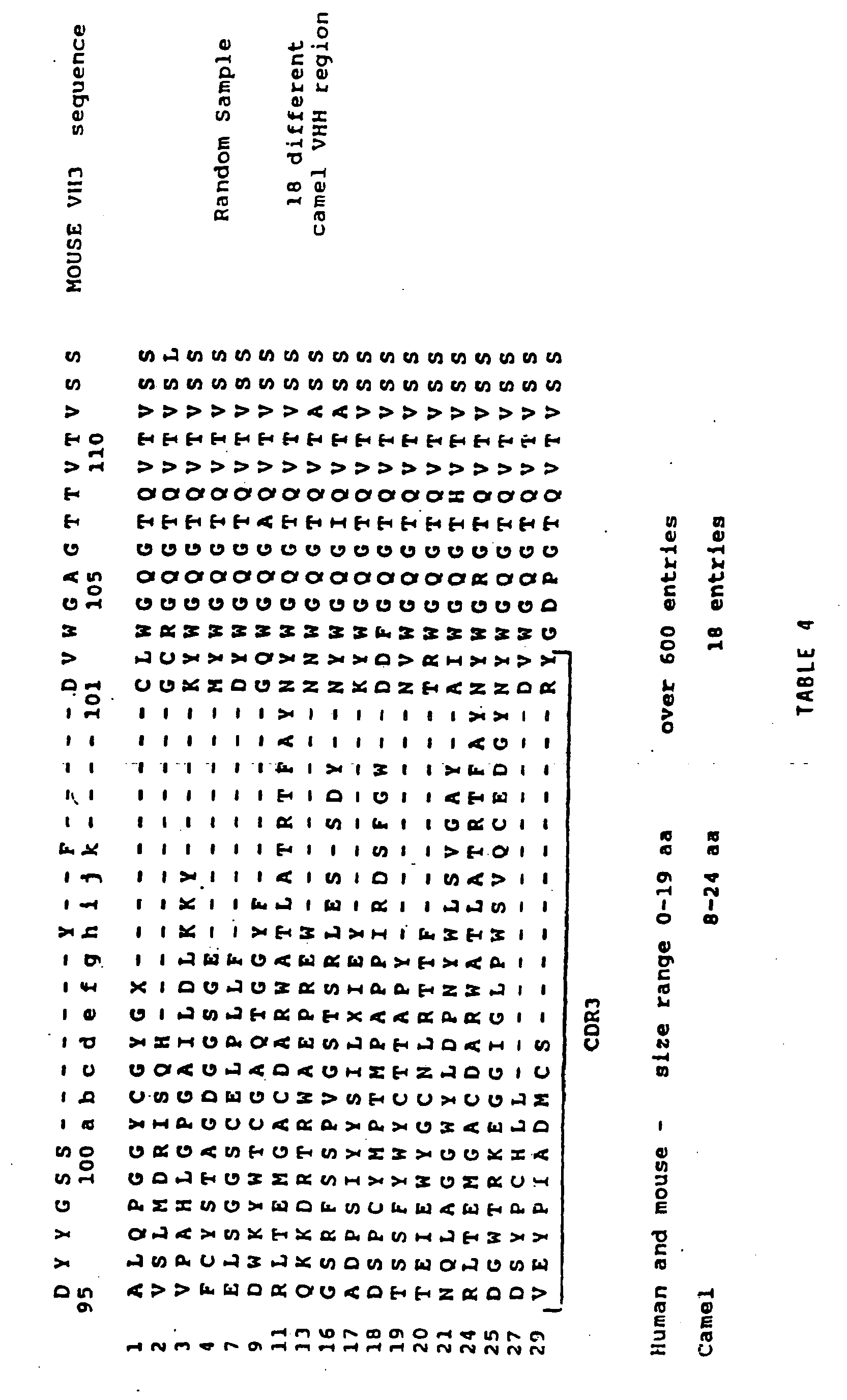


-
- 1.
- Ward, E.S., Gussow, D., Griffits, A.D., Jones, P.T. and Winter G. Nature 341, 544-546 (1989).
- 2.
- Ungar-Waron H., Eliase E., Gluckman A. and Trainin Z. Isr. J. Vet. Med., 43, 198-203 (1987).
- 3.
- Bajyana Songa E. and Hamers R., Ann. Soc. Belge Méd. trop., 68, 233-240 (1988).
- 4.
- Edelman G.M., Olins D.E., Gaily J.A. and Zinder N.D., Proc. Nat. Acad. Sc., 50, 753 (1963).
- 5.
- Franek F. and Nezlin R.S., Biokhimiya, 28, 193 (1963).
- 6.
- Roitt I.M., Brostof J. and Male D.K., Immunology, Gower Med. Pub. London. New-York, p.9.2. (1985).
- 7.
- Schiffer M., Girling R.L., Ely K.R. and Edmundson B., Biochemistry, 12, 4620-4631 (1973).
- 8.
- Fleischman J.B., Pain R.H. and Porter R.R., Arch. Biochem. Biophys, Suppl. 1, 174 (1962).
- 9.
- Roholt O., Onoue K. and Pressman D., PNAS 51, 173-178 (1964).
- 10.
- Seligmann M., Mihaesco E., Preud'homme J.L., Danon F. and Brouet J.C., Immunological Rev., 48, 145-167 (1979).
- 11.
- Henderschot L., Bole D., Kohler G. and Kearney J.F., The Journal of Cell Biology, 104, 761-767 (1987).
- 12.
- Henderschot L.M., The Journal of Cell Biology, 111, 829-837 (1990).
- 13.
- Hamers-Casterman, C., E. Wittouck, W. Van der Loo and R. Hamers, Journal of Immunogenetics, 6, 373-381 (1979).
- 14.
- Applied Biosystems - Ethanol Precipitation of Electro Eluted Electrodialysed Sample. Issue n° 27.
- 15.
- Maniatis, T. E.F. Fritsch and J. Sambrook, Molecular Cloning. A Laboratory Manual (1988).
- 16.
- Sastry et al., PNAS, 86, 5728, (1989).
- 17.
- Sanger, F., S. Nicklen and A.R. Coulson, Proc. Natl. Acad. Sci., U.S.A., 74, 5463-5467 (1977).
- 18.
- Kabat E.A., Tai Te Wu, M. Reid-Miller, H.M. Perry and K.S. Gottesman, U.S. Dpt of Health and Human Services, Public Health Service, National Institutes of Health (1987).
- 19.
- Valentine, R.C. and N.M. Geen, J.M.B., 27, 615-617 (1967).
Claims (36)
- Immunoglobulin characterized in that it is obtainable from Camelids and in that it comprises two heavy polypeptide chains sufficient for the formation of a complete antigen binding site, or several antigen binding sites wherein the heavy polypeptide chains are devoid of a so-called first domain in their constant region (CH1), this immunoglobulin being devoid of light polypeptide chains.
- Immunoglobulin according to claim 1, characterized in that it comprises two heavy polypeptide chains capable of recognizing and binding one or several antigens, and in that the amino acid sequence of its variable region contains in position 45 an amino acid which is chosen among charged amino-acids or is a cysteine residue.
- Immunoglobulin according to claim 1 or 2, characterized in that it comprises two heavy polypeptide chains sufficient for the formation of a complete antigen binding site or several antigen binding sites, this immunoglobulin being further devoid of light polypeptide chains and further characterized by the fact that it is the product of the expression in a prokaryotic or in a eukaryotic host cell, of a DNA or of a cDNA encoding the sequence of an Immunoglobulin devoid of light chains as obtainable from lymphocytes or other cells of Camelids.
- Immunoglobulin according to anyone of claims 1 to 3, characterized in that it comprises an antigen binding site or several antigen binding sites and especially in that each variable region of each heavy chain contains at least one antigen binding site.
- Immunoglobulin according to anyone of claims 1 to 4, characterized in that it is a type G immunoglobulin of class 2 (IgG2) or it is a type G immunoglobulin of class 3 (IgG3).
- Immunoglobulin according to anyone of claims 1 to 5 as obtainable by purification from the serum of Camelids, characterized in that:- it is not adsorbed by chromatography on Protein G Sepharose column,- it is adsorbed by chromatography on Protein A Sepharose column,- it has a molecular weight of around 100 Kd after elution with a pH 4.5 buffer (0.15 M NaCl, 0.58% acetic acid adjusted to pH 4.5 by NaOH),- it consists of heavy γ2 polypeptide chains of a molecular weight of around 45 Kd preferably 46 Kd after reduction.
- Immunoglobulin according to anyone of claims 1 to 5, as obtainable by purification from the serum of Camelids is characterized in that the immunoglobulin:- is adsorbed by chromatography on a Protein A Sepharose column,- has a molecular weight of around 100 kd after elution with a pH 3.5 buffer (0.15 M NaCl, 0.58% acetic acid),- is adsorbed by chromatography on a Protein G Sepharose column and eluted with pH 3.5 buffer (0.15 M NaCl, 0.58% acetic acid).- consists of heavy γ3 polypeptide chains of a molecular weight of around 45 Kd in particular between 43 and 47 kd after reduction.
- Immunoglobulin according to anyone of claims 1 to 7, characterized in that- it comprises 4 frameworks in its variable region, which frameworks comprise an amino-acid sequence selected from the following group of sequences:for the framework 1 domain
G G S V Q T G G S L R L S C E I S G L T F D G G S V Q T G G S L R L S C A V S G F S F S G G S E Q G G G S L R L S C A I S G Y T Y G G G S V Q P G G S L T L S C T V S G A T Y S G G S V Q A G G S L R L S C T G S G F P Y S G G S V Q A G G S L R L S C V A G F G T S G G S V Q A G G S L R L S C V S F S P S S for the framework 4 domainW G Q G T Q V T V S S W G Q G T L V T V S S W G Q G A Q V T V S S W G Q G T Q V T A S S R G Q G T Q V T V S L for the CDR3 domainand/or,
 - in that its constant region comprises CH2 and CH3 domains comprising an amino-acid sequence selected from the following group of sequences:for the CH2 domain:APELLGGPTVFIFPPKPKDVLSITLTPAPELPGGPSVFVFPTKPKDVLSISGRPAPELPGGPSVFVFPPKPKDVLSISGRPAPELLGGPSVFIFPPKPKDVLSISGRPfor the CH3 domain:and/or,GQTREPQVYTLAGQTREPQVYTLAPXRLELGQPREPQVYTLPPSRDELGQPREPQVYTLPPSREEMGQPREPQVYTLPPSQEEM- in that its hinge region comprises from 0 to 50 amino-acids, especially in that its hinge region comprises an amino-acid sequence selected from the following sequences:GTNEVCKCPKCPor,EPKIPQPQPKPQPQPQPQPKPQPKPEPECTCPKCP
 - immunoglobulin according to anyone of claims 1 to 8, characterized in that it is encoded by a sequence selected among those represented on figure 7.
- Fragment which is a heavy polypeptide chain of an immunoglobulin according to claim 1 or a fragment which is the variable region of a heavy chain of an immunoglobulin according to claim 1, both of which fragments contain an amino acid residue at position 45 of said heavy chain which is a charged amino acid or a cysteine residue, said fragment forming a determined antigen binding site.
- Fragment of an immunoglobulin according to anyone of claims 1 to 9, characterized in that it is selected from the following group:- fragments obtained by enzymatic digestion of the immunoglobulins of the invention, which are FVHHh fragment (containing the antigen binding sites of the heavy chains) or its dimer F(VHHh)2,- homologous fragments obtained with other proteolytic enzymes.
- Immunoglobulin according to anyone of claims 1 to 9, characterized in that all or a part of its constant region is replaced by all or part of the constant region of a human antibody.
- Immunoglobulin according to any one of claims 1 to 9, obtainable in prokaryotic cells, especially in E.coli cells by a process comprising the steps of:a) cloning in a Bluecript vector of a DNA or cDNA sequence coding for the VH domain of an immunoglobulin devoid of light chain obtainable for instance from lymphocytes of Camelids,b) recovering the cloned fragment after amplification using a 5' primer containing an Xho site and a 3' primer containing the Spe site having the following sequenceTC TTA ACT AGT GAG GAG ACG GTG ACC TG,c) cloning the recovered fragment in phase in the immuno PBS vector after digestion of the vector with Xho and Spe restriction enzymes,d) transforming host cells, especially E.coli by transfection with the recombinant immuno PBS vector of step c,e) recovering the expression product of the VHH coding sequence, for instance by using antibodies raised against the dromadary VHH domain.
- Immunoglobulin according to anyone of claims 1 to 9 obtainable in prokaryotic cells, by a process comprising the steps of:a) cloning in a Bluecript vector of a DNA or cDNA sequence coding for the VH domain of an immunoglobulin devoid of light chain obtainable for instance from lymphocytes of Camelids,b) recovering the cloned fragment after amplification using a 5' primer containing an Xho site having a sequence chosen among the followingAG GTC CAG CTG CTC GAG TCT GGAG CTC CAG CTG CTC GAG TCT GGAG GTC CAG CTT CTC GAG TCT Gand a 3 primer containing a Kpnl site having the following sequenceCGC CAT CAA GGT AAC AGT TGAandc) cloning the recovered fragment in phase in the immuno PBS vector after digestion of the vector with Xho and Kpn restriction enzymes,d) transforming host cells, especially E.coli by transfection with the recombinant immuno PBS vector of step c,e) recovering the expression product of the VHH coding sequence, for instance by using antibodies raised against the dromadary VHH domain.
- Hetero-specific immunoglobulins according to anyone of claims 1 to 9, obtainable by a process comprising the steps of:- obtaining a first DNA or cDNA sequence coding for a VHH domain or part thereof having a determined specificity against a given antigen and comprised between Xho and Spe sites,- obtaining a second DNA or cDNA sequence coding for a VHH domain or part thereof, having a determined specificity different from the specificity of the first DNA or cDNA sequence and comprised between the Spe and EcoRl sites,- digesting an immuno PBS vector with EcoRl and XhoI restriction enzymes,- ligating the obtained DNA or cDNA sequences coding for VHH domains, so that the DNA or cDNA sequences are serially cloned in the vector,- transforming a host cell, especially E.coli cell by transfection, and recovering the obtained immunoglobulins.
- Immunoglobulin according to any one of claims 1 to 9 or 12 to 13, obtainable by a process comprising the steps of:- obtaining a DNA or cDNA sequence coding for a VHH domain or part thereof, having a determined specific antigen binding site,- amplifying the obtained DNA or cDNA, using a 5' primer containing an initiation codon and a HindIII site, and a 3' primer containing a termination codon having a XhoI site,- recombining the amplified DNA or cDNA into a plasmid,- transfecting permissive cells especially NB-E cells with the recombinant plasmid,- controlling the expression, for instance by an ELISA assay with antibodies directed against a region of a VHH domain and recovering the obtained products.
- Immunoglobulins according to claim 16, obtainable by a process comprising the further cloning of a second DNA or cDNA sequence having another determined antigen binding site, into the plasmid.
- immunoglobulin according to any one of claims 13 to 17, characterized in that it is obtainable by a process wherein the transformed recombinant cell is a yeast especially S.cerevisiae.
- Immunoglobulin according to any one of claims 13 to 17, characterized in that it is obtainable by a process wherein the vector is a vector appropriate for expression in plant cells, and the transformed recombinant cells are plant cells.
- Immunoglobulin or fragment according to any one of claims 16 to 17, characterized in that it has a catalytic activity, especially in that it is directed against an antigen mimicking an activated state of a given substrate, these immunoglobulins having for instance been modified at the level of their catalytic site by random or directed mutagenesis.
- Nucleotide sequence, characterized in that it codes for all or part of an immunoglobulin according to anyone of claims 1 to 20, which immunoglobulins comprise a peptide sequence selected from the following:VTVSSGTNEVCKCPKCPAPELPGGPSWFVVFP,VTVSSEPKIPQPQPKPQPQPQPQPKPQPKPEPECTCPKCPAPELLGGPSVFIFPGTNEVCKCPKCPAPELPGGPSVFVFPEPKIPQPQPKPQPQPQPQPKPQPKPEPECTCPKCPAPELLGGPSVFIFPAPELLGGPTVFIFPPKPKDVLSITLTPAPELPGGPSVFVFPTKPKDVLSISGRPAPELPGGPSVFVFPPKPKDVLSISGRPAPELLGGPSVFIFPPKPKDVLSISGRPGQTREPQVYTLAGQTREPQVYTLAPXRLELGQPREPQVYTLPPSRDELGQPREPQVYTLPPSREEMGQPREPQVYTLPPSQEEM
G G S V Q T G G S L R L S C E I S G L T F D G G S V Q T G G S L R L S C A V S G F S F S G G S E Q G G G S L R L S C A I S G Y T Y G G G S V Q P G G S L T L S C T V S G A T Y S G G S V Q A G G S L R L S C T G S G F P Y S G G S V Q A G G S L R L S C V A G F G T S G G S V Q A G G S L R L S C V S F S P S S W G Q G T Q V T V S S W G Q G A Q V T V S S W G Q G T Q V T A S S R G Q G T Q V T V S L 
- Nucleotide sequence characterized in that it codes for an immunoglobulin according to anyone of claims 1 to 20, in that it comprises a sequence selected from those represented on figure 7.
- Process for the preparation of a monoclonal antibody according to anyone of claims 1 to 20, directed against a determined antigen, the antigen binding site of the antibody consisting of heavy polypeptide chains and which antibody is further devoid of light polypeptide chains, which process comprises:- immortalizing lymphocytes, obtained for example from the peripheral blood of Camelids previously immunized with a determined antigen, with an immortal cell and preferably with myeloma cells, in order to form a hybridoma,- culturing the immortalized cells formed and recovering the cells producing the antibodies having the desired specificity.
- Process for the preparation of antibodies directed against determined antigens, comprising the steps of:- cloning into vectors, especially into phages and more particularly filamentous bacteriophages, DNA or cDNA sequence obtained from lymphocytes of Camelids previously immunized with determined antigens, capable of producing an immunoglobulin according to anyone of claims 1 to 20,- transforming prokariotic cells with the above vectors in conditions allowing the production of the antibodies,- selecting the appropriate antibody by subjecting the transforming cells to antigen-affinity selection,- recovering the antibodies having the desired specificity.
- Process according to claim 24, wherein the cloning vector is a plasmid or a eukaryotic virus and the transformed cell is a eukaryotic cell, especially a yeast cell, mammalian cell, plant cell or protozoair cell.
- Process according to claim 24, wherein the cloning vector is a plasmid capable of expressing the immunoglobulin in the bacterial membrane.
- Process according to claim 24, wherein the cloning vector is a plasmid capable of expressing the immunoglobulin as a secreted protein.
- Immunoglobulin according to anyone of claims 1 to 20, characterized in that it is directed against an antigen such as one of a bacteria, a virus, a parasite, or against a protein, hapten, carbohydrate or nucleic acid.
- Immunoglobulin according to anyone of claims 1 to 20 characterized in that it is directed against an immunoglobulin idiotype.
- immunoglobulin according to anyone of claims 1 to 20 characterized in that it is directed against a cellular receptor or membrane protein.
- Immunoglobulin according to anyone of claims 1 to 20, characterized in that it has a catalytic activity.
- Immunoglobulin according to anyone of claims 1 to 20, or a fragment according to claim 10, characterized in that it is conjugated with a toxin.
- Immunoglobulin according to anyone of claims 1 to 20, characterized in that it is a heterospecific antibody.
- Recombinant vector characterized in that it comprises a nucleotide sequence according to claim 21 or claim 22, and in that it is a plasmid, a phage especially a bacteriophage, a virus, a YAC, a cosmid.
- Recombinant cell or non-human organism characterized in that it is modified by a vector according to claim 34.
- A cDNA library composed of nucleotide sequences coding for a heavy-chain immunoglobulin according to anyone of claims 1 to 20, such as obtained by performing the following steps:a) treating a sample containing lymphoïd cells, especially periferal lymphocytes, spleen cells, lymph nodes or another lymphoïd tissue from a healthy animal, especially selected among the Camelids, in order to separated the B-lymphocytes,b) separating polyadenylated RNA from the other nucleic acids and components of the cells,c) reacting the obtained RNA with a reverse transcriptase in order to obtain the corresponding cDNA,d) contacting the obtained cDNA with 5' primers corresponding to mouse VH domain of four-chain immunoglobulins, which primer contains a determined restriction site, for example an XhoI site and with 3' primers corresponding to the N-terminal part of a CH2 domain,e) amplifying the DNA,f) cloning the amplified sequence in a vector, especially in a bluescript vector,g) recovering the clones hybridizing with a probecorresponding to the sequence coding for a constant domain from an isolated heavy-chain immunoglobulin.
Priority Applications (8)
| Application Number | Priority Date | Filing Date | Title |
|---|---|---|---|
| EP93919098A EP0656946B2 (en) | 1992-08-21 | 1993-08-18 | Immunoglobulins devoid of light chains |
| EP05008358A EP1589107B1 (en) | 1992-08-21 | 1993-08-18 | Immunoglobulins devoid of light chains |
| DE69330523T DE69330523T4 (en) | 1992-08-21 | 1993-08-18 | IMMUNOGLOBULINE WITHOUT LIGHT CHAINS |
| EP05020889A EP1621554B2 (en) | 1992-08-21 | 1993-08-18 | Immunoglobulins devoid of light chains |
| EP04077639A EP1498427B1 (en) | 1992-08-21 | 1993-08-18 | Immunoglobulins devoid of light chains |
| EP09174252A EP2192131A1 (en) | 1992-08-21 | 1993-08-18 | Immunoglobulins devoid of light chains |
| EP00127968A EP1087013B1 (en) | 1992-08-21 | 1993-08-18 | Immunoglobulins devoid of light chains |
| GR20010401895T GR3037024T3 (en) | 1992-08-21 | 2001-10-25 | Immunoglobulins devoid of light chains. |
Applications Claiming Priority (6)
| Application Number | Priority Date | Filing Date | Title |
|---|---|---|---|
| EP92402326A EP0584421A1 (en) | 1992-08-21 | 1992-08-21 | Immunoglobulins devoid of light chains |
| EP92402326 | 1992-08-21 | ||
| EP93401310 | 1993-05-21 | ||
| EP93401310 | 1993-05-21 | ||
| EP93919098A EP0656946B2 (en) | 1992-08-21 | 1993-08-18 | Immunoglobulins devoid of light chains |
| PCT/EP1993/002214 WO1994004678A1 (en) | 1992-08-21 | 1993-08-18 | Immunoglobulins devoid of light chains |
Related Child Applications (7)
| Application Number | Title | Priority Date | Filing Date |
|---|---|---|---|
| EP05020889A Division EP1621554B2 (en) | 1992-08-21 | 1993-08-18 | Immunoglobulins devoid of light chains |
| EP00127968A Division EP1087013B1 (en) | 1992-08-21 | 1993-08-18 | Immunoglobulins devoid of light chains |
| EP00127968.6 Division-Into | 2000-12-20 | ||
| EP04077639.5 Division-Into | 2004-09-23 | ||
| EP05008358.3 Division-Into | 2005-04-18 | ||
| EP05020889.1 Division-Into | 2005-09-26 | ||
| EP09174252.8 Division-Into | 2009-10-27 |
Publications (3)
| Publication Number | Publication Date |
|---|---|
| EP0656946A1 EP0656946A1 (en) | 1995-06-14 |
| EP0656946B1 EP0656946B1 (en) | 2001-08-01 |
| EP0656946B2 true EP0656946B2 (en) | 2010-03-31 |
Family
ID=26132410
Family Applications (6)
| Application Number | Title | Priority Date | Filing Date |
|---|---|---|---|
| EP04077639A Expired - Lifetime EP1498427B1 (en) | 1992-08-21 | 1993-08-18 | Immunoglobulins devoid of light chains |
| EP93919098A Expired - Lifetime EP0656946B2 (en) | 1992-08-21 | 1993-08-18 | Immunoglobulins devoid of light chains |
| EP09174252A Pending EP2192131A1 (en) | 1992-08-21 | 1993-08-18 | Immunoglobulins devoid of light chains |
| EP00127968A Expired - Lifetime EP1087013B1 (en) | 1992-08-21 | 1993-08-18 | Immunoglobulins devoid of light chains |
| EP05020889A Expired - Lifetime EP1621554B2 (en) | 1992-08-21 | 1993-08-18 | Immunoglobulins devoid of light chains |
| EP05008358A Expired - Lifetime EP1589107B1 (en) | 1992-08-21 | 1993-08-18 | Immunoglobulins devoid of light chains |
Family Applications Before (1)
| Application Number | Title | Priority Date | Filing Date |
|---|---|---|---|
| EP04077639A Expired - Lifetime EP1498427B1 (en) | 1992-08-21 | 1993-08-18 | Immunoglobulins devoid of light chains |
Family Applications After (4)
| Application Number | Title | Priority Date | Filing Date |
|---|---|---|---|
| EP09174252A Pending EP2192131A1 (en) | 1992-08-21 | 1993-08-18 | Immunoglobulins devoid of light chains |
| EP00127968A Expired - Lifetime EP1087013B1 (en) | 1992-08-21 | 1993-08-18 | Immunoglobulins devoid of light chains |
| EP05020889A Expired - Lifetime EP1621554B2 (en) | 1992-08-21 | 1993-08-18 | Immunoglobulins devoid of light chains |
| EP05008358A Expired - Lifetime EP1589107B1 (en) | 1992-08-21 | 1993-08-18 | Immunoglobulins devoid of light chains |
Country Status (13)
| Country | Link |
|---|---|
| US (5) | US6015695A (en) |
| EP (6) | EP1498427B1 (en) |
| JP (4) | JP3444885B2 (en) |
| AT (5) | ATE452207T1 (en) |
| AU (1) | AU701578B2 (en) |
| CA (1) | CA2142331C (en) |
| DE (6) | DE69334305D1 (en) |
| DK (5) | DK1589107T3 (en) |
| ES (5) | ES2325541T3 (en) |
| FI (3) | FI115462B (en) |
| GR (1) | GR3037024T3 (en) |
| PT (5) | PT1621554E (en) |
| WO (1) | WO1994004678A1 (en) |
Cited By (1)
| Publication number | Priority date | Publication date | Assignee | Title |
|---|---|---|---|---|
| US10023631B2 (en) | 2011-11-11 | 2018-07-17 | Ucb Biopharma Sprl | Albumin binding antibodies and binding fragments thereof |
Families Citing this family (1373)
| Publication number | Priority date | Publication date | Assignee | Title |
|---|---|---|---|---|
| US6765087B1 (en) * | 1992-08-21 | 2004-07-20 | Vrije Universiteit Brussel | Immunoglobulins devoid of light chains |
| US6838254B1 (en) | 1993-04-29 | 2005-01-04 | Conopco, Inc. | Production of antibodies or (functionalized) fragments thereof derived from heavy chain immunoglobulins of camelidae |
| EP0739981A1 (en) * | 1995-04-25 | 1996-10-30 | Vrije Universiteit Brussel | Variable fragments of immunoglobulins - use for therapeutic or veterinary purposes |
| JP2000515002A (en) * | 1996-06-27 | 2000-11-14 | フラームス・インテルウニフェルジテール・インスティテュート・フォール・ビオテヒノロジー・ヴェーゼットウェー | Recognition molecules that specifically interact with the active site or cleft of the target molecule |
| US20040248201A1 (en) * | 1996-06-27 | 2004-12-09 | Serge Muyldermans | Recognition molecules interacting specifically with the active site or cleft of a target molecule |
| DE69734205T2 (en) * | 1996-10-10 | 2006-07-06 | Neose Technologies, Inc. | CLEANING OF CARBOHYDRATES BY MEANS OF REVERSE OSMOSIS AND NANOFILTRATION |
| US20030228310A1 (en) * | 1996-12-23 | 2003-12-11 | Advanced Biotherapy, Inc. | Treatment of skin diseases |
| WO1999037681A2 (en) * | 1998-01-26 | 1999-07-29 | Unilever Plc | Method for producing antibody fragments |
| EP1073464B1 (en) * | 1998-04-28 | 2004-10-06 | Smithkline Beecham Corporation | Monoclonal antibodies with reduced immunogenicity |
| CN1252264C (en) | 1999-04-22 | 2006-04-19 | 荷兰联合利华有限公司 | Inhibition of viral infection using monovalent antigen-binding proteins |
| US6924359B1 (en) * | 1999-07-01 | 2005-08-02 | Yale University | Neovascular-targeted immunoconjugates |
| WO2001007555A1 (en) | 1999-07-27 | 2001-02-01 | Unilever N.V. | Bleaching detergent compositions |
| EP1212100B1 (en) * | 1999-09-16 | 2005-04-06 | Unilever Plc | Delivery system for antidandruff agent |
| US6479280B1 (en) | 1999-09-24 | 2002-11-12 | Vlaams Interuniversitair Institutuut Voor Biotechnologie Vzw | Recombinant phages capable of entering host cells via specific interaction with an artificial receptor |
| EP1088892A1 (en) * | 1999-09-24 | 2001-04-04 | Vlaams Interuniversitair Instituut voor Biotechnologie vzw. | Recombinant phages capable of entering host cells via specific interaction with an artificial receptor |
| EP1242460B1 (en) | 1999-11-29 | 2006-10-18 | Unilever Plc | Immobilisation of proteins using a polypeptide segment |
| EP1118669A3 (en) * | 1999-12-17 | 2001-08-29 | Unilever Plc | Production of camelid antibodies in plants |
| EP1134231B1 (en) | 2000-03-14 | 2009-04-15 | Unilever N.V. | Antibody heavy chain variable domains against human dietary lipases, and their uses |
| US6696620B2 (en) * | 2000-05-02 | 2004-02-24 | Epicyte Pharmaceutical, Inc. | Immunoglobulin binding protein arrays in eukaryotic cells |
| US20030190598A1 (en) | 2000-05-26 | 2003-10-09 | Jasmid Tanha | Single-domain antigen-binding antibody fragments derived from llama antibodies |
| US7943129B2 (en) * | 2000-05-26 | 2011-05-17 | National Research Council Of Canada | Single-domain brain-targeting antibody fragments derived from llama antibodies |
| US20050196755A1 (en) * | 2000-11-17 | 2005-09-08 | Maurice Zauderer | In vitro methods of producing and identifying immunoglobulin molecules in eukaryotic cells |
| CA2429544C (en) * | 2000-11-17 | 2010-10-19 | University Of Rochester | In vitro methods of producing and identifying immunoglobulin molecules in eukaryotic cells |
| US20060064782A1 (en) * | 2000-12-18 | 2006-03-23 | Conopco, Inc. | Production of antibodies |
| AU2002235761A1 (en) | 2000-12-19 | 2002-07-01 | Unilever Plc | Stabilization of antibodies or fragments thereof |
| ES2376454T3 (en) * | 2000-12-22 | 2012-03-14 | Grad, Carole, Legal Representative Of Howard, Kaplan | EXPRESSION BOOKS IN FAGO OF VH HUMAN FRAGMENTS. |
| AU2002305914A1 (en) | 2001-01-12 | 2002-10-21 | Chiron Corporation | Nucleic acid mucosal immunization |
| US7754208B2 (en) | 2001-01-17 | 2010-07-13 | Trubion Pharmaceuticals, Inc. | Binding domain-immunoglobulin fusion proteins |
| US7829084B2 (en) | 2001-01-17 | 2010-11-09 | Trubion Pharmaceuticals, Inc. | Binding constructs and methods for use thereof |
| US20030133939A1 (en) | 2001-01-17 | 2003-07-17 | Genecraft, Inc. | Binding domain-immunoglobulin fusion proteins |
| US20050069538A1 (en) * | 2003-09-18 | 2005-03-31 | Gregorio Aversa | Therapeutic binding molecules |
| US20040058445A1 (en) * | 2001-04-26 | 2004-03-25 | Ledbetter Jeffrey Alan | Activation of tumor-reactive lymphocytes via antibodies or genes recognizing CD3 or 4-1BB |
| US20050152902A1 (en) * | 2001-06-05 | 2005-07-14 | Advanced Biotherapy, Inc. | Treatment of diabetic retinopathy |
| US6861056B2 (en) * | 2001-06-05 | 2005-03-01 | Advanced Biotherapy, Inc. | Compositions and methods for treating hyperimmune response in the eye |
| US20040062768A1 (en) * | 2001-06-05 | 2004-04-01 | Advanced Biotherapy, Inc. | Compositions and methods for treating hyperimmune response in the eye |
| US20040086508A1 (en) * | 2001-06-05 | 2004-05-06 | Advanced Biotherapy, Inc. | Treatment of organ transplant rejection |
| JP2005289809A (en) | 2001-10-24 | 2005-10-20 | Vlaams Interuniversitair Inst Voor Biotechnologie Vzw (Vib Vzw) | Mutant heavy chain antibody |
| JP4323317B2 (en) * | 2001-12-21 | 2009-09-02 | フラームス・インテルウニフェルシタイル・インステイチュート・フォール・ビオテヒノロヒー・ヴェーゼットウェー(ヴェーイーベー・ヴェーゼットウェー) | Methods for cloning variable region sequences |
| WO2003055527A2 (en) * | 2002-01-03 | 2003-07-10 | Vlaams Interuniversitair Instituut Voor Biotechnologie Vzw | Immunoconjugates useful for treatment of tumours |
| EP1474444A1 (en) | 2002-01-10 | 2004-11-10 | Vlaams Interuniversitair Instituut voor Biotechnologie vzw. | A novel splice variant of myd88 and uses thereof |
| EP1516054B1 (en) | 2002-02-10 | 2009-12-02 | Topotarget Switzerland SA | Fusion constructs containing active sections of tnf ligands |
| US20030219436A1 (en) * | 2002-03-15 | 2003-11-27 | Ledbetter Jeffrey A. | Compositions and methods to regulate an immune response using CD83 gene expressed in tumors and using soluble CD83-Ig fusion protein |
| US9321832B2 (en) | 2002-06-28 | 2016-04-26 | Domantis Limited | Ligand |
| EP1600459A3 (en) * | 2002-06-28 | 2005-12-07 | Domantis Limited | Ligand |
| US7572442B2 (en) | 2002-07-15 | 2009-08-11 | Board Of Regents, The University Of Texas System | Selected antibody compositions for binding to aminophospholipids |
| AU2003251238A1 (en) | 2002-08-07 | 2004-02-25 | Umc Utrecht Holding B.V. | Modulation of platelet adhesion based on the surface exposed beta-switch loop of platelet glycoprotein ib-alpha |
| WO2004016750A2 (en) | 2002-08-14 | 2004-02-26 | Macrogenics, Inc. | FcϜRIIB-SPECIFIC ANTIBODIES AND METHODS OF USE THEREOF |
| GB0219720D0 (en) * | 2002-08-23 | 2002-10-02 | Univ Aberdeen | Polypeptide |
| US20040052790A1 (en) * | 2002-09-18 | 2004-03-18 | Advanced Biotherapy, Inc. | Treatment of schizophrenia |
| EP2284192A3 (en) | 2002-11-08 | 2011-07-20 | Ablynx N.V. | Camelidae antibodies for sublingual administration |
| US20060034845A1 (en) | 2002-11-08 | 2006-02-16 | Karen Silence | Single domain antibodies directed against tumor necrosis factor alpha and uses therefor |
| US9320792B2 (en) | 2002-11-08 | 2016-04-26 | Ablynx N.V. | Pulmonary administration of immunoglobulin single variable domains and constructs thereof |
| JP2011256169A (en) * | 2002-11-08 | 2011-12-22 | Ablynx Nv | Method for administering therapeutic polypeptide and polypeptide therefor |
| EP1558647B1 (en) | 2002-11-08 | 2015-06-10 | Ablynx N.V. | Single domain antibodies directed against tumour necrosis factor-alpha and uses therefor |
| GB0230203D0 (en) * | 2002-12-27 | 2003-02-05 | Domantis Ltd | Fc fusion |
| EP1437764A1 (en) * | 2003-01-10 | 2004-07-14 | S.O.I. Tec Silicon on Insulator Technologies S.A. | A compliant substrate for a heteroepitaxy, a heteroepitaxial structure and a method for fabricating a compliant substrate |
| KR20110094361A (en) | 2003-04-11 | 2011-08-23 | 메디뮨 엘엘씨 | Recombinant IL-1 antibodies and uses thereof |
| SI1639011T1 (en) | 2003-06-30 | 2009-04-30 | Domantis Ltd | Pegylated single domain antibodies (dAb) |
| US7754209B2 (en) | 2003-07-26 | 2010-07-13 | Trubion Pharmaceuticals | Binding constructs and methods for use thereof |
| HUE029951T2 (en) | 2003-07-28 | 2017-04-28 | Genentech Inc | Reducing protein a leaching during protein a affinity chromatography |
| EP1668111A4 (en) | 2003-08-08 | 2008-07-02 | Genenews Inc | Osteoarthritis biomarkers and uses thereof |
| JP4767857B2 (en) * | 2003-09-30 | 2011-09-07 | ジヤンセン・フアーマシユーチカ・ナームローゼ・フエンノートシヤツプ | Benzimidazole compounds |
| CN1878568A (en) | 2003-11-05 | 2006-12-13 | 盘林京有限公司 | Enhanced B cell cytotoxicity of CDIM binding antibody |
| PT1687338E (en) | 2003-11-07 | 2011-01-20 | Ablynx Nv | Camelidae single domain antibodies vhh directed against epidermal growth factor receptor and uses thereof |
| AU2004299457B2 (en) * | 2003-12-12 | 2011-03-24 | Government Of The United States Of America, As Represented By The Secretary Department Of Health And Human Services | A human cytotoxic T-lymphocyte epitope and its agonist epitope from the non-variable number of tandem repeat sequence of MUC-1 |
| US7785903B2 (en) | 2004-04-09 | 2010-08-31 | Genentech, Inc. | Variable domain library and uses |
| WO2005105984A2 (en) * | 2004-04-12 | 2005-11-10 | The Trustees Of The University Of Pennsylvania | Culture conditions and growth factors affecting fate determination, self-renewal and expansion of mouse spermatogonial stem cells |
| CN1942203A (en) * | 2004-06-04 | 2007-04-04 | 金克克国际有限公司 | Screening method using antibody heavy chains |
| US20050276806A1 (en) * | 2004-06-15 | 2005-12-15 | Advanced Biotherapy, Inc. | Treatment of autism |
| US20050276807A1 (en) * | 2004-06-15 | 2005-12-15 | Advanced Biotherapy, Inc. | Treatment of acne |
| EP1978032A3 (en) | 2004-07-22 | 2009-02-18 | Erasmus University Medical Center Rotterdam | Binding molecules |
| GB2416768A (en) * | 2004-07-22 | 2006-02-08 | Univ Erasmus | Heavy chain immunoglobulin complexes |
| US20060177445A1 (en) * | 2004-08-16 | 2006-08-10 | Boris Skurkovich | Treatment of inflammatory skin diseases |
| US7563443B2 (en) * | 2004-09-17 | 2009-07-21 | Domantis Limited | Monovalent anti-CD40L antibody polypeptides and compositions thereof |
| EP1841452B8 (en) | 2004-10-08 | 2014-06-11 | Domantis Limited | Single domain antibodies against tnfr1 and methods of use therefor |
| WO2006044263A2 (en) * | 2004-10-12 | 2006-04-27 | Advanced Biotherapy, Inc. | Treatment of herpes |
| WO2006040153A2 (en) * | 2004-10-13 | 2006-04-20 | Ablynx N.V. | Single domain camelide anti -amyloid beta antibodies and polypeptides comprising the same for the treatment and diagnosis of degenarative neural diseases such as alzheimer's disease |
| WO2006047639A2 (en) | 2004-10-27 | 2006-05-04 | Medimmune, Inc. | Modulation of antibody specificity by tailoring the affinity to cognate antigens |
| CA2593328C (en) | 2005-01-14 | 2018-02-06 | Ablynx N.V. | Methods and assays for distinguishing between different forms of diseases and disorders characterized by thrombocytopenia and/or by spontaneous interaction between von willebrand factor (vwf) and platelets |
| CA2595682A1 (en) * | 2005-01-31 | 2006-08-03 | Ablynx N.V. | Method for generating variable domain sequences of heavy chain antibodies |
| CN103497993A (en) | 2005-02-07 | 2014-01-08 | 基因信息公司 | Mild osteoarthritis biomarkers and uses thereof |
| AU2006213686A1 (en) | 2005-02-09 | 2006-08-17 | Avi Bio Pharma, Inc. | Antisense composition and method for treating muscle atrophy |
| JP5032458B2 (en) * | 2005-03-11 | 2012-09-26 | シンジェンタ リミテッド | Pest control |
| JP5628476B2 (en) * | 2005-04-28 | 2014-11-19 | ベンタナ・メデイカル・システムズ・インコーポレーテツド | Antibody conjugate |
| CA2606018A1 (en) * | 2005-04-28 | 2006-11-02 | Ventana Medical Systems, Inc. | Nanoparticle conjugates |
| AU2006249144B2 (en) | 2005-05-18 | 2011-11-17 | Ablynx Nv | Improved NanobodiesTM against Tumor Necrosis Factor-alpha |
| MX2007014564A (en) | 2005-05-20 | 2008-02-07 | Ablynx Nv | VHH ANTIBODIES OF SINGLE DOMAIN AGAINST VON WILLEBRAND FACTOR. |
| DE102005023617A1 (en) | 2005-05-21 | 2006-11-23 | Aspre Ag | Method for mixing colors in a display |
| EP2295080A3 (en) | 2005-07-25 | 2011-06-22 | Emergent Product Development Seattle, LLC | B-cell reduction using CD37-specific and CD20-specific binding molecules |
| LT1931710T (en) | 2005-08-31 | 2017-03-27 | Merck Sharp & Dohme Corp. | Engineered anti-il-23 antibodies |
| SI1933869T1 (en) | 2005-09-01 | 2010-02-26 | Schering Corp | Use of il-23 and il-17 antagonists to treat autoimmune ocular inflammatory disease |
| CA2623841C (en) * | 2005-09-27 | 2019-03-12 | National Research Council Of Canada | Methods of identifying agents capable of tmem30a mediated transmigration across the blood brain barrier (bbb) |
| EP1941275B1 (en) | 2005-09-29 | 2013-07-24 | Medimmune, Inc. | Method of identifying membrane lg specific antibodies and use thereof for targeting immunoglobulin-producing precursor cells |
| US7526409B2 (en) * | 2005-10-07 | 2009-04-28 | Oracle International Corporation | Automatic performance statistical comparison between two periods |
| GB0521139D0 (en) | 2005-10-18 | 2005-11-23 | Univ Sheffield | Therapeutic agent |
| JP5237817B2 (en) | 2005-10-21 | 2013-07-17 | ジーンニュース インコーポレーティッド | Method and apparatus for correlating biomarker product levels with disease |
| GB0522460D0 (en) * | 2005-11-03 | 2005-12-14 | Prendergast Patrick T | Composition and method for the treatment of avian influenza |
| ES2548518T3 (en) | 2005-11-23 | 2015-10-19 | Ventana Medical Systems, Inc. | Molecular conjugate |
| US10183986B2 (en) | 2005-12-15 | 2019-01-22 | Industrial Technology Research Institute | Trimeric collagen scaffold antibodies |
| WO2007082899A1 (en) | 2006-01-17 | 2007-07-26 | Vib Vzw | Inhibitors of prolyl-hydroxylase 1 for the treatment of skeletal muscle degeneration |
| WO2007085814A1 (en) * | 2006-01-24 | 2007-08-02 | Domantis Limited | Fusion proteins that contain natural junctions |
| TWI417301B (en) | 2006-02-21 | 2013-12-01 | Wyeth Corp | Antibodies against human il-22 and uses therefor |
| TW200744634A (en) | 2006-02-21 | 2007-12-16 | Wyeth Corp | Methods of using antibodies against human IL-22 |
| US7504106B2 (en) * | 2006-03-14 | 2009-03-17 | Boris Skurkovich | Method and composition for treatment of renal failure with antibodies and their equivalents as partial or complete replacement for dialysis |
| EP1999147A1 (en) * | 2006-03-27 | 2008-12-10 | Ablynx N.V. | Medical delivery device for therapeutic proteins based on single domain antibodies |
| CA2649859A1 (en) * | 2006-04-21 | 2008-05-08 | Wyeth | Differential expression profiling analysis of cell culture phenotypes and the uses thereof |
| RU2008147398A (en) | 2006-05-02 | 2010-06-10 | Актогеникс Н.В. (Be) | DELIVERY OF PEPTIDES ASSOCIATED WITH OBESITY THROUGH THE INTESTINES BY MEANS OF MICRO-ORGANISMS |
| CN105837690A (en) | 2006-06-12 | 2016-08-10 | 新兴产品开发西雅图有限公司 | Single-chain multivalent binding proteins with effector function |
| MX2008015771A (en) | 2006-06-14 | 2009-01-27 | Macrogenics Inc | Methods for the treatment of autoimmune disorders using monoclonal antibodies with reduced toxicity. |
| AU2007281876B2 (en) | 2006-06-26 | 2013-09-05 | Macrogenics, Inc. | FcgammaRIIB-specific antibodies and methods of use thereof |
| KR101495549B1 (en) | 2006-07-13 | 2015-02-25 | 와이어쓰 엘엘씨 | Production of glycoproteins |
| EA021255B1 (en) | 2006-08-28 | 2015-05-29 | Киова Хакко Кирин Ко., Лимитед | Antagonistic human light-specific human monoclonal antibodies |
| SI3028716T1 (en) | 2006-10-10 | 2021-01-29 | Regenesance B.V. | Complement inhibition for improved nerve regeneration |
| GB0621513D0 (en) | 2006-10-30 | 2006-12-06 | Domantis Ltd | Novel polypeptides and uses thereof |
| US7695929B2 (en) | 2006-11-01 | 2010-04-13 | Ventana Medical Systems, Inc. | Haptens, hapten conjugates, compositions thereof and method for their preparation and use |
| US8173423B2 (en) | 2006-11-07 | 2012-05-08 | Vib Vzw | Diagnosis and treatment of T-cell acute lymphoblastic leukemia |
| JP5537946B2 (en) | 2006-11-22 | 2014-07-02 | ブリストル−マイヤーズ スクイブ カンパニー | Targeted therapeutic agents based on modified proteins for tyrosine kinase receptors including IGF-IR |
| WO2008068280A1 (en) * | 2006-12-05 | 2008-06-12 | Ablynx N.V. | Peptides capable of binding to serum proteins |
| AR064333A1 (en) | 2006-12-14 | 2009-04-01 | Schering Corp | ANTI-TSLP DESIGN ANTIBODY |
| CA2673331A1 (en) | 2006-12-19 | 2008-06-26 | Ablynx N.V. | Amino acid sequences directed against gpcrs and polypeptides comprising the same for the treatment of gpcr-related diseases and disorders |
| AU2007336243B2 (en) | 2006-12-19 | 2012-07-26 | Ablynx N.V. | Amino acid sequences directed against a metalloproteinase from the ADAM family and polypeptides comprising the same for the treatment of ADAM-related diseases and disorders |
| US9023352B2 (en) | 2007-02-20 | 2015-05-05 | Tufts University | Methods, compositions and kits for treating a subject using a recombinant heteromultimeric neutralizing binding protein |
| CN101663319A (en) * | 2007-02-21 | 2010-03-03 | 埃博灵克斯股份有限公司 | Be used for the treatment of at the aminoacid sequence of vascular endothelial growth factor and the polypeptide that comprises it and be characterised in that excessive and/or pathologic vessels takes place or the illness and the disease of neovascularization |
| DK2426144T3 (en) | 2007-02-23 | 2019-01-07 | Merck Sharp & Dohme | Manipulated Anti-IL-23P19 Antibodies |
| SG178804A1 (en) | 2007-02-23 | 2012-03-29 | Schering Corp | Engineered anti-il-23p19 antibodies |
| NZ579251A (en) | 2007-02-28 | 2012-06-29 | Schering Corp | Engineered anti-il-23r antibodies |
| CA2679400A1 (en) | 2007-02-28 | 2008-09-04 | Schering Corporation | Combination therapy for treatment of immune disorders |
| RU2009132986A (en) | 2007-03-02 | 2011-04-10 | Уайт (Us) | APPLICATION OF COPPER AND GLUTAMATE IN CULTURE OF CELLS FOR THE PRODUCTION OF POLYPEPTIDES |
| SI2308514T1 (en) | 2007-03-23 | 2013-09-30 | To-Bbb Holding B.V. | Conjugates for targeted drug delivery across the blood-brain barrier |
| TW200902708A (en) | 2007-04-23 | 2009-01-16 | Wyeth Corp | Methods of protein production using anti-senescence compounds |
| EP2164868B1 (en) | 2007-05-04 | 2015-03-25 | Technophage, Investigação E Desenvolvimento Em Biotecnologia, SA | Engineered rabbit antibody variable domains and uses thereof |
| DK3072525T3 (en) | 2007-05-14 | 2018-04-30 | Astrazeneca Ab | PROCEDURES FOR REDUCING BASOFILE CELL LEVELS |
| ES2731432T3 (en) | 2007-05-23 | 2019-11-15 | Ventana Med Syst Inc | Polymeric transporters for immunohistochemistry and in situ hybridization |
| CA2688834C (en) | 2007-06-01 | 2020-01-07 | Ronald Buelow | Compositions and methods for inhibiting endogenous immunoglobulin genes and producing transgenic human idiotype antibodies |
| WO2008157299A2 (en) * | 2007-06-15 | 2008-12-24 | Wyeth | Differential expression profiling analysis of cell culture phenotypes and uses thereof |
| AU2008270274B2 (en) | 2007-07-03 | 2012-06-28 | Ablynx N.V. | Providing improved immunoglobulin sequences by mutating CDR and/or FR positions |
| WO2009011572A1 (en) | 2007-07-13 | 2009-01-22 | Bac Ip B.V. | Single-domain antigen-binding proteins that bind mammalian igg |
| US20090017050A1 (en) | 2007-07-13 | 2009-01-15 | Ventana Medical Systems, Inc. | Egfr antigen-binding molecules and uses thereof |
| EP2188371B1 (en) | 2007-08-09 | 2017-12-20 | Wyeth LLC | Use of perfusion to enhance production of fed-batch cell culture in bioreactors |
| US8629246B2 (en) | 2007-09-26 | 2014-01-14 | Ucb Pharma S.A. | Dual specificity antibody fusions |
| TWI489993B (en) | 2007-10-12 | 2015-07-01 | Novartis Ag | Compositions and methods of use for antibodies against sclerostin |
| US8216571B2 (en) | 2007-10-22 | 2012-07-10 | Schering Corporation | Fully human anti-VEGF antibodies and methods of using |
| JP5514399B2 (en) * | 2007-11-02 | 2014-06-04 | 国立大学法人 岡山大学 | Method for producing inorganic sulfur compound hydrolase |
| CN101951954A (en) | 2007-11-02 | 2011-01-19 | 诺瓦提斯公司 | Molecules and methods for modulating low-density-lipoprotein receptor-related protein 6 (LRP6) |
| EP2217716A4 (en) | 2007-11-09 | 2011-02-09 | Salk Inst For Biological Studi | USE OF TAM RECEPTOR INHIBITORS AS ANTIMICROBIALS |
| WO2009068631A1 (en) | 2007-11-27 | 2009-06-04 | Ablynx N.V. | Method for obtaining polypeptide constructs comprising two or more single domain antibodies |
| WO2009070642A1 (en) | 2007-11-28 | 2009-06-04 | Medimmune, Llc | Protein formulation |
| WO2009086215A2 (en) * | 2007-12-21 | 2009-07-09 | Wyeth | Pathway analysis of cell culture phenotypes and uses thereof |
| JP5889533B2 (en) | 2008-01-31 | 2016-03-22 | ザ ガバメント オブ ザ ユナイテッド ステイツ オブ アメリカ, アズ リプレゼンテッド バイ ザ セクレタリー, デパートメント オブ ヘルス アンド ヒューマン サービシーズ | Modified antibody constant domain molecule |
| CA2717015A1 (en) | 2008-03-05 | 2009-09-11 | Ablynx Nv | Novel antigen binding dimer-complexes, methods of making and uses thereof |
| CA2720013C (en) | 2008-04-03 | 2016-02-16 | Bart De Strooper | Single domain antibodies capable of modulating bace activity |
| US9908943B2 (en) | 2008-04-03 | 2018-03-06 | Vib Vzw | Single domain antibodies capable of modulating BACE activity |
| GB0809069D0 (en) | 2008-05-19 | 2008-06-25 | Univ Leuven Kath | Gene signatures |
| AU2009235467A1 (en) | 2008-04-07 | 2009-10-15 | Ablynx Nv | Single variable domains against the Notch pathways |
| PT2132228E (en) | 2008-04-11 | 2011-10-11 | Emergent Product Dev Seattle | Cd37 immunotherapeutic and combination with bifunctional chemotherapeutic thereof |
| CN102089325A (en) | 2008-04-17 | 2011-06-08 | 埃博灵克斯股份有限公司 | Peptides capable of binding to serum proteins and compounds, constructs and polypeptides comprising the same |
| US9296810B2 (en) | 2008-05-02 | 2016-03-29 | Novartis Ag | Fibronectin-based binding molecules and uses thereof |
| PE20091931A1 (en) | 2008-05-22 | 2009-12-31 | Bristol Myers Squibb Co | MULTIVALENT FIBRONECTIN-BASED FRAME DOMAIN PROTEINS |
| DK2995925T3 (en) | 2008-06-05 | 2022-02-21 | Ventana Med Syst Inc | Composition for histochemical processing |
| GB2461546B (en) * | 2008-07-02 | 2010-07-07 | Argen X Bv | Antigen binding polypeptides |
| US8444976B2 (en) | 2008-07-02 | 2013-05-21 | Argen-X B.V. | Antigen binding polypeptides |
| EP2700651B1 (en) | 2008-07-18 | 2019-04-10 | Bristol-Myers Squibb Company | Compositions monovalent for CD28 binding and methods of use |
| WO2010010119A1 (en) | 2008-07-22 | 2010-01-28 | Ablynx Nv | Amino acid sequences directed against multitarget scavenger receptors and polypeptides |
| PY09026846A (en) | 2008-08-05 | 2015-09-01 | Novartis Ag | COMPOSITIONS AND METHODS FOR ANTIBODIES THAT TARGET THE C5 COMPLEMENT PROTEIN |
| US20100092470A1 (en) * | 2008-09-22 | 2010-04-15 | Icb International, Inc. | Antibodies, analogs and uses thereof |
| US20100136584A1 (en) * | 2008-09-22 | 2010-06-03 | Icb International, Inc. | Methods for using antibodies and analogs thereof |
| US20100075329A1 (en) | 2008-09-23 | 2010-03-25 | O'toole Margot | Methods for predicting production of activating signals by cross-linked binding proteins |
| CA2739352C (en) | 2008-10-29 | 2021-07-13 | Wyeth Llc | Methods for purification of single domain antigen binding molecules |
| KR101593285B1 (en) | 2008-10-29 | 2016-02-11 | 아블린쓰 엔.브이. | Formulations of single domain antigen binding molecules |
| MX2011006549A (en) | 2008-12-19 | 2011-07-20 | Schering Corp | Feed supplement for mammalian cell culture and methods of use. |
| AU2009329501B2 (en) | 2008-12-19 | 2015-11-26 | Ablynx N.V. | Genetic immunization for producing immunoglobulins against cell-associated antigens such as P2X7, CXCR7 or CXCR4 |
| AU2010205627B2 (en) | 2009-01-14 | 2015-04-02 | Ablynx Nv | Pulmonary administration of immunoglobulin single variable domains and constructs thereof |
| US20100189919A1 (en) * | 2009-01-27 | 2010-07-29 | Xerox Corporation | Imaging System And Process Using Monoclonal Antibodies |
| US9085795B2 (en) | 2009-02-04 | 2015-07-21 | Molecular Innovations, Inc. | Methods for screening candidate agents for modulating prorenin and renin, assays for detecting prorenin and antibodies |
| WO2010100135A1 (en) | 2009-03-05 | 2010-09-10 | Ablynx N.V. | Novel antigen binding dimer-complexes, methods of making/avoiding and uses thereof |
| EP2230515B1 (en) * | 2009-03-16 | 2014-12-17 | Agilent Technologies, Inc. | Passivation of surfaces after ligand coupling |
| EP2411125B1 (en) | 2009-03-24 | 2019-05-08 | Wyeth LLC | Membrane evaporation for generating highly concentrated protein therapeutics |
| GB0905023D0 (en) | 2009-03-24 | 2009-05-06 | Univ Erasmus Medical Ct | Binding molecules |
| US8748581B2 (en) | 2009-04-10 | 2014-06-10 | Ablynx N.V. | Anti-IL-6R polypeptides and pharmaceutical compositions thereof |
| CA2993053A1 (en) | 2009-04-27 | 2010-11-04 | Novartis Ag | Antagonistic activin receptor iib (actriib) antibodies for increasing muscle growth |
| US8715657B2 (en) | 2009-04-27 | 2014-05-06 | Novartis Ag | Therapeutic antibodies binding IL12Rβ1 |
| HUE053480T2 (en) | 2009-04-30 | 2021-06-28 | Ablynx Nv | Method for the production of domain antibodies |
| US20120128673A1 (en) | 2009-05-20 | 2012-05-24 | Schering Corporation | Modulation of pilr receptors to treat microbial infections |
| KR101852204B1 (en) | 2009-06-05 | 2018-04-26 | 아블린쓰 엔.브이. | Monovalent, bivalent and trivalent anti human respiratory syncytial virus (hrsv) nanobody constructs for the prevention and/or treatment of respiratory tract infections |
| EP2448966B1 (en) | 2009-07-03 | 2018-11-14 | Avipep Pty Ltd | Immuno-conjugates and methods for producing them |
| US9150640B2 (en) | 2009-07-10 | 2015-10-06 | Ablynx N.V. | Method for the production of variable domains |
| JP5426026B2 (en) | 2009-07-28 | 2014-02-26 | エフ・ホフマン−ラ・ロシュ・アクチェンゲゼルシャフト | Non-invasive in vivo optical imaging method |
| IN2012DN00863A (en) | 2009-07-31 | 2015-07-10 | Medarex Inc | |
| US9133500B2 (en) | 2009-08-10 | 2015-09-15 | MorphoSys A6 | Screening strategies for the identification of binders |
| HUE028878T2 (en) | 2009-09-03 | 2017-01-30 | Cancer Res Tech Ltd | Clec14a inhibitors |
| PT3023438T (en) | 2009-09-03 | 2020-05-08 | Merck Sharp & Dohme | Anti-gitr antibodies |
| LT2805731T (en) | 2009-09-03 | 2019-02-11 | Ablynx N.V. | Stable formulations of polypeptides and uses thereof |
| WO2011029823A1 (en) | 2009-09-09 | 2011-03-17 | Novartis Ag | Monoclonal antibody reactive with cd63 when expressed at the surface of degranulated mast cells |
| GB201005063D0 (en) | 2010-03-25 | 2010-05-12 | Ucb Pharma Sa | Biological products |
| UY32920A (en) | 2009-10-02 | 2011-04-29 | Boehringer Ingelheim Int | BISPECIFIC UNION MOLECULES FOR ANTI-ANGIOGENESIS THERAPY |
| US20110195494A1 (en) | 2009-10-02 | 2011-08-11 | Boehringer Ingelheim International Gmbh | Dll4-binging molecules |
| WO2011042398A1 (en) | 2009-10-09 | 2011-04-14 | Ablynx Nv | Immunoglobulin single variable domain directed against human cxcr4 and other cell associated proteins and methods to generate them |
| WO2011045079A1 (en) | 2009-10-15 | 2011-04-21 | Intercell Ag | Hepatitis b virus specific human antibodies |
| US9340605B2 (en) | 2009-10-22 | 2016-05-17 | Universiteit Twente | VHH for application in tissue repair, organ regeneration, organ replacement and tissue engineering |
| MX366890B (en) | 2009-10-23 | 2019-07-30 | Millennium Pharm Inc | Anti-gcc antibody molecules and related compositions and methods. |
| WO2011051327A2 (en) | 2009-10-30 | 2011-05-05 | Novartis Ag | Small antibody-like single chain proteins |
| ES2860453T3 (en) | 2009-10-30 | 2021-10-05 | Novartis Ag | Universal libraries of type III fibronectin underside binding domain |
| WO2011051466A1 (en) | 2009-11-02 | 2011-05-05 | Novartis Ag | Anti-idiotypic fibronectin-based binding molecules and uses thereof |
| CA2779384C (en) | 2009-11-04 | 2018-02-27 | Schering Corporation | Engineered anti-tslp antibody |
| US20120282276A1 (en) | 2009-11-05 | 2012-11-08 | The Regents Of The University Of Michigan | Biomarkers predictive of progression of fibrosis |
| WO2011064382A1 (en) | 2009-11-30 | 2011-06-03 | Ablynx N.V. | Improved amino acid sequences directed against human respiratory syncytial virus (hrsv) and polypeptides comprising the same for the prevention and/or treatment of respiratory tract infections |
| DK2509409T3 (en) * | 2009-12-10 | 2016-11-14 | Regeneron Pharma | MICE, WHICH PRODUCES HEAVY CHAIN ANTIBODIES |
| WO2011072266A2 (en) | 2009-12-11 | 2011-06-16 | Atyr Pharma, Inc. | Aminoacyl trna synthetases for modulating hematopoiesis |
| HRP20251657T1 (en) | 2009-12-14 | 2026-02-13 | Ablynx N.V. | SINGLE VARIABLE DOMAIN IMMUNOGLOBULIN ANTIBODIES AGAINST OX40L, CONSTRUCTS AND THEIR THERAPEUTIC USE |
| WO2011084357A1 (en) | 2009-12-17 | 2011-07-14 | Schering Corporation | Modulation of pilr to treat immune disorders |
| WO2011075786A1 (en) | 2009-12-23 | 2011-06-30 | Avipep Pty Ltd | Immuno-conjugates and methods for producing them 2 |
| WO2011083141A2 (en) | 2010-01-08 | 2011-07-14 | Ablynx Nv | Method for generation of immunoglobulin sequences by using lipoprotein particles |
| TWI513466B (en) | 2010-01-20 | 2015-12-21 | Boehringer Ingelheim Int | Anticoagulant antidotes |
| CN102781959A (en) | 2010-02-05 | 2012-11-14 | 埃博灵克斯股份有限公司 | Peptides capable of binding to serum albumin and compounds, constructs and polypeptides comprising the same |
| AU2011214465A1 (en) | 2010-02-10 | 2012-08-30 | Novartis Ag | Methods and compounds for muscle growth |
| US9120855B2 (en) | 2010-02-10 | 2015-09-01 | Novartis Ag | Biologic compounds directed against death receptor 5 |
| ES2738114T3 (en) | 2010-02-11 | 2020-01-20 | Ablynx Nv | Methods and compositions for aerosol preparation |
| EP2533814A2 (en) | 2010-02-11 | 2012-12-19 | Ablynx N.V. | Delivery of immunoglobulin variable domains and constructs thereof |
| ES2606012T3 (en) | 2010-02-26 | 2017-03-17 | Ventana Medical Systems, Inc. | In situ hybridization with PolyTag probes |
| US8337845B2 (en) | 2010-03-03 | 2012-12-25 | Boehringer Ingelheim International Gmbh | A-beta binding polypeptides |
| EP2552962B1 (en) | 2010-03-26 | 2016-03-23 | Ablynx N.V. | Immunoglobulin single variable domains directed against cxcr7 |
| CA2794551A1 (en) | 2010-03-26 | 2011-09-29 | Westfaelische Wilhelms-Universitaet Muenster | Substitute therapy for glucocorticoids |
| US9101674B2 (en) | 2010-03-29 | 2015-08-11 | Vib Vzw | Targeting and in vivo imaging of tumor-associated macrophages |
| US9556273B2 (en) | 2010-03-29 | 2017-01-31 | Vib Vzw | Anti-macrophage mannose receptor single variable domains for targeting and in vivo imaging of tumor-associated macrophages |
| CN104961827A (en) | 2010-04-06 | 2015-10-07 | 阿格罗塞文公司 | Specific delivery of agrochemicals |
| GB201105584D0 (en) | 2011-04-01 | 2011-05-18 | Imp Innovations Ltd | Cancer methods |
| JP5822913B2 (en) | 2010-04-20 | 2015-11-25 | ヴェンタナ メディカル システムズ, インク. | Two-color chromogenic in situ hybridization |
| AU2011248625B2 (en) | 2010-04-26 | 2017-01-05 | Pangu Biopharma Limited | Innovative discovery of therapeutic, diagnostic, and antibody compositions related to protein fragments of cysteinyl-tRNA synthetase |
| JP6294074B2 (en) | 2010-04-27 | 2018-03-14 | エータイアー ファーマ, インコーポレイテッド | Innovative discovery of therapeutic, diagnostic and antibody compositions related to protein fragments of isoleucyl-tRNA synthetase |
| CN103097524B (en) | 2010-04-28 | 2016-08-03 | Atyr医药公司 | The innovation for the treatment of, diagnosis and the antibody compositions relevant to the protein fragments of Alanyl-tRNA synthetase finds |
| AU2011248457B2 (en) | 2010-04-29 | 2017-02-16 | Pangu Biopharma Limited | Innovative discovery of therapeutic, diagnostic, and antibody compositions related to protein fragments of valyl tRNA synthetases |
| WO2011150279A2 (en) | 2010-05-27 | 2011-12-01 | Atyr Pharma, Inc. | Innovative discovery of therapeutic, diagnostic, and antibody compositions related to protein fragments of glutaminyl-trna synthetases |
| CA2797374C (en) | 2010-04-29 | 2021-02-16 | Pangu Biopharma Limited | Innovative discovery of therapeutic, diagnostic, and antibody compositions related to protein fragments of asparaginyl trna synthetases |
| JP6022441B2 (en) | 2010-04-30 | 2016-11-09 | アレクシオン ファーマシューティカルズ, インコーポレイテッド | Anti-C5a antibodies and methods for use of the antibodies |
| WO2011139986A2 (en) | 2010-05-03 | 2011-11-10 | Atyr Pharma, Inc. | Innovative discovery of therapeutic, diagnostic, and antibody compositions related to protein fragments of arginyl-trna synthetases |
| WO2011140135A2 (en) | 2010-05-03 | 2011-11-10 | Atyr Pharma, Inc. | Innovative discovery of therapeutic, diagnostic, and antibody compositions related to protein fragments of methionyl-trna synthetases |
| CA2797977C (en) | 2010-05-03 | 2019-08-20 | Atyr Pharma, Inc. | Innovative discovery of therapeutic, diagnostic, and antibody compositions related to protein fragments of phenylalanyl-alpha-trna synthetases |
| CA2798139C (en) | 2010-05-04 | 2019-09-24 | Atyr Pharma, Inc. | Innovative discovery of therapeutic, diagnostic, and antibody compositions related to protein fragments of p38 multi-trna synthetase complex |
| AU2011248184B2 (en) | 2010-05-04 | 2015-12-17 | Board Of Regents, The University Of Texas System | Detection and treatment of fibrosis |
| US8877188B2 (en) | 2010-05-04 | 2014-11-04 | The Brigham And Women's Hospital, Inc. | Detection and treatment of non-dermal fibrosis |
| CA2798432A1 (en) | 2010-05-06 | 2011-11-10 | Novartis Ag | Compositions and methods of use for therapeutic low density lipoprotein -related protein 6 (lrp6) antibodies |
| EA201291181A1 (en) | 2010-05-06 | 2013-05-30 | Новартис Аг | COMPOSITIONS AND METHODS OF APPLICATION OF THERAPEUTIC POLYVALENT ANTIBODIES AGAINST PROTEIN RELATED TO LOW DENSITY 6 LIPOPROTEIN RECEPTOR (LRP6) |
| CN102939538A (en) | 2010-05-07 | 2013-02-20 | 霍夫曼-拉罗奇有限公司 | Diagnostic method for the detection of cells ex vivo |
| CN103200953B (en) | 2010-05-14 | 2017-02-15 | Atyr 医药公司 | Innovative discovery of therapeutic, diagnostic, and antibody compositions related to protein fragments of phenylalanyl-beta-trna synthetases |
| MX2012013490A (en) | 2010-05-20 | 2013-01-29 | Ablynx Nv | BIOLOGICAL MATERIALS RELATED TO HER3. |
| MX2012014975A (en) | 2010-06-22 | 2013-03-12 | Univ Colorado Regents | Antibodies to the c3d fragment of complement component 3. |
| WO2011161263A1 (en) | 2010-06-25 | 2011-12-29 | Ablynx Nv | Pharmaceutical compositions for cutaneous administration |
| AU2011273360A1 (en) | 2010-07-02 | 2013-02-07 | Vib Vzw | The role of Fragile X mental retardation gene and protein in cancer metastasis |
| JP2013531801A (en) | 2010-07-02 | 2013-08-08 | ヴェンタナ メディカル システムズ, インク. | Hapten conjugates for target detection |
| AU2011289831C1 (en) | 2010-07-12 | 2017-06-15 | Pangu Biopharma Limited | Innovative discovery of therapeutic, diagnostic, and antibody compositions related to protein fragments of glycyl-tRNA synthetases |
| GB201014715D0 (en) | 2010-09-06 | 2010-10-20 | Vib Vzw | Nanobodies stabilizing functional conformational states of GPCRS |
| WO2012007880A2 (en) | 2010-07-16 | 2012-01-19 | Ablynx Nv | Modified single domain antigen binding molecules and uses thereof |
| GB201012845D0 (en) | 2010-07-30 | 2010-09-15 | Vib Vzw | Inhibition of dicer function for treatment of cancer |
| KR102306967B1 (en) | 2010-08-02 | 2021-10-01 | 리제너론 파아마슈티컬스, 인크. | Mice that make binding proteins comprising vl domains |
| WO2012024185A1 (en) | 2010-08-16 | 2012-02-23 | Ventana Medical Systems, Inc. | Substrates for chromogenic detection and methods of use in detection assays and kits |
| WO2012023085A1 (en) | 2010-08-20 | 2012-02-23 | Wyeth Llc | Cell culture of growth factor-free adapted cells |
| SG187908A1 (en) | 2010-08-20 | 2013-03-28 | Novartis Ag | Antibodies for epidermal growth factor receptor 3 (her3) |
| CN103108650A (en) | 2010-08-25 | 2013-05-15 | Atyr医药公司 | Innovative discovery of therapeutic, diagnostic, and antibody compositions related to protein fragments of tyrosyl-trna synthetases |
| WO2012025602A1 (en) | 2010-08-26 | 2012-03-01 | Vib Vzw | Insect binding antibodies |
| ES2634547T3 (en) | 2010-08-26 | 2017-09-28 | Agrosavfe N.V. | Compositions for seed treatment |
| US20120225081A1 (en) | 2010-09-03 | 2012-09-06 | Boehringer Ingelheim International Gmbh | Vegf-binding molecules |
| US20120244141A1 (en) | 2010-09-28 | 2012-09-27 | Boehringer Ingelheim International Gmbh | Stratification of cancer patients for susceptibility to therapy with PTK2 inhibitors |
| EP2621953B1 (en) | 2010-09-30 | 2017-04-05 | Ablynx N.V. | Biological materials related to c-met |
| JP2013543384A (en) | 2010-10-05 | 2013-12-05 | ノバルティス アーゲー | Anti-IL12Rbeta1 antibody and its use in the treatment of autoimmune and inflammatory diseases |
| ES2660895T3 (en) | 2010-10-29 | 2018-03-26 | Ablynx N.V. | Method for the production of individual variable domains of immunoglobulin |
| GB201018602D0 (en) | 2010-11-04 | 2010-12-22 | Vib Vzw | MMP8 inactivating antigen binding proteins |
| US20120207771A1 (en) | 2010-11-05 | 2012-08-16 | Morphotek Inc. | Folate receptor alpha as a diagnostic and prognostic marker for folate receptor alpha-expressing cancers |
| EA037063B1 (en) | 2010-11-08 | 2021-02-01 | Аблинкс Н.В. | Cxcr2 binding polypeptides |
| WO2012084895A2 (en) | 2010-12-20 | 2012-06-28 | Universiteit Gent | Crystal structure of flt3 ligand-receptor complex |
| DK2659000T3 (en) | 2010-12-30 | 2016-08-29 | Ventana Med Syst Inc | ENHANCED DEPOSIT OF Chromogens USING pyrimidine |
| US9598499B2 (en) | 2010-12-30 | 2017-03-21 | Institut National De La Santé Et De La Recherche Médicale (Inserm) | Antigen binding formats for use in therapeutic treatments or diagnostic assays |
| EP3763740A1 (en) | 2011-01-26 | 2021-01-13 | Celldex Therapeutics, Inc. | Anti-kit antibodies and uses thereof |
| WO2012105833A1 (en) | 2011-02-01 | 2012-08-09 | Bac Ip B.V. | Antigen-binding protein directed against epitope in the ch1 domain of human igg antibodies |
| US9447187B2 (en) | 2011-02-03 | 2016-09-20 | Alexion Pharmaceuticals, Inc. | Use of an anti-CD200 antibody for prolonging the survival of allografts |
| EP2683413A1 (en) | 2011-03-07 | 2014-01-15 | F.Hoffmann-La Roche Ag | In vivo selection of therapeutically active antibodies |
| US20140099264A1 (en) | 2011-03-07 | 2014-04-10 | F. Hoffman-La Roche Ag | Means and methods for in vivo testing of therapeutic antibodies |
| CN103534359B (en) | 2011-03-14 | 2016-07-06 | 文塔纳医疗系统公司 | Analyze method and the system thereof of chromosome translocation |
| US9624294B2 (en) | 2011-03-14 | 2017-04-18 | Cellmid Limited | Antibody recognizing N-domain of midkine |
| US9468679B2 (en) | 2011-03-28 | 2016-10-18 | Ablynx N.V. | Method for producing solid formulations comprising immunoglobulin single variable domains |
| EP2691418A1 (en) | 2011-03-28 | 2014-02-05 | Ablynx N.V. | Bispecific anti-cxcr7 immunoglobulin single variable domains |
| PE20140964A1 (en) | 2011-03-30 | 2014-08-17 | Boehringer Ingelheim Int | ANTICOAGULANT ANTIDOTES |
| CN106039306A (en) | 2011-03-30 | 2016-10-26 | 埃博灵克斯股份有限公司 | Methods of treating immune disorders with single domain antibodies against TNF-alpha |
| MX341076B (en) | 2011-03-31 | 2016-08-04 | Merck Sharp & Dohme | Stable formulations of antibodies to human programmed death receptor pd-1 and related treatments. |
| US9527925B2 (en) | 2011-04-01 | 2016-12-27 | Boehringer Ingelheim International Gmbh | Bispecific binding molecules binding to VEGF and ANG2 |
| US20130078247A1 (en) | 2011-04-01 | 2013-03-28 | Boehringer Ingelheim International Gmbh | Bispecific binding molecules binding to dii4 and ang2 |
| SI2699264T1 (en) | 2011-04-20 | 2018-08-31 | Medimmune Llc | Antibodies and other molecules that bind B7-H1 and PD-1 |
| UA117218C2 (en) | 2011-05-05 | 2018-07-10 | Мерк Патент Гмбх | POLYPEPTIDE AGAINST IL-17A, IL-17F AND / OR IL17-A / F |
| US9534039B2 (en) | 2011-05-09 | 2017-01-03 | Ablynx N.V. | Method for the production of immunoglobulin single variable domains |
| WO2012158818A2 (en) | 2011-05-16 | 2012-11-22 | Fabion Pharmaceuticals, Inc. | Multi-specific fab fusion proteins and methods of use |
| KR102072250B1 (en) | 2011-05-27 | 2020-03-02 | 아블린쓰 엔.브이. | Inhibition of bone resorption with rankl binding peptides |
| US9580480B2 (en) | 2011-05-31 | 2017-02-28 | Massachusetts Institute Of Technology | Cell-directed synthesis of multifunctional nanopatterns and nanomaterials |
| CA2838246C (en) | 2011-06-13 | 2018-07-10 | Csl Limited | Antibodies against g-csfr and uses thereof |
| WO2012172495A1 (en) | 2011-06-14 | 2012-12-20 | Novartis Ag | Compositions and methods for antibodies targeting tem8 |
| WO2012175643A2 (en) | 2011-06-21 | 2012-12-27 | Vib Vzw | Binding domains directed against gpcr:g protein complexes and uses derived thereof |
| JP2014525736A (en) | 2011-06-23 | 2014-10-02 | アブリンクス エン.ヴェー. | Immunoglobulin single variable domain for IgE |
| EP3466972B1 (en) | 2011-06-23 | 2026-03-04 | Ablynx NV | Serum albumin binding proteins |
| DK2726099T3 (en) | 2011-07-01 | 2018-11-05 | Novartis Ag | Method of treating metabolic disorders |
| GB201112056D0 (en) | 2011-07-14 | 2011-08-31 | Univ Leuven Kath | Antibodies |
| JP2014526886A (en) | 2011-07-15 | 2014-10-09 | モルフォシス・アー・ゲー | Antibodies cross-reactive with macrophage migration inhibitory factor (MIF) and D-dopachrome tomerase (D-DT) |
| PE20141522A1 (en) | 2011-08-17 | 2014-11-17 | Glaxo Group Ltd | PROTEINS AND MODIFIED PEPTIDES |
| US9435812B2 (en) | 2011-08-31 | 2016-09-06 | Ventana Medical Systems, Inc. | Expression of ETS related gene (ERG) and phosphatase and tensin homolog (PTEN) correlates with prostate cancer capsular penetration |
| GB201115529D0 (en) | 2011-09-08 | 2011-10-26 | Imp Innovations Ltd | Antibodies, uses and methods |
| EP2753644A1 (en) | 2011-09-09 | 2014-07-16 | Universiteit Utrecht Holding B.V. | Broadly neutralizing vhh against hiv-1 |
| AU2012311286B2 (en) | 2011-09-19 | 2018-07-26 | Kymab Limited | Antibodies, variable domains and chains tailored for human use |
| US20140235492A1 (en) | 2011-09-20 | 2014-08-21 | Institut National De La Sante Et De La Recherche Medicate (Inserm) | Methods for preparing single domain antibody microarrays |
| EP2747782B1 (en) | 2011-09-23 | 2018-01-17 | Ablynx NV | Prolonged inhibition of interleukin-6 mediated signaling |
| WO2013045916A1 (en) | 2011-09-26 | 2013-04-04 | Kymab Limited | Chimaeric surrogate light chains (slc) comprising human vpreb |
| CN103889451B (en) | 2011-09-30 | 2016-06-29 | 埃博灵克斯股份有限公司 | Biological substances associated with C-Met |
| US20130085139A1 (en) | 2011-10-04 | 2013-04-04 | Royal Holloway And Bedford New College | Oligomers |
| EP2766033B1 (en) | 2011-10-14 | 2019-11-20 | Novartis AG | Antibodies and methods for wnt pathway-related diseases |
| US9127056B2 (en) | 2011-10-17 | 2015-09-08 | The United States Of America, As Represented By The Secretary, Department Of Health And Human Services | Monospecific and bispecific human monoclonal antibodies targeting insulin-like growth factor II (IGF-II) |
| AU2012327878A1 (en) | 2011-10-28 | 2014-05-29 | Patrys Limited | PAT-LM1 epitopes and methods for using same |
| GB2496375A (en) | 2011-10-28 | 2013-05-15 | Kymab Ltd | A non-human assay vertebrate comprising human antibody loci and human epitope knock-in, and uses thereof |
| WO2013079606A1 (en) | 2011-12-01 | 2013-06-06 | Ventana Medical Systems, Inc. | Automated dual stain of mirna and protein targets |
| GB201122047D0 (en) | 2011-12-21 | 2012-02-01 | Kymab Ltd | Transgenic animals |
| WO2013079973A1 (en) | 2011-12-02 | 2013-06-06 | Di Cara Danielle Marie | Antibodies against hgf - receptor and uses |
| KR102083957B1 (en) | 2011-12-05 | 2020-03-04 | 노파르티스 아게 | Antibodies for epidermal growth factor receptor 3 (her3) |
| JP2015500829A (en) | 2011-12-05 | 2015-01-08 | ノバルティス アーゲー | HER3 antibody against domain II of epidermal growth factor receptor 3 (HER3) |
| ES2728278T3 (en) | 2011-12-21 | 2019-10-23 | Novartis Ag | Compositions comprising antibodies directed to factor P and C5 |
| US10112988B2 (en) | 2012-01-09 | 2018-10-30 | Icb International, Inc. | Methods of assessing amyloid-beta peptides in the central nervous system by blood-brain barrier permeable peptide compositions comprising a vab domain of a camelid single domain heavy chain antibody against an anti-amyloid-beta peptide |
| US10112987B2 (en) | 2012-01-09 | 2018-10-30 | Icb International, Inc. | Blood-brain barrier permeable peptide compositions comprising a vab domain of a camelid single domain heavy chain antibody against an amyloid-beta peptide |
| WO2013108126A2 (en) | 2012-01-16 | 2013-07-25 | University Of Oslo | Methyltransferases and uses thereof |
| DK2804878T3 (en) | 2012-01-20 | 2018-12-17 | Genzyme Corp | ANTI-CXCR3 ANTIBODIES |
| US20150301068A1 (en) | 2012-01-30 | 2015-10-22 | Vib Vzw | Means and method for diagnosis and treatment of alzheimer's disease |
| WO2013121042A1 (en) | 2012-02-16 | 2013-08-22 | Vib Vzw | PP2A SUBUNITS IN DNA REPAIR, THE PP2A B55α SUBUNIT AS NOVEL PHD2 INTERACTING PROTEIN, AND IMPLICATIONS FOR CANCER |
| CN104245735B (en) | 2012-02-27 | 2018-02-23 | 勃林格殷格翰国际有限公司 | CX3CR1-binding polypeptides |
| US9592289B2 (en) | 2012-03-26 | 2017-03-14 | Sanofi | Stable IgG4 based binding agent formulations |
| WO2013148498A1 (en) | 2012-03-27 | 2013-10-03 | Ventana Medical Systems, Inc. | Signaling conjugates and methods of use |
| CA2865464C (en) | 2012-03-30 | 2022-07-12 | Boehringer Ingelheim International Gmbh | Ang2-binding molecules |
| US9156915B2 (en) | 2012-04-26 | 2015-10-13 | Thomas Jefferson University | Anti-GCC antibody molecules |
| US9328174B2 (en) | 2012-05-09 | 2016-05-03 | Novartis Ag | Chemokine receptor binding polypeptides |
| AU2013265665B2 (en) | 2012-05-24 | 2017-10-26 | Vib Vzw | Anti-macrophage mannose receptor single variable domains for targeting and in vivo imaging of tumor-associated macrophages |
| EP2687595B1 (en) | 2012-07-19 | 2018-05-30 | Laboratoire Français du Fractionnement et des Biotechnologies | Method for purifying transgenic factor VII |
| CN104812775B (en) | 2012-07-25 | 2019-05-03 | 塞尔德克斯医疗公司 | Anti-KIT antibodies and their uses |
| WO2014018535A1 (en) | 2012-07-25 | 2014-01-30 | Salk Institute For Biological Studies | Regulating the interaction between tam ligands and lipid membranes with exposed phosphatidylserine |
| WO2014035474A1 (en) | 2012-08-30 | 2014-03-06 | The General Hospital Corporation | Compositions and methods for treating cancer |
| UA118441C2 (en) | 2012-10-08 | 2019-01-25 | Протена Біосаєнсиз Лімітед | Antibodies recognizing alpha-synuclein |
| CN104870014A (en) | 2012-10-09 | 2015-08-26 | 比奥根Ma公司 | Combination therapy and use for treating demyelinating disorders |
| KR102286389B1 (en) | 2012-11-20 | 2021-08-05 | 노파르티스 아게 | Optimized expression cassette for expressing a polypeptide with high yield |
| WO2014084859A1 (en) | 2012-11-30 | 2014-06-05 | Novartis Ag | Molecules and methods for modulating tmem16a activities |
| WO2014089111A1 (en) | 2012-12-05 | 2014-06-12 | Novartis Ag | Compositions and methods for antibodies targeting epo |
| WO2014087010A1 (en) | 2012-12-07 | 2014-06-12 | Ablynx N.V. | IMPROVED POLYPEPTIDES DIRECTED AGAINST IgE |
| SG11201504676VA (en) | 2012-12-14 | 2015-07-30 | Omt Inc | Polynucleotides encoding rodent antibodies with human idiotypes and animals comprising same |
| CA2891686A1 (en) | 2012-12-18 | 2014-06-26 | Novartis Ag | Compositions and methods that utilize a peptide tag that binds to hyaluronan |
| JP2016509582A (en) | 2012-12-19 | 2016-03-31 | アンプリミューン, インコーポレイテッド | Anti-human B7-H4 antibody and use thereof |
| AU2013204922B2 (en) | 2012-12-20 | 2015-05-14 | Celgene Corporation | Chimeric antigen receptors |
| BR112015014621A2 (en) | 2012-12-21 | 2017-10-03 | Amplimmune Inc | ANTI-H7CR ANTIBODIES |
| AR093984A1 (en) | 2012-12-21 | 2015-07-01 | Merck Sharp & Dohme | ANTIBODIES THAT JOIN LEGEND 1 OF SCHEDULED DEATH (PD-L1) HUMAN |
| CN112858672A (en) | 2013-01-30 | 2021-05-28 | 弗拉芒区生物技术研究所 | Novel chimeric polypeptides for screening and drug discovery purposes |
| WO2014120916A1 (en) | 2013-02-01 | 2014-08-07 | Bristol-Myers Squibb Company | Pegylated domain antibodies monovalent for cd28 binding and methods of use |
| PL2953973T3 (en) | 2013-02-05 | 2020-01-31 | Vib Vzw | Muscarinic acetylcholine receptor binding agents and uses thereof |
| KR102489953B1 (en) | 2013-02-07 | 2023-01-20 | 씨에스엘 리미티드 | Il-11r binding proteins and uses thereof |
| MX371052B (en) | 2013-02-08 | 2020-01-14 | Novartis Ag | ANTI-IL-17A ANTIBODIES AND ITS USE IN THE TREATMENT OF AUTOIMMUNE AND INFLAMMATORY DISORDERS. |
| JP6499087B2 (en) | 2013-02-26 | 2019-04-10 | ロシュ グリクアート アーゲー | Bispecific T cell activation antigen binding molecule |
| HK1218576A1 (en) | 2013-02-28 | 2017-02-24 | Caprion Proteomics Inc. | Tuberculosis biomarkers and uses thereof |
| ES2804300T3 (en) | 2013-03-12 | 2021-02-05 | Ventana Med Syst Inc | Digitally Enhanced Microscopy for Multiplexed Histology |
| MX375354B (en) | 2013-03-13 | 2025-03-06 | Prothena Biosciences Ltd | ANTIBODIES THAT BIND TO TAU AND THEIR USES. |
| JP2016514130A (en) | 2013-03-14 | 2016-05-19 | ノバルティス アーゲー | Antibody against Notch3 |
| US10160797B2 (en) | 2013-03-15 | 2018-12-25 | Sanofi Pasteur Biologics, Llc | Antibodies against Clostridium difficile toxins and methods of using the same |
| CA2907397C (en) | 2013-03-15 | 2022-11-22 | Anthrogenesis Corporation | Modified t lymphocytes |
| WO2014140376A1 (en) | 2013-03-15 | 2014-09-18 | Vib Vzw | Anti-macrophage mannose receptor single variable domains for use in cardiovascular diseases |
| EP2970426B1 (en) | 2013-03-15 | 2019-08-28 | Michael C. Milone | Targeting cytotoxic cells with chimeric receptors for adoptive immunotherapy |
| WO2014141192A1 (en) | 2013-03-15 | 2014-09-18 | Erasmus University Medical Center | Generation of heavy chain-only antibodies |
| US10233249B2 (en) | 2013-03-19 | 2019-03-19 | Beijing Shenogen Pharma Group Ltd. | Antibodies and methods for treating estrogen receptor-associated diseases |
| JP6967347B2 (en) | 2013-04-29 | 2021-11-17 | バイオタリス・エン・フェー | Agricultural chemical composition containing an antibody that binds to sphingolipids |
| EP3583950A1 (en) | 2013-05-09 | 2019-12-25 | The U.S.A. As Represented By The Secretary, Department Of Health And Human Services | Single-domain vhh antibodies directed to norovirus gi.1 and gii.4 and their use |
| NL1040254C2 (en) | 2013-05-17 | 2014-11-24 | Ablynx Nv | Stable formulations of immunoglobulin single variable domains and uses thereof. |
| MX376808B (en) | 2013-05-24 | 2025-03-07 | Medimmune Llc | ANTI-B7-H5 ANTIBODIES AND THEIR USES. |
| WO2014194293A1 (en) | 2013-05-30 | 2014-12-04 | Amplimmune, Inc. | Improved methods for the selection of patients for pd-1 or b7-h4 targeted therapies, and combination therapies thereof |
| SG10201708143QA (en) | 2013-06-06 | 2017-11-29 | Pf Medicament | Anti-c10orf54 antibodies and uses thereof |
| UY35620A (en) | 2013-06-21 | 2015-01-30 | Novartis Ag | ANTIBODIES OF LEXINED OXIDATED LDL RECEIVER 1 AND METHODS OF USE |
| AR096601A1 (en) | 2013-06-21 | 2016-01-20 | Novartis Ag | ANTIBODIES OF LEXINED OXIDATED LDL RECEIVER 1 AND METHODS OF USE |
| ES2698375T3 (en) | 2013-06-27 | 2019-02-04 | Inst Nat Sante Rech Med | Interleukin 15 (IL-15) antagonists and uses thereof for the treatment of autoimmune diseases and inflammatory diseases |
| EP3016973A1 (en) | 2013-07-05 | 2016-05-11 | INSERM - Institut National de la Santé et de la Recherche Médicale | Novel alternative splice transcripts for mhc class i related chain alpha (mica) and uses thereof |
| WO2015004632A1 (en) | 2013-07-12 | 2015-01-15 | Neotope Biosciences Limited | Antibodies that recognize iapp |
| US9951131B2 (en) | 2013-07-12 | 2018-04-24 | Prothena Biosciences Limited | Antibodies that recognize IAPP |
| SI3011345T1 (en) | 2013-08-07 | 2017-12-29 | Alexion Pharmaceuticals, Inc. | Atypical hemolytic uremic syndrome (ahus) biomarker proteins |
| CA2918300A1 (en) | 2013-08-14 | 2015-02-19 | Novartis Ag | Methods of treating sporadic inclusion body myositis |
| AR097306A1 (en) | 2013-08-20 | 2016-03-02 | Merck Sharp & Dohme | MODULATION OF TUMOR IMMUNITY |
| RU2718054C2 (en) | 2013-11-28 | 2020-03-30 | СиЭсЭл ЛИМИТЕД | Method of treating nephropathy |
| EP2883883A1 (en) | 2013-12-16 | 2015-06-17 | Cardio3 Biosciences S.A. | Therapeutic targets and agents useful in treating ischemia reperfusion injury |
| CN105979965B (en) | 2013-12-18 | 2021-07-09 | 杰特有限公司 | Method of treating wounds |
| CA2931684C (en) | 2013-12-19 | 2024-02-20 | Novartis Ag | Human mesothelin chimeric antigen receptors and uses thereof |
| EP3087101B1 (en) | 2013-12-20 | 2024-06-05 | Novartis AG | Regulatable chimeric antigen receptor |
| EP4124624A3 (en) | 2013-12-20 | 2023-05-03 | Intervet International B.V. | Antibodies against canine pd-1 |
| WO2015100409A2 (en) | 2013-12-26 | 2015-07-02 | Tufts University | Methods, compositions and kits for treating a subject using a recombinant neutralizing binding protein |
| CA2935423C (en) | 2014-01-24 | 2023-11-07 | Dana-Farber Cancer Institute, Inc. | Antibody molecules to pd-1 and uses thereof |
| CA2936728C (en) | 2014-01-30 | 2023-06-20 | Vib Vzw | Opioid receptor binding agents and uses thereof |
| AU2015210750B2 (en) | 2014-01-31 | 2020-08-20 | Children's Medical Center Corporation | Antibody molecules to TIM-3 and uses thereof |
| CA2938590C (en) | 2014-02-11 | 2023-10-17 | Visterra, Inc. | Antibody molecules to dengue virus and uses thereof |
| WO2015123687A1 (en) | 2014-02-14 | 2015-08-20 | Centrose, Llc | Extracellular targeted drug conjugates |
| GB201403775D0 (en) | 2014-03-04 | 2014-04-16 | Kymab Ltd | Antibodies, uses & methods |
| NZ711451A (en) | 2014-03-07 | 2016-05-27 | Alexion Pharma Inc | Anti-c5 antibodies having improved pharmacokinetics |
| WO2015138920A1 (en) | 2014-03-14 | 2015-09-17 | Novartis Ag | Antibody molecules to lag-3 and uses thereof |
| EP3593812A3 (en) | 2014-03-15 | 2020-05-27 | Novartis AG | Treatment of cancer using chimeric antigen receptor |
| US20170081411A1 (en) | 2014-03-15 | 2017-03-23 | Novartis Ag | Regulatable chimeric antigen receptor |
| CN106164092A (en) | 2014-03-21 | 2016-11-23 | 瑞泽恩制药公司 | VL antigen-binding proteins exhibiting different binding characteristics |
| CN106255410B (en) | 2014-03-21 | 2020-01-10 | 瑞泽恩制药公司 | Non-human animals producing single domain binding proteins |
| US10562973B2 (en) | 2014-04-08 | 2020-02-18 | Prothena Bioscience Limited | Blood-brain barrier shuttles containing antibodies recognizing alpha-synuclein |
| TW201622746A (en) | 2014-04-24 | 2016-07-01 | 諾華公司 | Methods of improving or accelerating physical recovery after surgery for hip fracture |
| IL296691B2 (en) | 2014-04-25 | 2023-11-01 | 2Seventy Bio Inc | Mnd promoter chimeric antigen receptors |
| EP3738597A1 (en) | 2014-04-25 | 2020-11-18 | Bluebird Bio, Inc. | Improved methods for manufacturing adoptive cell therapies |
| US9388239B2 (en) | 2014-05-01 | 2016-07-12 | Consejo Nacional De Investigation Cientifica | Anti-human VEGF antibodies with unusually strong binding affinity to human VEGF-A and cross reactivity to human VEGF-B |
| SG11201609162SA (en) | 2014-05-16 | 2016-12-29 | Ablynx Nv | Improved immunoglobulin variable domains |
| IL318433A (en) | 2014-05-16 | 2025-03-01 | Ablynx Nv | Improved immunoglobulin variable domains |
| DK3148579T3 (en) | 2014-05-28 | 2021-03-08 | Agenus Inc | ANTI-GITR ANTIBODIES AND METHODS OF USING IT |
| CN106793780B (en) | 2014-06-06 | 2020-05-26 | 蓝鸟生物公司 | Improved T cell compositions |
| NL2013007B1 (en) | 2014-06-16 | 2016-07-05 | Ablynx Nv | Methods of treating TTP with immunoglobulin single variable domains and uses thereof. |
| NL2013661B1 (en) | 2014-10-21 | 2016-10-05 | Ablynx Nv | KV1.3 Binding immunoglobulins. |
| US20170327553A1 (en) | 2014-06-25 | 2017-11-16 | Novartis Ag | Compositions and methods for long acting proteins |
| US20170291939A1 (en) | 2014-06-25 | 2017-10-12 | Novartis Ag | Antibodies specific for il-17a fused to hyaluronan binding peptide tags |
| EP3160990A2 (en) | 2014-06-25 | 2017-05-03 | Novartis AG | Compositions and methods for long acting proteins |
| US9777061B2 (en) | 2014-07-21 | 2017-10-03 | Novartis Ag | Treatment of cancer using a CD33 chimeric antigen receptor |
| WO2016014530A1 (en) | 2014-07-21 | 2016-01-28 | Novartis Ag | Combinations of low, immune enhancing. doses of mtor inhibitors and cars |
| MY181834A (en) | 2014-07-21 | 2021-01-08 | Novartis Ag | Treatment of cancer using humanized anti-bcma chimeric antigen receptor |
| US11542488B2 (en) | 2014-07-21 | 2023-01-03 | Novartis Ag | Sortase synthesized chimeric antigen receptors |
| WO2016012363A1 (en) | 2014-07-22 | 2016-01-28 | Vib Vzw | Methods to select for agents that stabilize protein complexes |
| MX2017001079A (en) | 2014-07-24 | 2017-09-12 | Bluebird Bio Inc | Bcma chimeric antigen receptors. |
| US20180036442A1 (en) | 2014-07-29 | 2018-02-08 | Vrije Universiteit Brussel | Radio-labelled antibody fragments for use in the prognosis, diagnosis of cancer as well as for the prediction of cancer therapy response |
| JP6289733B2 (en) | 2014-07-29 | 2018-03-07 | フレイエ ユニヴェルシテイト ブリュッセルVrije Universiteit Brussel | Radiolabeled antibody fragments for use in the prevention and / or treatment of cancer |
| US20170209492A1 (en) | 2014-07-31 | 2017-07-27 | Novartis Ag | Subset-optimized chimeric antigen receptor-containing t-cells |
| SG10201805646WA (en) | 2014-08-07 | 2018-08-30 | Novartis Ag | Angiopoietin-like 4 antibodies and methods of use |
| WO2016020882A2 (en) | 2014-08-07 | 2016-02-11 | Novartis Ag | Angiopoetin-like 4 (angptl4) antibodies and methods of use |
| WO2016025880A1 (en) | 2014-08-14 | 2016-02-18 | Novartis Ag | Treatment of cancer using gfr alpha-4 chimeric antigen receptor |
| JO3663B1 (en) | 2014-08-19 | 2020-08-27 | Merck Sharp & Dohme | Anti-lag3 antibodies and antigen-binding fragments |
| SG11201700770PA (en) | 2014-08-19 | 2017-03-30 | Novartis Ag | Anti-cd123 chimeric antigen receptor (car) for use in cancer treatment |
| CR20170060A (en) | 2014-08-19 | 2017-04-18 | Merck Sharp & Dohme | ANTI TIGIT ANTIBODIES |
| WO2016040882A1 (en) | 2014-09-13 | 2016-03-17 | Novartis Ag | Combination therapies of egfr inhibitors |
| ES2891332T3 (en) | 2014-09-17 | 2022-01-27 | Novartis Ag | Targeting cytotoxic cells with chimeric receptors for adoptive immunotherapy |
| BR112017006552A2 (en) | 2014-10-03 | 2017-12-19 | Ntercept Llc | compositions and methods for inhibiting the biological activity of soluble biomolecules |
| KR20170066546A (en) | 2014-10-03 | 2017-06-14 | 노파르티스 아게 | Combination therapies |
| MA41044A (en) | 2014-10-08 | 2017-08-15 | Novartis Ag | COMPOSITIONS AND METHODS OF USE FOR INCREASED IMMUNE RESPONSE AND CANCER TREATMENT |
| AU2015329935B2 (en) | 2014-10-10 | 2019-09-19 | Ablynx N.V. | Inhalation device for use in aerosol therapy of respiratory diseases |
| CA2963037A1 (en) | 2014-10-10 | 2016-04-14 | Vectura Gmbh | Treatment of rsv infection |
| WO2016061142A1 (en) | 2014-10-14 | 2016-04-21 | Novartis Ag | Antibody molecules to pd-l1 and uses thereof |
| WO2016061632A1 (en) | 2014-10-23 | 2016-04-28 | La Trobe University | Fn14-binding proteins and uses thereof |
| AR102550A1 (en) | 2014-11-05 | 2017-03-08 | Agrosavfe Nv | TRANSGENIC PLANT THAT INCLUDES A POLINUCLEOTIDE THAT CODIFIES A VARIABLE DOMAIN OF HEAVY CHAIN ANTIBODY |
| US20180334490A1 (en) | 2014-12-03 | 2018-11-22 | Qilong H. Wu | Methods for b cell preconditioning in car therapy |
| WO2016094602A1 (en) | 2014-12-10 | 2016-06-16 | Tufts University | Vhh based binding antibodies for anthrax and botulinum toxins and methods of making and using therefor |
| WO2016094837A2 (en) | 2014-12-11 | 2016-06-16 | Igenica Biotherapeutics, Inc. | Anti-c10orf54 antibodies and uses thereof |
| US20160168237A1 (en) | 2014-12-12 | 2016-06-16 | Alexion Pharmaceuticals, Inc. | Method for treating a complement mediated disorder caused by an infectious agent in a patient |
| EP3971210A1 (en) | 2014-12-12 | 2022-03-23 | 2seventy bio, Inc. | Composition for use in the treatment of b cell related conditions in a subject in need thereof comprisine an effector cell comrising a bcma chimeric antigen receptors |
| EP3233120A4 (en) | 2014-12-19 | 2018-05-30 | Monash University | Il-21 antibodies |
| EP3233918A1 (en) | 2014-12-19 | 2017-10-25 | Novartis AG | Combination therapies |
| CN107406497A (en) | 2014-12-19 | 2017-11-28 | 埃博灵克斯股份有限公司 | The nano antibody dimer of cysteine connection |
| UY36449A (en) | 2014-12-19 | 2016-07-29 | Novartis Ag | COMPOSITIONS AND METHODS FOR ANTIBODIES DIRECTED TO BMP6 |
| EP3789039A1 (en) | 2014-12-22 | 2021-03-10 | The Rockefeller University | Anti-mertk agonistic antibodies and uses thereof |
| CN107567461A (en) | 2014-12-29 | 2018-01-09 | 诺华股份有限公司 | The method for preparing Chimeric antigen receptor expression cell |
| WO2016109415A1 (en) | 2014-12-30 | 2016-07-07 | Celgene Corporation | Anti-cd47 antibodies and uses thereof |
| SI3240801T1 (en) | 2014-12-31 | 2021-04-30 | Checkmate Pharmaceuticals, Inc. | Combined tumor immunotherapy |
| JP2018504400A (en) | 2015-01-08 | 2018-02-15 | バイオジェン・エムエイ・インコーポレイテッドBiogen MA Inc. | LINGO-1 antagonist and use for treatment of demyelinating disorders |
| GB201501004D0 (en) | 2015-01-21 | 2015-03-04 | Cancer Rec Tech Ltd | Inhibitors |
| US11161907B2 (en) | 2015-02-02 | 2021-11-02 | Novartis Ag | Car-expressing cells against multiple tumor antigens and uses thereof |
| CN107531780B (en) | 2015-02-03 | 2021-11-02 | 国家健康与医学研究院 | Anti-Rho GTPase conformational single domain antibody and its use |
| WO2016124558A1 (en) | 2015-02-03 | 2016-08-11 | Ventana Medical Systems, Inc. | Histochemical assay for evaluating expression of programmed death ligand 1 (pd-l1) |
| WO2016128549A1 (en) | 2015-02-13 | 2016-08-18 | INSERM (Institut National de la Santé et de la Recherche Médicale) | Polypeptides for engineering integrase chimeric proteins and their use in gene therapy |
| US10301377B2 (en) | 2015-02-24 | 2019-05-28 | The United States Of America, As Represented By The Secretary, Department Of Health And Human Services | Middle east respiratory syndrome coronavirus immunogens, antibodies, and their use |
| WO2016135041A1 (en) | 2015-02-26 | 2016-09-01 | INSERM (Institut National de la Santé et de la Recherche Médicale) | Fusion proteins and antibodies comprising thereof for promoting apoptosis |
| EP3061826A1 (en) | 2015-02-27 | 2016-08-31 | Novartis AG | Flavivirus replicons |
| KR102740384B1 (en) | 2015-03-03 | 2024-12-06 | 키맵 리미티드 | Antibodies, Uses and Methods |
| CA2979976A1 (en) | 2015-03-17 | 2016-09-22 | Memorial Sloan Kettering Cancer Center | Anti-muc16 antibodies and uses thereof |
| MA41795A (en) | 2015-03-18 | 2018-01-23 | Sarepta Therapeutics Inc | EXCLUSION OF AN EXON INDUCED BY ANTISENSE COMPOUNDS IN MYOSTATIN |
| US11111314B2 (en) | 2015-03-19 | 2021-09-07 | Regeneron Pharmaceuticals, Inc. | Non-human animals that select for light chain variable regions that bind antigen |
| WO2016151558A1 (en) | 2015-03-25 | 2016-09-29 | Alexion Pharmaceuticals, Inc. | A method for measuring the protease activity of factor d of the alternative complement pathway |
| ES2721781T3 (en) | 2015-03-25 | 2019-08-05 | Alexion Pharma Inc | A method to measure the protease activity of C3 and C5 convertase of the alternative complement pathway |
| JP2018511346A (en) | 2015-03-31 | 2018-04-26 | ブイエイチスクエアード リミテッド | Polypeptide |
| MX2017012662A (en) | 2015-03-31 | 2018-05-11 | Vhsquared Ltd | POLYPEPTIDES |
| KR102789821B1 (en) | 2015-03-31 | 2025-04-02 | 소리소 파마슈티컬스 인크. | Peptide constructs having protease-cleavable linkers |
| CA2981398A1 (en) | 2015-04-02 | 2016-10-06 | Ablynx N.V. | Bispecific cxcr4-cd4 polypeptides with potent anti-hiv activity |
| JP6938383B2 (en) | 2015-04-02 | 2021-09-22 | インターベット インターナショナル ベー. フェー. | Antibodies to canine interleukin-4 receptor alpha |
| EP3280795B1 (en) | 2015-04-07 | 2021-03-24 | Novartis AG | Combination of chimeric antigen receptor therapy and amino pyrimidine derivatives |
| ES2841437T3 (en) | 2015-04-13 | 2021-07-08 | Inst Nat Sante Rech Med | Methods and pharmaceutical compositions for the treatment of hemorrhagic diseases |
| US9778265B2 (en) | 2015-04-16 | 2017-10-03 | The United States Of America, As Represented By The Secretary Of The Navy | Charged peptide appendage to facilitate oriented protein covalent immobilization |
| WO2016168601A1 (en) | 2015-04-17 | 2016-10-20 | Khalid Shah | Agents, systems and methods for treating cancer |
| AU2016249005B2 (en) | 2015-04-17 | 2022-06-16 | Novartis Ag | Methods for improving the efficacy and expansion of chimeric antigen receptor-expressing cells |
| EP3286211A1 (en) | 2015-04-23 | 2018-02-28 | Novartis AG | Treatment of cancer using chimeric antigen receptor and protein kinase a blocker |
| AU2016256911B2 (en) | 2015-05-07 | 2022-03-31 | Agenus Inc. | Anti-OX40 antibodies and methods of use thereof |
| EP3294334B1 (en) | 2015-05-11 | 2020-07-08 | The Johns Hopkins University | Autoimmune antibodies for use in inhibiting cancer cell growth |
| US11046767B2 (en) | 2015-05-13 | 2021-06-29 | Ablynx N.V. | T cell recruiting polypeptides based on CD3 reactivity |
| PT3294768T (en) | 2015-05-13 | 2019-11-05 | Ablynx Nv | T cell recruiting polypeptides based on tcr alpha/beta reactivity |
| MX383614B (en) | 2015-05-21 | 2025-03-14 | Harpoon Therapeutics Inc | TRISPECIFIC BINDING PROTEINS AND METHODS OF USE. |
| CN115925961A (en) | 2015-05-28 | 2023-04-07 | 生物辐射实验室股份有限公司 | Affinity ligands and methods relating thereto |
| CA2986765A1 (en) | 2015-05-29 | 2016-12-08 | Agenus Inc. | Anti-ctla-4 antibodies and methods of use thereof |
| EA201792561A1 (en) | 2015-06-05 | 2018-04-30 | Новартис Аг | ANTIBODIES AIMED ON MORPHOGENETIC BONE 9 PROTECTION (BMP9) AND METHODS OF THEIR APPLICATION |
| EP3307777A4 (en) | 2015-06-11 | 2019-02-13 | Wuxi Biologics (Shanghai) Co. Ltd. | NEW ANTI-PD-L1 ANTIBODIES |
| WO2016207313A1 (en) | 2015-06-24 | 2016-12-29 | INSERM (Institut National de la Santé et de la Recherche Médicale) | Methods and kits for detecting protein-protein interactions |
| UY36751A (en) | 2015-06-26 | 2017-01-31 | Novartis Ag | FACTOR XI ANTIBODIES AND METHODS OF USE |
| WO2017013026A1 (en) | 2015-07-17 | 2017-01-26 | Vrije Universiteit Brussel | Radiolabelled antibody fragments for use in treating cancer |
| WO2017015427A1 (en) | 2015-07-21 | 2017-01-26 | Novartis Ag | Methods for improving the efficacy and expansion of immune cells |
| ES2878188T3 (en) | 2015-07-29 | 2021-11-18 | Novartis Ag | Combination therapies comprising antibody molecules against LAG-3 |
| EP4378957A3 (en) | 2015-07-29 | 2024-08-07 | Novartis AG | Combination therapies comprising antibody molecules to pd-1 |
| WO2017019897A1 (en) | 2015-07-29 | 2017-02-02 | Novartis Ag | Combination therapies comprising antibody molecules to tim-3 |
| GB2557123B (en) | 2015-07-31 | 2021-11-03 | Univ Minnesota | Modified cells and methods of therapy |
| US20190008983A1 (en) | 2015-07-31 | 2019-01-10 | James R. Prudent | Extracellular drug conjugates targeting cd20 |
| WO2017021893A1 (en) | 2015-08-03 | 2017-02-09 | Novartis Ag | Methods of treating fgf21-associated disorders |
| WO2017020291A1 (en) | 2015-08-06 | 2017-02-09 | Wuxi Biologics (Shanghai) Co. Ltd. | Novel anti-pd-l1 antibodies |
| CA2994741A1 (en) | 2015-08-07 | 2017-02-16 | Merck Patent Gmbh | A transglutamine tag for efficient site-specific bioconjugation |
| MX392711B (en) | 2015-08-11 | 2025-03-24 | Wuxi Biologics Ireland Ltd | Novel anti-pd-1 antibodies |
| CN105384825B (en) | 2015-08-11 | 2018-06-01 | 南京传奇生物科技有限公司 | A kind of bispecific chimeric antigen receptor and its application based on single domain antibody |
| ES2911015T3 (en) | 2015-08-31 | 2022-05-17 | Helixmith Co Ltd | Chimeric anti-sialyl Tn antigen receptors |
| EP3344656A1 (en) | 2015-09-01 | 2018-07-11 | Agenus Inc. | Anti-pd-1 antibodies and methods of use thereof |
| CN116334205A (en) | 2015-09-03 | 2023-06-27 | 诺华股份有限公司 | Biomarkers predictive of cytokine release syndrome |
| US10000561B2 (en) | 2015-09-09 | 2018-06-19 | Novartis Ag | Thymic stromal lymphopoietin (TSLP)-binding molecules and methods of using the molecules |
| KR20180042433A (en) | 2015-09-09 | 2018-04-25 | 노파르티스 아게 | Use of thymus substrate lymphopoietin (TSLP) -binding antibodies and antibodies |
| KR102784293B1 (en) | 2015-09-21 | 2025-03-20 | 압테보 리서치 앤드 디벨롭먼트 엘엘씨 | CD3 binding polypeptide |
| EP3359566A1 (en) | 2015-10-07 | 2018-08-15 | Alexion Pharmaceuticals, Inc. | A method for treating age-related macular degeneration in a patient |
| WO2017062835A2 (en) | 2015-10-09 | 2017-04-13 | Sarepta Therapeutics, Inc. | Compositions and methods for treating duchenne muscular dystrophy and related disorders |
| CN105238759B (en) * | 2015-10-14 | 2019-05-24 | 吉日木图 | Anti-camel milk heavy chain IgG3 monoclonal antibody, test paper containing the monoclonal antibody and application thereof |
| GB201518675D0 (en) | 2015-10-21 | 2015-12-02 | Cellcap Technologies Ltd | Detection of structural forms of proteins |
| US11168131B2 (en) | 2015-11-10 | 2021-11-09 | Visterra, Inc. | Antibody molecule-drug conjugates and uses thereof |
| NO2768984T3 (en) | 2015-11-12 | 2018-06-09 | ||
| EP3374389A1 (en) | 2015-11-13 | 2018-09-19 | INSERM (Institut National de la Santé et de la Recherche Médicale) | Anti- nkg2d single domain antibodies and uses thereof |
| MY189590A (en) | 2015-11-18 | 2022-02-18 | Merck Sharp & Dohme | Ctla4 binders |
| CA3132021C (en) | 2015-11-18 | 2024-03-12 | Merck Sharp & Dohme Corp. | Pd1 and/or lag3 binders |
| DK3380522T5 (en) | 2015-11-25 | 2024-09-30 | Visterra Inc | ANTIBODY MOLECULES TO APRIL AND USES THEREOF |
| CN108368167B (en) | 2015-11-27 | 2023-09-05 | 杰特有限公司 | CD131 binding proteins and uses thereof |
| CN108473561B (en) | 2015-11-27 | 2022-12-16 | 埃博灵克斯股份有限公司 | Polypeptide inhibiting CD40L |
| KR102802241B1 (en) | 2015-12-04 | 2025-05-07 | 베링거 인겔하임 인터내셔날 게엠베하 | Biparatopic polypeptides that antagonize WNT signaling in tumor cells |
| WO2017099712A1 (en) | 2015-12-07 | 2017-06-15 | Bluebird Bio, Inc. | Improved t cell compositions |
| US10829562B2 (en) | 2015-12-10 | 2020-11-10 | Katholieke Universiteit Leuven | Haemorrhagic disorder due to ventricular assist device |
| JP7000322B2 (en) | 2015-12-16 | 2022-02-04 | メルク・シャープ・アンド・ドーム・コーポレーション | Anti-LAG3 antibody and antigen-binding fragment |
| RU2018125603A (en) | 2015-12-17 | 2020-01-21 | Новартис Аг | COMBINATION OF C-MET INHIBITOR WITH ANTIBODY MOLECULE TO PD-1 AND ITS APPLICATIONS |
| EP3389712B1 (en) | 2015-12-17 | 2024-04-10 | Novartis AG | Antibody molecules to pd-1 and uses thereof |
| CA3008102A1 (en) | 2015-12-18 | 2017-06-22 | Novartis Ag | Antibodies targeting cd32b and methods of use thereof |
| CA3005696A1 (en) | 2015-12-18 | 2017-06-22 | Intervet International B.V. | Caninized human antibodies to human and canine il-4r alpha |
| US11091556B2 (en) | 2015-12-18 | 2021-08-17 | Intervet Inc. | Caninized human antibodies to human IL-4R alpha |
| PT3393504T (en) | 2015-12-22 | 2025-12-30 | Novartis Ag | Mesothelin chimeric antigen receptor (CAR) and anti-PD-L1 inhibitor antibody for combined use in anticancer therapy. |
| CA3009852A1 (en) | 2015-12-28 | 2017-07-06 | Novartis Ag | Methods of making chimeric antigen receptor-expressing cells |
| CN116769054A (en) | 2016-02-05 | 2023-09-19 | 奥里尼斯生物科学私人有限公司 | Bispecific signaling agents and uses thereof |
| KR20180107151A (en) | 2016-02-17 | 2018-10-01 | 노파르티스 아게 | TGF beta 2 antibody |
| CA3016287A1 (en) | 2016-03-04 | 2017-09-08 | Novartis Ag | Cells expressing multiple chimeric antigen receptor (car) molecules and uses therefore |
| EP4276114A3 (en) | 2016-03-07 | 2024-02-21 | Vib Vzw | Cd20 binding single domain antibodies |
| JP7034489B2 (en) | 2016-03-15 | 2022-03-14 | アイタブメッド (エイチケイ) リミテッド | Multispecific Fab fusion protein and its use |
| WO2017158396A1 (en) | 2016-03-16 | 2017-09-21 | INSERM (Institut National de la Santé et de la Recherche Médicale) | Cytidine deaminase inhibitors for the treatment of pancreatic cancer |
| JP7082604B2 (en) | 2016-03-21 | 2022-06-08 | マレンゴ・セラピューティクス,インコーポレーテッド | Multispecific and multifunctional molecules and their use |
| EP3433615A1 (en) | 2016-03-21 | 2019-01-30 | Institut National de la Sante et de la Recherche Medicale (INSERM) | Methods for diagnosis and treatment of solar lentigo |
| CA3007135A1 (en) | 2016-03-23 | 2017-09-28 | Mabspace Biosciences (Suzhou) Co., Ltd | Novel anti-pd-l1 antibodies |
| WO2017165742A1 (en) | 2016-03-24 | 2017-09-28 | Millennium Pharmaceuticals, Inc. | Methods of treating gastrointestinal immune-related adverse events in anti-ctla4 anti-pd-1 combination treatments |
| EP3433275A1 (en) | 2016-03-24 | 2019-01-30 | Millennium Pharmaceuticals, Inc. | Methods of treating gastrointestinal immune-related adverse events in immune oncology treatments |
| JP7155009B2 (en) | 2016-03-25 | 2022-10-18 | ビステラ, インコーポレイテッド | Preparation of antibody molecules against dengue virus |
| WO2017176762A1 (en) | 2016-04-06 | 2017-10-12 | Nanotics, Llc | Particles comprising subparticles or nucleic acid scaffolds |
| EP3442993B1 (en) | 2016-04-13 | 2021-01-20 | INSERM (Institut National de la Santé et de la Recherche Médicale) | Methods and kits for the rapid detection of the escherichia coli o25b-st131 clone |
| WO2017180993A1 (en) | 2016-04-14 | 2017-10-19 | Bluebird Bio, Inc. | Salvage chimeric antigen receptor systems |
| EP3443096B1 (en) | 2016-04-15 | 2023-03-01 | Novartis AG | Compositions and methods for selective expression of chimeric antigen receptors |
| WO2017181098A2 (en) | 2016-04-15 | 2017-10-19 | Visterra, Inc. | Antibody molecules to zika virus and uses thereof |
| CA3019588A1 (en) | 2016-04-20 | 2017-10-26 | Merck Sharp & Dohme Corp. | Cmv neutralizing antigen binding proteins |
| US11243214B2 (en) | 2016-04-22 | 2022-02-08 | Université Libre de Bruxelles | Biomarker expressed in pancreatic beta cells useful in imaging or targeting beta cells |
| WO2017182605A1 (en) | 2016-04-22 | 2017-10-26 | Université Libre de Bruxelles | A new biomarker expressed in pancreatic beta cells useful in imaging or targeting beta cells |
| CN109071647B (en) | 2016-04-27 | 2022-11-22 | 诺华股份有限公司 | Anti-growth differentiation factor 15 antibody and application thereof |
| CA3022673A1 (en) | 2016-05-02 | 2017-11-09 | Prothena Biosciences Limited | Tau immunotherapy |
| CA3022697A1 (en) | 2016-05-02 | 2017-11-09 | Ablynx Nv | Treatment of rsv infection |
| US11753463B2 (en) | 2016-05-13 | 2023-09-12 | Orionis Biosciences BV | Therapeutic targeting of non-cellular structures |
| UA127200C2 (en) | 2016-05-18 | 2023-06-07 | Бьорінгер Інгельхайм Інтернаціональ Гмбх | Anti pd-1 and anti-lag3 antibodies for cancer treatment |
| US10100106B2 (en) | 2016-05-20 | 2018-10-16 | Harpoon Therapeutics, Inc. | Single domain serum albumin binding protein |
| US11623958B2 (en) | 2016-05-20 | 2023-04-11 | Harpoon Therapeutics, Inc. | Single chain variable fragment CD3 binding proteins |
| AU2017267793B2 (en) | 2016-05-20 | 2024-01-25 | Harpoon Therapeutics, Inc. | Single chain variable fragment CD3 binding proteins |
| EP3463452A1 (en) | 2016-05-24 | 2019-04-10 | Institut National de la Sante et de la Recherche Medicale (INSERM) | Methods and pharmaceutical compositions for the treatment of non small cell lung cancer (nsclc) that coexists with chronic obstructive pulmonary disease (copd) |
| MX389710B (en) | 2016-05-27 | 2025-03-20 | Agenus Inc | Antibodies to T-cell immunoglobulin protein and mucin domain 3 (TIM-3) and methods of using them. |
| AU2017269839A1 (en) | 2016-05-27 | 2018-11-22 | Alexion Pharmaceuticals, Inc. | Methods for treatment of refractory generalized myasthenia gravis |
| US11534496B2 (en) | 2016-06-07 | 2022-12-27 | The Brigham And Women's Hospital, Inc. | Compositions and methods relating to T peripheral helper cells in autoantibody-associated conditions |
| CA3027651A1 (en) | 2016-06-15 | 2017-12-21 | Novartis Ag | Methods for treating disease using inhibitors of bone morphogenetic protein 6 (bmp6) |
| US11197902B2 (en) | 2016-06-24 | 2021-12-14 | Ig Biosciences Corporation | Prebiotic neutraceutical compositions and methods of treatment using the same |
| WO2018007442A1 (en) | 2016-07-06 | 2018-01-11 | Ablynx N.V. | Treatment of il-6r related diseases |
| EP3481864A1 (en) | 2016-07-08 | 2019-05-15 | Staten Biotechnology B.V. | Anti-apoc3 antibodies and methods of use thereof |
| US20200031924A1 (en) | 2016-07-13 | 2020-01-30 | Biogen Ma Inc. | Dosage Regimens of Lingo-1 Antagonists and Uses for Treatment of Demyelinating Disorders |
| SG11201900344YA (en) | 2016-07-15 | 2019-02-27 | Novartis Ag | Treatment and prevention of cytokine release syndrome using a chimeric antigen receptor in combination with a kinase inhibitor |
| WO2018014260A1 (en) | 2016-07-20 | 2018-01-25 | Nanjing Legend Biotech Co., Ltd. | Multispecific antigen binding proteins and methods of use thereof |
| US20200148750A1 (en) | 2016-07-21 | 2020-05-14 | Emory University | Ebola Virus Antibodies and Binding Agents Derived Therefrom |
| CN110214150A (en) | 2016-07-28 | 2019-09-06 | 诺华股份有限公司 | Combination therapy of chimeric antigen receptor and PD-1 inhibitor |
| NL2017267B1 (en) | 2016-07-29 | 2018-02-01 | Aduro Biotech Holdings Europe B V | Anti-pd-1 antibodies |
| EP3490590A2 (en) | 2016-08-01 | 2019-06-05 | Novartis AG | Treatment of cancer using a chimeric antigen receptor in combination with an inhibitor of a pro-m2 macrophage molecule |
| NL2017270B1 (en) | 2016-08-02 | 2018-02-09 | Aduro Biotech Holdings Europe B V | New anti-hCTLA-4 antibodies |
| FI3494134T3 (en) | 2016-08-02 | 2026-02-19 | Visterra Inc | MODIFIED POLYPEPTIDES AND THEIR USES |
| WO2018027039A1 (en) | 2016-08-03 | 2018-02-08 | Nextcure, Inc. | Compositions and methods for modulating lair signal transduction |
| WO2018029182A1 (en) | 2016-08-08 | 2018-02-15 | Ablynx N.V. | Il-6r single variable domain antibodies for treatment of il-6r related diseases |
| KR102512934B1 (en) | 2016-08-10 | 2023-03-23 | 레전드 바이오테크 아일랜드 리미티드 | Chimeric antigen receptors targeting BCMA and methods for their use |
| US11098113B2 (en) | 2016-09-15 | 2021-08-24 | Vib Vzw | Immunoglobulin single variable domains directed against macrophage migration inhibitory factor |
| KR20190049866A (en) | 2016-09-20 | 2019-05-09 | 우시 바이올로직스 아일랜드 리미티드 | A novel anti-PCSK9 antibody |
| EP4360714A3 (en) | 2016-09-21 | 2024-07-24 | Nextcure, Inc. | Antibodies for siglec-15 and methods of use thereof |
| DK3515478T3 (en) | 2016-09-21 | 2024-05-21 | Nextcure Inc | Antibodies to SIGLEC-15 and methods of use thereof |
| CN109906232B (en) | 2016-09-23 | 2023-11-07 | 马伦戈治疗公司 | Multispecific antibody molecules containing lambda light chains and kappa light chains |
| AU2017331739A1 (en) | 2016-09-23 | 2019-03-07 | Csl Limited | Coagulation factor binding proteins and uses thereof |
| WO2018060453A1 (en) | 2016-09-30 | 2018-04-05 | Vhsquared Limited | Compositions |
| WO2018067992A1 (en) | 2016-10-07 | 2018-04-12 | Novartis Ag | Chimeric antigen receptors for the treatment of cancer |
| KR102576042B1 (en) | 2016-10-11 | 2023-09-07 | 아게누스 인코포레이티드 | Anti-LAG-3 Antibodies and Methods of Using The Same |
| WO2018068201A1 (en) | 2016-10-11 | 2018-04-19 | Nanjing Legend Biotech Co., Ltd. | Single-domain antibodies and variants thereof against ctla-4 |
| JP7256741B2 (en) | 2016-10-12 | 2023-04-12 | アレクシオン ファーマシューティカルズ, インコーポレイテッド | Efficacy of anti-C5 antibodies in preventing antibody-mediated rejection in renal transplantation of sensitized recipients. |
| GB2573406B (en) | 2016-10-18 | 2021-11-10 | Univ Minnesota | Tumor infiltrating lymphocytes and methods of therapy |
| ES2888904T3 (en) | 2016-10-19 | 2022-01-10 | Alexion Pharma Inc | A method of quantifying unbound C5a in a sample |
| EP3529618B1 (en) | 2016-10-19 | 2020-12-02 | Alexion Pharmaceuticals, Inc. | A method of quantitating unbound c5 in a sample |
| PL3529262T3 (en) | 2016-10-21 | 2021-12-27 | Inserm - Institut National De La Santé Et De La Recherche Médicale | Methods for promoting t cells response |
| WO2018081400A1 (en) | 2016-10-27 | 2018-05-03 | Alexion Pharmaceuticals Inc. | Assay for c5b-9 deposition in complement-associated disorders |
| CN110352073A (en) | 2016-10-28 | 2019-10-18 | 机敏医药股份有限公司 | Use of antibodies against TIMP-2 for improving renal function |
| WO2018078083A1 (en) | 2016-10-28 | 2018-05-03 | INSERM (Institut National de la Santé et de la Recherche Médicale) | New method for treating multiple myeloma |
| US11779604B2 (en) | 2016-11-03 | 2023-10-10 | Kymab Limited | Antibodies, combinations comprising antibodies, biomarkers, uses and methods |
| KR20240005168A (en) | 2016-11-04 | 2024-01-11 | 2세븐티 바이오, 인코포레이티드 | Anti-bcma car t cell compositions |
| KR102431830B1 (en) | 2016-11-07 | 2022-08-16 | 주식회사 뉴라클사이언스 | Anti-family 19, member A5 antibodies with sequence similarity and methods of use thereof |
| IL317416A (en) | 2016-11-16 | 2025-02-01 | Ablynx Nv | T cell recruiting polypeptides capable of binding cd123 and tcr alpha/beta |
| DK3541833T5 (en) | 2016-11-17 | 2024-09-02 | 2Seventy Bio Inc | TGFß signal converter |
| WO2018091720A1 (en) | 2016-11-21 | 2018-05-24 | INSERM (Institut National de la Santé et de la Recherche Médicale) | Methods and pharmaceutical compositions for the prophylactic treatment of metastases |
| US10844134B2 (en) | 2016-11-23 | 2020-11-24 | Harpoon Therapeutics, Inc. | PSMA targeting trispecific proteins and methods of use |
| KR102275008B1 (en) | 2016-11-23 | 2021-07-13 | 하푼 테라퓨틱스, 인크. | prostate specific membrane antigen binding protein |
| WO2018099968A1 (en) | 2016-11-29 | 2018-06-07 | Ablynx N.V. | Treatment of infection by respiratory syncytial virus (rsv) |
| US10759855B2 (en) | 2016-12-02 | 2020-09-01 | Rigel Pharmaceuticals, Inc. | Antigen binding molecules to TIGIT |
| EP3551034A1 (en) | 2016-12-07 | 2019-10-16 | Progenity, Inc. | Gastrointestinal tract detection methods, devices and systems |
| CN118634323A (en) | 2016-12-07 | 2024-09-13 | 艾吉纳斯公司 | Antibodies and methods of use thereof |
| FI3551660T3 (en) | 2016-12-07 | 2023-12-11 | Agenus Inc | Anti-ctla-4 antibodies and methods of use thereof |
| CA3046019A1 (en) | 2016-12-14 | 2018-06-21 | Progenity Inc. | Treatment of a disease of the gastrointestinal tract with a tlr modulator |
| WO2018112237A1 (en) | 2016-12-14 | 2018-06-21 | Progenity Inc. | Treatment of a disease of the gastrointestinal tract with an il-6r inhibitor |
| KR20190095936A (en) | 2016-12-14 | 2019-08-16 | 프로제너티, 인크. | Treatment of Gastrointestinal Diseases with Integrin Inhibitors |
| CA3045310A1 (en) | 2016-12-14 | 2018-06-21 | Progenity, Inc. | Treatment of a disease of the gastrointestinal tract with a chemokine/chemokine receptor inhibitor |
| CN110072519A (en) | 2016-12-14 | 2019-07-30 | 普罗根尼蒂公司 | Treatment of gastrointestinal disorders using JAK inhibitors and devices |
| US11134889B2 (en) | 2016-12-14 | 2021-10-05 | Progenity, Inc. | Treatment of a disease of the gastrointestinal tract with a SMAD7 inhibitor |
| WO2018112255A1 (en) | 2016-12-14 | 2018-06-21 | Progenity Inc. | Treatment of a disease of the gastrointestinal tract with an immunosuppressant |
| US20200315540A1 (en) | 2016-12-14 | 2020-10-08 | Progenity, Inc. | Treatment of a disease of the gastrointestinal tract with an il-1 inhibitor |
| AU2017378393B2 (en) | 2016-12-14 | 2023-03-09 | Bt Bidco, Inc. | Treatment of a disease of the gastrointestinal tract with a TNF inhibitor |
| CN110072551B (en) | 2016-12-14 | 2023-05-23 | 比奥拉治疗股份有限公司 | Treatment of Gastrointestinal Disorders Using IL-12/IL-23 Inhibitors Released Using an Ingestible Device |
| EP3360898A1 (en) | 2017-02-14 | 2018-08-15 | Boehringer Ingelheim International GmbH | Bispecific anti-tnf-related apoptosis-inducing ligand receptor 2 and anti-cadherin 17 binding molecules for the treatment of cancer |
| RU2019123063A (en) | 2016-12-23 | 2021-01-26 | Вистерра, Инк. | BINDING POLYPEPTIDES AND METHODS FOR THEIR PREPARATION |
| BR112019012667A2 (en) | 2016-12-23 | 2020-02-11 | Novartis Ag | FACTOR XI ANTIBODIES AND METHODS OF USE |
| ES2988845T3 (en) | 2017-01-09 | 2024-11-21 | Onkosxcel Therapeutics Llc | Predictive and diagnostic procedures for prostate cancer |
| ES2994374T3 (en) | 2017-01-18 | 2025-01-23 | Visterra Inc | Antibody molecule-drug conjugates and uses thereof |
| US12016313B2 (en) | 2017-01-19 | 2024-06-25 | Omniab Operations, Inc. | Human antibodies from transgenic rodents with multiple heavy chain immunoglobulin loci |
| EP3574005B1 (en) | 2017-01-26 | 2021-12-15 | Novartis AG | Cd28 compositions and methods for chimeric antigen receptor therapy |
| WO2018141753A1 (en) | 2017-01-31 | 2018-08-09 | INSERM (Institut National de la Santé et de la Recherche Médicale) | Method for treating squamous cell carcinomas |
| MX2019009255A (en) | 2017-02-06 | 2019-11-05 | Orionis Biosciences Nv | Targeted chimeric proteins and uses thereof. |
| EP3580237B1 (en) | 2017-02-08 | 2025-05-14 | Novartis AG | Fgf21 mimetic antibodies and uses thereof |
| WO2018151820A1 (en) | 2017-02-16 | 2018-08-23 | Elstar Therapeutics, Inc. | Multifunctional molecules comprising a trimeric ligand and uses thereof |
| US20200048359A1 (en) | 2017-02-28 | 2020-02-13 | Novartis Ag | Shp inhibitor compositions and uses for chimeric antigen receptor therapy |
| WO2018160754A2 (en) | 2017-02-28 | 2018-09-07 | Harpoon Therapeutics, Inc. | Inducible monovalent antigen binding protein |
| BR112019017853A2 (en) | 2017-02-28 | 2021-04-27 | Vib Vzw | MEANS AND METHODS FOR ORAL RELEASE OF PROTEIN |
| CN110913954A (en) | 2017-03-03 | 2020-03-24 | 黑曜石疗法公司 | Compositions and methods of immunotherapy |
| CN110831961B (en) | 2017-03-03 | 2024-01-02 | 黑曜石疗法公司 | CD19 compositions and methods for immunotherapy |
| EP3943940A1 (en) | 2017-03-14 | 2022-01-26 | NanoTag Biotechnologies GmbH | Target detection using a monovalent antibody |
| CN110753702B (en) | 2017-03-15 | 2022-09-20 | 清华大学 | anti-TRKB antibodies |
| WO2018167283A1 (en) | 2017-03-17 | 2018-09-20 | INSERM (Institut National de la Santé et de la Recherche Médicale) | Methods for the diagnosis and treatment of pancreatic ductal adenocarcinoma associated neural remodeling |
| SI3600415T1 (en) | 2017-03-24 | 2026-01-30 | Novartis Ag | Antibody against activin receptor type ii receptor for use in treating heart failure |
| KR20190133198A (en) | 2017-03-27 | 2019-12-02 | 셀진 코포레이션 | Methods and Compositions for Reducing Immunogenicity |
| CA3054159A1 (en) | 2017-03-30 | 2018-10-04 | Progenity, Inc. | Treatment of a disease of the gastrointestinal tract with a chst15 inhibitor |
| EP3600416B1 (en) | 2017-03-30 | 2023-06-07 | Biora Therapeutics, Inc. | Treatment of a disease of the gastrointestinal tract with an immune modulatory agent released using an ingestible device |
| WO2018183932A1 (en) | 2017-03-30 | 2018-10-04 | Progenity Inc. | Treatment of a disease of the gastrointestinal tract with a il-13 inhibitor |
| CA3054156A1 (en) | 2017-03-30 | 2018-10-04 | Progenity Inc. | Treatment of a disease of the gastrointestinal tract with il-10 or an il-10 agonist |
| CA3054947A1 (en) | 2017-03-30 | 2018-10-04 | Progenity, Inc. | Treatment of a disease of the gastrointestinal tract with live biotherapeutics |
| KR20200020662A (en) | 2017-04-03 | 2020-02-26 | 온콜로지, 인크. | How to Treat Cancer Using PS-Targeted Antibodies with Immuno-Oncology Agent |
| WO2018185516A1 (en) | 2017-04-05 | 2018-10-11 | INSERM (Institut National de la Santé et de la Recherche Médicale) | Methods and pharmaceutical compositions for treating cardiovascular toxicity induced by anti-cancer therapy |
| EP3610264A1 (en) | 2017-04-13 | 2020-02-19 | INSERM (Institut National de la Santé et de la Recherche Médicale) | Methods for the diagnosis and treatment of pancreatic ductal adenocarcinoma |
| JP7297672B2 (en) | 2017-04-13 | 2023-06-26 | アジェナス インコーポレイテッド | ANTI-CD137 ANTIBODY AND METHODS OF USE THEREOF |
| WO2018189403A1 (en) | 2017-04-14 | 2018-10-18 | INSERM (Institut National de la Santé et de la Recherche Médicale) | Methods and pharmaceutical compositions for the treatment of cancer |
| EP3612648A1 (en) | 2017-04-18 | 2020-02-26 | Université Libre de Bruxelles | Biomarkers and targets for proliferative diseases |
| WO2018195034A1 (en) | 2017-04-19 | 2018-10-25 | Alexion Pharmaceuticals, Inc. | Efficacy of an anti-c5 antibody in the prevention of antibody mediated rejection in sensitized recipients of a kidney transplant |
| JP2020517256A (en) | 2017-04-19 | 2020-06-18 | エルスター セラピューティクス, インコーポレイテッド | Multispecific molecules and uses thereof |
| CA3059133A1 (en) | 2017-04-21 | 2018-10-25 | Staten Biotechnology B.V. | Anti-apoc3 antibodies and methods of use thereof |
| US20200055948A1 (en) | 2017-04-28 | 2020-02-20 | Novartis Ag | Cells expressing a bcma-targeting chimeric antigen receptor, and combination therapy with a gamma secretase inhibitor |
| US20200179511A1 (en) | 2017-04-28 | 2020-06-11 | Novartis Ag | Bcma-targeting agent, and combination therapy with a gamma secretase inhibitor |
| EP4328241A3 (en) | 2017-04-28 | 2024-06-05 | Marengo Therapeutics, Inc. | Multispecific molecules comprising a non-immunoglobulin heterodimerization domain and uses thereof |
| RS64576B1 (en) | 2017-05-01 | 2023-10-31 | Agenus Inc | Anti-tigit antibodies and methods of use thereof |
| CA3062238A1 (en) | 2017-05-11 | 2018-11-15 | Vib Vzw | Glycosylation of variable immunoglobulin domains |
| WO2018208553A1 (en) | 2017-05-12 | 2018-11-15 | Augusta University Research Institute, Inc. | Human alpha fetoprotein-specific t cell receptors and uses thereof |
| JOP20190256A1 (en) | 2017-05-12 | 2019-10-28 | Icahn School Med Mount Sinai | Newcastle disease viruses and uses thereof |
| AU2018265856B2 (en) | 2017-05-12 | 2023-04-27 | Harpoon Therapeutics, Inc. | Mesothelin binding proteins |
| CA3063362A1 (en) | 2017-05-12 | 2018-11-15 | Harpoon Therapeutics, Inc. | Msln targeting trispecific proteins and methods of use |
| US11225514B2 (en) | 2017-05-30 | 2022-01-18 | The Regents Of The University Of California | Nanobodies against cystic fibrosis transmembrane conductance regulator (CFTR) inhibitory factor (Cif) |
| WO2018222901A1 (en) | 2017-05-31 | 2018-12-06 | Elstar Therapeutics, Inc. | Multispecific molecules that bind to myeloproliferative leukemia (mpl) protein and uses thereof |
| TWI887192B (en) | 2017-05-31 | 2025-06-21 | 比利時商艾伯林克斯公司 | Polypeptides antagonizing wnt signaling in tumor cells |
| MX2019014397A (en) | 2017-06-02 | 2020-02-10 | Merck Patent Gmbh | Polypeptides binding adamts5, mmp13 and aggrecan. |
| CN111032695B (en) | 2017-06-02 | 2024-06-25 | 默克专利股份有限公司 | ADAMTS-binding immunoglobulin |
| CN110997001A (en) | 2017-06-02 | 2020-04-10 | 默克专利股份有限公司 | MMP13 binding to immunoglobulins |
| MX2019014504A (en) | 2017-06-02 | 2020-07-20 | Merck Patent Gmbh | AGRECAN-BINDING IMMUNOGLOBULINS. |
| CA3061053A1 (en) | 2017-06-02 | 2018-12-06 | Boehringer Ingelheim International Gmbh | Anti-cancer combination therapy |
| EP3415010A1 (en) | 2017-06-13 | 2018-12-19 | Agrosavfe Nv | Insect-controlling polypeptides and methods |
| GB201709379D0 (en) | 2017-06-13 | 2017-07-26 | Univ Leuven Kath | Humanised ADAMTS13 binding antibodies |
| WO2018229715A1 (en) | 2017-06-16 | 2018-12-20 | Novartis Ag | Compositions comprising anti-cd32b antibodies and methods of use thereof |
| WO2018236904A1 (en) | 2017-06-19 | 2018-12-27 | Surface Oncology, Inc. | Combination of anti-cd47 antibodies and cell death-inducing agents, and uses thereof |
| US11312783B2 (en) | 2017-06-22 | 2022-04-26 | Novartis Ag | Antibody molecules to CD73 and uses thereof |
| WO2018237173A1 (en) | 2017-06-22 | 2018-12-27 | Novartis Ag | Antibody molecules to cd73 and uses thereof |
| US20200223924A1 (en) | 2017-06-27 | 2020-07-16 | Novartis Ag | Dosage regimens for anti-tim-3 antibodies and uses thereof |
| JP7076059B2 (en) | 2017-06-27 | 2022-05-27 | ニューラクル サイエンス カンパニー リミテッド | Anti-FAM19A5 antibody and its uses |
| WO2019000223A1 (en) | 2017-06-27 | 2019-01-03 | Nanjing Legend Biotech Co., Ltd. | Chimeric antibody immune effctor cell engagers and methods of use thereof |
| EP3645564A1 (en) | 2017-06-28 | 2020-05-06 | Novartis AG | Methods for preventing and treating urinary incontinence |
| CA3068672A1 (en) | 2017-06-28 | 2019-01-03 | The Rockefeller University | Anti-mertk agonistic antibody-drug conjugates and uses thereof |
| JP2020530307A (en) | 2017-06-30 | 2020-10-22 | インティマ・バイオサイエンス,インコーポレーテッド | Adeno-associated virus vector for gene therapy |
| CN111201246B (en) | 2017-07-11 | 2023-10-27 | 亚力兄制药公司 | Polypeptides that bind complement component C5 or serum albumin and their fusion proteins |
| EP3652209A2 (en) | 2017-07-11 | 2020-05-20 | Compass Therapeutics LLC | Agonist antibodies that bind human cd137 and uses thereof |
| WO2019012030A1 (en) | 2017-07-13 | 2019-01-17 | INSERM (Institut National de la Santé et de la Recherche Médicale) | Dhodh inhibitor and chk1 inhibitor for treating cancer |
| CA3070253A1 (en) | 2017-07-19 | 2019-01-24 | Vib Vzw | Serum albumin binding agents |
| EP3431496A1 (en) | 2017-07-19 | 2019-01-23 | Fraunhofer-Gesellschaft zur Förderung der angewandten Forschung e.V. | Anti- isoasp7 amyloid beta antibodies and uses thereof |
| KR20200031659A (en) | 2017-07-20 | 2020-03-24 | 노파르티스 아게 | Dosage regimen of anti-LAG-3 antibody and use thereof |
| WO2019016784A1 (en) | 2017-07-21 | 2019-01-24 | Universidade De Coimbra | Anti-nucleolin antibody |
| WO2019020480A1 (en) | 2017-07-24 | 2019-01-31 | INSERM (Institut National de la Santé et de la Recherche Médicale) | Antibodies and peptides to treat hcmv related diseases |
| BR112020001703B1 (en) | 2017-07-27 | 2024-01-02 | Alexion Pharmaceuticals, Inc | STABLE AQUEOUS SOLUTION COMPRISING AN ANTI-C5 ANTIBODY, METHOD FOR PRODUCING THIS SOLUTION, USE THEREOF TO TREAT A CONDITION ASSOCIATED WITH THE COMPLEMENT AND THERAPEUTIC KIT COMPRISING THE SAME |
| JP2020529605A (en) | 2017-08-01 | 2020-10-08 | コンパス セラピューティクス リミテッド ライアビリティ カンパニー | Filtration and chromatography pods and how to use them |
| US20200306516A1 (en) | 2017-08-14 | 2020-10-01 | Progenity, Inc. | Treatment of a disease of the gastrointestinal tract with glatiramer or a pharmaceutically acceptable salt thereof |
| WO2019035938A1 (en) | 2017-08-16 | 2019-02-21 | Elstar Therapeutics, Inc. | Multispecific molecules that bind to bcma and uses thereof |
| US11485781B2 (en) | 2017-08-17 | 2022-11-01 | Massachusetts Institute Of Technology | Multiple specificity binders of CXC chemokines |
| CN118909118A (en) | 2017-09-07 | 2024-11-08 | 奥古斯塔大学研究所公司 | Programming cell death protein 1 antibodies |
| JP7733443B2 (en) | 2017-09-11 | 2025-09-03 | モナシュ ユニバーシティー | Binding protein for human thrombin receptor PAR4 |
| JP7330174B2 (en) | 2017-09-20 | 2023-08-21 | アンスティチュ ナショナル ドゥ ラ サンテ エ ドゥ ラ ルシェルシュ メディカル | Methods and pharmaceutical compositions for modulating autophagy |
| MY205689A (en) | 2017-10-02 | 2024-11-06 | Visterra Inc | Antibody molecules to cd138 and uses thereof |
| ES2759622T3 (en) | 2017-10-02 | 2020-05-11 | Certest Biotec S L | Anti-Dps antibodies and test devices for the detection of bacteria of the genus Campylobacter |
| EP3694552A1 (en) | 2017-10-10 | 2020-08-19 | Tilos Therapeutics, Inc. | Anti-lap antibodies and uses thereof |
| IL315737A (en) | 2017-10-13 | 2024-11-01 | Harpoon Therapeutics Inc | B cell maturation antigen binding proteins |
| SI3694529T1 (en) | 2017-10-13 | 2024-10-30 | Harpoon Therapeutics, Inc. | Trispecific proteins and methods of use |
| US11713356B2 (en) | 2017-10-13 | 2023-08-01 | Ose Immunotherapeutics | Modified bifunctional anti-human signal regulatory protein alpha (SIRPa) antibody and method of use thereof for treating cancer |
| US11466073B2 (en) | 2017-10-18 | 2022-10-11 | Csl Limited | Human serum albumin variants and uses thereof |
| MX2020004074A (en) | 2017-10-19 | 2020-10-16 | Debiopharm Int Sa | Combination product for the treatment of cancer. |
| WO2019081983A1 (en) | 2017-10-25 | 2019-05-02 | Novartis Ag | Antibodies targeting cd32b and methods of use thereof |
| WO2019084288A1 (en) | 2017-10-25 | 2019-05-02 | Novartis Ag | Methods of making chimeric antigen receptor-expressing cells |
| EP3700928A1 (en) | 2017-10-26 | 2020-09-02 | Alexion Pharmaceuticals, Inc. | Dosage and administration of anti-c5 antibodies for treatment of paroxysmal nocturnal hemoglobinuria (pnh) and atypical hemolytic uremic syndrome (ahus) |
| EP4635987A3 (en) | 2017-10-31 | 2026-01-14 | Vib Vzw | Novel antigen-binding chimeric proteins and methods and uses thereof |
| US11718679B2 (en) | 2017-10-31 | 2023-08-08 | Compass Therapeutics Llc | CD137 antibodies and PD-1 antagonists and uses thereof |
| CA3080103A1 (en) | 2017-10-31 | 2019-05-09 | Staten Biotechnology B.V. | Anti-apoc3 antibodies and methods of use thereof |
| WO2019089798A1 (en) | 2017-10-31 | 2019-05-09 | Novartis Ag | Anti-car compositions and methods |
| EP3703751A2 (en) | 2017-11-03 | 2020-09-09 | Rubius Therapeutics, Inc. | Compositions and methods related to therapeutic cell systems for tumor growth inhibition |
| CN111655288A (en) | 2017-11-16 | 2020-09-11 | 诺华股份有限公司 | combination therapy |
| EP3713961A2 (en) | 2017-11-20 | 2020-09-30 | Compass Therapeutics LLC | Cd137 antibodies and tumor antigen-targeting antibodies and uses thereof |
| JP7465210B2 (en) | 2017-11-29 | 2024-04-10 | シーエスエル リミティド | Method for treating or preventing ischemia-reperfusion injury |
| WO2019106126A1 (en) | 2017-12-01 | 2019-06-06 | INSERM (Institut National de la Santé et de la Recherche Médicale) | Mdm2 modulators for the diagnosis and treatment of liposarcoma |
| JP2021505208A (en) | 2017-12-05 | 2021-02-18 | セリアド エス.アー.Celyad S.A. | Compositions and Methods for Improving the Sustainability of Adoptive Cell Therapy Cells |
| US11639496B2 (en) | 2017-12-05 | 2023-05-02 | Celyad S.A. | Reducing fratricide of immune cells expressing NKG2D-based receptors |
| EP3720881A1 (en) | 2017-12-08 | 2020-10-14 | Elstar Therapeutics, Inc. | Multispecific molecules and uses thereof |
| WO2019121872A1 (en) | 2017-12-20 | 2019-06-27 | INSERM (Institut National de la Santé et de la Recherche Médicale) | Methods for the diagnosis and treatment of liver cancer |
| WO2019129137A1 (en) | 2017-12-27 | 2019-07-04 | 信达生物制药(苏州)有限公司 | Anti-lag-3 antibody and uses thereof |
| WO2019129136A1 (en) | 2017-12-27 | 2019-07-04 | 信达生物制药(苏州)有限公司 | Anti-pd-l1 antibody and uses thereof |
| CN109970856B (en) | 2017-12-27 | 2022-08-23 | 信达生物制药(苏州)有限公司 | anti-LAG-3 antibodies and uses thereof |
| WO2019129054A1 (en) | 2017-12-27 | 2019-07-04 | 信达生物制药(苏州)有限公司 | Triabody, preparation method and use thereof |
| CN109970857B (en) | 2017-12-27 | 2022-09-30 | 信达生物制药(苏州)有限公司 | anti-PD-L1 antibodies and uses thereof |
| TW201930358A (en) | 2017-12-28 | 2019-08-01 | 大陸商南京傳奇生物科技有限公司 | Single-domain antibodies and variants thereof against TIGIT |
| CN108218990B (en) | 2017-12-29 | 2021-03-02 | 南京优迈生物科技有限公司 | Isolated antibody or antigen-binding fragment thereof and its use in tumor therapy |
| WO2019139987A1 (en) | 2018-01-09 | 2019-07-18 | Elstar Therapeutics, Inc. | Calreticulin binding constructs and engineered t cells for the treatment of diseases |
| US20190330591A1 (en) | 2018-01-10 | 2019-10-31 | Rubius Therapeutics, Inc. | Amplifiable rnas for therapeutic cell systems |
| KR102839330B1 (en) | 2018-01-15 | 2025-07-30 | 난징 레전드 바이오테크 씨오., 엘티디. | Single-domain antibodies to PD-1 and variants thereof |
| US11965191B2 (en) | 2018-01-18 | 2024-04-23 | California Institute Of Technology | Programmable protein circuits in living cells |
| US10899823B2 (en) | 2018-01-18 | 2021-01-26 | California Institute Of Technology | Programmable protein circuits in living cells |
| WO2019147670A1 (en) | 2018-01-23 | 2019-08-01 | Nextcure, Inc. | B7-h4 antibodies and methods of use thereof |
| EP3743096A1 (en) | 2018-01-25 | 2020-12-02 | INSERM (Institut National de la Santé et de la Recherche Médicale) | Antagonists of il-33 for use in methods for preventing ischemia reperfusion injury in an organ |
| US12582809B2 (en) | 2018-01-26 | 2026-03-24 | Bt Bidco, Inc. | Treatment of a disease of the gastrointestinal tract with a PDE4 inhibitor |
| WO2019148089A1 (en) | 2018-01-26 | 2019-08-01 | Orionis Biosciences Inc. | Xcr1 binding agents and uses thereof |
| AU2019215031C1 (en) | 2018-01-31 | 2026-02-26 | Novartis Ag | Combination therapy using a chimeric antigen receptor |
| EP3746123A4 (en) | 2018-02-01 | 2021-12-01 | Memorial Sloan-Kettering Cancer Center | ANTIBODIES TO GALECTIN-3 AND METHOD OF USING THEREOF |
| US12037382B2 (en) | 2018-02-05 | 2024-07-16 | Stichting Vu | Inverse agonistic anti-US28 antibodies |
| CN112074267B (en) | 2018-02-05 | 2024-06-28 | 奥里尼斯生物科学公司股份有限公司 | Fibroblast binding agent and use thereof |
| CN111670202A (en) | 2018-02-06 | 2020-09-15 | 埃博灵克斯股份有限公司 | Methods of treating initial episodes of TTP with immunoglobulin single variable domains |
| US11802303B2 (en) | 2018-02-07 | 2023-10-31 | Georgia Tech Research Corporation | Methods for multiplexed cell isolation using DNA gates |
| WO2019156566A1 (en) | 2018-02-12 | 2019-08-15 | Umc Utrecht Holding B.V. | Bispecific molecules comprising gamma-delta tcr and t-cell or nk cell binding domain |
| WO2019155041A1 (en) | 2018-02-12 | 2019-08-15 | Vib Vzw | Gβγ COMPLEX ANTIBODIES AND USES THEREOF |
| EP3752194A4 (en) | 2018-02-13 | 2022-03-16 | Checkmate Pharmaceuticals, Inc. | ANTI-TUMOR IMMUNOTHERAPY COMPOSITIONS AND METHODS |
| WO2019158512A1 (en) | 2018-02-13 | 2019-08-22 | INSERM (Institut National de la Santé et de la Recherche Médicale) | Methods for the prognosis and the treatment of glioblastoma |
| EP3758742A1 (en) | 2018-03-01 | 2021-01-06 | Vrije Universiteit Brussel | Human pd-l1-binding immunoglobulins |
| WO2019169229A1 (en) | 2018-03-01 | 2019-09-06 | Nextcure, Inc. | Klrg1 binding compositions and methods of use thereof |
| NL2020520B1 (en) | 2018-03-02 | 2019-09-12 | Labo Bio Medical Invest B V | Multispecific binding molecules for the prevention, treatment and diagnosis of neurodegenerative disorders |
| MX2020009507A (en) | 2018-03-13 | 2020-10-22 | Smivet B V | Single domain antibodies binding to tetanus neurotoxin. |
| US10738128B2 (en) | 2018-03-14 | 2020-08-11 | Surface Oncology, Inc. | Antibodies that bind CD39 and uses thereof |
| US12152073B2 (en) | 2018-03-14 | 2024-11-26 | Marengo Therapeutics, Inc. | Multifunctional molecules that bind to calreticulin and uses thereof |
| EP3765516A2 (en) | 2018-03-14 | 2021-01-20 | Elstar Therapeutics, Inc. | Multifunctional molecules and uses thereof |
| US11661452B2 (en) | 2018-03-20 | 2023-05-30 | WuXi Biologics Ireland Limited | Anti-lag-3 antibody polypeptide |
| EP3768725A4 (en) | 2018-03-20 | 2021-06-02 | Wuxi Biologics Ireland Limited | NEW ANTI-TIM-3 ANTIBODIES |
| EP3768317A4 (en) | 2018-03-22 | 2021-12-22 | Surface Oncology, Inc. | ANTI-IL-27 ANTIBODIES AND THEIR USES |
| JP7390729B2 (en) | 2018-03-23 | 2023-12-04 | ユニヴェルシテ リブル ドゥ ブリュッセル | Wnt signaling agonist molecules |
| US12281160B2 (en) | 2018-03-23 | 2025-04-22 | Csl Limited | Method of treating asthma |
| MX2020010091A (en) | 2018-03-27 | 2021-01-15 | Umc Utrecht Holding Bv | Targeted thrombolysis for treatment of microvascular thrombosis. |
| WO2019184909A1 (en) | 2018-03-27 | 2019-10-03 | 信达生物制药(苏州)有限公司 | Novel antibody molecule, and preparation method and use thereof |
| WO2019185683A1 (en) | 2018-03-28 | 2019-10-03 | INSERM (Institut National de la Santé et de la Recherche Médicale) | Methods and pharmaceutical compositions for treating cancer |
| JP7346790B2 (en) | 2018-03-30 | 2023-09-20 | ナンジン レジェンド バイオテック カンパニー,リミテッド | Single domain antibodies against LAG-3 and their uses |
| WO2019193375A1 (en) | 2018-04-04 | 2019-10-10 | INSERM (Institut National de la Santé et de la Recherche Médicale) | Use of fzd7 inhibitors for the treatment of retinal neovascularization |
| SG11202009647VA (en) | 2018-04-09 | 2020-10-29 | Checkmate Pharmaceuticals | Packaging oligonucleotides into virus-like particles |
| WO2019200357A1 (en) | 2018-04-12 | 2019-10-17 | Surface Oncology, Inc. | Biomarker for cd47 targeting therapeutics and uses therefor |
| US20210147547A1 (en) | 2018-04-13 | 2021-05-20 | Novartis Ag | Dosage Regimens For Anti-Pd-L1 Antibodies And Uses Thereof |
| WO2019197683A1 (en) | 2018-04-13 | 2019-10-17 | INSERM (Institut National de la Santé et de la Recherche Médicale) | Methods for predicting outcome and treatment of patients suffering from prostate cancer or breast cancer |
| WO2019207030A1 (en) | 2018-04-26 | 2019-10-31 | INSERM (Institut National de la Santé et de la Recherche Médicale) | Methods for predicting a response with an immune checkpoint inhibitor in a patient suffering from a lung cancer |
| EP3784351A1 (en) | 2018-04-27 | 2021-03-03 | Novartis AG | Car t cell therapies with enhanced efficacy |
| US12048745B2 (en) | 2018-05-01 | 2024-07-30 | Augusta University Research Institute, Inc. | Methods for detecting and reversing immune therapy resistance |
| WO2019211370A1 (en) | 2018-05-03 | 2019-11-07 | INSERM (Institut National de la Santé et de la Recherche Médicale) | Methods and pharmaceutical compositions for treating cancer |
| WO2019211369A1 (en) | 2018-05-03 | 2019-11-07 | INSERM (Institut National de la Santé et de la Recherche Médicale) | Methods and pharmaceutical compositions for treating cancer |
| KR20240056644A (en) | 2018-05-10 | 2024-04-30 | 주식회사 뉴라클사이언스 | Anti-family with sequence similarity 19, member a5 antibodies and method of use thereof |
| US20190345261A1 (en) | 2018-05-10 | 2019-11-14 | Sensei Biotherapeutics, Inc. | Aspartate beta-hydroxylase chimeric antigen receptors and uses thereof |
| BR112020023330A2 (en) | 2018-05-14 | 2021-04-20 | Harpoon Therapeutics, Inc. | binding portion for conditional activation of immunoglobulin molecules |
| EP3569618A1 (en) | 2018-05-19 | 2019-11-20 | Boehringer Ingelheim International GmbH | Antagonizing cd73 antibody |
| WO2019226617A1 (en) | 2018-05-21 | 2019-11-28 | Compass Therapeutics Llc | Compositions and methods for enhancing the killing of target cells by nk cells |
| WO2019226658A1 (en) | 2018-05-21 | 2019-11-28 | Compass Therapeutics Llc | Multispecific antigen-binding compositions and methods of use |
| WO2019226050A2 (en) | 2018-05-24 | 2019-11-28 | Wageningen Universiteit | Novel viral anti-infective reagents |
| UY38247A (en) | 2018-05-30 | 2019-12-31 | Novartis Ag | ANTIBODIES AGAINST ENTPD2, COMBINATION THERAPIES AND METHODS OF USE OF ANTIBODIES AND COMBINATION THERAPIES |
| US20210214459A1 (en) | 2018-05-31 | 2021-07-15 | Novartis Ag | Antibody molecules to cd73 and uses thereof |
| US12404320B2 (en) | 2018-05-31 | 2025-09-02 | Alexion Pharmaceuticals, Inc. | Dosage and administration of anti-C5 antibodies for treatment of paroxysmal nocturnal hemoglobinuria (PNH) in pediatric patients |
| AU2019277029C1 (en) | 2018-06-01 | 2024-01-04 | Novartis Ag | Binding molecules against BCMA and uses thereof |
| JP7577542B2 (en) | 2018-06-04 | 2024-11-05 | アレクシオン ファーマシューティカルズ, インコーポレイテッド | Dosage and Administration of Anti-C5 Antibodies for the Treatment of Atypical Hemolytic Uremic Syndrome (aHUS) in Pediatric Patients |
| WO2019234099A1 (en) | 2018-06-06 | 2019-12-12 | INSERM (Institut National de la Santé et de la Recherche Médicale) | Methods for diagnosing, predicting the outcome and treating a patient suffering from heart failure with preserved ejection fraction |
| WO2019234221A1 (en) | 2018-06-08 | 2019-12-12 | INSERM (Institut National de la Santé et de la Recherche Médicale) | Methods for stratification and treatment of a patient suffering from chronic lymphocytic leukemia |
| TWI848953B (en) | 2018-06-09 | 2024-07-21 | 德商百靈佳殷格翰國際股份有限公司 | Multi-specific binding proteins for cancer treatment |
| US20220403001A1 (en) | 2018-06-12 | 2022-12-22 | Obsidian Therapeutics, Inc. | Pde5 derived regulatory constructs and methods of use in immunotherapy |
| AU2019284911B2 (en) | 2018-06-13 | 2026-04-09 | Novartis Ag | BCMA chimeric antigen receptors and uses thereof |
| DK3806903T5 (en) | 2018-06-14 | 2024-08-19 | 2Seventy Bio Inc | CD79A CHIMERIC ANTIGEN RECEPTORS |
| EP3807321A4 (en) | 2018-06-18 | 2022-03-02 | Anwita Biosciences, Inc. | ANTI-MESOTHELIN CONSTRUCTIONS AND ASSOCIATED USES |
| KR20210035173A (en) | 2018-06-19 | 2021-03-31 | 아타르가, 엘엘씨 | Antibody molecule against complement component 5 and use thereof |
| WO2019246312A1 (en) | 2018-06-20 | 2019-12-26 | Progenity, Inc. | Treatment of a disease of the gastrointestinal tract with an immunomodulator |
| US12227565B2 (en) | 2018-06-20 | 2025-02-18 | Biora Therapeutics, Inc. | Method of formulating a pharmaceutical composition comprising administering an immune modulator to the small intestine |
| EP3814373A1 (en) | 2018-06-28 | 2021-05-05 | Alexion Pharmaceuticals, Inc. | Methods of producing anti-c5 antibodies |
| CN112351998B (en) | 2018-06-29 | 2022-07-22 | 苏州智核生物医药科技有限公司 | PD-L1 binding polypeptides and uses thereof |
| CN119930818A (en) | 2018-06-29 | 2025-05-06 | 爱必泰生物有限公司 | Anti-L1CAM antibodies and uses thereof |
| WO2020010250A2 (en) | 2018-07-03 | 2020-01-09 | Elstar Therapeutics, Inc. | Anti-tcr antibody molecules and uses thereof |
| JP7340591B2 (en) | 2018-07-11 | 2023-09-07 | アクティム・セラピューティクス・インコーポレイテッド | Genetically engineered immunostimulatory bacterial strains and their uses |
| CN112689516A (en) | 2018-07-11 | 2021-04-20 | 细胞基因公司 | Use of anti-BCMA chimeric antigen receptors |
| WO2020016160A1 (en) | 2018-07-16 | 2020-01-23 | INSERM (Institut National de la Santé et de la Recherche Médicale) | Method to treat neurological diseases |
| WO2020016377A1 (en) | 2018-07-19 | 2020-01-23 | INSERM (Institut National de la Santé et de la Recherche Médicale) | Combination for treating cancer |
| IL280199B2 (en) | 2018-07-20 | 2025-08-01 | Pf Medicament | Vista receptor |
| JP2021531306A (en) | 2018-07-25 | 2021-11-18 | アドバンスド アクセラレーター アプリケーションズ エスエー | How to treat neuroendocrine tumors |
| ES2738926A1 (en) | 2018-07-26 | 2020-01-27 | Univ Zaragoza | GRANULISINE, METHOD OF OBTAINING AND USES |
| WO2020028909A1 (en) | 2018-08-03 | 2020-02-06 | Brown University | Oral formulations with increased uptake |
| WO2020033925A2 (en) | 2018-08-09 | 2020-02-13 | Compass Therapeutics Llc | Antibodies that bind cd277 and uses thereof |
| WO2020033926A2 (en) | 2018-08-09 | 2020-02-13 | Compass Therapeutics Llc | Antibodies that bind cd277 and uses thereof |
| US20210388089A1 (en) | 2018-08-09 | 2021-12-16 | Compass Therapeutics Llc | Antigen binding agents that bind cd277 and uses thereof |
| WO2020037215A1 (en) | 2018-08-17 | 2020-02-20 | Icahn School Of Medicine At Mount Sinai | Recombinant newcastle disease viruses and uses thereof for the prevention of rsv disease or human metapneumovirus disease |
| US11453893B2 (en) | 2018-08-30 | 2022-09-27 | California Institute Of Technology | RNA-based delivery systems with levels of control |
| WO2020047449A2 (en) | 2018-08-31 | 2020-03-05 | Novartis Ag | Methods of making chimeric antigen receptor-expressing cells |
| PT3844267T (en) | 2018-08-31 | 2025-09-30 | Novartis Ag | Methods of making chimeric antigen receptor-expressing cells |
| EP3844180A4 (en) | 2018-08-31 | 2022-07-20 | California Institute of Technology | SYNTHETIC PROTEIN SWITCHES TO DETECT THE ACTIVITY OF TRANSDUCERS |
| EP3848397A4 (en) | 2018-09-04 | 2022-07-20 | Nanjing Umab-Biopharma Co., Ltd. | FUSION PROTEIN AND ITS APPLICATION IN THE PREPARATION OF A MEDICINE FOR THE TREATMENT OF A TUMOR AND/OR A VIRAL INFECTION |
| GB201814451D0 (en) | 2018-09-05 | 2018-10-17 | Valerie Nicholas Carl Kristoffer | Methods |
| GB2576914A (en) | 2018-09-06 | 2020-03-11 | Kymab Ltd | Antigen-binding molecules comprising unpaired variable domains produced in mammals |
| US12460000B2 (en) | 2018-09-07 | 2025-11-04 | Itabmed (Hk) Limited | Anti-CD19 and anti-CD3 bispecific antigen binding proteins and uses thereof |
| WO2020053239A1 (en) | 2018-09-11 | 2020-03-19 | Nanotag Biotechnologies Gmbh | Epitope tags recognized by specific binders |
| US12195544B2 (en) | 2018-09-21 | 2025-01-14 | Harpoon Therapeutics, Inc. | EGFR binding proteins and methods of use |
| WO2020064702A1 (en) | 2018-09-25 | 2020-04-02 | INSERM (Institut National de la Santé et de la Recherche Médicale) | Use of antagonists of th17 cytokines for the treatment of bronchial remodeling in patients suffering from allergic asthma |
| EP3856771A4 (en) | 2018-09-25 | 2022-06-29 | Harpoon Therapeutics, Inc. | Dll3 binding proteins and methods of use |
| CN113164777B (en) | 2018-09-27 | 2024-12-13 | 马伦戈治疗公司 | CSF1R/CCR2 multispecific antibody |
| AU2019346335B2 (en) | 2018-09-28 | 2024-07-25 | Massachusetts Institute Of Technology | Collagen-localized immunomodulatory molecules and methods thereof |
| WO2020070062A1 (en) | 2018-10-01 | 2020-04-09 | INSERM (Institut National de la Santé et de la Recherche Médicale) | Use of tim-3 inhibitors for the treatment of exacerbations in patients suffering from severe asthma |
| AU2019352017A1 (en) | 2018-10-03 | 2021-05-06 | Staten Biotechnology B.V. | Antibodies specific for human and cynomolgus ApoC3 and methods of use thereof |
| US20210355216A1 (en) | 2018-10-05 | 2021-11-18 | INSERM (Institut National de la Santé et de la Recherche Médicale | Methods and systems for controlling the agonistic properties of antibody variable domains by light |
| US11130802B2 (en) | 2018-10-10 | 2021-09-28 | Tilos Therapeutics, Inc. | Anti-lap antibody variants |
| UY38407A (en) | 2018-10-15 | 2020-05-29 | Novartis Ag | TREM2 STABILIZING ANTIBODIES |
| WO2020080941A1 (en) | 2018-10-16 | 2020-04-23 | Umc Utrecht Holding B.V. | Anti- low-density lipoprotein receptor-related protein 5/6 antibodies |
| WO2020086742A1 (en) | 2018-10-24 | 2020-04-30 | Obsidian Therapeutics, Inc. | Er tunable protein regulation |
| MX2021004994A (en) | 2018-10-30 | 2021-06-15 | Alexion Pharma Inc | SUBCUTANEOUS DOSAGE AND ADMINISTRATION OF ANTI-C5 ANTIBODIES FOR THE TREATMENT OF PAROXYSTIC NOCTURNAL HEMOGLOBINURIA (PNH). |
| EP3873455A1 (en) | 2018-10-31 | 2021-09-08 | Institut National de la Santé et de la Recherche Médicale (INSERM) | Method for treating t-helper type 2 mediated disease |
| CA3118892A1 (en) | 2018-11-08 | 2020-05-14 | Orionis Biosciences, Inc. | Modulation of dendritic cell lineages |
| GB201818477D0 (en) | 2018-11-13 | 2018-12-26 | Emstopa Ltd | Tissue plasminogen activator antibodies and method of use thereof |
| WO2020102387A1 (en) | 2018-11-13 | 2020-05-22 | Compass Therapeutics Llc | Multispecific binding constructs against checkpoint molecules and uses thereof |
| MX2021006362A (en) | 2018-11-30 | 2021-10-13 | Aleta Biotherapeutics Inc | SINGLE DOMAIN ANTIBODIES AGAINST CLL-1. |
| US12422441B2 (en) | 2018-12-07 | 2025-09-23 | Georgia Tech Research Corporation | Antibodies that bind to natively folded myocilin |
| SG11202105161YA (en) | 2018-12-13 | 2021-06-29 | Surface Oncology Inc | Anti-il-27 antibodies and uses thereof |
| EP3894438A1 (en) | 2018-12-13 | 2021-10-20 | INSERM (Institut National de la Santé et de la Recherche Médicale) | New anti tau svqivykpv epitope single domain antibody |
| JP2022514280A (en) | 2018-12-20 | 2022-02-10 | ノバルティス アーゲー | Extended low-dose regimen for MDM2 inhibitors |
| CN113614109A (en) | 2018-12-21 | 2021-11-05 | Ose免疫疗法公司 | Bifunctional anti-PD-1/IL-7 molecules |
| JP7797198B2 (en) | 2018-12-21 | 2026-01-13 | オーエスイー・イミュノセラピューティクス | Bifunctional molecules against human PD-1 |
| WO2020130838A2 (en) | 2018-12-21 | 2020-06-25 | Qvq Holding B.V. | Antibodies for preventing or treating candidiasis |
| BR112021012040A2 (en) | 2018-12-21 | 2021-11-03 | Ose Immunotherapeutics | Bifunctional anti-PD-1/SIRPA molecule |
| WO2020132810A1 (en) | 2018-12-24 | 2020-07-02 | Generon (Shanghai) Corporation Ltd. | Multispecific antigen binding proteins capable of binding cd19 and cd3, and use thereof |
| CN113195533B (en) | 2019-01-02 | 2024-04-26 | 纽洛可科学有限公司 | Antibodies against sequence similarity family 19 member A5 and methods of using the same |
| WO2020141199A1 (en) | 2019-01-03 | 2020-07-09 | INSERM (Institut National de la Santé et de la Recherche Médicale) | Methods and pharmaceutical compositions for enhancing cd8+ t cell-dependent immune responses in subjects suffering from cancer |
| WO2020144164A1 (en) | 2019-01-07 | 2020-07-16 | Bactolife Aps | Pathogen binding proteins |
| US11667676B2 (en) | 2019-01-10 | 2023-06-06 | California Institute Of Technology | Synthetic system for tunable thresholding of protein signals |
| KR20210121077A (en) | 2019-01-15 | 2021-10-07 | 인쎄름 (엥스띠뛰 나씨오날 드 라 쌍떼 에 드 라 흐쉐르슈 메디깔) | Mutated Interleukin-34 (IL-34) Polypeptides and Uses thereof in Therapy |
| JP7539897B2 (en) | 2019-01-16 | 2024-08-26 | コンパス セラピューティクス リミテッド ライアビリティ カンパニー | Preparations of antibodies that bind to human CD137 and uses thereof |
| JP2022522265A (en) | 2019-01-16 | 2022-04-15 | アンスティチュ ナショナル ドゥ ラ サンテ エ ドゥ ラ ルシェルシュ メディカル | Erythroferrone mutants and their use |
| TWI756621B (en) | 2019-01-25 | 2022-03-01 | 大陸商信達生物製藥(蘇州)有限公司 | Novel bispecific antibody molecules and bispecific antibodies that simultaneously bind pd-l1 and lag-3 |
| GB201901608D0 (en) | 2019-02-06 | 2019-03-27 | Vib Vzw | Vaccine adjuvant conjugates |
| WO2020165374A1 (en) | 2019-02-14 | 2020-08-20 | Ose Immunotherapeutics | Bifunctional molecule comprising il-15ra |
| MA54955A (en) | 2019-02-15 | 2021-12-22 | Integral Molecular Inc | ANTI-CLAUDINE 6 ANTIBODIES AND THEIR USES |
| US10871640B2 (en) | 2019-02-15 | 2020-12-22 | Perkinelmer Cellular Technologies Germany Gmbh | Methods and systems for automated imaging of three-dimensional objects |
| US11254736B2 (en) | 2019-02-15 | 2022-02-22 | Integral Molecular, Inc. | Antibodies comprising a common light chain and uses thereof |
| EP3927745A1 (en) | 2019-02-21 | 2021-12-29 | Marengo Therapeutics, Inc. | Multifunctional molecules that bind to t cells and uses thereof to treat autoimmune disorders |
| AU2020226893B2 (en) | 2019-02-21 | 2025-02-27 | Marengo Therapeutics, Inc. | Multifunctional molecules that bind to T cell related cancer cells and uses thereof |
| AU2020226904B2 (en) | 2019-02-21 | 2025-05-01 | Marengo Therapeutics, Inc. | Anti-TCR antibody molecules and uses thereof |
| WO2020169707A1 (en) | 2019-02-21 | 2020-08-27 | INSERM (Institut National de la Santé et de la Recherche Médicale) | Foxo1 inhibitor for use in the treatment of latent virus infection |
| JP7706373B2 (en) | 2019-02-21 | 2025-07-11 | マレンゴ・セラピューティクス,インコーポレーテッド | Multifunctional molecules that bind to calreticulin and uses thereof |
| GB2597851B (en) | 2019-02-21 | 2024-05-29 | Marengo Therapeutics Inc | Antibody molecules that bind to NKP30 and uses thereof |
| US20220088075A1 (en) | 2019-02-22 | 2022-03-24 | The Trustees Of The University Of Pennsylvania | Combination therapies of egfrviii chimeric antigen receptors and pd-1 inhibitors |
| ES2978570T3 (en) | 2019-02-26 | 2024-09-16 | Inspirna Inc | High-affinity anti-MERTK antibodies and their uses |
| EP3930757A1 (en) | 2019-03-01 | 2022-01-05 | President And Fellows Of Harvard College | Methods and compositions for protein delivery |
| KR20210149251A (en) | 2019-03-08 | 2021-12-08 | 옵시디안 테라퓨틱스, 인크. | Human carbonic anhydrase 2 compositions and methods for tunable modulation |
| EP4378485A3 (en) | 2019-03-08 | 2024-08-28 | LinXis B.V. | Internalizing binding molecules targeting receptors involved in cell proliferation or cell differentiation |
| JP7773372B2 (en) | 2019-03-28 | 2025-11-19 | オリオニス バイオサイエンシズ,インコーポレイテッド | Fibroblast activation protein binding substances and uses thereof |
| US20220169706A1 (en) | 2019-03-28 | 2022-06-02 | Danisco Us Inc | Engineered antibodies |
| WO2020193740A1 (en) | 2019-03-28 | 2020-10-01 | INSERM (Institut National de la Santé et de la Recherche Médicale) | New strategy for treating pancreatic cancer |
| JP2022527790A (en) | 2019-03-29 | 2022-06-06 | アターガ,エルエルシー | Anti-FGF23 antibody molecule |
| WO2020205827A1 (en) | 2019-04-01 | 2020-10-08 | Rush University Medical Center | Reagents and assays using modified integrin domains |
| US20220257767A1 (en) | 2019-04-03 | 2022-08-18 | President And Fellows Of Harvard College | Ionic liquids for drug delivery |
| US12624091B2 (en) | 2019-04-04 | 2026-05-12 | Vanderbilt University | HIV/HCV cross-reactive antibodies and uses thereof |
| WO2020206233A1 (en) | 2019-04-04 | 2020-10-08 | Vanderbilt University | Therapeutic antibodies for treating lung cancer |
| WO2020208082A1 (en) | 2019-04-09 | 2020-10-15 | INSERM (Institut National de la Santé et de la Recherche Médicale) | Method for treating cmv related diseases |
| US20220168389A1 (en) | 2019-04-12 | 2022-06-02 | Novartis Ag | Methods of making chimeric antigen receptor-expressing cells |
| CN114041057A (en) | 2019-04-29 | 2022-02-11 | 康福治疗有限公司 | Chimeric proteins and methods for screening compounds and ligands that bind to GPCRs |
| US20220289837A1 (en) | 2019-04-30 | 2022-09-15 | Vib Vzw | Cystic Fibrosis Transmembrane Conductance Regulator Stabilizing Agents |
| AU2020275406A1 (en) | 2019-05-13 | 2021-11-18 | Regeneron Pharmaceuticals, Inc. | Improved competitive ligand binding assays |
| EP3969569A1 (en) | 2019-05-14 | 2022-03-23 | INSERM (Institut National de la Santé et de la Recherche Médicale) | Regulatory t cells targeted by lymphotoxin alpha blocking agent and uses thereof |
| KR20220008866A (en) | 2019-05-14 | 2022-01-21 | 하푼 테라퓨틱스, 인크. | EpCAM binding proteins and methods of use |
| WO2020229648A1 (en) | 2019-05-16 | 2020-11-19 | INSERM (Institut National de la Santé et de la Recherche Médicale) | Method to treat type 2 inflammation or mast-cell dependent disease |
| CN118994397A (en) | 2019-05-21 | 2024-11-22 | 诺华股份有限公司 | Trispecific binding molecules directed against BCMA and uses thereof |
| UY38701A (en) | 2019-05-21 | 2020-12-31 | Novartis Ag | MOLECULES OF BINDING TO CD19, CONJUGATES, COMPOSITIONS THAT INCLUDE THEM AND USES OF THE SAME |
| WO2020236797A1 (en) | 2019-05-21 | 2020-11-26 | Novartis Ag | Variant cd58 domains and uses thereof |
| CA3141504A1 (en) | 2019-05-24 | 2020-12-03 | Sanyou Biopharmaceuticals Co., Ltd. | Novel cldn18.2 binding molecule |
| WO2020239934A1 (en) | 2019-05-28 | 2020-12-03 | Vib Vzw | Cd8+ t-cells lacking plexins and their application in cancer treatment |
| EP3976650A1 (en) | 2019-05-28 | 2022-04-06 | Vib Vzw | Cancer treatment by targeting plexins in the immune compartment |
| GB2584441A (en) | 2019-06-03 | 2020-12-09 | Fenomark Diagnostics Ab | Medical uses, methods and uses |
| US20220235142A1 (en) | 2019-06-04 | 2022-07-28 | Shanghai GenBase Biotechnology Co., Ltd. | Anti-ceacam5 monoclonal antibody, preparation method thereof and use thereof |
| CN113966345B (en) | 2019-06-12 | 2024-12-13 | 诺华股份有限公司 | Natriuretic peptide receptor 1 antibodies and methods of use |
| CA3142021A1 (en) | 2019-06-17 | 2020-12-24 | Visterra, Inc. | Humanized antibody molecules to cd138 and uses thereof |
| WO2020254619A1 (en) | 2019-06-20 | 2020-12-24 | INSERM (Institut National de la Santé et de la Recherche Médicale) | Anti- protease nexin-1 conformational single domain antibodies and uses thereof |
| EP3986571A1 (en) | 2019-06-21 | 2022-04-27 | Sorriso Pharmaceuticals, Inc. | Polypeptides |
| EP3986570A1 (en) | 2019-06-21 | 2022-04-27 | Sorriso Pharmaceuticals, Inc. | Compositions |
| CN114514243B (en) | 2019-06-21 | 2025-01-24 | 索瑞索制药公司 | Polypeptides |
| US11642409B2 (en) | 2019-06-26 | 2023-05-09 | Massachusetts Insttute of Technology | Immunomodulatory fusion protein-metal hydroxide complexes and methods thereof |
| US20230061378A1 (en) | 2019-07-01 | 2023-03-02 | Suzhou Alphamab Co., Ltd. | Pertussis toxin binding protein |
| WO2021001539A1 (en) | 2019-07-04 | 2021-01-07 | INSERM (Institut National de la Santé et de la Recherche Médicale) | New strategy to detect and treat eosinophilic fasciitis |
| CA3145345A1 (en) | 2019-07-15 | 2021-01-21 | Intervet International B.V. | Caninized antibodies against canine ctla-4 |
| PH12022550165A1 (en) | 2019-07-26 | 2023-05-08 | Visterra Inc | Interleukin-2 agents and uses thereof |
| US20220324947A1 (en) | 2019-08-05 | 2022-10-13 | Stichting Vu | Identification and Elimination of HCMV-Infected Cells |
| KR20220053007A (en) | 2019-08-30 | 2022-04-28 | 아게누스 인코포레이티드 | Anti-CD96 antibodies and methods of use thereof |
| PE20221449A1 (en) | 2019-09-04 | 2022-09-21 | Genentech Inc | CD8 BINDING AGENTS AND USES THEREOF |
| US20220340975A1 (en) | 2019-09-05 | 2022-10-27 | INSERM (Institute National de la Santé et de la Recherche Médicale) | Method of treatment and pronostic of acute myeloid leukemia |
| WO2021046451A1 (en) | 2019-09-06 | 2021-03-11 | Obsidian Therapeutics, Inc. | Compositions and methods for dhfr tunable protein regulation |
| TW202124444A (en) | 2019-09-16 | 2021-07-01 | 美商表面腫瘤學公司 | Anti-cd39 antibody compositions and methods |
| JP2022548881A (en) | 2019-09-18 | 2022-11-22 | ノバルティス アーゲー | ENTPD2 Antibodies, Combination Therapy and Methods of Using Antibodies and Combination Therapy |
| TW202124446A (en) | 2019-09-18 | 2021-07-01 | 瑞士商諾華公司 | Combination therapies with entpd2 antibodies |
| TWI875823B (en) | 2019-09-25 | 2025-03-11 | 美商表面腫瘤學有限責任公司 | Anti-il-27 antibodies and uses thereof |
| TW202126295A (en) | 2019-09-27 | 2021-07-16 | 大陸商江蘇挪貝肽醫藥科技有限公司 | Method for treating mood disorders |
| EP4034151A1 (en) | 2019-09-27 | 2022-08-03 | Institut National de la Santé et de la Recherche Médicale (INSERM) | Use of müllerian inhibiting substance inhibitors for treating cancer |
| TWI878355B (en) | 2019-10-02 | 2025-04-01 | 德商百靈佳殷格翰國際股份有限公司 | Multi-specific binding proteins for cancer treatment |
| EP3799881A1 (en) | 2019-10-04 | 2021-04-07 | Max-Planck-Gesellschaft zur Förderung der Wissenschaften e.V. | Single domain antibodies specifically binding globo - series glycans |
| TW202128191A (en) | 2019-10-21 | 2021-08-01 | 瑞士商諾華公司 | Tim-3 inhibitors and uses thereof |
| CA3158298A1 (en) | 2019-10-21 | 2021-04-29 | Novartis Ag | Combination therapies with venetoclax and tim-3 inhibitors |
| EP4048703A1 (en) | 2019-10-21 | 2022-08-31 | Vib Vzw | Nanodisc-specific antigen-binding chimeric proteins |
| US11459389B2 (en) | 2019-10-24 | 2022-10-04 | Massachusetts Institute Of Technology | Monoclonal antibodies that bind human CD161 |
| WO2021086953A1 (en) | 2019-10-28 | 2021-05-06 | Georgia Tech Research Corporation | Compositions and methods for prophylaxis of hiv |
| CA3158174A1 (en) | 2019-10-28 | 2021-05-06 | Monash University | Antibodies for binding plasmin |
| WO2021086948A1 (en) | 2019-10-28 | 2021-05-06 | Georgia Tech Research Corporation | Mrna-encoded antibodies for contraception |
| CA3160178A1 (en) | 2019-11-05 | 2021-05-14 | Celgene Corporation | Uses of anti-bcma chimeric antigen receptors |
| IL292879B2 (en) | 2019-11-11 | 2025-08-01 | Ibi Ag Innovative Bio Insecticides Ltd | Insect control nanobodies and uses thereof |
| MX2022005705A (en) | 2019-11-12 | 2022-08-16 | Actym Therapeutics Inc | Immunostimulatory bacteria delivery platforms and their use for delivery of therapeutic products. |
| WO2021102084A1 (en) | 2019-11-22 | 2021-05-27 | President And Fellows Of Harvard College | Ionic liquids for drug delivery |
| EP4065158A2 (en) | 2019-11-26 | 2022-10-05 | Novartis AG | Chimeric antigen receptors binding bcma and cd19 and uses thereof |
| WO2021105384A1 (en) | 2019-11-27 | 2021-06-03 | INSERM (Institut National de la Santé et de la Recherche Médicale) | Targeting the nls region of nupr1 protein to treat cancer |
| EP4065603A1 (en) | 2019-11-27 | 2022-10-05 | Vib Vzw | Positive allosteric modulators of the calcium-sensing receptor |
| WO2021105391A1 (en) | 2019-11-27 | 2021-06-03 | INSERM (Institut National de la Santé et de la Recherche Médicale) | Combination comprising nupr1 inhibitors to treat cancer |
| CA3159155A1 (en) | 2019-12-05 | 2021-06-10 | Ose Immunotherapeutics | Anti-clec-1a antibodies and antigen-binding fragment thereof |
| JP7657797B2 (en) | 2019-12-06 | 2025-04-07 | アブリンクス エン.ヴェー. | Polypeptides Comprising Immunoglobulin Single Variable Domains That Target TNFα and IL-23 - Patent application |
| MX2022006881A (en) | 2019-12-06 | 2022-07-11 | Ablynx Nv | POLYPEPTIDES COMPRISING SINGLE VARIABLE DOMAINS OF IMMUNOGLOBULIN TARGETTING TNF ALFA AND OX40L. |
| US11897950B2 (en) | 2019-12-06 | 2024-02-13 | Augusta University Research Institute, Inc. | Osteopontin monoclonal antibodies |
| US12577324B2 (en) | 2019-12-09 | 2026-03-17 | Inserm (Institut National De La Sante Et De La Recherche Medicale) | Antibodies having specificity to HER4 and uses thereof |
| IL293548A (en) | 2019-12-09 | 2022-08-01 | Ablynx Nv | Polypeptides comprising immunoglobulin single variable domains targeting il-13 and tslp |
| GB201918279D0 (en) | 2019-12-12 | 2020-01-29 | Vib Vzw | Glycosylated single chain immunoglobulin domains |
| AU2020406083A1 (en) | 2019-12-17 | 2022-06-16 | Boehringer Ingelheim International Gmbh | Bifunctional molecules comprising an IL-7 variant |
| EP4077372A1 (en) | 2019-12-20 | 2022-10-26 | Vib Vzw | Nanobody exchange chromatography |
| AU2020407124A1 (en) | 2019-12-20 | 2022-07-21 | Momenta Pharmaceuticals, Inc. | Antibodies against integrin alpha 11 beta 1 |
| KR20220116257A (en) | 2019-12-20 | 2022-08-22 | 노파르티스 아게 | Combination of anti-TIM-3 antibody MBG453 and anti-TGF-beta antibody NIS793 with or without decitabine or anti-PD-1 antibody spartalizumab for treating myelofibrosis and myelodysplastic syndrome |
| JP7807372B2 (en) | 2019-12-20 | 2026-01-27 | ハドソン インスティチュート オブ メディカル リサーチ | CXCL10 binding proteins and uses thereof |
| WO2021138407A2 (en) | 2020-01-03 | 2021-07-08 | Marengo Therapeutics, Inc. | Multifunctional molecules that bind to cd33 and uses thereof |
| AU2020416273A1 (en) | 2020-01-03 | 2022-07-28 | Marengo Therapeutics, Inc. | Anti-TCR antibody molecules and uses thereof |
| TWI906906B (en) | 2020-01-06 | 2025-12-01 | 美商法西尼克斯股份有限公司 | Anti-ccr8 antibodies and uses thereof |
| WO2021140205A1 (en) | 2020-01-10 | 2021-07-15 | Confo Therapeutics N.V. | Methods for generating antibodies and antibody fragments and libraries comprising same |
| TWI869528B (en) | 2020-01-13 | 2025-01-11 | 美商威特拉公司 | Antibody molecules to c5ar1 and uses thereof |
| CA3162913A1 (en) | 2020-01-17 | 2021-07-22 | Universiteit Gent | Immunoglobulin single domain antibodies for delivery of mucosal vaccines |
| US20230058489A1 (en) | 2020-01-17 | 2023-02-23 | Novartis Ag | Combination comprising a tim-3 inhibitor and a hypomethylating agent for use in treating myelodysplastic syndrome or chronic myelomonocytic leukemia |
| WO2021156490A2 (en) | 2020-02-06 | 2021-08-12 | Vib Vzw | Corona virus binders |
| WO2021163618A1 (en) | 2020-02-14 | 2021-08-19 | Novartis Ag | Method of predicting response to chimeric antigen receptor therapy |
| CA3170833A1 (en) | 2020-02-21 | 2021-08-26 | Harpoon Therapeutics, Inc. | Flt3 binding proteins and methods of use |
| AU2021225817A1 (en) | 2020-02-24 | 2022-10-20 | Immatics US, Inc. | Methods for expanding T cells for the treatment of cancer and related malignancies |
| JP7814714B2 (en) | 2020-02-25 | 2026-02-17 | ブイアイビー ブイゼットダブリュ | Allosteric regulator of leucine-rich repeat kinase 2 |
| WO2021173674A1 (en) | 2020-02-26 | 2021-09-02 | A2 Biotherapeutics, Inc. | Polypeptides targeting mage-a3 peptide-mhc complexes and methods of use thereof |
| CN115175695A (en) | 2020-02-27 | 2022-10-11 | 诺华股份有限公司 | Method for producing cells expressing chimeric antigen receptor |
| MX2022010685A (en) | 2020-02-27 | 2022-09-23 | Novartis Ag | Methods of making chimeric antigen receptor-expressing cells. |
| US11896619B2 (en) | 2020-03-10 | 2024-02-13 | Massachusetts Institute Of Technology | Compositions and methods for immunotherapy of NPM1c-positive cancer |
| CA3173527A1 (en) | 2020-03-10 | 2021-09-16 | Massachusetts Institute Of Technology | Methods for generating engineered memory-like nk cells and compositions thereof |
| DE102020111571A1 (en) | 2020-03-11 | 2021-09-16 | Immatics US, Inc. | WPRE MUTANT CONSTRUCTS, COMPOSITIONS, AND RELATED PROCEDURES |
| BR112022018088A2 (en) | 2020-03-12 | 2023-01-17 | Immune Onc Therapeutics Inc | NEW ANTI-LILRB4 ANTIBODIES AND DERIVATIVE PRODUCTS |
| KR20220154140A (en) | 2020-03-13 | 2022-11-21 | 지앙수 헨그루이 파마슈티컬스 컴퍼니 리미티드 | PVRIG binding proteins and their medical uses |
| IL296330A (en) | 2020-03-20 | 2022-11-01 | Glaxosmithkline Ip Dev Ltd | A method for the detection of polysorbates |
| US11365239B2 (en) | 2020-03-20 | 2022-06-21 | Tsb Therapeutics (Beijing) Co., Ltd. | Anti-SARS-COV-2 antibodies and uses thereof |
| EP4126241A1 (en) | 2020-03-27 | 2023-02-08 | Novartis AG | Bispecific combination therapy for treating proliferative diseases and autoimmune disorders |
| CA3175873A1 (en) | 2020-03-30 | 2021-10-07 | Ablynx Nv | Method for the production and purification of multivalent immunoglobulin single variable domains |
| CN113461817B (en) | 2020-03-31 | 2025-04-18 | 苏州泽璟生物制药股份有限公司 | Anti-human CD47 antibody and antigen-binding fragment thereof, preparation method and application |
| EP4125379B1 (en) | 2020-03-31 | 2024-08-21 | Biotalys NV | Anti-fungal polypeptides |
| EP4126064A1 (en) | 2020-04-03 | 2023-02-08 | Visterra, Inc. | Antibody molecule-drug conjugates and uses thereof |
| US20230272056A1 (en) | 2020-04-09 | 2023-08-31 | Merck Sharp & Dohme Llc | Affinity matured anti-lap antibodies and uses thereof |
| BR112022020753A2 (en) | 2020-04-15 | 2022-12-20 | Voyager Therapeutics Inc | TAU-BINDING COMPOUNDS |
| JP2023522208A (en) | 2020-04-16 | 2023-05-29 | アシスタンス ピュブリック-オピト ド パリ | Methods of treating complement-mediated disorders caused by viruses |
| CN113527488B (en) | 2020-04-22 | 2026-04-17 | 迈威(上海)生物科技股份有限公司 | A monovariable domain antibody targeting human programmed death-ligand 1 (PD-L1) and its derivatives |
| KR20230028242A (en) | 2020-04-24 | 2023-02-28 | 마렝고 테라퓨틱스, 인크. | Multifunctional molecules that bind to T cell-associated cancer cells and their uses |
| JP7765090B2 (en) | 2020-05-01 | 2025-11-06 | ユニバーシティ オブ ピッツバーグ -オブ ザ コモンウェルス システム オブ ハイヤー エデュケイション | Compositions and methods for identifying nanobodies and nanobody affinities |
| IL297412A (en) | 2020-05-04 | 2022-12-01 | Immunorizon Ltd | Advance trispecific antibodies and methods for their use |
| KR20230008751A (en) | 2020-05-12 | 2023-01-16 | 인쎄름 (엥스띠뛰 나씨오날 드 라 쌍떼 에 드 라 흐쉐르슈 메디깔) | Novel methods of treating cutaneous T-cell lymphoma and TFH derived lymphoma |
| WO2021229104A1 (en) | 2020-05-15 | 2021-11-18 | Université de Liège | Anti-cd38 single-domain antibodies in disease monitoring and treatment |
| EP4153192B8 (en) | 2020-05-19 | 2024-09-04 | Institut Curie | Antagonist of cd44/hyaluronic acid pathway for use in a method for the treatment of cytokine release syndrome |
| CA3180665A1 (en) | 2020-05-19 | 2021-11-25 | Boehringer Ingelheim International Gmbh | Binding molecules for the treatment of cancer |
| EP3916088A1 (en) | 2020-05-28 | 2021-12-01 | INSERM (Institut National de la Santé et de la Recherche Médicale) | Fusion proteins comprising the sars-cov-2 3clpro catalytic domain and their uses for screening anti-sars-cov-2 agents |
| CA3180060A1 (en) | 2020-05-29 | 2021-12-02 | Zongmin ZHAO | Living cells engineered with polyphenol-functionalized biologically active nanocomplexes |
| US11820824B2 (en) | 2020-06-02 | 2023-11-21 | Arcus Biosciences, Inc. | Antibodies to TIGIT |
| CN111647077B (en) | 2020-06-02 | 2021-02-09 | 深圳市因诺赛生物科技有限公司 | Novel coronavirus (SARS-COV-2) spike protein binding molecule and application thereof |
| CN115768475A (en) | 2020-06-04 | 2023-03-07 | Csl创新私人有限公司 | Methods of treating or preventing acute respiratory distress syndrome |
| CN116096862A (en) | 2020-06-11 | 2023-05-09 | 诺华股份有限公司 | ZBTB32 inhibitors and uses thereof |
| CN116157510A (en) | 2020-06-17 | 2023-05-23 | 詹森生物科技公司 | Materials and methods for the production of pluripotent stem cells |
| WO2024133935A1 (en) | 2022-12-23 | 2024-06-27 | Ablynx Nv | Protein-based conjugation carriers |
| US20230218608A1 (en) | 2020-06-18 | 2023-07-13 | INSERM (Institut National de la Santé et de la Recherche Médicale) | New strategy for treating pancreatic cancer |
| CN116194478A (en) | 2020-06-24 | 2023-05-30 | 阿雷克森制药公司 | Subcutaneous (SC) administration of anti-C5 antibody for complement-associated disorders |
| CA3187823A1 (en) | 2020-06-24 | 2021-12-30 | Visterra, Inc. | Antibody molecules to april and uses thereof |
| CN115884986A (en) | 2020-06-29 | 2023-03-31 | Inserm(法国国家健康医学研究院) | Anti-protein S single domain antibodies and polypeptides comprising the same |
| US12077576B2 (en) | 2020-07-02 | 2024-09-03 | Trustees Of Tufts College | VHH polypeptides that bind to Clostridium difficile toxin b and methods of use thereof |
| WO2022003156A1 (en) | 2020-07-02 | 2022-01-06 | Oncurious Nv | Ccr8 non-blocking binders |
| KR20230035079A (en) | 2020-07-03 | 2023-03-10 | 수조우 알파맵 씨오., 엘티디. | Coagulation factor XI (FXI) binding protein |
| WO2022012680A1 (en) | 2020-07-16 | 2022-01-20 | Nanjing Legend Biotech Co., Ltd. | Cd20 binding molecules and uses thereof |
| US11524998B2 (en) | 2020-07-16 | 2022-12-13 | Novartis Ag | Anti-betacellulin antibodies, fragments thereof, and multi-specific binding molecules |
| CN113956357B (en) | 2020-07-21 | 2024-02-20 | 苏州智核生物医药科技有限公司 | CD8 binding polypeptides and their uses |
| WO2022020680A1 (en) | 2020-07-23 | 2022-01-27 | Othair Prothena Limited | Anti-abeta antibodies |
| WO2022026592A2 (en) | 2020-07-28 | 2022-02-03 | Celltas Bio, Inc. | Antibody molecules to coronavirus and uses thereof |
| WO2022023583A1 (en) | 2020-07-31 | 2022-02-03 | Biotalys NV | Expression host |
| CA3190987A1 (en) | 2020-08-10 | 2022-02-17 | Janssen Biotech, Inc. | Materials and methods for producing bioengineered virus specific lymphocytes |
| JP2023539454A (en) | 2020-08-12 | 2023-09-14 | アクティム・セラピューティクス・インコーポレイテッド | Immunostimulatory bacterial-based vaccines, therapeutics and RNA delivery platforms |
| US20220056411A1 (en) | 2020-08-21 | 2022-02-24 | Immatics US, Inc. | Methods for isolating cd8+ selected t cells |
| KR20230074144A (en) | 2020-08-26 | 2023-05-26 | 마렝고 테라퓨틱스, 인크. | Antibody molecules that bind to NKp30 and uses thereof |
| GB2616354A (en) | 2020-08-26 | 2023-09-06 | Marengo Therapeutics Inc | Methods of detecting TRBC1 or TRBC2 |
| CN116249718A (en) | 2020-08-26 | 2023-06-09 | 马伦戈治疗公司 | Multifunctional molecules binding to calreticulin and uses thereof |
| EP4204020A1 (en) | 2020-08-31 | 2023-07-05 | Advanced Accelerator Applications International S.A. | Method of treating psma-expressing cancers |
| WO2022043557A1 (en) | 2020-08-31 | 2022-03-03 | Advanced Accelerator Applications International Sa | Method of treating psma-expressing cancers |
| WO2022056497A1 (en) | 2020-09-14 | 2022-03-17 | Vor Biopharma, Inc. | Single domain antibodies against cd33 |
| WO2022060806A1 (en) | 2020-09-16 | 2022-03-24 | Obsidian Therapeutics, Inc. | Compositions and methods for expression of anti-bcma chimeric antigen receptors with small molecule-regulated il15 in t cells |
| WO2022060223A1 (en) | 2020-09-16 | 2022-03-24 | Linxis B.V. | Internalizing binding molecules |
| WO2022063947A1 (en) | 2020-09-24 | 2022-03-31 | Vib Vzw | Combination of p2y6 inhibitors and immune checkpoint inhibitors |
| WO2022063957A1 (en) | 2020-09-24 | 2022-03-31 | Vib Vzw | Biomarker for anti-tumor therapy |
| WO2022063984A1 (en) | 2020-09-25 | 2022-03-31 | Ablynx Nv | Polypeptides comprising immunoglobulin single variable domains targeting il-13 and ox40l |
| TW202228775A (en) | 2020-10-14 | 2022-08-01 | 美商維里迪恩醫療股份有限公司 | Compositions and methods for treatment of thyroid eye disease |
| WO2022084399A1 (en) | 2020-10-21 | 2022-04-28 | INSERM (Institut National de la Santé et de la Recherche Médicale) | C-terminal sparc fragments for treating cancer |
| JP7633397B2 (en) | 2020-10-21 | 2025-02-19 | ベーリンガー インゲルハイム インターナショナル ゲゼルシャフト ミット ベシュレンクテル ハフツング | Bispecific anti-VEGF and anti-TrkB binding molecules for the treatment of ocular diseases - Patents.com |
| JP2023550309A (en) | 2020-11-04 | 2023-12-01 | セルジーン コーポレーション | CAR T cell therapy in patients who previously received anticancer alkylating agent therapy |
| AU2021374083A1 (en) | 2020-11-06 | 2023-06-01 | Novartis Ag | Anti-cd19 agent and b cell targeting agent combination therapy for treating b cell malignancies |
| EP4240491A1 (en) | 2020-11-06 | 2023-09-13 | Novartis AG | Cd19 binding molecules and uses thereof |
| CN112480248B (en) | 2020-11-24 | 2023-05-05 | 三优生物医药(上海)有限公司 | Molecules that specifically bind to CLD18A2 |
| EP4255929A2 (en) | 2020-12-02 | 2023-10-11 | Vib Vzw | An ltbr agonist in combination therapy against cancer |
| WO2022117569A1 (en) | 2020-12-02 | 2022-06-09 | Oncurious Nv | A ccr8 antagonist antibody in combination with a lymphotoxin beta receptor agonist antibody in therapy against cancer |
| PH12023500013A1 (en) | 2020-12-04 | 2024-03-11 | Tidal Therapeutics Inc | Ionizable cationic lipids and lipi nanoparticles, and methods of synthesis and use thereof |
| AU2021391924A1 (en) | 2020-12-04 | 2023-06-22 | The General Hospital Corporation | Methods of using interleukin-2 agents |
| EP4272002A1 (en) | 2020-12-04 | 2023-11-08 | Celgene Corporation | Uses of chimeric antigen receptor (car) t-cell therapies in combination with inhibitors of inflammation-related soluble factors |
| US20240052042A1 (en) | 2020-12-14 | 2024-02-15 | Novartis Ag | Reversal binding agents for anti-natriuretic peptide receptor i (npri) antibodies and uses thereof |
| EP4263606A1 (en) | 2020-12-17 | 2023-10-25 | Ose Immunotherapeutics | Bifunctional anti-pd1/il-7 molecules |
| TW202241947A (en) | 2020-12-18 | 2022-11-01 | 比利時商艾伯霖克斯公司 | Polypeptides comprising immunoglobulin single variable domains targeting glypican-3 and t cell receptor |
| CA3203141A1 (en) | 2020-12-18 | 2022-06-23 | Ablynx Nv | T cell recruiting polypeptides based on tcr alpha/beta reactivity |
| JP7842101B2 (en) | 2020-12-18 | 2026-04-07 | アブリンクス エン.ヴェー. | polypeptide containing a single variable immunoglobulin domain that targets IL-6 and TNF-α |
| GB202020502D0 (en) | 2020-12-23 | 2021-02-03 | Vib Vzw | Antibody composistion for treatment of corona virus infection |
| EP4267621A1 (en) | 2020-12-24 | 2023-11-01 | Vib Vzw | Murine cross-reactive human ccr8 binders |
| US20240052044A1 (en) | 2020-12-24 | 2024-02-15 | Vib Vzw | Non-blocking human ccr8 binders |
| EP4267617A1 (en) | 2020-12-24 | 2023-11-01 | Vib Vzw | Human ccr8 binders |
| AU2022211021A1 (en) | 2021-01-20 | 2023-08-03 | Visterra, Inc. | Interleukin-2 mutants and uses thereof |
| GB2603166A (en) | 2021-01-29 | 2022-08-03 | Thelper As | Therapeutic and Diagnostic Agents and Uses Thereof |
| EP4284510A1 (en) | 2021-01-29 | 2023-12-06 | Novartis AG | Dosage regimes for anti-cd73 and anti-entpd2 antibodies and uses thereof |
| JP2024504875A (en) | 2021-02-01 | 2024-02-01 | ▲い▼尊生物医薬(浙江)有限公司 | Targeted protein degradation system and its applications |
| CN117794566A (en) | 2021-02-05 | 2024-03-29 | Vib研究所 | Sabei virus binding agent |
| CA3207548A1 (en) | 2021-02-05 | 2022-08-11 | Xavier Saelens | Sarbecovirus binders |
| JP2024506292A (en) | 2021-02-05 | 2024-02-13 | サルブリス バイオセラピューティクス,インコーポレイティド | IL-15 fusion protein and its production and usage methods |
| US20240229154A9 (en) | 2021-02-12 | 2024-07-11 | Institut National de la Santé et de la Recherche Médicale | Method for prognosis and treating a patient suffering from cancer |
| EP4294407A1 (en) | 2021-02-17 | 2023-12-27 | Vib Vzw | Inhibition of slc4a4 in the treatment of cancer |
| CN117321076A (en) | 2021-02-19 | 2023-12-29 | 美国卫生及公众服务部代表 | Single domain antibodies that neutralize SARS-CoV-2 |
| KR102836733B1 (en) | 2021-02-19 | 2025-07-21 | (주)샤페론 | Bispecific single domain antibodies against PD-L1 and CD47 and use thereof |
| IL305318A (en) | 2021-02-19 | 2023-10-01 | Vib Vzw | Cation-independent mannose-6-phosphate receptor binders |
| BR112023016713A2 (en) | 2021-02-19 | 2023-10-31 | Seoul Nat Univ R&Db Foundation | Antibody or an antigen-binding fragment thereof, nucleic acid molecule, methods for producing an antibody or an antigen-binding fragment thereof and for detecting cluster of differentiation 47 or determining an amount of cluster of differentiation 47 in a sample, and, use of the antibody or an antigen-binding fragment thereof |
| WO2022177393A1 (en) | 2021-02-19 | 2022-08-25 | (주)샤페론 | Single domain antibody against pd-l1 and use thereof |
| CN117321418A (en) | 2021-03-18 | 2023-12-29 | 诺华股份有限公司 | Cancer biomarkers and how to use them |
| GB202104104D0 (en) | 2021-03-24 | 2021-05-05 | Liliumx Ltd | Platform and method |
| WO2022199804A1 (en) | 2021-03-24 | 2022-09-29 | Vib Vzw | Nek6 inhibition to treat als and ftd |
| EP4314068A1 (en) | 2021-04-02 | 2024-02-07 | The Regents Of The University Of California | Antibodies against cleaved cdcp1 and uses thereof |
| CA3214045A1 (en) | 2021-04-07 | 2022-10-13 | Century Therapeutics, Inc. | Compositions and methods for generating gamma-delta t cells from induced pluripotent stem cells |
| TW202304979A (en) | 2021-04-07 | 2023-02-01 | 瑞士商諾華公司 | USES OF ANTI-TGFβ ANTIBODIES AND OTHER THERAPEUTIC AGENTS FOR THE TREATMENT OF PROLIFERATIVE DISEASES |
| WO2022216524A1 (en) | 2021-04-07 | 2022-10-13 | Century Therapeutics, Inc. | Combined artificial cell death/reporter system polypeptide for chimeric antigen receptor cell and uses thereof |
| US20220333074A1 (en) | 2021-04-07 | 2022-10-20 | Century Therapeutics, Inc. | Compositions and Methods for Generating Alpha-Beta T Cells from Induced Pluripotent Stem Cells |
| JP2024515591A (en) | 2021-04-08 | 2024-04-10 | マレンゴ・セラピューティクス,インコーポレーテッド | Multifunctional molecules that bind to TCRs and uses thereof |
| US20240369570A1 (en) | 2021-04-09 | 2024-11-07 | Stichting Radboud Universiteit | Off the shelf proximity biotinylation enzyme |
| US20240182572A1 (en) | 2021-04-09 | 2024-06-06 | Ose Immunotherapeutics | Scaffold for bifunctional molecules comprising pd-1 or cd28 and sirp binding domains |
| WO2022214653A1 (en) | 2021-04-09 | 2022-10-13 | Ose Immunotherapeutics | New scaffold for bifunctional molecules with improved properties |
| EP4322937A1 (en) | 2021-04-14 | 2024-02-21 | Institut National de la Santé et de la Recherche Médicale (INSERM) | New method to improve the anti-tumoral activity of macrophages |
| US20240228659A1 (en) | 2021-04-14 | 2024-07-11 | INSERM (Institut National de la Santé et de la Recherche Médicale) | New method to improve nk cells cytotoxicity |
| AU2022257093A1 (en) | 2021-04-16 | 2023-11-02 | Celgene Corporation | T cell therapy in patients who have had prior stem cell transplant |
| EP4334353A1 (en) | 2021-05-04 | 2024-03-13 | Regeneron Pharmaceuticals, Inc. | Multispecific fgf21 receptor agonists and their uses |
| MX2023013149A (en) | 2021-05-07 | 2023-11-28 | Surface Oncology Llc | Anti-il-27 antibodies and uses thereof. |
| US20240261446A1 (en) | 2021-05-17 | 2024-08-08 | Université de Liège | Anti-cd38 single domain antibodies in disease monitoring and treatment |
| EP4340879A4 (en) | 2021-05-20 | 2025-03-26 | Dianthus Therapeutics OpCo, Inc. | C1S-BINDING ANTIBODIES AND USES THEREOF |
| WO2022253910A1 (en) | 2021-06-02 | 2022-12-08 | INSERM (Institut National de la Santé et de la Recherche Médicale) | A new method to treat an inflammatory skin disease |
| EP4357365A4 (en) | 2021-06-16 | 2025-06-04 | Shanghai Sinobay Biotechnology Co., Ltd. | Antibody targeting axl protein and antigen binding fragment thereof, and preparation method therefor and application thereof |
| TW202317625A (en) | 2021-06-17 | 2023-05-01 | 德商百靈佳殷格翰國際股份有限公司 | Novel tri-specific binding molecules |
| JP2024525207A (en) | 2021-06-22 | 2024-07-10 | メルク パテント ゲゼルシャフト ミット ベシュレンクテル ハフツング | VHH-based NKP30 binder |
| WO2022269473A1 (en) | 2021-06-23 | 2022-12-29 | Janssen Biotech, Inc. | Materials and methods for hinge regions in functional exogenous receptors |
| CN114230665B (en) | 2021-06-23 | 2024-03-22 | 苏州智核生物医药科技有限公司 | CD8 alpha binding polypeptides and uses thereof |
| WO2022268993A1 (en) | 2021-06-23 | 2022-12-29 | Vib Vzw | Means and methods for selection of specific binders |
| US20240343811A1 (en) | 2021-06-29 | 2024-10-17 | Shandong Simcere Biopharmacutical Co., Ltd. | Cd16 antibody and use thereof |
| JP2024529341A (en) | 2021-07-15 | 2024-08-06 | プレジデント・アンド・フェロウズ・オブ・ハーバード・カレッジ | Compositions and methods relating to particle-attached cells - Patents.com |
| WO2023016828A2 (en) | 2021-07-30 | 2023-02-16 | Vib Vzw | Cation-independent mannose-6-phosphate receptor binders for targeted protein degradation |
| EP4378954A4 (en) | 2021-07-30 | 2025-05-21 | Shandong Simcere Biopharmaceutical Co., Ltd. | BISPECIFIC ANTI-PVRIG/ANTI-TIGIT ANTIBODY AND USE |
| CN118019548A (en) | 2021-08-06 | 2024-05-10 | 蒙彼利埃癌症研究所 | Methods for treating cancer |
| TW202320850A (en) | 2021-08-10 | 2023-06-01 | 美商維里迪恩醫療股份有限公司 | Compositions, doses, and methods for treatment of thyroid eye disease |
| WO2023023227A1 (en) | 2021-08-20 | 2023-02-23 | Alexion Pharmaceuticals, Inc. | Methods for treating sickle cell disease or beta thalassemia using complement alternative pathway inhibitors |
| WO2023023220A1 (en) | 2021-08-20 | 2023-02-23 | Alexion Pharmaceuticals, Inc. | Methods for treating sickle cell disease or beta thalassemia using a complement alternative pathway inhibitor |
| CN117616049A (en) | 2021-08-24 | 2024-02-27 | 江苏恒瑞医药股份有限公司 | FAP/CD40 binding molecules and their medicinal uses |
| JP2024535768A (en) | 2021-09-15 | 2024-10-02 | 江蘇恒瑞医薬股▲ふん▼有限公司 | Pharmaceutical compositions comprising anti-PVRIG/TIGIT bispecific antibodies |
| WO2023041985A2 (en) | 2021-09-15 | 2023-03-23 | New York University In Abu Dhabicorporation | Compositions that block activation of the sars-cov-2 replication and transcription complex (rtc) and methods of use thereof |
| CN117940453A (en) | 2021-09-15 | 2024-04-26 | 江苏恒瑞医药股份有限公司 | Proteins specifically binding to PD-1 and their medical uses |
| WO2023041744A1 (en) | 2021-09-17 | 2023-03-23 | Institut Curie | Bet inhibitors for treating pab1 deficient cancer |
| EP4405680A1 (en) | 2021-09-20 | 2024-07-31 | Institut National de la Santé et de la Recherche Médicale (INSERM) | Methods for improving the efficacy of hdac inhibitor therapy and predicting the response to treatment with hdac inhibitor |
| EP4405396A2 (en) | 2021-09-20 | 2024-07-31 | Voyager Therapeutics, Inc. | Compositions and methods for the treatment of her2 positive cancer |
| CA3231484A1 (en) | 2021-10-01 | 2023-04-06 | Qinwen Mao | Pathologic tdp-43 as a biomarker for the diagnosis of tdp-43 proteinopathy |
| EP4413165A1 (en) | 2021-10-06 | 2024-08-14 | INSERM (Institut National de la Santé et de la Recherche Médicale) | Methods for predicting and improving the efficacy of mcl-1 inhibitor therapy |
| WO2023057601A1 (en) | 2021-10-06 | 2023-04-13 | Biotalys NV | Anti-fungal polypeptides |
| IL311885A (en) | 2021-10-08 | 2024-06-01 | Harvard College | Ionic liquids for drug delivery |
| CA3234995A1 (en) | 2021-10-14 | 2023-04-20 | Latticon (Suzhou) Biopharmaceuticals Co., Ltd. | Novel antibody-cytokine fusion protein, preparation method therefor and use thereof |
| WO2023073099A1 (en) | 2021-10-28 | 2023-05-04 | INSERM (Institut National de la Santé et de la Recherche Médicale) | Method to improve phagocytosis |
| WO2023078906A1 (en) | 2021-11-03 | 2023-05-11 | INSERM (Institut National de la Santé et de la Recherche Médicale) | Method for treating acute myeloid leukemia |
| EP4177266A1 (en) | 2021-11-05 | 2023-05-10 | Katholieke Universiteit Leuven | Neutralizing anti-sars-cov-2 human antibodies |
| WO2023079137A1 (en) | 2021-11-05 | 2023-05-11 | Katholieke Universiteit Leuven | Neutralizing anti-sars-cov-2 human antibodies |
| CN118510534A (en) | 2021-11-09 | 2024-08-16 | Ose免疫疗法 | Identification and use of CLEC-1 ligands |
| CA3235418A1 (en) | 2021-11-09 | 2023-05-19 | Actym Therapeutics, Inc. | Immunostimulatory bacteria for converting macrophages into a phenotype amenable to treatment, and companion diagnostic for identifying subjects for treatment |
| EP4180518A1 (en) | 2021-11-12 | 2023-05-17 | Istituto Europeo di Oncologia S.r.l. | T cells and uses thereof |
| US20250034559A1 (en) | 2021-11-17 | 2025-01-30 | Voyager Therapeutics, Inc. | Compositions and methods for the treatment of tau-related disorders |
| US20250019708A1 (en) | 2021-11-19 | 2025-01-16 | Institut Curie | Methods for the treatment of hrd cancer and brca-associated cancer |
| WO2023089159A1 (en) | 2021-11-22 | 2023-05-25 | INSERM (Institut National de la Santé et de la Recherche Médicale) | New strategy targeting stroma/tumor cell crosstalk to treat a cancer |
| US20260045320A1 (en) | 2021-11-22 | 2026-02-12 | Ablynx N.V. | Obtaining Sequence Information For Target Multivalent Immunoglobulin Single Variable Domains |
| WO2023095034A1 (en) | 2021-11-24 | 2023-06-01 | Novartis Ag | Modulators of adeno-associated virus transduction and uses thereof |
| WO2023097254A1 (en) | 2021-11-24 | 2023-06-01 | Visterra, Inc. | Engineered antibody molecules to cd138 and uses thereof |
| TW202330596A (en) | 2021-11-29 | 2023-08-01 | 大陸商江蘇恆瑞醫藥股份有限公司 | Modified protein or peptide |
| EP4442273A4 (en) | 2021-11-30 | 2025-12-24 | Suzhou Alphamab Co Ltd | METHOD FOR THE PREVENTION AND/OR TREATMENT OF THROMBOEMBOLIC DISEASES |
| CN120131911A (en) | 2021-12-01 | 2025-06-13 | 威特拉公司 | Methods of using interleukin-2 agents |
| CN118696058A (en) | 2021-12-03 | 2024-09-24 | 山东先声生物制药有限公司 | Anti-BCMA nanoantibodies and their applications |
| WO2023099763A1 (en) | 2021-12-03 | 2023-06-08 | Institut Curie | Sirt6 inhibitors for use in treating resistant hrd cancer |
| JP2024546914A (en) | 2021-12-15 | 2024-12-26 | インテリウス・バイオセラピューティクス・インコーポレイテッド | Pseudotyped virus particles, compositions containing same, and uses thereof |
| AU2022409733A1 (en) | 2021-12-17 | 2024-08-01 | Ablynx Nv | POLYPEPTIDES COMPRISING IMMUNOGLOBULIN SINGLE VARIABLE DOMAINS TARGETING TCRαβ, CD33 AND CD123 |
| US20250145705A1 (en) | 2021-12-31 | 2025-05-08 | Shandong Simcere Biopharmaceutical Co., Ltd. | Gprc5d antibody and application thereof |
| EP4209508A1 (en) | 2022-01-11 | 2023-07-12 | Centre national de la recherche scientifique | Nanobodies for the deneddylating enzyme nedp1 |
| CA3248241A1 (en) | 2022-01-12 | 2023-07-20 | Vib Vzw | Human ntcp binders for therapeutic use and liver-specific targeted delivery |
| JP2025504020A (en) | 2022-01-28 | 2025-02-06 | ジョージアミューン・インコーポレイテッド | Antibodies against programmed cell death protein 1, which are PD-1 agonists |
| GB202201137D0 (en) | 2022-01-28 | 2022-03-16 | Thelper As | Therapeutic and diagnostic agents and uses thereof |
| EP4473108A1 (en) | 2022-02-02 | 2024-12-11 | Biotalys NV | Methods for genome editing |
| EP4476250A1 (en) | 2022-02-07 | 2024-12-18 | Vib Vzw | Engineered stabilizing aglycosylated fc-regions |
| TW202342548A (en) | 2022-02-07 | 2023-11-01 | 美商威特拉公司 | Anti-idiotype antibody molecules and uses thereof |
| WO2023151894A1 (en) | 2022-02-11 | 2023-08-17 | Henkel Ag & Co. Kgaa | Process for the synthesis of alpha-methylene-gamma-butyrolactone |
| US20250144042A1 (en) | 2022-02-22 | 2025-05-08 | Brown University | Compositions and methods to achieve systemic uptake of particles following oral or mucosal administration |
| US20250230261A1 (en) | 2022-03-23 | 2025-07-17 | Bodhi Bio Llc | Compositions and methods for antigen-specific therapy |
| KR20240163736A (en) | 2022-03-30 | 2024-11-19 | 노파르티스 아게 | Methods for treating disorders using anti-natriuretic peptide receptor 1 (NPR1) antibodies |
| EP4507794A1 (en) | 2022-04-11 | 2025-02-19 | Vor Biopharma Inc. | Binding agents and methods of use thereof |
| CN119013290A (en) | 2022-04-13 | 2024-11-22 | Ose免疫疗法公司 | Novel molecules for selective clearance of antibodies |
| US20250235534A1 (en) | 2022-04-13 | 2025-07-24 | Vib Vzw | An LTBR Agonist In Combination Therapy Against Cancer |
| WO2023198851A1 (en) | 2022-04-14 | 2023-10-19 | Institut National de la Santé et de la Recherche Médicale | Methods for controlling the tumor cell killing by light |
| US20240092921A1 (en) | 2022-04-25 | 2024-03-21 | Visterra, Inc. | Antibody molecules to april and uses thereof |
| EP4514390A1 (en) | 2022-04-28 | 2025-03-05 | The United States of America, as represented by the Secretary, Department of Health and Human Services | Recombinant polypeptides comprising single-domain antibodies targeting herv-k subtype hml-2 |
| WO2023215719A1 (en) | 2022-05-02 | 2023-11-09 | Arcus Biosciences, Inc. | Anti-tigit antibodies and uses of the same |
| EP4519324A1 (en) | 2022-05-02 | 2025-03-12 | UMC Utrecht Holding B.V. | Single domain antibodies for the detection of plasmin-cleaved vwf |
| EP4524156A4 (en) | 2022-05-07 | 2025-10-22 | Beijing Tuo Jie Biopharmaceutical Co Ltd | Fusion protein of relaxin or an analogue and medical use thereof |
| US20250223326A1 (en) | 2022-05-10 | 2025-07-10 | Institut National de la Santé et de la Recherche Médicale | Syncitin-1 fusion proteins and uses thereof for cargo delivery into target cells |
| CN119546628A (en) | 2022-05-11 | 2025-02-28 | 再生元制药公司 | Multispecific binding molecule preprotein and its use |
| US20250295771A1 (en) | 2022-05-11 | 2025-09-25 | Celgene Corporation | Methods and uses related to t cell therapy and production of same |
| EP4522757A2 (en) | 2022-05-13 | 2025-03-19 | Voyager Therapeutics, Inc. | Compositions and methods for the treatment of her2 positive cancer |
| TWI866210B (en) | 2022-05-17 | 2024-12-11 | 大陸商蘇州創勝醫藥集團有限公司 | Bifunctional protein and its preparation and use |
| EP4526340A1 (en) | 2022-05-18 | 2025-03-26 | Vib Vzw | Sarbecovirus spike s2 subunit binders |
| KR20230163305A (en) | 2022-05-19 | 2023-11-30 | (주)샤페론 | Bispecific humanized single domain antibodies against PD-L1 and CD47 and use thereof |
| US20230372395A1 (en) | 2022-05-19 | 2023-11-23 | Massachusetts Institute Of Technology | Car cells targeting an inserted ligand |
| WO2023230116A1 (en) | 2022-05-25 | 2023-11-30 | Surface Oncology, Inc. | Use of anti-il-27 antibodies |
| US20240026001A1 (en) | 2022-05-25 | 2024-01-25 | Surface Oncology, Inc. | Use of anti-il-27 antibodies |
| US20250345432A1 (en) | 2022-05-25 | 2025-11-13 | Celgene Corporation | Method for predicting response to a t cell therapy |
| ES3023172T3 (en) | 2022-05-30 | 2025-05-30 | Ose Immunotherapeutics | Biomarkers of il7r modulator activity |
| CA3257929A1 (en) | 2022-05-31 | 2025-04-22 | Futuregen Biopharmaceutical (Beijing) Co., Ltd. | Anti-cd40 antibody, anti-pd-l1×cd40 bispecific antibody, and use thereof |
| KR20250021313A (en) | 2022-06-06 | 2025-02-12 | 산둥심시어 바이오파마슈티칼 씨오., 엘티디. | Multispecific antibodies targeting BCMA, GPRC5D and T cells and their applications |
| WO2023240124A1 (en) | 2022-06-07 | 2023-12-14 | Regeneron Pharmaceuticals, Inc. | Pseudotyped viral particles for targeting tcr-expressing cells |
| AU2023285085A1 (en) | 2022-06-07 | 2024-12-19 | Regeneron Pharmaceuticals, Inc. | Multispecific molecules for modulating t-cell activity, and uses thereof |
| AR129560A1 (en) | 2022-06-08 | 2024-09-04 | Tidal Therapeutics Inc | IONIZABLE CATIONIC LIPIDS AND LIPID NANOPARTICLES, AND METHODS OF THEIR SYNTHESIS AND USE |
| CA3259417A1 (en) | 2022-06-14 | 2023-12-21 | Ablynx Nv | Immunoglobulin single variable domains targeting t cell receptor |
| EP4299124A1 (en) | 2022-06-30 | 2024-01-03 | Universite De Montpellier | Anti-mglur2 nanobodies for use as biomolecule transporter |
| EP4299125A1 (en) | 2022-06-30 | 2024-01-03 | Universite De Montpellier | Anti-mglur2 biparatopic nanobodies and uses thereof |
| WO2024003873A1 (en) | 2022-06-30 | 2024-01-04 | Intrexon Actobiotics Nv D/B/A Precigen Actobio | Single variable domain antibodies against tumor necrosis factor-alpha |
| JP2025523630A (en) | 2022-07-04 | 2025-07-23 | ブイアイビー ブイゼットダブリュ | Blood-cerebrospinal fluid barrier crossing antibodies |
| PE20251082A1 (en) | 2022-07-08 | 2025-04-10 | Novo Nordisk As | Highly potent ISVD compounds capable of replacing FVIII(A) |
| US12098400B2 (en) | 2022-07-08 | 2024-09-24 | Novo Nordisk A/S | Highly potent ISVD compounds capable of substituting for FVIII(A) |
| EP4554677A1 (en) | 2022-07-15 | 2025-05-21 | Boehringer Ingelheim International GmbH | Binding molecules for the treatment of cancer |
| WO2024017915A1 (en) | 2022-07-18 | 2024-01-25 | Ablynx N.V. | Cx3cr1-binding compounds, uses thereof and related methods |
| US20250188492A1 (en) | 2022-07-22 | 2025-06-12 | Janssen Biotech, Inc. | Enhanced Transfer of Genetic Instructions to Effector Immune Cells |
| CA3262768A1 (en) | 2022-07-25 | 2024-02-01 | Interius Biotherapeutics, Inc. | Mutated polypeptides, compositions comprising the same, and uses thereof |
| KR20250042176A (en) | 2022-07-27 | 2025-03-26 | 아블린쓰 | A polypeptide that binds to a specific epitope of the neonatal FC receptor |
| WO2024028347A1 (en) | 2022-08-01 | 2024-02-08 | Ose Immunotherapeutics | Heterodimeric fc-clec-1 fusion molecule and uses thereof |
| EP4565610A1 (en) | 2022-08-02 | 2025-06-11 | Ose Immunotherapeutics | Multifunctional molecule directed against cd28 |
| JP2025528068A (en) | 2022-08-03 | 2025-08-26 | ボイジャー セラピューティクス インコーポレイテッド | Compositions and methods for crossing the blood-brain barrier |
| WO2024028476A1 (en) | 2022-08-05 | 2024-02-08 | Institut National de la Santé et de la Recherche Médicale | Methods for the treatment of th2-mediated diseases |
| WO2024037910A1 (en) | 2022-08-17 | 2024-02-22 | Institut National de la Santé et de la Recherche Médicale | Syk inhibitors for use in the treatment of cancer |
| CN121293357A (en) | 2022-08-22 | 2026-01-09 | 雅博得乐医疗公司 | DLL3-binding molecules and their applications |
| EP4580658A1 (en) | 2022-08-31 | 2025-07-09 | Institut National de la Santé et de la Recherche Médicale | Method to generate more efficient car-t cells |
| JP2025531719A (en) | 2022-08-31 | 2025-09-25 | アレクシオン ファーマシューティカルズ, インコーポレイテッド | Dosage and Administration of Fusion Polypeptides for the Treatment of Sickle Cell Disease - Patent application |
| CN120129696A (en) | 2022-09-01 | 2025-06-10 | 乔治亚大学研究基金公司 | Compositions and methods for directing apolipoprotein L1 to induce cell death in mammals |
| CN120035450A (en) | 2022-09-06 | 2025-05-23 | 阿雷克森制药公司 | Diagnostic and prognostic biomarker profiles in patients with hematopoietic stem cell transplant-associated thrombotic microangiopathy (HSCT-TMA) |
| CA3266599A1 (en) | 2022-09-07 | 2024-11-07 | Quantitative Biosciences, Inc. | Fentanyl-specific single variable-domain antibodies and use in a continuous agglutination assay |
| EP4584292A1 (en) | 2022-09-09 | 2025-07-16 | Yale University | Proteolysis targeting antibodies and methods of use thereof |
| IL319225A (en) | 2022-09-15 | 2025-04-01 | Novartis Ag | Treatment of autoimmune disorders using chimeric antigen receptor therapy |
| CN120019071A (en) | 2022-09-15 | 2025-05-16 | 沃雅戈治疗公司 | TAU-binding compounds |
| EP4594348A1 (en) | 2022-09-27 | 2025-08-06 | Vib Vzw | Antivirals against human parainfluenza virus |
| JP2025534309A (en) | 2022-09-28 | 2025-10-15 | ヴァリンク セラピューティクス リミテッド | Multivalent proteins and screening methods |
| TW202430561A (en) | 2022-09-30 | 2024-08-01 | 法商賽諾菲公司 | Anti-cd28 antibodies |
| WO2024074713A1 (en) | 2022-10-07 | 2024-04-11 | Institut National de la Santé et de la Recherche Médicale | Method to generate improving car-t cells |
| WO2024083843A1 (en) | 2022-10-18 | 2024-04-25 | Confo Therapeutics N.V. | Amino acid sequences directed against the melanocortin 4 receptor and polypeptides comprising the same for the treatment of mc4r-related diseases and disorders |
| JP2026512775A (en) | 2022-10-28 | 2026-04-21 | 嘉和生物▲薬▼▲業▼有限公司 | Novel anti-CTLA4 antibody |
| EP4612180A1 (en) | 2022-10-31 | 2025-09-10 | Stichting Amsterdam UMC | Single domain anti-cd169 antibodies |
| EP4613768A1 (en) | 2022-11-02 | 2025-09-10 | Suzhou Alphamab Co., Ltd | Gipr binding protein and use thereof |
| WO2024101989A1 (en) | 2022-11-08 | 2024-05-16 | Stichting Amsterdam UMC | Activation inducible antigen receptors for adoptive immunotherapy |
| AU2023375570A1 (en) | 2022-11-10 | 2025-06-12 | Immuvia Inc | Cytotoxic bispecific antibodies binding to dr5 and muc16 and uses thereof |
| WO2024105091A1 (en) | 2022-11-15 | 2024-05-23 | Imec Vzw | Method and system for droplet manipulation |
| AU2023385709A1 (en) | 2022-11-21 | 2025-06-12 | Dianthus Therapeutics Opco, Inc. | Antibodies that bind to c1s and uses thereof |
| CN120077072A (en) | 2022-11-29 | 2025-05-30 | 江苏恒瑞医药股份有限公司 | CLDN18.2/4-1BB binding protein and medical application thereof |
| EP4626933A1 (en) | 2022-11-30 | 2025-10-08 | Integral Molecular, Inc. | Antibodies directed to claudin 6, including bispecific formats thereof |
| JP2025541726A (en) | 2022-12-01 | 2025-12-23 | ジェネレーション バイオ カンパニー | Stealth lipid nanoparticle compositions for cell targeting |
| WO2024123963A2 (en) | 2022-12-07 | 2024-06-13 | The United States Of America, As Represented By The Secretary, Department Of Health And Human Services | Neutralizing monoclonal antibodies against western, eastern, and venezuelan equine encephalitis virus (eev) |
| WO2024126363A1 (en) | 2022-12-12 | 2024-06-20 | Institut National de la Santé et de la Recherche Médicale | Image-based high-content screening methods for identifying compounds targeting apicomplexan parasites |
| US20240200085A1 (en) | 2022-12-15 | 2024-06-20 | Aarhus Universitet | Synthetic activation of multimeric transmembrane receptors |
| US20260042836A1 (en) | 2022-12-19 | 2026-02-12 | Umc Utrecht Holding B.V. | Btn2a1 binding peptide |
| US12195546B2 (en) | 2022-12-19 | 2025-01-14 | Sanofi | CD28/OX40 bispecific antibodies |
| KR20250124145A (en) | 2022-12-21 | 2025-08-19 | 젠자임 코포레이션 | anti-PD-1×4-1BB binding protein |
| WO2024133937A1 (en) | 2022-12-22 | 2024-06-27 | Biotalys NV | Methods for genome editing |
| WO2024133723A1 (en) | 2022-12-22 | 2024-06-27 | Institut National de la Santé et de la Recherche Médicale | Methods for decreasing therapeutic acquired resistance to chemotherapy and/or radiotherapy |
| CN120476149A (en) | 2022-12-23 | 2025-08-12 | 成都恩沐生物科技有限公司 | Multispecific peptide complex targeting GPRC5D |
| US20260026500A1 (en) | 2022-12-29 | 2026-01-29 | Biotalys NV | Agrochemical compositions |
| EP4643878A2 (en) | 2022-12-29 | 2025-11-05 | Suzhou Transcenta Therapeutics Co., Ltd. | Pharmaceutical preparation comprising therapeutic antibody and use thereof |
| EP4647771A1 (en) | 2022-12-30 | 2025-11-12 | UIF (University Industry Foundation), Yonsei University | Antibody or peptide binding specifically to rnase a, immunoassay device and method for detecting rnase a, and method for collecting rnase a |
| WO2024141638A1 (en) | 2022-12-30 | 2024-07-04 | Biotalys NV | Self-emulsifiable concentrate |
| EP4642233A1 (en) | 2022-12-30 | 2025-11-05 | Biotalys NV | Agglomerate |
| EP4642916A2 (en) | 2022-12-30 | 2025-11-05 | Biotalys NV | Secretion signals |
| CN120529914A (en) | 2023-01-09 | 2025-08-22 | 奥德赛治疗股份有限公司 | Anti-TNFR2 antigen binding protein and its use |
| EP4650366A1 (en) | 2023-01-09 | 2025-11-19 | Beijing Tuo Jie Biopharmaceutical Co. Ltd. | Tgfbeta1 binding molecule, garp-tgfbeta1 binding molecule and medical use thereof |
| WO2024152014A1 (en) | 2023-01-13 | 2024-07-18 | Regeneron Pharmaceuticals, Inc. | Fgfr3 binding molecules and methods of use thereof |
| TW202434629A (en) | 2023-01-26 | 2024-09-01 | 愛爾蘭商歐薩爾普羅席納有限公司 | Methods of treating neurological disorders with anti-abeta antibodies |
| WO2024156888A1 (en) | 2023-01-27 | 2024-08-02 | Vib Vzw | Cd163-binding conjugates |
| EP4655323A1 (en) | 2023-01-27 | 2025-12-03 | Vrije Universiteit Brussel | Cd8b-binding polypeptides |
| KR20250143339A (en) | 2023-02-06 | 2025-10-01 | 메르크 파텐트 게엠베하 | VHH-based NKp46 binders |
| WO2024168061A2 (en) | 2023-02-07 | 2024-08-15 | Ayan Therapeutics Inc. | Antibody molecules binding to sars-cov-2 |
| WO2024165710A1 (en) | 2023-02-09 | 2024-08-15 | Seni-Preps B.V. | Immunoglobulin single variable domains that inhibit urease and use thereof |
| IL322575A (en) | 2023-02-10 | 2025-10-01 | Amunix Pharmaceuticals Inc | Compositions targeting prostate-specific membrane antigen (psma) and methods for making and using the same |
| AR131869A1 (en) | 2023-02-17 | 2025-05-07 | Ablynx Nv | POLYPEPTIDES THAT BIND TO THE NEONATAL Fc RECEPTOR |
| TW202434647A (en) | 2023-02-21 | 2024-09-01 | 大陸商江蘇恆瑞醫藥股份有限公司 | Il-36r binding protein and pharmaceutical use thereof |
| CN120603852A (en) | 2023-02-24 | 2025-09-05 | 上海迈晋生物医药科技有限公司 | A pharmaceutical composition of FAP/CD40 binding molecules and its medical use |
| WO2024175787A1 (en) | 2023-02-24 | 2024-08-29 | Vrije Universiteit Brussel | Anti-inflammatory pannexin 1 channel inhibitors |
| KR20250157389A (en) | 2023-03-01 | 2025-11-04 | 지앙수 헨그루이 파마슈티컬스 컴퍼니 리미티드 | FAP/4-1BB/CD40 binding molecule and its medical uses |
| WO2024184812A1 (en) | 2023-03-06 | 2024-09-12 | Beigene Switzerland Gmbh | Anti-cldn6 antibodies and methods of use |
| WO2024184811A1 (en) | 2023-03-06 | 2024-09-12 | Beigene Switzerland Gmbh | Anti-cd3 multispecific antibodies and methods of use |
| AR132063A1 (en) | 2023-03-06 | 2025-05-21 | Beigene Switzerland Gmbh | Multispecific antibodies anti-CLDN6 and anti-CD3 and methods of use |
| JP2026509422A (en) | 2023-03-07 | 2026-03-19 | アンスティテュ キュリィ | Inhibition of UNG/UDG in BRCA-associated cancers |
| EP4676453A1 (en) | 2023-03-08 | 2026-01-14 | Institut National de la Santé et de la Recherche Médicale | Methods for the treatment of food allergy |
| IL323035A (en) | 2023-03-14 | 2025-10-01 | Odyssey Therapeutics Inc | Anti-cd25 antigen-binding proteins and uses thereof |
| AU2024236537A1 (en) | 2023-03-14 | 2025-09-04 | Aarhus Universitet | Genetically altered nfr5 receptor kinases |
| JP2026510747A (en) | 2023-03-15 | 2026-04-10 | シャンハイ マブジェン バイオテック リミテッド | Pharmaceutical composition containing PD-1/PVRIG/TIGIT binding protein and its pharmaceutical use |
| WO2024194673A1 (en) | 2023-03-21 | 2024-09-26 | Institut Curie | Methods for the treatment of dedifferentiated liposarcoma |
| WO2024194401A1 (en) | 2023-03-21 | 2024-09-26 | Institut Curie | Vps4b inhibitor for use in methods for the treatment of hrd cancer |
| WO2024194402A1 (en) | 2023-03-21 | 2024-09-26 | Institut Curie | Farnesyl transferase inhibitor for use in methods for the treatment of hrd cancer |
| AU2024240821A1 (en) | 2023-03-23 | 2025-11-06 | Bodhi Bio Llc | Compositions and methods for antigen-specific therapy |
| EP4435005A1 (en) | 2023-03-24 | 2024-09-25 | Sanofi | Asthma treatment by blocking il-13 and tslp |
| CN120958023A (en) | 2023-03-24 | 2025-11-14 | 赛诺菲 | Treating asthma by blocking IL-13 and TSLP |
| WO2024200846A1 (en) | 2023-03-30 | 2024-10-03 | 272BIO Limited | Gnrh-binding polypeptides and uses thereof |
| WO2024208816A1 (en) | 2023-04-03 | 2024-10-10 | Vib Vzw | Blood-brain barrier crossing antibodies |
| WO2024213782A1 (en) | 2023-04-13 | 2024-10-17 | Institut Curie | Methods for the treatment of t-cell acute lymphoblastic leukemia |
| GB2644480A (en) | 2023-04-24 | 2026-04-15 | King Abdullah Univ Of Science Of Technology | Compositions, systems and methods for multiplex detection of target biomarkers in a sample |
| WO2024226829A2 (en) | 2023-04-26 | 2024-10-31 | Yale University | Enpp3-binding molecules, compositions formed therefrom, and methods of use thereof for the treatment of cancer |
| AU2024267410A1 (en) | 2023-05-08 | 2026-01-08 | Sanofi | Glycosylation of immunoglobulin single variable domains |
| CN121511260A (en) | 2023-05-11 | 2026-02-10 | 非营利性组织佛兰芒综合大学生物技术研究所 | SLC4A4/NBCe1 inhibitors |
| WO2024238565A1 (en) | 2023-05-15 | 2024-11-21 | Vor Biopharma Inc. | Egf-like module containing mucin-like hormone-like 2 (erm2) binding agents and methods of use thereof |
| CN121511255A (en) | 2023-05-17 | 2026-02-10 | 奥德赛治疗股份有限公司 | Modified single-domain antibodies |
| AU2024276787A1 (en) | 2023-05-23 | 2026-01-15 | Allygen Group | Pd-l1 and trop-2 targeting conjugates comprising effector molecules and uses thereof |
| AU2024274792A1 (en) | 2023-05-23 | 2025-10-23 | Sana Biotechnology, Inc. | Tandem fusogens and related lipid particles |
| EP4719482A1 (en) | 2023-06-05 | 2026-04-08 | Vib Vzw | Glyco-engineered antibody-drug-conjugates comprising an oxime linker |
| WO2024251783A1 (en) | 2023-06-05 | 2024-12-12 | Sanofi | Predicting thermal stabilities of immunoglobulin single variable domains using machine-learning models |
| WO2024251981A1 (en) | 2023-06-09 | 2024-12-12 | Umc Utrecht Holding B.V. | Detecting and/or modulating susceptibility to btn2a1 and/or btn3a1 targeting therapeutics |
| WO2024251983A1 (en) | 2023-06-09 | 2024-12-12 | Merck Patent Gmbh | Il-18 mimetics |
| WO2024256527A1 (en) | 2023-06-13 | 2024-12-19 | Institut National de la Santé et de la Recherche Médicale | Use of a cxcl 10 inhibitor for the treatment of transplant vasculopathy |
| WO2024259305A1 (en) | 2023-06-14 | 2024-12-19 | The Broad Institute, Inc. | Vhh polypeptides that bind to mesothelin, compositions and methods of use thereof |
| EP4731770A1 (en) | 2023-06-22 | 2026-04-29 | Ablynx NV | Chimeric proteins for modulating cytokine receptor activity |
| CN121532425A (en) | 2023-06-22 | 2026-02-13 | 阿布林克斯有限公司 | Immunoglobulin single variable domain targeting PD-L1 |
| WO2024261344A1 (en) | 2023-06-23 | 2024-12-26 | Vib Vzw | Novel binders targeting the multi-drug resistant pathogen acinetobacter baumannii |
| KR20260032566A (en) | 2023-06-29 | 2026-03-09 | 오디세이 테라퓨틱스, 인코포레이티드 | Anti-TRAILR2 antigen-binding protein and uses thereof |
| EP4483951A1 (en) | 2023-06-30 | 2025-01-01 | Université de Liège | Single-domain antibody for inhibition of neutrophil elastase activity |
| AU2024290964A1 (en) | 2023-07-05 | 2026-01-08 | CSL Innovation Pty Ltd | Methods of treating or preventing a complication of sickle cell disease |
| CN121443644A (en) | 2023-07-05 | 2026-01-30 | 阿布林克斯有限公司 | FcRn antagonists for the treatment of IgG-related diseases and disorders. |
| TW202509078A (en) | 2023-07-07 | 2025-03-01 | 美商維里迪恩醫療股份有限公司 | Methods of treating chronic thyroid eye disease |
| WO2025024645A1 (en) | 2023-07-25 | 2025-01-30 | The United States Of America, As Represented By The Secretary, Department Of Health And Human Services | Rapid method for producing antibodies |
| WO2025032158A1 (en) | 2023-08-08 | 2025-02-13 | Institut National de la Santé et de la Recherche Médicale | Method to treat tauopathies |
| WO2025034806A1 (en) | 2023-08-08 | 2025-02-13 | Wisconsin Alumni Research Foundation | Single-domain antibodies and variants thereof against fibroblast activation protein |
| WO2025032112A1 (en) | 2023-08-08 | 2025-02-13 | Institut National de la Santé et de la Recherche Médicale | Methods for the treatment of type 2-mediated diseases |
| WO2025032213A1 (en) | 2023-08-10 | 2025-02-13 | Ose Immunotherapeutics | Identification of hla-dra as a ligand of clec-1 and uses thereof |
| WO2025036848A1 (en) | 2023-08-11 | 2025-02-20 | Wuxi Biologics (Shanghai) Co., Ltd. | Anti-muc16 antibodies and uses thereof |
| EP4512243A1 (en) | 2023-08-21 | 2025-02-26 | Kymab Limited | Binding molecules |
| AR133725A1 (en) | 2023-09-04 | 2025-10-29 | Sanofi Sa | POLYPEPTIDES FOR USE IN THE TREATMENT OF GLYPICAN-3 EXPRESSING TUMORS |
| WO2025051229A1 (en) | 2023-09-08 | 2025-03-13 | 北京拓界生物医药科技有限公司 | Igf-1r and tshr binding protein and pharmaceutical use thereof |
| AR133829A1 (en) | 2023-09-15 | 2025-11-05 | Othair Prothena Ltd | CELL PENETRATING AGENTS AND THEIR USES |
| GB202314424D0 (en) | 2023-09-20 | 2023-11-01 | Cambridge Entpr Ltd | A conjugate |
| CN121986112A (en) | 2023-09-22 | 2026-05-05 | 阿布林克斯有限公司 | Divalent and multivalent albumin binders |
| WO2025068393A1 (en) | 2023-09-27 | 2025-04-03 | Institut Curie | Methods for the treatment of fibrotic related diseases |
| WO2025073765A1 (en) | 2023-10-03 | 2025-04-10 | Institut National de la Santé et de la Recherche Médicale | Methods of prognosis and treatment of patients suffering from melanoma |
| WO2025073890A1 (en) | 2023-10-06 | 2025-04-10 | Institut National de la Santé et de la Recherche Médicale | Method to capture circulating tumor extracellular vesicles |
| WO2025078418A1 (en) | 2023-10-10 | 2025-04-17 | Nano Tag Biotechnologies Gmbh | Humanized single-domain antibodies binding to epitope tags |
| WO2025078401A1 (en) | 2023-10-11 | 2025-04-17 | BioNTech SE | Agents and methods for targeted delivery of immune effector cells |
| WO2025078851A1 (en) | 2023-10-11 | 2025-04-17 | Institut National De La Sante Et De La Recherche Medicale (Inserm) | Methods of treating cognitive deficit |
| NL2036011B1 (en) | 2023-10-12 | 2025-04-30 | Synapse Res Institute | Molecules for reversing anti-coagulant activity of direct oral anticoagulants |
| TW202515903A (en) | 2023-10-12 | 2025-04-16 | 瑞士商百濟神州瑞士有限責任公司 | Anti-pd-1-based treatment before and after surgery |
| WO2025080751A2 (en) | 2023-10-13 | 2025-04-17 | Odyssey Therapeutics, Inc. | Anti-cdh17 antigen-binding proteins and uses thereof |
| WO2025093541A1 (en) | 2023-10-31 | 2025-05-08 | Ose Immunotherapeutics | Combination of interleukin 7 and tumour associated antigen vaccine |
| WO2025093683A1 (en) | 2023-11-03 | 2025-05-08 | Neuvasq Biotechnologies Sa | Wnt7 signaling agonists |
| WO2025099632A1 (en) | 2023-11-08 | 2025-05-15 | Sanofi | Cd25 based lysosomal degrader and uses thereof |
| WO2025109176A1 (en) | 2023-11-22 | 2025-05-30 | Exevir Bio Bv | Optimized sarbecovirus spike s2 subunit binders and compositions comprising the same |
| AR134512A1 (en) | 2023-12-01 | 2026-01-21 | Ablynx Nv | PRECISION-ACTIVATED POLYPEPTIDES |
| WO2025122634A1 (en) | 2023-12-05 | 2025-06-12 | Voyager Therapeutics, Inc. | Compositions and methods for the treatment of tau-related disorders |
| WO2025125577A1 (en) | 2023-12-14 | 2025-06-19 | Vib Vzw | Antibodies against influenza b virus |
| WO2025136985A1 (en) | 2023-12-17 | 2025-06-26 | Viridian Therapeutics, Inc. | Compositions, doses, and methods for treatment of thyroid eye disease |
| WO2025132833A1 (en) | 2023-12-20 | 2025-06-26 | Institut National de la Santé et de la Recherche Médicale | Anti trypsin-3 single domain antibody |
| TW202543670A (en) | 2023-12-22 | 2025-11-16 | 比利時商艾伯霖克斯公司 | Protein-based conjugation carriers for intranuclear delivery |
| AR134804A1 (en) | 2023-12-22 | 2026-04-01 | Ablynx Nv | PROTEIN-BASED CARRIERS FOR SITE-SPECIFIC AMINE CONJUGATION |
| US12378306B2 (en) | 2023-12-22 | 2025-08-05 | Biotalys NV | Anti-fungal VHH antibodies |
| AR134802A1 (en) | 2023-12-22 | 2026-04-01 | Ablynx Nv | UNIQUE VARIABLE IMMUNOGLOBULIN DOMAINS TARGETED AT CEACAM5 |
| WO2025151492A1 (en) | 2024-01-09 | 2025-07-17 | Viridian Therapeutics, Inc. | Compositions and methods for treatment of thyroid eye disease |
| WO2025151502A1 (en) | 2024-01-09 | 2025-07-17 | Viridian Therapeutics, Inc. | Modified antibodies |
| WO2025151496A1 (en) | 2024-01-09 | 2025-07-17 | Viridian Therapeutics, Inc. | Compositions and methods for treatment of thyroid eye disease |
| WO2025154058A1 (en) | 2024-01-21 | 2025-07-24 | Ibi-Ag Innovative Bio Insecticides Ltd. | Anti-insect hsp70 nanobodies and uses thereof |
| WO2025154056A1 (en) | 2024-01-21 | 2025-07-24 | Ibi-Ag Innovative Bio Insecticides Ltd. | Anti-insect cda nanobodies and uses thereof |
| WO2025160546A1 (en) | 2024-01-26 | 2025-07-31 | The Johns Hopkins University | Dendrimer conjugate compositions for intracellular delivery of antibodies and antibody fragments |
| WO2025162980A1 (en) | 2024-01-30 | 2025-08-07 | Institut National de la Santé et de la Recherche Médicale | Methods for the treatment of breast cancer using a jnk-1 inhibitor |
| AU2024427245A1 (en) | 2024-02-05 | 2026-01-22 | Regenecore Biotech Co., Ltd | Anti-cd33 single-domain antibody, anti-cd123 antibody, polypeptide targeting cd33 and cd123 molecules, and use thereof |
| WO2025168716A1 (en) | 2024-02-07 | 2025-08-14 | Eyebiotech Limited | Compositions, doses, and methods for treatment of ocular diseases |
| TW202543581A (en) | 2024-02-12 | 2025-11-16 | 美商艾伊拉醫療公司 | Delivery compositions |
| WO2025178959A1 (en) | 2024-02-20 | 2025-08-28 | University Of Georgia Research Foundation, Inc. | Single-domain antibodies and variants thereof against tab1 |
| WO2025176777A1 (en) | 2024-02-20 | 2025-08-28 | Institut Curie | Dut inhibition in homologous recombination deficiency cancer |
| WO2025181155A1 (en) | 2024-02-26 | 2025-09-04 | Vib Vzw | Human beta-glucocerebrosidase binders and uses thereof |
| WO2025184211A1 (en) | 2024-02-27 | 2025-09-04 | Bristol-Myers Squibb Company | Anti-ceacam5 antibody drug conjugates |
| US20250361320A1 (en) | 2024-02-27 | 2025-11-27 | Bristol-Myers Squibb Company | Anti-ceacam5 antibodies and uses thereof |
| WO2025191018A1 (en) | 2024-03-13 | 2025-09-18 | Institut National de la Santé et de la Recherche Médicale | Mrgpre binding agent for use in the treatment of inflammatory and pain disorders |
| WO2025196308A1 (en) | 2024-03-22 | 2025-09-25 | Vib Vzw | Means and methods for displaying fc-containing proteins on cells and selection thereof |
| WO2025207946A1 (en) | 2024-03-28 | 2025-10-02 | Genzyme Corporation | Polypeptides binding to a specific epitope of the transferrin receptor 1 |
| WO2025212726A2 (en) | 2024-04-04 | 2025-10-09 | Compass Therapeutics, Inc. | Combination of antibodies targeting dll4/vegf and cd137 agonists or anti-pd1/anti-pd-l1 antibodies for the treatment of cancer |
| TW202602941A (en) | 2024-04-10 | 2026-01-16 | 美商奧迪希治療公司 | Anti-tnfr2 antigen-binding proteins and uses thereof |
| WO2025219231A1 (en) | 2024-04-15 | 2025-10-23 | Vib Vzw | Computer-implemented means and methods for the de novo design of antibodies targeting a specific epitope |
| WO2025226603A1 (en) | 2024-04-22 | 2025-10-30 | Surface Oncology, LLC | Methods for treating cancer using anti-ccr8 antibodies |
| WO2025224050A1 (en) | 2024-04-22 | 2025-10-30 | Institut National de la Santé et de la Recherche Médicale | Methods of treatment of patients suffering from hypomelanosis of ito |
| WO2025224297A1 (en) | 2024-04-26 | 2025-10-30 | Institut National de la Santé et de la Recherche Médicale | Antibodies having specificity to tgfbi and uses thereof |
| WO2025231143A1 (en) | 2024-04-30 | 2025-11-06 | The United States Of America, As Represented By The Secretary, Department Of Health And Human Services | Antibodies against ev-d68 |
| WO2025240335A1 (en) | 2024-05-13 | 2025-11-20 | Regeneron Pharmaceuticals, Inc. | Fgfr3 binding molecules and methods of use thereof |
| WO2025238157A1 (en) | 2024-05-15 | 2025-11-20 | Katholieke Universiteit Leuven | Multispecific binding agent suitable for use in cancer immune therapy |
| WO2025242836A1 (en) | 2024-05-22 | 2025-11-27 | Ose Immunotherapeutics | Molecules comprising masking linkers and uses thereof for the treatment of auto-immune or inflammatory diseases and disorders |
| WO2025242835A1 (en) | 2024-05-22 | 2025-11-27 | Ose Immunotherapeutics | Molecules comprising masking linkers and uses thereof for the treatment of cancer |
| WO2025245381A1 (en) | 2024-05-23 | 2025-11-27 | The Trustrees Of Dartmouth College | Methods and compositions for enhancing the persistence of car expressing tregs in the cns and other tissues |
| WO2025255558A2 (en) | 2024-06-07 | 2025-12-11 | Odyssey Therapeutics, Inc. | Anti-thymic stromal lymphopoietin (tslp) antigen-binding proteins and uses thereof |
| WO2025255435A2 (en) | 2024-06-07 | 2025-12-11 | Odyssey Therapeutics, Inc. | Antigen-binding proteins against serum albumin and uses thereof |
| WO2025257408A1 (en) | 2024-06-14 | 2025-12-18 | Sanofi | Treatment of solid organ transplant subjects with cd28/ox40 bispecific antibodies |
| WO2025264860A2 (en) | 2024-06-18 | 2025-12-26 | Yale University | Methods of treating post-covid airway disease |
| WO2025262150A2 (en) | 2024-06-18 | 2025-12-26 | Ablynx Nv | Antibody-recruiting molecules |
| WO2026002934A1 (en) | 2024-06-25 | 2026-01-02 | Institut National de la Santé et de la Recherche Médicale | Combination of a slc16a1 inhibitor and a smad3 inhibitor for treating cancer |
| WO2026006809A1 (en) | 2024-06-27 | 2026-01-02 | Odyssey Therapeutics, Inc. | Multispecific molecules binding tnfr2 and cd25 and uses thereof |
| WO2026006708A2 (en) | 2024-06-27 | 2026-01-02 | Odyssey Therapeutics, Inc. | Anti-cd25 antigen-binding proteins and uses thereof |
| WO2026003239A2 (en) | 2024-06-28 | 2026-01-02 | Institut National de la Santé et de la Recherche Médicale | Method to improve macrophages functions |
| WO2026008665A1 (en) | 2024-07-01 | 2026-01-08 | Vib Vzw | Binders of the pd-1•pd-l1 complex and their use |
| WO2026011013A1 (en) | 2024-07-02 | 2026-01-08 | Epibiologics, Inc. | Binding agents and uses thereof |
| WO2026008785A1 (en) | 2024-07-03 | 2026-01-08 | Biotalys NV | Agrochemical compositions |
| WO2026013153A1 (en) | 2024-07-10 | 2026-01-15 | Institut National de la Santé et de la Recherche Médicale | Methods of prognosis and treatment of patients suffering from myc-high tumors |
| WO2026024863A2 (en) | 2024-07-24 | 2026-01-29 | Amunix Pharmaceuticals, Inc. | Compositions targeting prostate-specific membrane antigen (psma) in combination with androgen receptor antagonists |
| WO2026030375A2 (en) | 2024-07-30 | 2026-02-05 | Genzyme Corporation | Lipid nanoparticles and methods of manufacture and use thereof |
| WO2026027659A1 (en) | 2024-07-31 | 2026-02-05 | Seni-Preps B.V. | Improved immunoglobulin single variable domains that inhibit urease and use thereof |
| WO2026036047A1 (en) | 2024-08-08 | 2026-02-12 | Altus Enterprises, Inc. | Antibody molecules to fixa and fx and uses thereof |
| WO2026037841A1 (en) | 2024-08-12 | 2026-02-19 | ONA Therapeutics S.L. | Anti-fgfr4 molecules and uses thereof |
| WO2026037175A1 (en) | 2024-08-16 | 2026-02-19 | 上海宝济药业股份有限公司 | Target cell-targeting complex and use thereof |
| WO2026041740A1 (en) | 2024-08-21 | 2026-02-26 | Sanofi | Treatment of high-risk asthma by blocking il-13 and tslp |
| WO2026050572A2 (en) | 2024-08-29 | 2026-03-05 | Marengo Therapeutics, Inc. | Multifunctional molecules binding to tcr and uses thereof |
| WO2026053130A1 (en) | 2024-09-03 | 2026-03-12 | Mirobio Limited | Anti-btla antibodies and uses of the same |
| WO2026055167A1 (en) | 2024-09-05 | 2026-03-12 | Surface Oncology, LLC | Anti-il-27 antibodies and use of biomarkers in uses thereof |
| WO2026052756A1 (en) | 2024-09-05 | 2026-03-12 | Ablynx Nv | Her2 binding immunoglobulin single variable domains, constructs comprising the same and uses thereof |
| WO2026055168A1 (en) | 2024-09-06 | 2026-03-12 | Surface Oncology, LLC | Anti-il-27 antibodies and uses and doses thereof |
| WO2026052839A1 (en) | 2024-09-06 | 2026-03-12 | Hone Bio Limited | Targeting fusion proteins |
| WO2026052851A2 (en) | 2024-09-09 | 2026-03-12 | Institut National de la Santé et de la Recherche Médicale | Inhibitor of ciliogenesis for use in a method of preventing therapeutic resistance in cancer |
| WO2026060159A1 (en) | 2024-09-13 | 2026-03-19 | Gilead Sciences, Inc. | Vhhs against hsv and uses of the same |
| WO2026062214A1 (en) | 2024-09-19 | 2026-03-26 | Sanofi | Formulations comprising lunsekimig |
| WO2026072557A2 (en) | 2024-09-24 | 2026-04-02 | Genzyme Corporation | Ionizable cationic lipids and lipid nanoparticles, and methods of synthesis and use thereof |
| WO2026068504A2 (en) | 2024-09-24 | 2026-04-02 | The University Of Bristol | Novel protein conjugates |
| WO2026068705A1 (en) | 2024-09-26 | 2026-04-02 | Ose Immunotherapeutics | Lipid-based nanoparticles comprising non-glycosylated fc domains and uses thereof |
| WO2026068859A1 (en) | 2024-09-30 | 2026-04-02 | Université Libre de Bruxelles | Wnt signaling agonist molecules in the treatment of a bone-related disease or disorder |
| WO2026076388A1 (en) | 2024-10-03 | 2026-04-09 | The Broad Institute, Inc. | Vhh polypeptides that bind to claudin-18, compositions and methods of use thereof |
| WO2026078159A1 (en) | 2024-10-10 | 2026-04-16 | Ablynx Nv | Immune cell engagers and methods comprising the same |
| EP4730342A1 (en) | 2024-10-18 | 2026-04-22 | Sanofi | Method, system and apparatus for estimating titer for immunoglobulin single variable domain molecules |
| CN121896173A (en) | 2024-10-21 | 2026-04-21 | 深圳市湾岛细胞科技有限公司 | Eukaryotic cells expressing exogenous inosine monophosphate dehydrogenase |
| WO2026087355A1 (en) | 2024-10-22 | 2026-04-30 | Biotalys NV | Downstream processing |
| WO2026087207A1 (en) | 2024-10-25 | 2026-04-30 | Sanofi | Training structure prediction neural networks using active learning |
| WO2026093923A1 (en) | 2024-10-29 | 2026-05-07 | Csl Behring Ag | Method for detection of a plasma protein |
| US20260115307A1 (en) | 2024-10-31 | 2026-04-30 | Bristol-Myers Squibb Company | Anti-fucosyl-gm1 antibody drug conjugates |
Family Cites Families (3)
| Publication number | Priority date | Publication date | Assignee | Title |
|---|---|---|---|---|
| GB8607679D0 (en) * | 1986-03-27 | 1986-04-30 | Winter G P | Recombinant dna product |
| GB9015198D0 (en) | 1990-07-10 | 1990-08-29 | Brien Caroline J O | Binding substance |
| GB9016299D0 (en) * | 1990-07-25 | 1990-09-12 | Brien Caroline J O | Binding substances |
-
1993
- 1993-08-18 PT PT05020889T patent/PT1621554E/en unknown
- 1993-08-18 PT PT04077639T patent/PT1498427E/en unknown
- 1993-08-18 AT AT04077639T patent/ATE452207T1/en active
- 1993-08-18 EP EP04077639A patent/EP1498427B1/en not_active Expired - Lifetime
- 1993-08-18 DE DE69334305T patent/DE69334305D1/en not_active Expired - Lifetime
- 1993-08-18 DK DK05008358.3T patent/DK1589107T3/en active
- 1993-08-18 DK DK00127968T patent/DK1087013T3/en active
- 1993-08-18 CA CA002142331A patent/CA2142331C/en not_active Expired - Lifetime
- 1993-08-18 EP EP93919098A patent/EP0656946B2/en not_active Expired - Lifetime
- 1993-08-18 AT AT05008358T patent/ATE452975T1/en active
- 1993-08-18 EP EP09174252A patent/EP2192131A1/en active Pending
- 1993-08-18 EP EP00127968A patent/EP1087013B1/en not_active Expired - Lifetime
- 1993-08-18 DK DK04077639.5T patent/DK1498427T3/en active
- 1993-08-18 DE DE69334258T patent/DE69334258D1/en not_active Expired - Lifetime
- 1993-08-18 DE DE69330523A patent/DE69330523D1/en not_active Expired - Lifetime
- 1993-08-18 JP JP50590394A patent/JP3444885B2/en not_active Expired - Fee Related
- 1993-08-18 ES ES05020889T patent/ES2325541T3/en not_active Expired - Lifetime
- 1993-08-18 AU AU49497/93A patent/AU701578B2/en not_active Ceased
- 1993-08-18 AT AT05020889T patent/ATE427968T1/en active
- 1993-08-18 ES ES93919098T patent/ES2162823T5/en not_active Expired - Lifetime
- 1993-08-18 DE DE69334275T patent/DE69334275D1/en not_active Expired - Lifetime
- 1993-08-18 EP EP05020889A patent/EP1621554B2/en not_active Expired - Lifetime
- 1993-08-18 WO PCT/EP1993/002214 patent/WO1994004678A1/en not_active Ceased
- 1993-08-18 ES ES00127968T patent/ES2322324T3/en not_active Expired - Lifetime
- 1993-08-18 DE DE69330523T patent/DE69330523T4/en not_active Expired - Lifetime
- 1993-08-18 PT PT05008358T patent/PT1589107E/en unknown
- 1993-08-18 DK DK93919098.9T patent/DK0656946T4/en active
- 1993-08-18 EP EP05008358A patent/EP1589107B1/en not_active Expired - Lifetime
- 1993-08-18 ES ES05008358T patent/ES2338791T3/en not_active Expired - Lifetime
- 1993-08-18 ES ES04077639T patent/ES2338321T3/en not_active Expired - Lifetime
- 1993-08-18 PT PT00127968T patent/PT1087013E/en unknown
- 1993-08-18 AT AT93919098T patent/ATE203767T1/en active
- 1993-08-18 AT AT00127968T patent/ATE420178T1/en active
- 1993-08-18 DK DK05020889.1T patent/DK1621554T4/en active
- 1993-08-18 DE DE69334308T patent/DE69334308D1/en not_active Expired - Lifetime
- 1993-08-18 PT PT93919098T patent/PT656946E/en unknown
-
1995
- 1995-02-20 FI FI950782A patent/FI115462B/en not_active IP Right Cessation
- 1995-06-06 US US08/468,739 patent/US6015695A/en not_active Expired - Lifetime
- 1995-06-06 US US08/471,780 patent/US5759808A/en not_active Expired - Lifetime
- 1995-06-06 US US08/467,282 patent/US5800988A/en not_active Expired - Lifetime
- 1995-06-06 US US08/471,282 patent/US5840526A/en not_active Expired - Lifetime
- 1995-06-06 US US08/466,710 patent/US5874541A/en not_active Expired - Lifetime
-
2001
- 2001-05-07 JP JP2001136457A patent/JP3660270B2/en not_active Expired - Lifetime
- 2001-10-25 GR GR20010401895T patent/GR3037024T3/en unknown
-
2004
- 2004-12-08 FI FI20041584A patent/FI117975B/en not_active IP Right Cessation
-
2005
- 2005-01-18 JP JP2005010359A patent/JP4414900B2/en not_active Expired - Lifetime
-
2007
- 2007-02-28 FI FI20070170A patent/FI120404B/en not_active IP Right Cessation
-
2009
- 2009-08-21 JP JP2009192382A patent/JP2009280608A/en active Pending
Cited By (1)
| Publication number | Priority date | Publication date | Assignee | Title |
|---|---|---|---|---|
| US10023631B2 (en) | 2011-11-11 | 2018-07-17 | Ucb Biopharma Sprl | Albumin binding antibodies and binding fragments thereof |
Also Published As
Similar Documents
| Publication | Publication Date | Title |
|---|---|---|
| EP0656946B1 (en) | Immunoglobulins devoid of light chains | |
| US7790367B2 (en) | Method for screening a library of VHH polypeptides | |
| US6005079A (en) | Immunoglobulins devoid of light chains | |
| EP0584421A1 (en) | Immunoglobulins devoid of light chains | |
| AU738133B2 (en) | Immunoglobulins devoid of light chains | |
| HK1074450A (en) | Immunoglobulins devoid of light chains |
Legal Events
| Date | Code | Title | Description |
|---|---|---|---|
| PUAI | Public reference made under article 153(3) epc to a published international application that has entered the european phase |
Free format text: ORIGINAL CODE: 0009012 |
|
| 17P | Request for examination filed |
Effective date: 19950220 |
|
| AK | Designated contracting states |
Kind code of ref document: A1 Designated state(s): AT BE CH DE DK ES FR GB GR IE IT LI LU MC NL PT SE |
|
| RAP1 | Party data changed (applicant data changed or rights of an application transferred) |
Owner name: VRIJE UNIVERSITEIT BRUSSEL |
|
| RIN1 | Information on inventor provided before grant (corrected) |
Inventor name: HAMERS, RAYMOND Inventor name: CASTERMAN, CECILE |
|
| 17Q | First examination report despatched |
Effective date: 19961115 |
|
| RIC1 | Information provided on ipc code assigned before grant |
Free format text: 7C 12N 15/13 A, 7C 07K 16/00 B, 7C 07K 16/46 B |
|
| GRAG | Despatch of communication of intention to grant |
Free format text: ORIGINAL CODE: EPIDOS AGRA |
|
| RIC1 | Information provided on ipc code assigned before grant |
Free format text: 7C 12N 15/13 A, 7C 07K 16/00 B, 7C 07K 16/46 B |
|
| 17Q | First examination report despatched |
Effective date: 19961115 |
|
| GRAG | Despatch of communication of intention to grant |
Free format text: ORIGINAL CODE: EPIDOS AGRA |
|
| GRAG | Despatch of communication of intention to grant |
Free format text: ORIGINAL CODE: EPIDOS AGRA |
|
| GRAH | Despatch of communication of intention to grant a patent |
Free format text: ORIGINAL CODE: EPIDOS IGRA |
|
| GRAH | Despatch of communication of intention to grant a patent |
Free format text: ORIGINAL CODE: EPIDOS IGRA |
|
| GRAA | (expected) grant |
Free format text: ORIGINAL CODE: 0009210 |
|
| AK | Designated contracting states |
Kind code of ref document: B1 Designated state(s): AT BE CH DE DK ES FR GB GR IE IT LI LU MC NL PT SE |
|
| REF | Corresponds to: |
Ref document number: 203767 Country of ref document: AT Date of ref document: 20010815 Kind code of ref document: T |
|
| REG | Reference to a national code |
Ref country code: CH Ref legal event code: EP |
|
| REG | Reference to a national code |
Ref country code: IE Ref legal event code: FG4D |
|
| REF | Corresponds to: |
Ref document number: 69330523 Country of ref document: DE Date of ref document: 20010906 |
|
| REG | Reference to a national code |
Ref country code: CH Ref legal event code: NV Representative=s name: PATENTANWAELTE SCHAAD, BALASS, MENZL & PARTNER AG |
|
| ET | Fr: translation filed | ||
| REG | Reference to a national code |
Ref country code: DK Ref legal event code: T3 |
|
| REG | Reference to a national code |
Ref country code: PT Ref legal event code: SC4A Free format text: AVAILABILITY OF NATIONAL TRANSLATION Effective date: 20010919 |
|
| REG | Reference to a national code |
Ref country code: GB Ref legal event code: IF02 |
|
| REG | Reference to a national code |
Ref country code: ES Ref legal event code: FG2A Ref document number: 2162823 Country of ref document: ES Kind code of ref document: T3 |
|
| REG | Reference to a national code |
Ref country code: GR Ref legal event code: EP Ref document number: 20010401895 Country of ref document: GR |
|
| PLBE | No opposition filed within time limit |
Free format text: ORIGINAL CODE: 0009261 |
|
| PLBQ | Unpublished change to opponent data |
Free format text: ORIGINAL CODE: EPIDOS OPPO |
|
| PLAA | Information modified related to event that no opposition was filed |
Free format text: ORIGINAL CODE: 0009299DELT |
|
| PLBI | Opposition filed |
Free format text: ORIGINAL CODE: 0009260 |
|
| PLBF | Reply of patent proprietor to notice(s) of opposition |
Free format text: ORIGINAL CODE: EPIDOS OBSO |
|
| 26N | No opposition filed | ||
| 26 | Opposition filed |
Opponent name: DOMANTIS LIMITED Effective date: 20020501 |
|
| D26N | No opposition filed (deleted) | ||
| NLR1 | Nl: opposition has been filed with the epo |
Opponent name: DOMANTIS LIMITED |
|
| PLBF | Reply of patent proprietor to notice(s) of opposition |
Free format text: ORIGINAL CODE: EPIDOS OBSO |
|
| PLBF | Reply of patent proprietor to notice(s) of opposition |
Free format text: ORIGINAL CODE: EPIDOS OBSO |
|
| TPAC | Observations filed by third parties |
Free format text: ORIGINAL CODE: EPIDOSNTIPA |
|
| TPAC | Observations filed by third parties |
Free format text: ORIGINAL CODE: EPIDOSNTIPA |
|
| RIN2 | Information on inventor provided after grant (corrected) |
Inventor name: HAMERS, RAYMOND Inventor name: CASTERMAN, CECILE |
|
| APBP | Date of receipt of notice of appeal recorded |
Free format text: ORIGINAL CODE: EPIDOSNNOA2O |
|
| APAH | Appeal reference modified |
Free format text: ORIGINAL CODE: EPIDOSCREFNO |
|
| APBP | Date of receipt of notice of appeal recorded |
Free format text: ORIGINAL CODE: EPIDOSNNOA2O |
|
| APBQ | Date of receipt of statement of grounds of appeal recorded |
Free format text: ORIGINAL CODE: EPIDOSNNOA3O |
|
| TPAC | Observations filed by third parties |
Free format text: ORIGINAL CODE: EPIDOSNTIPA |
|
| APBU | Appeal procedure closed |
Free format text: ORIGINAL CODE: EPIDOSNNOA9O |
|
| PLAY | Examination report in opposition despatched + time limit |
Free format text: ORIGINAL CODE: EPIDOSNORE2 |
|
| PLBC | Reply to examination report in opposition received |
Free format text: ORIGINAL CODE: EPIDOSNORE3 |
|
| PUAH | Patent maintained in amended form |
Free format text: ORIGINAL CODE: 0009272 |
|
| STAA | Information on the status of an ep patent application or granted ep patent |
Free format text: STATUS: PATENT MAINTAINED AS AMENDED |
|
| 27A | Patent maintained in amended form |
Effective date: 20100331 |
|
| AK | Designated contracting states |
Kind code of ref document: B2 Designated state(s): AT BE CH DE DK ES FR GB GR IE IT LI LU MC NL PT SE |
|
| REG | Reference to a national code |
Ref country code: CH Ref legal event code: AEN Free format text: BREVET MAINTENU DANS UNE FORME MODIFIEE |
|
| REG | Reference to a national code |
Ref country code: NL Ref legal event code: T3 |
|
| REG | Reference to a national code |
Ref country code: SE Ref legal event code: RPEO |
|
| REG | Reference to a national code |
Ref country code: GR Ref legal event code: EP Ref document number: 20100401536 Country of ref document: GR |
|
| REG | Reference to a national code |
Ref country code: DK Ref legal event code: T4 |
|
| REG | Reference to a national code |
Ref country code: ES Ref legal event code: DC2A Date of ref document: 20100628 Kind code of ref document: T5 |
|
| PGFP | Annual fee paid to national office [announced via postgrant information from national office to epo] |
Ref country code: LU Payment date: 20110728 Year of fee payment: 19 |
|
| PGFP | Annual fee paid to national office [announced via postgrant information from national office to epo] |
Ref country code: MC Payment date: 20110715 Year of fee payment: 19 Ref country code: CH Payment date: 20110812 Year of fee payment: 19 Ref country code: DK Payment date: 20110722 Year of fee payment: 19 |
|
| PGFP | Annual fee paid to national office [announced via postgrant information from national office to epo] |
Ref country code: GR Payment date: 20110726 Year of fee payment: 19 |
|
| REG | Reference to a national code |
Ref country code: DE Ref legal event code: R082 Ref document number: 69330523 Country of ref document: DE Representative=s name: FDST PATENTANWAELTE FREIER DOERR STAMMLER TSCH, DE Ref country code: DE Ref legal event code: R082 Ref document number: 69330523 Country of ref document: DE |
|
| PGFP | Annual fee paid to national office [announced via postgrant information from national office to epo] |
Ref country code: IE Payment date: 20120831 Year of fee payment: 20 Ref country code: SE Payment date: 20120830 Year of fee payment: 20 Ref country code: GB Payment date: 20120918 Year of fee payment: 20 |
|
| REG | Reference to a national code |
Ref country code: DE Ref legal event code: R082 Ref document number: 69330523 Country of ref document: DE |
|
| PGFP | Annual fee paid to national office [announced via postgrant information from national office to epo] |
Ref country code: FR Payment date: 20120914 Year of fee payment: 20 Ref country code: ES Payment date: 20120920 Year of fee payment: 20 Ref country code: IT Payment date: 20120831 Year of fee payment: 20 Ref country code: DE Payment date: 20120913 Year of fee payment: 20 |
|
| PGFP | Annual fee paid to national office [announced via postgrant information from national office to epo] |
Ref country code: NL Payment date: 20120830 Year of fee payment: 20 Ref country code: PT Payment date: 20120820 Year of fee payment: 20 Ref country code: BE Payment date: 20120928 Year of fee payment: 20 |
|
| PG25 | Lapsed in a contracting state [announced via postgrant information from national office to epo] |
Ref country code: MC Free format text: LAPSE BECAUSE OF NON-PAYMENT OF DUE FEES Effective date: 20120831 |
|
| PGFP | Annual fee paid to national office [announced via postgrant information from national office to epo] |
Ref country code: AT Payment date: 20120831 Year of fee payment: 20 |
|
| REG | Reference to a national code |
Ref country code: GR Ref legal event code: ML Ref document number: 20100401536 Country of ref document: GR Effective date: 20130304 |
|
| PG25 | Lapsed in a contracting state [announced via postgrant information from national office to epo] |
Ref country code: GR Free format text: LAPSE BECAUSE OF NON-PAYMENT OF DUE FEES Effective date: 20130304 |
|
| REG | Reference to a national code |
Ref country code: DE Ref legal event code: R071 Ref document number: 69330523 Country of ref document: DE |
|
| REG | Reference to a national code |
Ref country code: DK Ref legal event code: EUP |
|
| REG | Reference to a national code |
Ref country code: DE Ref legal event code: R071 Ref document number: 69330523 Country of ref document: DE |
|
| REG | Reference to a national code |
Ref country code: PT Ref legal event code: MM4A Free format text: MAXIMUM VALIDITY LIMIT REACHED Effective date: 20130818 |
|
| REG | Reference to a national code |
Ref country code: NL Ref legal event code: V4 Effective date: 20130818 |
|
| REG | Reference to a national code |
Ref country code: CH Ref legal event code: PL |
|
| BE20 | Be: patent expired |
Owner name: *VRIJE UNIVERSITEIT BRUSSEL Effective date: 20130818 |
|
| REG | Reference to a national code |
Ref country code: GB Ref legal event code: PE20 Expiry date: 20130817 |
|
| REG | Reference to a national code |
Ref country code: SE Ref legal event code: EUG |
|
| REG | Reference to a national code |
Ref country code: AT Ref legal event code: MK07 Ref document number: 203767 Country of ref document: AT Kind code of ref document: T Effective date: 20130818 |
|
| PG25 | Lapsed in a contracting state [announced via postgrant information from national office to epo] |
Ref country code: PT Free format text: LAPSE BECAUSE OF EXPIRATION OF PROTECTION Effective date: 20130827 Ref country code: DE Free format text: LAPSE BECAUSE OF EXPIRATION OF PROTECTION Effective date: 20130820 |
|
| PG25 | Lapsed in a contracting state [announced via postgrant information from national office to epo] |
Ref country code: GB Free format text: LAPSE BECAUSE OF EXPIRATION OF PROTECTION Effective date: 20130817 |
|
| REG | Reference to a national code |
Ref country code: IE Ref legal event code: MK9A |
|
| PG25 | Lapsed in a contracting state [announced via postgrant information from national office to epo] |
Ref country code: IE Free format text: LAPSE BECAUSE OF EXPIRATION OF PROTECTION Effective date: 20130818 |
|
| PG25 | Lapsed in a contracting state [announced via postgrant information from national office to epo] |
Ref country code: LU Free format text: LAPSE BECAUSE OF NON-PAYMENT OF DUE FEES Effective date: 20120818 |
|
| REG | Reference to a national code |
Ref country code: ES Ref legal event code: FD2A Effective date: 20140925 |
|
| PG25 | Lapsed in a contracting state [announced via postgrant information from national office to epo] |
Ref country code: ES Free format text: LAPSE BECAUSE OF EXPIRATION OF PROTECTION Effective date: 20130819 |