EP0652764B1 - Use of synthetic peptides to induce tolerance to pathogenic t and b cell epitopes of autoantigens - Google Patents
Use of synthetic peptides to induce tolerance to pathogenic t and b cell epitopes of autoantigens Download PDFInfo
- Publication number
- EP0652764B1 EP0652764B1 EP93905870A EP93905870A EP0652764B1 EP 0652764 B1 EP0652764 B1 EP 0652764B1 EP 93905870 A EP93905870 A EP 93905870A EP 93905870 A EP93905870 A EP 93905870A EP 0652764 B1 EP0652764 B1 EP 0652764B1
- Authority
- EP
- European Patent Office
- Prior art keywords
- peptide
- protein
- use according
- cell
- hiv
- Prior art date
- Legal status (The legal status is an assumption and is not a legal conclusion. Google has not performed a legal analysis and makes no representation as to the accuracy of the status listed.)
- Expired - Lifetime
Links
- 108090000765 processed proteins & peptides Proteins 0.000 title claims abstract description 233
- 230000001717 pathogenic effect Effects 0.000 title claims description 12
- 102000004196 processed proteins & peptides Human genes 0.000 title abstract description 66
- 230000002163 immunogen Effects 0.000 claims abstract description 51
- 102000004169 proteins and genes Human genes 0.000 claims abstract description 40
- 108090000623 proteins and genes Proteins 0.000 claims abstract description 40
- 230000002209 hydrophobic effect Effects 0.000 claims abstract description 31
- 241000124008 Mammalia Species 0.000 claims abstract description 10
- 230000001939 inductive effect Effects 0.000 claims abstract description 10
- 210000003719 b-lymphocyte Anatomy 0.000 claims description 35
- 210000001744 T-lymphocyte Anatomy 0.000 claims description 33
- 108091007433 antigens Proteins 0.000 claims description 23
- 102000036639 antigens Human genes 0.000 claims description 23
- 239000000427 antigen Substances 0.000 claims description 20
- 150000001413 amino acids Chemical class 0.000 claims description 17
- 241000282414 Homo sapiens Species 0.000 claims description 12
- 239000012634 fragment Substances 0.000 claims description 10
- 208000023275 Autoimmune disease Diseases 0.000 claims description 8
- 108090001061 Insulin Proteins 0.000 claims description 8
- 230000001363 autoimmune Effects 0.000 claims description 8
- 102100031673 Corneodesmosin Human genes 0.000 claims description 7
- 101710139375 Corneodesmosin Proteins 0.000 claims description 7
- 102000004877 Insulin Human genes 0.000 claims description 7
- 102000003911 Thyrotropin Receptors Human genes 0.000 claims description 5
- 108090000253 Thyrotropin Receptors Proteins 0.000 claims description 5
- 230000002207 retinal effect Effects 0.000 claims description 5
- 108010009685 Cholinergic Receptors Proteins 0.000 claims description 3
- 241000288906 Primates Species 0.000 claims description 3
- 102000034337 acetylcholine receptors Human genes 0.000 claims description 3
- 241000700605 Viruses Species 0.000 claims description 2
- 210000000987 immune system Anatomy 0.000 claims 1
- 230000006058 immune tolerance Effects 0.000 claims 1
- 230000016784 immunoglobulin production Effects 0.000 claims 1
- 208000027866 inflammatory disease Diseases 0.000 claims 1
- 102000035160 transmembrane proteins Human genes 0.000 claims 1
- 108091005703 transmembrane proteins Proteins 0.000 claims 1
- 238000000034 method Methods 0.000 abstract description 19
- 241001465754 Metazoa Species 0.000 description 74
- 230000003053 immunization Effects 0.000 description 54
- 241000725303 Human immunodeficiency virus Species 0.000 description 53
- 238000002649 immunization Methods 0.000 description 47
- 210000004027 cell Anatomy 0.000 description 27
- 241000282579 Pan Species 0.000 description 26
- 210000003819 peripheral blood mononuclear cell Anatomy 0.000 description 26
- 241000282577 Pan troglodytes Species 0.000 description 24
- NOESYZHRGYRDHS-UHFFFAOYSA-N insulin Chemical compound N1C(=O)C(NC(=O)C(CCC(N)=O)NC(=O)C(CCC(O)=O)NC(=O)C(C(C)C)NC(=O)C(NC(=O)CN)C(C)CC)CSSCC(C(NC(CO)C(=O)NC(CC(C)C)C(=O)NC(CC=2C=CC(O)=CC=2)C(=O)NC(CCC(N)=O)C(=O)NC(CC(C)C)C(=O)NC(CCC(O)=O)C(=O)NC(CC(N)=O)C(=O)NC(CC=2C=CC(O)=CC=2)C(=O)NC(CSSCC(NC(=O)C(C(C)C)NC(=O)C(CC(C)C)NC(=O)C(CC=2C=CC(O)=CC=2)NC(=O)C(CC(C)C)NC(=O)C(C)NC(=O)C(CCC(O)=O)NC(=O)C(C(C)C)NC(=O)C(CC(C)C)NC(=O)C(CC=2NC=NC=2)NC(=O)C(CO)NC(=O)CNC2=O)C(=O)NCC(=O)NC(CCC(O)=O)C(=O)NC(CCCNC(N)=N)C(=O)NCC(=O)NC(CC=3C=CC=CC=3)C(=O)NC(CC=3C=CC=CC=3)C(=O)NC(CC=3C=CC(O)=CC=3)C(=O)NC(C(C)O)C(=O)N3C(CCC3)C(=O)NC(CCCCN)C(=O)NC(C)C(O)=O)C(=O)NC(CC(N)=O)C(O)=O)=O)NC(=O)C(C(C)CC)NC(=O)C(CO)NC(=O)C(C(C)O)NC(=O)C1CSSCC2NC(=O)C(CC(C)C)NC(=O)C(NC(=O)C(CCC(N)=O)NC(=O)C(CC(N)=O)NC(=O)C(NC(=O)C(N)CC=1C=CC=CC=1)C(C)C)CC1=CN=CN1 NOESYZHRGYRDHS-UHFFFAOYSA-N 0.000 description 16
- 238000010600 3H thymidine incorporation assay Methods 0.000 description 14
- 241000283707 Capra Species 0.000 description 14
- 230000002788 anti-peptide Effects 0.000 description 13
- 230000009696 proliferative response Effects 0.000 description 13
- 230000004044 response Effects 0.000 description 13
- 230000004927 fusion Effects 0.000 description 12
- 230000003472 neutralizing effect Effects 0.000 description 12
- 239000013566 allergen Substances 0.000 description 11
- 230000005875 antibody response Effects 0.000 description 10
- 229940125396 insulin Drugs 0.000 description 10
- 238000003556 assay Methods 0.000 description 9
- 201000010099 disease Diseases 0.000 description 9
- 208000037265 diseases, disorders, signs and symptoms Diseases 0.000 description 9
- 238000000338 in vitro Methods 0.000 description 9
- 230000006698 induction Effects 0.000 description 9
- 210000002966 serum Anatomy 0.000 description 9
- 108010033276 Peptide Fragments Proteins 0.000 description 8
- 102000007079 Peptide Fragments Human genes 0.000 description 8
- 210000004698 lymphocyte Anatomy 0.000 description 8
- FXYPGCIGRDZWNR-UHFFFAOYSA-N (2,5-dioxopyrrolidin-1-yl) 3-[[3-(2,5-dioxopyrrolidin-1-yl)oxy-3-oxopropyl]disulfanyl]propanoate Chemical compound O=C1CCC(=O)N1OC(=O)CCSSCCC(=O)ON1C(=O)CCC1=O FXYPGCIGRDZWNR-UHFFFAOYSA-N 0.000 description 7
- 108091032973 (ribonucleotides)n+m Proteins 0.000 description 7
- 101800001690 Transmembrane protein gp41 Proteins 0.000 description 7
- 208000026935 allergic disease Diseases 0.000 description 7
- 210000001151 cytotoxic T lymphocyte Anatomy 0.000 description 7
- 238000011282 treatment Methods 0.000 description 7
- 208000006961 tropical spastic paraparesis Diseases 0.000 description 7
- 241000222120 Candida <Saccharomycetales> Species 0.000 description 6
- 108020004414 DNA Proteins 0.000 description 6
- 238000002965 ELISA Methods 0.000 description 6
- 206010020751 Hypersensitivity Diseases 0.000 description 6
- 108020004511 Recombinant DNA Proteins 0.000 description 6
- 238000010828 elution Methods 0.000 description 6
- 230000028993 immune response Effects 0.000 description 6
- 238000012286 ELISA Assay Methods 0.000 description 5
- 241000714260 Human T-lymphotropic virus 1 Species 0.000 description 5
- 102100034349 Integrase Human genes 0.000 description 5
- 229920005654 Sephadex Polymers 0.000 description 5
- 239000012507 Sephadex™ Substances 0.000 description 5
- 230000005867 T cell response Effects 0.000 description 5
- 206010044696 Tropical spastic paresis Diseases 0.000 description 5
- 239000002671 adjuvant Substances 0.000 description 5
- 229960004784 allergens Drugs 0.000 description 5
- 230000036436 anti-hiv Effects 0.000 description 5
- 230000036755 cellular response Effects 0.000 description 5
- 230000000694 effects Effects 0.000 description 5
- 230000005847 immunogenicity Effects 0.000 description 5
- 239000012678 infectious agent Substances 0.000 description 5
- 230000005764 inhibitory process Effects 0.000 description 5
- 230000003389 potentiating effect Effects 0.000 description 5
- 230000004043 responsiveness Effects 0.000 description 5
- 108091003079 Bovine Serum Albumin Proteins 0.000 description 4
- 206010020460 Human T-cell lymphotropic virus type I infection Diseases 0.000 description 4
- 230000007815 allergy Effects 0.000 description 4
- 229940098773 bovine serum albumin Drugs 0.000 description 4
- 210000004899 c-terminal region Anatomy 0.000 description 4
- 238000004132 cross linking Methods 0.000 description 4
- 108010074605 gamma-Globulins Proteins 0.000 description 4
- 230000001900 immune effect Effects 0.000 description 4
- 238000002347 injection Methods 0.000 description 4
- 239000007924 injection Substances 0.000 description 4
- 206010028417 myasthenia gravis Diseases 0.000 description 4
- 210000000822 natural killer cell Anatomy 0.000 description 4
- 108020003175 receptors Proteins 0.000 description 4
- 102000005962 receptors Human genes 0.000 description 4
- KISWVXRQTGLFGD-UHFFFAOYSA-N 2-[[2-[[6-amino-2-[[2-[[2-[[5-amino-2-[[2-[[1-[2-[[6-amino-2-[(2,5-diamino-5-oxopentanoyl)amino]hexanoyl]amino]-5-(diaminomethylideneamino)pentanoyl]pyrrolidine-2-carbonyl]amino]-3-hydroxypropanoyl]amino]-5-oxopentanoyl]amino]-5-(diaminomethylideneamino)p Chemical compound C1CCN(C(=O)C(CCCN=C(N)N)NC(=O)C(CCCCN)NC(=O)C(N)CCC(N)=O)C1C(=O)NC(CO)C(=O)NC(CCC(N)=O)C(=O)NC(CCCN=C(N)N)C(=O)NC(CO)C(=O)NC(CCCCN)C(=O)NC(C(=O)NC(CC(C)C)C(O)=O)CC1=CC=C(O)C=C1 KISWVXRQTGLFGD-UHFFFAOYSA-N 0.000 description 3
- 208000030507 AIDS Diseases 0.000 description 3
- 102000003916 Arrestin Human genes 0.000 description 3
- 108090000328 Arrestin Proteins 0.000 description 3
- 208000023328 Basedow disease Diseases 0.000 description 3
- 108020004635 Complementary DNA Proteins 0.000 description 3
- PEDCQBHIVMGVHV-UHFFFAOYSA-N Glycerine Chemical compound OCC(O)CO PEDCQBHIVMGVHV-UHFFFAOYSA-N 0.000 description 3
- 208000015023 Graves' disease Diseases 0.000 description 3
- 208000031886 HIV Infections Diseases 0.000 description 3
- 102000047918 Myelin Basic Human genes 0.000 description 3
- 101710107068 Myelin basic protein Proteins 0.000 description 3
- 108010092799 RNA-directed DNA polymerase Proteins 0.000 description 3
- 241000220317 Rosa Species 0.000 description 3
- 101800001271 Surface protein Proteins 0.000 description 3
- 101800000385 Transmembrane protein Proteins 0.000 description 3
- 206010067584 Type 1 diabetes mellitus Diseases 0.000 description 3
- 206010000269 abscess Diseases 0.000 description 3
- 239000000872 buffer Substances 0.000 description 3
- 230000020411 cell activation Effects 0.000 description 3
- 230000006378 damage Effects 0.000 description 3
- 206010012601 diabetes mellitus Diseases 0.000 description 3
- 230000000799 fusogenic effect Effects 0.000 description 3
- 238000001727 in vivo Methods 0.000 description 3
- 239000000693 micelle Substances 0.000 description 3
- 239000000203 mixture Substances 0.000 description 3
- 201000006417 multiple sclerosis Diseases 0.000 description 3
- 238000010647 peptide synthesis reaction Methods 0.000 description 3
- 230000002062 proliferating effect Effects 0.000 description 3
- 230000009257 reactivity Effects 0.000 description 3
- 238000002415 sodium dodecyl sulfate polyacrylamide gel electrophoresis Methods 0.000 description 3
- 241000894007 species Species 0.000 description 3
- 230000000638 stimulation Effects 0.000 description 3
- CSCPPACGZOOCGX-UHFFFAOYSA-N Acetone Chemical compound CC(C)=O CSCPPACGZOOCGX-UHFFFAOYSA-N 0.000 description 2
- 208000032116 Autoimmune Experimental Encephalomyelitis Diseases 0.000 description 2
- 241000283690 Bos taurus Species 0.000 description 2
- 102000053602 DNA Human genes 0.000 description 2
- 208000037357 HIV infectious disease Diseases 0.000 description 2
- 102000043129 MHC class I family Human genes 0.000 description 2
- 108091054437 MHC class I family Proteins 0.000 description 2
- TWRXJAOTZQYOKJ-UHFFFAOYSA-L Magnesium chloride Chemical compound [Mg+2].[Cl-].[Cl-] TWRXJAOTZQYOKJ-UHFFFAOYSA-L 0.000 description 2
- 229920001213 Polysorbate 20 Polymers 0.000 description 2
- 241000700584 Simplexvirus Species 0.000 description 2
- UIIMBOGNXHQVGW-UHFFFAOYSA-M Sodium bicarbonate Chemical compound [Na+].OC([O-])=O UIIMBOGNXHQVGW-UHFFFAOYSA-M 0.000 description 2
- 238000004458 analytical method Methods 0.000 description 2
- 239000007864 aqueous solution Substances 0.000 description 2
- 230000006472 autoimmune response Effects 0.000 description 2
- 230000008859 change Effects 0.000 description 2
- 239000003795 chemical substances by application Substances 0.000 description 2
- 208000035850 clinical syndrome Diseases 0.000 description 2
- 230000003247 decreasing effect Effects 0.000 description 2
- 238000001212 derivatisation Methods 0.000 description 2
- 238000013461 design Methods 0.000 description 2
- 230000002774 effect on peptide Effects 0.000 description 2
- 238000005516 engineering process Methods 0.000 description 2
- 210000003743 erythrocyte Anatomy 0.000 description 2
- 208000012997 experimental autoimmune encephalomyelitis Diseases 0.000 description 2
- 208000030533 eye disease Diseases 0.000 description 2
- 238000000684 flow cytometry Methods 0.000 description 2
- 238000009472 formulation Methods 0.000 description 2
- 208000033519 human immunodeficiency virus infectious disease Diseases 0.000 description 2
- 230000009610 hypersensitivity Effects 0.000 description 2
- 238000011534 incubation Methods 0.000 description 2
- 208000015181 infectious disease Diseases 0.000 description 2
- 230000002757 inflammatory effect Effects 0.000 description 2
- 230000003834 intracellular effect Effects 0.000 description 2
- 239000003446 ligand Substances 0.000 description 2
- 210000004072 lung Anatomy 0.000 description 2
- 210000000207 lymphocyte subset Anatomy 0.000 description 2
- 230000000527 lymphocytic effect Effects 0.000 description 2
- 230000004048 modification Effects 0.000 description 2
- 238000012986 modification Methods 0.000 description 2
- 239000000256 polyoxyethylene sorbitan monolaurate Substances 0.000 description 2
- 235000010486 polyoxyethylene sorbitan monolaurate Nutrition 0.000 description 2
- 230000002516 postimmunization Effects 0.000 description 2
- 125000002924 primary amino group Chemical group [H]N([H])* 0.000 description 2
- 230000035755 proliferation Effects 0.000 description 2
- 230000002829 reductive effect Effects 0.000 description 2
- 238000011160 research Methods 0.000 description 2
- 230000002194 synthesizing effect Effects 0.000 description 2
- 230000001225 therapeutic effect Effects 0.000 description 2
- 230000000451 tissue damage Effects 0.000 description 2
- 231100000827 tissue damage Toxicity 0.000 description 2
- CMCBDXRRFKYBDG-UHFFFAOYSA-N 1-dodecoxydodecane Chemical compound CCCCCCCCCCCCOCCCCCCCCCCCC CMCBDXRRFKYBDG-UHFFFAOYSA-N 0.000 description 1
- XZKIHKMTEMTJQX-UHFFFAOYSA-N 4-Nitrophenyl Phosphate Chemical compound OP(O)(=O)OC1=CC=C([N+]([O-])=O)C=C1 XZKIHKMTEMTJQX-UHFFFAOYSA-N 0.000 description 1
- 102000002260 Alkaline Phosphatase Human genes 0.000 description 1
- 108020004774 Alkaline Phosphatase Proteins 0.000 description 1
- 108010039627 Aprotinin Proteins 0.000 description 1
- 102100024222 B-lymphocyte antigen CD19 Human genes 0.000 description 1
- 208000027496 Behcet disease Diseases 0.000 description 1
- 101001018362 Bos taurus Myelin basic protein Proteins 0.000 description 1
- 101800001415 Bri23 peptide Proteins 0.000 description 1
- 108010075254 C-Peptide Proteins 0.000 description 1
- 101800000655 C-terminal peptide Proteins 0.000 description 1
- 102400000107 C-terminal peptide Human genes 0.000 description 1
- 241000222122 Candida albicans Species 0.000 description 1
- 101710132601 Capsid protein Proteins 0.000 description 1
- 102000003846 Carbonic anhydrases Human genes 0.000 description 1
- 108090000209 Carbonic anhydrases Proteins 0.000 description 1
- 208000035473 Communicable disease Diseases 0.000 description 1
- 102000018832 Cytochromes Human genes 0.000 description 1
- 108010052832 Cytochromes Proteins 0.000 description 1
- 229920002307 Dextran Polymers 0.000 description 1
- 241000045500 Diseae Species 0.000 description 1
- 241000196324 Embryophyta Species 0.000 description 1
- 101710121417 Envelope glycoprotein Proteins 0.000 description 1
- 101710091045 Envelope protein Proteins 0.000 description 1
- 102000004190 Enzymes Human genes 0.000 description 1
- 108090000790 Enzymes Proteins 0.000 description 1
- 108010040721 Flagellin Proteins 0.000 description 1
- 108091006027 G proteins Proteins 0.000 description 1
- 102000030782 GTP binding Human genes 0.000 description 1
- 108091000058 GTP-Binding Proteins 0.000 description 1
- 108010044091 Globulins Proteins 0.000 description 1
- 102000006395 Globulins Human genes 0.000 description 1
- 108700010908 HIV-1 proteins Proteins 0.000 description 1
- 108700010909 HTLV-1 proteins Proteins 0.000 description 1
- 208000005599 HTLV-I Infections Diseases 0.000 description 1
- 241000282412 Homo Species 0.000 description 1
- 101000980825 Homo sapiens B-lymphocyte antigen CD19 Proteins 0.000 description 1
- 101000917858 Homo sapiens Low affinity immunoglobulin gamma Fc region receptor III-A Proteins 0.000 description 1
- 101000917839 Homo sapiens Low affinity immunoglobulin gamma Fc region receptor III-B Proteins 0.000 description 1
- 101000581981 Homo sapiens Neural cell adhesion molecule 1 Proteins 0.000 description 1
- 241000713772 Human immunodeficiency virus 1 Species 0.000 description 1
- 206010022489 Insulin Resistance Diseases 0.000 description 1
- 102100034353 Integrase Human genes 0.000 description 1
- 102100029185 Low affinity immunoglobulin gamma Fc region receptor III-B Human genes 0.000 description 1
- 241000282560 Macaca mulatta Species 0.000 description 1
- 102000006386 Myelin Proteins Human genes 0.000 description 1
- 108010083674 Myelin Proteins Proteins 0.000 description 1
- 208000012902 Nervous system disease Diseases 0.000 description 1
- 102100027347 Neural cell adhesion molecule 1 Human genes 0.000 description 1
- 108091000080 Phosphotransferase Proteins 0.000 description 1
- 206010035664 Pneumonia Diseases 0.000 description 1
- 206010035742 Pneumonitis Diseases 0.000 description 1
- 229920003171 Poly (ethylene oxide) Polymers 0.000 description 1
- 102000002727 Protein Tyrosine Phosphatase Human genes 0.000 description 1
- 101710188315 Protein X Proteins 0.000 description 1
- 102000004022 Protein-Tyrosine Kinases Human genes 0.000 description 1
- 108090000412 Protein-Tyrosine Kinases Proteins 0.000 description 1
- 241000700159 Rattus Species 0.000 description 1
- 241000607142 Salmonella Species 0.000 description 1
- 102000011923 Thyrotropin Human genes 0.000 description 1
- 108010061174 Thyrotropin Proteins 0.000 description 1
- 108091023040 Transcription factor Proteins 0.000 description 1
- 102000040945 Transcription factor Human genes 0.000 description 1
- 241000256856 Vespidae Species 0.000 description 1
- 108010067390 Viral Proteins Proteins 0.000 description 1
- 108020000999 Viral RNA Proteins 0.000 description 1
- 238000002835 absorbance Methods 0.000 description 1
- 230000002009 allergenic effect Effects 0.000 description 1
- 230000001004 anti-acetylcholinic effect Effects 0.000 description 1
- 230000003208 anti-thyroid effect Effects 0.000 description 1
- 210000000612 antigen-presenting cell Anatomy 0.000 description 1
- 230000000890 antigenic effect Effects 0.000 description 1
- 229940043671 antithyroid preparations Drugs 0.000 description 1
- 230000007416 antiviral immune response Effects 0.000 description 1
- 229960004405 aprotinin Drugs 0.000 description 1
- 239000012062 aqueous buffer Substances 0.000 description 1
- 208000010928 autoimmune thyroid disease Diseases 0.000 description 1
- 239000003659 bee venom Substances 0.000 description 1
- 230000015572 biosynthetic process Effects 0.000 description 1
- 210000001217 buttock Anatomy 0.000 description 1
- 238000011088 calibration curve Methods 0.000 description 1
- 229940095731 candida albicans Drugs 0.000 description 1
- 210000000170 cell membrane Anatomy 0.000 description 1
- 210000003169 central nervous system Anatomy 0.000 description 1
- 238000005119 centrifugation Methods 0.000 description 1
- 238000012512 characterization method Methods 0.000 description 1
- 239000003153 chemical reaction reagent Substances 0.000 description 1
- 238000004587 chromatography analysis Methods 0.000 description 1
- 230000021615 conjugation Effects 0.000 description 1
- 238000010276 construction Methods 0.000 description 1
- 238000011461 current therapy Methods 0.000 description 1
- 238000005520 cutting process Methods 0.000 description 1
- 230000007423 decrease Effects 0.000 description 1
- 230000001066 destructive effect Effects 0.000 description 1
- 239000003599 detergent Substances 0.000 description 1
- 239000003085 diluting agent Substances 0.000 description 1
- 239000003814 drug Substances 0.000 description 1
- 238000012377 drug delivery Methods 0.000 description 1
- 239000003480 eluent Substances 0.000 description 1
- 230000001712 encephalitogenic effect Effects 0.000 description 1
- 201000002491 encephalomyelitis Diseases 0.000 description 1
- 108010078428 env Gene Products Proteins 0.000 description 1
- 231100000040 eye damage Toxicity 0.000 description 1
- 238000004992 fast atom bombardment mass spectroscopy Methods 0.000 description 1
- 210000003495 flagella Anatomy 0.000 description 1
- MHMNJMPURVTYEJ-UHFFFAOYSA-N fluorescein-5-isothiocyanate Chemical compound O1C(=O)C2=CC(N=C=S)=CC=C2C21C1=CC=C(O)C=C1OC1=CC(O)=CC=C21 MHMNJMPURVTYEJ-UHFFFAOYSA-N 0.000 description 1
- 108020001507 fusion proteins Proteins 0.000 description 1
- 102000037865 fusion proteins Human genes 0.000 description 1
- 239000000499 gel Substances 0.000 description 1
- 102000034356 gene-regulatory proteins Human genes 0.000 description 1
- 108091006104 gene-regulatory proteins Proteins 0.000 description 1
- 229940046528 grass pollen Drugs 0.000 description 1
- 210000002443 helper t lymphocyte Anatomy 0.000 description 1
- 208000002672 hepatitis B Diseases 0.000 description 1
- 238000004128 high performance liquid chromatography Methods 0.000 description 1
- 108091008039 hormone receptors Proteins 0.000 description 1
- 210000005260 human cell Anatomy 0.000 description 1
- 238000009169 immunotherapy Methods 0.000 description 1
- 238000000099 in vitro assay Methods 0.000 description 1
- 238000005462 in vivo assay Methods 0.000 description 1
- 230000002458 infectious effect Effects 0.000 description 1
- 239000003112 inhibitor Substances 0.000 description 1
- 230000002401 inhibitory effect Effects 0.000 description 1
- ZPNFWUPYTFPOJU-LPYSRVMUSA-N iniprol Chemical compound C([C@H]1C(=O)NCC(=O)NCC(=O)N[C@H]2CSSC[C@H]3C(=O)N[C@@H](CCCCN)C(=O)N[C@@H](C)C(=O)N[C@@H](CCCNC(N)=N)C(=O)N[C@H](C(N[C@H](C(=O)N[C@@H](CCCNC(N)=N)C(=O)N[C@@H](CC=4C=CC(O)=CC=4)C(=O)N[C@@H](CC=4C=CC=CC=4)C(=O)N[C@@H](CC=4C=CC(O)=CC=4)C(=O)N[C@@H](CC(N)=O)C(=O)N[C@@H](C)C(=O)N[C@@H](CCCCN)C(=O)N[C@@H](C)C(=O)NCC(=O)N[C@@H](CC(C)C)C(=O)N[C@@H](CSSC[C@H](NC(=O)[C@H](CC(O)=O)NC(=O)[C@H](CCC(O)=O)NC(=O)[C@H](C)NC(=O)[C@H](CO)NC(=O)[C@H](CCCCN)NC(=O)[C@H](CC=4C=CC=CC=4)NC(=O)[C@H](CC(N)=O)NC(=O)[C@H](CC(N)=O)NC(=O)[C@H](CCCNC(N)=N)NC(=O)[C@H](CCCCN)NC(=O)[C@H](C)NC(=O)[C@H](CCCNC(N)=N)NC2=O)C(=O)N[C@@H](CCSC)C(=O)N[C@@H](CCCNC(N)=N)C(=O)N[C@@H]([C@@H](C)O)C(=O)N[C@@H](CSSC[C@H](NC(=O)[C@H](CC=2C=CC=CC=2)NC(=O)[C@H](CC(O)=O)NC(=O)[C@H]2N(CCC2)C(=O)[C@@H](N)CCCNC(N)=N)C(=O)N[C@@H](CC(C)C)C(=O)N[C@@H](CCC(O)=O)C(=O)N2[C@@H](CCC2)C(=O)N2[C@@H](CCC2)C(=O)N[C@@H](CC=2C=CC(O)=CC=2)C(=O)N[C@@H]([C@@H](C)O)C(=O)NCC(=O)N2[C@@H](CCC2)C(=O)N3)C(=O)NCC(=O)NCC(=O)N[C@@H](C)C(O)=O)C(=O)N[C@@H](CCC(N)=O)C(=O)N[C@H](C(=O)N[C@@H](CC=2C=CC=CC=2)C(=O)N[C@H](C(=O)N1)C(C)C)[C@@H](C)O)[C@@H](C)CC)=O)[C@@H](C)CC)C1=CC=C(O)C=C1 ZPNFWUPYTFPOJU-LPYSRVMUSA-N 0.000 description 1
- 230000003993 interaction Effects 0.000 description 1
- 210000004153 islets of langerhan Anatomy 0.000 description 1
- 238000002955 isolation Methods 0.000 description 1
- 206010023332 keratitis Diseases 0.000 description 1
- 230000002147 killing effect Effects 0.000 description 1
- 230000000670 limiting effect Effects 0.000 description 1
- 238000002794 lymphocyte assay Methods 0.000 description 1
- 230000002912 lymphogenic effect Effects 0.000 description 1
- 229910001629 magnesium chloride Inorganic materials 0.000 description 1
- 238000004519 manufacturing process Methods 0.000 description 1
- 238000004949 mass spectrometry Methods 0.000 description 1
- 238000005259 measurement Methods 0.000 description 1
- 230000003278 mimic effect Effects 0.000 description 1
- 239000003226 mitogen Substances 0.000 description 1
- 230000002297 mitogenic effect Effects 0.000 description 1
- 239000000178 monomer Substances 0.000 description 1
- 210000005087 mononuclear cell Anatomy 0.000 description 1
- 210000000865 mononuclear phagocyte system Anatomy 0.000 description 1
- 210000004897 n-terminal region Anatomy 0.000 description 1
- 230000003961 neuronal insult Effects 0.000 description 1
- 238000006386 neutralization reaction Methods 0.000 description 1
- 239000002773 nucleotide Substances 0.000 description 1
- 125000003729 nucleotide group Chemical group 0.000 description 1
- 229920002113 octoxynol Polymers 0.000 description 1
- 210000005259 peripheral blood Anatomy 0.000 description 1
- 239000011886 peripheral blood Substances 0.000 description 1
- 210000005105 peripheral blood lymphocyte Anatomy 0.000 description 1
- 102000020233 phosphotransferase Human genes 0.000 description 1
- 238000002360 preparation method Methods 0.000 description 1
- 108020000494 protein-tyrosine phosphatase Proteins 0.000 description 1
- 230000001105 regulatory effect Effects 0.000 description 1
- 238000009738 saturating Methods 0.000 description 1
- 238000004513 sizing Methods 0.000 description 1
- 229910000030 sodium bicarbonate Inorganic materials 0.000 description 1
- 229910000029 sodium carbonate Inorganic materials 0.000 description 1
- 230000004936 stimulating effect Effects 0.000 description 1
- 238000006467 substitution reaction Methods 0.000 description 1
- 239000000758 substrate Substances 0.000 description 1
- 208000011580 syndromic disease Diseases 0.000 description 1
- 125000005931 tert-butyloxycarbonyl group Chemical group [H]C([H])([H])C(OC(*)=O)(C([H])([H])[H])C([H])([H])[H] 0.000 description 1
- 238000012360 testing method Methods 0.000 description 1
- 229940124597 therapeutic agent Drugs 0.000 description 1
- 238000002560 therapeutic procedure Methods 0.000 description 1
- 229960000874 thyrotropin Drugs 0.000 description 1
- 230000001748 thyrotropin Effects 0.000 description 1
- 230000003614 tolerogenic effect Effects 0.000 description 1
- 238000013518 transcription Methods 0.000 description 1
- 230000035897 transcription Effects 0.000 description 1
- 229940046536 tree pollen allergenic extract Drugs 0.000 description 1
- 208000001072 type 2 diabetes mellitus Diseases 0.000 description 1
- 241001430294 unidentified retrovirus Species 0.000 description 1
- 210000000689 upper leg Anatomy 0.000 description 1
- 239000002435 venom Substances 0.000 description 1
- 210000001048 venom Anatomy 0.000 description 1
- 231100000611 venom Toxicity 0.000 description 1
- 238000005406 washing Methods 0.000 description 1
- 239000002578 wasp venom Substances 0.000 description 1
- XLYOFNOQVPJJNP-UHFFFAOYSA-N water Substances O XLYOFNOQVPJJNP-UHFFFAOYSA-N 0.000 description 1
Images


Classifications
-
- C—CHEMISTRY; METALLURGY
- C07—ORGANIC CHEMISTRY
- C07K—PEPTIDES
- C07K14/00—Peptides having more than 20 amino acids; Gastrins; Somatostatins; Melanotropins; Derivatives thereof
- C07K14/005—Peptides having more than 20 amino acids; Gastrins; Somatostatins; Melanotropins; Derivatives thereof from viruses
-
- A—HUMAN NECESSITIES
- A61—MEDICAL OR VETERINARY SCIENCE; HYGIENE
- A61K—PREPARATIONS FOR MEDICAL, DENTAL OR TOILETRY PURPOSES
- A61K39/00—Medicinal preparations containing antigens or antibodies
- A61K39/0005—Vertebrate antigens
- A61K39/0008—Antigens related to auto-immune diseases; Preparations to induce self-tolerance
-
- A—HUMAN NECESSITIES
- A61—MEDICAL OR VETERINARY SCIENCE; HYGIENE
- A61P—SPECIFIC THERAPEUTIC ACTIVITY OF CHEMICAL COMPOUNDS OR MEDICINAL PREPARATIONS
- A61P37/00—Drugs for immunological or allergic disorders
-
- C—CHEMISTRY; METALLURGY
- C07—ORGANIC CHEMISTRY
- C07K—PEPTIDES
- C07K14/00—Peptides having more than 20 amino acids; Gastrins; Somatostatins; Melanotropins; Derivatives thereof
- C07K14/435—Peptides having more than 20 amino acids; Gastrins; Somatostatins; Melanotropins; Derivatives thereof from animals; from humans
- C07K14/46—Peptides having more than 20 amino acids; Gastrins; Somatostatins; Melanotropins; Derivatives thereof from animals; from humans from vertebrates
- C07K14/47—Peptides having more than 20 amino acids; Gastrins; Somatostatins; Melanotropins; Derivatives thereof from animals; from humans from vertebrates from mammals
-
- C—CHEMISTRY; METALLURGY
- C07—ORGANIC CHEMISTRY
- C07K—PEPTIDES
- C07K14/00—Peptides having more than 20 amino acids; Gastrins; Somatostatins; Melanotropins; Derivatives thereof
- C07K14/435—Peptides having more than 20 amino acids; Gastrins; Somatostatins; Melanotropins; Derivatives thereof from animals; from humans
- C07K14/575—Hormones
- C07K14/62—Insulins
-
- C—CHEMISTRY; METALLURGY
- C07—ORGANIC CHEMISTRY
- C07K—PEPTIDES
- C07K14/00—Peptides having more than 20 amino acids; Gastrins; Somatostatins; Melanotropins; Derivatives thereof
- C07K14/435—Peptides having more than 20 amino acids; Gastrins; Somatostatins; Melanotropins; Derivatives thereof from animals; from humans
- C07K14/705—Receptors; Cell surface antigens; Cell surface determinants
- C07K14/70571—Receptors; Cell surface antigens; Cell surface determinants for neuromediators, e.g. serotonin receptor, dopamine receptor
-
- C—CHEMISTRY; METALLURGY
- C07—ORGANIC CHEMISTRY
- C07K—PEPTIDES
- C07K14/00—Peptides having more than 20 amino acids; Gastrins; Somatostatins; Melanotropins; Derivatives thereof
- C07K14/435—Peptides having more than 20 amino acids; Gastrins; Somatostatins; Melanotropins; Derivatives thereof from animals; from humans
- C07K14/705—Receptors; Cell surface antigens; Cell surface determinants
- C07K14/72—Receptors; Cell surface antigens; Cell surface determinants for hormones
- C07K14/723—G protein coupled receptor, e.g. TSHR-thyrotropin-receptor, LH/hCG receptor, FSH receptor
-
- C—CHEMISTRY; METALLURGY
- C12—BIOCHEMISTRY; BEER; SPIRITS; WINE; VINEGAR; MICROBIOLOGY; ENZYMOLOGY; MUTATION OR GENETIC ENGINEERING
- C12N—MICROORGANISMS OR ENZYMES; COMPOSITIONS THEREOF; PROPAGATING, PRESERVING, OR MAINTAINING MICROORGANISMS; MUTATION OR GENETIC ENGINEERING; CULTURE MEDIA
- C12N15/00—Mutation or genetic engineering; DNA or RNA concerning genetic engineering, vectors, e.g. plasmids, or their isolation, preparation or purification; Use of hosts therefor
- C12N15/09—Recombinant DNA-technology
- C12N15/11—DNA or RNA fragments; Modified forms thereof; Non-coding nucleic acids having a biological activity
- C12N15/62—DNA sequences coding for fusion proteins
-
- A—HUMAN NECESSITIES
- A61—MEDICAL OR VETERINARY SCIENCE; HYGIENE
- A61K—PREPARATIONS FOR MEDICAL, DENTAL OR TOILETRY PURPOSES
- A61K38/00—Medicinal preparations containing peptides
-
- C—CHEMISTRY; METALLURGY
- C07—ORGANIC CHEMISTRY
- C07K—PEPTIDES
- C07K2319/00—Fusion polypeptide
-
- C—CHEMISTRY; METALLURGY
- C07—ORGANIC CHEMISTRY
- C07K—PEPTIDES
- C07K2319/00—Fusion polypeptide
- C07K2319/40—Fusion polypeptide containing a tag for immunodetection, or an epitope for immunisation
-
- C—CHEMISTRY; METALLURGY
- C12—BIOCHEMISTRY; BEER; SPIRITS; WINE; VINEGAR; MICROBIOLOGY; ENZYMOLOGY; MUTATION OR GENETIC ENGINEERING
- C12N—MICROORGANISMS OR ENZYMES; COMPOSITIONS THEREOF; PROPAGATING, PRESERVING, OR MAINTAINING MICROORGANISMS; MUTATION OR GENETIC ENGINEERING; CULTURE MEDIA
- C12N2740/00—Reverse transcribing RNA viruses
- C12N2740/00011—Details
- C12N2740/10011—Retroviridae
- C12N2740/16011—Human Immunodeficiency Virus, HIV
- C12N2740/16111—Human Immunodeficiency Virus, HIV concerning HIV env
- C12N2740/16122—New viral proteins or individual genes, new structural or functional aspects of known viral proteins or genes
Definitions
- the present invention relates, in general, to the use of synthetic peptides to induce tolerance to immunogenic peptides.
- the present invention relates to a method of inducing tolerance in a mammal to an immunogenic peptide or protein comprising administering to a mammal a synthetic toleragen comprising a 2 to 20 amino acid hydrophobic peptide linked to the N-terminus or C-terminus of the immunogenic peptide or protein, under conditions such that the tolerance is induced.
- autoimmune diseases in animals and man are characterized by T and B cell responses to pathogenic epitopes on self antigens ( Immunotherapy of Diabetes and Selected Autoimmune Diseases , G.S. Eisenbarth (ED) CRC Press, Boca Raton, 1989; Current Therapy in Allergy, Immunology, and Rheumatology-3 . L.M. Lichtenstein, et al, B.C. Decker, Inc., Toronto, 1988).
- Examples of autoimmune diseases or disease models that are caused by autoreactive B cells responses are listed in Table 1.
- Examples of autoimmune diseases or disease models that are caused by autoreactive T cell responses are listed in Table 2.
- a method to tolerize human lymphocytes to not respond to pathogenic T and B cell epitopes of autoantigens that otherwise induce immune responses that cause tissue damage would represent a significant advance in the therapy of autoimmune diseases.
- pathogenic non-autoimmune antibody responses are antibody responses to ABO incompatible erythrocytes.
- a method to induce tolerance against this type of immunogen would be a powerful tool for treatment of a number of similar conditions.
- tissue destruction in certain infectious diseases is caused by immune responses against normal tissue that are induced by infectious agents.
- HTLV-I infection the clinical syndrome of HTLV-1 associated myelopathy (HAM) has been shown to be associated with the induction of cytotoxic T lymphocytes reactive with a specific region (SP4A1) OF HTLV-1 gp46 envelope glycoprotein (S. Jacobson, et al, J. Immunol . 146:1155-1162, 1991).
- lymphocytic pneumonitis in HIV infection has been shown to be associated with the presence in lung lymphocytes of CTL specific for HIV infected cells ( AIDS , B.D. Walker, et al, 4:177, 1990).
- HSV-1 Herpes simplex virus
- antigen has been suggested to be important regarding determination of whether a protein antigen is an immunogen or a toleragen (Reviewed in Weigle (1989) The role of the physical state of human gamma globulin in the in vivo and in vitro induction of immunological tolerance. Chapter 5G, Vol. II, p 51-57). Whereas high molecular weight aggregated gamma globulin is a potent immunogen, low molecular weight globulin is a toleragen (W.O. Weigle, Chpt. 5G, Vol. II , p.51-57, 1989).
- T cell epitopes are inherently immunogenic and some are toleragenic (D.R. Milich, et al, J. Immunol . 143:3148-3156, 1989).
- Milich has converted toleragenic epitopes of Hepatitis B core antigen to immunogenic epitopes by single amino acid substitutions in the T cell epitopes (D.R. Milich, et al, J. Immunol . 143:3148-3156, 1989).
- Benacerraf has suggested that freely diffusible antigens are toleragens whereas particulate antigens that are concentrated in cells of the reticuloendothelial system are immunogenic (Benacerraf, B.
- the present invention provides a method of modification of peptide immunogens whereby the modification changes a potent immunogen into a potent toleragen.
- the invention is based on the unexpected observation that the F-domain of HIV-1 gp41 confers to an antigen the ability to be a toleragen.
- the hydrophobic N-terminal 12 amino acids of the gp41 envelope protein that mediate fusion of HIV to uninfected cells, the fusogenic (F) domain (M.L. Bosch, et al, Science , 244:694-697, 1989), were added C-terminal to the highly immunogenic T1-SP10 and T1-SP10(A) peptides (Table 3) (T.J. Palker, et al, J.
- It is a specific object of this invention to provide a method of inducing tolerance in a mammal to an immunogenic peptide or protein comprising administering to the mammal a synthetic toleragen comprising a hydrophobic peptide linked to the N-terminus or C-terminus of the immunogenic peptide or protein, under conditions such that the tolerance is induced.
- the present invention relates to a procedure whereby protein immunogens are derivatized by either synthesizing a hydrophobic amino acid sequence of 2 to 20 amino acids in length, N-terminal to the immunogenic protein or protein fragment, or covalently linking a hydrophobic peptide fragment of 2 to 20 amino acids in length N-terminal to the immunogenic protein or protein fragment, to yield an immunogen capable of inducing tolerance to the protein immunogen when administered to a mammal such as a primate (more preferably, humans).
- a mammal such as a primate (more preferably, humans).
- the hydrophobic peptide is 5 to 15 amino acids in length. In yet another preferred embodiment, the hydrophobic peptide is 7 to 13 amino acids in length. In a further embodiment, the length of the hydrophobic peptide is 7, 8, 9, 10, 11, 12, or 13 amino acids in length. In yet another embodiment, the hydrophobic peptide is at least 5 amino acids in length (more preferably, at least 10 amino acids in length).
- immunogenic proteins known to be the targets of autoantibody or auto-T cell responses can be constructed using recombinant DNA technology to form new toleragens containing hydrophobic N-terminal regions as described above. While an advantageous construction of the invention is for the hydrophobic sequence to be N-terminal to the B or T cell epitope, in certain circumstances it may be advantageous to have the hydrophobic sequence C-terminal to the B or T cell epitope.
- the hydrophobic region can be a fusion protein from HIV or HIV-related viruses (see Table 5), or can be a hydrophobic sequence of amino acids that is either randomly selected or is from a non-HIV related protein.
- An example of this invention for inducing tolerance to antibodies against autoantigens is for the treatment of myasthenia gravis, whereby the F-sequence is synthesized N-terminal to the main immunogenic region of the acetylcholine receptor, WNPADYGGIK or WNPDDYGGVK (I. Papdouli, et al, Biochem. J. 269:239-245, 1990).
- the resulting immunogen is AVGIGALFLGFL WNPADYGGIK or AVGIGALFLGFL WNPDDYGGVK .
- B cell toleragen is a hybrid protein comprising the HIV fusion domain synthesized either linearly N-terminal to B cell peptide epitopes of the insulin molecule or covalently linked to the whole insulin molecule or covalently linked or constructed using recombinant DNA techniques to a peptide insulin fragment or to the whole insulin molecule.
- the resulting immunogen is AVGIGALFLGFL- insulin or AVGIGALFLGFL- insulin peptide fragment .
- B cell toleragen is a hybrid protein comprising the HIV fusion domain synthesized either linearly N-terminal to B cell peptide epitopes of the TSH receptor molecule or covalently linked to the whole TSH receptor molecule or covalently linked or constructed using recombinant DNA techniques to a peptide TSH receptor fragment or to the whole TSH receptor molecule.
- the resulting immunogen is AVGIGALFLGFL- TSH receptor or AVGIGALFLGFL- TSH receptor peptide fragment .
- toleragens can be used to treat autoimmune thyroid disease (Graves' Disease) (T. Mori, et al, Biochem. & Biophy. Res. Comm. 178:165-172, 1991; M.
- constructs for inducing tolerance to anti-TSH antibodies in Graves' disease are AVGIGALFLGFL YVFFEEQEDEI or AVGIGALFLGFL HQEEDFRVTCKDIQRIPSLPPSTQT or AVGIGALFLGFL LRQRKSVNALNSPLHQEYEENLGDSIVGY or AVGIGALFLGFL YYVFFEEQEDEIIGF or AVGIGALFLGFL YKELPLLKFL .
- An example of the use of this invention in the induction of tolerance to autoimmune T cell antigens is a hybrid protein comprised of the HIV fusion domain synthesized either linearly N-terminal to T cell peptide epitopes of the myelin basic protein molecule or covalently linked or constructed using recombinant DNA techniques to a myelin protein molecule.
- the resulting immunogen is AVGIGALFLGFL- myelin basic protein or AVGIGALFLGFL- myelin basic protein peptide fragment .
- the myelin basic protein peptide fragment the encephalitogenic T cell epitopes are known, one of which is contained in sequence 69-89 of bovine myelin basic protein (H.
- toleragen AVGIGALFLGFL GSLPQKSQRSQDENPVVHF .
- AVGIGALFLGFL GSLPQKSQRSQDENPVVHF a formulation of the toleragen.
- These types of toleragens can be used to treat experimental autoimmune encephalomyelitis, which is thought to be an excellent model of human multiple sclerosis (K.W. Wucherpfenning, et al, Immunol. Today , 12:277-281, 1991).
- those sequences can be substituted in the peptide above, and used to tolerize T cells to the pathogenic T cell epitope of whatever the protein antigen turns out to be involved in multiple sclerosis.
- Another example of this invention for induction of tolerance to autoimmune T cell antigens is a hybrid protein comprising the HIV fusion domain synthesized either linearly N-terminal to T cell peptide epitopes of the retinal S protein molecule or covalently linked to the whole retinal S protein molecule or covalently linked or constructed using recombinant DNA techniques to retinal S antigen fragment or to the whole retinal S antigen molecule.
- the resulting immunogen is AVGIGALFLGFL- retinal S protein or AVGIGALFLGFL- retinal S protein peptide fragment .
- the pathogenic T cell epitopes are known, one of which is present in the sequence 1169-1191 of retinal S protein (H.
- toleragen AVGIGALFLGFL PTARSVGAADGSSWEGVGVV .
- toleragens can be used to treat experimental autoimmune retinouveitis, which is thought to be an excellent model of human inflammatory eye diseases such as Bechet's syndrome and idiopathic retinouveitis (H. Sanui, et al, Exp. Med ., 169:1947-1960, 1989).
- an example of the invention is the treatment of HTLV-I associated myelopathy syndrome seen in tropical spastic paraparesis (rev, in Jacobson et al J. Immunol. 146:1155-1162, 1991).
- HTLV-I associated myelopathy syndrome seen in tropical spastic paraparesis
- CTL cytotoxic T cells
- the present invention can be embodied by the hybrid peptide AVGIGALFLGFL LDHILEPSIPWKSKK .
- the therapeutic construct can be F-X where F is the hydrophobic sequence and X is the CTL epitope of the infectious agent.
- the present invention can comprise a series of hybrid peptides, each peptide containing an N-terminal hydrophobic peptide such as the HIV gp41 fusion domain (Table 5) and a C-terminal peptide from each of the regions of HIV env proteins bearing sequence homology MHC class I or class II molecules (G.W. Hoffman, at al, Prac. Natl. Acad. Sci. USA 88:3060-3064, 1991; H. Wigzell, et al, FASEB J. p.2406-2410, 1991; H. Golding, at al, J. Clin. Invest . 83:1430-1435; F.
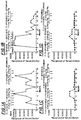
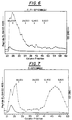
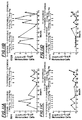
- Antibody titers in ELISA assay against immunizing peptide over time in chimpanzees immunized with HIV env synthetic peptides are shown in Figure 1.
- the peptide used in the ELISA assay was T1-SP10IIIB.
- the peptide used in the ELISA assay was F-T1-SP10IIIB(A). All immunizations were in incomplete Freund's Adjuvant (IFA) + PBS (1:1) except for animal 1028 that developed IM abscesses after immunization no. 3, and had one immunization held, then had all subsequent immunizations in PBS only.
- IFA incomplete Freund's Adjuvant
- T1-SP10 peptides were excellent immunogens in animals 884 and 1028, while T1-SP10 peptides with the HIV gp41 fusion (F) domain synthesized N-terminal to the T1-SP10 peptide did not induce antibody titers as high or as of long duration as did peptides without the F domain.
- F HIV gp41 fusion
- mice 1045 and 1070 were challenged at month 16 with the immunogen T1-SP10IIIB(A) that induced such good antibody titers in animals 884 and 1028.
- Animals 1045 and 1028 did not respond to T1-SP10IIIB(A) in IFA, thus demonstrating that they were tolerant to the T1-SP10(A) from their prior immunizations with F-T1-SP10IIIB(A) peptide.
- boost of 884 at week 14 gave a rise in titer to T1-SP10IIIB(A) peptide
- boost of 1028 at the same time did not.
- Boost of 884 was with IFA
- boost of 1028 was with no adjuvant, but rather only PBS.
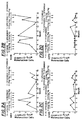
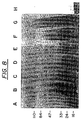
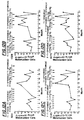
- T1-SP10IIIB and T1-SP10IIIB(A) peptides induced high levels of proliferation of circulating PBMC in animals 884 and 1028. These levels fell to non-detectable levels after a 6 month rest (month 14) but rose again in animals 884 and 1028. Proliferative responses in animal 1028 rose with each boost after the 6 month rest even though the immunizations were in PBS alone with no adjuvant.
- animals 1045 and 1070 immunized with F-T1-SP10IIIB(A) peptide, did not proliferate to T1-SP10IIIB(A) peptide.
- T1-SP10IIIB(A) peptide that was a good immunogen in 884 and 1028
- neither of the animals 1045, 1070 developed a proliferative response to T1-SP10IIIB(A)--thus proving that the addition of the F-domain N-terminal to the T1-SP10 peptide created a toleragen that tolerized animals 1045 and 1070 to the T1 and SP10 regions of gp120.
- animals 884 and 1028 both responded in proliferative assays to native gp120, animals 1045 and 1070 were tolerant to native gp120 as well as to immunizing peptides.
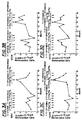
- PBMC proliferative responses of chimpanzees immunized with T1-SP10 peptides and F-T1-SP10 peptides to PHA are shown in Figure 3.
- Data show that while animals 1045 and 1070 were tolerant to T1 and SP10 regions of HIV gp120, PBMC PHA responses in these animals throughout the immunization period were normal.
- PBMC peripheral blood mononuclear cell
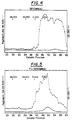
- each peptide was determined by continuous measurement of eluent absorbance at OD 280. The corresponding molecular weight of each peptide peak was calculated from the calibration curve of the column.
- Each peptide was also applied to the column equilibrated with the same buffer containing 0.1% C12E9 [polyoxyethylene (9) lauryl ether].
- Lane 8 shows the results of DSP cross-linking analysis using F-T1-SP10IIIB(A) peptide.
- Lane C shows the form of the peptide with no DSP added in PBS when run under non-reducing conditions in SDS-PAGE.
- Lanes D,E,F, and G show the effect on peptide MW when the peptide is cross-linked with 6.25 ⁇ g (D), 12.5 ⁇ g (E), 25 ⁇ g (F) and 50 ⁇ g (G) of DSP prior to SDS-PAGE.
- Lane H shows the results of addition of 2-ME to peptide cross-linked with 50 ⁇ g of DSP and then run under reducing conditions in SDS-PAGE showing all of the cross-linked forms seen in lane H and all the multiple forms seen in non-reduced, non-cross-linked peptide seen in lane C, were now reduced to two bands at 7000 kDa.
- the nature of the two bands in this peptide under reducing conditions is unknown; these two bands can be purified by cutting the bands out of preparative gels and can be analyzed by mass spectroscopy and sequenced.
- Lanes A and B show the results of crosslinking F-T1-SP10IIIB(A) peptide in the presence to Triton-X 100 1% and run under reducing (A) and non-reducing conditions (B). Data demonstrate that the apparent hydrophobic interactions holding the high MW complexes together are resistant to disruption by this detergent.
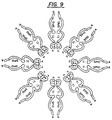
- FIG. 9 A hypothetical model of F-T1-SP10IIIB(A) in aqueous solution is shown in Figure 9.
- the model shows protein micelle formation with the hydrophobic fusion domain (F) regions of the peptide in the core of the micelle with the hydrophilic V3 regions projecting outward.
- Peptides used in Examples 2-8 that follow are listed in Table 8. Peptide synthesis was performed using either t- boc or f- moc chemistry with a peptide synthesizer (A431; Applied Biosystems, Inc. Foster City, CA). Peptides were purified using HPLC, and the molecular weight was determined by fast atom bombardment mass spectrometry (R. B. Van Breeman, North Carolina State University, Raleigh, NC) using a double-focusing mass spectrometer (HXIIOHF; Joel Ltd., Tokyo, Japan).
- Immunizations For goats, 3 mg of peptide were injected intramuscularly in each gluteal region in complete Freund's adjuvant (CFA) (1st dose), then incomplete Freund's adjuvant (IFA) (subsequent doses). For immunization of chimpanzees, varying doses of peptides were injected IM in IFA in a total volume of 4 cc, with 1 cc injected into right and left upper arms and thighs.
- CFA complete Freund's adjuvant
- IFA incomplete Freund's adjuvant
- ELISA Assays 2 ⁇ g of Th-B peptide, T1-SP10IIIB, or rgp120IIIB (Repligen Corp., Cambridge, MD) in CBC buffer (15 mM Na 2 C0 3 , 35 mM NaHCO 3 , pH9.6) was incubated overnight in each well of a 96 well flat bottom plate (Costar 3590). Wells were blocked with CBC buffer supplemented with 3% bovine serum albumin (BSA) for at least 2 hrs and then were washed 3 times with PBS, 0.05% Tween 20.
- BSA bovine serum albumin
- HIV Neutralization Assays The ability of chimpanzee or goat serum antibodies to neutralize HIV was determined in syncytium inhibition assay and reverse transcriptase inhibition assay as previously described (Palker et al, J. Immunol. 142:3612 (1989); Palker et al, Proc. Natl. Acad. Sci. USA 85:1932 (1988)). Sera were heat inactivated (30 min, 56°C) prior to each assay.
- PBMC Isolation and In Vitro 3 H-Thymidine Incorporation Assays Chimpanzee or goat PBMC was isolated by standard density centrifugation techniques (Palker et al, J. Immunol. 142:3612 (1989); Haynes et al, Science 215:298 (1982)). In vitro assays of 3 H-thymidine incorporation were performed as described (Palker et al, J. Immunol. 142:3612 (1989); Hart et al, J. Immunol. 145:2697 (1990)). For chimpanzee PBMC assays, in vitro cultures were performed using 10% normal chimpanzee serum.
- Antigens used in PBMC proliferation were the Th-B peptides, T1SP10IIIB(A) and T1-SP10MN(A), (Table 8), and Candida albicans antigen (Greer Laboratories, Inc. Lenoir, NC).
- PHA Bact al, J. Immunol. 142:3612 (1989); Hart et al, J. Immunol. 145:2697 (1990)).
- ⁇ cpm experimental cpm - control cpm .
- Th-B peptide was added to the Th-B peptide to enhance the ability of this peptide to induce anti-HIVIIIB neutralizing antibodies.
- Th-B or F-Th-B peptide were rested for 6 months, and then reimmunized with either F-Th-B or Th-B with sequences from HIVIIIB, or with the Th-B peptide containing HIV env gp120 V3 sequences from the HIVMN isolate.
- PB lymphocytes were identified by the following markers; total T cells, CD3; T cell subunits, CD4 and CD8; B cells, CD19; and NK cells, CD56 and CD16.
- Th B and F Th B Peptides in Chimpanzees and Goats for Anti-Peptide and Anti-HIV gp 120 Antibody Responses
- anti-peptide antibody levels were much lower during months 1-10 of immunization of animals 1045 and 1070 with HIVIIIB F-Th-B peptide, with peak antibody levels against immunizing peptide of 1:25,600 and 1:12,800 at month 7 for animals 1028 and 1070, respectively (Table 9).
- animals 884 and 1028 were immunized at month 14 with 6 mg of Th-B peptide.
- boosting with Th-B peptide in IFA at month 14 resulted in rise in titer of anti-peptide antibody to 1:102,400, while boosting of animal 1028 with peptide in PBS alone led to no antibody rise (Table 9).
- animals 1045 and 1070 were immunized at month 14 with 1 mg ( ⁇ 0.016 mg/kg) of F-Th-B to determine if the prior doses of F-Th-B peptide were excessive and induced high zone tolerance, and if smaller amounts of F-derivatized peptide would be more immunogenic.
- Immunization of both chimpanzee nos. 1045 and 1070 with 1 mg of F-Th-B peptide after a 6 month rest resulted in only minimal rises in serum titers of anti-peptide antibody to 1:800 (Table 9).
- both animals were immunized on month 16 with HIVIIIB Th-B peptide, T1-SP10IIIB(A). Both animals 1045 and 1070 responded minimally to boosting with Th-B peptide with an antipeptide antibody responses to 1:1600 and 1:3200, respectively, demonstrating that animals 1045 and 1070 were hyporesponsive at month 16 to Th-B HIV env epitopes (Table 9).
- mice 1045 and 1070 were next immunized with the HIVMN Th-B peptide.
- the TH-B peptide from HIVMN contained the same Th (T1) gp 120 sequence as the HIVIIIB Th-B peptide, but contained different B cell gp 120 V3 B cell epitope sequences than those in the HIVIIIB Th-B peptide (Table 8). After 2 immunizations with Th-B of HIVMN, beginning at month 17, both chimpanzee nos.
- Endpoint ELISA antibody titers against recombinant HIVIIIB gp 120 were determined for sera from months 4-7 and 16-20 to correlate peak anti-peptide antibody levels with anti-gp120 HIV envelope antibody levels. It was found that peak anti-gp120 antibody levels in chimpanzee nos. 884 and 1028 during months 4-7 were both 1:25,600, whereas peak titers to gp120 in animals 1045 and 1070 during the same period were 1:6,400 and 0, respectively. As with anti-peptide antibody levels, boosting after a 6 month rest with peptide in PBS in chimpanzee 1028 did not boost anti-gp120 antibodies.
- Boosting with F-Th-B peptide at month 14 and with HIVIII TH-B at month 16 in animals 1070 and 1045 resulted in minimal rises in anti-gp120 antibody titers by month 17 (to 1:12,800).
- boosting chimpanzees 1045 and 1070 with HIVMN Th-B peptide at month 17 induced high levels of anti-gp120IIIB antibody in both animals (1:102,400 and 1:51,200, respectively) by month 20 that rose coincident with rises in levels of anti-peptide antibody.
- Table 4 shows the peak 3 H-thymidine incorporation of chimpanzee PBMC to HIVIIIB gp120 for each animal during months 1-13, and demonstrates that neither chimpanzee no. 1070 nor 1045 (receiving F-Th-B peptide) had PBMC-proliferative responses to gp120 of greater than E/C>2 throughout the first 13 months of study. In contrast, animals 884 and 1028 (receiving Th-B peptides) did have anti-gp120 proliferative responses during the same period (Table 4).
- T and B cell epitopes of bee, wasp or other allergens can be synthesized with a F domain or F-domain-like peptide N- or C-terminal to the allergenic T or B cell peptide, and the F-Allergen epitope hybrid peptide used to inject into patients that are sensitive to the allergen epitope.
- a patient can be made tolerant to the allergen epitope in the same manner as chimpanzees were made tolerant to T1-SP10 HIV env peptides by immunizing them with F-T1-SP10(A) peptide (Haynes et al J. Exp. Med. in press, 1993).
- F-derivatizing allergen T or B cell immunogenic peptides could product tolerogenic peptides for the treatment of allergic diseases.
- F domain- or F-like domain derivatization of peptides and proteins is to confer upon the derivatized peptide or protein the ability to bind to the cell membrane and enter the cell.
- the fusion domain or a fusion-like domain could be conjugated to an RNA or DNA molecule as well as a protein to promote entry into cells.
- the ability of a molecule to enter the cells is important for many molecules to act therapeutically, and can be overcome by addition of the F domain or an F-like domain to the molecule that one wanted to get inside or cells.
- a powerful inhibitor of cell activation would be a peptide, RNA or DNA species of molecule that competetively bound to an intracellular molecule ncessary for cell activation, but the peptide, RNA or DNA molecule itself did not activate or serve the normal function of the physiologic ligand that it was designed to mimic.
- Examples of peptide, RNA or DNA molecules that might inhibit cell activation would be molecules that bound to intracellular tyrosine kinases, tyrosine phosphatases, protein Kinase C enzymes or G proteins, just to name a few examples.
- F-derivatized proteins of HIV regulatory proteins that might bind to viral RNA but not promote transcription of RNA thus preventing normal binding of HIV transcription factors might be used to treat HIV infections in vivo.
- MG Autoimmune Diseaes or Disease Model Caused By Autoreactive B Cell Responses Disease Pathogenic Antibody Specificity
- Myasthenia Gravis MG
- Anti-acetylcholine receptor antibodies cause weakness in MG Juvenile Onset Diabetes Mellitus (Type 1 Diabetes)
- Anti-insulin antibodies and anti-islet cell antibodies mediate islet cell destruction
- Graves' Disease Anti-thyroid stimulating hormone receptor antibodies mediate the disease Insulin Resistance in Diabetes Mellitus
- Anti-insulin antibodies prevent treatant of diabetes with insulin
- EEU Experimental autoimmune uveoretinitis
- EAE Experimental autoimmune encephalomyelitis
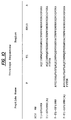
- Table shows that conjugation of the F domain on the T1-SP10IIIB(A) peptide confers on it the ability to bind to JY B cells better that the T1-SP10IIIB(A) peptide alone, and that after incubation at 37 degrees C, the F-T1-SP10IIIB(A) peptide is decreased on the surface of the cells.
Landscapes
- Health & Medical Sciences (AREA)
- Life Sciences & Earth Sciences (AREA)
- Chemical & Material Sciences (AREA)
- Organic Chemistry (AREA)
- Genetics & Genomics (AREA)
- General Health & Medical Sciences (AREA)
- Molecular Biology (AREA)
- Medicinal Chemistry (AREA)
- Engineering & Computer Science (AREA)
- Biophysics (AREA)
- Biochemistry (AREA)
- Zoology (AREA)
- Proteomics, Peptides & Aminoacids (AREA)
- Gastroenterology & Hepatology (AREA)
- Biomedical Technology (AREA)
- Toxicology (AREA)
- Immunology (AREA)
- Bioinformatics & Cheminformatics (AREA)
- Veterinary Medicine (AREA)
- Public Health (AREA)
- Microbiology (AREA)
- Cell Biology (AREA)
- General Engineering & Computer Science (AREA)
- Endocrinology (AREA)
- Biotechnology (AREA)
- Wood Science & Technology (AREA)
- Pharmacology & Pharmacy (AREA)
- Animal Behavior & Ethology (AREA)
- Plant Pathology (AREA)
- Peptides Or Proteins (AREA)
- Physics & Mathematics (AREA)
- Diabetes (AREA)
- Rheumatology (AREA)
- Neurology (AREA)
- General Chemical & Material Sciences (AREA)
- Epidemiology (AREA)
- Mycology (AREA)
- Nuclear Medicine, Radiotherapy & Molecular Imaging (AREA)
- Virology (AREA)
- Chemical Kinetics & Catalysis (AREA)
Applications Claiming Priority (3)
| Application Number | Priority Date | Filing Date | Title |
|---|---|---|---|
| US83342992A | 1992-02-10 | 1992-02-10 | |
| US833429 | 1992-02-10 | ||
| PCT/US1993/001207 WO1993015750A1 (en) | 1992-02-10 | 1993-02-10 | Use of synthetic peptides to induce tolerance to pathogenic t and b cell epitopes of autoantigens |
Publications (3)
| Publication Number | Publication Date |
|---|---|
| EP0652764A1 EP0652764A1 (en) | 1995-05-17 |
| EP0652764A4 EP0652764A4 (en) | 1995-12-27 |
| EP0652764B1 true EP0652764B1 (en) | 2000-05-24 |
Family
ID=25264393
Family Applications (1)
| Application Number | Title | Priority Date | Filing Date |
|---|---|---|---|
| EP93905870A Expired - Lifetime EP0652764B1 (en) | 1992-02-10 | 1993-02-10 | Use of synthetic peptides to induce tolerance to pathogenic t and b cell epitopes of autoantigens |
Country Status (7)
| Country | Link |
|---|---|
| EP (1) | EP0652764B1 (enExample) |
| JP (1) | JPH07506810A (enExample) |
| AT (1) | ATE193208T1 (enExample) |
| AU (1) | AU679439B2 (enExample) |
| CA (1) | CA2129351A1 (enExample) |
| DE (1) | DE69328726D1 (enExample) |
| WO (1) | WO1993015750A1 (enExample) |
Families Citing this family (22)
| Publication number | Priority date | Publication date | Assignee | Title |
|---|---|---|---|---|
| US6210873B1 (en) | 1987-08-28 | 2001-04-03 | Board Of Regents, The University Of Texas System | Methods and compositions for the priming of specific cytotoxic T-lymphocyte response |
| US5128319A (en) | 1987-08-28 | 1992-07-07 | Board Of Regents, The University Of Texas System | Prophylaxis and therapy of acquired immunodeficiency syndrome |
| AU693098B2 (en) * | 1993-06-09 | 1998-06-25 | Connaught Laboratories Limited | Tandem synthetic HIV-1 peptides |
| US5603933A (en) * | 1993-08-31 | 1997-02-18 | Board Of Regents, The University Of Texas | CD4 peptides for binding to viral envelope proteins |
| GB2290293A (en) * | 1994-06-08 | 1995-12-20 | Rupert Donald Holms | Preparation which inhibits the autoimmune response in HIV, or SLE, patients |
| IL115744A (en) * | 1994-10-27 | 2000-07-16 | Akzo Nobel Nv | Peptides comprising a subsequence of human cartilage glycoprotein - 39 |
| US5869602A (en) | 1995-03-17 | 1999-02-09 | Novo Nordisk A/S | Peptide derivatives |
| WO1996039176A1 (en) * | 1995-06-05 | 1996-12-12 | Brigham & Women's Hospital | USE OF ORAL TOLERANCE TO SUPPRESS BOTH Th1 AND Th2 IMMUNE RESPONSES AND TO SUPPRESS ANTIBODY PRODUCTION |
| BR9912378A (pt) * | 1998-07-23 | 2001-04-17 | Akzo Nobel Nv | Peptìdeo, composição farmacêutica, uso de um ou mais dos peptìdeos, e, composição para diagnóstico. |
| US6908612B2 (en) | 1999-10-08 | 2005-06-21 | University Of Maryland Biotechnology Institute | Virus coat protein/receptor chimeras and methods of use |
| PT1137786E (pt) * | 1999-10-08 | 2007-07-13 | Univ Maryland Biotech Inst | Quimeras de proteína do invólucro/receptor de vírus e métodos de utilização. |
| US7311920B1 (en) | 1999-10-08 | 2007-12-25 | University Of Maryland Biotechnology Institute | Virus coat protein/receptor chimeras and methods of use |
| JP2004503205A (ja) | 2000-02-04 | 2004-02-05 | デューク・ユニバーシティー | ヒト免疫不全ウイルスワクチン |
| CN1505528A (zh) | 2000-09-22 | 2004-06-16 | �ſ���ѧ��˾ | 包含结合hiv包膜蛋白的配体的免疫原 |
| US7033593B2 (en) | 2000-09-22 | 2006-04-25 | Duke University | Immunogen comprising an HIV envelope protein, a ligand and H2 peptide |
| CN1622958B (zh) | 2001-08-23 | 2013-04-03 | Rsr有限公司 | 促甲状腺素(tsh)受体的表位区域、其用途和针对该区域的抗体 |
| US7153509B2 (en) | 2001-11-07 | 2006-12-26 | Duke University | Immunogenic peptides comprising a T-helper epitope and a B-cell neutralizing antibody epitope |
| US7195768B2 (en) | 2001-11-07 | 2007-03-27 | Duke University | Polyvalent immunogen |
| US7172761B2 (en) | 2001-11-07 | 2007-02-06 | Duke University | Polyvalent immunogen |
| US7485314B2 (en) | 2002-05-06 | 2009-02-03 | Los Angeles Biomedical Research Institute At Harbor-Ucla Medical Center | Induction of antigen specific immunologic tolerance |
| US10646589B2 (en) * | 2014-12-24 | 2020-05-12 | Apitope International Nv | Thyroid stimulating hormone receptor peptides and uses thereof |
| WO2018067582A2 (en) * | 2016-10-03 | 2018-04-12 | The United States Of America, As Represented By The Secretary, Department Of Health And Human Services | Hiv-1 env fusion peptide immunogens and their use |
Family Cites Families (3)
| Publication number | Priority date | Publication date | Assignee | Title |
|---|---|---|---|---|
| AU592258B2 (en) * | 1986-12-30 | 1990-01-04 | United States of America, as represented by the Secretary, U.S. Department of Commerce, The | Synthetic peptides which induce cellular immunity to the aids virus and aids viral proteins |
| JPH01501939A (ja) * | 1987-01-28 | 1989-07-06 | オーソ・フアーマシユーチカル・コーポレーシヨン | 免疫抑制ペプチドおよび使用法 |
| EP0493508A1 (en) * | 1989-09-22 | 1992-07-08 | Idec Pharmaceuticals Corporation | Novel peptides associated with the cd4 binding region of gp120 and their methods of use |
-
1993
- 1993-02-10 DE DE69328726T patent/DE69328726D1/de not_active Expired - Lifetime
- 1993-02-10 AU AU36629/93A patent/AU679439B2/en not_active Ceased
- 1993-02-10 JP JP5514277A patent/JPH07506810A/ja not_active Ceased
- 1993-02-10 CA CA002129351A patent/CA2129351A1/en not_active Abandoned
- 1993-02-10 WO PCT/US1993/001207 patent/WO1993015750A1/en not_active Ceased
- 1993-02-10 AT AT93905870T patent/ATE193208T1/de not_active IP Right Cessation
- 1993-02-10 EP EP93905870A patent/EP0652764B1/en not_active Expired - Lifetime
Also Published As
| Publication number | Publication date |
|---|---|
| WO1993015750A1 (en) | 1993-08-19 |
| JPH07506810A (ja) | 1995-07-27 |
| AU3662993A (en) | 1993-09-03 |
| AU679439B2 (en) | 1997-07-03 |
| EP0652764A4 (en) | 1995-12-27 |
| EP0652764A1 (en) | 1995-05-17 |
| DE69328726D1 (de) | 2000-06-29 |
| CA2129351A1 (en) | 1993-08-19 |
| ATE193208T1 (de) | 2000-06-15 |
Similar Documents
| Publication | Publication Date | Title |
|---|---|---|
| AU679439B2 (en) | Use of synthetic peptides to induce tolerance to pathogenic T and B cell epitopes of autoantigens | |
| US6811782B1 (en) | Peptide composition as immunogen for the treatment of allergy | |
| EP1098910B1 (en) | Antigenic complex comprising immunostimulatory peptide, cd4, and chemokine receptor domain for hiv treatment and immune disorders | |
| US8110203B2 (en) | Adjuvant comprising non-toxic cross-linked muramyl dipeptide (MDP) microparticles derived from Propionibacterium acnes | |
| US7172761B2 (en) | Polyvalent immunogen | |
| US20030003440A1 (en) | Novel CCR5 epitope and antibodies against it | |
| JP2001527029A (ja) | 抗レトロウイルス免疫原、調製および使用 | |
| US20030022826A1 (en) | Use of synthetic peptides to induce tolerance to pathogenic T and B cell epitopes of autoantigens or infectious agents | |
| US5935579A (en) | AIDS therapy and vaccine | |
| US6042831A (en) | Human immunodeficiency virus type 1 (HIV-1) GP160 epitopes that are immunologically homologous to epitopes located in the class I major histocompatibility complex (MHC) heavy chain α-1 domain | |
| Baier et al. | Immunogenic targeting of recombinant peptide vaccines to human antigen-presenting cells by chimeric anti-HLA-DR and anti-surface immunoglobulin D antibody Fab fragments in vitro | |
| Curicio‐Vonlanthen et al. | Molecular parameters in melittin immunogenicity | |
| CA2181590C (en) | Peptomers with enhanced immunogenicity | |
| US6210873B1 (en) | Methods and compositions for the priming of specific cytotoxic T-lymphocyte response | |
| EP0762895B1 (en) | Synthetic vaccine for protection against human immunodeficiency virus infection | |
| JPH07505878A (ja) | Hivエンベロープ糖タンパク質から誘導された合成ポリペプチド | |
| AU733234B2 (en) | Conjugated peptides, immunological reagent containing same and use thereof for treatment of immunological disorders | |
| Zimmerman et al. | Induction of cross clade reactive specific antibodies in mice by conjugates of HGP-30 (peptide analog of HIV-1SF2 p17) and peptide segments of human β-2-microglobulin or MHC II β chain | |
| JP4391827B2 (ja) | 可変性ペプチドエピトープの免疫原性製剤及びその製造方法 | |
| US20030162263A1 (en) | Peptides derived from the superantigen (SAg) ENV protein of HERV-K18 and their use in obtaining SAG-inhibitory antibodies and in vaccination against SAG | |
| Yu et al. | Induction of High Levels of Epitope‐Specific Antibodies by Epitope/Peptide Candidate Vaccines against Human Immunodeficiency Virus Type‐1 (HIV‐1) | |
| CA2035576A1 (en) | Conformational epitopes of human immunodeficiency virus envelope glycoprotein gp120 hiv-1 | |
| JP2003533542A (ja) | T細胞結合リガンド、それを含むペプチド構築物およびそれらの免疫障害を処置するための使用 | |
| CN101362796A (zh) | 附睾蛋白酶抑制蛋白b细胞表位及包含此表位的多重抗原肽 | |
| CA2259237A1 (en) | Immunocontrapceptive methods and peptide or polypeptides for use in these methods |
Legal Events
| Date | Code | Title | Description |
|---|---|---|---|
| PUAI | Public reference made under article 153(3) epc to a published international application that has entered the european phase |
Free format text: ORIGINAL CODE: 0009012 |
|
| 17P | Request for examination filed |
Effective date: 19940905 |
|
| AK | Designated contracting states |
Kind code of ref document: A1 Designated state(s): AT BE CH DE DK ES FR GB GR IE IT LI LU MC NL PT SE |
|
| A4 | Supplementary search report drawn up and despatched |
Effective date: 19951113 |
|
| AK | Designated contracting states |
Kind code of ref document: A4 Designated state(s): AT BE CH DE DK ES FR GB GR IE IT LI LU MC NL PT SE |
|
| RHK1 | Main classification (correction) |
Ipc: A61K 38/00 |
|
| 17Q | First examination report despatched |
Effective date: 19980127 |
|
| GRAG | Despatch of communication of intention to grant |
Free format text: ORIGINAL CODE: EPIDOS AGRA |
|
| GRAG | Despatch of communication of intention to grant |
Free format text: ORIGINAL CODE: EPIDOS AGRA |
|
| GRAH | Despatch of communication of intention to grant a patent |
Free format text: ORIGINAL CODE: EPIDOS IGRA |
|
| GRAH | Despatch of communication of intention to grant a patent |
Free format text: ORIGINAL CODE: EPIDOS IGRA |
|
| GRAA | (expected) grant |
Free format text: ORIGINAL CODE: 0009210 |
|
| AK | Designated contracting states |
Kind code of ref document: B1 Designated state(s): AT BE CH DE DK ES FR GB GR IE IT LI LU MC NL PT SE |
|
| PG25 | Lapsed in a contracting state [announced via postgrant information from national office to epo] |
Ref country code: NL Free format text: LAPSE BECAUSE OF FAILURE TO SUBMIT A TRANSLATION OF THE DESCRIPTION OR TO PAY THE FEE WITHIN THE PRESCRIBED TIME-LIMIT Effective date: 20000524 Ref country code: LI Free format text: LAPSE BECAUSE OF FAILURE TO SUBMIT A TRANSLATION OF THE DESCRIPTION OR TO PAY THE FEE WITHIN THE PRESCRIBED TIME-LIMIT Effective date: 20000524 Ref country code: IT Free format text: LAPSE BECAUSE OF FAILURE TO SUBMIT A TRANSLATION OF THE DESCRIPTION OR TO PAY THE FEE WITHIN THE PRE;WARNING: LAPSES OF ITALIAN PATENTS WITH EFFECTIVE DATE BEFORE 2007 MAY HAVE OCCURRED AT ANY TIME BEFORE 2007. THE CORRECT EFFECTIVE DATE MAY BE DIFFERENT FROM THE ONE RECORDED.SCRIBED TIME-LIMIT Effective date: 20000524 Ref country code: GR Free format text: LAPSE BECAUSE OF NON-PAYMENT OF DUE FEES Effective date: 20000524 Ref country code: FR Free format text: LAPSE BECAUSE OF FAILURE TO SUBMIT A TRANSLATION OF THE DESCRIPTION OR TO PAY THE FEE WITHIN THE PRESCRIBED TIME-LIMIT Effective date: 20000524 Ref country code: ES Free format text: THE PATENT HAS BEEN ANNULLED BY A DECISION OF A NATIONAL AUTHORITY Effective date: 20000524 Ref country code: CH Free format text: LAPSE BECAUSE OF FAILURE TO SUBMIT A TRANSLATION OF THE DESCRIPTION OR TO PAY THE FEE WITHIN THE PRESCRIBED TIME-LIMIT Effective date: 20000524 Ref country code: BE Free format text: LAPSE BECAUSE OF FAILURE TO SUBMIT A TRANSLATION OF THE DESCRIPTION OR TO PAY THE FEE WITHIN THE PRESCRIBED TIME-LIMIT Effective date: 20000524 Ref country code: AT Free format text: LAPSE BECAUSE OF FAILURE TO SUBMIT A TRANSLATION OF THE DESCRIPTION OR TO PAY THE FEE WITHIN THE PRESCRIBED TIME-LIMIT Effective date: 20000524 |
|
| REF | Corresponds to: |
Ref document number: 193208 Country of ref document: AT Date of ref document: 20000615 Kind code of ref document: T |
|
| REG | Reference to a national code |
Ref country code: CH Ref legal event code: EP |
|
| REG | Reference to a national code |
Ref country code: IE Ref legal event code: FG4D |
|
| REF | Corresponds to: |
Ref document number: 69328726 Country of ref document: DE Date of ref document: 20000629 |
|
| PG25 | Lapsed in a contracting state [announced via postgrant information from national office to epo] |
Ref country code: SE Free format text: LAPSE BECAUSE OF FAILURE TO SUBMIT A TRANSLATION OF THE DESCRIPTION OR TO PAY THE FEE WITHIN THE PRESCRIBED TIME-LIMIT Effective date: 20000824 Ref country code: PT Free format text: LAPSE BECAUSE OF FAILURE TO SUBMIT A TRANSLATION OF THE DESCRIPTION OR TO PAY THE FEE WITHIN THE PRESCRIBED TIME-LIMIT Effective date: 20000824 Ref country code: DK Free format text: LAPSE BECAUSE OF FAILURE TO SUBMIT A TRANSLATION OF THE DESCRIPTION OR TO PAY THE FEE WITHIN THE PRESCRIBED TIME-LIMIT Effective date: 20000824 |
|
| PG25 | Lapsed in a contracting state [announced via postgrant information from national office to epo] |
Ref country code: DE Free format text: LAPSE BECAUSE OF FAILURE TO SUBMIT A TRANSLATION OF THE DESCRIPTION OR TO PAY THE FEE WITHIN THE PRESCRIBED TIME-LIMIT Effective date: 20000825 |
|
| EN | Fr: translation not filed | ||
| NLV1 | Nl: lapsed or annulled due to failure to fulfill the requirements of art. 29p and 29m of the patents act | ||
| REG | Reference to a national code |
Ref country code: CH Ref legal event code: PL |
|
| PG25 | Lapsed in a contracting state [announced via postgrant information from national office to epo] |
Ref country code: LU Free format text: LAPSE BECAUSE OF NON-PAYMENT OF DUE FEES Effective date: 20010210 |
|
| PG25 | Lapsed in a contracting state [announced via postgrant information from national office to epo] |
Ref country code: IE Free format text: LAPSE BECAUSE OF NON-PAYMENT OF DUE FEES Effective date: 20010212 |
|
| PG25 | Lapsed in a contracting state [announced via postgrant information from national office to epo] |
Ref country code: MC Free format text: LAPSE BECAUSE OF NON-PAYMENT OF DUE FEES Effective date: 20010228 |
|
| PLBE | No opposition filed within time limit |
Free format text: ORIGINAL CODE: 0009261 |
|
| STAA | Information on the status of an ep patent application or granted ep patent |
Free format text: STATUS: NO OPPOSITION FILED WITHIN TIME LIMIT |
|
| 26N | No opposition filed | ||
| REG | Reference to a national code |
Ref country code: IE Ref legal event code: MM4A |
|
| REG | Reference to a national code |
Ref country code: GB Ref legal event code: IF02 |
|
| PGFP | Annual fee paid to national office [announced via postgrant information from national office to epo] |
Ref country code: GB Payment date: 20040126 Year of fee payment: 12 |
|
| PG25 | Lapsed in a contracting state [announced via postgrant information from national office to epo] |
Ref country code: GB Free format text: LAPSE BECAUSE OF NON-PAYMENT OF DUE FEES Effective date: 20050210 |
|
| GBPC | Gb: european patent ceased through non-payment of renewal fee |
Effective date: 20050206 |