EP0648816B1 - Färben von Leder mit Farbstoffmischungen - Google Patents
Färben von Leder mit Farbstoffmischungen Download PDFInfo
- Publication number
- EP0648816B1 EP0648816B1 EP19940810586 EP94810586A EP0648816B1 EP 0648816 B1 EP0648816 B1 EP 0648816B1 EP 19940810586 EP19940810586 EP 19940810586 EP 94810586 A EP94810586 A EP 94810586A EP 0648816 B1 EP0648816 B1 EP 0648816B1
- Authority
- EP
- European Patent Office
- Prior art keywords
- formula
- alkyl
- group
- dye
- dyes
- Prior art date
- Legal status (The legal status is an assumption and is not a legal conclusion. Google has not performed a legal analysis and makes no representation as to the accuracy of the status listed.)
- Expired - Lifetime
Links
- 0 Nc(c(S(O)(=O)=O)cc(Nc1ccc(*c(cc2)ccc2Nc(cc(c(N)c2C(c3c4cccc3)=O)S(O)(=O)=O)c2C4=O)cc1)c1C(c2c3cccc2)=O)c1C3=O Chemical compound Nc(c(S(O)(=O)=O)cc(Nc1ccc(*c(cc2)ccc2Nc(cc(c(N)c2C(c3c4cccc3)=O)S(O)(=O)=O)c2C4=O)cc1)c1C(c2c3cccc2)=O)c1C3=O 0.000 description 14
- VAEYUKAEIUSSHZ-RAXLEYEMSA-N CC(/C(/C)=C(/N)\NC(C=C1)=CC=CC1(C)C(O)=O)NC Chemical compound CC(/C(/C)=C(/N)\NC(C=C1)=CC=CC1(C)C(O)=O)NC VAEYUKAEIUSSHZ-RAXLEYEMSA-N 0.000 description 1
Classifications
-
- D—TEXTILES; PAPER
- D06—TREATMENT OF TEXTILES OR THE LIKE; LAUNDERING; FLEXIBLE MATERIALS NOT OTHERWISE PROVIDED FOR
- D06P—DYEING OR PRINTING TEXTILES; DYEING LEATHER, FURS OR SOLID MACROMOLECULAR SUBSTANCES IN ANY FORM
- D06P1/00—General processes of dyeing or printing textiles, or general processes of dyeing leather, furs, or solid macromolecular substances in any form, classified according to the dyes, pigments, or auxiliary substances employed
- D06P1/44—General processes of dyeing or printing textiles, or general processes of dyeing leather, furs, or solid macromolecular substances in any form, classified according to the dyes, pigments, or auxiliary substances employed using insoluble pigments or auxiliary substances, e.g. binders
-
- C—CHEMISTRY; METALLURGY
- C09—DYES; PAINTS; POLISHES; NATURAL RESINS; ADHESIVES; COMPOSITIONS NOT OTHERWISE PROVIDED FOR; APPLICATIONS OF MATERIALS NOT OTHERWISE PROVIDED FOR
- C09B—ORGANIC DYES OR CLOSELY-RELATED COMPOUNDS FOR PRODUCING DYES, e.g. PIGMENTS; MORDANTS; LAKES
- C09B67/00—Influencing the physical, e.g. the dyeing or printing properties of dyestuffs without chemical reactions, e.g. by treating with solvents grinding or grinding assistants, coating of pigments or dyes; Process features in the making of dyestuff preparations; Dyestuff preparations of a special physical nature, e.g. tablets, films
- C09B67/0033—Blends of pigments; Mixtured crystals; Solid solutions
- C09B67/0041—Blends of pigments; Mixtured crystals; Solid solutions mixtures containing one azo dye
-
- C—CHEMISTRY; METALLURGY
- C09—DYES; PAINTS; POLISHES; NATURAL RESINS; ADHESIVES; COMPOSITIONS NOT OTHERWISE PROVIDED FOR; APPLICATIONS OF MATERIALS NOT OTHERWISE PROVIDED FOR
- C09B—ORGANIC DYES OR CLOSELY-RELATED COMPOUNDS FOR PRODUCING DYES, e.g. PIGMENTS; MORDANTS; LAKES
- C09B67/00—Influencing the physical, e.g. the dyeing or printing properties of dyestuffs without chemical reactions, e.g. by treating with solvents grinding or grinding assistants, coating of pigments or dyes; Process features in the making of dyestuff preparations; Dyestuff preparations of a special physical nature, e.g. tablets, films
- C09B67/0033—Blends of pigments; Mixtured crystals; Solid solutions
- C09B67/0046—Mixtures of two or more azo dyes
- C09B67/0055—Mixtures of two or more disazo dyes
-
- D—TEXTILES; PAPER
- D06—TREATMENT OF TEXTILES OR THE LIKE; LAUNDERING; FLEXIBLE MATERIALS NOT OTHERWISE PROVIDED FOR
- D06P—DYEING OR PRINTING TEXTILES; DYEING LEATHER, FURS OR SOLID MACROMOLECULAR SUBSTANCES IN ANY FORM
- D06P3/00—Special processes of dyeing or printing textiles, or dyeing leather, furs, or solid macromolecular substances in any form, classified according to the material treated
- D06P3/02—Material containing basic nitrogen
- D06P3/04—Material containing basic nitrogen containing amide groups
- D06P3/32—Material containing basic nitrogen containing amide groups leather skins
-
- D—TEXTILES; PAPER
- D06—TREATMENT OF TEXTILES OR THE LIKE; LAUNDERING; FLEXIBLE MATERIALS NOT OTHERWISE PROVIDED FOR
- D06P—DYEING OR PRINTING TEXTILES; DYEING LEATHER, FURS OR SOLID MACROMOLECULAR SUBSTANCES IN ANY FORM
- D06P3/00—Special processes of dyeing or printing textiles, or dyeing leather, furs, or solid macromolecular substances in any form, classified according to the material treated
- D06P3/02—Material containing basic nitrogen
- D06P3/04—Material containing basic nitrogen containing amide groups
- D06P3/32—Material containing basic nitrogen containing amide groups leather skins
- D06P3/3206—Material containing basic nitrogen containing amide groups leather skins using acid dyes
-
- D—TEXTILES; PAPER
- D06—TREATMENT OF TEXTILES OR THE LIKE; LAUNDERING; FLEXIBLE MATERIALS NOT OTHERWISE PROVIDED FOR
- D06P—DYEING OR PRINTING TEXTILES; DYEING LEATHER, FURS OR SOLID MACROMOLECULAR SUBSTANCES IN ANY FORM
- D06P3/00—Special processes of dyeing or printing textiles, or dyeing leather, furs, or solid macromolecular substances in any form, classified according to the material treated
- D06P3/02—Material containing basic nitrogen
- D06P3/04—Material containing basic nitrogen containing amide groups
- D06P3/32—Material containing basic nitrogen containing amide groups leather skins
- D06P3/3206—Material containing basic nitrogen containing amide groups leather skins using acid dyes
- D06P3/3213—Material containing basic nitrogen containing amide groups leather skins using acid dyes monoazo
- D06P3/322—Material containing basic nitrogen containing amide groups leather skins using acid dyes monoazo using monoazo premetallised dyes
-
- D—TEXTILES; PAPER
- D06—TREATMENT OF TEXTILES OR THE LIKE; LAUNDERING; FLEXIBLE MATERIALS NOT OTHERWISE PROVIDED FOR
- D06P—DYEING OR PRINTING TEXTILES; DYEING LEATHER, FURS OR SOLID MACROMOLECULAR SUBSTANCES IN ANY FORM
- D06P3/00—Special processes of dyeing or printing textiles, or dyeing leather, furs, or solid macromolecular substances in any form, classified according to the material treated
- D06P3/02—Material containing basic nitrogen
- D06P3/04—Material containing basic nitrogen containing amide groups
- D06P3/32—Material containing basic nitrogen containing amide groups leather skins
- D06P3/3206—Material containing basic nitrogen containing amide groups leather skins using acid dyes
- D06P3/3226—Material containing basic nitrogen containing amide groups leather skins using acid dyes dis-polyazo
Definitions
- the present invention relates to a method for dyeing leather with Dye mixtures in which the leather with at least two water-soluble Dyes and with at least two pigments practically insoluble in water.
- a preferred embodiment of the present invention relates to a Process for trichromatic dyeing of leather.
- the present invention thus relates to a process for dyeing leather with Dye mixtures, which is characterized in that the leather with at least two water-soluble dyes and practical with at least two in water colors insoluble pigments, the dyes and pigments being selected such that the mixture of dyes and the mixture of pigments have the same shade surrendered on the leather.
- At least two water-soluble dyes selected from are preferably used a group of water-soluble dyes suitable for trichromatic dyeing and in particular, one uses at least two metal-free dyes, each with two Sulfo or carboxy groups and a molecular weight between 790 and 1100.
- the alkyl and alkylene groups can be linear or branched.
- C 1 -C 4 alkyl methyl, ethyl, n- or iso-propyl and n-, iso-, sec- or tert-butyl are therefore suitable.
- methyl and ethyl are preferred.
- the dyes used according to the invention contain cationic groups of course, equivalent amounts of anions.
- Both inorganic and organic anions can be considered as the anion ⁇ ;
- Examples include: halide, such as chloride, bromide or iodide, sulfate, methyl sulfate, boron tetrafluoride, aminosulfonate, perchlorate, carbonate, bicarbonate, phosphate, phosphoromolybdate, phosphorus tungstate, phosphorus tungsten molybdate, Benzenesulfonate, naphthalenesulfonate, 4-chlorobenzenesulfonate, oxalate, maleinate, acetate, propionate, lactate, succinate, chloroacetate, tartrate, methanesulfonate or benzoate ions, or complex anions, such as that of chlorine zinc double salts.
- the anion is generally determined by the manufacturing process.
- the anions can be exchanged for other anions in a known manner become.
- Unbranched radicals are preferably suitable as alkylene groups. It is about for example methylene, ethylene, n-propylene or n-butylene.
- Suitable alkoxy radicals are e.g. Methoxy, ethoxy, propoxy, iso-propoxy, n-butoxy, iso-butoxy or tert-butoxy, but preferably methoxy or ethoxy.
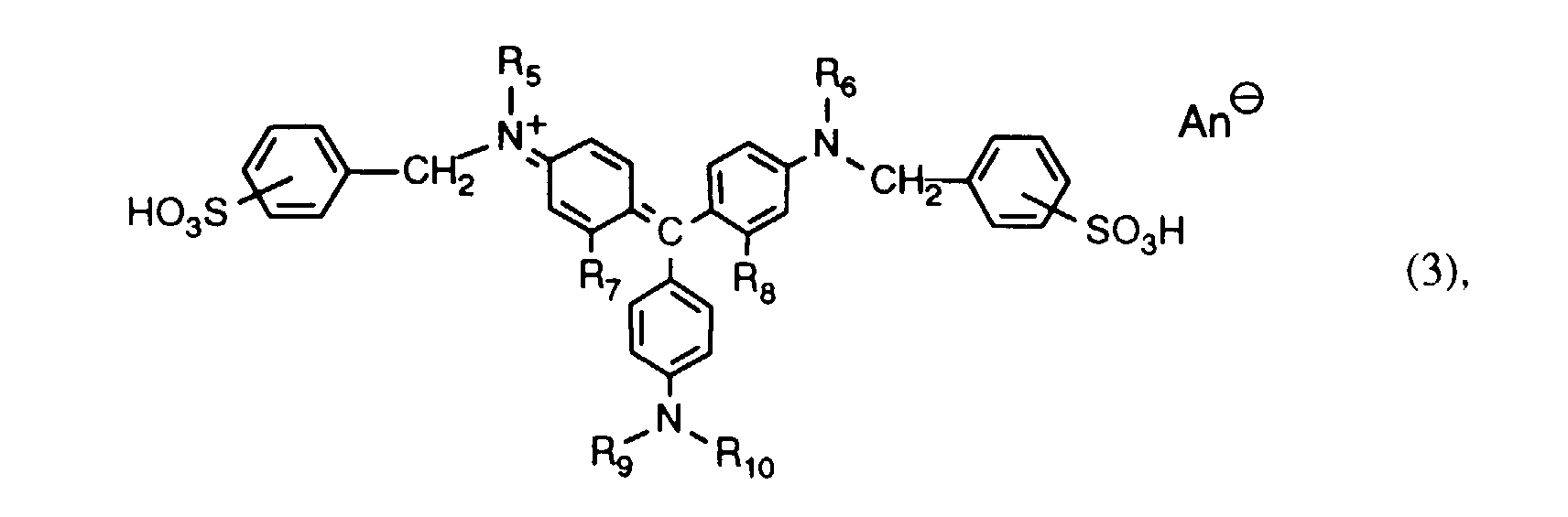
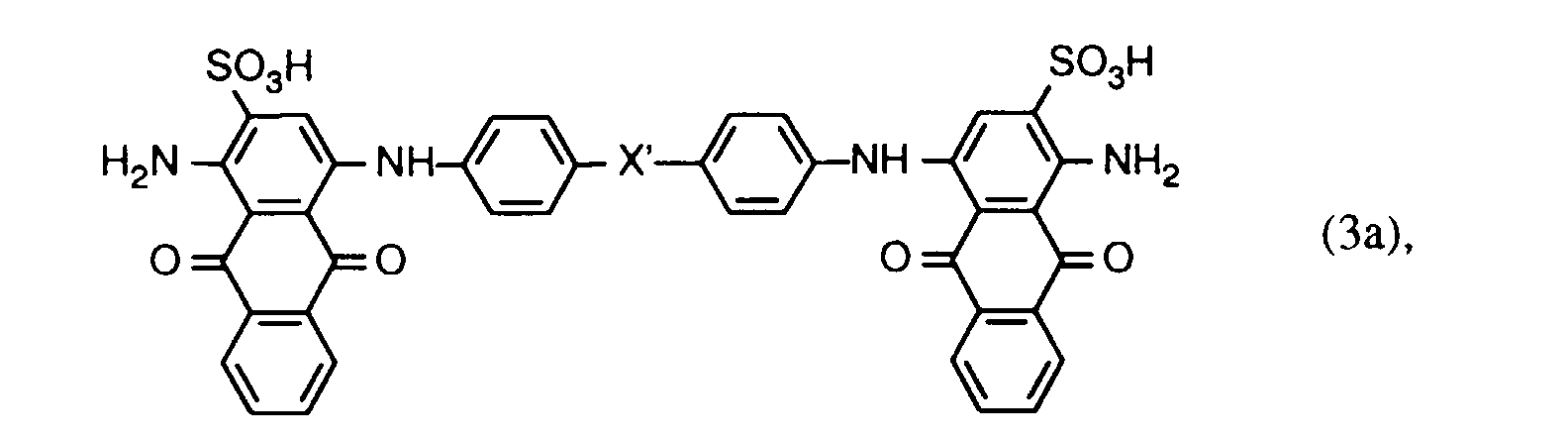
- a dye mixture containing a yellow dye of the formula (1), a red dye of formula (2) and a blue dye of formula (3) or (3a).
- Y is preferably the same as Y 1 , in particular both are each —SO 2 O—.
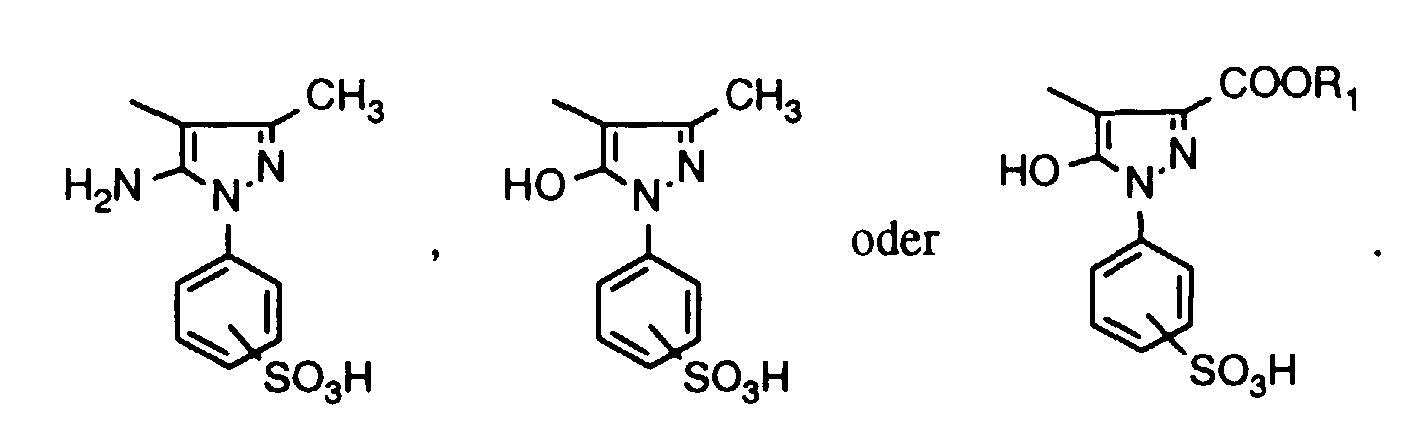
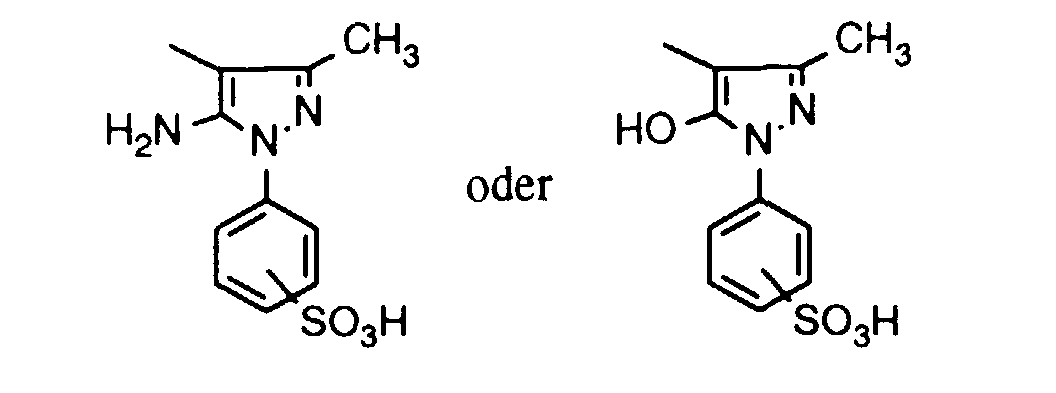
- the coupling components K and K 1 are preferably the same for the dyes of the formula (1) and, above all, K and K 1 each represent a coupling component of the formula
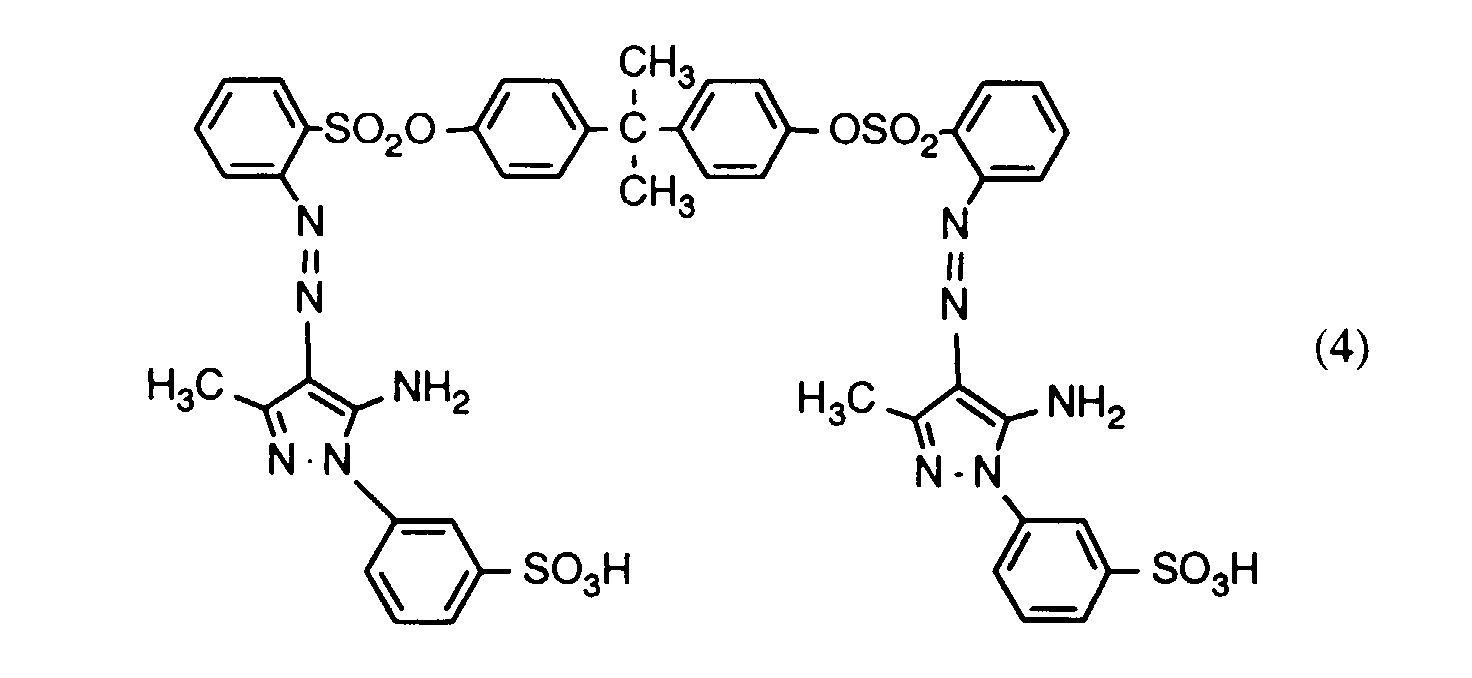
- a particularly preferred embodiment of the process according to the invention consists in that the yellow dye of the formula used.
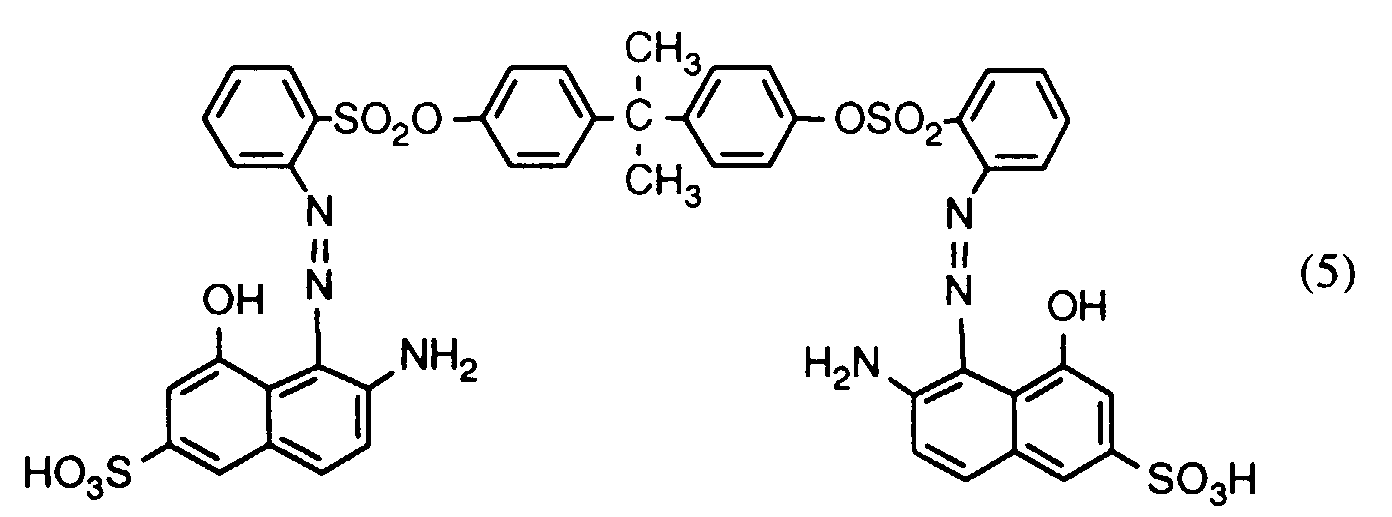
- a further preferred embodiment of the process according to the invention is characterized in that a red dye of the formula (2) is used, in which Y means the same as Y 1 , preferably both -SO 2 O-.
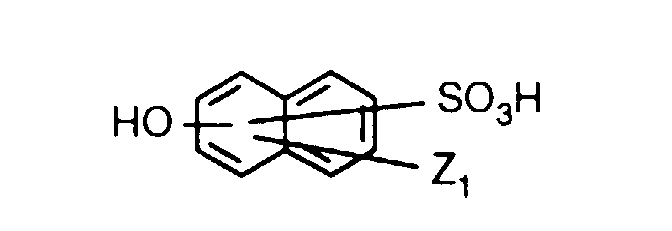
- the coupling components K 2 and K 3 are preferably the same for the dyes of the formula (2) and, above all, K 2 and K 3 each represent a coupling component of the formula wherein Z 1 is hydrogen, OH or NHR 3 , where R 3 is hydrogen, C 1 -C 4 alkyl, cyano-C 2 -C 4 alkyl, C 1 -C 4 alkylcarbonyl, aminocarbonyl, phenylcarbonyl or phenyl, where the phenyl group in the latter two radicals can be substituted by C 1 -C 4 alkyl.
- a red dye of the formula (2) is used, in which K 2 and K 3 are each a coupling component of the formula mean, one of the substituents Z 2 and Z 3 being hydrogen and the other NHR 3 , where R 3 is hydrogen, C 1 -C 4 -alkyl, cyano-C 2 -C 4 -alkyl, C 1 -C 4 - Alkylcarbonyl, aminocarbonyl, phenylcarbonyl or phenyl, it being possible for the phenyl group in the latter two radicals to be substituted by C 1 -C 4 -alkyl.
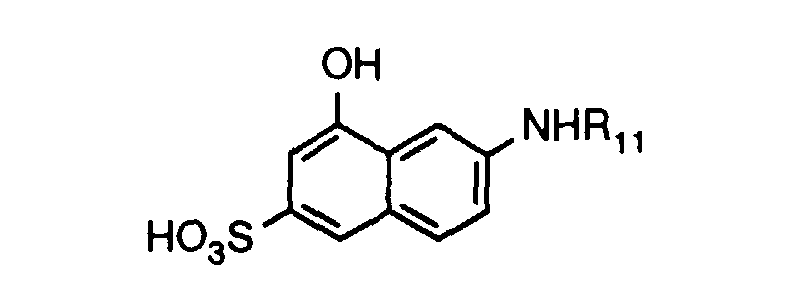
- a red dye of the formula (2) is used, in which K 2 and K 3 are each a coupling component of the formula mean in which R 11 is hydrogen, C 1 -C 4 alkyl, cyano-C 2 -C 4 alkyl, C 1 -C 4 alkylcarbonyl, phenylcarbonyl, phenyl or phenyl substituted by C 1 -C 4 alkyl or in which K 2 and K 3 each have a coupling component of the formula mean wherein R 12 is hydrogen, C 1 -C 4 alkyl, aminocarbonyl, C 1 -C 4 alkylcarbonyl or phenylcarbonyl.
- a very particularly preferred embodiment of the process according to the invention consists in that the red dye of the formula used.
- dyes of the formula (3) in which R 5 and R 6 are each independently C 1 -C 2 alkyl, R 7 and R 8 are each independently hydrogen or C 1 -C 2 alkyl, R 9 Is hydrogen and R 10 is phenyl or phenyl substituted by C 1 -C 2 alkyl or C 1 -C 2 alkoxy, or such dyes of the formula (3a), in which X '-C 1 -C 4 alkylene or is, where R 1 and R 2 each independently represent C 1 -C 4 alkyl.
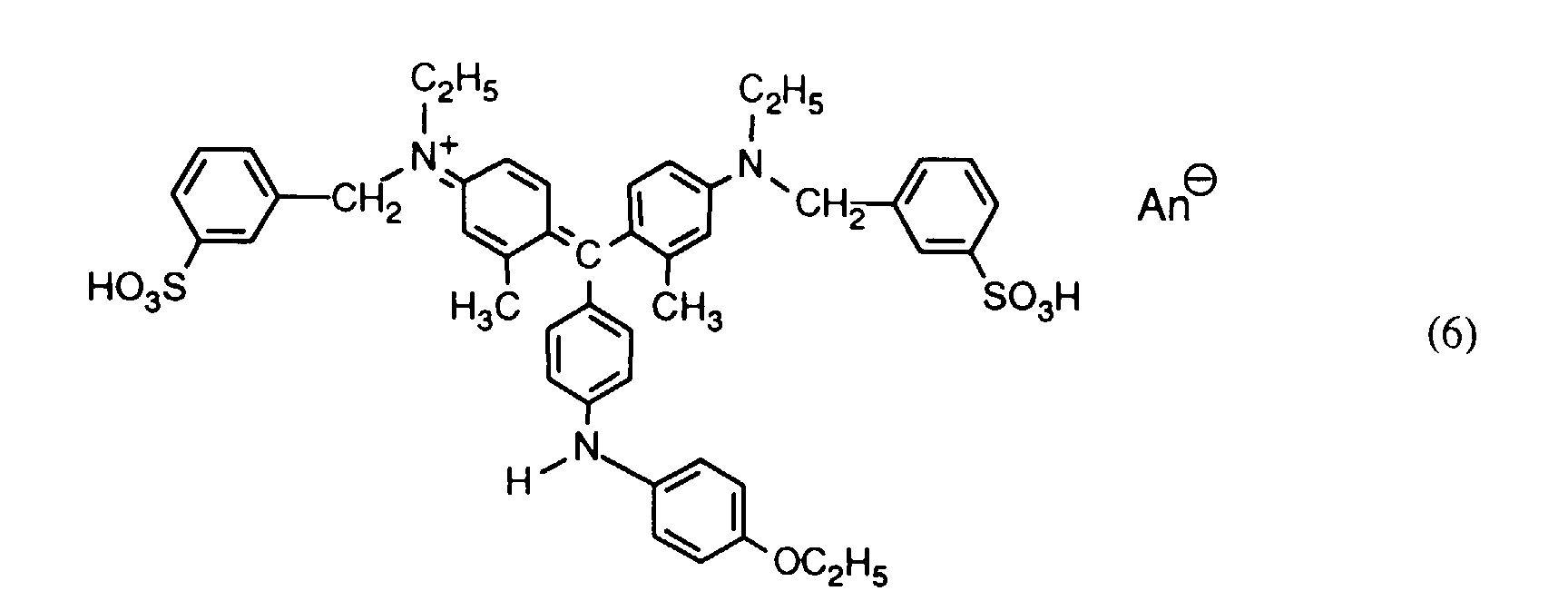
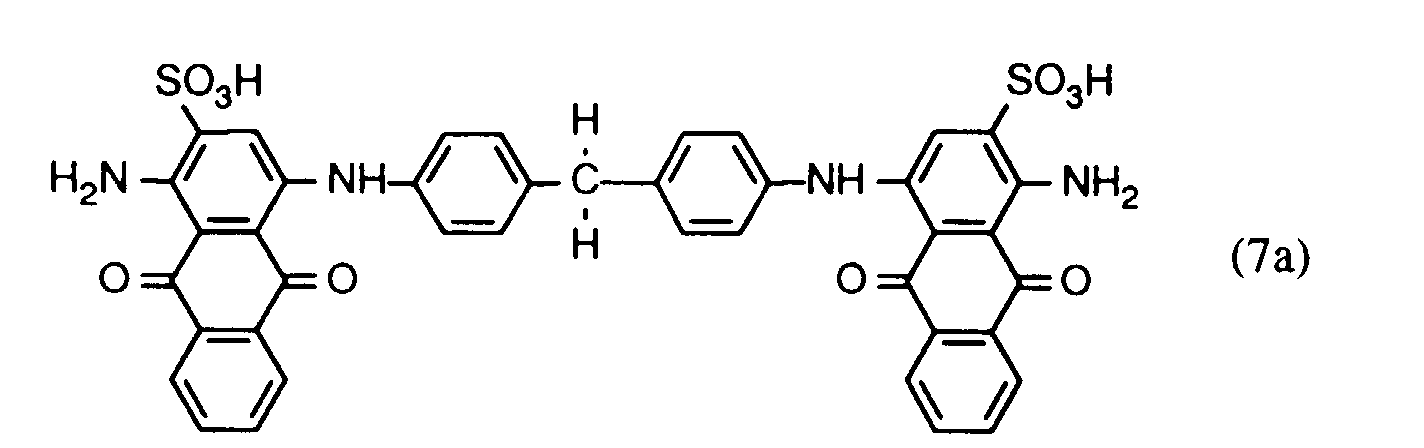
- a very particularly preferred embodiment of the process according to the invention consists in that the blue dye of the formula or the formula or the formula or the formula used.
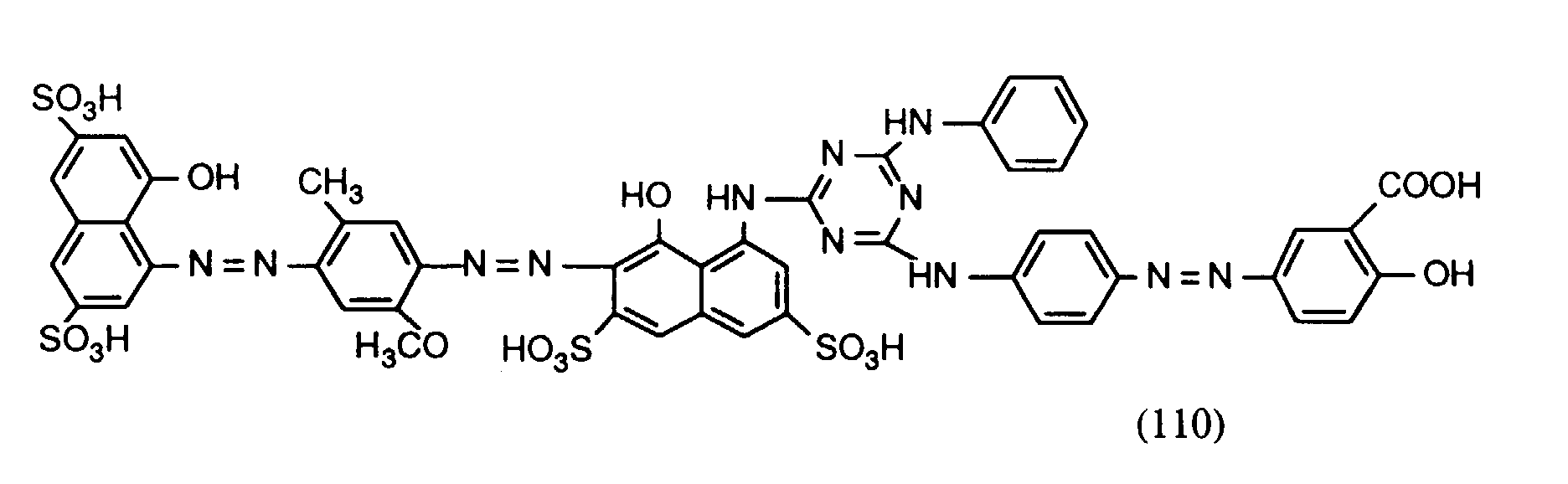
- a very particularly important embodiment of the method according to the invention consists in that a dye mixture containing the for trichromatic dyeing yellow dye of formula (4), the red dye of formula (5) and the blue Dye of the formula (6), (6a), (7) or (7a) is used.
- the values for the penetration depth refer to standard chrome calf leather, Manufactured according to the VESLIC regulation, C 1510. IUF 151 dated 11.12.1969 of the association Switzerland.
- Leather industry chemists and apply for a dyeing in 1/1 standard depth was carried out in accordance with the dyeing conditions of Example 3 of EP-B-0 061 670, the penetration depth using a cross section through the leather under the microscope is measured.
- dyes that have no or only a slight tendency to aggregate in electrolyte show aqueous solution are understood to be those in which the absorption of the Light of an aqueous solution containing 50 mg / l dye and 10 g / l NaCl by a maximum of 5 %, preferably by at most 2% lower than the absorption of a solution of the same Amount of the dye in distilled water, the reduction in absorption in Absorption maximum is determined.
- Dyes which have a penetration depth of 50-150 ⁇ m are preferably used and particularly good results with regard to the levelness of the colors are achieved if one for the Dye mixture used such dyes, where the differences in the depth of penetration individual dyes of the mixture are within a range of 50 microns.
- a preferred embodiment of the method according to the invention consists in that a mixture of a yellow, a red and a blue dye, i.e. a trichromatic, used.
- Yellow dyes are all dyes with a yellow shade, e.g. tan or also reddish or greenish yellow dyes.
- the orange to reddish brown dyes are generally referred to as red dyes and the blue, gray or violet dyes as blue dyes.
- radicals A and C can be further substituted, in particular with C 1 -C 4 alkyl or alkoxy, chlorine or nitro.
- Suitable diazo components A and C include 2-amino-1-hydroxybenzene, 4-chloro- and 4,6-dichloro-2-amino-1-hydroxybenzene, 4- or 5-nitro-2-amino-1-hydroxybenzene, 4-chloro- and 4-methyl-6-nitro-2-amino-1-hydroxybenzene, 1-hydroxybenzene, 6-chloro-4-nitro-2-amino-1-hydroxybenzene, 4-cyano-2-amino-1-hydroxybenzene, 4-methoxy-2-amino-1-hydroxybenzene, 4-methoxy-5-chloro-2-amino-1-hydroxybenzene, 4-methyl-2-amino-1-hydroxybenzene, 4-chloro-5-nitro-2-amino-1-hydroxybenzene, 3,4,6-trichloro-2-amino-hydroxybenzene, 4,6-dinitro-2-amino-1-hydroxybenzene, 2-amino-1-hydroxybenzene-4- or -5-sulfonic acid, 4-
- a and C preferably each independently represent the remainder of a 1-hydroxy-2-aminobenzene , which may be one or more times by the same or different Substituents from the series nitro, sulfo, chlorine, methyl or methoxy is substituted, and in particular the remainder of a 1-hydroxy-2-aminobenzene, which is in the 4- or 5-position Nitro group or the rest of a 1-hydroxy-2-aminobenzene, which is in the 4-position Nitro group and a sulfo group in the 6-position, or the remainder of a 1-hydroxy-2-aminobenzene, which carries a sulfo group in the 4-position and a nitro group in the 6-position.
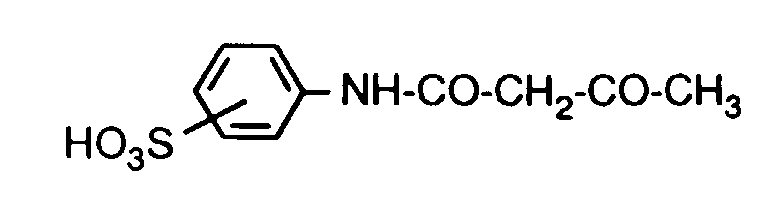
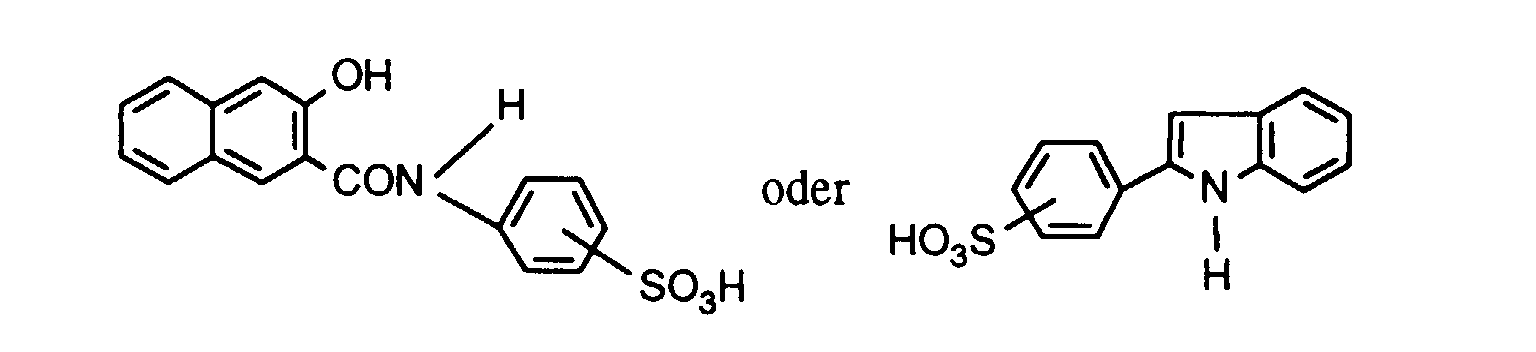
- the radicals B and D are preferably derived from the following groups of coupling components: phenol optionally substituted by C 1 -C 4 -alkyl or -alkoxy, amino or acylamino, where acylamino is C 1 -C 4 -alkanoylamino-, C 1 -C 4 -Aklylsulfonylamino-, C 1 -C 4 alkoxycarbonylamino, aroylamino or arylsulfonylamino, resorcinol, m-phenylenediamine, optionally in the 4-position substituted by sulfo, chlorine, methyl or methoxy, naphthols, optionally substituted with C 1-4 -Alkyl or alkoxy, chlorine, amino, acylamino or sulfo are substituted, where acylamino has the same meaning as given above, 5-pyrazolones or 5-aminopyrazoles, which in the 1-position one optional
- Examples of such coupling components are: 2-naphthol, 1,3- or 1,5-dihydroxynaphthalene, 1-naphthol, 1-acetylamino-7-naphthol, 1-propionylamino-7-naphthol, 1-carbomethoxyamino-7-naphthol, 1-carboethoxyamino-7-naphthol, 1-carbopropoxyamino-7-naphthol, 6-acetyl-2-naphthol, 2-naphthol-3-, -4-, -5-, -6-, -7- or -8-sulfonic acid, 1-naphthol-3-, -4- or -5-sulfonic acid, 1-naphthol-3,6-disulfonic acid, 1-naphthol-4,8-disulfonic acid, 1-naphthol-3,8-disulfonic acid, 2-n
- B or D is preferably a 1- or 2-naphthol, optionally substituted with a sulfo group, m-phenylenediamine, resorcinol, p-alkyl (C 1 -C 4 ) phenol, 1-phenyl-3-methyl-5-pyrazolone or acetoacetic anilide, where the phenyl group in the latter two compounds can be substituted by C 1 -C 4 alkyl, C 1 -C 4 alkoxy, chlorine or sulfo.
- B or D represents the residue of an o-hydroxyaldehyde, preferably an o-hydroxybenzaldehyde or o-hydroxynaphthaldehyde.
- Suitable aldehydes are, for example: 2-hydroxy-1-naphthaldehyde, 1-hydroxy-2-naphthaldehyde, 2-hydroxy-benzaldehyde, 3- and 5-methyl-2-hydroxybenzaldehyde, 3,5-dimethyl-2-hydroxybenzaldehyde, 5-butyl-2-hydroxybenzaldehyde , 5-chloro or 5-bromo-2-hydroxybenzaldehyde, 3-chloro-2-hydroxybenzaldehyde, 3,5-dichloro-2-hydroxybenzaldehyde, 5-sulfo-2-hydroxybenzaldehyde, 3-methyl-5-chloro-2- hydroxybenzaldehyde, 5- (phenylazo) -2-hydroxybenzaldehyde, 5- (2'-, 3'- or 4'-
- At least three are preferably used in the process according to the invention water-soluble dyes of the formula (8).
- a brown pigment of the formula is preferably used on.
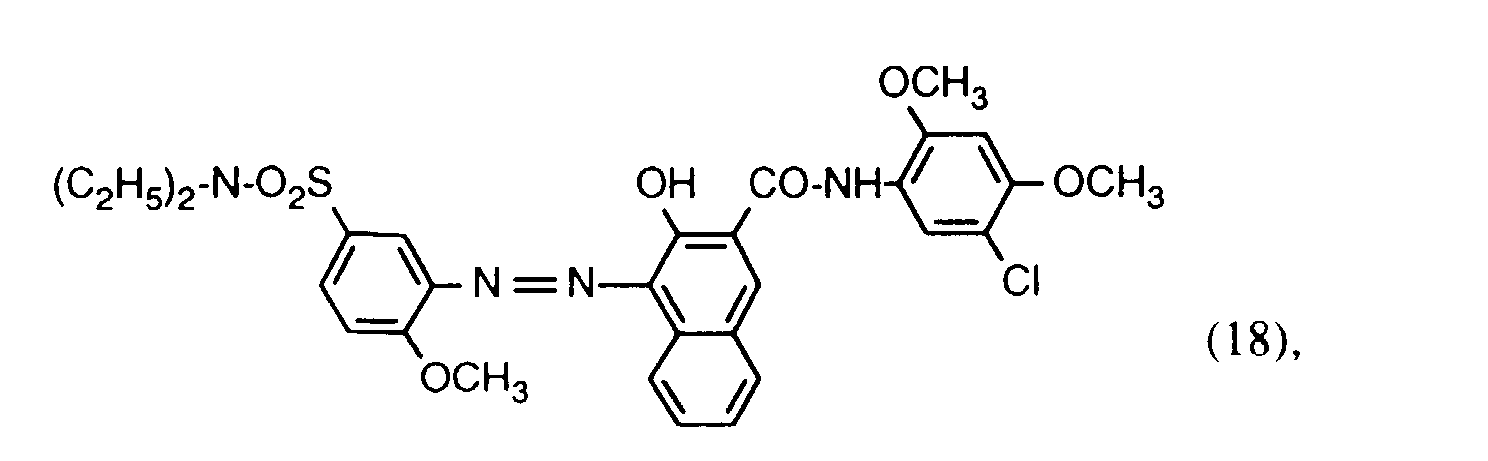
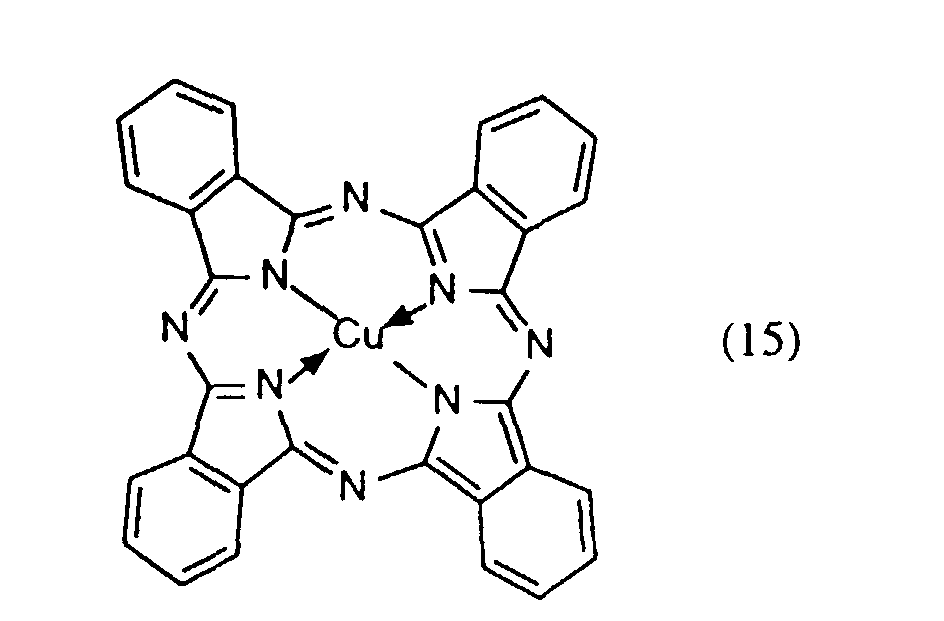
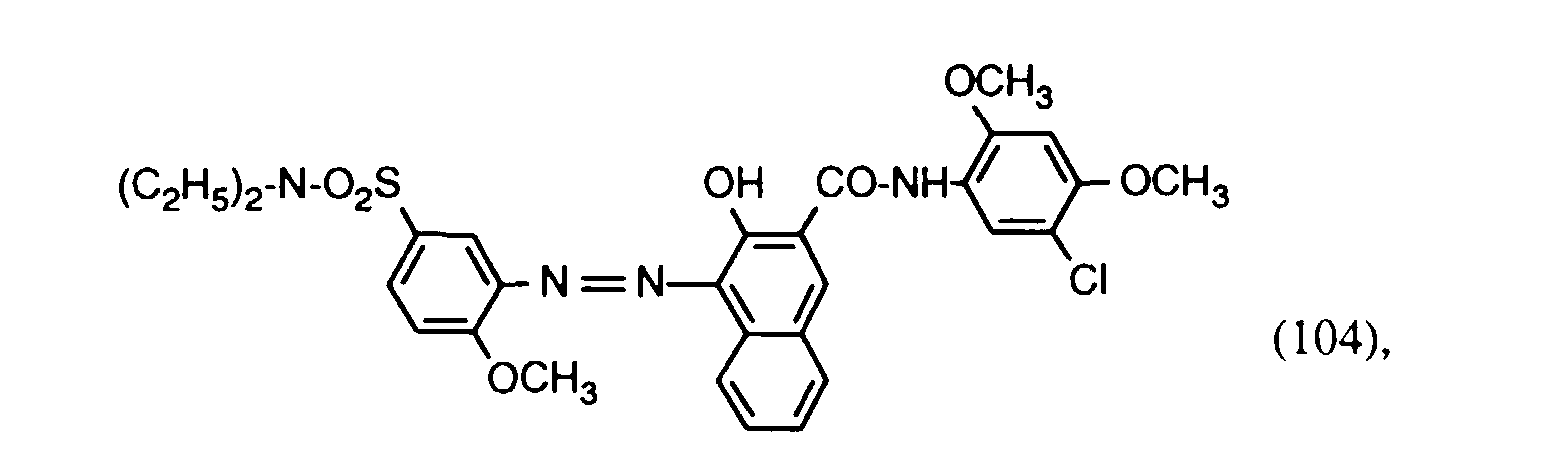
- the yellow pigment of the formula is very particularly preferably used the red pigment of the formula the blue pigment of the formula or the brown pigment of the formula
- the water-soluble dyes used according to the invention are anionic in nature and are advantageously used in the form of their salts, in particular alkali metal salts or ammonium salts.
- the alkali salts are in particular the lithium, potassium or sodium salts and ammonium salts are also understood to mean salts of organic amines, for example those which are substituted by C 1 -C 6 -alkyl or hydroxy-C 1 -C 6 -alkyl groups are.
- the dyes used in the process according to the invention are known or can be are produced in a manner known per se.
- amounts in which the dyes used according to the invention in the dye baths can vary widely depending on the desired depth of color.
- amounts of dye are from 0.1 to 10, preferably 0.5 to 4,% by weight, based on the weight of the leather to be dyed, advantageous.
- the dye liquor can contain other additives, e.g. Acids, bases or salts for setting the desired pH, as well as auxiliaries, such as. Wetting agents, greasing agents, color-deepening aids, leveling agents, the Penetration-promoting agents and / or anti-foaming agents.
- additives e.g. Acids, bases or salts for setting the desired pH
- auxiliaries such as. Wetting agents, greasing agents, color-deepening aids, leveling agents, the Penetration-promoting agents and / or anti-foaming agents.
- the pigments used according to the invention are used as customary commercial forms, i.e. in finely ground form used together with dispersants.
- the Particle size smaller than 0.5 ⁇ m, especially smaller than 0.1 ⁇ m.
- a dispersant especially anionic compounds such as Lignin sulfonates or condensation products aromatic sulfonic acids with formaldehyde.
- a cationic auxiliaries are e.g. cationic leather greasing or tanning agents in question.
- Suitable are e.g. polyquaternary Amine-ethylene oxide adducts, cationic preparations based on chlorinated Hydrocarbons and n-alkyl derivatives, chromium-containing phenolsulfonic acid condensates, cationic preparations from ethoxylated fatty amines and fatty alcohols and amine-dicyandiamide condensate products.
- These tools will be preferably in amounts of 1 to 6% by weight, especially 2 to 4% by weight, based on the Weight of the leather used.
- Preferred cationic auxiliaries are cationic chromium-containing ones Phenolsulfonic acid condensates
- Coloring with the water-soluble dyes and pigments is preferably carried out after the pull-out procedure, e.g. with a fleet ratio of 1: 1.5 to 1:20, preferably 1: 2 to 1:10, and at temperatures of 20 to 100 ° C, preferably 30 to 60 ° C.
- the leather can be pretreated be subjected to, for example, a neutralization or Walke.
- the dyeing time varies depending on the type of leather and the desired depth of color but generally between 30 and 180 minutes.
- the coloring is preferably carried out in the barrel.
- the leather After dyeing, the leather is finished in the usual way.
- Brilliant leather dyeings are obtained by the process according to the invention Shades and with good fastness properties, e.g. Light and wet fastness properties.
- the individual dyes are mixed with one another for use in dyeing.
- the Dyes can be prepared individually as stock solutions for the dyeing process or formulated together in a single stock solution.
- EP-A-0 558 450 and EP-A-0 061 670 the use is already more water-soluble Dyes for trichromatic dyeing of leather are known, but not their use in Combination with pigments.
- EP-A-0 055 808 describes the use of a dye mixture containing one Dye with a sulfo group and a dye with a sulfamoyl group, described.
- Parts mean parts by weight and percentages percentages by weight.
- the Dyes are used in commercially available powder or liquid form.
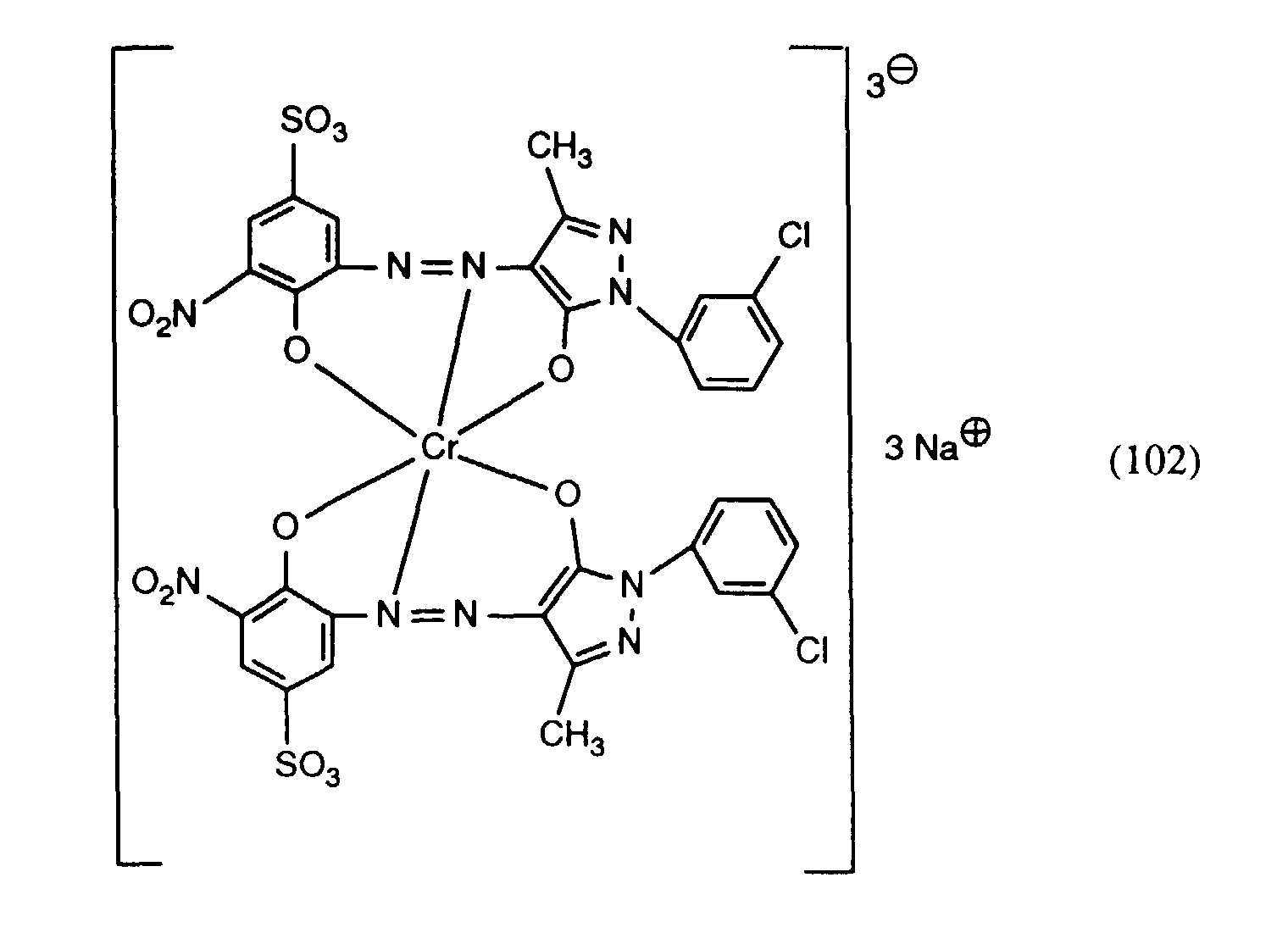
- the leather is treated in a float composed of 200 parts of water, 2 parts of sodium salts of aromatic sulfonic and aliphatic dicarboxylic acids and 2 parts of sodium salt of dinaphthylmethane disulfonic acid for 20 minutes at 20 ° C. Then 3 parts of 24% ammonia are added and the mixture is added Treatment continues for another 5 minutes. Then add 1 part of a preparation of ethoxylated fatty amines and fatty alcohols, 1 part of the yellow dye of the formula 3.6 parts of the red dye of the formula and 0.8 part of the brown dye of the formula and stains for 60 minutes. Then 400 parts of water at 60 ° C.
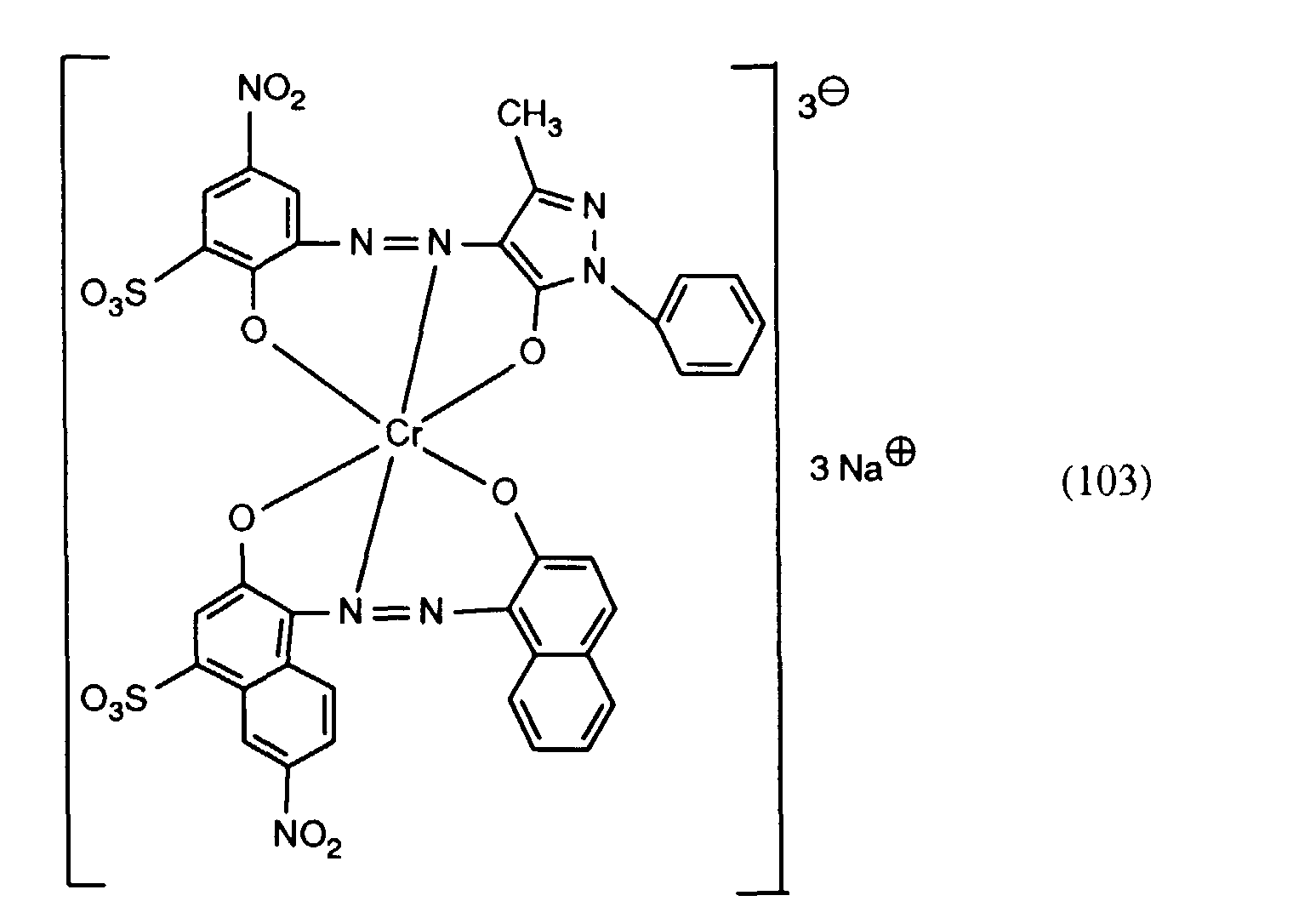
- Example 1 If the procedure is as described in Example 1, but instead of the mixture of water-soluble dyes used there, use a mixture consisting of 4.2 parts of the brown dye of the formula 0.5 part of the brown dye of formula (103) used in Example 1 and 0.1 part of the red dye of formula (102) used in Example 1, and a mixture consisting of 1 part of the yellow pigment of the formula 0.45 part of the brown pigment of formula (106) used in Example 1, 0.3 part of the red pigment of formula (104) used in Example 1, and 0.03 part of the blue pigment of formula (105) used in Example 1 ), you get brown leather regardless of where the scar defects are well covered.
- the dyeings are characterized by improved light fastness compared to leather dyed in the same way without the use of pigments.
- 100 parts of furniture leather (wet white, 0.7 mm, folded) are in 100 parts Water and 4 parts of a retanning agent (mixture of chromium salt Phenolsulfonic acid condensate and sodium salt of polymethacrylic acid) at 45 ° C during Retanned for 20 minutes. Then 0.5 part of 24% ammonia is added and treated another 5 minutes.
- a retanning agent mixture of chromium salt Phenolsulfonic acid condensate and sodium salt of polymethacrylic acid
- the liquor is allowed to run off, then 150 parts of water at 25 ° C., 0.3 are added to the leather Parts of 85% formic acid and 0.5 parts of a polyquaternary amine-ethylene oxide adduct and treated another 15 minutes.
- the Colorings are characterized by improved light fastness compared to those colored analog leather without the use of pigments.
- the leather treated in this way is now in a freshly set fleet of 100 parts Water at 30 ° C and 4 parts of a retanning agent (protein-containing formaldehyde condensation product phenolic sulfonic acids) treated for 20 minutes. Then you give 1 part 24% ammonia and after 5 minutes 1 part of an ethoxylated preparation Fatty amines and fatty alcohols and continue the treatment for another 10 minutes. Then 1.05 part of the red dye of the formula used in Example 1 is added (102), 2.1 parts of the brown dye of formula (103) used in Example 1 and 0.3 of the brown dye of formula (107) used in Example 2 and dyes during 60 minutes.
- a retanning agent protein-containing formaldehyde condensation product phenolic sulfonic acids
- Example 1 If the procedure is as described in Example 1, but instead of the mixture of water-soluble dyes used there, use a mixture consisting of 1.92 parts of the yellow dye of the formula (101) used in Example 1, 2.0 parts of the red used in Example 1 Dye of the formula (102) and 2.0 parts of the blue dye of the formula as well as the mixture of pigments used there, you also get red-brown colored leather, in which the scar defects are well covered.
- the dyeings are characterized by improved light fastness compared to leather dyed in the same way without the use of pigments.
Landscapes
- Engineering & Computer Science (AREA)
- Textile Engineering (AREA)
- Chemical & Material Sciences (AREA)
- Chemical Kinetics & Catalysis (AREA)
- Organic Chemistry (AREA)
- Coloring (AREA)
Description



und









- Z
- Stickstoff oder eine CH-Gruppe,
- A und C
- identische Reste der Benzol- oder Naphthalinreihe, welche in o-Stellung zur Azo oder Azomethingruppe eine Hydroxy- oder Carboxygruppe enthalten,
- B und D
- identische Reste einer Kupplungskomponente, wenn Z Stickstoff ist, wobei die Kupplungskomponente in o- oder α-Stellung zur Azogruppe die Gruppe X enthält, oder identische Reste eines o-Hydroxyaldehyds, wenn Z die CH-Gruppe darstellt,
- X
- Sauerstoff oder eine Gruppe -NQ-, worin Q Wasserstoff oder C1-C4-Alkyl bedeutet,
- Me
- Chrom oder Kobalt,
- Y
- die SO3H-Gruppe und
- p
- 1 oder 2 bedeutet,
- a) keine oder nur eine geringe Neigung zur Aggregation in elektrolythaltiger, wässriger Lösung zeigen und
- b) auf Standard-Chromleder eine Eindringtiefe zwischen 20 und 200 µm aufweisen, wobei die Unterschiede in der Eindringtiefe der einzelnen Farbstoffe des Gemisches innerhalb von 50 µm liegen.
2-Hydroxy-1-naphthaldehyd, 1-Hydroxy-2-naphthaldehyd, 2-Hydroxy-benzaldehyd, 3- und 5-Methyl-2-hydroxybenzaldehyd, 3,5-Dimethyl-2-hydroxybenzaldehyd, 5-Butyl-2-hydroxybenzaldehyd, 5-Chlor- oder 5-Brom-2-hydroxybenzaldehyd, 3-Chlor-2-hydroxybenzaldehyd, 3,5-Dichlor-2-hydroxybenzaldehyd, 5-Sulfo-2-hydroxybenzaldehyd, 3-Methyl-5-chlor-2-hydroxybenzaldehyd, 5-(Phenylazo)-2-hydroxybenzaldehyd, 5-(2'-, 3'- oder 4'-Sulfophenylazo)-2-hydroxybenzaldehyd oder 5-(6'-Sulfonaphthyl- 1-azo)-2-hydroxybenzaldehyd.

Z Stickstoff oder eine CH-Gruppe,
- A' und C'
- jeweils den Rest den Rest eines 1-Hydroxy-2-aminobenzols bedeuten, der in 4- oder 5- Stellung eine Nitrogruppe trägt, oder den Rest eines 1-Hydroxy-2-aminobenzols, der in 4-Stellung eine Nitrogruppe und in 6-Stellung eine Sulfogruppe trägt, oder den Rest eines 1-Hydroxy-2-aminobenzols, der in 4-Stellung eine Sulfogruppe und in 6-Stellung eine Nitrogruppe trägt,
- B' und D'
- jeweils den Rest einer der folgenden Kupplungskomponenten bedeuten, falls Z Stickstoff ist: p-C1-C4-Alkylphenol, Resorcin, m-Phenylendiamin, 1- oder 2-Naphthol, gegebenenfalls mit Sulfo substituiert, 1-Phenyl-3-methyl-5-pyrazolon oder Acetessigsäureanilid, wobei die Phenylgruppe in den beiden letztgenannten Verbindungen durch Chlor, C1-C4-Alkyl, C1-C4-Alkoxy oder Sulfo substituiert sein kann, oder, falls Z die CH-Gruppe bedeutet, den Rest eines o- Hydroxybenzaldehyds oder o-Hydroxynaphthaldehyds, die durch Phenylazo oder Sulfophenylazo substituiert sein können,
- Me
- Kobalt oder Chrom und
- Ka⊕
- ein Kation bedeutet.












Claims (35)
- Verfahren zum Färben von Leder mit Farbstoffmischungen, dadurch gekennzeichnet, dass man das Leder mit mindestens zwei wasserlöslichen Farbstoffen und mit mindestens zwei in Wasser praktisch unlöslichen Pigmenten färbt, wobei man die Farbstoffe und Pigmente so auswählt, dass die Mischung der Farbstoffe und die Mischung der Pigmente die gleiche Nuance auf dem Leder ergeben.
- Verfahren gemäss Anspruch 1, dadurch gekennzeichnet, dass man mindestens zwei wasserlösliche Farbstoffe verwendet, ausgewählt aus einer Gruppe von zum Trichromiefärben geeigneten wasserlöslichen Farbstoffen.
- Verfahren gemäss Anspruch 2, dadurch gekennzeichnet, dass man mindestens zwei metallfreie Farbstoffe mit jeweils zwei Sulfo- oder Carboxygruppen und einem Molekulargewicht zwischen 790 und 1100 einsetzt.
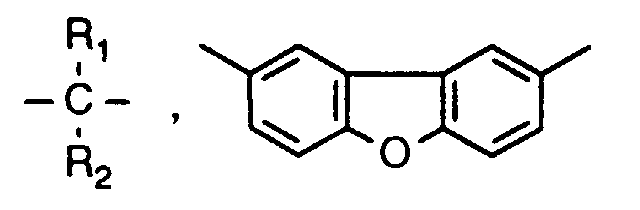
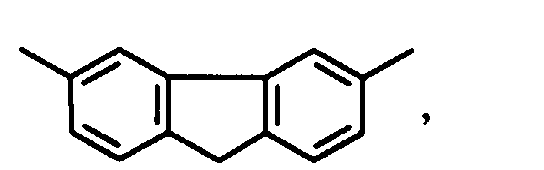
- Verfahren gemäss Anspruch 3, dadurch gekennzeichnet, dass man mindestens zwei Farbstoffe verwendet, ausgewählt aus der Gruppe, bestehend ausa) einem gelben Farbstoff der Formelworin
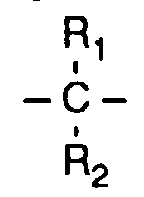
 Y und Y1 unabhängig voneinander je -SO2O-, -COO-, -CONH- oder -SO2NH-, X -C1-C4-Alkylen-, -CH=CH-, -O-, -S-, -SO2-, -NH-,oder
 wobei R1 und R2 unabhängig voneinander je C1-C4-Alkyl bedeuten, und
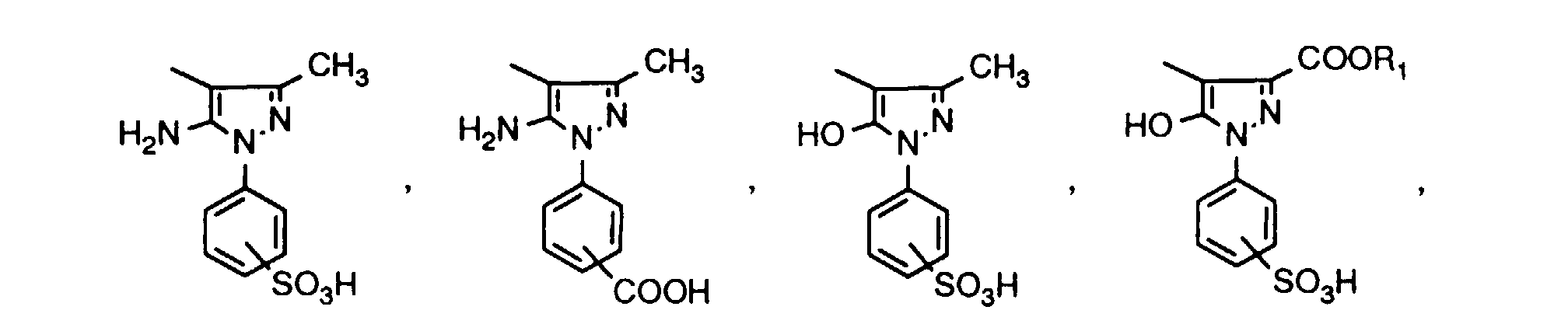
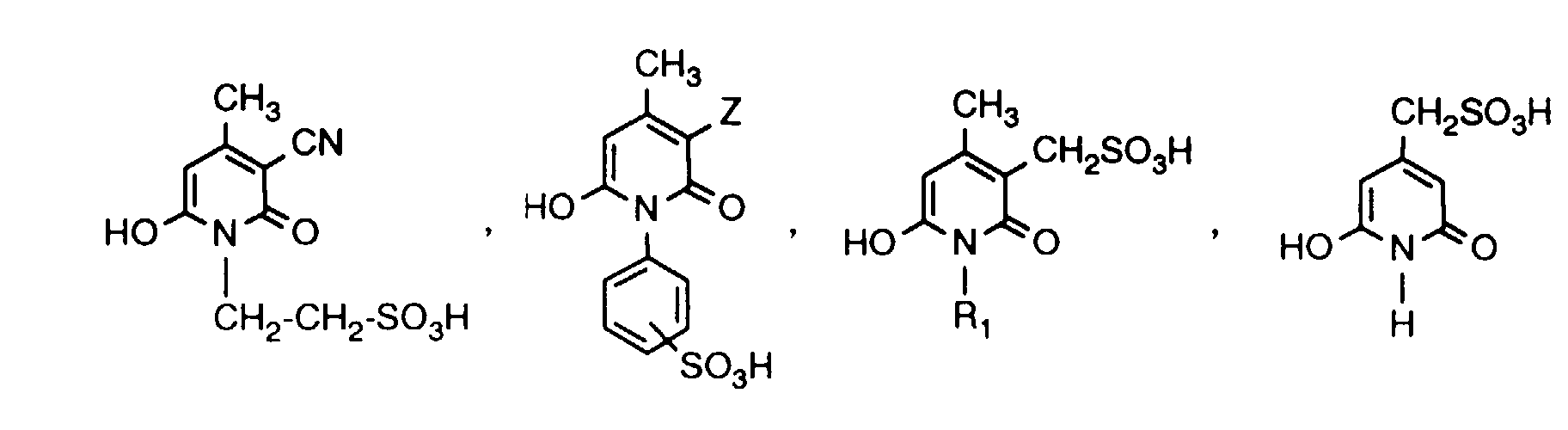
 K und K1 unabhängig voneinander je eine Kupplungskomponente der Formel
 oder
oder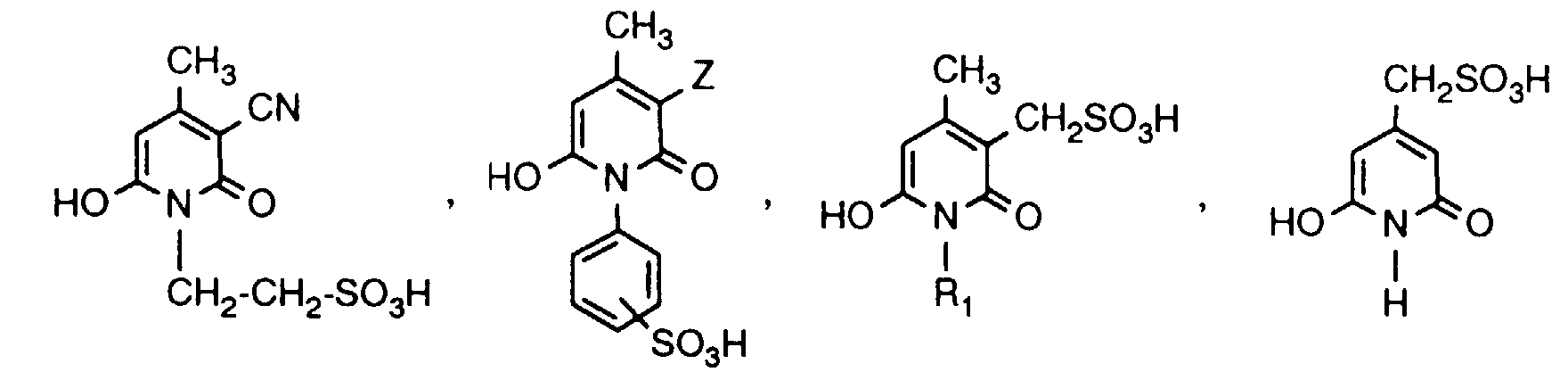 bedeuten, worin Z CN, COOH, COONH2 oder COOR1 bedeutet,
 b) einem roten Farbstoff der Formel
 worin K2 und K3 unabhängig voneinander je eine Kupplungskomponente der Formel
 bedeuten, worin Z1 Wasserstoff, OH oder NHR3 ist, wobei R3 Wasserstoff, C1-C4-Alkyl, Cyan-C2-C4-Alkyl, C1-C4-Alkylcarbonyl, Aminocarbonyl, Phenylcarbonyl oder Phenyl bedeutet, wobei die Phenylgruppe in den beiden letzgenannten Resten durch C1-C4-Alkyl substituiert sein kann, und
 R4 Wasserstoff oder Phenyl bedeutet,
undc) einem blauen Farbstoff der Formelworin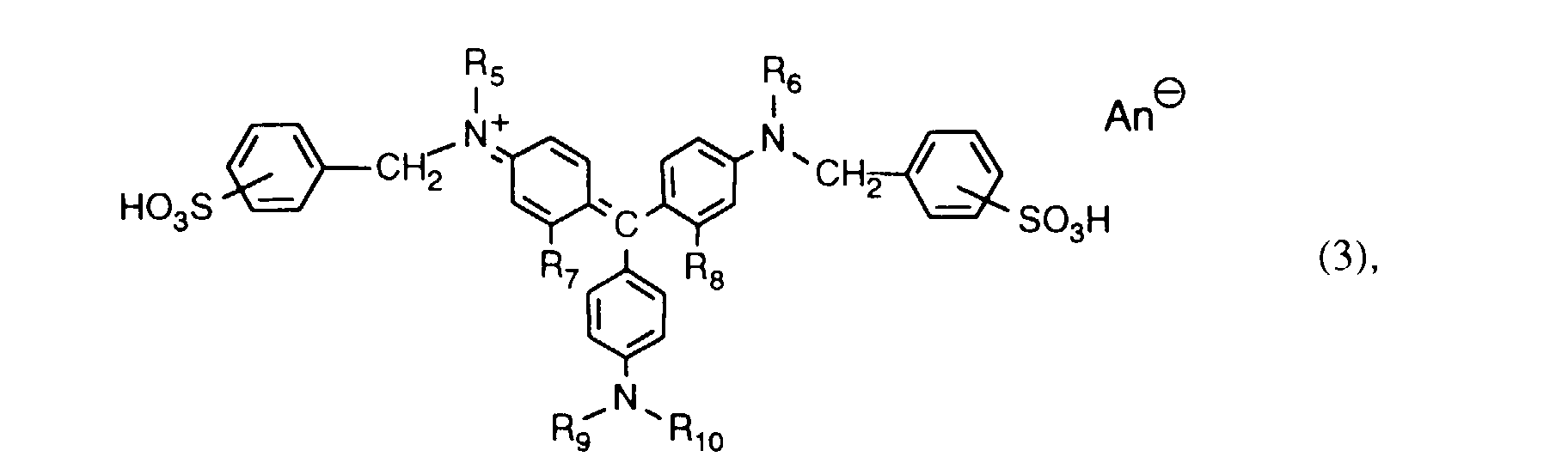
R5, R6, R7, R8 und R9 unabhängig voneinander je Wasserstoff oder C1-C4-Alkyl sind, R10 Wasserstoff, Phenyl oder durch C1-C4-Alkyl oder C1-C4-Alkoxy substituiertes Phenyl und An⊖ ein farbloses Anion bedeutet,
oder der Formelworin X' -C1-C4-Alkylen-, -CH=CH-, -O-, -S-, -SO2-, -NH-,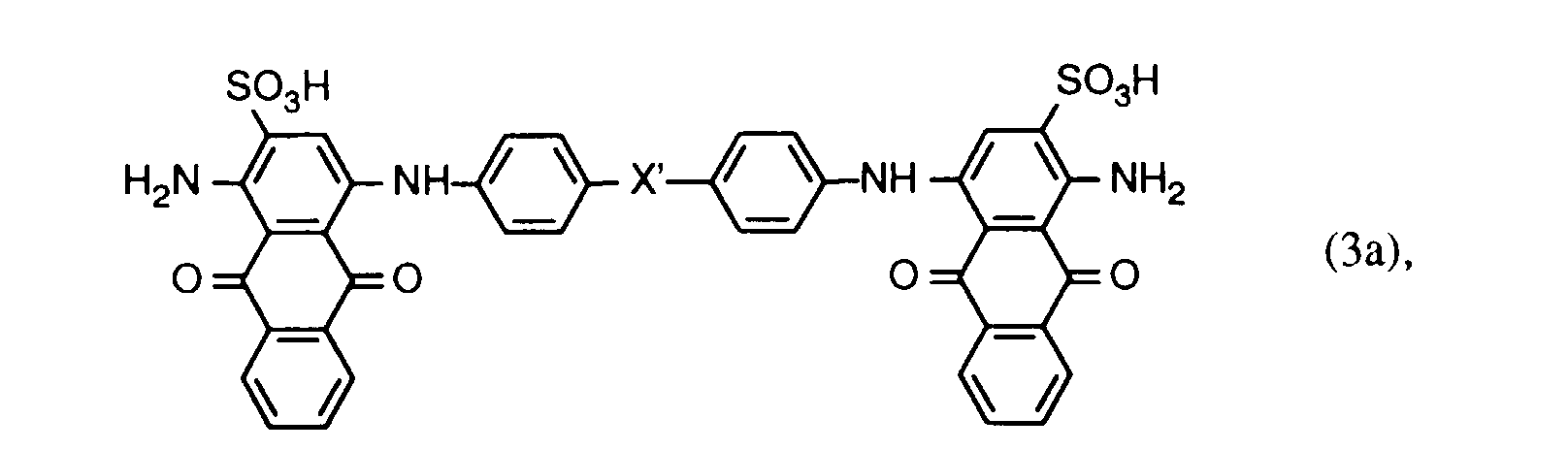
 -NH-CO-, -NH-SO2- oder -NH-CO-NH- ist, wobei R1 und R2 unabhängig voneinander je C1-C4-Alkyl bedeuten.
- Verfahren gemäss Anspruch 4, dadurch gekennzeichnet, dass man zum Trichromiefärben eine Mischung von wasserlöslichen Farbstoffen verwendet, enthaltend einen gelben Farbstoff der Formel (1), einen roten Farbstoff der Formel (2) und einen blauen Farbstoff der Formel (3) oder (3a).
- Verfahren gemäss einem der Ansprüche 1 bis 5, dadurch gekennzeichnet, dass man einen gelben Farbstoff der Formel (1) verwendet, worin Y und Y1 je -SO2O- bedeuten.
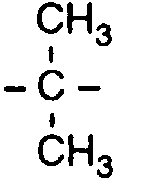
- Verfahren gemäss einem der Ansprüche 1 bis 6, dadurch gekennzeichnet, dass man einen gelben Farbstoff der Formel (1) verwendet, worin Xbedeutet.
- Verfahren gemäss einem der Ansprüche 1 bis 7, dadurch gekennzeichnet, dass man einen gelben Farbstoff der Formel (1) verwendet, worin K und K1 je eine Kupplungskomponente der Formelbedeuten.

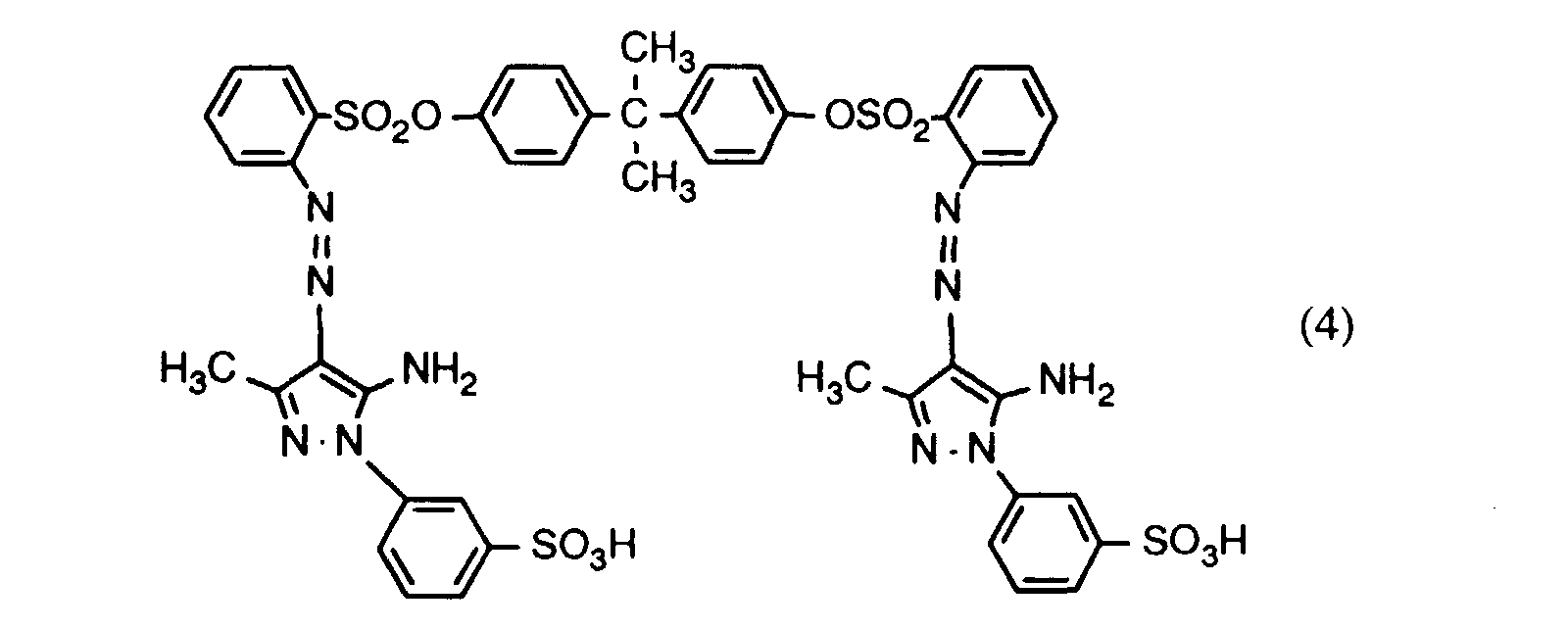
- Verfahren gemäss einem der Ansprüche 1 bis 8, dadurch gekennzeichnet, dass man den gelben Farbstoff der Formelverwendet.
- Verfahren gemäss einem der Ansprüche 1 bis 9, dadurch gekennzeichnet, dass man einen roten Farbstoff der Formel (2) verwendet, worin Y und Y1 je -SO2O- bedeuten.
- Verfahren gemäss einem der Ansprüche 1 bis 10, dadurch gekennzeichnet, dass man
einen roten Farbstoff der Formel (2) verwendet, worin Xbedeutet.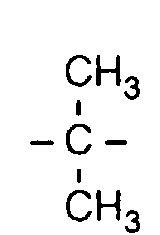
- Verfahren gemäss einem der Ansprüche 1 bis 11, dadurch gekennzeichnet, dass man einen roten Farbstoff der Formel (2) verwendet, worin K2 und K3 je eine Kupplungskomponente der Formelbedeuten, worin Z1 Wasserstoff, OH oder NHR3 ist, wobei R3 Wasserstoff, C1-C4-Alkyl, Cyan-C2-C4-Alkyl, C1-C4-Alkylcarbonyl, Aminocarbonyl, Phenylcarbonyl oder Phenyl bedeutet, wobei die Phenylgruppe in den beiden letzgenannten Resten durch C1-C4-Alkyl substituiert sein kann.
- Verfahren gemäss einem der Ansprüche 1 bis 12, dadurch gekennzeichnet, dass man den roten Farbstoff der Formelverwendet.
- Verfahren gemäss einem der Ansprüche 1 bis 13, dadurch gekennzeichnet, dass man einen blauen Farbstoff der Formel (3) verwendet, worin R5, R6, R7, R8 und R9 unabhängig voneinander je Wasserstoff oder C1-C2-Alkyl und R10 Wasserstoff, Phenyl oder durch C1-C2-Alkyl oder C1-C2-Alkoxy substituiertes Phenyl bedeutet, oder der Formel (3a), worin X' -C1-C4-Alkylen-, -CH=CH-,-NH-CO- oder -NH-CO-NH- ist, wobei R1 und R2 unabhängig voneinander je C1-C4-Alkyl bedeuten.

- Verfahren gemäss Anspruch 14, dadurch gekennzeichnet, dass man einen blauen Farbstoff der Formel (3) verwendet, worin R5 und R6 unabhängig voneinander je C1-C2-Alkyl, R7 und R8 unabhängig voneinander je Wasserstoff oder C1-C2-Alkyl, R9 Wasserstoff und R10 Phenyl oder durch C1-C2-Alkyl oder C1-C2-Alkoxy substituiertes Phenyl bedeutet, oder einen blauen Farbstoff der Formel (3a), worin X' -C1-C4-Alkylen-oderist, wobei R1 und R2 unabhängig voneinander je C1-C4-Alkyl bedeuten.

- Verfahren gemäss einem der Ansprüche 1 bis 15, dadurch gekennzeichnet, dass man den blauen Farbstoff der Formeloder der Formel
 oder der Formel
 oder der Formel
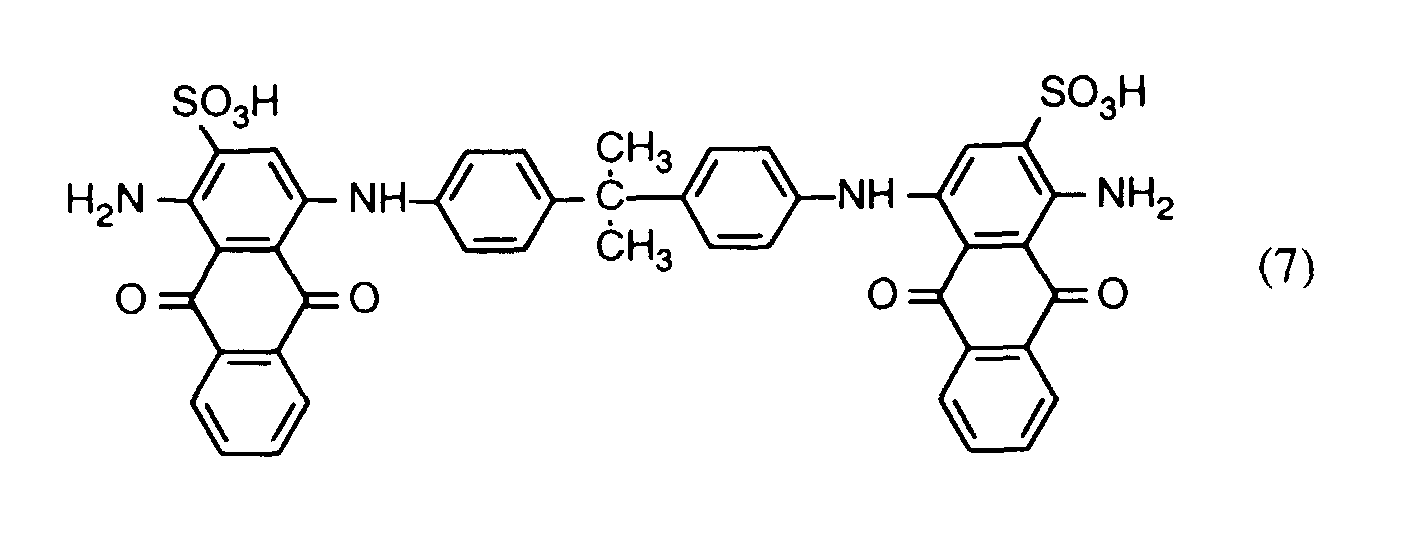 verwendet.
- Verfahren gemäss einem der Ansprüche 1 bis 16, dadurch gekennzeichnet, dass man zum Trichromiefärben eine Farbstoffmischung, enthaltend den gelben Farbstoff der Formel (4), den roten Farbstoff der Formel (5) und den blauen Farbstoff der Formel (6), (6a), (7) oder (7a), verwendet.
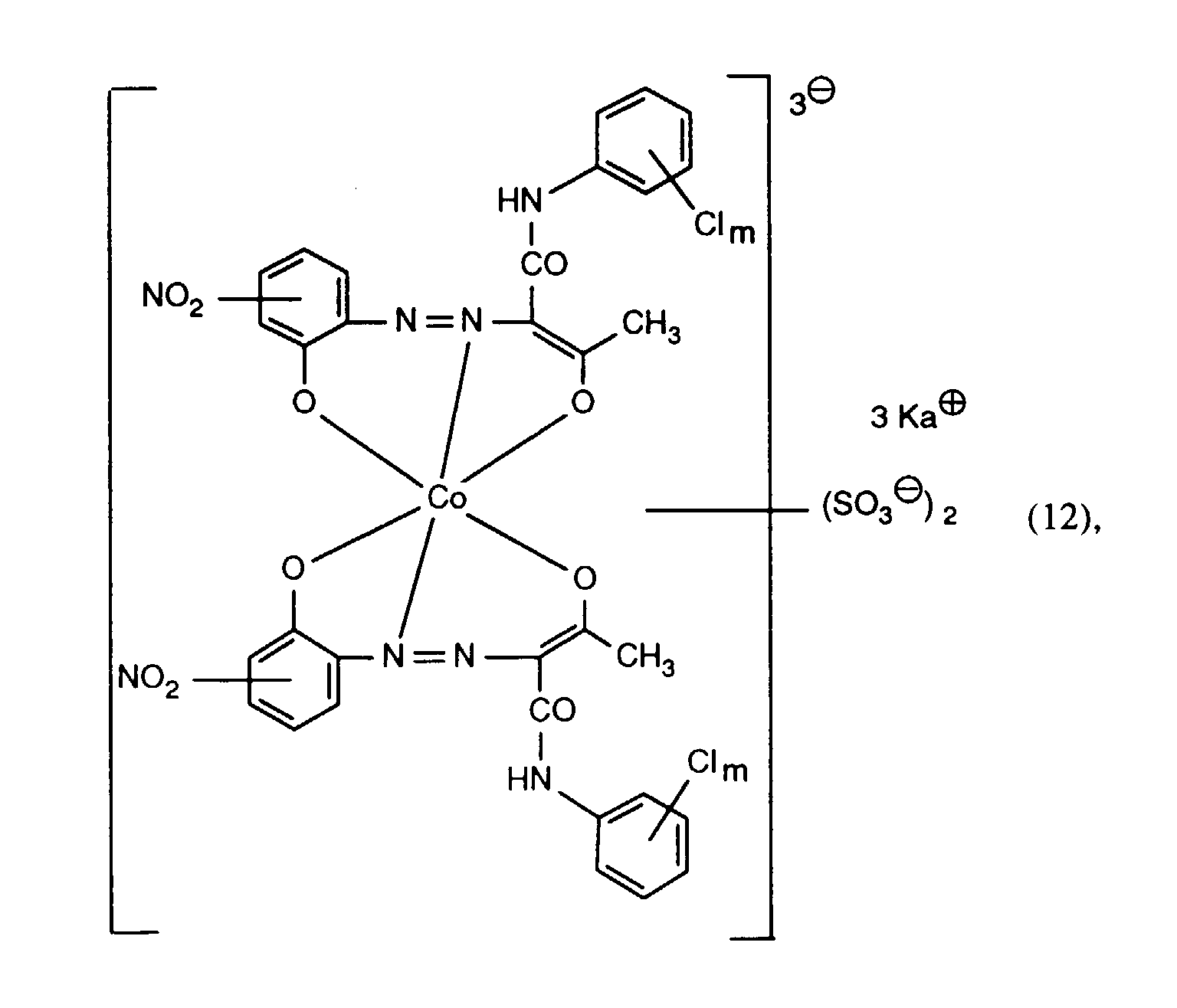
- Verfahren gemäss Anspruch 2, dadurch gekennzeichnet, dass man als wasserlösliche Farbstoffe symmetrische 1:2-Komplexe der Formelverwendet, worin
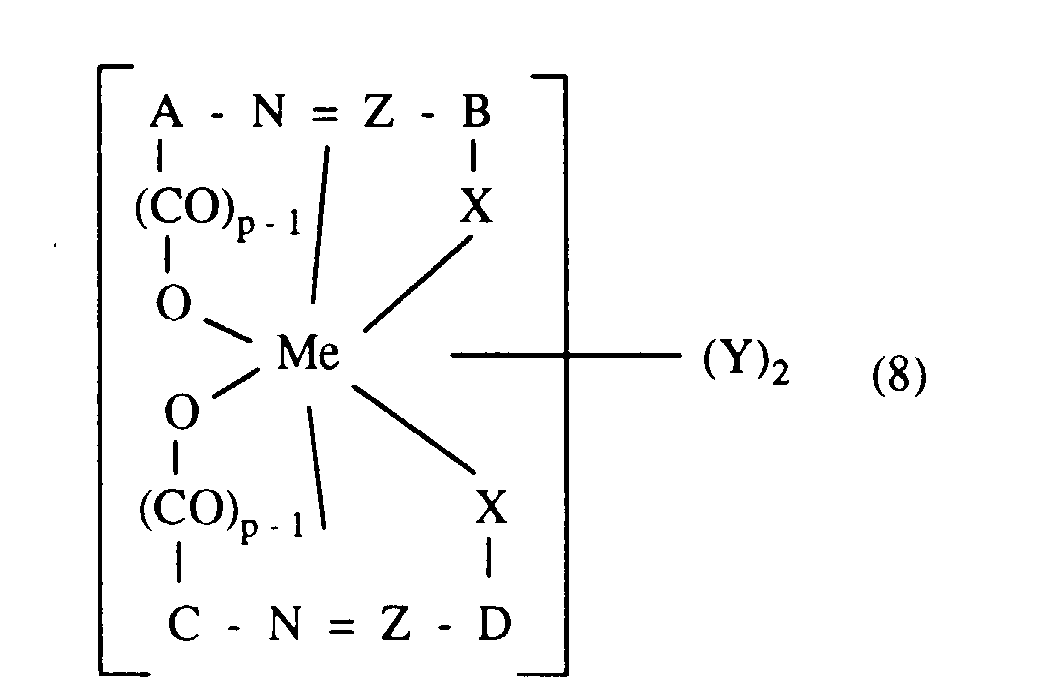
- Z
- Stickstoff oder eine CH-Gruppe,
- A und C
- identische Reste der Benzol- oder Naphthalinreihe, welche in o-Stellung zur Azo oder Azomethingruppe eine Hydroxy- oder Carboxygruppe enthalten,
- B und D
- identische Reste einer Kupplungskomponente, wenn Z Stickstoff ist, wobei die Kupplungskomponente in o- oder α-Stellung zur Azogruppe die Gruppe X enthält, oder identische Reste eines o-Hydroxyaldehyds, wenn Z die CH-Gruppe darstellt,
- X
- Sauerstoff oder eine Gruppe -NQ-, worin Q Wasserstoff oder C1-C4-Alkyl bedeutet,
- Me
- Chrom oder Kobalt,
- Y
- die SO3H-Gruppe und
- p
- 1 oder 2 bedeutet,
a) keine oder nur eine geringe Neigung zur Aggregation in elektrolythaltiger, wässriger Lösung zeigen undb) auf Standard-Chromleder eine Eindringtiefe zwischen 20 und 200 µm aufweisen, wobei die Unterschiede in der Eindringtiefe der einzelnen Farbstoffe des Gemisches innerhalb von 50 µm liegen. - Verfahren gemäss Anspruch 18, dadurch gekennzeichnet, dass man Farbstoffe der Formel (8) verwendet, worin X Sauerstoff ist.
- Verfahren gemäss Anspruch 18 oder 19, dadurch gekennzeichnet, dass man Farbstoffe der Formel (8) verwendet, worin p gleich 1 ist.
- Verfahren gemäss einem der Ansprüche 18 bis 20, dadurch gekennzeichnet, dass man Farbstoffe der Formel (8) verwendet, worin A und C jeweils den Rest eines 1-Hydroxy-2-aminobenzols bedeuten, welcher gegebenenfalls ein- oder mehrmals durch gleiche oder verschiedene Substituenten aus der Reihe Nitro, Sulfo, Chlor, Methyl oder Methoxy substituiert ist.
- Verfahren gemäss einem der Ansprüche 18 bis 21, dadurch gekennzeichnet, dass man Farbstoffe der Formel (8) verwendet, worin A und C jeweils den Rest eines 1-Hydroxy-2-aminobenzols bedeuten, der in 4- oder 5- Stellung eine Nitrogruppe trägt, oder den Rest eines l-Hydroxy-2-aminobenzols, der in 4-Stellung eine Nitrogruppe und in 6-Stellung eine Sulfogruppe trägt, oder den Rest eines 1-Hydroxy-2-aminobenzols, der in 4-Stellung eine Sulfogruppe und in 6-Stellung eine Nitrogruppe trägt.
- Verfahren gemäss einem der Ansprüche 18 bis 22, dadurch gekennzeichnet, dass man Farbstoffe der Formel (8) verwendet, worin B und D jeweils den Rest einer der folgenden Kupplungskomponenten bedeuten:gegebenenfalls durch C1-C4-Alkyl oder C1-C4-Alkoxy, Amino oder Acylamino substituiertes in o-Stellung kuppelndes Phenol,Resorcin,m-Phenylendiamin, das gegebenenfalls in 4-Stellung durch Sulfo, Chlor, Methyl oder Methoxy substituiert ist,Naphthole, die gegebenenfalls mit C1-C4-Alkyl oder C1-C4-Alkoxy, Chlor, Amino, Acylamino oder Sulfo substituiert sind,5-Pyrazolone oder 5-Aminopyrazole, die in 1-Stellung einen gegebenenfalls mit Chlor, Nitro, C1-C4-Alkyl-, C1-C4-Alkoxy- oder Sulfogruppen substituierten Phenyl- oder Naphthylrest besitzen und in 3-Stellung eine C1-C4-Alkylgruppe, insbesondere eine Methylgruppe, aufweisen,Acetessigsäureamide, Acetessigsäureanilide und Benzoylessigsäureanilide, die im Anilidkern gegebenenfalls mit Chlor, C1-C4-Alkyl-, C1-C4-Alkoxy- oder Sulfogruppen substituiert sein können,6-Hydroxy-3-cyano- oder 6-Hydroxy-3-carbonamido-4-alkyl-2-pyridone, die in 1-Stellung durch gegebenenfalls substituiertes C1-C4-Alkyl, z.B. Methyl, Isopropyl, β-Hydroxyethyl, β-Aminoethyl oder γ-Isopropoxypropyl oder durch Phenyl substituiert sind und in 4-Stellung eine C1-C4-Alkylgruppe, insbesondere eine Methylgruppe, aufweisen.
- Verfahren gemäss Anspruch 23, dadurch gekennzeichnet, dass man Farbstoffe der Formel (8) verwendet, worin B und D jeweils den Rest einer der folgenden Kupplungskomponenten bedeuten:
p-C1-C4-Alkylphenol, Resorcin, m-Phenylendiamin, 1- oder 2-Naphthol, gegebenenfalls mit Sulfo substituiert, 1-Phenyl-3-methyl-5-pyrazolon oder Acetessigsäureanilid, wobei die Phenylgruppe in den beiden letztgenannten Verbindungen durch Chlor, C1-C4-Alkyl, C1-C4-Alkoxy oder Sulfo substituiert sein kann. - Verfahren gemäss Anspruch 18, dadurch gekennzeichnet, dass man als wasserlösliche Farbstoffe symmetrische 1:2- Komplexe der Formelverwendet, worin

Z Stickstoff oder eine CH-Gruppe,- A' und C'
- jeweils den Rest den Rest eines 1-Hydroxy-2-aminobenzols bedeuten, der in 4- oder 5- Stellung eine Nitrogruppe trägt, oder den Rest eines 1-Hydroxy-2-aminobenzols, der in 4-Stellung eine Nitrogruppe und in 6-Stellung eine Sulfogruppe trägt, oder den Rest eines 1-Hydroxy-2-aminobenzols, der in 4-Stellung eine Sulfogruppe und in 6-Stellung eine Nitrogruppe trägt,
- B' und D'
- jeweils den Rest einer der folgenden Kupplungskomponenten bedeuten, falls Z Stickstoff ist: p-C1-C4-Alkylphenol, Resorcin, m-Phenylendiamin, 1- oder 2-Naphthol, gegebenenfalls mit Sulfo substituiert, 1-Phenyl-3-methyl-5-pyrazolon oder Acetessigsäureanilid, wobei die Phenylgruppe in den beiden letztgenannten Verbindungen durch Chlor, C1-C4-Alkyl, C1-C4-Alkoxy oder Sulfo substituiert sein kann, oder, falls Z die CH-Gruppe bedeutet, den Rest eines o- Hydroxybenzaldehyds oder o-Hydroxynaphthaldehyds, die durch Phenylazo oder Sulfophenylazo substituiert sein können,
- Me
- Kobalt oder Chrom und
- Ka⊕
- ein Kation bedeutet.
- Verfahren gemäss Anspruch 18, dadurch gekennzeichnet, dass man mindestens drei wasserlösliche Farbstoffe der Formel (8) verwendet.
- Verfahren gemäss einem der Ansprüche 18 bis 26, dadurch gekennzeichnet, dass man eine Mischung von wasserlöslichen Farbstoffen verwendet, enthaltenda) einen Farbstoff der Formelworin m eine ganze Zahl von 0 bis 2, Me Kobalt oder Chrom, Ka⊕ ein Kation und Y' Methyl, -CONH2 oder -CONHR1 bedeutet, wobei R1 C1-C4-Alkyl bedeutet,
 b) einen Farbstoff der Formelworin Y'' Wasserstoff, Chlor, Methyl oder Methoxy, Me Kobalt oder Chrom und Ka⊕ ein Kation bedeutet, sowie
 c) einen weiteren Farbstoff der oben angegebenen Formel (10) oder einen Farbstoff der Formelworin m eine ganze Zahl von 0 bis 2 und Ka⊕ ein Kation bedeutet.
- Verfahren gemäss einem der Ansprüche 1 bis 27, dadurch gekennzeichnet, dass man mindestens zwei Pigmente verwendet, ausgewählt aus einer Gruppe von zum Trichromiefärben geeigneten Pigmenten.
- Verfahren gemäss Anspruch 28, dadurch gekennzeichnet, dass man Pigmente verwendet, ausgewählt aus der Gruppe, bestehend ausa) gelben Pigmenten der Formelworin R11 und R12 unabhängig voneinander je Wasserstoff, C1-C4-Alkyl, C1-C4-Alkoxy oder Halogen bedeuten,
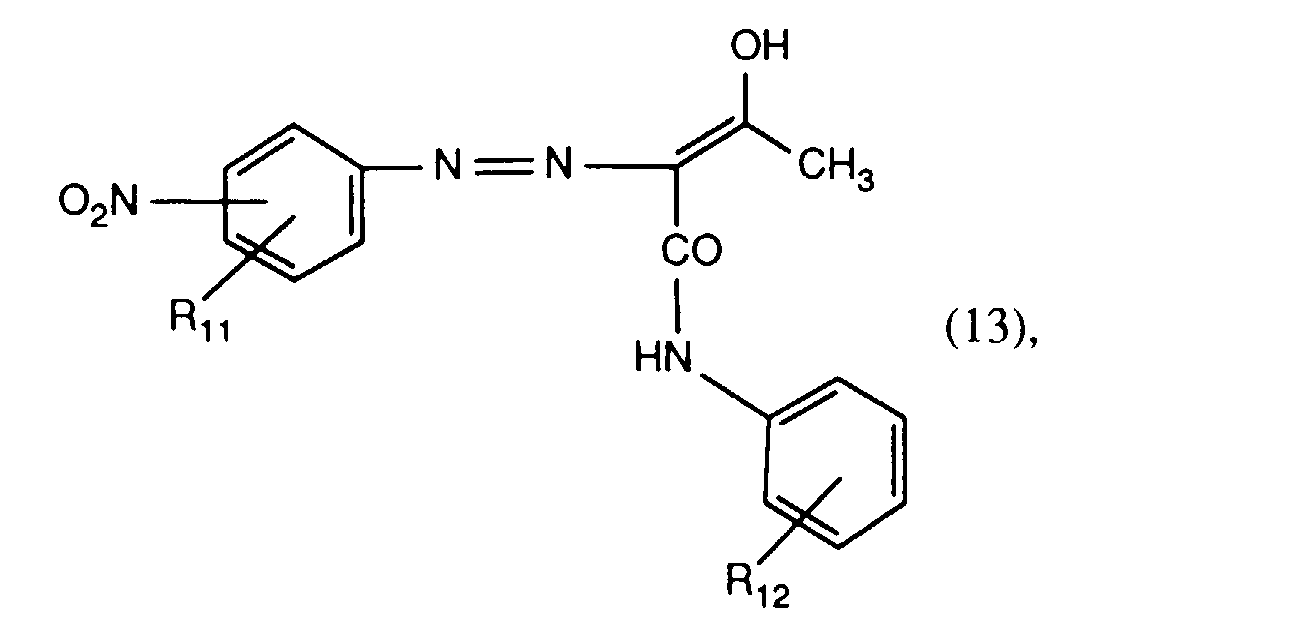 b) roten Pigmenten der Formelworin R11, R12, R13 und R14 unabhängig voneinander je Wasserstoff, C1-C4-Alkyl, C1-C4-Alkoxy oder Halogen und R15 einen Rest der Formel -SO2-N(R16)2 bedeuten, wobei R16 gegebenenfalls substituiertes C1-C4-Alkyl ist, und
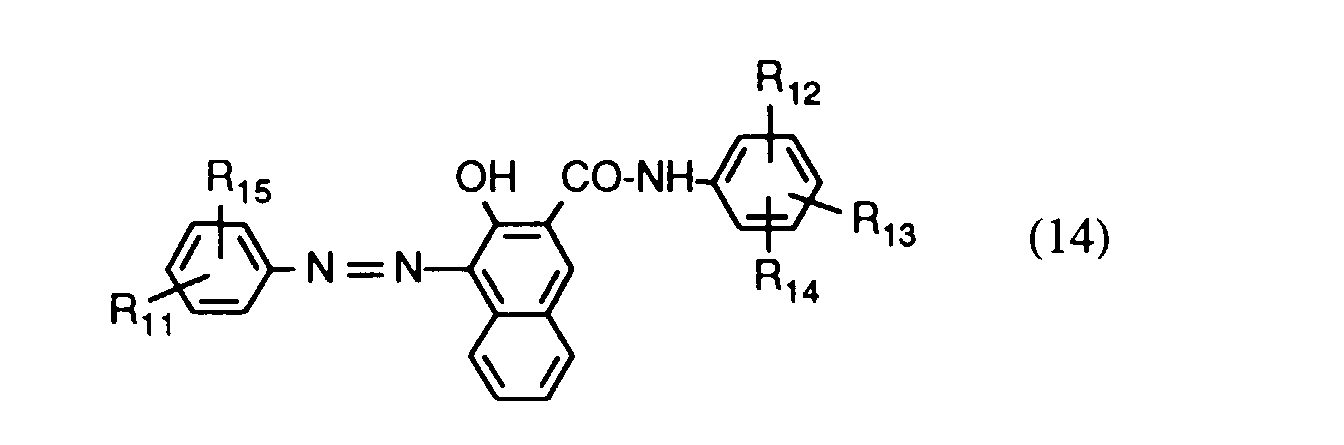 c) dem blauen Pigment der Formel
- Verfahren gemäss einem der Ansprüche 1 bis 29, dadurch gekennzeichnet, dass man ein braunes Pigment der Formelverwendet.

- Verfahren gemäss einem der Ansprüche 1 bis 30, dadurch gekennzeichnet, dass man das gelbe Pigment der Formeldas rote Pigment der Formel
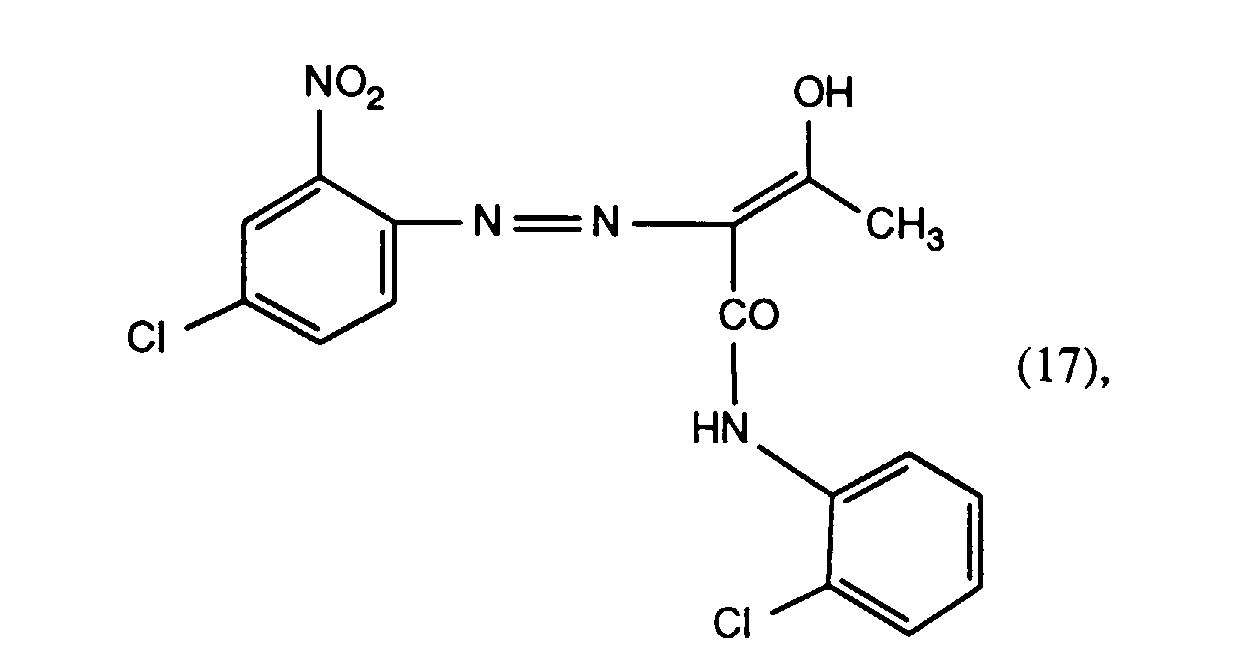 das blaue Pigment der Formel
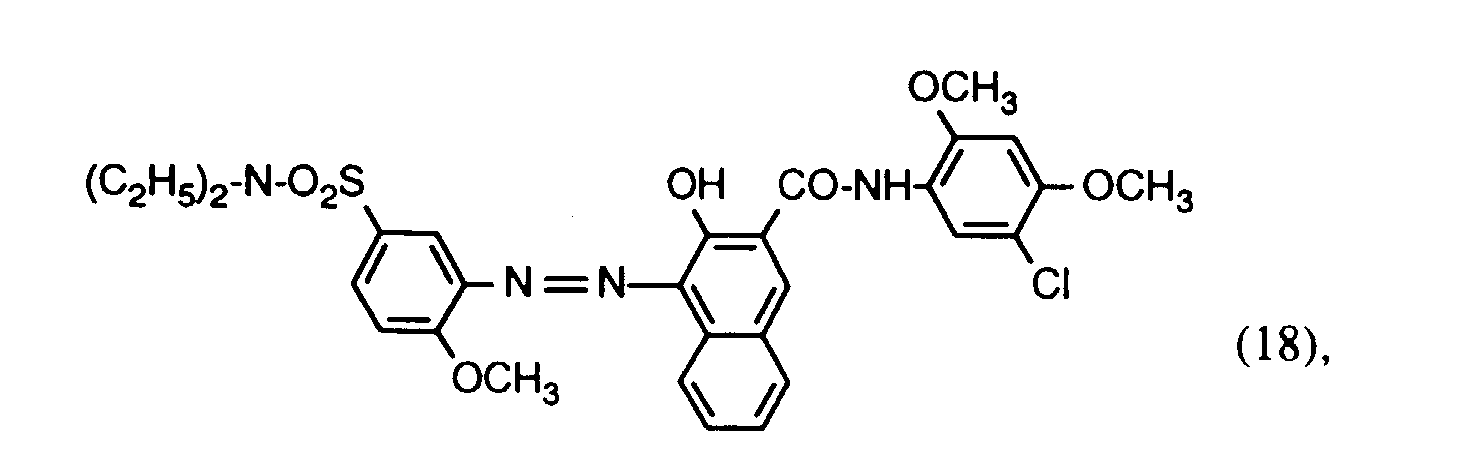 oder das braune Pigment der Formel
 verwendet.
- Verfahren gemäss einem der Ansprüche 1 bis 31, dadurch gekennzeichnet, dass man vor oder während Behandlung mit den Pigmenten das Leder mit einem kationischen Hilfsmittel behandelt.
- Verfahren gemäss Anspruch 32, dadurch gekennzeichnet, dass man als kationische Hilfsmittel polyquaternäre Amin-Ethylenoxid-Addukte, kationische Zubereitungen auf Basis chlorierter Kohlenwasserstoffe und n-Alkylderivaten oder kationische chromhaltige Phenolsulfosäure-Kondensate verwendet.
- Verfahren gemäss Anspruch 33, dadurch gekennzeichnet, dass man als kationische Hilfsmittel kationische chromhaltige Phenolsulfosäure-Kondensate verwendet.
- Das nach dem Verfahren gemäss den Ansprüchen 1 - 34 gefärbte Leder.
Applications Claiming Priority (3)
| Application Number | Priority Date | Filing Date | Title |
|---|---|---|---|
| CH311593 | 1993-10-15 | ||
| CH3115/93 | 1993-10-15 | ||
| CH311593 | 1993-10-15 |
Publications (2)
| Publication Number | Publication Date |
|---|---|
| EP0648816A1 EP0648816A1 (de) | 1995-04-19 |
| EP0648816B1 true EP0648816B1 (de) | 2000-01-26 |
Family
ID=4248943
Family Applications (1)
| Application Number | Title | Priority Date | Filing Date |
|---|---|---|---|
| EP19940810586 Expired - Lifetime EP0648816B1 (de) | 1993-10-15 | 1994-10-06 | Färben von Leder mit Farbstoffmischungen |
Country Status (3)
| Country | Link |
|---|---|
| EP (1) | EP0648816B1 (de) |
| DE (1) | DE59409101D1 (de) |
| ES (1) | ES2144503T3 (de) |
Families Citing this family (3)
| Publication number | Priority date | Publication date | Assignee | Title |
|---|---|---|---|---|
| EP0889934A1 (de) * | 1996-03-26 | 1999-01-13 | Basf Aktiengesellschaft | Stabile farbmittelzusammensetzungen |
| CA2445022A1 (en) * | 2001-05-07 | 2002-11-14 | Ciba Specialty Chemicals Holding Inc. | Pyridone dyes, a process for their preparation and their use in the production of coloured plastics or polymeric colour particles |
| BR0309630A (pt) * | 2002-04-29 | 2005-03-08 | Ciba Sc Holding Ag | Composições e métodos para provisão de reologia aperfeiçoada a tintas para impressão e tintas para pintura à base de pigmento |
Family Cites Families (5)
| Publication number | Priority date | Publication date | Assignee | Title |
|---|---|---|---|---|
| DE3049552A1 (de) * | 1980-12-31 | 1982-07-29 | Basf Ag, 6700 Ludwigshafen | Komplexfarbstoff-gemische |
| US4452602A (en) * | 1981-03-23 | 1984-06-05 | Puentener Alois | Process for dyeing leather with mixtures of dyes |
| ES2049014T3 (es) * | 1989-12-11 | 1994-04-01 | Ciba Geigy Ag | Procedimiento de tintura del cuero. |
| DE59208182D1 (de) * | 1991-12-17 | 1997-04-17 | Ciba Geigy | Farbstoffmischungen und deren Verwendung |
| ES2130240T3 (es) * | 1992-02-28 | 1999-07-01 | Ciba Geigy Ag | Procedimiento para teñir cuero con mezclas de colorantes. |
-
1994
- 1994-10-06 ES ES94810586T patent/ES2144503T3/es not_active Expired - Lifetime
- 1994-10-06 DE DE59409101T patent/DE59409101D1/de not_active Expired - Fee Related
- 1994-10-06 EP EP19940810586 patent/EP0648816B1/de not_active Expired - Lifetime
Also Published As
| Publication number | Publication date |
|---|---|
| ES2144503T3 (es) | 2000-06-16 |
| DE59409101D1 (de) | 2000-03-02 |
| EP0648816A1 (de) | 1995-04-19 |
Similar Documents
| Publication | Publication Date | Title |
|---|---|---|
| EP0061670B1 (de) | Verfahren zum Färben von Leder und Pelzen mit Farbstoffmischungen | |
| DE2520526C2 (de) | Neue Chromkomplexfarbstoffe, deren Herstellung und Verwendung | |
| EP0377409B1 (de) | Verfahren zum Färben von Leder | |
| EP0558450B1 (de) | Verfahren zum Färben von Leder mit Farbstoffmischungen | |
| EP0577556B1 (de) | Verfahren zum Trichromiefärben von Leder mit Farbstoffmischungen | |
| EP0564404B1 (de) | Verfahren zum Färben von Leder mit Farbstoffmischungen | |
| EP0181836B1 (de) | Verfahren zur Verbesserung der Lichtechtheit von Lederfärbungen | |
| EP0110825B1 (de) | Unsymmetrische 1:2-Chromkomplexfarbstoffe, enthaltend eine Azo- und eine Azomethinverbindung | |
| EP0648816A1 (de) | Färben von Leder mit Farbstoffmischungen | |
| EP0613928B1 (de) | 1:2 Chromkomplexfarbstoffe | |
| EP0231147B1 (de) | Verfahren zum Trichromiefärben von Leder | |
| EP0079858B1 (de) | Azofarbstoffe, Metallkomplexe dieser Farbstoffe, deren Herstellung und Verwendung | |
| EP0148121B1 (de) | Unsymmetrische 1:2-Chromkomplexfarbstoffe | |
| EP0047427B1 (de) | Sulfonsäuregruppenhaltige 1:2-Chromkomplexfarbstoffe | |
| DE1012007B (de) | Verfahren zur Herstellung chromhaltiger Azofarbstoffe | |
| EP0148120B1 (de) | Unsymmetrische 1:2-Chromkoplexfarbstoffe | |
| DE3631753A1 (de) | Asymmetrische 1:2-metallkomplexfarbstoffe | |
| EP0151369B1 (de) | Unsymmetrische 1:2-Chromkomplexe, enthaltend eine Azo- und eine Azomethinverbindung | |
| EP0150676B1 (de) | 1:2-chromkomplexfarbstoffe | |
| DE3601655A1 (de) | Unsymmetrische 1:2-chromkomplexfarbstoffe | |
| DE3703361A1 (de) | Unsymmetrische 1:2-chromkomplexfarbstoffe | |
| DE3703343A1 (de) | Unsymmetrische 1:2-chromkomplexfarbstoffe | |
| EP0583607B1 (de) | Unsymmetrische 1:2-chromkomplexfarbstoffe | |
| DE1008254B (de) | Verfahren zum Faerben stickstoffhaltiger Fasern | |
| EP0158098B1 (de) | Mischungen von 1:2-Chromkomplexfarbstoffen |
Legal Events
| Date | Code | Title | Description |
|---|---|---|---|
| PUAI | Public reference made under article 153(3) epc to a published international application that has entered the european phase |
Free format text: ORIGINAL CODE: 0009012 |
|
| AK | Designated contracting states |
Kind code of ref document: A1 Designated state(s): CH DE ES FR GB IT LI |
|
| 17P | Request for examination filed |
Effective date: 19950921 |
|
| RAP1 | Party data changed (applicant data changed or rights of an application transferred) |
Owner name: CIBA SC HOLDING AG |
|
| RAP3 | Party data changed (applicant data changed or rights of an application transferred) |
Owner name: CIBA SPECIALTY CHEMICALS HOLDING INC. |
|
| 17Q | First examination report despatched |
Effective date: 19980827 |
|
| GRAG | Despatch of communication of intention to grant |
Free format text: ORIGINAL CODE: EPIDOS AGRA |
|
| GRAG | Despatch of communication of intention to grant |
Free format text: ORIGINAL CODE: EPIDOS AGRA |
|
| GRAH | Despatch of communication of intention to grant a patent |
Free format text: ORIGINAL CODE: EPIDOS IGRA |
|
| GRAH | Despatch of communication of intention to grant a patent |
Free format text: ORIGINAL CODE: EPIDOS IGRA |
|
| GRAA | (expected) grant |
Free format text: ORIGINAL CODE: 0009210 |
|
| AK | Designated contracting states |
Kind code of ref document: B1 Designated state(s): CH DE ES FR GB IT LI |
|
| REG | Reference to a national code |
Ref country code: CH Ref legal event code: EP |
|
| ITF | It: translation for a ep patent filed | ||
| REF | Corresponds to: |
Ref document number: 59409101 Country of ref document: DE Date of ref document: 20000302 |
|
| RAP2 | Party data changed (patent owner data changed or rights of a patent transferred) |
Owner name: TFL LEDERTECHNIK GMBH & CO. KG |
|
| GBT | Gb: translation of ep patent filed (gb section 77(6)(a)/1977) |
Effective date: 20000317 |
|
| ET | Fr: translation filed | ||
| REG | Reference to a national code |
Ref country code: ES Ref legal event code: FG2A Ref document number: 2144503 Country of ref document: ES Kind code of ref document: T3 |
|
| PG25 | Lapsed in a contracting state [announced via postgrant information from national office to epo] |
Ref country code: LI Free format text: LAPSE BECAUSE OF NON-PAYMENT OF DUE FEES Effective date: 20001031 Ref country code: CH Free format text: LAPSE BECAUSE OF NON-PAYMENT OF DUE FEES Effective date: 20001031 |
|
| PLBE | No opposition filed within time limit |
Free format text: ORIGINAL CODE: 0009261 |
|
| STAA | Information on the status of an ep patent application or granted ep patent |
Free format text: STATUS: NO OPPOSITION FILED WITHIN TIME LIMIT |
|
| 26N | No opposition filed | ||
| REG | Reference to a national code |
Ref country code: CH Ref legal event code: PL |
|
| REG | Reference to a national code |
Ref country code: GB Ref legal event code: IF02 |
|
| PGFP | Annual fee paid to national office [announced via postgrant information from national office to epo] |
Ref country code: IT Payment date: 20070911 Year of fee payment: 14 Ref country code: ES Payment date: 20071010 Year of fee payment: 14 Ref country code: DE Payment date: 20071031 Year of fee payment: 14 |
|
| PGFP | Annual fee paid to national office [announced via postgrant information from national office to epo] |
Ref country code: GB Payment date: 20071003 Year of fee payment: 14 Ref country code: FR Payment date: 20071026 Year of fee payment: 14 |
|
| GBPC | Gb: european patent ceased through non-payment of renewal fee |
Effective date: 20081006 |
|
| REG | Reference to a national code |
Ref country code: FR Ref legal event code: ST Effective date: 20090630 |
|
| PG25 | Lapsed in a contracting state [announced via postgrant information from national office to epo] |
Ref country code: IT Free format text: LAPSE BECAUSE OF NON-PAYMENT OF DUE FEES Effective date: 20081006 Ref country code: DE Free format text: LAPSE BECAUSE OF NON-PAYMENT OF DUE FEES Effective date: 20090501 |
|
| PG25 | Lapsed in a contracting state [announced via postgrant information from national office to epo] |
Ref country code: FR Free format text: LAPSE BECAUSE OF NON-PAYMENT OF DUE FEES Effective date: 20081031 |
|
| PG25 | Lapsed in a contracting state [announced via postgrant information from national office to epo] |
Ref country code: GB Free format text: LAPSE BECAUSE OF NON-PAYMENT OF DUE FEES Effective date: 20081006 |
|
| REG | Reference to a national code |
Ref country code: ES Ref legal event code: FD2A Effective date: 20081007 |
|
| PG25 | Lapsed in a contracting state [announced via postgrant information from national office to epo] |
Ref country code: ES Free format text: LAPSE BECAUSE OF NON-PAYMENT OF DUE FEES Effective date: 20081007 |