EP0627942B1 - Improvements in or relating to contrast agents - Google Patents
Improvements in or relating to contrast agents Download PDFInfo
- Publication number
- EP0627942B1 EP0627942B1 EP93905527A EP93905527A EP0627942B1 EP 0627942 B1 EP0627942 B1 EP 0627942B1 EP 93905527 A EP93905527 A EP 93905527A EP 93905527 A EP93905527 A EP 93905527A EP 0627942 B1 EP0627942 B1 EP 0627942B1
- Authority
- EP
- European Patent Office
- Prior art keywords
- polymer
- added
- mmol
- contrast agent
- solution
- Prior art date
- Legal status (The legal status is an assumption and is not a legal conclusion. Google has not performed a legal analysis and makes no representation as to the accuracy of the status listed.)
- Expired - Lifetime
Links
Images
Classifications
-
- A—HUMAN NECESSITIES
- A61—MEDICAL OR VETERINARY SCIENCE; HYGIENE
- A61K—PREPARATIONS FOR MEDICAL, DENTAL OR TOILETRY PURPOSES
- A61K49/00—Preparations for testing in vivo
- A61K49/06—Nuclear magnetic resonance [NMR] contrast preparations; Magnetic resonance imaging [MRI] contrast preparations
- A61K49/18—Nuclear magnetic resonance [NMR] contrast preparations; Magnetic resonance imaging [MRI] contrast preparations characterised by a special physical form, e.g. emulsions, microcapsules, liposomes
- A61K49/1818—Nuclear magnetic resonance [NMR] contrast preparations; Magnetic resonance imaging [MRI] contrast preparations characterised by a special physical form, e.g. emulsions, microcapsules, liposomes particles, e.g. uncoated or non-functionalised microparticles or nanoparticles
- A61K49/1821—Nuclear magnetic resonance [NMR] contrast preparations; Magnetic resonance imaging [MRI] contrast preparations characterised by a special physical form, e.g. emulsions, microcapsules, liposomes particles, e.g. uncoated or non-functionalised microparticles or nanoparticles coated or functionalised microparticles or nanoparticles
-
- A—HUMAN NECESSITIES
- A61—MEDICAL OR VETERINARY SCIENCE; HYGIENE
- A61K—PREPARATIONS FOR MEDICAL, DENTAL OR TOILETRY PURPOSES
- A61K49/00—Preparations for testing in vivo
- A61K49/22—Echographic preparations; Ultrasonic imaging preparations
- A61K49/222—Echographic preparations; Ultrasonic imaging preparations characterised by a special physical form, e.g. emulsions, liposomes
- A61K49/223—Microbubbles, hollow microspheres, free gas bubbles, gas microspheres
Definitions
- This invention relates to novel contrast agents, more particularly to new gas-containing or gas-generating contrast agents of use in diagnostic imaging.
- ultrasonic imaging comprises a potentially valuable diagnostic tool, for example in studies of the vascular system, particularly in cardiography, and of tissue microvasculature.
- contrast agents has been proposed to enhance the acoustic images so obtained, including suspensions of solid particles, emulsified liquid droplets, gas bubbles and encapsulated gases or liquids. It is generally accepted that low density contrast agents which are easily compressible are particularly efficient in terms of the acoustic backscatter they generate, and considerable interest has therefore been shown in the preparation of gas-containing and gas-generating systems.
- WO 80/02365 discloses the use of gelatin encapsulated gas microbubbles for enhancing ultrasonic images. Such microbubbles do not, however, exhibit adequate stability at the dimensions preferred for use in echocardiography (1-10 ⁇ m) in view of the extreme thinness of the encapsulating coating.
- US-A-4774958 discloses the use of microbubble dispersions stabilised by encapsulation in denatured protein, e.g. human serum albumin. Such systems permit the production of microbubble systems having a size of e.g. 2-5 ⁇ m but still do not permit efficient visualisation of the left heart and myocardium. The use of such protein-derived agents may also create problems with regard to potential allergenic reactions.
- denatured protein e.g. human serum albumin.
- Such systems permit the production of microbubble systems having a size of e.g. 2-5 ⁇ m but still do not permit efficient visualisation of the left heart and myocardium.
- the use of such protein-derived agents may also create problems with regard to potential allergenic reactions.
- EP-A-0327490 discloses, inter alia , ultrasonic contrast agents comprising a microparticulate synthetic biodegradable polymer containing a gas or volatile fluid (i.e. having a boiling point below 60°C) in free or bonded form.
- Representative synthetic biodegradable polymers include polyesters of hydroxy carbonic acids, polyalkyl cyanoacrylates, polyamino acids, polyamides, polyacrylated saccharides and polyorthoesters.
- EP-A-0458745 discloses air or gas-filled microballoons in which the encapsulating material is a deformable and resilient interfacially deposited polymer which is preferably biodegradable, examples including polysaccharides, polyamino acids, polylactides, polyglycolides, lactide/lactone copolymers, polypeptides, proteins, polyorthoesters, polydioxanone, poly- ⁇ -aminoketones, polyphosphazenes, polyanhydrides and poly (alkyl cyanoacrylates).
- the microballoons are normally prepared by emulsion techniques leading to deposition of the polymer around droplets of a volatile liquid which is subsequently evaporated.
- ultrasound contrast agents comprising gas- or vapour-filled polymer microcapsules; preferred polymers include insolubilised proteins such as denatured albumin.
- the microcapsules may be prepared by forming a protein shell around a solid or liquid core (e.g. by methods using simple or complex coacervation, double emulsion or minimisation of solubility at isoelectric point), hardening the shell (e.g. by chemical or heat treatment), and removing the core (e.g. by sublimation or evaporation).
- double emulsion techniques will provide microcapsules having a honeycomb structure with multiple gas- or vapour-filled chambers.
- Gas-containing contrast media are also known to be effective in magnetic resonance (MR) imaging, e.g. as susceptibility contrast agents which will act to reduce MR signal intensity.
- Oxygen-containing contrast media also represent potentially useful paramagnetic MR contrast agents.
- gases such as carbon dioxide may be used as negative oral contrast agents.
- polymer-based contrast agents should desirably be biodegradable in order to facilitate their ultimate elimination from or absorption by the test subject. Little attention has been given, however, to the specific design of polymers to maximise this objective, reliance generally being made on the inherent, albeit slow, biodegradability of polymers such as polyesters, polyanhydrides, polycarbonates, polyamides and polyurethanes which principally results from the susceptibility of ester, amide or urethane groups therein to enzymic hydrolysis.
- EP-A-0458745 which suggests the use as ultrasound contrast agents of, inter alia , a specific category of esterified polypeptide derivatives reported to exhibit controlled biodegradability.
- These polymers which are described in EP-A-0130935 as delayed release carriers for drugs, comprise compounds of formula (in which R a and R b are alkyl groups or hydrogen atoms and R c is an optionally substituted aliphatic or aromatic group or R b is a hydrogen atom or an alkyl group and R a and R c together form a divalent group such as a dimethylene, vinylene or phenylene group, y is 1 or 2, and x is such that the molecular weight of the polymer is at least 5000) and copolymers thereof with other poly (amino acids).
- the first step in the biodegradation of such polymers is said to be cleavage of the side chain methylene diester groups to yield polymers containing units of formula It is stated that such polymers will then be further degraded by peptidases to their component amino acid(s), which may be absorbed by the host to which the polymer/drug combination was administered, an inherently slow process. Furthermore, the peptide structures may be capable of causing allergenic reactions.
- polymer-based contrast agents which combine the properties of good storage stability, stability in vivo upon administration, preferably for at least several passages of circulation in the case of intracardiac injections, and rapid biodegradation thereafter.
- contrast agents based on non-polypeptide polymers containing methylene diester groups of the formula (I) [CO-O-C(R 1 R 2 )-O-CO] (where R 1 and R 2 each represent a hydrogen atom or a carbon-attached monovalent organic group or R 1 and R 2 together form a carbon-attached divalent organic group).
- Such units are particularly rapidly degraded by common esterase enzymes but are stable in the absence of enzymes. They may be attached not only to carbon-attached organic groups as in simple carboxylate esters but also to -O-atoms as in carbonate esters.
- polymers of this type and a variety of methods for their preparation are described and claimed in our copending International Patent Application No. WO 92/04392.
- the units of formula (I) in such polymers may, for example, be present in the polymer backbone, either as repeating units or as linking units between polymer sections, or may be present in crosslinking groups between polymer chains.
- a further class of polymers of this type and methods for their preparation are described and claimed in a copending application of even date and comprise non-crosslinked polymers of low or zero water-solubility having a non-polypeptide polymer backbone carrying side chains, at least a proportion of the said side chains containing lipophilic moieties bonded to the polymer backbone by way of methylene diester units of formula (I), whereby the said lipophilic moieties are biodegradatively cleavable to yield a water-soluble polymer.
- contrast agents comprising gas-containing or gas-generating polymer microparticles and/or microballoons, characterised in that the polymer is a biodegradable non-polypeptide polymer containing units of formula (II) [(O) m -CO-O-C(R 1 R 2 )-O-CO-(O) n ] (wherein R 1 and R 2 are defined above and m and n, which may be the same or different, are each zero or 1).
- Polymers having units of formula (II) in which one or both of n and m are 1, i.e. containing carbonate ester groups, have not previously been proposed other than in WO 92/04392 referred to above, and may be particularly readily biodegradable in some cases.
- Non-polypeptide polymers useful in accordance with the invention may contain units of the formula (III) [(O) m -CO-O-C(R 1 R 2 )-O-CO-(O) n -R 3 ] where R 1 , R 2 , m and n have the above meanings and R 3 is a divalent organic grouping, e.g. a carbon-attached divalent organic grouping.
- Such polymers may comprise a plurality of units of formula (III) having different meanings for m, n, R 1 , R 2 and R 3 , for example as in block or graft copolymers.
- the diester linkages may occur at intervals throughout the polymer, e.g. as crosslinking groups or between copolymer sections, in which case R 3 will represent a polymeric grouping.
- the linkages may be present throughout substantially the whole of the polymer, in which case R 3 will preferably be a low molecular weight grouping.
- Particularly interesting units (III) are those in which m is 0 and n is 0 or 1, i.e. dicarboxylate units of the formula (IV) [CO-O-C(R 1 R 2 )-O-CO-R 3 ] or carboxylate-carbonate units of the formula (V) [CO-O-C(R 1 R 2 )-O-CO-O-R 3 ]
- R 1 and R 2 may, for example, each by hydrogen or a carbon-attached hydrocarbyl or heterocyclic group, for example having 1-20 carbon atoms, e.g. an aliphatic group such as an alkyl or alkenyl group (preferably having up to 10 carbon atoms), a cycloalkyl group (preferably having up to 10 carbon atoms), an araliphatic group such as an aralkyl group (preferably having up to 20 carbon atoms), an aryl group (preferably having up to 20 carbon atoms) or a heterocyclic group having up to 20 carbon atoms and one or more heteroatoms selected from 0,S and N.
- an aliphatic group such as an alkyl or alkenyl group (preferably having up to 10 carbon atoms), a cycloalkyl group (preferably having up to 10 carbon atoms), an araliphatic group such as an aralkyl group (preferably having up to 20 carbon atoms), an aryl group (preferably having up
- Such a hydrocarbyl or heterocyclic grouping may carry one or more functional groups such as halogen atoms or groups of the formulae -NR 4 R 5 , -CONR 4 R 5 , -OR 6 , -SR 6 and -COOR 7 , where R 4 and R 5 , which may be the same or different, are hydrogen atoms, acyl groups, or hydrocarbyl groups as defined for R 1 and R 2 ; R 6 is a hydrogen atom or an acyl group or a group as defined for R 1 or R 2 and R 7 is a hydrogen atom or a group as defined for R 1 or R 2 .
- R 1 and R 2 represent a divalent grouping this may, for example, be an alkylidene, alkenylidene, alkylene or alkenylene group (preferably having up to 10 carbon atoms), which may carry one or more functional groups as defined above.
- the diester groupings of formula (I) may be separated by a wide range of groupings.
- the group R 3 which separates the diester units of formula (II) may, for example, be an alkylene or alkenylene group (e.g.
- aralkylene group preferably having up to 20 carbon atoms and which may be bonded via the aryl and/or alkyl moieties - such aralkyl groups include, for example, two aryl groups joined by an alkylene chain) or a heterocyclic group having one or more hetero-atoms selected from O, S and N (preferably having up to 20 carbon atoms).
- the group R 3 may carry functional groups, e.g.
- R 3 may for example comprise one or more sets of oxyethylene or polyoxyethylene units and/or hydroxyl-substituted carbon chains (e.g. as in hydroxyalkyl groups or sugar groups). Such sets of units may, for example, be linked through oxycarbonyl groups, e.g. by short chain diacid groups such as oxalyl, malonyl, succinyl, glutaryl or adipoyl.
- group R 3 comprises a polymeric grouping
- this may, for example, be a polyamide, poly(hydroxy acid), polyester, polycarbonate, polysaccharide, polyoxyethylene, polyoxyethylene-polyoxypropylene block copolymer, polyvinyl alcohol or polyvinyl ether/alcohol grouping.
- the wide range of possible groups R 1 , R 2 and R 3 enables the hydrophobicity or hydrophilicity of the polymer to be adjusted to any required use.
- the polymers may advantageously be designed to be water-insoluble but yield water-soluble degradation products upon enzymic hydrolysis.
- Aliphatic groups present as, for example, R 1 and R 2 may be straight or branched, saturated or unsaturated and include, for example, alkyl and alkenyl groups, e.g. methyl, ethyl, propyl, isopropyl, butyl, decyl or allyl groups.
- Araliphatic groups include (monocarbocyclic aryl)-alkyl groups, for example benzyl groups.
- Aryl groups include mono- or bi-cyclic aryl groups, for example phenyl, tolyl or naphthyl groups.
- Heterocyclic groups include 5- or 6- membered heterocyclic groups preferably having one heteroatom, for example furyl, thienyl or pyridyl groups.
- Halogen atom substituents may, for example, be chlorine, bromine or iodine.
- Biodegradation of polymers containing units of formula (III) will in general take place by enzymic hydrolytic cleavage of the bonds linking the group -O-C(R 1 R 2 )-O- to the adjacent carbonyl groups, generally yielding an aldehyde or ketone of the formula R 1 -CO-R 2 .
- the intervening sections will form different products according to whether m or n is zero or 1. Where m or n is zero, hydrolytic cleavage will generally yield a carboxyl group; where m or n is 1, a hypothetical carbonic acid group -R 3 -O-COOH is formed which generally eliminates carbon dioxide to form a grouping -R 3 -OH. This can be of use where liberation of carbon dioxide is physiologically or functionally desirable.
- the units of formula (III) may be different within the same polymer, i.e. the polymers may be copolymers such as block or graft copolymers.
- the polymers may be copolymers formed with non-biodegradable monomers; the non-biodegradable sections remaining after enzymic or other cleavage are preferably of acceptable size to ensure their water-solubility or water-dispersibility and thus permit ready dispersal or removal; it is possible to consider such non-biodegradable sections as part of the groupings R 3 in formula (III) which, in effect, link together the biodegradable groupings of formula (II).
- the polymers may be linear, branched or crosslinked. Branched and crosslinked polymers will in general make use of functional groups or double bonds in the corresponding R 1 , R 2 or R 3 groups of their monomers. The resulting crosslinked or branched polymers will thus contain some units of formula (III) wherein R 1 , R 2 and/or R 3 are substituted with the crosslinking or branched chains.
- the chirality is preferably that found in natural products since the degrading enzymes will generally act more efficiently on such structures.
- Block copolymers may, for example, have the structure [(O) n -CO-O-C(R 1 R 2 )-O-CO-(O) m -R 3 ] A / q[(O) n -CO-O-C(R 1 R 2 )-O-CO-(O) m -R 3 ] B / r where the respective values of R 1 , R 2 , R 3 , m and n are such that the repeating units in blocks A and B are different and q and r are integers, e.g. 10-20.
- One or more further blocks may be attached to those shown above.
- Polymers containing units of formula (III) which are useful in accordance with the present invention may, for example, be prepared as described in the aforementioned Application No. WO 92/04392.
- A represents a repeating unit of a non-polypeptide polymer backbone chain
- L represents a linking group
- l is zero or 1
- m, n, R 1 and R 2 are as hereinbefore defined
- R 3a represents a lipophilic organic group, e.g. an organic group as hereinbefore defined for R 1 and R 2 .
- the group A and the group L should be such that the polymeric degradation products resulting from biodegradative cleavage of the methylene diester grouping, which typically contains units of formula (VII) (where A, L and l are as hereinbefore defined) when m in formula (VI) is zero and units of formula (VIII) (where A, L and l are as hereinbefore defined) when m in formula (VI) is 1, are water-soluble.
- Factors influencing the water solubility of these polymeric degradation products include the nature of the repeating units A and any comonomer units which may be present, the length of any linking group L, and the overall chain length of the polymer.
- Repeating units A and any comonomer units are preferably comparatively short, for example containing up to 10, e.g. 1-6 carbon atoms and may optionally be interrupted by one or more heteroatoms selected from oxygen, nitrogen and sulphur and/or substituted by one or more substituents comprising such heteroatoms (e.g. as in oxo, hydroxy and amino groups).
- substituents comprising such heteroatoms (e.g. as in oxo, hydroxy and amino groups).
- hydrophilic groups are included in the repeating units A and/or any comonomer units, the size of these units need not be limited and possible units thus include polyoxyethylene (e.g. as in polyoxyethylene esters of methacrylic acid).
- linking groups L are preferably of short length and include, for example, C 1-3 alkylene groups such as methylene, ethylene or propylene optionally linked to the polymer backbone by and/or (where appropriate) interrupted by, for example, oxy, carbonyl, oxycarbonyl, imino or iminocarbonyl groups. Where polar groupings such as oxygen atoms or imino groups are present the linking groups may be longer without unduly inhibiting water solubility.
- Suitable polymeric degradation products thus include, for example, polyvinyl alcohol, polyacrylic acid, polymethacrylic acid, polyhydroxyalkyl acrylates and methacrylates such as poly(2-hydroxyethyl acrylate), polysaccharides such as starch and dextran, polyesters, polyethers such as polyoxyethylenes and polyoxypropylenes, polyacrylamides and polymethacrylamides such as poly(N-hydroxyalkyl) acrylamides and methacrylamides (e.g. poly N-(2-hydroxypropyl)methacrylamide), polyamides, polyurethanes and epoxy polymers.
- polyvinyl alcohol polyacrylic acid, polymethacrylic acid, polyhydroxyalkyl acrylates and methacrylates such as poly(2-hydroxyethyl acrylate), polysaccharides such as starch and dextran, polyesters, polyethers such as polyoxyethylenes and polyoxypropylenes, polyacrylamides and polymethacrylamides such as poly(N-
- polymeric degradation products of biodegradable polymers containing units of formula (VI) need not themselves be biodegradable; they may thus, for example, be polyvinylic or polyacrylic.
- the invention therefore includes the use of polymers containing units of formula (VI) in which A is a repeating unit of a polyolefin, for example ethylene or propylene.
- A is a repeating unit of a polyolefin, for example ethylene or propylene.
- polymers of this type may be prepared by free radical polymerisation techniques with comparative ease and economy, in contrast with, for example, the more complex polypeptide synthesis techniques needed to prepare polymers such as those described in EP-A-0130935.
- R 1 , R 2 and R 3a in units of formula (VI) will influence both the level to which polymers containing such units are rendered lipophilic and thus insolubilised with respect to water and the rate at which the side chain is biodegradably cleaved.
- large and/or bulky groups will tend to reduce the rate of biodegradation through steric hindrance, while increasing the lipophilicity of the polymer.
- R 1 and R 2 are each selected from hydrogen atoms and C 1-4 alkyl groups such as methyl
- R 3a represents a lower alkyl group, e.g. containing at least 3 carbon atoms as in propyl and butyl groups; such side chains combine substantial degrees of lipophilicity and biodegradability.
- linear polymers containing units of formula (VI) may exhibit enhanced processability parameters (e.g. solubility in organic solvents and melt processability) compared to crosslinked polymers, e.g. containing crosslinking groups incorporating units of formula (II).
- processability parameters e.g. solubility in organic solvents and melt processability
- crosslinked polymers e.g. containing crosslinking groups incorporating units of formula (II).
- polymers described in EP-A-0130935 which have the potential disadvantage that the high level of hydrogen bonding exhibited by polypeptides will tend to cause them to have relatively high melting points, such that they may not be melt processable without undue degradation occuring.
- Polymers containing units of formula (VI) may be prepared in any convenient way, for example by either (A) reaction of a preformed water-soluble polymer with a reagent serving to introduce the desired lipophilic methylene diester side chain, or (B) polymerisation of a functional monomer which carries the desired lipophilic methylene diester side chain.
- Process (A) may be effected by, for example, reaction of a polymer having pendant alcoholic hydroxyl groups (e.g. polyvinyl alcohol, a polyhydroxyalkyl acrylate or methacrylate or a polysaccharide) with a compound of formula (IX) X-CO-O-C(R 1 R 2 )-O-CO-(O) n -R 3a (where R 1 , R 2 , R 3a and n are as hereinbefore defined and X represents a leaving group such as a halogen atom, e.g. fluorine, chlorine, bromine or iodine).
- a polymer having pendant alcoholic hydroxyl groups e.g. polyvinyl alcohol, a polyhydroxyalkyl acrylate or methacrylate or a polysaccharide
- a compound of formula (IX) X-CO-O-C(R 1 R 2 )-O-CO-(O) n -R 3a where R
- Reagents of formula (IX) may, for example, be prepared as described by Folkmann and Lund, Synthesis 1990, 1159. Such reactions, which will yield polymers containing units of formula (VI) in which m is 1, are conveniently effected in solution, for example in a solvent such as tetrahydrofuran, in the presence of a weakly nucleophilic base such as pyridine. A catalytic amount of a tertiary amine such as 4-dimethylaminopyridine may also be employed.
- the number of polymer hydroxyl groups which are reacted to form the desired lipophilic methylene diester groups may be controlled by appropriate choice of factors such as reagent quantities and reaction time and temperatures to affect the final hydrophilic-lipophilic balance of the lipophilised polymer.
- the product may be purified by standard techniques such as solvent extraction and/or dissolution/reprecipitation and/or flash chromatography.
- process (A) may be effected by reaction of a polymer having pendant carboxyl groups (e.g. polyacrylic acid, polymethacrylic acid or a water-soluble peptide) with a compound of formula (X) X-CR 1 R 2 -O-CO-(O) n -R 3a (where R 1 ,R 2 ,R 3a , X and n are as hereinbefore defined).
- a polymer having pendant carboxyl groups e.g. polyacrylic acid, polymethacrylic acid or a water-soluble peptide
- a compound of formula (X) X-CR 1 R 2 -O-CO-(O) n -R 3a where R 1 ,R 2 ,R 3a , X and n are as hereinbefore defined.
- Such reactions which will yield polymers containing units of formula (VI) in which m is zero, are conveniently effected in solution, for example in a solvent such as N,N-dimethylformamide, in
- a catalytic amount of a crown ether such as 18-crown-6 may also be employed.
- the hydrophilic-lipophilic balance of the polymer product can be controlled by appropriate selection of reaction parameters to determine the number of carboxyl groups which are reacted, and the product may be purified by conventional techniques.
- Reagents of formula (X) may be prepared by, for example, reaction of an aldehyde or ketone of formula R 1 -CO-R 2 with an acid halide or haloformate ester of formula R 3a -(O) n -CO-X, e.g. in the presence of a catalyst such as zinc chloride or pyridine.
- Process (A) may also be effected by, for example, reaction of a polymer carrying functional groups such as epoxy groups with a reagent containing the desired lipophilic methylene diester grouping and having a terminal grouping reactive with such functional groups; terminal groups reactive with epoxy groups include amino, hydroxyl and carboxy groups. Similarly, the latter groups may be present in the initial polymer and the reagent may carry a terminal epoxy group.
- a polymer carrying functional groups such as epoxy groups
- terminal groups reactive with epoxy groups include amino, hydroxyl and carboxy groups.
- the latter groups may be present in the initial polymer and the reagent may carry a terminal epoxy group.
- polymer starting materials employed in process (A) have a molecular weight of not more than about 40,000. Where the products are for other applications the molecular weight need not be critical.
- Process (B) may be effected using any monomers which can be polymerised or copolymerised to form non-crosslinked polymers and which possess one or more substituents which do not participate in the polymerisation and which may be derivatised prior to polymerisation to introduce the desired lipophilic methylene diester grouping. Free radical, condensation and ionic polymerisation techniques may be employed.
- Free radical polymerisation may, for example, be effected using carboxy group-containing monomers such as acrylic acid or methacrylic acid derivatised by reaction with a compound of formula (X) or by using hydroxyl group-containing monomers such as 2-hydroxyethyl acrylate or N-(2-hydroxypropyl)methacrylamide derivatised by reaction with a compound of formula (IX).
- carboxy group-containing monomers such as acrylic acid or methacrylic acid derivatised by reaction with a compound of formula (X) or by using hydroxyl group-containing monomers such as 2-hydroxyethyl acrylate or N-(2-hydroxypropyl)methacrylamide derivatised by reaction with a compound of formula (IX).
- hydroxyl group-containing monomers may be reacted with a compound of formula (XI) X-CO-O-C(R 1 R 2 )-X (where R 1 ,R 2 and X are as hereinbefore defined) and the resulting product reacted with
- compounds (XII) may formally be regarded as "vinyl alcohol” derivatised by a compound of formula (IX). Polymers derived therefrom should accordingly be enzymatically biodegradable to polyvinyl alcohol.
- the molecular weight of the polymer product which for intravenous use preferably should not exceed about 40,000, may be controlled by the use of chain transfer agents such as mercaptans, from which the growing polymer chain can abstract a proton leading to chain termination and formation of a sulphur radical which will initiate a new polymer chain; the molecular weight of the polymer will thus be governed by the type and concentration of the transfer agent.
- chain transfer agents such as mercaptans
- Suitable vinyl monomers e.g. having a carbonyl group adjacent to the vinyl group, as in acrylic or methacrylic esters, for example prepared as described above, may also be subjected to ionic polymerisation techniques, both anionic and cationic; such techniques are particularly suited to the production of well-defined molecular weight polymer, especially comparatively low molecular weight materials.
- Condensation polymerisation may be effected using a wide range of appropriately functionalised monomers, examples of which may be represented by formulae (XIV) and (XV) (where R 1 ,R 2 ,R 3a , m and n are as hereinbefore defined, Y is a reactive grouping such as carboxy, hydroxyl or an epoxy group such as 2,3-epoxypropyloxy, and a, b and c may each be zero or a small integer such as 1,2 or 3).
- the groups R 1 , R 2 and R 3 and m and n may be the same or different in the two side chains.
- Such monomers may be employed in conventional condensation reactions with, as appropriate, reagents such as dicarboxylic acids, dialcohols, diamines, di(acid chlorides), diisocyanates and bisepoxy compounds to yield polymers such as polyesters, polyamides, polyurethanes and epoxy polymers.
- reagents such as dicarboxylic acids, dialcohols, diamines, di(acid chlorides), diisocyanates and bisepoxy compounds to yield polymers such as polyesters, polyamides, polyurethanes and epoxy polymers.
- the molecular weight of the polymer product may be controlled by selection of appropriate reaction times, temperatures etc and/or by use of monofunctional chain terminators.
- the polymers may be prepared using emulsion polymerisation techniques; this may be of particular value where, for example, it is desired to prepare the polymers in the form of monodisperse particles.
- Methods of emulsion polymerisation to produce particles, especially monodisperse particles, are described in EP-A-0003905, EP-A-0091453, EP-A-0010986 and EP-A-0106873.
- Polymers used in contrast agents according to the invention may advantageously be of relatively low molecular weight, e.g. not exceeding 40,000, since this may aid both biodegradation and dispersal of the degradation products. Accordingly the term "polymer” as used herein in relation to the invention should be understood to include low molecular weight materials such as oligomers.
- the contrast agents of the invention may be used in a variety of diagnostic imaging techniques, including ultrasound, MR and X-ray imaging. Their use in diagnostic ultrasonic imaging and in MR imaging, e.g. as susceptibility contrast agents, constitute preferred features of the invention.
- any biocompatible gas may be employed in the contrast agents of the invention, for example air, nitrogen, oxygen, hydrogen, nitrous oxide, carbon dioxide, helium, argon, sulphur hexafluoride and low molecular weight optionally fluorinated hydrocarbons such as methane, acetylene or carbon tetrafluoride.
- the gas may be free within the microbubble or may be trapped or entrained within a containing substance.
- gas as used herein includes any substances in gaseous form at 37°C.
- Gas precursors include carbonates and bicarbonates, e.g. sodium or ammonium bicarbonate and aminomalonate esters.
- microbubbles having an average size of 0.1-10 ⁇ m, e.g. 1-7 ⁇ m.
- Substantially larger bubbles e.g. with average sizes of up to 500 ⁇ m, may however be useful in other applications, for example gastrointestinal imaging or investigations of the uterus or Fallopian tubes.
- microbubbles may incorporate particulate stabilisers, for example amphiphiles and inorganic materials such as silica or iron oxide which are only partially wetted by the solvent system employed, e.g. having a particle size of 1-500 nm. Colloidal silica having a particle size of 5-50 nm may advantageously be employed for this purpose.
- particulate stabilisers for example amphiphiles and inorganic materials such as silica or iron oxide which are only partially wetted by the solvent system employed, e.g. having a particle size of 1-500 nm.
- Colloidal silica having a particle size of 5-50 nm may advantageously be employed for this purpose.
- contrast agents of the invention may be prepared in a number of ways, generally by emulsion techniques which are known in the polymer art.
- emulsion techniques which are known in the polymer art.
- microencapsulation techniques for the preparation of microcapsules having a wall or membrane of polymeric material are described in literature such as "Microencapsulation and Related Drug Processes" by P.D. Deasy, Marcel Dekker Inc., New York (1984).
- One useful method corresponds to the interfacial deposition technique described in the above-mentioned EP-A-0458745 and comprises dissolving or suspending the polymeric wall-forming material in a water-immiscible low boiling organic solvent (for example an aliphatic or cycloaliphatic hydrocarbon or perfluorocarbon, e.g. containing up to 10 carbon atoms, or an appropriate ether, ester or other lipophilic solvent), emulsifying (e.g. by high shear mixing) the resulting solution or suspension in an aqueous phase (preferably containing a surfactant to stabilise the resulting oil in water emulsion), and subsequently removing the organic phase (e.g. by evaporation or lyophilisation, preferably under an atmosphere of the gas which is desired to be incorporated) whereby the polymer forms a membrane at the interface between the aqueous and organic phases.
- a water-immiscible low boiling organic solvent for example an aliphatic or cyclo
- the size of the microparticles/microballoons so formed can be controlled by adjusting the stirring speed during emulsification, faster stirring tending to yield smaller particles, and is also affected by the nature of the surfactant which may, for example, be selected from fatty acids (e.g. straight chain saturated or unsaturated acids containing 10-20 carbon atoms) and carbohydrate and triglyceride esters thereof, phospholipids (e.g. lecithin), proteins (e.g. human serum albumin), polyoxyethylenes and block copolymers consisting of hydrophilic and hydrophobic blocks (e.g. polyoxyethylene - polyoxypropylene block copolymers such as Pluronics).
- fatty acids e.g. straight chain saturated or unsaturated acids containing 10-20 carbon atoms
- carbohydrate and triglyceride esters thereof thereof
- phospholipids e.g. lecithin
- proteins e.g. human serum albumin
- Such emulsifiers are typically used in amounts of 1-10% w/v relative to the aqueous phase.
- Conventional additives may also be incorporated into the polymer; thus, for example, materials such as polyethylene glycols may be introduced to modify the flexibility and/or polarity of the membrane.
- the polymer particles may be coated with, for example, polyethylene glycol units, proteins or polysaccharides to modify their aggregation tendencies and/or biological properties.
- the porosity of the membrane and therefore its permeability to solvents, solutes and gases, may also be controlled, being dependent on the difference in boiling point between the volatile organic phase and the surrounding aqueous phase; thus the porosity of the membrane increases with increasing difference between the said boiling points.
- the polymer may be dissolved in an appropriate organic solvent (e.g. methylene dichloride, dimethyl sulphoxide, tetrahydrofuran or dimethylformamide) and then dispersed (e.g. using a high speed stirrer) in an aqueous phase (preferably containing a polymeric material such as polyvinyl alcohol or a poloxamer) so as to precipitate particulate polymeric material which may be collected and lyophilised to yield porous microparticulate polymer in accordance with the invention.
- an appropriate organic solvent e.g. methylene dichloride, dimethyl sulphoxide, tetrahydrofuran or dimethylformamide
- an aqueous phase preferably containing a polymeric material such as polyvinyl alcohol or a poloxamer
- Variants for the preparation of microparticles include injecting the organic polymer solution, preferably together with a physiologically acceptable stabilizer such as hydroxypropyl cellulose, into liquid nitrogen.
- a physiologically acceptable stabilizer such as hydroxypropyl cellulose
- the polymer may be dissolved in an appropriate organic solvent (e.g. methylene chloride or tetrahydrofuran), followed by spray drying of the solution, or of an oil in water or water in oil emulsion of the organic polymer solution with an aqueous phase.
- Microparticles in accordance with the invention may also be prepared using coacervation or double emulsion techniques, e.g. as described in the above-mentioned W0 91/12823.
- an aqueous phase containing a water-soluble polymer hereafter referred to as the "prepolymer”
- a volatile organic solvent e.g. an aliphatic or cycloaliphatic hydrocarbon or perfluorocarbon containing up to 10 carbon atoms
- Addition of a coacervating agent e.g.
- a dehydrating agent such as isopropanol or a salt such as sodium sulphate
- a surfactant is desirably added to inhibit agglomeration of the microparticles, which are formed by crosslinking the prepolymer to introduce biodegradable units of formula (II), thereby generating water-insoluble porous polymer microparticles which may be dried by lyophilisation.
- Appropriate crosslinking techniques and reagents for crosslinking water-soluble "prepolymers" such as polyacrylamides are described in detail in our aforementioned International Application No. WO 92/04392.
- the contrast agents of the invention may be stored and transported in dry form, in which condition they will normally be stable indefinitely, being mixed with an appropriate liquid carrier (e.g. sterile water for injection, physiological saline or phosphate buffer) prior to administration.
- an appropriate liquid carrier e.g. sterile water for injection, physiological saline or phosphate buffer
- concentration of the injected or otherwise administered contrast agent may be varied at will, depending on the precise nature of the application.
- They may also be stored in suspension in such carriers, especially, in the case of microballoons, when the porosity of the encapsulating polymer membrane is comparatively low, being substantially completely stable in aqueous media in the absence of esterase enzymes.
- Methacrylic acid was distilled under high vacuum to remove the stabiliser.
- 2,2'Azobisisobutyronitrile (AIBN) thermal initiator was purified by recrystallisation from methanol.
- a solution of potassium hydroxide (1.00 M, 40.00 ml) was added to methacrylic acid (3.44 g, 40.00 mmol) at 0°C and the solution freeze dried for 16 hours. Dry dimethylformamide (230 ml) was added and the suspension heated to 60°C under a dry nitrogen atmosphere. Diiodomethane (1.61 ml, 20.00 mmol) was added in two portions during 10 min. and the reaction mixture left for 4 days at 60°C. The solvent was removed under reduced pressure (0.05 mmHg), before diethyl ether (140 ml), saturated aqueous sodium hydrogen carbonate (50 ml) and water (50 ml) were added.
- Aqueous cesium carbonate (lM, 0.16 ml) was added dropwise to a solution of 16-triphenylmethoxyhexadecanoic acid (0.16 g, 0.31 mmol) from Example 1b(i) above in tetrahydrofuran (10 ml) until the pH reached approximately 8, whereupon the solvent was removed under reduced pressure and the residue dried under vacuum for 2 hours.
- the oily semicrystalline residue was dispersed in dry dimethylformamide (10 ml) and evaporated to dryness in vacuo .
- Diiodomethane (0.04 g, 0.16 mmol) was added to a suspension of 16-triphenylmethoxyhexadecanoic acid cesium salt (0.31 mmol) from Example 1b(ii) above in dry dimethylformamide (10 ml). The reaction mixture was heated at 60°C for 2 days under nitrogen. The solvent was removed in vacuo, and the product purified by flash chromatography on a 2 x 5 cm silica column with chloroform as eluent to yield the title compound as a brown oil (0.10 g).
- Example 1 Chloromethyl- chloroformate g , mmol Alcohol , ROH R, (g, mmol) Pyridine g , mmol g 25.01, 194 CH 3, (5.64, 176) 15.52, 194 h 15.81, 124 CH 3 CH 2, (5.20, 113) 9.91, 124 i 14.20, 111 CH 3 (CH 2 ) 3, (8.10,109) 8.90, 113 j 20.01, 155 CH 3 (CH 2 ) 9, (22.25, 139) 12.54, 157 k 20.02, 155 PhCH 2, (15.23, 141) 12.54, 157
- the compound was obtained from chloromethyl chloroformate and methanol.
- the compound was obtained from chloromethyl chloroformate and ethanol.
- the compound was obtained from chloromethyl chloroformate and butanol.
- the compound was obtained from chloromethyl chloroformate and decyl alcohol.
- the compound was obtained from chloromethyl chloroformate and benzyl alcohol.
- the compound was obtained from methyl chloromethyl carbonate and potassium methacrylate.
- the compound was obtained from ethyl chloromethyl carbonate and potassium methacrylate.
- the compound was obtained from butyl chloromethyl carbonate and potassium methacrylate.
- the compound was obtained from decyl chloromethyl carbonate and potassium methacrylate.
- the compound was obtained from benzyl chloromethyl carbonate and potassium methacrylate.
- TBA acetate (1.21 g, 4 mmol) prepared by freeze-drying an aqueous solution of equimolar TBA-OH and acetic acid, was added to a stirred solution of N-(2-chloromethoxycarbonyloxypropyl)methacrylamide (0.943, 4 mmol) from Example 1s(i) above in THF (10 ml) at room temperature. Following stirring for 5 days the solvent was removed under reduced pressure. The residue was dissolved in chloroform (50 ml) and washed with water (5x10 ml). The organic phase was dried (MgSO 4 ) and the solvent removed under reduced pressure. Flash chromatography (silicagel, hexane/ethyl acetate (3:4)) gave 0.486 g (47 %) of the title product.
- TBA acetate (100 ml) of TBA acetate (6.93 g, 23 mmol) prepared by freeze-drying an aqueous solution of equimolar TBA-OH and acetic acid, was added to a stirred solution of N-[2-(1-chloroethoxycarbonyloxy)propyl]methacrylamide (4.736 g, 19 mmol) from Example 1t(i) above in THF (100 ml) at room temperature. Following stirring for 4 days the solvent was removed under reduced pressure. The residue was dissolved in chloroform (100 ml) and washed with water (5x20 ml). The organic phase was dried (MgSO 4 ) and the solvent removed under reduced pressure. Flash chromatography (silicagel, hexane/ethyl acetate (3:4)) gave 1.29 g (25 %) of the title product.
- Example 1ac(i) 1-Benzylnonanedioic acid (Example 1ac(i), 6.3 g, 21.6 mmol) was suspended in distilled water (100 ml) and heated to 50°C. Cesium carbonate (3.5 g, 10.8 mmol) in water (20 ml) was added dropwise to pH 7. Water was removed by lyophilization for 2 days.
- Succinic acid (0.152 g, 1.29 mmol) was added to a solution of methylene bis(10-hydroxydecanoate) (0.500 g, 1.29 mmol) from Example 1d above and p-toluene sulphonic acid (0.007 g, 0.004 mmol) in toluene (12 ml) at 130°C. After 84 hours at 140°C with continuous removal of formed water by distillation, the reaction mixture was cooled to 20°C. solvent was evaporated under reduced pressure giving 0.425g of a yellow solid.
- 1,6-diaminohexane (0.23 g, 0.002 mol) and triethylamine (0.40 g, 0.004 mol) in THF (5 ml) were added to a solution of bis(chlorocarbonyloxymethyl) terephthalate (0.70 g, 0.002 mol) from Example 1e(ii) above in THF (20 ml).
- the reaction mixture was left with stirring for 6 days at room temperature.
- the reaction mixture was filtered and the solvent was removed under reduced pressure and gave a polymer which was insoluble in chloroform.
- AIBN (0.005 g, 0.03 mmol) was added to a solution of methyl 1-methacryloyloxyethyl carbonate (1.0 g, 5.0 mmol) from Example 1u(ii) above in dry THF (8 g) at 60°C under a dry nitrogen atmosphere. After 24 hours the reaction mixture was cooled to 20°C, and the solvent removed under reduced pressure. The resulting polymer was dissolved in CH 2 Cl 2 and reprecipitated in methanol. Methanol was separated from the polymer by filtration, resulting in a white powder.
- AIBN (0.033 g, 0.02 mmol) was added to a solution of ethyl 1-methacryloyloxyethyl carbonate (0.504 g, 2.49 mmol) from Example 1q(ii) above in dry THF (8 ml) at 50°C under a dry nitrogen atmosphere. After 7 hours the reaction mixture was cooled to 20°C, and polymer precipitated in methanol (50 ml) and the solution filtered. The resulting polymer was dissolved in THF, reprecipitated in methanol (70 ml) and filtered, resulting in 0.138 g of a white powder.
- the polymerisation was initiated with a potassium metabisulphite (53.4 mg, 0.24mmol)/potassium persulphate (4.38 mg, 0.02 mmol) redox system. After 16 hours at 60°C, potassium persulphate (4.38 mg, 0.02 mmol) was added, and the polymerisation is permitted to proceed for another 3 hours at 60°C and under nitrogen atmosphere before cooling to 20°C.
- AIBN (0.0031 g, 0.189 mmol) was added to a solution of N-[2-(1-acetoyloxyethoxycarbonyloxy)propyl]methacrylamide (1.23 g, 4.5 mmol) from Example 1t(ii) above in dry THF (18 ml) at 50°C under a dry nitrogen atmosphere. After 3 days the solvent was removed under reduced pressure.
- the monomer feed mixture consisting of ethyl methacryloyloxymethyl carbonate from Example 1m above and methacrylic acid in DMF (8.0 g) was heated to 60 °C and AIBN (0.005 g, 0.03 mol) added. After 24 hours the polymer solution was added dropwise to a stirred excess of chloroform (non-solvent), filtered and washed with more chloroform and dried under reduced pressure.
- Example 2 Methacrylic acid (g , mmol) Ethyl methacryloyloxy methyl carbonate (g , mmol) Molar ratio methacrylic acid : 1m w 0.73, 8.48 0.25, 1.33 86 : 14 x 0.73, 8.48 0.17, 0.90 90 : 10 y 0.73, 8.48 0.14, 0.74 92 : 8 z 0.92, 10.7 0.08, 0.43 96 : 4
- Example 1c A solution of methylene bis(12-hydroxydodecanoate) (Example 1c, 2.0 mmol) and 3,6,9-trioxaundecanedioic acid dichloride (Example 1ab, 2.0 mmol) in xylene/trichloroethylene 95:5 (2 ml) was heated at 60 °C for 36 hours at 50 mmHg and then evaporated to give a polymeric material.
- Pluronic® F68 (9.889 g, 1.191 mmol) was dissolved in toluene (dry, 30 ml). After heating to 45°C, triethylamine (0.70 ml) was added under constant stirring. Benzyloxymethyl chloroformate (Example 1 ae(ii), 1.072 g, 5.00 mmol) dissolved in toluene (4 ml) was added dropwise, followed by further triethylamine (0.25 ml) with toluene (dry, 2.5 ml). The reaction mixture was held at 45°C for 8 hours, then at 55°C for 16 hours, then cooled and filtered.
- AIBN (0.005 g, 0.03 mol) is added to a solution of 1-acetoxy-1-phenylmethyl vinyl carbonate (Example 1 ad(ii), 1.0 g) in dry THF (8 ml) at 60°C under a dry nitrogen atmosphere. After 12 hours the solvent is removed under reduced pressure. The resulting polymer is dissolved in CH 2 Cl 2 and reprecipitated in a suitable solvent. The solvent is separated from the solvent by filtration, resulting in a white powder.
- N-(2-hydroxypropyl)methacrylamide 3 (0.430 g, 3.0 mmol) and N-(2-acetoxymethoxy-carbonyloxypropyl)methacrylamide (Example 1s, 0.778 g, 3.0 mmol) were dissolved in tetrahydrofuran (10 ml) and heated to 55°C. AIBN (0.0207 g, 0.126 mmol) was added, and the mixture was stirred at 55°C for 3 days to give a clear jelly. This was dissolved in tetrahydrofuran and the solvent evaporated under reduced pressure to give a white powder 1.33 g.
- a sample (13 ml) of the polymer emulsion from Example 2a above was mixed with heptane (13 ml) at room temperature. After 40 minutes the sample was lyophilised to yield the product as a white powder.
- the mixture was mixed with an Ultra Turax T25 mixer at speed 20500 rpm for 30 seconds and freeze dried (0.5 mmHg) for 16 hours. Light microscopy indicated formation of microparticles.
- the mixture was mixed with an Ultra Turax T25 mixer at speed 24000 rpm for 40 seconds and freeze dried for 16 hours. Light microscopy indicated formation of microparticles.
- the polymer from methyl 1-methacryloyloxyethyl carbonate (0.462 g) from Example 2o above in toluene (5 ml) was added to 20 ml of a 1.0 % wt/vol solution of Pluronic® F68 in water.
- the mixture was mixed with an Ultra Turax T25 mixer at speed 20500 rpm for 30 seconds and freeze dried (0.05 mmHg) for 16 hours. Light microscopy indicated formation of microparticles.
- the polymer emulsion was prepared according to Example 2q above. 14.783 g of the emulsion was added to 47.305 g of toluene. The mixture was vigorously stirred for 20 hours and freeze dried in 16 hours giving 1.813 g of a white powder. Light microscopy and scanning electron microscopy indicated formation of microparticles.
- the polymer emulsion was prepared according to Example 2q above. 12.7612 g of the emulsion was added to 40.836 g of chloroform. The mixture was vigorously stirred for 20 hours and freeze dried for 16 hours giving 1.496 g of a white powder. Light microscopy and scanning electron microscopy indicated formation of microparticles.
- Oligomer from ethylene di(chloromethyl carbonate) and di-potassium terephthalate (1.0 g) from Example 2u above was dissolved in 19.0 g of liquid naphthalene at 100°C.
- the emulsifying head was an Ultra Turax T25. Then the emulsion was diluted under agitation with 500 ml of the same aqueous phase at 15°C and mixed for 8 minutes.
- the naphthalene droplets solidified into beads which were filtered through a 50 ⁇ m filter to separate particles greater than 50 ⁇ m.
- the suspension was centrifuged under 1000xg and the beads were washed with water and recentrifuged. This step was repeated twice.
- the beads were resuspended in 100 ml of water with 0.8 g lactose and the suspension was frozen into a block at -40°C. The block was thereafter freeze dried for 16 hours. Light microscopy indicated formation of microparticles.
- the polymer emulsion was prepared according to emulsion polymerisation of polymer from ethyl 1-methacryloyloxyethyl carbonate (Example 2ad). 2.00 g of the emulsion was added to 7.41 g of toluene. The mixture was vigorously stirred for 20 hours and freeze dried in 16 hours giving 0.250 g of a white powder. Light microscopy indicated formation of microparticles.
- the polymer emulsion was prepared according to emulsion polymerisation of polymer from ethyl 1-methacryloyloxyethyl carbonate (Example 2ad). 2.00 g of the emulsion was added to 6.40 g of chloroform. The mixture was vigorously stirred for 20 hours and freeze dried in 16 hours giving 0.250 g of a white powder. Light microscopy indicated formation of microparticles.
- Example 2k The polymer from butyl methacryloyloxymethyl carbonate (Example 2k, 0.45 g ) was dissolved in toluene ( 9 ml). Water ( 30 ml) containing 0.3g Pluronic® F68 was added and an emulsion was made using an Ystral® homogenizer at 2000 rpm for 30 seconds. The emulsion was freeze dried for 19 hours and light microscopy indicated formation of microparticles.
- the polymer made from methacryloyloxy methyl benzoate (Example 2r, 0.9 g) was dissolved in toluene (9 ml). An aqueous solution of 5% human serum albumin (HSA - 30 ml) was added and the mixture homogenized using an Ystral® homogenizer at 20000 rpm for 30 s. The resulting emulsion was freeze dried for 16 hours. Light microscopy indicated formation of microparticles.
- the resulting emulsion was freeze dried for 16 hours yielding POE-coated microparticles.
- the polymer made from methyl methacryloyloxymethyl carbonate (Example 2o, 0.9g) was dissolved in toluene (9 ml). A mixture of sodium dodecylsulphate (0.3g) and Pluronic® F68 (0.025 g) in water (35 ml) was added and the solution was homogenized using an Ystral® homogenizer at 20000 rpm for 30 seconds. The emulsion was freeze dried for 16 hours and light microscopy indicated formation of microparticles.
- Example 2af The polymer made from methylene bis (12-hydroxydodecanoate) and 3,6,9-trioxaunedecanedioic acid dichloride (Example 2af , 0.9 g) was dissolved in toluene ( 9ml). Water (30 ml) containing Pluronic® F68 (0.3 g) was added and the mixture homogenized for 30 seconds using an Ystral® homogenizer at 20000 rpm. The emulsion was freeze dried for 48 hours. Light microscopy indicated formation of microparticles.
- Pluronic® F68 coated particles obtained from spray drying of polymer made from methylene bis(16-hydroxyhexadecanoate) and adipoyl chloride.
- Particles prepared according to Example 3c above were redispersed in several aqueous solutions of different coating materials and at different concentrations, as shown in Table 5. Light microscopy indicated an improved dispersion with reduced tendency of aggregation.
- the polymer from methyl methacryloyloxymethyl carbonate (Example 2i, 0.9g) is dissolved in toluene (9 ml). Water (30 ml) containing cetyl trimethyl ammonium chloride (0.4g) is added, and the mixture homogenized using an Ystral® homogenizer. The emulsion is freeze dried for 24 hours. The obtained particles are washed several times with distilled water in order to remove the surfactant. After the last washing, the particles are freeze dried for 24 hours.
- the dry powders of polymer particles prepared according to Example 3 above were redispersed in an aqueous solvent by shaking on a laboratory shaker for 12 - 16 hours. Examination by light microscopy indicated formation of particle dispersions. The particles floated readily, as expected for gas containing particles.
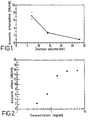
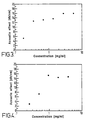
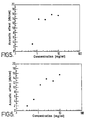
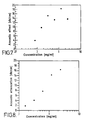
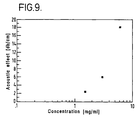
- the acoustic effect of the suspensions above was obtained by measuring the ultrasonic transmission through suspensions of different concentrations (mg/ml) in an aqueous carrier liquid, using a 3.5 MHz broadband transducer in a pulse-reflection technique. Pure carrier liquid was used as reference, and measurements were performed along a dilution line where the starting suspension was successively diluted with the carrier liquid. Measurements were done until the signal was reduced to approximately 3 - 5 db/cm. The obtained acoustic effects were at a level such that the products can be expected to be useful as ultrasound contrast agents. According to theoretical considerations, solid (as opposite to gas containing) particles of the same size and at the same dilutions should give an acoustic attenuation of less than 0.1 db/cm.
- the particles were from a polymer made from copolymerization of methylene dimethacrylate and styrene.
- the product showed a strong effect on the acoustic transmission, decreasing with increasing dilution volume, as can be seen in Fig. 1 in the accompanying drawing.
- Dry powder of polymer particles described in Example 3 were redispersed in a sterile 0.9% (wt/wt) NaCl (aq) solution by shaking on a laboratory shaker for 12 - 16 hours.
- the dispersions were injected in chinchilla rabbits, and measured by using a doppler technique where an ultrasound probe was placed directly on a carotid artery and the inferior caval vein.
- the particle dispersions were injected in an ear vein. Signal height and duration were recorded. The obtained signal heights were significant, indicating a strong in vivo ultrasound contrast effect for the dispersions. The long duration of the signal reveals that the in vivo stability is good.
- In vivo characterization of polymer particles The doses are in ⁇ g particles per kg body weight.
- Example 5 Particles
- Example 3 Conc. [mg/ml] Dose [ ⁇ g/kg] Artery Vein Peak [DU] Duration [s] Peak [DU] Duration [s] a b 4.8 320 0.5 b (i) c 4.6 307 1.9 6 0.8 b (ii) c 4.6 767 5.6 39 2.8 c d 3.7 247 0.6 d (i) i 2.1 139 1.7 5 d (ii) i 2.1 347 3.2 13 1.2 70 d (iii) i 2.1 693 3.1 10 2.1 120 e (i) h 2.0 136 0.5 e (ii) h 2.0 340 1.0 5 e (iii) h 2.0 680 1.4 5 0.7 f(i) y 2.1 140 2.8 8 0.5 f(ii) y 2.1 350 3.7 11 0.8 44 f(iii) y 2.1 700 5.3 33 0.8
Landscapes
- Health & Medical Sciences (AREA)
- Public Health (AREA)
- Nanotechnology (AREA)
- Engineering & Computer Science (AREA)
- Nuclear Medicine, Radiotherapy & Molecular Imaging (AREA)
- Radiology & Medical Imaging (AREA)
- Epidemiology (AREA)
- Life Sciences & Earth Sciences (AREA)
- Animal Behavior & Ethology (AREA)
- Chemical & Material Sciences (AREA)
- General Health & Medical Sciences (AREA)
- Veterinary Medicine (AREA)
- Physics & Mathematics (AREA)
- Acoustics & Sound (AREA)
- Medicines Containing Antibodies Or Antigens For Use As Internal Diagnostic Agents (AREA)
- Medicinal Preparation (AREA)
- Magnetic Resonance Imaging Apparatus (AREA)
- Addition Polymer Or Copolymer, Post-Treatments, Or Chemical Modifications (AREA)
- Ultra Sonic Daignosis Equipment (AREA)
- Polyesters Or Polycarbonates (AREA)
- Organic Low-Molecular-Weight Compounds And Preparation Thereof (AREA)
Applications Claiming Priority (5)
| Application Number | Priority Date | Filing Date | Title |
|---|---|---|---|
| GB9204920 | 1992-03-06 | ||
| GB929204920A GB9204920D0 (en) | 1992-03-06 | 1992-03-06 | Improvements in or relating to contrast agents |
| GB9204918 | 1992-03-06 | ||
| GB929204918A GB9204918D0 (en) | 1992-03-06 | 1992-03-06 | Chemical compounds |
| PCT/GB1993/000470 WO1993017718A1 (en) | 1992-03-06 | 1993-03-05 | Improvements in or relating to contrast agents |
Publications (2)
| Publication Number | Publication Date |
|---|---|
| EP0627942A1 EP0627942A1 (en) | 1994-12-14 |
| EP0627942B1 true EP0627942B1 (en) | 1999-09-15 |
Family
ID=26300446
Family Applications (1)
| Application Number | Title | Priority Date | Filing Date |
|---|---|---|---|
| EP93905527A Expired - Lifetime EP0627942B1 (en) | 1992-03-06 | 1993-03-05 | Improvements in or relating to contrast agents |
Country Status (25)
| Country | Link |
|---|---|
| US (1) | US5795562A (enExample) |
| EP (1) | EP0627942B1 (enExample) |
| JP (1) | JP3650393B2 (enExample) |
| CN (1) | CN1084410A (enExample) |
| AT (1) | ATE184491T1 (enExample) |
| AU (1) | AU676467B2 (enExample) |
| BG (1) | BG99072A (enExample) |
| BR (1) | BR9306044A (enExample) |
| CA (1) | CA2130670A1 (enExample) |
| CZ (1) | CZ284844B6 (enExample) |
| DE (1) | DE69326447T2 (enExample) |
| EE (1) | EE03079B1 (enExample) |
| ES (1) | ES2135466T3 (enExample) |
| FI (1) | FI944077A0 (enExample) |
| HU (1) | HUT68612A (enExample) |
| IL (1) | IL104963A (enExample) |
| LV (1) | LV10396B (enExample) |
| NO (1) | NO943272L (enExample) |
| NZ (1) | NZ249548A (enExample) |
| OA (1) | OA10096A (enExample) |
| PL (1) | PL174114B1 (enExample) |
| RU (1) | RU2122432C1 (enExample) |
| SG (1) | SG44668A1 (enExample) |
| SK (1) | SK106694A3 (enExample) |
| WO (1) | WO1993017718A1 (enExample) |
Families Citing this family (91)
| Publication number | Priority date | Publication date | Assignee | Title |
|---|---|---|---|---|
| US20020150539A1 (en) | 1989-12-22 | 2002-10-17 | Unger Evan C. | Ultrasound imaging and treatment |
| US5922304A (en) * | 1989-12-22 | 1999-07-13 | Imarx Pharmaceutical Corp. | Gaseous precursor filled microspheres as magnetic resonance imaging contrast agents |
| IN172208B (enExample) | 1990-04-02 | 1993-05-01 | Sint Sa | |
| USRE39146E1 (en) | 1990-04-02 | 2006-06-27 | Bracco International B.V. | Long-lasting aqueous dispersions or suspensions of pressure-resistant gas-filled microvesicles and methods for the preparation thereof |
| GB9106686D0 (en) * | 1991-03-28 | 1991-05-15 | Hafslund Nycomed As | Improvements in or relating to contrast agents |
| US5205290A (en) * | 1991-04-05 | 1993-04-27 | Unger Evan C | Low density microspheres and their use as contrast agents for computed tomography |
| MX9205298A (es) * | 1991-09-17 | 1993-05-01 | Steven Carl Quay | Medios gaseosos de contraste de ultrasonido y metodo para seleccionar gases para usarse como medios de contraste de ultrasonido |
| US5409688A (en) * | 1991-09-17 | 1995-04-25 | Sonus Pharmaceuticals, Inc. | Gaseous ultrasound contrast media |
| US6383470B1 (en) | 1992-09-26 | 2002-05-07 | Thomas Fritzsch | Microparticle preparations made of biodegradable copolymers |
| ATE200985T1 (de) * | 1993-01-25 | 2001-05-15 | Sonus Pharma Inc | Phase-stift kolloide zur verwendung als ultraschallkontrastmittel |
| IL108416A (en) | 1993-01-25 | 1998-10-30 | Sonus Pharma Inc | Phase shift colloids as ultrasound contrast agents |
| US5558855A (en) * | 1993-01-25 | 1996-09-24 | Sonus Pharmaceuticals | Phase shift colloids as ultrasound contrast agents |
| GB9305351D0 (en) * | 1993-03-16 | 1993-05-05 | Nycomed Imaging As | Improvements in or relating to contrast agents |
| GB9318288D0 (en) * | 1993-09-03 | 1993-10-20 | Nycomed Imaging As | Improvements in or relating to contrast agents |
| US7083572B2 (en) | 1993-11-30 | 2006-08-01 | Bristol-Myers Squibb Medical Imaging, Inc. | Therapeutic delivery systems |
| ES2192572T3 (es) | 1993-12-15 | 2003-10-16 | Bracco Research Sa | Medios de contraste de ultrasonidos, agentes de contraste que contienen los medios, y metodo. |
| GB9402867D0 (en) * | 1994-02-15 | 1994-04-06 | Nycomed Imaging As | Improvements in or relating to contrast agents |
| GB9417941D0 (en) * | 1994-09-06 | 1994-10-26 | Nycomed Imaging As | Improvements in or relating to contrast agents |
| US6521211B1 (en) | 1995-06-07 | 2003-02-18 | Bristol-Myers Squibb Medical Imaging, Inc. | Methods of imaging and treatment with targeted compositions |
| WO1997040679A1 (en) | 1996-05-01 | 1997-11-06 | Imarx Pharmaceutical Corp. | Methods for delivering compounds into a cell |
| US5846517A (en) | 1996-09-11 | 1998-12-08 | Imarx Pharmaceutical Corp. | Methods for diagnostic imaging using a renal contrast agent and a vasodilator |
| GB9622711D0 (en) * | 1996-10-31 | 1997-01-08 | British Tech Group | Instrument having enhanced ultrasound visibility |
| US6537246B1 (en) | 1997-06-18 | 2003-03-25 | Imarx Therapeutics, Inc. | Oxygen delivery agents and uses for the same |
| US7452551B1 (en) | 2000-10-30 | 2008-11-18 | Imarx Therapeutics, Inc. | Targeted compositions for diagnostic and therapeutic use |
| US20020159951A1 (en) * | 1997-05-06 | 2002-10-31 | Unger Evan C. | Novel targeted compositions for diagnostic and therapeutic use |
| US8668737B2 (en) | 1997-10-10 | 2014-03-11 | Senorx, Inc. | Tissue marking implant |
| US7637948B2 (en) | 1997-10-10 | 2009-12-29 | Senorx, Inc. | Tissue marking implant |
| US20010003580A1 (en) | 1998-01-14 | 2001-06-14 | Poh K. Hui | Preparation of a lipid blend and a phospholipid suspension containing the lipid blend |
| US6347241B2 (en) | 1999-02-02 | 2002-02-12 | Senorx, Inc. | Ultrasonic and x-ray detectable biopsy site marker and apparatus for applying it |
| US7651505B2 (en) | 2002-06-17 | 2010-01-26 | Senorx, Inc. | Plugged tip delivery for marker placement |
| US6725083B1 (en) | 1999-02-02 | 2004-04-20 | Senorx, Inc. | Tissue site markers for in VIVO imaging |
| US7983734B2 (en) | 2003-05-23 | 2011-07-19 | Senorx, Inc. | Fibrous marker and intracorporeal delivery thereof |
| US6862470B2 (en) | 1999-02-02 | 2005-03-01 | Senorx, Inc. | Cavity-filling biopsy site markers |
| US8498693B2 (en) | 1999-02-02 | 2013-07-30 | Senorx, Inc. | Intracorporeal marker and marker delivery device |
| US8361082B2 (en) | 1999-02-02 | 2013-01-29 | Senorx, Inc. | Marker delivery device with releasable plug |
| US20090030309A1 (en) | 2007-07-26 | 2009-01-29 | Senorx, Inc. | Deployment of polysaccharide markers |
| US9820824B2 (en) | 1999-02-02 | 2017-11-21 | Senorx, Inc. | Deployment of polysaccharide markers for treating a site within a patent |
| US6575991B1 (en) | 1999-06-17 | 2003-06-10 | Inrad, Inc. | Apparatus for the percutaneous marking of a lesion |
| US7311893B2 (en) * | 2000-07-25 | 2007-12-25 | Neurochem (International) Limited | Amyloid targeting imaging agents and uses thereof |
| CA2446993C (en) | 2000-11-20 | 2009-06-02 | Senorx, Inc. | Tissue site markers for in vivo imaging |
| GB0128052D0 (en) | 2001-11-22 | 2002-01-16 | Drug Discovery Lab As | Compounds |
| AUPR951501A0 (en) * | 2001-12-14 | 2002-01-24 | Smart Drug Systems Inc | Modified sustained release pharmaceutical system |
| US7462366B2 (en) | 2002-03-29 | 2008-12-09 | Boston Scientific Scimed, Inc. | Drug delivery particle |
| US7131997B2 (en) | 2002-03-29 | 2006-11-07 | Scimed Life Systems, Inc. | Tissue treatment |
| US7094369B2 (en) | 2002-03-29 | 2006-08-22 | Scimed Life Systems, Inc. | Processes for manufacturing polymeric microspheres |
| US7053134B2 (en) | 2002-04-04 | 2006-05-30 | Scimed Life Systems, Inc. | Forming a chemically cross-linked particle of a desired shape and diameter |
| DE10224352A1 (de) * | 2002-06-01 | 2003-12-11 | Mueller Schulte Detlef | Thermosensitive Polymerträger mit veränderbarer physikalischer Struktur für die biochemische Analytik, Diagnostik und Therapie |
| US20040037887A1 (en) | 2002-06-12 | 2004-02-26 | Scimed Life Systems, Inc. | Bulking agent |
| US7842377B2 (en) | 2003-08-08 | 2010-11-30 | Boston Scientific Scimed, Inc. | Porous polymeric particle comprising polyvinyl alcohol and having interior to surface porosity-gradient |
| US7449236B2 (en) | 2002-08-09 | 2008-11-11 | Boston Scientific Scimed, Inc. | Porous polymeric particle comprising polyvinyl alcohol and having interior to surface porosity-gradient |
| US8012454B2 (en) | 2002-08-30 | 2011-09-06 | Boston Scientific Scimed, Inc. | Embolization |
| US7588825B2 (en) | 2002-10-23 | 2009-09-15 | Boston Scientific Scimed, Inc. | Embolic compositions |
| US7883490B2 (en) | 2002-10-23 | 2011-02-08 | Boston Scientific Scimed, Inc. | Mixing and delivery of therapeutic compositions |
| US20060036158A1 (en) | 2003-11-17 | 2006-02-16 | Inrad, Inc. | Self-contained, self-piercing, side-expelling marking apparatus |
| US7877133B2 (en) | 2003-05-23 | 2011-01-25 | Senorx, Inc. | Marker or filler forming fluid |
| US7976823B2 (en) | 2003-08-29 | 2011-07-12 | Boston Scientific Scimed, Inc. | Ferromagnetic particles and methods |
| US20050273002A1 (en) | 2004-06-04 | 2005-12-08 | Goosen Ryan L | Multi-mode imaging marker |
| JP5183068B2 (ja) * | 2003-12-22 | 2013-04-17 | フィンレイ,ウォーレン,エイチ | 大気噴出凍結乾燥法による粉末形成 |
| US7025726B2 (en) | 2004-01-22 | 2006-04-11 | The Regents Of The University Of Nebraska | Detection of endothelial dysfunction by ultrasonic imaging |
| US7736671B2 (en) | 2004-03-02 | 2010-06-15 | Boston Scientific Scimed, Inc. | Embolization |
| US8173176B2 (en) | 2004-03-30 | 2012-05-08 | Boston Scientific Scimed, Inc. | Embolization |
| US7311861B2 (en) | 2004-06-01 | 2007-12-25 | Boston Scientific Scimed, Inc. | Embolization |
| US8425550B2 (en) | 2004-12-01 | 2013-04-23 | Boston Scientific Scimed, Inc. | Embolic coils |
| US7858183B2 (en) | 2005-03-02 | 2010-12-28 | Boston Scientific Scimed, Inc. | Particles |
| US7727555B2 (en) | 2005-03-02 | 2010-06-01 | Boston Scientific Scimed, Inc. | Particles |
| US10357328B2 (en) | 2005-04-20 | 2019-07-23 | Bard Peripheral Vascular, Inc. and Bard Shannon Limited | Marking device with retractable cannula |
| US7963287B2 (en) | 2005-04-28 | 2011-06-21 | Boston Scientific Scimed, Inc. | Tissue-treatment methods |
| JP2006327986A (ja) * | 2005-05-26 | 2006-12-07 | Nitto Denko Corp | カーボネート基含有(メタ)アクリル酸エステルモノマーとその製造方法 |
| US8123693B2 (en) | 2005-06-20 | 2012-02-28 | Conceptus, Inc. | Methods and devices for determining lumen occlusion |
| US9463426B2 (en) | 2005-06-24 | 2016-10-11 | Boston Scientific Scimed, Inc. | Methods and systems for coating particles |
| CA2562580C (en) | 2005-10-07 | 2014-04-29 | Inrad, Inc. | Drug-eluting tissue marker |
| US8007509B2 (en) | 2005-10-12 | 2011-08-30 | Boston Scientific Scimed, Inc. | Coil assemblies, components and methods |
| US8152839B2 (en) | 2005-12-19 | 2012-04-10 | Boston Scientific Scimed, Inc. | Embolic coils |
| US8101197B2 (en) | 2005-12-19 | 2012-01-24 | Stryker Corporation | Forming coils |
| US7947368B2 (en) | 2005-12-21 | 2011-05-24 | Boston Scientific Scimed, Inc. | Block copolymer particles |
| US7501179B2 (en) | 2005-12-21 | 2009-03-10 | Boston Scientific Scimed, Inc. | Block copolymer particles |
| US8064987B2 (en) | 2006-10-23 | 2011-11-22 | C. R. Bard, Inc. | Breast marker |
| US8414927B2 (en) | 2006-11-03 | 2013-04-09 | Boston Scientific Scimed, Inc. | Cross-linked polymer particles |
| WO2008073965A2 (en) | 2006-12-12 | 2008-06-19 | C.R. Bard Inc. | Multiple imaging mode tissue marker |
| ES2432572T3 (es) | 2006-12-18 | 2013-12-04 | C.R. Bard, Inc. | Marcador de biopsia con propiedades de obtención de imágenes generadas in situ |
| WO2009099767A2 (en) | 2008-01-31 | 2009-08-13 | C.R. Bard, Inc. | Biopsy tissue marker |
| US9327061B2 (en) | 2008-09-23 | 2016-05-03 | Senorx, Inc. | Porous bioabsorbable implant |
| WO2010077244A1 (en) | 2008-12-30 | 2010-07-08 | C.R. Bard Inc. | Marker delivery device for tissue marker placement |
| US8585616B2 (en) * | 2009-10-09 | 2013-11-19 | Conceptus, Inc. | Methods and apparatus for determining fallopian tube occlusion |
| USD716451S1 (en) | 2013-09-24 | 2014-10-28 | C. R. Bard, Inc. | Tissue marker for intracorporeal site identification |
| USD715942S1 (en) | 2013-09-24 | 2014-10-21 | C. R. Bard, Inc. | Tissue marker for intracorporeal site identification |
| USD715442S1 (en) | 2013-09-24 | 2014-10-14 | C. R. Bard, Inc. | Tissue marker for intracorporeal site identification |
| USD716450S1 (en) | 2013-09-24 | 2014-10-28 | C. R. Bard, Inc. | Tissue marker for intracorporeal site identification |
| CN104817662B (zh) * | 2015-04-09 | 2017-07-14 | 清华大学 | 同时用于ct和核磁成像的含碘、含氟氨基磷酸酯类高分子造影剂及其制备方法与应用 |
| JP7115914B2 (ja) | 2017-06-23 | 2022-08-09 | 住友化学株式会社 | レジスト組成物及びレジストパターンの製造方法 |
| WO2020033904A1 (en) * | 2018-08-09 | 2020-02-13 | The Regents Of The University Of California | Method and material to acquire magnetic resonance imaging data |
Family Cites Families (5)
| Publication number | Priority date | Publication date | Assignee | Title |
|---|---|---|---|---|
| AU636481B2 (en) * | 1990-05-18 | 1993-04-29 | Bracco International B.V. | Polymeric gas or air filled microballoons usable as suspensions in liquid carriers for ultrasonic echography |
| PH31064A (en) * | 1990-09-07 | 1998-02-05 | Nycomed As Of Nycoveten | Polymers containing diester units. |
| GB9106673D0 (en) * | 1991-03-28 | 1991-05-15 | Hafslund Nycomed As | Improvements in or relating to contrast agents |
| GB9106686D0 (en) * | 1991-03-28 | 1991-05-15 | Hafslund Nycomed As | Improvements in or relating to contrast agents |
| ATE151992T1 (de) * | 1991-06-03 | 1997-05-15 | Nycomed Imaging As | Verbesserungen im bezug auf kontrastmittel |
-
1993
- 1993-03-05 AT AT93905527T patent/ATE184491T1/de active
- 1993-03-05 NZ NZ249548A patent/NZ249548A/en unknown
- 1993-03-05 SK SK1066-94A patent/SK106694A3/sk unknown
- 1993-03-05 BR BR9306044A patent/BR9306044A/pt not_active Application Discontinuation
- 1993-03-05 LV LVP-93-171A patent/LV10396B/en unknown
- 1993-03-05 HU HU9402565A patent/HUT68612A/hu unknown
- 1993-03-05 JP JP51546493A patent/JP3650393B2/ja not_active Expired - Fee Related
- 1993-03-05 WO PCT/GB1993/000470 patent/WO1993017718A1/en not_active Ceased
- 1993-03-05 ES ES93905527T patent/ES2135466T3/es not_active Expired - Lifetime
- 1993-03-05 PL PL93305025A patent/PL174114B1/pl unknown
- 1993-03-05 AU AU36424/93A patent/AU676467B2/en not_active Ceased
- 1993-03-05 DE DE69326447T patent/DE69326447T2/de not_active Expired - Fee Related
- 1993-03-05 CN CN93104052A patent/CN1084410A/zh not_active Withdrawn
- 1993-03-05 IL IL104963A patent/IL104963A/xx not_active IP Right Cessation
- 1993-03-05 FI FI944077A patent/FI944077A0/fi unknown
- 1993-03-05 CA CA002130670A patent/CA2130670A1/en not_active Abandoned
- 1993-03-05 SG SG1996005321A patent/SG44668A1/en unknown
- 1993-03-05 EP EP93905527A patent/EP0627942B1/en not_active Expired - Lifetime
- 1993-03-05 US US08/284,464 patent/US5795562A/en not_active Expired - Fee Related
- 1993-03-05 RU RU94045927A patent/RU2122432C1/ru active
- 1993-03-05 CZ CZ942148A patent/CZ284844B6/cs not_active IP Right Cessation
-
1994
- 1994-05-23 EE EE9400024A patent/EE03079B1/xx unknown
- 1994-08-24 OA OA60556A patent/OA10096A/en unknown
- 1994-09-05 NO NO943272A patent/NO943272L/no not_active Application Discontinuation
- 1994-09-28 BG BG99072A patent/BG99072A/bg unknown
Also Published As
Similar Documents
| Publication | Publication Date | Title |
|---|---|---|
| US5795562A (en) | Contrast agents comprising gas-containing or gas-generating microparticles or microballoons | |
| US5674468A (en) | Contrast agents comprising gas-containing or gas-generating polymer microparticles or microballoons | |
| LT3216B (en) | Contrast agent | |
| US6123922A (en) | Resilient deformable microballoons for echographic imaging | |
| US5529766A (en) | Contrast agents | |
| CA2036107A1 (en) | Contrast media synthesized from polyaldehydes | |
| US20160175464A1 (en) | Branched amphipathic block polymer and molecular aggregate and drug delivery system using same | |
| EP0779821B1 (en) | Improvements in or relating to contrast agents | |
| KR101127895B1 (ko) | 기체 생성과 생성된 기체의 함유가 가능한 다공성 고분자 마이크로 또는 나노 입자, 이의 제조 방법 및 용도 | |
| CN113929740A (zh) | 两亲性聚多肽及其制备方法和应用 | |
| CN109966248A (zh) | 基于动态亚胺键的共聚物复合胶束及其制备方法 | |
| CN120501886A (zh) | 一种药物递送纳米载体及其制备方法与应用 |
Legal Events
| Date | Code | Title | Description |
|---|---|---|---|
| PUAI | Public reference made under article 153(3) epc to a published international application that has entered the european phase |
Free format text: ORIGINAL CODE: 0009012 |
|
| 17P | Request for examination filed |
Effective date: 19940903 |
|
| AK | Designated contracting states |
Kind code of ref document: A1 Designated state(s): AT BE CH DE DK ES FR GB GR IE IT LI LU MC NL PT SE |
|
| 17Q | First examination report despatched |
Effective date: 19970114 |
|
| GRAG | Despatch of communication of intention to grant |
Free format text: ORIGINAL CODE: EPIDOS AGRA |
|
| GRAG | Despatch of communication of intention to grant |
Free format text: ORIGINAL CODE: EPIDOS AGRA |
|
| GRAH | Despatch of communication of intention to grant a patent |
Free format text: ORIGINAL CODE: EPIDOS IGRA |
|
| GRAH | Despatch of communication of intention to grant a patent |
Free format text: ORIGINAL CODE: EPIDOS IGRA |
|
| GRAA | (expected) grant |
Free format text: ORIGINAL CODE: 0009210 |
|
| AK | Designated contracting states |
Kind code of ref document: B1 Designated state(s): AT BE CH DE DK ES FR GB GR IE IT LI LU MC NL PT SE |
|
| PG25 | Lapsed in a contracting state [announced via postgrant information from national office to epo] |
Ref country code: SE Free format text: THE PATENT HAS BEEN ANNULLED BY A DECISION OF A NATIONAL AUTHORITY Effective date: 19990915 Ref country code: GR Free format text: LAPSE BECAUSE OF NON-PAYMENT OF DUE FEES Effective date: 19990915 |
|
| REF | Corresponds to: |
Ref document number: 184491 Country of ref document: AT Date of ref document: 19991015 Kind code of ref document: T |
|
| REG | Reference to a national code |
Ref country code: CH Ref legal event code: EP |
|
| RIN1 | Information on inventor provided before grant (corrected) |
Inventor name: WIGGEN, UNNI NORDBY Inventor name: STRANDE, PER Inventor name: SOLBERG, JAN Inventor name: RONGVED, PAL Inventor name: REDFORD, KEITH Inventor name: KLAVENESS, JO |
|
| REF | Corresponds to: |
Ref document number: 69326447 Country of ref document: DE Date of ref document: 19991021 |
|
| REG | Reference to a national code |
Ref country code: ES Ref legal event code: FG2A Ref document number: 2135466 Country of ref document: ES Kind code of ref document: T3 |
|
| ET | Fr: translation filed | ||
| REG | Reference to a national code |
Ref country code: IE Ref legal event code: FG4D |
|
| ITF | It: translation for a ep patent filed | ||
| PG25 | Lapsed in a contracting state [announced via postgrant information from national office to epo] |
Ref country code: PT Free format text: LAPSE BECAUSE OF FAILURE TO SUBMIT A TRANSLATION OF THE DESCRIPTION OR TO PAY THE FEE WITHIN THE PRESCRIBED TIME-LIMIT Effective date: 19991215 Ref country code: DK Free format text: LAPSE BECAUSE OF FAILURE TO SUBMIT A TRANSLATION OF THE DESCRIPTION OR TO PAY THE FEE WITHIN THE PRESCRIBED TIME-LIMIT Effective date: 19991215 |
|
| REG | Reference to a national code |
Ref country code: CH Ref legal event code: NV Representative=s name: A. BRAUN, BRAUN, HERITIER, ESCHMANN AG PATENTANWAE |
|
| PG25 | Lapsed in a contracting state [announced via postgrant information from national office to epo] |
Ref country code: LU Free format text: LAPSE BECAUSE OF NON-PAYMENT OF DUE FEES Effective date: 20000305 Ref country code: IE Free format text: LAPSE BECAUSE OF NON-PAYMENT OF DUE FEES Effective date: 20000305 Ref country code: AT Free format text: LAPSE BECAUSE OF NON-PAYMENT OF DUE FEES Effective date: 20000305 |
|
| PG25 | Lapsed in a contracting state [announced via postgrant information from national office to epo] |
Ref country code: LI Free format text: LAPSE BECAUSE OF NON-PAYMENT OF DUE FEES Effective date: 20000331 Ref country code: CH Free format text: LAPSE BECAUSE OF NON-PAYMENT OF DUE FEES Effective date: 20000331 Ref country code: BE Free format text: LAPSE BECAUSE OF NON-PAYMENT OF DUE FEES Effective date: 20000331 |
|
| PLBE | No opposition filed within time limit |
Free format text: ORIGINAL CODE: 0009261 |
|
| STAA | Information on the status of an ep patent application or granted ep patent |
Free format text: STATUS: NO OPPOSITION FILED WITHIN TIME LIMIT |
|
| 26N | No opposition filed | ||
| BERE | Be: lapsed |
Owner name: NYCOMED IMAGING A/S Effective date: 20000331 |
|
| PG25 | Lapsed in a contracting state [announced via postgrant information from national office to epo] |
Ref country code: MC Free format text: LAPSE BECAUSE OF NON-PAYMENT OF DUE FEES Effective date: 20000930 |
|
| PG25 | Lapsed in a contracting state [announced via postgrant information from national office to epo] |
Ref country code: NL Free format text: LAPSE BECAUSE OF NON-PAYMENT OF DUE FEES Effective date: 20001001 |
|
| REG | Reference to a national code |
Ref country code: CH Ref legal event code: PL |
|
| NLV4 | Nl: lapsed or anulled due to non-payment of the annual fee |
Effective date: 20001001 |
|
| REG | Reference to a national code |
Ref country code: IE Ref legal event code: MM4A |
|
| REG | Reference to a national code |
Ref country code: GB Ref legal event code: IF02 |
|
| PGFP | Annual fee paid to national office [announced via postgrant information from national office to epo] |
Ref country code: FR Payment date: 20030310 Year of fee payment: 11 |
|
| PGFP | Annual fee paid to national office [announced via postgrant information from national office to epo] |
Ref country code: ES Payment date: 20030328 Year of fee payment: 11 |
|
| PG25 | Lapsed in a contracting state [announced via postgrant information from national office to epo] |
Ref country code: ES Free format text: LAPSE BECAUSE OF NON-PAYMENT OF DUE FEES Effective date: 20040306 |
|
| PG25 | Lapsed in a contracting state [announced via postgrant information from national office to epo] |
Ref country code: FR Free format text: LAPSE BECAUSE OF NON-PAYMENT OF DUE FEES Effective date: 20041130 |
|
| REG | Reference to a national code |
Ref country code: FR Ref legal event code: ST |
|
| REG | Reference to a national code |
Ref country code: ES Ref legal event code: FD2A Effective date: 20040306 |
|
| PGFP | Annual fee paid to national office [announced via postgrant information from national office to epo] |
Ref country code: GB Payment date: 20070327 Year of fee payment: 15 |
|
| PGFP | Annual fee paid to national office [announced via postgrant information from national office to epo] |
Ref country code: DE Payment date: 20070430 Year of fee payment: 15 |
|
| PGFP | Annual fee paid to national office [announced via postgrant information from national office to epo] |
Ref country code: IT Payment date: 20070528 Year of fee payment: 15 |
|
| GBPC | Gb: european patent ceased through non-payment of renewal fee |
Effective date: 20080305 |
|
| PG25 | Lapsed in a contracting state [announced via postgrant information from national office to epo] |
Ref country code: DE Free format text: LAPSE BECAUSE OF NON-PAYMENT OF DUE FEES Effective date: 20081001 |
|
| PG25 | Lapsed in a contracting state [announced via postgrant information from national office to epo] |
Ref country code: GB Free format text: LAPSE BECAUSE OF NON-PAYMENT OF DUE FEES Effective date: 20080305 |
|
| PG25 | Lapsed in a contracting state [announced via postgrant information from national office to epo] |
Ref country code: IT Free format text: LAPSE BECAUSE OF NON-PAYMENT OF DUE FEES Effective date: 20080305 |