EP0619274B1 - Bronzefarbenes oder graufarbenes Kalknatron-Silikatglas - Google Patents
Bronzefarbenes oder graufarbenes Kalknatron-Silikatglas Download PDFInfo
- Publication number
- EP0619274B1 EP0619274B1 EP94105188A EP94105188A EP0619274B1 EP 0619274 B1 EP0619274 B1 EP 0619274B1 EP 94105188 A EP94105188 A EP 94105188A EP 94105188 A EP94105188 A EP 94105188A EP 0619274 B1 EP0619274 B1 EP 0619274B1
- Authority
- EP
- European Patent Office
- Prior art keywords
- weight
- soda
- silicate glass
- lime silicate
- glass
- Prior art date
- Legal status (The legal status is an assumption and is not a legal conclusion. Google has not performed a legal analysis and makes no representation as to the accuracy of the status listed.)
- Expired - Lifetime
Links
- 239000005368 silicate glass Substances 0.000 title claims abstract description 45
- HUAUNKAZQWMVFY-UHFFFAOYSA-M sodium;oxocalcium;hydroxide Chemical compound [OH-].[Na+].[Ca]=O HUAUNKAZQWMVFY-UHFFFAOYSA-M 0.000 title claims description 38
- 229910000906 Bronze Inorganic materials 0.000 title abstract description 17
- 239000010974 bronze Substances 0.000 title abstract description 17
- KUNSUQLRTQLHQQ-UHFFFAOYSA-N copper tin Chemical compound [Cu].[Sn] KUNSUQLRTQLHQQ-UHFFFAOYSA-N 0.000 title abstract description 17
- 239000000203 mixture Substances 0.000 claims abstract description 23
- 239000000654 additive Substances 0.000 claims abstract description 20
- 238000006124 Pilkington process Methods 0.000 claims abstract description 7
- GNTDGMZSJNCJKK-UHFFFAOYSA-N divanadium pentaoxide Chemical compound O=[V](=O)O[V](=O)=O GNTDGMZSJNCJKK-UHFFFAOYSA-N 0.000 claims abstract description 7
- 238000000034 method Methods 0.000 claims abstract description 5
- 239000000470 constituent Substances 0.000 claims abstract description 4
- NUJOXMJBOLGQSY-UHFFFAOYSA-N manganese dioxide Chemical compound O=[Mn]=O NUJOXMJBOLGQSY-UHFFFAOYSA-N 0.000 claims abstract 15
- VYPSYNLAJGMNEJ-UHFFFAOYSA-N Silicium dioxide Chemical compound O=[Si]=O VYPSYNLAJGMNEJ-UHFFFAOYSA-N 0.000 claims abstract 9
- GWEVSGVZZGPLCZ-UHFFFAOYSA-N Titan oxide Chemical compound O=[Ti]=O GWEVSGVZZGPLCZ-UHFFFAOYSA-N 0.000 claims abstract 9
- JEIPFZHSYJVQDO-UHFFFAOYSA-N iron(III) oxide Inorganic materials O=[Fe]O[Fe]=O JEIPFZHSYJVQDO-UHFFFAOYSA-N 0.000 claims abstract 9
- KKCBUQHMOMHUOY-UHFFFAOYSA-N Na2O Inorganic materials [O-2].[Na+].[Na+] KKCBUQHMOMHUOY-UHFFFAOYSA-N 0.000 claims abstract 8
- PNEYBMLMFCGWSK-UHFFFAOYSA-N aluminium oxide Inorganic materials [O-2].[O-2].[O-2].[Al+3].[Al+3] PNEYBMLMFCGWSK-UHFFFAOYSA-N 0.000 claims abstract 8
- 229910052681 coesite Inorganic materials 0.000 claims abstract 8
- 229910052593 corundum Inorganic materials 0.000 claims abstract 8
- 229910052906 cristobalite Inorganic materials 0.000 claims abstract 8
- 229910052682 stishovite Inorganic materials 0.000 claims abstract 8
- 229910052905 tridymite Inorganic materials 0.000 claims abstract 8
- 229910001845 yogo sapphire Inorganic materials 0.000 claims abstract 8
- 239000005357 flat glass Substances 0.000 claims description 9
- 230000000485 pigmenting effect Effects 0.000 claims 7
- 239000011521 glass Substances 0.000 abstract description 35
- 238000004040 coloring Methods 0.000 abstract description 15
- 238000005266 casting Methods 0.000 abstract description 8
- 238000004519 manufacturing process Methods 0.000 abstract description 8
- 239000000377 silicon dioxide Substances 0.000 abstract 1
- 235000012239 silicon dioxide Nutrition 0.000 abstract 1
- XEEYBQQBJWHFJM-UHFFFAOYSA-N iron Substances [Fe] XEEYBQQBJWHFJM-UHFFFAOYSA-N 0.000 description 17
- 230000005855 radiation Effects 0.000 description 14
- 239000011669 selenium Substances 0.000 description 12
- BUGBHKTXTAQXES-UHFFFAOYSA-N Selenium Chemical compound [Se] BUGBHKTXTAQXES-UHFFFAOYSA-N 0.000 description 11
- 229910052711 selenium Inorganic materials 0.000 description 11
- 230000005540 biological transmission Effects 0.000 description 8
- 239000011572 manganese Substances 0.000 description 8
- 229910018072 Al 2 O 3 Inorganic materials 0.000 description 7
- 229910004298 SiO 2 Inorganic materials 0.000 description 7
- 229910010413 TiO 2 Inorganic materials 0.000 description 7
- 238000002834 transmittance Methods 0.000 description 6
- 239000010941 cobalt Substances 0.000 description 5
- 229910017052 cobalt Inorganic materials 0.000 description 5
- GUTLYIVDDKVIGB-UHFFFAOYSA-N cobalt atom Chemical compound [Co] GUTLYIVDDKVIGB-UHFFFAOYSA-N 0.000 description 5
- PWHULOQIROXLJO-UHFFFAOYSA-N Manganese Chemical compound [Mn] PWHULOQIROXLJO-UHFFFAOYSA-N 0.000 description 4
- AMWRITDGCCNYAT-UHFFFAOYSA-L hydroxy(oxo)manganese;manganese Chemical compound [Mn].O[Mn]=O.O[Mn]=O AMWRITDGCCNYAT-UHFFFAOYSA-L 0.000 description 4
- 229910052748 manganese Inorganic materials 0.000 description 4
- 238000007670 refining Methods 0.000 description 4
- 238000010521 absorption reaction Methods 0.000 description 3
- PXHVJJICTQNCMI-UHFFFAOYSA-N Nickel Chemical compound [Ni] PXHVJJICTQNCMI-UHFFFAOYSA-N 0.000 description 2
- QAOWNCQODCNURD-UHFFFAOYSA-L Sulfate Chemical compound [O-]S([O-])(=O)=O QAOWNCQODCNURD-UHFFFAOYSA-L 0.000 description 2
- 238000001816 cooling Methods 0.000 description 2
- 239000000155 melt Substances 0.000 description 2
- 230000003647 oxidation Effects 0.000 description 2
- 238000007254 oxidation reaction Methods 0.000 description 2
- VYZAMTAEIAYCRO-UHFFFAOYSA-N Chromium Chemical compound [Cr] VYZAMTAEIAYCRO-UHFFFAOYSA-N 0.000 description 1
- RYGMFSIKBFXOCR-UHFFFAOYSA-N Copper Chemical compound [Cu] RYGMFSIKBFXOCR-UHFFFAOYSA-N 0.000 description 1
- 229910002651 NO3 Inorganic materials 0.000 description 1
- NHNBFGGVMKEFGY-UHFFFAOYSA-N Nitrate Chemical compound [O-][N+]([O-])=O NHNBFGGVMKEFGY-UHFFFAOYSA-N 0.000 description 1
- 230000000996 additive effect Effects 0.000 description 1
- 239000006121 base glass Substances 0.000 description 1
- 239000005388 borosilicate glass Substances 0.000 description 1
- 239000006103 coloring component Substances 0.000 description 1
- 238000010411 cooking Methods 0.000 description 1
- 229910052802 copper Inorganic materials 0.000 description 1
- 239000010949 copper Substances 0.000 description 1
- 230000001419 dependent effect Effects 0.000 description 1
- 230000000694 effects Effects 0.000 description 1
- 239000000156 glass melt Substances 0.000 description 1
- 239000002241 glass-ceramic Substances 0.000 description 1
- 239000012535 impurity Substances 0.000 description 1
- 229910052742 iron Inorganic materials 0.000 description 1
- 238000002844 melting Methods 0.000 description 1
- 230000008018 melting Effects 0.000 description 1
- 229910052759 nickel Inorganic materials 0.000 description 1
- 230000003287 optical effect Effects 0.000 description 1
- 239000002994 raw material Substances 0.000 description 1
- 239000000126 substance Substances 0.000 description 1
- 230000001988 toxicity Effects 0.000 description 1
- 231100000419 toxicity Toxicity 0.000 description 1
Images




Classifications
-
- C—CHEMISTRY; METALLURGY
- C03—GLASS; MINERAL OR SLAG WOOL
- C03C—CHEMICAL COMPOSITION OF GLASSES, GLAZES OR VITREOUS ENAMELS; SURFACE TREATMENT OF GLASS; SURFACE TREATMENT OF FIBRES OR FILAMENTS MADE FROM GLASS, MINERALS OR SLAGS; JOINING GLASS TO GLASS OR OTHER MATERIALS
- C03C3/00—Glass compositions
- C03C3/04—Glass compositions containing silica
- C03C3/076—Glass compositions containing silica with 40% to 90% silica, by weight
- C03C3/078—Glass compositions containing silica with 40% to 90% silica, by weight containing an oxide of a divalent metal, e.g. an oxide of zinc
-
- C—CHEMISTRY; METALLURGY
- C03—GLASS; MINERAL OR SLAG WOOL
- C03C—CHEMICAL COMPOSITION OF GLASSES, GLAZES OR VITREOUS ENAMELS; SURFACE TREATMENT OF GLASS; SURFACE TREATMENT OF FIBRES OR FILAMENTS MADE FROM GLASS, MINERALS OR SLAGS; JOINING GLASS TO GLASS OR OTHER MATERIALS
- C03C3/00—Glass compositions
- C03C3/04—Glass compositions containing silica
- C03C3/076—Glass compositions containing silica with 40% to 90% silica, by weight
- C03C3/083—Glass compositions containing silica with 40% to 90% silica, by weight containing aluminium oxide or an iron compound
- C03C3/085—Glass compositions containing silica with 40% to 90% silica, by weight containing aluminium oxide or an iron compound containing an oxide of a divalent metal
- C03C3/087—Glass compositions containing silica with 40% to 90% silica, by weight containing aluminium oxide or an iron compound containing an oxide of a divalent metal containing calcium oxide, e.g. common sheet or container glass
-
- C—CHEMISTRY; METALLURGY
- C03—GLASS; MINERAL OR SLAG WOOL
- C03C—CHEMICAL COMPOSITION OF GLASSES, GLAZES OR VITREOUS ENAMELS; SURFACE TREATMENT OF GLASS; SURFACE TREATMENT OF FIBRES OR FILAMENTS MADE FROM GLASS, MINERALS OR SLAGS; JOINING GLASS TO GLASS OR OTHER MATERIALS
- C03C4/00—Compositions for glass with special properties
- C03C4/02—Compositions for glass with special properties for coloured glass
Definitions
- the invention relates to a bronze-colored or gray-colored soda-lime-silicate glass, in particular for the production of flat glasses by the casting process or by the float process, with a basic composition as specified in claim 1.
- the color is usually adjusted by adding small amounts of selenium and cobalt in the order of 10 to 50 ppm selenium and 30 to 40 ppm cobalt to a standard soda lime silicate glass base composition.
- Soda lime silicate glasses have a yellow or green tinge, depending on their Fe 2 O 3 content.
- the addition of selenium and cobalt shifts the color locus in the color triangle to the bronze values with dominant wavelengths from 580 nm to 610 nm to the desired color purity.
- a commercially available bronze glass (soda lime silicate glass), the color of which is based on selenium and cobalt, has the following composition: SiO 2 : 70.09% by weight Al 2 O 3 : 1.39% by weight TiO 2 : 0.06% by weight CaO: 8.09% by weight MgO: 5.01% by weight Na 2 O: 14.11% by weight K 2 O: 0.65% by weight BaO: 0.02% by weight SO 3 : 0.22% by weight, with coloring additives with Fe 2 O 3 : 0.35% by weight CoO: 0.004% by weight and Se: 0.005% by weight is worked.
- this well-known bronze glass has a transmittance of 55.8% and 53.9% for standard illuminants A and D65 (DIN 5033) and 57.8% for total solar radiation (TE-CIE).
- the transmission values for UV light are 16.6% for the UVA component, 0.0% for the UVB component and 15.8% for the total UV radiation.
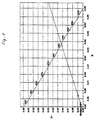
- the coordinates x and y determine the position of the color locus in the color triangle, which is shown in FIG. 1 for the glass described above.
- the color location is marked with "*", the white point with "x”. 585.9 nm was determined as the dominant wavelength giving the hue.
- compositions for selenium-free bronze or gray glass have long been investigated for their usability in production facilities for flat glass. These contain a manganese oxide as the main coloring substance.
- soda-lime-silicate glasses are to be considered, which are preferably cast or float-processed under the usual conditions to form flat glasses.
- a colorless glass is known from JP-A 52-47 812 which, as an alternative to selenium, can also contain manganese in the form of MnO 2 .
- the MnO 2 content should not exceed 0.08%.
- GB-A 708,031 discusses the mutual influence of coloring additives on the tint of soda-lime silicate glass. 0.2 to 1.2% by weight of vanadium pentoxide (V 2 O 5 ), in order to bring about the ultraviolet absorption, 0 to about 0.45% by weight of MnO 2 and traces of iron (up to 0.1% by weight). -%), cobalt, chrome or copper are used to obtain a pink glass. The proportions of V 2 O 5 and MnO 2 must be coordinated with one another, since they influence the coloring.
- V 2 O 5 vanadium pentoxide
- a gray-brown glass for the production of cooking vessels is known, in which 0.001 to 0.116% by weight of CoO, 0.037 to 0.0055% by weight of NiO and 0.6 to 0.21 are used as coloring additives % By weight of MnO 2 are present.
- the base glass is a borosilicate glass.
- JP-A 81-41 579 discloses an infrared-absorbing gray glass with 0.1 to 0.2% by weight Fe 2 O 3 , 0.001 to 0.004% by weight CoO, 0.02 to 0.06% by weight NiO and 0.01 to 0.5% by weight of MnO in a soda lime silicate glass with a greatly increased proportion of K 2 O, which can be in the range from 2.5 to 11.25% by weight.
- the specified recipes cannot be used for use with soda-lime silicate glasses of the type mentioned at the beginning.
- a shift in the K 2 O content to values such as according to JP-A 81-41 579, presumably there to increase the refractive index, or also according to GB-A 708,031 is not possible without undesirable consequences on the glass properties.
- the refining process also leaves only a narrow scope for the oxidation / reduction state of the glass.
- the cooling process can also not be used as a free parameter for color adjustment.
- a burgundy-colored glass ceramic, in which the red tint is achieved by the addition of manganese oxide and in which there are Fe 2 O 3 and NiO impurities, is disclosed in EP-A 0 530 459.
- EP-A 0 490 494 describes compositions for blue-colored glasses with a relatively high proportion of Fe 2 O 3 .
- coloring additives are present in the following proportions: Fe 2 O 3 : 0.14 - 0.45% by weight MnO 2 : 0.5-2% by weight NiO: 0.0 - 0.05% by weight V 2 O 5 : 0.0 - 0.5% by weight NiO: 0.0 - 0.05% by weight CuO: 0.0 - 0.1% by weight CoO: 0.0 - 0.008% by weight, where the sum of the percentages by weight of the constituents forming the soda lime silicate glass is 100.
- Increasing the manganese content beyond what is customary for bronze or gray-colored glasses also allows the coloring to be achieved in a flat glass melt even under the redox conditions of the usual sulfate refining.
- the proportion of MnO 2 to be added is preferably between 1.0 and 1.7% by weight.
- Example 1 (Bronze-colored soda-lime silicate glass, produced by the casting process or the float process)
- a soda-lime silicate glass the basic composition of which is the proportions SiO 2 : 71.91% by weight Al 2 O 3 : 0.64% by weight TiO 2 : 0.04% by weight CaO: 8.51% by weight MgO: 3.82% by weight Na 2 O: 13.29% by weight K 2 O: 0.18% by weight BaO: 0.01% by weight SO 3 : 0.21% by weight has, with coloring additives with Fe 2 O 3 : 0.14% by weight MnO 2 : 1.20% by weight NiO: 0.04% by weight CoO: 0.002% by weight Mistake.
- this bronze glass has a transmittance of 53.3% and 51.2% for the standard illuminants A and D65, and 67.3% for total solar radiation (TE-CIE).
- the transmission values for UV light are 38.6% for the UVA component, 0.0% for the UVB component and 36.8% for the total UV radiation.
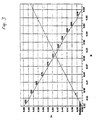
- the position of the color locus in the color triangle is shown in FIG. 2 for the glass described above. The color location is marked with "*", the white point with "x”. The dominant wavelength giving the hue was found to be 579.5 nm.
- Example 2 (Bronze-colored soda-lime silicate glass, produced by the casting process or the float process)
- a soda-lime silicate glass the basic composition of which is the proportions SiO 2 : 71.86% by weight Al 2 O 3 : 0.64% by weight TiO 2 : 0.04% by weight CaO: 8.51% by weight MgO: 3.82% by weight Na 2 O: 13.29% by weight K 2 O: 0.18% by weight BaO: 0.01% by weight SO 3 : 0.21% by weight has color additives with Fe 2 O 3 : 0.14% by weight MnO 2 : 1.22% by weight NiO: 0.04% by weight CuO: 0.04% by weight Mistake.
- this bronze glass has a transmittance of 56.9% and 55.2% for standard illuminants A and D65, and 65.4% for total solar radiation (TE-CIE).
- the transmission values for UV light are 35.8% for the UVA component, 0.0% for the UVB component and 34.1% for the total UV radiation.
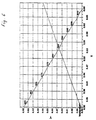
- the position of the color locus in the color triangle is in for the glass described above Figure 3 shown.
- the color location is marked with "*", the white point with "x”. 580.5 nm was determined as the dominant wavelength.
- the achromatic color coordinates that are desired for a bronze color tone are practically achieved with this composition.
- Example 3 Gram-colored soda-lime silicate glass with increased UV absorption, produced by the casting process or the float process
- a soda-lime silicate glass the basic composition of which is the proportions SiO 2 : 72.26% by weight Al 2 O 3 : 0.64% by weight TiO 2 : 0.04% by weight CaO: 8.51% by weight MgO: 3.82% by weight Na 2 O: 13.29% by weight K 2 O: 0.18% by weight BaO: 0.01% by weight SO 3 : 0.21% by weight has color additives with Fe 2 O 3 : 0.17% by weight V 2 O 5 : 0.2% by weight MnO 2 : 0.66% by weight CoO: 0.0045% by weight Mistake.
- This glass also has UV-absorbing properties.
- the position of the color locus in the color triangle is shown in FIG. 4 for the glass described above. The color location is marked with "*", the white point with "x”. 580.5 nm was determined as the dominant wavelength.
- Example 4 (Bronze-colored soda-lime silicate glass with increased UV absorption, produced by the casting process or the float process)
- a soda-lime silicate glass the basic composition of which is the proportions SiO 2 : 72.21% by weight Al 2 O 3 : 0.64% by weight TiO 2 : 0.04% by weight CaO: 8.51% by weight MgO: 3.82% by weight Na 2 O: 13.29% by weight K 2 O: 0.18% by weight BaO: 0.01% by weight SO 3 : 0.21% by weight has color additives with Fe 2 O 3 : 0.17% by weight V 2 O 5 : 0.2% by weight MnO 2 : 0.71% by weight CoO: 0.0035% by weight Mistake.
- This glass also has additional UV-absorbing properties.
- the position of the color locus in the color triangle is shown in FIG. 5 for the glass described above. The color location is marked with "*", the white point with "x”. 588.7 nm was determined as the dominant wavelength.
- a soda-lime silicate glass the basic composition of which is the proportions SiO 2 : 68.66% by weight Al 2 O 3 : 1.39% by weight TiO 2 : 0.06% by weight CaO: 8.09% by weight MgO: 5.01% by weight Na 2 O: 14.11% by weight K 2 O: 0.65% by weight BaO: 0.02% by weight SO 3 : 0.22% by weight has, with coloring additives with Fe 2 O 3 : 0.23% by weight MnO 2 : 1.52% by weight NiO: 0.033% by weight CoO: 0.0022% by weight Mistake.
- this bronze glass has a transmittance of 55.4% and 53.4% for standard illuminants A and D65, and 67.7% for total solar radiation (TE-CIE).
- the transmission values for UV light are 24.4% for the UVA component, 0.0% for the UVB component and 23.3% for the total UV radiation.
- the position of the color locus in the color triangle is shown in FIG. 6 for the glass described above. The color location is marked with "*", the white point with "x”. 584.1 nm was determined as the dominant wavelength.
- a soda-lime silicate glass the basic composition of which is the proportions SiO 2 : 68.58% by weight Al 2 O 3 : 1.39% by weight TiO 2 : 0.06% by weight CaO: 8.09% by weight MgO: 5.01% by weight Na 2 O: 14.11% by weight K 2 O: 0.65% by weight BaO: 0.02% by weight SO 3 : 0.22% by weight has, with coloring additives with Fe 2 O 3 : 0.23% by weight MnO 2 : 1.61% by weight NiO: 0.027% by weight CoO: 0.0014% by weight Mistake.
- this bronze glass has a transmittance of 51.1% and 48.6% for the standard illuminants A and D65, and 66.7% for total solar radiation (TE-CIE).
- the transmission values for UV light are for the UVA portion 24.3%, for the UVB portion 0.0% and for the total UV radiation 23.2%.
- the position of the color locus in the color triangle is shown in FIG. 3 for the glass described above. The color location is marked with "*", the white point with "x”. 587.9 nm was determined as the dominant wavelength.
Landscapes
- Chemical & Material Sciences (AREA)
- Life Sciences & Earth Sciences (AREA)
- Engineering & Computer Science (AREA)
- Chemical Kinetics & Catalysis (AREA)
- General Chemical & Material Sciences (AREA)
- Geochemistry & Mineralogy (AREA)
- Materials Engineering (AREA)
- Organic Chemistry (AREA)
- Glass Compositions (AREA)
- Aftertreatments Of Artificial And Natural Stones (AREA)
Description
- Die Erfindung betrifft ein bronzefarbenes oder graufarbenes Kalknatron-Silikatglas, insbesondere für die Herstellung von Flachgläsern nach dem Gußverfahren oder nach dem Floatverfahren, mit einer Basis-Zusammensetzung wie in Patentanspruch 1 angegeben.
- Bei den heute hergestellten Flachgläsern mit Bronzefärbung oder Graufärbung, die für Bauten und auch für Fahrzeuge verwendet werden, erfolgt die Einstellung der Farbe in der Regel durch Zugabe von geringen Selen- und Kobalt-Anteilen in der Größenordnung von 10 bis 50 ppm Selen und 30 bis 40 ppm Kobalt zu einer üblichen Kalknatron-Silikatglas-Basis-Zusammensetzung. Kalknatron-Silikatgläser sind, abhängig von ihrem Gehalt an Fe2O3, gelb- bzw. grünstichig. Durch die Zugabe von Selen und Kobalt erfolgt eine Verschiebung des Farbortes im Farbdreieck auf die Bronzewerte mit dominierenden Wellenlängen von 580 nm bis 610 nm bis zu der gewünschten Farbreinheit. Ein marktübliches Bronzeglas (Kalknatron-Silikatglas), dessen Farbgebung auf Selen- und Kobalt-Anteilen beruht, hat folgende Zusammensetzung:
SiO2: 70,09 Gew.-% Al2O3: 1,39 Gew.-% TiO2: 0,06 Gew.-% CaO: 8,09 Gew.-% MgO: 5,01 Gew.-% Na2O: 14,11 Gew.-% K2O: 0,65 Gew.-% BaO: 0,02 Gew.-% SO3: 0,22 Gew.-%, Fe2O3: 0,35 Gew.-% CoO: 0,004 Gew.-% und Se: 0,005 Gew.-% - Dieses bekannte Bronzeglas hat bei einer Dicke von 4 mm ein Transmissionsvermögen bei den Normlichtarten A und D65 (DIN 5033) von 55,8% bzw. 53.9%, bei Gesamtsonnenstrahlung (TE-CIE) von 57,8%. Die Transmissionswerte für UV-Licht betragen für den UVA-Anteil 16,6%, für den UVB-Anteil 0,0% und für die UV-Gesamtstrahlung 15,8%.
- Die Farbkoordinaten (unbunt, definiert in der DIN 5033) sind mit X = 56,4, Y = 54,3, Z = 45,3, bzw. x = 0,3616, y = 0,3482, z = 0,2901 angegeben, weiter wurden L* = 78,7, a* = 5,2, b* = 9,6 bestimmt; die Farbreinheit liegt bei 13,0.
- Die Koordinaten x und y legen die Lage des Farbortes im Farbdreieck fest, das für das oben beschriebene Glas in Figur 1 dargestellt ist. Der Farbort ist mit "*" gekennzeichnet, der Weißpunkt mit "x". Als die den Buntton gebende dominierende Wellenlänge wurde 585,9 nm ermittelt.
- (Die Grenzen für die Farbe liegen beim Bronzeton in den Bereichen x = 0,3333 bis 0,3800 und y = 0,3333 bis 0,3800, beim Grauton in den Bereichen x = 0,3100 bis 0,3600 und y = 0,3100 bis 0,3600.)
- Die Verwendung von Selen ist aus vielerlei Gründen nicht unproblematisch. Bei den in Glasschmelzen üblichen Temperaturen verflüchtigt es sich in Anteilen bis zu 90 Gew.-%.
- Aufgrund der Toxizität des Selens hat der Gesetzgeber die Einhaltung von maximal zulässigen Ausstoßmengen vorgeschrieben. Derzeit darf der Selen-Ausstoß in der Bundesrepublik Deutschland 1 mg/m3 Abgas nicht überschreiten. Im Abgassystem des Schmelzofens müssen somit leistungsfähige Filteranlagen vorgesehen sein.
- Aus diesen Gründen werden seit langem Zusammensetzungen für selenfreies Bronze- oder Grauglas auf ihre Einsetzbarkeit in Produktionsanlagen für Flachgläser untersucht. Diese enthalten als hauptsächlich farbgebende Substanz ein Manganoxid.
- Für die Farbentwicklung sind dabei sowohl die Basisglaszusammensetzung als auch die Führung des Abkühlprozesses von Bedeutung. Für die Erfindung sollen nur Kalknatron-Silikatgläser betrachtet werden, die vorzugsweise im Guß- oder Floatverfahren unter den üblichen Bedingungen zu Flachgläsern verarbeitet werden.
- Aus der JP-A 52-47 812 ist ein farbloses Glas bekannt, das alternativ zu Selen auch Mangan in Form von MnO2 enthalten kann. Der Gehalt an MnO2 soll dabei 0,08% nicht überschreiten.
- In der GB-A 708,031 wird der wechselseitige Einfluß farbgebender Zusätze auf die Tönung eines Kalknatron-Silikatglases diskutiert. Dabei werden 0,2 bis 1,2 Gew.-% Vanadiumpentoxid (V2O5), um die Ultraviolettabsorption herbeizuführen, 0 bis etwa 0,45 Gew.-% MnO2 und Spuren an Eisen (bis zu 0,1 Gew.-%), Kobalt, Chrom oder Kupfer eingesetzt, um ein rosafarbenes Glas zu erhalten. Die Anteile an V2O5 und MnO2 müssen dabei aufeinander abgestimmt sein, da sie sich für die Farbgebung beeinflussen.
- In Schmidt/Voss "Die Rohstoffe zur Glaserzeugung", 2. Auflage (1958) ist auf Seite 287 eine Rezeptur für Grauglas (Rauchglas) mit 4 Gew.-% Mn2O3, 2 Gew.-% Fe2O3, 1 Gew.-% NiO und 1 Gew.-% CuO angegeben. Eine Komposition dieser Art läßt sich aus technologischen Gründen nicht für die Flachglas-Herstellung verwenden.
- Aus der US-A 4,116,704 ist ein grau-braunes Glas zur Herstellung von Kochgefäßen bekannt, bei dem als farbgebende Zusätze 0,001 bis 0,116 Gew.-% CoO, 0,037 bis 0,0055 Gew.-% NiO und 0,6 bis 0,21 Gew.-% MnO2 vorliegen. Allerdings handelt es sich bei dem Basisglas um ein Borosilikatglas.
- Die JP-A 81-41 579 offenbart ein infrarotabsorbierendes Grauglas mit 0,1 bis 0,2 Gew.-% Fe2O3, 0,001 bis 0,004 Gew.-% CoO, 0,02 bis 0,06 Gew.-% NiO und 0,01 bis 0,5 Gew.-% MnO in einem Kalknatron-Silikatglas mit einem stark erhöhten Anteil an K2O, der im Bereich von 2,5 bis 11,25 Gew.-% liegen kann.
- Für die Anwendung bei Kalknatron-Silikatgläsern der eingangs genannten Gattung lassen sich die angegebenen Rezepturen nicht nutzen. Eine Verschiebung des K2O-Gehaltes auf Werte wie nach der JP-A 81-41 579, dort vermutlich zur Erhöhung des Brechungsindex, oder auch nach der GB-A 708,031 ist nicht ohne unerwünschte Folgen auf die Glaseigenschaften möglich. Bei Flachgläsern läßt der Läuterprozeß zudem nur einen engen Spielraum für den Oxidations-/Reduktionszustand des Glases. Auch kann der Kühlprozeß nicht als freier Parameter zur Farbeinstellung ausgenutzt werden.
- Eine burgundfarbene Glaskeramik, bei der die Rottönung durch den Zusatz von Manganoxid erreicht wird und in der Fe2O3- und NiO-Verunreinigungen vorliegen, ist in der EP-A 0 530 459 offenbart.
- Die EP-A 0 490 494 beschreibt Zusammensetzungen für blaufarbene Gläser mit relativ hohem Anteil an Fe2O3.
- Es ist die Aufgabe der Erfindung, ein bronzefarbenes oder graufarbenes Kalknatron-Silikatglas bereitzustellen, bei dem auf den Einsatz von Selen als färbender Komponente völlig verzichtet wird, bei dem jedoch mit preiswerten Farbzusätzen gearbeitet wird, wobei es in einer für Kalknatron-Silikatgläser üblichen Produktionsanlage herstellbar sein soll und hinsichtlich seiner optischen Eigenschaften den marktüblichen selenhaltigen Bronzegläsern oder Graugläsern entspricht.
- Diese Aufgabe wird mit einem Kalknatron-Silikatglas mit den Merkmalen nach Patentanspruch 1 gelöst. Vorteilhafte Ausgestaltungen sind Gegenstand der Unteransprüche.
- Erfindungsgemäß ist vorgesehen, daß farbgebende Zusätze in folgenden Anteilen vorliegen:
Fe2O3: 0,14 - 0,45 Gew.-% MnO2: 0,5 - 2 Gew.-% NiO: 0,0 - 0,05 Gew.-% V2O5: 0,0 - 0,5 Gew.-% NiO: 0,0 - 0,05 Gew.-% CuO: 0,0 - 0,1 Gew.-% CoO: 0,0 - 0,008 Gew.-%, - Es hat sich als vorteilhaft herausgestellt, den Anteil an Fe2O3 im Bereich von 0,14 bis 0,25 Gew.-% vorzusehen.
- Im folgenden soll die Erfindung anhand von Beispielen und den beigefügten Zeichnungen näher erläutert werden. Es zeigt:
- Figur 1
- die Lage des Farbortes im Farbdreieck unbunt für marktübliches Selen-Bronze-Gußglas der Dicke 4 mm;
- Figur 2
- die Lage des Farbortes im Farbdreieck unbunt für ein Kalknatron-Silikatglas der Dicke 4 mm nach Beispiel 1;
- Figur 3
- die Lage des Farbortes im Farbdreieck unbunt für ein Kalknatron-Silikatglas der Dicke 4 mm nach Beispiel 2;
- Figur 4
- die Lage des Farbortes im Farbdreieck unbunt für ein Kalknatron-Silikatglas der Dicke 4 mm nach Beispiel 3;
- Figur 5
- die Lage des Farbortes im Farbdreieck unbunt für ein Kalknatron-Silikatglas der Dicke 4 mm nach Beispiel 4;
- Figur 6
- die Lage des Farbortes im Farbdreieck unbunt für ein Kalknatron-Silikatglas der Dicke 4 mm nach Beispiel 5; und
- Figur 7
- die Lage des Farbortes im Farbdreieck unbunt für ein Kalknatron-Silikatglas der Dicke 4 mm nach Beispiel 6.
- Ein Kalknatron-Silikatglas, dessen Basis-Zusammensetzung die Anteile
SiO2: 71,91 Gew.-% Al2O3: 0,64 Gew.-% TiO2: 0,04 Gew.-% CaO: 8,51 Gew.-% MgO: 3,82 Gew.-% Na2O: 13,29 Gew.-% K2O: 0,18 Gew.-% BaO: 0,01 Gew.-% SO3: 0,21 Gew.-% Fe2O3: 0,14 Gew.-% MnO2: 1,20 Gew.-% NiO: 0,04 Gew.-% CoO: 0,002 Gew.-% - Dieses Bronzeglas hat bei einer Dicke von 4 mm ein Transmissionsvermögen bei den Normlichtarten A und D65 von 53,3% bzw. 51,2%, bei Gesamtsonnenstrahlung (TE-CIE) von 67,3%. Die Transmissionswerte für UV-Licht betragen für den UVA-Anteil 38,6%, für den UVB-Anteil 0,0% und für die UV-Gesamtstrahlung 36,8%.
- Die Farbkoordinaten (unbunt) sind mit X = 53,5, Y = 51,7, Z = 40,0 bzw. x = 0,3587, y = 0,3561, z = 0,2752 festgestellt, weiter wurden L* = 77,1, a* = 4,7, b* = 13,2 bestimmt; die Farbreinheit liegt bei 17,6. Die Lage des Farbortes im Farbdreieck ist für das oben beschriebene Glas in Figur 2 dargestellt. Der Farbort ist mit "*" gekennzeichnet, der Weißpunkt mit "x". Als die den Buntton gebende dominierende Wellenlänge wurde 579,5 nm ermittelt.
- Ein Kalknatron-Silikatglas, dessen Basis-Zusammensetzung die Anteile
SiO2: 71,86 Gew.-% Al2O3: 0,64 Gew.-% TiO2: 0,04 Gew.-% CaO: 8,51 Gew.-% MgO: 3,82 Gew.-% Na2O: 13,29 Gew.-% K2O: 0,18 Gew.-% BaO: 0,01 Gew.-% SO3: 0,21 Gew.-% Fe2O3: 0,14 Gew.-% MnO2: 1,22 Gew.-% NiO: 0,04 Gew.-% CuO: 0,04 Gew.-% - Dieses Bronzeglas hat bei einer Dicke von 4 mm ein Transmissionsvermögen bei den Normlichtarten A und D65 von 56,9% bzw. 55,2%, bei Gesamtsonnenstrahlung (TE-CIE) von 65,4%. Die Transmissionswerte für UV-Licht betragen für den UVA-Anteil 35,8%, für den UVB-Anteil 0,0% und für die UV-Gesamtstrahlung 34,1%.
- Die Farbkoordinaten (unbunt) sind mit X = 56,4, Y = 55,6, Z = 42,4 bzw. x = 0,3656, y = 0,3600, z = 0,2744 festgestellt, weiter wurden L* = 79,4, a* = 2,1, b* = 14,2 bestimmt; die Farbreinheit liegt bei 17,9. Die Lage des Farbortes im Farbdreieck ist für das oben beschriebene Glas in Figur 3 dargestellt. Der Farbort ist mit "*" gekennzeichnet, der Weißpunkt mit "x". Als dominierende Wellenlänge wurde 580,5 nm ermittelt. Die Farbkoordinaten unbunt, die für einen Bronzefarbton erwünscht sind, werden mit dieser Zusammensetzung praktisch erreicht.
- Ein Kalknatron-Silikatglas, dessen Basis-Zusammensetzung die Anteile
SiO2: 72,26 Gew.-% Al2O3: 0,64 Gew.-% TiO2: 0,04 Gew.-% CaO: 8,51 Gew.-% MgO: 3,82 Gew.-% Na2O: 13,29 Gew.-% K2O: 0,18 Gew.-% BaO: 0,01 Gew.-% SO3: 0,21 Gew.-% Fe2O3: 0,17 Gew.-% V2O5: 0,2 Gew.-% MnO2: 0,66 Gew.-% CoO: 0,0045 Gew.-% - Die Farbkoordinaten (unbunt) sind mit X = 58,2, Y = 58,1, Z = 56,6 bzw. x = 0,3365, y = 0,3360, z = 0,3275 festgestellt, weiter wurden L* = 80,8, a* = 0,2, b* = 1,4 bestimmt; die Farbreinheit liegt bei 1,8. Die Lage des Farbortes im Farbdreieck ist für das oben beschriebene Glas in Figur 4 dargestellt. Der Farbort ist mit "*" gekennzeichnet, der Weißpunkt mit "x". Als dominierende Wellenlänge wurde 580,5 nm ermittelt.
- Ein Kalknatron-Silikatglas, dessen Basis-Zusammensetzung die Anteile
SiO2: 72,21 Gew.-% Al2O3: 0,64 Gew.-% TiO2: 0,04 Gew.-% CaO: 8,51 Gew.-% MgO: 3,82 Gew.-% Na2O: 13,29 Gew.-% K2O: 0,18 Gew.-% BaO: 0,01 Gew.-% SO3: 0,21 Gew.-% Fe2O3: 0,17 Gew.-% V2O5: 0,2 Gew.-% MnO2: 0,71 Gew.-% CoO: 0,0035 Gew.-% - Die Farbkoordinaten (unbunt) sind mit X = 52,7, Y = 51,6, Z = 48,2 bzw. x = 0,3455, y = 0,3386, z = 0,3160 festgestellt, weiter wurden L* = 77,1, a* = 2,7, b* = 3,7 bestimmt; die Farbreinheit liegt bei 3,2. Die Lage des Farbortes im Farbdreieck ist für das oben beschriebene Glas in Figur 5 dargestellt. Der Farbort ist mit "*" gekennzeichnet, der Weißpunkt mit "x". Als dominierende Wellenlänge wurde 588,7 nm ermittelt.
- Ein Kalknatron-Silikatglas, dessen Basis-Zusammensetzung die Anteile
SiO2: 68,66 Gew.-% Al2O3: 1,39 Gew.-% TiO2: 0,06 Gew.-% CaO: 8,09 Gew.-% MgO: 5,01 Gew.-% Na2O: 14,11 Gew.-% K2O: 0,65 Gew.-% BaO: 0,02 Gew.-% SO3: 0,22 Gew.-% Fe2O3: 0,23 Gew.-% MnO2: 1,52 Gew.-% NiO: 0,033 Gew.-% CoO: 0,0022 Gew.-% - Dieses Bronzeglas hat bei einer Dicke von 4 mm ein Transmissionsvermögen bei den Normlichtarten A und D65 von 55,4% bzw. 53,4%, bei Gesamtsonnenstrahlung (TE-CIE) von 67,7%. Die Transmissionswerte für UV-Licht betragen für den UVA-Anteil 24,4%, für den UVB-Anteil 0,0% und für die UV-Gesamtstrahlung 23,3%.
- Die Farbkoordinaten (unbunt) sind mit X = 55,8, Y = 53,9, Z = 42,5 bzw. x = 0,3668, y = 0,3538, z = 0,2794 festgestellt, weiter wurden L* = 78,4, a* = 4,9, b* = 12,3 bestimmt; die Farbreinheit liegt bei 16,3. Die Lage des Farbortes im Farbdreieck ist für das oben beschriebene Glas in Figur 6 dargestellt. Der Farbort ist mit "*" gekennzeichnet, der Weißpunkt mit "x". Als dominierende Wellenlänge wurde 584,1 nm ermittelt.
- Ein Kalknatron-Silikatglas, dessen Basis-Zusammensetzung die Anteile
SiO2: 68,58 Gew.-% Al2O3: 1,39 Gew.-% TiO2: 0,06 Gew.-% CaO: 8,09 Gew.-% MgO: 5,01 Gew.-% Na2O: 14,11 Gew.-% K2O: 0,65 Gew.-% BaO: 0,02 Gew.-% SO3: 0,22 Gew.-% Fe2O3: 0,23 Gew.-% MnO2: 1,61 Gew.-% NiO: 0,027 Gew.-% CoO: 0,0014 Gew.-% - Dieses Bronzeglas hat bei einer Dicke von 4 mm ein Transmissionsvermögen bei den Normlichtarten A und D65 von 51,1% bzw. 48,6%, bei Gesamtsonnenstrahlung (TE-CIE) von 66,7%. Die Transmissionswerte für UV-Licht betragen für den UVA-Anteil 24,3%, für den UVB-Anteil 0,0% und für die UV-Gesamtstrahlung 23,2%.
- Die Farbkoordinaten (unbunt) sind mit X = 52,3, Y = 49,2, Z = 38,4 bzw. x = 0,3736, y = 0,3518, z = 0,2746 festgestellt, weiter wurden L* = 75,6, a* = 8,0, b* = 12,5 bestimmt; die Farbreinheit liegt bei 17,6. Die Lage des Farbortes im Farbdreieck ist für das oben beschriebene Glas in Figur 3 dargestellt. Der Farbort ist mit "*" gekennzeichnet, der Weißpunkt mit "x". Als dominierende Wellenlänge wurde 587,9 nm ermittelt.
Claims (9)
- Bronzefarbenes oder graufarbenes Kalknatron-Silikatglas, insbesondere für die Herstellung von Flachgläsern nach dem Gußverfahren oder nach dem Floatverfahren, mit einer Basis-Zusammensetzung für das Kalknatron-Silikatglas aus
SiO2: 66 - 74 Gew.-% Al2O3: 0 - 3 Gew.-% TiO2: 0 - 0,15 Gew.-% CaO: 7 - 12 Gew.-% MgO: 2 - 6 Gew.-% Na2O: 10 - 15 Gew.-% K2O: 0 - 3 Gew.-% BaO: 0 - 0,04 Gew.-% SO3: 0,1 - 0,4 Gew.-%, Fe2O3: 0,14 - 0,45 Gew.-% MnO2: 0,5 - 2 Gew.-% NiO: 0,0 - 0,05 Gew.-% V2O5: 0,0 - 0,5 Gew.-% CuO: 0,0 - 0,1 Gew.-% CoO: 0,0 - 0,008 Gew.-%, - Kalknatron-Silikatglas nach Anspruch 1, dadurch gekennzeichnet, daß der Anteil an Fe2O3 im Bereich von 0,14 bis 0,25 Gew.-% liegt.
- Kalknatron-Silikatglas nach Anspruch 1 oder 2, dadurch gekennzeichnet, daß der Anteil an MnO2 im Bereich von 1,0 bis 1,7 Gew.-% liegt.
- Kalknatron-Silikatglas nach einem der Ansprüche 1 bis 3, dadurch gekennzeichnet, daß die Basis-Zusammensetzung die Anteile
SiO2: 71,91 Gew.-% Al2O3: 0,64 Gew.-% TiO2: 0,04 Gew.-% CaO: 8,51 Gew.-% MgO: 3,82 Gew.-% Na2O: 13,29 Gew.-% K2O: 0,18 Gew.-% BaO: 0,01 Gew.-% SO3: 0,21 Gew.-% Fe2O3: 0,14 Gew.-% MnO2: 1,20 Gew.-% NiO: 0,04 Gew.-% CoO: 0,002 Gew.-% - Kalknatron-Silikatglas nach einem der Ansprüche 1 bis 3, dadurch gekennzeichnet, daß die Basis-Zusammensetzung die Anteile
SiO2: 71,86 Gew.-% Al2O3: 0,64 Gew.-% TiO2: 0,04 Gew.-% CaO: 8,51 Gew.-% MgO: 3,82 Gew.-% Na2O: 13,29 Gew.-% K2O: 0,18 Gew.-% BaO: 0,01 Gew.-% SO3: 0,21 Gew.-% Fe2O3: 0,14 Gew.-% MnO2: 1,22 Gew.-% NiO: 0,04 Gew.-% CuO: 0,04 Gew.-% - Kalknatron-Silikatglas nach einem der Ansprüche 1 bis 3, dadurch gekennzeichnet, daß die Basis-Zusammensetzung die Anteile
SiO2: 72,26 Gew.-% Al2O3: 0,64 Gew.-% TiO2: 0,04 Gew.-% CaO: 8,51 Gew.-% MgO: 3,82 Gew.-% Na2O: 13,29 Gew.-% K2O: 0,18 Gew.-% BaO: 0,01 Gew.-% SO3: 0,21 Gew.-% Fe2O3: 0,17 Gew.-% V2O5: 0,2 Gew.-% MnO2: 0,66 Gew.-% CoO: 0,0045 Gew.-% - Kalknatron-Silikatglas nach einem der Ansprüche 1 bis 3, dadurch gekennzeichnet, daß die Basis-Zusammensetzung die Anteile
SiO2: 72,21 Gew.-% Al2O3: 0,64 Gew.-% TiO2: 0,04 Gew.-% CaO: 8,51 Gew.-% MgO: 3,82 Gew.-% Na2O: 13,29 Gew.-% K2O: 0,18 Gew.-% BaO: 0,01 Gew.-% SO3: 0,21 Gew.-% Fe2O3: 0,17 Gew.-% V2O5: 0,2 Gew.-% MnO2: 0,71 Gew.-% CoO: 0,0035 Gew.-% - Kalknatron-Silikatglas nach einem der Ansprüche 1 bis 3, dadurch gekennzeichnet, daß die Basis-Zusammensetzung die Anteile
SiO2: 68,66 Gew.-% Al2O3: 1,39 Gew.-% TiO2: 0,06 Gew.-% CaO: 8,09 Gew.-% MgO: 5,01 Gew.-% Na2O: 14,11 Gew.-% K2O: 0,65 Gew.-% BaO: 0,02 Gew.-% SO3: 0,22 Gew.-% Fe2O3: 0,23 Gew.-% MnO2: 1,52 Gew.-% NiO: 0,033 Gew.-% CoO: 0,0022 Gew.-% - Kalknatron-Silikatglas nach einem der Ansprüche 1 bis 3, dadurch gekennzeichnet, daß die Basis-Zusammensetzung die Anteile
SiO2: 68,58 Gew.-% Al2O3: 1,39 Gew.-% TiO2: 0,06 Gew.-% CaO: 8,09 Gew.-% MgO: 5,01 Gew.-% Na2O: 14,11 Gew.-% K2O: 0,65 Gew.-% BaO: 0,02 Gew.-% SO3: 0,22 Gew.-% Fe2O3: 0,23 Gew.-% MnO2: 1,61 Gew.-% NiO: 0,027 Gew.-% CoO: 0,0014 Gew.-%
Applications Claiming Priority (2)
| Application Number | Priority Date | Filing Date | Title |
|---|---|---|---|
| DE4311180A DE4311180C1 (de) | 1993-04-06 | 1993-04-06 | Bronzefarbenes oder graufarbenes Kalknatron-Silikatglas |
| DE4311180 | 1993-04-06 |
Publications (2)
| Publication Number | Publication Date |
|---|---|
| EP0619274A1 EP0619274A1 (de) | 1994-10-12 |
| EP0619274B1 true EP0619274B1 (de) | 1996-09-18 |
Family
ID=6484806
Family Applications (1)
| Application Number | Title | Priority Date | Filing Date |
|---|---|---|---|
| EP94105188A Expired - Lifetime EP0619274B1 (de) | 1993-04-06 | 1994-03-31 | Bronzefarbenes oder graufarbenes Kalknatron-Silikatglas |
Country Status (4)
| Country | Link |
|---|---|
| US (1) | US5656560A (de) |
| EP (1) | EP0619274B1 (de) |
| AT (1) | ATE142995T1 (de) |
| DE (2) | DE4311180C1 (de) |
Cited By (1)
| Publication number | Priority date | Publication date | Assignee | Title |
|---|---|---|---|---|
| FR3132656A1 (fr) * | 2022-01-29 | 2023-08-18 | Fabian Guhl | Procédé de frittage de précision pour injecter de masses à faible viscosité contenant de la poudre de verre ou de métal dans des matrices d’injection permanente modulaires en barbotine minérale |
Families Citing this family (34)
| Publication number | Priority date | Publication date | Assignee | Title |
|---|---|---|---|---|
| US5565388A (en) * | 1993-11-16 | 1996-10-15 | Ppg Industries, Inc. | Bronze glass composition |
| JPH08306326A (ja) * | 1995-05-09 | 1996-11-22 | Sony Corp | カラー陰極線管 |
| LU88653A1 (fr) * | 1995-09-06 | 1996-10-04 | Glaverbel | Verre gris clair foncé sodo-calcique |
| FR2739095B1 (fr) * | 1995-09-25 | 1997-11-14 | Saint Gobain Vitrage | Lentilles optiques et procedes de fabrication |
| FR2742745B1 (fr) * | 1995-12-21 | 1998-02-27 | Corning Inc | Verre brun absorbant les rayons ultraviolets |
| US6048812A (en) * | 1995-12-21 | 2000-04-11 | Corning Incorporated | Brown glass which absorbs ultraviolet radiation |
| WO1997023422A1 (en) * | 1995-12-21 | 1997-07-03 | Corning Incorporated | Brown glass which absorbs ultraviolet radiation |
| US5725628A (en) * | 1996-08-05 | 1998-03-10 | Ford Motor Company | Reduction of nickel sulfide stones in glass |
| DE19724874A1 (de) * | 1997-05-13 | 1998-11-19 | Richter Robin Dr | Glaszusammensetzung und Verfahren zur Herstellung hochtemperaturbeständiger Glasfasern |
| US5851940A (en) * | 1997-07-11 | 1998-12-22 | Ford Motor Company | Blue glass with improved UV and IR absorption |
| US5807417A (en) * | 1997-07-11 | 1998-09-15 | Ford Motor Company | Nitrate-free method for manufacturing a blue glass composition |
| US6080695A (en) * | 1997-12-02 | 2000-06-27 | Vidrio Plano De Mexico, S.A. De C.V. | Low light transmission neutral gray glass |
| US6037286A (en) * | 1998-03-20 | 2000-03-14 | Owens-Brockway Glass Container Inc. | UV absorbing container glass compositions |
| US5977002A (en) * | 1998-03-26 | 1999-11-02 | Ford Motor Company | Medium gray colored glass with improved UV and IR absorption and nitrate-free manufacturing process therefor |
| US5962356A (en) * | 1998-03-26 | 1999-10-05 | Ford Motor Company | Dark bronze glass with improved UV and IR absorption and nitrate-free manufacturing process therefor |
| RU2169711C2 (ru) * | 1999-04-27 | 2001-06-27 | Общество с ограниченной ответственностью "Базальт-Мост" | Тарное стекло |
| RU2165393C1 (ru) * | 2000-10-25 | 2001-04-20 | Открытое акционерное общество "Научно-производственное объединение Стеклопластик" | Стекло для производства стекловолокна и высокотемпературное кремнеземное волокно на его основе |
| US6821918B2 (en) | 2002-11-21 | 2004-11-23 | Visteon Global Technologies, Inc. | Gray and bronze glass composition |
| US6927186B2 (en) | 2002-12-04 | 2005-08-09 | Guardian Industries Corp. | Glass composition including sulfides having low visible and IR transmission |
| US7135425B2 (en) * | 2002-12-13 | 2006-11-14 | Guardian Industries Corp. | Grey glass composition |
| FR2850373B1 (fr) * | 2003-01-24 | 2006-05-26 | Saint Gobain | Composition de verre silico-sodo-cacique gris destinee a la fabrication de vitrages |
| US7151065B2 (en) * | 2003-07-21 | 2006-12-19 | Guardian Industries Corp. | Grey glass composition |
| FR2865729B1 (fr) * | 2004-01-30 | 2007-10-05 | Saint Gobain Emballage | Composiion de verre silico-sodo-calcique |
| US7622410B2 (en) * | 2005-02-23 | 2009-11-24 | Guardian Industries Corp. | Grey glass composition |
| FR2886935B1 (fr) * | 2005-06-10 | 2007-08-10 | Saint Gobain | Substrat en verre a faible transmission infrarouge pour ecran de visualisation. |
| US20070213196A1 (en) * | 2006-03-13 | 2007-09-13 | Jones James V | High transmission grey glass composition with reduced iron |
| US20070213197A1 (en) * | 2006-03-13 | 2007-09-13 | Boulos Edward N | Aqua blue glass composition with increased infrared absorption |
| FR2918052B1 (fr) * | 2007-06-26 | 2009-10-30 | Saint Gobain Emballage Sa | Composition de verre silico-sodo-calcique. |
| RU2520978C2 (ru) * | 2012-08-03 | 2014-06-27 | Федеральное государственное бюджетное образовательное учреждение высшего профессионального образования Самарский государственный технический университет | Шихта для получения силикатного стекла |
| WO2014042200A1 (ja) * | 2012-09-14 | 2014-03-20 | 旭硝子株式会社 | ガラスおよび化学強化ガラス |
| US11084753B2 (en) * | 2014-12-03 | 2021-08-10 | Nippon Sheet Glass Company, Limited | Glass composition, glass sheet, and vehicle window including glass sheet |
| US10167222B2 (en) * | 2015-09-24 | 2019-01-01 | Corning Incorporated | Selenium-free sunglass material with brown tint |
| CA3103599A1 (en) | 2018-06-14 | 2019-12-19 | Astrazeneca Uk Limited | Methods for treatment of hypertension with an angiotensin ii receptor blocker pharmaceutical composition |
| FR3097543B1 (fr) * | 2019-06-18 | 2021-09-24 | Saint Gobain | Feuille de verre coloré |
Family Cites Families (10)
| Publication number | Priority date | Publication date | Assignee | Title |
|---|---|---|---|---|
| GB708031A (en) * | 1951-12-03 | 1954-04-28 | Arthur Abbey | Improvements in light-absorbing glass and method of making same |
| US4116704A (en) * | 1977-06-23 | 1978-09-26 | Corning Glass Works | Colored glassware |
| SU833591A1 (ru) * | 1979-04-06 | 1981-05-30 | Государственный Научно-Исследовательскийинститут Стекла | Стекло |
| SU1384548A1 (ru) * | 1986-10-04 | 1988-03-30 | Предприятие П/Я В-8766 | Цветное стекло |
| US5023210A (en) * | 1989-11-03 | 1991-06-11 | Ppg Industries, Inc. | Neutral gray, low transmittance, nickel-free glass |
| US5070048A (en) * | 1990-12-12 | 1991-12-03 | Ford Motor Company | Blue glass compositions |
| US5204293A (en) * | 1991-08-23 | 1993-04-20 | Corning Incorporated | Burgundy colored glassware |
| JPH05247812A (ja) * | 1992-02-26 | 1993-09-24 | Kanebo Ltd | 難燃性ネップ入り紙状物及びその製造方法 |
| DE69311197T2 (de) * | 1992-03-19 | 1997-09-18 | Central Glass Co Ltd | Infrarote und ultraviolette Strahlung absorbierendes, neutral grau gefärbtes Glas |
| JPH08141579A (ja) * | 1994-11-24 | 1996-06-04 | Mitsubishi Gas Chem Co Inc | 排水の処理方法 |
-
1993
- 1993-04-06 DE DE4311180A patent/DE4311180C1/de not_active Expired - Fee Related
-
1994
- 1994-03-31 DE DE59400657T patent/DE59400657D1/de not_active Expired - Lifetime
- 1994-03-31 AT AT94105188T patent/ATE142995T1/de not_active IP Right Cessation
- 1994-03-31 EP EP94105188A patent/EP0619274B1/de not_active Expired - Lifetime
- 1994-04-06 US US08/223,715 patent/US5656560A/en not_active Expired - Lifetime
Cited By (1)
| Publication number | Priority date | Publication date | Assignee | Title |
|---|---|---|---|---|
| FR3132656A1 (fr) * | 2022-01-29 | 2023-08-18 | Fabian Guhl | Procédé de frittage de précision pour injecter de masses à faible viscosité contenant de la poudre de verre ou de métal dans des matrices d’injection permanente modulaires en barbotine minérale |
Also Published As
| Publication number | Publication date |
|---|---|
| ATE142995T1 (de) | 1996-10-15 |
| US5656560A (en) | 1997-08-12 |
| DE4311180C1 (de) | 1995-01-12 |
| DE59400657D1 (de) | 1996-10-24 |
| EP0619274A1 (de) | 1994-10-12 |
Similar Documents
| Publication | Publication Date | Title |
|---|---|---|
| DE4311180C1 (de) | Bronzefarbenes oder graufarbenes Kalknatron-Silikatglas | |
| DE69120509T2 (de) | Infrarote und Ultraviolette Strahlung absorbierendes Glas | |
| DE69704136T2 (de) | Grünes Vertraulichkeitsglas | |
| DE69708543T2 (de) | Zusammensetzungen für farbiges glas | |
| EP1837312B1 (de) | Lithium-Aluminium-Silikatglas mit kurzen Keramisierungszeiten | |
| DE69710630T2 (de) | Ein im wesentlichen nickelfreies Kalknatron-Silikatglas mit minderer Durchlässigkeit in den U.V., sichtbaren und infraroten Bereichen | |
| DE69311197T2 (de) | Infrarote und ultraviolette Strahlung absorbierendes, neutral grau gefärbtes Glas | |
| DE69118042T2 (de) | Ultraviolett absorbierendes grün gefärbtes Glas | |
| DE69705367T2 (de) | Ultraviolett/Infrarot absorbierendes Glas mit niedriger Durchlässigkeit | |
| DE68920784T2 (de) | Dunkle, neutral-graue, nickelfreie Glaszusammensetzung. | |
| DE60001869T2 (de) | Buntglas enthaltend Eisen- und Molybdänoxide als färbende Komponente | |
| DE69910616T2 (de) | Natronkalkglas mit blaustich | |
| DE69701215T2 (de) | Ultraviolett/Infrarot absorbierendes Glas mit niedriger Durchlässigkeit | |
| DE69709971T2 (de) | Dunkelgraues Glas | |
| DE69804132T2 (de) | Grünes vertraulichkeitsglas | |
| DE19907038C2 (de) | Transluzente oder opake Glaskeramik mit Hochquarz-Mischkristallen als vorherrschender Kristallphase und deren Verwendung | |
| EP1313675A1 (de) | Transparente, mit vanadiumoxid-zusatz dunkel einfärbbare glaskeramik | |
| DE4234099A1 (de) | Glasscheiben fuer vehikel | |
| DE3927174A1 (de) | Gefaerbte transparent-glaskeramik mit geringer ausdehnung und verfahren zu deren herstellung | |
| DE69627576T2 (de) | Infrarote und ultraviolette Strahlung absorbierende Gläser | |
| EP4026813B1 (de) | Kochfläche aus einer las-glaskeramikplatte | |
| DE69709258T2 (de) | Blaufarbige Gläser | |
| DE69813011T2 (de) | Neutralgraue glaszusammensetzung mit niedriger lichtdurchlässigkeit | |
| DE69600538T2 (de) | Ultraviolette und infrarote Strahlung absorbierendes Glas | |
| DE60114150T2 (de) | Kalknatronglas-artige glaszusammensetzungen |
Legal Events
| Date | Code | Title | Description |
|---|---|---|---|
| PUAI | Public reference made under article 153(3) epc to a published international application that has entered the european phase |
Free format text: ORIGINAL CODE: 0009012 |
|
| 17P | Request for examination filed |
Effective date: 19940331 |
|
| AK | Designated contracting states |
Kind code of ref document: A1 Designated state(s): AT BE CH DE FR GB IT LI LU |
|
| 17Q | First examination report despatched |
Effective date: 19941121 |
|
| GRAH | Despatch of communication of intention to grant a patent |
Free format text: ORIGINAL CODE: EPIDOS IGRA |
|
| GRAH | Despatch of communication of intention to grant a patent |
Free format text: ORIGINAL CODE: EPIDOS IGRA |
|
| GRAA | (expected) grant |
Free format text: ORIGINAL CODE: 0009210 |
|
| AK | Designated contracting states |
Kind code of ref document: B1 Designated state(s): AT BE CH DE FR GB IT LI LU |
|
| REF | Corresponds to: |
Ref document number: 142995 Country of ref document: AT Date of ref document: 19961015 Kind code of ref document: T |
|
| ET | Fr: translation filed | ||
| REG | Reference to a national code |
Ref country code: CH Ref legal event code: NV Representative=s name: BUECHEL & PARTNER AG PATENTBUERO |
|
| GBT | Gb: translation of ep patent filed (gb section 77(6)(a)/1977) |
Effective date: 19960920 |
|
| ITF | It: translation for a ep patent filed | ||
| REF | Corresponds to: |
Ref document number: 59400657 Country of ref document: DE Date of ref document: 19961024 |
|
| PLBE | No opposition filed within time limit |
Free format text: ORIGINAL CODE: 0009261 |
|
| STAA | Information on the status of an ep patent application or granted ep patent |
Free format text: STATUS: NO OPPOSITION FILED WITHIN TIME LIMIT |
|
| 26N | No opposition filed | ||
| PGFP | Annual fee paid to national office [announced via postgrant information from national office to epo] |
Ref country code: BE Payment date: 19990324 Year of fee payment: 6 |
|
| PGFP | Annual fee paid to national office [announced via postgrant information from national office to epo] |
Ref country code: LU Payment date: 19990325 Year of fee payment: 6 Ref country code: GB Payment date: 19990325 Year of fee payment: 6 Ref country code: AT Payment date: 19990325 Year of fee payment: 6 |
|
| PGFP | Annual fee paid to national office [announced via postgrant information from national office to epo] |
Ref country code: CH Payment date: 19990326 Year of fee payment: 6 |
|
| PG25 | Lapsed in a contracting state [announced via postgrant information from national office to epo] |
Ref country code: LU Free format text: LAPSE BECAUSE OF NON-PAYMENT OF DUE FEES Effective date: 20000331 Ref country code: LI Free format text: LAPSE BECAUSE OF NON-PAYMENT OF DUE FEES Effective date: 20000331 Ref country code: GB Free format text: LAPSE BECAUSE OF NON-PAYMENT OF DUE FEES Effective date: 20000331 Ref country code: CH Free format text: LAPSE BECAUSE OF NON-PAYMENT OF DUE FEES Effective date: 20000331 Ref country code: BE Free format text: LAPSE BECAUSE OF NON-PAYMENT OF DUE FEES Effective date: 20000331 Ref country code: AT Free format text: LAPSE BECAUSE OF NON-PAYMENT OF DUE FEES Effective date: 20000331 |
|
| BERE | Be: lapsed |
Owner name: FLACHGLAS A.G. Effective date: 20000331 Owner name: PILKINGTON P.L.C. Effective date: 20000331 |
|
| REG | Reference to a national code |
Ref country code: CH Ref legal event code: PL |
|
| GBPC | Gb: european patent ceased through non-payment of renewal fee |
Effective date: 20000331 |
|
| PG25 | Lapsed in a contracting state [announced via postgrant information from national office to epo] |
Ref country code: IT Free format text: LAPSE BECAUSE OF NON-PAYMENT OF DUE FEES Effective date: 20050331 |
|
| PGFP | Annual fee paid to national office [announced via postgrant information from national office to epo] |
Ref country code: FR Payment date: 20110401 Year of fee payment: 18 |
|
| PGFP | Annual fee paid to national office [announced via postgrant information from national office to epo] |
Ref country code: DE Payment date: 20101227 Year of fee payment: 18 |
|
| REG | Reference to a national code |
Ref country code: FR Ref legal event code: ST Effective date: 20121130 |
|
| PG25 | Lapsed in a contracting state [announced via postgrant information from national office to epo] |
Ref country code: FR Free format text: LAPSE BECAUSE OF NON-PAYMENT OF DUE FEES Effective date: 20120402 |
|
| REG | Reference to a national code |
Ref country code: DE Ref legal event code: R119 Ref document number: 59400657 Country of ref document: DE Effective date: 20121002 |
|
| PG25 | Lapsed in a contracting state [announced via postgrant information from national office to epo] |
Ref country code: DE Free format text: LAPSE BECAUSE OF NON-PAYMENT OF DUE FEES Effective date: 20121002 |