EP0597429B1 - Verfahren zur Herstellung von 3-Vinylcephalosporinen - Google Patents
Verfahren zur Herstellung von 3-Vinylcephalosporinen Download PDFInfo
- Publication number
- EP0597429B1 EP0597429B1 EP93118094A EP93118094A EP0597429B1 EP 0597429 B1 EP0597429 B1 EP 0597429B1 EP 93118094 A EP93118094 A EP 93118094A EP 93118094 A EP93118094 A EP 93118094A EP 0597429 B1 EP0597429 B1 EP 0597429B1
- Authority
- EP
- European Patent Office
- Prior art keywords
- formula
- compound
- group
- base
- defined above
- Prior art date
- Legal status (The legal status is an assumption and is not a legal conclusion. Google has not performed a legal analysis and makes no representation as to the accuracy of the status listed.)
- Expired - Lifetime
Links
- 238000000034 method Methods 0.000 title claims abstract description 16
- 238000004519 manufacturing process Methods 0.000 title claims abstract description 9
- 239000001257 hydrogen Substances 0.000 claims abstract description 7
- 229910052739 hydrogen Inorganic materials 0.000 claims abstract description 7
- UFHFLCQGNIYNRP-UHFFFAOYSA-N Hydrogen Chemical compound [H][H] UFHFLCQGNIYNRP-UHFFFAOYSA-N 0.000 claims abstract description 3
- 150000001875 compounds Chemical class 0.000 claims description 41
- -1 saturated cycloalkyl radical Chemical class 0.000 claims description 24
- 239000002585 base Substances 0.000 claims description 20
- 125000000217 alkyl group Chemical group 0.000 claims description 16
- 238000006243 chemical reaction Methods 0.000 claims description 14
- 125000000623 heterocyclic group Chemical group 0.000 claims description 13
- 125000003118 aryl group Chemical group 0.000 claims description 11
- 239000003795 chemical substances by application Substances 0.000 claims description 10
- QTBSBXVTEAMEQO-UHFFFAOYSA-N Acetic acid Chemical compound CC(O)=O QTBSBXVTEAMEQO-UHFFFAOYSA-N 0.000 claims description 9
- 239000011541 reaction mixture Substances 0.000 claims description 9
- 125000004432 carbon atom Chemical group C* 0.000 claims description 8
- SIOVKLKJSOKLIF-HJWRWDBZSA-N trimethylsilyl (1z)-n-trimethylsilylethanimidate Chemical group C[Si](C)(C)OC(/C)=N\[Si](C)(C)C SIOVKLKJSOKLIF-HJWRWDBZSA-N 0.000 claims description 8
- 125000001181 organosilyl group Chemical group [SiH3]* 0.000 claims description 7
- IJGRMHOSHXDMSA-UHFFFAOYSA-N Atomic nitrogen Chemical compound N#N IJGRMHOSHXDMSA-UHFFFAOYSA-N 0.000 claims description 6
- 229910052736 halogen Inorganic materials 0.000 claims description 6
- 150000002367 halogens Chemical class 0.000 claims description 6
- 125000003545 alkoxy group Chemical group 0.000 claims description 4
- 150000001768 cations Chemical class 0.000 claims description 4
- 125000000753 cycloalkyl group Chemical group 0.000 claims description 4
- 229910052744 lithium Inorganic materials 0.000 claims description 4
- 150000003839 salts Chemical class 0.000 claims description 4
- 125000003107 substituted aryl group Chemical group 0.000 claims description 4
- OBETXYAYXDNJHR-UHFFFAOYSA-N 2-Ethylhexanoic acid Chemical compound CCCCC(CC)C(O)=O OBETXYAYXDNJHR-UHFFFAOYSA-N 0.000 claims description 3
- WHXSMMKQMYFTQS-UHFFFAOYSA-N Lithium Chemical compound [Li] WHXSMMKQMYFTQS-UHFFFAOYSA-N 0.000 claims description 3
- NINIDFKCEFEMDL-UHFFFAOYSA-N Sulfur Chemical compound [S] NINIDFKCEFEMDL-UHFFFAOYSA-N 0.000 claims description 3
- 239000005864 Sulphur Substances 0.000 claims description 3
- 125000003342 alkenyl group Chemical group 0.000 claims description 3
- 125000006193 alkinyl group Chemical group 0.000 claims description 3
- 125000005518 carboxamido group Chemical group 0.000 claims description 3
- 229910052757 nitrogen Inorganic materials 0.000 claims description 3
- WDJHALXBUFZDSR-UHFFFAOYSA-N Acetoacetic acid Natural products CC(=O)CC(O)=O WDJHALXBUFZDSR-UHFFFAOYSA-N 0.000 claims description 2
- IYXGSMUGOJNHAZ-UHFFFAOYSA-N Ethyl malonate Chemical compound CCOC(=O)CC(=O)OCC IYXGSMUGOJNHAZ-UHFFFAOYSA-N 0.000 claims description 2
- 239000003513 alkali Substances 0.000 claims description 2
- 150000005840 aryl radicals Chemical class 0.000 claims description 2
- 125000004104 aryloxy group Chemical group 0.000 claims description 2
- 235000010233 benzoic acid Nutrition 0.000 claims description 2
- 150000001732 carboxylic acid derivatives Chemical class 0.000 claims description 2
- 229910003002 lithium salt Inorganic materials 0.000 claims description 2
- 159000000002 lithium salts Chemical group 0.000 claims description 2
- IUGYQRQAERSCNH-UHFFFAOYSA-N pivalic acid Chemical compound CC(C)(C)C(O)=O IUGYQRQAERSCNH-UHFFFAOYSA-N 0.000 claims description 2
- 150000003254 radicals Chemical class 0.000 claims description 2
- 159000000000 sodium salts Chemical class 0.000 claims description 2
- 239000002904 solvent Substances 0.000 claims description 2
- 239000011877 solvent mixture Substances 0.000 claims description 2
- 150000001734 carboxylic acid salts Chemical class 0.000 claims 3
- WPYMKLBDIGXBTP-UHFFFAOYSA-N benzoic acid Chemical compound OC(=O)C1=CC=CC=C1 WPYMKLBDIGXBTP-UHFFFAOYSA-N 0.000 claims 2
- 239000005711 Benzoic acid Substances 0.000 claims 1
- 150000002431 hydrogen Chemical group 0.000 claims 1
- 238000007239 Wittig reaction Methods 0.000 abstract description 3
- YMWUJEATGCHHMB-UHFFFAOYSA-N Dichloromethane Chemical compound ClCCl YMWUJEATGCHHMB-UHFFFAOYSA-N 0.000 description 42
- CSCPPACGZOOCGX-UHFFFAOYSA-N Acetone Chemical compound CC(C)=O CSCPPACGZOOCGX-UHFFFAOYSA-N 0.000 description 10
- IKHGUXGNUITLKF-UHFFFAOYSA-N Acetaldehyde Chemical compound CC=O IKHGUXGNUITLKF-UHFFFAOYSA-N 0.000 description 8
- ZMXDDKWLCZADIW-UHFFFAOYSA-N N,N-Dimethylformamide Chemical compound CN(C)C=O ZMXDDKWLCZADIW-UHFFFAOYSA-N 0.000 description 6
- RTZKZFJDLAIYFH-UHFFFAOYSA-N Diethyl ether Chemical compound CCOCC RTZKZFJDLAIYFH-UHFFFAOYSA-N 0.000 description 5
- SECXISVLQFMRJM-UHFFFAOYSA-N N-Methylpyrrolidone Chemical compound CN1CCCC1=O SECXISVLQFMRJM-UHFFFAOYSA-N 0.000 description 5
- 239000008346 aqueous phase Substances 0.000 description 5
- 239000000203 mixture Substances 0.000 description 5
- XLYOFNOQVPJJNP-UHFFFAOYSA-N water Substances O XLYOFNOQVPJJNP-UHFFFAOYSA-N 0.000 description 5
- QGZKDVFQNNGYKY-UHFFFAOYSA-N Ammonia Chemical compound N QGZKDVFQNNGYKY-UHFFFAOYSA-N 0.000 description 4
- VEXZGXHMUGYJMC-UHFFFAOYSA-N Hydrochloric acid Chemical compound Cl VEXZGXHMUGYJMC-UHFFFAOYSA-N 0.000 description 4
- 238000006884 silylation reaction Methods 0.000 description 4
- 239000000725 suspension Substances 0.000 description 4
- ZYLDQHILNOZKIF-IOJJLOCKSA-N (6R)-7-amino-8-oxo-3-prop-1-enyl-5-thia-1-azabicyclo[4.2.0]oct-2-ene-2-carboxylic acid Chemical compound CC=CC1=C(N2[C@H](SC1)C(N)C2=O)C(O)=O ZYLDQHILNOZKIF-IOJJLOCKSA-N 0.000 description 3
- WEVYAHXRMPXWCK-UHFFFAOYSA-N Acetonitrile Chemical compound CC#N WEVYAHXRMPXWCK-UHFFFAOYSA-N 0.000 description 3
- 229930186147 Cephalosporin Natural products 0.000 description 3
- OKKJLVBELUTLKV-UHFFFAOYSA-N Methanol Chemical compound OC OKKJLVBELUTLKV-UHFFFAOYSA-N 0.000 description 3
- 239000002253 acid Substances 0.000 description 3
- 150000001299 aldehydes Chemical class 0.000 description 3
- QGZKDVFQNNGYKY-UHFFFAOYSA-O ammonium group Chemical group [NH4+] QGZKDVFQNNGYKY-UHFFFAOYSA-O 0.000 description 3
- 229940124587 cephalosporin Drugs 0.000 description 3
- 125000004435 hydrogen atom Chemical group [H]* 0.000 description 3
- 150000002576 ketones Chemical class 0.000 description 3
- 239000000047 product Substances 0.000 description 3
- 229910052708 sodium Inorganic materials 0.000 description 3
- 239000011734 sodium Substances 0.000 description 3
- JMZDQZGTUXQDOR-QHDYGNBISA-N (6R)-3-(3-acetyloxyprop-1-enyl)-7-amino-8-oxo-5-thia-1-azabicyclo[4.2.0]oct-2-ene-2-carboxylic acid Chemical compound CC(=O)OCC=CC1=C(N2[C@H](SC1)C(N)C2=O)C(O)=O JMZDQZGTUXQDOR-QHDYGNBISA-N 0.000 description 2
- GQHTUMJGOHRCHB-UHFFFAOYSA-N 2,3,4,6,7,8,9,10-octahydropyrimido[1,2-a]azepine Chemical compound C1CCCCN2CCCN=C21 GQHTUMJGOHRCHB-UHFFFAOYSA-N 0.000 description 2
- GUPGZURVZDIQPM-UHFFFAOYSA-N 2-oxoethyl acetate Chemical compound CC(=O)OCC=O GUPGZURVZDIQPM-UHFFFAOYSA-N 0.000 description 2
- VHUUQVKOLVNVRT-UHFFFAOYSA-N Ammonium hydroxide Chemical compound [NH4+].[OH-] VHUUQVKOLVNVRT-UHFFFAOYSA-N 0.000 description 2
- DGAQECJNVWCQMB-PUAWFVPOSA-M Ilexoside XXIX Chemical compound C[C@@H]1CC[C@@]2(CC[C@@]3(C(=CC[C@H]4[C@]3(CC[C@@H]5[C@@]4(CC[C@@H](C5(C)C)OS(=O)(=O)[O-])C)C)[C@@H]2[C@]1(C)O)C)C(=O)O[C@H]6[C@@H]([C@H]([C@@H]([C@H](O6)CO)O)O)O.[Na+] DGAQECJNVWCQMB-PUAWFVPOSA-M 0.000 description 2
- FXHOOIRPVKKKFG-UHFFFAOYSA-N N,N-Dimethylacetamide Chemical compound CN(C)C(C)=O FXHOOIRPVKKKFG-UHFFFAOYSA-N 0.000 description 2
- MZRVEZGGRBJDDB-UHFFFAOYSA-N N-Butyllithium Chemical compound [Li]CCCC MZRVEZGGRBJDDB-UHFFFAOYSA-N 0.000 description 2
- WYURNTSHIVDZCO-UHFFFAOYSA-N Tetrahydrofuran Chemical compound C1CCOC1 WYURNTSHIVDZCO-UHFFFAOYSA-N 0.000 description 2
- IKHGUXGNUITLKF-XPULMUKRSA-N acetaldehyde Chemical compound [14CH]([14CH3])=O IKHGUXGNUITLKF-XPULMUKRSA-N 0.000 description 2
- 125000002015 acyclic group Chemical group 0.000 description 2
- 238000006136 alcoholysis reaction Methods 0.000 description 2
- 150000001780 cephalosporins Chemical class 0.000 description 2
- 125000004122 cyclic group Chemical group 0.000 description 2
- LYCAIKOWRPUZTN-UHFFFAOYSA-N ethylene glycol Natural products OCCO LYCAIKOWRPUZTN-UHFFFAOYSA-N 0.000 description 2
- FFUAGWLWBBFQJT-UHFFFAOYSA-N hexamethyldisilazane Chemical class C[Si](C)(C)N[Si](C)(C)C FFUAGWLWBBFQJT-UHFFFAOYSA-N 0.000 description 2
- 230000007062 hydrolysis Effects 0.000 description 2
- 238000006460 hydrolysis reaction Methods 0.000 description 2
- 125000004356 hydroxy functional group Chemical group O* 0.000 description 2
- 150000007530 organic bases Chemical class 0.000 description 2
- 239000012074 organic phase Substances 0.000 description 2
- 125000002971 oxazolyl group Chemical group 0.000 description 2
- 239000002244 precipitate Substances 0.000 description 2
- 238000003756 stirring Methods 0.000 description 2
- 125000001424 substituent group Chemical group 0.000 description 2
- 125000003831 tetrazolyl group Chemical group 0.000 description 2
- 125000000335 thiazolyl group Chemical group 0.000 description 2
- SDEIKNWRVHSKQN-FFFFSGIJSA-N (6R)-7-amino-3-[2-(4-methyl-1,3-thiazol-5-yl)ethenyl]-8-oxo-5-thia-1-azabicyclo[4.2.0]oct-2-ene-2-carboxylic acid Chemical compound Cc1ncsc1C=CC1=C(N2[C@H](SC1)C(N)C2=O)C(O)=O SDEIKNWRVHSKQN-FFFFSGIJSA-N 0.000 description 1
- 125000004178 (C1-C4) alkyl group Chemical group 0.000 description 1
- 125000000229 (C1-C4)alkoxy group Chemical group 0.000 description 1
- 0 *C(CSC1C2N*)C(*)N1C2=O Chemical compound *C(CSC1C2N*)C(*)N1C2=O 0.000 description 1
- KYVBNYUBXIEUFW-UHFFFAOYSA-N 1,1,3,3-tetramethylguanidine Chemical compound CN(C)C(=N)N(C)C KYVBNYUBXIEUFW-UHFFFAOYSA-N 0.000 description 1
- AVQQQNCBBIEMEU-UHFFFAOYSA-N 1,1,3,3-tetramethylurea Chemical compound CN(C)C(=O)N(C)C AVQQQNCBBIEMEU-UHFFFAOYSA-N 0.000 description 1
- 125000004511 1,2,3-thiadiazolyl group Chemical group 0.000 description 1
- 125000001506 1,2,3-triazol-5-yl group Chemical group [H]N1N=NC([H])=C1[*] 0.000 description 1
- 125000001399 1,2,3-triazolyl group Chemical group N1N=NC(=C1)* 0.000 description 1
- 125000001376 1,2,4-triazolyl group Chemical group N1N=C(N=C1)* 0.000 description 1
- 125000001781 1,3,4-oxadiazolyl group Chemical group 0.000 description 1
- 125000004520 1,3,4-thiadiazolyl group Chemical group 0.000 description 1
- VTXPZVSCKQOHJD-UHFFFAOYSA-N 2-(dimethylamino)-3-hydroxypropanamide Chemical compound CN(C)C(CO)C(N)=O VTXPZVSCKQOHJD-UHFFFAOYSA-N 0.000 description 1
- SKVBXXZAQNRXQL-UHFFFAOYSA-N 2-[ethyl(methyl)amino]acetamide Chemical compound CCN(C)CC(N)=O SKVBXXZAQNRXQL-UHFFFAOYSA-N 0.000 description 1
- HSHGZXNAXBPPDL-HZGVNTEJSA-N 7beta-aminocephalosporanic acid Chemical compound S1CC(COC(=O)C)=C(C([O-])=O)N2C(=O)[C@@H]([NH3+])[C@@H]12 HSHGZXNAXBPPDL-HZGVNTEJSA-N 0.000 description 1
- OYPRJOBELJOOCE-UHFFFAOYSA-N Calcium Chemical compound [Ca] OYPRJOBELJOOCE-UHFFFAOYSA-N 0.000 description 1
- BZLVMXJERCGZMT-UHFFFAOYSA-N Methyl tert-butyl ether Chemical compound COC(C)(C)C BZLVMXJERCGZMT-UHFFFAOYSA-N 0.000 description 1
- VVBXKASDRZXWON-UHFFFAOYSA-N N=[PH3] Chemical class N=[PH3] VVBXKASDRZXWON-UHFFFAOYSA-N 0.000 description 1
- RWRDLPDLKQPQOW-UHFFFAOYSA-O Pyrrolidinium ion Chemical compound C1CC[NH2+]C1 RWRDLPDLKQPQOW-UHFFFAOYSA-O 0.000 description 1
- XSQUKJJJFZCRTK-UHFFFAOYSA-N Urea Chemical compound NC(N)=O XSQUKJJJFZCRTK-UHFFFAOYSA-N 0.000 description 1
- 230000002378 acidificating effect Effects 0.000 description 1
- 125000004423 acyloxy group Chemical group 0.000 description 1
- 125000002723 alicyclic group Chemical group 0.000 description 1
- 125000001931 aliphatic group Chemical group 0.000 description 1
- 229910052783 alkali metal Inorganic materials 0.000 description 1
- 150000001340 alkali metals Chemical class 0.000 description 1
- 150000001447 alkali salts Chemical class 0.000 description 1
- 125000004453 alkoxycarbonyl group Chemical group 0.000 description 1
- 125000005138 alkoxysulfonyl group Chemical group 0.000 description 1
- 125000003282 alkyl amino group Chemical group 0.000 description 1
- 125000004448 alkyl carbonyl group Chemical group 0.000 description 1
- 125000004390 alkyl sulfonyl group Chemical group 0.000 description 1
- 125000005278 alkyl sulfonyloxy group Chemical group 0.000 description 1
- 125000004414 alkyl thio group Chemical group 0.000 description 1
- 150000001408 amides Chemical class 0.000 description 1
- 150000001409 amidines Chemical class 0.000 description 1
- 125000003277 amino group Chemical group 0.000 description 1
- 125000004103 aminoalkyl group Chemical group 0.000 description 1
- 229910021529 ammonia Inorganic materials 0.000 description 1
- 239000003242 anti bacterial agent Substances 0.000 description 1
- 229940088710 antibiotic agent Drugs 0.000 description 1
- QVGXLLKOCUKJST-UHFFFAOYSA-N atomic oxygen Chemical compound [O] QVGXLLKOCUKJST-UHFFFAOYSA-N 0.000 description 1
- 125000003785 benzimidazolyl group Chemical group N1=C(NC2=C1C=CC=C2)* 0.000 description 1
- 150000001559 benzoic acids Chemical class 0.000 description 1
- 125000001164 benzothiazolyl group Chemical group S1C(=NC2=C1C=CC=C2)* 0.000 description 1
- 125000004541 benzoxazolyl group Chemical group O1C(=NC2=C1C=CC=C2)* 0.000 description 1
- 125000003460 beta-lactamyl group Chemical group 0.000 description 1
- 229910052791 calcium Inorganic materials 0.000 description 1
- 239000011575 calcium Substances 0.000 description 1
- 239000004202 carbamide Substances 0.000 description 1
- 125000005242 carbamoyl alkyl group Chemical group 0.000 description 1
- 125000003917 carbamoyl group Chemical group [H]N([H])C(*)=O 0.000 description 1
- 125000003178 carboxy group Chemical group [H]OC(*)=O 0.000 description 1
- 125000004181 carboxyalkyl group Chemical group 0.000 description 1
- 150000001735 carboxylic acids Chemical class 0.000 description 1
- 125000002057 carboxymethyl group Chemical group [H]OC(=O)C([H])([H])[*] 0.000 description 1
- 239000003153 chemical reaction reagent Substances 0.000 description 1
- 238000009833 condensation Methods 0.000 description 1
- 230000005494 condensation Effects 0.000 description 1
- 238000005828 desilylation reaction Methods 0.000 description 1
- 125000004663 dialkyl amino group Chemical group 0.000 description 1
- 125000002720 diazolyl group Chemical group 0.000 description 1
- PDQYDAMNFMHSJS-UHFFFAOYSA-N diethyl propanedioate;sodium Chemical compound [Na].CCOC(=O)CC(=O)OCC PDQYDAMNFMHSJS-UHFFFAOYSA-N 0.000 description 1
- GUVUOGQBMYCBQP-UHFFFAOYSA-N dmpu Chemical compound CN1CCCN(C)C1=O GUVUOGQBMYCBQP-UHFFFAOYSA-N 0.000 description 1
- 230000000694 effects Effects 0.000 description 1
- XYIBRDXRRQCHLP-UHFFFAOYSA-N ethyl acetoacetate Chemical compound CCOC(=O)CC(C)=O XYIBRDXRRQCHLP-UHFFFAOYSA-N 0.000 description 1
- LKHYFCSSVZVVNF-UHFFFAOYSA-N ethyl hexanoate;sodium Chemical compound [Na].CCCCCC(=O)OCC LKHYFCSSVZVVNF-UHFFFAOYSA-N 0.000 description 1
- 125000000524 functional group Chemical group 0.000 description 1
- 150000002357 guanidines Chemical class 0.000 description 1
- 150000008282 halocarbons Chemical class 0.000 description 1
- 125000005842 heteroatom Chemical group 0.000 description 1
- 150000004678 hydrides Chemical class 0.000 description 1
- YAMHXTCMCPHKLN-UHFFFAOYSA-N imidazolidin-2-one Chemical compound O=C1NCCN1 YAMHXTCMCPHKLN-UHFFFAOYSA-N 0.000 description 1
- 125000002883 imidazolyl group Chemical group 0.000 description 1
- XIXADJRWDQXREU-UHFFFAOYSA-M lithium acetate Chemical compound [Li+].CC([O-])=O XIXADJRWDQXREU-UHFFFAOYSA-M 0.000 description 1
- 229940031993 lithium benzoate Drugs 0.000 description 1
- MMBKOHVRHFSAJP-UHFFFAOYSA-M lithium;2,2-dimethylpropanoate Chemical compound [Li+].CC(C)(C)C([O-])=O MMBKOHVRHFSAJP-UHFFFAOYSA-M 0.000 description 1
- LDJNSLOKTFFLSL-UHFFFAOYSA-M lithium;benzoate Chemical compound [Li+].[O-]C(=O)C1=CC=CC=C1 LDJNSLOKTFFLSL-UHFFFAOYSA-M 0.000 description 1
- 125000006626 methoxycarbonylamino group Chemical group 0.000 description 1
- 150000002825 nitriles Chemical class 0.000 description 1
- QJGQUHMNIGDVPM-UHFFFAOYSA-N nitrogen group Chemical class [N] QJGQUHMNIGDVPM-UHFFFAOYSA-N 0.000 description 1
- JRZJOMJEPLMPRA-UHFFFAOYSA-N olefin Natural products CCCCCCCC=C JRZJOMJEPLMPRA-UHFFFAOYSA-N 0.000 description 1
- 239000003960 organic solvent Substances 0.000 description 1
- 125000001715 oxadiazolyl group Chemical group 0.000 description 1
- 239000001301 oxygen Substances 0.000 description 1
- 229910052760 oxygen Inorganic materials 0.000 description 1
- 239000012071 phase Substances 0.000 description 1
- 230000003389 potentiating effect Effects 0.000 description 1
- 230000001376 precipitating effect Effects 0.000 description 1
- 125000002924 primary amino group Chemical group [H]N([H])* 0.000 description 1
- 125000000561 purinyl group Chemical group N1=C(N=C2N=CNC2=C1)* 0.000 description 1
- 125000003226 pyrazolyl group Chemical group 0.000 description 1
- 125000002098 pyridazinyl group Chemical group 0.000 description 1
- JUJWROOIHBZHMG-UHFFFAOYSA-O pyridinium Chemical group C1=CC=[NH+]C=C1 JUJWROOIHBZHMG-UHFFFAOYSA-O 0.000 description 1
- 125000004076 pyridyl group Chemical group 0.000 description 1
- 125000000714 pyrimidinyl group Chemical group 0.000 description 1
- 238000001228 spectrum Methods 0.000 description 1
- 239000007858 starting material Substances 0.000 description 1
- YLQBMQCUIZJEEH-UHFFFAOYSA-N tetrahydrofuran Natural products C=1C=COC=1 YLQBMQCUIZJEEH-UHFFFAOYSA-N 0.000 description 1
- 125000001113 thiadiazolyl group Chemical group 0.000 description 1
- 125000005307 thiatriazolyl group Chemical group S1N=NN=C1* 0.000 description 1
- 125000004306 triazinyl group Chemical group 0.000 description 1
- 125000001425 triazolyl group Chemical group 0.000 description 1
- GETQZCLCWQTVFV-UHFFFAOYSA-N trimethylamine Chemical compound CN(C)C GETQZCLCWQTVFV-UHFFFAOYSA-N 0.000 description 1
- 238000001291 vacuum drying Methods 0.000 description 1
- 229920002554 vinyl polymer Polymers 0.000 description 1
Classifications
-
- C—CHEMISTRY; METALLURGY
- C07—ORGANIC CHEMISTRY
- C07D—HETEROCYCLIC COMPOUNDS
- C07D501/00—Heterocyclic compounds containing 5-thia-1-azabicyclo [4.2.0] octane ring systems, i.e. compounds containing a ring system of the formula:, e.g. cephalosporins; Such ring systems being further condensed, e.g. 2,3-condensed with an oxygen-, nitrogen- or sulfur-containing hetero ring
-
- A—HUMAN NECESSITIES
- A61—MEDICAL OR VETERINARY SCIENCE; HYGIENE
- A61P—SPECIFIC THERAPEUTIC ACTIVITY OF CHEMICAL COMPOUNDS OR MEDICINAL PREPARATIONS
- A61P31/00—Antiinfectives, i.e. antibiotics, antiseptics, chemotherapeutics
- A61P31/04—Antibacterial agents
Definitions
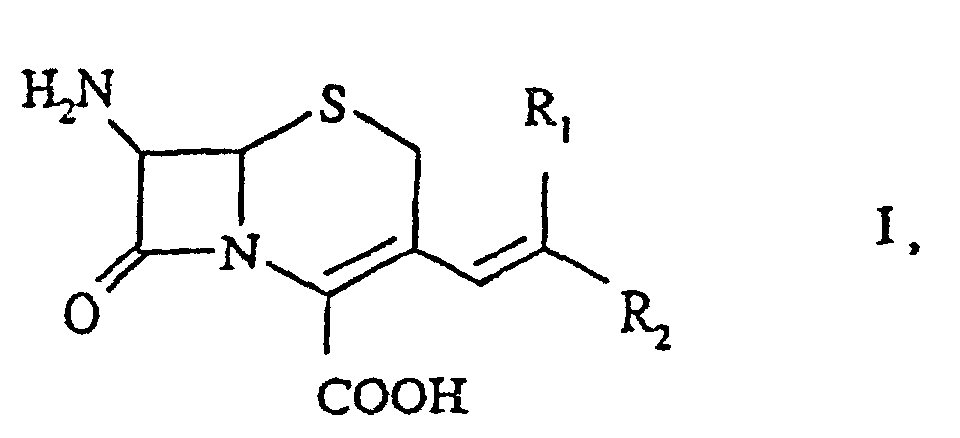
- the invention relates to an economical and simple process for the production of 3-vinylcephalosporin compounds of formula I wherein R 1 and R 2 may be the same or different and denote hydrogen or an optionally branched alkyl, alkenyl or alkinyl group, each containing up to 10 carbon atoms; a totally or partially saturated cycloalkyl radical containing up to 10 carbon atoms; or an optionally substituted aryl radical, aralkyl radical or heterocycle, each containing up to 10 carbon atoms.
- cycloalkyl radical, aryl radical, aralkyl radical or heterocycle each containing up to 10 carbon atoms may be substituted in any position, for example by halogen, nitrogen, sulphur, alkoxy, aryloxy, or a functional group such as a carbalkoxy or carboxamido group.
- the compounds of formula I are known to be useful starting products for the production of valuable 3-substituted vinyl cephalosporins.
- one of R 1 and R 2 is hydrogen and the other is:
- Suitable heterocyclic groups include single or fused heterocyclic rings having 4 to 7, preferably 5- or 6- atoms in each ring. Each ring has up to four hetero atoms in it selected from oxygen, nitrogen and sulphur. Also each heterocyclic ring may have 1 to 3 optional substituents selected from (C 1-4 ) alkyl, (C 1-4 ) alkoxy, halogen, trihalo-(C 1-4 ) alkyl, hydroxy, oxo, mercapto, amino, carboxyl, carbamoyl, di-(C 1-4 ) alkylamino, carboxymethyl, carbamoylmethyl, sulfomethyl and methoxycarbonylamino.
- heterocycle rings examples include unsubstituted and substituted imidazolyl, diazolyl, triazolyl, tetrazolyl, thiazolyl, thiadiazolyl, thiatriazolyl, oxazolyl, oxadiazolyl, benzimidazolyl, benzoxazolyl, benzothiazolyl, triazolylpyridyl, purinyl, pyridyl, pyrimidinyl, pyridazinyl, pyrazolyl and triazinyl.
- suitable heterocycle rings include unsubstituted and substituted 5-hydroxy-4-pyridon-2-yl, 1,2,3-triazolyl; 1,2,4-triazolyl; tetrazolyl; oxazolyl; thiazolyl; 1,3,4-oxadiazolyl; 1,3,4-thiadiazolyl or 1,2,3-thiadiazolyl.
- the heterocycle is 1,5-dihydroxy-4-pyridon-2-yl, 5-hydroxy-1-methyl-4-pyridon-2-yl, 5-hydroxy-4-pyridon-2-yl, 1-methyl-1H-tetrazol-5-yl-2-methyl-1,3,4-thiadiazol-5-yl, 1-carboxymethyl-1H-tetrazol-5-yl, 6-hydroxy-2-methyl-5-oxo-2H-1,2,4-triazin-3-yl, 1,2,3-triazol-5-yl, and 4-methyl-thiazol-5-yl.
- Examples of acyclic ammonium groups include (1-carbamoyl-2--hydroxyethyl)-dimethylammonium, (carbamoylmethyl)(ethyl)-methylammonium or trimethyl ammonium.
- cyclic ammonium groups are pyrrolidinium, which is N-substituted by alkyl, carbamoylalkyl, aminoalkyl or carboxyalkyl; pyridinium or cyclopentenopyridinium, which may be mono- or di-substituted by alkyl, halogen, hydroxy, carboxamido, alkoxycarbonyl, amino, monoalkylamino or dialkylamino.
- organic radicals contain up to 10 carbon atoms and "lower" means the group has up to 4 carbon atoms.
- EP 0503453 Processes for the production of compounds of formula I are known and are discussed in EP 0503453, the disclosure of which is incorporated by reference. However, as discussed in EP 0503453, these known processes require the use of expensive protection groups and require a multiplicity of intermediate stages.
- the invention disclosed in EP 0503453 addressed the problems of the prior art by making use of silyl protection groups in a Wittig reaction using 7-amino cephalosporanic acid as starting reagent.
- the base used in step ii) is a strong organic base and guanidines (for example tetramethylguanidine), amidines (for example 1,8-diazabicyclo[5.4.0]undec-7-ene and 1,5-diazabicylo[4.3.0]non-5-ene), alkali salts of nitrogen-containing compounds (for example the Li or Na salts of 1,1,1,3,3,3-hexamethyldisilazane and Li-diisopropylamide), butyllithium, hydrides of alkali metals, and iminophosphoranes are given as suitable examples. It is also mentioned that the bases should be free of moisture and should not contain any parts that could be silylated, so as to maintain the degree of silylation of the product.
- amidines for example 1,8-diazabicyclo[5.4.0]undec-7-ene and 1,5-diazabicylo[4.3.0]non-5-ene
- this invention provides a process, substantially as defined above, for the production of a compound of formula I which is improved in step ii) by the use of a weak base which is selected from the group consisting of:
- the use of the weaker base has the advantage that the possibility of opening the ⁇ -lactam ring is reduced and superfluous condensation of the base with the aldehyde or ketone is avoided or restricted.
- the weak base is such that its conjugate acid has a silylatable function and the reaction step ii) is carried out in the presence of a silylating agent to cause silylation of the silylatable function.
- the reaction proceeds without the silyl protecting group on the 7-amino group, which is a very potent silylating agent and which is easily removed, being removed by the base or conjugate acid. If the silyl protecting group were to be removed during the reaction, the amino group would be free to react with the aldehyde or ketone of formula V and this would cause the reaction to collapse.
- Particularly preferred weak bases are lithium and sodium salts of malonic acid diethyl esters, acetoacetic acid esters, acetic acid, pivalic acid, or ethylhexanoic acids, or lithium salts of benzoic acids.
- the silylating agent may be added to the reaction mixture prior to the addition of the weak base, which is a compound of formula VI or a salt of a carboxylic acid of formula R 10 COO - W + as defined above, or simultaneously with the weak base; in both cases to cause the silylation of silylatable function of the conjugate acid of the weak base.
- the weak base which is a compound of formula VI or a salt of a carboxylic acid of formula R 10 COO - W + as defined above, or simultaneously with the weak base; in both cases to cause the silylation of silylatable function of the conjugate acid of the weak base.
- N,O-bis(trimethylsilyl)-acetamide and bissilylurea are particularly suitable as silylating agents and further examples are given in EP 0503453.
- the reaction is carried out in a suitable solvent or solvent mixture which is inert under the reaction conditions, for example an inert ether (such as tetra-hydrofuran, diethyl ether, an ethylene glycol dialkyl ether or a tert.butylmethyl ether), an inert amide (such as dimethylformamide, dimethylacetamide or N-methylpyrrolidone), an urea (such as tetra-methylurea, 1,3-dimethyl-3,4,5,6-tetrahydro-2(1H)-pyrimidone, or 1,3,2-imidazolidinone) a nitrile (such as acetonitrile), or a halogenated hydrocarbon (such as dichloromethane).
- an inert ether such as tetra-hydrofuran, diethyl ether, an ethylene glycol dialkyl ether or a tert.butylmethyl ether
- an inert amide such as di
- the reaction may be carried out over a wide temperature range, preferably at a temperature of between -70°C and +70°C.
- the compounds of formula I may be isolated in a conventional manner.
- the silyl protecting groups may be removed by simple hydrolysis or alcoholysis. This may be done either by adding the desilylation agent to the reaction mixture, or by extracting the product into a separable aqueous phase, adding water (under alkaline or acidic conditions) and precipitating by adjusting the pH value to the isoelectric point, optionally adding an organic solvent.
- the compounds of formula II are known and may be produced as described in EP 0503453.
- Cephalosporins which are vinyl-substituted in 3-position are either resorbed orally, or when administered parenterally, are known for their very broad, efficient spectrum of activity.
- the following compounds may be produced for example:
- N,O-bis(trimethylsilyl)acetamide is added to 25 ml of a dichloromethane solution containing 6 g of 7-trimethylsilylamino-3-triphenyl-phosphoniummethyl-3-cephem-4-carboxylic acid trimethylsilylester-iodide on ice.
- 25 ml of a N-Methylpyrrolidone solution at 5 to 10°, containing 2.35 g sodium aceto-acetic acid ethyl ester, is added dropwise.
- the dark red solution is then cooled to 2° and 5.16 g acetoxy-acetaldehyde is added dropwise.
- the reaction mixture is then stirred for 2 hours at 10° and then added to a mixture of 100 ml acetic acid and 100 ml water.
- the pH of the aqueous phase is adjusted to 7 with ammonia and the organic phase is separated off.
- the pH is adjusted to 3.5 by adding 1:1 diluted concentrated HCl, whereupon the title compound precipitates.
- the suspension is stirred for 30 minutes at 5°, the title compound is filtered off, washed in acetone and dried.
- N,O-bis(trimethylsilyl)acetamide is added to 25 ml of a dichloromethane solution containing 6 g of 7-trimethylsilylamino-3-triphenyl-phosphoniummethyl-3-cephem-4-carboxylic acid trimethylsilylester-iodide on ice.
- 25 ml of a N-Methylpyrrolidone solution at 5 to 10°, containing 2.35 g sodium malonic acid diethyl ester, is added dropwise. Thereafter the solution is cooled to -10° and 1.32 g acetaldehyde, dissolved in 10 ml dichloromethane, is added. After the addition of the acetaldehyde, the reaction mixture is stirred for 48 hours at 0°. Thereafter the process proceeds as described in example 1.
- 36.5 ml of N,O-bis(trimethylsilyl)acetamide is added to 500 ml of a dichloromethane solution containing 24 g of 7-trimethylsilylamino-3- triphenyl-phosphoniummethyl-3-cephem-4-carboxylic acid trimethylsilylester-iodide at a temperature of -10°.
- a suspension of 12.8 g lithium benzoate in 75 ml N-Methylpyrrolidone is added.
- 9 g of acetaldehyde is added and the reaction mixture is stirred for 2 days at 0°. Superfluous acetaldehyde and most of the dichloromethane are removed in a rotary evaporator.
- the residue is then stirred in 1500 ml of water and then filtered.
- the residue is dissolved in 200 ml aqueous ammonia and the aqueous phase is extracted twice using 100 ml dichloromethane. After removal of the organic phase, 1:1 diluted concentrated HCl is added to the aqueous phase to bring the pH to 3.5 whereupon the title compound precipitates.
- the suspension is stirred for 30 minutes at 5°, the title compound is filtered off, washed in acetone and dried.
- N,O-bis(trimethylsilyl)acetamide is added to 25 ml of a dichloromethane solution containing 6 g of 7-trimethylsilylamino-3-triphenyl-phosphoniummethyl-3-cephem-4-carboxylic acid trimethylsilylester-iodide on ice.
- 15 ml of a N-methylpyrrolidone solution containing 2.5 g sodium-ethylhexanoate is added dropwise at 0 to 5°.
- 5 ml of acetoxy-acetaldehyde is added dropwise. The reaction mixture is stirred overnight at 0° and then processed as described in example 1.
Landscapes
- Chemical & Material Sciences (AREA)
- Organic Chemistry (AREA)
- Health & Medical Sciences (AREA)
- Chemical Kinetics & Catalysis (AREA)
- Life Sciences & Earth Sciences (AREA)
- General Chemical & Material Sciences (AREA)
- Medicinal Chemistry (AREA)
- Nuclear Medicine, Radiotherapy & Molecular Imaging (AREA)
- Communicable Diseases (AREA)
- Pharmacology & Pharmacy (AREA)
- Oncology (AREA)
- Animal Behavior & Ethology (AREA)
- General Health & Medical Sciences (AREA)
- Public Health (AREA)
- Veterinary Medicine (AREA)
- Cephalosporin Compounds (AREA)
- Pharmaceuticals Containing Other Organic And Inorganic Compounds (AREA)
- Nitrogen And Oxygen Or Sulfur-Condensed Heterocyclic Ring Systems (AREA)
Claims (7)
- Verfahren zur Herstellung einer 3-Vinylcephalosporinverbindung der Formelworin R1 und R2 gleich oder verschieden sein können und stehen für Wasserstoff oder
 worin die organischen Reste, die in (i), (ii) und (iii) spezifiziert sind, bis zu 10 Kohlenstoffatome enthalten und worin der Cycloalkylrest, der Arylrest, der Aralkylrest oder der Heterocyclus wahlweise substituiert sind durch Halogen, Stickstoff, Schwefel, Alkoxy, Aryloxy, eine Carbalkoxy- oder Carboxamidogruppe,(i) eine wahlweise verzweigte Alkyl-, Alkenyl- oder Alkinylgruppe,(ii) einen vollkommen oder teilweise gesättigten Cycloalkylrest, oder(iii) einen wahlweise substituierten Arylrest, Aralkylrest oder Heterocyclus,
das in einem Lösemittel oder Lösemittelgemisch ausgeführt wird, das unter den Reaktionsbedingungen inert ist,
das die folgenden Schritte umfaßtdadurch gekennzeichnet, daß die Base, die mit einer Verbindung der Formel III in Schritt ii) umgesetzt wird, folgende isti) Umsetzung einer Verbindung der Formelworin R für eine Silylschutzgruppe steht,
mit einer Verbindung der Formel P(R4)3 oder P(OR4)3,
worin R4 für eine Alkylgruppe mit 1 bis 4 Kohlenstoffatomen oder eine Arylgruppe steht
unter Bildung einer Verbindung der Formelworin
X für -P(R4)3I oder -P(O)(OR4)2 steht, worin R4 wie oben definiert ist, und
R wie oben definiert ist, undii) Umsetzung einer Verbindung der Formel III mit einer Base unter Bildung einer Verbindung der Formelworin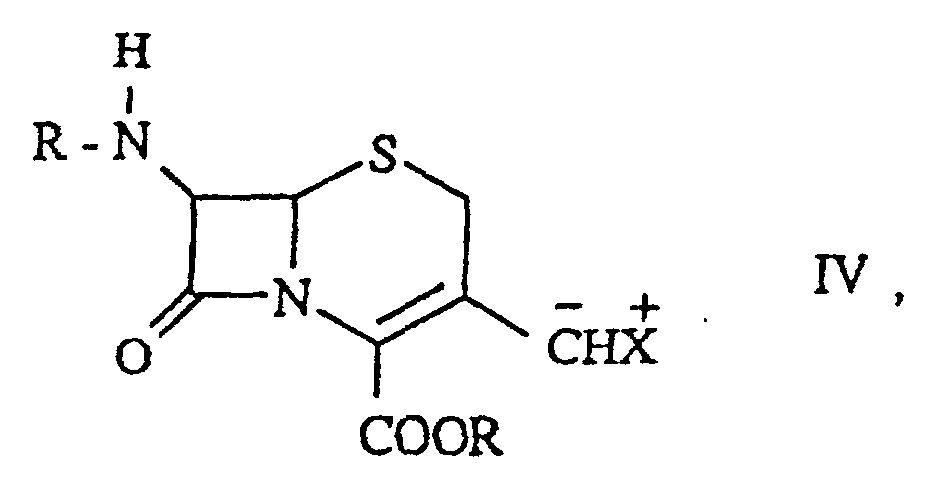
R wie oben definiert ist,
X+ für -P+(R4)3 oder -[P(O)(OR4)2Y]+ steht,
worin R4 wie oben definiert ist, und
Y für ein Kation der Alkalireihe oder die protonierte Form einer Base steht und worin die Reaktion in Gegenwart eines Silylierungsmittels ausgeführt wird, undiii) Umsetzung einer Verbindung der Formel IV mit einer Verbindung der Formelworin R1 und R2 wie oben definiert sind, unter Bildung einer Verbindung der Formel I, i) eine Verbindung der Formelworin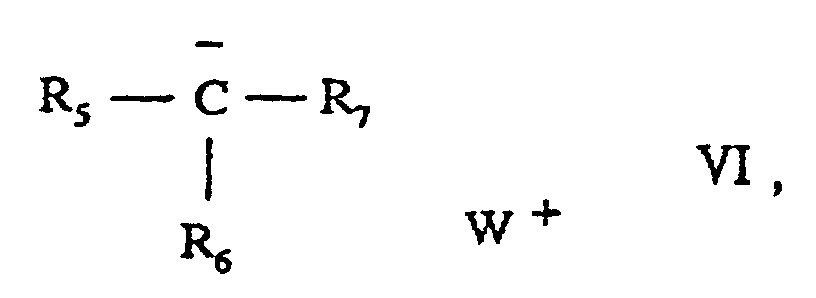
R5 für Wasserstoff, Alkyl oder Aryl steht,
R6 und R7, die gleich oder verschieden sein können, jeweils für eine aktivierte Gruppe der Formel -COOR8, -CN, -SO2R8, -COR8 oder -CON(R8)2 stehen, oder
R5 und R6, die gleich oder verschieden sind, jeweils für Aryl stehen und R7 für eine aktivierte Gruppe der Formel -COOR8, -CN, -SO2R8, -COR8 oder -CON(R8)2 steht,
worin R8 für Alkyl Cycloalkyl oder Aryl steht, und
W+ für ein Kation steht, oderii) ein Salz einer Carbonsäure der Formel R10-COO-W+, worin
R10 für eine wahlweise verzweigte Alkylgruppe oder eine wahlweise substituierte Arylgruppe steht und W+ wie oben definiert ist. - Verfahren nach Anspruch 1, worin die Verbindung der Formel VI oder das Carbonsäuresalz der Formel R10-COO- W+ ein Lithium- oder Natriumsalz von Malonsäurediethylester, Acetoessigsäureester, Essigsäure, Pivalinsäure oder Ethylhexansäure ist oder ein Lithiumsalz der Benzoesäure ist.
- Verfahren nach einem der Ansprüche 1 oder 2, worin das Silylierungsmittel vor der Zugabe der Base zum Reaktionsgemisch gegeben wird, die eine Verbindung der Formel VI oder ein Carbonsäuresalz der Formel R10-COO-W+ ist, wie dies in Anspruch 1 definiert ist.
- Verfahren nach einem der Ansprüche 1 oder 2, worin das Silylierungsmittel zur selben Zeit wie die Base zum Reaktionsgemisch gegeben wird, die eine Verbindung der Formel VI oder ein Carbonsäuresalz der Formel R10-COO-W+ ist, wie dies in Anspruch 1 definiert ist.
- Verfahren nach einem der Ansprüche 1 bis 4, worin das Silylierungsmittel N,O-Bis(trimethylsilyl)acetamid oder Bissilylharnstoff ist.
- Verwendung einer Base der Formel VI oder der Formel R10-COO-W+ nach Anspruch 1 zur Herstellung eines Ylids der Formel IV, wie dies in Anspruch 1 definiert ist, in einer Reaktion nach Anspruch 1.
- Verwendung nach Anspruch 6 in einem Verfahren zur Herstellung einer 3-Vinylcephalosporinverbindung der Formel I, wie sie in Anspruch 1 definiert ist.
Applications Claiming Priority (3)
| Application Number | Priority Date | Filing Date | Title |
|---|---|---|---|
| AT0221292A AT400436B (de) | 1992-11-10 | 1992-11-10 | Neues verfahren zur herstellung von 3-vinylcephalosporinverbindungen |
| AT2212/92 | 1992-11-10 | ||
| AT221292 | 1992-11-10 |
Publications (3)
| Publication Number | Publication Date |
|---|---|
| EP0597429A2 EP0597429A2 (de) | 1994-05-18 |
| EP0597429A3 EP0597429A3 (de) | 1995-01-18 |
| EP0597429B1 true EP0597429B1 (de) | 2003-02-26 |
Family
ID=3530103
Family Applications (1)
| Application Number | Title | Priority Date | Filing Date |
|---|---|---|---|
| EP93118094A Expired - Lifetime EP0597429B1 (de) | 1992-11-10 | 1993-11-08 | Verfahren zur Herstellung von 3-Vinylcephalosporinen |
Country Status (6)
| Country | Link |
|---|---|
| EP (1) | EP0597429B1 (de) |
| JP (1) | JP2662176B2 (de) |
| AT (2) | AT400436B (de) |
| DE (1) | DE69332707T2 (de) |
| ES (1) | ES2193140T3 (de) |
| SG (1) | SG64379A1 (de) |
Families Citing this family (5)
| Publication number | Priority date | Publication date | Assignee | Title |
|---|---|---|---|---|
| EP0658558B1 (de) | 1993-11-17 | 2001-01-24 | Biochemie Gesellschaft M.B.H. | Trennung von Cephalosporinisomeren |
| US5856474A (en) * | 1994-04-25 | 1999-01-05 | Biochemie Gesellschaft, M.B.H. | Cephalosporin synthesis |
| AT403049B (de) | 1995-08-14 | 1997-10-27 | Biochemie Gmbh | Abreicherung von 7-adca in 3-vinyl-aca |
| EP1660505A2 (de) * | 2003-08-14 | 2006-05-31 | Ranbaxy Laboratories Limited | Verfahren zur selektiven herstellung des z-isomers von cefditoren und dessen pharmazeutisch unbedenklichen salzen und estern |
| JP2006096679A (ja) * | 2004-09-28 | 2006-04-13 | Meiji Seika Kaisha Ltd | セファロスポリン化合物の製造方法 |
Family Cites Families (1)
| Publication number | Priority date | Publication date | Assignee | Title |
|---|---|---|---|---|
| ATE201025T1 (de) * | 1991-03-08 | 2001-05-15 | Biochemie Gmbh | Verfahren zur herstellung von cephalosporinen und zwischenprodukte in diesem verfahren |
-
1992
- 1992-11-10 AT AT0221292A patent/AT400436B/de not_active IP Right Cessation
-
1993
- 1993-11-08 DE DE69332707T patent/DE69332707T2/de not_active Expired - Lifetime
- 1993-11-08 ES ES93118094T patent/ES2193140T3/es not_active Expired - Lifetime
- 1993-11-08 EP EP93118094A patent/EP0597429B1/de not_active Expired - Lifetime
- 1993-11-08 SG SG1996009417A patent/SG64379A1/en unknown
- 1993-11-08 AT AT93118094T patent/ATE233267T1/de active
- 1993-11-08 JP JP5278628A patent/JP2662176B2/ja not_active Expired - Lifetime
Non-Patent Citations (2)
| Title |
|---|
| BUEHLER C.A. ET AL.: "Survey of Organic Syntheses", WILEY-INTERSCIENCE, NEW YORK ET AL. * |
| MARCH J.: "Advanced Organic Chemistry, 2nd edition", MCGRAW-HILL INTERNATIONAL BOOK CO., AUCKLAND ET AL. * |
Also Published As
| Publication number | Publication date |
|---|---|
| EP0597429A2 (de) | 1994-05-18 |
| DE69332707D1 (de) | 2003-04-03 |
| JPH06247973A (ja) | 1994-09-06 |
| JP2662176B2 (ja) | 1997-10-08 |
| AT400436B (de) | 1995-12-27 |
| ES2193140T3 (es) | 2003-11-01 |
| SG64379A1 (en) | 1999-04-27 |
| ATE233267T1 (de) | 2003-03-15 |
| ATA221292A (de) | 1995-05-15 |
| EP0597429A3 (de) | 1995-01-18 |
| DE69332707T2 (de) | 2003-10-16 |
Similar Documents
| Publication | Publication Date | Title |
|---|---|---|
| US6063917A (en) | Cephalosporin synthesis | |
| JP2766116B2 (ja) | セファロスポリン類の新規製造法およびその新規中間体 | |
| MXPA96004353A (en) | Sistensis de cefalospori | |
| EP0112164A2 (de) | Cephemverbindungen, ihre Herstellung und sie enthaltende Medikamente | |
| EP0597429B1 (de) | Verfahren zur Herstellung von 3-Vinylcephalosporinen | |
| EP0175814B1 (de) | Verfahren zur Herstellung von Cephem-Verbindungen | |
| US6248881B1 (en) | Intermediates and process for the production of 3-vinyl cephalosporins | |
| EP0523585B1 (de) | Verbesserungen mit Bezug auf die Herstellung von Beta-Laktame | |
| EP0628561B1 (de) | Verfahren zur Herstellung von Cephalosporinverbindungen aus reaktiven organischen Säurederivaten | |
| US5644052A (en) | Process for the production of cephalosporines and novel intermediates in this process | |
| KR0161796B1 (ko) | 티아졸릴 유도체의 제조방법 | |
| WO1996012712A1 (en) | Reactive phosphate derivatives of thiazolylacetic acid and process for preparing cephalosporin antibiotics using the same | |
| KR20010002706A (ko) | 티아졸 초산 반응성 포스페이트 유도체를 이용한 세팔로스포린화합물의 제조방법 | |
| HU197579B (en) | Process for production of derivatives of cefem carbonic acid | |
| JPS6150952B2 (de) |
Legal Events
| Date | Code | Title | Description |
|---|---|---|---|
| PUAI | Public reference made under article 153(3) epc to a published international application that has entered the european phase |
Free format text: ORIGINAL CODE: 0009012 |
|
| AK | Designated contracting states |
Kind code of ref document: A2 Designated state(s): AT BE CH DE DK ES FR GB GR IE IT LI LU NL PT SE |
|
| PUAL | Search report despatched |
Free format text: ORIGINAL CODE: 0009013 |
|
| AK | Designated contracting states |
Kind code of ref document: A3 Designated state(s): AT BE CH DE DK ES FR GB GR IE IT LI LU NL PT SE |
|
| 17P | Request for examination filed |
Effective date: 19950422 |
|
| 17Q | First examination report despatched |
Effective date: 19960118 |
|
| GRAG | Despatch of communication of intention to grant |
Free format text: ORIGINAL CODE: EPIDOS AGRA |
|
| GRAG | Despatch of communication of intention to grant |
Free format text: ORIGINAL CODE: EPIDOS AGRA |
|
| GRAH | Despatch of communication of intention to grant a patent |
Free format text: ORIGINAL CODE: EPIDOS IGRA |
|
| GRAH | Despatch of communication of intention to grant a patent |
Free format text: ORIGINAL CODE: EPIDOS IGRA |
|
| GRAA | (expected) grant |
Free format text: ORIGINAL CODE: 0009210 |
|
| AK | Designated contracting states |
Designated state(s): AT BE CH DE DK ES FR GB GR IE IT LI LU NL PT SE |
|
| PG25 | Lapsed in a contracting state [announced via postgrant information from national office to epo] |
Ref country code: GR Free format text: LAPSE BECAUSE OF FAILURE TO SUBMIT A TRANSLATION OF THE DESCRIPTION OR TO PAY THE FEE WITHIN THE PRESCRIBED TIME-LIMIT Effective date: 20030226 Ref country code: BE Free format text: LAPSE BECAUSE OF FAILURE TO SUBMIT A TRANSLATION OF THE DESCRIPTION OR TO PAY THE FEE WITHIN THE PRESCRIBED TIME-LIMIT Effective date: 20030226 |
|
| REG | Reference to a national code |
Ref country code: GB Ref legal event code: FG4D |
|
| REG | Reference to a national code |
Ref country code: CH Ref legal event code: EP |
|
| REG | Reference to a national code |
Ref country code: IE Ref legal event code: FG4D |
|
| REF | Corresponds to: |
Ref document number: 69332707 Country of ref document: DE Date of ref document: 20030403 Kind code of ref document: P |
|
| PG25 | Lapsed in a contracting state [announced via postgrant information from national office to epo] |
Ref country code: SE Free format text: LAPSE BECAUSE OF FAILURE TO SUBMIT A TRANSLATION OF THE DESCRIPTION OR TO PAY THE FEE WITHIN THE PRESCRIBED TIME-LIMIT Effective date: 20030526 Ref country code: DK Free format text: LAPSE BECAUSE OF FAILURE TO SUBMIT A TRANSLATION OF THE DESCRIPTION OR TO PAY THE FEE WITHIN THE PRESCRIBED TIME-LIMIT Effective date: 20030526 |
|
| ET | Fr: translation filed | ||
| REG | Reference to a national code |
Ref country code: ES Ref legal event code: FG2A Ref document number: 2193140 Country of ref document: ES Kind code of ref document: T3 |
|
| PG25 | Lapsed in a contracting state [announced via postgrant information from national office to epo] |
Ref country code: LU Free format text: LAPSE BECAUSE OF NON-PAYMENT OF DUE FEES Effective date: 20031108 |
|
| PG25 | Lapsed in a contracting state [announced via postgrant information from national office to epo] |
Ref country code: IE Free format text: LAPSE BECAUSE OF NON-PAYMENT OF DUE FEES Effective date: 20031110 |
|
| PLBE | No opposition filed within time limit |
Free format text: ORIGINAL CODE: 0009261 |
|
| STAA | Information on the status of an ep patent application or granted ep patent |
Free format text: STATUS: NO OPPOSITION FILED WITHIN TIME LIMIT |
|
| 26N | No opposition filed |
Effective date: 20031127 |
|
| REG | Reference to a national code |
Ref country code: CH Ref legal event code: PFA Owner name: SANDOZ G.M.B.H Free format text: BIOCHEMIE GESELLSCHAFT M.B.H.##6250 KUNDL (AT) -TRANSFER TO- SANDOZ G.M.B.H#BIOCHEMIESTRASSE10#6250 KUNDL (AT) |
|
| REG | Reference to a national code |
Ref country code: IE Ref legal event code: MM4A |
|
| REG | Reference to a national code |
Ref country code: CH Ref legal event code: PUE Owner name: SANDOZ AG Free format text: SANDOZ G.M.B.H#BIOCHEMIESTRASSE10#6250 KUNDL (AT) -TRANSFER TO- SANDOZ AG#LICHTSTRASSE 35#4056 BASEL (CH) |
|
| NLS | Nl: assignments of ep-patents |
Owner name: SANDOZ AG |
|
| NLT1 | Nl: modifications of names registered in virtue of documents presented to the patent office pursuant to art. 16 a, paragraph 1 |
Owner name: SANDOZ GMBH |
|
| REG | Reference to a national code |
Ref country code: FR Ref legal event code: TP Ref country code: FR Ref legal event code: CD |
|
| PG25 | Lapsed in a contracting state [announced via postgrant information from national office to epo] |
Ref country code: FR Free format text: LAPSE BECAUSE OF NON-PAYMENT OF DUE FEES Effective date: 20060731 |
|
| REG | Reference to a national code |
Ref country code: FR Ref legal event code: ST Effective date: 20060731 |
|
| REG | Reference to a national code |
Ref country code: FR Ref legal event code: RN Ref country code: FR Ref legal event code: FC |
|
| PGRI | Patent reinstated in contracting state [announced from national office to epo] |
Ref country code: FR Effective date: 20070124 |
|
| PGFP | Annual fee paid to national office [announced via postgrant information from national office to epo] |
Ref country code: NL Payment date: 20101110 Year of fee payment: 18 Ref country code: FR Payment date: 20101123 Year of fee payment: 18 Ref country code: AT Payment date: 20101110 Year of fee payment: 18 |
|
| PGFP | Annual fee paid to national office [announced via postgrant information from national office to epo] |
Ref country code: PT Payment date: 20101105 Year of fee payment: 18 Ref country code: DE Payment date: 20101104 Year of fee payment: 18 Ref country code: CH Payment date: 20101112 Year of fee payment: 18 |
|
| PGFP | Annual fee paid to national office [announced via postgrant information from national office to epo] |
Ref country code: GB Payment date: 20101103 Year of fee payment: 18 |
|
| REG | Reference to a national code |
Ref country code: PT Ref legal event code: MM4A Free format text: LAPSE DUE TO NON-PAYMENT OF FEES Effective date: 20120508 |
|
| REG | Reference to a national code |
Ref country code: NL Ref legal event code: V1 Effective date: 20120601 |
|
| REG | Reference to a national code |
Ref country code: CH Ref legal event code: PL |
|
| GBPC | Gb: european patent ceased through non-payment of renewal fee |
Effective date: 20111108 |
|
| PG25 | Lapsed in a contracting state [announced via postgrant information from national office to epo] |
Ref country code: NL Free format text: LAPSE BECAUSE OF NON-PAYMENT OF DUE FEES Effective date: 20120601 Ref country code: LI Free format text: LAPSE BECAUSE OF NON-PAYMENT OF DUE FEES Effective date: 20111130 Ref country code: CH Free format text: LAPSE BECAUSE OF NON-PAYMENT OF DUE FEES Effective date: 20111130 |
|
| REG | Reference to a national code |
Ref country code: FR Ref legal event code: ST Effective date: 20120731 |
|
| PG25 | Lapsed in a contracting state [announced via postgrant information from national office to epo] |
Ref country code: PT Free format text: LAPSE BECAUSE OF NON-PAYMENT OF DUE FEES Effective date: 20120508 |
|
| REG | Reference to a national code |
Ref country code: DE Ref legal event code: R119 Ref document number: 69332707 Country of ref document: DE Effective date: 20120601 |
|
| PG25 | Lapsed in a contracting state [announced via postgrant information from national office to epo] |
Ref country code: GB Free format text: LAPSE BECAUSE OF NON-PAYMENT OF DUE FEES Effective date: 20111108 |
|
| REG | Reference to a national code |
Ref country code: AT Ref legal event code: MM01 Ref document number: 233267 Country of ref document: AT Kind code of ref document: T Effective date: 20111108 |
|
| PG25 | Lapsed in a contracting state [announced via postgrant information from national office to epo] |
Ref country code: FR Free format text: LAPSE BECAUSE OF NON-PAYMENT OF DUE FEES Effective date: 20111130 |
|
| PG25 | Lapsed in a contracting state [announced via postgrant information from national office to epo] |
Ref country code: AT Free format text: LAPSE BECAUSE OF NON-PAYMENT OF DUE FEES Effective date: 20111108 |
|
| PGFP | Annual fee paid to national office [announced via postgrant information from national office to epo] |
Ref country code: IT Payment date: 20121113 Year of fee payment: 20 Ref country code: ES Payment date: 20121212 Year of fee payment: 20 |
|
| PG25 | Lapsed in a contracting state [announced via postgrant information from national office to epo] |
Ref country code: DE Free format text: LAPSE BECAUSE OF NON-PAYMENT OF DUE FEES Effective date: 20120601 |
|
| REG | Reference to a national code |
Ref country code: ES Ref legal event code: FD2A Effective date: 20140925 |
|
| PG25 | Lapsed in a contracting state [announced via postgrant information from national office to epo] |
Ref country code: ES Free format text: LAPSE BECAUSE OF EXPIRATION OF PROTECTION Effective date: 20131109 |