EP0586814A2 - Verfahren zur Herstellung von Katalysatoren zur Entfernung von Stickstoffoxiden aus Abgasen - Google Patents
Verfahren zur Herstellung von Katalysatoren zur Entfernung von Stickstoffoxiden aus Abgasen Download PDFInfo
- Publication number
- EP0586814A2 EP0586814A2 EP93110488A EP93110488A EP0586814A2 EP 0586814 A2 EP0586814 A2 EP 0586814A2 EP 93110488 A EP93110488 A EP 93110488A EP 93110488 A EP93110488 A EP 93110488A EP 0586814 A2 EP0586814 A2 EP 0586814A2
- Authority
- EP
- European Patent Office
- Prior art keywords
- catalysts
- green body
- nitrogen oxides
- gas inlet
- silicates
- Prior art date
- Legal status (The legal status is an assumption and is not a legal conclusion. Google has not performed a legal analysis and makes no representation as to the accuracy of the status listed.)
- Withdrawn
Links
- 239000003054 catalyst Substances 0.000 title claims abstract description 49
- MWUXSHHQAYIFBG-UHFFFAOYSA-N nitrogen oxide Inorganic materials O=[N] MWUXSHHQAYIFBG-UHFFFAOYSA-N 0.000 title claims abstract description 42
- 239000007789 gas Substances 0.000 title claims abstract description 25
- 238000000034 method Methods 0.000 title claims abstract description 10
- 238000002360 preparation method Methods 0.000 claims abstract description 19
- 229910019142 PO4 Inorganic materials 0.000 claims abstract description 11
- 235000021317 phosphate Nutrition 0.000 claims abstract description 11
- 150000001642 boronic acid derivatives Chemical class 0.000 claims abstract description 10
- 150000003013 phosphoric acid derivatives Chemical class 0.000 claims abstract description 10
- 150000004760 silicates Chemical class 0.000 claims abstract description 10
- NBIIXXVUZAFLBC-UHFFFAOYSA-L Phosphate ion(2-) Chemical compound OP([O-])([O-])=O NBIIXXVUZAFLBC-UHFFFAOYSA-L 0.000 claims description 6
- 229910052782 aluminium Inorganic materials 0.000 claims description 6
- XAGFODPZIPBFFR-UHFFFAOYSA-N aluminium Chemical compound [Al] XAGFODPZIPBFFR-UHFFFAOYSA-N 0.000 claims description 6
- ILRRQNADMUWWFW-UHFFFAOYSA-K aluminium phosphate Chemical class O1[Al]2OP1(=O)O2 ILRRQNADMUWWFW-UHFFFAOYSA-K 0.000 claims description 5
- 239000003546 flue gas Substances 0.000 claims description 5
- NTHWMYGWWRZVTN-UHFFFAOYSA-N sodium silicate Chemical compound [Na+].[Na+].[O-][Si]([O-])=O NTHWMYGWWRZVTN-UHFFFAOYSA-N 0.000 claims description 5
- 239000004115 Sodium Silicate Substances 0.000 claims description 4
- 229910052911 sodium silicate Inorganic materials 0.000 claims description 4
- 150000001875 compounds Chemical class 0.000 claims description 3
- 239000000391 magnesium silicate Substances 0.000 claims description 3
- 239000002243 precursor Substances 0.000 claims description 3
- 230000015572 biosynthetic process Effects 0.000 claims description 2
- 235000012243 magnesium silicates Nutrition 0.000 claims description 2
- 239000001177 diphosphate Substances 0.000 abstract 2
- XPPKVPWEQAFLFU-UHFFFAOYSA-J diphosphate(4-) Chemical class [O-]P([O-])(=O)OP([O-])([O-])=O XPPKVPWEQAFLFU-UHFFFAOYSA-J 0.000 abstract 2
- 235000011180 diphosphates Nutrition 0.000 abstract 2
- GWEVSGVZZGPLCZ-UHFFFAOYSA-N Titan oxide Chemical compound O=[Ti]=O GWEVSGVZZGPLCZ-UHFFFAOYSA-N 0.000 description 10
- 238000005299 abrasion Methods 0.000 description 10
- 238000011144 upstream manufacturing Methods 0.000 description 8
- 238000004519 manufacturing process Methods 0.000 description 7
- 239000000428 dust Substances 0.000 description 5
- 239000004408 titanium dioxide Substances 0.000 description 5
- XLYOFNOQVPJJNP-UHFFFAOYSA-N water Substances O XLYOFNOQVPJJNP-UHFFFAOYSA-N 0.000 description 5
- VYPSYNLAJGMNEJ-UHFFFAOYSA-N Silicium dioxide Chemical compound O=[Si]=O VYPSYNLAJGMNEJ-UHFFFAOYSA-N 0.000 description 3
- 238000000465 moulding Methods 0.000 description 3
- QGZKDVFQNNGYKY-UHFFFAOYSA-N Ammonia Chemical compound N QGZKDVFQNNGYKY-UHFFFAOYSA-N 0.000 description 2
- -1 B. magnesium nitrate Chemical class 0.000 description 2
- 239000006004 Quartz sand Substances 0.000 description 2
- QAOWNCQODCNURD-UHFFFAOYSA-N Sulfuric acid Chemical compound OS(O)(=O)=O QAOWNCQODCNURD-UHFFFAOYSA-N 0.000 description 2
- 230000003197 catalytic effect Effects 0.000 description 2
- 238000001035 drying Methods 0.000 description 2
- 238000001125 extrusion Methods 0.000 description 2
- 239000010881 fly ash Substances 0.000 description 2
- YIXJRHPUWRPCBB-UHFFFAOYSA-N magnesium nitrate Chemical compound [Mg+2].[O-][N+]([O-])=O.[O-][N+]([O-])=O YIXJRHPUWRPCBB-UHFFFAOYSA-N 0.000 description 2
- 235000010339 sodium tetraborate Nutrition 0.000 description 2
- HZAXFHJVJLSVMW-UHFFFAOYSA-N 2-Aminoethan-1-ol Chemical compound NCCO HZAXFHJVJLSVMW-UHFFFAOYSA-N 0.000 description 1
- QGZKDVFQNNGYKY-UHFFFAOYSA-O Ammonium Chemical compound [NH4+] QGZKDVFQNNGYKY-UHFFFAOYSA-O 0.000 description 1
- UGFAIRIUMAVXCW-UHFFFAOYSA-N Carbon monoxide Chemical compound [O+]#[C-] UGFAIRIUMAVXCW-UHFFFAOYSA-N 0.000 description 1
- 239000004705 High-molecular-weight polyethylene Substances 0.000 description 1
- GRYLNZFGIOXLOG-UHFFFAOYSA-N Nitric acid Chemical compound O[N+]([O-])=O GRYLNZFGIOXLOG-UHFFFAOYSA-N 0.000 description 1
- NBIIXXVUZAFLBC-UHFFFAOYSA-N Phosphoric acid Chemical compound OP(O)(O)=O NBIIXXVUZAFLBC-UHFFFAOYSA-N 0.000 description 1
- QAOWNCQODCNURD-UHFFFAOYSA-L Sulfate Chemical compound [O-]S([O-])(=O)=O QAOWNCQODCNURD-UHFFFAOYSA-L 0.000 description 1
- 239000002253 acid Substances 0.000 description 1
- WNROFYMDJYEPJX-UHFFFAOYSA-K aluminium hydroxide Chemical compound [OH-].[OH-].[OH-].[Al+3] WNROFYMDJYEPJX-UHFFFAOYSA-K 0.000 description 1
- 229910021529 ammonia Inorganic materials 0.000 description 1
- 230000004323 axial length Effects 0.000 description 1
- UNTBPXHCXVWYOI-UHFFFAOYSA-O azanium;oxido(dioxo)vanadium Chemical compound [NH4+].[O-][V](=O)=O UNTBPXHCXVWYOI-UHFFFAOYSA-O 0.000 description 1
- 229910021538 borax Inorganic materials 0.000 description 1
- 238000001354 calcination Methods 0.000 description 1
- 238000010531 catalytic reduction reaction Methods 0.000 description 1
- 230000032823 cell division Effects 0.000 description 1
- 239000003638 chemical reducing agent Substances 0.000 description 1
- 230000000052 comparative effect Effects 0.000 description 1
- 230000007423 decrease Effects 0.000 description 1
- OQDJKSVVHFVCAZ-UHFFFAOYSA-H dialuminum;diphosphate Chemical compound [Al+3].[Al+3].[O-]P([O-])([O-])=O.[O-]P([O-])([O-])=O OQDJKSVVHFVCAZ-UHFFFAOYSA-H 0.000 description 1
- 230000003628 erosive effect Effects 0.000 description 1
- 239000002803 fossil fuel Substances 0.000 description 1
- 229910021485 fumed silica Inorganic materials 0.000 description 1
- 239000003365 glass fiber Substances 0.000 description 1
- 238000007654 immersion Methods 0.000 description 1
- 238000010348 incorporation Methods 0.000 description 1
- 238000004898 kneading Methods 0.000 description 1
- HCWCAKKEBCNQJP-UHFFFAOYSA-N magnesium orthosilicate Chemical compound [Mg+2].[Mg+2].[O-][Si]([O-])([O-])[O-] HCWCAKKEBCNQJP-UHFFFAOYSA-N 0.000 description 1
- GVALZJMUIHGIMD-UHFFFAOYSA-H magnesium phosphate Chemical compound [Mg+2].[Mg+2].[Mg+2].[O-]P([O-])([O-])=O.[O-]P([O-])([O-])=O GVALZJMUIHGIMD-UHFFFAOYSA-H 0.000 description 1
- 159000000003 magnesium salts Chemical class 0.000 description 1
- 235000019792 magnesium silicate Nutrition 0.000 description 1
- 229910052919 magnesium silicate Inorganic materials 0.000 description 1
- 239000000463 material Substances 0.000 description 1
- 238000005259 measurement Methods 0.000 description 1
- 229910044991 metal oxide Inorganic materials 0.000 description 1
- 150000004706 metal oxides Chemical class 0.000 description 1
- 125000005341 metaphosphate group Chemical group 0.000 description 1
- 238000002156 mixing Methods 0.000 description 1
- 239000000203 mixture Substances 0.000 description 1
- 238000006386 neutralization reaction Methods 0.000 description 1
- 229910017604 nitric acid Inorganic materials 0.000 description 1
- SOQBVABWOPYFQZ-UHFFFAOYSA-N oxygen(2-);titanium(4+) Chemical class [O-2].[O-2].[Ti+4] SOQBVABWOPYFQZ-UHFFFAOYSA-N 0.000 description 1
- 238000001935 peptisation Methods 0.000 description 1
- NBIIXXVUZAFLBC-UHFFFAOYSA-K phosphate Chemical compound [O-]P([O-])([O-])=O NBIIXXVUZAFLBC-UHFFFAOYSA-K 0.000 description 1
- 239000010452 phosphate Substances 0.000 description 1
- 229920001223 polyethylene glycol Polymers 0.000 description 1
- 239000011148 porous material Substances 0.000 description 1
- 235000019353 potassium silicate Nutrition 0.000 description 1
- 239000000843 powder Substances 0.000 description 1
- 230000003014 reinforcing effect Effects 0.000 description 1
- 239000004576 sand Substances 0.000 description 1
- 238000007493 shaping process Methods 0.000 description 1
- 239000004328 sodium tetraborate Substances 0.000 description 1
- 239000000126 substance Substances 0.000 description 1
- BSVBQGMMJUBVOD-UHFFFAOYSA-N trisodium borate Chemical class [Na+].[Na+].[Na+].[O-]B([O-])[O-] BSVBQGMMJUBVOD-UHFFFAOYSA-N 0.000 description 1
- 238000005406 washing Methods 0.000 description 1
Images
Classifications
-
- B—PERFORMING OPERATIONS; TRANSPORTING
- B01—PHYSICAL OR CHEMICAL PROCESSES OR APPARATUS IN GENERAL
- B01J—CHEMICAL OR PHYSICAL PROCESSES, e.g. CATALYSIS OR COLLOID CHEMISTRY; THEIR RELEVANT APPARATUS
- B01J27/00—Catalysts comprising the elements or compounds of halogens, sulfur, selenium, tellurium, phosphorus or nitrogen; Catalysts comprising carbon compounds
- B01J27/14—Phosphorus; Compounds thereof
- B01J27/16—Phosphorus; Compounds thereof containing oxygen, i.e. acids, anhydrides and their derivates with N, S, B or halogens without carriers or on carriers based on C, Si, Al or Zr; also salts of Si, Al and Zr
-
- B—PERFORMING OPERATIONS; TRANSPORTING
- B01—PHYSICAL OR CHEMICAL PROCESSES OR APPARATUS IN GENERAL
- B01D—SEPARATION
- B01D53/00—Separation of gases or vapours; Recovering vapours of volatile solvents from gases; Chemical or biological purification of waste gases, e.g. engine exhaust gases, smoke, fumes, flue gases, aerosols
- B01D53/34—Chemical or biological purification of waste gases
- B01D53/74—General processes for purification of waste gases; Apparatus or devices specially adapted therefor
- B01D53/86—Catalytic processes
- B01D53/8621—Removing nitrogen compounds
- B01D53/8625—Nitrogen oxides
- B01D53/8628—Processes characterised by a specific catalyst
-
- B—PERFORMING OPERATIONS; TRANSPORTING
- B01—PHYSICAL OR CHEMICAL PROCESSES OR APPARATUS IN GENERAL
- B01J—CHEMICAL OR PHYSICAL PROCESSES, e.g. CATALYSIS OR COLLOID CHEMISTRY; THEIR RELEVANT APPARATUS
- B01J21/00—Catalysts comprising the elements, oxides, or hydroxides of magnesium, boron, aluminium, carbon, silicon, titanium, zirconium, or hafnium
- B01J21/02—Boron or aluminium; Oxides or hydroxides thereof
-
- B—PERFORMING OPERATIONS; TRANSPORTING
- B01—PHYSICAL OR CHEMICAL PROCESSES OR APPARATUS IN GENERAL
- B01J—CHEMICAL OR PHYSICAL PROCESSES, e.g. CATALYSIS OR COLLOID CHEMISTRY; THEIR RELEVANT APPARATUS
- B01J21/00—Catalysts comprising the elements, oxides, or hydroxides of magnesium, boron, aluminium, carbon, silicon, titanium, zirconium, or hafnium
- B01J21/02—Boron or aluminium; Oxides or hydroxides thereof
- B01J21/04—Alumina
-
- B—PERFORMING OPERATIONS; TRANSPORTING
- B01—PHYSICAL OR CHEMICAL PROCESSES OR APPARATUS IN GENERAL
- B01J—CHEMICAL OR PHYSICAL PROCESSES, e.g. CATALYSIS OR COLLOID CHEMISTRY; THEIR RELEVANT APPARATUS
- B01J21/00—Catalysts comprising the elements, oxides, or hydroxides of magnesium, boron, aluminium, carbon, silicon, titanium, zirconium, or hafnium
- B01J21/06—Silicon, titanium, zirconium or hafnium; Oxides or hydroxides thereof
- B01J21/08—Silica
-
- B—PERFORMING OPERATIONS; TRANSPORTING
- B01—PHYSICAL OR CHEMICAL PROCESSES OR APPARATUS IN GENERAL
- B01J—CHEMICAL OR PHYSICAL PROCESSES, e.g. CATALYSIS OR COLLOID CHEMISTRY; THEIR RELEVANT APPARATUS
- B01J37/00—Processes, in general, for preparing catalysts; Processes, in general, for activation of catalysts
- B01J37/02—Impregnation, coating or precipitation
- B01J37/0215—Coating
Definitions
- the invention relates to a process for the preparation of catalysts for removing nitrogen oxides from exhaust gases, the end of the catalysts on the gas inlet side being coated with biphosphates and / or condensed phosphates and / or silicates and / or borates and being thermally aftertreated.
- Mainly monolithic catalysts with honeycomb structure are used (see DE-PS 26 58 569 and DE-PS 26 58 539) as well as catalyst packages consisting of a large number of individual, plate-shaped structures (see DE-PS 32 08 634, DE-PS 28 53 023 and DE-PS 29 27 253).
- These catalysts are often operated in so-called “high-dust” circuits, preferably at temperatures between 350 and 450 ° C (see DE-PS 26 58 539 and DE-PS 28 34 358). With such a "high-dust" circuit, the catalytic reactor is still in front of a dust filter.
- the flue gas at this point is particularly heavily loaded with fly ash or fly dust, so that the catalysts for removing nitrogen oxides are exposed to severe abrasion, primarily from the upstream side, due to fly ash. This significantly reduces the operating times of the catalysts.
- a catalyst which forms a fixed bed provided with holes in the gas flow direction, at least a gas inlet-side front end of the catalyst is coated with a substance whose main component consists of biphosphate, condensed phosphate or metaphosphate and is heated in order to reinforce it.
- a honeycomb body is formed from a catalyst mass based on titanium dioxide by extrusion, the shaped body is dried and then calcined at 500.degree. After this manufacturing process, an end, i.e. H. the later upstream side of the catalyst, immersed in an aqueous preparation of aluminum biphosphate, the catalyst again dried and calcined again at 500 ° C.
- Such an additionally applied layer which reinforces the catalyst structure on the upstream side, significantly improves the abrasion resistance and the service life of the catalysts under "high-dust" conditions.
- the reinforcing component such as aluminum biphosphate
- an improvement in the catalyst strength can be achieved in the catalyst mass before shaping, but at the same time the catalytic effectiveness of the entire catalyst decreases significantly.
- the invention has for its object to develop a manufacturing process for catalysts for removing nitrogen oxides from exhaust gases, which makes it possible to produce catalysts with high abrasion resistance in a time and cost-saving manner.
- catalysts with excellent abrasion resistance can be produced in a much more time and cost-saving manner by immersing the gas inlet end of the green body in an aqueous preparation of biphosphates and / or condensed phosphates and / or silicates and / or borates and then the Green bodies calcined at temperatures from 300 to 700 ° C.
- the present invention therefore relates to a process for the preparation of catalysts for removing nitrogen oxides from exhaust gases, the gas inlet end of the catalysts being coated with biphosphates and / or condensed phosphates and / or silicates and / or borates and being post-treated, which is characterized in that that the gas inlet end of the green body is immersed in an aqueous preparation of biphosphates and / or condensed phosphates and / or silicates and / or borates and then the green body is calcined at temperatures of 300 to 700 ° C.
- Green body is to be understood as the shaped catalyst which has already been dried but has not yet been calcined.
- the shaped but not yet dried catalyst is referred to as a shaped body.
- the catalysts produced according to the invention are preferably used to remove nitrogen oxides from flue gases.
- Biphosphates various condensed phosphates, silicates and borates are suitable for the aqueous preparation into which the gas inlet end of the green body is immersed, such as, for.
- aluminum bisphosphate aluminum netphosphate, magnesium bisphosphate, suitable magnesium silicate precursor compounds, such as water-soluble magnesium salts, e.g. B. magnesium nitrate, and pyrogenic silica, sodium silicate, e.g. B. Na water glass, and sodium borates, e.g. B. Borax.
- the gas inlet end of the green body is preferably immersed in an aqueous preparation of aluminum biphosphate and / or condensed aluminum phosphates.
- the gas inlet end of the green body can also be immersed in an aqueous preparation of sodium silicate and / or precursor compounds for the formation of the magnesium silicates or also in an aqueous preparation of aluminum biphosphate and / or condensed aluminum phosphates and / or sodium silicate.
- the green body is preferably calcined at temperatures of 430 to 580 ° C.
- the catalysts prepared according to the invention can have a wide variety of forms, such as. B. the shape of honeycomb bodies or plates.
- the various types of catalysts for removing nitrogen oxides from exhaust gases and also the catalysts prepared according to the invention have in common that they contain a predominant proportion of porous titanium dioxide and the moldings are subjected to a subsequent drying step in the manufacturing process. This creates the green body.
- the green bodies are now in the manufacturing process according to the invention with their gas inlet end, d. H. with the later upstream side of the catalyst, immersed in an aqueous preparation of biphosphates and / or condensed phosphates and / or silicates and / or borates, preferably 0.5 to 10 cm deep.
- the viscosity of the aqueous preparation used according to the invention is adjusted via its water content in such a way that the structure of the green body to be immersed, which is only solidified by drying, does not dissolve.
- the green body pretreated in this way is then calcined at temperatures from 300 to 700 ° C., preferably at temperatures from 430 to 580 ° C.
- a solution of 24 kg of ammonium metatungstate in 40 kg of demineralized water and a solution of 19.4 kg of ammonium metavanadate in 45 kg of monoethanolamine were combined with 213 kg of activated titanium dioxide powder, 16 kg of E-glass fibers (diameter 13 ⁇ m, length 4.5 mm), 7 kg of high molecular weight polyethylene glycol and a further 85 kg of demineralized water kneaded in a mixing unit.
- the kneading mixture was extruded with the aid of a vacuum screw extruder via an extrusion tool to give moldings, the moldings obtained were then predried and dried at 100 ° C. for 16 hours.
- the green bodies produced in this way were then calcined for 5 hours at 480 ° C. in an electrically heated or gas-fired kiln.
- the honeycomb catalysts produced in this way had an axial length of 500 mm, a cross section of 150 x 150 mm, a square cell division of 7.1 mm (7.1 pitch) and inner walls with a thickness of 1.00 mm and outer walls with a thickness of 1.7 mm .
- honeycomb catalysts for abrasion resistance
- a whole honeycomb body was inserted into a flow apparatus and the air inlet end of the honeycomb was flowed at at an angle of 45 ° for 8 hours with a stream of air loaded with quartz sand (inflow speed 17 m / s at a temperature of 40 to 50 ° C, sand concentration 50 to 60 g / m3 air, quartz sand with a grain fraction of 100 to 300 ⁇ m).
- the honeycomb catalysts lost up to 4% by weight of catalyst mass in the abrasion test.
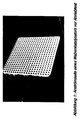
- Figure 1 shows the upstream side of a honeycomb catalyst before the abrasion test.
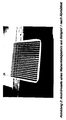
- Figure 2 shows this honeycomb catalyst from Example 1 after the abrasion test. One can clearly see that many webs have been eroded away.
- An aluminum phosphate preparation was prepared from 50.8 kg of aluminum hydroxide (Martinswerke), 120.4 kg of demineralized water and 211.4 kg of o-phosphoric acid (75%) at 50 to 80 ° C. for 6 hours (viscosity of the preparation according to Brookfield measurement 120 mPas).
- a dried molded body (green body) produced according to Example 1 was immersed with the gas inlet end at a depth of 3 cm for 30 to 60 seconds in the aluminum phosphate preparation and briefly flowed through with compressed air. The green body treated in this way was then calcined for 5 hours at 480 ° C. in an electrically heated or gas-fired kiln.
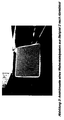
- the honeycomb catalyst according to the invention thus reinforced on the upstream side lost less than 1% by weight of catalyst mass in the abrasion test (see Example 1), cf. Fig. 1 and Fig. 3.
- Figure 3 shows the upstream side of the honeycomb catalyst according to the invention from Example 2 after the abrasion test.
- the honeycomb catalyst according to the invention has practically no erosion damage.
Landscapes
- Chemical & Material Sciences (AREA)
- Engineering & Computer Science (AREA)
- Chemical Kinetics & Catalysis (AREA)
- Materials Engineering (AREA)
- Organic Chemistry (AREA)
- Environmental & Geological Engineering (AREA)
- Health & Medical Sciences (AREA)
- Biomedical Technology (AREA)
- Analytical Chemistry (AREA)
- General Chemical & Material Sciences (AREA)
- Oil, Petroleum & Natural Gas (AREA)
- Catalysts (AREA)
- Exhaust Gas Treatment By Means Of Catalyst (AREA)
Applications Claiming Priority (2)
| Application Number | Priority Date | Filing Date | Title |
|---|---|---|---|
| DE4229255A DE4229255A1 (de) | 1992-09-02 | 1992-09-02 | Verfahren zur Herstellung von Katalysatoren zur Entfernung von Stickstoffoxiden aus Abgasen |
| DE4229255 | 1992-09-02 |
Publications (2)
| Publication Number | Publication Date |
|---|---|
| EP0586814A2 true EP0586814A2 (de) | 1994-03-16 |
| EP0586814A3 EP0586814A3 (enExample) | 1994-03-30 |
Family
ID=6467033
Family Applications (1)
| Application Number | Title | Priority Date | Filing Date |
|---|---|---|---|
| EP93110488A Withdrawn EP0586814A2 (de) | 1992-09-02 | 1993-07-01 | Verfahren zur Herstellung von Katalysatoren zur Entfernung von Stickstoffoxiden aus Abgasen |
Country Status (4)
| Country | Link |
|---|---|
| US (1) | US5391530A (enExample) |
| EP (1) | EP0586814A2 (enExample) |
| JP (1) | JPH06296872A (enExample) |
| DE (1) | DE4229255A1 (enExample) |
Families Citing this family (9)
| Publication number | Priority date | Publication date | Assignee | Title |
|---|---|---|---|---|
| US6432368B1 (en) * | 1994-06-30 | 2002-08-13 | General Electric Company | Staged catalytic ammonia decomposition in integrated gasification combined cycle systems |
| JP2001000867A (ja) * | 1999-06-22 | 2001-01-09 | Nichias Corp | 排ガス用触媒構造体 |
| FR2803540B1 (fr) * | 2000-01-12 | 2002-03-29 | Suez Lyonnaise Des Eaux | Procede de fixation et d'immobilisation d'un catalyseur sur un support |
| ATE458543T1 (de) * | 2003-10-15 | 2010-03-15 | Haldor Topsoe As | Katalysator-träger, daraus hergestellter katalysator und prozess für die reinigung von abgasen |
| JP2006314935A (ja) * | 2005-05-13 | 2006-11-24 | Babcock Hitachi Kk | 排ガス脱硝触媒、その製法および排ガス脱硝方法 |
| US7553349B2 (en) * | 2005-08-26 | 2009-06-30 | Corning Incorporated | Composite coatings for thin-walled ceramic honeycomb structures |
| KR101424026B1 (ko) * | 2006-08-02 | 2014-07-28 | 작스트레벤 케미 게젤샤후트밋트베슈렝크테르하후트웅 | 티타늄-함유 첨가제 |
| KR101784013B1 (ko) | 2008-12-15 | 2017-10-10 | 유니프랙스 아이 엘엘씨 | 세라믹 허니콤 구조체의 스킨 코팅 |
| CN113713759B (zh) * | 2021-09-15 | 2022-04-15 | 北京工大创客科技有限公司 | 一种用于降低燃煤电站空气预热器硫酸氢铵堵塞的粉剂及其制备方法 |
Family Cites Families (12)
| Publication number | Priority date | Publication date | Assignee | Title |
|---|---|---|---|---|
| US4085193A (en) * | 1973-12-12 | 1978-04-18 | Mitsubishi Petrochemical Co. Ltd. | Catalytic process for reducing nitrogen oxides to nitrogen |
| US4134733A (en) * | 1975-07-09 | 1979-01-16 | Deutsche Gold- Und Silber-Scheideanstalt Vormals Roessler | Apparatus for treatment of exhaust gases |
| GB1541928A (en) * | 1975-12-23 | 1979-03-14 | Sakai Chemical Industry Co | Production of shaped catalysts or carriers comprising titanium oxide |
| JPS5277878A (en) * | 1975-12-24 | 1977-06-30 | Ngk Insulators Ltd | Method of removing nitrogen oxides from exhaust gases |
| JPS5428275A (en) * | 1977-08-05 | 1979-03-02 | Hitachi Ltd | Catalyst structure in catalytic reactor |
| JPS5471791A (en) * | 1977-11-19 | 1979-06-08 | Sakai Chem Ind Co Ltd | Catalyst and catalytic reactor |
| US4285838A (en) * | 1977-12-08 | 1981-08-25 | Babcock-Hitachi Kabushiki Kaisha | Method of producing plate-shaped catalyst unit for NOx reduction of exhaust gas |
| JPS5541881A (en) * | 1978-09-20 | 1980-03-24 | Hitachi Zosen Corp | Manufacture of plate type denitrification catalyst |
| US4294806A (en) * | 1979-02-14 | 1981-10-13 | Sakai Chemical Industry Co., Ltd. | Method for preventing the wear of a monolithic catalyst by dusts |
| KR870000844B1 (ko) * | 1981-03-10 | 1987-04-25 | 후꾸다 이꾸마사 | 질소산화물 제거용 판상촉매의 제조방법 및 그 장치 |
| JP2880535B2 (ja) * | 1989-10-11 | 1999-04-12 | バブコツク日立株式会社 | 窒素酸化物除去用板状触媒、その端面強化剤および該触媒の製造方法 |
| CA2049918C (en) * | 1990-08-27 | 1995-10-31 | Motonobu Kobayashi | Reinforced catalyst for treatment of waste gas |
-
1992
- 1992-09-02 DE DE4229255A patent/DE4229255A1/de not_active Withdrawn
-
1993
- 1993-07-01 EP EP93110488A patent/EP0586814A2/de not_active Withdrawn
- 1993-07-20 US US08/093,688 patent/US5391530A/en not_active Expired - Fee Related
- 1993-09-02 JP JP5240273A patent/JPH06296872A/ja active Pending
Also Published As
| Publication number | Publication date |
|---|---|
| EP0586814A3 (enExample) | 1994-03-30 |
| DE4229255A1 (de) | 1994-03-03 |
| US5391530A (en) | 1995-02-21 |
| JPH06296872A (ja) | 1994-10-25 |
Similar Documents
| Publication | Publication Date | Title |
|---|---|---|
| EP0376025B1 (de) | Verfahren zur Reduktion von Stickoxiden aus Abgasen | |
| DE60315530T2 (de) | Verfahren zum Reinigen von Abgasen und hierbei verwendeter Katalysator | |
| DE102006020158B4 (de) | Extrudierter Vollkatalysator sowie Verfahren zu seiner Herstellung | |
| DE10022842A1 (de) | Strukturierter Katalysator für die selektive Reduktion von Stickoxiden mittels Ammoniak unter Verwendung einer zu Ammoniak hydrolysierbaren Verbindung | |
| DE3406657A1 (de) | Verfahren und vorrichtung zur katalytischen reinigung der abgase von feuerungsanlagen | |
| DE3531871C2 (enExample) | ||
| DE68915388T2 (de) | Katalysator zur Reinigung von Abgasen, Verfahren zur Herstellung und Verwendung des Katalysators. | |
| DE69310942T2 (de) | Katalysator zur Entfernung von NOx der anorganische Fasern enthält | |
| DE69020265T2 (de) | Katalysator zur Entfernung von Stickoxiden und Methode zur Entfernung von Stickoxiden mit diesem Katalysator. | |
| EP0586814A2 (de) | Verfahren zur Herstellung von Katalysatoren zur Entfernung von Stickstoffoxiden aus Abgasen | |
| DE202010018192U1 (de) | Wabenförmiger Filter | |
| EP0460388B1 (de) | Katalysator für die Oxidation von Schwefeldioxid | |
| DE69009264T3 (de) | Verfahren zur Reinigung von Abgasen und dafür geeigneter geformter Katalysator. | |
| DE102018204797A1 (de) | Ein katalysator zur behandlung eines abgases, ein abgassystem und ein verfahren | |
| DE3714262C2 (enExample) | ||
| DE3701984A1 (de) | Verfahren zur herstellung von katalysatoren aus titanoxid | |
| DE60104039T2 (de) | Titan, Molybdän und Vanadium enthaltender Abgasreinigungskatalysator, Verfahren zu seiner Herstellung, und dessen Verwendung | |
| DE102018204688A1 (de) | Selektiver katalytischer Reduktionskatalysator | |
| DE3916309C2 (de) | Verfahren zur Herstellung von keramischen Wabenstrukturen | |
| DE102015224370B4 (de) | Katalysator sowie Verfahren zur Herstellung eines Katalysators | |
| DE2748634A1 (de) | Verfahren zur katalytischen reduktion von stickstoffoxiden | |
| DE3526383C1 (de) | Verfahren zur Erzeugung von Katalysatoren fuer die Reduktion von Stickoxiden aus Abgasen und chemische Luftreinigungsverfahren | |
| DE4027329A1 (de) | Katalysator-anordnung zur stickoxidminderung in einem rauchgas | |
| DE3430886A1 (de) | Katalysator zum abscheiden von stickoxiden aus verbrennungsabgasen | |
| WO2019141718A1 (de) | Verfahren zur herstellung eines scr-katalysators mittels vortrocknung |
Legal Events
| Date | Code | Title | Description |
|---|---|---|---|
| PUAI | Public reference made under article 153(3) epc to a published international application that has entered the european phase |
Free format text: ORIGINAL CODE: 0009012 |
|
| PUAL | Search report despatched |
Free format text: ORIGINAL CODE: 0009013 |
|
| AK | Designated contracting states |
Kind code of ref document: A2 Designated state(s): AT DE IT |
|
| AK | Designated contracting states |
Kind code of ref document: A3 Designated state(s): AT DE IT |
|
| 17P | Request for examination filed |
Effective date: 19940423 |
|
| 17Q | First examination report despatched |
Effective date: 19950410 |
|
| STAA | Information on the status of an ep patent application or granted ep patent |
Free format text: STATUS: THE APPLICATION HAS BEEN WITHDRAWN |
|
| 18W | Application withdrawn |
Withdrawal date: 19950714 |