EP0584809B2 - Stärke mit geringem Gehalt an Amylopektin - Google Patents
Stärke mit geringem Gehalt an Amylopektin Download PDFInfo
- Publication number
- EP0584809B2 EP0584809B2 EP93113586A EP93113586A EP0584809B2 EP 0584809 B2 EP0584809 B2 EP 0584809B2 EP 93113586 A EP93113586 A EP 93113586A EP 93113586 A EP93113586 A EP 93113586A EP 0584809 B2 EP0584809 B2 EP 0584809B2
- Authority
- EP
- European Patent Office
- Prior art keywords
- starch
- amylose
- gel
- amylopectin
- corn
- Prior art date
- Legal status (The legal status is an assumption and is not a legal conclusion. Google has not performed a legal analysis and makes no representation as to the accuracy of the status listed.)
- Expired - Lifetime
Links
Images
Classifications
-
- C—CHEMISTRY; METALLURGY
- C08—ORGANIC MACROMOLECULAR COMPOUNDS; THEIR PREPARATION OR CHEMICAL WORKING-UP; COMPOSITIONS BASED THEREON
- C08B—POLYSACCHARIDES; DERIVATIVES THEREOF
- C08B30/00—Preparation of starch, degraded or non-chemically modified starch, amylose, or amylopectin
- C08B30/20—Amylose or amylopectin
-
- C—CHEMISTRY; METALLURGY
- C08—ORGANIC MACROMOLECULAR COMPOUNDS; THEIR PREPARATION OR CHEMICAL WORKING-UP; COMPOSITIONS BASED THEREON
- C08B—POLYSACCHARIDES; DERIVATIVES THEREOF
- C08B30/00—Preparation of starch, degraded or non-chemically modified starch, amylose, or amylopectin
Definitions
- This invention relates to a low amylopectin starch having unique molecular and functional characteristics.
- the starch may be obtained from a number of sources, including a novel corn breeding population comprising germplasm selections which are homozygous for the recessive amylose extender ( ae ) gene and into which ae modifier genes have been accumulated by recurrent selection.
- High amylose starches have been known for many years. Such starches are derived from unique breeding sources, such as high amylose corn inbreds and their hybrids, wrinkled pea cultivars, high amylose barley cultivars, and the like. Starches obtained from these sources have been exploited commercially for their unique functional properties, such as superior film-forming ability, higher cooking temperature, higher gel strength, improved water resistance, and other properties attributed to the higher amylose content, relative to the amylopectin content, of these starches.
- Amylose is a linear polymer; amylopectin a larger, branched polymer of glucose.
- amylose content of starches obtained from nature varies widely, but remains less than one-third of the total starch content for the majority of starches derived from agricultural crops.
- the balance of the starch is generally described as amylopectin.
- amylose starches have been marketed as either 50% amylose or 70% amylose starch. A range of about 40-75% amylose has been reported for commercial products.
- high amylose corn starches containing up to 88% amylose has been disclosed in scientific publications. However, it is generally accepted by persons skilled in the art that early methods used to isolate and analyze high amylose starches for amylose content were flawed, and early reports of amylose content in excess of 70% are viewed with skepticism.
- Amylose content has been described as "apparent amylose" because branched molecules having long outer chains yield an over-estimation of amylose content by potentiometric iodine analysis. See, Shannon, J.C. and Garwood, D.
- WO 94/03049 discloses hybrid maize seeds which yield a starch having an amylose content of 80% or more. Also disclosed are starches having that amylose content. The method by which amylose was determined involves colorimetric iodine determination.
- amylose starches derived from corn hybrids have been shown to contain at least 25% amylopectin, and, typically, no more than 75% amylose determined by potentiometric and colorimetric iodine analysis.
- amylose content of the starches reported in the literature had been overstated and noted that the error inherent in iodine affinity measurements of amylose content results in an inability to confirm iodine binding results using measurements by other techniques, such as butanol complexing and fractionation, or enzymatic characterization.
- butanol fractionation, iodine binding and enzyme studies that an amylopectin content as low as 4% of the total starch had been observed in a "75% apparent amylose" (65% "normal amylose”) starch
- a maize starch containing in excess of 75%, optionally in excess of 85%, normal amylose, together with about 8 to 25% low molecular weight amylose and less than 10% optionally less than 5%, amylopectin, all determined by the butanol fractionation/gel permeation chromatography method as described in the section TEST METHODS hereinafter, may be extracted from a novel corn breeding population having a recessive amylose extender gene.
- the com population is a genetic composite comprising germplasm selections which are homozygous for the ae gene and into which ae modifier genes have been accumulated by recurrent selection.
- the " ae modifier genes” are minor genes which interact epistatically with the ae gene to produce high amylose seed starch. It has been discovered that this " ae starch” has unique functional properties when compared to high amylose starch having 50 or 70% amylose, as well as when compared to ordinary corn starch, or waxy maize (100% amylopectin) starch.
- a substantially pure maize starch extracted from a plant source having an amylose extender genotype comprising less than 10% amylopectin and 5 to 15% low molecular weight amylose, wherein the low molecular weight amylose is substantially linear polymers containing from 30 to 250 anhydroglucose units primarily linked by alpha-1,4-D-glucosidic bonds, both determined by the butanol fractionation/gel permeation chromatography method as described in the section TEST METHODS hereinafter has unique functional properties which can be exploited in many commercial applications, where starches and other polysaccharides and polyhydric alcohols traditionally have been used.
- This invention provides a maize starch derived from a corn breeding population which is a genetic composite of germplasm selections, the maize starch comprising less than 10% amylopectin and 5 to 15% low molecular weight amylose, both determined by the butanol fractionation/gel permeation chromatography method as described in the section TEST METHODS hereinafter.
- the low amylopectin maize starch comprises preferably at least 75 % normal amylose, optionally at least 85 % amylose, determined by the butanol fractionation/gel permeation chromatography method as described in the section TEST METHODS hereinafter.
- the starch is preferably extracted in substantially pure form from the grain of a starch bearing plant having a recessive amylose extender genotype coupled with numerous amylose extender modifier genes.
- the maize starch bearing plant from which the starch is extracted is a corn plant.
- a maize starch composition which comprises at least 75% amylose, no more than 10% amylopectin and up to 25% low molecular weight amylose, all determined by the butanol fractionation/gel permeation chromatography method as described in the section TEST METHODS hereinafter.
- a starch composition may be obtained from a genetic composite of germplasm selections, or from starch fractions extracted from two or more starch sources and combined in the appropriate ratios.
- the starch consists essentially of 80% normal amylose, 5% amylopectin and 15% low molecular weight amylose, all determined by the butanol frationation/gel permeation chromatography method as described in the section TEST METHODS hereinafter, most preferably 87% normal amylose, 2% amylopectin, and 11% low molecular weight amylose.
- the starches of this invention are characterized by rapid gel formation to provide a high strength get having resilient. elastic characteristics.
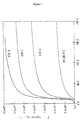
- Figure one is a graph illustrating the rate of gelation and gel stiffness of the starches of this invention.
- the graph also illustrates the gel characteristics of a commercial 70% amylose com starch gel control. Descriptions of these samples and the test procedure used to measure gel characteristics are set forth in Example 5, below
- the starch is preferably obtained from the modified ae maize population described herein.
- starches from other plant sources may be suitable for use in this invention, and starch compositions blended or formulated from more than one starch source are also suitable for use herein, provided that the composition is adjusted to the appropriate ratios of amylose, amylopectin and low molecular weight amylose.
- the ae genotype plant from which the starch is extracted may be obtained by standard breeding techniques, or by translocation, inversion or any other method of chromosome engineering to include variations thereof whereby the properties of the starch of this invention are obtained Any plant source which produces starch and which can be bred to produce a plant having ae homozygous genotype may be used.
- Starch is a polysaccharide typically comprising a mixture of amylose and amylopectin molecules which are organized into compact granular structures.
- starch' refers to starch in its native form as well as starch modified by physical, chemical and biological processes.
- Amylose is a linear polymer of D-anhydroglucose units which are linked by alpha -1,4-D-glucosidic bonds.
- Amylopectin is a larger, branched polymer of amylose chains linked by aloha-1,6-D-glucosidic bonds in a tree-like structure.
- amylose ordinarily contains between 250 and 12,500 D-anhydroglucose units (gel permeation chromatography (“GPC") peak molecular weight of about 200,000) (“normal amylose”), and amylopectin contains between 400,000 and 3,125,000 D-anhydroglucose units (weight average molecular weight greater than about 1,500,000 by GPC).
- GPC gel permeation chromatography
- low molecular weight amylose' refers to substantially linear polymers containing from about 30 to 250 anhydroglucose units (GPC peak molecular weight of about 15,000) primarily linked by alpha -1,4-D-glucosidic bonds.
- starch as used herein means not only substantially pure starch granules as extracted from a starch bearing plant, but also grain products of the starch granule such as flour, grit, hominy and meal.
- the starch may be in the form of a granular or a gelatinized starch (a precooked, cold-water-swelling starch).
- the starch components which may be used to prepare low amylopectin starch blend compositions may be derived from any source, including corn, potato, sweet potato, wheat, rice, sago, tapioca, waxy maize, sorghum, millet, oat, barley, pea, and the like, and mixtures thereof, and their pregelatinized or thermally processed products.
- the blend may contain small amounts of other starches, such as modified starches, provided that such starch components do not alter the essential functional and molecular characteristics of the blend.
- the low amylopectin starches must contain no more than 10% amylopectin and 5 to 15% low molecular weight amylose, both determined by the butanol fractionation/gel permeation chromatography method as described in the section TEST METHODS hereinafter.
- the low amylopectin starches contain preferably at least 75% normal amylose, preferably 85% normal amylose, by weight of starch, as determined by the butanol fractionation/gel permeation chromatography method as described in the section TEST METHODS hereinafter.
- the starch is preferably milled from corn kemels in a commercial or pilot scale quantity (e.g., 300 Ibs) to obtain a representative sample, the extracted granular starch is defatted and fully solubilized (e.g., by dissolving in dimethyl sulfoxide (DMSO) solvent) to dissolve the starch granules and to fully disperse the starch molecules.
- DMSO dimethyl sulfoxide
- the starch is preferably removed from DMSO solution by ethanol precipitation.
- the amylose portion of the starch is removed from the amylopectin by complexation with 1-butanol, followed by centrifugation at about 10,000 g, with repeated re-dissolving and re-complexing steps to assure full separation of the amylose fraction.
- the fractionation is carried out under an inert atmosphere (and after defatting the starch) to avoid starch degradation.
- the supernatant fractions are collected and the final combined supernatant is treated with ethanol and/or acetone to precipitate the non-complexing starch.
- gel permeation chromatography is preferred for confirming amylose and amylopectin content of low amylopectin starch compositions following butanol fractionation
- the low amylopectin starch is obtained from a composite population of the ae germplasm selections disclosed herein.
- ae starch comprises at least 75% normal amylose, less than 10% amylopectin, and about 8 to 25% low molecular weight amylose.
- Such " ae starches” optionally comprise at least normal 85% amylose, no more than 5% amylopectin and 5 to 15% low molecular weight amylose.
- amylose or low molecular weight amylose is added to ordinary starch (e.g., corn) to dilute the amylopectin content.
- the amylose component(s) are preferably added to a high amylose (i.e., 50 or 70% amylose) starch to minimize amylopectin content.
- the low molecular weight amylose is preferably obtained by leaching it into aqueous solution from 50 or 70% amylose starch granules. It also may be obtained by enzymatic debranching (e.g., with pullulanase, isoamylase or other enzyme having ⁇ -1,6-D-glucosidase activity) of a low amylose starch (e.
- amylopectin i.e., having a DP of 15 to 65
- Methods for enzymatic debranching are known in the art. See, e.g., U S. Pat Nos.
- amylopectin For rapid gelling in aqueous dispersion and gel resilience, less than 5% amylopectin and a higher ratio of amylose to low molecular weight amylose (e.g., at least 80% and less than 12%, respectively) is preferred.
- the same composition also yields unexpectedly high gel strength, relative to 50 and 70% amylose starches.
- amylose content of at least 85% is preferred.
- amylose extender gene is a homozygous recessive allele at locus 5L-57 on chromosome 5 of the corn genome.
- the ae gene corn mutant was first described by Vineyard, M.L., and R.P. Bear, in Maize Newsletter 26:5 (1952), and further described in C.W. Moore and R.G. Creech, in Genetics , 70 :611-619 (1972), and Corn and Corn Improvement , supra , pp. 85-115, 124-125 and 399-407.
- the ae corn starch of this invention is extracted from a corn breeding population and has novel functional properties and novel molecular characteristics.
- the substantially pure starch may be extracted from the grain of any starch-bearing plant in a population which is homozygeous for the ae gene.
- the starch of the present invention is produced by a selected population of dent corn germplasm selections which are homozygous for recessive amylose extender genotype and into which has been accumulated ae modifier genes.
- Dent corn is the common corn grown in the U.S. for agricultural purposes and is readily distinguished by phenotype and genotype from popcorn, Giant of the Cuzco corn and other corn varieties.
- novel functional characteristics are observed principally in aqueous starch gels comprising water and substantially pure starch extracted from a starch bearing plant having an ae genotype, wherein the gel contains about 1% to 20%, by weight, starch.
- the novel molecular characteristics are the low amylopectin/amylose ratio and the other unique molecular aspects of the starch which are described below.
- the pure starch may be extracted from grain obtained from the modified ae gene corn plant by steeping the kernels of the corn plant in water, grinding the steeped corn kernels and separating the starch from the residue of the ground corn kernels.
- clean grain is steeped in a weak aqueous solution of sulphur dioxide for 24 to 48 hours and temperatures ranging from 48 to 55°C. After the steeping the steepwater is separated and the swollen and softened grain is coarsely ground. This first grind releases the germ that contains most of the corn oil. The germ is then separated and washed in a hydroclone. The separation is based on difference in density between the germ and the rest of the components. Germ is the first by-product.
- the rest of the slurry is finely milled to release most of the starch and protein from the fiber.
- the whole mixture then passes through a fine vibrating screen to separate the fiber from the starch and protein slurry.
- the fiber is washed and collected as the second by-product.
- the mill starch is further processed through a series of small hydroclone assemblies to separate the protein from the starch.
- the protein is collected as the third by-product and the purified starch which is the final product, is dewatered by centrifugation and dried in a flash dryer.
- a genetic composite of corn (Zea mays L.) germplasm selections capable of producing starch with a low amylopectin and high amylose content can be bred by means of accumulating ae modifier genes in a homozygous ae genetic background through recurrent selection.
- Recurrent selection is a breeding system designed to increase the frequency of genes for particular quantitatively inherited characteristics by repeated cycles of selection.
- a recurrent selection cycle involves the identification of genotypes superior for the specific quantitative characteristics being improved and subsequent intermating of the superior genotypes to obtain new gene combinations.
- an ae breeding source is crossed to a wide array of genotypically diverse germplasm.
- This diverse germplasm serves as a source of the ae modifier genes.
- the germplasm selected as a source of ae modifier genes can be germplasm grown in the U.S. Corn Belt as well as non-adapted germplasm found outside the United States.
- Seeds produced from crossing an ae corn line to genotypically diverse germplasm are randomly selected. Plants grown from these seeds are self-pollinated over two to three generations and corn kernels from individual plants so-produced are collected. The starch in the collected corn kernels is subjected to chemical analysis using the methods described below to determine amylose content. Plants producing starch with the highest amylose levels are identified and crossed in all combinations. The progeny are selfed over two to three generations and corn kernels from individual plants so-produced are collected. Once again, the starch in the collected corn kernels is subjected to chemical analysis to determine amylose content. Plants producing starch with the highest amylose levels are identified and crossed in all combinations.
- a recurrent selection cycle therefore, consists of the process of selfing over two to three generations, followed by crossing in all combinations, those individual plants producing seed starch which has the highest amylose content.
- the recurrent selection cycle is repeated until a genetic composite of corn inbreds producing starch having the desired characteristics is obtained.
- genetic composite VJR-1 ten recurrent selection cycles were required to obtain a corn population capable of producing starch having the characteristics shown in Tables I-V. That is, starting with a corn population that produced seed starch having 61 to 75% amylose, 10 recurrent selection cycles were required to obtain a corn population that produced seed starch having 80 to 91 % amylose. From this latter corn population, randomly selected germplasm selections found to produce the highest seed starch amylose levels were used to construct genetic composite VJR-1.
- Individual corn germplasm selections in the genetic composite which produce seed starch having the desired characteristics can be used to construct inbred lines and their subsequent hybrids capable of producing low amylopectin starch.
- the composite itself can be increased by means of open pollination, in isolation, to produce a source of high amylose starch. Seed increase of the composite by means of open pollination, in isolation, is shown in Example 1, below.
- starches were obtained from commercially available sources (i.e., corn, Hylon® V corn (50% amylose) and Hylon VI corn (70% amylose) starches were obtained from National Starch and Chemical Company, Bridgewater, New Jersey). Starches were also obtained by milling corn kernels from the experimental corn crops described in Example 1, below. All starches (except corn) were defatted by cold soxhlet extraction with ethanol overnight.
- Part I Starches were added to 90% DMSO in water under nitrogen and stirred for 1 1/2 hours at 65 to 70°C to solubilize the starch. Starch was recovered by adding ethanol, placing the sample under refrigeration (4°C) for at least 1 hour under nitrogen, and centrifuging the sample at 10,000 g ("g" is the relative centrifugal force) at 4°C for 10-15 minutes. This process was repeated three times with the starch precipitate.
- Step 1 The precipitate was dispersed in DMSO, heated to 65°C under nitrogen, and the complexing solution (an aqueous solution of 10% 1-butanol v/v and 0.1% NaCl v/w at 65°C) was added with stirring to the starch/DMSO dispersion. The sample was slowly cooled to refrigeration temperature (4°C) under nitrogen and centrifuged at 5,000 to 10,000 g for 10 to 15 minutes at 4°C.
- Step 2 Immediately following centrifugation, the supernatant was decanted and the precipitate (the amylose-butanol complex) was re-dissolved in distilled water (about a 0.4% starch solution) at 65-70°C. The re-dissolved precipitate was treated with 10% 1-butanol and 0.1% NaCl and left under refrigeration for at least 12 hours. The amylose fraction was recovered from the solution by centrifugation at 5,000 to 10,000 g for 10 to 15 minutes at 4°C. Step 2 of Part II was repeated.
- the supernatant (from Part II) was treated with ethanol and/or acetone to precipitate the non-complexing starch components, refrigerated to cool to 4°C, and the supernatant was centrifuged at 10,000 g for 10 to 15 minutes at 4°C.
- the precipitate fractions (complexing and non-complexing) were dehydrated to a powder with an ethanol/acetone series under vacuum and oven dried at 60°C under vacuum.
- Starches were prepared for analysis by slurrying 10-15 mg of starch in 4 ml of dimethylsulfoxide (DMSO) containing 0.03 M sodium nitrate and heating the slurry to 80°C for 16 hours to disperse the starch. Samples (200 ul) were injected into an ALC/GPC-150C Chromatograph (Waters Associates, Milford, Mass.) (equipped with a Nelson 3000 Series Chromatography Data System and two PL gel mixed 10 um columns (Polymer Laboratory, Amherst, Mass.), employing DMSO containing 0.03 M sodium nitrate as the mobile phase), and eluted at a rate of 1 ml/min.
- DMSO dimethylsulfoxide
- the columns were calibrated using dextran standards (with molecular weights of 2,000; 20,000; 80,000; 500,000; and 2,000,000, obtained from Pharmacia Fine Chemicals, Piscataway, N.J.).
- the percentage low molecular weight amylose was calculated from the relative area of the peak obtained within the molecular weight range from about 500 to 20,000; the percent amylose from the area of about 20,000 (in excess of 20,000 and less than 1,500,00) and the percent amylopectin from the area greater than 1,500,000.
- a starch (0.35 grams of a ground grain) sample was heated in 10 mls of concentrated calcium chloride (about 30% by weight) to 95°C for 30 minutes. The sample was cooled to room temperature, diluted with 8.0 mls of dilute calcium chloride solution (about 12% by weight), mixed well, and then centrifuged for one minute at about 1800 rpm. The sample was then filtered to give a clear starch solution.
- the starch concentration was determined polarimetrically using a 10 cm polarimeter cell. Exactly one ml of the sample was diluted to 50.0 mls with 12% calcium chloride, and 5.0 mls of that solution was added to a 100 mls volumetric flask with about 50 mls of 12% calcium chloride and 4.0 mls of iodine solution (0.008N iodine and 0.01N KI). The solution was brought to volume with 12% calcium chloride and shaken.
- the amount of amylose was determined by reading the % transmittance of the solution at 600 nm on a Spectronic 20 spectrophotometer using 4.0 mls of iodine solution diluted to 100 mls as the blank solution. Results were determined using a calibration curve prepared from samples of known amylose content.
- a starch (1.0 g of a ground grain) sample was heated in 10 mls of concentrated calcium chloride (about 30% by weight) to 95°C for 30 minutes. The sample was cooled to room temperature, diluted with 5 mls of a 2.5% uranyl acetate solution, mixed well, and centrifuged for 5 minutes at 2000 rpm. The sample was then filtered to give a clear solution.
- the starch concentration was determined polarimetrically using a 1 cm polarimetric cell. An aliquot of the sample (normally 5 mls) was then directly titrated with a standardized 0.01 N iodine solution while recording the potential using a platinum electrode with a KCl reference electrode. The amount of iodine needed to reach the inflection point was measured directly as bound iodine. The amount of amylose was calculated by assuming 1.0 gram of amylose will bind with 200 milligrams of iodine.
- VJR-1, VJR-2 and VJR-3 were different generations of the same genetic material increased under open-pollinating conditions in isolated fields.
- the germplasm selections comprising the VJR-1 genetic composite were selected from the recurrent selection breeding program because they produced seed having the highest levels of starch amylose among a random sample of corn plants.
- VJR-1 The genetic composite VJR-1 was grown during the winter of 1990-1991 under open-pollinating conditions in an isolated field in Florida. A total of 5 batches, each containing 4 bushels of shelled corn kernels from VJR-1 corn, were wet milled using the equipment and process described in R.W. Rubens, Cereal Foods World, 35:1166-1169 (1990), which is hereby incorporated by reference. The starch isolated from the VJR-1 corn kernels was subjected to chemical analysis.
- VJR-1 Individual germplasm selections from VJR-1 are genetically stable with respect to the amylose content of the starch produced.
- the stability of this characteristic was ascertained by means of randomly selecting four different plants in the VJR-1 population as parents. An ear from each of these four plants was harvested and the amylose content of corn kernels from each ear was determined. In addition, seeds from these same ears were planted in a breeding nursery. The plants grown from these seeds were self-pollinated to produce progeny. The amylose content of the corn kernels produced by individual progeny was determined. The results are shown below.
- Plants comprising genetic composite VJR-2 were grown from randomly selected seeds produced by the open-pollinated VJR-1 genetic composite. Genetic composite VJR-2 was grown under open-pollinating conditions in an isolated field in Illinois during the summer of 1991 under drought conditions. A total of 4 bushels of shelled corn kernels taken from VJR-2 were wet milled as described above. The starch isolated from the VJR-2 corn kernels was subjected to chemical analysis.
- Plants comprising genetic composite VJR-3 were grown from randomly selected seeds produced by the open-pollinated VJR-2 genetic composite. Genetic composite VJR-3 was grown under open-pollinating conditions in an isolated field in Florida during the winter of 1991-1992. A total of 4 bushels of shelled corn kernels taken from VJR-3 were wet milled as described above. The starch isolated from the VJR-3 corn kernels was subjected to chemical analysis.
- the starch amylopectin and amylose content and functional characteristics assayed were stable between VJR-1, VJR-2 and VJR-3 corn samples, relative to a 70% amylose corn control sample.
- Low Amylopectin (VJR-1) 13.1 2.9 ⁇ 1.6 s.d.
- Low Amylopectin (VJR-2) 16.2 7.8 ⁇ 2.0 s.d.
- Low Amylopectin (VJR-3) 11.0 1.0 ⁇ 0.5 s.d.
- the gelatinization temperature range and energy of gelatinization of the starches of this invention were measured by differential scanning calorimetry (DSC).
- the low amylopectin and the 70% amylose starch samples were refrigerated for at least 7 days to permit amylopectin reassociation and tested for gelatinization properties as described above.
- a peak occurred at 60°C that was typical of amylopectin disassociation. This peak was absent from the low amylopectin starch samples, indicating that these samples were free of significant amounts of amylopectin.
- the low amylopectin starch has a longer gelatinization temperature range (about 75°C to 130°C) and a higher final gelatinization temperature than corn (about 62°C to 70°C), waxy maize (about 65°C to 89°C), or high amylose (70%) corn (about 75°C to 110°C) starches.
- the energy required to gelatinize the starch was more for the low amylopectin starches (about 2.7 to 2.9) than for high amylose (70%) corn starch (about 2.32) and less than waxy maize starch (about 3.6). This indicates that low amylopectin starches have a unique crystal structure within the starch granule compared to known corn starches.
- the rheological properties of the low amylopectin starches were measured using a Rheometrics RFS-II Fluids Spectrometer and compared to the rheological properties of known high amylose starch.
- the rheological analysis was conducted by jet-cooking the starch at 138-149°C (280 to 300°F) and maintaining the resulting starch dispersion at 95°C until ready for analysis.
- the parallel plates of the rheometer were heated to 60°C.
- the starch was loaded, and the plates were cooled to 25°C for testing.
- the plate gap was set at 1.5 mm, with 1 % strain and the frequency was 1 radian per second. Silicon oil was applied to the edge of the gel to prevent moisture loss during testing. Results are shown in Table IV and in Figure 1.
- Figure 1 shows G' measurements in dyn/cm 2 versus time in minutes (from 0 to 240 minutes) for high amylose (70%) corn starch at 6% solids ("Hylon VII") and low amylopectin starches VJR-1, VJR-2, and VJR-3 at, respectively, 5.95, 5.93 and 5.85% solids.
- the time required for low amylopectin starch to gel was significantly shorter and gelling occurred more sharply (about 24 versus 72 minutes) over time than for a high amylose (70%) corn starch.
- the ultimate gel strength and stiffness measurements were higher for VJR-1, 2 and 3, than for the 70% amylose control.
- VJR-1, 2 and 3 starch gels exhibited a very stable storage modulus (G') after the maximum G' measurement had been reached.
- G' storage modulus
- the G' maximum for VJR-1, 2 and 3 starch gels was reached within 20 hours.
- the control starch gel showed a gradual increase in G' and did not reach a stable G' maximum within the 20 hour measurement period.
- the gel strength of low amylopectin starches in aqueous dispersion was compared to that of known corn starches using a Stevens Texture Analyzer (Texture Technology Corporation) set at penetration speed of 0.5 mm/sec with a 0.5 inch diameter probe. Starches were dispersed in water at 3 to 6.5% solids by jet-cooking at 138-149°C (280-300°F) and tested after 24 hours at room temperature. Results are shown in Table V. Results show that low amylopectin starches have significantly higher gel strength in aqueous dispersion than high amylose (70%) corn starch.
- the low amylopectin starch gels (having at least 6% starch solids) did not exhibit syneresis under refrigeration over a five month period. In contrast, the 70% amylose starch gel exhibited syneresis within days of refrigerated storage.
- the low amylopectin starch granule structures were studied microscopically and compared to known corn starches.
- a debranching enzyme a 1,6- ⁇ -D-glucosidase, Lot No. 01101, obtained from Hayashibara Shoji Inc., Okayama, Japan
- isoamylase a 1,6- ⁇ -D-glucosidase, Lot No. 01101, obtained from Hayashibara Shoji Inc., Okayama, Japan
- the degradation products were compared to those obtained by debranching known corn starches (waxy maize and high amylose (70%) corn starch).
- Starch examples were prepared by the method of Hizukuri, et al., Carbohydrate Research , 94 :205-213 (1981).
- the molecular weight of the starch products was measured by gel permeation chromatography. Waxy maize was completely debranched to lower molecular weight fractions (two poorly resolved GPC peaks corresponding to a DP of about 15 and about 60). For the low amylopectin starch extracted from the VJR-1 corn sample of Example 1, two molecular weight fractions were observed: at about 21,000 molecular weight (an anhydroglucose DP of about 130) and at about 145,000 molecular weight (a DP of about 895). No peak was observed at a molecular weight greater than one million (corresponding to amylopectin) in the VJR-1 sample, nor in the high amylose (70%) corn starch control. The VJR-1 high molecular weight peak (corresponding to normal amylose) was 10% higher than the same molecular weight peak observed in the high amylose (70%) corn starch control.
- enzyme analysis confirms that the low amylopectin corn starch contains significantly more amylose, and less branched component, than the most closely related corn starch, a 70% amylose starch.
Landscapes
- Chemical & Material Sciences (AREA)
- Life Sciences & Earth Sciences (AREA)
- Engineering & Computer Science (AREA)
- Biochemistry (AREA)
- Materials Engineering (AREA)
- Health & Medical Sciences (AREA)
- Chemical Kinetics & Catalysis (AREA)
- Medicinal Chemistry (AREA)
- Polymers & Plastics (AREA)
- Organic Chemistry (AREA)
- Polysaccharides And Polysaccharide Derivatives (AREA)
Claims (14)
- Im Wesentlichen reine Maisstärke, extrahiert aus einer pflanzlichen Quelle, die einen Genotyp aufweist, der für hohe Amylosegehalte steht, wobei die Stärke weniger als 10% Amylopektin und 5 bis 15% niedermolekulare Amylose enthält, wobei die niedermolekulare Amylose im Wesentlichen lineare Polymere mit 30 bis 250 Anhydroglucoseeinheiten, die im Wesentlichen durch alpha-1,4-D-Glucosidbindungen verbunden sind, darstellt, beide bestimmt mit der in der Beschreibung unter Testverfahren beschriebenen Butanolfraktionierung/Gelpermationschromatographie.
- Stärke nach Anspruch 1, in welcher die Stärke weniger als 5% Amylopektin enthält.
- Stärke nach Anspruch 1, in welcher die Stärke mindestens 85% normale Amylose, bestimmt mit der in der Beschreibung unter Testverfahren beschriebenen Butanolfraktionisierung/ Gelpermationschromatographie, umfaßt.
- Gel, umfassend Wasser und eine wirksame Menge der Stärke nach Anspruch 1, dadurch gekennzeichnet, daß das Gel stabil ist und bei einer höheren Geschwindigkeit und auf eine höhere Gelfestigkeit und -steifheit gebildet ist als ein Gel, das Wasser und die gleiche Menge einer Stärke mit 70% Amylosegehalt umfaßt.
- Im Wesentlichen reine Maisstärke, extrahiert aus dem Korn einer Pflanze, die einen Genotyp mit einem rezessiven Gen aufweist, das für hohe Amylosegehalte steht, und das mit modifizierenden Genen, die für hohe Amylosegehalte stehen, assoziiert ist, wobei die Stärke weniger als 10% Amylopektin und 8 bis 25% niedermolekulare Amylose enthält, wobei die niedermolekulare Amylose im Wesentlichen lineare Polymere mit 30 bis 250 Anhydroglucoseeinheiten, die im Wesentlichen durch alpha-1,4-D-Glucosidbindungen verbunden sind, darstellt, beide bestimmt mit der in der Beschreibung unter Testverfahren beschriebenen Butanolfraktionierung/Gelpermationschromatographie.
- Stärke nach Anspruch 5, in welcher die Stärke mindestens 75% normale Amylose, bestimmt mit der in der Beschreibung unter Testverfahren beschriebenen Butanolfraktionierung/Gelpermationschromatographie, enthält.
- Stärke nach Anspruch 6, in welcher die Stärke mindestens 85% normale Amylose enthält.
- Stärke nach Anspruch 5, in welcher die Stärke weniger als 5% Amylopektin enthält.
- Stärke nach Anspruch 5, in welcher die stärketragende Pflanze Zea mays L. ist.
- Gel, umfassend Wasser und eine wirksame Menge der Stärke nach Anspruch 5, dadurch gekennzeichnet, daß das Gel stabil ist und bei einer höheren Geschwindigkeit und auf eine höhere Gelfestigkeit und -steifheit gebildet ist als ein Gel, das Wasser und die gleiche Menge einer Stärke mit 70% Amylosegehalt umfaßt.
- Maisstärkezusammensetzung, umfassend:a) mindestens 75% normale Amylose,b) weniger als 10% Amylopektin undc) 8 bis 25% niedermolekulare Amylose, wobei die niedermolekulare Amylose im Wesentlichen lineare Polymere mit 30 bis 250 Anhydroclucoseeinheiten, die im Wesentlichen durch alpha-1,4-D-Glucosidbindungen verbunden sind, darstellt, alle bestimmt mit der in der Beschreibung unter Testverfahren beschriebenen Butanolfraktionierung/Gelpermeationschromatographie.
- Stärkezusammensetzung nach Anspruch 11, in welcher die Zusammensetzung ein Gemisch aus zwei oder mehreren Stärkefraktionen ist.
- Stärkezusammensetzung nach Anspruch 11, in welcher die Zusammensetzung aus einer pflanzlichen Quelle, die einen Genotyp aufweist, der für hohe Amylosegehalte steht, erhalten ist.
- Gel, umfassend Wasser und eine wirksame Menge der Stärke nach Anspruch 11, dadurch gekennzeichnet, daß das Gel stabil ist und bei einer höheren Geschwindigkeit und auf eine höhere Gelfestigkeit und -steifheit gebildet ist, als ein Gel, das Wasser und die gleiche Menge einer Stärke mit 70% Amylosegehalt umfaßt.
Applications Claiming Priority (2)
| Application Number | Priority Date | Filing Date | Title |
|---|---|---|---|
| US937794 | 1992-08-28 | ||
| US07937794 US5300145B1 (en) | 1992-08-28 | 1992-08-28 | Low amylopectin starch |
Publications (4)
| Publication Number | Publication Date |
|---|---|
| EP0584809A2 EP0584809A2 (de) | 1994-03-02 |
| EP0584809A3 EP0584809A3 (de) | 1994-10-12 |
| EP0584809B1 EP0584809B1 (de) | 1997-12-29 |
| EP0584809B2 true EP0584809B2 (de) | 2004-04-14 |
Family
ID=25470416
Family Applications (1)
| Application Number | Title | Priority Date | Filing Date |
|---|---|---|---|
| EP93113586A Expired - Lifetime EP0584809B2 (de) | 1992-08-28 | 1993-08-25 | Stärke mit geringem Gehalt an Amylopektin |
Country Status (8)
| Country | Link |
|---|---|
| US (1) | US5300145B1 (de) |
| EP (1) | EP0584809B2 (de) |
| JP (1) | JPH0751602B2 (de) |
| AT (1) | ATE161545T1 (de) |
| CA (1) | CA2104851C (de) |
| DE (1) | DE69315911T3 (de) |
| DK (1) | DK0584809T4 (de) |
| MX (1) | MX9305232A (de) |
Families Citing this family (24)
| Publication number | Priority date | Publication date | Assignee | Title |
|---|---|---|---|---|
| PT885556E (pt) | 1992-07-31 | 2002-12-31 | Penford Holdings Pty Ltd | Amido de alto teor em amilose e fraccoes de amido resistente |
| CA2147117C (en) | 1992-12-24 | 2002-08-20 | Kenneth J. Mcnaught | Food compositions including resistant starch |
| US5576048A (en) * | 1995-06-07 | 1996-11-19 | American Maize-Products Company | Foodstuffs containing a waxy waxy amylose extender starch |
| US5750876A (en) * | 1994-07-28 | 1998-05-12 | Monsanto Company | Isoamylase gene, compositions containing it, and methods of using isoamylases |
| DE4441408A1 (de) | 1994-11-10 | 1996-05-15 | Inst Genbiologische Forschung | DNA-Sequenzen aus Solanum tuberosum kodierend Enzyme, die an der Stärkesynthese beteiligt sind, Plasmide, Bakterien, Pflanzenzellen und transgene Pflanzen enhaltend diese Sequenzen |
| CN1219199A (zh) | 1995-12-20 | 1999-06-09 | 纳幕尔杜邦公司 | 通过修饰淀粉生物合成酶基因的表达而得到的新型淀粉 |
| DE19619918A1 (de) | 1996-05-17 | 1997-11-20 | Planttec Biotechnologie Gmbh | Nucleinsäuremoleküle codierend lösliche Stärkesynthasen aus Mais |
| AU6882898A (en) * | 1997-04-04 | 1998-10-30 | Exseed Genetics L.L.C. | Plant like starches and the method of making them in hosts |
| US20030226176A1 (en) * | 1998-04-03 | 2003-12-04 | Exseed Genetics Llc | Plant like starches and the method of making them in hosts |
| US6392120B1 (en) * | 1998-07-28 | 2002-05-21 | E. I. Du Pont De Nemours And Company | Modification of starch biosynthetic enzyme gene expression to produce starches in grain crops |
| US20030099645A1 (en) * | 2000-10-10 | 2003-05-29 | Lobo Peter Isaac | Naturally occuring IgM antibodies that bind to membrane receptors on lymphocytes |
| US6664389B1 (en) | 1999-10-01 | 2003-12-16 | National Starch And Chemical Investment Holding Coporation | Highly resistant granular starch |
| CA2416632C (en) * | 2000-08-28 | 2012-01-24 | E.I. Du Pont De Nemours And Company | Novel starches produced by the expression of heterologous granule bound starch synthase genes |
| JP3791328B2 (ja) * | 2000-11-21 | 2006-06-28 | 独立行政法人食品総合研究所 | 変性タンパク質の活性化方法 |
| CA2463928A1 (en) * | 2001-10-17 | 2003-04-24 | Basf Plant Science Gmbh | Starch |
| US7244839B2 (en) * | 2002-03-27 | 2007-07-17 | E. I. Du Pont De Nemours And Company | Maize starch containing elevated amounts of actual amylose |
| ATE517994T1 (de) | 2003-06-30 | 2011-08-15 | Commw Scient Ind Res Org | Weizen mit veränderter verzweigungsenzymaktivität sowie daraus erhaltene stärke und stärkehaltige produkte |
| EP1696032A1 (de) | 2005-02-23 | 2006-08-30 | Bayer CropScience GmbH | Verfahren und Mittel zur Herstellung von Hyaluronan in Pilzen |
| US8613971B2 (en) * | 2011-03-31 | 2013-12-24 | Corn Products Development, Inc. | Use of extruded starch-based complexes for satiety, reduction of food intake, and weight management |
| US20120251660A1 (en) | 2011-03-31 | 2012-10-04 | Brunob Ii B.V. | Use of Whole Grain-Hydrocolloid Complexes Produced by Heat-Moisture Treatment for Satiety, Reduction of Food Intake, and Weight Management |
| TWI845472B (zh) | 2016-10-27 | 2024-06-21 | 美商摩諾索公司 | 具有低摩擦係數之水溶性膜 |
| CN115902067B (zh) * | 2022-12-28 | 2023-09-26 | 吉斯凯(苏州)制药有限公司 | 一种盐酸依匹斯汀中玉米淀粉的含量测定方法 |
| CN118090690B (zh) * | 2024-03-14 | 2024-09-20 | 中国标准化研究院 | 一种谷物中直链淀粉的检测方法 |
| CN119505377A (zh) * | 2024-11-18 | 2025-02-25 | 江南大学 | 一种高直链淀粉-脂肪酸-钙三元复合物的制备方法及其应用 |
Family Cites Families (16)
| Publication number | Priority date | Publication date | Assignee | Title |
|---|---|---|---|---|
| JPS4819212B1 (de) * | 1970-01-26 | 1973-06-12 | ||
| GB1353659A (en) * | 1970-07-28 | 1974-05-22 | Hayashibara Co | Process for the production of amylose films |
| US4428972A (en) * | 1981-10-23 | 1984-01-31 | National Starch And Chemical Corporation | Starch thickener characterized by improved low-temperature stability |
| US4789557A (en) * | 1987-04-10 | 1988-12-06 | American Maize-Products Company | Foodstuffs containing starch of a dull waxy genotype |
| US4789738A (en) * | 1987-07-02 | 1988-12-06 | American Maize-Products Company | Starch of wxfl1 genotype and products produced therefrom |
| US4770710A (en) * | 1987-07-02 | 1988-09-13 | American Maize-Products Company | Novel starch and products produced therefrom |
| US4792458A (en) * | 1987-07-02 | 1988-12-20 | American Maize-Products Company | Food stuffs containing starch of a dull sugary-2 genotype |
| US4790997A (en) * | 1987-07-02 | 1988-12-13 | American Maize-Products Company | Food stuffs containing starch of an amylose extender dull genotype |
| US4801470A (en) * | 1987-07-02 | 1989-01-31 | American Maize-Products Company | Foodstuffs containing starch of a waxy shrunken-2 genotype |
| US4798735A (en) * | 1987-07-02 | 1989-01-17 | American Maize-Products Company | Foodstuffs containing starch of an amylose extender sugary-2 genotype |
| US5004864A (en) * | 1988-11-28 | 1991-04-02 | Iowa State University Research Foundation, Inc. | Dominant amylose-extender mutant of maize |
| US5009911A (en) * | 1989-08-18 | 1991-04-23 | American Maize-Products Company | Foodstuff containing aewx starch |
| US5035912A (en) * | 1990-06-19 | 1991-07-30 | American Maize-Products Company | Starch jelly candy |
| US5034239A (en) * | 1990-06-19 | 1991-07-23 | American Maize-Products Company | Starch jelly candy |
| SE467160B (sv) * | 1990-12-21 | 1992-06-01 | Amylogene Hb | Genetisk foeraendring av potatis foer bildning av staerkelse av amylostyp |
| PT885556E (pt) * | 1992-07-31 | 2002-12-31 | Penford Holdings Pty Ltd | Amido de alto teor em amilose e fraccoes de amido resistente |
-
1992
- 1992-08-28 US US07937794 patent/US5300145B1/en not_active Expired - Lifetime
-
1993
- 1993-08-25 EP EP93113586A patent/EP0584809B2/de not_active Expired - Lifetime
- 1993-08-25 AT AT93113586T patent/ATE161545T1/de not_active IP Right Cessation
- 1993-08-25 DE DE69315911T patent/DE69315911T3/de not_active Expired - Fee Related
- 1993-08-25 CA CA002104851A patent/CA2104851C/en not_active Expired - Fee Related
- 1993-08-25 DK DK93113586T patent/DK0584809T4/da active
- 1993-08-27 JP JP5212736A patent/JPH0751602B2/ja not_active Expired - Lifetime
- 1993-08-27 MX MX9305232A patent/MX9305232A/es unknown
Also Published As
| Publication number | Publication date |
|---|---|
| ATE161545T1 (de) | 1998-01-15 |
| DE69315911T2 (de) | 1998-07-30 |
| US5300145A (en) | 1994-04-05 |
| EP0584809A2 (de) | 1994-03-02 |
| JPH06172402A (ja) | 1994-06-21 |
| EP0584809A3 (de) | 1994-10-12 |
| DK0584809T4 (da) | 2004-07-12 |
| MX9305232A (es) | 1994-05-31 |
| US5300145B1 (en) | 1995-11-28 |
| AU649374B2 (en) | 1994-05-19 |
| DE69315911T3 (de) | 2004-12-23 |
| EP0584809B1 (de) | 1997-12-29 |
| CA2104851A1 (en) | 1994-03-01 |
| DE69315911D1 (de) | 1998-02-05 |
| JPH0751602B2 (ja) | 1995-06-05 |
| AU4452793A (en) | 1994-03-03 |
| CA2104851C (en) | 1999-05-04 |
Similar Documents
| Publication | Publication Date | Title |
|---|---|---|
| EP0584809B1 (de) | Stärke mit geringem Gehalt an Amylopektin | |
| Wong et al. | Structures and properties of amylopectin and phytoglycogen in the endosperm of sugary-1 mutants of rice | |
| Zobel et al. | Starch: structure, analysis, and application | |
| Defloor et al. | Physico‐chemical properties of cassava starch | |
| Shi et al. | Fine structure of maize starches from four wx-containing genotypes of the W64A inbred line in relation to gelatinization and retrogradation | |
| US6409840B1 (en) | High amylose starch and resistant starch fractions | |
| Beta et al. | Genetic and environmental variation in sorghum starch properties | |
| Subramanian et al. | Shear thinning properties of sorghum and corn starches | |
| CA1178482A (en) | Starch thickener characterized by low-temperature stability | |
| Yeh et al. | Characterization of starch from maize endosperm mutants | |
| Wang et al. | Thermal and gelling properties of maize mutants from the OH43 inbred line | |
| CN100516227C (zh) | 改变了淀粉分支酶活性的大麦及增加了直链淀粉含量的淀粉和含淀粉产品 | |
| Garwood | STARCHES OF ENDOSPERMS POSSESSING DIFFERENT ALLELES AT THE AMYLOSE-EXTENDER LOCUS IN ZEA MAYS (L.). | |
| Massaux et al. | Variations in physicochemical and functional properties of starches extracted from European soft wheat (Triticum aestivum L.): The importance to preserve the varietal identity | |
| Kaufman et al. | Sorghum starch properties as affected by growing season, hybrid, and kernel maturity | |
| Matheson | A comparison of the structures of the fractions of normal and high-amylose pea-seed starches prepared by precipitation with concanavalin A | |
| Grant et al. | Starch characteristics of waxy and nonwaxy tetraploid (Triticum turgidum L. var. durum) wheats | |
| Venadan et al. | Variability for kernel starch components in Indian maize germplasm and identification of polymorphic molecular marker for selected waxy maize genotypes | |
| Li et al. | Physicochemical properties of normal and waxy job's tears (Coix lachryma‐jobi L.) starch | |
| Curá et al. | Cereal grains: a study of their α‐1, 4‐α‐1, 6 glucopolysaccharide composition | |
| Singh et al. | Hybrid variability and effect of growth location on corn fiber yields and corn fiber oil composition | |
| Medić et al. | Effect of planting date on maize starch structure, properties, and ethanol production | |
| White et al. | New corn starches | |
| Brown et al. | Isolation and molecular composition of starch from roots of Medicago sativa L. | |
| Tan et al. | Physicochemical properties of an elite rice hybrid |
Legal Events
| Date | Code | Title | Description |
|---|---|---|---|
| PUAI | Public reference made under article 153(3) epc to a published international application that has entered the european phase |
Free format text: ORIGINAL CODE: 0009012 |
|
| AK | Designated contracting states |
Kind code of ref document: A2 Designated state(s): AT BE CH DE DK FR GB IT LI LU NL SE |
|
| PUAL | Search report despatched |
Free format text: ORIGINAL CODE: 0009013 |
|
| AK | Designated contracting states |
Kind code of ref document: A3 Designated state(s): AT BE CH DE DK FR GB IT LI LU NL SE |
|
| 17P | Request for examination filed |
Effective date: 19940921 |
|
| 17Q | First examination report despatched |
Effective date: 19950516 |
|
| GRAG | Despatch of communication of intention to grant |
Free format text: ORIGINAL CODE: EPIDOS AGRA |
|
| GRAG | Despatch of communication of intention to grant |
Free format text: ORIGINAL CODE: EPIDOS AGRA |
|
| GRAH | Despatch of communication of intention to grant a patent |
Free format text: ORIGINAL CODE: EPIDOS IGRA |
|
| GRAH | Despatch of communication of intention to grant a patent |
Free format text: ORIGINAL CODE: EPIDOS IGRA |
|
| GRAA | (expected) grant |
Free format text: ORIGINAL CODE: 0009210 |
|
| AK | Designated contracting states |
Kind code of ref document: B1 Designated state(s): AT BE CH DE DK FR GB IT LI LU NL SE |
|
| REF | Corresponds to: |
Ref document number: 161545 Country of ref document: AT Date of ref document: 19980115 Kind code of ref document: T |
|
| REG | Reference to a national code |
Ref country code: CH Ref legal event code: EP |
|
| ITF | It: translation for a ep patent filed | ||
| REF | Corresponds to: |
Ref document number: 69315911 Country of ref document: DE Date of ref document: 19980205 |
|
| ET | Fr: translation filed | ||
| REG | Reference to a national code |
Ref country code: CH Ref legal event code: NV Representative=s name: ISLER & PEDRAZZINI AG |
|
| PG25 | Lapsed in a contracting state [announced via postgrant information from national office to epo] |
Ref country code: LU Free format text: LAPSE BECAUSE OF NON-PAYMENT OF DUE FEES Effective date: 19980825 |
|
| PLBQ | Unpublished change to opponent data |
Free format text: ORIGINAL CODE: EPIDOS OPPO |
|
| PLBI | Opposition filed |
Free format text: ORIGINAL CODE: 0009260 |
|
| PLBF | Reply of patent proprietor to notice(s) of opposition |
Free format text: ORIGINAL CODE: EPIDOS OBSO |
|
| 26 | Opposition filed |
Opponent name: GOODMAN FIELDER LIMITED Effective date: 19980917 |
|
| NLR1 | Nl: opposition has been filed with the epo |
Opponent name: GOODMAN FIELDER LIMITED |
|
| PLBF | Reply of patent proprietor to notice(s) of opposition |
Free format text: ORIGINAL CODE: EPIDOS OBSO |
|
| PLBF | Reply of patent proprietor to notice(s) of opposition |
Free format text: ORIGINAL CODE: EPIDOS OBSO |
|
| PGFP | Annual fee paid to national office [announced via postgrant information from national office to epo] |
Ref country code: CH Payment date: 20001013 Year of fee payment: 8 |
|
| PG25 | Lapsed in a contracting state [announced via postgrant information from national office to epo] |
Ref country code: LI Free format text: LAPSE BECAUSE OF NON-PAYMENT OF DUE FEES Effective date: 20010831 Ref country code: CH Free format text: LAPSE BECAUSE OF NON-PAYMENT OF DUE FEES Effective date: 20010831 |
|
| REG | Reference to a national code |
Ref country code: GB Ref legal event code: IF02 |
|
| REG | Reference to a national code |
Ref country code: CH Ref legal event code: PL |
|
| PLBP | Opposition withdrawn |
Free format text: ORIGINAL CODE: 0009264 |
|
| PLAW | Interlocutory decision in opposition |
Free format text: ORIGINAL CODE: EPIDOS IDOP |
|
| PUAH | Patent maintained in amended form |
Free format text: ORIGINAL CODE: 0009272 |
|
| 27A | Patent maintained in amended form |
Effective date: 20040414 |
|
| AK | Designated contracting states |
Kind code of ref document: B2 Designated state(s): AT BE CH DE DK FR GB IT LI LU NL SE |
|
| NLR2 | Nl: decision of opposition |
Effective date: 20040414 |
|
| REG | Reference to a national code |
Ref country code: DK Ref legal event code: T4 Effective date: 20040414 |
|
| REG | Reference to a national code |
Ref country code: SE Ref legal event code: RPEO |
|
| NLR3 | Nl: receipt of modified translations in the netherlands language after an opposition procedure | ||
| ET3 | Fr: translation filed ** decision concerning opposition | ||
| PGFP | Annual fee paid to national office [announced via postgrant information from national office to epo] |
Ref country code: DE Payment date: 20070831 Year of fee payment: 15 |
|
| PGFP | Annual fee paid to national office [announced via postgrant information from national office to epo] |
Ref country code: AT Payment date: 20070704 Year of fee payment: 15 |
|
| PGFP | Annual fee paid to national office [announced via postgrant information from national office to epo] |
Ref country code: GB Payment date: 20070705 Year of fee payment: 15 |
|
| PGFP | Annual fee paid to national office [announced via postgrant information from national office to epo] |
Ref country code: SE Payment date: 20070802 Year of fee payment: 15 |
|
| PGFP | Annual fee paid to national office [announced via postgrant information from national office to epo] |
Ref country code: DK Payment date: 20080709 Year of fee payment: 16 |
|
| REG | Reference to a national code |
Ref country code: GB Ref legal event code: 732E |
|
| EUG | Se: european patent has lapsed | ||
| GBPC | Gb: european patent ceased through non-payment of renewal fee |
Effective date: 20080825 |
|
| PG25 | Lapsed in a contracting state [announced via postgrant information from national office to epo] |
Ref country code: AT Free format text: LAPSE BECAUSE OF NON-PAYMENT OF DUE FEES Effective date: 20080825 |
|
| REG | Reference to a national code |
Ref country code: FR Ref legal event code: TP Ref country code: FR Ref legal event code: AU |
|
| REG | Reference to a national code |
Ref country code: FR Ref legal event code: CL Ref country code: FR Ref legal event code: AU |
|
| PG25 | Lapsed in a contracting state [announced via postgrant information from national office to epo] |
Ref country code: DE Free format text: LAPSE BECAUSE OF NON-PAYMENT OF DUE FEES Effective date: 20090303 |
|
| PG25 | Lapsed in a contracting state [announced via postgrant information from national office to epo] |
Ref country code: GB Free format text: LAPSE BECAUSE OF NON-PAYMENT OF DUE FEES Effective date: 20080825 |
|
| REG | Reference to a national code |
Ref country code: DK Ref legal event code: EBP |
|
| PG25 | Lapsed in a contracting state [announced via postgrant information from national office to epo] |
Ref country code: SE Free format text: LAPSE BECAUSE OF NON-PAYMENT OF DUE FEES Effective date: 20080826 Ref country code: DK Free format text: LAPSE BECAUSE OF NON-PAYMENT OF DUE FEES Effective date: 20090831 |
|
| BECA | Be: change of holder's address |
Owner name: BRUNOB II B.V.VELPERWEG 76, NL-6824 BM ARNHEM Effective date: 20100920 |
|
| PGFP | Annual fee paid to national office [announced via postgrant information from national office to epo] |
Ref country code: IT Payment date: 20120810 Year of fee payment: 20 Ref country code: FR Payment date: 20120809 Year of fee payment: 20 |
|
| PGFP | Annual fee paid to national office [announced via postgrant information from national office to epo] |
Ref country code: BE Payment date: 20120904 Year of fee payment: 20 Ref country code: NL Payment date: 20120813 Year of fee payment: 20 |
|
| BE20 | Be: patent expired |
Owner name: CORN PRODUCTS DEVELOPMENT, INC. Effective date: 20130825 |
|
| REG | Reference to a national code |
Ref country code: NL Ref legal event code: V4 Effective date: 20130825 |