EP0574147A1 - Multiple language capability in an interactive system - Google Patents
Multiple language capability in an interactive system Download PDFInfo
- Publication number
- EP0574147A1 EP0574147A1 EP93303913A EP93303913A EP0574147A1 EP 0574147 A1 EP0574147 A1 EP 0574147A1 EP 93303913 A EP93303913 A EP 93303913A EP 93303913 A EP93303913 A EP 93303913A EP 0574147 A1 EP0574147 A1 EP 0574147A1
- Authority
- EP
- European Patent Office
- Prior art keywords
- announcement
- rules
- language
- voice
- language specific
- Prior art date
- Legal status (The legal status is an assumption and is not a legal conclusion. Google has not performed a legal analysis and makes no representation as to the accuracy of the status listed.)
- Withdrawn
Links
Images

Classifications
-
- H—ELECTRICITY
- H04—ELECTRIC COMMUNICATION TECHNIQUE
- H04M—TELEPHONIC COMMUNICATION
- H04M3/00—Automatic or semi-automatic exchanges
- H04M3/42—Systems providing special services or facilities to subscribers
- H04M3/50—Centralised arrangements for answering calls; Centralised arrangements for recording messages for absent or busy subscribers ; Centralised arrangements for recording messages
- H04M3/53—Centralised arrangements for recording incoming messages, i.e. mailbox systems
- H04M3/533—Voice mail systems
-
- G—PHYSICS
- G10—MUSICAL INSTRUMENTS; ACOUSTICS
- G10L—SPEECH ANALYSIS TECHNIQUES OR SPEECH SYNTHESIS; SPEECH RECOGNITION; SPEECH OR VOICE PROCESSING TECHNIQUES; SPEECH OR AUDIO CODING OR DECODING
- G10L13/00—Speech synthesis; Text to speech systems
- G10L13/02—Methods for producing synthetic speech; Speech synthesisers
- G10L13/027—Concept to speech synthesisers; Generation of natural phrases from machine-based concepts
-
- H—ELECTRICITY
- H04—ELECTRIC COMMUNICATION TECHNIQUE
- H04M—TELEPHONIC COMMUNICATION
- H04M1/00—Substation equipment, e.g. for use by subscribers
- H04M1/64—Automatic arrangements for answering calls; Automatic arrangements for recording messages for absent subscribers; Arrangements for recording conversations
- H04M1/65—Recording arrangements for recording a message from the calling party
- H04M1/6505—Recording arrangements for recording a message from the calling party storing speech in digital form
-
- H—ELECTRICITY
- H04—ELECTRIC COMMUNICATION TECHNIQUE
- H04M—TELEPHONIC COMMUNICATION
- H04M2250/00—Details of telephonic subscriber devices
- H04M2250/58—Details of telephonic subscriber devices including a multilanguage function
-
- H—ELECTRICITY
- H04—ELECTRIC COMMUNICATION TECHNIQUE
- H04M—TELEPHONIC COMMUNICATION
- H04M3/00—Automatic or semi-automatic exchanges
- H04M3/42—Systems providing special services or facilities to subscribers
- H04M3/487—Arrangements for providing information services, e.g. recorded voice services or time announcements
Definitions
- This invention relates to voice messaging techniques used in telephone systems.
- Voice messaging telephone systems have grown in popularity over the years and are widely available for use by the public. For example, a visitor at a hotel now has the ability to receive an actual voice message from a calling party through the hotel's telephone system rather than through a hand written message slip from a member of the hotel staff. Another example is in the area of incoming call management systems, where a customer's telephone call is answered by a voice messaging system and the customer is guided by a series of announcements, i.e., voice prompts, to either place an order, receive an account balance, etc.
- incoming call management systems where a customer's telephone call is answered by a voice messaging system and the customer is guided by a series of announcements, i.e., voice prompts, to either place an order, receive an account balance, etc.
- an announcement is played back to a user and either prompts a user for action or provides the user with information.
- the announcement itself may contain system information like time-of-day, which can be used to provide the time when a voice message was recorded to a user of the system.
- system information like time-of-day, which can be used to provide the time when a voice message was recorded to a user of the system.
- any voice messaging system to provide the correct announcement typically results in an implementation that is language specific.
- the announcement "You have five new voice mail messages,” identifies a set of English voice fragments that are played back end-to-end.
- Voice fragments are used rather than recordings of complete sentences in order to reduce the amount of voice storage in the voice messaging system.
- identical voice fragments that appear in different announcements can be shared as opposed to being needlessly duplicated.
- each additional language that is supported in a voice messaging system requires the use of a separate language specific announcement, which identifies the voice fragments associated for that particular language --- essentially resulting in another set of announcements for each additional language.
- a voice messaging system is constructed which is language independent.
- announcements are organized as "semantic expressions,” each of which is used to determine any particular set of language specific voice fragments that are then played back to a user.
- a voice messaging system comprises a plurality of language specific data bases, a system data base, and a processor.
- Each of the language specific data bases stores a collection of language specific voice fragments.
- each announcement in the system is associated with an identifier, such as a number, that is independent of the language the announcement is to be played back in. For example, the announcement "You have five new voice mail messages," is represented by a number that represents this semantic expression.
- the processor translates this number to a set of rules, which are stored in the system data base, and uses that rule associated with the desired language to determine the particular set of language specific voice fragments to play back to a user.
- the voice messaging system can be upgraded to support announcements in other languages by merely adding a language specific data base and updating the set of rules on the system data base.
- FIG. 1 shows a block diagram of a voice messaging system that embodies the inventive concept of this invention.
- the individual components of the voice messaging system are well-known and are not described in detail.
- Voice messaging system 300 comprises processor 100, English language data base 270, Spanish language data base 275, and system data base 280.
- Processor 100 includes line interface 110, disk interface 120, CPU 150, memory 160, and paths 151 and 153. Paths 151 and 153 represent typical control and data paths used for the interchange of data between the various system components.
- Line interface 110 is the interface between CPU 150, via path 151, and telephone line 109, which is representative of one of a plurality of voice connections to a telephone switching system (not shown). Each voice connection is used to play back an announcement, in a particular language, to a user.
- Disk interface 120 is the interface between CPU 150, via path 153, and language data bases 270, 275 and system data base 280, via path 121.
- Each of the language data bases comprise a set of language specific voice fragments, each voice fragment is a portion of speech in a particular language.
- System data base 280 stores system specific information.
- CPU 150 is a microprocessor central processing unit, which operates on, or executes, program data stored in memory 160, via path 153. CPU 150 applies and controls the playback of a particular language specific announcement to telephone line 109.
- Memory 160 comprises a number of storage locations, of which a subset is shown in FIG. 1. In each storage location, data representative of the program, i.e., program data, is stored. Further, the storage locations shown are only representative, e.g., the storage location for block 310 may actually comprise additional storage locations that are needed to store a program representative of block 310.
- each announcement is associated with a "semantic expression,” having an announcement identifier, such as a number (announcement ID), e.g., a semantic expression having announcement ID 10 is shown in FIG. 2.
- each announcement ID is associated with a set of rules.
- an announcement ID may be a part of a "data structure," which is a well-known programming technique, the data structure including a pointer to the associated set of rules.
- the announcement ID is translated into the associated set of rules.
- Each rule, in the associated set of rules comprises language specific information. This is shown in FIG. 2, where announcement ID 10 is associated with set of rules 20 comprising two rules - English language rule 21 and Spanish language rule 22.
- Each language specific rule is used by CPU 150 to calculate a set of language specific voice fragments to associate with a semantic expression.
- the set of rules, for each announcement ID is stored on system data base 280.
- Each language specific rule comprises language specific information that includes any amount of: voice fragment information, variable information, and language specific construction information. This is shown in FIG. 3 for illustrative rule 25.
- Voice fragment information is included within quotes, e.g., "voice fragment 1.”
- a voice fragment corresponds to the recorded portion of voice data to be taken from a respective language data base.
- VARIABLE 1 Variable information is illustrated by the use of capital letters, e.g., VARIABLE 1.
- a VARIABLE includes two components. The first component of a VARIABLE is the value of the VARIABLE, this value may be used in the language specific construction of the rule. The second component of a VARIABLE is an announcement ID. This announcement ID is just another semantic expression that determines which language specific voice fragment to use depending on the value of the VARIABLE. In other words, each language specific rule can recursively call another semantic expression in order to provide a voice fragment for the value of the VARIABLE. This allows the substitution of the respective voice fragment for the value of the VARIABLE to be language dependent. In fact, this allows a voice messaging system to easily handle any additional language nuances presented by variable information.
- the language specific construction information is included within parentheses, e.g., (construction rule), and reflects the fact that a language specific voice fragment is dependent upon the value of a VARIABLE in that rule. This provides additional flexibility for varying the content of an announcement. For example, a dependency may exist on the whether the value of a VARIABLE is greater than one. If the value is greater than one, a voice fragment representing a "plural" language expression is used. While if the value is equal to one, a voice fragment representing a "singular" language expression is used.
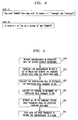
- the flow diagram shown in FIG. 5 is a method representing the inventive concept.
- a user connected via telephone line 109 is waiting to receive information, i.e., an announcement from voice messaging system 300.
- the particular language to use for a particular announcement can be determined, a prior, in a number of ways, e.g., by the type of voice messaging service provided by voice messaging system 300, by the location of the telephone line on which an incoming telephone call appears, etc.
- CPU 150 it is assumed, for simplicity, that for a telephone call on telephone line 109 CPU 150 must provide an English language announcement that is representative of a semantic expression having the announcement ID 10, which is shown in FIG. 2.
- CPU 150 then translates this number to identify the set of rules associated with this semantic expression.
- FIG. 2 CPU 150 translates the announcement ID 10 to identify set of rules 20.
- each particular language specific rule is associated with a given "offset" into the set of rules.
- the English language rule is the first rule in the set of rules with a resulting offset that is defined as one, a Spanish language rule would have an offset equal to two.
- CPU 150 retrieves the first rule, which is rule 21, from the set of rules 20 stored on system data base 280 (block 315). Rule 21 is then processed by CPU 150 to construct an English language announcement of the semantic expression identified by announcement ID 10. Rule 21 is illustrated in FIG. 4. As can be seen from FIG. 4, rule 21 comprises two voice fragments, one VARIABLE and one construction rule.
- CPU 150 evaluates the construction rule based on the value of NUMBER.
- the construction rule is represented as a simple "if then else" statement. If the value of NUMBER is equivalent to one, then CPU 150 will use the language specific voice fragment associated with "message.” If the value of NUMBER is not equivalent to one, then CPU 150 will use the language specific voice fragment associated with "messages” (block 320). For this example, it will be assumed the value of NUMBER is equal to five. As a result, the voice fragment associated with "messages" is used.
- CPU 150 determines the voice fragment to use for the value of NUMBER.
- NUMBER also has associated with it an announcement ID, which in turn has an associated set of rules.
- a representative English language rule for NUMBER is shown in FIG. 4 as rule 46. This rule comprises only a construction rule. If the value of NUMBER is greater than 10, CPU 150 will use the language specific voice fragment associated with "too big a number of.” If the value of NUMBER is ten or less, then CPU 150 will use the language specific voice fragment associated with the value of NUMBER, e.g., "five" (block 325). It should be noted that although a separate evaluation step is shown in FIG. 5 to provide the voice fragment associated with the value of NUMBER, the method of FIG. 5 can be modified to be recursively executed by CPU 150 to provide this voice fragment since a VARIABLE has an associated announcement ID. In other words, the evaluation of VARIABLE can be treated as just another announcement.
- CPU 150 After determining the voice fragments to use for any construction rules or VARIABLES contained within a language specific rule, CPU 150 then retrieves from the language specific data base all of the voice fragments, and combines them in the order indicated by the rule to create the language specific announcement. In the context of this example, CPU 150 will retrieve the following voice fragments from English language data base 270: "You have” “five” "new voice mail” "messages” (block 330). This English language announcement is then played back, or broadcast, via telephone line 109, to the user (block 335).
- FIG. 1 shows how the illustrative method of FIG 2 is implemented in voice messaging processor 100.
- the use of a semantic expression to represent a type of announcement allows the design of voice messaging system 300 to be independent of the actual language used to provide the announcement. If a new language needs to be supported, a language specific voice fragment data base merely needs to be added along with an update to the sets of rules stored on system data base 280.
- voice messaging system 300 can provide a language specific announcement in a written form, i.e., language dependent text.
- line 109 is now representative of one of a plurality of terminal connections, e.g., EIA standard RS-232, over which CPU 150 provides the language dependent text to computer terminals or printers (not shown).
- CPU 150 provides the language dependent text to computer terminals or printers (not shown).
- a similar method to the one shown in FIG. 5 is used by CPU 150, except that the selected voice fragments described above are replaced by the representative text of a voice fragment, an example of which is shown in rule 21 of FIG. 4.
- the representative text for a particular language dependent message identifies the particular voice fragment to retrieve.
- the representative text is applied by CPU 150 to line 109.
Landscapes
- Engineering & Computer Science (AREA)
- Signal Processing (AREA)
- Computational Linguistics (AREA)
- Health & Medical Sciences (AREA)
- Audiology, Speech & Language Pathology (AREA)
- Human Computer Interaction (AREA)
- Physics & Mathematics (AREA)
- Acoustics & Sound (AREA)
- Multimedia (AREA)
- Telephonic Communication Services (AREA)
- Machine Translation (AREA)
Applications Claiming Priority (2)
| Application Number | Priority Date | Filing Date | Title |
|---|---|---|---|
| US88900792A | 1992-05-26 | 1992-05-26 | |
| US889007 | 1992-05-26 |
Publications (1)
| Publication Number | Publication Date |
|---|---|
| EP0574147A1 true EP0574147A1 (en) | 1993-12-15 |
Family
ID=25394344
Family Applications (1)
| Application Number | Title | Priority Date | Filing Date |
|---|---|---|---|
| EP93303913A Withdrawn EP0574147A1 (en) | 1992-05-26 | 1993-05-20 | Multiple language capability in an interactive system |
Country Status (3)
| Country | Link |
|---|---|
| US (2) | US5375164A (enExample) |
| EP (1) | EP0574147A1 (enExample) |
| JP (1) | JPH0698026A (enExample) |
Cited By (4)
| Publication number | Priority date | Publication date | Assignee | Title |
|---|---|---|---|---|
| WO1997024862A3 (en) * | 1995-12-29 | 1997-09-12 | Mci Communications Corp | Method and system for telecommunications language support |
| EP1039730A1 (en) * | 1999-03-22 | 2000-09-27 | Lucent Technologies Inc. | Improved automatic announcement system |
| WO2004059522A1 (en) * | 2002-12-30 | 2004-07-15 | Singapore Airlines Limited | Multi-language communication method and system |
| US20110131212A1 (en) * | 2009-12-02 | 2011-06-02 | International Business Machines Corporation | Indexing documents |
Families Citing this family (80)
| Publication number | Priority date | Publication date | Assignee | Title |
|---|---|---|---|---|
| US6259446B1 (en) | 1992-12-23 | 2001-07-10 | Object Technology Licensing Corporation | Menu state system |
| US5551055A (en) * | 1992-12-23 | 1996-08-27 | Taligent, Inc. | System for providing locale dependent user interface for presenting control graphic which has different contents or same contents displayed in a predetermined order |
| US5739869A (en) * | 1993-09-10 | 1998-04-14 | Figaro, Inc. | Electronic libretto display apparatus and method |
| US5475733A (en) * | 1993-11-04 | 1995-12-12 | At&T Corp. | Language accommodated message relaying for hearing impaired callers |
| USH2098H1 (en) * | 1994-02-22 | 2004-03-02 | The United States Of America As Represented By The Secretary Of The Navy | Multilingual communications device |
| US5724406A (en) * | 1994-03-22 | 1998-03-03 | Ericsson Messaging Systems, Inc. | Call processing system and method for providing a variety of messaging services |
| AU2275495A (en) * | 1994-03-31 | 1995-10-23 | Citibank, N.A. | Interactive voice response system |
| US5493606A (en) * | 1994-05-31 | 1996-02-20 | Unisys Corporation | Multi-lingual prompt management system for a network applications platform |
| US6310949B1 (en) * | 1994-08-04 | 2001-10-30 | British Telecommunications Public Limited Company | Intelligent communications networks |
| US5537466A (en) * | 1994-08-04 | 1996-07-16 | British Telecommunications, Plc. | Intelligent communications networks |
| US5765142A (en) * | 1994-08-18 | 1998-06-09 | Creatacard | Method and apparatus for the development and implementation of an interactive customer service system that is dynamically responsive to change in marketing decisions and environments |
| JP3367298B2 (ja) * | 1994-11-15 | 2003-01-14 | 富士ゼロックス株式会社 | 言語情報提供装置、言語情報提供システムおよび言語情報提供方法 |
| US5839068A (en) * | 1995-02-21 | 1998-11-17 | Hughes Electronics Corporation | Method of delivering service voice announcements in a satellite telephony communication system |
| US5784456A (en) * | 1995-06-29 | 1998-07-21 | Cyracom International, Inc. | Single-line multi-handset telephone |
| KR0144388B1 (ko) * | 1995-08-24 | 1998-08-01 | 김광호 | 키폰시스템에서 언어다중화 표시방법 |
| US5719921A (en) * | 1996-02-29 | 1998-02-17 | Nynex Science & Technology | Methods and apparatus for activating telephone services in response to speech |
| JPH09251462A (ja) * | 1996-03-18 | 1997-09-22 | Sharp Corp | 機械翻訳装置 |
| US6085162A (en) * | 1996-10-18 | 2000-07-04 | Gedanken Corporation | Translation system and method in which words are translated by a specialized dictionary and then a general dictionary |
| US7165020B2 (en) * | 1998-05-29 | 2007-01-16 | Citicorp Development Center, Inc. | Multi-language phrase editor and method thereof |
| US6466900B1 (en) * | 1998-05-29 | 2002-10-15 | Citicorp Development Center, Inc. | Multi-language phrase editor and method thereof |
| US5875422A (en) * | 1997-01-31 | 1999-02-23 | At&T Corp. | Automatic language translation technique for use in a telecommunications network |
| CA2294487A1 (en) * | 1997-06-02 | 1998-12-03 | Jason Bailis | Unified work station controller and method |
| US6205418B1 (en) | 1997-06-25 | 2001-03-20 | Lucent Technologies Inc. | System and method for providing multiple language capability in computer-based applications |
| CA2242065C (en) * | 1997-07-03 | 2004-12-14 | Henry C.A. Hyde-Thomson | Unified messaging system with automatic language identification for text-to-speech conversion |
| US5960382A (en) * | 1997-07-07 | 1999-09-28 | Lucent Technologies Inc. | Translation of an initially-unknown message |
| US6101241A (en) * | 1997-07-16 | 2000-08-08 | At&T Corp. | Telephone-based speech recognition for data collection |
| US6961410B1 (en) | 1997-10-01 | 2005-11-01 | Unisys Pulsepoint Communication | Method for customizing information for interacting with a voice mail system |
| US6058166A (en) * | 1997-10-06 | 2000-05-02 | Unisys Corporation | Enhanced multi-lingual prompt management in a voice messaging system with support for speech recognition |
| US6219632B1 (en) | 1997-11-20 | 2001-04-17 | International Business Machines Corporation | System for the facilitation of supporting multiple concurrent languages through the use of semantic knowledge representation |
| US6349275B1 (en) | 1997-11-24 | 2002-02-19 | International Business Machines Corporation | Multiple concurrent language support system for electronic catalogue using a concept based knowledge representation |
| US6233317B1 (en) | 1997-12-11 | 2001-05-15 | Unisys Corporation | Multiple language electronic mail notification of received voice and/or fax messages |
| US6061646A (en) * | 1997-12-18 | 2000-05-09 | International Business Machines Corp. | Kiosk for multiple spoken languages |
| US6154465A (en) * | 1998-10-06 | 2000-11-28 | Vertical Networks, Inc. | Systems and methods for multiple mode voice and data communications using intelligenty bridged TDM and packet buses and methods for performing telephony and data functions using the same |
| US6144938A (en) * | 1998-05-01 | 2000-11-07 | Sun Microsystems, Inc. | Voice user interface with personality |
| US6229880B1 (en) | 1998-05-21 | 2001-05-08 | Bell Atlantic Network Services, Inc. | Methods and apparatus for efficiently providing a communication system with speech recognition capabilities |
| US6233315B1 (en) | 1998-05-21 | 2001-05-15 | Bell Atlantic Network Services, Inc. | Methods and apparatus for increasing the utility and interoperability of peripheral devices in communications systems |
| GB2338371A (en) * | 1998-06-09 | 1999-12-15 | Ibm | Voice processing system |
| US6370498B1 (en) | 1998-06-15 | 2002-04-09 | Maria Ruth Angelica Flores | Apparatus and methods for multi-lingual user access |
| US6178400B1 (en) | 1998-07-22 | 2001-01-23 | At&T Corp. | Method and apparatus for normalizing speech to facilitate a telephone call |
| US6341161B1 (en) | 1998-07-24 | 2002-01-22 | Teresa Farias Latter | Method and system for providing enhanced caller identification information including tailored announcements |
| US6287125B1 (en) * | 1998-08-14 | 2001-09-11 | Jacques A. Dorcely | Distributed interactive presentation and response system with translation feature |
| AU9030698A (en) * | 1998-08-25 | 2000-03-14 | Harris Corporation | Language determination options/algorithm |
| US9037451B2 (en) * | 1998-09-25 | 2015-05-19 | Rpx Corporation | Systems and methods for multiple mode voice and data communications using intelligently bridged TDM and packet buses and methods for implementing language capabilities using the same |
| US6744860B1 (en) | 1998-12-31 | 2004-06-01 | Bell Atlantic Network Services | Methods and apparatus for initiating a voice-dialing operation |
| DE19915652C2 (de) * | 1999-04-07 | 2001-08-02 | Siemens Ag | Verfahren und Anordnung zum Bereitstellen von landessprachen-spezifischen Datensätzen an einer Kommunikationseinrichtung |
| JP3711411B2 (ja) * | 1999-04-19 | 2005-11-02 | 沖電気工業株式会社 | 音声合成装置 |
| US6321190B1 (en) | 1999-06-28 | 2001-11-20 | Avaya Technologies Corp. | Infrastructure for developing application-independent language modules for language-independent applications |
| US6292773B1 (en) | 1999-06-28 | 2001-09-18 | Avaya Technology Corp. | Application-independent language module for language-independent applications |
| US7376710B1 (en) * | 1999-10-29 | 2008-05-20 | Nortel Networks Limited | Methods and systems for providing access to stored audio data over a network |
| US8392188B1 (en) | 1999-11-05 | 2013-03-05 | At&T Intellectual Property Ii, L.P. | Method and system for building a phonotactic model for domain independent speech recognition |
| US7286984B1 (en) * | 1999-11-05 | 2007-10-23 | At&T Corp. | Method and system for automatically detecting morphemes in a task classification system using lattices |
| US20030191625A1 (en) * | 1999-11-05 | 2003-10-09 | Gorin Allen Louis | Method and system for creating a named entity language model |
| US6724864B1 (en) * | 2000-01-20 | 2004-04-20 | Comverse, Inc. | Active prompts |
| US6950792B1 (en) * | 2000-10-25 | 2005-09-27 | Cisco Technology, Inc. | Arrangement for providing international prompts in a unified messaging system |
| EP1213897A1 (de) * | 2000-12-11 | 2002-06-12 | Siemens Aktiengesellschaft | Verfahren zur Konfigurierung einer Benutzeroberfläche |
| US6925155B2 (en) * | 2002-01-18 | 2005-08-02 | Sbc Properties, L.P. | Method and system for routing calls based on a language preference |
| US7286993B2 (en) | 2002-01-31 | 2007-10-23 | Product Discovery, Inc. | Holographic speech translation system and method |
| US7376415B2 (en) * | 2002-07-12 | 2008-05-20 | Language Line Services, Inc. | System and method for offering portable language interpretation services |
| US20040198403A1 (en) * | 2002-07-25 | 2004-10-07 | Pedersen Claus Aagaard | Gaming concept for wireless terminals |
| JP4014563B2 (ja) * | 2002-12-18 | 2007-11-28 | 株式会社リコー | 翻訳支援システムおよび翻訳支援プログラム |
| US6999758B2 (en) * | 2003-05-06 | 2006-02-14 | Ocmc, Inc. | System and method for providing communications services |
| US8788274B1 (en) * | 2003-07-03 | 2014-07-22 | Jose Estevan Guzman | Language converter and transmitting system |
| US8036893B2 (en) * | 2004-07-22 | 2011-10-11 | Nuance Communications, Inc. | Method and system for identifying and correcting accent-induced speech recognition difficulties |
| WO2006034284A1 (en) * | 2004-09-20 | 2006-03-30 | Claude Charles Buchert | System and method for control of air time of communication devices |
| DE102004061524A1 (de) * | 2004-12-21 | 2006-07-20 | Siemens Ag | Verfahren zum flexiblen dezentralen Bereitstellen von mehrsprachigen Dialogen |
| EP1679867A1 (en) * | 2005-01-06 | 2006-07-12 | Orange SA | Customisation of VoiceXML Application |
| US7640255B2 (en) | 2005-05-31 | 2009-12-29 | Sap, Ag | Method for utilizing a multi-layered data model to generate audience specific documents |
| US7657511B2 (en) * | 2005-05-31 | 2010-02-02 | Sap, Ag | Multi-layered data model for generating audience-specific documents |
| US7894596B2 (en) * | 2005-09-13 | 2011-02-22 | Language Line Services, Inc. | Systems and methods for providing language interpretation |
| US7792276B2 (en) * | 2005-09-13 | 2010-09-07 | Language Line Services, Inc. | Language interpretation call transferring in a telecommunications network |
| US8023626B2 (en) * | 2005-09-13 | 2011-09-20 | Language Line Services, Inc. | System and method for providing language interpretation |
| US20070239625A1 (en) * | 2006-04-05 | 2007-10-11 | Language Line Services, Inc. | System and method for providing access to language interpretation |
| US7593523B2 (en) * | 2006-04-24 | 2009-09-22 | Language Line Services, Inc. | System and method for providing incoming call distribution |
| US8510113B1 (en) | 2006-08-31 | 2013-08-13 | At&T Intellectual Property Ii, L.P. | Method and system for enhancing a speech database |
| US7957976B2 (en) * | 2006-09-12 | 2011-06-07 | Nuance Communications, Inc. | Establishing a multimodal advertising personality for a sponsor of a multimodal application |
| US7773738B2 (en) * | 2006-09-22 | 2010-08-10 | Language Line Services, Inc. | Systems and methods for providing relayed language interpretation |
| US20090125295A1 (en) * | 2007-11-09 | 2009-05-14 | William Drewes | Voice auto-translation of multi-lingual telephone calls |
| US20110219136A1 (en) * | 2010-03-02 | 2011-09-08 | International Business Machines Corporation | Intelligent audio and visual media handling |
| US20120195235A1 (en) * | 2011-02-01 | 2012-08-02 | Telelfonaktiebolaget Lm Ericsson (Publ) | Method and apparatus for specifying a user's preferred spoken language for network communication services |
| US9015032B2 (en) * | 2011-11-28 | 2015-04-21 | International Business Machines Corporation | Multilingual speech recognition and public announcement |
Citations (3)
| Publication number | Priority date | Publication date | Assignee | Title |
|---|---|---|---|---|
| EP0382670A2 (en) * | 1989-02-07 | 1990-08-16 | International Business Machines Corporation | Voice applications generator |
| US5029200A (en) * | 1989-05-02 | 1991-07-02 | At&T Bell Laboratories | Voice message system using synthetic speech |
| EP0484069A2 (en) * | 1990-10-30 | 1992-05-06 | International Business Machines Corporation | Voice messaging apparatus |
Family Cites Families (9)
| Publication number | Priority date | Publication date | Assignee | Title |
|---|---|---|---|---|
| US4615002A (en) * | 1983-03-30 | 1986-09-30 | International Business Machines Corp. | Concurrent multi-lingual use in data processing system |
| US4566078A (en) * | 1983-03-30 | 1986-01-21 | International Business Machines Corp. | Concurrent multi-lingual use in data processing systems |
| FR2547146B1 (fr) * | 1983-06-02 | 1987-03-20 | Texas Instruments France | Procede et dispositif pour l'audition de messages parles synthetises et pour la visualisation de messages graphiques correspondants |
| JPS6084667A (ja) * | 1983-10-17 | 1985-05-14 | Mitsubishi Electric Corp | 文章組立装置 |
| JPS63167550A (ja) * | 1986-12-29 | 1988-07-11 | Kazuo Hashimoto | 自動翻訳機能付き留守番電話装置 |
| US4882681A (en) * | 1987-09-02 | 1989-11-21 | Brotz Gregory R | Remote language translating device |
| CA1280215C (en) * | 1987-09-28 | 1991-02-12 | Eddy Lee | Multilingual ordered data retrieval system |
| JP2849755B2 (ja) * | 1989-08-31 | 1999-01-27 | 株式会社日立製作所 | 現金自動取引システム |
| US5152003A (en) * | 1989-10-18 | 1992-09-29 | Tour-Mate Systems Canada Limited | Record message delivery system |
-
1992
- 1992-08-12 US US07/928,381 patent/US5375164A/en not_active Expired - Lifetime
-
1993
- 1993-05-20 EP EP93303913A patent/EP0574147A1/en not_active Withdrawn
- 1993-05-26 JP JP5123006A patent/JPH0698026A/ja active Pending
-
1994
- 1994-03-21 US US08/215,167 patent/US5412712A/en not_active Expired - Lifetime
Patent Citations (3)
| Publication number | Priority date | Publication date | Assignee | Title |
|---|---|---|---|---|
| EP0382670A2 (en) * | 1989-02-07 | 1990-08-16 | International Business Machines Corporation | Voice applications generator |
| US5029200A (en) * | 1989-05-02 | 1991-07-02 | At&T Bell Laboratories | Voice message system using synthetic speech |
| EP0484069A2 (en) * | 1990-10-30 | 1992-05-06 | International Business Machines Corporation | Voice messaging apparatus |
Cited By (9)
| Publication number | Priority date | Publication date | Assignee | Title |
|---|---|---|---|---|
| WO1997024862A3 (en) * | 1995-12-29 | 1997-09-12 | Mci Communications Corp | Method and system for telecommunications language support |
| US5841852A (en) * | 1995-12-29 | 1998-11-24 | Mci Communications Corporation | Method and system for telecommunications language support |
| EP1039730A1 (en) * | 1999-03-22 | 2000-09-27 | Lucent Technologies Inc. | Improved automatic announcement system |
| WO2004059522A1 (en) * | 2002-12-30 | 2004-07-15 | Singapore Airlines Limited | Multi-language communication method and system |
| AU2003303427B2 (en) * | 2002-12-30 | 2008-02-21 | Singapore Airlines Limited | Multi-language communication method and system |
| CN100517302C (zh) * | 2002-12-30 | 2009-07-22 | 新加坡航空公司 | 多语言通信方法和系统 |
| US8185374B2 (en) | 2002-12-30 | 2012-05-22 | Singapore Airlines Limited | Multi-language communication method and system |
| US20110131212A1 (en) * | 2009-12-02 | 2011-06-02 | International Business Machines Corporation | Indexing documents |
| US8756215B2 (en) * | 2009-12-02 | 2014-06-17 | International Business Machines Corporation | Indexing documents |
Also Published As
| Publication number | Publication date |
|---|---|
| US5375164A (en) | 1994-12-20 |
| JPH0698026A (ja) | 1994-04-08 |
| US5412712A (en) | 1995-05-02 |
Similar Documents
| Publication | Publication Date | Title |
|---|---|---|
| US5412712A (en) | Multiple language capability in an interactive system | |
| JP2880592B2 (ja) | 複合音声情報の編集装置および方法 | |
| Cole et al. | Telephone speech corpus development at CSLU1 | |
| CA1252210A (en) | Method and apparatus for generating computer- controlled interactive voice services | |
| US7577568B2 (en) | Methods and system for creating voice files using a VoiceXML application | |
| CA2441195C (en) | Voice response system | |
| US6789093B2 (en) | Method and apparatus for language translation using registered databases | |
| US20040120472A1 (en) | Voice response system | |
| US20060129387A1 (en) | Method and apparatus for processing the output of a speech recognition engine | |
| EP0150273B1 (en) | Multi-lingual system across nodes | |
| JP2000148179A (ja) | サブ語彙を指定する方法及びプログラム記憶装置 | |
| CA1182570A (en) | System for detecting and correcting contextual errors in a text processing system | |
| US6950792B1 (en) | Arrangement for providing international prompts in a unified messaging system | |
| US6658386B2 (en) | Dynamically adjusting speech menu presentation style | |
| JPS6488680A (ja) | 文書作成・校正支援装置 | |
| CA2077231C (en) | Multiple language capability in an interactive system | |
| US20030097253A1 (en) | Device to edit a text in predefined windows | |
| AU2002253111B2 (en) | Method, computer program product and article of manufacture for providing service-to-role assignment to launch application services in role-based computer system | |
| Németh et al. | The design, implementation, and operation of a hungarian e-mail reader | |
| EP0826217A2 (en) | Dictation device for the storage of speech signals | |
| US20070201631A1 (en) | System and method for defining, synthesizing and retrieving variable field utterances from a file server | |
| KR20220040445A (ko) | 화자가 표지된 텍스트 생성 방법 | |
| JP7304269B2 (ja) | 書き起こし支援方法及び書き起こし支援装置 | |
| CN112287112A (zh) | 构建专有发音词典的方法、装置以及存储介质 | |
| EP0484069A2 (en) | Voice messaging apparatus |
Legal Events
| Date | Code | Title | Description |
|---|---|---|---|
| PUAI | Public reference made under article 153(3) epc to a published international application that has entered the european phase |
Free format text: ORIGINAL CODE: 0009012 |
|
| AK | Designated contracting states |
Kind code of ref document: A1 Designated state(s): DE ES FR GB IT |
|
| RAP3 | Party data changed (applicant data changed or rights of an application transferred) |
Owner name: AT&T CORP. |
|
| 17P | Request for examination filed |
Effective date: 19940603 |
|
| 17Q | First examination report despatched |
Effective date: 20020717 |
|
| STAA | Information on the status of an ep patent application or granted ep patent |
Free format text: STATUS: THE APPLICATION IS DEEMED TO BE WITHDRAWN |
|
| 18D | Application deemed to be withdrawn |
Effective date: 20021128 |