EP0567564B1 - Method for diagnosing disorders from biochemical profiles - Google Patents
Method for diagnosing disorders from biochemical profiles Download PDFInfo
- Publication number
- EP0567564B1 EP0567564B1 EP92904426A EP92904426A EP0567564B1 EP 0567564 B1 EP0567564 B1 EP 0567564B1 EP 92904426 A EP92904426 A EP 92904426A EP 92904426 A EP92904426 A EP 92904426A EP 0567564 B1 EP0567564 B1 EP 0567564B1
- Authority
- EP
- European Patent Office
- Prior art keywords
- disease
- samples
- alzheimer
- disorders
- olfactory
- Prior art date
- Legal status (The legal status is an assumption and is not a legal conclusion. Google has not performed a legal analysis and makes no representation as to the accuracy of the status listed.)
- Expired - Lifetime
Links
- 238000000034 method Methods 0.000 title claims abstract description 33
- 208000037265 diseases, disorders, signs and symptoms Diseases 0.000 claims abstract description 43
- 208000024827 Alzheimer disease Diseases 0.000 claims abstract description 32
- 238000009826 distribution Methods 0.000 claims abstract description 25
- 238000004458 analytical method Methods 0.000 claims abstract description 20
- 201000009030 Carcinoma Diseases 0.000 claims abstract description 6
- 208000018737 Parkinson disease Diseases 0.000 claims abstract description 6
- 239000000470 constituent Substances 0.000 claims abstract description 6
- 201000000980 schizophrenia Diseases 0.000 claims abstract description 6
- 208000023105 Huntington disease Diseases 0.000 claims abstract description 5
- 206010028980 Neoplasm Diseases 0.000 claims abstract description 5
- 206010033799 Paralysis Diseases 0.000 claims abstract description 5
- 230000002159 abnormal effect Effects 0.000 claims abstract description 5
- 208000021090 palsy Diseases 0.000 claims abstract description 5
- 208000004652 Cardiovascular Abnormalities Diseases 0.000 claims abstract description 4
- 206010002026 amyotrophic lateral sclerosis Diseases 0.000 claims abstract description 4
- 230000000750 progressive effect Effects 0.000 claims abstract description 4
- 150000001875 compounds Chemical class 0.000 claims description 33
- 239000000523 sample Substances 0.000 claims description 25
- 239000002858 neurotransmitter agent Substances 0.000 claims description 17
- 239000002207 metabolite Substances 0.000 claims description 11
- 210000002850 nasal mucosa Anatomy 0.000 claims description 10
- QIVBCDIJIAJPQS-VIFPVBQESA-N L-tryptophane Chemical compound C1=CC=C2C(C[C@H](N)C(O)=O)=CNC2=C1 QIVBCDIJIAJPQS-VIFPVBQESA-N 0.000 claims description 9
- QIVBCDIJIAJPQS-UHFFFAOYSA-N Tryptophan Natural products C1=CC=C2C(CC(N)C(O)=O)=CNC2=C1 QIVBCDIJIAJPQS-UHFFFAOYSA-N 0.000 claims description 9
- 210000001175 cerebrospinal fluid Anatomy 0.000 claims description 8
- 230000000739 chaotic effect Effects 0.000 claims description 7
- 210000002381 plasma Anatomy 0.000 claims description 6
- 239000002243 precursor Substances 0.000 claims description 6
- OUYCCCASQSFEME-QMMMGPOBSA-N L-tyrosine Chemical compound OC(=O)[C@@H](N)CC1=CC=C(O)C=C1 OUYCCCASQSFEME-QMMMGPOBSA-N 0.000 claims description 5
- 210000002966 serum Anatomy 0.000 claims description 5
- OUYCCCASQSFEME-UHFFFAOYSA-N tyrosine Natural products OC(=O)C(N)CC1=CC=C(O)C=C1 OUYCCCASQSFEME-UHFFFAOYSA-N 0.000 claims description 5
- 102000013455 Amyloid beta-Peptides Human genes 0.000 claims description 4
- 108010090849 Amyloid beta-Peptides Proteins 0.000 claims description 4
- 108090000765 processed proteins & peptides Proteins 0.000 claims description 4
- 210000001124 body fluid Anatomy 0.000 claims description 3
- 239000010839 body fluid Substances 0.000 claims description 3
- 239000012491 analyte Substances 0.000 claims description 2
- 239000012472 biological sample Substances 0.000 claims description 2
- 239000012634 fragment Substances 0.000 claims description 2
- 210000003296 saliva Anatomy 0.000 claims description 2
- 210000002700 urine Anatomy 0.000 claims description 2
- 210000001772 blood platelet Anatomy 0.000 claims 1
- 230000015556 catabolic process Effects 0.000 claims 1
- -1 cofactors Substances 0.000 claims 1
- 238000006731 degradation reaction Methods 0.000 claims 1
- 201000010099 disease Diseases 0.000 abstract description 11
- 238000002560 therapeutic procedure Methods 0.000 abstract description 3
- 239000003814 drug Substances 0.000 abstract description 2
- 239000012530 fluid Substances 0.000 abstract 1
- 208000015122 neurodegenerative disease Diseases 0.000 abstract 1
- YGPSJZOEDVAXAB-UHFFFAOYSA-N kynurenine Chemical compound OC(=O)C(N)CC(=O)C1=CC=CC=C1N YGPSJZOEDVAXAB-UHFFFAOYSA-N 0.000 description 14
- 210000004027 cell Anatomy 0.000 description 13
- 230000000694 effects Effects 0.000 description 12
- QRMZSPFSDQBLIX-UHFFFAOYSA-N homovanillic acid Chemical compound COC1=CC(CC(O)=O)=CC=C1O QRMZSPFSDQBLIX-UHFFFAOYSA-N 0.000 description 12
- 210000000956 olfactory bulb Anatomy 0.000 description 11
- LRFVTYWOQMYALW-UHFFFAOYSA-N 9H-xanthine Chemical compound O=C1NC(=O)NC2=C1NC=N2 LRFVTYWOQMYALW-UHFFFAOYSA-N 0.000 description 10
- 238000004422 calculation algorithm Methods 0.000 description 10
- 238000005259 measurement Methods 0.000 description 9
- 230000004044 response Effects 0.000 description 9
- CFFZDZCDUFSOFZ-UHFFFAOYSA-N 3,4-Dihydroxy-phenylacetic acid Chemical compound OC(=O)CC1=CC=C(O)C(O)=C1 CFFZDZCDUFSOFZ-UHFFFAOYSA-N 0.000 description 8
- VYFYYTLLBUKUHU-UHFFFAOYSA-N dopamine Chemical compound NCCC1=CC=C(O)C(O)=C1 VYFYYTLLBUKUHU-UHFFFAOYSA-N 0.000 description 8
- 230000001722 neurochemical effect Effects 0.000 description 8
- 238000013459 approach Methods 0.000 description 7
- 210000004556 brain Anatomy 0.000 description 7
- 150000003943 catecholamines Chemical class 0.000 description 7
- 150000003384 small molecules Chemical class 0.000 description 7
- 230000028327 secretion Effects 0.000 description 6
- QZAYGJVTTNCVMB-UHFFFAOYSA-N serotonin Chemical compound C1=C(O)C=C2C(CCN)=CNC2=C1 QZAYGJVTTNCVMB-UHFFFAOYSA-N 0.000 description 6
- 239000000126 substance Substances 0.000 description 6
- PNEYBMLMFCGWSK-UHFFFAOYSA-N aluminium oxide Inorganic materials [O-2].[O-2].[O-2].[Al+3].[Al+3] PNEYBMLMFCGWSK-UHFFFAOYSA-N 0.000 description 5
- 238000003556 assay Methods 0.000 description 5
- 238000007621 cluster analysis Methods 0.000 description 5
- 238000011161 development Methods 0.000 description 5
- 230000018109 developmental process Effects 0.000 description 5
- 238000000605 extraction Methods 0.000 description 5
- VLTRZXGMWDSKGL-UHFFFAOYSA-N perchloric acid Chemical compound OCl(=O)(=O)=O VLTRZXGMWDSKGL-UHFFFAOYSA-N 0.000 description 5
- 238000012360 testing method Methods 0.000 description 5
- 229940075420 xanthine Drugs 0.000 description 5
- 208000035475 disorder Diseases 0.000 description 4
- 229960003638 dopamine Drugs 0.000 description 4
- 239000000284 extract Substances 0.000 description 4
- 230000006870 function Effects 0.000 description 4
- 239000000463 material Substances 0.000 description 4
- 230000037353 metabolic pathway Effects 0.000 description 4
- 210000002682 neurofibrillary tangle Anatomy 0.000 description 4
- 210000002475 olfactory pathway Anatomy 0.000 description 4
- 230000008569 process Effects 0.000 description 4
- 230000002441 reversible effect Effects 0.000 description 4
- 239000012488 sample solution Substances 0.000 description 4
- 238000000926 separation method Methods 0.000 description 4
- 239000000725 suspension Substances 0.000 description 4
- SFLSHLFXELFNJZ-QMMMGPOBSA-N (-)-norepinephrine Chemical compound NC[C@H](O)C1=CC=C(O)C(O)=C1 SFLSHLFXELFNJZ-QMMMGPOBSA-N 0.000 description 3
- UCTWMZQNUQWSLP-VIFPVBQESA-N (R)-adrenaline Chemical compound CNC[C@H](O)C1=CC=C(O)C(O)=C1 UCTWMZQNUQWSLP-VIFPVBQESA-N 0.000 description 3
- 229930182837 (R)-adrenaline Natural products 0.000 description 3
- 208000035143 Bacterial infection Diseases 0.000 description 3
- FAPWRFPIFSIZLT-UHFFFAOYSA-M Sodium chloride Chemical compound [Na+].[Cl-] FAPWRFPIFSIZLT-UHFFFAOYSA-M 0.000 description 3
- 210000004727 amygdala Anatomy 0.000 description 3
- 230000001580 bacterial effect Effects 0.000 description 3
- 208000022362 bacterial infectious disease Diseases 0.000 description 3
- 238000003869 coulometry Methods 0.000 description 3
- 230000006735 deficit Effects 0.000 description 3
- 230000003412 degenerative effect Effects 0.000 description 3
- 238000001514 detection method Methods 0.000 description 3
- 238000003745 diagnosis Methods 0.000 description 3
- 238000000835 electrochemical detection Methods 0.000 description 3
- 229960005139 epinephrine Drugs 0.000 description 3
- 238000011156 evaluation Methods 0.000 description 3
- 210000001320 hippocampus Anatomy 0.000 description 3
- 230000002474 noradrenergic effect Effects 0.000 description 3
- 229960002748 norepinephrine Drugs 0.000 description 3
- SFLSHLFXELFNJZ-UHFFFAOYSA-N norepinephrine Natural products NCC(O)C1=CC=C(O)C(O)=C1 SFLSHLFXELFNJZ-UHFFFAOYSA-N 0.000 description 3
- 210000001331 nose Anatomy 0.000 description 3
- 230000003647 oxidation Effects 0.000 description 3
- 238000007254 oxidation reaction Methods 0.000 description 3
- 230000001575 pathological effect Effects 0.000 description 3
- 230000007170 pathology Effects 0.000 description 3
- 102000004196 processed proteins & peptides Human genes 0.000 description 3
- 239000000047 product Substances 0.000 description 3
- 238000000611 regression analysis Methods 0.000 description 3
- 230000035945 sensitivity Effects 0.000 description 3
- 230000000862 serotonergic effect Effects 0.000 description 3
- 239000011780 sodium chloride Substances 0.000 description 3
- QDZOEBFLNHCSSF-PFFBOGFISA-N (2S)-2-[[(2R)-2-[[(2S)-1-[(2S)-6-amino-2-[[(2S)-1-[(2R)-2-amino-5-carbamimidamidopentanoyl]pyrrolidine-2-carbonyl]amino]hexanoyl]pyrrolidine-2-carbonyl]amino]-3-(1H-indol-3-yl)propanoyl]amino]-N-[(2R)-1-[[(2S)-1-[[(2R)-1-[[(2S)-1-[[(2S)-1-amino-4-methyl-1-oxopentan-2-yl]amino]-4-methyl-1-oxopentan-2-yl]amino]-3-(1H-indol-3-yl)-1-oxopropan-2-yl]amino]-1-oxo-3-phenylpropan-2-yl]amino]-3-(1H-indol-3-yl)-1-oxopropan-2-yl]pentanediamide Chemical compound C([C@@H](C(=O)N[C@H](CC=1C2=CC=CC=C2NC=1)C(=O)N[C@@H](CC(C)C)C(=O)N[C@@H](CC(C)C)C(N)=O)NC(=O)[C@@H](CC=1C2=CC=CC=C2NC=1)NC(=O)[C@H](CCC(N)=O)NC(=O)[C@@H](CC=1C2=CC=CC=C2NC=1)NC(=O)[C@H]1N(CCC1)C(=O)[C@H](CCCCN)NC(=O)[C@H]1N(CCC1)C(=O)[C@H](N)CCCNC(N)=N)C1=CC=CC=C1 QDZOEBFLNHCSSF-PFFBOGFISA-N 0.000 description 2
- HNXQXTQTPAJEJL-UHFFFAOYSA-N 2-aminopteridin-4-ol Chemical compound C1=CN=C2NC(N)=NC(=O)C2=N1 HNXQXTQTPAJEJL-UHFFFAOYSA-N 0.000 description 2
- WJXSWCUQABXPFS-UHFFFAOYSA-N 3-hydroxyanthranilic acid Chemical compound NC1=C(O)C=CC=C1C(O)=O WJXSWCUQABXPFS-UHFFFAOYSA-N 0.000 description 2
- DUUGKQCEGZLZNO-UHFFFAOYSA-N 5-hydroxyindoleacetic acid Chemical compound C1=C(O)C=C2C(CC(=O)O)=CNC2=C1 DUUGKQCEGZLZNO-UHFFFAOYSA-N 0.000 description 2
- RZVAJINKPMORJF-UHFFFAOYSA-N Acetaminophen Chemical compound CC(=O)NC1=CC=C(O)C=C1 RZVAJINKPMORJF-UHFFFAOYSA-N 0.000 description 2
- 208000037259 Amyloid Plaque Diseases 0.000 description 2
- OKTJSMMVPCPJKN-UHFFFAOYSA-N Carbon Chemical compound [C] OKTJSMMVPCPJKN-UHFFFAOYSA-N 0.000 description 2
- 108090000790 Enzymes Proteins 0.000 description 2
- 102000004190 Enzymes Human genes 0.000 description 2
- NYHBQMYGNKIUIF-UUOKFMHZSA-N Guanosine Chemical compound C1=NC=2C(=O)NC(N)=NC=2N1[C@@H]1O[C@H](CO)[C@@H](O)[C@H]1O NYHBQMYGNKIUIF-UUOKFMHZSA-N 0.000 description 2
- URLZCHNOLZSCCA-VABKMULXSA-N Leu-enkephalin Chemical compound C([C@@H](C(=O)N[C@@H](CC(C)C)C(O)=O)NC(=O)CNC(=O)CNC(=O)[C@@H](N)CC=1C=CC(O)=CC=1)C1=CC=CC=C1 URLZCHNOLZSCCA-VABKMULXSA-N 0.000 description 2
- 206010039966 Senile dementia Diseases 0.000 description 2
- 102400000096 Substance P Human genes 0.000 description 2
- 101800003906 Substance P Proteins 0.000 description 2
- LEHOTFFKMJEONL-UHFFFAOYSA-N Uric Acid Chemical compound N1C(=O)NC(=O)C2=C1NC(=O)N2 LEHOTFFKMJEONL-UHFFFAOYSA-N 0.000 description 2
- TVWHNULVHGKJHS-UHFFFAOYSA-N Uric acid Natural products N1C(=O)NC(=O)C2NC(=O)NC21 TVWHNULVHGKJHS-UHFFFAOYSA-N 0.000 description 2
- 208000036142 Viral infection Diseases 0.000 description 2
- 238000009825 accumulation Methods 0.000 description 2
- VREFGVBLTWBCJP-UHFFFAOYSA-N alprazolam Chemical compound C12=CC(Cl)=CC=C2N2C(C)=NN=C2CN=C1C1=CC=CC=C1 VREFGVBLTWBCJP-UHFFFAOYSA-N 0.000 description 2
- 230000003542 behavioural effect Effects 0.000 description 2
- 210000004369 blood Anatomy 0.000 description 2
- 239000008280 blood Substances 0.000 description 2
- 238000004364 calculation method Methods 0.000 description 2
- 229910052799 carbon Inorganic materials 0.000 description 2
- CQOVPNPJLQNMDC-ZETCQYMHSA-N carnosine Chemical compound [NH3+]CCC(=O)N[C@H](C([O-])=O)CC1=CNC=N1 CQOVPNPJLQNMDC-ZETCQYMHSA-N 0.000 description 2
- 210000003169 central nervous system Anatomy 0.000 description 2
- 238000005119 centrifugation Methods 0.000 description 2
- 230000001713 cholinergic effect Effects 0.000 description 2
- 230000004069 differentiation Effects 0.000 description 2
- 238000000840 electrochemical analysis Methods 0.000 description 2
- 238000005516 engineering process Methods 0.000 description 2
- 210000001353 entorhinal cortex Anatomy 0.000 description 2
- 239000000835 fiber Substances 0.000 description 2
- 230000002068 genetic effect Effects 0.000 description 2
- 238000009499 grossing Methods 0.000 description 2
- FDGQSTZJBFJUBT-UHFFFAOYSA-N hypoxanthine Chemical compound O=C1NC=NC2=C1NC=N2 FDGQSTZJBFJUBT-UHFFFAOYSA-N 0.000 description 2
- 230000006872 improvement Effects 0.000 description 2
- 230000003993 interaction Effects 0.000 description 2
- 230000002452 interceptive effect Effects 0.000 description 2
- 230000002427 irreversible effect Effects 0.000 description 2
- 238000012417 linear regression Methods 0.000 description 2
- 230000014759 maintenance of location Effects 0.000 description 2
- 230000001537 neural effect Effects 0.000 description 2
- 230000000926 neurological effect Effects 0.000 description 2
- 210000002569 neuron Anatomy 0.000 description 2
- 210000001706 olfactory mucosa Anatomy 0.000 description 2
- 231100000915 pathological change Toxicity 0.000 description 2
- 230000036285 pathological change Effects 0.000 description 2
- 230000037361 pathway Effects 0.000 description 2
- 230000002093 peripheral effect Effects 0.000 description 2
- BASFCYQUMIYNBI-UHFFFAOYSA-N platinum Chemical compound [Pt] BASFCYQUMIYNBI-UHFFFAOYSA-N 0.000 description 2
- 238000002360 preparation method Methods 0.000 description 2
- 210000004129 prosencephalon Anatomy 0.000 description 2
- 102000004169 proteins and genes Human genes 0.000 description 2
- 108090000623 proteins and genes Proteins 0.000 description 2
- 230000009467 reduction Effects 0.000 description 2
- 238000012552 review Methods 0.000 description 2
- 230000001953 sensory effect Effects 0.000 description 2
- 229940076279 serotonin Drugs 0.000 description 2
- 230000035882 stress Effects 0.000 description 2
- 210000001519 tissue Anatomy 0.000 description 2
- 229940116269 uric acid Drugs 0.000 description 2
- 230000009385 viral infection Effects 0.000 description 2
- ODOPEICAGBYCFH-UHFFFAOYSA-N 3-hydroxykynurenamine Chemical compound NCCC(=O)C1=CC=CC(O)=C1N ODOPEICAGBYCFH-UHFFFAOYSA-N 0.000 description 1
- RVWZUOPFHTYIEO-UHFFFAOYSA-N 5-hydroxyindoleacetic acid Natural products C1=C(O)C=C2C(C(=O)O)=CNC2=C1 RVWZUOPFHTYIEO-UHFFFAOYSA-N 0.000 description 1
- 239000003310 5-hydroxyindoleacetic acid Substances 0.000 description 1
- 241000894006 Bacteria Species 0.000 description 1
- QRYRORQUOLYVBU-VBKZILBWSA-N Carnosic acid Natural products CC([C@@H]1CC2)(C)CCC[C@]1(C(O)=O)C1=C2C=C(C(C)C)C(O)=C1O QRYRORQUOLYVBU-VBKZILBWSA-N 0.000 description 1
- 108010087806 Carnosine Proteins 0.000 description 1
- 241000050051 Chelone glabra Species 0.000 description 1
- 208000028952 Chronic enteropathy associated with SLCO2A1 gene Diseases 0.000 description 1
- 229920000742 Cotton Polymers 0.000 description 1
- MIKUYHXYGGJMLM-GIMIYPNGSA-N Crotonoside Natural products C1=NC2=C(N)NC(=O)N=C2N1[C@H]1O[C@@H](CO)[C@H](O)[C@@H]1O MIKUYHXYGGJMLM-GIMIYPNGSA-N 0.000 description 1
- NYHBQMYGNKIUIF-UHFFFAOYSA-N D-guanosine Natural products C1=2NC(N)=NC(=O)C=2N=CN1C1OC(CO)C(O)C1O NYHBQMYGNKIUIF-UHFFFAOYSA-N 0.000 description 1
- 206010012289 Dementia Diseases 0.000 description 1
- 108010092674 Enkephalins Proteins 0.000 description 1
- 101000904173 Homo sapiens Progonadoliberin-1 Proteins 0.000 description 1
- 206010020772 Hypertension Diseases 0.000 description 1
- UGQMRVRMYYASKQ-UHFFFAOYSA-N Hypoxanthine nucleoside Natural products OC1C(O)C(CO)OC1N1C(NC=NC2=O)=C2N=C1 UGQMRVRMYYASKQ-UHFFFAOYSA-N 0.000 description 1
- 241001465754 Metazoa Species 0.000 description 1
- 208000019022 Mood disease Diseases 0.000 description 1
- CQOVPNPJLQNMDC-UHFFFAOYSA-N N-beta-alanyl-L-histidine Natural products NCCC(=O)NC(C(O)=O)CC1=CN=CN1 CQOVPNPJLQNMDC-UHFFFAOYSA-N 0.000 description 1
- 208000012902 Nervous system disease Diseases 0.000 description 1
- 208000008457 Neurologic Manifestations Diseases 0.000 description 1
- 208000025966 Neurological disease Diseases 0.000 description 1
- 102000003992 Peroxidases Human genes 0.000 description 1
- 102100024028 Progonadoliberin-1 Human genes 0.000 description 1
- 241000589516 Pseudomonas Species 0.000 description 1
- 102000005157 Somatostatin Human genes 0.000 description 1
- 108010056088 Somatostatin Proteins 0.000 description 1
- 241000191940 Staphylococcus Species 0.000 description 1
- 206010042458 Suicidal ideation Diseases 0.000 description 1
- 101000996723 Sus scrofa Gonadotropin-releasing hormone receptor Proteins 0.000 description 1
- 241000209140 Triticum Species 0.000 description 1
- 235000021307 Triticum Nutrition 0.000 description 1
- 108010003205 Vasoactive Intestinal Peptide Proteins 0.000 description 1
- 102400000015 Vasoactive intestinal peptide Human genes 0.000 description 1
- 230000005856 abnormality Effects 0.000 description 1
- 238000010521 absorption reaction Methods 0.000 description 1
- LMDSAFNXCHPEQY-UHFFFAOYSA-N acetonitrile hexane Chemical compound CCCCCC.C(C)#N.C(C)#N LMDSAFNXCHPEQY-UHFFFAOYSA-N 0.000 description 1
- 239000002253 acid Substances 0.000 description 1
- 239000011149 active material Substances 0.000 description 1
- XAGFODPZIPBFFR-UHFFFAOYSA-N aluminium Chemical compound [Al] XAGFODPZIPBFFR-UHFFFAOYSA-N 0.000 description 1
- 229910052782 aluminium Inorganic materials 0.000 description 1
- 229910000323 aluminium silicate Inorganic materials 0.000 description 1
- 150000001412 amines Chemical class 0.000 description 1
- VIROVYVQCGLCII-UHFFFAOYSA-N amobarbital Chemical compound CC(C)CCC1(CC)C(=O)NC(=O)NC1=O VIROVYVQCGLCII-UHFFFAOYSA-N 0.000 description 1
- DZHSAHHDTRWUTF-SIQRNXPUSA-N amyloid-beta polypeptide 42 Chemical compound C([C@@H](C(=O)N[C@@H](C)C(=O)N[C@@H](CCC(O)=O)C(=O)N[C@@H](CC(O)=O)C(=O)N[C@H](C(=O)NCC(=O)N[C@@H](CO)C(=O)N[C@@H](CC(N)=O)C(=O)N[C@@H](CCCCN)C(=O)NCC(=O)N[C@@H](C)C(=O)N[C@H](C(=O)N[C@@H]([C@@H](C)CC)C(=O)NCC(=O)N[C@@H](CC(C)C)C(=O)N[C@@H](CCSC)C(=O)N[C@@H](C(C)C)C(=O)NCC(=O)NCC(=O)N[C@@H](C(C)C)C(=O)N[C@@H](C(C)C)C(=O)N[C@@H]([C@@H](C)CC)C(=O)N[C@@H](C)C(O)=O)[C@@H](C)CC)C(C)C)NC(=O)[C@H](CC=1C=CC=CC=1)NC(=O)[C@@H](NC(=O)[C@H](CC(C)C)NC(=O)[C@H](CCCCN)NC(=O)[C@H](CCC(N)=O)NC(=O)[C@H](CC=1N=CNC=1)NC(=O)[C@H](CC=1N=CNC=1)NC(=O)[C@@H](NC(=O)[C@H](CCC(O)=O)NC(=O)[C@H](CC=1C=CC(O)=CC=1)NC(=O)CNC(=O)[C@H](CO)NC(=O)[C@H](CC(O)=O)NC(=O)[C@H](CC=1N=CNC=1)NC(=O)[C@H](CCCNC(N)=N)NC(=O)[C@H](CC=1C=CC=CC=1)NC(=O)[C@H](CCC(O)=O)NC(=O)[C@H](C)NC(=O)[C@@H](N)CC(O)=O)C(C)C)C(C)C)C1=CC=CC=C1 DZHSAHHDTRWUTF-SIQRNXPUSA-N 0.000 description 1
- 210000003050 axon Anatomy 0.000 description 1
- 230000003376 axonal effect Effects 0.000 description 1
- 230000009286 beneficial effect Effects 0.000 description 1
- 238000012742 biochemical analysis Methods 0.000 description 1
- 230000008238 biochemical pathway Effects 0.000 description 1
- 230000000035 biogenic effect Effects 0.000 description 1
- 239000013060 biological fluid Substances 0.000 description 1
- 239000012620 biological material Substances 0.000 description 1
- 238000001574 biopsy Methods 0.000 description 1
- 210000004204 blood vessel Anatomy 0.000 description 1
- 210000005013 brain tissue Anatomy 0.000 description 1
- 244000309464 bull Species 0.000 description 1
- 229940044199 carnosine Drugs 0.000 description 1
- 238000000525 cavity enhanced absorption spectroscopy Methods 0.000 description 1
- 230000008859 change Effects 0.000 description 1
- 238000000701 chemical imaging Methods 0.000 description 1
- 238000006243 chemical reaction Methods 0.000 description 1
- 238000003759 clinical diagnosis Methods 0.000 description 1
- 235000017471 coenzyme Q10 Nutrition 0.000 description 1
- 239000002131 composite material Substances 0.000 description 1
- 238000011109 contamination Methods 0.000 description 1
- 238000007796 conventional method Methods 0.000 description 1
- 238000005520 cutting process Methods 0.000 description 1
- 238000007405 data analysis Methods 0.000 description 1
- 230000002950 deficient Effects 0.000 description 1
- 210000001787 dendrite Anatomy 0.000 description 1
- 235000005911 diet Nutrition 0.000 description 1
- 230000037213 diet Effects 0.000 description 1
- 230000003291 dopaminomimetic effect Effects 0.000 description 1
- 238000013399 early diagnosis Methods 0.000 description 1
- 230000002526 effect on cardiovascular system Effects 0.000 description 1
- 238000003487 electrochemical reaction Methods 0.000 description 1
- 230000007368 endocrine function Effects 0.000 description 1
- 230000007613 environmental effect Effects 0.000 description 1
- 230000009483 enzymatic pathway Effects 0.000 description 1
- 239000003257 excitatory amino acid Substances 0.000 description 1
- 230000002461 excitatory amino acid Effects 0.000 description 1
- 239000000706 filtrate Substances 0.000 description 1
- 210000001652 frontal lobe Anatomy 0.000 description 1
- 229960003692 gamma aminobutyric acid Drugs 0.000 description 1
- BTCSSZJGUNDROE-UHFFFAOYSA-N gamma-aminobutyric acid Chemical compound NCCCC(O)=O BTCSSZJGUNDROE-UHFFFAOYSA-N 0.000 description 1
- 230000009395 genetic defect Effects 0.000 description 1
- XLXSAKCOAKORKW-UHFFFAOYSA-N gonadorelin Chemical compound C1CCC(C(=O)NCC(N)=O)N1C(=O)C(CCCN=C(N)N)NC(=O)C(CC(C)C)NC(=O)CNC(=O)C(NC(=O)C(CO)NC(=O)C(CC=1C2=CC=CC=C2NC=1)NC(=O)C(CC=1NC=NC=1)NC(=O)C1NC(=O)CC1)CC1=CC=C(O)C=C1 XLXSAKCOAKORKW-UHFFFAOYSA-N 0.000 description 1
- 210000004565 granule cell Anatomy 0.000 description 1
- 229910002804 graphite Inorganic materials 0.000 description 1
- 239000010439 graphite Substances 0.000 description 1
- 229940029575 guanosine Drugs 0.000 description 1
- 230000036541 health Effects 0.000 description 1
- 238000000338 in vitro Methods 0.000 description 1
- 238000013101 initial test Methods 0.000 description 1
- 239000007924 injection Substances 0.000 description 1
- 238000002347 injection Methods 0.000 description 1
- 238000005342 ion exchange Methods 0.000 description 1
- 238000002372 labelling Methods 0.000 description 1
- 210000003715 limbic system Anatomy 0.000 description 1
- 238000004811 liquid chromatography Methods 0.000 description 1
- 210000000627 locus coeruleus Anatomy 0.000 description 1
- 230000007774 longterm Effects 0.000 description 1
- 239000003550 marker Substances 0.000 description 1
- 239000011159 matrix material Substances 0.000 description 1
- 230000007246 mechanism Effects 0.000 description 1
- 210000004877 mucosa Anatomy 0.000 description 1
- RPUFERHPLAVBJN-UHFFFAOYSA-N n,n-dihydroxy-1-phenylmethanamine Chemical compound ON(O)CC1=CC=CC=C1 RPUFERHPLAVBJN-UHFFFAOYSA-N 0.000 description 1
- 210000000478 neocortex Anatomy 0.000 description 1
- 210000002241 neurite Anatomy 0.000 description 1
- 210000005044 neurofilament Anatomy 0.000 description 1
- 230000014511 neuron projection development Effects 0.000 description 1
- 230000003955 neuronal function Effects 0.000 description 1
- 238000010606 normalization Methods 0.000 description 1
- 235000019645 odor Nutrition 0.000 description 1
- 210000000196 olfactory nerve Anatomy 0.000 description 1
- 210000001517 olfactory receptor neuron Anatomy 0.000 description 1
- 210000004205 output neuron Anatomy 0.000 description 1
- 230000001590 oxidative effect Effects 0.000 description 1
- 229960005489 paracetamol Drugs 0.000 description 1
- 238000003909 pattern recognition Methods 0.000 description 1
- 239000008188 pellet Substances 0.000 description 1
- 108040007629 peroxidase activity proteins Proteins 0.000 description 1
- 230000000144 pharmacologic effect Effects 0.000 description 1
- 229910052697 platinum Inorganic materials 0.000 description 1
- 231100000572 poisoning Toxicity 0.000 description 1
- 230000000607 poisoning effect Effects 0.000 description 1
- 230000003334 potential effect Effects 0.000 description 1
- 230000002265 prevention Effects 0.000 description 1
- 150000003212 purines Chemical class 0.000 description 1
- 238000003908 quality control method Methods 0.000 description 1
- 238000013441 quality evaluation Methods 0.000 description 1
- 210000001609 raphe nuclei Anatomy 0.000 description 1
- 238000011084 recovery Methods 0.000 description 1
- 230000000306 recurrent effect Effects 0.000 description 1
- 230000001105 regulatory effect Effects 0.000 description 1
- 230000003252 repetitive effect Effects 0.000 description 1
- 238000011160 research Methods 0.000 description 1
- 238000005070 sampling Methods 0.000 description 1
- 230000000698 schizophrenic effect Effects 0.000 description 1
- 238000012216 screening Methods 0.000 description 1
- 238000005201 scrubbing Methods 0.000 description 1
- 230000000392 somatic effect Effects 0.000 description 1
- NHXLMOGPVYXJNR-ATOGVRKGSA-N somatostatin Chemical compound C([C@H]1C(=O)N[C@H](C(N[C@@H](CO)C(=O)N[C@@H](CSSC[C@@H](C(=O)N[C@@H](CCCCN)C(=O)N[C@@H](CC(N)=O)C(=O)N[C@@H](CC=2C=CC=CC=2)C(=O)N[C@@H](CC=2C=CC=CC=2)C(=O)N[C@@H](CC=2C3=CC=CC=C3NC=2)C(=O)N[C@@H](CCCCN)C(=O)N[C@H](C(=O)N1)[C@@H](C)O)NC(=O)CNC(=O)[C@H](C)N)C(O)=O)=O)[C@H](O)C)C1=CC=CC=C1 NHXLMOGPVYXJNR-ATOGVRKGSA-N 0.000 description 1
- 229960000553 somatostatin Drugs 0.000 description 1
- 241000894007 species Species 0.000 description 1
- 238000007619 statistical method Methods 0.000 description 1
- 238000012109 statistical procedure Methods 0.000 description 1
- 238000003860 storage Methods 0.000 description 1
- 239000006228 supernatant Substances 0.000 description 1
- 230000001629 suppression Effects 0.000 description 1
- 210000000225 synapse Anatomy 0.000 description 1
- 230000026676 system process Effects 0.000 description 1
- 230000002123 temporal effect Effects 0.000 description 1
- 230000001927 transneuronal effect Effects 0.000 description 1
- 230000032258 transport Effects 0.000 description 1
- 150000003669 ubiquinones Chemical class 0.000 description 1
- 238000010200 validation analysis Methods 0.000 description 1
- 229940088594 vitamin Drugs 0.000 description 1
- 239000011782 vitamin Substances 0.000 description 1
- 229930003231 vitamin Natural products 0.000 description 1
- 235000013343 vitamin Nutrition 0.000 description 1
- 150000003722 vitamin derivatives Chemical class 0.000 description 1
- 238000005406 washing Methods 0.000 description 1
Images



Classifications
-
- G—PHYSICS
- G01—MEASURING; TESTING
- G01N—INVESTIGATING OR ANALYSING MATERIALS BY DETERMINING THEIR CHEMICAL OR PHYSICAL PROPERTIES
- G01N33/00—Investigating or analysing materials by specific methods not covered by groups G01N1/00 - G01N31/00
- G01N33/48—Biological material, e.g. blood, urine; Haemocytometers
- G01N33/50—Chemical analysis of biological material, e.g. blood, urine; Testing involving biospecific ligand binding methods; Immunological testing
- G01N33/68—Chemical analysis of biological material, e.g. blood, urine; Testing involving biospecific ligand binding methods; Immunological testing involving proteins, peptides or amino acids
- G01N33/6803—General methods of protein analysis not limited to specific proteins or families of proteins
-
- G—PHYSICS
- G01—MEASURING; TESTING
- G01N—INVESTIGATING OR ANALYSING MATERIALS BY DETERMINING THEIR CHEMICAL OR PHYSICAL PROPERTIES
- G01N33/00—Investigating or analysing materials by specific methods not covered by groups G01N1/00 - G01N31/00
- G01N33/48—Biological material, e.g. blood, urine; Haemocytometers
-
- G—PHYSICS
- G01—MEASURING; TESTING
- G01N—INVESTIGATING OR ANALYSING MATERIALS BY DETERMINING THEIR CHEMICAL OR PHYSICAL PROPERTIES
- G01N2800/00—Detection or diagnosis of diseases
- G01N2800/28—Neurological disorders
- G01N2800/2814—Dementia; Cognitive disorders
- G01N2800/2821—Alzheimer
Definitions
- This invention relates to analytical methods for diagnosing disorders.
- the invention has particular utility for diagnosing or categorizing disorders in living animals from analysis profiles of biologically active materials such as neurotransmitters and other neurochemical substances in brain tissue, cerebrospinal fluid, plasma, serum, saliva, nasal mucosa, urine and the like, such as catecholamines, their precursors, cofactors and their metabolites.
- biologically active materials such as neurotransmitters and other neurochemical substances in brain tissue, cerebrospinal fluid, plasma, serum, saliva, nasal mucosa, urine and the like, such as catecholamines, their precursors, cofactors and their metabolites.
- the invention is uniquely capable of differentiating a large number of compounds of biological, diagnostic and/or pharmaceutical significance and of using such differential for diagnosing disorders and will be described in connection with such utility although other uses are contemplated.
- LCEC Liquid Chromatography with Electrochemical Detection
- LCEC Liquid Chromatography with Electrochemical Detection
- sensitivity limitations typically 20-50 pg
- concentration steps typically have been necessary.
- plasma catecholamine analysis typically required three steps. First, the sample is collected and the catecholamines separated and concentrated, for example, using the alumina extraction procedure of Anton and Sayre (See A.H. Anton and D.F. Sayre, J. Pharmacol, Exp. Ther., 138 (1962), p. 360-375).
- the important (e.g. abnormal) metabolites such as neurotransmitters to be identified may be present in only parts per trillion. While a chromatographic column can achieve macro separation of the various constituents, it may not provide adequate spatial (in time) separation of the extremely small portion of metabolites of interest from the much larger percentage of the many other compounds coeluted from the column at the same time as the metabolites of interest. Many of these interfering coeluted materials are electrochemically active but electrochemically irreversible, while many metabolites such as neurotransmitters are both electrochemically active and electrochemically reversible.
- Norepinephrine (NE) and Epinephrine (EP) were observed following alumina extraction and analysis of a single energy conventional electrochemical detector than for a three cell redox detector on neonatal stress blood samples.
- Analysis of the neonate extracts on the sixteen channel chemical imaging system revealed several unexpected compounds that are potential interferences including dihydroxyphenylacetic acid (DOPAC), 3 hydroxykynurenamine (3-OHKYA) and 3-hydroxy-anthranilic acid (3-OHAN). These compounds have not been detected in normal adult plasma alumina extracts.
- DOPAC dihydroxyphenylacetic acid
- 3-OHKYA 3 hydroxykynurenamine
- 3-OHAN 3-hydroxy-anthranilic acid
- an electrochemical detection system comprising a plurality of coulometrically efficient electrochemical cells, in series, for sequentially oxidizing and reducing selected substances in a sample solution under controlled conditions prior to measurement on a downstream testing electrode or electrodes. More specifically, in accordance with the invention provided in the aforesaid U.S. Patent No. 4,511,659, a sample solution (e.g.
- a body fluid is passed through a suitable chromatographic column and the eluant is streamed in contact with a series of electrochemically isolated, in-line coulometric electrodes operated under conditions so as to establish a series of "gates" for the sequential oxidation and reduction of substances in the sample solution whereby to screen (remove) selected interfering and electrochemically irreversible substances contained in the sample solution, while passing selected electrochemically reversible products for detection and measurement on a downstream electrode.
- the gate electrode series is follows in-line by one or more, preferably an array of six or more coulometric measuring electrodes, each formed of porous electrode base material such as fritted graphite, fritted carbon or other conductive fritted material, for detecting and measuring the electrochemically reversible compounds of interest (e.g. neurotransmitters).
- porous electrode base material such as fritted graphite, fritted carbon or other conductive fritted material
- U.S. Patent 4,863,873 describes a system for resolving and detecting hundreds of compounds in a single sample at femtogram levels whereby to provide a small molecule inventory or metabolic pathway pattern of an individual.
- the small molecule inventory may be considered to reflect the underlying activity and distribution of the enzymatic pathways of an individual and hence reflect an operational measure of the genome determining those enzymes.
- the small molecule inventory of an individual may thus be used to determine the health state of the individual and/or to diagnose disease states. Correlation of the patterns from a plurality of individuals provides an understanding of the mechanisms of disorders or disease states or conditions and, in turn, provides a rational route to pharmacological development leading to treatment, cure or suppression of such disorders, disease states or conditions.
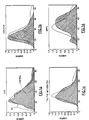
- the present invention is an improvement in the invention described in the aforesaid U.S. Patent 4,863,873. More particularly, in the practice of the invention as described in the U.S. Patent 4,863,873, it has been observed that the biochemical analysis profiles of "normal” or healthy individuals may vary quite widely, while the biochemical profile analysis data of individuals having disorders is far less chaotic. More particularly, it has been observed that the frequency distribution of certain biochemical compounds or ratios of compounds in individuals suffering from a disorder are far less chaotic than "normal" or healthy individuals. This leads to a general protocol for diagnosing, categorizing or differentiating individuals based on comparisons of biochemical analytical data of small molecule inventory against data bases of known or previously diagnosed cases.
- the process of the present invention may advantageously be employed in the differentiation of neurological degenerative dementing or affective disorders such as Alzheimer's disease, Huntington's disease, Parkinson's disease, schizophrenia, Progressive Supernuclear Palsy, amyotrophic lateral sclerosis and senile dementias from each other and neurologically normal controls.
- the process of the present invention also is applicable to classification of tumors, carcinomas, cardiovascular abnormalities and other disorders.
- the process of the present invention advantageously may be utilized to select therapy based on categories of known successful vs. unsuccessful outcomes.
- Sensor potentials ranged from T 1 -600mv to T 16 +900mv in 100mv increments. All samples were from 7th or 8th mL aliquots of rostral caudal gradients. Pools were created for each category utilizing small subaliquots of the samples, and pools of all samples were created for analytical quality control and evaluation of unknowns. Samples were run under a variant of a standard reverse phase gradient procedure in the repetitive sequence Control Standard, Pool, 7 Samples, Control Standard, Pool, ... as set forth in Table 1:
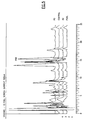
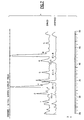
- Oracle compatible record showing retention times, digitized characteristic responses across channels, and set of control standard. Abbreviations are described in Table 6.
- the analysis records were linked by a unique identifier to clinical data of clinical diagnosis, diagnostic criteria, age, pharmaceutical history, sex and race. Pools analyzed as samples against standards for known values were utilized to assess the precision of known compound values in the data base. Standards analyzed against sequential standards were used as a measure of instrumental performance and pools analyzed against sequential pools were utilized as a measure of the precision of unknown peaks.
- Control standards analyzed against sequential control standards yielded precision values ranging from ⁇ 1%- ⁇ 4% CV with no outlying values. Pools analyzed as samples gave precision values ranging from ⁇ 2- ⁇ 7% CV for compounds present at the 0.5 ng/mL level or greater and typically ⁇ 25-30% for compounds present at 2X the detection limit of 0.02-0.03 ng/mL (e.g. 5HT, EPI). Pools analyzed against sequential pools for unknowns gave values of ⁇ 3- ⁇ 15% coefficient of variation. Typically, the coefficient of variation of the pools was 5-25 fold less than the coefficient of variation of analytes in a group of samples. Essentially, the contribution of assay variability to the results is minimal.
- the data base upon completion, contained 280 samples by 57 analytes (17,000 records). Of these, 163 were null either because no peaks were detected at the sensitivity limits of the assay, or because a signal detected did not meet the qualitative criteria for purity.
- Linear regression analysis and stepwise regression analysis were used in a preliminary evaluation of the data. Both raw and mean corrected data was evaluated.
- AD group is separated from mother groups with a high degree of probability, there is too high a degree of overlap for a simple linear regression algorithm to accurately categorize an individual sample.
- Cluster analysis procedures using nearest neighbor and furthest neighbor approaches were applied to the data base. With both these approaches, the AD group tended to cluster, but controls were scattered relatively evenly, both outside and inside the AD region. Thus, the cluster analysis approach is not suitable as a categorization tool for this type of data.
- the P value is 0.5 or a 50/50 chance that the unknown sample is A and not B.
- a positive answer compresses the expression to a 1 and a negative answer to 0.
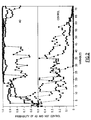
- the table shows the arbitrary sequency in which 71 variables were applied to the initial scoring of AD vs. C (See Figure 2).
- the table also contains the names of the known compounds assayed and the probable moities in the unknown peaks inferred from the chromatographic/electrochemical data and in vitro studies. Pathway ratios one to twelve are calculated as molar ratios.
- AD data base is in effect contaminated by five cases that clearly do not match the overall AD profile and are probably not AD.
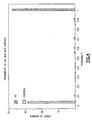
- the control and AD groups are uniquely separated as shown in Fig. 4.
- the five samples that were removed from the AD scoring data group distribute in an equivocal region from 0.1 to 0.9.
- the distribution of scores of all others was scattered from 0.001 to .8 including the 5 AD samples which previously scored in this region vs. controls.
- Scoring AD and not PD without PO5 separated 58 PD samples with scores of less than 0.02 and two with scores of 0.14 and 0.18. 55 AD samples scored above 0.98 with six in the region between 0.25 and 0.76, including the 5 cases which initially scored as controls. Including PO5 in the scoring, all PD samples scored below 0.001. 57 of the AD samples scored above 0.98 and 4 of the initial 5 that matched the control group scored near the PD samples from 0.11 to 0.32.
- Alzheimer's Disease a number of studies have shown that the structures of the limbic system, including entorhinal cortex, hippocampal formation, basal forebrain and the amygdala are the most severely affected areas of the brain. Since the amygdala, entorhinal cortex and uncal hippocampus are strongly related to olfactory input (Pearson et al, 1985) 1 suggested that the olfactory pathways may be the initial site of pathology in the disease. In fact some authors have suggested that inhaled molecules, such as aluminosilicates, could contribute to the etiology of the disease (Roberts, 1987). 2
- the olfactory nerve cells in the olfactory epithelium project through the cribiform plate to the olfactory bulb (Kosel et al, 1981) 3 Primary olfactory fibers synapse in olfactory glomeruli with descending dendrites of mitral and tufted cells; which are the primary output neurons of the bulb. Axons of mitral and tufted cells enter the olfactory tract and provide input to the anterior olfactory nucleus, as well as to the central projections of the olfactory system. The anterior olfactory nucleus, located in the center of the bulb, gives rise to a recurrent collateral to the bulb and to a crossed projection to the anterior commissure.
- the olfactory tract passes through the anterior perforated substance and projects to prepiriform cortex, corticomedial nuclei of the amygdala, entorhinal and perirhinal cortices, inferior surface of the frontal lobe, insula, temporal pole and basal forebrain (Haberty et al, 1977). 4
- Alzheimer's Disease Several lines of evidence have shown that the olfactory system is affected in Alzheimer's Disease. Several groups have shown that Alzheimer's Disease patients show deficits in olfactory recognition (Doty et al, 1987). 5 A study which examined patients with very mild Alzheimer's Disease showed impairment on a task of identification of odors, however olfactory thresholds were normal (Koss et al, 1988). 6 Pathologic studies have recently documented changes in the primary olfactory receptor neurons in Alzheimer's Disease. Talamo et al, 1976 7 reported nasal epithelium from Alzheimer's Disease patients showed increased immunoreactivity for phosphorylated neurofilaments, as well as Tau and Alz-50 positive neurites.
- the olfactory epithelial neurons and olfactory bulb have been shown to contain very high levels of carnosin (B-alanyl-L-histidine), and several studies have shown that carnosine is released in the olfactory bulb in response to peripheral inputs (Macrides et al, 1983). 10
- the external tufted cells in the olfactory bulb contain dopamine, substance P or both. The deeper tufted cells may use excitatory amino acids.
- Periglomerular cells contain GABA, enkephalin or dopamine.
- the olfactory bulb receives a very strong centrifugal projection including enkephalin, vasoactive intestinal polypeptide, LHRH, somatostatin and substance P fibers.
- a cholinergic projection originates mainly in the ventral nucleus of the diagonal band.
- Serotonergic projections originate from the dorsal raphe nuclei, while there is a noradrenergic projection from the locus ceruleus.
- the olfactory bulbs therefore receive a rich and variegated neurochemical input, including projections from the cholinergic, noradrenergic and serotonergic nuclei which are known to be affected in Alzheimer's Disease (Macrides et al, 1983). 11
- Samples typically weigh approximately 100 mg.
- TRP tryptophan
- KYN kynurenine
- 5HIAA/5HT increased, consistent with reduced concentrations of 5HT in swabs obtained lower in the nose.
- a relatively aggressive scrubbing the swab yields a pattern with higher concentrations than a more gentle scrub, but without significant changes in overall pattern.
- Swabs were extracted by cutting the tip and placing it in 300 ⁇ l of 0.1 M HClO 4 , they ere vortexed for 1 min. centrifuged and then reextracted in another 300 1 of 0.1 M HClO 4 . Further sequential extractions did not result in any improvement in recoveries. Following centrifugation the pellets are combined, and can be extracted with 40:60 acetonitrilehexane for analysis of ubiquinones and larger peptides.
- nasal secretions may advantageously be employed as samples for neurochemical analysis using electrochemical detection techniques. Similar results were found using platelets.
- the invention advantageously may be employed for diagnosing a disease condition at an early stage, i.e. before observable physical manifestations.
- a disease condition at an early stage, i.e. before observable physical manifestations.
- the exact etiology is unknown.
- genetic factors play a role (St. George-Hyslop et al, 1990). 12
- the means by which a genetic defect contributes to the pathologic features of the illness is unclear.
- a major feature of the pathology is the accumulation of the ⁇ -amyloid protein in senile plaques, blood vessels, skin and other peripheral tissues (Joachim et al., 1988). 13
- Alzheimer's Disease By correlating changes in neurochemical markers with changes in accumulation of the ⁇ -amyloide protein as the Alzheimer's Disease progresses, it is possible to provide an early diagnosis for Alzheimer's Disease. Also, identification of neurochemical markers for Alzheimer's Disease may provide a basis for prevention and/or treatment, i.e. by identifying precursors, progression of the disease may be slowed, stopped or even reversed.
- the invention has been described for use in diagnosing Alzheimer's Disease. It will be understood, however, that the invention advantageously may be used to diagnose and characterize other neurological, degenerative or defective disorders such as Huntington's Disease, Parkinson's Disease, schizophrenia, progressive supernuclear palsy, amyotrophic lateral sclerosis and senile dementias.
- the invention also advantageously may be used to classify and diagnose tumors, carcinomas, cardiovascular abnormalities and other disorders, or for selection of therapy based on categories of known successful vs. unsuccessful outcomes. Moreover, both treatment protocols and new pharmaceuticals may be evaluated.
Landscapes
- Life Sciences & Earth Sciences (AREA)
- Health & Medical Sciences (AREA)
- Engineering & Computer Science (AREA)
- Chemical & Material Sciences (AREA)
- Molecular Biology (AREA)
- Hematology (AREA)
- Physics & Mathematics (AREA)
- Urology & Nephrology (AREA)
- Immunology (AREA)
- Biomedical Technology (AREA)
- Medicinal Chemistry (AREA)
- Biochemistry (AREA)
- Pathology (AREA)
- General Physics & Mathematics (AREA)
- General Health & Medical Sciences (AREA)
- Analytical Chemistry (AREA)
- Food Science & Technology (AREA)
- Bioinformatics & Computational Biology (AREA)
- Bioinformatics & Cheminformatics (AREA)
- Biophysics (AREA)
- Cell Biology (AREA)
- Microbiology (AREA)
- Proteomics, Peptides & Aminoacids (AREA)
- Biotechnology (AREA)
- Investigating Or Analysing Biological Materials (AREA)
Applications Claiming Priority (5)
| Application Number | Priority Date | Filing Date | Title |
|---|---|---|---|
| US64354191A | 1991-01-18 | 1991-01-18 | |
| US643541 | 1991-01-18 | ||
| US64967691A | 1991-02-01 | 1991-02-01 | |
| US649676 | 1991-02-01 | ||
| PCT/US1992/000375 WO1992013273A1 (en) | 1991-01-18 | 1992-01-16 | Method of diagnosing or categorizing disorders from biochemical profiles |
Publications (2)
| Publication Number | Publication Date |
|---|---|
| EP0567564A1 EP0567564A1 (en) | 1993-11-03 |
| EP0567564B1 true EP0567564B1 (en) | 1996-10-16 |
Family
ID=27094289
Family Applications (1)
| Application Number | Title | Priority Date | Filing Date |
|---|---|---|---|
| EP92904426A Expired - Lifetime EP0567564B1 (en) | 1991-01-18 | 1992-01-16 | Method for diagnosing disorders from biochemical profiles |
Country Status (4)
| Country | Link |
|---|---|
| EP (1) | EP0567564B1 (enExample) |
| JP (1) | JP3221610B2 (enExample) |
| DE (1) | DE69214628T2 (enExample) |
| WO (1) | WO1992013273A1 (enExample) |
Families Citing this family (23)
| Publication number | Priority date | Publication date | Assignee | Title |
|---|---|---|---|---|
| US5632276A (en) * | 1995-01-27 | 1997-05-27 | Eidelberg; David | Markers for use in screening patients for nervous system dysfunction and a method and apparatus for using same |
| US5792062A (en) * | 1996-05-14 | 1998-08-11 | Massachusetts Institute Of Technology | Method and apparatus for detecting nonlinearity in an electrocardiographic signal |
| WO1998040748A1 (en) * | 1997-03-14 | 1998-09-17 | Neuromark | Diagnosing neurologic disorders |
| DE19857349A1 (de) * | 1998-12-11 | 2000-06-15 | Wolfgang Schnizer | Hautpflege-System |
| EP2330219A3 (en) | 2000-04-14 | 2011-11-23 | Metabolon, Inc. | Method for drug discovery, disease treatment and diagnosis using metabolomics |
| US7329489B2 (en) | 2000-04-14 | 2008-02-12 | Matabolon, Inc. | Methods for drug discovery, disease treatment, and diagnosis using metabolomics |
| GB0012123D0 (en) * | 2000-05-20 | 2000-07-12 | Univ Dundee | Alzheimer's disease assay |
| JP4745491B2 (ja) * | 2000-10-11 | 2011-08-10 | 株式会社明治 | インドール長鎖アルコール及びこれを含有する医薬 |
| EP1570779A4 (en) | 2002-12-09 | 2008-03-12 | Ajinomoto Kk | PROCESSOR FOR INFORMATION ON THE CONDITION OF AN ORGANISM, METHOD FOR PROCESSING INFORMATION ON THE CONDITION OF AN ORGANISM, SYSTEM FOR MANAGING INFORMATION ON THE CONDITION OF AN ORGANISM, PROGRAM AND RECORDING MEDIUM |
| CN100498326C (zh) * | 2003-03-14 | 2009-06-10 | 日本电气株式会社 | 诊断支持系统 |
| WO2008016101A1 (en) | 2006-08-04 | 2008-02-07 | Ajinomoto Co., Inc. | Method for evaluation of stress, stress evaluation apparatus, stress evaluation method, stress evaluation system, stress evaluation program, and recording medium |
| US8849577B2 (en) | 2006-09-15 | 2014-09-30 | Metabolon, Inc. | Methods of identifying biochemical pathways |
| WO2013111578A1 (ja) * | 2012-01-27 | 2013-08-01 | パナソニック株式会社 | アルツハイマー病の診断方法、及び診断システム |
| EP3129909B1 (en) | 2014-04-08 | 2020-09-16 | Metabolon, Inc. | Small molecule biochemical profiling of individual subjects for disease diagnosis and health assessment |
| CN108369612A (zh) | 2015-11-04 | 2018-08-03 | 梅塔博隆股份有限公司 | 自动化样品质量评估 |
| CN106353428B (zh) * | 2016-09-19 | 2020-08-25 | 山西好医生药业有限公司 | 氨酚曲马多胶囊质量标准 |
| JP6236185B1 (ja) * | 2016-09-27 | 2017-11-22 | 丸善製薬株式会社 | 脳の機能改善剤および脳の機能改善用飲食品 |
| US11527306B2 (en) | 2017-10-10 | 2022-12-13 | Metabolon, Inc. | Streamlined method for analytical validation of biochemicals detected using an untargeted mass-spectrometry platform |
| US20190310269A1 (en) | 2018-04-04 | 2019-10-10 | Human Longevity, Inc. | Systems and methods for measuring obesity using metabolome analysis |
| LU100823B1 (en) * | 2018-06-06 | 2019-12-06 | Alzohis | Method of performing differential diagnosis of neurodegenerative diseases in a subject |
| US20210293831A1 (en) * | 2018-07-20 | 2021-09-23 | Alzohis | Method of Performing Differential Diagnosis of Neurodegenerative Diseases in a Subject |
| LU101191B1 (en) | 2019-04-25 | 2020-10-26 | Sas Alzohis | Catecholamine concentrations in a blood sample and arterial hypertension status in a subject for a differential diagnosis of neurodegenerative diseases including alzheimer's disease |
| LU100877B1 (en) * | 2018-07-20 | 2020-01-20 | Alzohis | Method of performing differential diagnosis of neurogenerative diseases in a subject |
Family Cites Families (2)
| Publication number | Priority date | Publication date | Assignee | Title |
|---|---|---|---|---|
| US4511659A (en) * | 1983-03-04 | 1985-04-16 | Esa, Inc. | Liquid chromatograph with electrochemical detector and method |
| ATE85707T1 (de) * | 1984-11-13 | 1993-02-15 | Esa Inc | Entwicklungsverfahren fuer arzneimittel zur behandlung von stoerungen. |
-
1992
- 1992-01-16 EP EP92904426A patent/EP0567564B1/en not_active Expired - Lifetime
- 1992-01-16 WO PCT/US1992/000375 patent/WO1992013273A1/en not_active Ceased
- 1992-01-16 DE DE69214628T patent/DE69214628T2/de not_active Expired - Fee Related
- 1992-01-16 JP JP50458592A patent/JP3221610B2/ja not_active Expired - Fee Related
Also Published As
| Publication number | Publication date |
|---|---|
| DE69214628T2 (de) | 1997-05-22 |
| EP0567564A1 (en) | 1993-11-03 |
| DE69214628D1 (de) | 1996-11-21 |
| JPH06504623A (ja) | 1994-05-26 |
| JP3221610B2 (ja) | 2001-10-22 |
| WO1992013273A1 (en) | 1992-08-06 |
Similar Documents
| Publication | Publication Date | Title |
|---|---|---|
| US6194217B1 (en) | Method of diagnosing or categorizing disorders from biochemical profiles | |
| WO1992013273A1 (en) | Method of diagnosing or categorizing disorders from biochemical profiles | |
| US6210970B1 (en) | Method of diagnosing or categorizing disorders from biochemical profiles | |
| US8916388B2 (en) | In vitro multiparameter determination method for the diagnosis and early diagnosis of neurodegenerative disorders | |
| EP2657706B1 (en) | Biomarker for cognitive dysfunction diseases, and method for detection of cognitive dysfunction diseases using the biomarker | |
| Sokolowska et al. | The potential of biomarkers in psychiatry: focus on proteomics | |
| WO2010005387A1 (en) | New method and biomarkers for the diagnosis of multiple sclerosis | |
| EP3088899A1 (en) | Biomarkers for psychiatric diseases including cognitive impairment and methods for detecting psychiatric diseases including cognitive impairment using the biomarkers | |
| US20090011452A1 (en) | Method of Prognosis of Mental Diseases, E.G. Autism and Cerebral Palsy | |
| WO2009026153A1 (en) | Biomarkers for alzheimer's disease and methods using the same | |
| US20090263822A1 (en) | In Vitro Procedure for Diagnosis and Early Diagnosis of Neurodegenerative Diseases | |
| EP2451466B1 (en) | Apolipoprotein ciii in pre- and type 2 diabetes | |
| WO2023000688A1 (zh) | 一种阿尔茨海默病的外周血tcr标志物及其检测试剂盒和应用 | |
| Agresta et al. | Proteomics as an innovative tool to investigate frontotemporal disorders | |
| CN116698761A (zh) | 用于药物性肝损伤的生物标志物、试剂盒、用途及方法 | |
| EP2451465B1 (en) | Phenotypic ratio of serum amyloid in pre- and type 2 diabetes | |
| EP3803410B1 (en) | Method of performing differential diagnosis of neurodegenerative diseases in a subject | |
| Joel | Fluid biomarkers for frontotemporal lobar degeneration and related diseases—discovery and clinical validation | |
| CN115993413B (zh) | 一种神经认知障碍诊断的试剂在制备神经认知障碍诊断或辅助诊断产品中的应用 | |
| CN122109371A (zh) | 甘氨鹅脱氧胆酸7-硫酸在制备糖尿病认知功能障碍的检测产品中的应用 | |
| Miny et al. | Neurons as biosensors for discriminating neurological disorders in a brain-on-chip platform: Application to Alzheimer’s Disease using patient CSF | |
| EP1780287A1 (de) | In vitro Verfahren zur Diagnose von neurodegenerativen Erkrankungen | |
| KR20230156688A (ko) | 자폐 스펙트럼 장애 진단 | |
| CN120539420A (zh) | 基于特异标记物的ich预后预测和/或诊断方法及其应用 | |
| CN119916026A (zh) | 尿液蛋白质组在诊断精神分裂症患者中的用途 |
Legal Events
| Date | Code | Title | Description |
|---|---|---|---|
| PUAI | Public reference made under article 153(3) epc to a published international application that has entered the european phase |
Free format text: ORIGINAL CODE: 0009012 |
|
| 17P | Request for examination filed |
Effective date: 19930712 |
|
| AK | Designated contracting states |
Kind code of ref document: A1 Designated state(s): DE FR GB IT |
|
| 17Q | First examination report despatched |
Effective date: 19950717 |
|
| GRAG | Despatch of communication of intention to grant |
Free format text: ORIGINAL CODE: EPIDOS AGRA |
|
| GRAH | Despatch of communication of intention to grant a patent |
Free format text: ORIGINAL CODE: EPIDOS IGRA |
|
| GRAH | Despatch of communication of intention to grant a patent |
Free format text: ORIGINAL CODE: EPIDOS IGRA |
|
| GRAA | (expected) grant |
Free format text: ORIGINAL CODE: 0009210 |
|
| AK | Designated contracting states |
Kind code of ref document: B1 Designated state(s): DE FR GB IT |
|
| REF | Corresponds to: |
Ref document number: 69214628 Country of ref document: DE Date of ref document: 19961121 |
|
| ITF | It: translation for a ep patent filed | ||
| ET | Fr: translation filed | ||
| PLBE | No opposition filed within time limit |
Free format text: ORIGINAL CODE: 0009261 |
|
| STAA | Information on the status of an ep patent application or granted ep patent |
Free format text: STATUS: NO OPPOSITION FILED WITHIN TIME LIMIT |
|
| 26N | No opposition filed | ||
| REG | Reference to a national code |
Ref country code: GB Ref legal event code: IF02 |
|
| PG25 | Lapsed in a contracting state [announced via postgrant information from national office to epo] |
Ref country code: IT Free format text: LAPSE BECAUSE OF NON-PAYMENT OF DUE FEES Effective date: 20050116 |
|
| REG | Reference to a national code |
Ref country code: GB Ref legal event code: 732E |
|
| REG | Reference to a national code |
Ref country code: FR Ref legal event code: TP |
|
| PGFP | Annual fee paid to national office [announced via postgrant information from national office to epo] |
Ref country code: GB Payment date: 20080129 Year of fee payment: 17 |
|
| PGFP | Annual fee paid to national office [announced via postgrant information from national office to epo] |
Ref country code: FR Payment date: 20080117 Year of fee payment: 17 Ref country code: DE Payment date: 20080229 Year of fee payment: 17 |
|
| GBPC | Gb: european patent ceased through non-payment of renewal fee |
Effective date: 20090116 |
|
| PG25 | Lapsed in a contracting state [announced via postgrant information from national office to epo] |
Ref country code: DE Free format text: LAPSE BECAUSE OF NON-PAYMENT OF DUE FEES Effective date: 20090801 |
|
| REG | Reference to a national code |
Ref country code: FR Ref legal event code: ST Effective date: 20091030 |
|
| PG25 | Lapsed in a contracting state [announced via postgrant information from national office to epo] |
Ref country code: GB Free format text: LAPSE BECAUSE OF NON-PAYMENT OF DUE FEES Effective date: 20090116 |
|
| PG25 | Lapsed in a contracting state [announced via postgrant information from national office to epo] |
Ref country code: FR Free format text: LAPSE BECAUSE OF NON-PAYMENT OF DUE FEES Effective date: 20090202 |