EP0536293B1 - Increased starch content in plants - Google Patents
Increased starch content in plants Download PDFInfo
- Publication number
- EP0536293B1 EP0536293B1 EP91913150A EP91913150A EP0536293B1 EP 0536293 B1 EP0536293 B1 EP 0536293B1 EP 91913150 A EP91913150 A EP 91913150A EP 91913150 A EP91913150 A EP 91913150A EP 0536293 B1 EP0536293 B1 EP 0536293B1
- Authority
- EP
- European Patent Office
- Prior art keywords
- plant
- sequence
- adpglucose pyrophosphorylase
- plants
- gene
- Prior art date
- Legal status (The legal status is an assumption and is not a legal conclusion. Google has not performed a legal analysis and makes no representation as to the accuracy of the status listed.)
- Expired - Lifetime
Links
Images


Classifications
-
- C—CHEMISTRY; METALLURGY
- C12—BIOCHEMISTRY; BEER; SPIRITS; WINE; VINEGAR; MICROBIOLOGY; ENZYMOLOGY; MUTATION OR GENETIC ENGINEERING
- C12N—MICROORGANISMS OR ENZYMES; COMPOSITIONS THEREOF; PROPAGATING, PRESERVING, OR MAINTAINING MICROORGANISMS; MUTATION OR GENETIC ENGINEERING; CULTURE MEDIA
- C12N9/00—Enzymes; Proenzymes; Compositions thereof; Processes for preparing, activating, inhibiting, separating or purifying enzymes
- C12N9/10—Transferases (2.)
- C12N9/12—Transferases (2.) transferring phosphorus containing groups, e.g. kinases (2.7)
- C12N9/1241—Nucleotidyltransferases (2.7.7)
-
- C—CHEMISTRY; METALLURGY
- C12—BIOCHEMISTRY; BEER; SPIRITS; WINE; VINEGAR; MICROBIOLOGY; ENZYMOLOGY; MUTATION OR GENETIC ENGINEERING
- C12N—MICROORGANISMS OR ENZYMES; COMPOSITIONS THEREOF; PROPAGATING, PRESERVING, OR MAINTAINING MICROORGANISMS; MUTATION OR GENETIC ENGINEERING; CULTURE MEDIA
- C12N15/00—Mutation or genetic engineering; DNA or RNA concerning genetic engineering, vectors, e.g. plasmids, or their isolation, preparation or purification; Use of hosts therefor
- C12N15/09—Recombinant DNA-technology
- C12N15/63—Introduction of foreign genetic material using vectors; Vectors; Use of hosts therefor; Regulation of expression
- C12N15/79—Vectors or expression systems specially adapted for eukaryotic hosts
- C12N15/82—Vectors or expression systems specially adapted for eukaryotic hosts for plant cells, e.g. plant artificial chromosomes (PACs)
- C12N15/8216—Methods for controlling, regulating or enhancing expression of transgenes in plant cells
- C12N15/8222—Developmentally regulated expression systems, tissue, organ specific, temporal or spatial regulation
- C12N15/823—Reproductive tissue-specific promoters
- C12N15/8235—Fruit-specific
-
- C—CHEMISTRY; METALLURGY
- C12—BIOCHEMISTRY; BEER; SPIRITS; WINE; VINEGAR; MICROBIOLOGY; ENZYMOLOGY; MUTATION OR GENETIC ENGINEERING
- C12N—MICROORGANISMS OR ENZYMES; COMPOSITIONS THEREOF; PROPAGATING, PRESERVING, OR MAINTAINING MICROORGANISMS; MUTATION OR GENETIC ENGINEERING; CULTURE MEDIA
- C12N15/00—Mutation or genetic engineering; DNA or RNA concerning genetic engineering, vectors, e.g. plasmids, or their isolation, preparation or purification; Use of hosts therefor
- C12N15/09—Recombinant DNA-technology
- C12N15/63—Introduction of foreign genetic material using vectors; Vectors; Use of hosts therefor; Regulation of expression
- C12N15/79—Vectors or expression systems specially adapted for eukaryotic hosts
- C12N15/82—Vectors or expression systems specially adapted for eukaryotic hosts for plant cells, e.g. plant artificial chromosomes (PACs)
- C12N15/8241—Phenotypically and genetically modified plants via recombinant DNA technology
- C12N15/8242—Phenotypically and genetically modified plants via recombinant DNA technology with non-agronomic quality (output) traits, e.g. for industrial processing; Value added, non-agronomic traits
- C12N15/8243—Phenotypically and genetically modified plants via recombinant DNA technology with non-agronomic quality (output) traits, e.g. for industrial processing; Value added, non-agronomic traits involving biosynthetic or metabolic pathways, i.e. metabolic engineering, e.g. nicotine, caffeine
- C12N15/8245—Phenotypically and genetically modified plants via recombinant DNA technology with non-agronomic quality (output) traits, e.g. for industrial processing; Value added, non-agronomic traits involving biosynthetic or metabolic pathways, i.e. metabolic engineering, e.g. nicotine, caffeine involving modified carbohydrate or sugar alcohol metabolism, e.g. starch biosynthesis
-
- C—CHEMISTRY; METALLURGY
- C12—BIOCHEMISTRY; BEER; SPIRITS; WINE; VINEGAR; MICROBIOLOGY; ENZYMOLOGY; MUTATION OR GENETIC ENGINEERING
- C12N—MICROORGANISMS OR ENZYMES; COMPOSITIONS THEREOF; PROPAGATING, PRESERVING, OR MAINTAINING MICROORGANISMS; MUTATION OR GENETIC ENGINEERING; CULTURE MEDIA
- C12N15/00—Mutation or genetic engineering; DNA or RNA concerning genetic engineering, vectors, e.g. plasmids, or their isolation, preparation or purification; Use of hosts therefor
- C12N15/09—Recombinant DNA-technology
- C12N15/63—Introduction of foreign genetic material using vectors; Vectors; Use of hosts therefor; Regulation of expression
- C12N15/79—Vectors or expression systems specially adapted for eukaryotic hosts
- C12N15/82—Vectors or expression systems specially adapted for eukaryotic hosts for plant cells, e.g. plant artificial chromosomes (PACs)
- C12N15/8241—Phenotypically and genetically modified plants via recombinant DNA technology
- C12N15/8242—Phenotypically and genetically modified plants via recombinant DNA technology with non-agronomic quality (output) traits, e.g. for industrial processing; Value added, non-agronomic traits
- C12N15/8243—Phenotypically and genetically modified plants via recombinant DNA technology with non-agronomic quality (output) traits, e.g. for industrial processing; Value added, non-agronomic traits involving biosynthetic or metabolic pathways, i.e. metabolic engineering, e.g. nicotine, caffeine
- C12N15/8247—Phenotypically and genetically modified plants via recombinant DNA technology with non-agronomic quality (output) traits, e.g. for industrial processing; Value added, non-agronomic traits involving biosynthetic or metabolic pathways, i.e. metabolic engineering, e.g. nicotine, caffeine involving modified lipid metabolism, e.g. seed oil composition
Definitions
- Starch is a polysaccharide primarily composed of glucose units connected by alpha 1-4 and alpha 1-6 linkages. It is found in plant cells as water-insoluble grains or granules. During photosynthesis, starch is produced and stored in chloroplasts. Starch is also synthesized in roots and storage organs such as tubers and seeds. In these non-photosynthetic tissues, the starch is found in a form of plastids called amyloplasts. As in the chloroplasts, starch is stored in the amyloplasts as starch granules. The size of the granules varies depending on the plant species.
- Starch is actually composed of amylose and amylopectin, two distinct types of glucose polymers.
- Amylose is composed primarily of linear chains of alpha 1-4 linked glucose molecules. On average, amylose has a chain length of about 1000 glucose molecules.
- Amylopectin contains shorter chains linked together with alpha 1-6 linkages. On average, amylopectin has a chain length of about 20-25 glucose molecules.
- ADPglucose or UDPglucose was the substrate for starch synthesis.
- Arabidopsis mutants lacking ADPglucose pyrophosphorylase it is now accepted that plants use ADPglucose as the substrate for starch synthesis.
- ADPglucose is used by starch synthase (EC 2.4.1.21) to form linear chains of starch containing the ⁇ , 1-4 linkage.
- starch synthase EC 2.4.1.21
- branching enzyme(s) EC 2.4.1.18 introduce alpha 1-6 linkages to produce the amylopectin molecule.
- the controlling step in the synthesis of starch in plants has been a topic of dispute. Although synthesis of ADPglucose by ADPglucose pyrophosphorylase has been proposed to be the controlling step in starch biosynthesis, this has not been proved. In fact, European Patent Application publication number 0368506 A2, which concerns ADPglucose pyrophosphorylase, questions the role of the enzyme as the rate limiting step in starch biosynthesis. An argument against ADPglucose pyrophosphorylase being the controlling enzyme can be made from the results with an Arabidopsis mutant (Lin, 1988a,b). This mutant, TL46, was found to contain only about 5% of the ADPglucose pyrophosphorylase activity compared to the wild type plants.
- TL46 plants still produced about 40% of the wild type starch levels. If ADPglucose pyrophosphorylase is the rate limiting enzyme, one would have expected a 95% reduction in enzyme activity to produce more than a 60% reduction in starch accumulation. Similarly, the in vitro measurements on extractable activities suggest this enzyme can only be rate limiting if its in vivo activity is substantially inhibited by the allosteric regulators of the enzyme activity.
- the present invention provides structural DNA constructs which encode an ADPglucose pyrophosphorylase (ADPGPP) enzyme and which are useful in producing enhanced starch content in plants. It is also demonstrated that the ADPGPP enzyme activity in plant cells and tissues is a controlling step in starch biosynthesis.
- ADPGPP ADPglucose pyrophosphorylase
- a method of producing genetically transformed plants which have elevated starch content comprising the steps of:
- a recombinant, double-stranded DNA molecule comprising in sequence:
- bacterial and transformed plant cells that contain, respectively, DNA comprised of the above-mentioned elements (a), (b) and (c).
- differentiated plants are provided that have increased starch content. and wherein said structural DNA sequence for ADP glucosepyrophosphorylase isolated from algae is subject to reduced allosteric control in plants.
- RNA polymerase enzyme messenger RNA
- mRNA messenger RNA
- RNA polymerase enzyme RNA polymerase enzyme
- 3' non-translated region which adds polyadenylate nucleotides to the 3' end of the RNA.
- the promoter region contains a sequence of bases that signals RNA polymerase to associate with the DNA, and to initiate the transcription of mRNA using one of the DNA strands as a template to make a corresponding complimentary strand of RNA.
- promoters which are active in plant cells have been described in the literature. These include the nopaline synthase (NOS) and octopine synthase (OCS) promoters (which are carried on tumor-inducing plasmids of Agrobacterium tumefaciens ), the caulimovirus promoters such as the cauliflower mosaic virus (CaMV) 19S and 35S and the figwort mosaic virus 35S-promoters, the light-inducible promoter from the small subunit of ribulose-1,5-bis-phosphate carboxylase (ssRUBISCO, a very abundant plant polypeptide), and the chlorophyll a/b binding protein gene promoter, etc. All of these promoters have been used to create various types of DNA constructs which have been expressed in plants; see, e.g., PCT publication WO 84/02913 (Rogers et al., Monsanto).
- NOS nopaline synthase
- OCS
- Promoters which are known or are found to cause transcription of RNA in plant cells can be used in the present invention.
- Such promoters may be obtained from a variety of sources such as plants and plant viruses and include, but are not limited to, the enhanced CaMV35S promoter and promoters isolated from plant genes such as ssRUBISCO genes.
- the particular promoter selected should be capable of causing sufficient expression to result in the production of an effective amount of ADPglucose pyrophosphorylase enzyme to cause the desired increase in starch content.
- promoter function should be optimized by selecting a promoter with the desired tissue expression capabilities and approximate promoter strength and selecting a transformant which produces the desired ADPglucose pyrophosphorylase activity in the target tissues. This selection approach from the pool of transformants is routinely employed in expression of heterologous structural genes in plants since there is variation between transformants containing the same heterologous gene due to the site of gene insertion within the plant genome. (Commonly referred to as "position effect").
- the promoters utilized in the double-stranded DNA molecules of the present invention have relatively high expression in tissues where the increased starch content is desired, such as the tuber of the potato plant and the fruit of tomato.
- tissue where the increased starch content is desired such as the tuber of the potato plant and the fruit of tomato.
- a particularly preferred promoter in this regard is the patatin promoter described herein in greater detail in the accompanying examples.
- Expression of the double-stranded DNA molecules of the present invention by a constitutive promoter, expressing the DNA molecule in all or most of the tissues of the plant will be rarely preferred and may, in some instances, be detrimental to plant growth.
- the class I patatin promoter used in this study to express the E. coli ADPGPP, has been shown to be both highly active and tuber-specific (Bevan et al., 1986; Jefferson et al., 1990).
- a number of other genes with tuber-specific or enhanced expression are known, including the potato tuber ADPGPP genes (Muller et al., 1990), sucrose synthase (Salanoubat and Belliard, 1987, 1989), the major tuber proteins including the 22 kd protein complexes and proteinase inhibitors (Hannapel, 1990), and the other class I and II patatins (Rocha-Sosa et al., 1989; Mignery et al., 1988).
- ⁇ -conglycinin also known as the 7S protein
- the promoter for ⁇ -conglycinin could be used to over-express the E. coli, or any other, ADPglucose pyrophosphorylase gene, specifically in seeds, which would lead to an increase is the starch content of the seeds.
- the ⁇ -subunit of ⁇ -conglycinin has been expressed, using its endogenous promoter, in the seeds of transgenic petunia and tobacco, showing that the promoter functions in a seed-specific manner in other plants (Bray, 1987).
- the zeins are a group of storage proteins found in maize endosperm. Genomic clones for zein genes have been isolated (Pedersen, 1982), and the promoters from these clones could also be used to express an ADPglucose pyrophosphorylase gene in the seeds of maize and other plants.
- the starch content of tomato fruit can be increased by expressing an ADPglucose pyrophosphorylase gene behind a fruit specific promoter.
- the promoter from the 2A11 genomic clone (Pear, 1989) or the E8 promoter (Deikman, 1988) would express the ADPglucose pyrophosphorylase in tomato fruits.
- novel fruit specific promoters exhibiting high and specific expression during the development of the tomato fruit have been isolated.
- a differential screening approach utilizing a tomato fruit cDNA library was used to identify suitable cDNA clones that expressed specifically in green fruit. cDNA probes prepared from mRNA extracted from fruit at early and late developing stages, from combined leaf+stem tissue, and from root tissue of the tomato plant were used.
- Genomic Southern analysis indicated a small (1-2) gene copy number.
- the promoters for these cDNA clones were then isolated by screening a tomato genomic clone bank. The expression pattern of these promoters is confirmed by fusion to the ⁇ -glucuronidase (GUS) gene and by following the expression of the GUS enzyme during development in transgenic fruit. Promoters that exhibit expression in most cells of the fruit are then fused to the CTP-glgC16 and other glgC alleles or the ADPGPP genes derived from either algae or plants.
- GUS ⁇ -glucuronidase
- the starch content of root tissue can be increased by expressing an ADPglucose pyrophosphorylase gene behind a root specific promoter.
- the promoter from the acid chitinase gene (Samac et al., 1990) would express the ADPglucose pyrophosphorylase in root tissue. Expression in root tissue could also be accomplished by utilizing the root specific subdomains of the CaMV35S promoter that have been identified. (Benfey et al., 1989).
- the starch content of leaf tissue can be increased by expressing the ADPglucose pyrophosphorylase gene (e.g. glgC gene) using a leaf active promoter such as ssRUBISCO promoter or chlorophyll a/b binding protein gene promoter.
- the RNA produced by a DNA construct of the present invention also contains a 5' non-translated leader sequence.
- This sequence can be derived from the promoter selected to express the gene, and can be specifically modified so as to increase translation of the mRNA.
- the 5' non-translated regions can also be obtained from viral RNAs, from suitable eukaryotic genes, or from a synthetic gene sequence.
- the present invention is not limited to constructs, as presented in the following examples, wherein the non-translated region is derived from the 5' non-translated sequence that accompanies the promoter sequence. Rather, the non-translated leader sequence can be derived from an unrelated promoter or coding sequence as discussed above.
- the DNA constructs of the present invention also contain a structural coding sequence in double-stranded DNA form, which encodes a fusion polypeptide comprising an amino-terminal plastid transit peptide and an ADPglucose pyrophosphorylase enzyme.
- the ADPglucose pyrophosphorylase enzyme utilized in the present invention is subject to reduced allosteric control in plants.
- Such an unregulated ADPglucose pyrophosphorylase enzyme may be selected from known enzymes which exhibit unregulated enzymatic activity or can be produced by mutagenesis of native bacterial or algal ADPglucose pyrophosphorylase enzymes as discussed in greater detail hereinafter.
- ADPGPP ADPglucose pyrophosphorylase
- the E . coli ADPglucose pyrophosphorylase has been well characterized as a tightly regulated enzyme.
- the activator fructose 1,6-bisphosphate has been shown to activate the enzyme by increasing its V max , and by increasing the affinity of the enzyme for its substrates (Preiss, 1966 and Gentner, 1967).
- fructose 1,6-bisphosphate (FBP) also modulates the sensitivity of the enzyme to the inhibitors adenosine-5'-monophosphate (AMP) and inorganic phosphate (P i ) (Gentner, 1968).
- E . coli K12 ADPglucose pyrophosphorylase gene (glg C), along with the genes for glycogen synthase and branching enzyme, were cloned, and the resulting plasmid was named pOP12 (Okita, 1981).
- the glg C gene which was sequenced in 1983, contains 1293 bp (SEQ ID NO:1) and encodes 431 amino acids (SEQ ID NO:2) with a deduced molecular weight of 48,762 is shown in Figure 1 (Baecker, 1983).
- the glg C16 gene was generated by chemically mutagenizing E. coli K12 strain PA 601 with N-methyl-N'-nitrosoguanidine (Cattaneo, 1969 and Creuzet-Sigal, 1972). Glycogen biosynthetic mutants were detected by iodine staining of mutagenized colonies. The glg C16 mutant was found to accumulate up to 48% glycogen during the stationary phase, compared to 20% glycogen in the parent strain.
- the glg C 16 gene from E . coli K-12 618 has been cloned (Leung, 1986). Two clones, with opposite orientation, were obtained. These clones, pEBL1 and pEBL3, contained both the glg C 16 and the glg B (branching enzyme) genes. Both plasmids were transformed into E . coli mutant strains that lacked ADPglucose pyrophosphorylase activity. The E . coli K-12 G6MD3 is missing the glg genes, while the E .
- coli B strain, AC70R1-504 has a defective ADPglucose pyrophosphorylase gene and is derepressed five- to seven-fold for the other glycogen biosynthetic activities. Both plasmids, pEBL1 and pEBL3, produced ADPglucose pyrophosphorylase activity in both mutant strains.
- the cloned ADPglucose pyrophosphorylase was partially purified from E . coli strain AC70R1 transformed with the pEBL3 plasmid. This enzyme was kinetically compared to partially purified ADPglucose pyrophosphorylase from the original mutant strain ( E .
- the mutant strain 618 ADPglucose pyrophosphorylase was more active in the absence of FBP, and was activated only 1.8- to 2-fold with FBP.
- the activation curve for the 618 ADPglucose pyrophosphorylase was hyperbolic with a Hill slope of 1.0, and 50% of maximal stimulation was seen at 15 +/-3.1 ⁇ M.
- the enzyme expressed from the pEBL3 plasmid gave the same FBP kinetic constants as the ADPglucose pyrophosphorylase from mutant strain 618.
- the DNA sequence of the glg C 16 gene is now known (SEQ ID NO:3) (Kumar, 1989).
- SEQ ID NO:3 The DNA sequence of the glg C 16 gene is now known (SEQ ID NO:3) (Kumar, 1989).
- SEQ ID NO:4 the glg C16 deduced amino acid sequence (SEQ ID NO:4) was compared to the nonisogenic E . coli K-12 3000, two amino acid changes are noted. The two changes are Lys 296 to Glu, and Gly 336 to Asp.
- a number of other ADPglucose pyrophosphorylase mutants have been found in E . coli.
- the expression of any of these or other bacterial ADPglucose pyrophosphorylase wild type or mutants could also be used to increase starch production in plants.
- E . coli K12 strain 6047 ( glg C 47) accumulates about the same amount of glycogen during stationary phase as does strain 618 ( glg C 16). Strain 6047, like 618, shows a higher apparent affinity for FBP, and more activity in the absence of FBP. However, the enzyme from strain 6047 is reportedly more sensitive to inhibition by AMP compared to the enzyme from strain 618 (Latil-Damotte, 1977).
- the E . coli B mutant, SG5 has a higher affinity for its allosteric activators and a lower affinity for its allosteric inhibitor, when compared to its parent strain (Govons, 1969; Govons, 1973 and Preiss, 1973). These changes alone make the enzyme more active under physiological conditions, and this causes the bacteria to accumulate two to three times as much glycogen as the parent strain.
- the ADPglucose pyrophosphorylase from the E. coli B mutant strain CL1136-504 also has a higher apparent affinity for activators and a lower apparent affinity for inhibitors (Kappel, 1981 and Preiss, 1973). This mutant will accumulate three- to four-fold more glycogen than the wild type E. coli. Under activated conditions, the purified CL1136-504 enzyme and the wild type (AC70R1) enzyme have comparable specific activities. However, in the absence of any activators, the CL1136-504 enzyme is highly active, unlike the wild type enzyme.
- the glg C gene from Salmonella typhimurium LT2 has also been cloned and sequenced (Leung and Preiss 1987a). The gene encodes 431 amino acids with a deduced molecular weight of 45,580.
- the Salmonella typhimurium LT2 glg C gene and the same gene from E . coli K-12 have 90% identity at the amino acid level and 80% identity at the DNA level.
- the Salmonella typhimurium LT2 ADPglucose pyrophosphorylase is also activated by FBP and is inhibited by AMP (Leung and Preiss 1987b). This substantial conservation in amino acid sequences suggests that introduction of mutations which cause enhancement of ADPGPP activity in E . coli into S. typhimurium ADPGPP gene should have a similar effect on the ADPGPP enzyme of this organism.
- a number of other bacterial ADPglucose pyrophosphorylases have been characterized by their response to activators and inhibitors (for review see: Preiss 1973). Like the Escherichia coli ADPglucose pyrophosphorylase, the ADPglucose pyrophosphorylases from Aerobacter aerogenes, Aerobacter cloacae, Citrobacter freundii, and Escherichia aurescens are all activated by FBP and are inhibited by AMP. The ADPglucose pyrophosphorylase from Aeromonas formicans is activated by fructose 6-phosphate or FBP, and is inhibited by ADP.
- the Serratia marcescens ADPglucose pyrophosphorylase was not activated by any metabolite tested.
- the photosynthetic Rhodospirillum rubrum has an ADPglucose pyrophosphorylase that is activated by pyruvate, and none of the tested compounds, including P i , AMP or ADP, inhibit the enzyme.
- Several algal ADPglucose pyrophosphorylases have been studied and found to have regulation similar to that found for plant ADPglucose pyrophosphorylases. Obviously, the ADPglucose pyrophospho-rylases from many organisms could be used to increase starch biosynthesis and accumulation in plants.
- E . coli and plant ADPGPP enzymes can serve as sources for ADPGPP genes.
- sources including but not limited to cyanobacteria, algae, and other procaryotic and eucaryotic cells can serve as sources for ADPGPP genes.
- isolation of the Synechocystis and the Anabaena ADPGPP genes could be performed using oligonucleotides corresponding to the E . coli ADPGPP activator site, (amino acid residues 25-42 of Figure 1), which is highly conserved across widely divergent species. Oligonucleotides corresponding to this region would facilitate gene isolation when used as probes of genomic libraries.
- the PCR reaction (described in Example 1) could be used to amplify segments of an ADPGPP gene by using 5' primers corresponding to the E . coli activator site, and 3' primers corresponding to E. coli catalytic sites, for example, the E. coli ADPglucose binding site. Products of the PCR reaction could be used as probes of genomic libraries for isolation of the corresponding full length gene.
- UDPglucose was thought to be the primary substrate for starch biosynthesis in plants.
- ADPglucose was found to be a better substrate for starch biosynthesis than UDPglucose (Recondo, 1961). This same report states that ADPglucose pyrophosphorylase activity was found in plant material.
- a spinach leaf ADPglucose pyrophosphorylase was partially purified and was shown to be activated by 3-phosphoglycerate (3-PGA) and inhibited by inorganic phosphate (Ghosh et al., 1966).
- the report by Ghosh et al. suggested that the biosynthesis of leaf starch was regulated by the level of ADPglucose.
- the activator, 3-PGA is the primary product of CO 2 fixation in photosynthesis. During photosynthesis, the levels of 3-PGA would increase, causing activation of ADPglucose pyrophosphorylase. At the same time, the levels of P i would decrease because of photophosphorylation, decreasing the inhibition of ADPglucose pyrophosphorylase.
- the ADPglucose pyrophosphorylase from spinach leaves was later purified to homogeneity and shown to contain subunits of 51 and 54 kDa (Morell, 1987). Based on antibodies raised against the two subunits, the 51 kDa protein has homology with both the maize endosperm and potato tuber ADPglucose pyrophosphorylases, but not with the spinach leaf 54 kDa protein.
- the sequence of a rice endosperm ADPglucose pyrophosphorylase subunit cDNA clone has been reported (Anderson, 1989a). The clone encoded a protein of 483 amino acids. A comparison of the rice endosperm ADPglucose pyrophosphorylase and the E . coli ADPglucose pyrophosphorylase protein sequences shows about 30% identity. Also in 1989, an almost full-length cDNA clone for the wheat endosperm ADPglucose pyrophosphorylase was sequenced (Olive, 1989). The wheat endosperm ADPglucose pyrophosphorylase clone has about 24% identity with the E . coli ADPglucose pyrophosphorylase protein sequence, while the wheat and the rice clones have 40% identity at the protein level.
- the maize endosperm ADPglucose pyrophosphorylase has been purified and shown to have catalytic and regulatory properties similar to those of other plant ADPglucose pyrophosphorylases (Plaxton, 1987).
- the native molecular weight of the maize endosperm enzyme is 230,000, and it is composed of four subunits of similar size.
- the native molecular weight of the potato tuber ADPglucose pyrophosphorylase is reported to be 200,000, with a subunit size of 50,000 (Sowokinos, 1982). Activity of the tuber ADPglucose pyrophosphorylase is almost completely dependent on 3-PGA, and as with other plant ADPglucose pyrophosphorylases, is inhibited by P i .
- the potato tuber and leaf ADPglucose pyrophosphorylases have been demonstrated to be similar in physical, catalytic, and allosteric properties (Anderson, 1989b).
- ADPglucose pyrophosphorylase genes which are subject to reduced allosteric regulation (“deregulated”) and more preferably not subject to significant levels of allosteric regulation (“unregulated”) while maintaining adequate catalytic activity.
- deregulated reduced allosteric regulation
- unregulated significant levels of allosteric regulation
- the structural coding sequence for a bacterial or plant ADPglucose pyrophosphorylase enzyme can be mutagenized in E . coli or another suitable host and screened for increased glycogen production as described for the glg C 16 gene of E . coli.
- ADPglucose pyrophosphorylase enzyme which is only subject to modulators (activators/inhibitors) which are present in the selected plant at levels which do not significantly inhibit the catalytic activity will not require enzyme (gene) modification.
- modulators activators/inhibitors
- These "unregulated” or “deregulated” ADPglucose pyrophosphorylase genes can then be inserted into plants as described herein to obtain transgenic plants having increased starch content.
- any ADPglucose pyrophosphorylase gene can be cloned into the E . coli B strain AC70R1-504 (Leung, 1986). This strain has a defective ADPglucose pyrophosphorylase gene, and is derepressed five- to seven-fold for the other glycogen biosynthetic enzymes.
- the ADPglucose pyrophosphorylase gene/ cDNA's can be put on a plasmid behind the E. coli glg C promoter or any other bacterial promoter. This construct can then be subjected to either site-directed or random mutagenesis. After mutagenesis, the cells would be plated on rich medium with 1% glucose.
- the plates After the colonies have developed, the plates would be flooded with iodine solution (0.2w/v% I 2 , 0.4w/v% KI in H 2 O, Creuzet-Sigal, 1972). By comparison with an identical plate containing non-mutated E. coli, colonies that are producing more glycogen can be detected by their darker staining.
- any putative ADPglucose pyrophosphorylase mutant from the first round screening will have to have the ADPglucose pyrophosphorylase gene recloned into non-mutated vector and the resulting plasmid will be screened in the same manner.
- the mutants that make it though both rounds of screening will then have their ADPglucose pyrophosphorylase activities assayed with and without the activators and inhibitors.
- the new mutant can be characterized.
- ADPglucose pyrophosphorylase gene By altering an ADPglucose pyrophosphorylase gene to produce an enzyme analagous to the proteolytically cleaved maize endosperm ADPglucose pyrophosphorylase, decreased allosteric regulation will be achieved.
- the cells are spun down in a centrifuge and resuspended in about 2 ml of extraction buffer (0.05 M glycylglycine pH 7.0, 5.0 mM DTE, 1.0 mM EDTA) per gram of cell paste.
- extraction buffer 0.05 M glycylglycine pH 7.0, 5.0 mM DTE, 1.0 mM EDTA
- the cells are lysed by passing twice through a French Press.
- the cell extracts are spun in a microcentrifuge for 5 minutes, and the supernatants are desalted by passing through a G-50 spin column.
- the enzyme assay for the synthesis of ADPglucose is a modification of a published procedure (Haugen, 1976).
- Each 100 ⁇ l assay contains: 10 ⁇ mole Hepes pH 7.7, 50 ⁇ g BSA, 0.05 ⁇ mole of [ 14 C]glucose-1-phosphate, 0.15 ⁇ mole ATP, 0.5 ⁇ mole MgCl 2 , 0.1 ⁇ g of crystalline yeast inorganic pyrophosphatase, 1 mM ammonium molybdate, enzyme, activators or inhibitors as desired, and water.
- the assay is incubated at 37°C for 10 minutes, and is stopped by boiling for 60 seconds.
- the assay is spun down in a microcentrifuge, and 40 ⁇ l of the supernatant is injected onto a Synchrom Synchropak AX-100 anion exchange HPLC column.
- the sample is eluted with 65 mM KPi pH 5.5. Unreacted [ 14 C]glucose-1-phosphate elutes around 7-8 minutes, and [ 14 C]ADPglucose elutes at approximately 13 minutes. Enzyme activity is determined by the amount of radioactivity found in the ADPglucose peak.
- the plant ADPGPP enzyme activity is tightly regulated, by both positive (3-phosphoglycerate; 3-PGA) and negative effectors (inorganic phosphate; P i ) (Ghosh and Preiss, 1966; Copeland and Preiss 1981; Sowokinos and Preiss 1982; Morell et al., 1987; Plaxton and Preiss, 1987; Preiss, 1988;) and the ratio of 3PGA:P i plays a prominent role in regulating starch biosynthesis by modulating the ADPGPP activity (Santarius and Heber, 1965; Heldt et al., 1977; Kaiser and Bassham, 1979).
- the plant ADPGPP enzymes are heterotetramers of two large/"shrunken” and two small/"Brittle” subunits (Morell et al., 1987; Lin et al., 1988a, 1988b; Krishnan et al., 1986; Okita et al., 1990) and there is strong evidence to suggest that the heterotetramer is the most active form of ADPGPP.
- Unregulated enzyme variants of the plant ADPGPP are identified and characterized in a manner similar to that which resulted in the isolation of the E . coli glgC16 and related mutants.
- a number of plant ADPGPP cDNA's, or portions of such cDNA's, for both the large and small subunits, have been cloned from both monocots and dicots (Anderson et al., 1989a; Olive et al., 1989; Muller et al., 1990; Bhave et al., 1990; du Jardin and Berhin, 1991)
- the proteins encoded by the plant cDNA's, as well as those described from bacteria, show a high degree of conservation (Bhave et al., 1990).
- the nucleotide sequence presented here differs from the gene originally isolated in the following ways: a Bgl II+ Nco I site was introduced at the ATG codon to facilitate the cloning of the gene into E . coli and plant expression vectors by site directed mutagenesis utilizing the oligonucleotide primer sequence GTTGATAACAAGATCTGTTAACCATGGCGGCTTCC (SEQ ID NO:11). A Sac I site was introduced at the stop codon utilizing the oligonucleotide primer sequence CCAGTTAAAACGGAGCTCATCAGATGATGATTC (SEQ ID NO:12). The Sac I site serves as a 3' cloning site.
- the nucleotide sequence (SEQ ID NO:9) and the amino acid sequence (SEQ ID NO:10) of the almost complete large subunit gene is presented in Figure 6.
- An initiating methionine codon has been placed at the mature N-terminus by site-directed mutagenesis utilizing the oligonucleotide primer sequence AAGATCAAACCTGCCATGGCTTACTCTGTGATCACTACTG (SEQ ID NO:15).
- the purpose of the initiating methionine is to facilitate the expression of this large subunit gene in E . coli .
- a Hind III site is located 103 bp after the stop codon and serves as the 3' cloning site.
- the complete large ADPGPP gene is isolated by the 5' RACE procedure (Rapid Amplification of cDNA Ends; Frohman, 1990; Frohman et al., 1988; Loh et al., 1989).
- the oligonucleotide primers for this procedure are as follows:
- the weakly regulated enzyme mutants of ADPGPP are identified by initially scoring colonies from a mutagenized E . coli culture that show elevated glycogen synthesis, by iodine staining of 24-48 hour colonies on Luria-Agar plates containing glucose at 1%, and then by characterizing the responses of the ADPGPP enzymes from these isolates to the positive and negative effectors of this activity (Cattaneo et al., 1969; Preiss et al., 1971). A similar approach is applied to the isolation of such variants of the plant ADPGPP enzymes.
- mutagenesis of each gene is carried out separately, by any of a variety of known means, both chemical or physical (Miller, 1972) on cultures containing the gene or on purified DNA.
- Another approach is to use a PCR procedure (Ehrlich, 1989) on the complete gene in the presence of inhibiting Mn ++ ions, a condition that leads to a high rate of misincorporation of nucleotides.
- a PCR procedure may also be used with primers adjacent to just a specific region of the gene, and this mutagenized fragment then recloned into the non-mutagenized gene segments.
- a random synthetic oligonucleotide procedure may also be used to generate a highly mutagenized short region of the gene by mixing of nucleotides in the synthesis reaction to result in misincorporation at all positions in this region. This small region is flanked by restriction sites that are used to reinsert this region into the remainder of the gene.
- the resultant cultures or transformants are screened by the standard iodine method for those exhibiting glycogen levels higher than controls. Preferably this screening is carried out in an E. coli strain deficient only in ADPGPP activity (such as E .
- coli LC618' which is a spontaneous mutant of LC618 (Cattaneo et al., 1969; Creuzet-Sigal et al., 1972) that is phenotypically glycogen-minus and that is complemented to glycogen-plus by glgC.
- the E . coli strain should retain those other activities required for glycogen production. Both genes are expressed together in the same E. coli host by placing the genes on compatible plasmids with different selectable marker genes, and these plasmids also have similar copy numbers in the bacterial host to maximize heterotetramer formation.
- compatible plasmids include the pBR322/pBR327/pUC series (with Ampicillin selection) based on the ColE1 replicon and the pACYC177 plasmid (with Kanamycin selection) based on the p15A replicon (Chang and Cohen, 1978).
- the use of separate plasmids enables the screening of a mutagenized population of one gene alone, or in conjunction with the second gene following transformation into a competent host expressing the other gene, and the screening of two mutagenized populations following the combining of these in the same host.
- the ADPGPP coding sequences are recloned into expression vectors, the phenotype verified, and the ADPGPP activity and its response to the effector molecules determined.
- Improved variants will display increased V max , reduced inhibition by the negative effector (P i ), or reduced dependence upon activator (3-PGA) for maximal activity.
- the useful variants will display ⁇ 40% inhibition at this concentration of P i or display >50% activity at this concentration of 3-PGA.
- the mutation(s) are determined by nucleotide sequencing. The mutation is confirmed by recreating this change by site-directed mutagenesis and reassay of ADPGPP activity in the presence of activator and inhibitor. This mutation is then transferred to the equivalent complete ADPGPP cDNA gene, by recloning the region containing the change from the altered bacterial expression form to the plant form containing the amyloplast targeting sequence, or by site-directed mutagenesis of the complete native ADPGPP plant gene.
- Starch biosynthesis is known to take place in plant chloroplasts and amyloplasts (herein collectively referred to as "plastids".
- plastids amyloplasts
- ADPglucose pyrophosphorylase is localized to these plastids.
- ADPglucose pyrophosphorylase is restricted to the chloroplasts in pea shoots (Levi, 1978).
- spinach leaves all of the ADPglucose pyrophosphorylase activity, along with the starch synthase activity, is found in the chloroplasts (Mares, 1978 and Okita, 1979).
- Immunocytochemical localization shows that the potato tuber ADPglucose pyrophosphorylase is found exclusively in the amyloplasts (Kim, 1989).
- Studies with rice endosperm also shows that the ADPglucose pyrophosphorylase activity is localized in the amyloplasts (Nakamura, 1989).
- chloroplast-localized proteins are expressed from nuclear genes as precursors and are targeted to the chloroplast by a chloroplast transit peptide (CTP) that is removed during the import steps.
- chloroplast proteins include the small subunit of Ribulose-1,5-bisphosphate carboxylase (ssRUBISCO, SSU), 5-enolpyruvateshikimate-3-phosphate synthase (EPSPS), Ferredoxin, Ferredoxin oxidoreductase, the Light-harvesting-complex protein I and protein II, and Thioredoxin F.
- non-chloroplast proteins may be targeted to the chloroplast by use of protein fusions with a CTP and that a CTP sequence is sufficient to target a protein to the chloroplast.
- amyloplast-localized proteins are expressed from nuclear genes as precursors and are targeted to the amyloplast by an amyloplast transit peptide (ATP).
- ATP amyloplast transit peptide
- CTP1 a specialized CTP, derived from the ssRUBISCO 1A gene from Arabidopsis thaliana (SSU 1A) (Timko, 1988) was used.
- This CTP (CTP1) was constructed by a combination of site-directed mutageneses.
- the CTP1 nucleotide sequence (SEQ ID NO:5) and the corresponding amino acid sequence (SEQ ID NO:6) is also shown in Figure 3.
- CTP1 is made up of the SSU 1A CTP (amino acid 1-55), the first 23 amino acids of the mature SSU 1A protein (56-78), a serine residue (amino acid 79), a new segment that repeats amino acids 50 to 56 from the CTP and the first two from the mature protein (amino acids 80-87), and an alanine and methionine residue (amino acid 88 and 89).
- An Nco I restriction site is located at the 3' end (spans the Met codon) to facilitate the construction of precise fusions to the 5' of an ADPglucose pyrophosphorylase gene.
- a Bgl II site was introduced upstream of the N-terminus of the SSU 1A sequences to facilitate the introduction of the fusions into plant transformation vectors.
- a fusion was assembled between the structural DNA encoding the CTP1 CTP and the glg C 16 gene from E . coli to produce a complete structural DNA sequence encoding the plastid transit peptide/ADPglucose pyrophosphorylase fusion polypeptide.
- Intact chloroplasts are isolated from lettuce (Latuca sativa, var. longifolia) by centrifugation in Percoll/ficoll gradients as modified from Bartlett et al (1982). The final pellet of intact chloroplasts is suspended in 0.5 ml of sterile 330 mM sorbitol in 50 mM Hepes-KOH, pH 7.7, assayed for chlorophyll (Arnon, 1949), and adjusted to the final chlorophyll concentration of 4 mg/ml (using sorbitol/Hepes). The yield of intact chloroplasts from a single head of lettuce is 3-6mg chlorophyll.
- a typical 300 ⁇ l uptake experiment contained 5 mM ATP, 8.3 mM unlabeled methionine, 322 mM sorbitol, 58.3 mM Hepes-KOH (pH 8.0), 50 ⁇ l reticulocyte lysate translation products, and intact chloroplasts from L. sativa (200 ⁇ g chlorophyll).
- the uptake mixture is gently rocked at room temperature (in 10 x 75 mm glass tubes) directly in front of a fiber optic illuminator set at maximum light intensity (150 Watt bulb).
- the chloroplast pellet is then resuspended in 50-100 ⁇ l of lysis buffer (10 mM Hepes-KOH pH 7.5, 1 mM PMSF, 1 mM benzamidine, 5 mM ⁇ -amino-n-caproic acid, and 30 ⁇ g/ml aprotinin) and centrifuged at 15,000 X g for 20 minutes to pellet the thylakoid membranes.
- the clear supernatant (stromal proteins) from this spin, and an aliquot of the reticulocyte lysate incubation medium from each uptake experiment, are mixed with an equal volume of 2X NaDodSO4-PAGE sample buffer for electrophoresis (see below).
- SDS-PAGE is carried out according to Laemmli (1970) in 3-17% (w/v) acrylamide slab gels (60 mm X 1.5 mm) with 3% (w/v) acrylamide stacking gels (5 mm X 1.5 mm).
- the gel is fixed for 20-30 minutes in a solution with 40% methanol and 10% acetic acid.
- the gel is soaked in EN 3 HANCETM (DuPont)for 20-30 minutes, followed by drying the gel on a gel dryer.
- the gel is imaged by autoradiography, using an intensifying screen and an overnight exposure to determine whether the ADPglucose pyrophosphorylase is imported into the isolated chloroplasts.
- An alternative means for enhancing ADPglucose levels in plant cells will be to isolate genes encoding transcription factors which interact with the upstream regulatory elements of the plant ADPglucose pyrophosphorylase gene(s). Enhanced expression of these transcription factors in plant cells can cause enhanced expression of the ADPglucose pyrophosphorylase gene. Under these conditions, the increased starch content is still realized by an increase in the activity of the ADPglucose pyrophosphorylase enzyme although the mechanism is different. Methods for the isolation of transcription factors have been described (Katagiri, 1989).
- the 3' non-translated region of the chimeric plant gene contains a polyadenylation signal which functions in plants to cause the addition of polyadenylate nucleotides to the 3' end of the RNA.
- suitable 3' regions are (1) the 3' transcribed, non-translated regions containing the polyadenylated signal of Agrobacterium the tumor-inducing (Ti) plasmid genes, such as the nopaline synthase (NOS) gene, and (2) plant genes like the soybean storage protein genes and the small subunit of the ribulose-1,5-bisphosphate carboxylase (ssRUBISCO) gene.
- Ti tumor-inducing
- ssRUBISCO small subunit of the ribulose-1,5-bisphosphate carboxylase
- Plants which can be made to have increased starch content by practice of the present invention include, but are not limited to, corn, wheat, rice, carrot, onion, pea, tomato, potato, sweet potato, peanut, canola/oilseed rape, barley, sorghum, cassava, banana, soybean, lettuce, apple and walnut.
- a double-stranded DNA molecule of the present invention containing the functional plant ADPglucose pyrophosphorylase gene can be inserted into the genome of a plant by any suitable method.
- Suitable plant transformation vectors include those derived from a Ti plasmid of Agrobacterium tumefaciens , as well as those disclosed, e.g., by Herrera-Estrella (1983), Bevan (1983), Klee (1985) and EPO publication 120,516 (Schilperoort et al.).
- Ri root-inducing
- alternative methods can be used to insert the DNA constructs of this invention into plant cells. Such methods may involve, for example, the use of liposomes, electroporation, chemicals that increase free DNA uptake, free DNA delivery via microprojectile bombardment, and transformation using viruses or pollen.
- a plasmid expression vector, suitable for the expression of the E. coli glgC16 and other ADPGPP genes in monocots is composed of the following: a promoter that is specific or enhanced for expression in the starch storage tissues in monocots, generally the endosperm, such as promoters for the zein genes found in the maize endosperm (Pedersen et al., 1982); an intron that provides a splice site to facilitate expression of the gene, such as the ADH1 intron (Callas et al., 1987); and a 3' polyadenylation sequence such as the nopaline synthase 3' sequence (NOS 3'; Fraley et al., 1983).
- This expression cassette may be assembled on high copy replicons suitable for the production of large quantities of DNA.
- Plasmid pMON530 (Rogers, S.G., 1987).
- Plasmid pMON530 (see Figure 3) is a derivative of pMON505 prepared by transferring the 2.3 kb StuI-HindIII fragment of pMON316 (Rogers, S.G., 1987) into pMON526.
- Plasmid pMON526 is a simple derivative of pMON505 in which the SmaI site is removed by digestion with Xmal, treatment with Klenow polymerase and ligation.
- Plasmid pMON530 retains all the properties of pMON505 and the CaMV35S-NOS expression cassette and now contains a unique cleavage site for SmaI between the promoter and polyadenylation signal.
- Binary vector pMON505 is a derivative of pMON200 (Rogers, S.G., 1987) in which the Ti plasmid homology region, LIH, has been replaced with a 3.8 kb HindIII to SmaI segment of the mini RK2 plasmid, pTJS75 (Schmidhauser & Helinski, 1985). This segment contains the RK2 origin of replication, oriV, and the origin of transfer, oriT, for conjugation into Agrobacterium using the tri-parental mating procedure (Horsch & Klee, 1986).
- Plasmid pMON505 retains all the important features of pMON200 including the synthetic multi-linker for insertion of desired DNA fragments, the chimeric NOS/NPTII'/NOS gene for kanamycin resistance in plant cells, the spectinomycin/streptromycin resistance determinant for selection in E . coli and A. tumefaciens, an intact nopaline synthase gene for facile scoring of transformants and inheritance in progeny and a pBR322 origin of replication for ease in making large amounts of the vector in E . coli. Plasmid pMON505 contains a single T-DNA border derived from the right end of the pTiT37 nopaline-type T-DNA.
- plasmid pMON505 and any DNA that it carries are integrated into the plant genome, that is, the entire plasmid is the T-DNA that is inserted into the plant genome.
- One end of the integrated DNA is located between the right border sequence and the nopaline synthase gene and the other end is between the border sequence and the pBR322 sequences.
- the cells (or protoplasts) are regenerated into whole plants.
- Choice of methodology for the regeneration step is not critical, with suitable protocols being available for hosts from Leguminosae (alfalfa, soybean, clover, etc.), Umbelliferae (carrot, celery, parsnip), Cruciferae (cabbage, radish, rapeseed, etc.), Cucurbitaceae (melons and cucumber), Gramineae (wheat, rice, corn, etc.), Solanaceae (potato, tobacco, tomato, peppers) and various floral crops. See, e.g., Ammirato (1984); Shimamoto, 1989; Fromm, 1990; Vasil, 1990.
- the gene needed to be fused to a DNA encoding the plastid-targeting transit peptide (hereinafter referred to as the CTP/ADPglucose pyrophosphorylase gene), and to the proper plant regulatory regions. This was accomplished by cloning the glg C 16 gene into a series of plasmid vectors that contained the needed sequences.
- the plasmid pLP226 contains the glg C 16 gene on a HincII fragment, cloned into a pUC8 vector at the HincII site (Leung et al. 1986).
- pLP226 was obtained from Dr. Jack Preiss at Michigan State University, and was transformed into frozen competent E. coli JM101 cells, prepared by the calcium chloride method (Sambrook et al., 1989). The transformed cells were plated on 2XYT (infra) plates that contained ampicillin at 100 ⁇ g/ml.
- the plasmid pLP226 was purified by the rapid alkaline extraction procedure (RAE) from a 5 ml overnight culture (Birnboim and Doly 1979).
- a NcoI site was needed at the 5' end of the gene.
- a SacI site downstream of the termination codon was also needed to move the CTP/ADPglucose pyrophosphorylase gene into the next vector.
- a PCR reaction (#13) was run using approximately 20 ng of rapid alkaline extraction-purified plasmid pLP226 for a template. The reaction was set up following the recommendations of the manufacturer (Perkin Elmer Cetus).
- the primers were QSP3 and QSP7. QSP3 was designed to introduce the NcoI site that would include the start codon for the glg C 16 gene.
- the QSP7 primer hybridized in the 3' nontranslated region of the glg C 16 gene and added a SacI site.
- the Thermal Cycler was programmed for 30 cycles with a 1 minute 94°C denaturation step, a 2 minute 50°C annealing step, and a 3 minute 72°C extension step. After each cycle, the extension step was increased by 15 seconds.
- the vector that the PCR product was cloned into was pGEM3zf+ (obtained from Promega, Madison, WI) that had been digested with SacI and Hind III, and had the DNA for the modified Arabidopsis small subunit CTP1 ligated at the HindIII site.
- the DNA (SEQ ID NO:5) and amino acid sequence (SEQ ID NO:6) of this CTP1 are shown in Figure 3.
- the linearized vector was treated with 5 units of calf intestinal alkaline phosphatase for 30 minutes at 56°C. Then, both the vector and the PCR #13 fragment, which had the glg C 16 gene with the new NcoI and SacI sites, were run on an agarose gel and the fragments were purified by binding to DEAE membranes.
- the protocol used for the fragment purification with the DEAE membrane is from Schleicher and Schuell, and is titled "Binding and Recovery of DNA and RNA Using S and S DEAE Membrane.”
- Ligation #5 fused the glg C 16 gene to the DNA for the modified Arabidopsis SSU CTP with the pGEM3zf+.
- the ligation contained 3 ⁇ l of vector that had been digested with NcoI and SacI, along with 3 ⁇ l of the PCR #13 product, that had also been cut with NcoI and SacI and repurified on a gel.
- 5 ⁇ l (of 20 ⁇ l total) of ligation #5 was transformed into frozen competent JM101 cells, and the transformed cells were plated on 2XYT plates (16 g/l Bacto-tryptone, 10 g/l yeast extract, 10 g/l NaCl, pH 7.3, and solidified with 1.5% agar) containing ampicillin.
- Sample 1 was picked from a plate after overnight growth. This sample was inoculated into 4 ml of 2XYT media and grown overnight at 37°C.
- the plasmid was isolated by the rapid alkaline extraction procedure, and the DNA was digested with EcoRI, NcoI, and EcoRI and NcoI together. The digest was separated on an agarose gel, and the expected fragments were observed.
- the plasmid isolated from sample 1 was designated pMON20100, and consisted of pGEM3zf+, the DNA for the modified Arabidopsis SSU CTP, and the gig C 16 gene. The fusion was in the orientation that allowed it to be transcribed from the SP6 polymerase promoter.
- the CTP/ADPglucose pyrophosphorylase fusion needed to be transcribed and translated to produce [ 35 S]-labeled ADPglucose pyrophosphorylase.
- the CTP/ADPglucose pyrophosphorylase region of pMON20100 was amplified by PCR to generate a large amount of linear DNA. To do this, about 0.1 ⁇ l of pMON20100, that had been purified by rapid alkaline extraction, was used as a template in PCR reaction #80.
- the primers were a commercially available SP6 promoter primer (Promega) and the oligo QSP7.
- the SP6 primer hybridized to the SP6 promoter in the vector, and included the entire SP6 promoter sequence. Therefore, a PCR product primed with this oligonucleotide will contain the recognition sequence for the SP6 polymerase.
- the QSP7 primer will hybridize in the 3' nontranslated region of the glg C 16 gene. This is the same primer that was used to introduce a SacI site downstream of the glg C 16 termination codon.
- the Thermal Cycler was programmed for 30 cycles with a 1 minute denaturation at 94°C, a 2 minute annealing at 55°C, and a 3 minute extension at 72°C. After each cycle, 15 seconds were added to the extension step.
- PCR reaction #80 5 ⁇ l of PCR reaction #80 was run on an agarose gel and purified by binding to DEAE membrane. The DNA was eluted and dissolved in 20 ⁇ l of TE. 2 ⁇ l of the gel-purified PCR #80 product was used in an SP6 RNA polymerase in vitro transcription reaction. The reaction conditions were those described by the supplier (Promega) for the synthesis of large amounts of RNA (100 ⁇ l reaction). The RNA produced from the PCR reaction #80 DNA was used for in vitro translation with the rabbit reticulocyte lysate system (Promega). 35 S-labeled protein made from pMON20100 (ie:PCR reaction# 80) was used for an in vitro chloroplast import assay as previously described.
- the samples were subjected to electrophoresis on SDS-PAGE gels with a 3-17% polyacrylamide gradient.
- the gel was fixed for 20-30 minutes in a solution with 40% methanol and 10% acetic acid.
- EN 3 HANCETM for 20-30 minutes, followed by drying the gel on a gel dryer.
- the gel was imaged by autoradiography, using an intensifying screen and an overnight exposure. The results demonstrated that the fusion protein was imported into the isolated chloroplasts.
- PCR reaction 114 contained plasmid pMON 20100 as a template, and used primers QSM11 and QSM10.
- QSM11 annealed to the DNA for the modified Arabidopsis SSU CTP and created a BglII site 7 bp upstream from the ATG start codon.
- QSM10 annealed to the 3' end of the glg C 16 gene and added an XbaI site immediately after the termination codon, and added a SacI site 5 bp after the termination codon.
- the SacI site that had earlier been added to the glg C 16 gene was approximately 100 bp downstream of the termination codon.
- the Thermal Cycler was programmed for 25 cycles with a 1 minute 94°C denaturation, a 2 minute 55°C annealing, and a 3 minute 72°C extension step. With each cycle, 15 seconds was added to the extension step.
- PCR reaction #114 Ninety-five (95) ⁇ l (from 100 ⁇ l total volume) of PCR reaction #114 was ethanol precipitated, and resuspended in 20 ⁇ l of TE. Five (5) ⁇ l of this was digested with BglII (4 units) and SacI (10 units) overnight at 37°C. Five (5) ⁇ l (5 ⁇ g) of the vector, pMON999, which contains the En-CaMV35S promoter and the NOS 3' end, was digested in the same manner. After digestion with the restriction enzymes, the DNAs were run on an agarose gel and purified by binding to DEAE membranes. Each of the DNAs were dissolved in 20 ⁇ l of TE.
- PCR 114 was ligated with 3 ⁇ l of the vector, in a total volume of 20 ⁇ l. The ligation mixture was incubated at 14°C for 7 hours. Ten (10) ⁇ l of the ligation was transformed into frozen competent MM294 cells and plated on LB plates (10 g/l Bacto-tryptone, 5 g/l yeast extract, 10 g/l NaCl, and 1.5% agar to solidify) with 100 ⁇ g/ml ampicillin. Colonies were picked and inoculated into tubes with 5 ml of LB media with 100 ⁇ g/ml ampicillin, for overnight growth. The 5 ml overnight cultures were used for rapid alkaline extractions to isolate the plasmid DNAs.
- the DNAs were digested with EcoRI, and separate aliquots were digested with NotI. After analyzing these samples on agarose gels, the plasmid pMON20102 was confirmed to have the 497 bp EcoRI fragment that is characteristic of the glg C 16 gene. This plasmid also contained the 2.5 kb NotI fragment which contained the En-CaMV35S promoter, the DNA for the modified Arabidopsis SSU CTP, the glg C 16 gene, and the NOS 3' end.
- pMON530 contains a unique NotI site in the RK2 region, exactly 600 bp after the HindIII site. A description of the construction of pMON530 can be found in Rogers et al., 1987. Twenty (20) ⁇ g of pMON530 was digested with 40 units of NotI overnight at 37°C. The digested vector was then dephosphorylated with 22 units of calf alkaline intestinal phosphatase at 37°C for about 1 hour. The pMON530 vector was extracted with phenol/chloroform, then chloroform, and was ethanol precipitated.
- Ten (10) ⁇ g of plasmid pMON20102 was also digested overnight at 37°C with 40 units of NotI.
- the NotI-digested pMON530 vector was ligated to the NotI cassette from plasmid pMON20102 at 15°C overnight.
- the ligation was transformed into frozen competent JM101 E . coli cells, and the transformed cells were plated on LB with 75 ⁇ g/ml spectinomycin.
- Plasmids from 5 ml cultures were prepared by the rapid alkaline extraction procedure.
- the DNAs were first screened by SalI digestions which were separated on a 1% agarose gel. By comparing the resulting pattern with the SalI digest of the parent plasmid, pMON530, the correct construct was isolated.
- the construct was designated pMON20104 and the orientation determined by PstI digestion and NcoI/BglII double digestion.
- the En-CaMV35S promoter driving the CTP/ADPglucose pyrophosphorylase gene is in the same orientation as the CaMV35S promoter that was already present in pMON530.
- pMON20104 was mated into Agrobacterium ASE by a triparental mating with the helper plasmid pRK2013.
- the Agrobacterium was grown 1.5 days in LB with 25 ⁇ g/ml chloramphenicol and 50 ⁇ g/ml kanamycin at 30°C.
- E . coli containing pRK2013 was grown overnight in kanamycin (50 ⁇ g/ml). This culture was started with several colonies from a plate.
- E . coli with pMON20104 was grown in LB with 75 ⁇ g/ml spectinomycin.
- the plate from the triparental mating of pMON20104, Agrobacterium ASE, and pRK2013 had growing colonies, while the control plate from the mating of pMON20104 and ASE (without pRK2013, which is needed for mobilization) did not.
- 2 colonies were picked from the plate, inoculated into a liquid culture with 75 ⁇ g/ml spectinomycin, 25 ⁇ g/ml chloramphenicol, and 50 ⁇ g/ml kanamycin, and grown at 30°C. These two cultures were used for transformation into tobacco.
- the tobacco leaf disc transformation protocol uses healthy leaf tissue about 1 month old. After a 15-20 minute surface sterilization with 10% Clorox plus a surfactant, the leaves were rinsed 3 times in sterile water. Using a sterile paper punch, leaf discs are punched and placed upside down on MS104 media (MS salts 4.3 g/l, sucrose 30 g/l, B5 vitamins 500X 2 ml/l, NAA 0.1 mg/l, and BA 1.0 mg/l) for a 1 day preculture.
- MS104 media MS salts 4.3 g/l, sucrose 30 g/l, B5 vitamins 500X 2 ml/l, NAA 0.1 mg/l, and BA 1.0 mg/l
- the discs were then incolated with an overnight culture of Agrobacterium ASE:pMON20104 that had been diluted 1/5 (ie: about 0.6 OD).
- the inoculation was done by placing the discs in centrifuge tubes with the culture. After 30 to 60 seconds, the liquid was drained off and the discs were blotted between sterile filter paper. The discs were then placed upside down on MS104 feeder plates with a filter disc to co-culture.
- Roots formed in 1-2 weeks. Rooted shoots were placed in soil and were kept in a high humidity environment (ie: plastic containers or bags). The shoots were hardened off by gradually exposing them to ambient humidity conditions.
- Starch levels of transformed callus tissue was quantitated by a modification of the procedure of Lin et al. (Lin et al. 1988a). Clumps of callus were removed from their plates, taking care not to include any agar. The callus was put into 1.5 ml microcentrifuge tubes and dried under a vacuum in a SPEED VACTM (Savant). After several hours of drying, the tubes were removed and weighed on an analytical balance to the closest 0.1 mg. The tubes were returned to the SPEED VACTM for several more hours, then were reweighed to determine if a stable dry weight had been obtained. The dried callus was ground in the tube and thoroughly mixed, to give a homogenous sample. An aliquot of each dried callus sample was removed and put into a preweighed 1.5 ml microcentrifuge tube. These new tubes were then reweighed, and the weight of the calli samples in them was determined. The samples ranged from 9 to 34 mg.
- pancreatic alpha-amylase 35 ⁇ l (7.4 units) of pancreatic alpha-amylase was added, followed by a 30 minute incubation at 37°C. Next, 5 units (in 5 ⁇ l) amyloglucosidase (from Aspergillus niger) was added to each sample, along with 160 ⁇ l of 100 mM sodium acetate pH. 4.6. The samples were heated to 55°C for 1 hour, boiled for 2-3 minutes, and briefly spun down in a microcentrifuge. At this point, the samples were again dried in a Speed VacTM, and were resuspended in 1000 ⁇ l of 100 mM Tris-Cl pH 7.5.
- the samples were then assayed for glucose using the Glucose [HK] assay from Sigma (catalogue # 16-10).
- glucose in the samples (+ATP) is converted to glucose-6-phosphate + ADP by hezokinase.
- the glucose-6-phosphate (+NAD) is converted to 6-phosphogluconate + NADH.
- the increase in absorbance at 340 nm, due to NADH, is measured and is directly proportional to the glucose concentration. All assays and calculations were done as recommended by Sigma.
- the assays were conducted following Sigma's "Alternate Procedure," at room temperature with 10 ⁇ l of sample per assay, or 5 ⁇ l of sample + 5 ⁇ l of 100mM Tris-Cl pH 7.5. The percent starch was determined by dividing the amount (weight) of glucose by the dry weight of the callus.
- the gels were blotted to nitrocellulose using a PolyBlotTM apparatus from American Bionetics.
- the Western blots were processed according to the protocol provided by Promega.
- the filters were blocked with 1% BSA in TBST (10 mM Tris-Cl pH 8.0, 150 mM NaCl, and 0.05% Tween 20), for 30 minutes.
- Ten (10.0) ml of TBST plus 1.3 ⁇ l of the primary rabbit anti- E . coli ADPglucose pyrophosphorylase antibody were mixed, and the filters was incubated with this primary antibody for 30 minutes.
- the filters were then washed 3 times with about 50 ml of TBST per wash, for 3 washes of 5 minutes each.
- the above results show the results of the quantitative starch assays and the integrated peak areas from the Western blots.
- the % Starch is reported as the percent of starch relative to the dry weight of the callus.
- the peak area is the integrated area under the peak from a densitometer scan of the corresponding sample on a Western blot. Samples 1-6 were run on one gel, and samples 7-12 were run on another gel. Control 2 was run on both blots with and without 10 ng of purified E. coli ADPglucose pyrophosphorylase. The unspiked samples on both gels showed no interfering bands. The spiked samples had the peak areas shown.
- pMON20104 as described in Example 1, has also been transformed into the Desiree potato strain using the published tuber disc transformation protocol of Sheerman and Bevan (Sheerman and Bevan 1988).
- Virus-free tubers of Solanum tuberosum var. Desiree were peeled, washed briefly in distilled water, and surface sterilized for 15 minutes in 10% sodium hypochlorite which contained a few drops of Tween 20. The tubers were washed 6 times in sterile water, then were immersed in liquid MS medium. A sterile 1 cm diameter cork borer was used to remove sections of the tubers, and these sections were then cut with a scalpel into 1-2 mm discs.
- the discs were floated in 20 ml of MS medium containing Agrobacterium ASE:pMON20104.
- a 10 ml culture of Agrobacterium ASE:pMON20104 was spun down and resuspended in 20 ml of MS medium before use.
- the culture and the discs were gently shaken in a petri dish. After 20 minutes, the discs were transferred to tobacco feeder plates with 3C5ZR medium (MS salts, 1 mg/l Thiamine HCl, 0.5 mg/l nicotinic acid, 0.5 mg/l pyridoxine HCL, 3% sucrose, 5 ⁇ M zeatin riboside, and 3 ⁇ M IAA aspartic acid, pH 5.9).
- 3C5ZR medium MS salts, 1 mg/l Thiamine HCl, 0.5 mg/l nicotinic acid, 0.5 mg/l pyridoxine HCL, 3% sucrose, 5 ⁇ M zeatin riboside, and 3 ⁇ M I
- infected discs were put on the new plates with the same medium, but without the feeder layer, and with 500 ⁇ g/ml carbenicillin and 100 ⁇ g/ml kanamycin.
- the plates were sealed with parafilm and incubated at 25°C with 16 hours of light/day.
- the discs were subcultured onto fresh plates every 3 weeks, and the carbenicillin concentration was lowered from 500 to 200 ⁇ g/ml after 4 weeks in culture.
- Developing shoots were removed and placed in large test tubes containing MS salts and R3 vitamins (1 mg/l Thiamine HCl, 0.5 mg/l nicotinic acid, 0.5 mg/l pyridoxine HCl) plus 200 ⁇ g/ml carbenicillin and 100 ⁇ g/ml kanamycin. After roots have formed, the plants are transferred to soil and are gradually hardened off.
- the En-CaMV35S promoter is a constitutive promoter and causes expression of the ADPGPP in all tissues of the plant.
- the constitutive expression of the ADPGPP gene most likely causes a deprivation of the sucrose supply to the growing parts of the plant due to the ADPGPP mediated conversion of sucrose to starch in the sugar exporting cells and tissues of the plant.
- this example illustrates the expression of ADPGPP in plant cells and the preference, in most cases, that the ADPGPP be expressed specifically in the target tissue, such as the tuber of a potato or the fruit of a tomato.
- the target tissue such as the tuber of a potato or the fruit of a tomato.
- One of ordinary skill in the art would be able to select from a pool of plants transformed with the En-CaMV35S promoter, a plant expressing ADPGPP within the desired range.
- Potato tissue has also been transformed to express a CTP/ADPglucose pyrophosphorylase fusion polypeptide driven by a patatin promoter. This construct causes specific expression of the ADPGPP in potato tubers and increases the level of starch in the tubers.
- the vector used in the potato transformation is a derivative of the Agrobacterium mediated plant transformation vector pMON886.
- the pMON886 plasmid is made up of the following well characterized segments of DNA.
- a 0.93 kb fragment isolated from transposon Tn7 which encodes bacterial spectinomycin/streptomycin (Spc/Str) resistance and is a determinant for selection in E . coli and Agrobacterium tumefaciens (Fling et al., 1985). This is joined to a chimeric kanamycin resistance gene engineered for plant expression to allow selection of the transformed tissue.
- the chimeric gene consists of the 0.35 kb cauliflower mosaic virus 35S promoter (P-35S) (Odell et al., 1985), the 0.83 kb neomycin phosphotransferase typeII gene (NPTII), and the 0.26 kb 3'-non-translated region of the nopaline synthase gene (NOS 3') (Fraley et al., 1983).
- the next segment is a 0.75 kb origin of replication from the RK2 plasmid (ori-V) (Stalker et al., 1981). It is joined to a 3.1 kb Sal I to Pvu I segment of pBR322 which provides the origin of replication for maintenance in E .
- the glgC16 gene was engineered for expression primarily in the tuber by placing the gene under the control of a tuber-specific promoter.
- the GlgC16 protein was directed to the plastids within the plant cell due to its synthesis as a C-terminal fusion with a N-terminal protein portion encoding a chloroplast targeting sequence (CTP) derived from that from the SSU 1A gene from Arabidopsis thaliana (Timko et al., 1989).
- CTP chloroplast targeting sequence
- Other plant expression signals also include the 3' polyadenylation sequences which are provided by the NOS 3' sequences located downstream from the coding portion of the expression cassette.
- the patatin promoter was excised from the pBI241.3 plasmid as a Hind III -Bam HI fragment
- the pBI241.3 plasmid contains the patatin-1 promoter segment comprising from the Acc I site at 1323 to the Dra l site at 2289 [positions refer to the sequence in Bevan et al., 1986] with a Hind III linker added at the former and a Bam HI linker added at the latter position; Bevan et al., 1986) and ligated together with the CTP1- glgC16 fusion (the Bgl II -Sac I fragment from pMON20102 - see Example 1) and pUC-type plasmid vector cut with Hind III and Sac I (these cloning sites in the vector are flanked by NotI recognition sites).
- the cassette was then introduced, as a NotI site in pMON886, such that the expression of the glgC16 gene is in the same orientation as that of the NPTII (kanamycin) gene.
- This derivative is pMON20113 which is illustrated in Figure 7.
- the pMON20113 vector was mobilized into disarmed Agrobacterium tumefaciens strain by the triparental conjugation system using the helper plasmid pRK2013 (Ditta et al., 1980).
- the disarmed strain ABI was used, carrying a Ti plasmid which was disarmed by removing the phytohormone genes responsible for crown gall disease.
- the ABI strain is the A208 Agrobacterium tumefaciens carrying the disarmed pTiC58 plasmid pMP90RK (Koncz and Schell, 1986).
- the disarmed Ti plasmid provides the trfA gene functions required for autonomous replication of the pMON vector after the conuugation into the ABI strain.
- the vector is transferred to the plant cells by the vir functions encoded by the disarmed pMP90RK Ti plasmid.
- the pMON20113 construct is then transformed into the Russet Burbank potato variety.
- sterile shoot cultures of Russet Burbank are maintained in sundae cups containing 8 ml of PM medium supplemented with 25 mg/L ascorbic acid (Murashige and Skoog (MS) inorganic salts, 30 g/l sucrose, 0.17 g/l NaH 2 PO 4 H 2 O, 0.4 mg.l thiamine-HCl, and 100 mg/l myo-inositol, solidified with 2 g/l Gelrite at pH 6.0).
- stem internode segments of 3-5 mm are excised and inoculated with a 1:10 dilution of an overnight culture of Agrobacterium tumefaciens from a 4 day old plate culture.
- the stem explants are co-cultured for 2 days at 20°C on a sterile filter paper placed over 1.5 ml of a tobacco cell feeder layer overlaid on 1/10 P medium (1/10 strength MS inorganic salts and organic addenda without casein as in Jarret et al. (1980), 30 g/l sucrose and 8.0 g/l agar).
- the explants are transferred to full strength P-1 medium for callus induction, composed of MS inorganic salts, organic additions as in Jarret et al. (1980), with the exception of casein, 5.0 mg/l zeatin riboside (ZR), and 0.10 mg/l naphthaleneacetic acid NAA (Jarret et al., 1980a, 1980b).
- Carbenicillin 500 mg/l
- cefotaxime 100 mg/L
- Transformed potato plants expressing the patatin promoter - CTP/ADPglucose pyrophosphorylase - NOS gene show an increased starch content in the tuber.
- the explants are transferred to medium of the same composition, but with 0.3 mg/l gibberellic acid (GA3) replacing the NAA (Jarret et al., 1981) to promote shoot formation.
- G3 gibberellic acid
- shoots begin to develop approximately 2 weeks after transfer to shoot induction medium. These shoots are excised and transferred to vials of PM medium for rooting. After about 4 weeks on the rooting medium, the plants are transferred to soil and are gradually hardened off. Shoots are tested for kanamycin resistance conferred by the enzyme neomycin phosphotransferase II, by placing the shoots on PM medium for rooting, which contains 50 mg/L kanamycin, to select for transformed cells.
- Russet Burbank Williams plants regenerated in culture were transplanted into 6 inch ( ⁇ 15.24 cm) pots and were grown to maturity under greenhouse condtions. Tubers were harvested and were allowed to suberize at room temperature for two days. All tubers greater than 2 cm. in length were collected and stored at 9°C under high humidity.
- the solid material was resuspended in 400 ⁇ l 0.2 M potassium hydroxide, ground, and then incubated for 30 minutes at 100°C to solubilize the starch.
- the solutions were cooled and neutralized by addition of 80 ⁇ l 1N acetic acid.
- Starch was degraded to glucose by treatment with 14.8 units of pancreatic alpha-amylase (Sigma Chemical, St. Louis) for 30 minutes at 37°C, followed by 10 units of amyloglucosidase (Sigma Chemical, St. Louis) for 60 minutes at 55°C.
- Glucose released by the enzymatic digestions was measured using the Sigma Chemical (St. Louis) hexokinase kit.
- Controls consist of a combination of tubers transformed to contain only the DNA vector, without the glgC16 gene, and tubers from the glgC16 transformation event which do not express E . coli ADPGPP. b) Avg % Starch Specific Gravity Avg % Starch Enzymatic E.coli ADPGPP+ (11) 16.32 (1.47) 16.01 (2.00) Controls (15) 11.96 (1.37) 12.67 (1.33)
- the enzyme ADPGPP is encoded by a single gene in E . coli (glgC) , whose active form functions as a homotetramer (Preiss, 1984), while the plant enzyme is a heterotetramer encoded by at least two different genes (Copeland and Preiss, 1981).
- E . coli and plant ADPGPP's are subject to tight regulation, with the bacterial enzyme being activated by fructose 1,6-bisphosphate and inhibited by AMP (Preiss, 1984), while the plant enzymes are activated by 3-phosphoglycerate and inhibited by P i (Copeland and Preiss, 1981; Preiss, 1984).
- the wild type glgC gene contained on an E . coli genomic clone designated pOP12 (Okita et al., 1981) was isolated in a manner similar to that described for the isolation of the glgC16 gene described in Example 1. Briefly, an NcoI site was introduced at the 5' translational start site and a Sac I site was introduced just 3' of the termination codon by the PCR reaction using the QSP3 and QSM10 primers described in Example 1.
- the resultant Nco I -Sac I fragment was ligated into the vector pMON20102 (described in Example 1) previously digested with Nco I and Sac I, giving the plasmid pMON16937.
- the PS su-glgC chimeric gene was constructed by ligating an Xho I -Bgl II restriction fragment containing the Ssu1A promoter (Timko et al., 1985), the Bgl II -Sac I fragment from pMON16937 comprising the CTP1- glgC gene, and the plant transformation vector pMON977 digested with XhoI and Sac I, to form pMON16938 ( Figure 8).
- the pMON977 plasmid contains the following well characterized DNA segments ( Figure 9). First, the 0.93 Kb fragment isolated from transposon Tn7 which encodes bacterial spectinomycin/streptomycin resistance (Spc/Str), and is a determinant for selection in E . coli and Agrobacterium tumefaciens (Fling et al., 1985). This is joined to the chimeric kanamycin resistance gene engineered for plant expression to allow selection of the transformed tissue.
- the chimeric gene consists of the 0.35 Kb cauliflower mosaid virus 35S promoter (P-35S)(Odell et al., 1985), the 0.83 Kb neomycin phosphotransferase typeII gene (NPTII), and the 0.26 Kb 3'-nontranslated region of the nopaline synthase gene (NOS 3') (Fraley et al., 1983).
- the next segment is the 0.75 Kb origin of replication rom the RK2 plasmid (ori-V) (Stalker et al., 1981). This is joined to the 33.1 Kb SalI to PvuI fragment from pBR322 which provides the origin of replication for maintenance in E .
- the last segment is the expression cassette consisting of the 0.65 Kb cauliflower mosaic virus (CaMV) 35S promoter enhanced by duplication of the promoter sequence (P-E35S) (Kay et al.,1987), a synthetic multilinker with several unique cloning sites, and the 0.7 Kb 3' nontranslated region of the pea rbcS-E9 gene (E9 3') (Coruzzi et al., 1984; Morelli et al., 1985).
- the plasmid was mated into Agrobacterium tumefaciens strain ABI, using the triparental mating system, and used to transform Lycopersicon esculentum cv. UC82B.
- Tomato plant cells are transformed utilizing the Agrobacterium strains described above generally by the method as described in McCormick et al. (1986).
- cotyledons are obtained from 7-8 day old seedlings.
- the seeds are surface sterilized for 20 minutes in 30% Clorox bleach and are germinated in Plantcons boxes on Davis germination media.
- Davis germination media is comprised of 4.3g/l MS salts, 20g/l sucrose and 10 mls/l Nitsch vitamins, pH5.8.
- the Nitsch vitamin solution is comprised of 100mg/l myo-inositol, 5mg/l nicotinic acid, 0.5mg/l pyridoxine HCl, 0.5mg/l thiamine HCl, 0.05mg/l folic acid, 0.05mg/l biotin, 2mg/l glycine.
- the seeds are allowed to germinate for 7-8 days in the growth chamber at 25°C, 40% humidity under cool white lights with an intensity of 80 einsteins m -2 s -1 .
- the photoperiod is 16 hours of light and 8 hours of dark.
- the cotyledons are explanted using a #15 feather blade by cutting away the apical meristem and the hypocotyl to create a rectangular explant. These cuts at the short ends of the germinating cotyledon increase the surface area for infection.
- the explants are bathed in sterile Davis regeneration liquid to prevent desiccation. Davis regeneration media is composed of 1X MS salts, 3% sucrose, 1X Nitsch vitamins, 2.0 mg/l zeatin, pH 5.8. This solution is autoclaved with 0.8% Noble Agar.
- the cotyledons are pre-cultured on "feeder plates" composed of Calgene media containing no antibiotics.
- Calgene media is composed of 4.3g/l MS salts, 30g/l sucrose, 0.1g/l myoinositol, 0.2g/l KH 2 PO 4 , 1.45mls/l of a 0.9mg/ml solution of thiamine HCl, 0.2mls of a 0.5mg/ml solution of kinetin and 0.1ml of a 0.2mg/ml solution of 2,4 D, this solution is adjusted to pH 6.0 with KOH.
- 2COO5K media is composed of 4.3g/l Gibco MS salt mixture, 1ml B5 vitamins (1000X stock), 30g/l sucrose, 2mls/l PCPA from 2mg/ml stock, and 10 ⁇ l/l kinetin from 0.5mg/ml stock.
- the cotyledons are cultured for 1 day in a growth chamber at 25°C under cool white lights with a light intensity of 40-50 einsteins m -2 s -1 with a continuous light photoperiod.
- Cotyledons are then inoculated with a log phase solution of Agrobacterium containing the plasmid pMON16938.
- the concentration of the Agrobacterium is approximately 5x10 8 cells/ml.
- the cotyledons are allowed to soak in the bacterial solution for six minutes and are then blotted to remove excess solution on sterile Whatman filter disks and are subsequently replaced to the original feeder plate where they are allowed to co-culture for 2 days. After the two days, cotyledons are transferred to selection plates containing Davis regeneration media with 2mg/l zeatin riboside, 500 ⁇ g/ml carbenicillin, and 100 ⁇ g/ml kanamycin.
- shoots Once shoots develop, they are excised cleanly from callus tissue and are planted on rooting selection plates. These plates contain 0.5X MSO containing 50 ⁇ g/ml kanamycin and 500 ⁇ g/ml carbenicillin. These shoots form roots on the selection media within two weeks. If no shoots appear after 2 weeks, shoots are trimmed and replanted on the selection media.
- Shoot cultures are incubated in percivals at a temperature of 22°C. Shoots with roots are then potted when roots are about 2cm in length.
- the plants are hardened off in a growth chamber at 21°C with a photoperiod of 18 hours light and 6 hours dark for 2-3 weeks prior to transfer to a greenhouse. In the greenhouse, the plants are grown at a temperature of 26°C during the day and 21°C during the night. The photoperiod is 13 hours light and 11 hours dark and allowed to mature.
- Transgenic tomato plants transformed with pMON16938 were generated and screened by Western blot analysis for the glgC gene product.
- proteins were extracted from leaf or stem tissue by grinding 1:1 in 100 mM Tris pH7.5, 35 mM KCl, 5 mM dithiothreitol, 5 mM ascorbate, 1 mM EDTA, 1 mM benzamidine, and 20% glycerol. The protein concentration of the extract was determined using the Pierce BCA method, and proteins were separated on 3-17% SDS polyacrylamide gels.
- E. coli ADPGPP was detected using goat antibodies raised against purified E .
- E.coli ADPGPP alkaline phosphatase conjugated rabbit anti-goat antibodies
- levels of E.coli ADPGPP were on 0.1% of the total extractable protein.
- starch analysis single leaf punches were harvested during late afternoon from 3-4 different, young, fully-expanded leaves per greenhouse grown plant. The leaf punches from each plant were combined and fresh weights were determined using a Mettler analytical balance. Total fresh weight per sample ranged from 60-80 mg. Soluble sugars were first removed by extracting three times with 1 ml of 80% ethanol at 70°C for 20 minutes per treatment.
- Leaves from tomato plants expressing the glgC gene from the Ssu promoter contain on average 29% higher levels of starch than controls, with the best line showing a 107% increase (Table 3). Average % Starch Standard Deviation E . coli ADPGPP+ (7) 4.54 2.1 Controls (8) 3.52 1.9
- ADPGPP's with different kinetic properties are also effective in increasing starch content in transgenic plants.
- high level expression of unregulated ADPGPP mutants in leaf tissue is undesirable since it will cause adverse effects on growth and development of the plants.
- use of the glgC16 gene in place of glgC in the above experiments did not result in regeneration of transformants expressing high levels of the glgC16 gene product.
- the same Bgl II -Sac I CTP1- glgC fragment from pMON16937 and a Hind III -Bam HI fragment containing the patatin promoter from the plasmid pBI241.3 were ligated into the binary vector pMON10098 ( Figure 11), digested with Hind III and Sac I, to give the plasmid pMON16950 ( Figure 10)
- the pBI241.3 plasmid contains the patatin-1 promoter segment comprising from the Acc I site at 1323 to the Dra I site at 22389 [positions refer to the sequence in Bevan et al., 1986] with a Hind III linker added at the latter position.
- the pMON10098 plasmid contains the following DNA regions, moving clockwise around Figure 11.
- the chimeric gene consists of the 0.35 Kb cauliflower mosaic virus 35S promoter (P-35S) (Odell et al., 1985), the 0.83 Kb neomycin phosphotransferase typeII gene (KAN), and the 0.26 Kb 3'-nontranslated region of the nopaline synthase gene (NOS 3') (Fraley et al., 1983); 2) The 0.45 Kb ClaI to the DraI fragment from the pTi15955 octopine Ti plasmid, which contains the T-DNA left border region (Barker et al., 1983); 3) The 0.75 Kb segment containing the origin of replication from the RK2 plasmid (ori-V) (Stalker et al., 1981); 4) The 3.0 Kb Sail to
- the last segment is the expression cassette consisting of the 0.65 Kb cauliflower mosaic virus (CaMV) 35S promoter enhanced by duplication of the promoter sequence (P-E35S) (Kay et al., 1987), a synthetic multilinker with several unique cloning sites, and the 0.7 Kb 3' nontranslated region of the pea rbcS-E9 gene (E9 3') (Coruzzi et al., 1984; Morelli et al., 1985).
- CaMV cauliflower mosaic virus
- P-E35S a synthetic multilinker with several unique cloning sites
- the plasmid was mated into Agrobacterium tumefaciens strain ABI, using the triparental mating system, and used to transform Russet Burbank line Williams 82. Expression of glgC from the patatin promoter (pMON16950) in potato also results in enhanced starch content in tubers.
- mutant glgC-SG5 was also expressed in plants and results in an enhancement of starch content.
- the SEV system a new disarmed Ti plasmid vector system for plant transformation. Bio/Technology 3, 629-635.
- Plant gene vectors and genetic transformation plant transformation systems based on the use of Agrobacterium tumefaciens. Cell Culture and Somatic Cell, Genetics of Plants 6, 1-23.
Landscapes
- Health & Medical Sciences (AREA)
- Life Sciences & Earth Sciences (AREA)
- Genetics & Genomics (AREA)
- Engineering & Computer Science (AREA)
- Chemical & Material Sciences (AREA)
- Biotechnology (AREA)
- Biomedical Technology (AREA)
- Zoology (AREA)
- Organic Chemistry (AREA)
- Bioinformatics & Cheminformatics (AREA)
- Wood Science & Technology (AREA)
- Molecular Biology (AREA)
- General Engineering & Computer Science (AREA)
- General Health & Medical Sciences (AREA)
- Biochemistry (AREA)
- Microbiology (AREA)
- Physics & Mathematics (AREA)
- Plant Pathology (AREA)
- Biophysics (AREA)
- Cell Biology (AREA)
- Nutrition Science (AREA)
- Oil, Petroleum & Natural Gas (AREA)
- Pregnancy & Childbirth (AREA)
- Reproductive Health (AREA)
- Medicinal Chemistry (AREA)
- Breeding Of Plants And Reproduction By Means Of Culturing (AREA)
- Micro-Organisms Or Cultivation Processes Thereof (AREA)
- Fertilizers (AREA)
- Preparation Of Compounds By Using Micro-Organisms (AREA)
- Enzymes And Modification Thereof (AREA)
- Solid-Sorbent Or Filter-Aiding Compositions (AREA)
- Inks, Pencil-Leads, Or Crayons (AREA)
- Acyclic And Carbocyclic Compounds In Medicinal Compositions (AREA)
- Fats And Perfumes (AREA)
- Polysaccharides And Polysaccharide Derivatives (AREA)
Abstract
Description
- Recent advances in genetic engineering have provided the requisite tools to transform plants to contain foreign genes. It is now possible to produce plants which have unique characteristics of agronomic and crop processing importance. Certainly, one such advantageous trait is enhanced starch content and quality in various crop plants.
- Starch is a polysaccharide primarily composed of glucose units connected by alpha 1-4 and alpha 1-6 linkages. It is found in plant cells as water-insoluble grains or granules. During photosynthesis, starch is produced and stored in chloroplasts. Starch is also synthesized in roots and storage organs such as tubers and seeds. In these non-photosynthetic tissues, the starch is found in a form of plastids called amyloplasts. As in the chloroplasts, starch is stored in the amyloplasts as starch granules. The size of the granules varies depending on the plant species.
- Starch is actually composed of amylose and amylopectin, two distinct types of glucose polymers. Amylose is composed primarily of linear chains of alpha 1-4 linked glucose molecules. On average, amylose has a chain length of about 1000 glucose molecules. Amylopectin contains shorter chains linked together with alpha 1-6 linkages. On average, amylopectin has a chain length of about 20-25 glucose molecules.
- Until recently, there was controversy in the literature as to whether ADPglucose or UDPglucose was the substrate for starch synthesis. With-the isolation of Arabidopsis mutants lacking ADPglucose pyrophosphorylase it is now accepted that plants use ADPglucose as the substrate for starch synthesis. There are three steps in the synthesis of starch. All these reactions take place within the chloroplasts or amyloplasts. In the first step, ADPglucose is produced from glucose-1-phosphate and ATP by ADPglucose pyrophosphorylase (EC 2.7.7.27). In the second step, ADPglucose is used by starch synthase (EC 2.4.1.21) to form linear chains of starch containing the α, 1-4 linkage. In the third step, the branching enzyme(s) (EC 2.4.1.18) introduce alpha 1-6 linkages to produce the amylopectin molecule.
- The controlling step in the synthesis of starch in plants has been a topic of dispute. Although synthesis of ADPglucose by ADPglucose pyrophosphorylase has been proposed to be the controlling step in starch biosynthesis, this has not been proved. In fact, European Patent Application publication number 0368506 A2, which concerns ADPglucose pyrophosphorylase, questions the role of the enzyme as the rate limiting step in starch biosynthesis. An argument against ADPglucose pyrophosphorylase being the controlling enzyme can be made from the results with an Arabidopsis mutant (Lin, 1988a,b). This mutant, TL46, was found to contain only about 5% of the ADPglucose pyrophosphorylase activity compared to the wild type plants. However, TL46 plants still produced about 40% of the wild type starch levels. If ADPglucose pyrophosphorylase is the rate limiting enzyme, one would have expected a 95% reduction in enzyme activity to produce more than a 60% reduction in starch accumulation. Similarly, the in vitro measurements on extractable activities suggest this enzyme can only be rate limiting if its in vivo activity is substantially inhibited by the allosteric regulators of the enzyme activity.
- The present invention provides structural DNA constructs which encode an ADPglucose pyrophosphorylase (ADPGPP) enzyme and which are useful in producing enhanced starch content in plants. It is also demonstrated that the ADPGPP enzyme activity in plant cells and tissues is a controlling step in starch biosynthesis.
- In accomplishing the foregoing, there is provided, in accordance with one aspect of the present invention, a method of producing genetically transformed plants which have elevated starch content, comprising the steps of:
- (a) inserting into the genome of a plant cell a
recombinant, double-stranded DNA molecule
comprising
- (i) a promoter which functions in plants to cause the production of an RNA sequence in target plant tissues,
- (ii) a structural DNA sequence that causes the production of an RNA sequence which encodes a fusion polypeptide comprising an amino-terminal plastid transit peptide and an ADPglucose pyrophosphorylase enzyme,
- (iii) a 3' non-translated DNA sequence which functions in plant cells to cause transcriptional termination and the addition of polyadenylated nucleotides to the 3' end of the RNA sequence;
- (b) obtaining transformed plant cells; and
- (c) regenerating from the transformed plant cells genetically transformed plants which have an elevated starch content wherein said structural DNA sequence for ADPglucose pyrophosphorylase was originally isolated from bacteria or algae and said promoter is heterologous with respect to said structural DNA.
-
- In accordance with another aspect of the present invention, there is provided a recombinant, double-stranded DNA molecule comprising in sequence:
- (a) a promoter which functions in plants to cause the production of an RNA sequence in target plant tissues;
- (b) a structural DNA sequence that causes the production of an RNA sequence which encodes a fusion polypeptide comprising an amino-terminal plastid transit peptide and an ADPglucose pyrophosphorylase enzyme; and
- (c) a 3' non-translated region which functions in plant cells to cause transcriptional termination and the addition of polyadenylated nucleo-tides to the 3' end of the RNA sequence, said promoter being heterologous with respect to the structural DNA wherein said structural DNA sequence for ADPglucose pyrophosphorylase was originally isolated from bacteria or algae and said promoter is heterologous with respect to said structural DNA.
-
- There has also been provided, in accordance with another aspect of the present invention, bacterial and transformed plant cells that contain, respectively, DNA comprised of the above-mentioned elements (a), (b) and (c).
- In accordance with yet another aspect of the present invention, differentiated plants are provided that have increased starch content.
and wherein said structural DNA sequence for ADP glucosepyrophosphorylase isolated from algae is subject to reduced allosteric control in plants. -
- Figure 1 shows the nucleotide sequence (SEQ ID NO:1) and deduced amino acid sequence (SEQ ID NO:2) for the ADPglucose pyrophosphorylase (glgC) gene from E. coli.
- Figure 2 shows the nucleotide sequence (SEQ ID NO:3) and deduced amino acid sequence (SEQ ID NO:4) for the mutant ADPglucose pyrophosphorylase (glgC16) gene from E. coli.
- Figure 3 shows the nucleotide sequence (SEQ ID NO:5) and corresponding amino acid sequence (SEQ ID NO:6) for the modified chloroplast transit peptide from the ssRUBISCO 1A gene from Arabidopsis thaliana.
- Figure 4 shows a plasmid map for plant transformation vector pMON530.
- Figure 5 shows the nucleotide sequence (SEQ ID NO:7) and the corresponding amino acid sequence (SEQ ID NO:8) of the assembled small subunit ADPglucose pyrophosphorylase gene of potato.
- Figure 6 shows the near full length nucleotide sequence (SEQ ID NO:9) and the corresponding amino acid sequence (SEQ ID NO:10) of the almost complete large subunit ADPglucose pyrophosphorylase gene of potato.
- Figure 7 shows a plasmid map for plant transformation vector pMON20113.
- Figure 8 shows a plasmid map for plant transformation vector pMON16938.
- Figure 9 shows a plasmid map for plant transformation vector pMON977.
- Figure 10 shows a plasmid map for plant transformation vector pMON16950.
- Figure 11 shows a plasmid map for plant transformation vector pMON10098.
-
- The expression of a plant gene which exists in double-stranded DNA form involves transcription of messenger RNA (mRNA) from one strand of the DNA by RNA polymerase enzyme, and the subsequent processing of the mRNA primary transcript inside the nucleus. This processing involves a 3' non-translated region which adds polyadenylate nucleotides to the 3' end of the RNA.
- Transcription of DNA into mRNA is regulated by a region of DNA usually referred to as the "promoter." The promoter region contains a sequence of bases that signals RNA polymerase to associate with the DNA, and to initiate the transcription of mRNA using one of the DNA strands as a template to make a corresponding complimentary strand of RNA.
- A number of promoters which are active in plant cells have been described in the literature. These include the nopaline synthase (NOS) and octopine synthase (OCS) promoters (which are carried on tumor-inducing plasmids of Agrobacterium tumefaciens), the caulimovirus promoters such as the cauliflower mosaic virus (CaMV) 19S and 35S and the
figwort mosaic virus 35S-promoters, the light-inducible promoter from the small subunit of ribulose-1,5-bis-phosphate carboxylase (ssRUBISCO, a very abundant plant polypeptide), and the chlorophyll a/b binding protein gene promoter, etc. All of these promoters have been used to create various types of DNA constructs which have been expressed in plants; see, e.g., PCT publication WO 84/02913 (Rogers et al., Monsanto). - Promoters which are known or are found to cause transcription of RNA in plant cells can be used in the present invention. Such promoters may be obtained from a variety of sources such as plants and plant viruses and include, but are not limited to, the enhanced CaMV35S promoter and promoters isolated from plant genes such as ssRUBISCO genes. As described below, it is preferred that the particular promoter selected should be capable of causing sufficient expression to result in the production of an effective amount of ADPglucose pyrophosphorylase enzyme to cause the desired increase in starch content. In addition, it is preferred to bring about expression of the ADPGPP gene in specific tissues of the plant such as leaf, root, tuber, seed, fruit, etc. and the promoter chosen should have the desired tissue and developmental specificity. Those skilled in the art will recognize that the amount of ADPglucose pyrophosphorylase needed to induce the desired increase in starch content may vary with the type of plant and furthermore that too much ADPglucose pyrophosphorylase activity may be deleterious to the plant. Therefore, promoter function should be optimized by selecting a promoter with the desired tissue expression capabilities and approximate promoter strength and selecting a transformant which produces the desired ADPglucose pyrophosphorylase activity in the target tissues. This selection approach from the pool of transformants is routinely employed in expression of heterologous structural genes in plants since there is variation between transformants containing the same heterologous gene due to the site of gene insertion within the plant genome. (Commonly referred to as "position effect").
- It is preferred that the promoters utilized in the double-stranded DNA molecules of the present invention have relatively high expression in tissues where the increased starch content is desired, such as the tuber of the potato plant and the fruit of tomato. In potato, a particularly preferred promoter in this regard is the patatin promoter described herein in greater detail in the accompanying examples. Expression of the double-stranded DNA molecules of the present invention by a constitutive promoter, expressing the DNA molecule in all or most of the tissues of the plant, will be rarely preferred and may, in some instances, be detrimental to plant growth.
- The class I patatin promoter, used in this study to express the E. coli ADPGPP, has been shown to be both highly active and tuber-specific (Bevan et al., 1986; Jefferson et al., 1990). A number of other genes with tuber-specific or enhanced expression are known, including the potato tuber ADPGPP genes (Muller et al., 1990), sucrose synthase (Salanoubat and Belliard, 1987, 1989), the major tuber proteins including the 22 kd protein complexes and proteinase inhibitors (Hannapel, 1990), and the other class I and II patatins (Rocha-Sosa et al., 1989; Mignery et al., 1988).
- In addition to the endogenous plant ADPglucose pyrophosphorylase promoters, other promoters can also be used to express an ADPglucose pyrophosphorylase gene in specific tissues, such as leaves, seeds or fruits. β-conglycinin (also known as the 7S protein) is one of the major storage proteins in soybean (Glycine max) (Tierney, 1987). The promoter for β-conglycinin could be used to over-express the E. coli, or any other, ADPglucose pyrophosphorylase gene, specifically in seeds, which would lead to an increase is the starch content of the seeds. The β-subunit of β-conglycinin has been expressed, using its endogenous promoter, in the seeds of transgenic petunia and tobacco, showing that the promoter functions in a seed-specific manner in other plants (Bray, 1987).
- The zeins are a group of storage proteins found in maize endosperm. Genomic clones for zein genes have been isolated (Pedersen, 1982), and the promoters from these clones could also be used to express an ADPglucose pyrophosphorylase gene in the seeds of maize and other plants.
- The starch content of tomato fruit can be increased by expressing an ADPglucose pyrophosphorylase gene behind a fruit specific promoter. The promoter from the 2A11 genomic clone (Pear, 1989) or the E8 promoter (Deikman, 1988) would express the ADPglucose pyrophosphorylase in tomato fruits. In addition, novel fruit specific promoters exhibiting high and specific expression during the development of the tomato fruit have been isolated. A differential screening approach utilizing a tomato fruit cDNA library was used to identify suitable cDNA clones that expressed specifically in green fruit. cDNA probes prepared from mRNA extracted from fruit at early and late developing stages, from combined leaf+stem tissue, and from root tissue of the tomato plant were used. Clones that expressed abundantly in green fruit and that showed no detectable expression in leaves were identified. Genomic Southern analysis indicated a small (1-2) gene copy number. The promoters for these cDNA clones were then isolated by screening a tomato genomic clone bank. The expression pattern of these promoters is confirmed by fusion to the β-glucuronidase (GUS) gene and by following the expression of the GUS enzyme during development in transgenic fruit. Promoters that exhibit expression in most cells of the fruit are then fused to the CTP-glgC16 and other glgC alleles or the ADPGPP genes derived from either algae or plants.
- The starch content of root tissue can be increased by expressing an ADPglucose pyrophosphorylase gene behind a root specific promoter. The promoter from the acid chitinase gene (Samac et al., 1990) would express the ADPglucose pyrophosphorylase in root tissue. Expression in root tissue could also be accomplished by utilizing the root specific subdomains of the CaMV35S promoter that have been identified. (Benfey et al., 1989). The starch content of leaf tissue can be increased by expressing the ADPglucose pyrophosphorylase gene (e.g. glgC gene) using a leaf active promoter such as ssRUBISCO promoter or chlorophyll a/b binding protein gene promoter.
- The RNA produced by a DNA construct of the present invention also contains a 5' non-translated leader sequence. This sequence can be derived from the promoter selected to express the gene, and can be specifically modified so as to increase translation of the mRNA. The 5' non-translated regions can also be obtained from viral RNAs, from suitable eukaryotic genes, or from a synthetic gene sequence. The present invention is not limited to constructs, as presented in the following examples, wherein the non-translated region is derived from the 5' non-translated sequence that accompanies the promoter sequence. Rather, the non-translated leader sequence can be derived from an unrelated promoter or coding sequence as discussed above.
- The DNA constructs of the present invention also contain a structural coding sequence in double-stranded DNA form, which encodes a fusion polypeptide comprising an amino-terminal plastid transit peptide and an ADPglucose pyrophosphorylase enzyme. The ADPglucose pyrophosphorylase enzyme utilized in the present invention is subject to reduced allosteric control in plants. Such an unregulated ADPglucose pyrophosphorylase enzyme may be selected from known enzymes which exhibit unregulated enzymatic activity or can be produced by mutagenesis of native bacterial or algal ADPglucose pyrophosphorylase enzymes as discussed in greater detail hereinafter. In some instances, the substantial differences in the nature of regulators modulating the activity of the wild type ADPglucose pyrophosphorylase (ADPGPP) enzyme permits the use of the wild type gene itself; in these instances, the concentration of the regulators within plant organelles will facilitate elicitation of significant ADPGPP enzyme activity.
- The E. coli ADPglucose pyrophosphorylase has been well characterized as a tightly regulated enzyme. The
activator fructose 1,6-bisphosphate has been shown to activate the enzyme by increasing its Vmax, and by increasing the affinity of the enzyme for its substrates (Preiss, 1966 and Gentner, 1967). In addition,fructose 1,6-bisphosphate (FBP) also modulates the sensitivity of the enzyme to the inhibitors adenosine-5'-monophosphate (AMP) and inorganic phosphate (Pi) (Gentner, 1968). - In 1981, the E. coli K12 ADPglucose pyrophosphorylase gene (glg C), along with the genes for glycogen synthase and branching enzyme, were cloned, and the resulting plasmid was named pOP12 (Okita, 1981). The glg C gene, which was sequenced in 1983, contains 1293 bp (SEQ ID NO:1) and encodes 431 amino acids (SEQ ID NO:2) with a deduced molecular weight of 48,762 is shown in Figure 1 (Baecker, 1983).
- The glg C16 gene was generated by chemically mutagenizing E. coli
K12 strain PA 601 with N-methyl-N'-nitrosoguanidine (Cattaneo, 1969 and Creuzet-Sigal, 1972). Glycogen biosynthetic mutants were detected by iodine staining of mutagenized colonies. The glg C16 mutant was found to accumulate up to 48% glycogen during the stationary phase, compared to 20% glycogen in the parent strain. When the kinetics of the glg C16 ADPglucose pyrophosphorylase were compared to the parent, it was found that the glg C16 ADPglucose pyrophosphorylase had a higher affinity for ADPglucose in the absence of the activator,Fructose 1,6-bisphosphate (FBP), and the concentration of FBP needed for half-maximal activation of the enzyme was decreased in glg C16. The inhibition of the ADPglucose pyrophosphorylase activity in glg C16 by 5'-AMP (AMP) was also reduced. - The glg C16 gene from E. coli K-12 618 has been cloned (Leung, 1986). Two clones, with opposite orientation, were obtained. These clones, pEBL1 and pEBL3, contained both the glg C16 and the glg B (branching enzyme) genes. Both plasmids were transformed into E. coli mutant strains that lacked ADPglucose pyrophosphorylase activity. The E. coli K-12 G6MD3 is missing the glg genes, while the E. coli B strain, AC70R1-504, has a defective ADPglucose pyrophosphorylase gene and is derepressed five- to seven-fold for the other glycogen biosynthetic activities. Both plasmids, pEBL1 and pEBL3, produced ADPglucose pyrophosphorylase activity in both mutant strains. The cloned ADPglucose pyrophosphorylase was partially purified from E. coli strain AC70R1 transformed with the pEBL3 plasmid. This enzyme was kinetically compared to partially purified ADPglucose pyrophosphorylase from the original mutant strain (E. coli K-12 618), and to the partially purified ADPglucose pyrophosphorylase from E. coli K-12 strain 356, which is the wild type parent strain of strain 618. The wild type and mutant enzymes were compared in their levels of activation and inhibition. The parent strain 356 ADPglucose pyrophosphorylase was activated about 45-fold with
fructose 1,6-bisphosphate. The sigmoidal activation curve had a Hill slope of 1.7, and 50% maximal stimulation was seen at 62 µM FBP. The mutant strain 618 ADPglucose pyrophosphorylase was more active in the absence of FBP, and was activated only 1.8- to 2-fold with FBP. The activation curve for the 618 ADPglucose pyrophosphorylase was hyperbolic with a Hill slope of 1.0, and 50% of maximal stimulation was seen at 15 +/-3.1 µM. The enzyme expressed from the pEBL3 plasmid gave the same FBP kinetic constants as the ADPglucose pyrophosphorylase from mutant strain 618. - The DNA sequence of the glg C16 gene is now known (SEQ ID NO:3) (Kumar, 1989). Referring to Figure 2, when the glg C16 deduced amino acid sequence (SEQ ID NO:4) was compared to the nonisogenic E. coli K-12 3000, two amino acid changes are noted. The two changes are Lys 296 to Glu, and Gly 336 to Asp.
- A number of other ADPglucose pyrophosphorylase mutants have been found in E. coli. The expression of any of these or other bacterial ADPglucose pyrophosphorylase wild type or mutants could also be used to increase starch production in plants.
- E. coli K12 strain 6047 (glg C47) accumulates about the same amount of glycogen during stationary phase as does strain 618 (glg C16). Strain 6047, like 618, shows a higher apparent affinity for FBP, and more activity in the absence of FBP. However, the enzyme from strain 6047 is reportedly more sensitive to inhibition by AMP compared to the enzyme from strain 618 (Latil-Damotte, 1977).
- The E. coli B mutant, SG5, has a higher affinity for its allosteric activators and a lower affinity for its allosteric inhibitor, when compared to its parent strain (Govons, 1969; Govons, 1973 and Preiss, 1973). These changes alone make the enzyme more active under physiological conditions, and this causes the bacteria to accumulate two to three times as much glycogen as the parent strain. The mutant ADPglucose pyrophosphorylase from SG5, like the wild type, exists as a homotetramer. Unlike the wild type, however, FBP causes the mutant enzyme to form higher weight oligomers (Carlson, 1976).
- The ADPglucose pyrophosphorylase from the E. coli B mutant strain CL1136-504 also has a higher apparent affinity for activators and a lower apparent affinity for inhibitors (Kappel, 1981 and Preiss, 1973). This mutant will accumulate three- to four-fold more glycogen than the wild type E. coli. Under activated conditions, the purified CL1136-504 enzyme and the wild type (AC70R1) enzyme have comparable specific activities. However, in the absence of any activators, the CL1136-504 enzyme is highly active, unlike the wild type enzyme.
- The glg C gene from Salmonella typhimurium LT2 has also been cloned and sequenced (Leung and Preiss 1987a). The gene encodes 431 amino acids with a deduced molecular weight of 45,580. The Salmonella typhimurium LT2 glg C gene and the same gene from E. coli K-12 have 90% identity at the amino acid level and 80% identity at the DNA level. Like the E. coli ADPglucose pyrophosphorylase, the Salmonella typhimurium LT2 ADPglucose pyrophosphorylase is also activated by FBP and is inhibited by AMP (Leung and Preiss 1987b). This substantial conservation in amino acid sequences suggests that introduction of mutations which cause enhancement of ADPGPP activity in E. coli into S. typhimurium ADPGPP gene should have a similar effect on the ADPGPP enzyme of this organism.
- A number of other bacterial ADPglucose pyrophosphorylases have been characterized by their response to activators and inhibitors (for review see: Preiss 1973). Like the Escherichia coli ADPglucose pyrophosphorylase, the ADPglucose pyrophosphorylases from Aerobacter aerogenes, Aerobacter cloacae, Citrobacter freundii, and Escherichia aurescens are all activated by FBP and are inhibited by AMP. The ADPglucose pyrophosphorylase from Aeromonas formicans is activated by fructose 6-phosphate or FBP, and is inhibited by ADP. The Serratia marcescens ADPglucose pyrophosphorylase, however, was not activated by any metabolite tested. The photosynthetic Rhodospirillum rubrum has an ADPglucose pyrophosphorylase that is activated by pyruvate, and none of the tested compounds, including Pi, AMP or ADP, inhibit the enzyme. Several algal ADPglucose pyrophosphorylases have been studied and found to have regulation similar to that found for plant ADPglucose pyrophosphorylases. Obviously, the ADPglucose pyrophospho-rylases from many organisms could be used to increase starch biosynthesis and accumulation in plants.
- In addition to E. coli and plant ADPGPP enzymes, other sources, including but not limited to cyanobacteria, algae, and other procaryotic and eucaryotic cells can serve as sources for ADPGPP genes. For example, isolation of the Synechocystis and the Anabaena ADPGPP genes could be performed using oligonucleotides corresponding to the E. coli ADPGPP activator site, (amino acid residues 25-42 of Figure 1), which is highly conserved across widely divergent species. Oligonucleotides corresponding to this region would facilitate gene isolation when used as probes of genomic libraries. Alternatively, the PCR reaction (described in Example 1) could be used to amplify segments of an ADPGPP gene by using 5' primers corresponding to the E. coli activator site, and 3' primers corresponding to E. coli catalytic sites, for example, the E. coli ADPglucose binding site. Products of the PCR reaction could be used as probes of genomic libraries for isolation of the corresponding full length gene.
- At one time, UDPglucose was thought to be the primary substrate for starch biosynthesis in plants. However, ADPglucose was found to be a better substrate for starch biosynthesis than UDPglucose (Recondo, 1961). This same report states that ADPglucose pyrophosphorylase activity was found in plant material.
- A spinach leaf ADPglucose pyrophosphorylase was partially purified and was shown to be activated by 3-phosphoglycerate (3-PGA) and inhibited by inorganic phosphate (Ghosh et al., 1966). The report by Ghosh et al. suggested that the biosynthesis of leaf starch was regulated by the level of ADPglucose. The activator, 3-PGA, is the primary product of CO2 fixation in photosynthesis. During photosynthesis, the levels of 3-PGA would increase, causing activation of ADPglucose pyrophosphorylase. At the same time, the levels of Pi would decrease because of photophosphorylation, decreasing the inhibition of ADPglucose pyrophosphorylase. These changes would cause an increase in ADPglucose production and starch biosynthesis. During darkness, 3-PGA levels would decrease, and Pi levels would increase, decreasing the activity of ADPglucose pyrophosphorylase and, therefore, decreasing biosynthesis of ADPG and starch (Ghosh, 1966).
- The ADPglucose pyrophosphorylase from spinach leaves was later purified to homogeneity and shown to contain subunits of 51 and 54 kDa (Morell, 1987). Based on antibodies raised against the two subunits, the 51 kDa protein has homology with both the maize endosperm and potato tuber ADPglucose pyrophosphorylases, but not with the spinach leaf 54 kDa protein.
- The sequence of a rice endosperm ADPglucose pyrophosphorylase subunit cDNA clone has been reported (Anderson, 1989a). The clone encoded a protein of 483 amino acids. A comparison of the rice endosperm ADPglucose pyrophosphorylase and the E. coli ADPglucose pyrophosphorylase protein sequences shows about 30% identity. Also in 1989, an almost full-length cDNA clone for the wheat endosperm ADPglucose pyrophosphorylase was sequenced (Olive, 1989). The wheat endosperm ADPglucose pyrophosphorylase clone has about 24% identity with the E. coli ADPglucose pyrophosphorylase protein sequence, while the wheat and the rice clones have 40% identity at the protein level.
- Further evidence for the existence of deregulated wild type plant ADPglucose pyrophosphorylases is found in the paper by Olive et al. (Olive, 1989). They claim that the wheat leaf and endosperm ADPglucose pyrophosphorylases have very different allosteric regulation. The endosperm ADPglucose pyrophosphorylase is not activated by 3-PGA and requires ten times more of the inhibitor, orthophosphate, to achieve 50% inhibition than the leaf enzyme.
- The maize endosperm ADPglucose pyrophosphorylase has been purified and shown to have catalytic and regulatory properties similar to those of other plant ADPglucose pyrophosphorylases (Plaxton, 1987). The native molecular weight of the maize endosperm enzyme is 230,000, and it is composed of four subunits of similar size.
- The native molecular weight of the potato tuber ADPglucose pyrophosphorylase is reported to be 200,000, with a subunit size of 50,000 (Sowokinos, 1982). Activity of the tuber ADPglucose pyrophosphorylase is almost completely dependent on 3-PGA, and as with other plant ADPglucose pyrophosphorylases, is inhibited by Pi. The potato tuber and leaf ADPglucose pyrophosphorylases have been demonstrated to be similar in physical, catalytic, and allosteric properties (Anderson, 1989b).
- Those skilled in the art will recognize that while not absolutely required, enhanced results are to be obtained by using ADPglucose pyrophosphorylase genes which are subject to reduced allosteric regulation ("deregulated") and more preferably not subject to significant levels of allosteric regulation ("unregulated") while maintaining adequate catalytic activity. The structural coding sequence for a bacterial or plant ADPglucose pyrophosphorylase enzyme can be mutagenized in E. coli or another suitable host and screened for increased glycogen production as described for the glg C16 gene of E. coli. It should be realized that use of a gene encoding an ADPglucose pyrophosphorylase enzyme which is only subject to modulators (activators/inhibitors) which are present in the selected plant at levels which do not significantly inhibit the catalytic activity will not require enzyme (gene) modification. These "unregulated" or "deregulated" ADPglucose pyrophosphorylase genes can then be inserted into plants as described herein to obtain transgenic plants having increased starch content.
- For example, any ADPglucose pyrophosphorylase gene can be cloned into the E. coli B strain AC70R1-504 (Leung, 1986). This strain has a defective ADPglucose pyrophosphorylase gene, and is derepressed five- to seven-fold for the other glycogen biosynthetic enzymes. The ADPglucose pyrophosphorylase gene/ cDNA's can be put on a plasmid behind the E. coli glg C promoter or any other bacterial promoter. This construct can then be subjected to either site-directed or random mutagenesis. After mutagenesis, the cells would be plated on rich medium with 1% glucose. After the colonies have developed, the plates would be flooded with iodine solution (0.2w/v% I2, 0.4w/v% KI in H2O, Creuzet-Sigal, 1972). By comparison with an identical plate containing non-mutated E. coli, colonies that are producing more glycogen can be detected by their darker staining.
- Since the mutagenesis procedure could have created promoter mutations, any putative ADPglucose pyrophosphorylase mutant from the first round screening will have to have the ADPglucose pyrophosphorylase gene recloned into non-mutated vector and the resulting plasmid will be screened in the same manner. The mutants that make it though both rounds of screening will then have their ADPglucose pyrophosphorylase activities assayed with and without the activators and inhibitors. By comparing the mutated ADPglucose pyrophosphorylase's responses to activators and inhibitors to the non-mutated enzymes, the new mutant can be characterized.
- The report by Plaxton and Preiss in 1987 demonstrates that the maize endosperm ADPglucose pyrophosphorylase has regulatory properties similar to those of the other plant ADPglucose pyrophosphorylases (Plaxton and Preiss 1987). They show that earlier reports claiming that the maize endosperm ADPglucose pyrophosphorylase had enhanced activity in the absence of activator (3-PGA) and decreased sensitivity to the inhibitor (Pi), was due to proteolytic cleavage of the enzyme during the isolation procedure. By altering an ADPglucose pyrophosphorylase gene to produce an enzyme analagous to the proteolytically cleaved maize endosperm ADPglucose pyrophosphorylase, decreased allosteric regulation will be achieved.
- To assay a liquid culture of E. coli for ADPglucose pyrophosphorylase activity, the cells are spun down in a centrifuge and resuspended in about 2 ml of extraction buffer (0.05 M glycylglycine pH 7.0, 5.0 mM DTE, 1.0 mM EDTA) per gram of cell paste. The cells are lysed by passing twice through a French Press. The cell extracts are spun in a microcentrifuge for 5 minutes, and the supernatants are desalted by passing through a G-50 spin column.
- The enzyme assay for the synthesis of ADPglucose is a modification of a published procedure (Haugen, 1976). Each 100 µl assay contains: 10 µmole Hepes pH 7.7, 50 µg BSA, 0.05µmole of [14C]glucose-1-phosphate, 0.15 µmole ATP, 0.5 µmole MgCl2, 0.1 µg of crystalline yeast inorganic pyrophosphatase, 1 mM ammonium molybdate, enzyme, activators or inhibitors as desired, and water. The assay is incubated at 37°C for 10 minutes, and is stopped by boiling for 60 seconds. The assay is spun down in a microcentrifuge, and 40 µl of the supernatant is injected onto a Synchrom Synchropak AX-100 anion exchange HPLC column. The sample is eluted with 65 mM KPi pH 5.5. Unreacted [14C]glucose-1-phosphate elutes around 7-8 minutes, and [14C]ADPglucose elutes at approximately 13 minutes. Enzyme activity is determined by the amount of radioactivity found in the ADPglucose peak.
- The plant ADPGPP enzyme activity is tightly regulated, by both positive (3-phosphoglycerate; 3-PGA) and negative effectors (inorganic phosphate; Pi) (Ghosh and Preiss, 1966; Copeland and Preiss 1981; Sowokinos and Preiss 1982; Morell et al., 1987; Plaxton and Preiss, 1987; Preiss, 1988;) and the ratio of 3PGA:Pi plays a prominent role in regulating starch biosynthesis by modulating the ADPGPP activity (Santarius and Heber, 1965; Heldt et al., 1977; Kaiser and Bassham, 1979). The plant ADPGPP enzymes are heterotetramers of two large/"shrunken" and two small/"Brittle" subunits (Morell et al., 1987; Lin et al., 1988a, 1988b; Krishnan et al., 1986; Okita et al., 1990) and there is strong evidence to suggest that the heterotetramer is the most active form of ADPGPP. Support for this suggestion comes from the isolation of plant "starchless" mutants that are deficient in either of the subunits (Tsai and Nelson, 1966; Dickinson and Preiss, 1969; Lin et al., 1988a, 1988b) and from the characterization of an "ADPGPP" homotetramer of small subunits that was found to have only low enzyme activity (Lin et al., 1988b). In addition, proposed effector interaction residues have been identified for both subunits (Morell et al., 1988).
- Unregulated enzyme variants of the plant ADPGPP are identified and characterized in a manner similar to that which resulted in the isolation of the E. coli glgC16 and related mutants. A number of plant ADPGPP cDNA's, or portions of such cDNA's, for both the large and small subunits, have been cloned from both monocots and dicots (Anderson et al., 1989a; Olive et al., 1989; Muller et al., 1990; Bhave et al., 1990; du Jardin and Berhin, 1991) The proteins encoded by the plant cDNA's, as well as those described from bacteria, show a high degree of conservation (Bhave et al., 1990). In particular, a highly conserved region, also containing some of the residues implicated in enzyme function and effector interactions, has been identified (Morell et al., 1988; du Jardin and Berhin, 1991). Clones of the potato tuber ADPGPP subunit genes have been isolated. These include a complete small subunit gene, assembled by addition of sequences from the first exon of the genomic clone with a nearly full-length cDNA clone of the same gene, and an almost complete gene for the large subunit. The nucleotide sequence (SEQ ID NO:7) and the amino acid sequence (SEQ ID NO:8) of the assembled small subunit gene is presented in Figure 5. The nucleotide sequence presented here differs from the gene originally isolated in the following ways: a BglII+NcoI site was introduced at the ATG codon to facilitate the cloning of the gene into E. coli and plant expression vectors by site directed mutagenesis utilizing the oligonucleotide primer sequence
GTTGATAACAAGATCTGTTAACCATGGCGGCTTCC (SEQ ID NO:11).
A SacI site was introduced at the stop codon utilizing the oligonucleotide primer sequence
CCAGTTAAAACGGAGCTCATCAGATGATGATTC (SEQ ID NO:12).
The SacI site serves as a 3' cloning site. An internal BglII site was removed utilizing the oligonucleotide primer sequence
GTGTGAGAACATAAATCTTGGATATGTTAC (SEQ ID NO:13).
This assembled gene was expressed in E. coli under the control of the recA promoter in a PrecA-gene1OL expression cassette (Wong et al., 1988) to produce measurable levels of the protein. An initiating methionine codon is placed by site-directed mutagenesis utilizing the oligonucleotide primer sequence GAATTCACAGGGCCATGGCTCTAGACCC (SEQ ID NO:14) to express the mature gene. - The nucleotide sequence (SEQ ID NO:9) and the amino acid sequence (SEQ ID NO:10) of the almost complete large subunit gene is presented in Figure 6. An initiating methionine codon has been placed at the mature N-terminus by site-directed mutagenesis utilizing the oligonucleotide primer sequence
AAGATCAAACCTGCCATGGCTTACTCTGTGATCACTACTG (SEQ ID NO:15).
The purpose of the initiating methionine is to facilitate the expression of this large subunit gene in E. coli. A HindIII site is located 103 bp after the stop codon and serves as the 3' cloning site. The complete large ADPGPP gene is isolated by the 5' RACE procedure (Rapid Amplification of cDNA Ends; Frohman, 1990; Frohman et al., 1988; Loh et al., 1989). The oligonucleotide primers for this procedure are as follows: - 1) GGGAATTCAAGCTTGGATCCCGGGCCCCCCCCCCCCCCC (SEQ ID NO:16);
- 2) GGGAATTCAAGCTTGGATCCCGGG (SEQ ID NO:17); and
- 3) CCTCTAGACAGTCGATCAGGAGCAGATGTACG (SEQ ID NO:18).
The first two are the equivalent to the ANpolyC and the AN primers of Loh et al. (1989), respectively, and the third is the reverse complement to a sequence in the large ADPGPP gene, located after the Pst I site in the sequence in Figure 6. The PCR 5' sequence products are cloned as EcoRI/HindIII/BamHI-PstI fragments and are easily assembled with the existing gene portion. -
- The weakly regulated enzyme mutants of ADPGPP are identified by initially scoring colonies from a mutagenized E. coli culture that show elevated glycogen synthesis, by iodine staining of 24-48 hour colonies on Luria-Agar plates containing glucose at 1%, and then by characterizing the responses of the ADPGPP enzymes from these isolates to the positive and negative effectors of this activity (Cattaneo et al., 1969; Preiss et al., 1971). A similar approach is applied to the isolation of such variants of the plant ADPGPP enzymes. Given an expression system for each of the subunit genes, mutagenesis of each gene is carried out separately, by any of a variety of known means, both chemical or physical (Miller, 1972) on cultures containing the gene or on purified DNA. Another approach is to use a PCR procedure (Ehrlich, 1989) on the complete gene in the presence of inhibiting Mn++ ions, a condition that leads to a high rate of misincorporation of nucleotides. A PCR procedure may also be used with primers adjacent to just a specific region of the gene, and this mutagenized fragment then recloned into the non-mutagenized gene segments. A random synthetic oligonucleotide procedure may also be used to generate a highly mutagenized short region of the gene by mixing of nucleotides in the synthesis reaction to result in misincorporation at all positions in this region. This small region is flanked by restriction sites that are used to reinsert this region into the remainder of the gene. The resultant cultures or transformants are screened by the standard iodine method for those exhibiting glycogen levels higher than controls. Preferably this screening is carried out in an E. coli strain deficient only in ADPGPP activity (such as E. coli LC618' which is a spontaneous mutant of LC618 (Cattaneo et al., 1969; Creuzet-Sigal et al., 1972) that is phenotypically glycogen-minus and that is complemented to glycogen-plus by glgC. The E. coli strain should retain those other activities required for glycogen production. Both genes are expressed together in the same E. coli host by placing the genes on compatible plasmids with different selectable marker genes, and these plasmids also have similar copy numbers in the bacterial host to maximize heterotetramer formation. Examples of compatible plasmids include the pBR322/pBR327/pUC series (with Ampicillin selection) based on the ColE1 replicon and the pACYC177 plasmid (with Kanamycin selection) based on the p15A replicon (Chang and Cohen, 1978). The use of separate plasmids enables the screening of a mutagenized population of one gene alone, or in conjunction with the second gene following transformation into a competent host expressing the other gene, and the screening of two mutagenized populations following the combining of these in the same host. Following re-isolation of the plasmid DNA from colonies with increased iodine staining, the ADPGPP coding sequences are recloned into expression vectors, the phenotype verified, and the ADPGPP activity and its response to the effector molecules determined. Improved variants will display increased Vmax, reduced inhibition by the negative effector (Pi), or reduced dependence upon activator (3-PGA) for maximal activity. The assay for such improved characteristics involves the determination of ADPGPP activity in the presence of Pi at 0.045 mM (I0.5 = 0.045 mM) or in the presence of 3-PGA at 0.075 mM (A0.5 = 0.075 mM). The useful variants will display <40% inhibition at this concentration of Pi or display >50% activity at this concentration of 3-PGA. Following the isolation of improved variants and the determination of the subunit or subunits responsible, the mutation(s) are determined by nucleotide sequencing. The mutation is confirmed by recreating this change by site-directed mutagenesis and reassay of ADPGPP activity in the presence of activator and inhibitor. This mutation is then transferred to the equivalent complete ADPGPP cDNA gene, by recloning the region containing the change from the altered bacterial expression form to the plant form containing the amyloplast targeting sequence, or by site-directed mutagenesis of the complete native ADPGPP plant gene.
- Starch biosynthesis is known to take place in plant chloroplasts and amyloplasts (herein collectively referred to as "plastids". In the plants that have been studied, the ADPglucose pyrophosphorylase is localized to these plastids. ADPglucose pyrophosphorylase is restricted to the chloroplasts in pea shoots (Levi, 1978). In spinach leaves, all of the ADPglucose pyrophosphorylase activity, along with the starch synthase activity, is found in the chloroplasts (Mares, 1978 and Okita, 1979). Immunocytochemical localization shows that the potato tuber ADPglucose pyrophosphorylase is found exclusively in the amyloplasts (Kim, 1989). Studies with rice endosperm also shows that the ADPglucose pyrophosphorylase activity is localized in the amyloplasts (Nakamura, 1989).
- Many chloroplast-localized proteins are expressed from nuclear genes as precursors and are targeted to the chloroplast by a chloroplast transit peptide (CTP) that is removed during the import steps. Examples of such chloroplast proteins include the small subunit of Ribulose-1,5-bisphosphate carboxylase (ssRUBISCO, SSU), 5-enolpyruvateshikimate-3-phosphate synthase (EPSPS), Ferredoxin, Ferredoxin oxidoreductase, the Light-harvesting-complex protein I and protein II, and Thioredoxin F. It has been demonstrated in vivo and in vitro that non-chloroplast proteins may be targeted to the chloroplast by use of protein fusions with a CTP and that a CTP sequence is sufficient to target a protein to the chloroplast. Likewise, amyloplast-localized proteins are expressed from nuclear genes as precursors and are targeted to the amyloplast by an amyloplast transit peptide (ATP). It is further believed that the chloroplast and amyloplast are developed from common proplastids and are functionally distinct only in that the former is found in photosynthetic cells and the latter in non-photosynthetic cells. In fact, interconversion between the two organella has been observed in plants such as Picea abies (Senser, 1975). There are also reports showing that the amyloplast and chloroplast genomes from the same plant are indistinguishable (Scott, 1984; Macherel, 1985 and Catley, 1987). It has been further shown that an amyloplast transit peptide functions to import the associated polypeptide into chloroplasts (Klösgen, 1989).
- In the exemplary embodiments, a specialized CTP, derived from the ssRUBISCO 1A gene from Arabidopsis thaliana (SSU 1A) (Timko, 1988) was used. This CTP (CTP1) was constructed by a combination of site-directed mutageneses. The CTP1 nucleotide sequence (SEQ ID NO:5) and the corresponding amino acid sequence (SEQ ID NO:6) is also shown in Figure 3. CTP1 is made up of the SSU 1A CTP (amino acid 1-55), the first 23 amino acids of the mature SSU 1A protein (56-78), a serine residue (amino acid 79), a new segment that repeats amino acids 50 to 56 from the CTP and the first two from the mature protein (amino acids 80-87), and an alanine and methionine residue (amino acid 88 and 89). An NcoI restriction site is located at the 3' end (spans the Met codon) to facilitate the construction of precise fusions to the 5' of an ADPglucose pyrophosphorylase gene. At a later stage, a BglII site was introduced upstream of the N-terminus of the SSU 1A sequences to facilitate the introduction of the fusions into plant transformation vectors. A fusion was assembled between the structural DNA encoding the CTP1 CTP and the glg C16 gene from E. coli to produce a complete structural DNA sequence encoding the plastid transit peptide/ADPglucose pyrophosphorylase fusion polypeptide.
- Those skilled in the art will recognize that if either a single plant ADPglucose pyrophosphorylase cDNA encoding shrunken and/or brittle subunits or both plant ADPGPP cDNA's encoding shrunken and brittle subunits is utilized in the practice of the present invention, the endogenous CTP or ATP could most easily and preferably be used. Hence, for purposes of the present invention the term "plastid transit peptides" should be interpreted to include both chloroplast transit peptides and amyloplast transit peptides. Those skilled in the art will also recognize that various other chimeric constructs can be made which utilize the functionality of a particular plastid transit peptide to import the contiguous ADPglucose pyrophosphorylase enzyme into the plant cell chloroplast/amyloplast depending on the promoter tissue specificity. The functionality of the fusion polypeptide can be confirmed using the following in vitro assay.
- Intact chloroplasts are isolated from lettuce (Latuca sativa, var. longifolia) by centrifugation in Percoll/ficoll gradients as modified from Bartlett et al (1982). The final pellet of intact chloroplasts is suspended in 0.5 ml of sterile 330 mM sorbitol in 50 mM Hepes-KOH, pH 7.7, assayed for chlorophyll (Arnon, 1949), and adjusted to the final chlorophyll concentration of 4 mg/ml (using sorbitol/Hepes). The yield of intact chloroplasts from a single head of lettuce is 3-6mg chlorophyll.
- A typical 300 µl uptake experiment contained 5 mM ATP, 8.3 mM unlabeled methionine, 322 mM sorbitol, 58.3 mM Hepes-KOH (pH 8.0), 50 µl reticulocyte lysate translation products, and intact chloroplasts from L. sativa (200 µg chlorophyll). The uptake mixture is gently rocked at room temperature (in 10 x 75 mm glass tubes) directly in front of a fiber optic illuminator set at maximum light intensity (150 Watt bulb). Aliquots of the uptake mix (50 µl) are removed at various times and fractionated over 100 µl silicone-oil gradients (in 150 µl polyethylene tubes) by centrifugation at 11,000 X g for 30 seconds Under these conditions, the intact chloroplasts form a pellet under the silicone-oil layer and the incubation medium (containing the reticulocyte lysate) floats on the. surface. After centrifugation, the silicone-oil gradients are immediately frozen in dry ice. The chloroplast pellet is then resuspended in 50-100 µl of lysis buffer (10 mM Hepes-KOH pH 7.5, 1 mM PMSF, 1 mM benzamidine, 5 mM ε-amino-n-caproic acid, and 30 µg/ml aprotinin) and centrifuged at 15,000 X g for 20 minutes to pellet the thylakoid membranes. The clear supernatant (stromal proteins) from this spin, and an aliquot of the reticulocyte lysate incubation medium from each uptake experiment, are mixed with an equal volume of 2X NaDodSO4-PAGE sample buffer for electrophoresis (see below).
- SDS-PAGE is carried out according to Laemmli (1970) in 3-17% (w/v) acrylamide slab gels (60 mm X 1.5 mm) with 3% (w/v) acrylamide stacking gels (5 mm X 1.5 mm). The gel is fixed for 20-30 minutes in a solution with 40% methanol and 10% acetic acid. Then, the gel is soaked in EN3HANCE™ (DuPont)for 20-30 minutes, followed by drying the gel on a gel dryer. The gel is imaged by autoradiography, using an intensifying screen and an overnight exposure to determine whether the ADPglucose pyrophosphorylase is imported into the isolated chloroplasts.
- An alternative means for enhancing ADPglucose levels in plant cells will be to isolate genes encoding transcription factors which interact with the upstream regulatory elements of the plant ADPglucose pyrophosphorylase gene(s). Enhanced expression of these transcription factors in plant cells can cause enhanced expression of the ADPglucose pyrophosphorylase gene. Under these conditions, the increased starch content is still realized by an increase in the activity of the ADPglucose pyrophosphorylase enzyme although the mechanism is different. Methods for the isolation of transcription factors have been described (Katagiri, 1989).
- The 3' non-translated region of the chimeric plant gene contains a polyadenylation signal which functions in plants to cause the addition of polyadenylate nucleotides to the 3' end of the RNA. Examples of suitable 3' regions are (1) the 3' transcribed, non-translated regions containing the polyadenylated signal of Agrobacterium the tumor-inducing (Ti) plasmid genes, such as the nopaline synthase (NOS) gene, and (2) plant genes like the soybean storage protein genes and the small subunit of the ribulose-1,5-bisphosphate carboxylase (ssRUBISCO) gene. An-example of a preferred 3' region is that from the NOS gene, described in greater detail in the examples below.
- Plants which can be made to have increased starch content by practice of the present invention include, but are not limited to, corn, wheat, rice, carrot, onion, pea, tomato, potato, sweet potato, peanut, canola/oilseed rape, barley, sorghum, cassava, banana, soybean, lettuce, apple and walnut.
- A double-stranded DNA molecule of the present invention containing the functional plant ADPglucose pyrophosphorylase gene can be inserted into the genome of a plant by any suitable method. Suitable plant transformation vectors include those derived from a Ti plasmid of Agrobacterium tumefaciens, as well as those disclosed, e.g., by Herrera-Estrella (1983), Bevan (1983), Klee (1985) and EPO publication 120,516 (Schilperoort et al.). In addition to plant transformation vectors derived from the Ti or root-inducing (Ri) plasmids of Agrobacterium, alternative methods can be used to insert the DNA constructs of this invention into plant cells. Such methods may involve, for example, the use of liposomes, electroporation, chemicals that increase free DNA uptake, free DNA delivery via microprojectile bombardment, and transformation using viruses or pollen.
- A plasmid expression vector, suitable for the expression of the E. coli glgC16 and other ADPGPP genes in monocots is composed of the following: a promoter that is specific or enhanced for expression in the starch storage tissues in monocots, generally the endosperm, such as promoters for the zein genes found in the maize endosperm (Pedersen et al., 1982); an intron that provides a splice site to facilitate expression of the gene, such as the ADH1 intron (Callas et al., 1987); and a 3' polyadenylation sequence such as the nopaline synthase 3' sequence (NOS 3'; Fraley et al., 1983). This expression cassette may be assembled on high copy replicons suitable for the production of large quantities of DNA.
- A particularly useful Agrobacterium-based plant transformation vector for use in transformation of dicotyledonous plants is plasmid vector pMON530 (Rogers, S.G., 1987). Plasmid pMON530 (see Figure 3) is a derivative of pMON505 prepared by transferring the 2.3 kb StuI-HindIII fragment of pMON316 (Rogers, S.G., 1987) into pMON526. Plasmid pMON526 is a simple derivative of pMON505 in which the SmaI site is removed by digestion with Xmal, treatment with Klenow polymerase and ligation. Plasmid pMON530 retains all the properties of pMON505 and the CaMV35S-NOS expression cassette and now contains a unique cleavage site for SmaI between the promoter and polyadenylation signal.
- Binary vector pMON505 is a derivative of pMON200 (Rogers, S.G., 1987) in which the Ti plasmid homology region, LIH, has been replaced with a 3.8 kb HindIII to SmaI segment of the mini RK2 plasmid, pTJS75 (Schmidhauser & Helinski, 1985). This segment contains the RK2 origin of replication, oriV, and the origin of transfer, oriT, for conjugation into Agrobacterium using the tri-parental mating procedure (Horsch & Klee, 1986). Plasmid pMON505 retains all the important features of pMON200 including the synthetic multi-linker for insertion of desired DNA fragments, the chimeric NOS/NPTII'/NOS gene for kanamycin resistance in plant cells, the spectinomycin/streptromycin resistance determinant for selection in E. coli and A. tumefaciens, an intact nopaline synthase gene for facile scoring of transformants and inheritance in progeny and a pBR322 origin of replication for ease in making large amounts of the vector in E. coli. Plasmid pMON505 contains a single T-DNA border derived from the right end of the pTiT37 nopaline-type T-DNA. Southern analyses have shown that plasmid pMON505 and any DNA that it carries are integrated into the plant genome, that is, the entire plasmid is the T-DNA that is inserted into the plant genome. One end of the integrated DNA is located between the right border sequence and the nopaline synthase gene and the other end is between the border sequence and the pBR322 sequences.
- When adequate numbers of cells (or protoplasts) containing the ADPglucose pyrophosphorylase gene or cDNA are obtained, the cells (or protoplasts) are regenerated into whole plants. Choice of methodology for the regeneration step is not critical, with suitable protocols being available for hosts from Leguminosae (alfalfa, soybean, clover, etc.), Umbelliferae (carrot, celery, parsnip), Cruciferae (cabbage, radish, rapeseed, etc.), Cucurbitaceae (melons and cucumber), Gramineae (wheat, rice, corn, etc.), Solanaceae (potato, tobacco, tomato, peppers) and various floral crops. See, e.g., Ammirato (1984); Shimamoto, 1989; Fromm, 1990; Vasil, 1990.
- The following examples are provided to better elucidate the practice of the present invention and should not be interpreted in any way to limit the scope of the present invention. Those skilled in the art will recognize that various modifications, truncations, etc. can be made to the methods and genes described herein while not departing from the spirit and scope of the present invention.
- To express the E. coli glg C 16 gene in plant cells, and to target the enzyme to the plastids, the gene needed to be fused to a DNA encoding the plastid-targeting transit peptide (hereinafter referred to as the CTP/ADPglucose pyrophosphorylase gene), and to the proper plant regulatory regions. This was accomplished by cloning the glg C16 gene into a series of plasmid vectors that contained the needed sequences.
- The plasmid pLP226 contains the glg C16 gene on a HincII fragment, cloned into a pUC8 vector at the HincII site (Leung et al. 1986). pLP226 was obtained from Dr. Jack Preiss at Michigan State University, and was transformed into frozen competent E. coli JM101 cells, prepared by the calcium chloride method (Sambrook et al., 1989). The transformed cells were plated on 2XYT (infra) plates that contained ampicillin at 100 µg/ml. The plasmid pLP226 was purified by the rapid alkaline extraction procedure (RAE) from a 5 ml overnight culture (Birnboim and Doly 1979).
- To fuse the glg C16 gene to the DNA encoding the chloroplast transit peptide, a NcoI site was needed at the 5' end of the gene. A SacI site downstream of the termination codon was also needed to move the CTP/ADPglucose pyrophosphorylase gene into the next vector. In order to introduce these sites, a PCR reaction (#13) was run using approximately 20 ng of rapid alkaline extraction-purified plasmid pLP226 for a template. The reaction was set up following the recommendations of the manufacturer (Perkin Elmer Cetus). The primers were QSP3 and QSP7. QSP3 was designed to introduce the NcoI site that would include the start codon for the glg C 16 gene. The QSP7 primer hybridized in the 3' nontranslated region of the glg C16 gene and added a SacI site. The Thermal Cycler was programmed for 30 cycles with a 1 minute 94°C denaturation step, a 2 minute 50°C annealing step, and a 3 minute 72°C extension step. After each cycle, the extension step was increased by 15 seconds.


- The vector that the PCR product was cloned into was pGEM3zf+ (obtained from Promega, Madison, WI) that had been digested with SacI and Hind III, and had the DNA for the modified Arabidopsis small subunit CTP1 ligated at the HindIII site. The DNA (SEQ ID NO:5) and amino acid sequence (SEQ ID NO:6) of this CTP1 are shown in Figure 3.
- The linearized vector was treated with 5 units of calf intestinal alkaline phosphatase for 30 minutes at 56°C. Then, both the vector and the PCR #13 fragment, which had the glg C16 gene with the new NcoI and SacI sites, were run on an agarose gel and the fragments were purified by binding to DEAE membranes. The protocol used for the fragment purification with the DEAE membrane is from Schleicher and Schuell, and is titled "Binding and Recovery of DNA and RNA Using S and S DEAE Membrane."
- Ligation #5 fused the glg C16 gene to the DNA for the modified Arabidopsis SSU CTP with the pGEM3zf+. The ligation contained 3 µl of vector that had been digested with NcoI and SacI, along with 3 µl of the PCR #13 product, that had also been cut with NcoI and SacI and repurified on a gel. 5 µl (of 20 µl total) of ligation #5 was transformed into frozen competent JM101 cells, and the transformed cells were plated on 2XYT plates (16 g/l Bacto-tryptone, 10 g/l yeast extract, 10 g/l NaCl, pH 7.3, and solidified with 1.5% agar) containing ampicillin.
-
Sample 1 was picked from a plate after overnight growth. This sample was inoculated into 4 ml of 2XYT media and grown overnight at 37°C. The plasmid was isolated by the rapid alkaline extraction procedure, and the DNA was digested with EcoRI, NcoI, and EcoRI and NcoI together. The digest was separated on an agarose gel, and the expected fragments were observed. The plasmid isolated fromsample 1 was designated pMON20100, and consisted of pGEM3zf+, the DNA for the modified Arabidopsis SSU CTP, and the gig C16 gene. The fusion was in the orientation that allowed it to be transcribed from the SP6 polymerase promoter. - To test this construct for import of the ADPglucose pyrophosphorylase into isolated lettuce chloroplasts, the CTP/ADPglucose pyrophosphorylase fusion needed to be transcribed and translated to produce [35S]-labeled ADPglucose pyrophosphorylase. To make a DNA template for transcription by the SP6 polymerase, the CTP/ADPglucose pyrophosphorylase region of pMON20100 was amplified by PCR to generate a large amount of linear DNA. To do this, about 0.1 µl of pMON20100, that had been purified by rapid alkaline extraction, was used as a template in PCR reaction #80. The primers were a commercially available SP6 promoter primer (Promega) and the oligo QSP7. The SP6 primer hybridized to the SP6 promoter in the vector, and included the entire SP6 promoter sequence. Therefore, a PCR product primed with this oligonucleotide will contain the recognition sequence for the SP6 polymerase. The QSP7 primer will hybridize in the 3' nontranslated region of the glg C16 gene. This is the same primer that was used to introduce a SacI site downstream of the glg C16 termination codon. The Thermal Cycler was programmed for 30 cycles with a 1 minute denaturation at 94°C, a 2 minute annealing at 55°C, and a 3 minute extension at 72°C. After each cycle, 15 seconds were added to the extension step.

- 5 µl of PCR reaction #80 was run on an agarose gel and purified by binding to DEAE membrane. The DNA was eluted and dissolved in 20 µl of TE. 2µl of the gel-purified PCR #80 product was used in an SP6 RNA polymerase in vitro transcription reaction. The reaction conditions were those described by the supplier (Promega) for the synthesis of large amounts of RNA (100 µl reaction). The RNA produced from the PCR reaction #80 DNA was used for in vitro translation with the rabbit reticulocyte lysate system (Promega). 35S-labeled protein made from pMON20100 (ie:PCR reaction# 80) was used for an in vitro chloroplast import assay as previously described. After processing the samples from the chloroplast import assay, the samples were subjected to electrophoresis on SDS-PAGE gels with a 3-17% polyacrylamide gradient. The gel was fixed for 20-30 minutes in a solution with 40% methanol and 10% acetic acid. Then, the gel was soaked in EN3HANCE™ for 20-30 minutes, followed by drying the gel on a gel dryer. The gel was imaged by autoradiography, using an intensifying screen and an overnight exposure. The results demonstrated that the fusion protein was imported into the isolated chloroplasts.
- The construct in pMON20100 was next engineered to be fused to the En-CaMV35S promoter (Kay, R. 1987) and the NOS 3' end (Bevan, M. 1983) isolated from pMON999. PCR reaction 114 contained plasmid pMON 20100 as a template, and used primers QSM11 and QSM10. QSM11 annealed to the DNA for the modified Arabidopsis SSU CTP and created a BglII site 7 bp upstream from the ATG start codon. QSM10 annealed to the 3' end of the glg C16 gene and added an XbaI site immediately after the termination codon, and added a SacI site 5 bp after the termination codon. The SacI site that had earlier been added to the glg C16 gene was approximately 100 bp downstream of the termination codon. The Thermal Cycler was programmed for 25 cycles with a 1 minute 94°C denaturation, a 2 minute 55°C annealing, and a 3 minute 72°C extension step. With each cycle, 15 seconds was added to the extension step.


- Ninety-five (95)µl (from 100 µl total volume) of PCR reaction #114 was ethanol precipitated, and resuspended in 20 µl of TE. Five (5) µl of this was digested with BglII (4 units) and SacI (10 units) overnight at 37°C. Five (5) µl (5 µg) of the vector, pMON999, which contains the En-CaMV35S promoter and the NOS 3' end, was digested in the same manner. After digestion with the restriction enzymes, the DNAs were run on an agarose gel and purified by binding to DEAE membranes. Each of the DNAs were dissolved in 20 µl of TE. One (1) µl of PCR 114 was ligated with 3 µl of the vector, in a total volume of 20 µl. The ligation mixture was incubated at 14°C for 7 hours. Ten (10) µl of the ligation was transformed into frozen competent MM294 cells and plated on LB plates (10 g/l Bacto-tryptone, 5 g/l yeast extract, 10 g/l NaCl, and 1.5% agar to solidify) with 100 µg/ml ampicillin.
Colonies were picked and inoculated into tubes with 5 ml of LB media with 100 µg/ml ampicillin, for overnight growth. The 5 ml overnight cultures were used for rapid alkaline extractions to isolate the plasmid DNAs. The DNAs were digested with EcoRI, and separate aliquots were digested with NotI. After analyzing these samples on agarose gels, the plasmid pMON20102 was confirmed to have the 497 bp EcoRI fragment that is characteristic of the glg C16 gene. This plasmid also contained the 2.5 kb NotI fragment which contained the En-CaMV35S promoter, the DNA for the modified Arabidopsis SSU CTP, the glg C16 gene, and the NOS 3' end. - The 2.5 kb NotI cassette was then transferred into a plant transformation vector, pMON530 (Figure 4). pMON530 contains a unique NotI site in the RK2 region, exactly 600 bp after the HindIII site. A description of the construction of pMON530 can be found in Rogers et al., 1987. Twenty (20) µg of pMON530 was digested with 40 units of NotI overnight at 37°C. The digested vector was then dephosphorylated with 22 units of calf alkaline intestinal phosphatase at 37°C for about 1 hour. The pMON530 vector was extracted with phenol/chloroform, then chloroform, and was ethanol precipitated. Ten (10) µg of plasmid pMON20102 was also digested overnight at 37°C with 40 units of NotI. The NotI-digested pMON530 vector was ligated to the NotI cassette from plasmid pMON20102 at 15°C overnight. The ligation was transformed into frozen competent JM101 E. coli cells, and the transformed cells were plated on LB with 75 µg/ml spectinomycin.
- Nine colonies were picked from the transformation plate and grown in 5 ml LB cultures for screening. Plasmids from 5 ml cultures were prepared by the rapid alkaline extraction procedure. The DNAs were first screened by SalI digestions which were separated on a 1% agarose gel. By comparing the resulting pattern with the SalI digest of the parent plasmid, pMON530, the correct construct was isolated. The construct was designated pMON20104 and the orientation determined by PstI digestion and NcoI/BglII double digestion. The En-CaMV35S promoter driving the CTP/ADPglucose pyrophosphorylase gene is in the same orientation as the CaMV35S promoter that was already present in pMON530.
- In preparation for transforming tobacco cells, pMON20104 was mated into Agrobacterium ASE by a triparental mating with the helper plasmid pRK2013. The Agrobacterium was grown 1.5 days in LB with 25 µg/ml chloramphenicol and 50 µg/ml kanamycin at 30°C. E. coli containing pRK2013 was grown overnight in kanamycin (50 µg/ml). This culture was started with several colonies from a plate. E. coli with pMON20104 was grown in LB with 75 µg/ml spectinomycin. After all of the cultures were grown, 4 ml of LB was added to a tube with 100 µl each of Agrobacterium ASE, pRK2013, and pMON20104. This mixture was spun in a microfuge for 5 minutes and decanted. The pellet was resuspended in the remaining liquid, and pipetted into the middle of an LB plate. After overnight growth at 30°C, a loop of cells from this plate was streaked onto an LB plate with 75 µg/ml spectinomycin and 25 µg/ml chloramphenicol.
- After 1-2 days at 30°C, the plate from the triparental mating of pMON20104, Agrobacterium ASE, and pRK2013, had growing colonies, while the control plate from the mating of pMON20104 and ASE (without pRK2013, which is needed for mobilization) did not. After the triparental mating, 2 colonies were picked from the plate, inoculated into a liquid culture with 75 µg/ml spectinomycin, 25 µg/ml chloramphenicol, and 50 µg/ml kanamycin, and grown at 30°C. These two cultures were used for transformation into tobacco.
- The tobacco leaf disc transformation protocol uses healthy leaf tissue about 1 month old. After a 15-20 minute surface sterilization with 10% Clorox plus a surfactant, the leaves were rinsed 3 times in sterile water. Using a sterile paper punch, leaf discs are punched and placed upside down on MS104 media (MS salts 4.3 g/l, sucrose 30 g/l, B5 vitamins 500X 2 ml/l, NAA 0.1 mg/l, and BA 1.0 mg/l) for a 1 day preculture.
- The discs were then incolated with an overnight culture of Agrobacterium ASE:pMON20104 that had been diluted 1/5 (ie: about 0.6 OD). The inoculation was done by placing the discs in centrifuge tubes with the culture. After 30 to 60 seconds, the liquid was drained off and the discs were blotted between sterile filter paper. The discs were then placed upside down on MS104 feeder plates with a filter disc to co-culture.
- After 2-3 days of co-culture, the discs were transferred, still upside down, to selection plates with MS104 media. After 2-3 weeks, callus formed, and individual clumps were separated from the leaf discs. Shoots were cleanly cut from the callus when they were large enough to distinguish from stems. The shoots were placed on hormone-free rooting media (MSO: MS salts 4.3 g/l, sucrose 30 g/l, and B5 vitamins 500X 2 ml/l) with selection. Roots formed in 1-2 weeks. Rooted shoots were placed in soil and were kept in a high humidity environment (ie: plastic containers or bags). The shoots were hardened off by gradually exposing them to ambient humidity conditions.
- Starch levels of transformed callus tissue was quantitated by a modification of the procedure of Lin et al. (Lin et al. 1988a). Clumps of callus were removed from their plates, taking care not to include any agar. The callus was put into 1.5 ml microcentrifuge tubes and dried under a vacuum in a SPEED VAC™ (Savant). After several hours of drying, the tubes were removed and weighed on an analytical balance to the closest 0.1 mg. The tubes were returned to the SPEED VAC™ for several more hours, then were reweighed to determine if a stable dry weight had been obtained. The dried callus was ground in the tube and thoroughly mixed, to give a homogenous sample. An aliquot of each dried callus sample was removed and put into a preweighed 1.5 ml microcentrifuge tube. These new tubes were then reweighed, and the weight of the calli samples in them was determined. The samples ranged from 9 to 34 mg.
- Approximately 1 ml of 80% ethanol was added to each tube, and the tubes were incubated in a 70°C water bath for 10-20 minutes. The samples were then spun down, and the ethanol was removed. The ethanol wash was done 2 more times. After the last ethanol wash, the samples were dried in a Speed Vac™, then 200 µl of 0.2 N KOH was added to each tube. The samples were ground using an overhead stirrer, then the samples were heated at 100°C for 30 minutes. Before heating the tubes, several small holes were made in the caps with a needle. This prevented the caps from popping off and causing a loss of sample. After the heating step, 40 µl of 1N acetic acid was added to each sample. 35 µl (7.4 units) of pancreatic alpha-amylase was added, followed by a 30 minute incubation at 37°C. Next, 5 units (in 5 µl) amyloglucosidase (from Aspergillus niger) was added to each sample, along with 160 µl of 100 mM sodium acetate pH. 4.6. The samples were heated to 55°C for 1 hour, boiled for 2-3 minutes, and briefly spun down in a microcentrifuge. At this point, the samples were again dried in a Speed Vac™, and were resuspended in 1000 µl of 100 mM Tris-Cl pH 7.5.
- The samples were then assayed for glucose using the Glucose [HK] assay from Sigma (catalogue # 16-10). Using this assay, glucose in the samples (+ATP) is converted to glucose-6-phosphate + ADP by hezokinase. The glucose-6-phosphate (+NAD) is converted to 6-phosphogluconate + NADH. The increase in absorbance at 340 nm, due to NADH, is measured and is directly proportional to the glucose concentration. All assays and calculations were done as recommended by Sigma. The assays were conducted following Sigma's "Alternate Procedure," at room temperature with 10 µl of sample per assay, or 5 µl of sample + 5 µl of 100mM Tris-Cl pH 7.5. The percent starch was determined by dividing the amount (weight) of glucose by the dry weight of the callus.
- For the Western blots, a portion of the dried, homogenized callus from each of the 12 samples, plus the 2 control samples, was resuspended in 200 µl of extraction buffer (100 mM Tris-Cl pH 7.1, 1 mM EDTA, 10% glycerol, 5 mM DTT, 1 mM benzamidine). Each sample was ground with an overhead stirrer, spun in a microcentrifuge for 5 minutes at full speed, and the supernatants were removed to new tubes. The protein concentration in each sample was determined by the BioRad protein assay (Lowry et al. 1951), with BSA as a standard. Twenty-five (25) µg of each sample was loaded onto SDS polyacrylamide gels, with a 7-17% polyacrylamide gradient. Since the samples were loaded onto two gels, the same control callus sample was loaded onto each gel. In addition, a control spiked with 10 ng of pure E. coli ADPglucose pyrophosphorylase was loaded onto each gel.
- After electrophoresis, the gels were blotted to nitrocellulose using a PolyBlot™ apparatus from American Bionetics. The Western blots were processed according to the protocol provided by Promega. The filters were blocked with 1% BSA in TBST (10 mM Tris-Cl pH 8.0, 150 mM NaCl, and 0.05% Tween 20), for 30 minutes. Ten (10.0) ml of TBST plus 1.3 µl of the primary rabbit anti-E. coli ADPglucose pyrophosphorylase antibody were mixed, and the filters was incubated with this primary antibody for 30 minutes. The filters were then washed 3 times with about 50 ml of TBST per wash, for 3 washes of 5 minutes each. Ten (10.0) ml of TBST plus 1.3 µl of the secondary antibody (goat-anti-rabbit conjugated to alkaline phosphatase, Promega) was incubated with the filters for 30 minutes followed again by 3 TBST washes. The signals were visualized using the reaction of alkaline phosphatase with BCIP and NBT, and they were quantitated with a laser densitometer.
Results: Callus Sample % Starch Peak Area 1 26.9% 0.573 2 4.6 0.170 3 6.4 0.0 4 12.3 0.344 5 15.3 0.376 6 11.1 0.314 Control 2 + 10 ng* 0.369 7 5.5 ND 8 5.6 0.117 9 9.7 0.095 10 6.6 0.0 11 11.4 0.376 12 13.3 0.342 Control 2 + 10 ng0.329 Control 13.0 Control 23.7 - The above results show the results of the quantitative starch assays and the integrated peak areas from the Western blots. The % Starch is reported as the percent of starch relative to the dry weight of the callus. The peak area is the integrated area under the peak from a densitometer scan of the corresponding sample on a Western blot. Samples 1-6 were run on one gel, and samples 7-12 were run on another gel.
Control 2 was run on both blots with and without 10 ng of purified E. coli ADPglucose pyrophosphorylase. The unspiked samples on both gels showed no interfering bands. The spiked samples had the peak areas shown. These results demonstrate that increased APDglucose leads to increased starch content in plant cells. - pMON20104, as described in Example 1, has also been transformed into the Desiree potato strain using the published tuber disc transformation protocol of Sheerman and Bevan (Sheerman and Bevan 1988). Virus-free tubers of Solanum tuberosum var. Desiree, were peeled, washed briefly in distilled water, and surface sterilized for 15 minutes in 10% sodium hypochlorite which contained a few drops of Tween 20. The tubers were washed 6 times in sterile water, then were immersed in liquid MS medium. A sterile 1 cm diameter cork borer was used to remove sections of the tubers, and these sections were then cut with a scalpel into 1-2 mm discs. The discs were floated in 20 ml of MS medium containing Agrobacterium ASE:pMON20104. A 10 ml culture of Agrobacterium ASE:pMON20104 was spun down and resuspended in 20 ml of MS medium before use. The culture and the discs were gently shaken in a petri dish. After 20 minutes, the discs were transferred to tobacco feeder plates with 3C5ZR medium (MS salts, 1 mg/l Thiamine HCl, 0.5 mg/l nicotinic acid, 0.5 mg/l pyridoxine HCL, 3% sucrose, 5 µM zeatin riboside, and 3 µM IAA aspartic acid, pH 5.9).
- After 48 hours, infected discs were put on the new plates with the same medium, but without the feeder layer, and with 500 µg/ml carbenicillin and 100 µg/ml kanamycin. The plates were sealed with parafilm and incubated at 25°C with 16 hours of light/day. The discs were subcultured onto fresh plates every 3 weeks, and the carbenicillin concentration was lowered from 500 to 200 µg/ml after 4 weeks in culture. Developing shoots were removed and placed in large test tubes containing MS salts and R3 vitamins (1 mg/l Thiamine HCl, 0.5 mg/l nicotinic acid, 0.5 mg/l pyridoxine HCl) plus 200 µg/ml carbenicillin and 100 µg/ml kanamycin. After roots have formed, the plants are transferred to soil and are gradually hardened off.
- These preliminary experiments demonstrate that recovering transgenic plants expressing the ADPGPP gene under the control of the En-CaMV35S promoter is problematic. One potato plant was produced on a sucrose containing medium, but when removed from the medium and placed in soil, it did not survive. This result is not unexpected. The En-CaMV35S promoter is a constitutive promoter and causes expression of the ADPGPP in all tissues of the plant. The constitutive expression of the ADPGPP gene most likely causes a deprivation of the sucrose supply to the growing parts of the plant due to the ADPGPP mediated conversion of sucrose to starch in the sugar exporting cells and tissues of the plant. Thus, this example illustrates the expression of ADPGPP in plant cells and the preference, in most cases, that the ADPGPP be expressed specifically in the target tissue, such as the tuber of a potato or the fruit of a tomato. One of ordinary skill in the art would be able to select from a pool of plants transformed with the En-CaMV35S promoter, a plant expressing ADPGPP within the desired range.
- Potato tissue has also been transformed to express a CTP/ADPglucose pyrophosphorylase fusion polypeptide driven by a patatin promoter. This construct causes specific expression of the ADPGPP in potato tubers and increases the level of starch in the tubers.
- The vector used in the potato transformation is a derivative of the Agrobacterium mediated plant transformation vector pMON886. The pMON886 plasmid is made up of the following well characterized segments of DNA. A 0.93 kb fragment isolated from transposon Tn7 which encodes bacterial spectinomycin/streptomycin (Spc/Str) resistance and is a determinant for selection in E. coli and Agrobacterium tumefaciens (Fling et al., 1985). This is joined to a chimeric kanamycin resistance gene engineered for plant expression to allow selection of the transformed tissue. The chimeric gene consists of the 0.35 kb
cauliflower mosaic virus 35S promoter (P-35S) (Odell et al., 1985), the 0.83 kb neomycin phosphotransferase typeII gene (NPTII), and the 0.26 kb 3'-non-translated region of the nopaline synthase gene (NOS 3') (Fraley et al., 1983). The next segment is a 0.75 kb origin of replication from the RK2 plasmid (ori-V) (Stalker et al., 1981). It is joined to a 3.1 kb SalI to PvuI segment of pBR322 which provides the origin of replication for maintenance in E. coli (ori-322) and the bom site for the conjugational transfer into the Agrobacterium tumefaciens cells. Next is a 0.36 kb PvuI fragment from the pTiT37 plasmid which contains the nopaline-type T-DNA right border region (Fraley et al., 1985). - The glgC16 gene was engineered for expression primarily in the tuber by placing the gene under the control of a tuber-specific promoter. The GlgC16 protein was directed to the plastids within the plant cell due to its synthesis as a C-terminal fusion with a N-terminal protein portion encoding a chloroplast targeting sequence (CTP) derived from that from the SSU 1A gene from Arabidopsis thaliana (Timko et al., 1989). The CTP portion is removed during the import process to liberate the GlgC16 enzyme. Other plant expression signals also include the 3' polyadenylation sequences which are provided by the NOS 3' sequences located downstream from the coding portion of the expression cassette. This cassette was assembled as follows: The patatin promoter was excised from the pBI241.3 plasmid as a HindIII-BamHI fragment (The pBI241.3 plasmid contains the patatin-1 promoter segment comprising from the AccI site at 1323 to the Dral site at 2289 [positions refer to the sequence in Bevan et al., 1986] with a HindIII linker added at the former and a BamHI linker added at the latter position; Bevan et al., 1986) and ligated together with the CTP1-glgC16 fusion (the BglII-SacI fragment from pMON20102 - see Example 1) and pUC-type plasmid vector cut with HindIII and SacI (these cloning sites in the vector are flanked by NotI recognition sites). The cassette was then introduced, as a NotI site in pMON886, such that the expression of the glgC16 gene is in the same orientation as that of the NPTII (kanamycin) gene. This derivative is pMON20113 which is illustrated in Figure 7.
- The pMON20113 vector was mobilized into disarmed Agrobacterium tumefaciens strain by the triparental conjugation system using the helper plasmid pRK2013 (Ditta et al., 1980). The disarmed strain ABI was used, carrying a Ti plasmid which was disarmed by removing the phytohormone genes responsible for crown gall disease. The ABI strain is the A208 Agrobacterium tumefaciens carrying the disarmed pTiC58 plasmid pMP90RK (Koncz and Schell, 1986). The disarmed Ti plasmid provides the trfA gene functions required for autonomous replication of the pMON vector after the conuugation into the ABI strain. When the plant tissue is incubated with the ABI::pMON conjugate, the vector is transferred to the plant cells by the vir functions encoded by the disarmed pMP90RK Ti plasmid.
- The pMON20113 construct is then transformed into the Russet Burbank potato variety. To transform Russet Burbank potatoes, sterile shoot cultures of Russet Burbank are maintained in sundae cups containing 8 ml of PM medium supplemented with 25 mg/L ascorbic acid (Murashige and Skoog (MS) inorganic salts, 30 g/l sucrose, 0.17 g/l NaH2PO4H2O, 0.4 mg.l thiamine-HCl, and 100 mg/l myo-inositol, solidified with 2 g/l Gelrite at pH 6.0). When shoots reach approximately 5 cm in length, stem internode segments of 3-5 mm are excised and inoculated with a 1:10 dilution of an overnight culture of Agrobacterium tumefaciens from a 4 day old plate culture. The stem explants are co-cultured for 2 days at 20°C on a sterile filter paper placed over 1.5 ml of a tobacco cell feeder layer overlaid on 1/10 P medium (1/10 strength MS inorganic salts and organic addenda without casein as in Jarret et al. (1980), 30 g/l sucrose and 8.0 g/l agar). Following co-culture, the explants are transferred to full strength P-1 medium for callus induction, composed of MS inorganic salts, organic additions as in Jarret et al. (1980), with the exception of casein, 5.0 mg/l zeatin riboside (ZR), and 0.10 mg/l naphthaleneacetic acid NAA (Jarret et al., 1980a, 1980b). Carbenicillin (500 mg/l) and cefotaxime (100 mg/L) are included to inhibit bacterial growth, and 100 mg/l kanamycin is added to select for transformed cells. Transformed potato plants expressing the patatin promoter - CTP/ADPglucose pyrophosphorylase - NOS gene show an increased starch content in the tuber.
- After 4 weeks, the explants are transferred to medium of the same composition, but with 0.3 mg/l gibberellic acid (GA3) replacing the NAA (Jarret et al., 1981) to promote shoot formation. Shoots begin to develop approximately 2 weeks after transfer to shoot induction medium. These shoots are excised and transferred to vials of PM medium for rooting. After about 4 weeks on the rooting medium, the plants are transferred to soil and are gradually hardened off. Shoots are tested for kanamycin resistance conferred by the enzyme neomycin phosphotransferase II, by placing the shoots on PM medium for rooting, which contains 50 mg/L kanamycin, to select for transformed cells.
- Russet Burbank Williams plants regenerated in culture were transplanted into 6 inch (∼15.24 cm) pots and were grown to maturity under greenhouse condtions. Tubers were harvested and were allowed to suberize at room temperature for two days. All tubers greater than 2 cm. in length were collected and stored at 9°C under high humidity.
- Specific gravity (SG) was determined 3 days after harvest for the largest 2 or 3 tubers from each plant, with typical weights being 20-40 grams per tuber. Specific gravity calculations were performed by the weight in air less weight in water method, where SG = weight in air/(weight in air - weight in water). Calculations for percent starch and percent dry matter based on SG were according to the following formulas (von Scheelem, 1937):
- Western blot analysis was performed on protein extracted from fresh, center sections of tuber tissue as described for tomato leaf tissue. Starch analysis was performed on similar fresh tuber sections as described (Lin, 1988a). Briefly, approximately 300 mg. center sections were cut, placed in 1.5 ml centrifuge tubes, and frozen on dry ice. The tissue was then dried to a stable weight in a Savant Speed-Vac Concentrator, and final dry weight was determined. Starch content was determined using approximately 60 mg. of dry material from each tuber. Soluble sugars were first removed by extracting three times with 1 ml of 80% ethanol at 70°C, for 20 minutes per treatment. After the final incubation, all remaining ethanol was removed by desiccation in a Speed Vac Concentrator. The solid material was resuspended in 400 µl 0.2 M potassium hydroxide, ground, and then incubated for 30 minutes at 100°C to solubilize the starch. The solutions were cooled and neutralized by addition of 80 µl 1N acetic acid. Starch was degraded to glucose by treatment with 14.8 units of pancreatic alpha-amylase (Sigma Chemical, St. Louis) for 30 minutes at 37°C, followed by 10 units of amyloglucosidase (Sigma Chemical, St. Louis) for 60 minutes at 55°C. Glucose released by the enzymatic digestions was measured using the Sigma Chemical (St. Louis) hexokinase kit.
- Western blot and quantitative starch analyses were performed on center cuts from tubers generated under standard greenhouse conditions. Tubers from potato plants expressing E. coli ADPGPP contain on average 26.4% higher levels of starch than controls. The range of individual data points shows that two distinct populations exist with respect to starch content. One population, represented by the control tubers, range in starch content from 10.2% up to 15%, with an average starch content of 12.67%. The second population represents expressors of E. coli ADPGPP, which range in starch content from 12.1% up to 19.1%, with an average of 16%. The observed increase in starch content correlated with expression levels of E. coli ADPGPP, demonstrating that this expression leads to an increase in starch content in potato tubers.
- Specific gravity was determined for the largest 2 or 3 tubers from each of 36 independent transformants by the weight in air less weight in water method (Kleinkopf, 1987). The data show that tubers expressing E. coli ADPGPP had a significant increase in specific gravity compared to controls. On average, the specific gravity increased from 1.068 in control tubers up to 1.088 in transgenic tubers (Table 1a), with the best lines averaging specific gravities of about 1.100. Specific gravity values varied among tubers of the same plant, as well as between tubers from different plants, as expected. However, only lines expressing E. coli ADPGPP produced tubers with elevated specific gravities, and these increases roughly correlated with the levels of glgC16 expression. Starch and dry matter content increased on average 35.0% and 23.9% respectively in tubers expressing E. coli ADPGPP, with the best lines containing approximately 59.3% and 40.6% increases, respectively.
- The starch content determined by the glucose method for a total of 26 potato lines was compared with the starch content calculated for these same tubers using specific gravity measurements. The levels of starch as calculated from specific gravity were in good agreement with that determined directly (Table 1b). For example, tubers expressing E. coli ADPGPP contained 16.01% starch as determined by quantitative analysis versus 16.32% as determined by specific gravity. When increases in individual lines were examined, the experimentally determined starch content strongly correlated with the observed increase in dry matter (and expression of the glgC16 gene). Therefore, the observed increase in dry matter content in tubers expressing E. coli ADPGPP is largely due to the increased deposition of starch.
a) Average Specific Gravity Average % Starch Average % Dry Matter E.coli ADPGPP+ (15) 1.088 (0.012) 15.40 21.90 Controls (21) 1.068 (0.010) 11.41 17.68 - The number of plants tested is indicated in parenthesis, with two or three tubers per plant being weighed. Sample standard deviation follows specific gravity (in parenthesis). Percent starch and dry matter were calculated from the average specific gravity as described. Controls consist of a combination of tubers transformed to contain only the DNA vector, without the glgC16 gene, and tubers from the glgC16 transformation event which do not express E. coli ADPGPP.
b) Avg % Starch Specific Gravity Avg % Starch Enzymatic E.coli ADPGPP+ (11) 16.32 (1.47) 16.01 (2.00) Controls (15) 11.96 (1.37) 12.67 (1.33) - Average values for percent starch determined experimentally by enzymatic degradation to starch content and calculated from specific gravity measurements. Sample standard deviations are in parenthesis. Differences between E.coli ADPGPP+ and controls, calculated by specific gravity or enzymatic methods, are significant at >0.005 level of significance by the Student T-test.
- The enzyme ADPGPP is encoded by a single gene in E. coli (glgC), whose active form functions as a homotetramer (Preiss, 1984), while the plant enzyme is a heterotetramer encoded by at least two different genes (Copeland and Preiss, 1981). Both E. coli and plant ADPGPP's are subject to tight regulation, with the bacterial enzyme being activated by
fructose 1,6-bisphosphate and inhibited by AMP (Preiss, 1984), while the plant enzymes are activated by 3-phosphoglycerate and inhibited by Pi (Copeland and Preiss, 1981; Preiss, 1984). Several mutants of E. coli ADPGPP have been characterized and the kinetic properties of a few are summarized and compared in Table 2. (Romeo, T. and Preiss, J., 1989).Strain Glycogen accumulation (mg/g cells) Fructose 1,6-biphosphate A0.5 (µM)AMP I0.5(µM) wild type 20 68 75 SG5 35 22 170 CL1136 74 5.2 680 618 70 15 860 - It has been demonstrated that expression of the glgC16 variant, found in E. coli strain 618, leads to enhanced starch biosynthesis in plant cells. Expression of other bacterial ADPGPP enzymes in plant cells also enhance starch content.
- Expression of the wild type glgC gene also leads to increased starch content. The wild type glgC gene, contained on an E. coli genomic clone designated pOP12 (Okita et al., 1981) was isolated in a manner similar to that described for the isolation of the glgC16 gene described in Example 1. Briefly, an NcoI site was introduced at the 5' translational start site and a SacI site was introduced just 3' of the termination codon by the PCR reaction using the QSP3 and QSM10 primers described in Example 1. The resultant NcoI-SacI fragment was ligated into the vector pMON20102 (described in Example 1) previously digested with NcoI and SacI, giving the plasmid pMON16937. The PSsu-glgC chimeric gene was constructed by ligating an XhoI-BglII restriction fragment containing the Ssu1A promoter (Timko et al., 1985), the BglII-SacI fragment from pMON16937 comprising the CTP1-glgC gene, and the plant transformation vector pMON977 digested with XhoI and SacI, to form pMON16938 (Figure 8). The pMON977 plasmid contains the following well characterized DNA segments (Figure 9). First, the 0.93 Kb fragment isolated from transposon Tn7 which encodes bacterial spectinomycin/streptomycin resistance (Spc/Str), and is a determinant for selection in E. coli and Agrobacterium tumefaciens (Fling et al., 1985). This is joined to the chimeric kanamycin resistance gene engineered for plant expression to allow selection of the transformed tissue. The chimeric gene consists of the 0.35 Kb
cauliflower mosaid virus 35S promoter (P-35S)(Odell et al., 1985), the 0.83 Kb neomycin phosphotransferase typeII gene (NPTII), and the 0.26 Kb 3'-nontranslated region of the nopaline synthase gene (NOS 3') (Fraley et al., 1983). The next segment is the 0.75 Kb origin of replication rom the RK2 plasmid (ori-V) (Stalker et al., 1981). This is joined to the 33.1 Kb SalI to PvuI fragment from pBR322 which provides the origin of replication for maintenance in E. coli (ori-322), and the bom site for the conjugational transfer into the Agrobacterium tumefaciens cells. Next is the 0.36 Kb PvuI to BclI fragment from the pTiT37 plasmid, which contains the nopaline-type T-DNA right border region (Fraley et al., 1985). The last segment is the expression cassette consisting of the 0.65 Kb cauliflower mosaic virus (CaMV) 35S promoter enhanced by duplication of the promoter sequence (P-E35S) (Kay et al.,1987), a synthetic multilinker with several unique cloning sites, and the 0.7 Kb 3' nontranslated region of the pea rbcS-E9 gene (E9 3') (Coruzzi et al., 1984; Morelli et al., 1985). The plasmid was mated into Agrobacterium tumefaciens strain ABI, using the triparental mating system, and used to transform Lycopersicon esculentum cv. UC82B. - Tomato plant cells are transformed utilizing the Agrobacterium strains described above generally by the method as described in McCormick et al. (1986). In particular, cotyledons are obtained from 7-8 day old seedlings. The seeds are surface sterilized for 20 minutes in 30% Clorox bleach and are germinated in Plantcons boxes on Davis germination media. Davis germination media is comprised of 4.3g/l MS salts, 20g/l sucrose and 10 mls/l Nitsch vitamins, pH5.8. The Nitsch vitamin solution is comprised of 100mg/l myo-inositol, 5mg/l nicotinic acid, 0.5mg/l pyridoxine HCl, 0.5mg/l thiamine HCl, 0.05mg/l folic acid, 0.05mg/l biotin, 2mg/l glycine. The seeds are allowed to germinate for 7-8 days in the growth chamber at 25°C, 40% humidity under cool white lights with an intensity of 80 einsteins m-2s-1. The photoperiod is 16 hours of light and 8 hours of dark.
- Once germination has occurred, the cotyledons are explanted using a #15 feather blade by cutting away the apical meristem and the hypocotyl to create a rectangular explant. These cuts at the short ends of the germinating cotyledon increase the surface area for infection. The explants are bathed in sterile Davis regeneration liquid to prevent desiccation. Davis regeneration media is composed of 1X MS salts, 3% sucrose, 1X Nitsch vitamins, 2.0 mg/l zeatin, pH 5.8. This solution is autoclaved with 0.8% Noble Agar.
- The cotyledons are pre-cultured on "feeder plates" composed of Calgene media containing no antibiotics. Calgene media is composed of 4.3g/l MS salts, 30g/l sucrose, 0.1g/l myoinositol, 0.2g/l KH2PO4, 1.45mls/l of a 0.9mg/ml solution of thiamine HCl, 0.2mls of a 0.5mg/ml solution of kinetin and 0.1ml of a 0.2mg/ml solution of 2,4 D, this solution is adjusted to pH 6.0 with KOH. These plates are overlaid with 1.5-2.0 mls of tobacco suspension cells (TXD's) and a sterile Whatman filter which is soaked in 2COO5K media. 2COO5K media is composed of 4.3g/l Gibco MS salt mixture, 1ml B5 vitamins (1000X stock), 30g/l sucrose, 2mls/l PCPA from 2mg/ml stock, and 10µl/l kinetin from 0.5mg/ml stock. The cotyledons are cultured for 1 day in a growth chamber at 25°C under cool white lights with a light intensity of 40-50 einsteins m-2s-1 with a continuous light photoperiod.
- Cotyledons are then inoculated with a log phase solution of Agrobacterium containing the plasmid pMON16938. The concentration of the Agrobacterium is approximately 5x10⁸ cells/ml. The cotyledons are allowed to soak in the bacterial solution for six minutes and are then blotted to remove excess solution on sterile Whatman filter disks and are subsequently replaced to the original feeder plate where they are allowed to co-culture for 2 days. After the two days, cotyledons are transferred to selection plates containing Davis regeneration media with 2mg/l zeatin riboside, 500µg/ml carbenicillin, and 100µg/ml kanamycin. After 2-3 weeks, cotyledons with callus and/or shoot formation are transferred to fresh Davis regeneration plates containing carbenicillin and kanamycin at the same levels. The experiment is scored for transformants at this time. The callus tissue is subcultured at regular 3 week intervals and any abnormal structures are trimmed so that the developing shoot buds will continue to regenerate. Shoots develop within 3-4 months.
- Once shoots develop, they are excised cleanly from callus tissue and are planted on rooting selection plates. These plates contain 0.5X MSO containing 50µg/ml kanamycin and 500µg/ml carbenicillin. These shoots form roots on the selection media within two weeks. If no shoots appear after 2 weeks, shoots are trimmed and replanted on the selection media. Shoot cultures are incubated in percivals at a temperature of 22°C. Shoots with roots are then potted when roots are about 2cm in length. The plants are hardened off in a growth chamber at 21°C with a photoperiod of 18 hours light and 6 hours dark for 2-3 weeks prior to transfer to a greenhouse. In the greenhouse, the plants are grown at a temperature of 26°C during the day and 21°C during the night. The photoperiod is 13 hours light and 11 hours dark and allowed to mature.
- Transgenic tomato plants transformed with pMON16938 were generated and screened by Western blot analysis for the glgC gene product. For Western blot analysis, proteins were extracted from leaf or stem tissue by grinding 1:1 in 100 mM Tris pH7.5, 35 mM KCl, 5 mM dithiothreitol, 5 mM ascorbate, 1 mM EDTA, 1 mM benzamidine, and 20% glycerol. The protein concentration of the extract was determined using the Pierce BCA method, and proteins were separated on 3-17% SDS polyacrylamide gels. E. coli ADPGPP was detected using goat antibodies raised against purified E. coli ADPGPP and alkaline phosphatase conjugated rabbit anti-goat antibodies (Promega, Madison, WI). In most plants expressing wild type E. coli ADPGPP, levels of E.coli ADPGPP were on 0.1% of the total extractable protein. For starch analysis, single leaf punches were harvested during late afternoon from 3-4 different, young, fully-expanded leaves per greenhouse grown plant. The leaf punches from each plant were combined and fresh weights were determined using a Mettler analytical balance. Total fresh weight per sample ranged from 60-80 mg. Soluble sugars were first removed by extracting three times with 1 ml of 80% ethanol at 70°C for 20 minutes per treatment. After the final incubation, all remaining ethanol was removed by desiccation in a Speed Vac Concentrator. The solid material was resuspended in 400 µl 0.2 M potassium hydroxide, ground, and then incubated for 30 minutes at 100°C to solubilize the starch. The solutions were cooled and then neutralized by addition of 80 µl 1N acetic acid. Starch was degraded to glucose by treatment with 14.8 units of pancreatic alpha-amylase (Sigma Chemical, St. Louis) for 30 minutes at 37°C, followed by 10 units of amyloglucosidase (Sigma Chemical, St. Louis) for 60 minutes at 55°C. Glucose released by the enzymatic digestions was measured using the Sigma Chemical (St. Louis) hexokinase kit, and these values were used to calculate starch content.
- Leaves from tomato plants expressing the glgC gene from the Ssu promoter contain on average 29% higher levels of starch than controls, with the best line showing a 107% increase (Table 3).
Average % Starch Standard Deviation E. coli ADPGPP+ (7) 4.54 2.1 Controls (8) 3.52 1.9 - The number of lines screened are in parentheses.
- Thus, other ADPGPP's with different kinetic properties are also effective in increasing starch content in transgenic plants. It should be noted that high level expression of unregulated ADPGPP mutants in leaf tissue is undesirable since it will cause adverse effects on growth and development of the plants.
In fact, use of the glgC16 gene in place of glgC in the above experiments did not result in regeneration of transformants expressing high levels of the glgC16 gene product. - To express glgC from the patatin promoter, the same BglII-SacI CTP1-glgC fragment from pMON16937 and a HindIII-BamHI fragment containing the patatin promoter from the plasmid pBI241.3 were ligated into the binary vector pMON10098 (Figure 11), digested with HindIII and SacI, to give the plasmid pMON16950 (Figure 10) The pBI241.3 plasmid contains the patatin-1 promoter segment comprising from the AccI site at 1323 to the DraI site at 22389 [positions refer to the sequence in Bevan et al., 1986] with a HindIII linker added at the latter position. The pMON10098 plasmid contains the following DNA regions, moving clockwise around Figure 11. 1) The chimeric kanamycin resistance gene engineered for plant expression to allow selection of the transformed tissue. The chimeric gene consists of the 0.35 Kb cauliflower mosaic virus 35S promoter (P-35S) (Odell et al., 1985), the 0.83 Kb neomycin phosphotransferase typeII gene (KAN), and the 0.26 Kb 3'-nontranslated region of the nopaline synthase gene (NOS 3') (Fraley et al., 1983); 2) The 0.45 Kb ClaI to the DraI fragment from the pTi15955 octopine Ti plasmid, which contains the T-DNA left border region (Barker et al., 1983); 3) The 0.75 Kb segment containing the origin of replication from the RK2 plasmid (ori-V) (Stalker et al., 1981); 4) The 3.0 Kb Sail to PstI segment of pBR322 which provides the origin of replication for maintenance in E. coli (ori-322), and the bom site for the conjugational transfer into the Agrobacterium tumefaciens cells; 5) The 0.93 Kb fragment isolated from transposon Tn7 which encodfes bacterial spectinomycin/streptomycin resistance (Spc/Str) (Fling et al., 1985), and is a determinant for selection in E. coli and Agrobacterium tumefaciens; 6) The 0.36 Kb PvuI to BclI fragment from the pTiT37 plasmid, which contains the nopaline-type T-DNA right border region (Fraley et al., 1985); and 7) The last segment is the expression cassette consisting of the 0.65 Kb cauliflower mosaic virus (CaMV) 35S promoter enhanced by duplication of the promoter sequence (P-E35S) (Kay et al., 1987), a synthetic multilinker with several unique cloning sites, and the 0.7 Kb 3' nontranslated region of the pea rbcS-E9 gene (E9 3') (Coruzzi et al., 1984; Morelli et al., 1985). The plasmid was mated into Agrobacterium tumefaciens strain ABI, using the triparental mating system, and used to transform Russet Burbank line Williams 82. Expression of glgC from the patatin promoter (pMON16950) in potato also results in enhanced starch content in tubers.
- In a manner similar to that described for the wild type glgC gene and for the glgC16 mutant gene, the mutant glgC-SG5 was also expressed in plants and results in an enhancement of starch content.
- Ammirato, P.V., et al. Handbook of Plant Cell Culture - Crop Species. Macmillan Publ. Co. (1984).
- Anderson, Joseph M., James Hnilo, Raymond Larson, Thomas W. Okita, Matthew Morell, and Jack Preiss. (1989a) J. Biol. Chem. 264 (21):12238-12242.
- Anderson, Joseph M., Thomas W. Okita, Woo Taek Kim, James Hnilo, Joseph Sowokinos, Matthew Morell, and Jack Preiss. (1989b) First International Symposium on the Molecular Biology of the Potato, Bar Harbor, Maine.
- Arnon, D.I. (1949) Plant Physiol. 24,1-15
- Baecker, Preston A., Clement E. Furlong, and Jack Preiss. (1983) J. Biol. Chem. 258 (8):5084-5087.
- Bartlett, S.G., A.R. Grossman, & N.H. Chua. (1982) In Methods in Chloroplast Molecular Biology. Elsevier Biomedical Press, New York, pp 1081-1091.
- Beck, Erwin, and Paul Ziegler. (1989) Biosynthesis and Degradation of Starch in Higher Plants. In Annual Review of Plant Physiology and Plant Molecular Biology. 95-117.
- Benfey, P., Ren, L., and Chua, N.H. (1989) The EMBO Journal, Vol.5, no.8, pp 2195-2202.
- Bevan, M. (1984) Nucleic Acids Res. 12 (22): 8711-8721.
- Bevan, M., R. Barker, A. Goldsbrough, M. Jarvis, T. Kavanagh, and G. Iturriaga. (1986) Nucleic Acids Res. 14 (11):4625-4638.
- Bhave, M. R., S. Lawrence, C. Barton, and L. C. Hannah. (1990) Plant Cell 2: 581-588.
- Birnboim, H.C., and J. Doly. (1979) Nucleic Acids Res. 7 :1513-1523.
- Bray, Elizabeth A., Satoshi Naito, Nai-Sui Pan, Edwin Anderson, Philip Dube, and Roger N. Beachy. (1987) Planta 172 364-370.
- Callas, J., Fromm, M. and Walbot, V. (1987) Genes and Development 1:1183-1200.
- Carlson, Curtis A., Thomas F. Parsons, and Jack Preiss. (1976) J. Biol. Chem. 251 (24):7886-7892.
- Catley, M.A., C.W. Bowman, M.W. Bayless and M.D. Gale. (1987) Planta 171:416-421.
- Cattaneo, J., M. Damotte, N. Sigal, F. Sanchez-Medina, and J. Puig. (1969) Biochem. Biophys. Res. Commun. 34 (5):694-701.
- Chang, A. C. Y. and S.N. Cohen. (1978) J. Bacteriol. 134; 1141-1156.
- Copeland, L. and J. Preiss (1981) Plant Physiol. 68: 996-1001.
- Creuzet-Sigal, N., M. Latil-Damotte, J. Cattaneo, and J. Puig. (1972) Genetic Analysis and Biochemical Characterization of Mutants Impairing Glycogen Metabolism in Escherichia coli K12. In Biochemistry of the Glycosidic Linkage: An Integrated View. Edited by R. Piras and H. G. Pontis. 647-680. New York: Academic Press Inc.
- Deikman, J. and R.L. Fischer. (1988) The EMBO Journal 7, 11, 3315-3320.
- Dickinson, D. B. and J. Preiss (1969) Plant Physiol. 44:1058-1062.
- Ditta, G., Stanfield, S., Corbin, D., and Helinski, D.R. (1980). Broad host range DNA cloning system for Gram-Negative bacteria: construction of a gene bank of Rhizobium meliloti. Proc Natl Acad Sci USA 77, 7347-7351.
- Ehrlich, H. A. (1989) Ed. PCR Technology - Principles and Applications for DNA Amplification. Stockton Press, New York.
- Fling, M.E., Kopf, J., and Richards, C. (1985). Nucleotide sequence of the transposon Tn7 gene encoding an aminoglycoside-modifying enzyme, 3"(9)-O-nucleotidyltransferase. Nucleic Acids Research 13 no.19, 7095-7106.
- Fraley, R.T., Rogers, S.G., Horsch, R.B., Sanders, P.R., Flick, J.S., Adams, S.P., Bittner, M.L., Brand, L.A., Fink, C.L., Fry, J.S., Galluppi, G.R., Goldberg, S.B., Hoffmann, N.L., and Woo, S.C. (1983). Expression of bacterial genes in plant cells. Proc Natl Acad Sci USA 80, 4803-4807.
- Fraley, R.T., Rogers, S.G., Horsch, R.B., Eichholtz, D.A., Flick, J.S., Fink, C.L., Hoffmann, N.L., and Sanders, P.R. (1985). The SEV system: a new disarmed Ti plasmid vector system for plant transformation. Bio/
Technology 3, 629-635. - Fraley, R., Rogers, S., and Horsch, R. (1986). Genetic transformation in higher plants. Critical Reviews in Plant Sciences 4, No.1, 1-46.
- Frohman, M. A., M. K. Rush, and G. R. Martin. (1988) Proc. Natl. Acad. Sci. USA 85: 8998-9002.
- Fromm, M., (1990 UCLA Symposium on Molecular Strategies for Crop Improvement, April 16-22, 1990. Keystone, CO.
- Gentner, Norman, and Jack Preiss. (1967) Bioch. Biophys. Res. Commun.27 (3):417-423.
- Gentner, Norman, and Jack Preiss. (1968) J. Biol. Chem. 243 (22):5882-5891.
- Ghosh, Hara Prasad, and Jack Preiss. (1966) J. Biol. Chem. 241 (19):4491-4504.
- Govons, Sydney, Norman Gentner, Elaine Greenberg, and Jack Preiss. (1973) J. Biol. Chem. 248 (5):1731-1740.
- Govons, Sydney, Robert Vinopal, John Ingraham, and Jack Preiss. (1969) J. Bact. 97 (2):970-972.
- Hannapel, D.J. (1990) Differential expression of potato tuber protein genes. Plant Physiol. 94: 919-925.
- Haugen, T.H., A. Ishaque and J. Preiss (1976) J. Biol. Chem.251. (24) 7880-7885
- Heldt, H. W., C. J. Chon, D. Maronde, A. Herold, Z. S. Stankovic, D. Walker, A. Kraminer, M. R. Kirk, and U. Heber. (1977) Plant Physiol. 59: 1146-1155.
- Herrera-Estrella, L., et al. (1983) Nature 303:209
- Horsch, R.B. and H. Klee. (1986) Proc. Natl. Acad. Sci. U.S.A. 83:4428-32.
- Jarret, R. L., Hasegawa, P. M., and Erickson, H. T. (1980a) Physiol. Plant. 49: 177-184.
- Jarret, R. L., Hasegawa, P. M., and Erickson, H. T. (1980b) J. Amer. Soc. Hort. Sci. 105: 238-242.
- Jarret, R. L., Hasegawa, P. M., and Bressan, R. A. (1981) In Vitro 17:825-830.
- Kaiser, W. M. and J. A. Bassham (1979) Plant Physiol. 63: 109-113.
- Kappel, William K., and Jack Preiss. (1981) Arch. Biochem. Biophys, 209 (1):15-28.
- Katagiri, F., E. Lam and N. Chua. (1989) Nature 340:727-730.
- Kay, R., A. Chan, M. Daly and J. McPherson. (1987) Science 236:1299-1302.
- Kim, Woo Taek, Vincent R. Franceschi, Thomas W. Okita, Nina L. Robinson, Matthew Morell, and Jack Preiss. (1989) Plant Physiol.91:217-220.
- Klee, H.J., et al. (1985) Bio/Technology 3:637-42.
- Klee, H.J., and Rogers, S.G. (1989). Plant gene vectors and genetic transformation: plant transformation systems based on the use of Agrobacterium tumefaciens. Cell Culture and Somatic Cell, Genetics of Plants 6, 1-23.
- Kleinkopf, G.E., Westermann, D.T., Wille, M.J., and
Kleinschmidt, G.D. (1987) Specific gravity of Russet burbank potatoes. Am. Potato J. 64: 579-587. - Klösgen, R.B., H. Sandler and J.H. Weil. (1989) Mol. Gen Genet 217:155-166.
- Krishnan, H. B., C. D. Reeves, and T. W. Okita (1986) Plant Physiol. 81:642-645.
- Kumar, A., P. Ghosh, M. Young, M. Hill and J. Preiss. (1989) J. Biol. Chem. 264, 18, 10464-10471.
- Latil-Damotte, M., and C. Lares. (1977) Mol. Gen. Genet. 150 :325-329.
- Lee, Young Moo, Anil Kumar, and Jack Preiss. (1987) Nucleic Acids Res. 15 (24):10603.
Leung, Patrick, Young-Moo Lee, Elaine Greenberg, Keith Esch, Sharon Boylan, and Jack Preiss. (1986) J. Bact. 167 (1):82-88. - Leung, Patrick S. C., and Jack Preiss. (1987a) Biosynthesis of Bacterial Glycogen: Primary Structure of Salmonella typhimurium ADPglucose Synthetase as Deduced from the Nucleotide Sequence of the glg C Gene. J. Bact. 169 (9) : 4355-4360.
- Leung, Patrick S. C., and Jack Preiss. (1987b). Cloning of the ADPglucose Pyrophosphorylase (glg C) and Glycogen Synthase (glg A) Structural Genes from Salmonella typhimurium LT2. J. Bact. 169 (9) : 4349-4354.
- Levi, Carolyn, and Jack Preiss. (1978) Plant Physiol. 61 :218-220.
- Lin, Tsan-Piao, Timothy Caspar, Chris Somerville, and Jack Preiss. (1988a) Plant Physiol. 86 :1131-1135.
- Lin, Tsan-Piao, Timothy Caspar, Chris R. Somerville, and Jack Preiss. (1988b) Plant Physiol. 88 :1175-1181.
- Loh, E. Y., J. F. Elliott, S. Cwirla, L. L. Lanier, and M. M. Davis. (1989) Science 243:217-220.
- Lowry, O.H., N.J. Rosebrough, A.L. Farr, and R.J. Randall. (1951) J. Biol. Chem. 193 :265.
- Macherel, D., H. Kobayashi and T. Akazawa. (1985) Biochem. Biophys, Res. Commun. 133:140-146.
- Mares, D.J., J.S. Hawker, and J.V. Possingham. (1978) J. of Experimental Botany 29 (111):829-835.
- McCormick, S., J. Niedermeyer, J. Fry, A. Barnason, R. Hosrch, and R. Fraley (1986) Plant Cell Reports 5:80-84.
- Mignery, Gregory A., Craig S. Pikaard, and William D. Park. (1988) Gene 62:27-44.
- Miller, J. H. (1972) Experiments in Molecular Genetics. Cold Spring Harbor Laboratory, Cold Spring Harbor, New York.
- Morell, M. K., M. Bloom, and J. Preiss. (1988) J. Biol. Chem. 263:633-637.
- Morell, Matthew K., Mark Bloom, Vicki Knowles, and Jack Preiss. (1987) Plant Physiol. 85 :182-187.
- Muller, B. T., J. Koschmann, L. C. Hannah, L. Willmitzer, and U. Sonnewald (1990) Mol. Gen. Genet. 224:136-146.
- Nakamura, Yasunori, Kazuhiro Yuki, Shin-Young Park, and Toshihide Ohya. (1989) Plant Cell Physiol 30 (6): 833-839.
- Odell, J.T., Nagy, F., and Chua, N.H. (1985). Identification of DNA sequences required for activity of the
cauliflower mosaic virus 35S promoter. Nature 313, 810-812. - Okita, Thomas W., Elaine Greenberg, David N. Kuhn, and Jack Preiss. (1979) Plant Physiol. 64 :187-192.
- Okita, Thomas W., Raymond L. Rodriguez, and Jack Preiss. (1981) J. Biol. Chem. 256 (13):6944-6952.
- Okita, T. W., P. A. Nakata, J. M. Anderson, J. Sowokinos, M. Morell, and J. Preiss. (1990) 93: 785-790.
- Olive, Mark R., R. John Ellis, and Wolfgang Schuch W. (1989) Plant Mol. Biol. 12: 525-538.
- Pear, Julie R., Neal Ridge, Rik Rasmussen, Ronald E. Rose, and Catherine M. Houch. (1989) Plant Mol. Biol. 13 :639-651.
- Pedersen, Karl, John Devereux, Deborah R. Wilson, Edward Sheldon, and Brian A. Larkins. (1982) Cell 29 : 1015-1026.
- Pikaard, Craig S., John S. Brusca, David J. Hannapel, and William D. Park. (1987) Nucleic Acids Res. 15 (5):1979-1994.
- Plaxton, William C., and Jack Preiss. (1987) Plant Physiol. 83: 105-112.
- Preiss, Jack. (1973) Adenosine Diphosphoryl Glucose Pyrophosphorylase. In Group Transfer. Edited by P. D. Boyer. 73-119. New York: Academic Press.
- Preiss, J. (1984) Bacterial glycogen synthesis and its regulation. Annu. Rev. Microbiol. 38: 419-458.
- Preiss, Jack. (1988) Biosynthesis of Starch and Its Regulation. In The Biochemistry of Plants. Edited by J. Preiss. 184-249. Orlando, FL: Academic Press.
- Preiss, Jack, Laura Shen, Elaine Greenberg, and Norman Gentner. (1966) Biochem. 5 (6):1833-1845.
- Preiss, J., A. Sabraw, and E, Greeberg. (1971) Biochem. Biophys. Res. Commun. 42: 180-186.
- Recondo, Eduardo, and Luis F. Leloir. (1961) Bioch. Biophys. Res. Commun. 6 (2):85-88.
- Rocha-Sosa, Maria, Uwe Sonnewald, Wolf Frommer, Marina Stratmann, Jeff Schell, and Lothar Willmitzer. (1989) EMBO J. 8 (1):23-29.
- Rogers, S.G., H.J. Klee, R.B. Horsch, and R.T. Fraley. (1987) Improved Vectors for Plant Transformation: Expression Cassette Vectors and new Selectable Markers. In Methods in Enzymology. Edited by R. Wu and L. Grossman. 253-277. San Diego: Academic Press.
- Rogers, S., et al. (1987) In 153 Methods in Enzymology. Edited by H. Weissbach and A. Weissbach. 253: Academic Press.
- Rogers, S., and Klee, H. (1987). Pathways to genetic manipulation employing Agrobacterium. Plant Gene Research, Plant DNA Infectious Agents, Vol IV. Hohn, T. and J. Schell, eds. Springer-Verlag, Vienna, 179-203.
- Romeo, T. and Preiss, J. (1989) Advances in Microbial Physiology, Vol. 30, p. 210.
- Rosahl, Sabine, Renate Schmidt, Jeff Schell, and Lothar Willmitzer. (1986) Mol. Gen. Genet. 203 :214-220.
- Samac, D.A., C.M. Hrronaka, P.E. Yallaly and D.M. Shah (1990) Plant Physiol. 93:907-914.
- Santarius, K A. and U. Heber (1965) Biochim. Biophys. Acta 102:39-54.
- Schmidhauser, T.J. and D.R. Helinski. (1985) J. Bacteriol. 164-155.
Scott, N.S., M.J. Tymms and J.V. Possingham (1984) Planta 161:12-19. - Senser, M., F. Schotz and E. Beck. (1975) Planta 126:1-10.
- Sheerman, S., and M.W. Bevan. (1988) Plant Cell Reports 7 :13-16.
- Shimamoto, K. et al. (1989) Nature 338:274-276.
- Solanoubat, M. and G. Belliard (1987) Molecular cloning and sequencing of sucrose synthase cDNA from potato (Solanum tuberosum L.): preliminary characterization of sucrose synthase mRNA distribution. Gene 60:47-56.
- Solanoubat, M. and G. Belliard (1989) The steady state level of potato sucrose synthase mRNA is dependent on wounding, anaerobiosis and sucrose concentration. Gene 84:181-185.
- Sonnewald, Uwe, Daniel Studer, Mario Rocha-Sosa, and Lothar Willmitzer. (1989) Planta 178 :76-83.
- Sowokinos, Joseph R., and Jack Preiss. (1982) Plant Physiol. 69:1459-1466.
- Stalker, D.M., Thomas, C.M., and Helinski, D.R. (1981). Nucleotide sequence of the region of the origin of replication of the broad host range plasmid RK2.
Mol Gen Genet 181, 8-12. - Tierney, Mary L., Elizabeth Bray A., Randy D. Allen, Yu Ma, Roger F. Drong, Jerry Slightom, and Roger N. Beachy. (1987) Planta 172 :356-363.
- Timko, M.P., L. herdies, E. DeAlmeida, A.R. Cashmore, J. Leemans and E. Krebbers. (1988) Genetic Engineering of Nuclear Encoded Components of the Photosynthetic Apparatus in Arabidopsis . In Impact of Chemistry on Biotechnology-A Multidisciplinary Discussion. Edited by M. Phillips, S. Shoemaker, R.M. Ottenbrite, R.D. Middlekauff. 279-295. Washington DC: ACS Books.
- Timko, M.P., Kausch, A.P., Castresana, C., Fassler, J., Herrera-Estrella, L., Van den Broeck, G., Van Montagu, M., Schell, J., and Cashmore, A.R. (1985) Light regulation of plant gene expression by an upstream enhancer-like element. Nature (London) 318: 579-582.
Tsai, C. Y. and O. E. Nelson. (1966) Science 151: 341-343.
Vasil, V., F. Redway and I. Vasil. (1990) Bio/Technology 8:429-434. - Von Scheele, C. (1937) Die Bestimmung des Starkghelts und der Trockensubstanz der Kartoffel mit hilfe des Specifischen gewichte. Landw Ver Stn 127: 67-96.
- Wong, E. Y., Seetharam, R., Kotts, C. E., Heeren, R. A., Klein, B. K., Braford, S. R:, Mathis, K. J., Bishop, B. F., Siegel, N. R., Smith. C. E. and Tacon. W. C. (1988) Gene 68: 193-203.
-
- (1) GENERAL INFORMATION:
- (i) APPLICANT: Kishore, Ganesh M.
- (ii) TITLE OF INVENTION: Increased Starch Content in Plants
- (iii) NUMBER OF SEQUENCES: 23
- (iv) CORRESPONDENCE ADDRESS:
- (A) ADDRESSEE: Monsanto Co.
- (B) STREET: 700 Chesterfield Village Parkway
- (C) CITY: St. Louis
- (D) STATE: Missouri
- (E) COUNTRY: USA
- (F) ZIP: 63198
- (v) COMPUTER READABLE FORM:
- (A) MEDIUM TYPE: Floppy disk
- (B) COMPUTER: IBM PC compatible
- (C) OPERATING SYSTEM: PC-DOS/MS-DOS
- (D) SOFTWARE: Patent In Release #1.0, Version #1.25
- (vi) CURRENT APPLICATION DATA:
- (A) APPLICATION NUMBER:
- (B) FILING DATE:
- (C) CLASSIFICATION:
- (viii) ATTORNEY/AGENT INFORMATION:
- (A) NAME: McBride, Thomas P.
- (B) REGISTRATION NUMBER: 32706
- (C) REFERENCE/DOCKET NUMBER: 38-21(10530)A
- (ix) TELECOMMUNICATION INFORMATION:
- (A) TELEPHONE: (314) 537-7357
- (B) TELEFAX: (314) 537-6047
- (2) INFORMATION FOR SEQ ID NO:1:
- (i) SEQUENCE CHARACTERISTICS:
- (A) LENGTH: 1296 base pairs
- (B) TYPE: nucleic acid
- (C) STRANDEDNESS: double
- (D) TOPOLOGY: linear
- (ii) MOLECULE TYPE: DNA (genomic)
- (ix) FEATURE:
- (A) NAME/KEY: CDS
- (B) LOCATION: 1..1293
- (xi) SEQUENCE DESCRIPTION: SEQ ID NO:1:


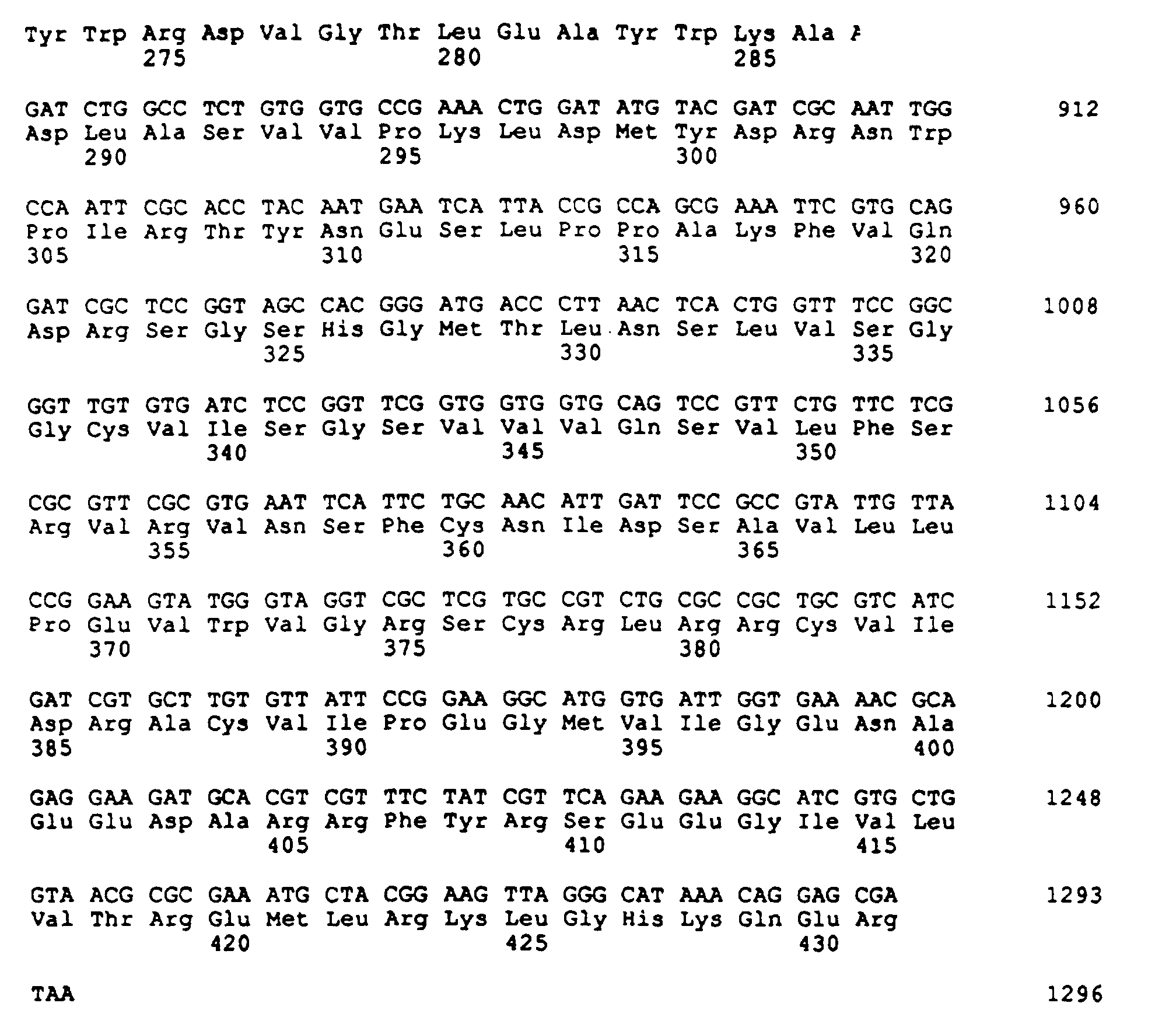
- (2) INFORMATION FOR SEQ ID NO:2:
- (i) SEQUENCE CHARACTERISTICS:
- (A) LENGTH: 431 amino acids
- (B) TYPE: amino acid
- (D) TOPOLOGY: linear
- (ii) MOLECULE TYPE: protein
- (xi) SEQUENCE DESCRIPTION: SEQ ID NO:2:


- (2) INFORMATION FOR SEQ ID NO:3:
- (i) SEQUENCE CHARACTERISTICS:
- (A) LENGTH: 1296 base pairs
- (B) TYPE: nucleic acid
- (C) STRANDEDNESS: double
- (D) TOPOLOGY: linear
- (ii) MOLECULE TYPE: DNA (genomic)
- (ix) FEATURE:
- (A) NAME/KEY: CDS
- (B) LOCATION: 1..1293
- (xi) SEQUENCE DESCRIPTION: SEQ ID NO:3:

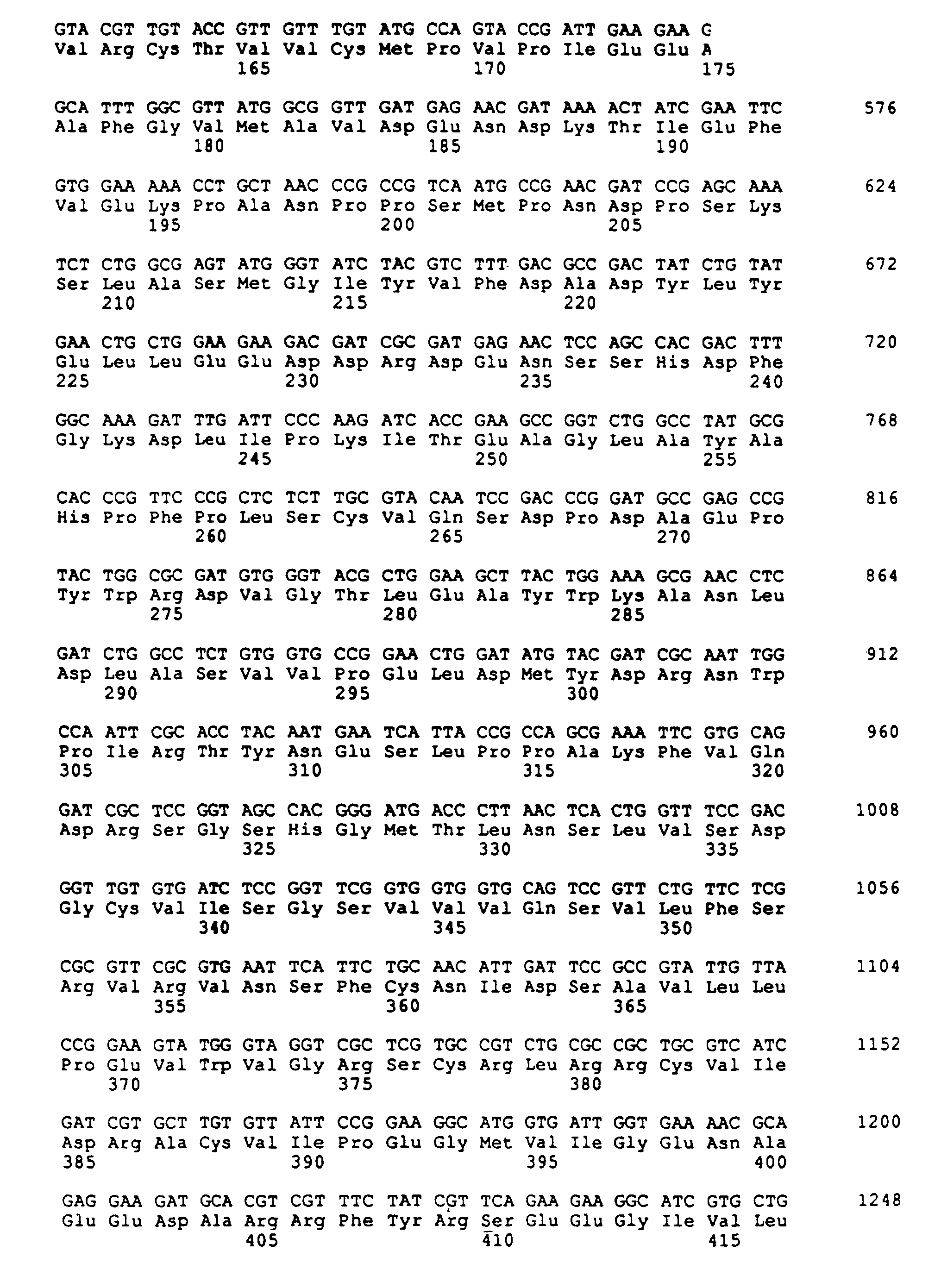

- (2) INFORMATION FOR SEQ ID NO:4:
- (i) SEQUENCE CHARACTERISTICS:
- (A) LENGTH: 431 amino acids
- (B) TYPE: amino acid
- (D) TOPOLOGY: linear
- (ii) MOLECULE TYPE: protein
- (xi) SEQUENCE DESCRIPTION: SEQ ID NO:4:


- (2) INFORMATION FOR SEQ ID NO:5:
- (i) SEQUENCE CHARACTERISTICS:
- (A) LENGTH: 355 base pairs
- (B) TYPE: nucleic acid
- (C) STRANDEDNESS: double
- (D) TOPOLOGY: linear
- (ii) MOLECULE TYPE: DNA (genomic)
- (ix) FEATURE:
- (A) NAME/KEY: CDS
- (B) LOCATION: 88..354
- (xi) SEQUENCE DESCRIPTION: SEQ ID NO:5:
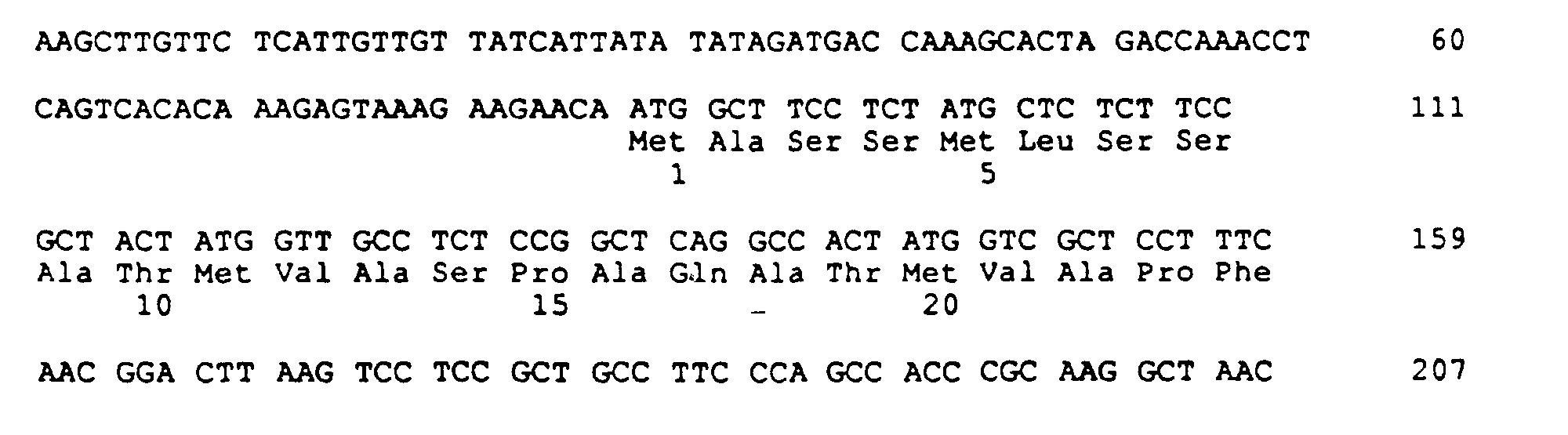
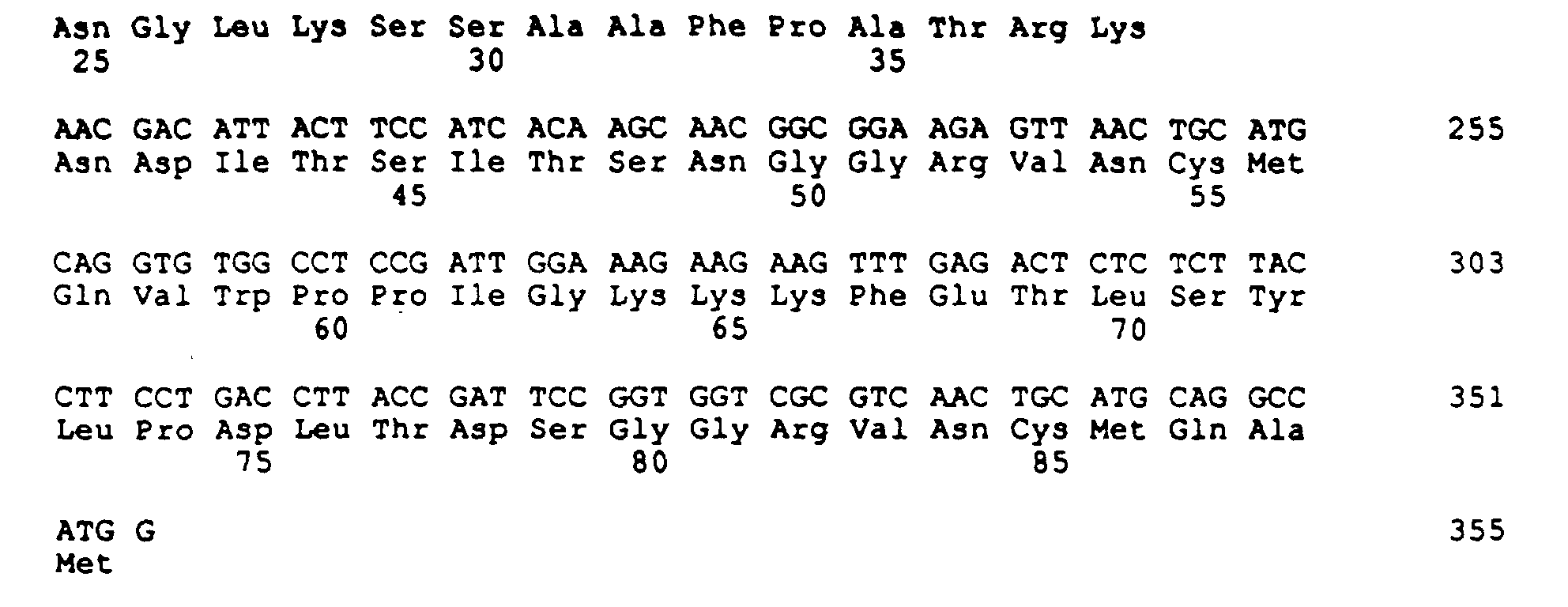
- (2) INFORMATION FOR SEQ ID NO:6:
- (i) SEQUENCE CHARACTERISTICS:
- (A) LENGTH: 89 amino acids
- (B) TYPE: amino acid
- (D) TOPOLOGY: linear
- (ii) MOLECULE TYPE: protein
- (xi) SEQUENCE DESCRIPTION: SEQ ID NO:6:
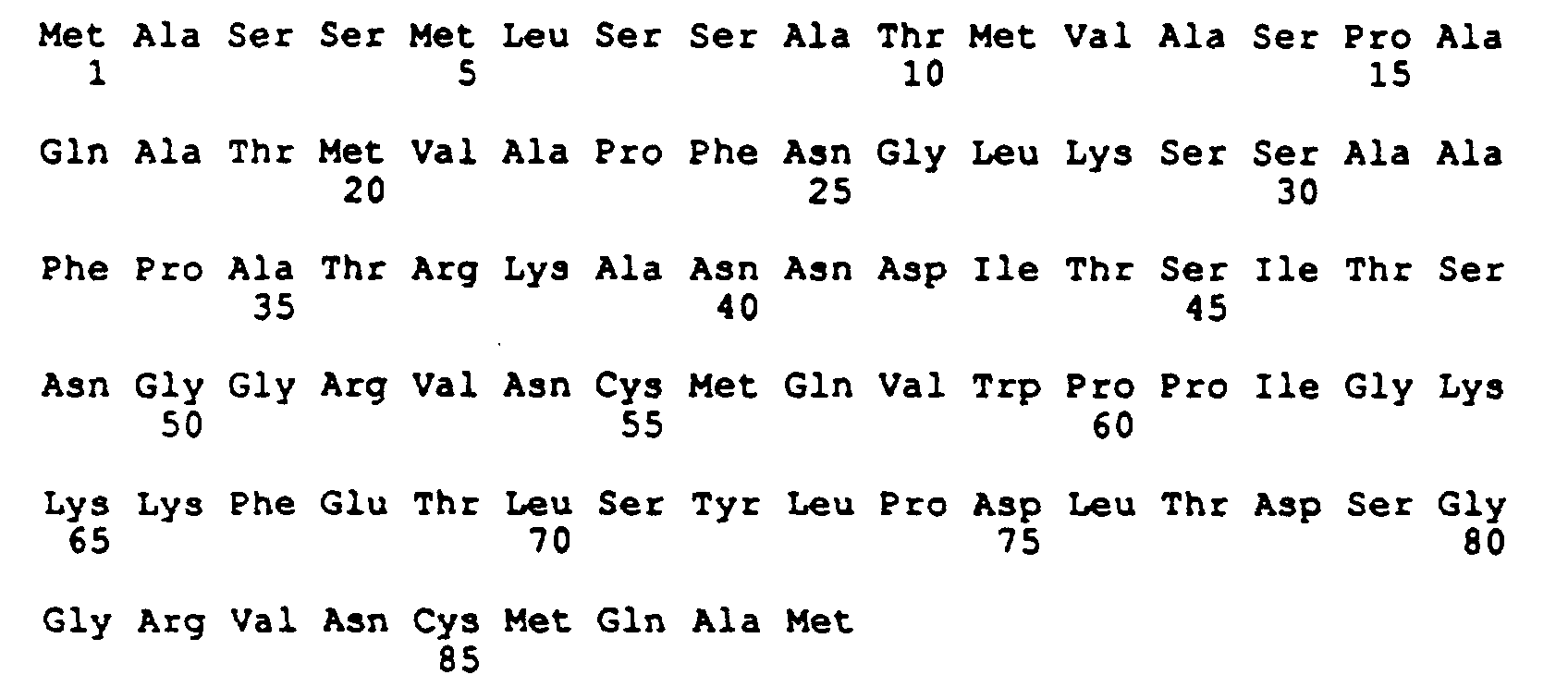
- (2) INFORMATION FOR SEQ ID NO:7:
- (i) SEQUENCE CHARACTERISTICS:
- (A) LENGTH: 1575 base pairs
- (B) TYPE: nucleic acid
- (C) STRANDEDNESS: double
- (D) TOPOLOGY: linear
- (ii) MOLECULE TYPE: cDNA
- (ix) FEATURE:
- (A) NAME/KEY: CDS
- (B) LOCATION: 3..1565
- (xi) SEQUENCE DESCRIPTION: SEQ ID NO:7:



- (2) INFORMATION FOR SEQ ID NO:8:
- (i) SEQUENCE CHARACTERISTICS:
- (A) LENGTH: 521 amino acids
- (B) TYPE: amino acid
- (D) TOPOLOGY: linear
- (ii) MOLECULE TYPE: protein
- (xi) SEQUENCE DESCRIPTION: SEQ ID NO:8:
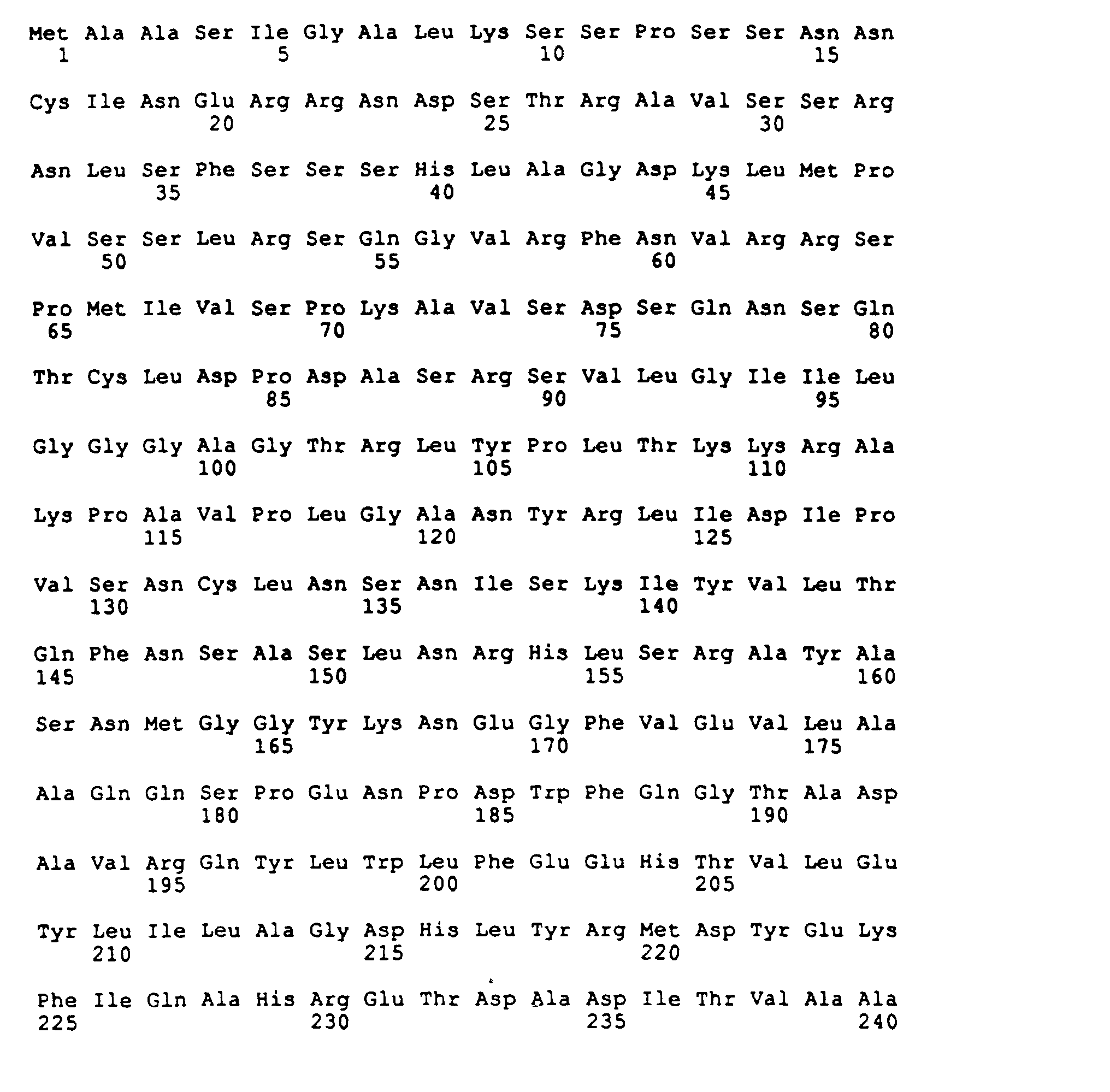
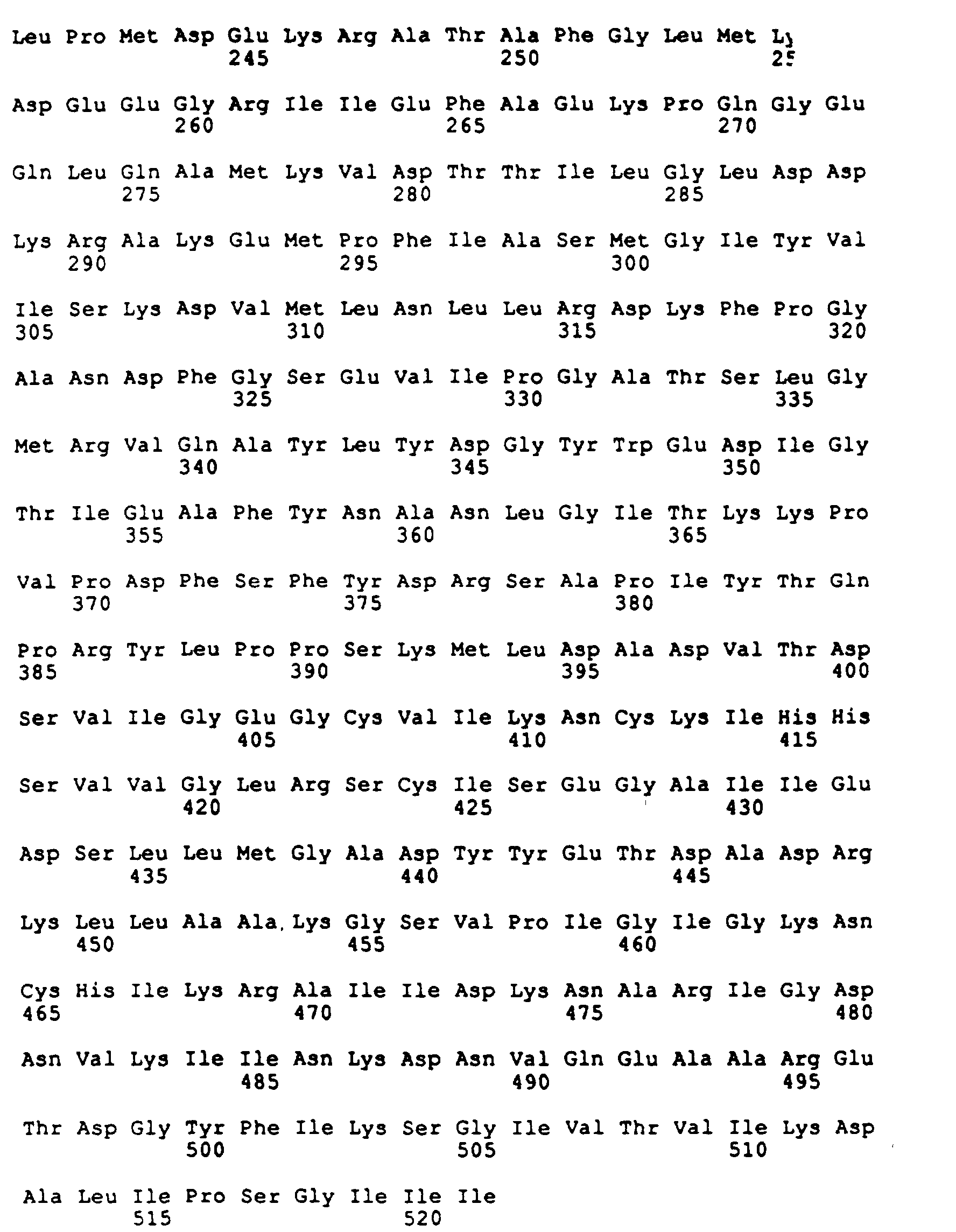
- (2) INFORMATION FOR SEQ ID NO:9:
- (i) SEQUENCE CHARACTERISTICS:
- (A) LENGTH: 1519 base pairs
- (B) TYPE: nucleic acid
- (C) STRANDEDNESS: double
- (D) TOPOLOGY: linear
- (ii) MOLECULE TYPE: cDNA
- (ix) FEATURE:
- (A) NAME/KEY: CDS
- (B) LOCATION: 1..1410
- (xi) SEQUENCE DESCRIPTION: SEQ ID NO:9:
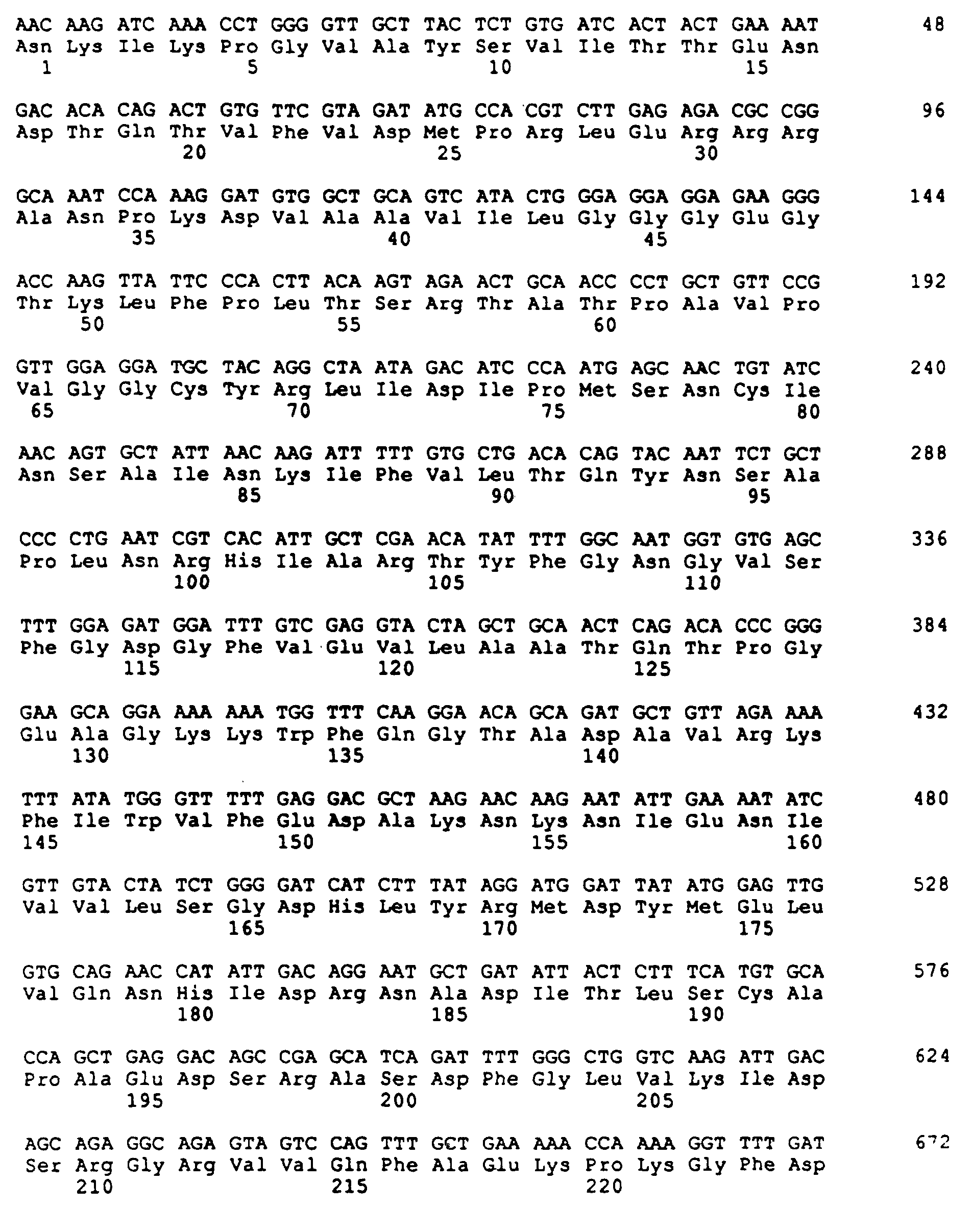


- (2) INFORMATION FOR SEQ ID NO:10:
- (i) SEQUENCE CHARACTERISTICS:
- (A) LENGTH: 470 amino acids
- (B) TYPE: amino acid
- (D) TOPOLOGY: linear
- (ii) MOLECULE TYPE: protein
- (xi) SEQUENCE DESCRIPTION: SEQ ID NO:10:
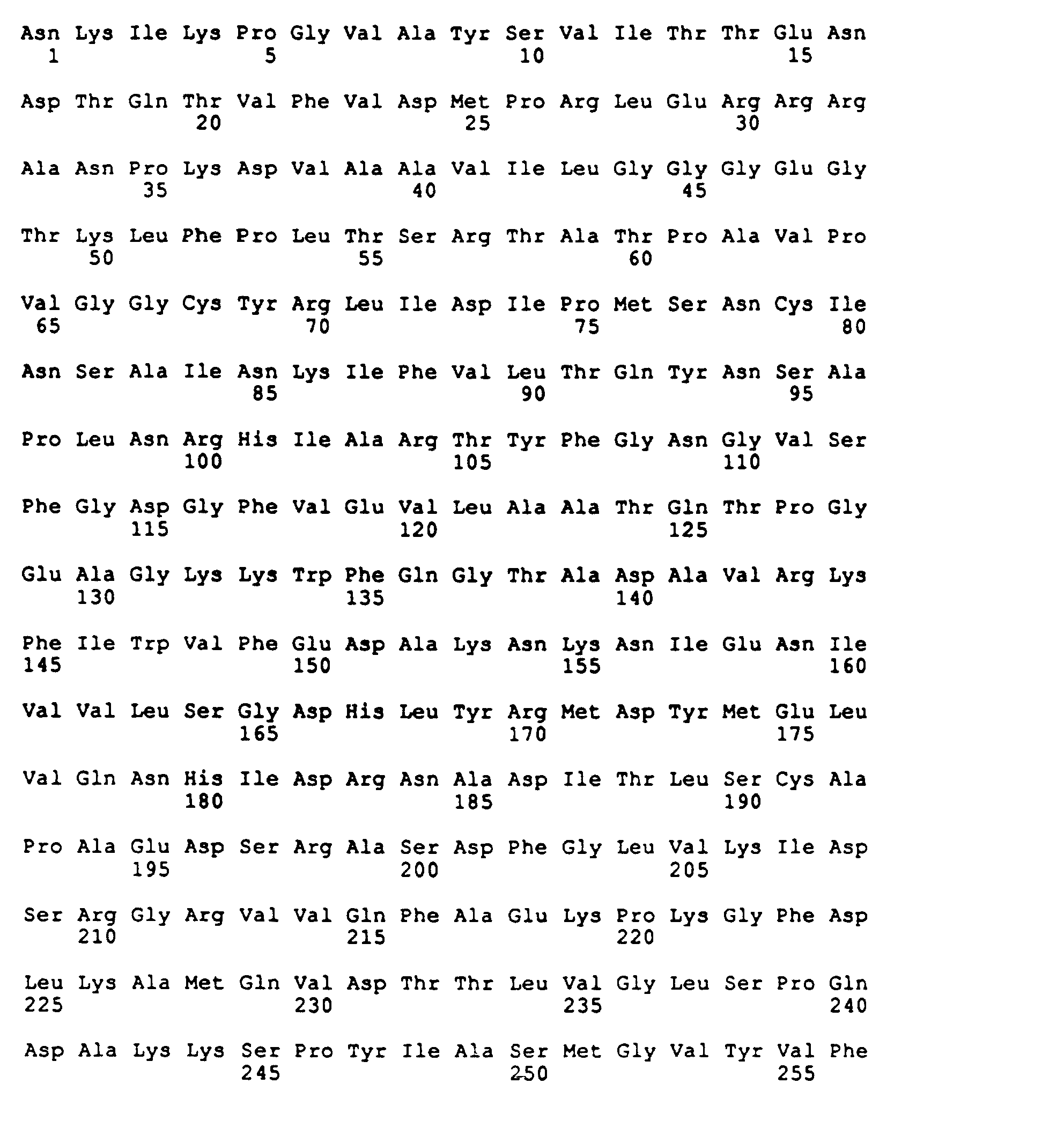
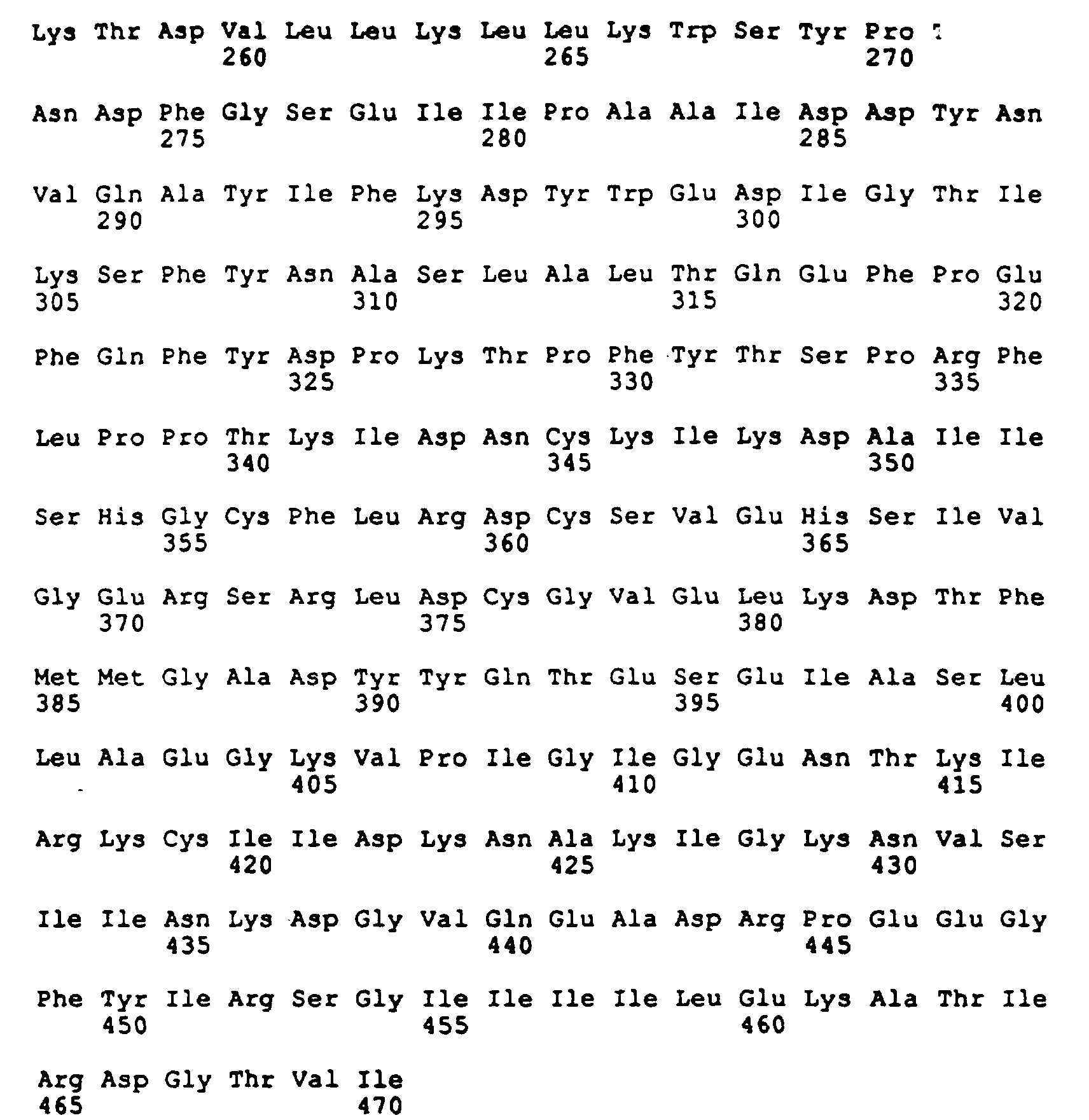
- (2) INFORMATION FOR SEQ ID NO:11:
- (i) SEQUENCE CHARACTERISTICS:
- (A) LENGTH: 35 base pairs
- (B) TYPE: nucleic acid
- (C) STRANDEDNESS: single
- (D) TOPOLOGY: linear
- (ii) MOLECULE TYPE: DNA (synthetic)
- (xi) SEQUENCE DESCRIPTION: SEQ ID NO:11:

- (2) INFORMATION FOR SEQ ID NO:12:
- (i) SEQUENCE CHARACTERISTICS:
- (A) LENGTH: 33 base pairs
- (B) TYPE: nucleic acid
- (C) STRANDEDNESS: single
- (D) TOPOLOGY: linear
- (ii) MOLECULE TYPE: DNA (synthetic)
- (xi) SEQUENCE DESCRIPTION: SEQ ID NO:12:

- (2) INFORMATION FOR SEQ ID NO:13:
- (i) SEQUENCE CHARACTERISTICS:
- (A) LENGTH: 30 base pairs
- (B) TYPE: nucleic acid
- (C) STRANDEDNESS: single
- (D) TOPOLOGY: linear
- (ii) MOLECULE TYPE: DNA (synthetic)
- (xi) SEQUENCE DESCRIPTION: SEQ ID NO:13:

- (2) INFORMATION FOR SEQ ID NO:14:
- (i) SEQUENCE CHARACTERISTICS:
- (A) LENGTH: 28 base pairs
- (B) TYPE: nucleic acid
- (C) STRANDEDNESS: single
- (D) TOPOLOGY: linear
- (ii) MOLECULE TYPE: DNA (synthetic)
- (xi) SEQUENCE DESCRIPTION: SEQ ID NO:14:

- (2) INFORMATION FOR SEQ ID NO:15:
- (i) SEQUENCE CHARACTERISTICS:
- (A) LENGTH: 40 base pairs
- (B) TYPE: nucleic acid
- (C) STRANDEDNESS: single
- (D) TOPOLOGY: linear
- (ii) MOLECULE TYPE: DNA (synthetic)
- (xi) SEQUENCE DESCRIPTION: SEQ ID NO:15:

- (2) INFORMATION FOR SEQ ID NO:16:
- (i) SEQUENCE CHARACTERISTICS :
- (A) LENGTH: 39 base pairs
- (B) TYPE: nucleic acid
- (C) STRANDEDNESS: single
- (D) TOPOLOGY: linear
- (ii) MOLECULE TYPE: DNA (synthetic)
- (xi) SEQUENCE DESCRIPTION: SEQ ID NO:16:

- (2) INFORMATION FOR SEQ ID NO:17:
- (i) SEQUENCE CHARACTERISTICS:
- (A) LENGTH: 24 base pairs
- (B) TYPE: nucleic acid
- (C) STRANDEDNESS: single
- (D) TOPOLOGY: linear
- (ii) MOLECULE TYPE: DNA (synthetic)
- (xi) SEQUENCE DESCRIPTION: SEQ ID NO:17:

- (2) INFORMATION FOR SEQ ID NO:18:
- (i) SEQUENCE CHARACTERISTICS:
- (A) LENGTH: 32 base pairs
- (B) TYPE: nucleic acid
- (C) STRANDEDNESS: single
- (D) TOPOLOGY: linear
- (ii) MOLECULE TYPE: DNA (synthetic)
- (xi) SEQUENCE DESCRIPTION: SEQ ID NO:18:

- (2) INFORMATION FOR SEQ ID NO:19:
- (i) SEQUENCE CHARACTERISTICS:
- (A) LENGTH: 25 base pairs
- (B) TYPE: nucleic acid
- (C) STRANDEDNESS: single
- (D) TOPOLOGY: linear
- (ii) MOLECULE TYPE: DNA (synthetic)
- (xi) SEQUENCE DESCRIPTION: SEQ ID NO:19:

- (2) INFORMATION FOR SEQ ID NO:20:
- (i) SEQUENCE CHARACTERISTICS:
- (A) LENGTH: 34 base pairs
- (B) TYPE: nucleic acid
- (C) STRANDEDNESS: single
- (D) TOPOLOGY: linear
- (ii) MOLECULE TYPE: DNA (synthetic)
- (xi) SEQUENCE DESCRIPTION: SEQ ID NO:20:

- (2) INFORMATION FOR SEQ ID NO:21:
- (i) SEQUENCE CHARACTERISTICS:
- (A) LENGTH: 19 base pairs
- (B) TYPE: nucleic acid
- (C) STRANDEDNESS: single
- (D) TOPOLOGY: linear
- (ii) MOLECULE TYPE: DNA (synthetic)
- (xi) SEQUENCE DESCRIPTION: SEQ ID NO:21:

- (2) INFORMATION FOR SEQ ID NO:22:
- (i) SEQUENCE CHARACTERISTICS:
- (A) LENGTH: 42 base pairs
- (B) TYPE: nucleic acid
- (C) STRANDEDNESS: single
- (D) TOPOLOGY: linear
- (ii) MOLECULE TYPE: DNA (synthetic)
- (xi) SEQUENCE DESCRIPTION: SEQ ID NO:22:

- (2) INFORMATION FOR SEQ ID NO:23:
- (i) SEQUENCE CHARACTERISTICS:
- (A) LENGTH: 39 base pairs
- (B) TYPE: nucleic acid
- (C) STRANDEDNESS: single
- (D) TOPOLOGY: linear
- (ii) MOLECULE TYPE: DNA (synthetic)
- (xi) SEQUENCE DESCRIPTION: SEQ ID NO:23:

-
Claims (21)
- A recombinant, double-stranded DNA molecule comprising in sequence:wherein said structural DNA sequence for ADPglucose pyrophosphorylase was originally isolated from bacteria or algae and said promoter is heterologous with respect to said structural DNA(a) a promoter which functions in plants to cause the production of an RNA sequence in the target plant tissues;(b) a structural DNA sequence that causes the production of an RNA sequence which encodes a fusion polypeptide comprising an amino-terminal plastid transit peptide and an ADPglucose pyrophosphorylase enzyme; and(c) a 3' non-translated region which functions in plant cells to cause transcriptional termination and the addition of polyadenylated nucleotides to the 3' end of the RNA sequence,
and wherein said structural DNA sequence for ADP glucosepyrophosphorylase isolated from algae is subject to reduced allosteric control in plants . - A DNA molecule according to claim 1 in which the ADPglucose pyrophosphorylase enzyme is deregulated for reduced allosteric regulation while maintaining adequate catalytic activity.
- A DNA molecule according to claim 1 in which the plastid transit peptide is heterologous to the source of the ADPglucose pyrophosphorylase structural DNA.
- A DNA molecule according to claim 3 in which the ADPglucose pyrophosphorylase enzyme is from bacteria.
- A recombinant, double-stranded DNA molecule comprising in sequence:wherein said promoter is heterologous with respect to said structural DNA.(a) a promoter which functions in plants to cause the production of an RNA sequence in the target plant tissue;(b) a structural DNA sequence that causes the production of an RNA sequence which encodes a fusion polypeptide comprising an amino-terminal plastid transit peptide and the ADPglucose pyrophosphorylase enzyme glgC16 obtainable from E. Coli K-12618; and(c) a 3' non-translated region which functions in plant cells to cause transcriptional termination and the addition of polyadenylated nucleotides to the 3' end of the RNA sequence;
- A method of producing genetically transformed plants which have elevated starch content, comprising the steps of:wherein said structural DNA sequence for ADPglucose pyrophosphorylase was originally isolated from bacteria or algae(a) inserting into the genome of a plant cell a recombinant, double-stranded DNA molecule comprising(i) a promoter which functions in plants to cause the production of an RNA sequence in the target plant tissues,(ii) a structural DNA sequence that causes the production of an RNA sequence which encodes a fusion polypeptide comprising an amino-terminal plastid transit peptide and an ADPglucose pyrophosphorylase enzyme,(iii) a 3' non-translated DNA sequence which functions in plant cells to cause transcriptional termination and the addition of polyadenylated nucleotides to the 3' end of the RNA sequence;(b) obtaining transformed plant cells; and(c) regenerating from the transformed plant cells genetically transformed plants which have an elevated starch content;
and wherein said structural DNA sequence for ADP glucosepyrophosphorylase isolated from algae is subject to reduced allosteric control in plants . - A method according to claim 6 in which the ADPglucose pyrophosphorylase enzyme is deregulated for reduced allosteric regulation while maintaining adequate catalytic activity.
- A method according to claim 7 in which the ADPglucose pyrophosphorylase enzyme is from bacteria.
- A method according to claim 7 in which the ADPglucose pyrophosphorylase enzyme is from algae.
- A method according to any of claims 6 to 9 in which said plant is potato.
- A method according to any of claims 6 to 9 in which said plant is tomato.
- A method of producing genetically transformed plants which have elevated starch content, comprising the steps of:(a) inserting into the genome of a plant cell a recombinant, double-stranded DNA molecule comprising(i) a promoter which functions in plants to cause the production of an RNA sequence in the target plant tissues,(ii) a structural DNA sequence that causes the production of an RNA sequence which encodes a fusion polypeptide comprising an amino-terminal plastid transit peptide and the ADPglucose pyrophosphorylase enzyme glgC16 obtainable from E. Coli K-12618,(iii) a 3' non-translated DNA sequence which functions in plant cells to cause transcriptional termination and the addition of polyadenylated nucleotides to the 3' end of the RNA sequence;(b) obtaining transformed plant cells; and(c) regenerating from the transformed plant cells genetically transformed plants which have an elevated starch content.
- A plant cell comprising a recombinant, double-stranded DNA molecule comprising in sequence:wherein said structural DNA sequence for ADPglucose pyrophosphorylase was originally isolated from bacteria. or algae(a) a promoter which functions in plants to cause the production of an RNA sequence in target plant tissues;(b) a structural DNA sequence that causes the production of an RNA sequence which encodes a fusion polypeptide comprising an amino-terminal plastid transit peptide and a foreign ADPglucose pyrophosphorylase enzyme; and(c) a 3' non-translated region which functions in plant cells to cause transcriptional termination and the addition of polyadenylated nucleotides to the 3' end of the RNA sequence
and wherein said structural DNA sequence for ADP glucosepyrophosphorylase isolated from algae is subject to reduced allosteric control in plants . - A plant cell according to claim 13 in which the ADPglucose pyrophosphorylase enzyme is deregulated for reduced allosteric regulation while maintaining adequate catalytic activity.
- A plant cell according to claim 14 in which the promoter is heterologous with respect to the ADPglucose pyrophosphorylase structural DNA.
- A plant cell according to claim 15 in which the plastid transit peptide is heterologous to the source of the ADPglucose pyrophosphorylase structural DNA.
- A plant cell according to claim 16 in which the ADPglucose pyrophosphorylase is from bacteria.
- A plant cell according to claim 13 selected from the group consisting of maize, wheat, rice, tomato, potato, sweet potato, peanut, canola/oilseed rape, barley, and soybeans.
- A plant consisting of plant cells according to any of claims 13 to 18.
- A plant cell comprising a recombinant, double-stranded DNA molecule comprising in sequence:(a) a promoter which functions in plants to cause the production of an RNA sequence in the target plant tissue;(b) a structural DNA sequence that causes the production of an RNA sequence which encodes a fusion polypeptide comprising an aminoterminal plastid transit peptide and the ADPglucose pyrophosphorylase enzyme glgC16 obtainable from E. Coli K-12618; and(c) a 3' non-translated region which functions in plant cells to cause transcriptional termination and the addition of polyadenylated nucleotides to the 3' end of the RNA sequence.
- A genetically transformed plant that has been produced by a method according to any of claims 6 to 12.
Applications Claiming Priority (5)
| Application Number | Priority Date | Filing Date | Title |
|---|---|---|---|
| US53976390A | 1990-06-18 | 1990-06-18 | |
| US70966391A | 1991-06-07 | 1991-06-07 | |
| PCT/US1991/004036 WO1991019806A1 (en) | 1990-06-18 | 1991-06-07 | Increased starch content in plants |
| US709663 | 1991-06-07 | ||
| US539763 | 2000-03-31 |
Publications (2)
| Publication Number | Publication Date |
|---|---|
| EP0536293A1 EP0536293A1 (en) | 1993-04-14 |
| EP0536293B1 true EP0536293B1 (en) | 2002-01-30 |
Family
ID=27066202
Family Applications (1)
| Application Number | Title | Priority Date | Filing Date |
|---|---|---|---|
| EP91913150A Expired - Lifetime EP0536293B1 (en) | 1990-06-18 | 1991-06-07 | Increased starch content in plants |
Country Status (12)
| Country | Link |
|---|---|
| US (1) | US6538178B1 (en) |
| EP (1) | EP0536293B1 (en) |
| JP (1) | JP3325022B2 (en) |
| AT (1) | ATE212670T1 (en) |
| AU (1) | AU644203B2 (en) |
| CA (1) | CA2081885C (en) |
| DE (1) | DE69132916T2 (en) |
| FI (1) | FI925228A0 (en) |
| IE (1) | IE912059A1 (en) |
| RU (1) | RU2148081C1 (en) |
| UA (1) | UA43827C2 (en) |
| WO (1) | WO1991019806A1 (en) |
Families Citing this family (498)
| Publication number | Priority date | Publication date | Assignee | Title |
|---|---|---|---|---|
| US6013861A (en) * | 1989-05-26 | 2000-01-11 | Zeneca Limited | Plants and processes for obtaining them |
| AU644619B2 (en) * | 1989-12-21 | 1993-12-16 | Advanced Technologies (Cambridge) Limited | Modification of plant metabolism |
| US5498830A (en) * | 1990-06-18 | 1996-03-12 | Monsanto Company | Decreased oil content in plant seeds |
| EP0664835B1 (en) * | 1992-10-14 | 2004-05-19 | Syngenta Limited | Novel plants and processes for obtaining them |
| GB9223454D0 (en) * | 1992-11-09 | 1992-12-23 | Ici Plc | Novel plants and processes for obtaining them |
| GB9307408D0 (en) * | 1993-04-08 | 1993-06-02 | Danisco | Transgenic plants |
| WO1994028146A2 (en) * | 1993-05-24 | 1994-12-08 | Hoechst Schering Agrevo Gmbh | Dna sequences and plasmids for the preparation of sugar beet with changed sucrose concentration |
| DE4317596A1 (en) * | 1993-05-24 | 1994-12-01 | Schering Ag | New DNA sequences encoding sucrose regulating enzymes of sugar beet |
| US5648249A (en) * | 1993-05-28 | 1997-07-15 | Monsato Company | Method of improving the quality of stored potatoes |
| US5498831A (en) * | 1993-07-23 | 1996-03-12 | Dna Plant Technology Corporation | Pea ADP-glucose pyrophosphorylase subunit genes and their uses |
| GB9412018D0 (en) * | 1994-06-16 | 1994-08-03 | Cambridge Advanced Tech | Modification of starch content in plants |
| US5750876A (en) * | 1994-07-28 | 1998-05-12 | Monsanto Company | Isoamylase gene, compositions containing it, and methods of using isoamylases |
| US5536653A (en) * | 1994-11-04 | 1996-07-16 | Monsanto Company | Tomato fruit promoters |
| US5716837A (en) * | 1995-02-10 | 1998-02-10 | Monsanto Company | Expression of sucrose phosphorylase in plants |
| US6143963A (en) * | 1996-10-08 | 2000-11-07 | Exseed Genetics, L.L.C. | Waxy wheat starch type having waxy proteins in granule |
| US6716474B2 (en) | 1997-06-17 | 2004-04-06 | Monsanto Technology Llc | Expression of fructose 1,6 bisphosphate aldolase in transgenic plants |
| HUP0004228A3 (en) * | 1997-06-17 | 2002-11-28 | Monsanto Technology Llc | Expression of fructose 1,6 bisphosphate aldolase in transgenic plants |
| US6441277B1 (en) | 1997-06-17 | 2002-08-27 | Monsanto Technology Llc | Expression of fructose 1,6 bisphosphate aldolase in transgenic plants |
| AU9197298A (en) * | 1997-08-07 | 1999-03-01 | Washington State University Research Foundation | Regulatory mutants of adp-glucose pyrophosphorylase and related compositions andmethods |
| CA2324515A1 (en) * | 1998-03-20 | 1999-09-30 | Plant Bioscience Limited | Plant control genes |
| IL125425A (en) * | 1998-07-20 | 2008-12-29 | Israel State | ADPGPPase CONTROL OF STARCH SYNTHESIS IN TOMATOES |
| HU230844B1 (en) | 1998-08-13 | 2018-08-28 | Bayer Ip Gmbh | Herbicides for tolerant or resistant corn cultures |
| DE19836660A1 (en) | 1998-08-13 | 2000-02-17 | Hoechst Schering Agrevo Gmbh | Use of a synergistic herbicide combination including a glufosinate- or glyphosate-type, imidazolinone or protoporphyrinogen oxidase inhibitory azole herbicide to control weeds in soya |
| DE19836673A1 (en) | 1998-08-13 | 2000-02-17 | Hoechst Schering Agrevo Gmbh | Use of a synergistic herbicidal combination including a glufosinate- or glyphosate-type or imidazolinone herbicide to control weeds in sugar beet |
| DE19836659A1 (en) | 1998-08-13 | 2000-02-17 | Hoechst Schering Agrevo Gmbh | Use of synergistic herbicide combination including glufosinate- or glyphosate-type, imidazolinone, protoporphyrinogen oxidase inhibitory azole or hydroxybenzonitrile herbicide, to control weeds in cotton |
| NZ509642A (en) | 1998-08-19 | 2003-08-29 | Cambridge Advanced Tech | A novel plastid-targeting nucleic acid sequence, a novel beta-amylase sequence, a stimulus-responsive promoter and uses thereof |
| EP1129184A1 (en) * | 1998-11-10 | 2001-09-05 | Maxygen, Inc. | Modified adp-glucose pyrophosphorylase for improvement and optimation of plant phenotypes |
| AU7647000A (en) * | 1999-08-20 | 2001-03-19 | Basf Plant Science Gmbh | Increasing the polysaccharide content in plants |
| US7517975B2 (en) | 2000-09-26 | 2009-04-14 | Pioneer Hi-Bred International, Inc. | Nucleotide sequences mediating male fertility and method of using same |
| EP2206703A1 (en) * | 2008-12-30 | 2010-07-14 | Bayer CropScience AG | Pyrimidine derivatives and use thereof for combating undesired plant growth |
| DE10135642A1 (en) | 2001-07-21 | 2003-02-27 | Bayer Cropscience Gmbh | Herbicide combinations with special sulfonylureas |
| US7544483B2 (en) | 2002-06-14 | 2009-06-09 | Monier Tadros | Method for the production of protamine |
| BR0313110A (en) * | 2002-08-02 | 2005-07-12 | Basf Plant Science Gmbh | nucleic acids encoding regulatory proteins of sugar and lipid metabolism in plants and their uses |
| DE50311379D1 (en) | 2002-09-10 | 2009-05-14 | Sungene Gmbh & Co Kgaa | EXPRESSION CASSETTES FOR THE EXPRESSION OF NUCLEIC ACIDS IN CARBOHYDRATE-SAVING SINK TISSUES OF PLANTS |
| WO2004065537A2 (en) | 2003-01-20 | 2004-08-05 | Sungene Gmbh & Co. Kgaa | Expression cassette with promotors of starch synthesis 3 for the expression of nucleic acids in plant tissue containing starch |
| KR101224300B1 (en) | 2003-02-05 | 2013-01-21 | 바이엘 크롭사이언스 아게 | Amino 1,3,5-triazines n-substituted with chiral bicyclic radicals, process for their preparation, compositions thereof and their use as herbicides and plant growth regulators |
| JP2005130770A (en) * | 2003-10-30 | 2005-05-26 | Ajinomoto Co Inc | Potato increased in starch level obtained per plant body and method for creating the same |
| EP2333075B1 (en) | 2003-12-16 | 2018-07-04 | Pioneer Hi-Bred International Inc. | Dominant gene suppression transgenes and methods of using same |
| KR20060115904A (en) * | 2003-12-24 | 2006-11-10 | 바이엘 크롭사이언스 게엠베하 | Plant growth regulation |
| ATE516295T1 (en) | 2004-01-20 | 2011-07-15 | Monsanto Technology Llc | CHIMERIC PROMOTORS FOR USE IN PLANTS |
| DE102004011007A1 (en) | 2004-03-06 | 2005-09-22 | Bayer Cropscience Ag | Suspension concentrates based on oil |
| BRPI0509244A (en) | 2004-03-27 | 2007-09-04 | Bayer Cropscience Gmbh | herbicidal combination |
| DE102004016496A1 (en) | 2004-04-03 | 2005-10-20 | Bayer Cropscience Gmbh | Herbicidal 3-amino-2-thiomethylbenzoylpyrazole |
| AR048623A1 (en) * | 2004-04-21 | 2006-05-10 | Basf Plant Science Gmbh | TRANSGENIC CORN WITH NUTRITIONAL PROPERTIES |
| WO2006089876A1 (en) | 2005-02-22 | 2006-08-31 | Basf Aktiengesellschaft | Composition and method for improving plant health |
| EP1728430A1 (en) | 2005-06-04 | 2006-12-06 | Bayer CropScience GmbH | Herbicidal agents |
| DE102005057250A1 (en) | 2005-11-29 | 2007-06-06 | Bayer Cropscience Gmbh | Active ingredients to increase stress control in plants against abiotic stress and methods for their discovery |
| EP2803728B1 (en) | 2006-05-16 | 2018-11-21 | Monsanto Technology LLC | Use of non-agrobacterium bacterial species for plant transformation |
| EP2041284B1 (en) | 2006-07-05 | 2021-05-26 | Arkansas State University Research and Development Institute | Production of stilbenes and stilbene derivatives in plant hairy root cultures |
| JP5931322B2 (en) | 2006-11-10 | 2016-06-08 | ビーエーエスエフ ソシエタス・ヨーロピアBasf Se | Crystal modification of fipronil |
| MX2009004323A (en) | 2006-11-10 | 2009-05-05 | Basf Se | Crystalline modification of fipronil. |
| UA110598C2 (en) | 2006-11-10 | 2016-01-25 | Басф Се | METHOD OF OBTAINING CRYSTAL MODIFICATION OF FIPRONIL |
| PT2083629E (en) | 2006-11-10 | 2011-09-01 | Basf Se | Crystalline modification of fipronil |
| EP1925203A1 (en) | 2006-11-13 | 2008-05-28 | Bayer CropScience AG | Herbicidal combinations comprising amidosulfuron and a pyridine-herbicide |
| WO2008071714A1 (en) | 2006-12-15 | 2008-06-19 | Rohm And Haas Company | Mixtures comprising 1-methylcyclopropene |
| DE102006059941A1 (en) | 2006-12-19 | 2008-06-26 | Bayer Cropscience Ag | Substituted 2,4-diamino-1,3,5-triazines, process for their preparation and their use as herbicides and plant growth regulators |
| EA015688B1 (en) | 2007-01-19 | 2011-10-31 | Басф Се | FUNGICIDAL MIXTURES FROM 1-METHYLPIRAZOLE-4-ILKARBONIC ACID AND AZOLOPIRIMIDINYLAMINE ANILYDES |
| ES2383101T3 (en) | 2007-01-26 | 2012-06-18 | Basf Se | 3-amino-1,2-bencisothiazole compounds to combat animal pests II |
| EP1952691A3 (en) | 2007-01-31 | 2008-09-17 | Basf Se | Method for improving plant health by application of a triazolopyrimidine derivative |
| EP1952690A3 (en) | 2007-01-31 | 2009-04-22 | Basf Se | Pesticidal mixtures based on triazolopyrimidines and insecticides |
| EP2679096A1 (en) | 2007-02-06 | 2014-01-01 | Basf Se | Pesticidal mixtures |
| DE102007008528A1 (en) | 2007-02-21 | 2008-08-28 | Bayer Cropscience Ag | Herbicidal combinations, useful e.g. to combat undesirable plant growth in plants, comprises a 3-phenoxy-1H-pyrazole compound, and a compound containing e.g. inhibitors of protoporphyrinogen oxidase, preferably azafenidin |
| US7838729B2 (en) | 2007-02-26 | 2010-11-23 | Monsanto Technology Llc | Chloroplast transit peptides for efficient targeting of DMO and uses thereof |
| AU2008226443B2 (en) | 2007-03-09 | 2013-07-11 | Monsanto Technology Llc | Preparation and use of plant embryo explants for transformation |
| DE102007012168A1 (en) | 2007-03-12 | 2008-09-18 | Bayer Cropscience Ag | New thiazole derivatives useful as herbicides and plant growth regulators |
| DE102007029603A1 (en) | 2007-06-27 | 2009-01-08 | Bayer Cropscience Ag | Phenylamidine for herbicide agent, controlling unwanted plants, and for use as herbicides, comprises general formula |
| CN104206402B (en) | 2007-04-12 | 2018-04-24 | 巴斯夫欧洲公司 | Pesticide combination comprising cyanosulfoximine compounds |
| EP1980150A1 (en) | 2007-04-13 | 2008-10-15 | Basf Se | Fungicidal mixtures based on triazolopyrimidine compounds |
| WO2008132021A2 (en) | 2007-04-25 | 2008-11-06 | Basf Se | Fungicide mixtures |
| DE102007026875A1 (en) | 2007-06-11 | 2008-12-24 | Bayer Cropscience Ag | 3-Cyclopropyl-4- (3-thiobenzoyl) pyrazoles and their use as herbicides |
| EP2014169A1 (en) | 2007-07-09 | 2009-01-14 | Bayer CropScience AG | Water-soluble concentrates of 3-(2-alkoxy 4-chlorine-6-alkyl-phenyl)-substituted tetramates with their corresponding enols |
| DE102007036702A1 (en) | 2007-08-03 | 2009-02-05 | Bayer Cropscience Ag | Combination, useful to combat undesirable plant growth, comprises herbicide component comprising pyrazolyloxyphenyl compound and e.g. amidosulfuron and safener comprising mefenpyr-diethyl, cloquintocet-mexyl and/or cyprosulfamide |
| EP2631243A3 (en) | 2007-08-03 | 2013-11-20 | Pioneer Hi-Bred International Inc. | Msca1 nucleotide sequences impacting plant male fertility and method of using same |
| EA019932B1 (en) | 2007-09-20 | 2014-07-30 | Басф Се | Combinations comprising a fungicidal strain and an active compound |
| EP2052607A1 (en) | 2007-10-24 | 2009-04-29 | Bayer CropScience AG | Herbicide combination |
| EP2052614A1 (en) | 2007-10-24 | 2009-04-29 | Bayer CropScience AG | Herbicide combination |
| EP2052609A1 (en) | 2007-10-24 | 2009-04-29 | Bayer CropScience AG | Herbicide combination |
| EP2052613A1 (en) | 2007-10-24 | 2009-04-29 | Bayer CropScience AG | Herbicide combination |
| EP2052608A1 (en) | 2007-10-24 | 2009-04-29 | Bayer CropScience AG | Herbicide combination |
| EP2052604A1 (en) | 2007-10-24 | 2009-04-29 | Bayer CropScience AG | Salts of 2-lodo-N-[(4-methoxy-6-methyl-1,3,5-triazin-2-yl)carbamoyl] benzol sulphonamide, method for its manufacture and its application as herbicide and plant growth regulator |
| EP2052605A1 (en) | 2007-10-24 | 2009-04-29 | Bayer CropScience AG | Herbicide combination |
| EP2052611A1 (en) | 2007-10-24 | 2009-04-29 | Bayer CropScience AG | Herbicide combination |
| EP2052610A1 (en) | 2007-10-24 | 2009-04-29 | Bayer CropScience AG | Herbicide combination |
| EP2052615A1 (en) | 2007-10-24 | 2009-04-29 | Bayer CropScience AG | Herbicide combination |
| EP2052612A1 (en) | 2007-10-24 | 2009-04-29 | Bayer CropScience AG | Herbicide combination |
| EP2052603A1 (en) | 2007-10-24 | 2009-04-29 | Bayer CropScience AG | Application of 2-lodo-N-[(4-methoxy-6-methyl-1,3,5-triazin-2-yl)carbamoyl] benzol sulphonamide and/or its salts for inhibiting unwanted plant growth in selected agricultural crop cultures or non-cultivated land |
| EP2052606A1 (en) | 2007-10-24 | 2009-04-29 | Bayer CropScience AG | Herbicide combination |
| EP2064953A1 (en) | 2007-11-29 | 2009-06-03 | Bayer CropScience AG | Herbicide azole combination |
| EP2065374A1 (en) | 2007-11-30 | 2009-06-03 | Bayer CropScience AG | 2-(benzyl- and 1H-pyrazol-4-ylmethyl)sulfinyl-thiazol-derivatives as herbicides and plant growth regulators |
| EP2065373A1 (en) | 2007-11-30 | 2009-06-03 | Bayer CropScience AG | Chiral 3-(benzylsulfinyl)-5,5-dimethyl-4,5-dihydroisoxazole and 5,5-dimethyl-3-[(1H-pyrazol-4-ylmethyl) sulfinyl]-4,5-dihydroisoxazole derivatives, methods for their preparation and their use as herbicides and plant growth regulators |
| EP2072512A1 (en) | 2007-12-20 | 2009-06-24 | Bayer CropScience AG | Herbicide compounds based on N-Azinyl-N'-pyridylsulfonyl-ureas |
| DE102008006005A1 (en) | 2008-01-25 | 2009-07-30 | Bayer Cropscience Ag | New N-azinyl-N'-pyridylsulfonyl-urea compounds useful e.g. as herbicide, plant growth regulator and plant protection regulator and to combat undesirable plant growth e.g. Agrostis in special plant cultures e.g. wheat, barley and rye |
| EP2231632A2 (en) | 2008-01-25 | 2010-09-29 | Syngenta Participations AG | 2-cyanophenyl sulfonamide derivatives useful as pesticides |
| EP2092825A1 (en) | 2008-02-21 | 2009-08-26 | Bayer CropScience Aktiengesellschaft | Herbicidal combinations comprising a herbicide of the class of the diamino-s-triazines |
| EP2095710A1 (en) | 2008-02-27 | 2009-09-02 | Bayer CropScience AG | Herbicidal combinations containing diflufenican |
| EP2095711A1 (en) | 2008-02-27 | 2009-09-02 | Bayer CropScience AG | Herbicidal combinations containing Diflufenican |
| EP2095712A1 (en) | 2008-02-27 | 2009-09-02 | Bayer CropScience AG | Herbicidal combinations containing diflufenican |
| EP2103216A1 (en) | 2008-03-19 | 2009-09-23 | Bayer CropScience AG | Selected salts from 3-(5,6-dihydro-1,4,2-dioxazin-3-yl)-N-[(4,6-dimethoxypyrimidin-2-yl)carbamoyl] pyridine-2-sulfonamide, methods for their production and their usage as herbicides and plant growth regulators |
| EP2105437A1 (en) | 2008-03-26 | 2009-09-30 | Bayer CropScience Aktiengesellschaft | 4-(3-Aminobenzoyl)-5-cyclopropylisoxazols as herbicides |
| PT2262896E (en) | 2008-04-07 | 2014-04-28 | Monsanto Technology Llc | Plant regulatory elements and uses thereof |
| EP2110019A1 (en) | 2008-04-19 | 2009-10-21 | Bayer CropScience AG | Herbicidal compounds based on N-Azinyl-N'-phenylsulfonylureas |
| EP2112143A1 (en) | 2008-04-22 | 2009-10-28 | Bayer CropScience AG | 2-(benzylsulfonyl)-oxazol-derivatives, chiral 2-(benzylsulfinyl]-oxazol derivatives, 2-(benzylsulfanyl-oxazol) derivatives, process for their preparation, as well as their use as herbicide and plant growth regulators |
| EP2112149A1 (en) | 2008-04-22 | 2009-10-28 | Bayer CropScience Aktiengesellschaft | 2-[(1H-Pyrazol-4-ylmethyl)-sulfonyl]-oxazole derivatives, 2-[(1H-pyrazol-4-ylmethyl)-sulfanyl]-oxazole derivatives and chiral 2-[(1H-pyrazol-4-ylmethyl)-sulfinyl]-oxazole derivatives, method for production of same and their use as herbicides and plant growth regulators |
| EP2127521A1 (en) | 2008-05-29 | 2009-12-02 | Bayer CropScience Aktiengesellschaft | 4-(3-Alkylsulfinylbenzoyl)pyrazoles as herbicides |
| EP2135865A1 (en) | 2008-06-17 | 2009-12-23 | Bayer CropScience AG | Substituted 1-(diazinyl)pyrazol-4-yl acetic acids, method for their production and their use as herbicides and plant growth regulators |
| AU2009265697B2 (en) | 2008-07-04 | 2015-02-05 | Basf Se | Fungicidal mixtures comprising substituted 1-methylpyrazol-4-ylcarboxanilides |
| EP2145537A1 (en) | 2008-07-09 | 2010-01-20 | Bayer CropScience AG | Plant growth regulator |
| KR20110044252A (en) | 2008-07-24 | 2011-04-28 | 바이엘 크롭사이언스 아게 | Thickener for Water Dispersible Plant Concentrates |
| EP2147919A1 (en) | 2008-07-24 | 2010-01-27 | Bayer CropScience Aktiengesellschaft | Heterocyclic substituted amides, method for their manufacture and their use as herbicides |
| DE102008037629A1 (en) | 2008-08-14 | 2010-02-18 | Bayer Cropscience Ag | Herbicide combination with dimethoxytriazinyl-substituted difluoromethanesulfonylanilides |
| DE102008037632A1 (en) | 2008-08-14 | 2010-02-18 | Bayer Cropscience Ag | Herbicide combination with dimethoxytriazinyl-substituted difluoromethanesulfonylanilides |
| DE102008037628A1 (en) * | 2008-08-14 | 2010-02-18 | Bayer Crop Science Ag | Herbicide combination with dimethoxytriazinyl-substituted difluoromethanesulfonylanilides |
| DE102008037622A1 (en) * | 2008-08-14 | 2010-02-25 | Bayer Cropscience Ag | Herbicide combination with dimethoxytriazinyl-substituted difluoromethanesulfonylanilides |
| DE102008037627A1 (en) | 2008-08-14 | 2010-02-18 | Bayer Cropscience Ag | Herbicide combination with dimethoxytriazinyl-substituted difluoromethanesulfonylanilides |
| DE102008037631A1 (en) | 2008-08-14 | 2010-02-18 | Bayer Cropscience Ag | Herbicide combination with dimethoxytriazinyl-substituted difluoromethanesulfonylanilides |
| DE102008037621A1 (en) | 2008-08-14 | 2010-02-18 | Bayer Cropscience Ag | Herbicide combination with dimethoxytriazinyl-substituted difluoromethanesulfonylanilides |
| DE102008037624A1 (en) | 2008-08-14 | 2010-02-18 | Bayer Cropscience Ag | Herbicide combination with dimethoxytriazinyl-substituted difluoromethanesulfonylanilides |
| DE102008037625A1 (en) | 2008-08-14 | 2010-02-18 | Bayer Cropscience Ag | Herbicide combination with dimethoxytriazinyl-substituted difluoromethanesulfonylanilides |
| DE102008037626A1 (en) * | 2008-08-14 | 2010-02-18 | Bayer Cropscience Ag | Herbicide combination with dimethoxytriazinyl-substituted difluoromethanesulfonylanilides |
| DE102008037630A1 (en) | 2008-08-14 | 2010-02-18 | Bayer Cropscience Ag | Herbicidal combination, useful to control undesired plant growth in plant culture e.g. wheat, comprises dimethoxytriazinyl-substituted difluoromethanesulfonyl anilide compounds and herbicides comprising triazine compounds e.g. ametryn |
| US8367873B2 (en) | 2008-10-10 | 2013-02-05 | Bayer Cropscience Ag | Phenyl-substituted bicyclooctane-1,3-dione derivatives |
| DE102008058642A1 (en) | 2008-11-22 | 2010-05-27 | Bayer Cropscience Ag | Herbicide combinations containing diflufenican and ALS inhibitors |
| EP2191720A1 (en) | 2008-11-29 | 2010-06-02 | Bayer CropScience AG | Herbicide-safener combination |
| EP2191719A1 (en) | 2008-11-29 | 2010-06-02 | Bayer CropScience AG | Herbicide safener combination |
| EP2191716A1 (en) | 2008-11-29 | 2010-06-02 | Bayer CropScience AG | Herbicide safener combination |
| EP2210492A1 (en) | 2008-11-29 | 2010-07-28 | Bayer CropScience AG | Herbicide safener combination |
| US8846946B2 (en) | 2008-12-02 | 2014-09-30 | Bayer Cropscience Ag | Germinal alkoxy/alkylspirocyclic substituted tetramate derivatives |
| US8389443B2 (en) | 2008-12-02 | 2013-03-05 | Bayer Cropscience Ag | Geminal alkoxy/alkylspirocyclic substituted tetramate derivatives |
| EP2194052A1 (en) | 2008-12-06 | 2010-06-09 | Bayer CropScience AG | Substituted 1.(1-thiazolyl)- and 1-(isothiazolyl)pyrazol-4-yl acetic acids, method for their production and their use as herbicides and plant growth regulators |
| DE102008063561A1 (en) | 2008-12-18 | 2010-08-19 | Bayer Cropscience Ag | Hydrazides, process for their preparation and their use as herbicides and insecticides |
| EP2204366A1 (en) | 2008-12-19 | 2010-07-07 | Bayer CropScience AG | Herbicidal and insecticidal phenyl-substituted pyridazinones |
| EP2210879A1 (en) | 2008-12-30 | 2010-07-28 | Bayer CropScience AG | Pyrimidine derivatives and use thereof for combating undesired plant growth |
| US20120277117A1 (en) | 2009-02-27 | 2012-11-01 | Adel Zayed | Hydroponic apparatus and methods of use |
| BRPI1008949B1 (en) | 2009-03-11 | 2018-07-10 | Bayer Intellectual Property Gmbh | HALOALKYLMETHYLENEXY-PHENYL-SUBSTITUTED KETOENOLS AND THEIR USE, COMPOSITION, USE AND METHOD OF PRODUCTION, METHODS FOR COMBATING ANIMAL PEST AND / OR GROWTH OF UNWANTED PLANTS |
| EP2229813A1 (en) | 2009-03-21 | 2010-09-22 | Bayer CropScience AG | Pyrimidine-4-ylpropandinitrile derivatives, method for their manufacture and their use as herbicides and plant growth regulators |
| EP2245935A1 (en) | 2009-05-02 | 2010-11-03 | Bayer CropScience AG | Herbicide compounds based on N-Azinyl-N-pyridylsulfonyl-uric substances |
| WO2010133337A1 (en) | 2009-05-19 | 2010-11-25 | Bayer Cropscience Ag | Herbicidal spiroheterocyclic tetronic acid derivatives |
| WO2011012248A2 (en) | 2009-07-29 | 2011-02-03 | Bayer Cropscience Ag | 2-(3-aminobenzoyl)-3-cyclopropyl-3-oxopropane nitriles and use thereof as herbicides |
| KR101767519B1 (en) | 2009-07-29 | 2017-08-11 | 바이엘 인텔렉쳐 프로퍼티 게엠베하 | 2-(3-Alkylthiobenzoyl)cyclohexanediones and their use as herbicides |
| EP2475646B1 (en) | 2009-07-29 | 2017-06-21 | Bayer Intellectual Property GmbH | 4-(3-alkylthiobenzoyl)pyrazoles and their use as herbicides |
| ES2545738T3 (en) | 2009-07-30 | 2015-09-15 | Merial, Inc. | Insecticidal compounds based on 4-amino-thieno [2,3-d] -pyrimidine and procedures for its use |
| WO2011035878A1 (en) | 2009-09-25 | 2011-03-31 | Bayer Cropscience Ag | Herbicidally effective phenyl-substituted pyridazinones |
| WO2011039276A1 (en) | 2009-10-01 | 2011-04-07 | Bayer Cropscience Ag | Oxathiazinyl(het)arylsulfonylureas, processes and intermediates for preparation thereof and use thereof as crop protection agents and crop growth regulators |
| WO2011045271A1 (en) | 2009-10-15 | 2011-04-21 | Bayer Cropscience Ag | Herbicidally active, heterocyclyl-substituted pyridazinones |
| WO2011050271A1 (en) | 2009-10-23 | 2011-04-28 | Monsanto Technology Llc | Methods and compositions for expression of transgenes in plants |
| WO2011057942A1 (en) | 2009-11-12 | 2011-05-19 | Basf Se | Insecticidal methods using pyridine compounds |
| EP2327700A1 (en) | 2009-11-21 | 2011-06-01 | Bayer CropScience AG | Dialkyl triazinamines and use thereof for combating undesired plant growth |
| WO2011064188A1 (en) | 2009-11-27 | 2011-06-03 | Basf Se | Insecticidal methods using nitrogen-containing heteroaromatic compounds |
| WO2011069143A1 (en) | 2009-12-04 | 2011-06-09 | Merial Limited | Pesticidal bis-organosulfur compounds |
| WO2011069955A1 (en) | 2009-12-07 | 2011-06-16 | Basf Se | Sulfonimidamide compounds for combating animal pests |
| WO2011073098A1 (en) | 2009-12-15 | 2011-06-23 | Bayer Cropscience Ag | 1-(heteroaryl)-pyrazol-4-yl-acetic acids, method for the production thereof, and the use thereof as herbicides and plant growth regulators |
| WO2011082956A2 (en) | 2009-12-17 | 2011-07-14 | Bayer Cropscience Ag | Herbicidal agents containing flufenacet |
| WO2011082957A2 (en) | 2009-12-17 | 2011-07-14 | Bayer Cropscience Ag | Herbicidal agents containing flufenacet |
| WO2011082954A2 (en) | 2009-12-17 | 2011-07-14 | Bayer Cropscience Ag | Herbicidal agents containing flufenacet |
| PL2512248T3 (en) | 2009-12-17 | 2017-01-31 | Bayer Intellectual Property Gmbh | Herbicidal agents comprising flufenacet |
| WO2011082953A2 (en) | 2009-12-17 | 2011-07-14 | Bayer Cropscience Ag | Herbicidal agents comprising flufenacet |
| WO2011082959A2 (en) | 2009-12-17 | 2011-07-14 | Bayer Cropscience Ag | Herbicidal agents containing flufenacet |
| WO2011082964A1 (en) | 2009-12-17 | 2011-07-14 | Bayer Cropscience Ag | Herbicidal agents containing flufenacet |
| DK2512249T3 (en) | 2009-12-17 | 2016-09-19 | Bayer Ip Gmbh | HERBICIDE AGENTS CONTAINING FLUFENACET |
| WO2011082955A2 (en) | 2009-12-17 | 2011-07-14 | Bayer Cropscience Ag | Herbicidal agents comprising flufenacet |
| WO2011082968A2 (en) | 2009-12-17 | 2011-07-14 | Bayer Cropscience Ag | Herbicidal agents containing flufenacet |
| PT2515658T (en) | 2009-12-17 | 2016-09-13 | Bayer Ip Gmbh | Herbicidal agents containing flufenacet |
| AU2010334815B2 (en) | 2009-12-23 | 2015-07-09 | Bayer Intellectual Property Gmbh | Plants tolerant to HPPD inhibitor herbicides |
| MX2012007360A (en) | 2009-12-23 | 2012-11-06 | Bayer Ip Gmbh | Plants tolerant to hppd inhibitor herbicides. |
| BR112012015690A2 (en) | 2009-12-23 | 2015-08-25 | Bayer Intelectual Property Gmbh | Herbicide tolerant plants of hppd inhibitors. |
| UY33142A (en) | 2009-12-23 | 2011-07-29 | Bayer Cropscience Ag | TOLERANT PLANTS TO INHIBITING HERBICIDES OF HPPD |
| UY33140A (en) | 2009-12-23 | 2011-07-29 | Bayer Cropscience Ag | TOLERANT PLANTS TO INHIBITING HERBICIDES OF HPPD |
| BR112012019582B1 (en) | 2010-01-14 | 2021-09-21 | Monsanto Technology Llc | DNA MOLECULE COMPRISING PLANT REGULATORY ELEMENTS |
| EP2531493B1 (en) | 2010-02-01 | 2015-07-22 | Basf Se | Substituted ketonic isoxazoline compounds and derivatives for combating animal pests |
| WO2011098440A2 (en) | 2010-02-10 | 2011-08-18 | Bayer Cropscience Ag | Biphenyl substituted cyclical keto-enols |
| CN103068825A (en) | 2010-02-10 | 2013-04-24 | 拜耳知识产权有限责任公司 | Spiroheterocyclical substituted tetramic acid derivatives |
| BR112012020709B1 (en) | 2010-02-19 | 2017-12-19 | Bayer Intellectual Property Gmbh | BENZOYLCYCLOHEXANODIONS REPLACED BY 3-AMINOCARBONYL, COMPOSITION AS UNDERSTANDING AND METHOD FOR CONTROL OF UNDESIRED PLANTS |
| EP2538786A2 (en) | 2010-02-26 | 2013-01-02 | Bayer Intellectual Property GmbH | Herbicide compositions containing the hydrates of saflufenacil and glyphosates or glufosinates |
| WO2011107445A1 (en) | 2010-03-04 | 2011-09-09 | Bayer Cropscience Ag | Hydrate and anhydrous crystal form of the sodium salt of 2-iodo-n-[(4-methoxy-6-methyl-1,3,5-triazin-2-yl)carbamoyl]benzenesulfonamide, process for preparation thereof and use thereof as herbicides and plant growth regulators |
| WO2011117184A1 (en) | 2010-03-24 | 2011-09-29 | Bayer Cropscience Ag | Fludioxonil derivates |
| EP2371823A1 (en) | 2010-04-01 | 2011-10-05 | Bayer CropScience AG | Cyclopropyl-substituted phenylsulfonylamino(thio)carbonyltriazolinones, their production and use as herbicides and plant growth regulators |
| WO2011138280A2 (en) | 2010-05-04 | 2011-11-10 | Bayer Cropscience Ag | Herbicide/safener combinations comprising arylpyridazinones and safener |
| CN103025166A (en) | 2010-05-21 | 2013-04-03 | 拜耳知识产权有限责任公司 | Herbicides for tolerant or resistant cereal crops |
| AR084387A1 (en) | 2010-05-21 | 2013-05-15 | Bayer Cropscience Ag | HERBICIDE AGENTS FOR TOLERANT OR RESISTANT CORN CROPS |
| AU2011254589B2 (en) | 2010-05-21 | 2015-04-30 | Bayer Intellectual Property Gmbh | Herbicidal agents for tolerant or resistant rape cultures |
| CN103025167A (en) | 2010-05-21 | 2013-04-03 | 拜耳知识产权有限责任公司 | Herbicidal agents for tolerant or resistant rice cultures |
| JP2013528633A (en) | 2010-06-16 | 2013-07-11 | ビーエーエスエフ ソシエタス・ヨーロピア | Aqueous active ingredient composition |
| CA2803868A1 (en) * | 2010-06-25 | 2011-12-29 | Agrivida, Inc. | Plants with altered levels of vegetative starch |
| WO2012007426A1 (en) | 2010-07-13 | 2012-01-19 | Basf Se | Azoline substituted isoxazoline benzamide compounds for combating animal pests |
| WO2012010575A1 (en) | 2010-07-21 | 2012-01-26 | Bayer Cropscience Ag | (4-halogenalkyl-3-thiobenzoyl)cyclohexanediones and use thereof as herbicides |
| WO2012010574A1 (en) | 2010-07-21 | 2012-01-26 | Bayer Cropscience Ag | (4-trifluormethyl-3-thiobenzoyl)cyclohexanediones and use thereof as herbicides |
| WO2012010573A1 (en) | 2010-07-21 | 2012-01-26 | Bayer Cropscience Ag | 4-(4-halogenalkyl-3-thiobenzoyl)pyrazoles and use thereof as herbicides |
| KR20140016865A (en) | 2010-08-30 | 2014-02-10 | 다우 아그로사이언시즈 엘엘씨 | Sugarcane bacilliform viral(scbv) enhancer and its use in plant functional genomics |
| JP2013540710A (en) | 2010-09-01 | 2013-11-07 | バイエル・インテレクチユアル・プロパテイー・ゲー・エム・ベー・ハー | Herbicidal pyridyl ketosultams |
| CA2809492C (en) | 2010-09-01 | 2018-12-18 | Bayer Cropscience Ag | Herbicidally active ketosultams and diketopyridines |
| WO2012028579A1 (en) | 2010-09-01 | 2012-03-08 | Bayer Cropscience Ag | N-(tetrazol-5-yl)- and n-(triazol-5-yl)arylcarboxamides and use thereof as herbicides |
| CN103179853A (en) | 2010-10-11 | 2013-06-26 | 巴斯夫欧洲公司 | Compositions comprising pesticides and polycarboxylate ethers |
| EP2443923A1 (en) | 2010-10-25 | 2012-04-25 | Basf Se | Composition comprising a pesticide and polycarboxylate ether |
| HRP20211509T1 (en) | 2010-10-15 | 2021-12-24 | Bayer Cropscience Aktiengesellschaft | Use of als inhibitor herbicides for control of unwanted vegetation in als inhibitor herbicide tolerant beta vulgaris plants |
| CN103269591B (en) | 2010-10-22 | 2014-11-12 | 拜耳知识产权有限责任公司 | Herbicide combination with a dimethoxytriazinyl-ubstituted difluoromethanesulphonylanilide |
| DE102010042786A1 (en) | 2010-10-22 | 2012-04-26 | Bayer Cropscience Ag | Herbicide combination useful for controlling unwanted plant growth, comprises N-(dimethoxy-triazine-carbonyl)-fluorophenyl-difluoro-N-methylmethanesulfonamide, and (chloro-dioxido-dihydro-benzothien-yl)carbonyl-cyclohexane-dione |
| JP6000264B2 (en) | 2010-10-22 | 2016-09-28 | バイエル・インテレクチュアル・プロパティ・ゲゼルシャフト・ミット・ベシュレンクテル・ハフツングBayer Intellectual Property GmbH | Novel substituted picolinic acid, its salts and acid derivatives, and its use as a herbicide |
| EP2719680A1 (en) | 2010-11-02 | 2014-04-16 | Bayer Intellectual Property GmbH | Phenyl-substituted bicycle octane 1.3 dion derivatives |
| JP2014502600A (en) | 2010-12-16 | 2014-02-03 | バイエル・インテレクチユアル・プロパテイー・ゲー・エム・ベー・ハー | 6- (2-Aminophenyl) picolinic acid compounds and their use as herbicides |
| EP4059342A1 (en) | 2010-12-17 | 2022-09-21 | Monsanto Technology LLC | Methods for improving competency of plant cells |
| US20130267476A1 (en) | 2010-12-20 | 2013-10-10 | Basf Se | Pesticidal Active Mixtures Comprising Pyrazole Compounds |
| EP2471776A1 (en) | 2010-12-28 | 2012-07-04 | Bayer CropScience AG | Pyridin-2-ylpropandinitriles and their use as herbicides |
| SG191398A1 (en) | 2011-02-14 | 2013-08-30 | Xyleco Inc | Processing biomass |
| EP2675789A1 (en) | 2011-02-17 | 2013-12-25 | Bayer Intellectual Property GmbH | Substituted 3-(biphenyl-3-yl)-8,8-difluoro-hydroxy-1-azaspiro[4.5]dec-3-en-2-ones for therapy and halogen-substituted spirocyclic ketoenols |
| CA2828639C (en) | 2011-03-01 | 2019-02-12 | Bayer Intellectual Property Gmbh | 2-acyloxypyrrolin-4-ones |
| US9332759B2 (en) | 2011-03-15 | 2016-05-10 | Bayer Intellectual Property Gmbh | Herbicide safener compositions |
| KR101856998B1 (en) | 2011-03-15 | 2018-05-14 | 바이엘 인텔렉쳐 프로퍼티 게엠베하 | N-(1,2,5-oxadiazol-3-yl)-, n-(tetrazol-5-yl)- and n-(triazol-5-yl)bicycloarylcarboxamides and their use as herbicides |
| CN103459386B (en) | 2011-03-15 | 2016-06-22 | 拜耳知识产权有限责任公司 | N-(1,2,5-oxadiazol-3-yl)pyridinecarboxamides and their use as herbicides |
| WO2012126764A1 (en) | 2011-03-18 | 2012-09-27 | Bayer Cropscience Ag | Substituted 4-cyan-3-(2,6-difluorophenyl)-4-phenylbutanoates, method for the production thereof and use thereof as herbicides and plant growth regulators |
| CN103476251A (en) | 2011-03-18 | 2013-12-25 | 拜耳知识产权有限责任公司 | Substituted (3r,4r)-4-cyan-3,4-diphenylbutanoates, method for the production thereof and use thereof as herbicides and plant growth regulators |
| US8648230B2 (en) | 2011-03-18 | 2014-02-11 | Ms Technologies, Llc | Regulatory regions preferentially expressing in non-pollen plant tissue |
| EA026386B1 (en) | 2011-03-22 | 2017-04-28 | Байер Интеллектуэль Проперти Гмбх | N-(1,3,4-oxadiazol-2-yl)arylcarboxamide or a salt thereof and use thereof as herbicide |
| PH12013501978A1 (en) | 2011-03-25 | 2013-11-25 | Monsanto Technology Llc | Plant regulatory elements and uses thereof |
| AU2012234393B2 (en) | 2011-03-31 | 2017-02-02 | Bayer Cropscience Aktiengesellschaft | Herbicidally and fungicidally active 3-phenylisoxazoline-5-carboxamides and 3-phenylisoxazoline-5-thioamides |
| KR20140025429A (en) | 2011-04-06 | 2014-03-04 | 바스프 에스이 | Substituted pyrimidinium compounds for combating animal pests |
| AR085872A1 (en) | 2011-04-08 | 2013-10-30 | Basf Se | HETEROBICICLIC DERIVATIVES N-SUBSTITUTES USEFUL TO COMBAT PARASITES IN PLANTS AND / OR ANIMALS, COMPOSITIONS THAT CONTAIN THEM AND METHODS TO COMBAT SUCH PESTS |
| CN103492378B (en) | 2011-04-21 | 2016-09-28 | 巴斯夫欧洲公司 | Parasite killing pyrazole compound |
| AU2012251597B2 (en) | 2011-05-04 | 2015-11-05 | Bayer Intellectual Property Gmbh | Use of ALS inhibitor herbicides for control of unwanted vegetation in ALS inhibitor herbicide tolerant Brassica, such as B. napus, plants |
| CA2997731C (en) | 2011-05-13 | 2020-05-26 | Monsanto Technology Llc | Plant regulatory elements and uses thereof |
| EP2524602A1 (en) | 2011-05-20 | 2012-11-21 | Bayer CropScience AG | Herbicide agent for tolerant or resistant soya cultures |
| JP5906314B2 (en) | 2011-07-15 | 2016-04-20 | バイエル・インテレクチュアル・プロパティ・ゲゼルシャフト・ミット・ベシュレンクテル・ハフツングBayer Intellectual Property GmbH | 2,3-Diphenyl-valeronitrile derivatives, processes for their preparation and their use as herbicides and plant growth regulators |
| KR20140048257A (en) | 2011-07-15 | 2014-04-23 | 바스프 에스이 | Pesticidal methods using substituted 3-pyridyl thiazole compounds and derivatives for combating animal pests i |
| HUE028580T2 (en) | 2011-07-27 | 2016-12-28 | Bayer Ip Gmbh | Substituted picolinic acids and pyrimidine-4-carboxylic acids, method for the production thereof, and use thereof as herbicides and plant growth regulators |
| DE102011080001A1 (en) | 2011-07-28 | 2012-10-25 | Bayer Cropscience Ag | Use of seed treatment active substance comprising carbamate insecticides, e.g. as safeners for avoiding or reducing phytotoxic effects of herbicides on useful plants, preferably crop plants, and in crop plants protective agents |
| DE102011079997A1 (en) | 2011-07-28 | 2012-09-13 | Bayer Corpscience Ag | Use of seed treatment agents comprising pyrazole insecticides e.g. as safeners for avoiding or reducing phytotoxic effects of herbicides e.g. carbamate, thiocarbamate and haloacetanilide, on crops, preferably cultural crops |
| EP2486797A1 (en) | 2011-07-28 | 2012-08-15 | Bayer CropScience AG | Use of seed treatment agents from the carbamate insecticide group as safeners for oxadiozole herbicides |
| DE102011079991A1 (en) | 2011-07-28 | 2012-09-13 | Bayer Crop Science Ag | Use of seed treating-agent comprising nicotinoid insecticide as a safener for avoiding or reducing phytotoxic effects of herbicide on useful plants, preferably crop plants |
| DE102011080020A1 (en) | 2011-07-28 | 2012-09-13 | Bayer Cropscience Ag | Use of seed treatment agents, comprising dicarboximide fungicides as safeners, for preventing or reducing phytotoxic effects of herbicides on useful plants, preferably cultivated plants |
| DE102011080010A1 (en) | 2011-07-28 | 2012-10-25 | Bayer Cropscience Ag | Use of seed treatment agents comprising anilide and thiazole fungicides, e.g. as safeners for avoiding or reducing phytotoxic effects of herbicides e.g. carbamate, thiocarbamate and haloacetanilide, on crops, preferably cultural crops |
| EP2486795A1 (en) | 2011-07-28 | 2012-08-15 | Bayer Cropscience AG | Use of seed treatment agents from the nicotinoid insecticide group as safeners for oxadiozole herbicides |
| EP2486796A1 (en) | 2011-07-28 | 2012-08-15 | Bayer CropScience AG | Use of seed treatment agents from the pyrazole insecticide group as safeners for oxadiozole herbicides |
| DE102011080004A1 (en) | 2011-07-28 | 2012-09-13 | Bayer Cropscience Ag | Use of seed treatment agents, comprising carbamate fungicides as safeners, for preventing or reducing phytotoxic effects of herbicides on useful plants, preferably cultivated plants |
| DE102011080007A1 (en) | 2011-07-28 | 2012-09-13 | Bayer Cropscience Ag | Use of seed treatment agents comprising conazole or triazole fungicides e.g. as safeners for avoiding or reducing phytotoxic effects of herbicides e.g. carbamate, thiocarbamate and haloacetanilide, on crops, preferably cultural crops |
| DE102011080016A1 (en) | 2011-07-28 | 2012-10-25 | Bayer Cropscience Ag | Use of seed treatment active substance comprising strobilurin fungicides, e.g. as safeners for avoiding or reducing phytotoxic effects of herbicides on useful plants, preferably crop plants, and in crop plants protective agents |
| EP2739611B1 (en) | 2011-08-03 | 2015-05-13 | Bayer Intellectual Property GmbH | N-(tetrazol-5-yl)- and n-(triazol-5-yl)aryl carboxamides and their use as hebicides |
| JP6042433B2 (en) | 2011-08-11 | 2016-12-14 | バイエル・インテレクチュアル・プロパティ・ゲゼルシャフト・ミット・ベシュレンクテル・ハフツングBayer Intellectual Property GmbH | 1,2,4-Triazolyl-substituted ketoenols |
| CN103827103A (en) | 2011-08-12 | 2014-05-28 | 巴斯夫欧洲公司 | N-thio-anthranilamide compounds and their use as pesticides |
| AR088786A1 (en) | 2011-08-12 | 2014-07-10 | Basf Se | ANTRANILAMIDE COMPOUNDS AND THEIR USES AS PESTICIDES |
| WO2013024003A1 (en) | 2011-08-12 | 2013-02-21 | Basf Se | N-thio-anthranilamide compounds and their use as pesticides |
| IN2014CN01136A (en) | 2011-08-12 | 2015-04-10 | Basf Se | |
| ES2558166T3 (en) | 2011-08-12 | 2016-02-02 | Basf Se | N-thio-anthranilamide compounds and their use as pesticides |
| IN2014CN01024A (en) | 2011-08-12 | 2015-04-10 | Basf Se | |
| JP2014522873A (en) | 2011-08-12 | 2014-09-08 | ビーエーエスエフ ソシエタス・ヨーロピア | Anthranilamido compounds and their use as insecticides |
| CN103889960A (en) | 2011-08-18 | 2014-06-25 | 巴斯夫欧洲公司 | Carbamoylmethoxy- and carbamoylmethylthio- and carbamoylmethylamino benzamides for combating invertebrate pests |
| US20140243196A1 (en) | 2011-08-18 | 2014-08-28 | Basf Se | Carbamoylmethoxy- and Carbamoylmethylthio- and Carbamoylmethylamino Benzamides for Combating Invertebrate Pests |
| EP2744785A1 (en) | 2011-08-18 | 2014-06-25 | Basf Se | Carbamoylmethoxy- and carbamoylmethylthio- and carbamoylmethylamino benzamides for combating invertebrate pests |
| MX2014001608A (en) | 2011-09-02 | 2014-04-25 | Basf Se | Use of pesticidal active 3-arylquinazolin-4-one derivatives in soil application methods. |
| EP2750507A2 (en) | 2011-09-02 | 2014-07-09 | Basf Se | Agricultural mixtures comprising arylquinazolinone compounds |
| EP2750503A1 (en) | 2011-09-02 | 2014-07-09 | Basf Se | Insecticidal active mixtures comprising arylquinazolinone compounds |
| AU2012331286A1 (en) | 2011-10-31 | 2014-05-22 | Bayer Intellectual Property Gmbh | Substituted 4-cyano-3-phenyl-4-(pyridin-3-yl)butanoates, processes for preparation thereof and use thereof as herbicides and plant growth regulators |
| EP2589598A1 (en) | 2011-11-03 | 2013-05-08 | Bayer CropScience AG | 5-phenyl substituted N-(Tetrazol-5-yl)- and N-(Triazol-5-yl)aryl carboxylic acid amides and use of same as herbicides |
| EP2589293A1 (en) | 2011-11-03 | 2013-05-08 | Bayer CropScience AG | Herbicide safener compounds containing N-(Tetrazol-5-yl)- and N-(Triazol-5-yl)aryl carboxylic acid amides |
| MX339021B (en) | 2011-11-03 | 2016-05-05 | Bayer Ip Gmbh | Herbicidally active oxime-ether-substituted benzoylamides. |
| UA116532C2 (en) | 2011-12-13 | 2018-04-10 | Байєр Інтеллектуал Проперті Гмбх | N-(1,2,5-oxadiazol-3-yl)-, n-(1,3,4-oxadiazol-2-yl)-, n-(tetrazol-5-yl)- und n-(triazol-5-yl)-arylcarbonsaureamide und ihre verwendung als herbizide |
| AR089249A1 (en) | 2011-12-19 | 2014-08-06 | Bayer Ip Gmbh | 4-CIANO-3-PHENYL-4- (PIRIDIN-3-IL) SUBSTITUTED BUTANOATS, PROCEDURES FOR THEIR PREPARATION AND ITS USE AS HERBICIDES AND AS REGULATORS OF GROWTH OF PLANTS |
| US20140309109A1 (en) | 2011-12-21 | 2014-10-16 | Basf Se | N-Thio-anthranilamide compounds and their use as pesticides |
| BR112014015553B1 (en) | 2011-12-23 | 2020-02-27 | Basf Se | ISOTIAZOLINE COMPOUNDS, COMPOUND PREPARATION METHOD, AGRICULTURAL OR VETERINARY COMPOSITION, USES OF A COMPOUND AND METHOD TO PROTECT PLANTS |
| WO2013104705A1 (en) | 2012-01-11 | 2013-07-18 | Bayer Intellectual Property Gmbh | Tetrazol-5-yl- and triazol-5-yl-aryl compounds and use thereof as herbicides |
| WO2013113789A1 (en) | 2012-02-02 | 2013-08-08 | Basf Se | N-thio-anthranilamide compounds and their use as pesticides |
| CN104244713B (en) | 2012-02-21 | 2016-08-24 | 拜耳知识产权有限责任公司 | The sulfenyl imido acyl group benzoyl derivatives of weeding and sulphonyl imido acyl group benzoyl derivatives |
| EA026413B1 (en) | 2012-02-21 | 2017-04-28 | Байер Интеллектуэль Проперти Гмбх | Herbicidally-effective sulfinyl aminobenzamides |
| WO2013124228A1 (en) | 2012-02-21 | 2013-08-29 | Bayer Intellectual Property Gmbh | Herbicidal 3 - ( sulfin- /sulfonimidoyl) - benzamides |
| WO2013124245A1 (en) | 2012-02-21 | 2013-08-29 | Bayer Intellectual Property Gmbh | Herbicidally active 4-nitro-substituted n-(tetrazol-5-yl)-, n-(triazol-5-yl)-, and n-(1,3,4-oxadiazol-2-yl)aryl carboxylic acid amides |
| WO2013124246A1 (en) | 2012-02-22 | 2013-08-29 | Bayer Intellectual Property Gmbh | Herbicidally active 4-dialkoxymethyl-2-phenylpyrimidines |
| WO2013127766A1 (en) | 2012-02-29 | 2013-09-06 | Bayer Cropscience Nv | Als inhibitor herbicide tolerant b. napus mutants |
| IN2014DN06986A (en) | 2012-02-29 | 2015-04-10 | Dow Agrosciences Llc | |
| EP2831050B1 (en) | 2012-03-29 | 2016-03-23 | Bayer Intellectual Property GmbH | 5-amino pyrimidine derivatives and use thereof for combating undesired plant growth |
| WO2013144228A1 (en) | 2012-03-29 | 2013-10-03 | Basf Se | Pesticidal methods using heterocyclic compounds and derivatives for combating animal pests |
| WO2013144223A1 (en) | 2012-03-30 | 2013-10-03 | Basf Se | N-substituted pyrimidinylidene compounds and derivatives for combating animal pests |
| ES2626360T3 (en) | 2012-03-30 | 2017-07-24 | Basf Se | N-substituted thiocarbonyl pyridinylidene compounds and their use to combat animal pests |
| WO2013149940A1 (en) | 2012-04-02 | 2013-10-10 | Basf Se | Acrylamide compounds for combating invertebrate pests |
| US20150065501A1 (en) | 2012-04-03 | 2015-03-05 | Basf Se | N-substituted hetero-bicyclic furanone derivatives for combating animal |
| WO2013150115A1 (en) | 2012-04-05 | 2013-10-10 | Basf Se | N- substituted hetero - bicyclic compounds and derivatives for combating animal pests |
| US9663793B2 (en) | 2012-04-20 | 2017-05-30 | Monsanto Technology, Llc | Plant regulatory elements and uses thereof |
| US9371315B2 (en) | 2012-05-03 | 2016-06-21 | Bayer Cropscience Ag | N-(tetrazol-5-yl)- and N-(triazol-5-yl)arylcarboxamide salts and use thereof as herbicides |
| WO2013164295A1 (en) | 2012-05-04 | 2013-11-07 | Basf Se | Substituted pyrazole-containing compounds and their use as pesticides |
| BR112014027133A2 (en) | 2012-05-09 | 2017-06-27 | Basf Se | compound, agricultural or veterinary composition, method for controlling invertebrate pests, plant propagating material and method for treating or protecting an animal. |
| CN104487439B (en) | 2012-05-24 | 2017-06-09 | 巴斯夫欧洲公司 | N-thioanthranilamide compounds and their use as pesticides |
| EP2855437B1 (en) | 2012-05-24 | 2016-03-23 | Bayer CropScience AG | N-(tetrazol-5-yl)- and n-(triazol-5-yl)aryl carboxylic acid athioamides and use of same as herbicides |
| IN2014DN09088A (en) | 2012-05-24 | 2015-05-22 | Bayer Cropscience Ag | |
| MX2014015265A (en) | 2012-06-14 | 2015-08-12 | Basf Se | Pesticidal methods using substituted 3-pyridyl thiazole compounds and derivatives for combating animal pests. |
| WO2013189801A1 (en) | 2012-06-20 | 2013-12-27 | Basf Se | Pyrazole compound and pesticidal mixtures comprising a pyrazole compound |
| WO2014001361A1 (en) | 2012-06-27 | 2014-01-03 | Bayer Cropscience Ag | Herbicidal agents containing flufenacet |
| WO2014001248A1 (en) | 2012-06-27 | 2014-01-03 | Bayer Cropscience Ag | Herbicidal compositions comprising flufenacet |
| WO2014001357A1 (en) | 2012-06-27 | 2014-01-03 | Bayer Cropscience Ag | Herbicidal agents containing flufenacet |
| CN104519737B (en) | 2012-06-27 | 2016-11-09 | 拜尔农作物科学股份公司 | Herbicides containing flufenacet |
| EP2684879A1 (en) | 2012-07-09 | 2014-01-15 | Basf Se | Substituted mesoionic compounds for combating animal pests |
| EP2892885A1 (en) | 2012-09-05 | 2015-07-15 | Bayer CropScience AG | Herbicidally active bicycloaryl carboxylic acid amides |
| KR102040740B1 (en) | 2012-09-25 | 2019-11-05 | 바이엘 크롭사이언스 악티엔게젤샤프트 | Herbicidal and fungicidal 5-oxy-substituted 3-phenylisoxazoline-5-carboxamides and 5-oxy-substituted 3-phenylisoxazoline-5-thioamides |
| AR093771A1 (en) | 2012-10-01 | 2015-06-24 | Basf Se | METHOD TO CONTROL INSECTICIDE RESISTANT INSECTS |
| WO2014053407A1 (en) | 2012-10-01 | 2014-04-10 | Basf Se | N-thio-anthranilamide compounds and their use as pesticides |
| KR20150067270A (en) | 2012-10-01 | 2015-06-17 | 바스프 에스이 | Pesticidally active mixtures comprising anthranilamide compounds |
| WO2014053401A2 (en) | 2012-10-01 | 2014-04-10 | Basf Se | Method of improving plant health |
| AR093772A1 (en) | 2012-10-01 | 2015-06-24 | Basf Se | METHOD FOR CONTROLLING INSECTICIDES INSECTICIDES MODULADORES DE RIANODINA |
| AR093828A1 (en) | 2012-10-01 | 2015-06-24 | Basf Se | ACTIVE MIXTURES AS PESTICIDES, WHICH INCLUDE ANTRANILAMIDE COMPOUNDS |
| EP2903981B1 (en) | 2012-10-04 | 2016-05-11 | Bayer CropScience AG | 1,2,4-triazin-3,5-dion-6-carboxamide derivatives and their use as herbicides |
| US9598707B2 (en) | 2012-11-26 | 2017-03-21 | Arkansas State University-Jonesboro | Method to increase the yield of products in plant material |
| WO2014086734A1 (en) | 2012-12-06 | 2014-06-12 | Bayer Cropscience Ag | N-(oxazol-2-yl)-aryl-carboxylic acid amides and use thereof as herbicides |
| WO2014086737A1 (en) | 2012-12-06 | 2014-06-12 | Bayer Cropscience Ag | Condensed 2-pyridone-3-carboxamides and the use thereof as herbicides |
| RS57806B2 (en) | 2012-12-13 | 2022-07-29 | Bayer Cropscience Ag | USE OF ALS INHIBITOR HERBICIDE FOR CONTROL OF UNDESIRABLE VEGETATION IN BETA VULGARIS PLANTS TOLERANT TO ALS INHIBITOR HERBICIDE |
| EP2984074A1 (en) | 2012-12-14 | 2016-02-17 | Basf Se | Malononitrile compounds for controlling animal pests |
| AR094006A1 (en) | 2012-12-18 | 2015-07-01 | Bayer Cropscience Ag | HERBICIDE AGENTS CONTAINING ACLONIFEN |
| AR093997A1 (en) | 2012-12-18 | 2015-07-01 | Bayer Cropscience Ag | HERBICIDE AGENTS CONTAINING ACLONIFEN |
| AR093998A1 (en) | 2012-12-18 | 2015-07-01 | Bayer Cropscience Ag | HERBICIDE AGENTS CONTAINING ACLONIFEN |
| AU2013362921B2 (en) | 2012-12-19 | 2018-03-01 | Monsanto Technology Llc | Plant regulatory elements and uses thereof |
| MX2015008110A (en) | 2012-12-21 | 2015-11-06 | Basf Se | Cycloclavine and derivatives thereof for controlling invertebrate pests. |
| CN105189489A (en) | 2012-12-27 | 2015-12-23 | 巴斯夫欧洲公司 | 2-(pyridin-3-yl)-5-hetaryl-thiazole compounds carrying an imine or imine-derived substituent for combating invertebrate pests |
| WO2014128136A1 (en) | 2013-02-20 | 2014-08-28 | Basf Se | Anthranilamide compounds and their use as pesticides |
| US9783817B2 (en) | 2013-03-04 | 2017-10-10 | Arkansas State University | Methods of expressing and detecting activity of expansin in plant cells |
| CR20200120A (en) | 2013-03-14 | 2020-06-05 | Monsanto Technology Llc | Plant regulatory elements and uses thereof |
| JP6580027B2 (en) | 2013-03-14 | 2019-09-25 | モンサント テクノロジー エルエルシー | Plant regulatory elements and uses thereof |
| WO2014170300A1 (en) | 2013-04-19 | 2014-10-23 | Basf Se | N-substituted acyl-imino-pyridine compounds and derivatives for combating animal pests |
| AR096517A1 (en) | 2013-06-07 | 2016-01-13 | Bayer Cropscience Ag | DERIVATIVES OF 5-HIDROXI-2,3-DIFENYLPENTANONITRILE REPLACED, PROCEDURES FOR THEIR PREPARATION AND ITS USE AS HERBICIDES AND / OR REGULATORS OF GROWTH OF PLANTS |
| US20160160232A1 (en) | 2013-07-12 | 2016-06-09 | Bayer Cropscience Lp | Als inhibitor herbicide tolerant mutant plants |
| AU2014292164C1 (en) | 2013-07-15 | 2018-09-27 | Basf Se | Pesticide compounds |
| UA118765C2 (en) | 2013-08-09 | 2019-03-11 | Байєр Кропсайєнс Акцієнгезелльшафт | Ternary herbicide combinations comprising two sulfonlyureas |
| WO2015021991A1 (en) | 2013-08-16 | 2015-02-19 | Cheminova A/S | Combination of 2-methylbiphenyl-3-ylmethyl (z)-(1r)-cis-3-(2-chloro-3,3,3-trifluoroprop-1-enyl)-2,2-dimethylcyclopropanecarboxylate with at least one insecticide, acaricide, nematicide and/or fungicide. |
| US10206397B2 (en) | 2013-09-19 | 2019-02-19 | Basf Se | N-acylimino heterocyclic compounds |
| MX386864B (en) | 2013-10-18 | 2025-03-19 | Basf Agrochemical Products Bv | USE OF ACTIVE CARBOXAMIDE DERIVATIVE AS A PESTICIDE IN SOIL AND SEED APPLICATION AND TREATMENT METHODS. |
| EP4094580A1 (en) | 2013-10-25 | 2022-11-30 | Bayer CropScience Aktiengesellschaft | Herbicidal compositions containing n-(1,3,4-oxadiazol-2-yl) aryl carboxylic acid amides |
| US9072298B2 (en) | 2013-11-01 | 2015-07-07 | Rotam Agrochem Intrnational Company Limited | Synergistic herbicidal composition |
| US20160326135A1 (en) | 2013-11-15 | 2016-11-10 | Bayer Cropscience Aktiengesellschaft | 2-hetaryl-pyridazinone derivatives and their use as herbicides |
| CN105829296A (en) | 2013-12-18 | 2016-08-03 | 巴斯夫欧洲公司 | Azole compounds with imine-derived substituents |
| WO2015091649A1 (en) | 2013-12-18 | 2015-06-25 | Basf Se | N-substituted imino heterocyclic compounds |
| WO2015104422A1 (en) | 2014-01-13 | 2015-07-16 | Basf Se | Dihydrothiophene compounds for controlling invertebrate pests |
| US9714429B2 (en) | 2014-01-28 | 2017-07-25 | Arkansas State University | Regulatory sequence of cupin family gene |
| EP2918582A1 (en) | 2014-03-11 | 2015-09-16 | Bayer CropScience AG | 5-(Azinedionyl)-pyridazinone derivatives and their use as herbicides |
| EP2918581A1 (en) | 2014-03-11 | 2015-09-16 | Bayer CropScience AG | 2-(Azinedionyl)-pyridazinone derivatives and their use as herbicides |
| AR100448A1 (en) | 2014-05-21 | 2016-10-05 | Bayer Cropscience Ag | 5- (HETERO) ARIL-PIRIDAZINONAS AND ITS USE AS A HERBICIDE |
| JP2017522268A (en) | 2014-05-21 | 2017-08-10 | バイエル・クロップサイエンス・アクチェンゲゼルシャフト | 2- (Hetero) aryl-pyridazinones and their use as herbicides |
| WO2016034615A1 (en) | 2014-09-02 | 2016-03-10 | BASF Agro B.V. | Aqueous insecticide formulation containing hyperbranched polymer |
| EP3271340B1 (en) | 2015-03-17 | 2019-10-02 | Bayer CropScience Aktiengesellschaft | Salts of n-(1,3,4-oxadiazol-2-yl) aryl carboxylic acid amides and use of same as herbicides |
| US11519011B2 (en) | 2015-03-26 | 2022-12-06 | The Texas A&M University System | Conversion of lignin into bioplastics and lipid fuels |
| EP3111763A1 (en) | 2015-07-02 | 2017-01-04 | BASF Agro B.V. | Pesticidal compositions comprising a triazole compound |
| CN107809906A (en) | 2015-07-02 | 2018-03-16 | 巴斯夫农业公司 | Composition pesticide comprising triazole compounds |
| UA123628C2 (en) | 2015-07-03 | 2021-05-05 | Баєр Кропсаєнс Акціенгезельшафт | HERBICIDALLY ACTIVE DERIVATIVES OF N- (1,3,4-OXADIAZOL-2-YL) ARYLCARBOXAMIDE |
| EP3317268B1 (en) | 2015-07-03 | 2019-08-28 | Bayer CropScience Aktiengesellschaft | Herbicidally active n-(tetrazol-5-yl)- and n-(triazol-5-yl)arylcarboxamide derivatives |
| EP3118199A1 (en) | 2015-07-13 | 2017-01-18 | Bayer CropScience AG | Herbicidal n-(tetrazol-5-yl)-, n-(triazol-5-yl)- and n-(1,3,4-oxadiazol-2-yl)arylcarboxamide derivatives |
| BR112018003545B1 (en) | 2015-08-25 | 2021-11-16 | Bayer Cropscience Aktiengesellschaft | REPLACED BENZOYLAMIDE KETOXYME |
| DK3341483T3 (en) | 2015-08-28 | 2020-03-16 | Pioneer Hi Bred Int | OCHROBACTRUM-MEDIATED TRANSFORMATION OF PLANTS |
| ES2842501T5 (en) | 2015-09-21 | 2023-04-13 | Modern Meadow Inc | Fiber Reinforced Fabric Composite Materials |
| CN108290846B (en) | 2015-09-28 | 2021-10-15 | 拜耳作物科学股份公司 | Acylated N-(1,2,5-oxadiazol-3-yl)-, N-(1,3,4-oxadiazol-2-yl)-, N-(tetrazol-5-yl) )- and N-(triazol-5-yl)-arylcarboxamides and their use as herbicides |
| EP3356537B1 (en) | 2015-10-02 | 2022-08-17 | Monsanto Technology LLC | Recombinant maize b chromosome sequence and uses thereof |
| WO2017059902A1 (en) | 2015-10-07 | 2017-04-13 | Biontech Rna Pharmaceuticals Gmbh | 3' utr sequences for stabilization of rna |
| CN105399674B (en) | 2015-12-31 | 2017-02-15 | 青岛清原化合物有限公司 | Pyrazole compound or salt thereof, and preparation method, herbicide composition and application thereof |
| US11525042B2 (en) | 2016-02-15 | 2022-12-13 | Modern Meadow, Inc. | Composite biofabricated material |
| CN108699042A (en) | 2016-02-18 | 2018-10-23 | 拜耳作物科学股份公司 | Quinazolinedione-6-carbonyl derivatives and their use as herbicides |
| WO2017144402A1 (en) | 2016-02-24 | 2017-08-31 | Bayer Cropscience Aktiengesellschaft | N-(5-halogen-1,3,4-oxadiazol-2-yl)aryl carboxylic acid amides and the use thereof as herbicides |
| UY37137A (en) | 2016-02-24 | 2017-09-29 | Merial Inc | ANTIPARASITARY COMPOUNDS OF ISOXAZOLINE, INJECTABLE FORMULATIONS OF PROLONGED ACTION THAT INCLUDE THEM, METHODS AND USES OF THE SAME |
| EP3426041B1 (en) | 2016-03-07 | 2020-09-23 | Bayer CropScience Aktiengesellschaft | Herbicidal composition comprising an hppd-inhibitor, isoxadifen-ethyl and metribuzine |
| BR112018001122B1 (en) | 2016-03-11 | 2021-06-01 | Monsanto Technology Llc | RECOMBINANT DNA MOLECULE COMPRISING PLANT REGULATORY ELEMENTS AND METHOD OF EXPRESSION OF A TRANSCRIPABLE DNA MOLECULE |
| EP3462844B1 (en) | 2016-05-24 | 2024-11-27 | Monsanto Technology LLC | Plant regulatory elements and uses thereof |
| CN109415352B (en) | 2016-06-24 | 2022-04-26 | 拜耳作物科学股份公司 | 3-amino-1, 2, 4-triazine derivatives and their use for controlling unwanted plant growth |
| WO2018005589A1 (en) | 2016-06-28 | 2018-01-04 | Cellectis | Altering expression of gene products in plants through targeted insertion of nucleic acid sequences |
| US11732268B2 (en) | 2016-06-28 | 2023-08-22 | Monsanto Technology Llc | Methods and compositions for use in genome modification in plants |
| BR112019011501B1 (en) | 2016-12-07 | 2023-03-14 | Bayer Cropscience Aktiengesellschaft | HERBICIDAL COMPOSITION CONTAINING TRIAFAMONE AND INDAZIFLAM, ITS USE, AND METHOD FOR CONTROLING UNDESIRED VEGETATION |
| CR20240086A (en) | 2017-01-19 | 2024-09-30 | Monsanto Technology Llc | Plant regulatory elements and uses thereof |
| CN110267951A (en) | 2017-02-13 | 2019-09-20 | 拜耳作物科学股份公司 | Substituted benzyl-4-aminopicolinates and pyrimidine-4-carboxylates, methods for their preparation and their use as herbicides and plant growth regulators |
| EP3360872A1 (en) | 2017-02-13 | 2018-08-15 | Bayer CropScience Aktiengesellschaft | Substituted benzyl-4-aminopicolinic acid esters and pyrimidin-4-carboxylic acid ester, process for their preparation and use as herbicides and regulators of plant growth |
| EP3378315A1 (en) | 2017-03-24 | 2018-09-26 | Bayer CropScience Aktiengesellschaft | Herbicidal mixtures comprising 2-[2,4-dichlorophenyl)methyl]-4,4-dimethyl-3-isoxazolidinone |
| EP3378316A1 (en) | 2017-03-24 | 2018-09-26 | Bayer Aktiengesellschaft | Herbicidal mixtures |
| AU2018241490B2 (en) | 2017-03-30 | 2022-07-21 | Bayer Cropscience Aktiengesellschaft | Substituted N-(-1,3,4-oxadiazole-2-yl)aryl carboxamides and the use thereof as herbicides |
| EP3606915A1 (en) | 2017-04-05 | 2020-02-12 | Bayer CropScience Aktiengesellschaft | 2-amino-5-oxyalkyl-pyrimidine derivatives and their use for controlling undesired plant growth |
| US20200196601A1 (en) | 2017-05-04 | 2020-06-25 | Bayer Cropscience Aktiengesellschaft | Herbicide safener compositions containing quinazolinedione-6carbonyl derivatives |
| BR112019023012B1 (en) | 2017-05-04 | 2023-03-21 | Bayer Cropscience Aktiengesellschaft | 4-DIFLUOROMETHYL BENZOYLAMIDE COMPOUND WITH HERBICIDAL ACTION, HERBICIDIAL COMPOSITIONS INCLUDING THE COMPOUND, METHOD AND USE THEREOF TO CONTROL UNWANTED PLANTS |
| EP3638665B1 (en) | 2017-06-13 | 2021-07-21 | Bayer Aktiengesellschaft | Herbicidal 3-phenylisoxazoline-5-carboxamides of tetrahydro and dihydrofuran carboxylic acids and esters |
| HUE056695T2 (en) | 2017-06-13 | 2022-03-28 | Bayer Ag | Herbicide 3-phenylisoxazoline-5-carboxamides of tetrahydrofuran and dihydrofuran carboxylic acid amides |
| KR102643189B1 (en) | 2017-06-23 | 2024-03-04 | 바스프 에스이 | Pesticide mixtures containing pyrazole compounds |
| CA3008850A1 (en) | 2017-06-29 | 2018-12-29 | Modern Meadow, Inc. | Yeast strains and methods for producing collagen |
| TWI771440B (en) | 2017-08-04 | 2022-07-21 | 德商拜耳廠股份有限公司 | 3-acylbenzamides and their use as herbicides |
| US20200369630A1 (en) | 2017-08-17 | 2020-11-26 | Bayer Aktiengesellschaft | Herbicidally active 3-phenyl-5-trifluoromethylisoxazoline-5-carboxamides of cyclopentylcarboxylic acids and esters |
| JP2021501231A (en) | 2017-10-27 | 2021-01-14 | キシレコ インコーポレイテッド | Biomass processing method |
| EP3360417A1 (en) | 2017-11-02 | 2018-08-15 | Bayer CropScience Aktiengesellschaft | Use of sulfonylindol as herbicide |
| AU2018253595A1 (en) | 2017-11-13 | 2019-05-30 | Modern Meadow, Inc. | Biofabricated leather articles having zonal properties |
| JP7220713B2 (en) | 2017-11-20 | 2023-02-10 | バイエル アクチェンゲゼルシャフト | herbicidally active bicyclic benzamide |
| CN111448194A (en) | 2017-12-04 | 2020-07-24 | 拜耳作物科学股份公司 | 3-amino- [1,2, 4] -triazole derivatives and their use for controlling undesired vegetation |
| US12024510B2 (en) | 2017-12-20 | 2024-07-02 | Pi Industries Ltd. | Pyrazolopyridine-diamides, their use as insecticide and processes for preparing the same |
| WO2019123194A1 (en) | 2017-12-20 | 2019-06-27 | Pi Industries Ltd. | Anthranilamides, their use as insecticide and processes for preparing the same. |
| US20200332311A1 (en) | 2018-01-12 | 2020-10-22 | The Texas A&M University System | Increasing plant bioproduct yield |
| JP7217751B2 (en) | 2018-01-25 | 2023-02-03 | バイエル・アクチエンゲゼルシヤフト | 3-phenylisoxazoline-5-carboxamides of cyclopentenylcarboxylic acid derivatives exhibiting herbicidal activity |
| US12221436B2 (en) | 2018-01-30 | 2025-02-11 | Pi Industries Ltd. | Anthranilamides, their use as insecticide and processes for preparing the same |
| WO2019148850A1 (en) | 2018-02-02 | 2019-08-08 | 青岛清原化合物有限公司 | Pyridine ring-substituted pyridazinol compound and derivatives thereof, preparation method, herbicidal composition, and application |
| WO2019149260A1 (en) | 2018-02-02 | 2019-08-08 | 青岛清原化合物有限公司 | Pyridazinol compound, derivative thereof, preparation method therefor, herbicidal composition and use thereof |
| US12024500B2 (en) | 2018-02-02 | 2024-07-02 | Qingdao Kingagroot Chemical Compound Co., Ltd. | Five-membered ring-substituted pyridazinol compounds and derivatives, preparation methods, herbicidal compositions and applications thereof |
| CN110128352A (en) | 2018-02-02 | 2019-08-16 | 青岛清原化合物有限公司 | Pyridazine alcohol compound and its derivative, preparation method, Herbicidal combinations and application |
| AU2019269028A1 (en) | 2018-05-15 | 2020-12-03 | Bayer Aktiengesellschaft | 2-Bromo-6-alkoxyphenyl-substituted Pyrrolin-2-ones and their use as herbicides |
| WO2019219585A1 (en) | 2018-05-15 | 2019-11-21 | Bayer Aktiengesellschaft | New 3-(4-alkynyl-6-alkoxy-2-chlorophenyl)-3-pyrrolin-2-ones and their use as herbicides |
| WO2019219588A1 (en) | 2018-05-15 | 2019-11-21 | Bayer Aktiengesellschaft | Specifically substituted 2-alkyl-6-alkoxyphenyl-3-pyrrolin-2-ones and their use as herbicides |
| WO2019219584A1 (en) | 2018-05-15 | 2019-11-21 | Bayer Aktiengesellschaft | New spiro cyclohexyl pyrrolin-2-ones and their use as herbicides |
| WO2019228788A1 (en) | 2018-05-29 | 2019-12-05 | Bayer Aktiengesellschaft | 2-bromo-6-alkoxyphenyl-substituted pyrrolin-2-ones and their use as herbicides |
| WO2019228787A1 (en) | 2018-05-29 | 2019-12-05 | Bayer Aktiengesellschaft | Specifically substituted 2-alkyl-6-alkoxyphenyl-3-pyrrolin-2-ones and their use as herbicides |
| JP2021525774A (en) | 2018-06-04 | 2021-09-27 | バイエル アクチェンゲゼルシャフトBayer Aktiengesellschaft | Herbicidal active bicyclic benzoylpyrazole |
| JP2021529820A (en) | 2018-07-16 | 2021-11-04 | バイエル・アクチエンゲゼルシヤフト | Herbicide mixture containing acronifen and symmethyrin |
| CA3112955A1 (en) | 2018-09-19 | 2020-03-26 | Bayer Aktiengesellschaft | Herbicidally active substituted phenylpyrimidine hydrazides |
| WO2020058010A1 (en) | 2018-09-19 | 2020-03-26 | Basf Se | Pesticidal mixtures comprising a mesoionic compound |
| US20220046925A1 (en) | 2018-09-28 | 2022-02-17 | Basf Se | Method of controlling pests by seed treatment application of a mesoionic compound or mixture thereof |
| CN111253333A (en) | 2018-11-30 | 2020-06-09 | 青岛清原化合物有限公司 | N- (1,3, 4-oxadiazole-2-yl) aryl formamide or salt thereof, preparation method, herbicidal composition and application |
| CA3122157A1 (en) | 2018-12-07 | 2020-06-11 | Bayer Aktiengesellschaft | Herbicide compositions |
| JP7728700B2 (en) | 2018-12-07 | 2025-08-25 | バイエル・アクチエンゲゼルシヤフト | herbicidal composition |
| WO2020133090A1 (en) | 2018-12-27 | 2020-07-02 | 青岛清原化合物有限公司 | Pyridyloxy thioester derivative and preparation method therefor, herbicidal composition, and application |
| BR112021012431B1 (en) | 2018-12-27 | 2024-01-30 | Qingdao Kingagroot Chemical Compound Co., Ltd | PYRIDYLOXYCARBOXYLATE DERIVATIVES, METHOD OF PREPARING THE PYRIDYLOXYCARBOXYLATE DERIVATIVE, HERBICIDAL COMPOSITION, METHOD FOR CONTROLING A WEED AND USE OF AT LEAST ONE OF THE PYRIDYLOXYCARBOXYLATE DERIVATIVES |
| BR112021012415B1 (en) | 2018-12-27 | 2024-02-15 | Qingdao Kingagroot Chemical Compound Co., Ltd | PYRIDYLOXYCARBOXYLATE DERIVATIVE, HERBICIDAL COMPOSITION COMPRISING THE SAME, METHOD FOR PREPARING THE SAME, AS WELL AS METHOD AND USE OF SAID DERIVATIVE TO CONTROL WEED |
| AU2019415587B2 (en) | 2018-12-27 | 2024-08-01 | Qingdao Kingagroot Chemical Compound Co., Ltd. | R-type pyridyloxycarboxylic acid, salt and ester derivative thereof, and preparation method therefor, and herbicidal composition and application thereof |
| MX2021002743A (en) | 2019-01-10 | 2021-05-12 | Monsanto Technology Llc | PLANT REGULATORY ELEMENTS AND THEIR USES. |
| WO2020148175A1 (en) | 2019-01-14 | 2020-07-23 | Bayer Aktiengesellschaft | Herbicidal substituted n-tetrazolyl aryl carboxamides |
| WO2020147705A1 (en) | 2019-01-14 | 2020-07-23 | 青岛清原化合物有限公司 | 4-pyridinyl formamide compound or derivative thereof, preparation method therefor, herbicidal composition and use thereof |
| EP3704202A4 (en) | 2019-01-17 | 2020-12-16 | Modern Meadow, Inc. | LAYERED COLLAGEN MATERIALS AND METHOD FOR MAKING THEM |
| WO2020169509A1 (en) | 2019-02-20 | 2020-08-27 | Bayer Aktiengesellschaft | Herbicidally active 4-(4-trifluormethyl-6-cycloropylpyrazolyl)pyrimidines |
| AR118243A1 (en) | 2019-03-07 | 2021-09-22 | Pi Industries Ltd | FUSED HETEROCYCLIC COMPOUNDS AND THEIR USE AS PEST CONTROL AGENTS |
| CA3133025A1 (en) | 2019-03-12 | 2020-09-17 | Bayer Aktiengesellschaft | Herbicidally active 3-phenylisoxazoline-5-carboxamides of s-containing cyclopentenyl carboxylic acid esters |
| AU2020244063A1 (en) | 2019-03-15 | 2021-10-07 | Bayer Aktiengesellschaft | Specifically substituted 3-(2-alkoxy-6-alkyl-4-propinylphenyl)-3-pyrrolin-2-ones and their use as herbicides |
| AU2020242211A1 (en) | 2019-03-15 | 2021-10-07 | Bayer Aktiengesellschaft | Novel 3-(2-brom-4-alkynyl-6-alkoxyphenyl)-3-pyrrolin-2-ones and their use as herbicides |
| BR112021018297A2 (en) | 2019-03-15 | 2021-11-23 | Bayer Ag | Specially substituted 3-phenyl-5-spirocyclopentyl-3-pyrroline-2-one and its application as a herbicide |
| AU2020242663A1 (en) | 2019-03-15 | 2021-10-07 | Bayer Aktiengesellschaft | 3-(2-brom-4-alkynyl-6-alkoxyphenyl)-substituted 5-spirocyclohexyl-3-pyrrolin-2-ones and their use as herbicides |
| EA202192467A1 (en) | 2019-03-15 | 2022-02-16 | Байер Акциенгезельшафт | SPECIFICLY SUBSTITUTED 3-(2-HALOGEN-6-ALKYL-4-PROPYNYLPHENYL)-3-PYRRROLIN-2-ONES AND THEIR USE AS HERBICIDES |
| MX2021014528A (en) | 2019-05-29 | 2022-01-06 | Monsanto Technology Llc | Methods and compositions for generating dominant alleles using genome editing. |
| WO2020245044A1 (en) | 2019-06-03 | 2020-12-10 | Bayer Aktiengesellschaft | 1-phenyl-5-azinyl pyrazolyl-3-oxyalkyl acids and their use for controlling undesired plant growth |
| EP3975724A1 (en) | 2019-06-03 | 2022-04-06 | Bayer Aktiengesellschaft | Adjuvant combinations as foliar uptake accelerators for herbicidal compositions |
| AR119140A1 (en) | 2019-06-13 | 2021-11-24 | Pi Industries Ltd | FUSED HETEROCYCLIC COMPOUNDS AND THEIR USE AS PEST CONTROL AGENTS |
| EP4378314B1 (en) | 2019-07-04 | 2025-12-24 | Bayer Aktiengesellschaft | Herbicidal compositions |
| US12240843B2 (en) | 2019-07-18 | 2025-03-04 | Qingdao Kingagroot Chemical Compound Co., Ltd. | Substituted 1,2,4-triazolo[4,3-a]pyridine derivative and preparation method, herbicidal composition and application thereof |
| WO2021033141A1 (en) | 2019-08-20 | 2021-02-25 | Pi Industries Ltd. | Fused heterocyclic compounds and their use as pest control agents |
| AR119790A1 (en) | 2019-08-29 | 2022-01-12 | Pi Industries Ltd | ISOXAZOLINE COMPOUNDS AND THEIR USE AS PEST CONTROL AGENTS |
| CN112441993B (en) | 2019-09-02 | 2023-04-28 | 青岛清原化合物有限公司 | Substituted thiadiazinon dioxide and preparation method thereof, weeding composition and application |
| CN116803993A (en) | 2019-10-23 | 2023-09-26 | 青岛清原化合物有限公司 | Aryl formamide compound containing chiral sulfur oxide or salt thereof, preparation method, weeding composition and application |
| CA3160070A1 (en) | 2019-11-07 | 2021-05-14 | Qingdao Kingagroot Chemical Compound Co., Ltd. | Substituted-isoxazoline-containing aromatic compound, preparation method therefor, herbicidal composition and use thereof |
| WO2021122728A1 (en) | 2019-12-19 | 2021-06-24 | Bayer Aktiengesellschaft | 1,5-diphenylpyrazolyl-3-oxyalkyl acids and 1-phenyl-5-thienylpyrazolyl-3-oxyalkyl acids and the use thereof for control of undesired plant growth |
| MY206993A (en) | 2020-01-11 | 2025-01-23 | Qingdao Kingagroot Chemical Compound Co Ltd | Carboxylic acid derivative-substituted iminoaryl compound, preparation method, herbicidal composition and use thereof |
| KR102942253B1 (en) | 2020-01-16 | 2026-03-19 | 칭다오 킹아그루트 케미컬 컴파운드 컴퍼니 리미티드 | Conjugated-ring substituted aromatic compounds, methods for preparing the same, herbicidal compositions, and uses thereof |
| AR121344A1 (en) | 2020-02-18 | 2022-05-11 | Pi Industries Ltd | FUSED HETEROCYCLIC COMPOUNDS AND THEIR USE AS PEST CONTROL AGENTS |
| WO2021204669A1 (en) | 2020-04-07 | 2021-10-14 | Bayer Aktiengesellschaft | Substituted isophthalic acid diamides |
| EP4132917B1 (en) | 2020-04-07 | 2024-01-24 | Bayer Aktiengesellschaft | Substituted isophtalic acid diamides |
| WO2021204665A1 (en) | 2020-04-07 | 2021-10-14 | Bayer Aktiengesellschaft | Substituted isophthalic acid diamides |
| AU2021253460A1 (en) | 2020-04-07 | 2022-11-03 | Bayer Aktiengesellschaft | Substituted isophthalic acid diamides and their use as herbicides |
| WO2021204884A1 (en) | 2020-04-09 | 2021-10-14 | Bayer Aktiengesellschaft | 3-(4-alkenyl-phenyl)-3-pyrrolin-2-ones and their use as herbicides |
| WO2021209486A1 (en) | 2020-04-15 | 2021-10-21 | Bayer Aktiengesellschaft | Specifically substituted pyrroline-2-ones and their use as herbicides |
| US20230167088A1 (en) | 2020-04-29 | 2023-06-01 | Bayer Aktiengesellschaft | 1-pyrazinylpyrazolyl-3-oxyalkyl acids and their derivatives, and their use for control of undesired plant growth |
| EP4143258A4 (en) | 2020-05-01 | 2024-05-22 | Modern Meadow, Inc. | PROTEIN-POLYURETHANE ALLOYS AND LAYERED MATERIALS INCLUDING THE SAME |
| BR112022022128A2 (en) | 2020-05-27 | 2022-12-13 | Bayer Ag | SPECIFICALLY SUBSTITUTED PIRROLIN-2-ONES AND THEIR USE AS HERBICIDES |
| UY39309A (en) | 2020-07-02 | 2021-12-31 | Pi Industries Ltd | ISOXAZOLINE COMPOUNDS AND THEIR USE AS PEST CONTROL AGENTS |
| PH12023550039A1 (en) | 2020-07-06 | 2024-04-22 | Pi Industries Ltd | A pesticidally active mixture comprising thietanyloxy compound, oxides or salts thereof |
| TW202220557A (en) | 2020-07-27 | 2022-06-01 | 印度商皮埃企業有限公司 | A pesticidally active mixture comprising pyrazolopyridine anthranilamide compound, oxides or salts thereof |
| CN116368129A (en) | 2020-10-23 | 2023-06-30 | 拜耳公司 | 1-(pyridyl)-5-azinylpyrazole derivatives and their use for controlling unwanted plant growth |
| US20240108008A1 (en) | 2020-12-01 | 2024-04-04 | Bayer Aktiengesellschaft | Compositions comprising mesosulfuron-methyl and tehp |
| WO2022117515A1 (en) | 2020-12-01 | 2022-06-09 | Bayer Aktiengesellschaft | Compositions comprising iodosulfuron-methyl and tehp |
| CN116917283A (en) | 2020-12-11 | 2023-10-20 | 皮埃企业有限公司 | Isoxazoline compounds and their use as pest control agents |
| EP4026833A1 (en) | 2021-01-12 | 2022-07-13 | Bayer Aktiengesellschaft | Herbicidally active 2-(het)arylmethyl pyrimidines |
| WO2022152728A1 (en) | 2021-01-15 | 2022-07-21 | Bayer Aktiengesellschaft | Herbicidal compositions |
| WO2022189495A1 (en) | 2021-03-12 | 2022-09-15 | Bayer Aktiengesellschaft | Chiral n-(1,3,4-oxadiazole-2-yl)phenyl carboxylic acid amides and their use as herbicides |
| TW202305130A (en) | 2021-03-26 | 2023-02-01 | 美商旗艦先鋒創新有限責任(Vii)公司 | Production of circular polyribonucleotides in a prokaryotic system |
| US20240263206A1 (en) | 2021-03-26 | 2024-08-08 | Flagship Pioneering Innovations Vii, Llc | Compositions and methods for producing circular polyribonucleotides |
| EP4314281A1 (en) | 2021-03-26 | 2024-02-07 | Flagship Pioneering Innovations VII, LLC | Production of circular polyribonucleotides in a eukaryotic system |
| WO2022208370A1 (en) | 2021-03-31 | 2022-10-06 | Pi Industries Ltd. | Fused heterocyclic compounds and their use as pest control agents |
| WO2022253700A1 (en) | 2021-06-01 | 2022-12-08 | Bayer Aktiengesellschaft | Specifically substituted pyrroline-2-ones and their use as herbicides |
| WO2022256695A1 (en) | 2021-06-03 | 2022-12-08 | Mazen Animal Health Inc. | Oral administration of coronavirus spike protein for altering cytokine levels and providing passive immunity to newborn pigs |
| KR20240025627A (en) | 2021-06-25 | 2024-02-27 | 바이엘 악티엔게젤샤프트 | (1,4,5-trisubstituted-1H-pyrazol-3-yl)oxy-2-alkoxy alkyl acids and their derivatives, salts thereof and their use as herbicides |
| WO2023274869A1 (en) | 2021-06-29 | 2023-01-05 | Bayer Aktiengesellschaft | 3-(4-alkenyl-phenyl)-3-pyrrolino-2-ones and their use as herbicides |
| AU2022305612A1 (en) | 2021-07-02 | 2024-02-01 | Bayer Aktiengesellschaft | Herbicidal compositions containing cinmethyline and ethofumesate |
| AR126252A1 (en) | 2021-07-08 | 2023-10-04 | Bayer Ag | SUBSTITUTED BENZOIC ACID AMIDES |
| AR126996A1 (en) | 2021-09-08 | 2023-12-06 | Pi Industries Ltd | ISOXAZOLINE COMPOUNDS AND THEIR USE AS PEST CONTROL AGENTS |
| UY39931A (en) | 2021-09-08 | 2023-03-31 | Pi Industries Ltd | SULFOXIMINES/SULFILIMINE CONTAINING AROMATIC CARBOXAMIDE COMPOUNDS AND THEIR USE. |
| UY39997A (en) | 2021-11-01 | 2023-05-15 | Flagship Pioneering Innovations Vii Llc | POLYNUCLEOTIDES FOR MODIFYING ORGANISMS |
| CA3237229A1 (en) | 2021-11-15 | 2023-05-19 | Narasimha Murthy Cheemala | Bicyclic heteroaromatic compounds and their use as pest control agents |
| MX2024006672A (en) | 2021-12-01 | 2024-06-19 | Bayer Ag | (1H-PYRAZOL-3-YL)OXY-2-ALKYLTHIUM-1,4,5-TRISUBSTITUTED ALKYL ACIDS AND DERIVATIVES OF (1H-PYRAZOL-3-YL)OXY-2-ALKYLTHIUM-1,4,5-TRISUBSTITUTED ALKYL ACIDS, THEIR SALTS AND THEIR USE AS HERBICIDAL ACTIVE INGREDIENTS. |
| AU2023209447A1 (en) | 2022-01-20 | 2024-07-18 | Flagship Pioneering Innovations Vii, Llc | Polynucleotides for modifying organisms |
| EP4522598A1 (en) | 2022-05-11 | 2025-03-19 | PI Industries Ltd. | Bicyclic compounds and their use as pest control agents |
| WO2024013016A1 (en) | 2022-07-11 | 2024-01-18 | Bayer Aktiengesellschaft | Herbicidal compositions |
| WO2024013015A1 (en) | 2022-07-11 | 2024-01-18 | Bayer Aktiengesellschaft | Herbicidal compositions |
| EP4577047A1 (en) | 2022-08-25 | 2025-07-02 | Bayer Aktiengesellschaft | Herbicidal compositions |
| IL318973A (en) | 2022-08-25 | 2025-04-01 | Bayer Ag | Herbicidal compositions |
| AU2023337091A1 (en) | 2022-09-09 | 2025-03-06 | Eidgenössische Technische Hochschule Zürich | Plant regulatory elements and uses thereof |
| WO2024078871A1 (en) | 2022-10-14 | 2024-04-18 | Bayer Aktiengesellschaft | 1-pyridyl-5-phenylpyrazolyl-3-oxy- and -3-thioalkyl acids and derivatives and their use for controlling undesired plant growth |
| EP4353082A1 (en) | 2022-10-14 | 2024-04-17 | Bayer Aktiengesellschaft | Herbicidal compositions |
| CN118005577A (en) | 2022-11-09 | 2024-05-10 | 青岛清原化合物有限公司 | Oxabicycloalkane compound, preparation method thereof, herbicide composition and application thereof |
| WO2024170472A1 (en) | 2023-02-16 | 2024-08-22 | Bayer Aktiengesellschaft | Herbicidal mixtures |
| CN118515618A (en) | 2023-02-17 | 2024-08-20 | 青岛清原化合物有限公司 | A benzene ring substituted pyrimidine carboxylic acid compound and its preparation method, herbicidal composition and application |
| EP4680598A1 (en) | 2023-03-17 | 2026-01-21 | Bayer Aktiengesellschaft | 4-difluoromethyl benzamides with herbicidal action |
| WO2024229385A1 (en) | 2023-05-03 | 2024-11-07 | Flagship Pioneering Innovations Vii, Llc | Artificial ghabrivirales satellite rnas |
| CN121712897A (en) | 2023-05-03 | 2026-03-20 | 旗舰创业创新第七有限责任公司 | Split Virus Satellite RNA Amplification System for Plants |
| EP4705478A1 (en) | 2023-05-03 | 2026-03-11 | Flagship Pioneering Innovations VII, LLC | Artificial martellivirales satellite rnas |
| EP4705474A2 (en) | 2023-05-03 | 2026-03-11 | Flagship Pioneering Innovations VII, LLC | Artificial tymovirales satellite rnas |
| AR132591A1 (en) | 2023-05-03 | 2025-07-16 | Flagship Pioneering Innovations Vii Llc | SATELLITE RNA OF ARTIFICIAL SECOVIRIDAE |
| WO2024229347A1 (en) | 2023-05-03 | 2024-11-07 | Flagship Pioneering Innovations Vii, Llc | Artificial tombusviridae satellite rnas |
| CN121816422A (en) | 2023-05-03 | 2026-04-07 | 旗舰创业创新第七有限责任公司 | Artificially synthesized viral satellite RNA |
| WO2024229356A2 (en) | 2023-05-03 | 2024-11-07 | Flagship Pioneering Innovations Vii, Llc | Artificial solemoviridae satellite rnas |
| US20250075226A1 (en) | 2023-08-29 | 2025-03-06 | University Of Freiburg | Proteins for regulation of symbiotic infection and associated regulatory elements |
| WO2025104120A1 (en) | 2023-11-14 | 2025-05-22 | Bayer Aktiengesellschaft | Herbicidal compositions containing indaziflam and safener |
| WO2025108865A1 (en) | 2023-11-23 | 2025-05-30 | Bayer Aktiengesellschaft | Herbicidal compositions |
| WO2025114275A1 (en) | 2023-11-29 | 2025-06-05 | Bayer Aktiengesellschaft | 3-heterocyclyl-benzamides and use thereof as herbicides |
| WO2025114252A1 (en) | 2023-11-29 | 2025-06-05 | Bayer Aktiengesellschaft | Substituted isophthalic acid diamides and use thereof as herbicides |
| WO2025114265A1 (en) | 2023-11-29 | 2025-06-05 | Bayer Aktiengesellschaft | Substituted aryl carboxamides |
| WO2025114250A1 (en) | 2023-11-29 | 2025-06-05 | Bayer Aktiengesellschaft | 3-acyl-benzamides and use thereof as herbicides |
| WO2025176774A1 (en) | 2024-02-22 | 2025-08-28 | Bayer Aktiengesellschaft | Herbicidal compositions |
| WO2025177312A1 (en) | 2024-02-23 | 2025-08-28 | Pi Industries Ltd. | Fused heterocyclic compounds and its uses thereof |
| PY2513474A (en) | 2024-02-23 | 2025-10-10 | Pi Industries Ltd | FUSED HETEROCYCLIC COMPOUNDS AND THEIR USES |
| WO2025202955A1 (en) | 2024-03-28 | 2025-10-02 | Pi Industries Ltd. | Fused bicyclic compounds and their use as pest control agents |
| WO2025209889A1 (en) | 2024-04-04 | 2025-10-09 | Bayer Aktiengesellschaft | Herbicidal compositions |
| CN120842348B (en) * | 2025-09-24 | 2025-12-09 | 中国热带农业科学院三亚研究院 | Low-temperature response transcription factor and application thereof in regulating and controlling starch degradation of sweetsop fruits |
Family Cites Families (7)
| Publication number | Priority date | Publication date | Assignee | Title |
|---|---|---|---|---|
| EP0189707B1 (en) * | 1984-12-28 | 1993-08-25 | Plant Genetic Systems N.V. | Recombinant dna which can be introduced into plant cells |
| US4940835A (en) * | 1985-10-29 | 1990-07-10 | Monsanto Company | Glyphosate-resistant plants |
| JPH01501038A (en) * | 1986-09-26 | 1989-04-13 | カルジーン,インコーポレイティド | Intracellular directed transport of expression products |
| US4801540A (en) * | 1986-10-17 | 1989-01-31 | Calgene, Inc. | PG gene and its use in plants |
| US4971908A (en) * | 1987-05-26 | 1990-11-20 | Monsanto Company | Glyphosate-tolerant 5-enolpyruvyl-3-phosphoshikimate synthase |
| GB8826356D0 (en) * | 1988-11-10 | 1988-12-14 | Ici Plc | Adp glucose-pyrophosphorylase |
| AU644619B2 (en) * | 1989-12-21 | 1993-12-16 | Advanced Technologies (Cambridge) Limited | Modification of plant metabolism |
-
1991
- 1991-06-07 AT AT91913150T patent/ATE212670T1/en not_active IP Right Cessation
- 1991-06-07 CA CA002081885A patent/CA2081885C/en not_active Expired - Lifetime
- 1991-06-07 RU RU92016615/13A patent/RU2148081C1/en not_active IP Right Cessation
- 1991-06-07 WO PCT/US1991/004036 patent/WO1991019806A1/en not_active Ceased
- 1991-06-07 JP JP51288391A patent/JP3325022B2/en not_active Expired - Fee Related
- 1991-06-07 AU AU82202/91A patent/AU644203B2/en not_active Ceased
- 1991-06-07 FI FI925228A patent/FI925228A0/en unknown
- 1991-06-07 EP EP91913150A patent/EP0536293B1/en not_active Expired - Lifetime
- 1991-06-07 DE DE69132916T patent/DE69132916T2/en not_active Expired - Lifetime
- 1991-06-17 IE IE205991A patent/IE912059A1/en not_active Application Discontinuation
- 1991-07-06 UA UA93070740A patent/UA43827C2/en unknown
-
1993
- 1993-09-13 US US08/120,703 patent/US6538178B1/en not_active Expired - Lifetime
Also Published As
| Publication number | Publication date |
|---|---|
| CA2081885A1 (en) | 1991-12-19 |
| FI925228L (en) | 1992-11-18 |
| US6538178B1 (en) | 2003-03-25 |
| JPH05508774A (en) | 1993-12-09 |
| IE912059A1 (en) | 1991-12-18 |
| EP0536293A1 (en) | 1993-04-14 |
| AU644203B2 (en) | 1993-12-02 |
| AU8220291A (en) | 1992-01-07 |
| ATE212670T1 (en) | 2002-02-15 |
| RU2148081C1 (en) | 2000-04-27 |
| JP3325022B2 (en) | 2002-09-17 |
| WO1991019806A1 (en) | 1991-12-26 |
| DE69132916T2 (en) | 2002-10-31 |
| FI925228A7 (en) | 1992-11-18 |
| UA43827C2 (en) | 2002-01-15 |
| FI925228A0 (en) | 1992-11-18 |
| DE69132916D1 (en) | 2002-03-14 |
| CA2081885C (en) | 2000-10-31 |
Similar Documents
| Publication | Publication Date | Title |
|---|---|---|
| US6538178B1 (en) | Increased starch content in plants | |
| US5608149A (en) | Enhanced starch biosynthesis in tomatoes | |
| CA2084079C (en) | Glycogen biosynthetic enzymes in plants | |
| AU711602B2 (en) | Modification of starch content in plants | |
| US5648249A (en) | Method of improving the quality of stored potatoes | |
| EA000634B1 (en) | Recombinant doudle-stranded dna molecule sequence for expression sucrophosphorylase in a plant, method of producing a transgenic plant with increased expression of sucrophosphorylase in different parts of a plant and a line of transformed plant cells | |
| AU5849398A (en) | Transgenic potatoes having reduced levels of alpha glucan l- or h-type tuber phosphorylase activity with reduced cold-sweetening | |
| JP3431177B2 (en) | Plasmids producing transgenic plants altered in habit and yield | |
| AU715002B2 (en) | Transgenic plants with improved biomass production | |
| US5536653A (en) | Tomato fruit promoters | |
| US6822139B1 (en) | Modulation of storage organs |
Legal Events
| Date | Code | Title | Description |
|---|---|---|---|
| PUAI | Public reference made under article 153(3) epc to a published international application that has entered the european phase |
Free format text: ORIGINAL CODE: 0009012 |
|
| 17P | Request for examination filed |
Effective date: 19921128 |
|
| AK | Designated contracting states |
Kind code of ref document: A1 Designated state(s): AT BE CH DE DK ES FR GB GR IT LI LU NL SE |
|
| 17Q | First examination report despatched |
Effective date: 19940914 |
|
| GRAG | Despatch of communication of intention to grant |
Free format text: ORIGINAL CODE: EPIDOS AGRA |
|
| GRAG | Despatch of communication of intention to grant |
Free format text: ORIGINAL CODE: EPIDOS AGRA |
|
| GRAH | Despatch of communication of intention to grant a patent |
Free format text: ORIGINAL CODE: EPIDOS IGRA |
|
| RAP1 | Party data changed (applicant data changed or rights of an application transferred) |
Owner name: MONSANTO TECHNOLOGY LLC |
|
| GRAH | Despatch of communication of intention to grant a patent |
Free format text: ORIGINAL CODE: EPIDOS IGRA |
|
| GRAA | (expected) grant |
Free format text: ORIGINAL CODE: 0009210 |
|
| REG | Reference to a national code |
Ref country code: GB Ref legal event code: IF02 |
|
| AK | Designated contracting states |
Kind code of ref document: B1 Designated state(s): AT BE CH DE DK ES FR GB GR IT LI LU NL SE |
|
| PG25 | Lapsed in a contracting state [announced via postgrant information from national office to epo] |
Ref country code: IT Free format text: LAPSE BECAUSE OF FAILURE TO SUBMIT A TRANSLATION OF THE DESCRIPTION OR TO PAY THE FEE WITHIN THE PRE;WARNING: LAPSES OF ITALIAN PATENTS WITH EFFECTIVE DATE BEFORE 2007 MAY HAVE OCCURRED AT ANY TIME BEFORE 2007. THE CORRECT EFFECTIVE DATE MAY BE DIFFERENT FROM THE ONE RECORDED.SCRIBED TIME-LIMIT Effective date: 20020130 Ref country code: AT Free format text: LAPSE BECAUSE OF FAILURE TO SUBMIT A TRANSLATION OF THE DESCRIPTION OR TO PAY THE FEE WITHIN THE PRESCRIBED TIME-LIMIT Effective date: 20020130 Ref country code: GR Free format text: LAPSE BECAUSE OF FAILURE TO SUBMIT A TRANSLATION OF THE DESCRIPTION OR TO PAY THE FEE WITHIN THE PRESCRIBED TIME-LIMIT Effective date: 20020130 |
|
| REF | Corresponds to: |
Ref document number: 212670 Country of ref document: AT Date of ref document: 20020215 Kind code of ref document: T |
|
| REG | Reference to a national code |
Ref country code: CH Ref legal event code: EP |
|
| REG | Reference to a national code |
Ref country code: CH Ref legal event code: NV Representative=s name: A. BRAUN, BRAUN, HERITIER, ESCHMANN AG PATENTANWAE |
|
| REF | Corresponds to: |
Ref document number: 69132916 Country of ref document: DE Date of ref document: 20020314 |
|
| PG25 | Lapsed in a contracting state [announced via postgrant information from national office to epo] |
Ref country code: DK Free format text: LAPSE BECAUSE OF FAILURE TO SUBMIT A TRANSLATION OF THE DESCRIPTION OR TO PAY THE FEE WITHIN THE PRESCRIBED TIME-LIMIT Effective date: 20020430 Ref country code: SE Free format text: LAPSE BECAUSE OF FAILURE TO SUBMIT A TRANSLATION OF THE DESCRIPTION OR TO PAY THE FEE WITHIN THE PRESCRIBED TIME-LIMIT Effective date: 20020430 |
|
| PGFP | Annual fee paid to national office [announced via postgrant information from national office to epo] |
Ref country code: CH Payment date: 20020521 Year of fee payment: 12 |
|
| PGFP | Annual fee paid to national office [announced via postgrant information from national office to epo] |
Ref country code: NL Payment date: 20020522 Year of fee payment: 12 |
|
| PG25 | Lapsed in a contracting state [announced via postgrant information from national office to epo] |
Ref country code: LU Free format text: LAPSE BECAUSE OF NON-PAYMENT OF DUE FEES Effective date: 20020607 |
|
| ET | Fr: translation filed | ||
| PGFP | Annual fee paid to national office [announced via postgrant information from national office to epo] |
Ref country code: BE Payment date: 20020711 Year of fee payment: 12 |
|
| PG25 | Lapsed in a contracting state [announced via postgrant information from national office to epo] |
Ref country code: ES Free format text: LAPSE BECAUSE OF FAILURE TO SUBMIT A TRANSLATION OF THE DESCRIPTION OR TO PAY THE FEE WITHIN THE PRESCRIBED TIME-LIMIT Effective date: 20020730 |
|
| PLBE | No opposition filed within time limit |
Free format text: ORIGINAL CODE: 0009261 |
|
| STAA | Information on the status of an ep patent application or granted ep patent |
Free format text: STATUS: NO OPPOSITION FILED WITHIN TIME LIMIT |
|
| 26N | No opposition filed | ||
| PG25 | Lapsed in a contracting state [announced via postgrant information from national office to epo] |
Ref country code: LI Free format text: LAPSE BECAUSE OF NON-PAYMENT OF DUE FEES Effective date: 20030630 Ref country code: BE Free format text: LAPSE BECAUSE OF NON-PAYMENT OF DUE FEES Effective date: 20030630 Ref country code: CH Free format text: LAPSE BECAUSE OF NON-PAYMENT OF DUE FEES Effective date: 20030630 |
|
| BERE | Be: lapsed |
Owner name: *MONSANTO TECHNOLOGY LLC Effective date: 20030630 |
|
| PG25 | Lapsed in a contracting state [announced via postgrant information from national office to epo] |
Ref country code: NL Free format text: LAPSE BECAUSE OF NON-PAYMENT OF DUE FEES Effective date: 20040101 |
|
| REG | Reference to a national code |
Ref country code: CH Ref legal event code: PL |
|
| NLV4 | Nl: lapsed or anulled due to non-payment of the annual fee |
Effective date: 20040101 |
|
| PGFP | Annual fee paid to national office [announced via postgrant information from national office to epo] |
Ref country code: FR Payment date: 20100630 Year of fee payment: 20 |
|
| PGFP | Annual fee paid to national office [announced via postgrant information from national office to epo] |
Ref country code: GB Payment date: 20100625 Year of fee payment: 20 Ref country code: DE Payment date: 20100629 Year of fee payment: 20 |
|
| REG | Reference to a national code |
Ref country code: DE Ref legal event code: R071 Ref document number: 69132916 Country of ref document: DE |
|
| REG | Reference to a national code |
Ref country code: DE Ref legal event code: R071 Ref document number: 69132916 Country of ref document: DE |
|
| REG | Reference to a national code |
Ref country code: GB Ref legal event code: PE20 Expiry date: 20110606 |
|
| PG25 | Lapsed in a contracting state [announced via postgrant information from national office to epo] |
Ref country code: GB Free format text: LAPSE BECAUSE OF EXPIRATION OF PROTECTION Effective date: 20110606 |
|
| PG25 | Lapsed in a contracting state [announced via postgrant information from national office to epo] |
Ref country code: DE Free format text: LAPSE BECAUSE OF EXPIRATION OF PROTECTION Effective date: 20110608 |