EP0535052B1 - Oligosaccharide oxazolines, oligosaccharide conjugates and methods of preparation thereof - Google Patents
Oligosaccharide oxazolines, oligosaccharide conjugates and methods of preparation thereof Download PDFInfo
- Publication number
- EP0535052B1 EP0535052B1 EP91911062A EP91911062A EP0535052B1 EP 0535052 B1 EP0535052 B1 EP 0535052B1 EP 91911062 A EP91911062 A EP 91911062A EP 91911062 A EP91911062 A EP 91911062A EP 0535052 B1 EP0535052 B1 EP 0535052B1
- Authority
- EP
- European Patent Office
- Prior art keywords
- oligosaccharide
- group
- protein
- oxazoline
- spacer
- Prior art date
- Legal status (The legal status is an assumption and is not a legal conclusion. Google has not performed a legal analysis and makes no representation as to the accuracy of the status listed.)
- Expired - Lifetime
Links
- 229920001542 oligosaccharide Polymers 0.000 title claims description 132
- 150000002482 oligosaccharides Chemical class 0.000 title claims description 87
- -1 Oligosaccharide oxazolines Chemical class 0.000 title claims description 66
- 238000000034 method Methods 0.000 title claims description 55
- 238000002360 preparation method Methods 0.000 title description 25
- 235000018102 proteins Nutrition 0.000 claims description 83
- 102000004169 proteins and genes Human genes 0.000 claims description 83
- 108090000623 proteins and genes Proteins 0.000 claims description 83
- IMSODMZESSGVBE-UHFFFAOYSA-N 2-Oxazoline Chemical compound C1CN=CO1 IMSODMZESSGVBE-UHFFFAOYSA-N 0.000 claims description 42
- KZMGYPLQYOPHEL-UHFFFAOYSA-N Boron trifluoride etherate Chemical compound FB(F)F.CCOCC KZMGYPLQYOPHEL-UHFFFAOYSA-N 0.000 claims description 36
- 238000006243 chemical reaction Methods 0.000 claims description 22
- 239000000203 mixture Substances 0.000 claims description 22
- 125000006850 spacer group Chemical group 0.000 claims description 22
- IYYIVELXUANFED-UHFFFAOYSA-N bromo(trimethyl)silane Chemical compound C[Si](C)(C)Br IYYIVELXUANFED-UHFFFAOYSA-N 0.000 claims description 19
- 150000001720 carbohydrates Chemical class 0.000 claims description 19
- 230000008569 process Effects 0.000 claims description 19
- 239000003153 chemical reaction reagent Substances 0.000 claims description 18
- 230000001588 bifunctional effect Effects 0.000 claims description 15
- 229940044627 gamma-interferon Drugs 0.000 claims description 15
- BWZVCCNYKMEVEX-UHFFFAOYSA-N 2,4,6-Trimethylpyridine Chemical compound CC1=CC(C)=NC(C)=C1 BWZVCCNYKMEVEX-UHFFFAOYSA-N 0.000 claims description 14
- 102000008070 Interferon-gamma Human genes 0.000 claims description 12
- 108010074328 Interferon-gamma Proteins 0.000 claims description 12
- 108010017080 Granulocyte Colony-Stimulating Factor Proteins 0.000 claims description 10
- 102000004269 Granulocyte Colony-Stimulating Factor Human genes 0.000 claims description 10
- 239000002253 acid Substances 0.000 claims description 10
- IJOOHPMOJXWVHK-UHFFFAOYSA-N chlorotrimethylsilane Chemical compound C[Si](C)(C)Cl IJOOHPMOJXWVHK-UHFFFAOYSA-N 0.000 claims description 10
- 230000000269 nucleophilic effect Effects 0.000 claims description 10
- CSRZQMIRAZTJOY-UHFFFAOYSA-N trimethylsilyl iodide Chemical compound C[Si](C)(C)I CSRZQMIRAZTJOY-UHFFFAOYSA-N 0.000 claims description 9
- 102000002068 Glycopeptides Human genes 0.000 claims description 8
- 108010015899 Glycopeptides Proteins 0.000 claims description 8
- JUJWROOIHBZHMG-UHFFFAOYSA-N Pyridine Chemical compound C1=CC=NC=C1 JUJWROOIHBZHMG-UHFFFAOYSA-N 0.000 claims description 8
- 235000018417 cysteine Nutrition 0.000 claims description 8
- 239000002516 radical scavenger Substances 0.000 claims description 8
- GFYHSKONPJXCDE-UHFFFAOYSA-N sym-collidine Natural products CC1=CN=C(C)C(C)=C1 GFYHSKONPJXCDE-UHFFFAOYSA-N 0.000 claims description 8
- AUHZEENZYGFFBQ-UHFFFAOYSA-N 1,3,5-Me3C6H3 Natural products CC1=CC(C)=CC(C)=C1 AUHZEENZYGFFBQ-UHFFFAOYSA-N 0.000 claims description 7
- XUJNEKJLAYXESH-UHFFFAOYSA-N cysteine Natural products SCC(N)C(O)=O XUJNEKJLAYXESH-UHFFFAOYSA-N 0.000 claims description 7
- 108090000765 processed proteins & peptides Proteins 0.000 claims description 7
- ZMANZCXQSJIPKH-UHFFFAOYSA-N Triethylamine Chemical compound CCN(CC)CC ZMANZCXQSJIPKH-UHFFFAOYSA-N 0.000 claims description 6
- 150000001413 amino acids Chemical class 0.000 claims description 6
- 150000001875 compounds Chemical class 0.000 claims description 5
- 230000008878 coupling Effects 0.000 claims description 5
- 238000010168 coupling process Methods 0.000 claims description 5
- 238000005859 coupling reaction Methods 0.000 claims description 5
- JGFZNNIVVJXRND-UHFFFAOYSA-N N,N-Diisopropylethylamine (DIPEA) Chemical compound CCN(C(C)C)C(C)C JGFZNNIVVJXRND-UHFFFAOYSA-N 0.000 claims description 4
- OVRNDRQMDRJTHS-RTRLPJTCSA-N N-acetyl-D-glucosamine Chemical compound CC(=O)N[C@H]1C(O)O[C@H](CO)[C@@H](O)[C@@H]1O OVRNDRQMDRJTHS-RTRLPJTCSA-N 0.000 claims description 4
- 235000001014 amino acid Nutrition 0.000 claims description 4
- UMJSCPRVCHMLSP-UHFFFAOYSA-N pyridine Natural products COC1=CC=CN=C1 UMJSCPRVCHMLSP-UHFFFAOYSA-N 0.000 claims description 4
- 125000003396 thiol group Chemical group [H]S* 0.000 claims description 4
- DQJCDTNMLBYVAY-ZXXIYAEKSA-N (2S,5R,10R,13R)-16-{[(2R,3S,4R,5R)-3-{[(2S,3R,4R,5S,6R)-3-acetamido-4,5-dihydroxy-6-(hydroxymethyl)oxan-2-yl]oxy}-5-(ethylamino)-6-hydroxy-2-(hydroxymethyl)oxan-4-yl]oxy}-5-(4-aminobutyl)-10-carbamoyl-2,13-dimethyl-4,7,12,15-tetraoxo-3,6,11,14-tetraazaheptadecan-1-oic acid Chemical compound NCCCC[C@H](C(=O)N[C@@H](C)C(O)=O)NC(=O)CC[C@H](C(N)=O)NC(=O)[C@@H](C)NC(=O)C(C)O[C@@H]1[C@@H](NCC)C(O)O[C@H](CO)[C@H]1O[C@H]1[C@H](NC(C)=O)[C@@H](O)[C@H](O)[C@@H](CO)O1 DQJCDTNMLBYVAY-ZXXIYAEKSA-N 0.000 claims description 3
- OVRNDRQMDRJTHS-UHFFFAOYSA-N N-acelyl-D-glucosamine Natural products CC(=O)NC1C(O)OC(CO)C(O)C1O OVRNDRQMDRJTHS-UHFFFAOYSA-N 0.000 claims description 3
- MBLBDJOUHNCFQT-LXGUWJNJSA-N N-acetylglucosamine Natural products CC(=O)N[C@@H](C=O)[C@@H](O)[C@H](O)[C@H](O)CO MBLBDJOUHNCFQT-LXGUWJNJSA-N 0.000 claims description 3
- 229930182474 N-glycoside Natural products 0.000 claims description 3
- 150000001540 azides Chemical class 0.000 claims description 3
- 125000000524 functional group Chemical group 0.000 claims description 3
- 150000002341 glycosylamines Chemical class 0.000 claims description 3
- 238000004519 manufacturing process Methods 0.000 claims description 3
- 108010071390 Serum Albumin Proteins 0.000 claims description 2
- 102000007562 Serum Albumin Human genes 0.000 claims description 2
- PSHKMPUSSFXUIA-UHFFFAOYSA-N n,n-dimethylpyridin-2-amine Chemical compound CN(C)C1=CC=CC=N1 PSHKMPUSSFXUIA-UHFFFAOYSA-N 0.000 claims description 2
- OUUQCZGPVNCOIJ-UHFFFAOYSA-M Superoxide Chemical compound [O-][O] OUUQCZGPVNCOIJ-UHFFFAOYSA-M 0.000 claims 1
- 102000003886 Glycoproteins Human genes 0.000 description 39
- 108090000288 Glycoproteins Proteins 0.000 description 39
- OKKJLVBELUTLKV-UHFFFAOYSA-N Methanol Chemical compound OC OKKJLVBELUTLKV-UHFFFAOYSA-N 0.000 description 34
- 230000015572 biosynthetic process Effects 0.000 description 29
- 239000011541 reaction mixture Substances 0.000 description 21
- HEDRZPFGACZZDS-UHFFFAOYSA-N Chloroform Chemical compound ClC(Cl)Cl HEDRZPFGACZZDS-UHFFFAOYSA-N 0.000 description 18
- FAPWRFPIFSIZLT-UHFFFAOYSA-M Sodium chloride Chemical compound [Na+].[Cl-] FAPWRFPIFSIZLT-UHFFFAOYSA-M 0.000 description 18
- YMWUJEATGCHHMB-UHFFFAOYSA-N Dichloromethane Chemical compound ClCCl YMWUJEATGCHHMB-UHFFFAOYSA-N 0.000 description 12
- VYPSYNLAJGMNEJ-UHFFFAOYSA-N Silicium dioxide Chemical compound O=[Si]=O VYPSYNLAJGMNEJ-UHFFFAOYSA-N 0.000 description 12
- 239000012299 nitrogen atmosphere Substances 0.000 description 12
- 108010062580 Concanavalin A Proteins 0.000 description 11
- 239000001488 sodium phosphate Substances 0.000 description 11
- 229910000162 sodium phosphate Inorganic materials 0.000 description 11
- RYFMWSXOAZQYPI-UHFFFAOYSA-K trisodium phosphate Chemical compound [Na+].[Na+].[Na+].[O-]P([O-])([O-])=O RYFMWSXOAZQYPI-UHFFFAOYSA-K 0.000 description 11
- 108091003079 Bovine Serum Albumin Proteins 0.000 description 10
- KFZMGEQAYNKOFK-UHFFFAOYSA-N Isopropanol Chemical compound CC(C)O KFZMGEQAYNKOFK-UHFFFAOYSA-N 0.000 description 10
- 238000004458 analytical method Methods 0.000 description 10
- 229940098773 bovine serum albumin Drugs 0.000 description 10
- 235000014633 carbohydrates Nutrition 0.000 description 10
- 239000000047 product Substances 0.000 description 10
- 239000000243 solution Substances 0.000 description 10
- WQZGKKKJIJFFOK-QTVWNMPRSA-N D-mannopyranose Chemical compound OC[C@H]1OC(O)[C@@H](O)[C@@H](O)[C@@H]1O WQZGKKKJIJFFOK-QTVWNMPRSA-N 0.000 description 9
- 239000000543 intermediate Substances 0.000 description 9
- VLKZOEOYAKHREP-UHFFFAOYSA-N n-Hexane Chemical compound CCCCCC VLKZOEOYAKHREP-UHFFFAOYSA-N 0.000 description 9
- 238000000746 purification Methods 0.000 description 9
- XEKOWRVHYACXOJ-UHFFFAOYSA-N Ethyl acetate Chemical compound CCOC(C)=O XEKOWRVHYACXOJ-UHFFFAOYSA-N 0.000 description 8
- UIIMBOGNXHQVGW-UHFFFAOYSA-M Sodium bicarbonate Chemical compound [Na+].OC([O-])=O UIIMBOGNXHQVGW-UHFFFAOYSA-M 0.000 description 8
- 229930182470 glycoside Natural products 0.000 description 8
- 239000011780 sodium chloride Substances 0.000 description 8
- XLYOFNOQVPJJNP-UHFFFAOYSA-N water Substances O XLYOFNOQVPJJNP-UHFFFAOYSA-N 0.000 description 8
- 108090001090 Lectins Proteins 0.000 description 7
- 102000004856 Lectins Human genes 0.000 description 7
- 239000002523 lectin Substances 0.000 description 7
- 230000002829 reductive effect Effects 0.000 description 7
- 238000003786 synthesis reaction Methods 0.000 description 7
- CSCPPACGZOOCGX-UHFFFAOYSA-N Acetone Chemical compound CC(C)=O CSCPPACGZOOCGX-UHFFFAOYSA-N 0.000 description 6
- 0 CC(NC(CC1C2)C1OC/C(/C)=C/C2=*)=O Chemical compound CC(NC(CC1C2)C1OC/C(/C)=C/C2=*)=O 0.000 description 6
- PEDCQBHIVMGVHV-UHFFFAOYSA-N Glycerine Chemical compound OCC(O)CO PEDCQBHIVMGVHV-UHFFFAOYSA-N 0.000 description 6
- HEDRZPFGACZZDS-MICDWDOJSA-N Trichloro(2H)methane Chemical compound [2H]C(Cl)(Cl)Cl HEDRZPFGACZZDS-MICDWDOJSA-N 0.000 description 6
- XSQUKJJJFZCRTK-UHFFFAOYSA-N Urea Chemical compound NC(N)=O XSQUKJJJFZCRTK-UHFFFAOYSA-N 0.000 description 6
- 230000021615 conjugation Effects 0.000 description 6
- 239000000741 silica gel Substances 0.000 description 6
- 229910002027 silica gel Inorganic materials 0.000 description 6
- 241000894007 species Species 0.000 description 6
- 238000005160 1H NMR spectroscopy Methods 0.000 description 5
- XUJNEKJLAYXESH-REOHCLBHSA-N L-Cysteine Chemical compound SC[C@H](N)C(O)=O XUJNEKJLAYXESH-REOHCLBHSA-N 0.000 description 5
- 239000002841 Lewis acid Substances 0.000 description 5
- PMZURENOXWZQFD-UHFFFAOYSA-L Sodium Sulfate Chemical compound [Na+].[Na+].[O-]S([O-])(=O)=O PMZURENOXWZQFD-UHFFFAOYSA-L 0.000 description 5
- 125000000217 alkyl group Chemical group 0.000 description 5
- 230000004071 biological effect Effects 0.000 description 5
- 238000002523 gelfiltration Methods 0.000 description 5
- 150000002338 glycosides Chemical class 0.000 description 5
- 239000012044 organic layer Substances 0.000 description 5
- 239000000843 powder Substances 0.000 description 5
- 102000004196 processed proteins & peptides Human genes 0.000 description 5
- 238000004007 reversed phase HPLC Methods 0.000 description 5
- 239000007787 solid Substances 0.000 description 5
- WSLDOOZREJYCGB-UHFFFAOYSA-N 1,2-Dichloroethane Chemical compound ClCCCl WSLDOOZREJYCGB-UHFFFAOYSA-N 0.000 description 4
- 108010024976 Asparaginase Proteins 0.000 description 4
- 108010001857 Cell Surface Receptors Proteins 0.000 description 4
- 102000004190 Enzymes Human genes 0.000 description 4
- 108090000790 Enzymes Proteins 0.000 description 4
- 102000005744 Glycoside Hydrolases Human genes 0.000 description 4
- 108010031186 Glycoside Hydrolases Proteins 0.000 description 4
- 229910021578 Iron(III) chloride Inorganic materials 0.000 description 4
- DCXYFEDJOCDNAF-REOHCLBHSA-N L-asparagine Chemical compound OC(=O)[C@@H](N)CC(N)=O DCXYFEDJOCDNAF-REOHCLBHSA-N 0.000 description 4
- 239000007832 Na2SO4 Substances 0.000 description 4
- WQDUMFSSJAZKTM-UHFFFAOYSA-N Sodium methoxide Chemical compound [Na+].[O-]C WQDUMFSSJAZKTM-UHFFFAOYSA-N 0.000 description 4
- OVPIZHVSWNOZMN-QCODTGAPSA-N [(2r,3s,4r,5r,6r)-5-acetamido-3,4,6-triacetyloxyoxan-2-yl]methyl acetate Chemical compound CC(=O)N[C@H]1[C@@H](OC(C)=O)O[C@H](COC(C)=O)[C@@H](OC(C)=O)[C@@H]1OC(C)=O OVPIZHVSWNOZMN-QCODTGAPSA-N 0.000 description 4
- QLTSDROPCWIKKY-PMCTYKHCSA-N beta-D-glucosaminyl-(1->4)-beta-D-glucosamine Chemical group O[C@@H]1[C@@H](N)[C@H](O)O[C@H](CO)[C@H]1O[C@H]1[C@H](N)[C@@H](O)[C@H](O)[C@@H](CO)O1 QLTSDROPCWIKKY-PMCTYKHCSA-N 0.000 description 4
- 238000010504 bond cleavage reaction Methods 0.000 description 4
- 239000000872 buffer Substances 0.000 description 4
- WORJEOGGNQDSOE-UHFFFAOYSA-N chloroform;methanol Chemical compound OC.ClC(Cl)Cl WORJEOGGNQDSOE-UHFFFAOYSA-N 0.000 description 4
- 238000003776 cleavage reaction Methods 0.000 description 4
- 229940088598 enzyme Drugs 0.000 description 4
- 230000013595 glycosylation Effects 0.000 description 4
- 238000006206 glycosylation reaction Methods 0.000 description 4
- RBTARNINKXHZNM-UHFFFAOYSA-K iron trichloride Chemical compound Cl[Fe](Cl)Cl RBTARNINKXHZNM-UHFFFAOYSA-K 0.000 description 4
- 150000007517 lewis acids Chemical class 0.000 description 4
- 125000003588 lysine group Chemical group [H]N([H])C([H])([H])C([H])([H])C([H])([H])C([H])([H])C([H])(N([H])[H])C(*)=O 0.000 description 4
- 102000006240 membrane receptors Human genes 0.000 description 4
- HOVAGTYPODGVJG-VEIUFWFVSA-N methyl alpha-D-mannoside Chemical compound CO[C@H]1O[C@H](CO)[C@@H](O)[C@H](O)[C@@H]1O HOVAGTYPODGVJG-VEIUFWFVSA-N 0.000 description 4
- 150000002772 monosaccharides Chemical class 0.000 description 4
- 150000002918 oxazolines Chemical class 0.000 description 4
- 125000006239 protecting group Chemical group 0.000 description 4
- 230000007017 scission Effects 0.000 description 4
- 229910000030 sodium bicarbonate Inorganic materials 0.000 description 4
- 229910052938 sodium sulfate Inorganic materials 0.000 description 4
- 239000002904 solvent Substances 0.000 description 4
- JOXIMZWYDAKGHI-UHFFFAOYSA-N toluene-4-sulfonic acid Chemical compound CC1=CC=C(S(O)(=O)=O)C=C1 JOXIMZWYDAKGHI-UHFFFAOYSA-N 0.000 description 4
- WFDIJRYMOXRFFG-UHFFFAOYSA-N Acetic anhydride Chemical compound CC(=O)OC(C)=O WFDIJRYMOXRFFG-UHFFFAOYSA-N 0.000 description 3
- 102000015790 Asparaginase Human genes 0.000 description 3
- TWRXJAOTZQYOKJ-UHFFFAOYSA-L Magnesium chloride Chemical compound [Mg+2].[Cl-].[Cl-] TWRXJAOTZQYOKJ-UHFFFAOYSA-L 0.000 description 3
- 241001529936 Murinae Species 0.000 description 3
- 239000004365 Protease Substances 0.000 description 3
- 150000001412 amines Chemical class 0.000 description 3
- 229940024606 amino acid Drugs 0.000 description 3
- 229960003272 asparaginase Drugs 0.000 description 3
- DCXYFEDJOCDNAF-UHFFFAOYSA-M asparaginate Chemical compound [O-]C(=O)C(N)CC(N)=O DCXYFEDJOCDNAF-UHFFFAOYSA-M 0.000 description 3
- 239000004202 carbamide Substances 0.000 description 3
- 125000003178 carboxy group Chemical group [H]OC(*)=O 0.000 description 3
- 239000013058 crude material Substances 0.000 description 3
- 125000000151 cysteine group Chemical group N[C@@H](CS)C(=O)* 0.000 description 3
- 239000003398 denaturant Substances 0.000 description 3
- 230000029087 digestion Effects 0.000 description 3
- 238000012377 drug delivery Methods 0.000 description 3
- 230000000694 effects Effects 0.000 description 3
- 235000019439 ethyl acetate Nutrition 0.000 description 3
- 238000003818 flash chromatography Methods 0.000 description 3
- 239000012634 fragment Substances 0.000 description 3
- 238000004128 high performance liquid chromatography Methods 0.000 description 3
- 238000011534 incubation Methods 0.000 description 3
- 230000014759 maintenance of location Effects 0.000 description 3
- 239000002244 precipitate Substances 0.000 description 3
- 125000002924 primary amino group Chemical group [H]N([H])* 0.000 description 3
- 125000005629 sialic acid group Chemical group 0.000 description 3
- 238000010898 silica gel chromatography Methods 0.000 description 3
- 238000002415 sodium dodecyl sulfate polyacrylamide gel electrophoresis Methods 0.000 description 3
- 238000003756 stirring Methods 0.000 description 3
- 230000001225 therapeutic effect Effects 0.000 description 3
- 238000004809 thin layer chromatography Methods 0.000 description 3
- 238000000108 ultra-filtration Methods 0.000 description 3
- 239000011800 void material Substances 0.000 description 3
- 239000003643 water by type Substances 0.000 description 3
- DGVVWUTYPXICAM-UHFFFAOYSA-N β‐Mercaptoethanol Chemical compound OCCS DGVVWUTYPXICAM-UHFFFAOYSA-N 0.000 description 3
- SCYULBFZEHDVBN-UHFFFAOYSA-N 1,1-Dichloroethane Chemical compound CC(Cl)Cl SCYULBFZEHDVBN-UHFFFAOYSA-N 0.000 description 2
- GSCHIGXDTVYEEM-UHFFFAOYSA-N 2-[2-[[3-[6-[[4,5-dihydroxy-3-[3,4,5-trihydroxy-6-(hydroxymethyl)oxan-2-yl]oxyoxan-2-yl]oxymethyl]-3,4-dihydroxy-5-[3,4,5-trihydroxy-6-[(3,4,5-trihydroxyoxan-2-yl)oxymethyl]oxan-2-yl]oxyoxan-2-yl]oxy-4,5-dihydroxy-6-[4,5,6-trihydroxy-2-(hydroxymethyl)oxan Chemical compound OC1C(O)C(O)C(CO)OC1OC1C(OCC2C(C(O)C(O)C(OC3C(OC(O)C(O)C3O)CO)O2)OC2C(C(O)C(OC3C(C(O)C(O)C(COC4C(C(O)C(O)CO4)O)O3)O)C(COC3C(C(O)C(O)CO3)OC3C(C(O)C(O)C(CO)O3)O)O2)O)OCC(O)C1O GSCHIGXDTVYEEM-UHFFFAOYSA-N 0.000 description 2
- PZUPAGRIHCRVKN-UHFFFAOYSA-N 5-[5-[3,4-dihydroxy-6-[(3,4,5-trihydroxyoxan-2-yl)oxymethyl]-5-[3,4,5-trihydroxy-6-[(3,4,5-trihydroxyoxan-2-yl)oxymethyl]oxan-2-yl]oxyoxan-2-yl]oxy-3,4-dihydroxy-6-[(3,4,5-trihydroxyoxan-2-yl)oxymethyl]oxan-2-yl]oxy-6-(hydroxymethyl)oxane-2,3,4-triol Chemical compound OCC1OC(O)C(O)C(O)C1OC1C(O)C(O)C(OC2C(C(O)C(OC3C(C(O)C(O)C(COC4C(C(O)C(O)CO4)O)O3)O)C(COC3C(C(O)C(O)CO3)O)O2)O)C(COC2C(C(O)C(O)CO2)O)O1 PZUPAGRIHCRVKN-UHFFFAOYSA-N 0.000 description 2
- DCXYFEDJOCDNAF-UHFFFAOYSA-N Asparagine Natural products OC(=O)C(N)CC(N)=O DCXYFEDJOCDNAF-UHFFFAOYSA-N 0.000 description 2
- IJGRMHOSHXDMSA-UHFFFAOYSA-N Atomic nitrogen Chemical compound N#N IJGRMHOSHXDMSA-UHFFFAOYSA-N 0.000 description 2
- 238000009010 Bradford assay Methods 0.000 description 2
- UXVMQQNJUSDDNG-UHFFFAOYSA-L Calcium chloride Chemical compound [Cl-].[Cl-].[Ca+2] UXVMQQNJUSDDNG-UHFFFAOYSA-L 0.000 description 2
- CURLTUGMZLYLDI-UHFFFAOYSA-N Carbon dioxide Chemical compound O=C=O CURLTUGMZLYLDI-UHFFFAOYSA-N 0.000 description 2
- 101000767750 Carya illinoinensis Vicilin Car i 2.0101 Proteins 0.000 description 2
- 101000767759 Corylus avellana Vicilin Cor a 11.0101 Proteins 0.000 description 2
- QOSSAOTZNIDXMA-UHFFFAOYSA-N Dicylcohexylcarbodiimide Chemical compound C1CCCCC1N=C=NC1CCCCC1 QOSSAOTZNIDXMA-UHFFFAOYSA-N 0.000 description 2
- BWGNESOTFCXPMA-UHFFFAOYSA-N Dihydrogen disulfide Chemical compound SS BWGNESOTFCXPMA-UHFFFAOYSA-N 0.000 description 2
- KCXVZYZYPLLWCC-UHFFFAOYSA-N EDTA Chemical compound OC(=O)CN(CC(O)=O)CCN(CC(O)=O)CC(O)=O KCXVZYZYPLLWCC-UHFFFAOYSA-N 0.000 description 2
- 229930186217 Glycolipid Natural products 0.000 description 2
- ZRALSGWEFCBTJO-UHFFFAOYSA-N Guanidine Chemical compound NC(N)=N ZRALSGWEFCBTJO-UHFFFAOYSA-N 0.000 description 2
- 101000622316 Juglans regia Vicilin Jug r 2.0101 Proteins 0.000 description 2
- AYFVYJQAPQTCCC-GBXIJSLDSA-N L-threonine Chemical compound C[C@@H](O)[C@H](N)C(O)=O AYFVYJQAPQTCCC-GBXIJSLDSA-N 0.000 description 2
- 229910021380 Manganese Chloride Inorganic materials 0.000 description 2
- GLFNIEUTAYBVOC-UHFFFAOYSA-L Manganese chloride Chemical compound Cl[Mn]Cl GLFNIEUTAYBVOC-UHFFFAOYSA-L 0.000 description 2
- OVRNDRQMDRJTHS-FMDGEEDCSA-N N-acetyl-beta-D-glucosamine Chemical compound CC(=O)N[C@H]1[C@H](O)O[C@H](CO)[C@@H](O)[C@@H]1O OVRNDRQMDRJTHS-FMDGEEDCSA-N 0.000 description 2
- 101100498071 Neurospora crassa (strain ATCC 24698 / 74-OR23-1A / CBS 708.71 / DSM 1257 / FGSC 987) cys-17 gene Proteins 0.000 description 2
- 108010064983 Ovomucin Proteins 0.000 description 2
- 108091005804 Peptidases Proteins 0.000 description 2
- 102000035195 Peptidases Human genes 0.000 description 2
- 102000000447 Peptide-N4-(N-acetyl-beta-glucosaminyl) Asparagine Amidase Human genes 0.000 description 2
- 108010055817 Peptide-N4-(N-acetyl-beta-glucosaminyl) Asparagine Amidase Proteins 0.000 description 2
- 101000767757 Pinus koraiensis Vicilin Pin k 2.0101 Proteins 0.000 description 2
- 101000767758 Pistacia vera Vicilin Pis v 3.0101 Proteins 0.000 description 2
- 239000002262 Schiff base Substances 0.000 description 2
- 150000004753 Schiff bases Chemical class 0.000 description 2
- 101000895926 Streptomyces plicatus Endo-beta-N-acetylglucosaminidase H Proteins 0.000 description 2
- 230000004913 activation Effects 0.000 description 2
- 125000003277 amino group Chemical group 0.000 description 2
- 229940126575 aminoglycoside Drugs 0.000 description 2
- 239000007864 aqueous solution Substances 0.000 description 2
- 125000003118 aryl group Chemical group 0.000 description 2
- 229960001230 asparagine Drugs 0.000 description 2
- 235000009582 asparagine Nutrition 0.000 description 2
- 125000000613 asparagine group Chemical group N[C@@H](CC(N)=O)C(=O)* 0.000 description 2
- 239000001110 calcium chloride Substances 0.000 description 2
- 229910052799 carbon Inorganic materials 0.000 description 2
- 239000003054 catalyst Substances 0.000 description 2
- 210000004027 cell Anatomy 0.000 description 2
- 238000007385 chemical modification Methods 0.000 description 2
- 239000003795 chemical substances by application Substances 0.000 description 2
- 238000000354 decomposition reaction Methods 0.000 description 2
- 238000004925 denaturation Methods 0.000 description 2
- 230000036425 denaturation Effects 0.000 description 2
- 230000001419 dependent effect Effects 0.000 description 2
- 238000011161 development Methods 0.000 description 2
- 238000000502 dialysis Methods 0.000 description 2
- 239000012153 distilled water Substances 0.000 description 2
- 239000012467 final product Substances 0.000 description 2
- 239000000499 gel Substances 0.000 description 2
- 150000004676 glycans Chemical class 0.000 description 2
- 125000003147 glycosyl group Chemical group 0.000 description 2
- 239000003102 growth factor Substances 0.000 description 2
- 210000003494 hepatocyte Anatomy 0.000 description 2
- 229940088597 hormone Drugs 0.000 description 2
- 238000006698 hydrazinolysis reaction Methods 0.000 description 2
- 230000003993 interaction Effects 0.000 description 2
- 150000002500 ions Chemical class 0.000 description 2
- 235000018977 lysine Nutrition 0.000 description 2
- 239000011565 manganese chloride Substances 0.000 description 2
- 230000004048 modification Effects 0.000 description 2
- 238000012986 modification Methods 0.000 description 2
- 210000000056 organ Anatomy 0.000 description 2
- 239000002245 particle Substances 0.000 description 2
- QKFJKGMPGYROCL-UHFFFAOYSA-N phenyl isothiocyanate Chemical compound S=C=NC1=CC=CC=C1 QKFJKGMPGYROCL-UHFFFAOYSA-N 0.000 description 2
- 229920001184 polypeptide Polymers 0.000 description 2
- 239000011148 porous material Substances 0.000 description 2
- 230000002035 prolonged effect Effects 0.000 description 2
- 230000017854 proteolysis Effects 0.000 description 2
- 230000035484 reaction time Effects 0.000 description 2
- 230000009467 reduction Effects 0.000 description 2
- 238000006722 reduction reaction Methods 0.000 description 2
- 230000001105 regulatory effect Effects 0.000 description 2
- 238000011160 research Methods 0.000 description 2
- 238000012552 review Methods 0.000 description 2
- 238000007086 side reaction Methods 0.000 description 2
- 238000010561 standard procedure Methods 0.000 description 2
- 239000000126 substance Substances 0.000 description 2
- 210000001519 tissue Anatomy 0.000 description 2
- FHLXUWOHGKLDNF-UHFFFAOYSA-N (2-nitrophenyl) carbonochloridate Chemical compound [O-][N+](=O)C1=CC=CC=C1OC(Cl)=O FHLXUWOHGKLDNF-UHFFFAOYSA-N 0.000 description 1
- MTCFGRXMJLQNBG-REOHCLBHSA-N (2S)-2-Amino-3-hydroxypropansäure Chemical compound OC[C@H](N)C(O)=O MTCFGRXMJLQNBG-REOHCLBHSA-N 0.000 description 1
- JJVXHDTWVIPRBZ-VKHMYHEASA-N (2r)-2-[carboxy(methyl)amino]-3-sulfanylpropanoic acid Chemical compound OC(=O)N(C)[C@@H](CS)C(O)=O JJVXHDTWVIPRBZ-VKHMYHEASA-N 0.000 description 1
- 102100025573 1-alkyl-2-acetylglycerophosphocholine esterase Human genes 0.000 description 1
- LMDZBCPBFSXMTL-UHFFFAOYSA-N 1-ethyl-3-(3-dimethylaminopropyl)carbodiimide Chemical compound CCN=C=NCCCN(C)C LMDZBCPBFSXMTL-UHFFFAOYSA-N 0.000 description 1
- SCHGQSPQAJAJRI-UHFFFAOYSA-N 2,2,2-trifluoro-n-(5-hydroxypentyl)acetamide Chemical compound OCCCCCNC(=O)C(F)(F)F SCHGQSPQAJAJRI-UHFFFAOYSA-N 0.000 description 1
- 125000003504 2-oxazolinyl group Chemical group O1C(=NCC1)* 0.000 description 1
- DLFVBJFMPXGRIB-UHFFFAOYSA-N Acetamide Chemical group CC(N)=O DLFVBJFMPXGRIB-UHFFFAOYSA-N 0.000 description 1
- 108700023418 Amidases Proteins 0.000 description 1
- 108090000531 Amidohydrolases Proteins 0.000 description 1
- 102000004092 Amidohydrolases Human genes 0.000 description 1
- ATRRKUHOCOJYRX-UHFFFAOYSA-N Ammonium bicarbonate Chemical compound [NH4+].OC([O-])=O ATRRKUHOCOJYRX-UHFFFAOYSA-N 0.000 description 1
- 229910000013 Ammonium bicarbonate Inorganic materials 0.000 description 1
- 229910015900 BF3 Inorganic materials 0.000 description 1
- 102000004506 Blood Proteins Human genes 0.000 description 1
- 108010017384 Blood Proteins Proteins 0.000 description 1
- 241000283690 Bos taurus Species 0.000 description 1
- HCLOLAPLEZZSAL-UHFFFAOYSA-N CC(O1)=NC2C1OCCC2 Chemical compound CC(O1)=NC2C1OCCC2 HCLOLAPLEZZSAL-UHFFFAOYSA-N 0.000 description 1
- 102000005367 Carboxypeptidases Human genes 0.000 description 1
- 108010006303 Carboxypeptidases Proteins 0.000 description 1
- 108090000317 Chymotrypsin Proteins 0.000 description 1
- SHZGCJCMOBCMKK-UHFFFAOYSA-N D-mannomethylose Natural products CC1OC(O)C(O)C(O)C1O SHZGCJCMOBCMKK-UHFFFAOYSA-N 0.000 description 1
- 102000004533 Endonucleases Human genes 0.000 description 1
- 108010042407 Endonucleases Proteins 0.000 description 1
- 241000588724 Escherichia coli Species 0.000 description 1
- 108090000270 Ficain Proteins 0.000 description 1
- PNNNRSAQSRJVSB-SLPGGIOYSA-N Fucose Natural products C[C@H](O)[C@@H](O)[C@H](O)[C@H](O)C=O PNNNRSAQSRJVSB-SLPGGIOYSA-N 0.000 description 1
- KUYCTNQKTFGPMI-SXHURMOUSA-N Glc(a1-2)Glc(a1-3)Glc(a1-3)Man(a1-2)Man(a1-2)Man(a1-3)[Man(a1-2)Man(a1-3)[Man(a1-2)Man(a1-6)]Man(a1-6)]Man(b1-4)GlcNAc(b1-4)GlcNAc Chemical compound O[C@@H]1[C@@H](NC(=O)C)C(O)O[C@H](CO)[C@H]1O[C@H]1[C@H](NC(C)=O)[C@@H](O)[C@H](O[C@H]2[C@H]([C@@H](O[C@@H]3[C@H]([C@@H](O)[C@H](O)[C@@H](CO)O3)O[C@@H]3[C@H]([C@@H](O)[C@H](O)[C@@H](CO)O3)O[C@@H]3[C@H]([C@@H](O[C@@H]4[C@@H]([C@@H](O[C@@H]5[C@@H]([C@@H](O)[C@H](O)[C@@H](CO)O5)O[C@@H]5[C@@H]([C@@H](O)[C@H](O)[C@@H](CO)O5)O)[C@H](O)[C@@H](CO)O4)O)[C@H](O)[C@@H](CO)O3)O)[C@H](O)[C@@H](CO[C@@H]3[C@H]([C@@H](O[C@@H]4[C@H]([C@@H](O)[C@H](O)[C@@H](CO)O4)O[C@@H]4[C@H]([C@@H](O)[C@H](O)[C@@H](CO)O4)O)[C@H](O)[C@@H](CO[C@@H]4[C@H]([C@@H](O)[C@H](O)[C@@H](CO)O4)O[C@@H]4[C@H]([C@@H](O)[C@H](O)[C@@H](CO)O4)O)O3)O)O2)O)[C@@H](CO)O1 KUYCTNQKTFGPMI-SXHURMOUSA-N 0.000 description 1
- 108700037728 Glycine max beta-conglycinin Proteins 0.000 description 1
- 102000051366 Glycosyltransferases Human genes 0.000 description 1
- 108700023372 Glycosyltransferases Proteins 0.000 description 1
- 102100020873 Interleukin-2 Human genes 0.000 description 1
- 108010002350 Interleukin-2 Proteins 0.000 description 1
- SHZGCJCMOBCMKK-DHVFOXMCSA-N L-fucopyranose Chemical compound C[C@@H]1OC(O)[C@@H](O)[C@H](O)[C@@H]1O SHZGCJCMOBCMKK-DHVFOXMCSA-N 0.000 description 1
- HNDVDQJCIGZPNO-YFKPBYRVSA-N L-histidine Chemical group OC(=O)[C@@H](N)CC1=CN=CN1 HNDVDQJCIGZPNO-YFKPBYRVSA-N 0.000 description 1
- KDXKERNSBIXSRK-YFKPBYRVSA-N L-lysine Chemical group NCCCC[C@H](N)C(O)=O KDXKERNSBIXSRK-YFKPBYRVSA-N 0.000 description 1
- GUBGYTABKSRVRQ-QKKXKWKRSA-N Lactose Natural products OC[C@H]1O[C@@H](O[C@H]2[C@H](O)[C@@H](O)C(O)O[C@@H]2CO)[C@H](O)[C@@H](O)[C@H]1O GUBGYTABKSRVRQ-QKKXKWKRSA-N 0.000 description 1
- 239000004472 Lysine Chemical group 0.000 description 1
- KDXKERNSBIXSRK-UHFFFAOYSA-N Lysine Chemical group NCCCCC(N)C(O)=O KDXKERNSBIXSRK-UHFFFAOYSA-N 0.000 description 1
- 108010031099 Mannose Receptor Proteins 0.000 description 1
- ZMXDDKWLCZADIW-UHFFFAOYSA-N N,N-Dimethylformamide Chemical compound CN(C)C=O ZMXDDKWLCZADIW-UHFFFAOYSA-N 0.000 description 1
- OVRNDRQMDRJTHS-BKJPEWSUSA-N N-acetyl-D-hexosamine Chemical compound CC(=O)NC1C(O)O[C@H](CO)C(O)C1O OVRNDRQMDRJTHS-BKJPEWSUSA-N 0.000 description 1
- 230000004988 N-glycosylation Effects 0.000 description 1
- CHJJGSNFBQVOTG-UHFFFAOYSA-N N-methyl-guanidine Natural products CNC(N)=N CHJJGSNFBQVOTG-UHFFFAOYSA-N 0.000 description 1
- 238000005481 NMR spectroscopy Methods 0.000 description 1
- IOVCWXUNBOPUCH-UHFFFAOYSA-N Nitrous acid Chemical compound ON=O IOVCWXUNBOPUCH-UHFFFAOYSA-N 0.000 description 1
- 229930182473 O-glycoside Natural products 0.000 description 1
- 150000008444 O-glycosides Chemical class 0.000 description 1
- 108010061952 Orosomucoid Proteins 0.000 description 1
- 102000012404 Orosomucoid Human genes 0.000 description 1
- 241000283973 Oryctolagus cuniculus Species 0.000 description 1
- 108010058846 Ovalbumin Proteins 0.000 description 1
- KDLHZDBZIXYQEI-UHFFFAOYSA-N Palladium Chemical compound [Pd] KDLHZDBZIXYQEI-UHFFFAOYSA-N 0.000 description 1
- 108020002230 Pancreatic Ribonuclease Proteins 0.000 description 1
- 102000005891 Pancreatic ribonuclease Human genes 0.000 description 1
- 102000007079 Peptide Fragments Human genes 0.000 description 1
- 108010033276 Peptide Fragments Proteins 0.000 description 1
- 230000010800 Physiochemical Activity Effects 0.000 description 1
- 229920001213 Polysorbate 20 Polymers 0.000 description 1
- MTCFGRXMJLQNBG-UHFFFAOYSA-N Serine Natural products OCC(N)C(O)=O MTCFGRXMJLQNBG-UHFFFAOYSA-N 0.000 description 1
- 102000003838 Sialyltransferases Human genes 0.000 description 1
- 108090000141 Sialyltransferases Proteins 0.000 description 1
- DBMJMQXJHONAFJ-UHFFFAOYSA-M Sodium laurylsulphate Chemical compound [Na+].CCCCCCCCCCCCOS([O-])(=O)=O DBMJMQXJHONAFJ-UHFFFAOYSA-M 0.000 description 1
- 235000019764 Soybean Meal Nutrition 0.000 description 1
- 108090000787 Subtilisin Proteins 0.000 description 1
- 102000019197 Superoxide Dismutase Human genes 0.000 description 1
- 108010012715 Superoxide dismutase Proteins 0.000 description 1
- AYFVYJQAPQTCCC-UHFFFAOYSA-N Threonine Natural products CC(O)C(N)C(O)=O AYFVYJQAPQTCCC-UHFFFAOYSA-N 0.000 description 1
- 239000004473 Threonine Substances 0.000 description 1
- 229910021627 Tin(IV) chloride Inorganic materials 0.000 description 1
- 102000004338 Transferrin Human genes 0.000 description 1
- 108090000901 Transferrin Proteins 0.000 description 1
- 108090000631 Trypsin Proteins 0.000 description 1
- 102000004142 Trypsin Human genes 0.000 description 1
- MXGLYEVGJRXBTP-QOLULZROSA-N [(6z,10e,14e)-3,7,11,15,19-pentamethylicosa-6,10,14,18-tetraenyl] phosphono hydrogen phosphate Chemical compound OP(=O)(O)OP(O)(=O)OCCC(C)CC\C=C(\C)CC\C=C(/C)CC\C=C(/C)CCC=C(C)C MXGLYEVGJRXBTP-QOLULZROSA-N 0.000 description 1
- 238000005852 acetolysis reaction Methods 0.000 description 1
- WETWJCDKMRHUPV-UHFFFAOYSA-N acetyl chloride Chemical compound CC(Cl)=O WETWJCDKMRHUPV-UHFFFAOYSA-N 0.000 description 1
- 239000012346 acetyl chloride Substances 0.000 description 1
- 125000002777 acetyl group Chemical group [H]C([H])([H])C(*)=O 0.000 description 1
- 150000007513 acids Chemical class 0.000 description 1
- 230000009471 action Effects 0.000 description 1
- YKIOKAURTKXMSB-UHFFFAOYSA-N adams's catalyst Chemical compound O=[Pt]=O YKIOKAURTKXMSB-UHFFFAOYSA-N 0.000 description 1
- 230000002776 aggregation Effects 0.000 description 1
- 238000004220 aggregation Methods 0.000 description 1
- 210000001132 alveolar macrophage Anatomy 0.000 description 1
- 102000005922 amidase Human genes 0.000 description 1
- 230000009435 amidation Effects 0.000 description 1
- 238000007112 amidation reaction Methods 0.000 description 1
- 235000012538 ammonium bicarbonate Nutrition 0.000 description 1
- 239000001099 ammonium carbonate Substances 0.000 description 1
- 150000008064 anhydrides Chemical class 0.000 description 1
- HOPRXXXSABQWAV-UHFFFAOYSA-N anhydrous collidine Natural products CC1=CC=NC(C)=C1C HOPRXXXSABQWAV-UHFFFAOYSA-N 0.000 description 1
- 239000000427 antigen Substances 0.000 description 1
- 108091007433 antigens Proteins 0.000 description 1
- 102000036639 antigens Human genes 0.000 description 1
- 238000013459 approach Methods 0.000 description 1
- 239000012736 aqueous medium Substances 0.000 description 1
- CKLJMWTZIZZHCS-REOHCLBHSA-L aspartate group Chemical group N[C@@H](CC(=O)[O-])C(=O)[O-] CKLJMWTZIZZHCS-REOHCLBHSA-L 0.000 description 1
- 239000002585 base Substances 0.000 description 1
- MSWZFWKMSRAUBD-UHFFFAOYSA-N beta-D-galactosamine Natural products NC1C(O)OC(CO)C(O)C1O MSWZFWKMSRAUBD-UHFFFAOYSA-N 0.000 description 1
- SQVRNKJHWKZAKO-UHFFFAOYSA-N beta-N-Acetyl-D-neuraminic acid Natural products CC(=O)NC1C(O)CC(O)(C(O)=O)OC1C(O)C(O)CO SQVRNKJHWKZAKO-UHFFFAOYSA-N 0.000 description 1
- 229910052796 boron Inorganic materials 0.000 description 1
- 239000012267 brine Substances 0.000 description 1
- AOJDZKCUAATBGE-UHFFFAOYSA-N bromomethane Chemical compound Br[CH2] AOJDZKCUAATBGE-UHFFFAOYSA-N 0.000 description 1
- 230000005587 bubbling Effects 0.000 description 1
- 239000008366 buffered solution Substances 0.000 description 1
- 239000006227 byproduct Substances 0.000 description 1
- 235000011148 calcium chloride Nutrition 0.000 description 1
- 229910001628 calcium chloride Inorganic materials 0.000 description 1
- 150000001719 carbohydrate derivatives Chemical class 0.000 description 1
- 239000001569 carbon dioxide Substances 0.000 description 1
- 229910002092 carbon dioxide Inorganic materials 0.000 description 1
- PFKFTWBEEFSNDU-UHFFFAOYSA-N carbonyldiimidazole Chemical compound C1=CN=CN1C(=O)N1C=CN=C1 PFKFTWBEEFSNDU-UHFFFAOYSA-N 0.000 description 1
- 238000009903 catalytic hydrogenation reaction Methods 0.000 description 1
- 210000000170 cell membrane Anatomy 0.000 description 1
- 230000001413 cellular effect Effects 0.000 description 1
- 230000004700 cellular uptake Effects 0.000 description 1
- 238000005119 centrifugation Methods 0.000 description 1
- 239000003610 charcoal Substances 0.000 description 1
- 239000007806 chemical reaction intermediate Substances 0.000 description 1
- 210000004978 chinese hamster ovary cell Anatomy 0.000 description 1
- 238000004587 chromatography analysis Methods 0.000 description 1
- 229960002376 chymotrypsin Drugs 0.000 description 1
- UTBIMNXEDGNJFE-UHFFFAOYSA-N collidine Natural products CC1=CC=C(C)C(C)=N1 UTBIMNXEDGNJFE-UHFFFAOYSA-N 0.000 description 1
- 239000012230 colorless oil Substances 0.000 description 1
- 238000004440 column chromatography Methods 0.000 description 1
- 238000009833 condensation Methods 0.000 description 1
- 230000005494 condensation Effects 0.000 description 1
- ATDGTVJJHBUTRL-UHFFFAOYSA-N cyanogen bromide Chemical compound BrC#N ATDGTVJJHBUTRL-UHFFFAOYSA-N 0.000 description 1
- 150000001944 cysteine derivatives Chemical class 0.000 description 1
- 150000001945 cysteines Chemical class 0.000 description 1
- 230000007812 deficiency Effects 0.000 description 1
- 230000002939 deleterious effect Effects 0.000 description 1
- 239000003599 detergent Substances 0.000 description 1
- 239000000539 dimer Substances 0.000 description 1
- SWSQBOPZIKWTGO-UHFFFAOYSA-N dimethylaminoamidine Natural products CN(C)C(N)=N SWSQBOPZIKWTGO-UHFFFAOYSA-N 0.000 description 1
- 150000002016 disaccharides Chemical class 0.000 description 1
- 201000010099 disease Diseases 0.000 description 1
- 208000037265 diseases, disorders, signs and symptoms Diseases 0.000 description 1
- 150000002019 disulfides Chemical class 0.000 description 1
- VHJLVAABSRFDPM-QWWZWVQMSA-N dithiothreitol Chemical compound SC[C@@H](O)[C@H](O)CS VHJLVAABSRFDPM-QWWZWVQMSA-N 0.000 description 1
- 238000010828 elution Methods 0.000 description 1
- 230000012202 endocytosis Effects 0.000 description 1
- 210000002472 endoplasmic reticulum Anatomy 0.000 description 1
- 230000002255 enzymatic effect Effects 0.000 description 1
- 150000002148 esters Chemical class 0.000 description 1
- UREBWPXBXRYXRJ-UHFFFAOYSA-N ethyl acetate;methanol Chemical compound OC.CCOC(C)=O UREBWPXBXRYXRJ-UHFFFAOYSA-N 0.000 description 1
- WBJINCZRORDGAQ-UHFFFAOYSA-N ethyl formate Chemical compound CCOC=O WBJINCZRORDGAQ-UHFFFAOYSA-N 0.000 description 1
- 210000003722 extracellular fluid Anatomy 0.000 description 1
- 102000013361 fetuin Human genes 0.000 description 1
- 108060002885 fetuin Proteins 0.000 description 1
- POTUGHMKJGOKRI-UHFFFAOYSA-N ficin Chemical compound FI=CI=N POTUGHMKJGOKRI-UHFFFAOYSA-N 0.000 description 1
- 235000019836 ficin Nutrition 0.000 description 1
- 239000007850 fluorescent dye Substances 0.000 description 1
- 229930182830 galactose Natural products 0.000 description 1
- 108010072642 galactosyl receptor Proteins 0.000 description 1
- 238000001502 gel electrophoresis Methods 0.000 description 1
- 239000011521 glass Substances 0.000 description 1
- 229960002442 glucosamine Drugs 0.000 description 1
- 108700014210 glycosyltransferase activity proteins Proteins 0.000 description 1
- 210000003714 granulocyte Anatomy 0.000 description 1
- 239000000122 growth hormone Substances 0.000 description 1
- 229910052736 halogen Inorganic materials 0.000 description 1
- 150000002402 hexoses Chemical class 0.000 description 1
- 238000004896 high resolution mass spectrometry Methods 0.000 description 1
- HNDVDQJCIGZPNO-UHFFFAOYSA-N histidine Chemical group OC(=O)C(N)CC1=CN=CN1 HNDVDQJCIGZPNO-UHFFFAOYSA-N 0.000 description 1
- 235000014304 histidine Nutrition 0.000 description 1
- 125000000487 histidyl group Chemical group [H]N([H])C(C(=O)O*)C([H])([H])C1=C([H])N([H])C([H])=N1 0.000 description 1
- 239000005556 hormone Substances 0.000 description 1
- 238000007871 hydride transfer reaction Methods 0.000 description 1
- 230000007062 hydrolysis Effects 0.000 description 1
- 238000006460 hydrolysis reaction Methods 0.000 description 1
- 125000002887 hydroxy group Chemical group [H]O* 0.000 description 1
- 230000003834 intracellular effect Effects 0.000 description 1
- 238000004255 ion exchange chromatography Methods 0.000 description 1
- 150000002540 isothiocyanates Chemical class 0.000 description 1
- 210000003734 kidney Anatomy 0.000 description 1
- 239000008101 lactose Substances 0.000 description 1
- 150000002632 lipids Chemical class 0.000 description 1
- 239000012280 lithium aluminium hydride Substances 0.000 description 1
- 210000004185 liver Anatomy 0.000 description 1
- 210000002540 macrophage Anatomy 0.000 description 1
- 229910001629 magnesium chloride Inorganic materials 0.000 description 1
- 235000002867 manganese chloride Nutrition 0.000 description 1
- 108010060880 mannose-bovine serum albumin conjugate Proteins 0.000 description 1
- 230000001404 mediated effect Effects 0.000 description 1
- 239000012528 membrane Substances 0.000 description 1
- NBTOZLQBSIZIKS-UHFFFAOYSA-N methoxide Chemical compound [O-]C NBTOZLQBSIZIKS-UHFFFAOYSA-N 0.000 description 1
- 125000001570 methylene group Chemical group [H]C([H])([*:1])[*:2] 0.000 description 1
- 239000003068 molecular probe Substances 0.000 description 1
- QBQNDWBZRZGJTF-LPDKMCHLSA-N n-[(2r,3r,4r,5r,6r)-2,4,5-triacetyl-2,4,5-trihydroxy-6-(1-hydroxy-2-oxopropyl)oxan-3-yl]acetamide Chemical compound CC(=O)N[C@H]1[C@](O)(C(C)=O)O[C@H](C(O)C(C)=O)[C@](O)(C(C)=O)[C@@]1(O)C(C)=O QBQNDWBZRZGJTF-LPDKMCHLSA-N 0.000 description 1
- HNQXDLYBFNWFEE-VHZSLYHRSA-N n-[(2r,3r,4r,5s,6r)-2-[(2r,3r,4s,5r)-2-acetamido-5-[(2r,3s,4s,5r,6r)-5-hydroxy-6-(hydroxymethyl)-3,4-bis[[(2r,3s,4s,5s,6r)-3,4,5-trihydroxy-6-(hydroxymethyl)oxan-2-yl]oxy]oxan-2-yl]oxy-1-oxo-4-[(2s,3s,4s,5s,6r)-3,4,5-trihydroxy-6-(hydroxymethyl)oxan-2-yl] Chemical compound O([C@H]([C@H](C=O)NC(=O)C)[C@H](O[C@H]1[C@H]([C@@H](O)[C@H](O)[C@@H](CO)O1)O)[C@@H](CO[C@@H]1[C@H]([C@@H](O)[C@H](O)[C@@H](CO)O1)O)O[C@@H]1[C@H]([C@@H](O[C@@H]2[C@H]([C@@H](O)[C@H](O)[C@@H](CO)O2)O)[C@H](O)[C@@H](CO)O1)O[C@@H]1[C@H]([C@@H](O)[C@H](O)[C@@H](CO)O1)O)[C@@H]1O[C@H](CO)[C@@H](O)[C@H](O)[C@H]1NC(C)=O HNQXDLYBFNWFEE-VHZSLYHRSA-N 0.000 description 1
- 229950006780 n-acetylglucosamine Drugs 0.000 description 1
- 230000007935 neutral effect Effects 0.000 description 1
- 229910052757 nitrogen Inorganic materials 0.000 description 1
- 239000003921 oil Substances 0.000 description 1
- 210000003463 organelle Anatomy 0.000 description 1
- 239000003960 organic solvent Substances 0.000 description 1
- 229940092253 ovalbumin Drugs 0.000 description 1
- 230000003647 oxidation Effects 0.000 description 1
- 238000007254 oxidation reaction Methods 0.000 description 1
- MUMZUERVLWJKNR-UHFFFAOYSA-N oxoplatinum Chemical compound [Pt]=O MUMZUERVLWJKNR-UHFFFAOYSA-N 0.000 description 1
- 229940117953 phenylisothiocyanate Drugs 0.000 description 1
- 230000000704 physical effect Effects 0.000 description 1
- 229910003446 platinum oxide Inorganic materials 0.000 description 1
- 229920002401 polyacrylamide Polymers 0.000 description 1
- 239000000256 polyoxyethylene sorbitan monolaurate Substances 0.000 description 1
- 235000010486 polyoxyethylene sorbitan monolaurate Nutrition 0.000 description 1
- 238000012545 processing Methods 0.000 description 1
- 230000002797 proteolythic effect Effects 0.000 description 1
- 238000006268 reductive amination reaction Methods 0.000 description 1
- 238000006894 reductive elimination reaction Methods 0.000 description 1
- 230000000717 retained effect Effects 0.000 description 1
- 108010066476 ribonuclease B Proteins 0.000 description 1
- 229920006395 saturated elastomer Polymers 0.000 description 1
- 210000002966 serum Anatomy 0.000 description 1
- 239000000377 silicon dioxide Substances 0.000 description 1
- 235000017557 sodium bicarbonate Nutrition 0.000 description 1
- 239000012279 sodium borohydride Substances 0.000 description 1
- 229910000033 sodium borohydride Inorganic materials 0.000 description 1
- BEOOHQFXGBMRKU-UHFFFAOYSA-N sodium cyanoborohydride Chemical compound [Na+].[B-]C#N BEOOHQFXGBMRKU-UHFFFAOYSA-N 0.000 description 1
- 229940083575 sodium dodecyl sulfate Drugs 0.000 description 1
- 235000019333 sodium laurylsulphate Nutrition 0.000 description 1
- HPALAKNZSZLMCH-UHFFFAOYSA-M sodium;chloride;hydrate Chemical compound O.[Na+].[Cl-] HPALAKNZSZLMCH-UHFFFAOYSA-M 0.000 description 1
- 239000004455 soybean meal Substances 0.000 description 1
- 238000001228 spectrum Methods 0.000 description 1
- 239000007858 starting material Substances 0.000 description 1
- 239000000758 substrate Substances 0.000 description 1
- 239000000725 suspension Substances 0.000 description 1
- 230000008685 targeting Effects 0.000 description 1
- 150000003512 tertiary amines Chemical class 0.000 description 1
- HPGGPRDJHPYFRM-UHFFFAOYSA-J tin(iv) chloride Chemical compound Cl[Sn](Cl)(Cl)Cl HPGGPRDJHPYFRM-UHFFFAOYSA-J 0.000 description 1
- 239000003053 toxin Substances 0.000 description 1
- 231100000765 toxin Toxicity 0.000 description 1
- 108700012359 toxins Proteins 0.000 description 1
- 239000012581 transferrin Substances 0.000 description 1
- 230000009466 transformation Effects 0.000 description 1
- ITMCEJHCFYSIIV-UHFFFAOYSA-N triflic acid Chemical compound OS(=O)(=O)C(F)(F)F ITMCEJHCFYSIIV-UHFFFAOYSA-N 0.000 description 1
- SEDZOYHHAIAQIW-UHFFFAOYSA-N trimethylsilyl azide Chemical compound C[Si](C)(C)N=[N+]=[N-] SEDZOYHHAIAQIW-UHFFFAOYSA-N 0.000 description 1
- FTVLMFQEYACZNP-UHFFFAOYSA-N trimethylsilyl trifluoromethanesulfonate Chemical compound C[Si](C)(C)OS(=O)(=O)C(F)(F)F FTVLMFQEYACZNP-UHFFFAOYSA-N 0.000 description 1
- 239000012588 trypsin Substances 0.000 description 1
- 125000001493 tyrosinyl group Chemical group [H]OC1=C([H])C([H])=C(C([H])=C1[H])C([H])([H])C([H])(N([H])[H])C(*)=O 0.000 description 1
Images



Classifications
-
- C—CHEMISTRY; METALLURGY
- C07—ORGANIC CHEMISTRY
- C07H—SUGARS; DERIVATIVES THEREOF; NUCLEOSIDES; NUCLEOTIDES; NUCLEIC ACIDS
- C07H9/00—Compounds containing a hetero ring sharing at least two hetero atoms with a saccharide radical
- C07H9/06—Compounds containing a hetero ring sharing at least two hetero atoms with a saccharide radical the hetero ring containing nitrogen as ring hetero atoms
-
- C—CHEMISTRY; METALLURGY
- C07—ORGANIC CHEMISTRY
- C07H—SUGARS; DERIVATIVES THEREOF; NUCLEOSIDES; NUCLEOTIDES; NUCLEIC ACIDS
- C07H13/00—Compounds containing saccharide radicals esterified by carbonic acid or derivatives thereof, or by organic acids, e.g. phosphonic acids
- C07H13/02—Compounds containing saccharide radicals esterified by carbonic acid or derivatives thereof, or by organic acids, e.g. phosphonic acids by carboxylic acids
- C07H13/04—Compounds containing saccharide radicals esterified by carbonic acid or derivatives thereof, or by organic acids, e.g. phosphonic acids by carboxylic acids having the esterifying carboxyl radicals attached to acyclic carbon atoms
-
- C—CHEMISTRY; METALLURGY
- C07—ORGANIC CHEMISTRY
- C07H—SUGARS; DERIVATIVES THEREOF; NUCLEOSIDES; NUCLEOTIDES; NUCLEIC ACIDS
- C07H15/00—Compounds containing hydrocarbon or substituted hydrocarbon radicals directly attached to hetero atoms of saccharide radicals
- C07H15/02—Acyclic radicals, not substituted by cyclic structures
- C07H15/04—Acyclic radicals, not substituted by cyclic structures attached to an oxygen atom of the saccharide radical
-
- C—CHEMISTRY; METALLURGY
- C07—ORGANIC CHEMISTRY
- C07H—SUGARS; DERIVATIVES THEREOF; NUCLEOSIDES; NUCLEOTIDES; NUCLEIC ACIDS
- C07H15/00—Compounds containing hydrocarbon or substituted hydrocarbon radicals directly attached to hetero atoms of saccharide radicals
- C07H15/02—Acyclic radicals, not substituted by cyclic structures
- C07H15/12—Acyclic radicals, not substituted by cyclic structures attached to a nitrogen atom of the saccharide radical
Definitions
- This invention relates to methods for the preparation of oligosaccharide oxazolines and to oligosaccharide conjugates and the preparation thereof.
- glycoproteins covalent conjugates of carbohydrates and proteins, are essential in maintaining and regulating intracellular and extracellular biological activities in a living organism.
- the external surface of the cellular plasma membrane is enriched with glycoproteins which function as cell surface receptors for growth factors, hormones and toxins.
- glycoproteins secreted into extracellular fluids exist as growth factors, hormones, enzymes and antibodies.
- carbohydrate moieties play a vital role in regulating the structure and function of a glycoprotein.
- the carbohydrate moieties may mediate the cellular uptake of the protein, protect the protein from denaturation and proteolytic degradation, or modulate physical properties of the protein such as viscosity, stability, circulatory lifetime and binding capacity (Experientia (1982) 38 , pp. 1129-1162; and Ann. Rev. Biochem. (1988) 57 , pp. 785-838). Recent studies also demonstrated the ability of the oligosaccharide moieties of glycoproteins to reduce self-association of the proteins (Biochem. (1990) 29 , pp. 2482-2487).
- Glycosylation is a biologically important modification of the covalent structure of a protein.
- Protein N-glycosylation occurs co-translationally in the endoplasmic reticulum with the oligosaccharide Glc 3 Man 9 GlcNAc 2 being transferred en bloc from the lipid carrier dolichol diphosphate to an asparagine residue contained in the peptide sequence of Asn-X-Ser(Thr).
- Subsequent processing of the nascent glycoprotein in the Golgi by a battery of glycosidases and glycosyltransferases gives rise to a myriad of possible structures for the mature N-linked glycan.
- Many literature reviews of the structure, function and biosynthesis of N-linked glycans have been recently published (Baenzinger in The Plasma Proteins (1984) IV pp. 271-315; Snider in Biology of Carbohydrates (1984) 2 , pp. 164-198; and Kornfeld and Kornfeld in Ann. Rev. Biochem. (1985) 54 pp. 631-664).
- a necessary step in obtaining information concerning N-glycan structure, function and biosynthesis is the development of synthetic methodology for the preparation of specific asparagine N-linked glycans, as well as the oligosaccharide dolichol diphosphate lipid intermediate and other carbohydrate derivatives.
- the Asn-linked oligosaccharides are of importance because they may be incorporated into N-linked glycopeptides by condensation of various peptides to the glycosylated asparagine amino-acid moiety.
- These N-linked glycopeptides have potential use, not only as glycosidase substrate analogues, but also as model systems for studying the structure and dynamics of N-linked glycoproteins.
- Peracetyl oxazolines of mono- or disaccharides are traditionally prepared via chloroacetolysis (acetyl chloride in concentrated HCl) of the corresponding peracetyl saccharide.
- Warren et al. (Carbohydr. Res. (1977) 53 pp. 67-84, (1980) 92 pp. 85-101, and (1984) 126 pp. 61-80) describe the preparation of the peracetylated oxazolines of various saccharides.
- a severe problem associated with the chloroacetolysis procedure is the susceptibility for cleavage of any acid-labile glycosidic bonds.
- any ⁇ -D (1 ⁇ 6) glycosidic linkages in the particular oligosaccharide and the ⁇ -D (1 ⁇ 4) linkages between the two N-acetylglucosamines (GlcNAc) of the oligosaccharide's chitobiose core are particularly prone to acid-catalyzed glycosidic cleavage.
- the relatively harsh conditions of the chloroacetolysis reaction are therefore not amenable to many structurally complex oligosaccharides.
- Scrivastava describes a method, using ferric chloride, for oxazoline generation from the ⁇ -D-anomer of peracetyl glucosamine (Carbohydr. Res. (1982) 103 pp. 286-292).
- this method was applied to peracetyl oligosaccharides the predominance of side reactions led to low yields of desired product.
- Nakabayashi et al., in Carbohydr. Res., (1986) 150 C7-C10 and Warren et al., in International Patent Application PCT/U587/01832 describe an alternative Lewis-Acid catalyzed procedure for oxazoline generation.
- oligosaccharide derivatives may be reacted with proteins to form oligosaccharide-protein conjugates (neoglycoproteins). Because oligosaccharides have a wide spectrum of biological activity, the formation of neoglycoproteins is valuable for improving the biological and physiochemical activity of proteins.
- Marburg et al. reported a method of preparing oligosaccharide conjugates wherein oligosaccharides are activated by the addition of carbonyldiimidazole or nitrophenyl chloroformate and then reacted with a spacer group with a pendant electrophilic group followed by reaction with a nucleophilic group on a protein (U.S. Pat. No.
- neoglycoproteins have improved thermal stability and increased stability towards proteases and denaturants. For example, after incubation at 60°C for 10 min, lactosylated E. coli L-asparaginase retains 63% of its activity, whereas the native enzyme retains only 19%. The same modification is also reported to stabilize the asparaginase towards proteolytic digestion. Lactosylated asparaginase retains 50% of its activity after a 60 min incubation with subtilisin, whereas native asparaginase is completely deactivated after only 20 min incubation (J. Biol. Chem (1977) 252 pp. 7678).
- neoglycoproteins often have longer circulatory lifetimes.
- dextranamylase conjugates have a circulatory lifetime which is 4.5 times longer than the unmodified enzyme (Trends Biochem. Sci. (1978) 3 pp. 79).
- neoglycoproteins Another interesting aspect of neoglycoproteins is their potential in efficient drug delivery, especially in targeting therapeutic proteins to particular cells or organelles. Endocytosis of glycoproteins is often mediated by the interaction of cell-surface receptors and the glycoprotein carbohydrate components. The attachment of the appropriate carbohydrate components could result in the delivery of neoglycoproteins to specific tissues or organs of the body. For example glycoproteins with a terminal galactose are selectively removed from circulation by hepatocytes (Adv. Enzymol. Relat. Areas Mol. Biol. (1978) 41 pp. 99 - 128).
- p-aminophenyl glycosides of the oligosaccharide may be diazotized and allowed to react with lysyl, tyrosyl and histidyl residues of the protein.
- the p-aminophenyl glycoside may be converted to an isothiocyanate and attached to amino functional groups on the protein.
- Another method of neoglycoprotein production involves amidation between a carboxyl group and an amine facilitated by dicyclohexylcarbodiimide (DCC), 3-(3-dimethylaminopropyl)-1-ethylcarbodiimide (DAEC) or mixed anhydrides.
- the carboxy component may be the protein's side-chain carboxy groups or aldonic acids generated by oxidation of the terminal oligosaccharide residue.
- the amino component may be aminoglycosides or lysines of the protein. Hydrazido-oligosaccharide derivatives may be converted by treatment with nitrous acid into acyl azides, which are highly reactive towards lysine residues of proteins.
- Direct coupling of carbohydrates to proteins may also be achieved by reductive amination.
- the reducing terminus of the oligosaccharide is allowed to react with the amino groups of the protein to form a Schiff base; the Schiff base is subsequently reduced with sodium cyanoborohydride, providing a hydrolytically stable amine linkage between carbohydrate and protein.
- sodium cyanoborohydride providing a hydrolytically stable amine linkage between carbohydrate and protein.
- WO-A-8804323 discloses the use of glycoproteins as a starting compound for forming oligosaccharide-spacer conjugates by enzymatic cleavage between the ultimate saccharide and the protein to yield an amino deoxyoligosaccharide.
- EP-A-98252 relates to the preparation of glycosides and glycoconjugates.
- glycosides are compounds comprising a monosaccharide and one non-monosaccharide residue and are to be contrasted with oligosaccharides which are multiple monosaccharides linked by glycosidic linkages.
- the present invention relates, in one embodiment, to a novel method for the direct preparation of peracetyl oxazolines from peracetyl oligosaccharides.
- the invention also relates to the use of peracetyl oxazoline derivatives of oligosaccharides as efficient glycosylation agents for the chemical synthesis of glycoconjugates (i.e. O-glycosides, glycolipids, glycopeptides, etc.).
- glycoconjugates i.e. O-glycosides, glycolipids, glycopeptides, etc.
- an oligosaccharide, containing a reducing GlcNAc terminus may be activated by the formation of an oxazoline at the terminal GlcNAc, and then coupled to a bifunctional spacer.
- a process for the production of a peracetyl oxazoline comprising reacting a peracetyl saccharide, having a reducing terminus with a 2-N-acetyl group, with reagents comprising a mixture of boron trifluoride etherate and a compound selected from the group consisting of chlorotrimethylsilane, bromotrimethylsilane, and iodotrimethylsilane.
- an oligosaccharide-spacer conjugate having the formula: Os-A-B-C wherein: Os is an oligosaccharide with a reducing GlcNAc terminus; A is ⁇ -O; B is the bifunctional spacer; C is an electrophilic group; and wherein the bifunctional spacer is bound to the oligosaccharide at carbon-1 on the GlcNAc.
- an oligosaccharide-spacer-protein conjugate having the formula: Os-A-B-C-Nu-Pr, wherein: Os is an oligosaccharide with a terminal GlcNAc; A is ⁇ -O; B is a spacer; C is a product of a reaction between an electrophilic group on the oligosaccharide-spacer conjugate and a nucleophilic group on the protein; Nu is a nucleophilic group on the protein; and Pr is the protein; and wherein the bifunctional spacer B is coupled by a ⁇ -O-glycosidic bond to the carbon-1 on the GlcNAc.
- the oligosaccharide may then be coupled to a therapeutically useful protein, such as granulocyte colony stimulating factor or ⁇ -interferon, providing a neoglycoprotein conjugate.
- a therapeutically useful protein such as granulocyte colony stimulating factor or ⁇ -interferon
- the formation of a neoglycoprotein conjugate of a therapeutically valuable protein may enhance serum lifetime of the protein, or may improve the efficiency of drug delivery of the protein to a target organ or cell.
- Fig. 1 illustrates possible reaction intermediates in the generation of oxazoline product from peracetyl saccharides using reagent combinations described herein.
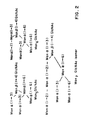
- Figs. 2 and 3 illustrate the structure of the high mannose type oligosaccharides, Man 5 GlcNAc, Man 6 GlcNAc, the two isomers of Man 7 GlcNAc, and Man 8 GlcNAc.
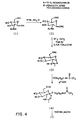
- Figs. 4 and 5 are a reaction scheme showing the preparation of an oligosaccharide-protein conjugate in accordance with the invention as described in Example 4.
- oligosaccharide derivatives used in embodiments of this invention are derived from any oligosaccharide containing a 2-acetamido-2-deoxyglucopyranose (GlcNAc) at the reducing terminus of the oligosaccharide.
- Suitable oligosaccharides include, but are not limited to, high mannose type oligosaccharides, hybrid-type oligosaccharides and complex-type oligosaccharides.
- oligosaccharides include oligosaccharides from glycoproteins and glycopeptides which are enzymatically released by the action of endoglycosidases such as endo-H and amidases such as N-Glycanase; or chemically released, for example, by hydrazinolysis.
- glycoproteins include high mannose glycoproteins such as 7S globulin (J. Biol. Chem. (1981) 256 pp. 7708), ribonuclease B (Hoppe Seyler's Biol. Chem. (1986) 367 pp. 191), and ovalbumin (J. Am. Chem. Soc. (1984) 106 pp.
- oligosaccharides The structure of high mannose type oligosaccharides are illustrated in Figs. 2 and 3. Other examples include complex-type glycoproteins such as ⁇ -1-acid glycoprotein, transferrin and fetuin (Anal. Bioch. (1987) 162 pp. 485), as well as hen ovomucoid (J. Biol. Chem. (1982) 257 pp. 12809) and turkey ovomucoid (J. Biol. Chem. (1983) 258 pp. 3099).
- the complex-type oligosaccharides may or may not be sialylated. However, in the chemical modification step, the desialylated complex oligosaccharide is preferred.
- the terminal sialic acid may be added in a later step using sialyl transferase.
- the invention features, in one embodiment, a method for the preparation of oxazolines from peracetyl saccharides containing an N-acetylglucosaminyl residue as the reducing terminus of the saccharide.
- the conditions utilized in this method are sufficient to catalyze formation of the oxazoline from either the ⁇ or ⁇ anomer of the peracetyl saccharide, yet mild enough so that no concommitant glycosidic bond cleavage is detected.
- the method involves reacting a peracetyl saccharide with a particular combination of reactive compounds capable of catalyzing the formation of an intermediate acetoxonium ion so as to subsequently produce the peracetyl oxazoline.
- the critical aspect of this embodiment is the judicious combination of two reagents, which when used in tandem, catalyze oxazoline formation.
- a peracetyl oxazoline may be prepared from a peracetyl saccharide which may be derived from either a naturally occurring or a synthetic mono-, di-, or oligosaccharide containing an N-acetyl-glucosamine at the reducing terminus of the saccharide.
- the oligosaccharide obtained from natural sources may be produced by digestion of an N-Linked glycoprotein or glycopeptide, with either (1) an endoglycosidase such as endo-H or (2) an amidase such as N-glycanase or they may be obtained by (3) hydrazinolysis of the N-linked glycoprotein or glycopeptide.
- a peracetyl oligosaccharide is derived from natural sources it may be either a high-mannose, a complex or a hybrid oligosaccharide.
- the oligosaccharide will typically contain one to twelve residues of neutral hexoses, with at least one residue, the reducing terminal residue, being an N-acetylhexosamine.
- the oligosaccharide may also contain fucose or sialic acid residues.
- the reducing N-acetylglucosamine residue may be present in either the ⁇ or the ⁇ configuration.
- While the preferred protecting group for the hydroxyl functionalities of the oligosaccharide is the acetyl residue
- other protecting groups are amenable for oxazoline preparation.
- pertrichloroacetyl, pertrifluoroacetyl or perbenzoyl oligosaccharides may also be used to generate reactive oligosaccharide oxazoline derivatives.
- Perbenzoyl oligosaccharides are, by contrast, hydrolytically more stable than their peracetate analogs.
- the peracetyl saccharide is reacted with a combination of reagents capable of generating the formation of intermediates 1, 2, or 3 (Fig. 1).
- the initial acetolysis catalyzed by the reagent combination may lead to the formation of an intermediate glycosyl halide 1, an intimate ion-pair 2, or a glycosyl cation 3 (Fig. 1).
- all three intermediates may undergo neighboring-group addition of the C-2 N-acetamide group to preferentially or exclusively yield the peracetyl oxazoline.
- Glycosyl halide 1 may undergo an intramolecular S N 2 reaction or similarly heterolysis of the C-1 halogen bond may lead to the intimate ion pair 2 or the glycosyl cation 3, both of which are stabilized immediately by intramolecular attack of the C-2 acetamide group.
- the final product is peracetyl oxazoline.
- Reagent combinations capable of generating the desired peracetyl oxazoline include, but are not limited to, mixtures of boron trifluoride-etherate (BF 3 -OEt 2 ) and bromotrimethylsilane (TMS-Br), chlorotrimethylsilane (TMS-Cl), or iodotrimethylsilane (TMS-I).
- BF 3 -OEt 2 The combination of BF 3 -OEt 2 and TMS-Br is preferred.
- One fifth equivalent of the peracetyl saccharide is reacted with a ratio of one equivalent of BF 3 -OEt 2 to one to ten equivalents of TMS-Cl or TMS-Br, with a ratio of one equivalent of BF 3 -OEt 2 to one equivalent of TMS-Cl or TMS-Br being preferred.
- an acid scavenger per equivalent of BF 3 -OEt 2 may be added to the reaction mixture so as to accelerate oxazoline product formation and protect against any acid-catalyzed decomposition of the oxazoline product.
- 2,4,6-collidine; pyridine; dimethylaminopyridine : N,N diisopropyl-ethylamine ; triethylamine; or other tertiary amines may be used as the acid scavenger, with 2,4,6-collidine being preferred.
- the foregoing method is carried out in an anhydrous organic solvent with dichloroethane being preferred.
- the reaction conditions include temperatures of 0°C to 50°C, and times of 2 to 24 hours with a preferred temperature being 20°C and a preferred time being 2 hours.
- the reaction may be monitored by thin layer chromatography (tlc) on glass plates coated with analytical grade silica gel using 10:1 (v/v) chloroform-methanol or 10:1 (v/v) ethyl acetatemethanol as the solvent system.
- the product perecetyl oxazoline may be isolated and purified by silica gel column chromatography.
- the reaction mixture is washed with water, the organic layer is dried over Na 2 SO 4 , concentrated, and the crude high-mannose oligosaccharide oxazoline is purified by column chromatography on Kieselgel 60 silica (230-400 mesh) with elution effected by 40:1 chloroform-methanol. The yield is approximately 95% based on the peracetyl saccharide.
- the peracetyl oxazolines prepared according to this invention may be used as glycosyl donors in the chemical synthesis of oligosaccharides, glycolipids, glycopeptides, glycoproteins, and other useful ⁇ -D-glycosides.
- any of the aforementioned intermediates (1, 2, or 3) may react to form oxazoline.
- the reagent combination may be a 1:1 mixture of bromotrimethylsilane or chlorotrimethylsiliane, and boron trifluoride etherate.
- an acid scavenger such as 2,4,6-collidine, for example, may be used to accelerate oxazoline generation and also to prevent acid catalyzed decomposition of both the oxazoline and the starting saccharide.
- the present invention provides a method greatly superior to the method of Nakabayashi et al. (op. cit.) which was found to be unsuitable for the generation of oxazoline from the predominant alpha anomers of Man n GlcNAc (where n is an integer in the range from and including 5 through 8) oligosaccharides isolated from the soybean 7S globulin.
- Table 1 shows data describing the reaction of 2-acetamido-1,3,4,6-tetra-O-acetyl-2-deoxy- ⁇ -D-glucopyranose with various combinations of the reagents TMS-bromide and BF 3 etherate.
- Table 2 shows data describing the reaction of 2-acetamido-1,3,4,6-tetra-O-acetyl-2-deoxy- ⁇ -D-glucopyranose with a 1:1 ratio of TMS-bromide and BF 3 -OEt 2 in the presence of various amounts of the acid scavenger 2,4,6-collidine.
- the present invention provides methods superior to currently available methods for preparing peracetyl oxazolines from structurally complex oligosaccharides. Due to the mild reaction conditions, peracetyl oligosaccharides containing acid-labile linkages may be used in the process of this invention. Unlike most previously reported methods, the invention can work equally well with either the alpha or the beta anomer of the starting peracetyl saccharide.
- the next step is the acid-catalyzed addition of a bifunctional spacer to the oligosaccharide-oxazoline.
- the reaction yields specifically a ⁇ -glycosidic bond between the terminal GlcNAc of the oligosaccharide and the bifunctional spacer.
- the bifunctional spacer may then be represented by A'-B-C where A' is a functional group which is reactive towards the oxazoline, and B and C are as described above.
- A' is a functional group which is reactive towards the oxazoline
- B and C are as described above.
- bifunctional spacers reported in the literature (for example, those cited in Methods in Enzymology 91 , Part 1, pp. 581-609; and Handbook of Fluorescent Probes and Research Chemicals, Molecular Probes Inc. (1989)).
- a preferred embodiment of the bifunctional spacer may be represented by HO-(CH 2 ) n -X-Y-(CH 2 ) n -Z wherein:
- the bifunctional spacer may have the electrophilic group, for example already attached, or it may be masked by protecting groups such as HNC(O)CF 3 , which may be deprotected and further functionalized after the addition to the oligosaccharide-oxazoline.
- protecting groups such as HNC(O)CF 3
- N-trifluoracetyl-5-amino-pentanol a bifunctional spacer, is allowed to react with oligosaccharide-oxazoline in the presence of p-toluenesulfonic acid. The reaction proceeds at ambient temperature, under a nitrogen atmosphere for 16 hr.
- the O- and N- protecting groups on the resultant oligosaccharide-spacer conjugate are removed by treatment with NaOMe/MeOH in ambient temp for 4-24 hr.
- the oligosaccharide-spacer conjugate so obtained is further functionalized with the addition of an electrophilic moiety.
- Suitable reagents for such transformation include agents such as: where M is an aromatic ring or (CH 2 ) n , where n is an integer from and including 1 through 5.
- the oligosaccharide-oxazoline is treated with trimethylsilyl-azide in the presence of a Lewis acid such as tin(IV) chloride.
- a Lewis acid such as tin(IV) chloride.
- the resultant oligosaccharide-azide is subsequently reduced to give the 1-amino-oligosaccharide.
- the reduction may be accomplished by hydride transfer, for example using lithium aluminum hydride, or by catalytic hydrogenation, for example using palladium(0) on charcoal or platinum oxide (Adams catalyst) as catalysts.
- the 1-amino-oligosaccharide so obtained may be coupled with bifunctional spacers such as:
- proteins being utilized for the synthesis of oligosaccharide-protein conjugates using the methods of this invention include, but are not limited to, proteins of therapeutic value such as serum albumin, ⁇ -interferon, granulocyte-colony stimulating factor (G-CSF), superoxide dismutase and interleukin-2.
- proteins of therapeutic value such as serum albumin, ⁇ -interferon, granulocyte-colony stimulating factor (G-CSF), superoxide dismutase and interleukin-2.
- conjugates may be formed similarly with peptides and polypeptides.
- the use of the term "protein” in the disclosure and claims herein, in this context, is introduced to include peptides and polypeptides.
- the proteins utilized in embodiments of this invention include those possessing nucleophilic groups such as cysteine, lysine, or histidine.
- the cysteines may be present either as a free cysteine or as a disulfide.
- these sulfhydryl groups are not required for the biological activities of the protein being modified.
- These sulfhydryl groups may be sterically or chemically accessible, for example, Cys-34 on bovine serum albumin, which may react readily with the activated oligosaccharide in the conjugation step. Others may resist chemical modification due to steric hindrance or disulfide formation.
- Nucleophilic groups that are sterically inaccessible may be exposed for reaction by adding denaturants such as urea or guanidine, or by adding detergents like Tween-20 (a Trade Mark) and sodium dodecylsulfate.
- Denaturants such as urea or guanidine
- detergents like Tween-20 (a Trade Mark) and sodium dodecylsulfate.
- Disulfides on proteins, for example, those on murine ⁇ -interferon can be reductively cleaved by reagents such as dithiothreitol, 2-mercaptoethanol or sodium borohydride. The reductively exposed sulfhydryls may then be reacted with the activated oligosaccharides.
- Neoglycoproteins obtained in accordance with an embodiment of this invention may be represented by the formula: Os-A-B-C-Nu-Pr wherein:
- the protein-oligosaccharide conjugate is formed by reacting the suitably prepared protein with the activated oligosaccharide derivatives, preferably in molar ratios of 1:1 to 1:30 respectively, in aqueous buffered solution, at a pH of 7 to 9.
- the reaction is usually performed under a nitrogen atmosphere, at temperatures from 0 to 37°C, for a time period ranging from one to twenty-four hours.
- Examples of such a reaction include: wherein an oligosaccharide activated with N-bromoacetylaminopentyl group is allowed to react with a protein that has been suitably prepared, or wherein an oligosaccharide activated with an acylazide group is allowed to react with a protein that has been suitably prepared.
- the excess activated oligosaccharide derivative may be removed by standard methods such as dialysis and gel filtration.
- the protein-oligosaccharide conjugate may be purified by affinity lectin chromatography.
- Concanavalin A is a lectin which has high specificity for high-mannose type oligosaccharide.
- the mixture of unreacted native protein and high-mannose oligosaccharide-protein conjugate is applied onto a Con A lectin column which is equilibrated at a temperature of 4° to 25°C with the appropriate buffer.
- the unreacted native protein is collected in the void volume of the lectin column while the neoglycoprotein is eluted with 0.5M methyl mannoside.
- the excess methyl mannoside may be removed by dialysis, by gel filtration or by ultrafiltration through an Amicon system.
- High performance liquid chromatography may also be used to purify neoglycoprotein from unreacted native protein. Glycosylation of proteins usually leads to increased hydrophilicity, which leads to a shorter retention time on a reverse-phase HPLC column. Ion exchange HPLC may also be applied towards the purification of proteins modified with ionic oligosaccharides, such as those containing sialic acids.
- the oligosaccharide-protein conjugate can be analyzed by SDS-polyacrylamide gel electrophoresis according to the procedure of Laemmli (Nature (1970) 227 pp. 680-685).
- the oligosaccharide-protein conjugate has a higher molecular weight than the native protein.
- the difference in molecular weight of the oligosaccharide-protein conjugate and the native protein is the weight of the oligosaccharide covalently bound to the protein.
- Lectin blots using a lectin that has high affinity for the particular oligosaccharide, for example, concanavalin A lectin for high mannose type oligosaccharide further prove the association of the oligosaccharide with the protein.
- Analysis of the reaction mixture, obtained from the conjugation step in part C by HPLC, may also provide information on the percentage of protein labelled with oligosaccharide.
- the oligosaccharide-protein conjugate may also be analyzed by high-resolution mass spectroscopy.
- a radiolabeled oligosaccharide derivative may be used in the conjugation step described in part C.
- the oligosaccharide-amine is allowed to react with the N-hydroxysuccinimidyl-[ 14 C]-bromoacetate.
- the 14 C) -labeled activated oligosaccharide is conjugated to the protein.
- the purified radiolabelled oligosaccharide-protein conjugate is subjected to PICO-TAGTM amino acid analysis (Waters Assoc.).
- the dried radiolabeled oligosaccharide-protein conjugate is hydrolyzed to its free amino acids with 6N HCl for 20 to 24 hr.
- the amino acids are derivatized with phenylisothiocyanate for 20 min at 20 to 25°C and the derivatives analyzed by reverse-phase HPLC.
- the presence of radiolabelled carboxymethylcysteine proves that the cysteine residue of the protein is covalently modified with the oligosaccharide.
- the radiolabeled oligosaccharide-protein conjugate may be fragmented by treatment with cyanogen bromide, or by digestion with proteases such as trypsin, chymotrypsin, endoproteinase C, ficin, and carboxypeptidases.
- the peptide fragments thus obtained may be analyzed by HPLC methods and those fragments containing the radiolabeled cysteine are collected.
- the amino acid sequence of these fragments may be determined by standard procedures. A comparison of the amino acid sequence of these fragments with those of the native protein may yield information on the exact location of the labeled cysteine residue.
- neoglycoprotein conjugates from oligosaccharides and therapeutically valuable proteins can provide proteins with improved biological and physiochemical properties.
- the neoglycoprotein conjugates may have reduced tendencies toward aggregation and higher solubilities in aqueous medium.
- the high mannose oligosaccharide-modified G-CSF has a shorter retention time on a reverse phase HPLC column, which suggests higher hydrophilicity.
- the addition of an oligosaccharide moiety to a therapeutically useful protein may also enhance its stability towards denaturation and proteolytic degradation.
- the neoglycloproteins may also be used for improved drug delivery.
- neoglycoproteins may be delivered to specific tissues of the body.
- high mannose oligosaccharide-modified proteins may be targeted specifically to macrophages where cell surface receptors for high mannose oligosaccharides are located.
- complex-type oligosaccharide-modified proteins may be targeted specifically to hepatocytes.
- Example 1 Preparation of the Oxazoline Derivative of 2-Acetamido-1,3,4,6-tetraacetyl-2-deoxy- ⁇ -D-glucopyranose (GlcNAc peracetate).
- Example 2 Preparation of the Oxasoline Derivative of Chitobiose (GlcNAc ⁇ -1 ⁇ 4GlcNac) Peracetate.
- chitobiose (GlcNAc ⁇ -1 ⁇ 4GlcNAc) (Sigma, 135 mg, 0.2 mmol) was dissolved in 4 ml of anhydrous 1,2-dichloroethane (Aldrich). Addition of bromotrimethyl silane (Aldrich, 124 ⁇ l, 0.9 mmol), boron trifluoride etherate (Aldrich, 111 ⁇ l, 0.9 mmol) and 2,4,6-collidine (Aldrich, 120 ⁇ l, 0.9 mmol) was made via syringe. The mixture was allowed to stir at 20°C overnight.
- Example 3 Process for the Preparation of the Oxazoline from a Man n GlcHAc Oligosaccharide.
- n GlcNAc peracetate where n is an integer in the range from and including 5 through 8
- n is an integer in the range from and including 5 through 8
- Addition of bromotrimethylsilane (Aldrich, 40 ⁇ l, 0.29 mmol), boron trifluoride etherate (Aldrich, 40 ⁇ l, 0.30 mmol) and 2,4,6-collidine (Aldrich, 45 ⁇ l, 0.3 mmol) was made via syringe. The mixture was allowed to stir at 20°C overnight.
- Example 4 Preparation of 7S-Oligosaccharide - Bovine Serum Albumin Conjugate.
- the 7S-oligosaccharide mixture 1 (Fig. 4), released from 7S globulin fractions of soybean meal by endonuclease H, is comprised of a mixture of high mannose type oligosaccharides with the general structure represented by Man 4 -9-GlcNAc (Fig. 4).
- the 7S-oligosaccharide mixture 1 (254 mg) is treated with acetic anhydride in pyridine, at 22 - 25°C, under a nitrogen atmosphere, for 16 hrs.
- the 7S-oligosaccharide peracetate 2 (Fig. 4) forms a precipitate upon addition of ice. The peracetate is collected and dissolved in a minimum amount of chloroform.
- the oligosaccharide oxazoline-peracetate 3 so obtained is dissolved in dry 1,2-dichloroethane and treated with five to ten molar equivalents of 5-(N-trifluoroacetyl)amino-1-pentanol and p-toluenesulfonic acid.
- the reaction mixture is kept at ambient temperature (22-25°C), under a nitrogen atmosphere for 16-48 hrs.
- Analysis by thin layer chromatography (10:1 v/v chloroform/methanol) shows the formation of a new species 4 (Fig. 4) with lower Rf than the starting oxazoline.
- the reaction mixture is evaporated under reduced pressure to dryness and is used in the next step without purification.
- the O-acetates and N-trifluoroacetates on the (N-trifluoroacetyl)5-aminopentyl-7S-oligosaccharide-peracetate 4 are removed by treatment with 0.2M sodium methoxide in methanol for 16 hrs at ambient temperature. At the end of the said time period, the excess methoxide is neutralized by bubbling carbon dioxide through the reaction mixture for 30 min. The methanol solvent is evaporated under reduced pressure and the resulting solid dissolved in distilled water. The aqueous solution of 5-aminopentyl-oligosaccharide 5 (Figs. 4 and 5) thus obtained is desalted using an Amicon ultrafiltration system (YC05 membrane, molecular weight cutoff: 500).
- the aqueous solution retained in the ultrafiltration unit is lyophilized to a powder.
- the powder so obtained is further purified on a Biogel-P2 gel filtration column equilibrated with 50 mM ammonium bicarbonate solution. Fractions containing the desired 5-aminopentyl-oligosaccharide 5 are combined and lyophilized to yield a white fluffy powder (52 mg).
- BSA Bovine Serum Albumin
- the 7S-oligosaccharide was covalently attached to an exposed, accessible cysteine on the protein, namely Cys-34 of bovine serum albumin.
- a solution containing 0.5 mg/ml of bovine serum albumin in 0.05M sodium phosphate, 1mM EDTA, 1% glycerol, pH 7.5 is added to the N-bromoacetyl-5-aminopentyl-7S-oligosaccharide derivative obtained as described above.
- the molar ratio of the activated oligosaccharide derivative to the protein is preferred to be 20:1 or greater.
- the mixture so obtained is kept in the dark, under a nitrogen atmosphere for 16 hrs. At the end of the said time period, the mixture is dialyzed against several changes of water.
- reaction mixture so obtained was analyzed by SDS-polyacrylamide gel electrophoresis.
- Concanavalin A lectin blot of the gel shows high mannose oligosaccharide associated only with new oligosaccharide-protein conjugate.
- the 7S-oligosaccharide-BSA conjugate which bound to the lectin column, was eluted with 0.01M sodium phosphate, 0.5M sodium chloride, 0.5M methyl mannoside, pH 6.8. Fractions collected were assayed according to Bradford and fractions containing the neoglycoprotein were combined (113 ⁇ g).
- This example describes the covalent attachment of 7S-oligosaccharide to a cysteine on murine- ⁇ -interferon.
- This cysteine is exposed by reductive cleavage of an intermolecular disulfide bridge.
- the murine ⁇ -interferon is obtained from Genentech Co., California.
- To 1 mg (0.07 ⁇ mol) of ⁇ -interferon in 1 ml of 0.1M sodium phosphate 0.5M sodium chloride pH 7.8 is added ⁇ -mercaptoethanol (12 ⁇ l, 0.17 mmole).
- the mixture so obtained is incubated at ambient temperature (22 - 25°C), in the absence of light, under a nitrogen atmosphere for 3 hrs.
- the reduced murine ⁇ -interferon is purified on a Biogel-P6 column equilibrated with 0.05M sodium phosphate, 1 mM EDTA, 5% glycerol pH 6.8.
- the protein, eluted in the void volume, is added to bromoacetylated-5-aminopentyl-7S-oligosaccharide derivative (2.4 mg, 1.5 ⁇ mol).
- the mixture so obtained is incubated at ambient temperature (22 - 25°C), in the absence of light, under a nitrogen atmosphere for 16 hrs.
- the excess bromoacetylated-5-aminopentyl-7S-oligosaccharide derivative is removed from the reaction mixture by passing it through a Biogel-P6 gel filtration column equilibrated with Concanavalin A buffer (0.5M sodium chloride, 0.01M sodium phosphate, 1 mM calcium (II) chloride, 1 mm magnesium (II) chloride, 1 mM manganese (II) chloride, pH 6.8).
- Concanavalin A buffer 0.5M sodium chloride, 0.01M sodium phosphate, 1 mM calcium (II) chloride, 1 mm magnesium (II) chloride, 1 mM manganese (II) chloride, pH 6.8.
- Concanavalin A buffer 0.5M sodium chloride, 0.01M sodium phosphate, 1 mM calcium (II) chloride, 1 mm magnesium (II) chloride, 1 mM manganese (II) chloride, pH 6.8.
- This example describes the covalent attachment of 7S-oligosaccharide to an inaccessible cysteine on a protein, for example, Cys-17 of granulocyte-colony stimulating factor.
- Recombinant granulocyte-colony stimulating factor (rG-CSF), isolated from Chinese hamster ovary cells, is obtained from Chugai Pharmaceutical Co., Japan.
- a solution of rG-CSF (13 nmole/ml, 250 ⁇ g/ml) in 4 ml of 0.01M sodium phosphate, 0.1M sodium chloride, pH 7.9 is added under a nitrogen atmosphere to a twenty-five fold molar excess of N-bromoacetyl-5-aminopentyl-7S-oligosaccharide.
- Solid urea is added to this mixture so that the final concentration of the denaturant is 6M.
- the reaction is allowed to proceed in the dark, at ambient temperature (22-25°C) for 1.5 hrs.
- the reaction mixture so obtained is dialyzed against 0.01M sodium phosphate, 0.1M sodium chloride, 3M urea, pH 7.6 so as to renature the protein.
- SDS-Gel electrophoresis of the reaction mixture by nonreducing, 10 to 20% polyacrylamide gel indicates the formation of a new protein species with a molecular weight which is approximately 2 kDa larger than the native rG-CSF.
- a concanavalin A lectin blot verifies that high mannose oligosaccharide is only associated with this new protein species.
- the dialysate is injected onto a C18 column (Waters deltapak, 5 ⁇ particle size, 300 A pore size, 3.9mm x 150mm), equilibrated with a buffer consisting of 37:63 isopropanol (IPA)/0.025 M sodium phosphate, pH 6.5.
- the glycoprotein conjugate is separated from the unmodified protein using a linear gradient of 37% IPA to 43% IPA (flow rate 1 ml/min) as the eluant.
- the glycoprotein conjugate has a shorter retention time than the unmodified protein.
Landscapes
- Chemical & Material Sciences (AREA)
- Organic Chemistry (AREA)
- Molecular Biology (AREA)
- Life Sciences & Earth Sciences (AREA)
- Biochemistry (AREA)
- Biotechnology (AREA)
- General Health & Medical Sciences (AREA)
- Genetics & Genomics (AREA)
- Health & Medical Sciences (AREA)
- Engineering & Computer Science (AREA)
- Crystallography & Structural Chemistry (AREA)
- Peptides Or Proteins (AREA)
- Medicinal Preparation (AREA)
- Medicines That Contain Protein Lipid Enzymes And Other Medicines (AREA)
- Preparation Of Compounds By Using Micro-Organisms (AREA)
- Saccharide Compounds (AREA)
Priority Applications (1)
| Application Number | Priority Date | Filing Date | Title |
|---|---|---|---|
| EP98104031A EP0860442B1 (en) | 1990-05-25 | 1991-05-24 | Oligosaccharide conjugates and methods of preparation thereof |
Applications Claiming Priority (3)
| Application Number | Priority Date | Filing Date | Title |
|---|---|---|---|
| US07/529,343 US5241072A (en) | 1990-05-25 | 1990-05-25 | Oligosaccharide oxazolines, oligosaccharide conjugates and methods of preparation thereof |
| US529343 | 1990-05-25 | ||
| PCT/US1991/003687 WO1991018911A2 (en) | 1990-05-25 | 1991-05-24 | Oligosaccharide oxazolines, oligosaccharide conjugates and methods of preparation thereof |
Related Child Applications (1)
| Application Number | Title | Priority Date | Filing Date |
|---|---|---|---|
| EP98104031A Division EP0860442B1 (en) | 1990-05-25 | 1991-05-24 | Oligosaccharide conjugates and methods of preparation thereof |
Publications (2)
| Publication Number | Publication Date |
|---|---|
| EP0535052A1 EP0535052A1 (en) | 1993-04-07 |
| EP0535052B1 true EP0535052B1 (en) | 1998-09-16 |
Family
ID=24109524
Family Applications (2)
| Application Number | Title | Priority Date | Filing Date |
|---|---|---|---|
| EP91911062A Expired - Lifetime EP0535052B1 (en) | 1990-05-25 | 1991-05-24 | Oligosaccharide oxazolines, oligosaccharide conjugates and methods of preparation thereof |
| EP98104031A Expired - Lifetime EP0860442B1 (en) | 1990-05-25 | 1991-05-24 | Oligosaccharide conjugates and methods of preparation thereof |
Family Applications After (1)
| Application Number | Title | Priority Date | Filing Date |
|---|---|---|---|
| EP98104031A Expired - Lifetime EP0860442B1 (en) | 1990-05-25 | 1991-05-24 | Oligosaccharide conjugates and methods of preparation thereof |
Country Status (6)
| Country | Link |
|---|---|
| US (2) | US5241072A (enExample) |
| EP (2) | EP0535052B1 (enExample) |
| JP (1) | JP3217059B2 (enExample) |
| CA (1) | CA2081665C (enExample) |
| DE (3) | DE860442T1 (enExample) |
| WO (1) | WO1991018911A2 (enExample) |
Families Citing this family (29)
| Publication number | Priority date | Publication date | Assignee | Title |
|---|---|---|---|---|
| US5718893A (en) * | 1984-04-15 | 1998-02-17 | Foster; Preston F. | Use of G-CSF to reduce acute rejection |
| JP2794678B2 (ja) | 1991-08-26 | 1998-09-10 | 株式会社 半導体エネルギー研究所 | 絶縁ゲイト型半導体装置およびその作製方法 |
| US5485019A (en) | 1992-02-05 | 1996-01-16 | Semiconductor Energy Laboratory Co., Ltd. | Semiconductor device and method for forming the same |
| DE4204315A1 (de) * | 1992-02-13 | 1993-08-19 | Consortium Elektrochem Ind | Cyclodextringlycoside und verfahren zu ihrer herstellung |
| US6624450B1 (en) | 1992-03-27 | 2003-09-23 | Semiconductor Energy Laboratory Co., Ltd. | Semiconductor device and method for forming the same |
| FR2693907B1 (fr) * | 1992-07-23 | 1994-09-02 | Rhone Poulenc Rorer Sa | Procédé d'administration de solutions de facteur de stimulation des colonies granulocytaires. |
| EP0601417A3 (de) * | 1992-12-11 | 1998-07-01 | Hoechst Aktiengesellschaft | Physiologisch verträglicher und physiologisch abbaubarer, Kohlenhydratrezeptorblocker auf Polymerbasis, ein Verfahren zu seiner Herstellung und seine Verwendung |
| US5536495A (en) * | 1994-04-15 | 1996-07-16 | Foster; Preston F. | Use of G-CSF to reduce acute rejection |
| YU32402A (sh) * | 1999-11-12 | 2005-03-15 | Maxygen Holdings Ltd. | Konjugati gama interferona |
| AU782635B2 (en) * | 1999-11-12 | 2005-08-18 | Maxygen Holdings Ltd. | Interferon gamma conjugates |
| PL356007A1 (en) * | 1999-11-12 | 2004-05-31 | Maxygen Holdings Ltd | Interferon gamma conjugates |
| US7186425B2 (en) * | 2000-09-29 | 2007-03-06 | Fuji Oil Company, Ltd. | Composition for diminishing neutral fat in blood |
| JPWO2002066496A1 (ja) * | 2001-02-20 | 2004-06-17 | タカラバイオ株式会社 | 修飾剤 |
| US6958388B2 (en) | 2001-04-06 | 2005-10-25 | Maxygen, Aps | Interferon gamma polypeptide variants |
| US7038015B2 (en) | 2001-04-06 | 2006-05-02 | Maxygen Holdings, Ltd. | Interferon gamma polypeptide variants |
| JP2005500532A (ja) | 2001-08-16 | 2005-01-06 | アナライザ, インコーポレーテッド | 溶解度を測定するための方法 |
| ES2342713T3 (es) * | 2001-11-12 | 2010-07-13 | Analiza, Inc. | Caracterizacion de moleculas. |
| US7299805B2 (en) * | 2002-06-07 | 2007-11-27 | Marctec, Llc | Scaffold and method for implanting cells |
| US7524931B2 (en) | 2002-07-03 | 2009-04-28 | Maxygen Holdings Ltd. | Full-length interferon gamma polypeptide variants |
| US8099242B2 (en) * | 2003-06-12 | 2012-01-17 | Analiza, Inc. | Systems and methods for characterization of molecules |
| US7220407B2 (en) | 2003-10-27 | 2007-05-22 | Amgen Inc. | G-CSF therapy as an adjunct to reperfusion therapy in the treatment of acute myocardial infarction |
| ATE544463T1 (de) | 2004-11-05 | 2012-02-15 | Univ Northwestern | Verwendung von scf und g-scf bei der behandlung von hirnischämie und neurologischen störungen |
| KR20080080390A (ko) * | 2005-12-19 | 2008-09-03 | 애널라이자, 인크. | 스펙트럼 생체마커와 같은 데이터 패턴과 관련된 시스템 및방법 |
| US10613087B2 (en) | 2012-08-10 | 2020-04-07 | Analiza, Inc. | Methods and devices for analyzing species to determine diseases |
| US9678076B2 (en) | 2014-06-24 | 2017-06-13 | Analiza, Inc. | Methods and devices for determining a disease state |
| JP6666901B2 (ja) | 2014-08-08 | 2020-03-18 | グラクソスミスクライン バイオロジカルズ ソシエテ アノニム | バイオコンジュゲート生成において使用するための改変型宿主細胞 |
| JP7773169B2 (ja) * | 2021-02-24 | 2025-11-19 | 学校法人 中央大学 | ポリオキサゾリン結合アルブミン、人工血漿増量剤及び出血ショックの蘇生液 |
| KR20240124906A (ko) | 2021-10-28 | 2024-08-19 | 클리블랜드 다이어그노스틱스, 인크 | 암의 다중 유형을 결정하기 위한 분배 시스템 및 방법 |
| WO2026052110A1 (en) * | 2024-09-09 | 2026-03-12 | Genequantum Healthcare (Suzhou) Co., Ltd. | Enzyme-catalyzed site-specific antibody-oligonucleotide conjugates (aocs) conjugation method |
Family Cites Families (6)
| Publication number | Priority date | Publication date | Assignee | Title |
|---|---|---|---|---|
| SE8203925D0 (sv) * | 1982-06-23 | 1982-06-23 | Svenska Sockerfabriks Ab | New and novel glycosides, glycoconjugates and processes for their preparation |
| NZ214503A (en) * | 1984-12-20 | 1990-02-26 | Merck & Co Inc | Covalently-modified neutral bacterial polysaccharides, stable covalent conjugates of such polysaccharides and immunogenic proteins, and methods of preparing such polysaccharides and conjugates |
| DK17685D0 (da) * | 1985-01-14 | 1985-01-14 | Hans Goeran Magnusson | Glycosidderivater |
| DE3505150A1 (de) * | 1985-02-15 | 1986-08-21 | Basf Ag, 6700 Ludwigshafen | Verfahren zur herstellung von zuckerketalen |
| US4785084A (en) * | 1986-07-31 | 1988-11-15 | The General Hospital Corporation | Method of preparing peracetyl oxazolines |
| ATE171953T1 (de) * | 1986-12-11 | 1998-10-15 | Genzyme Corp | Ein verfahren zur herstellung eines 1-amino-1- deoxyoligosaccharid-derivats |
-
1990
- 1990-05-25 US US07/529,343 patent/US5241072A/en not_active Expired - Fee Related
-
1991
- 1991-05-24 JP JP51064591A patent/JP3217059B2/ja not_active Expired - Fee Related
- 1991-05-24 DE DE0860442T patent/DE860442T1/de not_active Ceased
- 1991-05-24 WO PCT/US1991/003687 patent/WO1991018911A2/en not_active Ceased
- 1991-05-24 DE DE69130221T patent/DE69130221T2/de not_active Expired - Fee Related
- 1991-05-24 DE DE69132586T patent/DE69132586T2/de not_active Expired - Fee Related
- 1991-05-24 EP EP91911062A patent/EP0535052B1/en not_active Expired - Lifetime
- 1991-05-24 CA CA002081665A patent/CA2081665C/en not_active Expired - Fee Related
- 1991-05-24 EP EP98104031A patent/EP0860442B1/en not_active Expired - Lifetime
-
1992
- 1992-10-13 US US07/959,701 patent/US5659015A/en not_active Expired - Fee Related
Also Published As
| Publication number | Publication date |
|---|---|
| US5241072A (en) | 1993-08-31 |
| WO1991018911A3 (en) | 1992-05-14 |
| JP3217059B2 (ja) | 2001-10-09 |
| JPH05507487A (ja) | 1993-10-28 |
| DE69132586D1 (de) | 2001-05-23 |
| DE69130221T2 (de) | 1999-01-21 |
| WO1991018911A2 (en) | 1991-12-12 |
| CA2081665A1 (en) | 1991-11-26 |
| DE69132586T2 (de) | 2002-04-11 |
| DE69130221D1 (de) | 1998-10-22 |
| EP0860442A1 (en) | 1998-08-26 |
| CA2081665C (en) | 2002-01-01 |
| EP0535052A1 (en) | 1993-04-07 |
| EP0860442B1 (en) | 2001-04-18 |
| US5659015A (en) | 1997-08-19 |
| DE860442T1 (de) | 1999-04-22 |
Similar Documents
| Publication | Publication Date | Title |
|---|---|---|
| EP0860442B1 (en) | Oligosaccharide conjugates and methods of preparation thereof | |
| Sears et al. | Carbohydrate mimetics: a new strategy for tackling the problem of carbohydrate‐mediated biological recognition | |
| Schmidt | New methods for the synthesis of glycosides and oligosaccharides—are there alternatives to the Koenigs‐Knorr method?[New synthetic methods (56)] | |
| EP0589933B1 (en) | Methods for the enzymatic synthesis of alpha-sialylated oligosaccharide glycosides | |
| WO1995029927A2 (en) | Process for preparation of glycosides of tumor-associated carbohydrate antigens | |
| JP3375129B2 (ja) | 炭水化物の酵素的合成法 | |
| USRE39245E1 (en) | Galactopyranosides and their use | |
| EP0299007A1 (en) | Preparation of 1-amino-1-deoxyoligosaccharides and derivatives thereof | |
| CA1298291C (en) | Method of preparing peracetyl oxazolines | |
| EP0779932B1 (en) | Amino acid conjugate | |
| JPH06510661A (ja) | ジーn−アセチルラクトサミニル構造で終わるモノフコシル化オリゴ糖の合成法 | |
| EP0830365B1 (en) | Modified kojibiosides analogues | |
| Kuberan et al. | Preparation and isolation of neoglycoconjugates using biotin-streptavidin complexes | |
| US6183994B1 (en) | N-containing saccharides and method for the synthesis of N-containing saccharides from amino-deoxy-disaccharides and amino-deoxy-oligosaccharides | |
| Brito-Arias | Glycoconjugates | |
| EP0919563A2 (en) | Synthetic Core 2-Like Branched Structures as Ligands for Selectins | |
| US20240409571A1 (en) | Chemoenzymatic synthesis of n-acetylated gangliosides and glycosphingosines | |
| JP3732871B2 (ja) | 複合糖質の製造方法 | |
| Lee et al. | Neoglycoproteins | |
| Lee et al. | Synthetic glycoconjugates | |
| US5324828A (en) | 1-amino-1-deoxyoligosaccharides and derivatives thereof | |
| Cato | Chemical synthesis of the O-linked oligosaccharide of P-Selectin Glycoprotein Ligand-1 |
Legal Events
| Date | Code | Title | Description |
|---|---|---|---|
| PUAI | Public reference made under article 153(3) epc to a published international application that has entered the european phase |
Free format text: ORIGINAL CODE: 0009012 |
|
| 17P | Request for examination filed |
Effective date: 19921222 |
|
| AK | Designated contracting states |
Kind code of ref document: A1 Designated state(s): DE FR GB SE |
|
| 17Q | First examination report despatched |
Effective date: 19941128 |
|
| GRAG | Despatch of communication of intention to grant |
Free format text: ORIGINAL CODE: EPIDOS AGRA |
|
| GRAG | Despatch of communication of intention to grant |
Free format text: ORIGINAL CODE: EPIDOS AGRA |
|
| GRAH | Despatch of communication of intention to grant a patent |
Free format text: ORIGINAL CODE: EPIDOS IGRA |
|
| GRAH | Despatch of communication of intention to grant a patent |
Free format text: ORIGINAL CODE: EPIDOS IGRA |
|
| GRAA | (expected) grant |
Free format text: ORIGINAL CODE: 0009210 |
|
| AK | Designated contracting states |
Kind code of ref document: B1 Designated state(s): DE FR GB SE |
|
| REF | Corresponds to: |
Ref document number: 69130221 Country of ref document: DE Date of ref document: 19981022 |
|
| ET | Fr: translation filed | ||
| PLBE | No opposition filed within time limit |
Free format text: ORIGINAL CODE: 0009261 |
|
| STAA | Information on the status of an ep patent application or granted ep patent |
Free format text: STATUS: NO OPPOSITION FILED WITHIN TIME LIMIT |
|
| 26N | No opposition filed | ||
| REG | Reference to a national code |
Ref country code: GB Ref legal event code: IF02 |
|
| PGFP | Annual fee paid to national office [announced via postgrant information from national office to epo] |
Ref country code: FR Payment date: 20030520 Year of fee payment: 13 |
|
| PGFP | Annual fee paid to national office [announced via postgrant information from national office to epo] |
Ref country code: SE Payment date: 20030521 Year of fee payment: 13 Ref country code: GB Payment date: 20030521 Year of fee payment: 13 |
|
| PGFP | Annual fee paid to national office [announced via postgrant information from national office to epo] |
Ref country code: DE Payment date: 20030626 Year of fee payment: 13 |
|
| PG25 | Lapsed in a contracting state [announced via postgrant information from national office to epo] |
Ref country code: GB Free format text: LAPSE BECAUSE OF NON-PAYMENT OF DUE FEES Effective date: 20040524 |
|
| PG25 | Lapsed in a contracting state [announced via postgrant information from national office to epo] |
Ref country code: SE Free format text: LAPSE BECAUSE OF NON-PAYMENT OF DUE FEES Effective date: 20040525 |
|
| PG25 | Lapsed in a contracting state [announced via postgrant information from national office to epo] |
Ref country code: DE Free format text: LAPSE BECAUSE OF NON-PAYMENT OF DUE FEES Effective date: 20041201 |
|
| EUG | Se: european patent has lapsed | ||
| GBPC | Gb: european patent ceased through non-payment of renewal fee |
Effective date: 20040524 |
|
| PG25 | Lapsed in a contracting state [announced via postgrant information from national office to epo] |
Ref country code: FR Free format text: LAPSE BECAUSE OF NON-PAYMENT OF DUE FEES Effective date: 20050131 |
|
| REG | Reference to a national code |
Ref country code: FR Ref legal event code: ST |