EP0507908B1 - Polypeptide mit einer aktivität des menschlichen dopaminergischen rezeptors, deren kodierende nukleinsäuresequenzen und verwendung dieser polypeptide - Google Patents
Polypeptide mit einer aktivität des menschlichen dopaminergischen rezeptors, deren kodierende nukleinsäuresequenzen und verwendung dieser polypeptide Download PDFInfo
- Publication number
- EP0507908B1 EP0507908B1 EP91918401A EP91918401A EP0507908B1 EP 0507908 B1 EP0507908 B1 EP 0507908B1 EP 91918401 A EP91918401 A EP 91918401A EP 91918401 A EP91918401 A EP 91918401A EP 0507908 B1 EP0507908 B1 EP 0507908B1
- Authority
- EP
- European Patent Office
- Prior art keywords
- nucleotide
- constituted
- sequence
- receptor
- nucleic acid
- Prior art date
- Legal status (The legal status is an assumption and is not a legal conclusion. Google has not performed a legal analysis and makes no representation as to the accuracy of the status listed.)
- Expired - Lifetime
Links
- 108020003175 receptors Proteins 0.000 title claims abstract description 129
- 102000005962 receptors Human genes 0.000 title claims abstract description 128
- 229920001184 polypeptide Polymers 0.000 title claims abstract description 80
- 108090000765 processed proteins & peptides Proteins 0.000 title claims abstract description 78
- 102000004196 processed proteins & peptides Human genes 0.000 title claims abstract description 78
- 230000003291 dopaminomimetic effect Effects 0.000 title claims abstract description 73
- 230000000694 effects Effects 0.000 title claims abstract description 16
- 150000007523 nucleic acids Chemical class 0.000 title claims description 96
- 108020004707 nucleic acids Proteins 0.000 title claims description 69
- 102000039446 nucleic acids Human genes 0.000 title claims description 69
- 239000013543 active substance Substances 0.000 title 1
- 238000012216 screening Methods 0.000 title 1
- 239000012634 fragment Substances 0.000 claims abstract description 58
- VYFYYTLLBUKUHU-UHFFFAOYSA-N dopamine Chemical compound NCCC1=CC=C(O)C(O)=C1 VYFYYTLLBUKUHU-UHFFFAOYSA-N 0.000 claims abstract description 41
- 229960003638 dopamine Drugs 0.000 claims abstract description 20
- 150000001413 amino acids Chemical class 0.000 claims abstract description 19
- 239000003446 ligand Substances 0.000 claims abstract description 17
- 239000000556 agonist Substances 0.000 claims abstract description 13
- 239000005557 antagonist Substances 0.000 claims abstract description 12
- 230000002285 radioactive effect Effects 0.000 claims abstract description 4
- 239000002773 nucleotide Substances 0.000 claims description 118
- 125000003729 nucleotide group Chemical group 0.000 claims description 117
- 239000000523 sample Substances 0.000 claims description 43
- 238000000034 method Methods 0.000 claims description 37
- 238000009396 hybridization Methods 0.000 claims description 32
- 108090000623 proteins and genes Proteins 0.000 claims description 30
- 230000035772 mutation Effects 0.000 claims description 24
- 239000013598 vector Substances 0.000 claims description 19
- OYPRJOBELJOOCE-UHFFFAOYSA-N Calcium Chemical compound [Ca] OYPRJOBELJOOCE-UHFFFAOYSA-N 0.000 claims description 18
- 239000012472 biological sample Substances 0.000 claims description 18
- 239000011575 calcium Substances 0.000 claims description 18
- 229910052791 calcium Inorganic materials 0.000 claims description 18
- 125000003275 alpha amino acid group Chemical group 0.000 claims description 16
- 238000001514 detection method Methods 0.000 claims description 15
- 238000004519 manufacturing process Methods 0.000 claims description 15
- 238000000338 in vitro Methods 0.000 claims description 14
- 230000003834 intracellular effect Effects 0.000 claims description 14
- 230000015572 biosynthetic process Effects 0.000 claims description 12
- 239000012528 membrane Substances 0.000 claims description 12
- 239000013612 plasmid Substances 0.000 claims description 12
- 108020004999 messenger RNA Proteins 0.000 claims description 11
- 102000004190 Enzymes Human genes 0.000 claims description 8
- 108090000790 Enzymes Proteins 0.000 claims description 8
- 238000003745 diagnosis Methods 0.000 claims description 8
- 102000004169 proteins and genes Human genes 0.000 claims description 8
- 230000001105 regulatory effect Effects 0.000 claims description 8
- 238000013519 translation Methods 0.000 claims description 7
- 230000003321 amplification Effects 0.000 claims description 6
- 210000004369 blood Anatomy 0.000 claims description 6
- 239000008280 blood Substances 0.000 claims description 6
- 230000000926 neurological effect Effects 0.000 claims description 6
- 238000003199 nucleic acid amplification method Methods 0.000 claims description 6
- 238000010367 cloning Methods 0.000 claims description 5
- 230000002526 effect on cardiovascular system Effects 0.000 claims description 5
- 230000001575 pathological effect Effects 0.000 claims description 5
- 230000009466 transformation Effects 0.000 claims description 5
- 108020004635 Complementary DNA Proteins 0.000 claims description 4
- 108020001019 DNA Primers Proteins 0.000 claims description 4
- 239000003155 DNA primer Substances 0.000 claims description 4
- 241000588724 Escherichia coli Species 0.000 claims description 4
- 230000001900 immune effect Effects 0.000 claims description 4
- 102000054765 polymorphisms of proteins Human genes 0.000 claims description 4
- 230000010076 replication Effects 0.000 claims description 4
- 108091008146 restriction endonucleases Proteins 0.000 claims description 4
- 241000894006 Bacteria Species 0.000 claims description 3
- 241000700605 Viruses Species 0.000 claims description 3
- 238000006243 chemical reaction Methods 0.000 claims description 3
- 238000003776 cleavage reaction Methods 0.000 claims description 3
- 230000000295 complement effect Effects 0.000 claims description 3
- 230000002596 correlated effect Effects 0.000 claims description 3
- 239000003814 drug Substances 0.000 claims description 3
- 230000001747 exhibiting effect Effects 0.000 claims description 3
- 230000006698 induction Effects 0.000 claims description 3
- 230000007017 scission Effects 0.000 claims description 3
- 238000012163 sequencing technique Methods 0.000 claims description 3
- 238000013518 transcription Methods 0.000 claims description 3
- 230000035897 transcription Effects 0.000 claims description 3
- 230000008859 change Effects 0.000 claims description 2
- 230000001939 inductive effect Effects 0.000 claims description 2
- 230000002463 transducing effect Effects 0.000 claims description 2
- 208000024172 Cardiovascular disease Diseases 0.000 claims 1
- 208000012902 Nervous system disease Diseases 0.000 claims 1
- 208000025966 Neurological disease Diseases 0.000 claims 1
- 108010076504 Protein Sorting Signals Proteins 0.000 claims 1
- 238000004873 anchoring Methods 0.000 claims 1
- 238000011156 evaluation Methods 0.000 claims 1
- 230000002068 genetic effect Effects 0.000 claims 1
- 238000005259 measurement Methods 0.000 claims 1
- 208000015706 neuroendocrine disease Diseases 0.000 claims 1
- 208000020016 psychiatric disease Diseases 0.000 claims 1
- 235000001014 amino acid Nutrition 0.000 abstract description 17
- 210000004027 cell Anatomy 0.000 description 24
- 108091028043 Nucleic acid sequence Proteins 0.000 description 22
- 229940024606 amino acid Drugs 0.000 description 14
- 210000004978 chinese hamster ovary cell Anatomy 0.000 description 12
- 108020004414 DNA Proteins 0.000 description 9
- 108091092195 Intron Proteins 0.000 description 9
- 108700024394 Exon Proteins 0.000 description 8
- 230000000875 corresponding effect Effects 0.000 description 8
- 239000013615 primer Substances 0.000 description 8
- 239000000126 substance Substances 0.000 description 8
- 239000002253 acid Substances 0.000 description 7
- 230000001413 cellular effect Effects 0.000 description 7
- 235000018102 proteins Nutrition 0.000 description 7
- ZHNUHDYFZUAESO-UHFFFAOYSA-N Formamide Chemical compound NC=O ZHNUHDYFZUAESO-UHFFFAOYSA-N 0.000 description 6
- FAPWRFPIFSIZLT-UHFFFAOYSA-M Sodium chloride Chemical compound [Na+].[Cl-] FAPWRFPIFSIZLT-UHFFFAOYSA-M 0.000 description 6
- 206010028980 Neoplasm Diseases 0.000 description 5
- 239000002299 complementary DNA Substances 0.000 description 5
- 238000011084 recovery Methods 0.000 description 5
- DBMJMQXJHONAFJ-UHFFFAOYSA-M Sodium laurylsulphate Chemical compound [Na+].CCCCCCCCCCCCOS([O-])(=O)=O DBMJMQXJHONAFJ-UHFFFAOYSA-M 0.000 description 4
- 125000000266 alpha-aminoacyl group Chemical group 0.000 description 4
- 238000003786 synthesis reaction Methods 0.000 description 4
- QKNYBSVHEMOAJP-UHFFFAOYSA-N 2-amino-2-(hydroxymethyl)propane-1,3-diol;hydron;chloride Chemical compound Cl.OCC(N)(CO)CO QKNYBSVHEMOAJP-UHFFFAOYSA-N 0.000 description 3
- 241000972773 Aulopiformes Species 0.000 description 3
- 108091003079 Bovine Serum Albumin Proteins 0.000 description 3
- 108091006027 G proteins Proteins 0.000 description 3
- 102000030782 GTP binding Human genes 0.000 description 3
- 108091000058 GTP-Binding Proteins 0.000 description 3
- 108091034117 Oligonucleotide Proteins 0.000 description 3
- 240000008042 Zea mays Species 0.000 description 3
- 150000007513 acids Chemical class 0.000 description 3
- 229940098773 bovine serum albumin Drugs 0.000 description 3
- 239000003795 chemical substances by application Substances 0.000 description 3
- 230000006870 function Effects 0.000 description 3
- 230000003993 interaction Effects 0.000 description 3
- 230000000955 neuroendocrine Effects 0.000 description 3
- 239000013600 plasmid vector Substances 0.000 description 3
- 238000002360 preparation method Methods 0.000 description 3
- 230000008569 process Effects 0.000 description 3
- 230000004044 response Effects 0.000 description 3
- 235000019515 salmon Nutrition 0.000 description 3
- 239000011780 sodium chloride Substances 0.000 description 3
- 210000001519 tissue Anatomy 0.000 description 3
- 108091032973 (ribonucleotides)n+m Proteins 0.000 description 2
- QRBLKGHRWFGINE-UGWAGOLRSA-N 2-[2-[2-[[2-[[4-[[2-[[6-amino-2-[3-amino-1-[(2,3-diamino-3-oxopropyl)amino]-3-oxopropyl]-5-methylpyrimidine-4-carbonyl]amino]-3-[(2r,3s,4s,5s,6s)-3-[(2s,3r,4r,5s)-4-carbamoyl-3,4,5-trihydroxy-6-(hydroxymethyl)oxan-2-yl]oxy-4,5-dihydroxy-6-(hydroxymethyl)- Chemical compound N=1C(C=2SC=C(N=2)C(N)=O)CSC=1CCNC(=O)C(C(C)=O)NC(=O)C(C)C(O)C(C)NC(=O)C(C(O[C@H]1[C@@]([C@@H](O)[C@H](O)[C@H](CO)O1)(C)O[C@H]1[C@@H]([C@](O)([C@@H](O)C(CO)O1)C(N)=O)O)C=1NC=NC=1)NC(=O)C1=NC(C(CC(N)=O)NCC(N)C(N)=O)=NC(N)=C1C QRBLKGHRWFGINE-UGWAGOLRSA-N 0.000 description 2
- KMEMIMRPZGDOMG-UHFFFAOYSA-N 2-cyanoethoxyphosphonamidous acid Chemical compound NP(O)OCCC#N KMEMIMRPZGDOMG-UHFFFAOYSA-N 0.000 description 2
- CIWBSHSKHKDKBQ-JLAZNSOCSA-N Ascorbic acid Chemical compound OC[C@H](O)[C@H]1OC(=O)C(O)=C1O CIWBSHSKHKDKBQ-JLAZNSOCSA-N 0.000 description 2
- 108050004812 Dopamine receptor Proteins 0.000 description 2
- 102000015554 Dopamine receptor Human genes 0.000 description 2
- 229920001917 Ficoll Polymers 0.000 description 2
- 241000282412 Homo Species 0.000 description 2
- 241000861223 Issus Species 0.000 description 2
- 238000012408 PCR amplification Methods 0.000 description 2
- LTQCLFMNABRKSH-UHFFFAOYSA-N Phleomycin Natural products N=1C(C=2SC=C(N=2)C(N)=O)CSC=1CCNC(=O)C(C(O)C)NC(=O)C(C)C(O)C(C)NC(=O)C(C(OC1C(C(O)C(O)C(CO)O1)OC1C(C(OC(N)=O)C(O)C(CO)O1)O)C=1NC=NC=1)NC(=O)C1=NC(C(CC(N)=O)NCC(N)C(N)=O)=NC(N)=C1C LTQCLFMNABRKSH-UHFFFAOYSA-N 0.000 description 2
- 108010035235 Phleomycins Proteins 0.000 description 2
- 241000714474 Rous sarcoma virus Species 0.000 description 2
- 240000004808 Saccharomyces cerevisiae Species 0.000 description 2
- 241001080024 Telles Species 0.000 description 2
- 101710120037 Toxin CcdB Proteins 0.000 description 2
- 230000004913 activation Effects 0.000 description 2
- 239000011543 agarose gel Substances 0.000 description 2
- 125000003178 carboxy group Chemical group [H]OC(*)=O 0.000 description 2
- 108091092328 cellular RNA Proteins 0.000 description 2
- 238000010276 construction Methods 0.000 description 2
- 238000012217 deletion Methods 0.000 description 2
- 230000037430 deletion Effects 0.000 description 2
- 229960000633 dextran sulfate Drugs 0.000 description 2
- 238000002405 diagnostic procedure Methods 0.000 description 2
- 229960001253 domperidone Drugs 0.000 description 2
- 210000003527 eukaryotic cell Anatomy 0.000 description 2
- LNEPOXFFQSENCJ-UHFFFAOYSA-N haloperidol Chemical compound C1CC(O)(C=2C=CC(Cl)=CC=2)CCN1CCCC(=O)C1=CC=C(F)C=C1 LNEPOXFFQSENCJ-UHFFFAOYSA-N 0.000 description 2
- 230000005764 inhibitory process Effects 0.000 description 2
- 230000003211 malignant effect Effects 0.000 description 2
- 239000002609 medium Substances 0.000 description 2
- 238000010369 molecular cloning Methods 0.000 description 2
- 230000007170 pathology Effects 0.000 description 2
- 238000003752 polymerase chain reaction Methods 0.000 description 2
- 239000001267 polyvinylpyrrolidone Substances 0.000 description 2
- 235000013855 polyvinylpyrrolidone Nutrition 0.000 description 2
- 229920000036 polyvinylpyrrolidone Polymers 0.000 description 2
- 239000000047 product Substances 0.000 description 2
- 238000000746 purification Methods 0.000 description 2
- 239000001509 sodium citrate Substances 0.000 description 2
- HRXKRNGNAMMEHJ-UHFFFAOYSA-K trisodium citrate Chemical compound [Na+].[Na+].[Na+].[O-]C(=O)CC(O)(CC([O-])=O)C([O-])=O HRXKRNGNAMMEHJ-UHFFFAOYSA-K 0.000 description 2
- 229940038773 trisodium citrate Drugs 0.000 description 2
- 235000019263 trisodium citrate Nutrition 0.000 description 2
- ZIIUUSVHCHPIQD-UHFFFAOYSA-N 2,4,6-trimethyl-N-[3-(trifluoromethyl)phenyl]benzenesulfonamide Chemical compound CC1=CC(C)=CC(C)=C1S(=O)(=O)NC1=CC=CC(C(F)(F)F)=C1 ZIIUUSVHCHPIQD-UHFFFAOYSA-N 0.000 description 1
- NKDFYOWSKOHCCO-YPVLXUMRSA-N 20-hydroxyecdysone Chemical compound C1[C@@H](O)[C@@H](O)C[C@]2(C)[C@@H](CC[C@@]3([C@@H]([C@@](C)(O)[C@H](O)CCC(C)(O)C)CC[C@]33O)C)C3=CC(=O)[C@@H]21 NKDFYOWSKOHCCO-YPVLXUMRSA-N 0.000 description 1
- 239000005725 8-Hydroxyquinoline Substances 0.000 description 1
- DCXYFEDJOCDNAF-UHFFFAOYSA-N Asparagine Natural products OC(=O)C(N)CC(N)=O DCXYFEDJOCDNAF-UHFFFAOYSA-N 0.000 description 1
- 102000007527 Autoreceptors Human genes 0.000 description 1
- 108010071131 Autoreceptors Proteins 0.000 description 1
- 125000001433 C-terminal amino-acid group Chemical group 0.000 description 1
- 241000282693 Cercopithecidae Species 0.000 description 1
- 108091035707 Consensus sequence Proteins 0.000 description 1
- 241000699802 Cricetulus griseus Species 0.000 description 1
- 101710095468 Cyclase Proteins 0.000 description 1
- 230000006820 DNA synthesis Effects 0.000 description 1
- 108090000626 DNA-directed RNA polymerases Proteins 0.000 description 1
- 102000004163 DNA-directed RNA polymerases Human genes 0.000 description 1
- 108090000525 Dopamine D3 Receptors Proteins 0.000 description 1
- 102000004073 Dopamine D3 Receptors Human genes 0.000 description 1
- UQABYHGXWYXDTK-UUOKFMHZSA-N GppNP Chemical compound C1=2NC(N)=NC(=O)C=2N=CN1[C@@H]1O[C@H](COP(O)(=O)OP(O)(=O)NP(O)(O)=O)[C@@H](O)[C@H]1O UQABYHGXWYXDTK-UUOKFMHZSA-N 0.000 description 1
- 101000865224 Homo sapiens D(3) dopamine receptor Proteins 0.000 description 1
- DCXYFEDJOCDNAF-REOHCLBHSA-N L-asparagine Chemical compound OC(=O)[C@@H](N)CC(N)=O DCXYFEDJOCDNAF-REOHCLBHSA-N 0.000 description 1
- QIVBCDIJIAJPQS-VIFPVBQESA-N L-tryptophane Chemical compound C1=CC=C2C(C[C@H](N)C(O)=O)=CNC2=C1 QIVBCDIJIAJPQS-VIFPVBQESA-N 0.000 description 1
- GUBGYTABKSRVRQ-QKKXKWKRSA-N Lactose Natural products OC[C@H]1O[C@@H](O[C@H]2[C@H](O)[C@@H](O)C(O)O[C@@H]2CO)[C@H](O)[C@@H](O)[C@H]1O GUBGYTABKSRVRQ-QKKXKWKRSA-N 0.000 description 1
- 102000018697 Membrane Proteins Human genes 0.000 description 1
- 108010052285 Membrane Proteins Proteins 0.000 description 1
- 241001465754 Metazoa Species 0.000 description 1
- 241001529936 Murinae Species 0.000 description 1
- 241000699670 Mus sp. Species 0.000 description 1
- 239000000020 Nitrocellulose Substances 0.000 description 1
- 108020004711 Nucleic Acid Probes Proteins 0.000 description 1
- 102000015439 Phospholipases Human genes 0.000 description 1
- 108010064785 Phospholipases Proteins 0.000 description 1
- 235000014676 Phragmites communis Nutrition 0.000 description 1
- 206010035226 Plasma cell myeloma Diseases 0.000 description 1
- 108010021757 Polynucleotide 5'-Hydroxyl-Kinase Proteins 0.000 description 1
- 102000008422 Polynucleotide 5'-hydroxyl-kinase Human genes 0.000 description 1
- 102000001708 Protein Isoforms Human genes 0.000 description 1
- 108010029485 Protein Isoforms Proteins 0.000 description 1
- 102000004330 Rhodopsin Human genes 0.000 description 1
- 108090000820 Rhodopsin Proteins 0.000 description 1
- QIVBCDIJIAJPQS-UHFFFAOYSA-N Tryptophan Natural products C1=CC=C2C(CC(N)C(O)=O)=CNC2=C1 QIVBCDIJIAJPQS-UHFFFAOYSA-N 0.000 description 1
- 102000014384 Type C Phospholipases Human genes 0.000 description 1
- 108010079194 Type C Phospholipases Proteins 0.000 description 1
- JLCPHMBAVCMARE-UHFFFAOYSA-N [3-[[3-[[3-[[3-[[3-[[3-[[3-[[3-[[3-[[3-[[3-[[5-(2-amino-6-oxo-1H-purin-9-yl)-3-[[3-[[3-[[3-[[3-[[3-[[5-(2-amino-6-oxo-1H-purin-9-yl)-3-[[5-(2-amino-6-oxo-1H-purin-9-yl)-3-hydroxyoxolan-2-yl]methoxy-hydroxyphosphoryl]oxyoxolan-2-yl]methoxy-hydroxyphosphoryl]oxy-5-(5-methyl-2,4-dioxopyrimidin-1-yl)oxolan-2-yl]methoxy-hydroxyphosphoryl]oxy-5-(6-aminopurin-9-yl)oxolan-2-yl]methoxy-hydroxyphosphoryl]oxy-5-(6-aminopurin-9-yl)oxolan-2-yl]methoxy-hydroxyphosphoryl]oxy-5-(6-aminopurin-9-yl)oxolan-2-yl]methoxy-hydroxyphosphoryl]oxy-5-(6-aminopurin-9-yl)oxolan-2-yl]methoxy-hydroxyphosphoryl]oxyoxolan-2-yl]methoxy-hydroxyphosphoryl]oxy-5-(5-methyl-2,4-dioxopyrimidin-1-yl)oxolan-2-yl]methoxy-hydroxyphosphoryl]oxy-5-(4-amino-2-oxopyrimidin-1-yl)oxolan-2-yl]methoxy-hydroxyphosphoryl]oxy-5-(5-methyl-2,4-dioxopyrimidin-1-yl)oxolan-2-yl]methoxy-hydroxyphosphoryl]oxy-5-(5-methyl-2,4-dioxopyrimidin-1-yl)oxolan-2-yl]methoxy-hydroxyphosphoryl]oxy-5-(6-aminopurin-9-yl)oxolan-2-yl]methoxy-hydroxyphosphoryl]oxy-5-(6-aminopurin-9-yl)oxolan-2-yl]methoxy-hydroxyphosphoryl]oxy-5-(4-amino-2-oxopyrimidin-1-yl)oxolan-2-yl]methoxy-hydroxyphosphoryl]oxy-5-(4-amino-2-oxopyrimidin-1-yl)oxolan-2-yl]methoxy-hydroxyphosphoryl]oxy-5-(4-amino-2-oxopyrimidin-1-yl)oxolan-2-yl]methoxy-hydroxyphosphoryl]oxy-5-(6-aminopurin-9-yl)oxolan-2-yl]methoxy-hydroxyphosphoryl]oxy-5-(4-amino-2-oxopyrimidin-1-yl)oxolan-2-yl]methyl [5-(6-aminopurin-9-yl)-2-(hydroxymethyl)oxolan-3-yl] hydrogen phosphate Polymers Cc1cn(C2CC(OP(O)(=O)OCC3OC(CC3OP(O)(=O)OCC3OC(CC3O)n3cnc4c3nc(N)[nH]c4=O)n3cnc4c3nc(N)[nH]c4=O)C(COP(O)(=O)OC3CC(OC3COP(O)(=O)OC3CC(OC3COP(O)(=O)OC3CC(OC3COP(O)(=O)OC3CC(OC3COP(O)(=O)OC3CC(OC3COP(O)(=O)OC3CC(OC3COP(O)(=O)OC3CC(OC3COP(O)(=O)OC3CC(OC3COP(O)(=O)OC3CC(OC3COP(O)(=O)OC3CC(OC3COP(O)(=O)OC3CC(OC3COP(O)(=O)OC3CC(OC3COP(O)(=O)OC3CC(OC3COP(O)(=O)OC3CC(OC3COP(O)(=O)OC3CC(OC3COP(O)(=O)OC3CC(OC3COP(O)(=O)OC3CC(OC3CO)n3cnc4c(N)ncnc34)n3ccc(N)nc3=O)n3cnc4c(N)ncnc34)n3ccc(N)nc3=O)n3ccc(N)nc3=O)n3ccc(N)nc3=O)n3cnc4c(N)ncnc34)n3cnc4c(N)ncnc34)n3cc(C)c(=O)[nH]c3=O)n3cc(C)c(=O)[nH]c3=O)n3ccc(N)nc3=O)n3cc(C)c(=O)[nH]c3=O)n3cnc4c3nc(N)[nH]c4=O)n3cnc4c(N)ncnc34)n3cnc4c(N)ncnc34)n3cnc4c(N)ncnc34)n3cnc4c(N)ncnc34)O2)c(=O)[nH]c1=O JLCPHMBAVCMARE-UHFFFAOYSA-N 0.000 description 1
- -1 acids nucleic acids Chemical class 0.000 description 1
- 150000001412 amines Chemical group 0.000 description 1
- 125000000539 amino acid group Chemical group 0.000 description 1
- NTJOBXMMWNYJFB-UHFFFAOYSA-N amisulpride Chemical compound CCN1CCCC1CNC(=O)C1=CC(S(=O)(=O)CC)=C(N)C=C1OC NTJOBXMMWNYJFB-UHFFFAOYSA-N 0.000 description 1
- 229960003036 amisulpride Drugs 0.000 description 1
- 239000000427 antigen Substances 0.000 description 1
- 102000036639 antigens Human genes 0.000 description 1
- 108091007433 antigens Proteins 0.000 description 1
- 229960004046 apomorphine Drugs 0.000 description 1
- 229960005070 ascorbic acid Drugs 0.000 description 1
- 235000010323 ascorbic acid Nutrition 0.000 description 1
- 239000011668 ascorbic acid Substances 0.000 description 1
- 229960001230 asparagine Drugs 0.000 description 1
- 235000009582 asparagine Nutrition 0.000 description 1
- 230000003416 augmentation Effects 0.000 description 1
- 230000008901 benefit Effects 0.000 description 1
- 210000004556 brain Anatomy 0.000 description 1
- 210000004899 c-terminal region Anatomy 0.000 description 1
- AIYUHDOJVYHVIT-UHFFFAOYSA-M caesium chloride Chemical compound [Cl-].[Cs+] AIYUHDOJVYHVIT-UHFFFAOYSA-M 0.000 description 1
- 210000003986 cell retinal photoreceptor Anatomy 0.000 description 1
- 238000001311 chemical methods and process Methods 0.000 description 1
- 239000007795 chemical reaction product Substances 0.000 description 1
- 238000004587 chromatography analysis Methods 0.000 description 1
- 210000000349 chromosome Anatomy 0.000 description 1
- 238000007796 conventional method Methods 0.000 description 1
- 230000008878 coupling Effects 0.000 description 1
- 238000010168 coupling process Methods 0.000 description 1
- 238000005859 coupling reaction Methods 0.000 description 1
- 238000005520 cutting process Methods 0.000 description 1
- 208000037265 diseases, disorders, signs and symptoms Diseases 0.000 description 1
- 208000035475 disorder Diseases 0.000 description 1
- 238000009826 distribution Methods 0.000 description 1
- FGXWKSZFVQUSTL-UHFFFAOYSA-N domperidone Chemical compound C12=CC=CC=C2NC(=O)N1CCCN(CC1)CCC1N1C2=CC=C(Cl)C=C2NC1=O FGXWKSZFVQUSTL-UHFFFAOYSA-N 0.000 description 1
- 229940052760 dopamine agonists Drugs 0.000 description 1
- 239000003210 dopamine receptor blocking agent Substances 0.000 description 1
- 239000003136 dopamine receptor stimulating agent Substances 0.000 description 1
- 210000005064 dopaminergic neuron Anatomy 0.000 description 1
- 229940079593 drug Drugs 0.000 description 1
- 238000001962 electrophoresis Methods 0.000 description 1
- ZMMJGEGLRURXTF-UHFFFAOYSA-N ethidium bromide Chemical compound [Br-].C12=CC(N)=CC=C2C2=CC=C(N)C=C2[N+](CC)=C1C1=CC=CC=C1 ZMMJGEGLRURXTF-UHFFFAOYSA-N 0.000 description 1
- 229960005542 ethidium bromide Drugs 0.000 description 1
- 238000002474 experimental method Methods 0.000 description 1
- 239000013604 expression vector Substances 0.000 description 1
- 210000002950 fibroblast Anatomy 0.000 description 1
- 230000004927 fusion Effects 0.000 description 1
- 239000000499 gel Substances 0.000 description 1
- 230000013595 glycosylation Effects 0.000 description 1
- 238000006206 glycosylation reaction Methods 0.000 description 1
- 229960003878 haloperidol Drugs 0.000 description 1
- 230000002209 hydrophobic effect Effects 0.000 description 1
- 210000003734 kidney Anatomy 0.000 description 1
- 239000008101 lactose Substances 0.000 description 1
- 208000037841 lung tumor Diseases 0.000 description 1
- 210000000691 mamillary body Anatomy 0.000 description 1
- 239000011159 matrix material Substances 0.000 description 1
- 244000005700 microbiome Species 0.000 description 1
- 230000004048 modification Effects 0.000 description 1
- 238000012986 modification Methods 0.000 description 1
- 201000000050 myeloid neoplasm Diseases 0.000 description 1
- HCKMONAVUWHQOT-JTQLQIEISA-N n-[[(2s)-1-ethylpyrrolidin-2-yl]methyl]-2-iodo-6-methoxy-3-sulfamoylbenzamide Chemical compound CCN1CCC[C@H]1CNC(=O)C1=C(I)C(S(N)(=O)=O)=CC=C1OC HCKMONAVUWHQOT-JTQLQIEISA-N 0.000 description 1
- 210000004897 n-terminal region Anatomy 0.000 description 1
- 229920001220 nitrocellulos Polymers 0.000 description 1
- 239000002853 nucleic acid probe Substances 0.000 description 1
- 210000001672 ovary Anatomy 0.000 description 1
- 229960003540 oxyquinoline Drugs 0.000 description 1
- 230000037361 pathway Effects 0.000 description 1
- 230000000144 pharmacologic effect Effects 0.000 description 1
- YVUQSNJEYSNKRX-UHFFFAOYSA-N pimozide Chemical compound C1=CC(F)=CC=C1C(C=1C=CC(F)=CC=1)CCCN1CCC(N2C(NC3=CC=CC=C32)=O)CC1 YVUQSNJEYSNKRX-UHFFFAOYSA-N 0.000 description 1
- 229960003634 pimozide Drugs 0.000 description 1
- 125000002924 primary amino group Chemical group [H]N([H])* 0.000 description 1
- MCJGNVYPOGVAJF-UHFFFAOYSA-N quinolin-8-ol Chemical compound C1=CN=C2C(O)=CC=CC2=C1 MCJGNVYPOGVAJF-UHFFFAOYSA-N 0.000 description 1
- FTSUPYGMFAPCFZ-ZWNOBZJWSA-N quinpirole Chemical compound C([C@H]1CCCN([C@@H]1C1)CCC)C2=C1C=NN2 FTSUPYGMFAPCFZ-ZWNOBZJWSA-N 0.000 description 1
- 229950001037 quinpirole Drugs 0.000 description 1
- 239000000700 radioactive tracer Substances 0.000 description 1
- FQENQNTWSFEDLI-UHFFFAOYSA-J sodium diphosphate Chemical compound [Na+].[Na+].[Na+].[Na+].[O-]P([O-])(=O)OP([O-])([O-])=O FQENQNTWSFEDLI-UHFFFAOYSA-J 0.000 description 1
- 229940048086 sodium pyrophosphate Drugs 0.000 description 1
- 210000004989 spleen cell Anatomy 0.000 description 1
- 238000010186 staining Methods 0.000 description 1
- 230000000638 stimulation Effects 0.000 description 1
- 235000019818 tetrasodium diphosphate Nutrition 0.000 description 1
- 239000001577 tetrasodium phosphonato phosphate Substances 0.000 description 1
- 230000001225 therapeutic effect Effects 0.000 description 1
- 230000026683 transduction Effects 0.000 description 1
- 238000010361 transduction Methods 0.000 description 1
- 230000003612 virological effect Effects 0.000 description 1
Images


Classifications
-
- C—CHEMISTRY; METALLURGY
- C07—ORGANIC CHEMISTRY
- C07K—PEPTIDES
- C07K14/00—Peptides having more than 20 amino acids; Gastrins; Somatostatins; Melanotropins; Derivatives thereof
- C07K14/435—Peptides having more than 20 amino acids; Gastrins; Somatostatins; Melanotropins; Derivatives thereof from animals; from humans
- C07K14/705—Receptors; Cell surface antigens; Cell surface determinants
- C07K14/70571—Receptors; Cell surface antigens; Cell surface determinants for neuromediators, e.g. serotonin receptor, dopamine receptor
-
- A—HUMAN NECESSITIES
- A61—MEDICAL OR VETERINARY SCIENCE; HYGIENE
- A61P—SPECIFIC THERAPEUTIC ACTIVITY OF CHEMICAL COMPOUNDS OR MEDICINAL PREPARATIONS
- A61P25/00—Drugs for disorders of the nervous system
-
- A—HUMAN NECESSITIES
- A61—MEDICAL OR VETERINARY SCIENCE; HYGIENE
- A61P—SPECIFIC THERAPEUTIC ACTIVITY OF CHEMICAL COMPOUNDS OR MEDICINAL PREPARATIONS
- A61P9/00—Drugs for disorders of the cardiovascular system
-
- A—HUMAN NECESSITIES
- A61—MEDICAL OR VETERINARY SCIENCE; HYGIENE
- A61K—PREPARATIONS FOR MEDICAL, DENTAL OR TOILETRY PURPOSES
- A61K38/00—Medicinal preparations containing peptides
Definitions
- the subject of the invention is polypeptides having human dopaminergic receptor activity and genes encoding these polypeptides.
- D-1 and D-2 receptors Two types of receptors commonly referred to as names of D-1 and D-2 receptors (Kebabian and Calne, (1979) (1)). Of these, only the sequence of D-2 receptor was known (Bunzow et al., (1988) (2)) and two isoforms of the D-2 receptor (sometimes called D-2A and D-2B or D-2 (415) and D-2 (444) resulting alternative splicing of the messenger RNA of the gene of said receptor had been described (Giros et al., (1989) (3); Dal Toso et al., (1989) (4)).
- the D-2 receptor belongs to the family of receptors comprising seven transmembrane domains, coupled to a G protein and exhibiting a certain degree of homology with family receptors rhodopsins which are expressed by retinal photoreceptors.
- the object of the invention is to provide access to new polypeptides having receptor activity dopaminergic, not related to that of human dopaminergic receptors D-1, or that of human dopaminergic receptors D-2.
- the object of the invention is also to provide access to new nucleic acid sequences allowing a specific diagnosis in humans, certain neurological or psychiatric pathologies.
- Recognition of the above sequence of 400 amino acids by the above antibodies - or the above fragment by the above antibodies - means that the said sequence forms a complex with one of the above antibodies.
- the formation of the antigen complex i.e. sequence of 400 amino acids or above fragment
- detecting the existence of a complex trained can be done by conventional techniques (such as those using a tracer marked with radioactive isotopes or an enzyme).
- fragment (s) produced by alternative splicing messenger RNA produced by the gene coding for 400 amino acid sequence defined above.
- the invention also relates to proteins. chimeras in which the polypeptide as defined higher or parts of it come together at a sequence of heterologous amino acids compared to this polypeptide.
- the chimeric polypeptides and proteins of the invention can be glycosylated and can whether or not they have disulphide bridges.
- polypeptides of the invention will be, for simplicity, designated by "human D-3 receptors”.
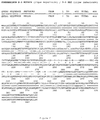
- An advantageous human D-3 receptor of the invention consists of the chain of amino acids 1 to 400, shown in Figure 1.
- This human D-3 receptor is considered to have seven hydrophobic transmembrane regions separated by intra hydrophilic loops and extracellular.
- transmembrane regions correspond to the 7 underlined regions next to which MbI corresponds to the first transmembrane region, and so continued to MbVII (seventh region transmembrane).
- the invention also relates to the polypeptides. variants which correspond to the above-defined polypeptides with certain localized mutations, without the polypeptides losing the properties of human dopaminergic D-3 receptor.
- variants which correspond to the above-defined polypeptides with certain localized mutations, without the polypeptides losing the properties of human dopaminergic D-3 receptor.
- An advantageous variant polypeptide of the invention includes the four mutations indicated above.
- the invention also relates to acids. nucleic acids that include or are made up of a sequence of nucleotides which, at the end of the translation or at the end of the transcription and translation leading to any of the receptors D-3 humans previously defined.
- the invention also relates to acids. nucleic acids as defined below, and which are characterized in that they consist of genomic DNA fragments.
- nucleic acids corresponding to the entire human genome as well than those corresponding to the entire chromosome carrying the gene encoding the above human receptor D-3.
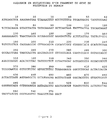
- nucleic acids of the invention consist of those contained in the sequence nucleic acids shown in Figure 3 or those containing the nucleic acid sequence shown in Figure 3, provided they hybridize with the nucleic acid sequence of the Figure 3, under the conditions indicated in the references (3) and (13).
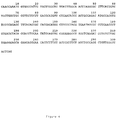
- nucleic acids of the invention consist of those contained in the sequence nucleic acids shown in Figure 4 or those containing the nucleic acid sequence shown in Figure 4, provided they hybridize with the nucleic acid sequence of the Figure 4, under the conditions indicated in the references (3) and (13).
- nucleic acid which includes the sequence of nucleotides shown in Figure 1, extending from the end formed by the nucleotide in position -6 to that constituted by the nucleotide in position 1266.
- the invention particularly relates to acid nucleic acid shown in Figure 1 including or being constituted by the sequence extending from the end constituted by the nucleotide in position 1 to that constituted by the nucleotide at position 1200.
- the above-defined nucleic acid corresponds to the coding part of the gene corresponding to the polypeptide shown in Figure 1.
- the acids also form part of the invention. nucleic acid variants compared to those defined above and which contain certain mutations located in the extent to which these variant nucleic acids hybridize with the nucleic acids previously defined or with the nucleic acid probes defined below in the hybridization conditions defined below in the description.
- variant nucleic acids one can quote the one who presents in positions 25, 51, 236, 565, 876 and 1190 all defined mutations above.
- the invention also relates to the acid sequences nucleic acid likely to be obtained from of a human genomic library, by hybridization with one of the hybridization probes defined below, said nucleic acid sequences possibly contain or consist of introns.
- the invention also relates to nucleic acids complementary to those defined above, as well as nucleic acids corresponding to those previously defined and in which T is replaced published.
- the nucleic acids of the invention can be prepared either by a chemical process or by other processes.
- RNA synthesis of the cDNA strand and its subsequent amplification in vitro can also be carried out using the PCR (Polymerase Chain Reaction) method, as described for example by Goblet et al. (1989) (10), using two chemically synthesized amplimers defined from the sequence of Figure 1.
- Suitable amplimers are for example: that defined in Figure 1 from nucleotide -6 to nucleotide 18 and that defined in Figure 1 from nucleotide 1226 to nucleotide 1251.
- the amplified nucleic acid fragment can be then cloned according to the techniques described in Ausubel F.M. et al. (1989) (11).
- the invention also relates to the vectors recombinants, in particular for cloning and / or expression, in particular of the plasmid, cosmid type, phage, or virus, containing a nucleic acid of the invention at one of its non-essential sites for its replication.
- a suitable vector of the invention contains one of its non-essential sites for its replication elements necessary to promote expression of a polypeptide according to the invention, in a host cell and possibly a promoter recognized by cell host polymerases, in particular an inducible promoter and optionally a sequence signal and an anchor sequence.
- the invention also relates to a cellular host. transformed by a defined recombinant vector previously including the regulatory elements allowing the expression of the nucleotide sequence coding for one of the polypeptides according to the invention in this host.
- cellular host any organism likely to be maintained in culture.
- One of the microorganisms used can consist of a bacterium, in particular Escherichia Coli .
- a body of choice is made up of a eukaryotic organism such as CHO cells (Chinese Hamster Ovary) or COS-7 (monkey kidney fibroblast African green transformed by the SV-40 virus).
- CHO cells Choinese Hamster Ovary
- COS-7 monkey kidney fibroblast African green transformed by the SV-40 virus
- Monoclonal antibodies are prepared by fusion between myeloma cells and spleen cells of immunized mice, according to conventional processes.
- the antibodies of the invention can be used for the in vitro diagnosis of the tumor character or not of certain cells as well as the benign or malignant character of certain tumors, insofar as these elements are correlated with the pathological expression of the D- receptor. 3 human.
- the invention also relates to the probes synthetic nucleotides or not, hybridizing with one nucleic acids defined above or their sequences complementary or their corresponding RNA, these probes being as they hybridize neither with the gene nor with RNA messengers of dopamine D-1 and D-2 receptors and rat D-3 receptor.
- the probes of the invention comprise at least 10, advantageously 15 nucleic acids and may contain at least maximum the entire nucleotide sequence shown in Figure 1, in Figure 3 or in Figure 4.
- suitable hybridization conditions are as follows: 900 mM NaCl, 90 mM tri-sodium citrate pH 7.0, 100 ⁇ g / ml salmon sperm DNA, 0.05% sodium pyrophosphate, 10 to 25% deionized formamide, 0.02% Ficoll (Pm 400,000), 0.02% bovine serum albumin, 0.02% polyvinylpyrrolidone, for 14 to 16 hours at 42 ° C.
- suitable hybridization conditions are as follows: 600 mM NaCl, 60 mM tri-sodium citrate, 20 ⁇ g / ml salmon sperm DNA, 20 ⁇ g / ml yeast tRNA, 8 mM Tris-HCl pH 7.4, 40 to 60% deionized formamide, 0.02% Ficoll, 0.02% bovine serum albumin, 0.02% polyvinylpyrrolidone, 0.2% sodium dodecyl sulfate, 10% dextran sulfate.
- the invention relates in particular to probes nucleotides defined above.
- the probes of the invention can be used as diagnostic tools, particularly in vitro for neurological, psychiatric and cardiovascular conditions.
- the probes of the invention can also be used to detail the alternative splicing of messenger RNA produced by the gene encoding the sequence of 400 amino acids defined above, whether or not this splicing can be linked to pathologies neurological, psychiatric, cardiovascular or neuroendocrine.
- the probes of the invention can be used to detect anomalies genetics, including polymorphisms or mutations punctual.
- DNA primers one can use a sequence of approximately 20 bases contained in the sequence going from nucleotide 1 to nucleotide 227, shown in Figure 3 and another sequence of Approximately 20 bases contained in the sequence from nucleotide 502 to nucleotide 574 shown in the Figure 4.
- the probes of the invention can also be used to detect pathological expression of dopamine receptor D-3, this expression being revealed by the presence of messenger RNA of the receptor dopamine D-3 in cells where it should not not be present.
- This pathological expression of the receptor dopamine D-3 human can manifest in the certain tumors, and can also be correlated the malignant or benign nature of certain tumors.
- polypeptides of the invention can be prepared by culture in an appropriate medium of cellular host previously transformed by a recombinant vector containing one of the acids nucleic acids defined above and by recovery at from the above culture of the produced polypeptide by said transformed cell host.
- Another method of preparing the polypeptides of the invention is characterized in that, starting from preferably C-terminal amino acid, condense successively two by two successive aminoacyles in the required order, or aminoacyles and fragments previously formed and already containing several aminoacyl residues in the appropriate order, or several fragments beforehand as well prepared, it being understood that care will have been taken protect all reactive functions beforehand carried by these aminoacyles or fragments with the exception amine functions of one and carboxyl of the other or vice versa, which should normally intervene in the formation of peptide bonds, especially after activation of the carboxyl function, according to known methods in the synthesis of peptides and so on, step by step, up to the acid N-terminal amino.
- the regulatory elements may include the endogenous promoter of dopaminergic receptors or viral promoters such as those of SV40 viruses or Rous sarcoma virus (RSV).
- RSV Rous sarcoma virus
- the regulatory elements may include the promoter of the lactose operon or of the tryptophan operon.
- This identification consists in using smaller inserts than nucleic acid coding for the above sequence, to be implemented the stages relating to the expression, the transport of product of expression and exposure recalled above.
- the transport of the expression product and its exposure on the membrane, as well as the reaction with ligands such that previously defined we can thus determine the fragments containing essential sites.
- the lack of reaction with ligands, as previously defined, using smaller fragments than the sequence complete would tend to show that we have eliminated some essential sites.
- the simple lines between the lines correspond human D-3 receptor and receptor, respectively Rat D-3 corresponding to the fact that there is no homology.
- EXAMPLE 1 Determination of the sequence in nucleotides and amino acid translation of the receptor D-3 human dopaminergic:
- a partial Sau 3A-human genomic library in EMBL 3 was screened using two 32 P radiolabelled cDNAs, obtained by cutting the cDNA coding for the rat D-3 receptor; one of the cDNAs is obtained from the rat D-3 receptor cut by ClaI-PstI, which gives the probe 1 (N-terminal part + transmembrane region MbI + transmembrane region MbII) and the other cDNA is obtained at from the rat D-3 receptor cut by BstXI-EcoRI, which gives probe 2 (C-terminal part + MbVI transmembrane region + MbVII transmembrane region) (Sokoloff et al., 1990).
- the phages of the genomic bank (940,000 clones) are transferred to nitrocellulose membranes (BAS-85, Schleicher and Schuell) which are prehybridized (40% formamide, 4xSSC, 1 x Dehnardt's, 8 mM Tris-HCl pH 7.4, 20 ⁇ g / ml yeast tRNA, 20 ⁇ g / ml salmon sperm, 0.1% SDS), 4 hours at 42 ° C and hybridized (same solution + dextran sulfate 10%), 14 hours at 42 ° C in the presence of 700,000 cpm / ml of probe 1 or probe 2 defined above (specific activity 10 9 cpm / ⁇ g DNA).
- the membranes are washed twice 15 minutes at 42 ° C (2 x SSC; 0.1% SDS) and twice 15 minutes at 42 ° C and 50 ° C respectively (0.2 x SSC; 0.1% SDS). Then, the membranes are affixed to films radiographic (XAR 5, Kodak) at -70 ° C in the presence amplifier screens. X-ray films are revealed after 5 hours of exposure.
- XAR 5, Kodak films radiographic
- probe 2 (3 'end), which contains a reactive EcoRI fragment 4.8 kb which is subcloned in M13 and sequenced.
- probe 1 Five positive clones are obtained with probe 1 (5 'end), which contain reactive fragments 1.2 kb SacI, and 2.5 kb EcoRI, which are subcloned in M13 and sequenced.
- the genomic DNA sequence reveals the presence of open phases of readings presenting a strong homology with the D-3 receptor sequence of rat.
- a single strand of cDNA is synthesized from human mamillary body mRNA and transcriptase reverse (20 U, Boehringer) with primer B (375 mM).
- This matrix is amplified by the polymerase of Thermophylus Aquaticus (Cetus, 2.5 U) using primers B and A (75 mM each) for 30 cycles (92 ° C, 56 ° C, 72 ° C, 1 minute each).
- reaction products are separated by electrophoresis on a 1% agarose gel, and a strip gel (between 1 and 1.4 kb) is cut, the DNA extracted (gene-clean, BIO 101) and re-amplified between primers B and C. DNA (1.2 kb) then visible by staining with ethidium bromide on an agarose gel is extracted to new, phosphorylated by polynucleotide kinase (10 U, Boehringer), and subcloned in pGEM 4Z (Promega) cut by SmaI.
- the sequence gives an open reading phase of 400 amino acids with 79% overall homology with rat D-3 receptor, and 93% if you don't consider the third intracytoplasmic loop.
- Expression vectors are derived from the plasmid pSV D-2 whose construction is indicated in the article of Nature mentioned above.
- the vector, to express the human D-3 receptor is obtained by replacing the restriction fragment HindIII-BglII of PSV D-2 by a restriction fragment BglII-KpnI of plasmid pGEM 4Z using a HindIII-KpnI oligonucleotide adapter, (AGCTGTAC) leading to the human plasmid pSV D-3.
- ACTGTAC HindIII-KpnI oligonucleotide adapter
- the expression of the D-3 receptor is demonstrated by the binding of iodosulpride- 125 I to membranes of cells transfected according to the technique of Martres et al. 1985 (7).
- the binding experiments are carried out (11) in a 50 mM Tris-HCl buffer (total volume 400 ⁇ l) containing 120 mM NaCl, 5 mM KCl, 2 mM CaCl 2, 2 mM MgCl 2 , 0.1% ascorbic acid, 8-hydroxy quinoline 10 ⁇ M, 0.1% bovine serum albumin and iodosulpride- 125 I 0.1 to 0.2 nM.
- the human D-3 receptor has been expressed in CHO cells, which normally do not have iodosulpride- 125 I binding sites.
- K D is 1.1 nM
- B max (Bmax representing the maximum concentration of receptor D-3) is approximately 0.6 pmol / mg of membrane protein.
- the CHO cell transfected with the human D-3 receptor does not allow a functional response to stimulation of this receptor to be measured.
- this cell neither activation nor inhibition of the known transduction pathways (acenylate cyclase, phospholipase C and phospholipase A 2 ) could be demonstrated. This has been attributed to the fact that the CHO cell does not express the specific transducing G protein for coupling with the D-3 receptor.
- the CHO cell does not express the G 0 protein, whereas it expresses other proteins belonging to the same family of G proteins.
- a nucleic acid encoding the rat ⁇ 0 protein was obtained by PCR amplification with primers derived from the published sequence of the ⁇ 0 subunit.
- the sequence of the ⁇ 0 subunit has been published by Jones and Reed (Proc. Natl. Acad. Sci. USA 1987, 262: 14241-14249).
- the primers used are as follows:
- the nucleic acid obtained was digested by the restriction enzymes SacI and XbaI (contained sites in the primers) and subcloned into a vector pEUK-C expression (Clontech Laboratories, Inc. Palo Alto, United States).
- This plasmid was prepared and transfected as described in Example II at the same time than a plasmid pUT 523 (Cayla,ière, France) containing a phleomycin resistance gene.
- the transfectants were selected from the same medium of culture as that of the previous example containing phleomycin.
- dopamine increases the concentration of intracellular calcium with an effective concentration 50 of the order of 1 nM.
- the effective concentration 50 corresponds to the value of the dopamine concentration with which one obtains half of the maximum increase in the concentration of intracellular calcium.
- the response to dopamine 100 nM is completely antagonized by an antagonist with respect to the human dopaminergic receptor D-3 such as (+) UH 232 at the concentration of 1 ⁇ M.
- This functional model makes it possible to detect the agonist or antagonist power with respect to the receptor dopaminergic human D-3 molecules and assess 50 effective concentrations of agonists.
Landscapes
- Health & Medical Sciences (AREA)
- Life Sciences & Earth Sciences (AREA)
- Chemical & Material Sciences (AREA)
- Organic Chemistry (AREA)
- Medicinal Chemistry (AREA)
- General Health & Medical Sciences (AREA)
- Engineering & Computer Science (AREA)
- Veterinary Medicine (AREA)
- Biomedical Technology (AREA)
- Pharmacology & Pharmacy (AREA)
- Public Health (AREA)
- Nuclear Medicine, Radiotherapy & Molecular Imaging (AREA)
- General Chemical & Material Sciences (AREA)
- Animal Behavior & Ethology (AREA)
- Chemical Kinetics & Catalysis (AREA)
- Neurology (AREA)
- Bioinformatics & Cheminformatics (AREA)
- Zoology (AREA)
- Immunology (AREA)
- Molecular Biology (AREA)
- Neurosurgery (AREA)
- Genetics & Genomics (AREA)
- Biophysics (AREA)
- Biochemistry (AREA)
- Gastroenterology & Hepatology (AREA)
- Toxicology (AREA)
- Proteomics, Peptides & Aminoacids (AREA)
- Cell Biology (AREA)
- Cardiology (AREA)
- Heart & Thoracic Surgery (AREA)
- Peptides Or Proteins (AREA)
- Preparation Of Compounds By Using Micro-Organisms (AREA)
- Investigating Or Analysing Biological Materials (AREA)
- Measuring Or Testing Involving Enzymes Or Micro-Organisms (AREA)
Claims (18)
- Polypeptid mit einer Aktivität eines dopaminergen Rezeptors, umfassend:und insbesondere die Polypeptide, die die vier vorstehend angegebenen Mutationen aufweisen.die Sequenz von 400 Aminosäuren der Figur 1,oder ein Fragment dieser Sequenz, wobei dieses Fragment dergestalt ist, daßes entweder gleichwohl die in dieser Sequenz enthaltenen Stellen enthält, deren Anwesenheit erforderlich ist, damit, wenn dieses Fragment auf der Oberfläche einer Zelle exponiert wird, es in der Lage ist, Dopamin, seine Agonisten.oder Antagonisten auf spezifische und meßbare Weise, beispielsweise mittels eines radioaktiven Liganden gemäß der in Sokoloff et al. (1980)(6) und Martres et al. (1985)(7) beschriebenen Technik, zu binden, wobei diese Stellen sich von den in dem Rezeptor D-3 der Ratte enthaltenen Stellen unterscheiden,oder es durch Antikörper erkannt werden kann, die gleichfalls die Sequenz von 400 Aminosäuren erkennen, aber weder den dopaminergen Rezeptor D-1, noch den dopaminergen Rezeptor D-2, noch den dopaminergen Rezeptor D-3 der Ratte erkennen,oder es Antikörper erzeugen kann, die die Sequenz von 400 Aminosäuren erkennen, aber weder den dopaminergen Rezeptor D-1, noch den dopaminergen Rezeptor D-2, noch den dopaminergen Rezeptor D-3 der Ratte erkennen, oder
Polypeptidvarianten, die den vorstehend definierten Polypeptiden entsprechen und bestimmte lokalisierte Mutationen tragen, ohne daß die Polypeptide die Eigenschaften eines dopaminergen Rezeptors verlieren, und insbesondere die Polypeptide, die mindestens eine der vier folgenden Mutationen aufweisen (wobei die Positionen der Aminosäuren, die mutiert werden können, bezogen auf die Figur 1 gekennzeichnet sind):Ser an Position 9 wird durch Gly ersetzt,Ala an Position 79 wird durch Val ersetzt,Val an Position 189 wird durch Ile ersetzt,Ile an Position 397 wird durch Thr ersetzt, - Polypeptid nach Anspruch 1, dadurch gekennzeichnet, daß es durch die in der Figur 1 angegebene Sequenz gebildet wird, die sich von dem durch die Aminosäure an Position 1 gebildeten Ende bis zu jenem, das durch das Ende an Position 400 gebildet wird, erstreckt.
- Nukleinsäure, dadurch gekennzeichnet, daß sie umfaßt oder gebildet wird durch eine Aneinanderreihung von Nukleotiden, die am Ende der Translation oder am Ende der Transkription und der Translation zu einem der Polypeptide nach einem der Ansprüche 1 oder 2 führt.
- Nukleinsäure nach Anspruch 3, dadurch gekennzeichnet, daß sie umfaßt oder gebildet wird durchund insbesondere die Nukleinsäuren, die die Gesamtheit der sechs Mutationen umfassen.die Aneinanderreihung von Nukleotiden, die in Figur 3 angegeben ist und sich von dem durch das Nukleotid 1 gebildeten Ende bis zu jenem, das durch das Nukleotid 574 gebildet wird, erstreckt, oder durchdie Aneinanderreihung von Nukleotiden, die in Figur 4 angegeben ist und sich von dem durch das Nukleotid 1 gebildeten Ende bis zu jenem, das durch das Nukleotid 306 gebildet wird, erstreckt,die Aneinanderreihung von Nukleotiden, die in Figur 1 angegeben ist und sich von dem durch das Nukleotid -6 gebildeten Ende bis zu jenem, das durch das Nukleotid 1266 gebildet wird, erstreckt, oderdurch die Aneinanderreihung von Nukleotiden, die in Figur 1 angegeben ist und sich von dem durch das Nukleotid 1 gebildeten Ende bis zu jenem, das durch das Nukleotid 1200 gebildet wird, erstreckt,
oder die Nukleinsäuren, die mindestens eine der folgenden sechs Mutationen aufweisen (wobei die Positionen der Nukleotide, die mutiert sein können, bezogen auf die Figur 1 gekennzeichnet sind):A an Position 25 wird durch G ersetzt,A an Position 51 wird durch G ersetzt,C an Position 236 wird durch T ersetzt,G an Position 565 wird durch A ersetzt,T an Position 876 wird durch C ersetzt,T an Position 1190 wird durch C ersetzt, - Rekombinanter Vektor, insbesondere für die Klonierung und/oder die Expression, insbesondere vom Typ Plasmid, Cosmid, Phage oder Virus, dadurch gekennzeichnet, daß er eine Nukleinsäure nach einem der Ansprüche 3 und 4 in einer seiner für seine Replikation nicht essenziellen Stellen enthält.
- Rekombinanter Vektor nach Anspruch 5, dadurch gekennzeichnet, daß er in einer seiner für seine Replikation nicht essenziellen Stellen Elemente, die zur Förderung der Expression einer Aminosäuresequenz nach den Ansprüchen 1 oder 2 in einem zellulären Wirt erforderlich sind, und gegebenenfalls einen von den Polymerasen des zellulären Wirts erkannten Promotor, insbesondere eine induzierbaren Promotor, und gegebenenfalls eine Signalsequenz und eine Ankersequenz enthält.
- Durch einen rekombinanten Vektor nach einem der Ansprüche 5 oder 6 transformierter zellulärer Wirt, der die Regulationselemente umfaßt, die die Expression der Nukleotidsequenz, die das Polypeptid nach einem der Ansprüche 1 oder 2 kodiert, in diesem Wirt ermöglichen.
- Transformierter zellulärer Wirt nach Anspruch 7, dadurch gekennzeichnet, daß er unter den Bakterien, insbesondere E. coli, ausgewählt wird.
- Transformierter zellulärer Wirt nach Anspruch 7, dadurch gekennzeichnet, daß er unter den eukaryotischen Organismen, wie den CHO- oder COS-7-Zellen ausgewählt wird.
- Antikörper, dadurch gekennzeichnet, daß er (sie) auf spezifische Weise gegen ein Polypeptid nach einem der Ansprüche 1 oder 2 gerichtet ist (oder sind) und daß er (sie) weder den dopaminergen Rezeptor D-1, noch den dopaminergen Rezeptor D-2 erkennt (oder erkennen), und insbesondere jener oder jene, der bzw. die die folgenden Aminosäuresequenzen erkennt bzw. erkennen:jene, die durch die in Figur 1 angegebene Aminosäuresequenz, die sich von dem durch die Aminosäure an Position 243 gebildeten Ende bis zu jenem, das durch die Aminosäure an Position-277 gebildet wird, erstreckt, definiert wird.
- Nukleotidsonde, dadurch gekennzeichnet, daß sie mit einer der Nukleinsäuren nach den Ansprüchen 3 und 4 oder deren komplementären Sequenzen.unter solchen Hybridisierungsbedingungen, unter denen sie mit den Genen oder der mRNA der dopaminergen Rezeptoren D-1 oder D-2 und des dopaminergen Rezeptors D-3 der Ratte nicht hybridisiert, hybridisiert, und insbesondere die Sonden, die aus den folgenden Nukleotidsonden ausgewählt werden:oder deren komplementäre Nukleotidsequenz.jene, die durch die in Figur 1 angegebene Nukleinsäuresequenz, die sich von dem durch das Nukleotid an Position -6 gebildeten Ende bis zu jenem, das durch das Nukleotid an Position 1266 gebildet wird, erstreckt, definiert wird,jene, die durch die in Figur 1 angegebene Nukleinsäuresequenz, die sich von dem durch das Nukleotid an Position 1 gebildeten Ende bis zu jenem, das durch das Nukleotid an Position 1200 gebildet wird, erstreckt, definiert wird,jene, die durch die in Figur 1 angegebene Nukleinsäuresequenz, die sich von dem durch das Nukleotid an Position 720 gebildeten Ende bis zu jenem, das durch das Nukleotid an Position 831 gebildet wird, erstreckt, definiert wird,jene, die durch die in Figur 3 angegebene Nukleinsäuresequenz, die sich von dem durch das Nukleotid an Position 1 gebildeten Ende bis zu jenem, das durch das Nukleotid an Position 574 gebildet wird, erstreckt, definiert wird,jene, die durch die in Figur 4 angegebene Nukleinsäuresequenz, die sich von dem durch das Nukleotid an Position 1 gebildeten Ende bis zu jenem, das durch das Nukleotid an Position 306 gebildet wird, erstreckt, definiert wird,
- Verfahren zum Nachweis der Fähigkeit eines Moleküls, sich als Ligand gegenüber einem Polypeptid gemäß einem der Ansprüche 1 oder 2 zu verhalten, gekennzeichnet durch:das Inkontaktbringen des Moleküls mit einem zelluären Wirt, der vorab transformiert worden ist durch einen Vektor, der seinerseits durch ein Insert, das das Polypeptid kodiert, modifiziert worden ist, wobei dieser Wirt auf seiner Oberfläche eine oder mehrere spezifische Stellen dieses Polypeptids trägt, gegebenenfalls nach Induktion der Expression dieses Inserts, wobei dieses Inkontaktbringen unter Bedingungen ausgeführt wird, die die Bildung einer Bindung zwischen mindestens einer dieser spezifischen Stellen und dem Molekül ermöglichen, sobald es sich herausstellt, daß es tatsächlich eine Affinität für dieses Polypeptid aufweist,den Nachweis der gegebenenfalls erfolgten Bildung eines Komplexes des Typs Ligand-Polypeptid.
- Verfahren zur Untersuchung der Affinität eines Polypeptids nach einem der Ansprüche 1 oder 2 für einen oder mehrere bestimmte Liganden, gekennzeichnet durch:die Transformation eines kompetenten zellulären Wirts mit einem Vektor, insbesondere einem Plasmid oder einem Phagen, in den man vorab eine Nukleotidsequenz, die den humanen Rezeptor D-3 kodiert, (Insert) unter der Kontrolle von Regulationselementen, insbesondere eines Promotors, der von den Polymerasen des zellulären Wirts erkannt wird und die Expression der Nukleotidsequenz in dem verwendeten zellulären Wirt ermöglicht, insertiert hat,die Züchtung des transformierten zellulären Wirts unter Bedingungen, die die Expression des Inserts und den Transport des exprimierten humanen Rezeptors D-3 zu der Membran dergestalt ermöglichen, daß die Transmembransequenzen des Rezeptors D-3 auf der Oberfläche des transformierten zellulären Wirts exponiert werden,das Inkontaktbringen dieses zellulären Wirts mit diesen bestimmten Liganden,den Nachweis einer Affinitätsreaktion zwischen dem transformierten zellulären Wirt und denbestimmten Liganden.
- in vitro-Diagnoseverfahren für die pathologische Expression des humanen dopaminergen Rezeptors D-3, in welchem man eine oder beliebige mehrere der gemäß Anspruch 11 definierten Sonden verwendet, welches die folgenden Schritte umfaßt:die mögliche, vorab erfolgende Amplifizier'ung der Mengen an Nukleotidsequenz nach einem der Ansprüche 3 oder 4, die in einer biologischen Probe, die einem Patienten abgenommen worden ist, enthalten sein könnte, mittels DNA-Primer,das Inkontaktbringen der vorstehend angegebenen biologischen Probe mit einer Nukleotidsonde nach Anspruch 11 unter Bedingungen, die die Bildung eines Hybridisierungskomplexes, der aus der Sonde und der Nukleotidsequenz gebildet wird, ermöglichen,den Nachweis des Hybridisierungskomplexes, der sich möglicherweise gebildet hat.
- in vitro-Diagnoseverfahren für genetische Anomalien, insbesondere Polymorphismen des den humanen dopaminergen Rezeptor D-3 kodierenden Gens, die mit psychiatrischen, neurologischen, kardiovaskulären oder neuroendokrinen Erkrankungen korreliert werden können, ausgehend von einer biologischen Probe, wie Blut, das einem Patienten abgenommen worden ist, gemäß einem Verfahren, das die folgenden Schritte umfaßt:die Behandlung der aus der biologischen Probe stammenden Nukleinsäure, die mittels eines Restriktionsenzyms unter Bedingungen ausgeführt wird, die die Gewinnung von Restriktionsfragmenten ermöglichen, die aus der Spaltung der Nukleinsäure auf der Ebene dieser von dem Enzym erkannten Restriktionsstellen stammen,das Inkontaktbringen einer Nukleotidsonde nach Anspruch 11, die zu einer Hybridisierung in der Lage ist, mit den Fragmenten unter Bedingungen, die die gegebenenfalls erfolgende Bildung von Hybridisierungskomplexen zwischen der Sonde und den Restriktionsfragmenten ermöglichen,den Nachweis der Hybridisierungskomplexe,das Messen der Größe der gegebenenfalls vorliegenden polymorphen Restriktionsfragmente, die an den Hybridisierungskomplexen beteiligt sind.
- in vitro-Diagnoseverfahren zum Nachweis von Punktmutationen der Nukleinsäure oder eines Fragments der Nukleinsäure, die den humanen dopaminergen Rezeptor D-3 kodiert, gemäß den Ansprüchen 3 oder 4 bei einem Patienten, welches die folgenden Schritte umfaßt:das Inkontaktbringen einer Nukleotidsonde nach Anspruch 11 mit einem biologischen Untersuchungsmaterial, beispielsweise Blut, unter Bedingungen, die die gegebenenfalls erfolgende Bildung eines Hybridisierungskomplexes, der zwischen der Sonde und der Nukleinsäure oder dem Nukleinsäurefragment gebildet wird, ermöglichen,den Nachweis des Hybridisierungskomplexes,die Sequenzierung der Nukleinsäure oder des Nukleinsäurefragments, die an dem Hybridisierungskomplex beteiligt sind,den Vergleich der Sequenz der Nukleinsäure oder des Nukleinsäurefragments, die an dem Hybridisierungskomplex beteiligt sind, mit der Sequenz der Nukleinsäure (die keine Mutation aufweist) oder des Nukleinsäurefragments (das keine Mutation aufweist) des humanen dopaminergen Rezeptors D-3.
- in vitro-Diagnoseverfahren für die pathologische Expression des humanen dopaminergen Rezeptors D-3 ausgehend von einem biologischen Untersuchungsmaterial, in welchem man einen oder mehrere Antikörper nach Anspruch 10 einsetzt, umfassend die folgenden Schritte:das Inkontaktbringen eines Antikörpers nach Anspruch 10 mit dem biologischen Untersuchungsmaterial unter Bedingungen, die die gegebenenfalls erfolgende Bildung eines immunologischen Komplexes ermöglichen, der zwischen dem humanen dopaminergen Rezeptor D-3 oder einem Derivat davon, das eine oder mehrere lokalisierte Mutationen umfaßt und die Eigenschaften des humanen dopaminergen Rezeptors D-3 bewahrt, einerseits und dem Antikörper der Erfindung andererseits gebildet wird, undden Nachweis des gebildeten immunologischen Komplexes.
- Verfahren zur Auswertung der Agonisten- oder Antagonistenfähigkeit eines Moleküls oder Arzneimittels gegenüber dem humanen dopaminergen Rezeptor D-3, bei dem man eine gemäß den Ansprüchen 7 und 9 definierte Wirtszelle einsetzt, die mit einem Vektor, der das Gen der α-Untereinheit des G0-Transduktionsproteins enthält, transformiert worden ist,wenn eine Erhöhung der Konzentration an intrazellulärem Calcium bezogen auf die Konzentration an intrazellulärem Calcium in Abwesenheit des Moleküls auftritt, man daraus schließt, daß das Molekül ein Agonist gegenüber D-3 ist,wenn es keine Modifizierung der Konzentration an intrazellulärem Calcium gibt oder wenn eine Verringerung der Konzentration an intrazellulärem Calcium bezogen auf die Konzentration an intrazellulärem Calcium in Abwesenheit des Moleküls auftritt, man die Wirtszelle in Gegenwart von Dopamin und dem genannten Molekül bringt, und wenn eine Verringerung der Konzentration an intrazellulärem Calcium gegenüber jener, die in Gegenwart von Dopamin erhalten wird, auftritt, man daraus schließt, daß das Molekül ein Antagonist gegenüber D-3 ist.
Applications Claiming Priority (3)
| Application Number | Priority Date | Filing Date | Title |
|---|---|---|---|
| FR9013731A FR2668771B1 (fr) | 1990-11-06 | 1990-11-06 | Acides nucleiques codant pour des polypeptides ayant une activite de recepteur dopaminergique humain et utilisation de ces polypeptides pour le criblage de substances actives sur ces polypeptides. |
| FR9013731 | 1990-11-06 | ||
| PCT/FR1991/000810 WO1992007937A1 (fr) | 1990-11-06 | 1991-10-16 | Polypeptides ayant une activite de recepteur dopaminergique humain, acides nucleiques codant pour ces polypeptides et utilisation de ces polypeptides pour le criblage de substances actives sur ces polypeptides |
Publications (2)
| Publication Number | Publication Date |
|---|---|
| EP0507908A1 EP0507908A1 (de) | 1992-10-14 |
| EP0507908B1 true EP0507908B1 (de) | 1999-06-02 |
Family
ID=9401888
Family Applications (1)
| Application Number | Title | Priority Date | Filing Date |
|---|---|---|---|
| EP91918401A Expired - Lifetime EP0507908B1 (de) | 1990-11-06 | 1991-10-16 | Polypeptide mit einer aktivität des menschlichen dopaminergischen rezeptors, deren kodierende nukleinsäuresequenzen und verwendung dieser polypeptide |
Country Status (9)
| Country | Link |
|---|---|
| EP (1) | EP0507908B1 (de) |
| JP (1) | JPH05503219A (de) |
| AT (1) | ATE180788T1 (de) |
| AU (1) | AU8857991A (de) |
| CA (1) | CA2072874C (de) |
| DE (1) | DE69131289T2 (de) |
| ES (1) | ES2134781T3 (de) |
| FR (1) | FR2668771B1 (de) |
| WO (1) | WO1992007937A1 (de) |
Families Citing this family (4)
| Publication number | Priority date | Publication date | Assignee | Title |
|---|---|---|---|---|
| DE4425143A1 (de) | 1994-07-15 | 1996-01-18 | Basf Ag | Substituierte Pyrimidinverbindungen und deren Verwendung |
| DE19600934A1 (de) | 1996-01-12 | 1997-07-17 | Basf Ag | Substituierte Aza- und Diazacycloheptan- und Cyclooctanverbindungen und deren Verwendung |
| US20010053849A1 (en) * | 1999-06-16 | 2001-12-20 | Mary Jeanne Kreek | Plural biological sample arrays, and preparation and uses thereof |
| EP1683790A1 (de) | 2005-01-24 | 2006-07-26 | Institut National De La Sante Et De La Recherche Medicale (Inserm) | 3,4-Dihydro-2-Naphthamidderivate als selektive Dopamin-D3-Liganden |
-
1990
- 1990-11-06 FR FR9013731A patent/FR2668771B1/fr not_active Expired - Lifetime
-
1991
- 1991-10-16 AU AU88579/91A patent/AU8857991A/en not_active Abandoned
- 1991-10-16 DE DE69131289T patent/DE69131289T2/de not_active Expired - Lifetime
- 1991-10-16 JP JP3517704A patent/JPH05503219A/ja active Pending
- 1991-10-16 WO PCT/FR1991/000810 patent/WO1992007937A1/fr not_active Ceased
- 1991-10-16 ES ES91918401T patent/ES2134781T3/es not_active Expired - Lifetime
- 1991-10-16 CA CA002072874A patent/CA2072874C/fr not_active Expired - Lifetime
- 1991-10-16 AT AT91918401T patent/ATE180788T1/de not_active IP Right Cessation
- 1991-10-16 EP EP91918401A patent/EP0507908B1/de not_active Expired - Lifetime
Also Published As
| Publication number | Publication date |
|---|---|
| CA2072874C (fr) | 2004-12-28 |
| WO1992007937A1 (fr) | 1992-05-14 |
| EP0507908A1 (de) | 1992-10-14 |
| ATE180788T1 (de) | 1999-06-15 |
| CA2072874A1 (fr) | 1992-05-07 |
| DE69131289D1 (de) | 1999-07-08 |
| JPH05503219A (ja) | 1993-06-03 |
| FR2668771A1 (fr) | 1992-05-07 |
| ES2134781T3 (es) | 1999-10-16 |
| DE69131289T2 (de) | 1999-12-16 |
| FR2668771B1 (fr) | 1995-03-17 |
| AU8857991A (en) | 1992-05-26 |
Similar Documents
| Publication | Publication Date | Title |
|---|---|---|
| CA2045658C (fr) | Polypeptides ayant une activite de recepteur .beta. adrenergique chez l'homme, impliques dans la reponse lipolytique, acides nucleiques codantpour ces polypeptides et utilisation de ces polypeptides pour le le criblage de substance active sur ces polypeptides | |
| EP0980427B1 (de) | Verwendung von ulip proteinen zur diagnose und therapie von krebs und paraneoplastischen neurologischen syndromen | |
| EP0665885A1 (de) | Polypeptide mit serotoninergischer rezeptor (5ht2c) aktivität und deren anwendungen | |
| EP0474846B1 (de) | Polypeptide mit dopaminerger rezeptor-aktivität, für sie kodierende nukleinsäuren und ihre verwendung | |
| CA2182621C (fr) | Recepteur galanine, acides nucleiques, cellules transformees et utilisations | |
| EP0567577B1 (de) | Nukleotide sequenzen die für den murin-beta-3-adrenergischen rezeptor kodieren und ihre verwendungen | |
| CA2461692A1 (fr) | Utilisation d'une proteine de la famille des crmps pour le traitement des maladies liees au systeme immunitaire | |
| CA2072874C (fr) | Polypeptides ayant une activite de recepteur dopaminergique humain, acides nucleiques codant pour ces polypeptides et utilisation de ces polypeptides pour le criblage de substances actives sur ces polypeptides | |
| EP0651801B1 (de) | Polypeptide mit serotoninerger (5ht5a) rezeptor-aktivität, für sie kodierende nukleinsäuren und ihre verwendung | |
| WO1994024162A1 (fr) | SEQUENCES NUCLEOTIDIQUES CODANT POUR LE RECEPTEUR β3-ADRENERGIQUE (RAβ3) BOVIN ET LEURS APPLICATIONS | |
| EP1268790A1 (de) | Erbin kodierendes gen, und ihre anwendung in diagnose und therapie | |
| FR2697850A1 (fr) | Nouveaux polypeptides ayant une activité de récepteur opioïde, acides nucléiques codant pour ces polypeptides et utilisations. | |
| EP1259606B1 (de) | Zur steuerung der parkinaktivität brauchbare zusammensetzungen | |
| WO1997035973A2 (fr) | SEQUENCES CODANT POUR LES RECEPTEURS β2- ET β3-ADRENERGIQUES CANINS ET LEURS APPLICATIONS EN TANT QUE SONDES ET POUR L'EXPRESSION DE PEPTIDES | |
| CA2153162A1 (fr) | Nouveaux polypeptides ayant une activite de recepteur serotoninergique, acides nucleiques codant pour ces polypeptides et utilisations | |
| CA2139431A1 (fr) | Polypeptides ayant une activite de recepteur serotoninergique (5ht6), acides nucleiques codant pour ces polypeptides et utilisations | |
| US20030143633A1 (en) | Factors participating in degranulation of mast cells, dnas encoding the same, method of screening of these factors and the inhibitors | |
| FR2660659A1 (fr) | Polypeptides ayant une activite de recepteur dopaminergique, acides nucleiques codant pour ces polypeptides et utilisation de ces polypeptides pour le criblage de substances actives sur ces polypeptides. | |
| FR2805266A1 (fr) | Compositions utilisables pour reguler l'activite de la parkine | |
| JPWO2001009345A1 (ja) | プロテインキナーゼ・プロテインフォスファターゼをコードする新規遺伝子 | |
| JP2003135080A (ja) | 新規遺伝子及びそれにコードされる蛋白質 |
Legal Events
| Date | Code | Title | Description |
|---|---|---|---|
| PUAI | Public reference made under article 153(3) epc to a published international application that has entered the european phase |
Free format text: ORIGINAL CODE: 0009012 |
|
| 17P | Request for examination filed |
Effective date: 19920613 |
|
| AK | Designated contracting states |
Kind code of ref document: A1 Designated state(s): AT BE CH DE DK ES FR GB GR IT LI LU NL SE |
|
| 17Q | First examination report despatched |
Effective date: 19950404 |
|
| GRAG | Despatch of communication of intention to grant |
Free format text: ORIGINAL CODE: EPIDOS AGRA |
|
| GRAG | Despatch of communication of intention to grant |
Free format text: ORIGINAL CODE: EPIDOS AGRA |
|
| GRAH | Despatch of communication of intention to grant a patent |
Free format text: ORIGINAL CODE: EPIDOS IGRA |
|
| GRAH | Despatch of communication of intention to grant a patent |
Free format text: ORIGINAL CODE: EPIDOS IGRA |
|
| GRAA | (expected) grant |
Free format text: ORIGINAL CODE: 0009210 |
|
| AK | Designated contracting states |
Kind code of ref document: B1 Designated state(s): AT BE CH DE DK ES FR GB GR IT LI LU NL SE |
|
| PG25 | Lapsed in a contracting state [announced via postgrant information from national office to epo] |
Ref country code: AT Free format text: LAPSE BECAUSE OF FAILURE TO SUBMIT A TRANSLATION OF THE DESCRIPTION OR TO PAY THE FEE WITHIN THE PRESCRIBED TIME-LIMIT Effective date: 19990602 Ref country code: GR Free format text: LAPSE BECAUSE OF NON-PAYMENT OF DUE FEES Effective date: 19990602 Ref country code: NL Free format text: LAPSE BECAUSE OF FAILURE TO SUBMIT A TRANSLATION OF THE DESCRIPTION OR TO PAY THE FEE WITHIN THE PRESCRIBED TIME-LIMIT Effective date: 19990602 |
|
| REF | Corresponds to: |
Ref document number: 180788 Country of ref document: AT Date of ref document: 19990615 Kind code of ref document: T |
|
| REG | Reference to a national code |
Ref country code: CH Ref legal event code: EP |
|
| REF | Corresponds to: |
Ref document number: 69131289 Country of ref document: DE Date of ref document: 19990708 |
|
| ITF | It: translation for a ep patent filed | ||
| PG25 | Lapsed in a contracting state [announced via postgrant information from national office to epo] |
Ref country code: DK Free format text: LAPSE BECAUSE OF FAILURE TO SUBMIT A TRANSLATION OF THE DESCRIPTION OR TO PAY THE FEE WITHIN THE PRESCRIBED TIME-LIMIT Effective date: 19990902 |
|
| REG | Reference to a national code |
Ref country code: CH Ref legal event code: NV Representative=s name: KELLER & PARTNER PATENTANWAELTE AG |
|
| GBT | Gb: translation of ep patent filed (gb section 77(6)(a)/1977) |
Effective date: 19990826 |
|
| PG25 | Lapsed in a contracting state [announced via postgrant information from national office to epo] |
Ref country code: LU Free format text: LAPSE BECAUSE OF NON-PAYMENT OF DUE FEES Effective date: 19991016 |
|
| REG | Reference to a national code |
Ref country code: ES Ref legal event code: FG2A Ref document number: 2134781 Country of ref document: ES Kind code of ref document: T3 |
|
| PLBE | No opposition filed within time limit |
Free format text: ORIGINAL CODE: 0009261 |
|
| STAA | Information on the status of an ep patent application or granted ep patent |
Free format text: STATUS: NO OPPOSITION FILED WITHIN TIME LIMIT |
|
| 26N | No opposition filed | ||
| REG | Reference to a national code |
Ref country code: GB Ref legal event code: IF02 |
|
| PGFP | Annual fee paid to national office [announced via postgrant information from national office to epo] |
Ref country code: SE Payment date: 20100927 Year of fee payment: 20 Ref country code: IT Payment date: 20100925 Year of fee payment: 20 |
|
| PGFP | Annual fee paid to national office [announced via postgrant information from national office to epo] |
Ref country code: GB Payment date: 20100928 Year of fee payment: 20 |
|
| PGFP | Annual fee paid to national office [announced via postgrant information from national office to epo] |
Ref country code: FR Payment date: 20101115 Year of fee payment: 20 |
|
| PGFP | Annual fee paid to national office [announced via postgrant information from national office to epo] |
Ref country code: BE Payment date: 20100927 Year of fee payment: 20 Ref country code: DE Payment date: 20100930 Year of fee payment: 20 Ref country code: CH Payment date: 20101008 Year of fee payment: 20 |
|
| PGFP | Annual fee paid to national office [announced via postgrant information from national office to epo] |
Ref country code: ES Payment date: 20101022 Year of fee payment: 20 |
|
| REG | Reference to a national code |
Ref country code: DE Ref legal event code: R071 Ref document number: 69131289 Country of ref document: DE |
|
| REG | Reference to a national code |
Ref country code: DE Ref legal event code: R071 Ref document number: 69131289 Country of ref document: DE |
|
| BE20 | Be: patent expired |
Owner name: INSTITUT NATIONAL DE LA SANTE ET DE LA RECHERCHE M Effective date: 20111016 |
|
| REG | Reference to a national code |
Ref country code: CH Ref legal event code: PL |
|
| REG | Reference to a national code |
Ref country code: GB Ref legal event code: PE20 Expiry date: 20111015 |
|
| REG | Reference to a national code |
Ref country code: SE Ref legal event code: EUG |
|
| PG25 | Lapsed in a contracting state [announced via postgrant information from national office to epo] |
Ref country code: GB Free format text: LAPSE BECAUSE OF EXPIRATION OF PROTECTION Effective date: 20111015 |
|
| PG25 | Lapsed in a contracting state [announced via postgrant information from national office to epo] |
Ref country code: DE Free format text: LAPSE BECAUSE OF EXPIRATION OF PROTECTION Effective date: 20111017 |
|
| REG | Reference to a national code |
Ref country code: ES Ref legal event code: FD2A Effective date: 20140826 |
|
| PG25 | Lapsed in a contracting state [announced via postgrant information from national office to epo] |
Ref country code: ES Free format text: LAPSE BECAUSE OF EXPIRATION OF PROTECTION Effective date: 20111017 |