EP0506787B1 - Process and apparatus for removal of impurities from flue gases - Google Patents
Process and apparatus for removal of impurities from flue gases Download PDFInfo
- Publication number
- EP0506787B1 EP0506787B1 EP91901660A EP91901660A EP0506787B1 EP 0506787 B1 EP0506787 B1 EP 0506787B1 EP 91901660 A EP91901660 A EP 91901660A EP 91901660 A EP91901660 A EP 91901660A EP 0506787 B1 EP0506787 B1 EP 0506787B1
- Authority
- EP
- European Patent Office
- Prior art keywords
- sorbent
- gases
- filter bed
- gas
- filter
- Prior art date
- Legal status (The legal status is an assumption and is not a legal conclusion. Google has not performed a legal analysis and makes no representation as to the accuracy of the status listed.)
- Expired - Lifetime
Links
- 239000003546 flue gas Substances 0.000 title claims abstract description 29
- 238000000034 method Methods 0.000 title claims abstract description 25
- 239000012535 impurity Substances 0.000 title claims abstract description 21
- 239000007789 gas Substances 0.000 claims abstract description 74
- 239000002594 sorbent Substances 0.000 claims abstract description 64
- 239000002253 acid Substances 0.000 claims abstract description 24
- 150000002430 hydrocarbons Chemical class 0.000 claims abstract description 24
- 229930195733 hydrocarbon Natural products 0.000 claims abstract description 23
- IJGRMHOSHXDMSA-UHFFFAOYSA-N Atomic nitrogen Chemical compound N#N IJGRMHOSHXDMSA-UHFFFAOYSA-N 0.000 claims abstract description 21
- 229910001385 heavy metal Inorganic materials 0.000 claims abstract description 20
- 150000003839 salts Chemical class 0.000 claims abstract description 18
- 150000007513 acids Chemical class 0.000 claims abstract description 17
- 238000001816 cooling Methods 0.000 claims abstract description 17
- 229910052757 nitrogen Inorganic materials 0.000 claims abstract description 10
- 238000001556 precipitation Methods 0.000 claims abstract description 7
- 238000009833 condensation Methods 0.000 claims abstract description 6
- 230000005494 condensation Effects 0.000 claims abstract description 6
- 230000006911 nucleation Effects 0.000 claims abstract description 4
- 238000010899 nucleation Methods 0.000 claims abstract description 4
- 239000000843 powder Substances 0.000 claims abstract description 4
- XLYOFNOQVPJJNP-UHFFFAOYSA-N water Substances O XLYOFNOQVPJJNP-UHFFFAOYSA-N 0.000 claims description 24
- 229920006395 saturated elastomer Polymers 0.000 claims description 9
- 239000002245 particle Substances 0.000 claims description 8
- 229910052783 alkali metal Inorganic materials 0.000 claims description 7
- 150000001340 alkali metals Chemical class 0.000 claims description 7
- 239000011148 porous material Substances 0.000 claims description 6
- 239000005909 Kieselgur Substances 0.000 claims description 5
- VYPSYNLAJGMNEJ-UHFFFAOYSA-N Silicium dioxide Chemical group O=[Si]=O VYPSYNLAJGMNEJ-UHFFFAOYSA-N 0.000 claims description 5
- OYPRJOBELJOOCE-UHFFFAOYSA-N Calcium Chemical compound [Ca] OYPRJOBELJOOCE-UHFFFAOYSA-N 0.000 claims description 4
- DGAQECJNVWCQMB-PUAWFVPOSA-M Ilexoside XXIX Chemical compound C[C@@H]1CC[C@@]2(CC[C@@]3(C(=CC[C@H]4[C@]3(CC[C@@H]5[C@@]4(CC[C@@H](C5(C)C)OS(=O)(=O)[O-])C)C)[C@@H]2[C@]1(C)O)C)C(=O)O[C@H]6[C@@H]([C@H]([C@@H]([C@H](O6)CO)O)O)O.[Na+] DGAQECJNVWCQMB-PUAWFVPOSA-M 0.000 claims description 4
- 239000011575 calcium Substances 0.000 claims description 4
- 229910052791 calcium Inorganic materials 0.000 claims description 4
- 239000004927 clay Substances 0.000 claims description 4
- 239000011521 glass Substances 0.000 claims description 4
- 238000002156 mixing Methods 0.000 claims description 4
- 239000010451 perlite Substances 0.000 claims description 4
- 235000019362 perlite Nutrition 0.000 claims description 4
- 238000007790 scraping Methods 0.000 claims description 4
- 229910052708 sodium Inorganic materials 0.000 claims description 4
- 239000011734 sodium Substances 0.000 claims description 4
- 239000010455 vermiculite Substances 0.000 claims description 4
- 235000019354 vermiculite Nutrition 0.000 claims description 4
- 229910052902 vermiculite Inorganic materials 0.000 claims description 4
- 239000010457 zeolite Substances 0.000 claims description 4
- 239000002585 base Substances 0.000 claims description 3
- 239000000112 cooling gas Substances 0.000 claims description 2
- 238000010521 absorption reaction Methods 0.000 abstract description 4
- 239000000463 material Substances 0.000 abstract description 3
- 238000001179 sorption measurement Methods 0.000 abstract description 2
- 239000007788 liquid Substances 0.000 description 14
- 239000007787 solid Substances 0.000 description 13
- UGFAIRIUMAVXCW-UHFFFAOYSA-N Carbon monoxide Chemical class [O+]#[C-] UGFAIRIUMAVXCW-UHFFFAOYSA-N 0.000 description 10
- 239000003344 environmental pollutant Substances 0.000 description 8
- 231100000719 pollutant Toxicity 0.000 description 8
- 239000008187 granular material Substances 0.000 description 5
- 229910052753 mercury Inorganic materials 0.000 description 5
- 239000000203 mixture Substances 0.000 description 5
- 239000000047 product Substances 0.000 description 5
- CURLTUGMZLYLDI-UHFFFAOYSA-N Carbon dioxide Chemical compound O=C=O CURLTUGMZLYLDI-UHFFFAOYSA-N 0.000 description 4
- 239000002826 coolant Substances 0.000 description 4
- 239000000428 dust Substances 0.000 description 4
- 238000001914 filtration Methods 0.000 description 4
- QSHDDOUJBYECFT-UHFFFAOYSA-N mercury Chemical compound [Hg] QSHDDOUJBYECFT-UHFFFAOYSA-N 0.000 description 4
- 238000012360 testing method Methods 0.000 description 4
- 239000004215 Carbon black (E152) Substances 0.000 description 3
- KWYUFKZDYYNOTN-UHFFFAOYSA-M Potassium hydroxide Chemical compound [OH-].[K+] KWYUFKZDYYNOTN-UHFFFAOYSA-M 0.000 description 3
- HEMHJVSKTPXQMS-UHFFFAOYSA-M Sodium hydroxide Chemical compound [OH-].[Na+] HEMHJVSKTPXQMS-UHFFFAOYSA-M 0.000 description 3
- AXCZMVOFGPJBDE-UHFFFAOYSA-L calcium dihydroxide Chemical compound [OH-].[OH-].[Ca+2] AXCZMVOFGPJBDE-UHFFFAOYSA-L 0.000 description 3
- 239000000920 calcium hydroxide Substances 0.000 description 3
- 229910001861 calcium hydroxide Inorganic materials 0.000 description 3
- 235000011116 calcium hydroxide Nutrition 0.000 description 3
- 229910052751 metal Inorganic materials 0.000 description 3
- 239000002184 metal Substances 0.000 description 3
- 150000002739 metals Chemical class 0.000 description 3
- 230000001105 regulatory effect Effects 0.000 description 3
- 238000000926 separation method Methods 0.000 description 3
- 239000000779 smoke Substances 0.000 description 3
- FAPWRFPIFSIZLT-UHFFFAOYSA-M Sodium chloride Chemical compound [Na+].[Cl-] FAPWRFPIFSIZLT-UHFFFAOYSA-M 0.000 description 2
- 150000001447 alkali salts Chemical class 0.000 description 2
- 229910052793 cadmium Inorganic materials 0.000 description 2
- 229910052799 carbon Inorganic materials 0.000 description 2
- 229910002092 carbon dioxide Inorganic materials 0.000 description 2
- 239000001569 carbon dioxide Substances 0.000 description 2
- JCXJVPUVTGWSNB-UHFFFAOYSA-N nitrogen dioxide Inorganic materials O=[N]=O JCXJVPUVTGWSNB-UHFFFAOYSA-N 0.000 description 2
- 150000002894 organic compounds Chemical class 0.000 description 2
- JTJMJGYZQZDUJJ-UHFFFAOYSA-N phencyclidine Chemical class C1CCCCN1C1(C=2C=CC=CC=2)CCCCC1 JTJMJGYZQZDUJJ-UHFFFAOYSA-N 0.000 description 2
- 238000004064 recycling Methods 0.000 description 2
- 230000001603 reducing effect Effects 0.000 description 2
- 229910052725 zinc Inorganic materials 0.000 description 2
- 239000011701 zinc Substances 0.000 description 2
- BUGBHKTXTAQXES-UHFFFAOYSA-N Selenium Chemical compound [Se] BUGBHKTXTAQXES-UHFFFAOYSA-N 0.000 description 1
- 229910021536 Zeolite Inorganic materials 0.000 description 1
- HCHKCACWOHOZIP-UHFFFAOYSA-N Zinc Chemical compound [Zn] HCHKCACWOHOZIP-UHFFFAOYSA-N 0.000 description 1
- 230000000274 adsorptive effect Effects 0.000 description 1
- 238000005054 agglomeration Methods 0.000 description 1
- 230000002776 aggregation Effects 0.000 description 1
- 238000003915 air pollution Methods 0.000 description 1
- 239000003513 alkali Substances 0.000 description 1
- 229910052787 antimony Inorganic materials 0.000 description 1
- WATWJIUSRGPENY-UHFFFAOYSA-N antimony atom Chemical compound [Sb] WATWJIUSRGPENY-UHFFFAOYSA-N 0.000 description 1
- 229910052785 arsenic Inorganic materials 0.000 description 1
- RQNWIZPPADIBDY-UHFFFAOYSA-N arsenic atom Chemical compound [As] RQNWIZPPADIBDY-UHFFFAOYSA-N 0.000 description 1
- QVGXLLKOCUKJST-UHFFFAOYSA-N atomic oxygen Chemical compound [O] QVGXLLKOCUKJST-UHFFFAOYSA-N 0.000 description 1
- 230000033228 biological regulation Effects 0.000 description 1
- 230000015572 biosynthetic process Effects 0.000 description 1
- BDOSMKKIYDKNTQ-UHFFFAOYSA-N cadmium atom Chemical compound [Cd] BDOSMKKIYDKNTQ-UHFFFAOYSA-N 0.000 description 1
- 159000000007 calcium salts Chemical class 0.000 description 1
- 239000003518 caustics Substances 0.000 description 1
- 238000001311 chemical methods and process Methods 0.000 description 1
- 238000006243 chemical reaction Methods 0.000 description 1
- 239000003795 chemical substances by application Substances 0.000 description 1
- 238000005352 clarification Methods 0.000 description 1
- 150000001875 compounds Chemical class 0.000 description 1
- 238000005260 corrosion Methods 0.000 description 1
- 230000007797 corrosion Effects 0.000 description 1
- 150000002013 dioxins Chemical class 0.000 description 1
- HNPSIPDUKPIQMN-UHFFFAOYSA-N dioxosilane;oxo(oxoalumanyloxy)alumane Chemical compound O=[Si]=O.O=[Al]O[Al]=O HNPSIPDUKPIQMN-UHFFFAOYSA-N 0.000 description 1
- 238000007599 discharging Methods 0.000 description 1
- 238000005203 dry scrubbing Methods 0.000 description 1
- 239000012717 electrostatic precipitator Substances 0.000 description 1
- 230000007613 environmental effect Effects 0.000 description 1
- 238000001125 extrusion Methods 0.000 description 1
- 239000004744 fabric Substances 0.000 description 1
- 239000010419 fine particle Substances 0.000 description 1
- 239000012530 fluid Substances 0.000 description 1
- 150000002240 furans Chemical class 0.000 description 1
- 238000005469 granulation Methods 0.000 description 1
- 230000003179 granulation Effects 0.000 description 1
- 231100001261 hazardous Toxicity 0.000 description 1
- 239000002920 hazardous waste Substances 0.000 description 1
- 239000011261 inert gas Substances 0.000 description 1
- 239000010805 inorganic waste Substances 0.000 description 1
- 229910052745 lead Inorganic materials 0.000 description 1
- 238000012423 maintenance Methods 0.000 description 1
- 230000014759 maintenance of location Effects 0.000 description 1
- 238000004519 manufacturing process Methods 0.000 description 1
- 239000011159 matrix material Substances 0.000 description 1
- 238000005259 measurement Methods 0.000 description 1
- 238000012986 modification Methods 0.000 description 1
- 230000004048 modification Effects 0.000 description 1
- 230000007935 neutral effect Effects 0.000 description 1
- 238000006386 neutralization reaction Methods 0.000 description 1
- 230000001590 oxidative effect Effects 0.000 description 1
- 229910052760 oxygen Inorganic materials 0.000 description 1
- 239000001301 oxygen Substances 0.000 description 1
- 235000011118 potassium hydroxide Nutrition 0.000 description 1
- 239000002244 precipitate Substances 0.000 description 1
- 230000001376 precipitating effect Effects 0.000 description 1
- 238000004062 sedimentation Methods 0.000 description 1
- 229910052711 selenium Inorganic materials 0.000 description 1
- 239000011669 selenium Substances 0.000 description 1
- 239000011780 sodium chloride Substances 0.000 description 1
- 235000011121 sodium hydroxide Nutrition 0.000 description 1
- 239000002904 solvent Substances 0.000 description 1
- 238000005507 spraying Methods 0.000 description 1
- 239000010891 toxic waste Substances 0.000 description 1
- 239000002699 waste material Substances 0.000 description 1
- 238000005200 wet scrubbing Methods 0.000 description 1
Images

Classifications
-
- B—PERFORMING OPERATIONS; TRANSPORTING
- B01—PHYSICAL OR CHEMICAL PROCESSES OR APPARATUS IN GENERAL
- B01D—SEPARATION
- B01D53/00—Separation of gases or vapours; Recovering vapours of volatile solvents from gases; Chemical or biological purification of waste gases, e.g. engine exhaust gases, smoke, fumes, flue gases, aerosols
- B01D53/34—Chemical or biological purification of waste gases
- B01D53/74—General processes for purification of waste gases; Apparatus or devices specially adapted therefor
- B01D53/75—Multi-step processes
-
- B—PERFORMING OPERATIONS; TRANSPORTING
- B01—PHYSICAL OR CHEMICAL PROCESSES OR APPARATUS IN GENERAL
- B01D—SEPARATION
- B01D5/00—Condensation of vapours; Recovering volatile solvents by condensation
- B01D5/0027—Condensation of vapours; Recovering volatile solvents by condensation by direct contact between vapours or gases and the cooling medium
-
- B—PERFORMING OPERATIONS; TRANSPORTING
- B01—PHYSICAL OR CHEMICAL PROCESSES OR APPARATUS IN GENERAL
- B01D—SEPARATION
- B01D53/00—Separation of gases or vapours; Recovering vapours of volatile solvents from gases; Chemical or biological purification of waste gases, e.g. engine exhaust gases, smoke, fumes, flue gases, aerosols
- B01D53/002—Separation of gases or vapours; Recovering vapours of volatile solvents from gases; Chemical or biological purification of waste gases, e.g. engine exhaust gases, smoke, fumes, flue gases, aerosols by condensation
-
- Y—GENERAL TAGGING OF NEW TECHNOLOGICAL DEVELOPMENTS; GENERAL TAGGING OF CROSS-SECTIONAL TECHNOLOGIES SPANNING OVER SEVERAL SECTIONS OF THE IPC; TECHNICAL SUBJECTS COVERED BY FORMER USPC CROSS-REFERENCE ART COLLECTIONS [XRACs] AND DIGESTS
- Y10—TECHNICAL SUBJECTS COVERED BY FORMER USPC
- Y10S—TECHNICAL SUBJECTS COVERED BY FORMER USPC CROSS-REFERENCE ART COLLECTIONS [XRACs] AND DIGESTS
- Y10S62/00—Refrigeration
- Y10S62/902—Apparatus
- Y10S62/908—Filter or absorber
Definitions
- This invention relates to a process and apparatus for removing impurities from flue gases and, more particularly, relates to a process and apparatus for removing gaseous and solid pollutants in flue gases such as emissions from thermochemical and the like reactions.
- thermochemical emissions from many thermochemical processes involve the emission of a number of pollutants ranging from heavy metal vapours (Hg, Cd, Pb and Zn), salt vapours (NaCl, KCl, KF, and NaF), acid gases (HF,HCl and SO2), organic compounds (dioxins, furans, hydrocarbons and solvents) as well as submicron particle emissions.
- Hg, Cd, Pb and Zn heavy metal vapours
- salt vapours NaCl, KCl, KF, and NaF
- acid gases HF,HCl and SO2
- organic compounds dioxins, furans, hydrocarbons and solvents
- Typical attempts at reducing these pollutants include dry, wet and semi-dry scrubbing systems followed by particle removal in a baghouse or electrostatic precipitator. Wet scrubbing, by water spraying alone, is usually sufficient for control of HCl and HF emissions. For effective removal of SO2, sorbents are used.
- U.S.-A-4,704,972 discloses a method and apparatus for removing dust and water-soluble acid pollutants contained in smoke from the incineration of garbage wherein dust is removed from the smoke and the smoke is cooled by a heat exchanger below the dew point of gases therein whereby condensed water vapour traps acid pollutants for neutralization. The lowering of the temperature of saturated flue gas to below the dew point of acid pollutants does permit substantial condensation of said gases.
- low temperature emission control systems control systems(?) suffer from a number of operational difficulties such as build up of insoluble salts on the walls of the vessel (scaling), corrosion and fouling of the vessel internals, difficulties in sedimentation of the produced salts, and clarification and recycling of vessel residue.
- U.S.-A-4,281,518 discloses the separation of certain components of a gas mixture therefrom by cooling the gas mixture by the addition of a liquid or cold inert gas and, optionally, an adsorptive agent to cause those components to go into a liquid or solid state.
- the condensed or precipitated components are collected and heated to form a liquid suitable for removal.
- the process of the invention relates to the removal of at least one gaseous impurity selected from heavy metals, alkali salts, acids, hydrocarbons and submicron particle emissions contained in gases such as flue gases and comprises the steps of cooling the gases by means of a liquified gas selected from nitrogen and air to a temperature in the range of 60°C to -20°C, passing the cooled gases through a filter bed formed of a powdered sorbent in a filter chamber, wherein the powdered sorbent is selected from diatomaceous earth, perlite, expanded vermiculite, expanded sodium/calcium glass, expanded clay, and zeolites having a surface area between 30 m2/g to 600 m2/g and a pore volume between 0.3 and 1.0 cm3/g, and wherein the pH value of the sorbent is adjusted to about 9 to 11 by adding an alkali metal, to collect said impurity.
- Said sorbent preferably is recycled until the sorbent is substantially saturated with said at least one impur
- the process of the invention relates to the removal of gases of heavy metals, alkali salts, acids, hydrocarbon compounds and well as submicron particle emissions from flue gases which comprises the steps of cooling said flue gases to below 100°C, preferably about 80°C, further cooling said gases to a temperature in the range of about 60°C to -20°C by contacting said gases with a liquified gas to precipitate heavy metals and salts and to condense hydrocarbons, water and acids, contacting said gases in a filter chamber during cooling of the flue gases with a sorbent selected from diatomaceous earth, perlite, expanded vermiculite, expanded sodium/calcium glass, expanded clay, and zeolites and which has high absorption, good gas filtration characteristics, a surface area between 30 m2/g to 600 m2/g and a pore volume between 0.3 and 1.0 cm3/g, to absorb and adsorb precipitated metals and salts, and condensed hydrocarbons and acids, and solid submicron particles and to
- the gases are contacted with the sorbent as a particulate solid introduced into the gases in the filter chamber and contacted with the sorbent formed into a porous and permeable filter bed through which the gases are drawn during discharge of the gases from the filter chamber.
- the gas discharge from the filter chamber can be selectively separated of nitrogen and carbon dioxide and residual gas rich in oxygen can be recycled for use in a thermochemical or chemical process.
- the flue gas preferably is pre-cooled from a normal flue gas temperature of about 500 to 700°C down to about 200 to 350°C in a heat exchanger, down to below 100°C, preferably to about 80°C, in a primary condenser, and to less than 60°C, preferably to about 10°C, in a secondary condenser in order to reduce consumption of the liquified gas coolant such as liquid nitrogen in the subsequent sub-cooling stage.
- the heat exchanger and primary condenser can employ an indirect cooling medium such as water or air rather than a liquified gas such as liquid nitrogen, if desired, and cooling in the secondary condenser can be accomplished by direct contact with the cooling medium such as liquid nitrogen.
- the sub-cooling process is a low temperature flue gas treatment system that uses a sorbent and a liquified gas for removing condensate and solid emissions.
- the flue gas is introduced at the top of a sub-cooling vessel into a filter chamber through a gas disperser.
- the sorbent is injected into the flue gas in the filter chamber by an air tight feeder and dispersed by means of an sorbent disperser.
- Flue gas with sorbent disbursed therein is cooled by direct contact with a liquified gas which functions as a cooling medium and which is injected into the filter chamber through a liquid diffuser.
- the temperature of the flue gas is thus reduced to and regulated at a desirable temperature in the range of +60 to -20°C, preferably to about -2°C.
- Retention time of flue gas in the chamber is regulated between 2.5 and 5 seconds.
- An alkali metal is added to the sorbent before or at the filter chamber in an amount effective to adjust the pH of the sorbent to the range of 9 to 11.
- the alkali metal can be particulate NaOH, Ca(OH)2 or KOH, Ca(OH)2 being preferred in order to form calcium salts for reuse in the thermoreactor.
- the flue gas is filtered through a sorbent collector plate having a filter cloth covered with a layer of sorbent regulated as to its thickness as the gas is discharged from the sub-cooling filter chamber.
- the sub-cooling step is very effective for removing residual impurities. Water saturation, acid saturation, and precipitation of heavy metal and salt vapours onto the active surfaces of the sorbent, as well as the filtration and removal of the residual fine solid pollutant particles such as dust are effectively achieved.
- the functions of the sorbent are:
- the sorbent is selected from diatomaceous earth, perlite, expanded vermiculite, expanded sodium/calcium glass, expanded clay, and zeolite which have high absorption and air filtration characteristics, a surface area between 30 m2/g - 600 m2/g and a pore volume between 0.3 and 1.0 cm3/g, said sorbent preferably containing an effective alkali metal component to maintain a pH of about 9 to 11 to neutralize and to absorb precipitated acids, salts, water, hydrocarbons, heavy metals and particle dust.
- the sorbent is recycled until its efficiency is exhausted and the sorbent saturated with impurities is subsequently removed from the process and replaced with fresh sorbent.
- the apparatus of the invention includes a filter vessel having a filter chamber into which the flue gases, liquified cooling gas, powdered sorbent and alkali are fed.
- the sorbent accumulates as a porous and permeable filter layer or bed on a collector plate and the pressure drop of gas flowing through the filter bed is monitored.
- a pressure drop in the range of 0.25 - 1.75 kPa (1 - 7 inches of water) is desired and, as the sorbent bed thickness or saturation by collected impurities increases to impede gas flow such that the pressure drop exceeds 1.75 kPa (7 inches of water), a scraper is actuated to remove a layer of sorbent which is recycled to the filter chamber until the sorbent is saturated.
- the scraper be adjustable in height such that a different depth of sorbent bed be provided after each scraping in order to present a fresh bed surface.
- Waste materials such as inorganic wastes including electroplatting sludges, heavy metal sludges, sludges containing heavy metals, and the like are mixed with a plastic material capable of forming a plastic mixture which can be shaped into articles such as granules with large surface area by extrusion or granulation, as disclosed in co-pending U.S. Patent Application Serial No. 299,979, incorporated herein by reference.
- the resulting mixture is shaped into granules by means of an extruder or granulator apparatus, said granules ranging in size from 0.3 to 25 mm in diameter, and dried to reduce the moisture of the granules to less than 2% by weight water. Water vapour and hydrocarbon gases are condensed and separated to recover a hydrocarbon product.
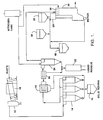
- thermochemical reactor 10 which is an indirectly heated, gas-tight vessel with a controlled oxidizing, neutral or reducing atmosphere as desired, and heated up to about 1000°C under a partial vacuum relative to atmospheric pressure of at least 0.25 kPa (1 inch of water), preferably within the range of 0.25 - 0.75 kPa (1 to 3 inches of water).
- a solid aggregate product discharged from reactor 10 into hopper 12 is essentially insoluble and can be used as an aggregate in the manufacture of concrete products.
- the gaseous product from reactor 10 is passed to a battery of cyclones 14 in series in which the gas temperature is reduced to about 130°C in stages of 210°C, 180°C and 130°C.
- the apex discharge from the cyclones is fed to hopper 16 and constitutes solid residues of heavy metal salts.
- the vortex discharge is fed to a bag filter 18 wherein collected solids are discharged to hopper 16 and the gas is fed to primary condensor 20 which is indirectly cooled by a fluid or liquid such as water to reduce the gas temperature to less than 100°C, preferably to about 80°C.
- Condensed hydrocarbons together with water and heavy metals such as mercury are collected in liquid residue tank 22 and the gas is passed to a secondary condenser such as a cyclone 24 for contact with a liquified gas such as nitrogen which reduces the gas temperature to a temperature less than 60°C, preferably about 10°C.
- a secondary condenser such as a cyclone 24 for contact with a liquified gas such as nitrogen which reduces the gas temperature to a temperature less than 60°C, preferably about 10°C.
- the apex discharge from the cyclone 24, such as water and hydrocarbons is fed to liquid residue tank 22 and the vortex discharge is fed to vessel 26.
- the gas from cyclone 24 is fed to gas inlet 28 of vessel 26 together with liquid nitrogen onto diffuser plates 30 for intimate mixing of the gas with the liquid nitrogen which immediately evaporates to effectively cool the gas to a temperature below 60°C, preferably -2°C, a volumetric feeder 37 feeds a sorbent from hopper 32 together with a caustic from hopper 33 onto diffuser plate 30 for mixing with the gas in chamber 29 which forms the upper part of filter chamber 31.
- a flow adjustor 34 can be pivoted as indicated in Figure 2 to control the rate of flow of gases, particulates and condensate droplets within vessel 26.
- a sorbent powder in the gas as the gas cools in filter chamber 31 is believed to enhance precipitation of metals and salt and condensation of hydrocarbons and acids by nucleation and agglomeration.
- the sorbent absorbs or adsorbs the precipitates including condensates during mixing.
- Precipitated metals and salts and condensed hydrocarbons and acids, with residual solids, absorbed or adsorbed by the sorbent are deposited onto filter collector plate 36 at the base of vessel 26.
- the sorbent with adhered and absorbed material increases in thickness to function as an effective filter bed 38 further collect liquids and solids while maintaining good filtration characteristics.
- the pressure drop across filter bed 38 deposited on filter collector plate 36 is monitored, it being desirable that a pressure differential of not more than 1.75 kPa (7 inch of water), preferably between 0.25 - 1.75 kPa (1 to 7 inches of water), be maintained across bed 38 while maintaining a partial vacuum in vessel 10 of at least 0.25 kPa (1 inch of water) relative to atmospheric pressure.
- scraper 40 is actuated to scrape a portion of the upper surface of filter bed 38 into hopper 42 from which it is removed by means of a flexauger with motor depicted by numeral 44.
- the sorbent scraped from filter bed 38 is recycled to vessel 26 or, if saturated with solids and liquids, is fed to thermoreactor 10 or to hopper 48.
- the gas product from unit 26 is subjected to selective separation to recover nitrogen and to remove carbon dioxide, residual gases being recycled to vessel 10.
- Process gas equivalent to flue gases at a temperature of 300°C was fed into a vessel 26 at a flow rate of about 50m3/hr together with a sorbent powder comprised of diatomaceous earth fed at a rate of 20kg/hr.
- Powdered calcium hydroxide was fed at a rate of 1kg/hr with the sorbent by means of a volumetric feeder to establish a sorbent pH of about 9.5 at a bed of sorbent formed on a filter plate at the base of the vessel through which flow gases were drawn by the suction of an exhaust fan.
- compositions of the gas feed and exhaust gas are shown in the following Table.
- Test #1 conducted at 10°C and Test #2 conducted at -2°C.
- the effective percent removal of heavy metals, mercury vapour, acid gases and hydrocarbons is shown in the Table.
Landscapes
- Chemical & Material Sciences (AREA)
- Engineering & Computer Science (AREA)
- Chemical Kinetics & Catalysis (AREA)
- Analytical Chemistry (AREA)
- General Chemical & Material Sciences (AREA)
- Oil, Petroleum & Natural Gas (AREA)
- Environmental & Geological Engineering (AREA)
- Health & Medical Sciences (AREA)
- Biomedical Technology (AREA)
- Treating Waste Gases (AREA)
- Separation Of Gases By Adsorption (AREA)
Applications Claiming Priority (3)
| Application Number | Priority Date | Filing Date | Title |
|---|---|---|---|
| GB8929044 | 1989-12-22 | ||
| GB898929044A GB8929044D0 (en) | 1989-12-22 | 1989-12-22 | A process for the purification of flue gases |
| PCT/CA1990/000463 WO1991009664A1 (en) | 1989-12-22 | 1990-12-21 | Process and apparatus for removal of impurities from flue gases |
Publications (2)
| Publication Number | Publication Date |
|---|---|
| EP0506787A1 EP0506787A1 (en) | 1992-10-07 |
| EP0506787B1 true EP0506787B1 (en) | 1994-08-31 |
Family
ID=10668409
Family Applications (1)
| Application Number | Title | Priority Date | Filing Date |
|---|---|---|---|
| EP91901660A Expired - Lifetime EP0506787B1 (en) | 1989-12-22 | 1990-12-21 | Process and apparatus for removal of impurities from flue gases |
Country Status (10)
| Country | Link |
|---|---|
| US (1) | US5346674A (enExample) |
| EP (1) | EP0506787B1 (enExample) |
| AT (1) | ATE110583T1 (enExample) |
| AU (1) | AU7044691A (enExample) |
| CA (1) | CA2071891A1 (enExample) |
| DE (1) | DE69012146T2 (enExample) |
| GB (1) | GB8929044D0 (enExample) |
| IN (1) | IN184482B (enExample) |
| WO (1) | WO1991009664A1 (enExample) |
| ZA (1) | ZA9010391B (enExample) |
Families Citing this family (42)
| Publication number | Priority date | Publication date | Assignee | Title |
|---|---|---|---|---|
| US5245120A (en) * | 1991-12-27 | 1993-09-14 | Physical Sciences, Inc. | Process for treating metal-contaminated materials |
| CA2114331C (en) * | 1993-06-10 | 2000-03-28 | Bernard J. Lerner | Removal of mercury and cadmium and their compounds from incinerator flue gases |
| US5556447A (en) * | 1995-01-23 | 1996-09-17 | Physical Sciences, Inc. | Process for treating metal-contaminated materials |
| US6523811B1 (en) * | 1999-01-18 | 2003-02-25 | Takuma Co., Ltd. | Method and device for temperature reduction of exhaust gas by making use of thermal water |
| US6591839B2 (en) | 1999-02-17 | 2003-07-15 | Dieter Meyer | Filter material for reducing harmful substances in tobacco smoke |
| RU2166981C1 (ru) * | 2000-02-03 | 2001-05-20 | Томский политехнический университет | Устройство для сорбентной очистки дымовых газов от оксидов азота |
| GB0015123D0 (en) * | 2000-06-20 | 2000-08-09 | Air Prod & Chem | Process and apparatus for removal of volatile compounds from process gases |
| US6625977B2 (en) * | 2000-12-20 | 2003-09-30 | Caterpillar Inc | Method and a system for removing particulates and toxic substances from an exhaust of an engine that use hydrocarbons as a fuel |
| US6694899B2 (en) * | 2001-03-23 | 2004-02-24 | Apollo Technologies International Corp. | Use of expanded agents for minimizing corrosion and build-up of deposits in flue-gas systems |
| US11179673B2 (en) | 2003-04-23 | 2021-11-23 | Midwwest Energy Emission Corp. | Sorbents for the oxidation and removal of mercury |
| US7435286B2 (en) | 2004-08-30 | 2008-10-14 | Energy & Environmental Research Center Foundation | Sorbents for the oxidation and removal of mercury |
| US10828596B2 (en) | 2003-04-23 | 2020-11-10 | Midwest Energy Emissions Corp. | Promoted ammonium salt-protected activated carbon sorbent particles for removal of mercury from gas streams |
| US8652235B2 (en) * | 2004-08-30 | 2014-02-18 | Energy & Environmental Research Center Foundation | Sorbents for the oxidation and removal of mercury |
| HRP20040100B1 (en) * | 2004-01-29 | 2009-02-28 | Ina-Industrija Nafte | Single-graded separating process of elementary mercury and of mercury compounds from gaseous condensate and from derivatives of petrol refinery processing |
| US10343114B2 (en) | 2004-08-30 | 2019-07-09 | Midwest Energy Emissions Corp | Sorbents for the oxidation and removal of mercury |
| US7531154B2 (en) * | 2005-08-18 | 2009-05-12 | Solvay Chemicals | Method of removing sulfur dioxide from a flue gas stream |
| US7481987B2 (en) * | 2005-09-15 | 2009-01-27 | Solvay Chemicals | Method of removing sulfur trioxide from a flue gas stream |
| US7678178B2 (en) * | 2007-05-23 | 2010-03-16 | The United States Of America As Represented By The Secretary Of The Army | Method and system for treating metal-containing fluid emissions |
| US7626062B2 (en) * | 2007-07-31 | 2009-12-01 | Carner William E | System and method for recycling plastics |
| RU2414279C2 (ru) * | 2009-02-10 | 2011-03-20 | Леонид Николаевич Михайлов | Устройство для очистки воздуха от загрязнителей и снижения эффекта потепления, исходящих из промышленных или иных труб |
| US8951487B2 (en) | 2010-10-25 | 2015-02-10 | ADA-ES, Inc. | Hot-side method and system |
| US8496894B2 (en) | 2010-02-04 | 2013-07-30 | ADA-ES, Inc. | Method and system for controlling mercury emissions from coal-fired thermal processes |
| US11298657B2 (en) | 2010-10-25 | 2022-04-12 | ADA-ES, Inc. | Hot-side method and system |
| US8784757B2 (en) | 2010-03-10 | 2014-07-22 | ADA-ES, Inc. | Air treatment process for dilute phase injection of dry alkaline materials |
| EP2545334B8 (en) * | 2010-03-10 | 2018-09-19 | ADA-ES, Inc. | Process for dilute phase injection of dry alkaline materials into a gas |
| US8580019B2 (en) * | 2010-05-14 | 2013-11-12 | Frontline Bioenergy, Llc | Apparatus and method of optimized acid gas and toxic metal control in gasifier produced gases |
| WO2011153147A1 (en) | 2010-06-01 | 2011-12-08 | Shell Oil Company | Separation of helium and hydrogen in industrial gases |
| WO2011153148A1 (en) | 2010-06-01 | 2011-12-08 | Shell Oil Company | Separation of oxygen containing gases |
| WO2011153151A1 (en) | 2010-06-01 | 2011-12-08 | Shell Oil Company | Low emission power plant |
| CA2800822A1 (en) | 2010-06-01 | 2011-12-08 | Shell Internationale Research Maatschappij B.V. | Separation of gases produced by combustion |
| US8845986B2 (en) | 2011-05-13 | 2014-09-30 | ADA-ES, Inc. | Process to reduce emissions of nitrogen oxides and mercury from coal-fired boilers |
| KR101894109B1 (ko) * | 2011-05-13 | 2018-08-31 | 프론트라인 바이오에너지, 엘엘씨. | 기화기에서 생산된 기체 중의 최적화된 산성 기체 및 독성 금속 방제를 위한 장치 및 방법 |
| US9017452B2 (en) | 2011-11-14 | 2015-04-28 | ADA-ES, Inc. | System and method for dense phase sorbent injection |
| US8883099B2 (en) | 2012-04-11 | 2014-11-11 | ADA-ES, Inc. | Control of wet scrubber oxidation inhibitor and byproduct recovery |
| US8974756B2 (en) | 2012-07-25 | 2015-03-10 | ADA-ES, Inc. | Process to enhance mixing of dry sorbents and flue gas for air pollution control |
| US9957454B2 (en) | 2012-08-10 | 2018-05-01 | ADA-ES, Inc. | Method and additive for controlling nitrogen oxide emissions |
| US10130930B2 (en) | 2013-03-06 | 2018-11-20 | Midwest Energy Emissions Corp | Sorbent comprising carbon and nitrogen and methods of using the same |
| WO2014137907A2 (en) | 2013-03-06 | 2014-09-12 | Energy & Environmental Research Center Foundation | Activated carbon sorbent including nitrogen and methods of using the same |
| US10465300B2 (en) * | 2014-10-16 | 2019-11-05 | Hsin-Yung Lin | Gas generator |
| US10350545B2 (en) | 2014-11-25 | 2019-07-16 | ADA-ES, Inc. | Low pressure drop static mixing system |
| US11331619B1 (en) | 2021-09-22 | 2022-05-17 | MOVA Technologies, Inc. | Collecting a gaseous pollutant from air within an animal enclosure |
| IT202200006926A1 (it) * | 2022-04-07 | 2023-10-07 | Bwe Patents S R L | Processo di separazione di anidride carbonica da un gas incondensabile e disidratato |
Family Cites Families (12)
| Publication number | Priority date | Publication date | Assignee | Title |
|---|---|---|---|---|
| US4281518A (en) * | 1979-01-23 | 1981-08-04 | Messerschmitt-Bolkow-Blohm Gmbh | Method and apparatus for separating particular components of a gas mixture |
| DE2902391C2 (de) * | 1979-01-23 | 1985-05-02 | Messerschmitt-Bölkow-Blohm GmbH, 8000 München | Verfahren zum Abscheiden von bestimmten Komponenten aus einem Gasgemisch und Vorrichtung zur Durchführung dieses Verfahrens |
| GB2082086A (en) * | 1980-08-21 | 1982-03-03 | Boc Ltd | Treatment of waste gases |
| US4424680A (en) * | 1981-11-09 | 1984-01-10 | Rothchild Ronald D | Inexpensive method of recovering condensable vapors with a liquified inert gas |
| US4668489A (en) * | 1984-01-30 | 1987-05-26 | Efb Inc. | Method for treating gas streams |
| DE8403770U1 (de) * | 1984-02-08 | 1987-11-12 | Environment Protection Engineers, Inc., Southfield, Mich. | Vorrichtung zum Reinigen von Pyrolysegas mit einer Einrichtung zum Eintragen eines teilchenförmigen Neutralisationsmittels in den Pyrolysegasstrom |
| JPS61282841A (ja) * | 1985-06-07 | 1986-12-13 | Fuji Photo Film Co Ltd | ハロゲン化銀カラ−感光材料の処理方法 |
| DE3520885C3 (de) * | 1985-06-11 | 1995-03-23 | Kurt Von Dipl Chem D Beckerath | Verfahren und Anlage zur weitgehenden Restentfernung von gasförmigen, aerosolartigen und/oder staubförmigen Schadstoffen |
| US5100643A (en) * | 1988-03-02 | 1992-03-31 | Board Of Regents, The University Of Texas System | Processes for removing acid components from gas streams |
| DE3824880A1 (de) * | 1988-07-19 | 1990-01-25 | Noell Gmbh | Verfahren und vorrichtung zur behandlung von gasen |
| US4982512A (en) * | 1989-12-11 | 1991-01-08 | Jvc Magnetics America Co. | Vapor recovery system |
| US5118480A (en) * | 1990-06-25 | 1992-06-02 | General Electric Environmental Services, Incorporated | Method for removing hcl and hf from coal derived fuel gas |
-
1989
- 1989-12-22 GB GB898929044A patent/GB8929044D0/en not_active Ceased
-
1990
- 1990-12-21 AT AT91901660T patent/ATE110583T1/de active
- 1990-12-21 WO PCT/CA1990/000463 patent/WO1991009664A1/en not_active Ceased
- 1990-12-21 DE DE69012146T patent/DE69012146T2/de not_active Expired - Fee Related
- 1990-12-21 US US07/861,884 patent/US5346674A/en not_active Expired - Fee Related
- 1990-12-21 AU AU70446/91A patent/AU7044691A/en not_active Abandoned
- 1990-12-21 EP EP91901660A patent/EP0506787B1/en not_active Expired - Lifetime
- 1990-12-21 CA CA002071891A patent/CA2071891A1/en not_active Abandoned
- 1990-12-24 IN IN1311DE1990 patent/IN184482B/en unknown
- 1990-12-27 ZA ZA9010391A patent/ZA9010391B/xx unknown
Also Published As
| Publication number | Publication date |
|---|---|
| GB8929044D0 (en) | 1990-02-28 |
| DE69012146T2 (de) | 1995-04-20 |
| WO1991009664A1 (en) | 1991-07-11 |
| EP0506787A1 (en) | 1992-10-07 |
| CA2071891A1 (en) | 1991-06-23 |
| ATE110583T1 (de) | 1994-09-15 |
| AU7044691A (en) | 1991-07-24 |
| ZA9010391B (en) | 1992-01-29 |
| IN184482B (enExample) | 2000-08-26 |
| US5346674A (en) | 1994-09-13 |
| DE69012146D1 (de) | 1994-10-06 |
Similar Documents
| Publication | Publication Date | Title |
|---|---|---|
| US5346674A (en) | Process and apparatus for removal of impurities from flue gases | |
| EP0253563B2 (en) | A process for removal of mercury vapor and/or vapor of noxious organic compounds and/or nitrogen oxides from flue gas from an incinerator plant | |
| KR100991761B1 (ko) | 흡착제 및 연소기체로부터 수은을 제거하는 방법 | |
| US5659110A (en) | Process of purifying combustion exhaust gases | |
| KR101250702B1 (ko) | 금속제조에서의 광석 및/또는 다른 금속함유 물질의소결처리에 의해 생성된 배기가스 정화방법 | |
| EP2422869A1 (en) | Sorbents for the oxidation and removal of mercury | |
| KR101486576B1 (ko) | Lcd 디스플레이용 유리 등의 유리용융공정의 배기가스 정화방법 | |
| WO1999008777A1 (en) | Apparatus and method for removal of vapor phase contaminants from a gas stream by in-situ activation of carbon-based sorbents | |
| EP1004345B1 (en) | Acid component-removing agent, method for producing it and method for removing acid components | |
| JPH07299328A (ja) | 排気ガスの浄化方法 | |
| EP1114679A1 (en) | Method for producing soil, soil-treating unit, method for treating and unit for treating | |
| US5439508A (en) | Process of separating halogenated dioxins and furans from exhaust gases from combustion plants | |
| CN108495699A (zh) | 用于借助于流化床流动反应器使气态或颗粒物质与气体流分离的方法 | |
| JP2007039296A (ja) | セメント製造装置の排ガスの処理方法及び処理システム | |
| JP4033420B2 (ja) | 排ガス中の塩化水素の乾式除去方法および乾式除去装置 | |
| AU742408B2 (en) | Method for purifying gas loaded with dust | |
| KR20170049894A (ko) | 분말상 흡착제를 이용한 악취처리장치 | |
| JP2565895B2 (ja) | 廃ガスを浄化するための方法および装置 | |
| CN1146254A (zh) | 用于净化轻度放射性废物焚烧气体的方法和设备 | |
| JPH0975667A (ja) | 排ガスの処理方法 | |
| JP2663321B2 (ja) | 廃棄物焼却炉から排出される塩化水素ガスの除去方法 | |
| JPS5835733B2 (ja) | ガスナガレノ シヨリホウ | |
| JPH0326095B2 (enExample) | ||
| JP3966485B2 (ja) | 塩素化合物を含有する廃棄物の焼却処分過程において生じる排ガスの処理方法およびその装置 | |
| JP2002263447A (ja) | 焼却排ガスの脱塩剤 |
Legal Events
| Date | Code | Title | Description |
|---|---|---|---|
| PUAI | Public reference made under article 153(3) epc to a published international application that has entered the european phase |
Free format text: ORIGINAL CODE: 0009012 |
|
| 17P | Request for examination filed |
Effective date: 19920715 |
|
| AK | Designated contracting states |
Kind code of ref document: A1 Designated state(s): AT BE CH DE DK ES FR GB GR IT LI LU NL SE |
|
| 17Q | First examination report despatched |
Effective date: 19921214 |
|
| RAP1 | Party data changed (applicant data changed or rights of an application transferred) |
Owner name: WEINWURM, PETER Owner name: WEINWURM, PAUL Owner name: FOERSTER, FRITZ |
|
| RAP1 | Party data changed (applicant data changed or rights of an application transferred) |
Owner name: FOERSTER, FRITZ |
|
| GRAA | (expected) grant |
Free format text: ORIGINAL CODE: 0009210 |
|
| AK | Designated contracting states |
Kind code of ref document: B1 Designated state(s): AT BE CH DE DK ES FR GB GR IT LI LU NL SE |
|
| PG25 | Lapsed in a contracting state [announced via postgrant information from national office to epo] |
Ref country code: IT Free format text: LAPSE BECAUSE OF FAILURE TO SUBMIT A TRANSLATION OF THE DESCRIPTION OR TO PAY THE FEE WITHIN THE PRE;WARNING: LAPSES OF ITALIAN PATENTS WITH EFFECTIVE DATE BEFORE 2007 MAY HAVE OCCURRED AT ANY TIME BEFORE 2007. THE CORRECT EFFECTIVE DATE MAY BE DIFFERENT FROM THE ONE RECORDED.SCRIBED TIME-LIMIT Effective date: 19940831 Ref country code: FR Effective date: 19940831 Ref country code: GR Free format text: LAPSE BECAUSE OF FAILURE TO SUBMIT A TRANSLATION OF THE DESCRIPTION OR TO PAY THE FEE WITHIN THE PRESCRIBED TIME-LIMIT Effective date: 19940831 Ref country code: ES Free format text: THE PATENT HAS BEEN ANNULLED BY A DECISION OF A NATIONAL AUTHORITY Effective date: 19940831 Ref country code: DK Effective date: 19940831 Ref country code: NL Effective date: 19940831 Ref country code: BE Effective date: 19940831 Ref country code: AT Effective date: 19940831 |
|
| REF | Corresponds to: |
Ref document number: 110583 Country of ref document: AT Date of ref document: 19940915 Kind code of ref document: T |
|
| REF | Corresponds to: |
Ref document number: 69012146 Country of ref document: DE Date of ref document: 19941006 |
|
| PG25 | Lapsed in a contracting state [announced via postgrant information from national office to epo] |
Ref country code: SE Effective date: 19941130 |
|
| PG25 | Lapsed in a contracting state [announced via postgrant information from national office to epo] |
Ref country code: GB Effective date: 19941221 |
|
| PG25 | Lapsed in a contracting state [announced via postgrant information from national office to epo] |
Ref country code: LU Free format text: LAPSE BECAUSE OF NON-PAYMENT OF DUE FEES Effective date: 19941231 |
|
| EN | Fr: translation not filed | ||
| NLV1 | Nl: lapsed or annulled due to failure to fulfill the requirements of art. 29p and 29m of the patents act | ||
| PLBE | No opposition filed within time limit |
Free format text: ORIGINAL CODE: 0009261 |
|
| STAA | Information on the status of an ep patent application or granted ep patent |
Free format text: STATUS: NO OPPOSITION FILED WITHIN TIME LIMIT |
|
| GBPC | Gb: european patent ceased through non-payment of renewal fee |
Effective date: 19941221 |
|
| 26N | No opposition filed | ||
| PGFP | Annual fee paid to national office [announced via postgrant information from national office to epo] |
Ref country code: CH Payment date: 19961216 Year of fee payment: 7 |
|
| PGFP | Annual fee paid to national office [announced via postgrant information from national office to epo] |
Ref country code: DE Payment date: 19970124 Year of fee payment: 7 |
|
| PG25 | Lapsed in a contracting state [announced via postgrant information from national office to epo] |
Ref country code: LI Free format text: LAPSE BECAUSE OF NON-PAYMENT OF DUE FEES Effective date: 19971231 Ref country code: CH Free format text: LAPSE BECAUSE OF NON-PAYMENT OF DUE FEES Effective date: 19971231 |
|
| REG | Reference to a national code |
Ref country code: CH Ref legal event code: PL |
|
| PG25 | Lapsed in a contracting state [announced via postgrant information from national office to epo] |
Ref country code: DE Free format text: LAPSE BECAUSE OF NON-PAYMENT OF DUE FEES Effective date: 19980901 |