EP0500905B1 - Pharmazeutische zusammensetzungen zur aids-behandlung - Google Patents
Pharmazeutische zusammensetzungen zur aids-behandlung Download PDFInfo
- Publication number
- EP0500905B1 EP0500905B1 EP91917237A EP91917237A EP0500905B1 EP 0500905 B1 EP0500905 B1 EP 0500905B1 EP 91917237 A EP91917237 A EP 91917237A EP 91917237 A EP91917237 A EP 91917237A EP 0500905 B1 EP0500905 B1 EP 0500905B1
- Authority
- EP
- European Patent Office
- Prior art keywords
- aids
- pharmaceutically acceptable
- treatment
- acceptable salts
- patient
- Prior art date
- Legal status (The legal status is an assumption and is not a legal conclusion. Google has not performed a legal analysis and makes no representation as to the accuracy of the status listed.)
- Expired - Lifetime
Links
- 239000008194 pharmaceutical composition Substances 0.000 title abstract description 9
- 150000001875 compounds Chemical class 0.000 claims abstract description 24
- WLJVXDMOQOGPHL-UHFFFAOYSA-N phenylacetic acid Chemical class OC(=O)CC1=CC=CC=C1 WLJVXDMOQOGPHL-UHFFFAOYSA-N 0.000 claims abstract description 21
- 150000003839 salts Chemical class 0.000 claims abstract description 14
- 229960003424 phenylacetic acid Drugs 0.000 claims abstract description 9
- 239000003279 phenylacetic acid Substances 0.000 claims abstract description 9
- 125000001931 aliphatic group Chemical group 0.000 claims abstract description 5
- 125000003118 aryl group Chemical group 0.000 claims abstract description 5
- 208000030507 AIDS Diseases 0.000 claims description 22
- 239000000203 mixture Substances 0.000 claims description 18
- JFLIEFSWGNOPJJ-JTQLQIEISA-N N(2)-phenylacetyl-L-glutamine Chemical compound NC(=O)CC[C@@H](C(O)=O)NC(=O)CC1=CC=CC=C1 JFLIEFSWGNOPJJ-JTQLQIEISA-N 0.000 claims description 15
- XBJLFHMAIQTBJX-JTQLQIEISA-N (4s)-5-amino-5-oxo-4-[(2-phenylacetyl)amino]pentanoic acid Chemical compound OC(=O)CC[C@@H](C(=O)N)NC(=O)CC1=CC=CC=C1 XBJLFHMAIQTBJX-JTQLQIEISA-N 0.000 claims description 7
- 239000003814 drug Substances 0.000 claims description 7
- 230000001225 therapeutic effect Effects 0.000 claims description 7
- 238000004519 manufacturing process Methods 0.000 claims 4
- 238000011321 prophylaxis Methods 0.000 claims 3
- 208000012124 AIDS-related disease Diseases 0.000 abstract description 6
- 238000000034 method Methods 0.000 abstract description 5
- 150000005458 piperidinediones Chemical class 0.000 abstract description 5
- 210000004366 CD4-positive T-lymphocyte Anatomy 0.000 description 18
- 210000001266 CD8-positive T-lymphocyte Anatomy 0.000 description 16
- 241000725303 Human immunodeficiency virus Species 0.000 description 10
- PFWDHRASWSUTIA-KAFJHEIMSA-L disodium;(2s)-5-amino-5-oxo-2-[(2-phenylacetyl)amino]pentanoate;2-phenylacetate Chemical compound [Na+].[Na+].[O-]C(=O)CC1=CC=CC=C1.NC(=O)CC[C@@H](C([O-])=O)NC(=O)CC1=CC=CC=C1 PFWDHRASWSUTIA-KAFJHEIMSA-L 0.000 description 10
- OQGRFQCUGLKSAV-JTQLQIEISA-N n-[(3s)-2,6-dioxopiperidin-3-yl]-2-phenylacetamide Chemical compound N([C@@H]1C(NC(=O)CC1)=O)C(=O)CC1=CC=CC=C1 OQGRFQCUGLKSAV-JTQLQIEISA-N 0.000 description 10
- 230000001965 increasing effect Effects 0.000 description 9
- 239000002775 capsule Substances 0.000 description 8
- HBOMLICNUCNMMY-XLPZGREQSA-N zidovudine Chemical compound O=C1NC(=O)C(C)=CN1[C@@H]1O[C@H](CO)[C@@H](N=[N+]=[N-])C1 HBOMLICNUCNMMY-XLPZGREQSA-N 0.000 description 8
- 229960002555 zidovudine Drugs 0.000 description 8
- 238000006243 chemical reaction Methods 0.000 description 7
- 201000010099 disease Diseases 0.000 description 7
- 208000037265 diseases, disorders, signs and symptoms Diseases 0.000 description 7
- 210000004027 cell Anatomy 0.000 description 6
- 238000001802 infusion Methods 0.000 description 6
- 238000001990 intravenous administration Methods 0.000 description 6
- 159000000000 sodium salts Chemical class 0.000 description 6
- QOSSAOTZNIDXMA-UHFFFAOYSA-N Dicylcohexylcarbodiimide Chemical compound C1CCCCC1N=C=NC1CCCCC1 QOSSAOTZNIDXMA-UHFFFAOYSA-N 0.000 description 5
- 208000017604 Hodgkin disease Diseases 0.000 description 5
- 208000010747 Hodgkins lymphoma Diseases 0.000 description 5
- 230000006872 improvement Effects 0.000 description 5
- 230000003247 decreasing effect Effects 0.000 description 4
- 210000000987 immune system Anatomy 0.000 description 4
- 239000007924 injection Substances 0.000 description 4
- JABIYIZXMBIFLT-PPHPATTJSA-M sodium;(2s)-5-amino-5-oxo-2-[(2-phenylacetyl)amino]pentanoate Chemical compound [Na+].NC(=O)CC[C@@H](C([O-])=O)NC(=O)CC1=CC=CC=C1 JABIYIZXMBIFLT-PPHPATTJSA-M 0.000 description 4
- 206010001513 AIDS related complex Diseases 0.000 description 3
- WVDDGKGOMKODPV-UHFFFAOYSA-N Benzyl alcohol Chemical compound OCC1=CC=CC=C1 WVDDGKGOMKODPV-UHFFFAOYSA-N 0.000 description 3
- 208000031886 HIV Infections Diseases 0.000 description 3
- 208000037357 HIV infectious disease Diseases 0.000 description 3
- 206010028980 Neoplasm Diseases 0.000 description 3
- 206010049025 Persistent generalised lymphadenopathy Diseases 0.000 description 3
- DNIAPMSPPWPWGF-UHFFFAOYSA-N Propylene glycol Chemical compound CC(O)CO DNIAPMSPPWPWGF-UHFFFAOYSA-N 0.000 description 3
- FAPWRFPIFSIZLT-UHFFFAOYSA-M Sodium chloride Chemical compound [Na+].[Cl-] FAPWRFPIFSIZLT-UHFFFAOYSA-M 0.000 description 3
- 241000700605 Viruses Species 0.000 description 3
- 239000004480 active ingredient Substances 0.000 description 3
- 239000003795 chemical substances by application Substances 0.000 description 3
- 231100000676 disease causative agent Toxicity 0.000 description 3
- 229940079593 drug Drugs 0.000 description 3
- 230000000694 effects Effects 0.000 description 3
- 238000009472 formulation Methods 0.000 description 3
- 230000000652 homosexual effect Effects 0.000 description 3
- 208000033519 human immunodeficiency virus infectious disease Diseases 0.000 description 3
- 125000002887 hydroxy group Chemical group [H]O* 0.000 description 3
- 238000002347 injection Methods 0.000 description 3
- 201000003450 persistent generalized lymphadenopathy Diseases 0.000 description 3
- 239000000047 product Substances 0.000 description 3
- 208000011580 syndromic disease Diseases 0.000 description 3
- QBHBHOSRLDPIHG-UHFFFAOYSA-N (4-hydroxy-3-nitrophenyl)acetic acid Chemical compound OC(=O)CC1=CC=C(O)C([N+]([O-])=O)=C1 QBHBHOSRLDPIHG-UHFFFAOYSA-N 0.000 description 2
- WLJVXDMOQOGPHL-PPJXEINESA-N 2-phenylacetic acid Chemical compound O[14C](=O)CC1=CC=CC=C1 WLJVXDMOQOGPHL-PPJXEINESA-N 0.000 description 2
- XQXPVVBIMDBYFF-UHFFFAOYSA-N 4-hydroxyphenylacetic acid Chemical compound OC(=O)CC1=CC=C(O)C=C1 XQXPVVBIMDBYFF-UHFFFAOYSA-N 0.000 description 2
- QGZKDVFQNNGYKY-UHFFFAOYSA-N Ammonia Chemical compound N QGZKDVFQNNGYKY-UHFFFAOYSA-N 0.000 description 2
- CIWBSHSKHKDKBQ-JLAZNSOCSA-N Ascorbic acid Chemical compound OC[C@H](O)[C@H]1OC(=O)C(O)=C1O CIWBSHSKHKDKBQ-JLAZNSOCSA-N 0.000 description 2
- PEDCQBHIVMGVHV-UHFFFAOYSA-N Glycerine Chemical compound OCC(O)CO PEDCQBHIVMGVHV-UHFFFAOYSA-N 0.000 description 2
- NQTADLQHYWFPDB-UHFFFAOYSA-N N-Hydroxysuccinimide Chemical compound ON1C(=O)CCC1=O NQTADLQHYWFPDB-UHFFFAOYSA-N 0.000 description 2
- 206010037660 Pyrexia Diseases 0.000 description 2
- 230000009471 action Effects 0.000 description 2
- 239000011149 active material Substances 0.000 description 2
- 150000001412 amines Chemical class 0.000 description 2
- 238000001574 biopsy Methods 0.000 description 2
- 201000011510 cancer Diseases 0.000 description 2
- PFKFTWBEEFSNDU-UHFFFAOYSA-N carbonyldiimidazole Chemical compound C1=CN=CN1C(=O)N1C=CN=C1 PFKFTWBEEFSNDU-UHFFFAOYSA-N 0.000 description 2
- PAFZNILMFXTMIY-UHFFFAOYSA-N cyclohexylamine Chemical compound NC1CCCCC1 PAFZNILMFXTMIY-UHFFFAOYSA-N 0.000 description 2
- 230000007123 defense Effects 0.000 description 2
- 238000003745 diagnosis Methods 0.000 description 2
- 239000012954 diazonium Substances 0.000 description 2
- 150000001989 diazonium salts Chemical class 0.000 description 2
- 239000003085 diluting agent Substances 0.000 description 2
- LOKCTEFSRHRXRJ-UHFFFAOYSA-I dipotassium trisodium dihydrogen phosphate hydrogen phosphate dichloride Chemical compound P(=O)(O)(O)[O-].[K+].P(=O)(O)([O-])[O-].[Na+].[Na+].[Cl-].[K+].[Cl-].[Na+] LOKCTEFSRHRXRJ-UHFFFAOYSA-I 0.000 description 2
- 239000003937 drug carrier Substances 0.000 description 2
- 230000004064 dysfunction Effects 0.000 description 2
- 238000011156 evaluation Methods 0.000 description 2
- 230000036449 good health Effects 0.000 description 2
- 230000007062 hydrolysis Effects 0.000 description 2
- 238000006460 hydrolysis reaction Methods 0.000 description 2
- 208000015181 infectious disease Diseases 0.000 description 2
- 210000000936 intestine Anatomy 0.000 description 2
- 238000002955 isolation Methods 0.000 description 2
- 238000009533 lab test Methods 0.000 description 2
- 210000004185 liver Anatomy 0.000 description 2
- 210000001165 lymph node Anatomy 0.000 description 2
- 239000000463 material Substances 0.000 description 2
- 235000012054 meals Nutrition 0.000 description 2
- OQGRFQCUGLKSAV-UHFFFAOYSA-N n-(2,6-dioxopiperidin-3-yl)-2-phenylacetamide Chemical group C1CC(=O)NC(=O)C1NC(=O)CC1=CC=CC=C1 OQGRFQCUGLKSAV-UHFFFAOYSA-N 0.000 description 2
- 206010029410 night sweats Diseases 0.000 description 2
- 230000036565 night sweats Effects 0.000 description 2
- 125000000449 nitro group Chemical group [O-][N+](*)=O 0.000 description 2
- 239000002953 phosphate buffered saline Substances 0.000 description 2
- -1 piperidinedione compound Chemical class 0.000 description 2
- 238000002360 preparation method Methods 0.000 description 2
- 230000000750 progressive effect Effects 0.000 description 2
- 239000011734 sodium Substances 0.000 description 2
- LPXPTNMVRIOKMN-UHFFFAOYSA-M sodium nitrite Chemical compound [Na+].[O-]N=O LPXPTNMVRIOKMN-UHFFFAOYSA-M 0.000 description 2
- 210000000952 spleen Anatomy 0.000 description 2
- 210000002784 stomach Anatomy 0.000 description 2
- 239000000126 substance Substances 0.000 description 2
- 239000000725 suspension Substances 0.000 description 2
- 230000002588 toxic effect Effects 0.000 description 2
- YBADLXQNJCMBKR-UHFFFAOYSA-N (4-nitrophenyl)acetic acid Chemical compound OC(=O)CC1=CC=C([N+]([O-])=O)C=C1 YBADLXQNJCMBKR-UHFFFAOYSA-N 0.000 description 1
- WGJCBBASTRWVJL-UHFFFAOYSA-N 1,3-thiazolidine-2-thione Chemical compound SC1=NCCS1 WGJCBBASTRWVJL-UHFFFAOYSA-N 0.000 description 1
- VTYYLEPIZMXCLO-UHFFFAOYSA-L Calcium carbonate Chemical class [Ca+2].[O-]C([O-])=O VTYYLEPIZMXCLO-UHFFFAOYSA-L 0.000 description 1
- 206010011224 Cough Diseases 0.000 description 1
- 208000000059 Dyspnea Diseases 0.000 description 1
- 206010013975 Dyspnoeas Diseases 0.000 description 1
- KCXVZYZYPLLWCC-UHFFFAOYSA-N EDTA Chemical compound OC(=O)CN(CC(O)=O)CCN(CC(O)=O)CC(O)=O KCXVZYZYPLLWCC-UHFFFAOYSA-N 0.000 description 1
- 102000004190 Enzymes Human genes 0.000 description 1
- 108090000790 Enzymes Proteins 0.000 description 1
- WQZGKKKJIJFFOK-GASJEMHNSA-N Glucose Natural products OC[C@H]1OC(O)[C@H](O)[C@@H](O)[C@@H]1O WQZGKKKJIJFFOK-GASJEMHNSA-N 0.000 description 1
- WHUUTDBJXJRKMK-UHFFFAOYSA-N Glutamic acid Natural products OC(=O)C(N)CCC(O)=O WHUUTDBJXJRKMK-UHFFFAOYSA-N 0.000 description 1
- 208000007514 Herpes zoster Diseases 0.000 description 1
- DGAQECJNVWCQMB-PUAWFVPOSA-M Ilexoside XXIX Chemical compound C[C@@H]1CC[C@@]2(CC[C@@]3(C(=CC[C@H]4[C@]3(CC[C@@H]5[C@@]4(CC[C@@H](C5(C)C)OS(=O)(=O)[O-])C)C)[C@@H]2[C@]1(C)O)C)C(=O)O[C@H]6[C@@H]([C@H]([C@@H]([C@H](O6)CO)O)O)O.[Na+] DGAQECJNVWCQMB-PUAWFVPOSA-M 0.000 description 1
- 206010062016 Immunosuppression Diseases 0.000 description 1
- 102100034343 Integrase Human genes 0.000 description 1
- WHUUTDBJXJRKMK-VKHMYHEASA-N L-glutamic acid Chemical compound OC(=O)[C@@H](N)CCC(O)=O WHUUTDBJXJRKMK-VKHMYHEASA-N 0.000 description 1
- ZDXPYRJPNDTMRX-VKHMYHEASA-N L-glutamine Chemical compound OC(=O)[C@@H](N)CCC(N)=O ZDXPYRJPNDTMRX-VKHMYHEASA-N 0.000 description 1
- 229930182816 L-glutamine Natural products 0.000 description 1
- 208000008771 Lymphadenopathy Diseases 0.000 description 1
- 241000204031 Mycoplasma Species 0.000 description 1
- GRYLNZFGIOXLOG-UHFFFAOYSA-N Nitric acid Chemical compound O[N+]([O-])=O GRYLNZFGIOXLOG-UHFFFAOYSA-N 0.000 description 1
- 208000001388 Opportunistic Infections Diseases 0.000 description 1
- 229910019142 PO4 Inorganic materials 0.000 description 1
- 208000005384 Pneumocystis Pneumonia Diseases 0.000 description 1
- 206010073755 Pneumocystis jirovecii pneumonia Diseases 0.000 description 1
- ZLMJMSJWJFRBEC-UHFFFAOYSA-N Potassium Chemical compound [K] ZLMJMSJWJFRBEC-UHFFFAOYSA-N 0.000 description 1
- 108010092799 RNA-directed DNA polymerase Proteins 0.000 description 1
- 208000035415 Reinfection Diseases 0.000 description 1
- 206010057190 Respiratory tract infections Diseases 0.000 description 1
- DWAQJAXMDSEUJJ-UHFFFAOYSA-M Sodium bisulfite Chemical compound [Na+].OS([O-])=O DWAQJAXMDSEUJJ-UHFFFAOYSA-M 0.000 description 1
- 108020000999 Viral RNA Proteins 0.000 description 1
- 210000001015 abdomen Anatomy 0.000 description 1
- 230000009102 absorption Effects 0.000 description 1
- 238000010521 absorption reaction Methods 0.000 description 1
- 150000001242 acetic acid derivatives Chemical class 0.000 description 1
- 239000002253 acid Substances 0.000 description 1
- 238000005903 acid hydrolysis reaction Methods 0.000 description 1
- 230000002378 acidificating effect Effects 0.000 description 1
- 230000004913 activation Effects 0.000 description 1
- 230000010933 acylation Effects 0.000 description 1
- 238000005917 acylation reaction Methods 0.000 description 1
- 239000002671 adjuvant Substances 0.000 description 1
- 230000029936 alkylation Effects 0.000 description 1
- 238000005804 alkylation reaction Methods 0.000 description 1
- 235000001014 amino acid Nutrition 0.000 description 1
- 150000003862 amino acid derivatives Chemical class 0.000 description 1
- 125000003277 amino group Chemical group 0.000 description 1
- 229910021529 ammonia Inorganic materials 0.000 description 1
- 150000003863 ammonium salts Chemical class 0.000 description 1
- 229940069428 antacid Drugs 0.000 description 1
- 239000003159 antacid agent Substances 0.000 description 1
- 239000003242 anti bacterial agent Substances 0.000 description 1
- 230000001458 anti-acid effect Effects 0.000 description 1
- 230000000840 anti-viral effect Effects 0.000 description 1
- 239000003963 antioxidant agent Substances 0.000 description 1
- 235000006708 antioxidants Nutrition 0.000 description 1
- 239000003443 antiviral agent Substances 0.000 description 1
- 238000013459 approach Methods 0.000 description 1
- 235000010323 ascorbic acid Nutrition 0.000 description 1
- 229960005070 ascorbic acid Drugs 0.000 description 1
- 239000011668 ascorbic acid Substances 0.000 description 1
- 235000019445 benzyl alcohol Nutrition 0.000 description 1
- WQZGKKKJIJFFOK-VFUOTHLCSA-N beta-D-glucose Chemical compound OC[C@H]1O[C@@H](O)[C@H](O)[C@@H](O)[C@@H]1O WQZGKKKJIJFFOK-VFUOTHLCSA-N 0.000 description 1
- 239000011230 binding agent Substances 0.000 description 1
- 230000004071 biological effect Effects 0.000 description 1
- 238000009534 blood test Methods 0.000 description 1
- 210000001185 bone marrow Anatomy 0.000 description 1
- 125000001246 bromo group Chemical group Br* 0.000 description 1
- 239000000872 buffer Substances 0.000 description 1
- 239000000969 carrier Substances 0.000 description 1
- 238000009903 catalytic hydrogenation reaction Methods 0.000 description 1
- 239000002738 chelating agent Substances 0.000 description 1
- 239000003153 chemical reaction reagent Substances 0.000 description 1
- 125000001309 chloro group Chemical group Cl* 0.000 description 1
- 150000001860 citric acid derivatives Chemical class 0.000 description 1
- 238000009833 condensation Methods 0.000 description 1
- 230000005494 condensation Effects 0.000 description 1
- 238000006482 condensation reaction Methods 0.000 description 1
- 238000011161 development Methods 0.000 description 1
- 230000018109 developmental process Effects 0.000 description 1
- 239000008121 dextrose Substances 0.000 description 1
- ZBCBWPMODOFKDW-UHFFFAOYSA-N diethanolamine Chemical compound OCCNCCO ZBCBWPMODOFKDW-UHFFFAOYSA-N 0.000 description 1
- 230000004069 differentiation Effects 0.000 description 1
- 230000029087 digestion Effects 0.000 description 1
- 238000007345 electrophilic aromatic substitution reaction Methods 0.000 description 1
- 239000002702 enteric coating Substances 0.000 description 1
- 238000009505 enteric coating Methods 0.000 description 1
- 230000007071 enzymatic hydrolysis Effects 0.000 description 1
- 238000006047 enzymatic hydrolysis reaction Methods 0.000 description 1
- 230000029142 excretion Effects 0.000 description 1
- 125000001153 fluoro group Chemical group F* 0.000 description 1
- 239000012634 fragment Substances 0.000 description 1
- 125000000524 functional group Chemical group 0.000 description 1
- 239000007903 gelatin capsule Substances 0.000 description 1
- 239000011521 glass Substances 0.000 description 1
- 235000013922 glutamic acid Nutrition 0.000 description 1
- 239000004220 glutamic acid Substances 0.000 description 1
- 235000011187 glycerol Nutrition 0.000 description 1
- 230000036541 health Effects 0.000 description 1
- 230000001506 immunosuppresive effect Effects 0.000 description 1
- 238000000338 in vitro Methods 0.000 description 1
- 238000001727 in vivo Methods 0.000 description 1
- 230000002779 inactivation Effects 0.000 description 1
- 230000001939 inductive effect Effects 0.000 description 1
- 239000003701 inert diluent Substances 0.000 description 1
- 239000007788 liquid Substances 0.000 description 1
- 208000018555 lymphatic system disease Diseases 0.000 description 1
- 230000007257 malfunction Effects 0.000 description 1
- 235000010270 methyl p-hydroxybenzoate Nutrition 0.000 description 1
- 239000004081 narcotic agent Substances 0.000 description 1
- 230000001613 neoplastic effect Effects 0.000 description 1
- 229910017604 nitric acid Inorganic materials 0.000 description 1
- 239000000346 nonvolatile oil Substances 0.000 description 1
- 238000007339 nucleophilic aromatic substitution reaction Methods 0.000 description 1
- 239000000546 pharmaceutical excipient Substances 0.000 description 1
- 235000021317 phosphate Nutrition 0.000 description 1
- 150000003013 phosphoric acid derivatives Chemical class 0.000 description 1
- 239000002504 physiological saline solution Substances 0.000 description 1
- 239000004033 plastic Substances 0.000 description 1
- 229920003023 plastic Polymers 0.000 description 1
- 201000000317 pneumocystosis Diseases 0.000 description 1
- 229920001223 polyethylene glycol Polymers 0.000 description 1
- 229910052700 potassium Inorganic materials 0.000 description 1
- 239000011591 potassium Substances 0.000 description 1
- 238000002203 pretreatment Methods 0.000 description 1
- 230000002265 prevention Effects 0.000 description 1
- 125000002924 primary amino group Chemical group [H]N([H])* 0.000 description 1
- 102000004196 processed proteins & peptides Human genes 0.000 description 1
- 108090000765 processed proteins & peptides Proteins 0.000 description 1
- 229940002612 prodrug Drugs 0.000 description 1
- 239000000651 prodrug Substances 0.000 description 1
- 125000006239 protecting group Chemical group 0.000 description 1
- 230000000306 recurrent effect Effects 0.000 description 1
- 230000008672 reprogramming Effects 0.000 description 1
- 208000020029 respiratory tract infectious disease Diseases 0.000 description 1
- 230000002441 reversible effect Effects 0.000 description 1
- 238000007363 ring formation reaction Methods 0.000 description 1
- 208000013220 shortness of breath Diseases 0.000 description 1
- 229910052708 sodium Inorganic materials 0.000 description 1
- 239000011780 sodium chloride Substances 0.000 description 1
- 235000010267 sodium hydrogen sulphite Nutrition 0.000 description 1
- 235000010288 sodium nitrite Nutrition 0.000 description 1
- DTOWEMWBLNFCCM-PPHPATTJSA-M sodium;(4s)-5-amino-5-oxo-4-[(2-phenylacetyl)amino]pentanoate Chemical compound [Na+].[O-]C(=O)CC[C@@H](C(=O)N)NC(=O)CC1=CC=CC=C1 DTOWEMWBLNFCCM-PPHPATTJSA-M 0.000 description 1
- 239000007787 solid Substances 0.000 description 1
- 239000000243 solution Substances 0.000 description 1
- 239000002904 solvent Substances 0.000 description 1
- 238000007920 subcutaneous administration Methods 0.000 description 1
- 239000013589 supplement Substances 0.000 description 1
- 208000024891 symptom Diseases 0.000 description 1
- 235000020357 syrup Nutrition 0.000 description 1
- 239000006188 syrup Substances 0.000 description 1
- 238000012360 testing method Methods 0.000 description 1
- 238000002560 therapeutic procedure Methods 0.000 description 1
- 230000000699 topical effect Effects 0.000 description 1
- 231100000331 toxic Toxicity 0.000 description 1
- 241001430294 unidentified retrovirus Species 0.000 description 1
- XLYOFNOQVPJJNP-UHFFFAOYSA-N water Chemical compound O XLYOFNOQVPJJNP-UHFFFAOYSA-N 0.000 description 1
- 239000008215 water for injection Substances 0.000 description 1
- 230000003442 weekly effect Effects 0.000 description 1
Classifications
-
- A—HUMAN NECESSITIES
- A61—MEDICAL OR VETERINARY SCIENCE; HYGIENE
- A61K—PREPARATIONS FOR MEDICAL, DENTAL OR TOILETRY PURPOSES
- A61K45/00—Medicinal preparations containing active ingredients not provided for in groups A61K31/00 - A61K41/00
- A61K45/06—Mixtures of active ingredients without chemical characterisation, e.g. antiphlogistics and cardiaca
-
- A—HUMAN NECESSITIES
- A61—MEDICAL OR VETERINARY SCIENCE; HYGIENE
- A61K—PREPARATIONS FOR MEDICAL, DENTAL OR TOILETRY PURPOSES
- A61K31/00—Medicinal preparations containing organic active ingredients
- A61K31/185—Acids; Anhydrides, halides or salts thereof, e.g. sulfur acids, imidic, hydrazonic or hydroximic acids
- A61K31/19—Carboxylic acids, e.g. valproic acid
- A61K31/195—Carboxylic acids, e.g. valproic acid having an amino group
-
- A—HUMAN NECESSITIES
- A61—MEDICAL OR VETERINARY SCIENCE; HYGIENE
- A61K—PREPARATIONS FOR MEDICAL, DENTAL OR TOILETRY PURPOSES
- A61K31/00—Medicinal preparations containing organic active ingredients
- A61K31/33—Heterocyclic compounds
- A61K31/395—Heterocyclic compounds having nitrogen as a ring hetero atom, e.g. guanethidine or rifamycins
- A61K31/435—Heterocyclic compounds having nitrogen as a ring hetero atom, e.g. guanethidine or rifamycins having six-membered rings with one nitrogen as the only ring hetero atom
- A61K31/44—Non condensed pyridines; Hydrogenated derivatives thereof
- A61K31/445—Non condensed piperidines, e.g. piperocaine
Definitions
- the present invention relates to the prevention and treatment of diseases caused by retroviruses, particularly AIDS (Acquired Immune Deficiency Syndrome), ARC (AIDS-related complex), and PGL (Persistent Generalized Lymphadenopathy).
- AIDS Abnormal Immune Deficiency Syndrome
- ARC AIDS-related complex
- PGL Persistent Generalized Lymphadenopathy
- AIDS is a disease characterized by progressive dysfunction of the immune system.
- T4 and T8 lymphocytes which are the affected cells of the immune system, develop according to the program encoded in the DNA of the cell.
- the program in DNA also contains the fragment corresponding to viral RNA, which was transcribed through reverse transcriptase.
- the presence of such a program causes the T4 cell to malfunction and live a much shorter life and T8 cells to multiply more rapidly.
- the decrease of T4 lymphocyte count and increase of T8 lymphocyte count will cause progressive failure of the immune system manifested by opportunistic infections and neoplastic diseases associated with AIDS, ultimately leading to the patient's death.
- antineoplastons cell differentiating agents
- the present inventor postulates that the human body possesses a biochemical defense system consisting of antineoplastons, which are small and medium size peptides and amino acid derivatives (Burzynski, Internat . J . Exp . Clin . Chemother ., 2:63 (1989)).
- the basis of defense in this system is reprogramming of the cells which contain the wrong program for development.
- Such theory has been tested in the treatment of cancer by inducing normal differentiation in cancer cells (Burzynski, U.S. Patent Nos. 4,470,970, 4,558,057 and 4,559,325).
- Antineoplaston A10 was the first active ingredient isolated and synthetically produced (Burzynski et al., Proc . 13 Internat . Cong . Chemother ., Vienna , Austria , 17:P.S.12.4.11-4). Antineoplaston A10, which chemically is 3-phenylacetylamino-2,6-piperidinedione, undergoes enzymatic hydrolysis in human intestine to form phenylacetylglutamine and phenylacetylisoglutamine in the ratio of 4:1. Pharmaceutical formulations of the two digestion products of Antineoplaston A10 was named Antineoplaston A10 injections (Burzynski, Internat . Journal Exp . Clin .
- US-A-4 705 796 discloses injections comprising 3-N-phenylacetylamino-2,6-piperidinedione.
- EP-A-O 069 232 discloses pharmaceutical compositions comprising 3-N-phenylacetylamino-2,6 piperidinedione, phenylacetylglutamine or a combination of phenylacetyl glutamine and phenylacetic acid (as a 1:4 mixture) and salts thereof.
- the present invention provides pharmaceutical compositions for use in treating AIDS containing a therepeutically effective amount of a piperidinedione compound of the formula wherein R is OH, NH2, OW, or H; X is H, F, Cl, Br, I, OH, OW, NO2 or NH2; Y is H, F, Cl, I or Br; W is or a C1 to C12 aliphatic group; Z is an aliphatic or aromatic group of from C1 to C12; X and Y can both vary within the compound; and pharmaceutically acceptable salts thereof.
- R is OH, NH2, OW, or H
- X is H, F, Cl, Br, I, OH, OW, NO2 or NH2
- Y is H, F, Cl, I or Br
- W is or a C1 to C12 aliphatic group
- Z is an aliphatic or aromatic group of from C1 to C12
- X and Y can both vary within the compound; and pharmaceutically
- compositions containing as an active ingredient the hydrolysis products of formula [I] piperidinediones, namely R,X,Y substituted phenylacetylglutamine; R,X,Y substituted phenylacetylisoglutamine; R,X,Y substituted phenylacetic acid; mixtures thereof; and pharmaceutically acceptable salts thereof.
- salts mean salts having the biological activity of the parent compound and lacking unusually toxic activity at the selected administration level.
- Such salts include inorganic sodium, potassium and ammonium salts, organic diethanolamine, cyclohexylamine, and amino acid salts.
- AIDS-related diseases include AIDS, ARC, and PGL.
- Antineoplaston AS2-1 (1:4 ratio of sodium salt of phenylacetylglutamine and sodium salt of phenylacetic acid) has been administered for the purpose of treating AIDS-related diseases in the form of 500 mg capsules and 100 mg/ml intravenous infusions.
- Antineoplaston A10 100 mg/ml (4:1 ratio of phenylacetylglutamine sodium salt and phenylacetylisoglutamine sodium salt) intravenous infusions have also been used in the treatment of AIDS-related diseases and AIDS-related tumors.
- the piperidinedione compounds of this invention can be prepared by condensation of the appropriate R,X,Y substituted phenylacetic acid derivative with L-glutamine to produce the corresponding R,X,Y substituted phenylacetylglutamine derivative that is then intramolecularly cyclized to the desired 3-(N-R,X,Y substituted phenylacetylamino)-2,6-piperidinedione.
- the condensation reaction is facilitated by prior activation of the phenylacetic acid derivative with a reagent such as N-hydroxysuccinimide in the presence of DCC (N,N-dicyclohexylcarbodiimide), 2-mercaptothiazoline in the presence of DCC, or DCC alone.
- the phenylacetylglutamine derivative is also preferably activated before cyclization by reaction with N-hydroxysuccinimide in the presence of DCC or by reaction with 1,1'-carbonyldiimidazole. These reactions are described in more detail in Burzynski, Drugs of the Future , 10(2):103 (1985).
- Desired R,X,Y substituted derivatives of phenylacetic acid can be purchased commercially or prepared synthetically by methods known to those skilled in the art according to well established rules of electrophilic and nucleophilic aromatic substitution.
- 4-hydroxyphenylacetic acid which is commercially available from Aldrich Chemical Company, Inc., can be nitrated with dilute HNO3 to produce 4-hydroxy-3-nitrophenylacetic acid that is used as is in the next step of reaction.
- the nitro group in 4-hydroxy-3-nitrophenylacetic acid can be reduced to the corresponding amine and then reacted with sodium nitrite in acid to form the diazonium salt, that can be converted into a wide range of functional groups, including chloro, fluoro, bromo and hydroxyl.
- Phenylacetic acid can alternatively be nitrated in the 4-position to produce 4-nitrophenylacetic acid, that is used as is in the reaction or converted to the diazonium salt and derivatized.
- the nitro group can be reduced to the corresponding amino group as a final step of reaction by methods known to those skilled in the art, including catalytic hydrogenation.
- Prodrugs of the hydroxyl or amino derivatives of 3-N-phenylacetylamino-2,6-piperidinedione can be prepared by alkylation or acylation of the hydroxyl or amino moieties according to established methods. These protecting groups can be cleaved in vivo or in vitro by the appropriate enzyme, generating the active compound.
- R,X,Y substituted piperidinediones, R,X,Y substituted phenylacetic acid, and R,X,Y substituted phenylacetylglutamine of the present invention are useful in the treatment of AIDS-related diseases.
- Pharmaceutical compositions, including these active compounds, can be prepared as described below.
- the active compound, mixtures of the active compounds, or pharmaceutically acceptable salts thereof, are included in the pharmaceutically acceptable carrier or diluent in an amount sufficient to exert a therapeutic effect, i.e., increasing T4 cell count and decreasing T8 cell count.
- the active materials can be administered by any appropriate route, for example, orally, parenterally, intravenously, intradermally, subcutaneously, intraperitoneally, or topically, in liquid or solid form.
- the active compound is included in the pharmaceutically acceptable carrier in an amount sufficient to exert a therapeutically useful effect on the AIDS-diseased patient without serious toxic effect.
- the therapeutic effect is measured by an increasing T4 cell count, decreasing T8 cell count, and increasing T4/T8 ratio.
- Normal values for T4 cell count range from 450/mm3 to 1300/mm3.
- Normal values for T8 cell count are from 250/mm3 to 750/mm3. Normally, the T4/T8 ratio is more than 0.9.
- the concentration of active compound in the drug composition will depend upon absorption, inactivation, and excretion rates of the active compound as well as other factors known to those skilled in the art. It is to be noted that dosage values will also vary with the severity of the condition to be alleviated. It is to be further understood that for any particular subject, specific dosage regimens should be adjusted over time according to the individual need and the professional judgment of the person administering or supervising the administration of the compositions.
- the active ingredient may be administered at once, or may be divided into a number of smaller doses to be administered at varying intervals of time. For less advanced cases of HIV infection and AIDS, we are using treatment orally.
- the patient is given Antineoplaston AS2-1 capsules from 3 to 10 g/day, or 40 mg/kg/24 h to 150 mg/kg/24 h, and preferably, 6 g/day or 85 mg/kg/24 h.
- Antineoplaston A10 capsules (3-phenylacetylamino-2,6-piperidinedione) can be given from 3 g to 14 g/day or 40 mg/kg/24 h to 200 mg/kg/24 h, preferably 6 g/day or 85 mg/kg/24 h.
- the dosages of sodium salt phenylacetylglutamine given orally will be five times smaller than AS2-1 capsules, because AS2-1 consists of sodium salts of phenylacetylglutamine (1 part) and phenylacetic
- the dosages for sodium salt phenylacetylglutamine are from 2.0 g to 120 g/day, preferably 70 g/day.
- the dosages for phenylacetylisoglutamine are from 2.0 g to 30 g/day, preferably 14 g/day.
- the dosages for intravenously administered sodium salt of phenylacetic acid are from 8.0 g to 40 g/day, preferably 24 g/day.
- the compound may be provided in a composition that protects it from the acidic environment of the stomach.
- the compound can be orally administered in combination with an antacid formulation.
- the composition can also be administered in an enteric coating that maintains its integrity in the stomach and releases the active compound in the intestine.
- Oral compositions will generally include an inert diluent or an edible carrier. They may be enclosed in gelatin capsules or compressed into tablets.
- the active compound can be incorporated with excipients and used in the form of tablets, troches, capsules, elixirs, suspensions, syrups or the like.
- Pharmaceutically compatible binding agents and/or adjuvant materials can be included as part of the composition.
- the active compounds can also be mixed with other active materials that do not impair the desired action, or with materials that supplement the desired action, including other HIV antiviral agents such as AZT.
- Solutions or suspensions used for parenteral, intradermal, subcutaneous, or topical application can include the following components: a sterile diluent such as water for injection, saline solution, fixed oils, polyethylene glycols, glycerine, propylene glycol or other synthetic solvents; antibacterial agents such as benzyl alcohol or methyl parabens; antioxidants such as ascorbic acid or sodium bisulfite; chelating agents such as ethylenediaminetetraacetic acid; buffers such as acetates, citrates or phosphates and agents for the adjustment of tonicity such as sodium chloride or dextrose.
- the parental preparation can be enclosed in ampoules, disposable syringes or multiple dose vials made of glass or plastic.
- preferred carriers are physiological saline or phosphate buffered saline (PBS).
- the patient is a 34-year-old white male who complained of recurrent infections.
- the patient was practicing homosexual lifestyle. This patient was in reasonable health until January 1989 when he was found to be HIV positive. The symptoms of the disease he had since then were recurrent upper respiratory infections and Herpes zoster infection in January 1990.
- August 1989 he began treatment with zidovudine. After initial improvement, his T4 cell count began to decease (from 741/mm3 on December 12, 1989 to 608/mm3 on March 6, 1990 and 420/mm3 on April 23, 1990).
- T8 cell count after initial decrease, continued to increase. His T8 cell count on December 12, 1989 was 836/mm3 and 969/mm3 on March 6, 1990 and 1420/mm3 on April 23, 1990. After initial increase, T4/T8 ratio began to decrease (0.88 on December 12, 1989, 0.62 on March 6, 1990 and 0.30 on April 23, 1990).
- T4 cell count (420/mm3 on April 23, 1990, 450/mm3 on May 21, 1990 and 480/mm3 on May 29, 1990).
- T8 cell count continued to decrease (1420/mm3 on April 23, 1990, 1080/mm3 on May 21, 1990, 848/mm3 on May 29, 1990).
- T4/T8 ratio continues to increase (0.30 on April 23, 1990, 0.42 on May 21, 1990, 0.56 on May 29, 1990). Normal values for T8 count are from 250/mm3 to 750/mm3 and T4/T8 ratio is more than 0.9.
- the continuous increase of T4 cell count, decrease of T8 cell count and increase of T4/T8 ratio indicates objective improvement.
- the patient is a 29-year-old male who was complaining of shortness of breath, cough, night sweats, fever and loss of 25 pounds of weight within three weeks before coming under my treatment.
- This patient was in good health until the beginning of April 1990 when he was diagnosed with Hodgkin's disease of mixed cellularity.
- the diagnosis was based upon the biopsy of the cervical lymph node. The patient was found to have enlargement of liver and spleen and multiple lymph nodes in the neck, chest and the abdomen. The bone marrow biopsy was highly suggestive of involvement with Hodgkin's disease.
- the laboratory test done at the beginning of the treatment for Hodgkin's disease indicated HIV infection which prompted the final diagnosis of Hodgkin's disease, stage IV associated with AIDS.
- the patient associated his HIV infection with intravenous use of narcotics. He did not receive any previous treatment for AIDS and Hodgkin's disease.
- This patient began the treatment with Antineoplaston A10, 100 mg/ml intravenous infusions on April 23, 1990.
- the dose of the formulation was gradually increased to 70g IV daily.
- Antineoplaston AS2-1 100 mg/ml infusions were added to the treatment and the dosage of this formulation was gradually increased to 20g/24h.
- the treatment was given in the form of continuous infusions through ambulatory pump.
- the complete evaluation performed on June 22, 1990 revealed marked improvement in the patient's condition. The patient was feeling very well and did not have any complaints.
- the liver and spleen were no longer enlarged by physical examination.
- the laboratory tests on May 17, 1990 revealed T4 cell count of 82/mm3.
- the repeated test on June 4, 1990 revealed marked increase of T4 cell count to 133/mm3.
- the increase of T4 cell count indicates improvement in the treatment of AIDS.
- the patient is a 32-year-old white male who was complaining of fever and night sweats. This patient was in good health until approximately 1985 when he was diagnosed as HIV positive. He did not use intravenous drugs, and most likely, his infection was due to homosexual contact. He did not have any treatment until June 8, 1990 when he was started on zidovudine. Before beginning the treatment with Antineoplaston AS2-1, his T4 cell count was decreasing and T8 cell count was increasing.
- the patient began treatment with Antineoplaston AS2-1, 500 mg capsules on June 11, 1990. The patient was advised to take three capsules of Antineoplaston AS2-1 four times daily with meals. The treatment was tolerated very well without side effects.
- the most recent blood test of July 30, 1990 revealed increase of T4 cell count and decrease of T8 cell count. Helper/suppressor ratio increased. His pre-treatment T4 cell count of June 8, 1990 was 496/mm3. Subsequent T4 cell counts were as follows: 484/mm3 on July 9, 1990 and 546/mm3 on July 30, 1990. Pretreatment T8 cell count on June 8, 1990 was 2232/mm3. The following T8 cell counts were 1430/mm3 on June 9, 1990 and 1281/mm3 on July 30, 1990. T4/T8 ratio increased from initial 0.22 on June 8, 1990 to 0.33 on July 9, 1990 and 0.42 on July 30, 1990.
Landscapes
- Health & Medical Sciences (AREA)
- Chemical & Material Sciences (AREA)
- Medicinal Chemistry (AREA)
- Pharmacology & Pharmacy (AREA)
- Epidemiology (AREA)
- Life Sciences & Earth Sciences (AREA)
- Animal Behavior & Ethology (AREA)
- General Health & Medical Sciences (AREA)
- Public Health (AREA)
- Veterinary Medicine (AREA)
- Pharmaceuticals Containing Other Organic And Inorganic Compounds (AREA)
- Medicines That Contain Protein Lipid Enzymes And Other Medicines (AREA)
- Acyclic And Carbocyclic Compounds In Medicinal Compositions (AREA)
- Hydrogenated Pyridines (AREA)
Claims (7)
- Die Verwendung einer aktiven Verbindung der Formel

X H, F, Cl, Br, I, OH, OW, NO₂ oder NH₂ ist;
Y H, F, Cl, Br oder I ist;
W
Z eine aliphatische oder aromatische Gruppe mit C₁ bis C₁₂ ist;
X und Y beide in der Verbindung variieren können; oder
pharmazeutisch annehmbarer Salze derselben, zur Herstellung eines Arzneimittels für die therapeutische und/oder prophylaktische Behandlung von AIDS in einem befallenen Wirtsorganismus. - Die Verwendung von 3-[N-Phenylacetylaminopiperidin]-2,6-dion oder seiner pharmazeutisch annehmbaren Salze zur Herstellung eines Arzneimittels für die therapeutische und/oder prophylaktische Behandlung von AIDS in einem befallenen Wirtsorganismus.
- Die Verwendung einer aktiven Verbindung der Formel
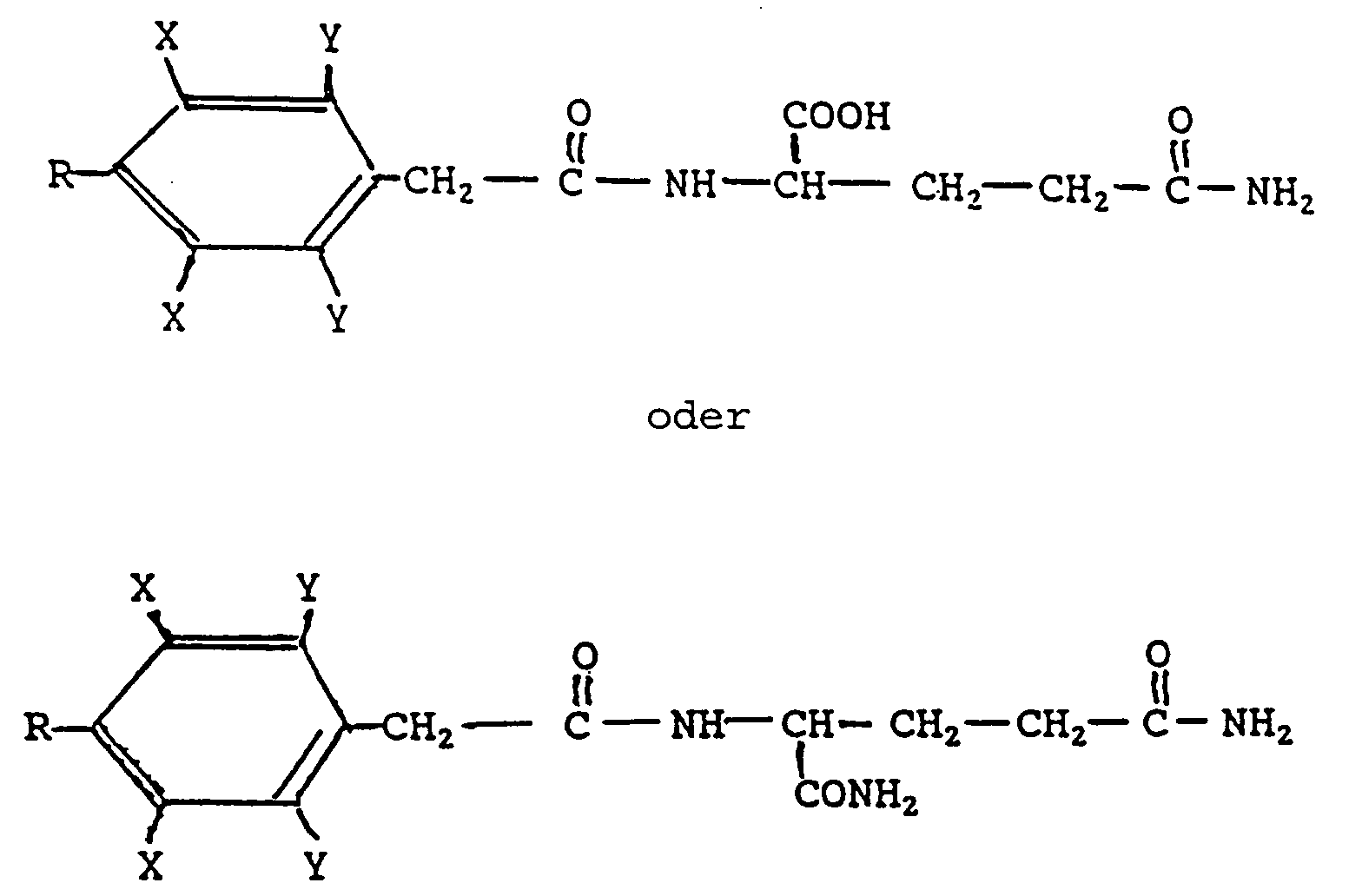
worin R OH, NH₂, OW oder H ist;
X H, F, Cl, Br, I, OH, OW, NO₂ oder NH₂ ist;
Y H, F, Cl, Br oder I ist;
W
Z eine aliphatische oder aromatische Gruppe mit C₁ bis C₁₂ ist;
X und Y beide in der Verbindung variieren können; oder
pharmazeutisch annehmbarer Salze derselben, zur Herstellung eines Arzneimittels für die therapeutische und/oder prophylaktische Behandlung von AIDS in einem befallenen Wirtsorganismus. - Die Verwendung einer aktiven Verbindung der Formel

X H, F, Cl, Br, I, OH, OW, NO₂ oder NH₂ ist;
Y H, F, Cl, Br oder I ist;
W
Z eine aliphatische oder aromatische Gruppe mit C₁ bis C₁₂ ist;
X und Y beide in der Verbindung variieren können; und
pharmazeutisch annehmbarer Salze derselben, als eine zusätzliche Komponente bei der Herstellung eines Arzneimittels nach Anspruch 3. - Die Verwendung nach Anspruch 3, wobei die aktive Verbindung Phenylacetylglutamin, Phenylacetylisoglutamin, Mischungen derselben oder pharmazeutisch annehmbare Salze derselben ist.
- Die Verwendung nach Anspruch 3, wobei die aktive Verbindung eine Zusammensetzung ist, die ein 4:1-Verhältnis von Phenylacetylglutamin und Phenylacetylisoglutamin umfaßt.
- Die Verwendung nach Anspruch 3, wobei die aktive Verbindung eine Zusammensetzung ist, die Phenylessigsäure oder ihre pharmazeutisch annehmbaren Salze umfaßt.
Applications Claiming Priority (3)
| Application Number | Priority Date | Filing Date | Title |
|---|---|---|---|
| US577464 | 1990-09-04 | ||
| US07/577,464 US5089508A (en) | 1990-09-04 | 1990-09-04 | Methods for treating aids |
| PCT/US1991/005977 WO1992004027A1 (en) | 1990-09-04 | 1991-08-21 | Pharmaceutical compositions for use in treating aids |
Publications (2)
| Publication Number | Publication Date |
|---|---|
| EP0500905A1 EP0500905A1 (de) | 1992-09-02 |
| EP0500905B1 true EP0500905B1 (de) | 1996-03-13 |
Family
ID=24308852
Family Applications (1)
| Application Number | Title | Priority Date | Filing Date |
|---|---|---|---|
| EP91917237A Expired - Lifetime EP0500905B1 (de) | 1990-09-04 | 1991-08-21 | Pharmazeutische zusammensetzungen zur aids-behandlung |
Country Status (11)
| Country | Link |
|---|---|
| US (1) | US5089508A (de) |
| EP (1) | EP0500905B1 (de) |
| AT (1) | ATE135217T1 (de) |
| AU (1) | AU638869B2 (de) |
| DE (1) | DE69117923T2 (de) |
| DK (1) | DK0500905T3 (de) |
| ES (1) | ES2084181T3 (de) |
| GR (1) | GR3019970T3 (de) |
| SG (1) | SG81889A1 (de) |
| WO (1) | WO1992004027A1 (de) |
| ZA (1) | ZA916977B (de) |
Families Citing this family (6)
| Publication number | Priority date | Publication date | Assignee | Title |
|---|---|---|---|---|
| US5244922A (en) * | 1990-09-04 | 1993-09-14 | Burzynski Stanislaw R | Methods for treating viral infections |
| DE59101214D1 (de) * | 1991-07-15 | 1994-04-21 | Artesan Pharma Gmbh | Verwendung der Ascorbinsäure zur Zubereitung von Arzneimitteln zur Anwendung im Genitalbereich. |
| US5646182A (en) * | 1992-06-15 | 1997-07-08 | Burzynski; Stanislaw R. | Methods for treating autoimmune diseases |
| DE4320201A1 (de) * | 1993-06-18 | 1995-01-12 | Asta Medica Ag | Verwendung von Cetrorelix und weiteren Nona- und Dekapeptiden zur Herstellung eines Arzneimittels zur Bekämpfung von Aids und zur Wachstumsstimulation |
| DE69734713T2 (de) * | 1996-05-14 | 2006-07-06 | Burzynski, Stanislaw R., Houston | Liposomale antineoplaston therapie mit bemerkenswert verbesserter antineoplastischer aktivität |
| US6127419A (en) * | 1998-11-23 | 2000-10-03 | Burzynski; Stanislaw R. | Phenylacetic acid compositions for treating or preventing atherosclerosis and restenosis |
Family Cites Families (6)
| Publication number | Priority date | Publication date | Assignee | Title |
|---|---|---|---|---|
| US4470970A (en) * | 1981-07-02 | 1984-09-11 | Burzynski Stanislaw R | Purified antineoplaston fractions and methods of treating neoplastic disease |
| US4558057A (en) * | 1981-12-15 | 1985-12-10 | Burzynski Stanislaw R | Purified antineoplaston fractions and methods of treating neoplastic disease |
| US4427684A (en) * | 1982-09-24 | 1984-01-24 | Ores Richard O | Treatment and prevention of infection with herpes simplex and related viruses |
| GB2181346B (en) * | 1985-09-11 | 1989-10-04 | Nat Res Dev | Pharmaceutical compositions and medical uses of dioxopiperidine derivatives |
| US4705796A (en) * | 1986-08-25 | 1987-11-10 | Stereochemical Genetics, Inc. | Use of 3-N-phenylacetylamino-2,6-piperidinedione for treatment of neuropsychiatric disorders |
| DE3814549A1 (de) * | 1987-10-30 | 1989-05-18 | Bayer Ag | N-substituierte derivate von 1-desoxynojirimycin und 1-desoxymannonojirimycin, verfahren zu deren herstellung und deren verwendung in arzneimitteln |
-
1990
- 1990-09-04 US US07/577,464 patent/US5089508A/en not_active Expired - Lifetime
-
1991
- 1991-08-21 EP EP91917237A patent/EP0500905B1/de not_active Expired - Lifetime
- 1991-08-21 ES ES91917237T patent/ES2084181T3/es not_active Expired - Lifetime
- 1991-08-21 SG SG9607278A patent/SG81889A1/en unknown
- 1991-08-21 AU AU85397/91A patent/AU638869B2/en not_active Ceased
- 1991-08-21 DK DK91917237.9T patent/DK0500905T3/da active
- 1991-08-21 WO PCT/US1991/005977 patent/WO1992004027A1/en not_active Ceased
- 1991-08-21 DE DE69117923T patent/DE69117923T2/de not_active Expired - Fee Related
- 1991-08-21 AT AT91917237T patent/ATE135217T1/de not_active IP Right Cessation
- 1991-09-03 ZA ZA916977A patent/ZA916977B/xx unknown
-
1996
- 1996-05-20 GR GR960401345T patent/GR3019970T3/el unknown
Non-Patent Citations (2)
| Title |
|---|
| CHEMICAL ABSTRACTS, vol.105, no. 19, 10 November 1986, Columbus, Ohio, US, abstract no. 164561W; BURZYNSKI S.R.: "Preclincal studies on antineoplaston A10 injections", page 27 * |
| Chemical abstracts, vol.105, no.19, 10/11/1986, Columbus, Ohio, US., abstract no. 164562x; ASHRAF A.Q. et al.: "Preclinical studies on Antineoplaston A10 injections", page 27 * |
Also Published As
| Publication number | Publication date |
|---|---|
| US5089508A (en) | 1992-02-18 |
| WO1992004027A1 (en) | 1992-03-19 |
| ATE135217T1 (de) | 1996-03-15 |
| DE69117923T2 (de) | 1996-08-01 |
| GR3019970T3 (en) | 1996-08-31 |
| ZA916977B (en) | 1992-06-24 |
| DE69117923D1 (de) | 1996-04-18 |
| DK0500905T3 (da) | 1996-08-05 |
| SG81889A1 (en) | 2001-07-24 |
| ES2084181T3 (es) | 1996-05-01 |
| AU638869B2 (en) | 1993-07-08 |
| EP0500905A1 (de) | 1992-09-02 |
| AU8539791A (en) | 1992-03-30 |
Similar Documents
| Publication | Publication Date | Title |
|---|---|---|
| EP0601164B1 (de) | Verfahren zur behandlung von viralen infectionen | |
| Sommadossi et al. | Uridine reverses the toxicity of 3'-azido-3'-deoxythymidine in normal human granulocyte-macrophage progenitor cells in vitro without impairment of antiretroviral activity | |
| Kaplan et al. | Antipsoriatic effects of zidovudine in human immunodeficiency virus-associated psoriasis | |
| JPS61176523A (ja) | 制癌剤 | |
| RU2251415C2 (ru) | Синергетическое ингибирование вирусной репликации длинноцепочечными углеводородами и нуклеозидными аналогами | |
| US5254587A (en) | Methods for treating AIDS | |
| US5089508A (en) | Methods for treating aids | |
| DK166715B1 (da) | Farmaceutiske produkt og anvendelse af dette til fremstilling af et kombinationspraeparat til behandling af virusinfektioner | |
| Cohen et al. | Epidemic hemorrhagic fever in Hubei Province, The People's Republic of China: a clinical and serological study | |
| US5519028A (en) | Antiviral preparations | |
| Al-Nakib et al. | Prevention and treatment of experimental influenza A virus infection in volunteers with a new antiviral ICI 130,685 | |
| EP0603383B1 (de) | Zusammensetzungen und verfahren zur behandlung von autoimmunkrankheiten | |
| Burdge et al. | Neurotoxic effects during vidarabine therapy for herpes zoster | |
| JPS63264527A (ja) | 抗エイズウイルス剤 | |
| Rafferty | Voluntary chlorine inhalation: a new form of self-abuse? | |
| EP0335726A2 (de) | Verwendung von Thymopentin und Derivaten bei der Behandlung von HIV-Patienten | |
| EP0476391B1 (de) | Anti-AIDS-Zusammensetzung mit Cepharanthin als Wirkstoff | |
| JPH05170646A (ja) | 抗エイズウイルス剤 | |
| JPH01313433A (ja) | 抗hiv剤 | |
| KR100341736B1 (ko) | 인간헤르페스바이러스7감염의치료및예방용2-아미노푸린유도체의용도 | |
| JPH11508247A (ja) | ウベニメクス及びウベニメクスを含む医薬組成物のウイルス性肝炎の治療薬としての用途 | |
| Bosch et al. | Aplastic anaemia during treatment with fluoxetine | |
| WO1989009056A1 (en) | Antiviral composition containing aromatic polycyclic diones and nucleoside analogs and method for treating retrovirus infections | |
| RU2333753C1 (ru) | Противовирусное средство | |
| Nelson et al. | Use of didanosine in zidovudine-intolerant patients infected with human immunodeficiency virus |
Legal Events
| Date | Code | Title | Description |
|---|---|---|---|
| PUAI | Public reference made under article 153(3) epc to a published international application that has entered the european phase |
Free format text: ORIGINAL CODE: 0009012 |
|
| 17P | Request for examination filed |
Effective date: 19920521 |
|
| AK | Designated contracting states |
Kind code of ref document: A1 Designated state(s): AT BE CH DE DK ES FR GB GR IT LI LU NL SE |
|
| 17Q | First examination report despatched |
Effective date: 19940805 |
|
| GRAA | (expected) grant |
Free format text: ORIGINAL CODE: 0009210 |
|
| AK | Designated contracting states |
Kind code of ref document: B1 Designated state(s): AT BE CH DE DK ES FR GB GR IT LI LU NL SE |
|
| REF | Corresponds to: |
Ref document number: 135217 Country of ref document: AT Date of ref document: 19960315 Kind code of ref document: T |
|
| ITF | It: translation for a ep patent filed | ||
| REG | Reference to a national code |
Ref country code: CH Ref legal event code: NV Representative=s name: BOVARD AG PATENTANWAELTE |
|
| REF | Corresponds to: |
Ref document number: 69117923 Country of ref document: DE Date of ref document: 19960418 |
|
| REG | Reference to a national code |
Ref country code: ES Ref legal event code: FG2A Ref document number: 2084181 Country of ref document: ES Kind code of ref document: T3 |
|
| ET | Fr: translation filed | ||
| REG | Reference to a national code |
Ref country code: GR Ref legal event code: FG4A Free format text: 3019970 |
|
| REG | Reference to a national code |
Ref country code: DK Ref legal event code: T3 |
|
| PLBE | No opposition filed within time limit |
Free format text: ORIGINAL CODE: 0009261 |
|
| STAA | Information on the status of an ep patent application or granted ep patent |
Free format text: STATUS: NO OPPOSITION FILED WITHIN TIME LIMIT |
|
| 26N | No opposition filed | ||
| REG | Reference to a national code |
Ref country code: GB Ref legal event code: IF02 |
|
| PGFP | Annual fee paid to national office [announced via postgrant information from national office to epo] |
Ref country code: DE Payment date: 20080829 Year of fee payment: 18 Ref country code: NL Payment date: 20080826 Year of fee payment: 18 Ref country code: LU Payment date: 20080819 Year of fee payment: 18 Ref country code: DK Payment date: 20080821 Year of fee payment: 18 Ref country code: ES Payment date: 20080827 Year of fee payment: 18 Ref country code: CH Payment date: 20080822 Year of fee payment: 18 |
|
| PGFP | Annual fee paid to national office [announced via postgrant information from national office to epo] |
Ref country code: AT Payment date: 20080821 Year of fee payment: 18 Ref country code: IT Payment date: 20080828 Year of fee payment: 18 Ref country code: FR Payment date: 20080822 Year of fee payment: 18 |
|
| PGFP | Annual fee paid to national office [announced via postgrant information from national office to epo] |
Ref country code: GB Payment date: 20080820 Year of fee payment: 18 |
|
| PGFP | Annual fee paid to national office [announced via postgrant information from national office to epo] |
Ref country code: SE Payment date: 20080820 Year of fee payment: 18 Ref country code: BE Payment date: 20080828 Year of fee payment: 18 |
|
| PGFP | Annual fee paid to national office [announced via postgrant information from national office to epo] |
Ref country code: GR Payment date: 20080826 Year of fee payment: 18 |
|
| BERE | Be: lapsed |
Owner name: *BURZYNSKI STANISLAW R. Effective date: 20090831 |
|
| REG | Reference to a national code |
Ref country code: CH Ref legal event code: PL Ref country code: NL Ref legal event code: V1 Effective date: 20100301 |
|
| REG | Reference to a national code |
Ref country code: DK Ref legal event code: EBP |
|
| GBPC | Gb: european patent ceased through non-payment of renewal fee |
Effective date: 20090821 |
|
| PG25 | Lapsed in a contracting state [announced via postgrant information from national office to epo] |
Ref country code: LI Free format text: LAPSE BECAUSE OF NON-PAYMENT OF DUE FEES Effective date: 20090831 Ref country code: CH Free format text: LAPSE BECAUSE OF NON-PAYMENT OF DUE FEES Effective date: 20090831 |
|
| REG | Reference to a national code |
Ref country code: FR Ref legal event code: ST Effective date: 20100430 |
|
| PG25 | Lapsed in a contracting state [announced via postgrant information from national office to epo] |
Ref country code: AT Free format text: LAPSE BECAUSE OF NON-PAYMENT OF DUE FEES Effective date: 20090821 Ref country code: BE Free format text: LAPSE BECAUSE OF NON-PAYMENT OF DUE FEES Effective date: 20090831 |
|
| PG25 | Lapsed in a contracting state [announced via postgrant information from national office to epo] |
Ref country code: DK Free format text: LAPSE BECAUSE OF NON-PAYMENT OF DUE FEES Effective date: 20090831 Ref country code: FR Free format text: LAPSE BECAUSE OF NON-PAYMENT OF DUE FEES Effective date: 20090831 Ref country code: DE Free format text: LAPSE BECAUSE OF NON-PAYMENT OF DUE FEES Effective date: 20100302 Ref country code: NL Free format text: LAPSE BECAUSE OF NON-PAYMENT OF DUE FEES Effective date: 20100301 |
|
| REG | Reference to a national code |
Ref country code: ES Ref legal event code: FD2A Effective date: 20090822 |
|
| PG25 | Lapsed in a contracting state [announced via postgrant information from national office to epo] |
Ref country code: GR Free format text: LAPSE BECAUSE OF NON-PAYMENT OF DUE FEES Effective date: 20100303 |
|
| PG25 | Lapsed in a contracting state [announced via postgrant information from national office to epo] |
Ref country code: GB Free format text: LAPSE BECAUSE OF NON-PAYMENT OF DUE FEES Effective date: 20090821 |
|
| PG25 | Lapsed in a contracting state [announced via postgrant information from national office to epo] |
Ref country code: IT Free format text: LAPSE BECAUSE OF NON-PAYMENT OF DUE FEES Effective date: 20090821 |
|
| PG25 | Lapsed in a contracting state [announced via postgrant information from national office to epo] |
Ref country code: LU Free format text: LAPSE BECAUSE OF NON-PAYMENT OF DUE FEES Effective date: 20090821 |
|
| PG25 | Lapsed in a contracting state [announced via postgrant information from national office to epo] |
Ref country code: SE Free format text: LAPSE BECAUSE OF NON-PAYMENT OF DUE FEES Effective date: 20090822 |
|
| PG25 | Lapsed in a contracting state [announced via postgrant information from national office to epo] |
Ref country code: ES Free format text: LAPSE BECAUSE OF NON-PAYMENT OF DUE FEES Effective date: 20090822 |