EP0484374B1 - Schnelle, vielseitige und einfache methode zur expression von genen in eukaryotischen zellen - Google Patents
Schnelle, vielseitige und einfache methode zur expression von genen in eukaryotischen zellen Download PDFInfo
- Publication number
- EP0484374B1 EP0484374B1 EP90910982A EP90910982A EP0484374B1 EP 0484374 B1 EP0484374 B1 EP 0484374B1 EP 90910982 A EP90910982 A EP 90910982A EP 90910982 A EP90910982 A EP 90910982A EP 0484374 B1 EP0484374 B1 EP 0484374B1
- Authority
- EP
- European Patent Office
- Prior art keywords
- protein
- rna
- virus
- promoter
- gene
- Prior art date
- Legal status (The legal status is an assumption and is not a legal conclusion. Google has not performed a legal analysis and makes no representation as to the accuracy of the status listed.)
- Expired - Lifetime
Links
Images


Classifications
-
- C—CHEMISTRY; METALLURGY
- C12—BIOCHEMISTRY; BEER; SPIRITS; WINE; VINEGAR; MICROBIOLOGY; ENZYMOLOGY; MUTATION OR GENETIC ENGINEERING
- C12N—MICROORGANISMS OR ENZYMES; COMPOSITIONS THEREOF; PROPAGATING, PRESERVING, OR MAINTAINING MICROORGANISMS; MUTATION OR GENETIC ENGINEERING; CULTURE MEDIA
- C12N15/00—Mutation or genetic engineering; DNA or RNA concerning genetic engineering, vectors, e.g. plasmids, or their isolation, preparation or purification; Use of hosts therefor
- C12N15/09—Recombinant DNA-technology
- C12N15/63—Introduction of foreign genetic material using vectors; Vectors; Use of hosts therefor; Regulation of expression
- C12N15/79—Vectors or expression systems specially adapted for eukaryotic hosts
- C12N15/85—Vectors or expression systems specially adapted for eukaryotic hosts for animal cells
- C12N15/86—Viral vectors
-
- C—CHEMISTRY; METALLURGY
- C12—BIOCHEMISTRY; BEER; SPIRITS; WINE; VINEGAR; MICROBIOLOGY; ENZYMOLOGY; MUTATION OR GENETIC ENGINEERING
- C12N—MICROORGANISMS OR ENZYMES; COMPOSITIONS THEREOF; PROPAGATING, PRESERVING, OR MAINTAINING MICROORGANISMS; MUTATION OR GENETIC ENGINEERING; CULTURE MEDIA
- C12N15/00—Mutation or genetic engineering; DNA or RNA concerning genetic engineering, vectors, e.g. plasmids, or their isolation, preparation or purification; Use of hosts therefor
- C12N15/09—Recombinant DNA-technology
- C12N15/10—Processes for the isolation, preparation or purification of DNA or RNA
-
- C—CHEMISTRY; METALLURGY
- C12—BIOCHEMISTRY; BEER; SPIRITS; WINE; VINEGAR; MICROBIOLOGY; ENZYMOLOGY; MUTATION OR GENETIC ENGINEERING
- C12N—MICROORGANISMS OR ENZYMES; COMPOSITIONS THEREOF; PROPAGATING, PRESERVING, OR MAINTAINING MICROORGANISMS; MUTATION OR GENETIC ENGINEERING; CULTURE MEDIA
- C12N15/00—Mutation or genetic engineering; DNA or RNA concerning genetic engineering, vectors, e.g. plasmids, or their isolation, preparation or purification; Use of hosts therefor
- C12N15/09—Recombinant DNA-technology
- C12N15/63—Introduction of foreign genetic material using vectors; Vectors; Use of hosts therefor; Regulation of expression
- C12N15/67—General methods for enhancing the expression
-
- C—CHEMISTRY; METALLURGY
- C12—BIOCHEMISTRY; BEER; SPIRITS; WINE; VINEGAR; MICROBIOLOGY; ENZYMOLOGY; MUTATION OR GENETIC ENGINEERING
- C12N—MICROORGANISMS OR ENZYMES; COMPOSITIONS THEREOF; PROPAGATING, PRESERVING, OR MAINTAINING MICROORGANISMS; MUTATION OR GENETIC ENGINEERING; CULTURE MEDIA
- C12N15/00—Mutation or genetic engineering; DNA or RNA concerning genetic engineering, vectors, e.g. plasmids, or their isolation, preparation or purification; Use of hosts therefor
- C12N15/09—Recombinant DNA-technology
- C12N15/63—Introduction of foreign genetic material using vectors; Vectors; Use of hosts therefor; Regulation of expression
- C12N15/79—Vectors or expression systems specially adapted for eukaryotic hosts
- C12N15/85—Vectors or expression systems specially adapted for eukaryotic hosts for animal cells
-
- C—CHEMISTRY; METALLURGY
- C12—BIOCHEMISTRY; BEER; SPIRITS; WINE; VINEGAR; MICROBIOLOGY; ENZYMOLOGY; MUTATION OR GENETIC ENGINEERING
- C12N—MICROORGANISMS OR ENZYMES; COMPOSITIONS THEREOF; PROPAGATING, PRESERVING, OR MAINTAINING MICROORGANISMS; MUTATION OR GENETIC ENGINEERING; CULTURE MEDIA
- C12N9/00—Enzymes; Proenzymes; Compositions thereof; Processes for preparing, activating, inhibiting, separating or purifying enzymes
- C12N9/10—Transferases (2.)
- C12N9/1025—Acyltransferases (2.3)
- C12N9/1029—Acyltransferases (2.3) transferring groups other than amino-acyl groups (2.3.1)
- C12N9/1033—Chloramphenicol O-acetyltransferase (2.3.1.28)
-
- C—CHEMISTRY; METALLURGY
- C12—BIOCHEMISTRY; BEER; SPIRITS; WINE; VINEGAR; MICROBIOLOGY; ENZYMOLOGY; MUTATION OR GENETIC ENGINEERING
- C12N—MICROORGANISMS OR ENZYMES; COMPOSITIONS THEREOF; PROPAGATING, PRESERVING, OR MAINTAINING MICROORGANISMS; MUTATION OR GENETIC ENGINEERING; CULTURE MEDIA
- C12N9/00—Enzymes; Proenzymes; Compositions thereof; Processes for preparing, activating, inhibiting, separating or purifying enzymes
- C12N9/10—Transferases (2.)
- C12N9/12—Transferases (2.) transferring phosphorus containing groups, e.g. kinases (2.7)
- C12N9/1241—Nucleotidyltransferases (2.7.7)
- C12N9/1247—DNA-directed RNA polymerase (2.7.7.6)
-
- C—CHEMISTRY; METALLURGY
- C12—BIOCHEMISTRY; BEER; SPIRITS; WINE; VINEGAR; MICROBIOLOGY; ENZYMOLOGY; MUTATION OR GENETIC ENGINEERING
- C12N—MICROORGANISMS OR ENZYMES; COMPOSITIONS THEREOF; PROPAGATING, PRESERVING, OR MAINTAINING MICROORGANISMS; MUTATION OR GENETIC ENGINEERING; CULTURE MEDIA
- C12N2710/00—MICROORGANISMS OR ENZYMES; COMPOSITIONS THEREOF; PROPAGATING, PRESERVING, OR MAINTAINING MICROORGANISMS; MUTATION OR GENETIC ENGINEERING; CULTURE MEDIA dsDNA viruses
- C12N2710/00011—Details
- C12N2710/24011—Poxviridae
- C12N2710/24111—Orthopoxvirus, e.g. vaccinia virus, variola
- C12N2710/24141—Use of virus, viral particle or viral elements as a vector
- C12N2710/24143—Use of virus, viral particle or viral elements as a vector viral genome or elements thereof as genetic vector
-
- C—CHEMISTRY; METALLURGY
- C12—BIOCHEMISTRY; BEER; SPIRITS; WINE; VINEGAR; MICROBIOLOGY; ENZYMOLOGY; MUTATION OR GENETIC ENGINEERING
- C12N—MICROORGANISMS OR ENZYMES; COMPOSITIONS THEREOF; PROPAGATING, PRESERVING, OR MAINTAINING MICROORGANISMS; MUTATION OR GENETIC ENGINEERING; CULTURE MEDIA
- C12N2770/00—MICROORGANISMS OR ENZYMES; COMPOSITIONS THEREOF; PROPAGATING, PRESERVING, OR MAINTAINING MICROORGANISMS; MUTATION OR GENETIC ENGINEERING; CULTURE MEDIA ssRNA viruses positive-sense
- C12N2770/00011—Details
- C12N2770/32011—Picornaviridae
- C12N2770/32211—Cardiovirus, e.g. encephalomyocarditis virus
- C12N2770/32241—Use of virus, viral particle or viral elements as a vector
- C12N2770/32243—Use of virus, viral particle or viral elements as a vector viral genome or elements thereof as genetic vector
Definitions
- This application relates to the expression of foreign genes in eukaryotic cells and organisms and especially relates to the use of prokaryotic genes, e.g., the genes of bacteria and viruses in eukaryotic cells, e.g., the cells of higher organisms, particularly mammals.
- prokaryotic genes e.g., the genes of bacteria and viruses in eukaryotic cells, e.g., the cells of higher organisms, particularly mammals.
- prokaryotic genes e.g., the genes of bacteria and viruses in eukaryotic cells, e.g., the cells of higher organisms, particularly mammals.
- prokaryotic genes e.g., the genes of bacteria and viruses in eukaryotic cells, e.g., the cells of higher organisms, particularly mammals.
- Fuerst et al., PNAS 83, 8122-8126, 1986 disclose a eukaryotic, in particular mammalian cell expression system based on a recombinant vaccinia virus
- the cells are infected with this recombinant vaccinia virus and transfected with a plasmid containing a target gene (a gene coding for, e.g., ⁇ -galactosidase or chloramphenicol acetyltransferase) under the control of the bacteriophage T7 promoter and terminator regions.
- a target gene a gene coding for, e.g., ⁇ -galactosidase or chloramphenicol acetyltransferase
- EMC Encephalomyocarditis Virus
- DNA plasmids linking EMC 5' noncoding sequences to other segments of the viral genome were constructed and efficient expression of viral peptides in cell-free reactions was observed.
- a 5' capping group was not required for translational activity.
- the present invention provides an improved, rapid and versatile system with substantially higher level of protein synthesis.
- An object of the present invention is to provide an efficient expression system which confers cap-independent translation to RNAs in eukaryotic cells, particularly when a prokaryotic transcription system is used in eukaryotic cells.
- An additional object of the present invention is to provide a method for controlled expression of toxic genes.
- FIG. 1 shows a schematic structure of expression cassettes in accordance with the present invention.
- P T7 bacteriophage T7 ⁇ 10 promoter from -23 to +1, 5'hp, nucleotides +1 to +26 downstream of the ⁇ 10 promoter and capable of forming a hairpin or stem-loop structure
- T T7 bacteriophage T7 ⁇ 10 termination sequence
- EMC nucleotides 163 to 746 of the EMCV UTR.
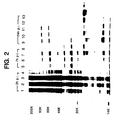
- FIG. 2 shows the results of time course study of CAT synthesis during vaccinia virus infection.
- CV-1 cell monolayers were infected with 20 PFU per cell of wild-type vaccinia virus (lane 9), or co-infected with vTF7-3 and vT7CAT (lanes 1, 2, 5, 6, 10, 11), or with vTF7-3 and vT7EMCAT (lanes 3, 4, 7, 8, 12, 13) at a multiplicity of 10 PFU per cell of each virus.
- vTF7-3 and vT7CAT lanes 1, 2, 5, 6, 10, 11
- vTF7-3 and vT7EMCAT las 3, 4, 7, 8, 12, 13
- Starvation and pulse labelling were done in isotonic (lanes 1, 3, 5, 7, 9, 10, 12) or hypertonic (190mM NaCl) (lanes 2, 4, 6, 8, 11, 13) conditions.
- Cell lysates were prepared and equal volumes (corresponding to 2x10 5 cells) were loaded in each lane of a 10% NaDodSO 4 -polyacrylamide gel. Following electrophoresis, the gel was processed for fluorography. The arrow identifies the CAT protein.
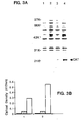
- Figure 3 demonstrates the accumulation of CAT protein by 24 hr after infection.
- CV-1 cell monolayers were infected with 20 PFU per cell of wild-type vaccinia virus (A. lane 1; B, solid bar), or co-infected with vTF7-3 and vT7CAT (A, lane 2; B, hatched bar), or co-infected with vTF7-3 and vT7EMCAT (a, lanes 3 and 4; B, open bar) at a multiplicity of 10 PFU per cell for each virus.
- the isotonic medium was maintained (A, lanes 1-3; B, part 1) or changed to 190 mM (hypertonic) NaCl (A, lane 4;#B part 2).
- cell lysates were prepared, 20 ⁇ g of protein were loaded in each lane of a 10% NaDodSO 4 -polyacrylamide gel and following electrophoresis the gel was stained with Coomassie brilliant blue (A) or CAT activity was determined as described in the text.
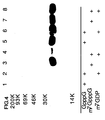
- Figure 4 shows cap-independent translation of RNA containing EMCV UTR.
- In vitro transcription was carried out using Bam HI digested pT7CAT (lanes 1-4) or pT7EMCAT (lanes 5-8) as templates. Lanes containing unmethylated (GpppG) or methylated (m 7 GpppG) capped RNA are indicated.
- Translation in micrococcal-treated rabbit reticulocyte lysate was performed with RNA concentration of 8 nM with or without the presence of 0.1 mM methylated GDP (m 7 GDP) as indicated.
- Figure 5 demonstrates polyribosome-association and in-vitro translation of CAT RNA made in infected cells.
- HeLa cells were co-infected with 10 PFU/cell of vTF7-3 and 10 PFU/cell of either vT7CAT ( ) or vT7EMCAT (0_0). After 12 hr, cytoplasmic extracts were prepared and sedimented on sucrose density gradients. Optical density at 260 nm of each fraction was measured and the position of the monosome peak is indicated. A 20 ⁇ l sample of each fraction was immobilized on nitrocellulose using a slot blot apparatus and then hybridized to a [ 32 P]-CAT probe.
- RNA polymerase and promoter are from a DNA bacteriophage and the ribosome binding site is from an RNA virus.
- the preferred embodiment comprises the use of a recombinant vaccinia virus constructed to include a T7 promoter, an encephalomyocarditis virus (ECMV) untranslated region (UTR), and a T7 promoter regulated gene for a protein desired to be expressed, as illustrated in Figure 1.
- ECMV encephalomyocarditis virus
- UTR encephalomyocarditis virus
- the untranslated region that confers cap independent translation may be from sources other than EMCV including related viruses such as poliovirus and mengovirus and from unrelated viruses such as herein adenovirus and the like.
- sources other than EMCV including related viruses such as poliovirus and mengovirus and from unrelated viruses such as herein adenovirus and the like.
- the examples provided herein are only illustrative and not limiting.
- other prokaryotic transcription systems such as bacteriophage SP6, T3 and GH1 could be employed for expression in eukaryotic cells.
- CV-1 monkey kidney cells were propagated as monolayers in Dulbecco's modified Eagle's medium containing 10% fetal bovine serum. Cells were infected as described previously (Fuerst et al, 1987, Mol. Cell Biol. 7, 2538-2544; Fuerst et al, 1989, J. Mol. Biol. 206:333-348). Plasmid constructions. A 0.6 kilobasepair (kbp) EcoR1-Bal1 EMC fragment from pE5LVPO (Parks et al, 1986, J. Virol.
- CAT coding sequence was isolated from pTF7CAT-1 (Fuerst et al, supra ), as 0.8 kbp Taq 1 fragment and using BamH1 linkers was inserted into the BamH1 site of pUC18 to generate the plasmid pUC18CAT-1. The 0.8 kbp BamH1 CAT fragment was then isolated.
- the mutagenized EMC CAT cassette was then isolated as a 0.82 kbp BamH1-Kpn1 fragment and inserted into the corresponding site in plasmid pTF7.25EMCAT-1 to create pTF7.25EMCAT-20.
- pTF7.25EMCAT-20 and pTF7CAT-1 will be referred to as pT7EMCAT and pT7CAT, respectively.
- a deposit of pT7EMCAT plasmid has been made at the ATCC, Rockville, Maryland on July 7, 1989 under the accession number 68045.
- the deposit shall be viably maintained, replacing if it becomes non-viable during the life of the patent, for a period of 30 years from the date of the deposit, or for 5 years from the last date of request for a sample of the deposit, whichever is longer, and upon issuance of the patent made available to the public without restriction in accordance with the provisions of the law.
- the Commissioner of Patents and Trademarks, upon request, shall have access to the deposit.
- Vaccinia virus insertion vectors were prepared by excising the complete T7 promoter-target gene-T7 terminator cassettes as BgIII fragments, blunting the ends and inserting into the blunted EcoR1 site of pGS50 (Fuerst et al, supra ). This resulted in flanking the target gene cassettes with vaccinia virus thymidine kinase (TK) sequences used for homologous recombination. Recombination into the genome of vaccinia virus and the isolation of recombinant virus was carried out as described by Mackett et al, 1984, J. Virol. 49:857-864. In vitro transcription.
- TK thymidine kinase
- Plasmids were digested with BamH1 to release the T7 transcription unit as a linear DNA fragment. Transcription was carried out as recommended by Promega Biotec except that the GTP concentration was 0.05 mM and m 7 GpppG or GpppG were added at concentrations of 0.5 mM. A portion of each transcription reaction mixture contained [alpha- 32 P]UTP and the products were analyzed on a 0.4% polyacrylamide-urea gel to ascertain the presence of a single appropriate size major RNA species. Yields of transcripts were calculated from the absorbance at 260 nm following 2 rounds of spin filtration through Sephadex G-50 columns and 2 ethanol precipitations. In vitro translation.
- RNA was translated in a rabbit reticulocyte lysate as described by Promega Biotec except that the final reaction volume was 12.5 ⁇ l; 0.1 mM m 7 GDP was used as a specific inhibitor of cap-dependent translation when indicated.
- the final concentrations of in vitro or in vivo made RNA in the translation reaction mixture were 8 nM or 80 ng/ ⁇ l, respectively.
- 25 ⁇ l of a solution containing 9 M urea, 75 mM EDTA, 1.5 mM phenylmethyl sulfonyl fluoride, 8000 U/ml RNase T1, and 40 ⁇ l/ml RNase A were added for a further 30 min incubation at 30°C to digest aminoacylated tRNA.
- RNA preparation and analysis HeLa S-3 cells (5x10 8 ) were coinfected with recombinant vaccinia viruses as described by Fuerst et al, supra; 12 hr later, extracts were prepared and sedimented on sucrose gradients as described by Katze et al (1986, J. Virol. 60:1027-1039). Portions of each fraction were used for absorbance measurements at 260nM and for slot blot hybridization (White et al, 1982, J.
- CAT assa y. CAT was measured as described by Shaw (1975, Methods in Enzymology 43, 737-748), with modifications. Confluent CV-1 cells in a 6-wells plate were coinfected and grown with minimum essential medium without Phenol Red (Quality Biological, Inc.) and supplemented with 2.5% fetal bovine serum.
- isolation and purification techniques are employed. Such techniques include centrifugation, filtration, chromatography, electrophoresis, dialysis and the like well known to one of ordinary skill in the art.
- CAT activity was measured 24 hr after transfection of each T7 promoter plasmid into cells that had been infected with the helper virus vTF7-3 (Fuerst at al, supra ), which express the T7 RNA polymerase.
- An approximately 7-fold enhancement provided by the EMCV UTR was reproduced in several independent experiments.
- CAT level expressed by a T7EMCAT plasmid which did not contain the T7 stem-loop was 10 fold less than T7EMCAT indicating that the T7 stem-loop is necessary for expression despite the fact that EMCV UTR is expected to have considerable secondary structure.
- Both pT7CAT and pT7EMCAT contain vaccinia virus thymidine kinase sequences flanking the expression cassette making it simple to generate recombinant vaccinia viruses vT7CAT and vT7EMCAT.
- CAT expression was measured after infecting cells simultaneously with either T7 promoter-containing recombinant virus and vTF7-3 (to provide T7 RNA polymerase). The overall results were similar to those obtained by transfection with the corresponding plasmids except that the EMCV UTR enhanced expression 4- to 5-fold in repeated experiments. Effects of hypertonic medium on expression.
- the CAT protein was the predominant band expressed by vT7EMCAT under isotonic conditions (lane 12) and was even more dominant under hypertonic conditions (lane 13). Densitometer tracings of the fluorogram indicate that at 24 hr. 78% of the [ 35 S]methionine was incorporated into CAT.
- the total accumulation of CAT protein at 24 hr after infection was determined by Coomassie brilliant blue staining of NaDodSO 4 -polyacrylamide gels as well as by assaying CAT activity ( Figure 3). Cells were co-infected in isotonic medium and then either maintained under these conditions or were transferred to hypertonic medium after 4 hr. After a total of 24 hr, the cells were lysed and 20 ⁇ g of cytoplasmic protein were loaded on each lane of a 10% polyacrylamide gel.
- RNAs with and without m 7 G capped 5'-ends were synthesized.
- Bacteriophage T7 RNA polymerase was used to transcribe the plasmids pT7CAT and pT7EMCAT ( Figure 1) in order to prepare mRNAs with and without the EMCV UTR.
- Transcripts containing 5' methylated caps were generated by adding high concentrations of m 7 GpppG to the transcription reaction; GpppG was added to parallel reactions to generate unmethylated caps which are known to be non-functional in translation but may also protect the RNAs against exonuclease degradation. These transcripts were translated in a rabbit reticulocyte lysate in the presence or absence of the cap analog m 7 GDP, known to be a specific inhibitor of methylated capped mRNA translation in vitro. In the absence of the EMCV UTR, translation of T7-CAT transcripts was found to be methylated cap-dependent as the GpppG-terminated RNA was inefficiently translated relative to that of m 7 GpppG-terminated RNA ( Figure 4).
- the polyribosome-associated and the free CAT RNA were pooled separately and translated in rabbit reticulocyte lysates in the presence or absence of m7GDP. Inspection of fluorograms of NaDodSO 4 -polyacrylamide gels ( Figure 5B) led to several significant findings. First, both the polyribosome-bound and free T7-EMCV UTR-CAT RNA was translated more efficiently than either T7-CAT RNA fraction. Second, translation of the polyribosome-bound T7-CAT RNA was inhibited by m 7 GDP whereas the corresponding free RNA was not inhibited. Third, translation of neither the polyribosome nor the free T7 EMCV UTR-CAT RNA was inhibited by m 7 GDP.
- T7-CAT transcripts were selectively associated with the polyribosome fraction accounting for the inhibition of their translation by m 7 GDP.
- the free T7-CAT RNA was mostly uncapped but owing to the large amount it was translated, albeit inefficiently, and in a cap-independent manner.
- the cap-status of the T7 EMCV UTR-CAT RNA could not be judged since our in vitro studies had shown that neither capped nor uncapped forms are inhibited by m 7 GDP.
- the 5' ends of the T7-CAT and T7-EMCV UTR-CAT transcripts contain the identical 5' end and stem-loop structure, there is no reason to assume that they would be differentially capped.
- RNA made by T7 RNA polymerase is not as efficiently capped as RNAs made by the vaccinia virus polymerase (Fuerst et al, supra ). Since the cap is needed for both RNA stability and translation [Grifo et al, 1982, in Interaction of Translational & Transcriptional Controls in the Regulation of Gene Expression eds. Grunberg-Manago, M. & Safer, B., (New York: Elsvier Biomedical), pp. 359-372], this deficiency presented a severe challenge. The RNA stability problem, however, was solved by retaining the T7 stem-loop segment at the 5' ends of the transcripts.
- RNA containing this structure was a poorer substrate for the vaccinia RNA guanylyl transferase (Fuerst et al, supra ).
- the stem-loop structure might interfere with ribosome scanning (Pelletier et al, 1985, Cell 40, 515-526; Kozak, M., 1980, Cell 19, 79-90).
- ribosome scanning Pelletier et al, 1985, Cell 40, 515-526; Kozak, M., 1980, Cell 19, 79-90.
- useful amounts of protein were made with the vaccinia/T7 hybrid expression system.
- the mammalian cell expression system of the present invention is truly eclectic in that the vector is a DNA virus, the RNA Polymerase and promoter are derived from a DNA bacteriophage, and the ribosome binding site is from an RNA virus. Nevertheless, the system provides a powerful, rapid, versatile and simple way of expressing genes in mammalian or avian cells. It may be used most simply by transfecting a plasmid containing a T7 promoter regulated gene of interest into cells that have been infected with a standard recombinant vaccinia virus expressing T7 RNA polymerase. In the latter approach, there is no need to prepare a new recombinant vaccinia virus.
- results with the small 25,000 dalton CAT protein revealed that it was the dominant polypeptide made in vaccinia virus-infected cells and after only 24 hr accumulated to a level of 16.5 ⁇ g per 2x10 6 cells which accounted for approximately 10% of the Coomassie brilliant blue stained protein on polyacrylamide gels.
- the level of expression with the vaccinia/T7/EMCV hybrid system is greater than that obtained with conventional vaccinia virus vectors even when the strongest poxvirus promoters described thus far are used (Falkner, et al, 1988, J. Virol. 62, 1849-1854; Patel et al, 1988, Proc. Natl. Acad. Sci. USA 85, 9431-9435).
- the vaccinia hybrid system has other advantages, such as use for potentially toxic genes, since expression does not occur until cells are co-infected with the T7 RNA polymerase containing helper virus. Thus, the expression of toxic genes to kill target cells can be controlled by this unique feature of the present invention.
Landscapes
- Health & Medical Sciences (AREA)
- Life Sciences & Earth Sciences (AREA)
- Genetics & Genomics (AREA)
- Engineering & Computer Science (AREA)
- Chemical & Material Sciences (AREA)
- Wood Science & Technology (AREA)
- Zoology (AREA)
- Bioinformatics & Cheminformatics (AREA)
- Organic Chemistry (AREA)
- Biomedical Technology (AREA)
- Biotechnology (AREA)
- General Engineering & Computer Science (AREA)
- Molecular Biology (AREA)
- Microbiology (AREA)
- Biochemistry (AREA)
- General Health & Medical Sciences (AREA)
- Plant Pathology (AREA)
- Biophysics (AREA)
- Physics & Mathematics (AREA)
- Medicinal Chemistry (AREA)
- Virology (AREA)
- Crystallography & Structural Chemistry (AREA)
- Micro-Organisms Or Cultivation Processes Thereof (AREA)
- Medicines Containing Antibodies Or Antigens For Use As Internal Diagnostic Agents (AREA)
- Preparation Of Compounds By Using Micro-Organisms (AREA)
Claims (12)
- Verwendung eines auf rekombinanter DNA basierenden cytoplasmischen Virus, dessen Genom einschließt einen Promotor, ausgewählt aus der aus T7, SP6, T3 und GH1 Promotoren bestehenden Gruppe, eine cDNA eines nichttranslierten Bereiches von Encephalomyocarditisvirus-RNA, der cap-unabhängige Translation erteilt, und ein Gen, welches ein gewünschtes zu exprimierendes Protein kodiert, worin diese Elemente 5' an 3' in der gegebenen Reihenfolge gebunden sind, zur Expression dieses Gens in eine Säugetierzelle, wenn diese Zelle eine diesem Promotor entsprechende Polymerase enthält.
- Verwendung nach Anspruch 1, worin dieses auf DNA basierende cytoplasmische Virus ein Vaccinia-Virus ist.
- Verwendung eines rekombinanten Plasmids, umfassend einen Promotor, ausgewählt aus der aus T7, SP6, T3 und GH1 Promotoren bestehenden Gruppe, eine cDNA eines nichttranslierten Bereiches von Encephalomyocarditisvirus-RNA, das cap-unabhängige Translation erteilt, und ein Gen, welches ein gewünschtes zu exprimierendes Protein kodiert, worin diese Elemente 5' an 3' in der gegebenen Reihenfolge gebunden sind, zur Expression dieses Gens in eine Säugetierzelle, wenn diese Zelle eine diesem Promotor entsprechende Polymerase enthält.
- Rekombinantes Plasmid, wie in Anspruch 3 definiert, mit der ATTC-Zugangsnummer 68045.
- Verfahren zum Synthetisieren von Protein, umfassend das Infizieren einer Säugetierzelle mit einem auf rekombinanter DNA basierenden cytoplasmischen Virus, dessen Genom einschließt einen Promotor, ausgewählt aus der aus T7, SP6, T3 und GH1 Promotoren bestehenden Gruppe, eine cDNA eines nichttranslierten Bereiches von Encephalomyocarditisvirus-RNA, der cap-unabhängige Translation erteilt, und ein Gen, welches ein gewünschtes zu exprimierendes Protein kodiert, worin diese Elemente 5' an 3' in der gegebenen Reihenfolge gebunden sind, und diese Säugetierzelle mit einem auf einer zweiten DNA basierenden cytoplasmischen Virus, der eine diesem Promotor entsprechende RNA-Polymerase exprimiert, infiziert wird, und dann das gewünschte Protein durch geeignete Isolierungs- und Reinigungstechniken gewonnen wird.
- Verfahren nach Anspruch 5, worin dieses auf rekombinanter DNA basierende cytoplasmische Virus ein rekombinantes Vaccinia-Virus ist.
- Verfahren zum Synthetisieren von Protein, umfassend die Transfektion einer Säugetierzelle mit einem Plasmid, welches umfaßt einen Promotor, ausgewählt aus der aus T7, SP6, T3 und GH1 Promotoren bestehenden Gruppe, eine cDNA eines nichttranslierten Bereiches von Encephalomyocarditisvirus-RNA, der cap-unabhängige Translation erteilt, und ein Gen, welches ein gewünschtes zu exprimierendes Protein kodiert, worin diese Elemente 5' an 3' in der gegebenen Reihenfolge gebunden sind, und Infizieren dieser Säugetierzelle mit einem auf DNA basierenden cytoplasmischen Virus, der eine diesem Promotor entsprechende RNA-Polymerase exprimiert, und dann Gewinnen des gewünschten Proteins durch geeignete Isolierungs- und Reinigungstechniken.
- Verfahren nach einem der Ansprüche 5 bis 7, worin dieses auf DNA basierende cytoplasmische Virus ein Vaccinia-Virus ist.
- Verfahren nach einem der Ansprüche 5 bis 8, weiter umfassend die Exposition dieser Säugetierzelle hypertonischen Bedingungen.
- Verfahren nach einem der Ansprüche 5 bis 8, worin dieses Gen ein toxisches Gen ist.
- Verfahren zum Erhalt einer erhöhten Menge eines gewünschten Proteins, umfassend die Verwendung eines Plasmids, welches umfaßt einen Promotor, ausgewählt aus der aus T7, SP6, T3 und GH1 Promotoren bestehenden Gruppe, eine cDNA eines nichttranslierten Bereiches von Encephalomyocarditisvirus-RNA, der cap-unabhängige Translation erteilt, und ein Gen, welches ein gewünschtes zu exprimierendes Protein kodiert, worin diese Elemente 5' an 3' in der gegebenen Reihenfolge gebunden sind, um einen rekombinanten Vektor aufzubauen, und dann Isolieren des durch diesen Vektor exprimierten Proteins in einem geeigneten Säugetierzellmedium durch konventionelle Isolierungs- und Reinigungstechniken, wobei die Menge des so erhaltenen Proteins etwa 500 % mehr beträgt als die Menge, welche ohne Verwendung des nichtranslierten Bereiches erhalten wird.
- Säugetierzelle, umfassend:ein Bakteriophagen-RNA-polymerasegen, das die Polymerase exprimiert, worin der Bakteriophage ausgewählt ist aus der aus T7, SP6, T3 und GH1 bestehenden Gruppe;ein Konstrukt, welches operabel 5' an 3' in der gegebenen Reihenfolge gebundene Elemente aufweist, wobei diese Elemente umfassen:einen durch das Proteinprodukt des Bakteriophagen-RNA-polymerasegens erkannten Promotor;eine cDNA eines nichttranslierten Bereiches von Encephalomyocarditisvirus-RNA, welche cap-unabhängige Translation erteilt; undein Gen, das ein Protein kodiert, das exprimiert werden soll.
Applications Claiming Priority (3)
| Application Number | Priority Date | Filing Date | Title |
|---|---|---|---|
| US07/376,687 US5135855A (en) | 1986-09-03 | 1989-07-07 | Rapid, versatile and simple system for expressing genes in eukaryotic cells |
| US376687 | 1989-07-07 | ||
| PCT/US1990/003687 WO1991000905A1 (en) | 1989-07-07 | 1990-07-03 | Rapid, versatile and simple system for expressing genes in eukaryotic cells |
Publications (3)
| Publication Number | Publication Date |
|---|---|
| EP0484374A1 EP0484374A1 (de) | 1992-05-13 |
| EP0484374A4 EP0484374A4 (en) | 1993-05-05 |
| EP0484374B1 true EP0484374B1 (de) | 1997-09-03 |
Family
ID=23486043
Family Applications (1)
| Application Number | Title | Priority Date | Filing Date |
|---|---|---|---|
| EP90910982A Expired - Lifetime EP0484374B1 (de) | 1989-07-07 | 1990-07-03 | Schnelle, vielseitige und einfache methode zur expression von genen in eukaryotischen zellen |
Country Status (9)
| Country | Link |
|---|---|
| US (1) | US5135855A (de) |
| EP (1) | EP0484374B1 (de) |
| JP (1) | JP2525289B2 (de) |
| AT (1) | ATE157701T1 (de) |
| AU (1) | AU642657B2 (de) |
| CA (1) | CA2063427C (de) |
| DE (1) | DE69031389T2 (de) |
| ES (1) | ES2109924T3 (de) |
| WO (1) | WO1991000905A1 (de) |
Families Citing this family (47)
| Publication number | Priority date | Publication date | Assignee | Title |
|---|---|---|---|---|
| DE69229390T2 (de) * | 1991-08-26 | 1999-11-11 | Immuno Ag, Wien | Direkt molekuläre Klonierung eines modifizierten Genoms eines Chordopocken-Virus |
| GB9125896D0 (en) * | 1991-12-05 | 1992-02-05 | Almond Jeffrey W | Bicistronic viruses |
| US6221648B1 (en) | 1992-02-27 | 2001-04-24 | Microdial Technics Ltd. | Heterologous gene expression in lactococcus, and the expression products therefrom |
| IL102404A0 (en) * | 1992-07-03 | 1993-01-14 | Daniel Zurr | Method and means for the production of gene products |
| US5648235A (en) * | 1992-07-03 | 1997-07-15 | Q.B.I. Enterprises Ltd. | Method and means for the production of gene products, novel recombinant DNA vectors therefor and kits employing them |
| US5409823A (en) * | 1992-09-24 | 1995-04-25 | Ciba-Geigy Corporation | Methods for the production of hybrid seed |
| EP0695191A1 (de) * | 1993-04-09 | 1996-02-07 | The University Of Virginia Patents Foundation | 35/31 kDa UNTEREINHEIT VOM DEM -i(ENTAMOEBA HISTOLYTICA) ADHÄSIONSLEKTIN |
| US5591601A (en) * | 1993-05-14 | 1997-01-07 | Ohio University Edison Animal Biotechnology Institute | DNA polymerase gene expression system utilizing an RNA polymerase co-delivered with the gene expression vector system |
| AU2656295A (en) | 1994-06-02 | 1996-01-04 | Chiron Corporation | Nucleic acid immunization using a virus-based infection/transfection system |
| US6242187B1 (en) * | 1996-01-29 | 2001-06-05 | Virologic, Inc. | Compositions and methods for determining anti-viral drug susceptibility and resistance and anti-viral drug screening |
| US5837464A (en) * | 1996-01-29 | 1998-11-17 | Virologic, Inc. | Compositions and methods for determining anti-viral drug susceptibility and resistance and anti-viral drug screening |
| US5994526A (en) | 1996-06-21 | 1999-11-30 | Plant Genetic Systems | Gene expression in plants |
| EP0922104A1 (de) * | 1996-06-21 | 1999-06-16 | Plant Genetic Systems N.V. | Genexpression in pflanzen |
| JP2001500015A (ja) * | 1996-09-06 | 2001-01-09 | トラステイーズ・オブ・ザ・ユニバーシテイ・オブ・ペンシルベニア | T7ポリメラーゼを利用する組換えアデノ随伴ウイルスの誘導可能な製造方法 |
| US20020034732A1 (en) * | 1997-07-30 | 2002-03-21 | Daniel J. Capon | Compositions and methods for determining anti-viral drug susceptibility and resistance and anti-viral drug screening |
| EP1021548A1 (de) * | 1997-10-07 | 2000-07-26 | University Of Maryland Biotechnology Institute | Verfahren zür einführung und expression von rna in tierischen zellen |
| EP1980617A1 (de) | 1998-12-31 | 2008-10-15 | Novartis Vaccines and Diagnostics, Inc. | Verbesserte Expression von HIV-Polypeptiden und Herstellung virusähnlicher Partikel |
| US7935805B1 (en) | 1998-12-31 | 2011-05-03 | Novartis Vaccines & Diagnostics, Inc | Polynucleotides encoding antigenic HIV Type C polypeptides, polypeptides and uses thereof |
| US7575860B2 (en) * | 2000-03-07 | 2009-08-18 | Evans David H | DNA joining method |
| US20020012971A1 (en) * | 2000-03-20 | 2002-01-31 | Mehta Tammy Burd | PCR compatible nucleic acid sieving medium |
| GB2362383B (en) * | 2000-05-19 | 2003-12-31 | Devgen Nv | Gene expression system |
| AU2002305914A1 (en) | 2001-01-12 | 2002-10-21 | Chiron Corporation | Nucleic acid mucosal immunization |
| CA2452015C (en) | 2001-07-05 | 2012-07-03 | Chiron Corporation | Polynucleotides encoding antigenic hiv type c polypeptides, polypeptides and uses thereof |
| US20030198621A1 (en) | 2001-07-05 | 2003-10-23 | Megede Jan Zur | Polynucleotides encoding antigenic HIV type B and/or type C polypeptides, polypeptides and uses thereof |
| EP2266602A3 (de) | 2004-11-01 | 2011-08-10 | Novartis Vaccines and Diagnostics, Inc. | Kombinationswege zur Erzeugung von Immunantworten |
| AU2006335256B2 (en) | 2005-11-22 | 2012-10-18 | Novartis Vaccines And Diagnostics, Inc. | Norovirus and sapovirus antigens |
| DE102006015321A1 (de) * | 2006-03-30 | 2007-10-04 | Rina-Netzwerk Rna Technologien Gmbh | Verfahren zur Genexpression |
| CA2748788C (en) * | 2009-01-05 | 2021-02-09 | Epitogenesis Inc. | The use of a composition comprising mustard oil, catechin, and vitamin a for modulating an immune response |
| US10561720B2 (en) | 2011-06-24 | 2020-02-18 | EpitoGenesis, Inc. | Pharmaceutical compositions, comprising a combination of select carriers, vitamins, tannins and flavonoids as antigen-specific immuno-modulators |
| US10172916B2 (en) | 2013-11-15 | 2019-01-08 | The Board Of Trustees Of The Leland Stanford Junior University | Methods of treating heart failure with agonists of hypocretin receptor 2 |
| US10550379B2 (en) | 2015-06-29 | 2020-02-04 | The Board Of Trustees Of The Leland Stanford Junior University | Degron fusion constructs and methods for controlling protein production |
| CN108348593B (zh) | 2015-08-31 | 2022-08-16 | 泰克诺瓦克斯股份有限公司 | 基于人呼吸道合胞病毒(hrsv)病毒样颗粒(vlps)的疫苗 |
| US11814627B2 (en) | 2016-06-20 | 2023-11-14 | The Board Of The Leland Stanford Junior University | Circular RNAs and their use in immunomodulation |
| CA3075532A1 (en) | 2017-09-15 | 2019-03-21 | The Board Of Trustees Of The Leland Stanford Junior University | Multiplex production and barcoding of genetically engineered cells |
| JP7320601B2 (ja) | 2018-09-11 | 2023-08-03 | 上▲海▼市公共▲衛▼生▲臨▼床中心 | 広域スペクトルな抗インフルエンザワクチン免疫原及びその使用 |
| WO2023070072A1 (en) | 2021-10-21 | 2023-04-27 | The J. David Gladstone Institutes, A Testamentary Trust Established Under The Will Of J. David Gladstone | Retroelement-generated transcription factor decoys |
| EP4426832A1 (de) | 2021-11-03 | 2024-09-11 | The J. David Gladstone Institutes, A Testamentary Trust Established under The Will of J. David Gladstone | Genaue genomeditierung mit retrons |
| WO2023141602A2 (en) | 2022-01-21 | 2023-07-27 | Renagade Therapeutics Management Inc. | Engineered retrons and methods of use |
| US20250223586A1 (en) | 2022-03-25 | 2025-07-10 | The J. David Gladstone Institutes, A Testamentary Trust Established Under The Will Of J. David | Methods of assessing engineered retron activity, and uses thereof |
| WO2023183627A1 (en) | 2022-03-25 | 2023-09-28 | The J. David Gladstone Institutes, A Testamentary Trust Established Under The Will Of J. David Gladstone | Production of reverse transcribed dna (rt-dna) using a retron reverse transcriptase from exogenous rna |
| US20250215422A1 (en) | 2022-03-25 | 2025-07-03 | The J. David Gladstone Institutes, a testamentary trust established under the Will of J. David Glads | RT-DNA Fidelity and Retron Genome Editing |
| CN120344660A (zh) | 2022-07-18 | 2025-07-18 | 雷纳嘉德医疗管理公司 | 基因编辑组分、系统和使用方法 |
| WO2024044673A1 (en) | 2022-08-24 | 2024-02-29 | The J. David Gladstone Institutes, A Testamentary Trust Established Under The Will Of J. David Gladstone | Dual cut retron editors for genomic insertions and deletions |
| WO2024044723A1 (en) | 2022-08-25 | 2024-02-29 | Renagade Therapeutics Management Inc. | Engineered retrons and methods of use |
| AU2024357861A1 (en) | 2023-10-12 | 2026-04-23 | Renagade Therapeutics Management Inc. | Nickase-retron template-based precision editing system and methods of use |
| WO2025155753A2 (en) | 2024-01-17 | 2025-07-24 | Renagade Therapeutics Management Inc. | Improved gene editing system, guides, and methods |
| WO2025189030A1 (en) | 2024-03-07 | 2025-09-12 | Stellaromics, Inc. | Methods and systems for volumetric imaging |
Family Cites Families (3)
| Publication number | Priority date | Publication date | Assignee | Title |
|---|---|---|---|---|
| GB8613481D0 (en) * | 1986-06-04 | 1986-07-09 | Diatech Ltd | Translation of mrna |
| US4937190A (en) * | 1987-10-15 | 1990-06-26 | Wisconsin Alumni Research Foundation | Translation enhancer |
| AU4507589A (en) * | 1988-10-11 | 1990-05-01 | United States of America, as represented by the Secretary, U.S. Department of Commerce, The | New plasmid constructions for high level production of eukaryotic proteins |
-
1989
- 1989-07-07 US US07/376,687 patent/US5135855A/en not_active Expired - Lifetime
-
1990
- 1990-07-03 JP JP2510227A patent/JP2525289B2/ja not_active Expired - Lifetime
- 1990-07-03 CA CA002063427A patent/CA2063427C/en not_active Expired - Lifetime
- 1990-07-03 EP EP90910982A patent/EP0484374B1/de not_active Expired - Lifetime
- 1990-07-03 AT AT90910982T patent/ATE157701T1/de not_active IP Right Cessation
- 1990-07-03 WO PCT/US1990/003687 patent/WO1991000905A1/en not_active Ceased
- 1990-07-03 ES ES90910982T patent/ES2109924T3/es not_active Expired - Lifetime
- 1990-07-03 DE DE69031389T patent/DE69031389T2/de not_active Expired - Lifetime
- 1990-07-03 AU AU60344/90A patent/AU642657B2/en not_active Expired
Also Published As
| Publication number | Publication date |
|---|---|
| ATE157701T1 (de) | 1997-09-15 |
| DE69031389T2 (de) | 1998-03-19 |
| DE69031389D1 (de) | 1997-10-09 |
| US5135855A (en) | 1992-08-04 |
| CA2063427A1 (en) | 1991-01-08 |
| ES2109924T3 (es) | 1998-02-01 |
| JPH05501048A (ja) | 1993-03-04 |
| AU6034490A (en) | 1991-02-06 |
| CA2063427C (en) | 1999-09-21 |
| WO1991000905A1 (en) | 1991-01-24 |
| EP0484374A4 (en) | 1993-05-05 |
| EP0484374A1 (de) | 1992-05-13 |
| AU642657B2 (en) | 1993-10-28 |
| JP2525289B2 (ja) | 1996-08-14 |
Similar Documents
| Publication | Publication Date | Title |
|---|---|---|
| US5135855A (en) | Rapid, versatile and simple system for expressing genes in eukaryotic cells | |
| Elroy-Stein et al. | Cap-independent translation of mRNA conferred by encephalomyocarditis virus 5'sequence improves the performance of the vaccinia virus/bacteriophage T7 hybrid expression system. | |
| Katz et al. | Formation of a vaccinia virus structural polypeptide from a higher molecular weight precursor: inhibition by rifampicin | |
| Klessig et al. | Mutations that allow human Ad2 and Ad5 to express late genes in monkey cells map in the viral gene encoding the 72K DNA binding protein | |
| Dreher et al. | Replication in vivo of mutant brome mosaic virus RNAs defective in aminoacylation | |
| Furuya et al. | Three different cellular proteins bind to complementary sites on the 5'-end-positive and 3'-end-negative strands of mouse hepatitis virus RNA | |
| Horwitz | Bidirectional replication of adenovirus type 2 DNA | |
| Grubisha et al. | Genetic analysis of the vaccinia virus I6 telomere-binding protein uncovers a key role in genome encapsidation | |
| Ahmed et al. | Identification of a consensus mutation in M protein of vesicular stomatitis virus from persistently infected cells that affects inhibition of host-directed gene expression | |
| Senanayake et al. | Bovine coronavirus I protein synthesis follows ribosomal scanning on the bicistronic N mRNA | |
| Linney et al. | Intragenic regulation of the synthesis of ΦX174 gene A proteins | |
| Pogue et al. | 5'sequences of rubella virus RNA stimulate translation of chimeric RNAs and specifically interact with two host-encoded proteins | |
| Venkatesan et al. | In vitro transcription of the inverted terminal repetition of the vaccinia virus genome: correspondence of initiation and cap sites | |
| Hofmann et al. | A translation-attenuating intraleader open reading frame is selected on coronavirus mRNAs during persistent infection. | |
| Grinnell et al. | Comparative inhibition of cellular transcription by vesicular stomatitis virus serotypes New Jersey and Indiana: role of each viral leader RNA | |
| Wong et al. | Involvement of topoisomerases in replication, transcription, and packaging of the linear adenovirus genome | |
| Laski et al. | Synthesis of an ochre suppressor tRNA gene and expression in mammalian cells. | |
| Lewis et al. | The origin and destiny of adenovirus proteins | |
| Cooper et al. | Inhibition of vaccinia virus late protein synthesis by isatin-β-thiosemicarbazone: Characterization and in vitro translation of viral mRNA | |
| Wawra et al. | Effect of sodium butyrate on induction of cellular and viral DNA syntheses in polyoma virus-infected mouse kidney cells | |
| Carpenter et al. | A temperature-sensitive lesion in the small subunit of the vaccinia virus-encoded mRNA capping enzyme causes a defect in viral telomere resolution | |
| Hunt | Vesicular stomatitis virus mutant with altered polyadenylic acid polymerase activity in vitro | |
| Combard et al. | Transcription and replication of vesicular stomatitis virus: effects of temperature-sensitive mutations in complementation group IV | |
| Anderson et al. | Simian virus 40-specific polypeptides in AD2+ ND1-and Ad2+ ND4-infected cells | |
| JP2016506740A (ja) | 無細胞翻訳系 |
Legal Events
| Date | Code | Title | Description |
|---|---|---|---|
| PUAI | Public reference made under article 153(3) epc to a published international application that has entered the european phase |
Free format text: ORIGINAL CODE: 0009012 |
|
| 17P | Request for examination filed |
Effective date: 19920106 |
|
| AK | Designated contracting states |
Kind code of ref document: A1 Designated state(s): AT BE CH DE DK ES FR GB IT LI LU NL SE |
|
| A4 | Supplementary search report drawn up and despatched |
Effective date: 19930316 |
|
| AK | Designated contracting states |
Kind code of ref document: A4 Designated state(s): AT BE CH DE DK ES FR GB IT LI LU NL SE |
|
| 17Q | First examination report despatched |
Effective date: 19941005 |
|
| GRAG | Despatch of communication of intention to grant |
Free format text: ORIGINAL CODE: EPIDOS AGRA |
|
| GRAH | Despatch of communication of intention to grant a patent |
Free format text: ORIGINAL CODE: EPIDOS IGRA |
|
| GRAH | Despatch of communication of intention to grant a patent |
Free format text: ORIGINAL CODE: EPIDOS IGRA |
|
| GRAA | (expected) grant |
Free format text: ORIGINAL CODE: 0009210 |
|
| AK | Designated contracting states |
Kind code of ref document: B1 Designated state(s): AT BE CH DE DK ES FR GB IT LI LU NL SE |
|
| PG25 | Lapsed in a contracting state [announced via postgrant information from national office to epo] |
Ref country code: DK Free format text: LAPSE BECAUSE OF NON-PAYMENT OF DUE FEES Effective date: 19970903 |
|
| REF | Corresponds to: |
Ref document number: 157701 Country of ref document: AT Date of ref document: 19970915 Kind code of ref document: T |
|
| REG | Reference to a national code |
Ref country code: CH Ref legal event code: EP |
|
| REF | Corresponds to: |
Ref document number: 69031389 Country of ref document: DE Date of ref document: 19971009 |
|
| ITF | It: translation for a ep patent filed | ||
| PG25 | Lapsed in a contracting state [announced via postgrant information from national office to epo] |
Ref country code: SE Effective date: 19971203 |
|
| ET | Fr: translation filed | ||
| REG | Reference to a national code |
Ref country code: CH Ref legal event code: NV Representative=s name: BOVARD AG PATENTANWAELTE |
|
| REG | Reference to a national code |
Ref country code: ES Ref legal event code: FG2A Ref document number: 2109924 Country of ref document: ES Kind code of ref document: T3 |
|
| PG25 | Lapsed in a contracting state [announced via postgrant information from national office to epo] |
Ref country code: LU Free format text: LAPSE BECAUSE OF NON-PAYMENT OF DUE FEES Effective date: 19980703 |
|
| PLBE | No opposition filed within time limit |
Free format text: ORIGINAL CODE: 0009261 |
|
| STAA | Information on the status of an ep patent application or granted ep patent |
Free format text: STATUS: NO OPPOSITION FILED WITHIN TIME LIMIT |
|
| 26N | No opposition filed | ||
| REG | Reference to a national code |
Ref country code: GB Ref legal event code: IF02 |
|
| PGFP | Annual fee paid to national office [announced via postgrant information from national office to epo] |
Ref country code: ES Payment date: 20090727 Year of fee payment: 20 Ref country code: FR Payment date: 20090717 Year of fee payment: 20 |
|
| PGFP | Annual fee paid to national office [announced via postgrant information from national office to epo] |
Ref country code: NL Payment date: 20090724 Year of fee payment: 20 Ref country code: GB Payment date: 20090727 Year of fee payment: 20 Ref country code: DE Payment date: 20090729 Year of fee payment: 20 Ref country code: CH Payment date: 20090728 Year of fee payment: 20 Ref country code: AT Payment date: 20090619 Year of fee payment: 20 |
|
| PGFP | Annual fee paid to national office [announced via postgrant information from national office to epo] |
Ref country code: BE Payment date: 20090818 Year of fee payment: 20 |
|
| PGFP | Annual fee paid to national office [announced via postgrant information from national office to epo] |
Ref country code: IT Payment date: 20090729 Year of fee payment: 20 |
|
| REG | Reference to a national code |
Ref country code: NL Ref legal event code: V4 Effective date: 20100703 |
|
| REG | Reference to a national code |
Ref country code: CH Ref legal event code: PL |
|
| REG | Reference to a national code |
Ref country code: GB Ref legal event code: PE20 Expiry date: 20100702 |
|
| BE20 | Be: patent expired |
Owner name: THE *UNITED STATES OF AMERICA AS REPRESENTED BY TH Effective date: 20100703 |
|
| REG | Reference to a national code |
Ref country code: ES Ref legal event code: FD2A Effective date: 20100705 |
|
| PG25 | Lapsed in a contracting state [announced via postgrant information from national office to epo] |
Ref country code: NL Free format text: LAPSE BECAUSE OF EXPIRATION OF PROTECTION Effective date: 20100703 Ref country code: ES Free format text: LAPSE BECAUSE OF EXPIRATION OF PROTECTION Effective date: 20100705 |
|
| PG25 | Lapsed in a contracting state [announced via postgrant information from national office to epo] |
Ref country code: GB Free format text: LAPSE BECAUSE OF EXPIRATION OF PROTECTION Effective date: 20100702 |
|
| PG25 | Lapsed in a contracting state [announced via postgrant information from national office to epo] |
Ref country code: DE Free format text: LAPSE BECAUSE OF EXPIRATION OF PROTECTION Effective date: 20100703 |