EP0473916A2 - Verfahren und Gerät zum Konfigurieren eines Steuerprogrammkerns mit minimalen Folgen auf die Systemverfügbarkeit - Google Patents
Verfahren und Gerät zum Konfigurieren eines Steuerprogrammkerns mit minimalen Folgen auf die Systemverfügbarkeit Download PDFInfo
- Publication number
- EP0473916A2 EP0473916A2 EP91111919A EP91111919A EP0473916A2 EP 0473916 A2 EP0473916 A2 EP 0473916A2 EP 91111919 A EP91111919 A EP 91111919A EP 91111919 A EP91111919 A EP 91111919A EP 0473916 A2 EP0473916 A2 EP 0473916A2
- Authority
- EP
- European Patent Office
- Prior art keywords
- control program
- data
- override
- nucleus
- cms
- Prior art date
- Legal status (The legal status is an assumption and is not a legal conclusion. Google has not performed a legal analysis and makes no representation as to the accuracy of the status listed.)
- Withdrawn
Links
Images


Classifications
-
- G—PHYSICS
- G06—COMPUTING OR CALCULATING; COUNTING
- G06F—ELECTRIC DIGITAL DATA PROCESSING
- G06F9/00—Arrangements for program control, e.g. control units
- G06F9/06—Arrangements for program control, e.g. control units using stored programs, i.e. using an internal store of processing equipment to receive or retain programs
- G06F9/44—Arrangements for executing specific programs
- G06F9/4401—Bootstrapping
- G06F9/4411—Configuring for operating with peripheral devices; Loading of device drivers
Definitions
- the present invention relates to virtual machine system products (VM/SP), and specifically, a VM/SP system is described which permits changes to the underlying control program (CP) nucleus parameters without requiring a regeneration of the (CP) nucleus or a new initial program load (IPL) of the control program.
- VM/SP virtual machine system products
- CP control program
- IPL initial program load
- the IBM VM/SP line of products permits a processor to emulate a plurality of dedicated processors. Each of the users of these emulated processors appear to have all of the facilities of the processor at his disposal for computation.
- a control program controls the resources of the real system processor to provide for many virtual machines (VM) each of which appears as an individual processor.
- VM virtual machines
- a conversational monitor system is a second layer of programming protocol which provides a wide range of terminal user dialogue and time sharing services. Using CMS, each of the VM users can create and manage files and compile test and run application programs supplied by each VM user.
- VM/SP systems require that common data be available for the control program (CP). Included among these is a requirement that there be system name tables (SNT) which are made up of saved, named object definitions, such as Named Saved Systems (NSS) or Shared Segments (SS). These saved named object definitions are kept in the control program (CP) portion of a direct access storage device (DASD).
- SNT system name tables
- NSS Named Saved Systems
- SS Shared Segments
- a macro is utilized to format the data and make it part of the host module (DMKSNT, DMKSYS or DMKBOX). These modules in turn are part of the (CP) nucleus.
- a new nucleus In order to modify or change such a CP nucleus, a new nucleus must be generated and formatted such that a subsequent initial program load of the control program will load each of the new and existing nucleus named objects into the control program system memory.
- VM systems comprise a single large installation of VM systems. These systems may be located in different national regions and may support very different types of application programs. For instance, it would not be unusual for a large company to have VM installations in different countries which, although including many common files to its CMS system, may have a different set of named saved objects resulting in a different CP nucleus for each system. Thus, it is difficult to administer the changes to such a CP nucleus from a central location when the two nuclei are not identical. Forming a single nucleus having parameters sufficient for two different system nucleus requirements adds complexity to the management of the DASD for these saved, named objects.
- a method and apparatus are provided which expand the use of an override source file on a CMS-managed mini-disk to include many system names which were formerly located in a CP nucleus, and now stored on a portion of a DASD dedicated for CP access and control. These removed system names defining such commonly used information as the system ID, user ID, logo description, and printer parameters, are moved to a CP override source file of its DASD. This portion of the DASD serves as an internal override source file to update the control program CP memory storage with newly created parameters.
- a newly-configured override source file on the mini-disk can be edited using the system product editor (XEDIT), as is known to skilled VM programmers.
- XEDIT system product editor
- the definitions may then be written to the override space on the control program DASD for the control program CP, using a VM DIAGNOSE interface.
- Definitions in the CMS override source file may be transferred to the CP override space on the DASD, after being converted to a format compatible with the DIAGNOSE interface.
- control After issuing an appropriate diagnose instruction, control then passes to the CP program wherein the diagnose instruction, containing updated override source file information, is validated. Assuming that the data is validated, the control program CP will write the data to the override portion (allocated as OVRD) of the CP-owned DASD.
- the diagnose instruction containing updated override source file information
- the invocation of the DMKOVD module in response to the OVERRIDE command with the IMMEDIATE option issued at the VM administrator's request, updates control program CP memory with the newly-configured and validated data representing data held in the override source file on the mini-disk.
- the CP system cannot directly access a CMS file. Therefore, in carrying out the foregoing process of updating the OVRD space with new data, the data is sent via the DIAGNOSE interface in a Tag type format, including the parameter data itself, and a record number in the CP override source file of the DASD.
- the error when an error is encountered by the control program CP when processing the diagnose instruction, the error, along with an identifier of the override source file and the record number of the entry in error, may be displayed to the system administrator through the CMS program. The administrator can then use the editor to correct the data so that a subsequent processing of the diagnose instruction will allow the data to be entered in the override OVRD space.
- the foregoing system will write the override source file definitions to the control program memory in response to an OVERRIDE command with IMMEDIATE option or system IPL.
- System default definitions may also be provided in modules that are part of the CP nucleus. Whenever the system object definitions are present in the override source file DASD, the definition on the override source file DASD will override the system default definitions found in the default files.
- the foregoing system is useful for setting up and tailoring the portions of the CP nucleus which are maintained in the override source file.
- the nucleus files for all systems may include common files and imbedded files for specific systems.
- a central administrator can work more efficiently and accurately in configuring these imbedded tailored files and then transfer both common and specific system object definitions to the remote location within the conected VM system.
- an OVERRIDE command is used at the remote location to update the OVRD space on a CP-owned DASD at the remote location.
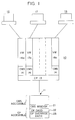
- Figure 1 is a block diagram illustrating the organization of a virtual machine system.
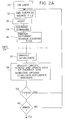
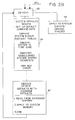
- Figures 2A - 2B illustrate the steps to generate an override nucleus in the override source file.
- Figure 3 illustrates the parameter list which addresses the pages of virtual memory containing system object definitions.
- Figure 4 illustrates the general tag entry format of system object definitions in diagnose instruction format.
- Figure 5 illustrates additional data passed to CP via the diagnose instruction added for diagnostic purposes.
- Figure 6 illustrates the DASD header for the DASD pages read from CP override DASD 23.
- Figure 7 illustrates a general DASD entry read from CP override DASD 23.
- Figure 8 illustrates a system entry of the system ID, system serial number, model number and time zone where a processor resides.
- Figure 9 illustrates a plurality of remote VM operating systems.
- Figure 10 illustrates how the files making up the system object definitions of a plurality of systems may be organized.
- FIG. 1 there is shown the general organization of a VM operating system.
- VM/SP systems are described more particularly in the literature provided by International Business Machines Corporation relating to their virtual machine/system product line.
- This product line employs a control program 13 to partition the processor 10 into a plurality of virtual machines, shown as 16a through 18a, connected to work stations 16-18. These virtual machines communicate to a plurality of system users via a CMS program 14, comprising a third layer of protocol for the processor 10. Using the partition processor 10, the plurality of virtual machines 16a through 18a will run any number of programs written in various languages supported by the CMS library of the IBM Corporation.
- DASD disk storage area
- the DASD 11 is likewise partitioned into various segments for each of the operating protocol layers 13 and 14 of the processor 10 configured as a virtual machine system.
- the DASD 11 is partitioned into a section including a CMS mini-disk portion 21 and CP DASD 22.
- the DASD 11 is apportioned, and in accordance with the present invention, includes a CP override DASD 23.
- control program CP 13 requires certain nucleus data to be included on the CP DASD 22.
- This data is referred to as system objects, which are defined in a nucleus associated with the CP DASD storage area 22.
- system objects are often subject to changes, as system requirements may change during the course of system use.
- changeable system objects may include the following: saved segments named, saved systems VM saved systems 3704/3705 network control programs 3800 printer control image libraries national language support libraries privilege classes for CP commands and diagnose codes time zones system IDs system logos printer separator page logos.
- a user of the VM system may not reconfigure these system objects on the installed system.
- Such information residing in the CP nucleus stored on the CP DASD 22 may be reconfigured if the control program is rebuilt, the system shut down and a new initial program load (IPL) is effected for the control program CP 13.
- IPL initial program load
- Updating and tailoring these system definitions is therefore a disruptive event to all VM users who may be using the system installed on processor 10. Each of the users may, for instance, be actively using this data at the time a new set of data is desired. To shut down the system to effect a re-IPL of the control program CP 13 is disruptive to these users, further reducing the system efficiency.
- CP override DASD 23 it is proposed that such data be moved, or a portion of such data be moved, to a CP override DASD 23.
- the CP override DASD 23 is accessible from CMS using a diagnose instruction. It is therefore possible to create system object definitions in a CMS source file, and, using the diagnose instruction, transfer such system object definitions to the control program CP.
- CP override DASD 23 The use of a CP override DASD 23 is noted in the virtual machine system product guides of IBM Corporation. Data within the CP override DASD 23 can be used to override and replace current operating object definitions in CP 13. In accordance with the present invention, this will not require a regeneration of the CP nucleus or a re-IPL of the system, when transferring data from the CP override DASD 23 to the CP working memory locations.
- the OVERRIDE command with the IMMEDIATE option may be used to invoke the requisite CP modules to update the system memory locations with the CP override DASD 23 contents, using only a portion of routines involved in a re-IPL of the control program CP 13.
- the present invention will provide for tailoring the CP override DASD system object definitions formerly found in the CP nucleus.
- an administrator work station 16 and virtual machine 16a it is possible to configure new data for transfer across the CMS 14/CP 13 interface, transferring a CMS override source file on the mini-disk 21, in a format for writing to the CP override DASD 23.
- the data may be conveniently edited in CMS while it is on the CMS minidisk 21, and validated during the transfer to the CP override source file 23. Errors in syntax for each of the new system object definitions may be reported to the system administrator work station 16, and corrected and re-sent back across the CMS 14/CP 13 interface.
- Validated data received by CP 13 can be used to rewrite the CP override DASD 23 with the new system configuration data.
- the data becomes active at the next IPL of the CP 13, or, optionally, the data may become active on the current system by specifying the IMMEDIATE option on the OVERRIDE command.
- Figures 2A and 2B illustrate the specific embodiment used to effect a transfer of tailored system object definitions from a CMS-supported VM administrator mini-disk 21 to the CP override DASD 23. Further, Figure 2B illustrates how the system object definitions are applied to the CP program 13 operating memory locations from the CP OVRD space 23.
- FIG. 2A there is shown a VM user 30 which would serve as a system administrator using a terminal 16 including VM machine 16a.
- the system administrator can create and edit a CMS source file of system object definitions.
- the CMS source file is provided by the CMS mini-disk 21 of the DASD.
- new system definition data may be formulated for the CP nucleus residing on the CP override DASD 23.
- an OVERRIDE command is issued in step 34 in the CMS environment.
- the OVERRIDE command exists as a CMS command module generated from CP module DMKOVR. Upon issuance of the OVERRIDE command, this module takes over execution of the command. In executing the OVERRIDE command, the DMKOVR module will format the edited system definition data and then issue a diagnose X'C4' instruction, which will turn over control of the system to CP control program 13, leaving CMS program 14.
- the Diagnose X'C4' instruction In order to traverse the interface between CMS program 14 and control program CP 13, the Diagnose X'C4' instruction must include the system parameter definitions in the data format utilized by the diagnose instruction.
- This formatting step formats the data as illustrated in Figure 3, as pages of the system administrators' virtual memory storage addressed by the PLIST. These definitions all appear in the 4K pages.
- the standard CP diagnose invocation conventions use an Rx and Ry convention, where Rx points to PLIST. Ry points to a 6-byte volume identifier indicating where the object definitions are to be stored in the CP override source file on the DASD 23.
- the Ry+1 convention for the CP diagnose invocation will contain the subcode relating to an option specified in the override command (e.g., IMMEDIATE, DEFER, VALIDATE).
- Each entry in the parameter list of object definitions will point to a virtual data page in the user's virtual memory.
- the end of the parameter list is marked by a full word -1(i.e., X'FFFFFFFF') as is shown in Figure 3.
- the final entry in the last data page is followed by a full word 0 (i.e., X'00000000').
- tags of virtual memory containing the object definitions from CMS minidisk 21 are reformatted as a tag entry.
- the entry for the diagnose instruction of the parameter data is specified by an entry length, identifying the length of the individual tag entry, the tag type which will identify the type of tag employed, and the record number RECNO, which will hold the record number in the CMS input file for this tag entry.
- the tag data is appended in the variable length field, describing this particular parameter.
- the DMKOVR module will also store an internal tag entry $FILEID, once for the main input file and then once for every imbedded tag which is processed, and which will be described later herein.
- the DMKOVR When data in an imbedded file has been processed, the DMKOVR will place another such $FILEID tag and return to processing the remaining data in the file that contained the imbedded tag.
- the $FILEID data is maintained for error reporting purposes.
- the CP program when receiving the Diagnose X'C4' data pack containing the tags, will not know where the particular tag is located in the CMS file. By including this information, if the diagnose instruction is decoded by the control program CP 13 and found to contain an error in syntax, it will be possible to report back to the CMS program the record number and the $FILEID information contained in the tag which produced the error data.
- the Diagnose X'C4' instruction may be issued, and control is then passed to the general diagnose handling module DMKHVC, and then to the DMKHVJ module to process the issued Diagnose X'C4' instruction.
- a validation of the data occurs in step 37 invoking the DMKHVJ module for the control program CP 13.
- the DMKHVJ module validates the diagnose information for the valid subcode, Rx and Ry before passing control to the DMKOVP module in step 38.
- the DMKOVP first determines where the CP override space that is to be updated is located on the override DASD 23.
- the options selected by the administrator include an option to clear or free, that is to remove override definitions from the CP override DASD 23, use default definitions which were initially set up on the CP DASD 22, and revert to the system defaults at the next CP initial program load IPL. In these situations, the DMKOVP just erases the override data pointer in the override DASD 23, and the Class E administrator is informed through work station 16 that the command is completed successfully.
- DMKOVP will process the data in the 4K pages addressed by the PLIST.
- a call is made to DMKOVV to validate the input override source data tags. Each tag entry contained in the 4K pages is validated.
- error messages are issued to the administrator's screen, indicating which CMS file identifier and record number is associated with the invalid tag entry.
- an error is identified to the CMS program, permitting the administrator/VM user to identify and correct the error, and reissue the OVERRIDE command with re-edited tag data.
- the override DASD space is divided into two sections, such that when processing override data, one half of the override DASD space is written with the new data, and the other half keeps previous data used before the diagnose instruction was received. Only when all the override data is received and validated will the pointer from the previous override data be updated to point to the new section of newly-entered override data. In this way, should the override source files received from CMS contain an error, the currently active override definitions are not destroyed until the newly received data is corrected.
- DMKOVV builds an internal END tag and writes it to the OVRD space to mark the end of the data, and returns control to the DMKOVP. Assuming no errors were received, a determination is made as to whether or not the immediate option has been selected, wherein the administrator issued the OVERRIDE command with the IMMEDIATE option to immediately update the CP program with the newly-written system definitions.
- the DMKOVD module is invoked by the CP program in step 45.
- the first procedure is to set up the system default object definitions. These default object definitions are read into free storage of the control program CP 13. They are then the actual system object definitions which will be updated by the system object definitions just loaded in the override source DASD 23.
- these default system object definitions include command data set up by DMKCFB, system user diagnose tables set up by DMKHVC, system ID and time zone definitions set up by DMKSYS, system named, saved systems and shared segments set up by DMKSNT, and logos which are set up by DMKBOX, all CP program modules described in the IBM references for virtual machine products.
- the invoked DMKOVE module updates the system defaults with the override definitions from the CP override DASD 23.
- the DASD pages are read via calls to the CP module DMKRPA.
- Figure 6 illustrates the DASD page header, which is mapped by OVEHBLOK.
- the designation OVEHTYPE refers to the DASD type, in this case an override, and OVEHNEXT will point to the next DASD page when the override system definitions span multiple DASD pages.
- Each override definition is read and applied to the system parameters currently represented in free storage.
- a general override definition is read from the current DASD page.
- Figure 7 illustrates the description of a general DASD entry, mapped by the OVEBLOK.
- the OVELEN is the length of this entry
- OVENAME is the tag name for the entry, i.e., whether this entry is a system logo, named saved system or other designated system definition.
- the OVEDATA is the variable length data that describes the particular entry. OVEDATA is then mapped according to the OVENAME field. For instance, returning to the system tag example, OVEDATA is mapped by OVESBLOK, see Figure 8, for a system entry.
- the OVESSERV and OVESMODL are the system serial number and model number, respectively
- OVESSID is the system ID and OVEZONE
- OVESZID are the time zone offset from Greenwich mean time, and the time zone identifier, e.g., EST.
- the override definitions are applied to the system defaults in step 48.
- command and diagnose classes can be modified.
- Named, saved system and shared segment definitions can be added to or replaced. For example, if a definition for CMS is in both DMKSNT, the system default module and in the override DASD 23, the override DASD space will override the system default.
- logo definition, system ID and time zone definitions all replace the system defaults which are in the DMKSNT file on the CP DASD 22.
- the DMKOVE module 47 continues looping through all the override definitions in the override DASD 23 until all definitions have been read and written to the CP working memory locations in place of default data. The end of the override definitions are marked by the internally created END tag, as was noted with respect to DMKOVV. At this time, control can return to the DMKOVD module 45.
- the command and diagnose tables are kept in control program CP 13 modules DMKCFB and DMKHVC, respectively.
- the system ID, time zone offset and time zone ID are kept in prefix storage area.
- the remaining configurable nucleus definitions representing system objects are kept in lists that are anchored in DMKSYS (generated by the SYSLOCS macro).
- DMKSYS generated by the SYSLOCS macro.
- object definitions which can have multiple entries, e.g., named, saved systems the definitions are anchored in DMKSYS and subsequent entries are chained together in a linked-list fashion.
- the definition is in DMKSYS and can be thought of as a one element chain.
- DMKOVD When the DMKOVD module has completed applying the new definitions to the running system memory locations, it will return any free storage it has acquired, and then exit. Control will then return to the CP initialization routine (during a system IPL) or to DMKOVP (during an OVERRIDE command with the IMMEDIATE option). From DMKOVP control is eventually returned to the invoker of the OVERRIDE command.
- the foregoing method for updating a VM/SP processing system can be used when such systems are connected together. It is not uncommon for a plurality of such VM/SP systems to be administered from a central location represented by a single VM machine at one VM system. Using a technique for imbedding files common to all VM systems with files unique to only one of such systems, the system administrator can effect changes in the CP nucleus of remotely located VM systems.
- Figure 9 illustrates a plurality of remote VM operating systems. These systems are designated as VMCAL, i.e., for the California system, VMCEN for the Chicago system, VMITAL for the Italian system, etc. It is likely that these systems would each have a distinct control program nucleus because the systems have such differences as being located in different time zones, having different system logos, and operating languages representing the national languages for the location of the remote system. In all likelihood, there would be other differences in system object definitions.
- VMCAL i.e., for the California system
- VMCEN for the Chicago system
- VMITAL for the Italian system
- the system programmer at the central administration site can create any number of master files and files to be imbedded in the master files.
- the content of these files will include common files to all systems, as well as distinct files imbedded in the common files, defining distinctive system object definitions for a given location having a VM system.
- the CP nucleus needs only to be generated once and can be sent to each remote site.
- FIG 10 there is shown a plurality of files for each of the Chicago, Texas and California VM systems.
- Each of these files 51 through 53 include a common file 58, used to define CMS object definition parameters for each of the systems.
- the imbedding of files is accomplished by using an IMBED tag appearing in the files which hold system object definitions.
- the IMBED tag may take the following format :IMBED. filename filetype filemode.
- the IMBED tag gives the appearance of a single continuous file instead of separate files. In reality, however, separate files are being logically connected together.
- the CMS source files are edited such that all the necessary imbedded files comprising a system file 51, 52 and 53 is present in the CMS source file.
- the OVERRIDE command 34 once issued, will invoke the DMKOVR module of the CP program, and proceed to format in accordance with Figures 3, 4 and 5, tags containing the requisite system definitions from each of these files.
- the entire imbedded files are formatted to provide the requisite tag entries.
- the subsequent imbedded file is formatted until all sub-files have been converted to the tag entry form.
- all the file data 51, 52 and 53 may be transferred to the system for updating the OVRD space.
- An OVERRIDE command with the IMMEDIATE option or subsequent IPL will result in the newly-defined system object definitions being utilized by the respective CP programs. This process is performed at each remote site.
Landscapes
- Engineering & Computer Science (AREA)
- Software Systems (AREA)
- Theoretical Computer Science (AREA)
- Computer Security & Cryptography (AREA)
- Physics & Mathematics (AREA)
- General Engineering & Computer Science (AREA)
- General Physics & Mathematics (AREA)
- Information Retrieval, Db Structures And Fs Structures Therefor (AREA)
Applications Claiming Priority (2)
| Application Number | Priority Date | Filing Date | Title |
|---|---|---|---|
| US07/577,299 US5257376A (en) | 1990-09-04 | 1990-09-04 | Method and apparatus for configuring a control program nucleus with a minimum impact on system availabiltiy |
| US577299 | 1995-12-22 |
Publications (2)
| Publication Number | Publication Date |
|---|---|
| EP0473916A2 true EP0473916A2 (de) | 1992-03-11 |
| EP0473916A3 EP0473916A3 (en) | 1992-08-12 |
Family
ID=24308137
Family Applications (1)
| Application Number | Title | Priority Date | Filing Date |
|---|---|---|---|
| EP19910111919 Withdrawn EP0473916A3 (en) | 1990-09-04 | 1991-07-17 | Method and apparatus for configuring a control program nucleus with a minimum impact on system availability |
Country Status (3)
| Country | Link |
|---|---|
| US (1) | US5257376A (de) |
| EP (1) | EP0473916A3 (de) |
| JP (1) | JPH04245545A (de) |
Cited By (1)
| Publication number | Priority date | Publication date | Assignee | Title |
|---|---|---|---|---|
| JPWO2014118961A1 (ja) * | 2013-01-31 | 2017-01-26 | 富士通株式会社 | 仮想計算機管理プログラム,仮想計算機管理方法及び仮想計算機システム |
Families Citing this family (11)
| Publication number | Priority date | Publication date | Assignee | Title |
|---|---|---|---|---|
| US5712974A (en) * | 1994-03-30 | 1998-01-27 | International Business Machines Corporation | Method and apparatus for controlling the configuration definitions in a data processing system with a plurality of processors |
| US5819061A (en) * | 1994-07-25 | 1998-10-06 | International Business Machines Corporation | Method and apparatus for dynamic storage reconfiguration in a partitioned environment |
| US5659801A (en) * | 1994-12-07 | 1997-08-19 | Emc Corporation | Method and apparatus for replacing resident peripheral device control microcode by download via an application program |
| JP3590688B2 (ja) * | 1995-04-05 | 2004-11-17 | インターナショナル・ビジネス・マシーンズ・コーポレーション | アプリケーションを導入するための導入計画オブジェクトを構築する方法、及びそのシステム |
| US5867713A (en) * | 1995-04-05 | 1999-02-02 | International Business Machines Corporation | Committing an install plan object for the network installation of application programs |
| US5793982A (en) * | 1995-12-07 | 1998-08-11 | International Business Machine Corporation | Validating an installation plan containing multiple transports and redirectors by adding data structure of the modules to the plan if the indicated transport and redirector modules are unavailable |
| US6389591B1 (en) * | 1998-09-03 | 2002-05-14 | Microsoft Corporation | Method and apparatus for determining preferred controls for an upgradable operating system |
| US8245217B2 (en) | 2007-10-12 | 2012-08-14 | Microsoft Corporation | Management of software and operating system updates required for the process of creating a virtual machine facsimile of an existing physical or virtual machine |
| US9830082B1 (en) | 2015-09-08 | 2017-11-28 | EMC IP Holding Company LLC | Hybrid hyper-converged infrastructure and storage appliance |
| US11157615B2 (en) * | 2018-04-13 | 2021-10-26 | Veeam Software Ag | Malware scanning of an image level backup |
| CN112181411A (zh) * | 2020-09-25 | 2021-01-05 | 深圳市元征科技股份有限公司 | 一种菜单生成方法、菜单生成装置及诊断设备 |
Family Cites Families (7)
| Publication number | Priority date | Publication date | Assignee | Title |
|---|---|---|---|---|
| EP0116694B1 (de) * | 1983-02-22 | 1990-09-12 | International Business Machines Corporation | Verfahren zur dynamischen Rekonfiguration eines Datenverarbeitungssystems bei Hinzufügung von Einrichtungen |
| US4717980A (en) * | 1984-11-07 | 1988-01-05 | Tdk Corporation | Tape cassette with low friction slide member for guiding movement of a lid thereon |
| DE3688136T2 (de) * | 1986-04-04 | 1993-10-07 | Ibm | Verfahren zum Testen und Setzen von Daten in einen Datensatz auf einer Platte in eine atomaren Ein/Ausgabeoperation. |
| US4862349A (en) * | 1987-10-19 | 1989-08-29 | International Business Machines Corporation | Method for extracting and/or replacing control system information in a computer operating system |
| US4888771A (en) * | 1988-06-23 | 1989-12-19 | International Business Machines Corporation | Diagnostic configuration management for a data processing system |
| US5201049A (en) * | 1988-09-29 | 1993-04-06 | International Business Machines Corporation | System for executing applications program concurrently/serially on different virtual machines |
| US5063500A (en) * | 1988-09-29 | 1991-11-05 | Ibm Corp. | System for executing segments of application program concurrently/serially on different/same virtual machine |
-
1990
- 1990-09-04 US US07/577,299 patent/US5257376A/en not_active Expired - Fee Related
-
1991
- 1991-07-17 EP EP19910111919 patent/EP0473916A3/en not_active Withdrawn
- 1991-08-16 JP JP3229731A patent/JPH04245545A/ja active Pending
Cited By (1)
| Publication number | Priority date | Publication date | Assignee | Title |
|---|---|---|---|---|
| JPWO2014118961A1 (ja) * | 2013-01-31 | 2017-01-26 | 富士通株式会社 | 仮想計算機管理プログラム,仮想計算機管理方法及び仮想計算機システム |
Also Published As
| Publication number | Publication date |
|---|---|
| JPH04245545A (ja) | 1992-09-02 |
| US5257376A (en) | 1993-10-26 |
| EP0473916A3 (en) | 1992-08-12 |
Similar Documents
| Publication | Publication Date | Title |
|---|---|---|
| US5740431A (en) | Configuration file management | |
| US5301270A (en) | Computer-assisted software engineering system for cooperative processing environments | |
| US5481713A (en) | Method and apparatus for patching code residing on a read only memory device | |
| US6047129A (en) | Software updating and distribution | |
| US6128730A (en) | Method and apparatus for multilevel software configuration having administrator and software driven override limiting capabilities | |
| US6493594B1 (en) | System and method for improved software configuration and control management in multi-module systems | |
| US6115738A (en) | Input/output device information management method and apparatus for multi-computers | |
| US5832511A (en) | Workgroup network manager for controlling the operation of workstations within the computer network | |
| US5586322A (en) | Workgroup organized network manager with workstation comparison system | |
| US4891785A (en) | Method for transferring data files between computers in a network response to generalized application program instructions | |
| US5909689A (en) | Automatic update of file versions for files shared by several computers which record in respective file directories temporal information for indicating when the files have been created | |
| EP0647902A1 (de) | Datenverarbeitungssystem | |
| US5257376A (en) | Method and apparatus for configuring a control program nucleus with a minimum impact on system availabiltiy | |
| US6754848B1 (en) | Method, system and program products for operationally migrating a cluster through emulation | |
| US20040148367A1 (en) | Method for integration edition of setting file and setting file integration base | |
| EP0889400A1 (de) | System und Verfahren für transparenten, globalen Zugang zu physikalischen Geräten in einem Rechnersystem | |
| JPH04330520A (ja) | ワークステーション内にソフトウェア・ファイルを設置する方法及び装置 | |
| JPH05165610A (ja) | ソフトウェア開発環境の生成および保守方法 | |
| WO1994027220A1 (en) | Method and apparatus for vectorizing the contents of a read only memory device without modifying underlying source code | |
| JPH04246742A (ja) | 異なるファイル・システムにまたがる記憶管理システム | |
| JP2001134526A (ja) | 論理区画クラスタに資源を割り当てる方法および装置 | |
| EP0745943B1 (de) | Verfahren und System zur Bereitstellung von Geräteunterstützung für eine Mehrzahl an Betriebssystemen | |
| AU5680894A (en) | Interception system and method including user interface | |
| US6691121B1 (en) | Method and apparatus for online and dynamic extension of IMS data entry databases | |
| US6564376B1 (en) | Method, system and program products for operationally backing out components of a cluster through emulation |
Legal Events
| Date | Code | Title | Description |
|---|---|---|---|
| PUAI | Public reference made under article 153(3) epc to a published international application that has entered the european phase |
Free format text: ORIGINAL CODE: 0009012 |
|
| AK | Designated contracting states |
Kind code of ref document: A2 Designated state(s): DE FR GB |
|
| PUAL | Search report despatched |
Free format text: ORIGINAL CODE: 0009013 |
|
| AK | Designated contracting states |
Kind code of ref document: A3 Designated state(s): DE FR GB |
|
| 18D | Application deemed to be withdrawn |
Effective date: 19930213 |