EP0473522A2 - Method and system for controlling and monitoring engineering and manufacturing changes - Google Patents
Method and system for controlling and monitoring engineering and manufacturing changes Download PDFInfo
- Publication number
- EP0473522A2 EP0473522A2 EP91480103A EP91480103A EP0473522A2 EP 0473522 A2 EP0473522 A2 EP 0473522A2 EP 91480103 A EP91480103 A EP 91480103A EP 91480103 A EP91480103 A EP 91480103A EP 0473522 A2 EP0473522 A2 EP 0473522A2
- Authority
- EP
- European Patent Office
- Prior art keywords
- status
- affected
- item
- location
- engineering change
- Prior art date
- Legal status (The legal status is an assumption and is not a legal conclusion. Google has not performed a legal analysis and makes no representation as to the accuracy of the status listed.)
- Withdrawn
Links
Images

Classifications
-
- G—PHYSICS
- G06—COMPUTING OR CALCULATING; COUNTING
- G06Q—INFORMATION AND COMMUNICATION TECHNOLOGY [ICT] SPECIALLY ADAPTED FOR ADMINISTRATIVE, COMMERCIAL, FINANCIAL, MANAGERIAL OR SUPERVISORY PURPOSES; SYSTEMS OR METHODS SPECIALLY ADAPTED FOR ADMINISTRATIVE, COMMERCIAL, FINANCIAL, MANAGERIAL OR SUPERVISORY PURPOSES, NOT OTHERWISE PROVIDED FOR
- G06Q10/00—Administration; Management
- G06Q10/06—Resources, workflows, human or project management; Enterprise or organisation planning; Enterprise or organisation modelling
-
- G—PHYSICS
- G06—COMPUTING OR CALCULATING; COUNTING
- G06Q—INFORMATION AND COMMUNICATION TECHNOLOGY [ICT] SPECIALLY ADAPTED FOR ADMINISTRATIVE, COMMERCIAL, FINANCIAL, MANAGERIAL OR SUPERVISORY PURPOSES; SYSTEMS OR METHODS SPECIALLY ADAPTED FOR ADMINISTRATIVE, COMMERCIAL, FINANCIAL, MANAGERIAL OR SUPERVISORY PURPOSES, NOT OTHERWISE PROVIDED FOR
- G06Q10/00—Administration; Management
- G06Q10/08—Logistics, e.g. warehousing, loading or distribution; Inventory or stock management
- G06Q10/087—Inventory or stock management, e.g. order filling, procurement or balancing against orders
- G06Q10/0875—Itemisation or classification of parts, supplies or services, e.g. bill of materials
-
- Y—GENERAL TAGGING OF NEW TECHNOLOGICAL DEVELOPMENTS; GENERAL TAGGING OF CROSS-SECTIONAL TECHNOLOGIES SPANNING OVER SEVERAL SECTIONS OF THE IPC; TECHNICAL SUBJECTS COVERED BY FORMER USPC CROSS-REFERENCE ART COLLECTIONS [XRACs] AND DIGESTS
- Y02—TECHNOLOGIES OR APPLICATIONS FOR MITIGATION OR ADAPTATION AGAINST CLIMATE CHANGE
- Y02P—CLIMATE CHANGE MITIGATION TECHNOLOGIES IN THE PRODUCTION OR PROCESSING OF GOODS
- Y02P90/00—Enabling technologies with a potential contribution to greenhouse gas [GHG] emissions mitigation
- Y02P90/02—Total factory control, e.g. smart factories, flexible manufacturing systems [FMS] or integrated manufacturing systems [IMS]
Definitions
- the present invention relates, in general, to computer integrated manufacturing (CIM) systems and, in particular, to a method and system for controlling, monitoring and integrating engineering and manufacturing changes in a manufacturing enterprise.
- CCM computer integrated manufacturing
- a design engineer in a laboratory creates a design change document whenever changes to a product, or any of its components, is necessary.
- Changes to a design may include item data changes, bill-of-material changes, or reference document changes.
- the design change document along with the actual changes in items and bills-of-material is sent to each manufacturing location that uses the item as either an end product or component of an end product.
- a manufacturing engineer responsible for the item at the specific plant analyzes the design changes and, if appropriate, makes modifications to the design changes to accommodate the manufacturing process at the plant. These changes are passed on to the shop floor for actual production.
- An "AI” object is uniquely represented by the combination of EC object ID and master item object ID.
- the design engineer After adding an affected item, the design engineer makes the necessary design changes in the item data, BOM data, and drawing data and decides that the changes should be implemented. This begins the status progression of design changes from drawing board concept to production shop floor implementation. The progression is from pre-release to release at the design lab, followed by acceptance, making the design changes effective and eventually closing the design changes at manufacturing plants.
- an affected item object When, an affected item object is added to a design change, it is created in a status of PRE-RELEASE. As the design engineer completes the design of the affected item, he releases the item to all locations manufacturing the item. At release, the status of the affected item is changed to RELEASE. Every location that manufactures the item is informed there is a new release for that item. This notification alerts the manufacturing engineer to analyze the incoming release for possible modification for local production.
- the manufacturing engineer at each location initiates processing of the engineering change by promoting the status of the affected items to ACCEPT status.
- the system copies the affected item object received at the location into another object called "Location Affected Item (LAI)", which is location sensitive.
- LAI Location Affected Item
- the data in this object can be viewed as the manufacturing control data of an affected item at a specific location.
- Each location can make changes to the manufacturing location data that is visible locally.
- the changes made at a given location are only applicable to that plant's view of the data.
- the design laboratory and the other manufacturing plants are isolated from these changes.
- the status of the location affected item is initiated as ACCEPT.
- the manufacturing engineer changes the administrative data provided in the LAI object to tailor it to the needs of the specific plant. For example, planned disposition of an item or planned effectivity data might be altered. He also enters manufacturing data such as yield of the item, specific routings, and procurement data.
- the manufacturing engineer at the plant promotes each of these location affected items to EFFECTIVE status making them visible to material requirements planning, production scheduling, inventory, work in process and other applications.
- the manufacturing engineer is releasing the items into production at that plant.
- the status of an affected item is changed to CLOSED when the manufacturing engineer decides no further changes to an affected item will be allowed at the plant.
- the status of the engineering change and the status of an affected item are updated automatically as necessary whenever a change occurs to the status of a location affected item at any of the manufacturing plants using the affected item. This enables the status of an affected item to be kept at the least advanced status of the item at any plant. Similarly, the status of an engineering change is kept at the least advanced status of any of the affected items pertaining to an engineering change at any plant.
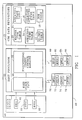
- Figure 1 illustrates a block diagram implementation of the Engineering Change Control Manager system of this invention.
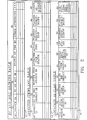
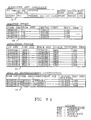
- Figure 2 illustrates the EC/MEC objects table, Affected Items table and Location Affected Items table generated by the Engineering Change Control Manager.
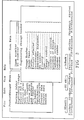
- Figure 3 illustrates a user interface screen display for interacting with the Engineering Change Control Manager.
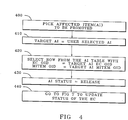
- Figure 4 illustrates the processing logic used in promoting an affected item from PRE-RELEASE to RELEASE status.
- Figure 5 illustrates the processing logic for promoting an affected item to ACCEPT status.
- Figure 6 illustrates the processing logic for updating the global status of an affected item in the Affected Items table.
- Figure 7 illustrates the processing logic for updating the global status of an engineering change in the EC/MEC table.
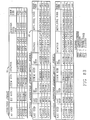
- Figures 8A-B depict database entries illustrating the operation of the present invention.
- FIG. 1 An implementation of the Engineering Change Control Manager system 10 is illustrated in Figure 1.
- the implementation shows a host processor or central data processing system 25, having a single design center 60 and two separate manufacturing facilities 70, 80.
- a host processor or central data processing system 25 having a single design center 60 and two separate manufacturing facilities 70, 80.
- One skilled in the art of computer-based manufacturing information systems will be able to apply the concepts discussed herein readily to both centralized and distributed processing architectures.
- Running on host processor 25 is the Engineering Change Control Manager 35.
- the users at the design or manufacturing locations interact with the Engineering Change Control Manager 35 through the user interface 45.
- the host processor 25 accesses the direct access storage device (DASD) 15 which contains the CIM data repository including master item table 20, EC/MEC table 12, Affected Items (AI) table 14, Location Affected Items (LAI) table 16, Bill of Material table 19, and Location Usage table 21.
- DASD direct access storage device
- Design center 60 contains a plurality of individual work-stations DWS1, DWS2,...DWSM identified by reference numerals 62, 64, 66. These workstations enable design engineers responsible for an engineering change to interact with the Engineering Change Control Manager application 35. Similarly, at manufacturing location MFG1, identified by reference numeral 70, manufacturing engineers use workstations LWS1, LWS2,...LWSN, identified by reference numerals 72, 74, 76 to interact with Engineering Change Control Manager 35. A second manufacturing location MFG2 identified by reference numeral 80 is also shown in Figure 1. Workstations MWS1, MWS2,...MWSP (reference numerals 82, 84, 86) are used by the manufacturing engineers at this location.
- EC/MEC objects table 12 relates a set of design changes to each object created by a design engineer or manufacturing engineer.
- the EC/MEC objects table 12 contains all the ECs or MECs created in a given enterprise. Each row in the table represents an EC or MEC and the columns represent attributes of the object instance (occurrence).
- the first column contains the EC object ID 22 which is a unique internal identifier for each instance of the object across the whole enterprise. Every object in the enterprise has this attribute which is an internal attribute used for tracking.
- the next column contains the EC or MEC ID 30 and represents the external enterprise identification for each engineering change created in the enterprise. Any changes made to a design reflect this identification so that changes may be tracked to a specificengineering change.
- the status of the EC column 34 contains the EC status which is the progression of the change towards release and its implementation in the manufacturing plants.
- Other attributes column 36 contains administrative attributes of an EC such as dates or responsible persons.
- Affected Items (AI) table 14 contains the objects to which all design changes are related.
- An affected item object is created whenever an EC or MEC affects an item.
- Each row is created with a combination of EC (MEC) object ID and master item object ID.
- the Master Item table is a separate part of the physical database 15 containing all the parts of an enterprise.
- the AI table 14 represents a many-to-many relationship between instances of the EC/MEC table 12 and instances of Master Item table 20.
- the combination of EC/MEC object ID 22 and Master Item object ID 26 uniquely represents an affected item.
- the data in the AI table 14 is viewed as the control data for an affected item.
- the first column contains the AI object ID 23 which is the unique internal identifier for each occurrence of the object.
- the second column contains the EC (MEC) object ID 22 which is the unique identifier for the EC or MEC related to an item.
- An affected item has no direct external identification. Instead, it is identified by the combination of EC object ID and master item object ID.
- the master item object ID column 26 contains the uniqueidentifier for the master item affected by the EC/MEC.
- the affected item status column 38 indicates how far the affected item has progressed towards closure. The different states are described subsequently.
- Action code column 40 indicates the reason a master item is being affected by an engineering change. Typical reasons include new part introduction, changing an existing part, or issuing to a new location.
- the planned disposition column 42 indicates the action to be taken on existing stocks of a part in the various plants as a result of introducing a new change. Typical dispositions aie scrap or rework.
- the planned effectivity column 44 indicates when a change introduced through an affected item should be made effective, which actually introduces the item into production.
- Design sequence number column 46 indicates the sequence in which changes are introduced on a master item by different ECs. This number either indicates the sequence in which different versions of a particular master item were created by different ECs/MECs, or the sequence in which the engineering changes were released.
- the Location Affected Items (LAI) table 16 contains information pertaining to an affected item that is location dependent. An instance of location specific data is created and stored in LAI table 16 whenever an EC affected item is accepted at a manufacturing location after release by the design engineer or a MEC has an affected item added to it. The unique identification for data in the table is provided by a combination of location object ID 28, EC object ID 22, and master item object ID 26.
- the data in LAI table 16 represents the manufacturing view of an affected item at a specific manufacturing plant. Each plant can manipulate the manufacturing data contained in LAI table 16 without changing the control data in AI table 14. Only the changes made at a specific plant are reflected in that location's view of the affected item data. Both the design lab and other manufacturing plants are isolated from these local changes.
- the LAI object ID column 24 is the first column in the LAI table 16 and provides a unique identifier for each row of this table across the entire database.
- Location object ID 28 is the unique identifier for a specific manufacturing location. Any changes made to an affected item at a location are stored using this identifier.
- the affected item object ID 23 is the unique internal identifier of an affected item in AI table 14 represented by this row. The location affected item is identified by a combination of location object ID 28 and affected item object ID 23.
- EC or MEC object ID 22 is the unique internal identifier for the EC or MEC that corresponds to the location affected item.
- the master item object ID 26 is the unique internal identifier for the master item that is affected by the EC/MEC.
- Reference change object ID 32 is an internal identifier that correlates an EC change level with the corresponding effective MEC.
- the location affected item status column 48 indicates the status of the location affected item at any time at a specific plant.
- Planned disposition column 50 indicates the action to be taken on existing stocks of the affected part in the manufacturing plants as a result of introducing the engineering change. When a design change is released to a plant, the planned disposition is the one suggested by the design department. However, each local plant can change this disposition as appropriate.
- the planned effectivity column 52 indicates when the change being introduced through the affected item is to be made effective, i.e., introduced into production.
- Manufacturing sequence number column 54 indicates the sequence in which changes are being introduced on a master item by different ECs at a specific location. The manufacturing sequence number identifies either the sequence in which different versions of a particular master item as created by different ECs/MECs were accepted by the location, or the sequence in which these changes were made effective at the location.
- the status of an affected item keeps changing as the set of design changes attached to that affected item gets promoted to the next status in progression.
- the progression varies for affected items at a manufacturing plant when compared to affected items at the design laboratory.
- the status of an affected item at the design laboratory is a global variable and is independent of the location (design lab or manufacturing plant) making the query.
- the possible states for the affected item are PRE-RELEASE, RELEASE, ACCEPT, EFFECTIVE, and CLOSED.
- the possible status progression of affected items at a manufacturing plant is ACCEPT, EFFECTIVE and CLOSED. Since the status of an affected item at a plant is location specific, the affected item is referred to as a location affected item.
- the status of the location affected item LAI
- the status is changed to EFFECTIVE when the location affected item is promoted to effective (i.e., released into production) at the plant.
- the status is changed to CLOSED when the plant closes the location affected item, thereby preventing further changes.
- a screen window display provided to the user by user interface 45 is illustrated in Figure 3.
- the engineering change initiator uses this window to enter administrative information regarding the engineering change and to initialize the status of the engineering change.
- the design engineer uses this window to promote the status of an engineering change to RELEASE.
- Similar windows are provided by user interface 45 to enable the design engineer and manufacturing engineer to promote the status of affected items and location affected items, respectively.
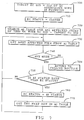
- Figure 4 illustrates a flow chart for the processing logic used by the Engineering Change Control Manager 35 in promoting an affected item's status from PRE-RELEASE to RELEASE.
- the processing logic is activated when the system user selects an affected item and executes an action to promote it to RELEASE status.
- the user selects (inputs) an affected item for promotion to RELEASE.
- the affected item is assigned to a local variable called target AI in logic block 410.
- the input affected item is identified by a combination of EC object ID and master item object ID.
- the row corresponding to the input affected item is selected from the AI table 14 based on the EC object ID 22 and master item object ID 26.
- the affected item status 38 is changed to RELEASE in logic block 430.
- Logic block 440 provides for the update of the EC status 34 in EC/MEC objects table 12 if it needs to be changed.
- the global EC status is advanced to the next status when the last of its corresponding affected items is promoted to the next status. In an alternate embodiment of this invention, the global EC status is advanced to the next status, before any of the corresponding affected items can be promoted to the next status.
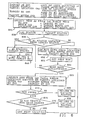
- the flow chart in Figure 5 illustrates the processing logic for promoting an affected item to ACCEPT status at a manufacturing plant.
- the processing logic in the Engineering Change Control Manager 35 is activated when a user selects an affected item and executes an action to promote it to ACCEPT status.
- the user selected affected item, status, location, EC object ID and master item object ID are assigned to local variables. Since promoting beyond RELEASE status is done on a per location basis, the user has to specify the location where the promotion needs to be done.
- the user selected affected item is fetched from AI table 14 in logic block 510.
- Decision block 520 tests if the location has all prior versions (changes) of an item. A location needs to have all prior versions of an item before it can accept a new change. If the location does not have any previous versions, all the previous affected items need to be copied before copying the new version in logic block 530. Otherwise, only the new version needs to be copied in logic block 590.
- previous versions of the item are copied to Location Affected Items table 16 for this location.
- the previous versions are found by searching the AI table 14 on the master item object ID 26. This retrieves all versions of the same master item with all engineering changes on it. Since the new release is not to be copied as yet, this EC's version is not selected.
- decision block 540 a test is made to determine if there are any more versions of the master item in AI table 14. If all previous versions have been copied, the target version is copied from AI table 14 to LAI table 16 as indicated in logic block 590. Otherwise, the previous version of the affected item is copied from the AI table 14 to the LAI table 16.
- the location object ID 28 is appended to the logical key combination of EC object ID 22 and master item object ID 26 to uniquely identify this row in the LAI table 16.
- logic block 560 changes the status of the location affected item in LAI table 16 to ACCEPT status.
- decision block 570 a test is made to determine if the status of the affected item 38 in AI table 14 is greater than the status of the location affected item 48 in LAI table 16. Since previous versions of the affected item have been implicitly promoted to ACCEPT status, the status of the target or present version of the affected item must be changed to ACCEPT if its previous version status was greater than ACCEPT. Otherwise, the affected item status 38 is ACCEPT or RELEASE. If it is RELEASE, there is at least one location that has not accepted the affected item. In either case, no further adjustments to the affected item status 38 are necessary. The next previous version is retrieved by looping back to logic block 530.
- logic block 580 since the affected item status 38 of the previous version was greater than ACCEPT, its status has to be reduced in AI table 14 to ACCEPT. Therefore, the target status is assigned to the affected item status 38 and then a loop back to logic block 530 occurs to get the next previous version.
- Logic block 590 results in the copying of the target or current version to the LAI table 16 after all previous versions have been copied.
- the status of the location affected item 48 needs to be changed to ACCEPT. Since the affected item status changes when the last of the locations using it promotes it to the next status, a check must be made after an LAI is promoted to determine if the status of the affected item needs to be changed. Control passes to the flow chart depicted in Figure 6 passing the target affected item, its status, EC object ID and master item object ID (logic block 595).
- the logic flow chart illustrated in Figure 6 is used by Engineering Change Control Manager 35 for promoting an affected item from ACCEPT to EFFECTIVE and from EFFECTIVE to CLOSED, and for updating the global status of the affected item object 14.
- the processing logic is activated when the user selects an affected item and executes an action to promote it to EFFECTIVE or CLOSED, or when control is passed from block 595 of Figure 5. In each situation the processing logic is the same.
- logic block 610 the user selected affected item, the location where the promotion is occurring, the EC object ID to which the affected item belongs and the master item affected by the engineering change are assigned to local target parameters.
- the affected item is selected from the LAI table 16 using the unique key provided by location object ID 28, EC object ID 22 and master item object ID 26 (logic block 620). Since the location affected item is being promoted, its status 48 is changed to the target status in logic block 630.
- decision block 635 tests if the global status of the affected item needs to be changed in AI table 14. This is accomplished by determining if the AI status 38 is greater than the LAI status 48 (which is the same as the target status). If this is the case, AI status 38 is reduced to the current LAI status 48 for the affected item in logic block 640.
- Engineering Change Control Manager determines if the EC status itself needs to be changed. An engineering change comprises a plurality of affected items.
- logic block 645 indicates a transition to Figure 7 for additional processing using the target EC object ID as a parameter.
- the AI status 38 is found to be less than the current LAI status 48, a further test must be made to determine that the LAI status 48 for this affected item is at least the same at all the manufacturing plants.
- logic block 650 all locations using the affected item are retrieved from the Location Usage table 21 by searching on the target master item object ID. The next location to be tested is obtained from Location Usage table 21 in logic block 655, and testing for further locations is made in decision block 660. If all locations using the affected item have been tested, none of them had the corresponding location affected item at LAI status 48 less than the target status (i.e., the location affected item status for the current manufacturing plant being examined). Thus the global status 38 of the affected item in AI table 14 needs to be changed. This is done by the processing in logic block 640 followed in logic block 645 by transferring to the processing logic of Figure 7.
- the next location using the affected item is selected from LAI table 16 by searching on the location object ID 28, master item object ID 26 and EC object ID 22. If a corresponding row in the LAI table 16 is not found in decision block 670, it indicates that no other location has accepted the affected item. Therefore, the global status of the affected item remains RELEASE and no change is to be made to either the global status 38 of the affected item in AI table 14 or to the status of the EC 34 in EC/MEC objects table 12. The procedure is simply exited in logic block 685.
- a row is found in decision block 670, it means a LAI was found; therefore, a test on the status 48 of the LAI is made in decision block 675. If the LAI status 48 is found to be less than the target status, no change is to be made to the global status 38 of the affected item or to the status of the EC 34. The procedure is exited in logic block 690. If in decision block 675 the LAI status 48 is equal to or greater than the target status, the processing logic causes a loop back from logic block 680 to logic block 655 to get the next location to process. The global status 38 of the affected item needs to be updated (in logic block 640) if none of the locations had an LAI status 48 less than the target status.
- Figure 7 illustrates the processing logic used by Engineering Change Control Manager 35 for updating the global status 34 of an EC in EC/MEC table 12. The procedure is called whenever the global status 38 of an affected item has changed to determine if the EC status 34 also needs to be changed. Control switches to the logic in this figure from either logic block 440 in Figure 4 or logic block 645 in Figure 6.
- the target EC identifier is assigned the EC object ID 22 of the input EC whose affected item was originally selected by the user for promotion.
- the EC object is retrieved from the EC table 12 and its status 34 is changed to CLOSED.
- This processing logic is indicated by logic block 710.
- the EC status is set to the highest possible status initially (i.e., CLOSED) and then reset to the lowest status of any of its affected items.
- the AI table 14 is searched (logic block 720) for all affected items of the EC.
- the AI table 14 is searched using the target EC object ID to find all affected items in the table related to this EC.
- the next affected item is then retrieved in logic block 730.
- Decision block 740 tests to determine if there are any more affected items associated with the EC. If all affected items of the EC have been exhausted, the procedure is exited in logic block 780. If another affected item is found in decision block 740, its status is checked in decision block 750 wherein a test is made to determine if the status 38 of the affected item is less than the status 34 of the EC. If the AI status 38 is greater than or equal to the EC status 34, the status of the EC remains unchanged and the next affected item of the EC is examined by looping back to logic block 730. On the other hand, if the AI status 38 is less than EC status 34, the status of the EC must be changed to that of this affected item. This processing is performed in logic block 760.
- logic block 770 causes a return to logic block 730 to retrieve the next affected item associated with the EC and repeat the comparison processing.
- control passes to logic block 780 which results in exiting the procedure.
- An example illustrating the operation of the engineering and manufacturing change control mechanism is provided in Figures 8A-B.
- a company decides to manufacture a new turbine having part number I1, which is to be assembled from components I2, I3 and I4. These parts are designed and added to the turbine's bill of material. The turbine design is released to two manufacturing locations (MFG1 and MFG2) where the manufacturing engineer accepts the design, makes necessary changes and makes the design EFFECTIVE in the manufacturing plant.
- Engineering change coordinator BPANU initiates an engineering change labeled with external identifier EC1 and assigned to design engineer WMORR, by entering the change into the EC objects table 12 in the database as indicated by reference numeral 100.
- This engineering change is identified by EC object ID ECOID1.
- EC1 is created in a status of PRE-RELEASE.
- the design engineer adds an affected item to Affected Items (AI) table 14 by entering data pertaining to item number I1.
- the Engineering Change Control Manager 35 searches the Master Item table 20 and determines that the turbine is a new item.
- Engineering Change Control Manager 35 adds item I1 to Master Item table 20 indicated by reference numeral 120.
- Engineering Change Control Manager 35 then adds a new affected item 130 to AI table 14.
- the status of the Affected Item is PRE-RELEASE.
- a design sequence number is provided to the affected item, in this example starting with 10,000. This number is incremented automatically upon further engineering changes to this item.
- the design engineer next invokes the Engineering Change Control Manager 35 to add to the AI table 14 items I2, I3 and I4, which are the assembly components of the turbine, item I1.
- the Engineering Change Control Manager 35 determines that I2, I3 and I4 are new items and adds them to Master Item table 20, as indicated by reference numerals 122, 124 and 126. These items are then added to AI table 14 as indicated by 132, 134 and 136 with the status of each being PRE-RELEASE.
- the design engineer proceeds to create a bill of material for assembly I1 including its components I2, I3 and I4.
- the Engineering Change Control Manager adds the bill of material components to Bill of Material Table 19 as indicated by 140, 142 and 144.
- the insert sequence number column indicates the engineering change that added a particular component by using the design sequence number of the correspondirig affected items in AI table 14.
- the initiator of a design change that added component I2 to assembly I1 can be determined by noting the insert sequence number for item I1 and searching AI table 14 for all items having a matching design sequence number.
- the Engineering Change Control Manager 35 retrieves all matching items and the person making the query can examine the EC number column for identification of the engineering change. He then proceeds to the EC table 12 to retrieve the EC1 record which will identify the initiator of the design change.
- the design engineer decides which manufacturing locations are to receive the changes for implementation before he can release the engineering change. He uses Engineering Change Control Manager 35 to add location usage for items I1, I2, I3 and I4. Each item is picked up individually and each location using the item is specified. The Engineering Change Control Manager 35 adds this data to Location Usage table 21. These additions are indicated by reference numerals 150-157.
- the design engineer uses the Engineering Change Control Manager 35 to release the engineering change to the appropriate manufacturing locations.
- the Engineering Change Control Manager selects EC1 and the affected items I1 through I4 and verifies each affected item and its corresponding bill of material data. If the verifications are, satisfactory, the Engineering Change Control Manager 35 releases the engineering change. This process includes the following steps:
- the manufacturing engineer receives a notification that items I1, I2, I3 and I4 have been released to his location using engineering change number EC1. He examines EC1 and all the design changes it is carrying, and makes the decision to start manufacturing assembly I1 at plant MFG1.
- the Engineering Change Control Manager 35 performs the following steps:
- a search is performed on the entries in LAI table 16 for a location affected item at location MFG2 having item object identifier ITMOID1. Since location MFG2 has not yet accepted item I1, the Engineering Change Control Manager 35 determines that the lowest status at which item I1 exists across all manufacturing locations is ACCEPT, and accordingly changes the status of the corresponding affected item AIOID1 to ACCEPT. After the status of an affected item is changed, a check is made to determine if the EC status must also be changed. The lowest status for any of the affected items in EC1 is RELEASE for affected items AIOID2, AIOID3 and AIOID4. This status is compared with the current EC status, and since they are the same, the EC status is left unchanged.
- the above sequence at location MFG1 is repeated for the remaining affected items of EC1, i.e., AIOID2, AIOID3 and AIOID4.
- the logic of Figure 7 is executed to determine if the status of EC1 requires changing. After the status of AIOID4 is updated to ACCEPT, the status of EC1 is changed to ACCEPT.
- the manufacturing engineer can now decide to promote location affected item LAIOID1 to EFFECTIVE.
- the Engineering Change Control Manager promotes LAIOID1 to EFFECTIVE and changes the status of LAIOID1 to EFFECTIVE in LAI table 16. It then checks all other locations to determine the lowest status of the location affected item. The lowest status is EFFECTIVE since no other location has as yet accepted it. Therefore, the status of the corresponding affected item AIOID1 is changed to EFFECTIVE. Since there are other location affected items at location MFG1 that are in a status lower than EFFECTIVE, the status of EC1 will not be changed as a result of executing the logic of Figure 7.
- LAIOID1 After determining that the design of LAIOID1 does not require further changes, the manufacturing engineer decides to promote LAIOID1 to CLOSED status.
- Engineering Change Control Manager 35 changes the status of LAIOID1 to CLOSED, goes through the global update logic again, and changes the status of AIOID1 to CLOSED. However, since AIOID2, AIOID3 and AIOID4 are still in ACCEPT status, the status of EC1 remains at ACCEPT.
- the Engineering Change Control Manager 35 verifies that location MFG2 has usage for item I1 (i.e., affected item AIOID1).
- Location affected item LAIOID1 (reference numeral 162) is then created at location MFG2 for affected item AIOID1, and the status of LAIOID1 is set to ACCEPT.
- the logic of Figure 6 is executed to determine if the global status AIOID1 needs to be changed. It finds that the status of LAIOID1 at location MFG1 is CLOSED and at location MFG2 is ACCEPT. Since ACCEPT is the lower status, the status of the corresponding affected item AIOID1 is changed from CLOSED to ACCEPT.
Landscapes
- Business, Economics & Management (AREA)
- Engineering & Computer Science (AREA)
- Economics (AREA)
- Human Resources & Organizations (AREA)
- Strategic Management (AREA)
- Entrepreneurship & Innovation (AREA)
- Operations Research (AREA)
- Physics & Mathematics (AREA)
- Theoretical Computer Science (AREA)
- Marketing (AREA)
- Development Economics (AREA)
- Quality & Reliability (AREA)
- Tourism & Hospitality (AREA)
- General Physics & Mathematics (AREA)
- General Business, Economics & Management (AREA)
- Game Theory and Decision Science (AREA)
- Educational Administration (AREA)
- Accounting & Taxation (AREA)
- Finance (AREA)
- Management, Administration, Business Operations System, And Electronic Commerce (AREA)
- Multi-Process Working Machines And Systems (AREA)
- General Factory Administration (AREA)
Applications Claiming Priority (2)
| Application Number | Priority Date | Filing Date | Title |
|---|---|---|---|
| US571394 | 1990-08-21 | ||
| US07/571,394 US5191534A (en) | 1990-08-21 | 1990-08-21 | Engineering and manufacturing change control mechanism |
Publications (2)
| Publication Number | Publication Date |
|---|---|
| EP0473522A2 true EP0473522A2 (en) | 1992-03-04 |
| EP0473522A3 EP0473522A3 (OSRAM) | 1994-03-02 |
Family
ID=24283529
Family Applications (1)
| Application Number | Title | Priority Date | Filing Date |
|---|---|---|---|
| EP91480103A Withdrawn EP0473522A2 (en) | 1990-08-21 | 1991-07-11 | Method and system for controlling and monitoring engineering and manufacturing changes |
Country Status (3)
| Country | Link |
|---|---|
| US (1) | US5191534A (OSRAM) |
| EP (1) | EP0473522A2 (OSRAM) |
| JP (1) | JPH05101072A (OSRAM) |
Cited By (4)
| Publication number | Priority date | Publication date | Assignee | Title |
|---|---|---|---|---|
| WO2001054004A1 (en) * | 2000-01-21 | 2001-07-26 | Amcor Limited | System for specifying design of a product or process |
| US6871182B1 (en) * | 1999-11-10 | 2005-03-22 | Ford Motor Company | Engineering change decision analysis system and methodology |
| EP1918863A1 (en) * | 2006-10-31 | 2008-05-07 | Atila TÜRKMEN | Systems and Methods for Real-Time Network-Based Supply Chain Management |
| US7433748B2 (en) | 2002-10-02 | 2008-10-07 | Amcor Limited | System and method for controlling a design process by specifying active variables and passive variables |
Families Citing this family (82)
| Publication number | Priority date | Publication date | Assignee | Title |
|---|---|---|---|---|
| US5315509A (en) * | 1989-10-23 | 1994-05-24 | International Business Machines Corporation | Artificial intelligence system for item analysis for rework shop orders |
| US5311424A (en) * | 1991-06-28 | 1994-05-10 | International Business Machines Corporation | Method and system for product configuration definition and tracking |
| US5311438A (en) * | 1992-01-31 | 1994-05-10 | Andersen Consulting | Integrated manufacturing system |
| US5446903A (en) * | 1993-05-04 | 1995-08-29 | International Business Machines Corporation | Method and apparatus for controlling access to data elements in a data processing system based on status of an industrial process by mapping user's security categories and industrial process steps |
| US5434791A (en) * | 1993-06-29 | 1995-07-18 | Electronic Data Systems Corporation | Product structure management |
| US6141647A (en) * | 1995-10-20 | 2000-10-31 | The Dow Chemical Company | System and method for integrating a business environment, a process control environment, and a laboratory environment |
| US6345259B1 (en) | 1993-09-28 | 2002-02-05 | The Dow Chemical Company | System and method for integrating business and manufacturing environments |
| JP3283383B2 (ja) * | 1994-07-06 | 2002-05-20 | 松下電器産業株式会社 | 設計検証装置 |
| US5835910A (en) * | 1994-11-10 | 1998-11-10 | Cadis, Inc. | Method and system for comparing attributes in an object-oriented management system |
| US5742813A (en) * | 1994-11-10 | 1998-04-21 | Cadis, Inc. | Method and apparatus for concurrency in an object oriented database using lock inheritance based on class objects |
| US5778356A (en) * | 1994-11-10 | 1998-07-07 | Cadis, Inc. | Dynamically selectable language display system for object oriented database management system |
| US5838965A (en) * | 1994-11-10 | 1998-11-17 | Cadis, Inc. | Object oriented database management system |
| US5815395A (en) * | 1995-06-29 | 1998-09-29 | Interface Definition Systems, Inc. | Diagnostic method and apparatus for configuration errors |
| AU1122997A (en) | 1995-11-07 | 1997-06-11 | Cadis, Inc. | Search engine for remote object oriented database management system |
| JP3475690B2 (ja) * | 1996-01-29 | 2003-12-08 | トヨタ自動車株式会社 | 製品情報管理方法および製品情報管理システム |
| JP2780702B2 (ja) * | 1996-05-30 | 1998-07-30 | 日本電気株式会社 | 生産制御システムおよび生産制御方法 |
| US5970503A (en) * | 1996-06-12 | 1999-10-19 | Base Ten Systems, Inc. | Method for online revision control |
| US5893906A (en) * | 1996-08-13 | 1999-04-13 | Electronic Data Systems Corporation | Managing work in a computing application |
| US5950201A (en) * | 1996-12-06 | 1999-09-07 | International Business Machines Corporation | Computerized design automation method using a single logical PFVL paradigm |
| JPH1115646A (ja) * | 1997-06-25 | 1999-01-22 | Fujitsu Ltd | 技術情報管理システム |
| US6654747B1 (en) * | 1997-12-02 | 2003-11-25 | International Business Machines Corporation | Modular scalable system for managing data in a heterogeneous environment with generic structure for control repository access transactions |
| US5966707A (en) * | 1997-12-02 | 1999-10-12 | International Business Machines Corporation | Method for managing a plurality of data processes residing in heterogeneous data repositories |
| US6115643A (en) * | 1998-02-03 | 2000-09-05 | Mcms | Real-time manufacturing process control monitoring method |
| US6434441B1 (en) * | 1998-04-30 | 2002-08-13 | General Electric Company | Designing and making an article of manufacture |
| US6430455B1 (en) * | 1999-01-25 | 2002-08-06 | General Electric Company | Managing how current files of a product are at the time of release |
| JP2000218473A (ja) * | 1999-02-04 | 2000-08-08 | Mitsubishi Electric Corp | プロセス制御装置およびプロセス制御方法 |
| US6415298B1 (en) * | 1999-07-15 | 2002-07-02 | American Management Systems, Inc. | Effective dated tree control in a component based-object oriented convergent customer care and billing system |
| US7080359B2 (en) * | 2002-01-16 | 2006-07-18 | International Business Machines Corporation | Stack unique signatures for program procedures and methods |
| US6832122B1 (en) * | 2000-07-06 | 2004-12-14 | Siemens Electronics Assembly Systems, Inc. | System and method for comparing electronics manufacturing data |
| US7275245B2 (en) * | 2000-10-04 | 2007-09-25 | Siemens Dematic Electronics Assembly Systems, Inc. | Manufacturing system software version management |
| US20020072956A1 (en) * | 2000-10-06 | 2002-06-13 | Willems Sean P. | System and method for determining the optimum configuration strategy for systems with multiple decision options |
| US6754668B2 (en) * | 2000-10-24 | 2004-06-22 | Raytheon Company | Multilingual system having dynamic language selection |
| US7305461B2 (en) * | 2000-12-15 | 2007-12-04 | International Business Machines Corporation | Method and system for network management with backup status gathering |
| US7096189B1 (en) * | 2001-01-12 | 2006-08-22 | Cisco Technology, Inc. | Methods and system for processing changes to existing purchase orders in an object-oriented order processing system |
| US20030115115A1 (en) * | 2001-08-25 | 2003-06-19 | Ouchi Norman Ken | Private exchange catalog system and methods |
| US20030048269A1 (en) * | 2001-09-12 | 2003-03-13 | Powell Donald T. | System and method for generating finite element models |
| US8195434B2 (en) * | 2001-09-12 | 2012-06-05 | The Boeing Company | System and method for generating finite element models |
| JP2003132094A (ja) * | 2001-10-25 | 2003-05-09 | Ricoh Co Ltd | 設計変更支援システム、プログラムおよび記録媒体 |
| US7069194B2 (en) * | 2001-10-26 | 2006-06-27 | The Boeing Company | System and method for generating integrated data models |
| AU2002361462A1 (en) * | 2001-11-07 | 2003-05-19 | Sap Aktiengesellschaft | Multi-purpose configuration model |
| US20030100971A1 (en) * | 2001-11-27 | 2003-05-29 | Mao-Shing Sun | Method of managing manufacturing machine |
| US6856842B2 (en) | 2002-02-05 | 2005-02-15 | General Electric Company | Method and system for creating a tooling master model for manufacturing parts |
| US7219043B2 (en) * | 2002-02-05 | 2007-05-15 | General Electric Company | Method and system for reverse and re-engineering parts |
| US6687557B2 (en) | 2002-02-19 | 2004-02-03 | Norman Ken Ouchi | Consolidated component catalog |
| US20030182167A1 (en) * | 2002-03-21 | 2003-09-25 | Wolfgang Kalthoff | Goal management |
| US7031787B2 (en) * | 2002-03-21 | 2006-04-18 | Sap Aktiengesellschaft | Change management |
| US7133878B2 (en) * | 2002-03-21 | 2006-11-07 | Sap Aktiengesellschaft | External evaluation processes |
| WO2003081467A2 (en) | 2002-03-21 | 2003-10-02 | Sap Aktiengesellschaft | Synchronizing users on shared data with locks |
| US20030187671A1 (en) * | 2002-03-28 | 2003-10-02 | International Business Machines Corporation | Method and system for manipulation of scheduling information in a distributed virtual enterprise |
| US7469216B2 (en) * | 2002-03-28 | 2008-12-23 | International Business Machines Corporation | Method and system for manipulation of cost information in a distributed virtual enterprise |
| US7818753B2 (en) | 2002-03-28 | 2010-10-19 | International Business Machines Corporation | Method and system for distributed virtual enterprise dependency objects |
| US20030187670A1 (en) * | 2002-03-28 | 2003-10-02 | International Business Machines Corporation | Method and system for distributed virtual enterprise project model processing |
| US7509326B2 (en) * | 2002-09-03 | 2009-03-24 | Sap Ag | Central master data management |
| US8180732B2 (en) * | 2002-11-27 | 2012-05-15 | Sap Ag | Distributing data in master data management systems |
| US20040073326A1 (en) * | 2002-10-15 | 2004-04-15 | Weng-Chang Chang | Method and system for managing engineer-modified trial operation |
| US8438238B2 (en) | 2002-10-16 | 2013-05-07 | Sap Ag | Master data access |
| US7415421B2 (en) * | 2003-02-12 | 2008-08-19 | Taiwan Semiconductor Manufacturing Co., Ltd. | Method for implementing an engineering change across fab facilities |
| US9691053B1 (en) | 2003-02-13 | 2017-06-27 | Sap Se | System and method of master data management |
| US7007248B2 (en) * | 2003-05-15 | 2006-02-28 | Lsi Logic Corporation | Method and apparatus for implementing engineering change orders |
| US7200454B2 (en) * | 2003-06-30 | 2007-04-03 | International Business Machines Corporation | Method, system, and storage medium for integrating rework operations into an advanced planning process |
| US20050038541A1 (en) * | 2003-07-28 | 2005-02-17 | Clark Lawrence W. | Method and apparatus of manufacturing |
| US7930149B2 (en) * | 2003-12-19 | 2011-04-19 | Sap Aktiengesellschaft | Versioning of elements in a configuration model |
| US7272776B2 (en) * | 2003-12-30 | 2007-09-18 | Sap Aktiengesellschaft | Master data quality |
| US20050149474A1 (en) * | 2003-12-30 | 2005-07-07 | Wolfgang Kalthoff | Master data entry |
| US7444197B2 (en) | 2004-05-06 | 2008-10-28 | Smp Logic Systems Llc | Methods, systems, and software program for validation and monitoring of pharmaceutical manufacturing processes |
| US7799273B2 (en) | 2004-05-06 | 2010-09-21 | Smp Logic Systems Llc | Manufacturing execution system for validation, quality and risk assessment and monitoring of pharmaceutical manufacturing processes |
| US7571078B2 (en) * | 2004-05-20 | 2009-08-04 | Sap Ag | Time dependent process parameters for integrated process and product engineering |
| US7603262B2 (en) * | 2004-05-20 | 2009-10-13 | Sap Ag | Time dependent process parameters and engineering change number conflict report |
| US7299102B2 (en) * | 2004-12-02 | 2007-11-20 | Norman Ken Ouchi | Method and system for engineering change implementation |
| US20060190364A1 (en) * | 2005-02-07 | 2006-08-24 | International Business Machines Corporation | Method and system for improved bill of material creation and maintenance |
| US20080235157A1 (en) * | 2007-03-20 | 2008-09-25 | International Business Machines Corporation | Method, System and Program Product for a Where-Used Costing Analysis |
| US8099336B2 (en) * | 2007-06-01 | 2012-01-17 | Binforma Group Limited Liability Company | Component inventory management |
| US20090178278A1 (en) * | 2008-01-16 | 2009-07-16 | Quinn Daniel E | Method of reverse engineering |
| US8555183B2 (en) * | 2009-02-03 | 2013-10-08 | The Boeing Company | Software-based system and method for changing structural feature designations |
| US20100293471A1 (en) * | 2009-05-15 | 2010-11-18 | Verizon Patent And Licensing Inc. | Apparatus and method of diagrammatically presenting diverse data using a multiple layer approach |
| US9003346B1 (en) | 2012-05-17 | 2015-04-07 | Cypress Semiconductor Corporation | Stability improvements for timing-driven place and route |
| US9459605B2 (en) * | 2013-10-11 | 2016-10-04 | General Electric Company | Analyzing hardware of a turbine controller |
| US10796266B2 (en) * | 2018-05-08 | 2020-10-06 | The Boeing Company | Automated context driven build plan lifecycle |
| US12488158B2 (en) | 2019-07-03 | 2025-12-02 | Mitsubishi Electric Corporation | Manufacturing system design assistance apparatus |
| DE102019210085A1 (de) * | 2019-07-09 | 2021-01-14 | Glatt Gmbh | Archivierungssystem und Verfahren zur Archivierung von elektronischen Daten |
| CN114358591B (zh) * | 2021-12-29 | 2024-11-22 | 北京达美盛软件股份有限公司 | 一种工程对象的工程建设管理方法及系统 |
| CN115577912B (zh) * | 2022-09-19 | 2024-04-16 | 成都飞机工业(集团)有限责任公司 | 一种试验变更控制方法、装置、设备及介质 |
Family Cites Families (8)
| Publication number | Priority date | Publication date | Assignee | Title |
|---|---|---|---|---|
| US4459663A (en) * | 1981-07-02 | 1984-07-10 | American Business Computer | Data processing machine and method of allocating inventory stock for generating work orders for producing manufactured components |
| US4998206A (en) * | 1988-07-29 | 1991-03-05 | The Boeing Company | Automated method and apparatus for fabricating sheet metal parts and the like using multiple manufacturing stations |
| US4974166A (en) * | 1987-05-18 | 1990-11-27 | Asyst Technologies, Inc. | Processing systems with intelligent article tracking |
| US4887218A (en) * | 1987-12-01 | 1989-12-12 | International Business Machines Corporation | Automated production release system |
| US4866628A (en) * | 1987-12-18 | 1989-09-12 | International Business Machines Corp. | Automated production dispatch system with feedback control |
| US4887207A (en) * | 1987-12-29 | 1989-12-12 | International Business Machines Corporation | Automated system for evaluating the sensitivity of inventory costs due to fluctuations in customer demand |
| US4887206A (en) * | 1987-12-29 | 1989-12-12 | International Business Machines Corporation | Automated system for estimating impact on inventory cost due to an engineering change to a component |
| US5099431A (en) * | 1989-10-23 | 1992-03-24 | International Business Machines Corporation | Automated re-work shop order scheduling system |
-
1990
- 1990-08-21 US US07/571,394 patent/US5191534A/en not_active Expired - Fee Related
-
1991
- 1991-07-01 JP JP16053191A patent/JPH05101072A/ja active Pending
- 1991-07-11 EP EP91480103A patent/EP0473522A2/en not_active Withdrawn
Cited By (5)
| Publication number | Priority date | Publication date | Assignee | Title |
|---|---|---|---|---|
| US6871182B1 (en) * | 1999-11-10 | 2005-03-22 | Ford Motor Company | Engineering change decision analysis system and methodology |
| WO2001054004A1 (en) * | 2000-01-21 | 2001-07-26 | Amcor Limited | System for specifying design of a product or process |
| US6882892B2 (en) | 2000-01-21 | 2005-04-19 | Amcor Limited | System and method for specifying elements in a packaging process |
| US7433748B2 (en) | 2002-10-02 | 2008-10-07 | Amcor Limited | System and method for controlling a design process by specifying active variables and passive variables |
| EP1918863A1 (en) * | 2006-10-31 | 2008-05-07 | Atila TÜRKMEN | Systems and Methods for Real-Time Network-Based Supply Chain Management |
Also Published As
| Publication number | Publication date |
|---|---|
| JPH05101072A (ja) | 1993-04-23 |
| US5191534A (en) | 1993-03-02 |
| EP0473522A3 (OSRAM) | 1994-03-02 |
Similar Documents
| Publication | Publication Date | Title |
|---|---|---|
| US5191534A (en) | Engineering and manufacturing change control mechanism | |
| US5526517A (en) | Concurrently operating design tools in an electronic computer aided design system | |
| EP1923761B1 (en) | Method and apparatus for placing fasteners in a model-based definition | |
| US4591983A (en) | Hierarchical knowledge system | |
| US5850535A (en) | Roll-back during regeneration on a computer-aided design system | |
| US7571191B2 (en) | Defining a data analysis process | |
| US6889178B1 (en) | Integrated wafer fabrication production characterization and scheduling system | |
| US20020062239A1 (en) | Program planning management system | |
| EP0510908A2 (en) | System and method for generating a data processing system | |
| US5751575A (en) | Method and apparatus for aiding configuration management of a computer system | |
| US6622149B1 (en) | Method of searching a database for an item of an assembly drawing | |
| US20210224239A1 (en) | Recipe management system | |
| WO1997048045A1 (en) | Activity based long-lived transaction system | |
| US20080065454A1 (en) | Database system and information processing system with process code information | |
| US10380085B2 (en) | Method, apparatus and computer program for migrating records in a database from a source database schema to a target database schema | |
| EP1365343A1 (en) | Method and apparatus for managing a maintenance operation | |
| US6345270B1 (en) | Data management system | |
| Liao et al. | An integrated database and expert system for failure mechanism identification: Part II—the system and performance testing | |
| CN101013426B (zh) | 信息管理装置以及信息管理方法 | |
| JPH01196664A (ja) | 部品への技術変更による在庫コストに対するインパクトを推定する自動システム | |
| JP2995482B2 (ja) | 生産管理装置 | |
| JPH03136753A (ja) | 技術変更実施用自動化システム及び方法 | |
| US5961557A (en) | Design support system and method therefor | |
| US7359768B2 (en) | Route input system | |
| Bloom | Design for manufacturing and the life cycle |
Legal Events
| Date | Code | Title | Description |
|---|---|---|---|
| PUAI | Public reference made under article 153(3) epc to a published international application that has entered the european phase |
Free format text: ORIGINAL CODE: 0009012 |
|
| AK | Designated contracting states |
Kind code of ref document: A2 Designated state(s): DE FR GB |
|
| 17P | Request for examination filed |
Effective date: 19920619 |
|
| PUAL | Search report despatched |
Free format text: ORIGINAL CODE: 0009013 |
|
| AK | Designated contracting states |
Kind code of ref document: A3 Designated state(s): DE FR GB |
|
| STAA | Information on the status of an ep patent application or granted ep patent |
Free format text: STATUS: THE APPLICATION IS DEEMED TO BE WITHDRAWN |
|
| 18D | Application deemed to be withdrawn |
Effective date: 19970201 |