EP0465201B1 - Brückenartiger Protokollweglenker zwischen Netzen - Google Patents
Brückenartiger Protokollweglenker zwischen Netzen Download PDFInfo
- Publication number
- EP0465201B1 EP0465201B1 EP91305968A EP91305968A EP0465201B1 EP 0465201 B1 EP0465201 B1 EP 0465201B1 EP 91305968 A EP91305968 A EP 91305968A EP 91305968 A EP91305968 A EP 91305968A EP 0465201 B1 EP0465201 B1 EP 0465201B1
- Authority
- EP
- European Patent Office
- Prior art keywords
- packet
- address
- message
- segment
- arp
- Prior art date
- Legal status (The legal status is an assumption and is not a legal conclusion. Google has not performed a legal analysis and makes no representation as to the accuracy of the status listed.)
- Expired - Lifetime
Links
- 238000012545 processing Methods 0.000 claims description 25
- 238000000034 method Methods 0.000 claims description 22
- 230000005540 biological transmission Effects 0.000 claims description 10
- 230000009471 action Effects 0.000 claims description 9
- 230000006870 function Effects 0.000 description 28
- 238000004891 communication Methods 0.000 description 12
- 238000013459 approach Methods 0.000 description 3
- 238000013461 design Methods 0.000 description 3
- 230000000694 effects Effects 0.000 description 3
- 238000012360 testing method Methods 0.000 description 3
- 230000001419 dependent effect Effects 0.000 description 2
- 230000015572 biosynthetic process Effects 0.000 description 1
- 238000001514 detection method Methods 0.000 description 1
- 238000012986 modification Methods 0.000 description 1
- 230000004048 modification Effects 0.000 description 1
- 230000003287 optical effect Effects 0.000 description 1
- 230000008520 organization Effects 0.000 description 1
- 230000000737 periodic effect Effects 0.000 description 1
- 230000008569 process Effects 0.000 description 1
- 238000011160 research Methods 0.000 description 1
- 238000012546 transfer Methods 0.000 description 1
Images
Classifications
-
- H—ELECTRICITY
- H04—ELECTRIC COMMUNICATION TECHNIQUE
- H04L—TRANSMISSION OF DIGITAL INFORMATION, e.g. TELEGRAPHIC COMMUNICATION
- H04L12/00—Data switching networks
- H04L12/28—Data switching networks characterised by path configuration, e.g. LAN [Local Area Networks] or WAN [Wide Area Networks]
- H04L12/46—Interconnection of networks
- H04L12/4604—LAN interconnection over a backbone network, e.g. Internet, Frame Relay
- H04L12/462—LAN interconnection over a bridge based backbone
- H04L12/4625—Single bridge functionality, e.g. connection of two networks over a single bridge
Definitions
- This invention relates generally to local area networks (LANs) of computers and, more particularly, to multiple LANs that are interconnected by bridges and routers. More specifically, the invention is concerned with a problem that arises in interconnected networks using a set of protocols generally known as TCP/IP.
- TCP stands for Transmission Control Protocol
- IP Internet Protocol.
- TCP stands for Transmission Control Protocol
- IP Internet Protocol
- a computer network is simply a collection of autonomous computers connected together to permit sharing of hardware and software resources, and to increase overall reliability.
- the qualifying term "local area” is usually applied to computer networks in which the computers are located in a single building or in nearby buildings, such as on a college campus or at a single corporate site. When the computers are further apart, the terms “wide area network” or “long haul network” are used, but the distinction is one of degree and the definitions sometimes overlap.
- a bridge is a device that is connected to at least two LANs and serves to pass message frames or packets between LANs, such that a source station on one LAN can transmit data to a destination station on another LAN, without concern for the location of the destination.
- Bridges are useful and necessary network components, principally because the total number of stations on a single LAN is limited. Bridges can be implemented to operate at a selected layer of protocol of the network. A detailed knowledge of network architecture is not needed for an understanding of this invention, but a brief description follows by way of further background.
- OSI Open Systems Interconnection
- the lowest layer defined by the OSI model is called the physical layer, and is concerned with transmitting raw data bits over the communication channel.
- Design of the physical layer involves issues of electrical, mechanical or optical engineering, depending on the medium used for the communication channel.
- the layer next to the physical layer is called the data link layer.
- the main task of the data link layer is to transform the physical layer, which interfaces directly with the channel medium, into a communication link that appears error-free to the next layer above, known as the network layer.
- the data link layer performs such functions as structuring data into packets or frames, and attaching control information to the packets or frames, such as checksums for error detection, and packet numbers.
- the data link layer is primarily independent of the nature of the physical transmission medium, certain aspects of the data link layer function are more dependent on the transmission medium. For this reason, the data link layer in some network architectures is divided into two sublayers: a logical link control sublayer, which performs all medium-independent functions of the data link layer, and a media access control (MAC) sublayer. This sublayer determines which station should get access to the communication channel when there are conflicting requests for access. The functions of the MAC sublayer are more likely to be dependent on the nature of the transmission medium.
- a logical link control sublayer which performs all medium-independent functions of the data link layer
- MAC media access control
- MAC Bridges may be designed to operate in the MAC sublayer. Further details may be found in "MAC Bridges,” P802.1D/D6, Sept. 1988, a draft publication of IEEE Project 802 on Local and Metropolitan Area Network Standards, or in later drafts of this document.
- the basic function of a bridge is to listen "promiscuously", i.e. to all message traffic on all LANs to which it is connected, arid to forward each message it hears onto LANs other than the one from which the message was heard. Bridges also maintain a database of station locations, derived from the content of the messages being forwarded. Bridges are connected to LANs by paths known as "links. " After a bridge has been in operation for some time, it can associate practically every station with a particular link connecting the bridge to a LAN, and can then forward messages in a more efficient manner, transmitting only over the appropriate link. The bridge can also recognize a message that does not need to be forwarded, because the source and destination stations are both reached through the same link. Except for its function of "learning" station locations, or at least station directions, the bridge operates basically as a message repeater.
- IEEE draft publication P802.1D proposes a standard for a spanning tree algorithm that will connect the bridged network into a tree configuration, containing no closed loops, and spanning the entire network configuration.
- the spanning tree algorithm is executed periodically by the bridges on the interconnected network, to ensure that the tree structure is maintained, even if the physical configuration of the network changes.
- the bridges execute the spanning tree algorithm by sending special messages to each other to establish the identity of a "root" bridge.
- the root bridge is selected, for convenience, as the one with the smallest numerical identification.
- the algorithm determines which links of the bridges are to be active and which are to be inactive, i.e. disabled, in configuring the tree structure.
- Each LAN has a "designated" link, which means that one of the links connectable to the LAN is designated to carry traffic toward and away from the root bridge. The basis for this decision is similar to the basis for selecting the root bridge.
- the designated link is the one providing the least costly (shortest) path to the root bridge, with numerical bridge identification being used as a tie-breaker.
- the algorithm chooses two types of links to be activated or closed: first, for each LAN its designated link is chosen, and second, for each bridge a link that forms the "best path" to the root bridge is chosen, i.e. a link through which the bridge received a message giving the identity of the root bridge. All other links are inactivated. Execution of the algorithm results in interconnection of the LANs and bridges in a tree structure, i.e. one having no closed loops.
- Internet is a collection of networks, including Arpanet, NSFnet, regional networks such as NYsernet, local networks at a number of university and research institutions, and a number of military networks.
- the protocols generally referred to as TCP/IP were originally developed for use only through Arpanet and have subsequently become widely used in the industry.
- the protocols provide a set of services that permit users to communicate with each other across the entire Internet.
- the specific services that these protocols provide are not important to the present invention, but include file transfer, remote log-in, remote execution, remote printing, computer mail, and access to network file systems.
- TCP Transmission Control Protocol
- the basic function of the Transmission Control Protocol (TCP) is to make sure that commands and messages from an application protocol, such as computer mail, are sent to their desired destinations. TCP keeps track of what is sent, and retransmits anything that does not get to its destination correctly. If any message is too long to be sent as one "datagram", TCP will split it into multiple datagrams and makes sure that they all arrive correctly and are reassembled for the application program at the receiving end. Since these functions are needed for many applications, they are collected into a separate protocol (TCP) rather than being part of each application. TCP is implemented in the transport layer of the OSI reference model.
- IP Internet Protocol
- IP Internet Protocol
- TCP simply hands IP a datagram with an intended destination; IP is unaware of any relationship between successive datagrams, and merely handles routing of each datagram to its destination. If the destination is a station connected to a different LAN, the IP makes use of routers to forward the message.
- a router like a bridge, is a device connected to two or moreLANs. Unlike a bridge, however, a router operates at the network layer level, instead of the data link layer level. Addressing at the network layer level makes use of a 32-bit address field for each host, and the address field includes a unique network identifier and a host identifier within the network. Routers make use of the destination network identifier in a message to determine an optimum path from the source network to the destination network. Various routing algorithms may be used by routers to determine the optimum paths. Typically, routers exchange information about the identities of the networks to which they are connected.
- Data link layer addresses are 48 bits long and are globally unique, i.e. no two hosts, wherever located, have the same data link layer address.
- ARP address resolution protocol
- each router maintains a database table from which it can look up the data link layer address, but if a destination host is not in this ARP database, the router can transmit an ARP request.
- This message basically means: "will the host with the following network layer address please supply its data link layer address.” Only the addressed destination host responds, and the router is then able to insert the correct data link layer address into the message being forwarded, and to transmit the message to its final destination.
- bridges operate at the data link layer level and are effectively "transparent" to user stations or "hosts” connected to the LANs. That is to say, a message directed to a destination on a different LAN from the one to which the source of the message is connected, will reach the destination through a bridge without the source's knowing that the destination is on a different LAN.
- Bridges work well for message traffic that is not using the TCP/IP protocols.
- ARP packets can be duplicated by bridges and this can result in "flurries” or even “storms” of ARP packets, which disrupt normal traffic flow.
- ARP packets should be confined to the LAN in which they originate, but bridges are designed to be transparent to all traffic.
- One possible solution is to use a combination of a bridge and a router in every situation in which a bridge might be used, but providing full router functionality is more complex and more expensive than using conventional bridges.
- bridges and routers are particularly critical in an "extended network" administered by a single institution.
- a corporation or a university may have the need to configure a number of "subnets" or "network segments" that are interconnected into one extended network.
- From outside the extended network there appears to be just a single network, i.e. there is one network identifier in the network layer address, and messages destined for a host computer within the extended network are addressed as if this were the case.
- part of the host identifier field of the network layer address is used as a subnet address or network segment address.
- the network segments might be connected by bridges, but these would be subject to the ARP storm problem outlined above.
- Another problem with using bridges for TCP/IP traffic is that some IP data packets may be too large for a bridge to forward, and will then be discarded by the bridge.
- the present invention resides in a bridge-like IP router (BLIP) that functions exactly like a bridge for non TCP/IP traffic, and functions in a bridge-like manner for TCP/IP traffic, forwarding messages through a spanning tree and learning source and destination addresses, at a network layer level, by correlating the direction from which messages arrive with the source subnet addresses they contain.
- BLIP bridge-like IP router
- the bridge-like IP router functions very much like a bridge, but at the network layer level of addressing.
- the invention in its broad form resides in a bridge-like internet protocol router apparatus and a method of operation therefor, as recited in claims 1 and 7 respectively.
- LANs extended interconnected local area networks
- TCP/IP transport control protocol
- the method comprising the steps of: configuring an extended local area network (LAN) to include a plurality of extended LANs to include a plurality of extended LAN segments connected by bridge-like IP routers (BLIPS); receiving a packet of data at a BLIP; determining whether the packet has been transmitted under TCP/IP protocols; processing non-TCP/IP packets in the manner of a conventional bridge; and processing TCP/IP traffic in a manner analogous to a bridge, wherein a message packet received from an extended LAN segment attached to the BLIP, is forwarded if necessary to at least one other extended LAN segment attached to the BLIP.
- BLIPS bridge-like IP routers
- the invention addresses a problem that arises in the specific context of the TCP/IP protocols, in a more general sense the invention applies to any internetwork protocols that operate at the network layer level, using an addressing scheme of network addresses and host addresses within each network.
- the invention is embodied in a bridge-like device that functions at this network layer level, as well as at a lower level at which globally unique host addresses are used.
- the device of the invention comprises multiple ports for attaching the BLIP to multiple segments of an extended LAN, means for distinguishing received TCP/IP message traffic from non-TCP/IP message traffic, bridge means for processing non-TCP/IP message traffic exactly in the manner of a conventional bridge, and bridge-like means for processing TCP/IP traffic in a manner analogous to a bridge.
- a message packet received from an extended LAN segment attached to the BLIP is forwarded, if necessary, to at least one other extended LAN segment attached to the BLIP. Forwarding to another segment will not be necessary if the destination address is known to be reachable via the bridge port through which the message was received.
- the device of the invention includes means for processing address resolution protocol (ARP) messages, including means for detecting and discarding ARP messages requesting destination address information, and means for responding to ARP messages with a special address code when the requested destination address is on a different segment of the same extended LAN as the BLIP.
- the bridge-like means includes means for possibly forwarding a message packet having the special address code to some subset of the attached extended LAN segments except the one from which the message packet was received.
- a host device may, therefore, transmit to destinations on other extended LAN segments as though the destinations were on the same LAN.
- the source host first requests the data link level address of the destination by sending an ARP message.
- a BLIP intercepts the ARP message and sends a special reply address.
- the packet is received by the BLIP and forwarded, along a spanning tree previously computed collectively by all of the bridges, to one or more other attached extended LAN segments.
- the BLIP obtains the correct data link layer address by searching its ARP database and sending an ARP message if necessary.
- the BLIP also includes an IP database associating each segment of the extended LAN with a port of the BLIP, and means for updating the IP database by observing each received message and correlating the segment address for each message source with a port through which the message is received.
- IP database associating each network layer address in attached extended LAN segments with a corresponding data link layer address, and means for updating the ARP database by sending ARP messages directed to specific network layer addresses and processing ARP replies that contain the corresponding data link layer addresses.
- each BLIP has a router database containing the data link layer addresses of all true IP routers connected to the extended LAN.
- the router database is used to facilitate communication with host devices outside the extended LAN.
- the bridge-like means of the BLIP includes means for determining whether a received message packet is destined for an attached segment of the extended LAN, means for forwarding a packet destined for an attached segment other than the one from which the packet was transmitted, by obtaining a data link layer destination address from the ARP database, and means for forwarding a packet destined for a segment unattached to the BLIP, by transmitting the packet to at -least one other segment through a port selected to reach the destination segment.
- Another feature of the invention device is address checking means effective for processing a packet destined for the same extended LAN segment as the one from which the packet was transmitted.
- the address checking means takes various corrective actions, depending on the data link layer destination address contained in the packet. The corrective action may simply be to discard the packet, if the data link layer destination address matches an entry in the ARP database corresponding to an IP destination address contained in the packet. Alternatively, if there is no match between these addresses, the corrective action may be to substitute the ARP database entry for the data link layer destination address in the packet, and to send a redirect message to a source host from which the packet was transmitted.
- the invention comprises the steps of configuring an extended local area network (LAN) to include a plurality of extended LAN segments connected by bridge-like IP routers (BLIPs), receiving a packet of data at a BLIP, determining whether the packet has been transmitted under TCP/IP protocols, processing non-TCP/IP packets in the manner of a conventional bridge, and processing TCP/IP traffic in a manner analogous to a bridge.
- LAN local area network
- BLIPs bridge-like IP routers
- Additional steps of the method include detecting and discarding ARP messages requesting destination address information, responding to ARP messages with a special address code when the requested destination address is on a different segment of the same extended LAN as the BLIP, and forwarding a message packet having the special address code to some subset of the attached extended LAN segments except the one from which the message packet was received.
- These functions of the BLIP allow a host device to transmit to destinations on other extended LAN segments as though the destinations were on the same LAN.
- steps of the method include maintaining an IP database that associates each segment of the extended LAN with a port of the BLIP, maintaining an ARP database that associates each network layer address in attached extended LAN segments with a corresponding data link layer address, and maintaining a router database containing the data link layer addresses of all true IP routers connected to the extended LAN.
- the method may include the steps of determining whether a received message packet is destined for an attached segment of the extended LAN, forwarding a packet destined for an attached segment other than the one from which the packet was transmitted, by obtaining a data link layer destination address from the ARP database, and forwarding a packet destined for a segment unattached to the BLIP, by transmitting the packet to some subset of the attached extended LAN segments except the one from which the message packet was received.
- the invention represents a significant advance in the field of interconnected local area networks using the TCP/IP protocols.
- the invention facilitates communication between multiple LAN segments in an extended LAN, by means of bridge-like IP routers (BLIPs).
- BLIPs bridge-like IP routers
- the BLIPs of the invention are not much more complex than conventional bridges, but function to block propagation of ARP messages and permit communication between network segments as though all hosts in the extended LAN were in a single LAN.
- the present invention is concerned with interconnected local area computer networks (LANs) that are used to handle message traffic in accordance with a set of protocols known as TCP/IP.
- LANs local area computer networks
- TCP/IP protocol-based protocol-based protocol-based protocol-based protocol
- each BLIP functions exactly like a bridge for non-TCP/IP traffic, and functions in a manner alalogous to a bridge for TCP/IP traffic, but using IP addresses, i.e. network layer addresses.
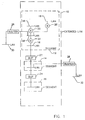
- FIG. 1 depicts in simplified form an extended LAN, indicated by reference numeral 10.
- extended LAN segment 12 includes four LANs 18, which are interconnected by bridges 20.
- the other extended LAN segments 14, 16 are single LANs.
- the extended LAN segments 12, 14, 16 are interconnected by bridge-like IP routers ( BLIPs), indicated at 22 and 24.
- BLIPs bridge-like IP routers
- the extended LAN 10 is shown as being connected by IP routers 26, 28 to other networks 30, 32, respectively, which may also be extended LANs.
- the extended LAN 10 has a single network address, e.g. network #5.
- the extended LAN segments 12, 14, 16 have subnet addresses, or extended LAN segment addresses, appended to the extended LAN address.
- the extended LAN segments might have subnet addresses 5.1, 5.2 and 5.3.
- the subnet portions of these addresses (. 1, . 2, . 3 ) are used by the BLIPs in one mode of their operation in a bridge-like manner, and are known to the BLIPs initially from a manual configuration procedure.
- One of the functions of the BLIPs is to run a spanning tree algorithm within the extended LAN 10, to ensure that the extended LAN segments are connected in a tree structure, having no continuous loops.
- the techniques for doing this are well known in the computer network field and will not be further discussed here. See, for example, the IEEE publication P802.1D, referred to in the foregoing background section of this specification.
- the extended LAN segments could be interconnected in a more complex manner that would require the running of the spanning tree algorithm to reduce the configuration to a tree structure.
- the bridge database is identical with one maintained in a conventional bridge. It consists of data link layer addresses associated with corresponding port numbers through which the BLIP communicates. Therefore, when the BLIP receives a message through one of its ports, i.e. from a particular direction in the extended LAN, it can associate the source data link layer address with the port through which the message was received.
- the IP database is analogous to the bridge database except that it functions at the network layer or IP address level.
- the extended LAN segment or subnet address of the message source is associated with that port.
- the BLIP "learns" the directions of the various subnets in the extended LAN.
- the ARP database associates host identifying numbers, in the IP address, with data link layer addresses.
- the database is used for forwarding an IP packet to its final destination on an attached extended LAN segment.
- the database is acquired by listening to ARP replies, generated as a result of ARP messages sent by this and other BLIPs, or by other host devices in attached extended LAN segments.
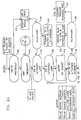
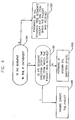
- a packet or ARP message when a packet or ARP message is received by a BLIP, it first determines whether the received packet or message uses ARP and IP protocols within the TCP/IP protocol. This can be determined from a protocol field in the packet header. If the TCP/IP protocol is not employed, the BLIP continues processing the received packet in exactly the manner of a conventional bridge, as indicated in block 42. If the received message or packet does employ the TCP/IP protocol, it is next determined, in block 44, whether an ARP message has been received. If so, processing continues, as will be described with reference to FIG. 3. If not, then it is concluded that an IP message packet has been received.
- the next inquiry is to determine, in block 44, whether the IP destination address (IPD in the figure) is within the extended LAN in which the BLIP resides. If not, the destination address is in some other LAN or extended LAN, and the BLIP next examines the data link layer destination address (DLLD in the figure). If the DLLD is not a special address referred to as all-adjacent-BLIPs address, as determined in block 48, the BLIP continues processing in the manner of a bridge, as indicated in block 42, using the data link layer destination address. The significance of the all-adjacent-BLIPs address will become clear as this description proceeds. If this special address is found in the test of block 48, the BLIP picks a router at random and forwards the message to it, as indicated in block 50. Inherently, then, the BLIPs have to have knowledge of the directional locations of the IP routers.
- IPD IP destination address
- the next test in block 52, asks whether the IP source address (IPS in the figure) is also in the extended LAN. If so, the BLIP "learns" the IP source address, as indicated in block 54. This is the same type of learning as a conventional bridge, except that the IP address is learned and not the data link address. Whenever an IP source address is seen by the BLIP, it updates its IP database, so that a subsequent message destined for the extended LAN segment can be transmitted in the correct direction. If the IP source is not in the extended LAN, the learning step is bypassed.
- the next processing step is to determine whether the IP destination is on an attached segment of the extended LAN, as indicated in block 56.
- An attached segment is one to which this particular BLIP is directly connected. Thus, for example, BLIP 22 is attached to segments 12 and 14, but not to segment 16.
- the data link layer destination address (DLLD) is examined, in block 58. If the DLLD is an all-adjacent-BLIPs, the packet is forwarded through the spanning tree established by the BLIPs, as indicated at block 60, which is expanded in FIG. 4. If the all-adjacent-BLIPs address is not in the DLLD field of the packet, it should have been placed there by the source of the packet.
- the BLIP changes the DLLD field to all-adjacent-BLIPs and sends a "redirect" message back to the source, instructing that the all-adjacent-BLIPs address is to be used.
- the all-adjacent-BLIPs address is basically a special code inserted in the data link layer destination address field to direct the packet to BLIPs attached to the segment from which the packet is sent.
- a host computer sending the packet uses the special code when the intended destination is located on a different segment of the extended LAN.
- a typical sequence of events is that the source host knows the IP address of its intended destination, but is unaware that the destination is located on a different subnet or extended LAN segment. This is because all hosts and routers are unaware of the subnet level of addressing, and all of the subnets in the extended LAN are perceived to be in the same network.
- the source host issues an ARP message to determine the data link level address of its intended destination.
- the destination host does not receive the ARP message, but at least one BLIP does.
- the BLIP In processing the ARP message, the BLIP generates an ARP reply if the requested destination is on the extended LAN and on a different extended LAN segment from the source.
- the ARP reply gives the requested data link layer address as all-adjacent-BLIPs address.
- the source host sends its data packet to what it believes to be a true data link layer address. In fact, the packet is received by a BLIP, and is forwarded through the spanning tree to an adjacent extended network segment, as indicated in block 60.
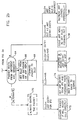
- the IP destination address is on an attached segment of this BLIP, it is next determined, in block 64 (Fig. 2b), whether the packet was received from a different attached segment of the extended LAN. If so, the data link layer destination address is retrieved from the ARP database, or an ARP message is transmitted if the address is not yet in the ARP database, all of which is indicated in block 66. Once the data link layer destination address is obtained, the packet is forwarded to its final destination, as indicated at 68.
- the proper course is to discard the packet, as indicated in block 72, since it will reach its destination directly, without help of the BLIP.
- the DLLD address is all-adjacent-BLIPs. This indicates an error on the part of the source host.
- a destination on the same extended LAN segment should be addressed to a real DLLD address and not to the special all-adjacent-BLIPs address.
- An appropriate action by the BLIP in this case is to obtain the ARP entry for the IP destination address, and to forward the packet there, as indicated in block 74, and to send a "redirect" message back to the source host to correct the problem.
- a third possibility is that the DLLD address is not equal to the ARP database entry corresponding to the IP destination, and is not the special all-adjacent-BLIPs address either. This situation could occur because either the BLIPs ARP database or the DLLD in the packet is incorrect.
- One possible corrective action is to use the ARP database DLLD address and to send a "redirect" message to the source host. Also the ARP database entry is confirmed by sending an ARP message. The error will rectify itself in subsequent transmissions.
- a fourth possibility is that the DLLD address in the packet is all-adjacent-BLIPs, but there is no ARP database entry for the IP destination address.
- An ARP message is issued to update the database, as in block 78.
- the packet may be temporarily stored until the ARP reply is received, or may be discarded. Subsequent retransmission of the packet will be received after the ARP database has been updated.
- a final possibility is that the DLLD address is equal to the corresponding entry in the ARP database, but both are incorrect. Obviously, there is no way to detect this error, but its possible effects are minimized by periodically refreshing the ARP database, as indicated in block 80.
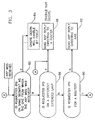
- ARP message processing by a BLIP More details of ARP message processing by a BLIP are shown in FIG. 3.
- it is first determined, in block 82, whether the message came from the same segment as the one on which the IP destination is located. If so, the ARP message is ignored, as indicated in block 84, since the generation of a reply will presumably be handled by the destination host.
- the requested IP destination is not on the same segment as the one that the ARP message was received from. If it is next determined, in block 86, whether the requested IP destination is on a different LAN or extended LAN from the one in which the BLIP is located. If so, which should not be the case, an ARP reply will be sent to direct packet transmission to a router, as indicated in block 88. Finally, it is determined in block 90 whether the requested IP destination is that of an IP router. If so, an ARP reply will be sent to direct packet transmission to a router, as shown in block 88. If not, an ARP reply is generated, as shown in block 92, indicating that the DLLD address is all-adjacent-BLIPs.
- FIG. 4 shows in more detail how a packet is forwarded through the spanning tree (block 60).
- the IP destination subnet address is examined, in block 94, to determine if it is in the IP database, i.e. to determine whether its directional location is already known. If so, another question is posed, in block 96, to determine if the IP destination subnet directional location is the same as the direction from which the packet was received. If so, there is no point in forwarding the packet in the same direction as the one from which it was received, and the packet is ignored, as shown in block 98. If the subnet directional location is not the same as the directional location from which the packet was received, the packet is forwarded in the direction determined from the IP database, as indicated in block 100. If the IP destination subnet address is not in the IP database, as determined in block 94, the packet is forwarded over all spanning tree segments except the one over which it was received, as indicated in block 102.
- the present invention represents a significant advance in the field of local area networks that handle TCP/IP traffic.
- the invention permits TCP/IP traffic to be forwarded through an interconnected extended LAN without the use of IP routers, and without the-disadvantages of bridges used for the same purpose.
- Each BLIP functions as a bridge for non-TCP/IP traffic and functions analogously to a bridge for TCP/IP traffic, using addresses at the IP or network layer level.
Landscapes
- Engineering & Computer Science (AREA)
- Computer Networks & Wireless Communication (AREA)
- Signal Processing (AREA)
- Small-Scale Networks (AREA)
- Data Exchanges In Wide-Area Networks (AREA)
Claims (16)
- Brückenartiger Router (22, 24) (BLIP) für ein Internet-Protokoll (IP) zum Gebrauch in einem erweiterten lokalen Verbund-Netzwerk (LAN) (10), das Nachrichtenverkehr abwickelt, und zwar gemäß einem Satz von Protokollen für Kommunikation zwischen Netzwerken, die ein Netzwerk-Adressierungsschema verwenden, der
mehrere Anschlüsse zum Anschließen des BLIPs an mehrere Segmente (12, 14, 16) eines erweiterten LANs aufweist, gekennzeichnet durch die folgenden Merkmale:eine Einrichtung (40) zum Unterscheiden von empfangenem Nachrichtenverkehr, der die Protokolle für Kommunikation zwischen Netzwerken verwendet, von anderem Nachrichtenverkehr, der diese Protokolle nicht verwendet;eine Brückeneinrichtung (42) zum Verarbeiten des anderen Nachrichtenverkehrs, die eindeutige Stationsadressen verwendet, um zu bestimmen, wie der Nachrichtenverkehr weiterzuleiten ist; undeine brückenartige Einrichtung (44) zum Verarbeiten des Verkehrs gemäß einem Protokoll für Kommunikation zwischen Netzwerken,in der, falls notwendig, ein von einem an den BLIP angeschlossenen Segment eines erweiterten LANs empfangenes Nachrichtenpaket weitergeleitet wird, und zwar an wenigstens ein anderes an den BLIP angeschlossenen Segment eines erweiterten LANs, wobei anstelle eindeutiger Stationsadressen Netzwerk-Adressen und Netzwerksegment-Adressen verwendet werden, um zu bestimmen, wie der Nachrichtenverkehr weiterzuleiten ist. - Brückenartiger IP-Router gemäß Anspruch 1, der weiterhin eine Einrichtung (X) zum Verarbeiten von Adressauflösungsprotokoll-Nachrichten aufweist, die Zieladressinformationen anfordern.
- Brückenartiger IP-Router gemäß Anspruch 2, der die folgenden Merkmale aufweist:die Einrichtung zum Verarbeiten von Adressauflösungsprotokoll-Nachrichten (X) beinhaltet eine Einrichtung (82, 84) zum Ausfindigmachen und Aussondern von Adressauflösungsprotokoll-Nachrichten, die Zieladressinformationen anfordern, und eine Einrichtung (86) zum Antworten auf die Adressauflösungsprotokoll-Nachrichten mit einem besonderen Adresscode, wenn sich die angeforderte Zieladresse in einem von dem Segment, in dem sich der BLIP befindet, verschiedenen Segment desselben erweiterten Netzwerks befindet; unddie brückenartige Einrichtung (44) beinhaltet eine Einrichtung (92) zum Weiterleiten eines Nachrichtenpakets, das den besonderen Adresscode aufweist, und zwar zu einem untergeordneten Menge der angeschlossenen Segmente des erweiterten LANs, mit Ausnahme desjenigen Segments, von dem das Nachrichtenpaket empfangen wurde;wodurch eine Zentralrechnervorrichtung zu Zielen auf anderen Segmenten des erweiterten LANS übertragen kann, als ob sich diese Ziele auf demselben LAN befänden.
- Brückenartiger IP-Router gemäß Anspruch 3, bei dem die brückenartige Einrichtung (44) die folgenden Merkmale beinhaltet:eine IP-Datenbank, die jedes Segment (12, 14, 16) des erweiterten LANs (10) einem Anschluß des BLIPs zuordnet, undeine Einrichtung zum Aktualisieren derIP-Datenbank, indem jede empfangene Nachricht beobachtet wird und indem die Segment-Adresse jeder Nachrichtenquelle mit einem Anschluß korreliert wird, durch den die Nachricht empfangen wird.
- Brückenartiger IP-Router gemäß Anspruch 3, bei dem die brückenartige Einrichtung (44) die folgenden Merkmale beinhaltet:eine Adressauflösungsprotokoll-Datenbank bzw. ARP-Datenbank, die jede Netzwerk-Schicht-Adresse in angeschlossenen Segmenten (12, 14, 16) des erweiterten LANs einer entsprechenden Datenlink-Schicht-Adresse zuordnet; und eine Einrichtung zum Aktualisieren der Datenlink-Schicht-Adresse; undeine Einrichtung zum Aktualisieren der ARP-Datenbank, indem ARP-Nachrichten gesendet werden, die an bestimmte Netzwerk-Schicht-Adressen gerichtet sind und indem ARP-Antworten verarbeitet werden, die die entsprechenden Datenlink-Schicht-Adressen enthalten.
- Brückenartiger IP-Router gemäß Anspruch 3, bei dem die brückenartige Einrichtung (44) eine Router-Datenbank beinhaltet, die die Adressen der DatenlinkSchicht von allen echten IP-Routern enthält, die an das erweiterte LAN angeschlossen sind.
- Verfahren zum Betrieb von erweiterten lokalen Verbund-Netzwerken (LANs), die Nachrichtenverkehr gemäß einem Satz von Protokollen abwickeln, die als Übertragungs-Steuerungsprotokoll/Internetprotokoll (TCP/IP) bekannt sind, wobei das Verfahren die folgenden Schritte aufweist:Konfigurieren eines erweiterten lokalen Netzwerks (10) (LAN), um eine Vielzahl von Segmenten (12, 14, 16) eines erweiterten LANs einzufügen, die durch brückenartige IP-Router (BLIPs) miteinander verbunden sind;Empfangen eines Datenpakets an einem BLIP, gekennzeichnet durch die folgenden Schritte:Bestimmen, ob das Paket unter einem TCP/IP-Protokoll übertragen worden ist,Verarbeiten von nicht unter einem TCP/IP-Protokoll übertragenen Paketen auf eine erste Weise, undVerarbeiten von TCP/IP-Verkehr auf eine zweite Weise, und zwar analog zu der ersten Weise, wobei falls notwendig ein von einem an den BLIP angeschlossenen Segment (12, 14, 16) eines erweiterten LANs empfangenes Nachrichtenpaket weitergeleitet wird, und zwar an wenigstens ein weiteres, an den BLIP angeschlossenes LAN-Segment (12, 14, 16).
- Verfahren gemäß Anspruch 7, das weiterhin die folgenden Schritte aufweist:Ausfindigmachen und Aussondern von Adressauflösungsprotokoll-Nachrichten bzw. ARP-Nachrichten, die Zieladressinformationen anfordern,Antworten auf ARP-Nachrichten mit einem besonderen Adresscode, wenn sich die angeforderte Zieladresse auf einem Segment befindet, das vom Segment des BLIPS in demselben erweiterten LAN verschieden ist, undWeiterleiten eines Nachrichtenpakets, das den besonderen Adresscode aufweist, und zwar an wenigstens ein anderes angeschlossenes LAN-Segment,wodurch eine Zentralrechnervorrichtung zu Zielen in anderen erweiterten LAN-Segmenten übertragen kann, als ob sich diese Zielen auf demselben LAN befänden.
- Verfahren gemäß Anspruch 7, das weiterhin die folgenden Schritte aufweist:Unterhalten einer Internet-Protokoll-Datenbank bzw. IP-Datenbank, die jedes Segment des erweiterten LANs einem Anschluß des BLIPs zuordnet,bei dem der Schritt des Unterhaltens der IP-Datenbank durch Beobachten jeder empfangenen Nachricht und Korrelieren der Segment-Adresse jedes Nachrichtenursprungs mit einem Anschluß erfolgt, durch den die Nachricht empfangen wird.
- Verfahren gemäß Anspruch 7, das weiterhin die folgenden Schritte aufweist:Unterhalten einer Adressauflösungsprotokoll-Datenbank bzw. ARP-Datenbank, die jeder Netzwerk-Schicht-Adresse in angeschlossenen erweiterten LAN-Segmenten eine entsprechende Datenlink-Schicht-Adresse zuordnet,wobei der Schritt des Unterhaltens der ARP-Datenbank durch Senden von ARP-Nachrichten, die an spezifische Netzwerk-Schicht-Adressen gerichtet sind, und durch Verarbeiten von ARP-Antworten erfolgt, die die entsprechenden Datenlink-Schicht-Adressen enthalten.
- Verfahren gemäß Anspruch 7, das weiterhin das Unterhalten einer Router-Datenbank aufweist, die die Datenlink-Schicht-Adressen von allen echten, mit dem erweiterten LAN verbundenen IP-Routern enthält.
- Verfahren gemäß Anspruch 7, das weiterhin die folgenden Schritte aufweist:Verarbeiten des Nicht-TCP/IP-Verkehrs auf die erste Weise, wobei eindeutige Stationsadressen verwendet werden, um zu bestimmen, wie die Pakete weiterzuleiten sind, undAusfindigmachen und Aussondern von Adressauflösungsprotokoll-Nachrichten bzw. ARP-Nachrichten, die Zieladressinformationen anfordern,wobei der TCP/IP-Verkehr an der Stelle von eindeutigen Stationsadressen Netzwerk-Adressen und Netzwerksegment-Adressen verwendet, um zu bestimmen, wie die Pakete weiterzuleiten sind.
- Verfahren gemäß Anspruch 12, das weiterhin die folgenden Schritte aufweist:Bestimmen, ob ein empfangenes Nachrichtenpaket für ein angeschlossenes Segment des erweiterten LANs (10) bestimmt ist,Weiterleiten eines für ein angeschlossenes Segment (12, 14, 16) bestimmten Pakets außer zu demjenigen Segment, von dem das Paket übertragen wurde, indem aus der ARP-Datenbank eine Datenlink-Schicht-Zieladresse erhalten wird, undWeiterleiten eines für ein nicht an den BLIP angeschlossenes Segment bestimmtes Paket durch Übertragen des Pakets an wenigstens ein anderes Segment, und zwar durch einen Anschluß, der so ausgewählt ist, daß das Zielsegment erreicht wird.
- Verfahren gemäß Anspruch 13, das weiterhin die folgenden Schritte aufweist:Überprüfen der Zieladresse eines jeden Pakets, das für dasselbe erweiterte LAN-Segment bestimmt ist, wie das LAN-Segment, von dem das Paket übertragen wurde, undVornehmen einer Korrekturmaßnahme, und zwar in Abhängigkeit von der in dem Paket enthaltenen Datenlink-Schicht-Zieladresse.
- Verfahren gemäß Anspruch 14, bei dem der Schritt des Vornehmens einer Korrekturmaßnahme den folgenden Schritt beinhaltet:
Aussondern des Pakets, wenn die Datenlink-Schicht-Zieladresse zu einem Eintrag in der ARP-Datenbank paßt, der einer in dem Paket enthaltenen Internet-Protokoll-(IP)-Zieladresse entspricht. - Verfahren gemäß Anspruch 14, bei dem der Schritt des Vornehmens einer Korrekturmaßnahme, wenn die Datenlink-Schicht-Zieladresse in dem Paket und ein Eintrag in der Adressauflösungsprotokoll-Datenbank bzw. ARP-Datenbank entsprechend einer in dem Paket enthaltenen Internet-Protokoll-Zieladresse bzw. IP-Zieladresse nicht zusammenpassen, folgendes beinhaltet:Ersetzen des ARP-Datenbankeintrags der Datenlink-Schicht-Zieladresse in dem Paket, undSenden einer Umleitungs-Nachricht an einen Ursprungszentralrechner, von dem das Paket übertragen wurde.
Applications Claiming Priority (2)
| Application Number | Priority Date | Filing Date | Title |
|---|---|---|---|
| US546619 | 1990-06-29 | ||
| US07/546,619 US5309437A (en) | 1990-06-29 | 1990-06-29 | Bridge-like internet protocol router |
Publications (3)
| Publication Number | Publication Date |
|---|---|
| EP0465201A2 EP0465201A2 (de) | 1992-01-08 |
| EP0465201A3 EP0465201A3 (en) | 1992-06-03 |
| EP0465201B1 true EP0465201B1 (de) | 1996-10-02 |
Family
ID=24181242
Family Applications (1)
| Application Number | Title | Priority Date | Filing Date |
|---|---|---|---|
| EP91305968A Expired - Lifetime EP0465201B1 (de) | 1990-06-29 | 1991-07-01 | Brückenartiger Protokollweglenker zwischen Netzen |
Country Status (4)
| Country | Link |
|---|---|
| US (1) | US5309437A (de) |
| EP (1) | EP0465201B1 (de) |
| CA (1) | CA2044363A1 (de) |
| DE (1) | DE69122439T2 (de) |
Cited By (1)
| Publication number | Priority date | Publication date | Assignee | Title |
|---|---|---|---|---|
| US20210184972A1 (en) * | 2013-11-05 | 2021-06-17 | Cisco Technology, Inc. | Ip-based forwarding of bridged and routed ip packets and unicast arp |
Families Citing this family (275)
| Publication number | Priority date | Publication date | Assignee | Title |
|---|---|---|---|---|
| US5860136A (en) * | 1989-06-16 | 1999-01-12 | Fenner; Peter R. | Method and apparatus for use of associated memory with large key spaces |
| GB9107031D0 (en) * | 1991-04-04 | 1991-05-22 | Bicc Plc | Repeaters for digital data networks |
| GB9112898D0 (en) * | 1991-06-14 | 1991-07-31 | Digital Equipment Int | Communication networks |
| US5500860A (en) * | 1991-06-14 | 1996-03-19 | Digital Equipment Corporation | Router using multiple hop redirect messages to enable bridge like data forwarding |
| US5420862A (en) * | 1991-06-14 | 1995-05-30 | Digital Equipment Corporation | Router using remote address resolution to enable bridge like data forwarding |
| US6400702B1 (en) * | 1991-10-01 | 2002-06-04 | Intermec Ip Corp. | Radio frequency local area network |
| US7006881B1 (en) * | 1991-12-23 | 2006-02-28 | Steven Hoffberg | Media recording device with remote graphic user interface |
| US8352400B2 (en) | 1991-12-23 | 2013-01-08 | Hoffberg Steven M | Adaptive pattern recognition based controller apparatus and method and human-factored interface therefore |
| US5519858A (en) * | 1992-01-10 | 1996-05-21 | Digital Equipment Corporation | Address recognition engine with look-up database for storing network information |
| FR2686755A1 (fr) * | 1992-01-28 | 1993-07-30 | Electricite De France | Procede de chiffrement de messages transmis entre reseaux interconnectes, appareil de chiffrement et dispositif de communication de donnees chiffrees mettant en óoeuvre un tel procede. |
| JPH05268223A (ja) * | 1992-03-23 | 1993-10-15 | Nec Corp | ルータ装置 |
| US5742760A (en) * | 1992-05-12 | 1998-04-21 | Compaq Computer Corporation | Network packet switch using shared memory for repeating and bridging packets at media rate |
| FI90710C (fi) * | 1992-05-29 | 1994-03-10 | Icl Personal Systems Oy | Menetelmä paikallisverkkoon tarkoitetun TCP/IP-ohjelmiston sovittamiseksi etäyhteydelle |
| US5490252A (en) * | 1992-09-30 | 1996-02-06 | Bay Networks Group, Inc. | System having central processor for transmitting generic packets to another processor to be altered and transmitting altered packets back to central processor for routing |
| US5426637A (en) * | 1992-12-14 | 1995-06-20 | International Business Machines Corporation | Methods and apparatus for interconnecting local area networks with wide area backbone networks |
| DE69331705T2 (de) * | 1992-12-21 | 2002-12-19 | Apple Computer, Inc. | Verfahren und gerät zur umwandlung einer beliebigen topologie von einer knotensammlung in einen acyclischen gerichteten graph |
| US5379296A (en) * | 1992-12-31 | 1995-01-03 | Unisys Corporation | Method and apparatus for interfacing a workstation to a plurality of computer platforms |
| US5619650A (en) * | 1992-12-31 | 1997-04-08 | International Business Machines Corporation | Network processor for transforming a message transported from an I/O channel to a network by adding a message identifier and then converting the message |
| EP0622739A1 (de) * | 1993-04-29 | 1994-11-02 | International Business Machines Corporation | System zum kaskadenförmigen Anordnen von Datenschaltern in einem Kommunikationsknoten |
| JP2520563B2 (ja) * | 1993-05-19 | 1996-07-31 | 日本電気株式会社 | パケット交換網 |
| US5491693A (en) * | 1993-12-30 | 1996-02-13 | International Business Machines Corporation | General transport layer gateway for heterogeneous networks |
| US6701370B1 (en) * | 1994-06-08 | 2004-03-02 | Hughes Electronics Corporation | Network system with TCP/IP protocol spoofing |
| US5689550A (en) * | 1994-08-08 | 1997-11-18 | Voice-Tel Enterprises, Inc. | Interface enabling voice messaging systems to interact with communications networks |
| US5598536A (en) * | 1994-08-09 | 1997-01-28 | Shiva Corporation | Apparatus and method for providing remote users with the same unique IP address upon each network access |
| JP3224963B2 (ja) | 1994-08-31 | 2001-11-05 | 株式会社東芝 | ネットワーク接続装置及びパケット転送方法 |
| US5535199A (en) * | 1994-09-06 | 1996-07-09 | Sun Microsystems, Inc. | TCP/IP header compression X.25 networks |
| US7373322B1 (en) | 1994-09-20 | 2008-05-13 | Papyrus Technology Corporation | Two-way wireless communication system for financial industry transactions |
| US6768981B2 (en) | 1994-09-20 | 2004-07-27 | Papyrus Corporation | Method for executing a cross-trade in a two-way wireless system |
| US5797002A (en) | 1994-09-20 | 1998-08-18 | Papyrus Technology Corp. | Two-way wireless system for financial industry transactions |
| US5774877A (en) * | 1994-09-20 | 1998-06-30 | Papyrus Technology Corp. | Two-way wireless system for financial industry transactions |
| US5530703A (en) * | 1994-09-23 | 1996-06-25 | 3Com Corporation | Remote communication server with automatic filtering |
| US6460036B1 (en) | 1994-11-29 | 2002-10-01 | Pinpoint Incorporated | System and method for providing customized electronic newspapers and target advertisements |
| US6571279B1 (en) * | 1997-12-05 | 2003-05-27 | Pinpoint Incorporated | Location enhanced information delivery system |
| US5758257A (en) | 1994-11-29 | 1998-05-26 | Herz; Frederick | System and method for scheduling broadcast of and access to video programs and other data using customer profiles |
| US5812639A (en) * | 1994-12-05 | 1998-09-22 | Bell Atlantic Network Services, Inc. | Message communication via common signaling channel |
| US6285745B1 (en) | 1994-12-05 | 2001-09-04 | Bell Atlantic Network Services, Inc. | Analog terminal internet access |
| US5661782A (en) * | 1994-12-05 | 1997-08-26 | Bell Atlantic Network Services, Inc. | Voice mail communication with call blocking |
| US6215858B1 (en) | 1994-12-05 | 2001-04-10 | Bell Atlantic Network Services, Inc. | Analog terminal internet access |
| US5631948A (en) * | 1994-12-05 | 1997-05-20 | Bell Atlantic Network Services, Inc. | Voice mail communication with call blocking |
| US5850518A (en) * | 1994-12-12 | 1998-12-15 | Northrup; Charles J. | Access-method-independent exchange |
| CA2139081C (en) * | 1994-12-23 | 1999-02-02 | Alastair Gordon | Unified messaging system and method |
| US5544162A (en) * | 1995-01-10 | 1996-08-06 | International Business Machines Corporation | IP bridge for parallel machines |
| US5682525A (en) * | 1995-01-11 | 1997-10-28 | Civix Corporation | System and methods for remotely accessing a selected group of items of interest from a database |
| US7058067B1 (en) | 1995-03-13 | 2006-06-06 | Cisco Technology, Inc. | Distributed interactive multimedia system architecture |
| US5838683A (en) | 1995-03-13 | 1998-11-17 | Selsius Systems Inc. | Distributed interactive multimedia system architecture |
| US5822324A (en) * | 1995-03-16 | 1998-10-13 | Bell Atlantic Network Services, Inc. | Simulcasting digital video programs for broadcast and interactive services |
| US5651010A (en) * | 1995-03-16 | 1997-07-22 | Bell Atlantic Network Services, Inc. | Simultaneous overlapping broadcasting of digital programs |
| US5867660A (en) * | 1995-05-11 | 1999-02-02 | Bay Networks, Inc. | Method and apparatus for communicating between a network workstation and an internet |
| JP2666769B2 (ja) * | 1995-05-16 | 1997-10-22 | 日本電気株式会社 | インタネットプロトコルルーティング方法及び装置 |
| US7272639B1 (en) | 1995-06-07 | 2007-09-18 | Soverain Software Llc | Internet server access control and monitoring systems |
| US5734865A (en) * | 1995-06-07 | 1998-03-31 | Bull Hn Information Systems Inc. | Virtual local area network well-known port routing mechanism for mult--emulators in an open system environment |
| US5812776A (en) * | 1995-06-07 | 1998-09-22 | Open Market, Inc. | Method of providing internet pages by mapping telephone number provided by client to URL and returning the same in a redirect command by server |
| US6094525A (en) * | 1995-07-06 | 2000-07-25 | Novell, Inc. | Network addressing arrangement for backward compatible routing of an expanded address space |
| US6147996A (en) | 1995-08-04 | 2000-11-14 | Cisco Technology, Inc. | Pipelined multiple issue packet switch |
| US5757924A (en) * | 1995-09-18 | 1998-05-26 | Digital Secured Networks Techolognies, Inc. | Network security device which performs MAC address translation without affecting the IP address |
| US6226678B1 (en) | 1995-09-25 | 2001-05-01 | Netspeak Corporation | Method and apparatus for dynamically defining data communication utilities |
| US6009469A (en) * | 1995-09-25 | 1999-12-28 | Netspeak Corporation | Graphic user interface for internet telephony application |
| US6185184B1 (en) | 1995-09-25 | 2001-02-06 | Netspeak Corporation | Directory server for providing dynamically assigned network protocol addresses |
| US6108704A (en) * | 1995-09-25 | 2000-08-22 | Netspeak Corporation | Point-to-point internet protocol |
| US5774670A (en) * | 1995-10-06 | 1998-06-30 | Netscape Communications Corporation | Persistent client state in a hypertext transfer protocol based client-server system |
| DE956711T1 (de) * | 1995-10-11 | 2000-11-09 | Alex Mashinsky | Effiziente kommunikation in verbindungsnetzen |
| US5717853A (en) * | 1995-10-23 | 1998-02-10 | International Business Machines Corporation | Information handling system having router including first mode for configuring itself, second mode for configuring its connected devices and third mode for system operation |
| US5684800A (en) * | 1995-11-15 | 1997-11-04 | Cabletron Systems, Inc. | Method for establishing restricted broadcast groups in a switched network |
| CA2186795A1 (en) * | 1995-11-17 | 1997-05-18 | Cormac John Sreenan | Resource management system for a broadband multipoint bridge |
| US5802146A (en) * | 1995-11-22 | 1998-09-01 | Bell Atlantic Network Services, Inc. | Maintenance operations console for an advanced intelligent network |
| JP3545858B2 (ja) * | 1995-12-01 | 2004-07-21 | 株式会社東芝 | ネットワーク間接続装置及び情報検索装置 |
| US6058429A (en) * | 1995-12-08 | 2000-05-02 | Nortel Networks Corporation | Method and apparatus for forwarding traffic between locality attached networks using level 3 addressing information |
| GB9603582D0 (en) | 1996-02-20 | 1996-04-17 | Hewlett Packard Co | Method of accessing service resource items that are for use in a telecommunications system |
| US5778367A (en) * | 1995-12-14 | 1998-07-07 | Network Engineering Software, Inc. | Automated on-line information service and directory, particularly for the world wide web |
| US5884043A (en) * | 1995-12-21 | 1999-03-16 | Cisco Technology, Inc. | Conversion technique for routing frames in a source route bridge network |
| JPH09186723A (ja) | 1995-12-29 | 1997-07-15 | Hitachi Ltd | ネットワーク通信処理方式 |
| US6091725A (en) | 1995-12-29 | 2000-07-18 | Cisco Systems, Inc. | Method for traffic management, traffic prioritization, access control, and packet forwarding in a datagram computer network |
| US6035105A (en) | 1996-01-02 | 2000-03-07 | Cisco Technology, Inc. | Multiple VLAN architecture system |
| US5799016A (en) * | 1996-01-11 | 1998-08-25 | U S West, Inc. | Network addressing scheme encoding communication channel information |
| US5764756A (en) * | 1996-01-11 | 1998-06-09 | U S West, Inc. | Networked telephony central offices |
| JP3684262B2 (ja) * | 1996-01-17 | 2005-08-17 | 富士通株式会社 | ネットワークシステム及び集線装置 |
| US5781726A (en) * | 1996-01-31 | 1998-07-14 | 3Com Corporation | Management of polling traffic in connection oriented protocol sessions |
| US5822523A (en) * | 1996-02-01 | 1998-10-13 | Mpath Interactive, Inc. | Server-group messaging system for interactive applications |
| US5732213A (en) * | 1996-03-22 | 1998-03-24 | Ericsson Inc. | System and method of testing open systems interconnection (OSI) layers in telecommunication networks |
| US9619841B2 (en) | 1996-03-28 | 2017-04-11 | Integrated Claims Systems, Llc | Systems to assist in the creation, transmission, and processing of health insurance claims |
| US6438218B1 (en) | 1996-04-18 | 2002-08-20 | Robert D. Farris | Internet telephone service |
| US5790548A (en) | 1996-04-18 | 1998-08-04 | Bell Atlantic Network Services, Inc. | Universal access multimedia data network |
| US6125113A (en) * | 1996-04-18 | 2000-09-26 | Bell Atlantic Network Services, Inc. | Internet telephone service |
| US6069890A (en) | 1996-06-26 | 2000-05-30 | Bell Atlantic Network Services, Inc. | Internet telephone service |
| US6154445A (en) | 1996-04-18 | 2000-11-28 | Bell Atlantic Network Services, Inc. | Telephony communication via varied redundant networks |
| AU707905B2 (en) * | 1996-04-24 | 1999-07-22 | Nortel Networks Corporation | Internet protocol filter |
| US5917825A (en) * | 1996-05-07 | 1999-06-29 | Rad Network Devices, Ltd. | LAN message routing system |
| US6243667B1 (en) | 1996-05-28 | 2001-06-05 | Cisco Systems, Inc. | Network flow switching and flow data export |
| US6308148B1 (en) | 1996-05-28 | 2001-10-23 | Cisco Technology, Inc. | Network flow data export |
| US5826023A (en) * | 1996-06-03 | 1998-10-20 | International Business Machines Corporation | Communications tunneling |
| US8229844B2 (en) | 1996-06-05 | 2012-07-24 | Fraud Control Systems.Com Corporation | Method of billing a purchase made over a computer network |
| US20030195848A1 (en) | 1996-06-05 | 2003-10-16 | David Felger | Method of billing a purchase made over a computer network |
| US7555458B1 (en) | 1996-06-05 | 2009-06-30 | Fraud Control System.Com Corporation | Method of billing a purchase made over a computer network |
| US6212182B1 (en) | 1996-06-27 | 2001-04-03 | Cisco Technology, Inc. | Combined unicast and multicast scheduling |
| US6434120B1 (en) * | 1998-08-25 | 2002-08-13 | Cisco Technology, Inc. | Autosensing LMI protocols in frame relay networks |
| US5805820A (en) * | 1996-07-15 | 1998-09-08 | At&T Corp. | Method and apparatus for restricting access to private information in domain name systems by redirecting query requests |
| CA2212121C (en) | 1996-08-02 | 2010-03-30 | Symbol Technologies, Inc. | Improvements in data retrieval |
| US5909638A (en) * | 1996-08-06 | 1999-06-01 | Maximum Video Systems, Inc. | High speed video distribution and manufacturing system |
| US6023563A (en) * | 1996-08-20 | 2000-02-08 | Shani; Ron | Networking switch having the network presence of a bridge |
| US5958015A (en) * | 1996-10-29 | 1999-09-28 | Abirnet Ltd. | Network session wall passively listening to communication session, with use of access rules, stops further communication between network devices by emulating messages to the devices |
| US5708654A (en) * | 1996-11-27 | 1998-01-13 | Arndt; Manfred R. | Method for detecting proxy ARP replies from devices in a local area network |
| JP3638742B2 (ja) * | 1996-11-29 | 2005-04-13 | アンリツ株式会社 | ルータ |
| US6145004A (en) * | 1996-12-02 | 2000-11-07 | Walsh; Stephen Kelly | Intranet network system |
| US6078582A (en) | 1996-12-18 | 2000-06-20 | Bell Atlantic Network Services, Inc. | Internet long distance telephone service |
| US5878232A (en) * | 1996-12-27 | 1999-03-02 | Compaq Computer Corporation | Dynamic reconfiguration of network device's virtual LANs using the root identifiers and root ports determined by a spanning tree procedure |
| US6240513B1 (en) * | 1997-01-03 | 2001-05-29 | Fortress Technologies, Inc. | Network security device |
| US6064653A (en) * | 1997-01-07 | 2000-05-16 | Bell Atlantic Network Services, Inc. | Internetwork gateway to gateway alternative communication |
| US7020700B1 (en) | 1997-02-28 | 2006-03-28 | International Business Machines Corporation | Client side socks server for an internet client |
| JPH10242990A (ja) | 1997-02-28 | 1998-09-11 | Nec Commun Syst Ltd | Lecブリッジ装置の通信方式 |
| US6137869A (en) | 1997-09-16 | 2000-10-24 | Bell Atlantic Network Services, Inc. | Network session management |
| JP3579208B2 (ja) * | 1997-03-11 | 2004-10-20 | 株式会社東芝 | ノード装置及びメッセージ交換方法 |
| US6097719A (en) * | 1997-03-11 | 2000-08-01 | Bell Atlantic Network Services, Inc. | Public IP transport network |
| US6574216B1 (en) | 1997-03-11 | 2003-06-03 | Verizon Services Corp. | Packet data network voice call quality monitoring |
| US6084892A (en) * | 1997-03-11 | 2000-07-04 | Bell Atlantic Networks Services, Inc. | Public IP transport network |
| US6650631B1 (en) | 1997-03-11 | 2003-11-18 | Verizon Services Corp. | Public IP transport network |
| US5933490A (en) * | 1997-03-12 | 1999-08-03 | Bell Atlantic Network Services, Inc. | Overload protection for on-demand access to the internet that redirects calls from overloaded internet service provider (ISP) to alternate internet access provider |
| US6130892A (en) * | 1997-03-12 | 2000-10-10 | Nomadix, Inc. | Nomadic translator or router |
| CN1263267C (zh) | 1997-03-12 | 2006-07-05 | 诺马蒂克斯股份有限公司 | 漫游的转换器或路由器 |
| US6870827B1 (en) | 1997-03-19 | 2005-03-22 | Verizon Services Corp. | Voice call alternative routing through PSTN and internet networks |
| US6292479B1 (en) | 1997-03-19 | 2001-09-18 | Bell Atlantic Network Services, Inc. | Transport of caller identification information through diverse communication networks |
| US6657999B1 (en) * | 1997-03-31 | 2003-12-02 | Texas Instruments Incorporated | Link layer gateway computer for interconnecting ethernet and 1394 networks |
| US6359882B1 (en) | 1997-04-01 | 2002-03-19 | Yipes Communications, Inc. | Method and apparatus for transmitting data |
| US6282172B1 (en) | 1997-04-01 | 2001-08-28 | Yipes Communications, Inc. | Generating acknowledgement signals in a data communication system |
| EP0974218A4 (de) * | 1997-04-09 | 2005-04-13 | Alcatel Australia | Geschlossene internetbenutzergruppe |
| US7251784B2 (en) * | 1997-04-25 | 2007-07-31 | Winslowhouse International, Inc. | Supplying supplementary information for printed books |
| US6034680A (en) * | 1997-04-25 | 2000-03-07 | Foundation For Concepts In Education, Inc. | Supplying supplementary information for printed books |
| US6122272A (en) * | 1997-05-23 | 2000-09-19 | Cisco Technology, Inc. | Call size feedback on PNNI operation |
| US6356530B1 (en) | 1997-05-23 | 2002-03-12 | Cisco Technology, Inc. | Next hop selection in ATM networks |
| US6862284B1 (en) | 1997-06-17 | 2005-03-01 | Cisco Technology, Inc. | Format for automatic generation of unique ATM addresses used for PNNI |
| US6044418A (en) * | 1997-06-30 | 2000-03-28 | Sun Microsystems, Inc. | Method and apparatus for dynamically resizing queues utilizing programmable partition pointers |
| US6016310A (en) * | 1997-06-30 | 2000-01-18 | Sun Microsystems, Inc. | Trunking support in a high performance network device |
| US5938736A (en) * | 1997-06-30 | 1999-08-17 | Sun Microsystems, Inc. | Search engine architecture for a high performance multi-layer switch element |
| US6052738A (en) * | 1997-06-30 | 2000-04-18 | Sun Microsystems, Inc. | Method and apparatus in a packet routing switch for controlling access at different data rates to a shared memory |
| US6115378A (en) * | 1997-06-30 | 2000-09-05 | Sun Microsystems, Inc. | Multi-layer distributed network element |
| US6118760A (en) * | 1997-06-30 | 2000-09-12 | Sun Microsystems, Inc. | Management of entries in a network element forwarding memory |
| US6081522A (en) * | 1997-06-30 | 2000-06-27 | Sun Microsystems, Inc. | System and method for a multi-layer network element |
| US6044087A (en) * | 1997-06-30 | 2000-03-28 | Sun Microsystems, Inc. | Interface for a highly integrated ethernet network element |
| US5920566A (en) * | 1997-06-30 | 1999-07-06 | Sun Microsystems, Inc. | Routing in a multi-layer distributed network element |
| US6014380A (en) * | 1997-06-30 | 2000-01-11 | Sun Microsystems, Inc. | Mechanism for packet field replacement in a multi-layer distributed network element |
| US6119196A (en) * | 1997-06-30 | 2000-09-12 | Sun Microsystems, Inc. | System having multiple arbitrating levels for arbitrating access to a shared memory by network ports operating at different data rates |
| US6088356A (en) * | 1997-06-30 | 2000-07-11 | Sun Microsystems, Inc. | System and method for a multi-layer network element |
| US6021132A (en) * | 1997-06-30 | 2000-02-01 | Sun Microsystems, Inc. | Shared memory management in a switched network element |
| US6081512A (en) * | 1997-06-30 | 2000-06-27 | Sun Microsystems, Inc. | Spanning tree support in a high performance network device |
| US6128666A (en) * | 1997-06-30 | 2000-10-03 | Sun Microsystems, Inc. | Distributed VLAN mechanism for packet field replacement in a multi-layered switched network element using a control field/signal for indicating modification of a packet with a database search engine |
| US5909686A (en) * | 1997-06-30 | 1999-06-01 | Sun Microsystems, Inc. | Hardware-assisted central processing unit access to a forwarding database |
| US6246680B1 (en) | 1997-06-30 | 2001-06-12 | Sun Microsystems, Inc. | Highly integrated multi-layer switch element architecture |
| US6049528A (en) * | 1997-06-30 | 2000-04-11 | Sun Microsystems, Inc. | Trunking ethernet-compatible networks |
| US6094435A (en) * | 1997-06-30 | 2000-07-25 | Sun Microsystems, Inc. | System and method for a quality of service in a multi-layer network element |
| US5958016A (en) * | 1997-07-13 | 1999-09-28 | Bell Atlantic Network Services, Inc. | Internet-web link for access to intelligent network service control |
| US6078590A (en) | 1997-07-14 | 2000-06-20 | Cisco Technology, Inc. | Hierarchical routing knowledge for multicast packet routing |
| US6055364A (en) | 1997-07-31 | 2000-04-25 | Cisco Technology, Inc. | Content-based filtering of multicast information |
| US6330599B1 (en) | 1997-08-05 | 2001-12-11 | Cisco Technology, Inc. | Virtual interfaces with dynamic binding |
| US6512766B2 (en) | 1997-08-22 | 2003-01-28 | Cisco Systems, Inc. | Enhanced internet packet routing lookup |
| US6157641A (en) * | 1997-08-22 | 2000-12-05 | Cisco Technology, Inc. | Multiprotocol packet recognition and switching |
| US6212183B1 (en) | 1997-08-22 | 2001-04-03 | Cisco Technology, Inc. | Multiple parallel packet routing lookup |
| US6343072B1 (en) | 1997-10-01 | 2002-01-29 | Cisco Technology, Inc. | Single-chip architecture for shared-memory router |
| US6473425B1 (en) | 1997-10-02 | 2002-10-29 | Sun Microsystems, Inc. | Mechanism for dispatching packets via a telecommunications network |
| US6026093A (en) * | 1997-10-02 | 2000-02-15 | Sun Microsystems, Inc. | Mechanism for dispatching data units via a telecommunications network |
| US6172981B1 (en) | 1997-10-30 | 2001-01-09 | International Business Machines Corporation | Method and system for distributing network routing functions to local area network stations |
| US6252880B1 (en) * | 1997-11-10 | 2001-06-26 | Advanced Micro Devices, Inc. | Apparatus and method for selectively supplying a data packet to a selected network node in a buffered distributor |
| US7570583B2 (en) * | 1997-12-05 | 2009-08-04 | Cisco Technology, Inc. | Extending SONET/SDH automatic protection switching |
| US6249530B1 (en) | 1997-12-22 | 2001-06-19 | Sun Microsystems, Inc. | Network bandwidth control |
| US6188694B1 (en) * | 1997-12-23 | 2001-02-13 | Cisco Technology, Inc. | Shared spanning tree protocol |
| US6424649B1 (en) | 1997-12-31 | 2002-07-23 | Cisco Technology, Inc. | Synchronous pipelined switch using serial transmission |
| US6111877A (en) * | 1997-12-31 | 2000-08-29 | Cisco Technology, Inc. | Load sharing across flows |
| US9900305B2 (en) * | 1998-01-12 | 2018-02-20 | Soverain Ip, Llc | Internet server access control and monitoring systems |
| US7411916B2 (en) * | 1998-02-26 | 2008-08-12 | Nortel Networks Limited | Data forwarding method and apparatus |
| DE19809398A1 (de) * | 1998-03-05 | 1999-09-09 | Sel Verteidigungssysteme Gmbh | Verfahren zum gemeinsamen Betreiben einer Vielzahl militärischer Führungssysteme, sowie ein System zur Durchführung dieses Verfahrens und eine Nutzerschnittstelle hierfür |
| US6853638B2 (en) * | 1998-04-01 | 2005-02-08 | Cisco Technology, Inc. | Route/service processor scalability via flow-based distribution of traffic |
| US6876654B1 (en) | 1998-04-10 | 2005-04-05 | Intel Corporation | Method and apparatus for multiprotocol switching and routing |
| US6049834A (en) * | 1998-05-08 | 2000-04-11 | Cisco Technology, Inc. | Layer 3 switch unicast protocol |
| GB9810843D0 (en) * | 1998-05-21 | 1998-07-22 | 3Com Technologies Ltd | Method for storing data in network devices |
| US6603769B1 (en) | 1998-05-28 | 2003-08-05 | Cisco Technology, Inc. | Method and system for improving traffic operation in an internet environment |
| US6445691B2 (en) * | 1998-06-08 | 2002-09-03 | Koninklijke Philips Electronics N. V. | Wireless coupling of standardized networks and non-standardized nodes |
| US6445690B2 (en) * | 1998-06-08 | 2002-09-03 | Koninklijke Philips Electronics N.V. | Wireless coupling of incompatible nodes via a virtual network |
| US6920112B1 (en) | 1998-06-29 | 2005-07-19 | Cisco Technology, Inc. | Sampling packets for network monitoring |
| US6370121B1 (en) | 1998-06-29 | 2002-04-09 | Cisco Technology, Inc. | Method and system for shortcut trunking of LAN bridges |
| US6377577B1 (en) | 1998-06-30 | 2002-04-23 | Cisco Technology, Inc. | Access control list processing in hardware |
| US6182147B1 (en) | 1998-07-31 | 2001-01-30 | Cisco Technology, Inc. | Multicast group routing using unidirectional links |
| US6308219B1 (en) | 1998-07-31 | 2001-10-23 | Cisco Technology, Inc. | Routing table lookup implemented using M-trie having nodes duplicated in multiple memory banks |
| US6389506B1 (en) | 1998-08-07 | 2002-05-14 | Cisco Technology, Inc. | Block mask ternary cam |
| EP0978977A1 (de) | 1998-08-07 | 2000-02-09 | International Business Machines Corporation | Verfahren und System zum Verbesseren von Hochgeschwindichkeit Datenübertragungen zwischen Netzen |
| US6256314B1 (en) * | 1998-08-11 | 2001-07-03 | Avaya Technology Corp. | Apparatus and methods for routerless layer 3 forwarding in a network |
| DE69934192T2 (de) | 1998-10-27 | 2007-08-30 | Hewlett-Packard Development Co., L.P., Houston | Verfahren und Einrichtung zur Netzverbindung mittels Brücken |
| EP0998081B1 (de) * | 1998-10-27 | 2006-11-29 | Hewlett-Packard Company, A Delaware Corporation | Verfahren und Einrichtung zur Netzverbindung mittels Brücken |
| US6330229B1 (en) | 1998-11-09 | 2001-12-11 | 3Com Corporation | Spanning tree with rapid forwarding database updates |
| GB9824594D0 (en) | 1998-11-11 | 1999-01-06 | 3Com Technologies Ltd | Modifying tag fields in ethernet data packets |
| GB2344030B (en) | 1998-11-17 | 2003-06-04 | 3Com Technologies Ltd | Credit-based scheme for high performance communication between devices in a packet-based communication system |
| US6704318B1 (en) | 1998-11-30 | 2004-03-09 | Cisco Technology, Inc. | Switched token ring over ISL (TR-ISL) network |
| US6674727B1 (en) | 1998-11-30 | 2004-01-06 | Cisco Technology, Inc. | Distributed ring protocol and database |
| US6657951B1 (en) | 1998-11-30 | 2003-12-02 | Cisco Technology, Inc. | Backup CRF VLAN |
| US6563832B1 (en) | 1998-11-30 | 2003-05-13 | Cisco Technology, Inc. | Token ring bridge distributed in a switched fabric |
| US8713641B1 (en) | 1998-12-08 | 2014-04-29 | Nomadix, Inc. | Systems and methods for authorizing, authenticating and accounting users having transparent computer access to a network using a gateway device |
| US7194554B1 (en) | 1998-12-08 | 2007-03-20 | Nomadix, Inc. | Systems and methods for providing dynamic network authorization authentication and accounting |
| US8266266B2 (en) | 1998-12-08 | 2012-09-11 | Nomadix, Inc. | Systems and methods for providing dynamic network authorization, authentication and accounting |
| US6898189B1 (en) | 2000-08-23 | 2005-05-24 | Cisco Technology, Inc. | Restartable spanning tree for high availability network systems |
| AU774602B2 (en) * | 1998-12-23 | 2004-07-01 | Nokia Inc. | A unified routing scheme for ad-hoc internetworking |
| US6609153B1 (en) | 1998-12-24 | 2003-08-19 | Redback Networks Inc. | Domain isolation through virtual network machines |
| US7216348B1 (en) | 1999-01-05 | 2007-05-08 | Net2Phone, Inc. | Method and apparatus for dynamically balancing call flow workloads in a telecommunications system |
| US6771642B1 (en) | 1999-01-08 | 2004-08-03 | Cisco Technology, Inc. | Method and apparatus for scheduling packets in a packet switch |
| US6611502B1 (en) | 1999-01-15 | 2003-08-26 | 3Com Corportion | Spanning tree with rapid propagation of topology changes |
| US6771610B1 (en) | 1999-01-19 | 2004-08-03 | 3Com Corporation | Spanning tree with protocol for bypassing port state transition timers |
| US7904187B2 (en) | 1999-02-01 | 2011-03-08 | Hoffberg Steven M | Internet appliance system and method |
| JP3082760B1 (ja) * | 1999-02-26 | 2000-08-28 | 日本電気株式会社 | Mpoaパケットの転送方法 |
| US6850518B1 (en) | 1999-03-04 | 2005-02-01 | Cisco Technology, Inc. | DLSw RIF passthru technique for providing end-to-end source route information to end stations of a data link switching network |
| US6535490B1 (en) * | 1999-03-04 | 2003-03-18 | 3Com Corporation | High availability spanning tree with rapid reconfiguration with alternate port selection |
| US7065762B1 (en) | 1999-03-22 | 2006-06-20 | Cisco Technology, Inc. | Method, apparatus and computer program product for borrowed-virtual-time scheduling |
| US6757791B1 (en) | 1999-03-30 | 2004-06-29 | Cisco Technology, Inc. | Method and apparatus for reordering packet data units in storage queues for reading and writing memory |
| US6603772B1 (en) | 1999-03-31 | 2003-08-05 | Cisco Technology, Inc. | Multicast routing with multicast virtual output queues and shortest queue first allocation |
| US6760331B1 (en) | 1999-03-31 | 2004-07-06 | Cisco Technology, Inc. | Multicast routing with nearest queue first allocation and dynamic and static vector quantization |
| US6667967B1 (en) | 1999-05-14 | 2003-12-23 | Omninet Capital, Llc | High-speed network of independently linked nodes |
| US6714541B1 (en) | 1999-08-10 | 2004-03-30 | Cisco Technology, Inc. | Method and apparatus for encoding bridging/switching information within a routing information filed in a token ring environment |
| US6836463B2 (en) | 1999-10-15 | 2004-12-28 | Nokia Corporation | System for communicating labeled routing trees to establish preferred paths and source routes with local identifiers in wireless computer networks |
| US6857009B1 (en) | 1999-10-22 | 2005-02-15 | Nomadix, Inc. | System and method for network access without reconfiguration |
| US7630986B1 (en) | 1999-10-27 | 2009-12-08 | Pinpoint, Incorporated | Secure data interchange |
| US6771649B1 (en) * | 1999-12-06 | 2004-08-03 | At&T Corp. | Middle approach to asynchronous and backward-compatible detection and prevention of ARP cache poisoning |
| US7007080B2 (en) | 1999-12-23 | 2006-02-28 | Solution Inc Limited | System for reconfiguring and registering a new IP address for a computer to access a different network without user intervention |
| US6493341B1 (en) | 1999-12-31 | 2002-12-10 | Ragula Systems | Combining routers to increase concurrency and redundancy in external network access |
| US6295276B1 (en) | 1999-12-31 | 2001-09-25 | Ragula Systems | Combining routers to increase concurrency and redundancy in external network access |
| US6931003B2 (en) * | 2000-02-09 | 2005-08-16 | Bookline Flolmstead Llc | Packet prioritization protocol for a large-scale, high speed computer network |
| US6922663B1 (en) | 2000-03-02 | 2005-07-26 | International Business Machines Corporation | Intelligent workstation simulation-client virtualization |
| US6407341B1 (en) | 2000-04-25 | 2002-06-18 | International Business Machines Corporation | Conductive substructures of a multilayered laminate |
| GB2362289B (en) | 2000-05-10 | 2002-04-03 | 3Com Corp | Distributed multicast routing in packet-based communication network devices |
| JP3538119B2 (ja) * | 2000-05-25 | 2004-06-14 | 日本電気株式会社 | 網間接続装置 |
| US6778540B1 (en) * | 2000-05-31 | 2004-08-17 | International Business Machines Corporation | Facility for forwarding data from a network adapter to a router partition without internet protocol (ip) processing |
| US6807176B1 (en) * | 2000-07-13 | 2004-10-19 | Advanced Micro Devices, Inc. | Arrangement for switching data packets in a network switch based on subnet identifier |
| US6910069B1 (en) | 2000-07-31 | 2005-06-21 | The Boeing Company | Joining a broadcast channel |
| US6829634B1 (en) | 2000-07-31 | 2004-12-07 | The Boeing Company | Broadcasting network |
| US6701344B1 (en) | 2000-07-31 | 2004-03-02 | The Boeing Company | Distributed game environment |
| US6732147B1 (en) | 2000-07-31 | 2004-05-04 | The Boeing Company | Leaving a broadcast channel |
| US6920497B1 (en) | 2000-07-31 | 2005-07-19 | The Boeing Company | Contacting a broadcast channel |
| US6714966B1 (en) | 2000-07-31 | 2004-03-30 | The Boeing Company | Information delivery service |
| EP2259191B1 (de) * | 2000-08-24 | 2015-09-30 | 2Wire, Inc. | System und Verfahren zum selektiven Überbrücken und Routen von pppoe Datenpaketen zwischen mehreren Netzwerken |
| US7149216B1 (en) | 2000-09-05 | 2006-12-12 | Cisco Technology, Inc. | M-trie based packet processing |
| US6820120B1 (en) * | 2000-09-15 | 2004-11-16 | Nortel Networks Limited | Routing of data packets in heterogeneous networks |
| FR2814883A1 (fr) * | 2000-10-03 | 2002-04-05 | Canon Kk | Procede et dispositif de declaration et de modification de fonctionnalite d'un noeud dans un reseau de communication |
| US7218632B1 (en) | 2000-12-06 | 2007-05-15 | Cisco Technology, Inc. | Packet processing engine architecture |
| US6615221B2 (en) * | 2001-03-09 | 2003-09-02 | Hewlett-Packard Development Company, Lp. | Scalable transport layer protocol for multiprocessor interconnection networks that tolerates interconnection component failure |
| JP4647825B2 (ja) * | 2001-04-27 | 2011-03-09 | 富士通セミコンダクター株式会社 | パケット送受信システム、ホスト、および、プログラム |
| US7155537B1 (en) * | 2001-09-27 | 2006-12-26 | Lsi Logic Corporation | Infiniband isolation bridge merged with architecture of an infiniband translation bridge |
| US7013347B1 (en) * | 2001-10-16 | 2006-03-14 | Cisco Technology, Inc. | Distance vector extension to the address resolution protocol |
| US7389359B2 (en) | 2001-10-19 | 2008-06-17 | Foundry Networks, Inc. | Method and system for intelligently forwarding multicast packets |
| US7065047B2 (en) * | 2001-10-22 | 2006-06-20 | Pctel, Inc. | System and method of providing computer networking |
| US8045565B1 (en) | 2001-11-20 | 2011-10-25 | Brookline Flolmstead Llc | Method and apparatus for an environmentally hardened ethernet network system |
| US7403475B1 (en) * | 2002-02-11 | 2008-07-22 | Utstarcom, Inc. | Method and apparatus for allocating data packet pathways |
| US8780770B2 (en) | 2002-05-13 | 2014-07-15 | Misonimo Chi Acquisition L.L.C. | Systems and methods for voice and video communication over a wireless network |
| US7941149B2 (en) | 2002-05-13 | 2011-05-10 | Misonimo Chi Acquistion L.L.C. | Multi-hop ultra wide band wireless network communication |
| US7957356B2 (en) | 2002-05-13 | 2011-06-07 | Misomino Chi Acquisitions L.L.C. | Scalable media access control for multi-hop high bandwidth communications |
| US7835372B2 (en) * | 2002-05-13 | 2010-11-16 | Weilin Wang | System and method for transparent wireless bridging of communication channel segments |
| US7386605B2 (en) * | 2002-11-05 | 2008-06-10 | Enterasys Networks, Inc. | Methods and apparatus for automated edge device configuration in a heterogeneous network |
| US7778999B1 (en) | 2003-01-24 | 2010-08-17 | Bsecure Technologies, Inc. | Systems and methods for multi-layered packet filtering and remote management of network devices |
| US7415028B1 (en) * | 2003-02-11 | 2008-08-19 | Network Equipment Technologies, Inc. | Method and system for optimizing routing table changes due to ARP cache invalidation in routers with split plane architecture |
| FR2852176B1 (fr) * | 2003-03-04 | 2005-05-27 | Dispositif et procede d'interconnexion entre postes informatiques communiquant via un medium partage | |
| US7564842B2 (en) | 2003-07-02 | 2009-07-21 | Mitsubishi Electric Research Laboratories, Inc. | Methods and apparatuses for routing data in a personal area network |
| US20050013261A1 (en) * | 2003-07-18 | 2005-01-20 | Seaman Michael John | Reducing address learning in virtual bridged local area networks |
| US7339900B2 (en) * | 2003-09-26 | 2008-03-04 | Sun Microsystem, Inc. | Method and apparatus for preventing spanning tree loops during traffic overload conditions |
| US20050197860A1 (en) * | 2004-02-23 | 2005-09-08 | Rademr, Inc. | Data management system |
| US7697545B1 (en) * | 2004-07-14 | 2010-04-13 | Computer Associates Think, Inc. | Discovery of component relationships in distributed data processing networks |
| US7450527B2 (en) * | 2004-11-23 | 2008-11-11 | Nortel Networks Limited | Method and apparatus for implementing multiple portals into an Rbridge network |
| US7460542B2 (en) * | 2004-12-13 | 2008-12-02 | Alcatel Lucent | Tagging rules for hybrid ports |
| US7716472B2 (en) | 2005-12-29 | 2010-05-11 | Bsecure Technologies, Inc. | Method and system for transparent bridging and bi-directional management of network data |
| US8175613B2 (en) * | 2006-08-04 | 2012-05-08 | Misonimo Chi Acquisitions L.L.C. | Systems and methods for determining location of devices within a wireless network |
| US7636352B2 (en) * | 2006-08-22 | 2009-12-22 | Vitesse Semiconductor Corporation | Maintaining filtering database consistency |
| US7971054B1 (en) * | 2006-09-19 | 2011-06-28 | Bsecure Technologies, Inc. | Method of and system for real-time form and content classification of data streams for filtering applications |
| US8040857B2 (en) * | 2006-12-07 | 2011-10-18 | Misonimo Chi Acquisitions L.L.C. | System and method for timeslot and channel allocation |
| JP5012553B2 (ja) * | 2008-02-15 | 2012-08-29 | 富士通株式会社 | フレーム中継装置、経路学習プログラム、および経路学習方法 |
| US8238538B2 (en) | 2009-05-28 | 2012-08-07 | Comcast Cable Communications, Llc | Stateful home phone service |
| US8625427B1 (en) | 2009-09-03 | 2014-01-07 | Brocade Communications Systems, Inc. | Multi-path switching with edge-to-edge flow control |
| US8650495B2 (en) | 2011-03-21 | 2014-02-11 | Guest Tek Interactive Entertainment Ltd. | Captive portal that modifies content retrieved from designated web page to specify base domain for relative link and sends to client in response to request from client for unauthorized web page |
| US9137281B2 (en) | 2012-06-22 | 2015-09-15 | Guest Tek Interactive Entertainment Ltd. | Dynamically enabling guest device supporting network-based media sharing protocol to share media content over local area computer network of lodging establishment with subset of in-room media devices connected thereto |
| US9455948B2 (en) * | 2012-06-29 | 2016-09-27 | Cisco Technology, Inc. | Reducing proliferation of network-to-link-layer address resolution messages |
| US9065677B2 (en) * | 2012-07-25 | 2015-06-23 | Qualcomm Incorporated | Forwarding tables for hybrid communication networks |
| US8862772B2 (en) * | 2012-10-09 | 2014-10-14 | Cisco Technology, Inc. | System and method for implementing a multilevel data center fabric in a network environment |
| US9178861B2 (en) | 2012-10-16 | 2015-11-03 | Guest Tek Interactive Entertainment Ltd. | Off-site user access control |
| CA2851709A1 (en) | 2013-05-16 | 2014-11-16 | Peter S. Warrick | Dns-based captive portal with integrated transparent proxy to protect against user device caching incorrect ip address |
Family Cites Families (15)
| Publication number | Priority date | Publication date | Assignee | Title |
|---|---|---|---|---|
| EP0097351A3 (de) * | 1982-06-21 | 1986-02-26 | Nec Corporation | Wegesucheinheit und Wegesuchnetz zur Bestimmung eines Ausgangsports durch Erkennung eines Teiles eines Eingangspakets |
| US4597078A (en) * | 1983-10-19 | 1986-06-24 | Digital Equipment Corporation | Bridge circuit for interconnecting networks |
| GB8407102D0 (en) * | 1984-03-19 | 1984-04-26 | Int Computers Ltd | Interconnection of communications networks |
| US4706081A (en) * | 1984-12-14 | 1987-11-10 | Vitalink Communications Corporation | Method and apparatus for bridging local area networks |
| US4706080A (en) * | 1985-08-26 | 1987-11-10 | Bell Communications Research, Inc. | Interconnection of broadcast networks |
| US4707827A (en) * | 1986-03-21 | 1987-11-17 | Zenith Electronics Corporation | Bridging techniques for local area networks |
| US4780873A (en) * | 1986-05-19 | 1988-10-25 | General Electric Company | Circuit switching network with routing nodes |
| US4831620A (en) * | 1986-07-28 | 1989-05-16 | Bull Hn Information Systems Inc. | Controller for controlling multiple LAN types |
| US4737953A (en) * | 1986-08-04 | 1988-04-12 | General Electric Company | Local area network bridge |
| JPH0793634B2 (ja) * | 1986-11-29 | 1995-10-09 | 株式会社東芝 | アドレス変換機能付きバスアダプタ |
| US4797881A (en) * | 1987-03-12 | 1989-01-10 | Sytek, Inc. | Bridge system for connecting networks |
| US4811337A (en) * | 1988-01-15 | 1989-03-07 | Vitalink Communications Corporation | Distributed load sharing |
| US5018137A (en) * | 1988-06-27 | 1991-05-21 | Digital Equipment Corporation | Transparent load sharing for parallel networks |
| US5060228A (en) * | 1988-11-19 | 1991-10-22 | Fujitsu Limited | Bridge communication system |
| US5058109A (en) * | 1989-06-28 | 1991-10-15 | Digital Equipment Corporation | Exclusionary network adapter apparatus and related method |
-
1990
- 1990-06-29 US US07/546,619 patent/US5309437A/en not_active Expired - Lifetime
-
1991
- 1991-06-11 CA CA002044363A patent/CA2044363A1/en not_active Abandoned
- 1991-07-01 EP EP91305968A patent/EP0465201B1/de not_active Expired - Lifetime
- 1991-07-01 DE DE69122439T patent/DE69122439T2/de not_active Expired - Fee Related
Cited By (2)
| Publication number | Priority date | Publication date | Assignee | Title |
|---|---|---|---|---|
| US20210184972A1 (en) * | 2013-11-05 | 2021-06-17 | Cisco Technology, Inc. | Ip-based forwarding of bridged and routed ip packets and unicast arp |
| US12244496B2 (en) * | 2013-11-05 | 2025-03-04 | Cisco Technology, Inc. | IP-based forwarding of bridged and routed IP packets and unicast ARP |
Also Published As
| Publication number | Publication date |
|---|---|
| US5309437A (en) | 1994-05-03 |
| EP0465201A2 (de) | 1992-01-08 |
| DE69122439D1 (de) | 1996-11-07 |
| EP0465201A3 (en) | 1992-06-03 |
| DE69122439T2 (de) | 1997-05-15 |
| CA2044363A1 (en) | 1991-12-30 |
Similar Documents
| Publication | Publication Date | Title |
|---|---|---|
| EP0465201B1 (de) | Brückenartiger Protokollweglenker zwischen Netzen | |
| US5574860A (en) | Method of neighbor discovery over a multiaccess nonbroadcast medium | |
| US6556574B1 (en) | Duplicate ignore delay timer for ARP like protocol messages using are protocol | |
| US6023563A (en) | Networking switch having the network presence of a bridge | |
| US5530963A (en) | Method and system for maintaining routing between mobile workstations and selected network workstation using routing table within each router device in the network | |
| US7359394B2 (en) | Method and apparatus for bridging between networks | |
| US6167444A (en) | Method and system for exchanging routing information | |
| KR100432675B1 (ko) | 네트워크상의 장비들 간의 통신제어방법 및 이를 위한 장치 | |
| US6603769B1 (en) | Method and system for improving traffic operation in an internet environment | |
| US6173334B1 (en) | Network system including a plurality of lan systems and an intermediate network having independent address schemes | |
| CA2105040C (en) | Inter-domain multicast routing | |
| US7643447B2 (en) | Mobile node, mobile agent and network system | |
| US7453905B2 (en) | Mobile node, mobile agent and network system | |
| US6873603B1 (en) | MAC address population protocol | |
| US20030067926A1 (en) | System, device, and method for address management in a distributed communication environment | |
| US8284783B1 (en) | System and method for avoiding neighbor cache pollution | |
| US6343330B1 (en) | Arrangement for preventing looping of explorer frames in a transparent bridging domain having multiple entry points | |
| US20080107115A1 (en) | Method, device and system for message transmission | |
| US6775278B1 (en) | Method and apparatus for generating replies to address resolution protocol requests | |
| US6625658B1 (en) | End equipment and router | |
| US7818363B2 (en) | Communications system, communications method, network manager, and transfer device | |
| US7474660B1 (en) | MAC address extension to maintain router information in source routed computer networks | |
| US6212191B1 (en) | Method and system for providing security to asynchronous transfer mode emulated local-area networks | |
| US7330896B1 (en) | Correlating data streams of different protocols | |
| JP2006262193A (ja) | 制御装置、パケット転送方法およびパケット処理装置 |
Legal Events
| Date | Code | Title | Description |
|---|---|---|---|
| PUAI | Public reference made under article 153(3) epc to a published international application that has entered the european phase |
Free format text: ORIGINAL CODE: 0009012 |
|
| 17P | Request for examination filed |
Effective date: 19910711 |
|
| AK | Designated contracting states |
Kind code of ref document: A2 Designated state(s): DE FR GB IT NL |
|
| PUAL | Search report despatched |
Free format text: ORIGINAL CODE: 0009013 |
|
| AK | Designated contracting states |
Kind code of ref document: A3 Designated state(s): DE FR GB IT NL |
|
| 17Q | First examination report despatched |
Effective date: 19950111 |
|
| GRAH | Despatch of communication of intention to grant a patent |
Free format text: ORIGINAL CODE: EPIDOS IGRA |
|
| GRAH | Despatch of communication of intention to grant a patent |
Free format text: ORIGINAL CODE: EPIDOS IGRA |
|
| GRAA | (expected) grant |
Free format text: ORIGINAL CODE: 0009210 |
|
| AK | Designated contracting states |
Kind code of ref document: B1 Designated state(s): DE FR GB IT NL |
|
| PG25 | Lapsed in a contracting state [announced via postgrant information from national office to epo] |
Ref country code: NL Free format text: LAPSE BECAUSE OF FAILURE TO SUBMIT A TRANSLATION OF THE DESCRIPTION OR TO PAY THE FEE WITHIN THE PRESCRIBED TIME-LIMIT Effective date: 19961002 |
|
| REF | Corresponds to: |
Ref document number: 69122439 Country of ref document: DE Date of ref document: 19961107 |
|
| ITF | It: translation for a ep patent filed | ||
| ET | Fr: translation filed | ||
| NLV1 | Nl: lapsed or annulled due to failure to fulfill the requirements of art. 29p and 29m of the patents act | ||
| PLBE | No opposition filed within time limit |
Free format text: ORIGINAL CODE: 0009261 |
|
| STAA | Information on the status of an ep patent application or granted ep patent |
Free format text: STATUS: NO OPPOSITION FILED WITHIN TIME LIMIT |
|
| 26N | No opposition filed | ||
| REG | Reference to a national code |
Ref country code: GB Ref legal event code: 732E |
|
| REG | Reference to a national code |
Ref country code: GB Ref legal event code: IF02 |
|
| PGFP | Annual fee paid to national office [announced via postgrant information from national office to epo] |
Ref country code: IT Payment date: 20060731 Year of fee payment: 16 |
|
| PGFP | Annual fee paid to national office [announced via postgrant information from national office to epo] |
Ref country code: GB Payment date: 20070727 Year of fee payment: 17 |
|
| PGFP | Annual fee paid to national office [announced via postgrant information from national office to epo] |
Ref country code: FR Payment date: 20070717 Year of fee payment: 17 |
|
| GBPC | Gb: european patent ceased through non-payment of renewal fee |
Effective date: 20080701 |
|
| REG | Reference to a national code |
Ref country code: FR Ref legal event code: ST Effective date: 20090331 |
|
| PG25 | Lapsed in a contracting state [announced via postgrant information from national office to epo] |
Ref country code: GB Free format text: LAPSE BECAUSE OF NON-PAYMENT OF DUE FEES Effective date: 20080701 |
|
| PG25 | Lapsed in a contracting state [announced via postgrant information from national office to epo] |
Ref country code: FR Free format text: LAPSE BECAUSE OF NON-PAYMENT OF DUE FEES Effective date: 20080731 |
|
| PG25 | Lapsed in a contracting state [announced via postgrant information from national office to epo] |
Ref country code: IT Free format text: LAPSE BECAUSE OF NON-PAYMENT OF DUE FEES Effective date: 20070701 |
|
| PGFP | Annual fee paid to national office [announced via postgrant information from national office to epo] |
Ref country code: DE Payment date: 20090729 Year of fee payment: 19 |
|
| PG25 | Lapsed in a contracting state [announced via postgrant information from national office to epo] |
Ref country code: DE Free format text: LAPSE BECAUSE OF NON-PAYMENT OF DUE FEES Effective date: 20110201 |
|
| REG | Reference to a national code |
Ref country code: DE Ref legal event code: R119 Ref document number: 69122439 Country of ref document: DE Effective date: 20110201 |