EP0457824B2 - Nachweis einer nukleinsäuresequenz oder einer änderung darin - Google Patents
Nachweis einer nukleinsäuresequenz oder einer änderung darin Download PDFInfo
- Publication number
- EP0457824B2 EP0457824B2 EP90903297A EP90903297A EP0457824B2 EP 0457824 B2 EP0457824 B2 EP 0457824B2 EP 90903297 A EP90903297 A EP 90903297A EP 90903297 A EP90903297 A EP 90903297A EP 0457824 B2 EP0457824 B2 EP 0457824B2
- Authority
- EP
- European Patent Office
- Prior art keywords
- specific
- primer
- extended
- polynucleotide sequence
- primers
- Prior art date
- Legal status (The legal status is an assumption and is not a legal conclusion. Google has not performed a legal analysis and makes no representation as to the accuracy of the status listed.)
- Expired - Lifetime
Links
- 108091028043 Nucleic acid sequence Proteins 0.000 title claims description 14
- 238000001514 detection method Methods 0.000 title description 35
- 150000007523 nucleic acids Chemical group 0.000 title description 27
- 230000008859 change Effects 0.000 title description 8
- 102000040430 polynucleotide Human genes 0.000 claims abstract description 122
- 108091033319 polynucleotide Proteins 0.000 claims abstract description 122
- 239000002157 polynucleotide Substances 0.000 claims abstract description 122
- 238000000034 method Methods 0.000 claims abstract description 87
- 238000000926 separation method Methods 0.000 claims abstract description 65
- 230000000295 complement effect Effects 0.000 claims abstract description 52
- 239000000463 material Substances 0.000 claims abstract description 35
- 108091034117 Oligonucleotide Proteins 0.000 claims abstract description 20
- 239000013615 primer Substances 0.000 claims description 216
- 125000003729 nucleotide group Chemical group 0.000 claims description 141
- 239000002773 nucleotide Substances 0.000 claims description 140
- 102000004190 Enzymes Human genes 0.000 claims description 30
- 108090000790 Enzymes Proteins 0.000 claims description 30
- 108091092195 Intron Proteins 0.000 claims description 24
- 239000000427 antigen Substances 0.000 claims description 20
- 108091007433 antigens Proteins 0.000 claims description 20
- 102000036639 antigens Human genes 0.000 claims description 20
- 239000003155 DNA primer Substances 0.000 claims description 14
- 239000003446 ligand Substances 0.000 claims description 14
- 238000010348 incorporation Methods 0.000 claims description 12
- 238000012360 testing method Methods 0.000 claims description 12
- 239000005546 dideoxynucleotide Substances 0.000 claims description 11
- OAKPWEUQDVLTCN-NKWVEPMBSA-N 2',3'-Dideoxyadenosine-5-triphosphate Chemical compound C1=NC=2C(N)=NC=NC=2N1[C@H]1CC[C@@H](CO[P@@](O)(=O)O[P@](O)(=O)OP(O)(O)=O)O1 OAKPWEUQDVLTCN-NKWVEPMBSA-N 0.000 claims description 9
- 201000010099 disease Diseases 0.000 claims description 9
- 208000037265 diseases, disorders, signs and symptoms Diseases 0.000 claims description 9
- HDRRAMINWIWTNU-NTSWFWBYSA-N [[(2s,5r)-5-(2-amino-6-oxo-3h-purin-9-yl)oxolan-2-yl]methoxy-hydroxyphosphoryl] phosphono hydrogen phosphate Chemical compound C1=2NC(N)=NC(=O)C=2N=CN1[C@H]1CC[C@@H](COP(O)(=O)OP(O)(=O)OP(O)(O)=O)O1 HDRRAMINWIWTNU-NTSWFWBYSA-N 0.000 claims description 8
- ARLKCWCREKRROD-POYBYMJQSA-N [[(2s,5r)-5-(4-amino-2-oxopyrimidin-1-yl)oxolan-2-yl]methoxy-hydroxyphosphoryl] phosphono hydrogen phosphate Chemical compound O=C1N=C(N)C=CN1[C@@H]1O[C@H](COP(O)(=O)OP(O)(=O)OP(O)(O)=O)CC1 ARLKCWCREKRROD-POYBYMJQSA-N 0.000 claims description 8
- URGJWIFLBWJRMF-JGVFFNPUSA-N ddTTP Chemical compound O=C1NC(=O)C(C)=CN1[C@@H]1O[C@H](COP(O)(=O)OP(O)(=O)OP(O)(O)=O)CC1 URGJWIFLBWJRMF-JGVFFNPUSA-N 0.000 claims description 8
- 239000003112 inhibitor Substances 0.000 claims description 8
- ZXZIQGYRHQJWSY-NKWVEPMBSA-N [hydroxy-[[(2s,5r)-5-(6-oxo-3h-purin-9-yl)oxolan-2-yl]methoxy]phosphoryl] phosphono hydrogen phosphate Chemical compound O1[C@H](COP(O)(=O)OP(O)(=O)OP(O)(=O)O)CC[C@@H]1N1C(NC=NC2=O)=C2N=C1 ZXZIQGYRHQJWSY-NKWVEPMBSA-N 0.000 claims description 7
- SUYVUBYJARFZHO-RRKCRQDMSA-N dATP Chemical compound C1=NC=2C(N)=NC=NC=2N1[C@H]1C[C@H](O)[C@@H](COP(O)(=O)OP(O)(=O)OP(O)(O)=O)O1 SUYVUBYJARFZHO-RRKCRQDMSA-N 0.000 claims description 7
- SUYVUBYJARFZHO-UHFFFAOYSA-N dATP Natural products C1=NC=2C(N)=NC=NC=2N1C1CC(O)C(COP(O)(=O)OP(O)(=O)OP(O)(O)=O)O1 SUYVUBYJARFZHO-UHFFFAOYSA-N 0.000 claims description 7
- 238000012216 screening Methods 0.000 claims description 7
- RGWHQCVHVJXOKC-SHYZEUOFSA-J dCTP(4-) Chemical compound O=C1N=C(N)C=CN1[C@@H]1O[C@H](COP([O-])(=O)OP([O-])(=O)OP([O-])([O-])=O)[C@@H](O)C1 RGWHQCVHVJXOKC-SHYZEUOFSA-J 0.000 claims description 6
- HAAZLUGHYHWQIW-KVQBGUIXSA-N dGTP Chemical compound C1=NC=2C(=O)NC(N)=NC=2N1[C@H]1C[C@H](O)[C@@H](COP(O)(=O)OP(O)(=O)OP(O)(O)=O)O1 HAAZLUGHYHWQIW-KVQBGUIXSA-N 0.000 claims description 6
- NHVNXKFIZYSCEB-XLPZGREQSA-N dTTP Chemical compound O=C1NC(=O)C(C)=CN1[C@@H]1O[C@H](COP(O)(=O)OP(O)(=O)OP(O)(O)=O)[C@@H](O)C1 NHVNXKFIZYSCEB-XLPZGREQSA-N 0.000 claims description 6
- 208000015181 infectious disease Diseases 0.000 claims description 6
- 230000002458 infectious effect Effects 0.000 claims description 6
- 230000002452 interceptive effect Effects 0.000 claims description 6
- 230000036964 tight binding Effects 0.000 claims description 4
- AHCYMLUZIRLXAA-SHYZEUOFSA-N Deoxyuridine 5'-triphosphate Chemical compound O1[C@H](COP(O)(=O)OP(O)(=O)OP(O)(O)=O)[C@@H](O)C[C@@H]1N1C(=O)NC(=O)C=C1 AHCYMLUZIRLXAA-SHYZEUOFSA-N 0.000 claims description 3
- UFJPAQSLHAGEBL-RRKCRQDMSA-N dITP Chemical compound O1[C@H](COP(O)(=O)OP(O)(=O)OP(O)(O)=O)[C@@H](O)C[C@@H]1N1C(N=CNC2=O)=C2N=C1 UFJPAQSLHAGEBL-RRKCRQDMSA-N 0.000 claims description 3
- 230000001376 precipitating effect Effects 0.000 claims 1
- 239000000523 sample Substances 0.000 description 38
- 108020004414 DNA Proteins 0.000 description 37
- 238000009396 hybridization Methods 0.000 description 29
- YBJHBAHKTGYVGT-ZKWXMUAHSA-N (+)-Biotin Chemical compound N1C(=O)N[C@@H]2[C@H](CCCCC(=O)O)SC[C@@H]21 YBJHBAHKTGYVGT-ZKWXMUAHSA-N 0.000 description 22
- 239000007787 solid Substances 0.000 description 20
- 102000039446 nucleic acids Human genes 0.000 description 19
- 108020004707 nucleic acids Proteins 0.000 description 19
- LFQSCWFLJHTTHZ-UHFFFAOYSA-N Ethanol Chemical compound CCO LFQSCWFLJHTTHZ-UHFFFAOYSA-N 0.000 description 15
- FAPWRFPIFSIZLT-UHFFFAOYSA-M Sodium chloride Chemical compound [Na+].[Cl-] FAPWRFPIFSIZLT-UHFFFAOYSA-M 0.000 description 12
- 238000006243 chemical reaction Methods 0.000 description 12
- 239000011541 reaction mixture Substances 0.000 description 12
- 239000000243 solution Substances 0.000 description 12
- 229960002685 biotin Drugs 0.000 description 11
- 235000020958 biotin Nutrition 0.000 description 11
- 239000011616 biotin Substances 0.000 description 11
- 239000007788 liquid Substances 0.000 description 11
- 230000008901 benefit Effects 0.000 description 10
- 102000053602 DNA Human genes 0.000 description 9
- 108010017826 DNA Polymerase I Proteins 0.000 description 9
- 102000004594 DNA Polymerase I Human genes 0.000 description 9
- 108010014303 DNA-directed DNA polymerase Proteins 0.000 description 9
- 102000016928 DNA-directed DNA polymerase Human genes 0.000 description 9
- 239000000203 mixture Substances 0.000 description 9
- TWRXJAOTZQYOKJ-UHFFFAOYSA-L Magnesium chloride Chemical compound [Mg+2].[Cl-].[Cl-] TWRXJAOTZQYOKJ-UHFFFAOYSA-L 0.000 description 8
- 238000003556 assay Methods 0.000 description 8
- 239000001913 cellulose Substances 0.000 description 8
- 229920002678 cellulose Polymers 0.000 description 8
- 239000005547 deoxyribonucleotide Substances 0.000 description 8
- 125000002637 deoxyribonucleotide group Chemical group 0.000 description 8
- 230000002285 radioactive effect Effects 0.000 description 8
- 238000005406 washing Methods 0.000 description 8
- 208000026350 Inborn Genetic disease Diseases 0.000 description 7
- 108010090804 Streptavidin Proteins 0.000 description 7
- 208000016361 genetic disease Diseases 0.000 description 7
- 230000035772 mutation Effects 0.000 description 7
- 108020005187 Oligonucleotide Probes Proteins 0.000 description 6
- 239000002751 oligonucleotide probe Substances 0.000 description 6
- 239000011780 sodium chloride Substances 0.000 description 6
- 108091032973 (ribonucleotides)n+m Proteins 0.000 description 5
- 229920000936 Agarose Polymers 0.000 description 5
- 230000015572 biosynthetic process Effects 0.000 description 5
- 239000012154 double-distilled water Substances 0.000 description 5
- 230000002068 genetic effect Effects 0.000 description 5
- 229910052739 hydrogen Inorganic materials 0.000 description 5
- 239000001257 hydrogen Substances 0.000 description 5
- 239000011159 matrix material Substances 0.000 description 5
- 108090000623 proteins and genes Proteins 0.000 description 5
- 230000035945 sensitivity Effects 0.000 description 5
- 208000035473 Communicable disease Diseases 0.000 description 4
- ZHNUHDYFZUAESO-UHFFFAOYSA-N Formamide Chemical compound NC=O ZHNUHDYFZUAESO-UHFFFAOYSA-N 0.000 description 4
- CSNNHWWHGAXBCP-UHFFFAOYSA-L Magnesium sulfate Chemical compound [Mg+2].[O-][S+2]([O-])([O-])[O-] CSNNHWWHGAXBCP-UHFFFAOYSA-L 0.000 description 4
- 108010092799 RNA-directed DNA polymerase Proteins 0.000 description 4
- 238000002105 Southern blotting Methods 0.000 description 4
- 241000700605 Viruses Species 0.000 description 4
- 239000012148 binding buffer Substances 0.000 description 4
- 239000000872 buffer Substances 0.000 description 4
- 238000005119 centrifugation Methods 0.000 description 4
- 230000002255 enzymatic effect Effects 0.000 description 4
- 229910001629 magnesium chloride Inorganic materials 0.000 description 4
- -1 nucleoside triphosphates Chemical class 0.000 description 4
- 238000007894 restriction fragment length polymorphism technique Methods 0.000 description 4
- 150000003839 salts Chemical class 0.000 description 4
- 108010051423 streptavidin-agarose Proteins 0.000 description 4
- 238000003786 synthesis reaction Methods 0.000 description 4
- 239000001226 triphosphate Substances 0.000 description 4
- QKNYBSVHEMOAJP-UHFFFAOYSA-N 2-amino-2-(hydroxymethyl)propane-1,3-diol;hydron;chloride Chemical compound Cl.OCC(N)(CO)CO QKNYBSVHEMOAJP-UHFFFAOYSA-N 0.000 description 3
- QTBSBXVTEAMEQO-UHFFFAOYSA-N Acetic acid Chemical compound CC(O)=O QTBSBXVTEAMEQO-UHFFFAOYSA-N 0.000 description 3
- 108090001008 Avidin Proteins 0.000 description 3
- 241000894006 Bacteria Species 0.000 description 3
- 239000004677 Nylon Substances 0.000 description 3
- 239000007983 Tris buffer Substances 0.000 description 3
- 238000004458 analytical method Methods 0.000 description 3
- 230000001580 bacterial effect Effects 0.000 description 3
- 239000006172 buffering agent Substances 0.000 description 3
- 239000003153 chemical reaction reagent Substances 0.000 description 3
- 230000001419 dependent effect Effects 0.000 description 3
- VHJLVAABSRFDPM-QWWZWVQMSA-N dithiothreitol Chemical compound SC[C@@H](O)[C@H](O)CS VHJLVAABSRFDPM-QWWZWVQMSA-N 0.000 description 3
- 238000011534 incubation Methods 0.000 description 3
- 239000012528 membrane Substances 0.000 description 3
- 229920001778 nylon Polymers 0.000 description 3
- 230000003071 parasitic effect Effects 0.000 description 3
- 229920002401 polyacrylamide Polymers 0.000 description 3
- LENZDBCJOHFCAS-UHFFFAOYSA-N tris Chemical compound OCC(N)(CO)CO LENZDBCJOHFCAS-UHFFFAOYSA-N 0.000 description 3
- UCTWMZQNUQWSLP-VIFPVBQESA-N (R)-adrenaline Chemical compound CNC[C@H](O)C1=CC=C(O)C(O)=C1 UCTWMZQNUQWSLP-VIFPVBQESA-N 0.000 description 2
- USFZMSVCRYTOJT-UHFFFAOYSA-N Ammonium acetate Chemical compound N.CC(O)=O USFZMSVCRYTOJT-UHFFFAOYSA-N 0.000 description 2
- 239000005695 Ammonium acetate Substances 0.000 description 2
- 108091003079 Bovine Serum Albumin Proteins 0.000 description 2
- 241000606161 Chlamydia Species 0.000 description 2
- 201000003883 Cystic fibrosis Diseases 0.000 description 2
- KCXVZYZYPLLWCC-UHFFFAOYSA-N EDTA Chemical compound OC(=O)CN(CC(O)=O)CCN(CC(O)=O)CC(O)=O KCXVZYZYPLLWCC-UHFFFAOYSA-N 0.000 description 2
- 241000588724 Escherichia coli Species 0.000 description 2
- 241001524679 Escherichia virus M13 Species 0.000 description 2
- 241000233866 Fungi Species 0.000 description 2
- 108090001090 Lectins Proteins 0.000 description 2
- 102000004856 Lectins Human genes 0.000 description 2
- 241000204031 Mycoplasma Species 0.000 description 2
- 239000000020 Nitrocellulose Substances 0.000 description 2
- 238000000636 Northern blotting Methods 0.000 description 2
- 108010021757 Polynucleotide 5'-Hydroxyl-Kinase Proteins 0.000 description 2
- 102000008422 Polynucleotide 5'-hydroxyl-kinase Human genes 0.000 description 2
- 239000004793 Polystyrene Substances 0.000 description 2
- RJKFOVLPORLFTN-LEKSSAKUSA-N Progesterone Chemical compound C1CC2=CC(=O)CC[C@]2(C)[C@@H]2[C@@H]1[C@@H]1CC[C@H](C(=O)C)[C@@]1(C)CC2 RJKFOVLPORLFTN-LEKSSAKUSA-N 0.000 description 2
- 108020004682 Single-Stranded DNA Proteins 0.000 description 2
- MUMGGOZAMZWBJJ-DYKIIFRCSA-N Testostosterone Chemical compound O=C1CC[C@]2(C)[C@H]3CC[C@](C)([C@H](CC4)O)[C@@H]4[C@@H]3CCC2=C1 MUMGGOZAMZWBJJ-DYKIIFRCSA-N 0.000 description 2
- 229940043376 ammonium acetate Drugs 0.000 description 2
- 235000019257 ammonium acetate Nutrition 0.000 description 2
- 239000012491 analyte Substances 0.000 description 2
- 239000011324 bead Substances 0.000 description 2
- 229940098773 bovine serum albumin Drugs 0.000 description 2
- 150000001875 compounds Chemical class 0.000 description 2
- 230000007547 defect Effects 0.000 description 2
- 238000012217 deletion Methods 0.000 description 2
- 230000037430 deletion Effects 0.000 description 2
- 238000003745 diagnosis Methods 0.000 description 2
- 239000012634 fragment Substances 0.000 description 2
- 231100001261 hazardous Toxicity 0.000 description 2
- 229940094991 herring sperm dna Drugs 0.000 description 2
- 230000001900 immune effect Effects 0.000 description 2
- 239000012678 infectious agent Substances 0.000 description 2
- 238000003780 insertion Methods 0.000 description 2
- 230000037431 insertion Effects 0.000 description 2
- 239000002523 lectin Substances 0.000 description 2
- 229910052943 magnesium sulfate Inorganic materials 0.000 description 2
- 238000002156 mixing Methods 0.000 description 2
- 229920001220 nitrocellulos Polymers 0.000 description 2
- 239000002777 nucleoside Substances 0.000 description 2
- 239000008188 pellet Substances 0.000 description 2
- 229920002223 polystyrene Polymers 0.000 description 2
- 238000001556 precipitation Methods 0.000 description 2
- 102000004169 proteins and genes Human genes 0.000 description 2
- 230000000717 retained effect Effects 0.000 description 2
- 239000001509 sodium citrate Substances 0.000 description 2
- NLJMYIDDQXHKNR-UHFFFAOYSA-K sodium citrate Chemical compound O.O.[Na+].[Na+].[Na+].[O-]C(=O)CC(O)(CC([O-])=O)C([O-])=O NLJMYIDDQXHKNR-UHFFFAOYSA-K 0.000 description 2
- 239000001488 sodium phosphate Substances 0.000 description 2
- 229910000162 sodium phosphate Inorganic materials 0.000 description 2
- 235000011178 triphosphate Nutrition 0.000 description 2
- RYFMWSXOAZQYPI-UHFFFAOYSA-K trisodium phosphate Chemical compound [Na+].[Na+].[Na+].[O-]P([O-])([O-])=O RYFMWSXOAZQYPI-UHFFFAOYSA-K 0.000 description 2
- 239000011534 wash buffer Substances 0.000 description 2
- FUFLCEKSBBHCMO-UHFFFAOYSA-N 11-dehydrocorticosterone Natural products O=C1CCC2(C)C3C(=O)CC(C)(C(CC4)C(=O)CO)C4C3CCC2=C1 FUFLCEKSBBHCMO-UHFFFAOYSA-N 0.000 description 1
- UCTWMZQNUQWSLP-UHFFFAOYSA-N Adrenaline Natural products CNCC(O)C1=CC=C(O)C(O)=C1 UCTWMZQNUQWSLP-UHFFFAOYSA-N 0.000 description 1
- 102000002260 Alkaline Phosphatase Human genes 0.000 description 1
- 108020004774 Alkaline Phosphatase Proteins 0.000 description 1
- 108700028369 Alleles Proteins 0.000 description 1
- OKTJSMMVPCPJKN-UHFFFAOYSA-N Carbon Chemical compound [C] OKTJSMMVPCPJKN-UHFFFAOYSA-N 0.000 description 1
- 241000252203 Clupea harengus Species 0.000 description 1
- MFYSYFVPBJMHGN-ZPOLXVRWSA-N Cortisone Chemical compound O=C1CC[C@]2(C)[C@H]3C(=O)C[C@](C)([C@@](CC4)(O)C(=O)CO)[C@@H]4[C@@H]3CCC2=C1 MFYSYFVPBJMHGN-ZPOLXVRWSA-N 0.000 description 1
- MFYSYFVPBJMHGN-UHFFFAOYSA-N Cortisone Natural products O=C1CCC2(C)C3C(=O)CC(C)(C(CC4)(O)C(=O)CO)C4C3CCC2=C1 MFYSYFVPBJMHGN-UHFFFAOYSA-N 0.000 description 1
- WQZGKKKJIJFFOK-QTVWNMPRSA-N D-mannopyranose Chemical compound OC[C@H]1OC(O)[C@@H](O)[C@@H](O)[C@@H]1O WQZGKKKJIJFFOK-QTVWNMPRSA-N 0.000 description 1
- GUBGYTABKSRVRQ-WFVLMXAXSA-N DEAE-cellulose Chemical compound OC1C(O)C(O)C(CO)O[C@H]1O[C@@H]1C(CO)OC(O)C(O)C1O GUBGYTABKSRVRQ-WFVLMXAXSA-N 0.000 description 1
- 108020003215 DNA Probes Proteins 0.000 description 1
- 239000003298 DNA probe Substances 0.000 description 1
- 241000196324 Embryophyta Species 0.000 description 1
- 241000701832 Enterobacteria phage T3 Species 0.000 description 1
- 241000701533 Escherichia virus T4 Species 0.000 description 1
- WQZGKKKJIJFFOK-GASJEMHNSA-N Glucose Natural products OC[C@H]1OC(O)[C@H](O)[C@@H](O)[C@@H]1O WQZGKKKJIJFFOK-GASJEMHNSA-N 0.000 description 1
- 241000282412 Homo Species 0.000 description 1
- 108010001336 Horseradish Peroxidase Proteins 0.000 description 1
- 102100034343 Integrase Human genes 0.000 description 1
- 241000589248 Legionella Species 0.000 description 1
- 208000007764 Legionnaires' Disease Diseases 0.000 description 1
- 108060001084 Luciferase Proteins 0.000 description 1
- 239000005089 Luciferase Substances 0.000 description 1
- 241001465754 Metazoa Species 0.000 description 1
- 241000588653 Neisseria Species 0.000 description 1
- 241000244206 Nematoda Species 0.000 description 1
- 229910019142 PO4 Inorganic materials 0.000 description 1
- 108700020962 Peroxidase Proteins 0.000 description 1
- 102000003992 Peroxidases Human genes 0.000 description 1
- 241001135910 Phage M13mp18 Species 0.000 description 1
- OAICVXFJPJFONN-UHFFFAOYSA-N Phosphorus Chemical compound [P] OAICVXFJPJFONN-UHFFFAOYSA-N 0.000 description 1
- 241000224016 Plasmodium Species 0.000 description 1
- 206010035664 Pneumonia Diseases 0.000 description 1
- 108091028664 Ribonucleotide Proteins 0.000 description 1
- 241000724205 Rice stripe tenuivirus Species 0.000 description 1
- 241000607142 Salmonella Species 0.000 description 1
- 241000194017 Streptococcus Species 0.000 description 1
- NINIDFKCEFEMDL-UHFFFAOYSA-N Sulfur Chemical compound [S] NINIDFKCEFEMDL-UHFFFAOYSA-N 0.000 description 1
- 239000005864 Sulphur Substances 0.000 description 1
- 108010006785 Taq Polymerase Proteins 0.000 description 1
- 230000005856 abnormality Effects 0.000 description 1
- GFFGJBXGBJISGV-UHFFFAOYSA-N adenyl group Chemical group N1=CN=C2N=CNC2=C1N GFFGJBXGBJISGV-UHFFFAOYSA-N 0.000 description 1
- 229940102884 adrenalin Drugs 0.000 description 1
- 230000000274 adsorptive effect Effects 0.000 description 1
- 201000006288 alpha thalassemia Diseases 0.000 description 1
- 230000003321 amplification Effects 0.000 description 1
- 238000000137 annealing Methods 0.000 description 1
- 239000007864 aqueous solution Substances 0.000 description 1
- 208000005980 beta thalassemia Diseases 0.000 description 1
- WQZGKKKJIJFFOK-VFUOTHLCSA-N beta-D-glucose Chemical compound OC[C@H]1O[C@@H](O)[C@H](O)[C@@H](O)[C@@H]1O WQZGKKKJIJFFOK-VFUOTHLCSA-N 0.000 description 1
- 239000012620 biological material Substances 0.000 description 1
- 239000012472 biological sample Substances 0.000 description 1
- UDSAIICHUKSCKT-UHFFFAOYSA-N bromophenol blue Chemical compound C1=C(Br)C(O)=C(Br)C=C1C1(C=2C=C(Br)C(O)=C(Br)C=2)C2=CC=CC=C2S(=O)(=O)O1 UDSAIICHUKSCKT-UHFFFAOYSA-N 0.000 description 1
- 244000309466 calf Species 0.000 description 1
- 229910052799 carbon Inorganic materials 0.000 description 1
- 239000003795 chemical substances by application Substances 0.000 description 1
- 229960004544 cortisone Drugs 0.000 description 1
- 230000004069 differentiation Effects 0.000 description 1
- YQGOJNYOYNNSMM-UHFFFAOYSA-N eosin Chemical compound [Na+].OC(=O)C1=CC=CC=C1C1=C2C=C(Br)C(=O)C(Br)=C2OC2=C(Br)C(O)=C(Br)C=C21 YQGOJNYOYNNSMM-UHFFFAOYSA-N 0.000 description 1
- 239000012530 fluid Substances 0.000 description 1
- GNBHRKFJIUUOQI-UHFFFAOYSA-N fluorescein Chemical compound O1C(=O)C2=CC=CC=C2C21C1=CC=C(O)C=C1OC1=CC(O)=CC=C21 GNBHRKFJIUUOQI-UHFFFAOYSA-N 0.000 description 1
- 230000002538 fungal effect Effects 0.000 description 1
- 230000014509 gene expression Effects 0.000 description 1
- 230000009395 genetic defect Effects 0.000 description 1
- 239000011521 glass Substances 0.000 description 1
- 239000008103 glucose Substances 0.000 description 1
- 208000002672 hepatitis B Diseases 0.000 description 1
- 235000019514 herring Nutrition 0.000 description 1
- 229940088597 hormone Drugs 0.000 description 1
- 239000005556 hormone Substances 0.000 description 1
- 125000004435 hydrogen atom Chemical class [H]* 0.000 description 1
- PNDPGZBMCMUPRI-UHFFFAOYSA-N iodine Chemical compound II PNDPGZBMCMUPRI-UHFFFAOYSA-N 0.000 description 1
- 238000002372 labelling Methods 0.000 description 1
- 229910052747 lanthanoid Inorganic materials 0.000 description 1
- 150000002602 lanthanoids Chemical class 0.000 description 1
- 239000004816 latex Substances 0.000 description 1
- 229920000126 latex Polymers 0.000 description 1
- 238000011068 loading method Methods 0.000 description 1
- 159000000003 magnesium salts Chemical class 0.000 description 1
- 239000006249 magnetic particle Substances 0.000 description 1
- 230000007246 mechanism Effects 0.000 description 1
- 238000012986 modification Methods 0.000 description 1
- 230000004048 modification Effects 0.000 description 1
- 238000003199 nucleic acid amplification method Methods 0.000 description 1
- 235000021317 phosphate Nutrition 0.000 description 1
- 150000003013 phosphoric acid derivatives Chemical class 0.000 description 1
- 229910052698 phosphorus Inorganic materials 0.000 description 1
- 239000011574 phosphorus Substances 0.000 description 1
- 239000013612 plasmid Substances 0.000 description 1
- 229940093429 polyethylene glycol 6000 Drugs 0.000 description 1
- 229920001184 polypeptide Polymers 0.000 description 1
- 239000002244 precipitate Substances 0.000 description 1
- 239000002987 primer (paints) Substances 0.000 description 1
- 230000008569 process Effects 0.000 description 1
- 108090000765 processed proteins & peptides Proteins 0.000 description 1
- 102000004196 processed proteins & peptides Human genes 0.000 description 1
- 238000012545 processing Methods 0.000 description 1
- 239000000186 progesterone Substances 0.000 description 1
- 229960003387 progesterone Drugs 0.000 description 1
- 238000000163 radioactive labelling Methods 0.000 description 1
- 239000000941 radioactive substance Substances 0.000 description 1
- 239000011535 reaction buffer Substances 0.000 description 1
- 230000002829 reductive effect Effects 0.000 description 1
- 108091008146 restriction endonucleases Proteins 0.000 description 1
- PYWVYCXTNDRMGF-UHFFFAOYSA-N rhodamine B Chemical compound [Cl-].C=12C=CC(=[N+](CC)CC)C=C2OC2=CC(N(CC)CC)=CC=C2C=1C1=CC=CC=C1C(O)=O PYWVYCXTNDRMGF-UHFFFAOYSA-N 0.000 description 1
- 239000002336 ribonucleotide Substances 0.000 description 1
- 125000002652 ribonucleotide group Chemical group 0.000 description 1
- 208000007056 sickle cell anemia Diseases 0.000 description 1
- FQENQNTWSFEDLI-UHFFFAOYSA-J sodium diphosphate Chemical compound [Na+].[Na+].[Na+].[Na+].[O-]P([O-])(=O)OP([O-])([O-])=O FQENQNTWSFEDLI-UHFFFAOYSA-J 0.000 description 1
- 229940048086 sodium pyrophosphate Drugs 0.000 description 1
- 241000894007 species Species 0.000 description 1
- 238000004611 spectroscopical analysis Methods 0.000 description 1
- 150000003431 steroids Chemical class 0.000 description 1
- 229960003604 testosterone Drugs 0.000 description 1
- 235000019818 tetrasodium diphosphate Nutrition 0.000 description 1
- 239000001577 tetrasodium phosphonato phosphate Substances 0.000 description 1
- 210000001541 thymus gland Anatomy 0.000 description 1
- 238000012546 transfer Methods 0.000 description 1
- 230000005945 translocation Effects 0.000 description 1
- 241001515965 unidentified phage Species 0.000 description 1
- 230000003612 virological effect Effects 0.000 description 1
- 229940088594 vitamin Drugs 0.000 description 1
- 229930003231 vitamin Natural products 0.000 description 1
- 235000013343 vitamin Nutrition 0.000 description 1
- 239000011782 vitamin Substances 0.000 description 1
- 150000003722 vitamin derivatives Chemical class 0.000 description 1
- 239000006226 wash reagent Substances 0.000 description 1
- 239000002699 waste material Substances 0.000 description 1
- XLYOFNOQVPJJNP-UHFFFAOYSA-N water Substances O XLYOFNOQVPJJNP-UHFFFAOYSA-N 0.000 description 1
- NLIVDORGVGAOOJ-MAHBNPEESA-M xylene cyanol Chemical compound [Na+].C1=C(C)C(NCC)=CC=C1C(\C=1C(=CC(OS([O-])=O)=CC=1)OS([O-])=O)=C\1C=C(C)\C(=[NH+]/CC)\C=C/1 NLIVDORGVGAOOJ-MAHBNPEESA-M 0.000 description 1
Images



Classifications
-
- G—PHYSICS
- G01—MEASURING; TESTING
- G01N—INVESTIGATING OR ANALYSING MATERIALS BY DETERMINING THEIR CHEMICAL OR PHYSICAL PROPERTIES
- G01N1/00—Sampling; Preparing specimens for investigation
- G01N1/28—Preparing specimens for investigation including physical details of (bio-)chemical methods covered elsewhere, e.g. G01N33/50, C12Q
-
- C—CHEMISTRY; METALLURGY
- C12—BIOCHEMISTRY; BEER; SPIRITS; WINE; VINEGAR; MICROBIOLOGY; ENZYMOLOGY; MUTATION OR GENETIC ENGINEERING
- C12Q—MEASURING OR TESTING PROCESSES INVOLVING ENZYMES, NUCLEIC ACIDS OR MICROORGANISMS; COMPOSITIONS OR TEST PAPERS THEREFOR; PROCESSES OF PREPARING SUCH COMPOSITIONS; CONDITION-RESPONSIVE CONTROL IN MICROBIOLOGICAL OR ENZYMOLOGICAL PROCESSES
- C12Q1/00—Measuring or testing processes involving enzymes, nucleic acids or microorganisms; Compositions therefor; Processes of preparing such compositions
- C12Q1/68—Measuring or testing processes involving enzymes, nucleic acids or microorganisms; Compositions therefor; Processes of preparing such compositions involving nucleic acids
- C12Q1/6813—Hybridisation assays
-
- C—CHEMISTRY; METALLURGY
- C12—BIOCHEMISTRY; BEER; SPIRITS; WINE; VINEGAR; MICROBIOLOGY; ENZYMOLOGY; MUTATION OR GENETIC ENGINEERING
- C12Q—MEASURING OR TESTING PROCESSES INVOLVING ENZYMES, NUCLEIC ACIDS OR MICROORGANISMS; COMPOSITIONS OR TEST PAPERS THEREFOR; PROCESSES OF PREPARING SUCH COMPOSITIONS; CONDITION-RESPONSIVE CONTROL IN MICROBIOLOGICAL OR ENZYMOLOGICAL PROCESSES
- C12Q1/00—Measuring or testing processes involving enzymes, nucleic acids or microorganisms; Compositions therefor; Processes of preparing such compositions
- C12Q1/68—Measuring or testing processes involving enzymes, nucleic acids or microorganisms; Compositions therefor; Processes of preparing such compositions involving nucleic acids
- C12Q1/6813—Hybridisation assays
- C12Q1/6827—Hybridisation assays for detection of mutation or polymorphism
-
- C—CHEMISTRY; METALLURGY
- C12—BIOCHEMISTRY; BEER; SPIRITS; WINE; VINEGAR; MICROBIOLOGY; ENZYMOLOGY; MUTATION OR GENETIC ENGINEERING
- C12Q—MEASURING OR TESTING PROCESSES INVOLVING ENZYMES, NUCLEIC ACIDS OR MICROORGANISMS; COMPOSITIONS OR TEST PAPERS THEREFOR; PROCESSES OF PREPARING SUCH COMPOSITIONS; CONDITION-RESPONSIVE CONTROL IN MICROBIOLOGICAL OR ENZYMOLOGICAL PROCESSES
- C12Q1/00—Measuring or testing processes involving enzymes, nucleic acids or microorganisms; Compositions therefor; Processes of preparing such compositions
- C12Q1/70—Measuring or testing processes involving enzymes, nucleic acids or microorganisms; Compositions therefor; Processes of preparing such compositions involving virus or bacteriophage
- C12Q1/701—Specific hybridization probes
Definitions
- This invention relates to a method for detecting whether a specific nucleotide or base is at a particular position in a specific polynucleotide sequence, a method for detecting whether the same or different specific nucleotides or bases are at particular positions in at least two different specific polynucleotide sequences in a material having a plurality of different polynucleotide sequences, and screening methods for detecting whether the same or different specific nucleotides or bases are at particular positions in at least two different specific polynucleotide sequences in material having a plurality of different polynucleotide sequences.
- the most common technique for the detection of polynucleotide sequences is hybridisation using oligonucleotide or polynucleotide probes.
- the target nucleic acid is usually bound, irreversibly, to a solid support such as cellulose or nylon.
- the labelled probe is then added in solution under hybridising conditions and if there is sequence homology between the probe and the target nucleic acid, the probe will form a hybrid molecule with the target polynucleotide.
- This hybrid can be detected in a variety of ways such as by radiolabelling or biotin labelling.
- the disadvantages of this technique are, firstly, that it requires considerable operator expertise, secondly, the technique is lengthy and time-consuming and thirdly, cannot be easily automated. Often the entire procedure can take more than 48 hours.
- the liquid-solid methods normally employed for detecting specific nucleic acids in samples include Southern blot, Northern blot and dot blot hybridisations. These methods are slow, inefficient, technically demanding and are not easily automated.
- the Southern and Northern blot protocols have the further disadvantage of inefficient transfer of nucleic acid from gel to paper.
- Other groups have used liquid-solid hybridisations in which a capture probe is bound to a solid support and the DNA sequence of interest in the sample becomes bound to the capture probe. An example of this is in Australian Patent specification no.
- AU-70152/87 which describes using at least two oligonucleotide probes, which are complementary to mutually exclusive regions of the same target nucleic acid in a liquid hybridisation format to anneal the probes to the target, if it is present, and detecting the presence of the target by immobilisation of the two-probe target sandwich by one of the probes and subsequent detection of the other probe.
- this method requires a second, detector probe to hybridise to the DNA sequence of interest. This step reduces the specificity of the assay and subsequently increases background.
- the present invention overcomes this problem by involving only one extended primer which contains both capture and detection elements.
- liquid-liquid hybridisation In contrast to liquid - solid hybridisation, liquid-liquid hybridisation has very rapid kinetics and improved sensitivity due to greater access of the probe to the target sequence.
- Gene-Probe Inc uses a liquid hybridisation hydroxapatite method to detect DNA sequences.
- the main disadvantage of this system is that it relies on adsorptive discrimination of double-stranded DNA from single-stranded DNA sequences rather than sequence-specific separation of hybrid from excess probe.
- the present invention overcomes these disadvantages by allowing the nucleic acid hybridisations to occur in solution followed by the removal of the "hybrid" molecules onto a solid support matrix.
- Another potential advantage of liquid hybridisation is that a generalised solid support can work for a multitude of targets if the support - binding probes are labelled with the same capture molecule.
- the incorporation of other non-radioactive reporter molecules enables rapid and simple detection of the target sequence.
- the present art only enables a single reporter molecule to be attached to each target sequence. This fact reduces the overall sensitivity of the final assay.
- the present invention provides a liquid hybridisation system in which a single probe hybridises to the sequence of interest and is then covalently extended to produce a stable hybrid. This hybrid is then captured on to a support matrix and subsequently washed to removed unhybridised material.
- the system described by the present invention is simple, rapid, sensitive, can be read visually or on a simple plate reader, and may be readily automated.
- RFLP restriction fragment length polymorphism
- RFLP analysis requires the use of Southern blot hybridisation for detection.
- the use of short oligonucleotide probes to detect point mutations also has several serious disadvantages. In particular, the hybridisation conditions must be precise to ensure that a single base-pair mismatch does not result in hybridisation.
- the present invention overcomes the need for Southern hybridisation analysis and for precise control of hybridisation conditions. It achieves this by the specific primer hybridising to a constant section of the gene adjacent to the mutation and allowing the enzyme, a DNA polymerase, to extend the DNA chain up to and including the nucleotide or base mutation. By manipulation of the dideoxynucleotide added to the polymerase reaction all of the possible nucleotide changes can be detected.
- Radioactive labels have several disadvantages, including; (i) hazardous, (ii) expensive, (iii) limited shelf life, (iv) require expensive equipment for measuring the signal generated. More recently, a range of non-radioactive substances have been used to detect DNA molecules. Examples of non-radioactive labels are fluorescent, luminescent, chemiluminescent, enzymatic or immunological compounds. Labels based on the affinity of biotin and avidin or streptavidin, lanthanide chelates, lectins and proteins may also be used.
- the preferred detection means would be by spectroscopy or photochemistry or by the formation of a detectable complex between the label moiety and the polypeptide, lectin, or antibody linked to an entity capable of generating a detectable change, including enzymes such as; alkaline phosphatase or horseradish peroxidase.
- EP-A-0297379 describes a method for amplifying specific target nucleic acids involving use of immobilized primers.
- WO 89/10414 describes a process for the creation of new genetic markers and the simultaneous determination of multiple genetic markers comprising amplifying a genomic DNA sample spanning a sequence variation, detecting DNA sequence variation within the amplified fragment, and detecting the amplified fragment.
- US Patent No. 4,851,331 describes a probe polynucleotide which binds to a target nucleotide sequence in the nucleic acid of a biological sample, and then is enzymatically extended in the 3'-direction with a mixture of nucleoside triphosphates including at least one nucleoside triphosphate that has been detectably labelled.
- WO 90/06042 describes a method for detecting a target RNA or DNA in an analyte sample, which involves contacting the analyte with magnetic particles carrying a single stranded 5'-attached DNA probe capable of binding to said RNA or DNA.
- kits and automated machines are available for detecting proteins by way of antibodies, no systems are yet available which simply, rapidly and inexpensively detect specific nucleotides in polynucleotide sequences in a sample.
- An object is to provide methods for detecting whether a specific nucleotide or base is at a particular position in a specific polynucleotide sequence.
- Another object is to provide methods for detecting whether the same or different specific nucleotides or bases are at particular positions in at least two different specific polynucleotide sequences in material having a plurality of different polynucleotide sequences.
- Another object is to provide screening methods for detecting whether the same or different specific nucleotides or bases are at particular positions in at least two different specific polynucleotide sequences in material having a plurality of different polynucleotide sequences.
- An interfering detectable and/or separation element is, for instance, one which is the same as that which is incorporated at the position complementary to the specific nucleotide or base to be detected, eg:
- a method for detecting whether a specific nucleotide or base is at a particular position in a specific polynucleotide sequence in material comprising:
- the invention also provides a method for detecting whether the same or different specific nucleotides or bases are at particular positions in at least two different specific polynucleotide sequences in material having a plurality of different polynucleotide sequences comprising:
- the invention also provides a screening method similar to the above method for detecting whether the same or different specific nucleotides or bases are at particular positions in at least two different specific polynucleotide sequences in material having a plurality of different polynucleotide sequences.
- extending the primer comprises using four different nucleotides selected from the group consisting of dATP, dCTP, dGTP, dTTP, dUTP, dITP, ddATP, ddCTP, ddGTP, ddITP, and ddTTP, at least one of said nucleotides being selected from the group consisting of ddATP, ddCTP, ddGTP, ddITP and ddTTP, said nucleotides incorporating a detectable element and/or a separation element.
- the extending may comprise using one nucleotide selected from the group consisting of ddITP, ddATP, ddCTP, ddGTP, and ddTTP, said nucleotide incorporating a detectable element and/or a separation element.
- nucleotide(s) also typically used in extending the primer are at least one appropriate polymerase enzyme and appropriate buffering agent.
- polymerase enzymes examples include E.coli DNA polymerase, E.coli DNA polymerase (Klenow fragment), Bacteriophage T7 and DNA polymerase, Bacteriophage T4 DNA polymerase, Taq DNA polymerase and AMV Reverse transcriptase.
- Buffering agents which buffer aqueous solutions between pH 6 - 8.5 are generally suitable for use with a polymerase enzyme to extend the primer.
- a magnesium salt eg MgCl 2 or MgSO 4
- a total salt concentration between 50 and 300 mM is generally acceptable.
- Temperature of the extending reaction is chosen according to the polymerase enzyme used and is typically in the range 25-80°C, more typically 30-70°C.
- At least one of the nucleotides has the detectable element.
- the detectable element is linked to the oligonucleotide primer.
- the detectable element is a radioactive label selected from the group consisting of 3 H, 125 I, 131 I, 14 C, 35 S and 32 P.
- the detectable element may be non- radioactive and generally is selected from the group consisting of an enzymatic group, an immunological group, and a spectroscopically detectable group.
- the spectroscopically detectable group may be a luminescent group, a chemiluminescent group, an NMR detectable group, a fluorescent group or an 1 R detectable group.
- the specific polynucleotide sequence is a DNA sequence or an RNA sequence.
- the specific polynucleotide sequence may be from an infectious or disease causing organism which may be live or non-viable viral, bacterial, fungal or Protozoan.
- the extending may include:
- the separation element is linked to the oligonucleotide primer.
- the extended primer includes a separation element which facilitates separation of extended primer from the mixture and wherein at least one of said nucleotides has the separation element.
- the separation step comprises:
- the separation element and the molecule are selected from the group listed immediately below: Separation Element Molecule Having Affinity for Separation Element (a) a ligand for which there is a receptor; a receptor for the ligand; (b) a receptor; the ligand for the receptor; (c) an antigen; an antibody for the antigen; (d) an antibody for an antigen; the antigen; (e) an antiidiotypic antibody; an antibody for the antiidiotypic antibody; (f) an antibody for an antiidiotypic antibody; an antiidiotypic antibody for the antibody; (g) a haptenic group; an antibody for the haptenic group; (h) an antibody for a haptenic group; the haptenic group; (i) an enzyme; a binding inhibitor for the enzyme; and (j) a binding inhibitor for an enzyme; the enzyme.
- the separation element and the molecule are selected from the group listed below: Separation Element Molecule Having Affinity for Separation Element (a) a ligand for which there is a specific receptor; a specific receptor for the ligand; (b) a specific receptor; the ligand for the specific receptor; (c) an antigen; a specific antibody for the antigen; (d) a specific antibody for an antigen; the antigen; (e) an antiidiotypic antibody; an antibody specific for the antiidiotypic antibody; (f) an antibody for an antiidiotypic antibody; an antiidiotypic antibody specific for the antibody; (g) a haptenic group; a specific antibody for the haptenic group; (h) a specific antibody for a haptenic group; the haptenic group; (i) an enzyme; a tight binding inhibitor for the enzyme; and (j) a tight binding inhibitor for an enzyme; the enzyme.
- ligands for which there are available receptors are:
- the separation typically includes a solid support which is typically selected from the group consisting of latex, magnetic beads, nitrocellulose, agarose, cellulose, polyacrylamide, nylon, glass and polystyrene.
- a particular advantage of the method of the invention is that the system combines separation and detection elements on the one oligonucleotide after primer extension. Most other systems require the use of a capture probe and a detector probe.
- a further advantage is that the system depends on the enzyme driven extension of the primer to incorporate a separation or detection element or elements (depending on configuration) and the the element or elements are therefore covalently attached to the specific primer. Because of this covalent attachment, washing steps can be performed at very high stringency which results in reduced background and increased specificity.
- Another advantage is that the method of the invention can be easily automated.
- the steps can be incorporated into a simple kit format.
- a further advantage is that an oligonucleotide primer having a sequence complementary to a conserved or variable region of the genome of the organism of interest can be used and thus can be designed for high or low specificity (i.e., genus specific, species specific or strain specific).
- the invention provides a rapid and sensitive method for the detection of specific nucleotide changes in specific polynucleotide sequences using a single oligonucleotide probe.
- the detectable hybrid is captured by a solid matrix to allow washing away of unincorporated detectable element. While this is not a difficult step it does add to the time required for processing.
- the step can be overcome by choosing a detectable element whereby any unincorporated detectable element can be simply inactivated and left in the reaction mix, rather than having to be physically removed.
- a detection sensitivity in the order of 10 3 - 10 4 genome copies is quite adequate for detecting a wide range of virus, bacterial and parasitic organisms which are usually present in moderate to high numbers in their respective disease states.
- the method of the invention can make use of the technique of polymerisation chain reaction (PCR) which is effectively an amplification step which results in an increase in sensitivity.
- PCR polymerisation chain reaction
- the method of the invention permits the rapid, simple and non-hazardous detection of specific nucleotides in specific polynucleotide sequences in samples of biological material especially infectious agents.
- the sequence may be part of an infectious organism such as a virus, bacterium, Protozoan or fungus, or part of a gene in which an abnormality results in a genetic disorder: for example, sickle-cell anemia, cystic fibrosis, ⁇ -thalassemia or ⁇ -thalassemia.
- Non-viable organisms can be detected using the method of the invention.
- a further advantage is the method can use a mixture of oligonucleotide primers for the detection of a battery of agents suspected of causing a broad range of disease states (e.g., pneumonia; mycoplasma, chlamydia, streptococcus, legionella, RSV).
- a broad range of disease states e.g., pneumonia; mycoplasma, chlamydia, streptococcus, legionella, RSV.
- the method can be used for the rapid detection of an altered nucleotide base (point mutation) and for the detection of the insertion or deletion of one or more nucleotides in a polynucleotide sequence.
- point mutation an altered nucleotide base
- the genetic change has to be known and characterised at the DNA sequence level.
- the detection of a single or more base changes can be automated.
- the method can be adapted to large scale screening for single (or more) nucleotide changes. This is particularly important in screening for genetic diseases such as cystic fibrosis but can also be adapted to the differentiation of alleles not necessarily involved in gene expression such as used for DNA profiling.
- This method involves the following steps:
- This method involves the following steps:
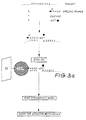
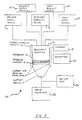
- apparatus 100 is generally suitable for carrying out the methods of the invention according to non-automatic or automatic procedures.
- the extending and separation procedures take place within removable reactor 10 which is disposed within support vessel 11.
- Vessel 11 is temperature controlled by thermo-controlled jacket 12.
- the contents of reactor 10 are mixed by shaking vessel 11 using shaker 13.
- the base of reactor 10 has specific porosity membrane 14 supported by membrane support 15.
- Reactor 10 is supported in vessel 11 by support for removable reactor 21.
- Sample material, primer(s) and extending reagents are delivered to reactor 10 from their respective vessels 16, 17 and 18. Primer annealing and extension are permitted to occur for an appropriate period under gentle mixing and fixed temperature conditions. This reaction creates an extended primer having a detectable element and separation element provided the sample has a specific polynucleotide sequence for which the primer has a sequence complementary to part of the specific polynucleotide sequence.
- SAM(S) specific affinity molecule(s) attached to an inert support for the separation element are added to reactor 10 from SAM supply vessel 19 and allowed to react with extended primer for an appropriate period. Unreacted reagents, buffer and unextended primer(s) are then removed to waste container 25 via vacuum line 25, having associated vacuum pump 24, attached to the base of support vessel 11 whilst extended primer(s) having attached SAM(S) are retained in reactor 10 by membrane 14.
- the retained primer-SAM complexes are washed with wash reagent supplied from vessel 22 to remove background and thereby create the first fraction in reactor 10.
- the first fraction is then examined for the presence of detectable element with detector 23.
- the detectable element is a radioactive element such as 32 P and detector 23 is a scintillation counter.
- the assay indicates that the detector molecule is present then this is indicative that the specific nucleotide sequence is present in the test sample. If the assay indicates that no detector molecule is present then this is indicative that the specific nucleotide sequence is not present in the test sample.
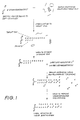
- Fig. 1 the method depicted in Fig. 1 was used for the detection of the single stranded genomic DNA of the bacteriophage M13.
- a 17-mer DNA complementary to M13 ssDNA was synthesized on an Applied Biosystems DNA Synthesizer.
- the 17-mer had the nucleotide sequence:
- This primer is not only complementary to M 13 single-stranded DNA but also to the bacterial double-stranded DNA plasmid, pUC12.
- the method of Ashley and MacDonald (1984) was used to attach the primer to ABM-cellulose.
- the amino benzyloxymethyl (ABM) groups on ABM cellulose were diazotized to form diazobenzyloxymethyl-cellulose (DBM-cellulose).
- the specific primer was attached to the DBM-cellulose. Approximately 40 ⁇ g of specific primer was bound to 20 mg of cellulose.
- SP-cellulose was resuspended in a solution containing the target nucleic acid either M13 ssDNA or pUC12 and water. This was mixed, boiled for 5 minutes and quenched on ice. The mixture was then washed by centrifugation using a wash buffer comprising 140mM sodium chloride, 15mM sodium citrate and 20mM sodium phosphate, pH 7.0 to remove nucleic acids that had not hybridised with the SP-cellulose.
- the specific primer was extended using DNA polymerase I (Klenow fragment) together with labelled and non-labelled nucleotides.
- reaction conditions were as follows: 20 : 1 Reaction Mix 50mM Tris-HCl, pH 8.3 8mM Magnesium chloride 4mM dithiothreitol 4mM sodium pyrophosphate 1mM each dATP, dGTP and dTTP 1 Ci 32 P dCTP 7 units DNA polymerase I, Klenow fragment.
- reaction mix was incubated for 2 hrs at 20°C.
- the detector molecule in this example is 32 P and is attached to the 5' end of the specific primer; the capture molecule is biotin and is incorporated into the extended primer as biotin-16-dUTP (an analogue of dTTP); the specific affinity molecule is streptavidin and the solid support is agarose.
- the specific primer was synthesised using an oligonucleotide synthesiser and was 5' end labelled with 32 P using polynucleotide kinase as follows: Reaction mix: Specific primer (50 pmoles 5'OH ends) 1 ⁇ l 100 mM dithiothreitol 5 ⁇ l 10x TM Buffer (600 mM Tris, pH7.6; 90 mM MgCl 2 ) 5 ⁇ l ⁇ - 32 P-dATP (3000 Ci/mmole) 15 ⁇ l T 4 polynucleotide kinase (8.6 units/ml) 2 ⁇ l ddH 2 O 22 ⁇ l
- the reaction mix was incubated at 37°C for 20 minutes.
- the labelled primer was separated from unincorporated 32 P using a DEAE cellulose column.
- the primer extension reaction was carried using the following reaction mix either with M13 mp18 or lambda bacteriophage (as a non-homologous control): M13 Lambda Template DNA (500 ng) 2.5ul 10ul 32 P labelled specific primer 10ul 10ul DNA polymerase (Klenow; 1 unit/ul 1ul 1ul Biotin-16-dUTP (1 mM) 1ul 1ul dCTP (1 mM) 1ul 1ul dGTP (1 mM) 1ul 1ul dATP (1 mM) 1ul 1ul NaCl (5 M) 1ul 1ul MgSO 4 (1 M) 0.5ul 0.5ul Dithiothreitol (4 mM) 1.25ul 1.25ul Bovine serum albumin (1 mg/ml) 2.5ul 2.5ul Tris HCl, pH7.0 (1 M) 2.5ul 2.5ul ddH 2 O 24.75ul 25/25ul
- the reaction mix was incubated at 37°C for 60 minutes. At the completion of the incubation, the extended primer was precipitated with ethanol to remove unincorporated biotin-16-dUTP.
- To the reaction mix was added one volume (50ul) 5M ammonium acetate and 250ul ethanol, followed by brief mixing and incubation at -20°C for one hour.
- the precipitate was collected by centrifugation, dried briefly, resuspended in 50ul ddH 2 O and applied to a 200ul strepta-vidin/agarose column (containing 0.12mg streptavidin) previously equilibrated with binding buffer (10 mM Tris HCl, pH7.5; 200 mM NaCl; 1 mM EDTA). The column was washed five times with 500ul each of binding buffer.
- the streptavidin/agarose was suspended in Iml binding buffer to which was added 6ml of scintillation fluid and the mixture counted in a liquid scintillation counter.
- the specific primer was synthesised using an oligonucleotide synthesiser.
- reaction mix was set up as follows: 500 ng M13mp18 ssDNA 2.5 ⁇ l 0.8 pmoles specific primer 2.0 ⁇ l 10x reaction buffer 1.5 ⁇ l ddH 2 O 1.0 ⁇ l
- reaction mix was incubated for a further 15 minutes at 25°C.
- the reaction was stopped by the addition of 4ul formamide dye (95% formamide, 0.1% xylene cyanol, 0.1% bromophenol blue).
- 4ul formamide dye (95% formamide, 0.1% xylene cyanol, 0.1% bromophenol blue).
- the reaction mix was heated at 100°C for three minutes prior to loading on a 20% polyacrylamide gel and electrophoresing for 30 minutes at 30 milliamps.
- the gel was then fixed in 10% acetic acid, washed with ddH 2 O and exposed to X-ray film at -80°C for 12 hou rs.
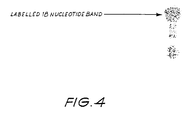
- the resulting autoradiograph ( Figure 4) exhibited only one band of 18 nucleotides in length.
- the primer had been extended by only one nucleotide by the incorporation of a labelled adenine residue and thus detecting a specific single nucleotide in a nucleic acid sequence.
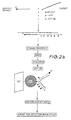
- the method of Fig. 2a was used for detection of the single stranded genomic DNA of the bacteriophage M13.
- the 25-mer had the nucleotide sequence where X is biotin covalently attached to a modified nucleotide.
- the primer was mixed with buffer containing either M13 DNA (target) or herring sperm DNA (control) and extended using DNA Polymerase I (Klenow fragment).
- reaction mixes were incubated at 37°C for 60' and terminated by precipitation and washing.
- Precipitation was carried out by addition of 5M ammonium acetate, calf thymus DNA as carrier and ethanol. Pellets collected by centrifugation were washed with 70% ethanol until washings contained less than 500 cpm.
- Washed pellets were then dissolved in binding buffer consisting of 200mM NaCl, 10mH Tris pH 7.5, 1 mH EDTA and applied to a column of streptavidin-agarose. Columns were washed with several volumes of buffer and counts bound to streptavidin agarose (SA) were measured, with the following results: Target cpm bound to SA M13 11,939 Herring Sperm 83
Landscapes
- Chemical & Material Sciences (AREA)
- Life Sciences & Earth Sciences (AREA)
- Organic Chemistry (AREA)
- Health & Medical Sciences (AREA)
- Wood Science & Technology (AREA)
- Proteomics, Peptides & Aminoacids (AREA)
- Zoology (AREA)
- Engineering & Computer Science (AREA)
- Immunology (AREA)
- Physics & Mathematics (AREA)
- General Health & Medical Sciences (AREA)
- Biochemistry (AREA)
- Analytical Chemistry (AREA)
- General Engineering & Computer Science (AREA)
- Biotechnology (AREA)
- Molecular Biology (AREA)
- Bioinformatics & Cheminformatics (AREA)
- Biophysics (AREA)
- Microbiology (AREA)
- Genetics & Genomics (AREA)
- General Physics & Mathematics (AREA)
- Pathology (AREA)
- Virology (AREA)
- Measuring Or Testing Involving Enzymes Or Micro-Organisms (AREA)
- Saccharide Compounds (AREA)
Claims (25)
- Verfahren zur Bestimmung, ob sich ein spezielles Nucleotid oder eine spezielle Base an einer bestimmten Position in einer speziellen Polynucleotid-Sequenz in einem Material befindet, aufweisend:bei dem das Verlängern die Verwendung von mindestens einem Didesoxynucleotid umfaßt, wobei das Didesoxynucleotid zu dem speziellen Nucleotid oder der speziellen Base komplementär ist.a) Aussetzen des Materials, unter hybridisierenden Bedingungen, einem Oligonucleotid-Primer mit einer zu einem Teil der speziellen Polynucleotid-Sequenz komplementären Sequenz, wobei der Primer an seinem 5'-Ende ein Trennelement oder ein nachweisbares Element beinhaltet, und wobei der Primer an einen Teil der speziellen Polynucleotid-Sequenz in dem Material (i) direkt angrenzend an die bestimmte Position bindet oder (ii) nicht direkt angrenzend an die bestimmte Position bindet, wodurch es eine intervenierende Sequenz zwischen der bestimmten Position und an die spezielle Polynucleotid-Sequenz gebundenem Primer gibt;b) Verlängern von an die spezielle Polynucleotid-Sequenz gebundenem Primer mit der Maßgabe, daß der gebundene Primer nur bis zu und einschließlich des speziellen Nucleotids oder der speziellen Base verlängert wird, wenn sich das spezielle Nucleotid oder die spezielle Base an der bestimmten Position in der speziellen Polynucleotid-Sequenz befindet, wobei der verlängerte Primer ein nachweisbares Element und/oder ein Trenn-Element an einer zu dem speziellen Nucleotid- oder der speziellen Base komplementären Position besitzt, mit der Maßgabe, daß der verlängerte Primer mindestens ein Trenn-Element und mindestens ein nachweisbares Element besitzt und, wenn es eine intervenierende Sequenz zwischen der bestimmten Position und an die spezielle Polynucleotid-Sequenz gebundenem Primer gibt, mit der weiteren Maßgabe, daß die intervenierende Sequenz keine sein kann, bei der Basen oder Nucleotide, die zu der intervenierenden Sequenz komplementär sind und die in den verlängerten Primer inkorporiert werden, ein Inkorporieren eines störenden nachweisbaren und/oder Trenn-Elements verursachen;c) Abtrennen von irgendwelchem verlängerten Primer in eine Fraktion, wobei die Fraktion kein nicht in dem verlängerten Primer enthaltenes nachweisbares Element besitzt, mit der Maßgabe, daß das Abtrennen nicht den Schritt des Verdaus der speziellen Polynucleotid-Sequenz mit dem daran gebundenen verlängerten Primer beinhaltet; undd) Bestimmen, ob der verlängerte Primer in der Fraktion anwesend ist, durch Untersuchen der Fraktion auf den verlängerten Primer, wobei die Anwesenheit des verlängerten Primers anzeigt, daß sich das spezielle Nucleotid oder die spezielle Base an der bestimmten Position in der speziellen Polynucleotid-Sequenz befindet, und das Fehlen des verlängerten Primers anzeigt, daß sich das spezielle Nucleotid oder die spezielle Base nicht an der bestimmten Position in der speziellen Polynucleotid-Sequenz befindet;
- Verfahren zur Bestimmung, ob sich an bestimmten Positionen in mindestens zwei verschiedenen speziellen Polynucleotid-Sequenzen in einem Material mit einer Mehrzahl verschiedener Polynucleotid-Sequenzen dieselben oder verschiedene spezielle Nucleotide oder Basen befinden, aufweisend:wobei das Verlängern die Verwendung von mindestens einem Didesoxynucleotid umfaßt, wobei das Didesoxynucleotid zu dem speziellen Nucleotid oder der speziellen Base komplementär ist.a) Aussetzen, unter hybridisierenden Bedingungen, des Materials mindestens zwei verschiedenen Oligonucleotid-Primern, wobei jeder der verschiedenen Oligonucleotid-Primer eine zu einem Teil einer der verschiedenen Polynucleotid-Sequenzen komplementäre Sequenz hat, wobei;jeder der Primer an seine komplementäre Polynucleotid-Sequenz bindet, wenn sie in dem Material vorhanden ist, wobei jeder der Oligonucleotid-Primer an einen Teil einer von derjenigen des (der) anderen Primer (s) verschiedenen speziellen Polynucleotid-Sequenz bindet,jeder der Primer an seine komplementäre spezielle Polynucleotid-Sequenz in dem Material (i) direkt angrenzend an die bestimmte Position bindet oder (ii) nicht direkt angrenzend an die bestimmte Position bindet, wodurch es eine intervenierende Sequenz zwischen der bestimmten Position und an die spezielle Polynucleotid-Sequenz, wenn sie in dem Material vorhanden ist, gebundenem Primer gibt, undjeder der Primer ein Trenn-Element oder ein nachweisbares Element an seinem 5'-Ende beinhaltet;b) Verlängern der verschiedenen, an ihre komplementären Polynucleotid-Sequenzen gebundenen Oligonucleotid-Primer mit der Maßgabe, daß jeder der gebundenen Primer nur bis zu und einschließlich der bestimmten Position verlängert wird, wenn sich das spezielle Nucleotid oder die spezielle Base an der bestimmten Position in der speziellen Nucleotid-Sequenz befindet, wobei jeder der verlängerten Primer ein nachweisbares Element und/oder ein Trennelement an einer zu dem speziellen Nucleotid oder der speziellen Base komplementären Position besitzt, mit der weiteren Maßgabe, daß jeder der verlängerten Primer mindestens ein Trenn-Element und mindestens ein nachweisbares Element besitzt und, wenn es intervenierende Sequenzen zwischen den bestimmten Positionen und an die speziellen Polynucleotid-Sequenzen gebundenen Primem gibt, mit der weiteren Maßgabe, daß die intervenierenden Sequenzen keine sein können, bei denen Basen oder Nucleotide, die zu den intervenierenden Sequenzen komplementär sind und die in den (die) verlängerten Primer inkorporiert werden, ein Inkörporieren eines störenden nachweisbaren und/oder Trenn-Elements oder von störenden nachweisbaren und/oder Trenn-Elementen verursachen;c) Abtrennen von irgendwelchem (irgendwelchen) verlängerten Primer (n), der (die) nur bis zu einem speziellen Nucleotid oder einer speziellen Base in einer bestimmten Position verlängert wurde (n), in mindestens eine Fraktion, wobei die Fraktion kein nicht in dem verlängerten Primer enthaltenes nachweisbares Element besitzt, mit der Maßgabe, daß das Abtrennen nicht den Schritt des Verdaus der speziellen Polynucleotid-Sequenz mit dem daran gebundenen Primer enthält; undd) Bestimmen, ob irgendwelche der verlängerten Primer in der (den) Fraktion(en) anwesend sind, durch Untersuchen der Fraktion(en) auf den (die) verlängerten Primer, wobei die Anwesenheit eines verlängerten Primers anzeigt, daß sich ein spezielles Nucleotid oder eine spezielle Base an einer bestimmten Position in einer speziellen Polynucleotid-Sequenz befindet, und das Fehlen des (der) verlängerten Primer(s) in der (den) Fraktion(en) anzeigt, daß sich mindestens ein spezielles Nucleotid oder eine spezielle Base nicht an einer bestimmten Position in mindestens einer der verschiedenen speziellen Polynucleotid-Sequenzen befindet;
- Screening-Verfahren zur Bestimmung, ob sich dieselben oder verschiedene spezielle Nucleotide oder Basen an bestimmten Positionen in mindesiens zwei verschiedenen speziellen Polynucleotid-Sequenzen in einem Material mit einer Mehrzahl verschiedener Polynucleotid-Sequenzen befinden, aufweisend:bei dem das Verlängern die Verwendung von mindestens einem Didesoxynucleotid umfaßt, wobei das Didesoxynucleotid zu dem speziellen Nucleotid oder der speziellen Base komplementär ist.a) Aussetzen des Materials, unter hybridisierenden Bedingungen, mindestens zwei verschiedenen Oligonucleotid-Primern, wobei jeder der verschiedenen Oligonucleotid-Primer eine zu einem Teil einer der verschiedenen speziellen Polynucleotid-Sequenzen komplementäre Sequenz hat, wobei:jeder der Primer an seine komplementäre Polynucleotid-Sequenz bindet, wenn sie in dem Material vorhanden ist, wobei jeder der Oligonucleotid-Primer an einen Teil einer speziellen Polynucleotid-Sequenz, die von der des (der) anderen Primer(s) verschieden ist, bindet,jeder der Primer an seine komplementäre spezielle Polynucleotid-Sequenz in dem Material (i) direkt angrenzend an die bestimmte Position bindet oder (ii) nicht direkt angrenzend an die bestimmte Position bindet, wodurch es eine intervenierende Sequenz zwischen der bestimmten Position und an die spezielle Polynucleotid-Sequenz, wenn sie in dem Material vorhanden ist, gebundenem Primer gibt, undjeder der Primer ein Trenn-Element oder ein nachweisbares Element an seinem 5'-Ende beinhaltet;b) Verlängern der verschiedenen, an ihre komplementären Polynucleotid-Sequenzen gebundenen Oligonucleotid-Primer mit der Maßgabe, daß jeder der gebundenen Primer nur bis zu und einschließlich der bestimmten Position verlängert wird, wenn sich das spezielle Nucleotid oder die spezielle Base an der bestimmten Position in der speziellen Nucleotid-Sequenz befindet, wobei jeder der verlängerten Primer ein nachweisbares Element und/oder ein Trenn-Element an einer zu dem speziellen Nucleotid oder der speziellen Base komplementären Position besitzt, mit der weiteren Maßgabe, daß jeder der verlängerten Primer mindestens ein Trenn-Element und mindestens ein nachweisbares Element besitzt und, wenn es intervenierende Sequenzen zwischen den bestimmten Positionen und an die speziellen Polynucleotid-Sequenzen gebundenen Primem gibt, mit der weiteren Maßgabe, daß die intervenierenden Sequenzen keine sein können, bei denen Basen oder Nucleotide, die zu den intervenierenden Sequenzen komplementär sind und die in den (die) verlängerten Primer inkorporiert werden, ein Inkorporieren eines störenden nachweisbaren und/oder Trenn-Elements oder störender nachweisbarer und/oder Trenn-Elemente verursachen;c) Abtrennen von irgendwelchem (irgendwelchen) verlängerten Primer(n), der (die) nur bis zu einem speziellen Nucleotid oder bis zu einer speziellen Base an einer bestimmten Position verlängert wurde(n), in eine Fraktion, wobei die Fraktion kein nicht in dem verlängerten Primer enthaltenes nachweisbares Element besitzt, mit der Maßgabe, daß das Abtrennen nicht den Schritt des Verdaus der speziellen Polynucleotid-Sequenzen mit den daran gebundenen verlängerten Primem beinhaltet; undd) Bestimmen, ob mindestens einer der verlängerten Primer in der Fraktion vorhanden ist, durch Untersuchen der Fraktion auf alle der verlängerten Primer, wobei die Anwesenheit eines verlängerten Primers anzeigt, daß sich mindestens ein spezielles Nucleotid oder eine spezielle Base an einer bestimmten Position in einer speziellen Polynucleotid-Sequenz befindet, und das Fehlen aller der verlängerten Primer in der Fraktion anzeigt, daß sich mindestens ein spezielles Nucleotid oder mindestens eine spezielle Base nicht in einer bestimmten Position in irgendeiner der verschiedenen speziellen Polynucleotid-Sequenzen befindet;
- Verfahren nach einem der Ansprüche 1 bis 3, bei dem der Primer an einen direkt an die bestimmte Position angrenzenden Teil der speziellen Polynucleotid-Sequenz in dem Material bindet.
- Verfahren nach einem der Ansprüche 1 bis 3, bei dem der Primer an einen nicht direkt an die bestimmte Position angrenzenden Teil der speziellen Polynucleotid-Sequenz in dem Material bindet, wodurch es eine intervenierende Sequenz zwischen der bestimmten Position und an die spezielle Polynucleotid-Sequenz gebundenem Primer gibt.
- Verfahren nach Anspruch 2 öder 3, bei dem jeder der Primer ein verschiedenes Trenn-Element beinhaltet.
- Verfahren nach einem der Ansprüche 1 bis 6, bei dem das Verlängern die Verwendung von vier verschiedenen Nucleotiden umfaßt, die ausgewählt sind aus der Gruppe, die besteht aus dATP, dCTP, dGTP, dTTP, dUTP, dITP, ddATP, ddCTP, ddGTP, ddITP und ddTTP, wobei mindestens eines der Nucleotide ausgewählt ist aus der Gruppe, die besteht aus ddATP, ddCTP, ddGTP, ddITP und ddTTP, wobei die Nucleotide ein nachweisbares Element und/oder ein Trenn-Element beinhalten.
- Verfahren nach einem der Ansprüche 1 bis 6, bei dem das Verlängern die Verwendung eines Nucleotids umfaßt, das ausgewählt ist aus der Gruppe, die besteht aus ddITP, ddATP, ddCTP, ddGTP und ddTTP, wobei das Nucleotid ein nachweisbares Element und/oder ein Trenn-Element beinhaltet.
- Verfahren nach Anspruch 7 oder 8, bei dem mindestens eines der Nucleotide ein nachweisbares Element enthält.
- Verfahren nach Anspruch 7 oder 8, bei dem mindestens eines der Nucleotide ein Trenn-Element enthält.
- Verfahren nach Anspruch 7 oder 8, bei dem mindestens eines der Nucleotide Trenn- und nachweisbare Elemente enthält
- Verfahren nach einem der Ansprüche 1 bis 8, bei dem der Trenn-Schritt aufweist: in Berührung bringen von irgendwelchem verlängerten Primer mit einem Molekül, das Affinität zu dem Trenn-Element besitzt; und Abtrennen des (der) in Berührung gebrachten verlängerten Primer(s), um die Fraktion zu liefern, in der das Trenn-Element und das Molekül ausgewählt sind aus der wie folgt aufgelisteten Gruppe:
Trenn-Element Molekül mit Affinltät für das Trenn-Element a) ein Ligand, für den es einen Rezeptor gibt einen Rezeptor für den Liganden; b) ein Rezeptor der Ligand für den Rezeptor c) ein Antigen ein Antikörper für das Antigen d) ein Antikörper für ein Antigen das Antigen; e) ein anti-idiotyper Antikörper ein Antikörper für den anti-idiotypen Antikörper; f) ein Antikörper für einen anti-idiotypen Antikörper ein anti-idiotyper Antikörper für den Antikörper; g) eine Hapten-Gruppe ein Antikörper für die Hapten-Gruppe; h) ein Antikörper für eine Hapten-Gruppe die Hapten-Gruppe; i) ein Enzym ein Bindungs-Hammer für das Enzym; und j) ein Bindungs-Hemmer für ein Enzym das Enzym. - Verfahren nach Anspruch 1, bei dem der Trenn-Schritt aufweist: in Berührung bringen von irgendwelchem verlängerten Primer mit einem Molekül, das Affinität zu dem Trenn-Element besitzt, wobei das Molekül an einen Träger, der die Trennung erleichtert, gebunden ist; und Abtrennen des in Berührung gebrachten verlängerten Primers, um die Fraktion zu liefern.
- Verfahren nach Anspruch 2 oder 3, bei dem der Trenn-Schritt aufweist; in Berührung bringen von irgendwelchen verlängerten Primem mit Molekülen, die Affinität für die Trenn-Elemente besitzten, wobei die Moleküle an Träger, die das Trennen erleichtern, gebunden sind; und Abtrennen der in Berührung gebrachten verlängerten Primer, um die Fraktion zu liefern.
- Verfahren nach Anspruch 13 oder 14, bei dem das (die) Trenn-Element(e) und das (die) Molekül(e) ausgewählt ist (sind) aus der wie folgt aufgelisteten Gruppe:
Trenn-Element Molekül mit Affinität für das Trenn-Element a) ein Ligand, für den es einen spezifischen Rezeptor gibt ein spezifischer Rezeptor für den Liganden; b) ein spezifischer Rezeptor der Ligand für den spezifischen Rezeptor; c) ein Antigen ein spezifischer Antikörper für das Antigen; d) ein spezifischer Antikörper für ein Antigen das Antigen; e) ein anti-idiotyper Antikörper ein spezifischer Antikörper für den anti-idiotypen Antikörper; f) ein Antikörper für einen anti-idiotypen Antikörper ein für den Antikörper spezifischer anti-idiotyper Antikörper; g) eine Hapten-Gruppe ein spezifischer Antikörper für die Hapten-Gruppe; h) ein spezifischer Antikörper für eine Hapten-Gruppe die Hapten-Gruppe; i) ein Enzym ein festsitzender Bindungs-Inhibitor für das Enzym; und j) ein festsitzender Bindungs-Inhibitor für ein Enzym das Enzym. - Verfahren nach Anspruch 13, bei dem der Träger ein Prüfstreifen ist.
- Verfahren nach Anspruch 14 oder 15, bei dem die Träger Prüfstreifen sind.
- Verfahren nach einem der Ansprüche 1 bis 17, bei dem die spezielle(n) Polynucleotid-Sequenz(en) (eine) DNA-Sequenz(en) ist (sind).
- Verfahren nach einem der Ansprüche 1 bis 17, bei dem die spezielle(n) Polynucleotid-Sequenz(en) (eine) RNA-Sequenz(en) ist (sind).
- Verfahren nach einem der Ansprüche 1 bis 17, bei dem die spezielle(n) Polynucleotid-Sequenz(en) von einem infektiösen oder Krankheit verursachenden Organismus stammt (stammen).
- Verfahren nach einem der Ansprüche 1 bis 8, bei dem der Oligonucleotid-Primer ein nachweisbares Element an seinem 5'-Ende beinhaltet.
- Verfahren nach Anspruch 21, bei dem das Trennen ein Abscheiden von irgendwelchem (irgendwelchen) verlängerten Primer(n) und ein erneutes Suspendieren des (der) verlähgerten Primer(s) in einer Lösung, die der Bindung des Trenn-Elements (der Trenn-Elemente) an (ein) Molekül(e) mit Affinität für das (die) Trenn-Element(e) förderlich ist, aufweist.
- Verfahren nach Anspruch 1, bei dem Schritt d) aufweist:d) Bestimmen, ob die spezielle Polynucleotid-Sequenz mit dem daran gebundenen verlängerten Primer in der Fraktion vorhanden ist, durch Untersuchen der Fraktion auf den verlängerten Primer, wobei die Anwesenheit des verlängerten Primers anzeigt, daß sich das spezielle Nucleotid oder die spezielle Base an der bestimmten Position in der speziellen Polynucleotid-Sequenz befindet, und das Fehlen des verlängerten Primers anzeigt, daß sich das spezielle Nucleotid oder die spezielle Base nicht an der bestimmten Position in der speziellen Polynucleotid-Sequenz befindet.
- Verfahren nach Anspruch 2, bei dem Schritt d) aufweist:d) Bestimmen, ob irgendwelche der speziellen Polynucleotid-Sequenzen mit den daran gebundenen verlängerten Primem in der Fraktion (den Fraktionen) vorhanden sind, durch Untersuchen der Fraktion(en) auf den (die) verlängerten Primer, wobei die Anwesenheit eines verlängerten Primers anzeigt, daß sich ein spezielles Nucleotid oder eine spezielle Base an einer bestimmten Position in einer speziellen Polynucleotid-Sequenz befindet, und das Fehlen des (der) verlängerten Primer(s) in einer Fraktion(en) anzeigt, daß sich mindestens ein spezielles Nucleotid oder mindestens eine spezielle Base nicht an einer bestimmten Position in mindestens einer verschiedenen speziellen Polynucleotid-Sequenz befindet.
- Verfahren nach Anspruch 3, bei dem Schritt d) aufweist:d) Bestimmen, ob sich mindestens eine spezielle Polynucleotid-Sequenz, an die einer der verlängerten Primer gebunden ist, in der Fraktion befindet, durch Untersuchen der Fraktion auf alle der verlängerten Primer, wobei die Anwesenheit eines verlängerten Primers anzeigt, daß sich mindestens ein spezielles Nucleotid oder mindestens eine spezielle Base an einer bestimmten Position in einer speziellen Polynucleotid-Sequenz befindet, und das Fehlen aller der verlängerten Primer in der Fraktion anzeigt, daß sich mindestens ein spezielles Nucleotid oder mindestens eine spezielle Base nicht an einer bestimmten Position in irgendeiner der verschiedenen speziellen Polynucleotid-Sequenzen befindet.
Applications Claiming Priority (4)
| Application Number | Priority Date | Filing Date | Title |
|---|---|---|---|
| AU2703/89 | 1989-02-13 | ||
| AUPJ270389 | 1989-02-13 | ||
| AU270389 | 1989-02-13 | ||
| PCT/AU1990/000058 WO1990009455A1 (en) | 1989-02-13 | 1990-02-13 | Detection of a nucleic acid sequence or a change therein |
Publications (4)
| Publication Number | Publication Date |
|---|---|
| EP0457824A1 EP0457824A1 (de) | 1991-11-27 |
| EP0457824A4 EP0457824A4 (en) | 1992-07-08 |
| EP0457824B1 EP0457824B1 (de) | 1999-06-23 |
| EP0457824B2 true EP0457824B2 (de) | 2004-06-09 |
Family
ID=3773706
Family Applications (1)
| Application Number | Title | Priority Date | Filing Date |
|---|---|---|---|
| EP90903297A Expired - Lifetime EP0457824B2 (de) | 1989-02-13 | 1990-02-13 | Nachweis einer nukleinsäuresequenz oder einer änderung darin |
Country Status (11)
| Country | Link |
|---|---|
| EP (1) | EP0457824B2 (de) |
| JP (1) | JP3021036B2 (de) |
| AT (1) | ATE181576T1 (de) |
| AU (1) | AU656514B2 (de) |
| CA (1) | CA2044591C (de) |
| DE (1) | DE69033179T3 (de) |
| DK (1) | DK0457824T4 (de) |
| ES (1) | ES2136059T5 (de) |
| IE (1) | IE66572B1 (de) |
| SG (1) | SG50434A1 (de) |
| WO (1) | WO1990009455A1 (de) |
Families Citing this family (78)
| Publication number | Priority date | Publication date | Assignee | Title |
|---|---|---|---|---|
| US5547839A (en) | 1989-06-07 | 1996-08-20 | Affymax Technologies N.V. | Sequencing of surface immobilized polymers utilizing microflourescence detection |
| JPH03123500A (ja) * | 1989-10-06 | 1991-05-27 | Canon Inc | 核酸の分別方法 |
| IL97222A (en) * | 1990-02-16 | 1995-08-31 | Orion Yhtymae Oy | Method and reagent for determining specific nucleotide variations |
| US6013431A (en) | 1990-02-16 | 2000-01-11 | Molecular Tool, Inc. | Method for determining specific nucleotide variations by primer extension in the presence of mixture of labeled nucleotides and terminators |
| US5126239A (en) * | 1990-03-14 | 1992-06-30 | E. I. Du Pont De Nemours And Company | Process for detecting polymorphisms on the basis of nucleotide differences |
| IE66125B1 (en) * | 1991-01-31 | 1995-12-13 | Zeneca Ltd | Detection method for variant nucleotides |
| US6004744A (en) | 1991-03-05 | 1999-12-21 | Molecular Tool, Inc. | Method for determining nucleotide identity through extension of immobilized primer |
| US5294534A (en) * | 1991-08-13 | 1994-03-15 | Miles, Inc. | Amplification method for polynucleotide assays |
| GB9127415D0 (en) * | 1991-12-24 | 1992-02-19 | Swordfish Int Ltd | Solid support bound detection and diagnostic system |
| FI943054A7 (fi) * | 1991-12-24 | 1994-08-22 | Tepnel Medical Ltd | Nukleiinihapposekvenssien manipulointi |
| US5981176A (en) * | 1992-06-17 | 1999-11-09 | City Of Hope | Method of detecting and discriminating between nucleic acid sequences |
| CA2115342C (en) * | 1992-06-17 | 2003-08-26 | Robert B. Wallace | A method of detecting and discriminating between nucleic acid sequences |
| DE69232846T2 (de) * | 1992-06-17 | 2003-08-21 | City Of Hope, Duarte | Verfahren zum nachweis und unterscheiden von nukleinsäuresequenzen |
| SE9201929D0 (sv) * | 1992-06-23 | 1992-06-23 | Pharmacia Lkb Biotech | Method and system for molecular-biological diagnostics |
| US5710028A (en) * | 1992-07-02 | 1998-01-20 | Eyal; Nurit | Method of quick screening and identification of specific DNA sequences by single nucleotide primer extension and kits therefor |
| ATE231881T1 (de) * | 1992-07-02 | 2003-02-15 | Savyon Diagnostics Ltd | Verfahren zur einfachen nukleotid-primer- verlängerung zum nachweis spezifischer allele und dafür geeigneter kit |
| US6153379A (en) * | 1993-06-22 | 2000-11-28 | Baylor College Of Medicine | Parallel primer extension approach to nucleic acid sequence analysis |
| US7001722B1 (en) | 1993-06-22 | 2006-02-21 | Baylor College Of Medicine | Parallel primer extension approach to nucleic acid sequence analysis |
| ES2240970T3 (es) * | 1993-11-03 | 2005-10-16 | Orchid Biosciences, Inc. | Polimorfismos de nucleotido simple y su uso en analisis geneticos. |
| US5976798A (en) * | 1994-03-30 | 1999-11-02 | Mitokor | Methods for detecting mitochondrial mutations diagnostic for Alzheimer's disease and methods for determining heteroplasmy of mitochondrial nucleic acid |
| US6027883A (en) * | 1994-03-30 | 2000-02-22 | Mitokor | Optimal procedure for isolation of mutant mitochondrial alleles |
| ATE220424T1 (de) * | 1994-05-28 | 2002-07-15 | Tepnel Medical Ltd | Herstellung von nukleinsaeurekopien |
| US6060288A (en) * | 1994-08-03 | 2000-05-09 | Mosaic Technologies | Method for performing amplification of nucleic acid on supports |
| US6090592A (en) * | 1994-08-03 | 2000-07-18 | Mosaic Technologies, Inc. | Method for performing amplification of nucleic acid on supports |
| US5641658A (en) * | 1994-08-03 | 1997-06-24 | Mosaic Technologies, Inc. | Method for performing amplification of nucleic acid with two primers bound to a single solid support |
| AU5296496A (en) * | 1995-03-24 | 1996-10-16 | Mitokor | Mutation detection by differential primer extension of mutant and wildtype target sequences |
| GB9507238D0 (en) | 1995-04-07 | 1995-05-31 | Isis Innovation | Detecting dna sequence variations |
| GB9517914D0 (en) * | 1995-09-02 | 1995-11-01 | Tepnel Medical Ltd | Identification of bases in nucleic acid sequences |
| EP0852263A1 (de) * | 1995-09-13 | 1998-07-08 | Wakunaga Seiyaku Kabushiki Kaisha | Methode zur konzentrierung unterschiedlicher nukleinsäuren und entsprechender testkit zur ausübung der methode |
| WO1997035033A1 (en) | 1996-03-19 | 1997-09-25 | Molecular Tool, Inc. | Method for determining the nucleotide sequence of a polynucleotide |
| US6146828A (en) * | 1996-08-14 | 2000-11-14 | Exact Laboratories, Inc. | Methods for detecting differences in RNA expression levels and uses therefor |
| JP2002503954A (ja) | 1997-04-01 | 2002-02-05 | グラクソ、グループ、リミテッド | 核酸増幅法 |
| US6268136B1 (en) | 1997-06-16 | 2001-07-31 | Exact Science Corporation | Methods for stool sample preparation |
| US6566101B1 (en) * | 1997-06-16 | 2003-05-20 | Anthony P. Shuber | Primer extension methods for detecting nucleic acids |
| US6194160B1 (en) | 1998-03-19 | 2001-02-27 | Immunetics, Inc. | Systems and methods for rapid blot screening |
| US6818404B2 (en) | 1997-10-23 | 2004-11-16 | Exact Sciences Corporation | Methods for detecting hypermethylated nucleic acid in heterogeneous biological samples |
| WO2000011215A2 (en) * | 1998-08-14 | 2000-03-02 | Exact Laboratories, Inc. | Method for diagnostic screening |
| US6203990B1 (en) | 1998-11-06 | 2001-03-20 | Mitokor | Method and system for pattern analysis, such as for analyzing oligonucleotide primer extension assay products |
| US6280947B1 (en) | 1999-08-11 | 2001-08-28 | Exact Sciences Corporation | Methods for detecting nucleotide insertion or deletion using primer extension |
| US6503718B2 (en) | 1999-01-10 | 2003-01-07 | Exact Sciences Corporation | Methods for detecting mutations using primer extension for detecting disease |
| EP1173612B1 (de) * | 1999-04-09 | 2004-09-29 | Keygene N.V. | Verfahren zur erkennung und/oder analyse, unter verwendung von primertechniken, von einfachen nukleotidpolymorphismen in restriktionsfragmenten speziell aus amplifizierten restriktionsfragmenten generiert durch aflp |
| EP1169479B1 (de) | 1999-04-09 | 2006-06-28 | EXACT Sciences Corporation | Verfahren zur detektion von nukleinsäuren, welche auf krebs hinweisen |
| US6573047B1 (en) | 1999-04-13 | 2003-06-03 | Dna Sciences, Inc. | Detection of nucleotide sequence variation through fluorescence resonance energy transfer label generation |
| WO2000065098A2 (en) * | 1999-04-27 | 2000-11-02 | University Of Chicago | Nucleotide extension on a microarray of gel-immobilized primers |
| US6849403B1 (en) | 1999-09-08 | 2005-02-01 | Exact Sciences Corporation | Apparatus and method for drug screening |
| JP2003510054A (ja) * | 1999-09-22 | 2003-03-18 | モトローラ・インコーポレイテッド | 単一ヌクレオチド多形性の平行遺伝子型決定のための三次元ミクロアレイシステム |
| IL149676A0 (en) | 1999-12-02 | 2002-11-10 | Dna Sciences Inc | Methods and kits for determining nucleotide variations |
| US6919174B1 (en) | 1999-12-07 | 2005-07-19 | Exact Sciences Corporation | Methods for disease detection |
| CA2394921A1 (en) | 1999-12-07 | 2001-06-14 | Anthony P. Shuber | Supracolonic aerodigestive neoplasm detection |
| US20020018999A1 (en) * | 2000-02-24 | 2002-02-14 | Jan Henriksson | Methods for characterizing polymorphisms |
| US6376191B1 (en) * | 2000-03-22 | 2002-04-23 | Mergen, Ltd. | Microarray-based analysis of polynucleotide sequence variations |
| US6355433B1 (en) | 2000-06-02 | 2002-03-12 | Dna Sciences, Inc. | Determination of nucleotide sequence variations through limited primer extension |
| WO2002018659A2 (en) * | 2000-08-30 | 2002-03-07 | Haplogen, Llc | Method for determining alleles |
| AR031640A1 (es) | 2000-12-08 | 2003-09-24 | Applied Research Systems | Amplificacion isotermica de acidos nucleicos en un soporte solido |
| US6428964B1 (en) | 2001-03-15 | 2002-08-06 | Exact Sciences Corporation | Method for alteration detection |
| DE60239634D1 (de) | 2001-12-10 | 2011-05-12 | Novartis Ag | Verfahren zur behandlung von psychosen und schizophrenie auf der basis eines polymorphismus im cntf gen |
| JPWO2004061100A1 (ja) * | 2002-12-10 | 2006-05-11 | オリンパス株式会社 | 核酸の変異解析方法および遺伝子の発現解析方法 |
| US7449292B2 (en) | 2003-09-12 | 2008-11-11 | University Of Cincinnati | Methods for predicting relative efficacy of a beta blocker therapy based on a B1-adrenergic receptor polymorphism |
| CA2581086C (en) | 2004-09-14 | 2023-11-07 | The Regents Of The University Of Colorado, A Body Corporate | Method for treatment with bucindolol based on genetic targeting |
| US9109256B2 (en) | 2004-10-27 | 2015-08-18 | Esoterix Genetic Laboratories, Llc | Method for monitoring disease progression or recurrence |
| US9777314B2 (en) | 2005-04-21 | 2017-10-03 | Esoterix Genetic Laboratories, Llc | Analysis of heterogeneous nucleic acid samples |
| WO2008093098A2 (en) | 2007-02-02 | 2008-08-07 | Illumina Cambridge Limited | Methods for indexing samples and sequencing multiple nucleotide templates |
| US20120115131A1 (en) | 2007-05-31 | 2012-05-10 | Yale University | Genetic lesion associated with cancer |
| EP2149612A1 (de) | 2008-07-29 | 2010-02-03 | Merck Serono SA | Genetische Marker der Reaktion auf Efalizumab |
| WO2010038042A1 (en) | 2008-10-02 | 2010-04-08 | Illumina Cambridge Ltd. | Nucleic acid sample enrichment for sequencing applications |
| WO2010077832A1 (en) | 2008-12-15 | 2010-07-08 | Wisconsin Alumni Research Foundation | Methods and compositions for testing and breeding cattle for improved fertility and embryonic survival |
| WO2010101696A1 (en) | 2009-02-06 | 2010-09-10 | Yale University | A snp marker of breast and ovarian cancer risk |
| CA2766210A1 (en) | 2009-06-25 | 2010-12-29 | Yale University | Single nucleotide polymorphisms in brca1 and cancer risk |
| US8182994B2 (en) | 2009-09-15 | 2012-05-22 | Illumina Cambridge Limited | Centroid markers for image analysis of high denisty clusters in complex polynucleotide sequencing |
| US20140024590A1 (en) | 2011-02-18 | 2014-01-23 | Yale University | KRAS-Variant And Endometriosis |
| WO2012129352A1 (en) | 2011-03-21 | 2012-09-27 | Yale University | The kras variant and tumor biology |
| WO2013045505A1 (en) | 2011-09-28 | 2013-04-04 | Novartis Ag | Biomarkers for raas combination therapy |
| CN104736723B (zh) | 2012-08-06 | 2017-10-31 | 默克专利有限公司 | 用于预测对fgf‑18化合物的响应性的遗传标记 |
| CA2889765C (en) | 2012-10-26 | 2021-06-22 | Minna D. BALBAS | Androgen receptor variants and methods for making and using |
| US9670545B2 (en) | 2013-06-11 | 2017-06-06 | Coutagen Life Sciences, Inc. | Methods and kits for treating and classifying individuals at risk of or suffering from TRAP1 change-of-function |
| CA2992987A1 (en) | 2015-07-23 | 2017-01-26 | Merck Sharp & Dohme Corp. | Genetic markers associated with response to crth2 receptor antagonists |
| WO2017189906A1 (en) | 2016-04-27 | 2017-11-02 | Mira Dx, Inc. | Immune-based treatment of kras-variant cancer patients |
| US12071666B2 (en) | 2016-12-14 | 2024-08-27 | Merck Sharp & Dohme Llc | Human genetic markers associated with response to treatments that target clostridium difficile toxin B |
Citations (4)
| Publication number | Priority date | Publication date | Assignee | Title |
|---|---|---|---|---|
| EP0297379A2 (de) † | 1987-06-30 | 1989-01-04 | Miles Inc. | Verfahren zur Gen-Amplifikation |
| US4851331A (en) † | 1986-05-16 | 1989-07-25 | Allied Corporation | Method and kit for polynucleotide assay including primer-dependant DNA polymerase |
| WO1989010414A1 (en) † | 1988-04-28 | 1989-11-02 | Robert Bruce Wallace | AMPLIFIED SEQUENCE POLYMORPHISMS (ASPs) |
| WO1990006042A2 (en) † | 1988-11-21 | 1990-06-14 | Dynal As | Detection and quantitative determination of rna and dna |
Family Cites Families (6)
| Publication number | Priority date | Publication date | Assignee | Title |
|---|---|---|---|---|
| US4307189A (en) * | 1980-03-21 | 1981-12-22 | Malon Kit | Method for the quantitative determination of terminal deoxynucleotidyl transferase in biological samples |
| GB8311018D0 (en) * | 1983-04-22 | 1983-05-25 | Amersham Int Plc | Detecting mutations in dna |
| US4868104A (en) * | 1985-09-06 | 1989-09-19 | Syntex (U.S.A.) Inc. | Homogeneous assay for specific polynucleotides |
| AU622104B2 (en) * | 1987-03-11 | 1992-04-02 | Sangtec Molecular Diagnostics Ab | Method of assaying of nucleic acids, a reagent combination and kit therefore |
| ATE92538T1 (de) * | 1988-01-21 | 1993-08-15 | Genentech Inc | Verstaerkung und nachweis von nukleinsaeuresequenzen. |
| ATE138106T1 (de) * | 1988-07-20 | 1996-06-15 | David Segev | Verfahren zur amplifizierung und zum nachweis von nukleinsäuresequenzen |
-
1990
- 1990-02-13 IE IE50190A patent/IE66572B1/en not_active IP Right Cessation
- 1990-02-13 EP EP90903297A patent/EP0457824B2/de not_active Expired - Lifetime
- 1990-02-13 AT AT90903297T patent/ATE181576T1/de not_active IP Right Cessation
- 1990-02-13 DK DK90903297T patent/DK0457824T4/da not_active Application Discontinuation
- 1990-02-13 WO PCT/AU1990/000058 patent/WO1990009455A1/en not_active Ceased
- 1990-02-13 SG SG1996001326A patent/SG50434A1/en unknown
- 1990-02-13 AU AU51069/90A patent/AU656514B2/en not_active Expired
- 1990-02-13 CA CA002044591A patent/CA2044591C/en not_active Expired - Lifetime
- 1990-02-13 JP JP2503566A patent/JP3021036B2/ja not_active Expired - Lifetime
- 1990-02-13 ES ES90903297T patent/ES2136059T5/es not_active Expired - Lifetime
- 1990-02-13 DE DE69033179T patent/DE69033179T3/de not_active Expired - Lifetime
Patent Citations (4)
| Publication number | Priority date | Publication date | Assignee | Title |
|---|---|---|---|---|
| US4851331A (en) † | 1986-05-16 | 1989-07-25 | Allied Corporation | Method and kit for polynucleotide assay including primer-dependant DNA polymerase |
| EP0297379A2 (de) † | 1987-06-30 | 1989-01-04 | Miles Inc. | Verfahren zur Gen-Amplifikation |
| WO1989010414A1 (en) † | 1988-04-28 | 1989-11-02 | Robert Bruce Wallace | AMPLIFIED SEQUENCE POLYMORPHISMS (ASPs) |
| WO1990006042A2 (en) † | 1988-11-21 | 1990-06-14 | Dynal As | Detection and quantitative determination of rna and dna |
Non-Patent Citations (1)
| Title |
|---|
| Methods in Enzymol.,vol. 65,p. 560-580,1980 (A.J.H. Smith) † |
Also Published As
| Publication number | Publication date |
|---|---|
| DK0457824T4 (da) | 2004-10-11 |
| DE69033179D1 (de) | 1999-07-29 |
| DE69033179T2 (de) | 2000-01-05 |
| IE66572B1 (en) | 1996-01-24 |
| IE900501L (en) | 1990-08-13 |
| ES2136059T5 (es) | 2005-02-16 |
| DE69033179T3 (de) | 2005-01-27 |
| EP0457824A1 (de) | 1991-11-27 |
| EP0457824B1 (de) | 1999-06-23 |
| EP0457824A4 (en) | 1992-07-08 |
| CA2044591C (en) | 2002-08-13 |
| AU5106990A (en) | 1990-09-05 |
| ATE181576T1 (de) | 1999-07-15 |
| DK0457824T3 (da) | 2000-01-24 |
| JPH04503158A (ja) | 1992-06-11 |
| CA2044591A1 (en) | 1990-08-14 |
| WO1990009455A1 (en) | 1990-08-23 |
| JP3021036B2 (ja) | 2000-03-15 |
| SG50434A1 (en) | 1998-07-20 |
| AU656514B2 (en) | 1995-02-09 |
| ES2136059T3 (es) | 1999-11-16 |
Similar Documents
| Publication | Publication Date | Title |
|---|---|---|
| EP0457824B2 (de) | Nachweis einer nukleinsäuresequenz oder einer änderung darin | |
| US5856092A (en) | Detection of a nucleic acid sequence or a change therein | |
| US6090592A (en) | Method for performing amplification of nucleic acid on supports | |
| EP0784701B1 (de) | Eine methode und ein gerät für die durchführung einer vervielfältigung von nukleinsäuren an trägern | |
| CA2026280C (en) | Biotin-labelled dna by polymerase chain reaction and detection thereof | |
| EP0567635B1 (de) | Schnelle bestimmungsverfahren für amplifikationsprodukte | |
| US5635347A (en) | Rapid assays for amplification products | |
| CA2140877C (en) | Amplification and detection process | |
| AU753273B2 (en) | Mismatch detection techniques | |
| JP2802125B2 (ja) | 核酸の検出方法 | |
| WO2011001496A1 (ja) | 検体解析方法およびそれに用いるアッセイキット | |
| US6468751B1 (en) | Method and apparatus for performing amplification of nucleic acid on supports | |
| US5871906A (en) | Method for detection of amplified nucleic acid products and related diagnostic assays | |
| AU723602B2 (en) | Biotin-labelled DNA by polymerase chain reaction and detection thereof | |
| JP2001522243A (ja) | 増幅ベースの突然変異検出 | |
| EP0465557A1 (de) | Verfahren zum schnellen nachweis von nukleinsäure |
Legal Events
| Date | Code | Title | Description |
|---|---|---|---|
| PUAI | Public reference made under article 153(3) epc to a published international application that has entered the european phase |
Free format text: ORIGINAL CODE: 0009012 |
|
| 17P | Request for examination filed |
Effective date: 19910821 |
|
| AK | Designated contracting states |
Kind code of ref document: A1 Designated state(s): AT BE CH DE DK ES FR GB IT LI LU NL SE |
|
| A4 | Supplementary search report drawn up and despatched |
Effective date: 19920518 |
|
| AK | Designated contracting states |
Kind code of ref document: A4 Designated state(s): AT BE CH DE DK ES FR GB IT LI LU NL SE |
|
| 17Q | First examination report despatched |
Effective date: 19940707 |
|
| GRAG | Despatch of communication of intention to grant |
Free format text: ORIGINAL CODE: EPIDOS AGRA |
|
| GRAG | Despatch of communication of intention to grant |
Free format text: ORIGINAL CODE: EPIDOS AGRA |
|
| GRAG | Despatch of communication of intention to grant |
Free format text: ORIGINAL CODE: EPIDOS AGRA |
|
| GRAH | Despatch of communication of intention to grant a patent |
Free format text: ORIGINAL CODE: EPIDOS IGRA |
|
| GRAH | Despatch of communication of intention to grant a patent |
Free format text: ORIGINAL CODE: EPIDOS IGRA |
|
| GRAA | (expected) grant |
Free format text: ORIGINAL CODE: 0009210 |
|
| AK | Designated contracting states |
Kind code of ref document: B1 Designated state(s): AT BE CH DE DK ES FR GB IT LI LU NL SE |
|
| REF | Corresponds to: |
Ref document number: 181576 Country of ref document: AT Date of ref document: 19990715 Kind code of ref document: T |
|
| REG | Reference to a national code |
Ref country code: CH Ref legal event code: EP |
|
| REF | Corresponds to: |
Ref document number: 69033179 Country of ref document: DE Date of ref document: 19990729 |
|
| ITF | It: translation for a ep patent filed | ||
| ET | Fr: translation filed | ||
| REG | Reference to a national code |
Ref country code: CH Ref legal event code: NV Representative=s name: PATENTANWAELTE SCHAAD, BALASS, MENZL & PARTNER AG |
|
| REG | Reference to a national code |
Ref country code: ES Ref legal event code: FG2A Ref document number: 2136059 Country of ref document: ES Kind code of ref document: T3 |
|
| REG | Reference to a national code |
Ref country code: DK Ref legal event code: T3 |
|
| PLBQ | Unpublished change to opponent data |
Free format text: ORIGINAL CODE: EPIDOS OPPO |
|
| PLBI | Opposition filed |
Free format text: ORIGINAL CODE: 0009260 |
|
| PLBF | Reply of patent proprietor to notice(s) of opposition |
Free format text: ORIGINAL CODE: EPIDOS OBSO |
|
| 26 | Opposition filed |
Opponent name: ORCHID BIOSCIENCES, INC Effective date: 20000323 |
|
| NLR1 | Nl: opposition has been filed with the epo |
Opponent name: ORCHID BIOSCIENCES, INC |
|
| PLBF | Reply of patent proprietor to notice(s) of opposition |
Free format text: ORIGINAL CODE: EPIDOS OBSO |
|
| PLBF | Reply of patent proprietor to notice(s) of opposition |
Free format text: ORIGINAL CODE: EPIDOS OBSO |
|
| RAP2 | Party data changed (patent owner data changed or rights of a patent transferred) |
Owner name: GENECO PTY. LTD. |
|
| PLBQ | Unpublished change to opponent data |
Free format text: ORIGINAL CODE: EPIDOS OPPO |
|
| PLAB | Opposition data, opponent's data or that of the opponent's representative modified |
Free format text: ORIGINAL CODE: 0009299OPPO |
|
| NLT2 | Nl: modifications (of names), taken from the european patent patent bulletin |
Owner name: GENECO PTY. LTD. |
|
| R26 | Opposition filed (corrected) |
Opponent name: ORCHID BIOSCIENCES, INC Effective date: 20000323 |
|
| NLR1 | Nl: opposition has been filed with the epo |
Opponent name: ORCHID BIOSCIENCES, INC |
|
| REG | Reference to a national code |
Ref country code: GB Ref legal event code: IF02 |
|
| PGFP | Annual fee paid to national office [announced via postgrant information from national office to epo] |
Ref country code: CH Payment date: 20030214 Year of fee payment: 14 |
|
| PLAW | Interlocutory decision in opposition |
Free format text: ORIGINAL CODE: EPIDOS IDOP |
|
| PG25 | Lapsed in a contracting state [announced via postgrant information from national office to epo] |
Ref country code: LI Free format text: LAPSE BECAUSE OF NON-PAYMENT OF DUE FEES Effective date: 20040229 Ref country code: CH Free format text: LAPSE BECAUSE OF NON-PAYMENT OF DUE FEES Effective date: 20040229 |
|
| PUAH | Patent maintained in amended form |
Free format text: ORIGINAL CODE: 0009272 |
|
| STAA | Information on the status of an ep patent application or granted ep patent |
Free format text: STATUS: PATENT MAINTAINED AS AMENDED |
|
| 27A | Patent maintained in amended form |
Effective date: 20040609 |
|
| AK | Designated contracting states |
Kind code of ref document: B2 Designated state(s): AT BE CH DE DK ES FR GB IT LI LU NL SE |
|
| REG | Reference to a national code |
Ref country code: CH Ref legal event code: AEN Free format text: MAINTIEN DU BREVET DONT L'ETENDUE A ETE MODIFIEE |
|
| NLR2 | Nl: decision of opposition |
Effective date: 20040609 |
|
| REG | Reference to a national code |
Ref country code: SE Ref legal event code: RPEO |
|
| REG | Reference to a national code |
Ref country code: DK Ref legal event code: T4 |
|
| REG | Reference to a national code |
Ref country code: CH Ref legal event code: PL |
|
| NLR3 | Nl: receipt of modified translations in the netherlands language after an opposition procedure | ||
| REG | Reference to a national code |
Ref country code: ES Ref legal event code: DC2A Date of ref document: 20040908 Kind code of ref document: T5 |
|
| ET3 | Fr: translation filed ** decision concerning opposition | ||
| PGFP | Annual fee paid to national office [announced via postgrant information from national office to epo] |
Ref country code: AT Payment date: 20090211 Year of fee payment: 20 Ref country code: DK Payment date: 20090213 Year of fee payment: 20 Ref country code: ES Payment date: 20090317 Year of fee payment: 20 Ref country code: LU Payment date: 20090219 Year of fee payment: 20 |
|
| PGFP | Annual fee paid to national office [announced via postgrant information from national office to epo] |
Ref country code: NL Payment date: 20090203 Year of fee payment: 20 Ref country code: DE Payment date: 20090206 Year of fee payment: 20 |
|
| PGFP | Annual fee paid to national office [announced via postgrant information from national office to epo] |
Ref country code: GB Payment date: 20090211 Year of fee payment: 20 |
|
| PGFP | Annual fee paid to national office [announced via postgrant information from national office to epo] |
Ref country code: BE Payment date: 20090225 Year of fee payment: 20 |
|
| PGFP | Annual fee paid to national office [announced via postgrant information from national office to epo] |
Ref country code: IT Payment date: 20090218 Year of fee payment: 20 Ref country code: SE Payment date: 20090206 Year of fee payment: 20 |
|
| PGFP | Annual fee paid to national office [announced via postgrant information from national office to epo] |
Ref country code: FR Payment date: 20090213 Year of fee payment: 20 |
|
| BE20 | Be: patent expired |
Owner name: *GENECO PTY LTD Effective date: 20100213 |
|
| REG | Reference to a national code |
Ref country code: DK Ref legal event code: EUP |
|
| REG | Reference to a national code |
Ref country code: GB Ref legal event code: PE20 Expiry date: 20100212 |
|
| NLV7 | Nl: ceased due to reaching the maximum lifetime of a patent |
Effective date: 20100213 |
|
| REG | Reference to a national code |
Ref country code: ES Ref legal event code: FD2A Effective date: 20100215 |
|
| PG25 | Lapsed in a contracting state [announced via postgrant information from national office to epo] |
Ref country code: GB Free format text: LAPSE BECAUSE OF EXPIRATION OF PROTECTION Effective date: 20100212 |
|
| PG25 | Lapsed in a contracting state [announced via postgrant information from national office to epo] |
Ref country code: ES Free format text: LAPSE BECAUSE OF EXPIRATION OF PROTECTION Effective date: 20100215 |
|
| PG25 | Lapsed in a contracting state [announced via postgrant information from national office to epo] |
Ref country code: DE Free format text: LAPSE BECAUSE OF EXPIRATION OF PROTECTION Effective date: 20100213 |