EP0443954A1 - Flux de soudage pour accessoires de batterie d'accumulateurs au plomb - Google Patents
Flux de soudage pour accessoires de batterie d'accumulateurs au plomb Download PDFInfo
- Publication number
- EP0443954A1 EP0443954A1 EP91400469A EP91400469A EP0443954A1 EP 0443954 A1 EP0443954 A1 EP 0443954A1 EP 91400469 A EP91400469 A EP 91400469A EP 91400469 A EP91400469 A EP 91400469A EP 0443954 A1 EP0443954 A1 EP 0443954A1
- Authority
- EP
- European Patent Office
- Prior art keywords
- acid
- amine
- flux
- welding flux
- hydrazine
- Prior art date
- Legal status (The legal status is an assumption and is not a legal conclusion. Google has not performed a legal analysis and makes no representation as to the accuracy of the status listed.)
- Granted
Links
Images

Classifications
-
- B—PERFORMING OPERATIONS; TRANSPORTING
- B23—MACHINE TOOLS; METAL-WORKING NOT OTHERWISE PROVIDED FOR
- B23K—SOLDERING OR UNSOLDERING; WELDING; CLADDING OR PLATING BY SOLDERING OR WELDING; CUTTING BY APPLYING HEAT LOCALLY, e.g. FLAME CUTTING; WORKING BY LASER BEAM
- B23K35/00—Rods, electrodes, materials, or media, for use in soldering, welding, or cutting
- B23K35/22—Rods, electrodes, materials, or media, for use in soldering, welding, or cutting characterised by the composition or nature of the material
- B23K35/36—Selection of non-metallic compositions, e.g. coatings or fluxes; Selection of soldering or welding materials, conjoint with selection of non-metallic compositions, both selections being of interest
- B23K35/3612—Selection of non-metallic compositions, e.g. coatings or fluxes; Selection of soldering or welding materials, conjoint with selection of non-metallic compositions, both selections being of interest with organic compounds as principal constituents
-
- H—ELECTRICITY
- H01—ELECTRIC ELEMENTS
- H01M—PROCESSES OR MEANS, e.g. BATTERIES, FOR THE DIRECT CONVERSION OF CHEMICAL ENERGY INTO ELECTRICAL ENERGY
- H01M50/00—Constructional details or processes of manufacture of the non-active parts of electrochemical cells other than fuel cells, e.g. hybrid cells
- H01M50/50—Current conducting connections for cells or batteries
- H01M50/531—Electrode connections inside a battery casing
- H01M50/533—Electrode connections inside a battery casing characterised by the shape of the leads or tabs
-
- B—PERFORMING OPERATIONS; TRANSPORTING
- B23—MACHINE TOOLS; METAL-WORKING NOT OTHERWISE PROVIDED FOR
- B23K—SOLDERING OR UNSOLDERING; WELDING; CLADDING OR PLATING BY SOLDERING OR WELDING; CUTTING BY APPLYING HEAT LOCALLY, e.g. FLAME CUTTING; WORKING BY LASER BEAM
- B23K35/00—Rods, electrodes, materials, or media, for use in soldering, welding, or cutting
- B23K35/22—Rods, electrodes, materials, or media, for use in soldering, welding, or cutting characterised by the composition or nature of the material
- B23K35/36—Selection of non-metallic compositions, e.g. coatings or fluxes; Selection of soldering or welding materials, conjoint with selection of non-metallic compositions, both selections being of interest
- B23K35/3612—Selection of non-metallic compositions, e.g. coatings or fluxes; Selection of soldering or welding materials, conjoint with selection of non-metallic compositions, both selections being of interest with organic compounds as principal constituents
- B23K35/3615—N-compounds
-
- B—PERFORMING OPERATIONS; TRANSPORTING
- B23—MACHINE TOOLS; METAL-WORKING NOT OTHERWISE PROVIDED FOR
- B23K—SOLDERING OR UNSOLDERING; WELDING; CLADDING OR PLATING BY SOLDERING OR WELDING; CUTTING BY APPLYING HEAT LOCALLY, e.g. FLAME CUTTING; WORKING BY LASER BEAM
- B23K35/00—Rods, electrodes, materials, or media, for use in soldering, welding, or cutting
- B23K35/22—Rods, electrodes, materials, or media, for use in soldering, welding, or cutting characterised by the composition or nature of the material
- B23K35/36—Selection of non-metallic compositions, e.g. coatings or fluxes; Selection of soldering or welding materials, conjoint with selection of non-metallic compositions, both selections being of interest
- B23K35/3612—Selection of non-metallic compositions, e.g. coatings or fluxes; Selection of soldering or welding materials, conjoint with selection of non-metallic compositions, both selections being of interest with organic compounds as principal constituents
- B23K35/3618—Carboxylic acids or salts
-
- Y—GENERAL TAGGING OF NEW TECHNOLOGICAL DEVELOPMENTS; GENERAL TAGGING OF CROSS-SECTIONAL TECHNOLOGIES SPANNING OVER SEVERAL SECTIONS OF THE IPC; TECHNICAL SUBJECTS COVERED BY FORMER USPC CROSS-REFERENCE ART COLLECTIONS [XRACs] AND DIGESTS
- Y02—TECHNOLOGIES OR APPLICATIONS FOR MITIGATION OR ADAPTATION AGAINST CLIMATE CHANGE
- Y02E—REDUCTION OF GREENHOUSE GAS [GHG] EMISSIONS, RELATED TO ENERGY GENERATION, TRANSMISSION OR DISTRIBUTION
- Y02E60/00—Enabling technologies; Technologies with a potential or indirect contribution to GHG emissions mitigation
- Y02E60/10—Energy storage using batteries
Definitions
- the present invention relates to a welding flux for lead battery accessories.
- Such a flux is in particular necessary for stripping the tails of the plates of the accumulators and removing all traces of oxide and carbonate therefrom, before the welding operation with connection bars or the like.
- the welding operation may possibly be preceded by tinning of the plate tails.
- the plate block In the so-called "reverse" welding process, the plate block is held with the plate tails facing down; the latter pass into the flux bath, if necessary into a molten tin bath, and then to a welding station where the accessories concerned are found in the molten state in molds.
- a flux is composed on the one hand of an acid, commonly called “pickling agent”, and on the other hand of at least one organic product, such as an amine, designated under the name of “fluxing agent” ".
- the flux usually used for “reverse” soldering of accessories for lead-acid storage batteries comprises a mixture of hydrobromic acid and hydrazine.
- the object of the present invention is to use a flow composition which makes it possible to avoid these drawbacks.
- the subject of the present invention is a welding flux for lead battery accessories comprising at least one acid and at least one amine, characterized in that the said acid is chosen from sulfamic acid, orthophosphoric acid, and oxalic acid and that said amine is chosen from hydrazine, diethylamine, dibutylamine and dimethylamine.
- This flux can be an aqueous solution with concentrations ranging from very low values to the solubility limits. It can also be in a pasty state.
- the proportions of acid and amide are such that there remains a free acidity in the mixture.
- the concentration ratio is preferably of the order of 2/1.
- FIG. 1A shows a block 1 comprising a stack of positive plates 2, and of negative plates with separators 3 interposed.
- Block 1 is in the inverted position, in other words the tails 4 and 5 of the positive and negative plates are at the bottom of the block, contrary to their normal position.
- the plate tails 4 and 5 are immersed in a flow bath 10 whose various compositions will be specified below (FIG. 1B). They then pass into a molten tin bath 11 (FIG. 1C), then into the two cavities 14 and 15 of a mold 12 containing a molten lead alloy (FIG. 1D). These two cavities correspond to two connection bars 16 and 17 appearing welded to the tails of plates 4 and 5 in FIG. 1E.
- the flux is a solution containing 4.2M hydrobromic acid and 2.3M hydrazine.
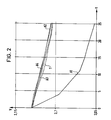
- Figure 2 shows the self-discharge curve A1 of this accumulator.
- the accumulator A3 produced with the implementation of this flux has a self-discharge curve A3.
- the accumulator A4 produced with the implementation of this flux has a self-discharge curve A4.
- the flow comprises an amount of acid such that there is always free acidity in the mixture.
- concentrations of acid and amine can vary within wide limits.
- Table I gives a series of examples of concentrations in moles / liter of flux in the form of an aqueous solution.
- Table II gives a series of examples of concentrations for flows of the supersaturated or pasty solution type.
Landscapes
- Engineering & Computer Science (AREA)
- Mechanical Engineering (AREA)
- Chemical & Material Sciences (AREA)
- Chemical Kinetics & Catalysis (AREA)
- Electrochemistry (AREA)
- General Chemical & Material Sciences (AREA)
- Battery Electrode And Active Subsutance (AREA)
- Connection Of Batteries Or Terminals (AREA)
- Sealing Material Composition (AREA)
- Electric Connection Of Electric Components To Printed Circuits (AREA)
Abstract
Description
- La présente invention concerne un flux de soudage pour accessoires de batterie d'accumulateurs au plomb.
- Un tel flux est en particulier nécessaire pour décaper les queues des plaques des accumulateurs et leur enlever toute trace d'oxyde et de carbonate, avant l'opération de soudure avec des barres de connexion ou autre. L'opération de soudure peut être éventuellement précédée d'un étamage des queues de plaques.
- Dans le procédé de soudage dit "au renversé", le bloc de plaques est maintenu avec les queues de plaques orientées vers le bas ; ces dernières passent dans le bain de flux, le cas échéant dans un bain d'étain fondu, et ensuite à un poste de soudage où les accessoires concernés se trouvent à l'état fondu dans des moules.
- Un flux se compose d'une part d'un acide, appelé couramment "agent de décapage", et d'autre part d'au moins un produit organique, tel qu'une amine, désigné sous le nom "d'agent de fluxage". Le flux habituellement utilisé pour la soudure "au renversé" des accessoires pour batteries d'accumulateurs au plomb comporte un mélange d'acide bromhydrique et d'hydrazine.
- La demanderesse a constaté qu'un tel flux avait un effet néfaste sur l'auto-décharge de la batterie.
- D'autres flux constitués par exemple d'acide phosphorique ou d'acide oxalique et de triéthanolamine peuvent être utilisés. Les observations micrographiques réalisées aux différentes étapes de l'opération de soudage ont mis en évidence qu'avec ces produits on obtient, par rapport à la solution d'acide bromhydrique et d'hydrazine précitée, un revêtement d'étamage moins régulier et moins adhérent sur les queues de plaques, d'où une médiocre qualité de la soudure "au renversé".
- La présente invention a pour but de mettre en oeuvre une composition de flux permettant d'éviter ces inconvénients.
- La présente invention a pour objet un flux de soudage pour accessoires de batterie d'accumulateurs au plomb comprenant au moins un acide et au moins une amine, caractérisé par le fait que ledit acide est choisi parmi l'acide sulfamique, l'acide orthophosphorique, et l'acide oxalique et que ladite amine est choisie parmi l'hydrazine, la diéthylamine, la dibutylamine et la diméthylamine.
- Ce flux peut être une solution aqueuse avec des concentrations s'étendant depuis des valeurs très faibles jusqu'aux limites de solubilité. Il peut se trouver également à l'état pâteux.
- Selon un mode de réalisation préférentiel, les proportions d'acide et d'amide sont telles qu'il subsiste une acidité libre dans le mélange.
- Ainsi, dans le cas du mélange de l'acide sulfamique avec une amine, telle que l'hydrazine par exemple, le rapport des concentrations est de préférence de l'ordre de 2/1.
- Il peut être avantageux d'effectuer l'opération de "fluxage" à une température pouvant aller jusqu'à environ 100°C à 150°C. Ceci peut être réalisé par chauffage du bain de flux ou par réchauffage des queues des plaques, par exemple à l'air chaud.
- D'autres caractéristiques et avantages de la présente invention apparaîtront au cours de la description suivante de modes de réalisation donnés à titre illustratif mais nullement limitatif. Dans le dessin annexé :
- les figures 1A à 1E montrent très schématiquement les étapes essentielles du procédé de soudage "au renversé" des queues de plaques d'une batterie d'accumulateurs au plomb,
- la figure 2 montre des courbes d'auto-décharge à 40°C d'un accumulateur témoin, d'un accumulateur de l'art antérieur, et de trois accumulateurs selon l'invention ; on a reporté en ordonnées la tension V en volts et en abscisses le temps t en jours,
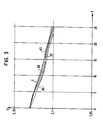
- la figure 3 montre des courbes d'auto-décharge à 40°C de l'accumulateur témoin et de quatre autres accumulateurs selon l'invention.
- On voit dans la figure 1A un bloc 1 comprenant un empilement de plaques positives 2, et de plaques négatives avec des séparateurs 3 interposés. Le bloc 1 est en position renversée, autrement dit les queues 4 et 5 des plaques positives et négatives se trouvent à la partie inférieure du bloc, contrairement à leur position normale.
- Avant d'être soudées à leurs barres de connexion respectives, les queues de plaques 4 et 5 sont plongées dans un bain de flux 10 dont on précisera plus loin les diverses compositions (figure 1B). Elles passent ensuite dans un bain d'étain fondu 11 (figure 1C), puis dans les deux cavités 14 et 15 d'un moule 12 contenant un alliage de plomb fondu (figure 1D). Ces deux cavités correspondent à deux barres de connexion 16 et 17 apparaissant soudées aux queues de plaques 4 et 5 dans la figure 1E.
- Afin de tester l'influence de la nature du bain de flux 10 sur l'auto-décharge d'un accumulateur on réalise plusieurs accumulateurs étanches comportant chacun dans un bac une plaque positive, deux plaques négatives, deux séparateurs et un volume d'électrolyte correspondant à un taux de remplissage de 95%. Chaque élément est passé sous vide et muni d'une soupape. Le test d'auto-décharge s'effectue sans recharge à 40°C pendant trois semaines environ.
- Dans un accumulateur témoin T, les soudures des queues de plaques aux connexions sont réalisées manuellement sans utilisation de flux. La figure 2 montre la courbe d'auto-décharge T de cet accumulateur.
- Pour les accumulateurs des exemples qui suivent, on opère conformément aux schémas des figures 1A à 1E avec diverses compositions de flux.
- Le flux est une solution contenant de l'acide bromhydrique 4,2M et de l'hydrazine 2,3M.
- La figure 2 montre la courbe d'auto-décharge A1 de cet accumulateur.
- On donne au bain de flux 10 la composition suivante:
- - Acide sulfamique
- 2,0M
- - Hydrazine
- 1,0M
- On donne au bain de flux 10 la composition suivante:
- - Acide phosphorique
- 3,3M
- - Hydrazine
- 2M
- L'accumulateur A₃ réalisé avec la mise en oeuvre de ce flux présente une courbe d'auto-décharge A₃.
- On donne au bain de flux la composition suivante:
- - Acide oxalique
- 1,6M
- - Hydrazine
- 4M
- L'accumulateur A₄ réalisé avec la mise en oeuvre de ce flux présente une courbe d'auto-décharge A₄.
- Les exemples précédents font apparaîtrent nettement que les courbes d'auto-décharge A₂, A₃, A₄ sont très proches de la courbe T et que l'inconvénient présenté par le flux de l'art antérieur a disparu.
- On ne constate par ailleurs aucun effet néfaste des flux selon l'invention ni sur la charge des accumulateurs, ni sur leur corrosion, ni sur leur fonctionnement, ni sur leur cyclage.
- On prépare trois bains de flux contenant tous les trois de l'acide sulfamique 2M et respectivement:
- de l'hydrazine 1M (Accumulateur A₅)
- de la diméthylamine 0,5N (Accumulateur A₆)
- de la dibutylamine 0,5N (Accumulateur A₇)
- de la diéthylamine 1N (Accumulateur A₈)
- Les courbes d'auto-décharge correspondantes référencées A₅, A₆, A₇, A₈ dans la figure 3, montrent que les amines choisies ne modifient pas la cinétique de l'auto-décharge.
- De préférence le flux comporte une quantité d'acide telle qu'il subsiste toujours dans le mélange une acidité libre.
Dans ces conditions, les concentrations d'acide et d'amine peuvent varier dans de larges proportions. - Le tableau I donne une série d'exemples de concentrations en moles/litre de flux à l'état de solution aqueuse.

- Le tableau II donne une série d'exemples de concentrations pour des flux de type solution sursaturée ou pâteuse.

- Bien entendu l'invention n'est pas limitée aux exemples décrits. On pourra sans sortir du cadre de l'invention, remplacer tout moyen par un moyen équivalent.
Claims (8)
Applications Claiming Priority (2)
| Application Number | Priority Date | Filing Date | Title |
|---|---|---|---|
| FR9002281 | 1990-02-23 | ||
| FR9002281A FR2658746B1 (fr) | 1990-02-23 | 1990-02-23 | Flux de soudage pour accessoires de batterie d'accumulateurs au plomb. |
Publications (2)
| Publication Number | Publication Date |
|---|---|
| EP0443954A1 true EP0443954A1 (fr) | 1991-08-28 |
| EP0443954B1 EP0443954B1 (fr) | 1994-10-12 |
Family
ID=9394081
Family Applications (1)
| Application Number | Title | Priority Date | Filing Date |
|---|---|---|---|
| EP91400469A Expired - Lifetime EP0443954B1 (fr) | 1990-02-23 | 1991-02-21 | Flux de soudage pour accessoires de batterie d'accumulateurs au plomb |
Country Status (4)
| Country | Link |
|---|---|
| EP (1) | EP0443954B1 (fr) |
| AT (1) | ATE112706T1 (fr) |
| DE (1) | DE69104514T2 (fr) |
| FR (1) | FR2658746B1 (fr) |
Cited By (5)
| Publication number | Priority date | Publication date | Assignee | Title |
|---|---|---|---|---|
| EP0776262A4 (fr) * | 1994-09-09 | 2000-01-26 | Fry Metals Inc | Flux de brasage sans resine, a faible emission de composes organiques volatils et ne necessitant pas de nettoyage et procede d'utilisation de ce flux |
| CN108637526A (zh) * | 2018-04-26 | 2018-10-12 | 天能集团(河南)能源科技有限公司 | 一种铅酸蓄电池用高性能助焊剂及其制备方法 |
| CN109719421A (zh) * | 2018-11-15 | 2019-05-07 | 河北超威电源有限公司 | 一种铅酸蓄电池铸焊剂及使用该铸焊剂的焊接方法 |
| CN112620611A (zh) * | 2020-12-17 | 2021-04-09 | 英德奥克莱电源有限公司 | 一种铅酸蓄电池铸焊剂及其制备方法 |
| CN116871739A (zh) * | 2023-08-24 | 2023-10-13 | 扬州阿波罗蓄电池有限公司 | 一种铅钙合金助焊剂 |
Citations (6)
| Publication number | Priority date | Publication date | Assignee | Title |
|---|---|---|---|---|
| GB400609A (en) * | 1932-04-22 | 1933-10-23 | Hubert Sutton | Improvements in or relating to soldering |
| US2095335A (en) * | 1936-09-01 | 1937-10-12 | Frank D Mcbride | Soldering flux |
| FR1304479A (fr) * | 1963-04-22 | 1962-09-21 | Globe Union Inc | Procédé pour la fabrication de batteries d'accumulateurs électriques |
| US3424625A (en) * | 1965-11-09 | 1969-01-28 | Ernest G Tiegel | Process for welding lead onto lead utilizing a special flux composition |
| FR2178013A1 (fr) * | 1972-03-27 | 1973-11-09 | Lake Chemical Co | |
| US4428780A (en) * | 1983-02-07 | 1984-01-31 | Lake Chemical Co. | Solutions for use in bonding plates of storage batteries to connecting systems |
Family Cites Families (2)
| Publication number | Priority date | Publication date | Assignee | Title |
|---|---|---|---|---|
| JPS5021308A (fr) * | 1973-06-28 | 1975-03-06 | ||
| JPS5820105B2 (ja) * | 1978-03-17 | 1983-04-21 | 新神戸電機株式会社 | 鉛蓄電池の溶接方法 |
-
1990
- 1990-02-23 FR FR9002281A patent/FR2658746B1/fr not_active Expired - Fee Related
-
1991
- 1991-02-21 AT AT91400469T patent/ATE112706T1/de not_active IP Right Cessation
- 1991-02-21 DE DE69104514T patent/DE69104514T2/de not_active Expired - Fee Related
- 1991-02-21 EP EP91400469A patent/EP0443954B1/fr not_active Expired - Lifetime
Patent Citations (6)
| Publication number | Priority date | Publication date | Assignee | Title |
|---|---|---|---|---|
| GB400609A (en) * | 1932-04-22 | 1933-10-23 | Hubert Sutton | Improvements in or relating to soldering |
| US2095335A (en) * | 1936-09-01 | 1937-10-12 | Frank D Mcbride | Soldering flux |
| FR1304479A (fr) * | 1963-04-22 | 1962-09-21 | Globe Union Inc | Procédé pour la fabrication de batteries d'accumulateurs électriques |
| US3424625A (en) * | 1965-11-09 | 1969-01-28 | Ernest G Tiegel | Process for welding lead onto lead utilizing a special flux composition |
| FR2178013A1 (fr) * | 1972-03-27 | 1973-11-09 | Lake Chemical Co | |
| US4428780A (en) * | 1983-02-07 | 1984-01-31 | Lake Chemical Co. | Solutions for use in bonding plates of storage batteries to connecting systems |
Non-Patent Citations (2)
| Title |
|---|
| CHEMICAL ABSTRACTS & INDEXES, vol. 85, partie 2, 12 juillet 1976, abrégé no. 9474v, Columbus, Ohio, US; & JP-A-50 021 308 (ASAHI GLASS) 22-07-1975 * |
| WPI/DERWENT, 1979, semaine 44, accession no. 79-79991B, Derwent Publications Ltd, London, GB; & JP-A-54 122 835 (KOBE) 22-09-1979 * |
Cited By (6)
| Publication number | Priority date | Publication date | Assignee | Title |
|---|---|---|---|---|
| EP0776262A4 (fr) * | 1994-09-09 | 2000-01-26 | Fry Metals Inc | Flux de brasage sans resine, a faible emission de composes organiques volatils et ne necessitant pas de nettoyage et procede d'utilisation de ce flux |
| CN108637526A (zh) * | 2018-04-26 | 2018-10-12 | 天能集团(河南)能源科技有限公司 | 一种铅酸蓄电池用高性能助焊剂及其制备方法 |
| CN108637526B (zh) * | 2018-04-26 | 2020-08-11 | 天能集团(河南)能源科技有限公司 | 一种铅酸蓄电池用高性能助焊剂及其制备方法 |
| CN109719421A (zh) * | 2018-11-15 | 2019-05-07 | 河北超威电源有限公司 | 一种铅酸蓄电池铸焊剂及使用该铸焊剂的焊接方法 |
| CN112620611A (zh) * | 2020-12-17 | 2021-04-09 | 英德奥克莱电源有限公司 | 一种铅酸蓄电池铸焊剂及其制备方法 |
| CN116871739A (zh) * | 2023-08-24 | 2023-10-13 | 扬州阿波罗蓄电池有限公司 | 一种铅钙合金助焊剂 |
Also Published As
| Publication number | Publication date |
|---|---|
| ATE112706T1 (de) | 1994-10-15 |
| FR2658746B1 (fr) | 1995-01-06 |
| FR2658746A1 (fr) | 1991-08-30 |
| DE69104514D1 (de) | 1994-11-17 |
| DE69104514T2 (de) | 1995-03-02 |
| EP0443954B1 (fr) | 1994-10-12 |
Similar Documents
| Publication | Publication Date | Title |
|---|---|---|
| US5093970A (en) | Lead-acid battery plate and its manufacturing method | |
| JP2012177186A (ja) | 成形性、溶接性に優れた電池ケース用アルミニウム合金板 | |
| EP0443954B1 (fr) | Flux de soudage pour accessoires de batterie d'accumulateurs au plomb | |
| CN103608476A (zh) | 成型性、焊接性优异的电池外壳用铝合金板 | |
| JP2008218258A (ja) | 鉛蓄電池 | |
| JPS634312B2 (fr) | ||
| US5918661A (en) | Process to manufacture pore-free cast-on-strap joints for lead-acid batteries | |
| JP3413930B2 (ja) | 鉛蓄電池極板群の製造法 | |
| JP2005228685A (ja) | 鉛蓄電池 | |
| JP2600508B2 (ja) | 鉛蓄電池の群溶接方法 | |
| FR2576149A1 (fr) | Soupape pour batteries etanches | |
| CN110524140B (zh) | 一种铅酸蓄电池铸焊用油性助焊剂及其制备方法 | |
| JP4794315B2 (ja) | 鉛蓄電池用極板群の製造方法および前記極板群を用いた鉛蓄電池 | |
| CN109719421A (zh) | 一种铅酸蓄电池铸焊剂及使用该铸焊剂的焊接方法 | |
| BE570377A (fr) | ||
| JP2002170545A (ja) | 鉛蓄電池の製造方法 | |
| JPH04137357A (ja) | 鉛蓄電池用極板群の溶接方法 | |
| JP2005129423A (ja) | 鉛蓄電池用極板の群溶着方法 | |
| US397607A (en) | Leonard paget | |
| JP2000311671A (ja) | 鉛電池の製造方法とその装置 | |
| JPH0492363A (ja) | 鉛蓄電池用極板群の溶接方法 | |
| US584649A (en) | Secondary-battery plate and method of producing same | |
| BE563961A (fr) | ||
| JPH06243855A (ja) | 密閉式鉛蓄電池 | |
| JP2002008624A (ja) | 鉛蓄電池用ストラップ |
Legal Events
| Date | Code | Title | Description |
|---|---|---|---|
| PUAI | Public reference made under article 153(3) epc to a published international application that has entered the european phase |
Free format text: ORIGINAL CODE: 0009012 |
|
| AK | Designated contracting states |
Kind code of ref document: A1 Designated state(s): AT BE CH DE DK ES FR GB GR IT LI LU NL SE |
|
| 17P | Request for examination filed |
Effective date: 19911028 |
|
| 17Q | First examination report despatched |
Effective date: 19940118 |
|
| GRAA | (expected) grant |
Free format text: ORIGINAL CODE: 0009210 |
|
| AK | Designated contracting states |
Kind code of ref document: B1 Designated state(s): AT BE CH DE DK ES FR GB GR IT LI LU NL SE |
|
| PG25 | Lapsed in a contracting state [announced via postgrant information from national office to epo] |
Ref country code: IT Free format text: LAPSE BECAUSE OF FAILURE TO SUBMIT A TRANSLATION OF THE DESCRIPTION OR TO PAY THE FEE WITHIN THE PRE;WARNING: LAPSES OF ITALIAN PATENTS WITH EFFECTIVE DATE BEFORE 2007 MAY HAVE OCCURRED AT ANY TIME BEFORE 2007. THE CORRECT EFFECTIVE DATE MAY BE DIFFERENT FROM THE ONE RECORDED.SCRIBED TIME-LIMIT Effective date: 19941012 Ref country code: GB Effective date: 19941012 Ref country code: DK Effective date: 19941012 Ref country code: AT Effective date: 19941012 Ref country code: ES Free format text: THE PATENT HAS BEEN ANNULLED BY A DECISION OF A NATIONAL AUTHORITY Effective date: 19941012 Ref country code: GR Free format text: LAPSE BECAUSE OF FAILURE TO SUBMIT A TRANSLATION OF THE DESCRIPTION OR TO PAY THE FEE WITHIN THE PRESCRIBED TIME-LIMIT Effective date: 19941012 Ref country code: NL Effective date: 19941012 |
|
| REF | Corresponds to: |
Ref document number: 112706 Country of ref document: AT Date of ref document: 19941015 Kind code of ref document: T |
|
| REF | Corresponds to: |
Ref document number: 69104514 Country of ref document: DE Date of ref document: 19941117 |
|
| PG25 | Lapsed in a contracting state [announced via postgrant information from national office to epo] |
Ref country code: SE Effective date: 19950112 |
|
| PG25 | Lapsed in a contracting state [announced via postgrant information from national office to epo] |
Ref country code: LI Effective date: 19950228 Ref country code: CH Effective date: 19950228 Ref country code: LU Free format text: LAPSE BECAUSE OF NON-PAYMENT OF DUE FEES Effective date: 19950228 Ref country code: BE Effective date: 19950228 |
|
| NLV1 | Nl: lapsed or annulled due to failure to fulfill the requirements of art. 29p and 29m of the patents act | ||
| GBV | Gb: ep patent (uk) treated as always having been void in accordance with gb section 77(7)/1977 [no translation filed] |
Effective date: 19941012 |
|
| PLBE | No opposition filed within time limit |
Free format text: ORIGINAL CODE: 0009261 |
|
| STAA | Information on the status of an ep patent application or granted ep patent |
Free format text: STATUS: NO OPPOSITION FILED WITHIN TIME LIMIT |
|
| BERE | Be: lapsed |
Owner name: CIE EUROPEENNE D' ACCUMULATEURS Effective date: 19950228 |
|
| 26N | No opposition filed | ||
| PG25 | Lapsed in a contracting state [announced via postgrant information from national office to epo] |
Ref country code: FR Effective date: 19951031 |
|
| PG25 | Lapsed in a contracting state [announced via postgrant information from national office to epo] |
Ref country code: DE Effective date: 19951101 |
|
| REG | Reference to a national code |
Ref country code: FR Ref legal event code: ST |
|
| REG | Reference to a national code |
Ref country code: FR Ref legal event code: GC |