EP0436005B1 - Markierte polypeptidderivate - Google Patents
Markierte polypeptidderivate Download PDFInfo
- Publication number
- EP0436005B1 EP0436005B1 EP90911595A EP90911595A EP0436005B1 EP 0436005 B1 EP0436005 B1 EP 0436005B1 EP 90911595 A EP90911595 A EP 90911595A EP 90911595 A EP90911595 A EP 90911595A EP 0436005 B1 EP0436005 B1 EP 0436005B1
- Authority
- EP
- European Patent Office
- Prior art keywords
- group
- lys
- peptide
- amino
- formula
- Prior art date
- Legal status (The legal status is an assumption and is not a legal conclusion. Google has not performed a legal analysis and makes no representation as to the accuracy of the status listed.)
- Expired - Lifetime
Links
- 0 CC(C)(C)C(*)=NN=O Chemical compound CC(C)(C)C(*)=NN=O 0.000 description 3
Classifications
-
- A—HUMAN NECESSITIES
- A61—MEDICAL OR VETERINARY SCIENCE; HYGIENE
- A61K—PREPARATIONS FOR MEDICAL, DENTAL OR TOILETRY PURPOSES
- A61K51/00—Preparations containing radioactive substances for use in therapy or testing in vivo
- A61K51/02—Preparations containing radioactive substances for use in therapy or testing in vivo characterised by the carrier, i.e. characterised by the agent or material covalently linked or complexing the radioactive nucleus
- A61K51/04—Organic compounds
- A61K51/08—Peptides, e.g. proteins, carriers being peptides, polyamino acids, proteins
- A61K51/088—Peptides, e.g. proteins, carriers being peptides, polyamino acids, proteins conjugates with carriers being peptides, polyamino acids or proteins
-
- A—HUMAN NECESSITIES
- A61—MEDICAL OR VETERINARY SCIENCE; HYGIENE
- A61K—PREPARATIONS FOR MEDICAL, DENTAL OR TOILETRY PURPOSES
- A61K47/00—Medicinal preparations characterised by the non-active ingredients used, e.g. carriers or inert additives; Targeting or modifying agents chemically bound to the active ingredient
- A61K47/50—Medicinal preparations characterised by the non-active ingredients used, e.g. carriers or inert additives; Targeting or modifying agents chemically bound to the active ingredient the non-active ingredient being chemically bound to the active ingredient, e.g. polymer-drug conjugates
- A61K47/51—Medicinal preparations characterised by the non-active ingredients used, e.g. carriers or inert additives; Targeting or modifying agents chemically bound to the active ingredient the non-active ingredient being chemically bound to the active ingredient, e.g. polymer-drug conjugates the non-active ingredient being a modifying agent
- A61K47/62—Medicinal preparations characterised by the non-active ingredients used, e.g. carriers or inert additives; Targeting or modifying agents chemically bound to the active ingredient the non-active ingredient being chemically bound to the active ingredient, e.g. polymer-drug conjugates the non-active ingredient being a modifying agent the modifying agent being a protein, peptide or polyamino acid
-
- A—HUMAN NECESSITIES
- A61—MEDICAL OR VETERINARY SCIENCE; HYGIENE
- A61K—PREPARATIONS FOR MEDICAL, DENTAL OR TOILETRY PURPOSES
- A61K47/00—Medicinal preparations characterised by the non-active ingredients used, e.g. carriers or inert additives; Targeting or modifying agents chemically bound to the active ingredient
- A61K47/50—Medicinal preparations characterised by the non-active ingredients used, e.g. carriers or inert additives; Targeting or modifying agents chemically bound to the active ingredient the non-active ingredient being chemically bound to the active ingredient, e.g. polymer-drug conjugates
- A61K47/51—Medicinal preparations characterised by the non-active ingredients used, e.g. carriers or inert additives; Targeting or modifying agents chemically bound to the active ingredient the non-active ingredient being chemically bound to the active ingredient, e.g. polymer-drug conjugates the non-active ingredient being a modifying agent
- A61K47/62—Medicinal preparations characterised by the non-active ingredients used, e.g. carriers or inert additives; Targeting or modifying agents chemically bound to the active ingredient the non-active ingredient being chemically bound to the active ingredient, e.g. polymer-drug conjugates the non-active ingredient being a modifying agent the modifying agent being a protein, peptide or polyamino acid
- A61K47/64—Drug-peptide, drug-protein or drug-polyamino acid conjugates, i.e. the modifying agent being a peptide, protein or polyamino acid which is covalently bonded or complexed to a therapeutically active agent
- A61K47/6425—Drug-peptide, drug-protein or drug-polyamino acid conjugates, i.e. the modifying agent being a peptide, protein or polyamino acid which is covalently bonded or complexed to a therapeutically active agent the peptide or protein in the drug conjugate being a receptor, e.g. CD4, a cell surface antigen, i.e. not a peptide ligand targeting the antigen, or a cell surface determinant, i.e. a part of the surface of a cell
-
- A—HUMAN NECESSITIES
- A61—MEDICAL OR VETERINARY SCIENCE; HYGIENE
- A61K—PREPARATIONS FOR MEDICAL, DENTAL OR TOILETRY PURPOSES
- A61K2121/00—Preparations for use in therapy
-
- A—HUMAN NECESSITIES
- A61—MEDICAL OR VETERINARY SCIENCE; HYGIENE
- A61K—PREPARATIONS FOR MEDICAL, DENTAL OR TOILETRY PURPOSES
- A61K2123/00—Preparations for testing in vivo
Definitions
- the present invention relates to polypeptides, a process for their production, their use as a pharmaceutical, e.g. for treatment of tumors or as in vivo diagnostic agents, and to novel intermediates therefor.
- EP-A2-103,558 describes a method for in vitro quantitative determination of a biospecific affinity reaction, e.g. a homogenous immunological determination of insulin by conjugating aminophenyl -EDTA-Eu to insulin and measuring the fluorescence. There is no indication on the attachment site to insulin.
- the present invention provides new labeled peptides useful in therapeutic and in vivo diagnostic applications.
- a biologically active peptide selected from the group consisting of growth factors, peptide hormones, e.g. as indicated hereinafter, interferons and cytokines, e.g. IL-1, IL-4 or IL-6, and analogous or derivatives thereof and bearing at least one chelating group linked to an amino group of said peptide, the chelating group being capable of complexing a detectable element and such amino group having no significant binding affinity to target receptors.
- LIGANDS OF THE INVENTION possess at least one chelating group capable of reacting with a detectable element, e.g. a radionuclide, a radio-opaque element or a paramagnetic ion, to form a complex and further are capable of binding to receptors which are expressed or overexpressed by tumors or metastases.
- the chelating group is attached to an amino group of the peptide which is not involved in receptor binding. Such amino group with the attached chelating group does not significantly interfere with or prevent receptor binding of the peptide.
- said amino group is not directly attached to an aromatic residue.
- receptors is used therein to cover also proto-oncogenes, e.g. HER-2/neu proto-oncogene (also known as c-erb B2) or EGFR (also known as c-erb B1) which are overexpressed e.g. in breast or ovarian cancer tumors.
- proto-oncogenes e.g. HER-2/neu proto-oncogene (also known as c-erb B2) or EGFR (also known as c-erb B1) which are overexpressed e.g. in breast or ovarian cancer tumors.
- the chelating group may be attached either directly or indirectly by means of a divalent bridging group to the amino group of the peptide.
- biologically active peptides is used therein to cover natural peptides isolated from nature or fermentation of cells, e.g. produced through genetic engineering, or synthesized and also their derivatives or analogues.
- derivatives and analogues is understood in particular natural peptides, wherein one or more amino acid units have been omitted and/or replaced by one or more other amino acid radical(s) and/or wherein one or more functional groups have been replaced by one or more other functional groups and/or wherein one or more groups have been replaced by one or several other isosteric groups.
- the term covers all derivatives of a biologically active peptide which exhibit a qualitatively similar effect to that of the unmodified peptide. They may be for example more potent than the naturally occurring peptide. The term also covers antagonists to the naturally occurring peptide.
- the biologically active peptide is of 3 or more than 3 amino-acids, in one or several linked chains. It is understood that the term biologically active peptide does not include antibody or immunoglobulin molecules.
- growth factor peptides include epidermal growth factor (EGF), insulin-like growth factors (IGF-I and IGF-II), fibroblast growth factor (FGF), tumor necrosis factor (TNF), transforming growth factor (TGF-a and TGF-,8n), platelet derived growth factor (PDGF), nerve growth factor, bombesin and analogues or derivatives thereof.
- EGF epidermal growth factor
- IGF-I and IGF-II insulin-like growth factors
- FGF fibroblast growth factor
- TGF-a and TGF-,8n tumor necrosis factor
- TGF-a and TGF-,8n transforming growth factor
- nerve growth factor bombesin and analogues or derivatives thereof.
- hormonal peptides include insulin, LHRH, gastrin, gastrin releasing peptide, thyrotropin releasing hormone (TRH), thyroid stimulating hormone (TSH), prolactin, vasoactive intestinal polypeptide (VIP), angiotensin and analogues or derivatives thereof.
- TRH thyrotropin releasing hormone
- TSH thyroid stimulating hormone
- prolactin prolactin
- VIP vasoactive intestinal polypeptide
- angiotensin analogues or derivatives thereof.
- cytokines are IL-1, IL-2, IL-4 and IL-6.
- the present invention provides:
- the present invention provides:
- More particularly preferred peptides are EGF, LHRH, LHRH agonists, LHRH antagonists and bombesin antagonists.
- the chelating group or groups present in the LIGAND OF THE INVENTION are linked covalently to the amino group of the peptide.
- the chelating group or groups present in the LIGAND OF THE INVENTION are attached, whether directly or indirectly, by an amide bond to the amino group of the peptide.
- the LIGANDS OF THE INVENTION bear one chelating group.
- the chelating group may be attached either to a side chain amino group of the peptide, e.g to the N'-amino group of a lysine, and/or to a terminal N-amino group of the peptide (referred to herein as N"-amino group), with the proviso that such amino group whether side chain or N"- attached does not significantly interfere with or impair the binding affinity of the peptide to the target receptors.
- EGF EGF
- IGF-1 IGF-1
- gastrin gastrin releasing peptide
- insulin TGF-a
- LHRH LHRH
- bombesin VIP
- analogues or derivatives thereof Peptides which bear at least one chelating group attached to a side chain amino group preferably may be: an EGF comprising at least one lysine in its amino-acid sequence, e.g. hEGF, LHRH, LHRH agonists, LHRH antagonists, IGF-1, gastrin, gastrin releasing peptide, bombesin antagonists, VIP, and analogues or derivatives thereof.
- a group of peptides comprises those wherein one lysine is present. Another group of peptides comprises those wherein more than one lysine group is present. A further group of peptides comprises those free of lysine.
- the substituting or protecting group may conveniently be removed prior to the coupling with the chelating group or bridging group.
- Suitable chelating groups are physiologically acceptable chelating groups capable of complexing a detectable element.
- the chelating group has substantially a hydrophilic character.
- Examples of chelating groups include e.g. iminodicarboxylic groups, polyaminopolycarboxylic groups, e.g. those derived from non cyclic ligands e.g.
- EDTA ethylene diaminetetraacetic acid
- DTPA diethylene triamine pentaacetic acid
- HEDTA N-hydroxyethyl-N,N',N'-ethylene diaminetriacetic acid
- EGTA ethylene glycol-O,O'-bis(2-aminoethyl)-N,N,N',N'-tetraacetic acid
- HBED N,N'-bis(hydroxybenzyl)ethylenediamine-N,N'-diacetic acid
- TTHA triethylenetetramine hexaacetic acid
- 1,4,7,10-tetra-azacyclododecane-N,N',N",N"'-tetraacetic acid (DOTA), 1,4,8,11-tetraazacyclotetradecane-N,N',N",N"'-tetraacetic acid (TETA), C-functionalised tetraazacyclododecane-tetra-acetic acids, tetraazacyclotetradecane-tetra-acetic acids, triazacyclododecane triacetic acids and triazacyclononane triacetic acids, for example chelating groups derived from compounds of formula la, Ib or lc, wherein
- Aryl is preferably phenyl.
- Arylalkyl is preferably benzyl.
- Alkylene may be straight chain or branched, preferably straight chain.
- Examples of X 2 include radicals of formula -(X 4 ) n -X 5 wherein X 4 is Ci- 6 alkylene; Ci- 6 alkylene optionally attached to the carbon atom by an oxygen atom or -NH- or phenyl-C 1-3 alkyl; n" is 0 or 1 and X 5 is -NCS, -NCO, or a carboxy group or a functional derivative thereof, e.g. acid halide, anhydride or hydrazide.
- X 4 is phenyl-C 1 - 3 alkyl
- X 5 is preferably in para.
- X 2 can be -O-(CH 2 ) 2-6 -COOH or a functional derivative thereof, or p-isothiocyanato-benzyl or -phenethyl.
- Ib or Ic R 11 is preferably Alk-NCS or
- Alk is C i - 6 alkylene, more preferably C 1-4 alkylene, n is preferably 1 or 2.
- Ring A is preferably unsubstituted.
- R 20a is preferably hydrogen.
- R 24 and/or R 29 are preferably hydrogen.
- Each of R 25 to R 28 independently is preferably methyl. More preferably R 25 to R 28 are each methyl.
- m' is preferably 3. When m' is 3, X 2 is preferably located in position 2.
- X 2 is preferably p-isothiocyanato-benzyl or p-isothiocyanato-phenethyl.
- Particularly preferred chelating groups are those derived from
- the chelating group present in the LIGAND OF THE INVENTION contains vicinal carboxylic acid groups, these may also be present as anhydride functional groups.
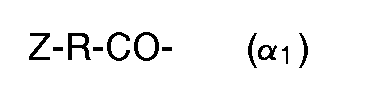
- the chelating group when attached indirectly by means of a divalent bridging group or a spacer group to an amino group of the peptide, it may be linked for example through a group of formula ( ⁇ 1 ) wherein
- A is C 1-4 alkylene, -CH(R 5 )- or a radical of formula (a 2 ) wherein ring A is unsubstituted.
- the substituent -(CH 2 ) m - is preferably located in meta or para, more preferably in para.
- Z may be for example a group which can form an ether, ester or amide bonding with the chelating group.
- Z is preferably -CO- or -NH-, more preferably -NH-.
- the divalent bridging group of formula ( ⁇ 1 ) may be a divalent radical derived from a dicarboxylic acid.
- R 5 examples include e.g. hydrogen, C 1-11 alkyl, benzyl, substituted benzyl, e.g. substituted on the phenyl ring by hydroxy, halogen, C 1 -3alkyl or C 1-3 alkoxy, and -CH 2 -naphthyl.
- Preferred compounds of formula X are those wherein:
- LHRH antagonists are compounds of formula VII wherein
- the chelating group or groups may be attached to the terminal N ⁇ -amino group in position 1 when R 33 is hydrogen and/or to the free amino groups present in E 1 and/or F 1 and/or H 1 of formula VII.
- the LIGANDS OF THE INVENTION of the LHRH antagonist series are compounds of formula VII comprising a chelating group attached to the amino group in position 1 or 6 or 8, particularly 6 or 8.
- LHRH agonists are compounds of formula VIII in which
- the residue C 2 has preferably the D-configuration.
- the chelating group is preferably attached to the free amino group present in C 2 .
- bombesin antagonists are compounds e.g. as disclosed in EP 339,193 A and EP 315,367 A, the contents of which being herein incorporated by reference, particularly compounds of formula IXa wherein
- the LIGANDS OF THE INVENTION of the bombesin antagonist series are compounds of formula IXa or IXb comprising a chelating group attached to the free amino group or groups when present in position 1, and/or 2 and/or 4 and/or 5, and/or 6 and/or 7 and/or 8, more preferably only one chelating group attached as indicated above.
- the LIGANDS OF THE INVENTION may exist e.g. in free or salt form.
- Salts include acid addition salts with e.g. organic acids, polymeric acids or inorganic acids, for example hydrochlorides and acetates, and salt forms obtainable with the carboxylic or sulphonic acid groups present in the chelating group, e.g. alkali metal salts such as sodium or potassium, or substituted or unsubstituted ammonium salts.
- the present invention also includes a process for the production of the LIGANDS OF THE INVENTION, comprising
- the above reactions may be effected in analogy with known methods, e.g. as described in the following examples, in particular process a).
- the chelating group is attached by an ether, ester or amide bond, this may be carried out analogously to the methods used for ether, ester or amide formation respectively.
- protecting groups which are suitable for use in peptides or for the desired chelating groups may be used for functional groups which do not participate in the reaction.
- the term protecting group may also include a polymer resin having functional groups.
- the bridging group may be present on the corresponding amino-acids, peptide fragments or peptides used as starting material, or attached to the chelating group.
- Said amino-acids, peptide fragments or peptides may be prepared by reacting in analogy with known methods the corresponding amino-acids or peptides free of bridging or spacer group with a corresponding bridging or spacer-yielding compound, for example an acid of formula HO-CO-R-COOH, H 2 N-R-COOH or a reactive acid derivative thereof such as an active ester.
- active ester groups or carboxy activating groups are e.g. 4-nitrophenyl, pentachlorophenyl, pentafluorophenyl, succinimidyl or 1-hydroxy-benzotriazolyl.
- the chelating agent may first be reacted with a bridging or spacer group-yielding compound, in order to bear the bridging or spacer group and then be reacted in analogy with known methods with the peptide, peptide fragment or amino-acid.
- the chelating group is derived from a polyamino polycarboxylic compound
- the chelating agent e.g. EDTA- or DTPA-dianhydride
- the bridging or spacer-group yielding compound e.g. H 2 N-R-COOH or a reactive acid derivative thereof, for example an alkyl ester thereof
- This compound may then be activated, e.g. converted into the corresponding hydrazide by reaction of the modified chelating agent with e.g. hydrazine hydrate.
- the hydrazide chelating agent may then be reacted with the amino-acid, peptide fragment or peptide in analogy with known methods, e.g. via azide coupling after conversion into the corresponding azide.
- the chelating agent when it is desired to link a chelating agent bearing a carboxylic function, e.g. -COOH or an anhydride thereof, directly to the amino group of the peptide (in the absence of a divalent bridging or spacer group), the chelating agent may be activated, e.g. converted into the corresponding hydrazide by reaction with e.g. hydrazine hydrate. The hydrazide chelating agent may then be reacted with the amino-acid, peptide fragment or peptide in analogy with known methods, e.g. via azide coupling after conversion into the corresponding azide.
- a chelating agent bearing a carboxylic function e.g. -COOH or an anhydride thereof
- the chelating group When it is desired to attach the chelating group on a side chain amino group of a peptide or peptide fragment used as starting material, and the peptide comprises a free terminal amino group, the latter may be protected with a protecting group.
- the substituting or protecting group may conveniently be removed prior to the coupling with the chelating group.
- the chelating groups of formula Ila or Ilb may be linked to a peptide by reacting a chelating agent of formula N'a or II'b, wherein X is an activating group capable of forming an amide bond.
- the reaction may be performed as disclosed e.g. in EP 247,866 A1.
- the chelating agent used in process step b) or c) may be known or prepared in analogy with known procedures.
- the LIGANDS OF THE INVENTION may be purified in conventional manner, e.g. by chromatography.
- the LIGANDS OF THE INVENTION contain less than 5% by weight of peptides free of chelating groups.
- the present invention also provides the LIGANDS OF THE INVENTION as defined above which are complexed with a detectable element (hereinafter referred to as CHELATES OF THE INVENTION), in free form or in salt form, their preparation and their use for in vivo diagnostic and therapeutic treatment.
- CHELATES OF THE INVENTION a detectable element
- the CHELATES OF THE INVENTION comprise each LIGAND OF THE INVENTION, particularly as mentioned in (a) to (s) above, complexed with a detectable element.
- the present invention provides also the groups of LIGANDS as specified in (A) to (D) above complexed with a detectable element.
- detectable element any element, preferably a metal ion which exhibits a property useful in therapeutic or in vivo diagnostic techniques, e.g. emission of a detectable radiation or an influence on NMR relaxation properties.
- Suitable detectable metal ions include for example heavy elements or rare earth ions, e.g. as used in CAT scanning (Computer axial tomography), paramagnetic ions, e.g. Gd 3+ , Fe 3+ , Mn 2+ and Cr 2+ , fluorescent ions, e.g. Eu 3+ , and radionuclides, e.g. ⁇ -emitting radionuclides, ⁇ -emitting radionuclides, a-emitting radionuclides, positron-emitting radionuclides e.g. 68 Ga, 62 Cu, 52 Fe and 62 Zn and Auger-electron-emitting radionuclides.
- radionuclides e.g. ⁇ -emitting radionuclides, ⁇ -emitting radionuclides, a-emitting radionuclides, positron-emitting radionuclides e.g. 68 Ga, 62
- Suitable ⁇ -emitting radionuclides include those which are useful in diagnostic techniques.
- the y-emitting radionuclides advantageously have a half-life of from 1 hour to 40 days, preferably from 5 hours to 4 days, more preferably from 12 hours to 3 days.
- Examples are radionuclides derived from Gallium, Indium, Technetium, Ytterbium, Rhenium and Thallium e.g. 67 Ga, 111 In, 99m Tc, 169 Yb and 186 Re.
- the y-radionuclide is selected depending on the metabolism of the selected LIGAND OF THE INVENTION or the peptide used. More preferably the LIGAND OF THE INVENTION is chelated with a ⁇ -radionuclide having a half-life corresponding to or longer than the half-life of the peptide on the tumor.
- radionuclides suitable for use in imaging are positron-emitting radionuclides, e.g. as mentioned above.
- Suitable ⁇ -emitting radionuclides include those which are useful in therapeutic applications, for example those derived from 90 Y, 67 -Cu, 186 Re, 188 Re, 169 Er, 121 Sn, 127 Te, 143Pr , 198 Au, 109Pd , 165Dy, 32p, 142Pr or Ag.
- the ⁇ -radionuclide advantageously have a half-life of from 1 hr to 14.3 days, preferably from 2.3 to 100 hrs.
- the ⁇ -emitting radionuclide is selected in order to have a half-life corresponding to or longer than the half-life of the peptide on the tumor.
- Suitable a-emitting radionuclides are those which are used in therapeutic treatments, e.g. 211 At, 212 Bi.
- radionuclides suitable for therapeutic treatment are Auger-electron-emitting radionuclides, e.g. 125 I, 123 I, 77 Br.
- the CHELATES OF THE INVENTION may be prepared by reacting the LIGAND with a corresponding detectable element yielding compound, e.g. a metal salt, preferably a water-soluble salt.
- a detectable element yielding compound e.g. a metal salt, preferably a water-soluble salt.
- the reaction may be carried out by analogy with known methods, e.g. as disclosed in Perrin, Organic Ligand, Chemical Data Series 22. NY Pergamon Press (1982); in Krejcarit and Tucker, Biophys. Biochem. Res. Co:. 77: 581 (1977) and in Wagner and Welch, J. Nucl. Med. 20: 428 (1979).
- the CHELATE may conveniently be formed by reacting the LIGAND with the detectable element yielding compound at a pH at which the LIGAND OF THE INVENTION is chemically stable.
- the detectable metal ion may also be provided to the solution as a complex with an intermediate chelating agent, e.g. a chelating agent which forms a chelate complex that renders the metal ion soluble but is less thermodynamically stable than the CHELATE.
- an intermediate chelating agent e.g. a chelating agent which forms a chelate complex that renders the metal ion soluble but is less thermodynamically stable than the CHELATE.
- an intermediate chelating agent is 4,5-dihydroxy-1,3-benzene-disulfonic acid (Tiron).
- Tiron 4,5-dihydroxy-1,3-benzene-disulfonic acid
- the CHELATES OF THE INVENTION may also be produced by linking together covalently a chelating agent complexed with the detectable element, and the peptide in protected or unprotected form and if desired removing at least one protecting group which is present.
- the same reaction may be performed using a chelating agent complexed with a metal ion and then in the resulting complexed peptide the metal ion may be replaced by the desired detectable element.
- the CHELATES OF THE INVENTION may also be produced by linking together a chelating agent complexed with the detectable element, and a peptide fragment comprising at least one amino acid in protected or unprotected form and then continuing the peptide synthesis step by step until the final peptide sequence is obtained and if desired removing at least one protecting group which is present.
- the chelating agent may be complexed with a non detectable metal and this metal may then be replaced by the detectable element in the resulting complexed peptide.
- the chelating group may be attached through a bridging or spacer group, e.g. a radical of formula (a1) as defined above; in such a case it is meant in the above process steps for preparing the CHELATES OF THE INVENTION that either the peptide or peptide fragment or the chelating agent may bear said bridging or spacer group.
- a bridging or spacer group e.g. a radical of formula (a1) as defined above; in such a case it is meant in the above process steps for preparing the CHELATES OF THE INVENTION that either the peptide or peptide fragment or the chelating agent may bear said bridging or spacer group.
- Radionuclides such as for example Technetium-99m may be used in oxidized form, e.g. Tc-99m pertech- netate, which may be complexed under reducing conditions.
- reaction are conveniently effected under conditions avoiding trace metal contamination.
- the CHELATES OF THE INVENTION may exist e.g. in free or salt form.
- Salts include acid addition salts with e.g. organic acids, polymeric acids or inorganic acids, for example hydrochlorides and acetates, and salt forms obtainable with the carboxylic acid groups present in the molecule which do not participate to the chelate formation, e.g. alkali metal salts such as sodium or potassium, or substituted or unsubstituted ammonium salts.
- the CHELATES OF THE INVENTION and their pharmaceutical acceptable salts exhibit pharmaceutical activity and are therefore useful depending on the detectable metal ion either as an imaging agent, e.g. visualisation of receptor-positive tumors and metastases when complexed with a paramagnetic, a remitting metal ion or a positron-emitting radionuclide, or as a radiopharmaceutical for the treatment in vivo of receptor-positive tumors and metastases when complexed with a a- or ,8-radionuclide or an Auger-electron-emitting radionuclide, as indicated by standard tests, e.g. showing a biodistribution as indicated in Example 12 on i.v.
- the CHELATES OF THE INVENTION also possess affinity for receptors expressed or overexpressed by tumors and metastases, as indicated in standard in vitro binding assays, e.g. as described in Example 11, the CHELATES being preferably added at a concentration of about 10 -10 to 10- 8 M.
- the present invention also provides:
- This method of the invention is particularly useful for the in vivo detection of tumors which express or overexpress receptors, more particularly at a high incidence on tumorigenic cells.
- CHELATES OF THE INVENTION for use in the in vivo detection method of the invention are the CHELATES which are complexed with a remitting radionuclide, a positron-emitting radionuclide or a paramagnetic metal ion, e.g. as indicated above.
- the CHELATES OF THE INVENTION for use as an imaging agent in method (1) may be administered parenterally, preferably intravenously, e.g. in the form of injectable solutions or suspensions, preferably in a single injection.
- An appropriate dosage will of course vary depending upon, for example, the LIGAND and the type of detectable element used, e.g. the radionuclide.
- a suitable dose to be injected is in the range to enable imaging by photoscanning procedures known in the art.
- a radiolabeled CHELATE OF THE INVENTION it may advantageously be administered in a dose having a radioactivity of from 0.1 to 50 mCi, preferably 0.1 to 30 mCi, more preferably 0.1 to 20 mCi.
- an indicated dosage range may be of from 0.1 to 10 ⁇ g/kg of LIGAND labeled with 0.1 to 2 mCi remitting radionuclide, e.g. 111 In.
- an indicated dosage range may be of from 1 to 200 ⁇ g LIGAND labeled with 0.1 to 15 mCi, preferably 0.1 to 30 mCi, e.g. 3 to 15 mCi, remitting radionuclide, depending on the remitting radionuclide used.
- the enrichment in the tumorigenic sites with the CHELATES may be followed by the corresponding imaging techniques, e.g. using nuclear medicine imaging instrumentation, for example a scanner, y-camera , rotating y-camera, each preferably computer assisted; PET-scanner (Positron emission tomography); MRI equipment or CAT scanning equipment.
- nuclear medicine imaging instrumentation for example a scanner, y-camera , rotating y-camera, each preferably computer assisted; PET-scanner (Positron emission tomography); MRI equipment or CAT scanning equipment.
- CHELATES OF THE INVENTION for use in the in vivo treatment method of the invention are the CHELATES complexed with a a-, ;8- or Auger-electron-emitting radionuclide as defined above.
- the method of the invention is particularly useful for in vivo treatment of tumors which express or overexpress receptors, more particularly at a high incidence on tumorigenic cells.
- Dosages employed in practising the therapeutic method of the present invention will of course vary depending e.g. on the particular condition to be treated, for example the volume of the tumor, the particular CHELATE employed, for example the half-life of the CHELATE in the tumor, and the therapy desired.
- the dose is calculated on the basis of radioactivity distribution to each organ and on observed target uptake.
- the CHELATE may be administered at a daily dosage range having a radioactivity of from 0.1 to 3 mCi/kg body weight, e.g. 1 to 3 mCi, preferably 1 to 1.5 mCi/kg body weight.
- an indicated dosage range may be of from 0.1 to 5 ⁇ g/kg of LIGAND labeled with 0.1 to 3 mCi a- or ⁇ -emitting radionuclide, e.g. 90 Y.
- an indicated dosage range is of from 1 to 200 ⁇ g LIGAND labeled with 0.1 to 3 mCi/kg body weight, e.g. 0.1 to 1.5 mCi/kg body weight a- or ⁇ -emitting radionuclide, conveniently administered in divided doses up to 4 times a day.
- the a- or ⁇ -emitting CHELATES OF THE INVENTION may be administered by any conventional route, in particular parenterally, e.g. in the form of injectable solutions or suspensions. They may also be administered advantageously by infusion, e.g. an infusion of 30 to 60 min. Depending on the site of the tumor, they may be administered as close as possible to the tumor site, e.g. by means of a catheter.
- the mode of administration selected may depend on the dissociation rate of the CHELATE used and the excretion rate.
- the CHELATES OF THE INVENTION may be administered in free form or in pharmaceutically acceptable form.
- Such salts may be prepared in conventional manner and exhibit the same order of activity as the free compounds.
- the CHELATES OF THE INVENTION for use in the method of the present invention may preferably be prepared shortly before the administration to a subject, i.e. the labeling with the desired detectable metal ion, particularly the desired a-, ;8- or ⁇ -radionuclide, may be performed shortly before the administration.
- the CHELATES OF THE INVENTION may be suitable for imaging or treating various types of solid or non-solid tumors and metastases thereof, e.g. pituitary, gastroenteropancreatic, central nervous system, brain, breast, ovarian, colonic, prostate, kidney or lung cancer, paragangliomas, neuroblastomas, gliomas, medullary thyroid carcinomas, myelomas, bone tumors, carcinoids etc and metastases thereof.
- various types of solid or non-solid tumors and metastases thereof e.g. pituitary, gastroenteropancreatic, central nervous system, brain, breast, ovarian, colonic, prostate, kidney or lung cancer, paragangliomas, neuroblastomas, gliomas, medullary thyroid carcinomas, myelomas, bone tumors, carcinoids etc and metastases thereof.
- receptor-specific LIGANDS and CHELATES may be obtained for targetting a defined cell population.
- compositions may be manufactured in conventional manner. Preferably they are in liquid forms.
- a composition according to the invention may also be presented in separate package with instructions for mixing the LIGAND with the metal ion and for the administration of the resulting CHELATE. It may also be presented in twin-pack form, that is, as a single package containing separate unit dosages of the LIGAND and the detectable metal ion with instructions for mixing them and for administration of the CHELATE. A diluent or carrier may be present in the unit dosage forms.
- Z 2 is COOH or a functional group of a carboxy function, e.g. (C 1 -12alkoxy) carbonyl are new and form part of the invention.
- Preferred compounds of formula XI are those wherein A is derived from EDTA, DTPA or DOTA, particularly DTPA.
- Z is preferably -NH-.
- R is preferably C1-4alkylene, particularly ethylene, -CH(R 5 )- as defined above or a radical of formula (a 2 ) wherein ring A is unsubstituted.
- Compounds of formula XI may be prepared in accordance with known methods. For example a polyamino polycarboxylic chelating agent may be reacted, preferably in the form of a dianhydride, with the bridging or spacer-yielding compound in an aqueous medium. The pH may conveniently be adjusted to slightly acidic.
- each of A, Z and R independently has one of the preferred significances as indicated above, respectively.
- Compounds of formula XII may be prepared in accordance with known methods. They may be prepared by reacting either a compound of formula XI or a chelating agent bearing a rective -COOH or a functional derivative thereof with hydrazine or a derivative thereof and then converted into the corresponding azide, e.g. as disclosed thereafter. Hydrazine is preferably used with one amino group being in protected form. The reaction may conveniently be performed in water or in a mixture of water and an alcohol, e.g. methanol, at a moderate temperature such as between cooling and slight heating, for example at room temperature, e.g. for one hour to 30 hours. If required the compounds of formula XII may be isolated and purified using any known purification methods such as chromatography.
- the difference up to 100 % [(1-1/F) x 100] consists of acetic acid and water.
- DTPA- ⁇ -Ala-hydrazide 14.3 mg DTPA- ⁇ -Ala-hydrazide are dissolved in 1 ml DMF and cooled to -15 ° C. 0.02 ml 3N HCI in diethylether and 5.4 ⁇ l tert.-butyl nitrite are then added to this solution. After 30 minutes, the resulting solution can be used for the next step (mother-liquor contains 0.03 mMol azide/ml solution).
- DTPA- ⁇ -Ala-mEGF 1 mg DTPA- ⁇ -Ala-mEGF is dissolved in 0.01 M acetic acid. The resulting solution is passed through a 0.22 ⁇ Millex-GV filter. 111 InCl 3 Amersham, 370 MBq/ml) is prediluted in an equal volume of 0.5 M sodium acetate. Labeling is carried out by mixing DTPA- ⁇ -Ala-mEGF with the InCl 3 solution and gentle mixing at room temperature.
- 90 Y is obtained from a 90 Sr- 90 Y radionuclide generator.
- the construction of the generator, its elution and the conversion of the [ 90 Y]EDTA to the acetate complex are performed in accordance with the method disclosed by M.Chinol and D.J. Hnatowich in J. Nucl. Med. 28, 1465-1470 (1987).
- 1 mg of DTPA- ⁇ -Ala- mEGF dissolved in 5ml 0.01 M acetic acid is allowed to warm to room temperature and 1.0 mCi of 90 Y in 50 ⁇ l sterile 0.5M acetate is added. The mixture is then left undisturbed for 30 min to 1 hr to maximize chelation.
- the title compound is dissolved in 150 ml water, the solution is adjusted to pH 7 by addition of NH 4 0H, adsorbed on a duolite ES 881 column and eluted using a gradient of H 2 0-Dioxane-AcOH. The fractions containing the title compound are collected and then lyophilized.
- the starting compounds may be prepared as follows:
- This peptide is synthesized on a mild acid cleavable resin [e.g. 4-(2',4'-dimethoxyphenyl- aminomethyl)-phenoxymethyl-polystyrene, 1% crosslinked; available from e.g. Novabiochem] using N-a-Fmoc protected aminoacids which are added in the following order: In each cycle the aminoacids are activated with diisopropyl-carbodiimide/HOBt in DMF and, after complete coupling, the Fmoc-groups cleaved with 20% piperidine in DMF. N-acetylation in the last step is performed with acetic acid anhydride.
- a mild acid cleavable resin e.g. 4-(2',4'-dimethoxyphenyl- aminomethyl)-phenoxymethyl-polystyrene, 1% crosslinked; available from e.g. Novabiochem
- N-a-Fmoc protected aminoacids
- the protected peptide-resin is treated with TFA/H 2 0 (95:5) in order to simultaneously remove side chain protecting groups and liberate the peptide.
- Purification is achieved with RP-HPLC followed by ion-exchange on AG-4X4, acetate. The title compound is thus obtained.
- the starting peptide may be prepared by the solid phase synthesis procedure, e.g. as disclosed in Example 8b, but using Fmoc-DLys(CH 2 -CHOH-CH 2 0H) in cycles 3 and 5, Fmoc-DNal-OH is used in the last cycle.
- Fmoc-DLys(CH 2 -CHOH-CH 2 0H) in cycles 3 and 5, Fmoc-DNal-OH is used in the last cycle.
- TFA/H 2 0 95:5
- the peptide is purified by RP-HPLC followed by ion-exchange on AG-4X4, acetate.
- the starting peptide may be prepared as disclosed in EP-315 367-A.
- the affinity of the CHELATES OF THE INVENTION to the receptors present in the tumors may be assayed as follows:
- EGF receptor positive human tumor is removed and immediately stored at -70 ° C. During the subsequent isolation procedure this material is kept at 0 to 4 ° C.
- the tumor tissue is dissected into small cubes prior to homogenisation in 5 parts of Buffer A (20 mM HEPES, 0.1 mM EDTA and 250 mM sucrose, pH 7.4).
- Membranes are isolated by differential centrifugation. The material is then diluted in the incubation buffer containing 30 mM HEPES, pH 7.4, 1 mg/ml BSA and 1 mM benzamidine.
- the test mixture (200 ⁇ l final volume) contains 100 OOOcpm [ 125 I]-EGF, the tissue (5 to 25 ⁇ g protein/assay) and compound of Example 3 at a concentration of 10 -9 M.
- the tubes polypropylene
- the reaction is stopped by addition of icecold Hank's or Tris buffer (4ml).
- the Tris buffer contains 10 mM Tris in 0.9% sodium chloride solution and is adjusted to pH 7.4.
- filtration buffers contain 1 % BSA (Fraction V) to suppress non-specific binding to the glass fiber filters (type A/E) that have been soaked in the filtration buffer a few minutes prior to use.
- the tubes are rinsed with 4 ml of the filtration buffer and the rinsing fluid is put over the respective filters.
- a similar binding assay procedure is repeated but using 1 ⁇ g of the compound of Example 3 labelled with 0.2 mCi 111 InCl 3 as test substance.
- the tests are performed in siliconized borosilicate glass tubes and controls containing additionally 10- 7 M EGF to determine non-specific binding are used.
- Biodistribution of radioactivity may be determined either with standard imaging techniques in nude mice weighing 20 + 5 and bearing an EGF receptor positive tumour (MDA 231, MDA 468 or A 431 tumors) or through serial sacrifice of a number of such animals and determination of the organ radioactivity.
- Compound of Example 4 is administered i.v. to the animals at a dosage corresponding to 90-100 ⁇ Ci and the radioactivity is assessed 5 min, 10 min, 15 min, 30 min, 60 min, 20 hrs and 48 hrs. 5 minutes after injection, radioactivity is detected in the liver, kidneys, urinary bladder and in the tumor site. Radioactivity is increasing and is localized on the tumor site 60 min after injection.
- the title compound is obtained according to the procedure of Example 14 using p-isothiocyanatobenzyl-DOTA instead of 1-(p-isothio-cyanatobenzyl)-DTPA.
Landscapes
- Health & Medical Sciences (AREA)
- Life Sciences & Earth Sciences (AREA)
- Proteomics, Peptides & Aminoacids (AREA)
- Bioinformatics & Cheminformatics (AREA)
- Engineering & Computer Science (AREA)
- General Health & Medical Sciences (AREA)
- Veterinary Medicine (AREA)
- Pharmacology & Pharmacy (AREA)
- Epidemiology (AREA)
- Animal Behavior & Ethology (AREA)
- Medicinal Chemistry (AREA)
- Public Health (AREA)
- Chemical & Material Sciences (AREA)
- Optics & Photonics (AREA)
- Physics & Mathematics (AREA)
- Cell Biology (AREA)
- Immunology (AREA)
- Molecular Biology (AREA)
- Peptides Or Proteins (AREA)
- Medicines That Contain Protein Lipid Enzymes And Other Medicines (AREA)
- Medicines Containing Antibodies Or Antigens For Use As Internal Diagnostic Agents (AREA)
Claims (19)


eine Gruppe, die sich von Verbindungen der Formel III ableitet
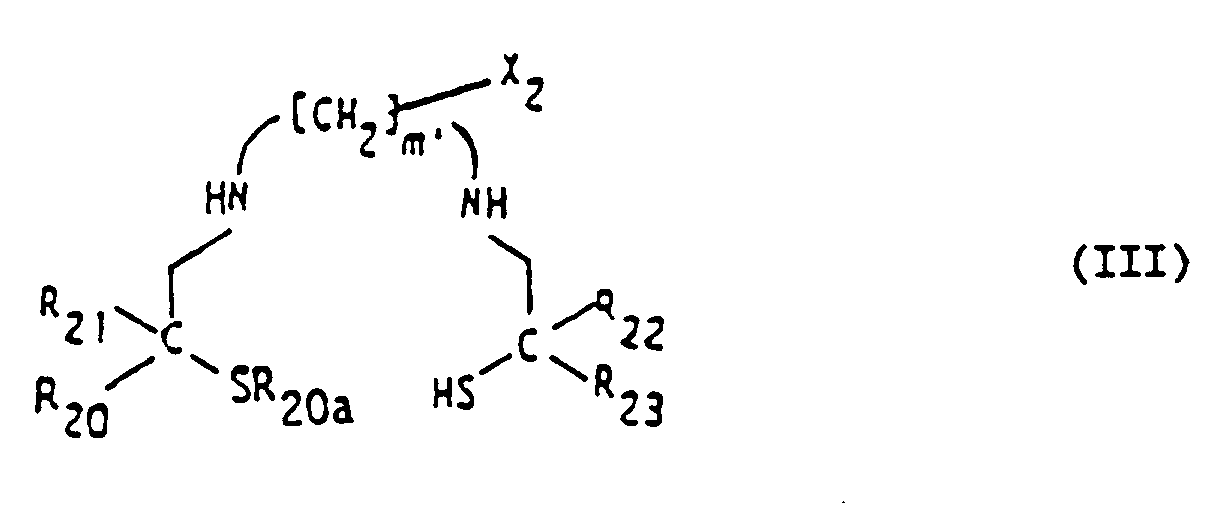




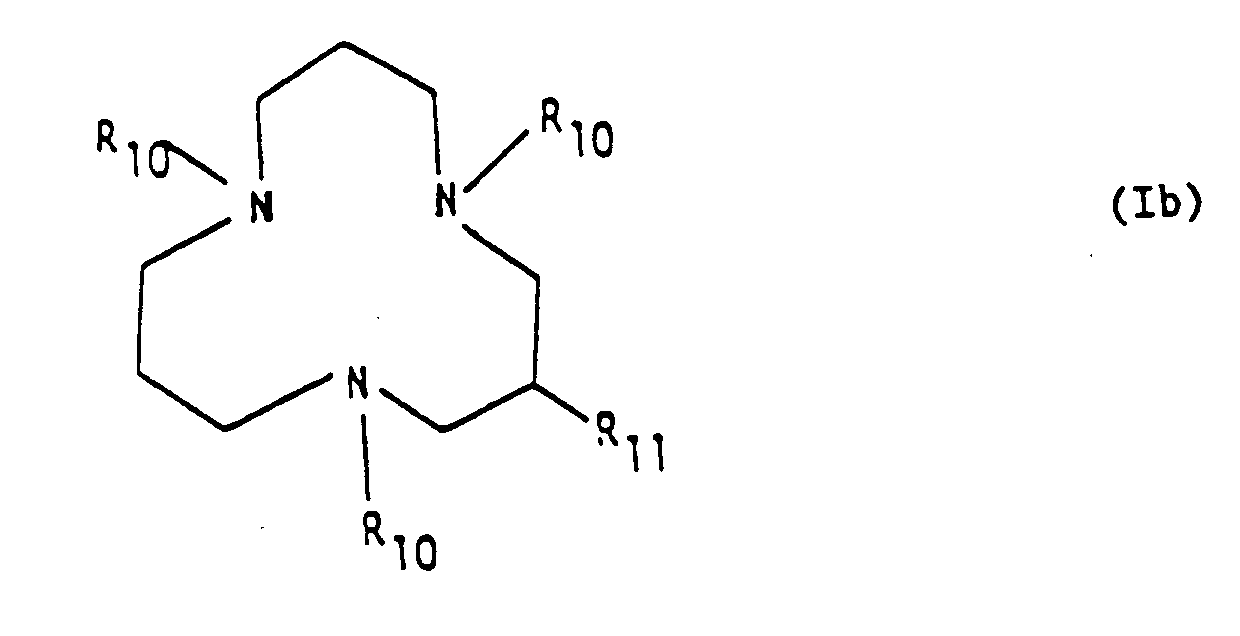


oder von einer Verbindung der Formel III bis VI wie im Anspruch 1 definiert, worin X2 einen Rest -(X4)-n"-X5 bedeutet, wobei X4 C1-6Alkylen gegebenenfalls durch ein Sauerstoffatom oder -NH- an das Kohlenstoffatom verknüpft ist, oder Phenyl-C1-3Alkyl bedeutet; n" 0 oder 1 ist, und X5 -NCS, -NCO oder eine Carboxygruppe oder einen funktionellen Derivat davon bedeutet, abgeleitet ist.


in freier Form oder in Salzform.

oder eine Verbindung der Formel IXb ist

in freier Form oder in Salzform.


Applications Claiming Priority (7)
| Application Number | Priority Date | Filing Date | Title |
|---|---|---|---|
| GB8916597 | 1989-07-20 | ||
| GB898916597A GB8916597D0 (en) | 1989-07-20 | 1989-07-20 | Improvements in or relating to organic compounds |
| GB9004258 | 1990-02-26 | ||
| GB909004258A GB9004258D0 (en) | 1990-02-26 | 1990-02-26 | Improvements in or relating to organic compounds |
| GB909005295A GB9005295D0 (en) | 1990-03-09 | 1990-03-09 | Improvements in or relating to organic compounds |
| GB9005295 | 1990-03-09 | ||
| PCT/EP1990/001169 WO1991001144A1 (en) | 1989-07-20 | 1990-07-12 | Labeled polypeptide derivatives |
Publications (2)
| Publication Number | Publication Date |
|---|---|
| EP0436005A1 EP0436005A1 (de) | 1991-07-10 |
| EP0436005B1 true EP0436005B1 (de) | 1995-03-29 |
Family
ID=27264588
Family Applications (1)
| Application Number | Title | Priority Date | Filing Date |
|---|---|---|---|
| EP90911595A Expired - Lifetime EP0436005B1 (de) | 1989-07-20 | 1990-07-12 | Markierte polypeptidderivate |
Country Status (13)
| Country | Link |
|---|---|
| EP (1) | EP0436005B1 (de) |
| JP (1) | JPH04500823A (de) |
| AT (1) | ATE120374T1 (de) |
| AU (1) | AU638043B2 (de) |
| CA (1) | CA2032499C (de) |
| DE (1) | DE69018226T2 (de) |
| DK (1) | DK0436005T3 (de) |
| ES (1) | ES2070329T3 (de) |
| FI (1) | FI101938B (de) |
| HU (1) | HU219336B (de) |
| IE (1) | IE67637B1 (de) |
| IL (1) | IL95118A (de) |
| WO (1) | WO1991001144A1 (de) |
Families Citing this family (80)
| Publication number | Priority date | Publication date | Assignee | Title |
|---|---|---|---|---|
| US5700444A (en) * | 1992-02-20 | 1997-12-23 | Rhomed Incorporated | Chemotactic peptide pharmaceutical applications |
| US5443816A (en) * | 1990-08-08 | 1995-08-22 | Rhomed Incorporated | Peptide-metal ion pharmaceutical preparation and method |
| US5460785A (en) * | 1989-08-09 | 1995-10-24 | Rhomed Incorporated | Direct labeling of antibodies and other protein with metal ions |
| US5948384A (en) * | 1990-09-14 | 1999-09-07 | Syngenix Limited | Particulate agents |
| GB9020075D0 (en) | 1990-09-14 | 1990-10-24 | Filler Aaron G | Contrast agents for magnetic resonance imaging of axonal transport |
| US5849261A (en) * | 1991-02-08 | 1998-12-15 | Diatide, Inc. | Radiolabeled vasoactive intestinal peptides for diagnosis and therapy |
| US5997844A (en) * | 1991-02-08 | 1999-12-07 | Diatide, Inc. | Technetium-99m labeled peptides for imaging |
| US5965107A (en) * | 1992-03-13 | 1999-10-12 | Diatide, Inc. | Technetium-99m labeled peptides for imaging |
| US5443815A (en) * | 1991-11-27 | 1995-08-22 | Diatech, Inc. | Technetium-99m labeled peptides for imaging |
| US7238340B1 (en) | 1991-11-27 | 2007-07-03 | Cis Bio International | Monoamine, diamide, thiol-containing metal chelating agents |
| GB9115375D0 (en) * | 1991-07-17 | 1991-09-04 | Salutar Inc | Compounds |
| US5225180A (en) * | 1991-09-10 | 1993-07-06 | Diatech, Inc. | Technetium-99m labeled somatostatin-derived peptides for imaging |
| US6919067B2 (en) | 1991-09-13 | 2005-07-19 | Syngenix Limited | Compositions comprising a tissue glue and therapeutic agents |
| AU3177893A (en) * | 1991-11-14 | 1993-06-15 | Battelle Memorial Institute | Method for diagnosing and treating cancer |
| US5783170A (en) * | 1991-11-27 | 1998-07-21 | Diatide, Inc. | Peptide-metal chelate conjugates |
| US5556609A (en) * | 1992-02-20 | 1996-09-17 | Rhomed Incorporated | YIGSR peptide radiopharmaceutical applications |
| EP0629133B1 (de) * | 1992-01-03 | 2000-11-29 | Rhomed, Incorporated | Pharmazeutische anwendungen auf der basis von peptid-metall-ionen |
| US5738838A (en) * | 1992-02-20 | 1998-04-14 | Rhomed Incorporated | IKVAV peptide radiopharmaceutical applications |
| US5371184A (en) * | 1992-02-05 | 1994-12-06 | Mallinckrodt Medical, Inc. | Radiolabelled peptide compounds |
| US5643549A (en) * | 1992-02-20 | 1997-07-01 | Rhomed Incorporated | Leukostimulatory agent for in vivo leukocyte tagging |
| CA2131315A1 (en) * | 1992-03-25 | 1993-09-30 | Geert J. Ensing | Method of intraoperatively detecting and locating tumoral tissues |
| US5508020A (en) * | 1992-06-05 | 1996-04-16 | Diatech, Inc. | Technetium-99M labeled peptides for imaging |
| CA2094785A1 (en) * | 1992-05-08 | 1993-11-09 | Jean Gariepy | Metal chelating peptide |
| US5871711A (en) * | 1992-06-23 | 1999-02-16 | Diatide, Inc. | Radioactively-labeled somatostatin-derived peptides for imaging and therapeutic uses |
| US5716596A (en) * | 1992-06-23 | 1998-02-10 | Diatide, Inc. | Radioactively labeled somatostatin-derived peptides for imaging and therapeutic uses |
| US5620675A (en) | 1992-06-23 | 1997-04-15 | Diatech, Inc. | Radioactive peptides |
| US6017512A (en) * | 1992-06-23 | 2000-01-25 | Diatide, Inc. | Radiolabeled peptides |
| US5346686A (en) * | 1992-10-05 | 1994-09-13 | Mallinckrodt Medical, Inc. | Labelled interleukin-8 and medical uses thereof |
| US5449761A (en) * | 1993-09-28 | 1995-09-12 | Cytogen Corporation | Metal-binding targeted polypeptide constructs |
| JPH07149668A (ja) * | 1993-11-30 | 1995-06-13 | Kanegafuchi Chem Ind Co Ltd | アミロイド沈着検出用物質 |
| US6051206A (en) * | 1994-06-03 | 2000-04-18 | Diatide, Inc | Radiolabeled somatostatin-derived peptides for imaging and therapeutic uses |
| FI970300A0 (fi) | 1994-07-25 | 1997-01-24 | Boehringer Mannheim Gmbh | Metallikelaattimerkityt peptidit |
| DE19505960A1 (de) * | 1995-02-21 | 1996-08-22 | Deutsches Krebsforsch | Konjugat zur individuellen Dosierung von Arzneimitteln |
| US5597894A (en) * | 1995-06-05 | 1997-01-28 | The Louisiana State University Medical Center Foundation | Multi-tyrosinated somatostatin analogs |
| US5753206A (en) * | 1995-06-07 | 1998-05-19 | Immunomedics, Inc. | Radiometal-binding analogues of luteinizing hormone releasing hormone |
| EP0975374B1 (de) | 1996-07-12 | 2007-12-05 | Immunomedics, Inc. | Radiometall-bindende peptide analoge |
| GB9708265D0 (en) * | 1997-04-24 | 1997-06-18 | Nycomed Imaging As | Contrast agents |
| CA2273946A1 (en) * | 1996-12-02 | 1998-06-11 | Raymond M. Reilly | A radiolabelled ligand for selectively introducing an auger electron emitting radionuclide into the nucleus of a cancer cell |
| US7060247B2 (en) | 1997-04-22 | 2006-06-13 | The Curators Of The University Of Missouri | Gastrin receptor-avid peptide conjugates |
| EP0977579B1 (de) | 1997-04-22 | 2009-03-11 | Curator Of The University Of Missouri | Konjugate aus peptiden, die liganden von gastrinrezeptoren sind |
| CN1250361A (zh) * | 1997-11-24 | 2000-04-12 | 路易斯安那州州立大学及农业机械学院管理委员会 | 提高放射性标记化合物的组织积累的方法 |
| US6180082B1 (en) | 1997-11-24 | 2001-01-30 | Board Of Supervisors Of Louisiana State University And Agricultural And Mechanical College | Method to enhance tissue accumulation of radiolabeled compounds |
| US6537520B1 (en) | 1998-03-31 | 2003-03-25 | Bristol-Myers Squibb Pharma Company | Pharmaceuticals for the imaging of angiogenic disorders |
| US6548663B1 (en) | 1998-03-31 | 2003-04-15 | Bristol-Myers Squibb Pharma Company | Benzodiazepine vitronectin receptor antagonist pharmaceuticals |
| US6524553B2 (en) | 1998-03-31 | 2003-02-25 | Bristol-Myers Squibb Pharma Company | Quinolone vitronectin receptor antagonist pharmaceuticals |
| ATE295369T1 (de) | 1998-03-31 | 2005-05-15 | Bristol Myers Squibb Pharma Co | Pharmazeutika zur bildgebung der angiogenischen krankheiten |
| US6866837B2 (en) | 1998-06-05 | 2005-03-15 | Mallinckrodt Inc. | Radiolabeled peptides for the diagnosis and treatment of breast and prostate tumors and metastases of such tumors |
| EP1001977B1 (de) * | 1998-06-05 | 2005-10-05 | Mallinckrodt Inc. | Radioaktive markierte peptide für die diagnose und therapie von brust- und prostatatumoren und von metastasen dieser tumore |
| US6465613B1 (en) | 1998-11-19 | 2002-10-15 | Tulane University | Hydrophilic somatostatin analogs |
| US6511649B1 (en) | 1998-12-18 | 2003-01-28 | Thomas D. Harris | Vitronectin receptor antagonist pharmaceuticals |
| US6794518B1 (en) | 1998-12-18 | 2004-09-21 | Bristol-Myers Squibb Pharma Company | Vitronectin receptor antagonist pharmaceuticals |
| CA2349501A1 (en) | 1998-12-18 | 2000-06-22 | Du Pont Pharmaceuticals Company | Quinolone vitronectin receptor antagonist pharmaceuticals |
| EP1140864A2 (de) | 1998-12-18 | 2001-10-10 | Du Pont Pharmaceuticals Company | Pharmazeutische zusammensetzungen, vitronectinrezeptor antagonisten enthaltend |
| US6569402B1 (en) | 1998-12-18 | 2003-05-27 | Bristol-Myers Squibb Pharma Company | Vitronectin receptor antagonist pharmaceuticals |
| DE19905094C1 (de) * | 1999-02-01 | 2000-10-12 | Schering Ag | Gadolinium (III)-Komplexe sowie ihre Verwendung für Zweischritt Strahlentherapieformen und diese enthaltende pharmazeutische Mittel |
| ATE355304T1 (de) * | 2000-02-18 | 2006-03-15 | Dabur Res Foundation | Radiomarkierte vip-analoge zur diagnose und therapie |
| GR1003661B (el) * | 2000-05-25 | 2001-09-05 | Εθνικο Κεντρο Ερευνας Φυσικων Επιστημων (Εκεφε) "Δημοκριτος"... | ΣΥΝΘΕΣΗ, ΒΙΟΛΟΓΙΚΗ ΚΑΙ ΠΡΟΚΛΙΝΙΚΗ ΑΞΙΟΛΟΓΗΣΗ ΑΝΑΛΟΓΩΝ ΤΗΣ (D-Phe6, Leu-NHEt13, des-Met14)-ΒΟΜΒΕΣΙΝΗΣ (6-14)ΤΡΟΠΟΠΟΙΗΜΕΝΩΝ ΜΕ ΠΑ ΡΑΓΩΓΑ ΤΟΥ 1,4,8,11-ΤΕΤΡΑΑΖΑΕΝΔΕΚΑΝΙΟΥ(1,4,8,11-TETRAAZAUNDECAN E)ΚΑΙ ΕΠΙΣΗΜΑΣΜΕΝΩΝ ΜΕ ΤΕΧΝΗΤΙΟ-99M- ΓΙΑ ΕΦΑΡΜΟΓΗ ΣΤΗΝ ΟΓΚΟΛΟΓ |
| EP1379885A4 (de) * | 2001-01-05 | 2005-07-06 | Univ Duke | Kontrastverstärkungsmittel für die magnetresonanzabbildung |
| US7893223B2 (en) | 2001-07-17 | 2011-02-22 | Bracco Imaging S.P.A. | Multidentate AZA ligands able to complex metal ions and the use thereof in diagnostics and therapy |
| PL369336A1 (en) | 2001-09-21 | 2005-04-18 | The Administrators Of The Tulane Educational Fund | Diagnostic or therapeutic somatostatin or bombesin analog conjugates and uses thereof |
| US7906102B2 (en) | 2001-10-03 | 2011-03-15 | Vanderbilt University | Ligands to radiation-induced molecules |
| RU2206556C1 (ru) * | 2001-12-14 | 2003-06-20 | Институт молекулярной генетики РАН | Высокомеченный тритием тафцин и способ определения тафцина в биологических образцах |
| BR0308090A (pt) | 2002-03-01 | 2006-04-11 | Univ Tulane | conjugados de agentes citotóxicos ou terapêuticos e peptìdios biologicamente ativos |
| US7850947B2 (en) | 2003-01-13 | 2010-12-14 | Bracco Imaging S.P.A. | Gastrin releasing peptide compounds |
| US7922998B2 (en) | 2003-01-13 | 2011-04-12 | Bracco Imaging S.P.A. | Gastrin releasing peptide compounds |
| US7226577B2 (en) | 2003-01-13 | 2007-06-05 | Bracco Imaging, S. P. A. | Gastrin releasing peptide compounds |
| US7611692B2 (en) | 2003-01-13 | 2009-11-03 | Bracco Imaging S.P.A. | Gastrin releasing peptide compounds |
| CA2512310C (en) | 2003-01-13 | 2012-09-25 | Bracco Imaging S.P.A. | Improved linkers for radiopharmaceutical compounds |
| US8420050B2 (en) | 2003-01-13 | 2013-04-16 | Bracco Imaging S.P.A. | Gastrin releasing peptide compounds |
| AU2012202855B2 (en) * | 2004-09-03 | 2015-02-26 | Philipps-Universitat Marburg | GLP-1 and exendin related invention |
| DE102004043153B4 (de) | 2004-09-03 | 2013-11-21 | Philipps-Universität Marburg | Erfindung betreffend GLP-1 und Exendin |
| EP1850881A2 (de) * | 2005-02-22 | 2007-11-07 | GE Healthcare Limited | Radioaktiv markierte gallium-komplexe, syntheseverfahren und verwendung für die pet-darstellung der egfr-expression in malignen tumoren |
| GB0524987D0 (en) | 2005-12-08 | 2006-01-18 | Ge Healthcare Ltd | Novel imaging agents for fibrosis |
| EP2100900A1 (de) * | 2008-03-07 | 2009-09-16 | Universitätsspital Basel | Bombesin-analoge Peptid-antagonistische Konjugate |
| BRPI0911652A2 (pt) | 2008-04-11 | 2015-08-04 | Merrimack Pharmaceuticals Inc | Ligantes de albumina sérica humana e seus conjugados |
| GB0922014D0 (en) | 2009-12-17 | 2010-02-03 | Ge Healthcare Ltd | Novel integrin binders |
| GB201017088D0 (en) | 2010-08-20 | 2010-11-24 | Ge Healthcare Ltd | Imaging tuberculosis |
| WO2013048832A1 (en) | 2011-09-29 | 2013-04-04 | Ge Healthcare Limited | 18 f - labelled 6 - ( 2 - fluoroethoxy) - 2 - naphthaldehyde for detecting cancer stem cells |
| WO2014122228A1 (en) | 2013-02-07 | 2014-08-14 | Westfaelische Wilhelms-Universitaet Muenster | Labelled compounds that bind to alpha-v-beta-3 integrin |
| US10449261B2 (en) | 2014-07-24 | 2019-10-22 | Washington University | Compositions targeting radiation-induced molecules and methods of use thereof |
Family Cites Families (5)
| Publication number | Priority date | Publication date | Assignee | Title |
|---|---|---|---|---|
| SE454115B (sv) * | 1982-09-13 | 1988-03-28 | Wallac Oy | Homogenfasanalys med lantanidkelat som merksubstans |
| GB8610551D0 (en) * | 1986-04-30 | 1986-06-04 | Hoffmann La Roche | Polypeptide & protein derivatives |
| IN165717B (de) * | 1986-08-07 | 1989-12-23 | Battelle Memorial Institute | |
| CA1335725C (en) * | 1987-09-25 | 1995-05-30 | Stephen W. Hadley | Method of diagnosing blood clots using fibrin-binding proteins |
| AU635721B2 (en) * | 1988-10-04 | 1993-04-01 | Cancer Research Campaign Technology Limited | Targetting agents |
-
1990
- 1990-07-12 DE DE69018226T patent/DE69018226T2/de not_active Expired - Fee Related
- 1990-07-12 AU AU60709/90A patent/AU638043B2/en not_active Ceased
- 1990-07-12 CA CA002032499A patent/CA2032499C/en not_active Expired - Fee Related
- 1990-07-12 AT AT90911595T patent/ATE120374T1/de not_active IP Right Cessation
- 1990-07-12 EP EP90911595A patent/EP0436005B1/de not_active Expired - Lifetime
- 1990-07-12 DK DK90911595.8T patent/DK0436005T3/da active
- 1990-07-12 WO PCT/EP1990/001169 patent/WO1991001144A1/en not_active Ceased
- 1990-07-12 JP JP2510843A patent/JPH04500823A/ja active Pending
- 1990-07-12 ES ES90911595T patent/ES2070329T3/es not_active Expired - Lifetime
- 1990-07-12 HU HU177/90A patent/HU219336B/hu not_active IP Right Cessation
- 1990-07-18 IE IE261990A patent/IE67637B1/en not_active IP Right Cessation
- 1990-07-18 IL IL9511890A patent/IL95118A/en not_active IP Right Cessation
-
1991
- 1991-03-18 FI FI911319A patent/FI101938B/fi not_active IP Right Cessation
Non-Patent Citations (1)
| Title |
|---|
| Merck Index 1983 No 4866 * |
Also Published As
| Publication number | Publication date |
|---|---|
| IL95118A0 (en) | 1991-06-10 |
| HU906177D0 (en) | 1991-08-28 |
| AU638043B2 (en) | 1993-06-17 |
| EP0436005A1 (de) | 1991-07-10 |
| HU219336B (en) | 2001-03-28 |
| JPH04500823A (ja) | 1992-02-13 |
| CA2032499C (en) | 2002-05-14 |
| CA2032499A1 (en) | 1991-01-21 |
| DK0436005T3 (da) | 1995-07-03 |
| AU6070990A (en) | 1991-02-22 |
| ATE120374T1 (de) | 1995-04-15 |
| FI101938B1 (fi) | 1998-09-30 |
| DE69018226T2 (de) | 1995-09-21 |
| FI911319A0 (fi) | 1991-03-18 |
| IE67637B1 (en) | 1996-04-17 |
| IE902619A1 (en) | 1991-02-27 |
| HUT56583A (en) | 1991-09-30 |
| FI101938B (fi) | 1998-09-30 |
| WO1991001144A1 (en) | 1991-02-07 |
| DE69018226D1 (de) | 1995-05-04 |
| ES2070329T3 (es) | 1995-06-01 |
| IL95118A (en) | 1995-01-24 |
Similar Documents
| Publication | Publication Date | Title |
|---|---|---|
| AU638043B2 (en) | Labeled polypeptide derivatives | |
| US5686410A (en) | Polypeptide derivatives | |
| KR0156541B1 (ko) | 펩티드 유도체 | |
| AU690071B2 (en) | Radioactively-labeled somatostantin-derived peptides for imaging and therapeutic uses | |
| JP3647881B2 (ja) | 放射性金属元素結合ペプチドの類似化合物 | |
| AU712968B2 (en) | Radiometal-binding analogues of leutenizing hormone releasing hormone | |
| CA2127284C (en) | Protein- and peptide-metal ion pharmaceutical applications | |
| CA2069154C (en) | Polypeptides | |
| EP1872800B1 (de) | Radioaktiv markierte Peptid beinhaltende zusammensetzungen für ortspezifisches Targeting | |
| US5776894A (en) | Chelated somatostatin peptides and complexes thereof, pharmaceutical compositions containing them and their use in treating tumors | |
| US5753627A (en) | Use of certain complexed somatostatin peptides for the invivo imaging of somatostatin receptor-positive tumors and metastasis | |
| US7481993B2 (en) | Chelators for radioactively labeled conjugates comprising a stabilizing sidechain | |
| CA2518406A1 (en) | Thiol-mediated drug attachment to targeting peptides | |
| EP1700608A1 (de) | Chelate für radioaktiv markierte Konjugate mit einer stabilisierenden Seitenkette | |
| FI101967B (fi) | Menetelmä farmaseuttisesti käyttökelpoisen radionuklidin kanssa komple ksoidun ligandin valmistamiseksi | |
| CY1893A (en) | Detectable somatostatin analogues containing a chelating group | |
| HK1192487A (en) | 177 lutetium-labeled bombesin analogs for radiotherapy |
Legal Events
| Date | Code | Title | Description |
|---|---|---|---|
| PUAI | Public reference made under article 153(3) epc to a published international application that has entered the european phase |
Free format text: ORIGINAL CODE: 0009012 |
|
| 17P | Request for examination filed |
Effective date: 19901212 |
|
| AK | Designated contracting states |
Kind code of ref document: A1 Designated state(s): AT BE CH DE DK ES FR GB IT LI LU NL SE |
|
| 17Q | First examination report despatched |
Effective date: 19920304 |
|
| GRAA | (expected) grant |
Free format text: ORIGINAL CODE: 0009210 |
|
| AK | Designated contracting states |
Kind code of ref document: B1 Designated state(s): AT BE CH DE DK ES FR GB IT LI LU NL SE |
|
| REF | Corresponds to: |
Ref document number: 120374 Country of ref document: AT Date of ref document: 19950415 Kind code of ref document: T |
|
| REF | Corresponds to: |
Ref document number: 69018226 Country of ref document: DE Date of ref document: 19950504 |
|
| ITF | It: translation for a ep patent filed | ||
| REG | Reference to a national code |
Ref country code: ES Ref legal event code: FG2A Ref document number: 2070329 Country of ref document: ES Kind code of ref document: T3 |
|
| REG | Reference to a national code |
Ref country code: DK Ref legal event code: T3 |
|
| ET | Fr: translation filed | ||
| ITF | It: translation for a ep patent filed | ||
| PLBE | No opposition filed within time limit |
Free format text: ORIGINAL CODE: 0009261 |
|
| STAA | Information on the status of an ep patent application or granted ep patent |
Free format text: STATUS: NO OPPOSITION FILED WITHIN TIME LIMIT |
|
| 26N | No opposition filed | ||
| REG | Reference to a national code |
Ref country code: CH Ref legal event code: PFA Free format text: SANDOZ AG TRANSFER- NOVARTIS AG |
|
| REG | Reference to a national code |
Ref country code: GB Ref legal event code: 732E |
|
| NLS | Nl: assignments of ep-patents |
Owner name: NOVARTIS AG |
|
| REG | Reference to a national code |
Ref country code: FR Ref legal event code: TP |
|
| REG | Reference to a national code |
Ref country code: ES Ref legal event code: PC2A |
|
| REG | Reference to a national code |
Ref country code: GB Ref legal event code: IF02 |
|
| PGFP | Annual fee paid to national office [announced via postgrant information from national office to epo] |
Ref country code: FR Payment date: 20030613 Year of fee payment: 14 |
|
| PGFP | Annual fee paid to national office [announced via postgrant information from national office to epo] |
Ref country code: BE Payment date: 20030616 Year of fee payment: 14 |
|
| PGFP | Annual fee paid to national office [announced via postgrant information from national office to epo] |
Ref country code: AT Payment date: 20030617 Year of fee payment: 14 |
|
| PGFP | Annual fee paid to national office [announced via postgrant information from national office to epo] |
Ref country code: GB Payment date: 20030623 Year of fee payment: 14 |
|
| PGFP | Annual fee paid to national office [announced via postgrant information from national office to epo] |
Ref country code: SE Payment date: 20030624 Year of fee payment: 14 Ref country code: DE Payment date: 20030624 Year of fee payment: 14 Ref country code: CH Payment date: 20030624 Year of fee payment: 14 |
|
| PGFP | Annual fee paid to national office [announced via postgrant information from national office to epo] |
Ref country code: DK Payment date: 20030625 Year of fee payment: 14 |
|
| PGFP | Annual fee paid to national office [announced via postgrant information from national office to epo] |
Ref country code: LU Payment date: 20030627 Year of fee payment: 14 |
|
| PGFP | Annual fee paid to national office [announced via postgrant information from national office to epo] |
Ref country code: NL Payment date: 20030630 Year of fee payment: 14 |
|
| PGFP | Annual fee paid to national office [announced via postgrant information from national office to epo] |
Ref country code: ES Payment date: 20030703 Year of fee payment: 14 |
|
| PG25 | Lapsed in a contracting state [announced via postgrant information from national office to epo] |
Ref country code: LU Free format text: LAPSE BECAUSE OF NON-PAYMENT OF DUE FEES Effective date: 20040712 Ref country code: GB Free format text: LAPSE BECAUSE OF NON-PAYMENT OF DUE FEES Effective date: 20040712 Ref country code: AT Free format text: LAPSE BECAUSE OF NON-PAYMENT OF DUE FEES Effective date: 20040712 |
|
| PG25 | Lapsed in a contracting state [announced via postgrant information from national office to epo] |
Ref country code: SE Free format text: LAPSE BECAUSE OF NON-PAYMENT OF DUE FEES Effective date: 20040713 Ref country code: ES Free format text: LAPSE BECAUSE OF NON-PAYMENT OF DUE FEES Effective date: 20040713 |
|
| PG25 | Lapsed in a contracting state [announced via postgrant information from national office to epo] |
Ref country code: LI Free format text: LAPSE BECAUSE OF NON-PAYMENT OF DUE FEES Effective date: 20040731 Ref country code: CH Free format text: LAPSE BECAUSE OF NON-PAYMENT OF DUE FEES Effective date: 20040731 Ref country code: BE Free format text: LAPSE BECAUSE OF NON-PAYMENT OF DUE FEES Effective date: 20040731 |
|
| PG25 | Lapsed in a contracting state [announced via postgrant information from national office to epo] |
Ref country code: DK Free format text: LAPSE BECAUSE OF NON-PAYMENT OF DUE FEES Effective date: 20040811 |
|
| BERE | Be: lapsed |
Owner name: *NOVARTIS A.G. Effective date: 20040731 |
|
| PG25 | Lapsed in a contracting state [announced via postgrant information from national office to epo] |
Ref country code: NL Free format text: LAPSE BECAUSE OF NON-PAYMENT OF DUE FEES Effective date: 20050201 Ref country code: DE Free format text: LAPSE BECAUSE OF NON-PAYMENT OF DUE FEES Effective date: 20050201 |
|
| REG | Reference to a national code |
Ref country code: DK Ref legal event code: EBP |
|
| EUG | Se: european patent has lapsed | ||
| GBPC | Gb: european patent ceased through non-payment of renewal fee |
Effective date: 20040712 |
|
| REG | Reference to a national code |
Ref country code: CH Ref legal event code: PL |
|
| PG25 | Lapsed in a contracting state [announced via postgrant information from national office to epo] |
Ref country code: FR Free format text: LAPSE BECAUSE OF NON-PAYMENT OF DUE FEES Effective date: 20050331 |
|
| NLV4 | Nl: lapsed or anulled due to non-payment of the annual fee |
Effective date: 20050201 |
|
| REG | Reference to a national code |
Ref country code: FR Ref legal event code: ST |
|
| PG25 | Lapsed in a contracting state [announced via postgrant information from national office to epo] |
Ref country code: IT Free format text: LAPSE BECAUSE OF NON-PAYMENT OF DUE FEES;WARNING: LAPSES OF ITALIAN PATENTS WITH EFFECTIVE DATE BEFORE 2007 MAY HAVE OCCURRED AT ANY TIME BEFORE 2007. THE CORRECT EFFECTIVE DATE MAY BE DIFFERENT FROM THE ONE RECORDED. Effective date: 20050712 |
|
| REG | Reference to a national code |
Ref country code: ES Ref legal event code: FD2A Effective date: 20040713 |
|
| BERE | Be: lapsed |
Owner name: *NOVARTIS A.G. Effective date: 20040731 |