EP0413187A1 - Verfahren zur Herstellung nicht modifizierter intravenös verabreichbarer IgM- und/oder IgA-haltige Immunglobulinpräparate - Google Patents
Verfahren zur Herstellung nicht modifizierter intravenös verabreichbarer IgM- und/oder IgA-haltige Immunglobulinpräparate Download PDFInfo
- Publication number
- EP0413187A1 EP0413187A1 EP90114575A EP90114575A EP0413187A1 EP 0413187 A1 EP0413187 A1 EP 0413187A1 EP 90114575 A EP90114575 A EP 90114575A EP 90114575 A EP90114575 A EP 90114575A EP 0413187 A1 EP0413187 A1 EP 0413187A1
- Authority
- EP
- European Patent Office
- Prior art keywords
- igg
- igm
- solution
- treated
- immunoglobulin
- Prior art date
- Legal status (The legal status is an assumption and is not a legal conclusion. Google has not performed a legal analysis and makes no representation as to the accuracy of the status listed.)
- Granted
Links
Images

Classifications
-
- C—CHEMISTRY; METALLURGY
- C07—ORGANIC CHEMISTRY
- C07K—PEPTIDES
- C07K16/00—Immunoglobulins [IG], e.g. monoclonal or polyclonal antibodies
- C07K16/06—Immunoglobulins [IG], e.g. monoclonal or polyclonal antibodies from serum
- C07K16/065—Purification, fragmentation
-
- A—HUMAN NECESSITIES
- A61—MEDICAL OR VETERINARY SCIENCE; HYGIENE
- A61K—PREPARATIONS FOR MEDICAL, DENTAL OR TOILETRY PURPOSES
- A61K38/00—Medicinal preparations containing peptides
Definitions
- the invention relates to a method for producing an immunoglobulin solution suitable for intravenous application by treating a protein fraction obtained by fractionation from human blood and containing the immunoglobulins of the IgG, IgA and IgM type in concentrated form.
- EP 0 013 901 describes a method for producing an intravenously applicable IgM-containing protein solution in which a protein fraction obtained by fractionation from blood plasma or serum (such as a Cohn fraction III) is freed of lipids by treatment with colloidal silica Cross-linked dextrans or cellulose carrying diethylaminoethyl groups, preferably DEAE-Sephadex A 50, treated and then with ⁇ -propiolactone at temperatures of 20 to 37 ° C. and pH values from 7.0 to 8.5 are treated for a period of 2 to 10 hours until the pH is constant.
- the Cohn fraction III contains considerable amounts of denatured protein, lipids and many proteases.
- IgG polymers and proteases with high proteolytic activities and other denatured proteins are responsible for the intravenous intolerance of Cohn fraction III.
- the colloidal silica used in EP 0 013 901 is a suitable agent for removing lipids, but leads to contact activations of the coagulation factors and thus additionally increases the amounts of proteolytically active proteins contained in the Cohn fraction III.
- the adsorption of these proteases therefore requires the use of an anion exchanger of the DEAE-Sephadex A 50 type in the process of EP 0 013 901.
- a safe quantitative removal of these proteases is often only possible by using disproportionately large amounts of the corresponding adsorbent. It cannot be ruled out that contact activations of the proteins of the coagulation system and the kinine system will release proteolytic activities which do not bind to anion exchangers.
- the object of the present invention was to find a method for producing a sterile and intravenously applicable solution of the immunoglobulins IgG, IgA and IgM using the Cohn fraction III or a protein fraction obtained by fractionation from blood plasma or serum, which enriched the immunoglobulins Contains form.
- Human IgG consists of four subclasses (IgG-1, IgG-2, IgG-3 and IgG-4) with different chemical and biological properties. After primary contact with bacteria, antibodies of the IgM type are first produced which agglutinate the bacteria and ultimately cause complement-dependent lysis. The later occurring IgG antibodies, which normally have a higher affinity for the antigen, depending on the IgG subclass, induce Fc receptor-dependent phygocytosis or destruction via complement (F. Shakib, Derby: Basic and Clinical Aspects of IgG subclasses ; in Monographes in Allergy, Vol. 19 (1986), Karger).
- the IgG subclass distribution after bacterial infections has been investigated in some studies, but mainly after vaccinations.
- the assignment of certain antibody activities to certain IgG subclasses is still a field of scientific research today. However, as long as the assignment is not possible, it is desirable to achieve an IgG subclass distribution in IgG-containing immunoglobulin preparations, if possible corresponds to that of a normal pool plasma.
- Table I (Appendix) shows that the use of colloidal silica during the production of IgG-containing immunoglobulin preparations leads to a depletion up to the loss of IgG subclass 3.
- the immunoglobulin concentration was determined using the following different methods: the Mancini technique with Partigen plates R ) from Behringwerke and Quantiplate R ) from Kallestad and the Auto ICS II nephelometer from Beckmann.
- Reference material for IgG, IgA and IgM was the WHO standard 67/86, which contained 100 IU / ml.
- the IgG subclasses were determined by radial immunodiffusion on agarose plates, using polyclonal subclass antisera (sheep) (from Janssen).
- the reference serum pool used for the immunoglobulin determination served as the reference serum, as there is still no official WHO standard for the IgG subclass determination available.
- the total lipids were determined using reagents from E. Merck. The protein solution was heated with concentrated sulfuric acid and then reacted with phosphoric acid-vanillin reagent.
- colloidal silica to preferentially adsorb IgG subclass 3 from protein solutions not only affects highly purified IgG solutions, as listed in Tab. I, but also generally applies to protein solutions containing IgG (Tab. II, Appendix) .
- the product according to the invention contains the IgG subclass 3 in a concentration which corresponds to a normal serum pool, while the IgG subclass 3 is absent from a preparation treated with 3% Aerosil R ) (AE), as shown in the following Table III.
- Table III IgG subclass distribution in% IgG-1 IgG-2 IgG-3 IgG-4 IgG without AE treatment 58.8 28.1 3.7 9.4 IgG with AE treatment 61.2 29.5 0.1 9.2 Normal serum IgG * 70-60 25-27 2.4-4.6 1.6-7.5 * Geigy Table (1979) 125
- Blood plasma fractions are at high risk of being infectious. This risk particularly affects the transmission of hepatitis B and hepatitis non-A / non-B and, more recently, HIV (human immunodeficiency virus). Because diagnostic measures do not succeed.
- To produce hepatitis-safe blood products from plasma pools various methods for the sterilization of blood components have been developed. Pasteurization (10 h, 60 ° C) has been successfully used for albumin and has been described for several years by the use of stabilizers such as amino acids and mono- or oligosaccharides and sugar alcohols for the sterilization of sensitive plasma proteins such as coagulation factors II, VIII and XIII (EP 0 018 561).
- LoGrippo The method of cold sterilization described by LoGrippo consists in the combined treatment of human plasma with ⁇ -propiolactone and UV radiation (LoGrippo, GA and Hayashi, H .: Henry Ford Hosp. Med. J. 21 (1973), 181; LoGrippo, GA and Hartmann, FW: Bibl. Haematol. 7 (1958), 225).
- LoGrippo The data published by LoGrippo show that only the combination of ⁇ -propiolactone with UV radiation has led to virus-safe plasmas (LoGrippo, GA: A ten year clinical study of plasma treated with Betaprone and combined Betaprone plus ultraviolet irradiation. Pacific Medicine and Surgery 72 (1964) 298-302).
- EP 0 013 901 ⁇ -propiolactone is used for the treatment of an IgM-containing protein solution for the production of an intravenously administrable immunoglobulin solution.
- the process according to the invention leads to an immunoglobulin solution enriched with IgM, the anticomplementary activity of which is approximately 600 CH 50 / g protein.
- An additional treatment with ß-propiolactone or tri-N-butyl phosphate can rule out virus transmission through this product. It is therefore sufficient to treat the immunoglobulin solution alone with ⁇ -propiolactone without additional UV radiation in order to reliably rule out transmission of hepatitis non-A / non-B, as was shown in an experiment on chimpanzees.
- EP 0 013 901 Another important difference between the method of EP 0 013 901 and the method according to the invention relates to adsorption with an anion exchanger.
- the Cohn fraction III is treated with the anion exchanger before the octanoic acid treatment, while the process according to the invention only carries out this process step after the treatment of the immunoglobulin solution with octanoic acid and activated carbon to ensure that during the processing of the Cohn- Fraction III occurring proteolytic activities are safely removed.
- EP 0 013 901 had the task of producing an intravenously administrable solution of these proteins from an IgG, IgA and IgM-containing protein fraction (Cohn fraction III). This required the use of ⁇ -propiolactone to reduce the anti-complementary activity in the starting material. Surprisingly, it has now been shown that the method according to the invention has already improved the anticomplementary activity of the starting fraction so significantly that other substances suitable for sterilizing blood products, such as e.g. Tri-N-butyl phosphate, instead of ß-propiolactone can be used.
- the values of the anti-complementary activity (ACA) and the in vivo tolerance of the preparations produced by the process according to the invention and of comparative preparations are summarized in Tab. IV (Appendix).
- ACA was given as the consumption of the CH-50 per g of immunoglobulin.
- the method for determining the ACA largely corresponded to the method published by M. Mayer (Mayer, MM (1961). Complement and complement fixation. In: Experimental Immunochemistry, 2nd edn., Pp 133-240, C. Thomas, Springfield, II. ).
- ACA anti-complementary activity
- the IgM-containing product of EP 0 013 901 has an ACA of 300 CH 50 / g and experience has shown that it is well tolerated for intravenous use.
- An in vivo model to test i.v. Compatibility is the rat model according to Bleeker et al. (W.K. Bleeker, J. Agterberg, G. Righter, A. de Vriesvan Rossen, J.C. Bakker: An animal model for the detection of hypotensive side effects of immunoglobulin preparations. Vox Sang. 52: 281-290 (1987).
- the tolerance parameter for the immunoglobulins in this model is blood pressure.
- Intravenously incompatible preparations lead to a significant reduction in blood pressure.
- non-intravenously compatible preparations these are i.m. (Intramuscularly) usable preparations with the product of EP 0 013 901 and the product according to the invention of Examples 1 and 2 shows that the products produced according to the invention lead to a drop in blood pressure in the rat (see Table IV) which is significantly less than that of im Products.
- the pH of the solution was adjusted to 4.8 and the mixture was left at + 20 ° C. for 1 hour. 4 g of tricalcium phosphate were added per kg of the batch and the batch was left at 20 ° C. for 45 minutes before the suspension was centrifuged to remove the precipitate. The supernatant was filtered after centrifugation and then ultrafiltered. The solution, which was ultrafiltered against acetate buffer, was adjusted to a protein value of 5% and a pH value of 6.7. 5 g of activated carbon were added per kg of this solution with slow stirring at room temperature. The adsorption time was 1 hour. The activated carbon was then centrifuged off and the supernatant filtered.
- the starting material was, as described in Example 1, the Cohn fraction III, which was suspended at 50 ° C. per 50 kg of paste in 120 l of buffer solution.
- the pH was adjusted to pH 5.05 with 96% acetic acid.
- 40 ml of octanoic acid per kg of the suspension were added via a dropping funnel at room temperature.
- the mixture was then stirred for 15 minutes and the pH was adjusted to pH 5.05 with 1N NaOH.
- 4 g of tricalcium phosphate were then added per kg of the batch and the batch was left at room temperature for 1 hour, with stirring. It was then centrifuged.
- the supernatant was ultrafiltered, as listed in Example 1, treated with activated carbon, DEAD-Sephadex A-50 and ⁇ -propiolactone before the solution was ultrafiltered, sterile filtered and filled.
- the starting material was, as described in Example 1, the Cohn fraction III, which was suspended at 50 ° C. per 50 kg of paste in 120 l of buffer solution.
- the octanoic acid treatment and calcium phosphate adsorption were carried out as described in Example 1.
- the supernatant filtered after centrifugation was mixed with the polyoxyethylene derivative Tween (R) 80 in a concentration of 1% and 15 minutes later, tri-N-butyl phosphate was added to a concentration of 0.3%.
- the mixture was stirred at + 25 ° C for 8 hours.
- 5% soybean oil was then added, the aqueous phase was decanted from the oil phase 30 minutes after stirring and the aqueous solution was ultrafiltered against acetate buffer.
- the protein value was adjusted to 5% and the pH to 6.7. Per kg of this solution 5 g of activated carbon were added with slow stirring at room temperature. The adsorption time was 1 hour. The activated carbon was then centrifuged off and the supernatant filtered. DEAE-Sephadex A-50 swollen in 0.08 M Na acetate solution was added to the filtered solution in an amount of 40 mg per g protein. Sephadex adsorption took place at pH 6.5. After the Sephadex had been separated off, the solution for adjusting the ion concentration and the protein value was ultrafiltered and diafiltered. This solution was sterile filtered and filled into 1 liter empty sterile bottles. Tab.
Landscapes
- Chemical & Material Sciences (AREA)
- Organic Chemistry (AREA)
- Health & Medical Sciences (AREA)
- General Health & Medical Sciences (AREA)
- Biochemistry (AREA)
- Biophysics (AREA)
- Life Sciences & Earth Sciences (AREA)
- Genetics & Genomics (AREA)
- Medicinal Chemistry (AREA)
- Molecular Biology (AREA)
- Proteomics, Peptides & Aminoacids (AREA)
- Immunology (AREA)
- Medicines Containing Antibodies Or Antigens For Use As Internal Diagnostic Agents (AREA)
- Medicines That Contain Protein Lipid Enzymes And Other Medicines (AREA)
Abstract
Description
- Die Erfindung betrifft ein Verfahren zur Herstellung einer für die intravenöse Applikation geeigneten Immunglobulinlösung durch Behandlung einer durch Fraktionierung aus Humanblut erhaltenen Proteinfraktion, die die Immunglobuline des Typs IgG, IgA und IgM in ankonzentrierter Form enthält.
- In der EP 0 013 901 ist ein Verfahren zur Herstellung einer intravenös anwendbaren IgM-haltigen Proteinlösung beschrieben, bei dem eine durch Fraktionierung aus Blutplasma oder Serum erhaltene Proteinfraktion (wie z.B. eine Cohn-Fraktion III) durch Behandlung mit kolloidaler Kieselsäure von Lipiden befreit, mit Diethylaminoethyl-Gruppen tragenden, quervernetzten Dextranen oder Cellulose, vorzugsweise DEAE-Sephadex A 50, behandelt und dann mit ß-Propiolacton bei Temperaturen von 20 bis 37° C und pH-Werten von 7.0 bis 8.5 für die Dauer von 2 bis 10 Stunden bis zur pH-Konstanz behandelt wird. Die Cohn-Fraktion III enthält neben den gewünschten Immunglobulinen erhebliche Mengen von denaturiertem Protein, Lipide und viele Proteasen. Für die intravenöse Unverträglichkeit der Cohn-Fraktion III sind IgG-Polymere sowie die Proteasen mit hohen proteolytischen Aktivitäten und andere denaturierte Proteine verantwortlich. Die in EP 0 013 901 verwendete kolloidale Kieselsäure ist ein geeignetes Mittel zur Entfernung von Lipiden, führt jedoch zu Kontaktaktivierungen der Gerinnungsfaktoren und erhöht somit zusätzlich die in der Cohn-Fraktion III enthaltenen Mengen an proteolytisch wirksamen Proteinen. Die Adsorption dieser Proteasen macht daher im Verfahren der EP 0 013 901 die Verwendung eines Anionenaustauschers vom Typ DEAE-Sephadex A 50 erforderlich. Bei unspezifischen Aktivierungen von Proteasen ist eine sichere quantitative Entfernung dieser Proteasen häufig nur durch die Verwendung unverhältnismäßig großer Mengen des entsprechenden Adsorbens möglich. Es ist auch nicht auszuschließen, daß bei Kontaktaktivierungen der Proteine des Gerinnungssystems und des Kininsystems proteolytische Aktivitäten freigesetzt werden, die nicht an Anionenaustauscher binden.
- Der vorliegenden Erfindung lag die Aufgabe zugrunde, ein Verfahren zur Herstellung einer sterilen und intravenös anwendbaren Lösung der Immunglobuline IgG, IgA und IgM unter Verwendung der Cohn-Fraktion III oder einer durch Fraktionierung aus Blutplasma oder Serum erhaltenen Proteinfraktion zu finden, die die Immunglobuline in angereicherter Form enthält.
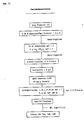
- Überraschenderweise wurde nun gefunden, daß man zur Herstellung einer intravenös anwendbaren Lösung der Immunglobuline IgG, IgA und IgM auf die Entfernung der Lipide aus der Cohn-Fraktion III durch die Adsorption an kollodialer Kieselsäure verzichten kann. Die Abbildung I (Anhang) zeigt schematisch das erfindungsgemäße Verfahren, in Abbildung II (Anhang) ist eine Variante dargestellt.
- Die Aufarbeitung der Cohn-Fraktion III gemäß der EP 0 013 901 führt zu einer intravenös verträglichen Lösung, die die Immunglobuline in folgender Mengenverteilung enthält: IgG: 4000 mg %; IgA: 500 mg % und IgM: 500 mg %, bei einem Gesamtproteingehalt von 5 g %. Das Verhältnis von IgG zu IgM in diesem Präparat beträgt also 8 : 1. Als wirksamer Bestandteil dieses Produktes bei der Behandlung bakterieller Infektionen ist nicht nur das IgM-Molekül beteiligt, sondern auch das im Produkt enthaltene IgG.
- Humanes IgG besteht aus vier Subklassen (IgG-1, IgG-2, IgG-3 und IgG-4) mit unterschiedlichen chemischen und biologischen Eigenschaften. Nach einem primären Kontakt mit Bakterien werden zuerst Antikörper vom IgM-Typ produziert, die die Bakterien zur Agglutination bringen und schließlich eine Komplement-abhängige Lysis bewirken. Die später auftretenden IgG-Antikörper, die normalerweise eine höhere Affinität zum Antigen besitzen, abhängig von der IgG-Subklasse, induzieren eine Fc-Rezeptor-abhängige Phygozytose oder Zerstörung via Komplement (F. Shakib, Derby: Basic und Clinical Aspects of IgG-Subclasses; in Monographes in Allergy, Vol. 19 (1986), Karger).
- Die IgG-Subklassen-Verteilung nach bakteriellen Infektionen ist in einigen Studien untersucht worden, hauptsächlich jedoch nach Vaccinationen. Die Zuordnung bestimmter Antikörperaktivitäten zu bestimmten IgG-Subklassen ist heute noch ein Feld wissenschaftlicher Forschung. Solange die Zuordnung jedoch nicht möglich ist, ist es wünschenswert, in IgG-haltigen Immunglobulinpräparaten eine IgG-Subklassenverteilung zu erreichen, die möglichst derjenigen eines normalen Poolplasmas entspricht.
- Die Tabelle I (Anhang) zeigt, daß die Verwendung von kolloidaler Kieselsäure während der Herstellung von IgG-haltigen Immunglobulinpräparaten zu einer Abreicherung bis hin zum Verlust der IgG-Subklasse 3 führt.
- Die Bestimmung der Immunglobulin-Konzentration erfolgte mit folgenden verschiedenen Methoden: Die Mancini-Technik mit Partigenplatten R) der Behringwerke und Quantiplate R) von Kallestad und dem Nephelometer Auto ICS II von Beckmann. Referenzmaterial für IgG, IgA und IgM war der WHO-Standard 67/86, in dem 100 IU/ml enthalten waren. Die IgG-Subklassen wurden mit der radialen Immundiffusion auf Agarose-Platten, unter Verwendung polyclonaler Subklassen-Antiseren (Schaf) bestimmt (Fa. Janssen). Als Referenzserum diente der für die Immunglobulin-Bestimmung WHO-Referenzserumpool, da bis heute kein offizieller WHO-Standard für die IgG-Subklassen-Bestimmung vorhanden ist. Die Gesamtlipide wurden mit Reagenzien von der Fa. E. Merck bestimmt. Die Proteinlösung wurde mit konzentrierter Schwefelsäure erhitzt und anschließend mit Phosphorsäure-Vanillin-Reagenz umgesetzt.
- Die Verwendung von kolloidaler Kieselsäure in einer Konzentration von 3% Aerosil gemäß der EP 0 013 901 führt zu der Abreicherung unerwünschter Lipide, bewirkt aber ebenfalls den Verlust der IgG-Subklasse 3.
- Die Eigenschaft der kolloidalen Kieselsäure, die IgG-Subklasse 3 bevorzugt aus Proteinlösungen zu adsorbieren, betrifft nicht nur, wie in Tab. I aufgeführt, bereits hochgereinigte IgG-Lösungen, sondern trifft generell auf IgG-haltige Proteinlösungen zu (Tab. II, Anhang).
- Das erfindungsgemäße Produkt enthält die IgG-Subklasse 3 in einer Konzentration, die einem Normalserumpool entspricht, während einem mit 3% Aerosil R) (AE)-behandelten Präparat die IgG-Subklasse 3 fehlt, wie in der folgenden Tab. III dargestellt ist.
Tab.III IgG-Subklassenverteilung in % IgG-1 IgG-2 IgG-3 IgG-4 IgG ohne AE-Behandlung 58.8 28.1 3.7 9.4 IgG mit AE-Behandlung 61.2 29.5 0.1 9.2 Normalserum IgG* 70-60 25-27 2.4-4.6 1.6-7.5 * Geigy Tabelle (1979) 125 - Blutplasmafraktionen haben ein hohes Risiko infektiös zu sein. Dieses Risiko betrifft besonders die übertragung der Hepatitis B und Hepatitis Non-A/Non-B und in jüngster Zeit der HIV (human immundeficiency virus). Da es durch diagnostische Maßnahmen nicht gelingt. hepatitissichere Blutprodukte aus Plasmapools herzustellen, sind verschiedene Verfahren zur Sterilisation von Blutbestandteilen entwickelt worden. Die Pasteurisierung (10 h, 60°C) wird erfolgreich für Albumin verwendet und ist durch die Verwendung von Stabilisatoren, wie Aminosäuren und Mono- bzw. Oligosacchariden und Zuckeralkoholen seit einigen Jahren auch zur Sterilisation empfindlicher Plasmaproteine wie den Gerinnungsfaktoren II, VIII und XIII beschrieben worden (EP 0 018 561). Die Wirksamkeit der Pasteurisation in Gegenwart dieser Stabilisatoren ist noch nicht abzuschätzen und wird zur Zeit überprüft. Die Erhitzung von Immunglobulinen für 10 Minuten auf 63°C führt zu einer drastischen Zunahme ihrer antikomplementären Aktivität, so daß die Pasteurisation zur Sterilisation der Immunglobuline ungeeignet ist (R. van Furth, A. G. P. Braat, P. C. J. Leijh, A. Gardi: Opsonic and physicochemical characteristics of intravenous immunglobulin preparations. Vox Sang. 53: 70 - 75 (1987)).
- Die Notwendigkeit, auch Immunglobulinpräparate einer Sterilisationsmaßnahme zu unterziehen, ergibt sich aus einer Reihe von Publikationen aus jüngster Zeit, in denen die Übertragung der Hepatitis B und Non-A/Non-B-Hepatitis durch intravenöse Immunglobulinpräparate beschrieben worden ist:
- Björkander, J., Cunningham-Rundles, C., Lundin, P., Söderström, R., Hanson, L. A. (1988): Intravenous immunglobulin prophylaxis causing liver damage in 16 of 77 patients with hypogammaglobulinemia of IgG subclass deficiency. Am. J. Med. 84: 107-111.
- John, J. T., Ninan, G. T., Rajagopalan, M. S., John, F. et al (1979): Epidemic hepatitis B caused by commercial human immunglobulin. Lancet I:1074.
- Lever, A.M.L., Webster, A.V.D., Brown, D., Thomas H.C. (1984): Non-A, non-B hepatitis occuring in gammaglobulinaemic patients after intravenous immunoglobulin. Lancet II:1062-1064.
- Lockner, D., Bratt, G., Lindborg, A., Törnebohm, E. (1987): Acute unidentified hepatitis in a hypogammaglobulinaemic patient on intravenous gammaglobulin successfully treated with interferon. Acta. Med. Scand. 221:413-415.
- Williams, P. E., Yap, P. L., Gillon, J. Crawford, R. J., Galea, G., Cuthbertson, B. (1988). Non-A, non-B hepatitis transmission by intravenous immunoglobulin. Lancet II:501.
- Die von LoGrippo beschriebene Methode der Kaltsterilisation besteht in der kombinierten Behandlung von Humanplasma mit ß-Propiolacton und UV-Bestrahlung (LoGrippo, G. A. u. Hayashi, H.: Henry Ford Hosp. Med. J. 21 (1973), 181; LoGrippo, G. A. und Hartmann, F. W.: Bibl. Haematol. 7 (1958), 225).
- Die von LoGrippo publizierten Daten zeigen, daß nur die Kombination von ß-Propiolacton mit der UV-Bestrahlung zu virussicheren Plasmen geführt hat (LoGrippo, G. A.: A ten year clinical study of plasma treated with Betaprone and combined Betaprone plus ultraviolet irradiation. Pacific Medicine and Surgery 72 (1964) 298-302).
- In der EP 0 013 901 wird ß-Propiolacton zur Behandlung einer IgM-haltigen Proteinlösung zur Herstellung einer intravenös applizierbaren Immunglobulinlösung verwendet.
- Das erfindungsgemäße Verfahren führt bereits ohne ß-Propiolactonbehandlung zu einer mit IgM angereicherten Immunglobulinlösung, deren antikomplemetäre Aktivität ca. 600 CH 50/g Protein beträgt. Durch eine zusätzliche Behandlung mit ß-Propiolacton oder Tri-N-Butylphosphat kann eine Virusübertragung durch dieses Produkt ausgeschlossen werden. Es genügt also die alleinige Behandlung der Immunglobulinlösung mit ß-Propiolacton ohne zusätzliche UV-Bestrahlung, um auch eine Übertragung der Hepatitis Non-A/Non-B sicher auszuschließen, wie in einem Experiment am Schimpansen gezeigt werden konnte.
- Ein weiterer wichtiger Unterschied zwischen dem Verfahren der EP 0 013 901 und dem erfindungsgemäßen Verfahren betrifft die Adsorption mit einem Anionenaustauscher. In der EP 0 013 901 wird die Cohn-Fraktion III noch vor der Octansäure-Behandlung mit dem Anionenaustauscher behandelt, während das erfindungsgemäße Verfahren diesen Verfahrensschritt erst nach der Behandlung der Immunglobulinlösung mit Octansäure und Aktivkohle durchführt, um sicherzustellen, daß während der Aufarbeitung der Cohn-Fraktion III auftretende proteolytische Aktivitäten sicher entfernt werden.
- Aufgabe der EP 0 013 901 war es, aus einer IgG-, IgA- und IgM-haltigen Proteinfraktion (Cohn-Fraktion III) eine intravenös applizierbare Lösung dieser Proteine herzustellen. Dafür war die Verwendung von ß-Propiolacton zur Reduzierung der antikomplementären Aktivität in dem Ausgangsmaterial notwendig. Überraschenderweise konnte nun gezeigt werden, daß durch das erfindungsgemäße Verfahren die antikomplementäre Aktivität der Ausgangsfraktion bereits so deutlich verbessert wurde, daß auch andere zur Sterilisation von Blutprodukten geeignete Substanzen, wie z.B. Tri-N-Butylphosphat, anstelle von ß-Propiolacton verwendet werden können. Die Werte der antikomplementären Aktivität (ACA) und der in vivo-Verträglichkeit der nach dem erfindungsgemäßen Verfahren hergestellten Präparate und von Vergleichspräparaten sind in Tab. IV (Anhang) zusammengestellt.
- Zur Bestimmung der antikomplemetären Aktivität der Immunglobuline wurde eine definierte Menge des Prüfproduktes mit einer definierten Menge von Meerschweinchen-Komplement inkubiert und die verbleibende Menge Komplement wurde titriert. Die ACA wurde als Verbrauch der CH-50 pro g Immunglobulin angegeben. Die Methode zur Bestimmung der ACA entsprach weitgehend der von M. Mayer publizierten Methode (Mayer, M.M. (1961). Complement and complement fixation. In: Experimental Immunochemistry, 2nd edn., pp 133-240, C. Thomas, Springfield, II.).
- Als Richtwert für intravenös anwendbare IgG-Produkte gilt eine antikomplementäre Aktivität (ACA) von ≦ 1500 CH 50 pro g Protein. Die Cohn-Fraktion III zeigt ACA-Werte von > 1500 CH 50/g Protein und ist erfahrungsgemäß intravenös unverträglich.
- Das IgM-haltige Produkt der EP 0 013 901 weist eine ACA von 300 CH 50/g auf und ist erfahrungsgemäß bei der intravenösen Anwendung gut verträglich. Ein in vivo Modell zur Prüfung der i.v. Verträglichkeit ist das Rattenmodell nach Bleeker et al. (W. K. Bleeker, J. Agterberg, G. Righter, A. de Vriesvan Rossen, J. C. Bakker: An animal model for the detection of hypotensive side effects of immunoglobulin preparations. Vox Sang. 52: 281-290 (1987).
- Verträglichkeitsparameter für die Immunglobuline in diesem Modell ist der Blutdruck. Intravenös unverträgliche Präparate führen zu einer deutlichen Blutdrucksenkung. Der Vergleich nicht intravenös verträglicher Präparate, dies sind i.m. (intramuskulär) anwendbare Präparate, mit dem Produkt der EP 0 013 901 und dem erfindungsgemäßen Produkt des Beispiels 1 und 2 zeigt, daß die erfindungsgemäß hergestellten Produkte zu einem Blutdruckabfall an der Ratte führen (s. Tab. IV), der deutlich geringer ist als der von i.m. Produkten.
- Die folgenden Beispiele erläutern die Erfindung:
- Pro kg Paste Cohn-Fraktion III wurden 3 kg destilliertes Wasser gegeben. Die Produkttemperatur wurde auf 4°C abgekühlt. Pro 1 kg dest H₂O wurden 0.0055 kg Na-acetat x 3 H₂O zugegeben. Durch Zugabe von 96 %iger Essigsäure wurde der pH-Wert auf pH 5.05 eingestellt. Jeweils 50 kg Paste wurden in 120 l Pufferlösung bei + 4°C suspendiert. Der pH-Wert der Suspension wurde mit 96 %iger Essigsäure auf pH 5.05 eingestellt. Durch Zentrifugation mit einer Cepa-Zentrifuge wurde der Niederschlag abgetrennt. Die vom Niederschlag abgetrennte Lösung wurde auf + 25°C erwärmt. Pro kg Überstand wurden 25 ml Octansäure zugegeben. Die Zugabe der Octansäure erfolgte über Tropftrichter. Der pH-Wert der Lösung wurde auf 4.8 eingestellt und der Ansatz für 1 Stunde bei + 20°C belassen. Pro kg des Ansatzes wurden 4 g Tricalciumphosphat zugegeben und der Ansatz für 45 Minuten bei 20°C belassen, bevor die Suspension zur Entfernung des Niederschlages zentrifugiert wurde. Der Überstand wurde nach der Zentrifugation filtriert und anschließend ultrafiltriert. Die gegen Acetatpuffer ultrafiltrierte Lösung wurde auf einen Proteinwert von 5 % und einen pH-Wert von 6.7 eingestellt. Pro kg dieser Lösung wurden 5 g Aktivkohle unter langsamem Rühren, bei Raumtemperatur gegeben. Die Adsorptionszeit betrug 1 Stunde. Anschließend wurde die Aktivkohle abzentrifugiert und der Überstand filtriert. Zu der filtrierten Lösung wurde in 0.08 M Na-Acetat-Lösung gequollenes DEAE-Sephadex A-50 in einer Menge von 40 mg pro g Protein gegeben. Die Sephadex-Adsorption erfolgte bei pH 6.5. Nach Abtrennung des Sephadex wurde der Proteingehalt des Eluats auf 40g/l eingestellt und pro 1 l Überstand 1.40 ml ß-Propiolacton unter pH-Konstanz von pH 0.8 - 8.1 zugegeben. Der pH-Wert wurde durch Zugabe von 1 N NaOH konstant gehalten. Nach der ß-Propiolacton-Behandlung wurde die Lösung sterilfiltriert. Die sterilfiltrierte Lösung wurde zur Einstellung der Ionenkonzentration und des Proteinwertes ultra- und diafiltriert. Diese Lösung wurde sterilfiltriert und in 1-Liter-leersterile Flaschen abgefüllt.
- Ausgangsmaterial war, wie in Beispiel 1 beschrieben, die Cohn-Fraktion III, die pro 50 kg Paste in 120 l Pufferlösung, bei + 4°C suspendiert wurde. Der pH-Wert wurde mit 96 %iger Essigsäure auf pH 5.05 eingestellt. Pro kg der Suspension wurden 40 ml Octansäure über einen Tropftrichter bei Raumtemperatur zugegeben. Anschließend wurde für 15 Minuten gerührt und der pH-Wert mit 1 N NaOH auf pH 5.05 eingestellt. Pro kg des Ansatzes wurden anschließend 4 g Tricalciumphosphat zugegeben und der Ansatz für 1 Stunde, unter Rühren, bei Raumtemperatur belassen. Anschließend wurde zentrifugiert. Der Überstand wurde, wie in Beispiel 1 aufgeführt, ultrafiltriert, mit Aktivkohle, DEAD-Sephadex A-50 und ß-Propiolacton behandelt, bevor die Lösung ultrafiltriert, sterilfiltriert und abgefüllt wurde.
- Ausgangsmaterial war, wie in Beispiel 1 beschrieben, die Cohn-Fraktion III, die pro 50 kg Paste in 120 l Pufferlösung, bei + 4°C suspendiert wurde. Die Octansäurebehandlung und Calciumphosphat-Adsorption wurde, wie unter Beispiel 1 beschrieben, durchgeführt. Der nach der Zentrifugation filtrierte Überstand wurde mit dem Polyoxyethylenderivat Tween(R) 80 in einer Konzentration von 1% versetzt und 15 Minuten später wurde Tri-N-Butylphosphat bis zu einer Konzentration von 0.3 % zugegeben. Der ansatz wurde für 8 Stunden, bei + 25°C gerührt. Anschließend wurde 5 % Sojabohnenöl dazugegeben, 30 Minuten nach dem Rühren die wässrige Phase von der Ölphase dekantiert und die wässrige Lösung gegen Acetatpuffer ultrafiltriert. Der Proteinwert wurde auf 5 % eingestellt und der pH-Wert auf 6.7. Pro kg dieser Lösung wurden 5 g Aktivkohle unter langsamem Rühren, bei Raumtemperatur gegeben. Die Adsorptionszeit betrug 1 Stunde. Anschließend wurde die Aktivkohle abzentrifugiert und der Überstand filtriert. Zu der filtrierten Lösung wurde in 0.08 M Na-Acetat-Lösung gequollenes DEAE-Sephadex A-50 in einer Menge von 40 mg pro g Protein gegeben. Die Sephadex-Adsorption erfolgte bei pH 6.5. Nach Abtrennung des Sephadex wurde die Lösung zur Einstellung der Ionenkonzentration und des Proteinwertes ultra- und diafiltriert. Diese Lösung wurde sterilfiltriert und in 1-Liter leersterile Flaschen abgefüllt.
Tab.I Auswirkung der Aerosilmenge auf die Verteilung der IgG-Subklassen polyvalenter Immunglobuline Produkt pH Protein IgG Gesamtlipide IgG-1 2 3 4 g/l g/l mg/dl Verteilung in % RGB-810 7.05 35.6 31.36 158 69.1 21.2 5.4 4.3 " + 0.5 AE 6.89 34.7 30.15 28 70.8 22.1 2.7 4.4 " + 1.0 AE 6.78 32.4 28.72 7 73.1 22.3 0.3 4.2 Tab.II Auswirkung der Aerosilmenge auf die Verteilung der IgG-Subklassen in Serumproteinlösungen Produkt pH Protein IgG Gesamtlipide IgG-1 2 3 4 g/l mg/dl Verteilung in % RPCS 642 7.47 5.25 6.98 351 66.9 23.0 3.1 7.0 " + 0.5 % AE 7.65 52.3 7.51 51 65.7 22.7 3.5 8.1 " + 1.0 % AE 7.64 50.9 7.51 47 69.2 20.8 3.0 7.0 " + 2.0 % AE 7.54 48.1 6.95 41 70.7 21.8 0.4 7.1 Tab IV Antikomplementäre Aktivität (ACA) und in vivo Verträglichkeit an der Ratte Produkt ACA/g Protein Blutdruckänderung in % (n=6) IgM-Konzentrat nach Beispiel 1 ohne β-PL 800 - 30 IgM-Konzentrat nach Beispiel 1 mit β-PL 250 - 15 IgM-Konzentrat nach Beispiel 2 ohne β-PL 600 - 20 IgM-Konzentrat nach Beispiel 2 mit β-PL 180 - 15 Referenz-IgG-Präparat (handelsübliches i.v. IgG-Präparat) 80 - 8 IgM-Konzentrat nach EP 0 013 901 (ohne β-PL) >1500 - 50 IgM-Konzentrat nach EP 0 013 901 (mit β-PL) 300 - 20 Cohn-Fraktion III bzw. i.m. Produkt >1500 - 60
Claims (7)
Applications Claiming Priority (2)
| Application Number | Priority Date | Filing Date | Title |
|---|---|---|---|
| DE3927112 | 1989-08-17 | ||
| DE3927112A DE3927112C1 (de) | 1989-08-17 | 1989-08-17 |
Publications (2)
| Publication Number | Publication Date |
|---|---|
| EP0413187A1 true EP0413187A1 (de) | 1991-02-20 |
| EP0413187B1 EP0413187B1 (de) | 1995-04-12 |
Family
ID=6387264
Family Applications (1)
| Application Number | Title | Priority Date | Filing Date |
|---|---|---|---|
| EP90114575A Expired - Lifetime EP0413187B1 (de) | 1989-08-17 | 1990-07-30 | Verfahren zur Herstellung nicht modifizierter intravenös verabreichbarer IgM- und/oder IgA-haltige Immunglobulinpräparate |
Country Status (6)
| Country | Link |
|---|---|
| US (1) | US5075425A (de) |
| EP (1) | EP0413187B1 (de) |
| JP (1) | JPH0768144B2 (de) |
| AT (1) | ATE120963T1 (de) |
| DE (2) | DE3927112C1 (de) |
| ES (1) | ES2070960T3 (de) |
Cited By (4)
| Publication number | Priority date | Publication date | Assignee | Title |
|---|---|---|---|---|
| WO2005073252A1 (en) * | 2004-01-30 | 2005-08-11 | Suomen Punainen Risti Veripalvelu | Process for the manufacture of virus safe immunoglobulin |
| CN101948535A (zh) * | 2010-09-27 | 2011-01-19 | 浙江大学 | 一种从鸡血中分离免疫球蛋白IgY的方法 |
| WO2011131787A2 (en) | 2010-04-22 | 2011-10-27 | Biotest Ag | Antibody preparations |
| EP3275897A1 (de) | 2016-07-27 | 2018-01-31 | Biotest AG | Verfahren zur herstellung von immunoglobulinzusammensetzungen |
Families Citing this family (13)
| Publication number | Priority date | Publication date | Assignee | Title |
|---|---|---|---|---|
| EP0835880A1 (de) * | 1996-10-14 | 1998-04-15 | Rotkreuzstiftung Zentrallaboratorium Blutspendedienst Srk | Verfahren zur Herstellung eines IgM Präparates für die intravenöse Applikation |
| US6955917B2 (en) * | 1997-06-20 | 2005-10-18 | Bayer Healthcare Llc | Chromatographic method for high yield purification and viral inactivation of antibodies |
| US5886154A (en) | 1997-06-20 | 1999-03-23 | Lebing; Wytold R. | Chromatographic method for high yield purification and viral inactivation of antibodies |
| US7863011B2 (en) * | 2000-05-10 | 2011-01-04 | Signe Biopharma, Inc. | Screening method for predicting susceptibility to breast cancer |
| US20030072812A1 (en) * | 2001-05-10 | 2003-04-17 | Sirbasku David A | Breast cancer eradication program |
| US8119138B2 (en) * | 2000-05-10 | 2012-02-21 | Signe Biopharma Inc. | Anti-estrogen and immune modulator combinations for treating breast cancer |
| AU2001272908A1 (en) | 2000-05-10 | 2001-11-20 | David A. Sirbasku | Compositions and methods for the diagnosis, treatment and prevention of steroid hormone responsive cancers |
| FR2824568B1 (fr) * | 2001-05-11 | 2004-04-09 | Lab Francais Du Fractionnement | Procede de preparation de concentres d'immunoglobulines humaines a usage therapeutique |
| US8852585B2 (en) * | 2006-01-30 | 2014-10-07 | Grifols Therapeutics Inc. | Method of treatment and prophylaxis of diseases related to amyloid deposition using IgM |
| FR2977893B1 (fr) | 2011-07-11 | 2015-02-20 | Lab Francais Du Fractionnement | Procede de preparation d'un concentre d'immunoglobulines polyvalentes |
| US9096648B2 (en) * | 2011-08-19 | 2015-08-04 | Emd Millipore Corporation | Methods of reducing level of one or more impurities in a sample during protein purification |
| CN102584934B (zh) * | 2012-03-19 | 2013-11-06 | 江西博雅生物制药股份有限公司 | 一种静注人免疫球蛋白的制备工艺 |
| US10259865B2 (en) | 2017-03-15 | 2019-04-16 | Adma Biologics, Inc. | Anti-pneumococcal hyperimmune globulin for the treatment and prevention of pneumococcal infection |
Citations (3)
| Publication number | Priority date | Publication date | Assignee | Title |
|---|---|---|---|---|
| US3808189A (en) * | 1973-03-15 | 1974-04-30 | American Cyanamid Co | Isolation of gamma globulin preparations enriched in iga and igm using polyethylene glycol |
| EP0013901A1 (de) * | 1979-01-18 | 1980-08-06 | Biotest-Serum-Institut GmbH | Verfahren zur Herstellung einer für die intravenöse Applikation geeigneten Immunglobulinlösung, die IgM in ankonzentrierter Form enthält |
| EP0352500A2 (de) * | 1988-07-27 | 1990-01-31 | Biotest Pharma Gmbh | Verfahren zur Herstellung eines intravenös verabreichbaren polyklonalen immunoglobulin-Präparates mit hohemIgM-Gehalt. |
-
1989
- 1989-08-17 DE DE3927112A patent/DE3927112C1/de not_active Expired - Fee Related
- 1989-11-20 JP JP1299902A patent/JPH0768144B2/ja not_active Expired - Lifetime
-
1990
- 1990-07-30 DE DE59008883T patent/DE59008883D1/de not_active Expired - Lifetime
- 1990-07-30 ES ES90114575T patent/ES2070960T3/es not_active Expired - Lifetime
- 1990-07-30 AT AT90114575T patent/ATE120963T1/de not_active IP Right Cessation
- 1990-07-30 EP EP90114575A patent/EP0413187B1/de not_active Expired - Lifetime
- 1990-08-01 US US07/561,033 patent/US5075425A/en not_active Expired - Fee Related
Patent Citations (3)
| Publication number | Priority date | Publication date | Assignee | Title |
|---|---|---|---|---|
| US3808189A (en) * | 1973-03-15 | 1974-04-30 | American Cyanamid Co | Isolation of gamma globulin preparations enriched in iga and igm using polyethylene glycol |
| EP0013901A1 (de) * | 1979-01-18 | 1980-08-06 | Biotest-Serum-Institut GmbH | Verfahren zur Herstellung einer für die intravenöse Applikation geeigneten Immunglobulinlösung, die IgM in ankonzentrierter Form enthält |
| EP0352500A2 (de) * | 1988-07-27 | 1990-01-31 | Biotest Pharma Gmbh | Verfahren zur Herstellung eines intravenös verabreichbaren polyklonalen immunoglobulin-Präparates mit hohemIgM-Gehalt. |
Non-Patent Citations (2)
| Title |
|---|
| PATENT ABSTRACTS OF JAPAN, Band 13, Nr. 228 (P-877)[3576], 26. Mai 1989; & JP-A-1 38 657 (MEIDENSHA ELECTRIC MFG CO., LTD) 08-02-1989 * |
| PATENT ABSTRACTS OF JAPAN, Band 9, Nr. 21 (C-263)[1744], 29. Januar 1985; & JP-A-59 170 015 (ASAHI KASEI KOGYO K.K.) 26-09-1984 * |
Cited By (10)
| Publication number | Priority date | Publication date | Assignee | Title |
|---|---|---|---|---|
| WO2005073252A1 (en) * | 2004-01-30 | 2005-08-11 | Suomen Punainen Risti Veripalvelu | Process for the manufacture of virus safe immunoglobulin |
| WO2011131787A2 (en) | 2010-04-22 | 2011-10-27 | Biotest Ag | Antibody preparations |
| WO2011131786A2 (en) | 2010-04-22 | 2011-10-27 | Biotest Ag | Process for preparing an immunoglobulin composition |
| WO2011131786A3 (en) * | 2010-04-22 | 2011-12-22 | Biotest Ag | Process for preparing an immunoglobulin composition |
| WO2011131787A3 (en) * | 2010-04-22 | 2011-12-22 | Biotest Ag | Antibody preparations |
| US9243056B2 (en) | 2010-04-22 | 2016-01-26 | Biotest Ag | Process for preparing an immunoglobulin composition |
| CN101948535A (zh) * | 2010-09-27 | 2011-01-19 | 浙江大学 | 一种从鸡血中分离免疫球蛋白IgY的方法 |
| CN101948535B (zh) * | 2010-09-27 | 2012-11-07 | 浙江大学 | 一种从鸡血中分离免疫球蛋白IgY的方法 |
| EP3275897A1 (de) | 2016-07-27 | 2018-01-31 | Biotest AG | Verfahren zur herstellung von immunoglobulinzusammensetzungen |
| WO2018019898A1 (en) | 2016-07-27 | 2018-02-01 | Biotest Ag | Process for preparing immunoglobulin compositions |
Also Published As
| Publication number | Publication date |
|---|---|
| DE59008883D1 (de) | 1995-05-18 |
| JPH0768144B2 (ja) | 1995-07-26 |
| US5075425A (en) | 1991-12-24 |
| EP0413187B1 (de) | 1995-04-12 |
| ATE120963T1 (de) | 1995-04-15 |
| JPH0383932A (ja) | 1991-04-09 |
| ES2070960T3 (es) | 1995-06-16 |
| DE3927112C1 (de) | 1990-10-25 |
Similar Documents
| Publication | Publication Date | Title |
|---|---|---|
| EP0413187B1 (de) | Verfahren zur Herstellung nicht modifizierter intravenös verabreichbarer IgM- und/oder IgA-haltige Immunglobulinpräparate | |
| DE69424545T2 (de) | Verfahren zur herstellung von immunoglobulin g konzentrat | |
| DE3927111C3 (de) | Verfahren zur Herstellung nicht modifizierter intravenös verabreichbarer IgM- und/oderIgA-haltiger Immunglobulinpräparate | |
| DE3825429C2 (de) | Verfahren zur Herstellung eines intravenös verabreichbaren polyklonalen Immunglobulin-Präparates mit hohem IgM-Gehalt | |
| DE69505610T2 (de) | Fraktionierung des Albumins bei niedriger Temperatur unter Verwendung von Sodiumcaprylat als Trennwirkstoff | |
| DE69823931T2 (de) | Chromatographieverfahren für Reinigung von IgG mit hoher Ausbeute und Virusinaktivierung | |
| EP0447585B2 (de) | Verfahren zur Herstellung eines intravenös verträglichen Immunglobulin-G-Präparates | |
| DE3734923C1 (de) | Verfahren zur Herstellung einer sterilen Plasmaproteinloesung,die Fibrinogen und den Gerinnungsfaktor XIII enthaelt | |
| DE69120192T2 (de) | Verfahren zur Herstellung von sekretorischen Immunoglobulin-A-Präparaten | |
| EP0659767B2 (de) | Verfahren zur Herstellung eines Konzentrates von Anti-D-Immunoglobulin G und pharmazeutische Zusammensetzung, die dieses enthält | |
| EP0268973A2 (de) | Verfahren zur Herstellung eines virussicheren, lagerstabilen und intravenös verträglichen Immunglobulin-G-Präparates | |
| DE3733181C1 (de) | Verfahren zur Herstellung eines hochreinen,virussicheren,biologisch aktiven Transferrinpraeparates | |
| EP0085747B1 (de) | Intravenös verabreichbares humanes Immunglobulin und Verfahren zu dessen Herstellung | |
| EP0525502B1 (de) | Verfahren zur Herstellung von virusinaktivierten Immunglobulinlösungen | |
| AT390560B (de) | Verfahren zur inaktivierung von vermehrungsfaehigen filtrierbaren krankheitserregern | |
| DE69627319T2 (de) | Herstellung von immunglobulin | |
| EP0123029B1 (de) | Verfahren zur Herstellung einer nebenwirkungsfreien IgG-Immunglobulinlösung für die intravenöse Applikation | |
| EP0139975A1 (de) | Verfahren zur Pasteurisierung von Humanplasma | |
| EP0835880A1 (de) | Verfahren zur Herstellung eines IgM Präparates für die intravenöse Applikation | |
| EP0234405B1 (de) | Verwendung eines immunglobulinhaltigen Präparates zur Prophylaxe und Therapie von AIDS beim Menschen | |
| EP0506651B1 (de) | Pharmazeutische Präparation auf Basis von Plasmaproteinen | |
| DE69736115T2 (de) | Verfahren zur herstellung von gereinigtem transferrin | |
| DE3924420A1 (de) | Verfahren zur herstellung eines immunglobulin-praeparates aus kolostrum | |
| DE3337076A1 (de) | Verfahren zur herstellung von lagerstabilen, intravenoes zu verabreichenden, waessrigen proteinloesungen |
Legal Events
| Date | Code | Title | Description |
|---|---|---|---|
| PUAI | Public reference made under article 153(3) epc to a published international application that has entered the european phase |
Free format text: ORIGINAL CODE: 0009012 |
|
| AK | Designated contracting states |
Kind code of ref document: A1 Designated state(s): AT BE CH DE DK ES FR GB GR IT LI LU NL SE |
|
| 17P | Request for examination filed |
Effective date: 19910322 |
|
| 17Q | First examination report despatched |
Effective date: 19930402 |
|
| RBV | Designated contracting states (corrected) |
Designated state(s): AT BE CH DE ES FR GB IT LI NL SE |
|
| GRAA | (expected) grant |
Free format text: ORIGINAL CODE: 0009210 |
|
| AK | Designated contracting states |
Kind code of ref document: B1 Designated state(s): AT BE CH DE ES FR GB IT LI NL SE |
|
| REF | Corresponds to: |
Ref document number: 120963 Country of ref document: AT Date of ref document: 19950415 Kind code of ref document: T |
|
| ITF | It: translation for a ep patent filed | ||
| REF | Corresponds to: |
Ref document number: 59008883 Country of ref document: DE Date of ref document: 19950518 |
|
| GBT | Gb: translation of ep patent filed (gb section 77(6)(a)/1977) |
Effective date: 19950421 |
|
| REG | Reference to a national code |
Ref country code: ES Ref legal event code: FG2A Ref document number: 2070960 Country of ref document: ES Kind code of ref document: T3 |
|
| ET | Fr: translation filed | ||
| PLBE | No opposition filed within time limit |
Free format text: ORIGINAL CODE: 0009261 |
|
| STAA | Information on the status of an ep patent application or granted ep patent |
Free format text: STATUS: NO OPPOSITION FILED WITHIN TIME LIMIT |
|
| 26N | No opposition filed | ||
| PGFP | Annual fee paid to national office [announced via postgrant information from national office to epo] |
Ref country code: SE Payment date: 20000705 Year of fee payment: 11 |
|
| PGFP | Annual fee paid to national office [announced via postgrant information from national office to epo] |
Ref country code: FR Payment date: 20000711 Year of fee payment: 11 |
|
| PGFP | Annual fee paid to national office [announced via postgrant information from national office to epo] |
Ref country code: AT Payment date: 20000712 Year of fee payment: 11 |
|
| PGFP | Annual fee paid to national office [announced via postgrant information from national office to epo] |
Ref country code: ES Payment date: 20000719 Year of fee payment: 11 |
|
| PGFP | Annual fee paid to national office [announced via postgrant information from national office to epo] |
Ref country code: CH Payment date: 20000726 Year of fee payment: 11 Ref country code: GB Payment date: 20000726 Year of fee payment: 11 |
|
| PGFP | Annual fee paid to national office [announced via postgrant information from national office to epo] |
Ref country code: NL Payment date: 20000728 Year of fee payment: 11 |
|
| PGFP | Annual fee paid to national office [announced via postgrant information from national office to epo] |
Ref country code: BE Payment date: 20000918 Year of fee payment: 11 |
|
| PG25 | Lapsed in a contracting state [announced via postgrant information from national office to epo] |
Ref country code: AT Free format text: LAPSE BECAUSE OF NON-PAYMENT OF DUE FEES Effective date: 20010730 Ref country code: GB Free format text: LAPSE BECAUSE OF NON-PAYMENT OF DUE FEES Effective date: 20010730 |
|
| PG25 | Lapsed in a contracting state [announced via postgrant information from national office to epo] |
Ref country code: ES Free format text: LAPSE BECAUSE OF NON-PAYMENT OF DUE FEES Effective date: 20010731 Ref country code: SE Free format text: LAPSE BECAUSE OF NON-PAYMENT OF DUE FEES Effective date: 20010731 Ref country code: BE Free format text: LAPSE BECAUSE OF NON-PAYMENT OF DUE FEES Effective date: 20010731 Ref country code: CH Free format text: LAPSE BECAUSE OF NON-PAYMENT OF DUE FEES Effective date: 20010731 Ref country code: LI Free format text: LAPSE BECAUSE OF NON-PAYMENT OF DUE FEES Effective date: 20010731 |
|
| BERE | Be: lapsed |
Owner name: BIOTEST PHARMA G.M.B.H. Effective date: 20010731 |
|
| PG25 | Lapsed in a contracting state [announced via postgrant information from national office to epo] |
Ref country code: NL Free format text: LAPSE BECAUSE OF NON-PAYMENT OF DUE FEES Effective date: 20020201 |
|
| EUG | Se: european patent has lapsed |
Ref document number: 90114575.5 |
|
| REG | Reference to a national code |
Ref country code: CH Ref legal event code: PL |
|
| GBPC | Gb: european patent ceased through non-payment of renewal fee |
Effective date: 20010730 |
|
| PG25 | Lapsed in a contracting state [announced via postgrant information from national office to epo] |
Ref country code: FR Free format text: LAPSE BECAUSE OF NON-PAYMENT OF DUE FEES Effective date: 20020329 |
|
| NLV4 | Nl: lapsed or anulled due to non-payment of the annual fee |
Effective date: 20020201 |
|
| REG | Reference to a national code |
Ref country code: FR Ref legal event code: ST |
|
| REG | Reference to a national code |
Ref country code: ES Ref legal event code: FD2A Effective date: 20020810 |
|
| PG25 | Lapsed in a contracting state [announced via postgrant information from national office to epo] |
Ref country code: IT Free format text: LAPSE BECAUSE OF NON-PAYMENT OF DUE FEES;WARNING: LAPSES OF ITALIAN PATENTS WITH EFFECTIVE DATE BEFORE 2007 MAY HAVE OCCURRED AT ANY TIME BEFORE 2007. THE CORRECT EFFECTIVE DATE MAY BE DIFFERENT FROM THE ONE RECORDED. Effective date: 20050730 |
|
| PGFP | Annual fee paid to national office [announced via postgrant information from national office to epo] |
Ref country code: DE Payment date: 20090723 Year of fee payment: 20 |
|
| PG25 | Lapsed in a contracting state [announced via postgrant information from national office to epo] |
Ref country code: DE Free format text: LAPSE BECAUSE OF EXPIRATION OF PROTECTION Effective date: 20100730 |