EP0400611A2 - Aminoacetophenonderivate und Verfahren zur Bestimmung einer Enzymaktivität unter deren Verwendung - Google Patents
Aminoacetophenonderivate und Verfahren zur Bestimmung einer Enzymaktivität unter deren Verwendung Download PDFInfo
- Publication number
- EP0400611A2 EP0400611A2 EP90110271A EP90110271A EP0400611A2 EP 0400611 A2 EP0400611 A2 EP 0400611A2 EP 90110271 A EP90110271 A EP 90110271A EP 90110271 A EP90110271 A EP 90110271A EP 0400611 A2 EP0400611 A2 EP 0400611A2
- Authority
- EP
- European Patent Office
- Prior art keywords
- group
- amino
- aminoacetophenone
- acid
- residue
- Prior art date
- Legal status (The legal status is an assumption and is not a legal conclusion. Google has not performed a legal analysis and makes no representation as to the accuracy of the status listed.)
- Withdrawn
Links
- 0 Cc1ccc(*)cc1 Chemical compound Cc1ccc(*)cc1 0.000 description 3
Images

Classifications
-
- C—CHEMISTRY; METALLURGY
- C12—BIOCHEMISTRY; BEER; SPIRITS; WINE; VINEGAR; MICROBIOLOGY; ENZYMOLOGY; MUTATION OR GENETIC ENGINEERING
- C12Q—MEASURING OR TESTING PROCESSES INVOLVING ENZYMES, NUCLEIC ACIDS OR MICROORGANISMS; COMPOSITIONS OR TEST PAPERS THEREFOR; PROCESSES OF PREPARING SUCH COMPOSITIONS; CONDITION-RESPONSIVE CONTROL IN MICROBIOLOGICAL OR ENZYMOLOGICAL PROCESSES
- C12Q1/00—Measuring or testing processes involving enzymes, nucleic acids or microorganisms; Compositions therefor; Processes of preparing such compositions
- C12Q1/34—Measuring or testing processes involving enzymes, nucleic acids or microorganisms; Compositions therefor; Processes of preparing such compositions involving hydrolase
- C12Q1/37—Measuring or testing processes involving enzymes, nucleic acids or microorganisms; Compositions therefor; Processes of preparing such compositions involving hydrolase involving peptidase or proteinase
-
- C—CHEMISTRY; METALLURGY
- C07—ORGANIC CHEMISTRY
- C07C—ACYCLIC OR CARBOCYCLIC COMPOUNDS
- C07C237/00—Carboxylic acid amides, the carbon skeleton of the acid part being further substituted by amino groups
- C07C237/02—Carboxylic acid amides, the carbon skeleton of the acid part being further substituted by amino groups having the carbon atoms of the carboxamide groups bound to acyclic carbon atoms of the carbon skeleton
- C07C237/04—Carboxylic acid amides, the carbon skeleton of the acid part being further substituted by amino groups having the carbon atoms of the carboxamide groups bound to acyclic carbon atoms of the carbon skeleton the carbon skeleton being acyclic and saturated
-
- C—CHEMISTRY; METALLURGY
- C07—ORGANIC CHEMISTRY
- C07C—ACYCLIC OR CARBOCYCLIC COMPOUNDS
- C07C279/00—Derivatives of guanidine, i.e. compounds containing the group, the singly-bound nitrogen atoms not being part of nitro or nitroso groups
- C07C279/04—Derivatives of guanidine, i.e. compounds containing the group, the singly-bound nitrogen atoms not being part of nitro or nitroso groups having nitrogen atoms of guanidine groups bound to acyclic carbon atoms of a carbon skeleton
- C07C279/14—Derivatives of guanidine, i.e. compounds containing the group, the singly-bound nitrogen atoms not being part of nitro or nitroso groups having nitrogen atoms of guanidine groups bound to acyclic carbon atoms of a carbon skeleton being further substituted by carboxyl groups
-
- C—CHEMISTRY; METALLURGY
- C07—ORGANIC CHEMISTRY
- C07K—PEPTIDES
- C07K5/00—Peptides containing up to four amino acids in a fully defined sequence; Derivatives thereof
- C07K5/04—Peptides containing up to four amino acids in a fully defined sequence; Derivatives thereof containing only normal peptide links
- C07K5/06—Dipeptides
- C07K5/06008—Dipeptides with the first amino acid being neutral
- C07K5/06078—Dipeptides with the first amino acid being neutral and aromatic or cycloaliphatic
-
- C—CHEMISTRY; METALLURGY
- C07—ORGANIC CHEMISTRY
- C07K—PEPTIDES
- C07K5/00—Peptides containing up to four amino acids in a fully defined sequence; Derivatives thereof
- C07K5/04—Peptides containing up to four amino acids in a fully defined sequence; Derivatives thereof containing only normal peptide links
- C07K5/08—Tripeptides
- C07K5/0802—Tripeptides with the first amino acid being neutral
- C07K5/0804—Tripeptides with the first amino acid being neutral and aliphatic
- C07K5/0808—Tripeptides with the first amino acid being neutral and aliphatic the side chain containing 2 to 4 carbon atoms, e.g. Val, Ile, Leu
-
- C—CHEMISTRY; METALLURGY
- C07—ORGANIC CHEMISTRY
- C07K—PEPTIDES
- C07K5/00—Peptides containing up to four amino acids in a fully defined sequence; Derivatives thereof
- C07K5/04—Peptides containing up to four amino acids in a fully defined sequence; Derivatives thereof containing only normal peptide links
- C07K5/08—Tripeptides
- C07K5/0802—Tripeptides with the first amino acid being neutral
- C07K5/0804—Tripeptides with the first amino acid being neutral and aliphatic
- C07K5/081—Tripeptides with the first amino acid being neutral and aliphatic the side chain containing O or S as heteroatoms, e.g. Cys, Ser
-
- C—CHEMISTRY; METALLURGY
- C07—ORGANIC CHEMISTRY
- C07K—PEPTIDES
- C07K5/00—Peptides containing up to four amino acids in a fully defined sequence; Derivatives thereof
- C07K5/04—Peptides containing up to four amino acids in a fully defined sequence; Derivatives thereof containing only normal peptide links
- C07K5/08—Tripeptides
- C07K5/0802—Tripeptides with the first amino acid being neutral
- C07K5/0812—Tripeptides with the first amino acid being neutral and aromatic or cycloaliphatic
-
- C—CHEMISTRY; METALLURGY
- C07—ORGANIC CHEMISTRY
- C07K—PEPTIDES
- C07K5/00—Peptides containing up to four amino acids in a fully defined sequence; Derivatives thereof
- C07K5/04—Peptides containing up to four amino acids in a fully defined sequence; Derivatives thereof containing only normal peptide links
- C07K5/08—Tripeptides
- C07K5/0815—Tripeptides with the first amino acid being basic
-
- C—CHEMISTRY; METALLURGY
- C07—ORGANIC CHEMISTRY
- C07K—PEPTIDES
- C07K5/00—Peptides containing up to four amino acids in a fully defined sequence; Derivatives thereof
- C07K5/04—Peptides containing up to four amino acids in a fully defined sequence; Derivatives thereof containing only normal peptide links
- C07K5/08—Tripeptides
- C07K5/0819—Tripeptides with the first amino acid being acidic
-
- C—CHEMISTRY; METALLURGY
- C07—ORGANIC CHEMISTRY
- C07K—PEPTIDES
- C07K5/00—Peptides containing up to four amino acids in a fully defined sequence; Derivatives thereof
- C07K5/04—Peptides containing up to four amino acids in a fully defined sequence; Derivatives thereof containing only normal peptide links
- C07K5/08—Tripeptides
- C07K5/0821—Tripeptides with the first amino acid being heterocyclic, e.g. His, Pro, Trp
- C07K5/0825—Tripeptides with the first amino acid being heterocyclic, e.g. His, Pro, Trp and Glp-amino acid; Derivatives thereof
-
- C—CHEMISTRY; METALLURGY
- C12—BIOCHEMISTRY; BEER; SPIRITS; WINE; VINEGAR; MICROBIOLOGY; ENZYMOLOGY; MUTATION OR GENETIC ENGINEERING
- C12Q—MEASURING OR TESTING PROCESSES INVOLVING ENZYMES, NUCLEIC ACIDS OR MICROORGANISMS; COMPOSITIONS OR TEST PAPERS THEREFOR; PROCESSES OF PREPARING SUCH COMPOSITIONS; CONDITION-RESPONSIVE CONTROL IN MICROBIOLOGICAL OR ENZYMOLOGICAL PROCESSES
- C12Q2337/00—N-linked chromogens for determinations of peptidases and proteinases
-
- Y—GENERAL TAGGING OF NEW TECHNOLOGICAL DEVELOPMENTS; GENERAL TAGGING OF CROSS-SECTIONAL TECHNOLOGIES SPANNING OVER SEVERAL SECTIONS OF THE IPC; TECHNICAL SUBJECTS COVERED BY FORMER USPC CROSS-REFERENCE ART COLLECTIONS [XRACs] AND DIGESTS
- Y02—TECHNOLOGIES OR APPLICATIONS FOR MITIGATION OR ADAPTATION AGAINST CLIMATE CHANGE
- Y02P—CLIMATE CHANGE MITIGATION TECHNOLOGIES IN THE PRODUCTION OR PROCESSING OF GOODS
- Y02P20/00—Technologies relating to chemical industry
- Y02P20/50—Improvements relating to the production of bulk chemicals
- Y02P20/55—Design of synthesis routes, e.g. reducing the use of auxiliary or protecting groups
Definitions
- the present invention relates to novel aminoacetophenone derivatives and a method for determination of enzyme activity in serum or plasma using such derivatives as substrate.
- protease activity or peptidase activity is determined using synthetic substrates
- synthetic substrates obtained by introducing a chromogenic group, etc. in amino acids or peptide derivatives have been widely used from old.
- Methods for determination of the enzyme activity using synthetic substrates include the following:
- the methods using these synthetic substrates include either measuring absorbance or fluorescent intensity of a chromogenic group released from amino acids or peptide derivatives upon enzyme reaction, or by measuring absorbance of a dye produced upon a color-forming reaction of the released chromogenic group.
- the method using p-nitroaniline derivatives it is possible to perform the initial velocity analysis in which a formation rate of a color produced by enzyme reaction can be directly measured.
- the method is thus advantageous in that an automated analysis measurement equipment is easily applicable to the method and a large number of samples can be handled, etc.
- the wavelength used for the measurement is between 400 and 415 nm so that the method is unavoidably affected by serum or plasma components, especially hemoglobin or bilirubin, leading to causes for an error in measurement data.
- the method using aniline derivatives comprises producing a dye from the chromogenic group formed upon enzyme reaction either by chemical reaction or using enzyme and, measuring its absorbance.
- the measurement can be made at such a wavelength that is hardly affected by serum or plasma components.
- the operation is complicated and it is difficult to perform the initial velocity method so that it is difficult to apply this method to an automated analysis equipment which enables to handle a large number of samples.
- the method for producing a dye using enzyme there are problems that enzyme reagents are very expensive, enzyme has poor stability, etc.
- a fluorescent substance produced upon enzyme reaction is measured.
- the method is advantageous in that its sensitivity is extremely good but a fluorescent photometer is required for the measurement; the photometer is generally expensive and has not yet been mounted to an automated analysis equipment and hence, its application is restricted.
- an object of the present invention is to provide novel aminoacetophenone derivatives which provide high sensitivity and high specificity, are useful as synthetic substrates enabling to measure with an automated analysis equipment by the initial velocity method without being affected by the coexisting components upon measurement and are also useful as starting materials for synthesis of synthetic substrates.
- Another object of the present invention is to provide a method for determination of an enzyme activity using the aminoacetophenone derivative as synthetic substrate.
- the present invention relates to aminoacetophenone derivatives represented by general formula (I): wherein R represents hydrogen, an alkyl group, hydroxy group or acetoxy group; X represents hydrogen atom, a group for irreversibly masking the terminal amino group or an amino-protective group conventionally used in peptide chemistry; A represents an L- or D-amino acid residue selected from the group consisting of phenylalanine, leucine, isoleucine, glutamic acid, pyroglytamic acid, serine, valine, arginine, lysine, proline, pipecolic acid, alanine and phenylalanine or a homologue thereof, or a residue of di- or tripeptide composed of 2 or 3 of these amino acids or a homologue thereof; provided that ⁇ -amino group of the lysine residue may optionally be protected with a protective group; and their acid addition salts.
- R represents hydrogen, an alkyl group, hydroxy group or
- the present invention also relates to a method for determination of a peptidase activity or a protease activity which comprises using the aminoacetophenone derivatives represented by general formula (I) described above.
- examples of R include an alkyl group having 1 to 5 carbon atoms such as methyl, ethyl, propyl, butyl, pentyl, etc.
- group shown by X for irreversibly masking the terminal amino group for example, benzoyl group or the like can be exemplified.
- the amino- protective group ordinarily used in peptide chemistry include t-butyl-oxycarbonyl, benzyloxycarbonyl, p-methoxybenzyloxy-carbonyl, 9-fluorenylmethyloxycarbonyl, etc.
- Examples of the homologue of amino acid residue shown by A include a glutamic acid derivative residue having bound to the ⁇ -carboxyl group of glutamic acid a cycloalkyl group having 3 to 6 carbon atoms such as cyclopropyl, cyclobutyl, cyclopentyl, cyclohexyl, etc.; a serine derivative residue having bound to the ⁇ -hydroxy group of serine benzyl group, etc.
- Examples of the homologue of di- or tripeptide residue include a di- or tripeptide residue containing these amino acid derivative residues.
- Examples of the protective group for ⁇ -amino group of the lysine residue include the aforesaid protective groups.
- the aminoacetophenone derivatives of general formula (I) may also be in the form of acid addition salts thereof.
- acid addition salts are inorganic acid salts such as hydrochlorides, hydrobromides, sulfates, phosphates, etc.; or organic acid salts such as succinates, citrates, malates, etc.
- aminoacetophenone derivatives represented by general formula (I) and their acid addition salts can be synthesized in a conventional manner principally used in peptide chemistry.
- the aminoacetophenone derivatives can be synthesized either by condensing compounds represented by the following formula (II): wherein R has the same significance as defined in general formula (I), with an appropriate amino acid, dipeptide or tripeptide, or by condensing the compounds of formula (II) stepwise with amino acids.
- these condensation reactions can be carried out by protecting the amino group of the amino acid, dipeptide or tripeptide with a protective group as described above and activating the carboxyl group.
- the activation of the carboxyl group is performed by, for example, the carbodiimide method, the azide method, the acid anhydride method or the activated ester method.
- the condensation can be effected in a solvent ordinarily used, for example, dimethylformamide, pyridine, chloroform, methylene chloride, ethyl acetate, tetrahydrofuran, dioxan, etc.
- the protective group is removed preferably at the end point of synthesis.
- the protective group can be removed generally by acid decomposition using hydrochloric acid/acetic acid, methanesulfonic acid/acetic acid, 25% hydrobromic acid/acetic acid, formic acid, hydrochloric acid/formic acid, hydrochloric acid/dioxan, hydrochloric acid/ethyl acetate, trifluoroacetic acid, etc.
- 4-Amino- ⁇ -oxyacetophenone wherein R is hydroxy and 4-amino- ⁇ -acetoxyacetophenone wherein R is acetoxy, in formula (II), can be prepared by known process (Beilstein, XIV, p. 49). Compounds wherein R is an alkyl group can also be prepared in a conventional manner.
- the peptidase activity or protease activity can be determined by mixing a sample containing peptidase or protease to be determined with the aminoacetophenone derivative of general formula (I) to conduct enzyme reaction and measuring an absorbance of the compound of formula (II) released, whereby the released compound of formula (II) is quantitatively determined.
- a sample containing peptidase or protease is mixed with leucyl-4-acetylanilide to perform enzyme reaction, whereby p-aminoacetophenone is released.
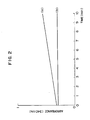
- Fig. 1 U.V. spectra of p-aminoacetophenone (a) and leucyl-4-acetylanilide (b) are shown.
- p-Aminoacetophenone shows an absorption between about 335 and about 355 nm in a buffer solution but contrary to p-aminoacetophenone, leucyl-4-acetylanilide which is a synthetic substrate obtained by peptide binding shows an absorption in a wavelength region shorter than about 335 nm. Accordingly, the reaction can be traced in the measurement wavelength of from 335 to 355 nm by the U.V. method. In this case, interference with other components in serum or plasma can be reduced in the region around this wavelength. Accordingly, an increase in U.V. absorption of p-aminoacetophenone released from the substrate can be accurately traced, resulting in an extremely minimized error in measurement data.
- aminoacetophenone derivative of the present invention shown by general formula (I)
- the activity of peptidase or protease for example, leucine aminopeptidase, ⁇ -glutamyltranspeptidase, plasminogen, antithrombin, etc.
- examples of the aminoacetophenone derivative of the present invention which are preferred as the substrate include substrates of Examples 1, 2, 3, 4, 6, 8 and 14 and the following tripeptide substrates.
- the new aminoacetophenone derivatives are provided; using these compounds as substrates for determination of enzyme activity, peptidase or protease can be measured at a wavelength region of from 335 to 355 nm in which measurement data are hardly affected by hemoglobin or bilirubin, etc. present in serum or plasma. It is also possible to determine the enzyme activity by the initial velocity method so that it is unnecessary to take a blank for every sample, resulting in rapid measurement and handling a large number of samples. In addition, such a method is readily applicable to an automated analysis equipment widely spread in medical facilities like hospitals, etc.
- the method for determination of a peptidase activity or a protease activity using the novel aminoacetophenone derivatives of the present invention has solved the problems encountered in the prior art.
- the method of the present invention is also characterized by various advantages and characteristics. Therefore, the method of the present invention is extremely useful for determining the peptidase activity or protease activity in daily clinical inspections.
- Example 3 After 0.96 g of: obtained in Example 3 was dissolved in 10 ml of anhydrous methanol, 0.1 ml of 28% CH3ONa-MeOH was added to the solution. The mixture was stirred at 5°C overnight to react them. After completion of the reaction, 100 ml of AcOEt was added to the reaction mixture followed by washing with saturated sodium chloride aqueous solution, cold 5% HCl, saturated NaHCO3 aqueous solution and then saturated sodium chloride aqueous solution. The organic phase was then dried over anhydrous magnesium sulfate. The solvent was distilled off in vacuum to give the crude product. The crude product was recrystallized from AcOEt/n Hex to give 0.56 g of: (yield, 64%). Melting point, 129 - 136°C.
- Example 6 After 6.74 g of: obtained in Example 6, 6.70 g of BOC-D-Phe-Pro-OH and 2.83 g of HOBt were dissolved in 155 ml of DMF. The solution was then cooled to 5°C and 18.5 ml of NEM was added to the solution and 3.89 g of WSCD was further added to the mixture. After reacting at 5°C for 4 hours, the mixture was further reacted at room temperature overnight.
- Example 9 After 25 g of: obtained in Example 9 was dissolved in 140 ml of AcOEt, the solution was heated to 30°C and a solution of 35 g of TsOH in 90 ml of AcOEt was added to the solution. The mixture was reacted for 3 hours while stirring. After completion of the reaction, the precipitated crystals were collected by filtration and dried in vacuum to give 20.1 g of the product (yield, 71%). Melting point: 174-183°C Elemental analysis: C29H36N3O7S ⁇ 1/2H2 C (%) H (%) N (%) Calcd. 60.09 6.40 7.25 Found 60.17 6.20 6.99
- Example 10 After 7.41 g of: obtained in Example 10 was dissolved in 26 ml of DMF, the solution was cooled to 5°C and 5.04 g of BOC-Phe-SDP powders were added to the solution. The mixture was reacted for 4 hours at 5°C and then at room temperature overnight. After completion of the reaction, DMF was distilled off in vacuum and the residue was dissolved in 190 ml of AcOEt. After washing with saturated sodium chloride aqueous solution, cold 5% HCl, saturated NaHCO3 aqueous solution and then saturated sodium chloride aqueous solution, the organic phase was dried over anhydrous magnesium sulfate. The solvent was distilled off in vacuum to give 7.48 g of the product as crystals (yield, 90%). Melting point: 167-172°C Elemental analysis: C36H44N4O7 C (%) H (%) N (%) Calcd. 66.96 7.02 8.67 Found 66.81 7.13 8.59
- Example 11 After 7.41 g of: obtained in Example 11 was dissolved in 34 ml of AcOEt, a solution of 8.75 g of TsOH in 23 ml of AcOEt was added to the solution. The mixture was reacted for 3 hours at 30°C. Then 60 ml of ether was added to the reaction mixture to precipitate crystals. The crystals were collected by filtration and dried in vacuum to give 7.48 g of the product (yield, 90%). Melting point: 189-193°C Elemental analysis: C38H44N4O8S C (%) H (%) N (%) Calcd. 63.67 6.19 7.82 Found 63.64 6.37 7.62
- Example 12 After 3.58 g of: obtained in Example 12 was dissolved in 40 ml of DMF, the solution was cooled to 5°C and 0.65 ml of NEM was added to the solution and 2.31 g of powders were then added to the mixture. After reacting at 5°C for 4 hours, the mixture was further reacted at room temperature overnight. After completion of the reaction, DMF was distilled off in vacuum and the residue was dissolved in 200 ml of AcOEt followed by washing with saturated sodium chloride aqueous solution, cold 5% HCl, saturated NaHCO3 aqueous solution and then saturated sodium chloride aqueous solution. The organic phase was then dried over anhydrous magnesium sulfate.
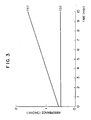
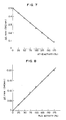
- the activity of the serum used was found to be 135 (IU/l) units.
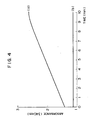
- the results are shown by a straight line for 10 minutes without any time lag with passage of time, indicating that the results are usable for an automated analysis equipment.
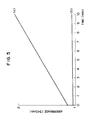
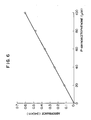
- the results show a straight line crossing the origin up to the concentration of 100 ⁇ M. This indicates that the results are sufficiently quantitative.
Landscapes
- Chemical & Material Sciences (AREA)
- Organic Chemistry (AREA)
- Life Sciences & Earth Sciences (AREA)
- Health & Medical Sciences (AREA)
- Proteomics, Peptides & Aminoacids (AREA)
- Biochemistry (AREA)
- Biophysics (AREA)
- General Health & Medical Sciences (AREA)
- Genetics & Genomics (AREA)
- Molecular Biology (AREA)
- Medicinal Chemistry (AREA)
- Zoology (AREA)
- Engineering & Computer Science (AREA)
- Wood Science & Technology (AREA)
- Analytical Chemistry (AREA)
- Biotechnology (AREA)
- Immunology (AREA)
- Microbiology (AREA)
- Physics & Mathematics (AREA)
- Bioinformatics & Cheminformatics (AREA)
- General Engineering & Computer Science (AREA)
- Measuring Or Testing Involving Enzymes Or Micro-Organisms (AREA)
- Peptides Or Proteins (AREA)
- Organic Low-Molecular-Weight Compounds And Preparation Thereof (AREA)
Applications Claiming Priority (2)
| Application Number | Priority Date | Filing Date | Title |
|---|---|---|---|
| JP137748/89 | 1989-05-31 | ||
| JP1137748A JP2660864B2 (ja) | 1989-05-31 | 1989-05-31 | アミノアセトフェノン誘導体及びそれを用いた酵素活性測定法 |
Publications (2)
| Publication Number | Publication Date |
|---|---|
| EP0400611A2 true EP0400611A2 (de) | 1990-12-05 |
| EP0400611A3 EP0400611A3 (de) | 1991-05-15 |
Family
ID=15205909
Family Applications (1)
| Application Number | Title | Priority Date | Filing Date |
|---|---|---|---|
| EP19900110271 Withdrawn EP0400611A3 (de) | 1989-05-31 | 1990-05-30 | Aminoacetophenonderivate und Verfahren zur Bestimmung einer Enzymaktivität unter deren Verwendung |
Country Status (2)
| Country | Link |
|---|---|
| EP (1) | EP0400611A3 (de) |
| JP (1) | JP2660864B2 (de) |
Family Cites Families (4)
| Publication number | Priority date | Publication date | Assignee | Title |
|---|---|---|---|---|
| JPS6272656A (ja) * | 1985-09-27 | 1987-04-03 | Showa Denko Kk | リジン誘導体及び蛋白分解酵素阻害剤 |
| AU598750B2 (en) * | 1985-09-27 | 1990-07-05 | Mitsubishi Chemical Corporation | Phenylalanine derivative and proteinase inhibitor |
| JPS6324095A (ja) * | 1986-03-27 | 1988-02-01 | Nippon Kokan Kk <Nkk> | 電気めつき方法及びその装置 |
| JPH01139561A (ja) * | 1987-11-26 | 1989-06-01 | Showa Denko Kk | グアニジン誘導体および酵素阻害剤 |
-
1989
- 1989-05-31 JP JP1137748A patent/JP2660864B2/ja not_active Expired - Lifetime
-
1990
- 1990-05-30 EP EP19900110271 patent/EP0400611A3/de not_active Withdrawn
Also Published As
| Publication number | Publication date |
|---|---|
| EP0400611A3 (de) | 1991-05-15 |
| JP2660864B2 (ja) | 1997-10-08 |
| JPH032153A (ja) | 1991-01-08 |
Similar Documents
| Publication | Publication Date | Title |
|---|---|---|
| US4028318A (en) | Chromogenic enzyme substrates | |
| US4070245A (en) | Substrate for the quantitative determination of proteolytic enzymes | |
| EP0046742B1 (de) | Peptidsubstrate zum Bestimmen der Proteaseaktivität | |
| JPH0616719B2 (ja) | 酵素の検出および測定用色原体基質 | |
| JPS63173600A (ja) | プロテア−ゼの定量方法およびそれに使用する試薬 | |
| Shuman et al. | Structure-Activity Study of Tripeptide Thrombin Inhibitors Using. alpha.-Alkyl Amino Acids and Other Conformationally Constrained Amino Acid Substitutions | |
| US4221706A (en) | Chromogenic substrates | |
| PL109588B1 (en) | Method of producing new chromogenic substrates for enzymes | |
| GB2126720A (en) | A method for determination of enzyme activity | |
| Krafft et al. | [6] Synthetic approaches to continuous assays of retroviral proteases | |
| US4162941A (en) | Method for determining a proteolytic enzyme | |
| JP2887765B2 (ja) | ポリアルキレングリコール残基を含む対称ビペプチド、その製造方法およびプロテアーゼの検定における使用 | |
| KR20000057503A (ko) | 펩티드, 사람 펩시노오겐 i 또는 사람 펩신 i의 측정 방법,및 측정용 키트 | |
| JP3517712B2 (ja) | タンパク質溶解酵素のインヒビターを検出するための固相イムノアッセイ | |
| JP2896605B2 (ja) | 新しいペプチド基質,調整法及びプロティンc定量における用途 | |
| US4569907A (en) | Thiopeptolide substrates for vertebrate collagenase | |
| AU602527B2 (en) | Chromogenic compounds, a process for their preparation and their use | |
| JP2660864B2 (ja) | アミノアセトフェノン誘導体及びそれを用いた酵素活性測定法 | |
| US4474691A (en) | Chromophoric peptides, a process for their preparation, agents containing them and their use for determining DD-carboxypeptidases | |
| Fridkin et al. | Thiolysis of O-2, 4-dinitrophenyltyrosines: Spectrophotometric monitoring of the reaction and its use in peptide synthesis | |
| JP2890330B2 (ja) | ファクターXaを同定するためのペプチド基質 | |
| EP0505428B1 (de) | Chromogenes substrat | |
| JP2560058B2 (ja) | 新規なペプチド誘導体 | |
| US4596675A (en) | Novel thiopeptolide substrates for vertebrate collagenase | |
| EP0513863B1 (de) | Substrate für die Bestimmung von Enzymaktivität und Zwischenverbindungen für die Synthese dieser Substrate sowie Prozess der Herstellung der Zwischenverbindungen |
Legal Events
| Date | Code | Title | Description |
|---|---|---|---|
| PUAI | Public reference made under article 153(3) epc to a published international application that has entered the european phase |
Free format text: ORIGINAL CODE: 0009012 |
|
| AK | Designated contracting states |
Kind code of ref document: A2 Designated state(s): CH DE LI |
|
| PUAL | Search report despatched |
Free format text: ORIGINAL CODE: 0009013 |
|
| AK | Designated contracting states |
Kind code of ref document: A3 Designated state(s): CH DE LI |
|
| STAA | Information on the status of an ep patent application or granted ep patent |
Free format text: STATUS: THE APPLICATION HAS BEEN WITHDRAWN |
|
| 18W | Application withdrawn |
Withdrawal date: 19910925 |
|
| R18W | Application withdrawn (corrected) |
Effective date: 19910925 |