EP0397394A2 - Stereoreguläre Acrylonitril-Polymere und diese enthaltende Zusammensetzungen - Google Patents
Stereoreguläre Acrylonitril-Polymere und diese enthaltende Zusammensetzungen Download PDFInfo
- Publication number
- EP0397394A2 EP0397394A2 EP90304820A EP90304820A EP0397394A2 EP 0397394 A2 EP0397394 A2 EP 0397394A2 EP 90304820 A EP90304820 A EP 90304820A EP 90304820 A EP90304820 A EP 90304820A EP 0397394 A2 EP0397394 A2 EP 0397394A2
- Authority
- EP
- European Patent Office
- Prior art keywords
- polymer
- acid
- acrylonitrile polymer
- fraction
- acrylonitrile
- Prior art date
- Legal status (The legal status is an assumption and is not a legal conclusion. Google has not performed a legal analysis and makes no representation as to the accuracy of the status listed.)
- Granted
Links
- 229920002239 polyacrylonitrile Polymers 0.000 title claims abstract description 72
- 239000000203 mixture Substances 0.000 title claims abstract description 28
- 229920000642 polymer Polymers 0.000 claims abstract description 46
- 239000000835 fiber Substances 0.000 claims abstract description 40
- 239000002904 solvent Substances 0.000 claims abstract description 28
- 239000007864 aqueous solution Substances 0.000 claims abstract description 23
- 229910017053 inorganic salt Inorganic materials 0.000 claims abstract description 19
- 239000003960 organic solvent Substances 0.000 claims abstract description 13
- 239000002253 acid Substances 0.000 claims abstract description 12
- XLYOFNOQVPJJNP-UHFFFAOYSA-N water Substances O XLYOFNOQVPJJNP-UHFFFAOYSA-N 0.000 claims description 32
- ZMXDDKWLCZADIW-UHFFFAOYSA-N N,N-Dimethylformamide Chemical compound CN(C)C=O ZMXDDKWLCZADIW-UHFFFAOYSA-N 0.000 claims description 21
- GRYLNZFGIOXLOG-UHFFFAOYSA-N Nitric acid Chemical compound O[N+]([O-])=O GRYLNZFGIOXLOG-UHFFFAOYSA-N 0.000 claims description 16
- 229910017604 nitric acid Inorganic materials 0.000 claims description 16
- KWGKDLIKAYFUFQ-UHFFFAOYSA-M lithium chloride Chemical compound [Li+].[Cl-] KWGKDLIKAYFUFQ-UHFFFAOYSA-M 0.000 claims description 12
- QTBSBXVTEAMEQO-UHFFFAOYSA-N Acetic acid Chemical compound CC(O)=O QTBSBXVTEAMEQO-UHFFFAOYSA-N 0.000 claims description 6
- IAZDPXIOMUYVGZ-UHFFFAOYSA-N Dimethylsulphoxide Chemical compound CS(C)=O IAZDPXIOMUYVGZ-UHFFFAOYSA-N 0.000 claims description 6
- VEXZGXHMUGYJMC-UHFFFAOYSA-N Hydrochloric acid Chemical compound Cl VEXZGXHMUGYJMC-UHFFFAOYSA-N 0.000 claims description 6
- VLTRZXGMWDSKGL-UHFFFAOYSA-N perchloric acid Chemical compound OCl(=O)(=O)=O VLTRZXGMWDSKGL-UHFFFAOYSA-N 0.000 claims description 6
- YEJRWHAVMIAJKC-UHFFFAOYSA-N 4-Butyrolactone Chemical compound O=C1CCCO1 YEJRWHAVMIAJKC-UHFFFAOYSA-N 0.000 claims description 4
- KRHYYFGTRYWZRS-UHFFFAOYSA-N Fluorane Chemical compound F KRHYYFGTRYWZRS-UHFFFAOYSA-N 0.000 claims description 4
- QAOWNCQODCNURD-UHFFFAOYSA-N Sulfuric acid Chemical compound OS(O)(=O)=O QAOWNCQODCNURD-UHFFFAOYSA-N 0.000 claims description 4
- DTQVDTLACAAQTR-UHFFFAOYSA-N Trifluoroacetic acid Chemical compound OC(=O)C(F)(F)F DTQVDTLACAAQTR-UHFFFAOYSA-N 0.000 claims description 4
- JXTHNDFMNIQAHM-UHFFFAOYSA-N dichloroacetic acid Chemical compound OC(=O)C(Cl)Cl JXTHNDFMNIQAHM-UHFFFAOYSA-N 0.000 claims description 4
- PQXKHYXIUOZZFA-UHFFFAOYSA-M lithium fluoride Chemical compound [Li+].[F-] PQXKHYXIUOZZFA-UHFFFAOYSA-M 0.000 claims description 4
- 150000001298 alcohols Chemical class 0.000 claims description 3
- 150000002989 phenols Chemical class 0.000 claims description 3
- 150000003839 salts Chemical class 0.000 claims description 3
- BMYNFMYTOJXKLE-UHFFFAOYSA-N 3-azaniumyl-2-hydroxypropanoate Chemical compound NCC(O)C(O)=O BMYNFMYTOJXKLE-UHFFFAOYSA-N 0.000 claims description 2
- KMTRUDSVKNLOMY-UHFFFAOYSA-N Ethylene carbonate Chemical compound O=C1OCCO1 KMTRUDSVKNLOMY-UHFFFAOYSA-N 0.000 claims description 2
- FXHOOIRPVKKKFG-UHFFFAOYSA-N N,N-Dimethylacetamide Chemical compound CN(C)C(C)=O FXHOOIRPVKKKFG-UHFFFAOYSA-N 0.000 claims description 2
- 229960005215 dichloroacetic acid Drugs 0.000 claims description 2
- LTYRAPJYLUPLCI-UHFFFAOYSA-N glycolonitrile Chemical compound OCC#N LTYRAPJYLUPLCI-UHFFFAOYSA-N 0.000 claims description 2
- 229910052736 halogen Inorganic materials 0.000 claims description 2
- 150000002367 halogens Chemical class 0.000 claims description 2
- XMBWDFGMSWQBCA-UHFFFAOYSA-N hydrogen iodide Chemical compound I XMBWDFGMSWQBCA-UHFFFAOYSA-N 0.000 claims description 2
- 229940071870 hydroiodic acid Drugs 0.000 claims description 2
- 235000011007 phosphoric acid Nutrition 0.000 claims description 2
- 150000003016 phosphoric acids Chemical class 0.000 claims description 2
- IAHFWCOBPZCAEA-UHFFFAOYSA-N succinonitrile Chemical compound N#CCCC#N IAHFWCOBPZCAEA-UHFFFAOYSA-N 0.000 claims description 2
- YNJBWRMUSHSURL-UHFFFAOYSA-N trichloroacetic acid Chemical compound OC(=O)C(Cl)(Cl)Cl YNJBWRMUSHSURL-UHFFFAOYSA-N 0.000 claims description 2
- 239000004014 plasticizer Substances 0.000 abstract description 6
- 239000012266 salt solution Substances 0.000 abstract 1
- 238000006116 polymerization reaction Methods 0.000 description 26
- 238000000034 method Methods 0.000 description 21
- 150000001875 compounds Chemical class 0.000 description 18
- NLHHRLWOUZZQLW-UHFFFAOYSA-N Acrylonitrile Chemical compound C=CC#N NLHHRLWOUZZQLW-UHFFFAOYSA-N 0.000 description 14
- 238000009987 spinning Methods 0.000 description 14
- 239000000243 solution Substances 0.000 description 12
- 230000000052 comparative effect Effects 0.000 description 11
- UOHMMEJUHBCKEE-UHFFFAOYSA-N prehnitene Chemical compound CC1=CC=C(C)C(C)=C1C UOHMMEJUHBCKEE-UHFFFAOYSA-N 0.000 description 10
- OKKJLVBELUTLKV-UHFFFAOYSA-N Methanol Chemical compound OC OKKJLVBELUTLKV-UHFFFAOYSA-N 0.000 description 9
- YXFVVABEGXRONW-UHFFFAOYSA-N Toluene Chemical compound CC1=CC=CC=C1 YXFVVABEGXRONW-UHFFFAOYSA-N 0.000 description 9
- 229910052751 metal Inorganic materials 0.000 description 9
- 239000002184 metal Substances 0.000 description 9
- IJGRMHOSHXDMSA-UHFFFAOYSA-N Atomic nitrogen Chemical compound N#N IJGRMHOSHXDMSA-UHFFFAOYSA-N 0.000 description 8
- 150000002736 metal compounds Chemical class 0.000 description 8
- 239000003505 polymerization initiator Substances 0.000 description 8
- 230000005251 gamma ray Effects 0.000 description 7
- FYYHWMGAXLPEAU-UHFFFAOYSA-N Magnesium Chemical compound [Mg] FYYHWMGAXLPEAU-UHFFFAOYSA-N 0.000 description 6
- MZRVEZGGRBJDDB-UHFFFAOYSA-N N-Butyllithium Chemical compound [Li]CCCC MZRVEZGGRBJDDB-UHFFFAOYSA-N 0.000 description 6
- 238000005481 NMR spectroscopy Methods 0.000 description 6
- CTQNGGLPUBDAKN-UHFFFAOYSA-N O-Xylene Chemical group CC1=CC=CC=C1C CTQNGGLPUBDAKN-UHFFFAOYSA-N 0.000 description 6
- 229910052740 iodine Inorganic materials 0.000 description 6
- 229910052749 magnesium Inorganic materials 0.000 description 6
- 239000011777 magnesium Substances 0.000 description 6
- 229910052717 sulfur Inorganic materials 0.000 description 6
- 238000010521 absorption reaction Methods 0.000 description 5
- 230000001112 coagulating effect Effects 0.000 description 5
- 229910052739 hydrogen Inorganic materials 0.000 description 5
- 239000003999 initiator Substances 0.000 description 5
- 150000002681 magnesium compounds Chemical class 0.000 description 5
- 238000004519 manufacturing process Methods 0.000 description 5
- 150000002739 metals Chemical class 0.000 description 5
- 229910052757 nitrogen Inorganic materials 0.000 description 5
- 238000007493 shaping process Methods 0.000 description 5
- VGTPCRGMBIAPIM-UHFFFAOYSA-M sodium thiocyanate Chemical compound [Na+].[S-]C#N VGTPCRGMBIAPIM-UHFFFAOYSA-M 0.000 description 5
- 238000001644 13C nuclear magnetic resonance spectroscopy Methods 0.000 description 4
- XSQUKJJJFZCRTK-UHFFFAOYSA-N Urea Chemical compound NC(N)=O XSQUKJJJFZCRTK-UHFFFAOYSA-N 0.000 description 4
- -1 alkali metal amide compound Chemical class 0.000 description 4
- WQAQPCDUOCURKW-UHFFFAOYSA-N butanethiol Chemical compound CCCCS WQAQPCDUOCURKW-UHFFFAOYSA-N 0.000 description 4
- 239000004202 carbamide Substances 0.000 description 4
- 229910052799 carbon Inorganic materials 0.000 description 4
- 230000003197 catalytic effect Effects 0.000 description 4
- 238000005259 measurement Methods 0.000 description 4
- 239000007858 starting material Substances 0.000 description 4
- 239000008096 xylene Substances 0.000 description 4
- UHOVQNZJYSORNB-UHFFFAOYSA-N Benzene Chemical compound C1=CC=CC=C1 UHOVQNZJYSORNB-UHFFFAOYSA-N 0.000 description 3
- ZKSADANYBSWZAB-UHFFFAOYSA-N CCCCCC[Mg]CCCCCC Chemical compound CCCCCC[Mg]CCCCCC ZKSADANYBSWZAB-UHFFFAOYSA-N 0.000 description 3
- OYPRJOBELJOOCE-UHFFFAOYSA-N Calcium Chemical compound [Ca] OYPRJOBELJOOCE-UHFFFAOYSA-N 0.000 description 3
- IAZDPXIOMUYVGZ-WFGJKAKNSA-N Dimethyl sulfoxide Chemical compound [2H]C([2H])([2H])S(=O)C([2H])([2H])[2H] IAZDPXIOMUYVGZ-WFGJKAKNSA-N 0.000 description 3
- ZMZDMBWJUHKJPS-UHFFFAOYSA-M Thiocyanate anion Chemical compound [S-]C#N ZMZDMBWJUHKJPS-UHFFFAOYSA-M 0.000 description 3
- 229910052784 alkaline earth metal Inorganic materials 0.000 description 3
- 150000001342 alkaline earth metals Chemical class 0.000 description 3
- 125000002029 aromatic hydrocarbon group Chemical group 0.000 description 3
- 229910052790 beryllium Inorganic materials 0.000 description 3
- VRWRYXRXVZEJKF-UHFFFAOYSA-N beryllium;ethane Chemical compound [Be+2].[CH2-]C.[CH2-]C VRWRYXRXVZEJKF-UHFFFAOYSA-N 0.000 description 3
- 229910052791 calcium Inorganic materials 0.000 description 3
- 239000011575 calcium Substances 0.000 description 3
- 229920001577 copolymer Polymers 0.000 description 3
- 125000004093 cyano group Chemical group *C#N 0.000 description 3
- 238000010586 diagram Methods 0.000 description 3
- YHNWUQFTJNJVNU-UHFFFAOYSA-N magnesium;butane;ethane Chemical compound [Mg+2].[CH2-]C.CCC[CH2-] YHNWUQFTJNJVNU-UHFFFAOYSA-N 0.000 description 3
- 239000000047 product Substances 0.000 description 3
- 229920000576 tactic polymer Polymers 0.000 description 3
- 150000003623 transition metal compounds Chemical class 0.000 description 3
- BFIMMTCNYPIMRN-UHFFFAOYSA-N 1,2,3,5-tetramethylbenzene Chemical compound CC1=CC(C)=C(C)C(C)=C1 BFIMMTCNYPIMRN-UHFFFAOYSA-N 0.000 description 2
- OKTJSMMVPCPJKN-UHFFFAOYSA-N Carbon Chemical compound [C] OKTJSMMVPCPJKN-UHFFFAOYSA-N 0.000 description 2
- 229920000049 Carbon (fiber) Polymers 0.000 description 2
- DGAQECJNVWCQMB-PUAWFVPOSA-M Ilexoside XXIX Chemical compound C[C@@H]1CC[C@@]2(CC[C@@]3(C(=CC[C@H]4[C@]3(CC[C@@H]5[C@@]4(CC[C@@H](C5(C)C)OS(=O)(=O)[O-])C)C)[C@@H]2[C@]1(C)O)C)C(=O)O[C@H]6[C@@H]([C@H]([C@@H]([C@H](O6)CO)O)O)O.[Na+] DGAQECJNVWCQMB-PUAWFVPOSA-M 0.000 description 2
- WHXSMMKQMYFTQS-UHFFFAOYSA-N Lithium Chemical compound [Li] WHXSMMKQMYFTQS-UHFFFAOYSA-N 0.000 description 2
- BAPJBEWLBFYGME-UHFFFAOYSA-N Methyl acrylate Chemical compound COC(=O)C=C BAPJBEWLBFYGME-UHFFFAOYSA-N 0.000 description 2
- IMNFDUFMRHMDMM-UHFFFAOYSA-N N-Heptane Chemical compound CCCCCCC IMNFDUFMRHMDMM-UHFFFAOYSA-N 0.000 description 2
- UFWIBTONFRDIAS-UHFFFAOYSA-N Naphthalene Chemical compound C1=CC=CC2=CC=CC=C21 UFWIBTONFRDIAS-UHFFFAOYSA-N 0.000 description 2
- URLKBWYHVLBVBO-UHFFFAOYSA-N Para-Xylene Chemical group CC1=CC=C(C)C=C1 URLKBWYHVLBVBO-UHFFFAOYSA-N 0.000 description 2
- 241000120020 Tela Species 0.000 description 2
- HCHKCACWOHOZIP-UHFFFAOYSA-N Zinc Chemical compound [Zn] HCHKCACWOHOZIP-UHFFFAOYSA-N 0.000 description 2
- 229910052782 aluminium Inorganic materials 0.000 description 2
- XAGFODPZIPBFFR-UHFFFAOYSA-N aluminium Chemical compound [Al] XAGFODPZIPBFFR-UHFFFAOYSA-N 0.000 description 2
- ATBAMAFKBVZNFJ-UHFFFAOYSA-N beryllium atom Chemical compound [Be] ATBAMAFKBVZNFJ-UHFFFAOYSA-N 0.000 description 2
- 238000009835 boiling Methods 0.000 description 2
- 239000004917 carbon fiber Substances 0.000 description 2
- ZUOUZKKEUPVFJK-UHFFFAOYSA-N diphenyl Chemical compound C1=CC=CC=C1C1=CC=CC=C1 ZUOUZKKEUPVFJK-UHFFFAOYSA-N 0.000 description 2
- USIUVYZYUHIAEV-UHFFFAOYSA-N diphenyl ether Chemical compound C=1C=CC=CC=1OC1=CC=CC=C1 USIUVYZYUHIAEV-UHFFFAOYSA-N 0.000 description 2
- 238000010438 heat treatment Methods 0.000 description 2
- 150000002430 hydrocarbons Chemical group 0.000 description 2
- 239000012770 industrial material Substances 0.000 description 2
- 239000007788 liquid Substances 0.000 description 2
- 229910052744 lithium Inorganic materials 0.000 description 2
- IVSZLXZYQVIEFR-UHFFFAOYSA-N m-xylene Chemical group CC1=CC=CC(C)=C1 IVSZLXZYQVIEFR-UHFFFAOYSA-N 0.000 description 2
- 239000000463 material Substances 0.000 description 2
- 238000002844 melting Methods 0.000 description 2
- 230000008018 melting Effects 0.000 description 2
- VNWKTOKETHGBQD-UHFFFAOYSA-N methane Chemical compound C VNWKTOKETHGBQD-UHFFFAOYSA-N 0.000 description 2
- 239000000178 monomer Substances 0.000 description 2
- 230000000737 periodic effect Effects 0.000 description 2
- 230000000704 physical effect Effects 0.000 description 2
- 230000000379 polymerizing effect Effects 0.000 description 2
- 229910052708 sodium Inorganic materials 0.000 description 2
- 239000011734 sodium Substances 0.000 description 2
- 238000001179 sorption measurement Methods 0.000 description 2
- 229910052725 zinc Inorganic materials 0.000 description 2
- 239000011701 zinc Substances 0.000 description 2
- JIAARYAFYJHUJI-UHFFFAOYSA-L zinc dichloride Chemical compound [Cl-].[Cl-].[Zn+2] JIAARYAFYJHUJI-UHFFFAOYSA-L 0.000 description 2
- BHHYHSUAOQUXJK-UHFFFAOYSA-L zinc fluoride Chemical compound F[Zn]F BHHYHSUAOQUXJK-UHFFFAOYSA-L 0.000 description 2
- WHQOKFZWSDOTQP-UHFFFAOYSA-N 2,3-dihydroxypropyl 4-aminobenzoate Chemical compound NC1=CC=C(C(=O)OCC(O)CO)C=C1 WHQOKFZWSDOTQP-UHFFFAOYSA-N 0.000 description 1
- OEPOKWHJYJXUGD-UHFFFAOYSA-N 2-(3-phenylmethoxyphenyl)-1,3-thiazole-4-carbaldehyde Chemical compound O=CC1=CSC(C=2C=C(OCC=3C=CC=CC=3)C=CC=2)=N1 OEPOKWHJYJXUGD-UHFFFAOYSA-N 0.000 description 1
- CPELXLSAUQHCOX-UHFFFAOYSA-M Bromide Chemical compound [Br-] CPELXLSAUQHCOX-UHFFFAOYSA-M 0.000 description 1
- WKBOTKDWSSQWDR-UHFFFAOYSA-N Bromine atom Chemical compound [Br] WKBOTKDWSSQWDR-UHFFFAOYSA-N 0.000 description 1
- WGZPYSVPKIZOMF-UHFFFAOYSA-N C(C)[Mg]N(CC)CC Chemical compound C(C)[Mg]N(CC)CC WGZPYSVPKIZOMF-UHFFFAOYSA-N 0.000 description 1
- HQQXFHCBRUIMSD-UHFFFAOYSA-N C1(=CC=CC=C1)CC[Ca] Chemical compound C1(=CC=CC=C1)CC[Ca] HQQXFHCBRUIMSD-UHFFFAOYSA-N 0.000 description 1
- YMTKZUROOGUACT-UHFFFAOYSA-N CC(C)CC[Mg]CCC(C)C Chemical compound CC(C)CC[Mg]CCC(C)C YMTKZUROOGUACT-UHFFFAOYSA-N 0.000 description 1
- WXJHKVKWWWQZER-UHFFFAOYSA-N CCC[Ba]CCC Chemical compound CCC[Ba]CCC WXJHKVKWWWQZER-UHFFFAOYSA-N 0.000 description 1
- ABXKXVWOKXSBNR-UHFFFAOYSA-N CCC[Mg]CCC Chemical compound CCC[Mg]CCC ABXKXVWOKXSBNR-UHFFFAOYSA-N 0.000 description 1
- VLPNUWNKSJVFJY-UHFFFAOYSA-N CC[Mg]C Chemical compound CC[Mg]C VLPNUWNKSJVFJY-UHFFFAOYSA-N 0.000 description 1
- OBBRHJBMQXGEEK-UHFFFAOYSA-N COCC[Mg] Chemical compound COCC[Mg] OBBRHJBMQXGEEK-UHFFFAOYSA-N 0.000 description 1
- TXAYJIFDCYDAFU-UHFFFAOYSA-N CSCC[Mg] Chemical compound CSCC[Mg] TXAYJIFDCYDAFU-UHFFFAOYSA-N 0.000 description 1
- ZASAJMJGPSLNJZ-UHFFFAOYSA-N C[Si](C)(C)CC[Mg] Chemical compound C[Si](C)(C)CC[Mg] ZASAJMJGPSLNJZ-UHFFFAOYSA-N 0.000 description 1
- CURLTUGMZLYLDI-UHFFFAOYSA-N Carbon dioxide Chemical compound O=C=O CURLTUGMZLYLDI-UHFFFAOYSA-N 0.000 description 1
- VEXZGXHMUGYJMC-UHFFFAOYSA-M Chloride anion Chemical compound [Cl-] VEXZGXHMUGYJMC-UHFFFAOYSA-M 0.000 description 1
- ZAMOUSCENKQFHK-UHFFFAOYSA-N Chlorine atom Chemical compound [Cl] ZAMOUSCENKQFHK-UHFFFAOYSA-N 0.000 description 1
- QQWBXRUCDIOFDM-UHFFFAOYSA-M F[Mg]Cc1ccccc1 Chemical compound F[Mg]Cc1ccccc1 QQWBXRUCDIOFDM-UHFFFAOYSA-M 0.000 description 1
- PXGOKWXKJXAPGV-UHFFFAOYSA-N Fluorine Chemical compound FF PXGOKWXKJXAPGV-UHFFFAOYSA-N 0.000 description 1
- 239000007818 Grignard reagent Substances 0.000 description 1
- UFHFLCQGNIYNRP-UHFFFAOYSA-N Hydrogen Chemical compound [H][H] UFHFLCQGNIYNRP-UHFFFAOYSA-N 0.000 description 1
- VVQNEPGJFQJSBK-UHFFFAOYSA-N Methyl methacrylate Chemical compound COC(=O)C(C)=C VVQNEPGJFQJSBK-UHFFFAOYSA-N 0.000 description 1
- GYCMBHHDWRMZGG-UHFFFAOYSA-N Methylacrylonitrile Chemical compound CC(=C)C#N GYCMBHHDWRMZGG-UHFFFAOYSA-N 0.000 description 1
- ZLMJMSJWJFRBEC-UHFFFAOYSA-N Potassium Chemical compound [K] ZLMJMSJWJFRBEC-UHFFFAOYSA-N 0.000 description 1
- XTXRWKRVRITETP-UHFFFAOYSA-N Vinyl acetate Chemical compound CC(=O)OC=C XTXRWKRVRITETP-UHFFFAOYSA-N 0.000 description 1
- 239000011954 Ziegler–Natta catalyst Substances 0.000 description 1
- HXEMAHFTVFVYMX-UHFFFAOYSA-M [Br-].CC[Ca+] Chemical compound [Br-].CC[Ca+] HXEMAHFTVFVYMX-UHFFFAOYSA-M 0.000 description 1
- UFCYHWOSKZSNMJ-UHFFFAOYSA-M [I-].C(CCC)[Ca+] Chemical compound [I-].C(CCC)[Ca+] UFCYHWOSKZSNMJ-UHFFFAOYSA-M 0.000 description 1
- SNIYGPDAYLBEMK-UHFFFAOYSA-M [I-].[Mg+]C1=CC=CC=C1 Chemical compound [I-].[Mg+]C1=CC=CC=C1 SNIYGPDAYLBEMK-UHFFFAOYSA-M 0.000 description 1
- ICFXEXDVIKJENI-UHFFFAOYSA-N [Li].C1(=CC=CC=C1)N(C1=CC=CC=C1)CC[Zn]CC Chemical compound [Li].C1(=CC=CC=C1)N(C1=CC=CC=C1)CC[Zn]CC ICFXEXDVIKJENI-UHFFFAOYSA-N 0.000 description 1
- XATBLMRJQUUXPN-UHFFFAOYSA-N [Li].[Li].C(CCC)C(C)([Zn]CC)CCCC Chemical compound [Li].[Li].C(CCC)C(C)([Zn]CC)CCCC XATBLMRJQUUXPN-UHFFFAOYSA-N 0.000 description 1
- AOAJSDIIVLNNBM-UHFFFAOYSA-N [Mg]CCC1=CC=CC=C1 Chemical compound [Mg]CCC1=CC=CC=C1 AOAJSDIIVLNNBM-UHFFFAOYSA-N 0.000 description 1
- 150000007513 acids Chemical class 0.000 description 1
- 239000000654 additive Substances 0.000 description 1
- 125000001931 aliphatic group Chemical group 0.000 description 1
- 150000001338 aliphatic hydrocarbons Chemical class 0.000 description 1
- 229910052783 alkali metal Inorganic materials 0.000 description 1
- 150000004703 alkoxides Chemical class 0.000 description 1
- 125000003545 alkoxy group Chemical group 0.000 description 1
- 125000000217 alkyl group Chemical group 0.000 description 1
- 125000005103 alkyl silyl group Chemical group 0.000 description 1
- 125000004414 alkyl thio group Chemical group 0.000 description 1
- ZRGUXTGDSGGHLR-UHFFFAOYSA-K aluminum;triperchlorate Chemical compound [Al+3].[O-]Cl(=O)(=O)=O.[O-]Cl(=O)(=O)=O.[O-]Cl(=O)(=O)=O ZRGUXTGDSGGHLR-UHFFFAOYSA-K 0.000 description 1
- 125000003277 amino group Chemical group 0.000 description 1
- 238000004458 analytical method Methods 0.000 description 1
- 238000010539 anionic addition polymerization reaction Methods 0.000 description 1
- 150000004945 aromatic hydrocarbons Chemical class 0.000 description 1
- 229910052788 barium Inorganic materials 0.000 description 1
- DSAJWYNOEDNPEQ-UHFFFAOYSA-N barium atom Chemical compound [Ba] DSAJWYNOEDNPEQ-UHFFFAOYSA-N 0.000 description 1
- 150000001553 barium compounds Chemical class 0.000 description 1
- OOULUYZFLXDWDQ-UHFFFAOYSA-L barium perchlorate Chemical compound [Ba+2].[O-]Cl(=O)(=O)=O.[O-]Cl(=O)(=O)=O OOULUYZFLXDWDQ-UHFFFAOYSA-L 0.000 description 1
- 150000001573 beryllium compounds Chemical class 0.000 description 1
- 230000015572 biosynthetic process Effects 0.000 description 1
- 239000004305 biphenyl Substances 0.000 description 1
- 235000010290 biphenyl Nutrition 0.000 description 1
- GDTBXPJZTBHREO-UHFFFAOYSA-N bromine Substances BrBr GDTBXPJZTBHREO-UHFFFAOYSA-N 0.000 description 1
- 229910052794 bromium Inorganic materials 0.000 description 1
- 229910052793 cadmium Inorganic materials 0.000 description 1
- BDOSMKKIYDKNTQ-UHFFFAOYSA-N cadmium atom Chemical compound [Cd] BDOSMKKIYDKNTQ-UHFFFAOYSA-N 0.000 description 1
- 229940043430 calcium compound Drugs 0.000 description 1
- 150000001674 calcium compounds Chemical class 0.000 description 1
- VZDMFNJJUXFAIU-UHFFFAOYSA-N calcium;benzene Chemical compound [Ca+2].C1=CC=[C-]C=C1.C1=CC=[C-]C=C1 VZDMFNJJUXFAIU-UHFFFAOYSA-N 0.000 description 1
- 150000001721 carbon Chemical group 0.000 description 1
- 235000011089 carbon dioxide Nutrition 0.000 description 1
- 239000003054 catalyst Substances 0.000 description 1
- 239000007795 chemical reaction product Substances 0.000 description 1
- 239000000460 chlorine Substances 0.000 description 1
- 229910052801 chlorine Inorganic materials 0.000 description 1
- QSWDMMVNRMROPK-UHFFFAOYSA-K chromium(3+) trichloride Chemical compound [Cl-].[Cl-].[Cl-].[Cr+3] QSWDMMVNRMROPK-UHFFFAOYSA-K 0.000 description 1
- 238000001816 cooling Methods 0.000 description 1
- 229910000365 copper sulfate Inorganic materials 0.000 description 1
- ARUVKPQLZAKDPS-UHFFFAOYSA-L copper(II) sulfate Chemical compound [Cu+2].[O-][S+2]([O-])([O-])[O-] ARUVKPQLZAKDPS-UHFFFAOYSA-L 0.000 description 1
- 238000004042 decolorization Methods 0.000 description 1
- 238000000354 decomposition reaction Methods 0.000 description 1
- KZLUHGRPVSRSHI-UHFFFAOYSA-N dimethylmagnesium Chemical compound C[Mg]C KZLUHGRPVSRSHI-UHFFFAOYSA-N 0.000 description 1
- 238000000578 dry spinning Methods 0.000 description 1
- 230000000694 effects Effects 0.000 description 1
- 238000002474 experimental method Methods 0.000 description 1
- 239000002657 fibrous material Substances 0.000 description 1
- 238000001914 filtration Methods 0.000 description 1
- 229910052731 fluorine Inorganic materials 0.000 description 1
- 239000011737 fluorine Substances 0.000 description 1
- 150000004795 grignard reagents Chemical class 0.000 description 1
- 125000005843 halogen group Chemical group 0.000 description 1
- 125000000623 heterocyclic group Chemical group 0.000 description 1
- 239000001257 hydrogen Substances 0.000 description 1
- 230000002401 inhibitory effect Effects 0.000 description 1
- 230000000977 initiatory effect Effects 0.000 description 1
- 230000010354 integration Effects 0.000 description 1
- PNDPGZBMCMUPRI-UHFFFAOYSA-N iodine Chemical compound II PNDPGZBMCMUPRI-UHFFFAOYSA-N 0.000 description 1
- 230000001678 irradiating effect Effects 0.000 description 1
- WRYKIHMRDIOPSI-UHFFFAOYSA-N magnesium;benzene Chemical compound [Mg+2].C1=CC=[C-]C=C1.C1=CC=[C-]C=C1 WRYKIHMRDIOPSI-UHFFFAOYSA-N 0.000 description 1
- HFTSQAKJLBPKBD-UHFFFAOYSA-N magnesium;butan-1-olate Chemical compound [Mg+2].CCCC[O-].CCCC[O-] HFTSQAKJLBPKBD-UHFFFAOYSA-N 0.000 description 1
- KJJBSBKRXUVBMX-UHFFFAOYSA-N magnesium;butane Chemical compound [Mg+2].CCC[CH2-].CCC[CH2-] KJJBSBKRXUVBMX-UHFFFAOYSA-N 0.000 description 1
- LWLPYZUDBNFNAH-UHFFFAOYSA-M magnesium;butane;bromide Chemical compound [Mg+2].[Br-].CCC[CH2-] LWLPYZUDBNFNAH-UHFFFAOYSA-M 0.000 description 1
- TUPQEGQHLZFSAP-UHFFFAOYSA-N magnesium;diethylazanide Chemical compound [Mg+2].CC[N-]CC.CC[N-]CC TUPQEGQHLZFSAP-UHFFFAOYSA-N 0.000 description 1
- TXZBQHZEKIROSD-UHFFFAOYSA-N magnesium;diphenylazanide Chemical compound [Mg+2].C=1C=CC=CC=1[N-]C1=CC=CC=C1.C=1C=CC=CC=1[N-]C1=CC=CC=C1 TXZBQHZEKIROSD-UHFFFAOYSA-N 0.000 description 1
- DLPASUVGCQPFFO-UHFFFAOYSA-N magnesium;ethane Chemical compound [Mg+2].[CH2-]C.[CH2-]C DLPASUVGCQPFFO-UHFFFAOYSA-N 0.000 description 1
- YCCXQARVHOPWFJ-UHFFFAOYSA-M magnesium;ethane;chloride Chemical compound [Mg+2].[Cl-].[CH2-]C YCCXQARVHOPWFJ-UHFFFAOYSA-M 0.000 description 1
- XDKQUSKHRIUJEO-UHFFFAOYSA-N magnesium;ethanolate Chemical compound [Mg+2].CC[O-].CC[O-] XDKQUSKHRIUJEO-UHFFFAOYSA-N 0.000 description 1
- WSEUPCCOBFOBOA-UHFFFAOYSA-L magnesium;methanethiolate Chemical compound [Mg+2].[S-]C.[S-]C WSEUPCCOBFOBOA-UHFFFAOYSA-L 0.000 description 1
- CRGZYKWWYNQGEC-UHFFFAOYSA-N magnesium;methanolate Chemical compound [Mg+2].[O-]C.[O-]C CRGZYKWWYNQGEC-UHFFFAOYSA-N 0.000 description 1
- BFRJXURCBYWDDT-UHFFFAOYSA-N magnesium;trimethylsilanide Chemical compound [Mg+2].C[Si-](C)C.C[Si-](C)C BFRJXURCBYWDDT-UHFFFAOYSA-N 0.000 description 1
- 229910021645 metal ion Inorganic materials 0.000 description 1
- 150000007522 mineralic acids Chemical class 0.000 description 1
- 238000002156 mixing Methods 0.000 description 1
- 125000004433 nitrogen atom Chemical group N* 0.000 description 1
- 239000012454 non-polar solvent Substances 0.000 description 1
- 229940078552 o-xylene Drugs 0.000 description 1
- 150000007524 organic acids Chemical class 0.000 description 1
- 235000005985 organic acids Nutrition 0.000 description 1
- 150000002894 organic compounds Chemical class 0.000 description 1
- MJKYCJBIICJHRD-UHFFFAOYSA-N pentane-2,4-dione;vanadium Chemical compound [V].CC(=O)CC(C)=O MJKYCJBIICJHRD-UHFFFAOYSA-N 0.000 description 1
- 239000002798 polar solvent Substances 0.000 description 1
- 239000002685 polymerization catalyst Substances 0.000 description 1
- 229910052700 potassium Inorganic materials 0.000 description 1
- 239000011591 potassium Substances 0.000 description 1
- 239000007870 radical polymerization initiator Substances 0.000 description 1
- 239000011541 reaction mixture Substances 0.000 description 1
- 238000001953 recrystallisation Methods 0.000 description 1
- KIWUVOGUEXMXSV-UHFFFAOYSA-N rhodanine Chemical class O=C1CSC(=S)N1 KIWUVOGUEXMXSV-UHFFFAOYSA-N 0.000 description 1
- 238000005070 sampling Methods 0.000 description 1
- BAZAXWOYCMUHIX-UHFFFAOYSA-M sodium perchlorate Chemical compound [Na+].[O-]Cl(=O)(=O)=O BAZAXWOYCMUHIX-UHFFFAOYSA-M 0.000 description 1
- 229910001488 sodium perchlorate Inorganic materials 0.000 description 1
- 229910052712 strontium Inorganic materials 0.000 description 1
- CIOAGBVUUVVLOB-UHFFFAOYSA-N strontium atom Chemical compound [Sr] CIOAGBVUUVVLOB-UHFFFAOYSA-N 0.000 description 1
- 239000000126 substance Substances 0.000 description 1
- 125000001424 substituent group Chemical group 0.000 description 1
- CZDYPVPMEAXLPK-UHFFFAOYSA-N tetramethylsilane Chemical compound C[Si](C)(C)C CZDYPVPMEAXLPK-UHFFFAOYSA-N 0.000 description 1
- LLZRNZOLAXHGLL-UHFFFAOYSA-J titanic acid Chemical compound O[Ti](O)(O)O LLZRNZOLAXHGLL-UHFFFAOYSA-J 0.000 description 1
- 150000003609 titanium compounds Chemical class 0.000 description 1
- XJDNKRIXUMDJCW-UHFFFAOYSA-J titanium tetrachloride Chemical compound Cl[Ti](Cl)(Cl)Cl XJDNKRIXUMDJCW-UHFFFAOYSA-J 0.000 description 1
- ZWYDDDAMNQQZHD-UHFFFAOYSA-L titanium(ii) chloride Chemical compound [Cl-].[Cl-].[Ti+2] ZWYDDDAMNQQZHD-UHFFFAOYSA-L 0.000 description 1
- YONPGGFAJWQGJC-UHFFFAOYSA-K titanium(iii) chloride Chemical compound Cl[Ti](Cl)Cl YONPGGFAJWQGJC-UHFFFAOYSA-K 0.000 description 1
- 230000009466 transformation Effects 0.000 description 1
- 229910052723 transition metal Inorganic materials 0.000 description 1
- 150000003624 transition metals Chemical class 0.000 description 1
- 150000003682 vanadium compounds Chemical class 0.000 description 1
- JBIQAPKSNFTACH-UHFFFAOYSA-K vanadium oxytrichloride Chemical compound Cl[V](Cl)(Cl)=O JBIQAPKSNFTACH-UHFFFAOYSA-K 0.000 description 1
- JTJFQBNJBPPZRI-UHFFFAOYSA-J vanadium tetrachloride Chemical compound Cl[V](Cl)(Cl)Cl JTJFQBNJBPPZRI-UHFFFAOYSA-J 0.000 description 1
- HQYCOEXWFMFWLR-UHFFFAOYSA-K vanadium(iii) chloride Chemical compound [Cl-].[Cl-].[Cl-].[V+3] HQYCOEXWFMFWLR-UHFFFAOYSA-K 0.000 description 1
- 230000004304 visual acuity Effects 0.000 description 1
- 238000005406 washing Methods 0.000 description 1
- 238000002166 wet spinning Methods 0.000 description 1
- 238000004383 yellowing Methods 0.000 description 1
- 235000005074 zinc chloride Nutrition 0.000 description 1
- 239000011592 zinc chloride Substances 0.000 description 1
Images

Classifications
-
- C—CHEMISTRY; METALLURGY
- C08—ORGANIC MACROMOLECULAR COMPOUNDS; THEIR PREPARATION OR CHEMICAL WORKING-UP; COMPOSITIONS BASED THEREON
- C08F—MACROMOLECULAR COMPOUNDS OBTAINED BY REACTIONS ONLY INVOLVING CARBON-TO-CARBON UNSATURATED BONDS
- C08F220/00—Copolymers of compounds having one or more unsaturated aliphatic radicals, each having only one carbon-to-carbon double bond, and only one being terminated by only one carboxyl radical or a salt, anhydride ester, amide, imide or nitrile thereof
- C08F220/02—Monocarboxylic acids having less than ten carbon atoms; Derivatives thereof
- C08F220/42—Nitriles
- C08F220/44—Acrylonitrile
-
- C—CHEMISTRY; METALLURGY
- C08—ORGANIC MACROMOLECULAR COMPOUNDS; THEIR PREPARATION OR CHEMICAL WORKING-UP; COMPOSITIONS BASED THEREON
- C08F—MACROMOLECULAR COMPOUNDS OBTAINED BY REACTIONS ONLY INVOLVING CARBON-TO-CARBON UNSATURATED BONDS
- C08F20/00—Homopolymers and copolymers of compounds having one or more unsaturated aliphatic radicals, each having only one carbon-to-carbon double bond, and only one being terminated by only one carboxyl radical or a salt, anhydride, ester, amide, imide or nitrile thereof
- C08F20/02—Monocarboxylic acids having less than ten carbon atoms, Derivatives thereof
- C08F20/42—Nitriles
- C08F20/44—Acrylonitrile
-
- D—TEXTILES; PAPER
- D01—NATURAL OR MAN-MADE THREADS OR FIBRES; SPINNING
- D01F—CHEMICAL FEATURES IN THE MANUFACTURE OF ARTIFICIAL FILAMENTS, THREADS, FIBRES, BRISTLES OR RIBBONS; APPARATUS SPECIALLY ADAPTED FOR THE MANUFACTURE OF CARBON FILAMENTS
- D01F6/00—Monocomponent artificial filaments or the like of synthetic polymers; Manufacture thereof
- D01F6/02—Monocomponent artificial filaments or the like of synthetic polymers; Manufacture thereof from homopolymers obtained by reactions only involving carbon-to-carbon unsaturated bonds
- D01F6/18—Monocomponent artificial filaments or the like of synthetic polymers; Manufacture thereof from homopolymers obtained by reactions only involving carbon-to-carbon unsaturated bonds from polymers of unsaturated nitriles, e.g. polyacrylonitrile, polyvinylidene cyanide
Definitions
- This invention relates to a stereoregular acrylonitrile polymer having a superior shapeability in the formation of a fiber or film, and a composition comprising this polymer.
- This stereoregular acrylonitrile polymer is useful for a fibrous material having a high mechanical strength and a superior heat resistance in the wet state, a material for the selective adsorption of metals, an electroconductive polymer, and a starting material for the production of a high-tenacity carbon fiber.
- An acrylonitrile polymer shows a good bulkiness, touch and heat-insulating property when shaped into a fiber, and if the acrylonitrile polymer is a copolymer, the fiber can be dyed in a sharp color and the dyed product has a good weatherability. Accordingly, the acrylonitrile polymer is widely used for articles of clothing.
- This acrylonitrile polymer is generally prepared by polymerizing acrylonitrile by using a radical polymerization initiator or an anion polymerization initiator, in the acrylonitrile polymer obtained according to this process, there is no regularity of the chemical structure when measured by the nuclear magnetic resonance (hereinafter referred to as "NMR") analysis.
- NMR nuclear magnetic resonance
- this polymer is dissolved in a solvent and shaped into a fiber or a film, the mechanical characteristics are not satisfactory because the crystallinity is low, and moreover, the fiber or film has a poor heat resistance, especially the heat resistance in the wet state.
- the acrylonitrile polymer is shaped into a fiber, since the dimensional stability, tensile strength and elastic modulus are poor, the development of high-grade articles of clothing is limited and the application to usual industrial materials or space industrial materials is similarly limited.
- an acrylonitrile polymer having a stereoregularity i.e., a highly stereoregular acrylonitrile polymer
- An acrylonitrile polymer having an isotactic triad fraction I (described hereinafter) of at least 0.4, which is obtained according to this process, is found to show an increased melting point in the presence of water.
- a fiber of this acrylonitrile polymer is characterized in that the Young's modulus in hot water is much higher than that of the conventional polyacrylonitrile fiber, and the heat resistance in the wet state is improved.
- the metal ion coordinates selectively at the meso position to the cyano group of the acrylonitrile polymer molecule [Polymer Journal, Vol. 18, page 277 (1986)], and therefore, the acrylonitrile polymer is suitable as a selective adsorption material for a metal or a starting material for the production of an electroconductive polymer. Moreover, since the acrylonitrile polymer has a high crystallinity, it is considered that the acrylonitrile polymer can be used as a starting material for the production of a carbon fiber having a high tenacity.
- ⁇ -ray process a high isotactic triad fraction I of from about 0.4 to about 0.8 is obtained, and the above-mentioned characteristic properties are obtained.
- this polymer is shaped into a film or a fiber, however, since the shapeability characteristics, especially the drawability, are poor, a film or fiber having a required high performance is difficult to obtain.
- An object of the present invention is to improve the shapeability of the conventional, highly stereoregular acrylonitrile polymer described above and provide a highly isotactic acrylonitrile polymer having a good drawability or a composition comprising the same.
- the inventors investigated the catalytic polymerization of acrylonitrile, independently of the above-mentioned ⁇ -ray process, and conducted experiments where acrylonitrile was polymerized at a temperature higher than the boiling point (77°C) of acrylonitrile under atmospheric pressure.
- acrylonitrile polymer having an isotactic fraction higher than 0.4 is obtained, and that if a polymer composition comprised of this acrylonitrile polymer and an appropriate solvent or plasticizer is spun into a fiber or shaped into a film, an acrylonitrile polymer having good shapeability characteristics such as a good drawability can be obtained (see Japanese Unexamined Patent Publication No. H1-203406).
- the inventors examined in detail the differences of the physical properties of the stereoregular acrylonitrile polymer obtained according to the conventional ⁇ -ray process and the stereoregular acrylonitrile polymer obtained according to the above-mentioned catalyst process, and as a result, found that in an acrylonitrile polymer having superior shapeability characteristics, such as drawability, the relationship (I + 3S) > 0.95 is established between the triad fractions I and S (described hereinafter).
- a linear acrylonitrile polymer having a viscosity average molecular weight of at least 50,000, which has a stereoregularity such that the polymer satisfies requirements of I > 0.4 and (I + 3S) > 0.95, wherein I represents the fraction of the isotactic triad and S represents the fraction of the syndiotactic triad.
- the stereoregular acrylonitrile copolymer of the present invention is used for the shaping operation in the form of a composition comprising a protonic acid defined below or an aqueous solution thereof, an aqueous solution of an inorganic salt, or a mixture of an organic solvent and an inorganic salt, as a solvent or plasticizer.
- the (I + 3S) of the obtained acrylonitrile polymer is larger than 0.95, the value I is as small as 0.2 to 0.4 and the acrylonitrile polymer does not possess the superior characteristics possessed by the stereoregular acrylonitrile polymer, such as a high mechanical strength and a high heat resistance in the wet state.
- i is the point of a complete isotacticity
- s is the point of a complete syndiotacticity
- h is the limiting point of the heterotacticity.
- q is the point at which the stereoregularity is completely absent and the configuration is completely random.
- x is an optional point in the triangular coordinate diagram, and the amplitudes of I (isotactic triad fraction mm), H (heterotactic triad fraction mr), and S (syndiotactic triad fraction rr) corresponding to this point x are lengths expressed by xi, xh, and xs, respectively.
- the isotactic triad fraction I referred to herein is one of the triad fractions, and is calculated from the peak intensity of carbon of the cyano group in 13C-NMR (nuclear magnetic resonance measurement apparatus using carbon isotope having a mass number of 13) of a solution of the polymer in deuterated dimethylsulfoxide. More specifically, the triad fraction I is determined by identifying the peak based on the pentad tacticity attributed by the method of Kamide et al described in the Polymer Journal, Volume 17, page 1291 (1985).
- the ratio of the sum of the intensities of the three peaks mmmm, mmmr and rmmr to the total peak intensity is the isotactic fraction.
- heterotactic triad fraction H is defined as the ratio of the sum of the intensities of the four peaks mmrm, mmrr, rmrm and rmrr
- the measurement conditions there are adopted a temperature of 80°C, an observation frequency range of 1,000 Hz, a data point of 16 k, an irradiation time of 6.5 ⁇ s (45° pulse), a pulse delay time of 2.5 s, a sampling time of 8.1 s, and an integration frequency of from 64 x 10 to 64 x 100.
- the stereoregular acrylonitrile polymer must have a linear molecule and a viscosity average molecular weight of at least 50,000.
- the stereoregular acrylonitrile polymer of the present invention includes not only an acrylonitrile homopolymer but also a copolymer comprising at least 50% by weight of acrylonitrile units.
- the monomer to be copolymerized with acrylonitrile there can be mentioned ethylenically unsaturated monomers, for example, methyl acrylate, methyl methacrylate, methacrylonitrile, vinyl acetate and vinylidene chloride.
- the stereoregular acrylonitrile polymer of the present invention is prepared according to a process in which the polymerization is carried out by using an organic metal compound as described below as the initiator.
- organic metal compounds containing an alkaline earth metal organic metal compounds, i.e., "art complexes", which comprise at least two metals selected from the group consisting of metals of groups I, II and III of the Periodic Table in combination, and Ziegler-Natta initiators comprising an organic metal compound containing an alkaline earth metal and a transition metal compound.
- organic metal compound containing an alkaline earth metal there can be used organic metal compounds containing beryllium, magnesium, calcium, strontium or barium.
- organic beryllium compound there can be mentioned compounds represented by the formula R2Be, such as diethylberyllium, n-propyl-beryllium, and n-butylethylberyllium, and Grignard type compounds represented by RBeX, such as phenylberyllium chloride and allylberyllium bromide.
- the calcium compound there can be mentioned compounds represented by the formula R2Ca, such as diphenylcalcium and phenylethylcalcium, and compounds represented by RCaX, such as ethylcalcium bromide and n-butylcalcium iodide.
- R2Ca diphenylcalcium and phenylethylcalcium
- RCaX compounds represented by ethylcalcium bromide and n-butylcalcium iodide.
- the barium compound there can be mentioned di-n-propylbarium.
- organic magnesium compound there can be mentioned organic compounds represented by the formula R2Mg (in which R represents an aliphatic or aromatic hydrocarbon group or a combination thereof), for example, organic magnesium compounds having two of the same hydrocarbon groups, such as dimethylmagnesium, diethylmagnesium, di-n-propylmagnesium, di-n-butylmagnesium, diisoamylmagnesium, di-n-hexylmagnesium, diallylmagnesium, and diphenylmagnesium, and organic magnesium compounds having two different hydrocarbon groups, such as methylethylmagnesium, n-butylethyl-magnesium and phenylethylmagnesium.
- R2Mg organic magnesium compounds represented by the formula R2Mg (in which R represents an aliphatic or aromatic hydrocarbon group or a combination thereof)
- organic magnesium compounds having two of the same hydrocarbon groups such as dimethylmagnesium, diethylmagnesium, di-n-propylmag
- a Grignard reagent RMgX (in which R is as defined above and X represents a halogen atom) is effective as the initiator.
- a Grignard reagent RMgX ethylmagnesium chloride, n-butylmagnesium bromide, phenylmagnesium iodide, and benzylmagnesium fluoride.
- organic magnesium compounds formed by substituting alkyl groups in the foregoing organic magnesium compounds with a substituent such as an amine group, an alkoxy group, an alkylsilyl group, an alkylthio group or a combination thereof have a higher effect.
- R2NMgR such as ethyldiethylaminomagnesium
- compounds represented by the formula R2NMgNR2 such as bis(diethylamino)magnesium and bis(diphenylamino)magnesium
- R2NMgNR2 two R′s represented as R2 can be bonded to each other to form a heterocyclic ring together with the nitrogen atom to which they are bonded
- compounds represented by the formula ROMgR R is as defined above
- methoxyethylmagnesium compounds represented by the formula ROMgOR (R is as defined above), such as dimethoxymagnesium, diethoxymagnesium, and di-n-butoxymagnesium
- R3SiMgSiR3 such as bis(trimethylsilyl)magnesium
- compounds represented by the formula R3SIMgR such as defined above
- a transition metal compound can be combined with an organic metal compound as described above.
- the transition metal is a part of the starting material of a polymerization initiator, i.e., a Ziegler-Natta catalyst.
- Various transition metal compounds can be used.
- titanium compounds represented by dichlorotitanium, trichlorotitanium, tetrachlorotitanium, tetra-n-propoxytitanium, tetrahydroxytitanium, and dicyclopentadienyldichlorotitanium, vanadium compounds such as trichlorovanadium, tetrachlorovanadium, vanadium oxytrichloride, and acetylacetone vanadium, and trichlorochromium.
- R′s may be the same or different and represent an aliphatic hydrocarbon, an aromatic hydrocarbon, or a combination thereof
- M1 is a metal selected from lithium, sodium and potassium
- M2 is a metal selected from magnesium, beryllium, calcium, zinc and cadmium
- X is an element selected from fluorine, chlorine, bromine or iodine
- n is zero or a positive integer and is selected so that the value of the suffix (5-n), (4-n) or (3-n) in each molecule is not a negative value.
- triethylsodium magnesium bis(tetraethylaluminum) magnesium
- diphenylaminotetraethylmagnesium aluminum diphenylaminodiethylzinc lithium, and di-n-butyldiethylzinc dilithium.
- the polymerization temperature must be at least 110°C. If the polymerization is carried out at a temperature lower than the boiling point (77°C) of acrylonitrile under atmospheric pressure, the condition of I > 0.4 is not satisfied and the viscosity average molecular weight is lower than 50,000. This means that the substantial molecular weight is low, or even if the substantial molecular weight is not low, the branched structure in the polymer chain is increased and the polymer chain is not linear. Furthermore, the yellowing of the polymer is conspicuous. When the polymerization is carried out at a temperature higher than 77°C but lower than 110°C, the conditions I > 0.4 and (I + 3S) > 0.95 are satisfied but the viscosity average molecular weight is lower than 50,000.
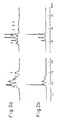
- Figure 2 shows NMR charts of two polymers, one of which has a viscosity average molecular weight 5,000 and has been obtained at a polymerization temperature of 85°C [Fig. 2-(a)] and the other of which has a viscosity average molecular weight of 99,000 and has been obtained at a polymerization temperature of 130°C [Fig. 2-(b)].
- the number of absorption peaks in the charts of Fig. 2-(a) is larger than in the charts of Fig. 2-(b) (i.e., the peaks indicated by arrows are found in Fig. 2-(a), but not found in Fig.
- PAN is usually decomposed and decolored at a temperature slightly lower than 200°C, and as regards the upper limit of the polymerization temperature, it is practically preferred that the polymerization is carried out at a temperature lower than the temperature causing decomposition and decolorization.
- solvents not inhibiting the polymerizing capacity of the above-mentioned initiator can be optionally selected from various organic solvents.
- Organic solvents having an aromatic hydrocarbon group in the molecule thereof are preferably used.
- the mechanism of polymerization using such a solvent has not been completely elucidated, but it is considered that ⁇ -electrons of the aromatic hydrocarbon group in the solvent molecule play an important role in the stereoregularity of the acrylonitrile polymer.
- the kind of solvent used is not particularly critical, but there can be mentioned benzene, toluene, o-xylene, m-xylene, p-xylene, naphthalene, diphenyl ether, and biphenyl.
- solvents known to be applicable to usual acrylonitrile polymers cannot be used because they cannot always dissolve the acrylonitrile polymer of the present invention.
- the solvent that can be used for an acrylonitrile polymer having a high stereoregularity is limited to a protonic acid or an aqueous solution thereof, an aqueous solution of an inorganic salt, and a mixture of an organic solvent and an inorganic salt.
- Various definitions or categories, such as proposed by Bronsted or by Lewis, are known for acids.
- protonic acid used herein is meant an acid having hydrogen in the molecule.
- the protonic acid there can be mentioned inorganic acids such as nitric acid, sulfuric acid, various phosphoric acids, hydrofluoric acid, hydrochloric acid, hydrobromic acid, hydroiodic acid and perchloric acid, and organic acids such as acetic acid, dichloroacetic acid, trichloroacetic acid, and trifluoroacetic acid.
- inorganic acids such as nitric acid, sulfuric acid, various phosphoric acids, hydrofluoric acid, hydrochloric acid, hydrobromic acid, hydroiodic acid and perchloric acid
- organic acids such as acetic acid, dichloroacetic acid, trichloroacetic acid, and trifluoroacetic acid.
- water, phenols, and alcohols are included in the protonic acid. The inventors found that, in a closed volume holding system, water can dissolve the polymer of the present invention at a temperature higher than 180°C, and phenols and alcohols can dissolve the polymer of the present invention at temperatures higher
- an aqueous solution of an inorganic salt can be used as the solvent or plasticizer for the polymer of the present invention.
- the inorganic salt there can be mentioned rhodanic acid salts such as sodium rhodanide, lithium rhodanide, calcium rhodanide and zinc rhodanide; halogen-containing salts such as zinc chloride and zinc fluoride; and perchlorates such as sodium perchlorate, calcium perchlorate, barium perchlorate and aluminum perchlorate.
- an organic solvent free of an inorganic salt does not dissolve the polymer or swells the polymer and only slightly dissolves the polymer.
- the organic solvent there can be used, for example, dimethylformamide, dimethylsulfoxide, dimethylacetamide, succinonitrile, ⁇ -butyrolactone, an aqueous solution of ethylene carbonate, and hydroxyacetonitrile.
- the inorganic salt to be incorporated with the organic solvent there can be mentioned lithium chloride and lithium fluoride. The present invention is not limited in any way by these solvents and additives.
- the mixing ratio therebetween differs according to the kind of solvent and the method of shaping the composition, but in general, preferably the amounts of the acrylonitrile polymer and the solvent are 5 to 50% by weight and 50 to 95% by weight, respectively, based on the composition.
- the stereoregular acrylonitrile polymer of the present invention can be shaped into a fiber, as in case of the conventional acrylonitrile polymer, by preparing a spinning solution by using a solvent as mentioned above, and carrying out the spinning by the dry or wet spinning method.
- aqueous solution of nitric acid 10 to 40 parts by weight of the polymer is dissolved in 100 parts by weight of an aqueous solution of nitric acid having a concentration of 60 to 80% by weight to form a spinning solution, and the spinning solution is extruded from a spinneret into a coagulating bath consisting of an aqueous solution having a concentration of 20 to 50% by weight whereby the spinning solution is coagulated to form a fiber.
- the formed fiber is washed with water, drawn in hot water at 90°C at a draw ratio of about 10 and dried.
- the dried fiber can be directly used, but a redrawing treatment or a heat treatment in the swollen or dry state can be carried out according to need.
- the fiber prepared from the stereoregular acrylonitrile polymer of the present invention has a superior shapeability, especially drawability.
- the maximum draw ratio in hot water at 90°C is usually higher than about 10, and the maximum draw ratio exceeds 11 under some conditions.
- the maximum draw ratio in hot water at 90°C is about 9 or lower.
- the fiber drawn in hot water can be further drawn at a temperature of at least 120°C in a hot organic medium or on a hot roll in the dry state, whereby the mechanical properties in the wet state of the fiber can be greatly improved.
- the mechanical properties are generally evaluated based on the Young's modulus in hot water at 95°C.
- the Young's modulus is not larger than 1 g/d and even in the case of an improved acrylonitrile fiber, the Young's modulus is 3 to 5 g/d.
- the Young's modulus is at least 15 g/d.
- the stereoregular acrylonitrile polymer of the present invention has a high crystallinity such that the melting point in the presence of water rises, and if the polymer is shaped into a fiber, a product having a high mechanical strength and a superior heat resistance in the wet state can be obtained. Furthermore, the drawability and other shapeabilities in the fiber-forming process are very good.
- a stereoregular acrylonitrile polymer composition containing a protonic acid or an aqueous solution thereof, an aqueous solution of an inorganic salt, or a mixture of an organic solvent and an inorganic salt as a solvent or a plasticizer is valuable for shaping a fiber or film in which the superior properties of the stereo-regular acrylonitrile polymer are exerted.
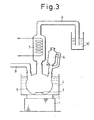
- Polymerization was carried out by using an apparatus assembled so that volatile components could be condensed and refluxed, as shown in Fig. 3.
- nitrogen was introduced through a nitrogen supply tube 8 into a three-neck flask 5 having an inner volume of 10,000 ml, to replace air with nitrogen, and 8,000 ml of 1,2,3,5-tetramethylbenzene was charged into the flask in a nitrogen current.
- 120 ml of a solution of 1.0 mole% of di-n-hexylmagnesium as the polymerization initiator in heptane was added, the temperature was adjusted to 130°C, and 1,000 ml of acrylonitrile then dropped into the flask and polymerization conducted for 60 minutes.
- a drawn yarn obtained by drawing the undrawn yarn in hot water at a draw ratio corresponding to 95% of the maximum draw ratio was drawn at a draw ratio of 2.0 and at a temperature of 135°C on four dry-heating rolls.
- the strength of the obtained fiber was 18.2 g/d, and the Young's modulus of the fiber measured in hot water at 95°C was 17.2 g/d.
- the maximum draw ratio of the obtained undrawn yarn was measured, it was found that the maximum draw ratio was 11.3.
- the undrawn yarn was drawn at a draw ratio corresponding to 95% of the maximum draw ratio and was then subjected to dry-heat drawing in the same manner as described in Example 1.
- the strength of the obtained fiber was 14.5 g/d and the Young's modulus measured in hot water at 95°C was 16.0 g/d.
- the obtained undrawn yarn was washed with water and the maximum draw ratio was measured in the same manner as described in Example 1. It was found that the maximum draw ratio was 10.2.
- the strength of the obtained fiber was 12.4 g/d and the Young's modulus measured in hot water at 95°C was 15.4 g/d.
- a stereoregular acrylonitrile polymer prepared in the same manner as described in Example 1 was dissolved in an aqueous solution of sodium rhodinate having a concentration of 50% by weight, and the resulting spinning solution was extruded into a coagulating bath consisting of an aqueous solution of sodium rhodanate having a concentration of 12% by weight.
- the obtained undrawn yarn was washed with water, and the maximum draw ratio was measured in the same manner as described in Example 1. It was found that the maximum draw ratio was 10.2.
- the undrawn yarn was drawn at a draw ratio corresponding to 95% of the maximum draw ratio and was then subjected to dry-heat drawing in the same manner as described in Example 1.
- the strength of the obtained fiber was 12.4 g/d and the Young's modulus measured in hot water at 95°C was 15.4 g/d.
- a Dewar vessel having an inner volume of 2,000 ml, 56 g of acrylonitrile to which n-butyl-mercaptan was added in an amount of 2/1,000 mole based on acrylonitrile and urea purified in advance by recrystallization from a methanol/water liquid mixture were charged at a molar ratio of 1/1.5, were mixed, and the vessel was sealed. Ten of such charged and sealed vessels were allowed to stand for 6 days while cooling to -78°C with dry ice.
- the mixture was irradiated at -78°C with 10,000 Ci of ⁇ -rays at an exposure dose of 1.6 x 10⁵ R/hr for 170 minutes and the reaction product was washed with warm water and methanol to remove urea completely.
- the total amount of the obtained acrylonitrile polymer was 550 g.
- the stereoregularity and molecular weight were determined in the same manner as described in Example 1.
- the I, H and S fractions were 0.553, 0.334, and 0.113, respectively, and therefore, (I + 3S) was 0.892.
- the viscosity average molecular weight was 203,000.
- Example 2 In the same manner as described in Example 1, 200 g of the polymer was dissolved at a concentration of 16% by weight in an aqueous solution of nitric acid having a concentration of 70% by weight and the resulting spinning solution was extruded into a coagulating bath consisting of an aqueous solution of nitric acid having a concentration of 34% by weight by using a spinneret as described in Example 1 to obtain an undrawn yarn.
- the maximum draw ratio of the undrawn yarn in hot water at 90°C was 8.1.
- the undrawn yarn was drawn at a draw ratio corresponding to 95% of the maximum draw ratio and was then subjected to dry-heat drawing in the same manner as described in Example 1.
- the strength of the obtained fiber was 6.6 g/d and the Young's modulus measured in hot water at 95°C was 13.7 g/d.
- a stereoregular acrylonitrile polymer prepared in the same manner as described in Comparative Example 1 except that n-butylmercaptan was added in an amount of 4/1,000 mole based on acrylonitrile was shaped into a fiber according to the same spinning method as adopted in Example 3.
- the maximum draw ratio of the undrawn yarn in hot water at 90°C was 9.5.
- the undrawn yarn was drawn at a draw ratio corresponding to 95% of the maximum draw ratio and then subjected to dry-heat drawing in the same manner as described in Example 1.
- the strength of the obtained fiber was 7.8 g/d and the Young's modulus measured in hot water at 95°C was 14.5 g/d.
- a stereoregular acrylonitrile polymer prepared in the same manner as described in Example 1 except that xylene was used as the polymerization solvent and the polymerization temperature was changed to 100°C was shaped into a fiber by spinning in the same manner as described in Example 1.
- the viscosity average molecular weight of the polymer was 26,000.
- the undrawn yarn was drawn at a draw ratio corresponding to 95% of the maximum draw ratio and then subjected to dry-heat drawing in the same manner as described in Example 1.
- the strength of the obtained fiber was 1.5 g/d and the Young's modulus measured in hot water at 95°C was 2.9 g/d.
- Polymerization was carried out in the same manner as described in Example 1 except that toluene was used as the polymerization solvent, n-butyllithium was used as the polymerization initiator and the polymerization temperature was changed to 0°C.
- the viscosity average molecular weight of the obtained polymer was 53,000.
- the polymer was spun into a fiber in the same manner as described in Example 1.
- the maximum draw ratio of the undrawn yarn was 10.7.
- the undrawn yarn was drawn at a draw ratio corresponding to 95% of the maximum draw ratio and then subjected to dry-heat drawing in the same manner as described in Example 1.
- the strength of the obtained fiber was 2.3 g/d and the Young's modulus measured in hot water at 95°C was 4.8 g/d.
- Polymerization and fiber-making were carried out in the same manner as described in Example 1 except that the polymerization initiator, the polymerization solvent, and the polymerization temperature were changed as shown in Table 1.
- the results of the foregoing examples and comparative examples are summarized in Table 1.
- the stereoregular acrylonitrile polymers prepared in all of the examples were those prepared by the catalytic process, and the stereoregular polymers prepared in the comparative examples were those prepared by the ⁇ -ray process or the catalytic process outside the scope of the present invention.
- Table 1 Polymerization catalyst or initiation means Polymerization solvent Polymerization temperature (°C) Stereoregularity Viscosity average molecular weight Spinning solvent or plasticizer Maximum draw ratio in hot water at 10°C Strength of dry-heat-drawn yarn (g/d) Young's modulus in hot water at 90°C (g/d) I H S I+3S
- Example 1 DNHM Tetramethylbenzene 130 0.576 0.282 0.142 1.002 95,000 70% HNO3 10.5 18.2 17.2
- Example 2 BEM Tetramethylbenzene 130 0.495 0.312 0.193 1.074 89,500 70% HNO3 11.3 14.5 16.0
Landscapes
- Chemical & Material Sciences (AREA)
- Health & Medical Sciences (AREA)
- Chemical Kinetics & Catalysis (AREA)
- Medicinal Chemistry (AREA)
- Polymers & Plastics (AREA)
- Organic Chemistry (AREA)
- Toxicology (AREA)
- General Chemical & Material Sciences (AREA)
- Engineering & Computer Science (AREA)
- Textile Engineering (AREA)
- Artificial Filaments (AREA)
- Addition Polymer Or Copolymer, Post-Treatments, Or Chemical Modifications (AREA)
- Compositions Of Macromolecular Compounds (AREA)
Priority Applications (1)
| Application Number | Priority Date | Filing Date | Title |
|---|---|---|---|
| AT90304820T ATE97919T1 (de) | 1989-05-06 | 1990-05-03 | Stereoregulaere acrylonitril-polymere und diese enthaltende zusammensetzungen. |
Applications Claiming Priority (2)
| Application Number | Priority Date | Filing Date | Title |
|---|---|---|---|
| JP112815/89 | 1989-05-06 | ||
| JP11281589 | 1989-05-06 |
Publications (3)
| Publication Number | Publication Date |
|---|---|
| EP0397394A2 true EP0397394A2 (de) | 1990-11-14 |
| EP0397394A3 EP0397394A3 (de) | 1991-10-23 |
| EP0397394B1 EP0397394B1 (de) | 1993-12-01 |
Family
ID=14596226
Family Applications (1)
| Application Number | Title | Priority Date | Filing Date |
|---|---|---|---|
| EP90304820A Expired - Lifetime EP0397394B1 (de) | 1989-05-06 | 1990-05-03 | Stereoreguläre Acrylonitril-Polymere und diese enthaltende Zusammensetzungen |
Country Status (7)
| Country | Link |
|---|---|
| US (1) | US5162476A (de) |
| EP (1) | EP0397394B1 (de) |
| KR (1) | KR930001482B1 (de) |
| AT (1) | ATE97919T1 (de) |
| CA (1) | CA2016083A1 (de) |
| DE (1) | DE69004857T2 (de) |
| ES (1) | ES2060034T3 (de) |
Cited By (1)
| Publication number | Priority date | Publication date | Assignee | Title |
|---|---|---|---|---|
| US7338997B2 (en) * | 2003-01-23 | 2008-03-04 | Teijin Limited | Polymer for carbon fiber precursor |
Families Citing this family (3)
| Publication number | Priority date | Publication date | Assignee | Title |
|---|---|---|---|---|
| JP3145716B2 (ja) * | 1996-03-14 | 2001-03-12 | 旭化成工業株式会社 | ビニル系重合体の製造方法及びビニル系単量体重合用開始剤 |
| BRPI0815879A2 (pt) * | 2007-09-13 | 2015-02-18 | Dow Global Technologies Inc | Processo para a polimerização aniônica de monômeros e polímero |
| TWI654240B (zh) | 2017-11-22 | 2019-03-21 | 財團法人工業技術研究院 | 碳纖維前驅物組合物以及碳纖維前驅物之製備方法 |
Family Cites Families (7)
| Publication number | Priority date | Publication date | Assignee | Title |
|---|---|---|---|---|
| DE1068895B (de) * | 1956-10-04 | 1959-11-12 | Montecatini Soc. Gen. per 1'Industria Mineraria e Chimica, Mailand (Italien) | Verfahren zur Polymerisation von Acrylnitril |
| GB933595A (en) * | 1960-12-14 | 1963-08-08 | Montedison Spa | Polymers of alpha-methyl-acrylonitrile |
| GB1024893A (en) * | 1962-11-23 | 1966-04-06 | Ass Elect Ind | Arrangements for locating a photographic plate in an evacuable chamber |
| GB1348799A (en) * | 1969-08-19 | 1974-03-20 | Dow Badische Co | Method of making fibres |
| US4347203A (en) * | 1979-05-30 | 1982-08-31 | Mitsubishi Rayon Company, Ltd. | Process for producing acrylic fiber |
| JPS63304029A (ja) * | 1987-06-04 | 1988-12-12 | Asahi Chem Ind Co Ltd | 高立体規則性アクリルの高結晶性構造体 |
| JPH07103189B2 (ja) * | 1988-02-09 | 1995-11-08 | 旭化成工業株式会社 | 立体規則性アクリロニトリル重合体の製造法 |
-
1990
- 1990-05-03 EP EP90304820A patent/EP0397394B1/de not_active Expired - Lifetime
- 1990-05-03 AT AT90304820T patent/ATE97919T1/de not_active IP Right Cessation
- 1990-05-03 DE DE90304820T patent/DE69004857T2/de not_active Expired - Fee Related
- 1990-05-03 ES ES90304820T patent/ES2060034T3/es not_active Expired - Lifetime
- 1990-05-04 CA CA002016083A patent/CA2016083A1/en not_active Abandoned
- 1990-05-04 KR KR1019900006355A patent/KR930001482B1/ko not_active Expired - Fee Related
-
1991
- 1991-12-10 US US07/807,955 patent/US5162476A/en not_active Expired - Fee Related
Cited By (2)
| Publication number | Priority date | Publication date | Assignee | Title |
|---|---|---|---|---|
| US7338997B2 (en) * | 2003-01-23 | 2008-03-04 | Teijin Limited | Polymer for carbon fiber precursor |
| KR101047819B1 (ko) * | 2003-01-23 | 2011-07-08 | 데이진 가부시키가이샤 | 탄소 섬유 전구체용 중합체 |
Also Published As
| Publication number | Publication date |
|---|---|
| KR900018172A (ko) | 1990-12-20 |
| EP0397394B1 (de) | 1993-12-01 |
| ATE97919T1 (de) | 1993-12-15 |
| DE69004857D1 (de) | 1994-01-13 |
| US5162476A (en) | 1992-11-10 |
| ES2060034T3 (es) | 1994-11-16 |
| KR930001482B1 (ko) | 1993-03-02 |
| DE69004857T2 (de) | 1994-04-14 |
| EP0397394A3 (de) | 1991-10-23 |
| CA2016083A1 (en) | 1990-11-06 |
Similar Documents
| Publication | Publication Date | Title |
|---|---|---|
| Mallin et al. | rac-[Ethylidene (1-. eta. 5-tetramethylcyclopentadienyl)(1-. eta. 5-indenyl)] dichlorotitanium and its homopolymerization of propylene to crystalline-amorphous block thermoplastic elastomers | |
| JP4195184B2 (ja) | 繊維及び布のための改善されたプロピレンポリマー | |
| JP2001020131A (ja) | メタロセンイソタクティックポリプロピレン繊維における収縮率の低下 | |
| EP0414047B1 (de) | Neue Polypropylen-Faser und Verfahren zur Herstellung | |
| US6146758A (en) | Polypropylene fibers | |
| JPH0660217B2 (ja) | 高強度ポリオレフイン | |
| DE3881595T2 (de) | Verfahren zur herstellung vom hochkristallinem poly-1-buten und in diesen verfahren anzuwendender katalysator. | |
| CN1059732A (zh) | 非晶态弹性丙烯均聚物的制备方法 | |
| US5162476A (en) | Stereoregular acrylonitrile polymer and composition comprising same | |
| US6878327B2 (en) | Process of making polypropylene fibers | |
| CN101139412A (zh) | 低分子量分布的聚丙烯腈及其制备方法 | |
| US3809685A (en) | Cross-linked acrylonitrile polymer fibers | |
| Dunham et al. | Effect of side‐chain structure on poly‐α‐olefin properties | |
| CN110698597A (zh) | 一种gn@纤维素基固-固相变材料及其制备方法和应用 | |
| US2642406A (en) | Solutions of polymers of acrylonitrile | |
| JP2885474B2 (ja) | 立体規則性アクリロニトリル重合体及び立体規則性アクリロニトリル重合体成形用組成物 | |
| JP3973248B2 (ja) | コンデンサー絶縁フィルム | |
| JPH0376823A (ja) | アクリロニトリル重合体系炭素繊維の製法 | |
| JPS62282016A (ja) | 高立体規則性アクリル繊維 | |
| Natta et al. | Alternating 2-Vinylpyridine/a-Stilbazole Copolymers | |
| US3327037A (en) | Process for the spinning of the crystalline polymer of vinyl chloride | |
| JPH0368608A (ja) | アクリロニトリル系共重合体およびその製法 | |
| US2847389A (en) | Spinning solution comprising ternary polymers of acrylonitrile dissolved in concentrated aqueous salt solutions | |
| JP2005042204A (ja) | ポリプロピレン繊維の製造法 | |
| JPH07103189B2 (ja) | 立体規則性アクリロニトリル重合体の製造法 |
Legal Events
| Date | Code | Title | Description |
|---|---|---|---|
| PUAI | Public reference made under article 153(3) epc to a published international application that has entered the european phase |
Free format text: ORIGINAL CODE: 0009012 |
|
| 17P | Request for examination filed |
Effective date: 19900515 |
|
| AK | Designated contracting states |
Kind code of ref document: A2 Designated state(s): AT BE CH DE DK ES FR GB GR IT LI LU NL SE |
|
| PUAL | Search report despatched |
Free format text: ORIGINAL CODE: 0009013 |
|
| AK | Designated contracting states |
Kind code of ref document: A3 Designated state(s): AT BE CH DE DK ES FR GB GR IT LI LU NL SE |
|
| 17Q | First examination report despatched |
Effective date: 19930122 |
|
| GRAA | (expected) grant |
Free format text: ORIGINAL CODE: 0009210 |
|
| AK | Designated contracting states |
Kind code of ref document: B1 Designated state(s): AT BE CH DE DK ES FR GB GR IT LI LU NL SE |
|
| PG25 | Lapsed in a contracting state [announced via postgrant information from national office to epo] |
Ref country code: LI Effective date: 19931201 Ref country code: GR Free format text: LAPSE BECAUSE OF FAILURE TO SUBMIT A TRANSLATION OF THE DESCRIPTION OR TO PAY THE FEE WITHIN THE PRESCRIBED TIME-LIMIT Effective date: 19931201 Ref country code: DK Effective date: 19931201 Ref country code: CH Effective date: 19931201 Ref country code: BE Effective date: 19931201 Ref country code: AT Effective date: 19931201 |
|
| REF | Corresponds to: |
Ref document number: 97919 Country of ref document: AT Date of ref document: 19931215 Kind code of ref document: T |
|
| PGFP | Annual fee paid to national office [announced via postgrant information from national office to epo] |
Ref country code: FR Payment date: 19931210 Year of fee payment: 5 |
|
| REF | Corresponds to: |
Ref document number: 69004857 Country of ref document: DE Date of ref document: 19940113 |
|
| ET | Fr: translation filed | ||
| ITF | It: translation for a ep patent filed | ||
| REG | Reference to a national code |
Ref country code: CH Ref legal event code: PL |
|
| PGFP | Annual fee paid to national office [announced via postgrant information from national office to epo] |
Ref country code: ES Payment date: 19940407 Year of fee payment: 5 |
|
| ET1 | Fr: translation filed ** revision of the translation of the patent or the claims | ||
| PGFP | Annual fee paid to national office [announced via postgrant information from national office to epo] |
Ref country code: GB Payment date: 19940425 Year of fee payment: 5 |
|
| PGFP | Annual fee paid to national office [announced via postgrant information from national office to epo] |
Ref country code: SE Payment date: 19940520 Year of fee payment: 5 |
|
| PG25 | Lapsed in a contracting state [announced via postgrant information from national office to epo] |
Ref country code: LU Free format text: LAPSE BECAUSE OF NON-PAYMENT OF DUE FEES Effective date: 19940531 |
|
| PGFP | Annual fee paid to national office [announced via postgrant information from national office to epo] |
Ref country code: NL Payment date: 19940531 Year of fee payment: 5 |
|
| PGFP | Annual fee paid to national office [announced via postgrant information from national office to epo] |
Ref country code: DE Payment date: 19940627 Year of fee payment: 5 |
|
| PLBE | No opposition filed within time limit |
Free format text: ORIGINAL CODE: 0009261 |
|
| STAA | Information on the status of an ep patent application or granted ep patent |
Free format text: STATUS: NO OPPOSITION FILED WITHIN TIME LIMIT |
|
| REG | Reference to a national code |
Ref country code: ES Ref legal event code: FG2A Ref document number: 2060034 Country of ref document: ES Kind code of ref document: T3 |
|
| 26N | No opposition filed | ||
| NLR4 | Nl: receipt of corrected translation in the netherlands language at the initiative of the proprietor of the patent | ||
| EAL | Se: european patent in force in sweden |
Ref document number: 90304820.5 |
|
| PG25 | Lapsed in a contracting state [announced via postgrant information from national office to epo] |
Ref country code: GB Effective date: 19950503 |
|
| PG25 | Lapsed in a contracting state [announced via postgrant information from national office to epo] |
Ref country code: SE Effective date: 19950504 Ref country code: ES Free format text: LAPSE BECAUSE OF NON-PAYMENT OF DUE FEES Effective date: 19950504 |
|
| PG25 | Lapsed in a contracting state [announced via postgrant information from national office to epo] |
Ref country code: NL Effective date: 19951201 |
|
| GBPC | Gb: european patent ceased through non-payment of renewal fee |
Effective date: 19950503 |
|
| NLV4 | Nl: lapsed or anulled due to non-payment of the annual fee |
Effective date: 19951201 |
|
| PG25 | Lapsed in a contracting state [announced via postgrant information from national office to epo] |
Ref country code: DE Effective date: 19960201 |
|
| EUG | Se: european patent has lapsed |
Ref document number: 90304820.5 |
|
| PG25 | Lapsed in a contracting state [announced via postgrant information from national office to epo] |
Ref country code: FR Effective date: 19960229 |
|
| REG | Reference to a national code |
Ref country code: FR Ref legal event code: ST |
|
| REG | Reference to a national code |
Ref country code: FR Ref legal event code: ST |
|
| REG | Reference to a national code |
Ref country code: ES Ref legal event code: FD2A Effective date: 19990201 |
|
| PG25 | Lapsed in a contracting state [announced via postgrant information from national office to epo] |
Ref country code: IT Free format text: LAPSE BECAUSE OF NON-PAYMENT OF DUE FEES Effective date: 20050503 |