EP0393684B1 - Rekombinante DNA und Expressionsvektor - Google Patents
Rekombinante DNA und Expressionsvektor Download PDFInfo
- Publication number
- EP0393684B1 EP0393684B1 EP90107465A EP90107465A EP0393684B1 EP 0393684 B1 EP0393684 B1 EP 0393684B1 EP 90107465 A EP90107465 A EP 90107465A EP 90107465 A EP90107465 A EP 90107465A EP 0393684 B1 EP0393684 B1 EP 0393684B1
- Authority
- EP
- European Patent Office
- Prior art keywords
- recombinant dna
- gene
- promoter
- sequence
- expression
- Prior art date
- Legal status (The legal status is an assumption and is not a legal conclusion. Google has not performed a legal analysis and makes no representation as to the accuracy of the status listed.)
- Expired - Lifetime
Links
Images





Classifications
-
- C—CHEMISTRY; METALLURGY
- C12—BIOCHEMISTRY; BEER; SPIRITS; WINE; VINEGAR; MICROBIOLOGY; ENZYMOLOGY; MUTATION OR GENETIC ENGINEERING
- C12N—MICROORGANISMS OR ENZYMES; COMPOSITIONS THEREOF; PROPAGATING, PRESERVING, OR MAINTAINING MICROORGANISMS; MUTATION OR GENETIC ENGINEERING; CULTURE MEDIA
- C12N9/00—Enzymes; Proenzymes; Compositions thereof; Processes for preparing, activating, inhibiting, separating or purifying enzymes
- C12N9/14—Hydrolases (3)
- C12N9/78—Hydrolases (3) acting on carbon to nitrogen bonds other than peptide bonds (3.5)
-
- C—CHEMISTRY; METALLURGY
- C12—BIOCHEMISTRY; BEER; SPIRITS; WINE; VINEGAR; MICROBIOLOGY; ENZYMOLOGY; MUTATION OR GENETIC ENGINEERING
- C12N—MICROORGANISMS OR ENZYMES; COMPOSITIONS THEREOF; PROPAGATING, PRESERVING, OR MAINTAINING MICROORGANISMS; MUTATION OR GENETIC ENGINEERING; CULTURE MEDIA
- C12N15/00—Mutation or genetic engineering; DNA or RNA concerning genetic engineering, vectors, e.g. plasmids, or their isolation, preparation or purification; Use of hosts therefor
- C12N15/09—Recombinant DNA-technology
- C12N15/63—Introduction of foreign genetic material using vectors; Vectors; Use of hosts therefor; Regulation of expression
- C12N15/70—Vectors or expression systems specially adapted for E. coli
Definitions
- the invention relates to recombinant DNA and expression vectors, processes for producing such recombinant DNA and expression vectors and their use for the inducible and repressible expression of a foreign gene.
- a special class of vectors is required for this. These not only have the structural prerequisites for cloning, transfer and propagation of the recombinant DNA, but also for the expression of the protein.
- these recombinant DNA molecules contain special regulatory sequences, the promoters, which bring about the transcription of the DNA sequence into RNA, the translation of which then leads through the ribosomes to the finished protein.
- promoters DNA regions to which bacterial RNA polymerase binds for the transcription of one or more genes are referred to as promoters. Many such promoters have structural similarities, the importance of which is suspected, inter alia, in the interaction with certain proteins. Such interactions with cellular proteins or other molecules can cause repression, but also induction of the activity of a promoter. An example of this is the interaction of the lambda promoter P 1 with the lambda repressor cI.
- a promoter present in an expression vector can be regulated by the presence or addition of a repressor or inducer.
- This regulation then takes place by suppressing the activity of the promoter at the start of the fermentation, so that a high biomass can be produced with minimal impairment of the vitality of the cells.
- the promoter is then stimulated by suitable measures and the synthesis of the product can take place.
- the fermentation process can be divided into a growth and a production phase.
- the regulatable gene expression for example, the PL promoter of the bacteriophage lambda, the lac promoter, the trp promoter, the tac promoter, the trc promoter and the rac promoter are used.
- the trp promoter is also a system that cannot be completely repressed. As with the use of inductors, the addition of tryptophan for repression also increases the cost of fermentation.
- inductors are therefore only suitable for industrial use to a limited extent, since these inductors are usually very expensive and the methods used for induction or repression are complicated and only suitable to a limited extent for regulating the expression of a protein.
- the regulator region is at least 65% homologous to the sequences mentioned in FIG. 10.
- the numbering of the bases is based on the ATG start codon of the pf gene underlined in FIG. 10 as +1 (for adenine). Nucleotides on the 5 'side thereof have negative numbers.
- the recombinant DNA additionally contains at least a third sequence which is at least 80% homologous to the following consensus sequence:
- This third sequence can be contained in the recombinant DNA once or several times.
- Suitable promoters of the promoter region of the recombinant DNA according to the invention are all promoters which contain a consensus sequence in the -35 / -10 region as defined above. These are e.g. lac promoter, lambda PL promoter, trp promoter, mgl promoter (EPA 285152) or the promoters from FIG. 11 or their 50 and preferably 65% homologs.
- a sequence is preferably used as the promoter region which is 50% and particularly preferably 65% homologous to one of the sequences indicated in FIG. II.
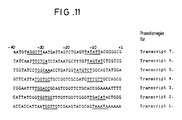
- At least one of the promoters of transcript 6 and transcript 7 of the sequences shown in FIG. 11 is used.
- Another object of the invention is an expression vector which contains a recombinant DNA according to the invention ligated into a suitable vector.
- DNA sequences of the recombinant DNA sequence according to the invention are located in the expression vector according to the invention upstream (ie on the 5 'side) from the start of transcription of a gene to be expressed under the control of this promoter, an ATG codon and being located between the promoter and the gene to be expressed preferably a Shine-Dalgarno sequence.
- the expression vector according to the invention contains a polylinker or a singular restriction site, ie a restriction site that is present only once in the expression vector, at the point at which a foreign gene to be expressed is to be used.
- the PFL gene or parts thereof and optionally untranslated upstream regions of the PFL gene which e.g. containing the ATG codon and the Shine-Dalgarno sequence.
- the sequence indicated in FIG. 10, preferably the entire sequence, is particularly preferably used for this.
- the expression vector contains the recombinant DNA according to the invention, untranslated sequences from the upstream region of the PFL gene from FIG. 10 and the Shine-Dalgarno sequence and ATG of the foreign gene and, if appropriate, the foreign gene itself.
- Another object of the invention is a method for producing a recombinant DNA according to the invention, in which from the gene bank of a microorganism which contains the PFL gene, this is isolated with its upstream regions, optionally the parts thereof which are not required by methods known per se removed, and connects the desired sequences with a promoter region or third sequences.
- the DNA sequence is isolated from a gene bank of a microorganism from the Enterobacteriaceae family and preferably from E. coli.
- Yet another object of the invention is a method for producing an expression vector according to the invention.
- the recombinant DNA according to the invention and optionally also a polylinker, a Shine-Dalgarno sequence, a start codon and / or desired further sequences are inserted into a suitable vector.
- Vector molecules suitable for this are known to the person skilled in the art, for example pBR322 or derivatives thereof.
- a recombinant DNA or an expression vector as described above for the inducible and repressible expression of a foreign gene is characterized in that the induction is effected under anaerobic conditions and through pyruvate and the repression through oxygen.
- the expression can take place in suitable microorganisms of the genus Enterobacteriaceae, such as preferably E. coli and Salmonella or other gram-negative bacteria, such as preferably Pseudomonas, or in gram-positive bacteria.
- suitable microorganisms of the genus Enterobacteriaceae such as preferably E. coli and Salmonella or other gram-negative bacteria, such as preferably Pseudomonas, or in gram-positive bacteria.
- Expression is preferably carried out in a host strain which is FNR-positive and which therefore forms a functional FNR gene product.
- This is preferably E.coli FM 420, which was deposited with the German Collection for Microorganisms, DSM 5312.
- the FNR protein (Stewart, V. Microbiol. Rev. 52 (1988) 190-232), which is produced by FNR-positive microorganisms, is a dimeric protein which can interact with the operator of the promoter according to the invention and thereby activate expression .
- FNR protein While it is possible to use a host strain that is FNR negative, in this case the FNR protein must be delivered to the cell to achieve activation.
- the FNR gene can be ligated into the expression vector according to the invention, which also carries or will carry the desired foreign gene, the expression of the FNR protein also being achieved with the expression of the foreign gene.
- the FNR gene can also be present on an additional vector in the host cells. In this case, the production of the FNR protein is independent of the production of the foreign gene, but this is induced by the FNR protein.
- This embodiment ie the introduction of at least one FNR gene on a separate vector, is therefore preferred according to the invention.
- the recombinant DNA according to the invention and the expression vectors according to the invention make it possible to regulate the expression of a foreign gene in a simple manner.
- disruptive expression of the foreign gene is suppressed.
- the expression is then induced by pyruvate formed by the microorganism and an increase in expression is achieved by adding pyruvate to the growth medium.
- a further simplification shows that in the anaerobic late logarithmic growth phase the cells have already grown up and have reached an optimal density. In this case, oxygen limitation automatically occurs, which can be strengthened or regulated by fermentation technology. Due to the high cell density of the microorganisms, an optimal expression of the foreign gene can be achieved.
- the promoter was fused to the creatinase structural gene by deletion mutants on the single-stranded DNA of an M13 construct.
- This contains a pf fragment (regulatory sequence and start of the structural gene), a selection marker for the mutagenesis (EcoK cassette: contains 4 times the recognition sequence for the restriction system K from E. coli) and a fragment of the creatinase gene (start of the structural gene with part of the 5 'untranslated sequence).
- Plasmids p29 (Christiansen & Pedersen, 1981; DSM 5380), pRS551 (DSM 5382), pRS552 (DSM 5381) (Simons et al., 1987) were used for the pf-lacZ fusions (Examples 8-12).
- the promoter region of the Pfl gene was isolated as a 1786 bp MluI / BamHI fragment from the plasmid p29 (Pfl sequence: +390 to -1396, relative to the first nucleotide of the Pfl structural gene, A of the ATG of FIG. 10).
- p29 was cut with MluI, the 5 'overhanging end was filled in with T7 polymerase in the presence of all 4 dNTPs and then cut with BamHI.
- the vector M13ec was first cut with AvaII, the overhanging end was also filled in and then cut with BamHI.
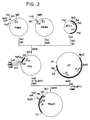
- the isolated pf fragment was inserted in M13ec and the resulting construct was designated M13pec23 (Fig. 2).
- E. coli RR1dM15 (rk-, mk-; ATCC 35102) was transfected.
- the orientation of the creatinase fragment in M13pec23 corresponds to the direction of transcription from
- the middle strand corresponds to the sequence in the plus strand of M13pc23S (5 '-> 3'), the lower one (3 '-> 5') that of the mutagenic oligonucleotide.
- the top strand corresponds to the sequence after mutagenesis; the exchanged bases are identified by colons (:).
- the star marks the position - 570 relative to the pf structural gene.
- the fragment was isolated from the plasmid pRM39 (Example 10) via the EcoRI sites and inserted into the EcoRI site of the plasmid pGH-C. The construct obtained was designated pPFL-39C.
- the Pfl fragment consists of the bases -1396 up to and including +390 (relative to the first nucleotide of the Pfl structural gene) and contains the promoters 1 through 7 and the fnr boxes 1 and 2.
- the promoter element was isolated from p29 via the SspI and BamHI interfaces and inserted into pRS552 via the SmaI and BamHI interfaces.
- the Pfl fragment consists of the bases -1045 up to and including +390 (relative to the Pfl start codon) and contains the promoters 1 through 7 and the fnr box 2.
- the promoter element was isolated from p29 via the MluI and AflII interfaces, provided with EcoRI linkers (10-mer) and inserted into the EcoRI interface of pRS551.
- the Pfl fragment consists of bases -819 through -1396 (relative to the first nucleotide of the Pfl structural gene) and contains promoters 6 and 7 and fnr boxes 1 and 2.
- the promoter element was isolated from p29 via the MluI and DraI interfaces, provided with EcoRI linkers (10-mer) and inserted into the EcoRI interface of pRS551.
- the Pfl fragment consists of the bases -1075 to -1396 inclusive (relative to the first nucleotide of the Pfl structural gene) and contains promoter 7 and the fnr box 2.
- the promoter element was isolated from p29 via the interfaces NlaIII and BglI, provided with EcoRI linkers and inserted into the EcoRI interface of pRS551.
- the Pfl fragment consists of bases -861 to -1016 inclusive (relative to the first nucleotide of the Pfl structural gene) and contains promoter 6 and the fnr box 1.
- promoter 1-7 promoter 1-7, fnr boxes 1 and 2: homologous expression.
- the proportion of pyruvate formate lyase in the total cell protein is given under anaerobic conditions. The determination was made by determining the specific activity of the pyruvate formate lyase formed.
Landscapes
- Health & Medical Sciences (AREA)
- Life Sciences & Earth Sciences (AREA)
- Genetics & Genomics (AREA)
- Engineering & Computer Science (AREA)
- Chemical & Material Sciences (AREA)
- Zoology (AREA)
- Organic Chemistry (AREA)
- Bioinformatics & Cheminformatics (AREA)
- Wood Science & Technology (AREA)
- General Engineering & Computer Science (AREA)
- Biomedical Technology (AREA)
- Biotechnology (AREA)
- Microbiology (AREA)
- Biochemistry (AREA)
- General Health & Medical Sciences (AREA)
- Molecular Biology (AREA)
- Medicinal Chemistry (AREA)
- Physics & Mathematics (AREA)
- Biophysics (AREA)
- Plant Pathology (AREA)
- Micro-Organisms Or Cultivation Processes Thereof (AREA)
- Preparation Of Compounds By Using Micro-Organisms (AREA)
- Medicines Containing Material From Animals Or Micro-Organisms (AREA)
- Peptides Or Proteins (AREA)
Description
- Die Erfindung betrifft rekombinante DNA und Expressionsvektoren, Verfahren zur Herstellung solcher rekombinanter DNA und Expressionsvektoren sowie deren Verwendung zur induzierbaren und reprimierbaren Expression eines Fremdgens.
- Ein wichtiges Ziel der angewandten Gentechnologie ist die Proteinproduktion aus rekombinanter DNA. Dazu wird eine besondere Klasse von Vektoren, die sog. Expressionsvektoren, benötigt. Diese besitzen nicht nur die strukturellen Voraussetzungen für die Klonierung, den Transfer und die Vermehrung der rekombinanten DNA, sondern auch für die Expression des Proteins. Hierzu enthalten diese rekombinanten DNA-Moleküle spezielle Regulationssequenzen, die Promotoren, welche die Transkription der DNA-Sequenz in RNA bewirken, deren Translation dann durch die Ribosomen zum fertigen Protein führt.
- Als Promotoren werden DNA-Regionen bezeichnet, an die bakterielle RNA-Polymerase zur Transkription eines oder mehrerer Gene bindet. Viele solcher Promotoren haben strukturelle Gemeinsamkeiten, deren Bedeutung u.a. in der Interaktion mit bestimmten Proteinen vermutet wird. Durch solche Interaktionen mit zellulären Proteinen oder anderen Molekülen, kann eine Repression, jedoch auch eine Induktion der Aktivität eines Promotors bewirkt werden. Ein Beispiel dafür ist die Interaktion des Lambda-Promotors P1 mit dem Lambda-Repressor cI.
- Bei der gentechnologischen Produktion von Proteinen ist es von besonderem Vorteil, wenn ein in einem Expressionsvektor vorhandener Promotor durch Vorhandensein oder Zugabe von Repressor oder Induktor reguliert werden kann.
- Diese Regulation dann dadurch erfolgen, daß zu Beginn der Fermentation die Aktivität des Promotors unterdrückt wird, so daß unter minimaler Beeinträchtigung der Vitalität der Zellen eine hohe Biomasse produziert werden kann. Anschließend wird durch geeignete Maßnahmen der Promotor stimuliert und die Synthese des Produkts kann erfolgen. Prinzipiell läßt sich also der Fermentationsprozeß in eine Wachstums- und eine Produktionsphase unterscheiden.
- Für die regulierbare Genexpression finden beispielsweise der PL-Promotor des Bakteriophagen Lambda, der lac-Promotor, der trp-Promotor, der tac-Promotor, der trc-Promotor und der rac-Promotor Anwendung.
- Diese Expressionssysteme sind jedoch für eine großtechnische Anwendung nur bedingt geeignet. Vor allem eine Temperaturerhöhung auf 42°C, wie sie zur Induktion des Lambda PL-Promotors erforderlich ist, ist bei einer technischen Anwendung mit Volumen ab 50 l mit großen Schwierigkeiten verbunden. Außerdem hat sich gezeigt, daß die Induktion des Lambda PL-Promotors in einer frühen Wachstumsphase erfolgen muß, so daß die für eine Großproduktion erforderliche Biomasse unter Umständen nicht erreicht werden kann.
- Bei Verwendung des lac-Promotors für Expressionsvektoren ist es im Gegensatz zum PL-Promotor nicht möglich, das System mit Hilfe einer Kopie des Repressor-Gens vollständig zu reprimieren, da durch die Kopienzahl des lac-Operators der Repressor austitriert wird. Zwar läßt sich die Repression durch Verwendung von Repressor-Überproduzenten wieder herstellen, aber solche Stämme sind nur partiell induzierbar. Wenn das entsprechende Repressorgen nicht mit auf dem Expressionsvektor enthalten ist, so ist man beim Lambda PL, beim lac und den anderen Derivaten des lac-Promotors in der Wahl der Wirtsstämme eingeschränkt. Außerdem ist die bei diesen Systemen notwendige Zugabe von Induktoren während der Fermentation nicht nur teuer, sondern bereitet auch prinzipielle Schwierigkeiten, vor allem, wenn es sich um metabolisierbare Induktoren, z.B. Lactose, handelt.
- Auch beim trp-Promotor handelt es sich um ein System, das sich nicht vollständig reprimieren läßt. Wie bei der Verwendung von Induktoren, so wird auch durch Zugabe von Tryptophan zur Repression die Fermentation zusätzlich wesentlich verteuert.
- Die bisher bekannten Induktoren sind demnach nur beschränkt für den industriellen Einsatz geeignet, da diese Induktoren meist sehr teuer und die angewandten Verfahren zur Induktion oder Repression kompliziert und nur bedingt zur Regulation der Expression eines Proteins geeignet sind.
- Aus der DE-A 37 10 633 ist ein sauerstoffreprimierbarer Promotor bekannt, der aus dem FdhF-Gen stammt und mit Formiat induzierbar ist. Damit ist zwar die Möglichkeit für eine einfache Repression und Induktion geschaffen, jedoch handelt es sich hierbei um einen relativ schwachen Promotor.
- Es ist daher Aufgabe dieser Erfindung, rekombinante DNA und Expressionsvektoren bereitzustellen, die auf einfache Art und Weise eine Regulation der Expression eines gewünschten Genproduktes sowie eine besonders hohe Expressionsrate der Gene ermöglichen.
- Gelöst wird diese Aufgabe durch eine rekombinante DNA, die dadurch gekennzeichnet ist, daß sie enthält:
- a) eine Regulatorregion, die zu mindestens 50 % homolog ist zu den Teilbereichen -969 bis -991 Basenpaare und/oder -1308 bis -1330 Basenpaare der Sequenz von Figur 10 und
- b) in der 3'-Richtung von der Regulationssequenz eine Promotorregion, welche eine -35/-10-Promotor-KonsensusSequenz (Rosenberg, M. and Court, D. (1979) Ann.Rev. Genet. 13: 319-353) aufweist.
- In einer bevorzugten Ausführungsform der Erfindung ist die Regulatorregion zu mindestens 65 % homolog zu den genannten Sequenzen der Figur 10.
- Die Numerierung der Basen ist hierbei auf das in Figur 10 unterstrichene ATG-Startkodon des pfl-Gens als +1 (für Adenin) bezogen. Auf der 5'-Seite hiervon liegende Nukleotide haben negative Numerierungen.
- In einer weiteren bevorzugten Ausführungsform der Erfindung enthält die rekombinante DNA zusätzlich mindestens eine dritte Sequenz, die mindestens zu 80 % homolog zu der folgenden Konsensussequenz ist:

- Diese dritte Sequenz kann hierbei einfach oder mehrfach in der rekombinanten DNA enthalten sein.
- Geeignete Promotoren der Promotorregion der erfindungsgemäßen rekombinanten DNA sind alle Promotoren, die eine KonsensusSequenz in der -35/-10-Region, wie oben definiert, enthalten. Dies sind z.B. lac-Promotor, Lambda-PL-Promotor, trp-Promotor, mgl-Promotor (EPA 285152) oder die Promotoren aus Figur 11 bzw. deren zu 50 und vorzugsweise 65 % Homologe.
- Vorzugsweise wird als Promotorregion eine Sequenz verwendet, welche zu 50 % und besonders bevorzugt zu 65 % homolog zu einer der in Figur II angegebenen Sequenzen ist.
- In einer ganz besonders bevorzugten Ausführungsform verwendet man mindestens einen der Promotoren von Transkript 6 und Transkript 7 der in Figur 11 gezeigten Sequenzen.
- Ein weiterer Gegenstand der Erfindung ist ein Expressionsvektor, der eine erfindungsgemäße rekombinante DNA einligiert in einen geeigneten Vektor enthält.
- Diese DNA-Sequenzen der erfindungsgemäßen rekombinanten DNA-Sequenz befinden sich im erfindungsgemäßen Expressionsvektor upstream (d.h. auf der 5'-Seite) vom Transkriptionsstart eines unter der Kontrolle dieses Promotors zu exprimierenden Gens, wobei sich zwischen Promotor und zu exprimierendem Gen ein ATG-Kodon und vorzugsweise noch eine Shine-DalgarnoSequenz befinden.
- In einer bevorzugten Ausführungsform der Erfindung enthält der erfindungsgemäße Expressionsvektor an der Stelle, an der ein zu exprimierendes Fremdgen eingesetzt werden soll, einen Polylinker oder eine singuläre Restriktionsschnittstelle, d.h. eine Restriktionsschnittstelle, die in dem Expressionsvektor nur einmal vorhanden ist.
- In einer weiteren bevorzugten Ausführungsform sind zwischen Promotorregion und zu exprimierenden Fremdgen das PFL-Gen bzw. Teile davon und gegebenenfalls untranslatierte upstream-Bereiche des PFL-Gens, die z.B. das ATG-Kodon und die Shine-Dalgarno-Sequenz enthalten, vorhanden. Besonders bevorzugt wird die in Figur 10 angegebene Sequenz, vorzugsweise die gesamte Sequenz, hierfür verwendet. In einer anderen bevorzugten Ausführungsform enthält der Expressionsvektor die erfindungsgemäße rekombinante DNA, untranslatierte Sequenzen aus dem upstream-Bereich des PFL-Gens von Figur 10 sowie Shine-Dalgarno-Sequenz und ATG des Fremdgens und gegebenenfalls bereits das Fremdgen selbst. Es ist jedoch erfindungsgemäß auch möglich, das Fremdgen einschließlich seines Startkodons direkt an die erfindungsgemäße rekombinante DNA zu koppeln.
- Ein weiterer Gegenstand der Erfindung ist ein Verfahren zur Herstellung einer erfindungsgemäßen rekombinanten DNA, bei dem man aus der Genbank eines Mikroorganismus, der das PFL-Gen enthält, dieses mit seinen upstream-Regionen isoliert, gegebenenfalls die davon nicht benötigten Teile nach an sich bekannten Methoden entfernt, und die gewünschten Sequenzen mit einer Promotorregion bzw. dritten Sequenzen verbindet.
- Hierzu werden Ligation, Restriktion und Deletion von DNA-Sequenzen nach üblichen Methoden durchgeführt.
- In einer bevorzugten Ausführungsform der Erfindung wird die DNA-Sequenz aus einer Genbank eines Mikroorganismus aus der Familie der Enterobacteriaceae und vorzugsweise aus E.coli isoliert.
- Ein wiederum weiterer Gegenstand der Erfindung ist ein Verfahren zur Herstellung eines erfindungsgemäßen Expressionsvektors. Hierzu insertiert man die erfindungsgemäße rekombinante DNA und gegebenenfalls auch einen Polylinker, eine Shine-Dalgarno-Sequenz, ein Startkodon und/oder gewünschte weitere Sequenzen in einen geeigneten Vektor. Hierfür geeignete Vektormoleküle sind dem Fachmann bekannt, z.B. pBR322 oder Derivate davon.
- Die erfindungsgemäße Verwendung einer rekombinanten DNA oder eines Expressionsvektors wie sie im Vorhergehenden beschrieben sind, zur induzierbaren und reprimierbaren Expression eines Fremdgens ist dadurch gekennzeichnet, daß die Induktion unter anaeroben Bedingungen und durch Pyruvat und die Repression durch Sauerstoff bewirkt wird.
- Die Expression kann hierbei in geeigneten Mikroorganismen der Gattung Enterobacteriaceae, wie vorzugsweise E.coli und Salmonella oder anderen gramnegativen Bakterien, wie vorzugsweise Pseudomonas, oder in grampositiven Bakterien erfolgen.
- Bevorzugt wird die Expression in einem Wirtsstamm durchgeführt, der FNR-positiv ist, der also ein funktionelles FNR-Genprodukt bildet. Bevorzugt ist dies E.coli FM 420, der bei der Deutschen Sammlung für Mikroorganismen, DSM 5312, hinterlegt wurde.
- Das FNR-Protein (Stewart, V. Microbiol.Rev. 52 (1988) 190-232), welches von FNR-positiven Mikroorganismen produziert wird, ist ein dimeres Protein, das mit dem Operator des erfindungsgemäßen Promotors interagieren kann und dabei die Expression aktiviert.
- Es ist zwar möglich, auch einen Wirtsstamm zu verwenden, der FNR-negativ ist, in diesem Fall muß jedoch das FNR-Protein der Zelle zugeführt werden, um eine Aktivierung zu erreichen.
- Dazu kann das FNR-Gen in den erfindungsgemäßen Expressionsvektor, der auch das gewünschte Fremdgen trägt oder tragen wird, einligiert sein, wobei gleichzeitig mit der Expression des Fremdgens auch die Expression des FNR-Proteins erreicht wird. Ebenso kann auch das FNR-Gen auf einem zusätzlichen Vektor in den Wirtszellen vorliegen. In diesem Fall ist die Produktion des FNR-Proteins unabhängig von der Produktion des Fremdgens, wobei diese jedoch von dem FNR-Protein induziert wird. Diese Ausführungsform, also das Einbringen mindestens eines FNR-Gens auf einem separaten Vektor, ist daher erfindungsgemäß bevorzugt.
- Durch die erfindungsgemäße rekombinante DNA und die erfindungsgemäßen Expressionsvektoren ist es auf einfache Art und Weise möglich, die Expression eines Fremdgens zu regulieren. So wird beispielsweise in der aeroben frühen Wachstumsphase des verwendeten Mikroorganismus eine störende Expression des Fremdgens unterdrückt. Beim Übergang in die späte logarithmische anaeroben Wachstumsphase wird die Expression dann durch vom Mikroorganismus gebildetes Pyruvat induziert und durch Zugabe von Pyruvat ins Wachstumsmedium eine Verstärkung der Expression erreicht. Eine weitere Vereinfachung stellt dar, daß in der anaeroben späten logarithmischen Wachstumsphase die Zellen bereits hochgewachsen sind und eine optimale Dichte erreicht haben. In diesem Fall tritt automatisch eine Sauerstofflimitierung ein, die fermentationstechnisch noch verstärkt oder reguliert werden kann. Durch die hohe Zelldichte der Mikroorganismen kann eine optimale Expression des Fremdgens erreicht werden.
- Die Verwendung der erfindungsgemäßen rekombinanten DNA und Expressionsvektoren zur Produktion von Proteinen stellt daher eine kostengünstige und einfache Möglichkeit zur Regulation dar, da teure und komplizierte Induktionen (Induktorzugabe, Temperaturshift usw.) nicht mehr notwendig sind. Die folgenden Beispiele in Verbindung mit den Abbildungen der Zeichnung erläutern die Erfindung weiter.
- In der Zeichnung stellen dar:
- Fig. 1:
-
- A) Auschnitt aus dem Plasmid p29:
- Kompletter regulatorischer Bereich und pfl-Strukturgen mit den anschließenden Terminatoren.
- fnr: Bindestelle für das fnr-GenProdukt; Tr: Transkriptionsstart; T: Terminator.
- B) Ausschnitt aus dem Plasmid p29:
Eingezeichnet sind die wichtigsten Schnittstellen für Restriktionsenzyme.
- A) Auschnitt aus dem Plasmid p29:
- Fig. 2:
- Konstruktion des M13-Derivats M13pec23 (Erläuterung im Text)
- Fig. 3:
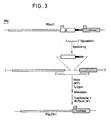
- Schematische Darstellung der Deletionsmutagenese zur Kopplung des Creatinase-Gens an den pfl-Promotor; dargestellt am Beispiel M13pec23S.
Creatinase-Sequenzen sind schraffiert dargestellt; die EcoK-Kassette ist als schwarzer Balken dargestellt. (Erläuterung im Text) - Fig. 4:
- Übersicht über die pfl-Creatinase-Fusionen: Dargestellt ist jeweils ein Ausschnitt aus den Plasmiden pPFL23S-C, pPFL23A-C und pPFL39-C.
SD: Shine-Dalgarno-Region. - Fig. 5:
- Umklonierung der pfl-Creatinase-Fusionen aus M13 in das Plasmid pGH-C, am Beispiel von M13pc23S.
- Fig. 6:
-
- A) Plasmidkarte von pBTacl
- B) Plasmidkarte von pBT2a-1
- C) Plasmidkarte von pBTdtac
- D) Plasmidkarte von pGH-C
- Fig. 7:
-
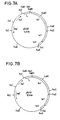
- A) Plasmidkarte von pRS552
- B) Plasmidkarte von pRS551
- Fig. 8:
- Konstruktion des Plasmids pRM23:
Translationale Kopplung des kompletten pfl-Promotorfragments an lacZ.
B: BamHI; E: EcoRI; S: SalI; H: HindIII; M: MluI;
P: PstI; Pv: PvuI. - Fig. 9:
-
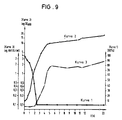
- Kinetik eines Fermentationslaufs: FM420 (pPFL23S-C). Fermenter: Bioflo II (New Brunswick);
- Füllvolumen: 4,01; Rührgeschwindigkeit konstant bei 300upm; Belüftung konstant mit 4,01/min;
- Die Kurven geben wieder:
- Verlauf des Wachstums (Zelldichte als log OD600);
- Expression des Creatinase-Gens bei zunehmendem Mangel an Sauerstoff (Volumenaktivität:log Units/ml Medium);
- Abnahme des Gehalts an Gelöstsauerstoff (%) im Verlauf des Wachstums.
- Fig.10:
- Sequenz des pfl-Promotorbereichs. Das Startkodon des pfl-Strukturgens ist unterstrichen; die Position des ersten Nukleotids (A des ATG) wird mit +1 bezeichnet.
- Fig.11:
- Promotorregionen 1 - 7
-
- 1.) Alle anaeroben Anzuchten wurden nach Balch und Wolfe (1976) in Serumflaschen durchgeführt. Aerobe Anzuchten erfolgten in Erlenmeyerkolben unter starkem Schütteln (die Kolben wurden max. mit 1/10 des angegebenen Volumens gefüllt). Die Kulturen wurden bei 37°C inkubiert.
- 2.) Medium: TGYEP (pH 6,5; 0,4% Glucose) (Begg et al., 1977).
- 3.) Transformation der verwendeten Stämme mit Plasmid-DNA erfolgte nach Standartprozeduren (Maniatis, 1982).
- 4.) Bestimmung der pfl-Enzymaktivität erfolgte nach Conradt et al. (1984).
- 5.) Bestimmung der Creatinase-Enzymaktivität erfolgte nach Schmitt (1984). Angegeben ist die spezifische Aktivität (U/mg Protein).
- 6.) Bestimmung der ß-Galaktosidase-Enzymaktivität erfolgte nach Miller (1972). Die Aktivitäten sind in Miller-units angegeben.
- 7.) Die Integration der pfl-lacZ-Fusionen in das Chromosom erfolgte gemäß der Methode von Simons et al. (1987). Ausgehend vom Stamm RM102 (fnr-, DSM 5311) wurden folgende Transduktanden erhalten: RM135, RM136, RM409, RM415, RM412. Ausgehend vom Stamm FM420 (fnr+, DSM 5312) wurden folgende Transduktanden erhalten: RM123, RM124, RM401, RM404, RM407.
- Ausgangsvektoren:
- 1.) M13mp18 (Yanisch-Perron et al., 1985)
- 2.) M13k11Rx (Waye et al., 1985)
- 3.) pBT2a-1 (DSM 3148 P)
- 4.) p29 (Christiansen & Pedersen, 1981, DSM 5380)
- Die Fusion des Promotors an das Creatinase-Strukturgen erfolgte durch gezielte Deletionsmutagense an der Einzelstrang-DNA eines M13-Konstruktes. Dieses enthält ein pfl-Fragment (regulatorische Sequenz und Beginn des Strukturgens), einen Selektionsmarker für die Mutagenese (EcoK-Kassette: enthält sequentiell 4 mal die Erkennungssequenz für das Restriktionssystem K aus E. coli) und ein Fragment des Creatinase-Gens (Beginn des Strukturgens mit einem Teil der 5'-untranslatierten Sequenz).
- Für die pfl-lacZ-Fusionen (Beispiel 8 - 12) wurden die Plasmide p29 (Christiansen & Pedersen, 1981; DSM 5380), pRS551 (DSM 5382), pRS552 (DSM 5381) (Simons et al.,1987) verwendet.
- Klonierung der EcoK-Kassette und des Creatinase-Fragments in M13mp18
- Zur Vorbereitung der Deletionsmutagenese wurden die einzelnen
- Komponenten in M13mp18 kloniert. Im ersten Schritt wurden die
- EcoK-Kassette und das Creatinase-Fragment in den XbaI/SphIgeschnittenen Vektor inseriert. Die EcoK-Kassette wurde als 90 bp XbaI/BaMHI-Fragment aus M13k11RX isoliert (Waye et al., 1985). Das Creatinase-Fragment wurde als 580bp XhoII/SphI-Fragment aus pBT2a-1 isoliert. Es enthält die ersten 460 Nukleotide des Strukturgens und 120 Nukleotide der 5'-untranslatierten Sequenz. Das 5'-überhängende Ende der XhoIISchnittstelle ist kompatibel mit dem überhängendem Ende der BaMHI-Schnittstelle (EcoK-Kassette). EcoK-Kassette, Creatinasefragment und Vektor wurden zusammengegeben und über die entsprechen-den Schnittstellen ligiert (Fig. 2). Transfiziert wurde E. coli RR1dM15 (rk-, mk-; ATCC 35102).
- Der Promotorbereich des pfl-Gens wurde als 1786bp MluI/BamHI-Fragment aus dem Plasmid p29 isoliert (pfl-Sequenz: +390 bis -1396, relativ zum ersten Nukleotid des pfl-Strukturgens, A des ATG von Fig. 10). p29 wurde mit MluI geschnitten, das 5'-überhängende Ende mit T7-Polymerase in Anwesenheit aller 4 dNTP's aufgefüllt und dann mit BamHI nachgeschnitten. Der Vektor M13ec wurde zuerst mit AvaII geschnitten, das überhängende Ende ebenfalls aufgefüllt und dann mit BamHI nachgeschnitten. Das isolierte pfl-Fragment wurde gerichtet in M13ec inseriert und das erhaltene Konstrukt mit M13pec23 bezeichnet (Abb. 2). Transfiziert wurde E. coli RR1dM15 (rk-, mk-; ATCC 35102). Die Orientierung des Creatinase-Fragments in M13pec23 entspricht der Transkriptionsrichtung vom pfl-Promotor.
- Mit Hilfe von Oligonukleotiden wurden 2 Deletionsmutagenesen durchgeführt (analog der Methode von Waye et al., 1085), um das Creatinase- Strukturgen an den Promotor zu fusionieren. Es wurde je eine translationale Fusion (ersetzen des pfl-Strukturgens durch das Creatinase-Strukturgen ab dem Startkodon) und eine transkriptionale Fusion (Fusion des Creatinase-Gens mit eigener Shine-Dalgarno-Sequenz (SD-Sequenz) an den Promotor) hergestellt.
Diese wurden mit M13pc23A und M13pc23S bezeichnet (siehe Tabelle 1).

- Durchführung der Mutagenese: (siehe Fig. 3)
- a) Hybridisierung des mutagenen Oligonukleotids an den M13-Plus-Strang. Die zwischen den Fusionspunkten zu deletierende DNA-Sequenz bleibt ungepaart.
- b) Der Rest der M13-Enzelstrang-DNA wird mit Klenow und dNTP's zum Doppelstrang aufgefüllt.
- c) Die Selektion gegen den nicht mutierten Elternstrang erfolgt in vivo nach Transformation in E. coli JM83 (rk+, mk+; ATCC 35607).
- Um in den späteren Expressionsvektoren (highcopy Plasmide) eine Überexpression des orf-Genproduktes durch den Gendosiseffekt zu vermeiden, wurden durch gezielte Mutagenese nach Kunkel (Kunkel, 1985; Kunkel et al., 1987) zwei sequentielle Stopkodons in den Leserahmen des orf-Gens eingeführt.
- Die Basensubstitutionen wurden mit einem mutagenen Oligonukleotid an der Plus-Strang-DNA des Konstruktes M13pc23S durchgeführt. Die ausgetauschten Basen und deren Positionen sind aus der folgenden Abbildung zu entnehmen:

- Der mittlere Strang entspricht der Sequenz im Plus-Strang von M13pc23S (5'-->3'), der untere (3'-->5') der des mutagenen Oligonukleotids. Der oberste Strang ent-spricht der Sequenz nach Mutagenese; die ausgetauschten Basen sind durch Doppelpunkte (:) gekennzeichnet. Der Stern markiert die Position - 570 relativ zum pfl-Strukturgen.
- An dem Konstrukt M13pc23A wurde keine Mutagenese durchgeführt. Hier wurde der pfl-Promotorbereich, inklusive des intakten orf-Gens, über die Schnittstellen AvaI und HindII entfernt und durch das entsprechende Segment aus der orfMutante von M13pc23S ersetzt.
- Konstruktion des promotorlosen Creatinase-Plasmids pGH-C
Ausgangsvektoren: - 1.) pBTacl (Boehringer Mannheim GmbH, Best.-Nr.: 1081 365)
- 2.) pBT2a-1
- pGH-C dient als Grundvektor zur Herstellung der Expressionsvektoren. Dieses Plasmid enthält das komplette Creatinase-Strukturgen und Terminations-sequenzen; durch Umklonierung der Fusionen aus den M13-Derivaten in pGH-C läßt sich die Expressionskassette vervollständigen.
- a) Eliminierung des tac-Promotors aus pBTac1 Zur Eliminierung des tac-Promotors aus pBTac1 wurde das Plasmid mit EcoRI geschnitten und das 5'-überhängende Ende mit T7-Polymerase aufgefüllt. Anschließend wurde mit PvuII geschnitten und der Vektoranteil isoliert. Durch Ligation der glatten Enden wird die EcoRI-Schnittstelle regeneriert. Das erhaltene Konstrukt wurde mit pBTdtac bezeichnet.
- b) Insertion des Creatinase-Gens in pBTdtac Das Creatinase-Gen wurde aus pBT2a-1 isoliert. Das Plasmid wurde mit AvaI geschnitten und das Fragment mit dem Creatinase-Gen (ca. 1600bp) isoliert . Die überhängenden Enden wurden aufgefüllt und mit BamHI-Linkern (BM) versehen. Das Fragment wurde in die BamHI-Schnittstelle von pBTdtac inseriert.
Das erhaltene Konstrukt wurde mit pGH-C bezeichnet. - Umklonierung der Fusionen aus M13 in pGH-C
Die Fusionsfragmente aus M13pc23S und M13pc23A wurden über die Schnittstellen StuI und MluI isoliert.
Das Plasmid pGH-C wurde mit SmaI und MluI geschnitten und der Vektoranteil isoliert. Die Fusionsfragmente wurden gerichtet in den Vektor inseriert, so daß die Transkriptionsrichtung vom pfl-Promotor der Orientierung des Creatinase-Gens entspricht (Fig. 5).
Die Expressionplasmide wurden entsprechend den M13-Konstrukten mit pPFL23S-C und pPFL23A-C bezeichnet.
Diese Vektoren enthalten folgende Anteile des pfl-Promotorbereichs: - pPFL23A Pos. -1 bis einschließlich -1364
- pPFL23S Pos. -12 bis einschließlich -1364
- In diesem Plasmid ist nur ein verkürztes, 5'-seitiges Promotor-element enthalten (Promotoren 6 und 7, fnr-Boxen 1 und 2; Fig. 1).Dieses Element entspricht dem 577 bp MluI/AFlII-Fragment aus p29 und enthält die pfl-Sequenz von Position - 819 mit -1396 relativ zum pfl-Startkodon (A des ATG = +1). Das Fragment wurde über die EcoRI-Schnittstellen aus dem Plasmid pRM39 (Beispiel 10) isoliert und in die EcoRI-site des Plasmids pGH-C inseriert. Das erhaltene Konstrukt wurde mit pPFL-39C bezeichnet.
- Translationale Kopplung des kompletten Promotorfragments mit dem lacZ-Gen.
Zur Isolierung des Promotorfragments wurde p29 mit MluI geschnitten und das überhängende Ende mit Klenow in Anwesenheit aller 4 dNTP's aufgefüllt. Anschließend wurde ein BamHI-Linker (8-mer) anligiert und mit BamHI geschnitten.
Das 1791bp-Fragment (inkl. BamHI-Linker) wurde isoliert und in die BamHI-Schnittstelle von pRS552 inseriert (Fig. 8).
Das pfl-Fragment besteht aus den Basen -1396 bis einschließlich +390 (relativ zum ersten Nukleotid des pfl-Strukturgens) und enthält die Promotoren 1 bis einschließlich 7 und die fnr-Boxen 1 und 2. - Translationale Kopplung eines verkürzten Promotorfragments mit dem lacZ-Gen.
Das Promotorelement wurde über die Schnittstellen SspI und BamHI aus p29 isoliert und über die Schnittstellen SmaI und BamHI in pRS552 inseriert. Das pfl-Fragment besteht aus den Basen -1045 bis einschließlich +390 (relativ zum pfl-Startkodon) und enthält die Promotoren 1 bis einschließlich 7 und die fnr-Box 2. - Transkriptionale Kopplung eines verkürzten, 5'-seitigen Promotorfragments mit dem lacZ-Gen.
Das Promotorelement wurde über die Schnittstellen MluI und AflII aus p29 isoliert, mit EcoRI-Linkern (10-mer) versehen und in die EcoRI-Schnittstelle von pRS551 inseriert.
Das pfl-Fragment besteht aus den Basen -819 bis einschließlich -1396 (relativ zum ersten Nukleotid des pfl-Strukturgens) und enthält die Promotoren 6 und 7 und die fnr-Boxen 1 und 2. - Transkriptionale Kopplung eines verkürzten, 5'-seitigen Promotorfragments mit dem lacZ-Gen.
Das Promotorelement wurde über die Schnittstellen MluI und DraI aus p29 isoliert, mit EcoRI-Linkern (10-mer) versehen und in die EcoRI-Schnittstelle von pRS551 inseriert. - Das pfl-Fragment besteht aus den Basen -1075 bis einschließlich -1396 (relativ zum ersten Nukleotid des pfl-Strukturgens) und enthält Promotor 7 und die fnr-Box 2.
- Transkriptionale Kopplung eines verkürzten pfl-Fragments mit dem lacZ-Gen.
Das Promotorelement wurde über die Schnittstellen NlaIII und BglI aus p29 isoliert, mit EcoRI-Linkern versehen und in die EcoRI-Schnittstelle von pRS551 inseriert.
Das pfl-Fragment besteht aus den Basen -861 bis einschließlich -1016 (relativ zum ersten Nukleotid des pfl Strukturgens) und enthält Promotor 6 und die fnr-Box 1. - Angegeben ist der Anteil von Pyruvat-Formiat-Lyase am Gesamtzellprotein unter anaeroben Bedingungen.
Die Bestimmung erfolgte über die Ermittlung der spezifischen Aktivität der gebildeten Pyruvat-Formiat-Lyase.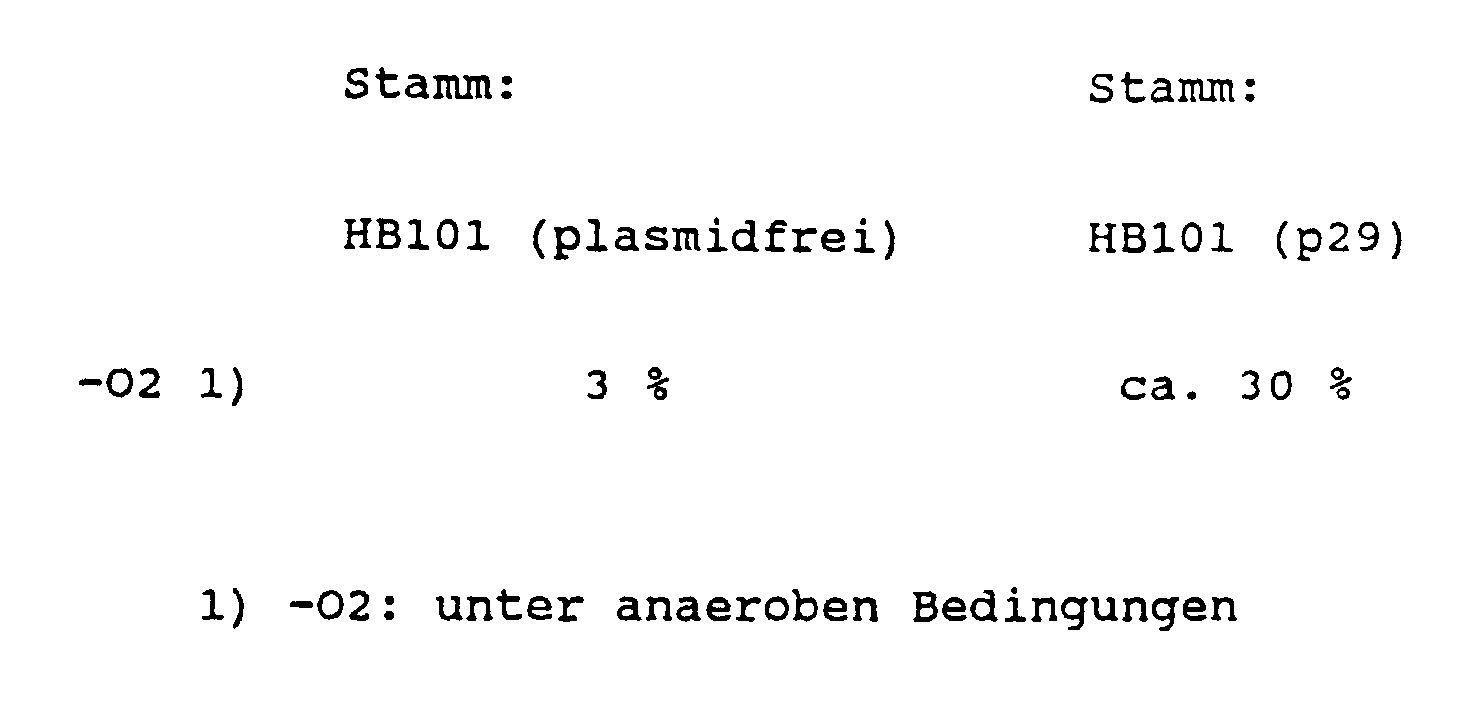


- Fermentation von FM420 (pPFL23S-C):
Fig. 9 gibt den Verlauf der Creatinase-Expression (Volumen-Aktivität: units/ml) im Verlauf eines Fermentationsprozesses wieder. - Fermenter :
- Bioflo II (New Brunswick, 5-Liter-Fermenter)
- Füllvol. :
- 4 Liter
- Medium :
- K2HPO4 (3 H20):8 g/Liter; KH2PO4:
2g/Liter- Pepton: 10 g/Liter; Hefeextrakt (Ohly Kav): 32,4g/Liter;
- MgSO4 (1M): 4 ml/Liter; Glucose: 0,4 %.
- Temperatur :
- 32°C
- pH :
- 7,0 (konstant)
- Wachstumskurve (Zelldichte als OD600).
- Creatinase-Expression (units/ml).
- Gehalt des Mediums an gelöstem Sauerstoff (DO = dissolved oxygen; %).
- Der Grafik ist zu entnehmen:
- Abnahme des DO-Wertes mit Zunahme der Zelldichte.
- Kein negativer Einfluß auf das Wachstumsverhalten durch Eintreten sauerstofflimitierender Bedingungen (DO-Wert = 0).
- Induktion der Creatinase-Expression bei niedrigem DO-Wert.
- Expression von Creatinase-Protein durch das komplette Promotor-fragment (Promotoren 1 - 7, fnr-Boxen 1 und 2) mit Translationsinitiationsregion des pfl-Gens (translationale Kopplung).
Stamm: JM83 (pPFL23A-C) +O2 0,024 -O2 0,195 Zellen in der stationären Wachstumsphase geerntet. - Expression von Creatinase-Protein durch das verkürzte Promotor-fragment (Promotoren 6 und 7, fnr-Boxen 1 und 2) mit Translationsinitiationsregion des Creatinasegens (transkriptionale Kopplung).
Stamm: JM83 (pPFL39-C) +O2 0.006 4) -O2 0,045 4) Zellen am Anfang der log-Phase geerntet.
Eingezeichnet sind:
Claims (8)
- Verfahren zur Herstellung einer rekombinanten DNA, die eine Regulatorregion enthält, die zu mindestens 65 % homolog zu den Teilbereichen -969 bis -991 Basenpaare und -1308 bis -1330 Basenpaare der Sequenz von Figur 10 ist und in 3'-Richtung von der Regulationssequenz mindestens eine Promotorregion enthält, welche eine -35/-1O-Promotor-Sequenz enthält,
dadurch gekennzeichnet,
daß man aus der Genbank eines Mikroorganismus, der das pfl-Gen enthält, dieses mit seinen upstream Regionen isoliert und die gewünschten Teile nach an sich bekannten Methoden erhält und mit den gewünschten anderen Sequenzen bzw. Promotoren verbindet. - Verfahren nach Anspruch 1,
dadurch gekennzeichnet,
daß man zusätzlich eine dritte Sequenz mit den anderen Sequenzen verbindet, welche mindestens zu 80 % homolog zu der folgenden Konsensussequenz ist:
- Verfahren nach Anspruch 1 oder 2,
dadurch gekennzeichnet,
daß man als Promotor den lac-, Lambda PL-, trp- oder mgl-Promotor verwendet. - Verfahren zur Herstellung eines Expressionsvektors, der eine rekombinante DNA gemäß einem der vorhergehenden Ansprüche einligiert in ein geeignetes Vektormolekül enthält,
dadurch gekennzeichnet,
daß man die isolierte rekombinante DNA-Sequenz gegebenenfalls mit einem Polylinker, einer Shine-Dalgarno-Sequenz, einem Startkodon und/oder eventuellen weiteren Sequenzen in einem geeigneten Vektor insertiert. - Verfahren nach Anspruch 4,
dadurch gekennzeichnet,
daß man zusätzlich downstream der rekombinanten DNA einen Polylinker oder eine singuläre Restriktionsschnittstelle zum Einsetzen eines Fremdgens einfügt. - Verwendung einer rekombinanten DNA, hergestellt nach einem der Ansprüche 1 bis 3 oder eines Expressionsvektors, hergestellt nach einem der Ansprüche 4 oder 5 zur induzierbaren und reprimierbaren Expression eines Fremdgens,
dadurch gekennzeichnet,
daß die Induktion unter anaeroben Bedingungen und durch Pyruvat und die Repression durch Sauerstoff bewirkt wird.
Applications Claiming Priority (4)
| Application Number | Priority Date | Filing Date | Title |
|---|---|---|---|
| DE3913201 | 1989-04-21 | ||
| DE3913201 | 1989-04-21 | ||
| DE3926076A DE3926076A1 (de) | 1989-04-21 | 1989-08-07 | Rekombinante dna und expressionsvektor |
| DE3926076 | 1989-08-07 |
Publications (2)
| Publication Number | Publication Date |
|---|---|
| EP0393684A1 EP0393684A1 (de) | 1990-10-24 |
| EP0393684B1 true EP0393684B1 (de) | 1997-06-18 |
Family
ID=25880155
Family Applications (1)
| Application Number | Title | Priority Date | Filing Date |
|---|---|---|---|
| EP90107465A Expired - Lifetime EP0393684B1 (de) | 1989-04-21 | 1990-04-19 | Rekombinante DNA und Expressionsvektor |
Country Status (7)
| Country | Link |
|---|---|
| EP (1) | EP0393684B1 (de) |
| JP (1) | JP2774989B2 (de) |
| AT (1) | ATE154639T1 (de) |
| CA (1) | CA2015046C (de) |
| DE (2) | DE3926076A1 (de) |
| DK (1) | DK0393684T3 (de) |
| ES (1) | ES2104568T3 (de) |
Families Citing this family (5)
| Publication number | Priority date | Publication date | Assignee | Title |
|---|---|---|---|---|
| GB9104596D0 (en) * | 1991-03-05 | 1991-04-17 | Wellcome Found | Production of recombinant proteins |
| ATE180280T1 (de) * | 1991-03-05 | 1999-06-15 | Wellcome Found | Expression rekombinanter proteine in attenuierten bakterien |
| DE4136389A1 (de) * | 1991-03-18 | 1992-10-08 | Hoechst Ag | Verfahren zur herstellung von glutarylacylase in grossen mengen |
| US5830692A (en) * | 1995-03-24 | 1998-11-03 | Consortium Fur Elektrochemische Industrie Gmbh | Expression system which can be regulated |
| KR101643195B1 (ko) * | 2014-10-06 | 2016-07-27 | 경일대학교산학협력단 | 수중 객체를 탐지하기 위한 헬멧 장치 및 이를 위한 방법 |
Family Cites Families (1)
| Publication number | Priority date | Publication date | Assignee | Title |
|---|---|---|---|---|
| DE3735381A1 (de) * | 1987-03-31 | 1989-05-03 | Boehringer Mannheim Gmbh | Rekombinante dna zur reprimierbaren und induzierbaren expression von fremdgenen |
-
1989
- 1989-08-07 DE DE3926076A patent/DE3926076A1/de not_active Withdrawn
-
1990
- 1990-04-19 DK DK90107465.8T patent/DK0393684T3/da active
- 1990-04-19 ES ES90107465T patent/ES2104568T3/es not_active Expired - Lifetime
- 1990-04-19 DE DE59010726T patent/DE59010726D1/de not_active Expired - Lifetime
- 1990-04-19 AT AT90107465T patent/ATE154639T1/de not_active IP Right Cessation
- 1990-04-19 EP EP90107465A patent/EP0393684B1/de not_active Expired - Lifetime
- 1990-04-20 JP JP2103227A patent/JP2774989B2/ja not_active Expired - Lifetime
- 1990-04-20 CA CA002015046A patent/CA2015046C/en not_active Expired - Lifetime
Also Published As
| Publication number | Publication date |
|---|---|
| JP2774989B2 (ja) | 1998-07-09 |
| CA2015046C (en) | 2003-09-16 |
| EP0393684A1 (de) | 1990-10-24 |
| DE3926076A1 (de) | 1990-10-25 |
| DE59010726D1 (de) | 1997-07-24 |
| ES2104568T3 (es) | 1997-10-16 |
| ATE154639T1 (de) | 1997-07-15 |
| CA2015046A1 (en) | 1990-10-21 |
| JPH0380088A (ja) | 1991-04-04 |
| DK0393684T3 (da) | 1998-01-26 |
Similar Documents
| Publication | Publication Date | Title |
|---|---|---|
| DD212532A5 (de) | Verfahren zur stabilisierung und selektion von wirtszellen, die rekombinierende dna enthalten | |
| DE3752063T2 (de) | Funktioneller DNS-Block und für Hirudin kodierendes Plasmid, transformierte Hefe aud Verfahren zur Herstellung von Hirudin. | |
| EP0373365B1 (de) | Verfahren zur Expression eines rekombinanten Gens | |
| EP0667909B1 (de) | Biotechnologisches verfahren zur herstellung von biotin | |
| EP0460673A1 (de) | Rekombinantes Restriktionsenzym Sau3AI kodierendes DNS | |
| DE3382607T2 (de) | Plasmide mit konditionalem unkontrolliertem replikationsverhalten. | |
| DE112019000467T5 (de) | Rekombinanter Mikroorganismus, Verfahren zu dessen Herstellung und seine Anwendung bei der Herstellung von Coenzym Q10 | |
| EP0722500B1 (de) | Gene für den butyrobetain/crotonobetain-l-carnitin-stoffwechsel und ihre verwendung zur mikrobiologischen herstellung von l-carnitin | |
| EP0285152B1 (de) | Rekombinante DNA zur reprimierbaren und induzierbaren Expression von Fremdgenen | |
| EP0393684A1 (de) | Rekombinante DNA und Expressionsvektor | |
| EP0543344B1 (de) | Mikroorganismen zur Stabilisierung von Plasmiden | |
| DE68922533T2 (de) | Klonier- und Expressionvektoren in einem Aktinomycetenstamm,Verfahren zur Transformation dises Stammes,erhaltener Stamm und Herstellung von Proteinen. | |
| DE3880520T2 (de) | Rekombinantes plasmid fuer die expression von l-phenylalanin-ammonialyase und transformierte staemme, die es enthalten. | |
| EP0504798B1 (de) | Verfahren zur Herstellung von Glutarylacylase in grossen Mengen | |
| EP0316378B1 (de) | Expressionsvektor zur regulierbaren expression von fremdgenen in prokaryonten | |
| DE69832783T2 (de) | Mikroorganismen mit erhöhter herstellung von clavulansäure | |
| EP0300425B1 (de) | Verfahren zur Herstellung von Proteinen in löslicher Form | |
| EP0733704B1 (de) | Steuerbares Expressionssystem | |
| DE3850410T2 (de) | cDNS KODIEREND FÜR SOMATOTROPIN, EXPRESSIONSVEKTOREN UND -WIRTE. | |
| DE3856101T2 (de) | Den DEO-P1-P2 Promotor enthaltende Expressionsplasmide und diese Plasmide enthaltende bakterielle Wirte | |
| EP0524604B1 (de) | Gentechnologisches Verfahren zur Herstellung von S-(+)-2,2-Dimethylcyclopropancarboxamid mittels Mikroorganismen | |
| DE69231306T2 (de) | Fermentationsverfahren zur Herstellung von Peptiden durch einen Wirt | |
| DE3882247T2 (de) | Verfahren zur Expressionsregulation eines Fremdgens mittels Kontrolle der Zuckerkonzentration in einem Medium und Verfahren zur Herstellung eines Fremdgenproduktes. | |
| DE60225366T2 (de) | Expressionskontrollsequenz | |
| US5830720A (en) | Recombinant DNA and expression vector for the repressible and inducible expression of foreign genes |
Legal Events
| Date | Code | Title | Description |
|---|---|---|---|
| PUAI | Public reference made under article 153(3) epc to a published international application that has entered the european phase |
Free format text: ORIGINAL CODE: 0009012 |
|
| 17P | Request for examination filed |
Effective date: 19900419 |
|
| AK | Designated contracting states |
Kind code of ref document: A1 Designated state(s): AT BE CH DE DK ES FR GB GR IT LI LU NL SE |
|
| 17Q | First examination report despatched |
Effective date: 19950512 |
|
| GRAG | Despatch of communication of intention to grant |
Free format text: ORIGINAL CODE: EPIDOS AGRA |
|
| GRAH | Despatch of communication of intention to grant a patent |
Free format text: ORIGINAL CODE: EPIDOS IGRA |
|
| GRAH | Despatch of communication of intention to grant a patent |
Free format text: ORIGINAL CODE: EPIDOS IGRA |
|
| GRAA | (expected) grant |
Free format text: ORIGINAL CODE: 0009210 |
|
| AK | Designated contracting states |
Kind code of ref document: B1 Designated state(s): AT BE CH DE DK ES FR GB GR IT LI LU NL SE |
|
| PG25 | Lapsed in a contracting state [announced via postgrant information from national office to epo] |
Ref country code: GR Free format text: LAPSE BECAUSE OF FAILURE TO SUBMIT A TRANSLATION OF THE DESCRIPTION OR TO PAY THE FEE WITHIN THE PRESCRIBED TIME-LIMIT Effective date: 19970618 |
|
| REF | Corresponds to: |
Ref document number: 154639 Country of ref document: AT Date of ref document: 19970715 Kind code of ref document: T |
|
| REG | Reference to a national code |
Ref country code: CH Ref legal event code: NV Representative=s name: A. BRAUN, BRAUN, HERITIER, ESCHMANN AG PATENTANWAE Ref country code: CH Ref legal event code: EP |
|
| GBT | Gb: translation of ep patent filed (gb section 77(6)(a)/1977) |
Effective date: 19970619 |
|
| REF | Corresponds to: |
Ref document number: 59010726 Country of ref document: DE Date of ref document: 19970724 |
|
| ITF | It: translation for a ep patent filed | ||
| ET | Fr: translation filed | ||
| REG | Reference to a national code |
Ref country code: ES Ref legal event code: FG2A Ref document number: 2104568 Country of ref document: ES Kind code of ref document: T3 |
|
| REG | Reference to a national code |
Ref country code: DK Ref legal event code: T3 |
|
| PLBE | No opposition filed within time limit |
Free format text: ORIGINAL CODE: 0009261 |
|
| STAA | Information on the status of an ep patent application or granted ep patent |
Free format text: STATUS: NO OPPOSITION FILED WITHIN TIME LIMIT |
|
| 26N | No opposition filed | ||
| REG | Reference to a national code |
Ref country code: GB Ref legal event code: IF02 |
|
| PGFP | Annual fee paid to national office [announced via postgrant information from national office to epo] |
Ref country code: AT Payment date: 20070314 Year of fee payment: 18 |
|
| PGFP | Annual fee paid to national office [announced via postgrant information from national office to epo] |
Ref country code: NL Payment date: 20070315 Year of fee payment: 18 Ref country code: DK Payment date: 20070315 Year of fee payment: 18 |
|
| PGFP | Annual fee paid to national office [announced via postgrant information from national office to epo] |
Ref country code: LU Payment date: 20070323 Year of fee payment: 18 |
|
| PGFP | Annual fee paid to national office [announced via postgrant information from national office to epo] |
Ref country code: SE Payment date: 20070410 Year of fee payment: 18 |
|
| PGFP | Annual fee paid to national office [announced via postgrant information from national office to epo] |
Ref country code: BE Payment date: 20070430 Year of fee payment: 18 |
|
| REG | Reference to a national code |
Ref country code: CH Ref legal event code: PFA Owner name: BOEHRINGER MANNHEIM GMBH Free format text: BOEHRINGER MANNHEIM GMBH# #68298 MANNHEIM (DE) -TRANSFER TO- BOEHRINGER MANNHEIM GMBH# #68298 MANNHEIM (DE) |
|
| BERE | Be: lapsed |
Owner name: *BOEHRINGER MANNHEIM G.M.B.H. Effective date: 20080430 |
|
| REG | Reference to a national code |
Ref country code: DK Ref legal event code: EBP |
|
| EUG | Se: european patent has lapsed | ||
| NLV4 | Nl: lapsed or anulled due to non-payment of the annual fee |
Effective date: 20081101 |
|
| PG25 | Lapsed in a contracting state [announced via postgrant information from national office to epo] |
Ref country code: NL Free format text: LAPSE BECAUSE OF NON-PAYMENT OF DUE FEES Effective date: 20081101 |
|
| PG25 | Lapsed in a contracting state [announced via postgrant information from national office to epo] |
Ref country code: AT Free format text: LAPSE BECAUSE OF NON-PAYMENT OF DUE FEES Effective date: 20080419 |
|
| PG25 | Lapsed in a contracting state [announced via postgrant information from national office to epo] |
Ref country code: BE Free format text: LAPSE BECAUSE OF NON-PAYMENT OF DUE FEES Effective date: 20080430 |
|
| PG25 | Lapsed in a contracting state [announced via postgrant information from national office to epo] |
Ref country code: DK Free format text: LAPSE BECAUSE OF NON-PAYMENT OF DUE FEES Effective date: 20080430 |
|
| PGFP | Annual fee paid to national office [announced via postgrant information from national office to epo] |
Ref country code: GB Payment date: 20090312 Year of fee payment: 20 |
|
| PGFP | Annual fee paid to national office [announced via postgrant information from national office to epo] |
Ref country code: ES Payment date: 20090414 Year of fee payment: 20 |
|
| PGFP | Annual fee paid to national office [announced via postgrant information from national office to epo] |
Ref country code: FR Payment date: 20090406 Year of fee payment: 20 Ref country code: IT Payment date: 20090414 Year of fee payment: 20 Ref country code: DE Payment date: 20090430 Year of fee payment: 20 |
|
| PGFP | Annual fee paid to national office [announced via postgrant information from national office to epo] |
Ref country code: CH Payment date: 20090430 Year of fee payment: 20 |
|
| REG | Reference to a national code |
Ref country code: CH Ref legal event code: PL |
|
| REG | Reference to a national code |
Ref country code: GB Ref legal event code: PE20 Expiry date: 20100418 |
|
| REG | Reference to a national code |
Ref country code: ES Ref legal event code: FD2A Effective date: 20100420 |
|
| PG25 | Lapsed in a contracting state [announced via postgrant information from national office to epo] |
Ref country code: LU Free format text: LAPSE BECAUSE OF NON-PAYMENT OF DUE FEES Effective date: 20080419 |
|
| PG25 | Lapsed in a contracting state [announced via postgrant information from national office to epo] |
Ref country code: SE Free format text: LAPSE BECAUSE OF NON-PAYMENT OF DUE FEES Effective date: 20080420 Ref country code: ES Free format text: LAPSE BECAUSE OF EXPIRATION OF PROTECTION Effective date: 20100420 |
|
| PG25 | Lapsed in a contracting state [announced via postgrant information from national office to epo] |
Ref country code: GB Free format text: LAPSE BECAUSE OF EXPIRATION OF PROTECTION Effective date: 20100418 |
|
| PG25 | Lapsed in a contracting state [announced via postgrant information from national office to epo] |
Ref country code: DE Free format text: LAPSE BECAUSE OF EXPIRATION OF PROTECTION Effective date: 20100419 |