EP0366332B1 - Digitales Speichersystem - Google Patents
Digitales Speichersystem Download PDFInfo
- Publication number
- EP0366332B1 EP0366332B1 EP89310644A EP89310644A EP0366332B1 EP 0366332 B1 EP0366332 B1 EP 0366332B1 EP 89310644 A EP89310644 A EP 89310644A EP 89310644 A EP89310644 A EP 89310644A EP 0366332 B1 EP0366332 B1 EP 0366332B1
- Authority
- EP
- European Patent Office
- Prior art keywords
- bitline
- transistor
- pullup
- memory cell
- sense amplifier
- Prior art date
- Legal status (The legal status is an assumption and is not a legal conclusion. Google has not performed a legal analysis and makes no representation as to the accuracy of the status listed.)
- Expired - Lifetime
Links
- 230000015654 memory Effects 0.000 title claims description 67
- 230000003068 static effect Effects 0.000 claims description 14
- 238000000034 method Methods 0.000 claims description 10
- 230000006870 function Effects 0.000 claims description 7
- 229910001218 Gallium arsenide Inorganic materials 0.000 claims description 3
- 230000002708 enhancing effect Effects 0.000 claims description 3
- 230000001419 dependent effect Effects 0.000 claims description 2
- JBRZTFJDHDCESZ-UHFFFAOYSA-N AsGa Chemical compound [As]#[Ga] JBRZTFJDHDCESZ-UHFFFAOYSA-N 0.000 claims 1
- 230000005669 field effect Effects 0.000 claims 1
- 238000013461 design Methods 0.000 description 9
- 230000004044 response Effects 0.000 description 8
- 238000005094 computer simulation Methods 0.000 description 3
- 230000009977 dual effect Effects 0.000 description 3
- 239000004065 semiconductor Substances 0.000 description 3
- 230000003321 amplification Effects 0.000 description 2
- 239000000463 material Substances 0.000 description 2
- 238000003199 nucleic acid amplification method Methods 0.000 description 2
- 230000009466 transformation Effects 0.000 description 2
- 238000006243 chemical reaction Methods 0.000 description 1
- 230000000295 complement effect Effects 0.000 description 1
- 230000008878 coupling Effects 0.000 description 1
- 238000010168 coupling process Methods 0.000 description 1
- 238000005859 coupling reaction Methods 0.000 description 1
- 238000011156 evaluation Methods 0.000 description 1
- 238000002955 isolation Methods 0.000 description 1
- 238000012986 modification Methods 0.000 description 1
- 230000008569 process Effects 0.000 description 1
- 230000035945 sensitivity Effects 0.000 description 1
- 229910052710 silicon Inorganic materials 0.000 description 1
- 239000010703 silicon Substances 0.000 description 1
- 238000004088 simulation Methods 0.000 description 1
- 238000006467 substitution reaction Methods 0.000 description 1
- 238000012546 transfer Methods 0.000 description 1
Images

Classifications
-
- G—PHYSICS
- G11—INFORMATION STORAGE
- G11C—STATIC STORES
- G11C7/00—Arrangements for writing information into, or reading information out from, a digital store
- G11C7/06—Sense amplifiers; Associated circuits, e.g. timing or triggering circuits
- G11C7/065—Differential amplifiers of latching type
-
- G—PHYSICS
- G11—INFORMATION STORAGE
- G11C—STATIC STORES
- G11C11/00—Digital stores characterised by the use of particular electric or magnetic storage elements; Storage elements therefor
- G11C11/21—Digital stores characterised by the use of particular electric or magnetic storage elements; Storage elements therefor using electric elements
- G11C11/34—Digital stores characterised by the use of particular electric or magnetic storage elements; Storage elements therefor using electric elements using semiconductor devices
- G11C11/40—Digital stores characterised by the use of particular electric or magnetic storage elements; Storage elements therefor using electric elements using semiconductor devices using transistors
- G11C11/41—Digital stores characterised by the use of particular electric or magnetic storage elements; Storage elements therefor using electric elements using semiconductor devices using transistors forming static cells with positive feedback, i.e. cells not needing refreshing or charge regeneration, e.g. bistable multivibrator or Schmitt trigger
- G11C11/413—Auxiliary circuits, e.g. for addressing, decoding, driving, writing, sensing, timing or power reduction
- G11C11/417—Auxiliary circuits, e.g. for addressing, decoding, driving, writing, sensing, timing or power reduction for memory cells of the field-effect type
- G11C11/419—Read-write [R-W] circuits
-
- G—PHYSICS
- G11—INFORMATION STORAGE
- G11C—STATIC STORES
- G11C7/00—Arrangements for writing information into, or reading information out from, a digital store
- G11C7/12—Bit line control circuits, e.g. drivers, boosters, pull-up circuits, pull-down circuits, precharging circuits, equalising circuits, for bit lines
Definitions
- This invention relates to digital memory systems and, more specifically, to a high speed static random access memory (RAM) system.
- RAM static random access memory
- V It/C
- I the bitline charging current
- C the bitline capacitance
- EP-A-0 239 021 there is disclosed a semiconductor memory device having memory cells in a plurality of columns connected to pairs of bitlines. Each bitline receives current from a pullup transistor. Each pair of bitlines is connected through a column transfer gate operated by column address signals to a sense amplifier and to a write circuit including a clamp circuit for clamping a driving level.
- JP-A-58-179990 there is described a sense amplifying circuit having a pair of cross-connected FET's with transistor current sources as loads across which the amplified output signals are developed.
- the sources and gates of the cross-connected FET's are connected to the outputs of two other FET amplifiers, to the gates of which two lines receiving complementary signals to be amplified are respectively connected.
- JP-A-61-208693 discloses a 6-transistor memory cell for a random access memory using MESFET's.
- Single transistor current sources are respectively connected to two bitlines which are connected to ground through respective diodes, and to which the memory cell is connected through its gate transistors that are controlled by a word line signal.
- a digital memory system comprising: at least a first column of memory cells; a plurality of word lines respectively connected to the memory cells to enable electrical signals to be applied to a selected memory cell; a first bitline connected to each memory cell in the column for electrical signals determining the state of the selected cell; a bitline pullup transistor connectable to a source of electrical power and connected to function as a current source for the bitline and sense amplifying means connected to the bitline to provide an output signal corresponding to the state of the corresponding memory cell characterised in that the sense amplifying means comprises a transistor having its controlled current path connected between the bitline and the bitline pull up transistor 18 to provide at its connection to the bitline pullup transistor a signal corresponding to the state of a selected memory cell; and in that the system further comprises biasing means for biasing the gate of the transistor of the sense amplifying means so that the bias applied is low when the potential on the bitline is high and the bias is high when the potential is low.
- the system includes a column of memory cells and a plurality of word lines connected for selecting a memory cell.
- a bitline is connected to each memory cell in the column and a bitline pullup transistor having first, second and third terminals is arranged to form a current source at the second terminal.
- First and second source/drain electrodes of an amplifier transistor are connected to the second terminal of the pullup transistor and the bitline respectively.
- the gate electrode of the amplifier transistor is connected to receive a bias voltage.
- An amplified bitline signal corresponding to the state of a selected memory cell is available at an output node between the pullup and amplifier transistors.
- the preferred embodiment of the memory system includes first and second bitlines connected to each memory cell in the column.
- a bitline pullup transistor and an amplifier transistor are associated with each bit line as described above.
- An output node between the first pullup and amplifier transistors provides an amplified bitline signal corresponding to the state of a selected memory cell while a second output node between the second pullup transistor and the second amplifier transistor provides an amplified bitline signal corresponding to the inverted state of a selected memory cell.
- a digital memory system comprising at least a first column of memory cells, a plurality of word lines respectively connected to the memory cells to enable electrical signals to be applied to a selected memory cell in the first column, first and second bitlines conected to each memory cell in the first column for electrical signals determining the state of the selected memory cell, first and second bitline pullup transistors connectable to a source of electrical power and respectively arranged to provide currents for the first and second bitlines, and sense amplifying means connected to the first and second bitlines for providing at least one output signal corresponding to the state of the selected memory cell, characterised in that the sense amplifying means comprises two transistors, the first transistor having its controlled current path connected between the first bit line pullup transistor and the first bit line and its gate connected to the second bit line, the second transistor having its controlled current path connected between the second bit line pullup transistor and the second bit line and its gate connected to the first bit line; and the at least one output signal is provided at at least one of the connections of the transistors of
- a method for enhancing high speed operation of a static random access memory system including at least a first column of memory cells, a plurality of word lines and bitlines connected for memory cell selection, a bitline pullup transistor and a sense amplifier transistor connected to a bitline, the method comprising the steps of feeding a charging current from the bitline pullup transistor to the bitline (BL1) through the sense amplifier transistor, biasing the gate of the sense amplifier transistor with a low bias when the potential on the bitline is high and with a high bias when the potential on the bitline is low, and deriving a signal corresponding to the state of the selected memory cell from the connection of the sense amplifier transistor to the bitline pullup transistor so as to isolate the capacitance of the bitline (BL1) from the associated bitline pullup transistor dependent on the low or high bias.
- bitline current could be used to generate a sufficiently large signal, a simpler, lower power, faster system would be available.
- speed requirements of high density memories preclude obtaining the full amplitude signal directly from the bitlines.
- a merged bitline pullup - sense amplifier circuit provides an impedance transformation, i.e., a current to voltage conversion of the bitline signal. This results in a highly amplified voltage output signal indicative of the state of a selected memory cell.
- Figure 1 is a partial schematic view of a high speed static RAM device 10 comprising a merged bitline pullup - sense amplifier circuit in conjunction with an exemplary column of 64 memory cells 12.
- the device 10 is presented in simplified form to more clearly describe the invention, it is to be understood that the device includes numerous additional components present in conventional static RAM architecture such as row and column address circuitry, decode logic and output circuitry. See U.S. Patent No. 4,665,508.
- the device 10 may be a 4K GaAs MESFET Static RAM containing 4,096 memory cells organized in a 64 row by 64 column array.
- Decoding may be implemented with a single level of 64 six-input NOR gates.
- the decoded 6-bit row and column addresses enable the word lines and select a particular column of memory cells. Data are sequentially written into or read out of selected memory cells in accordance with the state of the write enable, data in and chip select signals.
- the memory cells 12 illustrated in Figure 1 may each be, for example, of a conventional six transistor design including two cross-coupled switching transistors, two load transistors and a pair of pass transistors.
- a plurality of word lines WL i and bitlines BL i are connected for memory cell selection.
- bitlines BL1 and BL2 are coupled to the memory cells 12 along opposing sides of the column.
- the bitlines are coupled to a power supply line V DD by bitline pullup - sense amplifier circuitry which includes a pair of dual function pullup/load transistors 18 and 20 as well as a pair of amplifier transistors 22 and 24 each positioned between a bitline and one of the dual function transistors 18 or 20.
- An amplifier output node 28 or 30 is located between each dual function transistor 18 or 20 and an adjacent amplifier transistor 22 or 24.
- the amplifier transistors 22 and 24 are positioned to isolate the bitline capacitance from the output nodes 28 and 30. With this isolation each transistor 18 and 20 serves as the load to an adjacent amplifier transistor. The arrangement enables a very fast amplified output to be developed at the output nodes 28 and 30.
- each amplifier transistor 22 and 24 is connected to an opposing bitline and all four transistors 18, 20, 22 and 24 are depletion mode MESFETs.
- the transistors 18 and 20 are each arranged with the drain electrode coupled to V DD and the gate tied to the source electrode thereby providing a current source.
- a clamping diode 42 may be serially connected between each bitline and a reference potential 44.
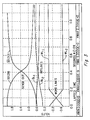
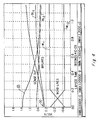
- a computer simulation has been carried out to compare the performance of the device 10 with the memory device 50 of Figure 2, which is based on a conventional sense amplifier design.
- the device 50 also includes the clamping diodes 42 of the present invention in order to obtain similar voltage swings, this permitting a more objective evaluation of the merged bitline - pullup circuitry of the present invention.
- the comparison was performed by reading data out of two adjacent memory cells 12 in a column.
- the adjacent cells were initialized to opposite states in order to require reversal of voltages in bitlines BL1 and BL2. That is, simultaneously switching WL1 and WL2 reverses the memory cell selection and causes the bitlines to charge to opposite states.
- the bitlines were assumed to each include 0.3 pF of capacitance.
- lapsed time between the word line and sense out cross points is approximately 0.1 ns shorter for the device 10.
- the rise time of the device 10 sense out signal e.g., to 90 percent of the peak to peak value, is also much shorter.
- V DD for device 50 was 2.7 volts while V DD for the device 10 was only 2.2 volts. Nevertheless, the output signal of the device 10 was much larger, i.e., approximately 0.5 volts.
- the device 10 is capable of providing output signals of acceptable magnitude faster than the device 50.
- the device 10 provides a sense out signal of 0.5 volts (as measured from the sense out cross points) in approximately 0.1 ns.
- the device 50 requires greater than a 0.5 ns rise time to develop a 0.5 volt output.
- higher speed memory operation is attainable with the merged bitline - pullup circuitry of the present invention.
- a corresponding method for enhancing high speed static random access memory operation comprises the step of isolating the capacitance of a bitline from the associated bitline pullup device.
- the pullup device is positioned to function as the sense amplifier load as well as the bitline current source. The result is faster and simpler memory operation.
- a feature of the preferred embodiment circuit 10 is that the gate electrode 40 of each amplifier transistor 22 and 24 is connected to an opposing bitline.
- the gate bias of each amplifier transistor could be provided with a DC voltage
- the cross coupled scheme of Figure 1 is advantageous for three reasons. First, the coupling eliminates the need for providing an external voltage bias. Second, the amplified signal response times at the output nodes 28 and 30 are nearly symmetrical in comparison to the bitline response. Third, the amplifier sensitivity is approximately doubled because the gate to source voltage of each amplifier transistor is essentially the difference between the two bitline voltages.
- the designs disclosed herein are more power efficient because the same current that charges the bitlines provides the output signal through a simple impedance transformation.
- a single bitline e.g., BL1
- one pullup/load transistor 18 and one amplifier transistor 22 provide sufficient gain for RAM operation although a longer response time may be required in order to develop a desired sense out voltage response.
- the advantages of this embodiment are lower power dissipation and fewer components.
- transistors 18, 20, 22 and 24 be of equal size, this is not necessary. Nor do the transistors have to be MESFETs. They may, for example, be replaced with MOS, bipolar or other types of devices. All of the devices 18 - 24 could be high electron mobility transistors (HEMTs). Furthermore, designs incorporating enhancement mode devices are within the scope of substitutions, although these may not provide satisfactory performance. Accordingly, the scope of the invention is only to be limited by the claims which follow.
Landscapes
- Engineering & Computer Science (AREA)
- Microelectronics & Electronic Packaging (AREA)
- Computer Hardware Design (AREA)
- Static Random-Access Memory (AREA)
Claims (12)
- Digitales Speichersystem mit wenigstens einer ersten Spalte aus Speicherzellen (12); mehreren Wortleitungen (WL), die jeweils an die Speicherzellen angeschlossen sind, um an eine ausgewählte Speicherzelle anzulegende elektrische Signale freizugeben; einer ersten, an jede Speicherzelle in der Spalte angeschlossenen Bitleitung (BL1) für elektrische Signale, die den Zustand der ausgewählten Zelle bestimmen; einem Bitleitungs-Pullup-Transistor (18), der an eine Quelle elektrischer Energie anschließbar ist und so angeschlossen ist, daß er als Stromquelle für die Bitleitung wirkt; und Leseverstärkermitteln, die an die Bitleitung angeschlossen sind, um ein dem Zustand der entsprechenden Speicherzelle entsprechendes Ausgangssignal zu liefern, dadurch gekennzeichnet, daß die Leseverstärkermittel einen Transistor (22) enthalten, dessen gesteuerter Strompfad zwischen der Bitleitung und dem Bitleitungs-Pullup-Transistor (18) liegt, damit an seiner Verbindungsstelle mit dem Bitleitungs-Pullup-Transistor ein dem Zustand einer ausgewählten Speicherzelle entsprechendes Signal geliefert wird; und daß das System ferner Vorspannungsmittel enthält, die den Gate-Anschluß des Transistors der Leseverstärkermittel vorspannen, daß die angelegte Vorspannung niedrig ist, wenn das Potential an der Bitleitung hoch ist und die Vorspannung hoch ist, wenn das Potential niedrig ist.
- Digitales Speichersystem mit wenigstens einer ersten Spalte aus Speicherzellen (12), mehreren Wortleitungen (WL), die jeweils an die Speicherzellen angeschlossen sind, um an eine ausgewählte Speicherzelle (12) in der ersten Spalte anzulegende elektrische Signale freizugeben, mit jeder Speicherzelle (12) in der ersten Spalte verbundenen ersten und zweiten Bitleitungen (BL1, BL2) für elektrische Signale, die den Zustand der ausgewählten Speicherzelle (12) bestimmen, ersten und zweiten Bitleitungs-Pullup-Transistoren (18, 20), die an eine Quelle elektrischer Energie anschließbar sind und jeweils so angeordnet sind, daß sie Ströme für die ersten und zweiten Bitleitungen (BL1, BL2) liefern, und Leseverstärkermitteln (22, 24), die mit den ersten und zweiten Bitleitungen (BL1, BL2) verbunden sind, um wenigstens ein den Zustand der ausgewählten Speicherzelle (12) entsprechendes Ausgangssignal zu liefern, dadurch gekennzeichnet, daß die Leseverstärkermittel zwei Transistoren (22, 24) enthalten, wobei der gesteuerte Strompfad des ersten Transistors (22) zwischen dem ersten Bitleitungs-Pullup-Transistor (18) und der ersten Bitleitung (BL1) liegt, während sein Gate-Anschluß (40) mit der zweiten Bitleitung (BL2) verbunden ist, und wobei der gesteuerte Strompfad des zweiten Transistors (24) zwischen dem zweiten Bitleitungs-Pullup-Transistor (20) und der zweiten Bitleitung (BL2) liegt, während sein Gate-Anschluß (40) mit der ersten Bitleitung (BL1) verbunden ist; und daß das wenigstens eine Ausgangssignal wenigstens an einem der Verbindungspunkte der Transistoren der Leseverstärkermittel mit den Bitleitungs-Pullup-Transistoren geliefert wird.
- System nach Anspruch 1 oder 2, dadurch gekennzeichnet, daß jeder Pullup-Transistor (18, 20) ein Feldeffekttransistor ist, dessen Source- oder Drain-Elektrode mit seiner Gate-Elektrode verbunden ist.
- System nach einem der Ansprüche 1, 2 und 3, dadurch gekennzeichnet, daß der oder jeder Transistor der Leseverstärkermittel Source- und Drain-Anschlüsse aufweist, die mit den Enden eines Kanals verbunden sind, der seinen gesteuerten Stromweg bildet, und ferner als Steuerelektrode einen Gate-Anschluß zum Steuern dieses Stroms aufweist.
- System nach einem der vorhergehenden Ansprüche, dadurch gekennzeichnet, daß der oder jeder Bitleitungs-Pullup-Transistor als Last für den entsprechenden Transistor der Leseverstärkermittel wirkt.
- System nach einem der vorhergehenden Ansprüche, dadurch gekennzeichnet, daß die oder jede Bitleitung (BL1, BL2) eine an ein Referenzpotential anlegbare Klemme enthält, wobei für jede Bitleitung eine Diode (42) vorgesehen ist, die seriell zwischen der Klemme der Bitleitung und dem Referenzpotential liegt.
- System nach einem der vorhergehenden Ansprüche, dadurch gekennzeichnet, daß der Pullup-Transistor (18, 20) und der erste oder der zweite Transistor (22, 24) Galliumarsenid-MES-Feldeffekttransistoren sind.
- System nach einem der vorhergehenden Ansprüche, dadurch gekennzeichnet, daß die Speicherzellen statische Schreib/Lese-Speicherzellen sind.
- Verfahren zum Verbessern des Hochgeschwindigkeitsbetriebs eines statischen Schreib/Lese-Speichersystems mit wenigstens einer ersten Spalte aus Speicherzellen (12), mehreren Wortleitungen (WL) und Bitleitungen (BL), die für die Speicherzellenauswahl angeschlossen sind, einem Bitleitungs-Pullup-Transistor (18) und einem Leseverstärkertransistor (22), die an eine Bitleitung (BL1) angeschlossen sind, wobei das Verfahren die Schritte enthält
Zuführen eines Ladestroms aus dem Bitleitungs-Pullup-Transistor (18) zu der Bitleitung (BL1) durch den Leseverstärkertransistor (22),
Vorspannen des Gate-Anschlusses des Leseverstärkertransistors mit einer niedrigen Vorspannung, wenn das Potential an der Bitleitung hoch ist, und mit einer hohen Vorspannung, wenn das Potential an der Bitleitung niedrig ist, und
Ableiten eines dem Zustand der ausgewählten Speicherzelle entsprechenden Signals vom Verbindungspunkt des Leseverstärkertransistors mit dem Bitleitungs-Pullup-Transistor, so daß die Kapazität der Bitleitung (BL1) abhängig von der niedrigen oder hohen Vorspannung von dem zugehörigen Bitleitungs-Pullup-Transistor (18) entkoppelt wird. - Verfahren nach Anspruch 9, dadurch gekennzeichnet, daß der schritt des Zuführens des Ladestroms zu der Bitleitung dadurch erzielt wird, daß der Bitleitungs-Pullup-Transistor (18) so angeschlossen wird, daß er als Last des Leseverstärkertransistors (22) und als Bitleitungs-Stromquelle wirkt.
- Verfahren nach Anspruch 9, bei welchem der Schritt des Zuführens des Ladestroms zur Bitleitung dadurch erzielt wird, daß der Leseverstärkertransistor (22) in Serie zwischen den Bitleitungs-Pullup-Transistor (18) und die Bitleitung (BL1) eingefügt wird.
- Verfahren nach einem der Ansprüche 9 bis 11, bei welchem der Leseverstärkertransistor (22) ein Feldeffekt-Transistor ist und das Verfahren auf das System angewendet wird, das außerdem eine zweite Begleitung (BL2) enthält, die der ersten Spalte aus Speicherzellen für Speicherzellen-Zustandssignale zugeordnet ist, einen zweiten Bitleitungs-Pullup-Transistor (20) und einen zweiten Leseverstärkertransistor (24) enthält, der zwischen dem zweiten Bitleitungs-Pullup-Transistor und der zweiten Bitleitung liegt, wobei der Gate-Anschluß des ersten Leseverstärkertransistors (22) mit der zweiten Bitleitung (BL2) verbunden ist und der Gate-Anschluß des zweiten Leseverstärkertransistors (24) mit der ersten Bitleitung (BL1) verbunden ist.
Applications Claiming Priority (2)
| Application Number | Priority Date | Filing Date | Title |
|---|---|---|---|
| US07/262,402 US4951252A (en) | 1988-10-25 | 1988-10-25 | Digital memory system |
| US262402 | 1999-03-04 |
Publications (3)
| Publication Number | Publication Date |
|---|---|
| EP0366332A2 EP0366332A2 (de) | 1990-05-02 |
| EP0366332A3 EP0366332A3 (de) | 1992-03-18 |
| EP0366332B1 true EP0366332B1 (de) | 1995-12-20 |
Family
ID=22997345
Family Applications (1)
| Application Number | Title | Priority Date | Filing Date |
|---|---|---|---|
| EP89310644A Expired - Lifetime EP0366332B1 (de) | 1988-10-25 | 1989-10-17 | Digitales Speichersystem |
Country Status (4)
| Country | Link |
|---|---|
| US (1) | US4951252A (de) |
| EP (1) | EP0366332B1 (de) |
| JP (1) | JP2752197B2 (de) |
| DE (1) | DE68925181T2 (de) |
Families Citing this family (7)
| Publication number | Priority date | Publication date | Assignee | Title |
|---|---|---|---|---|
| JPH0793033B2 (ja) * | 1989-08-24 | 1995-10-09 | 日本電気株式会社 | センスアンプ |
| US5430677A (en) * | 1991-02-11 | 1995-07-04 | Intel Corporation | Architecture for reading information from a memory array |
| US5285408A (en) * | 1992-09-15 | 1994-02-08 | Micron Semiconductor, Inc. | Method and apparatus for providing a faster ones voltage level restore operation in a dram |
| DE69526336D1 (de) * | 1995-04-28 | 2002-05-16 | St Microelectronics Srl | Leseschaltung für Speicherzellen mit niedriger Versorgungsspannung |
| JP3967493B2 (ja) * | 1999-06-18 | 2007-08-29 | 株式会社東芝 | 半導体記憶装置 |
| US7110311B2 (en) * | 2004-06-15 | 2006-09-19 | Atmel Corporation | Sense amplifier for reduced sense delay in low power mode |
| US7161861B2 (en) * | 2004-11-15 | 2007-01-09 | Infineon Technologies Ag | Sense amplifier bitline boost circuit |
Citations (1)
| Publication number | Priority date | Publication date | Assignee | Title |
|---|---|---|---|---|
| EP0239021A2 (de) * | 1986-03-20 | 1987-09-30 | Fujitsu Limited | Halbleiterspeicheranordnung |
Family Cites Families (3)
| Publication number | Priority date | Publication date | Assignee | Title |
|---|---|---|---|---|
| DE2309616C2 (de) * | 1973-02-27 | 1982-11-11 | Ibm Deutschland Gmbh, 7000 Stuttgart | Halbleiterspeicherschaltung |
| US4665508A (en) * | 1985-05-23 | 1987-05-12 | Texas Instruments Incorporated | Gallium arsenide MESFET memory |
| JPS62252597A (ja) * | 1986-04-24 | 1987-11-04 | Sony Corp | センスアンプ |
-
1988
- 1988-10-25 US US07/262,402 patent/US4951252A/en not_active Expired - Lifetime
-
1989
- 1989-10-17 EP EP89310644A patent/EP0366332B1/de not_active Expired - Lifetime
- 1989-10-17 DE DE68925181T patent/DE68925181T2/de not_active Expired - Fee Related
- 1989-10-24 JP JP27700289A patent/JP2752197B2/ja not_active Expired - Fee Related
Patent Citations (1)
| Publication number | Priority date | Publication date | Assignee | Title |
|---|---|---|---|---|
| EP0239021A2 (de) * | 1986-03-20 | 1987-09-30 | Fujitsu Limited | Halbleiterspeicheranordnung |
Non-Patent Citations (1)
| Title |
|---|
| 17 June 1983 & JP- A-58 102 389 ( NIPPON DENSHIN DENWA KOSHA ) 12 December 1981 * |
Also Published As
| Publication number | Publication date |
|---|---|
| JPH02244493A (ja) | 1990-09-28 |
| DE68925181D1 (de) | 1996-02-01 |
| US4951252A (en) | 1990-08-21 |
| EP0366332A2 (de) | 1990-05-02 |
| DE68925181T2 (de) | 1996-05-02 |
| JP2752197B2 (ja) | 1998-05-18 |
| EP0366332A3 (de) | 1992-03-18 |
Similar Documents
| Publication | Publication Date | Title |
|---|---|---|
| US5243573A (en) | Sense amplifier for nonvolatile semiconductor storage devices | |
| US4247791A (en) | CMOS Memory sense amplifier | |
| EP0199501B1 (de) | CMOS-Stromdetektorverstärker | |
| EP0661709A1 (de) | Halbleiterspeicher mit sehr schnellem Abfühlverstärker | |
| KR920022291A (ko) | 프리챠지된 비트선을 갖는 멀티 포트 메모리 장치 | |
| US3946369A (en) | High speed MOS RAM employing depletion loads | |
| EP0088421B1 (de) | Halbleiterspeicheranordnung mit Tunneldioden | |
| US5243569A (en) | Differential cell-type eprom incorporating stress test circuit | |
| US5880990A (en) | Dual port memory apparatus operating a low voltage to maintain low operating current during charging and discharging | |
| EP0306519B1 (de) | Stromsensitiver differenzverstärker | |
| US6292418B1 (en) | Semiconductor memory device | |
| EP0541240B1 (de) | Schnelle Prüfung von Feld-Effekt-Transistoren | |
| US4730133A (en) | Decoder circuit of a semiconductor memory device | |
| JP2756797B2 (ja) | Fetセンス・アンプ | |
| US4951252A (en) | Digital memory system | |
| US5022003A (en) | Semiconductor memory device | |
| EP0374995B1 (de) | Integrierte Speicherschaltung | |
| US6829189B2 (en) | Semiconductor memory device and bit line sensing method thereof | |
| EP0187246A2 (de) | Bitzeilenvorladungsschaltung eines Halbleiterspeichers | |
| KR950006336B1 (ko) | 반도체 메모리장치의 전류센싱회로 | |
| US4899309A (en) | Current sense circuit for a ROM system | |
| US20030063496A1 (en) | Memory sense amplifier | |
| US4896299A (en) | Static semiconductor memory device having function of resetting stored data | |
| US5309389A (en) | Read-only memory with complementary data lines | |
| EP0396261B1 (de) | Anordnung von hochverstärkenden Leseverstärkern zur schnellen Lese-Operation |
Legal Events
| Date | Code | Title | Description |
|---|---|---|---|
| PUAI | Public reference made under article 153(3) epc to a published international application that has entered the european phase |
Free format text: ORIGINAL CODE: 0009012 |
|
| AK | Designated contracting states |
Kind code of ref document: A2 Designated state(s): DE FR GB IT NL |
|
| RIN1 | Information on inventor provided before grant (corrected) |
Inventor name: TADDIKEN, ALBERT HENRY Inventor name: WHITE, WILLIAM ALVIN |
|
| PUAL | Search report despatched |
Free format text: ORIGINAL CODE: 0009013 |
|
| AK | Designated contracting states |
Kind code of ref document: A3 Designated state(s): DE FR GB IT NL |
|
| 17P | Request for examination filed |
Effective date: 19920828 |
|
| 17Q | First examination report despatched |
Effective date: 19930423 |
|
| GRAA | (expected) grant |
Free format text: ORIGINAL CODE: 0009210 |
|
| AK | Designated contracting states |
Kind code of ref document: B1 Designated state(s): DE FR GB IT NL |
|
| ITF | It: translation for a ep patent filed | ||
| REF | Corresponds to: |
Ref document number: 68925181 Country of ref document: DE Date of ref document: 19960201 |
|
| ET | Fr: translation filed | ||
| PLBE | No opposition filed within time limit |
Free format text: ORIGINAL CODE: 0009261 |
|
| STAA | Information on the status of an ep patent application or granted ep patent |
Free format text: STATUS: NO OPPOSITION FILED WITHIN TIME LIMIT |
|
| 26N | No opposition filed | ||
| PGFP | Annual fee paid to national office [announced via postgrant information from national office to epo] |
Ref country code: NL Payment date: 20010921 Year of fee payment: 13 |
|
| PGFP | Annual fee paid to national office [announced via postgrant information from national office to epo] |
Ref country code: DE Payment date: 20011030 Year of fee payment: 13 |
|
| REG | Reference to a national code |
Ref country code: GB Ref legal event code: IF02 |
|
| PG25 | Lapsed in a contracting state [announced via postgrant information from national office to epo] |
Ref country code: DE Free format text: LAPSE BECAUSE OF NON-PAYMENT OF DUE FEES Effective date: 20030501 Ref country code: NL Free format text: LAPSE BECAUSE OF NON-PAYMENT OF DUE FEES Effective date: 20030501 |
|
| NLV4 | Nl: lapsed or anulled due to non-payment of the annual fee |
Effective date: 20030501 |
|
| PG25 | Lapsed in a contracting state [announced via postgrant information from national office to epo] |
Ref country code: IT Free format text: LAPSE BECAUSE OF NON-PAYMENT OF DUE FEES;WARNING: LAPSES OF ITALIAN PATENTS WITH EFFECTIVE DATE BEFORE 2007 MAY HAVE OCCURRED AT ANY TIME BEFORE 2007. THE CORRECT EFFECTIVE DATE MAY BE DIFFERENT FROM THE ONE RECORDED. Effective date: 20051017 |
|
| PGFP | Annual fee paid to national office [announced via postgrant information from national office to epo] |
Ref country code: GB Payment date: 20070918 Year of fee payment: 19 |
|
| REG | Reference to a national code |
Ref country code: FR Ref legal event code: ST Effective date: 20080630 |
|
| PGFP | Annual fee paid to national office [announced via postgrant information from national office to epo] |
Ref country code: FR Payment date: 20061003 Year of fee payment: 18 |
|
| PG25 | Lapsed in a contracting state [announced via postgrant information from national office to epo] |
Ref country code: FR Free format text: LAPSE BECAUSE OF NON-PAYMENT OF DUE FEES Effective date: 20071031 |
|
| GBPC | Gb: european patent ceased through non-payment of renewal fee |
Effective date: 20081017 |
|
| PG25 | Lapsed in a contracting state [announced via postgrant information from national office to epo] |
Ref country code: GB Free format text: LAPSE BECAUSE OF NON-PAYMENT OF DUE FEES Effective date: 20081017 |