EP0344634A1 - Bicyclische Carboxamide, Verfahren zu ihrer Herstellung und diese Verbindungen enthaltende Arzneimittel - Google Patents
Bicyclische Carboxamide, Verfahren zu ihrer Herstellung und diese Verbindungen enthaltende Arzneimittel Download PDFInfo
- Publication number
- EP0344634A1 EP0344634A1 EP89109511A EP89109511A EP0344634A1 EP 0344634 A1 EP0344634 A1 EP 0344634A1 EP 89109511 A EP89109511 A EP 89109511A EP 89109511 A EP89109511 A EP 89109511A EP 0344634 A1 EP0344634 A1 EP 0344634A1
- Authority
- EP
- European Patent Office
- Prior art keywords
- group
- oxo
- alkyl
- dihydro
- indole
- Prior art date
- Legal status (The legal status is an assumption and is not a legal conclusion. Google has not performed a legal analysis and makes no representation as to the accuracy of the status listed.)
- Granted
Links
- 0 CC1(C[C@@](C2)C2C1)*1CC1 Chemical compound CC1(C[C@@](C2)C2C1)*1CC1 0.000 description 3
Classifications
-
- C—CHEMISTRY; METALLURGY
- C07—ORGANIC CHEMISTRY
- C07D—HETEROCYCLIC COMPOUNDS
- C07D209/00—Heterocyclic compounds containing five-membered rings, condensed with other rings, with one nitrogen atom as the only ring hetero atom
- C07D209/02—Heterocyclic compounds containing five-membered rings, condensed with other rings, with one nitrogen atom as the only ring hetero atom condensed with one carbocyclic ring
- C07D209/04—Indoles; Hydrogenated indoles
- C07D209/30—Indoles; Hydrogenated indoles with hetero atoms or with carbon atoms having three bonds to hetero atoms with at the most one bond to halogen, directly attached to carbon atoms of the hetero ring
- C07D209/42—Carbon atoms having three bonds to hetero atoms with at the most one bond to halogen, e.g. ester or nitrile radicals
-
- C—CHEMISTRY; METALLURGY
- C07—ORGANIC CHEMISTRY
- C07D—HETEROCYCLIC COMPOUNDS
- C07D401/00—Heterocyclic compounds containing two or more hetero rings, having nitrogen atoms as the only ring hetero atoms, at least one ring being a six-membered ring with only one nitrogen atom
- C07D401/02—Heterocyclic compounds containing two or more hetero rings, having nitrogen atoms as the only ring hetero atoms, at least one ring being a six-membered ring with only one nitrogen atom containing two hetero rings
- C07D401/12—Heterocyclic compounds containing two or more hetero rings, having nitrogen atoms as the only ring hetero atoms, at least one ring being a six-membered ring with only one nitrogen atom containing two hetero rings linked by a chain containing hetero atoms as chain links
-
- A—HUMAN NECESSITIES
- A61—MEDICAL OR VETERINARY SCIENCE; HYGIENE
- A61P—SPECIFIC THERAPEUTIC ACTIVITY OF CHEMICAL COMPOUNDS OR MEDICINAL PREPARATIONS
- A61P7/00—Drugs for disorders of the blood or the extracellular fluid
- A61P7/02—Antithrombotic agents; Anticoagulants; Platelet aggregation inhibitors
-
- C—CHEMISTRY; METALLURGY
- C07—ORGANIC CHEMISTRY
- C07D—HETEROCYCLIC COMPOUNDS
- C07D209/00—Heterocyclic compounds containing five-membered rings, condensed with other rings, with one nitrogen atom as the only ring hetero atom
- C07D209/02—Heterocyclic compounds containing five-membered rings, condensed with other rings, with one nitrogen atom as the only ring hetero atom condensed with one carbocyclic ring
- C07D209/04—Indoles; Hydrogenated indoles
- C07D209/30—Indoles; Hydrogenated indoles with hetero atoms or with carbon atoms having three bonds to hetero atoms with at the most one bond to halogen, directly attached to carbon atoms of the hetero ring
- C07D209/32—Oxygen atoms
- C07D209/34—Oxygen atoms in position 2
-
- C—CHEMISTRY; METALLURGY
- C07—ORGANIC CHEMISTRY
- C07D—HETEROCYCLIC COMPOUNDS
- C07D209/00—Heterocyclic compounds containing five-membered rings, condensed with other rings, with one nitrogen atom as the only ring hetero atom
- C07D209/56—Ring systems containing three or more rings
- C07D209/96—Spiro-condensed ring systems
-
- C—CHEMISTRY; METALLURGY
- C07—ORGANIC CHEMISTRY
- C07D—HETEROCYCLIC COMPOUNDS
- C07D215/00—Heterocyclic compounds containing quinoline or hydrogenated quinoline ring systems
- C07D215/02—Heterocyclic compounds containing quinoline or hydrogenated quinoline ring systems having no bond between the ring nitrogen atom and a non-ring member or having only hydrogen atoms or carbon atoms directly attached to the ring nitrogen atom
- C07D215/16—Heterocyclic compounds containing quinoline or hydrogenated quinoline ring systems having no bond between the ring nitrogen atom and a non-ring member or having only hydrogen atoms or carbon atoms directly attached to the ring nitrogen atom with hetero atoms or with carbon atoms having three bonds to hetero atoms with at the most one bond to halogen, e.g. ester or nitrile radicals, directly attached to ring carbon atoms
- C07D215/48—Carbon atoms having three bonds to hetero atoms with at the most one bond to halogen
-
- C—CHEMISTRY; METALLURGY
- C07—ORGANIC CHEMISTRY
- C07D—HETEROCYCLIC COMPOUNDS
- C07D277/00—Heterocyclic compounds containing 1,3-thiazole or hydrogenated 1,3-thiazole rings
-
- C—CHEMISTRY; METALLURGY
- C07—ORGANIC CHEMISTRY
- C07D—HETEROCYCLIC COMPOUNDS
- C07D403/00—Heterocyclic compounds containing two or more hetero rings, having nitrogen atoms as the only ring hetero atoms, not provided for by group C07D401/00
- C07D403/02—Heterocyclic compounds containing two or more hetero rings, having nitrogen atoms as the only ring hetero atoms, not provided for by group C07D401/00 containing two hetero rings
- C07D403/12—Heterocyclic compounds containing two or more hetero rings, having nitrogen atoms as the only ring hetero atoms, not provided for by group C07D401/00 containing two hetero rings linked by a chain containing hetero atoms as chain links
-
- C—CHEMISTRY; METALLURGY
- C07—ORGANIC CHEMISTRY
- C07D—HETEROCYCLIC COMPOUNDS
- C07D405/00—Heterocyclic compounds containing both one or more hetero rings having oxygen atoms as the only ring hetero atoms, and one or more rings having nitrogen as the only ring hetero atom
- C07D405/02—Heterocyclic compounds containing both one or more hetero rings having oxygen atoms as the only ring hetero atoms, and one or more rings having nitrogen as the only ring hetero atom containing two hetero rings
- C07D405/12—Heterocyclic compounds containing both one or more hetero rings having oxygen atoms as the only ring hetero atoms, and one or more rings having nitrogen as the only ring hetero atom containing two hetero rings linked by a chain containing hetero atoms as chain links
-
- C—CHEMISTRY; METALLURGY
- C07—ORGANIC CHEMISTRY
- C07D—HETEROCYCLIC COMPOUNDS
- C07D471/00—Heterocyclic compounds containing nitrogen atoms as the only ring hetero atoms in the condensed system, at least one ring being a six-membered ring with one nitrogen atom, not provided for by groups C07D451/00 - C07D463/00
- C07D471/02—Heterocyclic compounds containing nitrogen atoms as the only ring hetero atoms in the condensed system, at least one ring being a six-membered ring with one nitrogen atom, not provided for by groups C07D451/00 - C07D463/00 in which the condensed system contains two hetero rings
- C07D471/04—Ortho-condensed systems
Definitions
- the present invention relates to new compounds of general formula I.
- a and B can be the same or different and each represents a hydrogen atom, an alkyl, alkenyl, alkynyl, benzyl or a cycloalkyl group
- R1 is a hydrogen atom
- R2 represents a hydrogen atom, an alkyl, alkenyl, cycloalkyl, alkylcarbonyl, alkoxycarbonyl, aminocarbonyl or hydrazinocarbonyl group or R1 and R2 together with the carbon atom to which they are attached form a cycloalkyl ring
- n can assume the values 0 or 1
- X represents a bond or an alkylene group
- R3 is an aromatic heterocyclic five- or six-membered ring with 1 to 4 heteroatoms
- the heteroatoms may be the same or different and may be oxygen, sulfur or nitrogen and, if desired
- the compounds of the present invention have valuable pharmacological properties, in particular they have an inhibitory effect on erythrocyte aggregation and can thus be used for the treatment of diseases of the cardiovascular system in which erythrocyte aggregation plays an important role in pathogenesis, such as, for example, peripheral, coronary and cerebral circulatory disorders and shock conditions.
- the connections also affect the Platelet function. They can also increase heart strength and lower blood pressure.
- n denotes the number l
- R 1 and R 2 represent a hydrogen atom and then X may not denote an alkylene group.
- the general formula IA or B means an alkyl group, it means straight-chain or branched groups with 1-6 C atoms. In this sense, especially the methyl, ethyl, propyl, butyl, isopropyl, isobutyl and tert-butyl groups in question.
- the general formula IA or B means an alkenyl or alkynyl group, this means straight-chain or branched groups with 2-6 C atoms. In this sense, the allyl, propargyl, butenyl and isobutenyl groups are particularly suitable.
- the general formula IA or B means a cycloalkyl group, this means rings with 3-7 C atoms. In this sense, the cyclopropyl, cyclobutyl, cyclopentyl and cyclohexyl groups are particularly suitable.
- R1 and R2 may be the same or different.
- R2 can also represent a carbonyl group substituted by an alkyl, alkoxy, amino or hydrazino group.
- the alkyl or alkoxy parts mentioned above for R1 and R2 can be straight-chain or branched, saturated or unsaturated and contain 1 to 6 or 2 to 6 carbon atoms. In particular, however, are hydrogen, the methyl, ethyl, allyl, acetyl, propionyl, methoxycarbonyl, ethoxycarbonyl and hydrazinocarbonyl group for R1 or R2 in question.
- R2 is preferably a straight-chain or branched alkyl group having 1 to 6 carbon atoms or a carbonyl group substituted by an alkyl, alkoxy, amino or hydrazino group.
- Preferred in this sense are the methyl, Ethyl, isopropyl, isobutyl, pentyl, allyl, acetyl, propionyl, methoxycarbonyl, ethoxycarbonyl, and hydrazinocarbonyl groups.
- R1 and R2 together with the carbon atom to which they are attached also form a cycloalkyl ring with 3 to 8 carbon atoms, preferably it is the spirocyclopropyl, spirocyclobutyl, spirocyclopentyl, and spirocyclohexyl group.
- R1 represents a cycloalkyl group, this can contain 3-7 carbon atoms.
- the groups mentioned in the definition of A or B are preferred, but in particular the cyclopentyl and cyclohexyl radical.
- X denotes an alkylene group, it means straight-chain or branched chains with 1 to 6 carbon atoms.
- the methylene, ethylene, propylene and butylene group are particularly preferred.
- n assumes the value 0, the compounds are substituted 2,3-dihydro-2-oxo-1H-indole-4-carboxamide or 2,3-dihydro-2-oxo-1H-indole-5-carboxamide or 2,3-dihydro-2-oxo-1H-indole-6-carboxamide or 2,3-dihydro-2-oxo-1H-indole-7-carboxamide; if n takes the value l, the substances are considered as 1,2,3,4-tetrahydro-2-oxo-5-quinolinecarboxamide or 1,2,3,4-tetrahydro-2-oxo-6-quinoline carboxamides or 1,2,3,4-tetrahydro-2-oxo-7-quinolinecarboxamide or 1,2,3,4-tetrahydro-2-oxo-8-quinoline carboxamides.
- the heterocyclic five or six rings with 1 to 4 or 1 to 5 heteroatoms indicated at R3, where the heteroatoms of the aforementioned five or six rings can be the same or different and mean nitrogen, oxygen or sulfur and optionally oxygen on one or more nitrogen atoms can preferably carry the pyrrolyl, furanyl, thiophenyl, pyrazolyl, imidazolyl, thiazolyl, tetrazolyl, isothiazolyl, oxazolyl, isoxazolyl, triazolyl, thiadiazolyl, oxadiazolyl, pyrazinyl, N, N'-dioxy-pyrazinyl, pyrimidinyl, N, N'-dioxypyrimidinyl, pyridazinyl, oxazinyl, thiazinyl, triazinyl, tetrazinyl, pyridinyl radical.
- the indolyl, indazolyl, benzimidazolyl, quinolinyl, isoquinolinyl, cinnolinyl, phthalazinyl, quinazolinyl, quinoxalinyl, benzofuranyl, benzothiopolyl, benzoxiophenyl, -, Benzoisoxazolyl, benzothiazolyl, benzoisothiazolyl, benzotriazolyl and the benzothiadiazolyl radical are preferred.
- aromatic heterocyclic five- or six-membered rings are fused with a further aromatic heterocyclic five- or six-membered ring to form a bicyclic ring, the naphthyridinyl, pteridinyl, purinyl, indolizinyl, thiopheno [2,3-b] pyrazinyl, Imidazo [1,2-a] pyridinyl and the triazolo [4,3-a] pyridinyl residue.
- R3 Particularly preferred for R3 are the pyridinyl, tetrazolyl, triazolyl, 1,2,4-triazolo [4,3-a] pyridinyl, methylenedioxyphenyl, ethylenedioxyphenyl, naphthyl, tetrahydronaphthyl, quinolinyl, biphenyl and Phenyl ring of the general formula II in question.
- the six-membered rings mentioned above are substituted by a pyridinyloxy radical, then it is preferably the 3-pyridinyloxy radical. If the aforementioned six-membered rings are substituted by a phenyloxy radical, a linkage with a pyridinyl group as a heterocyclic six-membered ring is particularly preferred.
- Alkyl, alkoxy and alkylmercapto substituents in the heterocyclic five- or six-membered rings, the bicycles, the pyridinyloxy or phenyloxy group can contain 1 to 6, preferably 1 to 4, carbon atoms.
- the methyl, ethyl, methoxy, ethoxy, methylmercapto and ethyl mercapto radical is preferred.
- Halogen substituents are to be understood as fluorine, chlorine and bromine, preferably fluorine and chlorine.
- R3 is a phenyl ring of the general formula II
- the alkyl part of the substituents mentioned for R4, R5 and R6 can contain 1 to 8 carbon atoms, preferably 1 to 5 carbon atoms.
- R4 are hydrogen, a 1-imidazolyl-, 2-imidazolyl-, 6-oxo- (1H) -3-pyridazinyl-, 4,5-dihydro-6-oxo- (1H) -3-pyridazinyl-, 4,5-dihydro-4-methyl-6-oxo (1H) -3-pyridazinyl group, an alkylsulfonyloxy, trifluoromethylsulfonyloxy, alkylsulfenylmethyl, alkylsulfinylmethyl, alkylsulfonylmethyl, alkylsulfonylamino, N-alkylsulfonylamino-, trifluoromethyl or N-alkyl-trifluoromethylsulfonylamino group, a carbonyl group substituted by a hydroxy, alkoxy, amino, alkylamino or dialkylamino group or a sulfony
- the phenyl part can carry 1 to 3 of the substituents mentioned.
- Preferred monosubstituted phenyl compounds are the hydroxy, C1-C8 alkyl, C1-C3 alkoxy, allyloxy, propargyloxy, cyanomethyloxy, methoxycarbonylmethyloxy, halogen, nitro, cyano, aminocarbonyl, amino, C1-C3 Dialkylamino, C1-C3 alkylmercapto, C1-C3 alkylsulfinyl, C1-C3 alkylsulfonyl, C1-C3 alkylsulfonyloxy, 3-pyridinyloxy and 4,5-dihydro-6-oxo (1H) pyridazinylphenyls, the substituent can be in the 2-, 3- or 4-position.
- Preferred disubstituted phenyls contain, as substituents, an alkanesulfonyloxy-, trifluoromethylsulfonyloxy-, alkylsulfonylmethyl-, alkylsulfinylmethyl-, alkylsulfonylmethyl-, alkylsulfonylamino-, N-alkyl-alkylsulfonylamino-, trifluoromethylsulfonyl-amino-trifluoromethyl- or -n-a-through-a , Alkoxy, amino, alkylamino or dialkylamino group substituted carbonyl group or a sulfonyl group substituted by an amino, dialkylamino or morpholino group, an alkylaminosulfonyl, alkylcarbonylamino, aminocarbonylamino or N-alkylamino carbonylamino group, a hydroxy, Alkoxy,
- the preferred trisubstituted phenyl radical is the 3,4,5-trimethoxyphenyl radical.
- Particularly preferred compounds of the general formula I are compounds in which A and B independently of one another are a hydrogen atom, a benzyl, a C1-C4 alkyl, in particular a methyl, ethyl, propyl, isopropyl or isobutyl; or a C2-C4 alkenyl, in particular an allyl group, R1 and R2 are the same and represent C1-C4-alkyl groups, in particular methyl groups or R1 and R2 together with the carbon atom to which they are attached form a C5-C6-cycloalkyl ring, in particular a cyclopentyl ring, X represents a bond or a C1-C4 alkylene chain, in particular the ethylene chain and R3 the pyrrolyl, furanyl, thiophenyl, pyrazolyl, imidazolyl, isothiazolyl, thiazolyl, oxazolyl, triazolyl, tetra
- the compounds of general formula I can be prepared by methods known per se. The following methods are particularly advantageous.
- the preferred method of reaction with the amines of the general formula III consists in the reaction of approximately equimolar amounts of the amine and the acid in the presence of a dehydrating agent.
- a dehydrating agent for example, polyphosphoric acid comes into consideration, which then also serves as a solvent.
- the reactions take place between 50 ° C and 200 ° C.
- the end products of the general formula I generally precipitate out after the addition of water and are purified by filtration by recrystallization or by column chromatography.
- Another preferred method for the preparation of compounds of general formula I consists in the reaction of approximately equimolar amounts of the amine III and the acid IV in a suitable solvent with approximately an equivalent amount of a halogenating agent, such as phosphorus trichloride, phosphorus pentachloride or thionyl chloride, at temperatures between room temperature and the reflux temperature of the mixture.
- a halogenating agent such as phosphorus trichloride, phosphorus pentachloride or thionyl chloride
- Suitable solvents are methylene chloride, carbon tetrachloride, diethyl ether, toluene, xylene or chlorobenzene.
- the product precipitates out of the solution and is obtained by filtration. If necessary, the reaction mixture can be concentrated to a point where the product begins to precipitate out of solution.
- Acidic cation exchangers sulfonium salts, sulfuric acid halides, 2-halopyridinium salts, phosphonium salts and N, N′-dicyclohexyl-carbodiimide are suitable as further condensing agents in this reaction.
- the reaction is carried out in the presence or absence of special solvents at temperatures in the range from 20 ° C. to the boiling point of the mixture.
- the reaction of approximately equimolar amounts of the amine and the ester in polyphosphoric acid at 50 ° C. to 200 ° C. is preferred, but it is also best in an inert solvent such as methylene chloride, benzene, toluene, chlorobenzene in the presence of a little more than one equivalent a base such as sodium ethanolate or butyllithium or sodium hydride in dimethyl sulfoxide.
- the reaction with the amines of the general formula III can be carried out at somewhat lower temperatures. Is preferably carried out in an inert solvent such as dichloromethane, diethyl ether, benzene, toluene, at temperatures between Room temperature and 60 ° C.
- the amine and the anhydride are combined in approximately equimolar amounts, an exothermic reaction generally starting. After the reaction has subsided, it is gently warmed for a while to complete the reaction.
- an acid halide is used instead of the carboxylic acid, it is best to work at temperatures between - 10 ° C and room temperature.
- the preferred procedure is that, according to Schotten-Baumann, the acid chloride is slowly added dropwise to the aqueous solution of the amine of the general formula III, which also contains a base such as alkali metal hydroxide, sodium carbonate or pyridine, and then left to stand at room temperature for some time. This reaction is possible not only in water, but also in organic solvents such as methylene chloride, ether, benzene or toluene.
- the amines can be acylated almost quantitatively by carboxylic acid chlorides by boiling the amine and the carboxylic acid chloride in an inert solvent such as methylene chloride, benzene or toluene until the evolution of gas has ended, which takes 1 to 24 hours.
- an acid-binding agent such as triethylamine or pyridine, the reaction takes place at temperatures between -10 ° C and room temperature.
- the reduction is preferably carried out in a solvent such as water, methanol, ethanol, glacial acetic acid, ethyl acetate, DMF or a mixture of these solvents, with hydrogen in the presence of a catalyst such as Raney nickel, platinum or palladium / carbon, with metals such as iron, tin or zinc in the presence of an acid, with salts such as Iron (II) sulfate, tin (II) chloride, sodium sulfide, sodium hydrogen sulfite or sodium dithionite with hydrazine in the presence of Raney nickel at temperatures between 0 and 100 ° C, but preferably at room temperature.
- a catalyst such as Raney nickel, platinum or palladium / carbon
- metals such as iron, tin or zinc
- salts such as Iron (II) sulfate, tin (II) chloride, sodium sulfide, sodium hydrogen sulfite or sodium dithionite with hydrazine
- alkylations are preferably carried out in a solvent such as acetone, methyl ethyl ketone, ether, benzene, toluene or dimethylformamide at temperatures between -30 o C and +100 o C, preferably at 0-80 o C in the presence of a base such as potassium hydroxide or sodium carbonate and one Alkylating agents such as alkyl halides, alkenyl halides, alkynyl halides, cycloalkyl halides or the corresponding sulfates.
- a solvent such as acetone, methyl ethyl ketone, ether, benzene, toluene or dimethylformamide
- a base such as potassium hydroxide or sodium carbonate
- Alkylating agents such as alkyl halides, alkenyl halides, alkynyl halides, cycloalkyl halides or the corresponding sulfates.
- the compounds of the general formula V are prepared by nitriding compounds of the general formula VI in which R1, R2, R7 and n have the meanings given above.
- the nitration is preferably carried out with nitric acid in sulfuric acid at temperatures between - 20 ° C and + 50 ° C. However, it can also be carried out without sulfuric acid or in its place in water, glacial acetic acid or acetic anhydride, or with N2O5 in CCl4 in the presence of P2O5.
- Nitriding reagents can also serve as anhydrides such as acetyl nitrate or nitryl halides with FeCl3, methyl nitrate and BF3 or nitronium salts such as NO2BF4, NO2PF6 or NO2CF3SO3.
- a mixture as nitric acid and nitrous acid can be used for nitration, which provides N2O4 as the actual nitrating species.
- Another process for the preparation of carboxylic acids of the general formula IV consists in the saponification of the nitriles of the general formula VII in which A, R1, R2 and n have the meanings given above.
- the nitriles of the general formula VII are obtained from the amines of the general formula VIII in which A, R1, R2 and n have the meanings given above, by diazotization and reaction with cyanide (Sandmeyer reaction).
- the compounds of general formula VIII are known from German patent application Az. 38 03 775.0 and European patent application Az. 89 101 868.1 (Boehringer Mannheim) and EP-OS 161,632.
- the diazotization of compounds of the general formula VIII is preferably carried out under neutral or acidic conditions, in solution or as a suspension, in a polar solvent such as water, methanol, ethanol, glacial acetic acid, hydrochloric acid, sulfuric acid or phosphoric acid at temperatures between -5 ° C and 10 ° C through.
- Diazotization is primarily carried out using inorganic salts or organic esters of nitrous acid, such as sodium or potassium nitrite or amyl nitrite.
- the solution of the diazonium salt thus obtained is added dropwise to an aqueous solution which contains copper (I) cyanide and a cyanide salt such as sodium or potassium cyanide and a base such as sodium or potassium carbonate or hydrogen carbonate.
- the solution is kept at a temperature of 20 to 100 ° C., preferably 50 to 100 ° C., during the dropping.
- alkylations are preferably in a solvent such as acetone, methyl ethyl ketone, ether, benzene, toluene or dimethylformamide at temperatures between -30 o C and +100 o C, preferably at 0-80 o C in the presence of a base such as alkyl halides, alkenyl halides, alkynyl halides, Cycloalkyl halides or the corresponding sulfates performed. Catalytic amounts of a crown ether can be added to accelerate the reaction.
- a solvent such as acetone, methyl ethyl ketone, ether, benzene, toluene or dimethylformamide
- a base such as alkyl halides, alkenyl halides, alkynyl halides, Cycloalkyl halides or the corresponding sulfates performed.
- Catalytic amounts of a crown ether can be added to accelerate the reaction.
- the nitriles of the general formula VII are now saponified to give the carboxylic acids of the general formula IV.
- the hydrolysis is advantageously carried out either in the presence of an acid such as hydrochloric acid, sulfuric acid, trichloroacetic acid or in the presence of a base such as sodium hydroxide or potassium hydroxide in a suitable solvent such as water or in mixtures such as water / ethanol or water / methanol or water / dioxane at temperatures between 0 and 120 ° C, preferably carried out at the boiling point of the mixture.
- the substances of the general formula I are mixed in a manner known per se with suitable pharmaceutical carriers, flavorings, flavors and colors and shaped, for example, as tablets or dragées or with the addition of appropriate auxiliaries in water or oil, such as, for. B. olive oil, suspended or dissolved.
- the substances of general formula I and their salts can be administered enterally or parenterally in liquid or solid form.
- Water is preferably used as the injection medium, which contains the additives customary for injection solutions, such as stabilizers, solubilizers or buffers.
- Such additives are e.g. B. tartrate and citrate buffers, ethanol, complexing agents (such as ethylenediaminetetraacetic acid and their non-toxic salts) and high molecular weight polymers (such as liquid polyethylene oxide) for viscosity regulation.
- Solid carriers are e.g. B. starch, lactose, mannitol, methyl cellulose, talc, highly disperse silicas, high molecular fatty acids (such as stearic acid), gelatin, agar, calcium phosphate, magnesium stearate, animal and vegetable fats and solid high molecular weight polymers (such as polyethylene glycols).
- Preparations suitable for oral administration can, if desired, contain flavorings and sweeteners.
- the compounds are usually applied in amounts of 10 to 1500 mg per day based on 75 kg of body weight. It is preferred to administer 1 to 2 tablets with an active ingredient content of 5 to 500 mg 2 to 3 times a day.
- the tablets can also be delayed, which means that only 1 to 2 tablets with 20 to 700 mg of active ingredient need be given once a day.
- the active ingredient can also be given by injection 1 to 8 times a day or by continuous infusion, with amounts of 10 to 1,000 mg per day normally being sufficient.
- Example 30 Analogously to Example 30, the following example compounds were prepared by reacting the 2,3-dihydro-3,3-dimethyl-2-oxo (1H) -indole-5-carboxylic acid with the anilines indicated: designation Yield Mp. encircled.
- Example 35 63% of the title compound was obtained by reaction with 4-cyanoaniline; mp. 211-213 o C after recrystallization from Essigester.
- Example 42 Analogously to Example 42, the following example compound was prepared by reacting the 4,4-dimethyl-1,2,3,4-tetrahydro-2-oxo-7-quinolinecarboxylic acid and the anilines given: designation Yield Mp. encircled.
- Example 30 Analogously to Example 30, the following example compounds were prepared by reacting the 2,3-dihydro-3,3-dimethyl-2-oxo (1H) indole-5-carboxylic acid with the anilines indicated: designation Yield Mp. encircled. out 62 2,3-dihydro-3,3-dimethyl-N-phenyl-2-oxo (1H) indole-5-carboxamide from aniline 62% 283-285 o C Ethyl acetate 63 2,3-Dihydro-3,3-dimethyl-N- (4-fluorophenyl) -2-oxo (1H) -indole-5-carboxamide from 4-fluoroaniline 58% 276-278 o C Ethanol
- Example 35 60% of the title compound was obtained by reaction with 4-pyridinamine; mp. 209-211 o C after recrystallization from ethanol / water.
- Example 29 Similarly to Example 29 was obtained by hydrogenation of the exemplified compound 57 the title compound in 95% yield; mp. 244-245 o C after recrystallization from methanol.
- Example 65 was obtained in 73% yield analogously to Example 66 from the compound Mp. 311-313 o C. prepared in Example 65.
Landscapes
- Chemical & Material Sciences (AREA)
- Organic Chemistry (AREA)
- Health & Medical Sciences (AREA)
- Life Sciences & Earth Sciences (AREA)
- General Health & Medical Sciences (AREA)
- Diabetes (AREA)
- Chemical Kinetics & Catalysis (AREA)
- General Chemical & Material Sciences (AREA)
- Medicinal Chemistry (AREA)
- Nuclear Medicine, Radiotherapy & Molecular Imaging (AREA)
- Bioinformatics & Cheminformatics (AREA)
- Pharmacology & Pharmacy (AREA)
- Engineering & Computer Science (AREA)
- Animal Behavior & Ethology (AREA)
- Hematology (AREA)
- Public Health (AREA)
- Veterinary Medicine (AREA)
- Pharmaceuticals Containing Other Organic And Inorganic Compounds (AREA)
- Nitrogen Condensed Heterocyclic Rings (AREA)
- Plural Heterocyclic Compounds (AREA)
- Indole Compounds (AREA)
- Macromolecular Compounds Obtained By Forming Nitrogen-Containing Linkages In General (AREA)
- Detergent Compositions (AREA)
- Quinoline Compounds (AREA)
- Other In-Based Heterocyclic Compounds (AREA)
- Acyclic And Carbocyclic Compounds In Medicinal Compositions (AREA)
Abstract

A und B gleich oder verschieden sein können und jeweils ein Wasserstoffatom, eine Alkyl-, Alkenyl-, Alkinyl-, Benzyl- oder eine Cycloalkylgruppe bedeutet,
R₁ ein Wasserstoffatom, eine Alkyl-, Alkenyl- oder eine Cycloalkylgruppe bedeutet,
R₂ ein Wasserstoffatom, eine Alkyl-, Alkenyl, Cycloalkyl-, Alkylcarbonyl-, Alkoxycarbonyl-, Aminocarbonyl- oder Hydrazinocarbonylgruppe bedeutet oder R₁ und R₂ zusammen mit dem C-Atom, an das sie gebunden sind, einen Cycloalkylring bilden,
n die Werte 0 oder 1 annehmen kann,
X eine Bindung oder eine Alkylengruppe bedeutet,
R₃ einen aromatischen heterocyclischen, substituierten oder unsubstituierten Fünf- oder Sechsring darstellt, wobei die Fünf- oder Sechsringe mit einem Phenylring oder einem weiteren aromatischen Fünf- oder Sechsring zu einem Bicyclus kondensiert sein können, der durch Alkyl-, Alkoxy-, Alkoxycarbonyl-, Carboxyl-, Alkylmercapto-, Hydroxy-, Nitro-, Amino-, Halogen- oder Cyangruppen substituiert sein kann, oder R₃ einen substituierten oder unsubstituierten Phenyl- oder Naphthylrest bedeutet.
Description
- Die vorliegende Erfindung betrifft neue Verbindungen der allgemeinen Formel I

A und B gleich oder verschieden sein können und jeweils ein Wasserstoffatom, eine Alkyl-, Alkenyl-, Alkinyl-, Benzyl- oder eine Cycloalkylgruppe bedeuten,
R₁ ein Wasserstoffatom, eine Alkyl-, Alkenyl-, oder Cycloalkylgruppe
R₂ ein Wasserstoffatom, eine Alkyl-, Alkenyl-, Cycloalkyl-, Alkylcarbonyl-, Alkoxycarbonyl-, Aminocarbonyl- oder Hydrazinocarbonylgruppe bedeutet oder R₁ und R₂ zusammen mit dem C-Atom, an das sie gebunden sind, einen Cycloalkylring bilden,
n die Werte 0 oder 1 annehmen kann,
X eine Bindung oder eine Alkylengruppe bedeutet,
R₃ einen aromatischen heterocyclischen Fünf- oder Sechsring mit 1 bis 4 Heteroatomen darstellt, wobei die Heteroatome gleich oder verschieden sein können und Sauerstoff, Schwefel oder Stickstoff bedeuten und gewünschtenfalls an einem oder mehreren Stickstoffatomen ein Sauerstoffatom tragen können und die Sechsringe gewünschtenfalls durch eine Pyridinyloxy- oder Phenyloxygruppe substituiert sein können oder die Fünf- oder Sechsringe mit einem Phenylring oder einem aromatischen Fünf- oder Sechsring mit 1 bis 4 Heteroatomen zu einem Bicyclus kondensiert sein können und gewünschtenfalls die Fünf- oder Sechsringe, die Bicyclen, die Pyridinyloxy- und die Phenyloxygruppe durch eine oder mehrere Alkyl-, Alkoxy-, Alkenyloxy-, Alkoxycarbonyl-, Carboxyl-, Alkylmercapto-, Hydroxy-, Nitro-, Amino-, Halogen- oder Cyangruppen substituiert sein können, oder
R₃ einen Phenylring der allgemeinen Formel II bedeutet,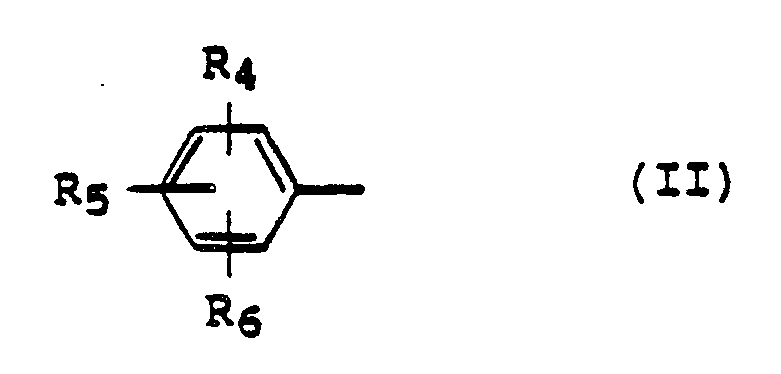
mit der Maßgabe, daß für den Fall, daß n die Zahl 1 und R₁ und R₂ ein Wasserstoffatom bedeuten, X keine Alkylengruppe sein kann,
deren Tautomere, optisch aktive Formen oder physiologisch verträgliche Salze anorganischer und organischer Säuren, Verfahren zu ihrer Herstellung und diese Verbindungen enthaltende Arzneimittel. - Für den Fall, daß Verbindungen der allgemeinen Formel I ein Asymmetriezentrum oder eine Asymmetrieebene besitzen, sind auch die optisch aktiven Formen und racemischen Gemische dieser Verbindungen Gegenstand der Erfindung.
- Die Verbindungen der vorliegenden Erfindung weisen wertvolle pharmakologische Eigenschaften auf, insbesondere wirken sie hemmend auf die Erythrozytenaggregation und können somit Verwendung finden zur Behandlung von Krankheiten des Herz- und Kreislaufsystems, bei denen in der Pathogenese die Erythrozytenaggregation eine wichtige Rolle spielt, wie z.B. periphere, coronare und cerebrale Durchblutungsstörungen und Schockzustände. Die Verbindungen beeinflussen darüber hinaus auch die Thrombozytenfunktion. Sie können ferner die Herzkraft steigern und blutdrucksenkend wirken.
- Aus dem Stand der Technik sind Verbindungen mit ähnlicher Struktur wie die der vorliegenden Erfindung bereits bekannt:
- a) In der Patentschrift DE 3204892 (Anmeldetag 12.2.82, Otsuka) sind Verbindungen (Carbostyrilderivate), beschrieben, in denen A ein Wasserstoffatom, eine Alkyl-, Alkenyl-, Alkinyl- oder Phenylalkylgruppe, R₁ und R₂ ein Wasserstoffatom, n die Zahl l, B eine Alkylgruppe, X eine Alkylengruppe und R₃ eine Phenylgruppe, die durch eine Alkoxy-, Halogen oder Alkylendioxygruppe substituiert sein kann, darstellen. Diese Verbindungen erhöhen die myokardiale Kontraktion, den Koronarblutfluß und haben eine blutdrucksenkende Wirkung, und werden deshalb als Cardiotonika eingesetzt.
- b) In den Patentanmeldungen JP 12515/1978 und JP 118771/1976 sind Verbindungen (Carbostyrilderivate) beschrieben, in denen A und B die unter a) angegebenen Bedeutungen haben, sowohl R₁ als auch R₂ jeweils ein Wasserstoffatom bedeuten, X eine Methylengruppe und R₃ eine gewünschtenfalls substituierte Phenylgruppe darstellen. Diese Verbindungen sind lediglich als Zwischenprodukte für die Herstellung von pharmazeutischen Chemikalien beschrieben.
- Die aus dem Stand der Technik bekannten Verbindungen werden für den Fall, daß n die Zahl l bedeutet, R₁ und R₂ ein Wasserstoffatom darstellen und X dann keine Alkylengruppe bedeuten darf, von der vorliegenden Erfindung nicht umfaßt.
- Bedeutet in der allgemeinen Formel I A oder B eine Alkylgruppe, so sind darunter geradkettige oder verzweigte Gruppen mit 1-6 C-Atomen zu verstehen. In diesem Sinne kommen insbesondere die Methyl-, Ethyl-, Propyl-, Butyl-, Isopropyl-, Isobutyl- und tert.-Butylgruppen in Frage. Bedeutet in der allgemeinen Formel I A oder B eine Alkenyl- oder Alkinylgruppe, so sind darunter geradkettige oder verzweigte Gruppen mit 2-6 C-Atomen zu verstehen. In diesem Sinne kommen insbesondere die Allyl-, Propargyl-, Butenyl- und Isobutenylgruppen in Frage. Bedeutet in der allgemeinen Formel I A oder B eine Cycloalkylgruppe, so sind darunter Ringe mit 3-7 C-Atomen zu verstehen. In diesem Sinne kommen insbesondere die Cyclopropyl-, Cyclobutyl-, Cyclopentyl- und Cyclohexylgruppen in Frage.
- Für den Fall, daß R₁ ein Wasserstoffatom, eine Alkyl- oder Alkenylgruppe bedeutet, können R₁ und R₂ gleich oder verschieden sein. R₂ kann ferner eine durch eine Alkyl-, Alkoxy-, Amino- oder Hydrazinogruppe substituierte Carbonylgruppe darstellen. Die zuvor bei R₁ und R₂ genannten Alkyl- oder Alkoxyteile können geradkettig oder verzweigt, gesättigt oder ungesättigt sein und 1 bis 6 bzw. 2 bis 6 Kohlenstoffatome enthalten. Insbesondere kommen jedoch Wasserstoff, die Methyl-, Ethyl-, Allyl-, Acetyl-, Propionyl-, Methoxycarbonyl-, Ethoxycarbonyl- und Hydrazinocarbonylgruppe für R₁ bzw. R₂ in Frage.
- Für den Fall, daß R₁ ein Wasserstoffatom darstellt, so ist R₂ bevorzugt eine geradkettige oder verzweigte Alkylgruppe mit 1 bis 6 Kohlenstoffatomen oder eine durch eine Alkyl-, Alkoxy-, Amino- oder Hydrazinogruppe substituierte Carbonylgruppe, Bevorzugt in diesem Sinne sind die Methyl-, Ethyl-, Isopropyl-, Isobutyl-, Pentyl-, Allyl-, Acetyl-, Propionyl-, Methoxycarbonyl-, Ethoxycarbonyl-, und Hydrazinocarbonylgruppe.
- R₁ und R₂ können zusammen mit dem C-Atom, an das sie gebunden sind, auch einen Cycloalkylring mit 3 bis 8 Kohlenstoffatomen bilden, vorzugsweise handelt es sich dabei um die Spirocyclopropyl-, Spirocyclobutyl-, Spirocyclopentyl-, und Spirocyclohexylgruppe.
- Stellt R₁ eine Cycloalkylgruppe dar, so kann diese 3-7 Kohlenstoffatome enthalten. Bevorzugt kommen die bei der Definition von A oder B genannten Gruppen in Frage, insbesondere jedoch der Cyclopentyl- und Cyclohexylrest.
- Bedeutet in der allgemeinen Formel I X eine Alkylengruppe, so sind darunter geradkettige oder verzweigte Ketten mit 1 bis 6 C-Atomen zu verstehen. Besonders bevorzugt sind die Methylen-, Ethylen-, Propylen- und Butylengruppe.
- Nimmt in der allgemeinen Formel I n den Wert 0 an, so handelt es sich bei den Verbindungen um Substituierte
2,3-Dihydro-2-oxo-1H-indol-4-carboxamide oder 2,3-Dihydro-2-oxo-1H-indol-5-carboxamide oder
2,3-Dihydro-2-oxo-1H-indol-6-carboxamide oder
2,3-Dihydro-2-oxo-1H-indol-7-carboxamide; nimmt n den Wert l an, so werden die Substanzen als
1,2,3,4-Tetrahydro-2-oxo-5-chinolincarboxamide oder
1,2,3,4-Tetrahydro-2-oxo-6-chinolincarboxamide oder
1,2,3,4-Tetrahydro-2-oxo-7-chinolincarboxamide oder
1,2,3,4-Tetrahydro-2-oxo-8-chinolincarboxamide bezeichnet. - Die bei R₃ angegebenen Heterocyclischen Fünf- oder Sechsringe mit 1 bis 4 bzw. 1 bis 5 Heteroatomen, wobei die Heteroatome der vorgenannten Fünf- oder Sechsringe gleich oder verschieden sein können und Stickstoff, Sauerstoff oder Schwefel bedeuten und gegebenenfalls an einem oder mehreren Stickstoffatomen ein Sauerstoff tragen können, bedeuten bevorzugt den Pyrrolyl-, Furanyl-, Thiophenyl-, Pyrazolyl-, Imidazolyl-, Thiazolyl-, Tetrazolyl-, Isothiazolyl-, Oxazolyl-, Isoxazolyl-, Triazolyl-, Thiadiazolyl-, Oxadiazolyl-, Pyrazinyl-, N,N′-Dioxy-pyrazinyl, Pyrimidinyl-, N,N′-Dioxypyrimidinyl-, Pyridazinyl-, Oxazinyl-, Thiazinyl-, Triazinyl-, Tetrazinyl-, Pyridinyl- und den N-Oxypyridinylrest.
- Sind die aromatischen heterocyclischen Fünf- oder Sechsringe mit einem Phenylring kondensiert, so sind der Indolyl-, Indazolyl-, Benzimidazolyl-, Chinolinyl-, Isochinolinyl-, Cinnolinyl-, Phthalazinyl-, Chinazolinyl-, Chinoxalinyl-, Benzofuranyl-, Benzothiophenyl-, Benzoxazolyl-, Benzoisoxazolyl-, Benzothiazolyl-, Benzoisothiazolyl-, Benzotriazolyl- und der Benzothiadiazolylrest bevorzugt.
- Sind die aromatischen heterocyclischen Fünf- oder Sechsringe mit einem weiteren aromatischen heterocyclischen Fünf- oder Sechsring zu einem Bicyclus kondensiert, so sind darunter bevorzugt der Naphthyridinyl-, Pteridinyl-, Purinyl-, Indolizinyl-, Thiopheno[2,3-b]pyrazinyl-, Imidazo[1,2-a]pyridinyl- und der Triazolo[4,3-a]pyridinylrest.
- Besonders bevorzugt für R₃ kommen der Pyridinyl-, Tetrazolyl-, Triazolyl-, 1,2,4-Triazolo[4,3-a]pyridinyl-, Methylendioxyphenyl-, Ethylendioxyphenyl-, Naphthyl-, Tetrahydronaphthyl-, Chinolinyl-, Biphenyl- und Phenylring der allgemeinen Formel II in Frage.
- Sind die vorher genannten Sechsringe durch einen Pyridinyloxyrest substituiert, so ist es bevorzugt der 3-Pyridinyloxyrest. Sind die vorgenannten Sechsringe durch einen Phenyloxyrest substituiert, so ist besonders bevorzugt eine Verknüpfung mit einer Pyridinylgruppe als heterocyclischem Sechsring.
- Alkyl-, Alkoxy- und Alkylmercapto-Substituenten in den heterocyclischen Fünf- oder Sechsringen, den Bicyclen, der Pyridinyloxy- oder Phenyloxygruppe können 1 bis 6, vorzugsweise 1 bis 4 Kohelenstoffatome enthalten. Bevorzugt ist der Methyl-, Ethyl-, Methoxy-, Ethoxy-, Methylmercapto- und Ethylmercaptorest. Unter Halogen-Substituenten sind Fluor, Chlor und Brom, vorzugsweise Fluor und Chlor zu verstehen.
- Bedeutet R₃ einen Phenylring der allgemeinen Formel II, so kann der Alkylteil der bei R₄, R₅ und R₆ genannten Substituenten 1 bis 8 Kohlenstoffatome enthalten, vorzugsweise 1 bis 5 Kohlenstoffatome. Bevorzugt in diesem Sinne sind beispielsweise die Methansulfonyloxy-, Ethansulfonyloxy-, n-Propansulfonyloxy-, Isopropansulfonyloxy-, Trifluormethansulfonyloxy-, Methylsulfenylmethyl-, Ethylsulfenylmethyl-, n-Propylsulfenylmethyl-, Methylsulfinylmethyl-, Ethylsulfinylmethyl-, Methylsulfonylmethyl-, Ethylsulfonylmethyl-, n-Propylsulfonylmethyl-, Methansulfonylamino-, Ethansulfonylamino-, n-Propansulfonylamino-, Trifluormethansulfonylamino-, N-Methyl-methansulfonylamino-, N-Ethyl-methansulfonylamino-, N-Methyl-ethansulfonylamino-, N-Ethyl-ethansulfonylamino-, N-Isopropyl-ethansulfonylamino-, N-Methyl-n-propansulfonylamino-, N-n-Propyl-n-propansulfonylamino-, N-Methyl-trifluormethansulfonylamino-, N-Ethyltrifluormethansulfonylamino-, N-Iso-propyl-trifluormethansulfonylamino-, Methoxycarbonyl-, Ethoxycarbonyl-, Propoxycarbonyl-, Isopropoxycarbonyl-, Methylaminocarbonyl-, Ethylaminocarbonyl-, Dimethylaminocarbonyl-, Di-n-propyl-aminocarbonyl-, N-Methyl-ethylaminocarbonyl-, Trifluormethyl-, Methylaminosulfonyl-, Ethylaminosulfonyl-, n-Propylaminosulfonyl-, n-Butylaminosulfonyl-, n-Pentylaminosulfonyl-, Dimethylaminosulfonyl-, Diethylaminosulfonyl-, Di-n-propylaminosulfonyl-, N-Methyl-isopropylaminosulfonyl-, Propionylamino-, Methylcarbonylamino-, Ethylaminocarbonylamino- oder Propylaminocarbonylaminogruppe, eine Methyl-, Ethyl-, Propyl-, Butyl-, Pentyl-, Hexyl-, Heptyl-, Octyl-, Methoxy-, Ethoxy-, Propyloxy-, Allyloxy-, 2-Butenyloxy-, 3-Butenyloxy-, 2-Pentenyloxy-, Propargyloxy-, 2-Butinyloxy-, 3-Butinyloxy-, Cyanmethyloxy-, Cyanethyloxy-, Methoxycarbonyl-methyloxy-, Methoxycarbonylethyloxy-, Methylmercapto-, Ethyl-mercapto-, Methylsulfinyl-, Ethylsulfinyl-, Methylsulfonyl-oder Ethylsulfonylgruppe.
- Insbesondere sind bevorzugt für R₄ Wasserstoff, eine 1-Imidazolyl-, 2-Imidazolyl-, 6-Oxo-(1H)-3-pyridazinyl-, 4,5-Dihydro-6-oxo-(1H)-3-pyridazinyl-, 4,5-Dihydro-4-methyl-6-oxo-(1H)-3-pyridazinylgruppe, eine Alkylsulfonyloxy-, Trifluormethylsulfonyloxy-, Alkylsulfenylmethyl-, Alkylsulfinylmethyl-, Alkylsulfonylmethyl-, Alkylsulfonylamino-, N-Alkyl-alkylsulfonylamino-, Trifluormethylsulfonylamino- oder N-Alkyl-trifluormethylsulfonylaminogruppe, eine durch eine Hydroxy-, Alkoxy-, Amino-, Alkylamino- oder Dialkylaminogruppe substituierte Carbonylgruppe oder eine durch eine Amino-, Dialkylamino- oder Morpholinogruppe substituierte Sulfonylgruppe, wobei jeder der vorstehend genannten Alkylteile 1 oder 2 Kohlenstoffatome enthalten kann, eine Nitro-, Cyan- oder Alkylaminosulfonylgruppe mit 1 bis 4 Kohlenstoffatomen, eine Alkylcarbonylamino-, Aminocarbonylamino- oder N-Alkyl-aminocarbonylaminogruppe, eine Alkylmercapto-, Alkylsulfinyl- oder Alkylsulfonylgruppe, wobei jeder der vorgenannten Alkylteile 1 oder 2 Kohlenstoffatome enthalten kann, eine Halogen-, Amino-, Hydroxy-, Dialkylamino-, Alkyl-, Alkoxy-, Alkenyloxy- oder Alkinyloxygruppe, vorzugsweise mit 1 bis 3 Kohlenstoffatomen, die 3-Pyridinyloxygruppe, eine Cyanmethyloxy-, Methoxycarbonylmethyloxygruppe oder die Trifluormethylgruppe,
für R₅ Wasserstoff, eine Alkylgruppe mit 1 bis 3 Kohlenstoffatomen, eine Alkoxy- oder Dialkylaminogruppe mit 1 oder 2 Kohlenstoffatomen in jedem Alkylteil, ein Halogenatom oder eine Aminogruppe und
für R₆ Wasserstoff oder die Methoxygruppe. - Der Phenylteil kann 1 bis 3 der genannten Substituenten tragen.
- Bevorzugte monosubstituierte Phenylverbindungen sind die Hydroxy-, C₁-C₈ Alkyl-, C₁-C₃ Alkoxy-, Allyloxy-, Propargyloxy-, Cyanmethyloxy-, Methoxycarbonylmethyloxy-, Halogen-, Nitro-, Cyan-, Aminocarbonyl-, Amino-, C₁-C₃ Dialkylamino-, C₁-C₃ Alkylmercapto-, C₁-C₃ Alkylsulfinyl-, C₁-C₃ Alkylsulfonyl-, C₁-C₃ Alkylsulfonyloxy-, 3-Pyridinyloxy- und 4,5-Dihydro-6-oxo-(1H)-pyridazinyl-phenyle, wobei der Substituent in 2-, 3- oder 4-Stellung stehen kann.
- Bevorzugte disubstituierte Phenyle enthalten als Substituenten eine Alkansulfonyloxy-, Trifluormethylsulfonyloxy-, Alkylsulfenylmethyl-, Alkylsulfinylmethyl-, Alkylsulfonylmethyl-, Alkylsulfonylamino-, N-Alkyl-alkylsulfonylamino-, Trifluormethylsulfonyl-amino- oder N-Alkyl-trifluormethyl-sulfonylaminogruppe, eine durch eine Hydroxy-, Alkoxy-, Amino-, Alkylamino- oder Dialkylaminogruppe substituierte Carbonylgruppe oder eine durch eine Amino-, Dialkylamino- oder Morpholinogruppe substituierte Sulfonylgruppe, eine Alkylaminosulfonyl-, Alkylcarbonylamino-, Aminocarbonylamino- oder N-Alkyl-aminocarbonylaminogruppe, eine Hydroxy-, Alkyl-, Alkoxy-, Allyloxy-, Propargyloxy-, Cyanmethyloxy-, Methoxycarbonylmethyloxy-, Cyan-, Halogen-, Nitro-, Amino-, Dialkylamino-, Alkylmercapto-, Alkylsulfinyl- oder Alkylsulfonylgruppe, wobei die beiden Substituenten gleich oder verschieden sein können und in 2,3-, 2,4-, 2,5-, 2,6-, 3,4- und 3,5-Stellung, bevorzugt jedoch in 2,4-, 2,5- und 3,4-Stellung stehen können und die vorgenannten Alkylreste, allein oder in Kombination mit anderen Resten, 1 bis 3 C-Atome aufweisen können.
- Bevorzugter trisubstituierter Phenylrest ist der 3,4,5-Trimethoxyphenylrest.
- Besonders bevorzugte Verbindungen der allgemeinen Formel I sind Verbindungen, in denen
A und B unabhängig voneinander ein Wasserstoffatom, eine Benzyl-, eine C₁-C₄-Alkyl-, insbesondere eine Methyl-, Ethyl-, Propyl-, Isopropyl- oder Isobutyl-; oder eine C₂-C₄-Alkenyl-, insbesondere eine Allylgruppe bedeutet,
R₁ und R₂ gleich sind und C₁-C₄-Alkylgruppen, insbesondere Methylgruppen bedeuten oder R₁ und R₂ zusammen mit dem Kohlenstoffatom, an das sie gebunden sind, einen C₅-C₆-Cycloalkylring, insbesondere einen Cyclopentylring bilden,
X eine Bindung oder eine C₁-C₄-Alkylenkette, insbesondere die Ethylenkette darstellt und
R₃ den Pyrrolyl-, Furanyl-, Thiophenyl-, Pyrazolyl-,Imidazolyl-, Isothiazolyl-, Thiazolyl-, Oxazolyl-, Triazolyl-, Tetrazolyl-, Thiadiazolyl-, Isoxazolyl, Oxadiazolyl-, Pyridinyl-, N-Oxypyridinyl-, Pyrazinyl-, N,N′-Dioxypyrazinyl-, Pyrimidinyl-, N,N′-Dioxypyrimidinyl-, Pyridazinyl-, Oxazinyl-, Thiazinyl-, Triazinyl-, Tetrazinyl-, Indolyl-, Benzimidazolyl-, Benzthiazolyl-, Indazolyl-, Chinolinyl-, Pyridinyloxy-pyridinyl- oder Phenoxypyridinyl-rest darstellt sowie deren durch C₁-C₄-Alkyl-, insbesondere Methyl-, Ethyl-; C₁-C₄-Alkoxy, insbesondere Methoxy-, Ethoxy-; C₂-C₄-Alkenyloxy-, insbesondere Allyloxy-, Butenyloxy-; Methylendioxy-; C₁-C₄-Alkylmercapto-, insbesondere Methylmercapto-; Chlor-; Amino- oder Hydroxy substituierten Derivate oder in der
R₃ den Phenylrest der allgemeinen Formel II bedeutet, in der
R₄ ein Wasserstoffatom, die Methansulfonyloxy-, Trifluormethansulfonyloxy-, Methansulfonylamino-, Trifluormethansulfonylamino-, Methylmercapto-, Methylsulfinyl-, Methylsulfonyl-, Hydroxy-, Methyl-, Methoxy-, Propargyloxy-, Trifluormethyl-, 1-Imidazolyl-, 3-Pyridinyloxygruppe-, Pyridazinyl-, wie z.B. 4,5-Dihydro-6-oxo-(1H)-pyridazinyl- oder 4,5-Dihydro-4-methyl-6-oxo-(1H)-pyridazinylgruppe, eine Allyloxy- oder Isobutenyloxygruppe, oder eine Ethoxycarbonylmethyloxygruppe, eine Chlor-, Fluor-, Cyano-, Dimethylamino- oder Diethylaminogruppe,
R⁵ Wasserstoff, die Methyl-, Methoxy-, Dimethylamino- oder Chlorgruppe,
R₆ Wasserstoff oder die Methoxygruppe bedeutet, oder
R₃ einen Naphthyl-, Tetrahydronaphthyl-, Biphenyl-, Methylendioxyphenyl- oder Ethylendioxyphenylrest bedeutet. - Die Verknüpfung des Amidrestes mit dem Bicyclus erfolgt vorzugsweise derart, daß man für n = 0 die Substanzen als substituierte 2,3-Dihydro-2-oxo-1H-indol-5-carboxamide oder 2,3-Dihydro-2-oxo-1H-indol-6-carboxamide bezeichnet und für n = 1 als 1,2,3,4-Tetrahydro-2-oxo-6-chinolincarboxamide oder 1,2,3,4-Tetrahydro-2-oxo-7-chinolincarboxamide bezeichnet.
- Die Verbindungen der allgemeinen Formel I können nach an sich bekannten Methoden hergestellt werden. Besonders vorteilhaft sind die folgenden Verfahren.
- Verbindungen der allgemeinen Formel I stellt man her, indem man ein Amin der allgemeinen Formel III
R₃-X-NH-B (III),
in der R₃, X und B die oben angegebenen Bedeutungen haben, mit einer Carbonsäure der allgemeinen Formel IV
- Die Bevorzugte Methode zur Umsetzung mit den Aminen der allgemeinen Formel III besteht in der Reaktion von etwa äquimolaren Mengen des Amins und der Säure in Gegenwart eines wasserentziehenden Mittels. Dafür kommt beispielsweise Polyphosphorsäure in Betracht, die dann gleichzeitig als Lösungsmittel dient. Die Reaktionen laufen zwischen 50 °C und 200 °C ab. Die Endprodukte der allgemeinen Formel I fallen im allgemeinen nach Zugabe von Wasser aus und werden nach Filtration durch Umkristallisation oder säulenchromatographisch gereinigt.
- Eine weitere bevorzugte Methode zur Herstellung von Verbindungen der allgemeinen Formel I besteht in der Umsetzung von etwa äquimolaren Mengen des Amins III und der Säure IV in einem geeig-neten Lösungsmittel mit etwa einer äquivalenten Menge eines Halogenierungsmittels, wie Phosphortrichlorid, Phosphorpentachlorid oder Thionylchlorid, bei Temperaturen zwischen Raumtemperatur und der Rückflußtemperatur der Mischung. Geeignete Lösungsmittel sind Methylenchlorid, Tetrachlorkohlenstoff, Diethylether, Toluol, Xylol oder Chlorbenzol. Im allgemeinen fällt das Produkt aus der Lösung aus und wird durch Filtration gewonnen. Falls erforderlich, kann die Reaktionsmischung konzentriert werden bis zu einem Punkt, bei dem das Produkt aus der Lösung auszufallen beginnt. Als weitere Kondensationsmittel bei dieser Reaktion kommen saure Kationenaustauscher, Sulfoniumsalze, Schwefelsäurehalogenide, 2-Halogenpyridiniumsalze, Phosphoniumsalze und N,N′-Dicyclohexyl-carbodiimid in Betracht.
- Setzt man anstelle der Carbonsäuren ihre Ester ein, so arbeitet man in Gegenwart oder Abwesenheit spezieller Lösungsmittel bei Temperaturen im Bereich von 20 °C bis zur Siedehitze des Gemisches. Bevorzugt ist dabei die Reaktion etwa äquimolarer Mengen des Amins und des Esters in Polyphosphorsäure bei 50 °C bis 200 °C, jedoch kann man auch in einem inerten Lösungsmittel wie Methylenchlorid, Benzol, Toluol, Chlorbenzol am besten in Gegenwart von etwas mehr als einem Äquivalent einer Base wie Natriumethanolat oder Butyllithium oder von Natriumhydrid in Dimethylsulfoxid arbeiten.
- Setzt man anstelle der Carbonsäure IV ihre Anhydride ein, so kann man die Umsetzung mit den Aminen der allgemeinen Formel III schon bei etwas niedrigeren Temperaturen vornehmen. Bevorzugt arbeitet man in einem inerten Lösungsmittel wie Dichlormethan, Diethylether, Benzol, Toluol, bei Temperaturen zwischen Raumtemperatur und 60 °C. Man gibt dabei das Amin und das Anhydrid in etwa äquimolaren Mengen zusammen, wobei im allgemeinen eine exotherme Reaktion einsetzt. Nach Abklingen wird zur Vervollständigung der Reaktion noch einige Zeit gelinde erwärmt.
- Setzt man anstelle der Carbonsäure ein Säurehalogenid ein, so arbeitet man am besten bei Temperaturen zwischen - 10 °C und Raumtemperatur. Bevorzugt geht man dabei so vor, daß nach Schotten-Baumann zur wässrigen Lösung des Amins der allgemeinen Formel III, welche noch eine Base wie Alkalihydroxid, Natriumcarbonat oder Pyridin enthält, das Säurechlorid unter Eiskühlung langsam zutropft und anschließend noch einige Zeit bei Raumtemperatur stehen läßt. Diese Reaktion ist nicht nur in Wasser möglich, sondern auch in organischen Lösungsmitteln wie Methylenchlorid, Ether, Benzol oder Toluol. Auch ohne säurebindende Mittel lassen sich die Amine durch Carbonsäurechloride nahezu quantitativ acylieren, indem man das Amin und das Carbonsäurechlorid in einem inerten Lösungsmittel wie Methylenchlorid, Benzol oder Toluol bis zur Beendigung der Gasentwicklung kocht, was 1 bis 24 Stunden dauert. Gibt man jedoch ein säurebindendes Mittel wie Triethylamin oder Pyridin in geringem Überschuß zu, so läuft die Reaktion schon bei Temperaturen zwischen - 10 °C und Raumtemperatur ab.
- Die Verbindungen der allgemeinen Formel III sind literaturbekannt. Von den Verbindungen der allgemeinen Formel IV ist die Herstellung der 2,3-Dihydro-2-oxo-1H-indol-4-carbonsäure beschrieben in J. von Braun, G. Hahn, Chem.Ber. 56 (1923) 2342, die Herstellung der 2,3-Dihydro-2-oxo-1H-indol-5-carbonsäure in EP 168003 (15.1.1986, Otsuka), die Herstellung der 1-Ethyl-2,3-dihydro-2-oxo-(1H)-indol-5-carbonsäure in EP 181 136 (14.5.86, Pfizer), die Herstellung der 1′,2′-Dihydro-2′-oxo-spiro[cyclopropan-1,3′-(3H)-indol]-6′-carbonsäure in JP 57/102863 (26.6.82, Takeda), die Herstellung der 2,3-Dihydro-2-oxo-(1H)-indol-7-carbonsäure in US 3631177 (28.12.1971, SK&F), die Herstellung der 2,3-Dihydro-3,3-dimethyl-2-oxo-1H-indol-5-carbonsäure in R.F. Moore, S.G.P. Plant, J. Chem.Soc. 1951 3475, die Herstellung der 2,3-Dihydro-2-oxo-1H-indol-6-carbonsäure in M. Fileti, E. Cairola, J.prakt.Chem. 46 (1982) 563, die Herstellung der 4-Methyl-1,2,3,4-Tetrahydro-2-oxo-6-chinolincarboxamide in JP 63,112584 (17.5.1988, Yoshitomi). Die anderen Verbindungen der allgemeinen Formel IV sind neu und ebenfalls Gegenstand der Erfindung.
- Das in den letztgenannten Literaturstellen angewendete Verfahren zur Herstellung der namentlich genannten Verbindungen läßt sich auch auf die neuen Verbindungen der allgemeinen Formel IV anwenden. Es besteht in der Reduktion von Verbindungen der allgemeinen Formel V

- Bei dieser Reduktion der Verbindungen der allgemeinen Formel V entstehen zunächst die Verbindungen der allgemeinen Formel IV, in der A ein Wasserstoffatom bedeutet, welche dann gewünschtenfalls alkyliert werden können zu den Verbindungen der allgemeinen formel IV, in denen A eine Alkyl-, Alkenyl-, Alkinyl- oder Cycloalkylgruppe bedeutet. Diese Alkylierungen werden vorzugsweise in einem Lösungsmittel wie Aceton, Methylethylketon, Ether, Benzol, Toluol oder Dimethylformamid bei Temperaturen zwischen -30oC und +100oC, vorzugsweise bei 0-80oC in Gegenwart einer Base, wie Kaliumhydroxid oder Natriumcarbonat und eines Alkylierungsmittels wie Alkylhalogeniden, Alkenylhalogeniden, Alkinylhalogeniden, Cycloalkylhalogeniden oder den entsprechenden -sulfaten durchgeführt.
- Die Verbindungen der allgemeinen Formel V stellt man durch Nitrieren von Verbindungen der allgemeinen Formel VI her,

- Ein weiteres Verfahren zur Herstellung von Carbonsäuren der allgemeinen Formel IV besteht in der Verseifung der Nitrile der allgemeinen Formel VII


- Von den Verbindungen der allgemeinen Formel VII ist die Synthese von 2,3-Dihydro-2-oxo-(1H)-indol-5-carbonitril beschrieben in G.P. Gassmann, D.P. Gilbert und T. -Y. Luh, J.Org.Chem. 42 (1977) 1340. Die anderen Verbindungen der allgemeinen Formel VII sind neu und ebenfalls Gegenstand der Erfindung.
- Die Diazotierung von Verbindungen der allgemeinen Formel VIII führt man vorzugsweise unter neutralen oder sauren Bedingungen, in Lösung oder als Suspension, in einem polaren Lösungsmittel wie Wasser, Methanol, Ethanol, Eisessig, Salzsäure, Schwefelsäure oder Phosphorsäure bei Temperaturen zwischen - 5 °C und 10 °C durch. Zur Diazotierung kommen vorwiegend anorganische Salze oder organische Ester der salpetrigen Säure in Frage, wie Natrium- oder Kaliumnitrit oder Amylnitrit. Die so erhaltene Lösung des Diazoniumsalzes tropft man zu einer wässrigen Lösung, die Kupfer(I)-cyanid und ein Cyanidsalz wie Natrium- oder Kaliumcyanid sowie eine Base wie Natrium- oder Kaliumcarbonat oder -hydrogencarbonat enthält. Die Lösung wird während des Zutropfens auf einer Temperatur von 20 bis 100 °C, vorzugsweise 50 bis 100 °C, gehalten.
- Nitrile der allgemeinen Formel VII, in der A ein Wasserstoffatom bedeutet (= allgemeine Formel VIIa) lassen sich zu Nitrilen der allgemeinen Formel VII, in der A eine Alkyl-, Alkenyl-, Alkinyl- oder Cycloalkylgruppe bedeutet (= allgemeine Formel VIIb, in der R′ die gleiche Bedeutung wie R mit Ausnahme des Wasserstoffatoms hat) alkylieren.

- Diese Alkylierungen werden vorzugsweise in einem Lösungsmittel wie Aceton, Methylethylketon, Ether, Benzol, Toluol oder Dimethylformamid bei Temperaturen zwischen -30oC und +100oC, vorzugsweise bei 0-80oC in Gegenwart einer Base wie Alkylhalogeniden, Alkenylhalogeniden, Alkinylhalogeniden, Cycloalkylhalogeniden oder den entsprechenden -sulfaten durchgeführt. Zur Beschleunigung der Reaktion können katalytische Mengen eines Kronenethers zugegeben werden.
- Die Nitrile der allgemeinen Formel VII werden nun zu den Carbonsäuren der allgemeinen Formel IV verseift. Die Hydrolyse wird zweckmäßigerweise entweder in Gegenwart einer Säure wie Salzsäure, Schwefelsäure, Trichloressigsäure oder in Gegenwart einer Base wie Natriumhydroxid oder Kaliumhydroxid in einem geeigneten Lösungsmittel wie Wasser oder in Mischungen wie Wasser/Ethanol oder Wasser/Methanol oder Wasser/Dioxan bei Temperaturen zwischen 0 und 120 °C, bevorzugt beim Siedepunkt des Gemisches, durchgeführt.
- Verbindungen der allgemeinen Formel I können auch in andere Verbindungen der allgemeinen Formel I umgewandelt werden. Dies trifft zu für
- a) die Alkylierung von Verbindungen der allgemeinen Formel I, in der R₃ eine Gruppe der allgemeinen Formel II bedeutet, wobei einer oder mehrere der Substituenten R₄, R₅ oder R₆ eine Hydroxy- oder Mercaptogruppe bedeuten, zu den entsprechenden Alkoxy- oder Alkylthioverbindungen.
Diese Reaktionen werden vorzugsweise in einem Lösungsmittel wie Aceton, Ether, Benzol, Toluol oder Dimethylformamid bei Temperaturen zwischen - 30 °C und + 100 °C, vorzugsweise bei Raumtemperatur in Gegenwart einer Base wie Kaliumhydroxid und eines Alkylierungsmittels wie Alkylhalogeniden oder Alkylsulfaten durchgeführt - b) die Herstellung von Verbindungen der allgemeinen Formel I, in der R₃ einen Rest der allgemeinen Formel II bedeutet und R₄ eine Alkylsulfinyl- oder Alkylsulfonylgruppe darstellt, durch nachträgliche Oxidation einer Verbindung, in der R₄ eine Alkylmercaptogruppe ist. Die Oxidation wird vorzugsweise in einem Lösungsmittel oder Lösungsmittelgemisch, z. B. Wasser, Wasser/Pyridin, Aceton, Eisessig, verdünnter Schwefelsäure oder Trifluoressigsäure, je nach dem verwendeten Oxidationsmittel, zweckmäßigerweise bei Temperaturen zwischen - 80 °C und 100 °C durchgeführt.
Zur Herstellung einer Alkylsulfinylverbindung der allgemeinen Formel I wird die Oxidation zweckmäßigerweise mit einem Äquivalent des verwendeten Oxidationsmittels durchgeführt, z. B. mit Wasserstoffperoxid in Eisessig, Trifluoressigsäure odr Ameisensäure bei 0 bis 20 °C oder in Aceton bei 0 bis 60 °C, mit einer Persäure wie Perameisensäure in Eisessig oder Trifluoressigsäure bei 0 bis 50 °C oder mit m-Chlorperbenzoesäure in Methylenchlorid oder Chloroform bei - 20 °C bis 60 °C, mit Natriummetaperjodat in wässrigem Methanol oder Ethanol bei - 15 °C bis 25 °C, mit Brom in Eisessig oder wässriger Essigsäure, mit N-Bromsuccinimid in Ethanol, mit tert.-Butyl-hypochlorit in Methanol bei - 80 °C bis - 30 °C, mit Jodbenzodichlorid in wässrigem Pyridin bei 0 bis 50 °C, mit Salpetersäure in Eisessig bei 0 bis 20 °C, mit Chromsäure in Eisessig oder in Aceton bei 0 bis 20 °C und mit Sulfurylchlorid in Methylenchlorid bei - 70 °C, der hierbei erhaltene Thioether-Chlorkomplex wird zweckmäßigerweise mit wässrigem Ethanol hydrolysiert.
Zur Herstellung einer Alkylsulfonylverbindung der allgemeinen Formel I wird die Oxidation zweckmäßigerweise mit zwei oder mehr Äquivalenten des verwendeten Oxidationsmittels durchgeführt, z. B. Wasserstoffperoxid in Eisessig, Trifluoressigsäure oder in Ameisensäure bei 20 bis 100 °C oder in Aceton bei 0 bis 60 °C; mit einer Persäure wie Perameisensäure oder m-Chlorperbenzoesäure in Eisessig, Trifluoressigsäure, Methylenchlorid oder Chloroform bei Temperaturen zwischen 0 und 60 °C, mit Salpetersäure in Eisessig bei 0 bis 20 °C, mit Chromsäure oder Kaliumpermanganat in Eisessig, Wasser/Schwefelsäure oder in Aceton bei 0 bis 20 °C. - c) Die Herstellung von Verbindungen der allgemeinen Formel I, in der R₃ einen Rest der allgemeinen Formel II bedeutet und R₄ eine Alkansulfonyloxy-, Trifluormethansulfonyloxy-, Alkansulfonylamino- oder Trifluormethansulfonylaminogruppe darstellt, durch die nachträgliche Umsetzung einer Verbindung, in der R₄ eine Hydroxygruppe ist mit einer Sulfonsäure der allgemeinen Formel IX
R₈ - SO₃H (IX)
in der R₈ eine Alkylgruppe oder die Trifluormethylgruppe darstellt, in Gegenwart eines wasserentziehenden und/oder die Säure oder das Amin aktivierenden Mittels oder mit deren reaktionsfähigen Derivaten.
Die Umsetzung wird zweckmäßigerweise in einem Lösungsmittel oder Lösungsmittelgemisch wie Methylenchlorid, Ether, Tetrahydrofuran, Dioxan oder Benzol, gegebenenfalls in Gegenwart eines säurebindenden Mittels wie Natriumcarbonat, Triethylamin oder Pyridin, wobei die beiden letzteren gleichzeitig auch als Lösungsmittel verwendet werden können, in Gegenwart eines die Säure aktivierenden oder wasserentziehenden Mittels wie Thionylchlorid oder Phosphorpentachlorid, vorzugsweise jedoch mit einem reaktionsfähigen Derivat einer Verbindung der allgemeinen Formel VII, z. B. mit deren Anhydrid oder Halogenid, wie Methansulfonsäurechlorid oder Ethansulfonsäurechlorid, bei Temperaturen zwischen 0 und 100 °C, vorzugsweise bei Temperaturen zwischen Raumtemperatur und 50 °C, durchgeführt. - d) Die Herstellung von Verbindungen der allgemeinen Formel I, in der R₃ einen Rest der allgemeinen Formel II bedeutet und R₄ eine durch eine Amino-, Alkylamino- oder Dialkylaminogruppe substituierte Carbonylgruppe darstellt, durch die nachträgliche Umsetzung einer Verbindung in der R₄ eine Carboxylgruppe darstellt, oder einem reaktionsfähigen Derivat hiervon, wie z. B. Ester oder Säurechlorid mit einem Amin der allgemeinen Formel X
HNR₉R₁₀ (X)
in der R₉ und R₁₀, die gleich oder verschieden sein können, Wasserstoffatome oder Alkylgruppen darstellen, oder mit einem reaktionsfähigen Derivat hiervon, falls R₄ die Carboxylgruppe darstellt. Die Umsetzung wird zweckmäßigerweise in einem Lösungsmittel wie Methylenchlorid, Ethanol, Chloroform, Tetrachlorkohlenstoff, Ether, Tetrahydrofuran, Dioxan, Benzol, Toluol, Acetonitril oder Dimethylformamid, gegebenenfalls in Gegenwart eines die Säure aktivierenden Mittels oder eines wasserentziehenden Mittels, z. B. in Gegenwart von Chlorameisensäureethylester, Thionylchlorid, Phosphortrichlorid, Phosphorpentoxid, N,N′-Dicyclohexylcarbodiimid/N-Hydroxysuccinimid, N,N′-Carbonyldiimidazol oder N,N′-Thionyldiimidazol oder Triphenylphosphin/Tetrachlorkohlenstoff, oder eines die Aminogruppe aktivierenden Mittels, z.B. Phosphortrichlorid, und gegebenenfalls in Gegenwart einer anorganischen Base wie Natriumcarbonat oder einer tertiären organischen Base wie Triethylamin oder Pyridin, welche gleichzeitig als Lösungsmittel dienen können, bei Temperaturen zwischen - 25 und 250 °C, vorzugsweise jedoch bei Temperaturen zwischen - 10 °C und der Siedetemperatur des verwendeten Lösungsmittels, durchgeführt, desweiteren kann während der Umsetzung entstehendes Wasser durch azeotrope Destillation, z.B. durch Erhitzen mit Toluol an Wasserabscheider, oder durch Zugabe eines Trockenmittels wie Magnesiumsulfat oder Molekularsieb abgetrennt werden.
Besonders vorteilhaft wird jedoch die Umsetzung mit einem entsprechenden Halogenid, z. B. dem Carbonsäure- oder Sulfonsäurechlorid, und einem entsprechenden Amin, wobei dieses gleichzeitig als Lösungsmittel dienen kann, bei Temperaturen zwischen 0 und 50 °C durchgeführt. - e) Die Alkylierung von Verbindungen der allgemeinen Formel I′


Diese Reaktionen werden vorzugsweise so durchgeführt, daß man die freien NH-Positionen in der allgemeinen Formel I′ schützt, vorzugsweise durch eine Acetylgruppe, und dann in einem Lösungsmittel wie Aceton, Ether, Benzol, Toluol oder Dimethylformamid bei Temperaturen zwischen - 30 °C und + 100 °C, vorzugsweise bei Raumtemperatur in Gegenwart einer Base wie Kaliumhydroxid und eines Alkylierungsmittels der allgemeinen Formel XI
R₁′-Hal (XI)
oder der allgemeinen Formel XII
R₂′-Hal (XII)
in der R₁′ und R₂′ die oben angegebenen Bedeutungen haben, alkyliert. Vorzugsweise wird die Alkylierung in Gegenwart eines Phasentransferkatalysators wie N-Benzyltriethylammoniumbromid durchgeführt. Anschließend werden die Acetyl-Schutzgruppen entfernt. Das geschieht bereits bei der Aufarbeitung nach der Alkylierung, die Entacetylierung kann jedoch vervollständigt werden durch kurzzeitiges Erhitzen in einer wässrigen Säure wie Salzsäure oder Schwefelsäure. - f) Die Umsetzung von Verbindungen der allgemeinen Formel I, in der R₂ die Alkoxycarbonylgruppe bedeutet, zu Verbindungen der allgemeinen Formel I, in der R₂ die Hydrazinocarbonylgruppe bedeutet. Dazu setzt man in einem Lösungsmittel wie Ethanol, Methanol oder Eisessig mit einem geringen Überschuß an Hydrazinhydrat bei Temperaturen zwischen Raumtemperatur und dem Siedepunkt des Lösungsmittels um.
- g) Die Oxidation von Verbindungen der allgemeinen Formel I, in der R₃ eine Fünf- oder Sechsring mit einem oder mehreren Stickstoffatomen bedeutet, zu den entsprechenden N-Oxiden. Die Oxidation erfolgt vorzugsweise mit einem oder mehreren Äquivalenten eines Oxidationsmittels wie Wasserstoffperoxid in Eisessig, Trifluoressigsäure oder Ameisensäure bei 20 bis 100 °C oder in Aceton bei 0 bis 60 °C, mit einer Persäure wie Perameisensäure oder m-Chlorperbenzoesäure in Eisessig, Trifluoressigsäure oder Methylenchlorid bei Temperaturen zwischen 0 bis 60 °C.
- h) Die Alkylierung von Verbindungen der allgemeinen Formel I′


- Zur Herstellung von Arzneimitteln werden die Substanzen der allgemeinen Formel I in an sich bekannter Weise mit geeigneten pharmazeutischen Trägersubstanzen, Aroma-, Geschmacks- und Farbstoffen gemischt und beispielsweise als Tabletten oder Dragées ausgeformt oder unter Zugabe entsprechender Hilfsstoffe in Wasser oder Öl, wie z. B. Olivenöl, suspendiert oder gelöst.
- Die Substanzen der allgemeinen Formel I und ihre Salze können in flüssiger oder fester Form enteral oder parenteral appliziert werden. Als Injektionsmedium kommt vorzugsweise Wasser zur Anwendung, welches die bei Injektionslösungen üblichen Zusätze wie Stabilisierungsmittel, Lösungsvermittler oder Puffer enthält.
- Derartige Zusätze sind z. B. Tartrat- und Citratpuffer, Ethanol, Komplexbildner (wie Ethylendiamintetraessigsäure und deren nicht toxische Salze) und hochmolekulare Polymere (wie flüssiges Polyethylenoxid) zur Viskositätsregulierung. Feste Trägerstoffe sind z. B. Stärke, Lactose, Mannit, Methylcellulose, Talkum, hochdisperse Kieselsäuren, hochmolekulare Fettsäuren (wie Stearinsäure), Gelatine, Agar-Agar, Calciumphosphat, Magnesiumstearat, tierische und pflanzliche Fette und feste hochmolekulare Polymere (wie Polyethylenglykole). Für orale Applikation geeignete Zubereitungen können gewünschtenfalls Geschmacks- und Süßstoffe enthalten.
- Die Verbindungen werden üblicherweise in Mengen von 10 bis 1500 mg pro Tag bezogen auf 75 kg Körpergewicht appliziert. Bevorzugt ist es, 2- bis 3mal pro Tag 1 bis 2 Tabletten mit einem Wirkstoffgehalt von 5 bis 500 mg zu verabreichen. Die Tabletten können auch retardiert sein, wodurch nur noch einmal pro Tag 1 bis 2 Tabletten mit 20 bis 700 mg Wirkstoff gegeben werden müssen. Der Wirkstoff kann auch durch Injektion 1- bis 8mal pro Tag bzw. durch Dauerinfusion gegeben werden, wobei Mengen von 10 bis 1.000 mg pro Tag normalerweise ausreichen.
- Als Carbonsäuren der allgemeinen Formel IV kommen beispielsweise die folgenden Verbindungen in Frage:
2,3-Dihydro-3,3-diethyl-2-oxo-(1H)-indol-6-carbonsäure
2,3-Dihydro-3,3-dibutyl-2-oxo-(1H)-indol-6-carbonsäure
2,3-Dihydro-3-methyl-2-oxo-(1H)-indol-6-carbonsäure
2,3-Dihydro-3-ethyl-2-oxo-(1H)-indol-6-carbonsäure
2,3-Dihydro-3-propyl-2-oxo-(1H)-indol-6-carbonsäure
2,3-Dihydro-3-(1-methyl-ethyl)-2-oxo-(1H)-indol-6-carbonsäure
2,3-Dihydro-3-ethoxycarbonyl-3-methyl-2-oxo-(1H)-indol-6-carbonsäure
2,3-Dihydro-3-hydrazinocarbonyl-3-methyl-2-oxo-(1H)-indol-6-carbonsäure
2′,3′-Dihydro-2′-oxo-(1′H)-spiro[1,3′-cyclohexan-indol]-6′-carbonsäure
1,2,3,4-Tetrahydro-4,4-dimethyl-2-oxo-6-chinolincarbonsäure
2′,3′-Dihydro-2′-oxo-(1′H)-spiro[cyclopentan-1,3′-indol]- 5′-carbonsäure - Als Nitrile der allgemeinen Formel VII kommen beispielsweise die folgenden Verbindungen in Frage:
2,3-Dihydro-3,3-diethyl-2-oxo-(1H)-indol-6-carbonitril
2,3-Dihydro-3,3-dibutyl-2-oxo-(1H)-indol-6-carbonitril
2,3-Dihydro-3-methyl-2-oxo-(1H)-indol-6-carbonitril
2,3-Dihydro-3-ethyl-2-oxo-(1H)-indol-6-carbonitril
2,3-Dihydro-3-propyl-2-oxo-(1H)-indol-6-carbonitril
2,3-Dihydro-3-(1-methyl-ethyl)-2-oxo-(1H)-indol-6-carbonitril
2,3-Dihydro-3-ethoxycarbonyl-3-methyl-2-oxo-(1H)-indol-6-carbonitril
2,3-Dihydro-3-hydrazinocarbonyl-3-methyl-2-oxo-(1H)-indol-6-carbonitril
2′,3′-Dihydro-2′-oxo-(1′H)-spiro[1,3′-cyclopropan-indol]-6′-carbonitril
2′,3′-Dihydro-2′-oxo-(1′H)-spiro[1,3′-cyclopentan-indol]-6′-carbonitril
2′,3′-Dihydro-2′-oxo-(1′H)-spiro[1,3′-cyclohexan-indol]-6′-carbonitril - Als Verbindungen der allgemeinen Formel I kommen außer den in den Beispielen genannten Verbindungen die folgenden Verbindungen in Frage:
- 1. N-(4-Diethylaminophenyl)-2,3-dihydro-3,3-dimethyl-2-oxo-(1H)-indol-6-carboxamid
- 2. N-(4-Acetylphenyl)-2,3-dihydro-3,3-dimethyl-2-oxo-(1H)-indol-6-carboxamid
- 3. N-(4-Ethylphenyl)-2,3-dihydro-3,3-dimethyl-2-oxo-(1H)-indol-6-carboxamid
- 4. N-(4-Isopropylphenyl)-2,3-dihydro-3,3-dimethyl-2-oxo-(1H)-indol-6-carboxamid
- 5. N-(4-(1-Methyl-propyl)phenyl)-2,3-dihydro-3,3-dimethyl-2-oxo-(1H)-indol-6-carboxamid
- 6. N-(4-Bromphenyl)-2,3-dihydro-3,3-dimethyl-2-oxo-(1H)-indol-6-carboxamid
- 7. N-(3-Hydroxyphenyl)-2,3-dihydro-3,3-dimethyl-2-oxo-(1H)-indol-6-carboxamid
- 8. N-(3-Ethoxyphenyl)-2,3-dihydro-3,3-dimethyl-2-oxo-(1H)-indol-6-carboxamid
- 9. N-(3-Acetylphenyl)-2,3-dihydro-3,3-dimethyl-2-oxo-(1H)-indol-6-carboxamid
- 10. N-(3-Methylphenyl)-2,3-dihydro-3,3-dimethyl-2-oxo-(1H)-indol-6-carboxamid
- 11. N-(3-Ethylphenyl)-2,3-dihydro-3,3-dimethyl-2-oxo-(1H)-indol-6-carboxamid
- 12. N-(3-Hydroxymethylphenyl)-2,3-dihydro-3,3-dimethyl-2-oxo-(1H)-indol-6-carboxamid
- 13. N-(3-Fluorphenyl)-2,3-dihydro-3,3-dimethyl-2-oxo-(1H)-indol-6-carboxamid
- 14. N-(3-Bromphenyl)-2,3-dihydro-3,3-dimethyl-2-oxo-(1H)-indol-6-carboxamid
- 15. N-(2-Aminophenyl)-2,3-dihydro-3,3-dimethyl-2-oxo-(1H)-indol-6-carboxamid
- 16. N-(2-Acetamidophenyl)-2,3-dihydro-3,3-dimethyl-2-oxo-(1H)-indol-6-carboxamid
- 17. N-(2-Hydroxyphenyl)-2,3-dihydro-3,3-dimethyl-2-oxo-(1H)-indol-6-carboxamid
- 18. N-(2-Ethoxyphenyl)-2,3-dihydro-3,3-dimethyl-2-oxo-(1H)-indol-6-carboxamid
- 19. N-(2-Acetylphenyl)-2,3-dihydro-3,3-dimethyl-2-oxo-(1H)-indol-6-carboxamid
- 20. N-(2-Methoxycarbonylphenyl)-2,3-dihydro-3,3-dimethyl-2-oxo-(1H)-indol-6-carboxamid
- 21. N-(2-Ethoxycarbonylphenyl)-2,3-dihydro-3,3-dimethyl-2-oxo-(1H)-indol-6-carboxamid
- 22. N-(2-Trifluormethylphenyl)-2,3-dihydro-3,3-dimethyl-2-oxo-(1H)-indol-6-carboxamid
- 23. N-(2-Ethylphenyl)-2,3-dihydro-3,3-dimethyl-2-oxo-(1H)-indol-6-carboxamid
- 24. N-(2-Hydroxymethylphenyl)-2,3-dihydro-3,3-dimethyl-2-oxo-(1H)-indol-6-carboxamid
- 25. N-(2-(1-Methyl-propyl)phenyl)-2,3-dihydro-3,3-dimethyl-2-oxo-(1H)-indol-6-carboxamid
- 26. N-(2-Fluorphenyl)-2,3-dihydro-3,3-dimethyl-2-oxo-(1H)-indol-6-carboxamid
- 27. N-(2-Bromphenyl)-2,3-dihydro-3,3-dimethyl-2-oxo-(1H)-indol-6-carboxamid
- 28. N-(2-Cyanophenyl)-2,3-dihydro-3,3-dimethyl-2-oxo-(1H)-indol-6-carboxamid
- 29. N-(4-(3-Pyridinyloxy)phenyl)-2,3-dihydro-3,3-dimethyl-2-oxo-(1H)-indol-6-carboxamid
- 30. N-(2-Amino-4-chlorphenyl)-2,3-dihydro-3,3-dimethyl-2-oxo-(1H)-indol-6-carboxamid
- 31. N-(2-Amino-4-methoxyphenyl)-2,3-dihydro-3,3-dimethyl-2-oxo-(1H)-indol-6-carboxamid
- 32. N-(2-Amino-6-methylphenyl)-2,3-dihydro-3,3-dimethyl-2-oxo-(1H)-indol-6-carboxamid
- 33. N-(2-Amino-5-chlorphenyl)-2,3-dihydro-3,3-dimethyl-2-oxo-(1H)-indol-6-carboxamid
- 34. N-(2-Methyl-5-aminophenyl)-2,3-dihydro-3,3-dimethyl-2-oxo-(1H)-indol-6-carboxamid
- 35. N-(2-Methyl-3-aminophenyl)-2,3-dihydro-3,3-dimethyl-2-oxo-(1H)-indol-6-carboxamid
- 36. N-(2-Methoxy-5-aminophenyl)-2,3-dihydro-3,3-dimethyl-2-oxo-(1H)-indol-6-carboxamid
- 37. N-(2-Amino-4-fluorphenyl)-2,3-dihydro-3,3-dimethyl-2-oxo-(1H)-indol-6-carboxamid
- 38. N-(2-Methyl-4-aminophenyl)-2,3-dihydro-3,3-dimethyl-2-oxo-(1H)-indol-6-carboxamid
- 39. N-(2-Methoxy-4-aminophenyl)-2,3-dihydro-3,3-dimethyl-2-oxo-(1H)-indol-6-carboxamid
- 40. N-(2-Chlor-4-aminophenyl)-2,3-dihydro-3,3-dimethyl-2-oxo-(1H)-indol-6-carboxamid
- 41. N-(2-Brom-4-aminophenyl)-2,3-dihydro-3,3-dimethyl-2-oxo-(1H)-indol-6-carboxamid
- 42. N-(2,4-Diaminophenyl)-2,3-dihydro-3,3-dimethyl-2-oxo-(1H)-indol-6-carboxamid
- 43. N-(2,6-Dichlor-4-aminophenyl)-2,3-dihydro-3,3-dimethyl-2-oxo-(1H)-indol-6-carboxamid
- 44. N-(2-Hydroxy-5-chlorphenyl)-2,3-dihydro-3,3-dimethyl-2-oxo-(1H)-indol-6-carboxamid
- 45. N-(2-Hydroxy-5-methylphenyl)-2,3-dihydro-3,3-dimethyl-2-oxo-(1H)-indol-6-carboxamid
- 46. N-(2-Thenyl)-2,3-dihydro-3,3-dimethyl-2-oxo-(1H)-indol-6-carboxamid
- 47. N-(2-Thiazolyl)-2,3-dihydro-3,3-dimethyl-2-oxo-(1H)-indol-6-carboxamid
- 48. N-(5-Methyl-3-isoxazolyl)-2,3-dihydro-3,3-dimethyl-2-oxo-(1H)-indol-6-carboxamid
- 49. N-(1,3,4-Thiadiazol-2-yl)-2,3-dihydro-3,3-dimethyl-2-oxo-(1H)-indol-6-carboxamid
- 50. N-(5-Methyl-1,3,4-thiadiazol-2-yl)-2,3-dihydro-3,3-dimethyl-2-oxo-(1H)-indol-6-carboxamid
- 51. N-(N-Oxy-4-pyridinyl)-2,3-dihydro-3,3-dimethyl-2-oxo-(1H)-indol-6-carboxamid
- 52. N-(2-Pyrazinyl)-2,3-dihydro-3,3-dimethyl-2-oxo-(1H)-indol-6-carboxamid
- 53. N-(2-Pyrimidinyl)-2,3-dihydro-3,3-dimethyl-2-oxo-(1H)-indol-6-carboxamid
- 54. N-(1,2,4-Triazin-3-yl)-2,3-dihydro-3,3-dimethyl-2-oxo-(1H)-indol-6-carboxamid
- 55. N-(6-Methoxy-3-pyridinyl)-2,3-dihydro-3,3-dimethyl-2-oxo-(1H)-indol-6-carboxamidl
- 56. N-(6-Propyloxy-3-pyridinyl)-2,3-dihydro-3,3-dimethyl-2-oxo-(1H)-indol-6-carboxamid
- 57. N-(6-Isopropyloxy-3-pyridinyl)-2,3-dihydro-3,3-dimethyl-2-oxo-(1H)-indol-6-carboxamid
- 58. N-(6-Allyloxy-3-pyridinyl)-2,3-dihydro-3,3-dimethyl-2-oxo-(1H)-indol-6-carboxamid
- 59. N-(6-(4-Pyridinyloxy)-3-pyridinyl)-2,3-dihydro-3,3-dimethyl-2-oxo-(1H)-indol-6-carboxamid
- 60. N-(6-Phenyloxy-3-pyridinyl)-2,3-dihydro-3,3-dimethyl-2-oxo-(1H)-indol-6-carboxamid
- 61. N-(6-(4-Methoxyphenyloxy-3-pyridinyl)-2,3-dihydro-3,3-dimethyl-2-oxo-(1H)-indol-6-carboxamid
- 62. N-(6-(3-Trifluormethylphenyloxy)-3-pyridinyl)-2,3-dihydro-3,3-dimethyl-2-oxo-(1H)-indol-6-carboxamid
- 63. N-(6-(4-Cyanophenyloxy)-3-pyridinyl)-2,3-dihydro-3,3-dimethyl-2-oxo-(1H)-indol-6-carboxamid
- 64. N-(6-(2-Methoxyphenoxy)-3-pyridinyl)-2,3-dihydro-3,3-dimethyl-2-oxo-(1H)-indol-6-carboxamid
- 65. N-(6-(3-Methoxyphenoxy)-3-pyridinyl)-2,3-dihydro-3,3-dimethyl-2-oxo-(1H)-indol-6-carboxamid
- 66. N-(6-(4-methylphenoxy)-3-pyridinyl)-2,3-dihydro-3,3-dimethyl-2-oxo-(1H)-indol-6-carboxamid
- 67. N-(6-(4-Ethoxycarbonylphenyloxy)-3-pyridinyl)-2,3-dihydro-3,3-dimethyl-2-oxo-(1H)-indol-6-carboxamid
- 68. N-(2-Benzimidazolyl)-2,3-dihydro-3,3-dimethyl-2-oxo-(1H)-indol-6-carboxamid
- 69. N-(2-Benzthiazolyl)-2,3-dihydro-3,3-dimethyl-2-oxo-(1H)-indol-6-carboxamid
- 70. N-(2-Methyl-4-chinolinyl)-2,3-dihydro-3,3-dimethyl-2-oxo-(1H)-indol-6-carboxamid
- 71. N-(5-Methyl-7-hydroxy-[1,8]-naphthyridin-2-yl)-2,3-dihydro-3,3-dimethyl-2-oxo-(1H)-indol-6-carboxamid
- 72. N-(1,4-Dihydroxy-5-phthalazinyl)-2,3-dihydro-3,3-dimethyl-2-oxo-(1H)-indol-6-carboxamid
- 73. N-Phenyl-2′,3′-dihydro-2′-oxo-(1′H)-spiro[1,3-′cyclopropan-indol]-6′-carboxamid
- 74. N-Phenyl-2′,3′-dihydro-2′-oxo-(1′H)-spiro[1,3′-cyclohexan-indol]-6′-carboxamid
- 75. 2,3-Dihydro-3,3-dimethyl-N-benzyl-N-phenyl-2-oxo-(1H)-indol-6-carboxamid
- 76. 2,3-Dihydro-3,3-dimethyl-1-ethyl-N-ethyl-N-(4-fluorphenyl)-2-oxo-(1H)-indol-6-carboxamid
- 77. N-(4-Biphenyl)-2,3-dihydro-3,3-dimethyl-2-oxo-(1H)-indol-6-carboxamid, Fp. 288-291 oC.
- 78. N-(4-Methylsulfonylamino-phenyl)-2,3-dihydro-3,3-dimethyl-2-oxo-(1H)-indol-6-carboxamid
- 79. N-(4-Phenylsulfonylamino-phenyl)-2,3-dihydro-3,3-dimethyl-2-oxo-(1H)-indol-6-carboxamid
-
- a) 25 g (0,142 Mol) 6-Amino-1,3-dihydro-3,3-dimethyl-(2H)-indolin-2-on in 250 ml 2N HCl wurden unter Eiskühlung innerhalb von 15 Minuten mit einer Lösung aus 10,3 g (0,15 Mol) NaNO₂ in 20 ml Wasser versetzt und nach der Zugabe 15 Minuten gerührt. Nach Versetzen mit 2,13 g (0,036 Mol) Harnstoff wurde die klare Lösung nach weiteren 10 Minuten Rühren zu einer auf 50 °C erwärmten Lösung aus 24,4 g (0,5 Mol) NaCN, 15,2 g (0,17 Mol) CuCN und 22,6 g (0,21 Mol) Na₂CO₃ in 820 ml Wasser getropft und 5 Minuten auf 90 °C erhitzt.
Nach dem Abkühlen wurde der Niederschlag abgesaugt, mit Wasser gewaschen und nach Trocknung aus Ethanol umkristallisiert. Man erhielt 15 g (57 %) 2,3-Dihydro-3,3-dimethyl-2-oxo(1H)-indol-6-carbonitril als farblose Kristalle mit dem Fp. 243 bis 246 °C. - b) 12,2 g 2,3-Dihydro-3,3-dimethyl-2-oxo-1H-indol-6-carbonitril wurden in 150 ml 20 % KOH 3 Stunden unter Rückfluß zum Sieden erhitzt, abgekühlt, mit conc. Salzsäure neutralisiert, das Kristallisat abgesaugt und mit Wasser gewaschen. Man erhielt 13,1 g (98 %) 2,3-Dihydro-3,3-dimethyl-2-oxo-(1H)-indol-6-carbonsäure mit dem Fp. 295 bis 300 °C (Zers.).
- c) 8 g 2,3-Dihydro-3,3-dimethyl-2-ozo-(1H)-indol-6-carbonsäure und 1 Tropfen Dimethylformamid erhitzte man in 50 ml Thionylchlorid 1 Stunde unter Rückfluß zum Sieden, wobei die Substanz in Lösung geht. Man entfernte das Thionylchlorid i. Vak., suspendierte den Rückstand in Dichlor methan und tropfte ihn zu einer Lösung von 1,6 ml Anilin und 2,7 ml Triethylamin in 30 ml Dichlormethan bei 15 °C Innentemperatur. Man rührte noch 15 Minuten bei Raumtemperatur, entfernte das Lösungsmittel i. Vak., digerierte der Rückstand mit Wasser, saugte ab und kristallisierte aus Essigester um. Man erhielt 2,8 g (56 %) der Titelverbindung mit dem Fp. 205 bis 206 °C.
- Analog dem Beispiel 1 erhielt man durch Umsetzung mit den angegebenen Aminen anstelle des Anilins die folgenden Verbindungen:


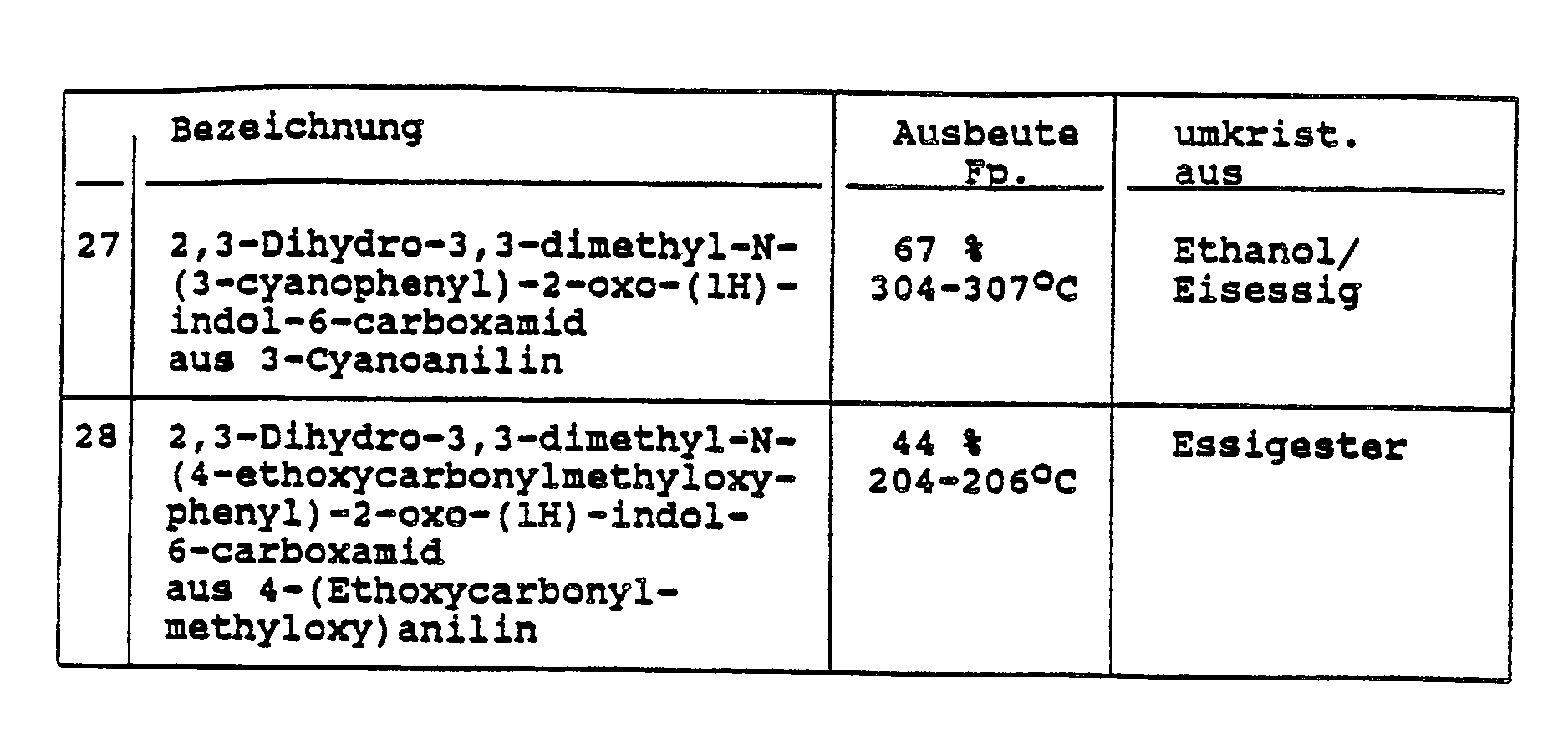
- 2.6 g (8 mmol) 2,3-Dihydro-3,3-dimethyl-N-(4-nitrophenyl)-2-oxo-(1H)-indol-6-carboxamid (aus Beispiel 6) in 50 ml Methanol hydrierte man in Gegenwart von 0.3 g 10 % Pd auf Kohle bei Normaldruck und Raumtemperatur. Nach 2 h saugte man ab, entfernte das Lösungsmittel i.Vak. und reinigte den Rückstand säulenchromatographisch (Kieselgel, Laufmittel Dichlormethan/mit Ammoniak ges. Methanol = 95:5). Man entfernte das Lösungsmittel im Vak., digerierte den Rückstand mit Essigester, saugte ab und trocknete den Rückstand bei 100oC i. Vakuum. Man erhielt 1.40 g (61 %) der Titelverbindung mit dem Fp. 216-218oC, der pro Mol noch 0.5 Mol Wasser anhaftete.
- 2.3 g (10 mmol) 2,3-Dihydro-3,3-dimethyl-2-oxo-(1H)-indol-5-carbonsäure, 1 Tropfen DMF und 15 ml Thionylchlorid erhitzte man 30 min unter Rückfluß zum Sieden. Man entfernte das Thionylchlorid i. Vakuum. Das Rohprodukte wurde ohne weitere Reinigung eingesetzt. Man tropfte das in 20 ml Dichlormethan gelöste Rohprodukt zu einer Lösung von 2.5 g (20 mmol) p-Anisidin in 50 ml Dichlormethan unter Eiskühlung. Nach 15 min gab man 50 ml Wasser zu, trennte die organische Phase ab und entfernte das Lösungsmittel i. Vakuum. Den Rückstand reinigte man säulenchromatographisch (400 ml Kieselgel 60, Dichlormethan/Methanol = 20:1). Reine Fraktionen dampfte man i.Vak. ein, digerierte den Rückstand mit Ether, saugte ab und trocknete i. Vak. bei 100oC. Man erhielt 1.9 g (61 %) der Titelverbindung mit dem Fp. 169-171oC.
- Analog dem Beispiel 30 stellte man durch Umsetzung der 2,3-Dihydro-3,3-dimethyl-2-oxo(1H)-indol-5-carbonsäure mit den angegebenen Anilinen die folgenden Beispielverbindungen her:
Bezeichnung Ausbeute Fp. umkrist. aus 31 2,3-Dihydro-3,3-dimethyl-N-(4-cyanophenyl)-2-oxo-(1H)-indol-5-carboxamid aus 4-Cyanoanilin 32 2,3-Dihydro-3,3-dimethyl-N-(3-trifluormethyl-phenyl)-2-oxo-(1H)-indol-5-carboxamid aus 4-Trifluormethylanilin 33 2,3-Dihydro-3,3-dimethyl-N-(4-ethoxycarbonylmethyloxyphenyl)-2-oxo-(1H)-indol-5-carboxamid aus 4-(Ethoxycarbonylmethyloxy) anilin 50 % 127-129oC Essigester -
- a) 3.1 ml (0.038 mol) Ethyliodid tropfte man bei Raumtemperatur zu 5.9 g (0.032 mol) 2,3-Dihydro-3,3-dimethyl-2-oxo(1H)-indol-6-carbonitril (aus Beispiel 1a) und 5.3 g (0.038 mol) K₂CO₃ in 50 ml Dimethylformamid. Man rührte noch 2 h bei 40oC, goß in 220 ml Wasser und saugte den Niederschlag ab: 6.7 g (100 %) 2,3-Diyhdro-3,3-dimethyl-1-ethyl-2-oxo-(1H)-indol-6-carbonitril mit dem Fp. 81-83oC.
- b) Nach der Vorschrift von Beispiel 1b erhielt man daraus 7.3 g (98 %) 2,3-Dihydro-3,3-dimethyl-1-ethyl-2-oxo-(1H)-indol-6-carbonsäure mit dem Fp. 228-231oC.
- c) Nach der Vorschrift von Beispiel 1c erhielt man aus 3.8 g (0.015 mol) dieser Substanz 3.6 g (78 %) der Titelverbindung mit dem Fp. 227-230oC.
- Durch Umsetzung der in Beispiel 34 b hergestellten 2,3-Dihydro-3,3-dimethyl-1-ethyl-2-oxo-(1H)-indol-6-carbonsäure mit 4-Fluoranilin analog dem Beispiel 1 c erhielt man 58 % der Titelverbindung mit dem Fp. 179-181oC nach Umkristallisation aus Essigester.
- Analog dem Beispiel 35 erhielt man durch Umsetzung mit 4-Cyanoanilin 63 % der Titelverbindung mit dem Fp. 211-213oC nach Umkristallisation aus Essigester.
- 2.8 g 2,3-Dihydro-3,3-dimethyl-N-phenyl-2-oxo-(1H)-indol-6-carboxamid (10 mmol), 2.8 g (20 mmol) Methyliodid und 2.5 g K₂CO₃ (20 mmol) rührte man in 50 ml Dimethylformamid 3 h auf 70oC. Nach dem Abkühlen versetzte man mit Wasser, dekantierte und versetzte wieder mit Wasser. Den Rückstand reinigte man säulenchromatographisch (RP-18; Methanol:Wasser:NH₄OH = 80:20:1). Reine Fraktionen wurden bis zur beginnenden Kristallisation eingedampft, anschließend abgesaugt und mit Wasser gewaschen. Man erhielt 2.3 g der Titelverbindung (78 %) mit dem Fp. 184-186oC.
- 2,3-Dihydro-3,3-dimethyl-1-propyl-N-phenyl-2-oxo-(1H)-indol-6-carboxamid erhielt man in 65 % Ausbeute analog dem Beispiel 37 durch Umsetzung mit Propyliodid. Fp. 160-162oC.
- 2,3-Dihydro-3,3-dimethyl-1-allyl-N-phenyl-2-oxo-(1H)-indol-6-carboxamid erhielt man in 63 % Ausbeute analog dem Beispiel 37 durch Umsetzung mit Allylbromid. Fp. 186-188oC.
- 2,3-Dihydro-3,3-dimethyl-1-(2-methylpropyl)-N-phenyl-2-oxo-(1H)-indol-6-carboxamid erhielt man in 53 % Ausbeute analog dem Beispiel 37 durch Umsetzung mit Isobutyliodid, Fp. 143-144oC.
- 2,3-Dihydro-3,3-dimethyl-N-ethyl-N-phenyl-2-oxo-(1H)-indol-6-carboxamid erhielt man in 48 % Ausbeute analog dem Beispiel 1c durch Umsetzung mit N-Ethylanilin, Fp. 221-223oC.
-
- a) Nach der Vorschrift aus Beispiel 1 a erhielt man aus 3,4-Dihydro-(1H)-chinolin-2-on 4.0 g (63 %) 4,4-Dimethyl-1,2,3,4-tetrahydro-2-oxo-7-chinolin-carbonitril mit dem Fp. 207-209oC.
- b) Nach der Vorschrift aus Beispiel 1 b erhielt man daraus quantitativ 4,4-Dimethyl-1,2,3,4-tetrahydro-2-oxo-7-chinolincarbonsäure mit dem Fp. 314-316oC.
- c) 2.7 g (12.3 mmol) 4,4-Dimethyl-1,2,3,4-tetrahydro-2-oxo-7-chinolincarbonsäure gab man zu einer Lösung von 3.8 g (18.5 mmol) N,N′-Dicyclohexylcarbodiimid und 1.1 ml (12.3 mmol) Anilin in 80 ml Dichlormethan. Man rührte 4 h bei Raumtemperatur, saugte den Niederschlag ab und kristallisierte aus Ethanol um. Man erhielt 1.2 g der Titelverbindung mit dem Fp. 249-251oC.
- Analog dem Beispiel 42 stellte man durch Umsetzung der 4,4-Dimethyl-1,2,3,4-tetrahydro-2-oxo-7-chinolincarbonsäure und den angegebenen Anilinen die folgenden Beispielverbindung her:
Bezeichnung Ausbeute Fp. umkrist. aus 43 4,4-Dimethyl-1,2,3,4-tetrahydro-N-(3-trifluormethylphenyl)-2-oxo-7-chinolincarboxamid aus 3-Trifluormethylanilin 18 % 275-277oC Ethanol 44 4,4-Dimethyl-1,2,3,4-tetrahydro-N-(4-cyanophenyl)-2-oxo-7-chinolincarboxamid aus 4-Cyanoanilin 10 % 298-301oC Ethanol 45 4,4-Dimethyl-1,2,3,4-tetrahydro-N-(4-methoxyphenyl)-2-oxo-7-chinolincarboxamid aus 4-Methoxyanilin 43 % 257-259oC Ethanol 46 4,4-Dimethyl-1,2,3,4-tetrahydro-N-(4-pyridinyl)-2-oxo-7-chinolincarboxamid aus 4-Pyridinamin 20 % 306-309oC Ethanol 47 4,4-Dimethyl-1,2,3,4-tetrahydro-N-ethyl-N-phenyl-2-oxo-7-chinolincarboxamid aus N-Ethylanilin 11 % 239-241oC Ethanol -
- a) Analog dem Beispiel 1a erhielt man aus 6′-Amino-1′,3′-dihydro-spiro[cyclopentan-1,3′-(2H)-indol]-2′-on in 30 % Ausbeute 2′,3′-Dihydro-2′-oxo-spiro[cyclopentan-1,3′-(1′H)-indol]-6′-carbonitril mit dem Fp. 178-182oC als orangefarbene Kristalle.
- b) Daraus erhielt man analog dem Beispiel 1b in 88 % Ausbeute 2′,3′-Dihydro-2′-oxo-spiro[cyclopentan-1,3′-(1′H)-indol]-6′-carbonsäure mit dem Fp. 272-276oC als orangefarbene Kristalle.
- c) Analog dem Beispiel 1c erhielt man daraus mit 3-Methoxyanilin die Titelverbindung in 34 % Ausbeute mit dem Fp. 227oC.
- mit dem Fp. 281-284oC erhielt man in 30 % Ausbeute analog dem Beispiel 42 durch Umsetzung mit 4-Fluoranilin.
- mit dem Fp. 84-88oC erhielt man in 58 % Ausbeute analog dem Beispiel 37 durch Umsetzung mit Benzylbromid.
- Analog dem Beispiel 1 erhielt man durch Umsetzung mit den angegebenen Aminen anstellte des Anilins die folgenden Verbindungen:


- Analog dem Beispiel 30 stellte man durch Umsetzung der 2,3-Dihydro-3,3-dimethyl-2-oxo-(1H)-indol-5-carbonsäure mit den angegebenen Anilinen die folgenden Beispielverbindungen her:
Bezeichnung Ausbeute Fp. umkrist. aus 62 2,3-Dihydro-3,3-dimethyl-N-phenyl-2-oxo-(1H)-indol-5-carboxamid aus Anilin 62 % 283-285oC Essigester 63 2,3-Dihydro-3,3-dimethyl-N-(4-fluorphenyl)-2-oxo-(1H)-indol-5-carboxamid aus 4-Fluoranilin 58 % 276-278oC Ethanol - Analog dem Beispiel 35 erhielt man durch Umsetzung mit 4-Pyridinamin 60 % der Titelverbindung mit dem Fp. 209-211oC nach Umkristallisation aus Ethanol/Wasser.
- Analog dem Beispiel 29 erhielt man durch Hydrierung der Beispielverbindung 57 die Titelverbindung in 95 % Ausbeute mit dem Fp. 244-245oC nach Umkristallisation aus Methanol.
- 0.83 g (2.4 mmol) 2,3-Dihydro-3,3-dimethyl-N-(4-aminophenyl)-2-oxo-(1H)-indol-6-carboxamid (aus Beispiel 29) rührte war in 5 ml 2N Essigsäure und 5 ml (53.4 mmol) Acetanhydrid 3 h bei 40oC. Man entfernte das Lösungsmittel i. Vak. und reinigte den Rückstand säulenchromatographisch (Silicagel; Isohexan: Essigester: Methanol = 5 : 4 : 0.5) und erhielt 0.6 g (63 %) der Titelverbindung mit dem Fp. 294-295oC.
- erhielt man in 73 % Ausbeute analog Beispiel 66 aus der in Beispiel 65 hergestellten Verbindung Fp. 311-313oC.
- mit dem Fp. 208-210oC erhielt man analog dem Beispiel 1 durch Umsetzung mit 4-Butylanilin.
- mit dem Fp. 260-263oC erhielt man in 78 % Ausbeute analog dem Beispiel 1 durch Umsetzung mit 4-tert. Butylanilin.
- mit dem Fp. 178-180oC erhielt man in 47 % Ausbeute analog dem Beispiel 1 durch Umsetzung mit 4-n-Octylanilin.
- mit dem Fp. 258-260oC erhielt man in 50 % Ausbeute analog dem Beispiel 1 durch Umsetzung mit 4-Aminobenzosäuremethylester.
- mit dem Fp. 96 - 98oC erhielt man in 48 % Ausbeute analog dem Beispiel 1 durch Umsetzung mit 3-(3-Aminophenyloxy)butansäure-ethylester.
- mit dem Fp. 249oC erhielt man in 40 % Ausbeute analog dem Beispiel 48 durch Umsetzung mit Anilin.
Claims (14)

A und B gleich oder verschieden sein können und jeweils ein Wasserstoffatom, eine C₁-C₆-Alkyl-, C₂-C₆-Alkenyl-, C₂-C₆-Alkinyl-, Benzyl- oder eine C₃-C₇-Cycloalkylgruppe bedeuten,
R₁ ein Wasserstoffatom, eine C₁-C₆-Alkyl-, C₂-C₆-Alkenyl-, oder eine C₃-C₇-Cycloalkylgruppe
R₂ ein Wasserstoffatom, eine C₁-C₆-Alkyl-, C₂-C₆-Alkenyl-, C₃-C₇-Cycloalkyl-, C₁-C₆-Alkylcarbonyl-, C₁-C₆-Alkoxycarbonyl-, Aminocarbonyl- oder Hydrazinocarbonylgruppe bedeutet oder R₁ und R₂ zusammen mit dem C-Atom, an das sie gebunden sind, einen C₃-C₇-Cycloalkylring bilden,
n die Werte 0 oder 1 annehmen kann,
X eine Bindung oder eine C₁-C₆-Alkylengruppe bedeutet,
R₃ einen aromatischen heterocyclischen Fünf- oder Sechsring mit 1 bis 4 Heteroatomen darstellt, wobei die Heteroatome gleich oder verschieden sein können und Sauerstoff, Schwefel oder Stickstoff bedeuten und gewünschtenfalls an einem oder mehreren Stickstoffatomen ein Sauerstoffatom tragen können und die Sechsringe gewünschtenfalls durch eine Pyridinyloxy- oder Phenyloxygruppe substituiert sein können oder die Fünf- oder Sechsringe mit einem Phenylring oder einem aromatischen Fünf- oder Sechsring mit 1 bis 4 Heteroatomen zu einem Bicyclus kondensiert sein können und gewünschtenfalls die Fünf- oder Sechsringe, die Bicyclen, die Pyridinyloxy- und die Phenyloxygruppe durch eine oder mehrere C₁-C₆-Alkyl-, C₁-C₆-Alkoxy-, C₂-C₆-Alkenyloxy-, C₁-C₆-Alkoxycarbonyl-, Carboxyl-, C₁-C₆-Alkylmercapto-, Hydroxy-, Nitro-, Amino-, Halogen-oder Cyangruppen substituiert sein können, oder
R₃ einen Phenylring der allgemeinen Formel II bedeutet,

mit der Maßangabe, daß für den Fall, daß n die Zahl 1 und R₁ und R₂ ein Wasserstoffatom bedeuten, X keine C₁-C₆-Alkylengruppe sein kann,
deren Tautomere, optisch aktive Formen oder physiologisch verträgliche Salze organischer oder anorganischer Säuren,
dadurch gekennzeichnet, daß man in an sich bekannter Weise ein Amin der allgemeinen Formel III
R₃-X-NH-B (III),
in der R₃, B und X die oben angegebenen Bedeutungen haben, mit einer Carbonsäure der allgemeinen Formel IV

A ein Wasserstoffatom, eine Benzyl-, C₁-C₆-Alkyl- oder C₂-C₄-Alkenylgruppe und B ein Wasserstoffatom oder ein C₁-C₆-Alkylgruppe bedeutet.
R₁ und R₂ jeweils eine C₁-C₄-Alkylgruppe oder R₁ und R₂ gemeinsam einen C₅-C₆-Cycloalkylring darstellen.
R₃ den Pyrrolyl-, Furanyl-, Thiophenyl-, Pyrazolyl-, Imidazolyl-, Isothiazolyl-, Thiazolyl-, Oxazolyl-, Triazolyl-, Tetrazolyl-, Thiadiazolyl-, Isoxazolyl-, Oxadiazolyl-, Pyridinyl-, N-Oxypyridinyl-, Pyrazinyl-, N,N′-Dioxypyrazinyl-, Pyrimidinyl-, N,N′-Dioxypyrimidinyl-, Pyridazinyl-, Oxazinyl-, Thiazinyl-, Triazinyl-, Tetrazinyl-, Indolyl-, Benzimidazolyl-, Benzthiazolyl-, Indazolyl-, Chinolin, Pyridinyloxypyridinyl- oder Phenoxypyridinylrest darstellt sowie deren durch C₁-C₄-Alkyl-, C₁-C₄-Alkoxy, C₂-C₄-Alkenyloxy-, C₁-C₄-Alkylmercapto-, Chlor-, Amino- oder Hydroxy substituierten Derivate.
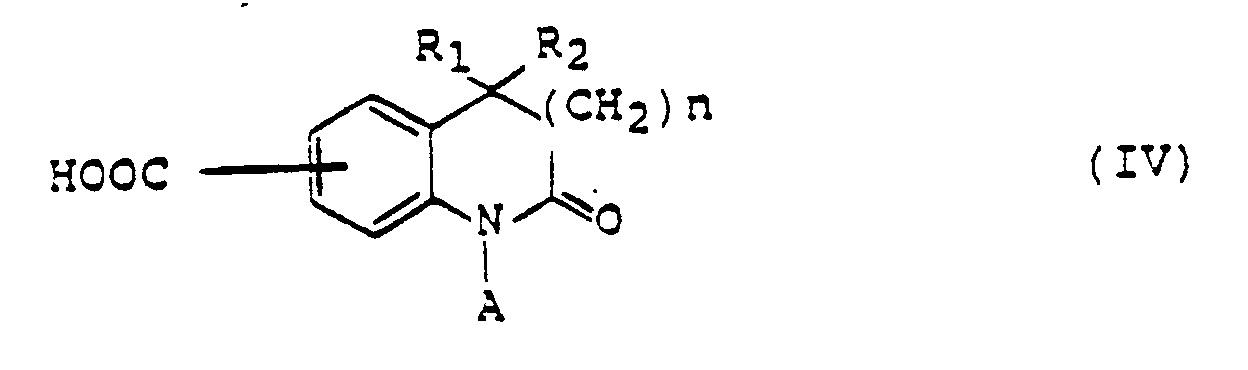
A ein Wasserstoffatom, eine C₁-C₆-Alkyl-, C₂-C₆-Alkenyl-, C₂-C₆-Alkinyl-, Benzyl- oder eine C₃-C₇-Cycloalkylgruppe bedeutet,
R₁ ein Wasserstoffatom, eine C₁-C₆-Alkyl-, C₂-C₆-Alkenyl- oder eine C₃-C₇-Cycloalkylgruppe bedeutet,
R₂ ein Wasserstoffatom, eine C₁-C₆-Alkyl-, C₂-C₆-Alkenyl, C₃-C₇-Cycloalkyl-, C₁-C₆-Alkylcarbonyl-, C₁-C₆-Alkoxycarbonyl-, Aminocarbonyl- oder Hydrazinocarbonylgruppe bedeutet oder R₁ und R₂ zusammen mit dem C-Atom, an das sie gebunden sind, einen C₃-C₇-Cycloalkylring bilden,
n die Werte 0 oder 1 annehmen kann, sowie
deren C₁-C₆-Alkylester, Anhydride oder Säurehalogenide,
mit Ausnahme der Verbindungen 1,2,3,4-Tetrahydro-2-oxo-7-chinolin-carbonsäure, 2,3-Dihydro-2-oxo-1H-indol-4-carbonsäure, 2,3-Dihydro-2-oxo-1H-indol-5-carbonsäure, 1-Ethyl-2,3 dihydro-2-oxo-(1H)-indol-5-carbonsäure, 1′,2′-Dihydro-2′-oxo-spiro[cyclo-propan-1,3′-(3H)-indol]-6′-carbonsäure, 2,3-Dihydro-2-oxo-(1H)-indol-7-carbonsäure, 2,3-Dihydro-3,3-dimethyl-2-oxo-1H-indol-5-carbonsäure und 2,3-Dihydro-2-oxo-1H-indol-6-carbonsäure, dadurch gekennzeichnet, daß man
a) Verbindungen der allgemeinen Formel V

b) Verbindungen der allgemeinen Formel VII
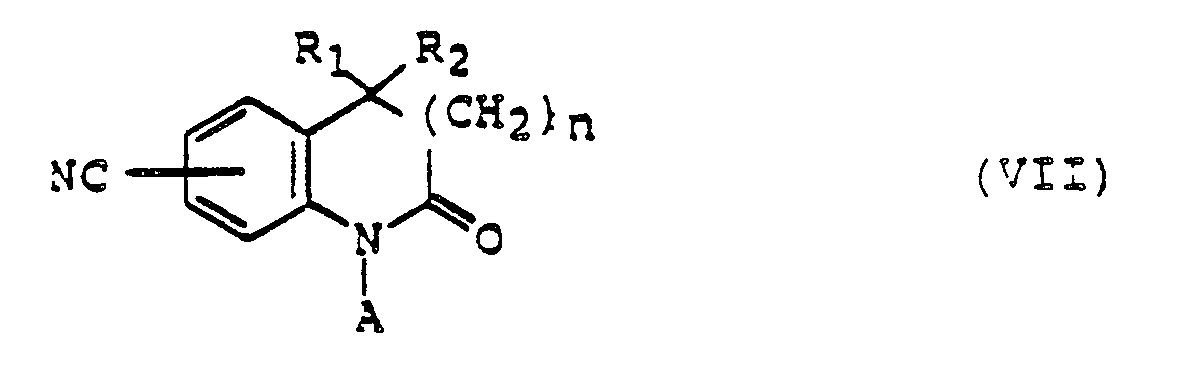
oder die so hergestellten Verbindungen der allgemeinen Formel IV nachträglich in andere Verbindungen der allgemeinen Formel IV umwandelt.

A ein Wasserstoffatom, eine C₁-C₆-Alkyl-, C₂-C₆-Alkenyl-, C₂-C₆-Alkinyl-, Benzyl- oder eine C₃-C₇-Cycloalkylgruppe bedeutet,
R₁ ein Wasserstoffatom, eine C₁-C₆-Alkyl-, C₂-C₆-Alkenyl- oder eine C₃-C₇-Cycloalkylgruppe bedeutet,
R₂ ein Wasserstoffatom, eine C₁-C₆-Alkyl-, C₂-C₆-Alkenyl, C₃-C₇-Cycloalkyl-, C₁-C₆-Alkylcarbonyl-, C₁-C₆-Alkoxycarbonyl-, Aminocarbonyl- oder Hydrazinocarbonylgruppe bedeutet oder R₁ und R₂ zusammen mit dem C-Atom, an das sie gebunden sind, einen C₃-C₇-Cycloalkylring bilden, und
n die Werte 0 oder 1 annehmen kann,
mit Ausnahme der Verbindung 2,3-Dihydro-2-oxo-(1H)-indol-5-carbonitril,
dadurch gekennzeichnet, daß man Verbindungen der allgemeinen Formel (VIII)

Priority Applications (1)
| Application Number | Priority Date | Filing Date | Title |
|---|---|---|---|
| AT89109511T ATE103593T1 (de) | 1988-06-03 | 1989-05-26 | Bicyclische carboxamide, verfahren zu ihrer herstellung und diese verbindungen enthaltende arzneimittel. |
Applications Claiming Priority (2)
| Application Number | Priority Date | Filing Date | Title |
|---|---|---|---|
| DE3818830 | 1988-06-03 | ||
| DE3818830A DE3818830A1 (de) | 1988-06-03 | 1988-06-03 | Bicyclische carboxamide, verfahren zu ihrer herstellung, deren vorstufen, und diese verbindungen enthaltende arzneimittel |
Publications (2)
| Publication Number | Publication Date |
|---|---|
| EP0344634A1 true EP0344634A1 (de) | 1989-12-06 |
| EP0344634B1 EP0344634B1 (de) | 1994-03-30 |
Family
ID=6355728
Family Applications (1)
| Application Number | Title | Priority Date | Filing Date |
|---|---|---|---|
| EP89109511A Expired - Lifetime EP0344634B1 (de) | 1988-06-03 | 1989-05-26 | Bicyclische Carboxamide, Verfahren zu ihrer Herstellung und diese Verbindungen enthaltende Arzneimittel |
Country Status (18)
| Country | Link |
|---|---|
| US (1) | US5019587A (de) |
| EP (1) | EP0344634B1 (de) |
| JP (1) | JPH0225464A (de) |
| KR (1) | KR900000339A (de) |
| CN (1) | CN1038640A (de) |
| AT (1) | ATE103593T1 (de) |
| AU (1) | AU616521B2 (de) |
| DD (1) | DD283809A5 (de) |
| DE (2) | DE3818830A1 (de) |
| DK (1) | DK268789A (de) |
| FI (1) | FI892730A7 (de) |
| HU (1) | HUT53074A (de) |
| IL (1) | IL90447A0 (de) |
| MX (1) | MX16283A (de) |
| NO (1) | NO892271L (de) |
| NZ (1) | NZ229335A (de) |
| PT (1) | PT90744B (de) |
| ZA (1) | ZA894236B (de) |
Cited By (12)
| Publication number | Priority date | Publication date | Assignee | Title |
|---|---|---|---|---|
| WO1991006545A1 (de) * | 1989-10-25 | 1991-05-16 | Boehringer Mannheim Gmbh | Bicyclo-imidazole, verfahren zu ihrer herstellung und diese verbindungen enthaltende arzneimittel |
| EP0636609A1 (de) * | 1993-07-30 | 1995-02-01 | Sanofi | 1-Benzyl-1,3-dihydro-indol-2-on Derivate, ihre Herstellung, die sie enthaltenden pharmazeutischen Zusammensetzungen |
| RU2167864C2 (ru) * | 1995-10-24 | 2001-05-27 | Санофи | Производные индолин-2-она, способ их получения и содержащие их фармацевтические композиции |
| EP1610753A4 (de) * | 2003-02-20 | 2007-07-04 | Encysive Pharmaceuticals Inc | Phenylendiamin-urotensin-ii-rezeptorantagonisten und ccr-9-antagonisten |
| US7288538B2 (en) | 2003-02-20 | 2007-10-30 | Encysive Pharmaceuticals, Inc. | Phenylenediamine urotensin-II receptor antagonists and CCR-9 antagonists |
| US8084609B2 (en) | 2006-12-22 | 2011-12-27 | Hoffman-La Roche Inc. | Spiropiperidine derivatives |
| US8202993B2 (en) | 2006-12-07 | 2012-06-19 | Hoffmann-La Roche Inc. | Spiro-piperidine derivatives |
| WO2014040969A1 (en) | 2012-09-13 | 2014-03-20 | F. Hoffmann-La Roche Ag | 2-oxo-2,3-dihydro-indoles for the treatment of cns disorders |
| WO2018086703A1 (en) | 2016-11-11 | 2018-05-17 | Bayer Pharma Aktiengesellschaft | Dihydropyridazinones substituted with phenylureas |
| WO2019149637A1 (en) | 2018-01-31 | 2019-08-08 | Bayer Aktiengesellschaft | Antibody drug conjugates (adcs) with nampt inhibitors |
| WO2021013693A1 (en) | 2019-07-23 | 2021-01-28 | Bayer Pharma Aktiengesellschaft | Antibody drug conjugates (adcs) with nampt inhibitors |
| WO2025045835A1 (en) | 2023-08-30 | 2025-03-06 | Syngenta Crop Protection Ag | Pesticidally active oxoindole compounds |
Families Citing this family (8)
| Publication number | Priority date | Publication date | Assignee | Title |
|---|---|---|---|---|
| DE3803775A1 (de) * | 1988-02-09 | 1989-08-17 | Boehringer Mannheim Gmbh | Neue substituierte lactame, verfahren zu ihrer herstellung und arzneimittel, die diese verbindungen enthalten |
| US5076835A (en) * | 1990-05-31 | 1991-12-31 | America Cyanamid Company | Aryloxyspiroalkylindolinone herbicides |
| BR9200951A (pt) * | 1991-03-21 | 1992-11-17 | Hoffmann La Roche | Compostos, processo para sua producao,preparacoes farmaceuticas e uso |
| AR101196A1 (es) * | 2014-07-16 | 2016-11-30 | Gruenenthal Gmbh | Compuestos de pirimidina sustituidos |
| AR101198A1 (es) | 2014-07-16 | 2016-11-30 | Gruenenthal Gmbh | Pirimidinas 2,5-sustituidas como inhibidores de pde4b |
| JP2020524718A (ja) * | 2017-06-22 | 2020-08-20 | キュラデブ・ファーマ・リミテッドCuradev Pharma Limited | ヒトstingの複素環式小分子調節因子 |
| GB2572526A (en) * | 2017-06-22 | 2019-10-09 | Curadev Pharma Ltd | Heterocyclic small molecule modulators of human STING |
| IL279526B2 (en) * | 2018-06-22 | 2026-05-01 | Ucl Business Ltd | Compounds for the treatment of alpha-1 antitrypsin-mediated diseases |
Citations (3)
| Publication number | Priority date | Publication date | Assignee | Title |
|---|---|---|---|---|
| DE3204892A1 (de) * | 1981-02-17 | 1982-09-23 | Otsuka Pharmaceutical Co. Ltd., Tokyo | Carbostyrilderivate, verfahren zu deren herstellung und kardiotonische zusammensetzungen, welche diese enthalten |
| EP0236140A2 (de) * | 1986-03-05 | 1987-09-09 | Otsuka Pharmaceutical Co., Ltd. | Karbostyrilderivate und ihre Salze und diese enthaltende anti-arrhythmische Mittel |
| EP0255134A2 (de) * | 1986-07-31 | 1988-02-03 | Otsuka Pharmaceutical Co., Ltd. | Karbostyril-Derivate und ihre Salze, Verfahren zu ihrer Herstellung und diese enthaltende kardiotonische Zusammensetzung |
Family Cites Families (1)
| Publication number | Priority date | Publication date | Assignee | Title |
|---|---|---|---|---|
| FR2584713B1 (fr) * | 1985-07-11 | 1988-09-09 | Roussel Uclaf | Nouveaux derives de l'indole carboxamide, leurs sels, procede et intermediaires de preparation, application a titre de medicaments et compositions les renfermant |
-
1988
- 1988-06-03 DE DE3818830A patent/DE3818830A1/de not_active Withdrawn
-
1989
- 1989-05-26 AT AT89109511T patent/ATE103593T1/de not_active IP Right Cessation
- 1989-05-26 EP EP89109511A patent/EP0344634B1/de not_active Expired - Lifetime
- 1989-05-26 DE DE89109511T patent/DE58907324D1/de not_active Expired - Fee Related
- 1989-05-29 AU AU35283/89A patent/AU616521B2/en not_active Ceased
- 1989-05-29 NZ NZ229335A patent/NZ229335A/xx unknown
- 1989-05-29 IL IL90447A patent/IL90447A0/xx unknown
- 1989-05-30 DD DD89329063A patent/DD283809A5/de not_active IP Right Cessation
- 1989-06-01 MX MX1628389A patent/MX16283A/es unknown
- 1989-06-01 DK DK268789A patent/DK268789A/da not_active Application Discontinuation
- 1989-06-02 PT PT90744A patent/PT90744B/pt not_active IP Right Cessation
- 1989-06-02 FI FI892730A patent/FI892730A7/fi not_active Application Discontinuation
- 1989-06-02 NO NO89892271A patent/NO892271L/no unknown
- 1989-06-02 JP JP1139392A patent/JPH0225464A/ja active Pending
- 1989-06-02 HU HU892835A patent/HUT53074A/hu unknown
- 1989-06-03 KR KR1019890007724A patent/KR900000339A/ko not_active Withdrawn
- 1989-06-03 CN CN89106049A patent/CN1038640A/zh active Pending
- 1989-06-05 US US07/361,090 patent/US5019587A/en not_active Expired - Fee Related
- 1989-06-05 ZA ZA894236A patent/ZA894236B/xx unknown
Patent Citations (3)
| Publication number | Priority date | Publication date | Assignee | Title |
|---|---|---|---|---|
| DE3204892A1 (de) * | 1981-02-17 | 1982-09-23 | Otsuka Pharmaceutical Co. Ltd., Tokyo | Carbostyrilderivate, verfahren zu deren herstellung und kardiotonische zusammensetzungen, welche diese enthalten |
| EP0236140A2 (de) * | 1986-03-05 | 1987-09-09 | Otsuka Pharmaceutical Co., Ltd. | Karbostyrilderivate und ihre Salze und diese enthaltende anti-arrhythmische Mittel |
| EP0255134A2 (de) * | 1986-07-31 | 1988-02-03 | Otsuka Pharmaceutical Co., Ltd. | Karbostyril-Derivate und ihre Salze, Verfahren zu ihrer Herstellung und diese enthaltende kardiotonische Zusammensetzung |
Cited By (17)
| Publication number | Priority date | Publication date | Assignee | Title |
|---|---|---|---|---|
| WO1991006545A1 (de) * | 1989-10-25 | 1991-05-16 | Boehringer Mannheim Gmbh | Bicyclo-imidazole, verfahren zu ihrer herstellung und diese verbindungen enthaltende arzneimittel |
| EP0636609A1 (de) * | 1993-07-30 | 1995-02-01 | Sanofi | 1-Benzyl-1,3-dihydro-indol-2-on Derivate, ihre Herstellung, die sie enthaltenden pharmazeutischen Zusammensetzungen |
| FR2708606A1 (fr) * | 1993-07-30 | 1995-02-10 | Sanofi Sa | Dérivés du N-phénylalkylindol-2-one, leur préparation, les compositions pharmaceutiques en contenant. |
| US5618833A (en) * | 1993-07-30 | 1997-04-08 | Sanofi | 1-benzyl-1,3-dihydroindol-2-one derivatives, their preparation and the pharmaceutical compositions in which they are present |
| RU2167864C2 (ru) * | 1995-10-24 | 2001-05-27 | Санофи | Производные индолин-2-она, способ их получения и содержащие их фармацевтические композиции |
| US7579340B2 (en) | 2003-02-20 | 2009-08-25 | Pfizer Inc | Phenylenediamine urotensin-II receptor antagonists and CCR-9 antagonists |
| US7288538B2 (en) | 2003-02-20 | 2007-10-30 | Encysive Pharmaceuticals, Inc. | Phenylenediamine urotensin-II receptor antagonists and CCR-9 antagonists |
| US7319111B2 (en) | 2003-02-20 | 2008-01-15 | Encysive Pharmaceuticals, Inc. | Phenylenediamine Urotensin-II receptor antagonists and CCR-9 antagonists |
| EP1610753A4 (de) * | 2003-02-20 | 2007-07-04 | Encysive Pharmaceuticals Inc | Phenylendiamin-urotensin-ii-rezeptorantagonisten und ccr-9-antagonisten |
| US8202993B2 (en) | 2006-12-07 | 2012-06-19 | Hoffmann-La Roche Inc. | Spiro-piperidine derivatives |
| US8084609B2 (en) | 2006-12-22 | 2011-12-27 | Hoffman-La Roche Inc. | Spiropiperidine derivatives |
| EP2535329A2 (de) | 2006-12-22 | 2012-12-19 | F. Hoffmann-La Roche AG | Spiropiperidinderivate |
| WO2014040969A1 (en) | 2012-09-13 | 2014-03-20 | F. Hoffmann-La Roche Ag | 2-oxo-2,3-dihydro-indoles for the treatment of cns disorders |
| WO2018086703A1 (en) | 2016-11-11 | 2018-05-17 | Bayer Pharma Aktiengesellschaft | Dihydropyridazinones substituted with phenylureas |
| WO2019149637A1 (en) | 2018-01-31 | 2019-08-08 | Bayer Aktiengesellschaft | Antibody drug conjugates (adcs) with nampt inhibitors |
| WO2021013693A1 (en) | 2019-07-23 | 2021-01-28 | Bayer Pharma Aktiengesellschaft | Antibody drug conjugates (adcs) with nampt inhibitors |
| WO2025045835A1 (en) | 2023-08-30 | 2025-03-06 | Syngenta Crop Protection Ag | Pesticidally active oxoindole compounds |
Also Published As
| Publication number | Publication date |
|---|---|
| DK268789A (da) | 1989-12-04 |
| CN1038640A (zh) | 1990-01-10 |
| DD283809A5 (de) | 1990-10-24 |
| EP0344634B1 (de) | 1994-03-30 |
| DE58907324D1 (de) | 1994-05-05 |
| NZ229335A (en) | 1990-09-26 |
| PT90744A (pt) | 1989-12-29 |
| NO892271D0 (no) | 1989-06-02 |
| PT90744B (pt) | 1994-10-31 |
| AU3528389A (en) | 1989-12-07 |
| DK268789D0 (da) | 1989-06-01 |
| FI892730A0 (fi) | 1989-06-02 |
| IL90447A0 (en) | 1990-01-18 |
| NO892271L (no) | 1989-12-04 |
| ATE103593T1 (de) | 1994-04-15 |
| US5019587A (en) | 1991-05-28 |
| DE3818830A1 (de) | 1989-12-14 |
| HUT53074A (en) | 1990-09-28 |
| MX16283A (es) | 1993-11-01 |
| FI892730A7 (fi) | 1989-12-04 |
| ZA894236B (en) | 1990-03-28 |
| JPH0225464A (ja) | 1990-01-26 |
| KR900000339A (ko) | 1990-01-30 |
| AU616521B2 (en) | 1991-10-31 |
Similar Documents
| Publication | Publication Date | Title |
|---|---|---|
| EP0344634B1 (de) | Bicyclische Carboxamide, Verfahren zu ihrer Herstellung und diese Verbindungen enthaltende Arzneimittel | |
| EP0161632B1 (de) | Neue Pyrrolo-Benzimidazole, Verfahren zu ihrer Herstellung und diese Verbindungen enthaltende Arzneimittel sowie Zwischenprodukte | |
| EP0275888B1 (de) | Neue tricyclische Benzimidazole, Verfahren zu ihrer Herstellung und Verwendung als Arzneimittel | |
| DE3935514A1 (de) | Neue bicyclo-imidazole, verfahren zu ihrer herstellung und diese verbindungen enthaltende arzneimittel | |
| DE69723447T2 (de) | Substituierte indazolderivate und ihre verwendung als inhibitoren des phosphodiesterase (pde) typs 4 und des tumor-necrosin-factors (tnf) | |
| DE3932953A1 (de) | Neue 2-bicyclo-benzimidazole, verfahren zu ihrer herstellung und diese verbindungen enthaltende arzneimittel | |
| DE3928177A1 (de) | Benzimidazole, diese verbindungen enthaltende arzneimittel und verfahren zu ihrer herstellung | |
| EP0266558A2 (de) | 5-Alkylbenzimidazole, Verfahren zu ihrer Herstellung und diese enthaltende Arzneimittel | |
| EP0189103B1 (de) | Neue Pyrrolo-Benzimidazole, Verfahren zu ihrer Herstellung und diese Verbindungen enthaltende Arzneimittel sowie Zwischenprodukte | |
| CH651827A5 (de) | Carbostyrilderivate, verfahren zu ihrer herstellung und kardiotonische zusammensetzungen, welche diese enthalten. | |
| DD283376A5 (de) | Verfahren zur herstellung von lactamen | |
| EP0186010B1 (de) | Neue Pyrrolo-Benzimidazole, Verfahren zu ihrer Herstellung und diese Verbindungen enthaltende Arzneimittel | |
| EP0271040A2 (de) | Neue Pyrrolobenzimidazole, Verfahren zu ihrer Herstellung, sowie Arzneimittel | |
| DE3830060A1 (de) | 2-phenylbenzimidazole - verfahren zu ihrer herstellung sowie diese verbindungen enthaltende arzneimittel | |
| EP0216165A1 (de) | Neue Benzodipyrrole, Verfahren zu ihrer Herstellung und diese Verbindungen enthaltende Arzneimittel | |
| EP0280224B1 (de) | Substituierte 3H-Indole, Verfahren zu ihrer Herstellung sowie Arzneimittel | |
| DE3531678A1 (de) | Neue pyrrolo-benzimidazole, verfahren zu ihrer herstellung und diese verbindungen enthaltende arzneimittel | |
| EP0148431A1 (de) | Neue Benzimidazole, ihre Herstellung und diese Verbindungen enthaltende Arzneimittel | |
| EP0334289B1 (de) | Heterocyclisch substituierte 5,7-Dihydro-pyrrolo[3,2-f]benzoxazol-6-one, Verfahren zu ihrer Herstellung sowie diese Verbindungen enthaltende Arzneimittel | |
| EP0207483A2 (de) | Neue Benzimidazole, Verfahren zu ihrer Herstellung und diese Verbindungen enthaltende Arzneimittel sowie Zwischenprodukte | |
| DD293581A5 (de) | Verfahren zur herstellung von benzimidazolen und deren verwendung | |
| DD234867A5 (de) | Neue pyrrolo-benzimidazole, verfahren zu ihrer herstellung und diese verbindungen enthaltende arzneimittel sowie zwischenprodukte | |
| DE3446417A1 (de) | Neue pyrrolo-benzimidazole, verfahren zu ihrer herstellung und diese verbindungen enthaltende arzneimittel sowie zwischenprodukte | |
| DE19633051A1 (de) | Neue 1[2H]Chromen-5-carboxamide |
Legal Events
| Date | Code | Title | Description |
|---|---|---|---|
| PUAI | Public reference made under article 153(3) epc to a published international application that has entered the european phase |
Free format text: ORIGINAL CODE: 0009012 |
|
| 17P | Request for examination filed |
Effective date: 19890526 |
|
| AK | Designated contracting states |
Kind code of ref document: A1 Designated state(s): AT BE CH DE ES FR GB GR IT LI LU NL SE |
|
| 17Q | First examination report despatched |
Effective date: 19920513 |
|
| GRAA | (expected) grant |
Free format text: ORIGINAL CODE: 0009210 |
|
| AK | Designated contracting states |
Kind code of ref document: B1 Designated state(s): AT BE CH DE ES FR GB GR IT LI LU NL SE |
|
| PG25 | Lapsed in a contracting state [announced via postgrant information from national office to epo] |
Ref country code: IT Free format text: LAPSE BECAUSE OF FAILURE TO SUBMIT A TRANSLATION OF THE DESCRIPTION OR TO PAY THE FEE WITHIN THE PRE;WARNING: LAPSES OF ITALIAN PATENTS WITH EFFECTIVE DATE BEFORE 2007 MAY HAVE OCCURRED AT ANY TIME BEFORE 2007. THE CORRECT EFFECTIVE DATE MAY BE DIFFERENT FROM THE ONE RECORDED.SCRIBED TIME-LIMIT Effective date: 19940330 Ref country code: BE Effective date: 19940330 Ref country code: NL Effective date: 19940330 Ref country code: SE Free format text: THE PATENT HAS BEEN ANNULLED BY A DECISION OF A NATIONAL AUTHORITY Effective date: 19940330 Ref country code: ES Free format text: THE PATENT HAS BEEN ANNULLED BY A DECISION OF A NATIONAL AUTHORITY Effective date: 19940330 Ref country code: FR Effective date: 19940330 Ref country code: GB Effective date: 19940330 Ref country code: GR Free format text: LAPSE BECAUSE OF FAILURE TO SUBMIT A TRANSLATION OF THE DESCRIPTION OR TO PAY THE FEE WITHIN THE PRESCRIBED TIME-LIMIT Effective date: 19940330 |
|
| REF | Corresponds to: |
Ref document number: 103593 Country of ref document: AT Date of ref document: 19940415 Kind code of ref document: T |
|
| REF | Corresponds to: |
Ref document number: 58907324 Country of ref document: DE Date of ref document: 19940505 |
|
| PG25 | Lapsed in a contracting state [announced via postgrant information from national office to epo] |
Ref country code: AT Effective date: 19940526 |
|
| PG25 | Lapsed in a contracting state [announced via postgrant information from national office to epo] |
Ref country code: CH Effective date: 19940531 Ref country code: LI Effective date: 19940531 Ref country code: LU Free format text: LAPSE BECAUSE OF NON-PAYMENT OF DUE FEES Effective date: 19940531 |
|
| EN | Fr: translation not filed | ||
| NLV1 | Nl: lapsed or annulled due to failure to fulfill the requirements of art. 29p and 29m of the patents act | ||
| GBV | Gb: ep patent (uk) treated as always having been void in accordance with gb section 77(7)/1977 [no translation filed] |
Effective date: 19940330 |
|
| REG | Reference to a national code |
Ref country code: CH Ref legal event code: PL |
|
| PG25 | Lapsed in a contracting state [announced via postgrant information from national office to epo] |
Ref country code: DE Effective date: 19950201 |
|
| PLBE | No opposition filed within time limit |
Free format text: ORIGINAL CODE: 0009261 |
|
| STAA | Information on the status of an ep patent application or granted ep patent |
Free format text: STATUS: NO OPPOSITION FILED WITHIN TIME LIMIT |
|
| 26N | No opposition filed |